 As we approach the anniversary of the invasion of Iraq, British Foreign Secretary William Hague has reportedly advised his coalition colleagues not to discuss the war… Fortunately we have people like Alan Ingram to help us revisit and re-imagine the war, and I’ve drawn attention to his important Art & War: responses to Iraq project before.
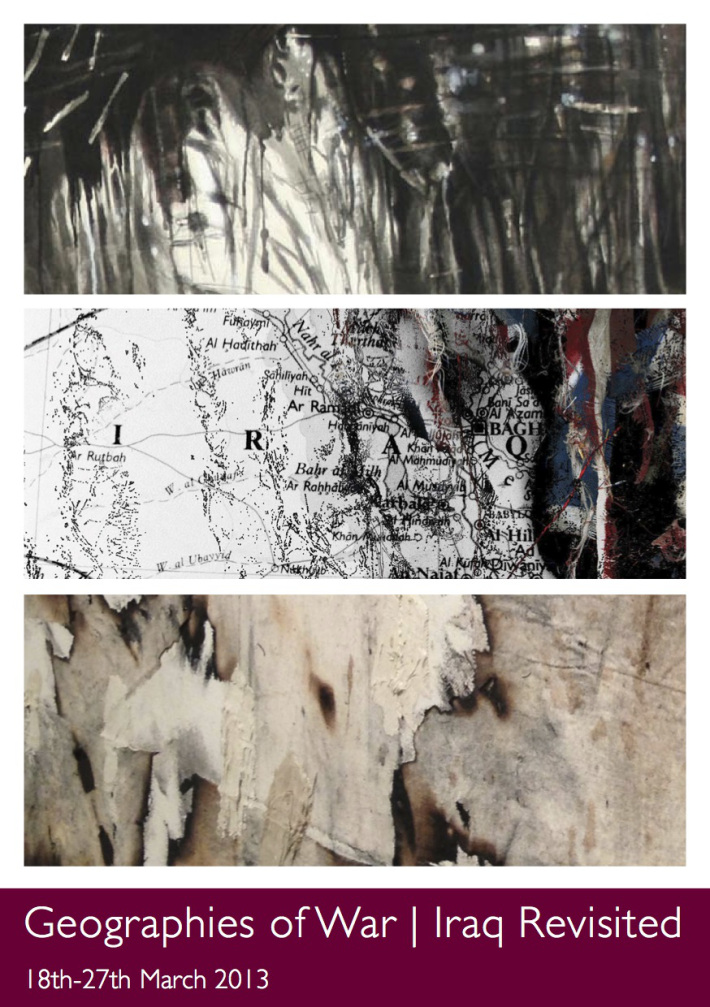
Now Alan has curated an exhibition, Geographies of War: Iraq revisited, which runs from 18-27 March at North Lodge, University College London, Gower Street, 11 a.m. to 6 p.m. every day.
‘This exhibition explores how artists with diverse practices and perspectives experienced the invasion and occupation of Iraq, an dhow they responded to it by engaging with questions of space, place, landscape and territory. Bringing together artists from Iraq and Britain it shows six works that give material form to the violence, anxiety and ruin of war but which also raise questions about resistance, survival and dreams of peace. Opening in the week of the tenth anniversary of the invasion, the exhibition presents alternative perspectives on the conflict and challenges our ways of seeing war.’
The featured artists include the indispensable Peter Kennard and Cat Phillips – you will surely have seen their photomontage of a leering Tony Blair photographing himself in front of a huge explosion – and one of my favourite Iraqi artists Hanaa Malallah.
There’s also a series of other events associated with the exhibition: a day of talks and discussions with artists and writers, ‘Art, war and peace: responses to the invasion and occupation of Iraq’ on 22 March, and a workshop on ‘Beyond the geographies of war: exploring art and peace’ on 27 March.
More information here.

 geographical imaginations