Blank verse

douglas-alamein-to-zem-zem-001

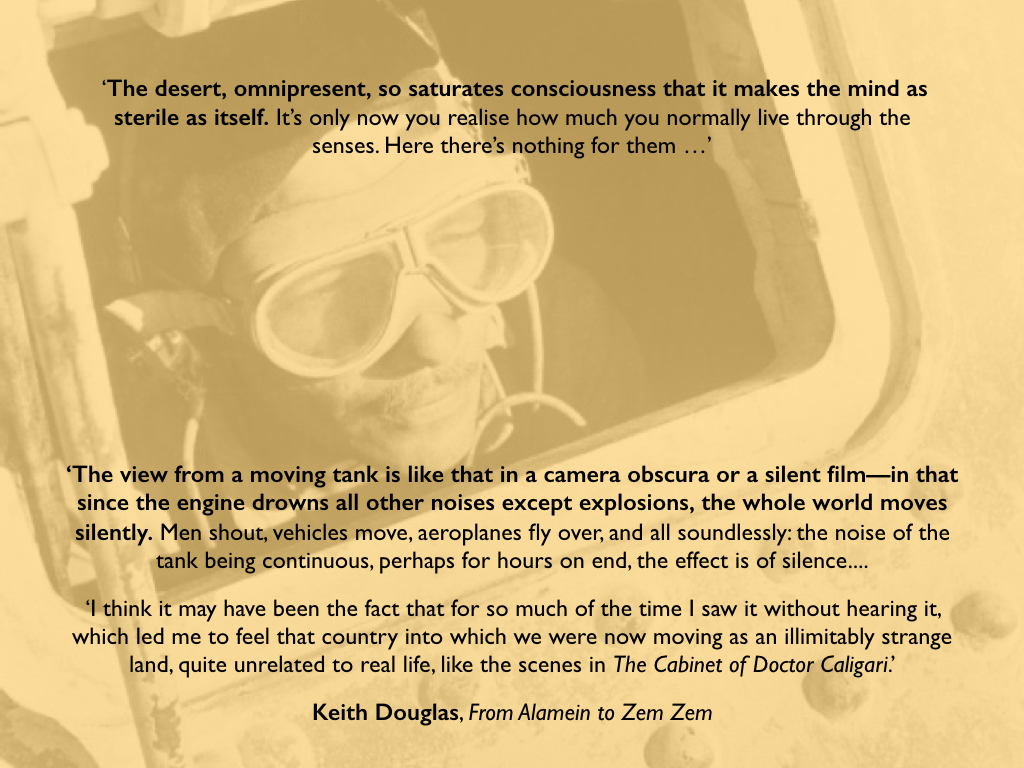
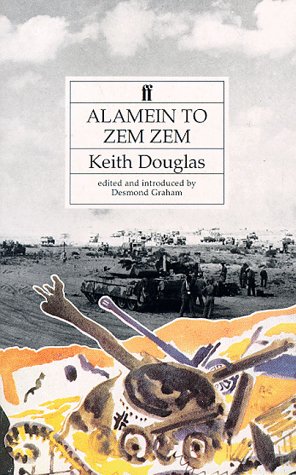
When I was working on ‘The natures of war’ (DOWNLOADS tab; the slide above is from my presentation) I stumbled across the poetry of Keith Douglas and his prose account of the desert war, From Alamein to Zem Zem (see my post here).

I was familiar with the soldier-poets of the First World War, of course, but I confess I had no idea how much fine poetry had emerged from the deserts of North Africa in the 1940s.  Ironically, Edmund Blunden was Douglas’s tutor at Oxford….

douglas-alamein-to-zem-zem

The LA Review of Books recently published an appreciation of Douglas’s importance by Steven Isenberg here:

Douglas wrote Alamein to Zem Zem (1946), his account of men and tanks in North Africa, so close in time and space to the desert battlegrounds that it pulses with ebullient immediacy. He became the answer to his own question: “Why are there no poets like [Wilfred] Owen and Sassoon who lived with the fighting troops and wrote of their experience while enduring them?”

Surviving conflict zones

Peter Adey  Craig Jones and I are organising sessions at the Annual Meeting of the American Association of Geographers in Boston, 5-9 April 2017.

SURVIVING CONFLICT ZONES

The emergence of critical studies of geographies of war has seen a sustained focus on the conduct of military and paramilitary violence and on the necro-politics of conflict, but comparatively little attention has been paid to the multiple ways in which people — combatants, civilians, reporters, humanitarian actors and others — survive in conflict zones (and sometimes even prosper). What apparatuses and circuits of care – architectural constructions, field supplies and medical equipment, expertise, communication systems, evacuation chains, field hospitals, vehicles, and even insurance products – are making conflict zones more or less survivable? In what ways do the injuries of war – physiological, psychological even social – prove terminal or less than deadly? What forms of violence prove most injurious in conflict and its aftermath?

Such questions have become all the more important as military and paramilitary violence continues to breach the boundaries of any conventional ‘battlefield’, as the distinctions between combatants and non-combatants are increasingly called into question, as yet more actors are drawn closer to the killing fields, as the sources of information vital for survival multiply, and as the definition and meaning of a ‘conflict zone’ are brought increasingly into question, legally, politically and experientially. We seek contributions that address these and related issues in the past or in the present. Possible themes include:

Hospitals and medical care in conflict zones
Systems of casualty evacuation
Food supplies and provisioning in conflict zones
Trauma, grief, stress and survival
Gender relations and sexual violence
Reporting from conflict zones
Local knowledge, information networks and conflict zones
Corpographies of conflict zones
Injury, pain and corporeality
Refugee strategies and experiences
Transport, vehicles and mobility
Slow violence, infrastructural violence, and long term suffering

If you are interested in participating, please send a title and 250-word abstract to Craig at craig771@gmail.com by 20 October 2016.  We know that at this stage your abstract can only be a promissory note – accepted abstracts can be edited online until 23 February 2017.

More information on the conference is here, and on the formal submission of abstracts to the AAG here and here.

Game of Drones

creechcasino_0

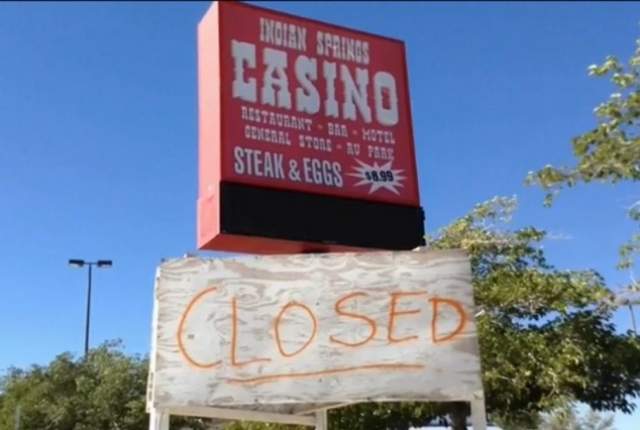
Joe Pugliese has sent me a copy of his absorbing new essay, ‘Drone casino mimesis: telewarfare and civil militarization‘, which appears in Australia’s Journal of sociology (2016) (online early).  Here’s the abstract:

This article stages an examination of the complex imbrication of contemporary civil society with war and militarized violence. I ground my investigation in the context of the increasing cooption of civil sites, practices and technologies by the United States military in order to facilitate their conduct of war and the manner in which drone warfare has now been seamlessly accommodated within major metropolitan cities such as Las Vegas, Nevada. In the context of the article, I coin and deploy the term civil militarization. Civil militarization articulates the colonizing of civilian sites, practices and technologies by the military; it names the conversion of such civilian technologies as video games and mobile phones into technologies of war; and it addresses the now quasi-seamless flow that telewarfare enables between military sites and the larger suburban grid and practices of everyday life. In examining drone kills in the context of Nellis Air Force Base, Las Vegas, I bring into focus a new military configuration that I term ‘drone casino mimesis’.

I’m particularly interested in what Joe has to say about what he calls the ‘casino logic and faming mimesis’ of ‘the drone habitus’.  Most readers will know that ‘Nellis’ (more specifically, Creech Air Force Base, formerly Indian Springs), for long the epicentre of the US Air Force’s remote operations, is a short drive from Las Vegas – and those who have seen Omar Fast‘s 5,000 Feet is Best will remember the artful way in which it loops between the two.

drone-pilots

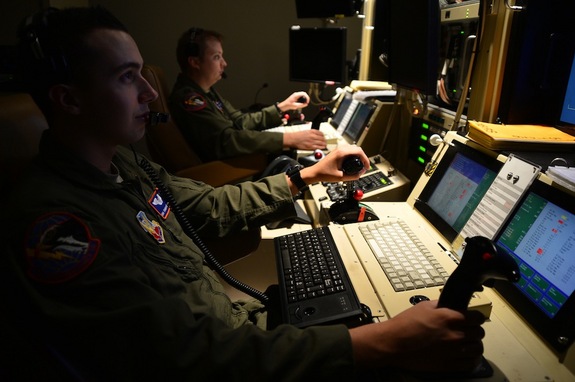
Two passages from Joe’s essay have set me thinking.  First Joe moves far beyond the usual (often facile) comparison between the video displays in the Ground Control Station and video games to get at the algorithms and probabilities that animate them:

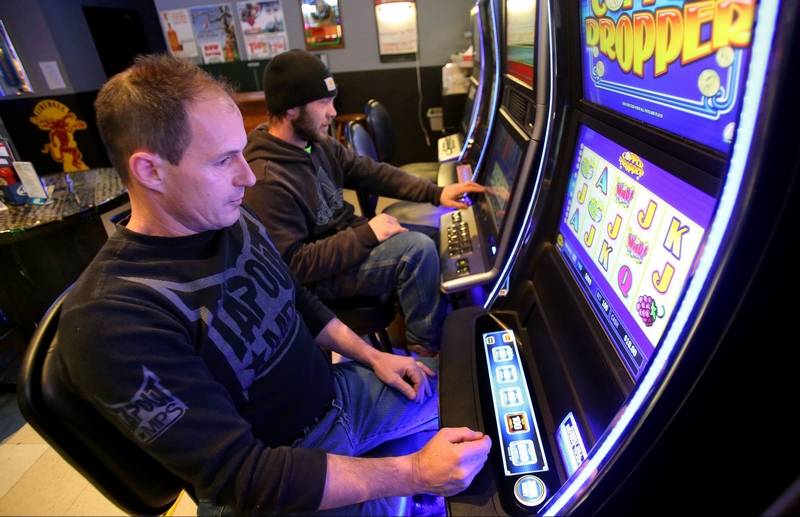
‘…there are mimetic relations of exchange between Las Vegas’s and Nellis’s gaming consoles, screens and cubicles.

AR-701029956.jpg&updated=201401020851&MaxW=800&maxH=800&noborder

‘Iconographically and infrastructurally, casino gaming and drone technologies stand as mirror images of each other. My argument, however, is not that both these practices and technologies merely ‘reflect’ each other; rather, I argue that gaming practices and technologies effectively work to constitute and inflect drone practices and technologies on a number of levels. Casino drone mimesis identifies, in new materialist terms, the agentic role of casino and gaming technologies precisely as ‘actors’ (Latour, 2004: 226) in the shaping and mutating of both the technologies and conduct of war. Situated within a new materialist schema, I contend that the mounting toll of civilian deaths due to drone strikes is not only a result of human failure or error – for example, the misreading of drone video feed, the miscalculation of targets and so on. Rather, civilian drone kills must be seen as an in-built effect of military technologies that are underpinned by both the morphology (gaming consoles, video screens and joysticks) and the algorithmic infrastructure of gaming – with its foundational dependence on ‘good approximation’ ratios and probability computation.’

And then this second passage where Joe develops what he calls ‘the “bets” and “gambles” on civilian life’:

‘[Bugsplat’ constitutes a] militarized colour-coding system that critically determines the kill value of the target. In the words of one former US intelligence official:

You say something like ‘Show me the Bugsplat.’ That’s what we call the probability of a kill estimate when we are doing this final math before the ‘Go go go’ decision. You would actually get a picture of a compound, and there will be something on it that looks like a bugsplat actually with red, yellow, and green: with red being anybody in that spot is dead, yellow stands a chance of being wounded; green we expect no harm to come to individuals where there is green. (Quoted in Woods, 2015: 150)

Described here is a mélange of paintball and video gaming techniques that is underpinned, in turn, by the probability stakes of casino gaming: as the same drone official concludes, ‘when all those conditions have been met, you may give the order to go ahead and spend the money’ (quoted in Woods, 2015: 150). In the world of drone casino mimesis, when all those gaming conditions have been met, you spend the money, fire your missiles and hope to make a killing. In the parlance of drone operators, if you hit and kill the person you intended to kill ‘that person is called a “jackpot”’ (Begley, 2015: 7). Evidenced here is the manner in which the lexicon of casino gaming is now clearly constitutive of the practices of drone kills. In the world of drone casino mimesis, the gambling stakes are high. ‘The position I took,’ says a drone screener, ‘is that every call I make is a gamble, and I’m betting on their life’ (quoted in Fielding-Smith and Black, 2015).

There is much more to Joe’s essay than this, but these passages add considerably to my own discussion of the US targeted killing program in the Federally Administered Tribal Areas of Pakistan in ‘Dirty dancing’.  You can find the whole essay under the DOWNLOADS tab, but this is the paragraph I have in mind (part of an extended discussion of the ‘technicity’ of the US targeted killing program and its reliance on kill lists, signals intercepts and visual feeds):

The kill list embedded in the [disposition] matrix has turned out to be infinitely extendable, more like a revolving door than a rolodex, so much so that at one point an exasperated General Kayani demanded that Admiral Mullen explain how, after hundreds of drone strikes, ‘the United States [could] possibly still be working its way through a “top 20” list?’  The answer lies not only in the remarkable capacity of al Qaeda and the Taliban to regenerate: the endless expansion of the list is written into the constitution of the database and the algorithms from which it emerges. The database accumulates information from multiple agencies, but for targets in the FATA the primary sources are ground intelligence from agents and informants, signals intelligence from the National Security Agency (NSA), and surveillance imagery from the US Air Force. Algorithms are then used to search the database to produce correlations, coincidences and connections that serve to identify suspects, confirm their guilt and anticipate their future actions. Jutta Weber explains that the process follows ‘a logic of eliminating every possible danger’:

‘[T]he database is the perfect tool for pre-emptive security measures because it has no need of the logic of cause and effect. It widens the search space and provides endless patterns of possibilistic networks.’

Although she suggests that the growth of ‘big data’ and the transition from hierarchical to relational and now post-relational databases has marginalised earlier narrative forms, these reappear as soon as suspects have been conjured from the database. The case for including – killing – each individual on the list is exported from its digital target folder to a summary Powerpoint slide called a ‘baseball card’ that converts into a ‘storyboard’ after each mission. Every file is vetted by the CIA’s lawyers and General Counsel, and by deputies at the National Security Council, and all ‘complex cases’ have to be approved by the President. Herein lies the real magic of the system. ‘To make the increasingly powerful non-human agency of algorithms and database systems invisible,’ Weber writes, ‘the symbolic power of the sovereign is emphasised: on “Terror Tuesdays” it (appears that it) is only the sovereign who decides about life and death.’ But this is an optical illusion. As Louise Amoore argues more generally, ‘the sovereign strike is always something more, something in excess of a single flash of decision’ and emerges instead from a constellation of prior practices and projected calculations.

Vertical

Vertical_Cover-90b43d704855b7adb88eb5048b187a67

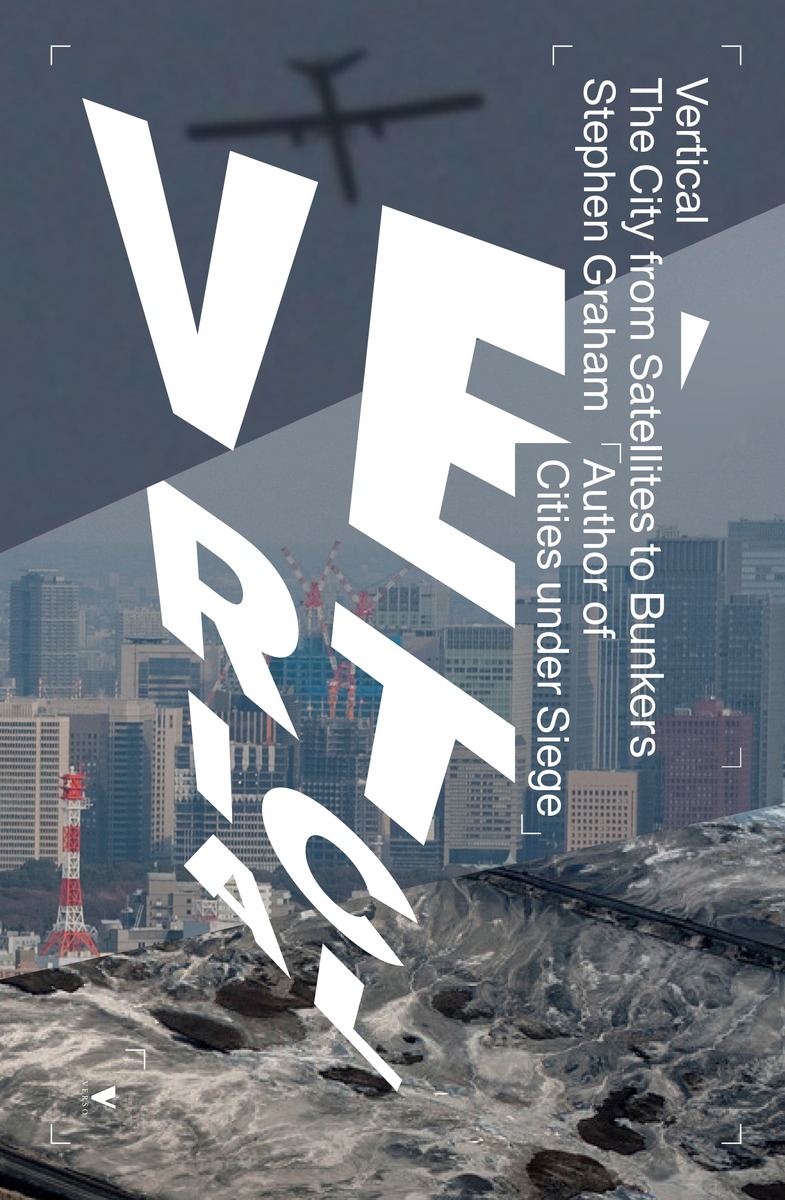
Steve Graham has kindly sent me the page proofs of his new book, Vertical: the city from satellites to tunnels, due from Verso and Penguin/Random House in October/November (it’s already available as an e-book from Amazon).  The subtitle varies depending on where you look – the proofs have both ‘from satellites to tunnels’ and ‘from satellites to bunkers’, and you can find both in the ads – but whatever version they settle on it’s clear that this is yet another tour (sic) de force.

From the penthouse to the sewers—the political geography of the vertical city

Vertical is a brilliant re-imagining of the world we live in. Today we live in a world that can no longer be read as a two-dimensional map. In Vertical Stephen Graham rewrites the city at every level, calling for a a new understanding of our surroundings that takes into account above and below: why Dubai has been built to be seen from GoogleEarth; how the superrich in Sao Paulo live their penthouse lives far from the street; why London billionaires build vast subterranean basements rather than move house. Vertical will make you look at the city anew: from the viewfinders of drones, satellites, from the top of skyscrapers, at street-level and from underground bunkers: this is a new politics of space and geography.

It’s composed of an introduction (‘Going vertical’) and 15 essays:

Part One: Above

1 Satellite: Enigmatic presence

2 Bomber: Death from above

3 Drone: Robot imperium

4 Helicopter: Direct arrival

5 Favela: Tenuous city

6 Elevator/Lift: Going up

7 Skyscraper: Vanity and violence

8 Housing: Luxified skies

9 Skywalk/Skytrain/Skydeck: Multilevel cities

10 Air: Lethal domes

Part Two: Below

11 Ground: Making geology

12 Basement/cellar: Urban undergrounds

13 Sewer: Sociology and shit

14 Bunker/tunnel: Subsurface sanctuaries

15 Mine: Extractive imperialism on the deep frontier


War Stories

War Stories poster JPEG 1

Thursday 15 September 7 – 9.30 p.m. on the Goldcorp Stage at the BMO Theatre Centre – 162 West 1st Avenue, Vancouver:

War stories from Afghanistan, Iraq and other conflict zones told by foreign correspondents, combat veterans and scholars.

Award-winning Iraqi-Canadian photojournalist Farah Nosh and writer/photographer Ann Jones will share images and stories of the impact of war on civilians. Wall Distinguished Professor and geographer Derek Gregory will discuss changes in the evacuation of war casualties from battlefields over the past century. Contact! Unload, a play directed by Wall Scholar George Belliveau, will feature Canadian veterans depicting what it means to transition home after overseas service. The play highlights Marv Westwood’s Veteran’s Transition Program and artist Foster Eastman’s Lest We Forget Canada! mural. Moderated by Emmy Award winning journalist Peter Klein.

Following the presentations the performers will engage with the audience in a discussion about the different perspectives and approaches to sharing war stories, and the value of storytelling’s ability to chronicle, enlighten and heal.

Register here (free).  I’m really excited about this – I admire the work of Farah Nosh and Ann Jones enormously, I’m looking forward to the extracts from Contact! Unload – I’m still thinking about Rosie Kay‘s Bodies on the line and Owen Sheerswonderful work in a similar vein – and Peter Klein will be a wonderful interlocutor.  Do come if you can.

UPDATE:  We’re sold out, but there is a wait list.  And you can find more on WAR STORIES from the wonderful Charlie Smith at the Georgia Straight here.

Sound(ing)s

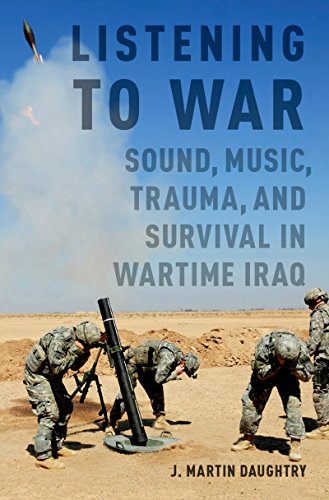
DAUGHTRY Listening to warMy interest in the militarisation of vision is longstanding, but it’s important not to exaggerate the salience of an increasingly ‘optical war’.  Through ‘The natures of war’ project (see DOWNLOADS tab) I’ve also been drawn to the importance of sound in conducting, surviving and even accounting for military violence (see, for example, herehere, and here).  And, as Martin Daughtry‘s remarkable Listening to war (2015) shows, sound continues to be significant in later modern war too.

Even its absence is significant, sometimes performative: think of all those video feeds from Predators and Reapers that, as Nasser Hussain so brilliantly reminded us, are silent movies – apart from the remote commentary from pilots and sensor operators:

‘The lack of synchronic sound renders it a ghostly world in which the figures seem unalive, even before they are killed. The gaze hovers above in silence. The detachment that critics of drone operations worry about comes partially from the silence of the footage.

The contemporary militarisation (or weaponisation) of sound is double-edged, and I mean that in several sense.

First, Mary Roach has a revealing chapter in Grunt: the curious science of humans at war (2016) on what she calls ‘Fighting by ear: the conundrum of noise’.  It turns out that 50 – 60 per cent of situational awareness comes from hearing – and yet the sound of war can be literally deafening.  The damage is often permanent, but in the heat of battle hearing loss makes it difficult to parse the torrent of noise – to distinguish offensive and defensive fires, to detect direction and range, and to send and receive vital communications.  Mary explains:

ROACH GruntFor decades, earplugs and other passive hearing protection have been the main ammunition of military hearing conservation programs. There are those who would like this to change, who believe that the cost can be a great deal higher. That an earplug can be as lethal as a bullet. Most earplugs reduce noise by 30-some decibels. This is helpful with a steady, grinding background din — a Bradley Fighting Vehicle clattering over asphalt (130 decibels), or the thrum of a Black Hawk helicopter (106 decibels). Thirty decibels is more significant than it sounds. Every 3-decibel increase in a loud noise cuts in half the amount of time one can be exposed without risking hearing damage. An unprotected human ear can spend eight hours a day exposed to 85 decibels (freeway noise, crowded restaurant) without incurring a hearing loss. At 115 decibels (chainsaw, mosh pit), safe exposure time falls to half a minute. The 187-decibel boom of an AT4 anti-tank weapon lasts a second, but even that ultrabrief exposure would, to an unprotected ear, mean a permanent downtick in hearing. Earplugs are less helpful when the sounds they’re dampening include a human voice yelling to get down, say, or the charging handle of an opponent’s rifle. A soldier with an average hearing loss of 30 decibels may need a waiver to go back out and do his job; depending on what that job is, he may be a danger to himself and his unit. “What are we doing when we give them a pair of foam earplugs?” says Eric Fallon, who runs a training simulation for military audiologists a few times a year at Camp Pendleton. “We’re degrading their hearing to the point where, if this were a natural hearing loss, we’d be questioning whether they’re still deployable. If that’s not insanity, I don’t know what is.”

TCAP

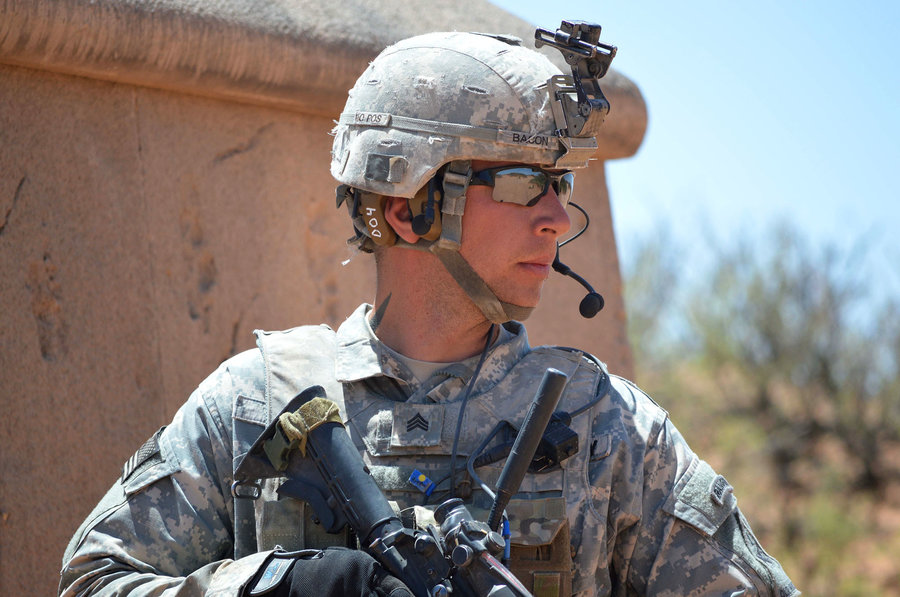
For that reason the US military has been experimenting with what it calls ‘Tactical Communication and Protective Systems‘ (‘Tee-caps’, shown above): ear protectors that incorporate radio communications.  They are a response both to the cacophony and the geometry of war:

No one, in the heat of a firefight, is going to pause to take off her helmet, pull back her ear, insert the plug, and repeat the whole process on the other side, and then restrap the helmet. There’s time for this on a firing range, and there might have been time on a Civil War battlefield, where soldiers got into formation before the call to charge…  You knew when the mayhem was about to start, and you had time to prepare, whether that meant affixing bayonets or messing with foamies. There’s no linear battlefield any more. The front line is everywhere. IEDs go off and things go kinetic with no warning. To protect your hearing using earplugs, you’d have to leave them in for entire thirteen-hour patrols where, 95 percent of the time, nothing loud is happening. No one does that.

Saydnaya 1 JPEG

Second, sounds can intimidate – sometimes deliberately so – but they can also be reverse-engineered to reveal the geometry of violence.  One obvious example is the use of sound-ranging to locate artillery batteries on the Western Front in the First World War; but less obvious, and of critical importance, soundscaping can form an important part of a forensic investigation into crimes of war. This brings me to yet another mesmerising project from Eyal Weizman‘s Forensic Architecture agency. Eyal explains:

In 2016 Forensic Architecture was commissioned by Amnesty International to help reconstruct the architecture of Saydnaya – a secret Syrian detention center – from the memory of several of its survivors, now refugees in Turkey.

Since the beginning of the Syrian crisis in 2011, tens of thousands of Syrians, including protestors, students, bloggers, university professors, lawyers, doctors, journalists and others suspected of opposing the regime, have disappeared into a secret network of prisons and detention centers run by the Assad government. Saydnaya, located some 25 kilometers north of Damascus in an East German-designed building dating from the 1970s, is one of the most notoriously brutal of these places.

Torture has become routinised there – and not as a weapon in the grotesque arsenal of ‘enhanced interrogation’ (which, for any Trump fans who have stumbled into this site in error, has been demonstrated countless times not to work anyway).  Amnesty could not be clearer:

There are no interrogations at Saydnaya. Torture isn’t used to obtain information, but seemingly as a way to degrade, punish and humiliate. Prisoners are targeted relentlessly, unable to “confess” to save themselves from further beatings. Survivors say they dreaded family visits as they were always followed by extensive beatings.

Eyal continues:

As there are no recent photographs of its interior spaces, the memories of Saydnaya survivors are the only resource with which to recreate the spaces, conditions of incarceration and incidents that take place inside.

In April 2016, a team of Amnesty International and Forensic Architecture researchers travelled to Turkey to meet a group of survivors who have come forward because they wanted to let the world know about Saydnaya.

To understand the role of sound in the investigation, what Eyal calls ‘ear-witnessing’, here is Oliver Wainwright writing about the project in the Guardian:

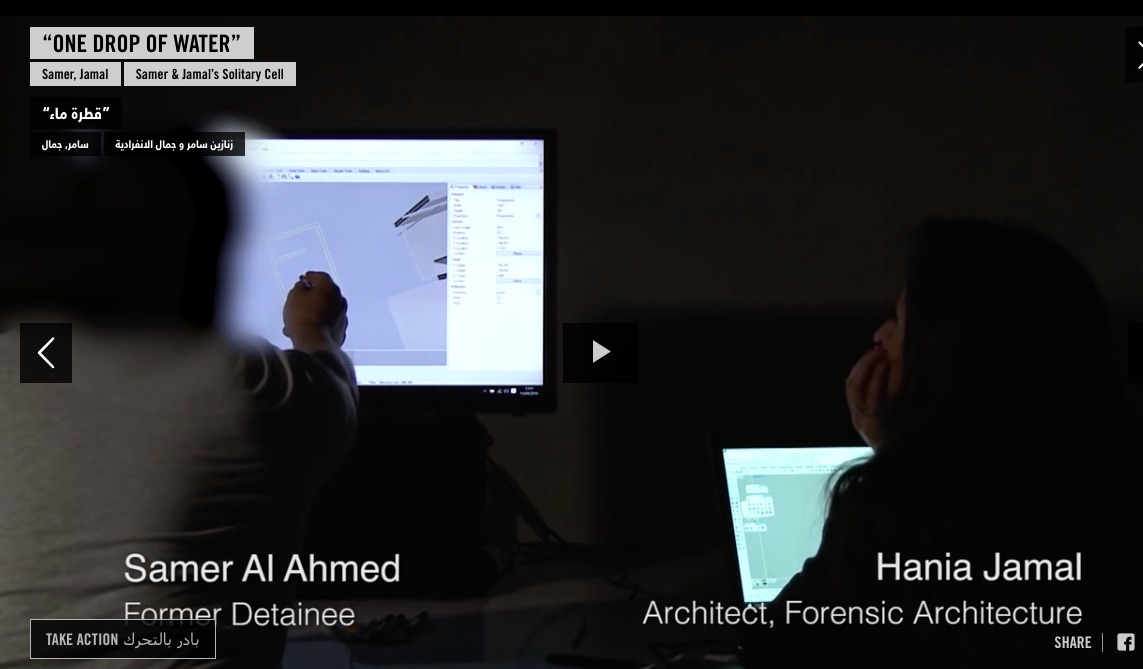
“Architecture is a conduit to memory,” says Weizman, describing how an Arabic-speaking architect [Hania Jamal] built a digital model on screen as detainees described specific memories and events. “As they experienced the virtual environment of their cells at eye level, the witnesses had some flashes of recollection of events otherwise obscured by violence and trauma.”

One drop of water

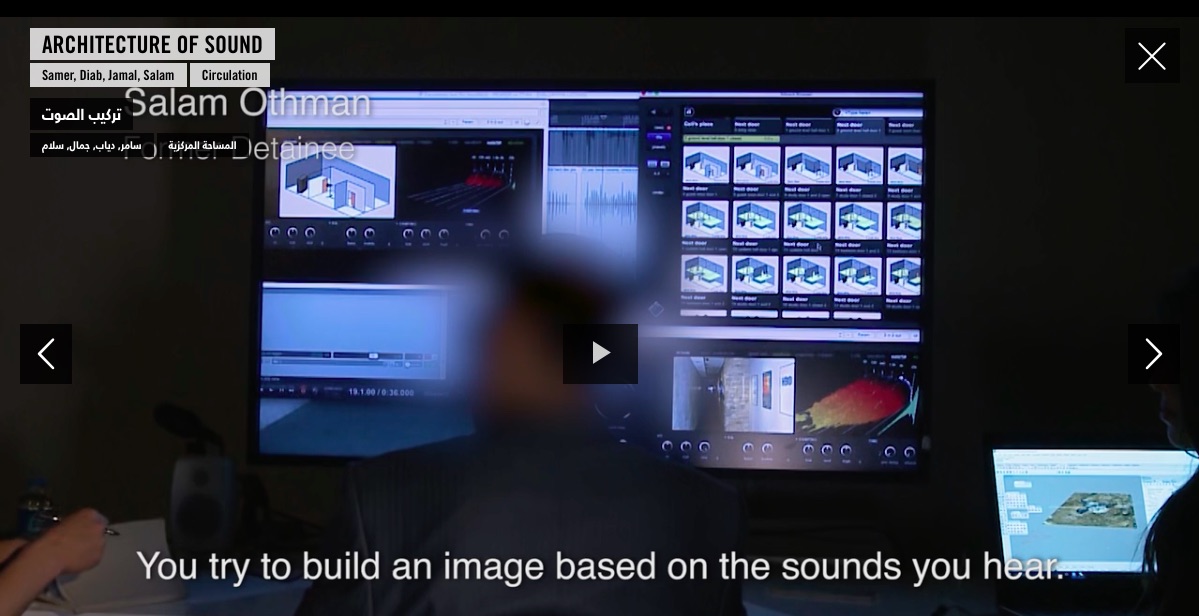
Inmates were constantly blindfolded or forced to kneel and cover their eyes when guards entered their cells, so sound became the key sense by which they navigated and measured their environment – and therefore one of the chief tools with which the Forensic team could reconstruct the prison layout. Using a technique of “echo profiling”, sound artist Lawrence Abu Hamdan was able to determine the size of cells, stairwells and corridors by playing different reverberations and asking witnesses to match them with sounds they remembered hearing in the prison.

“Like a form of sonar, the sounds of the beatings illuminated the spaces around them,” says Abu Hamdan. “The prison is really an echo chamber: one person being tortured is like everyone being tortured, because the sound circulates throughout the space, through air vents and water pipes. You cannot escape it.”

Oliver continues:

Saydnaya detainees developed an acute aural sensitivity, able to identify the different sounds of belts, electrical cables or broomsticks on flesh, and the difference between bodies being punched, kicked or beaten against the wall.
“You try to build an image based on the sounds you hear,” says Salam Othman, a former Saydnaya detainee, in a video interview. “You know the person by the sound of his footsteps. You can tell the food times by the sound of the bowl. If you hear screaming, you know newcomers have arrived. When there is no screaming, we know they are accustomed to Saydnaya.”

Architecture of sound

You can find full details of the project, of its architectural and auditory modelling, and its findings here, and there is also an excellent video on YouTube:

Documenting what is happening provides an essential platform for political and eventually legal action against those responsible.  You can joint Amnesty’s campaign here (scroll down).  Please do.

The Long Silence

Virtually a month since my last post, the longest silence since I started: my dad died last month, and I’m only just back from the UK and still stumbling around trying to find words.  He left school at 14, like my mum; they met while she was working in a baker’s shop in Sidcup High Street and he parked his milk cart outside to buy some buns.  They married soon after the war ended and he had completed his national service with the Royal Artillery in India.  The post-war Britain in which I grew up was still indelibly marked by the war – from bomb-sites to prefabs, popular culture to kids’ comics. When I was a kid my dad worked as a van driver for the Ministry of Works, and one day he took me to one of the vast warehouses where the Imperial War Museum kept stuff for which it either didn’t have room or didn’t know what to do with; much of it still very recent.  It was a wonderland for a young boy to race around – and climb over – but back then I was oblivious to the possibility that these mute objects could be made to speak.

Dad never talked about his war, and it would be years before my thoughts turned back to war again. I heard that he had taken a turn for the worse while I was working in the research room at the IWM, reading diaries and letters from men and women who had been involved, in one capacity or another, in casualty evacuation during the First and Second World Wars.  In amongst the horror – of which there was no shortage – there was also extraordinary courage and bravery, black humour and beautiful images, and for some consolation and even redemption.

But this isn’t a prelude to talking about my dad ‘fighting a battle’ in his last months; those martial metaphors are utterly misplaced, particularly for such a gentle man.  To be sure, there was bravery and defiance – Dad insisted that all he wanted to do was leave hospital and go home to look after Mum – and there was beauty too: him and Mum holding hands across his bed, telling one another over and over again how much they loved one another.  And yet the experience – death, I insist, not a ‘passing’ –  is like war in at least one sense:  you think you’re prepared for it, but you never are and so you muddle through as best you can, helped immeasurably by the company of others.  All sorts of things suddenly leave you bereft; some you anticipate, others you don’t. When we arrived at the crematorium, my mum sitting between my brother and me, the hearse was at the foot of the long drive, idling by the side of the road – and I can’t get the sense of Dad quietly waiting for us out of my mind.

Dad

He died just two days before his ninetieth birthday, and I’ve been re-reading Elizabeth Barrett Browning’s To my father on his birthday, which was written in 1826, exactly one hundred years before Dad was born:

‘There glides no day of gentle bliss

More soothing to the heart than this!

Repeating to the listening ear

The names that made our childhood dear

For parting Joy, like Echo kind,

Will leave her dulcet voice behind

To tell, amidst the magic air

How oft she smiled and lingered there.’

He was always there for all of us, quietly, unobtrusively there; he was a lovely, loving and much loved man, and I can’t imagine him not being there still.

#PortesOuvertes

Like many other people, I’ve been trying to make sense of the horrific attack in Nice on 14 July. I’ve delayed writing about it because so much remains unknown – though that has not stopped a cascade of malignant certainties spewing from those on the Right who see every event as an opportunity to foment fear, harness hatred and deepen division.

A Tunisian man with no known history of political activism or religious affirmation kills 84 people by deliberately driving a truck through crowds along the Promenade des Anglais who were celebrating Bastille Day; a man who lived on the margins with a record of petty crime and domestic abuse; somebody with precious few resources, yet able to rent a truck and acquire weapons; and a claim to have ‘inspired’ the attack from Islamic State, which then hailed him as a ‘soldier’.

No wonder that Peter Beaumont agonises over ‘a new kind of terror – one we can’t define‘, where the systematic recruitment, training and organisation of other terrorist attacks bleeds into the savage violence of the ‘lone wolf’ prowling undetected in the darkness.  The incorporation and adulation of individuals and small groups with no previous connection to IS or other jihadi groups reverses what he calls the standard ‘polarity of responsibility: encouraging acts of violence that it accepts as bloody tributes thrown at its feet.’

The link with petty crime is not surprising.  Scott Atran notes that

Serious jihadi involvement with petty criminal networks began after the September 11 attacks as an unintended consequence of the ability of the United States and allies to cut off the flow of funding to suspect groups, especially through Islamic charities. So al-Qaeda and others began looking for funding and arms in criminal networks instead. And in these networks there were large numbers of marginalized immigrant youth, especially in France.

Indeed, Joseph Micallef makes a plausible case for IS expanding its involvement in criminality as its territorial hold on Iraq and Syria comes under intensifying assault: ‘The smuggling networks that are used to bring in armaments and militants can be just as easily be used to traffic in drugs and illegal immigrants.’  His inclusion of ‘illegal immigrants’ should give us pause for thought; I have no idea if he intends this to include refugees from the turmoil in Iraq, Syria and Libya (it shouldn’t).  But to the extent that IS is involved in human trafficking then this is a double victimisation of its prey.

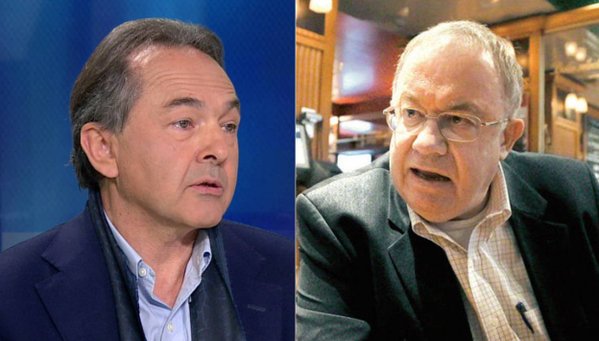
All of this may be granted; but a causal link between Lahouaiej-Bouhlel’s murderous drive through crowds of innocent people and the designs of IS or any other radical version of political Islam is proving remarkably elusive.  There is a wider debate in France about whether the terrorism serially inflicted upon its people is at root about ‘the radicalization of Islam’ (Gilles Kepel – below left) or the ‘Islamicization of radicalism’ (Olivier Roy – below right) – there is a good summary here – but in this instance it is far from clear that either of them is relevant.
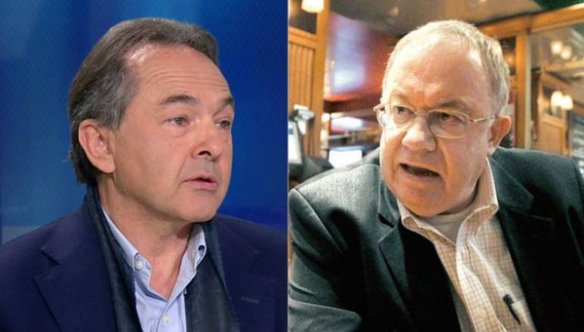
Gilles Keppel and Olivier Roy

Indeed, Farhad Khorokhavar, a sociologist at the École des Hautes Etudes en Sciences Sociales, doubts that ‘radicalisation’ is the appropriate term at all:

“I don’t think he was radicalised at all… It’s a case of raw violence. He took a decision to kill in a moment of despair. My guess is that it’s much more like a mass shooting in the US than [Islamist] radicalisation.”

He speaks instead of ‘mimetic violence’, where previous attacks have furnished ‘a model that fragile people can imitate.’

So I don’t know whether the atrocity in Nice can be attributed to IS or not – but I have no doubt that the precipitate rush to do so has substantive consequences.

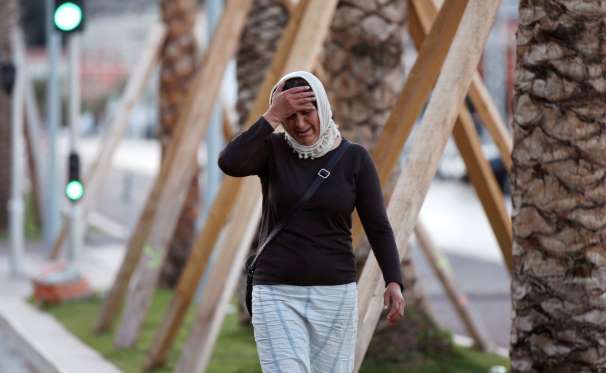
One place to start thinking critically about them is this photograph of a woman consumed by grief as she searches for her son after the attack:
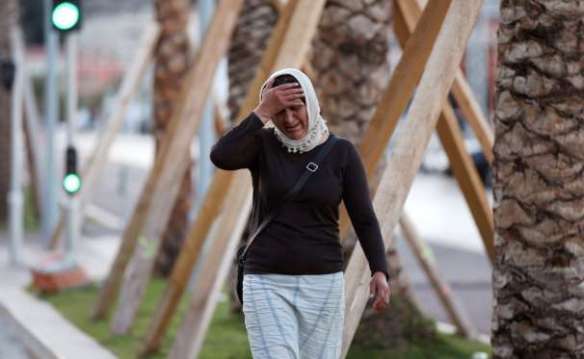
Nice July 2016

The image serves to remind us that – if, to repeat, this does prove to be an attack whose trail can be traced back, however indirectly, to the dismal doors of Islamic State – the victims of such atrocities include people of many cultures and faiths.  Theirs is not a ‘war’ against a single, monolithic enemy; Nice is far from being a homogeneous city – like France, like the rest of Europe – and Alissa Rubin captures what she calls its ‘many-layered’ geography better than most:

There is the Nice of popular imagination, the old-world resort dotted with palm trees and cafes that look out on the Mediterranean Sea, suffused with an incandescent light prized for centuries by artists.

Then there is the other Nice, one that begins to show its face a few blocks inland from the seaside Promenade des Anglais, the majestic arc of a boulevard where 84 people were killed by a 31-year-old Tunisian immigrant at the wheel of a 19-ton truck. This Nice is home to many Muslim immigrants from North Africa, including a secular middle-class that has lived alongside non-Muslim French, and is also a place that local officials estimate has sent as many as 100 young people to fight in Syria with extremists.

“It is rare that these two worlds mix with each other except at the moment of festivities or of agreement, like the gatherings on Saturday,” said Feiza Ben Mohamed of the Muslims of the South, an organization that fights radicalization, referring to the public mourning for those killed in the truck attack.

“Yet the first victim was Muslim, and a good number of the victims were Muslims,” Ms. Mohamed added. “Just yesterday I was on the promenade reflecting on what had happened, and a journalist asked me if I was there to apologize in the name of Muslims. I said to him, ‘No, I came to weep for the dead like everyone else.’”

You can read another (short) essay by Farhad Khorokhavar on these divisions in France, ‘Jihad and the French exception’, here.  In Nice they have been intensified, not only by recruiters for the butchery in Syria – and there is no doubt of their success in Nice: Alpes-Maritimes was one of the first French départements to implement a counter-radicalisation strategy of sorts – but also by the advance of the far right National Front, and no doubt by memories of France’s colonial adventures in North Africa and the Levant and its deepening military involvement in Syria.

For now, France seems under repeated attack: the Charlie Hebdo murders in Paris in January 2015; the attacks on the Bataclan and other public places in Paris last November; and now the murder of more than 80 people in Nice.

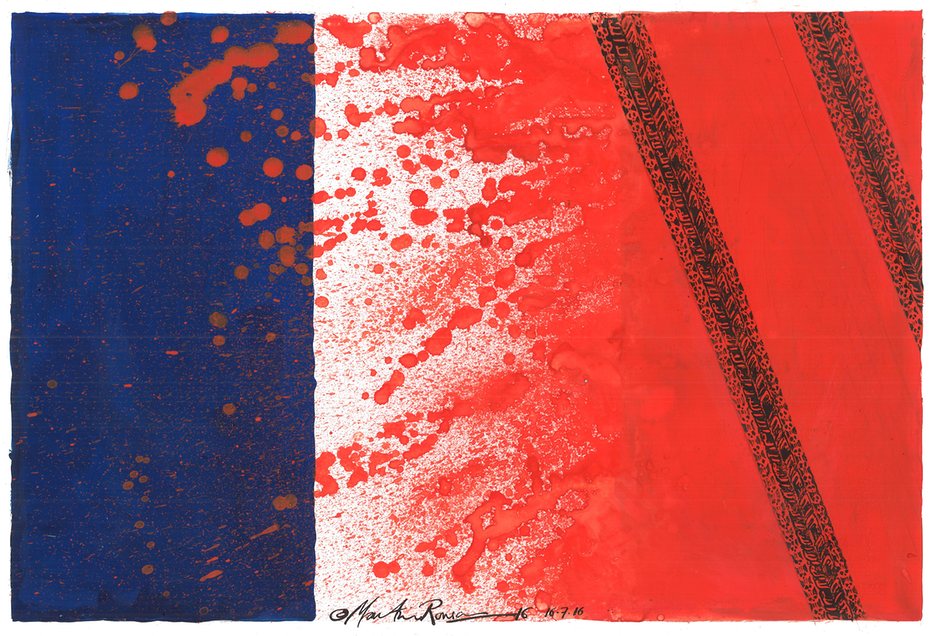
Martin Rowson cartoon Guardian

Each of these mass murders is truly, wrenchingly shocking: but those of us who live in Europe or North America cannot afford to allow those shock-waves to be refracted by geography because this would erect the bloody partition that is one of IS’s central objectives.  Nihilism meets narcissism.

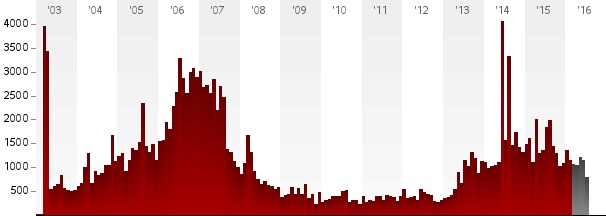
I made much the same point about Paris and Beirut last year.  Now we might twin Nice with Baghdad. Like Nice – like all cities worthy of the name – Baghdad is far from homogeneous, for all the ethno-sectarian ‘cleansing’ that occurred during the US occupation (see my account of ‘The Biopolitics of Baghdad’: DOWNLOADS tab), and those tensions continue to roil.  The truck bombing and subsequent fire that killed 300 people in the Karrada district as they broke their Ramadan fast at the end of the day on 3 July may have seemed like the ‘new normal’ to commentators watching the rising tide of violence in post-occupation Iraq; it too was claimed by IS.  So too many of us doubtless shrugged our shoulders.
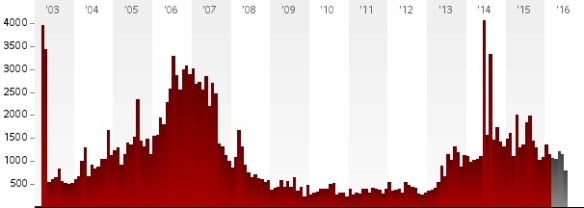
Documented civilian deaths from violence in Iraq 2003-July 2016 (Iraq Body Count)

Documented civilian deaths from violence in Iraq 2003-July 2016 (Iraq Body Count)

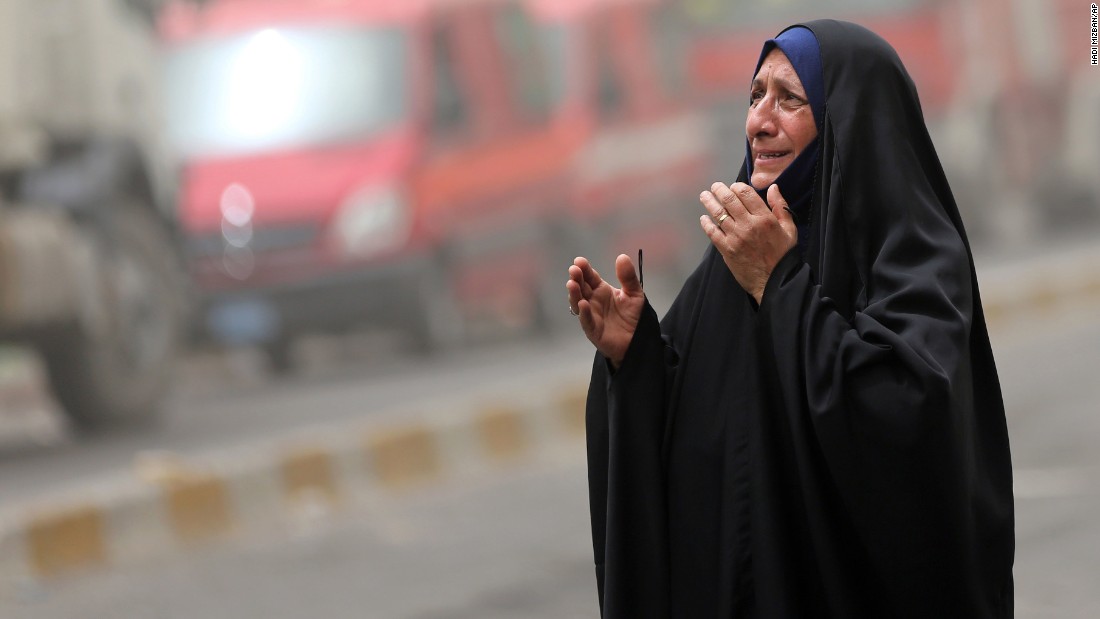
And yet, as Walaa Chahine so movingly testified after another bombing there on 12 July, ‘We may be used to bombings in Baghdad, but Baghdad isn’t‘:

We are used to it, so we don’t make hashtags, change our profile pictures, or memorize their names. By taking away these rights away from them, and yes, they have become rights, as long as other victims are given them, we are taking away their connection to us as humans. We forget that we would probably never get used to having our hometowns bombed every day, that just like us, they are humans who don’t forget, can’t forget.

No, the eleven people killed today weren’t used to dying. The 292 killed last week were not used to it. Their families will never get used to it. No matter how long you spend in a war area, you never get used to it. Ask a soldier, ask a refugee, ask someone who experiences violence and pain on the daily if they ever truly get used to it. We might be able to tune out their screams, but we weren’t the ones screaming in the first place.
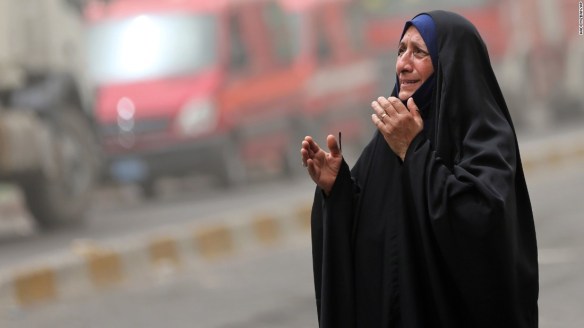
Iraqi woman grieving in Karrada July 2016

And so, as this contrapuntal geography shows, it bears repeating – until even the tone-deaf Donald Trump gets it – that most of the victims of Islamic State’s terrible violence are other, innocent Muslims.  And they live – and die – outside Europe and North America too.
Digital Militarisms

cover_issue_6_en_US

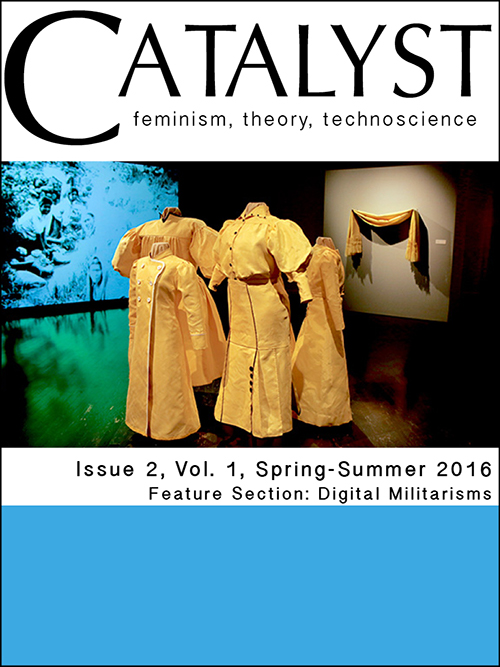
News from Lucy Suchman of a special issue of Catalyst: Feminism, Theory, and Technoscience on Digital Militarisms.  Here is a list of the articles plus abstracts; all are available for download here (open access).

Configuring the Other: Sensing War through Immersive Simulation – Lucy Suchman

This paper draws on archival materials to read two demonstrations of FlatWorld, an immersive military training simulation developed between 2001 and 2007 at the University of Southern California’s Institute for Creative Technologies. The first demonstration is a video recording of a guided tour of the system, staged by its designers in 2005. The second is a documentary created by the US Public Broadcasting Service as part of their “embedded” media coverage of the system while it was installed at California’s Camp Pendleton in 2007. I critically attend to the imaginaries that are realized in the simulation’s figurations of places and (raced, gendered) bodies, as well as its storylines. This is part of a wider project of understanding how distinctions between the real and the virtual are effectively elided in technoscientific military discourses, in the interest of recognizing real/virtual entanglements while also reclaiming the differences that matter.

***

Military Utopias of Mind and Machine – Emily Cohen Ibañez

The central locus of my study is southern California, at the nexus of the Hollywood entertainment industry, the rapidly growing game design world, and military training medical R&D. My research focuses on the rise of military utopic visions of mind that involve the creation of virtual worlds and hyper-real simulations in military psychiatry. In this paper, I employ ethnography to examine a broader turn to the senses within military psychology and psychiatry that involve changes in the ways some are coming to understand war trauma, PTSD, and what is now being called “psychological resilience.” In the article, I critique assumptions that are made when what is being called “a sense of presence” and “immersion” are given privileged attention in military therapeutic contexts, diminishing the subjectivity of soldiers and reducing meaning to biometric readings on the surface of the body. I argue that the military’s recent preoccupation with that which can be described as “immersive” and possessing a sense of presence signals a concentrated effort aimed at what might be described as a colonization of the senses – a digital Manifest Destiny that envisions the mind as capital, a condition I am calling military utopias of mind and machine. Military utopias of mind and machine aspire to have all the warfare without the trauma by instrumentalizing the senses within a closed system. In the paper, I argue that such utopias of control and containment are fragile and volatile fantasies that suffer from the potential repudiation of their very aims. I turn to storytelling, listening, and conversations as avenues towards healing, allowing people to ascribe meaning to difficult life experiences, affirm social relationships, and escape containment within a closed language system.

***
Simulated War: Remediating Trauma Narratives in Military Psychotherapy – Marisa Renee Brandt

How have the politics of therapy been reconfigured during the so-called Global War on Terror? What role have the new virtual reality therapies that so resemble other forms of military simulation played in this reconfiguration? In this article, I draw upon feminist science and technology’s (STS) theorization of human-machine interaction into order to interrogate how contemporary therapies for treating post-traumatic stress disorder (PTSD) reconfigure agency in the practice of healing. Analyzing trauma therapy as a site of reconfiguration, I show how new exposure-based therapies for PTSD—both with and without virtual reality—configure aspects of human subjectivity, such as memory, affect, and behavior, as objects for technological intervention. Through comparative analysis of different modalities of PTSD treatment, I show that the politics of therapy is especially enacted through the therapeutic remediation of trauma narratives: the mediational practices through which a traumatic memory is made available for therapeutic reworking. Therapeutic remediation practices configure therapists, patients, and nonhuman actants as subjects and objects with different forms of agency.

***
Weaponizing Affect: A Film Phenomenology of 3D Military Training Simulations during the Iraq War – D. Andy Rice

This article critically considers the relation between simulation design and human experience through the analysis of three-dimensional military training simulation scenarios developed between 2003 and 2012 at the Fort Irwin National Training Center in the Mojave Desert of California. Following news reports of torture at Abu Ghraib, the US military began to implement “cultural awareness” training for all troops set to deploy to the Middle East. The military contracted with Hollywood special-effects studios to develop a series of counterinsurgency warfare immersive-training simulations, including hiring Iraqi-American and Afghan-American citizens to play villagers, mayors, and insurgents in scenarios. My primary question centers on the military technoscience of treating human bodies as variables in a reiterative simulation scenario. I analyze interviews with soldiers and actors, my own experiences videotaping training simulations at the fort, and the accounts of many other visiting journalists and filmmakers across time. From this, I contend that the stories participants tell about simulation experiences constitute one key outcome of the simulation itself, blunting dissent and aiding the fort’s long-term efforts to retain clout and funding in the face of wars whose intensity fluctuates. I treat the ongoing cinematic performances on the fort as a kind of “simulation body” unbounded by skin, a theoretical framework drawn from Vivian Sobchack’s (1992) film phenomenological concept of the “film body” and affect theory grounded in the work of Kara Keeling (2007), as well as Eve Sedgwick (2003), Sedgwick and Adam Frank (1995), and Lisa Cartwright (2008), by way of American behavioral psychoanalyst Silvan Tomkins (2008).

***

Tactical Tactility: Warfare, Gender, and Cultural Intelligence – Isra Ali

The participation of women in the landscape of warfare is increasingly visible; nowhere is this more evident than in the US military’s global endeavors. The US military’s reliance on cultural intelligence in its conceptualization of engagement strategies has resulted in the articulation of specific gendered roles in warfare. Women are thought to be particularly well suited to non-violent tactile engagements with civilians in war zones in Iraq and Afghanistan because of gender segregation in public and private spaces. Women in the military have consequently been able to argue for recognition of their combat service by framing this work in the war zone as work only women can do. Women reporters have been able to develop profiles as media producers, commentators, and experts on foreign policy, women, and the military by producing intimate stories about the lives of civilians only they can access. The work soldiers and reporters do is located in the warzone, but in the realms of the domestic and social, in the periods between bursts of violent engagement. These women are deployed as mediators between civilian populations in Afghanistan and Iraq and occupying forces for different but related purposes. Soldiers do the auxiliary work of combat in these encounters, reporters produce knowledge that undergirds the military project. Their work in combat zones emphasizes the interpersonal and relational as forms of tactile engagement. In these roles, they are also often mediating between the “temporary” infrastructure of the war zone and occupation, and the “permanent” infrastructure of nation state, local government, and community. The work women do as soldiers and reporters operates effectively with the narrative of militarism as a means for liberating women, reinforcing the perception of the military as an institution that is increasingly progressive in its attitudes towards membership, and in its military strategies. When US military strategy focuses on cultural practice in Arab and Muslim societies, commanders operationalize women soldiers in the tactics of militarism, the liberation of Muslim women becomes central in news and governmental discourses alike, and the notion of “feminism” is drawn into the project of US militarism in Afghanistan and Iraq in complex ways that elucidate how gender, equality, and difference, can be deployed in service of warfare.

***
A Drone Manifesto: Re-forming the Partial Politics of Targeted KillingKatherine Fehr Chandler

Debates about today’s unmanned systems explain their operation using binary distinctions to delimit “us” and “them,” “here” and “there,” and “human” and “machine.” Yet the networked actions of drone aircraft persistently undo these oppositions. I show that unmanned systems are dissociative, not dualistic. I turn to Haraway’s “A Cyborg Manifesto” (1991) to reflect on how drones rework limits ranging from the scale of bodies to geopolitical territories, as well as the political challenges they entail. The analysis has two parts. The first considers how Cold War drones fit into cybernetic discourse. I examine the Firebee, a pilotless target built in the aftermath of World War II, and explore how the system acts as if it were guided by machine responses even though human control remains integral to its operation. The second part considers how contemporary discussions of drone aircraft, both for and against the systems, rely on this dissociative logic. Rather than critiquing unmanned aircraft as dehumanizing, I argue that responses to drones must address the interconnections they produce and call for a politics that puts together the dissociations on which unmanned systems rely.

***
Introduction to Attachments to War: Violence and the Production of Biomedical Knowledge in Twenty-first Century America – Jennifer Terry

This is an excerpt from Jennifer Terry’s book, Attachments to War: Violence and the Production of Biomedical Knowledge in Twenty-first Century America, forthcoming 2017.

Hiroshima Archive

Hiroshima Archive screenshot JPEG

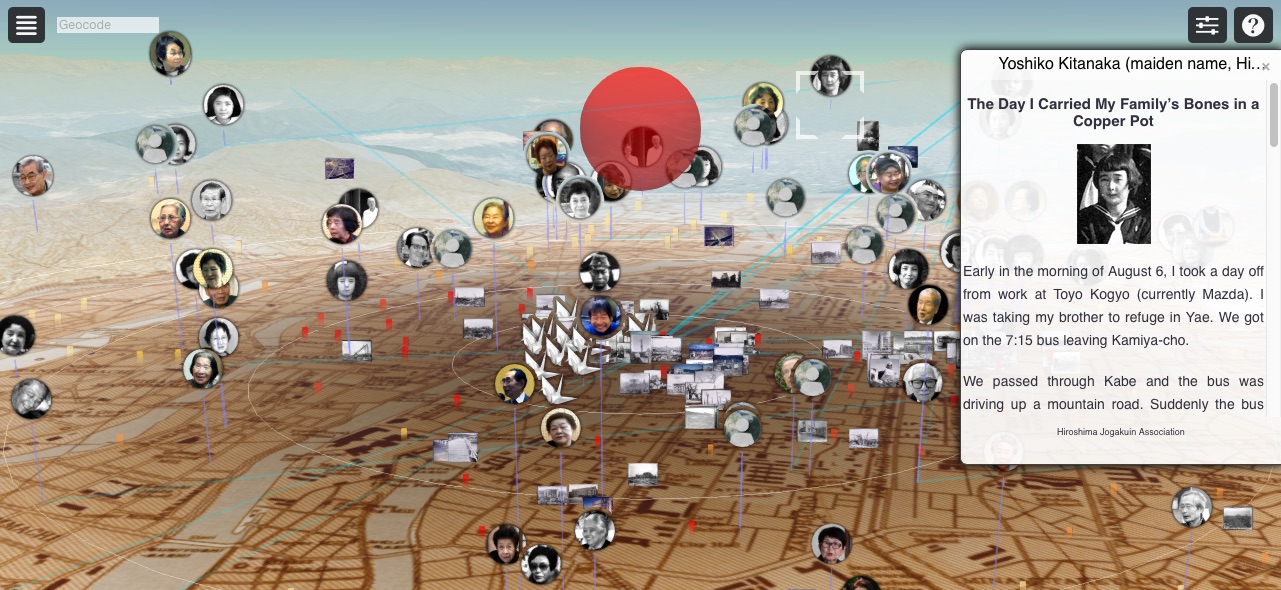
Another impressive interactive web site:  I’ve discussed the wonderful collaborative work of the Japan Air Raids project before – and I’ve returned to it as I work up my account of the entanglements between nuclear weapons and drones (‘Little Boys and Blue Skies’: see DOWNLOADS tab and here and here) – and it’s now been reinforced by the newly translated Hiroshima Archive (the original Japanese-language version has been online since 2011):

The goal of the Hiroshima Archive and an earlier mapping project documenting the bombing of Nagasaki is to preserve the memory of what happened now that more than 70 years have passed since the end of the war, and fewer witnesses and survivors remain alive to pass on their stories.

On August 6, 1945, in the final days of World War II, an American aircraft dropped an atomic bomb on the city of Hiroshima in western Japan. Up to 80,000 people—30% of the population of Hiroshima— were killed instantly, and much of the city was destroyed. Three days later, on August 9, 1945, the city of Nagasaki experienced a similar attack.

The Hiroshima Archive provides a personalized experience of what happened during the bombing. For example, using the online tool, archive users can view a 1945 map of Hiroshima while browsing survivors’ accounts and photos, and where they were located in Hiroshima at the time of the attack. It’s possible to then switch to a contemporary aerial photograph of Hiroshima to see how the location has changed in the years since 1945.

More here.