Gazonto

I’ve discussed the political-aesthetic practice of transposition before – superimposing war ‘over there’ on a city ‘over here’ – in relation to both Baghdad and Gaza.  For the most part, these have been cartographic exercises or art performances (see the closing sections of  ‘War and peace’ [DOWNLOADS tab] for some more examples).

Film-maker John Greyson has just released this short video, Gazonto, which is doubly different.  It takes the rash of video games about Gaza – many of which glorify successive Israeli assaults – and turns them to critical account, and it re-locates the air strikes from Gaza to Toronto (the flipping of the map near the beginning is inspired).

More here; if you are trying to remember where you’ve heard of John before, he was arrested and jailed in Egypt last summer, en route to Gaza with Tarek Loubani, an ER doctor who is one of the main architects of the Canada-Gaza collaboration that is responsible for taking Canadian doctors to Gaza to train local physicians.  They spent fifty days in a Cairo jail after John was seen filming Tarek treating demonstrators who had been shot by police in Ramses Square, where they had been protesting the military coup.  It was never clear which was the greater crime – treating the demonstrators or witnessing the emergency treatment.

This, of course, is one of the many appalling back-stories spawned by the intimacy between the al-Sisi government in Egypt and the Netanyahu government in Israel: what the splendid Richard Falk calls ‘neighbourly crimes of complicity’.  Geopolitics is rooted in these ‘accommodations’, and it cultivates all sorts of deadly blossoms.

But the tendrils reach far beyond the region, and many readers will appreciate why it is so important for a Canadian film-maker to re-stage the attacks on Gaza in a Canadian city.  For those who don’t, check out this report on the Harper government’s own video, released as the Israeli assault on Gaza was intensifying, affirming Canada’s support for Israel “Through Fire and Water”.   Really.

While I’m on this subject, Laleh Khalili has an excellent essay at the Society & Space open site to accompany the virtual issue on Israel/Palestine.  It’s called ‘A habit of destruction’:

The devastation to which Gaza has been subjected in the last few weeks seems to be yet another repetition of Israeli settler-colonial apparatus’ habit of destruction. Gaza has become emblematic of this habit, because in recent years it has so frequently been subjected to bombing while under a state of siege, but like all settler-colonialisms, the violence of the state is rooted not in an episodic “cycle of violence” but in the very ideology and practice of the settler-colonial movement…. 

The lesson of the most recent Israeli assault on Gaza, as in all previous assaults, is that civilians are not “collateral” or accidental casualties of war between combatants, but the very object of a settler-colonial counterinsurgency. The ultimate desire of such asymmetric warfare is to transform the intransigent population into a malleable mass, a docile subject, and a yielding terrain of domination.

And, as she concludes, ‘That ever so frequently the Israeli military plunges Palestinians into conflagrations of lead and steel and concrete dust and destruction is the clearest sign that it has failed at making Palestinians into such a docile population.’

Legitimate targets?

I’ve been thinking about the description of Gaza as a space of exception in my last post, and I will elaborate (and qualify) that discussion shortly: in many ways the Israeli offensive against Gaza reinforces Achille Mbembe‘s arguments about necropolitics but, as I’ll try to show, suggests the need for a reworking of Giorgio Agamben‘s claims about the exception.

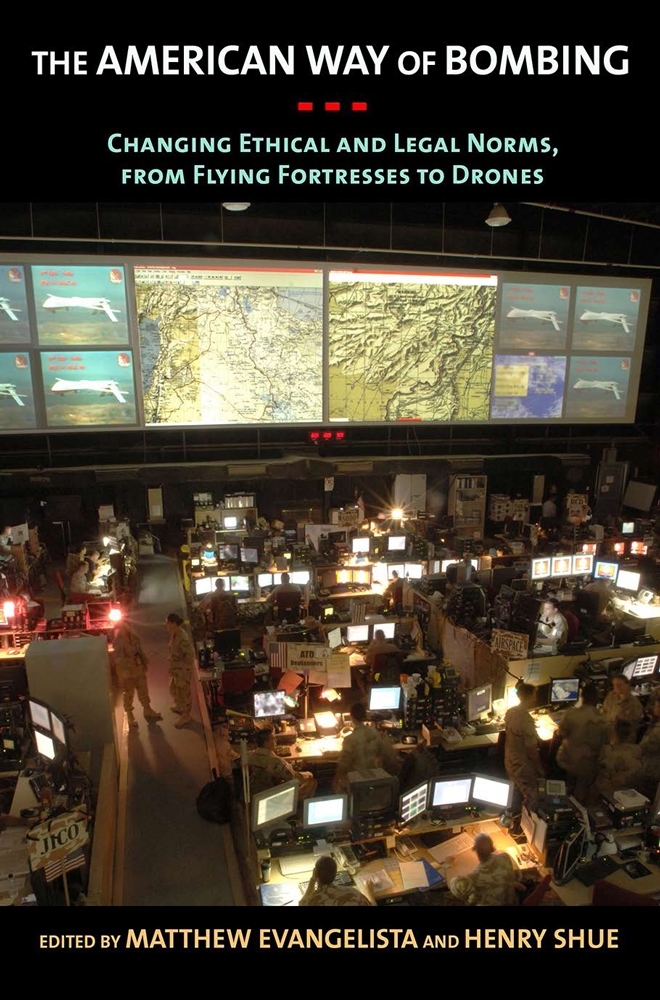
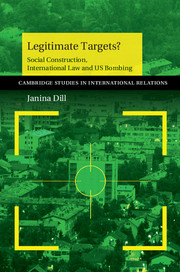
En route, I’ve been greatly taken by the work of Janina Dill (Politics and International Relations, Oxford) – particularly her discussion of Israel’s development of ‘Lawfare 2.0’ in relation to Gaza – and, as I say, I’ll have much more to say about that shortly.  But I’ve also discovered she has a book due out from Cambridge in the fall which, like her (I imagine summary) chapter in The American Way of Bombing, speaks to my own work on genealogies and geographies of bombing: Legitimate Targets? Social construction, international law and US bombing.

DILL Legitimate targets?Based on an innovative theory of international law, Janina Dill’s book investigates the effectiveness of international humanitarian law (IHL) in regulating the conduct of warfare. Through a comprehensive examination of the IHL defining a legitimate target of attack, Dill reveals a controversy among legal and military professionals about the ‘logic’ according to which belligerents ought to balance humanitarian and military imperatives: the logics of sufficiency or efficiency. Law prescribes the former, but increased recourse to IHL in US air warfare has led to targeting in accordance with the logic of efficiency. The logic of sufficiency is morally less problematic, yet neither logic satisfies contemporary expectations of effective IHL or legitimate warfare. Those expectations demand that hostilities follow a logic of liability, which proves impracticable. This book proposes changes to international law, but concludes that according to widely shared normative beliefs on the twenty-first-century battlefield there are no truly legitimate targets.

Introduction
Part I. A Constructivist Theory of International Law:
1. The challenge
2. The theory
Part II. The Definition of a Legitimate Target of Attack in International Law:
3. Positive law
4. Customary law
Part III. An Empirical Study of International Law in War:
5. The rise of international law in US air warfare
6. The changing logic of US air warfare
7. The behavioural relevance of international law in US air warfare
Part IV. An Evaluation of International Law in War:
8. The lack of normative success of international law in US air warfare
9. The impossibility of normative success for international law in war
Conclusion.

Darkness Descending

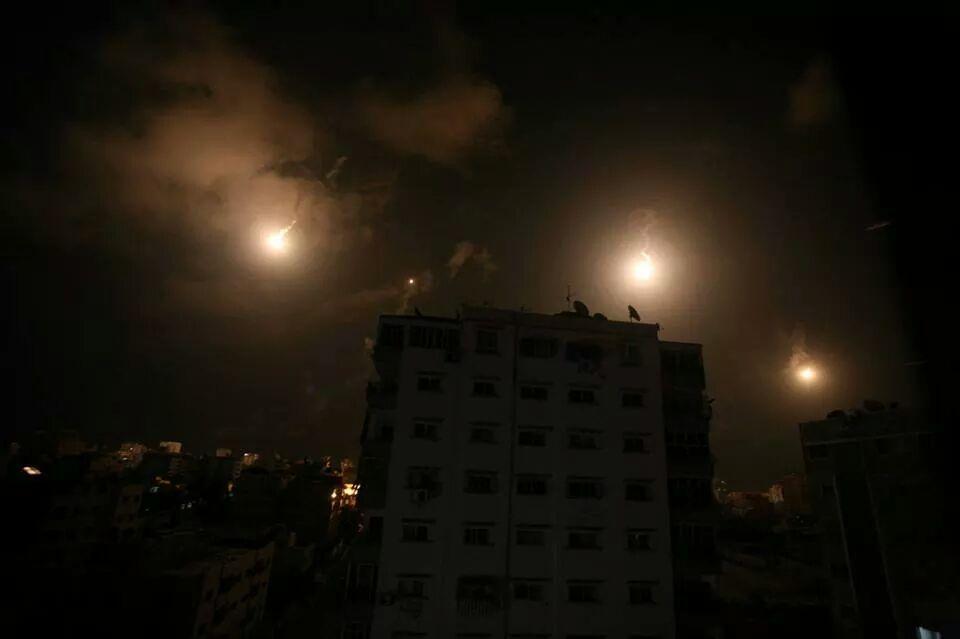
I woke this morning to media reports of the continued carnage in Gaza and to headlines recycled from Associated Press announcing that Israel had struck ‘symbols of Hamas power’.  Front and centre in the frenzied assault was an attack on Gaza’s only power station: but its importance is hardly ‘symbolic’.

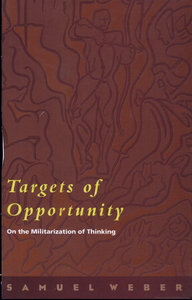
1509120862In Targets of opportunity Samuel Weber wrote: ‘Every target is inscribed in a network or chain of events that inevitably exceeds the opportunity that can be seized or the horizon that can be seen.’

In ‘In another time-zone…’ (DOWNLOADS tab) I elaborated his comment in relation to so-called ‘deliberative targeting’, which ‘places a logistical value on targets through their carefully calibrated, strategic position within the infrastructural networks that are the very fibres of modern society’:

The complex geometries of these networks then displace the pinpoint co-ordinates of ‘precision’ weapons and ‘smart bombs’ so that their effects surge far beyond any immediate or localised destruction. Their impacts ripple outwards through the network, extending the envelope of destruction in space and time, and yet the syntax of targeting – with its implication of isolating an objective – distracts attention from the cascade of destruction deliberately set in train. In exactly this spirit, British and American attacks on Iraqi power stations in 2003 were designed to disrupt not only the supply of electricity but also the pumping of water and the treatment of sewage that this made possible, with predictable (and predicted) consequences for public health. Similarly, on 28 June 2006, during the IDF’s Operation Summer Rains, Israeli missiles destroyed all six transformers of Gaza’s only power station (which provided over half of Gaza’s power). Being powerless in Gaza was as devastating as in Iraq:

‘The lack of electricity means sewage cannot be treated, increasing the risk of disease spreading, and hospitals cannot function normally. It means ordinary Gazans cannot keep perishable food because their fridges do not work. At night, they are plunged into complete darkness when the electricity cuts off. They rely on candles and paraffin lamps. Many residents have also been left with an irregular water supply as they need electricity to pump water up from nearby wells or from ground floor level to higher floors in blocks of flats.’

In attacking the power station – a repeated and familiar target, and so not one struck ‘by accident’ – the IDF knows very well that in the days, weeks and months to come hundreds, even thousands of people will get sick or even die as sewage plants and water pumps fail, as refrigeration systems stop, and as essential surgeries and life-support systems are interrupted.

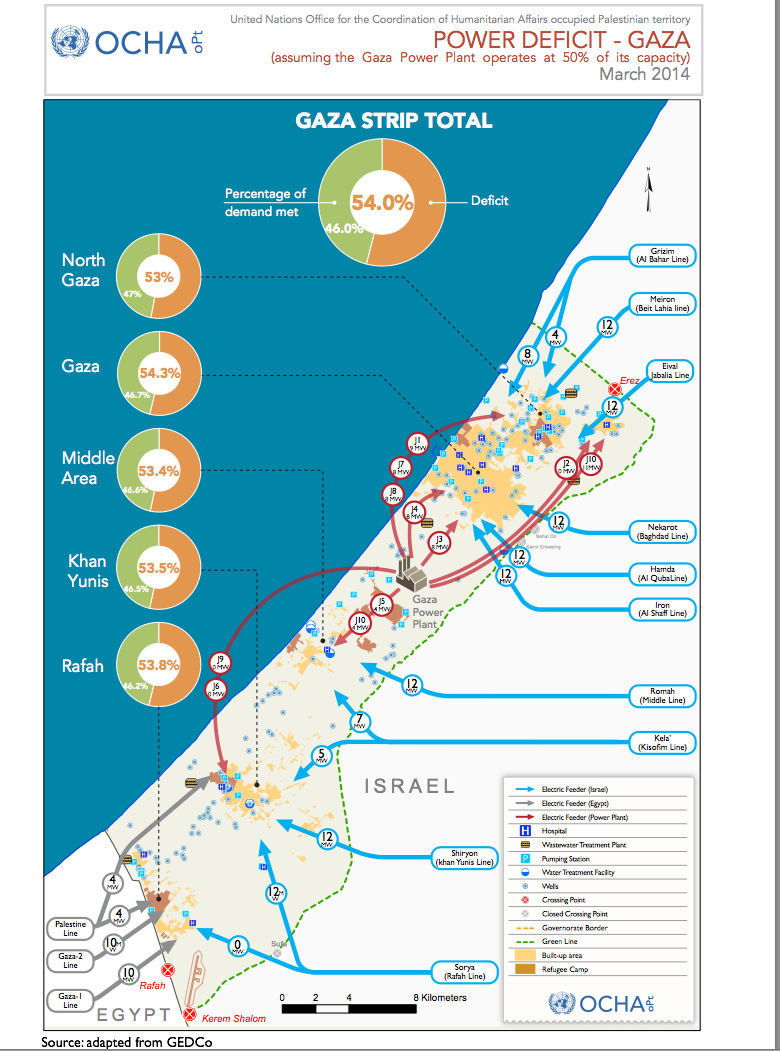
The situation before the latest Israeli offensive was highly precarious, as the map below shows; you can download a hi-res version here (if you have power), and the accompanying one-page report spells out the implications.  Israeli restrictions on the importation of spare parts mean that the power plant has never been restored to full capacity after the previous attacks, and since June 2013 the situation has been exacerbated by ‘the halt in the smuggling of Egyptian-subsidized fuel used to operate the [power plant] via the tunnels’ (last year the differential was 3.2 shekels/litre compared with 7.1 shekels/litre for fuel imported from Israel).

GAZA power deficit

At full capacity, Fares Akram reports, the power station should supply 80 megawatts of electricity; before the most recent Israeli offensive it was already degraded, producing at most only 50-60 megawatts.  It was damaged by Israeli shelling three times last week, and the effects tore into what was left of the fabric of everyday life.  Listen to Atef Abu Saif, writing in his ‘Diary of a Palestinian’ on Saturday 26 July (and read the whole thing: it is an astonishing and eloquent testimony to the depravity of the onslaught):

It has now been 40 hours with no electricity. The water was also cut off yesterday. Electricity is a constant issue in Gaza. Since the Strip’s only power station was bombed in 2008, Gazans have had at best 12 hours of electricity a day. These 12 hours could be during the day, or while you are fast asleep; it’s impossible to predict. Complaining about it gets you nowhere. For three weeks we’ve barely had two or three hours a day. And right now, we would be happy with just one.

These blackouts affect every part of your life. Your day revolves around that precious moment the power comes back on. You have to make the most of every last second of it. First, you charge every piece of equipment that has a battery: your mobile, laptop, torches, radio, etc. Second, you try not to use any equipment while it’s being charged – to make the most of that charge. Next you have to make some hard decisions about which phone calls to take, which emails or messages to reply to. Even when you make a call, you have to stop yourself from straying into any “normal” areas of conversation – they’re a waste of power.

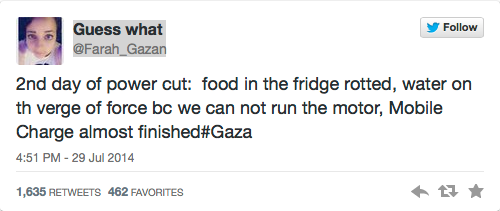
And remember that without those mobiles and laptops much of what the IDF has done would not reach the outside world: see this report , for example, which describes how 16 year old Farah Baker (@Farah_Gazan), ‘one of Gaza’s most powerful online voices’ with over 70,000 Twitter followers, was abruptly silenced when she was unable to charge her phone.

Gaza tweet power cut

Last night the power plant was hit by Israeli tank shells again – the IDF spokesman insists that the plant ‘was not a target’: just how many times do you have to strike something before you recognise what it is? – and now it has been forced to shut down completely.  You can watch a video interview with Sara Badiei, an ICRC water and sanitation engineer in Gaza, who describes the knock-on effects of the power shut-down here:

‘If there is no electricity, there is no water, and I want to make that clear… Water needs to be pushed down the lines, down these tubes, you need pumps to be able to run to bring the water out of the well, to push it down the line and to deliver it to the population.  If there’s no electricity, that can’t happen…’

Gaza also relies on 10 power lines from Israel and Egypt to provide an additional 120 megawatts but 8 of these have been cut by Israeli shelling.  In the interview, Sara explains that it takes 5-7 days to repair each line and it is, of course, extremely dangerous work in a war-zone under constant Israeli shelling.

This is not ‘symbolic’: it is infrastructural war of the most vicious kind, waged without restraint or remorse.  In the past, some Israeli politicians have demanded that Israel shut off the power (and water) supply to Gaza – for some of the international legal considerations, see Kevin Jon Heller’s careful review for Opinio Juris – but what has happened today isn’t about turning switches on or off.  Here is Harriet Sherwood in the Guardian:

The power plant is finished,” said its director, Mohammed al-Sharif, signalling a new crisis for Gaza’s 1.7 million people, who were already enduring power cuts of more than 20 hours a day.

Amnesty International said the crippling of the power station amounted to “collective punishment of Palestinians”. The strike on the plant will worsen already severe problems with Gaza’s water supply, sewage treatment and power supplies to medical facilities.

“We need at least one year to repair the power plant, the turbines, the fuel tanks and the control room,” said Fathi Sheik Khalil of the Gaza energy authority. “Everything was burned.”

Since I published the original version of this post, Human Rights Watch has documented – on 10 August – the cascading effects of the strike on the power plant:


It has drastically curtailed the pumping of water to households and the treatment of sewage, both of which require electric power. It also caused hospitals, already straining to handle the surge of war casualties, to increase their reliance on precarious generators. And it has affected the food supply because the lack of power has shut off refrigerators and forced bakeries to reduce their bread production.

“If there were one attack that could be predicted to endanger the health and well-being of the greatest number of people in Gaza, hitting the territory’s sole electricity plant would be it,” said , deputy Middle East and North Africa director at Human Rights Watch. “Deliberately attacking the power plant would be a war crime.”…

Ribhi al-Sheikh, deputy head of the Palestine Water Authority, said the lack of electricity had idled wells – except where generators were able to provide some back-up power – as well as water treatment and desalination plants. Idling wells endangers crops that require water at the hottest time of year.

Most urban households in Gaza need electricity to pump water to rooftop tanks. Ghada Snunu, a worker for a nongovernmental organization, said on August 4 that her home in Gaza City had been without electricity since the attack on the power plant, forcing her family to buy water in jerry cans and to conserve the used household water to empty the toilets. The collapse of electricity service meant that many Gazans lacked access to the 30 liters of water that is the estimated amount needed per capita daily for drinking, cooking, hygiene and laundering, said Mahmoud Daher, head of the Gaza office of the UN World Health Organization.

This is how Israel exercises its ‘right to defend itself’ and how ‘the most moral army in the world’ is set loose on civilians.

BttGzghCcAAwxuT.jpg-large

In the case of targeted killing (see ‘Drone geographies’, DOWNLOADS tab), the same network effects obtain:

‘…by fastening on a single killing – through a ‘surgical strike’ – all the other people affected by it are removed from view. Any death causes ripple effects far beyond the immediate victim, but to those that plan and execute a targeted killing the only effects that concern them are the degradation of the terrorist or insurgent network in which the target is supposed to be implicated. Yet these strikes also, again incidentally but not accidentally, cause immense damage to the social fabric of which s/he was a part – the extended family, the local community and beyond – and the sense of loss continues to haunt countless (and uncounted) others.’

This tactic, too, has been honed by the IDF, though not exactly refined.  Last year Craig Jones noted:

Since September 29th 2000, Israel has killed 438 Palestinians using the method of targeted killing. Of these, 279 were the ‘object’ of attack, meaning that Israel intentionally targeted them. The other 159 were ‘collateral damage’, chalked up to accidental or incidental consequences of targeting the other 279.

Rummaging around today, I’ve discovered another version of Sam Weber’s thesis with which I began, thanks to Jon Cogburn.  It’s a poem by the late (nationalist) Israeli poet Yehuda Amichai (who died in 2000) called ‘The Diameter of the Bomb’ (translated here by Chana Bloch):

The diameter of the bomb was thirty centimeters
and the diameter of its effective range about seven meters,
with four dead and eleven wounded.
And around these, in a larger circle
of pain and time, two hospitals are scattered
and one graveyard. But the young woman
who was buried in the city she came from,
at a distance of more than a hundred kilometers,
enlarges the circle considerably,
and the solitary man mourning her death
at the distant shores of a country far across the sea
includes the entire world in the circle.
And I won’t even mention the crying of orphans
that reaches up to the throne of God and
beyond, making a circle with no end and no God.

The poem was written in 1972, and in 2006 was the inspiration for a documentary film, also called The Diameter of the Bomb, about the aftermath of a suicide bombing in Jerusalem.  But its power reaches beyond place and time.  And that, in case anyone is wondering, is symbolic.

The American way of bombing

I’ve argued elsewhere (in ‘Lines of Descent’ [DOWNLOADS tab] and in ‘The American way of bombing?‘) that it’s important to situate any critical account of drones in a much longer history of air war, and a new book just out from Cornell University Press promises to do just that: The American Way of Bombing: changing ethical and legal norms from Flying Fortresses to drones, edited by Matthew Evangelista and Henry Shue.  And unlike rip-off academic-commercial publishers (most of them in the UK), this is available as an e-edition (Kindle, etc) at a perfectly reasonable price.

Here are the details:

Aerial bombardment remains important to military strategy, but the norms governing bombing and the harm it imposes on civilians have evolved. The past century has seen everything from deliberate attacks against rebellious villagers by Italian and British colonial forces in the Middle East to scrupulous efforts to avoid “collateral damage” in the counterinsurgency and antiterrorist wars of today. The American Way of Bombing brings together prominent military historians, practitioners, civilian and military legal experts, political scientists, philosophers, and anthropologists to explore the evolution of ethical and legal norms governing air warfare.

Focusing primarily on the United States—as the world’s preeminent military power and the one most frequently engaged in air warfare, its practice has influenced normative change in this domain, and will continue to do so—the authors address such topics as firebombing of cities during World War II; the atomic attacks on Hiroshima and Nagasaki; the deployment of airpower in Iraq, Afghanistan, and Libya; and the use of unmanned drones for surveillance and attacks on suspected terrorists in Pakistan, Yemen, Sudan, Somalia, and elsewhere.

American way of bombing

Introduction: The American Way of Bombing
by Matthew Evangelista

Part I. Historical and Theoretical Perspectives

1. Strategic Bombardment: Expectation, Theory, and Practice in the Early Twentieth Century
by Tami Davis Biddle

2. Bombing Civilians after World War II: The Persistence of Norms against Targeting Civilians in the Korean War
by Sahr Conway-Lanz

3. Targeting Civilians and U.S. Strategic Bombing Norms: Plus ça change, plus c’est la même chose?
by Neta C. Crawford

4. The Law Applies, But Which Law?: A Consumer Guide to the Laws of War
by Charles Garraway

Part II. Interpreting, Criticizing, and Creating Legal Restrictions

5. Clever or Clueless?: Observations about Bombing Norm Debates
by Charles J. Dunlap Jr.

6. The American Way of Bombing and International Law: Two Logics of Warfare in Tension
by Janina Dill

7. Force Protection, Military Advantage, and “Constant Care” for Civilians: The 1991 Bombing of Iraq
by Henry Shue

8. Civilian Deaths and American Power: Three Lessons from Iraq and Afghanistan
by Richard W. Miller

Part III. Constructing New Norms

9. Proportionality and Restraint on the Use of Force: The Role of Nongovernmental Organizations
by Margarita H. Petrova

10. Toward an Anthropology of Drones: Remaking Space, Time, and Valor in Combat
by Hugh Gusterson

11. What’s Wrong with Drones?: The Battlefield in International Humanitarian Law
by Klem Ryan

12. Banning Autonomous Killing: The Legal and Ethical Requirement That Humans Make Near-Time Lethal Decisions
by Mary Ellen O’Connell

Scoping Afghanistan

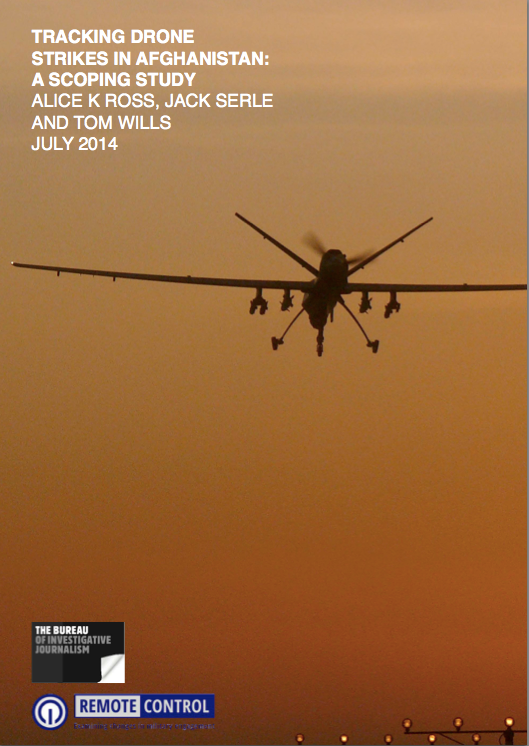
BOIJ Tracking drone strikes in AfghanistanThe marvellous Bureau of Investigative Journalism has just published a preliminary report on its new study  of drone strikes in Afghanistan, ‘the most heavily drone-bombed country in the world.’  The study, carried out with the support of the Remote Control Project, has been prompted by analyses which show that ISAF has persistently under-estimated civilian casualties from its strikes (‘“We only count that which we see… You can do a tremendous amount of forensics … [but] seldom do we see the actual bodies.”)

I have my doubts about the wisdom of severing ‘drone strikes’ from air strikes carried out by conventional aircraft that are networked in to ISR feeds from drones; I’ve elaborated this before, and it is a crucial part of my own work on militarised vision, where I’m working through the military investigations into air strikes in Kunduz, Sangin and Uruzgan.  I’ll start posting about this work next month.

The irony, I think, is not (quite) that we know so little about the ostensibly ‘public’ strikes in Afghanistan compared with the ‘covert’ campaigns in Pakistan, Yemen, Somalia and elsewhere: it is, rather, that we know a lot about how the USAF (though not the RAF) conducts strikes in Afghanistan but remarkably little about the victims, whereas in Pakistan we know much less about how the strikes are carried out (apart from the bureaucratisation of ‘kill lists’ in Washington) and, thanks to the work of the Bureau, much more about the victims.

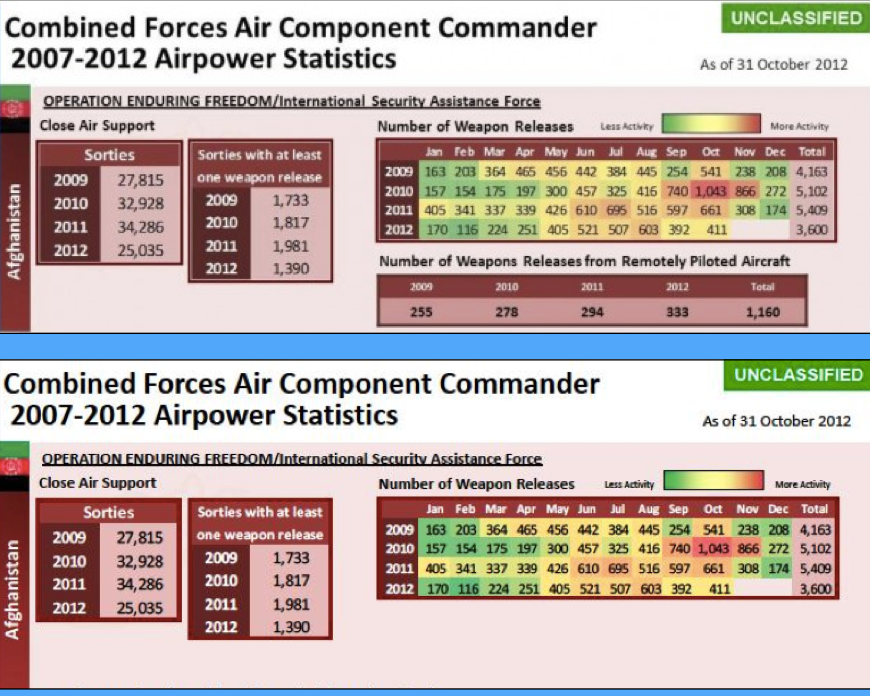
It is true, though, that while the official US military investigations released through FOIA requests are often immensely informative, even in redacted form (more on this next month), there is often also a remarkable reluctance to release even basic information to the public.  Spot the difference between these two tables; the first release (on top) was subsequently overwritten by the second (below)…

Airpower statistics 2007-2012

As I say, more to come.  In the meantime, the ‘scoping study ‘ from the Bureau is here, and well worth reading.

The Federal Administration of Military Violence

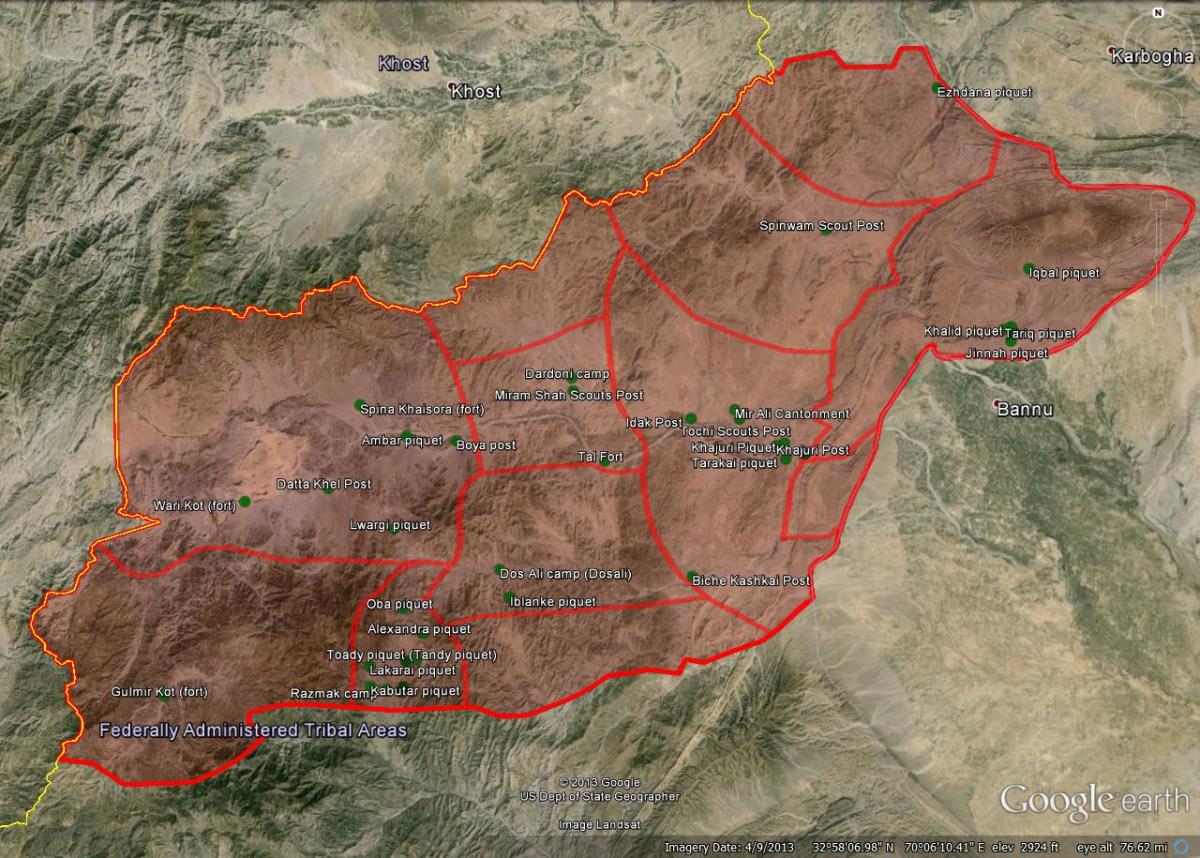
On 15 June – one week after the attack on Karachi’s international airport by the Pakistan Taliban (Tehrik-i-Taliban or TTP) and the Islamic Movement of Uzbekistan (UMI) – the Pakistan military announced its ‘comprehensive’ Operation Zarb-i-Azb in the Federally Administered Tribal Areas (FATA).  From their bases in North Waziristan, the statement announced, militants had ‘waged a war against the state of Pakistan’ and the military had been ‘tasked to eliminate these terrorists regardless of hue and color, along with their sanctuaries.’  Although the press release insisted that ‘these enemies of the state will be denied space anywhere across the country’ the epicentre of the operation was and remains North Waziristan.

NWA_PakMil_locations_all_1200

There are reportedly 60,000 troops in the region, and the main Pakistan military installations in North Waziristan are shown on the map above (taken from the AEI spinoff site, Critical Threats), but the prelude to ground operations was a concerted attack by the Pakistan Air Force on eight targets linked to planning the assault on Karachi airport.

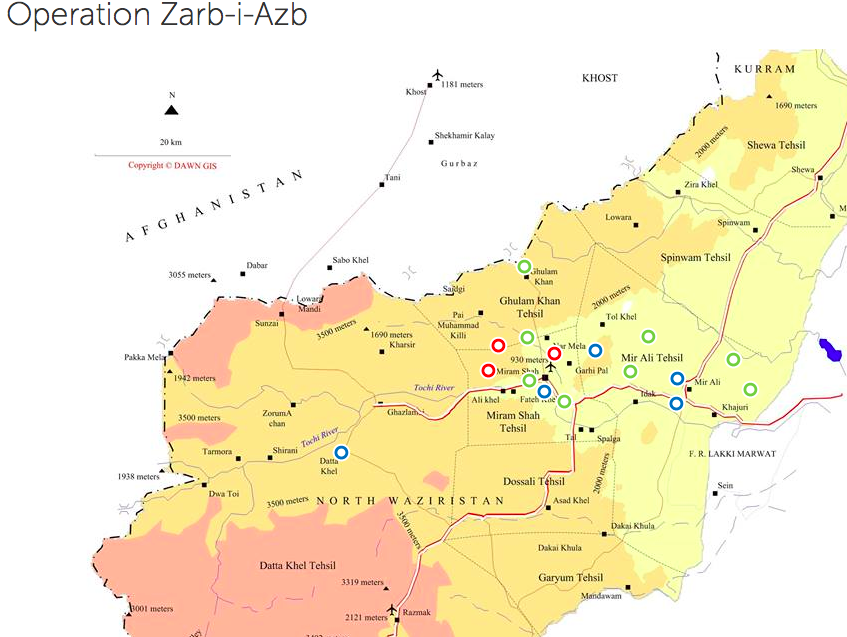
Green Ground Red Drones Blue PAF strikes DAWN 20 June 2014

‘Operation Zarb-i-Azb’ refers to Mohammed’s sword, and its political imagery is artfully dissected by Afiya Shehrbano Zia:

‘It refers to the (‘sharp/cutting’) sword of the prophet of Islam and is a brilliant usurpation of the religious metaphor. It upstages the religious imaginary for which the Tehreek e Taliban Pakistan (TTP) claim to be fighting. After all, who would dare to vanquish the Prophet’s metaphorical sword? The appellation justifies its cause for the defense of the Islamic state, and quells the lesser purpose of the Taliban in one fell swoop. As in all cases in the instrumentalisation of religion as a propaganda tool, it also excites nationalists and seeks to rationalise another round of military operations, killings and displacements that will follow.’

There’s much more of value in her commentary, but – as Zia also acknowledges – the genealogy and geography of the offensive is no less complicated (my map comes from Dawn, 20 June 2014; green circles are Pakistan military land operations; blue are Pakistan Air Force strikes; red are US drone strikes).

First, it’s not clear whether the Pakistan military finally has the Afghan Taliban in its sights too – regarded by Islamabad as the ‘good Taliban’ because, far from threatening the state of Pakistan, it has long been used by both the military and (particularly) the intelligence service as a counter to any Indian influence over Kabul once US and ISAF forces complete their withdrawal.  And it is of course the Afghan Taliban (along with the Haqqani network) which is the principal concern of the United States.

Second, the Pakistan military – and especially the Air Force – has a long history of offensive operations in the FATA, as I’ve discussed in detail before: see here and here.  Now other commentators have noticed this: the Bureau of Investigative Journalism has tracked 15 Pakistan Air Force strikes carried out by helicopter gunships and F-16 fighters between 19 December 2013 and 15 June 2014, which killed 291-540 people (including 16-112 civilians).

The significance of this is not only that it precedes the current offensive but also that it coincides with the so-called ‘pause’ in CIA-directed drone strikes against targets in the FATA.  Chris Woods notes that PAF strikes are ‘generating casualties far in excess of any caused by CIA drones strikes’, and one resident of Mir Ali recited a grim military timetable:

“It’s like doomsday for people in Mir Ali, where death is everywhere since Saturday… They start the day with artillery shelling early in the morning. Gunship helicopters come for shelling during the day and jets strike at around 2:00-2:30 in the night.”

The military denies all reports of civilian casualties but this beggars belief, and the Bureau reports that some residents have even concluded that the drone strikes were preferable:

‘The difference between the drone strikes and the military strikes is that drones target specifically who they want to target… the wanted terrorists… people are saying that drone attacks were good compared to the military strikes.  Personally I agree, because I have seen drones, they are in the air 24 hours and they don’t attack as randomly… the place of the attack was always an area where the Taliban or terrorists were living.’

But whatever one makes of this – a calculation that would imply that the CIA had abandoned its anonymous ‘signature strikes’ – drones have not been absent from the skies over Waziristan. Pakistan has its own reconnaissance drones, and they have repeatedly been used to direct strike aircraft onto their targets (though with what accuracy it is impossible to know) and to support ground operations: the PAF boasted of their use in May, when hundreds of houses and shops were destroyed in Machis Camp and in the bazaar at Mir Ali.  And – the third complication – the US resumed its drone war on 11 and 12 June when two UAVs fired six missiles at compounds near Miram Shah, supposedly killing ten members of UMI and the Haqqani network, and again on 18 June when three compounds near Dargah Mandi were hit.  Whether these strikes were co-ordinated with Pakistan is unclear – the Foreign Office has issued its ritual denial, but it’s difficult to believe they were not connected to Pakistan’s own military operations, and here too there is a long history of what I’ve called ‘dirty dancing‘ between Washington and Islamabad that continued until at least the end of 2011.  It seems highly unlikely that the dance has ended.

_75732447_75732446

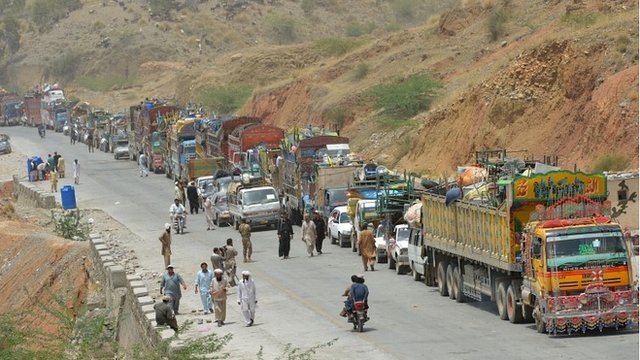
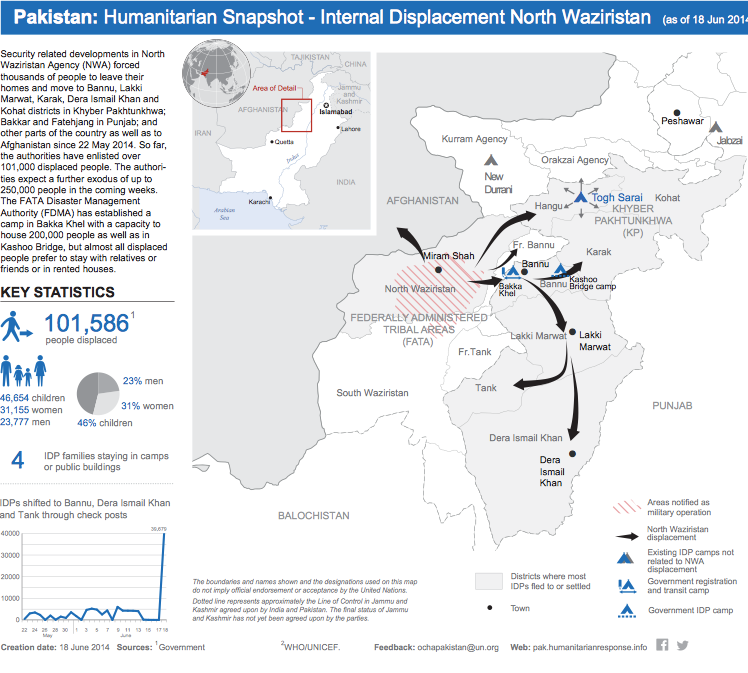
Finally, the shock waves from these various operations ripple far beyond their ostensible targets. Hundreds of thousands of people have fled, some in advance of military operations (which had been telegraphed for months), many more when the military temporarily loosened its curfew on the region. As on previous occasions, most of them fled to Bannu, some to government camps (‘Only the poorest of the poor would go to a camp in such hot and humid weather‘) but the majority to stay with family members, while some refugees have even crossed into Khost in Afghanistan to seek sanctuary. The map below is an early trace (18 June), and it shows only those who are officially registered so it excludes those lodging with their extended families; but even this anticipates hundreds of thousands more displaced people to come.

Pakistan Displaced Persons June 2014

There is also the real fear that, as Ismail Khan and Declan Walsh reported earlier this month, Taliban reprisals will focus on the Punjab, the electoral base of Prime Minister Nawaz Sharif.

All of this suggests the importance of unravelling the intimate connections between the political constitution of the Federally Administered Tribal Areas and the administration of military violence there.  This is clearly not limited to CIA-directed drone strikes, and here Zia’s reflections on a question posed by a feminist friend are worth repeating:

‘She wonders, “why this obsession with drones?” Obviously, the interest is due to a host of factors, but her query reflects the difference in modes of analysis. Her position reflects the views of women’s rights/human rights groups who consider specific military operations in one part of Pakistan as just one cog in a broader narrative about the source of the conflict. For them, this has been the cosy nexus and mutually beneficial relationship between the military establishment and the jihadi groups.

Those like Imran Khan, who foreground drones in their analysis of ‘conflict’, consider US intervention and occupation of Afghanistan as the drivers of conflict in Pakistan. But local progressive groups argue that even if militants in FATA are subdued, or US interventions are resisted, unless the policy of patronage and nurturing of jihadi groups in the rest of Pakistan is dismantled and buried, conflict at all levels will never end – drones or no drones.

This doesn’t mean that military technologies are unimportant nor that drone strikes are of marginal concern (inside or outside an ‘area of active hostilities‘): it means that we need to direct our attention to the larger matrix of political and military violence within which they are deployed, transnational and national, and to its genealogies and geographies.

Eternal Harvest

Many readers will know the remarkable work that’s been done to reconstruct the US bombing of Cambodia during the ‘Vietnam’ War: I’m thinking of Taylor Owen and Ben Kiernan‘s ‘Bombs over Cambodia’ which appeared in The Walrus in 2006: available here and here.

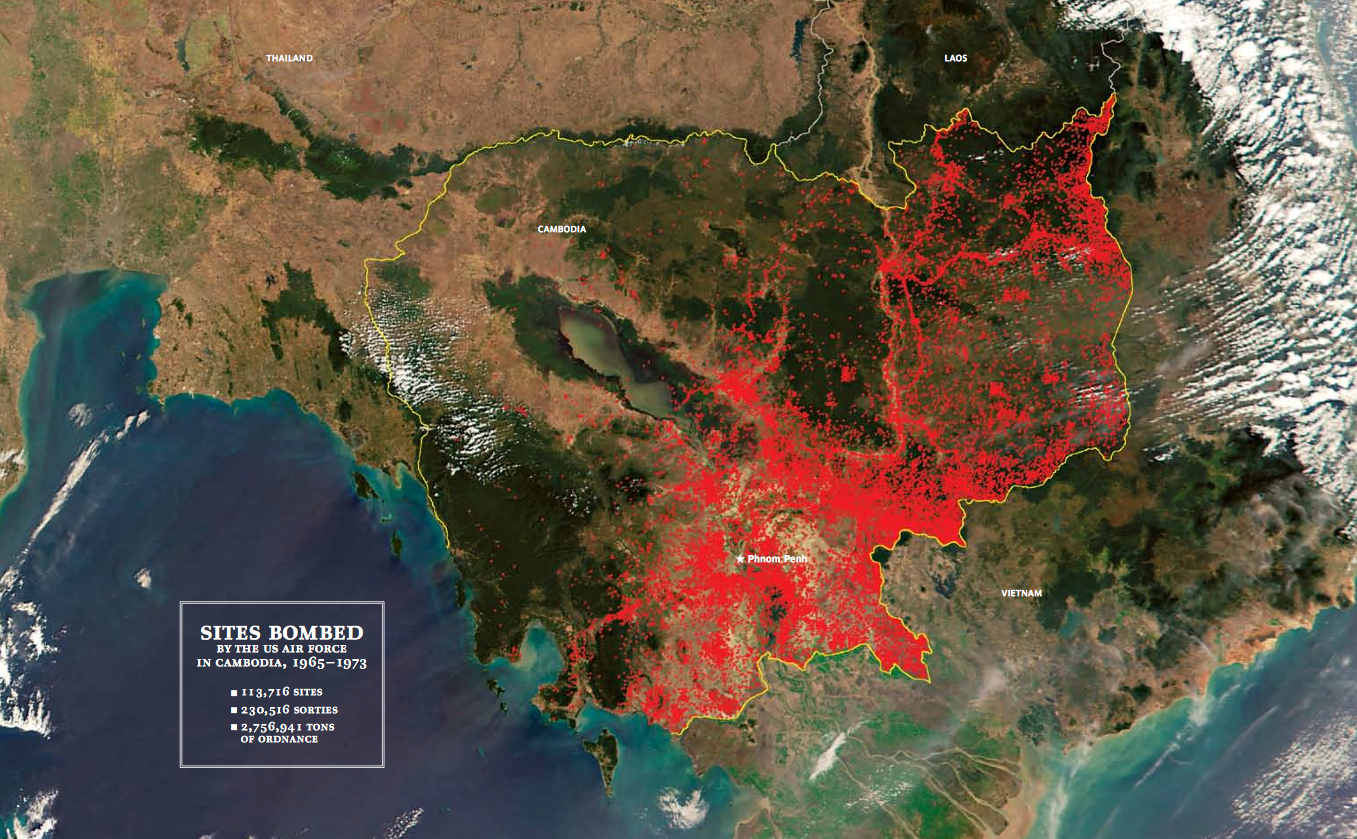
The still-incomplete database (it has several “dark” periods) reveals that from October 4, 1965, to August 15, 1973, the United States dropped far more ordnance on Cambodia than was previously believed: 2,756,941 tons’ worth, dropped in 230,516 sorties on 113,716 sites. Just over 10 percent of this bombing was indiscriminate, with 3,580 of the sites listed as having “unknown” targets and another 8,238 sites having no target listed at all. The database also shows that the bombing began four years earlier than is widely believed—not under Nixon, but under Lyndon Johnson. The impact of this bombing, the subject of much debate for the past three decades, is now clearer than ever. Civilian casualties in Cambodia drove an enraged populace into the arms of an insurgency that had enjoyed relatively little support until the bombing began, setting in motion the expansion of the Vietnam War deeper into Cambodia, a coup d’état in 1970, the rapid rise of the Khmer Rouge, and ultimately the Cambodian genocide.

US bombing of Cambodia

The contemporary significance of these air strikes includes, of course, what Rob Nixon calls the ‘slow violence’ of the unexploded ordnance that still haunts the Cambodian landscape today.  But they also have implications for recent bombing campaigns in Afghanistan, as Ben and Taylor discuss in ‘Roots of U.S. Troubles in Afghanistan: Civilian Bombing Casualties and the Cambodian Precedent’  here, and for today’s cross-border (though rather less covert) drone strikes in Pakistan, as Henry Grabar argued last year in The Atlantic here.

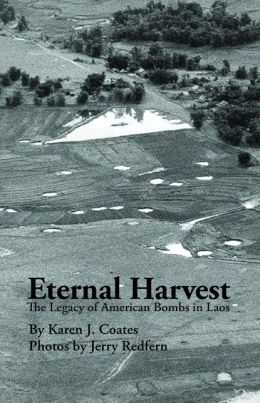
Eternal HarvestThe conflict in Vietnam spilled across into Laos too, and a new book by Karen Coates (with photographs by Jerry Redfern) documents the effects of this even more shocking campaign in depth and detail: Eternal Harvest: the legacy of American bombs in Laos.  The short animation below, just 98 seconds of your time, prepared by Jerry for Mother Jones, shows each bombing run:

The nearly 600,000 bombing runs delivered a staggering amount of explosives: The equivalent of a planeload of bombs every eight minutes for nine years, or a ton of bombs for every person in the country—more than what American planes unloaded on Germany and Japan combined during World War II. Laos remains, per capita, the most heavily bombed country on earth.

There’s a much longer version at vimeo here, which comes with this rider:

This video shows the US Air Force bombing campaign in Laos, from 1965 to 1973. The data comes from the website of the National Regulatory Authority of Lao PDR (NRA), which oversees UXO clearance in that country. They received the data from the US Embassy in Vientiane in 2000, from records originally created by the Department of Defense and stored at the National Archives.

The NRA data sets include information on the number and types of aircraft flown, types of bombs dropped, target conditions and after-action reports. For this graphic, only the dates, latitude and longitude, and the number of bombs dropped per mission are used.

The US Air Force began bombing Laos in June 1964. Many branches of the US, Thai, Lao, South Vietnamese and other forces also conducted aerial missions. But this graphic reflects only bombing missions noted in the NRA data, which show US Air Force missions beginning on October 1, 1965.

There’s much more information, plus photographs from the book, at the website that accompanies the book.

COVER MAKER 5.5X8.25.inddIf you want a quick overview of the geography of bombing Laos, Peter Larson also has a useful survey which includes some helpful maps here; he’s constructed his own animation here.

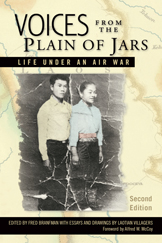
‘Animation’ is hardly the verb for such appalling carnage, I realise; the classic English-language account giving voices to the survivors (and victims) is Fred Branfman‘s brilliant Voices from the Plain of Jars: life under an air war, first published in 1972 and republished last year with an introduction by Alfred McCoy and available as an e-book.

The radio-controlled television plane

I’ve written before about the long history of drones (UAVs or RPAs, if you prefer – and the Air Force does prefer), and the unrealised intersections between remotely-controlled aircraft and early television: I’m thinking of Archibald Low‘s experiments with what he called Televista in 1914 and his trial pilotless aircraft (codenamed ‘Aerial Target”) in the dog days of the First World War.  I had assumed that the connections did not materialise – and even then in very precarious ways – until the closing stages of the Second World War with the US Project Aphrodite, which I discussed briefly in ‘Lines of Descent’ (DOWNLOADS tab).

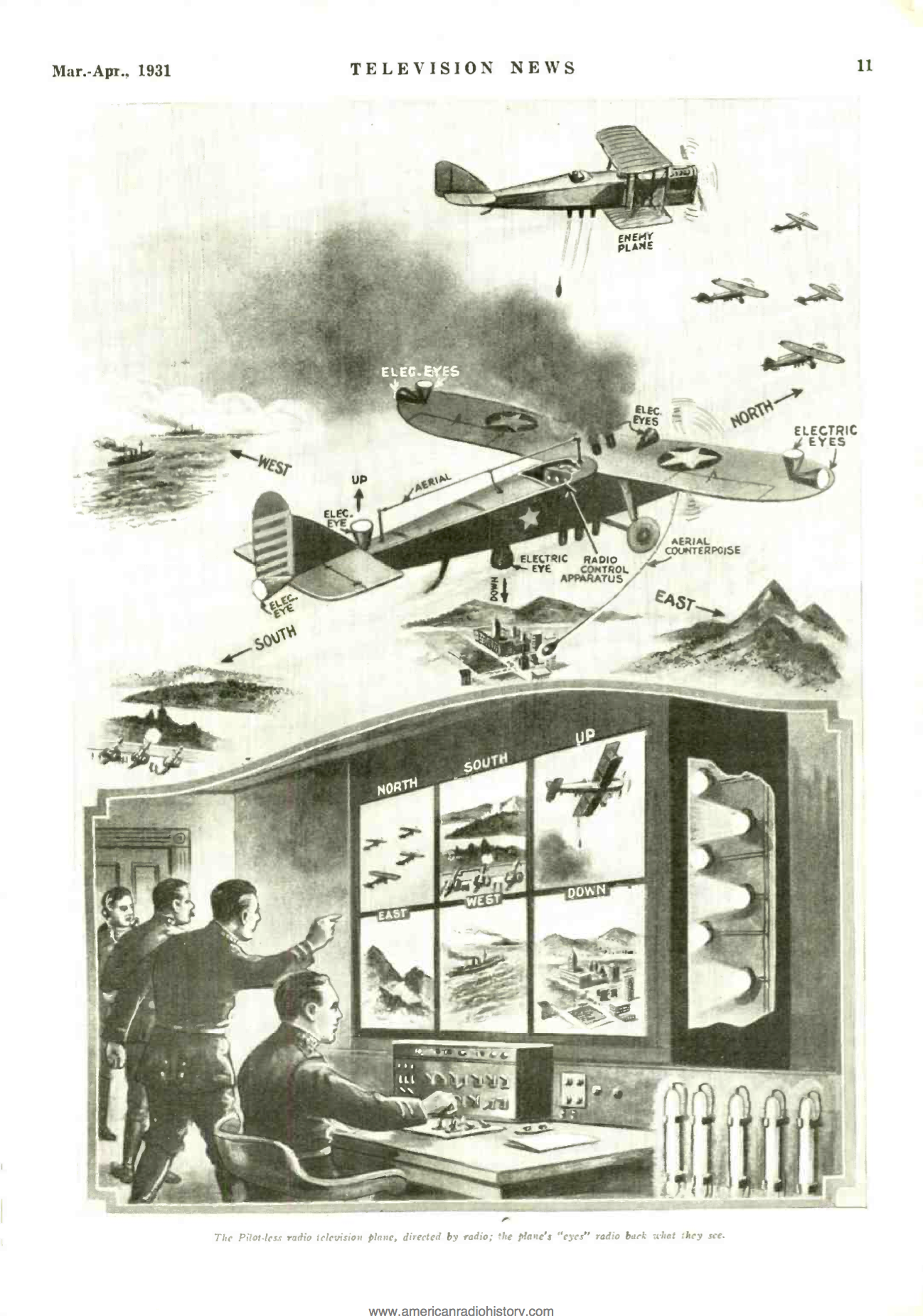
But now, via Gizmodo, I discover another way-station that was put in place in 1924.  First published in The Experimenter magazine, and then republished in Television News in 1931 in its March-April issue, an article by Hugo Gernsback described the military operation of a ‘radio-controlled television plane’, directed by radio and navigated using ‘electric eyes’ that would enable ‘the control operator, although 50, 100 or possibly 500 miles away, [to] see exactly what goes on around the plane, just the same as if he himself were seated in the cockpit; with the further advantage that, sitting before a screen, he can scan six directions all at once, which no human aviator can do.’

Television-News-1931-Mar-Apr

And, just like Project Aphrodite and its modern descendants, this would be a hunter-killer mission:

‘The radio-controlled television airplane can then be directed to the spot where it is supposed to drop its bombs. Moreover, the distant-control operator can see exactly when his machine arrives over a given spot. A sighting arrangement can be attached to the plane in such a manner that, when the object to be bombed comes over the cross-wires in the range-finder, the bomb or bombs are dropped at the exact moment.’

But as the illustration indicates – and in contrast to today’s Predators and Reapers – it was assumed that the aircraft would be able to operate in contested air space – and even more effectively than a conventional aircraft:

If, for instance, an enemy airplane suddenly comes out of a cloud and starts dropping bombs on our machine below, the control operator sees this enemy machine quicker 500 miles away, than if an aviator sat in the cockpit one-quarter of a mile away from or below the enemy bomber. The control operator will send a radio signal that will immediately discharge a smoke screen from his radio television plane, hiding his craft in smoke.

Explaining the decision to republish the article, Gernsback accepted that when it first appeared ‘the ideas set forth therein might have appeared more or less fantastic’ – but ‘they are no longer considered so today’:

‘As a matter of fact, the radio-controlled airplane is with us today.  Several of the leading governments have already in their possession airplanes that can now fly and stay aloft for any length of time, within reason, without a pilot or any human being on board.

‘The television adjunct will follow as a matter of course.’

tvglasses

Gernsback was an extraordinary man.  Sometimes hailed as the father of science fiction – hence the Hugo Awards – he was keenly interested in turning his imaginative ideas into material fact.  Even before the First World War he had invented a home radio set.  Matthew Lasar explains:

Gernsback’s “Telimco Wireless” didn’t receive the signals of any broadcast radio stations,  since there were almost none before 1920. But it did ring a bell in an adjacent room without any connecting wires. Such was the sensation the device made that local police demanded a demonstration, following up on a fraud complaint. Satisfied that it worked, the Telimco was subsequently sold in many department stores … until the first World War, when the government banned amateur wireless transmission.

But he was soon fascinated by television; he launched Radio News and then move on to Television News as platforms for his ideas and enthusiasms.  The image above shows him in 1963 wearing his ‘television glasses’.  He died the following year, or he might have invented Google Glass too.

Total war, double vision and surgical strikes

Paul K. Saint-AmourOver the years I’ve learned much from the writings of Paul K. Saint-Amour, whose work on the violent intersections between modernism and air power has helped me think through my own project on bombing (‘Killing Space’) and, in a minor key, my analysis of cartography, aerial reconnaissance and ‘corpography’ on the Western Front in the First World War.  A minimalist listing would include:

Like me, Paul also has an essay in Pete Adey‘s co-edited collection, From above: war, violence and verticality (Hurst, 2013): ‘Photomosaics: mapping the Front, mapping the city’.

He has just published an important essay, ‘On the partiality of total war‘, in Critical inquiry 40 (2) (2014) 420-449, which has prompted this post.  What I so admire about Paul’s writing is his combination of literary style – these essays are a joy to read, even when they address the bleakest of subjects – critical imagination and analytical acumen, and the latest essay is no exception.

His central point is that the idea of ‘total war’ – which, as he insists, was essentially an inter-war constellation – was deeply partial.  It both naturalized and undermined a series of European imperialist distinctions between centre and periphery, peace and war:

‘… forms of violence forbidden in the metropole during peacetime were practiced in the colony, mandate, and protectorate, [and] … the distinction between peace and war was a luxury of the center. At the same time, by predicting that civilians in the metropole would have no immunity in future wars, it contributed to the erosion of the very imperial geography (center versus periphery) that it seemed to shore up.’

Hence the partiality of what he calls ‘the fractured problem-space of the concept’: ‘A truly total conception of war would have insisted openly on the legal, ethical, political, and technological connections between European conflagration and colonial air control’ (my emphasis).
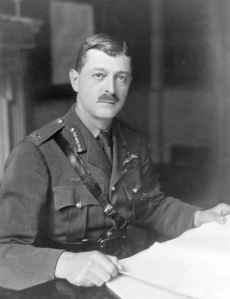
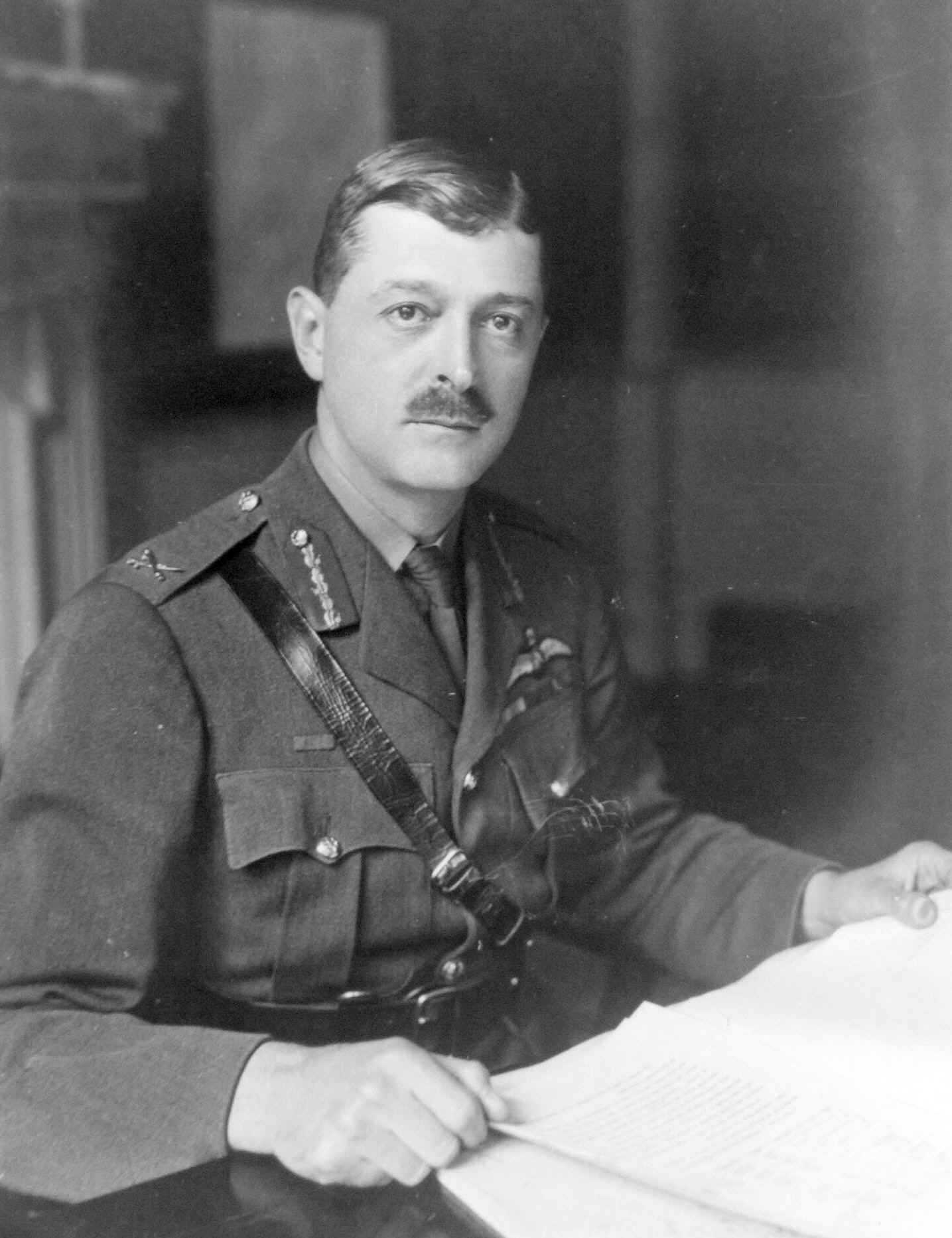
CharltonPaul advances these claims, and enters into this fraught ‘problem-space’, by tracking the figure of a Royal Air Force officer, L.E.O. Charlton (left).  A veteran of the First World War, Charlton was appalled by his experience of colonial ‘air control’ in Iraq in the 1920s (‘direct action by aeroplanes on indirect information by unreliable informants … was a species of oppression’: sounds familiar) but became a strenuous advocate of bombing civilians as the ‘new factor in warfare’ in the future. Convinced that Britain was exceptionally vulnerable to air attack, the only possible defence was extraordinary air superiority capable of landing devastating ‘hammer blows’.

Now others have traced the lines of descent from Britain’s ‘air policing’ in Palestine, Iraq and the North-West Frontier in the 1920s and 30s to its bomber offensive against Germany in the 1940s – ‘Bomber’ Harris notoriously cut his teeth in both Iraq and Palestine, though one historian treats this as precision dentistry – and still others have joined the dots from yesterday’s imperial borderlands to today’s: I’m thinking of  Mark Neocleous‘s (re)vision of police power (‘Air power as police power‘, Environment and Planning D: Society & Space 31 (4) (2013) 578-93 and Priya Satia‘s genealogy of ‘Drones: a history from the Middle East‘, Humanity 5 (1) (2014) 1-31.

But Paul complicates these genealogies in important ways by showing how, within British military circles, war from the air was at once prosecuted and displaced/deferred.  He argues that major air power theorists of the day reserved the category of ‘war’ for conflicts between sovereign states and relegated state violence ‘against colonial, mandate and protectorate populations’ to minor categories: ‘police actions, low-intensity conflicts, constabulary missions, pacification, colonial policing’.  Indeed, at the Geneva Disarmament Conference in 1923 the British delegation sought to abolish all air forces except those deployed ‘for police purposes in certain outlying regions’.  The manoeuvre failed, yet it wasn’t until 1977 that the first Additional Protocol to the Geneva Convention of 1949 recognised the right of subject populations to resist colonial domination, military occupation and racial repression, nominated such acts as constituting an ‘international conflict’, and extended to them the protections of international law.  Several states have refused to ratify the AP, including the United States, Israel, Iran, India and Pakistan.  Charlton’s original objection was to the use of air power outside declared war zones and against civilian subject populations: an objection that many would argue continues to have contemporary resonance in the CIA-directed drone strikes in Pakistan, Yemen, Somalia and elsewhere.

But Charlton’s masters (and, ultimately, Charlton himself) ‘dissevered’ the meaning of ongoing state violence in the periphery from prospective state violence at the centre.  ‘Home is the space of the total war to come‘ – the Royal Air Force evidently believed that lessons learned in the colonies could be repatriated to the metropolis – and this would necessarily involve the breaching of state borders.  War from the air thus dissolved the distinctions between military and civilian spaces, as Giulio Douhet prophesied in the 1920s:

‘By virtue of this new weapon, the repercussions of war are no longer limited by the farthest artillery range of guns, but can be felt directly for hundreds and hundreds of miles… The battlefield will be limited only by the boundaries of the nations at war, and all of their citizens will become combatants, since all of them will be exposed to the aerial offensives of the enemy. There will be no distinction any longer between soldiers and civilians.’

Few military experts in Britain talked about Douhet before the 1930s, but Charlton had read him in French translation, referring to him in his Cambridge lectures published as War from the air: past, present, future (1935): John Peaty calls him ‘Douhet’s leading disciple in Britain.’  But in Charlton’s view war from the air also redrew the contours of military violence so that they no longer lined fronts but bounded areas.  In principle this transformation of the target space provided for two different strategies, though in practice the differences between them were as much ideological as they were substantive.  Air strikes could take the form of either area bombing, levelling whole districts of cities, or so-called ‘precision bombing’ that would dislocate strategic nodes within a networked space, and it was this that Charlton believed was the key to aerial supremacy:

‘[T]he nation conceived by air-power theorists was a discrete entity unified both by the interlocking systems, structures, and forces that would constitute its war effort and by their collective targetability in the age of the bomber. As the proxy space for total war doctrine, in other words, air-power theory provided limitless occasions for representing the national totality. The common figures of “nerve centres,” “heart,” and “nerve ganglia” all participated in the emergent trope of an integrated national body whose geographical borders, war effort, and vulnerability were all coterminous.’
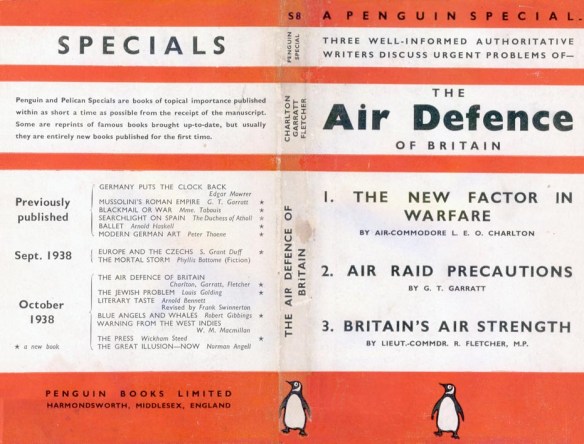
Penguin-S8 Air Defence of Britain

In War from the air, Charlton had advocated a devastating attack on the enemy capital:

‘It is the brain, and therefore the vital point. Injury to the brain means instant death, or paralysis, whereas injury to the body or the members, especially if it be a flesh-wound, may mean nothing at all, or, at most, a grave inconvenience.’

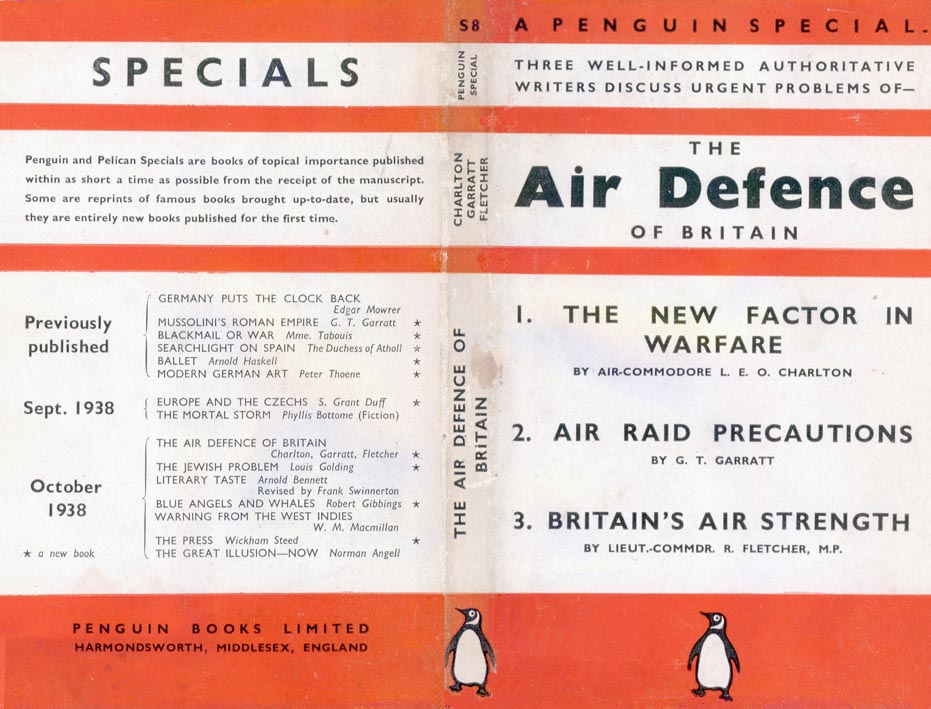
And in his contribution to The air defence of Britain, published in 1938, Charlton used the figure of the ‘national body’ to underscore what he saw as Britain’s vulnerability to air attack: ‘We are laid out, as if on an operating table, for the surgical methods of the bomber.’  As it turned out, of course, air strikes were even less ‘surgical’ than today’s aerialists try to claim, but as I showed in ‘Doors into nowhere’ (DOWNLOADS tab), these bio-physiological tropes were refined by Solly Zuckerman when he sought to provide a scientific  basis for the combined bomber offensive during the Second World War.
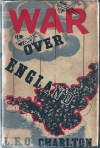
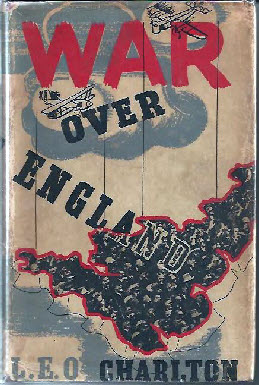
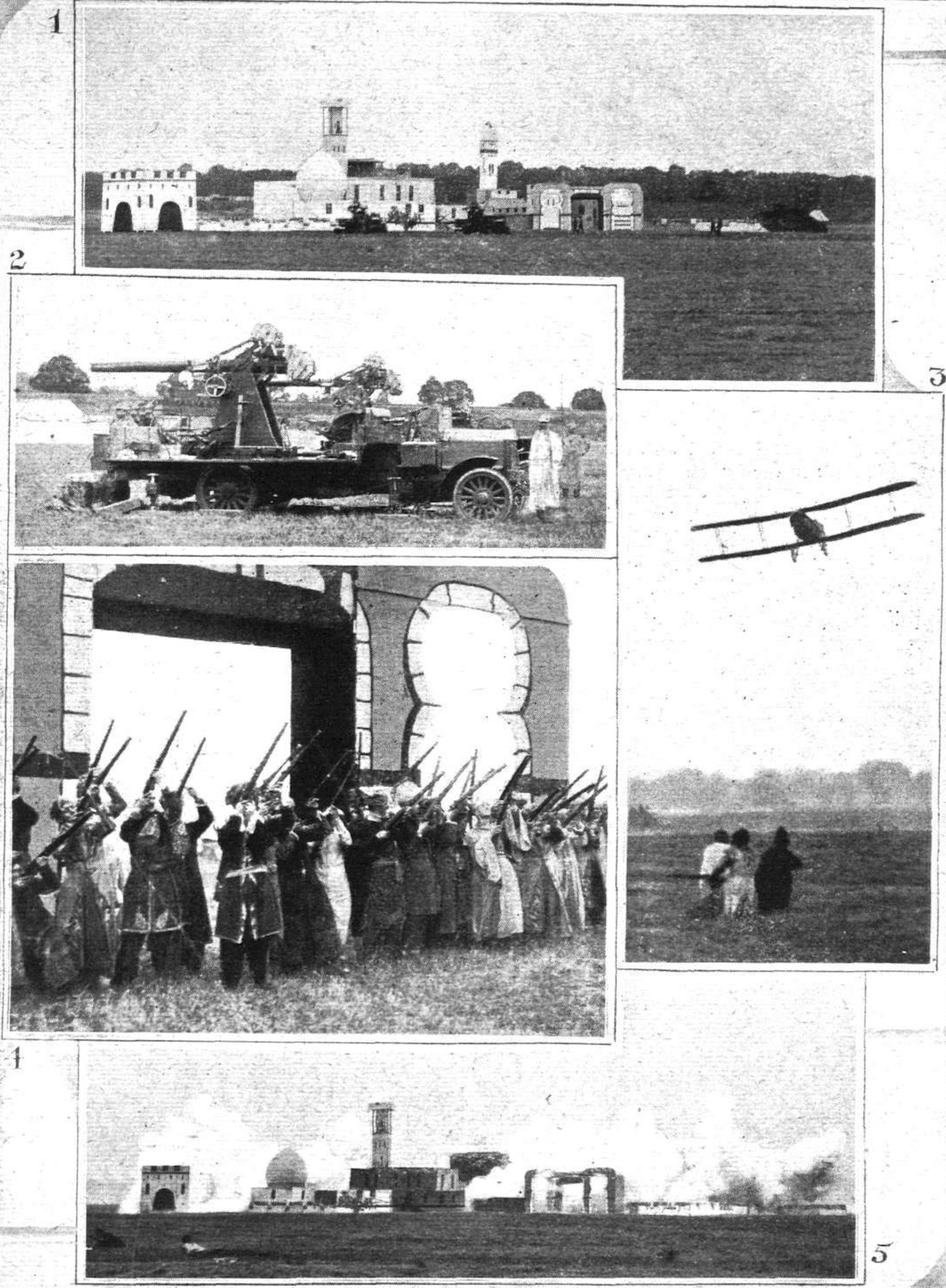
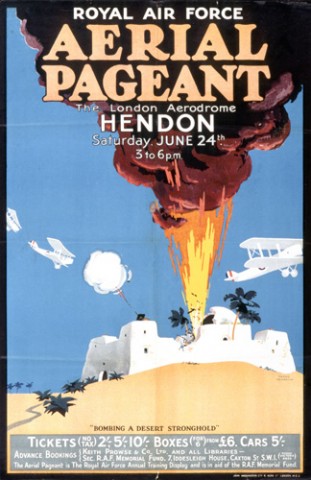
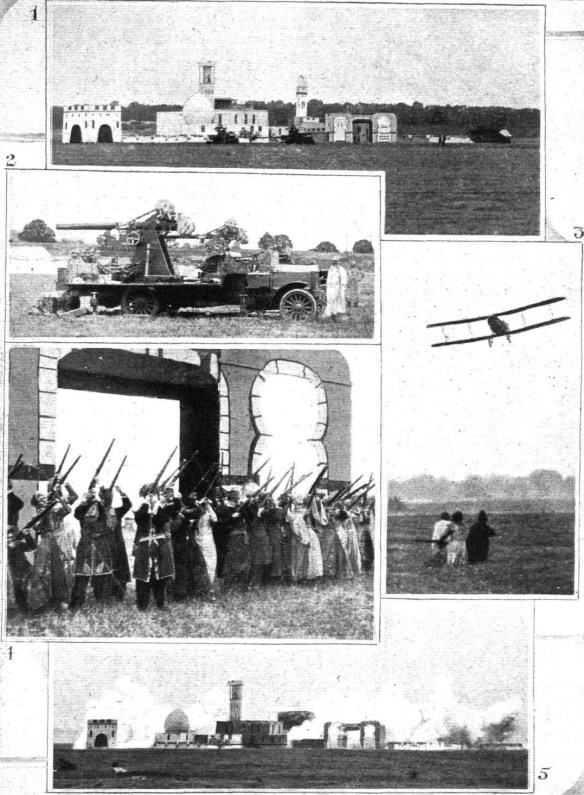
wp0a26afc9_1b-1But precisely because the enabling experiments for these operations were carried out in a colonial laboratory, ‘outside the boundaries of the national body’, this couldn’t qualify as war – so this was ‘interwar’ in quite another sense too – and, Charlton notwithstanding, the ‘bombing demonstrations’ that took place in Iraq and elsewhere were not subject to much critical scrutiny or public outcry in Britain.  On the contrary, within the metropole they were turned into popular entertainment at successive air displays at Hendon in North London in the 1920s (see below) (though, prophetically, by the 1930s, the pageant staged bombing runs against ‘the enemy’, and in War over England (1936) Charlton envisaged Britain forced to surrender after a devastating German air attack on, of all things, the Hendon Air Show) .
_hendon-pageant-1922

flight19220629p371

I think this argument could profitably be extended, because the desert ‘proving grounds’ had a cultural-strategic significance that, as both Priya Satia and Patrick Deer have shown, can be unravelled through another figure who also enters this problem-space, albeit in disguise, T.E. Lawrence or ‘Aircraftsman Ross’ (I’ve suggested some of these filiations in ‘DisOrdering the Orient’)….

I hope I’ve said enough to whet your appetite.  This is a rich argument about war’s geographies, at once imaginative and material, and my bare-bones’ summary really doesn’t do it justice.  An introductory footnote reveals that the essay, and presumably Paul’s previous ones, will appear in a book in progress (and prospect), Archive, Bomb, Civilian: Total War in the Shadows of Modernism, forthcoming from Oxford University Press.
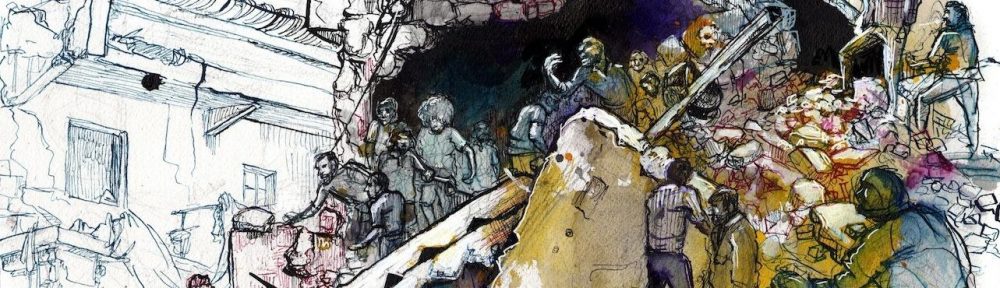
(in)Humanity and drones

SATIA Spies in ArabiaThe latest issue of Humanity: an international journal of human rights, humanitarianism and development 5 (1) (2014) – see my previous post here – contains a wonderful dossier on Drones between past and present.  It includes Priya Satia, whose work I’ve admired ever since I read her wonderful Spies in Arabia: The Great War and the Cultural Foundations of Britain’s Covert Empire in the Middle East, on ‘Drones: a history from the Middle East’ (pp. 1-31), Anna Chotzen on ‘Beyond bounds: Morocco’s Rif War and the limits of international law’ (pp. 33-54: ‘From a legal standpoint, the United States’ drone offensives are eerily similar to Spain’s chemical war in Morocco a century ago’), and a Photo Esssay from Trevor Paglen (pp. 57-71), introduced by Nicholas Guilhot (pp. 55-56).

Priya’s essay is of particular interest to me, since it recovers the genealogy and, crucially, what she calls ‘the cultural history of bombardment’ that connects colonial practices of ‘air control’ to the ideologies that activate the drone strikes prosecuted by the US in Afghanistan, Pakistan and elsewhere.  She’s more sanguine about the transparency of those carried out by the USAF in Afghanistan than I am:

‘… in my conversations with military officers, it is clear how strongly the USAF wishes to distinguish its use of drones from ‘‘other agencies’ ’’ use of them, even while acknowledging that tactics are shared. The USAF’s drone strikes in Afghanistan are transparent; a JAG (judge advocate) assesses the proportionality of the action and the likelihood of collateral damage; official casualty figures line up well with independent counts.’

I now suspect it’s more than ‘tactics’ that are shared, and the lines between the USAF and the CIA are more blurred than – I agree – most military officers would wish.  And my project on ‘Militarized vision‘ is trying to identify the parameters within which the USAF’s transparency and its visual mediations operate.  But as she goes on to say, ‘However, all of this hardly matters politically, given the older and more recent history of aerial counterinsurgency in these regions.’  And she provides a rich and compelling account of that history and its traces in present memories and (para)military practices.

PAGLEN Untitled (Predator drone) 2013