Urban guerrillas

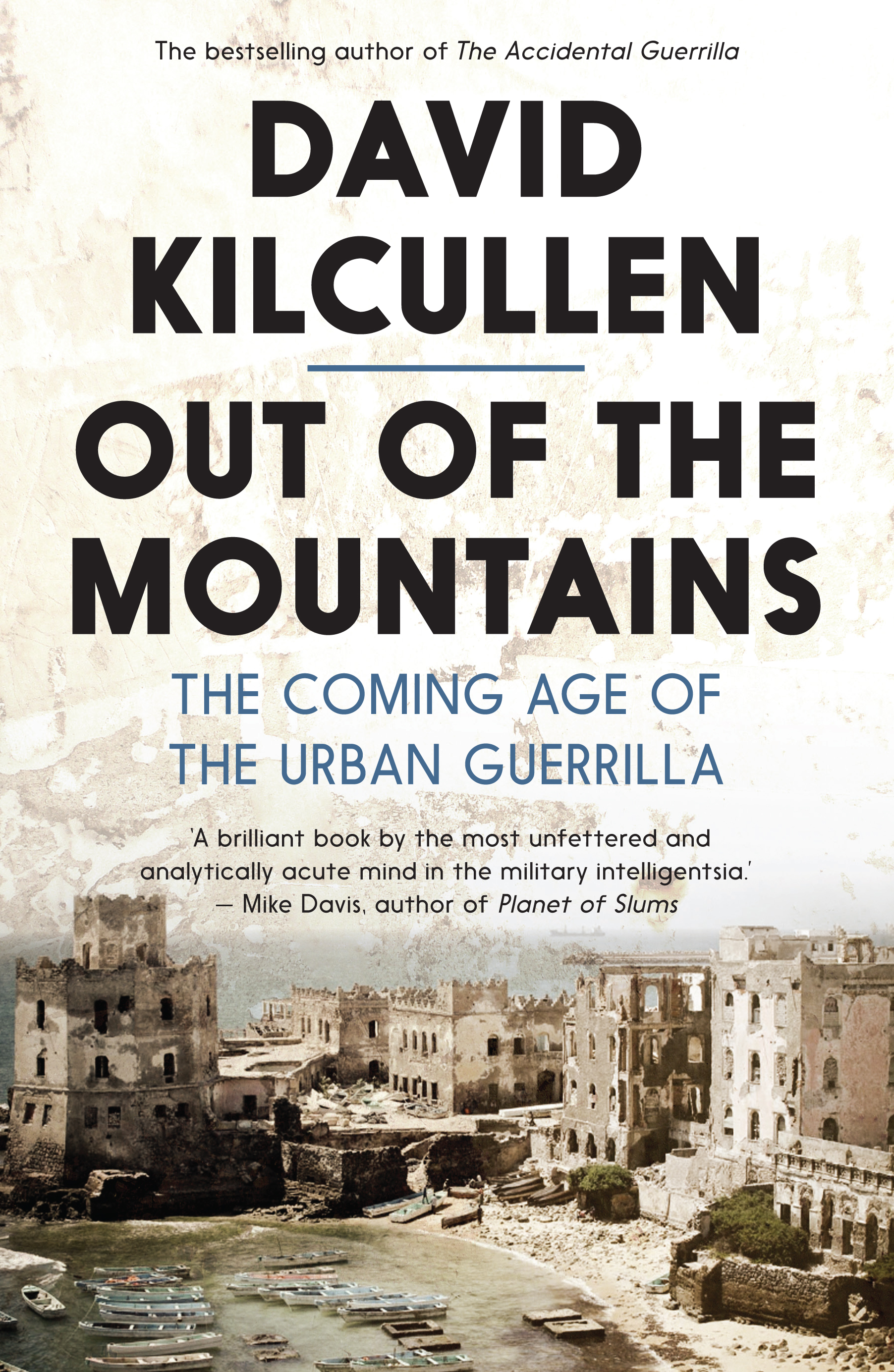
I’ve noted David Kilcullen‘s adventures into geography before, and the entanglement of his vision of counterinsurgency with the humanitarian present – here and here – and over at Gizmodo Geoff Manaugh (of the always interesting and enviably imaginative BLDGBLOG) has an interesting commentary on Kilcullen’s new book, Out of the Mountains: the coming age of the urban guerrilla (Hurst/Oxford University Press USA, 2013.  An extended excerpt is available here, if you scroll down, and a presentation on “The city as a system: future conflict and urban resilience” from last year is available here.

KILCULLEN Out of the mountains

Back to Geoff:

Kilcullen’s overall thesis is a compelling one: remote desert battlegrounds and impenetrable mountain tribal areas are not, in fact, where we will encounter the violence of tomorrow. For Kilcullen—indeed, for many military theorists writing today—the war in Afghanistan was not the new normal, but a kind of geographic fluke, an anomaly in the otherwise clear trend for conflicts of an increasingly urban nature.

The very title of Kilcullen’s book—Out of the Mountains—suggests this. War is coming down from the wild edges of the world, driving back toward our lights and buildings from the unstructured void of the desert, and arriving, at full force, in the hearts of our cities, in our markets and streets. There, conflict erupts amongst already weak or non-existent governments, in the shadow of brittle infrastructure, and what Mike Davis calls “the nightmare of endless warfare in the slums of the world” in his blurb for Kilcullen’s work, becomes uncomfortably close to reality.

Strictly speaking, Geoff’s commentary derives from a talk Kilcullen gave at the World Policy Institute, one of a large number of public appearances to promote the book on both sides of the Atlantic; here is a transcript of his talk at Chatham House, and here is his presentation to the New America Foundation last month, introduced by Peter Bergen:

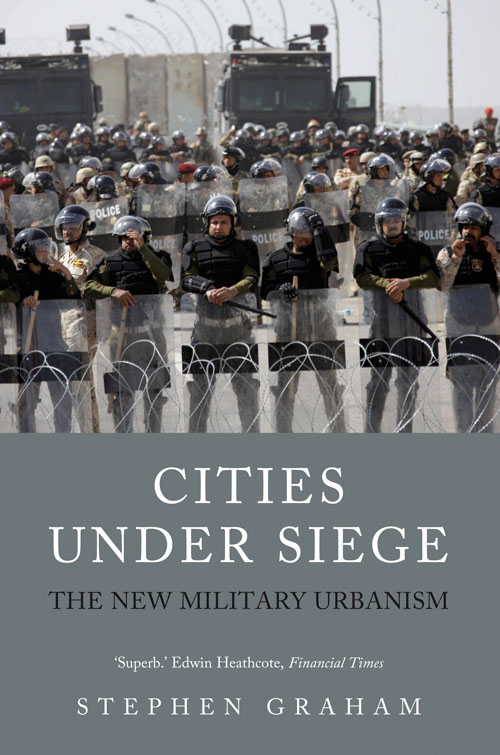
Geoff is not completely convinced by it.  Some of the themes will be familiar to most readers – the bleeding of war into crime has been a staple of the ‘new wars’ thesis, for example – and you can hear distant echoes of Saskia Sassen‘s ideas about cities and later modern war.  More particularly, Steve Graham‘s brilliant work on the new military urbanism addresses many of the same issues Kilcullen raises – as Kilcullen notes himself – though he does so in a markedly different vocabulary: Geoff and I have crossed swords over this before, but while he describes “feral cities” as ‘one of my favorite phrases of all time’ I think it’s dehumanizing – though I do understand that’s exactly not Geoff’s intention).

Geoff is also (I think rightly) sceptical about the aerial-algorithmic intervention that Kilcullen touted at the WPI:

‘During the Q&A, Kilcullen briefly mentioned the work of Crisis Mappers, who have developed tools for visually analyzing urban form using satellite photos. According to Kilcullen, they are able to do this with an astonishing degree of accuracy, diagnosing what parts of cities seem most prone to failure. Whether this is due to empty lots and abandoned buildings or to infrastructural isolation from the rest of the city, the factors that determine “ferality” in the built environment is a kind of aerial application of the Broken Windows theory.

The implication—conceptually fascinating, but by no means convincing, at least for me—was that we could, in theory, develop a visual algorithm for identifying environments tending toward failure, and thus find a way to intervene before things truly fall apart. Teams of architects with their own dedicated satellites could thus scan the cities of the world from above, algorithmically identifying urban regions prone to collapse, then intervening with a neighborhood redesign.’

Have we learned nothing from almost a decade of remote-surveillance ISR and algorithmic counterinsurgency in which maps and metrics substitute for meaning?  And while the attacks in Nairobi confirm the city as a continuing arena of military and paramilitary violence in the twenty-first century, they surely can’t be directly assimilated to a ‘feral city’ thesis (though Kilcullen does his best here)?  We’ll see: I’m part way through the book, and will post a more considered response when I’m done.

Bombing Japan

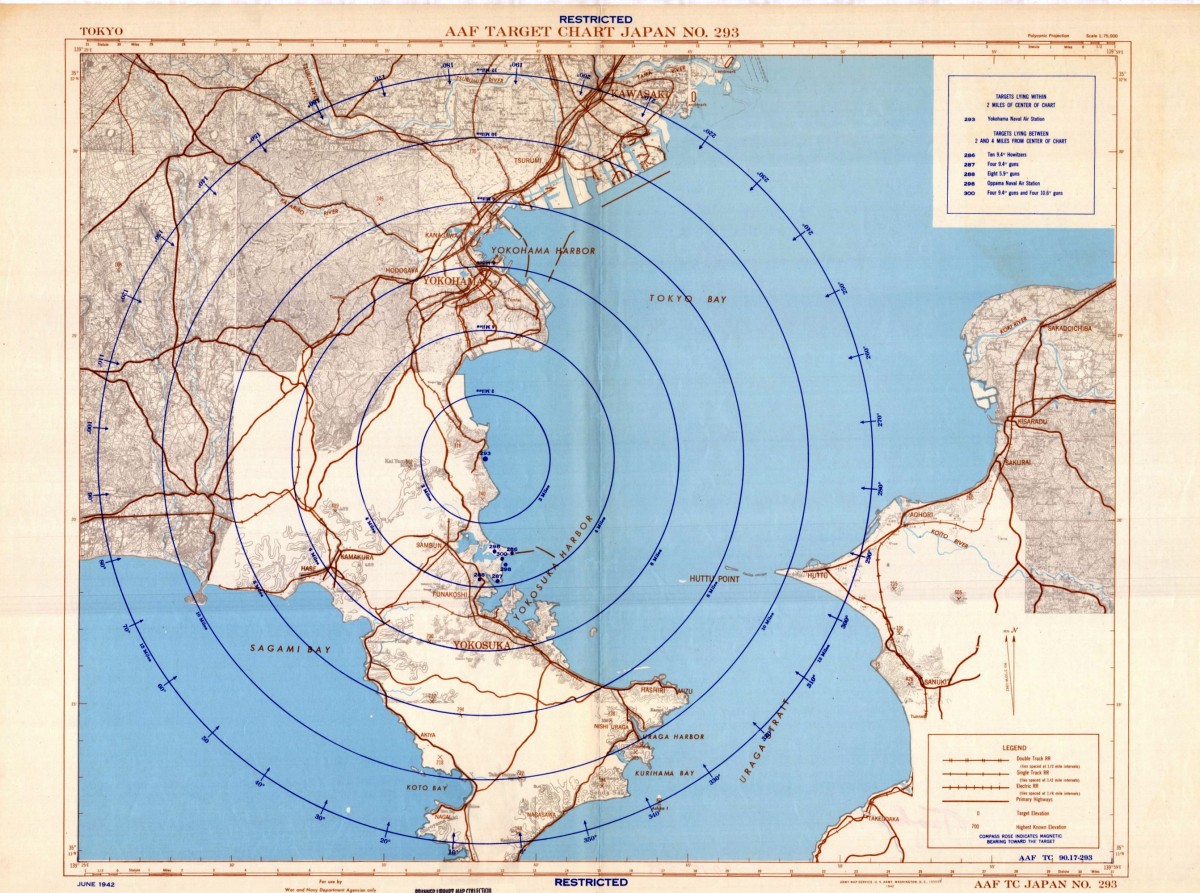
I’ve drawn attention to the remarkable work of Cary Karacas before, notably the mesmerising essay he co-authored with David Fedman, ‘A cartographic fade to black: mapping the destruction of urban Japan in World War II’ [Jnl. historical geography 38 (2012) 306-28], which quite rightly won the prize for the paper published in the journal that made ‘the greatest contribution to the advancement of scholarship in historical geography’ in 2012; it’s available here.  Bombing depends upon a whole series of cartographic visions, and there is something exquisite about using maps to expose rather than plan violence from the air like this.

AAF-Target-Chart-Japan-No293-Tokyo-e1315753005250

You can also get a sense of their work from this beautifully illustrated essay by Eric Jaffe for the Atlantic last year, ‘Mapping urbicide in World War II’, and from this special (open-access) issue of Asia-Pacific Journal: Japan Focus Cary edited with Bret Fisk on ‘The fire-bombing of Tokyo: views from the ground’.

Working with Bret and translator Eri Tsuji, Cary also launched a new website, Japan Air Raids.org, which is a bilingual (hooray!) digital archive providing an extraordinary range of primary and secondary materials on the US bombing of Japan in the Second World War.

In Japan it took over twenty years following the end of the World War II before people began to make a concerted effort to remember the incendiary raids that destroyed a significant percentage of most of Japan’s cities, wiped out a quarter of all housing in the country, made nine million people homeless, killed at least 187,000 civilians, and injured 214,000 more (source). Thanks to the many Japanese citizens who over the last forty years have labored to write down survivor accounts, locate and preserve various records, and analyze the destruction of urban Japan (and the concurrent suffering and social upheaval that occurred), the history of the air raids has taken root in Japan in a variety of ways. Numerous books and articles have been published, resource centers and peace museums have been built, and both individuals and associations continue to carry out important research.

Outside of Japan, the lag time to look closely at the impacts of the air raids is even more pronounced. In 1977, historian Gordon Daniels lamented the fact that academics had largely ignored the air raids on Japan – and the so-called Great Tokyo Air Raid in particular – as a subject of inquiry. Little has changed since this observation. While a handful of important English-language books and articles have appeared since then, most deal with the topic strictly from the standpoint of examining, and on occasion criticizing, U.S. strategic bombing doctrines and campaigns. Analyses about what the air raids entailed for the Japanese civilians on the ground and the cities in which they lived have yet to be written. Consequently, interested citizens and intellectuals who cannot read Japanese have minimal access to materials that shed light on the devastating effects of the incendiary bombing campaign on Japanese communities, cities and society. Additionally, while considerable English-language primary and secondary source documents related to the air raids exist, to date they have been beyond the reach of most people save for a handful of individuals who possess the inclination, time and resources required to visit the physical archives holding them.

By taking advantage of technological developments that allow for digitization, storage, and global retrieval of documents, we hope that this digital archive will play an important role in encouraging people to learn about and further research this area, and in fostering collaboration among a variety of individuals and groups. Additionally, by democratizing archival access to materials related the Japan air raids, we hope to open this field to the general public, scholars, professional and lay researchers, university students, and even middle/secondary school educators and their pupils.

Japan Air Raids.org screenshot

The project is ongoing, but it’s already clear that this is a stunning achievement – visually, intellectually and politically – and a truly generous and absolutely indispensable resource.

City of Ruins

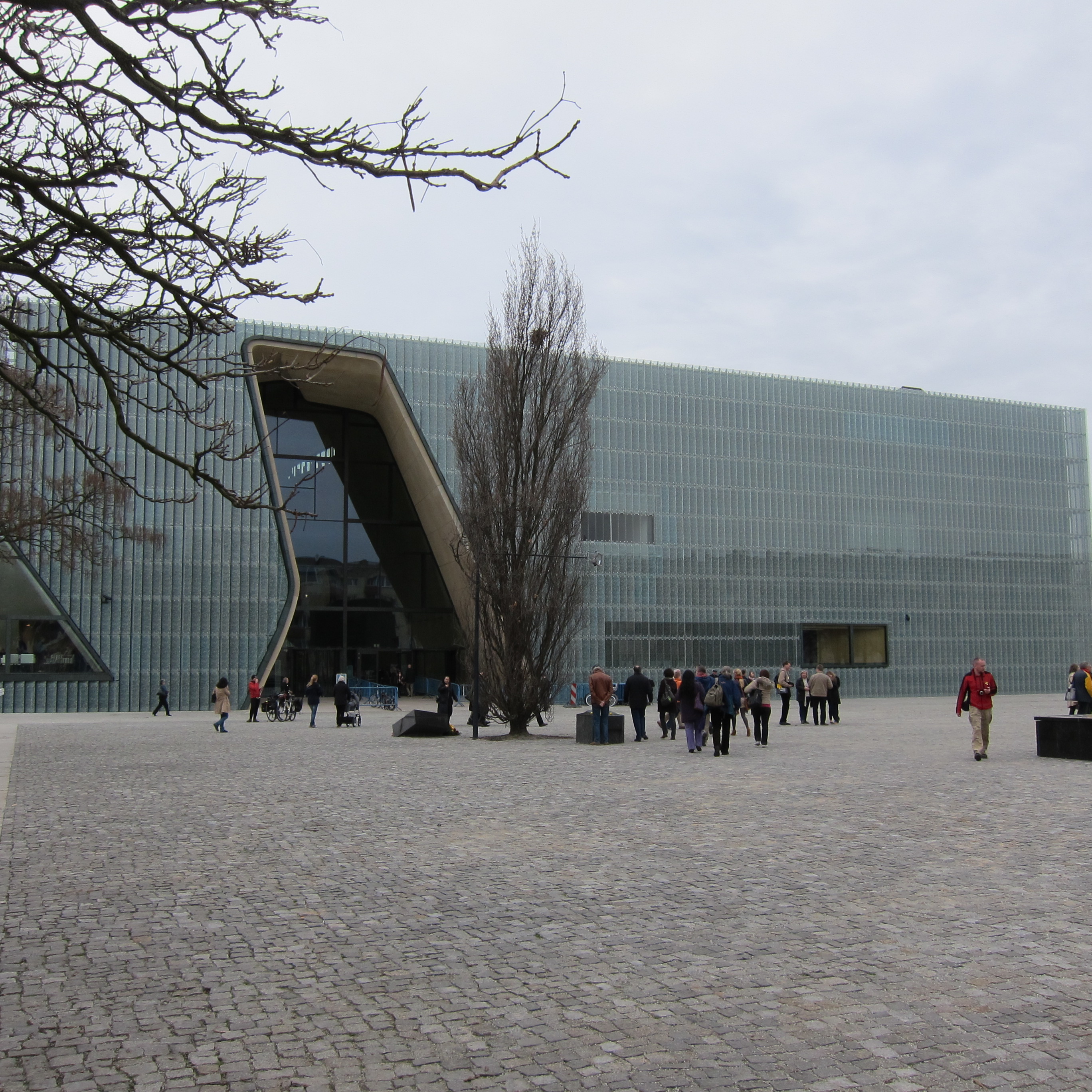
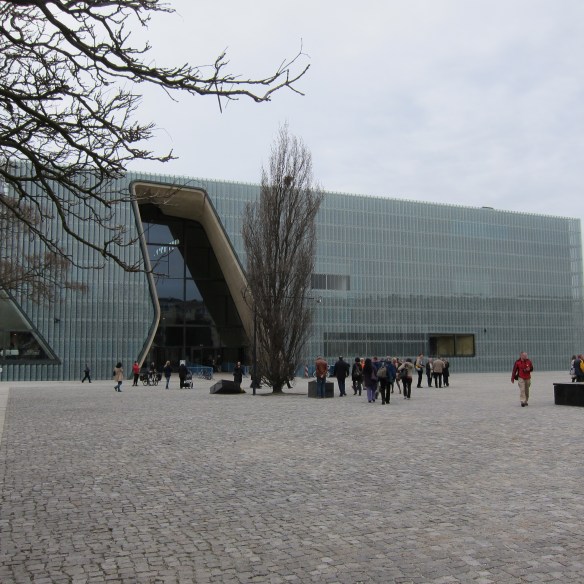
I was in Warsaw over the week-end, and my visit coincided with the opening of the new building for the Museum of the History of Polish Jews on the 70th anniversary of the Warsaw Ghetto Uprising. Even in its presently empty state, it’s a stunning place.
IMG_0525

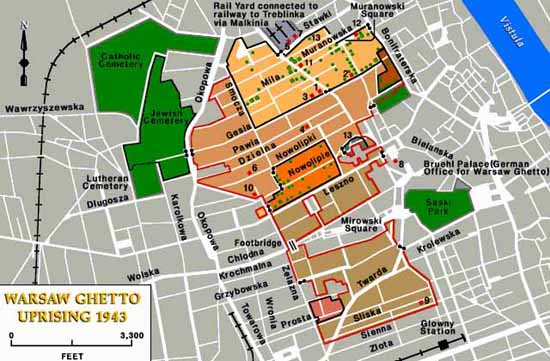
Its Core Exhibition, developed under the supervision of Barbara Kirshenblatt-Gimblett, will display the thousand-year history of Jews in Poland, but the Museum has been built on the site of a pre-war Jewish neighbourhood where in October-November 1940 the Germans established the largest Jewish ghetto in Nazi-occupied Europe and razed it to the ground less than three years later.  And it’s this recent catastrophe (along with others) that invests so much of Warsaw with its contemporary historicity.
Warsaw Ghetto

You can find a sequence of other chilling maps of the Ghetto (and a helpful critical discussion of them) here, basic accounts of the process of its formation here, an excellent summary survey of the Uprising here and a shorter one here.  By 1943 hundreds of thousands of Jews had been deported from the Ghetto to concentration camps, and according to Deutsche Welle:

In early 1943, Heinrich Himmler ordered the final liquidation of the ghetto. Until then, most Jews had rejected armed resistance, including for religious reasons. But when the last mass deportation was about to begin, hundreds of young Jews decided to fight.

On April 19, 1943, the approaching German units met unexpected resistance. The young Jews were aware of their hopeless situation – they had no weapons, food or support. Yet they endured for three weeks, delivering a fierce battle. When the Germans surrounded the insurgents’ bunker in early May, they collectively committed suicide.

“They wanted to decide themselves how to die,” said Zygmunt Stepinski, director of the Museum of the History of Polish Jews in Warsaw. He called their deaths a political manifesto. “They wanted to show that Jews could defend themselves and that they organized the first-ever uprising against the Nazis,” he said.

13,000 Jews were killed during the Uprising, and most of the surviving 50,000 were deported to concentration and extermination camps.

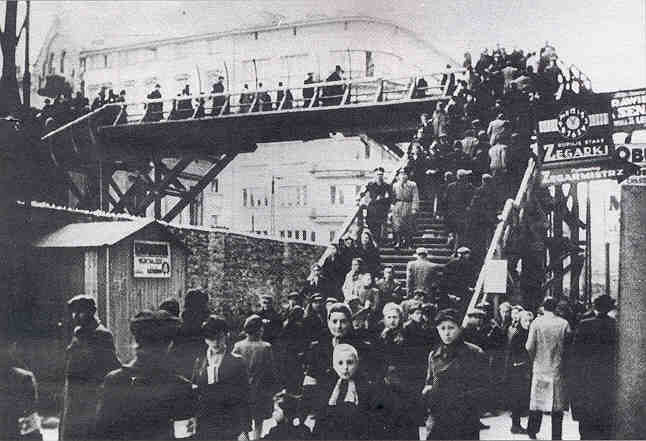
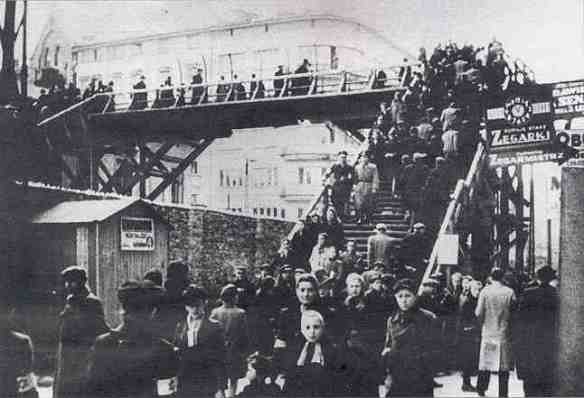
The Museum has been designed by a Finnish architect, Rainer Mahlamäki, and his studio.  To some degree, in its bridge suspended over the Main Hall, defined by the soaring, undulating walls that divide the Museum into its two parts,  the building reinscribes the division of the ghetto into two and the bridge that joined the one to the other (over Chlodna Street, an ‘Aryan’ thoroughfare), but more significantly it’s intended as ‘a bridge across the chasm created by the Holocaust – a bridge across time, continents and people.’
bridge2

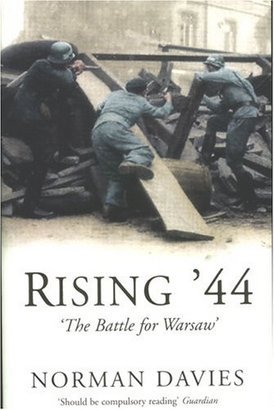
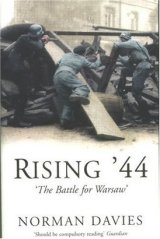
DAVIES Rising '44Many of those involved in the Museum project have suggested that the 1943 Uprising was a crucial inspiration for the general Warsaw Rising in 1944. This started on 1 August, and the insurgent Polish Home Army held out for 63 days of intensive urban warfare which left 16,000 of them dead along with 150-200,00 civilians.  The best English-language narrative of these courageous and horrifying events is probably Norman Davies‘s Rising ’44.

To make sense of this on the ground and to recover its material traces, we turned to the Warsaw Rising Museum, which included City of Ruins, an extraordinary 3-D simulation of American Liberator flights over the city in 1945 (advertised as the world’s first digital stereoscopic simulation of a city destroyed during the war: more on the project and how it was achieved here) –

– and to an outdoor/indoor exhibition of colour photographs of the ruined city taken by a young American architectural student, Henry N. Cobb, in 1947: The Colors of Ruin.  You can see some of Cobb’s photographs here, and Vimeo has this interview with him which includes a number of incredible images too:

Why such wholesale destruction? Under the terms of the surrender document agreed by the Polish Home Army in October 1944, the insurgents and the civilian population were expelled from the city into transit camps, from where they were deported to concentration camps.  According to some accounts, Hitler issued Command #2 on 11 October, realizing his pre-war dream of the total destruction of the city: ‘Warsaw is to be razed to the ground while the war proceeds.’  Six days later Himmler made sure his officers understood exactly what was intended:

‘The city must completely disappear from the surface of the earth… No stone can remain standing. Every building must be razed to its foundation.’

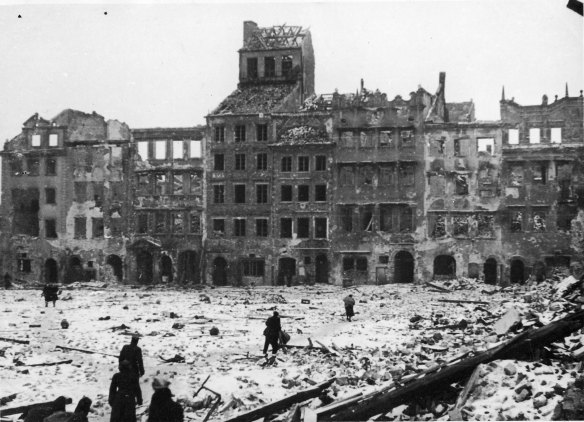
Special Verbrennungskommandos (‘annihilation detachments’) began the systematic destruction of what was left of the city with mathematical precision, using high explosives and flame-throwers.  According to the Museum guide,

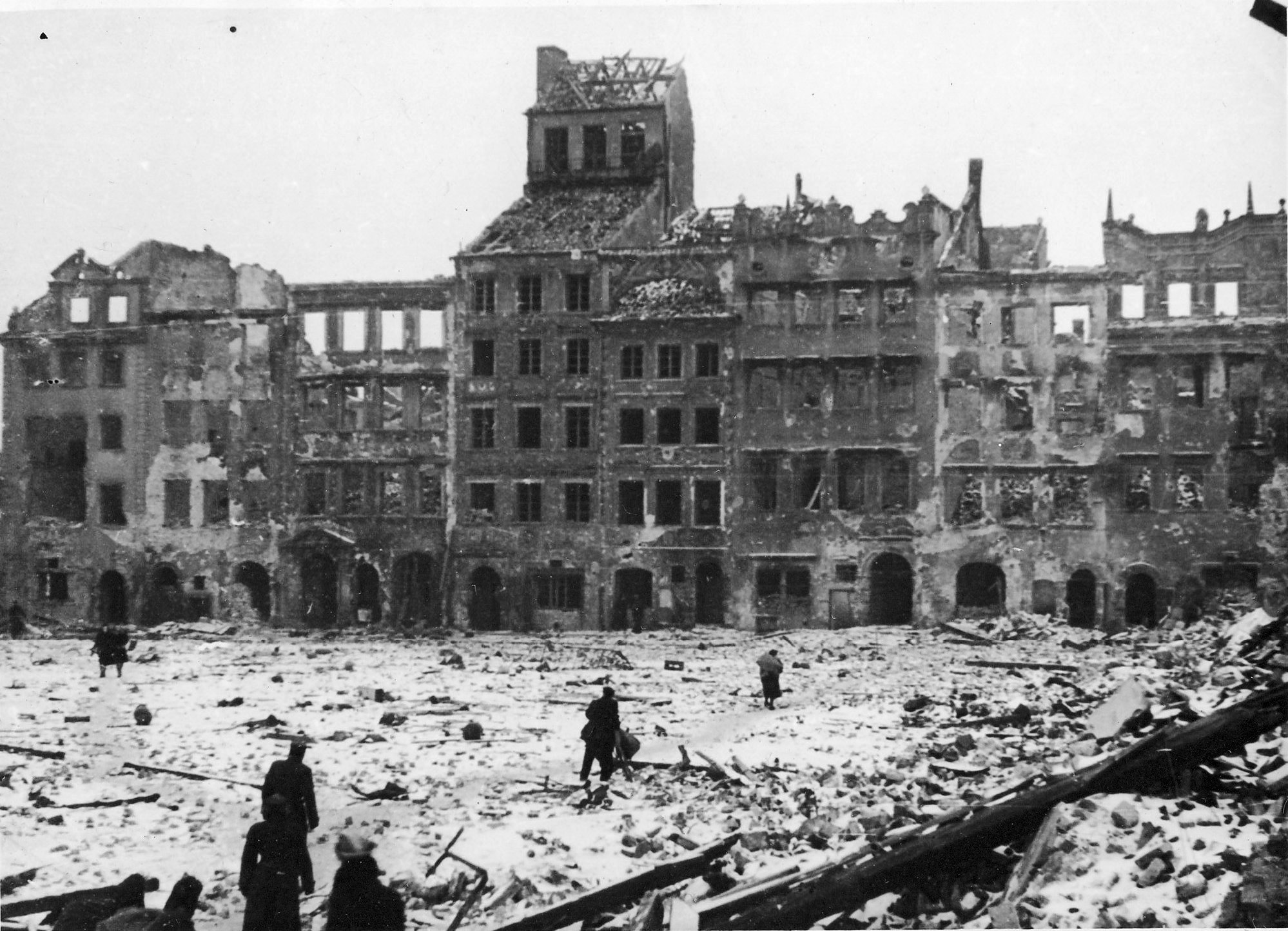
‘They divided the city into regions, numbered the corner buildings and methodically destroyed the capital.  On the walls they put instructions concerning the method of destruction.  The Germans destroyed historical monuments and burned to ashes the biggest Polish libraries…  They turned archives, museums and their collections into ruins and ashes.  The Old Town became a city of ruins.’
old_town_warsaw_waf-2012-1501-311945

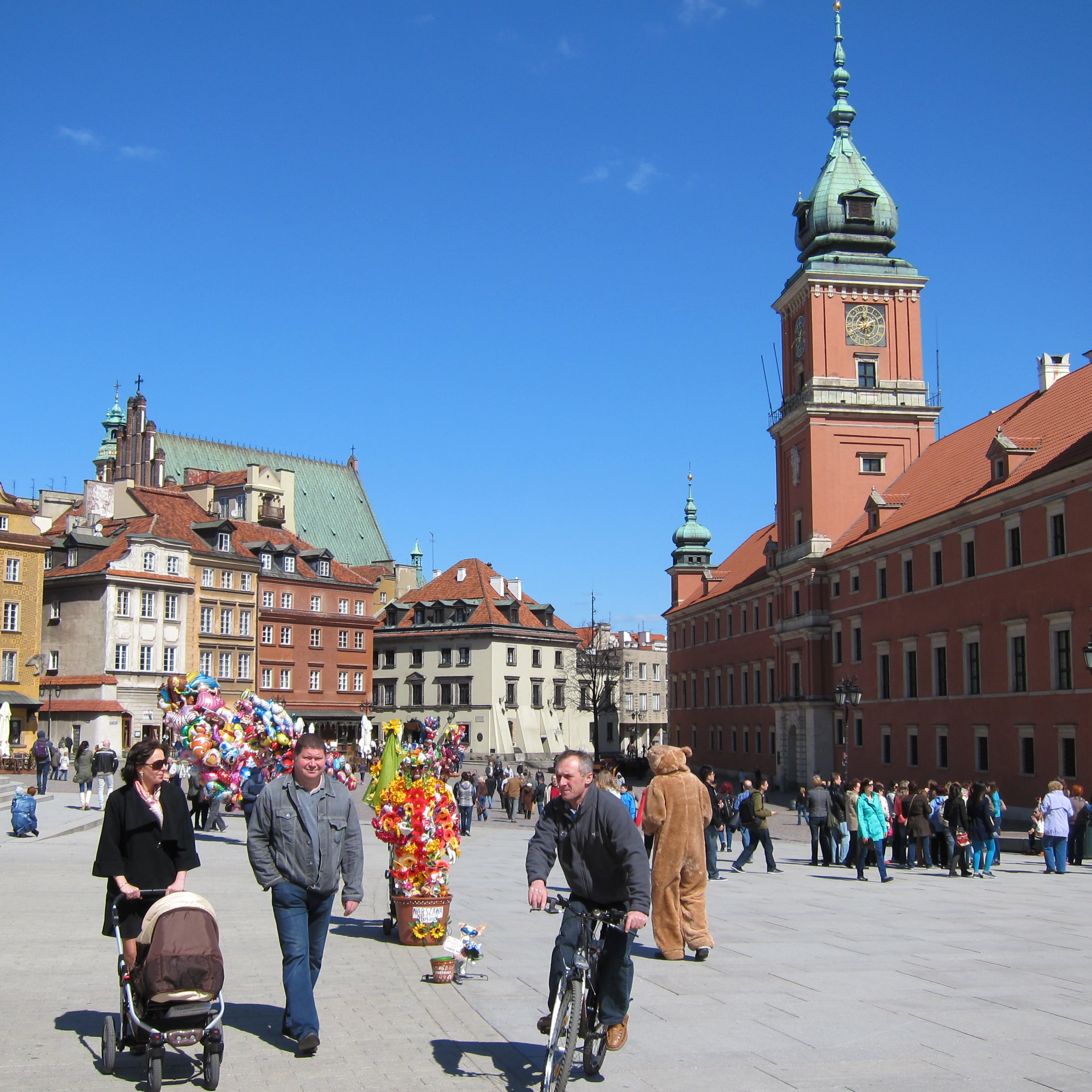
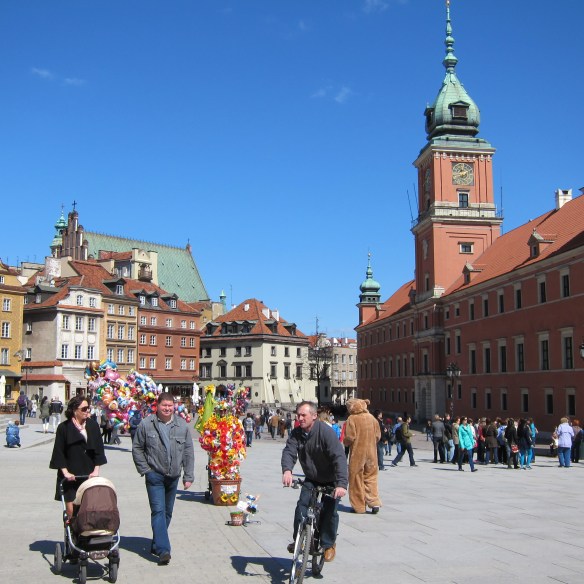
Less than 5 per cent of pre-war Warsaw remained intact – about 12 per cent had been totally destroyed during the 1939 bombing and siege of the city, a further 17 per cent with the destruction of the Ghetto and 25 per cent during the Rising of 1944 – but it’s the systematicity as much as the scale that is so shocking.  And the sense of shock remains even as – in fact precisely because – today you walk around an Old City no less painstakingly restored, its planners, architects and builders working from old plans, photographs and drawings and using the original materials as far as possible.  It adds another dimension to what Steve Graham calls the post-mortem city: the resurrection of Warsaw is an extraordinary testimony (like the Museum of the History of Polish Jews) to the determination of a people to recover their history, to refuse their erasure, and to remember the enormity of what befell their predecessors.
IMG_0556

Or so it seemed to me before I started to think (and read) about the politics of memorialisation in post-war Warsaw.  David Crowley‘s essay on ‘Memory in Pieces: the symbolism of the ruin in Warsaw after 1944’ argues that

‘the image of ruin … functioned – unmistakably – as an ideological vent through which to draw patriotic sentiment and indict those who had destroyed the city.  But the powerfully affective image of ruin and the memories that it could arouse had to be contained and its force channelled (quite literally, in the form of voluntary labour to reconstruct parts of the city, like the Old Town).  In effect ruins, in the representational cosmos of socialism during the 1950s, were time-locked in 1944, the moment of destruction.’
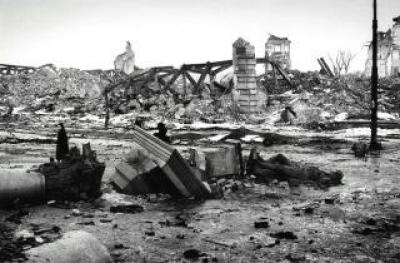
Royal Palace 1945But what could the Royal Palace (in particular) re-present within that cosmos?  Tellingly, it was still in ruins in 1956 when a post-Stalinist regime came to power, and existing plans for its reconstruction were abandoned.  ‘In the years that followed,’ Crowley writes, ‘the castle formed an open wound at the heart of the city.  Seeing it as an aristocratic symbol of democracy, Crowley calls it an ‘architectural oxymoron.’  In ruins, the castle could ‘function indexically as evidence of both the glorious Polish past and the ignominious “Soviet” present.’  Finally, in the 1970s its reconstruction was approved as ‘Warsaw Castle’, an attempt to extinguish the aristocratic past and to forestall any democratic future, so that it functioned as what Crowley calls a sort of counter-iconoclasm, working to forget what its absence once signified.

But there was another, more pervasive absence.  The razing of the Ghetto destroyed a significant nineteenth-century fabric, and after the war a still wider nineteenth-century Warsaw disappeared from the landscape of reconstruction altogether.  Jerzy Elzanowski argues that its buildings and structures were seen as emblematic of the repressive class structure of capitalism; they had to be replaced by a radically different fabric ‘adequate to the needs of socialist society’ (‘Manufacturing ruins: architecture and representation in post-catastrophic Warsaw’, Journal of Architecture 15 (1) (2010) 71-86).
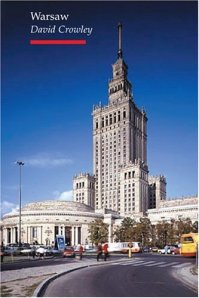
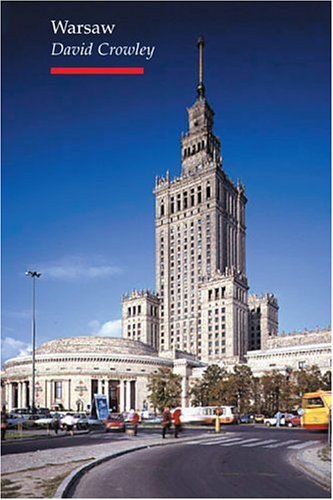
CROWLEY WarsawAnd there are, of course, other, ostentatiously modern Warsaws that have been forcibly put in place after the fall of Communism in 1989.

For all that, in the city of ruins, and most of all in the spectral traces of the two war-time uprisings in which images are made to stand for ruins, genocide and urbicide march in lockstep: and we would be foolish not to attend to the sounds and signs of their boots on the street.  Crowley thinks their museumisation and memorialisation is a kind of reversal in which the past (and specifically the Second World War) becomes a ‘lost utopia’.  I see what he means – I saw what he means – and I’m beginning to understand, too, why Elzanowski concludes that, at least in Warsaw (and no doubt elsewhere), images are at once indispensable for historical recovery and yet ‘seem to hinder our ability to observe the reality of here and now.’  It was, in part, an unease about my response to the materiality of the city and to its photographic representations that sent me off to dig out their two essays.  I felt a tension between the affective – the effect the ruins and the reconstructions had on me – and the analytical.  I’m still struggling.
The programmable city

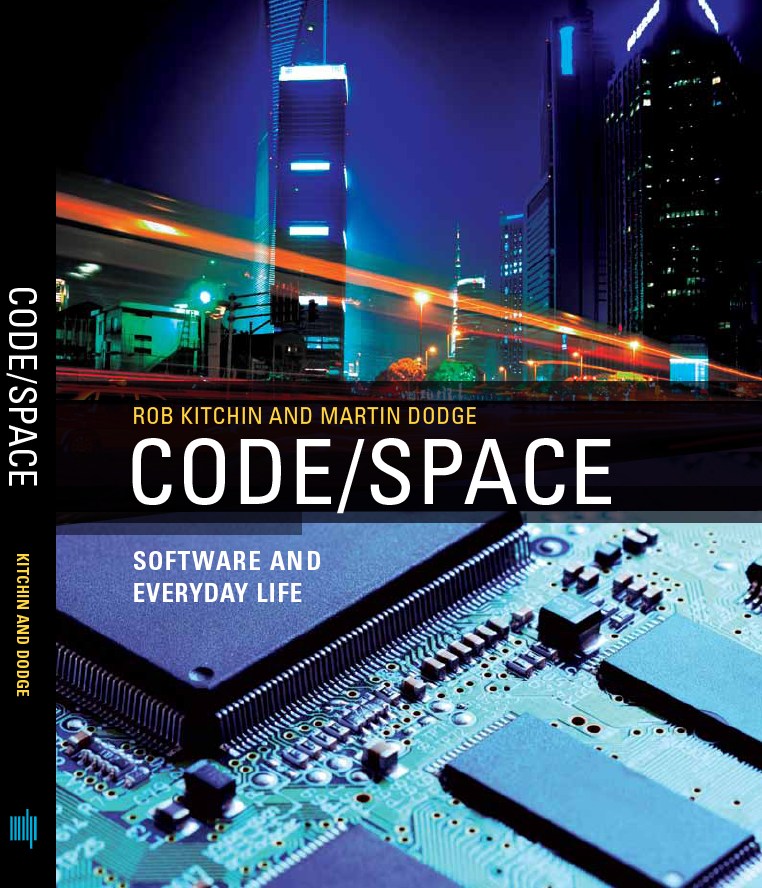
Code/SpaceNews from Rob Kitchin of a treasure trove of postdocs and PhD positions at the National University of Ireland – Maynooth as part of his prestigious Advanced Grant from the European Research Council:

I’ve been awarded an ERC Advanced Investigator award for a project entitled ‘The Programmable City’. The project will run over 5 years and be staffed by myself, 4 postdocs and 4 PhD students. The project is essentially an empirical extension of the Code/Space book (MIT Press, 2011), focusing on the intersection of smart urbanism, ubiquitous computing and big data from a software studies/critical geography perspective, comparing Dublin and Boston and other locales.

We have just advertised two 5 year postdocs and the four 4 year doctoral positions… The posts are not restricted in discipline and I’d really like to put together an interesting interdisciplinary team…  The remaining two 4 year postdocs will be advertised later in the year.

Prospective candidates can find out more via these links:

Postdoctoral Researchers:

Closing date for applications 22nd March 2013
Further details available here.

Funded PhDs:
Closing date for applications 12th April 2013
Further details available here.

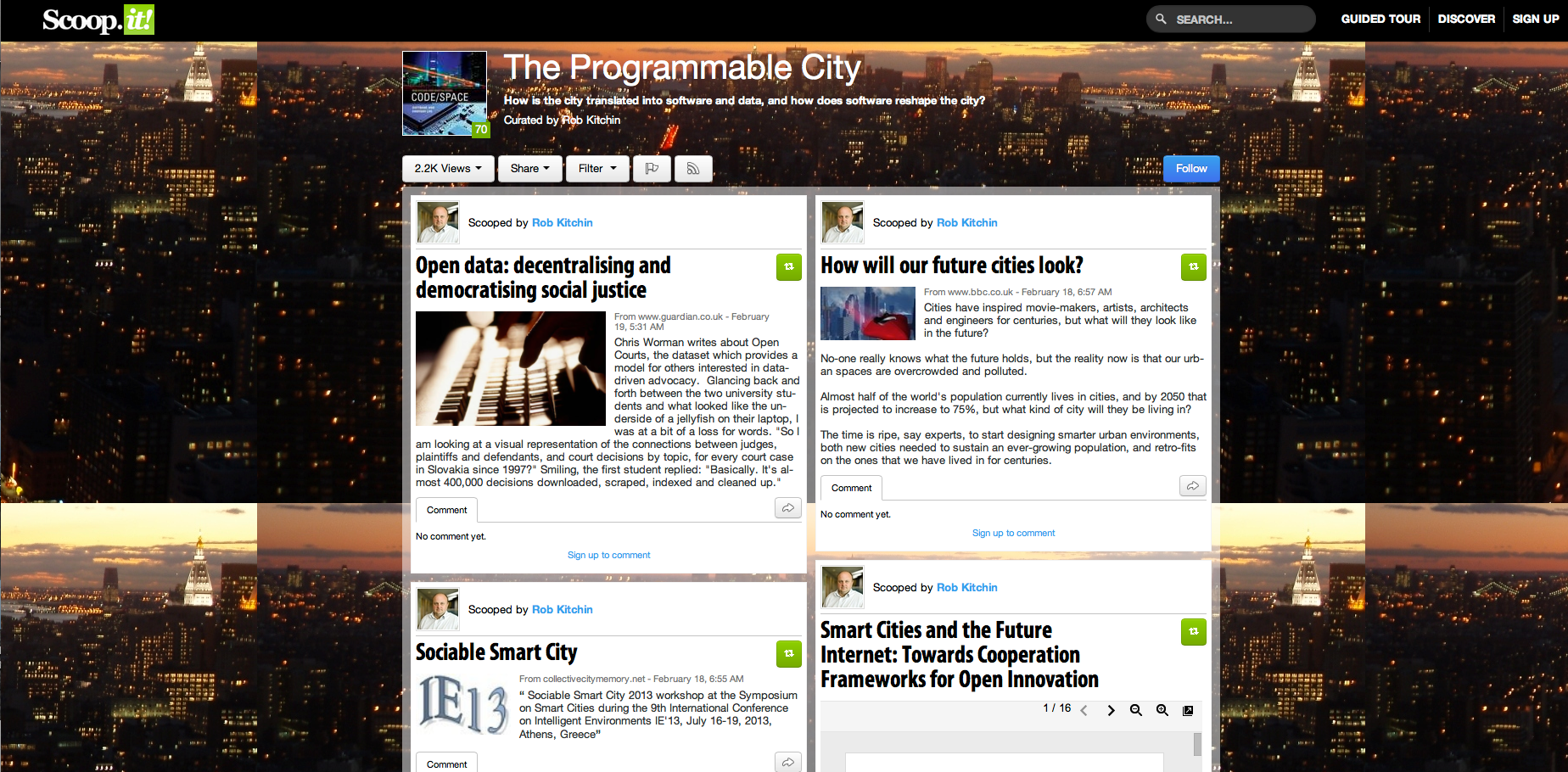
You can find out much more about Rob’s vision – and the visual analytics – of the programmable city via his curated cornucopia at Scoop here.

Programmable City

The continuing explosion of interest in cyberwarfare – most recently tracing the genealogy of the US/Israeli Stuxnet/Olympic Games attack on Iran’s nuclear programme back to 2005, and digitally fingering a specialist unit of the Chinese Army based in Shanghai as a major source of cyberattacks on US commercial organisations and government agencies – makes this project all the more interesting: a sort of “Re-programmable city”, I suppose.  I’ve been tracking these developments as part of the revision of my journal essay “The everywhere war” for the book version, which will have a separate chapter devoted to them.  Much of this was anticipated by Steve Graham in his discussion of “Switching cities of off” – incorporated into the brilliant Cities under Siege: the new military urbanism (Verso, 2010) – and Code/Space is a rich source for thinking about the wider ramifications.  I don’t know whether there is room for any of this in Rob’s grand project, but I hope there is.

Police/military/city

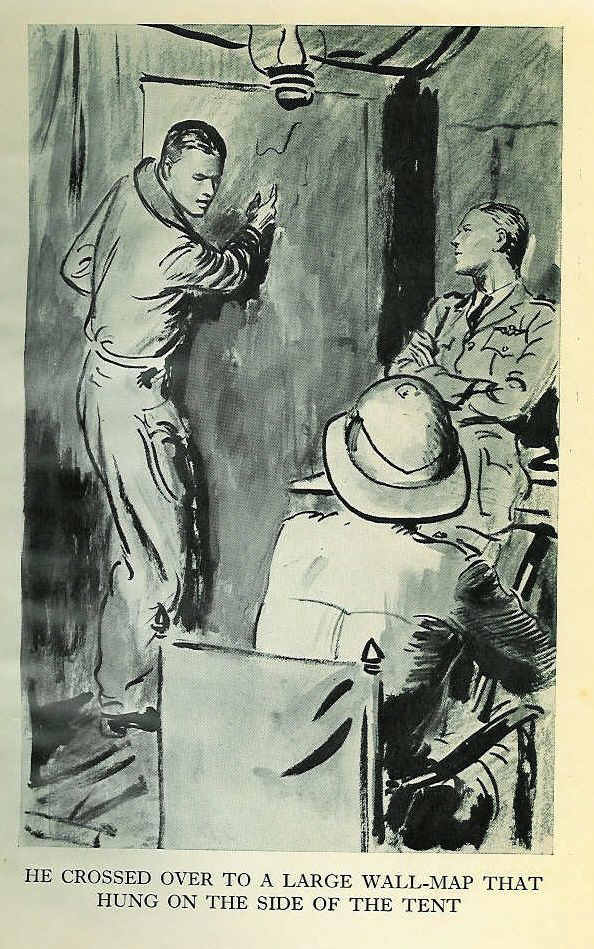
There is growing interest in thinking through the contemporary blurring of policing and military violence.  When, I wonder, did we start referring to “security forces“?  The earliest entry in the OED is from 1973 and refers to Britain’s military/police operations in Northern Ireland, but the practice is evidently much older than that. Those who grew up in Britain with Biggles (or perhaps in spite of Biggles) will surely remember Captain W.E. Johns‘s creation of the Special Air Police after the Second World War – and, as my illustration (left) from Biggles Flies East implies, these operations were about the violent production of particular spatialities –  but ‘air control’ was developed as an important police/military modality of British colonial power immediately after the First World War, when its prized sphere of operations was the Middle East and India’s North West Frontier (notably Waziristan).

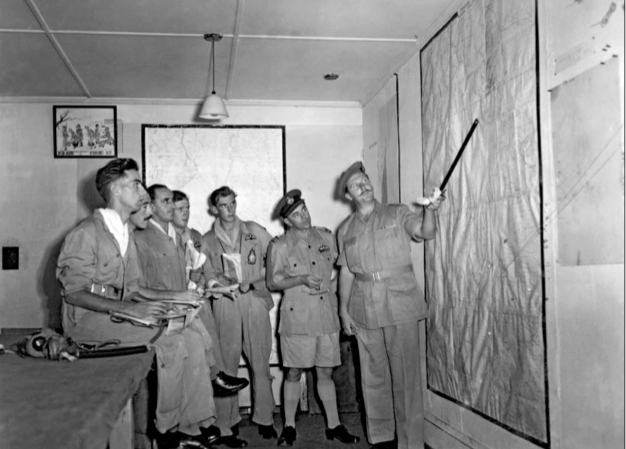
In the 1950s Britain applied similar (il)logics to the the Mau Mau insurgency in Kenya, as Clive Barnett notes here (with another, rather more serious nod to Biggles), and to the Malayan Emergency.  Bombing was a routine tactic in all these pre- and post-war campaigns – the image on the right is of an RAF briefing in Kenya in 1954 – and Britain’s ‘aerial supremacy’ was, of course, uncontested in these colonial theatres of war.  Other colonial powers used it too.  No doubt the interest shown by the US Border Patrol and US police forces in (at present, unarmed) drones can be situated within this techno-political history of air policing, though I’m aware that the lines of descent are more complicated than my cartoons can suggest.

Mark Neocleous has outlined a careful (and still longer) genealogy of the very idea of ‘policing’ that speaks directly to these issues in ‘The Police of Civilization: The War on Terror as Civilizing Offensive’, International Political Sociology 5 (2011) 144-159:

The monopoly over the means of violence that is fundamental to the fabrication of social order is the core of the police power. Although such a formal monopoly over the means of violence does not exist in the international realm—which is the very reason why so many people have found it difficult to develop the concept of ‘‘international police’’—the violence through which this realm has been structured is obvious. It has traditionally been cast under the label ‘‘war.’’… 

To say that police and war conjointly form the key activity of the project of civilization is to say nothing other than violence has remained intrinsic to the process in question. Thus, central to the idea of civilization is military-police terror (albeit, as ‘‘civilization,’’ a terror draped in law and delivered with good manners)…

The attempt to hold on to categorical distinctions between ‘‘police’’ or ‘‘military’’ for analytical, legal, and operational reasons runs the risk of losing what is at stake in the fabrication of international order: the way war imbricates itself into the fabric of social relations as a form of ordering the world, diffracting into a series of micro-operations and regulatory practices to ensure that nebulous target ‘‘security,’’ in such a way that makes war and police resemble one another. 

If, as I’ve suggested, these formulations have a direct bearing on counterinsurgency – and not only British practices: see Neocleous on Vietnam here – and on the modalities of modern colonial power more generally, they are also revealed with remarkable clarity in the contemporary city: what Steve Graham calls ‘Foucault’s boomerang’, as colonial tactics are repatriated to the metropolis.

As Steve shows in exemplary detail in Cities under siege: the new military urbanism (Verso, 2010; paperback out now), a vital zone of convergence between police and military violence – what Neocleous calls their ‘violent fabrication of the world’, their ordering of it in every sense of the verb – is the city:

‘As security politics centre on anticipation and profiling as means of separating risky from risk-free people and circulations inside and outside the territorial limits of nations, a complementary process is underway.  Policing, civil law enforcement and security services are melding into a loosely, and internationally, organized set of (para)militarized security forces.  A “policization of the military” proceeds in parallel with the “militarization of the police”.’

So here is welcome news of a Live Web Seminar from Harvard’s Program on Humanitarian Policy and Conflict Research, Dangerous Cities: Urban violence and the militarization of law enforcement, 2 October 2012 0930-1100 (Eastern).

More than half of the world’s population is concentrated in urban areas. According to UNFPA, this number is expected to rise to 5 billions by 2030, reaching 2/3 of the world population, with the largest cities emerging in Africa and Asia. Regrettably, along with this mass urbanization has come an unprecedented level of violence and crime in densely populated slums and shantytowns. Cities like Baghdad, Kingston, Rio de Janeiro, Guatemala, Ciudad Juarez and Mogadishu have become the battlegrounds of contemporary conflicts.
 
In many countries, particularly in Latin America, this emerging form of violence is considered one of the greatest threats to national security. Indeed, urban violence can be as deadly and costly as traditional armed conflicts. In a 2007 report, the UNODC pointed out that the levels of violence in El Salvador in 1995 were higher than during the civil war of the 1980s.
 
To curb the violence, states have responded by deploying specially trained military units when traditional law enforcement has failed to restore security. These instances of ongoing urban violence engaging organized criminal networks, coupled with the use of military force, increasingly resemble to situations of armed conflicts.
While the militarization of law enforcement may be unavoidable when traditional law enforcement institutions lack the resources and expertise to contain urban violence, the legal and policy framework for the conduct of such operations needs yet to be developed. The regulation of the use of military force represents a major challenge in urban environments, even more so when humanitarian law is formally inapplicable and the enforcement of international human rights is weak. Such environment may require adaptation of military doctrine, training, and equipment in order to minimize abuses against civilians, detainees and those no longer engaged in violent acts.
 
Furthermore, the humanitarian sector faces formidable difficulties in the context of urban violence. First, humanitarian actors must assess whether involvement in these complex situations is appropriate under their respective mandates. Second, humanitarians must develop objective criteria to determine whether the level of violence and human suffering warrants intervention in view of the specific security and policy risks. And third, humanitarian actors must adapt to these situations and identify priority areas of humanitarian action on a case-by-case basis.
 
In light of these considerations, this Live Web Seminar will shed light on the tensions and challenges arising out of the application of humanitarian principles in urban violence. Expert panelists and participants will explore the following questions:
 
–       Whether instances of urban violence can be characterized as armed conflicts? If so, what are the advantages and disadvantages of applying International Humanitarian Law (IHL) to these situations?
–       To what extent is it necessary to develop a legal framework that incorporates both humanitarian and human rights considerations tailored to situations of urban violence?
–       What strategies and policy tools can be put in place in order to minimize human suffering and, at the same time, address the security concern of states in urban conflicts?
What is the proper role of humanitarian actors in urban conflicts? 

Registration is required: go here.

As should be obvious from the pre-seminar summary, this isn’t quite the agenda that Neocleous has in mind – but it’s also clear that his suggestions should also animate continuing discussions of our so-called ‘humanitarian present‘…