Illegalities and undemocracies

121102-bds-oranges_-EI_Vredesactie

A postscript to my previous post about Palestine, solidarity and BDS.  Over at Books & IdeasBenjamin Ferron has a review essay on Ingrid Nyström and Patricia Vendramin, Le boycott (2015): Globalisation and the art of boycotting.

There’s some succinct historical context, tracing the politics of boycotts back to the late seventeenth century, but then this about the current Boycott, Disinvest, Sanctions movement:

‘Launched in 2005 at the request of Palestinian intellectuals and academics, and supported by 172 Palestinian civil society organisations, it calls for an economic, academic, cultural and political boycott of the state of Israel to protest against the colonisation and occupation of Palestinian territories, the construction of the Wall of separation and annexation, and campaign in favour of the equality of Israeli Arab and Jewish citizens, and the acknowledgement of the Palestinian refugees’ right of return. The penalisation of these actions in Israel and in France (through the so-called Alliot-Marie circular) shows that this mode of action is threatening to the intended targets or their allies.’

I knew about moves by the Cameron government in the UK and the now mercifully extinct Harper government in Canada to outlaw BDS – the irony of the former Prime Minister threatening to use ‘hate laws’ against anyone with whom he disagreed is wholly unexceptional –   but I now realise that their authoritarian response is much wider than I had imagined, and for the reasons supplied by those last eight words in the quotation.

Of particular relevance to the upcoming plenary at the AAG is this report from Glenn Greenwald at The Intercept that details attempts in the US to suppress pro-Palestinian voices and peaceful actions: ‘Greatest Threat to Free Speech in the West: Criminalizing Activism Against Israeli Occupation‘.

Bombing the USA

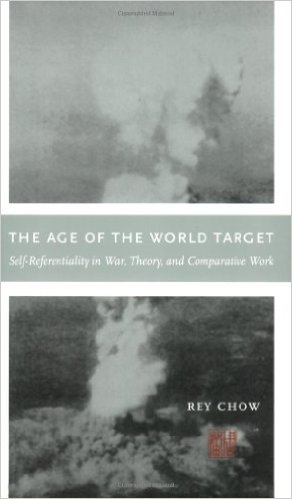
CHOW Age of the worl dtargetI’ve noted before how one of the most immediate and long-lasting effects of Hiroshima and Nagasaki on American post-atomic culture was an extraordinary sense of vulnerability: hence the steady stream of visuals imagining a nuclear attack on cities like New York and Washington.  In The Age of the World Target, Rey Chow writes about

‘…the self-referential function of virtual worlding that was unleashed by the dropping of the atomic bombs, with the United States always occupying the position of the bomber, and other cultures always viewed as the … target fields.’

But in an important sense she couldn’t be more wrong.  Here is Paul Boyer in By the Bomb’s Early Light:

‘Physically untouched by the war, the United States at the moment of victory perceived itself as naked and vulnerable. Sole possessors and users of a devastating instrument of mass destruction, Americans envisioned themselves not as a potential threat to other peoples, but as potential victims.’

Or, as Peter Galison put it, writing in Grey Room 4 (2001),

Here stands a new, bizarre, and yet pervasive species of Lacanian mirroring. Having gone through the bomb-planning and bomb-evaluating process so many times for enemy maps of Schweinfurt, Leuna, Berlin, Hamburg, Hiroshima, Tokyo, and Nagasaki, now the familiar maps of Gary, Pittsburgh, New York City, Chicago, and Wichita began to look like them.

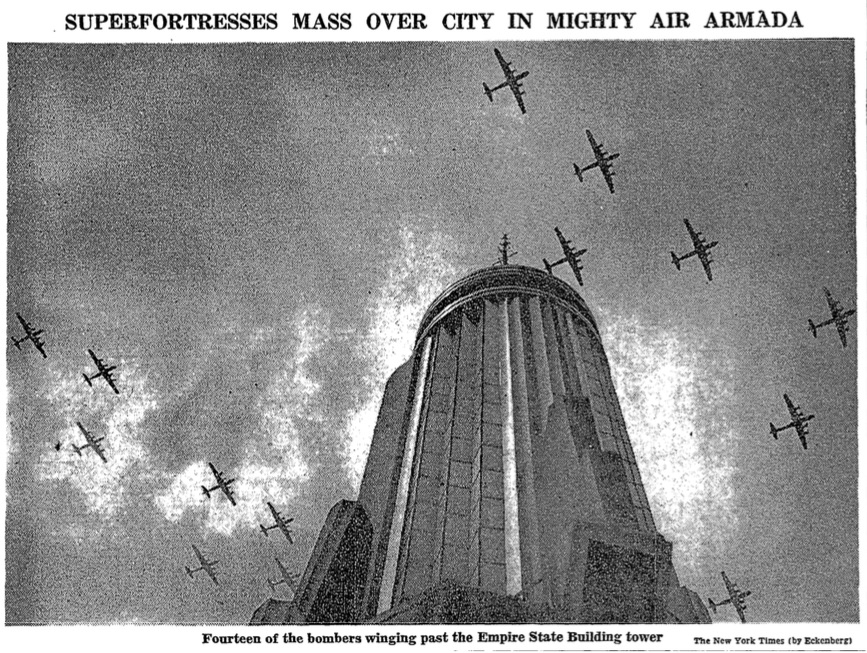
And, as it happens, American cities did become targets – for US Strategic Air Command.

Operation Pacific NYT 17 May 1947

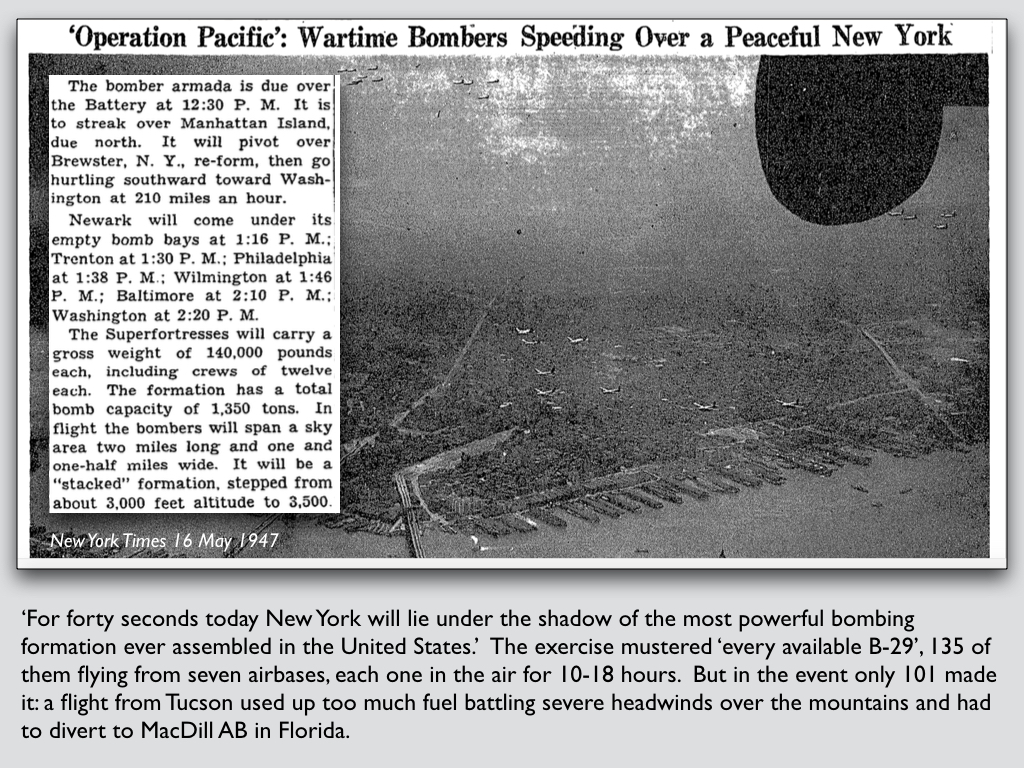
In May 1947 an exercise – ‘Operation Pacific’ – was carried out over the cities of the Eastern seaboard from New York to Washington.  Its title was not a tribute to the geospatial intelligence of the US Air Force: General George Kenney, commander of SAC, asked reporters to emphasize that this was, in its way, a peace-keeping mission, ‘an exercise not an attack’, and that the cities involved were ‘objectives’ not targets – so they weren’t candidates for inclusion in the Bombing Encyclopedia of the World

But it was a disappointment to all concerned:

Operation Pacific, New York, May 1947.001

The public was let down by the lack of spectacle.  According to the New York Times,

‘The squadron from Fort Worth missed the rendezvous by twenty minutes… [which] destroyed the effect of a mass bombing the main-in-the-street had been led to expect…

‘Check-up from the Battery to the Yonkers line indicated that public disappointment was general if not unanimous. Brooklyn, Queens, Staten Island and the Bronx, where hundreds of thousands turned out on the streets and on rooftops, alike reported that nowhere was there acclaim or enthusiasm, except in school-yards and other places where small-fry congregated.’

The senior brass were even more dismayed.  Philip Meilinger described it as a ‘sad situation’ so ‘in August SAC tried again, against Chicago, but the performance was even worse.’

In 1948 Kenney was replaced by another veteran, Curtis LeMay, who was determined to lick SAC into shape – and preferably far from the watchful eyes of the public.  Three months after he assumed command, LeMay ordered a bombing exercise against a target field near Wright-Patterson AFB at Dayton, Ohio.  In To kill nations, Edward Kaplan bleakly observes:

‘To simulate the inaccurate maps of many Soviet targets, [LeMay] gave the bomber crews 1930s-era charts.  As LeMay suspected, because of equipment failures when taken up to operational altitudes [until then the crews had been flying at 15,000 not 40,000 feet] and gaps in training, the crews utterly failed to accomplish the mission.  Everything that could go wrong, did.  Not one crew would have bombed the target successfully.  Of 303 runs made at the target, the circular error probable was 10,100 feet, outside the effective radius of a Hiroshima-size weapon.’

LeMay ordered an intensive programme of training and practice.  A key resource was radar bomb scoring (see also here):

radar-scores-sac-bombing-test-pe-december-1956-2

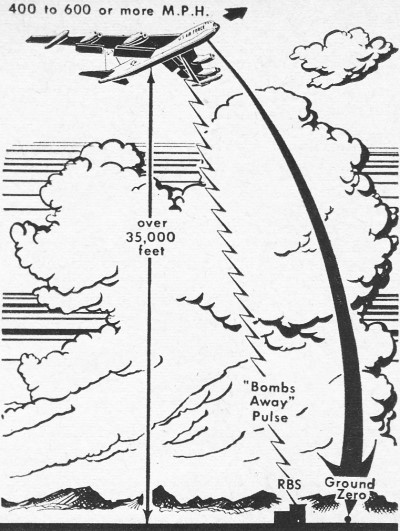
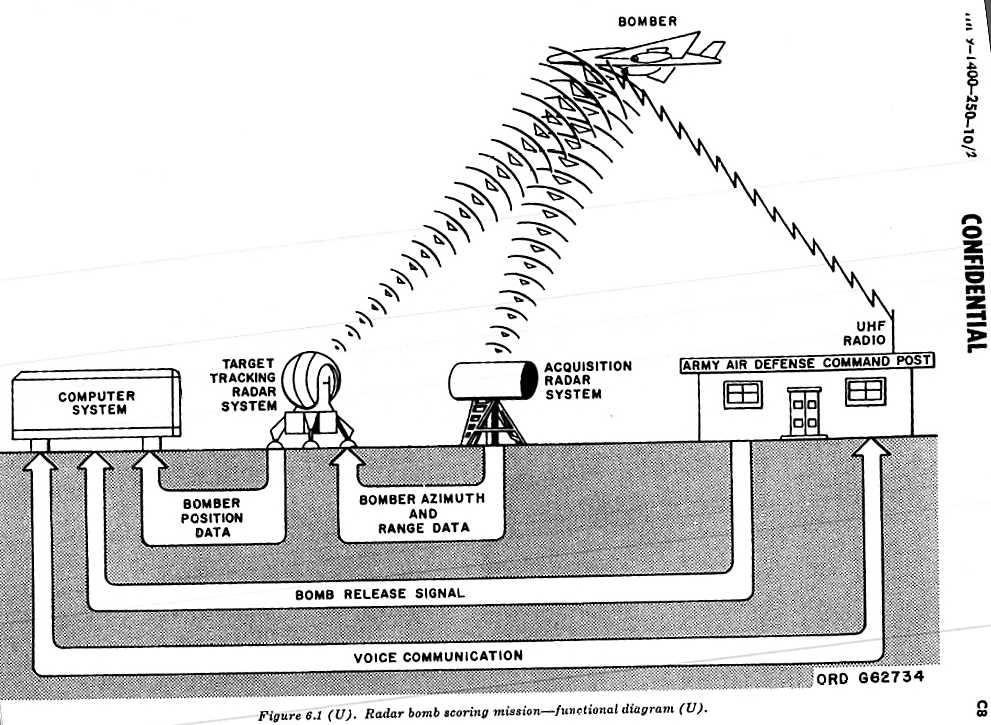
According to Sigmund Alexander, in 1947 SAC completed more than 12,000 radar bomb scoring runs; the next year the number soared to 28,049, an average of about 76 runs per day.  In 1956 Popular Electronics – from which I’ve borrowed the diagram above explained the procedure:

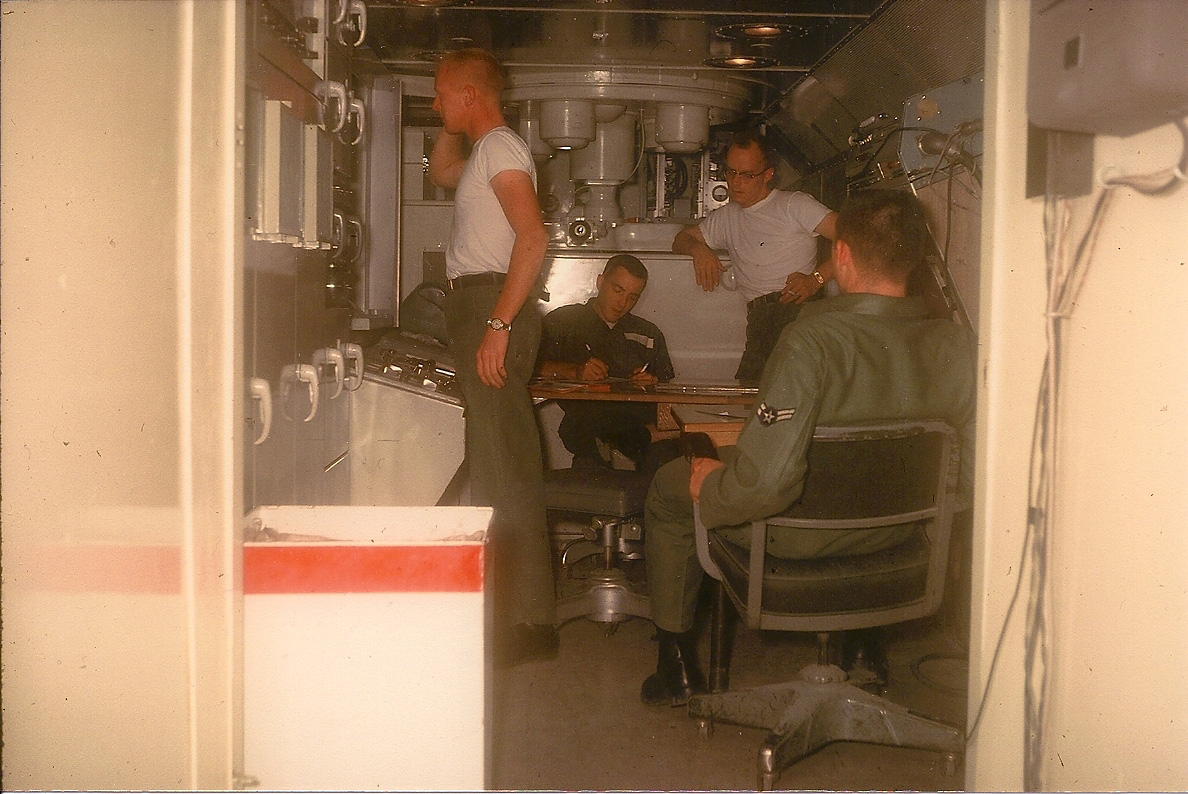
‘Airmen cried “Bombs away!” but instead of devastating blasts the only visible evidence of the crew’s ability to destroy a target was cryptic electronic signals observed by technicians at work inside a special radar station.… When the airplane signals “Bombs away!” a radar pulse is sent from the bomber to the ground station, known as a Radar Bomb Scoring (RBS) unit. The station is built inside a mobile van. A Mobile Radar Control System (MSQ) in the van uses the received pulses to track the course of the bomber, while computers determine the accuracy of “hits.” Blips across a radarscope represent the flight path of the plane. The results of the scoring computer are shown as a thin red line traced by an electronic “pen” on a sheet of blank paper. With this data, the RBS group working in the van knows just where the “bomb” hits.’

BombScoreMission-

This was virtual bombing, and it was a highly skilled affair.  Colonel Francis Potter recalls:

These practice bomb runs …  required a large amount of skill between the radar operator and the navigator to correctly identify the necessary check points to arrive at “bombs away” time on the correct heading and on time. The co-pilot would normally contact the bomb site via VHF (Very High Frequency) radio and relay the required information…. If memory serves me, we reported crew number, operator’s name, target designator, altitude, and type of release, IP (initial point, where you started the bomb run) and direction of flight at the time of “release.”  This info would be repeated to us and confirmed. Our position would be reported when over the IP point, usually some 50-60 miles out. After passing this point, directional control of the aircraft would be passed to the radar operator, who could tie it into his sighting system, and using the auto pilot small directional controls would be made. At the proper time prior to “release”, a continuous radio “tone” would be emitted which would alert the scoring site that release was imminent. At the proper time and place, the tone would stop. This was the release point. The co-pilot would announce to the site “bombs away.”  The site would then “score” the probable impact point, using wind drift and other factors that apply. After a few suspenseful moments, the site would contact us with an encoded score. We could de-code this and find that our bomb had hit XXX feet in which direction and distance from the intended point of impact. Obviously close to the desired spot was always the hoped for results. We would then return to the same IP or another in the same area and perform another run. We often stayed at the same site for several hours running one practice run after another. The scores the operator obtained would be catalogued and a probable CE (circular error) would be determined. This would be determined for each set of bomb runs and would be considered in determining the “over-all” accuracy of the individual operator.

But aircrews soon became over-familiar with the fixed targets on designated bombing ranges.  Here is Don Ross:

When the aircrew was scheduled to simulate bombing a target in our area (we had about 15 or 20 targets, which could be a barn, a building, a cross roads, a fence post, or just coordinates on a map), they would contact us and we would position the target they were going after on our plotting board, track them in and measure how well they did….

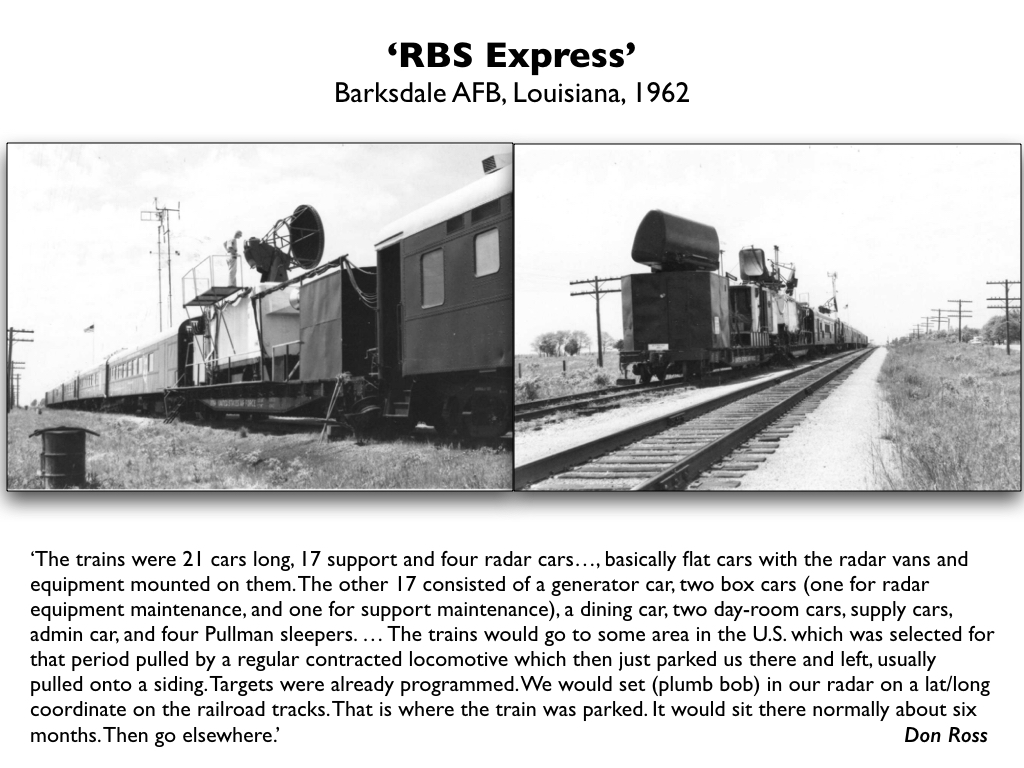
Well, the aircrews flew against these targets so often, that they became good at hitting them, Damn good. So good, they could do it in their sleep. So, to ensure they were able to actually keep remembering how to set up and find the target, SAC set up even more targets all over the country. As they were well beyond the reach of our detachments, each Squadron was given a train…

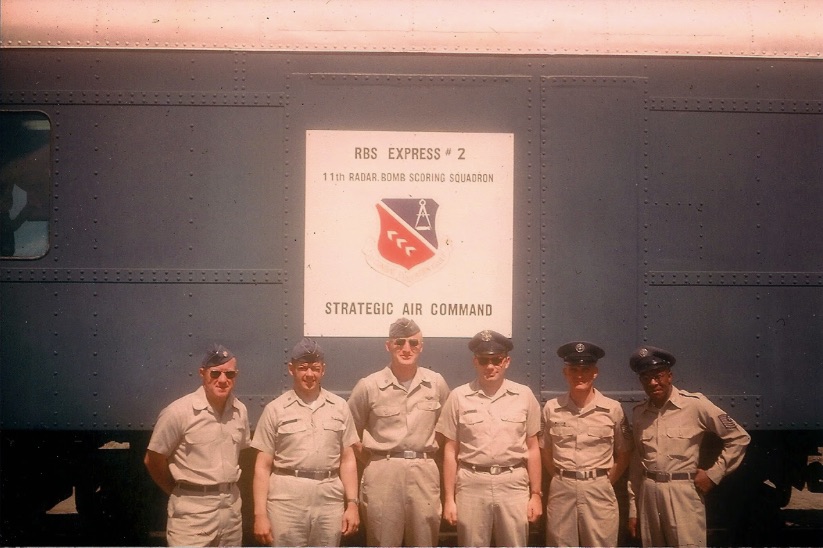
Starting in 1961, three special trains were fitted with the necessary equipment (see below; more images here and here):

RBS Express 11th RBS Squadron

Targets would now move from city to city onboard the ‘RBS Express’:

RBS Express.001

insideMSQ39

During the wars in Korea and Vietnam, radar bomb scoring was reverse-engineered to guide bombers to their targets (see my discussion of ‘Skyspot‘ in ‘Lines of Descent: DOWNLOADS tab; you can also find much more in this evaluation report from Vietnam here).

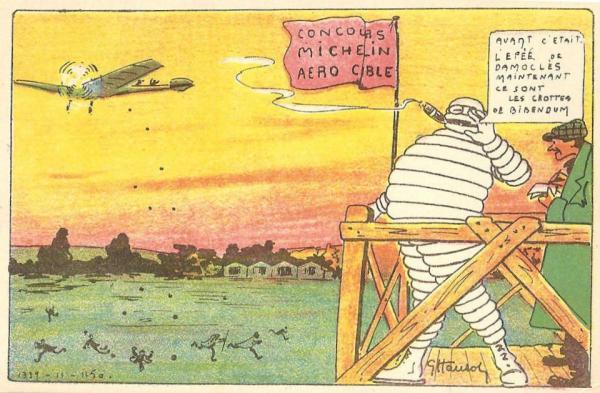
But here’s the thing.  In a previous post I described how the Michelin brothers established a bombing competition (the Aero-Cible or Air Target Competition) in 1911 to convince politicians and the public that bombing was the future of military aviation – and, no doubt, that Michelin was the company to produce the aircraft:

aero_cible_michelin_1_bib

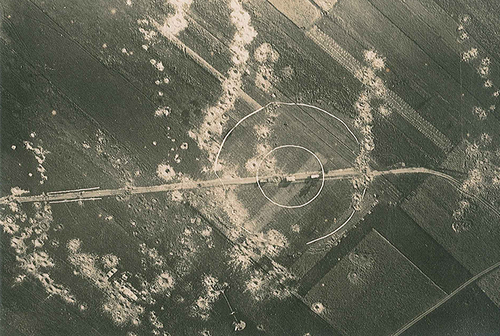
The results, incidentally, were not especially encouraging:

Michelin aero-cible

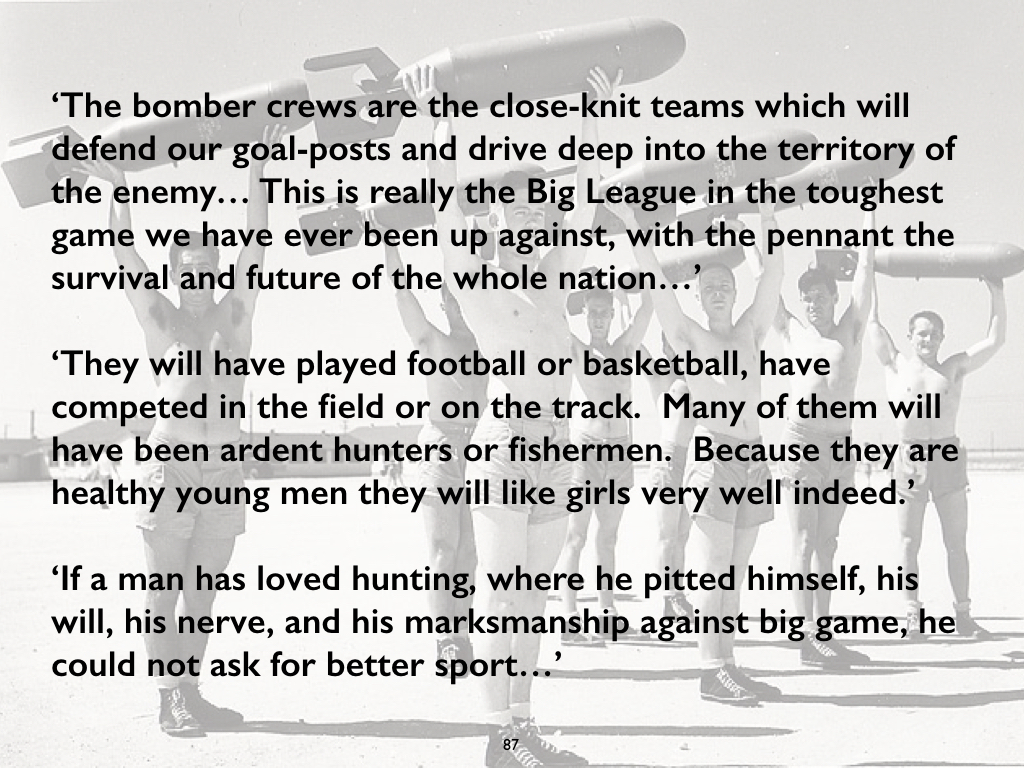
The idea of bombing as a ‘sport’ figured in my subsequent discussion of the moral economy of bombing.  Here, for example, is John Steinbeck on US bomber crews in the Second World War in Bombs Away!

The Big League.001

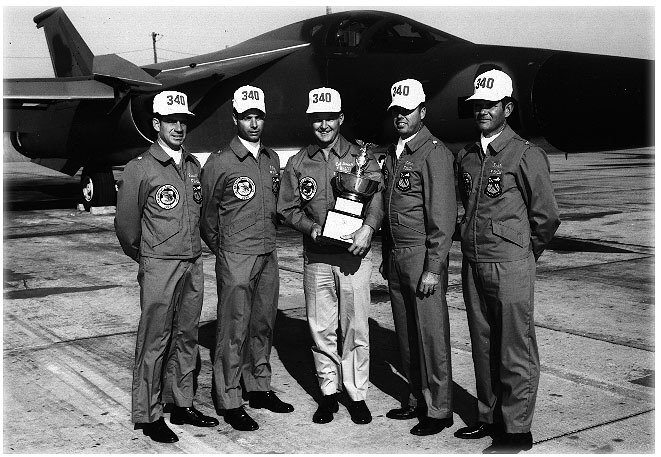
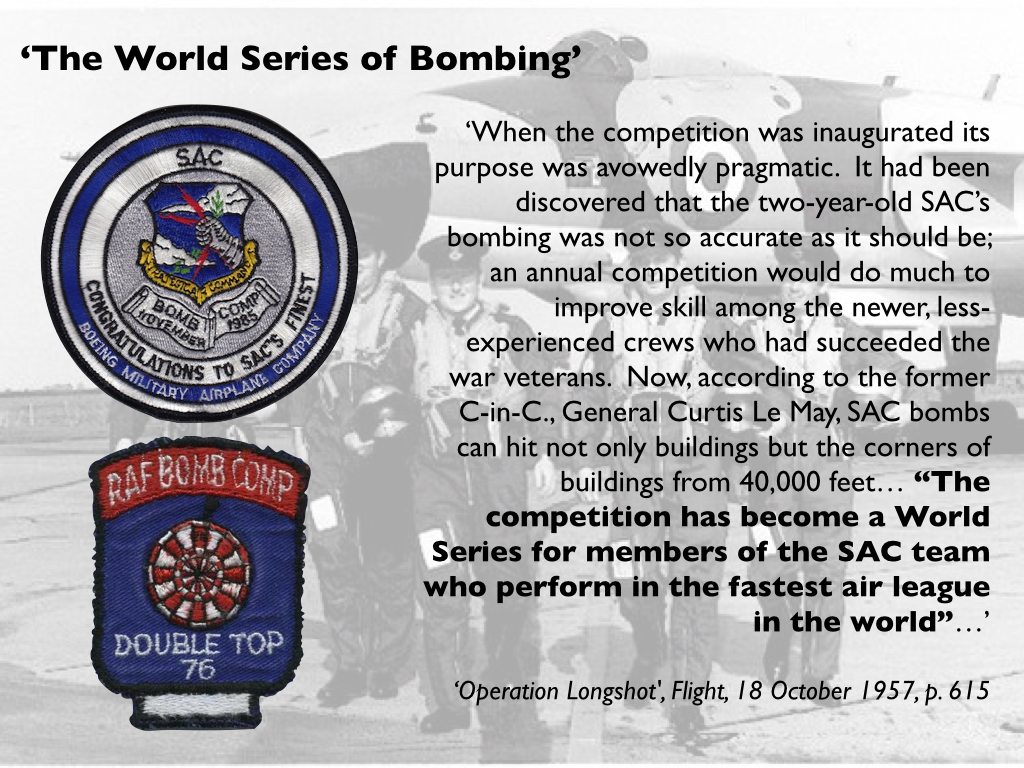
Radar bomb scoring carried this extraordinary metaphoric into the Cold War with Strategic Air Command’s inaguration of what became known as ‘Bomb Comp’, held between 1948 and 1992.  Here are the lucky winners in 1970, the 8th Air Force’s 340th Bomb Group – note the trophy and the baseball caps.

Bomb Comp Winners 8th AF 340th Bomb Group 1970

This often involved competitions with Britain’s Royal Air Force, and it became known not as Steinbeck’s ‘Big League’ but as ‘the World Series of Bombing’:

World Series of Bombing.001

You might be able to blow it up – but you couldn’t make it up.

A long day’s journey…

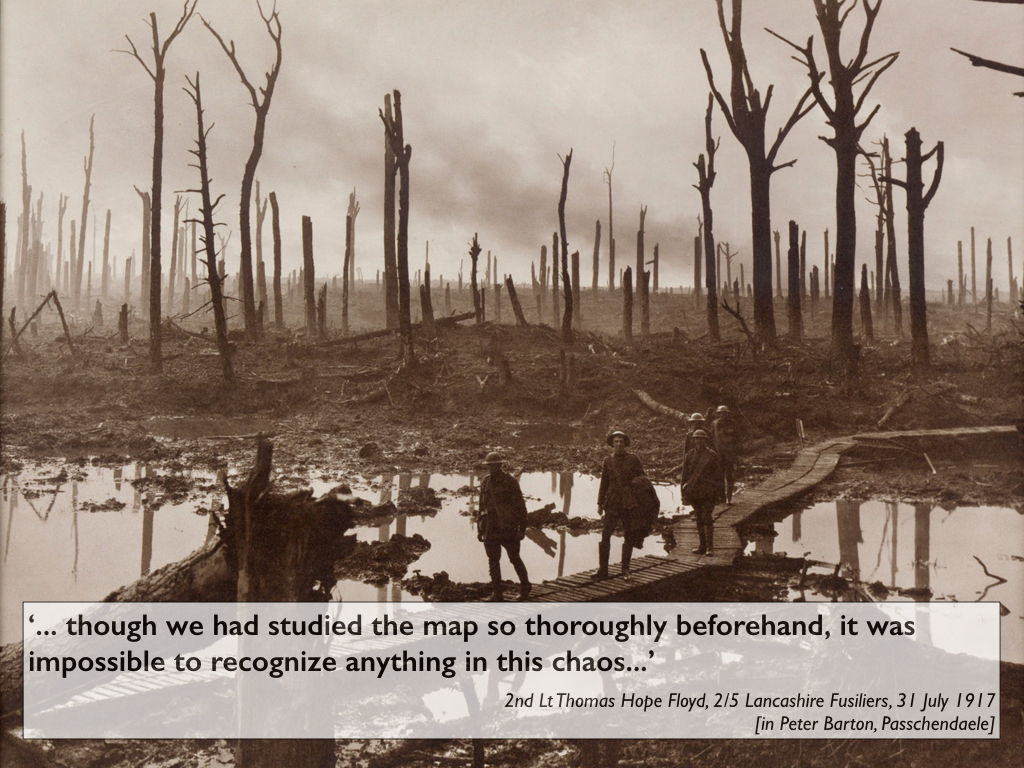
Anti-landscape of the Western Front.001

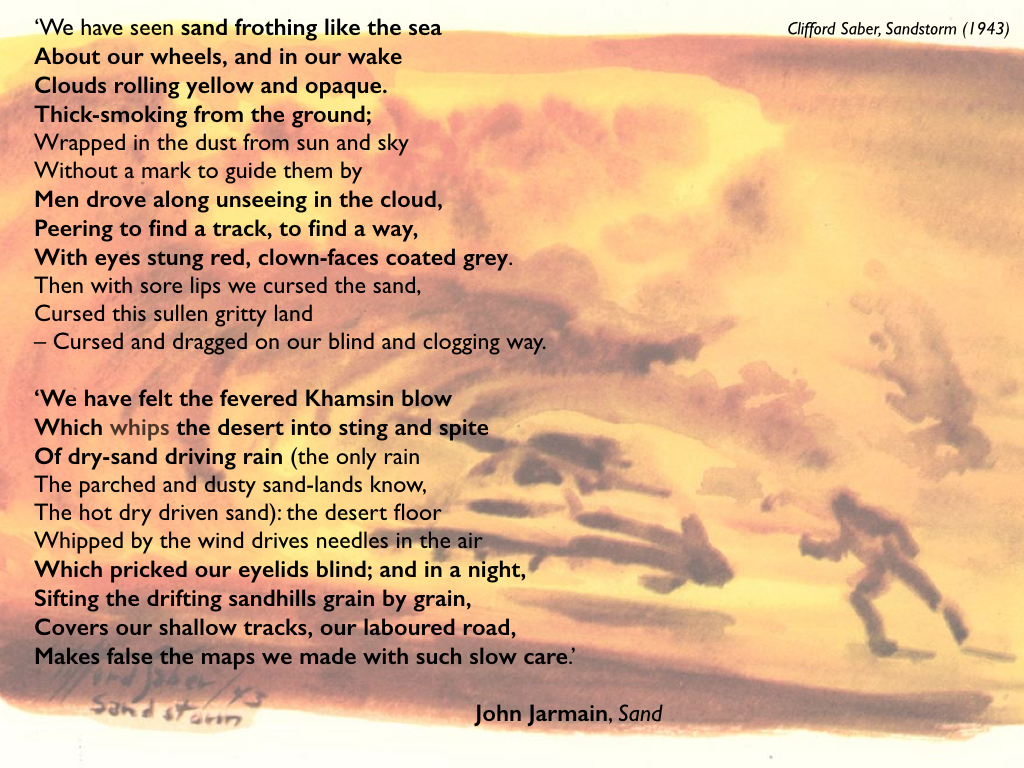
A note from Antipode to say that the latest edition is now available online and, unless I’ve mis-read things, is open access (for now, at any rate).  It includes what the editors say ‘might well be Antipode‘s longest ever paper’ – pp. 3-56! – my ‘Natures of war’ essay here.

JARMAN Sand.001

Planetary bombing

NORAD's Santa

You’ve probably read the tinsel-and-glitter story about NORAD tracking Santa Claus on Christmas Eve – like Santa’s sleigh, it goes the rounds every year – but Matt Novak provides an appropriately explosive rendition of it here.

It was a smart move for the military. When American kids asked their parents what NORAD was, the U.S. parents would be able to respond “those are the people who help Santa” rather than “those are the people who are ensuring our second strike capabilities after you and everyone in your play group are turned to dust by a nuclear attack.”

Among other plums in the pudding, Matt pulls out a syndicated story from AP in December 1955, in which the military promised that it would ‘continue to track and guard Santa and his sleigh on his trip to and from the U.S. against possible attack from those who do not believe in Christmas‘ (emphasis added).

Atomic Weapons Requirements Study for 1959 JPEG

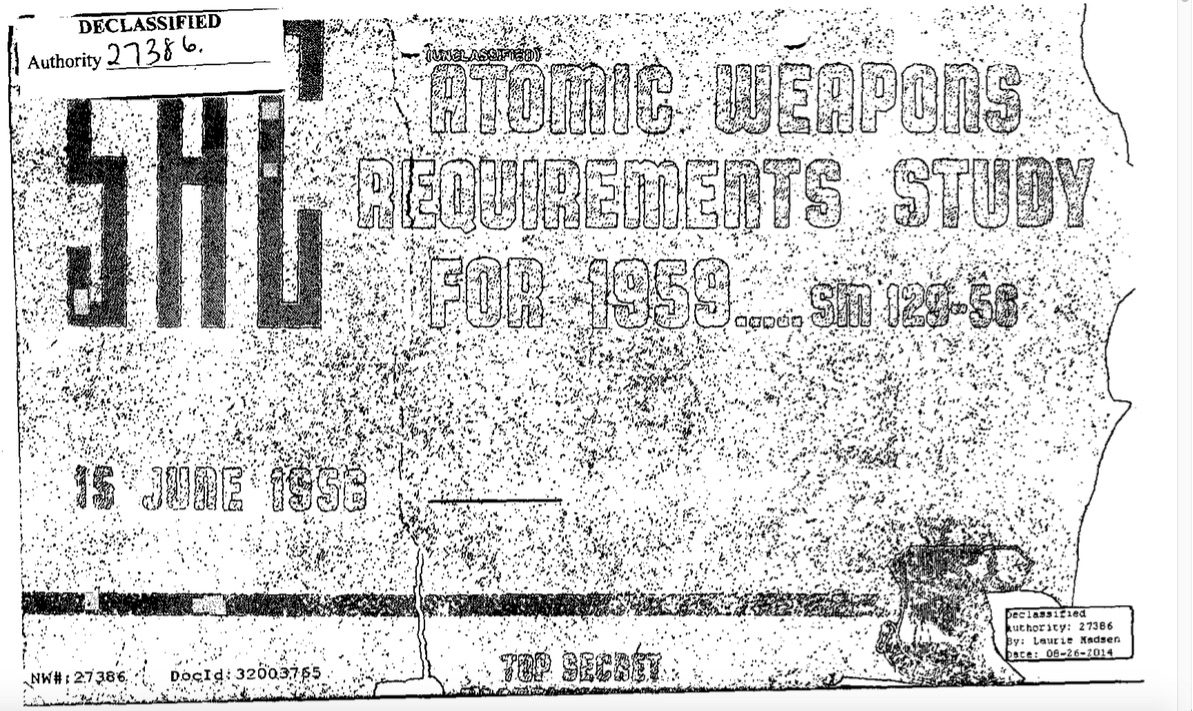
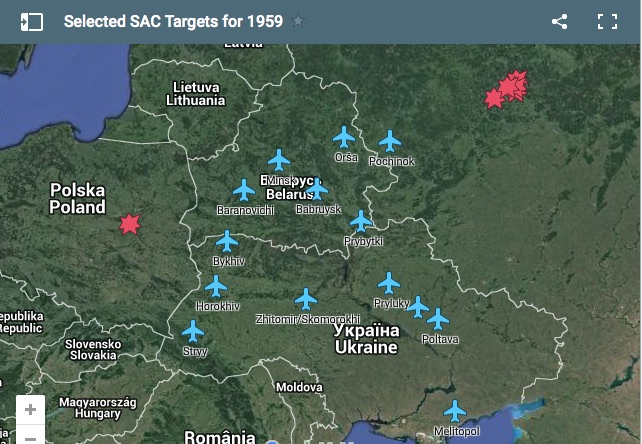
Just before Christmas this year, while NORAD was busy preparing to track Santa’s sleigh again, the National Security Archive at George Washington University released US Strategic Air Command’s Atomic Weapons Requirements Study for 1959, produced the year after that AP story.  The study

‘provides the most comprehensive and detailed list of nuclear targets and target systems that has ever been declassified. As far as can be told, no comparable document has ever been declassified for any period of Cold War history.’

Based on the Bombing Encyclopedia of the World, the Air Force planners proposed

the “systematic destruction” of Soviet bloc urban-industrial targets that specifically and explicitly targeted “population” in all cities, including Beijing, Moscow, Leningrad, East Berlin, and Warsaw. Purposefully targeting civilian populations as such directly conflicted with the international norms of the day, which prohibited attacks on people per se (as opposed to military installations with civilians nearby).

The study ‘listed over 1200 cities in the Soviet bloc, from East Germany to China, also with priorities established. Moscow and Leningrad were priority one and two respectively. Moscow included 179 Designated Ground Zeros (DGZs) while Leningrad had 145, including “population” targets.’  Every target was preceded by an eight-digit code from the Bombing Encyclopedia.

Selected SAC targets 1959 JPEG

William Burr provides an excellent, detailed commentary to accompany the Study here; you can also find more from Joseph Trevithick on this ‘catalog of nuclear death over at War is Boring here.

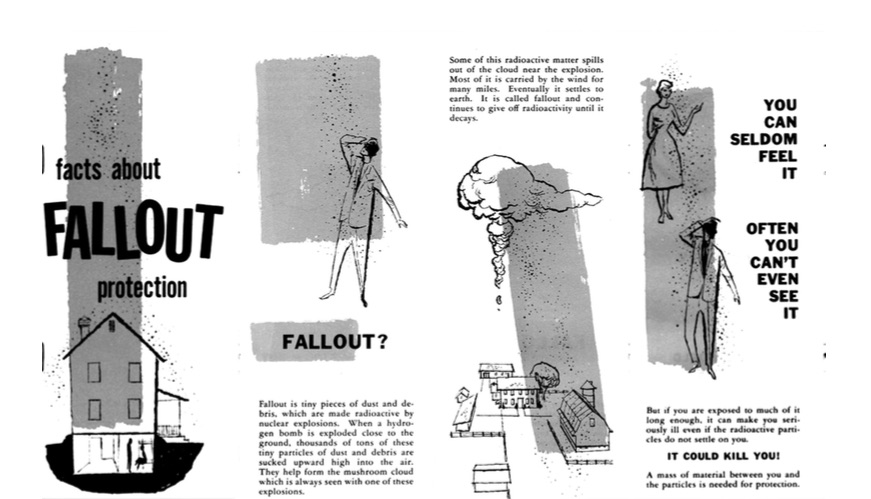
But all of this is prelude to the real plum in my Christmas pudding, the best paper I’ve read all year: Joseph Masco‘s ‘The Age of Fallout’ in the latest issue of History of the Present [5 (2) (2015) 137-168].

Being able to assume a planetary, as opposed to a global, imaginary is a surprisingly recent phenomenon. Although depictions of an earthly sphere are longstanding and multiple, I would argue that the specific attributes of being able to see the entire planet as a single unit or system is a Cold War creation. This mode of thinking is therefore deeply imbricated not only in nuclear age militarism, but also in specific forms of twentieth-century knowledge production and a related proliferation of visualization technologies.  A planetary imaginary includes globalities of every kind (finance, technology, international relations) – along with geology, atmosphere, glaciers, oceans, and the biosphere – as one totality.

What is increasingly powerful about this point of view is that it both relies on the national security state for the technologies, finances, and interests that create the possibility of seeing in this fashion, but also, in a single gesture, exceeds the nation-state as the political form that matters. A planetary optic is thus a national security creation (in its scientific infrastructures, visualization technologies, and governing ambitions) that transcends these structures to offer an alternative ground for politics and future making. Proliferating forms of globality – including the specific visualizations of science, finance, politics, and environment – each achieve ultimate scale and are unified at the level of the planetary. This achievement ultimately raises an important set of questions about how collective security problems can, and should, be imagined.

It’s a tour de force which, as these opening paragraphs show, is beautifully written too.  Joe begins with a richly suggestive discussion of the idea of ‘fallout’:

‘Fallout comes after the event; it is the unacknowledged-until-lived crisis that is built into the infrastructure of a system, program, or process. Fallout is therefore understood primarily retrospectively, but it is lived in the future anterior becoming a form of history made visible in negative outcomes.’

Its horizons are as much spatial as they are temporal – though Joe makes the sharp point that radioactive fallout was initially conceived as ‘the bomb’s lesser form’ and that it was the ‘explosive power of the bomb that was fetishized by the US military’ – and that fallout involves ‘individual actions and lived consequences, a post-sociality lived in isolation from the collective action of society or the war machine’ that mutates into what he sees as ‘an increasingly post-Foucaudian kind of governmentality’.

FALLOUT JPEG

When he elaborates the multiple registers in which radioactive fallout appears as an atmospheric toxicity Joe moves far beyond the nostrums of Peter Sloterdijk and others – which, to me anyway, seem to be based on almost wilfully superficial research – and connects it, both substantively and imaginatively, to contemporary critical discussions around global climate change and the Anthropocene.

In a cascade of maps and images, Joe shows how

Space and time are radically reconfigured in these fallout studies, constituting a vision of a collective future that is incrementally changing in unknown ways through cumulative industrial effects. The logics of a national security state (with its linkage of a discrete territory to a specific population) becomes paradoxical in the face of mounting evidence of ecological damage on a collective scale, not from nuclear war itself but rather from nuclear research and development programs. It is important to recognize that while cast as “experiments,” U.S. atmospheric nuclear tests were in reality planetary-scale environmental events.

In short, ‘since 1945 human beings have become post-nuclear creatures, marked with the signatures of nuclear weapons science.’

Towards the end of his essay, Joe says this:

In applying the lessons of the twentieth-century nuclear complex to contemporary geoengineering schemes to manage climate change, we might question 1) the claim to both newness and absolute crisis that installs a state of emergency and suspends normal forms of law and regulation; 2) a process that rhetorically reproduces the split between the event and its fallout so completely; and 3) the suggestion that geoengineering is a novel activity, that it is not an ancient practice with many antecedent examples to think with in assessing our current moment. We might also interrogate how the past fifty years of multidisciplinary work to create detailed visualizations of the planet has installed a dangerous confidence in globality itself, as increasingly high resolution visualizations come to stand in for both objectivity and sovereignty, and thus enable psychosocial feelings of control over vastly complex earth systems that remain, at best, only partially understood.

It’s an immensely provocative, perceptive paragraph; it not only makes me retrace my own wanderings through the nuclear wastelands (see here, here and here) but it also obliges me to rethink what I once called ‘the everywhere war’, to map its contours much more carefully  (the original impulse was simply to provide a counterpoint to those commentators who emphasised war time – ‘the forever war’, ‘permanent war’, ‘never-ending war’ – and who never noticed its spaces), and – particularly with that remark about ‘high resolution visualizations com[ing] to stand in for both objectivity and sovereignty’ in mind – perhaps even to see it as another dimension of Joe’s ‘Age of Fallout’.

City of Light, City of Darkness

I’ve long been interested in cities under military occupation, and in particular in the ways in which armies spatialise the city in order to securitise it.  I still have a detailed presentation on the French occupation of Cairo at the end of the eighteenth century – for Edward Said the formative and diagnostic moment in the formation of a distinctively modern Orientalsim – and the US occupation of Baghdad at the beginning of the twenty-first.  The parallels are as striking as the differences, and one of these days I know I have to find the time to convert the image-stream into a word-stream.

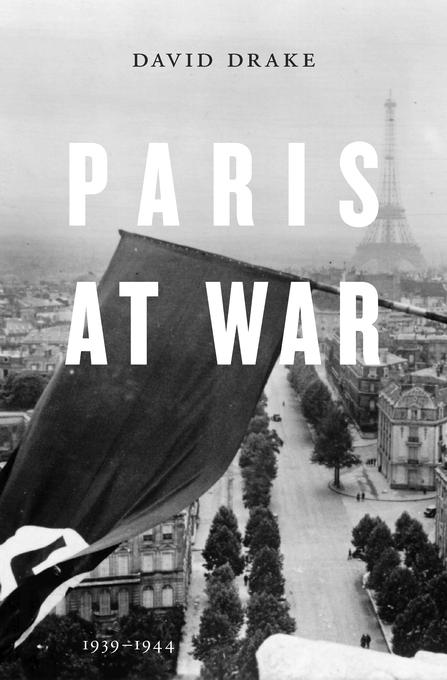
So this explains why a new book on Paris under German occupation in the Second World War caught my eye.

DRAKE Paris at warDavid Drake‘s Paris at War, 1939-1945 from Harvard/Belknap was published last month:

Paris at War chronicles the lives of ordinary Parisians during World War II, from September 1939 when France went to war with Nazi Germany to liberation in August 1944. Readers will relive the fearful exodus from the city as the German army neared the capital, the relief and disgust felt when the armistice was signed, and the hardships and deprivations under Occupation. David Drake contrasts the plight of working-class Parisians with the comparative comfort of the rich, exposes the activities of collaborationists, and traces the growth of the Resistance from producing leaflets to gunning down German soldiers. He details the intrigues and brutality of the occupying forces, and life in the notorious transit camp at nearby Drancy, along with three other less well known Jewish work camps within the city.

The book gains its vitality from the diaries and reminiscences of people who endured these tumultuous years. Drake’s cast of characters comes from all walks of life and represents a diversity of political views and social attitudes. We hear from a retired schoolteacher, a celebrated economist, a Catholic teenager who wears a yellow star in solidarity with Parisian Jews, as well as Resistance fighters, collaborators, and many other witnesses.

Drake enriches his account with details from police records, newspapers, radio broadcasts, and newsreels. From his chronology emerge the broad rhythms and shifting moods of the city. Above all, he explores the contingent lives of the people of Paris, who, unlike us, could not know how the story would end.

Here is the Contents list:

Prologue
Introduction: The Road to War: September 1938–September 1939
1. The Phoney War: September 3, 1939–May 10, 1940
2. Blitzkrieg and Exodus: May 10, 1940–June 14, 1940
3. Parisians and Germans, Germans and Parisians
4. Paris, German Capital of France
5. Unemployment, Rationing, Vichy against Jews, Montoire
6. From Mass Street Protest to the “Führer’s Generous Gesture”
7. Protests, Pillaging, “V” for Victory, the First Roundup of Jews
8. Resistance and Repression
9. Resistance, Punishment, Allied Bombs, and Deportation
10. SS Seizure of Security, the Yellow Star, the Vél’d’hiv’ Roundup, La Relève
11. Denunciations, Distractions, Deprivations
12. Labour Conscription, Resistance, the French Gestapo
13. Anti-Bolshevism, Black Market, More Bombs, Drancy
14. A Serial Killer on the Run, Pétain in Paris, the Milice on the Rampage, the Allies on Their Way
15. The Liberation of Paris
Conclusion

For a principled contemporary account, incidentally, and one that reverberates with the power of the literary sensibility that was so repugnant to the Nazis, it’s hard to beat Jean Guéhenno‘s Diary of the Dark Years, 1940-1944: Collaboration, Resistance, and Daily Life in Occupied Paris.

Paris of/in the Middle East

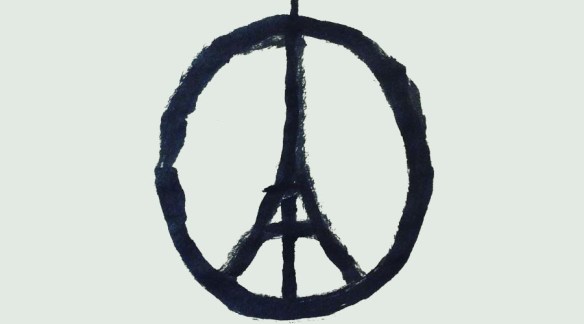
Paris:Peace

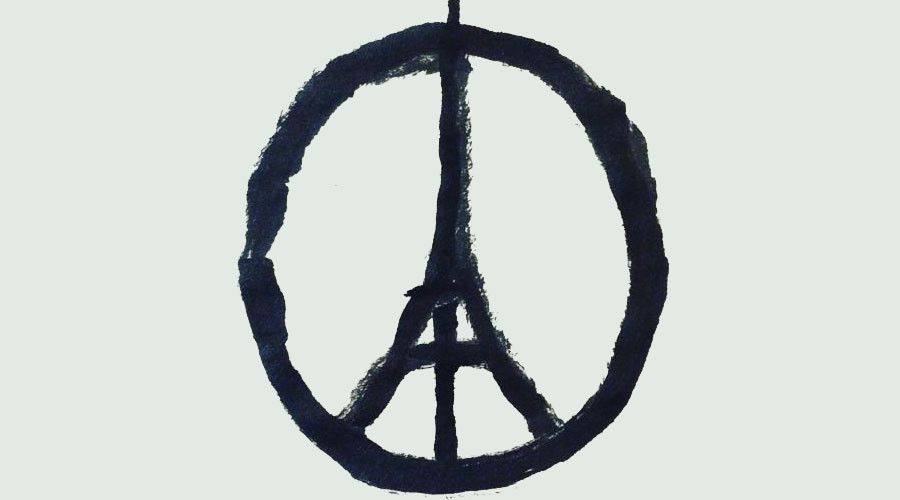
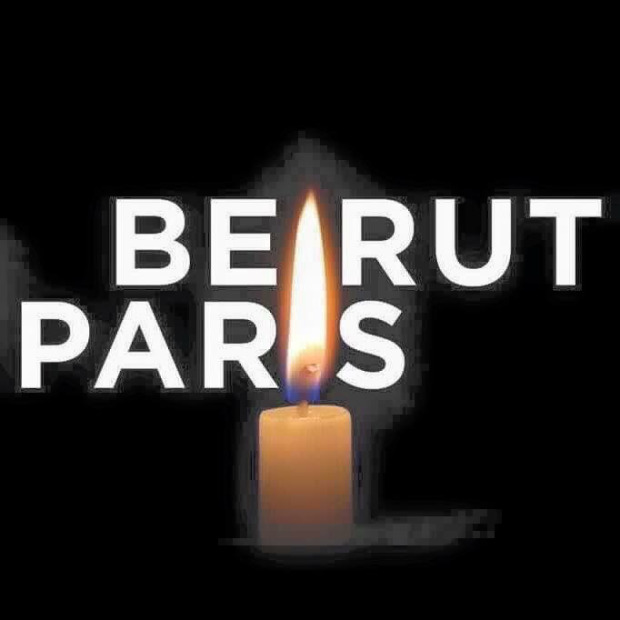
Islamic State has claimed responsibility for last night’s co-ordinated terrorist attacks in Paris, calling them the ‘first of the storm’ and castigating the French capital as ‘the capital of prostitution and obscenity’.   Walter Benjamin‘s celebrated ‘capital of the nineteenth century’ has been called many things, of course, and as I contemplated the symbol that has now gone viral (above), designed by Jean Jullien, I realised that Paris had been the stage for the 1919 Peace Conference that not only established the geopolitical settlement after the First World War but also accelerated the production of today’s ‘Middle East’ by awarding ‘mandates’ to both Britain and France and crystallising the secret Sykes-Picot agreement struck between the two powers in 1916 (more on that from the Smithsonian here).

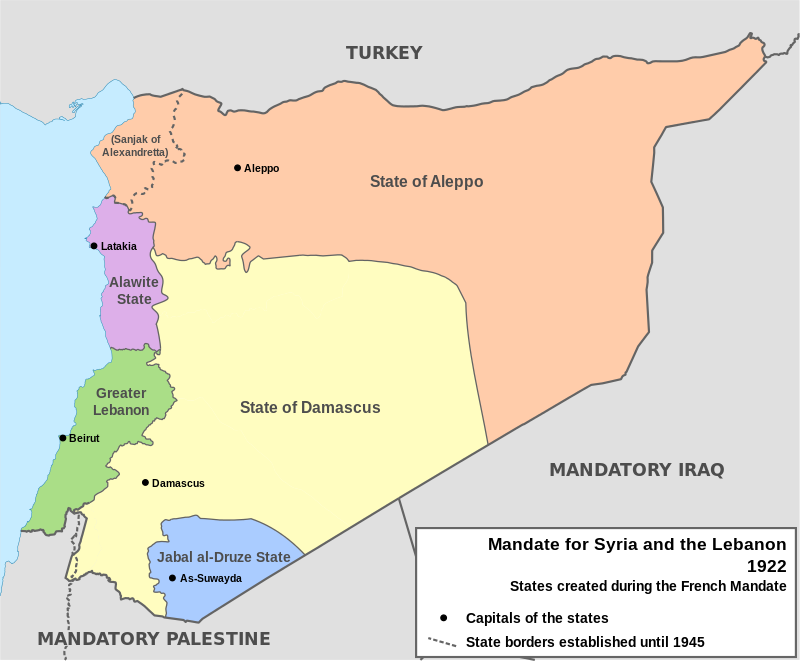
Margaret MacMillan has a spirited summary of the conference here, with some lively side-swipes at the astonishing lack of geographical knowledge displayed by the principal protagonists.  Much on my mind was the French mandate for Syria and Lebanon:

French Mandate for Syria and Lebanon

For as I watched Friday night’s terrifying events in Paris unfold, I had also been reminded of the horrors visited upon Beirut the evening before.

Two suicide bombers detonated their explosives in Burj el-Barajneh in the city’s southern suburbs; the attacks were carefully timed for the early evening, when the streets were full of families gathering after work and crowds were leaving mosques after prayers: they killed 43 people and injured more than 200 others.

Islamic State issued a statement saying that ’40 rafideen– a pejorative term for Shiite Muslims used by Sunni Islamists – were killed in the “security operation”’ and claimed the attacks were in retaliation for Hezbollah’s role in the Syrian war.

beirut60s

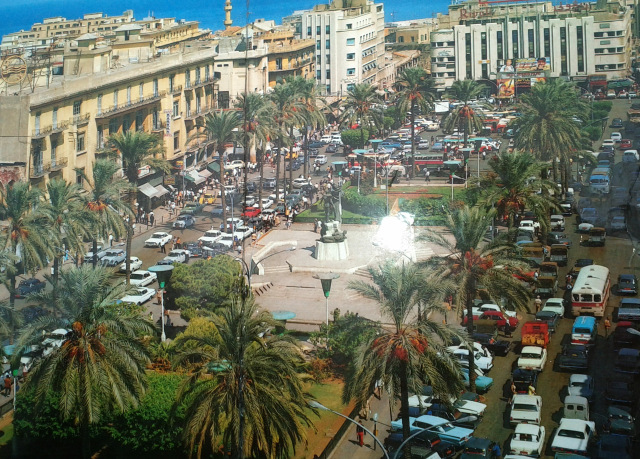
In the 1950s and 60s Beirut was known as ‘the Paris of the Middle East’ (above) – widely seen as more chic, more cosmopolitan than the ‘Paris-on-the-Nile’ created by Francophile architects and planners west of the old city of Cairo in the late nineteenth and early twentieth centuries.

Now I’ve always been troubled by these city switchings – the ‘Venice of the North’ is another example – because they marginalise what is so distinctive about the cities in question and crush the creativity that is surely at the very heart of their urbanity.

And yet, after last night, I can see a different point in the politics of comparison (from Kennedy’s Ich bin ein Berliner to the post 9/11 insistence that “we are all New Yorkers…”).  More accurately, in the politics of non-comparison: as Chris Graham asks (and answers): why the silence over what happened in Beirut on Thursday?  Why no mobilisation of the news media and no interruptions to regular programmes on TV or radio?  Why no anguished personal statements from Obama, Cameron or, yes, Hollande?
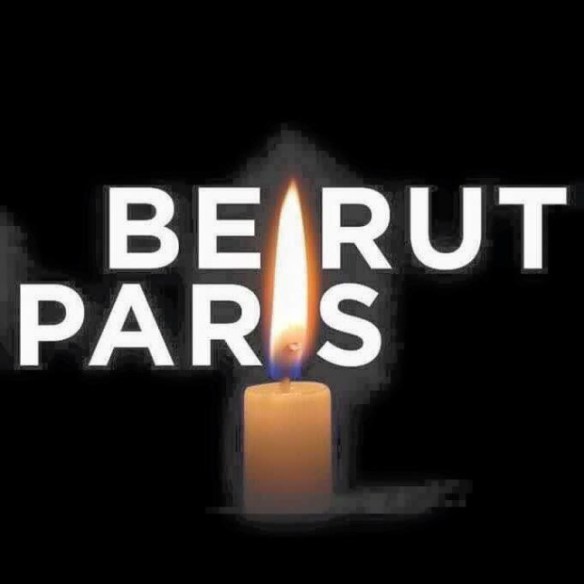
Beirut:Paris

Nobody has put those questions with more passion and justice than Elie Fares writing from Beirut:

I woke up this morning to two broken cities. My friends in Paris who only yesterday were asking what was happening in Beirut were now on the opposite side of the line. Both our capitals were broken and scarred, old news to us perhaps but foreign territory to them….

Amid the chaos and tragedy of it all, one nagging thought wouldn’t leave my head. It’s the same thought that echoes inside my skull at every single one of these events, which are becoming sadly very recurrent: we don’t really matter.

When my people were blown to pieces on the streets of Beirut on November 12th, the headlines read: explosion in Hezbollah stronghold, as if delineating the political background of a heavily urban area somehow placed the terrorism in context.

When my people died on the streets of Beirut on November 12th, world leaders did not rise in condemnation. There were no statements expressing sympathy with the Lebanese people. There was no global outrage that innocent people whose only fault was being somewhere at the wrong place and time should never have to go that way or that their families should never be broken that way or that someone’s sect or political background should never be a hyphen before feeling horrified at how their corpses burned on cement. Obama did not issue a statement about how their death was a crime against humanity; after all what is humanity but a subjective term delineating the worth of the human being meant by it?

Here we might pause to remind ourselves that most of the victims of Islamic State have been Muslims (see, for example, here and here).

Here Hamid Dabashi‘s reflections are no less acute:

In a speech expressing his solidarity and sympathy with the French, US President Barack Obama said, “This is an attack not just on Paris, it’s an attack not just on the people of France, but this is an attack on all of humanity and the universal values that we share.”

Of course, the attack on the French is an attack on humanity, but is an attack on a Lebanese, an Afghan, a Yazidi, a Kurd, an Iraqi, a Somali, or a Palestinian any less an attack “on all of humanity and the universal values that we share”? What is it exactly that a North American and a French share that the rest of humanity is denied sharing?

In his speech, UK Prime Minister David Cameron, speaking as a European, was emphatic about “our way of life”, and then addressing the French he added: “Your values are our values, your pain is our pain, your fight is our fight, and together, we will defeat these terrorists.”

What exactly are these French and British values? Can, may, a Muslim share them too – while a Muslim? Or must she or he first denounce being a Muslim and become French or British before sharing those values?

These are loaded terms, civilisational terms, and culturally coded registers. Both Obama and Cameron opt to choose terms that decidedly and deliberately turn me and millions of Muslims like me to their civilisational other.

They make it impossible for me to remain the Muslim that I am and join them and millions of other people in the US and the UK and the EU in sympathy and solidarity with the suffering of the French.

As a Muslim I defy their provincialism, and I declare my sympathy and solidarity with the French; and I do so, decidedly, pointedly, defiantly, as a Muslim.

When Arabs or Muslims die in the hands of the selfsame criminal Islamic State of Iraq and the Levant (ISIL) gangs in Afghanistan, Iraq, Syria, or Lebanon, they are reduced to their lowest common denominator and presumed sectarian denominations, overcoming and camouflaging our humanity. But when French or British or US citizens are murdered, they are raised to their highest common abstractions and become the universal icons of humanity at large.

Why? Are we Muslims not human? Does the murder of one of us not constitute harm to the entire body of humanity?
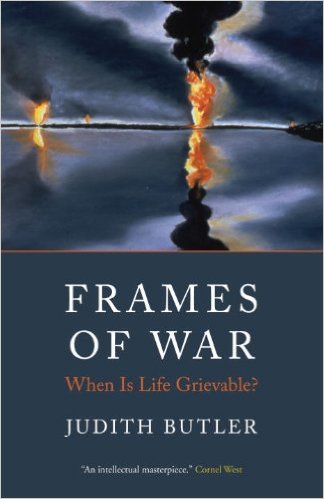
BUTLER Frames of WarElie’s and Hamid’s questions are multiple anguished variations of Judith Butler‘s trenchant demand: why are these lives deemed grievable and not those others?

To ask this is not to minimise the sheer bloody horror of mass terrorism in Paris nor to marginalise the terror, pain and suffering inflicted last night on hundreds of innocents – and also affecting directly or indirectly thousands and thousands of others.

In fact the question assumes a new urgency in the wake of what happened in Paris – where I think the most telling comparison is with Beirut and not with the attacks on Charlie Hebdo (see my commentary here) – because the extreme right (the very same people who once elected to stuff “Freedom Fries” down their throats) has lost no time in using last night’s events to ramp up their denigration of Syrian refugees and their demands for yet more bombing (and dismally failing to see any connection between the two).  You can see something of what I mean here.

And so I suggest we reflect on Jason Burke‘s commentary on Islamic State’s decision to ‘go global’ and its tripartite strategy of what he calls ‘terrorise, mobilise, polarise’.  The three are closely connected, but it’s the last term that is crucial:

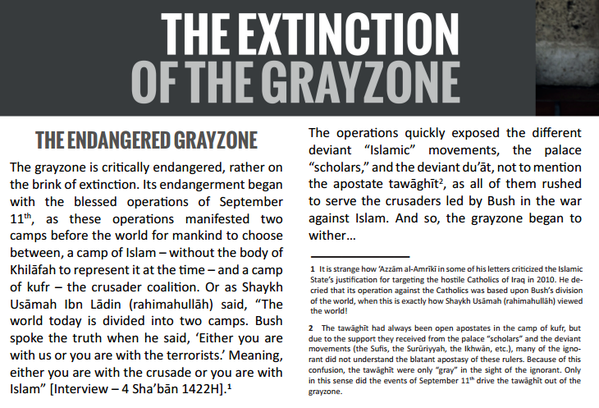
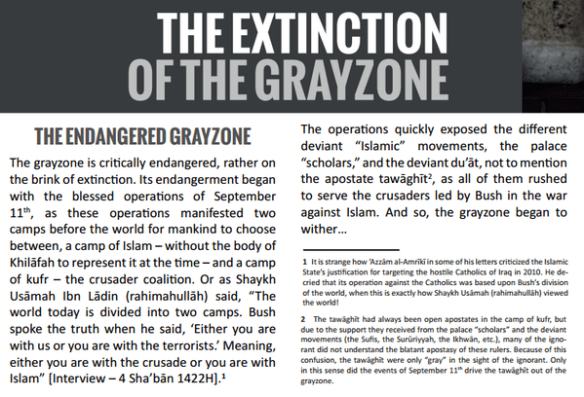
In February this year, in a chilling editorial in its propaganda magazine, Dabiq, Isis laid out its own strategy to eliminate what the writer, or writers, called “the grey zone”.

This was, Isis said, what lay between belief and unbelief, good and evil, the righteous and the damned. It was home, too, to all those who had yet to commit to the forces of either side.

The grey zone, Isis claimed, had been “critically endangered [since] the blessed operations of September 11th”, as “these operations showed the world” the two camps that mankind must choose between.

Over the years, since successive violent acts had narrowed the grey zone to the point where by the end of 2014 “the time had come for another event to … bring division to the world and destroy the grey zone everywhere”.
extinction-of-the-grayzone

More from Ben Norton here.  The imaginative geographies of Islamic State overlap with those spewed by the extreme right in Europe and North America and, like all imaginative geographies, they have palpable effects: not fifty shades of grey but fifty versions of supposedly redemptive violence.

UPDATE (1):  For more on these questions – and the relevance of Butler’s work– see Carolina Yoko Furusho‘s essay ‘On Selective Grief’ at Critical Legal Thinking here.

As it happens, Judith is in Paris, and posted a short reflection on Verso’s blog here.  She ends with these paragraphs:

My wager is that the discourse on liberty will be important to track in the coming days and weeks, and that it will have implications for the security state and the narrowing versions of democracy before us. One version of liberty is attacked by the enemy, another version is restricted by the state. The state defends the version of liberty attacked as the very heart of France, and yet suspends freedom of assembly (“the right to demonstrate”) in the midst of its mourning and prepares for an even more thorough militarization of the police. The political question seems to be, what version of the right-wing will prevail in the coming elections? And what now becomes a permissable right-wing once le Pen becomes the “center”. Horrific, sad, and foreboding times, but hopefully we can still think and speak and act in the midst of it.

Mourning seems fully restricted within the national frame. The nearly 50 dead in Beirut from the day before are barely mentioned, and neither are the 111 in Palestine killed in the last weeks alone, or the scores in Ankara. Most people I know describe themseves as “at an impasse”, not able to think the situation through. One way to think about it may be to come up with a concept of transversal grief, to consider how the metrics of grievability work, why the cafe as target pulls at my heart in ways that other targets cannot. It seems that fear and rage may well turn into a fierce embrace of a police state. I suppose this is why I prefer those who find themselves at an impasse. That means that this will take some time to think through. It is difficult to think when one is appalled. It requires time, and those who are willing to take it with you – something that has a chance of happening in an unauthorized “rassemblement” [gathering].

UPDATE (2): At Open Democracy Nafeez Mossadeq Ahmed has a helpful essay, ‘ISIS wants to destroy the “grey zone”: Here’s how we defend it’: access here.
Freedom fries, anyone?

Three more contributions to the Charlie Hebdo debate to think about.  The first is from Pankaj Mishra at the Guardian.  Not sure about his call for a ‘new Enlightenment’ – though there was certainly much wrong with the old one – but it’s a luminously (sic) intelligent argument.  He writes about ‘a profound clash – not between civilisations, or the left and the right, but a clash of old and new visions of the world in the space we call the west, which is increasingly diverse, unequal and volatile.’

It is not just secular, second-generation immigrant novelists [Hari Kunzru, Laila Lalami and Teju Cole] who express unease over the unprecedented, quasi-ideological nature of the consensus glorifying Charlie Hebdo’s mockery of Islam and Muslims. Some Muslim schoolchildren in France refused to observe the minute-long silence for the victims of the attack on Charlie Hebdo mandated by French authorities.

It seems worthwhile to reflect, without recourse to the clash of civilisations discourse, on the reasons behind these striking harmonies and discords. Hannah Arendt anticipated them when she wrote that “for the first time in history, all peoples on earth have a common present … Every country has become the almost immediate neighbour of every other country, and every man feels the shock of events which take place at the other end of the globe.” Indeed, it may be imperative to explore this negative solidarity of mankind – a state of global existence in which people from different pasts find themselves thrown together in a common present.’

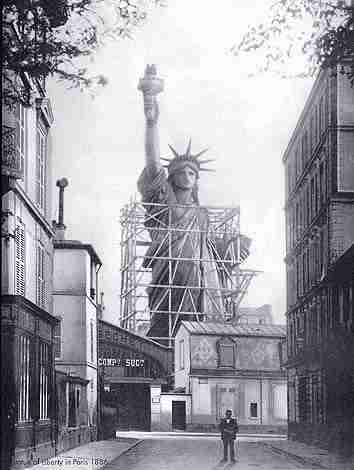
Construction of Statue of Liberty in Paris.comI think that’s right, which is why I’m disconcerted by Pankaj’s focus on Europe; I certainly don’t think the murders in Paris can be assimilated to ‘an assault on American values’ (far from it), but the complicated and often confounding relations between the two republics need excavation too.  They go back far beyond the gift of the Statue of Liberty to the US in the 1880s – I discussed this in what is still my favourite chapter in Geographical Imaginations – and reach forward to include the double, displaced misadventures in Indochina (not least the conviction that the US would sort out Vietnam after France had failed to do) and, still more proximately, France’s refusal to support the US-led invasion of Iraq (“freedom fries“, anyone?).

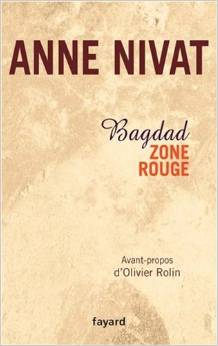
NIVAT Bagdad zone rougePankaj is simply brilliant on the ghosts of the colonial past, as you would expect, and they reappear in a different spectral guise in a short essay by Anne Nivat at Warscapes.  She provided some of the most reflective reporting from occupied Iraq (see her Bagdad, zone rouge), and in ‘Charlie Hebdo and the Boomerang Effect’ she mines that rich vein of experience to reflect on the knee-jerk responses to the murders in Paris:

In a democracy, one has the privilege of freedom of expression, and it is in the name of this that, for years, I have been traveling to the lands of “Islamist” wars.

For some time, I have been amazed, and even hurt, to hear friendly voices claim not to understand why I continue to give the floor to “the other side”; to those who make us afraid; to the “bad guy”; the “barbarian”; the “jihadist”; the Taliban; the “Islamic fighters” – the ones our allies have sought out to fight, or to “bump off in the outhouse,” as Russian President Vladimir Putin so elegantly put it in 2000 in reference to Chechen separatist fighters (Western military and political leaders typically use less violent vocabulary, but the meaning remains the same).

I regret that the attempts to know the “enemy” – my work, and others’ – have not been sufficient, as evidenced by the onslaught of hate on social networks.

And at the same site Andrew Ryder explores the multiform versions of ‘hate’ in ‘Charlie Hebdo and the limits of nihilism’.  He maps the gavotte between iconoclasm and nationalism and in so doing returns us to the figure of the Republic and to the dilemmas exposed by Pankaj Mishra.

Three years ago, [the editor of Charlie Hebdo] said, “If we say to religion, ‘You are untouchable,’ we’re fucked.” His idea was that no religion should be free from mockery, because to allow this is to permit the continuing subjugation of human freedom by religious superstition…

However, Charb also said, that same year, “I don’t blame Muslims for not laughing at our drawings. I live under French law. I don’t live under Koranic law.” This is the point where this apparent commitment to freedom actually masks French nationalism. What he is really saying, whether he was conscious of it or not, is that traditional French secularism, the products of a distinct national revolutionary tradition, should take absolute precedence over the values of immigrants. The secularism takes the shape of social chauvinism. In this context, it’s no longer a progressive contribution to the liberation of human beings. The apparent irreverence is bound to a greater advocacy of European heritage over the cultural character of the immigrants who now comprise such a large part of its society, and who were traditionally colonized and exploited by the ostensibly progressive and liberal nations whose secular values are then rhapsodized… [T]his complicity with racism was probably unrecognizable to him. We can see this today in the irony of the French right, paying homage to a magazine that hated them.