The Look of Silence

The Look of Silence

I commented on Joshua Oppenheimer‘s film about the Indonesian genocide in 1965, The Act of Killing, here and here.  There his focus was, unwaveringly, upon the killers.

But his new film, The Look of Silence, takes up the story of the victims.  Oppenheimer explains:

The Act of Killing exposed the consequences for all of us when we build our everyday reality on terror and lies. The Look of Silence explores what it is like to be a survivor in such a reality. Making any film about survivors of genocide is to walk into a minefield of clichés, most of which serve to create a heroic (if not saintly) protagonist with whom we can identify, thereby offering the false reassurance that, in the moral catastrophe of atrocity, we are nothing like perpetrators. But presenting survivors as saintly in order to reassure ourselves that we are good is to use survivors to deceive ourselves. It is an insult to survivors’ experience, and does nothing to help us understand what it means to survive atrocity, what it means to live a life shattered by mass violence, and to be silenced by terror. To navigate this minefield of clichés, we have had to explore silence itself.

The result, The Look of Silence, is, I hope, a poem about a silence borne of terror – a poem about the necessity of breaking that silence, but also about the trauma that comes when silence is broken. Maybe the film is a monument to silence – a reminder that although we want to move on, look away and think of other things, nothing will make whole what has been broken. Nothing will wake the dead. We must stop, acknowledge the lives destroyed, strain to listen to the silence that follows.

You can find out more about the production here, and Joshua Jelly-Schapiro interviews Oppenheimer about his general project and The Look of Silence in particular at Harper’s blog here.  He describes his focus on interior space in the new film – in contrast to The Act of Killing – like this:

‘I think one of the things that I realized very early on, with The Look of Silence, was that the best way to make the viewer feel what it means to have to build a life in a place that feels wrecked by endless fear, is to feel that in the most intimate way. Because those are very subtle personal things. And to understand something of what that’s really like, I thought, I would need to be incredibly microscopic. You’re entering a space where people are not putting words to what they experienced, where they’re too afraid to talk about it. I felt that I should try to create a kind of poem to a silence borne of fear, a poem to the necessity and trauma that comes with breaking that silence. The idea was to home in on the smallest details—the wrinkles in the ancient skin of Adi’s father, a crease in the brow of Adi’s mother—and to really focus on the silence, listen to that silence, and hear what it has to say.’

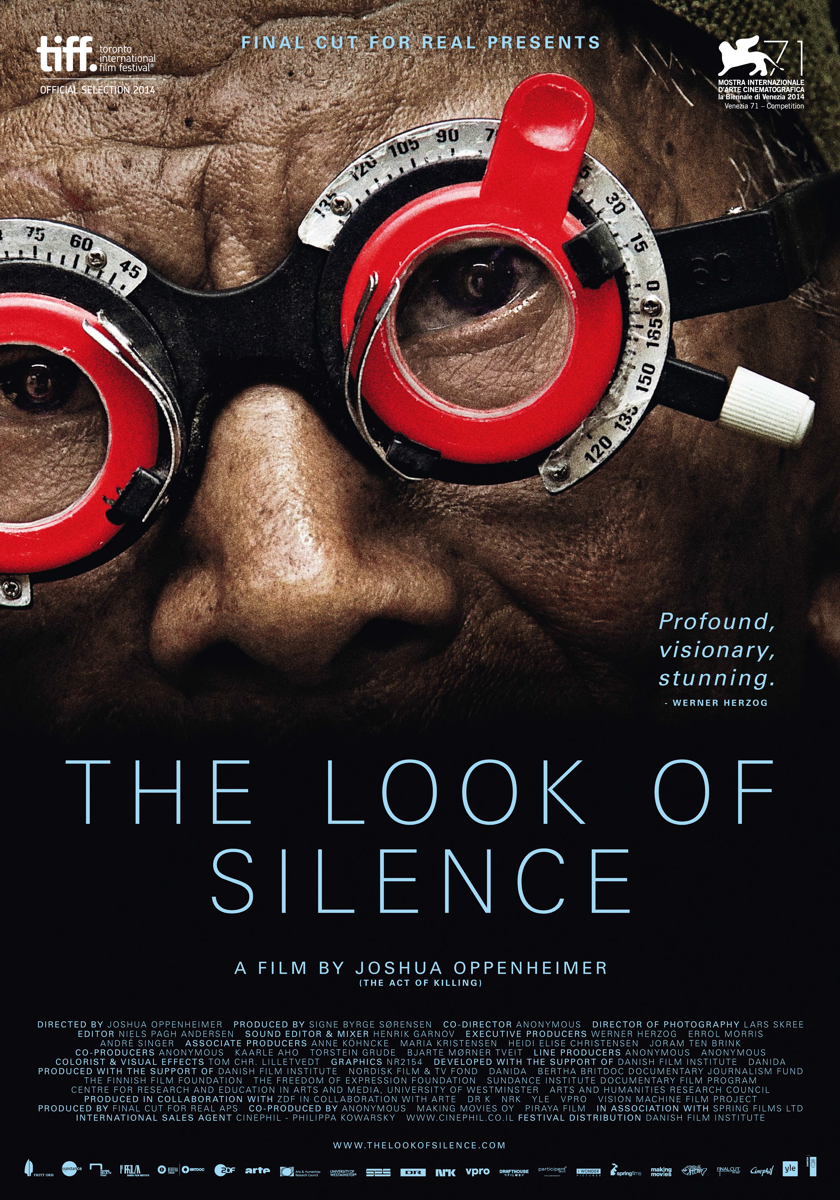
And he also glosses the image that appears on the poster above:

In The Look of Silence, we see an optometrist who probes the silence that his family has lived under, and then confronts the killers. If we made that a fiction story, it wouldn’t have at all the same interest. In fact the metaphor of the optometrist would be all too neat. Similarly, a death squad that makes a musical about their killings would be ridiculous as a fiction. But when it’s real, what we’re watching is the transformative effect of the process on the people. And I think that’s why I make film. It’s why I make nonfiction film. And it’s also why, in all of my films, I don’t hide the apparatus of filmmaking by pretending to be a fly on the wall, or by being a transparent interviewer eliciting testimony from the subject. Because I believe that if one is honest, then the genesis of the drama, and the genesis of the transformation, is also the filmmaking process itself.

Not only Openheimer, then, but Heisenberg too.

Inhumanned

Drones_Poster_cropped

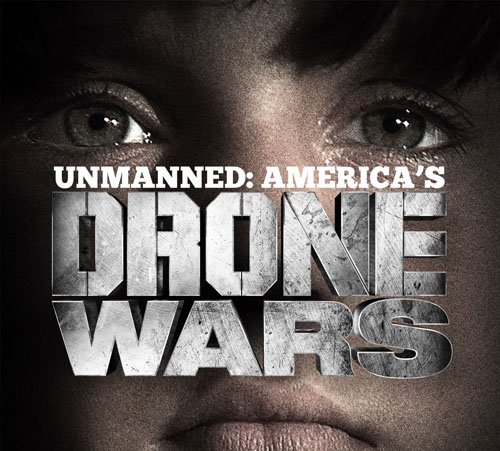
Better late than never…  I talked about Robert Greenwald‘s Unmanned before – the video documentary he produced to accompany the Stanford/NYU report Living under Drones – and I’ve now discovered you can still watch all 61 minutes here.

Beginning at 39:08 there is a harrowing account of the murder of Mamana Bibi in Waziristan on 24 October 2012.  There is a detailed investigation in Amnesty’s Will I be next? and its forensic detail is compelling, but watching and listening to the surviving members of her family adds a new dimension to the horror.

So too, though in a radically different way, does reading C. Christine Fair‘s partisan dismissal of both the Amnesty report and the testimony of the Rehman family here.  It was published under the title ‘Ethical and methodological issues in assessing drones’ civilian impacts in Pakistan’ – without a trace of irony – but for once the comments below the line give me hope…

FOOTNOTE:  I’ve been asked to elaborate that last paragraph.  Fair suggests – on the flimsiest of bases – that the strike was carried out by the Pakistan Air Force, and clumsily attempts to discredit both Reprieve and Amnesty’s research.  I’ve written before about the PAF’s repeated assaults on the FATA – here and here for example – but here is part of a report from the Guardian on the murder of Mamana Bibi that describes how Amnesty’s local researcher Mustafa Qadri went about his work:

Qadri reached out to trusted sources in North Waziristan. The family members and their neighbors were interviewed independently on multiple occasions, unaware that a human-rights group was behind the questions they were asked. Over the course of many weeks, Qadri found the family’s account to be consistent. He determined it was highly unlikely that any militants were present at the time of the strike and that the missiles were likely fired by a US drone.

“It was a number of things,” Qadri told the Guardian. “We got the missiles, the large fragments that the family has that we got analyzed by [an] expert who says this is very likely to be a Hellfire missile. We also had family members who saw drones physically. We also have the eyewitness of the family who said they heard the noise of missiles fired from the sky and then separate noises of missiles impacting on the ground. We have the evidence of a double sound, with each single strike.”

I doubt that he needs any lessons on ethics or methodology.

Bodies on the line

The more I think about corpography (see also ‘Corpographies under the DOWNLOADS tab) – especially as part of my project on casualty evacuation from war zones – the more I wonder about Grégoire Chamayou‘s otherwise artful claim that with the advent of armed drones the ‘body becomes the battlefield’.  He means something very particular by this, of course, as I’ve explained before (see also here).

But let me describe the journey I’ve been taking in the last week or so that has prompted this post. Later this month I’m speaking on ‘Wounds of war, 1914-2014‘, where I plan to sketch a series of comparisons between casualty evacuation on the Western Front (1914-18) and casualty evacuation from Afghanistan.  I’ve already put in a lot of work on the first of these, which will appear on these pages in the weeks and months ahead, but it was time to find out more about the second.
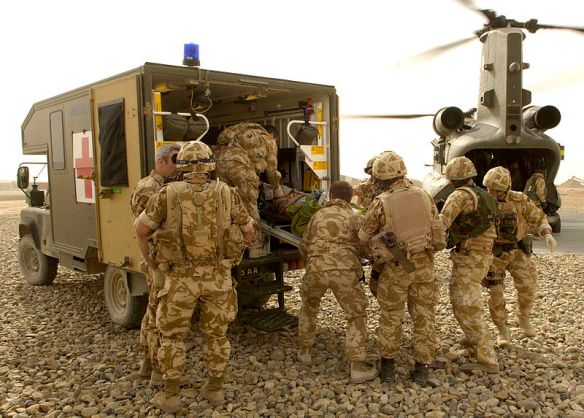
800px-Medical_Emergency_Response_Team_Recovers_a_Casualty_in_Afghanistan_MOD_45151884

En route I belatedly discovered the truly brilliant work of David Cotterrell who is, among many other things, an installation artist and Professor of Fine Art at Sheffield Hallam University.  He became interested in documenting the British military casualty evacuation chain from Afghanistan, and in 2007 secured access to the Joint Medical Forces’ operations at Camp Bastion in Helmand.  He underwent basic training, a course in even more basic battlefield first-aid, and then found himself on an RAF transport plane to Bastion.  The Role 3 Hospital was, as he notes, a staging-ground. ‘Field hospitals are islands between contrasting environments,’ he wrote in his diary, ‘between the danger and dirt of the Forward Operating Bases and the order and convention of civilian healthcare.’  You can read a long, illustrated extract from the diary (3 – 26 November 2007) here, follow the photo-essay as a slideshow here, and explore David’s many other projects on his own website here.
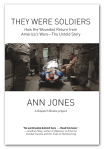
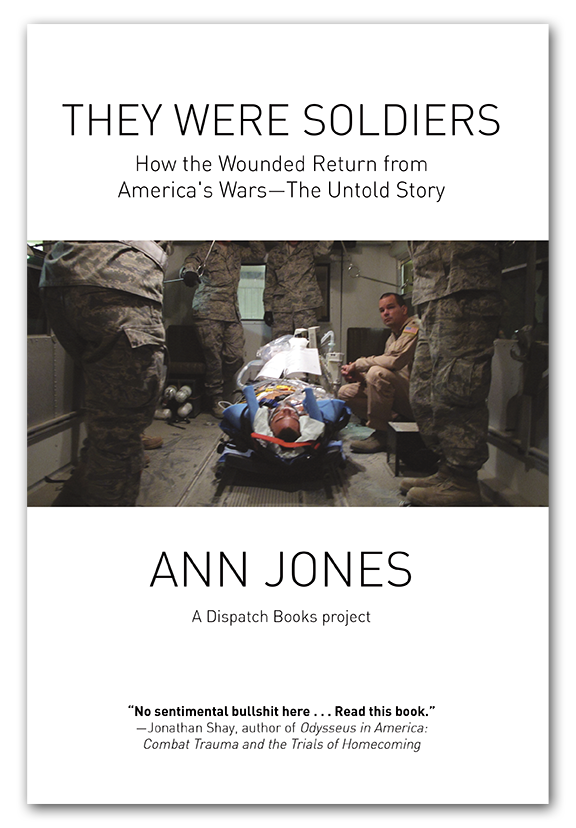
THEY-WERE-SOLDIERS_by-Ann-Jones_72The diary is immensely interesting and informative in its own right, not least about the exceptional personal and professional difficulties involved in documenting the evacuation process.  Here there’s a helpful comparison to be made with journalist Ann Jones‘s no less brilliant They were soldiers: how the wounded return from America’s wars (more on this in a later post), which starts at the US military’s own Level III Trauma Center, the Craig Joint Theater Hospital at Bagram, and moves via Landstuhl Regional Medical Center in Germany, the largest US hospital outside the United States, to the Walter Reed Army Medical Center in Washington DC.

David’s visual record is even more compelling, as you would expect from a visual artist, not only in its documentary dimension but also in the installations that have been derived from it.  In Serial Loop, for example, we are confronted with a looped film showing the endless arrival of casualties at Bastion: ‘The sound of a continuously arriving and departing Chinook helicopter accompanies images of a bleak and wasted landscape; the banality of the film’s fixed perspective masks the dramas that unfold within the ambulances as they travel to triage.’

9-liner explores what David calls ‘the abstraction of experience within conflict’:

9-Liner explores the dislocation between the parallel experiences of casualties within theatre. It is a quiet study of a dramatic event: the attempt to bring an injured soldier to the tented entrance of the desert field hospital. The screens show apparently unrelated information. JCHAT – a silent scrolling codified message – runs on a central screen. Our interpretation of it is enabled through its relationship between one of two radically different but equally accurate views of the same event. To the left we see the Watchkeeper – a soldier manning phones and reading computer screens in a crowded office. On the right we view the MERT flight – the journey of the Medical Emergency Response Team in a Chinook helicopter.

SHU’s REF submission includes this summary of David’s work (one of the very few useful things to come out of that otherwise absurdist exercise):

The research made clear that soldiers recovering from life-changing injuries had limited means of reconstructing the narrative of their transformative experiences. From the time of wounding through to secondary operations in the UK, many soldiers remained sedated or unconscious for a period of up to five days. The radical physical transformation that had occurred during this period was not adequately reconciled through medical notes, and the embargo on photographic documentation of incident and subsequent medical procedures served further to obscure this period of lost memory.

A culture of secrecy meant that medical professionals were unable to access documentation of the expanded care pathway with which they, and their colleagues, were engaged. This fragmentation of experience and understanding within the process of evacuation, treatment and rehabilitation meant that the assessment of the contradictions and disorientation experienced by casualties and medical practitioners was denied to front-line staff.

Family members, colleagues and members of the public outside the immediate environment of the military were unable to visualise or understand the transformative effects of conflict on directly affected civilians and soldiers. Partly as a result, the scope for public debate to engage meaningfully with the longer term societal cost of contemporary conflict was limited.

The submission goes on to list an impressive series of debriefings, presentations to military and medical professionals, major exhibitions, and follow-through research in Birmingham.
5-soldiers_header

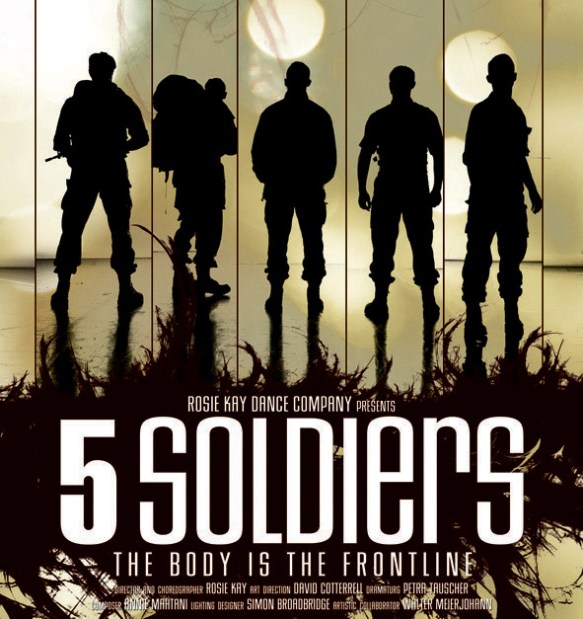
And it’s one of those follow-throughs that prompted me to think some more about corpographies.  I’d noted the connection between corpography and choreography in my original post, but David’s extraordinary collaboration with choreographer Rosie Kay and her dance company gives that a much sharper edge.  Again, there’s a comparison to be drawn – this time with Owen Sheers‘s impressively researched and executed body of work, not only the astonishing Pink Mist but also The Two Worlds of Charlie F (2012)which was a stage play based on the experiences of wounded soldiers who also made up the majority of the cast (see my discussion of these two projects here).

5 Soldiers started life as a stage presentation in 2010 (watch some extracts here):

A dance theatre work with 5 dancers, it looks at how the human body is essential to, and used in, warfare. 5 SOLDIERS explores the physical training that prepares you for war, as well as the possible effects on the body, and the injury caused by warfare.

Featuring Kay’s trademark intense physicality and athleticism, 5 SOLDIERS weaves a journey of physical transformation, helping us understand how soldiers are made and how war affects them.

5 SOLDIERS is a unique collaboration between award-winning choreographer Rosie Kay, visual artist David Cotterrell and theatre director Walter Meierjohann. It follows an intense period of research, where Rosie learnt battle training with The 4th Battalion The Rifles and David spent time in Helmand Province with the Joint Forces Medical Group.

Rosie explained her commitment to the project (and her training with The Rifles) like this:

“I wanted to look at how the physicality of a soldier’s job defines them –like a dancer, the soldier is drilled, trained, their responses becoming automatic, but can anything prepare you for the realities of war? It is young soldiers and their bodies that are the ultimate weapon in war – their strength and weaknesses may win or lose a battle, their ability to harm or injure others is key to victory. While war is surrounded with weaponry, uniforms, history and ceremony, the real business is human, dirty, messy, painful and happening right now.”

(She is, not coincidentally, an affiliate of the School of Anthropology at Oxford).

5 Soldiers installation PNG

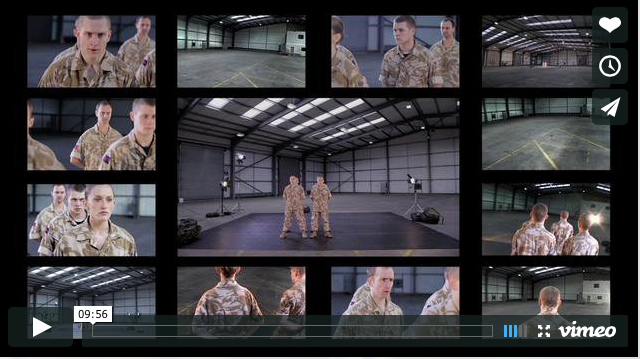
And now there’s a film version that works as a multi-screen installation (screen shot above).

Instead of just creating a short film, the team wanted the web user to get a truly interactive way to watch dance, and actually feel that they can go inside the minds and the body of the work. The 80-minute work was cut to just 10 minutes long, and the company spent one week filming in a huge aircraft hangar at Coventry Airport…

Using a variety of cutting edge filming techniques, the collaborative team have created a 13 angle edit that takes you into the heart of the work, follows each of the dancers, and zooms out so that the performers appear to be like ants in a huge empty landscape.

You can see the interactive, multi-perspectival version here.  This relied on helmetcams, and there’s a fine, more general commentary on this in Kevin McSorley‘s ‘Helmetcams, militarized sensation and “somatic war”‘ here.  But here’s the short, ‘director’s cut’ version:

And look at the tag-line: ‘The body is the frontline’.  It’s not only drones that make it so.
Irresponsible Eyes

The Left to Die Boat

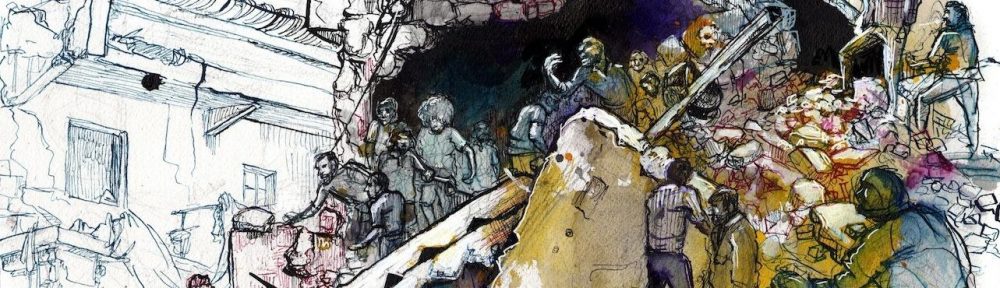
I’m off to Berlin to give a new version of ‘Angry Eyes‘ at HAU’s Waffenlounge (‘Weapons Lounge’), so I’ve been thinking some more about the dispersed and distributed field of militarized vision.  En route, I’ve read Timothy Raeymaekers‘ thoughtful reflection over at Liminal Geographies on Charles Heller and Lorenzo Pezzani‘s short film Liquid Traces.

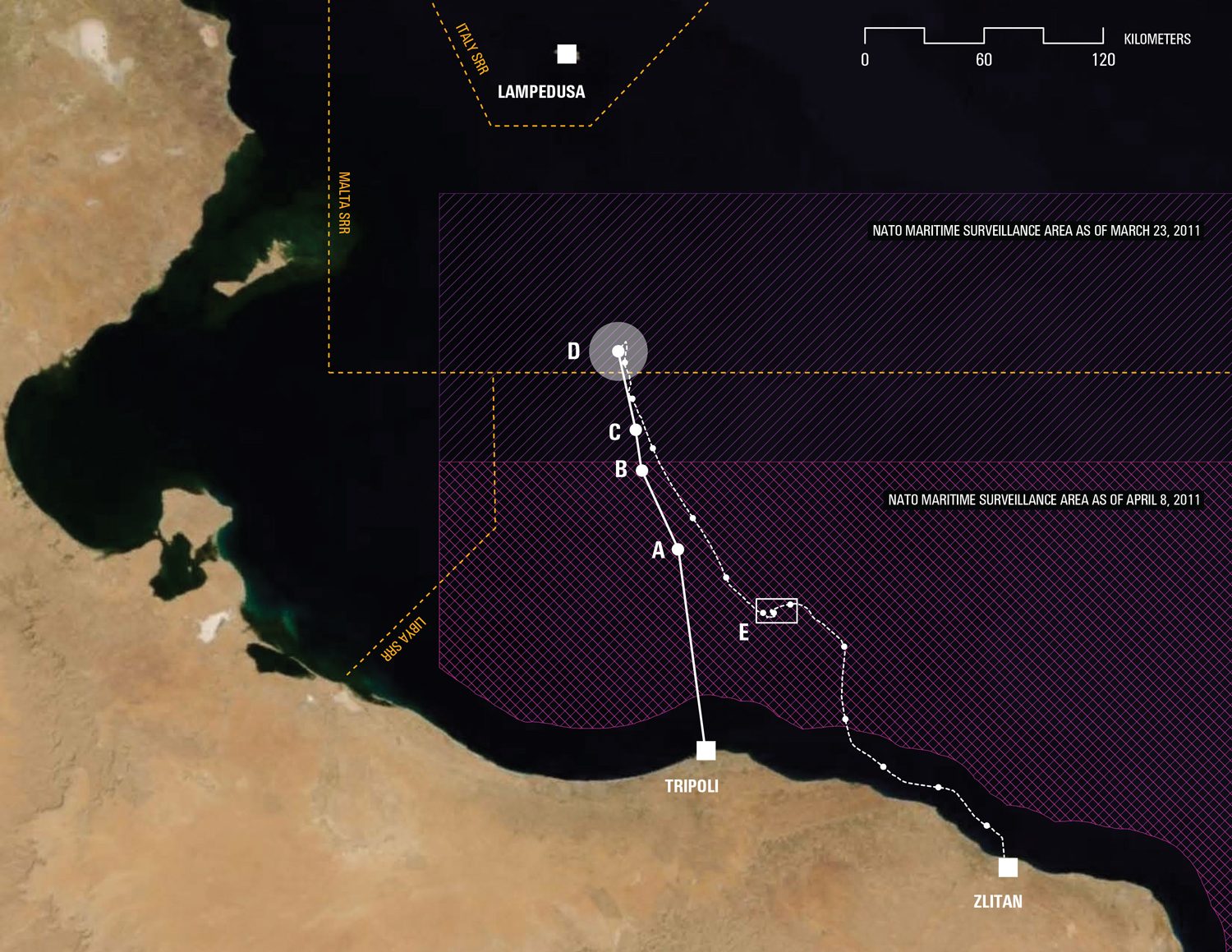
Their video retraces the awful journey of 72 desperate people who set out from Tripoli on 27 March 2011.  Two weeks later their boat washed ashore on the Libyan coast again – but with only 11 survivors on board, two of whom later died.

I expect many readers will recognise that Liquid Traces derives from a project at Forensic Architecture called The Left to Die Boat:

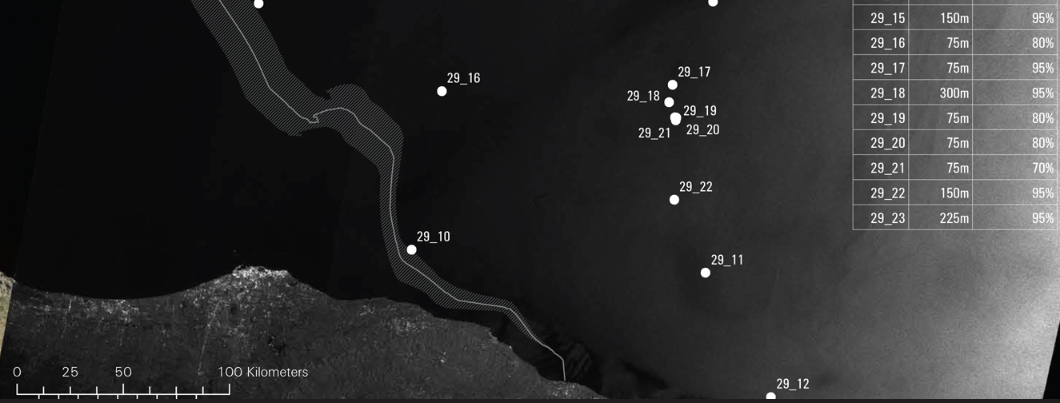
The Forensic Oceanography project was launched in summer 2011 to support a coalition of NGOs demanding accountability for the deaths of migrants in the central Mediterranean Sea while that region was being tightly monitored by the NATO-led coalition intervening in Libya. The efforts were focused on what is now known as the “left-to-die boat” case, in which sixty-three migrants lost their lives while drifting for fourteen days within the NATO maritime surveillance area.

By going “against the grain” in our use of surveillance technologies, we were able to reconstruct with precision how events unfolded and demonstrate how different actors operating in the Central Mediterranean Sea used the complex and overlapping jurisdictions at sea to evade their responsibility for rescuing people in distress. The report we produced formed the basis for a number of ongoing legal petitions filed against NATO member states.

1A

As Tim notes,

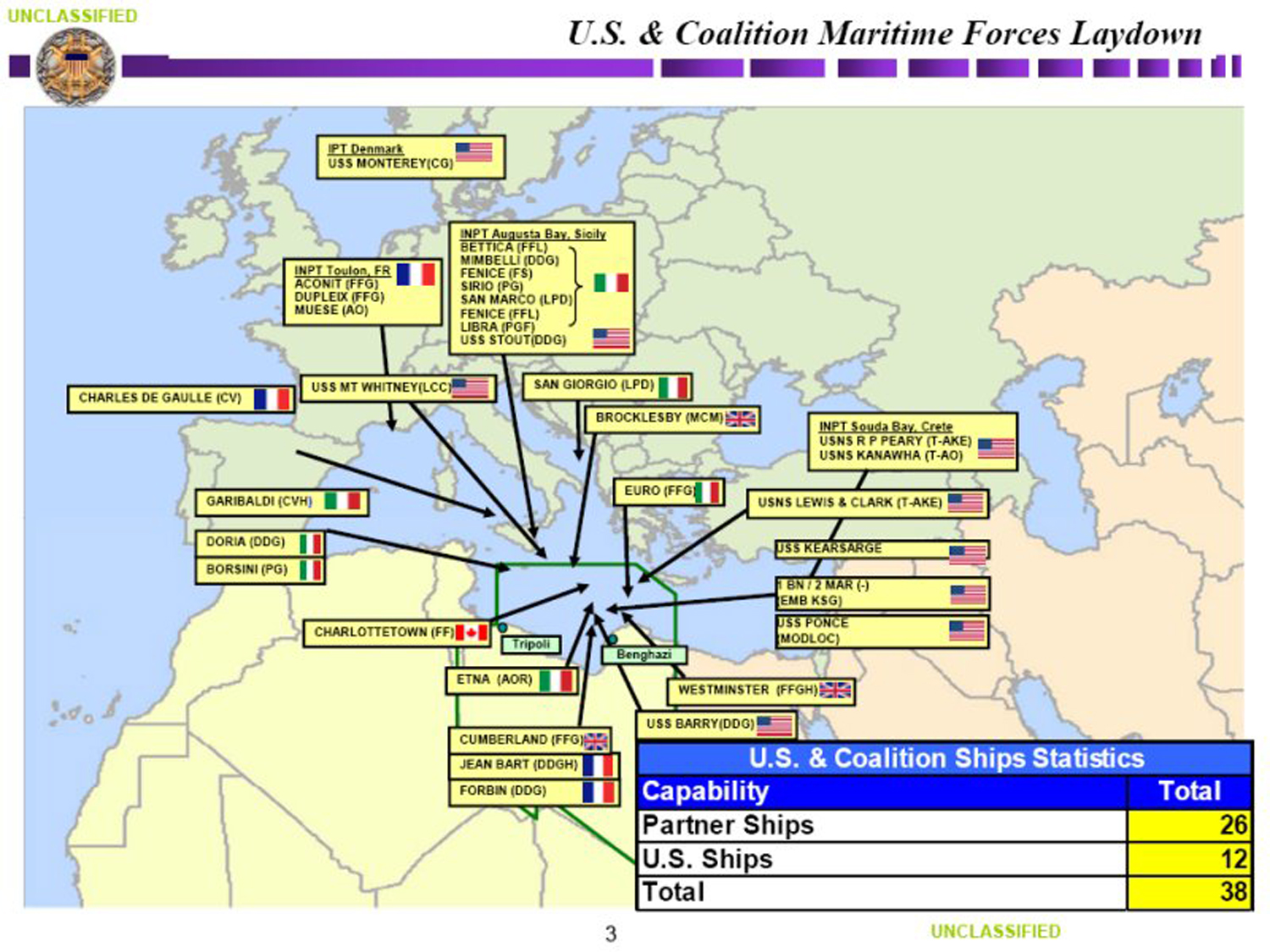
The paradox is this: despite its departure during a period of massive Frontex and NATO deployment following the Tunisian and Libyan uprisings, and despite the vicinity of 38 NATO ships (see below) and numerous commercial vessels, the migrants who were traveling across the Mediterranean were left to die while being actively observed through an assemblage of multiple, irresponsible eyes.

P14-2A_DOD-110324-dod03

Tim concludes in terms that echo my own invocation of Donna Haraway, though in a radically different context:

Rather than being a God’s eye, which towers high above human activity, as if it were seeing from nowhere, the assemblage that surveys Mediterranean waters constitutes a patchy puzzle of often conflicting and contradictory visions and legislations, and – I might add – quite different and opposing temporalities. As Haraway points out, the main question in this case becomes not what but “how to see? Where to see from? What limits to vision? What to see for? Whom to see with? Who gets to have more than one point of view? Who gets blinded? Who wears blinders? Who interprets the visual field? What other sensory powers do we wish to cultivate besides vision?” And… “with whose blood were my eyes crafted?”

in Berlin, I’ll be presenting a new reading of an air strike orchestrated by an MQ-1 Predator in Uruzgan; here’s the programme note:

In the early hours of 21 February 2010 a team of US Special Forces soldiers and Afghan National Army troops flew in by helicopter to the village of Khod in Uruzgan, Afghanistan. Their job was to search for a factory making Improvised Explosive Devices (IEDs). In the darkness the headlights of three vehicles were spotted in the far distance, and their movements were tracked by a Predator drone sending back full motion video to its crew at Creech Air Force Base in Nevada. Hour after hour, the Predator crew became more and more convinced that they were watching a group of Taliban preparing to attack the Special Forces team. But the Predator only had only one missile left, and so two combat helicopters were ordered in to attack. As the smoke cleared, it became obvious that a dreadful mistake had been made: women and children were visible among the casualties. A subsequent US Army investigation revealed that at least 15 innocent civilians had been killed and another 12 seriously injured; there were no Taliban present. The crew of the Predator were blamed – not least for having a ‘Top Gun’ mentality. But re-reading the 2,000 pages of that investigation reveals another story that dramatically complicates what has become the standard critique of Unmanned Aerial Violence and raises a series of troubling questions about militarized vision and later modern war.

More here on the narrowness of the standard ‘Predator view’, and I’ll post the full essay as soon as it’s finished.

Laboratories and assemblages

I’m on my way home from Bergen, where I was taking part in the Norsk Sakprosafestival (loosely, ‘Non-Fiction Festival’).  I gave a sawn-off version of ‘Angry eyes’, followed by a conversation with the ever-interesting Kristin Bergtora Sandvik, and took part in a panel discussion on ‘Freedom’ with Astri Suhrke, Kareem Amer, Jonny Steinberg, Ilan Pappe and Hilde Sandvik.  I had a marvellous time, and I’m deeply grateful to my hosts and especially Oyvind Vagnes for their warm welcome and generous hospitality.  This was the first time the festival has been held outside Oslo, and I hope it continues for many years to come.  It certainly deserves to do so.

the-lab-poster_for_internet

Over dinner, Ilan (whose new book is on ‘the largest prisons in the world’, Gaza and the West Bank) reminded me of an excellent film that I’d neglected to write about when it first came out – and given my previous post, and the horror of Gaza over the summer, it’s not too late to do so.

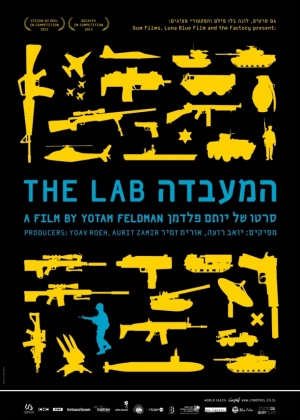
The film is Yotam Feldman‘s The Lab, which was released in North America in August.  Feldman writes:

The Lab is a cinematic investigation into the lure of Israeli weapons in the international arms trade. Why are countries all over the world lining up to buy Israeli arms? And how did such a small country become one of the biggest military exporters in the world? Israeli salesmen and executives in huge arms corporations seem eager to promote their products and pride themselves on their booming business. Profits have never been better — sales are doubling every year, and the potential seems unlimited.

But the product they are selling is unique. Rather than rifles, rockets or bombs, the Israeli companies sell their experience. The long-running conflict with the Palestinians has created a unique and unrivalled laboratory for testing technologies and ideas relating to “asymmetric warfare” — a conflict between a state and civil or irregular resistance. In this manner the Israeli conflict with the Palestinians may be seen as a national asset — rather than a burden…

While making the film, I witnessed the relationship between a network of military generals, politicians and private business; the use of current military operations as a promotional device for private business; the brutal employment of the Israeli experience, and the blurred lines between what is legitimate and forbidden in this line of business.

http://vimeo.com/65082874

You can read Jonathan Cook’s characteristically perceptive take on the film’s central argument here, from which I’ve taken the following extract:

The title relates to the film’s central argument: that Israel has rapidly come to rely on the continuing captivity of Palestinians in what are effectively the world’s largest open-air prisons.

The reason is that there are massive profits to be made from testing Israeli military innovations on the more than four million Palestinians in Gaza and the West Bank.

According to Feldman, that trend began with Operation Defensive Shield, Israel’s re-invasion of the West Bank and Gaza in 2002, which formally reversed the process of Israeli territorial withdrawals initiated by the Oslo accords.

Following that operation, many army officers went into private business, and starting in 2005 Israel’s arms industry started to break new records, at $2 billion a year.

But the biggest surge in sales followed Operation Cast Lead, Israel’s month-long assault on Gaza in winter 2008-09, which killed more than 1,400 Palestinians and 13 Israelis. Record sales in the wake of that attack reached $6 billion.

These military operations, including the most recent against Gaza, last year’s Pillar of Cloud, the film argues, serve as little more than laboratory-style experiments to evaluate and refine the effectiveness of new military approaches, both strategies and weaponry.

Gaza, in particular, has become the shop window for Israel’s military industries, allowing them to develop and market systems for long-term surveillance, control and subjugation of an “enemy” population.

But Feldman’s still sharper point is that this means that the claim ‘we are all Palestinians’ has a greater purchase than most of us realise:

The effects of Israeli theory and technology on other countries can hardly be overestimated. Forces choosing to employ Israeli-cultivated military techniques ultimately begin to alter their political and social circumstances. Therefore, countries all over the world are increasingly “Palestinizing” (or “Israelizing”) their conditions. Both sides — seller and buyer — become partners in the development of a form of future war between the state and civil resistance groups.

War, police and assemblages of intervention

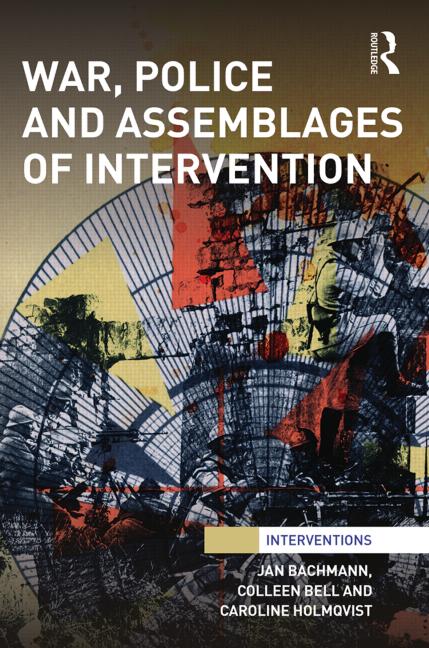
This needs to be added to the mix when we (re)think about contemporary war/police assemblages – which is an appropriate note for me to cheer the publication today of War, police and assemblages of intervention, edited by Jan BachmannColleen Bell and Caroline Holmqvist.

This book reflects on the way in which war and police/policing intersect in contemporary Western-led interventions in the global South. The volume combines empirically oriented work with ground-breaking theoretical insights and aims to collect, for the first time, thoughts on how war and policing converge, amalgamate, diffuse and dissolve in the context both of actual international intervention and in understandings thereof.

The book uses the caption WAR:POLICE to highlight the distinctiveness of this volume in presenting a variety of approaches that share a concern for the assemblage of war-police as a whole. The volume thus serves to bring together critical perspectives on liberal interventionism where the logics of war and police/policing blur and bleed into a complex assemblage of WAR:POLICE. Contributions to this volume offer an understanding of police as a technique of ordering and collectively take issue with accounts of the character of contemporary war that argue that war is simply reduced to policing. In contrast, the contributions show how – both historically and conceptually – the two are ‘always already’ connected. Contributions to this volume come from a variety of disciplines including international relations, war studies, geography, anthropology, and law but share a critical/poststructuralist approach to the study of international intervention, war and policing.

Here’s what it contains (and you can see that The Lab adds a really important dimension to the discussion):

Assemblages of War:Police – An Introduction, Jan Bachmann, University of Gothenburg, Colleen Bell, University of Saskatchewan, Caroline Holmqvist, Swedish National Defence College

Part I: Ordering
1.The Police Power in Counterinsurgencies: Discretion, Patrolling, and Evidence, Colleen Bell, University of Saskatchewan

2. Policing Africa – The US Military and Visions of Crafting ‘Good Order’, Jan Bachmann, University of Gothenburg

3. Security Sector Reform (SSR) and the War:Police Assemblages of International Interventions, Marc Doucet, St. Mary’s University and Miguel de Larrinaga, University of Ottawa

Part II: Othering

4. The Enemy Live: A Genealogy, Laurence McFalls, University of Montreal and Mariella Pandolfi, University of Montreal

5. The Utility of Proxy Detentions in Counterinsurgencies, Laleh Khalili, School of Oriental and African Studies, University of London

6. Tribal Militias, Neo-Orientalism and the US Military’s Art of Coercion, Oliver Belcher, University of Oulu, Finland

7. Checkpoints and the Gendered Policing of ‘Civilized’ Nation-State Boundaries in Southern Thailand, Ruth Streicher, Free University of Berlin

Part III: Spatializing

8. A Mediterranean Police Assemblage, Barry J Ryan, Keele University

9. Air Power as Police Power, Mark Neocleous, Brunel University

10. Intervention and Ontological Politics: Security, Pathologization, and the Failed State Effect in Goma, Peer Schouten, University of Gothenburg and Kai Koddenbrock, University of Duisburg-Essen

Afterword: War and Crime, Military and Police: The Assemblage of Violence by Security? Didier Bigo, King’s College, University of London and Sciences Po

Vietnam, Vietnam

Travis_Radio

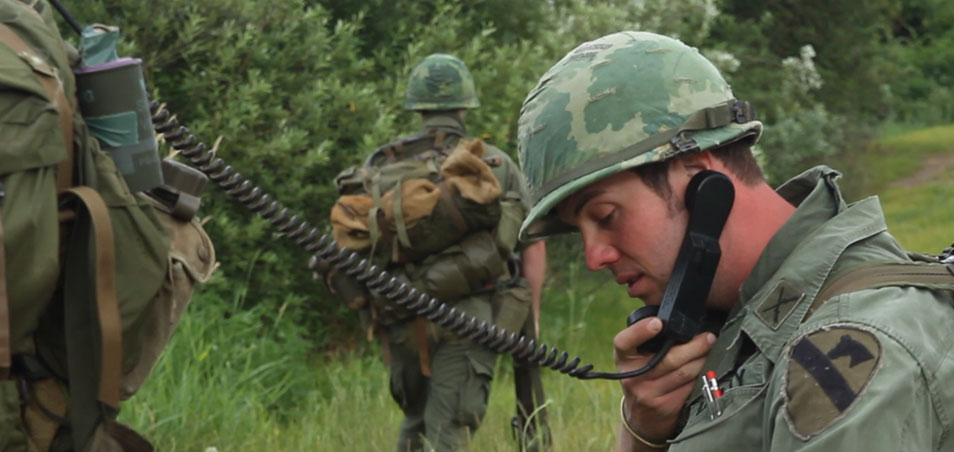
The New York Times has a fascinating clip from a longer documentary by Mike Attie and Meghan O’Hara called In Country, about a group in Oregon that re-enacts scenes from the Vietnam War:

IN COUNTRY is a feature documentary that follows 2/5 1st Cav (Reenacted), a “platoon” of hardcore Vietnam War re-enactors. Weaving together verité footage of the reenactments with flashbacks to the characters’ real lives and archival footage from the Vietnam War, IN COUNTRY blurs the boundaries between reality and fantasy, past and present to tell a story about men trying to access the past.

The question at the center of IN COUNTRY is why? Why would these men – many of them combat veterans of Vietnam, Iraq and Afghanistan haunted by their own experiences on the frontline – try to recreate a war that so many have tried to forget?

The film-makers give part of their answer in the NYT:

Unlike most war re-enactments, the pretend battles they stage are private, free of spectators and created for the experience of the participants alone. Outfitted in authentic period military gear, the men hike through the woods for days at a time, sleep on the ground, eat canned rations and carry actual Vietnam-era weapons (loaded with blanks). They do not stage battles but rather attempt to find and “kill” a group of Vietcong re-enactors waiting to ambush them.

Most remarkable perhaps is how this unusual hobby brings combat veterans from Iraq and Afghanistan together with civilians and veterans of Vietnam. They work collectively to create a fascinating space where real emotions and memories mix with history and fantasy. Their reasons for participating vary: Some seek the camaraderie they experienced in their deployment, while others want to relive a vital time in their life. And for all of the veterans involved, it is an event at which their service is acknowledged and respected.

They elaborate in an interview with PBS here, and in a You Tube clip from IFF Boston here.

For my part, there have been many comparisons between Afghanistan and Vietnam, but from the clips I’ve seen (and the clean uniforms) I don’t think the literal meaning of quagmire is re-staged in the Oregon woods very often…

Eye in the Sky

Several years ago I met Guy Hibbert in a London hotel to discuss his draft script for a BBC drama about a targeted killing by a British drone in East Africa.  It was a clever script and an interesting conversation – and I hope a helpful one – but in the interim I heard no more about it and assumed that the BBC had shelved the project.

eye-in-the-sky-image-helen-mirren

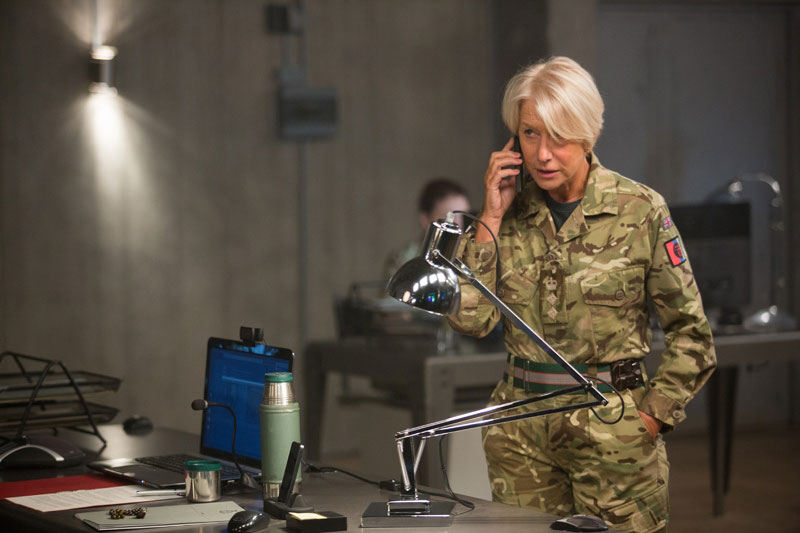
Now I see that Eye in the Sky is in production as a feature film directed by Gavin Hood and starring Helen Mirren (swoon).  As First Showing reports,

An American drone pilot (Aaron Paul) finds himself at a crossroads when a 9-year-old girl enters the kill zone his drone operation, under the command of military intelligence officer Col. Katherine Powell (Helen Mirren) is poised to destroy after they learn their targets are planning a suicide mission. What follows is a climb up the “kill chain” of command, weighing the legality and morality of action and inaction.

Eye in the Sky is scheduled for release next year.

UPDATE: Guy has written to say that shooting in Cape Town finishes this week, and then it’s nine months of post-production for a September 2015 première.

Good Kill

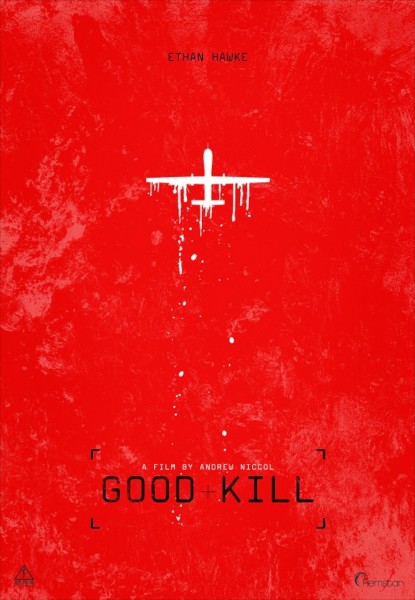
good-kill-poster-415x600Early in this blog’s short history I talked about the opening sequence in Andrew Niccol‘s Lord of War (2005) and what its opening sequence – the ‘life of a bullet’ – had to say about the global arms trade.

Now Niccol is back with Good Kill (2014), which was previewed at the Toronto International Film Festival earlier this month:

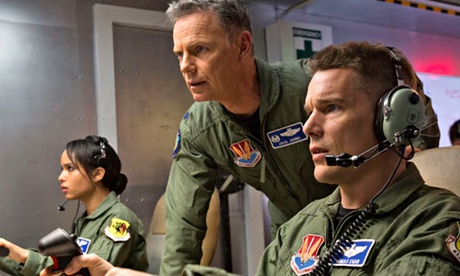
In an air-conditioned shipping container somewhere in the Nevada desert, a war is being waged. Behind a door that reads “YOU ARE NOW LEAVING THE USA,” five flight-suited US Air Force officers operate drones that hover above “zones of interest” in the Middle East. At the press of a button, tiny targets viewed on computer screens vanish in plumes of smoke, as in a videogame. “I blew up six Taliban in Pakistan today,” Major Thomas Egan (Ethan Hawke) tells a convenience store clerk. “Now I’m going home to barbecue.”

So far, so familiar; there is no shortage of similar presentations of drone warfare in pop culture more generally (I’m thinking in particular of Omar Fast‘s video 5,000 feet is Best and George Brant‘s play Grounded).

There’s a thoughtful review of Good Kill from the Guardian‘s Henry Barnes here:

Cinematographer Amir Mokri (director of photography on Lord of War, Niccol’s satire on the international arms trade) shoots the Vegas desert in a harsh, sterile light. The Las Vegas suburbs, shot from the sky, look as dusty and alien as the places Egan sees on his monitor. It plays into Egan’s isolation. He is distant from his wife (Mad Men’s January Jones) and drinks too much since he lost his flying privileges. He’s got the creeping feeling that drone warfare is cowardly and misses the fear of being in danger. “We’ve got no skin in the game,” he says. His wife says she’s glad to have him home with the kids. Egan zones out and stares at the sky.

Niccol creates an atmosphere that is airless and dull, an unusual tone for a modern war film, but one that fits the subject matter perfectly. That would have been enough, but the director feels the need to make his polemic on drone warfare plain. He sets up the team as an ethics debate meet. On one side is Egan and Suarez (Zoë Kravitz), a young female recruit with a conscience. On the other are two knuckleheads with kill boners. They ridicule the idea that they’re doing anything but protecting their country from terrorist threat. Niccol’s script goes too far in singling them out as the idiots. Kravitz’s character, more left-wing and articulate on post-9/11 military mandate, also comes across as one-dimensional.

Good Kill

The Telegraph‘s Robbie Colin caught an earlier screening at Venice, and was more impressed:

Niccol’s film … is a searching, timely drama about the dehumanising effects of waging war at a distance – the way that guilt can still stain at 11,000 miles, far outside the blast zone of blood and rubble. It looks again at one of the central themes of his script for The Truman Show: the intoxicating, corruptive power of the God’s-eye view.

As Egan’s eyes scan the monitors, he sees with astonishing clarity the faces of the men – and sometimes, unavoidably, the women and children – he is about to execute. Over time, he gets to understand their daily routines, watching them eat, stroll and sweep. The difference is this story isn’t science-fiction, but you’re left with the sickening sense that it should be.

You can also find an interesting roundtable interview with Niccol and Hawke recorded at TIFF here: thanks to Robert Bridi for the tip.

One last thing: I haven’t seen the film yet, but from the reviews and trailers I have seen it seems that, as in so many other registers, popular culture continues to be preoccupied with what happens in Nevada – and what happens on the ground is left shrouded in so many shades of grey.

The architecture of violence

I’m late coming to this – partly because I’m just back from Finland, and partly because term is upon us….

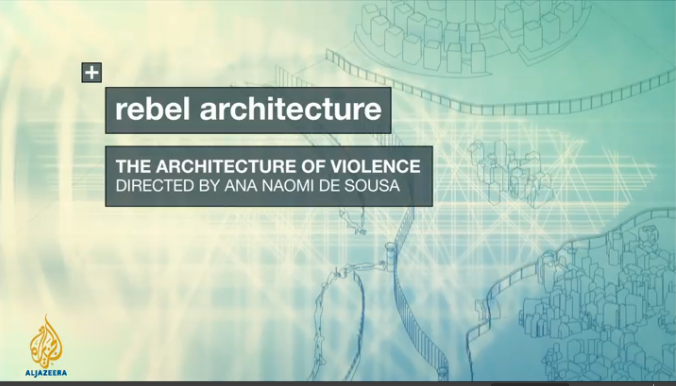
Rebel architecture

Here is an excellent short documentary from Al Jazeera featuring Eyal Weizman on ‘The architecture of violence‘, explaining the ‘slow violence’ of architecture in the Israeli occupation of Palestine and the evolution of urban warfare.

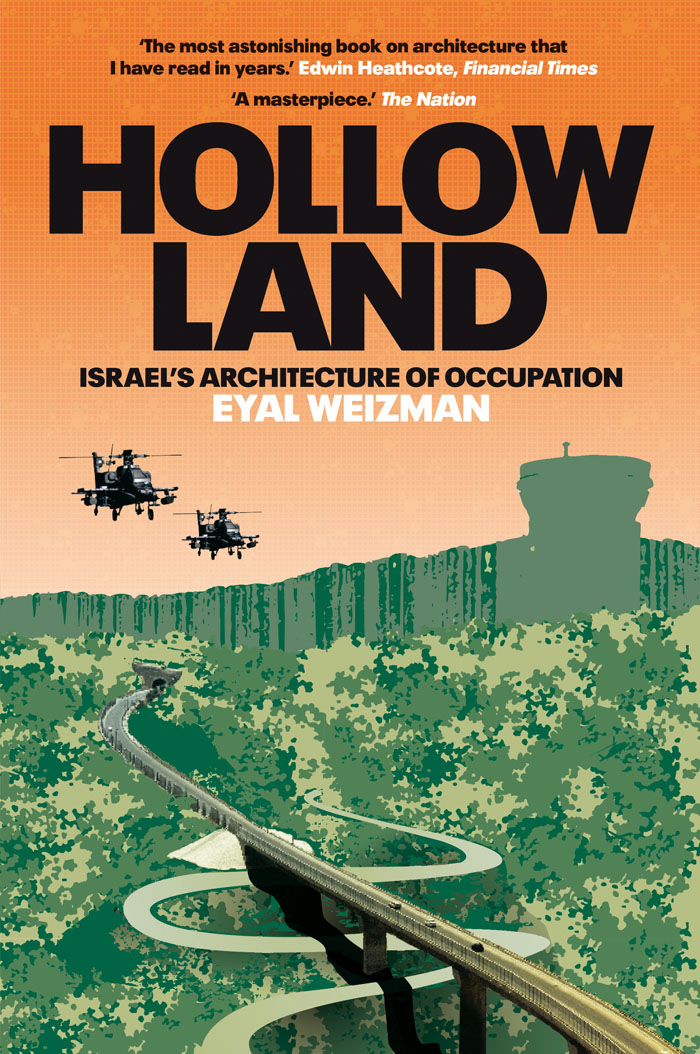
9781844678686_Hollow_Land-131a036e4e5db107ee8520dcea0ea32eIt also documents the trajectory of Eyal’s work, from the brilliant Hollow Land through to forensic architecture (as he says ‘the crime was done on the drawing-board itself’).

It’s the third episode in Al Jazeera‘s Rebel Architecture series.  Film-maker Ana de Sousa explains:

Until recently I would look at images of these ruins and see nothing more than potent monuments of destruction. Traces of lives eliminated or chased away. But they are more than that. Making The Architecture of Violence with the architect Eyal Weizman has shifted my gaze, taught me to look at buildings and ruins as objects that bear witness to events and that can speak to us – we just need to know what questions to ask them.

From the moment we started developing this series, the idea behind Rebel Architecture was to look beyond so-called starchitecture – beyond the architectural ostentation of technological feats, and towards a more socially aware, though still creative architecture serving the people on the ground. But it was also to use architecture as a way of exploring different environmental, social and political realities around the world. While many of the documentaries in our series have looked at how architecture – the design and construction of physical structures – is being used by architects to respond to rapid urbanisation, pollution, limited resources or natural disasters, The Architecture of Violence is a different kind of film.

When I came across the work of Eyal Weizman, I realised that there was a completely different way of using architecture and of being an architect. Weizman’s work lies at the intersection of architecture with politics, violence, conflict and human rights. As an Israeli architect opposed to the occupation of the West Bank and Gaza Strip, he fell foul of the Israeli architectural establishment early in his career, and was forced to explore alternatives to “building buildings”. Our film looks at how architecture can be used to interpret, protest and resist, in Weizman’s case, the Israeli occupation of the West Bank and Gaza.

I’ve embedded the video from YouTube below, but if you have difficulty accessing it clink on the link above, which will take you directly to the original on Al Jazeera.

Gazonto

I’ve discussed the political-aesthetic practice of transposition before – superimposing war ‘over there’ on a city ‘over here’ – in relation to both Baghdad and Gaza.  For the most part, these have been cartographic exercises or art performances (see the closing sections of  ‘War and peace’ [DOWNLOADS tab] for some more examples).

Film-maker John Greyson has just released this short video, Gazonto, which is doubly different.  It takes the rash of video games about Gaza – many of which glorify successive Israeli assaults – and turns them to critical account, and it re-locates the air strikes from Gaza to Toronto (the flipping of the map near the beginning is inspired).

More here; if you are trying to remember where you’ve heard of John before, he was arrested and jailed in Egypt last summer, en route to Gaza with Tarek Loubani, an ER doctor who is one of the main architects of the Canada-Gaza collaboration that is responsible for taking Canadian doctors to Gaza to train local physicians.  They spent fifty days in a Cairo jail after John was seen filming Tarek treating demonstrators who had been shot by police in Ramses Square, where they had been protesting the military coup.  It was never clear which was the greater crime – treating the demonstrators or witnessing the emergency treatment.

This, of course, is one of the many appalling back-stories spawned by the intimacy between the al-Sisi government in Egypt and the Netanyahu government in Israel: what the splendid Richard Falk calls ‘neighbourly crimes of complicity’.  Geopolitics is rooted in these ‘accommodations’, and it cultivates all sorts of deadly blossoms.

But the tendrils reach far beyond the region, and many readers will appreciate why it is so important for a Canadian film-maker to re-stage the attacks on Gaza in a Canadian city.  For those who don’t, check out this report on the Harper government’s own video, released as the Israeli assault on Gaza was intensifying, affirming Canada’s support for Israel “Through Fire and Water”.   Really.

While I’m on this subject, Laleh Khalili has an excellent essay at the Society & Space open site to accompany the virtual issue on Israel/Palestine.  It’s called ‘A habit of destruction’:

The devastation to which Gaza has been subjected in the last few weeks seems to be yet another repetition of Israeli settler-colonial apparatus’ habit of destruction. Gaza has become emblematic of this habit, because in recent years it has so frequently been subjected to bombing while under a state of siege, but like all settler-colonialisms, the violence of the state is rooted not in an episodic “cycle of violence” but in the very ideology and practice of the settler-colonial movement…. 

The lesson of the most recent Israeli assault on Gaza, as in all previous assaults, is that civilians are not “collateral” or accidental casualties of war between combatants, but the very object of a settler-colonial counterinsurgency. The ultimate desire of such asymmetric warfare is to transform the intransigent population into a malleable mass, a docile subject, and a yielding terrain of domination.

And, as she concludes, ‘That ever so frequently the Israeli military plunges Palestinians into conflagrations of lead and steel and concrete dust and destruction is the clearest sign that it has failed at making Palestinians into such a docile population.’