Unknown soldiers

Diary of an unknown soldier STILL

Via the Funambulist I’ve stumbled across an early film by the young Peter Watkins, The diary of an unknown soldier.  Made in 1959 when Watkins was just 24, six years before The War Game, it recounts – in what was to become Watkins’ signature documentary style – the last, desperate hours before a young soldier on the Western Front goes into combat for the first time.

This is how Watkins himself tells the story behind the film:

In the mid 1950s, I underwent compulsory military service in Britain. Managing to avoid being sent on a draft to fight the Mau-Mau in Kenya, I landed a clerical post in Canterbury, Kent, where I fortunately met a group of people running an amateur theatre group called ‘Playcraft’. This group regularly staged a series of very clever productions in the small living room of Alan and June Gray – with Alan and Anne Pope, Stan and Phyllis Mercer, and other friends who acted, helped with designs and sets, and invited the local audience to the twenty or so seats tightly crammed into the room. A drama student bitten by the ‘acting bug’ in London before my military service, I acted in several of Playcraft’s productions – including in R.C. Sheriff’s anti-war drama, Journey’s End, set in the trenches during World War I. Immediately following my release from the army, I was bitten by another – amateur filmmaking – ‘bug’, and acquired a Bolex spring-driven 8mm camera…

By 1959, while Watkins was working as an assistant film editor at ‘World Wide Pictures’, alongside a number of documentary filmmakers from the old Crown Film Unit, he wrote the script for ‘The Diary of an Unknown Soldier’.  Here it is (the narrator is Watkins himself):

The film is remarkably effective at conveying the visceral nature of the landscape of fear confronting the anonymous young man – the shattered branches that turn into sharp bayonets – but above at showing the materiality and corporeality of the violence that was to come.  As Léopold Lambert notes, ‘the way the body is filmed and described in the script is remarkable as it heavily insists on the fact that war for soldiers — in opposition to high-rank[ing] officers — is essentially a matter of bodies: their movement, their combination with the bullets and bombs trajectories and their relationship to the ground — in that case, the mud.’

Watkins was hired by the BBC’s documentary department in 1963, and the rest is indeed history…

The connections with “Gabriel’s Map” are very clear (at least to me: there are several sequences in which a young subaltern annotates his map).  But what about the other ‘unknown soldier’ (or, rather, soldiers)?

The origins of this iconic memorial go back to 1916, when a British Army chaplain serving on the Western front, David Railton, saw one of countless graves on the battlefield at Armentières, this one marked by a simple cross bearing the words: “An unknown British soldier.”  He became determined that those un-named soldiers from all over the British Empire who had fallen on the Front should be honoured by a single public memorial in Britain.

Finally, in early November 1920 the body of an un-named soldier was exhumed from each of the four major battlefields – the Aisne, Arras, the Somme and Ypres – and one of them was placed in a coffin and transported to London.  On 11 November, two years after the Armistice, the ‘Unknown Warrior’ was re-buried in Westminster Abbey:

Similar memorials were constructed in other European countries, Australia and the United States.

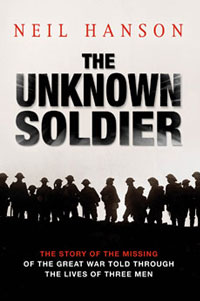
HANSON The unknown soldierYou can find the full, much richer story in Neil Hanson‘s beautifully written and carefully researched  The Unknown Soldier (2005), which splices the story of the iconic ‘unknown soldier’ with the stories of three others – British, French and German – who were declared missing during the War.

The classic discussion of some of the wider issues remains Jay Winter‘s Sites of memory, sites of mourning: the Great War in European cultural history (1998), while later this year David Crane promises to provide an account of the personalities and the politics involved in the construction of war graves in Empires of the Dead (2013).

Amnesia and acts of killing

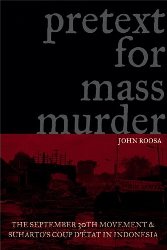
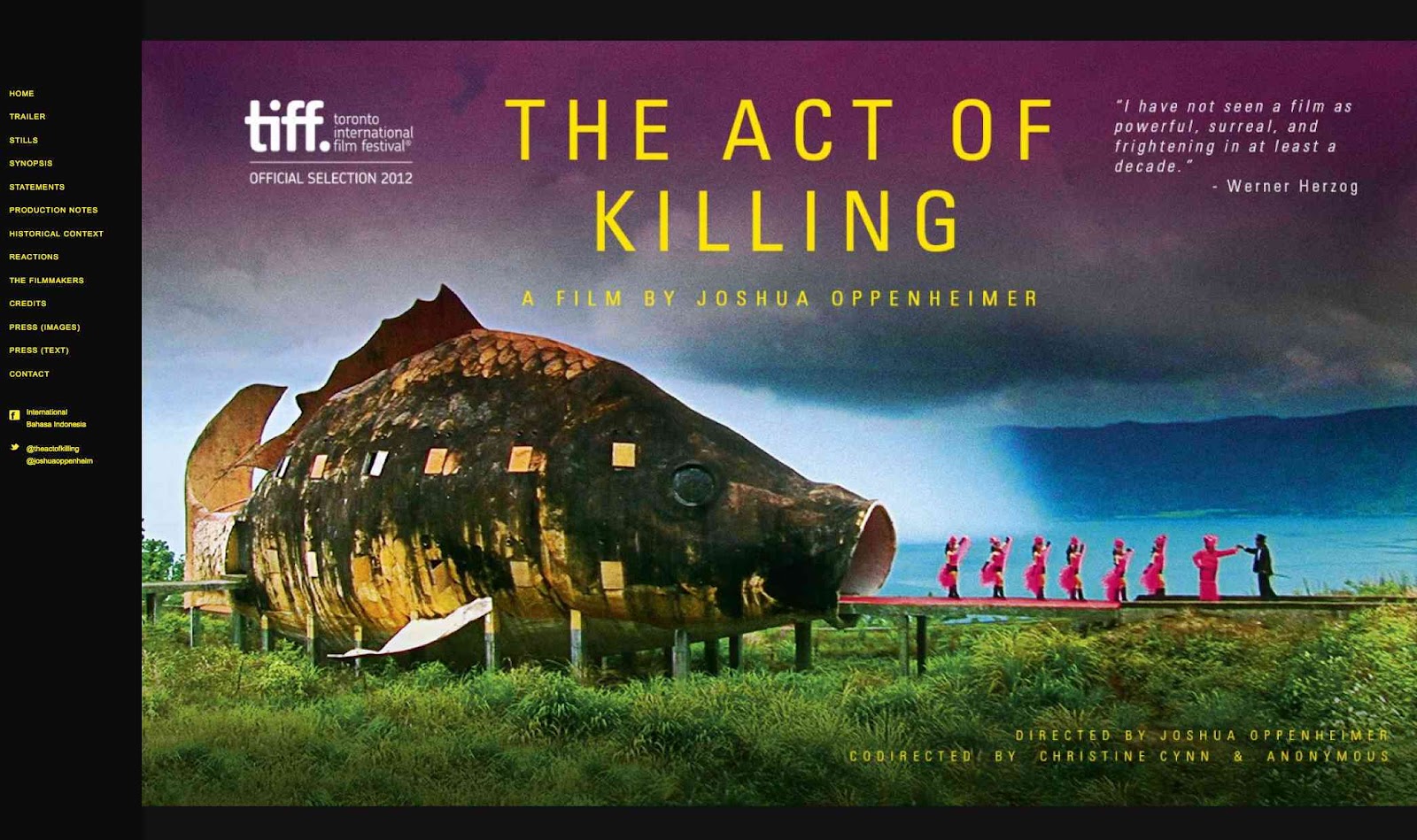
pretext_for_mass_murderI’ve discussed Joshua Oppenheimer‘s The Act of Killing – about paramilitary death-squads in Indonesia in 1965-6 – in an earlier post.  Larry Rohter provided a short backgrounder in the New York Times at the end of last week (much more here):

The events initially addressed in “The Act of Killing” are little known in the West: the slaughter of as many as a million people in Indonesia following the military’s seizure of power there in 1965. The victims were labeled Communists but included labor leaders, ethnic Chinese and intellectuals, with paramilitary groups carrying out the killings at the behest of the Indonesian Army and with the support of the United States and its allies, who worried that Indonesia, like Vietnam, would fall into Communist hands.

In Indonesia, the killings were “a kind of open secret, kept discreetly hidden so that if you wanted to, you could pretend it wasn’t happening,” said John Roosa, a scholar of Indonesian history at the University of British Columbia and the author of “Pretext for Mass Murder,” the leading book about the 1965 massacres. “So this film has become a provocation, an impetus for Indonesians to go back to the perpetrators and say, ‘Tell us exactly what happened.’ ”

Guernica now has a new interview (by Emma Myers) with Oppenheimer in which he talks at length about the background to the film and the process of filming itself:

‘I was developing experimental performative documentary methods in London and was asked to make a film [what would become The Globalization Tapes] by the International Union of Food Workers in a place where unions had been previously outlawed. I could have been sent to India, Colombia, Malaysia… but I was sent to Indonesia. I knew nothing about the country, but found myself in a plantation community outside of Medan. The biggest obstacle the workers had in organizing a union, I found, was fear: fear that stemmed from the fact that their parents, grandparents, aunts, and uncles had had a strong union until 1965, but were accused of being leftists and either killed or put in concentration camps for decades as a result. That was the first I had heard about the 1965-1966 genocide and it was clear to me that it had to be in the film. But even talking about it turned out to be scary for them, because the people who committed atrocities against their relatives were living all around them in this village. So I made the film with the plantation workers but realized I had to come back. I felt very close to this community. They were saying, “Please make a film about the genocide and how it has affected us.” I returned six months later to start working with them and found the process to be unsafe for them; the best way around this was to film the killers—who were much more willing to talk—instead of the victims.’

The Act of Killing

He talks in particular about the performative force of storytelling, the ethics of staging the killers’ fantasies (they were paid a small per diem sanctioned by the Arts & Humanities Research Council), and ends with a wonderfully sharp remark from Werner Herzog (one of his co-producers) about the political possibilities of art.

There’s now also an extended essay by another of the film’s co-producers, Errol Morris, over at Slate, in which he asks: ‘Is this a story about Indonesia or also a story about us?’  His answer takes that little clause in Rohter’s commentary – ‘Indonesia, like Vietnam‘ – and unpacks it to devastating effect.  His journey takes him back to his own film, The Fog of War, to Secretary of Defense Robert McNamara, and to the Vietnam War: the coup in Indonesia, he realises, took place in 1965, the same year that President Johnson escalated the war in Vietnam.  It’s a brilliant road-trip – a mix of interviews and scholarly research, of geopolitical critique and cultural sensibility.

You can see some clips from the film, and hear Herzog and Morris discuss it in this video from Vice.

Finally, there’s a commentary on the film by Slavoj Zizek at the New Statesman here. His starting-point is a familiar one:

The protective screen that prevented a deeper moral crisis was the cinematic screen: as in their real killings and torture, the men experienced their role play as a re-enactment of cinematic models: they experienced reality itself as a fiction. During their massacres, the men, all admirers of Hollywood (they started their careers as controllers of the black market in cinema tickets), imitated Hollywood gangsters, cowboys and even a musical dancer.

Here the “big other” enters: what kind of society publicly celebrates a monstrous orgy of torture and killing decades after it took place, not by justifying it as an extraordinary, necessary crime for the public good but as an ordinary, acceptable pleasurable activity? The trap to be avoided here is the easy one of putting the blame on either Hollywood or on the “ethical primitiveness” of Indonesia. The starting point should rather be the dislocating effects of capitalist globalisation which, by undermining the “symbolic efficacy” of traditional ethical structures, creates such a moral vacuum.

But he then spirals off into his own (I almost wrote ‘magical mystery’) tour d’horizon that ultimately brings The Act of Killing into the intimacy of our own, deeply personal spaces and their (non-)relation to an increasingly eviscerated and compromised public space.

For all that, I much prefer Morris’s take – and I greatly admire his method.  In the end, he asks a series of questions that are not about celebration or banalisation, important though they are, but about amnesia.

Safe bombs and refusing pilots

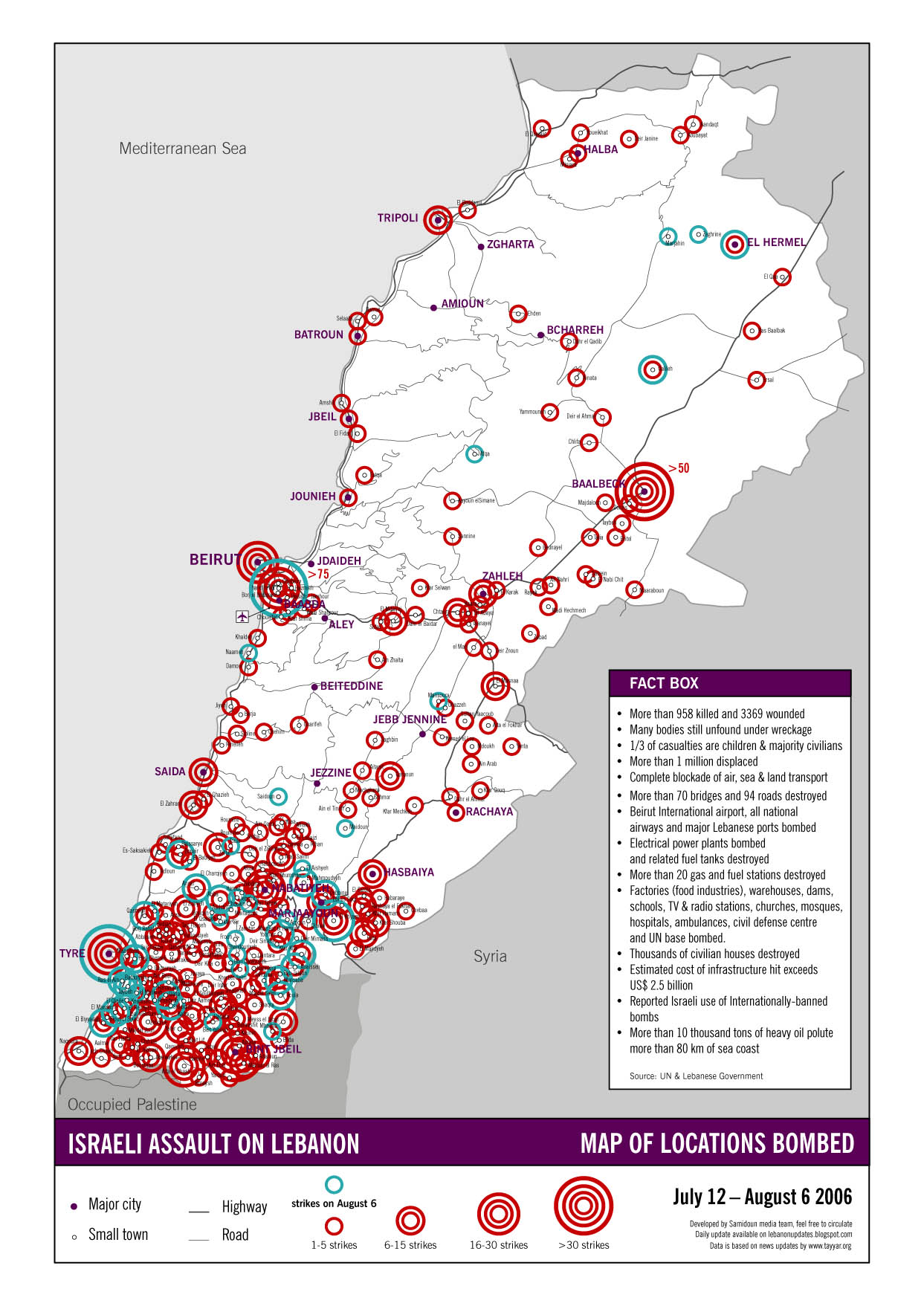
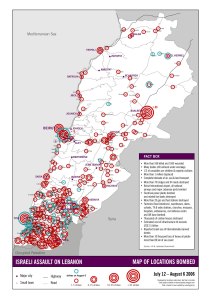
lebanon_map_jul12-Aug06My first attempt to think through the histories and geographies of bombing from the air was, appropriately enough, a plenary address to the Arab World Geographer conference in Beirut in 2006 – a meeting which had had to be postponed until December as a result of Israel’s summer-long attack on Lebanon.  Registrations fell away, especially from the United States and the U.K., but we had a wonderfully lively meeting.

I eventually turned my presentation – which, under the title “The death of the civilian”, developed the twin genealogies of the target and the civilian to address Israel’s bombing of southern Lebanon and Beirut – into an essay for the journal: “In another time zone, the bombs fall unsafely: Targets, civilians and late modern war” (published in 2007: see DOWNLOADS tab).

I began like this:

My title comes from a poem by Blake Morrison, ‘Stop’, which was reprinted in an anthology to aid children’s charities in Lebanon compiled by Anna Wilson after the Israeli assault on that country during the summer of 2006.  The poem speaks directly to the ideology of late modern war – to what Christopher Coker praises as the ‘re-enchantment’ of war through its rhetorical erasure of death– and to its dissonance from ‘another’ time and space where bombs continue to ‘fall unsafely’.  It begins like this:

 ‘As of today, the peace process will be intensified

through war.  These are safe bombs, and any fatalities

will be minors.  The targets are strictly military

or civilian.  Anomalies may occur, but none

out of the ordinary.  This release has been prepared by

official Stop.’

 Morrison perfectly captures the hypocrisy of war – the malevolent twisting of words to mean the opposite of what they say, the cosmetic face of public war put on to conceal the harrowing face of private death – and also the intimacy of the furtive, fugitive relationship between ‘targets’ and ‘civilians’ in late modern war. In what follows, I will try to lay that relationship bare by reconstructing its historical geography.  In doing so, I will also show how our meeting in Beirut to discuss ‘the European-Arab encounter’, less than six months after Israel’s war on Lebanon, must confront the connections between the political and military strategies mobilized during the summer of 2006 and a series of colonial encounters between Europe and the Arab world in the years surrounding the First World War. 

That remains one of the primary motivations for my Killing Space project.

But 2006 was not the first time that Israel had sent its fighter-bombers into the skies over Lebanon.  What I did not know when I prepared my presentation was that during the bloody invasion of Lebanon in 1982 a number of Israeli Air Force pilots had refused to bomb ‘non-military targets’.  Now there is still fierce debate over the distinction between ‘military’ and ‘non-military’ targets, and over the civilian casualties that may nevertheless result from bombing ostensibly ‘military’ targets, both in principle and in practice, and it’s an argument which is conducted on legal and ethical terrains (though we hear much more of the former than the latter).  But here I’m particularly interested in the act of refusal itself: less in the application of abstract, formal principles – important though these are – and more in the personal, rational and affective moment of abjuration.
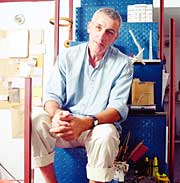
Hagai TamirIn 2002 Ha’aretz published interviews by Avihai Becker with three IAF officers who had formally refused; the testimonies of two of them were already known, but it’s the third that I want to describe here. Hagai Tamir, a major in the IAF, grew up as one of what he calls ‘the lyric pilots’, consummating a love of flight itself:

“I wanted to feel like a bird. The whole idea of the plane as a war machine was much less appealing to me. The concept of a plane as a platform for weapons was foreign to me so I enjoyed the aerobatics much more than I did dropping ordnance. Even during my compulsory service as a young pilot, I didn’t derive any pleasure from it.”

After his compulsory military service and his move to the reserves, Tamir trained as an architect and this enhanced his sense of unease, even disengagement.

“Who knows better than me, an architect, how hard it is to build a city? So at least, don’t rejoice when you destroy houses. It takes a lot longer to build a city than it does to strike a target.”

In June 1982, one week into the invasion of Lebanon, Tamir was flying over the port city of Saida (Sidon), near the Ain El Helweh refugee camp:

“We flew in tandem above the place. The liaison officer who was with the ground forces informed me of the target, a large building on top of a hill. I looked at it and to the best of my judgment, the structure could have only been one of two things – a hospital or a school. I questioned the officer and asked why I was being given that target. His reply was that they were shooting from there. There were a thousand reasons why I didn’t think I should bomb the building. I asked him if he knew what the building was. He said he didn’t. I insisted that he find out. He got back to me with some vague answers.”

Tamir was not satisfied by the response, reported a ‘malfunction’, cut off radio contact and did not release his bombs (on some accounts, he dropped them into the sea).

The episode is significant for several reasons.  The first is that this was an intensely personal decision: Tamir did not publicise it (though the IAF did investigate the incident), and it made no material difference to the outcome since the accompanying aircraft went ahead and levelled the building (which was indeed a secondary school for boys).  Even so, Tamir was not alone; others refused similar orders, and although it’s difficult to gauge how far the ripples caused by these refusals travelled into 2006 and beyond – see Asher Kaufman‘s thoughtful discussion in Shadows of war: a social history of silence in the twentieth century here – twenty years later Tamir did join 24 other active, reserve and retired Air Force officers in signing a public letter refusing to carry out air strikes in occupied Palestine (and who were roundly abused for doing so: see here and more on the Courage to Refuse movement here).

The second is that, even though Tamir confided what happened over Saida only to his family and close friends, the story spread through the town, embellished in the telling and re-telling: so how did the people know, and what significance did they see in it?

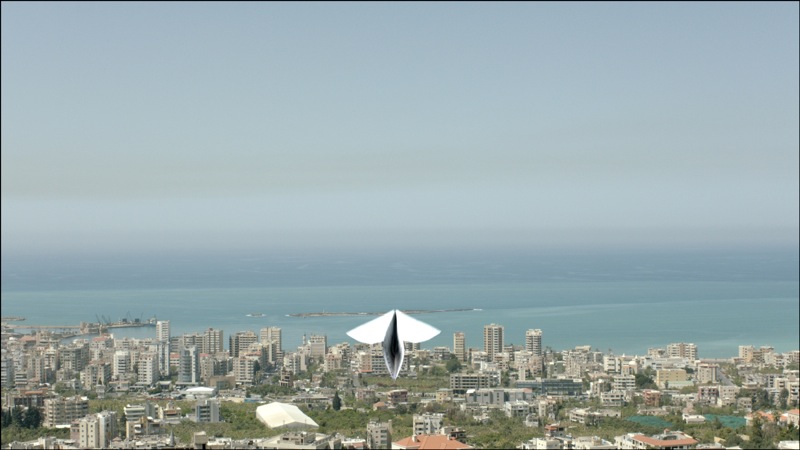
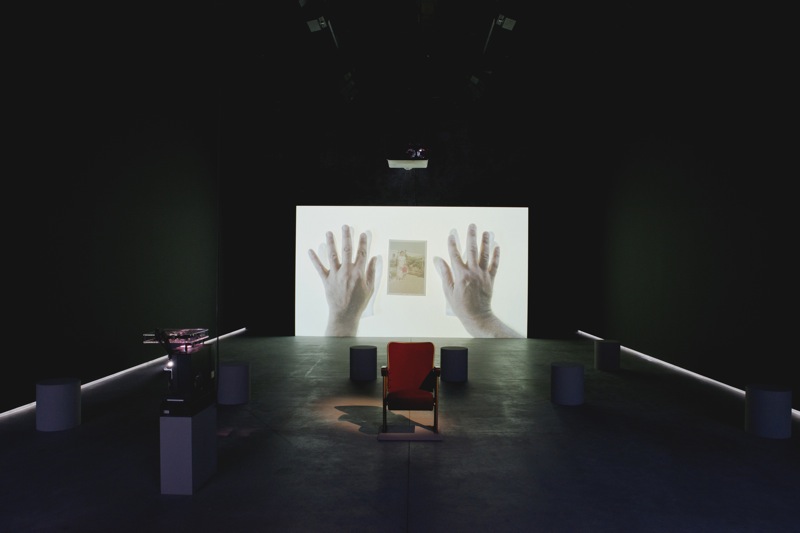
The third is that the story has become the subject of a remarkable multimedia installation by Beiruti artist Akram Zaatari, Letter to a refusing pilot, which is the only artwork representing Lebanon at the 55th Venice Biennale this year.  Zaatari describes himself as

‘an architect, a documentary filmmaker, and an ethnographer working in the art world, so I use the tools and approaches that I have learned from those three disciplines. I have no particular method to apply, otherwise it would make my work too simple. I enjoy reflecting on complex social and political issues particularly related to geographies.’

You can find images and a commentary on the Biennale installation here and here, but Zaatari explains his project like this:

“The importance of the story is that it gives the pilot a human face. It gives what he is about to bomb, which is considered terrorist ground, it also gives that a human face. I think it’s important to remember in times of war that everyone is a human being. Taking it to this level humanizes it completely, and we’re not used to this at all.”

Zaatari was born in Saida – in fact his father founded the school that was the target of the IAF attack – and the film that is the heart of the art-work is, like Tamir’s decision, an intensely personal one whose resonances reach far and wide.  Zaatari met with Tamir, and the film affirms the Israeli pilot’s original impulse to fly: hands draw paper aeroplanes and, at the end of the film, two boys climb up to the roof of the school and launch them into the air.  The film is cut with family photographs and Zaatari’s own diary entries from the invasion too: you can find copies of the film on You Tube starting here.
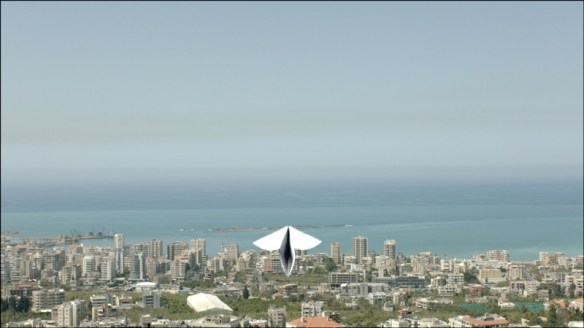
ZAATARI Letter to a refusing pilot

On the opposite wall, separated and joined by a single red cinema seat, another (shorter) film silently projects the hillside overlooking Said being systematically bombed.  The sequence derives from a series of photographs Zaatari took in 1982.
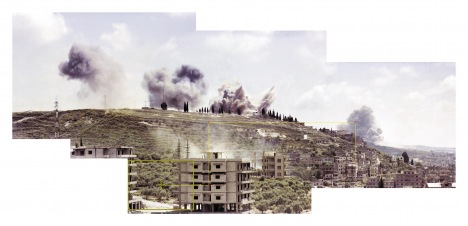
ZAATARI Saida 6 June 1982

From that seat, the viewer is invited to watch only that film, facing away from the more personal, vividly human story being told by the first film.  Negar Azimi provides a fuller discussion of the installation here, and she concludes that ‘by placing each one of us, alone, within the generous frame of the work, it seems to remind us that, not unlike the pilot, we are sometimes caught up in vexed circumstances beyond our control.’ Certainly the title of the work directly addresses the pilot and so, by extension, perhaps the pilot-observer that late modern war has invited those of us who watch wars from a safe distance to become.
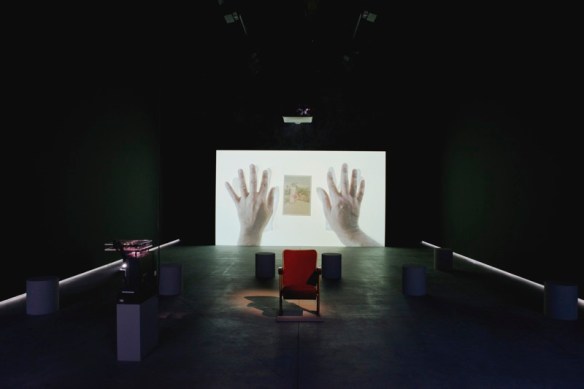
5367

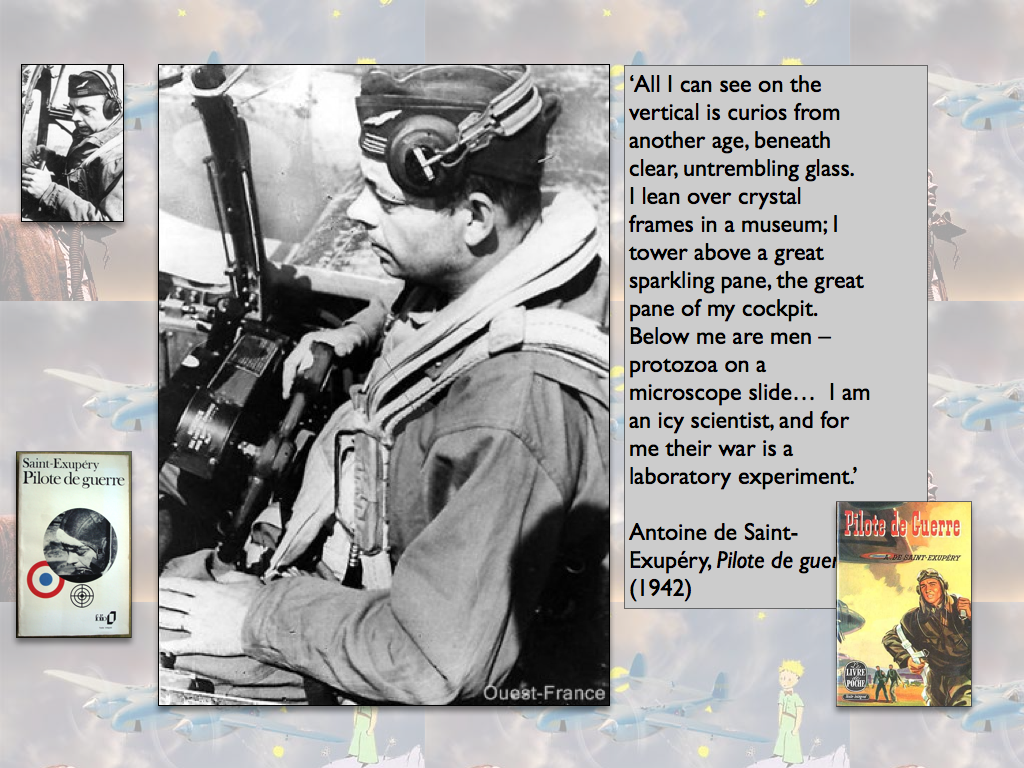
Perhaps.  But this is a multi-layered work, and there are other readings.  Near the beginning of the personal memory-film, and before the title appears on the screen, gloved hands turn the pages of Antoine de Saint-Exupéry‘s The Little Prince, which Negar describes as a ‘much-adored 1943 tale of youthful existentialism’.  The point here, I take it, is to reinforce or reinscribe the acknowledged affinities between Zaatari’s work and Albert Camus‘s Letters to a German friend (“I should like to be able to love my country and still love justice.”)

But, as she also, notes Saint-Exupéry was ‘a famous war-time aviator’, and in that role he had a decidedly different view of things that speaks directly to (or rather from) the object record-film of the bombing:
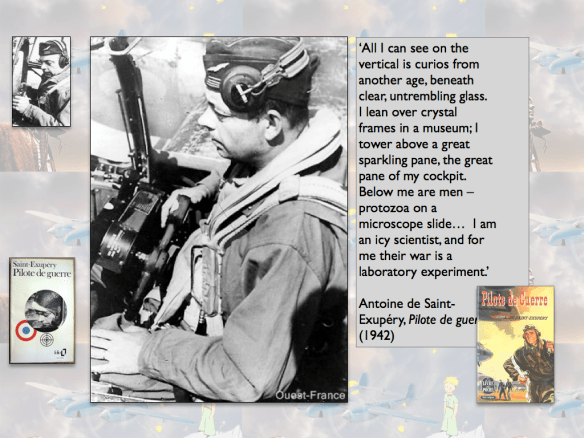
Saint-Exupéry.001

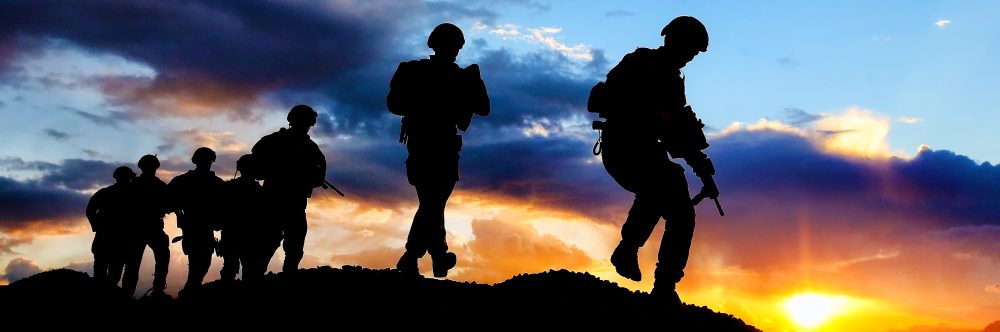
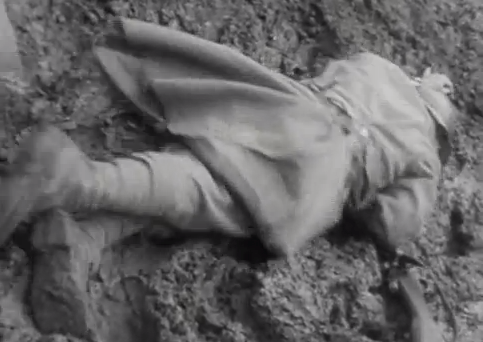
Much of Zaatari’s work, as he confirms in this exceptionally rich conversation with Chad Elias for the Tate in 2011, asks us to ‘rethink what it means to witness, survive, or even document a war’. With that in mind, in gazing at the image stream of bombs, with our backs to the lifeworld that was also for many a deathworld, is it not possible that we are also being invited from that single red chair to adopt the position of Walter Benjamin‘s Angel of History?
Dirty wars and private eyes

Dirty Wars/Sundance Festival

There’s a wonderful line (well, hundreds of wonderful lines) in Simon Gray‘s play Butley, where the eponymous university lecturer waspishly declares “You know how it exhausts me to teach books I haven’t read…”

So it’s with some trepidation that I return to the Rick Rowley/Jeremy Scahill/David Riker film of Scahill’s book “Dirty Wars: the world is a battlefield“, since although I’ve read the book I haven’t seen the film (it opens Friday 14 June in Vancouver [Cineplex Odeon International Village]).

But Gerard Toal has, and has posted an interesting reflection at Critical Geopolitics:

‘Scahill’s world is that of the investigative reporter. He’s focused on the facts, details and lines of connection that reveal abuse of power and extra-constitutional excess. Don’t expect to have Agamben cited. That is the power and value of his work. It gets under the skin of the conventional wisdom and general consensus on the war on terror. It disturbs. With the journalistic revelations of the last week (and there’s a lot more coming from what Scahill indicated; he also mentioned how journalists are now changing their digital behavior in big ways), the whole everywhere endless terror security surveillance state is cracking open before our eyes.’

David Harvey dedicated Social Justice and the City ‘to all good committed investigative journalists everywhere’, but the figure of Scahill in the film has attracted less generous commentary.  Mike Hogan notes, like many other critics, that the film is structured like a noir crime story in which Scahill becomes the gumshoe we follow

‘from the lawless hinterlands of Afghanistan, where he interviews the surviving members of the family of a U.S.-trained police chief decimated in a secret night raid; to Yemen, where he inspects the wreckage of a drone strike and meets the father of Anwar al-Awlaki, one of four American citizens to be assassinated abroad by the U.S. (al-Awlaki’s 16-year-old son was another); to Somalia, where he tags along with Somali war lords on the U.S. payroll, who brag of committing war crimes as they rampage through the rubble of Mogadishu.’

In Hogan’s interview Scahill talks about his initial reluctance to have the film revolve around him since ‘I don’t write articles in the first person and I don’t tend to talk about myself when I’m reporting.’

‘Rick [Rowley], the director of the film, was driving me insane by constantly filming me when I wasn’t supposed to be the character — and I think somewhere he knew that he wanted to do this. We had cut a version of the film where I was not me, I was just sort of like a tour guide through the archipelago of these covert war sites. And then when we started to change the way we were going to tell the story, we went back to the cutting room, and all the s**t that I told Rick not to film became the stuff that made the film possible…. I can see myself in the movie where I’m in a car, and it might look like I’m really tense about something, but it’s just that I’ve just yelled at Rick and told him to get the f**king camera out of my face. I’m like, “I’m trying to file my story, man, leave me alone.” I still have trouble watching it, to be honest.’

VALENTINE The Phoenix ProgramSo, it seems, did Douglas Valentine.  He castigates the film for its lack of historical context: its failure to acknowledge the long history of ‘dirty wars’ waged by the CIA (Valentine himself is the author of a brilliant book on The Phoenix Program in Vietnam).  It’s a serious criticism, and it applies to the book too (though to be fair it already comes in at more than 650 pages).

I do think it’s important to trace what is new and what isn’t about today’s wars fought in the shadows of 9/11,  which is in part why I constructed The colonial present as I did and why my analysis of today’s ‘drone wars’ is situated within the wider arc of the histories and geographies of bombing from the air. That said, I also think that Scahill’s stream of stories has done more than most other journalists reporting from the war zones to illuminate the contemporary reach of military and paramilitary violence.  As he says, ‘the world is a battlefield’.

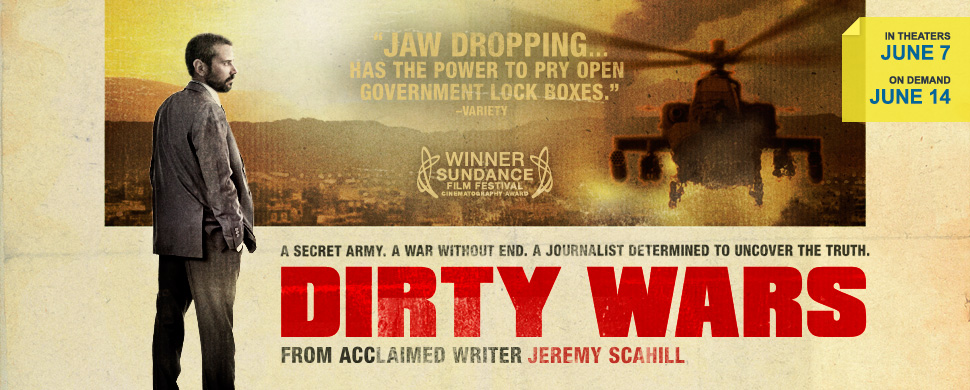
But Valentine doesn’t care for the way Scahill bestrides that battlefield – look at the posters I’ve reproduced here – and he reserves his most withering fire for the starring role played in the film by Scahill himself:

Dirty Wars is a post-modern film by Jeremy Scahill, about himself, starring himself in many poses.The film owes more to Sergio Leone and Kathryn Bigelow than Constantinos Gavras…. 

The endless close-ups artfully convey the feeling that our hero is utterly alone, on some mythic journey of self-discovery, without a film crew or interpreters. There is no evidence that anyone went to Gardez to make sure everyone was waiting and not toiling in the fields or tending the flocks, or whatever they do. And we’ll never find out what the victims do.  The stage isn’t big enough for JS and anyone else.

This is a major theme throughout the story – JS is doing all this alone and the isolation preys on him…. 

Initially, there is no mention that journalist Jerome Starkey reported what happened in Gardez.  JS is too busy establishing himself as the courageous super-sleuth.  As we drive along the road, he reminds us how much danger he is in…. In my drinking days, we referred to this type of behavior as grandiosity.’ 

Dirty-Wars1Valentine dismisses this as ‘the cinema of self-indulgence’, and readers may remember other critical commentaries on academic appropriations of the stylistics of film noir and the figure of the detective: I’m thinking of Rosalyn Deutsche‘s scathing review of ‘Watching the Detectives’ (aka the Critical Theory Gang) in the late twentieth-century American city: ‘Chinatown Part Four? What Jake forgets about Downtown’, assemblage (1993) available here; Matt Farish subsequently provided a more extensive discussion here and Kristin Ross a still more recent take here.

Now one of my private pleasures is serious crime fiction, but taken together these commentaries raise a series of questions about the debt most academics working in and around war and military violence owe to the work of  investigative journalists and about the masculinist privileges both may assume in exposing ‘dirty wars’.  And what happens, stylistically and analytically, when the story moves from the ‘mean streets’ of the city, from chasing down criminal gangs, urban warfare and the entanglements between the two, and out into killing fields that extend far beyond the concrete jungle?  There’s something else too: perhaps it’s not surprising that investigative journalists should adopt the persona of the private detective when they are tracking down state-sponsored operations that move so seamlessly between the legal and the illegal?

Scahill Dirty Wars

Coda: If you want an excellent academic commentary on the rise of Joint Special Operations Command – which, as Valentine implies, is the focus of Scahill’s investigations (it certainly is in the book) – then I thoroughly recommend Steve Niva, ‘Disappearing violence: JSOC and the Pentagon’s new cartography of networked warfare’, Security Dialogue 44 (3) (2013) 185-202: it’s a clear, cogent and remarkably insightful analysis, completed before – and so far as I can see without any reference to – Scahill’s work.  Here’s the abstract:

Joint Special Operations Command In the twilight of the USA’s ground wars in Iraq and Afghanistan, there has been an expanding shadow war of targeted killings and drone strikes outside conventional war zones, where violence is largely disappeared from media coverage and political accountability.While many attribute the growth in these shadowy operations to the use of new technologies and platforms such as drones, this article argues that the central transformation enabling these operations is the increasing emergence of network forms of organization within and across the US military and related agencies after 2001. Drawing upon evidence from unclassified reports, academic studies, and the work of investigative journalists, this article will show that elements within the US military and related agencies developed in the decade after 2001 a form of shadow warfare in which hybrid blends of hierarchies and networks combine through common information and self-synchronization to mount strike operations across transnational battle spaces. But, rather than a top-down transformation towards networks, this article will show how it was the evolution of the Joint Special Operations Command (JSOC) from an elite strike force into a largely autonomous networked command that has been central to this process.Although drone strikes have received the bulk of critical attention in relation to this expanding shadow war of targeted killing, this often-lethal networked warfare increasingly resembles a global and possibly permanent policing operation in which targeted operations are used to manage populations and threats in lieu of addressing the social and political problems that produce the threats in the first place.

No Agamben here either, incidentally.

I don’t mean any of this to disparage Scahill’s book – as I say, I haven’t seen the film so must reserve judgement – and if you want a detailed summary of the book then head over to Understanding Empire where Ian Shaw has started to share his reading notes.

Not the Manhattan Project

The Act Of Killing

I’ve only just caught up with this…. Joshua Oppenheimer‘s surreal-documentary film The act of killing (2012).  It’s so surreal I need to let the synopsis speak for itself:

‘The unrepentant former members of Indonesian death squads are challenged to re-enact some of their many murders in the style of the American movies they love.’  

Killer ImagesIt’s a deeply serious work; Oppenheimer has worked for years with militias, death squads and their victims to explore the relationship between political violence and the public imagination, and his co-director, Christine Cynn, is a founding member of the Vision Machine Film Project in London and has worked on the AHRC Genocide and Genre project. Oppenheimer has also co-edited Killer images: documentary, memory and the performance of violence (2013).

Here’s a more prosaic version of the synopsis from the University of Westminster, where Oppenheimer is based in the International Centre for Documentary and Experimental Film:

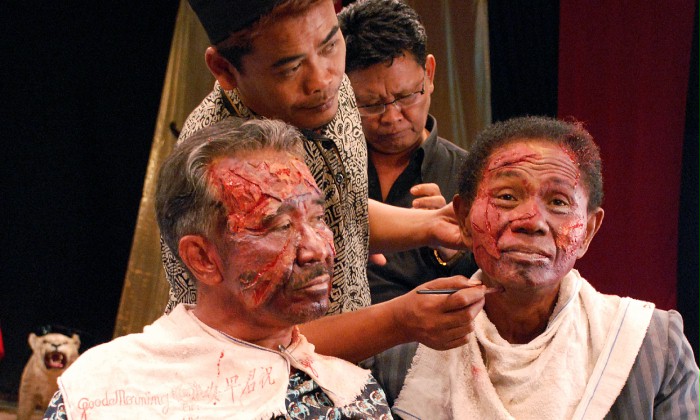
Made as a Danish/Norwegian/British co-production, The Act of Killing is a highly controversial account of the year following the 1965 Indonesian military coup in which pro-regime paramilitaries killed more than a million alleged Communists. These murders went unpunished and the perpetrators are still powerful, influential people who can rely on the support of corrupt politicians.

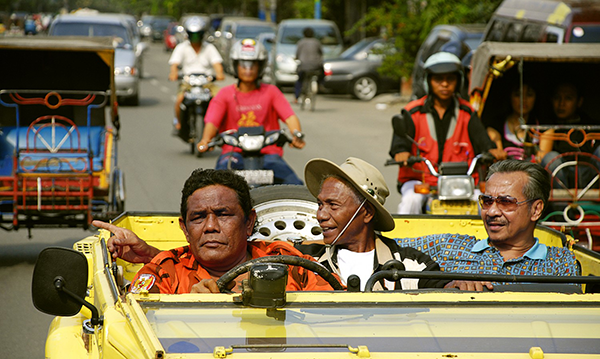
In the film, these men proudly recall their struggle against the Communists and demonstrate their efficient methods of slaughter. Slim Anwar Congo and portly Herman Koto are delighted when the film’s directors ask them to re-enact these murders for their documentary. They zealously set about finding actors, designing elaborate costumes and discussing possible scenarios. They see themselves as film stars who will show the world Indonesia’s truepremen or ‘free men’. But eventually the film project gets these men to talk about and reflect upon their actions as they have never done before. Congo says that for the first time he felt what his victims must have felt. It begins to dawn on him exactly what he did to hundreds of people. The reconstruction of reality has become more real for these men than their actions originally were.

The Act of Killing 2

Errol Morris (an executive producer for the film with Werner Herzog) has this to say about it:

“An extraordinary portrayal of genocide. To the inevitable question: what were they thinking, Joshua Oppenheimer provides an answer. It starts as a dreamscape, an attempt to allow the perpetrators to reenact what they did, and then something truly amazing happens. The dream dissolves into nightmare and then into bitter reality. An amazing and impressive film.”

Joshua OPPENHEIMERYou can watch the trailer here, and read interviews with Oppenheimer about the research for and the making of the film here, here and here.  The historical and geographical context for the film is summarised here (scroll down).

According to the Jakarta Post, many survivors have praised the film but others have criticised Oppenheimer for marginalising the role of the military in the massacres.  The same production team is now developing a follow-up, The Look of Silence, which reportedly will deal with ‘the other side of the story’, how survivors and victims’ families co-exist with the perpetrators.

A host of questions here, not least about aesthetics and violence and about the incorporation of art-work into the research process, but also about the question that inevitably haunted me during my visit to Auschwitz, and that returns again and again as I work on my bombing project: how could people do such things?  A question that finally returns us to my title and to J. Robert Oppenheimer.

Julius, in case you’re wondering: not Joshua.

St Noel of the Cameras

St Noel of the Cameras

News from Felix Driver of a fully-funded PhD studentship on the history of expeditionary film, directed by Felix and Catherine Souch, in conjunction with the RGS-IBG, the Royal Society and the British Film Institute:

Applications are welcome for a fully-funded AHRC PhD studentship on the history of expeditionary film, geographical science and media culture, available from September 2013 on a full-time or part-time basis. 
The project will investigate the production, distribution and presentation of films made on successive Everest expeditions between 1922 and 1953. Drawing on unique archival film collections held by the BFI, the Everest expedition archives and related collections such as The Times archives, the research will consider the logistical and technical requirements of expeditionary film, including the role of Sherpa porters in film-making; the role of media sponsorship in shaping the presentation of expedition work; and how film was shown, and to what audiences, within the context of popular and scientific understandings of mountaineering in the period. The research will also consider the wider significance and potential uses of the Everest film archive. This involves consideration of the role of key organizations, including the RGS and the BFI, in developing a community of interest around geographical film in the first half of the twentieth century. In addition to research in the unique Everest archives and in the associated BFI collection, the project will examine the potential of digital film in the context of public engagement and public memory.
Further details of the project, eligibility and applications process are available here and here.  The closing date for applications is 8 May 2013.
More information from Felix at f.driver@rhul.ac.uk
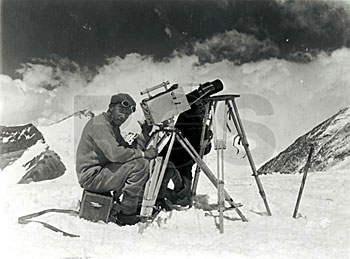
The image at the top (where else?!) shows Captain J.B. Noel, who was referred to as ‘St. Noel of the Cameras‘ by General Bruce, leader of the 1922 Everest Expedition. Noel photographed and filmed the 1922 and 1924 Everest Expeditions and can be seen here kinematographing the ascent of Mt Everest from the Chang La in 1922. I do hope somebody from Geography at Manchester reads the small print….

Un-habitation

When Chris Harker was working on his PhD thesis at UBC I remember saying that while I admired the work of the Israeli Committee against House Demolitions a more accurate title would be Home Demolitions – simply because this would convey that much more was being so brutally and callously destroyed than bricks and mortar.  The practice is, of course, another vile dimension of the calculated (and illegal) colonisation of the West Bank by Israeli settlers, and Just Vision‘s latest film, My Neighborhood, puts the two together – erasure and occupation – in East Jerusalem.  But here too there are small signs of solidarity between Palestinians and Israelis that are vital for any prospect of ‘cohabitation‘…

My Neighbourhood

And now you can now watch the whole film on the Guardian website here.  Much more on East Jerusalem from the Civic Coalition for Palestinian Rights in Jerusalem here, from Settlement Watch (“Eyes on the Ground in East Jerusalem”) here and from B’Tselem: the Israeli Information Center for Human Rights in the Occupied Territories here.

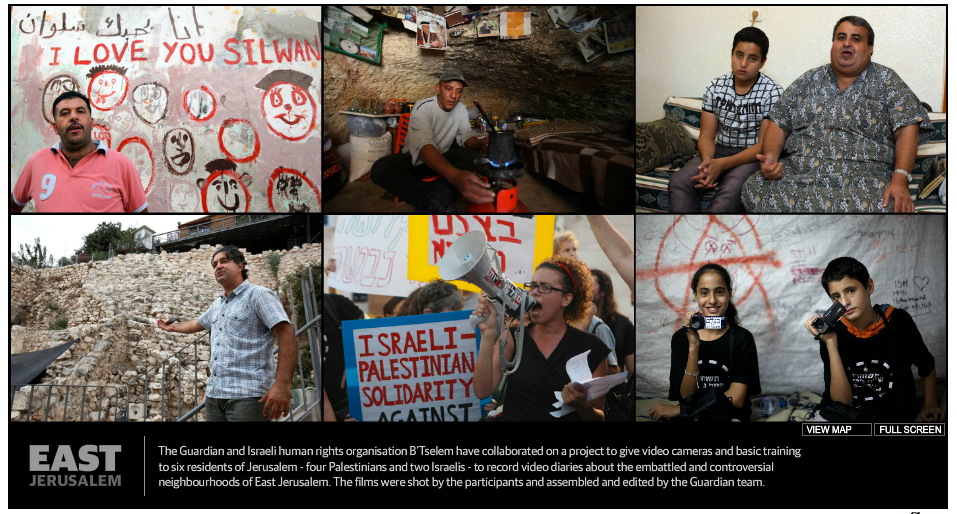
In 2011 the Guardian joined forces with B’Tselem to produce six short video diaries under the umbrella title Living in East Jerusalem, and these are still online here.

Living in East Jerusalem Video Diaries

‘Dirty Wars’ and the everywhere war

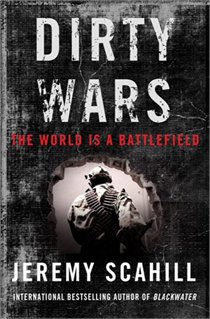
'Dirty Wars' - Jeremy Scahill filmDirty wars: the world is a battlefield, a new film by the Nation‘s brilliant investigative reporter  Jeremy Scahill and directed by Rick Rowley (of Big Noise Films) has won this year’s Sundance Film Festival Prize for best cinematography in a US documentary.  The film, which goes on release later this year, focuses on the CIA’s Special Activities Division, Joint Special Operations Command and other covert forces in waging undeclared wars around the globe.  More information and updates here.  Here’s the ‘long synopsis’:

Dirty Wars follows investigative reporter Jeremy Scahill, author of the international bestseller Blackwater, into the heart of America’s covert wars, from Afghanistan to Yemen, Somalia and beyond. With a strong cinematic style, the film unfolds through Scahill’s investigation and personal journey as he chases down the most important human rights story of our time.

Along the way we meet two parallel casts of characters. The CIA agents, shooters, military generals, and Special Forces operators who populate the dark side of American wars go on camera and on the record—many for the first time. The human victims of this unaccountable violence are also heard. Seeing and hearing directly from survivors of night raids and drone strikes and victims of torture in “black” detention sites shows the human lives caught in these wars.

Tracing the rise of Joint Special Operations Command (JSOC), the most secret and elite fighting force in U.S. history, Dirty Wars reveals covert operations unknown to the public and carried out across the globe by men who do not exist on paper and will never appear before Congress. In military jargon, JSOC teams “find, fix, and finish” their targets: anyone, without due process. No target is off limits for the “kill list,” including U.S. citizens.

Dirty Wars takes viewers to remote corners of the globe to see first-hand wars fought in their name and offers a behind-the-scenes look at a high-stakes investigation. We are left with questions about freedom and war, justice and democracy.

SCAHILL Dirty warsThe accompanying – monumental (512 pp) – book (under the same title) will be published by Nation Books in April.

In an early review for Variety, Rob Nelson praises the film’s power and politics:

Filed from the frontlines of the war on terror, documentarian Richard Rowley’s astonishingly hard-hitting “Dirty Wars” renders the investigative work of journalist Jeremy Scahill in the form of a ’70s-style conspiracy thriller. A reporter for the Nation, Scahill follows a blood-strewn trail from a remote corner of Afghanistan, where covert night raids have claimed the lives of innocents, to the Joint Special Operations Command (JSOC), a shadowy outfit empowered by the current White House to assassinate those on an ever-expanding “kill list,” including at least one American. This jaw-dropping, persuasively researched pic has the power to pry open government lockboxes.

Doggedly questioning the logic and morality of waging a war with no accountability and no end in sight, Rowley and Scahill are shrewd enough to recognize that one of the strongest weapons in their own arsenal is entertainment. This isn’t to say that “Dirty Wars” is fun by any stretch, but that it takes pains to make the political personal, forging the viewer’s identification with Scahill by making persistent use of his voiceover narration and keeping him oncamera throughout. Scahill is no Redford or Hoffman, but one follows his train of thought and ultimately fears for his safety.

There’s also an excellent interview (including some riveting, spine-chilling detail) with Amy Goodman, together with some clips from the film, at Democracy Now:

If you’re in a hurry, the transcript is here.  As Amy notes in the Guardian (and as the interview confirms)the film is a much-needed antidote to Zero Dark Thirty, and speaks directly to what I’ve called ‘the everywhere war’:

 ‘Sadly it proves the theater of war is everywhere, or, as its subtitle puts it: “The World is a Battlefield.” As Scahill told me: “You’re going to see a very different reality, and you’re going to see the hellscape that has been built by a decade of covert war.”

Project Z

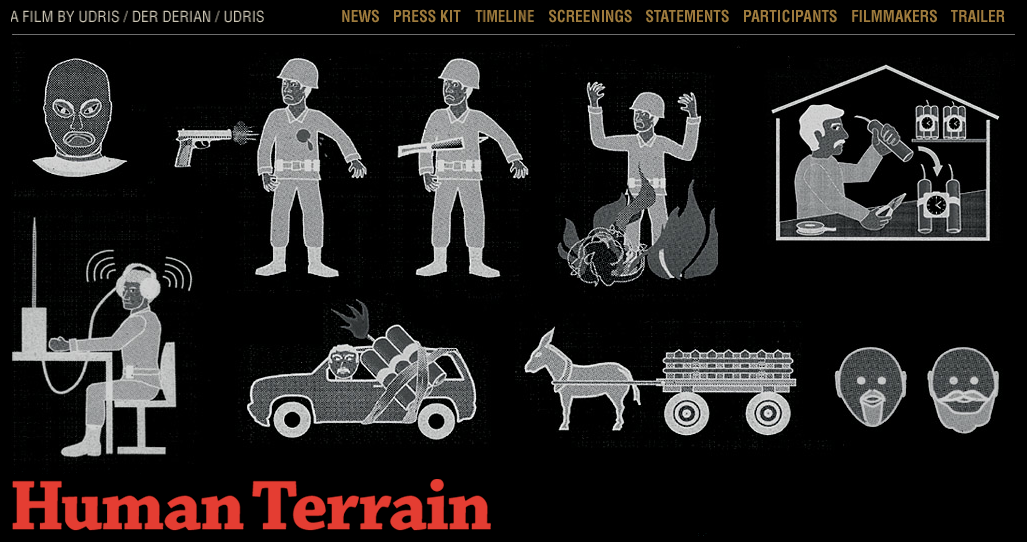
In 2010 James Der Derian (with David and Michael Udris) released Human Terrain, a film that explored the US Army’s Human Terrain Teams and its projected ‘cultural turn’ in counterinsurgency.

Human Terrain

‘Human Terrain’ is two stories in one. The first exposes a new Pentagon effort to enlist the best and the brightest in a struggle for hearts and minds. Facing long wars in Iraq and Afghanistan, the U.S. military initiates ‘Human Terrain Systems’, a controversial program that seeks to make cultural awareness the centerpiece of the new counterinsurgency strategy. Designed to embed social scientists with combat troops, the program swiftly comes under attack as a misguided and unethical effort to gather intelligence and target enemies.   Gaining rare access to wargames in the Mojave Desert and training exercises at Quantico and Fort Leavenworth, ‘Human Terrain’ takes the viewer into the heart of the war machine and a shadowy collaboration between American academics and the military.

The other story is about a brilliant young scholar who leaves the university to join a Human Terrain team. After working as a humanitarian activist in the Western Sahara, Balkans, East Timor and elsewhere, and winning a Marshall Scholarship to study at Oxford, Michael Bhatia returns to Brown University to take up a visiting fellowship.  In the course of conducting research on military cultural awareness, he is recruited by the Human Terrain program and eventually embeds with the 82nd Airborne in eastern Afghanistan.  On the way to mediate an intertribal dispute, Bhatia is killed when his humvee hits a roadside bomb.

War becomes academic, academics go to war, and the personal tragically merges with the political, raising new questions about the ethics, effectiveness, and high costs of counterinsurgency.

Der Derian has now released a new film project, completed with Philip Gara, Project Z: the final global event.  The trailer (below) was released last month – at 11:11:11 on 11/11/11 – and according to a press notice, its release was ‘in acknowledgement of a cascading series of related dates – from the 11/ fall of the Berlin Wall, to the 9/11 attacks in the US, to the Arab Spring’s 2/11/11 removal of Egyptian President Hosni Mubarak from power.’

“If we don’t learn from these events, we’re headed for the final global event,” says head of the Global Media Project (GMP), James Der Derian, who is producing the film. Directed by Phil Gara ’08, a first-time filmmaker coming out of the GMP, the documentary features some of the world’s leading policy thinkers, military strategists, and critical theorists in an entirely new context, which they have embraced in the spirit of producing innovative global interest media that can reach new audiences.

And yes, “Z” stands for “Zombie.” As in, “we need to stop going around like the undead, wake up, and start making the tough decisions about how we want to live in a global community,” Der Derian says.

Trailer is here:

http://vimeo.com/31926822

I’m grateful to Cathy Lutz for the information.

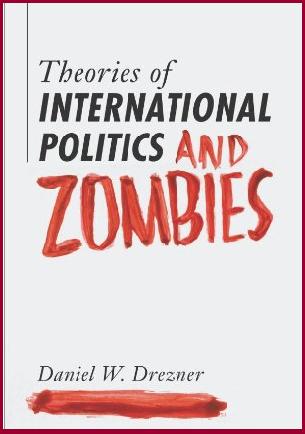
Drezner International politics and zombiesIn posting this, I’m mindful not only of Rob Sullivan‘s critical response to Trevor Paglen‘s The Last Pictures (incidentally, the URL gloriously converts Paglen to “Pagen”….) and all those interested in ‘zombie geographies‘… For a different take that none the less loops back to Der Derian’s concerns in both his films, see Gaston Gordillo‘s perceptive commentary on Marc Forster’s forthcoming film World Revolution Z, based on Max Brooks‘s novel:

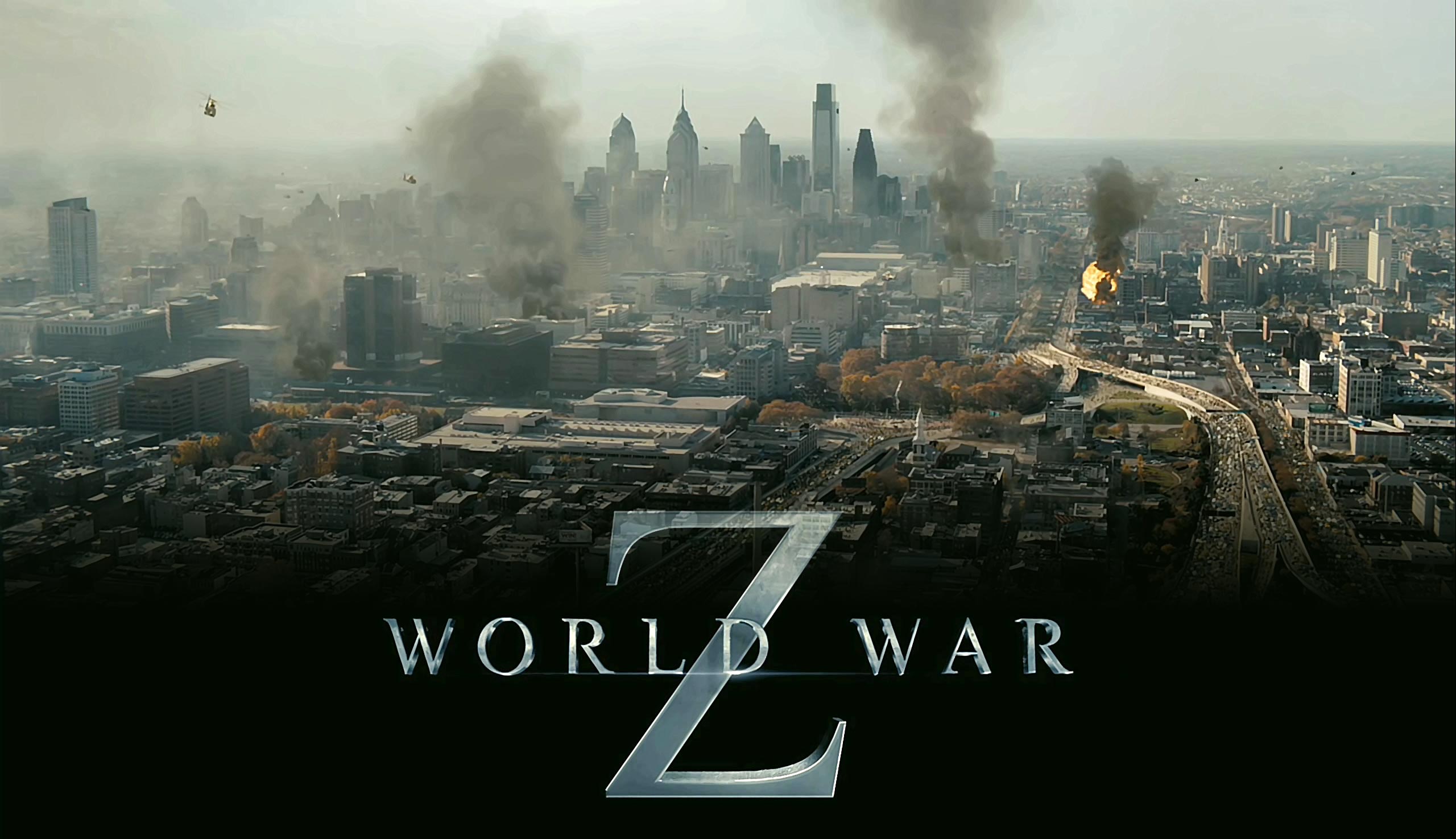
Zombie epidemics and revolutionary situations share a similar spatiality: a territorial disintegration through which multitudes that do not take orders from the state dissolve state-controlled spaces. InWorld War Z and also on the hugely popular TV show The Walking Dead, the zombie multitudes create, through this territorial dissolution, an overwhelming spatial void that is first generated in urban centers and subsequently expands outwardly. As Lefebvre insisted, in an increasingly urbanized world the most radical insurrections are (and will be) urban phenomena. This is why the panoptic surveillance of urban space is a key priority of the imperial security apparatus, as Stephen Graham demonstrates in Cities under Siege. In The Walking Dead, the urban nature of the zombie insurrection is particularly apparent in the opening episodes, when the zombie takeover of the city of Atlanta forces survivors to flee to rural areas. In one scene, attack helicopters bombard the city with napalm, the epitome of counter-insurgency weapons. In subsequent episodes, the spatial voiding created by the collapse of the state acquires a particularly haunting presence. For months on end, the small band of survivors lives on the run, in hiding, always on the edge and with their weapons at the ready, suffocated by the spatial emptiness that surrounds them —a voiding not unlike the one experienced by imperial troops in terrains controlled by local insurgencies, be that of the jungles of South America in the 1600s or the mountains of Afghanistan today.

World War Z

Predatory eyes

Following from my last post on the art of bombing – on artists who have attempted to render the aerial perspective of conventional bombing – Honor Harger (from Lighthouse) provides a useful review of artists who are doing the same for drone strikes in his ‘Drone’s eye view’.  Honor writes:

The work of artists such as Trevor Paglen, Omer Fast, and James Bridle exists within a long tradition of artists bearing witness to events that our governments and military would prefer we didn’t see. But Bridle’s work is also part of an ongoing collective effort from both artists and engineers to reveal the technological infrastructures that enable events like drone-strikes to occur.

Omar Fast, 5000 feet is best (2011)

Honor is referring to James Bridle‘s Dronestagram and related projects that I noted earlier, and to Trevor Paglen‘s Drone Vision (see also his other drone-related projects here).  Trevor’s work includes an interview and video clip from Noor Behram, a Pakistani photo-journalist who has been painstakingly documenting CIA-directed drone strikes in the Federally Administered Tribal Areas. He’s best known for his harrowing images of the aftermath of drone strikes, but he also shot this video of a drone over his own house:

“Witnessing a drone hovering over Waziristan skies is a regular thing,” says Noor Behram, who shot this video outside his house in Dande Darpa Khel, North Waziristan.

For more than five years, Behram has been documenting the aftermath of drone attacks in Pakistan’s tribal areas, the hub of the CIA’s remote assassination program. When Behram learns of a strike, he races towards ground zero to photograph the scene. “North Waziristan,” he explained “is a big area scattered over hundreds of miles and some places are harder to reach due to lack of roads and access. At many places I will only be able to reach the scene after 6-8 hours.” Nonetheless, Behram’s photographs are some of the only on-the-ground images of drone attacks.

“[The few places where I have been able to reach right after the attack were a terrible sight” he explains, “One such place was filled with human body parts lying around and a strong smell of burnt human flesh. Poverty and the meagre living standards of inhabitants is another common thing at the attack sites.” Behram’s photographs tell a different story than official American reports that consistently deny civilian casualties from drone attacks: “I have come across some horrendous visions where human body parts would be scattered around without distinction, those of children, women, and elderly.”

For Behram, this video is nothing exceptional. “This was like any other day in Waziristan. Coming out of the house, witnessing a drone in the sky, getting along with our lives till it targets you. That day it was in the morning and I was at my home playing with my children. I spotted the drone and started filming it with my camera and then I followed it a bit on a bike.”

The third artwork in Honor’s triumvirate is Omer Fast‘s fictionalised Five Thousand Feet is the Best, which I included in my list of Readings and Screenings on drones back in August.  There’s a clip below, though the full presentation runs to 30 minutes:

The film is based on two meetings with a Predator drone sensor operator, which were recorded in a hotel in Las Vegas in September 2010. On camera, the drone operator agreed to discuss the technical aspects of his job and his daily routine. Off camera and off the record, he briefly described recurring incidents in which the unmanned plane fired at both militants and civilians – and the psychological difficulties he experienced as a result. Instead of looking for the appropriate news accounts or documentary footage to augment his redacted story, the film is deliberately miscast and misplaced: It follows an actor cast as the drone operator who grudgingly sits for an interview in a dark hotel. The interview is repeatedly interrupted by the actor’s digressions, which take the viewer on meandering trips around Las Vegas. Told in quick flashbacks, the stories form a circular plot that nevertheless returns fitfully to the voice and blurred face of the drone operator – and to his unfinished story.

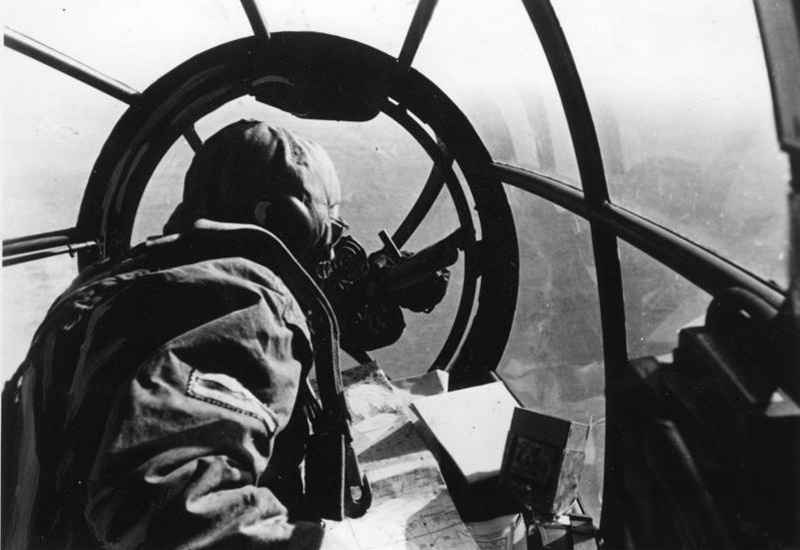
He-111 Luftwaffe bombardiers viewWhat is particularly interesting to me are the ways in which ‘seeing like a drone’ is and is not like seeing through a standard bombsight: the techno-optical regime through which conventional bombing has been conducted differs from the high-resolution full-motion video feeds that inform (and misinform) the networked bombing of late modern war.  Those feeds significantly compress the imaginative distance between the air and the ground, but they do so in a highly selective fashion.  Today’s remote operators, who may be physically thousands of miles away from the target, nevertheless claim to be just 18 inches from the conflict zone, the distance between the eye and the screen, and they (un)certainly see far more of what happens than the pilots of conventional strike aircraft.  But in Afghanistan, where remote operators are usually working with troops on the ground, they become immersed in the actions and interactions of their comrades – through visual feeds, radio and internet – whereas their capacity to interpret the actions of the local population is still strikingly limited.  So it is that local lifeworlds remain not only obdurately ‘other’ but become death-worlds.