Writing at a dead-line

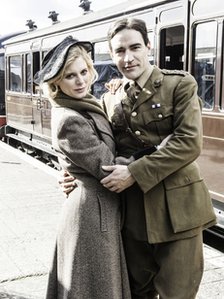
BBC2 The Wipers TimesBack in the trenches again, revising “Gabriel’s Map”, and I see that the former President of the Royal Geographical Society – rather better known as Michael Palin (“This President is no more!  He has ceased to be…. This is an EX-PRESIDENT!!”) – appears in a new BBC2 drama [also starring Ben Chaplin and Emilia Fox, left] based on the story of The Wipers Times, a trench newspaper written and printed on the Western Front during the First World War.

This is Palin’s first dramatic role in twenty years (other then being President of the RGS).  Many readers will no doubt immediately think of the far from immortal Captain Blackadder in Blackadder Goes Forth (in which case see this extract from J.F. RobertsThe true history the Blackadder – according to Rowan Atkinson, “Of all the periods we covered it was the most historically accurate” – and compare it with this interview with Pierre Purseigle).

But since the script for The Wipers Times has been co-written by Ian Hislop (with Nick Newman) the Times is inevitably being described as a sort of khaki Private Eye: Cahal Milmo in the Independent says that ‘its rough-and-ready first edition was a masterclass in the use of comedy against industrialised death and military officialdom.’

So it was, but the appropriate critical comparison is with Punch, which Esther MacCallum-Stewart pursues in ingenious depth here.  The French satirical magazine Le canard enchaîné (which is in many ways much closer to the Eye) started publication in 1915 and was much more critical.  But for most of the war, MacCullum-Stewart says, Punch enforced ‘a strict code of “comedy as usual” interspersed by patriotic statements which hardly pastiched anything except an enduring capacity for the British to show a stiff upper lip to all comers.’

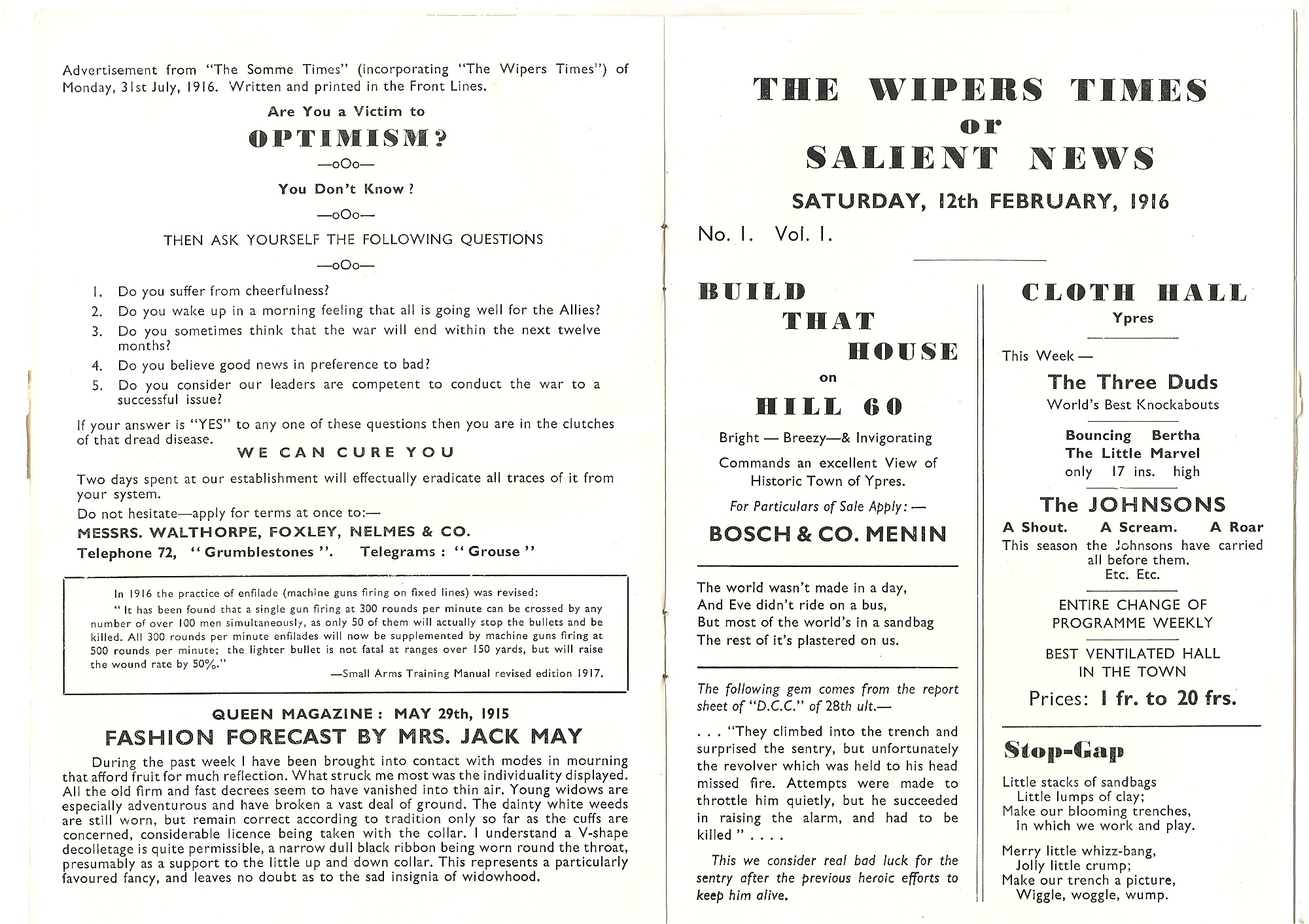
That soon wore thin on the Western Front, and when Captain Fred Roberts – played by Chaplin – found a printing-press amongst the rubble of Ypres (“Wipers”) in February 1916 the Times was born (though a shortage of vowels meant that only one page could be set up and printed at a time).

Wipers Times No 1

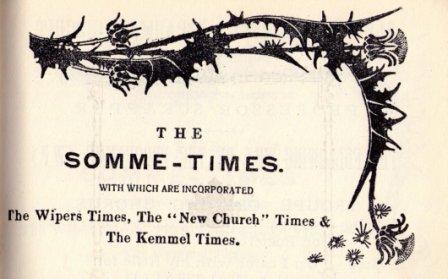
The title of the paper changed as the Division was re-deployed time and time(s) again.  It had many targets in its sights, including the warrior poets:

‘We regret to announce that an insidious disease is affecting the Division, and the result is a hurricane of poetry. Subalterns have been seen with a notebook in one hand, and bombs in the other absently walking near the wire in deep communication with their muse.’

This is one of the most widely quoted passages in the paper, but MacCallum-Stewart explains that this is precisely because it could be squared with the mythology of the war which so many other contributions worked to undermine.

You can find other extracts here but my favourite – given how mud works its way into a central place in “Gabriel’s Map” and into one of the vignettes in “The nature of war” – is this satirical version of Rudyard Kipling‘s If (Kipling wrote the original in 1909 as advice to his son –”If you can keep your head when all about you are losing theirs…”: celebrated by the Daily Mail here):

If you can drink the beer the Belgians sell you,
And pay the price they ask with ne’er a grouse,
If you believe the tales that some will tell you,
And live in mud with ground sheet for a house,
If you can live on bully and a biscuit.
And thank your stars that you’ve a tot of rum,
Dodge whizzbangs with a grin, and as you risk it
Talk glibly of the pretty way they hum,
If you can flounder through a C.T. nightly
That’s three-parts full of mud and filth and slime,
Bite back the oaths and keep your jaw shut tightly,
While inwardly you’re cursing all the-time,
If you can crawl through wire and crump-holes reeking
With feet of liquid mud, and keep your head
Turned always to the place which you are seeking,
Through dread of crying you will laugh instead,
If you can fight a week in Hell’s own image,
And at the end just throw you down and grin,
When every bone you’ve got starts on a scrimmage,
And for a sleep you’d sell your soul within,
If you can clamber up with pick and shovel,
And turn your filthy crump hole to a trench,
When all inside you makes you itch to grovel,
And all you’ve had to feed on is a stench,
If you can hang on just because you’re thinking
You haven’t got one chance in ten to live,
So you will see it through, no use in blinking
And you’re not going to take more than you give,
If you can grin at last when handing over,
And finish well what you had well begun,
And think a muddy ditch’ a bed of clover,
You’ll be a soldier one day, then, my son.

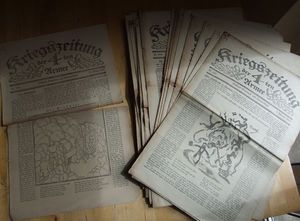
Wipers_Times_4 German 4th Army trench newspapers

There were many other trench newspapers produced by the different armies on both sides. On the Allied side there were 100 or so British ones, for example, and perhaps four times as many French ones; there were perhaps 30 Canadian ones, and more Australian ones. Graham Seal has just published the first full-length study of Allied trench newspapers: The soldier’s press: Trench journals in the First World War (Palgrave-Macmillan 2013); you can sneak an extensive peak on Google Books (though contrary to what it says there, an e-edition is available at a ruinous price).  As you can see from the image above, there were also trench newspapers on the other side too: see Robert Nelson, German soldiers newspapers of the First World War (Cambridge University Press, 2011).  He also wrote a more general and thoroughly accessible survey of trench newspapers in War & History [2010] which is available here.

In the final edition of the Times, published after the end of the war, Roberts – by then a Lieutenant-Colonel – wrote this:

“Although some may be sorry it’s over, there is little doubt that the linemen are not, as most of us have been cured of any little illusions we may have had about the pomp and glory of war, and know it for the vilest disaster that can befall mankind.”

Dead streaming

Readers who have followed Josh Begley‘s Dronestream project – which I commented on here  – will be interested in this video of his graduate thesis presentation at NYU:

It’s a tour de force in under 15 minutes.  Josh begins with a rapid-fire overview of over 480 more or less covert US drone strikes in 10 years killing more than 4,700 people.  ‘What can our relationship be with this story?’ he asks.

His first attempt at finding an answer was the Drones+ app that was intended to send a notification to your iPhone every time news broke of a drone strike in Pakistan, Yemen or Somalia.  Like James Bridle‘s Dronestagram (which enabled satellite images of the sites of remote strikes to be viewed on an iPhone), it was a way of projecting the remoteness of the strikes into the intimacy of our own life-worlds.  But  Drones+ was more demanding precisely because its episodic notifications made those strikes more insistent, more interruptive.  Hence Josh’s key question:

‘Do we really want to be as connected to our foreign policy as we are to our smart phones?  … which are these increasingly intimate devices, the places where we share pictures of or loved ones and communicate with our friends, the things that we pull out of our pockets when we’re lost and which auto-magically put us at the center of the map……  Do we really want these things to be the site of how we experience remote war?’

Apple’s answer was no, as he ruefully acknowledges, though I suspect that would also be the answer of many others too: that, after all, is the appeal of remote wars to those who orchestrate them.  Out of sight, out of mind: which is precisely why there is also something ‘auto-magical’ about Josh’s determination to ‘détourne‘ these remote technologies like this.

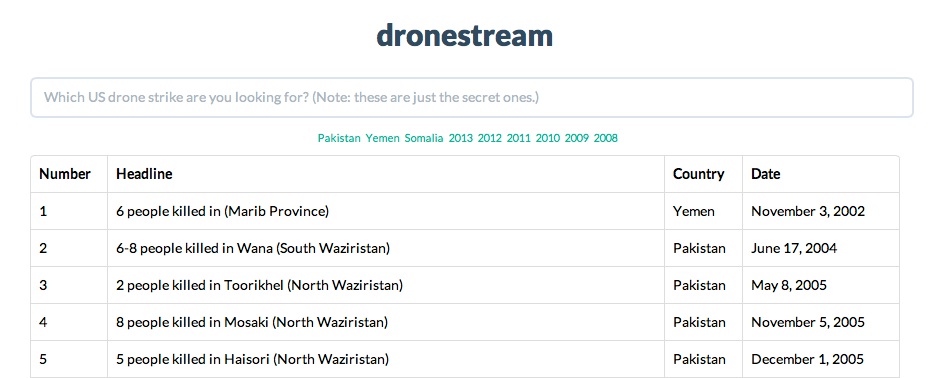
Josh’s next step was to use a Twitter account to start to tweet every recorded drone strike, which eventually morphed (via the aggregations of the Bureau of Investigative Journalism) into Dronestream: or, more accurately, Dronestre.am.

Dronestre.am

This is a publicly accessible API (Application Programming Interface) that enables the data set to be interrogated and visualized in multiple ways (and if you want a simple account of working with the API, check out Felix Haas here):

dronestream

Josh credits Trevor Paglen‘s ‘spatial analysis’ and his ongoing attempts to outline the Blank Spots on the Map as a particular inspiration for his work.  What he has sought to do, by extension, is to map ‘the blank spots in the data’: to recover what he calls ‘the negative space that these drone strikes take up’, and so enable complex stories and ordinary voices to emerge out of the swirl of Big Data.  In doing so, he argues that it becomes possible to ‘speak back’ to the drones and to the masters of dirty wars that control them, in effect artfully turning this latest version of techno-war against itself.

The trick now is to fill out these ‘blank spots on the map’, to recover the insistently human geographies that are devastated by these air strikes and the threat of more to come, so that we can overturn both the ‘face-less’ and the ‘place-less’ narrative of the covert war machine.  It thrives on being both out of sight and out of site, and Josh’s research is invaluable in reminding us that the virtual technologies that make its depredations possible are also acutely material in their form and in their effects.

Bodies on the wire

Last week I had a wonderful time at the Eisenberg Institute for Historical Studies at the University of Michigan in Ann Arbor, and came away with a host of new ideas and fresh lines of inquiry.

One of these concerns the role of the telegraph in modern war.  When I was doing my first researches I discovered several writers emphasised its importance in reporting the Crimean War (1853-1856), a campaign that saw the first appearance of the war correspondent in the person of W.H. Russell, whose despatches for the Times won him a central place in both political and media history.

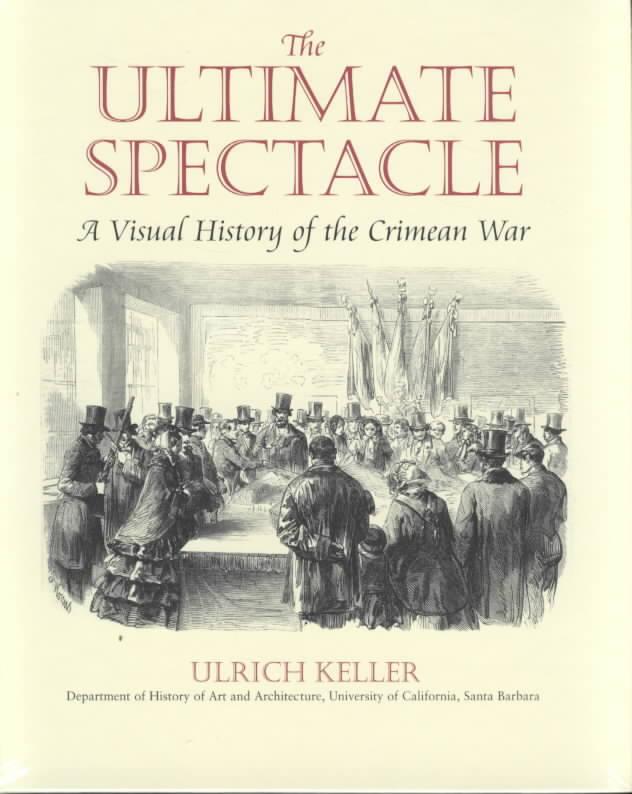
In The Ultimate Spectacle: a visual history of the Crimean War (Routledge, 2001) Ulrich Keller argued that:

‘Throughout the campaign the domestic front continuously inscribed itself on the military front, and vice versa; nothing could happen in one sphere without immediate repercussions in the other. It was of course the steamship, the telegraph and the news-press with its swift coverage of events, which created the interdependence of the two arenas.

‘Without the dramatic improvement of communication technologies during the first half of the nineteenth century, the Crimean events, evolving at a distance of 3000 miles from London, could never have become an object of constant, close and emotional public scrutiny at home…’

Russell’s reports were of tremendous significance, and the telegraph was important for the conduct of the war.  Indeed, Orlando Figes in Crimea: the last Crusade (Allen Lane, 2010) treats the Crimean War as

‘the first example of a truly modern war – with new industrial technologies, modern rifles, steamships and railways, novel forms of logistics and communication like the telegraph .. and war reporters and photographers directly on the scene.’

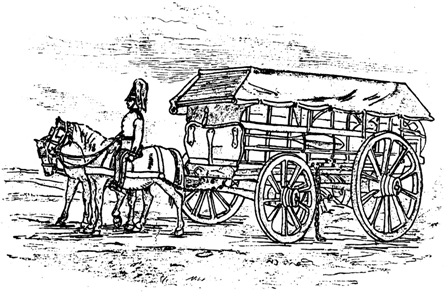
But it is important not to confuse the two.  The British Army had a field telegraph whose 24 mile network connected Lord Raglan’s headquarters with eight stations in the field.  The illustration below comes from Steven Roberts‘s Distant Writing which is a tremendous source of information on British telegraph companies from 1838 to 1868:

Electric Telegraph Company’s War Wagon in the Crimea, 1854

In addition, Army dispatches were sent 300 miles across the Black Sea to Varna and then overland to Bucharest (a journey of 60 hours) where they were telegraphed to London; by April 1855 a temporary submarine cable from Balaklava to Varna had reduced the overall transmission time to London to 5 hours, and the press used the same line for sending short despatches to London.  One periodical was so excited at the new proximity of war that it held out the fantasy

‘that it would not now be difficult, by some little farther novelty of invention, to cause the reverberation of the very cannons themselves, as it were, to be transmitted, in the shape of electric vibration, through the 3000 miles of intervening wire, and heard, in still continuous vibrations, finally communicated to some acoustic apparatus in the British Houses of Parliament…. There is no physical reason why the public should not know every morning, noon and night, what is at these very times going on in the seat of war.’

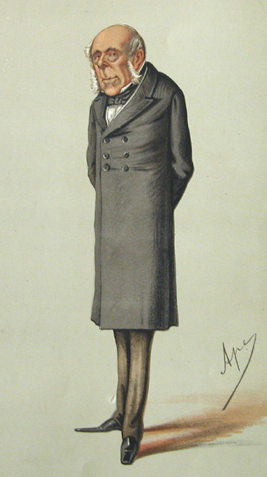
But Russell’s detailed despatches went by sea via Constantinople and took 20 days to reach London: his famous report of the Charge of the Light Brigade on 25 October 1854 was not published in the Times until 13 November, though an initial notice had appeared on 2 November.  And so it was not Russell that the Earl of Clarendon, the Foreign Secretary [right], had in his sights when he wrote to the British Ambassador in Constantinople on 23 September 1854, a month before that epic encounter (and in fact before any of Russell’s reports had been published), to complain about the press:

‘Our “own correspondents” have certainly contrived to keep our enemy informed of all he must want to know – his only disadvantage is 8 hours delay which is the time for transmitting to St P[etersburg] all that the newspapers contain and they generally publish as much as the Government knows for in one way or another some correspondent at Hd Qrs generally discovers and transmits every secret order or intended movement as well as every disaster and disharmony and the patriotic editors never think of keeping back anything injurious to the public service but on the contrary hasten to publish it all in proof of their superior means of intelligence.  The press and the telegraph are enemies we had not taken into account but as they are invincible there is no use complaining about them.’

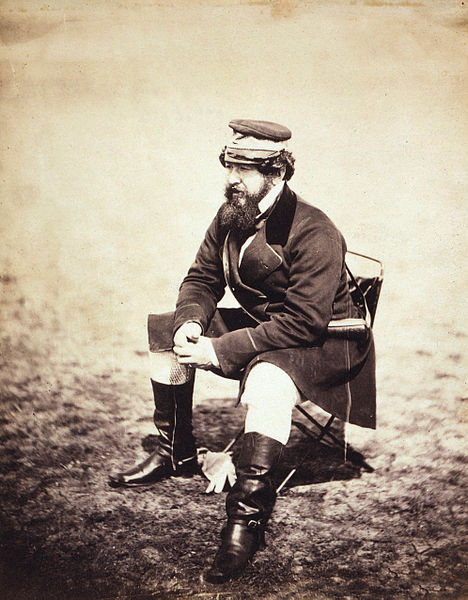
What he had in mind were the brief telegraphic despatches that were mined by all the leading newspapers in Britain. The Times was no exception, but it prided itself on its exclusive reports from Russell [left], as it explained on 21 October 1854:

The letters of our special correspondent from the scene of war, although naturally a few days in arrear of those leading communications which reach us through the agency of the telegraph, are always replete with interest, and are calculated indeed to serve far more important purposes than those of momentary amusement.  In those circumstantial descriptions of an eye-witness – in those details of actual experience and personal observation – we obtain an inexhaustible source of information…  We not only learn step by step what the army really did, and where it went, but we follow it in its march, and collect the opinions, the hopes and the feelings current among the soldiery from hour to hour.’

It may be true to say, as Andrew Lambert wrote for the BBC,  that ‘the electric telegraph enabled news to travel across the continent in hours, not weeks’ so that during the Crimea ‘war became much more immediate – a massive leap forward on the way to our age of instant global coverage by satellite.’  But beyond Europe reporting was still agonisingly slow.  In Australia, as Peter Putnis and Sarah Ailwood have shown,  ‘just when news from Europe was most eagerly wanted’, steamship services from Britain were diverted to supply troop ships for the war,  and the replacement sailing packets were so much slower and less reliable that colonial insecurities were heightened.  And even within Europe Lambert’s ‘immediacy’ was produced by terse and not always reliable telegraphic despatches that editors combined with long-form reports from their correspondents and others in the field.  The most vivid images of the war were produced by Russell’s despatches and by Roger Fenton‘s striking photographs.

For this reason, until now I had thought of the American Civil War (1861-1865) as ‘the first telegraph war‘, since the telegraph was demonstrably important both for the conduct of the war (which included military communications and, since cables were intercepted, military intelligence) and for its more detailed reporting.

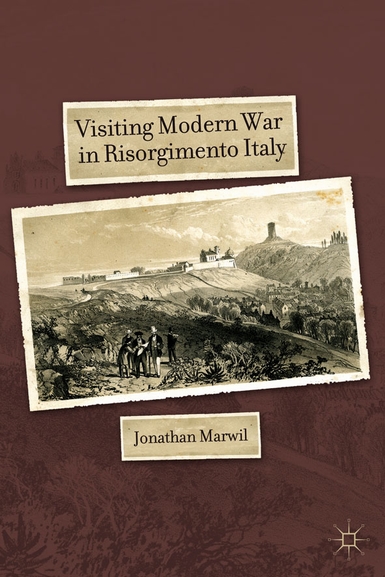
But at Ann Arbor I met the redoubtable Jonathan Marwil who directed my attention to the Second Italian War of Independence (sometimes called the Franco-Austrian War) of 1859.  His Visiting modern war in Risorgimento Italy (Palgrave, 2010), which I’ve devoured on my Kindle, is a superb account of the mediatization of modern war.  By 1859, he writes,

‘armies could not expect to wage wars without journalists in attendance.  Their stories, composed from what they saw, what they were told, and what they imagined, would be read soon after they were written, given the proximity of the seat of war to the major capitals and the presence of the telegraph wire.  Those watching a war from afar were now kept abreast of events almost while they were happening. News of the first Napoleon’s victories in Italy had taken days to reach Paris; reports of his nephew’s expected triumphs would arrive in hours.  A day after a major battle in early June, a French lieutenant would write his uncle assuming that he already knew more about the battle than did the nephew who had fought in it.’

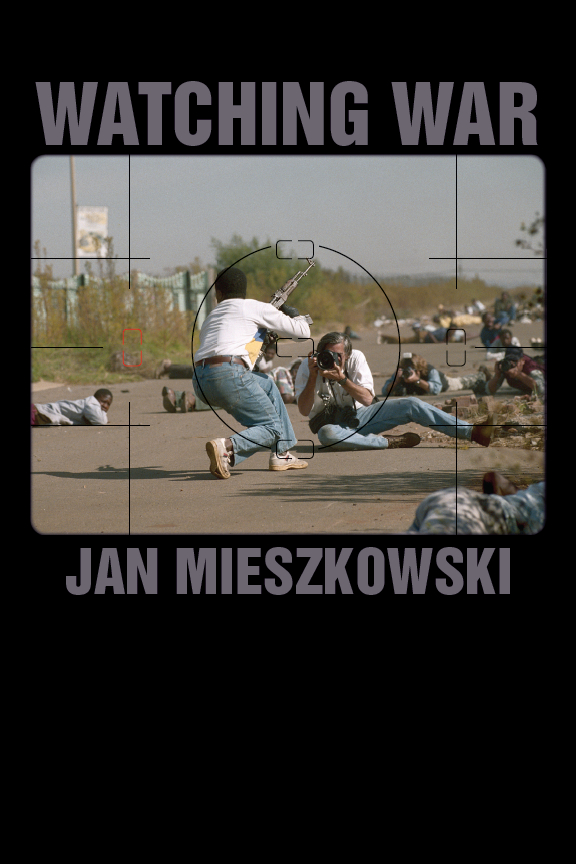
[That last remark, incidentally, recalls one of the core arguments of Jan Mieszkowski‘s Watching War (Stanford University Press, 2012): that one of the crucial dilemmas of modern war is the disconnect between the participant’s sensory disorientation (‘To be under fire is to experience the loss of control of one’s own signifying practices’) and the abstraction (or ‘perspective’) of distant observers.]

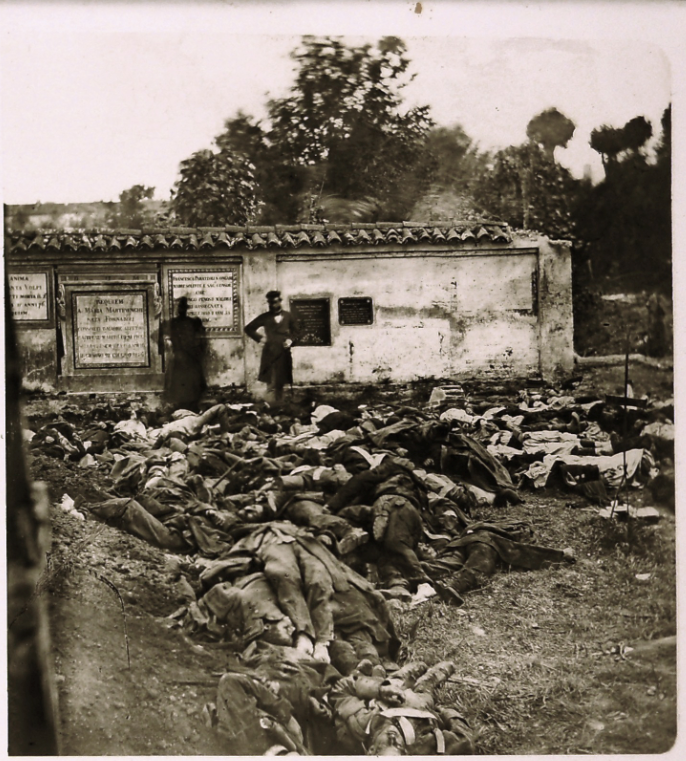
The Italian War was a war of truly awful proportions: you can find a stark description of ‘combat photography’ during the war, together with some examples, at Bill Johnson‘s Hold History in Your Hand here.  At the battle of Solferino some 40,000 were killed or injured in 15 hours, and the sight of the unrelieved suffering prompted a Swiss observer, Henry Dunant, to memorialise the scene in A memory of Solferino.  Within months of its publication in 1862 a committee started work on Dunant’s vision of an impartial relief society that would provide aid to those wounded in time of war: this would eventually become the International Committee of the Red Cross.

Cemetery at Melegnano, June 1859

The Times was horrified at what it called ‘the wanton and prodigal waste of life’ too, but in an editorial on 2 June 1859 it also reflected on the intimate conjuncture of killing and technological advance:

‘… revolting as war always is, it never presented itself in a form more repulsive than that which it now wears in the Italian Peninsula…   War also seems to have become more hideous from its closer contact with the greatest triumphs of our modern civilization.  The butchery of Casteggio was fed by a succession of railway trains, which disgorged their cargoes close to the human shambles, just as they carry the cattle, the sheep, and the calves which feed the daily hunger of London.

‘Science is degraded into an instrument for .. destruction…  While rival hosts are encountering each other with a ferocity which the Huns and the Vandals might envy, news of every particular of the butchery is carried by the delicate and beautiful machinery of the electric telegraph, and the pulse with which all nature throbs communicates, with a fidelity and despatch unknown to the Scourge of Mankind in former ages, every circumstance and detail of destruction.


Incendiary knowledges

Yesterday in my course on Cities, space and power (see TEACHING) I was talking about Alexandria and urbanism in the post-Alexandrian world.  Part of the discussion centred on the Museum and Library (the Museion) as both a community of scholars that was at once religious and academic (Museion means “Home of the Muses”) and a material constellation of power-knowledge. The marvellous Andrew Erskine, in his essay on ‘Culture and power in early Ptolemaic Egypt‘, captures the political purpose behind the imperial project:

‘A Graeco-Macedonian surface was imposed on Egypt, but this surface lacked a unifying tradition – except for a common Greekness. Setting up the Museum and the Library is the setting up of a centre of Greek cultural and intellectual life in the city. It helps to fill the cultural vacuum that exists within the city. Adopting the practices of Aristotle’s school [which was also centred on a Museum], studying the texts of Homer, acquiring the official texts of the Greek tragedies all help to establish some sense of continuity with a Greek past.’ 

But more than this, like other versions of what Ernest Gellner once called an agro-literate polity, this was about exclusion as much as inclusion:

‘The more Greeks can indulge in their own culture, the more they can exclude non-Greeks, in other words Egyptians, the subjects whose land has been taken over. The assertion of Greek culture serves to enforce Egyptian subjection. So the presence in Alexandria of two institutions devoted to the preservation and study of Greek culture acts as a powerful symbol of Egyptian exclusion and subjection. Texts from other cultures could be kept in the library, but only once they had been translated, that is to say, Hellenized.’ 

And this was about more than Greek culture and identity, and the orbit of exclusion extended far beyond Ptolemaic Egypt.  When the Ptolemies sought to bring the knowledge of the known world under their own control they had a particular interest in strategic knowledges like engineering, medicine – and, of course, geography.  Their collecting was aggressive: they confiscated scrolls from travellers, seized others from ships in the Great Harbour, and failed to return scrolls borrowed from other repositories for transcription.  And when the king of Pergamon [modern: Bergama] proposed to build his own collection [left], they forbade the export of papyrus to forestall their rival (which, according to some historians, prompted a series of experiments that issued in the discovery of parchment (‘pergamena‘) as an alternative recording medium).

Fast-forwarding, this is still on my mind for two reasons.  The first is a marvellous essay on ‘Shadow Libraries by Lawrence Liang: if, like me, you still relish the physical space and sensibility of the conventional library, this is a must-read (even if you have to do it online).

What was special about the Library of Alexandria was the fact that until then the libraries of the ancient world were either private collections of an individual or government storehouses where legal and literary documents were kept for official reference. By imagining a space where the public could have access to all the knowledge of the world, the library also expressed a new idea of the human itself. While the library of Alexandria is rightfully celebrated, what is often forgotten in the mourning of its demise is another library—one that existed in the shadows of the grand library but whose whereabouts ensured that it survived Caesar’s papyrus destroying flames.

According to the Sicilian historian Diodorus Siculus, writing in the first century BC, Alexandria boasted a second library, the so-called daughter library, intended for the use of scholars not affiliated with the Museion. It was situated in the south-western neighborhood of Alexandria, close to the temple of Serapis, and was stocked with duplicate copies of the Museion library’s holdings. This shadow library survived the fire that destroyed the primary library of Alexandria but has since been eclipsed by the latter’s myth.

That ‘public’, as Erskine would surely insist, was in fact a carefully delineated and privileged public.  And if this was library as utopia then, like so many utopias, access was restricted.  Liang closes with some thoughts on the library, instead, as a heterotopia (like Stuart Elden, I continue to be astonished at the attention Michel Foucault’s ‘published unpublished’ essay continues to attract, though unlike him not in a good way):

If the utopian ideal of the library was to bring together everything that we know of the world then the length of its bookshelves was coterminous with the breadth of the world. But like its predecessors in Alexandria and Babel the project is destined to be incomplete haunted by what it necessarily leaves out and misses. The library as heterotopia reveals itself only through the interstices and lays bare the fiction of any possibility of a coherent ground on which a knowledge project can be built.

Again, this surely isn’t a purely epistemological dilemma: there is a politics of what is to count as knowledge, after all, and this – my second reason for thinking about these issues – has often intersected with political and military violence.  That ‘ground’ is vulnerable to more than philosophical reflection.  As Matthew Battles reminds us in his Library: an unquiet history (W.W. Norton, 2003),  ‘Libraries are as much about losing the truth as preseving it– satisfying the inner barbarians of princes, presidents and pretenders – as about discovering it.’

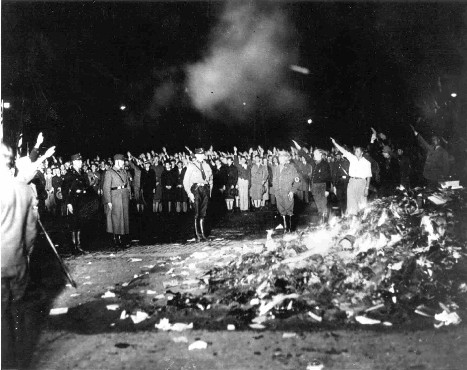
Much closer to us than the serial burnings of the Library at Alexandria is the ritualised burning of books organised by the National Socialist German Student’s Association in May and June 1933. From the US Holocaust Memorial Museum:

On April 6, 1933, the Nazi German Student Association’s Main Office for Press and Propaganda proclaimed a nationwide “Action against the Un-German Spirit,” to climax in a literary purge or “cleansing” (Säuberung) by fire. Local chapters were to supply the press with releases and commissioned articles, offer blacklists of “un-German” authors, sponsor well-known Nazi figures to speak at public gatherings, and negotiate for radio broadcast time. On April 8 the students’ association also drafted its twelve “theses”—a deliberate evocation of Martin Luther’s 95 Theses: declarations which described the fundamentals of a “pure” national language and culture. Placards publicized the theses, which attacked “Jewish intellectualism,” asserted the need to “purify” the German language and literature, and demanded that universities be centers of German nationalism….

In a symbolic act of ominous significance, on May 10, 1933, university students burned upwards of 25,000 volumes of “un-German” books, presaging an era of state censorship and control of culture. On the evening of May 10, in most university towns, right-wing students marched in torchlight parades “against the un-German spirit.” The scripted rituals called for high Nazi officials, professors, university rectors, and university student leaders to address the participants and spectators. At the meeting places, students threw the pillaged and “unwanted” books onto bonfires with great ceremony, band-playing, and so-called “fire oaths.”

Among the thousands of titles consigned to the flames was Erich Maria Remarque‘s All Quiet on the Western Front, ‘a betrayal of soldiers of the Great War’, and Ernest Hemingway‘s Farewell to Arms.  And, as the US Holocaust Memorial Museum notes,

Also among those works burned were the writings of beloved nineteenth-century German Jewish poet Heinrich Heine, who wrote in his 1820-1821 play Almansor the famous admonition, “Dort, wo man Bücher verbrennt, verbrennt man am Ende auch Menschen“: “Where they burn books, they will also ultimately burn people.”

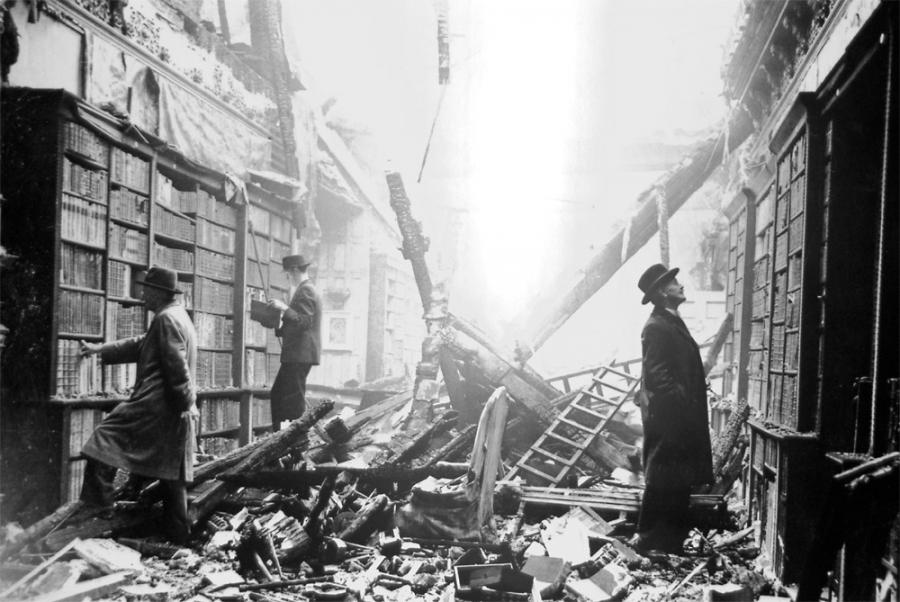
I realise that most of this will be well-known to readers (sic), but my point here is not about the vulnerability of libraries, though both Rebecca Knuth‘s Libricide (Praeger, 2003) and Lucien Polastron‘s Books on Fire (Thames and Hudson, 2010) provide a depressingly rich catalogue of historical examples of their calculated destruction.  One of the most famous images of the Blitz in 1940 is surely this photograph taken after the London Library was hit in 1940 – given the inaccuracy of the bombing, it was surely not deliberately targeted – but it testifies as much to the durability of reading as to its fragility:

What I am starting to think about is the way in which the military is inserted/insinuated in the hyphen between ‘power’ and ‘knowledge’.  In Discipline and punish Foucault artfully reverse engineers this, and provides a seminal discussion of the army in the eighteenth century as an exemplary formation of disciplinary power.  But this isn’t quite what I mean, not least because of the co-presence of sovereign and disciplinary power in military formations, and Nina Taunton, also inspired by Foucault, provides a compelling discussion of the early modern military camp (which, in its later version, also makes a fleeting appearance in Discipline and punish) and Shakespeare’s Henry V here that sets the stage – literally so – for what I have in mind.

She focuses on what she calls an ‘epistemology of command’ and ‘a whole culture of watchfulness’ and in doing so, not incidentally, also enlarges our understanding of the ‘theatre of war‘ as a visual metaphoric.  (See also her ‘Unlawful presences: the politics of military space and the problem of women in Tamburlaine‘ in Andrew Gordon and Bernhard Klein (eds), Literature, mapping and the politics of space in early modern Britain, Cambridge University Press, 2001 and her own book, 1590s drama and militarism, Ashgate, 2001).

Clearly the epistemological principles underlying the set-out of the camp make for the ‘new knowledge’ of surveillance as a one-way process, adapted to the exigencies of observation of the enemy on the one hand and the anxiety on the other to impede the enemy’s observation of you. Exposure to enemy strength can be forestalled by reinforcing the power that resides in ocular knowledge. This is achieved by spatially organising the way it is constituted in the camp so that it functions in equal balance with the power inherent in another kind of knowledge – that to do with strategies of secrecy, of keeping the enemy in the dark about your manoeuvres whilst being fully apprised of his. This is exemplified in the organisation of the watch through spying and reconnaissance – major strategies of surveillance.

Taunton writes about the dangers of both ‘the enemy within’ and ‘the enemy without’ – no stranger to ISAF in Afghanistan – but we should be wary of superficial parallels, especially as our histories enter a digital though no less material world.  (For exactly this reason I’m leery of those who think that Foucault’s lectures in 1975-6 uncannily prefigured war thirty years later – as though the concrete particulars are somehow incidental, when Foucault’s own way of working was so densely empirical).

What haunts me at present is the modern constitution of ‘the enemy’ as a mobile object of military knowledge, at once watched and watching. The questions multiply far beyond the delineation of political technologies of vision and scopic regimes that have informed much of my work to date. What are the relays through which (particularly local) knowledges have been militarised?  What are the vulnerabilities – what Taunton describes as the ‘doubleness of discourses that articulate and represent powerlessness through the models of [power/knowledge] in surveillance that they describe’ – that have been written in to the prospect of military violence?  How have militaries responded to being watched by the enemy and by the media (assuming they distinguish between them)?  What are the relations between surveillance, spatiality and secrecy within modern military ‘cultures of watchfulness’?  And how have those cultures responded to the demands of military occupation?  More – I hope – later.

Media, war and political violence

Three forthcoming books that I shall need to read carefully before returning to my discussion of reporting distant wars in “Deadly embrace”…

Jan Mieszkowski’s Watching Warforthcoming from Stanford University Press in August 2012: ‘What does it mean to be a spectator to war in an era when the boundaries between witnessing and perpetrating violence have become profoundly blurred?  Arguing that the contemporary dynamics of military spectatorship took shape in Napoleonic Europe, Watching War expores the status of warfare as a spectacle unfolding before a mass audience.  By showing that the battlefield was a virtual phenomenon long before the invention of photography, film or the Internet, this book proposes that the unique character of modern conflicts has been a product of imaginary as much as material forces.’

Continue reading

War and distance: Information

I’m still working on revising “Deadly Embrace” (though needless to say I should be working on other things…).  There were originally three main sections to the primary focus on waging war from a distance – information, logistics, weapons – but I need to add a fourth: intelligence.  The discussion of ‘information’ is concerned with what publics know of war at a distance – with news and the mediatisation of war (and thus with censorship and propaganda too) – but I’ve now done sufficient work on targeting to realise that the whole question of intelligence – of what politicians and the military claim to know of the (distant) enemy – needs to be incorporated.

In each case I provide an historical sketch and a contemporary discussion.  The historical sketches each begin at different times; starting-points are inevitably arbitrary, of course, but the sharper point is that historical transformations are usually uneven and jagged so I’ve identified a series of different moments to frame each of the main sections.
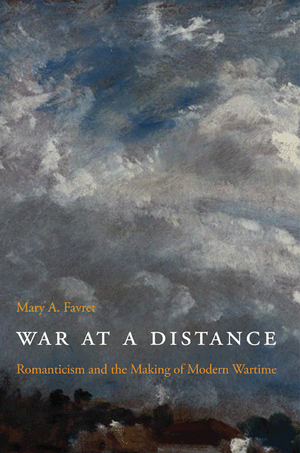
My original inspiration was Mary Favret’s War at a distance: Romanticism and the making of modern wartime, and for that reason I begin with ‘world wars’ that are outside the parameters of the supposedly canonical First and Second World War and I end with other ‘world wars’ (‘the everywhere war’) in our own present.  Favret says this:

‘Enumerations of world wars … do not typically begin with the wars of the late eighteenth and early nineteenth century… Despite the fact that they comprehended armed conflict not only in Europe, but in Africa, Asia and the Americas; despite the fact that they worried waters from the Philippine Islands to the Indian Ocean, from the Cape of Good Hope to the Mediterranean, from the English Channel westward to Chesapeake Bay and Gulf of Mexico: nonetheless these wars are thought not to encompass the world.  And yet, unlike the earlier Seven Years’ War, which could boast a comparable geographical reach, these wars from their revolutionary beginning were unequivocally addressed to the world.’

There is another dimension to this – even in this sketch you can glimpse a series of questions about the limits of combat zones that will, eventually, issue in a transition from ‘battlefields’ to diffuse, discontinuous battlespaces – but it’s that idea of wars being addressed to the world – and hence of an audience (a term which seems inadequate for what will become a viewing public) – that prompts my interest in ‘information’.

Favret identifies a dialectic between what she calls ‘eventfulness’ and ‘eventlessness’: in the late eighteenth century the regular arrival of news imparted a structuring rhythm to wartime, an episodic temporality of ‘punctuated eventfulness’, but she notes that thus this ‘created simultaneously a sense of living in the meantime’, waiting for news of events that had already happened but of which the public knew nothing because it took so long for letters and dispatches to arrive.

These are arresting suggestions, not least because Favret insists that this peculiarly modern notion of ‘wartime’ is not a twentieth-century artefact (for another, distinctively American view, with a different chronology, see Mary Dudziak’s War Time: an idea, its history, its consequences (2012)).  Favret has no truck with Virginia Woolf’s identification of a gulf between the Napoleonic Wars and the Second World War.  Writing in 1940, she had claimed that ‘wars were then remote, carried on by soldiers and sailors, not private people.  The rumours of battle took a long time to reach England…  Today we hear the gunfire in the Channel.  We turn on the wireless; we hear an airman telling us how this very afternoon he shot down a raider…  Scott never saw sailors drowning at Trafalgar; Jane Austen never heard the cannons roar at Waterloo.’  For that reason, Woolf thought, there was a silence in their writings.  And yet Favret hears something in that silence: ‘Precisely in these registers of the mundane and the unspectacular, registers that have mistakenly been read as signs of immunity – or worse, obliviousness – British romantic writers struggled to apprehend the effects of foreign war.’

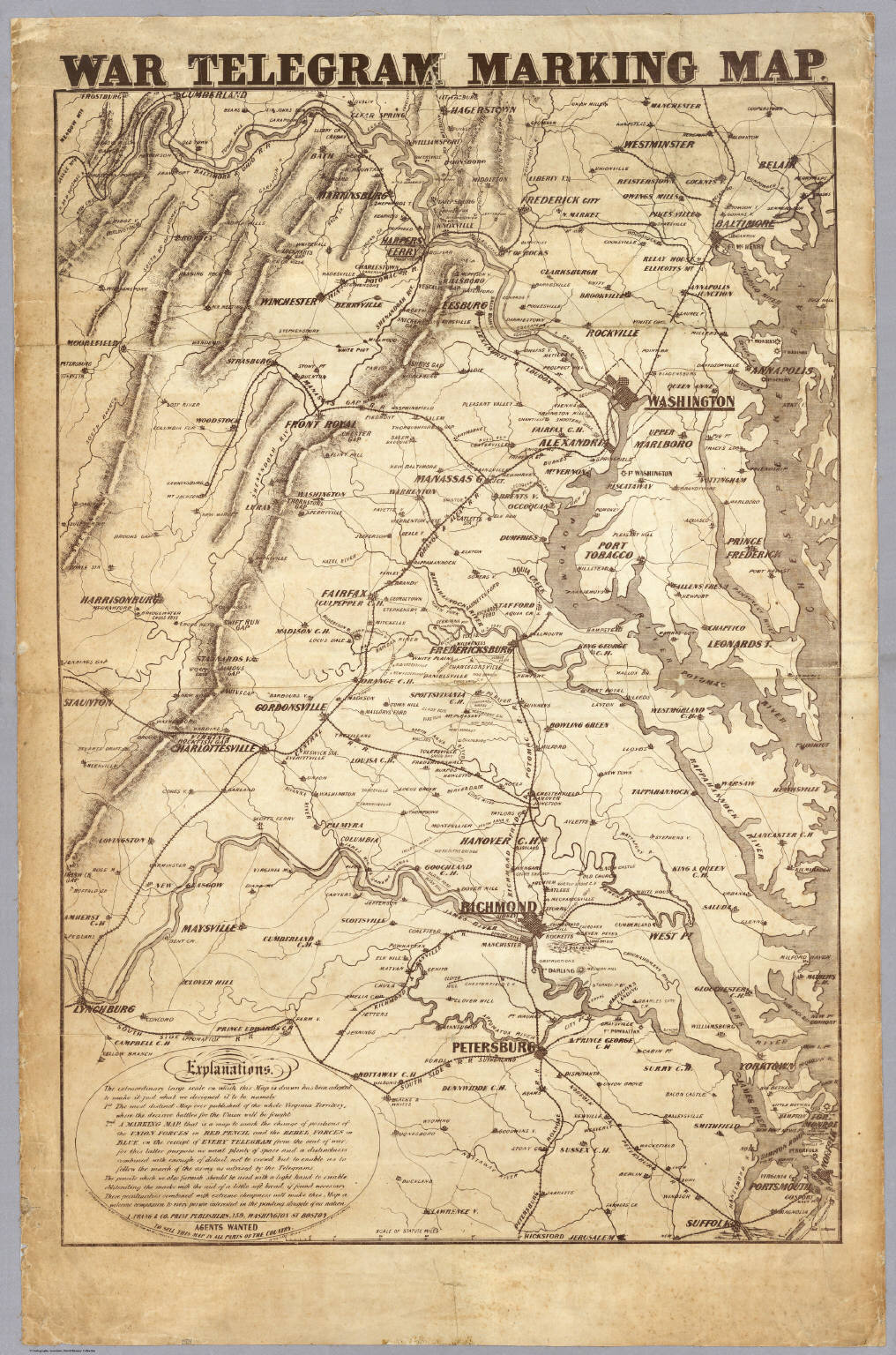
As this suggests, Favret’s interests direct her attention to the literary world – especially poetry  – and in doing so she usefully reminds us that the emergence of the public sphere in eighteenth-century Britain involved more than spaces of rational articulation, which is why she constantly appeals to a landscape of affect.  Yet the response to distant violence was increasingly also a matter of report, comment and debate, which allows more formal calibrations of ‘eventfulness’ through the press.  Here, as in much else, I’m indebted to Allan Pred’s luminous work on the circulation of information, but I’m most interested in the emergence of a transnational public sphere that, after Morse’s successful demonstration of the telegraph in 1844, was increasingly an electric sphere: and one that transformed public awareness of ‘war at a distance’.  So my discussion of information begins with the Crimean War (which saw the birth of the war correspondent) and the American Civil War (usually seen as ‘the first telegraph war’).  In the latter, the telegraph played a vital role in communications, intelligence (by virtue of being tapped) and logistics, but I’m particularly interested in the sense of immediacy conveyed through wire reports.  Louis Prang devised this map, sold through news-stands in Northern cities, so that readers could follow the progress of the war in more or less real time:
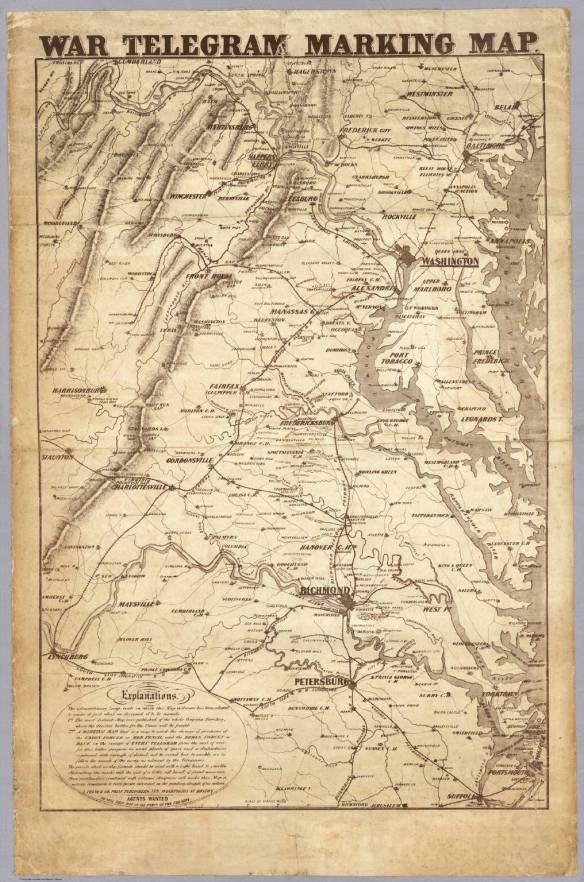
As Susan Schulten explains,

‘Prang was responding to the public’s desire not just for news, but the immediacy of “telegraphed” news. Unlike other battle maps which were issued after the fact, his was designed to follow the march in real time. He issued colored pencils — blue for Confederate forces, red for Union — to mark the advances, retreats and clashes that would be regularly reported by telegraph in any newspaper throughout the Union home front. Rather than waiting for maps to be issued after the battles, Prang enabled the viewer to track the invasion as it unfolded, with both victories but also terrible defeats and missed opportunities.’

But for many audiences outside America, it was probably the Franco-Prussian War of 1870-71 that was the decisive episode in this new geography of immediacy.  By then the uneven but none the less global geography of the telegraph had transformed the circulation of information; I’ve compiled this map of changing time-lags in the reporting of distant events in London newspapers in 1830, 1850 and 1870.  It’s impressionistic at this resolution level, highly imperfect, and needs much more work, but it still conveys the scale (and selectivity) of time-space compression.
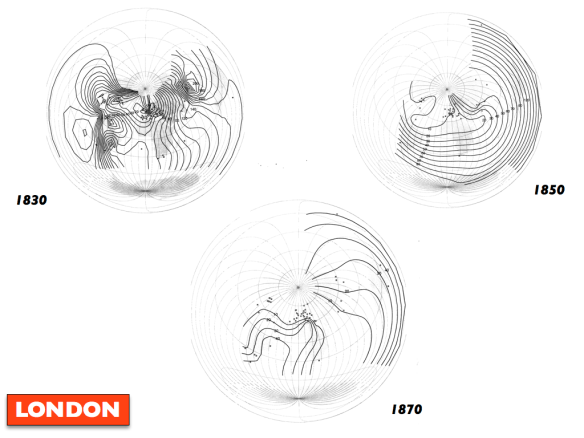
By 1870 public information circulated through multiple networks, and so its reception and interpretation was a hybrid affair: news of the war travelled out from a besieged Paris by balloon, and was transmitted by telegraph and conveyed by steamships carrying detailed newspaper reports to audiences around the world that were in thrall at the dramatic and unexpected turn(s) of events.  In India, Australia and elsewhere editors and their readers were expected to be able to juggle multiple temporalities – the terse news from the telegraph and the fuller reports from the European newspapers that arrived simultaneously.  Here is the Times of India on 3 October 1870:

‘The mass of detailed news of the war brought us by the mail … presents almost illimitable scope for reflection or retrospect, and for comparison with our previous impressions gathered from telegrams.  But as the Indo-European [telegraph] line has come to the rescue with two or three days’ tolerably full news, we are recalled to the topics of the day and must, perforce, dwell on the considerations which are keeping all India, like the rest of the world, in suspense from hour to hour.  The overland papers, in addition to the thrilling stories of the field, supply the more prosaic facts and permanent data by which each of our readers for himself will endeavour to support or modify the terse statements comprised in the telegraphic despatches.’

There was also a geography of truth involved: newspapers in Australia often preferred news that arrived via the ‘all-red line’ through Suez and India rather than via the United States or Panama (which was assumed to be pro-Prussian).   Allowing for all these complexities, though, it’s the immediacy that is reiterated time and time again.   The Sydney Morning Herald of 26 September 1870 declared that:

‘The rapid progress of events … is one of the most striking phases of modern warfare.  The long delays of former times do not now task the patience of the world.  The change of scene still reveals the rapid action of the stage.  Towards the 8th of July the world becomes aware of a quarrel.  By the 16th war is declared.  In sixteen days more an immense slaughter on both sides reveals the dreadful nature of the conflict.  By the 5th of September Napoleon surrenders himself as a prisoner of war, a Republic is proclaimed and every power of the state is centred in a provisional Government.’

And newspapers were now positioned to  convey and capitalize on this immediacy: unlike the ‘freshest advices’ peddled in the eighteenth century, which were often remarkably stale, newspapers could now actualize  the ‘newness’ of the news.  So one week week later the Herald trumpeted: ‘We had never realised more completely the value of the telegraph than since the opening of this disastrous war.’

The relationship between distant publics and military violence was never a simple one, and the process that I’m cartooning here had its reversals.  In the First World War, for example, the first British reporters to arrive on the Western Front were arrested and returned to England, and when just five journalists were eventually allowed access, there were strict limits on what they could report and their copy was heavily censored.  Much that happened was hidden from view – then as now – and the Daily Mail’s William Beach Thomas wrote about his own distance from the horrors of the Somme thus:

‘I spoke with the men who had endured this the day after writing of the battle as it was unveiled to me, and felt that I had committed high treason. So easy is it to make the foul appear fair, to be tricked by the enchantment of distance…

‘All who have written about war … see it as the airman sees it in a large spaciousness where details are hid and only issues count. But let us remember the real war behind.’

You can see what he means – literally so – but perhaps there is also a sense in which immediacy blinds us to what is hidden from view.  In the eighteenth century the ‘meantime’ between one report and another sustained a brooding anxiety about what might have happened, what was not yet known, and invited speculation and commentary, whereas the pell-mell escalation of events, of ‘one damn thing after another’, may work to close those spaces.  I need to think more about this…

The story of reporting war at a distance continues with the addition of sound and moving image to text, sketch and photograph –  including, during the Second World War, the radio broadcasts of bombing raids over Germany, cinema newsreels (in Britain the BBC went off the air from 1939 to 1946), and propaganda films – that all worked to reinforce the immediacy of those early telegraphic dispatches.
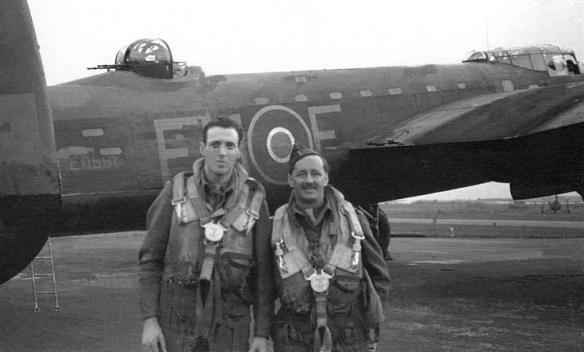
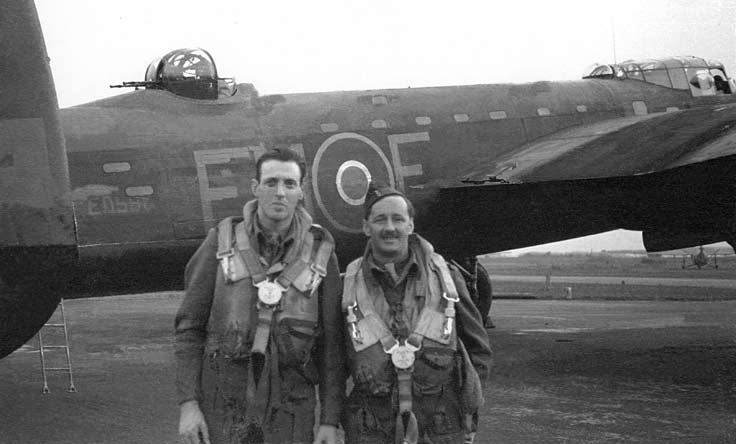
Reporter Wynford Vaughan Thomas and sound engineer Reg Pidsley in front of a Lancaster bomber, September 1943; the pair flew on an RAF raid to Berlin on the night of 3 September 1943, and their report was broadcast ‘live’ on BBC Radio two days later.

But this audio-visual immediacy also installed a peculiar intimacy.  In his remarkable autobiography, The world of yesterday, which he started in 1934 and completed just before his suicide in 1942, Stefan Zweig captured what I’m trying to get at:

My father, my grandfather, what did they see? Each of them lived his life in uniformity. A single life from beginning to end, without ascent, without decline, without disturbance or danger, a life of slight anxieties, hardly noticeable transitions. In even rhythm, leisurely and quietly, the wave of time bore them from the cradle to the grave. They lived in the same country, in the same city, and nearly always in the same house. What took place out in the world only occurred in the newspapers and never knocked at their door. In their time some war happened somewhere but, measured by the dimensions of today, it was only a little war. It took place far beyond the border, one did not hear the cannon, and after six months it died down, forgotten, a dry page of history, and the old accustomed life began anew.

But now, he continued:

There was no escape for our generation, no standing aside as in times past. Thanks to our new organization of simultaneity we were constantly drawn into our time. When bombs laid waste the houses of Shanghai, we knew of it in our rooms in Europe before the wounded were carried out of their homes. What occurred thousands of miles over the sea leaped bodily before our eyes in pictures. There was no protection, no security against being constantly made aware of things and being drawn into them.

This too was a partial and partisan process, of course: British reporting of the Blitz was highly selective and subject to censorship, but the prevailing line was that Luftwaffe raids were indiscriminate acts of terrorism whereas Bomber Command’s strikes were precision strikes against military and industrial targets (some things evidently never change).  Even so, this conditional intimacy was, perhaps, the culmination of the process glimpsed by Favret’s Cowper at his Georgian fireside: an unsettling sense of distant wars entering the home.

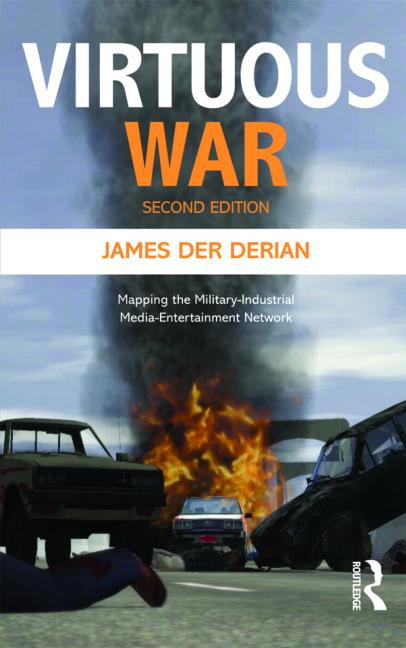
I say ‘culmination’ because, by the time of Vietnam, ‘the first television war’, even ‘the living-room war’, there are grounds for believing that many publics were becoming weary of the interpellations demanded by the incendiary images of distant death and destruction.  That was, in part, what prompted Martha Rosler‘s brilliant photo-montage, Bringing the war home (1967-1972), that re-staged the Vietnam war in American domestic interiors (a project she reactivated in 2004 for the Iraq war).    But this sense of familiarity, of the domestication of military violence, is also subject to reversal.  Susan Sontag famously claimed that  ‘Being a spectator of calamities taking place in another country is a quintessential modern experience’, and there has been a lively discussion of what Lilie Chouliaraki calls  ‘the spectatorship of suffering’ and, in particular, of the publics produced through these modes of spectatorship. I still have much to read here – David Campbell’s measured critique of the ‘compassion fatigue’ thesis still haunts me –  but I think it facile to say that we have become inured to military violence.  James der Derian is surely right to identify the rise of a military-industrial-media-entertainment complex, but this hasn’t reduced war to entertainment tout court.

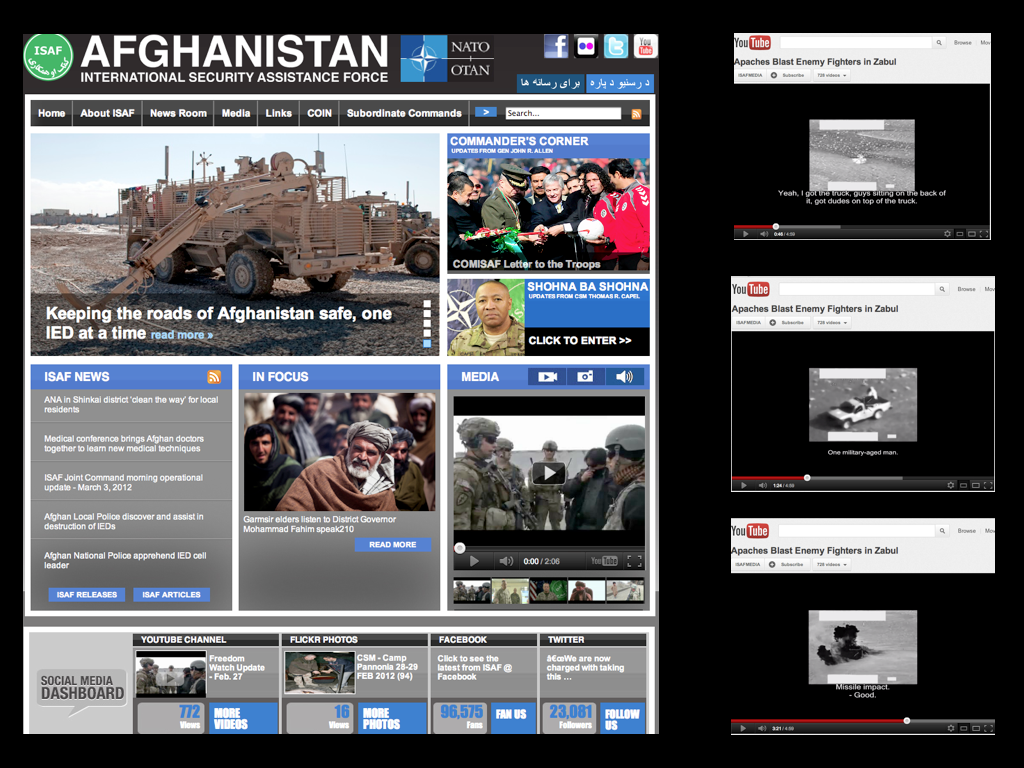
Advanced militaries have become increasingly adept at new modes of information warfare, using social media like YouTube, Facebook and Twitter to frame their actions and incorporating the flow of information into the very conduct of war, but this hasn’t enabled them to escape public scrutiny.

And so, the question: when we see the raw images of military (and paramilitary) violence around the world on YouTube, uploaded from multiple sources by activists and citizen-journalists, are we overwhelmed by what Favret would call the ‘eventfulness’ of it all?  Or are we, as Zweig suggested, still ‘constantly drawn into our time’ (which is now, perhaps more than ever before, also the space of others)?