The Death Zone

9780804778336I’ve praised Laleh Khalili‘s Time in the shadows before, and Jadaliyya has now reprinted an excerpt that is of renewed urgency in the face of the Israeli assault on Gaza.  Laleh explains:

I wrote Time in the Shadows in order to puzzle out why the counterinsurgency practices of enormously powerful state militaries—the US and Israel at the time I was writing the book—so often invoked law and humanitarianism, rather than naked force. And why so much of their war-fighting pivoted around the mass confinement not only of combatants but civilians. I was also struck by the similarities in the practices of confinement not only between Israel and the US but with historical accounts of colonial confinement effected by Britain and France.

For me, what was striking, insidious, devastating, was the less flashy, less visible, practices that were foundational to detention of suspected combatants and incarceration—whether in situ or through resettlement—of troublesome civilians. These practices—law, administration, demographic and anthropological mapping, offshoring—all sounded so dry, so rational, and yet they were grist to the mill of liberal counterinsurgents in so many ways. And the other similarity across a century and several continents seemed to be the repetition ad nauseam of the language of “protection” and of “security” to frame or rename or euphemise atrocities.

Among the technologies that best embody this language of protection used to violently pacify a population in counterinsurgencies are the separation wall and the various “protective” zones invented by the Israeli military to fragment the Palestinian territories and ensure panopticon-like surveillance and monitoring capability over these fragmented zones. These technologies have specific histories and are mirrored in so many different contexts. The following excerpt is an attempt at situating the wall and the various zones in both a longer historical continuum with colonial practices, while also reflecting on the settler-colonial specificities of their present form.

Laleh describes seam zones, security zones until, finally, she arrives at death zones:

Brigadier General Zvika Fogel, the former head of Southern Command, explained that after the Second Intifada, the Southern Command unofficially declared death zones in Gaza, where anyone entering could be shot: “We understood that in order to reduce the margin of error, we had to create areas in which anyone who entered was considered a terrorist.”

Asked about the legal basis for this, Fogel said:

“When you want to use something, you have no problem finding the justification, especially when we hit those we wanted to hit when we used them at the start of the events. If at the beginning we could justify it operationally, then even if there were personnel from the Advocate General’s Office or from the prosecution, it was easy to bend them in the face of the results…
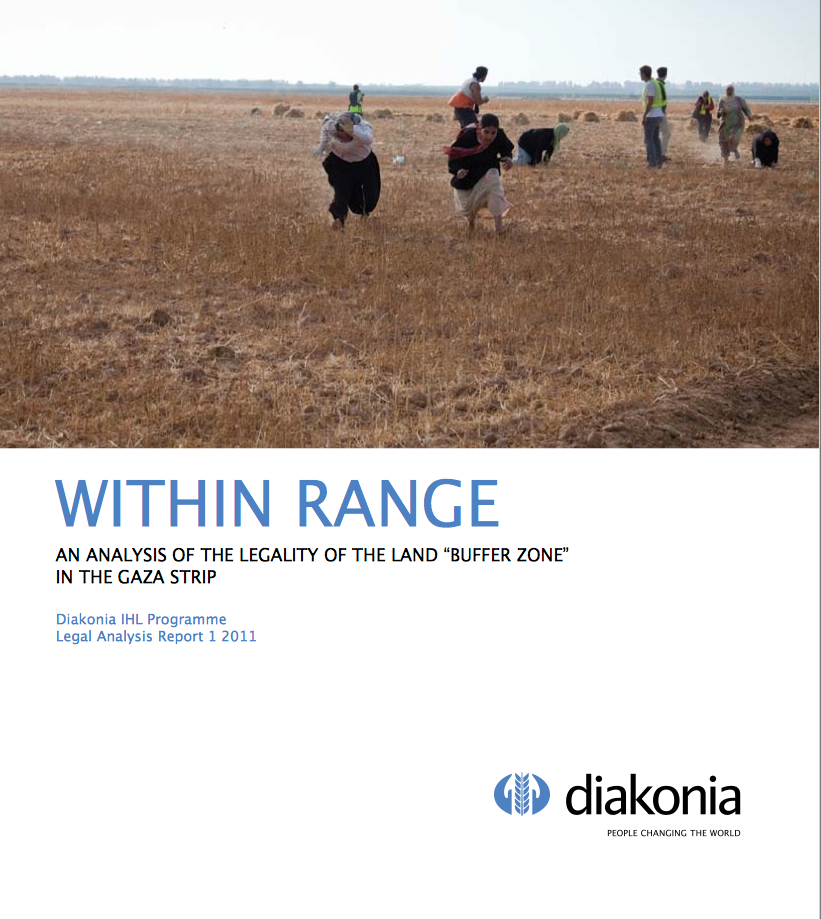
Within Range DIAKONIAAccording to the Internal Displacement Monitoring Centre,  the Israeli military unilaterally implemented an undefined “no-go” zone inside Gaza in 2000.  It started to level lands near the border fence (which had been put in place in 1994), particularly around Rafeh, and ‘by mid-2006 Israel was leveling lands 300 to 500 meters from the fence.’  In 2010 the World Food Programme in collaboration with OCHA produced a report, ‘Between the Fence and a Hard Place‘, documenting the hardships and the horrors and in 2011 Diakonia produced a detailed report on the (il)legal armature of the buffer zone, ‘Within Range‘.  It concluded:

The use of force based on military necessity must be engaged in good faith and consistent with other rules of IHL, in particular the principles of distinction and proportionality and precautions in and during attack. This does not appear to be the case in the “buffer zone” as the violations to IHL are flagrant, frequent and grave. Israel remains the Occupying Power in the Gaza Strip. In this capacity, it must protect the safety and well-being of the Palestinian population and take Palestinian needs into account. In addition, Israel must also protect Israeli civilians and soldiers, but it is not allowed to do so at disproportionate expense to Palestinian civilian lives and property.

While acknowledging Israel’s security concerns regarding attacks on Israel from the Gaza Strip, the facts and information available show that the unilateral expansion of the “buffer zone” and its enforcement regime result in violations of international humanitarian law and grave infringement of a number of rights of Palestinians.

In 2012 OCHA estimated that up to 35 per cent of Gaza’s agricultural land had been affected by these restrictions at various times, and the Gazan economy had sustained a loss of around 75,000 MT of agricultural produce each year ($50 million p.a.)

The situation in December 2012 is set out on the map below, which shows what the Israeli military defined as ‘Access Restricted Areas’ (ARA) which, on the landward side, comprised three zones:

(1) A ‘No-Go Zone’, 100 metres wide, which was cleared of all vegetation and all built structures;

(2) A ‘restricted zone’, a further 100-300 metres wide, where access was permitted on foot and for farmers only;

(3) A ‘risk zone’…
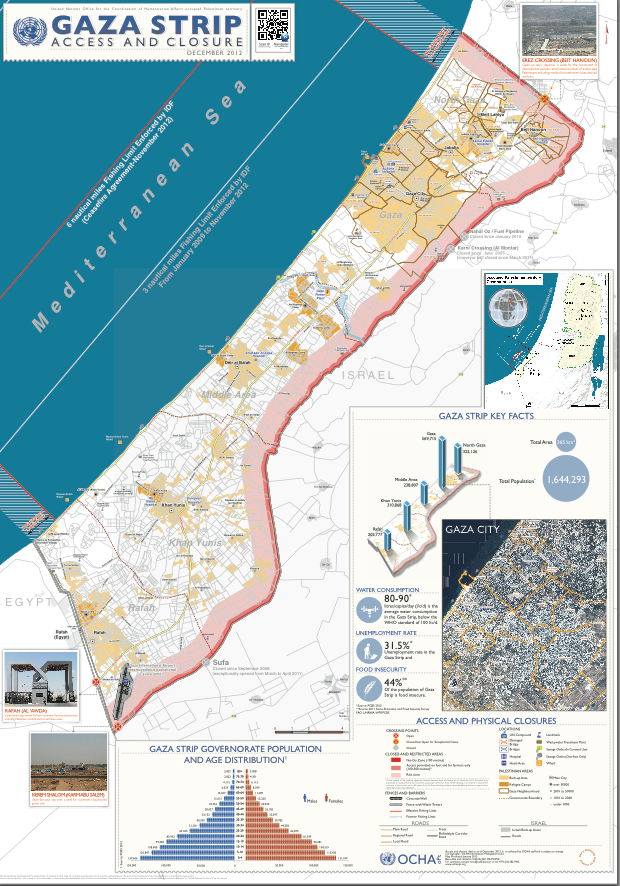
GAZA December 2012 OCHA1

You can download a hi-res version here (see also Léopold Lambert‘s maps and commentary here).  In practice, the UN Office of the Commissioner for Human Rights explained, ‘the “no go zone’’ on land was at times enforced a few hundred metres beyond this, with a “high risk zone” extending sometimes up to 1,500 metres.’  In November 2012 these restrictions were supposed to be eased, as part of the agreement ending the Israeli offensive earlier that month.  But as the Commissioner reported, ‘there has been an increased level of uncertainty regarding the access restrictions imposed on land since this date.’  In the spring UN monitoring teams reported that in most cases farmers could not enter lands within 300 metres of the fence and that the Israeli military fired warning shots if they attempted to do so, that in some places the exclusion zone extended beyond 300 metres, and that there was continued concern about the presence of unexploded ordnance in the border areas. The map produced by Gisha: Legal Center for Freedom and Movement for September 2013, ‘Mapping movement and access‘, reflects these realities, and you can find a detailed report from the Palestinian Center for Human Rights and the IDMC, Under Fire: Israel’s enforcement of access restricted areas in the Gaza Strip (February 2014) here.

under-fire-cover-small

Unexploded ordnance is a matter of grave concern, but there has also been a history of live-fire incidents (see the graph below).  Since December 2013 and before the current Israeli offensive the number of live-fire casualties near the fence was increasing again. In a ten week period between December 2013 and March 2014 B’Tselem field researcher Muhammad Sabah documented 55 civilians injured near the fence: 43 by live fire; 10 by rubber bullets; and two hit by teargas canisters [I can’t link to the report at the moment because the B’Tselem website is under attack and has been taken off the grid; I can now – it’s here].
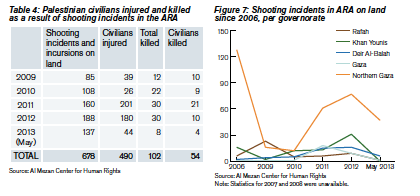
Shooting incidents in ARA, Gaza

These live-fire incidents are sometimes carried out from remote-controlled stations; the system is called ‘Spot and Strike‘.  Michael Morpurgo, the creator of “War Horse”, saw its effects when he visited Gaza in November 2010 as a representative of Save the Children:

“I stood in among the ruins watching the kids at work, coming and going with their donkeys and carts. They didn’t seem worried, so I wasn’t worried… I heard the shots, then the screaming, saw the kids running to help their wounded friends. Now I really was outside the comfort zone of fiction. A doctor from Medecins Sans Frontieres told me that the shots were not fired by snipers from the watchtowers on the wall, as I had supposed, but that these scavengers were routinely targeted, electronically from Tel Aviv, which was over 25 kilometres away – ‘Spot and Strike’, the Israelis call it.

“It was like a video game – a virtual shooting, only it wasn’t: there was blood, his trousers were soaked in it, the bullets were real. I saw the boy close to, saw his agony as the cart rushed by me. Many like him, the doctor told me, ended up maimed for life. Here was a child, caged and under siege, being deliberately targeted, his right to survival, the most basic of all children’s rights, being utterly ignored. Unicef says that 26 children were shot like this in 2010. The boy I saw was called Shamekh, I discovered. He lives in a house with 15 family members, and was out there earning what money he could, in the only way he knew how.’

Today, there is a palpable sense in which the whole of Gaza has become a death zone.  First, Israel has declared a three-kilometre ‘buffer zone’ inside Gaza’s borders which now effectively places 44 per cent of the territory off limits (you can download the OCHA map below here; the second map makes the situation clearer, though it inevitably sacrifices detail).  Compare this with the previous map by following the line of the road south-north.
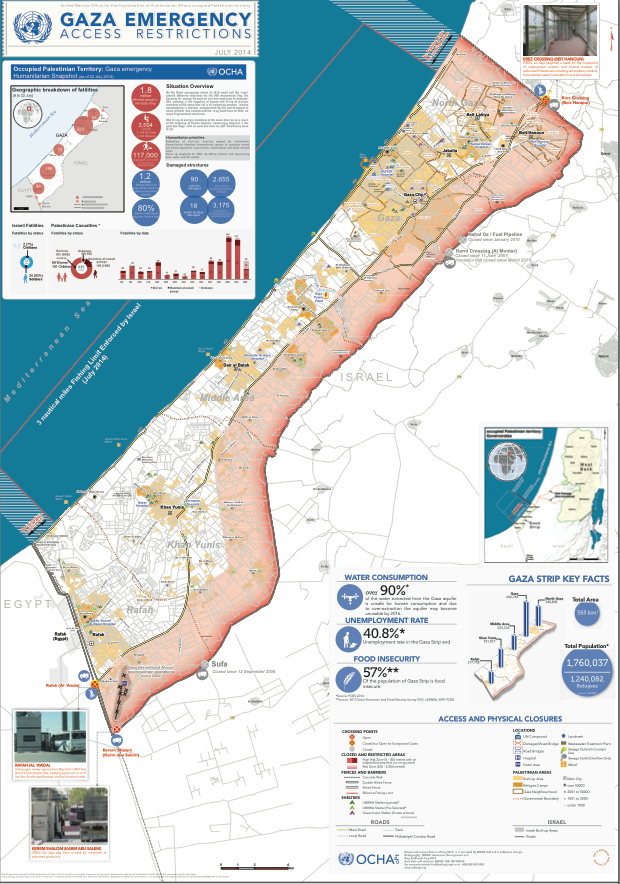
GAZA Access Restrictions JULY 2014

ocha_opt_gaza_access_and_closure_map_december_2012_geopdf_mobile_buffer

Léopold Lambert has provided this close-in triptych which exposes the enormity of the expansion and the knock-on effects of the forced displacement:
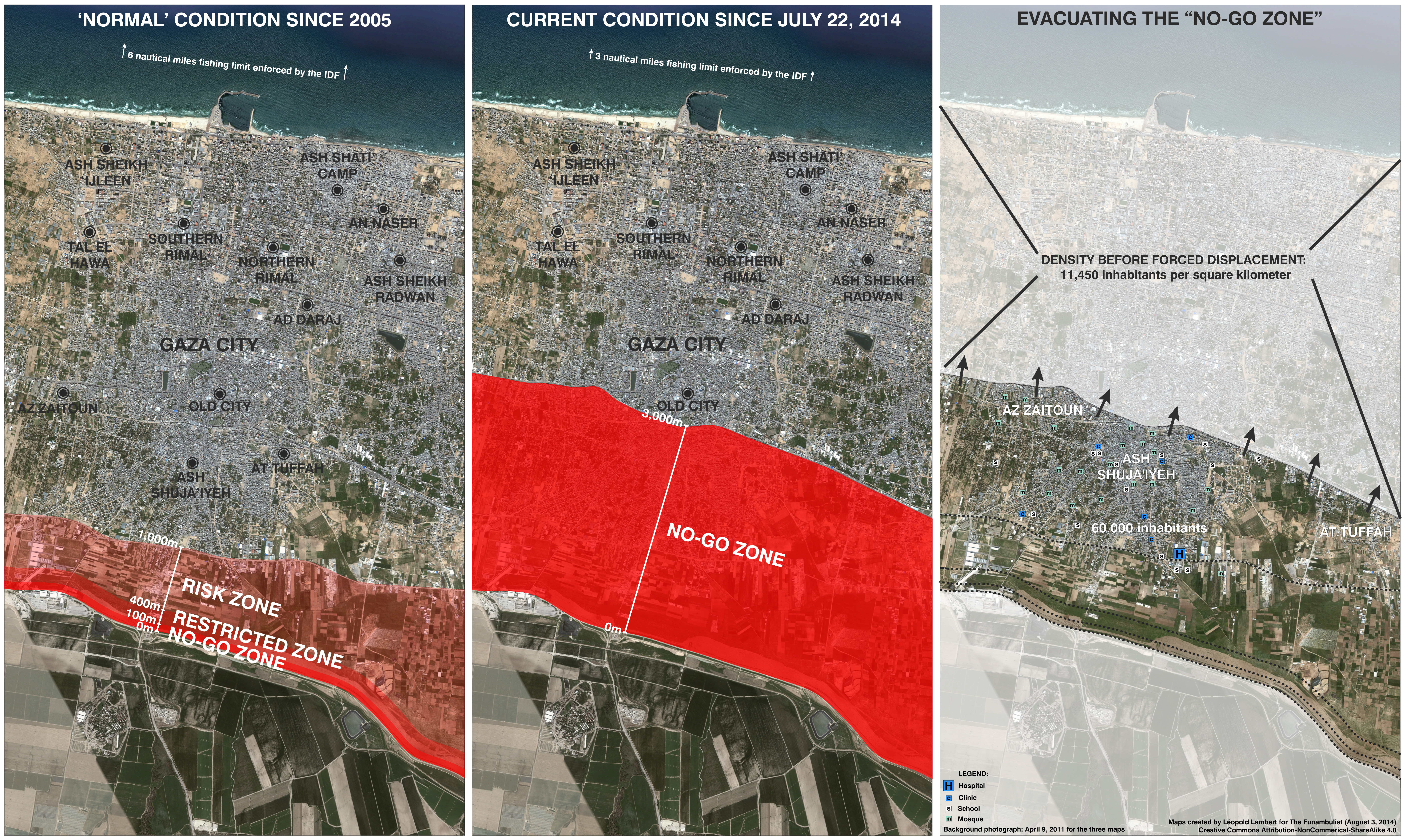
Gaza

Mohammed Omer reports:

Anyone within the zone has been warned by the Israeli military to leave or risk being bombed.

This buffer zone has only exacerbated Gaza’s siege. To the east, Palestinians in Gaza are fenced in by Israeli artillery tanks, mortars, cannon shells and snipers. On Gaza’s western side, Israeli warships form a blockade and allow only a three-mile fishing zone. To the north resides more military checkpoints and soldiers. To the south, the Egyptian military has closed off the Rafah border.

The buffer zone has tightened the Israeli chokehold around Gaza’s small strip of land.

Damage in the Gaza stripThis is, as Jesse Rosenfed reports, a ‘No Man’s Land’ in exactly the expanded sense proposed by Noam Leshem and Al Pinkerton:

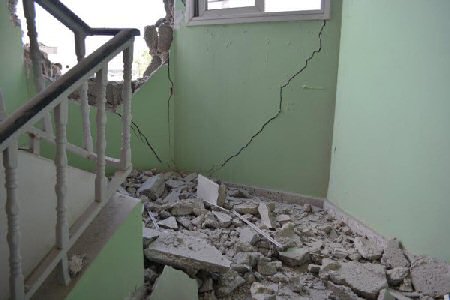
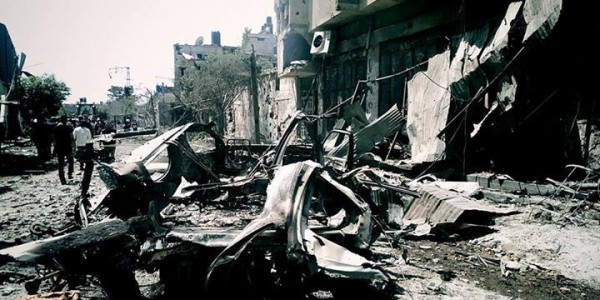
What that means on the ground is scenes of extraordinary devastation in places like the Al Shajaya district approaching Gaza’s eastern frontier, and Beit Hanoun in the north. These were crowded neighborhoods less than three weeks ago. Now they have been literally depopulated, the residents joining more than 160,000 internally displaced people in refuges and makeshift shelters. Apartment blocks are fields of rubble, and as I move through this hostile landscape the phrase that keeps ringing in my head is “scorched earth.”

It’s not like Israel didn’t plan this. It told tens of thousands of Palestinians to flee so its air force, artillery and tanks could create this uninhabitable no-man’s land of half-standing, burned-out buildings, broken concrete and twisted metal. During a brief humanitarian ceasefire some Gazans were able to come back to get their first glimpse of the destruction this war has brought to their communities, and to sift through their demolished homes to gather clothes or other scattered bits of their past lives. But many were not even able to do that.

Satellite imagery has confirmed the scale of the devastation; the map (right) is based on just three areas within the expanded ‘buffer zone’ and was compiled from imagery taken before the intensification of the onslaught.  You can find details of the UNITAR/UNOSAT programme and image files here.  If you can bear to get closer, there are photographs taken on the ground here and here.

Second, the Israeli military have not confined their operations to the expanded buffer zone, and those who have – somehow – found sanctuary outside its limits (but of necessity still within the closed and shuttered confines of Gaza) have found that they are pursued by aircraft and tanks.  The image below, taken from the same source (and same date) used to compile the map above, shows a wide arc of damage in central Gaza far beyond the ‘zone’ (see also my previous posts herehere and here; you can also find a detailed interactive photo-map of the whole territory from the New York Times here).

Damage Assessment Gaza City 25 July 2014

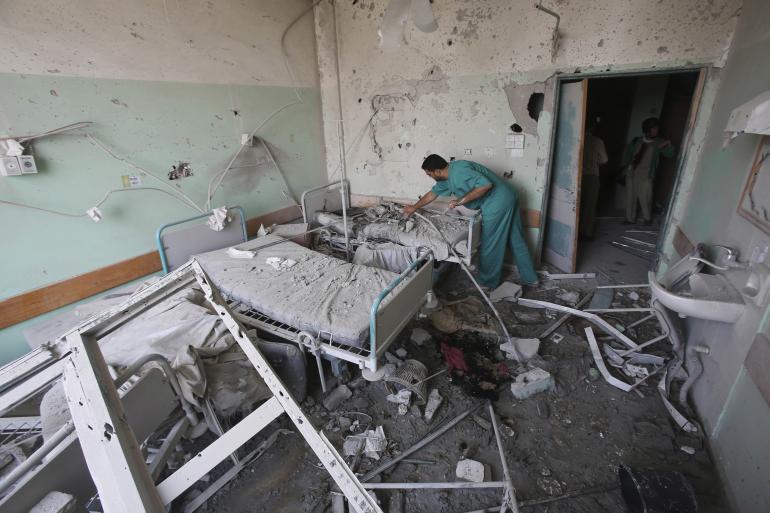
‘The problem,’as one young resident explained to Anne Barnard, ‘is that when we are fleeing from the shelling, we still find the shelling around us.’  Stories abound of families seeking refuge only to find death waiting for them.  One man told Alexandra Zavis that his brother, four sisters, brother-in-law and five young children escaped from eastern Gaza to what they thought was a safe place in central Gaza City, only to be killed when the top floors of the building collapsed after an Israeli air strike the very next day.  Others tell similar stories – one family moving twice before eventually ten of them were killed.  And then there are all those who have sought refugee in UNRWA camps, many of them schools, or who have been rushed to hospitals for treatment, only to be bombed and shelled there too.

Ha’aretz‘s headline on 31 July says it all: ‘The Gaza battlefield is crowded with the displaced and the homeless.’  So it is.  And still they are bombed and shelled.  As UNRWA’s Chris Gunness put it, ‘Gaza is unique in the annals of modern warfare in being a conflict zone with a fence around it, so civilians have no place to flee.’

In his seminal essay on ‘Necropolitics‘, written more than ten years ago, Achille Mbembe had this to say:

Late-modern colonial occupation differs in many ways from early-modern occupation, particularly in its combining of the disciplinary, the biopolitical, and the necropolitical. The most accomplished form of necropower is the contemporary colonial occupation of Palestine… 

Entire populations are the target of the sovereign. The besieged villages and towns are sealed off and cut off from the world. Daily life is militarized… The besieged population is deprived of their means of income. Invisible killing is added to outright executions…

I have put forward the notion of necropolitics and necro-power to account for the various ways in which, in our contemporary world, weapons are deployed in the interest of maximum destruction of persons and the creation of death-worlds, new and unique forms of social existence in which vast populations are subjected to conditions of life conferring upon them the status of living dead.

Gaza has been systematically turned not only into a prison, then, but also into a camp: and the lives of those within have been have been subjected to a ruthless bio-political programme that, at the limit, has become a calculated exercise in necro-politics.  This confirms Paul Di Stefano‘s claim that that, for the Israeli military, Gaza has been transformed into ‘a state of exception where normal rights do not apply. Within this liminal space, Palestinian bodies are viewed as obstacles to be destroyed or controlled in the maintenance of the colonial order.’
The American way of bombing

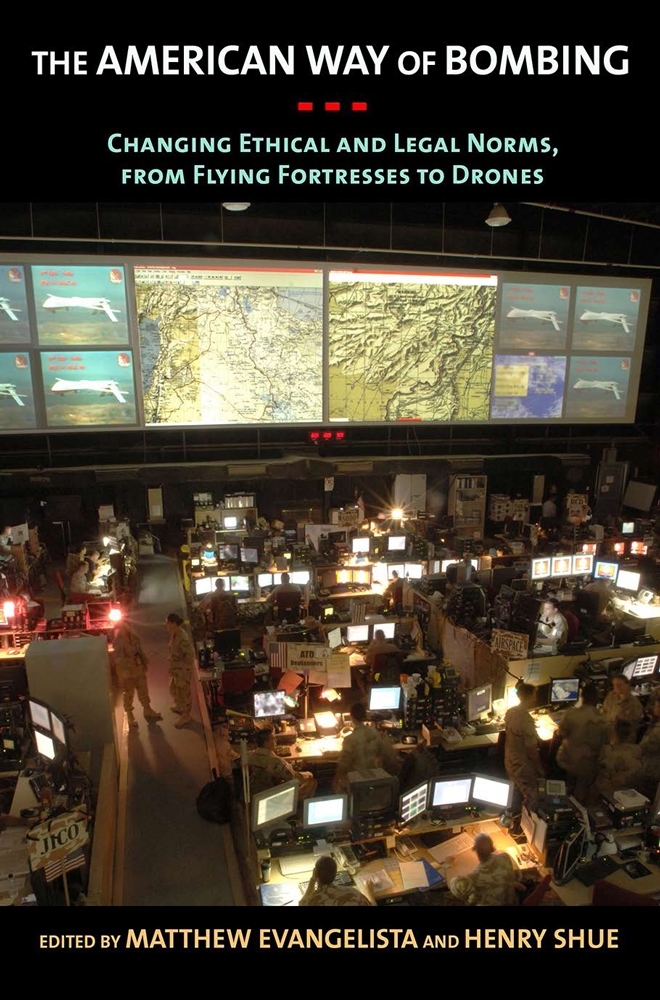
I’ve argued elsewhere (in ‘Lines of Descent’ [DOWNLOADS tab] and in ‘The American way of bombing?‘) that it’s important to situate any critical account of drones in a much longer history of air war, and a new book just out from Cornell University Press promises to do just that: The American Way of Bombing: changing ethical and legal norms from Flying Fortresses to drones, edited by Matthew Evangelista and Henry Shue.  And unlike rip-off academic-commercial publishers (most of them in the UK), this is available as an e-edition (Kindle, etc) at a perfectly reasonable price.

Here are the details:

Aerial bombardment remains important to military strategy, but the norms governing bombing and the harm it imposes on civilians have evolved. The past century has seen everything from deliberate attacks against rebellious villagers by Italian and British colonial forces in the Middle East to scrupulous efforts to avoid “collateral damage” in the counterinsurgency and antiterrorist wars of today. The American Way of Bombing brings together prominent military historians, practitioners, civilian and military legal experts, political scientists, philosophers, and anthropologists to explore the evolution of ethical and legal norms governing air warfare.

Focusing primarily on the United States—as the world’s preeminent military power and the one most frequently engaged in air warfare, its practice has influenced normative change in this domain, and will continue to do so—the authors address such topics as firebombing of cities during World War II; the atomic attacks on Hiroshima and Nagasaki; the deployment of airpower in Iraq, Afghanistan, and Libya; and the use of unmanned drones for surveillance and attacks on suspected terrorists in Pakistan, Yemen, Sudan, Somalia, and elsewhere.

American way of bombing

Introduction: The American Way of Bombing
by Matthew Evangelista

Part I. Historical and Theoretical Perspectives

1. Strategic Bombardment: Expectation, Theory, and Practice in the Early Twentieth Century
by Tami Davis Biddle

2. Bombing Civilians after World War II: The Persistence of Norms against Targeting Civilians in the Korean War
by Sahr Conway-Lanz

3. Targeting Civilians and U.S. Strategic Bombing Norms: Plus ça change, plus c’est la même chose?
by Neta C. Crawford

4. The Law Applies, But Which Law?: A Consumer Guide to the Laws of War
by Charles Garraway

Part II. Interpreting, Criticizing, and Creating Legal Restrictions

5. Clever or Clueless?: Observations about Bombing Norm Debates
by Charles J. Dunlap Jr.

6. The American Way of Bombing and International Law: Two Logics of Warfare in Tension
by Janina Dill

7. Force Protection, Military Advantage, and “Constant Care” for Civilians: The 1991 Bombing of Iraq
by Henry Shue

8. Civilian Deaths and American Power: Three Lessons from Iraq and Afghanistan
by Richard W. Miller

Part III. Constructing New Norms

9. Proportionality and Restraint on the Use of Force: The Role of Nongovernmental Organizations
by Margarita H. Petrova

10. Toward an Anthropology of Drones: Remaking Space, Time, and Valor in Combat
by Hugh Gusterson

11. What’s Wrong with Drones?: The Battlefield in International Humanitarian Law
by Klem Ryan

12. Banning Autonomous Killing: The Legal and Ethical Requirement That Humans Make Near-Time Lethal Decisions
by Mary Ellen O’Connell

Footnotes to Gaza 101

gazajuly23

Updates on Gaza 101 (at the risk of stating the obvious, the title for this post is a riff on Joe Sacco‘s brilliant Footnotes in Gaza [2009])

(1) Another powerful interview with Dr Mads Gilbert from al-Shifa Hospital, the main trauma centre in Gaza, and an excellent question:

“What would have happened if Palestinian fighters had bombed an Israeli hospital and killed five patients?  The world would have turned upside down. What is this second-hand, or even third-hand or fourth-hand citizenship in the world for the Palestinians?”

And in Gaza it’s way more than five (though that is clearly how so many governments around the world, including Canada, rank Palestinian citizenship).

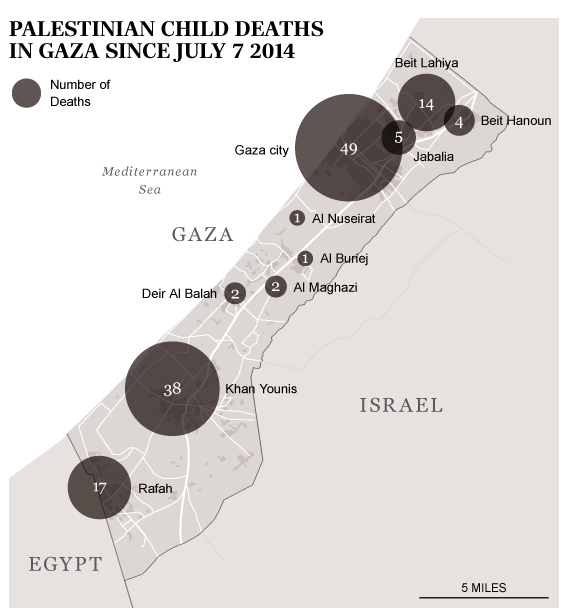
Palestinian child deaths

(2)  By ‘citizenship in the world’ Gilbert is getting at the differential calculus that constitutes what Judith Butler calls ‘a grievable life’, and here Maya Mikdashi sharpens a (different) point I’ve made in relation to air strikes in the Federally Administered Tribal Areas and elsewhere: that not only the dead and injured women and children [see the map above, also available here] but also the dead and injured men are worthy of our grief.

Palestine men and women and children are one people— and they are a people living under siege and within settler colonial conditions. They should not be separated in death according to their genitalia, a separation that reproduces a hierarchy of victims and mournable deaths. Jewish Israelis (including soldiers and settlers) occupy the highest rungs of this macabre ladder, Palestinian men the lowest. This hierarchy is both racialized and gendered, a twinning that allows Palestinian womenandchildren to emerge and be publicly and internationally mourned only in spectacles of violence, or “war”—but never in the slow and muted deaths under settler colonial conditions—the temporality of the “ceasefire.” To insist on publicly mourning all of the Palestinian dead, men and women and children—at moments of military invasion and during the every day space of occupation and colonization— is to insist on their right to have been alive in the first place.

(3) Finally – if only it were the end to all this – here is the splendid Richard Falk on the chronic failure of international law to protect – let alone provide justice for – the Palestinian people.  This is how he begins:

What has been happening in Gaza cannot usefully be described as “warfare”. The daily reports of atrocities situate this latest Israeli assault on common humanity within the domain of what the great Catholic thinker and poet, Thomas Merton, caIled “the unspeakable”. Its horror exceeds our capacity to render the events through language.

Up to  a point; I said something similar but much less eloquently in ‘Gaza 101’.  Trauma ruptures language, to be sure, but these words from Ann Jones are also worth reflecting on (they come from her They were soldiers):

The worst we can say of war is that it is “unspeakable,” which in fact it is not. But we don’t speak of it because that would involve so many nasty words we don’t want to use and elicit so many things we don’t want to know, so many things we think we can’t do anything about now that the government answers only to the powerful few…


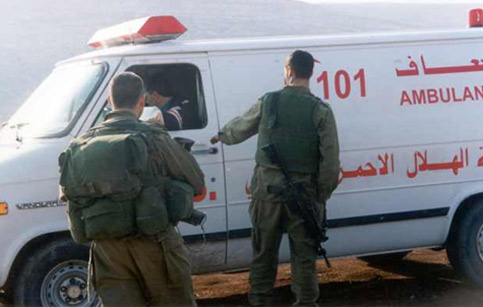
Gaza 101

pcrs483

101 is the emergency number for Gaza and the rest of occupied Palestine.  And perhaps I should begin with that sentence: I say ‘the rest of occupied Palestine’ because, despite Israel’s ‘disengagement’ from Gaza in 2005, Israel continues to exercise effective control over the territory which means that Gaza has continued to remain under occupation.  It’s a contentious issue – like Israel’s duplicitous claim that the West Bank is not ‘occupied’ either (even by its illegal settlers) merely ‘disputed’ – and if you want the official Israeli argument you can find it in this short contribution by a former head of the IDF’s International Law Department here and here.  The value of that essay – apart from illustrating exactly what is meant by chutzpah – is its crisp explanation of why the issue matters:

‘This does not necessarily mean that Israel has no legal obligations towards the population of the Gaza Strip, but that to the extent that there are any such legal obligations, they are limited in nature and do not include the duty to actively ensure normal life for the civilian population, as would be required by the law of belligerent occupation…’

Certainly, one of the objectives of Israel’s ‘disengagement’ was to produce what its political and military apparatus saw as ‘an optimal balance between maximum control over the territory and minimum responsibility for its non-Jewish population’.  That concise formulation is Darryl Li‘s, which you can find in his excellent explication of Israel’s (de)construction of Gaza as a ‘laboratory’ for its brutal bio-political and necro-political experimentations [Journal of Palestine Studies 35 (2) (2006)]. (Another objective was to freeze the so-called ‘peace process’, as Mouin Rabbani explains in the latest London Review of Books here; his essay also provides an excellent background to the immediate precipitates of the present invasion). Still, none of this entitles Israel to evade the obligations of international law.  Here it’s necessary to recall Daniel Reisner‘s proud claim that ‘If you do something for long enough, the world will accept it… International law progresses through violations’: Reisner also once served as head of the IDF’s International Law Department, and the mantra remains an article of faith that guides IDF operations.  But as B’Tselem, the Israeli Information Center for Human Rights in the Occupied Territories, insisted in an important opinion published at the start of this year:

Even after the disengagement, Israel continues to bear legal responsibility for the consequences of its actions and omissions concerning residents of the Gaza Strip. This responsibility is unrelated to the question of whether Israel continues to be the occupier of the Gaza Strip.

But there’s more.  International humanitarian law – no deus ex machina, to be sure, and far from above the fray – not only applies during Israel’s military offensives and operations, including the present catastrophic assault on Gaza, but provides an enduring set of obligations.  For as Lisa Hajjar shows in a detailed discussion re-published by Jadaliyya last week, Israel’s attempts to make Gaza into a space of exception – ‘neither sovereign nor occupied’ but sui generis – run foul of the inconvenient fact that Gaza remains under occupation. Israel continues to control Gaza’s airspace and airwaves, its maritime border and its land borders, and determines what (and who) is allowed in or out [see my previous post and map here].  As Richard Falk argues, ‘the entrapment of the Gaza population within closed borders is part of a deliberate Israeli pattern of prolonged collective punishment’ – ‘a grave breach of Article 33 of the Fourth Geneva Convention’ – and one in which the military regime ruling Egypt is now an active and willing accomplice.

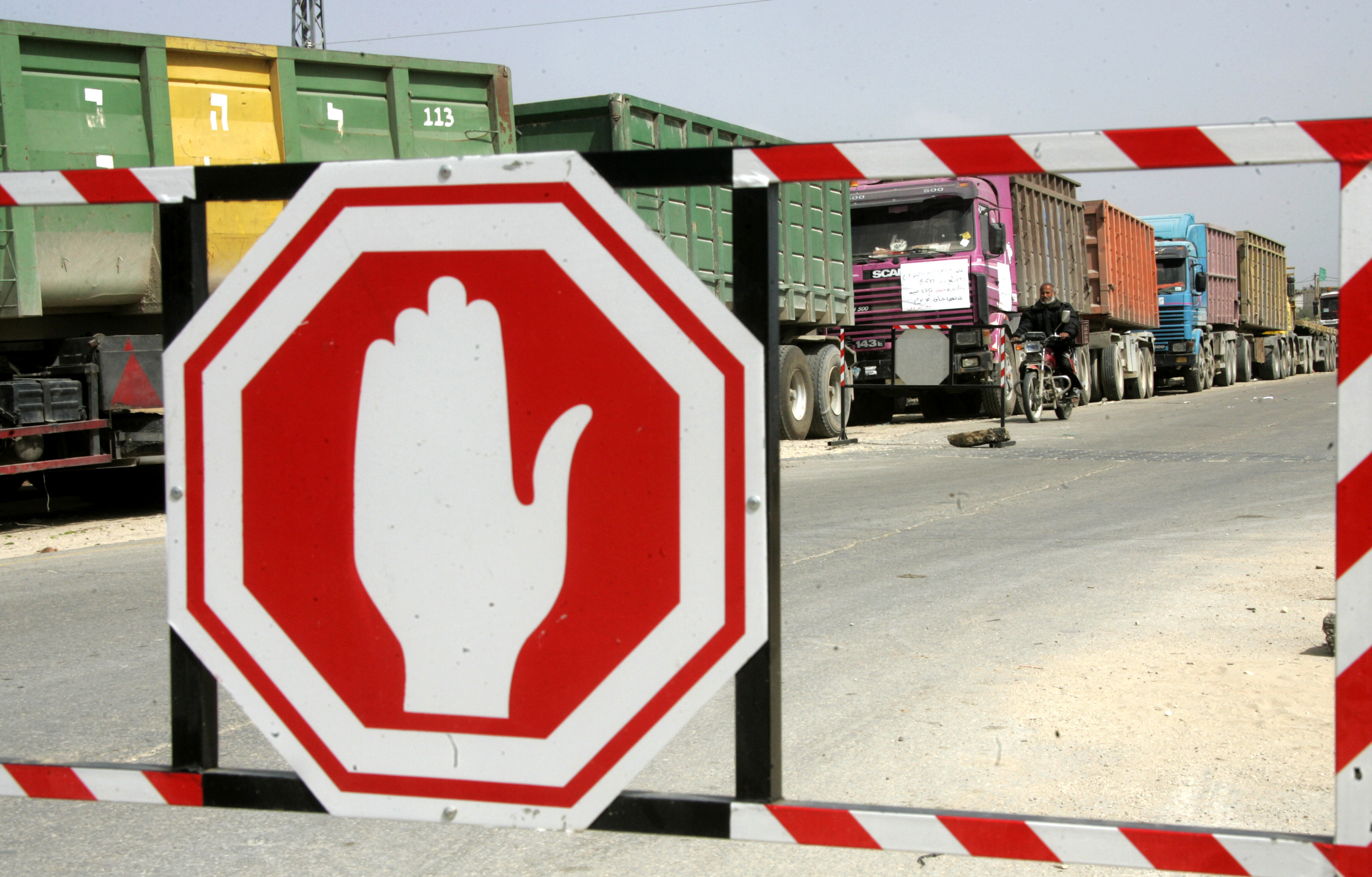
Karam abu Salem crossing

So: Gaza 101.  Medical equipment and supplies are exempt from the blockade and are allowed through the Karam Abu Salem crossing (after protracted and expensive security checks) but the siege economy of Gaza has been so cruelly and deliberately weakened by Israel that it has been extremely difficult for authorities to pay for them.  Their precarious financial position is made worse by direct Israeli intervention in the supply of pharmaceuticals.  Corporate Watch reports that

When health services in Gaza purchase drugs from the international market they come into Israel through the port of Ashdod but are not permitted to travel the 35km to Karam Abu Salem directly. Instead they are transported to the Bitunia checkpoint into the West Bank and stored in Ramallah, where a permit is applied for to transport them to Gaza, significantly increasing the length and expense of the journey.

There’s more – much more: you can download the briefing here – but all this explains why Gaza depends so much on humanitarian aid (and, in the past, on medical supplies smuggled in through the tunnels).  Earlier this summer Gaza’s medical facilities were facing major shortfalls; 28 per cent of essential drugs and 54 per cent of medical disposables were at zero stock.

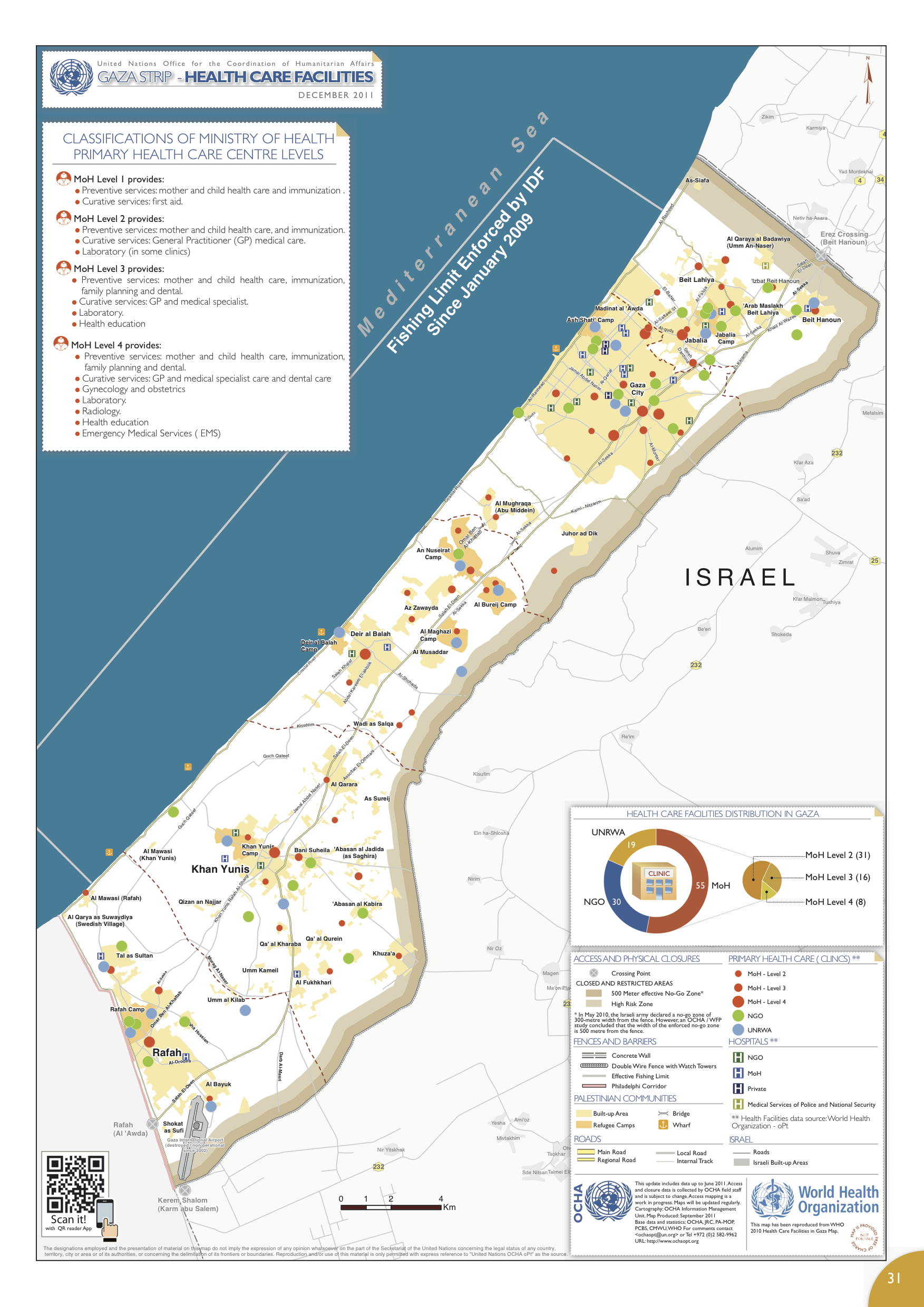
ochaopt_atlas_health_care_december2011

Medical care involves more than bringing in vital supplies and maintaining infrastructure (the map of medical facilities above is taken from the UN’s humanitarian atlas and shows the situation in December 2011; the WHO’s summary of the situation in 2012 is here).  Medical care also involves unrestricted access to electricity and clean water; both are compromised in Gaza, and on 1 January 2014 B’Tselem reported a grave deterioration in health care as a result:

‘The siege that Israel has imposed on the Gaza Strip since Hamas took over control of the security apparatus there in June 2007 has greatly harmed Gaza’s health system, which had not functioned well beforehand…. The reduction, and sometimes total stoppage, of the supply of fuel to Gaza for days at a time has led to a decrease in the quality of medical services, reduced use of ambulances, and serious harm to elements needed for proper health, such as clean drinking water and regular removal of solid waste. Currently, some 30 percent of the Gaza Strip’s residents do not receive water on a regular basis.’

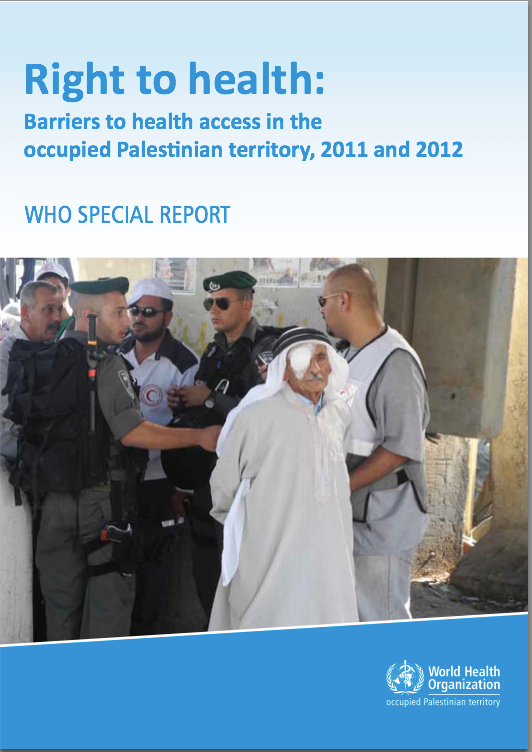
WHO Right to healthIn-bound transfers are tightly constrained, but so too are out-bound movements.  Seriously ill patients requiring advanced treatment had their access to specialists and hospitals outside Gaza restricted:

‘Israel has cut back on issuing permits to enter the country for the hundreds of patients each month who need immediate life-saving treatment and urgent, advanced treatment unavailable in Gaza. The only crossing open to patients is Erez Crossing, through which Israel allows some of these patients to cross to go to hospitals inside Israel [principally in East Jerusalem], and to treatment facilities in the West Bank, Egypt, and Jordan. Some patients not allowed to cross have referrals to Israeli hospitals or other hospitals. Since Hamas took over control of the Gaza Strip, the number of patients forbidden to leave Gaza “for security reasons” has steadily increased.’

As in the West Bank, Israel has established a labyrinthine system to regulate and limit the mobility of Palestinians even for medical treatment.  Last month the World Health Organization explained the system and its consequences (you can find a detailed report with case studies here):

‘In Gaza, patients must submit a permit application at least 10 days in advance of their hospital appointment to allow for Israeli processing. Documents are reviewed first by the health coordinator but final decisions are made by security officials. Permits can be denied for reasons of security, without explanation; decisions are often delayed. In 2013, 40 patients were denied and 1,616 were delayed travel through Erez crossing to access hospitals in East Jerusalem, Israel, the West Bank and Jordan past the time of their scheduled appointment. If a patient loses an appointment they must begin the application process again. Delays interrupt the continuity of medical care and can result in deterioration of patient health. Companions (mandatory for children) must also apply for permits. A parent accompanying a child is sometimes denied a permit, and often both parents, and the family must arrange for a substitute, a process which delays the child’s treatment.’

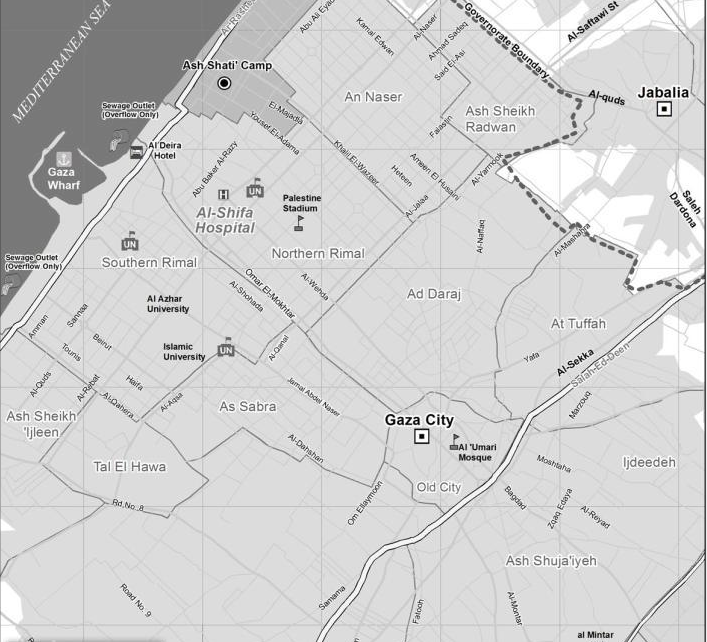
On 17 June Al-Shifa Hospital, the main medical facility in Gaza City (see map below), had already been forced to cancel all elective surgeries and concentrate on emergency treatment.  On 3 July it had to restrict treatment to life-saving emergency surgery to conserve its dwindling supplies. All of this, remember, was before the latest Israeli offensive.  People have not stopped getting sick or needing urgent treatment for chronic conditions, so the situation has deteriorated dramatically.  The care of these patients has been further compromised by the new, desperately urgent imperative to prioritise the treatment of those suffering life-threatening injuries from Israel’s military violence.

al-Shifa and Shuja'iyeh map

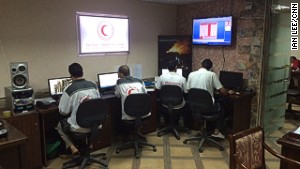
Trauma surgeons emphasise the importance of the ‘golden hour’: the need to provide advanced medical care within 60 minutes of being injured.  Before the IDF launched its ground invasion, there were three main sources of injury: blast wounds from missiles, penetrating wounds from artillery grenades and compression injuries from buildings collapsing.  But this is only a typology; many patients have multiple injuries. ‘We are not just getting patients with one injury that needs attending,’ said the head of surgery at Al-Shifa, ‘we are getting a patient with his brain coming out of his skull, his chest crushed, and his limbs missing.’  All of these injuries are time-critical and require rapid intervention. Ambulance control centre central GazaAnd yet the Ministry of Health reckons that Gaza’s ambulance service is running at 50 per cent capacity as a result of fuel shortages.  That figure must have been reduced still further by the number of ambulances that have been hit by Israeli fire (for more on paramedics in Gaza, and the extraordinary risks they run making 20-30 trips or more every day, see here and this report from the Telegraph‘s David Blair here).  When CNN reporters visited the dispatch centre at Jerusalem Hospital in Gaza City last Tuesday, they watched a a screen with illuminated numbers recording 193 killed and 1,481 injured and the director of emergency services dispatching available ambulances to the site of the latest air strike (by then, there had already been over 1,000 of them).  But the system only works effectively when there is electricity…

628x471

Power supplies were spasmodic at the best of times (whenever those were); they have been even more seriously disrupted by the air campaign, and since the start of the ground assault Gaza has lost around 90 per cent of its power generating capacity.  Nasouh Nazzal reports that many hospitals have been forced to switch to out-dated generators to light buildings and power equipment:

“The power generators in Gaza hospitals are not trusted at all and they can go down any moment. If power goes out, medical services will be basically terminated,” [Dr Nasser Al Qaedrah] said. He stressed that the old-fashioned types of power generators available in Gaza consume huge quantities of diesel, a rare product in the coastal enclave.

On occasion, Norwegian ER surgeon Mads Gilbert told reporters, if the lights go out in the middle of an operation ‘[surgeons] pick up their phones, and they use the light from the screen to illuminate the operation field.’ (He had brought head-lamps with him from Bergen but found they were on Israel’s banned list of ‘dual-use’ goods). As the number of casualties rises, the vast majority of them civilians, so hospitals have been stretched to the limit and beyond.  According to Jessica Purkiss, the situation was already desperate a week ago:

“The number of injuries is huge compared to the hospitals’ capacity,” said Fikr Shalltoot, the Gaza program director for Medical Aid for Palestinians, an organization desperately trying to raise funds to procure more supplies. “There are 1,000 hospital beds in the whole of Gaza. An average of 200 injuries are coming to them every day.”

As in so many other contemporary conflicts – Iraq, Libya, Syria – hospitals themselves had already become targets for military violence.  For eleven days Al-Wafa Hospital in Shuja’iyeh in eastern Gaza City (see the map above), the only rehabilitation centre serving the occupied territories, was receiving phone calls from the IDF warning them that the building was about to be bombed.  [In case you’re impressed by the consideration, think about Paul Woodward‘s observation: ‘I grew up in Britain during the era when the Provisional IRA was conducting a bombing campaign in Northern Ireland and on the mainland. I don’t remember the Provos ever being praised for the fact that they would typically phone the police to issue a warning before their bombs detonated. No one ever dubbed them the most humane terrorist organization in the world.’] The staff refused to evacuate the hospital because their patients were paralysed or unconscious. The Executive Director, Dr Basman Alashi, explained:

‘We’ve been in this place since 1996. We are known to the Israeli government. We are known to the Israeli Health Center and Health Ministry. They have transferred several patients to our hospital for rehabilitations. And we have many success stories of people come for rehabilitation. They come crawling or in a wheelchair; they go out of the hospital walking, and they go back to Israel saying that al-Wafa has done miracle to them. So we are known to them, who we are, what we are. And we are not too far from their border. Our building is not too small. It’s big. It’s about 2,000 square meters. If I stand on the window, I can see the Israelis, and they can see me. So we are not hiding anything in the building. They can see me, and I can see them. And we’ve been here for the last 12 or 15 years, neighbors, next to each other. We have not done any harm to anybody, but we try to save life, to give life, to better life to either an Arab Palestinian or an Israeli Jew.’

el-Wafa.03

But just after 9 p.m. on 17 July shells started falling:

‘… the fourth floor, third floor, second floor. Smoke, fire, dust all over. We lost electricity… luckily, nobody got hurt. Only burning building, smoke inside, dust, ceiling falling, wall broke, electricity cutoff, water is leaking everywhere. So, the hospital became [uninhabitable].’

Seventeen patients were evacuated and transferred to the Sahaba Medical Complex in Gaza City. Sharif Abdel Kouddos takes up the story:

‘The electricity went out, all the windows shattered, the hospital was full of dust, we couldn’t see anything,’ says Aya Abdan, a 16-year-old patient at the hospital who is paraplegic and has cancer in her spinal cord. She is one of the few who can speak.

It is, of course, literally unspeakable.  But this was not an isolated incident – still less ‘a mistake’ – and other hospitals have been bombed or shelled.  According to the Ministry of Health, 25 health facilities in Gaza have been partially or totally destroyed. Just this morning it was reported that Israeli tanks shelled the al-Aqsa Hospital in Deir al-Balah in central Gaza, killing five and injuring 70 staff and patients. The Guardian reports that ambulances which tried to evacuate patients were forced to turn back by continued shelling.  According to Peter Beaumont:

‘”People can’t believe this is happening – that a medical hospital was shelled without the briefest warning. It was already full with patients,” said Fikr Shalltoot, director of programmes at Medical Aid for Palestinians in Gaza city.’

mads-gilbert-at-al-shifa-hospital

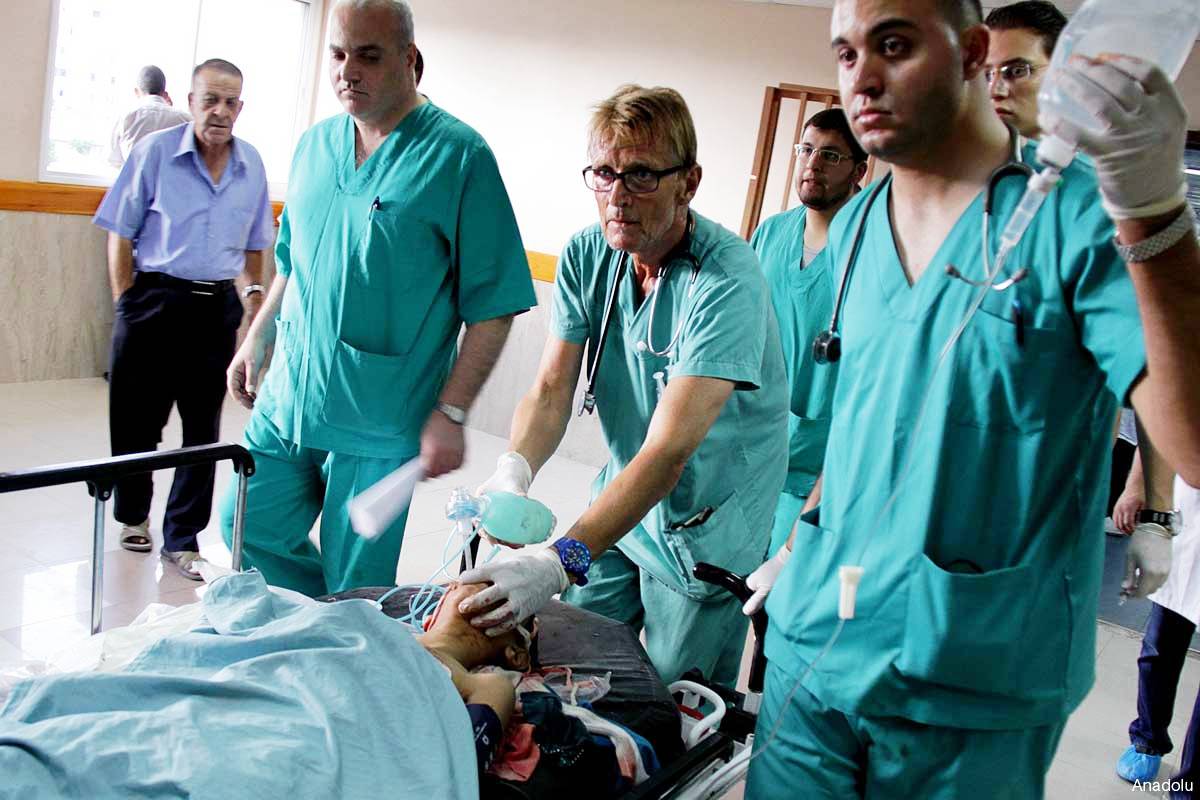
The hospitals that remain in operation are overwhelmed, with doctors making heart-wrenching decisions about who to treat and who to send away, refusing ‘moderately injured patients they normally would have admitted in order to make room for the more seriously wounded.’  Mads Gilbert (centre in the image above) again:

Oh NO! not one more load of tens of maimed and bleeding, we still have lakes of blood on the floor in the ER, piles of dripping, blood-soaked bandages to clear out – oh – the cleaners, everywhere, swiftly shovelling the blood and discarded tissues, hair, clothes,cannulas – the leftovers from death – all taken away…to be prepared again, to be repeated all over. More then 100 cases came to Shifa last 24 hrs. enough for a large well trained hospital with everything, but here – almost nothing: electricity, water, disposables, drugs, OR-tables, instruments, monitors – all rusted and  as if taken from museums of yesterdays hospitals.

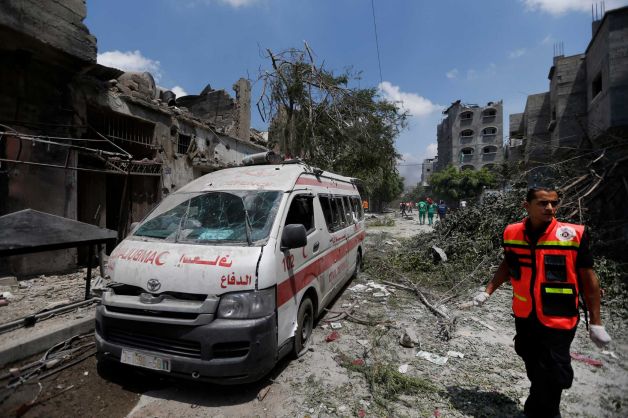
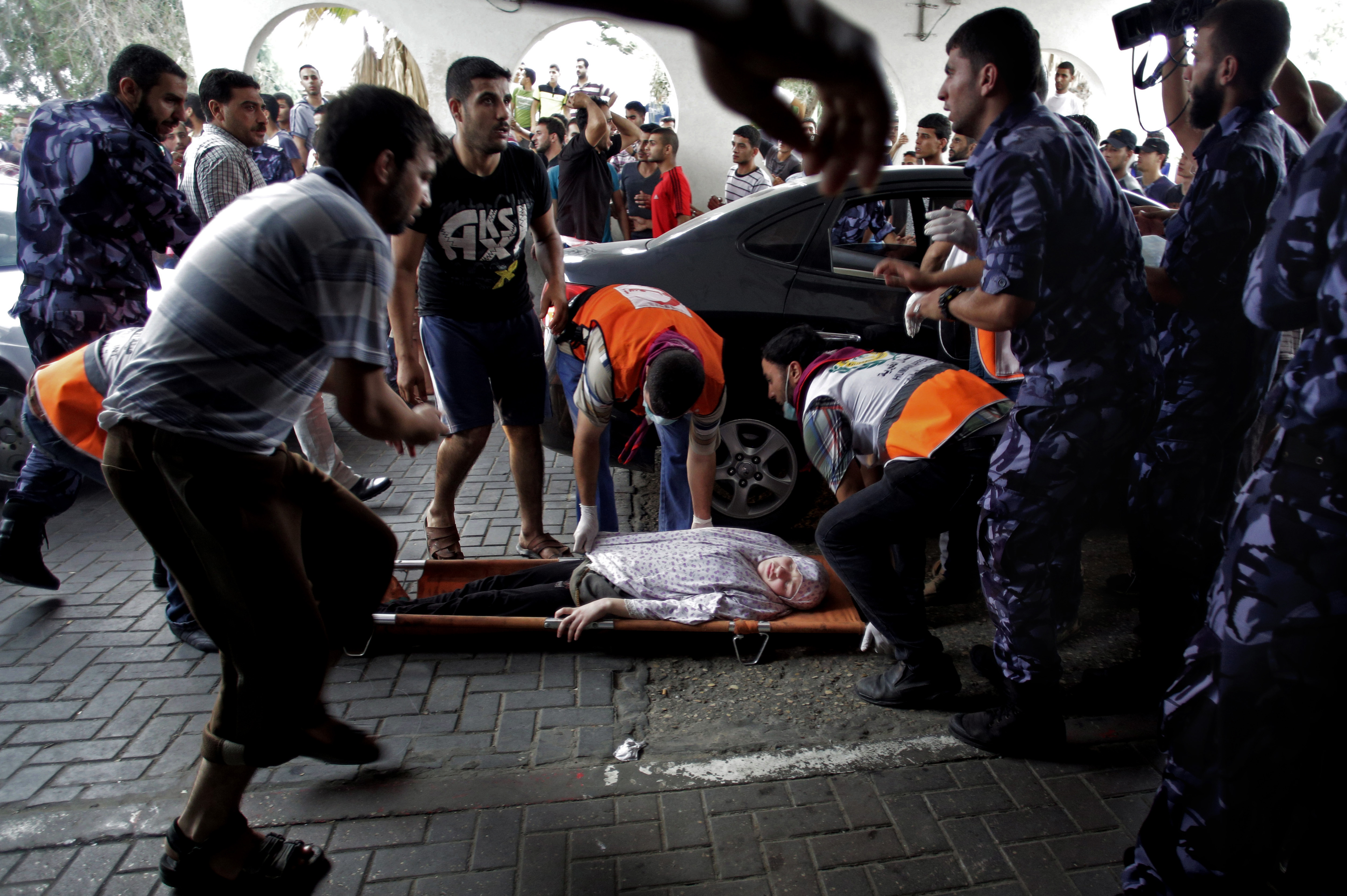
Al-Shifa, where he is working round the clock, has only 11 beds in its ER and just six Operating Rooms.  On Saturday night, when the Israeli army devastated the suburb of Shuja’ieyh, its ‘tank shells falling like hot raindrops‘, al-Shifa had to deal with more than 400 injured patients. Al-Shifa is Gaza’s main trauma centre but in other sense Gaza’s trauma is not ‘centred’ at all but is everywhere within its iron walls.  Commentators repeatedly describe Gaza as the world’s largest open-air prison – though, given the cruelly calculated deprivation of the means of normal life, concentration camp would be more accurate – but it is also one where the guards routinely kill, wound and hurt the prisoners. The medical geography I’ve sketched here is another way of reading Israel’s bloody ‘map of pain‘. I am sickened by the endless calls for ‘balance’, for ‘both sides’ to do x and y and z, as though this is something other than a desperately unequal struggle: as though every day, month and year the Palestinians have not been losing their land, their lives and their liberties to a brutal, calculating and manipulative occupier.  I started this post with an image of a Palestinian ambulance; the photograph below was taken in Shuja’ieyh at the weekend.  It too is an image of a Palestinian ambulance.

Shujaiyeh.01
For updates see here; I fear there will be more to come. In addition to the links in the post above, this short post is also relevant (I’ve received an e-mail asking me if I realised what the initial letters spelled…. Duh.)

Bombed, Destroyed, Slaughtered

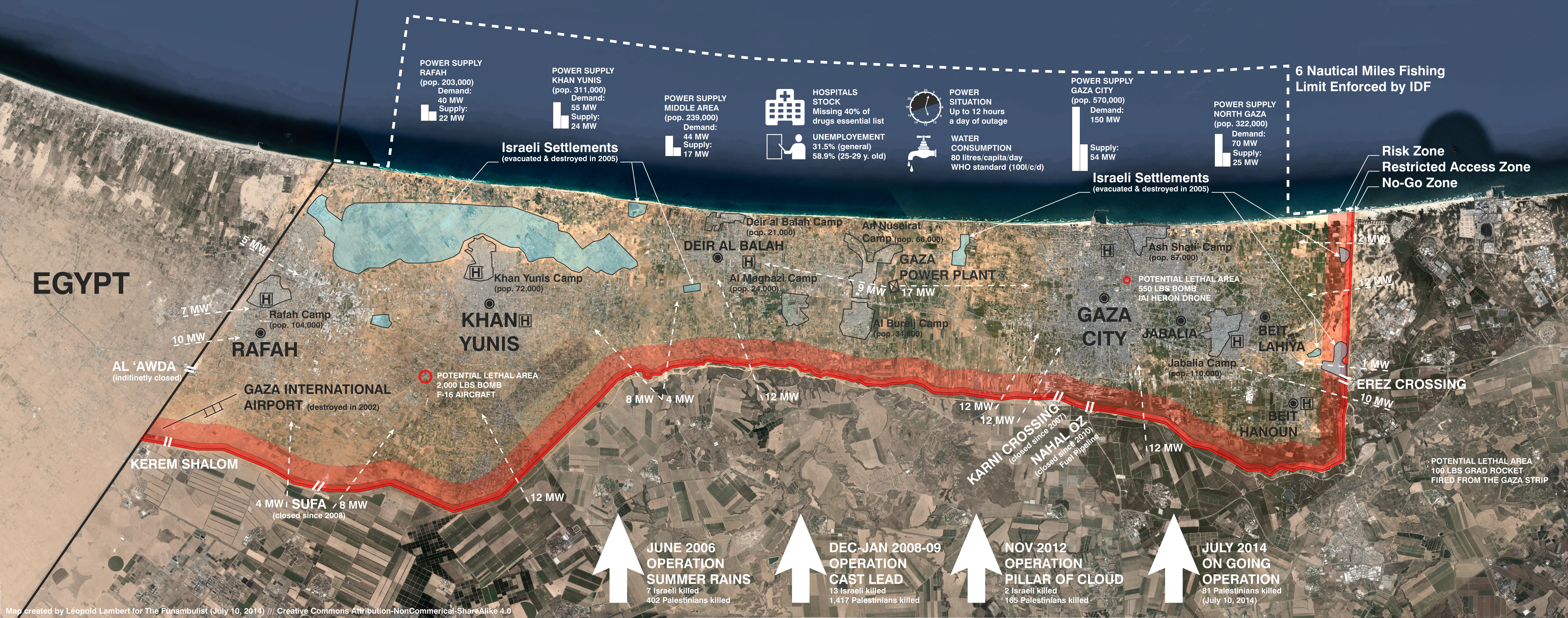
Map Gaza

Following on from my previous post, Léopold Lambert has produced the map above, showing an ‘infrastructural and militarized cartography’ of Gaza; you can download a hi-res version and read his commentary here.

Notice those repetitions marked by arrows; Rami Khoury writes in Lebanon’s Daily Star this morning:

What we are witnessing today is Israel behaving against Palestinians much as the French, British and Italian colonial powers behaved against Iraqis, Syrians, Egyptians, Algerians and Libyans a century or more ago. In its colonization of Arab lands and its raw military savagery against civilians, Israel gives us the best history lesson available of the conduct of colonial powers who treated natives as servants or subversives without rights, and who dealt with them primarily by repeated shows of force.

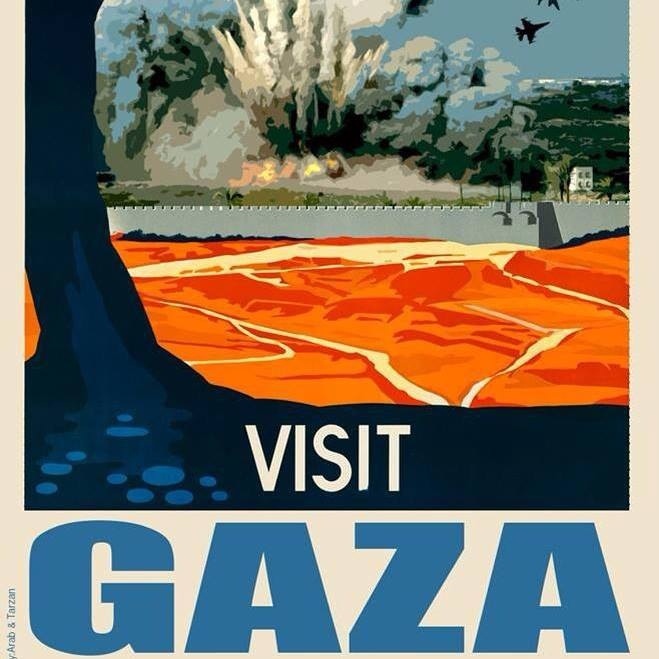
Visit GazaBut this is far more than a postscript to my previous post on Gaza, with its own vocabulary of ‘all too familiar’, ‘this time round’, and ‘once again’. Over at Critical Legal Thinking Nimer Sultany has a truly excellent short essay, ‘Repetition and Death in the Colony: On the Israeli attacks on Gaza‘:

‘At the moment of writing these lines, the BBC reports 100 deaths thus far in Gaza in the recent Israeli onslaught. As we have seen these scenes before, the invocation of repetition comes naturally. “Once again” is a commonly used word when it comes to death and suffering under occupation in Palestine and specifically Gaza….

‘But “once again” is not a mere rhetorical gesture nor symptomatic of tragic despair. It connotes a recursive power dynamic and a structural relationship between an occupier and an occupied. It should be a reminder of context rather than an erasure of context…. Lacking context, the responsibility is either equally shared by two symmetrically opposed agents of violence or the stronger party bears no responsibility because it is merely responding to the irrational violence of the weak who bears the responsibility for death and suffering.’

Nimer develops his argument in relation to the juridification of (later) modern war, the construction of the (Palestinian) civilian as a negation (the non-combatant as ‘an afterthought’), and on a ‘peace process’ that is ‘conditioned on their abdication of their right to resist an unjust foreign occupier and … their subordination of demands on behalf of justice for the sake of peace’ (see also Nimer’s ‘Colonial realities’ here; his account of the role of the Israeli Supreme Court in the juridifcation of the occupation of Palestine, ‘Activism and Legitimation in Israel’s Jurisprudence of Occupation’ in Social and Legal Studies (online March 2014) is usefully read alongside George Bisharat, ‘Violence’s Law’, Journal of Palestine Studies 42 (3) (2013) 68-84, which addresses Israel’s concerted campaign to transform international humanitarian law [‘the laws of war’]).

Drones, battlefields and later modern war

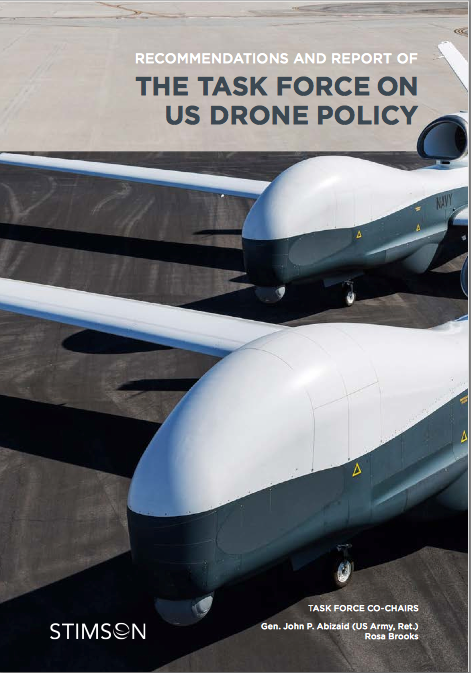
STIMSON Drone report 2014

This morning the Stimson Center issued an 81-page Recommendations and Report of the Task Force on US Drone Policy: you can access it online via the New York Times here or download it as a pdf here; Mark Mazetti‘s report for the Times is here.

Founded in 1989, the Stimson Center is a Washington-based ‘non-profit and non-partisan’ think-tank that prides itself on providing ’25 years of pragmatic solutions to global security’.  It’s named after Henry Stimson, who served Presidents Taft, Roosevelt and Truman as Secretary of War and President Hoover as Secretary of State.  The Center established its 10-member Task Force on drones a year ago, with retired General John Abizaid (former head of US Central Command, 2003-2007) and Rosa Brooks (Professor of Law at Georgetown) as co-chairs; the Task Force was aided by three Working Groups – on Ethics and Law; Military Utility, National Security and Economics; and Export Control and Regulatory Challenges – each of which is preparing more detailed reports to be published later this year.  The present Report focuses on

‘key current and emerging issues relating to the development and use of lethal UAVs outside the United States for national security purposes. In particular, we focus extensively on the use of UAVs for targeted counterterrorism strikes, for the simple reason that this has generated significant attention, controversy and concern.’

But this focus repeats and compounds the myopia of both conventional wisdom and contemporary debate.  The Report summarily (and I think properly) rejects a number of misconceptions about the use of drones, insisting that their capacity to strike from a distance is neither novel nor unique; noting that the vast majority of UAVs in the US arsenal are non-weaponized (‘less than 1 percent of … UAVs carry operational weapons at any given time’ – though their intelligence, surveillance and reconnaissance functions are of course closely tied to the deployment of weapons by conventional strike aircraft or ground forces); and arguing that ‘UAVs do not turn killing into “a video game”‘. These counter-claims are unexceptional and the Task Force presents them with clarity and conviction.

But the Report also accepts that the integration of UAVs into later modern war on ‘traditional’ or ‘hot’ battlefields [more about those terms in a moment] is, by and large, unproblematic.  Thus:

‘UAVs have substantial value for a wide range of military and intelligence tasks. On the battlefield, both weaponized and non-weaponized UAVs can protect and aid soldiers in a variety of ways. They can be used for reconnaissance purposes, for instance, and UAVs also have the potential to assist in the detection of chemical, biological, radiological and nuclear weapons, as well as ordinary explosives. Weaponized UAVs can be used to provide close air support to soldiers engaged in combat.’

A footnote expands on that last sentence:

‘In the past, warfighters on the ground under imminent threat would have to navigate a complicated command hierarchy to call for air support. The soldier on the ground would have to relay coordinates to a Forward Air Controller (FAC), who would then talk the pilot’s eyes onto a target in an extremely hostile environment. These missions have always been very dangerous for the pilot, who has to fly low and avoid multiple threats, and also for people on the ground. It is a human-error rich environment, and even today, it is not uncommon for the wrong coordinates to be relayed, resulting in the deaths of friendlies or innocent civilians. To ease these difficulties, DARPA is currently investigating how to replace the FAC and the pilot by a weaponized UAV that will be commanded by the soldier on the ground with a smartphone.’

And subsequently the Report commends the ‘robust’ targeting process put in place by the US military and the incorporation of military lawyers (JAGs) into the kill-chain:

‘The Department of Defense has a robust procedure for targeting, with outlined authorities and steps, and clear checks on individual targets. The authorization of a UAV strike by the military follows the traditional process in place for all weapons systems (be they MQ-9 Reaper drones or F-16 fighter jets). Regardless of whether particular strikes are acknowledged, the Pentagon has stated that UAV strikes, like strikes from manned aircraft, are subject to the military’s pre-strike target development procedures and post-strike assessment.

‘The process of determining and executing a strike follows a specific set of steps to ensure fidelity in target selection, strike and post-strike review.’

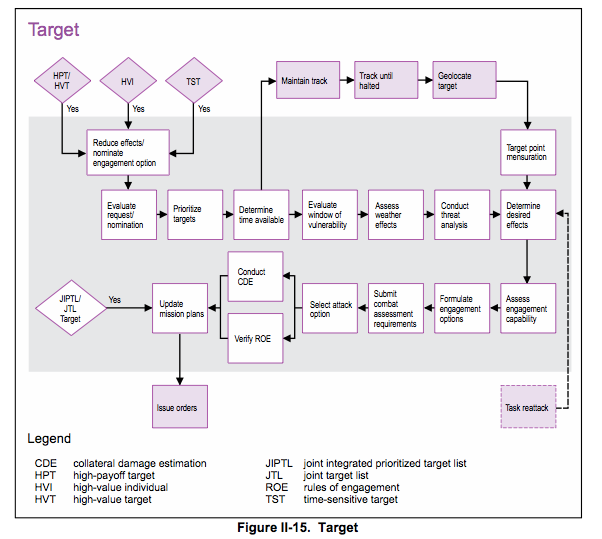
Targeting cycle

Both Craig Jones and I have discussed the targeting cycle [the figure above shows one of six steps in the ‘find-fix-track-target-engage-assess’ cycle, taken from JP 3-60 on Joint Targeting, issued in January 2013] and the role of operational law within it (Craig in much more detail than me), and these are all important considerations.  But the Report glosses over the fragilities of the process, which in practice is not as ‘robust’ as the authors imply.  They concede:

‘No weapons system is perfect, and targeting decisions — whether for UAV strikes or for any other weapons delivery system — are only as good as the intelligence on which they are based. We do not doubt that some US UAV strikes have killed innocent civilians. Nonetheless, the empirical evidence suggests that the number of civilians killed is small compared to the civilian deaths typically associated with other weapons delivery systems (including manned aircraft).’

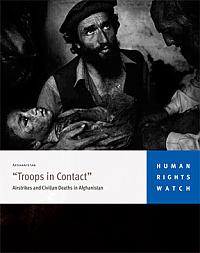
cover_646That last sentence is not unassailable, but in addition I’ve repeatedly argued that it is a mistake to abstract strikes carried out by UAVs from the wider network of military violence in which their ISR capabilities are put to use:  hence my ongoing work on the Uruzgan airstrike in Afghanistan, for example, and on ‘militarised vision’ more generally.  What these studies confirm is that civilian casualties are far more likely when close air support is provided – by UAVs directly or by conventional strike aircraft – to ‘troops in contact’ (even more so when, as in both the Kunduz and Uruzgan airstrikes, it turns out that troops calling in CAS were not ‘in contact’ at all).

In short, while it’s perhaps understandable that a Task Force that included both General Abizaid and Lt-Gen David Barno (former head of Combined Forces Command – Afghanistan from 2003-2005) should regard the use of UAVs on ‘traditional’ battlefields as unproblematic, I think it regrettable that their considerable expertise did not result in a more searching evaluation of remote operations in Afghanistan and Iraq.

But what, then, of those ‘non-traditional’ battlefields?  A footnote explains:

‘Throughout this report, we distinguish between the use of UAV strikes on “traditional” or “hot” battlefields and their use in places such as Pakistan, Yemen and Somalia. These are terms with no fixed legal meaning; rather, they are merely descriptive terms meant to acknowledge that the US of UAV strikes has not been particularly controversial when it is ancillary to large-scale, open, ongoing hostilities between US or allied ground forces and manned aerial vehicles, on the one hand, and enemy combatants, on the other. In Afghanistan and Iraq, the United States deployed scores of thousands of ground troops and flew a range of close air support and other aerial missions as part of Operation Enduring Freedom, and UAV strikes occurred in that context. In Libya, US ground forces did not participate in the conflict, but US manned aircraft and UAVs both operated openly to destroy Libyan government air defenses and other military targets during a period of large scale, overt ground combat between the Qaddafi regime and Libyan rebel groups. In contrast, the use of US UAV strikes in Yemen, Pakistan and elsewhere has been controversial precisely because the strikes have occurred in countries where there are no US ground troops or aerial forces openly engaged in large scale combat.’

0202megret0

A major focus of the report is on what Frédéric Mégret (above) has called ‘the deconstruction of the battlefield‘ and the countervailing legal geographies that provide an essential armature for later modern war (though it’s surprising that the Report makes so little use of academic research on UAVs and contemporary conflicts).  The authors ‘disagree with those critics who have declared that US targeted killings [in Pakistan, Yemen and Somalia] are “illegal”’ – no surprise there either, incidentally, since one of the Working Groups included Kenneth Anderson, Charles Dunlap and Christine Fair: I’m not sure in what universe that counts as ‘non-partisan’) but they also accept that these remote operations move in a grey zone (and in the shadows):

‘The law of armed conflict and the international legal rules governing the use of force by states arose in an era far removed from our own. When the Geneva Conventions of 1949 were drafted, for instance, it was assumed that most conflicts would be between states with uniformed, hierarchically organized militaries, and that the temporal and geographic boundaries of armed conflicts would be clear.

‘The paradigmatic armed conflict was presumed to have a clear beginning (a declaration of war) and a clear end (the surrender of one party, or a peace treaty); it was also presumed the armed conflict to be confined geographically to specific, identifiable states and territories. What’s more, the law of armed conflict presumes that it is a relatively straightforward matter to identify “combatants” and distinguish them from “civilians,” who are not targetable unless they participate directly in hostilities. The assumption is that it is also a straightforward matter to define “direct participation in hostilities.”

‘The notion of “imminent attack” at the heart of international law rules relating to the use of force in state self-defense was similarly construed narrowly: traditionally, “imminent” was understood to mean “instant, overwhelming, and leaving no choice of means, and no moment for deliberation.”

‘But the rise of transnational non-state terrorist organizations confounds these preexisting legal categories. The armed conflict with al-Qaida and its associated forces can, by definition, have no set geographical boundaries, because al-Qaida and its associates are not territorially based and move easily across state borders. The conflict also has no temporal boundaries — not simply because we do not know the precise date on which the conflict will end, but because there is no obvious means of determining the “end” of an armed conflict with an inchoate, non-hierarchical network.

‘In a conflict so sporadic and protean — a conflict with enemies who wear no uniforms, operate in secret and may not use traditional “weapons” — the process of determining where and when the law of armed conflict applies, who should be considered a com- batant and what counts as “hostilities” inevitably is fraught with difficulty…

‘While the legal norms governing armed conflicts and the use of force look clear on paper, the changing nature of modern conflicts and security threats has rendered them almost incoherent in practice. Basic categories such as “battlefield,” “combatant” and “hostilities” no longer have a clear or stable meaning. And when this happens, the rule of law is threatened.’

These too are important considerations, but they are surely not confined to counter-terrorism operations in Pakistan, Yemen and Somalia: they also apply with equal force to counterinsurgency operations in Afghanistan and Iraq, and intersect with a wider and much more fraught debate over the very idea of ‘the civilian’.

There is a particularly fine passage in the Report:

‘Consider US targeted strikes from the perspective of individuals in — for instance — Pakistan or Yemen. From the perspective of a Yemeni villager or a Pakistani living in the Federally Administered Tribal Areas (FATA), life is far from secure. Death can come from the sky at any moment, and the instability and incoherence of existing legal categories means that there is no way for an individual to be certain whether he is considered targetable by the United States. (Would attending a meeting or community gathering also attended by an al-Qaida member make him targetable? Would renting a building or selling a vehicle to a member of an “associated” force render him targetable? What counts as an “associated force?” Would accepting financial or medical aid from a terrorist group make him a target? Would extending hospitality to a relative who is affiliated with a terrorist group lead the United States to consider him a target?).

‘From the perspective of those living in regions that have been affected by US UAV strikes, this uncertainty makes planning impossible, and makes US strikes appear arbitrary. What’s more, individuals in states such as Pakistan or Yemen have no ability to seek clarification of the law or their status from an effective or impartial legal system, no ability to argue that they have been mistakenly or inappropriately targeted or that the intelligence that led to their inclusion on a “kill list” was flawed or fabricated, and no ability to seek redress for injury. Their national laws and courts can offer no assistance in the face of foreign power, and far from protecting their fundamental rights and freedoms, their own states may in fact be deceiving them about their knowledge of and cooperation with US strikes. Meanwhile, geography and finances make it impossible to access US courts, and a variety of legal barriers — such as the state secrets privilege, the political question doctrine, and issues of standing, ripeness and mootness — in any case would prevent meaningful access to justice.’

This is one of the clearest summaries of the case for transparency and accountability I’ve seen, but the same scenario has also played out in Afghanistan (and in relation to the Taliban, which appears only once in the body of the Report) time and time again.  There are differences, to be sure, but the US military has also carried out its own targeted killings in Afghanistan, working from its Joint Prioritized Effects List.  The Report notes that ‘in practice, the military and CIA generally work together quite closely when planning and engaging in targeted UAV strikes: few strikes are “all military” or “all CIA”’ – which is true in other senses too – and this applies equally in Afghanistan.

In sum, then, this is a valuable and important Report – but it would have been far more incisive had its critique of ‘US drone policy’ cast its net wider to provide a more inclusive account of remote operations.  The trans-national geographies of what I’ve called ‘the everywhere war’ do not admit of any simple distinction between ‘traditional’ and ‘non-traditional’ battlefields, and trying to impose one on such a tangled field of military and paramilitary violence ultimately confuses rather than clarifies.  I realise that this is usually attempted as an exercise in what we might call legal cartography, but I also still think William Boyd‘s Gabriel was right when, in An Ice-Cream War, he complained that maps give the world ‘an order and reasonableness’ it doesn’t possess.  And we all also know that maps – like the law – are instruments of power, and that both are intimately entangled with the administration of military violence.

Britain’s Reapers

UK Remote Control

As Craig Jones has discussed in detail, it’s been much easier to get information about the ways in which the United States has incorporated drones into its military and paramilitary operations than to prise open the door of UK operations (see also Chris Cole on ‘five basic facts we are simply not allowed to know here).

But the House of Commons Defence Committee has just published a two-volume report, Remote Control: remotely piloted air systems – current and future UK use.

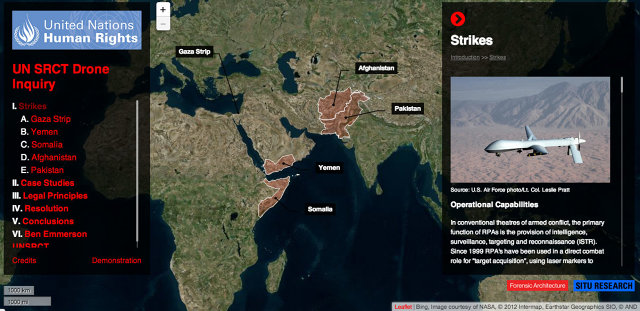
Volume 1, the report and formal minutes (58 pp), can be downloaded as a pdf here, and Volume II, written evidence (130 pp), is available here.  The second volume includes submissions from the Ministry of Defence, Northrop Grumman, and General Atomics together with critical submissions from Drone Wars UK, Reprieve, the Network for Social Change’s Remote Control project, and the Bureau of Investigative Journalism.

Over at the Bureau, Alice Ross has a first response and summary here, while Chris Cole has a trenchant critique at Drone Wars UK here.

I’m still working my way through all this, but here are some key passages.

First, on the ‘double proximity’ of drone operations – as I’ve said before, even though these platforms can be controlled from thousands of miles away they are not weapons of global reach:

‘The MoD told us that in order to utilise unmanned air systems in the most efficient manner, they should be based as close as possible to the target area of interest to allow for the longest loiter time possible. In a “non-permissive” or hostile environment this would be “extremely difficult”.’

The other side of this is the invocation of a new (though, as I’ve also emphasised, thoroughly conditional and technologically mediated) quasi-intimacy:

‘It was very clear from the visit to XIII Squadron and discussions with Reaper aircrew that all were experienced professional personnel with a clear purpose and keen understanding of the Rules of Engagement which govern their operations. Despite being remote from the battle space they exhibited a strong sense of connection to the life and death decisions they are sometimes required to take. This was in stark contrast to the image portrayed by some commentators of “drone” pilots as video gaming “warrior geeks”.’

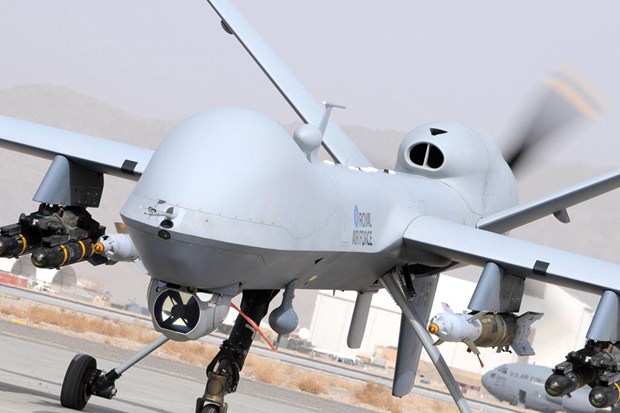
RAF Reaper

Again, as I’ve argued elsewhere, that ‘sense of connection’ is much more highly developed in relation to troops on the ground than to others who are in (or beyond) the field of view, and who are inevitably shut out from audio or online communications, which in part accounts for the risk to non-combatants whenever troops are ‘in contact’ with the Taliban and other fighters.

Second, the report seeks to draw a line between the US program of targeted killing and UK military operations in Afghanistan:

‘We acknowledge that over the last few years there has been a growing concern in relation to the sharing of intelligence with allies and the uses to which such data may contribute. While the issues raised by Reprieve stray beyond the terms of reference for our inquiry and indeed the remit of the Defence Committee, we do believe that there should be greater transparency in relation to safeguards and limitations the UK Government has in place for the sharing of intelligence…

‘We consider that it is of vital importance that a clear distinction be drawn between the actions of UK Armed Forces operating remotely piloted air systems in Afghanistan and those of other States elsewhere… In Afghanistan UAS provide intelligence in support of our ground commanders, enabling them to stay one step ahead of the enemy. Whether for targeting the Taliban or supporting troops on patrol, their ability to loiter over and survey areas for enemy activity and then feed back images and video in real time means they are an invaluable asset to our forces on the ground. Together, the UK’s fleet of UAS have carried out over 160,000 hours of ISR operations.

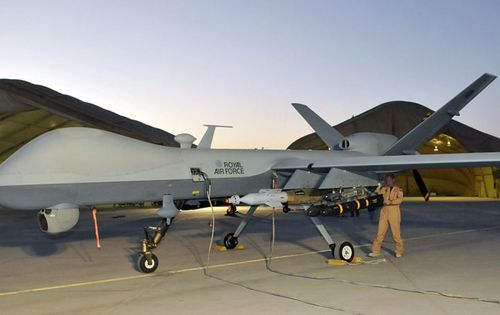
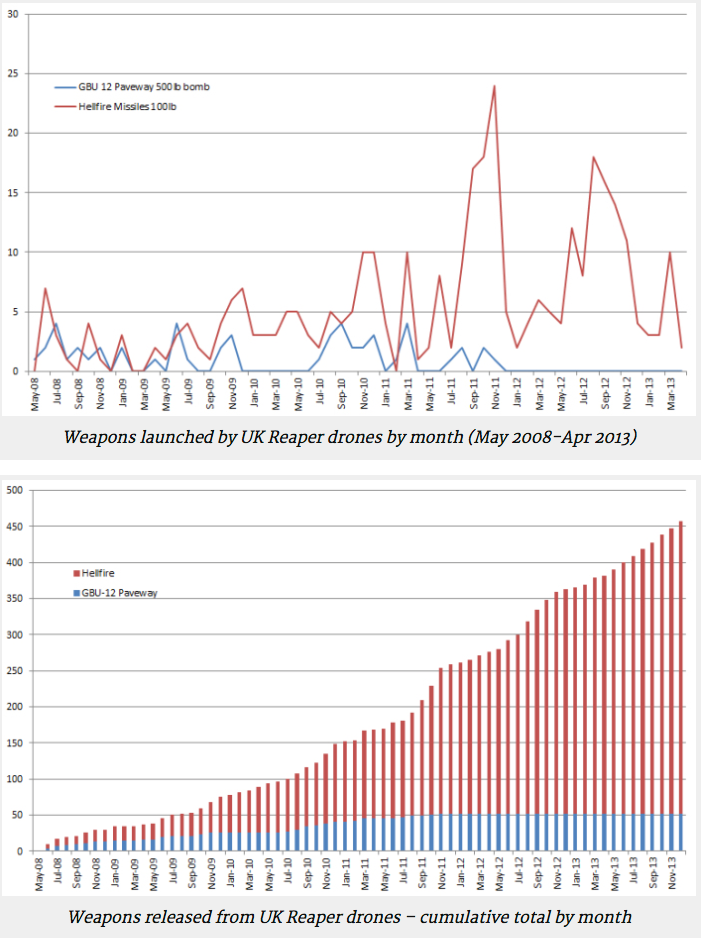
‘The General Atomics MQ-9 Reaper operated by the RAF is the UK’s only armed remotely piloted air system. The RAF fleet rose to ten in early 2014 as an additional five aircraft were accepted into service. RAF Reapers provide persistent intelligence, surveillance, target acquisition and reconnaissance (ISTAR) for ISAF forces in Afghanistan, mostly in support of UK forces in Helmand province…. Since May 2008, UK Reaper aircraft have been armed with precision-guided weapons—Hellfire laser guided air-to-ground missiles and GBU-12 Paveway 500lb laser guided bombs… By 31 August 2013, UK operated Reaper aircraft had flown over 50,000 hours on operations in the ISR role with 418 weapons fired in the same period.’

RAF Reaper and weapons

Here are the raw figures released to Drone Wars UK last month, following a FoI Request to the Ministry of Defence:

Weapons released by UK Reapers in Afghanistan 2008-2013 (Drone Wars UK)

Chris Cole is not convinced by the Committee’s (and, by extension, the Ministry’s) attempt to draw the line:

‘The report also argues that it is “of vital importance” that a clear distinction be draw between the use of drones by UK armed forces and what it discreetly calls “those of other States elsewhere.” It urges the MoD to continue its PR campaign – what the committee calls a “public awareness programme” – in order to “aid public understanding and acceptance.” PR it seems trumps transparency.’

Third, and closely connected to Chris’s misgivings, the report restates without examination the legal armature for UK military operations:

‘…the MoD told us that UK remotely piloted aircraft operate within the constraints of UK rules of engagement (ROE) and policy, even where operational control is assigned to a Coalition Commander, such as the Commander of ISAF. The MoD also stated that UK policy relating to targeting by remotely piloted aircraft is exactly the same as that for manned aircraft (and land and maritime weapons where applicable):

‘It is entirely compliant with International Humanitarian Law. Targets are always positively identified as legitimate military objectives and both pattern of life assessment and collateral damage estimate conducted. Strikes are carried out in accordance with the Law of Armed Conflict.

‘Personnel were keen for the public to know more and understand better what it is they do and to dispel some myths that have grown up about Reaper operations in particular. One pilot commented that the public needed to know that remotely piloted aircraft are “not robots, they’re not autonomous and we spend an awful lot of time training to fly them”. This training emphasised all aspects of the RAF rules of engagement such as whether a strike is necessary, whether any civilians are nearby, and what instructions have been received from the ground commander. Reaper aircrew were firmly of the view that the loiter time of remotely piloted aircraft allowed more informed decisions to be made and consequently the risk of civilian casualties was reduced should a missile strike be required….

Fourth, on civilian casualties and transparency:

‘The MoD told us that it was aware of only one incident involving an armed UK remotely piloted air system Reaper, which had resulted in the deaths of civilians:

‘On 25 March 2011 [three years ago to the day!] an attack on two pick-up trucks resulted in the destruction of a significant quantity of explosives and the death of two insurgents. Sadly, four Afghanistan civilians were also killed. In line with current ISAF procedures, an ISAF investigation was conducted to establish if any lessons could be learned or if any errors in operational procedures could be identified. In that case, the report concluded that the actions of the Reaper crew had been in accordance with extant procedures and rules of engagement.

…We note the conclusion of the UN Special Rapporteur [Ben Emmerson] that in any case in which civilians have been, or appear to have been, killed, there is an obligation on the State responsible to conduct a prompt, independent and impartial fact-finding inquiry and to provide a detailed public explanation. We recognise that this is not a simple and straightforward request as to do so could seriously jeopardise continuing operations. Nonetheless, we recommend that, to the extent that it is operationally secure to do so, following an event which has resulted in confirmed civilian casualties the MoD should seek to publish details about the incident and any lessons learned from the review process…’

For a good discussion of the UK’s definition of ‘civilian’ in such cases, see Dapo Akande at the European Journal of International Law here.

To be continued.

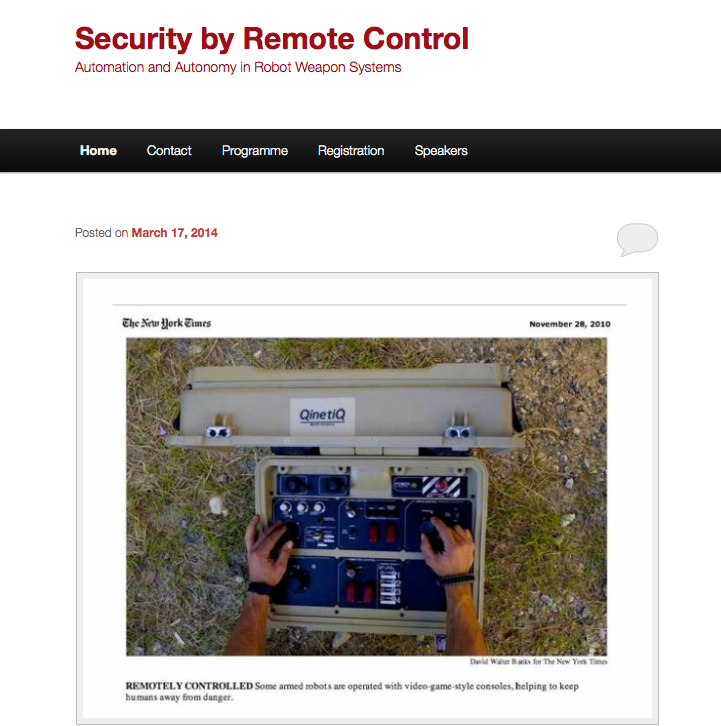
Security by remote control

Security by remote control

News from Lucy Suchman that the website for the Security by Remote Control conference at Lancaster, 22-23 May, is now live here.  It will be enhanced and updated as the symposium approaches – including programme details: I’m still thinking over what I might present – but registration is open now.

Despite investment in new technologies, the legitimacy and efficacy of actions taken in the name of security is increasingly in question. In April of 2013 a coalition led by Human Rights Watch initiated a campaign in favour of a legally binding prohibition on the development, production and use of fully autonomous weapon systems. Simultaneously, some military and robotics experts argue that equipping robots with the capacity to make ethical judgments is an achievable technological goal. Within these debates, the ‘human in the loop’ is posited alternately as the safeguard against illegitimate killing, or its source. Implicit across the debate is the premise of a moment of decision in which judgements of identification and appropriate response are made. This symposium will focus on on the troubling space between automation and autonomy, to understand more deeply their intimate relations, and the inherent contradictions that conjoin them.

Thatcher’s Gift: law and ordering

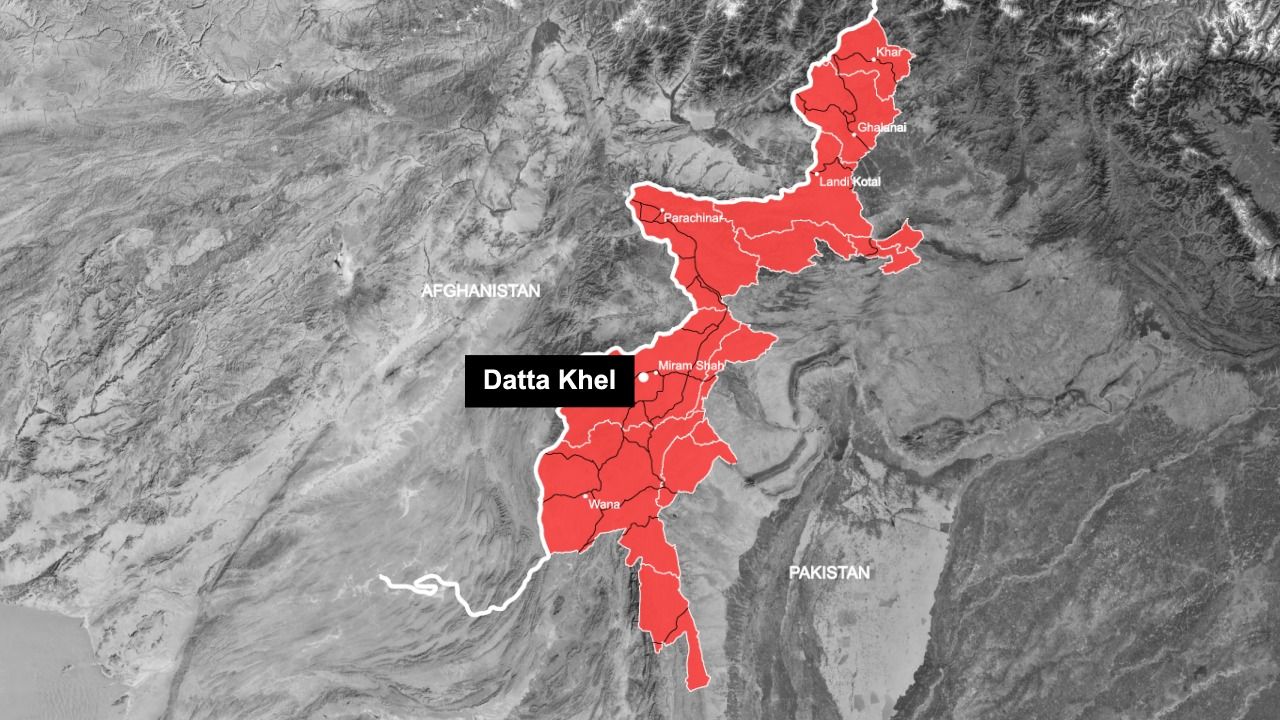
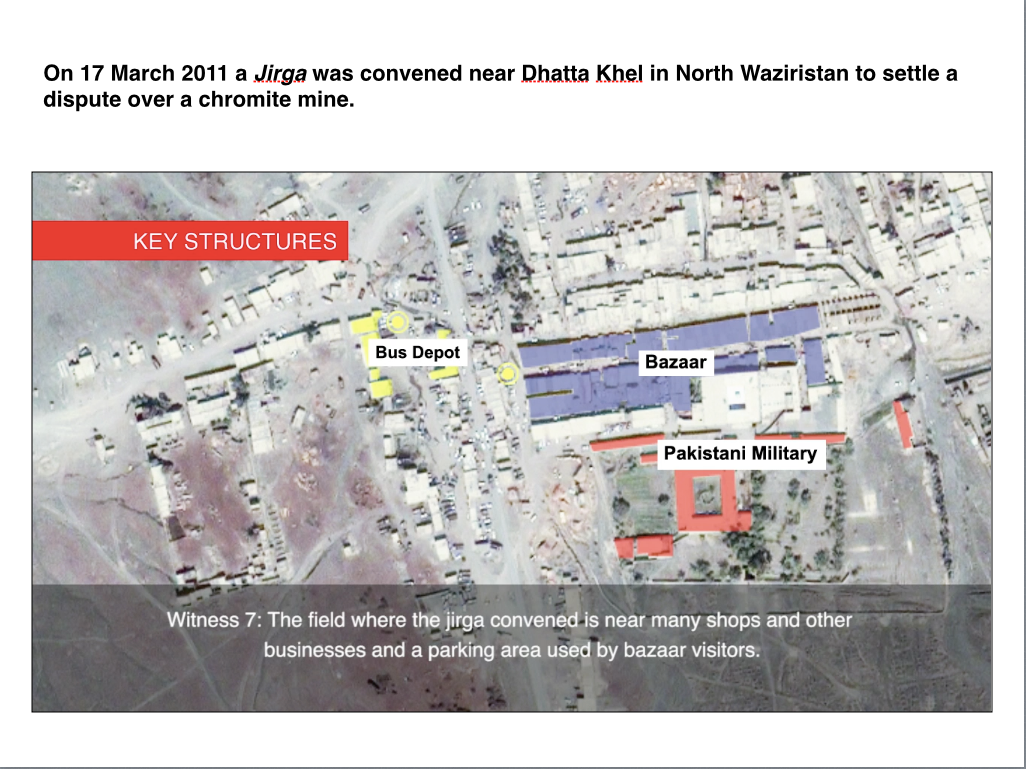
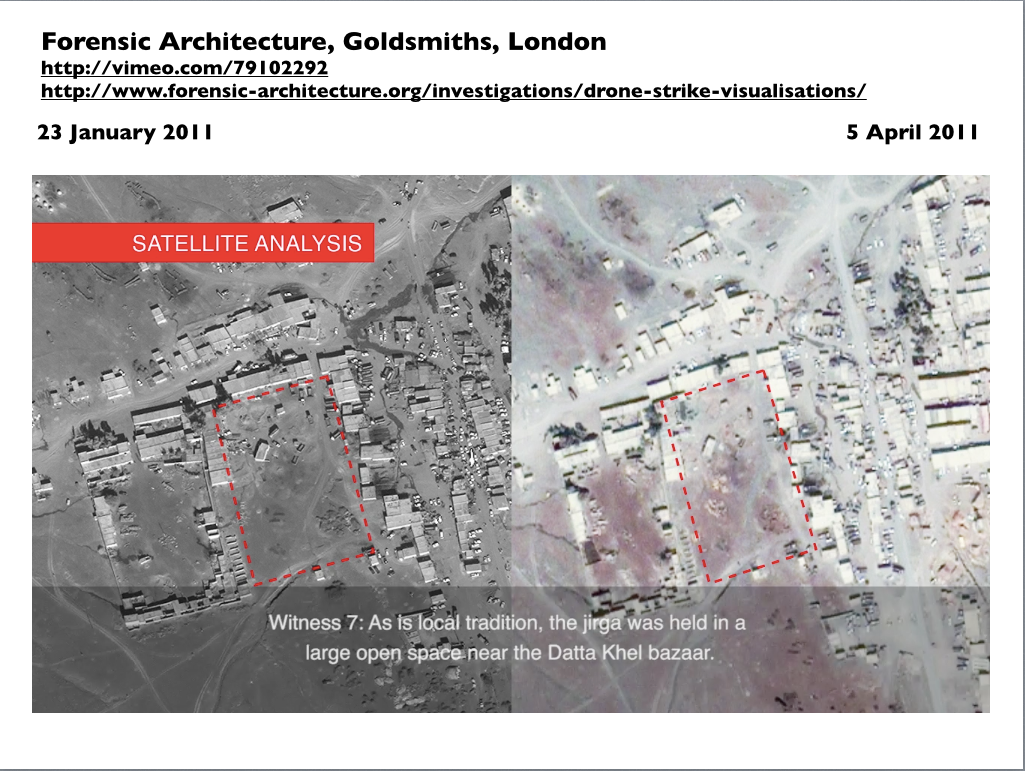
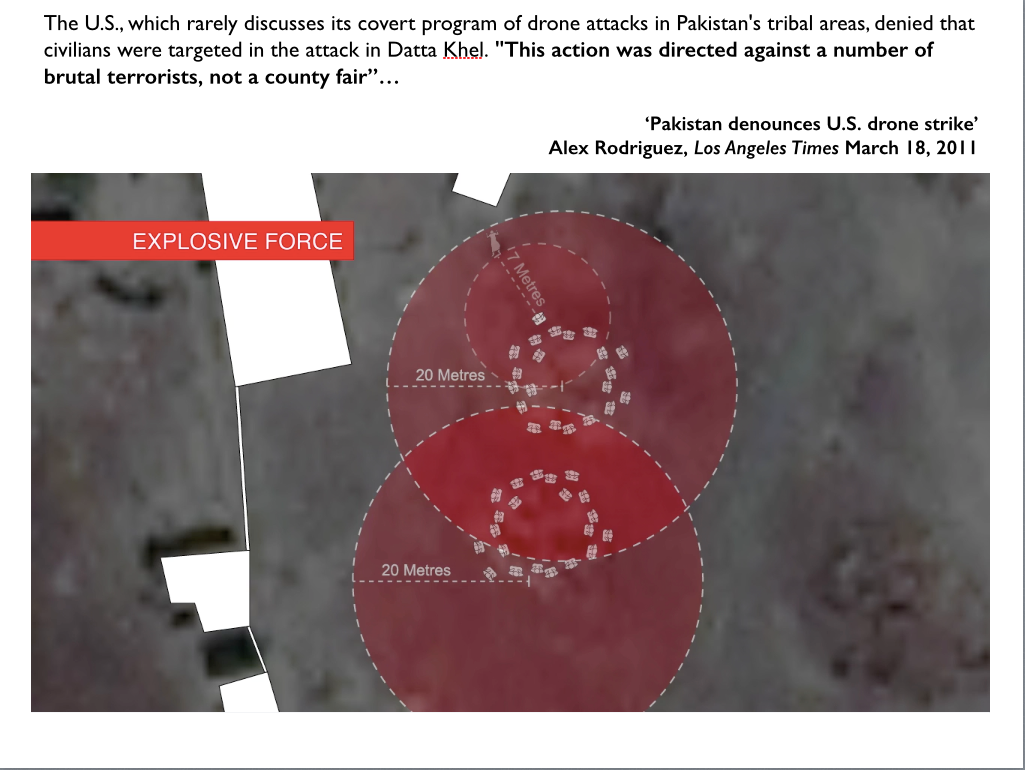
Datta Khel strike satellite analysis

Following on from my last post…  The failure of the anonymous US official to recognise what I called the operative presence of customary law is symptomatic of a structural condition: Pakistan’s borderlands, the Federally Administered Tribal Areas, must be construed as ‘lawless’ in order for law (which is to say ‘order’) to be imposed from the outside, through military and paramilitary violence shrouded, as it so often is, in the cloak of law itself.

Talking with Michael Smith yesterday – who is busy co-editing a special issue of Society & Space on legal geographies with Craig Jones  – I suggested that this effectively repeated the canonical double gesture of Orientalism, in which the space of the Other is summoned as a space of the bizarre, the exotic and at the limit the monstrous (‘a living tableau of queerness’, Edward Said called it), that must be imperatively normalised – straightened out, if you prefer – through the imposition of the order it has been deemed to lack.  In this case, the ordering is imposed through a deadly dance choreographed in Washington and Islamabad.

Michael then provided me with this remarkable quotation from Peter Fitzpatrick‘s ‘Racism and the innocence of law’ from the Journal of Law and Society 14 (1) (1987) 119-132 (p. 129):

“It is hardly surprising, then, that the resort to law as a symbol of race and nation should be so facile, so common and so effective. Thus, to return to the stratagem of the telling instance and to Thatcher’s contribution, she precisely echoes the imperialist claim to law as a gift we gave them, gave those “people with a different culture”, people who did not have law, who did not give it to the world and who in remaining essentially alien have failed to assimilate the gift adequately.”

The reference is to a speech given by Margaret Thatcher in January 1978, in which she praised Britain’s contribution to law (‘throughout the world’) and sympathised with those who feared that immigration would see this ‘swamped’ – submerged, drowned – ‘by people with a different culture’.

Datta Khel strike BoJ PNG

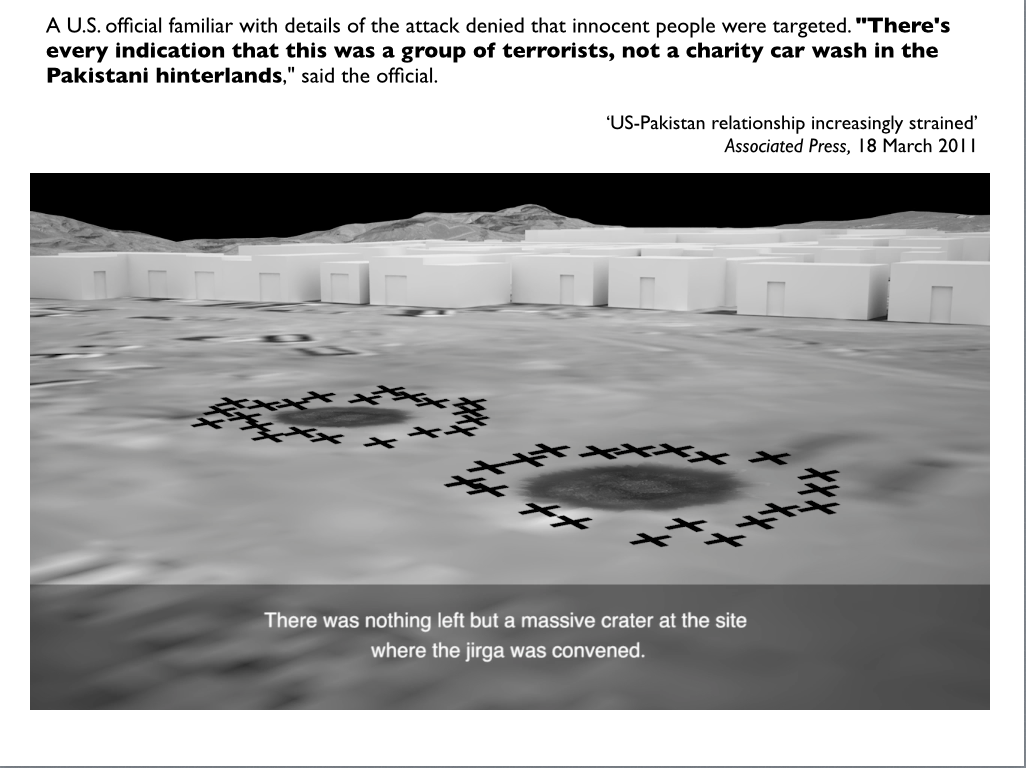
So, in the telling instance of Datta Khel [the image above is from an official Pakistani transcript published by the Bureau of Investigative Journalism; there is also a detailed report here – scroll down to 17 March) colonial and imperial power redux: Midnight’s Children being ‘ordered’ by Thatcher’s….. It would have been better if the Jirga targeted by the drone had been a ‘charity car-wash’ – but that distant prospect was evidently (and I think necessarily) construed as even less likely than its being a properly constituted legal assembly.

In case this is misunderstood, to insist on the operative presence of customary law is emphatically not to deny that people in these areas are subject to extraordinary violence from the air and from the ground, by the CIA, the Pakistan military, and the Taliban and other groups – but it is to acknowledge how what Michael called ‘liberal legality’s denigration of its others (tradition, custom, customary law)’ is a vital, constitutive moment in the imposition of those violent exactions.

The scene of the crime: customary law and forensic architecture

I returned from a wonderful visit to Glasgow last week – thanks so much to Jo Sharp, who ensured I had a criminally good time – and I’ve spent this week trying to catch up.  It rained most of the time I was there, and in fact my first impression of the University was of a quadrangle turned into a quagmire: a case of mire in the flood, you might say.  But nothing could dampen my spirits, and in the gaps between marvellous restaurants, coffee shops that would make anyone in Vancouver (or Seattle) green with envy, the best lunch ever, and truly excellent conversation, I gave two talks: one on my skeletal ideas about my new project on Medical-military machines and casualties of war, 1914-2014, and the other a more formal affair on ‘Dirty dancing: drone strikes, spaces of exception and the everywhere war.’ The purpose of the first talk was to explore, largely for graduate students, how I work; it generated a lively discussion, so I thought I would try to do the same in this post but in relation to the second presentation.  And in doing so, I’ll also have more to say about the scene of a real crime.
I’d prepared my formal presentation before I left Vancouver, and as I’ve explained before I now never read from a written text: I design the slides carefully (see my ‘Rules’ here) and talk to them, so that I retain as much flexibility as possible.  It’s a sort of semi-scripted improv, I suppose, and it also means that the argument can develop from one presentation to the next.

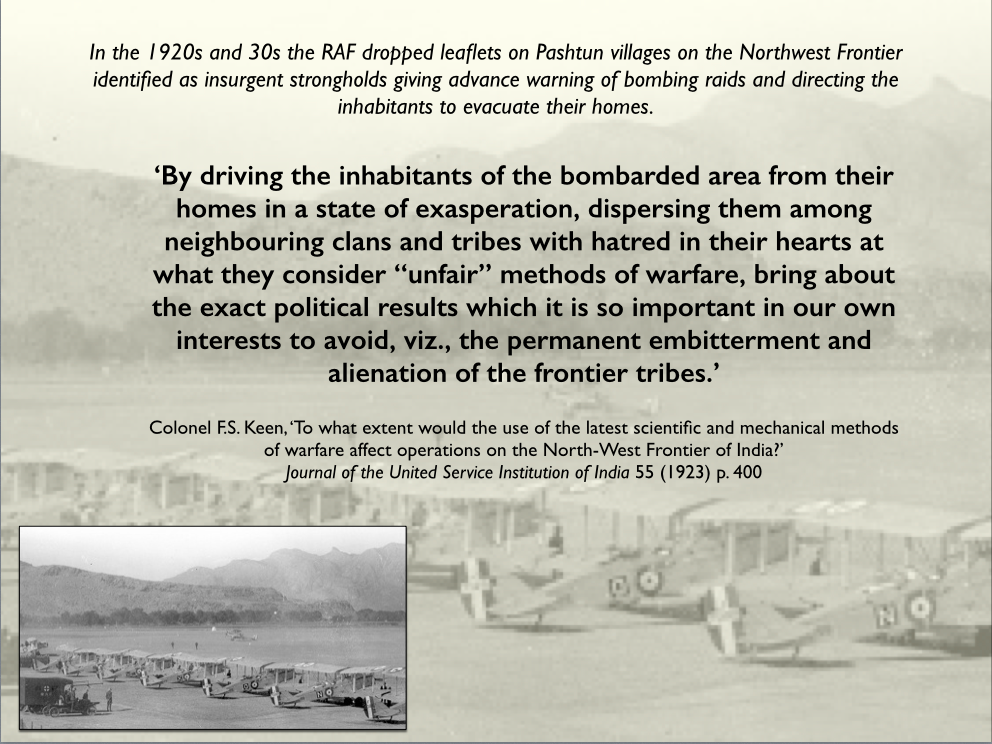
On the train up from London I started to think some more about the air strikes on the Federally Administered Tribal Areas (see also herehere and here).  Part of my purpose was to trace a narrative of air attack that, for those now ‘living under drones’, stretched back (at least in memory) to British air control and counterinsurgency on the North West Frontier in the 1920s and the 1930s.

Waziristan bombing 1920s and 30s PNG

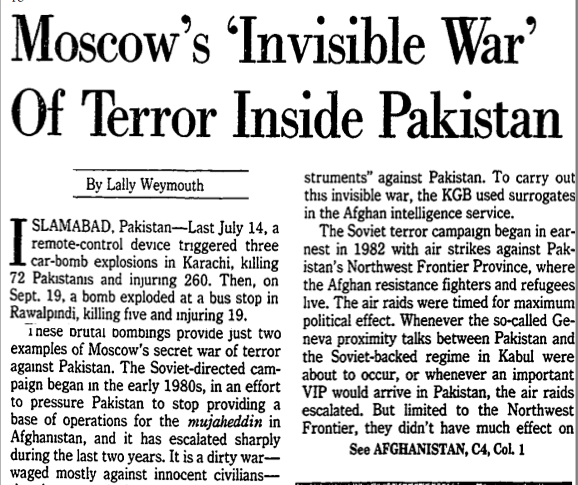
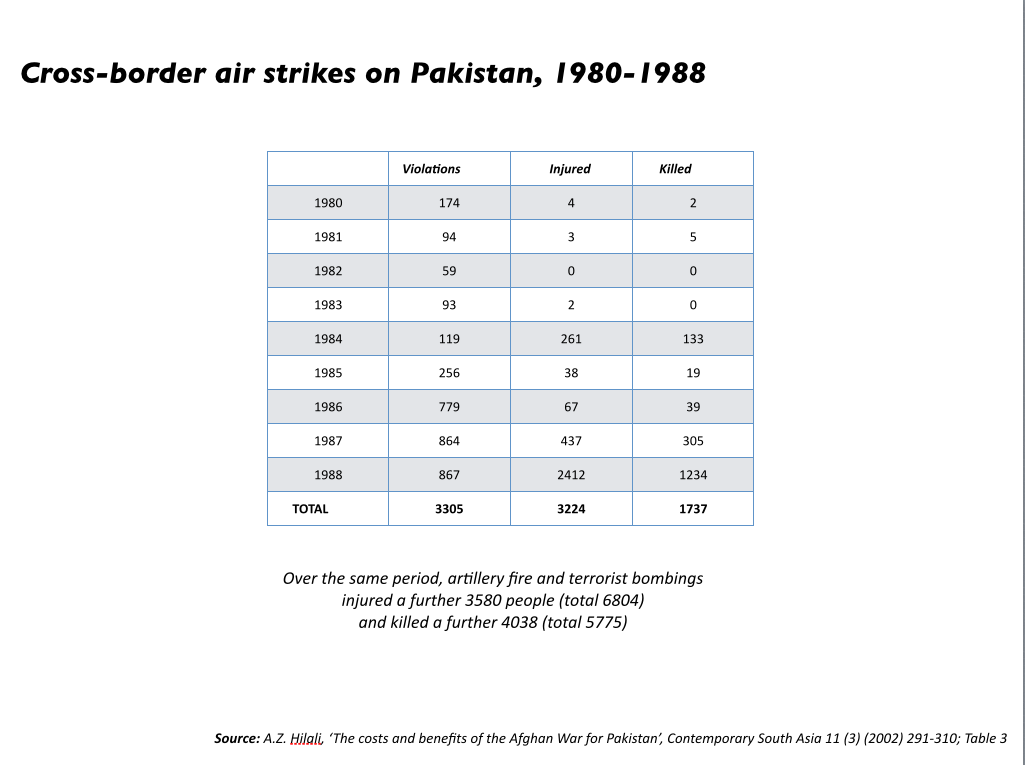
War of Terror inside Pakistan PNGI’d made this point before, and sharpened it during an earlier version of the presentation in Beirut, but I’d since realised that the narrative was resumed by the Soviet and Afghan Air Forces striking mujaheddin bases in Pakistan during the Soviet occupation of Afghanistan.  I hadn’t paid much attention to this in The colonial present, where my focus was on the aid provided by the CIA to mujaheddin striking across the border in the opposite direction, but these air raids were described by the Washington Post on 13 March 1988 as part of the USSR’s “war of terror” (really).  They are an important moment in the genealogy of air strikes and counterinsurgency in the FATA, and I’d managed to unearth some estimates of the number of cross-border violations of Pakistani air space and the number skilled and injured in the strikes:

Afghan:Soviet cross-border air strikes 1980-88

Then, in one of the ironic twists of our post 9/11 world, the (il)logic of air war was revived and ramped up by the CIA-directed drone strikes that have convulsed the borderlands since 2004.

I wanted to show, as I’ve argued in previous posts, that this narrative was more than a cross-border affair and that the Pakistan Air Force has been also actively involved in a series of domestic air campaigns: since 2008 it has carried out thousands of air strikes against what it describes as militants, insurgents and terrorists in the FATA.  In fact, the offensive was resumed earlier this year, when F-16 aircraft and helicopter gunships attacked targets in North Waziristan, driving thousands of people from their homes.

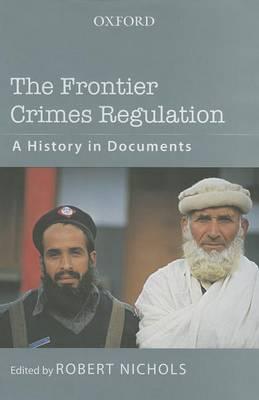
the-frontier-crimes-regulationIn some measure, all of these air campaigns raise the spectre of colonial power, but so too does the legal status of the FATA and its exceptional relation to the rest of Pakistan.  This is usually traced back to Lord Curzon’s Frontier Crimes Regulations (1901), which were retained by Pakistan after independence in 1947.  They were minimally revised in 2011, but the FATA are still under the direct executive control of the President through his appointed Political Agents who have absolute authority to decide civil and criminal matters. The exceptional status of the FATA was confirmed by the Actions (in Aid of Civil Power) Regulations in 2011 which exclude the high court from jurisdiction on fundamental rights issues in any area where the Pakistan armed forces have been deployed ‘in aid of the civil power’.

All of this indicates that the FATA constitute a ‘space of exception’ in something like Giorgio Agamben‘s sense of the term: a space in which particular people are knowingly exposed to death through the juridical or quasi-juridical removal of legal protections from them.  This was, in part, my argument, but I was also concerned to show that this was not a matter of a legal void: rather, military and paramilitary violence was orchestrated, as it almost always is, through the law.

But there is quite another sense in which the FATA is not a legal void, despite all the rhetoric about them being ‘lawless’ lands.  So I started to think through the intersections between these formal legal geographies (and the state violence they sanction) and the system of customary law known as Pashtunwali (loosely, “the way of the Pashtuns”).  The system is far from static, but it still governs many areas of life among Pashtuns on both sides of the Afghanistan-Pakistan border whose cultures and communities were bisected when the Durand Line was drawn in 1893.  I’d been reading as much as I could by anthropologists and others to help me understand its contemporary relevance: for recent surveys, see Tom Ginsburg‘s ‘An economic interpretation of the Pashtunwali’ from the University of Chicago Legal Forum (2011) here,  Lutz Rzehak‘s ‘Doing Pashto’ here, and Thomas Ruttig‘s qualifications in relation to the Taliban here.  For a sense of how the US military understands Pashtunwali, as part of its ‘cultural turn’, see Robert Ross‘s thesis here.

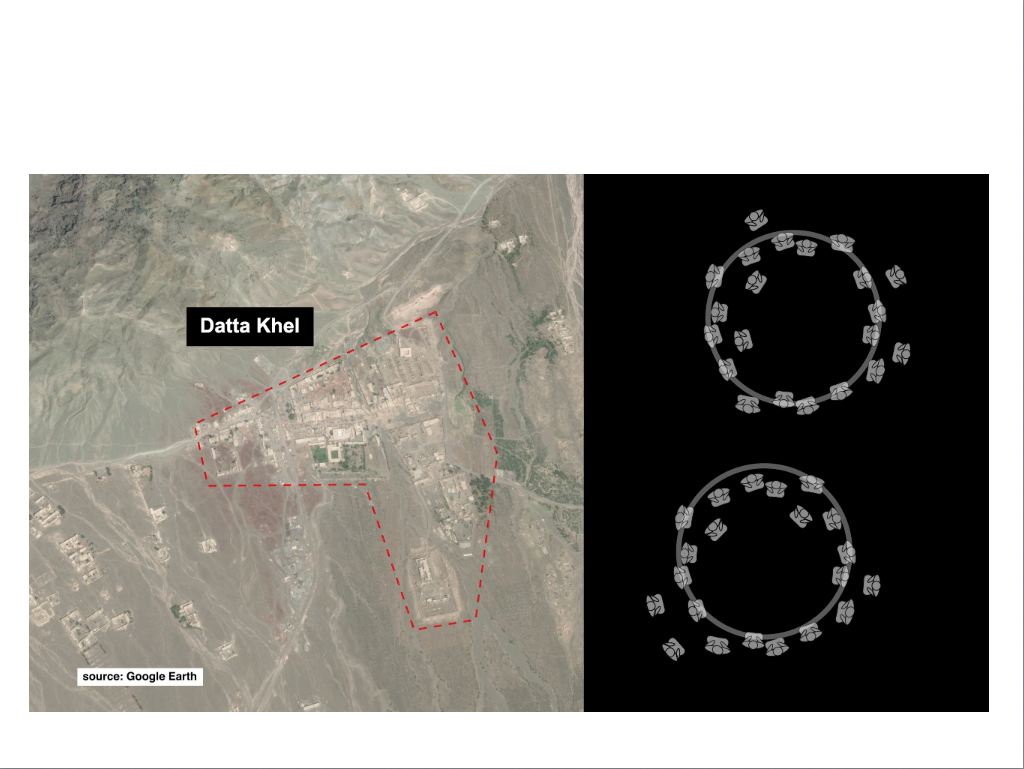
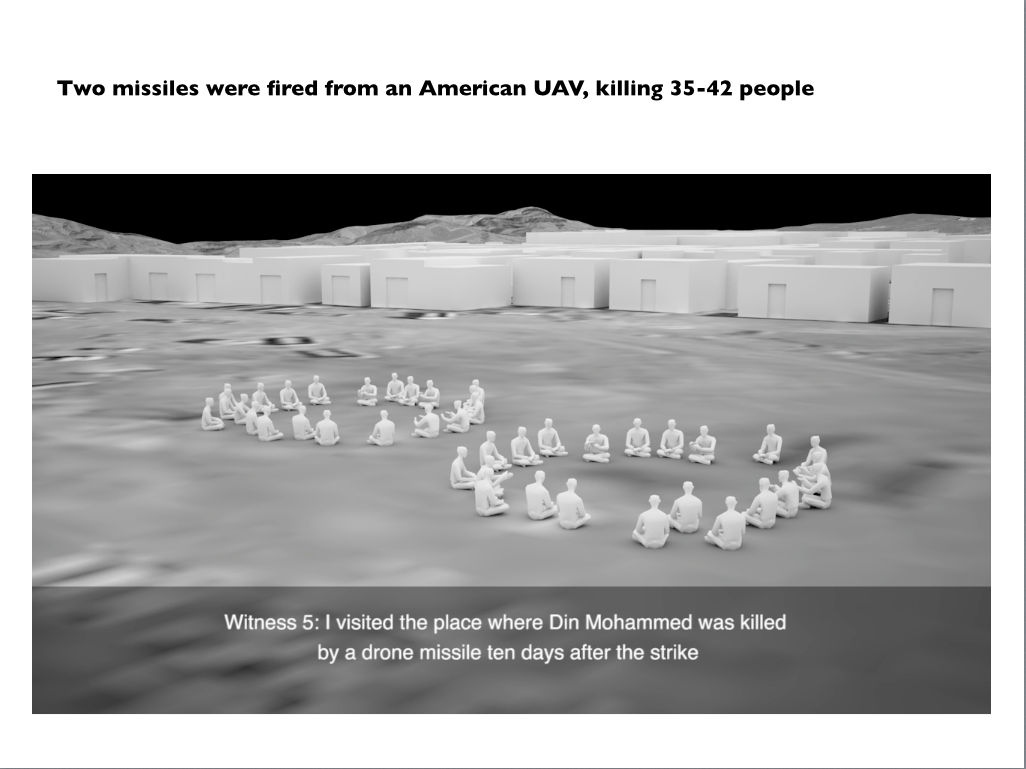
Pashtunwali is more than a legal system, of course, but I was particularly interested in its legal force and how this is put into practice.  Many commentators have shown that Pashtunwali is precisely the sort of ‘mobile’ legal system that you would expect to find among (originally) nomadic peoples, for whom the fixed statutes of a centralised state had neither appeal nor purchase.  It includes obligations of hospitality and protection, asylum and refuge, and revenge and restitution, and provides for a system of resolution through a council (or Jirga).  Within its patriarchal and masculinist framework, the system is resolutely non-hierarchical: the men who compose the Jirga sit in a circle and each, as a symbol of authority and equality, carries a gun.

Sitting in a circle, the Jirga has no speaker, no president, no secretary or convener. There are no hierarchical positions and required status of the participants. All are equal and everyone has the right to speak and argue, although, regard for the elders is always there without any authoritarianism or privileged rights attached to it. The Jirga system ensures maximum participation of the people in administering justice and makes sure that justice is manifestly done.

On my way over to the UK I’d read an extremely interesting essay in the International Review of Law and Economics 37 (2014) 108-20 – stored on Good Reader on my iPad – in which Bruce Benson and Zafar Siddiqui argued that the system works not only to provide a decentralised, local and regional system of order and regulation – so Hobbes was wrong: without the state people do not automatically revert to a ‘state of nature’ (Tom Ginsburg is very good on this) – but also to defend the Pashtun from the incursions of the central state.  Indeed, the Frontier Crimes Regulations specifically recognised the validity and autonomy of the Jirga: much more here.  The message from all this was clear: ‘The Pashtun tribes who inhabit the rugged mountains between Afghanistan and Pakistan are neither lawless nor defenceless.’
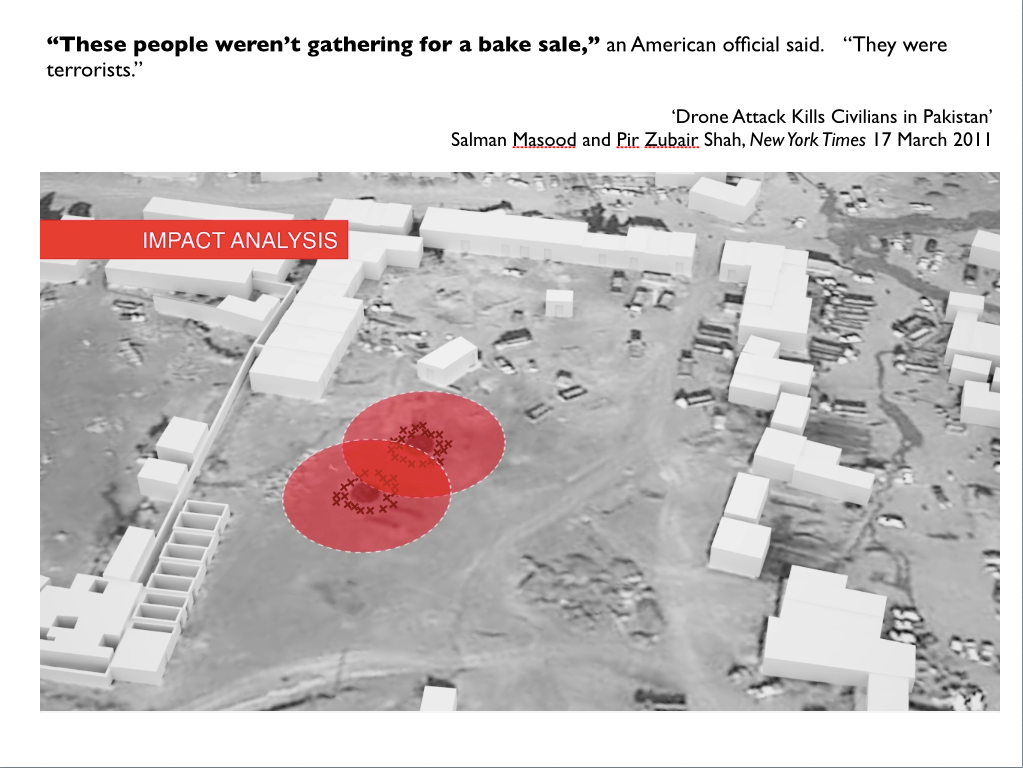
The Pakistan Taliban know this very well, not surprisingly, and in many instances work with Pashtunwali to mediate disputes in the FATA.  In fact, as the train curved around the Lake District I remembered reading about a Jirga being convened in Datta Khel in March 2011 to resolve a dispute over a chromite mine.  It’s odd how some things stick in your mind, like burrs on your jeans, but this incident had stayed with me because the Jirga had been targeted by the CIA and two Hellfire missiles were launched from a drone, killing more than 40 people.  In itself, that probably wouldn’t have been enough for me to remember it in any detail since it was all too common – but the usual faceless and anonymous US official, speaking off the record because he was not authorised to comment in his official capacity, had offered a series of ever more bizarre justifications for the strike: and I remembered those (as you’ll see in a moment, you could hardly forget them).

uekEs60GsR-YpEwf3VWpqOYckWFvgZ-CMcsK2DT0grQ

So I started to dig some more – WiFi on the train – and discovered that Eyal Weizman and his brilliant colleagues at Goldsmith’s Forensic Architecture had reconstructed this very strike (the image above is from their work):

‘In the absence of on-the-ground photographic or video documentation, and with no visible impact on buildings, this investigation unfolded by cross-referencing witness testimonies with satellite imagery. An examination of before and after satellite imagery indicated two areas with surface disturbance consistent with the reported missile strikes, thus allowing us to confirm the location of the strike. From the testimonies of survivors and eye-witnesses, we harvested spatial information that helped us to generate a 3D model of the site of the drone strike on the Jirga.’
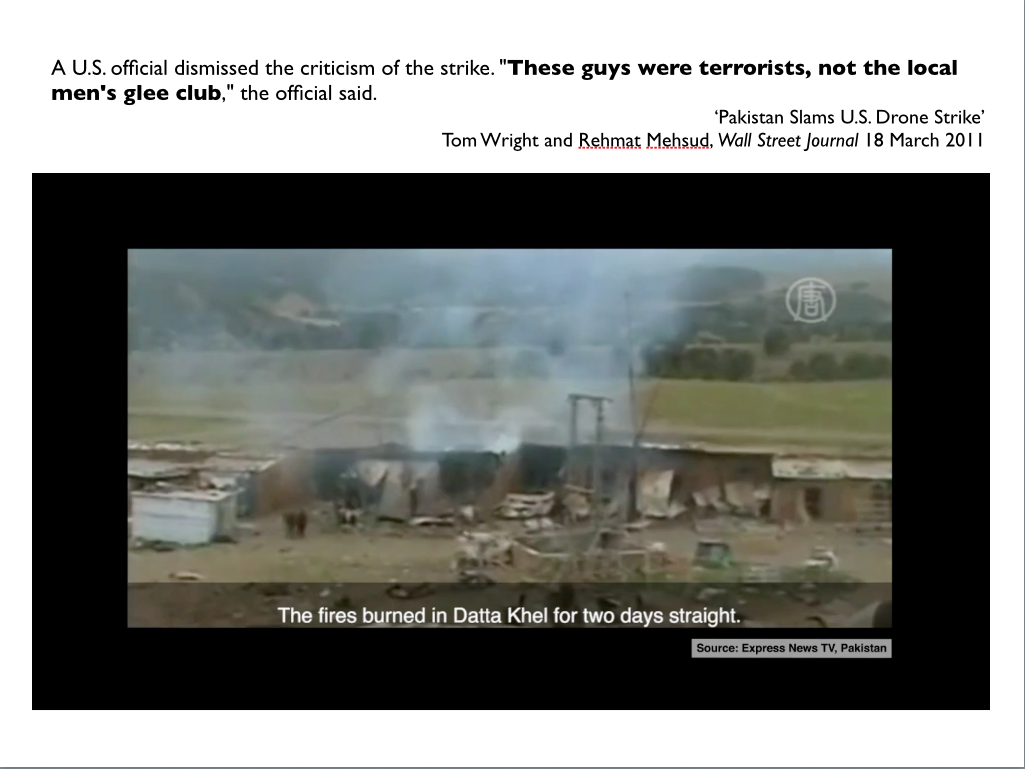
Then all (!) I had to do was go back in to my e-files (each morning I work my way through the press, copying and pasting reports and commentaries into a series of files so that I have my own searchable archive), recover the glosses provided by that anonymous official, and put them together with the reconstruction.  Here’s the result:

Dhatta Khel 1 PNGDhatta Khel 2 PNGDhatta Khel 3 PNG

Dhatta Khel 4 PNGDhatta Khel 5 PNGDhatta Khel 6 PNGDhatta Khel 7 PNGDhatta Khel 8 PNG

You can read more about these reconstructions here (‘The forensics of a lethal drone attack’).  This strike is one of several investigated by the UN’s Special Rapporteur Ben Emmerson, and you can find much more information at the interactive website produced in collaboration with Forensic Architecture and SITU Research that accompanies his written report to the United Nations (28 February 2014) (the Datta Khel incident is summarised in paragraph 50, but the website provides a far richer understanding).  You can also download hi-res versions of Forensic Architecture’s stills and videos here.

3027475-inline-i-un-srct-drone-inquiry

What I find so significant is that the anonymous official provided a series of different and, as I’ve said, bizarre (even offensive) descriptions of what the assembly in Datta Khel was not: but he was clearly incapable of recognising what it was.  This was certainly another performance of the space of exception, but it was plainly not a legal ‘black hole’, as some commentators gloss Agamben.  The only ‘black holes’ were the craters in the ground and the conspicuous failure to recognise the operative presence of customary law.