Flash photography

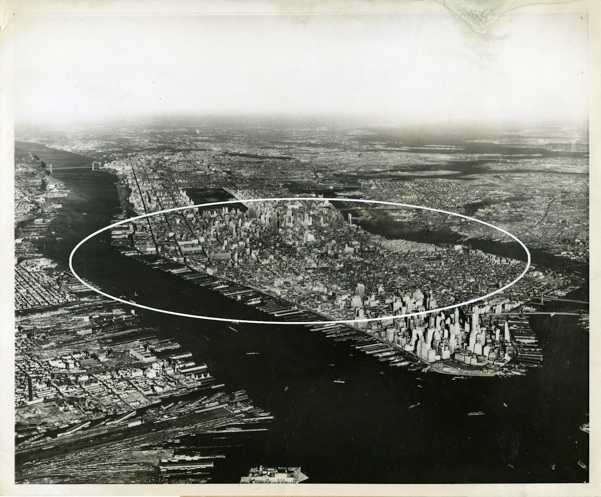
d Press Photo-H-Bomb Can Destroy City, New York, March 31 1954

News from John O’Brian of an important exhibition and book.  The exhibition is After the Flash: photography from the atomic archive, which runs from 10 October through 20 December 2014 at WORK gallery, 10A Acton Street in London.

Photography plays a crucial role in shaping public perceptions of the atomic age and its legacy of anxiety. Cameras not only record nuclear events, but also assist in their production—whether as agents of scientific measurement, propaganda or protest. They witness the unseeable on our behalf, giving form to the invisible forces and forbidden sites that haunt popular conceptions of the nuclear world.

After The Flash: Photography from the Atomic Archive explores the intertwined histories of photography and nuclear technologies, and the camera’s role in constructing the public image of atomic energy and ‘the bomb’. The exhibition contrasts the ‘technological sublime’ that dominates much nuclear-themed photography—from mushroom clouds to cooling towers—with representations of personal encounters and experiences, tracing the hazy lines between spectacle and humanitarian documentation. Photographic fragments offer insight into broader nuclear narratives and reveal recurring tensions between invisibility and visibility, and obliteration and transformation.

The exhibition comprises three sections. Cameras and Clouds reflects on the mutual development of photography and nuclear technologies, and the camera’s role in producing abstracted spectacle, social documentary and scientific record. The second section, At Work in the Fields of the Bomb, identifies the physical and ideological structures relating to nuclear applications, demonstrating the seepage of atomic landscapes and themes into existing social, economic and political narratives; this section draws its title from Robert Del Tredici’s landmark 1987 photographic study of the US nuclear weapons industry. Thirdly, The Culture of Contamination explores individual and social engagement with nuclear imagery and issues, ranging from anti-war protest to homemade fallout shelters and pop cultural appropriations. Anxiety finds an outlet in kitsch as the mythologies of nuclear power permeate culture on both official and vernacular levels..

Drawing on the extensive personal ‘atomic archive’ of art historian and curator John O’Brian, After The Flash focuses on North American visual culture in the early decades of the Cold War from the 1940s to the 1960s, coinciding with the emerging ‘golden age’ of photojournalism.

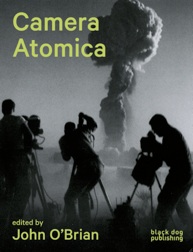
book_coverThe exhibition in turn marks the publication of John’s edited book Camera Atomica, out later this month.  It includes contributions from Julia Bryan-Wilson, Iain Boal and Gene Ray, Douglas Coupland, Blake Fitzpatrick, Susan Schuppli [of Forensic Architecture fame!] and Hiromitsu Toyosaki.

Camera Atomica is co-published by Black Dog Publishing and the Art Gallery of Ontario, and precedes a photographic exhibition at the AGO in 2015.

The optics of urban ruination

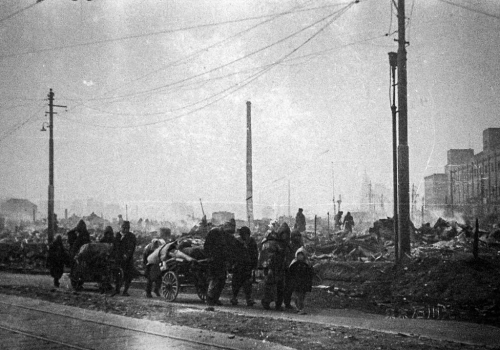
Ishikawa Kōyō

News from David Fedman of a new article co-authored with Cary Karacas, ‘The optics of urban ruination‘, which complements their previous, vital work on the cartographic imaginary of bombing.  It’s published in the Journal of Urban History but you can access it here.

World War II yielded many photographs of bombed-out cities. In this paper we telescope between two sets and scales of images that represent the principal frames through which the American and Japanese publics have memorialized the incendiary bombings that laid waste to urban Japan: aerial photographs taken by the US Army Air Forces during its wartime planning, prosecution, and assessment of the raids; and the ground-level images captured by Ishikawa Kōyō, a photographer working on behalf of the Tokyo Metropolitan Police. By means of a detailed examination of the production, circulation, and consumption of these photographs— what some scholars have called an “archaeological approach” to images of ruination—we explore not only the visual rhetoric and reality of the destruction of Japan’s cities, but also how that destruction is situated in history, memory, and visual culture.

As always with their work, it’s exquisitely written, intellectually savvy and a very powerful argument.  They juxtapose the photographic ‘view from above’ that was instrumental in the planning and execution of the American air raids with Ishikawa Kōyō’s ground-level perspective.  His work is virtual unknown outside Japan and yet, as they say, has become ‘the principal visual testimony in Japan for public memory of the incendiary air raids as they were experienced on the ground’:

What followed were, according to Ishikawa, scenes from hell. His detailed account of that evening indeed repeatedly invokes infernal metaphors to describe Tokyo’s destruction. The “demon’s wings”(akuma no tsubasa) rained fire that carbonized corpses which “flowed through the streets like rapids.”  The elements also conspired against the city to whip up the red winds (akakaze) that fanned the firestorms: “immense incandescent vortices,” he wrote, “rose in a number of places, swirling, flattening, sucking whole blocks of houses into a maelstrom of fire.”

Widespread chaos, intense heat, and the realization of the need to save his own life pre-vented Ishikawa from taking any photographs. His Chevrolet destroyed by flames, he slowly made his way on foot back to the Metropolitan Police Headquarters. After resting his fatigued body, at around 2 P.M. on March 10 Ishikawa set out to document the aftermath. He saw bodies “piled like mountains” (shitai no yama o kizuiteita) and corpses burnt to the point that “you could no longer discern the sex of the body” (danjyo no kubetsu mo tsukanai shitai).

Ishikawa first told himself not to photograph such upsetting images, but then, recalling his responsibilities to capture the “reality of the scenes,” he began to snap the shutter.That day Ishikawa took thirty-three photographs of the aftermath of what came to be called the Great Tokyo Air Raid.

You can find more at Japan Air Raids, a brilliant bilingual archive, and a (harrowing) selection of Ishikawa’s images here.  If you do click on that link, heed their warning:

While photographs such as [these] provide an intimate sense of the bodily pain that was inflicted by the firebombing, they also require much of the viewer. It is one thing to look at such photographs; it is another thing altogether to comprehend or attach meaning to the actual suffering it exposes.

And – do I have to say this? – it’s worth thinking about other scenes of urban ruination.

Following the colours

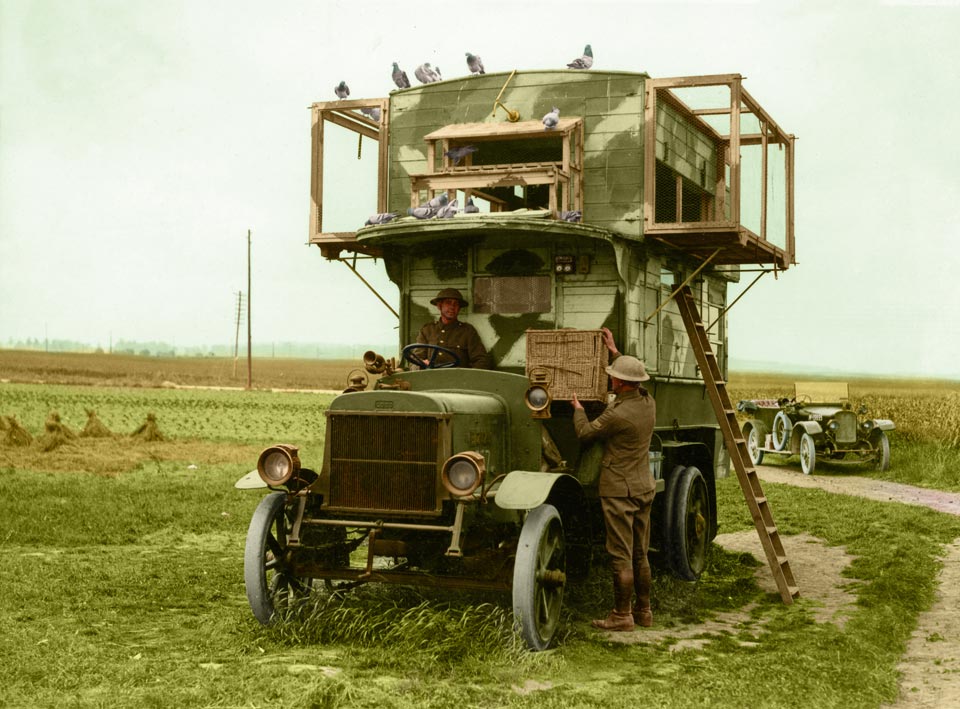
WWI Mobile carrier pigeon-loft

The Open University has just released online a series of ‘colourised’ photographs from the First World War.  My favourite is shown above: a mobile pigeon-loft so that messages could be carried back to GHQ (more on pigeons and the war effort here and especially here; their military service did not end with the First World War).

These were all originally black and white photographs, but Taschen has recently published a much more extensive collection of original colour (‘autochrome’) photographs – you can view some of the images online here – edited by Peter Walther, The First World War in Colour (384 pp).

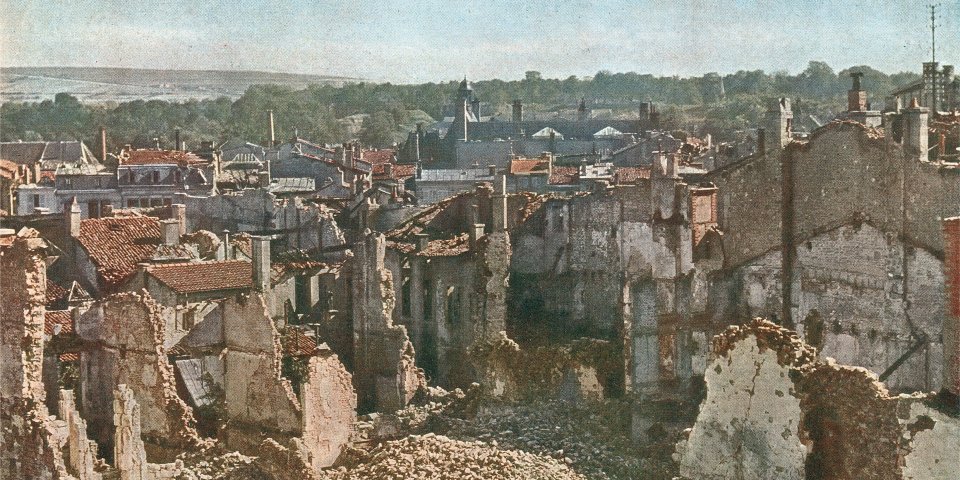
Verdun

In an online announcement the publisher explains:

The devastating events of the First World War were captured in myriad photographs on all sides of the front. Since then, thousands of books of black-and-white photographs of the war have been published as all nations endeavour to comprehend the scale and the carnage of the “greatest catastrophe of the 20th century”. Far less familiar are the rare colour images of the First World War, taken at the time by a small group of photographers pioneering recently developed autochrome technology.

first_world_war_in_color_fo_gb_3d_05794_1406031040_id_813622To mark the centenary of the outbreak of war, this groundbreaking volume brings together all of these remarkable, fully hued pictures of the „war to end war“. Assembled from archives in Europe, the United States and Australia, more than 320 colour photos provide unprecedented access to the most important developments of the period – from the mobilization of 1914 to the victory celebrations in Paris, London and New York in 1919. The volume represents the work of each of the major autochrome pioneers of the period, including Paul Castelnau, Fernand Cuville, Jules Gervais-Courtellemont, Léon Gimpel, Hans Hildenbrand, Frank Hurley, Jean-Baptiste Tournassoud and Charles C. Zoller.

Since the autochrome process required a relatively long exposure time, almost all of the photos depict carefully composed scenes, behind the rapid front-line action. We see poignant group portraits, soldiers preparing for battle, cities ravaged by military bombardment – daily human existence and the devastating consequences on the front. A century on, this unprecedented publication brings a startling human reality to one of the most momentous upheavals in history.

A-Terrible-Beauty-246x348And for an altogether different rendering of the First World War – often but not always in colour – I recommend Paul Gough‘s magisterial account of 15 artists (many of whom saw active service,  A terrible beauty: British artists in the First World War.  You can download the first chapter here, sadly without the illustrations: but Paul’s commentary is incisive, and I found his work really helpful in working on ‘Gabriel’s Map’, especially his essays on military sketching which considerably enlarged my sense of the ‘cartographic imaginary’ on the Western Front.  Gerry Corden has a fine account of the book here, and includes many excellent images including the work of my favourite C.W.R. Nevinson.  Finally, Paul’s own website is here: click on Vortex 1 through 5 at the bottom.

Not a pigeon in sight, though.

Seeing Machines

VIRILIO Vision machineIn a series of posts on photography Trevor Paglen provides some ideas that intersect with my own work on Militarized Vision and ‘seeing like a military’.  First, riffing off Paul Virilio, Trevor develops the idea of photography as a ‘seeing machine‘:

‘Seeing machines is an expansive definition of photography. It is intended to encompass the myriad ways that not only humans use technology to “see” the world, but the ways machines see the world for other machines. Seeing machines includes familiar photographic devices and categories like viewfinder cameras and photosensitive films and papers, but quickly moves far beyond that. It embraces everything from iPhones to airport security backscatter-imaging devices, from electro-optical reconnaissance satellites in low-earth orbit, to QR code readers at supermarket checkouts, from border checkpoint facial-recognition surveillance cameras to privatized networks of Automated License Plate Recognition systems, and from military wide-area-airborne-surveillance systems, to the roving cameras on board legions of Google’s Street View” cars.

What’s more, the idea of seeing machines I’m sketching out here isn’t confined to the imaging devices and systems I’ve described in broad strokes. The definition extends to include the images (or data) produced by such imaging systems, the digital metadata associated with those images, as well as additional systems for storage, archiving, search and interpretation (either human or algorithmic). Finally, and crucially, seeing machines encompasses not only imaging systems, search, and storage capacities, it encompasses something a bit more abstract, namely the “styles” or “practices” of seeing that different imaging systems enable (i.e. the difference between what a view camera and an automated license-plate reading camera “want” to do and how they see the world differently).  Crucially, the definition of photography I’m proposing here encompasses imaging devices (“cameras” broadly understood), the data (“images” being one possible manifestation of that data) they produce, and the seeing-practices with which they are enmeshed.’

In a subsequent post on Geographies of Photography Trevor then links these seeing-practices to what he calls the production of space (and what I now prefer to think of as performances of space), and uses the example of the Reaper to illustrate what he has in mind:

What exactly is a Reaper drone? In essence, it’s a camera attached to a remote-controlled airplane. Sometimes it carries missiles. What’s particular about a Reaper drone (and other drones in its larger family, including the Predator and the Sentinel) is that airplane, pilot, navigator, analysts, and commander don’t have to be in the same place. The aircraft might be flying a combat mission in Yemen by a pilot based in Nevada, overseen by a manager in Virginia, and supported by intelligence officers in Tampa (geographer Derek Gregory has written about what he calls “Drone Geographies.”) The drone creates its own “relative” geographies, folding several noncontiguous spaces around the globe into a single, distributed, “battlefield.” The folding of space-time that the Reaper drone system enables is a contemporary version of what Marx famously called the “annihilation of space with time,” i.e. the ability to capitalize on the speed of new transportation and communications technologies to bring disparate spaces “closer” together, relatively speaking.

I think that’s more or less right: these new, networked political technologies of vision have been instrumental in the production of a non-linear and discontinuous battlespace, threaded by wormholes that connect one site to another.  But, as I’ll try to show when I eventually get to my post on Uruzgan, the process is far from seamless, the folds are more fragile than most of us realise, and the discontinuities and ruptures are as important as the connections for the administration of military violence.

Headings

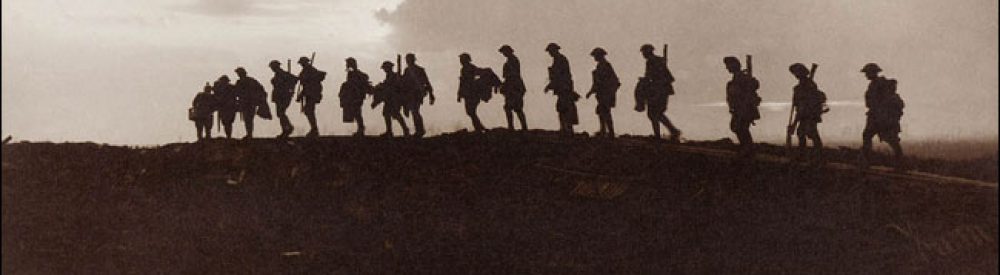
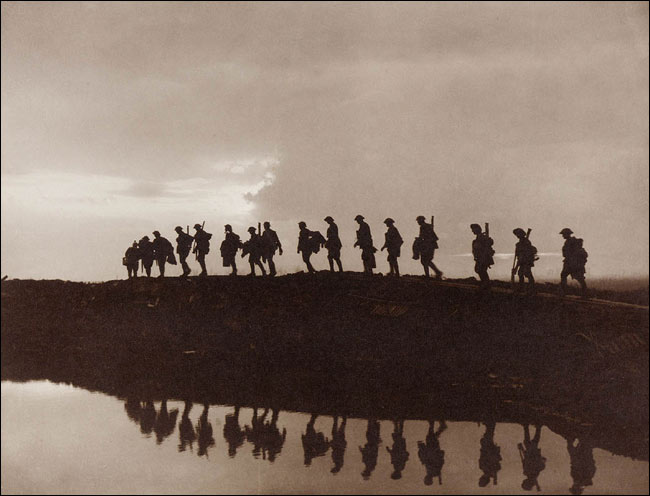
I’ve changed the header for this site; the original was cropped from a famous Frank Hurley image – perhaps the most famous Frank Hurley image – showing Australian infantry moving up to the front near Hooge in October 1917:

forward

I’ve written about Hurley before, and it turns out that this may be one of his many manipulated images: see Bob Meade‘s detective work here (though see the cautionary notes in the comments too).

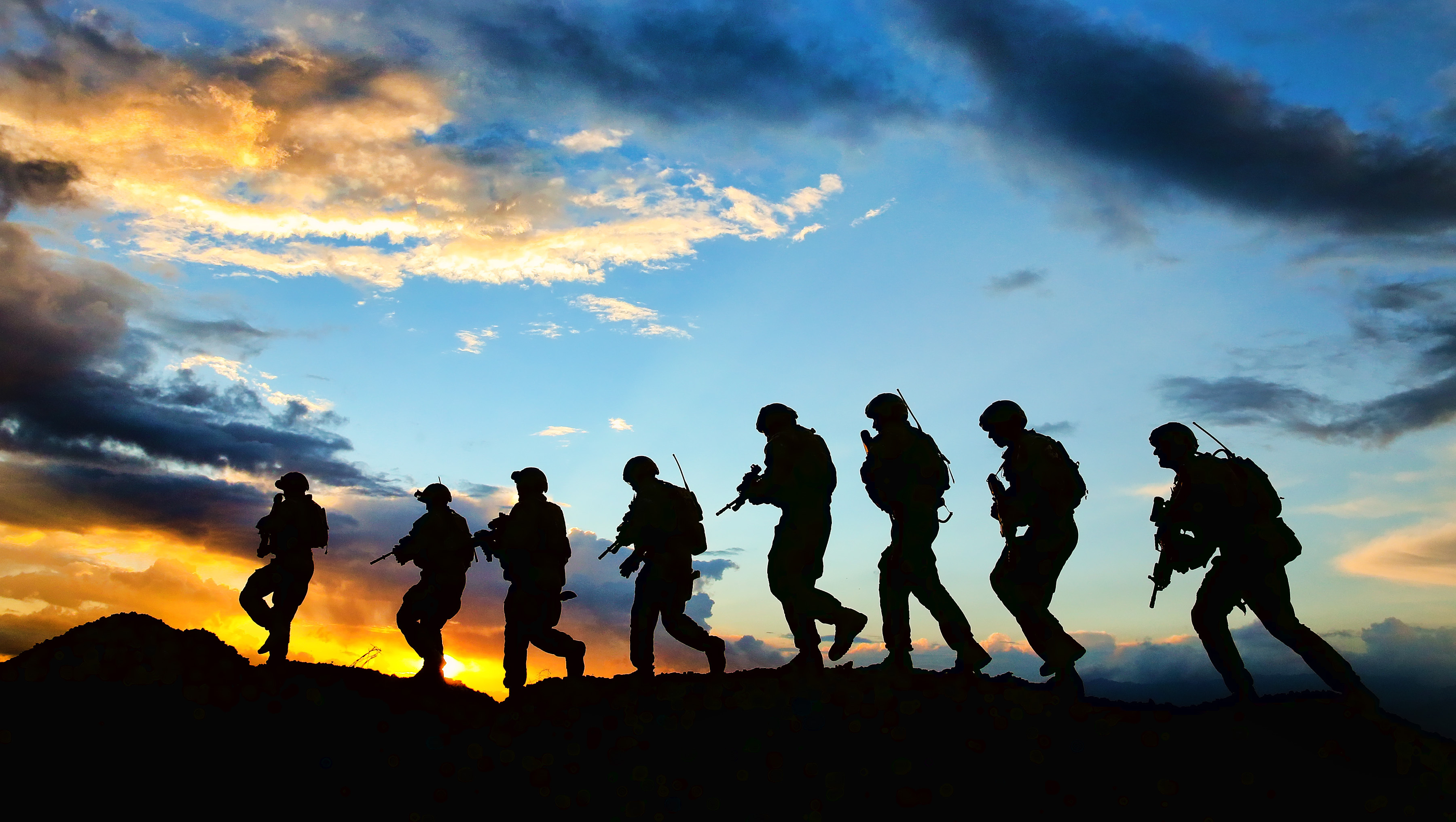
While I was doing some image research for my presentation at the Association of American Geographers in Tampa, I discovered the parallel, contemporary  image I’ve substituted.  Here is the uncropped image, taken by Mark Doran, which shows soldiers from the 7th Battalion Royal Australian Regiment at sunset at Tarin Kot (Uruzgan, Afghanistan) in 2013:

Sunset shadows in Uruzgan


Cracks in the Wall?

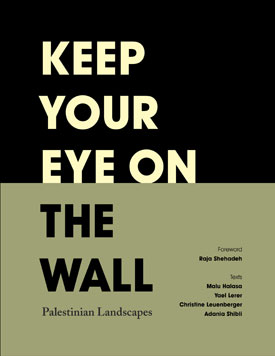
Keep-Your-Eye-on-the-WallThere’s a fine series of reflections by Andrew Ryder at Warscapes on a new book of photographs and essays on the Wall that Israel has built deep inside the occupied West Bank, Keep your eye on the Wall: Palestinian landscapes.  As Andrew notes,

‘The wall is a nuisance and eyesore; it is a scar in the natural landscape and the social body. It is congealed theft, and an act of violence.’

Eyal Weizman‘s Hollow Land tells us much about the way in which Israel’s neo-colonial project is inscribed through a series of visual practices – a scopic regime of extraordinary, ever-present and brooding violence – but Andrew’s commentary reminds us of another, no less artful politics of looking.  He engages in a wonderfully suggestive, deeply critical way with the aesthetics of dispossession and oppression:

While I found many of the photos in this book upsetting, I think that a traditionally aesthetic standpoint toward the wall, a disinterested interest, is particularly horrifying because it occludes something that was always obvious to me every time I looked at the wall, which was its manifest injustice.

Throughout the book, there are moments that the wall appears too static, imposing and impermeable. I found a lack of witness to the gaps and even the fragility of the structure. There seems little evidence of soldiers, checkpoints, settlements, refugee camps or the other evidence of dynamism or vulnerability in the territorial apparatus that the Israeli state has constructed.

The gaps I understand, but fragility?  vulnerability?  If only.  As Shakespeare put in in A Midsummer Night’s Dream,

O wicked Wall through whom I see no bliss!
Cursed be thy stones for thus deceiving me!
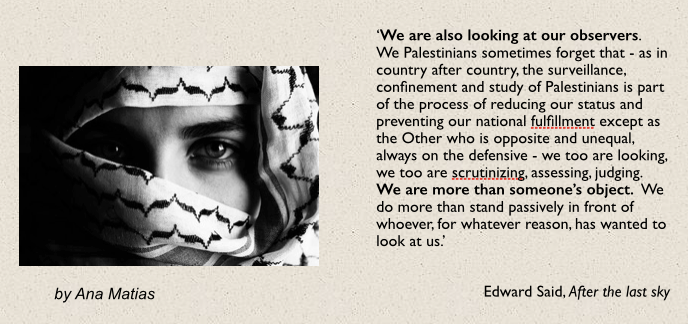
Others have travelled this route before, of course: I’ve already noted other critical reflections on the political and ethical snares set by any attempt to photograph the monstrosity.  And yet the collection that Andrew discusses is well-titled.  As Edward Said reminded his readers:
Observer and observed
For a different take on the political aesthetics of the occupied landscape – though not on the Wall – see Daniel Bertrand Monk’s An aesthetic occupation: the immediacy of architecture and the Palestine conflict (2002).

Stilled life

In my last post I drew attention to China Miéville‘s essay on the Israeli Wall that gashes occupied Palestine which was, in part, a portfolio of photographs, and to Helga Tawil-Souri‘s anguished questions about photographing the monstrosity:

What am I supposed to do with a string of images? How will I put them back together to tell a story when there is no story to be told anymore? Photographing it, filming it, trying to write about it, only contradicts its very nature: a time-space of interruption, of suspension.

Others have reflected on these issues too: see, for example, Simon Faulkner, ‘The most photographed wall in the world’, Photographies 5 (2) (2012) 223-42:

On the one hand, the Wall has become a patently visible structure around which to galvanize opposition to the Israeli occupation. On the other, this very visibility is a problem in that it has tended to reduce the occupation to the Wall.

WALL

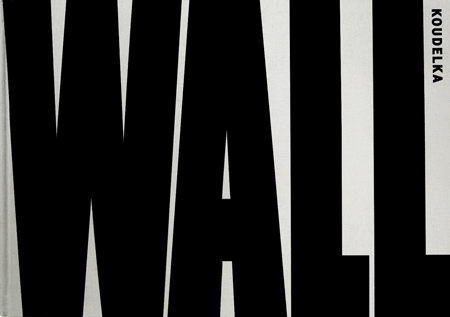
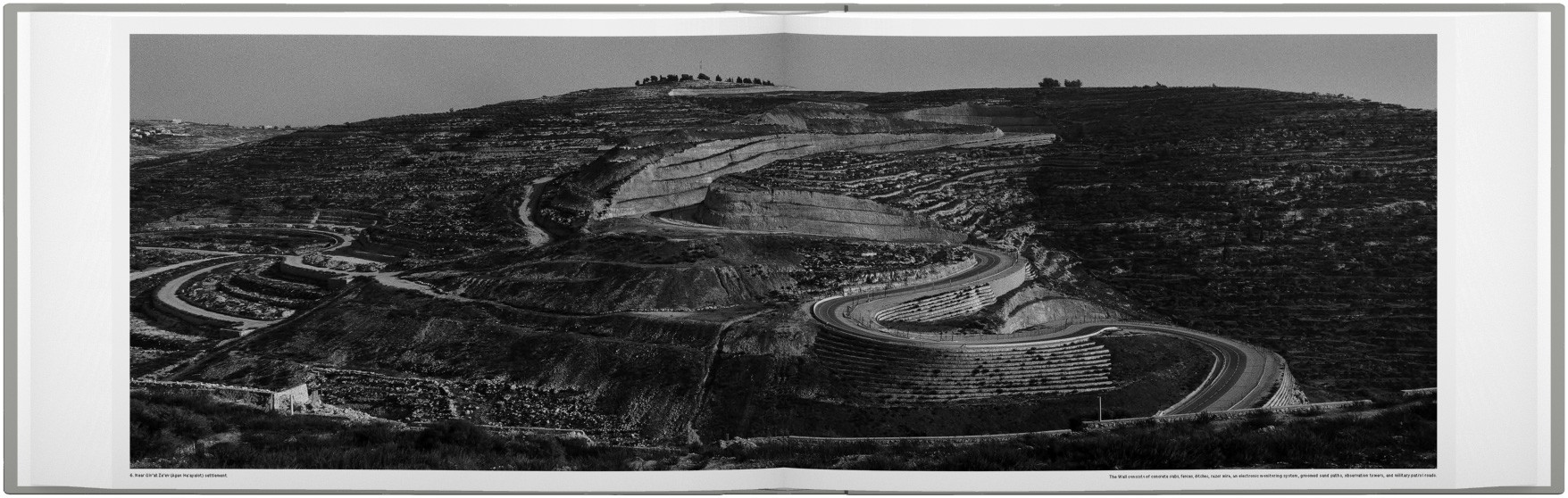
But I’m particularly taken by the work of the Czech (‘I’m not Czech like the Czechs’) engineer-turned-photographer Josef Koudelka whose Wall (published by Aperture last month) records his own encounters with the structure between 2008 and 2012 and whose gaze reaches beyond the wall itself into the wider landscape of occupation, exaction and repression.

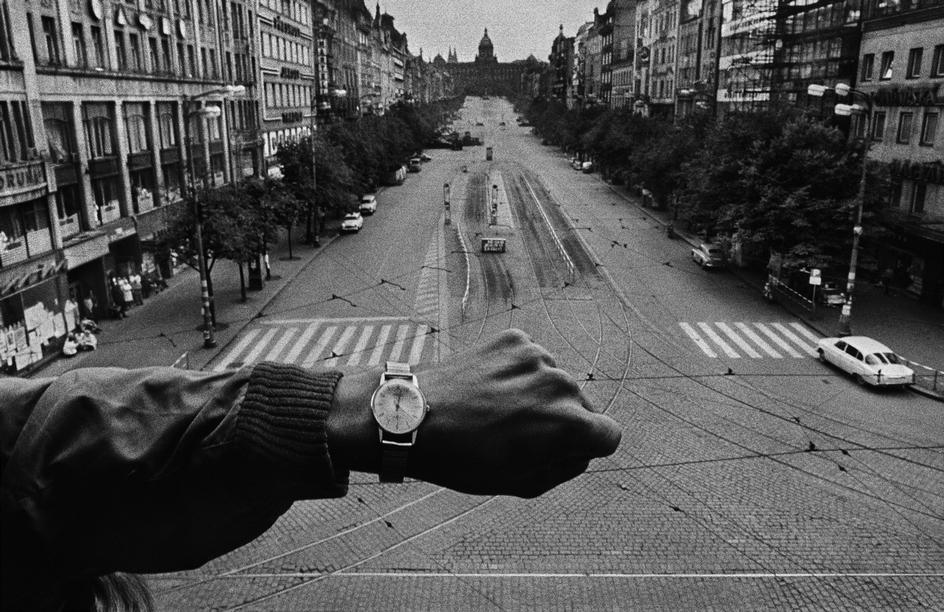
Koudelka’s work first captured public attention in 1968 when he courageously documented the Soviet-led occupation of Czechoslovakia.  ‘I grew up behind a wall,’ he told Ha’aretz, ‘and because of that experience I am very sensitive to all the people who grew up behind a wall.’

KOUDELKA Prague 68

His publisher explains that the new book is part of a larger project, This Place, initiated by photographer Frédéric Brenner:

This Place explores Israel as place and metaphor through the eyes of 12 acclaimed photographers, who were invited to look beyond dominant political narratives and to explore the complexity of the place – not to judge, but to question and to reveal.

It’s not easy to track down much information about the project, which included photographers like Jeff Wall and Gilles Peress, but a New York Times report from December 2011 described Koudelka’s response:

Though he is not a political person, he said, “it is not easy for me in this country. I don’t see things that make me very cheerful.” He said he was focusing on “the crime against the landscape, in the most holy landscape for humanity.”

KOUDELKA Wall

And over at the New York Review of Books blog David Shulman has an exceptionally fine meditation on the wall and Koudelka’s Wall, which includes a series of images from the book:

Koudelka’s pictures have an eerie, meditative texture. Many of them are structured around the glaring contrast between the Wall, always intrusive, harsh, ophidian, and the organic, still living world of hills, terraces, and valleys on either side of it. Paradoxically, these photographs are beautiful, almost too beautiful, to look at—despite, or perhaps because of, the raw wound they reveal. Look, for example, at the graveyard of decimated olive trees in an area earmarked for annexation to the east of Jerusalem. I have known Palestinian farmers who treat their olive trees—sometimes their main life support—like beloved children, and who sit in mourning when a tree is killed by settlers or soldiers…

To my mind the most powerful of Koudelka’s images is the final one in the book: Wall to the left, Wall to the right, a menacing emptiness in between, a lifeless place fixed in concrete and leading nowhere, despite the sadly hopeful sign pasted on the left-hand wall, pointing one way to Jerusalem, and the other way to Rachel’s Tomb, where the Matriarch Rachel weeps for her children.

And yet, as Shulman implies and James Johnson reiterates here, these images are empty of life and, at the limit, the panoramic gaze seems to ‘depersonalise suffering’… (which, if you follow Eyal Weizman‘s Hollow Land, should come as no surprise, though I think it’s also possible to read these photographs in other, mournful – indeed, haunted – ways).  More from Shulman in his Dark Hope: working for peace in Israel and Palestine (2003).


Another brick in the wall

When I was writing the Israel/Palestine chapters in The Colonial Present the vast, wretched landscape of occupation and repression was numbingly new to me (though it shouldn’t have been). I found little help from mainstream geography, with some honourable exceptions, and I vividly remember my first visit to the West Bank with Steve Graham, Eyal Weizman and others.  You would think I would have been prepared: I’d certainly read everything I could lay my hands on.

Wall

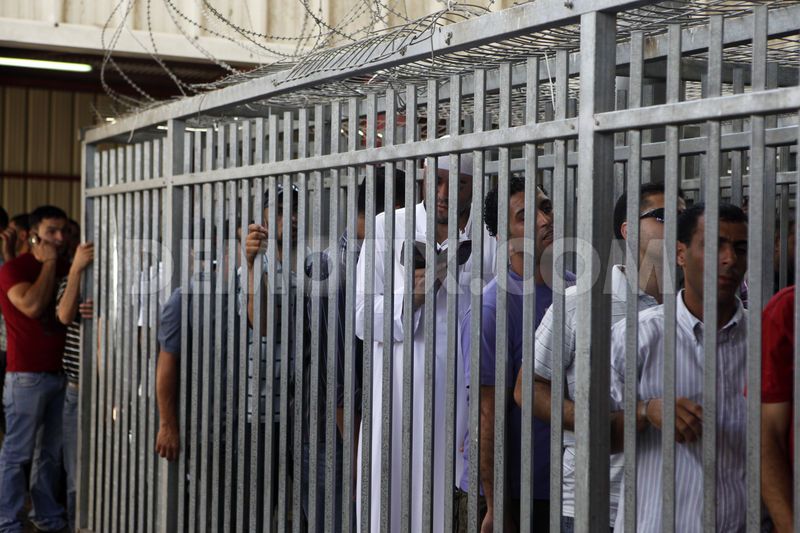
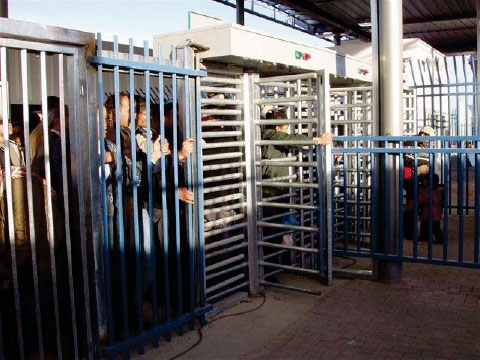
But nothing prepares you for the enormity of the occupation, its monstrous violence and everyday humiliations, and the sight of the wall snaking across the landscape – what Ariella Azoulay and Adi Ophir call ‘the Monster’s Tail’ – remains one of the most appalling impositions I have ever seen.  Neither was I ready for the iron-clad violence of the Qalandiyya checkpoint, whose enclosures, grills and bars that would not have been out of place in an abbatoir could barely contain the brooding militarised violence of those who constructed it: but of course they weren’t supposed to.

1379713379-palestinians-wait-at-qalandia-checkpoint_2738542

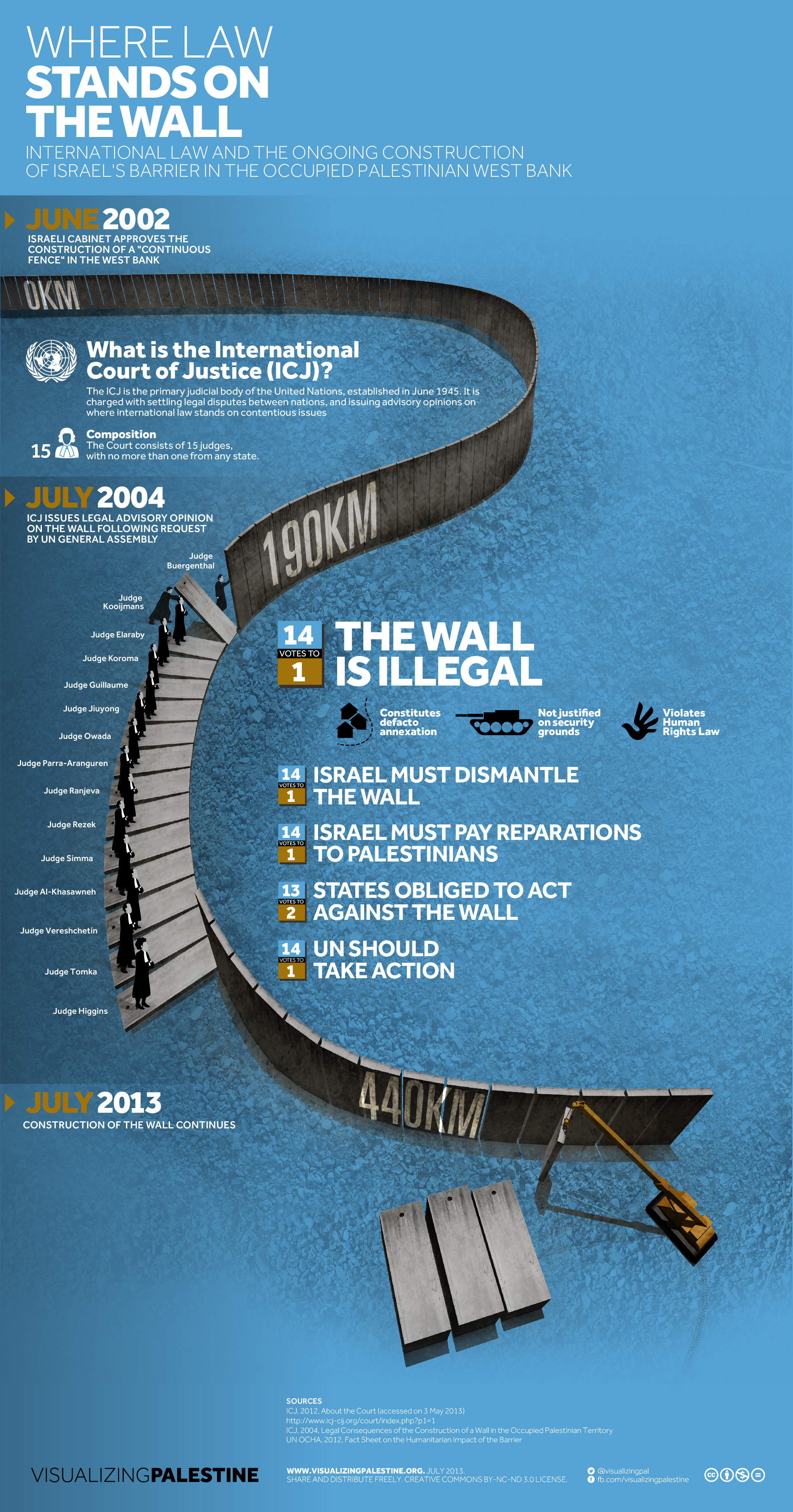
Since then, much of this has become all too familiar – which is part of the problem – but there are now many more geographers doing vitally important work on occupied Palestine.  Visualizing Palestine has recently added this new infographic about the wall to its excellent portfolio:

VP Where Law stands on the Wall

The focus adds yet another dimension to contemporary discussions about international law and what Michael Smith calls ‘geo-legalities’.  I’m keenly interested in those arguments, but today I’m led down this path by a new essay –part prose, part photography – composed by China Miéville for the Palestinian Literature Festival and performed by him at Nablus.

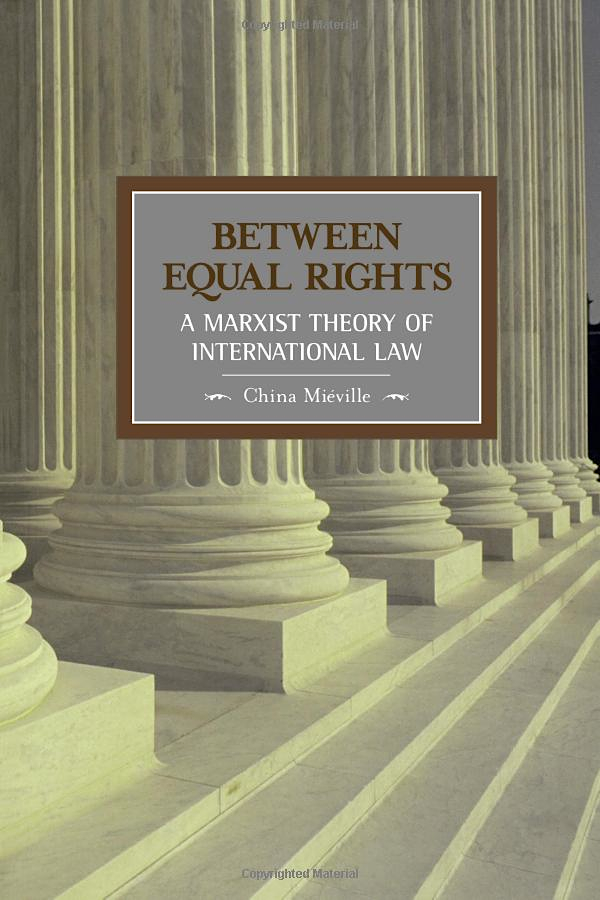
MIEVILLE Beyond equal rightsMiéville is best known as a novelist (and one with an intriguing geographical sensibility at that), but he’s no stranger to international law either: his Between Equal Rights: a Marxist theory of international law (2006) has been widely acclaimed. Yet this morning I’m seized by his photo-literary apprehension of the familiar unreality of the landscape of occupation:

Yes, we know the holy land is now a land of holes, and lines, a freakshow of topography gone utterly and hideously mad, that the war against Palestinians is also a war against everyday life, against human space, a war waged with all expected hardware, with violent weaponized absurdism, with tons and tons of concrete and girders.  This is truism, and/but true.

His experience of crossing the line reminds me of my own, though he captures its Kafka-esque horror far more vividly:

And in its wedge of shadow the long stupid zigzag of the checkpoint between Bethlehem and Jerusalem is indicated with a sign, there on the Bethlehem side. Entrance, it says, white on green, and points to the cattle run. Inside are all the ranks of places to wait, the revolving grinder doors, green lights that may or may not mean a thing, the conveyor belts and metal detectors and soldiers and more doors, more metal striae, more gates.

Finally, for those who emerge on the city side, who come out in the sun and go on, there is a sign they, you, we have seen before. White on green, pointing back the way just come.

Entrance, it says. Just like its counterpart on the other side of a line of division, a non-place.

No exit is marked.

The arrows both point in. Straight towards each other. The logic of the worst dream. They beckon. They are for those who will always be outside, and they point the way to go. Enter to discover you’ve gone the only way, exactly the wrong way.

Entrance: a serious injunction. A demand. Their pointing is the pull of a black hole. Their directions meet at a horizon. Was it ever a gateway between? A checkpoint become its own end.

This is the plan. The arrows point force at each other like the walls of a trash compactor. Obey them and people will slowly approach each other and edge closer and closer from each side and meet at last, head on like women and men walking into their own reflections, but mashed instead into each other, crushed into a mass.

Entrance, entrance. These directions are peremptory, their signwriters voracious, insisting on obedience everywhere, impatient for the whole of Palestine to take its turn, the turn demanded, until every woman and man and child is waiting on one side or the other in long long lines, snaking across their land like the wall, shuffling into Israel’s eternal and undivided capital, CheckPointVille, at which all compasses point, towards which winds go, and there at the end of the metal run the huge, docile, cow-like crowds will in this fond, politicidal, necrocidal, psyche-cidal fantasy, meet and keep taking tiny steps forward held up by the narrowness of the walls until they press into each others’ substance and their skins breach and their bones mix and they fall into gravity one with the next. Palestine as plasma. Amorphous. Amoebal. Condensed. Women and men at point zero. Shrunken by weight, eaten and not digested. An infinite mass, in an infinitely small space.

If you can bear to read more about this ‘non-place’, as Mieville calls it, try Helga Tawil-Souri, ‘Qalandia checkpoint as space and nonplace’, Space and culture 14 (1) (2011) 4-26; Irus Braverman, ‘Civilized borders: a study of Israel’s new crossing administration’, Antipode 43 (2) (2011) 264-95; Hagar Kotef and Merav Amir, ‘Between imaginary lines: violence and its justifications at the military checkpoints in occupied Palestine’, Theory, culture and society 28 (1) (2011) 55-50; and Merav Amir, ‘The making of a void sovereignty: political implications of the military checkpoints in the West Bank’. Environment and Planning D: Society & Space 31 (2013) 227-44.

qalandia_b

These are all behind paywalls, and if you can’t pass through those walls – and even if you can – I also recommend an open access essay by Helga Tawil-Souri, ‘Qalandia: an autopsy’, Jerusalem Quarterly 45 (2011) available here.  It’s a brilliant essay, and apart from what it has to tell us about the checkpoint (or ‘terminal’, as the Israelis prefer), like Miéville’s it also has much to teach us about the power of prose and the material politics of representation:

 Qalandia is dead because this time I find it impossible to photograph. I am paralyzed. Where do I stand? What do I document? Why am I even bothering? What am I supposed to do with a string of images? How will I put them back together to tell a story when there is no story to be told anymore? Photographing it, filming it, trying to write about it, only contradicts its very nature: a time-space of interruption, of suspension.  The checkpoint disjoints, tears the limbs off of my body; to want to tell its ‘story’ is a form of re-con-joining. I cannot. It has taken that right away from us.

Image wars

STALLABRASS Memory of FireI’m still putting together the programme for my graduate course this term (I’ll post the full outline under the TEACHING tab as soon as it’s ready), and I plan to spend some time on what I’m calling Militarized vision and imag(in)ing modern war.

Images have become increasingly important to the conduct of war; in Precarious Life Judith Butler argues that ‘there is no way to separate, under present historical conditions, the material reality of war from those representational regimes through which it operates and which rationalize its own operation.’  This requires us to think carefully about two, closely related issues – media representations of military violence and its effects, and the ways in which militaries have incorporated political technologies of vision into their operations.

I’m thinking of beginning with these two readings:

Bernd Hüppauf, ‘Experiences of modern warfare and the crisis of representation’, New German Critique 59 (1993) 41-76.

Lilie Chouliaraki, ‘The humanity of war: iconic photojournalism of the battlefield, 1914-2012’, Visual communication 12 (3) (2013) 315-340

Then I want to turn to the scopic regimes of advanced militaries, via Virilio and transcripts of several US military investigations into air strikes in Afghanistan and Iraq, to open up a discussion of targeting and political technologies of vision.  (This is probably also the place to say that, since I started to think through the relation between technoculture, targeted killing and the individuation of warfare I’ve also been thinking about the work of Bernard Stiegler; more later, but in the meantime you’ll find a truly excellent bibliography by cultural geographer Sam Kinsley here).

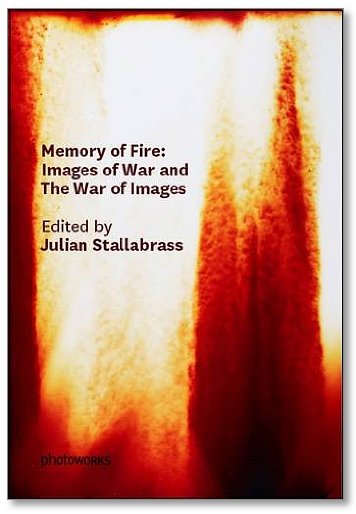
All of this opens up wide fields for debate, of course, but as I was putting together a list of supplementary materials I stumbled upon a new collection edited by Julian Stallabrass, Memory of fire: Images of war and the war of images (Photoworks, 2013):

This richly illustrated book is a visual, theoretical and historical resource about the photography of war, and how images are used as instruments of war. It comprises essays and interviews by prominent theorists, artists and photographers and covers the urgent issues of the depiction of war, the use of images of war by the media, various forms of censorship, the military as a PR and image-producing machine, the circulation of unofficial images and the impact of the digital mediascape.

Full details here , a four-pager in which Stallabrass discusses ‘Rearranging corpses, curatorially’ here, and a video in which he explains the project here:

There’s no shortage of work on these issues, I know, but there’s a particularly detailed engagement with Memory of Fire by Susie Linfield  author of The cruel radiance: photography and political violence (University of Chicago Press, 2010) – here and a sharp response from Stallabrass (scroll down).  There’s also a shorter but still informative review by Ashitha Nagesh at the always stimulating bookforum here.

Finally, you can find Stallabrass’s (2006) reaction to Retort’s Afflicted Powers and its engagement with ‘image wars’, ‘Spectacle and Terror’, on open access at the New Left Review here.

City of Ruins

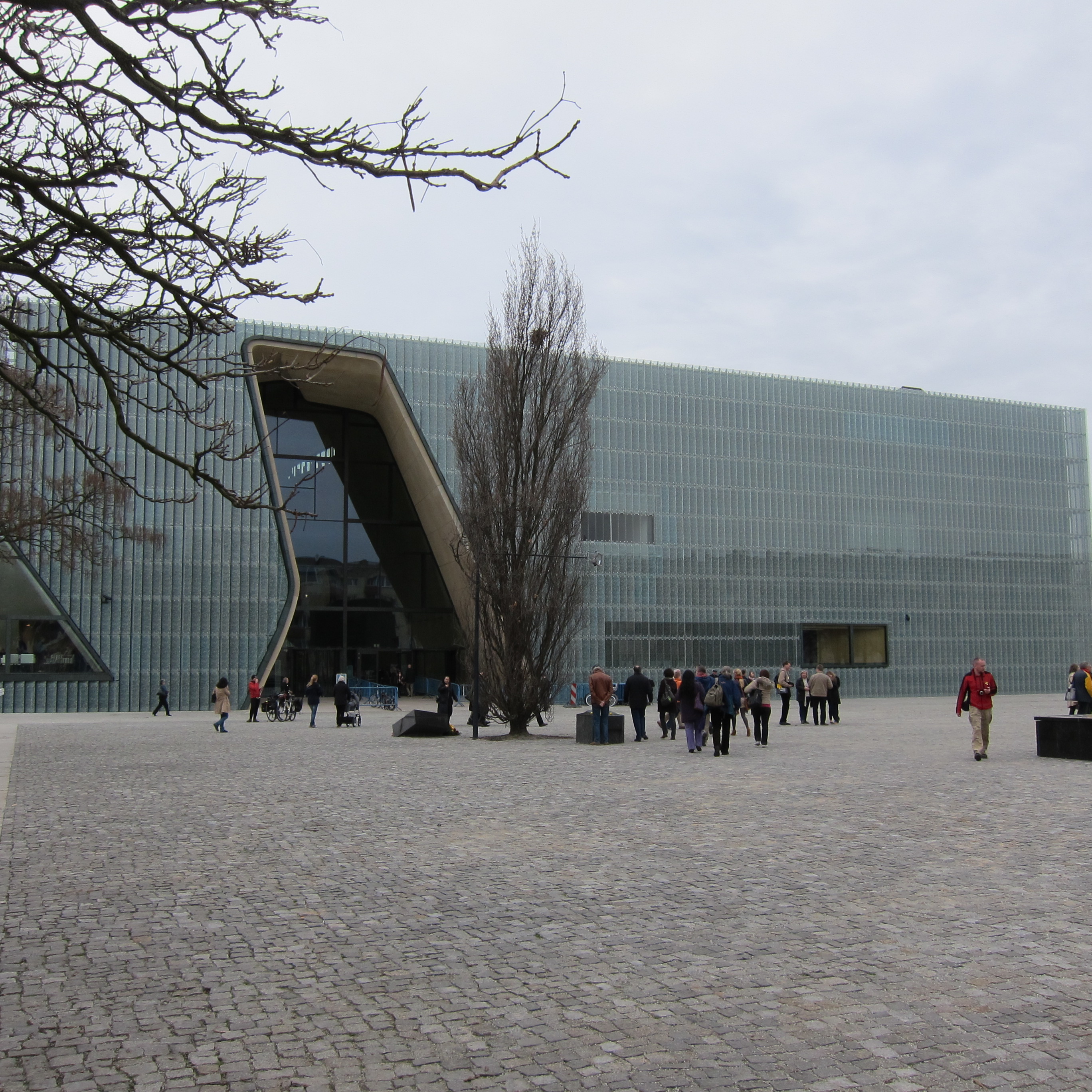
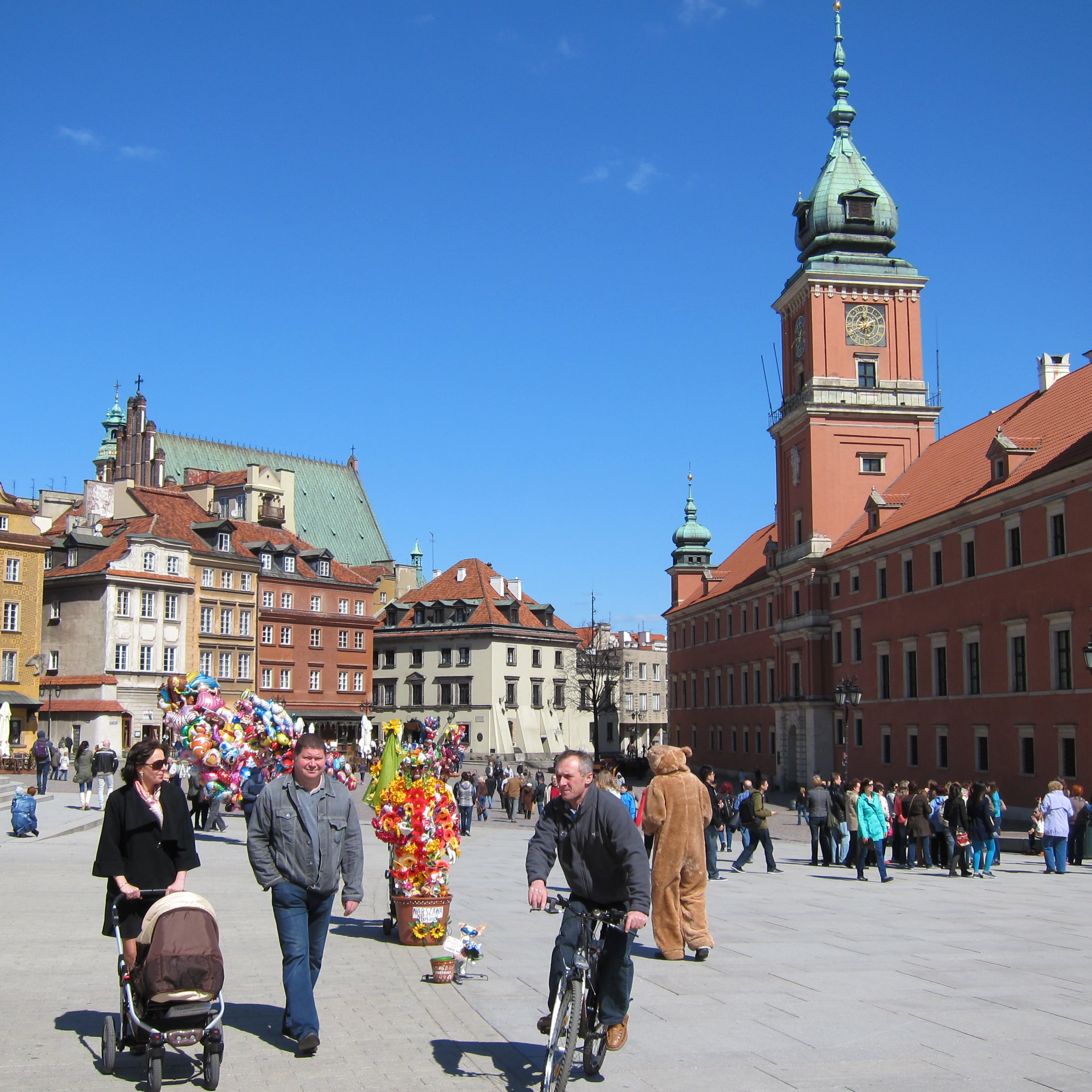
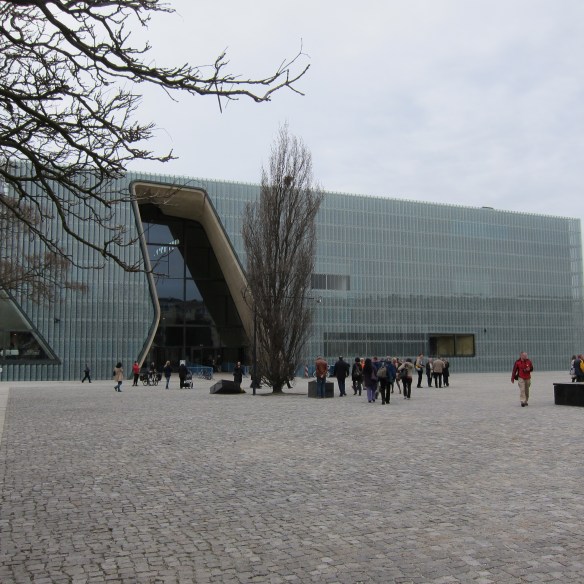
I was in Warsaw over the week-end, and my visit coincided with the opening of the new building for the Museum of the History of Polish Jews on the 70th anniversary of the Warsaw Ghetto Uprising. Even in its presently empty state, it’s a stunning place.
IMG_0525

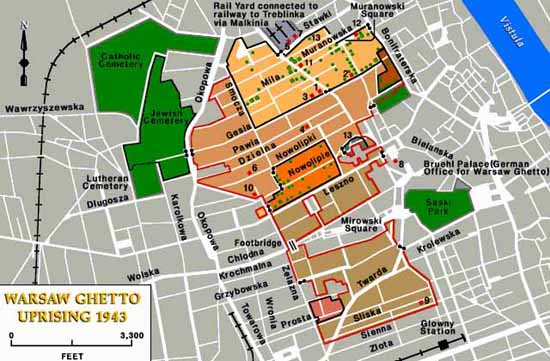
Its Core Exhibition, developed under the supervision of Barbara Kirshenblatt-Gimblett, will display the thousand-year history of Jews in Poland, but the Museum has been built on the site of a pre-war Jewish neighbourhood where in October-November 1940 the Germans established the largest Jewish ghetto in Nazi-occupied Europe and razed it to the ground less than three years later.  And it’s this recent catastrophe (along with others) that invests so much of Warsaw with its contemporary historicity.
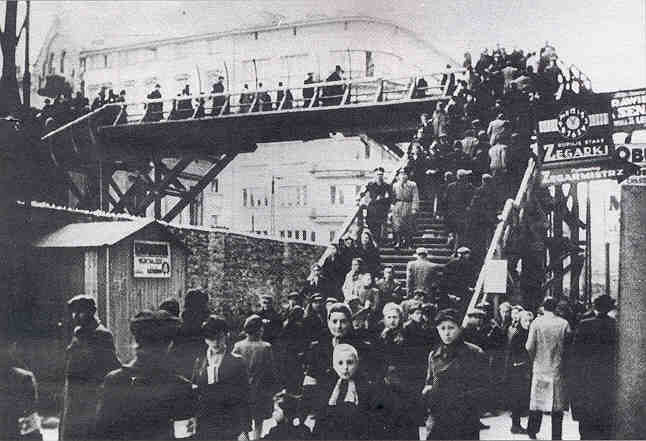
Warsaw Ghetto

You can find a sequence of other chilling maps of the Ghetto (and a helpful critical discussion of them) here, basic accounts of the process of its formation here, an excellent summary survey of the Uprising here and a shorter one here.  By 1943 hundreds of thousands of Jews had been deported from the Ghetto to concentration camps, and according to Deutsche Welle:

In early 1943, Heinrich Himmler ordered the final liquidation of the ghetto. Until then, most Jews had rejected armed resistance, including for religious reasons. But when the last mass deportation was about to begin, hundreds of young Jews decided to fight.

On April 19, 1943, the approaching German units met unexpected resistance. The young Jews were aware of their hopeless situation – they had no weapons, food or support. Yet they endured for three weeks, delivering a fierce battle. When the Germans surrounded the insurgents’ bunker in early May, they collectively committed suicide.

“They wanted to decide themselves how to die,” said Zygmunt Stepinski, director of the Museum of the History of Polish Jews in Warsaw. He called their deaths a political manifesto. “They wanted to show that Jews could defend themselves and that they organized the first-ever uprising against the Nazis,” he said.

13,000 Jews were killed during the Uprising, and most of the surviving 50,000 were deported to concentration and extermination camps.

The Museum has been designed by a Finnish architect, Rainer Mahlamäki, and his studio.  To some degree, in its bridge suspended over the Main Hall, defined by the soaring, undulating walls that divide the Museum into its two parts,  the building reinscribes the division of the ghetto into two and the bridge that joined the one to the other (over Chlodna Street, an ‘Aryan’ thoroughfare), but more significantly it’s intended as ‘a bridge across the chasm created by the Holocaust – a bridge across time, continents and people.’
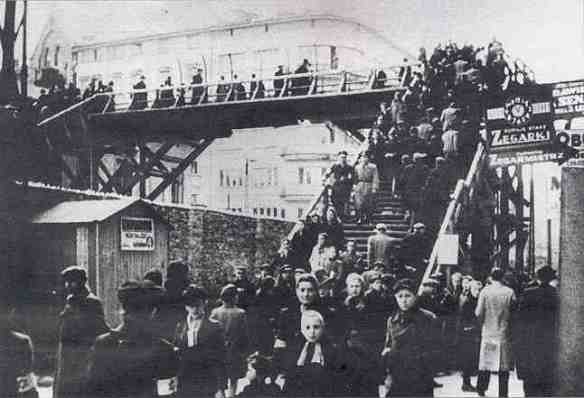
bridge2

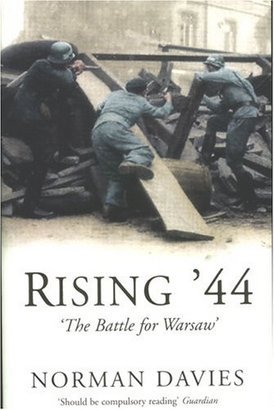
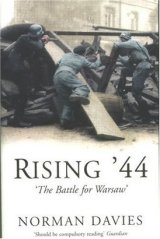
DAVIES Rising '44Many of those involved in the Museum project have suggested that the 1943 Uprising was a crucial inspiration for the general Warsaw Rising in 1944. This started on 1 August, and the insurgent Polish Home Army held out for 63 days of intensive urban warfare which left 16,000 of them dead along with 150-200,00 civilians.  The best English-language narrative of these courageous and horrifying events is probably Norman Davies‘s Rising ’44.

To make sense of this on the ground and to recover its material traces, we turned to the Warsaw Rising Museum, which included City of Ruins, an extraordinary 3-D simulation of American Liberator flights over the city in 1945 (advertised as the world’s first digital stereoscopic simulation of a city destroyed during the war: more on the project and how it was achieved here) –

– and to an outdoor/indoor exhibition of colour photographs of the ruined city taken by a young American architectural student, Henry N. Cobb, in 1947: The Colors of Ruin.  You can see some of Cobb’s photographs here, and Vimeo has this interview with him which includes a number of incredible images too:

Why such wholesale destruction? Under the terms of the surrender document agreed by the Polish Home Army in October 1944, the insurgents and the civilian population were expelled from the city into transit camps, from where they were deported to concentration camps.  According to some accounts, Hitler issued Command #2 on 11 October, realizing his pre-war dream of the total destruction of the city: ‘Warsaw is to be razed to the ground while the war proceeds.’  Six days later Himmler made sure his officers understood exactly what was intended:

‘The city must completely disappear from the surface of the earth… No stone can remain standing. Every building must be razed to its foundation.’

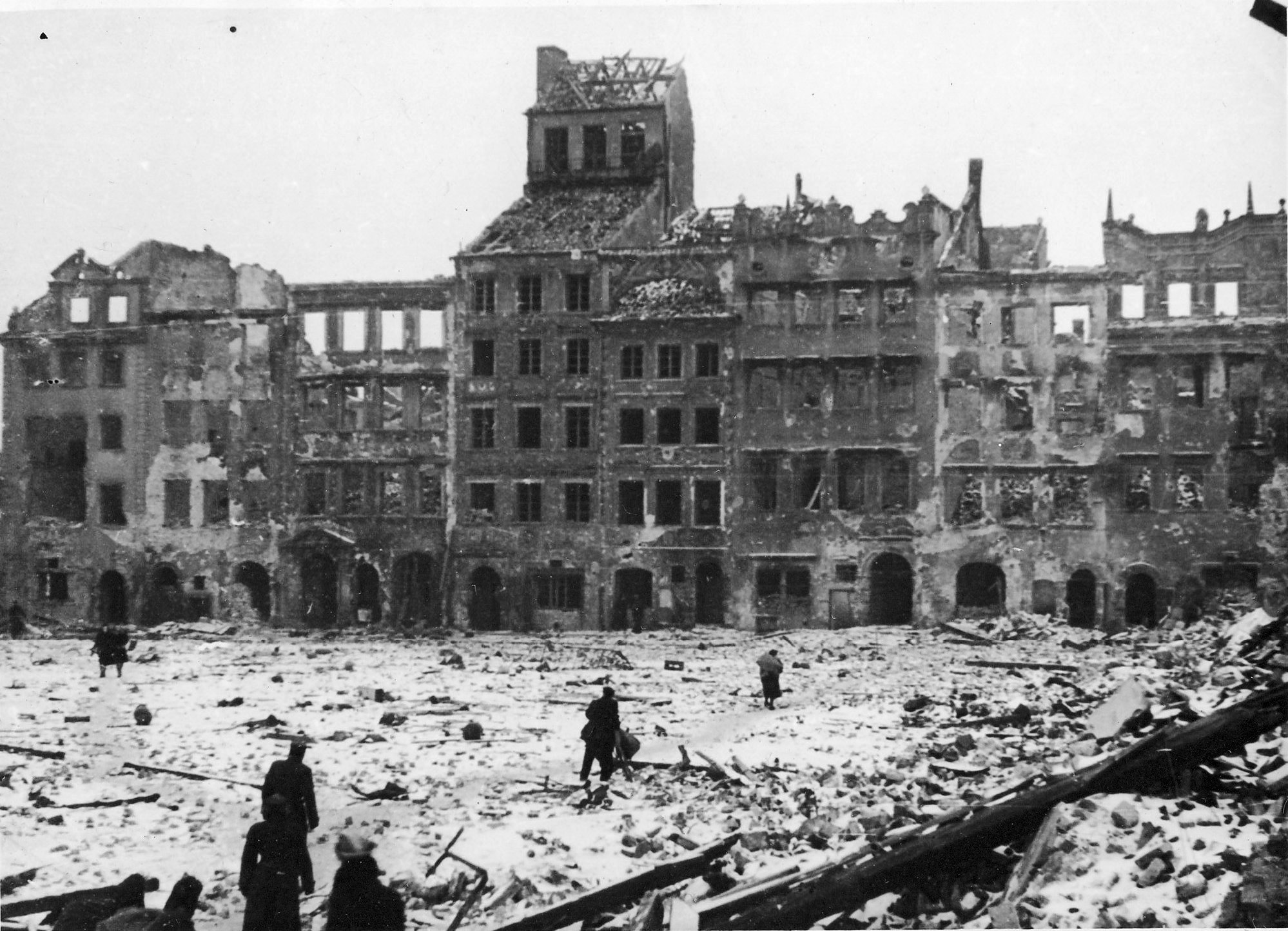
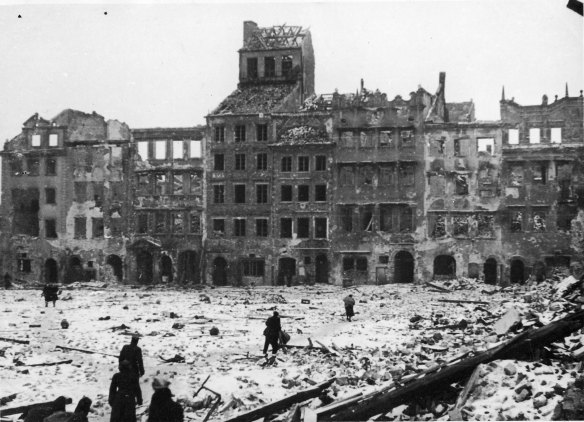
Special Verbrennungskommandos (‘annihilation detachments’) began the systematic destruction of what was left of the city with mathematical precision, using high explosives and flame-throwers.  According to the Museum guide,

‘They divided the city into regions, numbered the corner buildings and methodically destroyed the capital.  On the walls they put instructions concerning the method of destruction.  The Germans destroyed historical monuments and burned to ashes the biggest Polish libraries…  They turned archives, museums and their collections into ruins and ashes.  The Old Town became a city of ruins.’
old_town_warsaw_waf-2012-1501-311945

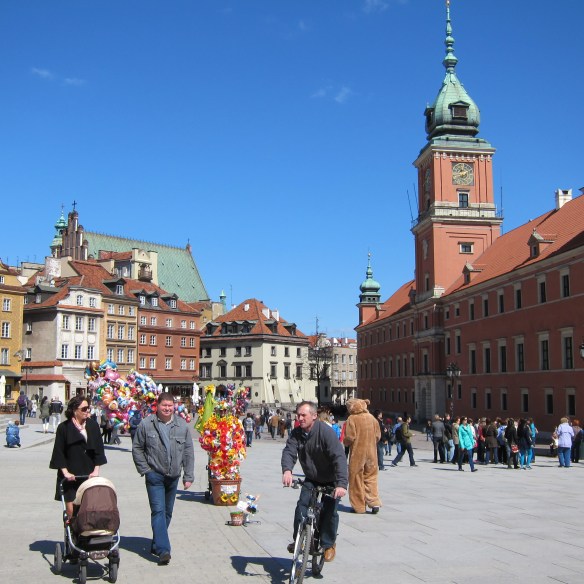
Less than 5 per cent of pre-war Warsaw remained intact – about 12 per cent had been totally destroyed during the 1939 bombing and siege of the city, a further 17 per cent with the destruction of the Ghetto and 25 per cent during the Rising of 1944 – but it’s the systematicity as much as the scale that is so shocking.  And the sense of shock remains even as – in fact precisely because – today you walk around an Old City no less painstakingly restored, its planners, architects and builders working from old plans, photographs and drawings and using the original materials as far as possible.  It adds another dimension to what Steve Graham calls the post-mortem city: the resurrection of Warsaw is an extraordinary testimony (like the Museum of the History of Polish Jews) to the determination of a people to recover their history, to refuse their erasure, and to remember the enormity of what befell their predecessors.
IMG_0556

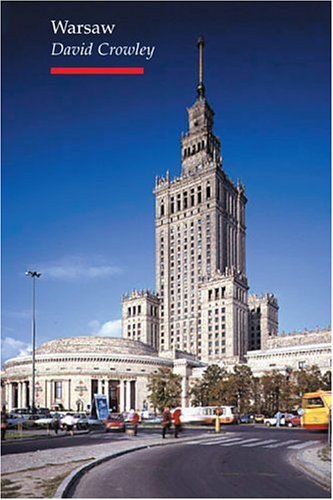
Or so it seemed to me before I started to think (and read) about the politics of memorialisation in post-war Warsaw.  David Crowley‘s essay on ‘Memory in Pieces: the symbolism of the ruin in Warsaw after 1944’ argues that

‘the image of ruin … functioned – unmistakably – as an ideological vent through which to draw patriotic sentiment and indict those who had destroyed the city.  But the powerfully affective image of ruin and the memories that it could arouse had to be contained and its force channelled (quite literally, in the form of voluntary labour to reconstruct parts of the city, like the Old Town).  In effect ruins, in the representational cosmos of socialism during the 1950s, were time-locked in 1944, the moment of destruction.’
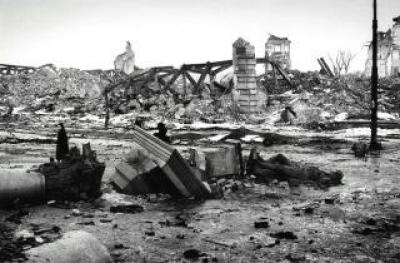
Royal Palace 1945But what could the Royal Palace (in particular) re-present within that cosmos?  Tellingly, it was still in ruins in 1956 when a post-Stalinist regime came to power, and existing plans for its reconstruction were abandoned.  ‘In the years that followed,’ Crowley writes, ‘the castle formed an open wound at the heart of the city.  Seeing it as an aristocratic symbol of democracy, Crowley calls it an ‘architectural oxymoron.’  In ruins, the castle could ‘function indexically as evidence of both the glorious Polish past and the ignominious “Soviet” present.’  Finally, in the 1970s its reconstruction was approved as ‘Warsaw Castle’, an attempt to extinguish the aristocratic past and to forestall any democratic future, so that it functioned as what Crowley calls a sort of counter-iconoclasm, working to forget what its absence once signified.

But there was another, more pervasive absence.  The razing of the Ghetto destroyed a significant nineteenth-century fabric, and after the war a still wider nineteenth-century Warsaw disappeared from the landscape of reconstruction altogether.  Jerzy Elzanowski argues that its buildings and structures were seen as emblematic of the repressive class structure of capitalism; they had to be replaced by a radically different fabric ‘adequate to the needs of socialist society’ (‘Manufacturing ruins: architecture and representation in post-catastrophic Warsaw’, Journal of Architecture 15 (1) (2010) 71-86).
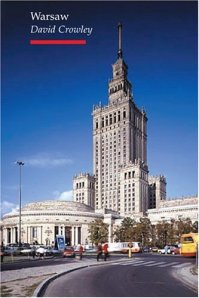
CROWLEY WarsawAnd there are, of course, other, ostentatiously modern Warsaws that have been forcibly put in place after the fall of Communism in 1989.

For all that, in the city of ruins, and most of all in the spectral traces of the two war-time uprisings in which images are made to stand for ruins, genocide and urbicide march in lockstep: and we would be foolish not to attend to the sounds and signs of their boots on the street.  Crowley thinks their museumisation and memorialisation is a kind of reversal in which the past (and specifically the Second World War) becomes a ‘lost utopia’.  I see what he means – I saw what he means – and I’m beginning to understand, too, why Elzanowski concludes that, at least in Warsaw (and no doubt elsewhere), images are at once indispensable for historical recovery and yet ‘seem to hinder our ability to observe the reality of here and now.’  It was, in part, an unease about my response to the materiality of the city and to its photographic representations that sent me off to dig out their two essays.  I felt a tension between the affective – the effect the ruins and the reconstructions had on me – and the analytical.  I’m still struggling.