The lightness (and darkness) of being

The Light of God slide.001

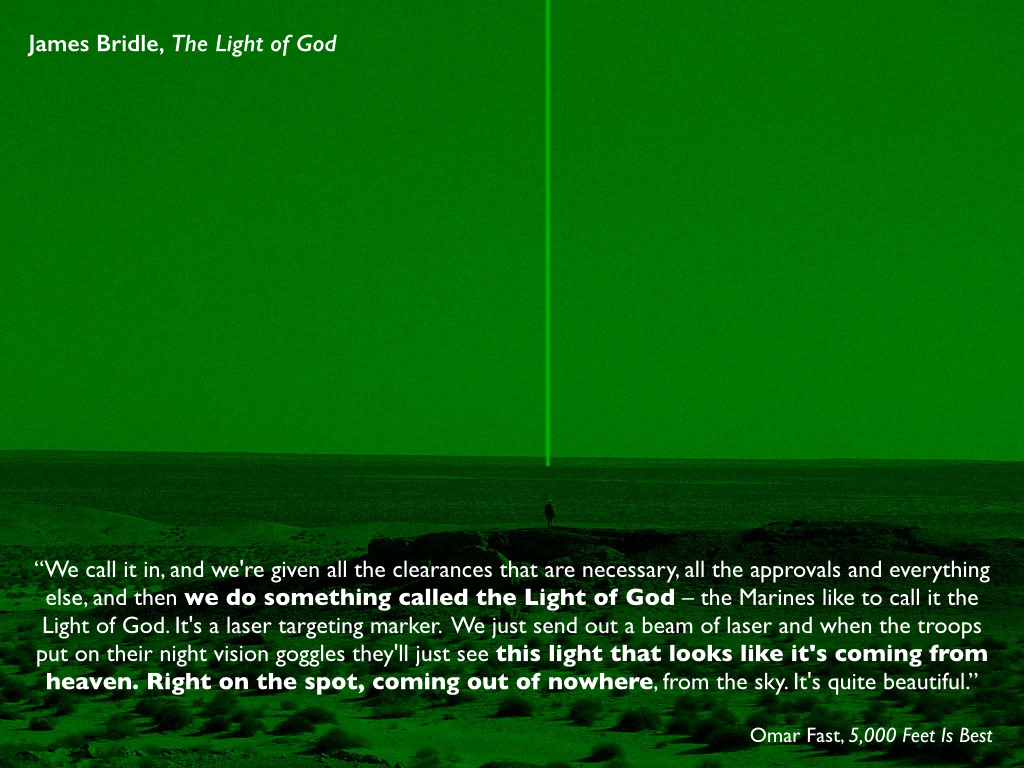
Pip Thornton‘s wonderful ‘The meaning of light: seeing and being on the battlefield‘ – which, among many other good things, worries away at the conceit shown in the image above – is just out in Cultural geographies (Online First).  It will eventually form part of a special issue on ‘Darkness’ edited by Tim Edensor.

Here’s the abstract:

On the battlefield, light and dark mean much more than the (dis)ability to see. While the darkness of night-time can be used as a tactic, providing cover for personal and territorial defence and attack, it also affects and secures bodies and the spaces they inhabit in other more immediate and intimate ways, recalibrating senses and redefining distance. Light too can spell both safety and danger on the battlefield, disciplining and controlling its occupants with often asymmetrical power-plays of affect and aggression. Using autoethnographic examples of experiences in Iraq in 2003 (based on the poem below), this article sets out to challenge traditional binaries of light/ dark, good/bad and to question the elemental, cultural and technological sovereignty of light and vision in modern battlespaces.

And here’s the poem:

Light Discipline

In a blackout we adjust our sights

by touch and cup our smoke against

the desert, waiting for the light.

At long last the barrel scrapes

into place and the night is instantly

exposed. I cover my ears and watch.

In the distance a fitful city crouches,

seared eyes raised to the floating

arc above, waiting for the strike.


I saw a man

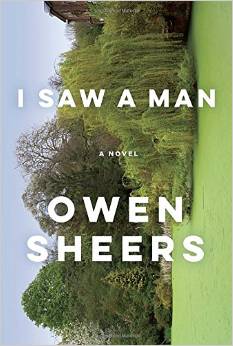
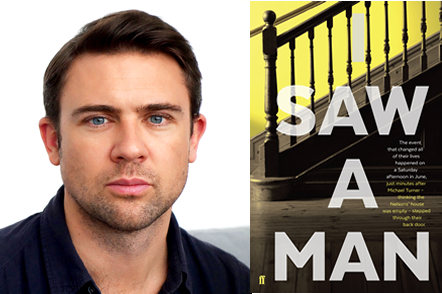
SHEERS I saw a man N Am ednLast week I was in Bloomington for the drones conference – more on that later – but while I was there I managed to finish Owen Sheers‘ new novel, I saw a man.  All of the reviews I’ve seen so far (and they have been very, very good: see here, here and here, for example) praise the way in which Owen so beautifully recovers the circles of grief that spiral from a drone strike on the Afghanistan-Pakistan border that accidentally killed a party of foreign journalists, including Caroline, the wife of the book’s narrator.  ‘Despite its “fire and forget” name tag,’ we are assured, ‘once a Hellfire had been released there would always be someone who never would.’

In fact, Owen and I had corresponded about the details of drone strikes and casualty investigations while he was working on the book, and he certainly treats mourning and memory with extraordinary skill and empathy.  Restricting the victims to those outside the region, apart from a local driver and interpreter, may make the task easier – much of the story plays out in Hampstead – but it’s still formidably difficult.

Owen-Sheers-I-Saw-a-Man

Yet the book is also, equally centrally, about distancing.  Michael is an author with a reputation for effacing himself from his narratives.  Towards the end, in a phrase that powers the book’s meta-fictional twist (and which in some editions is captured on a cover from which Sheers’ own name is absent), Michael is told:

 “Isn’t that what you’re always saying? You need distance to see anything clearly? To become your own editor.”

Even when he tries to lose himself in his fencing lessons, his instructor insists:

“DISTANCE! DISTANCE MICHAEL! It’s your best defence!”

And it is of course distance that is focal to the fateful drone strike.  Those most directly involved in the kill-chain are soon effaced from the official narrative:

“A U.S. drone strike.” That was all the press release said. No mention of Creech, screeners, Intel coordinator, an operator, a pilot. It was as if the Predator had been genuinely unmanned. As if there had been no hand behind its flight, no eye behind its cameras.

And those who were killed are artfully turned into the authors of their own destruction (a tactic that is routinely used on Afghan and Pakistani victims too), even sacrificed for a greater good (international humanitarian law’s vengeful doctrine of ‘necessity’):

[T]he Pentagon statement also made mention of the journalists “working undercover,” of “entering a high-risk area.” They had known, it was implied, the dangers of their actions. And, the same statement reminded the world, an influential terrorist had been successfully targeted. The weight of blame, Michael knew, from the moment it happened, was being dissipated, thinned.

But distance is not a moral absolute (one of the most egregious mistakes of critics of drone warfare: if you think it wrong to kill someone from 7,000 miles away, over what distance do you think it is acceptable?).  In a narrative arc that will be familiar to many readers, the pilot of the drone (Daniel) is haunted by what happened, and by the dismal intimacy of death.

Charleston Mountains NV

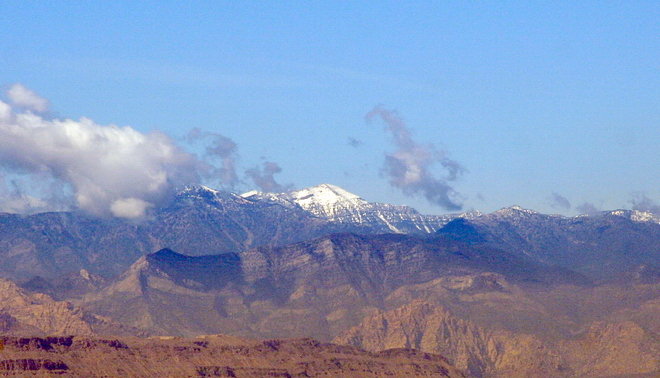
Each morning, as he sets off from his home outside Las Vegas to drive to Creech Air Force Base, Daniel reflects on the similarity of the distant Charleston mountains to those over which he would soon be flying his Predator or Reaper.  It’s a common trope, actually: George Brant makes much of it in his play Grounded.  ‘Despite their proximity,’ though, Daniel hadn’t been into them and didn’t really know them.

They were his daily view but not yet his landscape, a feature of his geography but not yet his territory. Unlike those other mountains, 8,000 miles away. Those mountains Daniel knew intimately. He’d never climbed in them, either, but he was still familiar with the villages silted into their folds, the shadows their peaks threw at evening and the habits of the shepherds marshalling their flocks along their lower slopes. Recently he’d even been able to anticipate, given the right weather conditions, at what time the clouds would come misting down the higher peaks into the ravines of the valleys. Over the last few months he’d begun to feel an ownership over them. Were they not as much his workplace as that of those shepherds? For the troops operating in the area they were simply elevation, exhaustion, fear. They were hostile territory. But for Daniel they were his hunting ground, and as such it was his job not just to know them but to learn them, too. To love them, even, so that from the darkness of his control station in Creech, he might be able to move through their altitudes as naturally as the eagles who’d ridden their thermals for centuries.

It’s a brilliant paragraph, reflective and revealing, that captures the ways in which the pilot’s optical knowledge is transmuted into ‘ownership’, knowledge pinned to power, and distanced from the corpographies of troops on the ground for whom the mountains meant only ‘elevation, exhaustion, fear’ [see also here].  Daniel was freed from all that, soaring high above them, precisely because his territory appeared elsewhere.  If, as Stuart Elden suggests, territory can be conceived as a political technology that asserts a claim over bodies-in-spaces, then one of the most perceptive passages in I saw a man is the description of Daniel scanning ‘the territory of his screen (my emphasis)’…

Screen Shot 2015-07-11 at 12.48.14 PM

Distance, intimacy, experience: all mediated by political technology and in consequence highly conditional and always partial.  That is how the pilot is made free to pursue what Grégoire Chamayou calls his ‘man-hunting‘: because what appears on the screen is a target – not a man or a woman.

Or, as the book’s epigraph says: ‘I saw a man who wasn’t there….’

Disposable futures

EVANS and GIROUX Disposable futures

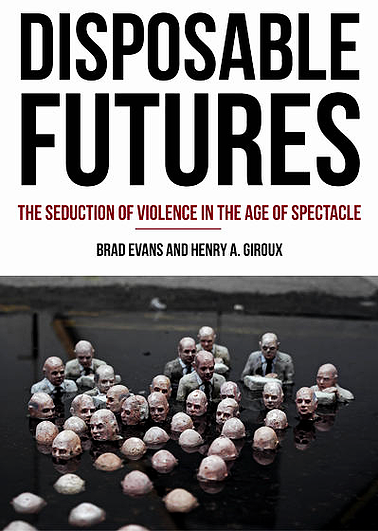
News from Brad Evans of a new book co-authored with Henry Giroux, Disposable futures: the seductions of violence in the age of spectacle (out next month from City Lights).

Disposable Futures makes the case that we have not just become desensitized to violence, but rather, that we are being taught to desire it.

From movies and other commercial entertainment to “extreme” weather and acts of terror, authors Brad Evans and Henry Giroux examine how a contemporary politics of spectacle–and disposability–curates what is seen and what is not, what is represented and what is ignored, and ultimately, whose lives matter and whose do not.

Disposable Futures explores the connections between a range of contemporary phenomena: mass surveillance, the militarization of police, the impact of violence in film and video games, increasing disparities in wealth, and representations of ISIS and the ongoing terror wars. Throughout, Evans and Giroux champion the significance of public education, social movements and ideas that rebel against the status quo in order render violence intolerable.

You can read the preface and an excerpt from the first chapter here, and you can get a taste of their argument from their op-ed for Truthout in June 2014 here, where they explain why they decided

‘…to develop a paradigm that focused on the intensification of what we called the politics of disposability. This requires taking our analysis beyond 20th century frames of analysis to look at the ways in which more and more individuals and groups are now considered excess by the onslaught of global forces that no longer offer the possibility of alternative futures. It talks precisely to those contemporary forms of disposability that have become so normalized; the burden of the guilt is placed on the shoulders of the victims, while the most pernicious of systemic abuses continues to hide things in plain sight. And it develops a critical angle of vision that goes well beyond the mere authentication of lives as simply born vulnerable to question the systemic design for oppression and exploitation that produces humans as some expendable category…

‘There is something, however, more at stake here than the contemporary plight of those millions forced to live in intolerable conditions. What makes the contemporary forms of disposability so abhorrent is precisely the way it shapes disposable futures. The future now appears to us as a terrain of endemic catastrophe and disorder from which there is no viable escape except to draw upon the logics of those predatory formations that put us there in the first place. Devoid of any alternative image of the world, we are merely requested to see the world as predestined and catastrophically fated. Frederic Jameson‘s claim then that it is easier to “imagine the end of the world than it is the end of capitalism” is more than a reflection on the poverty of contemporary imaginations. It is revealing of the nihilism of our times that forces us to accept that the only world conceivable is the one we are currently forced to endure: a world that is brutally reproduced and forces us all to become witness to its spectacles of violence that demand we accept that all things are ultimately insecure by design. In this suffocating climate, the best we can hope for is to be connected to some fragile and precarious life support system that may be withdrawn from us at any moment. Hope has dissolved into the pathology of social and civil death and the quest for mere survival. For if there is a clear lesson to living in these times, it is precisely that the lights can go out at any given moment, without any lasting concern for social responsibility. This is simply the natural order of things (so we are told) and we need to adapt our thinking accordingly.’

And, as always, you can find much more on these themes over at Brad’s History of Violence project (and particularly the Disposable Life series of lectures here).

Visual occupations and a counter-politics of visuality

Most readers will know Eyal Weizman‘s searing account of the cruel intersections between the politics of visibility and the politics of verticality in occupied Palestine, Hollow Land: Israel’s architecture of occupation.

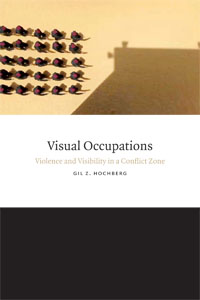
But there are other, no less intimate and intrusive dimensions to the politics of visibility for a people under military (and civilian) occupation that amount to what Gil Hochberg calls an ‘uneven distribution of “visual rights”‘.  In her brilliant new book from Duke University Press, Visual occupations: violence and visibility in a conflict zone, she explores ‘the political importance of various artistic attempts to redistribute the visible’ (my emphasis) and, in effect, to put in place a counter-politics of visuality.

978-0-8223-5887-9_prIn Visual Occupations Gil Z. Hochberg shows how the Israeli Occupation of Palestine is driven by the unequal access to visual rights, or the right to control what can be seen, how, and from which position. Israel maintains this unequal balance by erasing the history and denying the existence of Palestinians, and by carefully concealing its own militarization. Israeli surveillance of Palestinians, combined with the militarized gaze of Israeli soldiers at places like roadside checkpoints, also serve as tools of dominance. Hochberg analyzes various works by Palestinian and Israeli artists, among them Elia Suleiman, Rula Halawani, Sharif Waked, Ari Folman, and Larry Abramson, whose films, art, and photography challenge the inequity of visual rights by altering, queering, and manipulating dominant modes of representing the conflict. These artists’ creation of new ways of seeing—such as the refusal of Palestinian filmmakers and photographers to show Palestinian suffering or the Israeli artists’ exposure of state manipulated Israeli blindness —offers a crucial gateway, Hochberg suggests, for overcoming and undoing Israel’s militarized dominance and political oppression of Palestinians.

Here’s the Contents List:

Introduction. Visual Politics at a Conflict Zone

Part I. Concealment

1. Visible Invisibility: On Ruins, Erasure, and Haunting
2. From Invisible Spectators to the Spectacle of Terror: Chronicles of a Contested Citizenship

Part II. Surveillance

3. The (Soldier’s) Gaze and the (Palestinian) Body: Power, Fantasy, and Desire in the Militarized Contact Zone
4. Visual Rights and the Prospect of Exchange: The Photographic Event Placed under Duress

Part III. Witnessing

5. “Nothing to Look At”; or, “For Whom Are You Shooting?”: The Imperative to Witness and the Menace of the Global Gaze
6. Shooting War: On Witnessing One’s Failure to See (on Time)

Closing Words

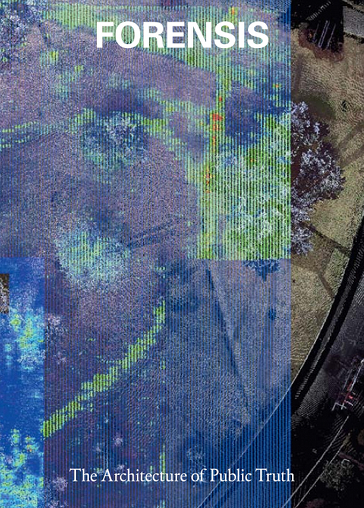
2014_cover_publication_forensisIt’s a compelling book, and I’m struck by another parallel with Eyal’s work.  In Hollow Land Eyal showed the central role that architecture and architects play in Israel’s illegal occupation of the West Bank, but in subsequently developing his collaborative Forensic Architecture project he effectively reverse-engineers architecture’s dominant imaginary to use built forms and spatial formations as a way of revealing prior trajectories of violence to a public forum.  That too is a counter-politics of visuality.

Der Himmel über Berlin

At the end of February Tatiana Bazzichelli, director and curator of the Disruption Network Lab, invited me to be a keynote speaker at Eyes from a Distance: on drone systems and their strategies in Berlin in April.

Disruption Network Lab is an ongoing platform of events and research focused on art, hacktivism and disruption. The Laboratory takes shape through a series of conference events at Studio 1, Kunstquartier Bethanien in Berlin.

The goal of the Disruption Network Lab is to present and generate new possible routes of social and political action within the framework of hacktivism, digital culture and network economy, focusing on the disruptive potential of artistic practices. The Disruption Network Lab is a conceptual and practical zone where artists, hackers, networkers, critical thinkers and entrepreneurs enter into a dialogue. The programme is developed through artistic presentations, theoretical debates and keynote events. This series of events establishes local and translocal partnerships with other spaces and institutions.

0i1drones5_3907706133_o

The specific aim of Eyes from a Distance was unerring:

What is the politics and the regime of power beyond drone-systems? Which are the consequences both on militant networks and civil society of an increasing automatism of conflicts? Can we track down the hidden strategies that move target-killings? Can we understand better drone technology? This event combines reflections on the political and technological infrastructure of drone-systems, the use of them in massive and weaponised military programmes, and the artistic and activist response to this.

I was already committed to presentations at the Balsillie School/CIGI and to the AAG Conference in Chicago so, with immense reluctance, I had to decline.  Now I know what I missed – not only the wonderful city of Berlin but also a brilliant programme that would have kept me inside on both evenings.

You can find two video clips (one by Brandon Bryant, which I’ve embedded above) published as part of the documentation of the meeting here, and over at We Make Money Not Art, Regine has provided three detailed reports from the meeting (with useful links): The Grey Zone: the (il)legitimacy of targeted killing by drones, Eyes from a Distance: personal encounters with military drones, and Tracking Drones, reporting lives.

Intersecting with the themes raised by Eyes from a Distance, I highly recommend a new essay/work-in-progress by Sara Matthews on ‘Visual Itineraries of the Sovereign: The Drone Gaze‘.  It was originally developed for a panel on “The Ethics and Itineraries of Visual Data” at the meeting of the Society for Cinema and Media Studies in Montreal in March.

Overlooking Auschwitz

To mark the 70th anniversary of the liberation of Auschwitz-Birkenau concentration camp, there has been widespread interest in a haunting video shot for the BBC using a commercial drone:

For once, the emptiness of the scene – just buildings, fences and railway tracks – is desperately affecting.   It’s surely impossible to watch this without thinking of the millions of people whose lives were so brutally effaced by the murderous regime of the Third Reich.  The only sign of a human presence in the video is a glimpse over the wall of trucks racing by: a reminder that Auschwitz was (and disconcertingly remains) at the centre of a small town (see also my post on Auschwitz here).

There are at least two other films that ought to be seen too.

Night Will Fall 2

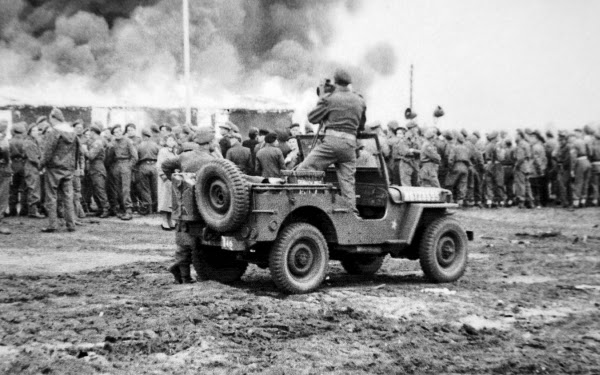
The first is a documentary commissioned in 1945 by the Psychological Warfare Film Section of the Supreme Headquarters Allied Expeditionary Force to document the liberation of Bergen-Belsen.  The producer was Sidney Bernstein, for Britain’s Ministry of Information; Alfred Hitchcock was drafted in as a ‘treatment adviser’.  The working title was German Concentration Camps: Factual Survey; it was never shown in its entirety (though Billy Wilder turned the footage into a short, Death Mills), and the Imperial War Museum notes:

From the start of the project, there were a number of problems including the practical difficulties of international co-operation and the realities of post-war shortages. These issues delayed the film long enough to be overtaken by other events including the completion of two other presentations of concentration camp footage to the German people and the evolution of occupation policy, where the authorities no longer considered a one-hour compilation of atrocity material appropriate. The last official action on the film was a screening of an incomplete rough-cut on 29 September 1945, after which the film was shelved, unfinished.

The footage has now been incorporated into a stunning HBO documentary, Night Will Fall, directed by André Singer, who was an Executive Producer for Act of Killing (see my posts here, here and here).

NIGHT-WILL-FALL-POSTER-2

There are all sorts of stories about why the full version was never shown – see the Guardian‘s report here – but the fullest discussions are Kay Gladstone‘s ‘Separate intentions’ in Toby Haggith and Joanna Newman (eds) Holocaust and the moving image (2005) (see also Haggith’s ‘Filming the liberation of Bergen-Belsen here) and her ‘Memory of the Camps: the rescue of an abandoned film’, in Griselda Pollock and Max Silverman (eds) Concentrationary cinema (2011).

The second film returns to the aerial view and to Auschwitz: Harun Farocki’s Images of the world and the Inscription of War.  Shockingly and sadly, Farocki died last summer at the age of 70, and Images is widely regarded as his masterpiece (see Thomas Voltzenlogel‘s wide-ranging and appreciative discussion of ‘Dialectics in images’ here).  The central motif is an image taken from a series of aerial photographs of Auschwitz shot by the Allies between April 1944 and January 1945 (see also here and here).

1389.3 Holocaust E

This image was taken on 4 April 1944 by Lt Charles Barry flying a Mosquito from 60 Photo Reconnaissance Squadron of the South African Air Force.  From the film’s commentary [available in Discourse 5(3) (1993) 78-92]:

American aircraft had taken off in Foggia, Italy, and flown towards targets in Silesia – factories for synthetic petrol and rubber – known as Buna.

On the flightover the IG Farben company factory still under construction, a pilot clicked his camera shutter and took photographs of the Auschwitz concentration camp.

First picture of Auschwitz taken at 7,000 meters altitude.

The pictures taken in April 1944 in Silesia arrived for evaluation in Medmenham, England [the RAF’s Central Intelligence Unit concerned with air photograph interpretation].

The analysts discovered a power station, a carbide factory, a factory under construction for Buna and another for petrol hydrogenation.

They were not under orders to look for the Auschwitz camp, and thus they did not find it.

How close the one is to the other: the industry – the camp.

It was not until 1977 that two employees of the CIA [Dino Brugioni and Robert Poirer: see their detailed report here] went through the archives to find and evaluate the photographs of Auschwitz. It was not until thirty-three years later that the following words were inscribed:

Tower and Commandant’s house and

Registration Building and Headquarters and Administration and

Fence and execution wall and Block 11 and the word “Gas chamber” was inscribed.

tumblr_n6e9sd1riY1rxmv4io1_500

Kaja Silverman adds this gloss [‘What is a camera?’ Discourse 5 (30 (1993) 3-56]:

Not only does the camera here manifestly “apprehend” what the human eye cannot, but the latter seems strikingly handicapped by its historical and institutional placement, as if to suggest that military control attempts to extend beyond behavior, speech, dress,and bodily posture to the very sensory organs themselves. This sequence indicates, in other words,that military discipline and the logic of warfare function to hyperbolize the distance separating look from gaze and to subordinate the former completely to the latter.

These are similar issues that haunt my own discussions of the video feeds from Predators and Reapers over Afghanistan and Iraq.  In another commentary, Christa Blümingler writes:

The vanishing point of Images of The World is the conceptual image of the ‘blind spot’ of the evaluators of aerial footage of the IG Farben industrial plant taken by the Americans in 1944. Commentaries and notes on the photographs show that it was only decades later that the CIA noticed what the Allies hadn’t wanted to see [my emphasis]: that the Auschwitz concentration camp is depicted next to the industrial bombing target.

Bombing of AuschwitzThe claim that the ‘Allies didn’t want to see’ spirals through an important debate about whether the Allies could or should have bombed Auschwitz (see, in addition to the symposium on the right, here and here).  In fact, as Christa observes later,

In … 1944, the allies bombed not Auschwitz, but the IG Farben factory nearby the death camp. Drawing on analyses of these events, how and why the allies didn’t act on their knowledge of the mass destruction of the Jews, Farocki … decodes a host of military images, focusing on two visual dispositives: American pilots in 1944 and CIA agents in 1977 offering two different [readings] of the aerial photographs of Auschwitz.

In this instance, Farocki developed an epistemological field of technological history — measurement and surveillance in a period of rapid automatization. At the end of the film, a blind spot in the photographic act, referring back to the reality of the concentration camp, becomes visible.

The final shots further emphasize details of the American pilots’ aerial photos, which are picked up in the sweep of the film several times, framed and arranged in different ways. At the end of the film, through a permutative movement of cuts, the extreme enlargement of the photographs reminds us once again of their materiality. Farocki shows these images in precisely the spaces where visual thought takes place, and in connection to specific techniques of reproduction and distribution (in albums, archives, institutions). Whenever he used marginal and hard-to-access image materials from specialized archives, he sought to consider these conditions of visibility in his analysis.

Farocki2

What particularly interests me, and the reason I juxtapose these two films, is an interview with Chris Darke in 2003 in which Farocki artfully tracks between the eye-witness and the aerial shot:

Chris Darke: In Images of the World and the Inscription of War there is this repeated phrase: “Beside the real world there is a second world, a world of pure military fiction”. I was very strongly reminded of Colin Powell at the UN Security Council presenting degraded military surveillance images as proof and justification for military action.

HF: Yes, it reminded me so much of the Auschwitz sequences in Images of the World, the way they involved aerial reconnaissance images that you had to be a specialist to read. Who knows what they are telling you? Who knows what happened there? What is so interesting is that the personal witness of two people who had escaped from the camps was so important. It was the way that traditional history was always written. You need an eye-witness, a narrative, otherwise you’ll never believe in it. And it turns out that our imaginative minds are still very old-fashioned. We don’t understand modernist strategies such as those used by the Americans in the first Gulf War. You really want to see these terrible, dirty images of burning streets and wounded people in the same way that psychoanalysis knows that you need dirty thoughts for the imagination, just as for love you need dirty images. The audience is not prepared for this automatically recorded history that more or less happens already, where everything is recorded; so there has to be an old-fashioned drama made out of it.

There are at least two other detailed commentaries on the film that address the question of visuality in depth: Thomas Keenan‘s ‘Light weapons’, in Documents 1/2 (1992) 147-58 and Nora Alter‘s ‘The political im/perceptible in the essay film:  Farocki’s Images of the world and the inscription of war‘, in New German Critique 68 (1996). More generally, I also recommend the special issue of e-flux on Farocki’s work here, including a commentary by Trevor Paglen on Farocki’s ‘operative images’, and David Cox‘s brief commentary here.

Note:  Belinda Gomez writes (in relation to the commentary for Images of the World):

“Fence and execution wall and Block 11 and the word “Gas chamber” was inscribed….” But that’s not quite accurate. Brugioni and Poirier didn’t write that in 1977. The gas chamber didn’t have a sign. That they were able to locate the gas chamber and crematoria was due to their superior technology and they knew what they were looking for. The pilot/photographers in 1944 took photos of the factory and what was taken as a workers camp. To say that they didn’t see Auschwitz because they weren’t told to look for it is more of a hind-sight interpretation.

Je ne suis pas Charlie

Once you decide you want to engage with audiences beyond the academy – one of my reasons for starting this blog, which also spirals in to my presentations and (I hope) my other writing – you run the risk of accepting invitations to comment on issues that lie far beyond your competence.  Even supposed ‘experts’ can be caught out, of course: think of  Steven Emerson‘s extraordinary claim earlier this week on Fox News (where else?) that in the UK ‘there are actual cities like Birmingham that are totally Muslim where non-Muslims just simply don’t go in…’  Emerson is the founder and Executive Director of the Investigative Project on Terrorism, and ‘is considered one of the leading authorities on Islamic extremist networks, financing and operations’ – or so he says on his website – and he subsequently apologised for his ‘inexcusable error’.

Emerson was being interviewed as part of Fox News’s continuing coverage of the murders at the office of Charlie Hebdo and a kosher supermarket in Paris on 7 January, and specifically about the supposed proliferation of what he called ‘no-go zones … throughout Europe’.

A good rule is to treat areas you know nothing about as ‘no-go zones’ until you’ve done the necessary research.

Academics need to take that seriously too, especially as universities become ever busier pumping up their public affairs, boosting their media profiles and offering journalists ready access to the specialised knowledge of their faculty.  Don’t get me wrong: I believe passionately in the importance of public geography, especially with a little g, and I also understand how producers and journalists racing to meet a deadline need talking heads.  But we need to be careful about the simulation of expertise.

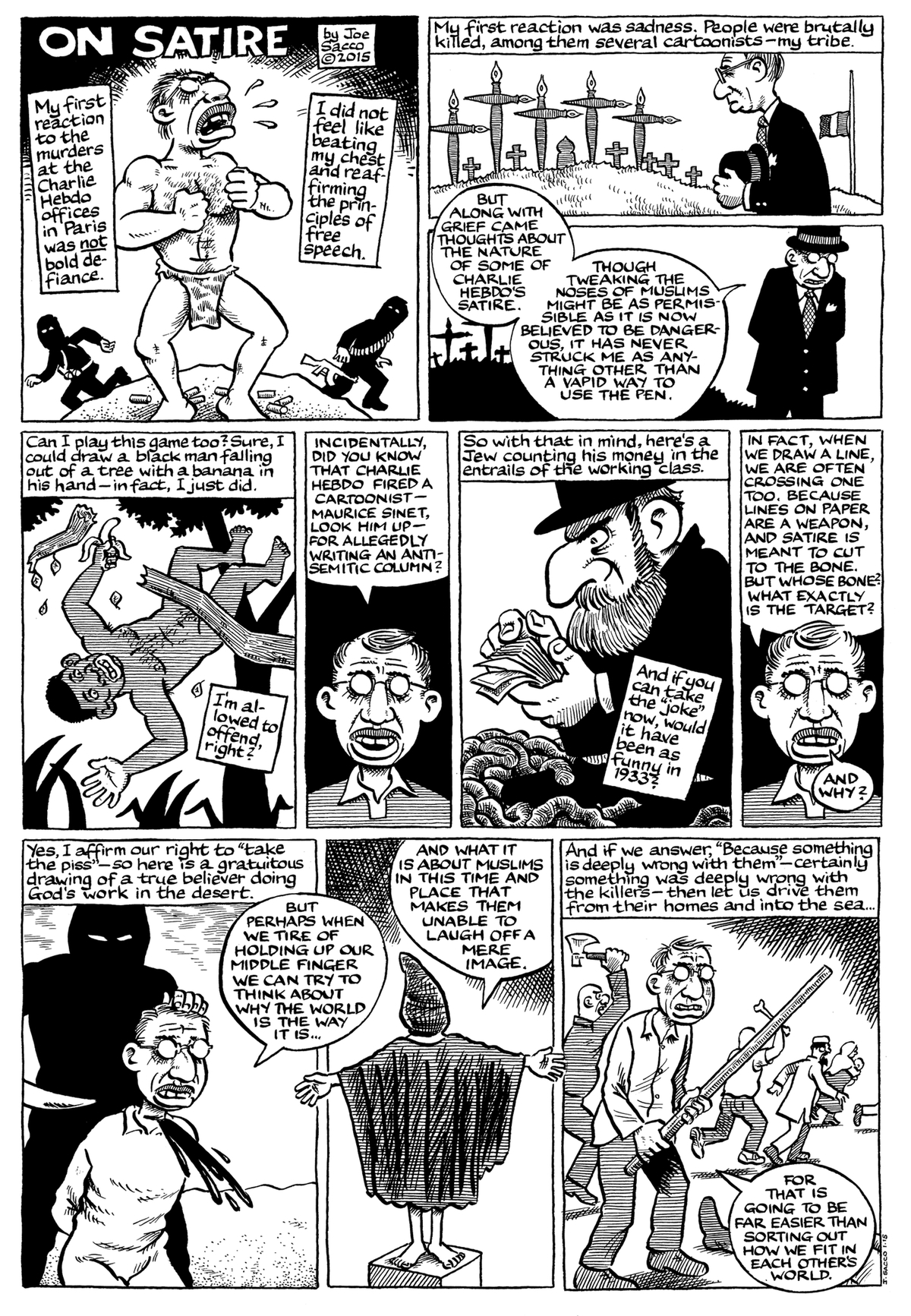
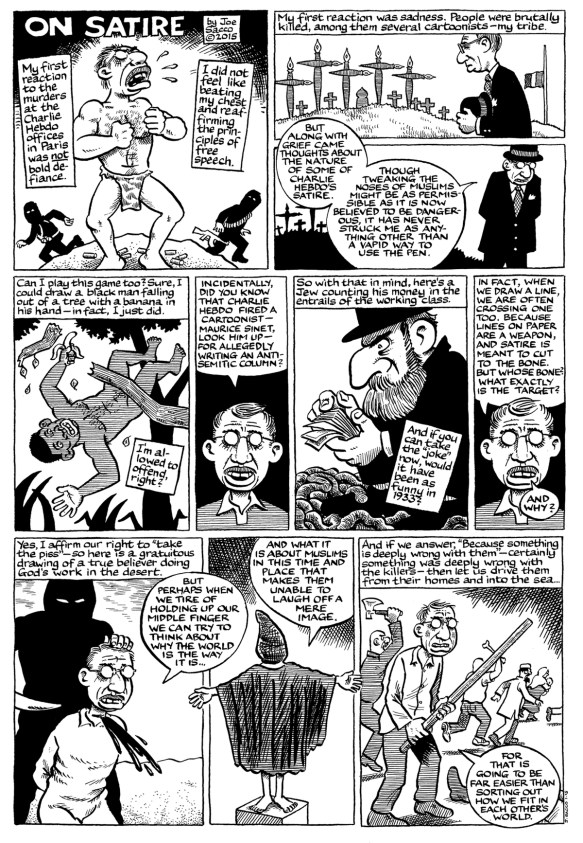
This is, in part, why I haven’t said anything so far about the murders in Paris.  But on Thursday I was invited to lead a lunch-time discussion about them at the Peter Wall Institute for Advanced Studies; one of the many wonderful things about the place is the trust that emerges out of a commitment to the irredeemably social nature of intellectual work, and so – beyond the cameras, the microphones and the notebooks – I tried to sort out what I had been reading and thinking.    In many ways, it was an extended riff on Joe Sacco‘s cartoon that appeared in the Guardian just two days after the attacks (if you want to know the reactions of Arab cartoonists, then see Jonathan Guyer here and here):
joesaccoonsatire1200

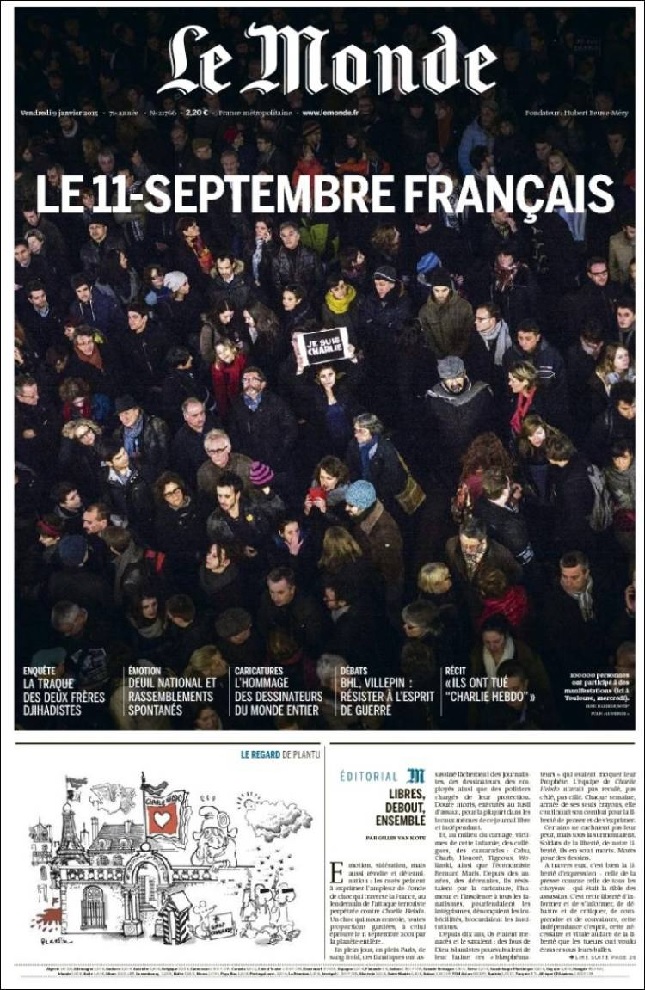
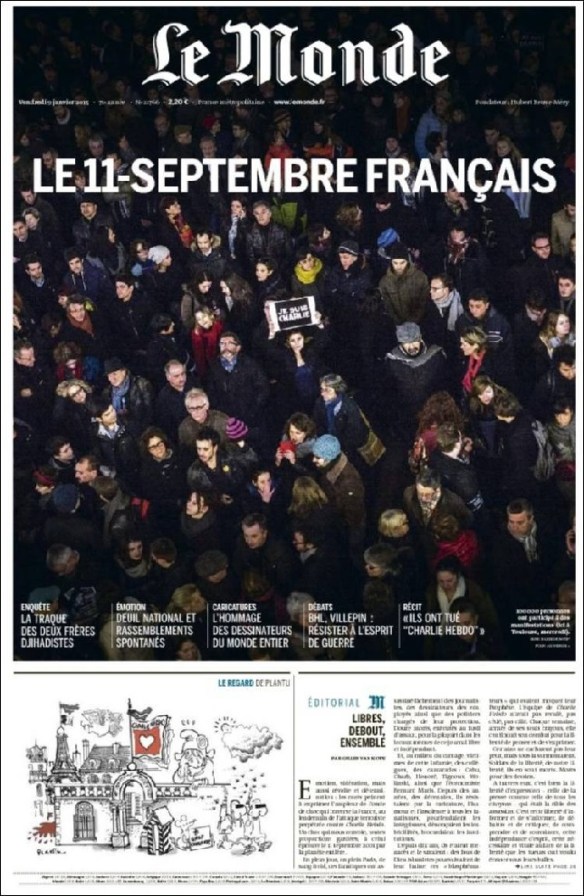
My starting-points were provided by The colonial present.  First, many commentators have suggested that the attacks were ‘France’s 9/11’; Le Monde‘s banner headline declared emphatically ‘Le 11 Septembre Français’.
le_monde_11_septembre

I think this absurd for many reasons, but there are several senses in which the comparison is worth pursuing, particularly if we focus on the response to the attacks in New York and Paris.  Both events, or more accurately television and video feeds of the developing situations, were relayed to watching audiences in real time.  This sense of immediacy is important, because it says something about the ways in which viewers were drawn in to the visual field and interpellated as subjects who were enjoined to respond – and crucially to feel – in particular ways.

Since this is emphatically not what Dominique Moisi, author of The geopolitics of emotion, had in mind when he insisted that ‘the attacks in Paris and in New York share the same essence’, that both cities ‘incarnate a similar universal dream’ of ‘light and freedom’, perhaps a different comparison will clarify what I mean.  Think of the killing of hundreds, even thousands of people by Boko Haram in Baga in northern Nigeria two weeks ago; reports began to appear in Europe and North America just one day after the murders in Paris, but the focus on France remained relentless.  There were surely many reasons for that (see Maeve Shearlaw‘s discussion here and Samira Sawlani‘s here), but the contrast between the live feeds from Paris and the scattered, inchoate and verbal reports from Baga is part of it – particularly when you realise that the scale of that distant atrocity was eventually  ‘laid bare’, as the Guardian put it, by satellite photographs released by Amnesty International showing more than 3,000 houses (‘structures’) burned or razed in Baga and Doron Baga.  For all the importance of surveillant witnessing in otherwise difficult to reach locations, the distance between bodies and buildings, an ordinary camera and a satellite, and live television and static imagery is telling, and sustains an affective geopolitics that is at once divided and divisive.

(Imagery is important to the Paris attacks in another sense too: when the murderers stormed in to the offices of Charlie Hebdo the focus of their rage was a series of cartoons mocking Mohammed – but they were radicalised by quite other documentary images, including coverage of the wars in Iraq and photographs showing the atrocities committed by American troops in Abu Ghraib: see here and here, and look at Joe Sacco’s cartoon again).

My second borrowing from The colonial present was a re-borrowing of Terry Eagleton‘s spirited invocation of ‘the terrible twins’, amnesia and nostalgia: ‘the inability to remember and the incapacity to do anything else’.  In the book I suggested that these are given a special significance within the colonial memory theatre, where the violence of colonialism is repressed and replaced by a yearning for the culture of domination and deference that it sought to instill.   And in much (fortunately not all) of the commentary on the Paris attacks, France’s colonial past has been effaced.  But here is Tim Stanley writing in the Telegraph:

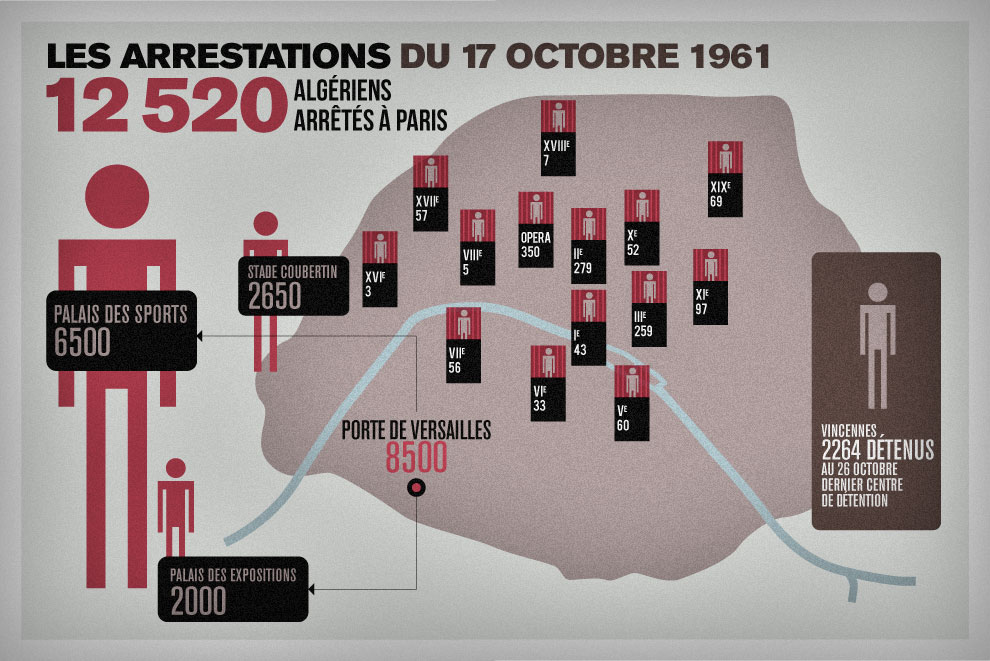
The ability of a society to forget its recent past is like the amnesia that follows an accident – the body’s way of protecting itself against trauma. Yet in the 1950s and 1960s, as France tried to cling on to its African colonial possessions, political violence was far more common than today. Muslim Algerian nationalists (their race and religion regarded as interchangeable by the French) bombed the mainland, assassinated officials and killed colonialists en masse. The reaction of the state was shocking. In 1961, 12,000 Algerian immigrants were arrested in Paris and held in a football stadium [and at other sites: see the map below]. Many were tortured; more than a hundred disappeared. For days, bodies were found floating in the Seine.
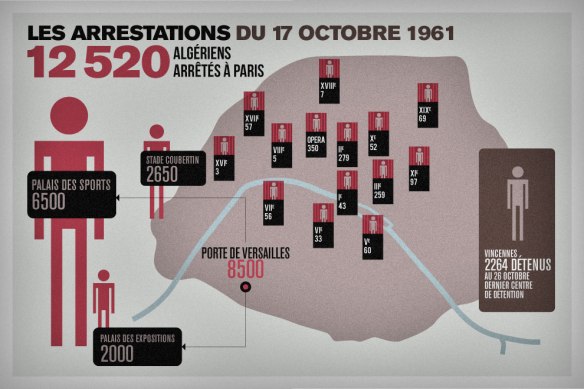
Carte.ParisAlgerie1961Bis

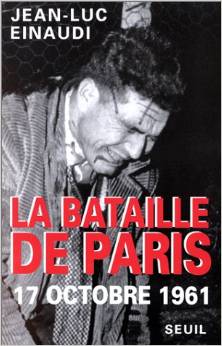
EINAUDI Bataille de ParisYou can find more on the events of 17 October 1961 – on the arrests, torture and summary executions following a mass rally to protest against a curfew imposed on Algerians in Paris – here and here, but the definitive account remains Jean-Luc Einaudi‘s Bataille de Paris (1991).
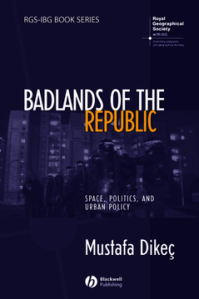
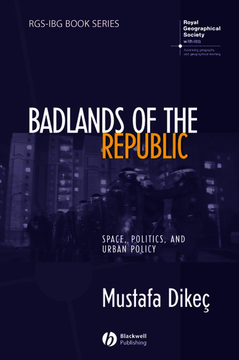
DIKEÇ BadlandsThis is but one episode in a violent and immensely troubled colonial history.  To point to this past – as Robert Fisk also did, in much more detail, in the Independent – is to loop back to 9/11 again, when attempts to provide similar contextual explanations were dismissed (or worse) as ‘exoneration’.  To be sure, one must be careful: although Chérif and Said Kouachi were the Paris-born sons of Algerian immigrants, Arthur Asseraf is right to reject attempts to draw a straight line between violence in the past and violence in the present.  But can the continued marginalisation of Muslims in metropolitan France, particularly young men in Paris’s banlieus, be ignored?  (Here there is no better place to start than Mustafa Dikeç‘s work, especially Badlands of the Republic).  Doesn’t it matter that more than 60 per cent of prisoners in French jails are Muslims? For the Economist all this means is that jihadists ‘share lives of crime and violence‘ so that structural violence disappears from view, but Tithe Bhattacharya provides a different answer in which the ghosts of a colonial past continue to haunt the colonial present.

And doesn’t the responsive assertion of a ‘freedom of expression’ that is, again, highly particularistic seek to absolutize a nominally public sphere whose exclusions would have been only too familiar to France’s colonial subjects?  Ghasan Hage reads its triumphalist restatement in the aftermath of the Paris murders as a colonial narcissism – a sort of colonial nostalgia through the looking-glass – fixated on what he calls a strategy of ‘phallic distinction’ in which ‘freedom of expression’ is flashed at radicalised Muslims to tell them: ‘look what we have and you haven’t, or at best yours is very small compared to ours.’  (And whose governments have done so much to prop up authoritarian regimes in the Arab world and beyond that thrive on the suppression and punishment of free speech?)

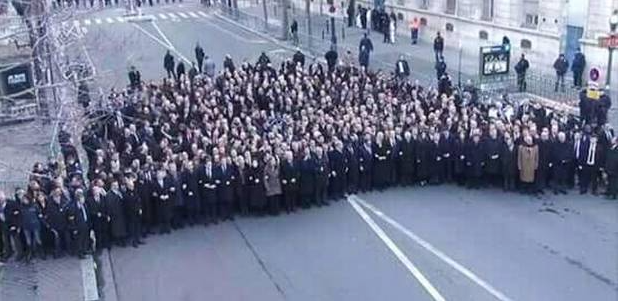
There are, as Joe Sacco’s cartoon makes clear, real limitations on what can be said or shown in France too, including how somebody can present themselves in public – think of the arguments over the veil and the headscarf.  There are also limitations elsewhere in the world, of course, which is why the sacularisation of Charlie Hebdo and, in particular, the march in Paris on 11 January seemingly headed by politicians from around the world, arm in arm (in some cases arms in arms would be more accurate), processing down the Boulevard Voltaire (symbolism is everything), was a scene that, as Seumas Milne noted, was beyond satire:

from Nato war leaders and Israel’s Binyamin Netanyahu to Jordan’s King Abdullah and Egypt’s foreign minister, who between them have jailed, killed and flogged any number of journalists while staging massacres and interventions that have left hundreds of thousands dead, bombing TV stations from Serbia to Afghanistan as they go.

True enough, but here too appearance is everything: the photograph was artfully staged (even before one ‘newspaper’ airbrushed the women from the frame) and took place in an otherwise empty side-street.
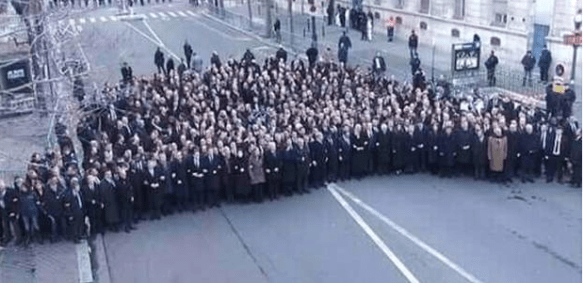
Paris photo-op PNG

If I can make one last nod to The colonial present, not surprisingly many of these politicians have also used the murders to justify the continued violence of the wars being fought in the shadows of 9/11; if you are in the mood to reverse the looking-glass, then Markha Valenta‘s sobering reflection at Open Democracy is indispensable:

[E]verything that might be said about revolutionary Islamist movements – when it comes to global violence – could be said about global Americanism and US foreign policy. It has been ruthless, cruel, illiberal, anti-democratic. It has wreaked havoc, killed innocents, raped women, men and youths, tortured viciously, violated the rule of law and continues to do so…

It does so in our name. In the name of democracy. And those who expose this … are shut up ruthlessly, cruelly and in ways designed to degrade. (Yet we did not march then.)

This matters because it clarifies what our condition is today, the condition under which last week’s violence took place: an extended and expanding global war between those who claim the right to intervention, brutality and terror in the name of democracy and those who do so in the name of Islam.

No less predictably, one of the immediate and dismally common responses to the murders, amidst the clamour for freedom of speech, was a renewed call for more state surveillance and regulation.  As Teju Cole wrote in the New Yorker,

The only person in prison for the C.I.A.’s abominable torture regime is John Kiriakou, the whistle-blower. Edward Snowden is a hunted man for divulging information about mass surveillance. Chelsea Manning is serving a thirty-five-year sentence for her role in WikiLeaks. They, too, are blasphemers, but they have not been universally valorized, as have the cartoonists of Charlie Hebdo.

But it’s not only politicians who are guilty of appropriation.  Putting on one (far) side the extraordinary attempts to turn “Je suis Charlie” to commercial account – to ‘trademark the tragedy and its most resonant refrain‘ – there are other, less venal and more complicated appropriations.
B67GP_yCYAA_mce.jpg

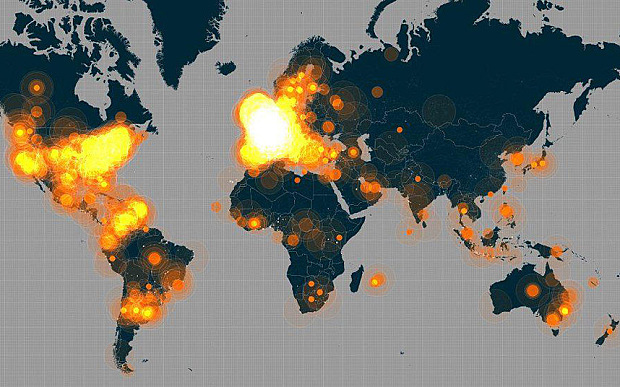
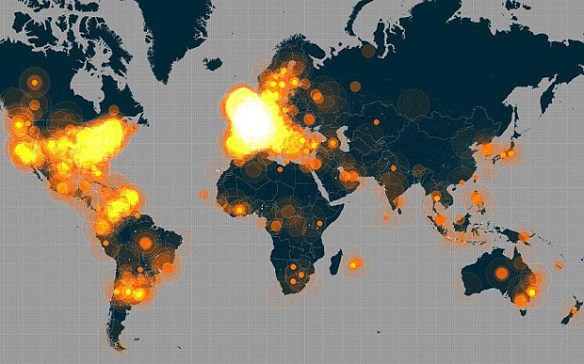
Heat map of #jesuischarlie hashtag; animation is available here

So back to the looking-glass.  You might think that “Je suis Charlie” is an affirmative gesture born of anger and horror but also of sympathy and compassion, a simple human reflex that has become virtually commonplace – comparable to, say, “We are all Palestinians“.  That was my first thought too. But the trouble is that such a rhetorical claim comes with a lot of baggage.  David Palumbo-liu suggests that  “I am Charlie” can be an assertion of empathy, solidarity or identification.  Even empathy is far from straightforward – why do we extend our fellow feeling to these people and not those? – but, as he shows, the other two progressively raise the stakes.    Sarah Keenan and Nadine El-enany wire this to appropriation with exquisite clarity in a short essay at Critical Legal Thinking:

The #JesuisCharlie hashtag and its social media strategy of solidarity through identification with the victim is … an appropriation of what was a creative and subversive tool for fighting structural violence and racist oppression, perhaps most famously in the “I am Trayvon Martin” campaign. When young black men stood up and said “I am Trayvon Martin”, they were demonstrating the persistent and deeply entrenched demonisation of black men which not only sees them killed in the street on their way to the local shop, but also deems their killers innocent of any wrongdoing. When predominantly white people in France and around the world declare “Je Suis Charlie”, they are not coming together as fellow members of a structurally oppressed and marginalised community regularly subjected to violence, poverty, harassment and hatred. Rather, they are banding together as members of the majority, as individuals whose identification with Charlie Hebdo, however well-​meaning, serves to reproduce the very structures of oppression, marginalisation and demonisation that allowed the magazine’s most offensive images to be consumed and celebrated in the first place.

As the invocations of Voltaire should have demonstrated, there is a substantial difference between defending the right to draw a cartoon and celebrating what is drawn.  Too many commentators clearly want to elide the difference, but there is another distinction to be made too.  A Muslim friend who lives in Paris was distraught at the murders, but when he heard the calls for the cartoons to be re-published immediately after the killings he told me he felt brutalised all over again.  Those who made such demands, who casually sneered at the ‘cowardice’ of those who failed to comply, either forgot or chose to ignore the existence of a far, far larger Muslim audience than the terrorists against whom they vented their spleen: or, still worse, it never occurred to them that there is a difference between the two.

So: je ne suis pas Charlie; I think I’d rather ‘be’ Joe.

***

I am grateful to my friends and colleagues who helped me think through these issues – I realise there’s a lot more thinking to be done, so please treat this as a first, fumbling attempt – and to Jaimie.
Kill Chain

COCKBURN Kill chain 1

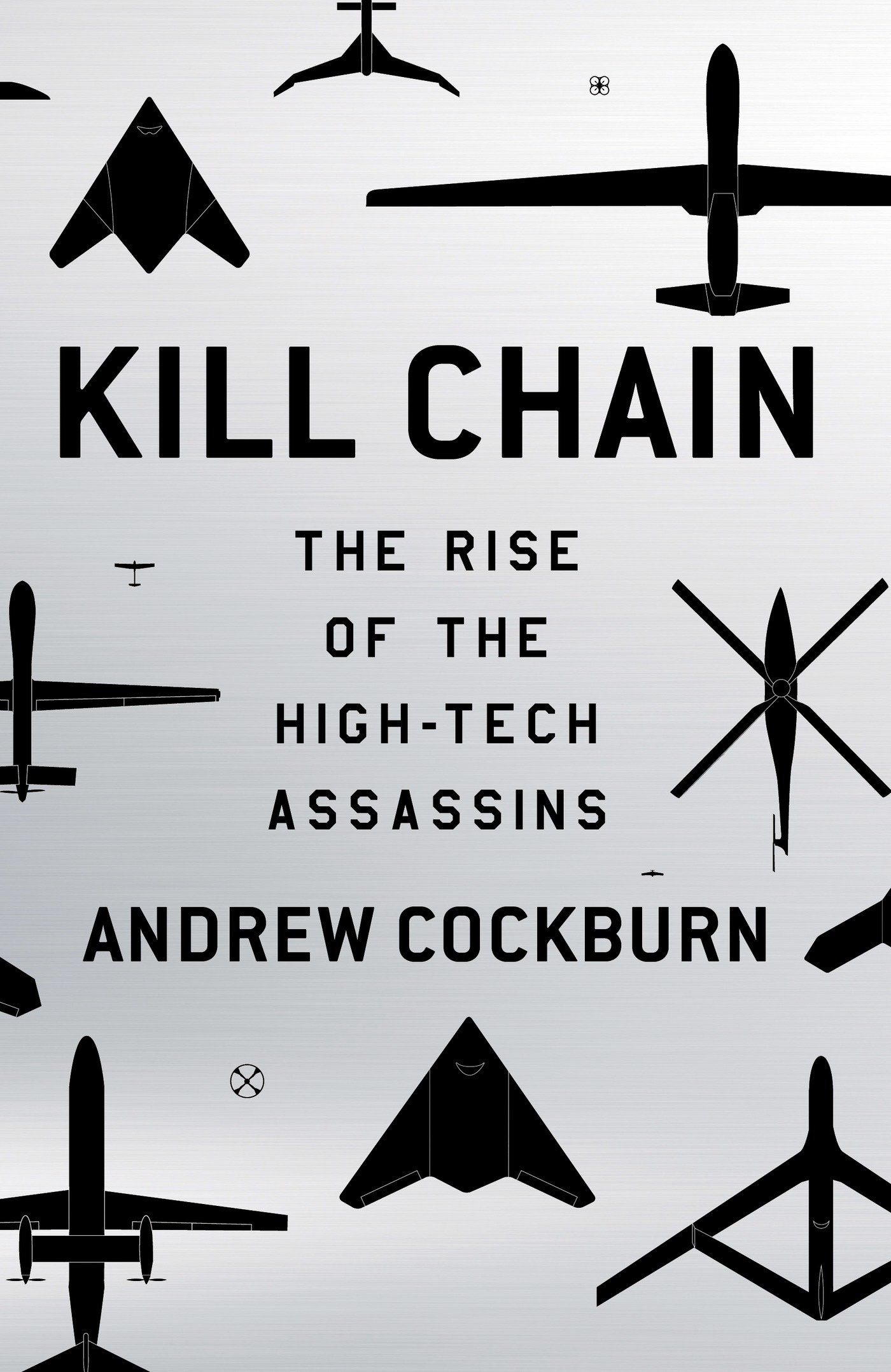
Yet more on targeted killing/assassination: new from Verso and Henry Holt in March, Andrew Cockburn‘s Kill Chain: the rise of the high-tech assassins.

Kill Chain uncovers the real and extraordinary story of drone warfare, its origins in long-buried secret programs, the breakthroughs that made drone operations possible, the ways in which the technology works, and, despite official claims, does not work. Through the well-guarded world of national security, the book reveals the powerful interests—military, CIA, and corporate—that have led the drive to kill individuals by remote control. Most importantly of all, the book describes what has really happened when the theories underpinning the strategy—and the multi billion-dollar contracts they spawn—have been put to the test.

Andrew is the author of the brilliant Rumsfeld: an American disaster, and he’s also been writing around the issue of military and paramilitary violence for some time.  There’s an early review of Kill Chain from Kirkus here, and Andrew discusses writing the book in a short audio clip here.

If you can’t wait until March, there’s a taster in ‘Drones, baby, drones‘, which appeared in the London Review of Books (8 March 2012); if you aren’t a subscriber you can obtain 24-hour access free of charge.

Time and again, the military has claimed that advances in technology have finally made warfare predictable and precise. That was the promise of Igloo White in Vietnam [see my ‘Lines of descent’: DOWNLOADS tab], the video-game spectacle of the Gulf War, the war for Kosovo and the counter-guerrilla wars of the past ten years. Time and again, the military’s claims have been disproved. Will drones change everything? Robert Gates, secretary of defence from 2006 to 2011, expressed the official view in his address to the CIA Officers Memorial Foundation annual dinner last March. Confessing that he hadn’t initially done enough to quash resistance to innovation from ‘flyboys in silk scarves’, Gates said: ‘From now on, it’s drones, baby, drones.’

In the audio clip Andrew insists that the full-motion video feeds from Predators and Reapers are far less clear than most commentators make out, and in subsequent contributions Andrew has perceptively linked the fantasies of the God-trick with militarized vision more generally: see, for example, his ‘Tunnel vision‘ (about the comparative merits of the A10 and the B1 bomber) which appeared in Harper’s in February 2014 and ‘Flying Blind‘, which appeared on Harper’s blog in September.

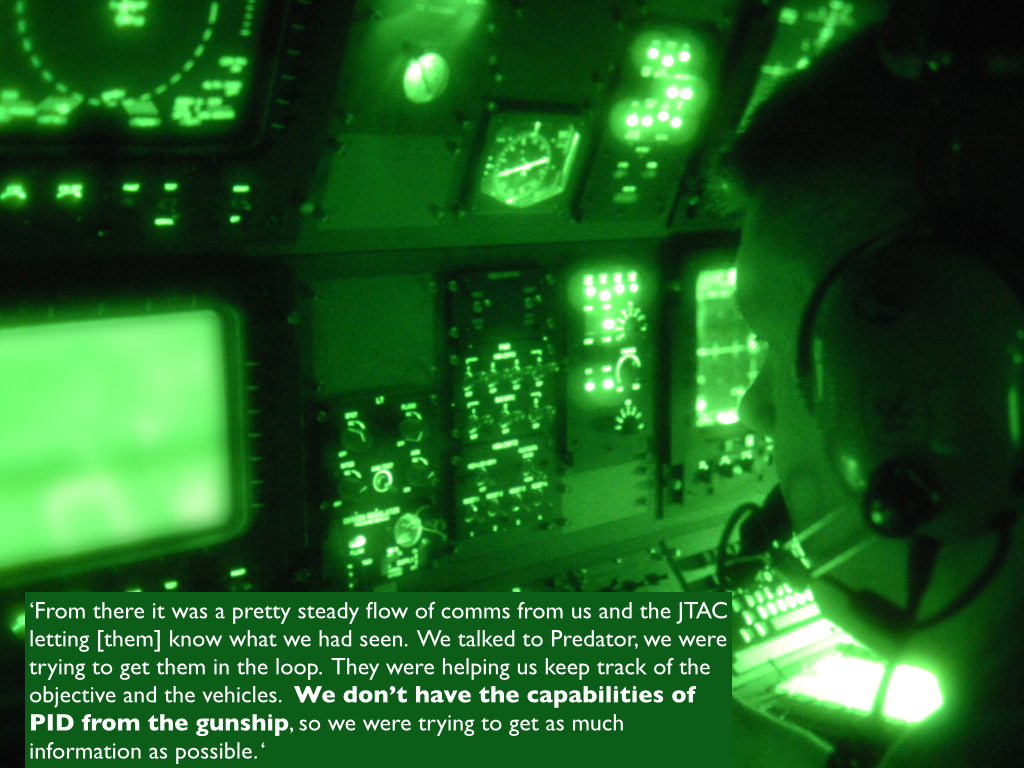
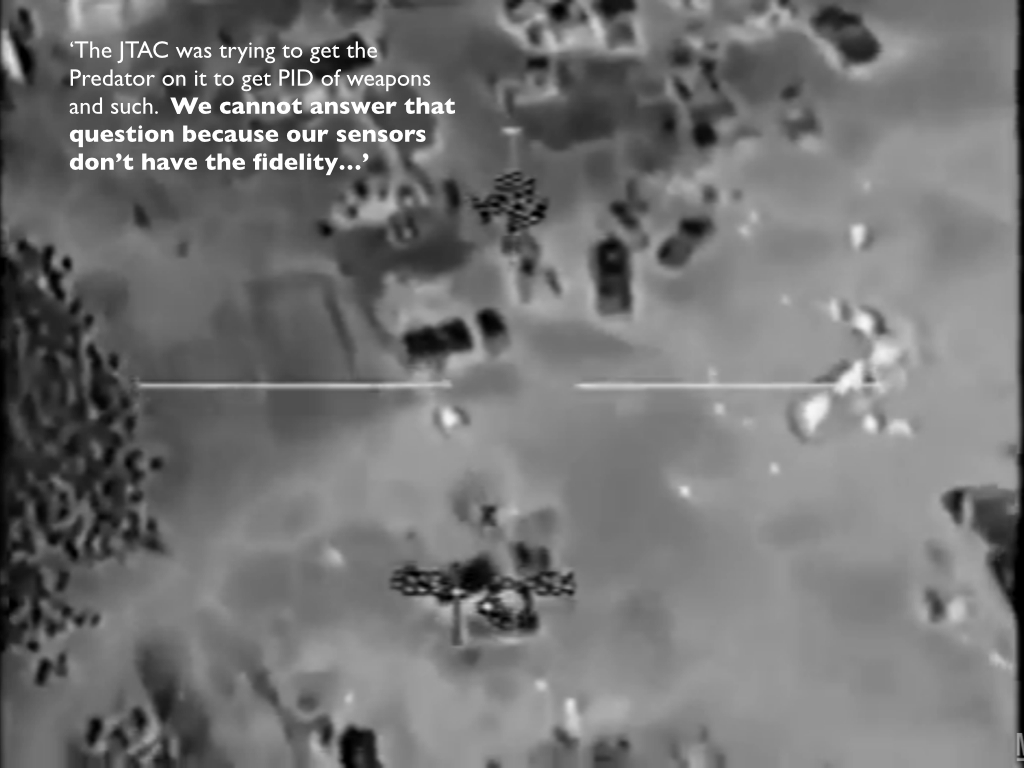
I’m not convinced that the A-10 is able to ‘observe the battleground with such precision, and safely to target enemy forces a stone’s throw away from friendly troops’ as Andrew maintains, but his more general point is a sharp one.  Too often we forget that other aircraft rely on optical sensors and video screens too, not only Predators and Reapers, and that these political technologies differ from platform to platform, as the following slides from ‘Angry eyes’ indicate (where the captain of an AC-130 gunship in fact defers to the crew of a Predator):

Angry eyes VISION.001

Angry eyes VISION.002

And, as Andrew also makes clear, these technologies produce their own interpellations:

Video will often supply a false clarity to preconceived notions. One A-10 pilot described to me an afternoon he spent circling high over southern A ghanistan in May 2010, watching four people—tiny figures on his cockpit screen—clustering at the side of a road before they retreated across a field to- ward a house. Everything about their movements suggested a Taliban I.E.D.- laying team. Then the door to the house opened and a mother emerged to hustle her children in to supper.

“On the screen,” he explained, “the only way to tell a child from an adult is when they are standing next to each other. Otherwise everyone looks the same.”

“We call the screens face magnets,” remarked another veteran, Lieutenant Colonel Billy Smith, a former A-10 squadron commander who flew tours over Bosnia, Iraq, and Afghanistan. “They tend to suck your face into the cockpit, so you don’t pay attention to what’s going on outside.”

All of this intersects with my continuing work on militarized vision, and in the next several weeks I’ll be uploading a series of new essays that deal with drone strikes in Pakistan [based on my ‘Dirty dancing‘ presentations], the Sangin Valley in Afghanistan (a ‘friendly fire’ incident), and an air strike in Uruzgan in Afghanistan that was orchestrated by a drone [based on my ‘Angry Eyes’ presentations]. So watch this space…

Incidentally, ‘kill chain’ is both the extended, networked apparatus that leads from air targeting to execution – for all platforms, remote and conventional – and the injunction that is typed into US military chat rooms (mIRC) to close down ‘chatter’ that might distract pilots once they are cleared to engage (see my discussion here).

Psycho-geographies of violence

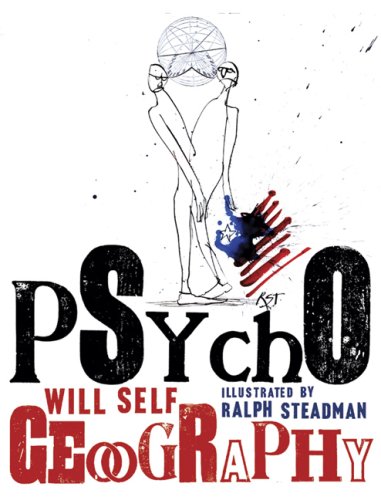
0747590338Will Self‘s series of columns for the Independent on ‘psycho-geography’ attracted considerable attention (they were published between 2003 and 2007 and then collected in the book shown on the left).  In its original form, of course, psychogeography can be traced back to the Lettrist International and the Situationists, and David Pinder‘s Visions of the city: utopianism, power and politics remains one of the most eye-opening introductions to these and similar experiments.

But in today’s Guardian Self turns to a far from utopian prospect to consider what in less avant-garde and more demotic terms would probably also count as a ‘psycho-geography’ of sorts:  ‘We are passive consumers of the pornography of violence‘.

He begins with a devastating imaginative reconstruction of one of the executions carried out by IS/IS/IL: seen not from the point of view of the video-viewing (or not-viewing) public, or even the executioner, but the victim.  He’s aware of the objections:

Surely, at the end of a year in which the public arena has been fully booked for grand guignol, the last thing anyone needs is such an intrusive – and arguably insensitive – speculation? May we not take this opportunity, on the verge of a new year, to sit back, relax, and turn away from the theatre of horrors – not, of course, because we don’t care about all this suffering, all this hideously violent discorporation, but because at least we know this much about ourselves: we may not be the most ethically motivated, caring, community-minded people around; however, we aren’t like them – we aren’t like those men in Raqqa who beat and burn and stone and rape and enslave and shoot and chop and cut: we aren’t evil. And surely, in the opinionated maelstrom we can all at least agree with David Cameron and Barack Obama on this: to cut off someone’s head is an act of such maleficence that it necessarily, in and of itself, renders those who do it evil; if by evil is understood a will-to-absolute-negation, a nihilism that metastasises through the failing body politic, leaving in its necrotic wake only dead-eyed zombies incapable of any authentic feeling.

And yet I wonder: what I wrote above was an active attempt on my part to sympathise with Abdul-Rahman Peter Kassig, Alan Henning, Steven Sotloff, James Foley and David Haines in the last moments of their lives. It was painful to write because I needed to try and put myself in their heads – possibly it was uncomfortable to read for the same reason; yet reading it was also an activity, requiring the translation of marks on page or screen into ideas, images and sensations. Some attempts to understand these perverse and evil actions are similarly engaged, but for the most part our response to the hostage crisis that unfolded over 2014 was necessarily passive. Passive in part because our government wishes to retain its monopoly both on what it sees as the legitimate exercise of violence, and on the prerogative of mercy as well: there will be no ransoms paid for British hostages, while the knife wielded by the man who has been called Jihadi John will be parried – or so they assure us – by targeted air strikes against Islamic State forces, while our “commitment to the region” is re-emphasised in other ways.

So, our passivity – the passivity of civilians who depend on a professional army to assert our moral will, and the passivity in my case – and quite possibly yours – of citizens who have long since recoiled from the spectacle of this interminable conflict worthy of Orwell’s 1984: the so-called “war on terror”.

There’s more – much more – that takes in themes that will be familiar to many readers but here given new urgency by the torsions of Self’s imagination and the sharpness his prose.  It’s an extraordinary ride, and it grips intellectually, politically and ethically.  One of Self’s central arguments is that even as we are reduced to the status of ‘passive consumers’ of this execrable violence (one that is, as he shows, far from absent from our own history) we are – those of us that live in the United States, Canada, the UK, France and elsewhere – also profoundly implicated not only in what is being staged by IS but also in the administration of military violence by the states that make up the latest ‘coalition’.

‘… we are all kneeling in the desert, staring at the serrations on that knife; the very personal and intimate nature of these murderous beheadings calls to our attention – try as we might to repress it – the cold impersonality of the murders committed in our name; for, just as in recent decades the west found it profitable to outsource manufacturing production to low-wage economies, so our own moral accounting has in the short term benefited from a form of outsourcing: western governments no longer find it expedient to perpetrate violence closer to home (it makes for bad PR and restive electorates); yet in a globalised world the exercise of “legitimate” violence is the one monopoly they continue to operate. Perhaps one way of looking at the Middle East is that it’s one of the most productive “bloodshops” we have, a reliable supplier of conflicts that give the west a showroom within which to demonstrate its overwhelming firepower.’

As I say, there’s much, much more, and Self’s reflections on the braiding threads between imagery, passivity , disembodiment and military and paramilitary violence make this the one essay I’d urge everyone to read and reflect on this week, even this month.  And probably all next year.

Irresponsible Eyes

The Left to Die Boat

I’m off to Berlin to give a new version of ‘Angry Eyes‘ at HAU’s Waffenlounge (‘Weapons Lounge’), so I’ve been thinking some more about the dispersed and distributed field of militarized vision.  En route, I’ve read Timothy Raeymaekers‘ thoughtful reflection over at Liminal Geographies on Charles Heller and Lorenzo Pezzani‘s short film Liquid Traces.

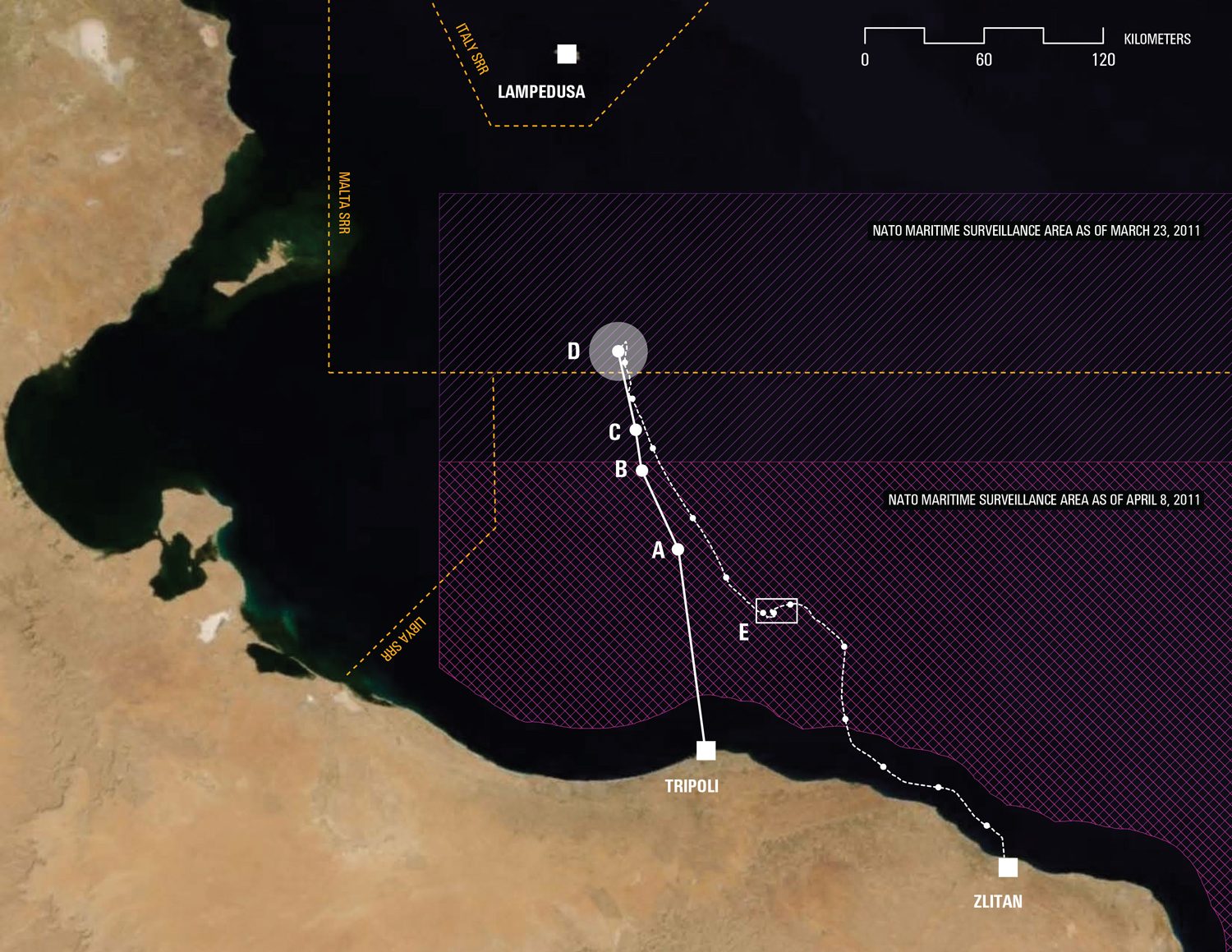
Their video retraces the awful journey of 72 desperate people who set out from Tripoli on 27 March 2011.  Two weeks later their boat washed ashore on the Libyan coast again – but with only 11 survivors on board, two of whom later died.

I expect many readers will recognise that Liquid Traces derives from a project at Forensic Architecture called The Left to Die Boat:

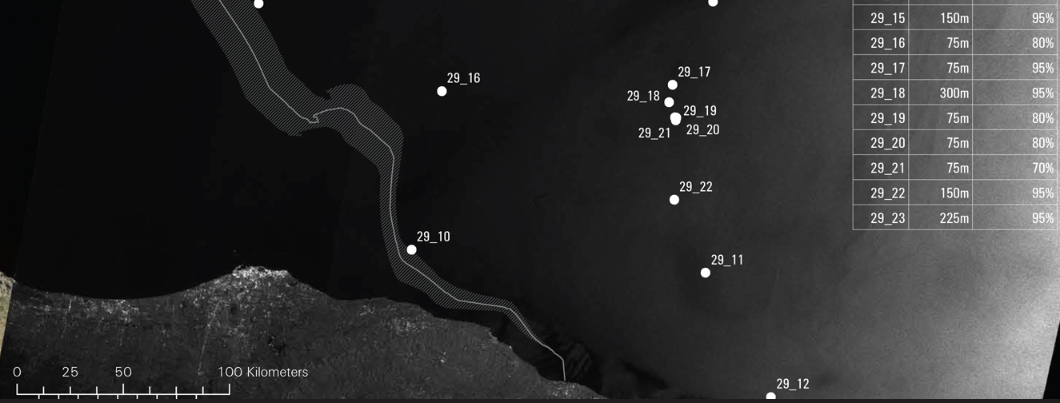
The Forensic Oceanography project was launched in summer 2011 to support a coalition of NGOs demanding accountability for the deaths of migrants in the central Mediterranean Sea while that region was being tightly monitored by the NATO-led coalition intervening in Libya. The efforts were focused on what is now known as the “left-to-die boat” case, in which sixty-three migrants lost their lives while drifting for fourteen days within the NATO maritime surveillance area.

By going “against the grain” in our use of surveillance technologies, we were able to reconstruct with precision how events unfolded and demonstrate how different actors operating in the Central Mediterranean Sea used the complex and overlapping jurisdictions at sea to evade their responsibility for rescuing people in distress. The report we produced formed the basis for a number of ongoing legal petitions filed against NATO member states.

1A

As Tim notes,

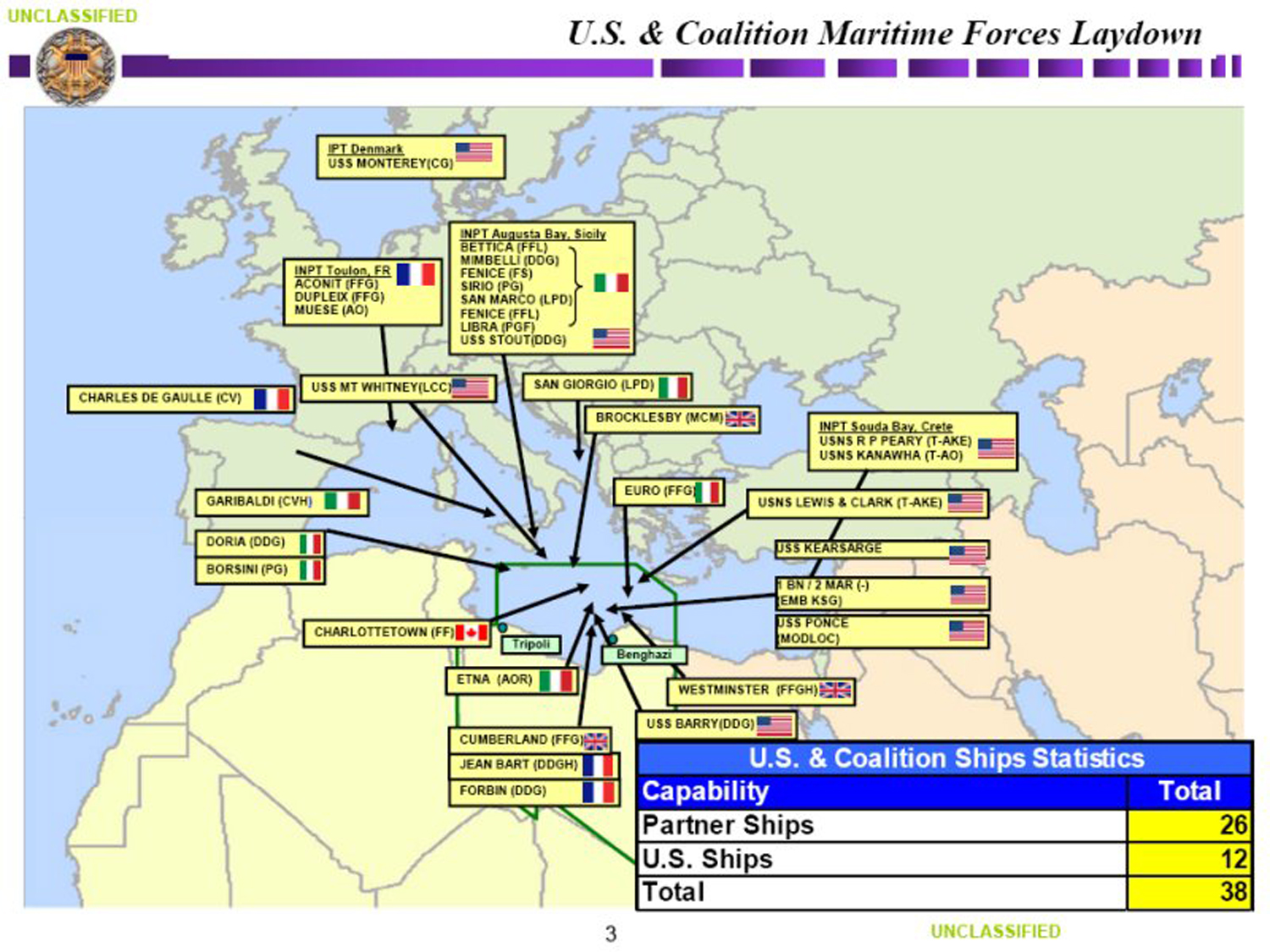
The paradox is this: despite its departure during a period of massive Frontex and NATO deployment following the Tunisian and Libyan uprisings, and despite the vicinity of 38 NATO ships (see below) and numerous commercial vessels, the migrants who were traveling across the Mediterranean were left to die while being actively observed through an assemblage of multiple, irresponsible eyes.

P14-2A_DOD-110324-dod03

Tim concludes in terms that echo my own invocation of Donna Haraway, though in a radically different context:

Rather than being a God’s eye, which towers high above human activity, as if it were seeing from nowhere, the assemblage that surveys Mediterranean waters constitutes a patchy puzzle of often conflicting and contradictory visions and legislations, and – I might add – quite different and opposing temporalities. As Haraway points out, the main question in this case becomes not what but “how to see? Where to see from? What limits to vision? What to see for? Whom to see with? Who gets to have more than one point of view? Who gets blinded? Who wears blinders? Who interprets the visual field? What other sensory powers do we wish to cultivate besides vision?” And… “with whose blood were my eyes crafted?”

in Berlin, I’ll be presenting a new reading of an air strike orchestrated by an MQ-1 Predator in Uruzgan; here’s the programme note:

In the early hours of 21 February 2010 a team of US Special Forces soldiers and Afghan National Army troops flew in by helicopter to the village of Khod in Uruzgan, Afghanistan. Their job was to search for a factory making Improvised Explosive Devices (IEDs). In the darkness the headlights of three vehicles were spotted in the far distance, and their movements were tracked by a Predator drone sending back full motion video to its crew at Creech Air Force Base in Nevada. Hour after hour, the Predator crew became more and more convinced that they were watching a group of Taliban preparing to attack the Special Forces team. But the Predator only had only one missile left, and so two combat helicopters were ordered in to attack. As the smoke cleared, it became obvious that a dreadful mistake had been made: women and children were visible among the casualties. A subsequent US Army investigation revealed that at least 15 innocent civilians had been killed and another 12 seriously injured; there were no Taliban present. The crew of the Predator were blamed – not least for having a ‘Top Gun’ mentality. But re-reading the 2,000 pages of that investigation reveals another story that dramatically complicates what has become the standard critique of Unmanned Aerial Violence and raises a series of troubling questions about militarized vision and later modern war.

More here on the narrowness of the standard ‘Predator view’, and I’ll post the full essay as soon as it’s finished.