Outlawing war

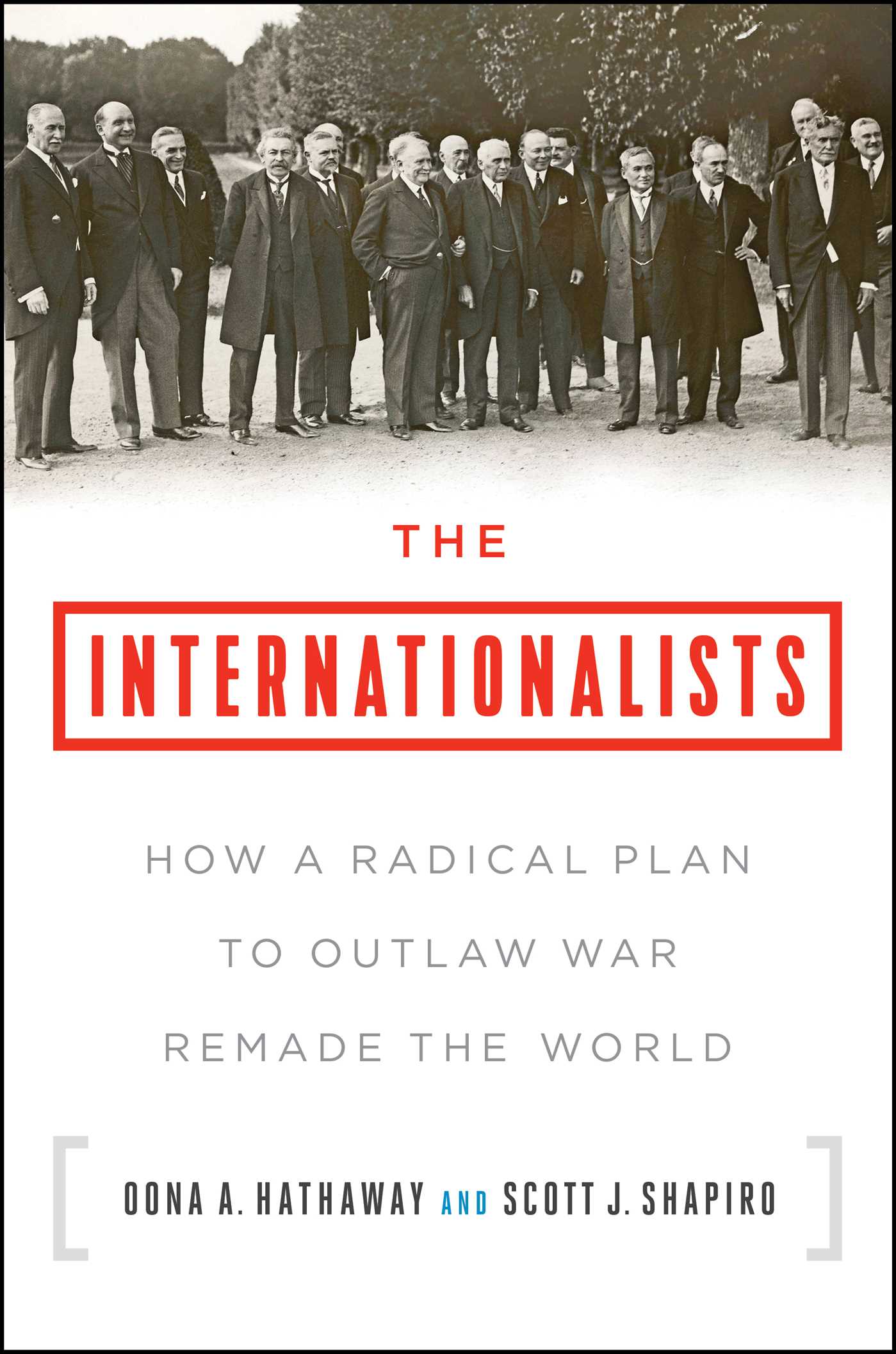
An vitally important book by Oona Hathaway and Scott Shapiro: The Internationalists: how a radical plan to outlaw war remade the world (Penguin/Simon & Schuster).  Hailed by Philippe Sands as ”A clarion call to preserve law and order across our planet”, it is all too timely:

A bold and provocative history of the men who fought to outlaw war and how an often overlooked treaty signed in 1928 was among the most transformative events in modern history.

On a hot summer afternoon in 1928, the leaders of the world assembled in Paris to outlaw war. Within the year, the treaty signed that day, known as the Peace Pact, had been ratified by nearly every state in the world. War, for the first time in history, had become illegal the world over. But the promise of that summer day was fleeting. Within a decade of its signing, each state that had gathered in Paris to renounce war was at war. And in the century that followed, the Peace Pact was dismissed as an act of folly and an unmistakable failure. This book argues that that understanding is inaccurate, and that the Peace Pact ushered in a sustained march toward peace that lasts to this day.

The Internationalists tells the story of the Peace Pact by placing it in the long history of international law from the seventeenth century through the present, tracing this rich history through a fascinating and diverse array of lawyers, politicians and intellectuals—Hugo Grotius, Nishi Amane, Salmon Levinson, James Shotwell, Sumner Welles, Carl Schmitt, Hersch Lauterpacht, and Sayyid Qutb. It tells of a centuries-long struggle of ideas over the role of war in a just world order. It details the brutal world of conflict the Peace Pact helped extinguish, and the subsequent era where tariffs and sanctions take the place of tanks and gunships.

The Internationalists examines with renewed appreciation an international system that has outlawed wars of aggression and brought unprecedented stability to the world map. Accessible and gripping, this book will change the way we view the history of the twentieth century—and how we must work together to protect the global order the internationalists fought to make possible.

You can read an extended essay by Oona, adapted from the book, via the Guardian here:

Today, perhaps more than at any time since 1945, the prohibition on use of force that has been the backbone of the international order for most of the last century is under attack. Indeed, it is in danger of collapsing – and taking the order it upholds down with it….

But international rules regarding the use of force are not a minor feature of the world we live in – and the fact that these rules have often been broken should not obscure how important they remain.

They are at the heart of some of the most beneficial transformations of the past 70 years, from the global decline in interstate conflict and combat deaths to the rising wealth and health that peace has allowed. With these rules at risk, the international community is facing a crisis of extraordinary proportions. Yet few people appreciate how serious and imminent the crisis is. Fewer still understand where these rules came from: a now-almost-forgotten agreement known as the Paris Peace Pact of 1928 that was eventually signed by all the nations of the world and had the immodest goal of outlawing war. In order to appreciate the magnitude of the threat, we must return to a world very different to our own, one in which the rules that we currently take for granted did not exist. The risk we face is reverting to this world, where might was right and war was legal.

You can read Louis Menand‘s extended review at the New Yorker here.

The fulcrum of the book is the Kellogg-Briand Pact (‘the Peace Pact’) of 27 August 1928; I opened my essay on ‘War and Peace’ [DOWNLOADS tab] with this extraordinary attempt to make war illegal, but I confess I knew little enough about it and now I see that my understanding was also spectacularly inadequate.  Read this book to find out why, but more importantly to think with the intellectual architect of the Pact, Salmon Levinson:

“The real disease of the world is the legality and availability of war.  We should have, not as now, laws of war, but laws against war; just as there are no laws of murder or of poisoning, but laws against them.”

Blackout

I vividly remember reading Joachim Schlör‘s Nights in the Big City when it was first published almost twenty years ago – an extraordinary reflection on the impact of illumination and the perception of night in Berlin, Paris and London between 1840 and 1930.  It joined Wolfgang Schivelbusch‘s elegant Disenchanted Night on my bookshelves, a text whose subtitle – ‘the industrialization of light in the nineteenth century‘ – concealed as much as it revealed the richness of Schivelbusch’s narrative.

But even then I thought there was another, later story to tell: what happens when people who have become used to the (more or less) brightly lit city are precipitously plunged back into darkness?

I was thinking of the blackout during the Second World War.  This week I’m back at Radboud University in Nijmegen, preparing for a public presentation on aerial violence, and my thoughts have returned to my old question.  I think it’s an important one because we know so much about bombing – about crouching under the bombs, seeking cover in shelters, recovering the bodies of the dead and the injured, and then ‘carrying on’ –  but we often forget that its horror is not confined to the experience of an air raid, to what Pat Barker memorably describes in Noonday as ‘a stick of bombs … tumbling down the beam of a searchlight onto a building fifty yards ahead, an extraordinary sight, like a worm’s eye view of somebody shitting.’  Others turned to the shattered language of the sublime to capture the aw(e)ful sensation of a city – their city – in flames.

But my point is that these surreal scenes of sound and light and fury were dramatic punctuations in a pervasive atmosphere of anticipation and a larger landscape of terror that together constituted what we might think of as the slow violence of bombing.  Sarah Waters captures this (and much more besides) brilliantly in her novel The Night Watch:

‘It was always disconcerting, in a black-out, leaving the places you knew best.  A particular feeling started to creep over you, a mixture of panic and dread: as if you were walking through a rifle-range with a target on your back.’
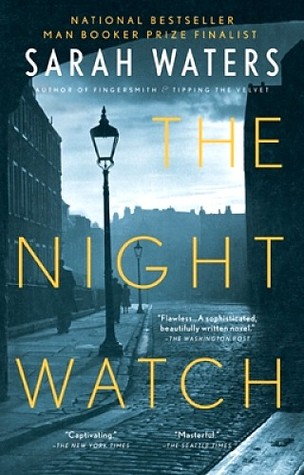
Like Noonday, The Night Watch is the product of careful research as well as a luminous literary imagination; yet historians themselves have made remarkably little of the black-out, content to leave it in the shadows and direct attention to the pyrotechnic displays of the bomber’s art.  So what follows are merely notes, and even then confined to Britain, waiting a larger project. (In fairness, there is an important PhD thesis by Marc Wiggam, The Blackout in Britain and Germany during the Second World War (Exeter University, 2011), but his main concerns are policy and policing, and the discussion of cultural formations is largely confined to contemporary literary and film representations and says little about everyday life).

Britain had introduced a limited blackout in 1915, when its cities were menaced by Zeppelins and Gotha bombers.  In 1937, keenly aware of Stanley Baldwin‘s bleak injunction in his speech ‘A Fear for the Future’ that ‘the bomber will always get through’, the British government was already making plans for air raid precautions.
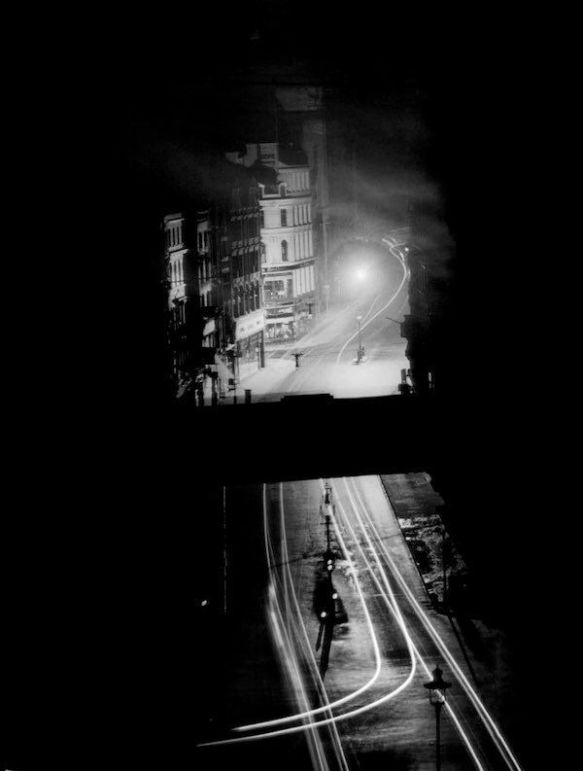
Ludgate Circus, London, 11 August 1939

A blackout was introduced in London on 11 August 1939, and a universal blackout imposed on the whole country by a ‘lighting order’ issued under Defence Regulation No 24 on 1 September 1939:

‘… every night from sunset to sunrise all lights inside the buildings must be obscured and lights outside buildings must be extinguished, subject to certain exceptions in the case of external lighting where it is essential for the conduct of work of vital national importance. Such lights must be adequately shaded.’

Felicity Goodall describes how journalist Mea Allan witnessed the introduction of the blackout:

‘I stood on the footway of Hungerford bridge across the Thames watching the lights of London go out. The whole great town was lit up like a fairyland, in a dazzle that reached into the sky, and then one by one, as a switch was pulled, each area went dark, the dazzle becoming a patchwork of lights being snuffed out here and there until a last one remained, and it too went out. What was left us was more than just wartime blackout, it was a fearful portent of what war was to be. We had not thought that we would have to fight in darkness, or that light would be our enemy.’

It was, as Geoff Manaugh notes, ‘a different form of camouflage, one that hid the city against the surrounding landscape by plunging its streets and buildings into darkness.’

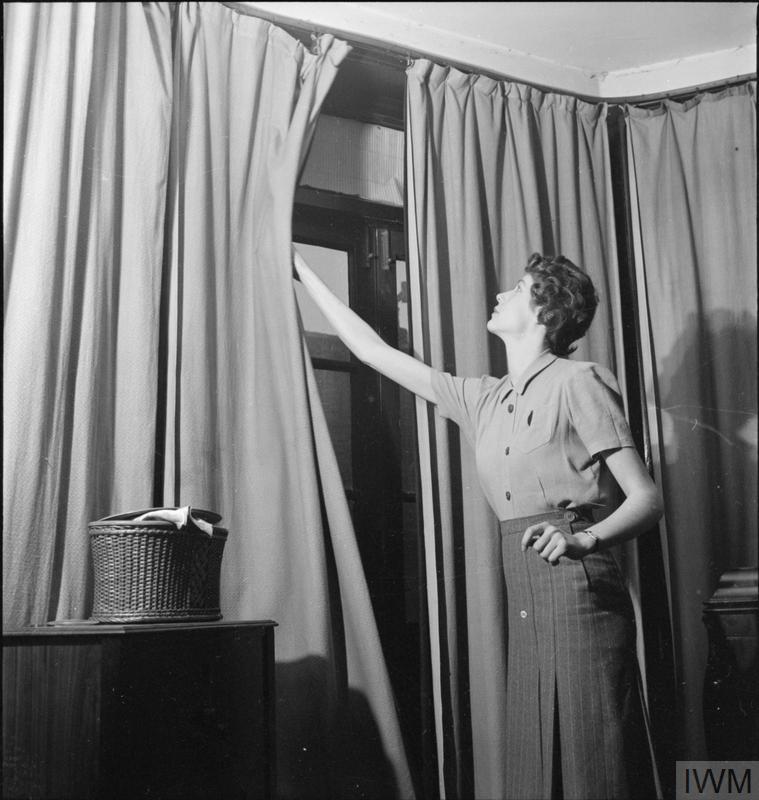
AIR RAID PRECAUTIONS AND CIVIL DEFENCE IN WARTIME BRITAIN, 1942 (D 10588) A woman pulls closed the blackout curtains in her home before going to bed. Copyright: © IWM. Original Source: http://www.iwm.org.uk/collections/item/object/205199623

Households were required to make special blackout curtains; they could not be washed, because this would let the light through, so housewives (sic) were enjoined to ‘hoover, shake, brush then iron them.’  The windows had to be closed to secure the blackout too, so rooms soon became airless. Chris Hill has the reaction of a teenage girl living in Romford, recorded in her diary for Mass Observation:

Friday 1st September – “…our makeshift blackout arrangements involve the use of a light so small that it strains the eyes. It’s only ten but I’m going to bed.”

Sunday 3rd September – “I decided we could not stop indoors; the blackout curtains made the rooms stuffy, and the light bad. We went into the town ‘to see what was going on’… Evidently, others had come out for similar reasons, so every street corner was ornamented with little groups of people…”

In short order a new city of ‘dreadful night’ was conjured into being.   John Lehmann later recalled that

‘London had become two cities.  The one, the daytime city where we went about our business much as before, worked in our offices and discussed what plans we could make for the future…  The other London was the new, symbolic city of the blackout, where one floundered about in the unaccustomed darkness of the streets, bumping into patrolling wardens or huddled strangers…’ [cited in Amy Helen Bell, London was ours: Diaries and memoirs of the London Blitz].
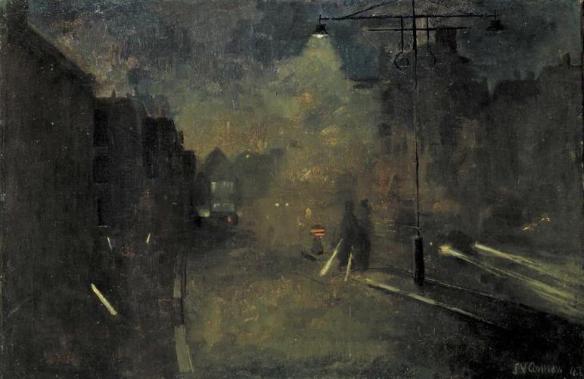
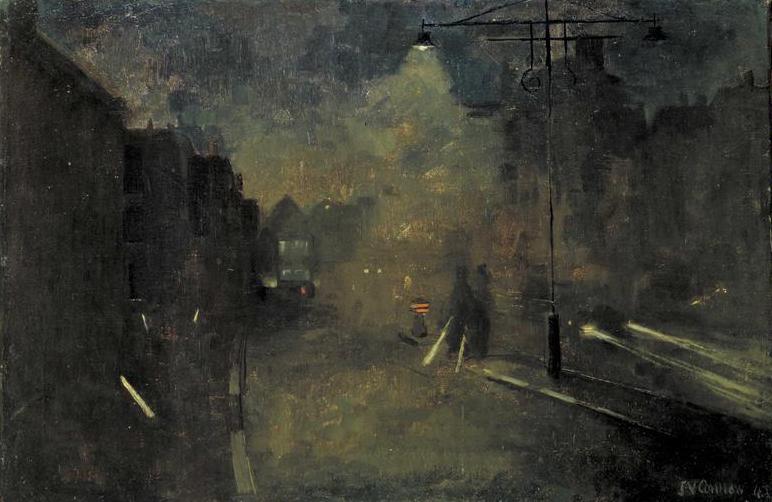
Blackout (Art.IWM ART LD 2913) image: Night scene of a city street with pedestrians carrying torches, a vehicle with masked headlights and a very dim
street light. The shapes of darkened buildings can be seen lining the street. Copyright: � IWM. Original Source: http://www.iwm.org.uk/collections/item/object/5477

The sensibility Lehmann describes – the floundering and bumping about and the attendant disorientation and disorder – may explain, in part, why war artists made so few attempts to capture the blackout.  This was not, as you might think, simply or even primarily the product of a collective reluctance to produce a near-black canvas.  In his War Paint, Brian Foss remarks that, ‘despite its status as the most universally experienced aspect of home front life,’ the blackout

‘is the subject of a mere handful of war pictures.  Of these, only one, purchased from Joan Connew [above], a hitherto virtually unknown painter from Kent, exploits both the rich tonal potential and the incipient visual confusion of a blanket use of brown and blacks.’

He argues that the absence from the War Artists Advisory Committee of blackout paintings was the product of a sort of counter-blackout that expressed ‘the psychological need for orientation points and beacons.’

So as the blackout was carefully calculated and disseminated (above), I think it important to register the attempts to impose an order upon and within its envelopment of the city.

Street lights were switched off, and drivers of vehicles had to mask their headlamps using thick cardboard discs,  obscure all other lights to the side and rear, and mark their bumpers and mudguards with white paint.  Sarah Waters imagines roads even in the capital becoming almost empty – she’s writing about Holborn – ‘with ‘only the occasional cab or lorry – like creeping black insects they seemed in the darkness, with gleaming, brittle-looking bodies and louvred, infernal eyes.’  That wasn’t a pure flight of the novelist’s imagination.  Pedestrians had to mask their torches too, and  Mrs Peg Cotton confessed that, as she walked home one night,

‘The tissue came off my torch and since the light is prohibited thus, I hid it under my coat.  The light shining out from below my skirts thus made me look like a crawling lightening-bug’ [in Felicity Goodall, Voices from the Home Front]

The blacked-out city was an unfamiliar one but also a dangerous one.  ‘The density of the blackout these cloudy moonless nights is beyond belief’, recorded Phyllis Warner:

‘No one in New York or Los Angeles can successfully imagine what it’s like.  For the first minute going out of doors one is completely bewildered, then it is a matter of groping forward with nerves as well as hands outstretched’ [Goodall, Voices]

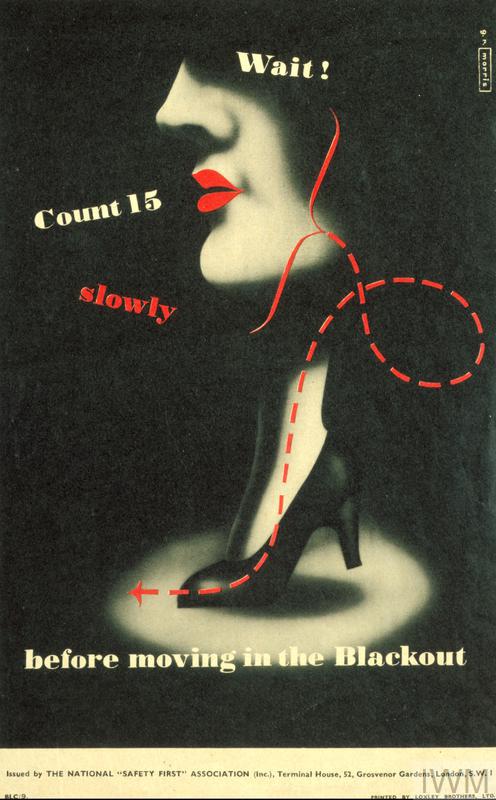
When leaving the dimmed but illuminated interior of a house, a railway or a tube station, travellers were advised to close their eyes and count to fifteen to prepare for the abrupt plunge into darkness.

Wait! Count Fifteen Slowly Before Moving in the Blackout (Art.IWM PST 0096) Original Source: http://www.iwm.org.uk/collections/item/object/19630

Here is Sarah Waters:

As she opened the door she said, ‘I hate this bit. Let’s close our eyes and count, as we’re supposed to’—and so they stood on the step with their faces screwed up, saying, ‘One, two, three …’ ‘When do we stop?’ asked Helen. ‘… twelve, thirteen, fourteen, fifteen—now!’ They opened their eyes, and blinked. ‘Has that made a difference?’ ‘I don’t think so. It’s still dark as hell.’

In the Blackout – Pause As You Leave the Station’s Light (Art.IWM PST 3456) Copyright: © IWM. Original Source: http://www.iwm.org.uk/collections/item/object/23861

As that vignette suggests, the very choreography of the city was altered and even regulated.  So, for example, pedestrians were advised to wear white at night (gloves, hats, armbands, buttons: Selfridge’s did a roaring trade in selling ‘blackout accessories’) –

Wear Something Light – Carry Something White (Art.IWM PST 14921) Copyright: � IWM. Original Source: http://www.iwm.org.uk/collections/item/object/19637

– and they were instructed to walk on the left to avoid colliding with one another:
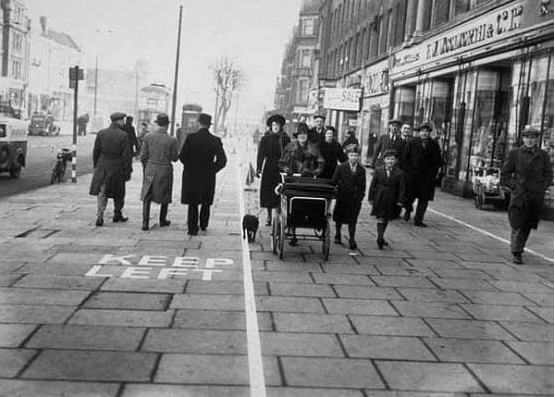
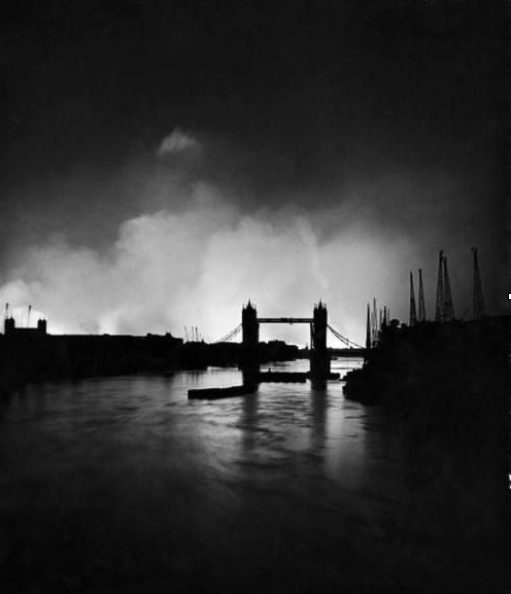
It was even more difficult for drivers, especially those rushing to provide emergency help at the scene of an air raid.  Again, Sarah Waters is brilliant at conjuring the experience of her volunteer ambulance drivers during the Blitz.  Often, the flames cut through the darkness to provide hideous illumination.   ‘You didn’t need any lights or maps to find the way,’ one City of London fireman observed, ‘you just headed for the glow in the sky’ (below).

But it wasn’t always so simple.  Here’s another firefighter:

‘It’s no joke finding your way about in a vehicle during the blackout through back streets in a district you and your driver have never been in before! As we were now some distance away from the fires, and Jerry being overhead, we were proceeding without lights – except side lights which are so dimmed as to be useless for illuminating the road. The pump in front of us had turned round a corner. We followed and suddenly the tender bumped, lurched and went along with two wheels on the pavement. We had only just missed dropping into a crater about twenty feet across by ten to fifteen feet deep. The first pump had swerved the other way from us and was stuck with its nose in a heap of debris’ [Goodall, Voices]

By the beginning of 1940 more people had been killed in road accidents than by enemy action. Ironically one of the first was a council employee hit by a vehicle as he painted a white line on a curb near Marble Arch – these lines, marking curbs and steps, were intended to help people navigate the darkened city.

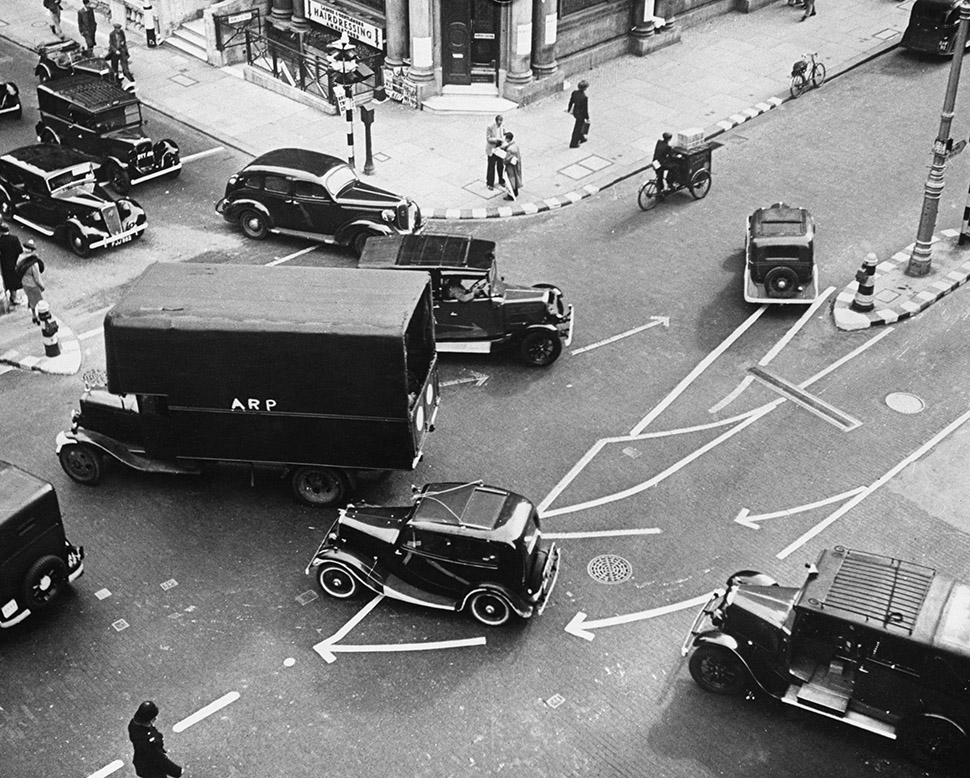
In addition, as Geoff Manaugh demonstrates, both the flow and the fabric of the city were reconfigured: a 20 m.p.h. speed limit was imposed, blue lights marked public air raid shelters, and new white markings appeared on roads to guide the traffic:

Unusual markings in the roadway at Piccadilly designed to help motorists at night during the blackout in World War II. (Photo by Fox Photos/Getty Images)

You can find more photographs of London during the blackout at mashable here and, of course, via the Collections page of the Imperial War Museums.

The imposition of the blackout was remarkable successful – though once the flares and the bombs sailed down, the bombers quickly found their mark (if rarely the precise target they were aiming for).  So let me leave you with this exquisite exchange that captures the interplay between the blackout and the bombs; it comes from John Strachey‘s account of his days as an ARP warden, Digging for Mrs Miller:

‘As he put his head out, a man said “Warden,” out of the dark. “Warden”, went on the voice irritably, “Come and see these dreadful lights. Don’t you think you ought to put them out at once?” Ford went down the street a few yards and found a man in a trilby hat pointing towards the trees in Bedford Court. There were the lights all right, two of them behind the trees, and as they watched three more came slowly drifting and dropping through the higher sky, red, white and orange. “I’m afraid I can’t put those lights out,” Ford said. “You see, those are flares dropped from German aeroplanes.”
Academics against the arms trade

Yoked to my previous post – and a distant echo of one of my earliest posts on ‘The death merchants‘ – is an important message from the editors of Critical Military Studies:

Dear academic friends and colleagues,

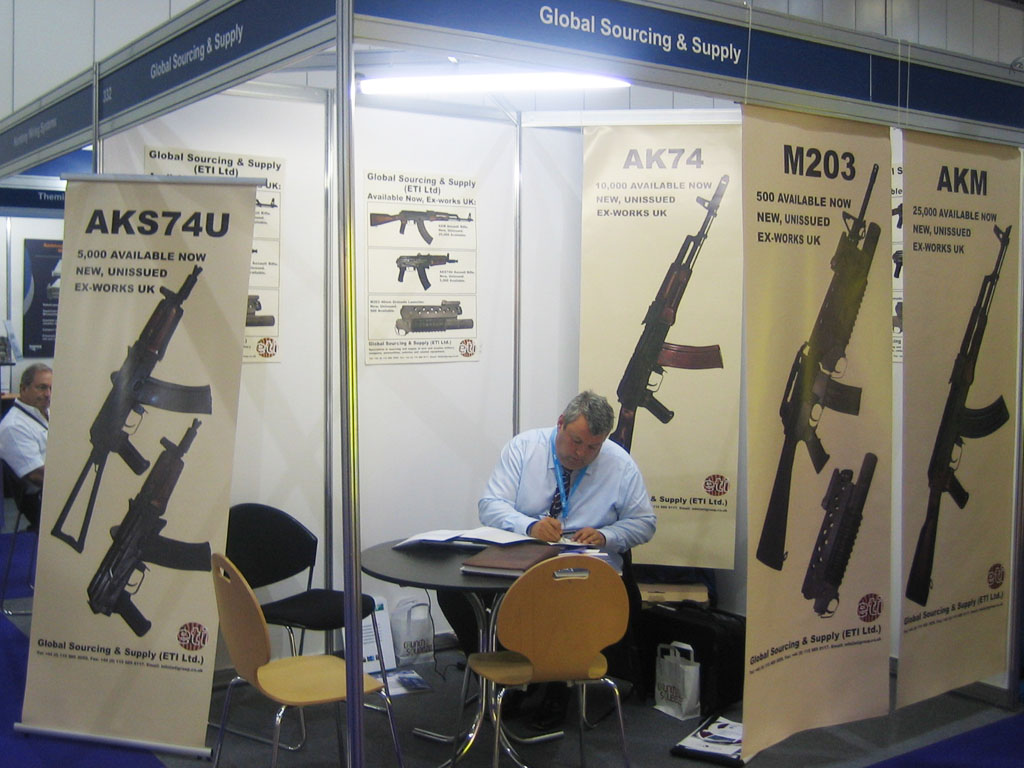
As many of you will know, from September 12th-15th the DSEI [Defence and Security Equipment International] arms fair will take place at the ExCeL Centre in East London. DSEI is one of the largest arms fairs in the world, with over 1500 companies and representatives from more than 100 states. As you can imagine, it also generates a lot of opposition. The Stop the Arms Fair coalition have called for a week of action before the arms fair begins, and as part of this we’re organising an academic conference, on Friday 8th September, that will take place in front of the ExCeL Centre. The conference will cover a series of issues related to militarism, with a series of talks, workshops and performances co-organised by activists and academics. Topics for workshops include:

–    Militarism and (gendered) embodiment
–    Recognising and resisting border militarism within universities
–    Militarism and contemporary colonialism
–    The purpose of radical theory

The team behind the workshop did this two years ago when the arms fair last happened, and the event was a huge success, providing participants with the opportunity to meet new people, have some wonderful conversations about the nature of militarism and the purpose of academic practice, and put academic ideas into action in an exciting and unusual manner. You can read a write-up of that event by Chris Rossdale in Critical Military Studies. There is a website for this year’s event here and Facebook event. Updates and logistics information will be available on both of those, but you can also get in touch with Chris Rossdale at C.Rossdale@lse.ac.uk if you want more details.

If you can’t make the conference (and even if you can), we are also currently circulating an open letter for academics to sign, signalling opposition to the arms fair. This will be published in a media outlet around a week before the action. We would be very grateful if you could sign it and circulate it to people and networks you think might be interested. You can find the letter here.

You can find more details (wherein the devil lurks) at DSEI’s website here, including this gem:

‘DSEI Strategic Conferences take place on 11 September (Day Zero) … 2017 brings Brexit and a change of US government, this combined with a competitive global defence & security market means DSEI can promise a conference and seminar programme that will challenge day to day thinking. Both events will tap into the ideas and theories of the people who drive the defence and security sector forward in pursuit of innovation and long-term economic prosperity…’

In case you’re wondering, admission is now £1,150 for ‘Industry/Academia’ but a snip at £150 for students….

Becoming Weapon

News from the brilliant Nisha Shah that her paper, ‘Gunning for war: infantry rifles and the calibration of lethal force’, is just out in a themed issue of Critical Studies on Security [(5 ( 2017] on ‘Becoming Weapon’:

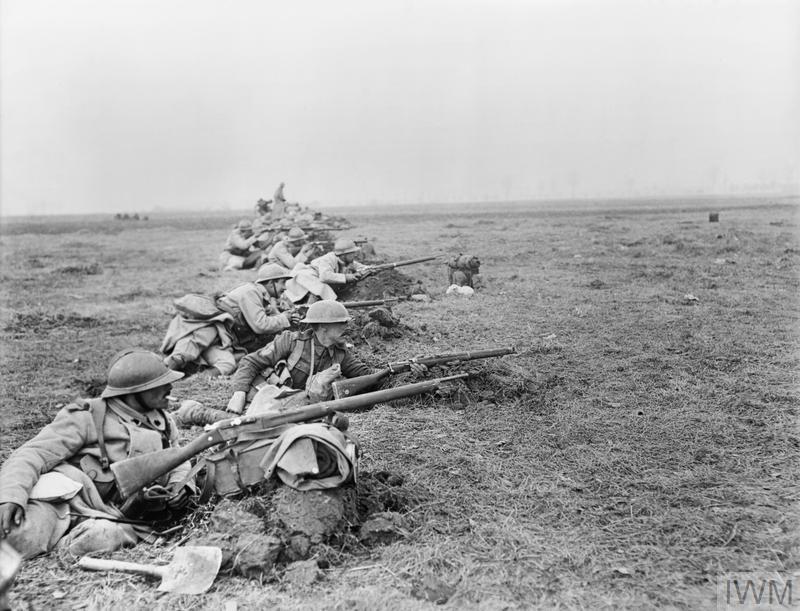
Infantry rifles are responsible for the majority of war-related deaths. This paper describes how and why they became ‘standard-issue’ military equipment. Examining testing reports, field surgery observations and bullet specifications, I develop a theory of instrumentality through which a specific way of killing in war- fare becomes legitimate and manifest in infantry rifles. Rather than pre-given objects that are made acceptable through an evaluation of their uses and consequences, I show that weapons become possible through an ontology that calibrates how killing in war occurs, technologically and ethically. More generally, this paper expands the study of weaponry and war by uncovering the material and moral specifications that not only design but also crucially define what counts as a weapon. Clearly stated are when and against whom the line between life and death can be drawn. This paper, by contrast, uncovers the conditions that generate how and with what that line can be legitimately crossed.

In their helpful introduction, the guest editors – Antoine Bousquet, Jairus Grove and Nisha Shah – explain:

No human artefact is intrinsically a weapon, be it a sword, an explosive or a chemical agent. Conversely, a passenger airplane, a shard of broken glass or a trained dog can perfectly well serve as a vector of bodily harm or lethality. An arrangement of things becomes a weapon through relational changes in intensity and context such that its motive force, density, potential energy or mechanical capability comes to make events of death and dismemberment. And beyond the immediate occasion of a weapon’s terrible work lies a wider network of relations that condition its emergence and support its operation. Systematically pursued, the tracing of such a network will draw out dependencies that extend far beyond the immediate requirements of its material production or the political economy of its acquisition and circulation, revealing the long tail of weaponisation that runs through our contemporary societies…

By placing particular emphasis on the making or becoming of weapons, we can begin to displace the fascination with the technical performance of destruction and instead query how weapons come to destroy in the first place. In so doing, we hope to break the deadlock between techno-fetishism and normative-polemical rejections of weapons, which together function as obstacles to a greater understanding of the significance of weapons in the making of worlds of violence and war.

It’s an excellent issue, including a paper from the equally wonderful Kate Hall (Kindervater).  Here are those other contributions:

Attachments to War

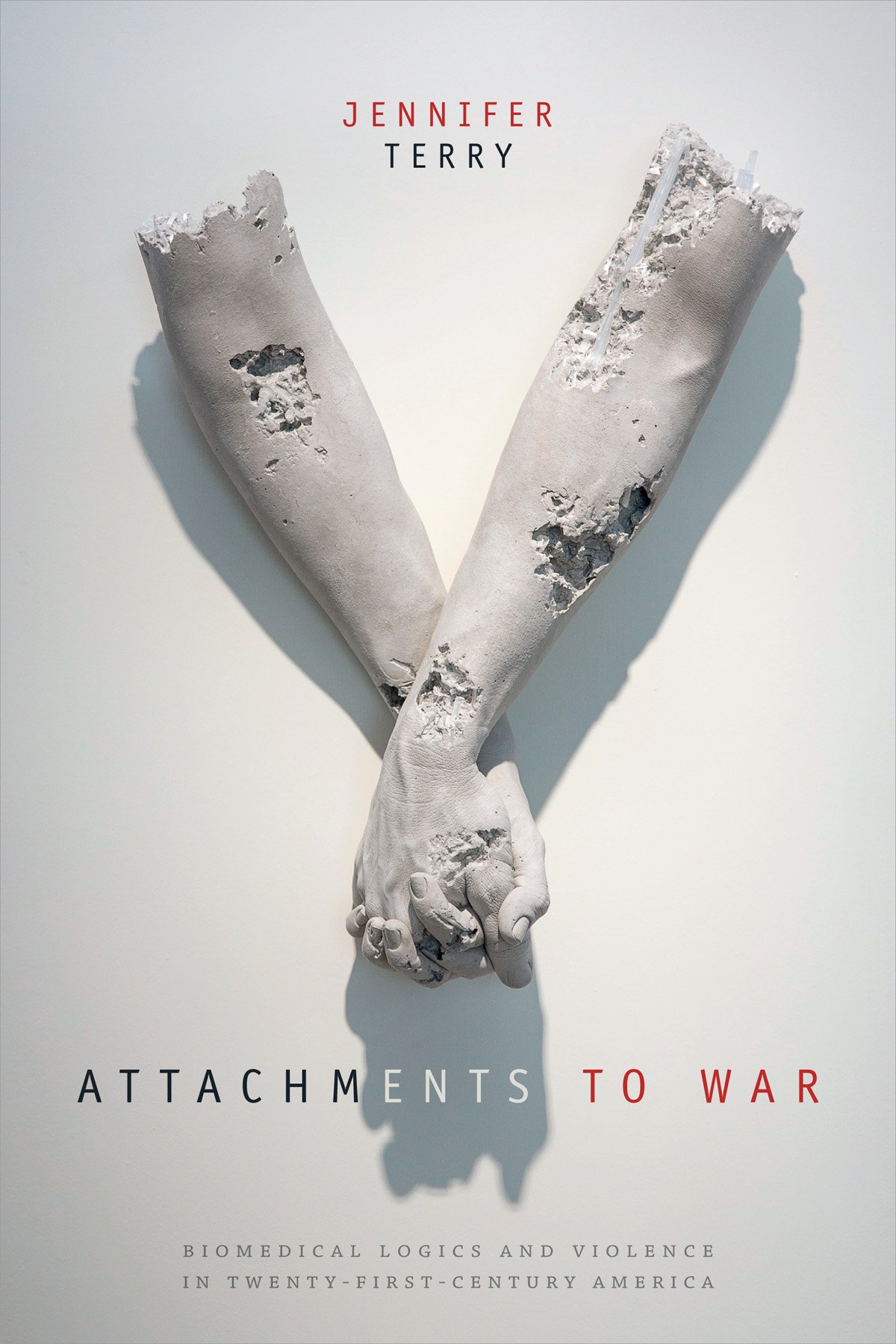
And in lockstep with my last post and my continuing interest in the prosthetics of military violence…   A new book from Jennifer Terry, Attachments to War: biomedical logics and violence in twenty-first century America, also due from Duke University Press in November:

In Attachments to War Jennifer Terry traces how biomedical logics entangle Americans in a perpetual state of war. Focusing on the Afghanistan and Iraq wars between 2002 and 2014, Terry identifies the presence of a biomedicine-war nexus in which new forms of wounding provoke the continual development of complex treatment, rehabilitation, and prosthetic technologies. At the same time, the U.S. military rationalizes violence and military occupation as necessary conditions for advancing medical knowledge and saving lives. Terry examines the treatment of war-generated polytrauma, postinjury bionic prosthetics design, and the development of defenses against infectious pathogens, showing how the interdependence between war and biomedicine is interwoven with neoliberal ideals of freedom, democracy, and prosperity. She also outlines the ways in which military-sponsored biomedicine relies on racialized logics that devalue the lives of Afghan and Iraqi citizens and U.S. veterans of color. Uncovering the mechanisms that attach all Americans to war and highlighting their embeddedness and institutionalization in everyday life via the government, media, biotechnology, finance, and higher education, Terry helps lay the foundation for a more meaningful opposition to war.

Contents:

Introduction
1. The Biomedicine-War Nexus
2. Promises of Polytrauma: On Regenerative Medicine
3. We Can Enhance You: On Bionic Prosthetics
4. Pathogenic Threats: On Pharmaceutical War Profiteering
Epilogue

And here is the (equally brilliant) Laleh Khalili:

This brilliant book is a thoughtful and profoundly original study of how war becomes an object of attachment and support in the United States. Jennifer Terry’s discussion of wounding, injury, trauma, and prosthetics is one of the most fascinating, moving, and intensely generative studies I have read about how war is normalized, made everyday, and embedded in practices and beliefs and affect(ion)s of ordinary folks.

You can read the Introduction over at Catalyst: feminism, theory, technoscience here, and watch presentations on ‘Militarization, medicalization, responsibility’ (from 2015) by Jennifer and Nadia Abu el-Haj on You Tube here.

The Right to Maim

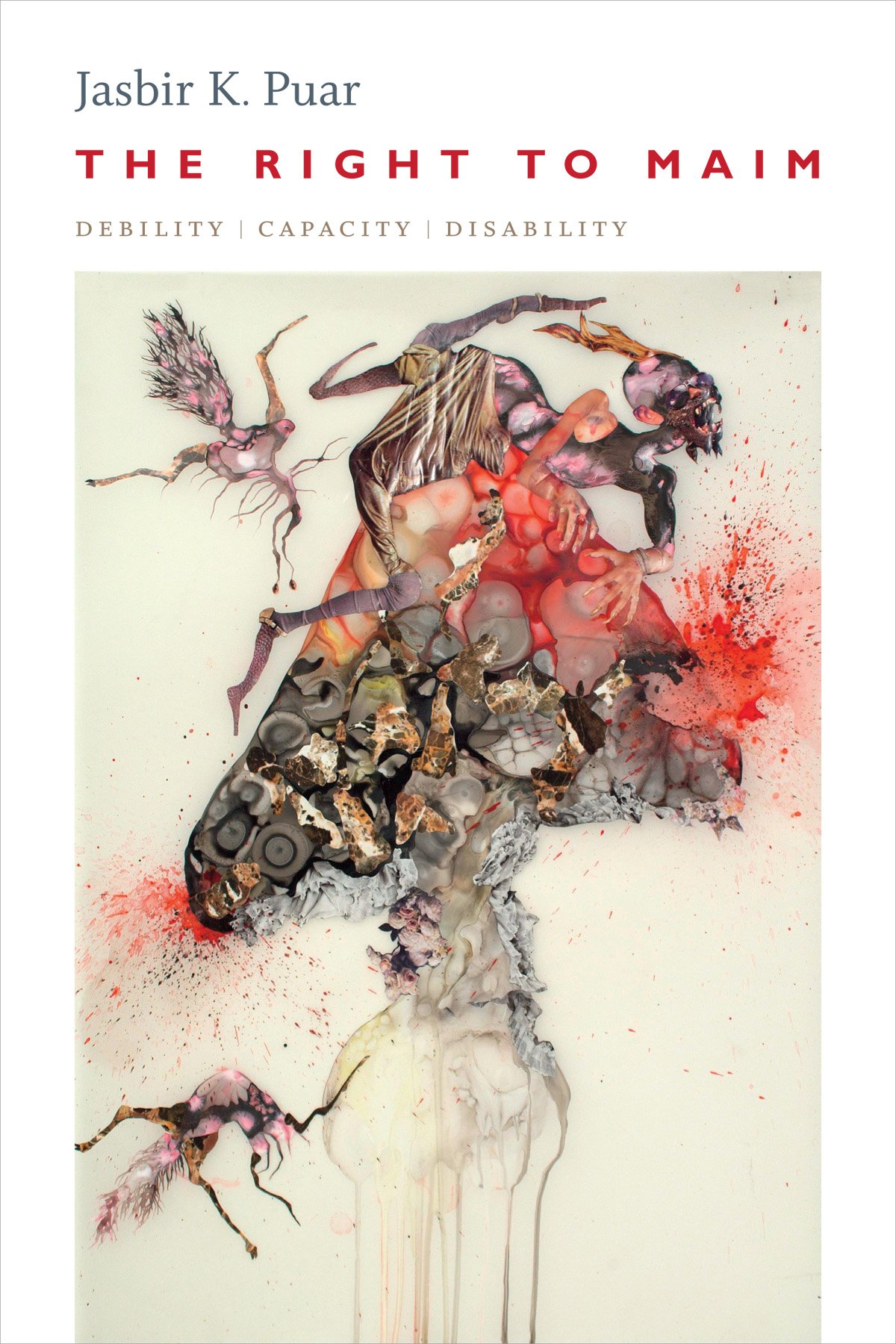
Following all too closely on the heels of my last post, a new book from Jasbir Puar, out from Duke University Press in November: The Right to Maim: debility, capacity, disability:

In The Right to Maim Jasbir K. Puar brings her pathbreaking work on the liberal state, sexuality, and biopolitics to bear on our understanding of disability. Drawing on a stunning array of theoretical and methodological frameworks, Puar uses the concept of “debility”—bodily injury and social exclusion brought on by economic and political factors—to disrupt the category of disability. She shows how debility, disability, and capacity together constitute an assemblage that states use to control populations. Puar’s analysis culminates in an interrogation of Israel’s policies toward Palestine, in which she outlines how Israel brings Palestinians into biopolitical being by designating them available for injury. Supplementing its right to kill with what Puar calls the right to maim, the Israeli state relies on liberal frameworks of disability to obscure and enable the mass debilitation of Palestinian bodies. Tracing disability’s interaction with debility and capacity, Puar offers a brilliant rethinking of Foucauldian biopolitics while showing how disability functions at the intersection of imperialism and racialized capital.

Contents:

Introduction: The Cost of Getting Better
1. Bodies with New Organs: Becoming Trans, Becoming Disabled
2. Crip Nationalism: From Narrative Prosthesis to Disaster Capitalism
3. Disabled Diaspora, Rehabilitating State: The Queer Politics of Reproduction in Palestine/Israel
4. “Will Not Let Die”: Debilitation and Inhuman Biopolitics in Palestine  1
Postscript: Treatment without Checkpoints

Here are three pre-publication reviews, first from Elizabeth Povinelli:

In signature style, Jasbir K. Puar takes readers across multiple social and textual terrains in order to demonstrate the paradoxical embrace of the politics of disability in liberal biopolitics. Puar argues that even as liberalism expands its care for the disabled, it increasingly debilitates workers, subalterns, and others who find themselves at the wrong end of neoliberalism. Rather than simply celebrating the progressive politics of disability, trans identity, and gay youth health movements, The Right to Maim shows how each is a complex interchange of the volatile politics of precarity in contemporary biopower.

Paul Amar:

Jasbir K. Puar’s must-read book The Right to Maim revolutionizes the study of twenty-first-century war and biomedicine, offering a searingly impressive reconceptualization of disability, trans, and queer politics. Bringing together Middle East Studies and American Studies, global political economy and gendered conflict studies, this book’s exciting power is its revelation of the incipient hegemony of maiming regimes. Puar’s shattering conclusions draw upon rigorous and systematic empirical analysis, ultimately offering an enthralling vision for how to disarticulate disability politics from this maiming regime’s dark power.

And Judith Butler:

Jasbir K. Puar’s latest book offers us a new vocabulary for understanding disability, debility, and capacity, three terms that anchor a sharp and provocative analysis of biopolitics of neoliberalism, police power, and militarization. Gaining recognition for disability within terms that instrumentalize and efface its meanings carries a great risk. So too does opting out of discourse altogether. Puar references a wide range of scholarly and activist resources to show how maiming becomes a deliberate goal in the continuing war on Palestine, and how the powers of whiteness deflect from the demographics of disability and ability. Lastly, her deft understanding of how the attribution of ‘capacity’ can work for and against people in precarious positions will prove crucial for a wiser and more radical struggle for justice.

If you can’t wait until November, you can get a taste of Jasbir’s arguments in her essay for borderlands 14 (1) (2015) ‘The ‘Right’ to Maim: Disablement and Inhumanist Biopolitics in Palestine‘ available as an open access pdf here.  I’ve been attending closely to Jasbir’s vital arguments as I re-think the sketches I made in Meatspace? and The prosthetics of Military Violence: more soon.

Distinction and the ethics of violence

In another lifetime, or so it seems, I wrote a short essay on ‘The death of the civilian’ (DOWNLOADS tab), and I seem to have spent much of the intervening years developing those early ideas.  So I’m thrilled to see an important new paper from Nicola Perugini and Neve Gordon, ‘Distinction and the Ethics of Violence: on the legal construction of liminal subjects and spaces’, available online now at Antipode:

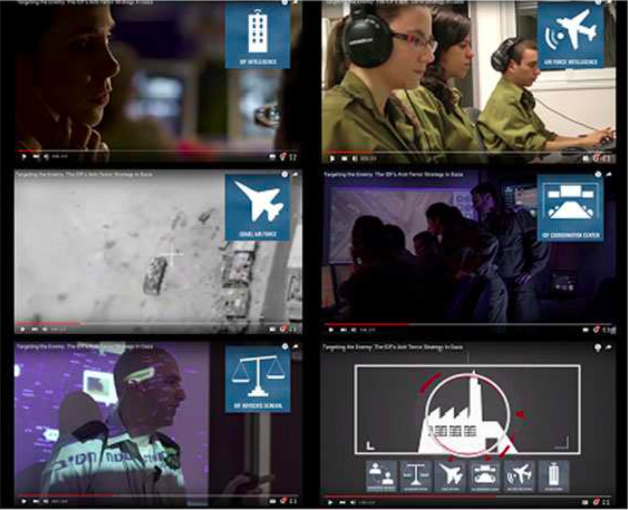
This paper interrogates the relationship among visibility, distinction, international humanitarian law and ethics in contemporary theatres of violence. After introducing the notions of “civilianization of armed conflict” and “battlespaces”, we briefly discuss the evisceration of one of international humanitarian law’s axiomatic figures: the civilian. We show how liberal militaries have created an apparatus of distinction that expands that which is perceptible by subjecting big data to algorithmic analysis, combining the traditional humanist lens with a post-humanist one. The apparatus functions before, during, and after the fray not only as an operational technology that directs the fighting or as a discursive mechanism responsible for producing the legal and ethical interpretation of hostilities, but also as a force that produces liminal subjects. Focusing on two legal figures—“enemies killed in action” and “human shields”—we show how the apparatus helps justify killing civilians and targeting civilian spaces during war.

Their two case studies focus on US drone attacks in Pakistan and the use of human shields in Gaza (the image below, taken from the article, shows the Israeli Defence Force’s ‘Laboratory of Discrimination’ (sic)).

You can watch a video where Nicola and Neve discuss their ideas on the Antipode website here, which also provides a less formal gloss:

[Their paper] examines how militaries actually make distinctions in the battlefield, given that today most fighting takes place in urban settings where distinguishing between combatant and civilian is becoming increasingly difficult.

Their paper shows how liberal militaries are utilizing new technologies that aim to expand that which is perceptible within the fray. Combining the more traditional forms of making distinctions such as binoculars and cameras with cutting edge hi-tech, militaries subject big data to algorithmic analysis aimed at identifying certain behavioral patterns. The technologies of distinction function before, during, and after the fray not only in order to direct the fighting and to help produce the legal and ethical interpretation of hostilities, but also as a mechanism that identifies and at times creates new legal figures.

Focusing on two legal figures—“enemies killed in action” and “human shields”—Nicola and Neve show how technologies of distinction help justify killing civilians and targeting civilian spaces during war. Ultimately, they maintain that distinction, which is meant to guarantee the protection of civilians in the midst of armed conflict, actually helps hollow the notion of civilian through the production of new liminal legal figures that can be legitimately killed.

For more on the intersections between international law, military protocols and the (in)visibility of the civilian, I also recommend the insightful work of Christiane Wilke (see ‘Seeing Civilians (or not)’ here).

A modern space of terror

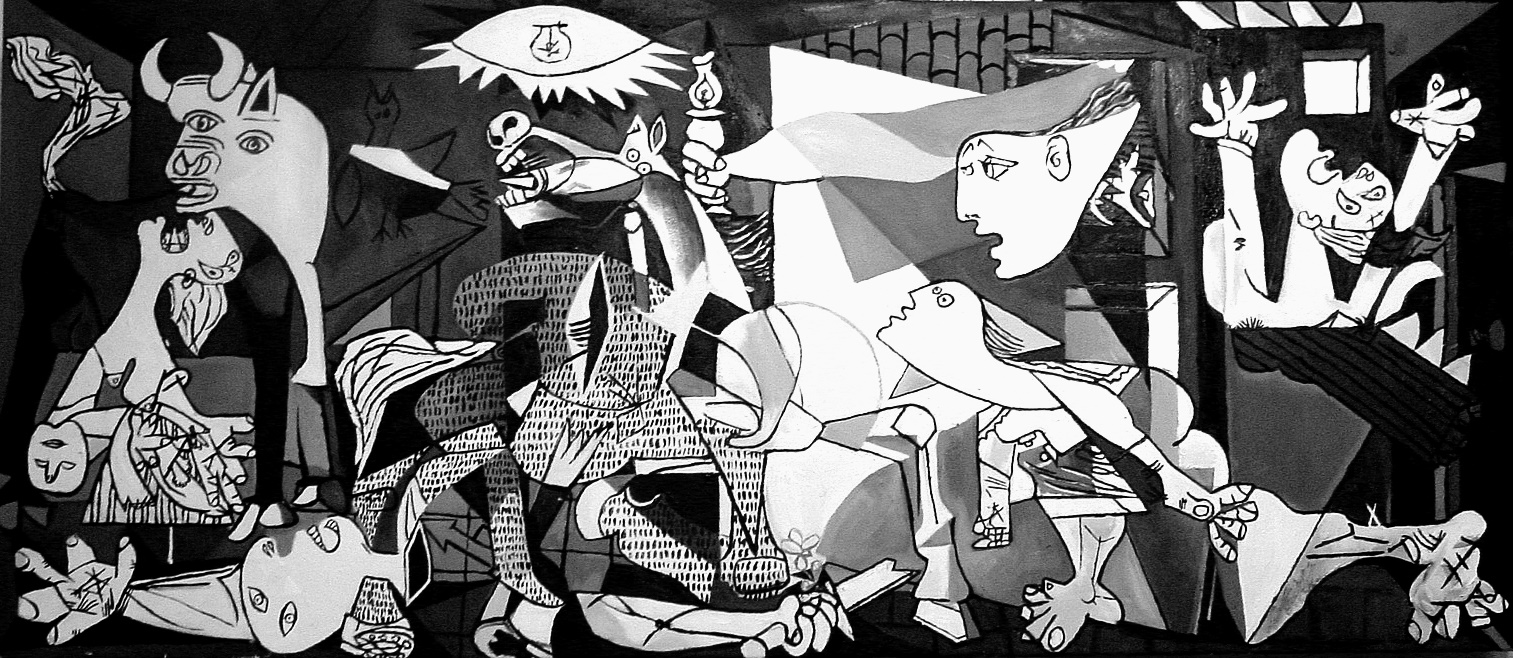
Several years ago, while my work on the geographies and genealogies of aerial violence was in its early stages, I was in Madrid: one of my main objectives was to see Pablo Picasso‘s Guernica.

I’d written (briefly) about it in a short essay – ”In another time-zone, the bombs fall unsafely….’: Targets, civilians and late modern war’ (DOWNLOADS tab):

In 1937 Europe’s world was turned upside down. The theme of the Exposition Universelle that was due to open in Paris later that year was the celebration of modern technology, ‘Art et technique dans la vie moderne’, and Pablo Picasso had been invited to paint a mural for the Spanish Pavilion. By the spring, he was still casting around for a subject.

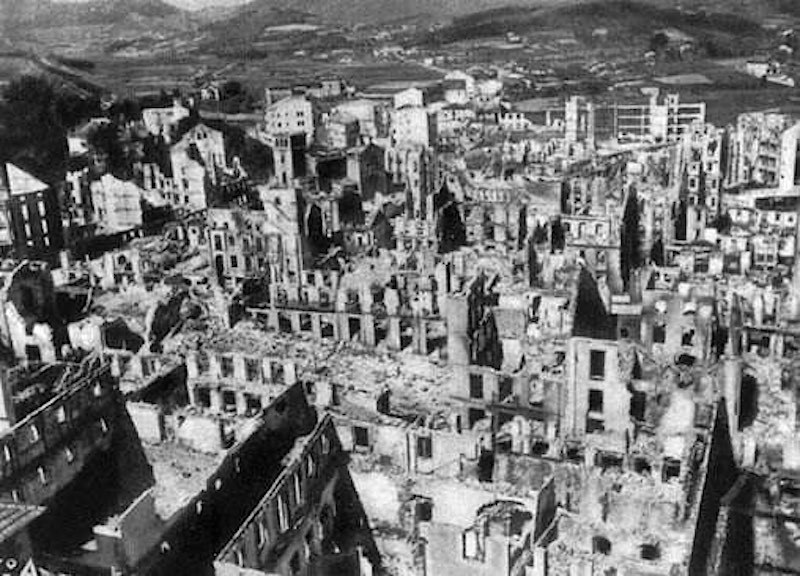
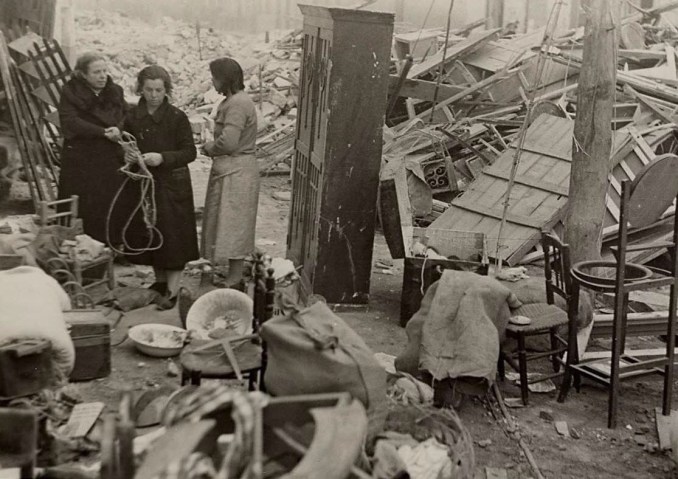
27 April was market day in Guernica (Gernika), and the Basque city was crowded with refugees from the Civil War and people from out of town attending the market.  Towards the end of the afternoon, the town was attacked from the air: first by a single German aircraft, then by three Italian aircraft, then by three waves of German and Italian aircraft. Later, in the early evening, the attack was resumed with astonishing ferocity by squadrons from the German Condor Legion whose high explosive and incendiary bombs set off a firestorm that destroyed three quarters of the town and left as many as 1, 600 people dead and over 800 injured. The next day a passionate eyewitness account of the devastation by journalist George Steer was published in The Times [see here for a reading of his report by his biographer Nicholas Rankin and for more contemporary imagery]. His report was syndicated around the world and set off a firestorm of its own. Franco’s immediate response was to deny that an air raid had taken place, and to blame the destruction on Republican and Anarchist forces defending the town. The commander of the Condor Legion, Wolfram von Richthofen, claimed that the raid had been directed against a military target, the bridge over the Rio Mundaca, and that its purpose was to cut off the Republican line of retreat; but his own standing orders required military targets to be attacked ‘without regard for the civilian population’, and in a secret report to Berlin he described ‘the concentrated attack on Guernica’ as ‘the greatest success’ in extinguishing resistance to the Nationalist-Fascist forces.

Picasso now had his subject:

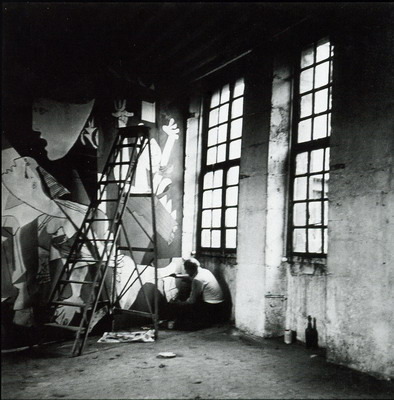
‘It was an enormous canvas, so large that Picasso needed a ladder and brushes strapped to sticks in order to paint its heights… Working from the ladder when he needed to, and sometimes on his knees, the artist began to paint on May 11, 1937, and he did so with a hot and focused intensity that was unusually keen even for him. He was determined to transform the vacant canvas into a monumental mural that would disturb and shock its viewers, reminding them … that people similarly suffered unimaginable terror in every place and time.’

‘Guernica’ as both place and painting became a symbol of a technological sublime terrifyingly different from that anticipated by the organizers of the Exposition Universelle. It was a sort of imaginative counter-geography that wrenchingly displaced the complacent Euro-American fiction that aerial warfare was always waged in ‘their’ space and that its horrors could remain unregistered.

But, as you can see, I said remarkably little about the canvas itself.  And I confess that when I finally stood in front of it in Madrid I continued to struggle with the composition.

In a wonderful essay on ‘Picasso and Tragedy’ in this month’s London Review of Books T.J. Clark has come to my aid – not least because he flips my uncertainty about the composition into a careful consideration of its spatiality.  First, this:

What marks Guernica off from most other murals of its giant size is the fact that it registers so powerfully as a single scene. Certainly it is patched together out of fragments, episodes, spotlit silhouettes. Part of its agony is disconnectedness – the isolation that terror is meant to enforce. But this disconnectedness is drawn together into a unity: Guernica does not unwind like a scroll or fold out like a strip cartoon (for all its nods to both idioms); it is not a procession of separate icons; it is a picture – a distinct shape of space – whose coherence is felt immediately by the viewer for all its strangeness.

‘Space’ is shorthand, I recognise. In the case of Guernica, what seems to matter most is the question of where the viewer is standing in the bombed city. Are we inside some kind of room? There are certainly walls, doors, windows, a table in the half-dark, even the dim lines of a ceiling. But doesn’t the horse opposite us look to be screaming in a street or courtyard, with a woman holding a lamp pushing her head through a window – a filmy curtain billowing over her forearm – to see what the noise is outside? Can we talk of an ‘outside’ and ‘inside’ at all in Guernica? Are the two kinds of space distinct? We seem to be looking up at a room’s high corners top left and right, but also, above the woman with the lamp, at the tiles on a roof. There is a door flapping on its hinges at the picture’s extreme right edge, but does it lead the way into safety or out to the void? How near to us are the animals and women? If they are close by, as appears likely, looming over us – so many giants – does that proximity ‘put us in touch’ with them? Does proximity mean intimacy? How does the picture’s black, white and grey monochrome affect our looking? Does it put back distance – detachment – into the scene, however near and enormous individual bodies may seem? Where is the ground in Guernica? Do we have a leg (or a tiled floor) to stand on? Literally we do – the grid of tiles is one of the last things Picasso put in as the picture came to a finish. But do any of the actors in the scene look to be supported by it? Does it offer viewers a foothold in the criss-cross of limbs?

The reader will have understood that the best answer to almost all of these questions is: ‘I’m not sure.’ And spatial uncertainty is one key to the picture’s power. It is Picasso’s way of responding to the new form of war, the new shape of suffering.


And then this:

Guernica is a tragic scene – a downfall, a plunge into darkness – but distinctively a 20th-century one. Its subject is death from the air. ‘That death could fall from heaven on so many,’ Picasso told an interviewer later, ‘right in the middle of rushed life, has always had a great meaning for me.’ A great meaning, and a special kind of horror. The historian Marc Bloch had this to say in 1940:

The fact is that this dropping of bombs from the sky has a unique power of spreading terror … A man is always afraid of dying, but particularly so when to death is added the threat of complete physical disintegration. No doubt this is a peculiarly illogical manifestation of the instinct of self-preservation, but its roots are very deep in human nature.

Bombing of the kind experimented with in April 1937 – ‘carpet bombing’, ‘strategic bombing’ ‘total war’ – is terrifying. Because the people on the ground, cowering in their shelters, may imagine themselves suddenly gone from the world – ripped apart and scattered, vanished without trace. Because what will put an end to them so completely comes out of the blue – Picasso’s ‘from heaven’ – and has no imaginable form. Because death from now on is potentially (‘strategically’) all-engulfing: no longer a matter of individual extinctions recorded on a war memorial, but of whole cities – whole ‘worlds’, whole forms of life – snuffed out in an hour or so.

And finally this:

We could say that the nowhere-ness and isolation in Guernica are what terror – terror with von Richthofen’s technology at its disposal [he called it ‘absolutely fabulous’] – most wants to produce. It is the desired state of mind lurking behind the war-room euphemisms: ‘undermining civilian morale’, ‘destroying social cohesion’, ‘strategic bombing’, ‘putting an end to war-willingness’. But surely Guernica would not have played the role it has for the past eighty years if all it showed was absolute negativity. It is a scene, after all, not a meaningless shambles. It presents us, at the degree zero of experience, with an image of horror shared – death as a condition (a promised end, a mystery) that opens a last space for the human…

It is difficult, maybe impossible, to describe what is happening here without one’s language tipping into the falsely redemptive. Nothing that takes place in Guernica, to make my own feeling clear, strikes me as redeemed or even transfigured by the picture’s black-and-white reassembly of its parts. Fear, pain, sudden death, disorientation, screaming immediacy, disbelief, the suffering of animals – none of these realities ‘falls into place’. Judith Butler in a recent essay, looking for a basis on which a future politics might be built, asks her readers to consider the idea of a collectivity founded on weakness. ‘Vulnerability, affiliation and collective resistance’: these, she argues, are such a commonality’s building blocks. I believe that Guernica’s usefulness – its continuing life in so many different contexts – may derive from the fact that it pictures politics in much the same way.

My extended extracts don’t do justice to the richness and the subtlety – nor the passion – of the original, which is easily the best essay I’ve read all summer – and long before.

So, two resolutions: I want to go back to Madrid; and I want to say much more about Picasso’s unsettling composition and its continuing resonance in my next book, Reach from the sky: aerial violence and the everywhere war.

News from Forensic Architecture

If you haven’t received the latest newsletter from Forensic Architecture in your mailbox, you can sign up here.

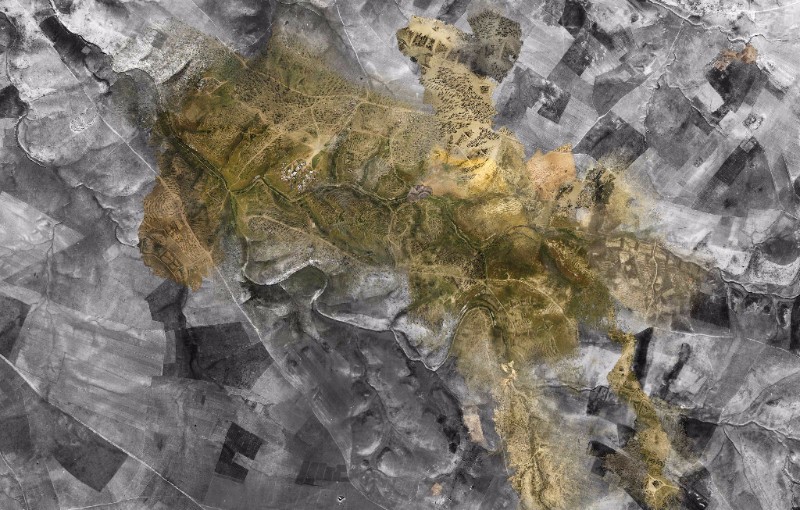
(The image is taken from one of the reports, ‘Ground Truth’, a project that ‘aims to provide historical and juridical evidence on behalf of communities in the illegalised Palestinian Bedouin villages in the northern threshold of the Negev/Naqab desert, Israel’; the newsletter provides details of this and several other current investigations around the world).

The Bomb

I first encountered Eric Schlosser’s brilliant Command and Control while I was working on the multiple intersections between drones and atomic bombs – ‘Little Boys and Blue Skies‘; the long form version will be finished soon – and Netflix has now added The Bomb to its listings; it’s also available on iTunes.

The Bomb is an experimental documentary Eric made with Kevin Ford and Smriti Keshari.  Here’s the trailer from YouTube:

This is how Claire Spellberg describes the project:

The 56 minutes prior are made up entirely of carefully collected footage of Cold War information, bomb testings, nuclear explosions, and modern news clips from around the world. There’s no narration to explain what we’re seeing; instead, the filmmakers rely on loud electro-rock music from The Acid. The combined effect is jarring; the beat pulsates steadily as one bomb explodes after another, destroying homes, people, and ecosystems.

Ford, Keshari, and Schlosser first premiered The Bomb at the 2016 Tribeca Film Festival as a complete multimedia experience. The filmmakers set up multiple 30-foot-high screens and The Acid accompanied the film with live music, creating what was sure to be an incredibly jarring effect. If you weren’t previously concerned about the very real threat posed by nuclear weapons, being surrounded by screens showing a nuclear bomb decimate a rural town as deafening music plays probably changed your mind.

Even without all the bells and whistles, the version of The Bomb on Netflix is sure to resonate with viewers.

Especially now.

There has been an explosion (sic) of commentary on Trump’s light-sabre rattling over North Korea – the more sober-sided are downplaying the possibility of a nuclear strike, though the death and destruction wrought by a conventional strike would surely be catastrophic – but a detailed analysis that speaks directly to the issues raised by ‘Command and Control’ is Garrett Graff on ‘The Madman and the Bomb‘ over at Politico.