Un-habitation

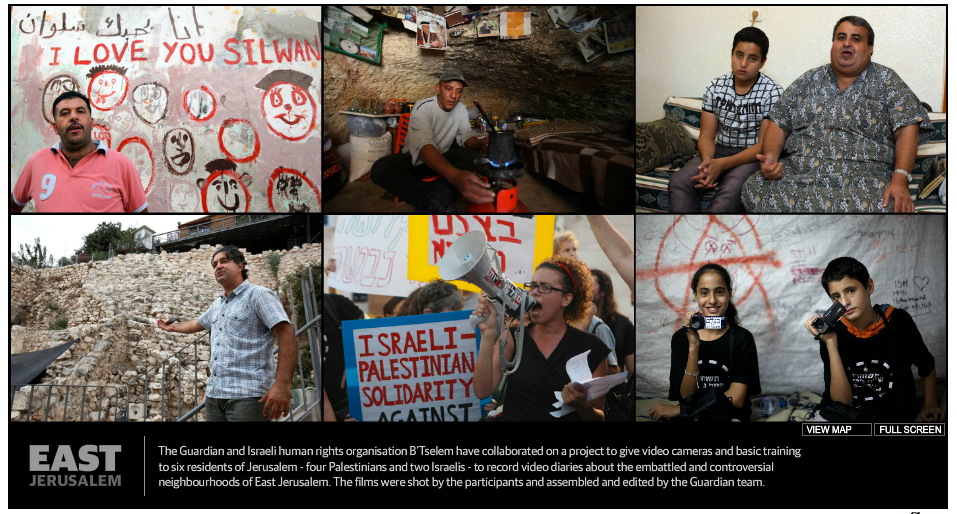
When Chris Harker was working on his PhD thesis at UBC I remember saying that while I admired the work of the Israeli Committee against House Demolitions a more accurate title would be Home Demolitions – simply because this would convey that much more was being so brutally and callously destroyed than bricks and mortar.  The practice is, of course, another vile dimension of the calculated (and illegal) colonisation of the West Bank by Israeli settlers, and Just Vision‘s latest film, My Neighborhood, puts the two together – erasure and occupation – in East Jerusalem.  But here too there are small signs of solidarity between Palestinians and Israelis that are vital for any prospect of ‘cohabitation‘…

My Neighbourhood

And now you can now watch the whole film on the Guardian website here.  Much more on East Jerusalem from the Civic Coalition for Palestinian Rights in Jerusalem here, from Settlement Watch (“Eyes on the Ground in East Jerusalem”) here and from B’Tselem: the Israeli Information Center for Human Rights in the Occupied Territories here.

In 2011 the Guardian joined forces with B’Tselem to produce six short video diaries under the umbrella title Living in East Jerusalem, and these are still online here.

Living in East Jerusalem Video Diaries

Imaging war, mediating conflict

20131301_affiche_imagingwar_2725x39_1

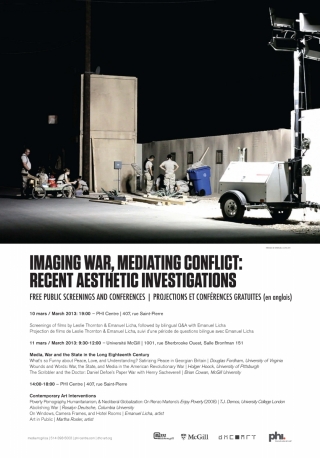
Last weekend Media@McGill, in collaboration with DHC/ART Foundation for Contemporary Art, hosted a screening and conference on representations of war and conflict in art and art history (I’m grateful to Max Ritts for drawing my attention to it). Here is the original summary:

 Imaging War, Mediating Conflict: Recent Aesthetic Investigations addresses the politics, aesthetics and ethics of art and media practices relating to war from the 18th century until today, and assesses how such representations help to shape the experience of current conflicts, as well as their place in history.

There were two conference sessions (click on the title links for the abstracts).  The first, on Media, war and the state in the long eighteenth century, featured:

What’s so Funny about Peace, Love, and Understanding? Satirizing Peace in Georgian Britain | Douglas Fordham, University of Virginia

Wounds and Words: War, the State, and Media in the American Revolutionary War | Holger Hoock, University of Pittsburgh

The Scribbler and the Doctor: Daniel Defoe’s Paper War with Henry Sacheverell | Brian Cowan, McGill University

The second session, on Contemporary Art Interventions, featured:

Poverty Pornography, Humanitarianism, and Neoliberal Globalization: On Renzo Martens’s Enjoy Poverty (2008) | T.J. Demos, University College London

Abolishing War | Rosalyn Deutsche, Columbia University

On Windows, Camera Frames, and Hotel Rooms | Emanuel Licha, artist

Art in Public | Martha Rosler, artist

Abolishing warVideo of the presentations has now been uploaded and can be accessed here.  Two in particular caught my attention.

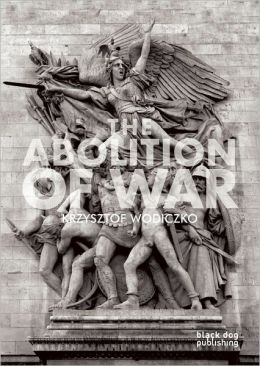
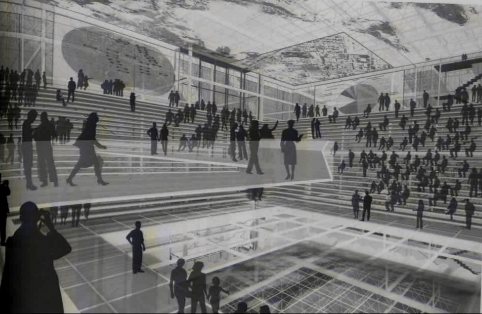
In an enviably polished and psychoanalytically informed presentation, Rosalyn Deutsche returns to an artist whose work she has considered several times in the past, Krzysztof Wodiczko (whose  Homeless Vehicle Project will be familiar to many geographers; others might know his more recent War Veteran Vehicle). Here she addresses, in a critically constructive fashion, his recent Arc de Triomphe: World Institute for the Abolition of War (though in fact he prefers the term “un-war” to “peace” for reasons Rosalyn explains at 09:51) and his extraordinary re-imagining and re-purposing of the iconic monument (see 11.13 on): what Rosalyn calls ‘disarming the Arc’.  More here and in Wodiczko’s book, The abolition of war, published last summer by Black Dog.  The same press has also published a lively volume of essays devoted to his work, Krzysztof Wodickzo (2011), which includes contributions from Rosalyn and Dick Hebdige, Dennis Hollier and Sanford Kwinter.

World Institute for the Abolition of War

Martha Rosler‘s House Beautiful: Bringing the War Home has always been a favourite of mine, and in her presentation at the McGill meeting, even as she battles with the recording system (haven’t we all?), she manages to say – and show – a great deal with a compelling economy.

Just looking?

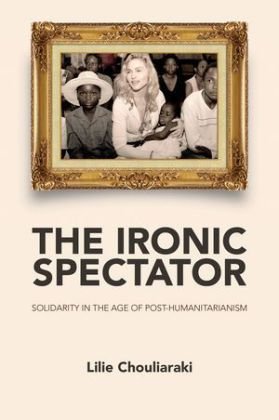
Most readers interested in the politics of humanitarianism and what Eyal Weizman calls ‘the humanitarian present‘ will know Lilie Chouliaraki‘s work, notably The spectatorship of Suffering (Sage, 2006).  She has a new book out now, The ironic spectator: solidarity in the age of post-humanitarianismCHOULIARAKI The ironic spectator (Polity, 2012/13):

This path-breaking book explores how solidarity towards vulnerable others is performed  in our media environment. It argues that stories where famine is described through our own experience of dieting  or or where solidarity with Africa translates into wearing a cool armband tell us about much more than the cause that they attempt to communicate. They tell us something about the ways in which we imagine the world outside ourselves.

By showing historical change in Amnesty International and Oxfam appeals, in the Live Aid and Live 8 concerts, in the advocacy of Audrey Hepburn and Angelina Jolie as well as in earthquake news on the BBC,  this far-reaching book shows how solidarity has today come to be not about conviction but choice, not vision but lifestyle, not others but ourselves – turning us into the ironic spectators of other people’s suffering.

This intersects with my own interest in the modern and late modern spectatorship of war, though in complex and far from straightforward ways (I have particularly in mind the contemporary ‘consumption’ of war), so I was excited to read this description of Lilie’s current research:

My current work focuses on the mediation of war, where I explore the various public genres through which war has been mundanely communicated in our culture, from photojournalism to films and from memoirs to news. The aim is to better understand how our collective imagination of the battlefield and its sufferings, what we may call our ‘war imaginary’, has been shaping the moral tissue of public life, in the course of the past century (1914-2012).

As part of this project, she has an essay forthcoming in Visual communication later this year, ‘The humanity of war: iconic photojournalism, 1914-2012’, which will also appear in extended form in  Nick Couldry, Mirca Madianou and Amit Pinchevski (eds) The Ethics of Media (Palgrave, 2013).

Benhabib on Butler

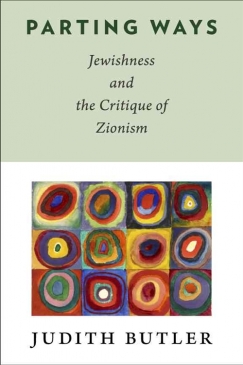
BUTLER Parting waysWhen I first became interested in critical theory (an age ago now), I found Seyla Benhabib‘s work – and especially Critique, norm and utopia (1986) – wonderfully clear and immensely helpful. She has recently published an extended review essay on Judith Butler‘s Parting Ways: Jewishness and the critique of Zionism in Constellations (2012) (open access – at least for now).  It’s a characteristically careful, lapidary essay, which works towards this climactic conclusion:

Is there any hope then? I believe there is but not through boycott, divestment and sanctions movements, which are based upon a false analogy between the Israeli-Palestinian conflict and the South African struggle, but through continued, sustained, and deep engagement with all countries in the region. Even if the Arab Spring in Egypt brought into power a conservative Islamist party, building and drawing upon its years of resistance to the Mubarrak regime, it was a new generation of Egyptians who first put their lives on the line and who showed us one more time that the legacy of revolutions is, as Hannah Arendt would say, “like a fata morgana” that appears to travelers in the desert in unexpected ways. This young literate generation of men and women are present everywhere in the Arab world; they are networked throughout Europe and the USA and in many other countries as well via migratory nets of kin and family. Today this new generation has not yet found its political voice and they continue to fight behind the Islamic flag to the chants of “Allah is great.”

Israelis, who for a long time considered themselves as the sole democratic peoples in the Arab world, have been taken aback by this evolution. But many have rejoiced in it as well. Protests against Israeli government policies, inspired by Tahrir Square erupted in the summer of 2011 in Tel-Aviv, with thousands of young people chanting for social justice, housing, and jobs. Hundreds of Arab citizens of Israel participated in such protests. The number of Arab youth who are now perfectly bi-lingual is growing and, along with it, their political capacity to engage Israeli society directly. Many Palestinian Arabs living in occupied East Jerusalem would much rather become Israeli citizens in an open and gender-egalitarian society than live under the Islamist rule of a Hamas party. The racist attacks by Israeli religious youth this past summer against Palestinians in the old city of Jerusalem galvanized an entire country around anti-racist teach-ins and demonstrations.

Any call for “cohabitation” between the Israeli and Palestinian peoples that does not balance the continuing paranoia of extinction on the part of Israeli Jews with the legitimate claims and aspirations of the Palestinian people is a non-starter. This means that Israelis themselves will need to think hard and fast about the mess they have created in aspiring to maintain a “Jewish state” on the one hand and continuing to occupy the territories of the West Bank on the other. But the facts on the ground are moving in a different direction and much to the chagrin of liberal Zionists who still advocate a two-state solution: given the military and economic dependence of the West Bank territories upon Israel, maybe the time has come to call for a “confederation of Israeli and Palestinian peoples,” with two parliaments and two separate electoral systems but a common defense and security policy over territory and airspace, and shared water and other natural resources. Under such a scenario, the considerable achievements of the Israeli state and society in economic, technological, medical, and intellectual areas would not need to be dismantled but Israeli sovereignty would be disaggregated and nested into a joint confederal model.

My own instincts are closer to Butler than Benhabib, but her problematisation of Israel’s exceptionalist claims to ‘democracy’ and her investment in a wider political geography (including the Arab uprisings) is surely essential for any project of what Butler calls, following in some part Hannah Arendt,’cohabitation’.

But the very term ‘cohabitation’ is also unsettled (the mot juste) by a vital ‘fact on the ground’ that Rashid Khalidi identifies in the New York Times with vigour and precision: ‘The overwhelming dominance of Israel over the Palestinians means that the conflict is not one that demands reciprocal concessions from two equal parties.’

State terror and historical memory in Guatemala

Felix Driver has alerted me to a seminar in London next week by George Lovell, ‘The archive that never was: state terror and historical memory in Guatemala’, on Tuesday 19 March 2013 at 5.15pm in Room 104, South Block, Senate House, University of London.  

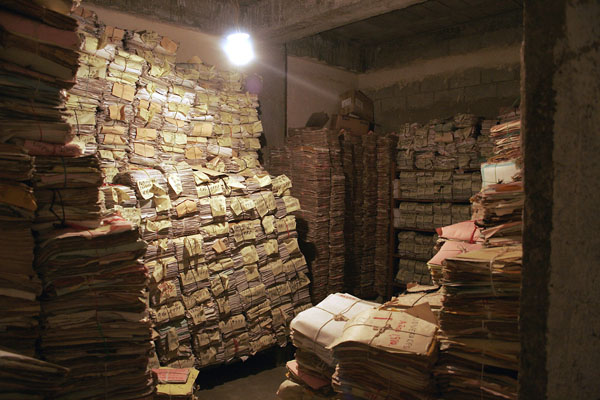
Interior room with bulb; Daniel Hernández-SalazarBetween 1961 and 1996, according to the findings of a United Nations Truth Commission, over 200,000 people in Guatemala lost their lives as a result of state-orchestrated acts of terror still denied by members of the security forces accused of perpetrating them. While conducting its investigations, the Truth Commission was repeatedly obstructed by army and police personnel from gaining access to official records, being told that no documentation of the type requested ever existed. Bureaucracies simply don’t work that way, even ones with good reason to destroy or conceal evidence of a self-incriminating nature. It was nonetheless of startling import when, on July 5, 2005, an attorney working for Guatemala’s Human Rights Office stumbled upon an archive recording the deeds of the National Police. Now known to contain an estimated 80 million documents, mainly covering the 1980s but dating back to earlier times, the archive revealed conspiracy and complicity on the part of police officers engaged in a ghoulish network of surveillance, intimidation, abduction, torture and murder, a veritable paper trail of death. A visit to the police archive, arranged so as to afford some first-hand familiarity with how its contents are being safeguarded and drawn upon for criminal proceedings as well as academic research, forms the basis of the seminar.

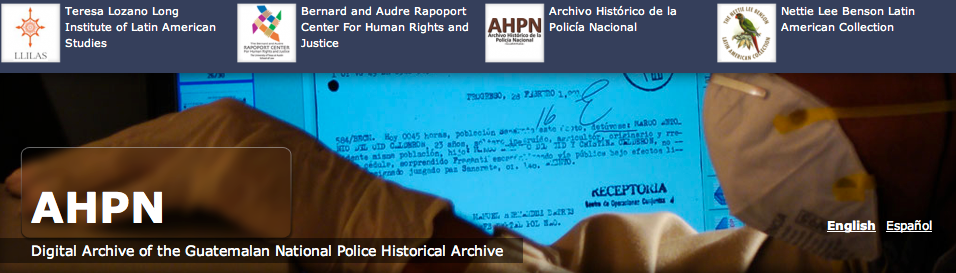
A preliminary account of the Historical Archive of the National Police (AHPN) is here (scroll down to the images) [and even more on related issues from the vaults of the National Security Archive at GWU here].  More than 10 million records have since been digitised in a collaborative project involving the University of Texas’ Lozano Long Institute for Latin American Studies, Rapoport Center for Human Rights and Justice, and Benson Latin American Collection, with the Archivo Histórico de la Policía Nacional de Guatemala.

AHPN

The records have been available online since December 2011; more on the project and its significance here and here:

In July 2005, the Procuraduría de los Derechos Humanos – the office of Guatemala’s human rights ombudsman – found the abandoned documents by accident in an abandoned munitions depot on the north side of Guatemala City. The messy bundles of records were stacked floor to ceiling in dozens of rooms infested by rats, bats and cockroaches, and many of the files were in an advanced state of decay. The administrative police records, which date from 1882 to 1997, document the repressive role played by the police during the 36-year armed conflict between leftist insurgents and government forces, which left a death toll of 250,000. That total included at least 45,000 people who were seized by the [US-backed] security forces and forcibly disappeared, their bodies buried in unmarked graves in cemeteries or in secret graves, often in military bases, according to the Historical Clarification CommissionThe U.N.-mandated truth commission found that the army was responsible for more than 90 percent of the killings in the civil war, most of whose victims were rural Maya Indians. The records that came to light in 2005 document the role played by the National Police during – and before – the conflict. The AHPN began to salvage and digitise the archives in 2006. The documents are held under tight security. The archive includes arrest warrants, surveillance reports, identification documents, interrogation records, snapshots of detainees and informants, and of unidentified bodies, fingerprint files, transcripts of radio communications, ledgers full of photographs and names, as well as more mundane documents like traffic tickets, drivers’ licence applications, invoices for new uniforms and personnel files.

There’s also a compelling report from the Historical Clarification Commission, Guatemala: Memory of Silence, here, which confirms that the National Police worked for military intelligence, ‘serving as the facade of the G-2 intelligence agency, and acted on its orders in the majority of cases.’  (I’ve posted about the blurring of military/policing before: in Mexico here and more generally here).

Incidentally, the photograph of the original archive (top of the page) is taken from the work of Daniel Hernández-Salazar, a former photojournalist for AP, Reuters and Agence-France Presse, who ‘has devoted much of his work to document the complex and painful recent history of his native Guatemala.’  More, including a portfolio of his images of the Guatemalan genocide, from the New York Times, ‘Angels Watch Over Memories Of War’, here.

LOVELL A Beauty that Hurts

For those who don’t know him, George is Professor of Geography at Queen’s University, and the author of the brilliant (and, as it happens, beautiful) book, A Beauty that Hurts: Life and death in Guatemala.

George gave me a copy soon after it was first published (1995 – it’s now in its third edition), and I’ve read it several times: apart from its substantive importance, it’s also a wonderful demonstration that first-class scholarship and graceful writing are not incompatible.

This seminar is part of a series run by the ever-inventive London Group of Historical Geographers: details here.

NOTE: The physical archive is in desperate need of financial support to continue its work: contact at ahpn@archivohistoricopn.org.  It and its staff also face other, acutely physical dangers as the Molina administration remilitarizes civil society and, ever since assuming office in January 2012, works to establish ‘an institutional culture disturbingly similar to the counter-insurgency model that dominated during the internal armed conflict.’  More on the vexed military/police nexus in Guatemala in a July 2012 report from International Crisis Group here.

Homogeneous (war) time

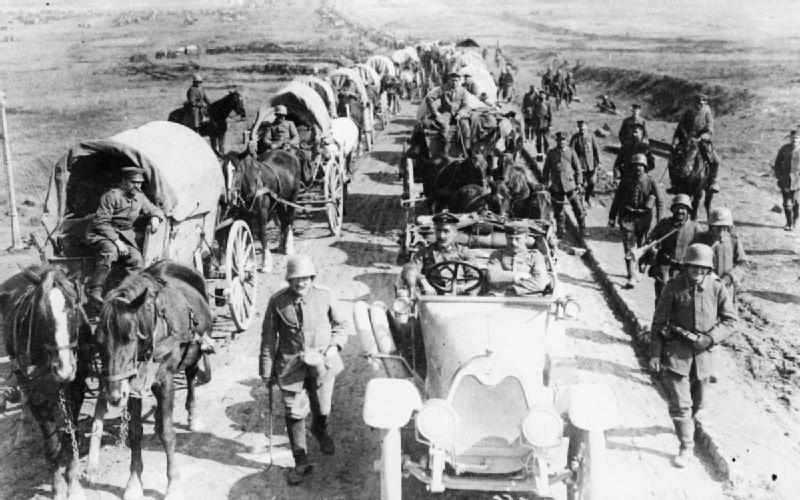
I’ve posted before about the ways in which the First World War involved the calibration and even mathematisation of the battle space, and it’s an important part of my argument in Gabriel’s Map (as you can see from the slides under the DOWNLOADS tab), but this in its turn required an elaborate choreography of time.  This is clearest in the co-ordination of artillery and infantry, particularly in the calculations required for a ‘creeping barrage’ in support of an advance, and eventually involved co-ordination with air support too, but it extended back far beyond the front lines; the re-supply and re-deployment of troops along narrow, crowded roads or narrow-gauge railways also required elaborate timetables, as Ernst Jünger makes clear in this passage from Storm of Steel:

‘The roads were choked with columns of marching men, innumerable guns and an endless supply column.  Even so, it was all orderly, following a carefully worked-out plan by the general staff.  Woe to the outfit that failed to keep to its allotted time and route; it would find itself elbowed into the gutter and having to wait for hours till another slot fell vacant’ (pp. 222-3).
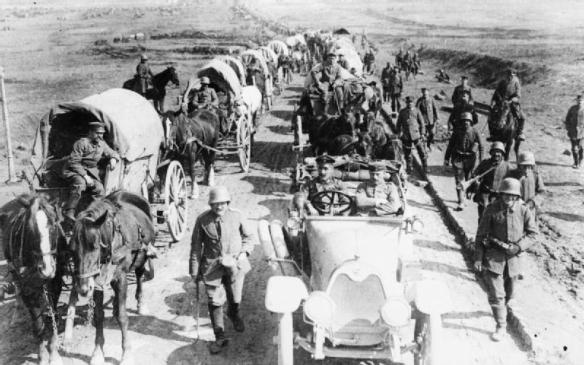
German transport column on Albert-Bapaume road, March 1918 (IWM)

But how, exactly, were these offensive and logistical timetables orchestrated?  What was the mechanism for what Billy Bishop called ‘clockwork warfare’?

Jünger himself provides just one (German) example: ‘‘To keep everyone synchronised, on the dot of noon every day a black ball was lowered from the observation balloons, which disappeared at ten past twelve.’  This was presumably a battlefield adaptation of the ‘time-balls’ that had been developed by the British and then the US navies in the nineteenth century, but other ways of marking time on the Front seem to have been more common.

Two technologies were pressed into service by the Allies; they can both be seen in this synchronisation instruction contained in Operation Order (no 233) from the 112th Infantry Brigade on 10 October 1918:

O.C. No.2 Section, 41st Divisional Signal Company, will arrange for EIFFEL TOWER Time to be taken at 11.49 on “J” minus one day [“J” was the day of the attack] and afterwards will synchronise watches throughout the Brigade Group by a “rated” watch.

The first was the Eiffel Tower – or, more accurately, the time-signal transmitted from the Eiffel Tower throughout the war.  In 1909 the original twenty-year lease for the Tower was about to expire, and many Parisians loathed it (Maupassant famously had lunch there every day because it was the one place in the city from which it couldn’t be seen) so that its demolition seemed imminent.  But it was saved in large measure because the French military was persuaded of its strategic value as a navigation and wireless beacon. Eiffel had allowed the Minister of War to place antennas at the top in 1903, and the Bureau des Longitudes (under the direction of Henri Poincaré) urged the development of the military radio-telegraphic station to broadcast time-signals twice daily.  The original intention was to enable mariners to set their chronometers, but the project had a wider strategic, scientific and symbolic  significance. ‘Wireless simultaneity’, writes Peter Galison, ‘had become a military as well as a civilian priority’.
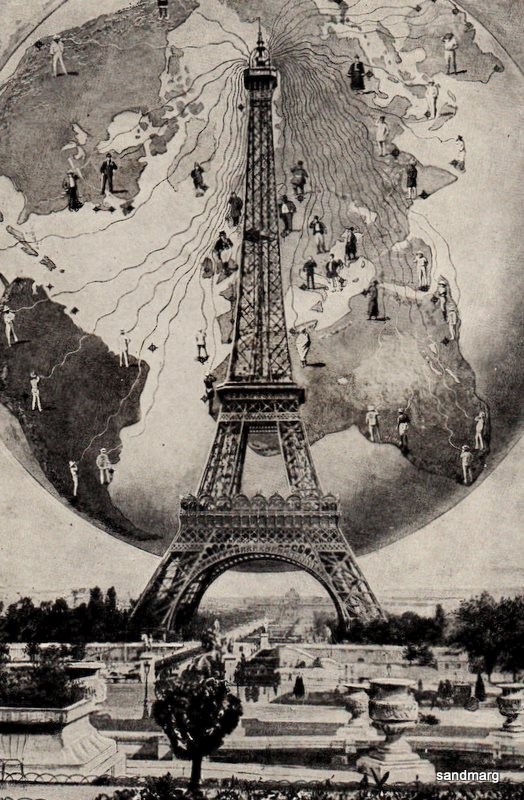
Eiffel Tower transmissions 1913

An experimental service started in 1909, and the French Army began broadcasts on 23 May 1910; by June 1913 a regular time service (based on transmissions from the master-clock at the Paris Observatory to the Tower) was in operation.  This continued throughout the war and in to the 1920s; the ‘ordinary time signals’, which were broadcast each day at 10.45 a.m., 10.47 a.m. and 10.49 a.m. and again at 11.45 p.m., 11.47 p.m. and 11.49 p.m., enabled ‘an expert observer, under the most favourable circumstances, to take the time to nearly 0.1 second’.  There’s more technical information than you could possible want here, but the meat of the story is in Peter Galison’s brilliant Einstein’s clocks, Poincaré’s maps: empires of time (2003) (for a discussion and overview see here).

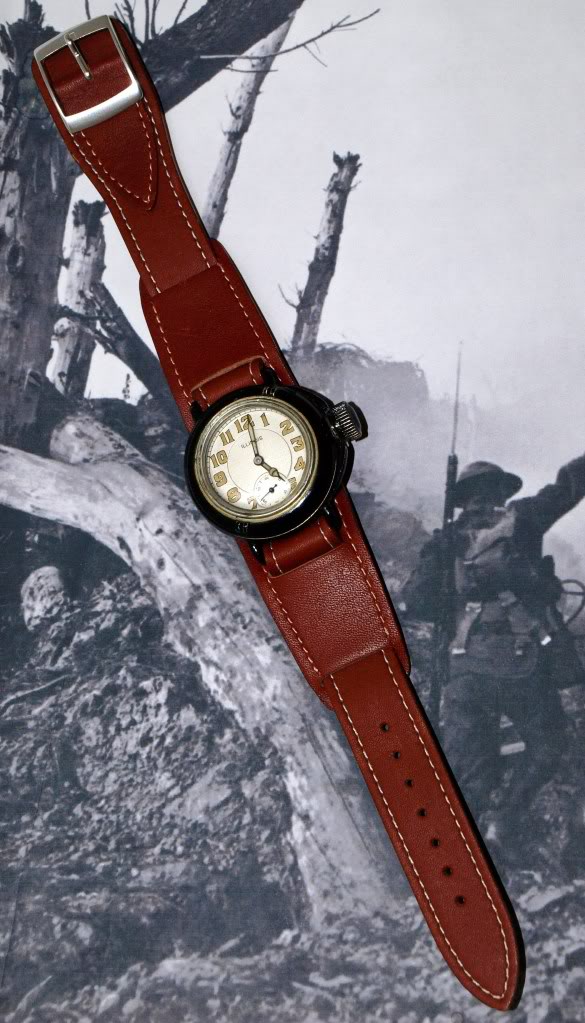
Trench watch c. 1916The second requirement for choreographing time in the battlespace was the wristwatch.  Originally wristwatches were designed for women (the first “wristlet” was made by Philippe Patek in 1868), and although the Kaiser had 2,000 wristwatches made for his naval officers in 1880 – and there is some evidence of their use in the Boer War – men continued to favour pocket-watches until the First World War.  Both soldiers and aviators needed a hands-free way of telling the time, and so the “trench watch” was born.  In Knowledge for War: Every officer’s handbook for the front, published in 1916, a wristwatch headed the kit list, above even a revolver and field glasses, and in the same year one manufacturer claimed that ‘one soldier in every four’ was already wearing a wristwatch ‘and the other three mean to get one as soon as they can.’

The first models had hinged covers (above), and often simply added lugs to existing small pocket-watches; wristwatches were widely advertised and bought commercially, but from 1917 the War Department began to procure and issue trench watches to officers for field trials.  Trench watches usually had luminous dials, for obvious reasons, and many models had ‘shrapnel guards’ (below).
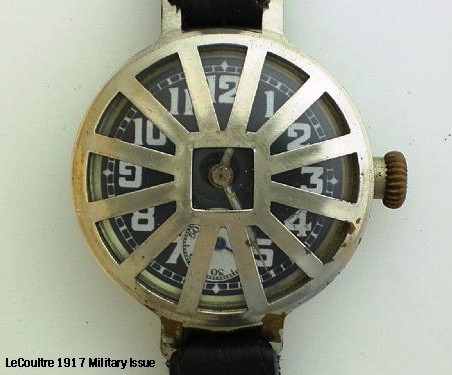
Trench watch with shrapnel guard

If you want to know more, the Military Watch Resource (really) is the place to go; there’s also Konrad Knirim‘s 800 pp  British Military Timepeieces

The military importance of the wristwatch was captured in this essay in Stars and Stripes, published on 15 February 1918:
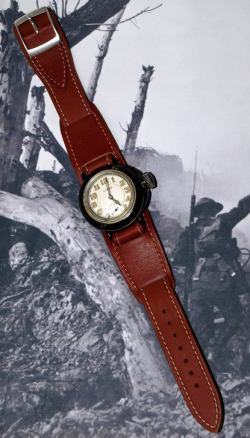
Trench watch‘I am the wrist watch…

From the general down to the newly-arrived buck private, they all wear me, they all swear by me instead of at me.

On the wrist of every line officer in the front line trenches, I point to the hour, minute and second at which the waiting men spring from the trenches to the attack.

I … am the final arbiter as to when the barrage shall be laid down, when it shall be advanced, when it shall case, when it shall resume.  I need but point with my tiny hands and the signal is given that means life or death to thousands upon thousands.

My phosphorous glow soothes and charms the chilled sentry, as he stands, waist deep in water amid the impenetrable blackness, and tells him how long he must watch there before his relief is due.

‘I mount guards, I dismiss guards.  Everything that is done in the army itself, that is done for the army behind the lines, must be done according to my dictates.  True to the Greenwich Observatory, I work over all men in khaki my rigid and imperious sway…  

I am in all and of all, at the heart of every move in this man’s war.  I am the witness of every action, the chronicler of every second that the war ticks on… I am, in this way, the indispensable, the always-to-be-reckoned-with.

I am the wrist watch.’

There were two ways in which watches were synchronised. Usually Signals Officers or orderlies were ordered to report to headquarters, as in this Instruction from the 169th Infantry Brigade on 14 August 1914:

Units will synchronise watches by sending orderlies to be at Brigade Headquarters with watches to receive the official time on “Y” day at the following hours:- 9 a.m, 5 p.m., 8 p.m

And again, in this Operation Order from the 89th Infantry Brigade on 29 July 1916:

One Officer from each Company will report to Battalion Headquarters in the SUNKEN ROAD at 2.30 a.m. 30th July, to synchronise watches.
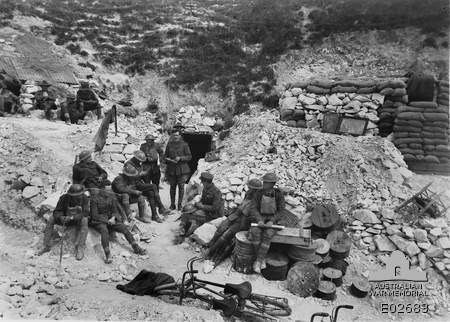
Intelligence officers from 4th Brigade AIF synchronising watches near Hamelet, 3 July 1918 (Australian War Memorial)

Intelligence officers from 4th Brigade AIF synchronising watches near Hamelet, 3 July 1918 (Australian War Memorial)

But centralisation also requires re-distribution, so to speak, as this order from 112 Infantry Brigade later in October 1918 makes clear:

Watches will be synchronised at 0630, 20th inst. Brigade Signal Officer will send watch round Units.

Edmund Blunden describes the practice in Undertones of War: ‘Watches were synchronized and reconsigned to the officers’; and again: ‘A runner came round distributing our watches, which had been synchronized at Bilge Street [‘battle headquarters’]’.
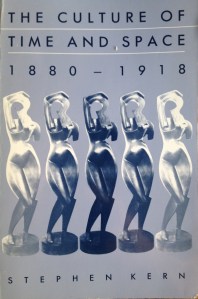
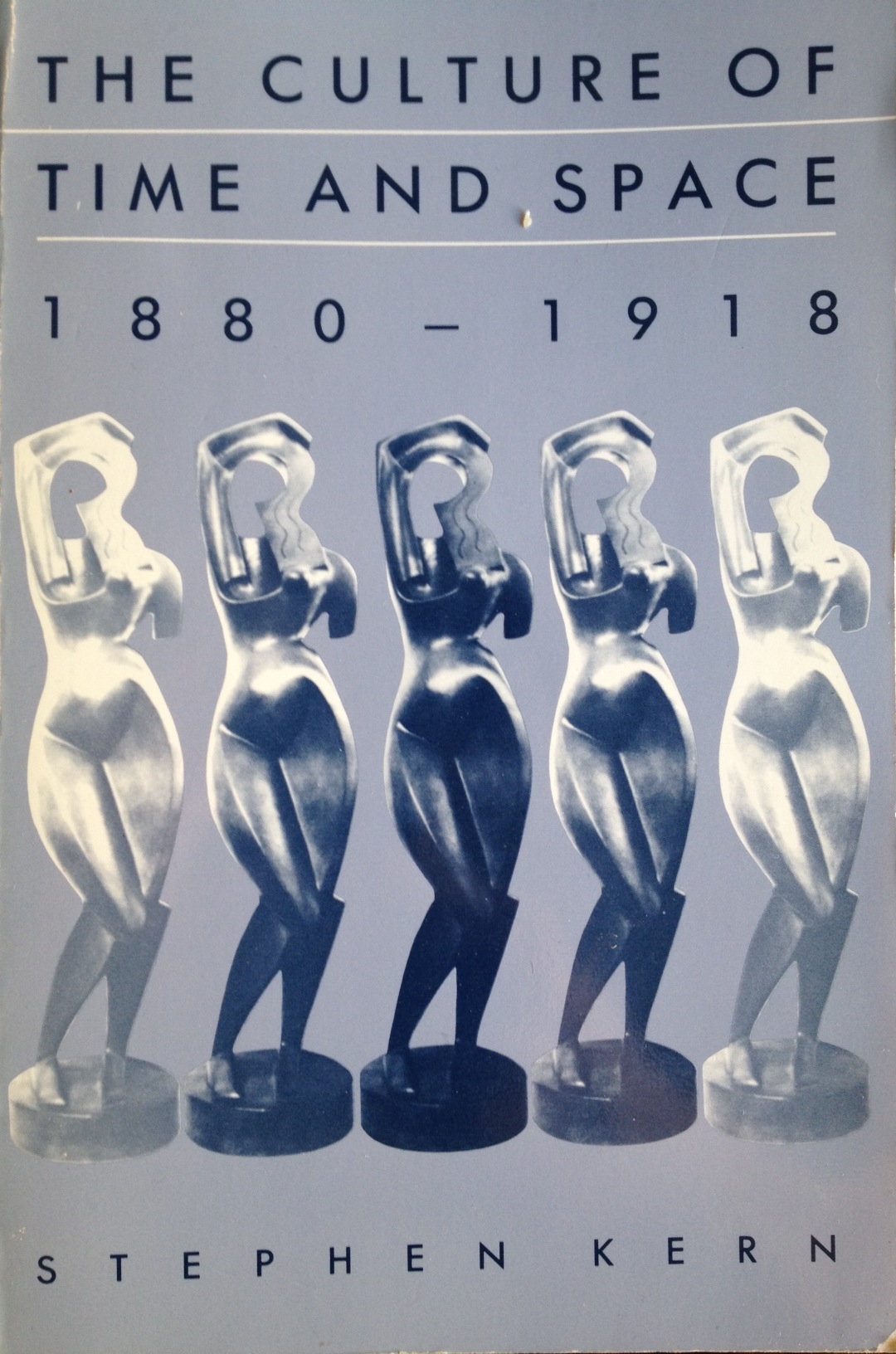
KERN Culture of time and spaceBy these various means, then, as Stephen Kern put it in The culture of time and space, 1880-1918,

‘The war imposed homogeneous time… The delicate sensitivity to private time of Bergson and Proust had no place in the war. It was obliterated by the overwhelming force of mass movements that regimented the lives of millions of men by the public time of clocks and wrist watches, synchronized to maximize the effectiveness of bombardments and offensives.’

That’s surely an over-statement: just as the ‘optical war’ produced through a profoundly cartographic vision was supplemented, subverted and even resisted by quite other, intimately sensuous geographies – what I’ve called a ‘corpography’ – so, too, must the impositions and regimentations of the hell of Walter Benjamin‘s ‘homogeneous, empty time’ have been registered and on occasion even refused in the persistence of other, more personal temporalities.

Note: For indispensable help in thinking through these issues, I’m indebted to contributors to the Great War Forum who patiently and generously responded to my original question: ‘When watches were synchronised what, exactly, were they synchronised to, and how was it done?’

The Geopolitics of Dominion

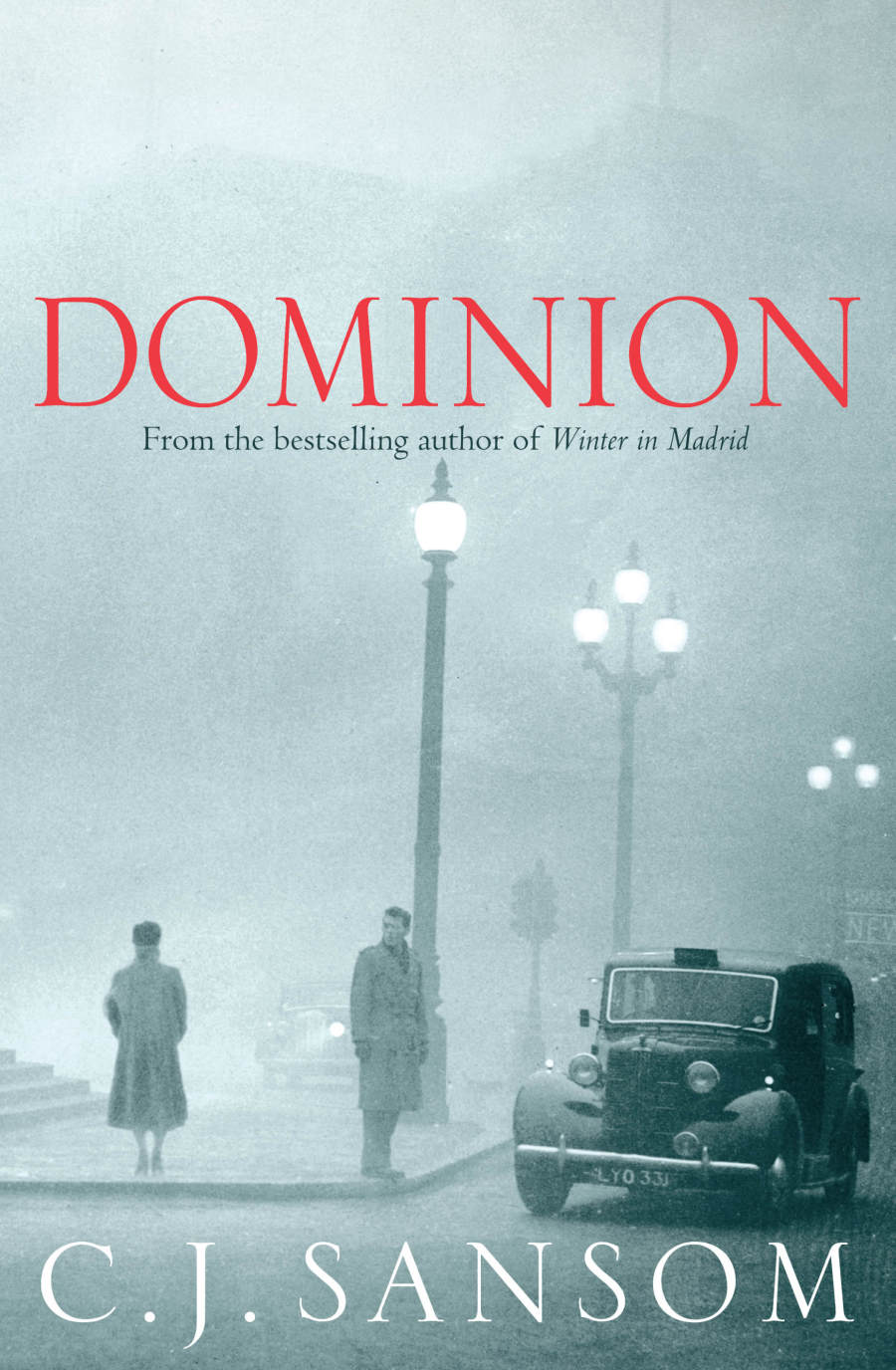
SANSOM Dominion

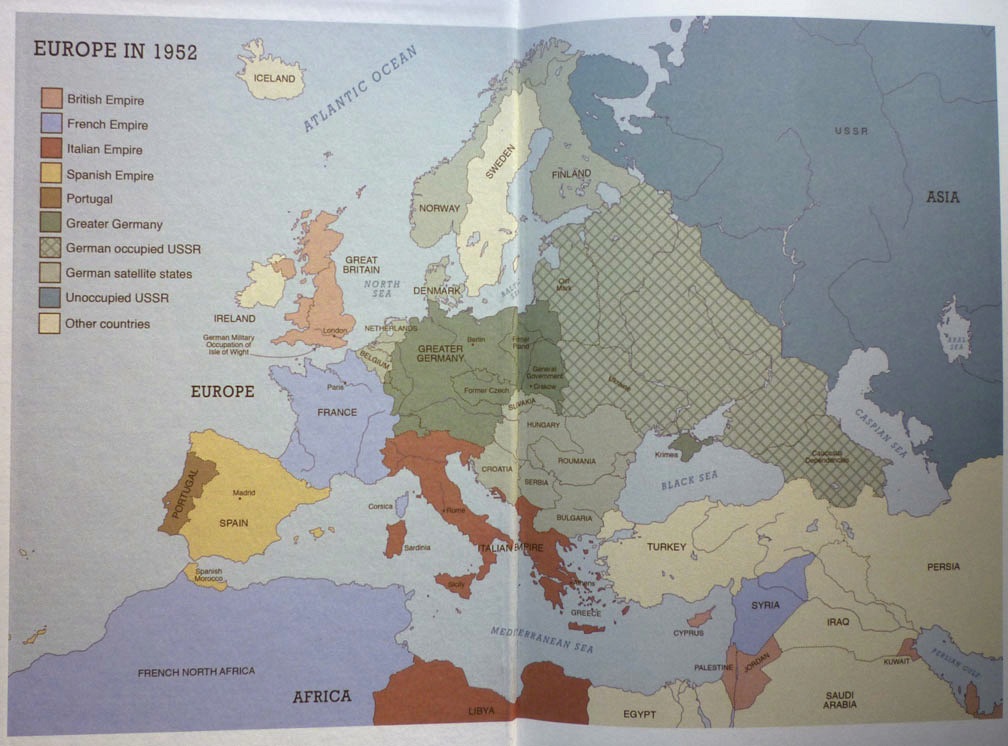
It’s been a long time since I read a novel with maps… and I don’t think I’ve ever read one that ends with an essay explaining its geopolitics.  I’ve just finished C.J. Sansom‘s Dominion (Pan/Macmillan, 2012), which is set in an alternative Britain in 1952.  The premiss is that Churchill never became Prime Minister in May 1940; instead, the British government under Lord Halifax sued for peace with Hitler.  In Sansom’s chillingly plausible vision, Britain became a German satellite state  but retained its nominal independence; it was not placed under military occupation but its government (and especially its police apparatus) became overwhelmingly fascist.  Germany was given carte blanche in Europe, and continued a relentless, remorseless but ultimately unwinnable war against what was left of the Soviet Union; Britain retained its Empire – which, apart from South Africa, became increasingly restive at the absolutist politics that festered at its heart – and the United States remained isolationist until the election of Adlai Stevenson in 1952.

Sansom_Dominion_map1

One of the pleasures of the book (and of Sansom’s closing essay) is his explanation for the historical figures he manoeuvres onto (and off) his stage and the political and geopolitical formations their movements bring into view: Beaverbrook (whom Clement Attlee described as the only evil person he had ever met) as the collaborationist Prime Minister, Oswald Moseley as Home Secretary, Rab Butler as Foreign Secretary, and Enoch Powell (who else?)  as Secretary for India; Churchill, together with Attlee and Harold Macmillan, as key figures in the Resistance; and the appearance of a host of minor figures in the world of ‘light entertainment’, dimly remembered from my childhood (I was born a year before Sansom): Isobel Barnett, Frankie Howerd and, a marvellous conceit, Fanny Craddock showing her audience how to cook sauerkraut….

It is in these minor-key details, in the richly imagined world of a post-war Britain in which – since the Blitz never took place – bomb shelters are relicts of an unrealized past, and everyday life re-assumes the drab mantle of the 1930s – that the genius of the novel lies.  Sansom conveys with a rare sensibility the banality of Fascism (and, yes, of evil): not only its grotesque monumentality (like Sansom I suspect, I take a grim satisfaction in the University of London’s Senate House becoming the new German Embassy), not only the vile exactions of anti-Semitism (a leitmotif of the book, flickering in and out of view in the smog that grips the capital, is the round-up of Britain’s Jews),  but the thousand and one accommodations and submissions made by ordinary people to the extraordinary.

All of this, perhaps inevitably, makes me wonder what I would have done in such circumstances: I’ve been thinking about this ever since I started my history/geography of bombing.  Would I have had the courage to join the RAF and bomb Germany?  Or would I have had the courage to refuse? But Sansom’s novel – which acknowledges its debt to Len Deighton’s SS-GB –  adds another dimension because Dominion is animated not only by its repugnance towards fascism but also, as that closing essay makes clear, by a studied contempt for European nationalisms.

Security and development

Stability coverMany readers will already know of Taylor & Francis’s Conflict, security and development and perhaps of Oxford’s Journal of conflict and security law  (whose recent issue focuses on Cyberwar and International Law and includes time-limited open access articles from Mary Ellen O’Connell and Michael Schmitt, who have made prominent – and different! – contributions to the current debate over drones).

Now there’s a new entrant to this rapidly expanding field. Started late last year, Stability: international journal of security and development is available on open access here; the journal publishes contributions on a continuous basis, grouped into two issues at the end of May and the end of November.  The international editorial board includes Mary Kaldor.

Contributions to the second issue have now started to appear.  The editors write:

Stability: International Journal of Security & Development is a fundamentally new kind of journal. Open-access, it publishes research quickly and free of charge in order to have a maximal impact upon policy and practice communities. It fills a crucial niche. Despite the allocation of significant policy attention and financial resources to a perceived relationship between development assistance, security and stability, a solid evidence base is still lacking. Research in this area, while growing rapidly, is scattered across journals focused upon broader topics such as international development, international relations and security studies. Accordingly, Stability’s objective is to foster an accessible and rigorous evidence base, clearly communicated and widely disseminated, to guide future thinking, policymaking and practice concerning communities and states experiencing widespread violence and conflict.

The journal will accept submissions from a wide variety of disciplines, including development studies, international relations, politics, economics, anthropology, sociology, psychology and history, among others. In addition to focusing upon large-scale armed conflict and insurgencies, Stability will address the challenge posed by local and regional violence within ostensibly stable settings such as Mexico, Brazil, Russia, India, Indonesia and elsewhere.

Stability is an open-access and peer-reviewed journal. It cultivates research and informed analysis and makes it available free of charge and without the delays commonly encountered in traditional journal publishing.  Stability’s content combines the best of academic research with insights from policy-makers and practitioners in order to have a tangible and timely impact.  The journal features research into those interventions, including stabilisation, peacekeeping, state building, crime prevention, development cooperation and humanitarian assistance, which address conflict, criminality, violence and other forms of instability.

I’m interested in the content, obviously, but also in the continuing search for new platforms that seek to reach wider audiences than conventional academic journals.

The programmable city

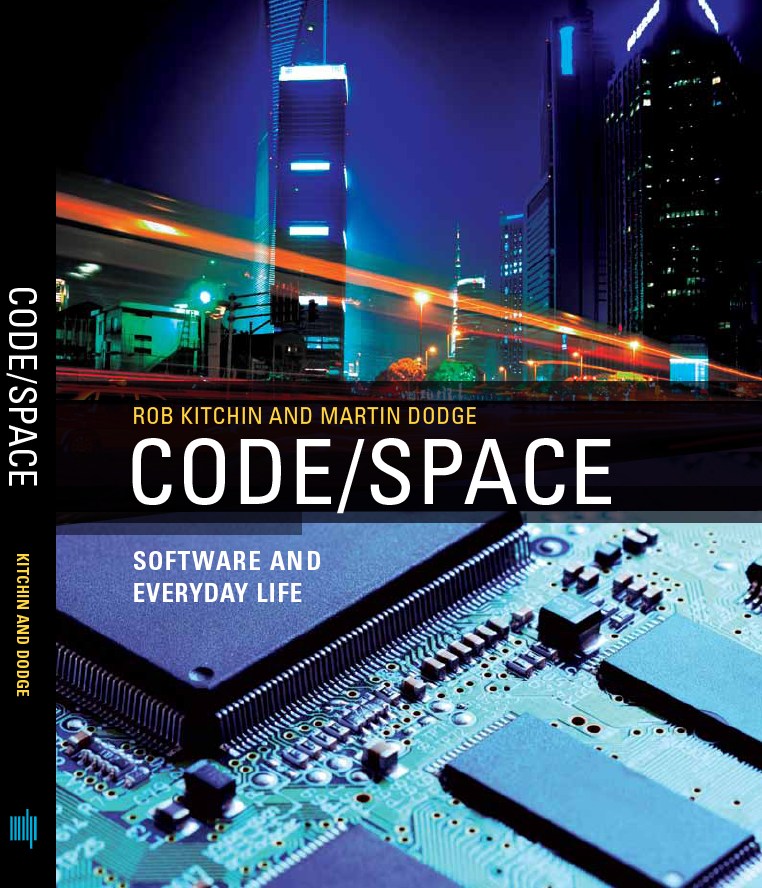
Code/SpaceNews from Rob Kitchin of a treasure trove of postdocs and PhD positions at the National University of Ireland – Maynooth as part of his prestigious Advanced Grant from the European Research Council:

I’ve been awarded an ERC Advanced Investigator award for a project entitled ‘The Programmable City’. The project will run over 5 years and be staffed by myself, 4 postdocs and 4 PhD students. The project is essentially an empirical extension of the Code/Space book (MIT Press, 2011), focusing on the intersection of smart urbanism, ubiquitous computing and big data from a software studies/critical geography perspective, comparing Dublin and Boston and other locales.

We have just advertised two 5 year postdocs and the four 4 year doctoral positions… The posts are not restricted in discipline and I’d really like to put together an interesting interdisciplinary team…  The remaining two 4 year postdocs will be advertised later in the year.

Prospective candidates can find out more via these links:

Postdoctoral Researchers:

Closing date for applications 22nd March 2013
Further details available here.

Funded PhDs:
Closing date for applications 12th April 2013
Further details available here.

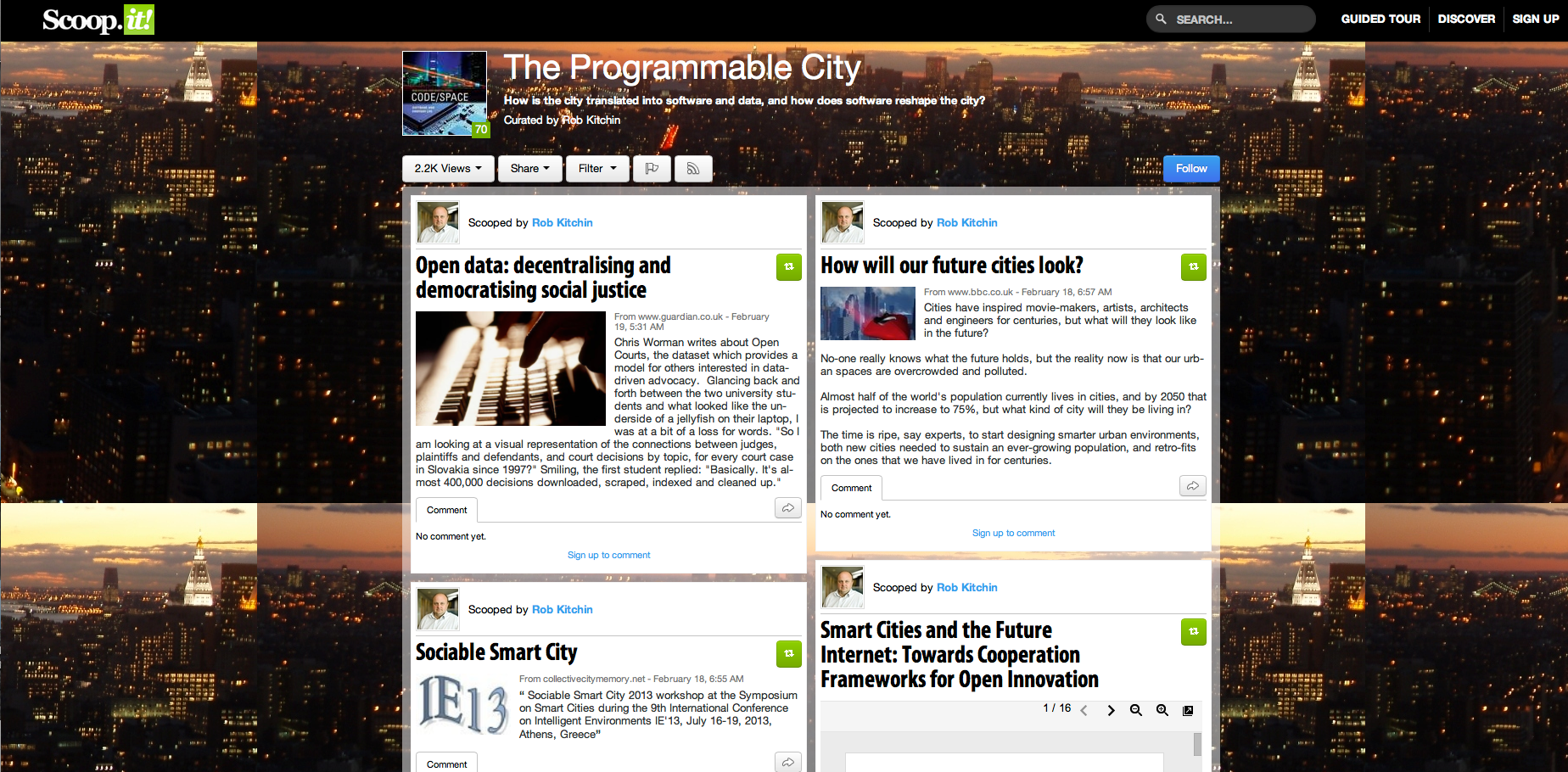
You can find out much more about Rob’s vision – and the visual analytics – of the programmable city via his curated cornucopia at Scoop here.

Programmable City

The continuing explosion of interest in cyberwarfare – most recently tracing the genealogy of the US/Israeli Stuxnet/Olympic Games attack on Iran’s nuclear programme back to 2005, and digitally fingering a specialist unit of the Chinese Army based in Shanghai as a major source of cyberattacks on US commercial organisations and government agencies – makes this project all the more interesting: a sort of “Re-programmable city”, I suppose.  I’ve been tracking these developments as part of the revision of my journal essay “The everywhere war” for the book version, which will have a separate chapter devoted to them.  Much of this was anticipated by Steve Graham in his discussion of “Switching cities of off” – incorporated into the brilliant Cities under Siege: the new military urbanism (Verso, 2010) – and Code/Space is a rich source for thinking about the wider ramifications.  I don’t know whether there is room for any of this in Rob’s grand project, but I hope there is.

War, theatre and performance

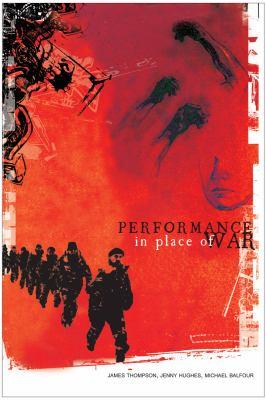
performance-in-place-of-warWhile I was away I managed to get much further into planning my “Social Life of Bombs” performance-work than I’d imagined – though there’s still a long way to go – so I was very interested to learn (from Dan Clayton) of James Thompson‘s update on the In place of war theatre project.  James explains how the two main questions that framed the project emerged from his travels in war-torn Sri Lanka in 200, namely:

‘…why in war zones do people continue to make theatre, and why do academics assume that they do not?

These questions led to a major Arts and Humanities Research Council grant for 2004-07 documenting theatre and performance programmes in war zones internationally. This was followed by another project, supported by the Leverhulme Trust, running seminars for war-zone artists. And finally the current stage, funded again by the AHRC, developing an online platform where war- and disaster-zone artists can save and share their work.’

THOMPSON Humanitarian performanceI’ve written about this and the theatre of war before, but here James goes on to describe his more recent collaborative work with Children in Crisis in the Congo, and the ways in which his life in England and his harrowing experience in the war-zone folded in to one another: as he emphasises, the ‘place’ of war ‘is both specific and ubiquitous’.

I’m assuming that some of this will appear in extended form in his next book, Humanitarian performance: from disaster tragedies to spectacles of war, forthcoming from Seagull Books/University of Chicago Press in the brilliant Enactments series in September.  (You can get a taste of some of James’s arguments in his “Humanitarian performance and the Asian Tsunami” in TDR: The Drama Review 55 (1) (2011) 70-83.)

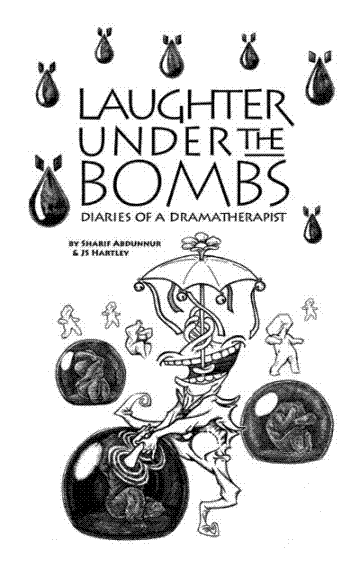
Laughter under the bombsBut what also caught my eye, given my present work, was James’s passing reference to Laughter Under the Bombs (Dahk Taht Al-Qasf), a performance work that emerged out of a series of workshops with kids and young adults organised by Sharif Abdunnur during the Israeli assault on Beirut in 2006.

‘The show went on literally under the bombs, the area was under threat – it was announced each night about two hours before the show as planes dropped fliers to say that the area would be targeted that night… and yet… the play opened to a full house and the laughter drowned out the deafening noise of the bombing right outside the doors of the theatre.’

You can find the translated script here, and a detailed account in the book by Sharif Abdunnur and Jennifer Hartley, Laughter under the bombs: diaries of a dramatherapist (AuthorHouse, 2007).  There’s also an extended discussion in James Thompson, Jenny Hughes and Michael Balfour, Performance in place of war (Seagull Books/University of Chicago Press, 2009) (pp. 38-46).

What I have in mind is very different – I’m working on this in the safety of Vancouver, after all, and what happens to those crouching under the bombs will not be shown until the very last, I hope awful minutes – but I clearly have much to learn from projects like these.  And, as you can see from several recent posts, I’ve become increasingly drawn to ways of developing (not simply conveying or representing) arguments about war through media other than conventional academic platforms.