Drone networks

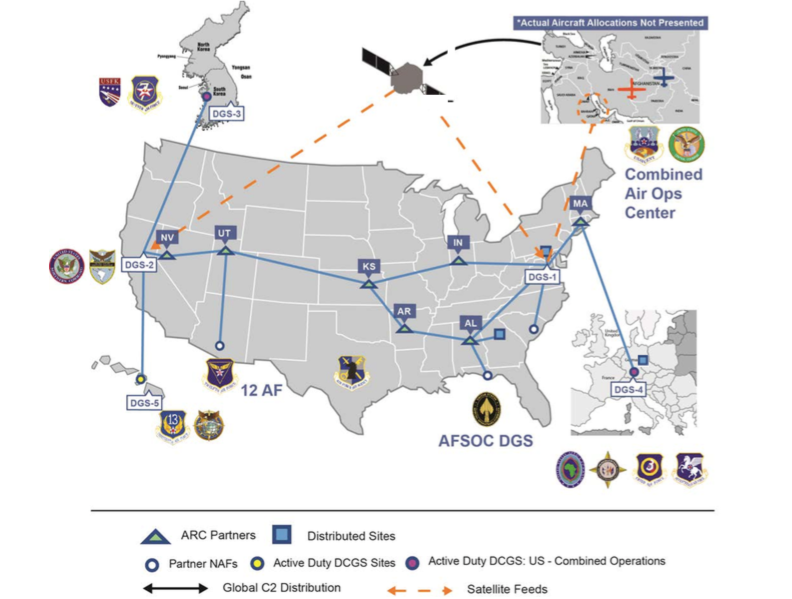
Three contributions to the debates over drones and military violence.  First, my friends at the Bard Center for the Study of the Drone have published Dan Gettinger‘s essay on ‘Drone Geography: mapping a system of intelligence‘.  It’s a superb sketch of the intelligence network in which the US Air Force’s drones are embedded (you can read my complementary take on ‘Drone geographies’ under the DOWNLOADS tab).  Let me add just one map to the illustrations that stud his essay.  It’s taken from the Air Force’s RPA Vector report for 2013-28, published last February, and it shows the architecture of remote split operations within and beyond the United States.  It’s helpful (I hope) because it shows how the Ground Control Stations in the continental United States feed in to the Distributed Common Ground System that provides image analysis and exploitation (shown in the second map, which appears in a different form in Dan’s essay).  I’m having these two maps combined, and I’ll post the result when it’s finished.
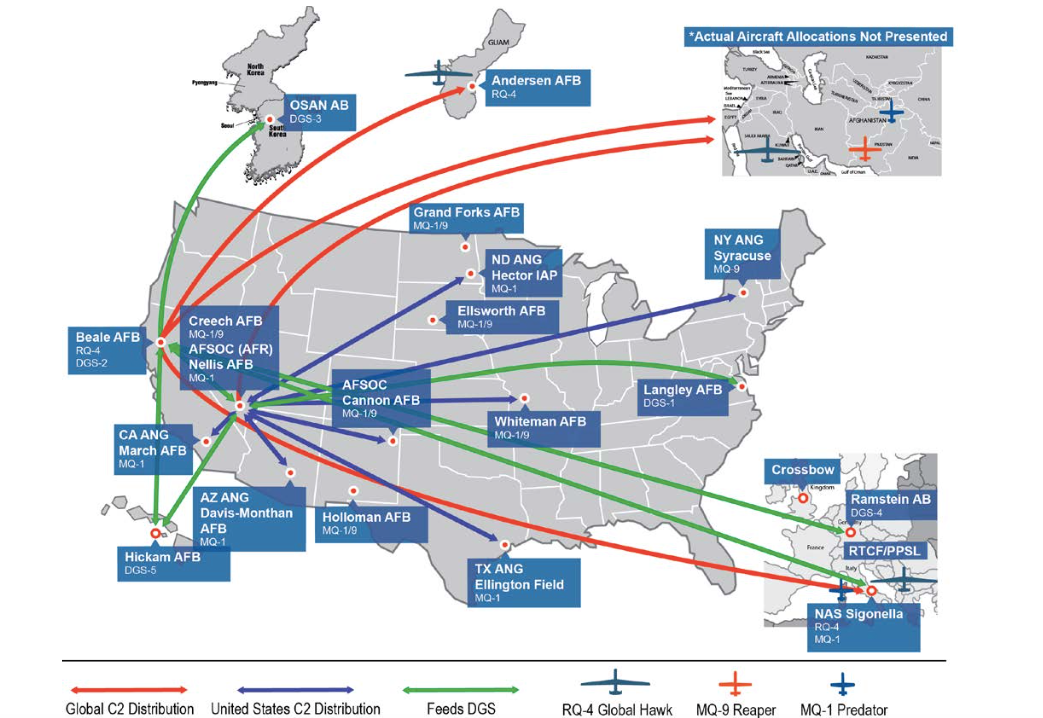
RSO architecture (USAF) 1

Distributed Common Ground System (USAF) 2

Dan is right to emphasise the significance of satellite communications; much of the discussion of later modern war and its derivatives has focused on satellite imagery, and I’ve discussed some of its complications in previous posts, but satellite communications materially shape the geography of remote operations.  The Pentagon has become extraordinarily reliant on commercial providers (to such an extent that Obama’s ‘pivot to the Pacific’ may well be affected), and limitations of bandwidth have required full-motion video streams from Predators and Reapers (which are bandwidth hogs) to be compressed and image quality to be degraded.  Steve Graham and I are currently working on a joint essay about these issues.

One caveat: this is not the only network in which US remote operations are embedded.  In my essay on ‘Dirty Dancing’ (now racing towards the finish line) I argue that the CIA-directed program of targeted killing in the Federally Administered Tribal Areas of Pakistan cannot be severed from the multiple ways in which the FATA have been configured as both borderlands and battlefields and, in particular, from the cascade of military operations that have rendered the FATA as a space of exception (in something both more and less than Agamben’s sense of the term).  Here I’ve learned much from an excellent essay by Elizabeth Cullen Dunn and Jason Cons, ‘Aleatory sovereignty and the rule of sensitive spaces’, Antipode 46 (1) (2014) 92-109).  They complicate the claim that spaces of exception always derive from a single locus of sovereign power (or ‘the sovereign decision’).  Instead, they  suggest that borderlands are ‘contested spaces’ where ‘competing’ powers ‘collide’.  In the FATA multiple powers have been involved in the administration of military violence, but on occasion – and crucially – they have done so in concert and their watchword has been a qualified and covert collaboration. In particular, the FATA have been marked by a long and chequered gavotte between the militaries and intelligence services of the United States and Pakistan which, since the 1980s, has consistently put at risk the lives of the people of the borderlands.  And in my essay on ‘Angry Eyes’ (next on my screen) I argue that the US military’s major use of Predators and Reapers in Afghanistan – orchestrating strikes by conventional aircraft and providing close air support to ‘troops in contact’ – depends on communication networks with ground troops in theatre, and that this dispersed geography of militarised vision introduces major uncertainties into the supposedly ‘precise’ targeting process.
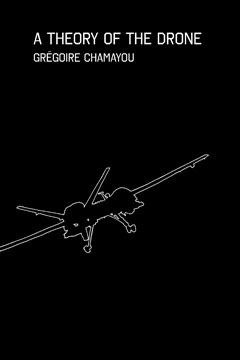
CHAMAYOU Theory of the droneSecond: Elliott Prasse-Freeman has an extended review of the English translation of Grégoire Chamayou‘s Theory of the drone – called ‘Droning On‘ – over at the New Inquiry (you can access my own commentaries on the French edition here: scroll down).  His central criticism is this:

While his title promises theory, we instead are treated to a digression on the military and social ethics of attacks from the air, in which Chamayou asks without irony, “can counterinsurgency rise to the level of an aero-policy without losing its soul?” What offends Chamayou is the “elimination, already rampant but here absolutely radicalized, of any immediate relation of reciprocity” in warfare. This, we are told, is the problem.

Promised a theory of the drone, how do we arrive at a theory of the noble soldier?…

And so, dispatching with the dream of the drone … Chamayou assumes the concerns not of the brutalized but of military leaders and soldiers.

He continues in terms that resonate with my argument in ‘Dirty Dancing’:

By combining knowing (intelligence, surveillance, reconnaissance), sighting (targeting in movement and in the moment), and eliminating (“putting warheads on foreheads”), the drone constitutes an assemblage of force (as drone-theorist Derek Gregory puts it) that promises a revolution in control and allows the US war apparatus to imagine space and politics in new ways. Because the body of the accused can ostensibly be precisely seen, it can be seen as itself carving out a body-sized exception to state sovereignty over the territory on which that body moves. In this way, eliminating the body does not constitute an assault on the territory of the state, as these bodies are presented as ontologically (and hence quasi-legally) disconnected from that territory.  Geographer Stuart Elden in Terror and Territory (2009) points out the significant overlap between who are labeled ‘terrorists’ and movements fighting for their own political spaces – which hence necessarily violate extant states’ ‘territories’ (and hence the entire international order of states): to violate territory is to terrorize. The US is hence remarkably concerned in its arrogation of a position of supra-sovereignty to ensure that it overlaps with ‘classic’ state sovereignty, and by no means violates the norm of territorial integrity (well-defined borders): by harboring or potentially harboring unacceptable transnational desires, the militant uproots himself, and risks being plucked out and vaporized in open space that belongs only to him. The exception to sovereignty provides the drone the opportunity to extend this exception into temporal indefiniteness: wars are not declared, aggressions are not announced—the fleet, fusing police and military functions, merely watches and strikes, constantly pruning the ground of human weeds.

In ‘Dirty Dancing’ I’m trying to prise apart – analytically, at least – the space of exception, conceived as one in which a particular group of people is knowingly and deliberately exposed to death through the political-juridical removal of legal protections and affordances that would otherwise be available to them, and territory conceived (as Stuart suggests) as a political-juridical technology, a series of calculative practices that seeks to calibrate and register a claim over bodies-in-spaces.  That’s why Dan Gettinger’s essay is so timely too, and why I’ve been thinking about the FATA as a performance of what Rob Kitchin and Martin Dodge call ‘code/space’, why I’ve been working my way through the files released by Edward Snowden, and why I’ve been thinking so much about Louise Amoore‘s superb critique of The politics of possibility: risk and security beyond probability (2013).
Screen Shot 2015-01-07 at 10.03.16 AM

Although Louise doesn’t address drone strikes directly, her arguments are full of vital insights into the networks that are mobilised through them.  ‘The sovereign strike is always something more, something in excess of a single flash of decision’, she insists, and when she writes that —

those at risk (which is to say those who are to be put at risk by virtue of their inferred riskiness) are ‘not strictly “included by means of their own exclusion”, as Agamben frames the exception, they are more accurately included by means of a dividuated and mobile drawing of risk fault lines’
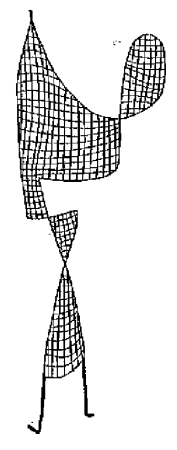
17— it’s a very short journey back to Grégoire Chamayou‘s reflections on the strange (in)dividual whose ‘schematic body’ emerges on the targeting screen of the Predator or Reaper.  Louise writes of ‘the appearance of an emergent subject’, which is a wonderfully resonant way of capturing the performative practices through which targets are produced: ‘pixelated people’, she calls them, that emerge on screens scanning databanks but which also appear in the crosshairs…

And finally, Corporate Watch has just published a report by Therezia Cooper and Tom Anderson, Gaza: life beneath the drones.  This brings together a series of interviews conducted in 2012 – when ‘drones killed more people in Gaza than any other aircraft’ – that were first published in serial form in 2014.  The report includes a tabulation of deaths from Israeli military action in Gaza and those killed directly by drones (2000-2014) and a profile of some of the companies involved in Israel’s military-industrial complex.
Unlawful combatants

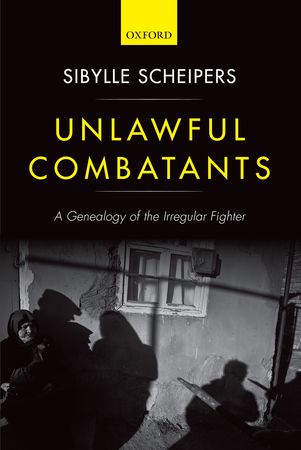
Unlawful combatantsI know several friends are interested (critically) in Carl Schmitt‘s Theory of the Partisan (see also Jan-Werner Müller‘s commentary here), but Sibylle Scheipers has now provided an indispensable genealogy of these often shadowy figures and their late modern incarnations: Unlawful Combatants: a genealogy of the irregular fighter (Oxford, 2015).

Unlawful Combatants brings the study of irregular warfare back into the centre of war studies. The experience of recent and current wars in Afghanistan, Iraq, Libya, and Syria showed that the status and the treatment of irregular fighters is one of the most central and intricate practical problems of contemporary warfare. Yet, the current literature in strategic studies and international relations more broadly does not problematize the dichotomy between the regular and the irregular. Rather, it tends to take it for granted and even reproduces it by depicting irregular warfare as a deviation from the norm of conventional, inter-state warfare. In this context, irregular warfare is often referred to as the ‘new wars’ and is associated with the erosion of statehood and sovereignty more generally. This obscures the fact that irregulars such as rebels, guerrillas, insurgents and terrorist groups have a far more ambiguous relationship to the state than the dichotomy between the state and ‘non-state’ actors implies. They often originate from states, are supported by states and/or aspire to statehood themselves.

The ambiguous relationship between irregular fighters and the state is the focus of the book. It explores how the category of the irregular fighter evolved as the conceptual opposite of the regular armed forces, and how this emergence was tied to the evolution of the nation state and its conscripted mass armies at the end of the eighteenth century. It traces the development of the dichotomy of the irregular and the regular, which found its foremost expression in the modern law of armed conflict, into the twenty-first century and provides a critique of the concept of the ‘unlawful combatant’ as it emerged in the framework of the ‘war on terror’.

Here is the Contents list:

1: Introduction
2: The Making of the Irregular Fighter, 1740-1815
3: The Nineteenth Century: Rebels, Rifles, and the Laws of War
4: The Second World War: Anti-Partisan Warfare, Genocide, and the Rebirth of the Auxiliary Fighter
5: Wars in the Colonies: Orientalism and the Social Production of Colonial Subjects
6: Irregular Fighters in the Twenty-first Century: Between ‘Unlawful Combatants’ and ‘Rebel’ Auxiliaries
7: Conclusion

The book is a product of the Changing Character of War programme at the University of Oxford, where Sibylle was Director of Studies until she moved to St Andrews in 2011.

The trauma hero

wwi-trauma

Following up my earlier post on novels, memoirs and narratives of war, there’s a thoughtful discussion by Roy Scranton at the LA Review of Books on what he calls ‘the myth of the trauma hero’.

A boy goes to war, his head full of romantic visions of glory, courage, and sacrifice, his heart yearning to achieve heroic deeds, but on the field of battle he finds only death and horror. He sees, suffers, and causes brutal and brutalizing violence. Such violence wounds the soldier’s very soul.

After the war the boy, now a veteran and a man, returns to the world of peace haunted by his experience, wracked by the central compulsion of trauma and atrocity: the struggle between the need to bear witness to his shattering encounter with violence, and the compulsion to repress it. The veteran tries to make sense of his memory but finds it all but impossible. Most people don’t want to hear the awful truths that war has taught him, the political powers that be want to cover up the shocking reality of war, and anybody who wasn’t there simply can’t understand what it was like.

The truth of war, the veteran comes to learn, is a truth beyond words, a truth that can only be known by having been there, an unspeakable truth he must bear for society.

This is probably the place to say that Roy served in the US Army in Iraq 2002-2006, studied at the New School for Social Research, and in 2010 embarked on a doctorate in English at Princeton – although, as you will soon see, this runs the very real risk of claiming that ‘he knows what he writes’ by virtue of these experiences.

Roy traces the myth of the trauma hero to eighteenth-century European Romanticism, and argues that it achieved its mature form in the twentieth century.  Accordingly he follows its development through Wilfred Owen in the First World War, Ernest Hemingway in the Second and Tim O’Brien in Vietnam until he reaches its contemporary form in Afghanistan and Iraq – and, in our own immediate present, in a film like Eastwood’s American Sniper.

It’s a beautifully composed contribution, and it’s made me re-think the basis for my ‘Gabriel’s Map’ and ‘Natures of War’ essays (DOWNLOADS tab) because Roy’s central thesis turns on a critique of the sacralization of trauma in ways that, at first sight, collide with my own attempts to develop what I’ve called a corpography (also DOWNLOADS tab) that can make us attentive to the corporeality and materiality of modern war:

‘Most Americans seem to believe that war can only be known through direct, physical, sensory experience on the battlefield, such as the moment of vision Owen describes in “Dulce et Decorum Est.” Ernest Hemingway, who in contrast to Owen’s long front-line service lasted only a few weeks as a noncombatant before being wounded and returning to the US, stands in American letters as the high priest of combat gnosticism. In Hemingway’s work, the emphasis on physicality, embodiment, and materiality we see in Owen’s representations of the soldier’s truth opens into a metaphysical bias against representation itself.’

d34387b998ba1136a34e9cc9e03515eeIn effect, Roy suggests, ‘being there’ becomes a privileged position from which truth cannot be communicated – only felt, and so only shared between those who were there.  The assertion of ethnographic privilege run through multiple fields from anthropology to journalism, of course, and it bedevils any attempt at historical reconstruction, but here it is heightened by the appeal to the supposedly inexpressible experience of trauma.  This could be developed still further through the reflections of, say, Elaine Scarry or Giorgio Agamben.  I take this very seriously, and yet if you work your way through the letters, diaries and memoirs of those who returned from the wars there is, I think, a sustained (and diverse) attempt to convey the corporeal – viscerally traumatising – experience of military violence.

But Roy’s point, I take it, is that this dilemma can function – can even be invoked – to exclude commentary and criticism.  And he concludes by emphasising the work that the ‘trauma hero’ continues to perform hors de combat:

‘[The most troubling consequence of our faith in the revelatory truth of combat experience and our sanctification of the trauma hero [is] that by focusing so insistently on the psychological trauma American soldiers have had to endure, we allow ourselves to forget the death and destruction those very soldiers are responsible for… Understanding the problem of American political violence demands recognizing soldiers as agents of national power, and understanding what kind of work the trauma hero is doing when he comes bearing witness in his bloody fatigues.’

I understand this concern too; there are – as I’ve argued in ‘The Natures of War’ – moments in many memoirs, novel and poems that reach towards the redemptive, even the exculpatory.  But I’ve also been deeply affected by those that disclose a more complex sense of the soldier as victim and vector of military violence: one of the recurrent motifs of the texts from the Western Front that I’ve worked with, for example, is the description of the fighting as ‘murder’.

So, much to think about – not least for the ways in which Roy’s ideas about the contemporary trauma hero complicate theses about a supposed transition to ‘post-heroic war’.  Those claims have a special resonance in the drone debates where, as I’ve noted elsewhere, Grégoire Chamayou has suggested that the trauma reportedly suffered by drone operators is ‘being mobilised to restore to war the ethico-heroic temper [critics] insisted it had lost through trauma’.

Evil Hours Cover Final

If you want to know more about the genealogy of post-traumatic stress, I recommend David J. Morris, The evil hours: a biography of post-traumatic stress disorder (Eamon Dolan/Houghton Mifflin Harcourt, 2015).   You can read an extract over at Salon here.  The book is particularly relevant to this discussion because it suggests that where trauma was once mediated through philosophy and literature it is now constituted through psychology and psychiatry.  David is very good on the arguments that raged over ‘shell-shock’ during the First World War, but if you want a ‘biography’ of that then you should turn to Michèle Barratt‘s Casualty figures: how five men survived the First World War (Verso, 2007).

Finally, Roy’s Learning to die in the Anthropocene is due from City Lights in the fall; you can get a taste of it from his essay in the New York Times with the same title here; this was the final installment of a five-part series on War and the city in which Roy retraced his footsteps from civilian to soldier to civilian.

Bodies of violence

Bodies of violenceNew from Oxford University Press, Lauren Wilcox‘s Bodies of violence: theorizing embodied subjects in International Relations (how I wish books didn’t come with subtitles that serve only to narrow the audience for works that deserves a much wider one).

According to conventional international relations theory, states or groups make war and, in doing so, kill and injure people that other states are charged with protecting. While it sees the perpetrators of violence as rational actors, it views those who are either protected or killed by this violence as mere bodies: ahistorical humans who breathe, suffer and die but have no particular political agency. In its rationalist variants, IR theory only sees bodies as inert objects. Constructivist theory argues that subjects are formed through social relations, but leaves the bodies of subjects outside of politics, as “brute facts.”

According to Wilcox, such limited thinking about bodies and violence is not just wrong, but also limits the capacity of IR to theorize the meaning of political violence. By contrast to rationalist and constructivist theory, feminist theory sees subjectivity and the body as inextricably linked. This book argues that IR needs to rethink its approach to bodies as having particular political meaning in their own right. For example, bodies both direct violent acts (violence in drone warfare, for example) and are constituted by practices that manage violence (for example, scrutiny of persons as bodies through biometric technologies and body scanners). The book also argues that violence is more than a strategic action of rational actors (as in rationalist theories) or a destructive violation of community laws and norms (as in liberal and constructivist theories). Because IR theorizes bodies as outside of politics, it cannot see how violence can be understood as a creative force for shaping the limits of how we understand ourselves as political subjects, as well as forming the boundaries of our political communities.

By engaging with feminist theories of embodiment and violence, Bodies of Violence provides a more nuanced treatment of the nexus of bodies, subjects and violence than currently exists in the field of international relations.

Here’s the Contents list:

Introduction
Chapter 1: Bodies, Subjects, and Violence in International Relations
Chapter 2: Dying is Not Permitted: Guantánamo Bay and the Liberal Subject of IR
Chapter 3: Explosive Bodies: Suicide Bombing as an Embodied Practice and the Politics of Abjection
Chapter 4: Crossing Borders, Securing Bodies: Airport Security Assemblages and Bodies of Information
Chapter 5: Body Counts: The Politics of Embodiment in Precision Warfare
Chapter 6: Vulnerable Bodies and “Responsibility to Protect”

If you don’t know Lauren’s work already, you can catch up with some of it here.

Object lessons

DRONE

Adam Rothestein‘s Drone, the latest contribution to the Object Lessons series co-published by the Atlantic and Bloomsbury Academic, is out at the end of this month.

Drones are in the newspaper, on the TV screen, swarming through the networks, and soon, we’re told, they’ll be delivering our shopping. But what are drones? The word encompasses everything from toys to weapons. And yet, as broadly defined as they are, the word ‘drone’ fills many of us with a sense of technological dread. Adam Rothstein cuts through the mystery, the unknown, and the political posturing, and talks about what drones really are: what technologies are out there, and what’s coming next; how drones are talked about, and how they are represented in popular culture.

It turns out that drones are not as scary as they appear – but they are more complicated than you might expect. Drones reveal the strange relationships that humans are forming with their new technologies.

Here’s the Contents list:

Introduction

Chapter One: Four Technology Stories

Chapter Two: The Military Drone

Chapter Three: The Commercial Drone (or the hole where it ought to be)

Chapter Four: Blinking Lights

Chapter Five: Software and Hardware

Chapter Six: The Non-Drone

Chapter Seven: What the Drone is For

Chapter Eight: The Drone in Discourse

Chapter Nine: Drone Fiction

Chapter Ten: Ourselves and the Drone

Chapter Eleven: Aesthetics of the Drone

Chapter Twelve: The Drone as Meme

The book comes with this enthusiastic endorsement from Geoff Manaugh of (richly deserved) BLDGBLOG fame:

“Adam Rothstein’s Drone presents this iconic figure of contemporary warfare-the disconcertingly alluring autonomous airborne machine-through the lens of a different kind of history. Privacy and tracking algorithms run side by side with the ethics of self-guided munitions, activist political programs butt heads with emerging corporate business strategies, and all of it is tied back to the earliest experiments in driverless vehicles, quaint ancestors of today’s over-mythologized UAVs. In the end, Rothstein’s book is an exploration of technical agency: Where did drones come from-and what do they want?”

You can find some of Adam’s preliminary ideas about what he then called ‘Drone ethnography’ at rhizome here, an interview with the lovely people at Bard here, and what Terraform calls his ‘future fiction, ‘Targeted strike 2: Judgment Database’, here.

The Object Lessons essay and book series, edited by Ian Bogost and Christopher Schaberg, is about ‘the hidden lives of ordinary things’.  If you want a different take on drones as objects, I suggest starting with William Walters, ‘Drone strikes, dingpolitik and beyond: Furthering the debate on materiality and security’ in Security dialogue 45 (2) (2014) 101-118.

Novel wars

Since I added ‘The Natures of War’ to the DOWNLOADS section several people have asked me about my use of novels, especially in relation to Vietnam, while others have asked me to recommend writings – both novels and memoirs – that treat contemporary conflicts, especially Afghanistan.

Writing letters to home

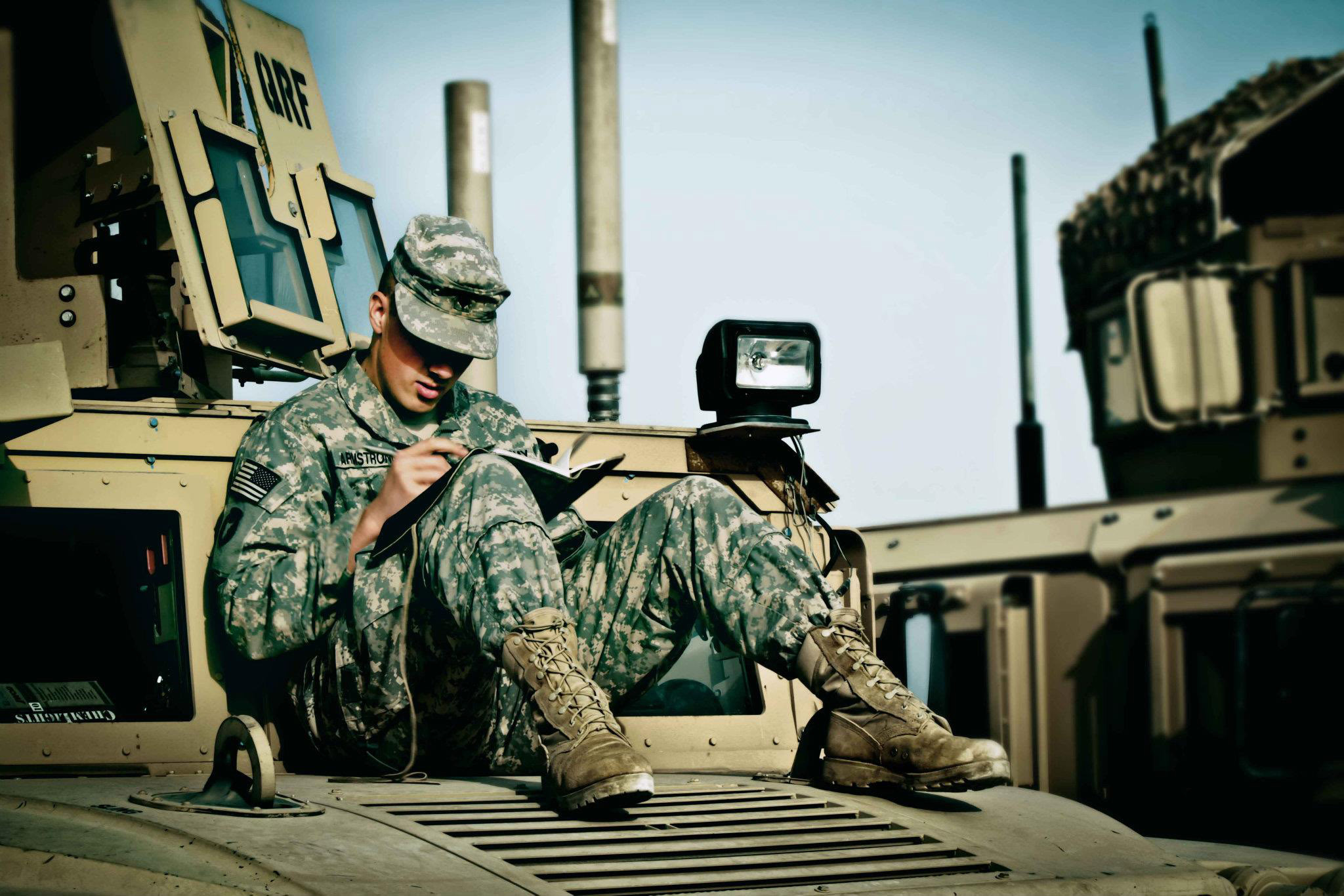
The first part is easy.  To say things too quickly, I think the usual distinction between ‘fiction’ and ‘non-fiction’ is much more problematic than it seems (don’t we all know this? and in any case where exactly do you place a ‘memoir’ in such a strangely bifurcated landscape?).  I also believe that there are some insights – truths, if you prefer – that are best conveyed in ostensibly fictional form.  For that reason I suspect it’s significant that it’s my appeal to (for example) Karl Marlantes‘s magnificent Matterhorn in the Vietnam section that seems to trouble some readers much more than my use of poetry in the section on the Western Desert in the Second World War.  Yet both emerged through their authors’ reflections on their experiences of modern war in those places.  That doesn’t mean that one can ignore literary conventions or linguistic devices – no text is a transparent reflection of the world, after all – but this surely also holds for nominally factual accounts too (and that goes for military blogs, which have created their own conventions).  In other ‘fictional’ cases I can think of – like Tom McCarthy‘s C, which I drew upon in ‘Gabriel’s Map’ to characterise the battlefields of the Western Front  – the narrative is clearly embedded in intensive and immensely thoughtful research.  In fact, I’d push this further: hence my interest in documentary drama as part of – not simply a product of – the research process.

The second question is more difficult, but there are some recent guides which might help.  A good place to start is George Packer‘s ‘Home Fires: how soldiers write their wars‘ which appeared in the New Yorker last spring.  Packer tries to pin down what is distinctive about writing that seeks to capture the wars fought in the shadows of 9/11:

‘The first wave of literature by American combatants in these long, inconclusive wars has begun to appear—poems, memoirs, short stories, novels. Their concerns are the same as in all war writing: bravery and fear, the thin line between survival and brutality, the maddening unknowability of the enemy, tenderness, brotherhood, alienation from a former self, the ghosts of the past, the misfit of home.

But Iraq was also different from other American wars… Without a draft, without the slightest sacrifice asked of a disengaged public, Iraq put more mental distance between soldiers and civilians than any war of its duration that I can think of. The war in Iraq, like the one in Vietnam, wasn’t popular; but the troops, at least nominally, were—wildly so. (Just watch the crowd at a sports event if someone in uniform is asked to stand and be acknowledged.) Both sides of the relationship, if they were being honest, felt its essential falseness.’

Given this disconnect, he concludes, ‘it’s not surprising that the new war literature is intensely interested in the return home.’  But when it deals with the soldiers’ experience of war, he continues,

‘It deals in particulars, which is where the heightened alertness of combatants has to remain, and it’s more likely to notice things. To most foreign observers, the landscape of Iraq is relentlessly empty and ugly, like a physical extension of the country’s trauma. But in the poetry and the prose of soldiers and marines the desert comes to life with birdsong and other noises, the moonlit sand breeds dreams and hallucinations.’

It’s that struggle to turn the experience of land into its evocation that interests me.  But Packer makes surprisingly little of it, and his gaze is focused almost unwaveringly on Iraq rather than Afghanistan (not surprising, given his own war reporting).

Writing in the New York TimesMichiko Kakutani identifies a series of writings on the human costs of what Dexter Filkins called ‘the forever war’:

‘War cracks people’s lives apart, unmasks the most extreme emotions, fuels the deepest existential questions. Even as the wars in Iraq and Afghanistan morph into shapeless struggles with no clear ends in sight, they have given birth to an extraordinary outpouring of writing that tries to make sense of it all: journalism that has unraveled the back story of how and why America went to war, and also a profusion of stories, novels, memoirs and poems that testify to the day-to-day realities and to the wars’ ever-unspooling human costs.

‘All war literature, across the centuries, bears witness to certain eternal truths: the death and chaos encountered, minute by minute; the bonds of love and loyalty among soldiers; the bad dreams and worse anxieties that afflict many of those lucky enough to return home. And today’s emerging literature … both reverberates with those timeless experiences and is imprinted with the particularities of the conflicts in Afghanistan and Iraq: changes in technology, the increased presence of female soldiers and, most importantly, the all-volunteer military, which has opened a chasm between soldiers (“the other 1 percent”) and civilians.’

Here too there is an attempt to see how today’s writing differs from the established canon of war literature.  En route, Kakutani makes some good suggestions for reading, but she says very little about the differences – those dense ‘particulars’ again – between Iraq and Afghanistan.

afghan1

She leaves that to Brian Castner‘s outstanding essay for the LA Review of Books, ‘Afghanistan: a stage without a play.’

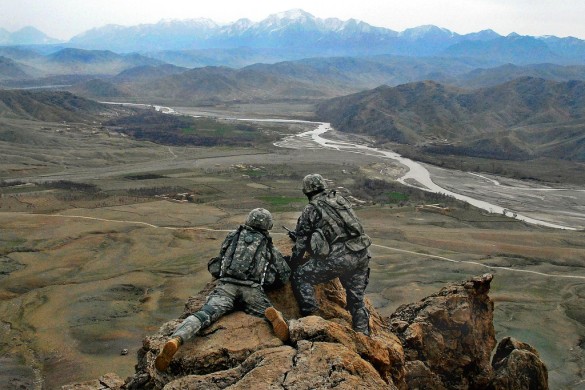
Castner did two tours in Iraq, and his own account of that experience (and, just as important, what followed) in The Long Walk is a tour de force in every sense of the phrase.  But he is also remarkably perceptive in his readings of Afghanistan (‘the Undescribed War’, he calls it) and – of particular interest to me, given my interest in ‘the natures of war’ or what my good friend Gastón Gordillo would prefer me to call ‘terrain‘ – its land and landscapes.  Castner also draws several illuminating comparisons with Vietnam (not least through a double parallel with the US’s ‘Indian Wars’ of the nineteenth century).

Kevin Maurer covered both wars, and always found

“Afghanistan far more riveting than Iraq because it’s a whole different world. Baghdad is a Middle Eastern city, but it is a modern city. In Afghanistan that barely exists. I’ve always been able to turn my brain into Afghanistan mode and out, while Iraq blurs.”

The influence of the terrain, especially its beauty, is clear: while a few descriptions of colorful Iraqi skies creep into the literature, it was mostly an ugly urban war fought along the New York State Thruway, rest stop to rest stop. “Afghanistan always had that Vietnam vibe to it,” Maurer said, “because you can go get lost in Afghanistan, you can be on some hill on some outpost. In Iraq you were never that far out.”

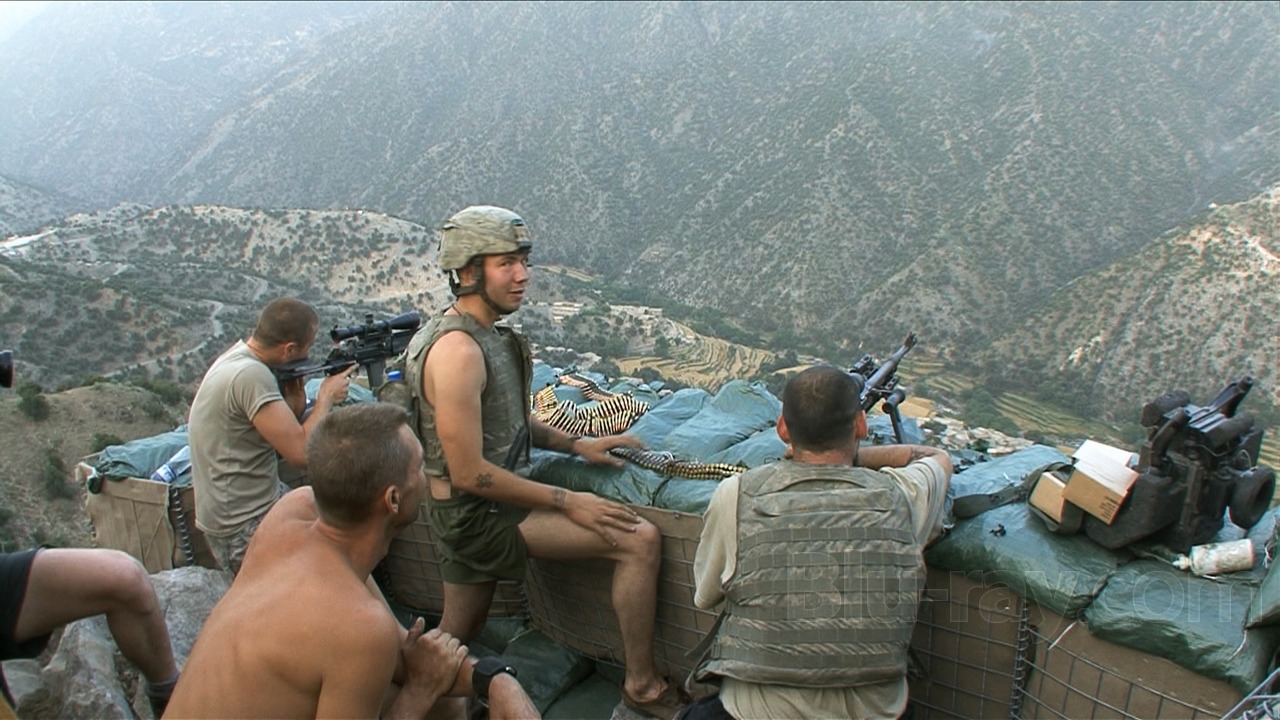
Korengal

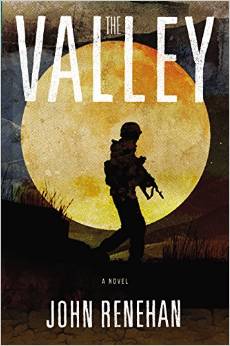
And for that very reason the terrain was always more than beautiful.  You can see that in a film like Restrepo – and even more clearly in Koregal (above) – but according to Castner you can also see it in John Renehan’s forthcoming novel, The Valley.  And here too Vietnam continues to haunt the imaginative landscape:

RENEHAN The ValleyThe landscape acts as an omnipresent consciousness, an apparition always in the corner of [Lieutenant] Black’s eye, and Renehan attaches to it layers of reverence and dread and unknowable quasi-mysticism; the valley is capable of anything. This infection spreads slowly for the reader, and Renehan says his writing process followed a similar path. “I more or less thought I was setting out to write a mystery story that happened to be set in a war. But as I started writing it I realized it was growing into something different in my mind, and it changed on paper too.” A detective story becomes a heroin- and concussion-fueled dreamscape that crosses genres. “Going After Cacciato gave me comfort in writing the parts of The Valley that become almost surreal,” Renehan said. “It reassured me that this sort of thing is okay, because it’s a war novel, right?”

What I need to think more about – the process I started in ‘Gabriel’s Map’ and continued in ‘The Natures of War’ – is how, despite Castner’s title, the stage is always part of the play.  And novels and poems will continue to help me do so.

POSTSCRIPT  Just after I finished drafting this post, I stumbled across ‘s Peter Molin‘s excellent blog: Time Now: the Iraq and Afghan wars in art, film and literature which also discusses the three reviews I list here.  Peter is a US Army officer who served in Afghanistan in 2008-9, and his posts are rich in ideas, insights and resources: well worth bookmarking.

Method and madness

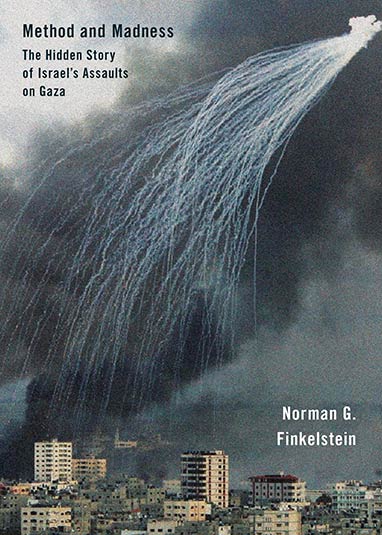
methodNews from the ever enterprising OR Books of Norman Finkelstein‘s new and superbly titled book, Method and Madness: the hidden story of Israel’s assaults on Gaza.  (There’s a delay in ordering this via Amazon or even the Book Depository, so if you want it before next spring you’ll need to get it directly from OR).

In the past five years Israel has mounted three major assaults on the 1.8 million Palestinians trapped behind its blockade of the Gaza Strip. Taken together, Operation Cast Lead (2008-9), Operation Pillar of Defense (2012), and Operation Protective Edge (2014), have resulted in the deaths of some 3,700 Palestinians. Meanwhile, a total of 90 Israelis were killed in the invasions.
On the face of it, this succession of vastly disproportionate attacks has often seemed frenzied and pathological. Senior Israeli politicians have not discouraged such perceptions, indeed they have actively encouraged them. After the 2008-9 assault Israel’s then-foreign minister, Tzipi Livni, boasted, “Israel demonstrated real hooliganism during the course of the recent operation, which I demanded.”

However, as Norman G. Finkelstein sets out in this concise, paradigm-shifting new book, a closer examination of Israel’s motives reveals a state whose repeated recourse to savage war is far from irrational. Rather, Israel’s attacks have been designed to sabotage the possibility of a compromise peace with the Palestinians, even on terms that are favorable to it.

Looking also at machinations around the 2009 UN sponsored Goldstone report and Turkey’s forlorn attempt to seek redress in the UN for the killing of its citizens in the 2010 attack on the Gaza freedom flotilla, Finkelstein documents how Israel has repeatedly eluded accountability for what are now widely recognized as war crimes.

Further, he shows that, though neither side can claim clear victory in these conflicts, the ensuing stalemate remains much more tolerable for Israelis than for the beleaguered citizens of Gaza. A strategy of mass non-violent protest might, he contends, hold more promise for a Palestinian victory than military resistance, however brave.

Reviews by Alex Doherty here and Deborah Maccoby here.

Degrees of intimacy

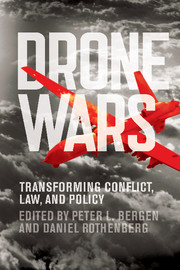
Drone warsNext month Cambridge University Press is publishing a book of essays edited by Peter Bergen and Daniel Rothenberg, Drone wars: transforming conflict, law and policy, due out from Cambridge University Press at the end of the year.  Here’s the blurb:

Drones are the iconic military technology of many of today’s most pressing conflicts, a lens through which U.S. foreign policy is understood, and a means for discussing key issues regarding the laws of war and the changing nature of global politics. Drones have captured the public imagination, partly because they project lethal force in a manner that challenges accepted rules, norms, and moral understandings. Drone Wars presents a series of essays by legal scholars, journalists, government officials, military analysts, social scientists, and foreign policy experts. It addresses drones’ impact on the ground, how their use adheres to and challenges the laws of war, their relationship to complex policy challenges, and the ways they help us understand the future of war. The book is a diverse and comprehensive interdisciplinary perspective on drones that covers important debates on targeted killing and civilian casualties, presents key data on drone deployment, and offers new ideas on their historical development, significance, and impact on law and policy. Drone Wars documents the current state of the field at an important moment in history when new military technologies are transforming how war is practiced by the United States and, increasingly, by other states and by non-state actors around the world.

And here is the Contents List:

Part I. Drones on the Ground:

1. My guards absolutely feared drones: reflections on being held captive for seven months by the Taliban David Rohde
2. The decade of the drone: analyzing CIA drone attacks, casualties, and policy Peter Bergen and Jennifer Rowland
3. Just trust us: the need to know more about the civilian impact of US drone strikes Sarah Holewinski
4. The boundaries of war?: Assessing the impact of drone strikes in Yemen Christopher Swift
5. What do Pakistanis really think about drones? Saba Imtiaz

Part II. Drones and the Laws of War:

6. It is war at a very intimate level USAF pilot
7. This is not war by machine Charles Blanchard
8. Regulating drones: are targeted killings by drones outside traditional battlefields legal? William Banks
9. A move within the shadows: will JSOC’s control of drones improve policy? Naureen Shah
10. Defending the drones: Harold Koh and the evolution of US policy Tara McKelvey
Part III. Drones and Policy Challenges:
11. ‘Bring on the magic’: using drones in combat Michael Waltz
12. The five deadly flaws of talking about emerging military technologies and the need for new approaches to law, ethics, and war P. W. Singer
13. Drones and cognitive dissonance Rosa Brooks
14. Predator effect: a phenomenon unique to the war on terror Meg Braun
15. Disciplining drone strikes: just war in the context of counterterrorism David True
16. World of drones: the global proliferation of drone technology Peter Bergen and Jennifer Rowland

Part IV. Drones and the Future of Warfare:

17. No one feels safe Adam Khan
18. ‘Drones’ now and what to expect over the next ten years Werner Dahm
19. From Orville Wright to September 11: what the history of drone technology says about the future Konstantin Kakaes
20. Drones and the dilemma of modern warfare Richard Pildes and Samuel Issacharoff
21. How to manage drones, transformative technologies, the evolving nature of conflict and the inadequacy of current systems of law Brad Allenby
22. Drones and the emergence of data-driven warfare Daniel Rothenberg

Over at Foreign Policy you can find an early version of Chapter 6, which is an interview with a drone pilot conducted by Daniel Rothenberg.  There are two passages in the interview that reinforce the sense of the bifurcated world inhabited by drone crews that I described in ‘From a view to a kill’ and ‘Drone geographies’ (DOWNLOADS tab).  On the one side the pilot confirms the inculcation of an intimacy with ground troops, particularly when the platforms are tasked to provide Close Air Support, which is in some degree both reciprocal and verbal:

“Because of the length of time that you’re over any certain area you’re able to engage in lengthy communications with individuals on the ground. You build relationships. Things are a little more personal in an RPA than in an aircraft that’s up for just a few hours. When you’re talking to that twenty year old with the rifle for twenty-plus hours at a time, maybe for weeks, you build a relationship. And with that, there’s an emotional attachment to those individuals.

“You see them on a screen. That can only happen because of the amount of time you’re on station. I have a buddy who was actually able to make contact with his son’s friend over in the AOR [area of responsibility]. If you don’t think that’s going to make you focus, then I don’t know what will.

“Many individuals that have been over there have said, ‘You know, we were really happy to see you show up’; ‘We knew that you were going to keep us from being flanked’; ‘We felt confident in our ability to move this convoy from ‘A’ to ‘B’ because you were there.’ The guy on the ground and the woman on the ground see how effective we are. And it gives them more confidence.”

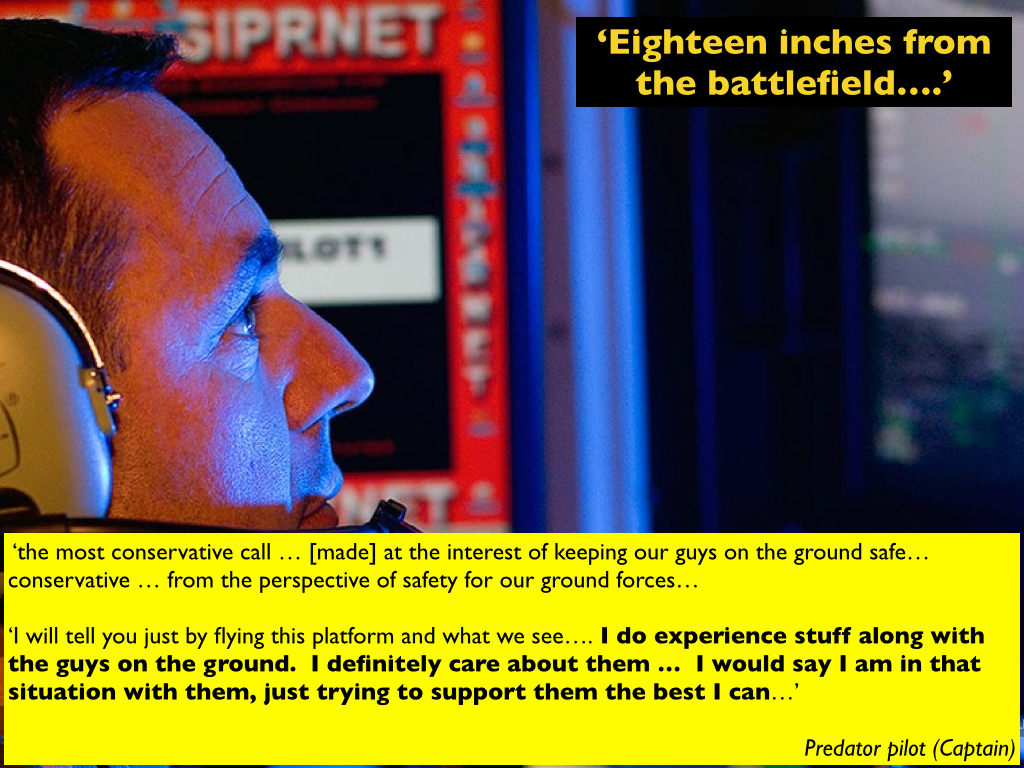
GREGORY Angry Eyes Extract.001

[The image above is taken from my ‘Angry Eyes’ presentation; the Predator pilot in this instance was involved in orchestrating the air strike in Uruzgan province, Afghanistan on 21 February 2010, and the quotation is taken from the US Army investigation into the incident.  I’m converting the presentation into the final chapter for The everywhere war, and I’ll post the draft as soon as I’m finished.]

But when the pilot in Rothenberg’s interview goes on to claim that ‘Targeting with RPAs is very intimate’ and that ‘It is war at a very intimate level’, he reveals on the other side an altogether different sense of intimacy: one that is strictly one-sided, limited to the visual, and which resides in a more abstracted view:

“Flying an RPA, you start to understand people in other countries based on their day-to-day patterns of life. A person wakes up, they do this, they greet their friends this way, etc. You become immersed in their life. You feel like you’re a part of what they’re doing every single day. So, even if you’re not emotionally engaged with those individuals, you become a little bit attached. I’ve learned about Afghan culture this way. You see their interactions. You’re studying them. You see everything.”

The distinction isn’t elaborated, but the claims of ‘immersion’ and becoming ‘part of what they’re doing every day’ are simply astonishing, no?  You can find more on the voyeurism of ‘pattern of life analysis’ and the remarkable conceit that ‘you see everything’ here.

GREGORY Drones and the everywhere war 2014 Homeland insecurities.001

[The image above is taken from my ‘Drone geographies’ presentation]

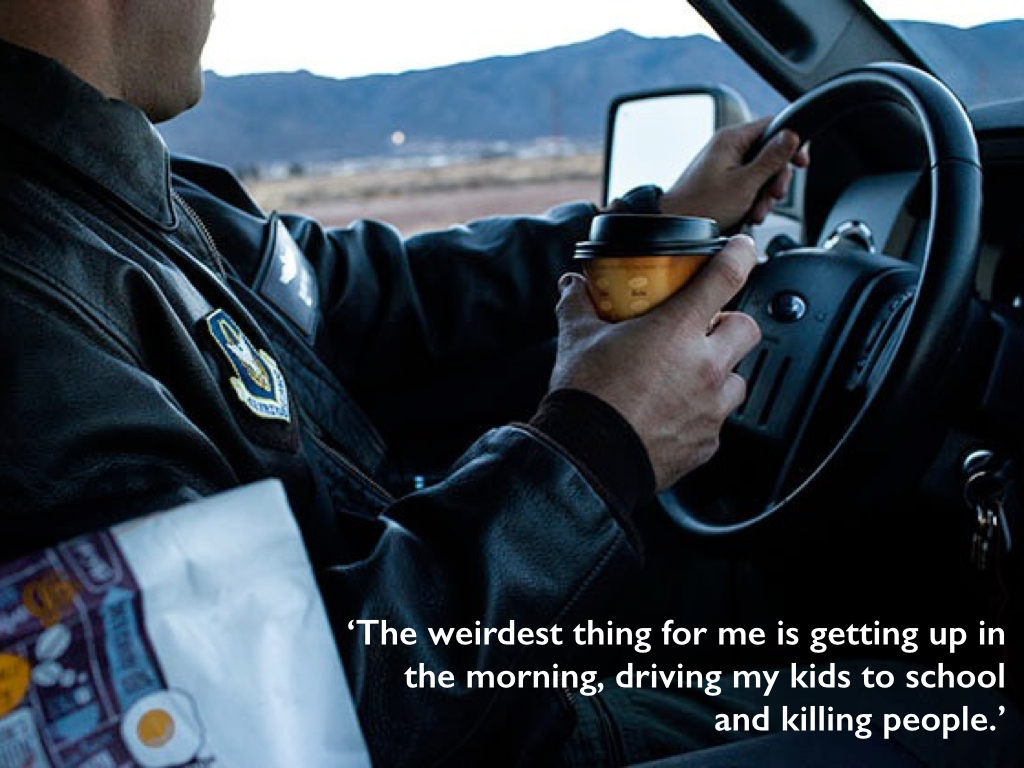
The interview emphasises a different bifurcation, which revolves around the alternation between ‘work’ and ‘home’ when remote operations are conducted from the United States:

“”When you’re doing RPA operations, you’re mentally there, wherever there is. You’re flying the mission. You’re talking to folks on the ground. You’re involved in kinetic strikes. Then you step out the ground control station (GCS) and you’re not there anymore…

“Those are two very, very different worlds. And you’re in and out of those worlds daily. I have to combine those two worlds. Every single day. Multiple times a day. So, I am there and then I am not there and then I am there again. The time between leaving the GCS [Ground Control Station] and, say, having lunch with my wife could be as little as ten minutes. It’s really that fast.”

You can find much more on these bifurcations in my detailed commentary on Grégoire Chamayou‘s Théorie du drone here and in ‘Drone geographies’ (DOWNLOADS tab).

There’s one final point to sharpen.  In my developing work on militarized vision, and especially the ‘Angry eyes’ presentation/essay,  I’ve tried to widen the focus beyond the strikes carried out by Predators and Reapers to address the role they play in networked operations where the strikes are carried out by conventional strike aircraft.  Here is what Rothenberg’s pilot says about what I’ve called the administration of military violence (where, as David Nally taught me an age ago, ‘administration’ has an appropriately double meaning):

‘”Flying an RPA is more like being a manager than flying a traditional manned aircraft, where a lot of times your focus is on keeping the shiny side up; keeping the wings level, putting the aircraft where it needs to be to accomplish the mission. In the RPA world, you’re managing multiple assets and you’re involved with the other platforms using the information coming off of your aircraft.

“You could use the term ‘orchestrating’; you are helping to orchestrate an operation.”

***

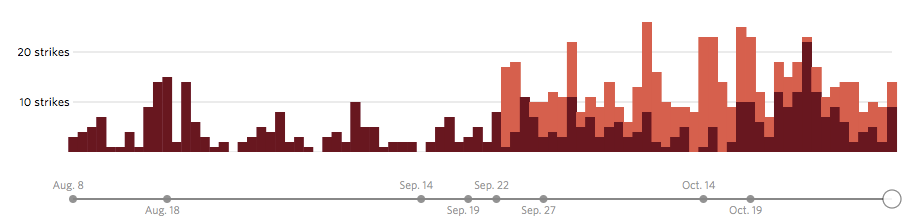
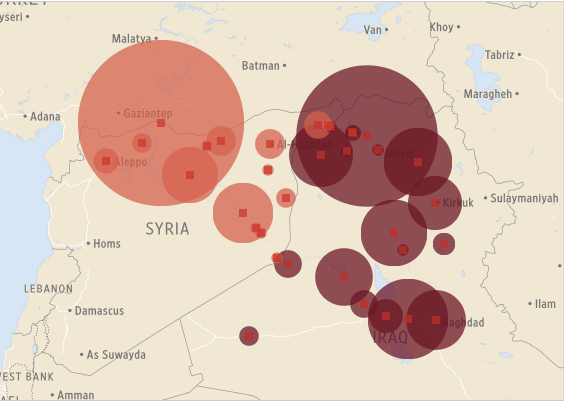
Drone wars appears just as remote operations over Iraq and Syria are ramping up: you can find an excellent review by Chris Cole at Drone Wars UK here, ‘Drones in Iraq and Syria: What we know and what we don’t.’  The images below are from the Wall Street Journal‘s interactive showing all air strikes reported by US Central Command 8 August through 3 November 2014:

Air strikes in Iraq and Syria

During this period  769 coalition air strikes were reported: 434 in Syria (the dark columns), including 217 on the besieged border city of Kobane, and 335 in Iraq (the light columns), including 157 on Mosul and the Mosul Dam.

Air strikes in Iraq and Syria August-November 2014

But bear in mind these figures are for all air strikes and do not distinguish between those carried out directly by drones and those carried out by conventional strike aircraft.  As Chris emphasises:

‘Since the start of the bombing campaign, US drones have undertaken both surveillance and strike missions in Iraq and Syria but military spokespeople have refused to give details about which aircraft are undertaking which strikes repeatedly using the formula “US military forces used attack, fighter, bomber and remotely-piloted aircraft to conduct airstrikes.”’

Although the USAF has used a mix of MQ-1 (Predator) and MQ-9 (Reaper) drones, F-15E, F-16, F/A-18 and F-22 fighters, B-1 bombers, AC-130 gunships and AH-64 Apache helicopters in these operations, it seems likely that its capacity to use remote platforms to provide intelligence, surveillance and reconnaissance is limited by its continuing commitments in Afghanistan (though Britain’s Royal Air Force has now deployed its Reapers for operations in both Iraq and Syria).

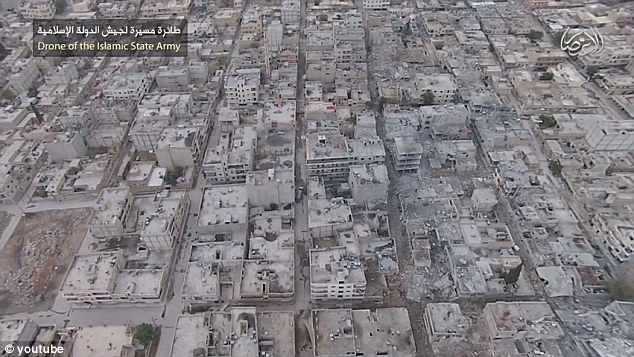
IS (Islamic State) claims to have its own drones too.  In February it released video of its aerial surveillance of Fallujah in Iraq, taken from a DJI Phantom FC40 quadcopter, in August it released video of Taqba air base in Syria taken from the same platform, tagged as ‘a drone of the Islamic State army’, and in September a propaganda video featuring hostage John Cantile showed similar footage of Kobane (below).

1414438887900_wps_7_IS_have_released_a_new_vi

These image streams are all from commercial surveillance drones, but in September the Iranian news agency Fars reported that Hezbollah had launched an air strike from Lebanon against a command centre of the al-Nursra Front outside Arsal in Syria using an armed (obviously Iranian) drone.

You can find Peter Bergen’s and Emily Schneiders view on those developments here, and a recent survey of the proliferation of drone technologies among non-state actors here.

The details of both the state and non-state air strikes remain murky, but I doubt that much ‘intimacy’ is claimed for any of them.

Game of Drones

theory_of_the_drone_finalJean-Baptiste Jeangène Vilmer writes to say that his review of Grégoire Chamayou‘s Théorie du drone has just appeared in English translation over at Books & Ideas here.

It’s a combative review, literally so:

When Chamayou was asked what motivated him to write the book, he replied that “some philosophers in the United States and in Israel work hand in hand with the military to elaborate what I call a ‘necro-ethics’ that tries to justify targeted assassinations. So it is urgent to respond. When ethics is brought into a war, philosophy becomes a battlefield.” 

A bit like Plato looking upon his Socratic dialogues as the philosopher’s responses to the sophists – i.e. to false philosophers – Chamayou presents his Theory of the Drone as a response to the traitorous philosophers who collaborate with the military. I am myself one of this low species: I teach ethics and the law of war to officer students at the French Military Academy of Saint-Cyr, and I often work with the military (without however being “enlisted” to justify anything whatsoever). Therefore I can testify that, when you take an interest in military matters, it is helpful to work with them, to increase your precision and to avoid some clichés and factual errors.

I provided some background to Vilmer’s work and discussed his critique here.

An excellent English translation of Theory of the Drone is due from the New Press in December.

While I’m on the subject of translations, French versions of my ‘Drone geographies’ from Radical Philosophy (DOWNLOADS tab) are now available as ‘Géographes du drone’ in Jef Klak: critique sociale et experiences littéraires 1 (2014) 262-277 and in Décadrages: Cinéma, à travers champs 26-27 (2014) 129-150.

Flesh on the Bones

Skeleton RoadOne of my pleasures is good – and I mean seriously good – crime fiction, and I’ve just finished Val McDermid‘s latest, Skeleton Road.  It’s a finely wrought reflection on the wars that destroyed the former Yugoslavia, notably the conflict between Serbia and Croatia, but it’s also shot through with ferociously smart insights into geopolitics.

In fact, the epigraph is from Gerard Toal‘s Critical Geopolitics (the book not the blog) and in her acknowledgements Val thanks both Linda McDowell and Jo Sharp.

I was particularly taken by the way in which the shadows (and lights) of international law and human geography fall across its pages. Neither becomes an abstraction; both are fully embodied.  Two of the protagonists are lawyers working for the International Criminal Tribunal for the Former Yugoslavia and another is a Professor of Geography at Oxford (who ‘forced herself to consider the entries she was due to contribute to the forthcoming Dictionary of Human Geography‘ – a perfectly reasonable motive for murder).

All of which may explain my favourite quotation from what is now one of my favourite novels.  I’ve always despaired of those approaches to ‘geography and literature’ that gut novels by ripping out the supposedly ‘geographical’ bits, so I hope I’ll be forgiven for this autopsic deviation.  This is Maggie Blake, Professor of Geography, describing the results of her fieldwork in Dubrovnik:

‘The work I ended up doing on the region and its wars … is rooted, as human geography should be, in an embodiment of the conflict.’