Forensis

I’m putting together my presentation on ‘Seeing like a military‘ for the AAG Conference in Tampa next week, but – prompted in part by my interest in forensic architecture (see also here and here) – I’ve also been thinking about other ways of seeing (perhaps ‘re-viewing’ would be better) military violence.

2014_cover_publication_forensis_imgsize_SSo I’ve been interested to read a report over at rhizome on Forensis, an exhibition and installation curated by Anselm Franke and Eyal Weizman at the Haus der Kulteren der Welt in Berlin, on ‘Constructions of Truth in a Drone Age’:

Any act of looking or being looked at is mediated by technology. This is true of any scientific process too, where each tool or method of looking is developed with a purpose in mind which influences the data that it produces. This is precisely what forensic investigation reveals: not only the reality of an event, but also the intention of a viewing mechanism and the political weight of that intention once made visible. Representations of warfare illustrate this as successfully as any art object.

As part of the exhibition Forensis, now on view at Haus der Kulteren der Welt in Berlin, Forensic Architecture and SITU Research investigate drone strikes in situations where state-mandated degradation and pixelation of publicly available surveillance footage is a legal regulation rather than a visual constraint, and drones are designed to evade the digital image. Missiles are developed that burrow through targeted buildings, leaving holes that are smaller than a low resolution pixel. Attacking at “the threshold of visibility,” the legal, political, and technical conditions equally attempt to remain invisible. The job of forensics is then to recover them.

Anselm and Eyal traffic in the roots between forensics and the Roman forum, which they envisage as a ‘multi-dimensional space of negotiation and truth-finding in which humans and objects participated together in politics, law and the economy.’  The underlying argument of Forensis, the report suggests, is that ‘the object of forensics should be as much the looker and the act of looking as the looked-upon’ – which will be precisely my point in Tampa.

Hiding in the pixels

FA_UN_DRONES_FIG_2

For more on the role of forensic architecture in the analysis of drone strikes, which I discussed earlier this week, see Rebecca Chao‘s report – including an interview with Eyal Weizman – at TechPresident here.  The report includes an interesting qualification about the limitations of satellite imagery:

The drone analysis videos are not only evidential, however. They are also instructional. “These videos,” says Weizman, “do three things. We undertake the investigation while telling viewers how we do what we do and in the end we also reflect on how confident we are about the results.”

The purpose is to teach human rights activists or journalists how to conduct their own forensic architectural investigations. For example, the highest resolution satellite imagery comes from private American companies that cost $1,000 per image, which Weizman says is relatively affordable since an analysis would usually require just two: one right before the strike and one after.

There are certainly limitations to the data they obtain, however. With satellite imagery, for example, even the highest resolution images degrade to a pixel that translates to 50 cm by 50 cm of actual terrain. This means that a drone could easily hide undetected in one of those pixels, says Weizman…. [It] also hides the damage caused by drone strikes. When asked if this an uncanny coincidence, Weizman explains, that while there is prerogative for states and militaries to maintain an advantage, that pixel is also proportioned to hide a human and the private companies issuing such data are cognizant of privacy issues. Even so, this allows countries to deny drone strikes, says Weizman, because drones are beyond the threshold of detectability in the available satellite imagery.

And while I’m on the subject of architecture, the Guardian reports that on 19 March the Royal Institute of British Architects called for the suspension of the Israeli Association of United Architects from the International Union of Architects for its complicity in the construction of illegal settlements in occupied Palestine: what Israel consistently calls ‘the facts on the ground‘.  And those dismal ‘facts‘ aren’t hiding in the pixels.

The scene of the crime: customary law and forensic architecture

I returned from a wonderful visit to Glasgow last week – thanks so much to Jo Sharp, who ensured I had a criminally good time – and I’ve spent this week trying to catch up.  It rained most of the time I was there, and in fact my first impression of the University was of a quadrangle turned into a quagmire: a case of mire in the flood, you might say.  But nothing could dampen my spirits, and in the gaps between marvellous restaurants, coffee shops that would make anyone in Vancouver (or Seattle) green with envy, the best lunch ever, and truly excellent conversation, I gave two talks: one on my skeletal ideas about my new project on Medical-military machines and casualties of war, 1914-2014, and the other a more formal affair on ‘Dirty dancing: drone strikes, spaces of exception and the everywhere war.’ The purpose of the first talk was to explore, largely for graduate students, how I work; it generated a lively discussion, so I thought I would try to do the same in this post but in relation to the second presentation.  And in doing so, I’ll also have more to say about the scene of a real crime.

I’d prepared my formal presentation before I left Vancouver, and as I’ve explained before I now never read from a written text: I design the slides carefully (see my ‘Rules’ here) and talk to them, so that I retain as much flexibility as possible.  It’s a sort of semi-scripted improv, I suppose, and it also means that the argument can develop from one presentation to the next.

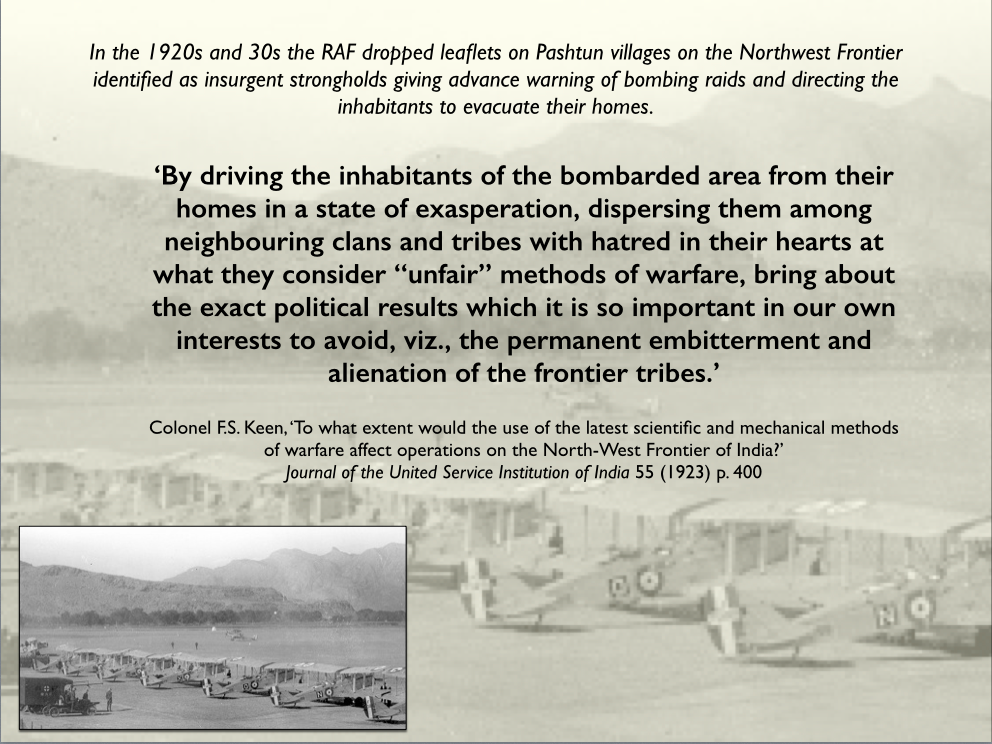
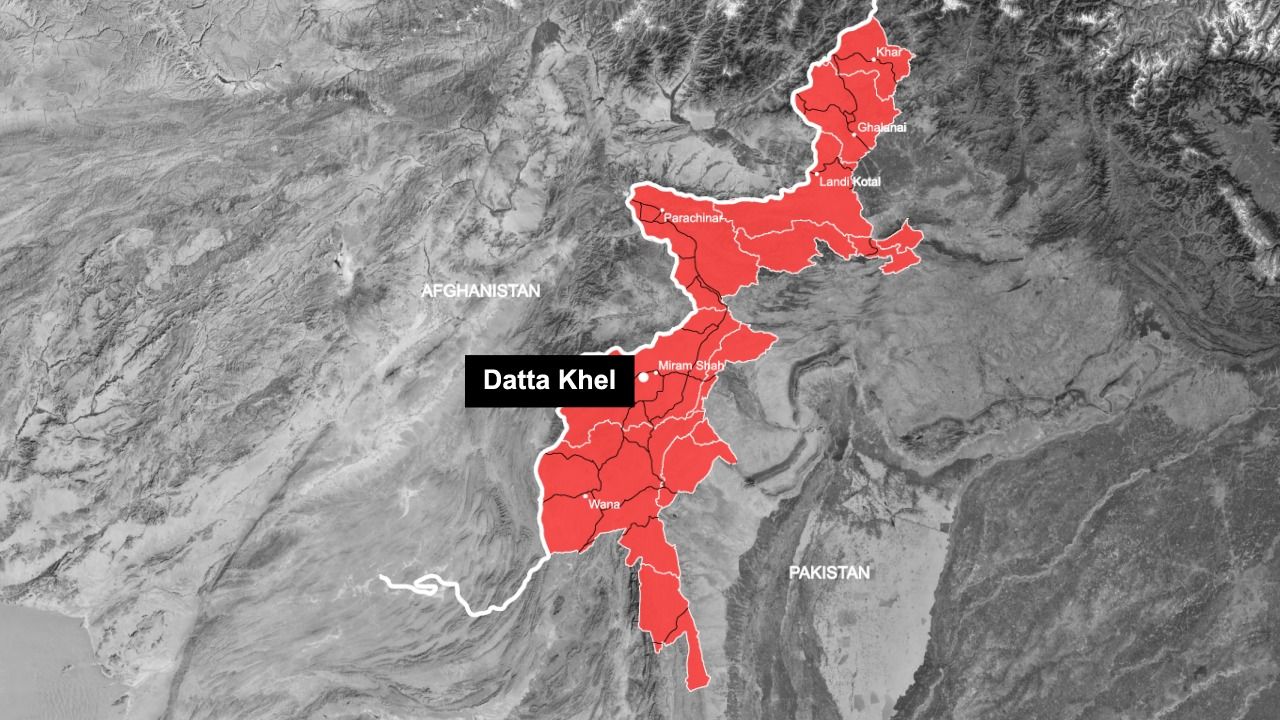
On the train up from London I started to think some more about the air strikes on the Federally Administered Tribal Areas (see also herehere and here).  Part of my purpose was to trace a narrative of air attack that, for those now ‘living under drones’, stretched back (at least in memory) to British air control and counterinsurgency on the North West Frontier in the 1920s and the 1930s.

Waziristan bombing 1920s and 30s PNG

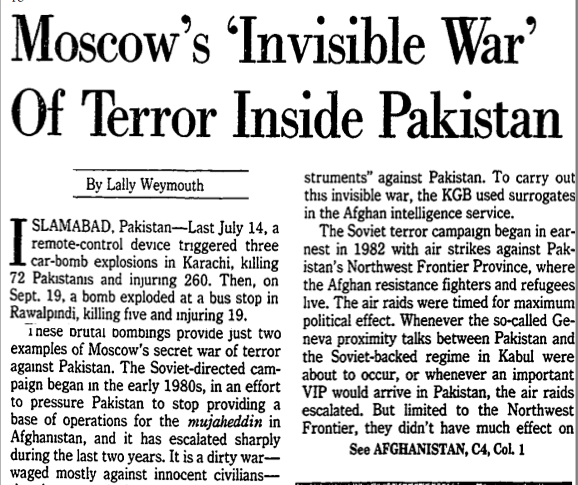
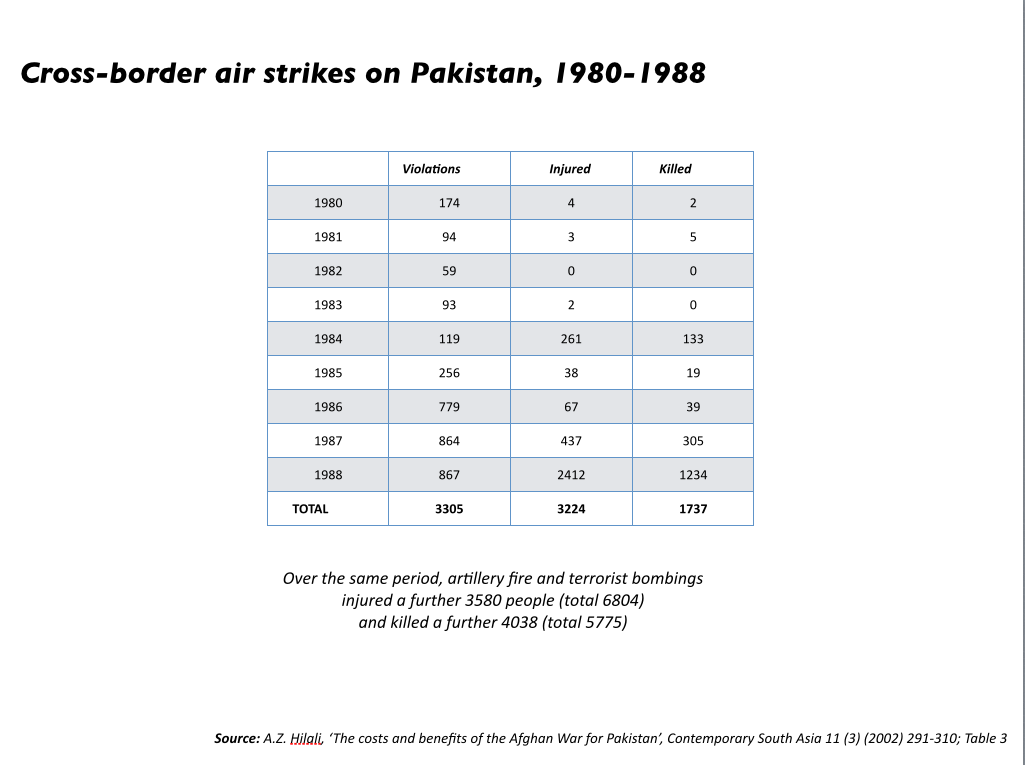
War of Terror inside Pakistan PNGI’d made this point before, and sharpened it during an earlier version of the presentation in Beirut, but I’d since realised that the narrative was resumed by the Soviet and Afghan Air Forces striking mujaheddin bases in Pakistan during the Soviet occupation of Afghanistan.  I hadn’t paid much attention to this in The colonial present, where my focus was on the aid provided by the CIA to mujaheddin striking across the border in the opposite direction, but these air raids were described by the Washington Post on 13 March 1988 as part of the USSR’s “war of terror” (really).  They are an important moment in the genealogy of air strikes and counterinsurgency in the FATA, and I’d managed to unearth some estimates of the number of cross-border violations of Pakistani air space and the number skilled and injured in the strikes:

Afghan:Soviet cross-border air strikes 1980-88

Then, in one of the ironic twists of our post 9/11 world, the (il)logic of air war was revived and ramped up by the CIA-directed drone strikes that have convulsed the borderlands since 2004.

I wanted to show, as I’ve argued in previous posts, that this narrative was more than a cross-border affair and that the Pakistan Air Force has been also actively involved in a series of domestic air campaigns: since 2008 it has carried out thousands of air strikes against what it describes as militants, insurgents and terrorists in the FATA.  In fact, the offensive was resumed earlier this year, when F-16 aircraft and helicopter gunships attacked targets in North Waziristan, driving thousands of people from their homes.

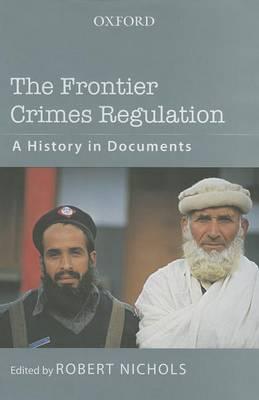
the-frontier-crimes-regulationIn some measure, all of these air campaigns raise the spectre of colonial power, but so too does the legal status of the FATA and its exceptional relation to the rest of Pakistan.  This is usually traced back to Lord Curzon’s Frontier Crimes Regulations (1901), which were retained by Pakistan after independence in 1947.  They were minimally revised in 2011, but the FATA are still under the direct executive control of the President through his appointed Political Agents who have absolute authority to decide civil and criminal matters. The exceptional status of the FATA was confirmed by the Actions (in Aid of Civil Power) Regulations in 2011 which exclude the high court from jurisdiction on fundamental rights issues in any area where the Pakistan armed forces have been deployed ‘in aid of the civil power’.

All of this indicates that the FATA constitute a ‘space of exception’ in something like Giorgio Agamben‘s sense of the term: a space in which particular people are knowingly exposed to death through the juridical or quasi-juridical removal of legal protections from them.  This was, in part, my argument, but I was also concerned to show that this was not a matter of a legal void: rather, military and paramilitary violence was orchestrated, as it almost always is, through the law.

But there is quite another sense in which the FATA is not a legal void, despite all the rhetoric about them being ‘lawless’ lands.  So I started to think through the intersections between these formal legal geographies (and the state violence they sanction) and the system of customary law known as Pashtunwali (loosely, “the way of the Pashtuns”).  The system is far from static, but it still governs many areas of life among Pashtuns on both sides of the Afghanistan-Pakistan border whose cultures and communities were bisected when the Durand Line was drawn in 1893.  I’d been reading as much as I could by anthropologists and others to help me understand its contemporary relevance: for recent surveys, see Tom Ginsburg‘s ‘An economic interpretation of the Pashtunwali’ from the University of Chicago Legal Forum (2011) here,  Lutz Rzehak‘s ‘Doing Pashto’ here, and Thomas Ruttig‘s qualifications in relation to the Taliban here.  For a sense of how the US military understands Pashtunwali, as part of its ‘cultural turn’, see Robert Ross‘s thesis here.

Pashtunwali is more than a legal system, of course, but I was particularly interested in its legal force and how this is put into practice.  Many commentators have shown that Pashtunwali is precisely the sort of ‘mobile’ legal system that you would expect to find among (originally) nomadic peoples, for whom the fixed statutes of a centralised state had neither appeal nor purchase.  It includes obligations of hospitality and protection, asylum and refuge, and revenge and restitution, and provides for a system of resolution through a council (or Jirga).  Within its patriarchal and masculinist framework, the system is resolutely non-hierarchical: the men who compose the Jirga sit in a circle and each, as a symbol of authority and equality, carries a gun.

Sitting in a circle, the Jirga has no speaker, no president, no secretary or convener. There are no hierarchical positions and required status of the participants. All are equal and everyone has the right to speak and argue, although, regard for the elders is always there without any authoritarianism or privileged rights attached to it. The Jirga system ensures maximum participation of the people in administering justice and makes sure that justice is manifestly done.

On my way over to the UK I’d read an extremely interesting essay in the International Review of Law and Economics 37 (2014) 108-20 – stored on Good Reader on my iPad – in which Bruce Benson and Zafar Siddiqui argued that the system works not only to provide a decentralised, local and regional system of order and regulation – so Hobbes was wrong: without the state people do not automatically revert to a ‘state of nature’ (Tom Ginsburg is very good on this) – but also to defend the Pashtun from the incursions of the central state.  Indeed, the Frontier Crimes Regulations specifically recognised the validity and autonomy of the Jirga: much more here.  The message from all this was clear: ‘The Pashtun tribes who inhabit the rugged mountains between Afghanistan and Pakistan are neither lawless nor defenceless.’

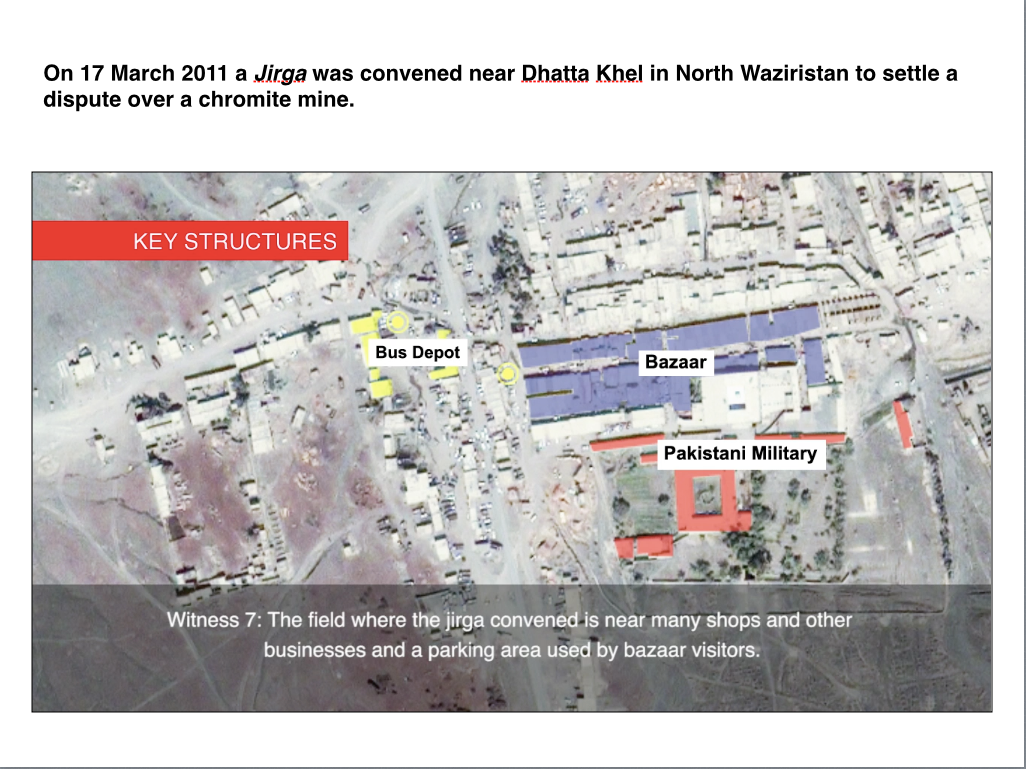
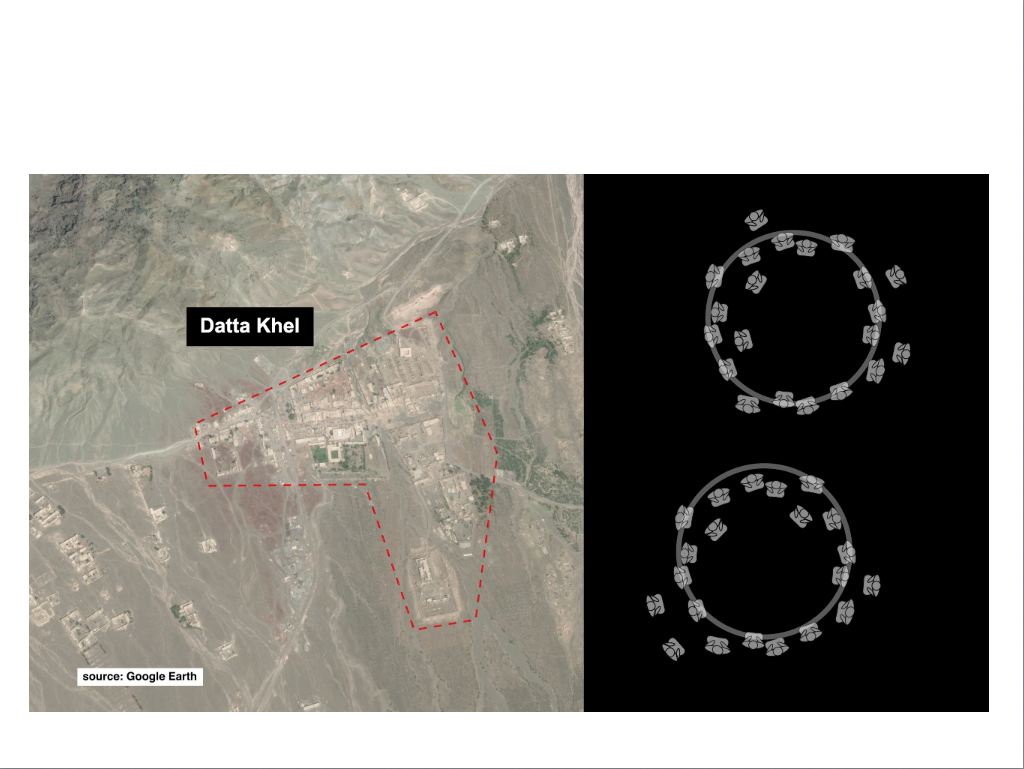
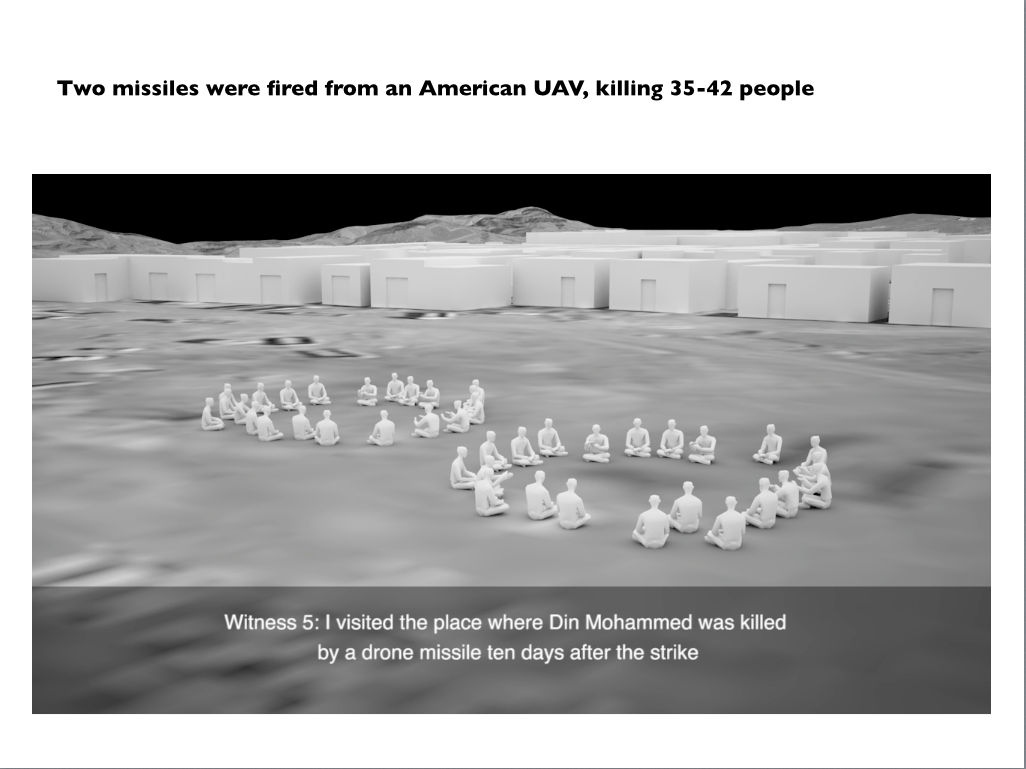
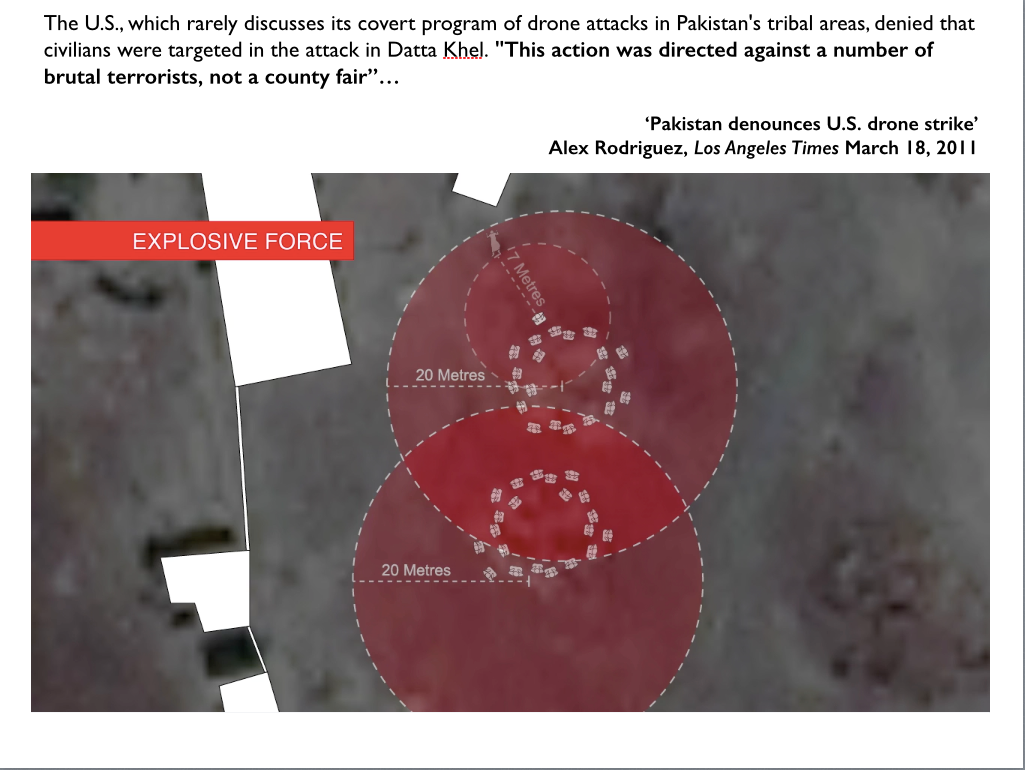
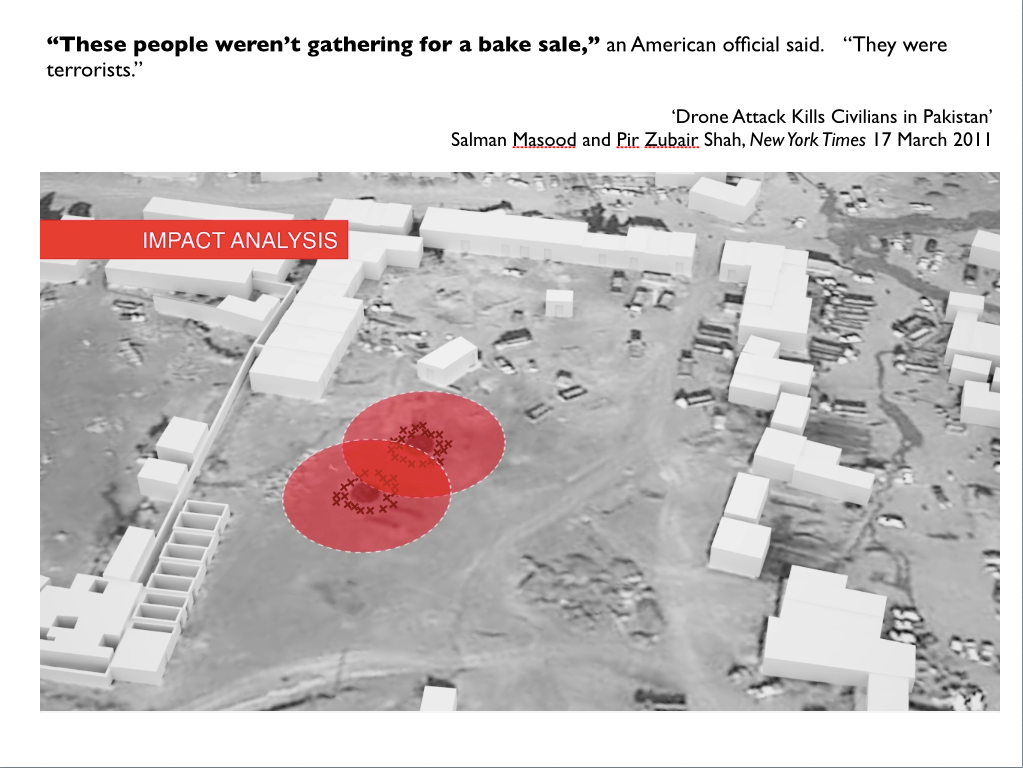
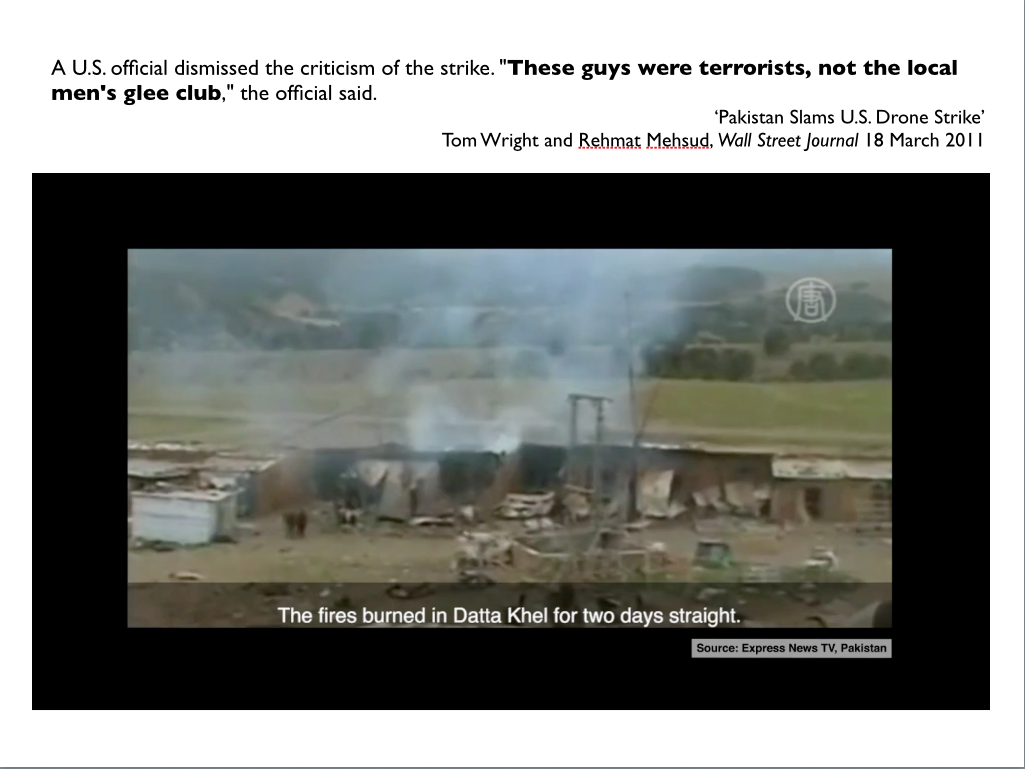
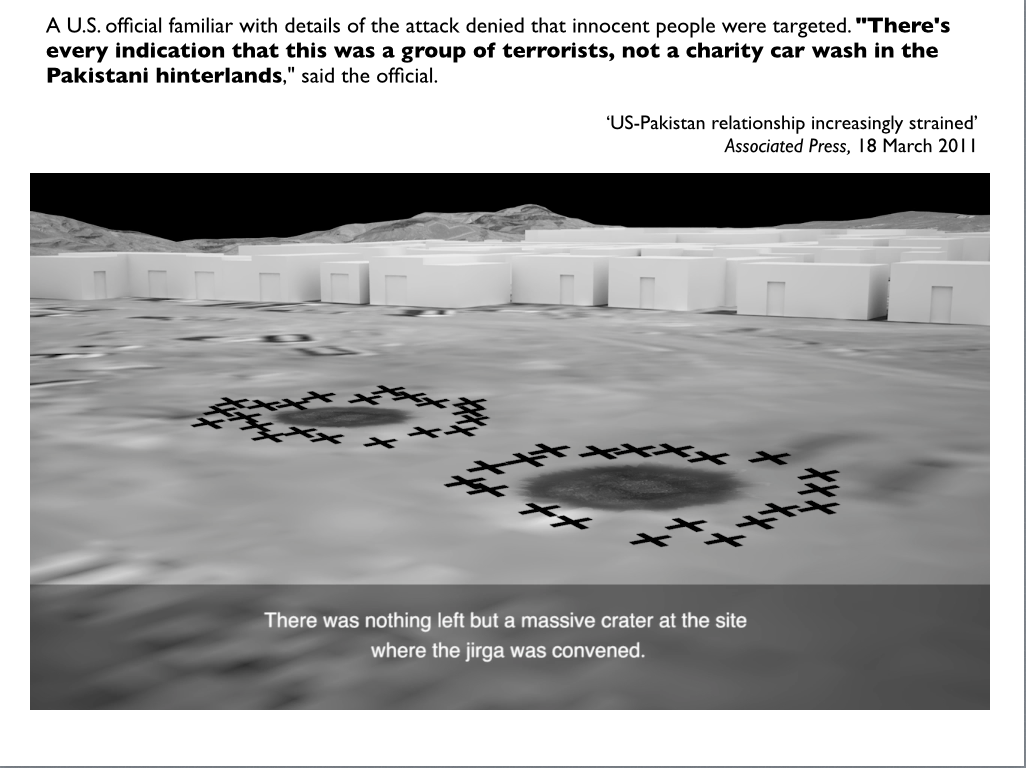
The Pakistan Taliban know this very well, not surprisingly, and in many instances work with Pashtunwali to mediate disputes in the FATA.  In fact, as the train curved around the Lake District I remembered reading about a Jirga being convened in Datta Khel in March 2011 to resolve a dispute over a chromite mine.  It’s odd how some things stick in your mind, like burrs on your jeans, but this incident had stayed with me because the Jirga had been targeted by the CIA and two Hellfire missiles were launched from a drone, killing more than 40 people.  In itself, that probably wouldn’t have been enough for me to remember it in any detail since it was all too common – but the usual faceless and anonymous US official, speaking off the record because he was not authorised to comment in his official capacity, had offered a series of ever more bizarre justifications for the strike: and I remembered those (as you’ll see in a moment, you could hardly forget them).

uekEs60GsR-YpEwf3VWpqOYckWFvgZ-CMcsK2DT0grQ

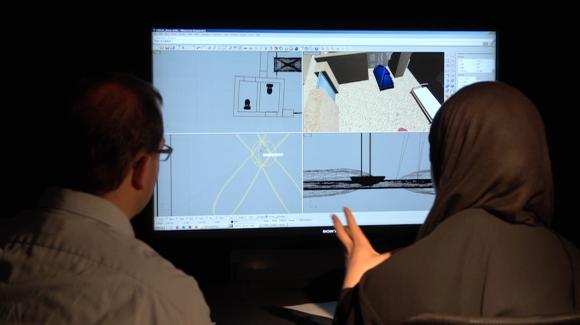
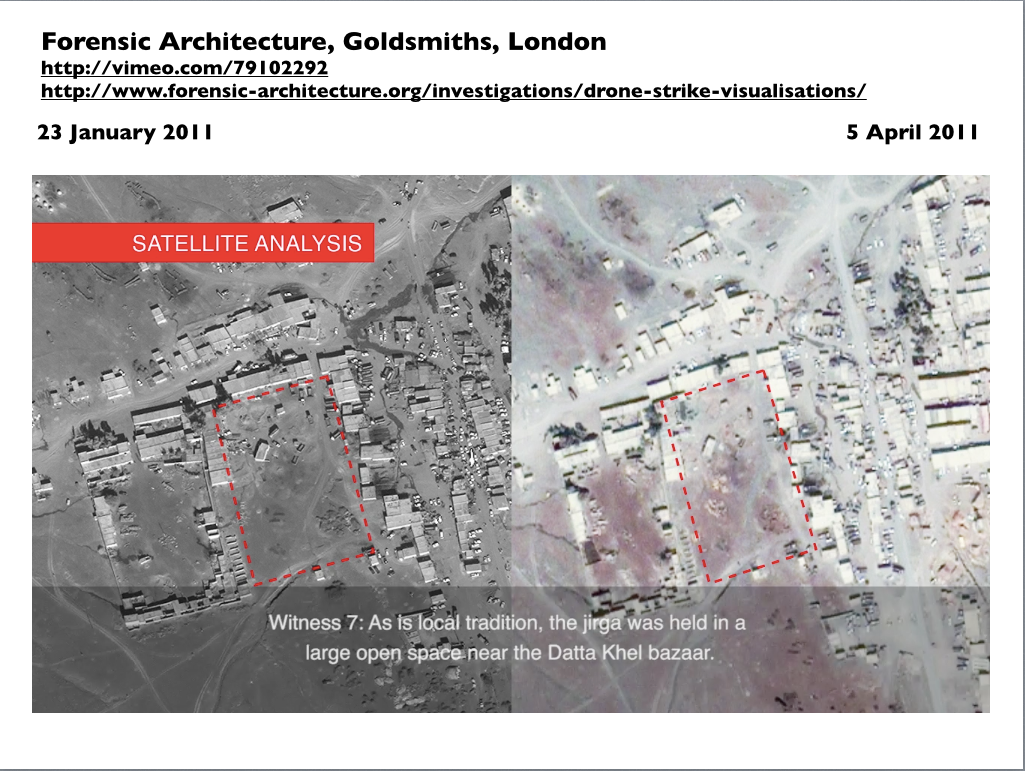
So I started to dig some more – WiFi on the train – and discovered that Eyal Weizman and his brilliant colleagues at Goldsmith’s Forensic Architecture had reconstructed this very strike (the image above is from their work):

‘In the absence of on-the-ground photographic or video documentation, and with no visible impact on buildings, this investigation unfolded by cross-referencing witness testimonies with satellite imagery. An examination of before and after satellite imagery indicated two areas with surface disturbance consistent with the reported missile strikes, thus allowing us to confirm the location of the strike. From the testimonies of survivors and eye-witnesses, we harvested spatial information that helped us to generate a 3D model of the site of the drone strike on the Jirga.’

Then all (!) I had to do was go back in to my e-files (each morning I work my way through the press, copying and pasting reports and commentaries into a series of files so that I have my own searchable archive), recover the glosses provided by that anonymous official, and put them together with the reconstruction.  Here’s the result:

Dhatta Khel 1 PNGDhatta Khel 2 PNGDhatta Khel 3 PNG

Dhatta Khel 4 PNGDhatta Khel 5 PNGDhatta Khel 6 PNGDhatta Khel 7 PNGDhatta Khel 8 PNG

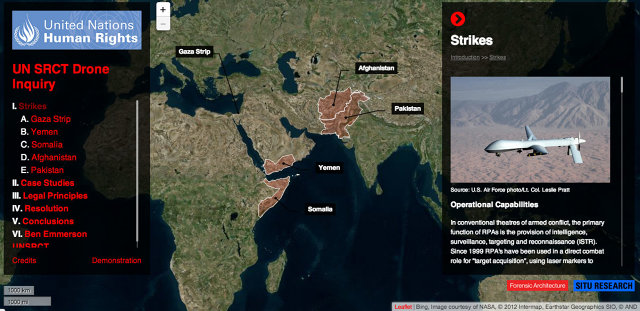
You can read more about these reconstructions here (‘The forensics of a lethal drone attack’).  This strike is one of several investigated by the UN’s Special Rapporteur Ben Emmerson, and you can find much more information at the interactive website produced in collaboration with Forensic Architecture and SITU Research that accompanies his written report to the United Nations (28 February 2014) (the Datta Khel incident is summarised in paragraph 50, but the website provides a far richer understanding).  You can also download hi-res versions of Forensic Architecture’s stills and videos here.

3027475-inline-i-un-srct-drone-inquiry

What I find so significant is that the anonymous official provided a series of different and, as I’ve said, bizarre (even offensive) descriptions of what the assembly in Datta Khel was not: but he was clearly incapable of recognising what it was.  This was certainly another performance of the space of exception, but it was plainly not a legal ‘black hole’, as some commentators gloss Agamben.  The only ‘black holes’ were the craters in the ground and the conspicuous failure to recognise the operative presence of customary law.

The camp and geographical imaginations

Last Thursday, the last full day of my visit to Ostrava, Tomas took me to visit the Auschwitz-Birkenau Memorial and Museum in the Polish town of Oswiecim: I’m still trying to come to terms with what I saw and felt.

It was Tomas’s third visit.  Last time, he said, it was in the depth of winter, with the ground covered in snow: Auschwitz rendered in the sombre black and white tones we’ve come to expect.  On Thursday it all seemed so incongruous: full colour on an unexpectedly sunny day – brilliant blue sky, flowers coming in to bloom and birds singing – and made even more unsettling by the new housing at the edge of the town and the supermarket up the road.  To say that is at once to invoke a moral geography of sorts, and in a series of revealing essays Andrew Charlesworth, Robert Guzik, Michal Paskowski and Alison Stenning have documented the controversies that have shaped the site since the establishment of the State Museum in 1947 and the subsequent development before and after the fall of Communism: see ‘”Out of Place” in Auschwitz?’ [in Ethics, place and environment 9 (2) (2006) 149-72] and ‘A tale of two institutions: shaping Oswiecim-Auschwitz’ [in Geoforum 39 (2008) 401-413].
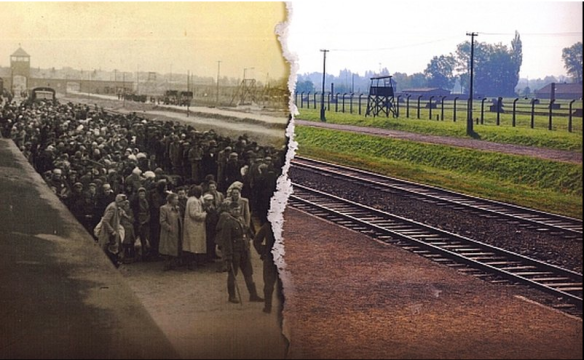
Auschwitz then and now

But as soon as we entered the complex a different (though related) series of moral geographies were invoked, also about the dissonance between Auschwitz then and now but more directly bound up with what Chris Keil calls ‘Sightseeing in the mansions of the dead’ [in Social & Cultural Geography 6 (40(2005) 479-494] or what is variously called ‘thanato-tourism’ or  ‘dark tourism’: the tourism of death.  You can find other fine reflections, following in Keil’s footsteps, in Derek Dalton‘s ‘Encountering Auschwitz: the possibilities and limitations of witnessing/remembering trauma in memorial space’ [in Law, Text, Culture 13 (1) (2009) 187-225] here.  Significantly, Dalton argues that current theorising ‘fails to highlight the vital role of the imagination in animating the artefacts and geography of a place and investing them with meaning’.

AUSCHWITZ3 April 2013

For the tour is, of course, both pre-scripted (it is surely impossible for most visitors to come to what was the largest extermination camp in Europe without prior expectations and understandings) and scripted (it invites and even licenses a particular range of performances and responses). It takes in Auschwitz I (above), the original site more or less at the centre of Oswiecim that was established in the spring of 1940, and the sprawling open/closed space of Auschwitz II at Birkenau beyond the perimeter established the following year.  (Auschwitz III, the labour camp at Monowitz linked to the IG Farben works, is not part of the memorial complex; neither are any of the 40-odd satellite camps).

Auschwitz 1944

We started by walking through the gates, their hideous sign Arbeit macht frei silhouetted against the sky, and filed into a series of prison blocks in a silence broken only by the guide’s voice whispering through our headphones and the shuffle of feet on stone and stair.

AUSCHWITZ April 2013

Inside we saw the collections of suitcases and shoes stripped from those who were murdered inside the camp: signs of movement from all over occupied Europe to the dead stop of the gas chambers.  The first, experimental ones killed people in their hundreds; the later ones killed them in their thousands.  We will never know the exact number nor all their names, but we do know more than 1,100,000 people were murdered at Auschwitz-Birkenau, around 960,000 of them Jews.

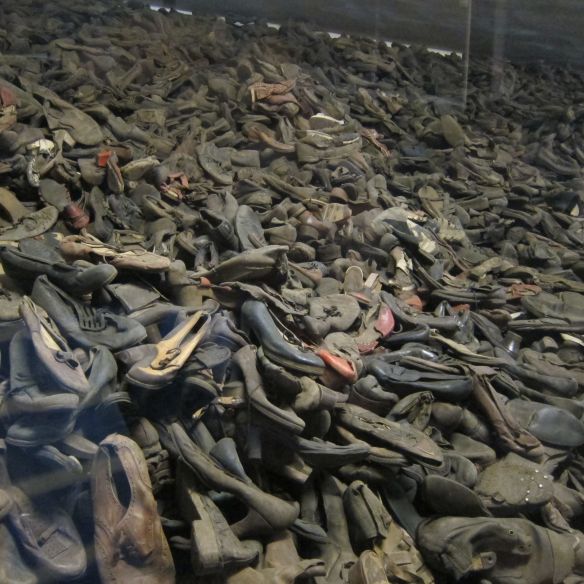
AUSCHWITZ Suitcases

AUSCHWITZ Shoes

Dalton’s attention was also captured by these collections: a fraction of the total, yet the sheer number of shoes confounded any attempt ‘to posit individual histories’; and even though the suitcases had names and sometimes dates on them, Dalton was numbed by his inability ‘to focus on an individual case; my eye took them in as a mass despite their differences.’  This is a recurrent theme in his essay, but I saw the artefacts differently.  As I looked at the collections behind the glass, I started to wonder about the aestheticisation of suffering – about what Keil calls ‘a Hall of Mirrors, a half-world between history and art’ (and in my photographs you can just about see the spectral reflections of the visitors in the glass) – and the ways in which these everyday objects had been turned into a vast still life that none the less could evoke such unutterable terror.

‘I have nothing to say, only to show,’ wrote Walter Benjamin (about his working method).  Perhaps that is the best way to apprehend the museum; perhaps, too, this begins to explain Theodor Adorno‘s insistence in Negative Dialectics that ‘to write poetry after Auschwitz is barbaric.’ And yet he later qualified his remark:

‘Perennial suffering has as much right to expression as the tortured have to scream … hence it may have been wrong to say that no poem could be written after Auschwitz.’ 

He said his objection was to lyric poetry; perhaps, then, we need to reaffirm what Michael Peters [in Educational Philosophy & Theory 44 (2) (2012) 129-32] calls ‘poetry as offence’: a notice inside Dachau declared that anyone found writing or sharing poetry would be summarily executed. For as I trudged across the vast expanse of Birkenau, alongside the railway tracks and the infamous ramp and around the ruins of the gas chambers and crematoria, I began to think that Auschwitz made poetry all the more necessary – as defiant affirmation.

My visit also prompted me to re-visit Giorgio Agamben‘s meditations on Auschwitz in Homo Sacer: sovereign power and bare life and Remnants of Auschwitz: the witness and the archive (which is Homo Sacer III).   If you’re not familiar with his work, Andrew Robinson provides a short and accessible summary that speaks directly to his incorporation of the Nazi concentration camp here.

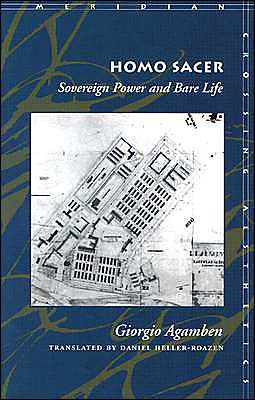
Auschwitz master plan (summer 1942)

AGAMBEN Homo sacerAlthough the cover of the English-language translation of Homo Sacer (right) shows part of the second master plan for Auschwitz (February 1942), which I’ve reproduced above (and you can find more maps and plans here), Agamben’s discussion is brief, confined to Part III and most of it in §7, where he treats ‘The camp as the nomos of the modern’ and, specifically, as ‘the materialization of the state of exception’ and ‘the most absolute biopolitical space ever to have been realized.’ The plan provided for the expansion of the camp, and van Pelt explains it thus:

The left side of the drawing depicts the concentration camp. Its center is the enormous roll-call place, designed to hold thirty thousand inmates. To the south are the barracks of the original camp, a group of brick buildings built in 1916 as a labor exchange center for Polish seasonal workers in Germany. To the east (on the right side), are the SS base and a Siedlung for the married SS men and their families. The center of town includes a hotel and shops.

Given what Agamben subsequently argued about the witness and the archive in Remnants, it is worth remembering that these detailed plans constituted important legal evidence against David Irving‘s notorious dismissal of Auschwitz’s function as an extermination camp as ‘baloney’ (in a Calgary lecture); you can find a detailed account of this early instance of forensic architecture in Robert Jan van Pelt‘s The case for Auschwitz: evidence from the Irving trial (2002) and a suggestive discussion of the plans (including an account in the appendix of the geographical selection of Auschwitz as a ‘central place’: given what we know of Walter Christaller‘s involvement in the spatial planning of Eastern Europe under the Third Reich, I wonder whether this was used in a technical sense?) in van Pelt’s ‘Auschwitz: from architect’s promise to inmate’s perdition’ [in Modernism/Modernity 1 (1) (1994) 80-120], from which I took the plan and explanation above. In our imaginations Auschwitz is full of people, and the plans are naturally as empty of the prisoners as today’s buildings: and yet through van Pelt’s patient, methodical commentary, they become redolent of the horrors they were intended to instil.

agamben_remnantsofauschwitz64In Remnants, Agamben does not attempt to make the plans and stones – the spaces – speak, but he is concerned, in quite another register, to erect ‘some signposts allowing future cartographers of the new [post-Auschwitz] ethical territory to orient themselves.’  Still, I’m left puzzled by the closed geography that captures his attention.  The nearest he comes to transcending this is his brief discussion of Hitler’s insistence on the production in central Europe of a volkloser Raum, ‘a space empty of people’, which Agamben glosses as a ‘fundamental biopolitical intensity’ that ‘can persist in every space and through which peoples pass into populations and populations pass into Musselmänner’, the ‘living dead’ of the camps (p. 85).  The sequence of transformations evidently stops short – there is, as Agamben says himself, a ‘central non-place’ at the heart of Auschwitz: the gas chamber – but Agamben’s reluctance to go there is in part a product of his interest in bare life and in part a product of an argument directed towards elucidating the position of the witness (even then his selection and examination of witnesses is, as Jeffrey Mehlman shows, strikingly arbitrary).  It’s a profound absence, but even Agamben’s abbreviated sequence shows that to make sense of Auschwitz-Birkenau and that still space at its centre you have to turn outwards and imagine spaces of exception that spiral far beyond and converge upon the dread confines of the camp: the contraction of the spaces of everyday life, the confinement of the ghettoes, the transit camps, the railway lines snaking across the dark continent.  Their absence from Remnants has acutely political and ethical consequences, because it threatens to turn the act of witnessing into a purified aesthetic act; the best discussion of this that I know is J.M. Bernstein‘s ‘Bare life, bearing witness: Auschwitz and the pornography of horror’ [in parallax 10 (1) (2004) pp. 2-16], which I drew on in my discussion of Agamben and Auschwitz in ‘Vanishing points’. Paolo Giacarria and Claudio Minca have more recently emphasised in their ‘Topographies/topologies of the camp’ [in Political geography 30 (2011) 3-12] that

‘what will eventually become the most infamous extermination camp was … not located in a void; quite the contrary, it was fully embedded within the broader spatialities and territorialities that were implemented by the Nazi imperial project.’

I sketched some of these geographies in my entry on holocaust in the Dictionary of Human Geography, and for me all this means that the immediate struggle during my visit to Auschwitz-Birkenau was an effort of the imagination: to focus in on the individual lives lost in the mass murder while simultaneously panning out to the wider spaces of terror set in motion far beyond and, crucially, constitutive of the site of the camp itself.

REES AuschwitzBut the ongoing, far greater conundrum is to understand how it all was possible: how could people do such things?  Agamben himself portrays this as the ‘incorrect’, even ‘hypocritical’ question….  As with his more general argument about homo sacer, responsibility plainly does not lie solely with those who used political and legal artifice to put so many people to death; mass murder on an industrial scale, surely the most exorbitant of all the grim termini of Fordist war, required more than Hitler and Himmler.  Neither can the willingness of so many men and women to be party to these murders be explained by their “following orders” and being “fearful of punishment”, a putrid defence that most historians have exposed as a lie.  What is so extraordinary, after all, is the way in which, under general directives, so much was left to local improvisation and ‘ordinary’ functionaries.  The ‘prison within the prison’, Auschwitz’s Block 11, is an exemplary instance: here punishments were devised for people who were already destined for death.  I have no answer, but I do think that the key is not only in turning ‘ordinary’ people into ‘functionaries’ but also in luring and licensing the transformation of base imaginations into physical realities.

Note: There’s a vast specialist and a general literature on Auschwitz, but for a book that brilliantly bridges the two I recommend Laurence Rees‘s authoritative and accessible Auschwitz: the Nazis and the final solution, also published as Auschwitz: a new history (available in a Kindle edition).

ADDENDUM:  This post continues to attract many readers several years after I wrote it, so I should probably add that I’ve since become even more critical of Agamben’s views on the exception.  If we think of a space of exception as one in which groups of people are knowingly and deliberately exposed to death through the removal of ordinary legal protections then the conflict zone is surely a paradigmatic case (and its indistinction has become ever clearer [sic] since the ‘deconstruction of the battlefield’ from the First World War on); but this is not a legal void, since the right of combatants to kill one another – and the concomitant obligation to afford at least minimal protection to civilians – is regulated by international law (Agamben’s concern in State of exception is entirely with the suspension of national laws).  It is sadly the case that the invocation of international law as anything other than a rhetorical gesture has become all too common, but the failure to respect its norms or to sanction those responsible for its transgression has not reduced civilians crouching under the bombs or caught in the cross-fire to ‘bare life’.  For an indication of what I have in mind, see ‘The Death of the Clinic‘.
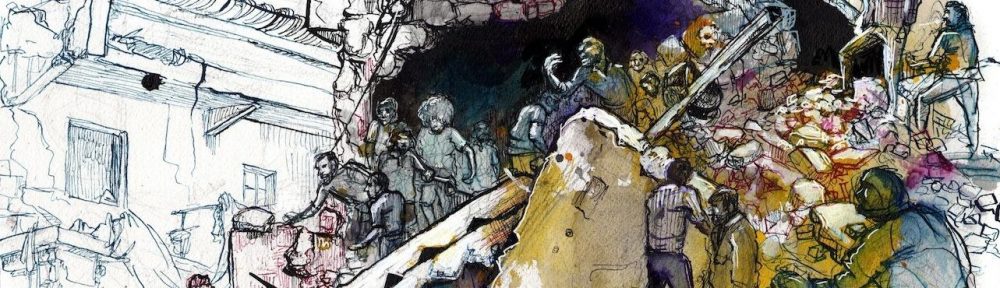
Drone’s eye view

I expect many readers will remember  that Apple rejected NYU grad student Josh Begley‘s Drones+ app last August.  It did so three times and for a multiplicity of confusing – and frankly shifty – reasons.  Apparently it was neither ‘useful’ nor ‘entertaining’; then it presented ‘excessively objectionable’ content (something to take up with the Pentagon and the CIA, surely?). As Danger Room explained, the app was bare bones stuff:

When a drone strike occurs, Drones+ catalogs it, and presents a map of the area where the strike took place, marked by a pushpin. You can click through to media reports of a given strike that the Bureau of Investigative Reporting compiles, as well as some basic facts about whom the media thinks the strike targeted.

All the more ironic, really, since the US military makes extensive use of smart phone technology – including its own (restricted) apps for the iPhone.  More on that here and here and here.

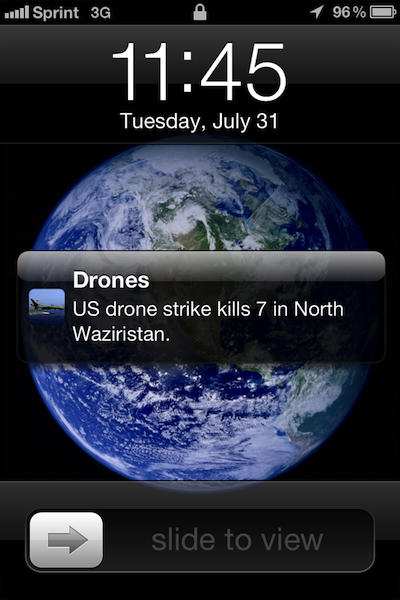
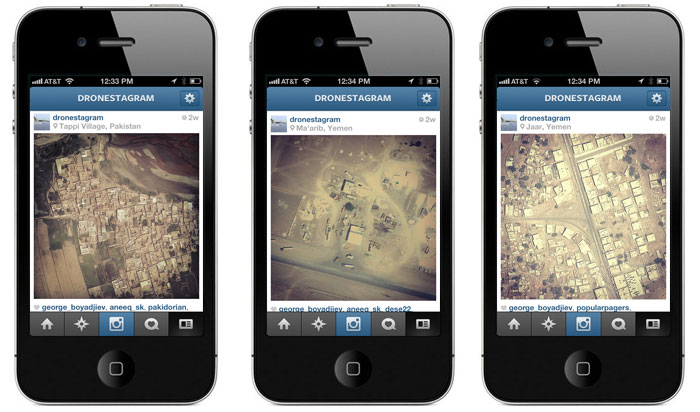
But for the past several weeks James Bridle – of New Aesthetic fame – has been posting satellite images of the distant places where drone strikes are recorded by the Bureau of Investigative Journalism to Instagram: and, as the image below shows, you can view these on your iPhone…

There are, of course, difficulties in pinpointing the locations of drone strikes– and James is evidently very well aware of them – but on his Dronestagram website he explains his desire to convert abstract targets into physical places in terms that resonate beautifully with the arguments I’m trying to develop in Deadly embrace:

The political and practical possibilities of drone strikes are the consequence of invisible, distancing technologies, and a technologically-disengaged media and society. Foreign wars and foreign bodies have always counted for less, but the technology that was supposed to bring us closer together is used to obscure and obfuscate. We use military technologies like GPS and Kinect for work and play; they continue to be used militarily to maim and kill, ever further away and ever less visibly.

Yet at the same time we are attempting to build a 1:1 map of the world through satellite and surveillance technologies, that does allow us to see these landscapes, should we choose to go there. These technologies are not just for “organising” information, they are also for revealing it, for telling us something new about the world around us, rendering it more clearly.

History, like space, is coproduced by us and our technologies: those technologies include satellite mapping, social photo sharing from handheld devices, and fleets of flying death robots. We should engage with them at every level. These are just images of foreign landscapes, still; yet we have got better at immediacy and intimacy online: perhaps we can be better at empathy too.

You can follow the images here and in much more detail via tumblr here.  More information here.

This comes at an opportune moment since I’ve been talking this week with Susan Schuppli and Eyal Weizman at Forensic Architecture about a collaborative, interactive project to bring together all the available data on drone strikes.

Forensic architecture

Both Stuart Elden and I have drawn attention to Eyal Weizman‘s Forensic Architecture project – sketched in outline in his The least of all possible evils and the subject of his Society & Space lecture – but for those who want more…

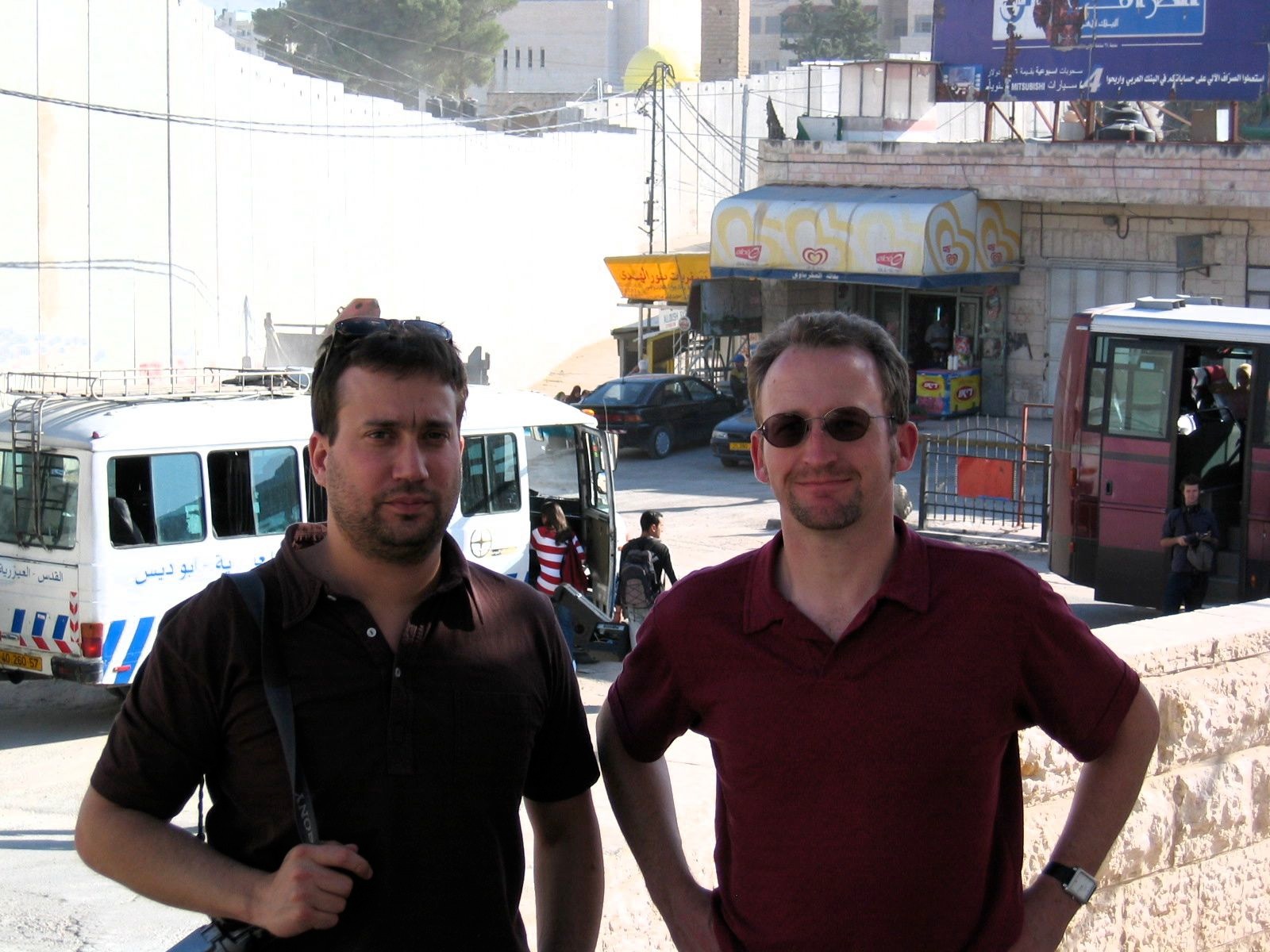
Eyal Weizman (L) and Steve Graham (R) in the occupied West Bank [Derek Gregory]

Michael Schapira and Carla Hung interview Eyal in “Thinking the Present” at  Full Stop. Here’s an extract where Eyal summarises his project:

‘Forensic Architecture is grounded in both field-work and forum-work; fields are the sites of investigation and analysis and forums the political spaces in which analysis is presented and contested. Each of theses sites presents a host of architectural and political problems.

In fields, lets say starting with Territories, I attempted to engage a kind of “archeology” of present conditions as they could be read, or misread, in architecture. This archeology is not always undertaken by direct contact with the materiality under analysis, but with images of it. The spaces that we debate, analyze, or make claims on behalf of, are very often media products. Similarly, drawing a map includes synthesizing satellite and aerial images as well as images from the ground. Some images are created by optics and some by different sensors that register spectrums beyond the visible. One needs sensors to read sensors.

So this is a kind of archaeology of spaces as they are captured in these different forms of capture and registration. You read details, speckles, pixels and patterns, connect them to larger forces, or at least you understand the impossibility of doing so, often noting paradoxes and misrepresentations. We have done this very close reading of aerial images of colonies in the West Bank, we have read almost all elements from architectural through infrastructural archaeological to horticultural ones visible in these images as a set of tools in a battlefield.

Then there is the forum: a site of interpretation, verification, argumentation and decision. International courtrooms, tribunals, and human rights councils are of course the most obvious sites of contemporary forensics. But there are other political and professional forums.

Each forum is different. The third component of forensics, beyond the architectural and aesthetic, is what you need in order to stand between that “thing” and the forum: an “interpreter.” In ancient Rome it would be the orator; in our days it is perhaps the scientist, or the architect, or the geographer — the “expert witness” that translates from the language of space to the language of the forum. This definition of forensics might help expand the meaning of the term from the legal context to all sorts of others. Politics, as it is undertaken, around the problems of space and its interpretations, is a “forensic politics” as far I understand it.

Each of the multiple political and legal forums in use today — professional, scientific, parliamentary or legal — operates by a different set of protocols of representation and debate. They each have another frame of analysis. Each embodies dominant political forces and ideologies — that is to say that each instrumentalizes forensics as a part of a different ideological structure. In the turbulence of a changing world, there are also informal, subversive and ad-hoc and crisis forms of gathering: pop-up assemblies of protest and revolt in which the debate of financial, architectural (the housing or mortgage crisis), and geopolitical issues are often articulated.

Forensic architecture should thus be understood not only as dealing with the interpretation of past events as they register in spatial products, but about the construction of new forums. It is both an act of claim-making on the bases of spatial research and potentially an act of forum-building.’

Eyal edited a special section of Cabinet magazine (#43) on “Forensics”, and there’s an early lecture (May 2010) on ‘Forensic Architecture’ here and an image-rich conversation with Open Democracy’s wonderful Rosemary Belcher on ‘Forensic Architecture and the speech of things’ here.

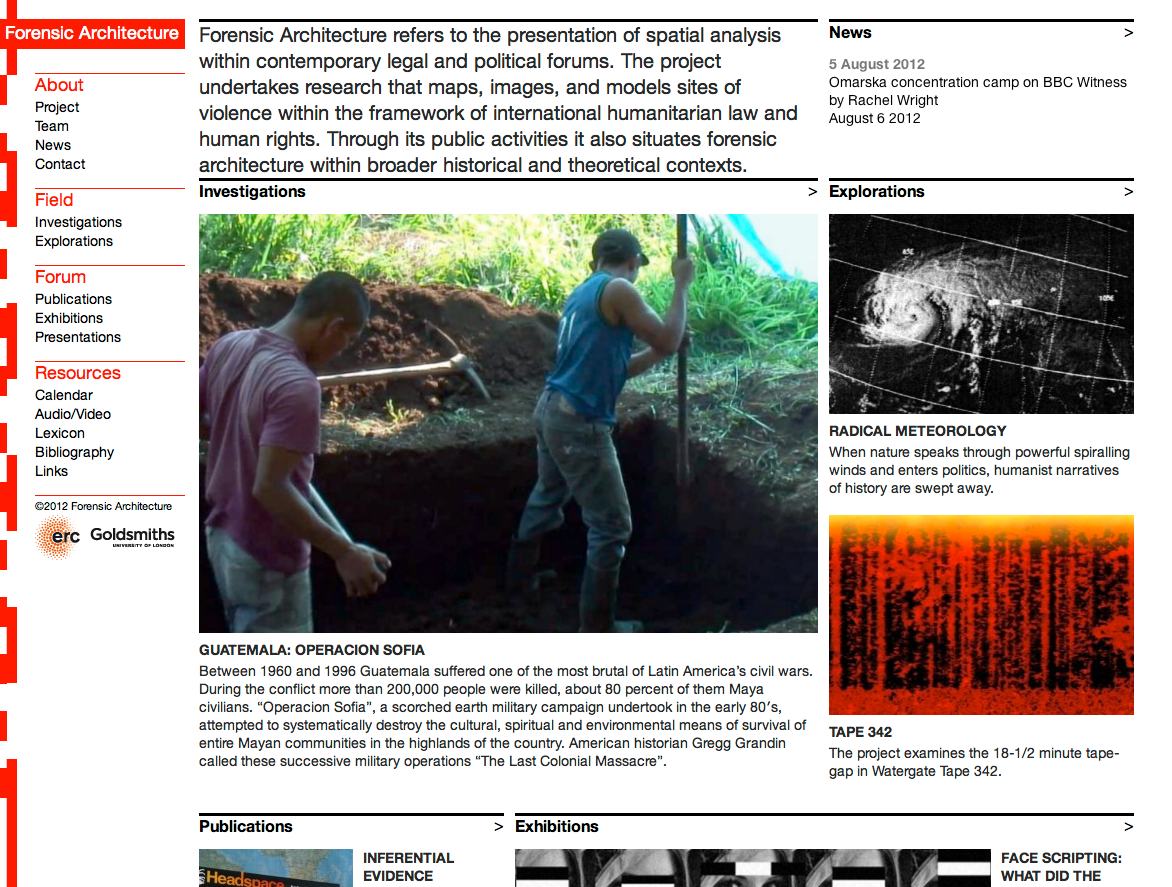
There is also a truly excellent website for the project, which is hosted by the Centre for Research Architecture at Goldsmiths University of London within the Department of Visual Cultures.

Highlights for me include:

under Investigations, Forensic Oceanography (probing the deaths of more than 1500 people fleeing Libya across the Mediterranean in 2011, including a downloadable report), a report on the effects of airborne White Phosphorus munitions in densely populated urban areas like Gaza, and a challenging (I imagine preliminary) commentary on ways of recording and investigating deaths from drone strikes in Pakistan’s Federally Administered Tribal Areas:

‘The near complete prohibition upon carrying recording equipment into this region of Pakistan, coupled with the non-existence of local maps has made the task of locating and representing the sites and consequences of drone attacks extremely difficult. This inability to produce corroborating evidence has, in turn, severely hampered the pursuit of legal claims. Forensic Architecture is working with human rights and legal justice organisations in both Pakistan and the UK to develop an alternate mapping system that can meet the unique challenges posed by the dilemma of creating accurate maps without relying upon technologies of exact recording, but only upon haptic techniques of observation and recall, or what has been called “transparency cameras”. This system needs to be matched, in turn, with a post-production methodology of transcription and interpretation of recollection data. Survivors and witnesses of drone strikes are typically brought to safe zones outside of Northwest Pakistan in cities such as Islamabad, where they are interviewed by legal staff and their stories cross-referenced and collated.’

under Explorations, a sketch of what the project calls ‘Video-to-space analysis’ derived from the recognition that ‘remote controlled vision machines (satellites and drones) and the handheld devices of citizen journalists working independently of news-desks marks a shift in the ways in which human rights violations will increasingly be charted and mapped and the ways in which the spaces of conflict themselves will increasingly become known or offer up information.’ 

under Presentations, a record of a seminar in March 2012 with Bruno Latour  who comments on a series of investigations (Paulo Tavares, “The Earth-Political”; Nabil Ahmed, “Radical Meteorology'”; John Palmesino, “North – The architecture of a territory open on all sides”): ‘Forensics is the production of public proof’ (with some interesting asides about ‘geopolitics’ and what he calls ‘politics of the earth’), and a tantalising glimpse of a conference presentation by Susan Schuppli under the title ‘War Dialling: Image Transmissions from Saigon’, which discussed the modalities through which, on June 8 1972, ‘a portable picture transmitter, took 14 minutes to relay a series of audio signals from Saigon to Tokyo and then onwards to the US where they were reassembled into a B&W image to reveal a young Vietnamese girl [Kim Phúc] running out of the inferno of an erroneous napalm attack.’

These reflect my own preoccupations, but there’s lots more – it’s a treasure trove of imagination and insight.  Oh – and a reading list.