Divided societies and connected spaces

Following my last post, Mustafa Dikeç has sent me a link to his brilliant reflections on ‘Hate’ at the Society & Space website here.  Written from Paris, it takes us to the heart of modern French society and its divided spaces:

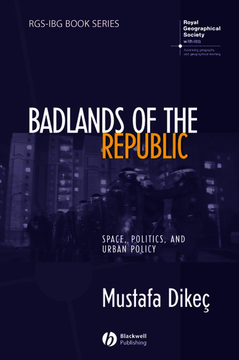
DIKEÇ Badlands… if we are troubled about what has happened, troubled enough to take a hard look at, rather than falling in love with, ourselves, then it is important to inquire about the conditions that made such a mobilisation of hate possible. In the highly emotional aftermath of the incidents, it is hard not to feel moved by the extraordinary mobilisation of citizens. Newspapers are full of comments about how proud we should be as French citizens, how a united and solidaristic people we are, how the spirit of May 1968 continues despite the attack on its inheritors, how we value equality and freedom of expression, and so on. If all were nice and dandy, then what made such radicalisation of these three French-born and raised citizens possible? Why, a decade ago, did 300 cities go up in flames for two weeks, and what has been done since? How is it that the extreme right has become the second major political force in this land of freedom, equality and fraternity? …

This is not at all to suggest that the murderers’ actions can be justified by the circumstances. But to warn that despite the timely and admirable display of unity under an alleged one and indivisible republic, the French society is deeply divided, owing to its long history of discrimination and the increasing hostility towards immigrants – a poisonous mix of xenophobia and Islamophobia that several French politicians, endowed with the authority of the state, have unashamedly mobilised for their political ends. Muslims are the most stigmatised group of this divided society, spared neither by satire nor political discourse and action.

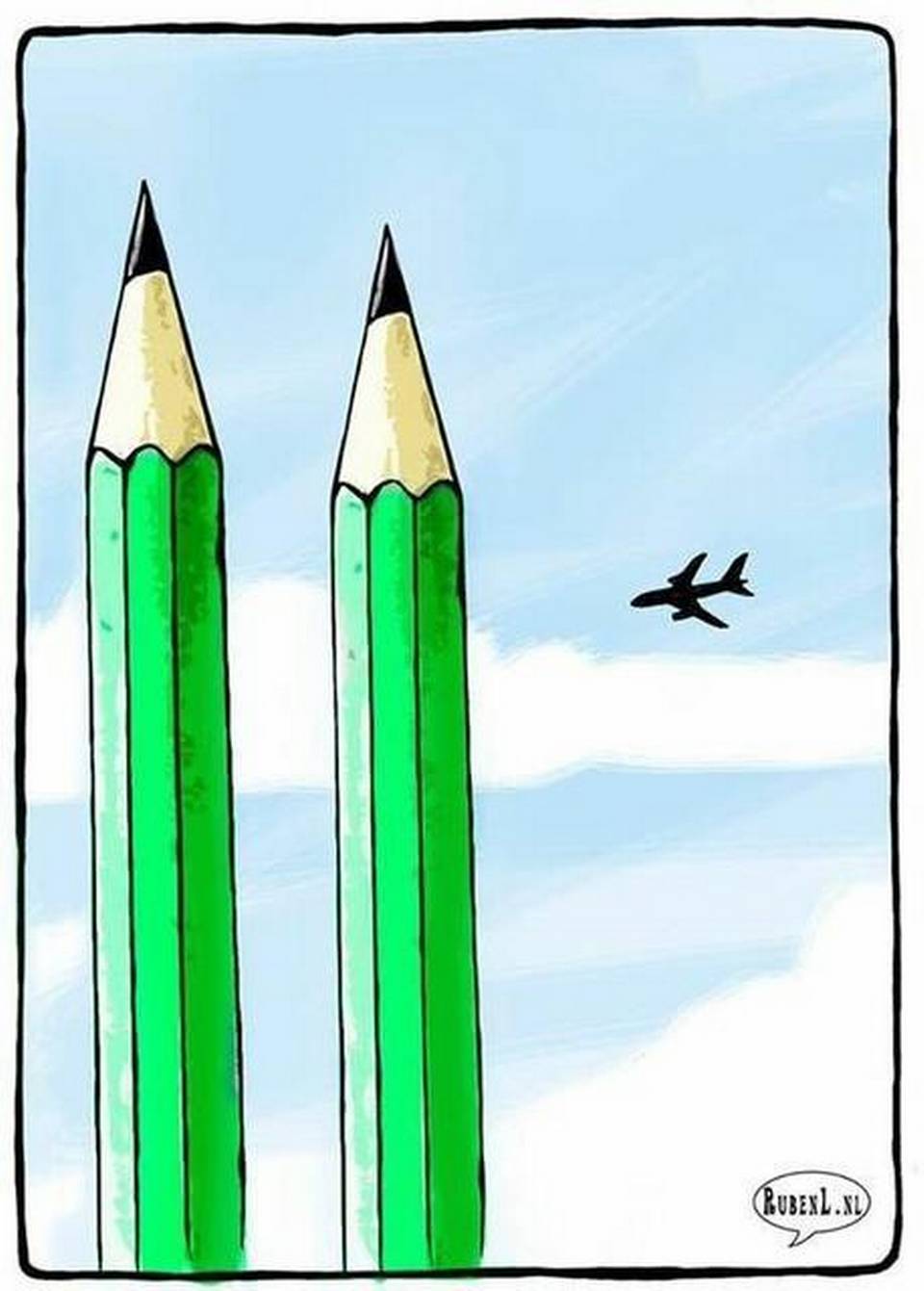
thursdaytoonMustafa’s essay begins not with the murders in Paris but with a bomb explosion in Yemen, and a second e-mail from Tim Raeymaekers has alerted me to his equally indispensable post ‘”Us” against “Them”‘ over at Liminal Geographies here.  Tim moves in the opposite direction to Mustafa, zooming out above the arc of that explosion to provide a contrapuntal geography that reads the murders in Paris in concert with the global violence of contemporary wars, most of them fought under the tattered banners of counter-terrorism, undeclared in their particulars and less than covert in their killing.  He ends with this reminder from Teju Cole‘s incandescent essay on ‘Unmournable bodies’ at the New Yorker:

BUTLER Precarious LifeFrance is in sorrow today, and will be for many weeks to come. We mourn with France. We ought to.

But it is also true that violence from “our” side continues unabated. By this time next month, in all likelihood, many more “young men of military age” and many others, neither young nor male, will have been killed by U.S. drone strikes in Pakistan and elsewhere. If past strikes are anything to go by, many of these people will be innocent of wrongdoing. Their deaths will be considered as natural and incontestable as deaths like Menocchio’s, under the Inquisition. Those of us who are writers will not consider our pencils broken by such killings. But that incontestability, that unmournability, just as much as the massacre in Paris, is the clear and present danger to our collective liberté.

Je ne suis pas Charlie

Once you decide you want to engage with audiences beyond the academy – one of my reasons for starting this blog, which also spirals in to my presentations and (I hope) my other writing – you run the risk of accepting invitations to comment on issues that lie far beyond your competence.  Even supposed ‘experts’ can be caught out, of course: think of  Steven Emerson‘s extraordinary claim earlier this week on Fox News (where else?) that in the UK ‘there are actual cities like Birmingham that are totally Muslim where non-Muslims just simply don’t go in…’  Emerson is the founder and Executive Director of the Investigative Project on Terrorism, and ‘is considered one of the leading authorities on Islamic extremist networks, financing and operations’ – or so he says on his website – and he subsequently apologised for his ‘inexcusable error’.

Emerson was being interviewed as part of Fox News’s continuing coverage of the murders at the office of Charlie Hebdo and a kosher supermarket in Paris on 7 January, and specifically about the supposed proliferation of what he called ‘no-go zones … throughout Europe’.

A good rule is to treat areas you know nothing about as ‘no-go zones’ until you’ve done the necessary research.

Academics need to take that seriously too, especially as universities become ever busier pumping up their public affairs, boosting their media profiles and offering journalists ready access to the specialised knowledge of their faculty.  Don’t get me wrong: I believe passionately in the importance of public geography, especially with a little g, and I also understand how producers and journalists racing to meet a deadline need talking heads.  But we need to be careful about the simulation of expertise.

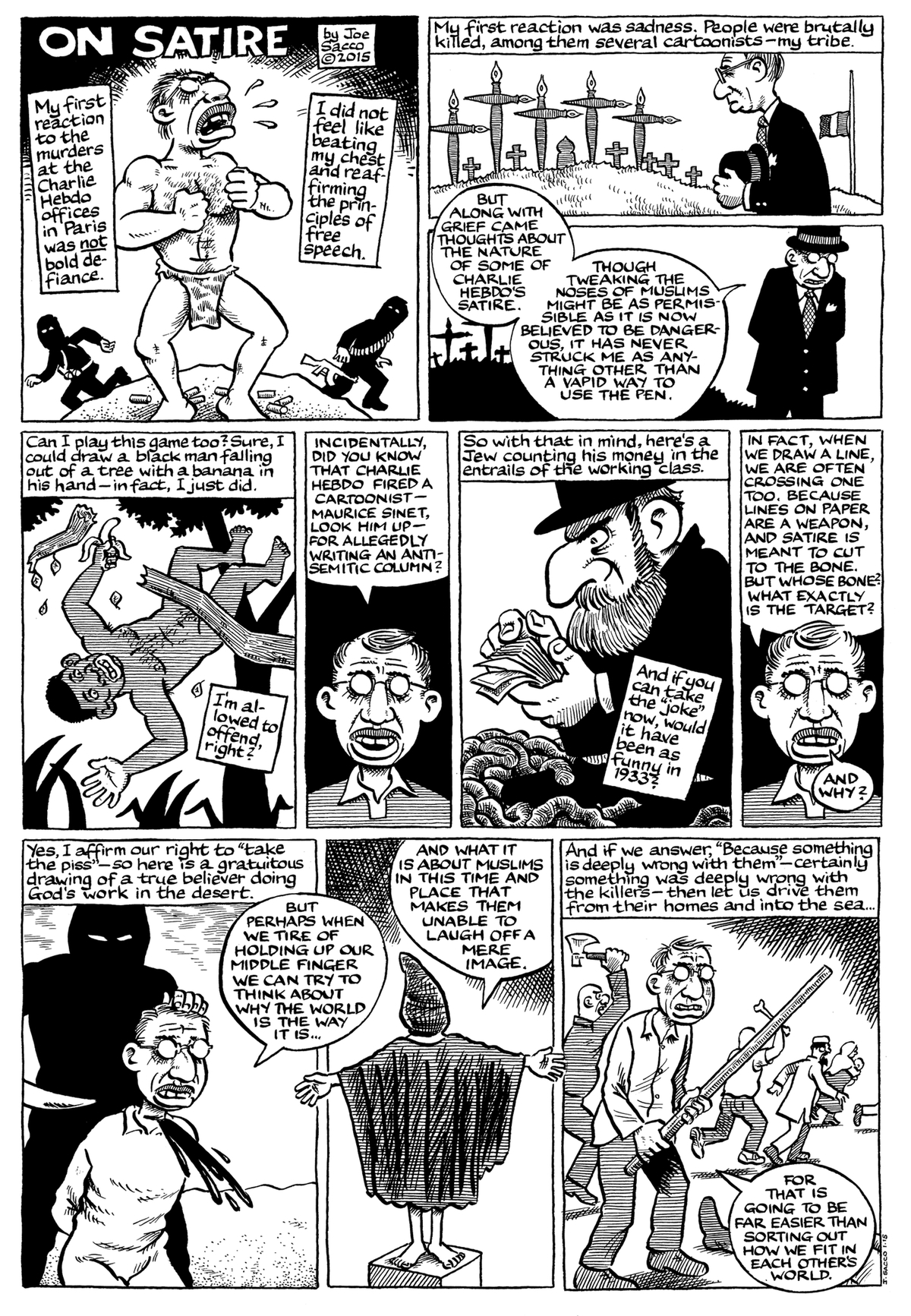
This is, in part, why I haven’t said anything so far about the murders in Paris.  But on Thursday I was invited to lead a lunch-time discussion about them at the Peter Wall Institute for Advanced Studies; one of the many wonderful things about the place is the trust that emerges out of a commitment to the irredeemably social nature of intellectual work, and so – beyond the cameras, the microphones and the notebooks – I tried to sort out what I had been reading and thinking.    In many ways, it was an extended riff on Joe Sacco‘s cartoon that appeared in the Guardian just two days after the attacks (if you want to know the reactions of Arab cartoonists, then see Jonathan Guyer here and here):
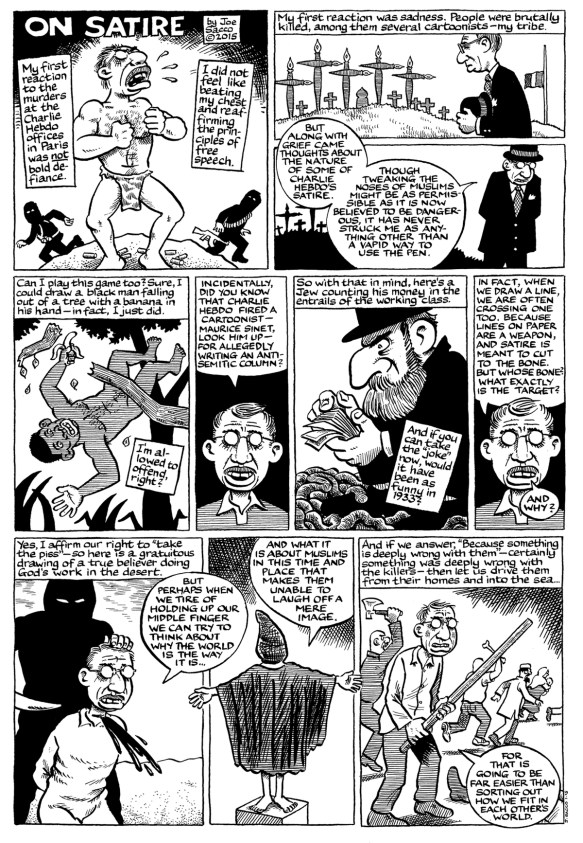
joesaccoonsatire1200

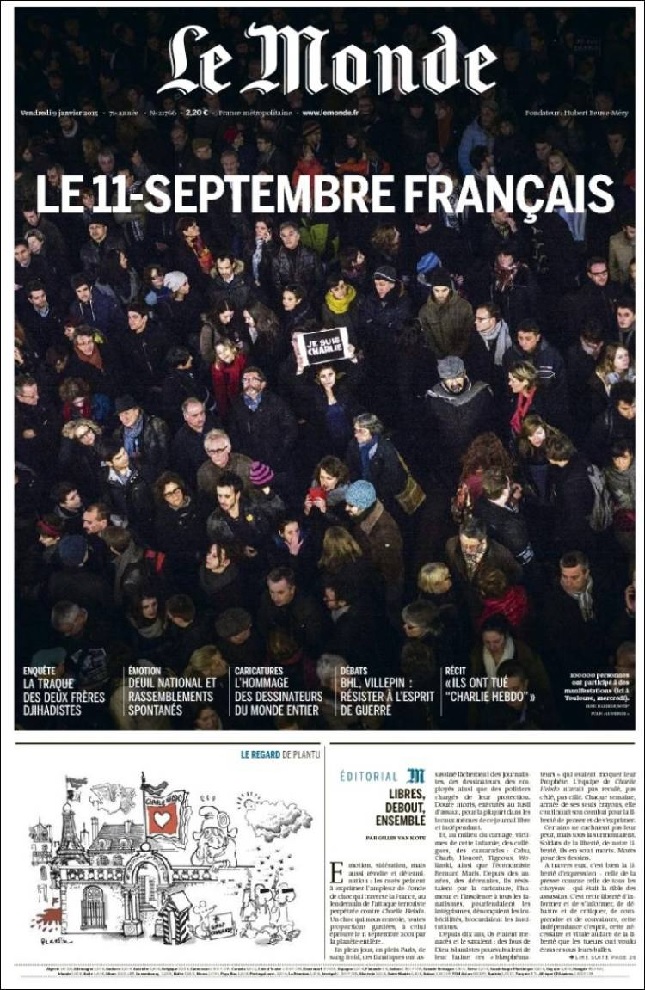
My starting-points were provided by The colonial present.  First, many commentators have suggested that the attacks were ‘France’s 9/11’; Le Monde‘s banner headline declared emphatically ‘Le 11 Septembre Français’.
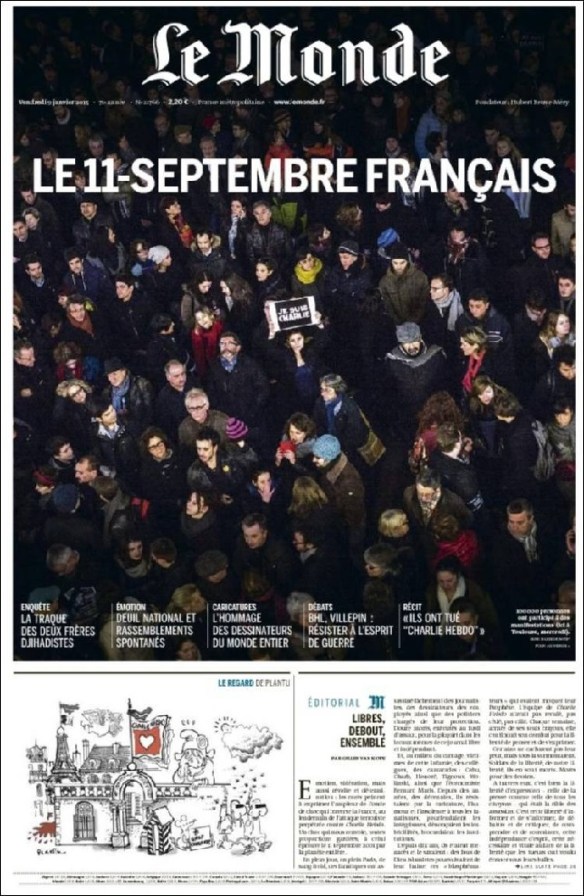
le_monde_11_septembre

I think this absurd for many reasons, but there are several senses in which the comparison is worth pursuing, particularly if we focus on the response to the attacks in New York and Paris.  Both events, or more accurately television and video feeds of the developing situations, were relayed to watching audiences in real time.  This sense of immediacy is important, because it says something about the ways in which viewers were drawn in to the visual field and interpellated as subjects who were enjoined to respond – and crucially to feel – in particular ways.

Since this is emphatically not what Dominique Moisi, author of The geopolitics of emotion, had in mind when he insisted that ‘the attacks in Paris and in New York share the same essence’, that both cities ‘incarnate a similar universal dream’ of ‘light and freedom’, perhaps a different comparison will clarify what I mean.  Think of the killing of hundreds, even thousands of people by Boko Haram in Baga in northern Nigeria two weeks ago; reports began to appear in Europe and North America just one day after the murders in Paris, but the focus on France remained relentless.  There were surely many reasons for that (see Maeve Shearlaw‘s discussion here and Samira Sawlani‘s here), but the contrast between the live feeds from Paris and the scattered, inchoate and verbal reports from Baga is part of it – particularly when you realise that the scale of that distant atrocity was eventually  ‘laid bare’, as the Guardian put it, by satellite photographs released by Amnesty International showing more than 3,000 houses (‘structures’) burned or razed in Baga and Doron Baga.  For all the importance of surveillant witnessing in otherwise difficult to reach locations, the distance between bodies and buildings, an ordinary camera and a satellite, and live television and static imagery is telling, and sustains an affective geopolitics that is at once divided and divisive.

(Imagery is important to the Paris attacks in another sense too: when the murderers stormed in to the offices of Charlie Hebdo the focus of their rage was a series of cartoons mocking Mohammed – but they were radicalised by quite other documentary images, including coverage of the wars in Iraq and photographs showing the atrocities committed by American troops in Abu Ghraib: see here and here, and look at Joe Sacco’s cartoon again).

My second borrowing from The colonial present was a re-borrowing of Terry Eagleton‘s spirited invocation of ‘the terrible twins’, amnesia and nostalgia: ‘the inability to remember and the incapacity to do anything else’.  In the book I suggested that these are given a special significance within the colonial memory theatre, where the violence of colonialism is repressed and replaced by a yearning for the culture of domination and deference that it sought to instill.   And in much (fortunately not all) of the commentary on the Paris attacks, France’s colonial past has been effaced.  But here is Tim Stanley writing in the Telegraph:

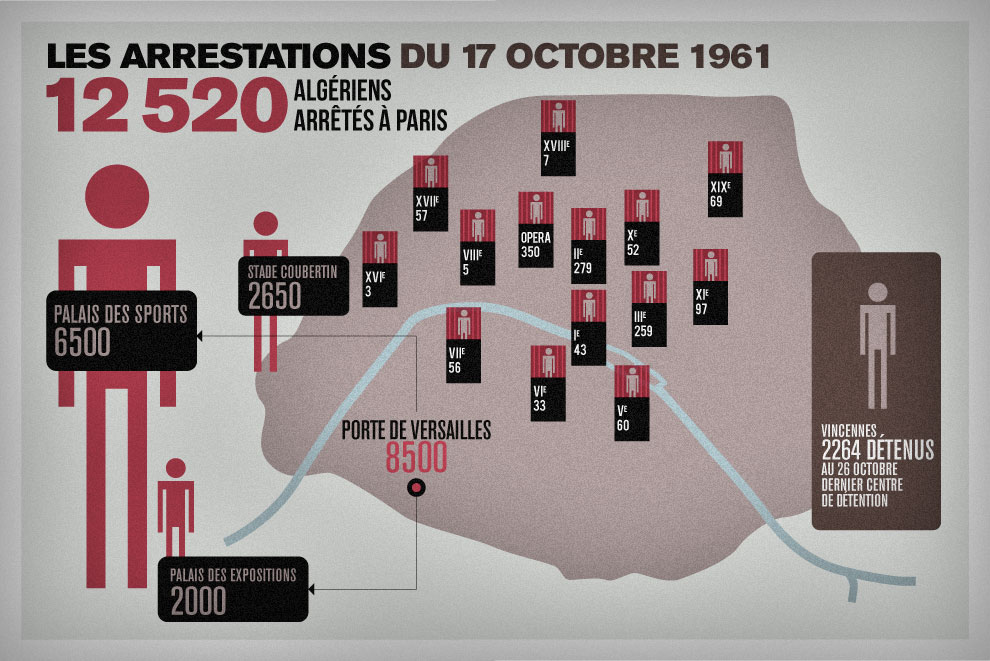
The ability of a society to forget its recent past is like the amnesia that follows an accident – the body’s way of protecting itself against trauma. Yet in the 1950s and 1960s, as France tried to cling on to its African colonial possessions, political violence was far more common than today. Muslim Algerian nationalists (their race and religion regarded as interchangeable by the French) bombed the mainland, assassinated officials and killed colonialists en masse. The reaction of the state was shocking. In 1961, 12,000 Algerian immigrants were arrested in Paris and held in a football stadium [and at other sites: see the map below]. Many were tortured; more than a hundred disappeared. For days, bodies were found floating in the Seine.
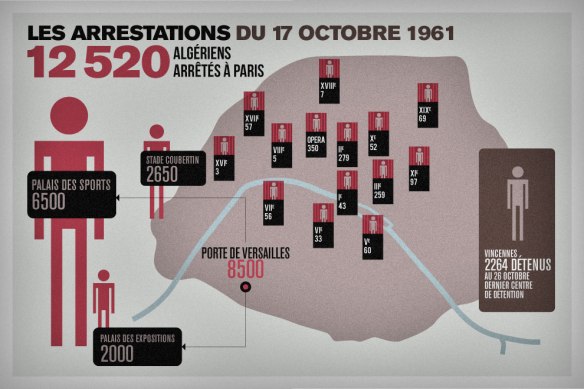
Carte.ParisAlgerie1961Bis

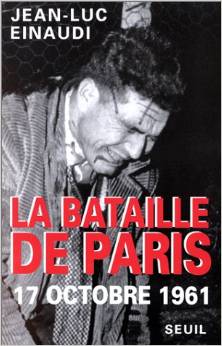
EINAUDI Bataille de ParisYou can find more on the events of 17 October 1961 – on the arrests, torture and summary executions following a mass rally to protest against a curfew imposed on Algerians in Paris – here and here, but the definitive account remains Jean-Luc Einaudi‘s Bataille de Paris (1991).
DIKEÇ BadlandsThis is but one episode in a violent and immensely troubled colonial history.  To point to this past – as Robert Fisk also did, in much more detail, in the Independent – is to loop back to 9/11 again, when attempts to provide similar contextual explanations were dismissed (or worse) as ‘exoneration’.  To be sure, one must be careful: although Chérif and Said Kouachi were the Paris-born sons of Algerian immigrants, Arthur Asseraf is right to reject attempts to draw a straight line between violence in the past and violence in the present.  But can the continued marginalisation of Muslims in metropolitan France, particularly young men in Paris’s banlieus, be ignored?  (Here there is no better place to start than Mustafa Dikeç‘s work, especially Badlands of the Republic).  Doesn’t it matter that more than 60 per cent of prisoners in French jails are Muslims? For the Economist all this means is that jihadists ‘share lives of crime and violence‘ so that structural violence disappears from view, but Tithe Bhattacharya provides a different answer in which the ghosts of a colonial past continue to haunt the colonial present.

And doesn’t the responsive assertion of a ‘freedom of expression’ that is, again, highly particularistic seek to absolutize a nominally public sphere whose exclusions would have been only too familiar to France’s colonial subjects?  Ghasan Hage reads its triumphalist restatement in the aftermath of the Paris murders as a colonial narcissism – a sort of colonial nostalgia through the looking-glass – fixated on what he calls a strategy of ‘phallic distinction’ in which ‘freedom of expression’ is flashed at radicalised Muslims to tell them: ‘look what we have and you haven’t, or at best yours is very small compared to ours.’  (And whose governments have done so much to prop up authoritarian regimes in the Arab world and beyond that thrive on the suppression and punishment of free speech?)

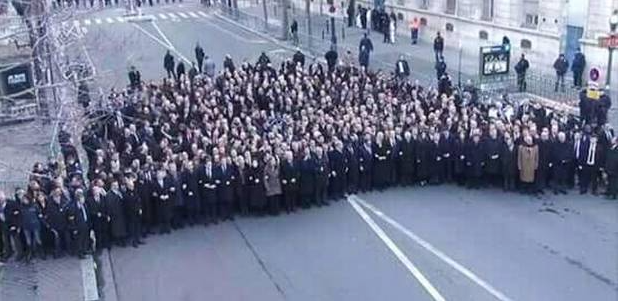
There are, as Joe Sacco’s cartoon makes clear, real limitations on what can be said or shown in France too, including how somebody can present themselves in public – think of the arguments over the veil and the headscarf.  There are also limitations elsewhere in the world, of course, which is why the sacularisation of Charlie Hebdo and, in particular, the march in Paris on 11 January seemingly headed by politicians from around the world, arm in arm (in some cases arms in arms would be more accurate), processing down the Boulevard Voltaire (symbolism is everything), was a scene that, as Seumas Milne noted, was beyond satire:

from Nato war leaders and Israel’s Binyamin Netanyahu to Jordan’s King Abdullah and Egypt’s foreign minister, who between them have jailed, killed and flogged any number of journalists while staging massacres and interventions that have left hundreds of thousands dead, bombing TV stations from Serbia to Afghanistan as they go.

True enough, but here too appearance is everything: the photograph was artfully staged (even before one ‘newspaper’ airbrushed the women from the frame) and took place in an otherwise empty side-street.
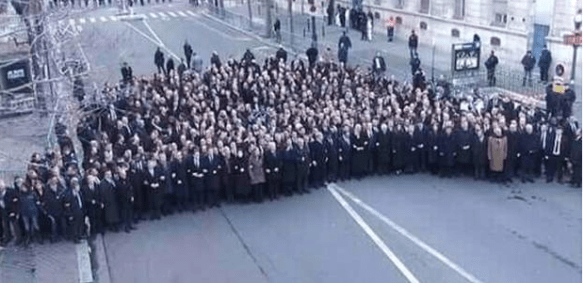
Paris photo-op PNG

If I can make one last nod to The colonial present, not surprisingly many of these politicians have also used the murders to justify the continued violence of the wars being fought in the shadows of 9/11; if you are in the mood to reverse the looking-glass, then Markha Valenta‘s sobering reflection at Open Democracy is indispensable:

[E]verything that might be said about revolutionary Islamist movements – when it comes to global violence – could be said about global Americanism and US foreign policy. It has been ruthless, cruel, illiberal, anti-democratic. It has wreaked havoc, killed innocents, raped women, men and youths, tortured viciously, violated the rule of law and continues to do so…

It does so in our name. In the name of democracy. And those who expose this … are shut up ruthlessly, cruelly and in ways designed to degrade. (Yet we did not march then.)

This matters because it clarifies what our condition is today, the condition under which last week’s violence took place: an extended and expanding global war between those who claim the right to intervention, brutality and terror in the name of democracy and those who do so in the name of Islam.

No less predictably, one of the immediate and dismally common responses to the murders, amidst the clamour for freedom of speech, was a renewed call for more state surveillance and regulation.  As Teju Cole wrote in the New Yorker,

The only person in prison for the C.I.A.’s abominable torture regime is John Kiriakou, the whistle-blower. Edward Snowden is a hunted man for divulging information about mass surveillance. Chelsea Manning is serving a thirty-five-year sentence for her role in WikiLeaks. They, too, are blasphemers, but they have not been universally valorized, as have the cartoonists of Charlie Hebdo.

But it’s not only politicians who are guilty of appropriation.  Putting on one (far) side the extraordinary attempts to turn “Je suis Charlie” to commercial account – to ‘trademark the tragedy and its most resonant refrain‘ – there are other, less venal and more complicated appropriations.
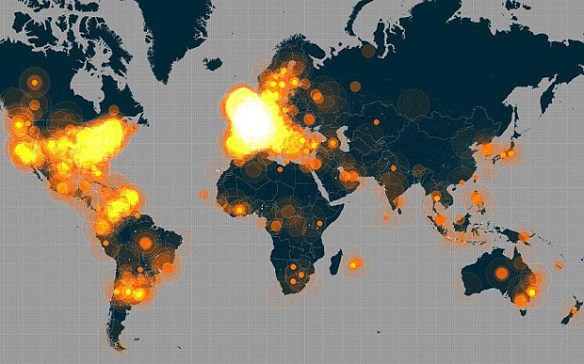
B67GP_yCYAA_mce.jpg

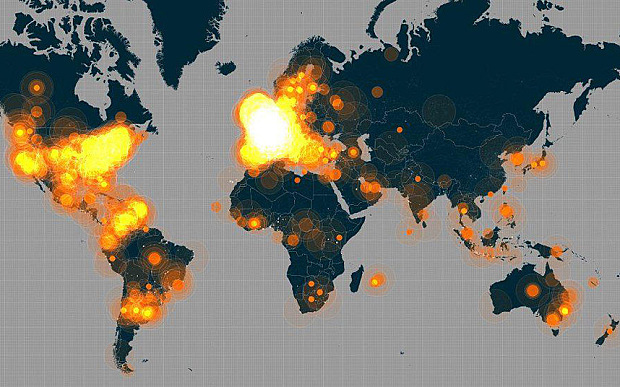
Heat map of #jesuischarlie hashtag; animation is available here

So back to the looking-glass.  You might think that “Je suis Charlie” is an affirmative gesture born of anger and horror but also of sympathy and compassion, a simple human reflex that has become virtually commonplace – comparable to, say, “We are all Palestinians“.  That was my first thought too. But the trouble is that such a rhetorical claim comes with a lot of baggage.  David Palumbo-liu suggests that  “I am Charlie” can be an assertion of empathy, solidarity or identification.  Even empathy is far from straightforward – why do we extend our fellow feeling to these people and not those? – but, as he shows, the other two progressively raise the stakes.    Sarah Keenan and Nadine El-enany wire this to appropriation with exquisite clarity in a short essay at Critical Legal Thinking:

The #JesuisCharlie hashtag and its social media strategy of solidarity through identification with the victim is … an appropriation of what was a creative and subversive tool for fighting structural violence and racist oppression, perhaps most famously in the “I am Trayvon Martin” campaign. When young black men stood up and said “I am Trayvon Martin”, they were demonstrating the persistent and deeply entrenched demonisation of black men which not only sees them killed in the street on their way to the local shop, but also deems their killers innocent of any wrongdoing. When predominantly white people in France and around the world declare “Je Suis Charlie”, they are not coming together as fellow members of a structurally oppressed and marginalised community regularly subjected to violence, poverty, harassment and hatred. Rather, they are banding together as members of the majority, as individuals whose identification with Charlie Hebdo, however well-​meaning, serves to reproduce the very structures of oppression, marginalisation and demonisation that allowed the magazine’s most offensive images to be consumed and celebrated in the first place.

As the invocations of Voltaire should have demonstrated, there is a substantial difference between defending the right to draw a cartoon and celebrating what is drawn.  Too many commentators clearly want to elide the difference, but there is another distinction to be made too.  A Muslim friend who lives in Paris was distraught at the murders, but when he heard the calls for the cartoons to be re-published immediately after the killings he told me he felt brutalised all over again.  Those who made such demands, who casually sneered at the ‘cowardice’ of those who failed to comply, either forgot or chose to ignore the existence of a far, far larger Muslim audience than the terrorists against whom they vented their spleen: or, still worse, it never occurred to them that there is a difference between the two.

So: je ne suis pas Charlie; I think I’d rather ‘be’ Joe.

***

I am grateful to my friends and colleagues who helped me think through these issues – I realise there’s a lot more thinking to be done, so please treat this as a first, fumbling attempt – and to Jaimie.
‘That others may die’

As I am (at last) moving into the finishing stages of my ‘Dirty Dancing’ essay on CIA-directed drone strikes in Pakistan’s Federally Administered Tribal Areas, it’s time to round up some of the latest work on drones and civilian casualties across multiple theatres.

tumblr_nhlv56QBGc1t8pecvo1_1280

First, Afghanistan: the principal theatre of US remote operations.  I’ve noted Larry Lewis‘s remarkable work before (here and here), based on classified sources, and in particular this claim (see also here):

Drone strikes in Afghanistan were seen to have close to the same number of civilian casualties per incident as manned aircraft, and were an order of magnitude more likely to result in civilian casualties per engagement.

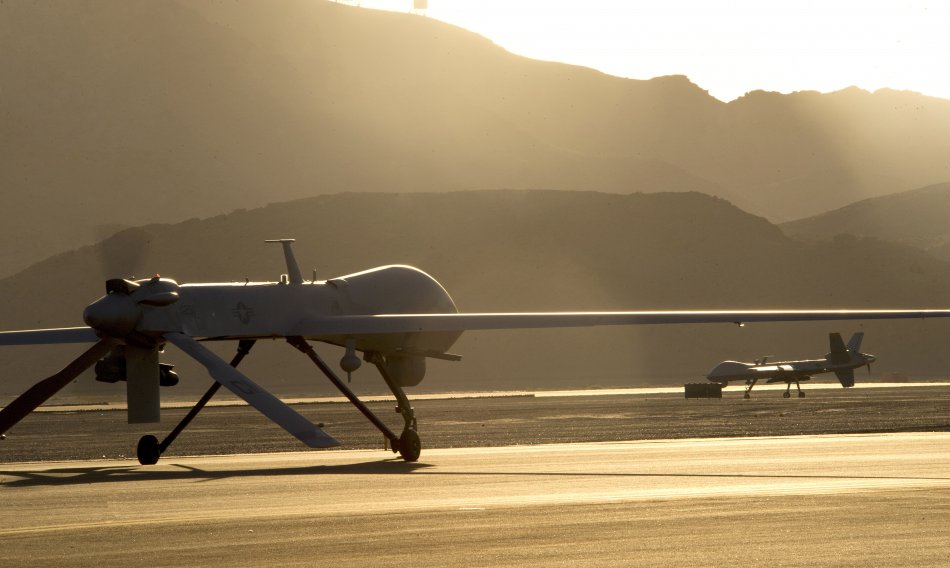
usaf_mq_9_reaper_1024x1024As I said at the time, the distinction between an ‘incident’ and an ‘engagement’ is crucial, though most commentators who have seized on Larry’s work have ignored it and focused on the dramatic difference in civilian casualties per engagement. Despite my best efforts, the Pentagon were unwilling to clarify the difference, so here is what Larry himself has told me:

An engagement is probably intuitively what you would expect – the use of force against a target. The distinction is the term incident, which is borrowed from ISAF definitions. I should have said “civilian casualty incident.” This refers to an engagement that results in civilian casualties.

This means that, if you look at the collection of civilian casualty incidents, the average number of civilian casualties is close to the same for manned and unmanned platforms. At the same time, the rate of civilian casualties for the two platforms is markedly different, with unmanned platforms being ten times more likely to cause civilian casualties than manned platforms. That doesn’t mean that drones caused more civilian casualties than manned aircraft, by the way, since the denominators (number of engagements of manned aircraft versus drones) can and in fact were very different. But it does suggest that the relative risk of civilian casualties was higher for one kind of platform versus the other.

And this is in the specific context of Afghanistan and for a specific time. I wouldn’t want to say that this specific rate would be repeated, necessarily. Yet there were certain risk factors I observed in the civilian casualty incidents that I would expect to continue to be factors unless steps were taken to mitigate them.

Larry’s most recent report, Improving lethal action: learning and adapting in US Counterterrorism Operations, is available here.  It includes an analysis of the Uruzgan air strike that is central to my ‘Angry Eyes’ essay (next on my to-do list).

[The short clip above is from Baden Pailthorpe‘s stunning animation MQ-9 Reaper (That Others May Die) (2014) – you can find much more here]

You might think that all of this is now of historical interest since President Obama has declared the end of the Afghanistan war.  Not so.  Here is John Knefel writing in Rolling Stone this week:

Though many Americans may not have realized it, December 28th marked what the U.S. government called the official end of the war in Afghanistan. That war has been the longest in U.S. history – but despite the new announcement that the formal conflict is over, America’s war there is far from finished. In fact, the Obama administration still considers the Afghan theater an area of active hostilities, according to an email from a senior administration official – and therefore exempts it from the stricter drone and targeted killing guidelines the president announced at a major speech at the National Defense University in 2013.

“Afghanistan will continue to be considered an ‘area of active hostilities’ in 2015,” the official tells RS. “The PPG does not apply to areas of active hostilities.” (PPG stands for Presidential Policy Guidelines, the formal name for the heightened drone rules.)

That perplexing distinction – that formal combat operations are over but that the U.S. still remains in an armed conflict – in many ways exemplifies the lasting legacy of Obama’s foreign policy.

If you assume the situation in Pakistan is somehow less ambiguous, read Ryan Goodman on ‘areas of active hostilities’ over at Just Security here (I’m having to sort all this out for ‘Dirty Dancing’, of course).

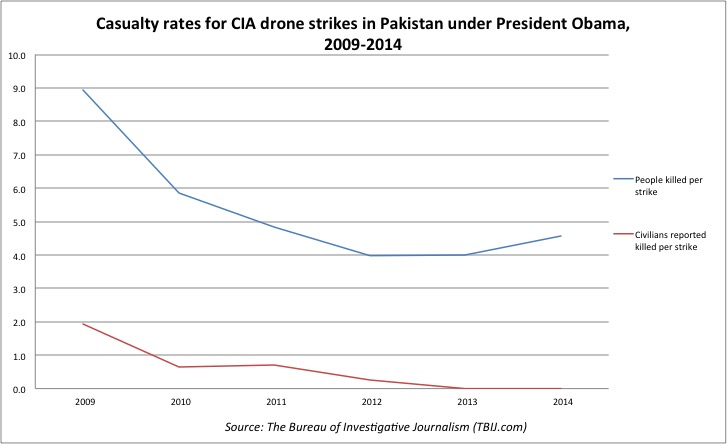
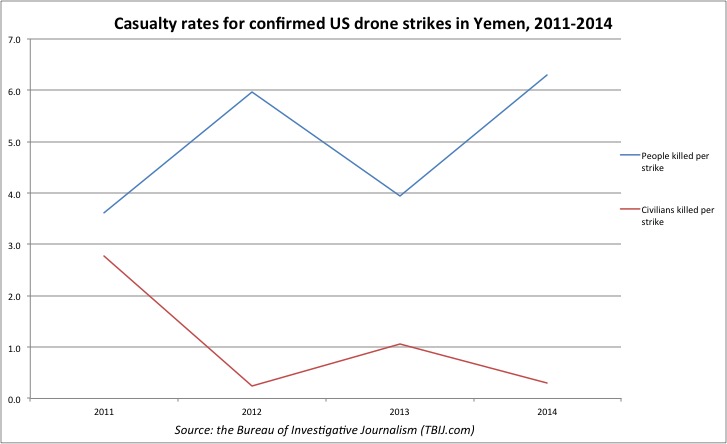
Second, the Bureau of Investigative Journalism has released its end-of-year report on US drone strikes in Pakistan, Yemen and Somalia in 2014, which includes these tabulations of casualty rates for the first two countries:

cas-rates-cia-pak-09-14

cas-rate-yemen-02-14

The Bureau comments:

While there have been more strikes [in Pakistan] in the past six years, the casualty rate has been lower under Obama than under his predecessor. The CIA killed eight people, on average, per strike during the Bush years. Under Obama, it is less than six. The civilian casualty rate is lower too – more than three civilians were reported killed per strike during the past presidency. Under Obama, less than one.  There were no confirmed civilian casualties in Pakistan in the past year, as in 2013….

The frequency of strikes [in Yemen] may have fallen in 2014 but more people were killed, on average, per strike than in any previous year.  The casualty rate for last year even outstrips 2012 – the bloodiest year recorded in the US’s drone campaign in Yemen when at least 173 people were reported killed in 29 strikes. In 2014 at least 82 people were reported to have died in just 13 strikes.

You can find the Long War Journal‘s tabulations for Pakistan here and Yemen here.

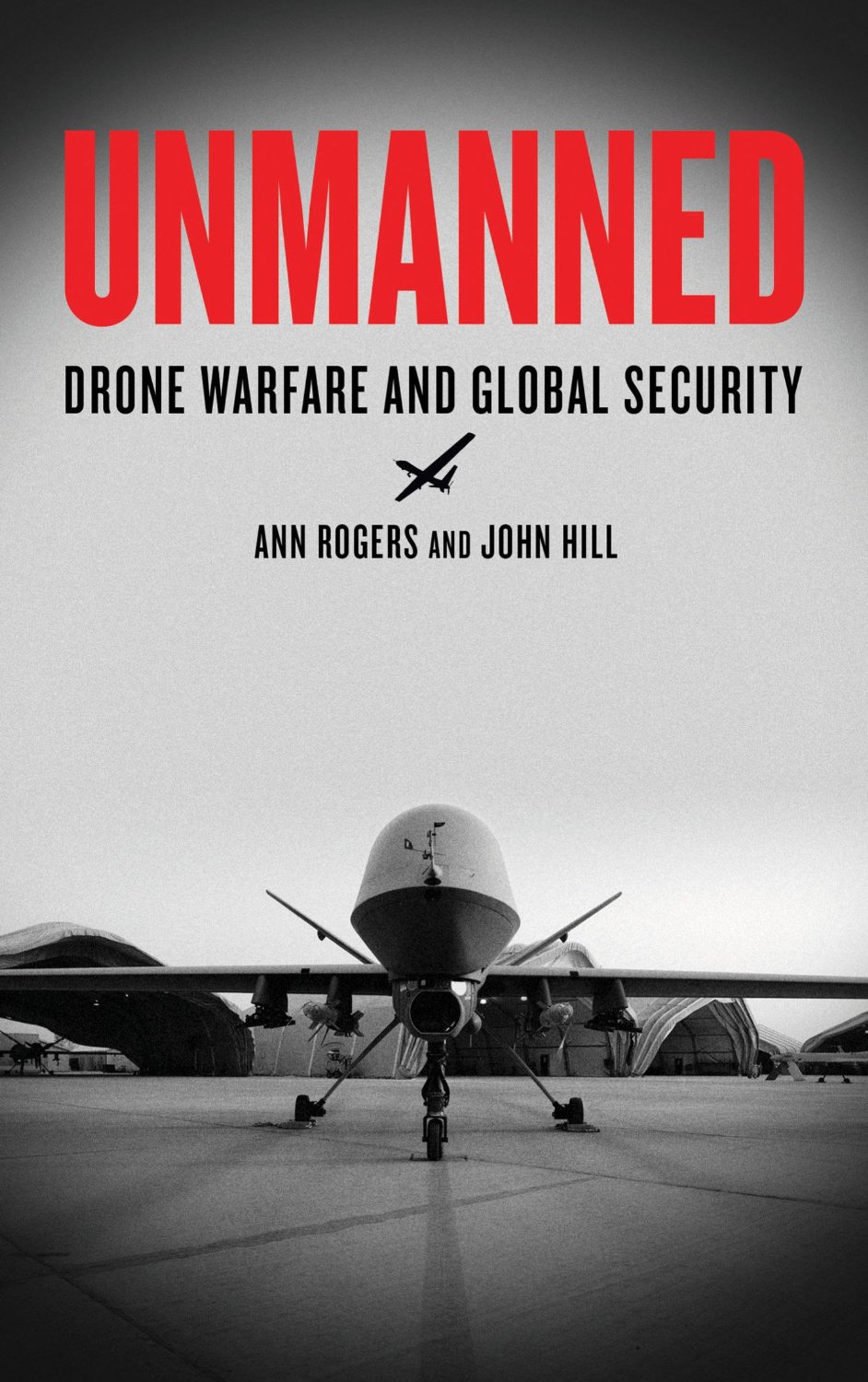
unammed-rogershillThird, Israel.  I’ve commented previously on an interview with an Israeli drone pilot, but it’s been difficult to put his observations in context (though see here and scroll down to the tabulations). Now Ann Rogers, who wrote Unmanned: drone warfare and global security (Pluto, 2014) with John Hill – as good an introduction to drone wars as you will find – has just released an essay on ‘Investigating the Relationship Between Drone Warfare and Civilian Casualties in Gaza‘.  It’s in a special issue of the open-access Journal of Strategic Security 7 (4) (2014) on ‘Future challenges in drone geopolitics’.  Here’s the abstract:

Unmanned aerial vehicles (UAVs), better known as drones, are increasingly touted as ‘humanitarian’ weapons that contribute positively to fighting just wars and saving innocent lives. At the same time, civilian casualties have become the most visible and criticized aspect of drone warfare. It is argued here that drones contribute to civilian casualties not in spite of, but because of, their unique attributes. They greatly extend war across time and space, pulling more potential threats and targets into play over long periods, and because they are low-risk and highly accurate, they are more likely to be used. The assumption that drones save lives obscures a new turn in strategic thinking that sees states such as Israel and the US rely on large numbers of small, highly discriminating attacks applied over time to achieve their objectives. This examination of Israel’s 2014 war in Gaza argues that civilian casualties are not an unexpected or unintended consequence of drone warfare, but an entirely predictable outcome.

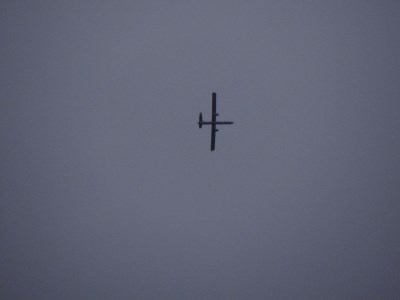
Drone-flying-above-me-Friday-afternoon-400-x-300It’s an interesting essay, but I fear that it takes the Israeli military at its word.  Ann repeatedly refers to Israel’s ‘discriminating’ targeting:

‘The central point is that drones enabled the IDF to undertake detailed, extensive, and discriminating targeting of Gaza, before and during the actual fighting. The killing of civilians may be down to differing interpretations of military necessity, or in some cases, in how combatants and non-combatants are distinguished from one another. But it is the drone gaze that enables these targets to be ‘called into being’ (p. 102)…

‘As Israeli targeting of Gaza appears to have been highly discriminating, a more serious problem may lie in how its view of legitimate attacks differs from the global “norm.” (p. 104).’

I commented on Israeli attacks on hospitals and ambulances last summer here, here and here, and on the wholesale destruction of  Gaza here and here, so I confess I am at a loss for words.  But she is right to emphasise the operative power of international humanitarian law and its protocols of distinction (discrimination) and proportionality – though, as often as not, these seem to have been inoperative in anything other than a rhetorical sense.  For much more on this, and the way in which military lawyers are incorporated into Israel’s kill-chains, you should click across to Craig Jones‘s War, Law and Space.  All of which makes the Palestinian decision to seek membership of the International Criminal Court all the more important (there’s a good commentary on the wider legal issues by David Luban at Jus Security here and by a clutch of commentators at the Middle East Research and Information Project‘s blog here).  Perhaps not surprisingly, Daniel Reisner, the former head of the Israeli military’s International Law Department, has condemned the Palestinian application as ‘a belligerent act within the framework of the non-physical and kinetic world of lawfare.’

Finally, the US-led air strikes on IS/ISIL targets in Iraq and Syria.  Here we know much less than we should, not least because the Pentagon knows much less than it should.  Here is Nancy Youssef reporting earlier this week:

In a war fought largely from the air and in places no one can safely go, the impact is as opaque as the war itself, making it difficult to measure whether the U.S. and coalition effort is working.

“We don’t have the ability to count the nose of every guy we schwack,” as Pentagon spokesman Adm. John Kirby told reporters Tuesday, using military jargon [sic] for killing. “That’s not the goal.”

Presumably, that also means the Pentagon can’t count how many civilians it has accidentally killed in the name of ridding the region of ISIS.

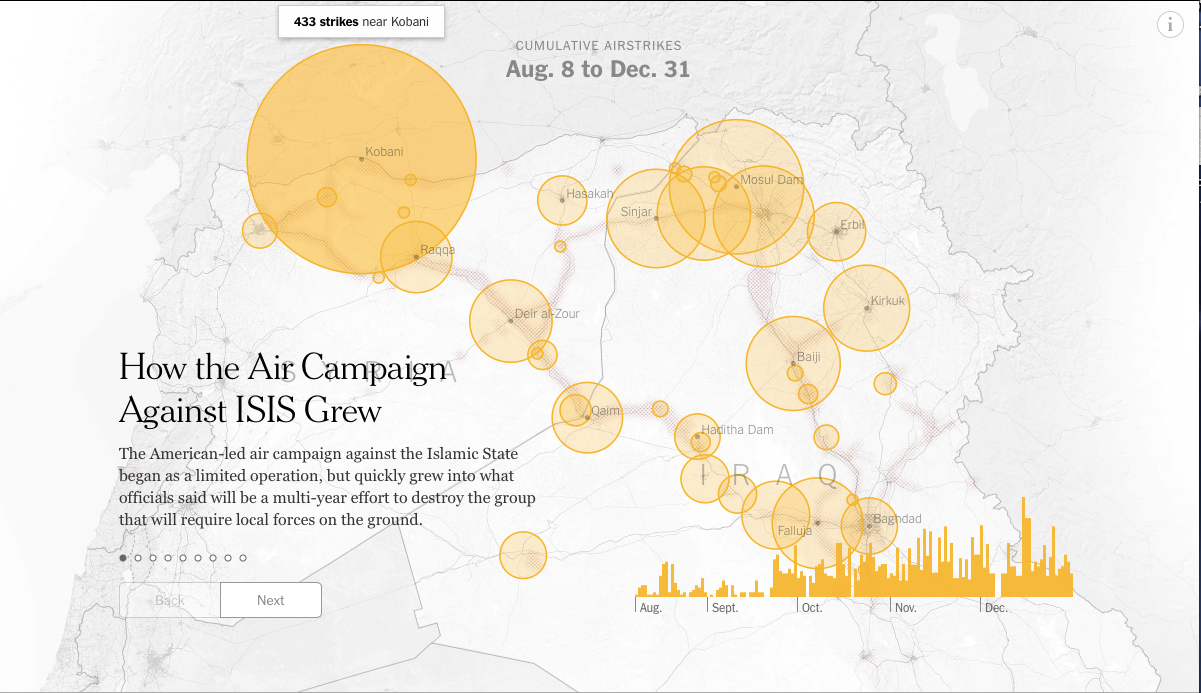
Drone Wars UK has an excellent survey of the logistics of air operations over Iraq and Syria from Chris Cole here, and the New York Times has produced a useful interactive map of US-led air strikes from which I’ve snipped this summary:

Iraq:Syria air strikes 4 August to 31 December 2014

We don’t know how many of these were carried out by drones or even orchestrated by them, but as their limitations are becoming clearer it’s reasonable to assume that most involved conventional strike aircraft.  We do know that targeting involves the analysis of video feeds from both remote and conventional platforms, and that CENTCOM has had considerable difficulty in juggling the competing demands for ISR from Afghanistan and from Iraq/Syria.

According to a report this week from W.J. Hennigan, who visited the USAF’s 480th Intelligence, Surveillance and Reconnaissance Wing at Langley Air Force Base in Virginia:

In a vast windowless room, several dozen intelligence analysts worked under the glow of more than 100 computer screens, quietly studying video streaming from U.S. drones and spy planes hunting for Islamic State militants in Iraq and Syria.

One team searched the incoming video to find a firefight underway between Iraqi security forces and militants somewhere south of the insurgent-held city of Mosul in northern Iraq.

For four hours, the analysts pored over the imagery before identifying 20 positions where the militants were dug in with machine guns and other weaponry. After the analysts called in the coordinates, 15 jets from five countries pounded the targets with more than two dozen bombs.

The Dec. 5 airstrike, one of 462 last month, underscores the Pentagon’s increased reliance on personnel far from the battlefield…  Air Force analysts here stand — or rather sit — on the virtual front lines by tracking Islamic State fighters in a war zone some 6,000 miles away.

But here’s the rub:

Unlike in past wars, when U.S. troops on the ground helped provide targeting information and intelligence, commanders in the battle against Islamic State rely chiefly on airborne surveillance, captured communications chatter, signals intelligence and other material that is processed by analysts here.

U.S. officers said the video-watching analysts working half a world away are no match for spotters and other troops feeding intelligence from the front lines.

“We don’t have anywhere near the level of intelligence we used to,” Lt. Col. Marc Spinuzzi, a senior intelligence officer, wrote in an email from Baghdad. The analysts are under “a lot of pressure … to clearly distinguish friend from foe, and to pick out the enemy from the civilian population” on the battlefield.

That is precisely how mistakes are made and civilians killed.  And, as Robert Naiman pointed out,

“There is a big danger here that U.S. air strikes in Syria are going to resemble the drone strikes in Pakistan and Yemen in the sense that there is no accountability for who is killed. We have reports of civilian casualties from people in the area and the U.S. government says, ‘No, they are bad guys.’ There has to be some public accountability for what happens when there are allegations of civilian casualties.”

At least the Pentagon has now gone some way towards recognising the problem.  Previously it had insisted that it was unaware of any civilian casualties, which is disingenuous: it beggars belief that 1,000 air strikes could have resulted in no civilian casualties – but if your ISR is inadequate it’s scarcely surprising that you would be ‘unaware’ of the consequences.  Even so, on 6 January the Pentagon announced that it had investigated 18 allegations of coalition airstrikes causing civilian casualties between 8 August and 30 December.  It determined that 13 were ‘not credible’, but was continuing to review three others; a further two, one in Iraq and one in Syria, are now the subject of formal military investigations.  But before you gold your breath, both Iraq and Syria are also exempt from the Presidential Policy Guidelines that require a ‘near certainty that no civilians will be killed or injured’.  Here is Harold Koh (really):

‘They seem to be creating this grey zone…  If we’re not applying the strict rules [to prevent civilian casualties] to Syria and Iraq, then they are of relatively limited value.’

Object lessons

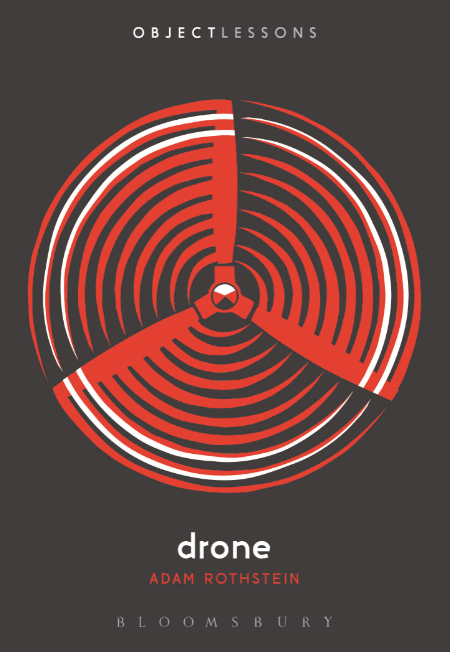
DRONE

Adam Rothestein‘s Drone, the latest contribution to the Object Lessons series co-published by the Atlantic and Bloomsbury Academic, is out at the end of this month.

Drones are in the newspaper, on the TV screen, swarming through the networks, and soon, we’re told, they’ll be delivering our shopping. But what are drones? The word encompasses everything from toys to weapons. And yet, as broadly defined as they are, the word ‘drone’ fills many of us with a sense of technological dread. Adam Rothstein cuts through the mystery, the unknown, and the political posturing, and talks about what drones really are: what technologies are out there, and what’s coming next; how drones are talked about, and how they are represented in popular culture.

It turns out that drones are not as scary as they appear – but they are more complicated than you might expect. Drones reveal the strange relationships that humans are forming with their new technologies.

Here’s the Contents list:

Introduction

Chapter One: Four Technology Stories

Chapter Two: The Military Drone

Chapter Three: The Commercial Drone (or the hole where it ought to be)

Chapter Four: Blinking Lights

Chapter Five: Software and Hardware

Chapter Six: The Non-Drone

Chapter Seven: What the Drone is For

Chapter Eight: The Drone in Discourse

Chapter Nine: Drone Fiction

Chapter Ten: Ourselves and the Drone

Chapter Eleven: Aesthetics of the Drone

Chapter Twelve: The Drone as Meme

The book comes with this enthusiastic endorsement from Geoff Manaugh of (richly deserved) BLDGBLOG fame:

“Adam Rothstein’s Drone presents this iconic figure of contemporary warfare-the disconcertingly alluring autonomous airborne machine-through the lens of a different kind of history. Privacy and tracking algorithms run side by side with the ethics of self-guided munitions, activist political programs butt heads with emerging corporate business strategies, and all of it is tied back to the earliest experiments in driverless vehicles, quaint ancestors of today’s over-mythologized UAVs. In the end, Rothstein’s book is an exploration of technical agency: Where did drones come from-and what do they want?”

You can find some of Adam’s preliminary ideas about what he then called ‘Drone ethnography’ at rhizome here, an interview with the lovely people at Bard here, and what Terraform calls his ‘future fiction, ‘Targeted strike 2: Judgment Database’, here.

The Object Lessons essay and book series, edited by Ian Bogost and Christopher Schaberg, is about ‘the hidden lives of ordinary things’.  If you want a different take on drones as objects, I suggest starting with William Walters, ‘Drone strikes, dingpolitik and beyond: Furthering the debate on materiality and security’ in Security dialogue 45 (2) (2014) 101-118.

Inhumanned

Drones_Poster_cropped

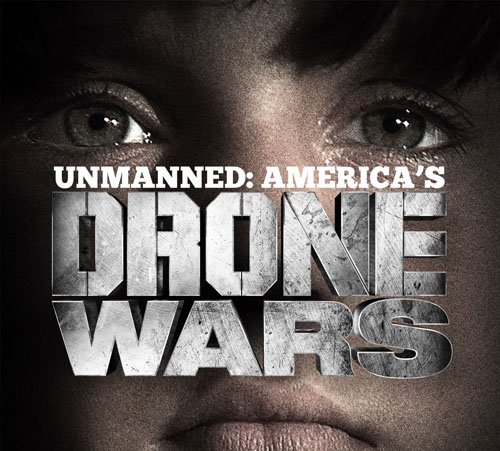
Better late than never…  I talked about Robert Greenwald‘s Unmanned before – the video documentary he produced to accompany the Stanford/NYU report Living under Drones – and I’ve now discovered you can still watch all 61 minutes here.

Beginning at 39:08 there is a harrowing account of the murder of Mamana Bibi in Waziristan on 24 October 2012.  There is a detailed investigation in Amnesty’s Will I be next? and its forensic detail is compelling, but watching and listening to the surviving members of her family adds a new dimension to the horror.

So too, though in a radically different way, does reading C. Christine Fair‘s partisan dismissal of both the Amnesty report and the testimony of the Rehman family here.  It was published under the title ‘Ethical and methodological issues in assessing drones’ civilian impacts in Pakistan’ – without a trace of irony – but for once the comments below the line give me hope…

FOOTNOTE:  I’ve been asked to elaborate that last paragraph.  Fair suggests – on the flimsiest of bases – that the strike was carried out by the Pakistan Air Force, and clumsily attempts to discredit both Reprieve and Amnesty’s research.  I’ve written before about the PAF’s repeated assaults on the FATA – here and here for example – but here is part of a report from the Guardian on the murder of Mamana Bibi that describes how Amnesty’s local researcher Mustafa Qadri went about his work:

Qadri reached out to trusted sources in North Waziristan. The family members and their neighbors were interviewed independently on multiple occasions, unaware that a human-rights group was behind the questions they were asked. Over the course of many weeks, Qadri found the family’s account to be consistent. He determined it was highly unlikely that any militants were present at the time of the strike and that the missiles were likely fired by a US drone.

“It was a number of things,” Qadri told the Guardian. “We got the missiles, the large fragments that the family has that we got analyzed by [an] expert who says this is very likely to be a Hellfire missile. We also had family members who saw drones physically. We also have the eyewitness of the family who said they heard the noise of missiles fired from the sky and then separate noises of missiles impacting on the ground. We have the evidence of a double sound, with each single strike.”

I doubt that he needs any lessons on ethics or methodology.

Bodies on the line

The more I think about corpography (see also ‘Corpographies under the DOWNLOADS tab) – especially as part of my project on casualty evacuation from war zones – the more I wonder about Grégoire Chamayou‘s otherwise artful claim that with the advent of armed drones the ‘body becomes the battlefield’.  He means something very particular by this, of course, as I’ve explained before (see also here).

But let me describe the journey I’ve been taking in the last week or so that has prompted this post. Later this month I’m speaking on ‘Wounds of war, 1914-2014‘, where I plan to sketch a series of comparisons between casualty evacuation on the Western Front (1914-18) and casualty evacuation from Afghanistan.  I’ve already put in a lot of work on the first of these, which will appear on these pages in the weeks and months ahead, but it was time to find out more about the second.

800px-Medical_Emergency_Response_Team_Recovers_a_Casualty_in_Afghanistan_MOD_45151884

En route I belatedly discovered the truly brilliant work of David Cotterrell who is, among many other things, an installation artist and Professor of Fine Art at Sheffield Hallam University.  He became interested in documenting the British military casualty evacuation chain from Afghanistan, and in 2007 secured access to the Joint Medical Forces’ operations at Camp Bastion in Helmand.  He underwent basic training, a course in even more basic battlefield first-aid, and then found himself on an RAF transport plane to Bastion.  The Role 3 Hospital was, as he notes, a staging-ground. ‘Field hospitals are islands between contrasting environments,’ he wrote in his diary, ‘between the danger and dirt of the Forward Operating Bases and the order and convention of civilian healthcare.’  You can read a long, illustrated extract from the diary (3 – 26 November 2007) here, follow the photo-essay as a slideshow here, and explore David’s many other projects on his own website here.

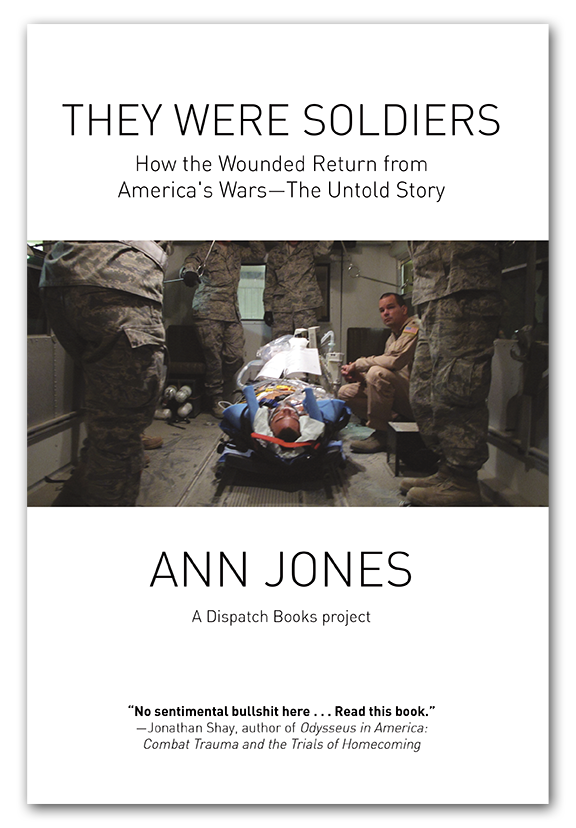
THEY-WERE-SOLDIERS_by-Ann-Jones_72The diary is immensely interesting and informative in its own right, not least about the exceptional personal and professional difficulties involved in documenting the evacuation process.  Here there’s a helpful comparison to be made with journalist Ann Jones‘s no less brilliant They were soldiers: how the wounded return from America’s wars (more on this in a later post), which starts at the US military’s own Level III Trauma Center, the Craig Joint Theater Hospital at Bagram, and moves via Landstuhl Regional Medical Center in Germany, the largest US hospital outside the United States, to the Walter Reed Army Medical Center in Washington DC.

David’s visual record is even more compelling, as you would expect from a visual artist, not only in its documentary dimension but also in the installations that have been derived from it.  In Serial Loop, for example, we are confronted with a looped film showing the endless arrival of casualties at Bastion: ‘The sound of a continuously arriving and departing Chinook helicopter accompanies images of a bleak and wasted landscape; the banality of the film’s fixed perspective masks the dramas that unfold within the ambulances as they travel to triage.’

9-liner explores what David calls ‘the abstraction of experience within conflict’:

9-Liner explores the dislocation between the parallel experiences of casualties within theatre. It is a quiet study of a dramatic event: the attempt to bring an injured soldier to the tented entrance of the desert field hospital. The screens show apparently unrelated information. JCHAT – a silent scrolling codified message – runs on a central screen. Our interpretation of it is enabled through its relationship between one of two radically different but equally accurate views of the same event. To the left we see the Watchkeeper – a soldier manning phones and reading computer screens in a crowded office. On the right we view the MERT flight – the journey of the Medical Emergency Response Team in a Chinook helicopter.

SHU’s REF submission includes this summary of David’s work (one of the very few useful things to come out of that otherwise absurdist exercise):

The research made clear that soldiers recovering from life-changing injuries had limited means of reconstructing the narrative of their transformative experiences. From the time of wounding through to secondary operations in the UK, many soldiers remained sedated or unconscious for a period of up to five days. The radical physical transformation that had occurred during this period was not adequately reconciled through medical notes, and the embargo on photographic documentation of incident and subsequent medical procedures served further to obscure this period of lost memory.

A culture of secrecy meant that medical professionals were unable to access documentation of the expanded care pathway with which they, and their colleagues, were engaged. This fragmentation of experience and understanding within the process of evacuation, treatment and rehabilitation meant that the assessment of the contradictions and disorientation experienced by casualties and medical practitioners was denied to front-line staff.

Family members, colleagues and members of the public outside the immediate environment of the military were unable to visualise or understand the transformative effects of conflict on directly affected civilians and soldiers. Partly as a result, the scope for public debate to engage meaningfully with the longer term societal cost of contemporary conflict was limited.

The submission goes on to list an impressive series of debriefings, presentations to military and medical professionals, major exhibitions, and follow-through research in Birmingham.

5-soldiers_header

And it’s one of those follow-throughs that prompted me to think some more about corpographies.  I’d noted the connection between corpography and choreography in my original post, but David’s extraordinary collaboration with choreographer Rosie Kay and her dance company gives that a much sharper edge.  Again, there’s a comparison to be drawn – this time with Owen Sheers‘s impressively researched and executed body of work, not only the astonishing Pink Mist but also The Two Worlds of Charlie F (2012)which was a stage play based on the experiences of wounded soldiers who also made up the majority of the cast (see my discussion of these two projects here).

5 Soldiers started life as a stage presentation in 2010 (watch some extracts here):

A dance theatre work with 5 dancers, it looks at how the human body is essential to, and used in, warfare. 5 SOLDIERS explores the physical training that prepares you for war, as well as the possible effects on the body, and the injury caused by warfare.

Featuring Kay’s trademark intense physicality and athleticism, 5 SOLDIERS weaves a journey of physical transformation, helping us understand how soldiers are made and how war affects them.

5 SOLDIERS is a unique collaboration between award-winning choreographer Rosie Kay, visual artist David Cotterrell and theatre director Walter Meierjohann. It follows an intense period of research, where Rosie learnt battle training with The 4th Battalion The Rifles and David spent time in Helmand Province with the Joint Forces Medical Group.

Rosie explained her commitment to the project (and her training with The Rifles) like this:

“I wanted to look at how the physicality of a soldier’s job defines them –like a dancer, the soldier is drilled, trained, their responses becoming automatic, but can anything prepare you for the realities of war? It is young soldiers and their bodies that are the ultimate weapon in war – their strength and weaknesses may win or lose a battle, their ability to harm or injure others is key to victory. While war is surrounded with weaponry, uniforms, history and ceremony, the real business is human, dirty, messy, painful and happening right now.”

(She is, not coincidentally, an affiliate of the School of Anthropology at Oxford).

5 Soldiers installation PNG

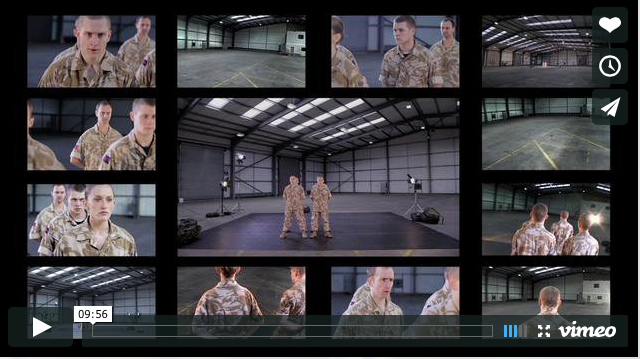
And now there’s a film version that works as a multi-screen installation (screen shot above).

Instead of just creating a short film, the team wanted the web user to get a truly interactive way to watch dance, and actually feel that they can go inside the minds and the body of the work. The 80-minute work was cut to just 10 minutes long, and the company spent one week filming in a huge aircraft hangar at Coventry Airport…

Using a variety of cutting edge filming techniques, the collaborative team have created a 13 angle edit that takes you into the heart of the work, follows each of the dancers, and zooms out so that the performers appear to be like ants in a huge empty landscape.

You can see the interactive, multi-perspectival version here.  This relied on helmetcams, and there’s a fine, more general commentary on this in Kevin McSorley‘s ‘Helmetcams, militarized sensation and “somatic war”‘ here.  But here’s the short, ‘director’s cut’ version:

And look at the tag-line: ‘The body is the frontline’.  It’s not only drones that make it so.

Crossing the line

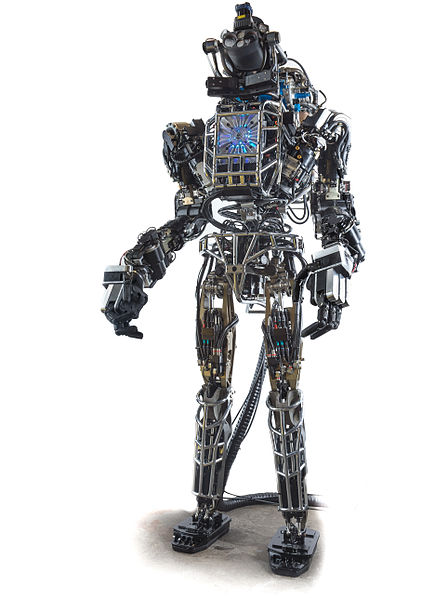
435px-Atlas_frontview_2013News from Lucy Suchman of an important essay she’s just completed with Jutta Weber on Human-Machine Autonomies, available from Academia.edu here.

This is how they begin:

This paper takes up the question of how we might think about the increasing automation of military systems not as an inevitable ‘advancement’ of which we are the interested observers, but as an effect of particular world-making practices in which we need urgently to intervene. We begin from the premise that the foundation of the legality of killing in situations of war is the possibility of discrimination between combatants and non-combatants. At a time when this defining form of situational awareness seems increasingly problematic, military investments in the automation of weapon systems are growing. The trajectory of these investments, moreover, is towards the development and deployment of lethal autonomous weapons; that is, weapon systems in which the identification of targets and initiation of fire is automated in ways that preclude deliberative human intervention. Challenges to these developments underscore the immorality and illegality of delegating responsibility for the use of force against human targets to machines, and the requirements of International Humanitarian Law that there be (human) accountability for acts of killing. In these debates, the articulation of differences between humans and machines is key.

Our aim in this paper is to strengthen arguments against the increasing automation of weapon systems, by expanding the frame or unit of analysis that informs these debates. We begin by tracing the genealogy of concepts of autonomy within the philosophical traditions that inform Artificial Intelligence (AI), with a focus on the history of early cybernetics and contemporary approaches to machine learning in behaviour-based robotics. We argue that while cybernetics and behaviour-based robotics challenge the premises of individual agency, cognition, communication and action that comprise the Enlightenment tradition, they also reiterate aspects of that tradition in the design of putatively intelligent, autonomous machines. This argument is made more concrete through a close reading of the United States Department of Defense Unmanned Systems Integrated Roadmap: FY2013-2038, particularly with respect to plans for future autonomous weapon systems. With that reading in mind, we turn to resources for refiguring agency and autonomy provided by recent scholarship in science and technology studies (STS) informed by feminist theory. This work suggests a shift in conceptions of agency and autonomy, from attributes inherent in entities, to effects of discourses and material practices that variously conjoin and/or delineate differences between humans and machines. This shift leads in turn to a reconceptualization of autonomy and responsibility as always enacted within, rather than as separable from, particular human- machine configurations. We close by considering the implications of these reconceptualizations for questions of responsibility in relation to automated/autonomous weapon systems. Taking as a model feminist projects of deconstructing categorical distinctions while also recognising those distinctions’ cultural-historical effects, we argue for simultaneous attention to the inseparability of human-machine agencies in contemporary war fighting, and to the necessity of delineating human agency and responsibility within political, legal and ethical/moral regimes of accountability.

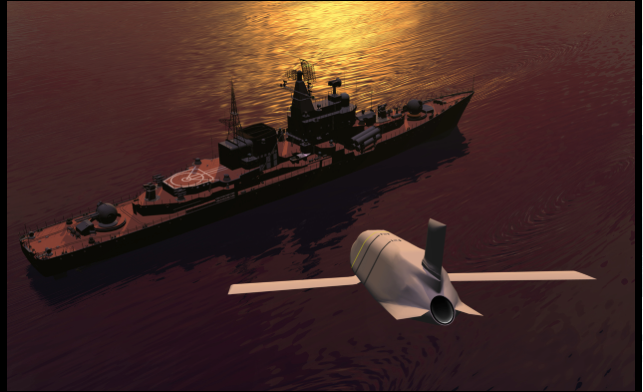
LRASM (Lockheed-Martin photo) PNG

It’s a must-read, I think, especially in the light of a report from the New York Times of the Long Range Anti-Ship Missile (above) developed for the US military by Lockheed Martin:

On a bright fall day last year off the coast of Southern California, an Air Force B-1 bomber launched an experimental missile that may herald the future of warfare.

Initially, pilots aboard the plane directed the missile, but halfway to its destination, it severed communication with its operators. Alone, without human oversight, the missile decided which of three ships to attack, dropping to just above the sea surface and striking a 260-foot unmanned freighter…

The Pentagon argues that the new antiship missile is only semiautonomous and that humans are sufficiently represented in its targeting and killing decisions. But officials at the Defense Advanced Research Projects Agency, which initially developed the missile, and Lockheed declined to comment on how the weapon decides on targets, saying the information is classified.

“It will be operating autonomously when it searches for the enemy fleet,” said Mark A. Gubrud, a physicist and a member of the International Committee for Robot Arms Control, and an early critic of so-called smart weapons. “This is pretty sophisticated stuff that I would call artificial intelligence outside human control.”

Paul Scharre, a weapons specialist now at the Center for a New American Security who led the working group that wrote the Pentagon directive, said, “It’s valid to ask if this crosses the line.”

And the Israeli military and armaments industry, for whom crossing any line is second nature, are developing what they call a ‘suicide drone’ (really).  At Israel Unmanned Systems 2014, a trade fair held in Tel Aviv just three weeks after Israel’s latest assault on Gaza, Dan Cohen reported:

Lieutenant Colonel Itzhar Jona, who heads Israel Aerospace Industries, spoke about “loitering munitions” — what he called a “politically correct” name for Suicide Drones. They are a hybrid of drone and missile technology that have “autonomous and partially autonomous” elements, and are “launched like a missile, fly like an UAV [unmanned aerial vehicle],” and once they identify a target, revert to “attack like a missile.” Jona called the Suicide Drone a “UAV that thinks and decides for itself,” then added, “If you [the operator] aren’t totally clear on the logic, it can even surprise you.”

Jona praised the advantage of the Suicide Drone because the operator “doesn’t have to bring it home or deal with all sorts of dilemmas.” The Suicide Drone will quickly find a target using its internal logic, which Jona explained in this way: “It carries a warhead that eventually needs to explode. There needs to be a target at the end that will want to explode. Or it won’t want to and we will help it explode.”

So thoughtful to protect ‘the operator’ from any stress (even if s/he might be a little ‘surprised’).  Here is Mondoweiss‘s subtitled clip from the meeting, which opens with a short discussion of the major role played by UAVs in the air and ground attacks on Gaza, and then Jona describes how ‘we always live on the border’:

Novel wars

Since I added ‘The Natures of War’ to the DOWNLOADS section several people have asked me about my use of novels, especially in relation to Vietnam, while others have asked me to recommend writings – both novels and memoirs – that treat contemporary conflicts, especially Afghanistan.

Writing letters to home

The first part is easy.  To say things too quickly, I think the usual distinction between ‘fiction’ and ‘non-fiction’ is much more problematic than it seems (don’t we all know this? and in any case where exactly do you place a ‘memoir’ in such a strangely bifurcated landscape?).  I also believe that there are some insights – truths, if you prefer – that are best conveyed in ostensibly fictional form.  For that reason I suspect it’s significant that it’s my appeal to (for example) Karl Marlantes‘s magnificent Matterhorn in the Vietnam section that seems to trouble some readers much more than my use of poetry in the section on the Western Desert in the Second World War.  Yet both emerged through their authors’ reflections on their experiences of modern war in those places.  That doesn’t mean that one can ignore literary conventions or linguistic devices – no text is a transparent reflection of the world, after all – but this surely also holds for nominally factual accounts too (and that goes for military blogs, which have created their own conventions).  In other ‘fictional’ cases I can think of – like Tom McCarthy‘s C, which I drew upon in ‘Gabriel’s Map’ to characterise the battlefields of the Western Front  – the narrative is clearly embedded in intensive and immensely thoughtful research.  In fact, I’d push this further: hence my interest in documentary drama as part of – not simply a product of – the research process.

The second question is more difficult, but there are some recent guides which might help.  A good place to start is George Packer‘s ‘Home Fires: how soldiers write their wars‘ which appeared in the New Yorker last spring.  Packer tries to pin down what is distinctive about writing that seeks to capture the wars fought in the shadows of 9/11:

‘The first wave of literature by American combatants in these long, inconclusive wars has begun to appear—poems, memoirs, short stories, novels. Their concerns are the same as in all war writing: bravery and fear, the thin line between survival and brutality, the maddening unknowability of the enemy, tenderness, brotherhood, alienation from a former self, the ghosts of the past, the misfit of home.

But Iraq was also different from other American wars… Without a draft, without the slightest sacrifice asked of a disengaged public, Iraq put more mental distance between soldiers and civilians than any war of its duration that I can think of. The war in Iraq, like the one in Vietnam, wasn’t popular; but the troops, at least nominally, were—wildly so. (Just watch the crowd at a sports event if someone in uniform is asked to stand and be acknowledged.) Both sides of the relationship, if they were being honest, felt its essential falseness.’

Given this disconnect, he concludes, ‘it’s not surprising that the new war literature is intensely interested in the return home.’  But when it deals with the soldiers’ experience of war, he continues,

‘It deals in particulars, which is where the heightened alertness of combatants has to remain, and it’s more likely to notice things. To most foreign observers, the landscape of Iraq is relentlessly empty and ugly, like a physical extension of the country’s trauma. But in the poetry and the prose of soldiers and marines the desert comes to life with birdsong and other noises, the moonlit sand breeds dreams and hallucinations.’

It’s that struggle to turn the experience of land into its evocation that interests me.  But Packer makes surprisingly little of it, and his gaze is focused almost unwaveringly on Iraq rather than Afghanistan (not surprising, given his own war reporting).

Writing in the New York TimesMichiko Kakutani identifies a series of writings on the human costs of what Dexter Filkins called ‘the forever war’:

‘War cracks people’s lives apart, unmasks the most extreme emotions, fuels the deepest existential questions. Even as the wars in Iraq and Afghanistan morph into shapeless struggles with no clear ends in sight, they have given birth to an extraordinary outpouring of writing that tries to make sense of it all: journalism that has unraveled the back story of how and why America went to war, and also a profusion of stories, novels, memoirs and poems that testify to the day-to-day realities and to the wars’ ever-unspooling human costs.

‘All war literature, across the centuries, bears witness to certain eternal truths: the death and chaos encountered, minute by minute; the bonds of love and loyalty among soldiers; the bad dreams and worse anxieties that afflict many of those lucky enough to return home. And today’s emerging literature … both reverberates with those timeless experiences and is imprinted with the particularities of the conflicts in Afghanistan and Iraq: changes in technology, the increased presence of female soldiers and, most importantly, the all-volunteer military, which has opened a chasm between soldiers (“the other 1 percent”) and civilians.’

Here too there is an attempt to see how today’s writing differs from the established canon of war literature.  En route, Kakutani makes some good suggestions for reading, but she says very little about the differences – those dense ‘particulars’ again – between Iraq and Afghanistan.

afghan1

She leaves that to Brian Castner‘s outstanding essay for the LA Review of Books, ‘Afghanistan: a stage without a play.’

Castner did two tours in Iraq, and his own account of that experience (and, just as important, what followed) in The Long Walk is a tour de force in every sense of the phrase.  But he is also remarkably perceptive in his readings of Afghanistan (‘the Undescribed War’, he calls it) and – of particular interest to me, given my interest in ‘the natures of war’ or what my good friend Gastón Gordillo would prefer me to call ‘terrain‘ – its land and landscapes.  Castner also draws several illuminating comparisons with Vietnam (not least through a double parallel with the US’s ‘Indian Wars’ of the nineteenth century).

Kevin Maurer covered both wars, and always found

“Afghanistan far more riveting than Iraq because it’s a whole different world. Baghdad is a Middle Eastern city, but it is a modern city. In Afghanistan that barely exists. I’ve always been able to turn my brain into Afghanistan mode and out, while Iraq blurs.”

The influence of the terrain, especially its beauty, is clear: while a few descriptions of colorful Iraqi skies creep into the literature, it was mostly an ugly urban war fought along the New York State Thruway, rest stop to rest stop. “Afghanistan always had that Vietnam vibe to it,” Maurer said, “because you can go get lost in Afghanistan, you can be on some hill on some outpost. In Iraq you were never that far out.”

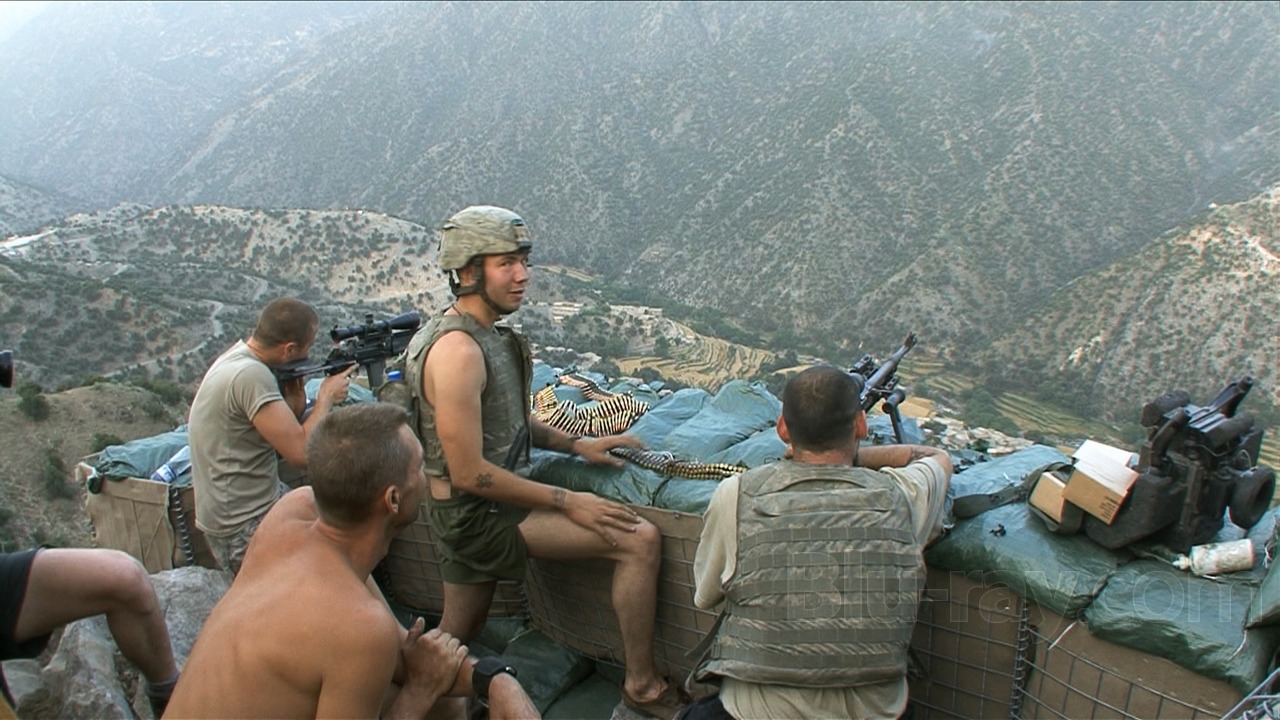
Korengal

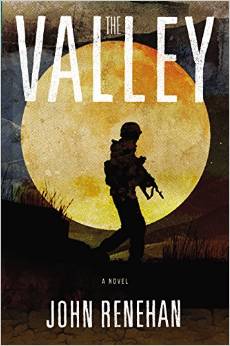
And for that very reason the terrain was always more than beautiful.  You can see that in a film like Restrepo – and even more clearly in Koregal (above) – but according to Castner you can also see it in John Renehan’s forthcoming novel, The Valley.  And here too Vietnam continues to haunt the imaginative landscape:

RENEHAN The ValleyThe landscape acts as an omnipresent consciousness, an apparition always in the corner of [Lieutenant] Black’s eye, and Renehan attaches to it layers of reverence and dread and unknowable quasi-mysticism; the valley is capable of anything. This infection spreads slowly for the reader, and Renehan says his writing process followed a similar path. “I more or less thought I was setting out to write a mystery story that happened to be set in a war. But as I started writing it I realized it was growing into something different in my mind, and it changed on paper too.” A detective story becomes a heroin- and concussion-fueled dreamscape that crosses genres. “Going After Cacciato gave me comfort in writing the parts of The Valley that become almost surreal,” Renehan said. “It reassured me that this sort of thing is okay, because it’s a war novel, right?”

What I need to think more about – the process I started in ‘Gabriel’s Map’ and continued in ‘The Natures of War’ – is how, despite Castner’s title, the stage is always part of the play.  And novels and poems will continue to help me do so.

POSTSCRIPT  Just after I finished drafting this post, I stumbled across ‘s Peter Molin‘s excellent blog: Time Now: the Iraq and Afghan wars in art, film and literature which also discusses the three reviews I list here.  Peter is a US Army officer who served in Afghanistan in 2008-9, and his posts are rich in ideas, insights and resources: well worth bookmarking.

Kill Chain

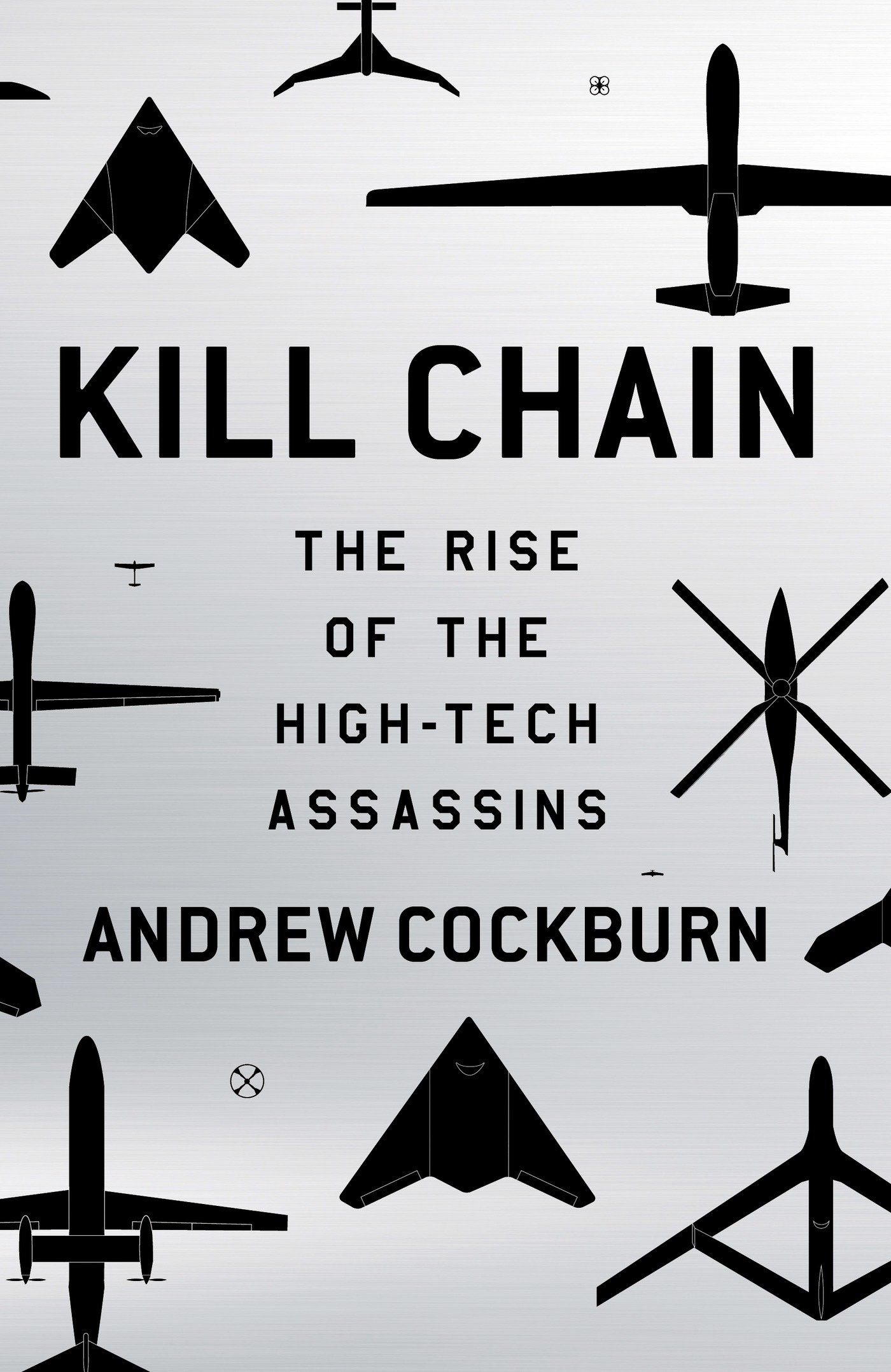
COCKBURN Kill chain 1

Yet more on targeted killing/assassination: new from Verso and Henry Holt in March, Andrew Cockburn‘s Kill Chain: the rise of the high-tech assassins.

Kill Chain uncovers the real and extraordinary story of drone warfare, its origins in long-buried secret programs, the breakthroughs that made drone operations possible, the ways in which the technology works, and, despite official claims, does not work. Through the well-guarded world of national security, the book reveals the powerful interests—military, CIA, and corporate—that have led the drive to kill individuals by remote control. Most importantly of all, the book describes what has really happened when the theories underpinning the strategy—and the multi billion-dollar contracts they spawn—have been put to the test.

Andrew is the author of the brilliant Rumsfeld: an American disaster, and he’s also been writing around the issue of military and paramilitary violence for some time.  There’s an early review of Kill Chain from Kirkus here, and Andrew discusses writing the book in a short audio clip here.

If you can’t wait until March, there’s a taster in ‘Drones, baby, drones‘, which appeared in the London Review of Books (8 March 2012); if you aren’t a subscriber you can obtain 24-hour access free of charge.

Time and again, the military has claimed that advances in technology have finally made warfare predictable and precise. That was the promise of Igloo White in Vietnam [see my ‘Lines of descent’: DOWNLOADS tab], the video-game spectacle of the Gulf War, the war for Kosovo and the counter-guerrilla wars of the past ten years. Time and again, the military’s claims have been disproved. Will drones change everything? Robert Gates, secretary of defence from 2006 to 2011, expressed the official view in his address to the CIA Officers Memorial Foundation annual dinner last March. Confessing that he hadn’t initially done enough to quash resistance to innovation from ‘flyboys in silk scarves’, Gates said: ‘From now on, it’s drones, baby, drones.’

In the audio clip Andrew insists that the full-motion video feeds from Predators and Reapers are far less clear than most commentators make out, and in subsequent contributions Andrew has perceptively linked the fantasies of the God-trick with militarized vision more generally: see, for example, his ‘Tunnel vision‘ (about the comparative merits of the A10 and the B1 bomber) which appeared in Harper’s in February 2014 and ‘Flying Blind‘, which appeared on Harper’s blog in September.

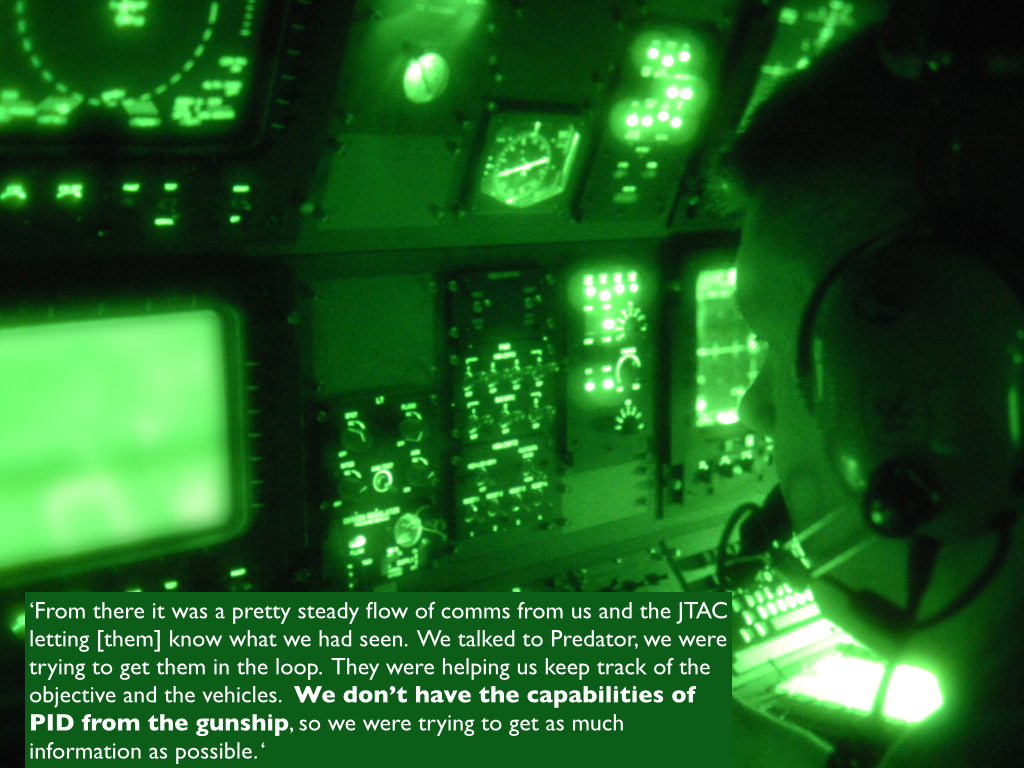
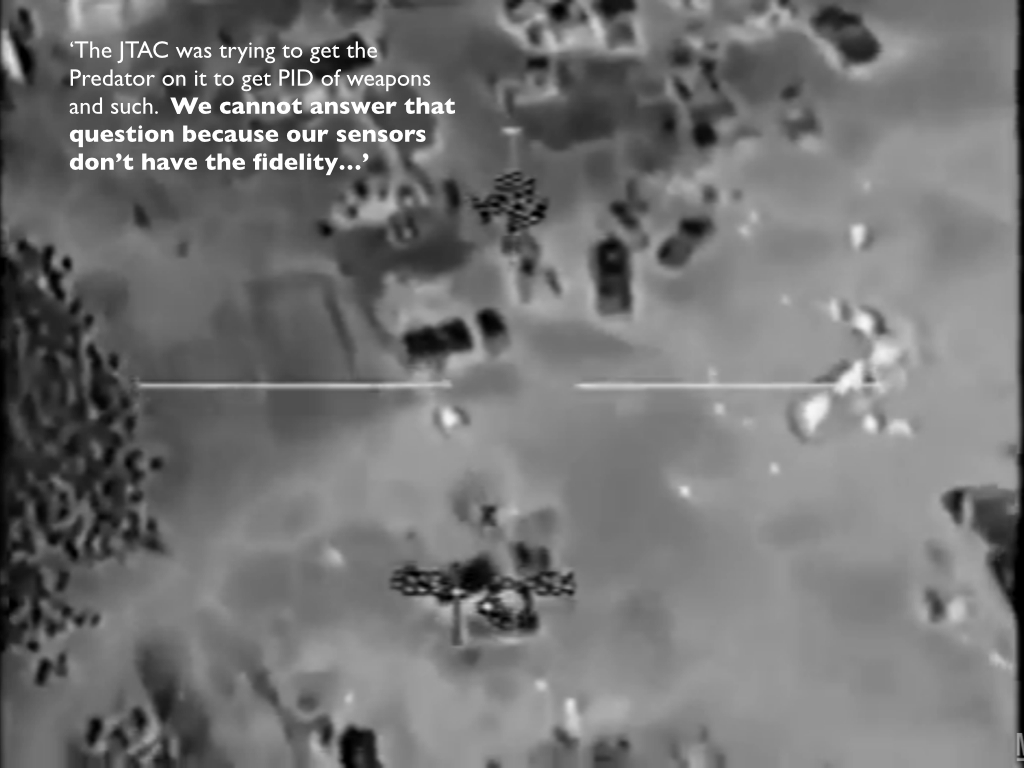
I’m not convinced that the A-10 is able to ‘observe the battleground with such precision, and safely to target enemy forces a stone’s throw away from friendly troops’ as Andrew maintains, but his more general point is a sharp one.  Too often we forget that other aircraft rely on optical sensors and video screens too, not only Predators and Reapers, and that these political technologies differ from platform to platform, as the following slides from ‘Angry eyes’ indicate (where the captain of an AC-130 gunship in fact defers to the crew of a Predator):

Angry eyes VISION.001

Angry eyes VISION.002

And, as Andrew also makes clear, these technologies produce their own interpellations:

Video will often supply a false clarity to preconceived notions. One A-10 pilot described to me an afternoon he spent circling high over southern A ghanistan in May 2010, watching four people—tiny figures on his cockpit screen—clustering at the side of a road before they retreated across a field to- ward a house. Everything about their movements suggested a Taliban I.E.D.- laying team. Then the door to the house opened and a mother emerged to hustle her children in to supper.

“On the screen,” he explained, “the only way to tell a child from an adult is when they are standing next to each other. Otherwise everyone looks the same.”

“We call the screens face magnets,” remarked another veteran, Lieutenant Colonel Billy Smith, a former A-10 squadron commander who flew tours over Bosnia, Iraq, and Afghanistan. “They tend to suck your face into the cockpit, so you don’t pay attention to what’s going on outside.”

All of this intersects with my continuing work on militarized vision, and in the next several weeks I’ll be uploading a series of new essays that deal with drone strikes in Pakistan [based on my ‘Dirty dancing‘ presentations], the Sangin Valley in Afghanistan (a ‘friendly fire’ incident), and an air strike in Uruzgan in Afghanistan that was orchestrated by a drone [based on my ‘Angry Eyes’ presentations]. So watch this space…

Incidentally, ‘kill chain’ is both the extended, networked apparatus that leads from air targeting to execution – for all platforms, remote and conventional – and the injunction that is typed into US military chat rooms (mIRC) to close down ‘chatter’ that might distract pilots once they are cleared to engage (see my discussion here).

Countdown before midnight

new-year-countdown-timer-d-render-45932159

Another year rolls by, and the elves at WordPress have compiled this list of my top posts for 2014:

1  The Death Zone

2  The War on Ebola

3  Theory of the Drone 1: Genealogies (2013)

4  Gaza 101

5  Is Paris Burning? (2012)

6  Kunduz and ‘seeing like a military

7  Darkness descending

8  Conflicts without borders

9  War comes home

10  War and distance: logistics (2012)

In fact, the list simply shows the ‘most read’ posts this year – two of them were written in previous years, so it’s good to see that the shelf-life of the blog is longer than the usual jibes about ‘ephemera’ imply; on several occasions people have read a post and suggested that I publish it — to which I say: ‘But I just did…’

Still, contemporary issues clearly dominate: 1, 3 and 7 were all about Gaza, and ‘The war on Ebola’ (2) got more views in a single day than anything I’ve ever posted (or probably written…).

Even this list is misleading, though, since ‘Home Page’ tops the list, and that always shows the latest posts.  And ‘DOWNLOADS’ was also right up there, with more than 4,000 hits – so I promise to try to keep that up to date.

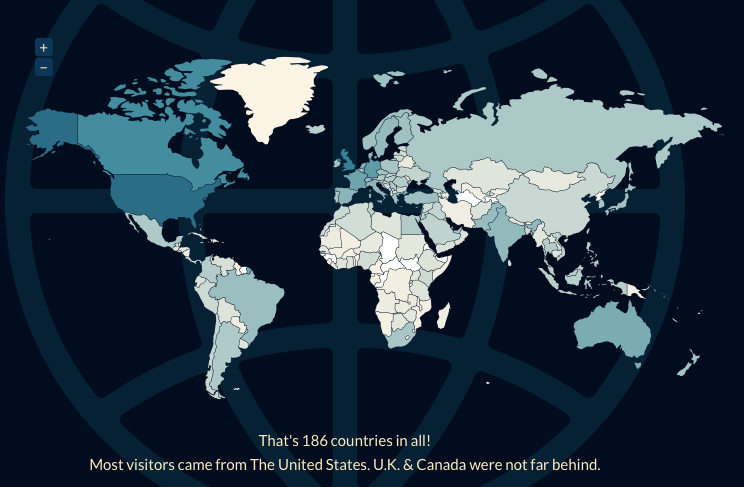
In any event, thanks very much for stopping by and making this a much less solitary affair than I first thought it would be.  This is where you all came from:

Visitors 2014