Spaces of constructed (in)visibility

ICGFurther to my previous posts on air strikes in Pakistan here and here, the International Crisis Group today published a new report, Drones: Myths and Reality in Pakistan.

From ICG’s media release:

‘The report’s major findings and recommendations are:

  • Pakistan’s new civilian leadership under PML-N leader Nawaz Sharif must make the extension of the state’s writ in FATA the centrepiece of its counter-terrorism agenda, bringing violent extremists to justice and thus diminishing Washington’s perceived need to conduct drone strikes in Pakistan’s tribal belt.
  • Drones are not a long-term solution to the problem they are being deployed to address, since the jihadi groups in FATA will continue to recruit as long as the region remains an ungoverned no-man’s land.
  • The U.S., while pressuring the Pakistan military to end all support to violent extremists, should also support civilian efforts to bring FATA into the constitutional and legal mainstream.
  • The lack of candour from the U.S. and Pakistan governments on the drone program undermines efforts to assess its legality or its full impact on FATA’s population. The U.S. refuses to officially acknowledge the program; Pakistan portrays it as a violation of national sovereignty, but ample evidence exists of tacit Pakistani consent and, at times, active cooperation.
  • Pakistan must ensure that its actions and those of the U.S. comply with the principles of distinction and proportionality under international humanitarian law. Independent observers should have access to targeted areas, where significant military and militant-imposed barriers have made accurate assessments of the program’s impact, including collateral damage, nearly impossible.
  • The U.S. should cease any practices, such as “signature strikes”, that do not comply with international humanitarian law. The U.S. should develop a legal framework that defines clear roles for the executive, legislative and judicial branches, converting the drone program from a covert CIA operation to a military-run program with a meaningful level of judicial and Congressional oversight.

“The core of any Pakistani counter-terrorism strategy in this area should be to incorporate FATA into the country’s legal and constitutional mainstream”, says Samina Ahmed, Crisis Group’s Senior Asia Adviser. “For Pakistan, the solution lies in overhauling an anachronistic governance system so as to establish fundamental constitutional rights and genuine political enfranchisement in FATA, along with a state apparatus capable of upholding the rule of law and bringing violent extremists to justice”.
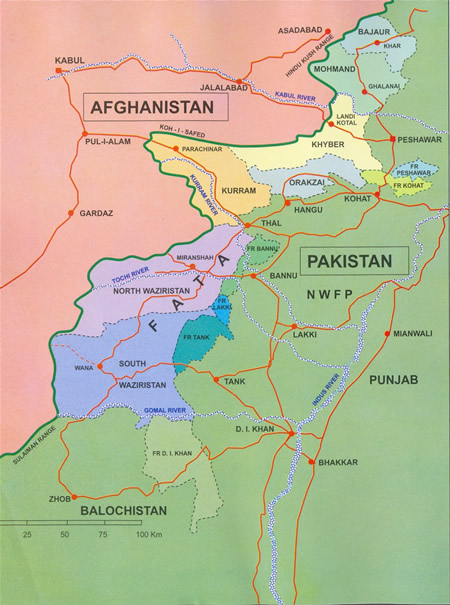
FATA and NWFP mapThe report speaks directly to claims that the Federally Administered Tribal Areas (FATA) are treated by both Washington and Islamabad as a space of exception, subject to special legal dispensations that expose their inhabitants to military violence and, ultimately, death.  And it also repeats much of the argument I made earlier about the close collaboration between Washington and Islamabad based, in part, on the Wikileaks cables.

But there’s nothing about the air strikes carried out in the FATA by the Pakistan Air Force.  Since the report is specifically about the CIA-directed counter-terrorism campaign, you may think the silence unsurprising.  But I think it’s important not to contract the focus in this way – I say that not to exempt the US from criticism (far from it) but as a reminder that this is a space of constructed visibility that is also (as always) a space of constructed invisibility.  The inhabitants of FATA deserve to have the wider landscape of military violence exposed to the public gaze.

As part of that process, this passage is immensely important, given the difficulty of reporting from or carrying out field work in the FATA:

‘Islamabad has a constitutional and international obligation to protect the lives of citizens and non-citizens alike on its territory. Even if it seeks U.S. assistance against individuals and groups at war with the state, Pakistan is still obliged to ensure that its actions and those of the U.S. comply with the principles, among others, of distinction and proportionality under International Humanitarian Law, and ideally to give independent observers unhindered access to the areas targeted.’

The ICG’s very first recommendation, therefore, is to lift ‘all travel and other restrictions on independent observers, national and foreign, to the targeted areas in FATA.’  In short, it’s not enough to demand that Washington be transparent in the procedures it follows (whatever Obama might say in his advertised speech on Thursday); it’s also vital for observers to be able to witness and report what is happening on the ground in Waziristan (and elsewhere).  Here is Madiha Tahir:

‘I do think these stories would look quite different if they were being told by people from the countries in question. It would shift perspective, and it would highlight as well as marginalize different aspects of the issue. As it is, the conversation is had among largely American, largely white, largely male voices, and the only real options for the rest of us are either to enter that conversation by agreeing or disagreeing, or risk irrelevance.

… [T]he intense focus on the government’s narrative lets journalists and the media off-the-hook for not doing the hard work of actually reporting the stories of those on the receiving end of America’s war in Pakistan.’
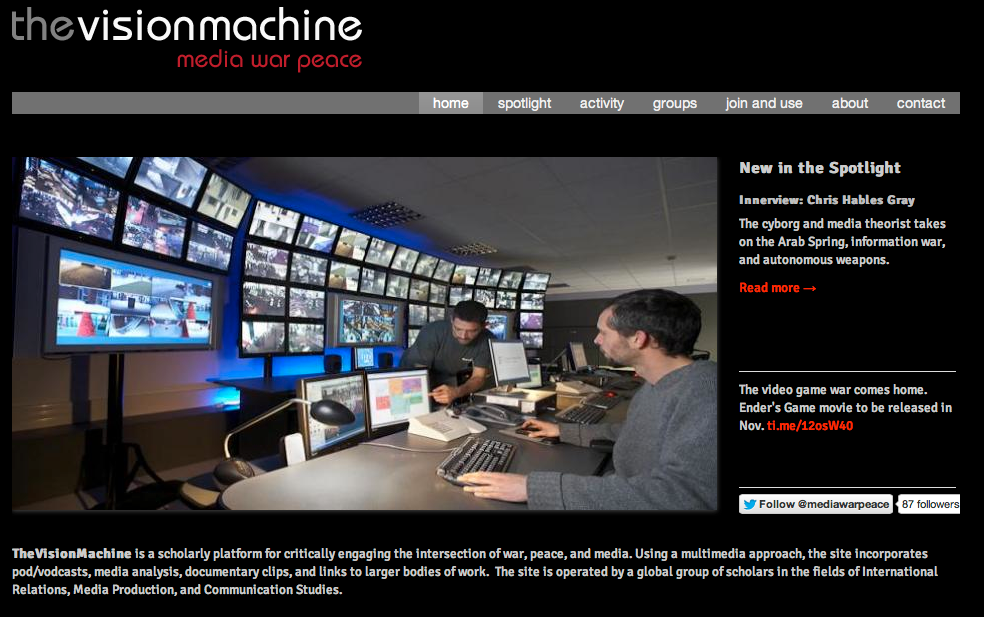
The vision machine

Vision Machine

News this morning from Roger Stahl of a wonderful new resource and site, The vision machine: media, war, peace.  I’ve admired Roger’s work for an age, and his Militainment Inc.: war, media and popular culture has been an indispensable source for my own work on military violence in its various forms; you can find his blog here.

But the new, collective project (for which Roger is a co-director) is even more ambitious; the subject obviously speaks directly to my own concerns, but so too does the format – see the last paragraph below.

TheVisionMachine is a scholarly platform for critically engaging the intersection of war, peace, and media. Using a multimedia approach, the site incorporates pod/vodcasts, media analysis, documentary clips, and links to larger bodies of work. The site is operated by a global group of scholars in the fields of International Relations, Media Production, and Communication Studies.

Thematically, TheVisionMachine is comprised of three components. The first is historical, focusing on the dual development of colonial and media empires from early days of the panorama, photography, print media, radio, TV, to today’s Internet (web 2.0), and social media – thus covering the history of and evolution from old to new digital media. The second is theoretical, using classical and critical theory to examine media as the product and instrument of cultural, economic and political struggles, resistance and revolt. The third is practical, using media production such a micro-documentaries, regular pod/vodcasts, and interactive social media to disseminate research, generate interactive debate, and raise public awareness. As one might guess, The Vision Machine takes direct inspiration from Paul Virilio’s book by the same name, though the site is certainly not limited to his style of thought.

TheVisionMachine is…

1. A Multimedia Journal. TheVisionMachine seeks contributions from a range of prominent thinkers, from academics to activists, media producers, military professionals, journalists, public intellectuals, and more. These contributions range from audio/video profile interviews to short-form original pieces of criticism, theory, observational essays, and documentary work. The driving impulse of the site is to provide a venue for airing cutting-edge ideas and exposing work to larger audiences. If you are interested in becoming involved, please contact us here.

2. A Discussion Platform. TheVisionMachine operates as a hub for an ongoing community conversation. The site hosts a social networking function, discussion boards geared around specific topics, and comment clouds for individual exhibits. Subscribers are encouraged not only to partake of the various articles and micro-documentaries featured on the site, but also to contribute to an expanding range of expertise and perspectives.

3. A Media Production Clearing House. One of the ultimate goals of TheVisionMachine is to operate as a media center, a place for creative collaboration and media production. The structure of the site provides opportunities to “crowdsource” material for larger projects. These could range from academic endeavors to the production of documentary films on relevant subjects. TheVisionMachine is partner with the University of Queensland Media Lab, a $180,000 media monitoring and recording facility, one of the first of its kind housed in a non-corporate, non-military institution.

TheVisionMachine is driven by an explicit attempt to rethink and revamp archaic academic practices of knowledge creation and dissemination. The site aims to move from the average global readership of academic articles in the social sciences (which currently stands at 4.5 readers per published journal article!) to actively engaging a wider public through digital new media. TheVisionMachine is designed as a truly interactive multiplatform space where those with an interest in the infotech/war/peace complex can participate in debates through discussion threads, audio/video postings, and micro-documentary production. Thereby, TheVisionMachine aspires to be a rosetta stone to the complex contemporary global media environment, a tool for interfacing a world where satellite, Internet, cell phone, and other recent technologies directly affect questions of war and peace, control and resistance.

If you need to find the site without using the link above, you should note that there are several ‘vision machines’ on the web – but only one is ‘thevisionmachine.com‘.  Note, too, that the site takes its title from Paul Virilio‘s book (which is available here) but isn’t limited to his style of thought…

Sim Cities and theatres of war

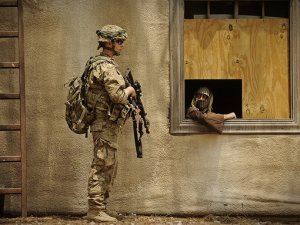
When I wrote “Rush to the intimate” (DOWNLOADS tab), a discussion of the ‘cultural turn’ in US counterinsurgency, I was fascinated by a rich and rapidly expanding literature on pre-deployment training and Mission Rehearsal Exercises in simulated “Afghanistans” and “Iraqs” across the United States and beyond in what Steve Graham later called, in Cities under siege, a ‘theme-park archipelago’:

fort-polk‘US troops prepare for deployment in Afghanistan and Iraq by rotating through major Combat Training Centers.  The arc of these ‘theatres of war’ runs from the United States through Europe to Jordan and Kuwait, but the main Mission Rehearsal Exercises are conducted at the Joint Readiness Training Center at Fork Polk, Louisiana; the National Training Center at Fort Irwin, California; and the US Marine Corps Air Ground Combat Training Center at Twentynine Palms, California.  Each includes prefabricated villages and small towns to train troops in urban operations.  … There is little attempt at morphological similitude.  In fact, the same physical structures serve for Afghanistan and Iraq, as though the two are indistinguishable and interchangeable, and the buildings are rudimentary approximations.  One journalist described the crude architecture of ‘Wadi al Sahara’ at Twentynine Palms as being ‘like an impressionist painting’.  From the surrounding hills it could be mistaken for part of Basra or Fallujah, but ‘a walk through its dusty streets shows it to be only a vast collection of shipping containers.’ This too is not without its performative consequences.  Shipping containers are an improvement on poker chips and Lego bricks, but reducing living spaces to metal boxes and studio flats conveys a silent message about the sort of people who live in them.

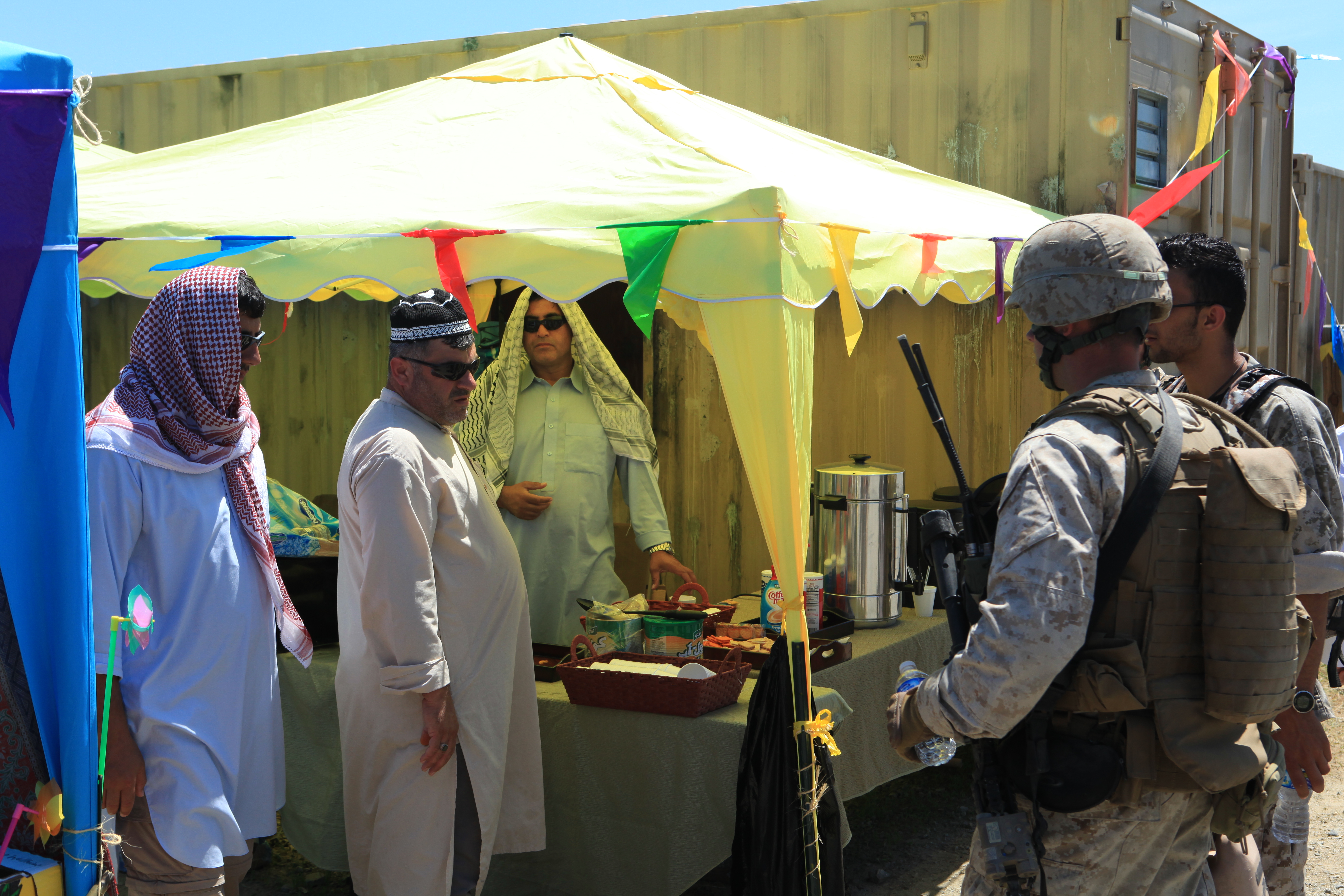
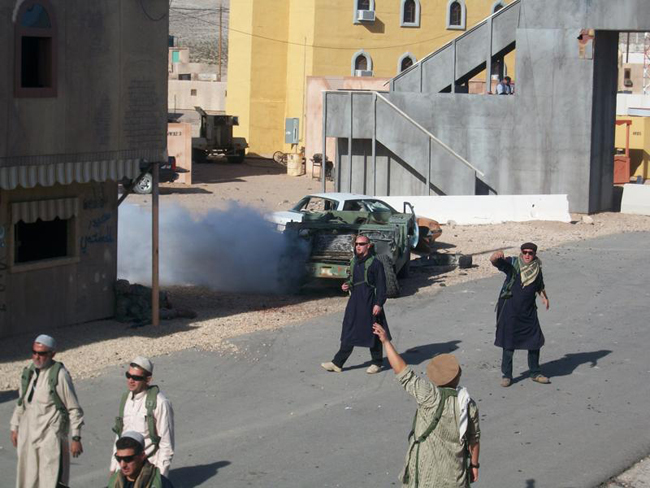
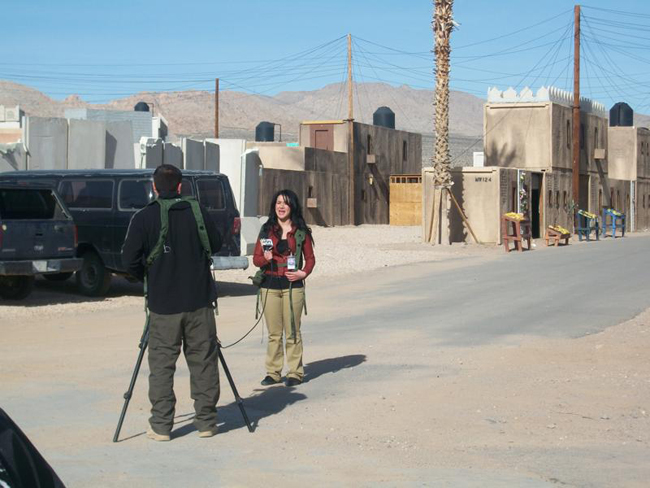
Realistic Urban Training‘The focus at all the training centres is on interactive realism, and the cultural turn has transformed the terms of engagement.  In the early stages of the ‘war on terror’, the emphasis was on kinetic operations and on state-of-the-art special effects that drew on the visual and pyrotechnic skills of Hollywood and theme-park designers.  When one reporter visited Fort Polk in January 2003, she described troops calling in air strikes, securing roads and bridges on the perimeter of a town, and dealing with ambushes staged by insurgents played by soldiers from the base. Her story repeated the physical imagery of the Handbook for Joint Urban Operations issued the previous fall with precision: ‘From sewers to rooftops, cities are multi-layered, like three-dimensional chess boards.’  Civilians appeared only as casualties, and then only in the very last paragraph, where one soldier admitted that he had ‘no clear answer’: ‘“What can you do?”’ The cultural turn is supposed to provide the answer to that question, and from 2006 a flurry of media reports described a new emphasis on military-civilian interaction.  Exercises still include kinetic operations, though these are now more likely to focus on combating IEDs and suicide bombings, but the main objective is no longer scoring kills but ‘gaining the trust of the locals.’  The deployment of Civilian (sometimes called Cultural) Role Players has expanded dramatically.  More than 1,000 are on call at Fort Polk alone, including 250 Arabic speakers, many of them recruited from the Iraqi diaspora in Atlanta, Houston, Memphis and as far away as Michigan.  Their very presence has changed the imaginative geography.  One corporal noted that his previous training had never incorporated civilians ‘wondering what’s going on, and looking around, and doing everyday things.  So when we got there and there were other people besides the enemy, it kind of threw us on our heels.  You know, all we trained for was that the enemy are the only ones on the streets.’  But these Civilian Role Players are not extras, figures to be bypassed, and their roles are carefully scripted.  They play community leaders, police chiefs, clerics, shopkeepers, aid workers, and journalists, and new scenarios require troops to understand the meaning of cultural transactions and to conduct negotiations with local people.  Careful tallies are kept of promises made by US commanders, and the immediate consequences of civilian casualties are dramatized in depth.  Mock newscasts by teams representing CNN and al Jazeera remind troops that local actions can have far-reaching consequences.  Even the special effects have become more intimate; in one Gothic gesture, amputees are used to simulate the effects of suicide bombs (though not, I suspect, US air strikes).  ‘It is no longer close in and destroy the enemy,’ one Marine officer explained: ‘We have to build relationships with Iraqis in the street.’

At the time the richest reports were these (and the quotations above were taken from them): Dexter Filkins and John Burns, ‘Mock Iraqi villages in Mojave prepare troops for battle’, New York Times, 1 May 2006; Wells Tower, ‘Letter from Talatha: Under the God Gun’, Harper’s Magazine, January 2006; Vince Beiser, ‘Baghdad, USA’, Wired Magazine 14.06 (June 2006); Tony Perry, ‘“Mojave Viper” sessions reflect situations in Iraq’, Los Angeles Times, 24 July 2006; Guy Rez, ‘Simulated city preps Marines for reality of Iraq’, National Public Radio, 13 April 2007.

I now need to re-visit all of this for The everywhere war.  My good friend, the ever-enterprising Oliver Belcher, visited Muscatatuk Urban Training Center in Indiana in September 2010 as part of his PhD research, so I had some idea of what had changed in the interim (and what had not).

NTC Fort Irwin exercise

Now Geoff Manaugh (of BldgBlog fame) has provided a sumptuously illustrated account (also on his blog here and at Venue here) of his recent visit to the simulated Afghan town of Ertebat Shar at Fort Irwin in the Mojave Desert (above); when US troops were training for Iraq it was Medina Wasl, and the basic geometry was imported from satellite photographs of Baghdad.
‘… at the most basic level, soldiers will use Fort Irwin’s facsimile villages to practice clearing structures and navigating unmapped, roofed alleyways through cities without clear satellite communications links. However, at least in the training activities accessible to public visitors, the architecture is primarily a stage set for the theater of human relations: a backdrop for meeting and befriending locals (again, paid actors), controlling crowds (actors), rescuing casualties (Fort Irwin’s roster of eight amputees are its most highly paid actors, we learned, in recompense for being literally dragged around during simulated combat operations), and, ultimately, locating and eliminating the bad guys (the Blackhorse regiment [a 120-strong insurgent force drawn from the 11th Armored]).’

Other recent images and video-essays can be found here and here.

Two things in particular stand out for me from Geoff’s immensely interesting essay.

First, the site and at least some of its training exercises are now regularly open to the public – NTC ‘Box Tours’ run twice a month and can be booked no more than 30 days in advance: see here for details – so special dispensations are no longer needed.  As this implies, the sense of public scrutiny has evidently been dramatically heightened since 2007, though even then national media seemed to be all over the place, and this now extends to the incorporation of the visitors themselves.  Geoff reports:

‘In the series of set-piece training exercises that take place within the village, the action is coordinated from above by a ring of walkie-talkie connected scenographers, including an extensive internal media presence, who film all of the simulations for later replay in combat analysis. The sense of being on an elaborate, extremely detailed film set is here made explicit. In fact, visitors are openly encouraged to participate in this mediation of the events: We were repeatedly urged to take as many photographs as possible and to share the resulting images on Facebook, Twitter, and more.’

NTC Fort Irwin media

As I’ve argued before, this sense of reflexivity – attention to the conduct of conduct – is focal to later modern war (though it extends far beyond multiple media platforms and includes, crucially, the lawyering-up of the kill-chain).

Second, the wounds of war have become ever more elaborately scripted.  Wells Tower‘s brilliant ‘Letter from Talatha’ (cited above) was very good on this, but now Geoff reproduces
‘an extraordinary collection of injury cards handed out to fallen soldiers and civilians. These detail the specific rules given for role-playing a suite of symptoms and behavior — a kind of design fiction of military injury.’

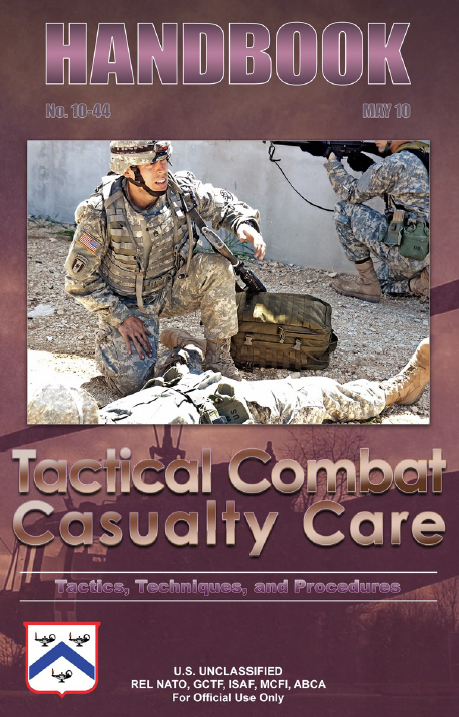
US ArmyTactical Combat Casualty CareScanning these cards raises a series of questions about other, more visceral geographies that lie behind the fiction: the (selective) geographies of care that extend from a war-zone back to hospitals in the United States. The US military has developed an elaborate system of recording and removing its own casualties (as part of what it usually calls ‘tactical combat casualty care‘).

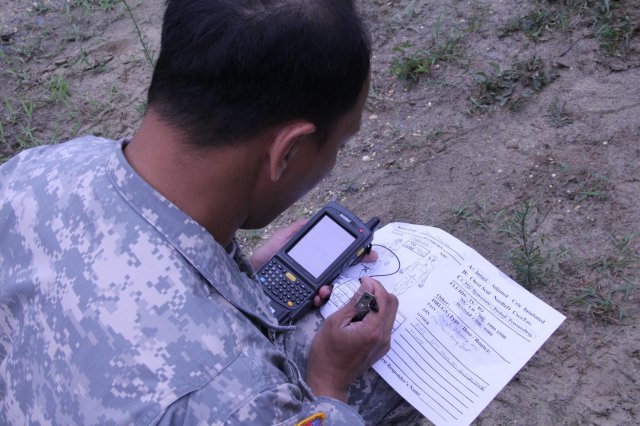
Tactical telemedicineThe geography of this process is acutely physical. The delays imposed by time and space can kill, which is why the US military is currently exploring what it calls ‘tactical telemedicine’ (see the simulation report here; image on right).

The military casualty system is the product of a long historical geography: there’s a useful review of the US experience up to World War II by Bernard Rostker here, and I’m starting to wonder – with another good friend, Craig Jones – and as part of our joint interest in ‘geographies of the kill-chain’ how to explore the changing political and cultural geographies of injury and trauma that radiate from military violence.  There are vital comparative aspects to this, involving not only the (differential) treatment of combatants and civilians by different actors but also the different capacities of military and civilian medicine in war-zones and beyond.  All other dimensions of the theatre of war.

Battle of the maps

Books & Ideas has a translated interview with Michel Foucher, ‘A world out of key’, on cartography and geopolitics.

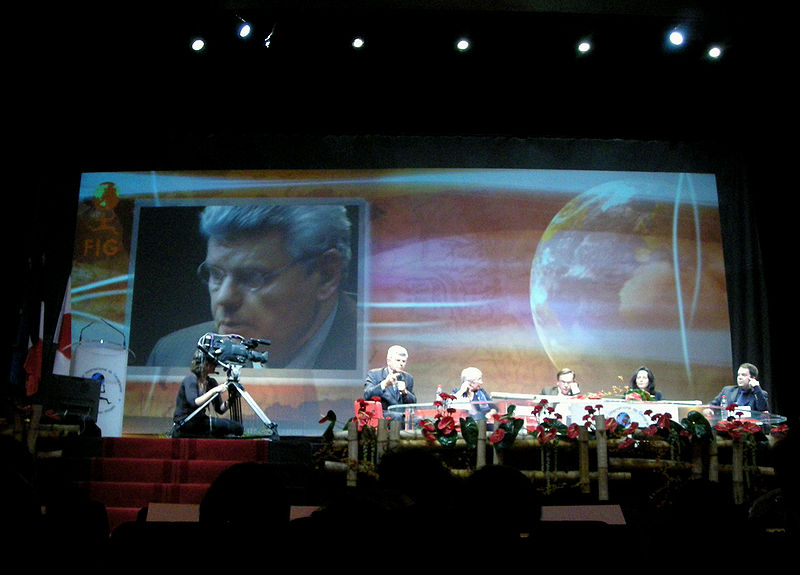
Foucher is a former diplomat and now a professional geographer (though no doubt each requires the skills of the other).  A graduate of the Sorbonne, he was special envoy to the Balkans and the Caucasus (1999), adviser to the French Foreign Minister (1997-2002), head of the Policy Planning Staff of the Foreign Ministry (1999-2002), French Ambassador to Latvia (2002-2006), and Ambassador at large for European Issues (2007).  He is currently Director of Studies and Research at the Institut des hautes études de défense nationale and Professor of Applied Geopolitics at the École Normale Supérieure in Paris.  At the 19th Festival of Geography he took part in a roundtable on ‘Les nouveaux territoires de la guerre’ (below; video here), and repeatedly invokes Clausewitz to insist that ‘the geographer is [the person] who looks over the hill’.

FOUCHER Nouveaux territoires de la guerre

Prolonging that martial note, the current interview is based on Foucher’s recent book, La bataille des cartes.  The analysis is conventional enough – though I like Foucher’s image of a ‘dissonant world’, which could be made to play off Edward Said‘s ‘contrapuntal geographies’ (hence the title of the interview).  It’s a wide-ranging discussion, from the meaning of geopolitics and questions about ‘strategic autonomy’ in our dissonant world, through reflections on territorialisation (and ‘maritimisation’ – works much better in French) and the power of imaginative geographies embedded in maps, to b/ordering and the implications of the Arab uprisings for the imaginaries installed by colonial cartographies.  (You can find an earlier interview on borders, security and identity here). The B&I translation is clunky in places, but it’s a good survey for a public audience.  Above all, Foucher is determined to counter the view that geography is what Jean-Claude Guillebaud called ‘a dead star’.

A Battle of Maps

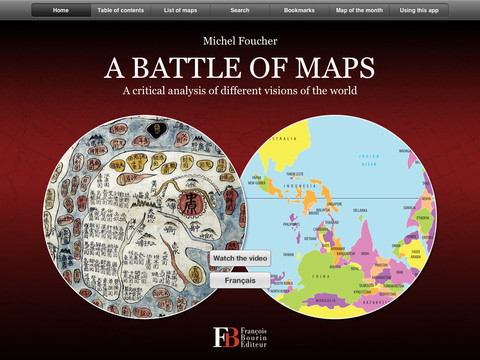
As Stuart Elden noted, the project from which it derives is available not only as a book but in a digital version for the iPad, A Battle of the Maps, in either French or English. You can try it out free (‘Lite’ – just the first two sections) or download the full version here.

There’s an irony in all this; Foucher notes that ‘in an age dominated by screens’ the market depends on ‘the sham of “it’s true because it’s in colour”, a wordless geography’.  Foucher seeks to undo this cartographic rhetoric through 74 Le Monde Diplo-style  maps and accompanying text, and some of them – even in the free version – are suitably imaginative: ‘The world according to Standard & Poor’s’ or ‘The banker’s mental map’.  As Foucher notes, ‘geopolitical rhetoric enables experts who are neither geographers nor political scientists, still less cartographers, to seize commercial opportunities.’  And as those two maps also imply, many of them aren’t even experts….

War tourism

531852_10152763437810085_650007389_n

I spent part of the week-end at UBC’s Museum of Anthropology, which is currently hosting Safar/Voyage: contemporary works by Arab, Iranian and Turkish artists (until 15 September).  I’d written an essay for the accompanying catalogue – “Middle of What?  East of Where?”, which you can find under the DOWNLOADS tab – and I was at MOA on Saturday afternoon for a lively and appropriately wide-ranging public conversation (billed as a”Global Dialogue”) on “Nomadic aesthetics and the importance of place” with Jian Ghomeshi, artist Jayce Salloum and curator Jill Baird.

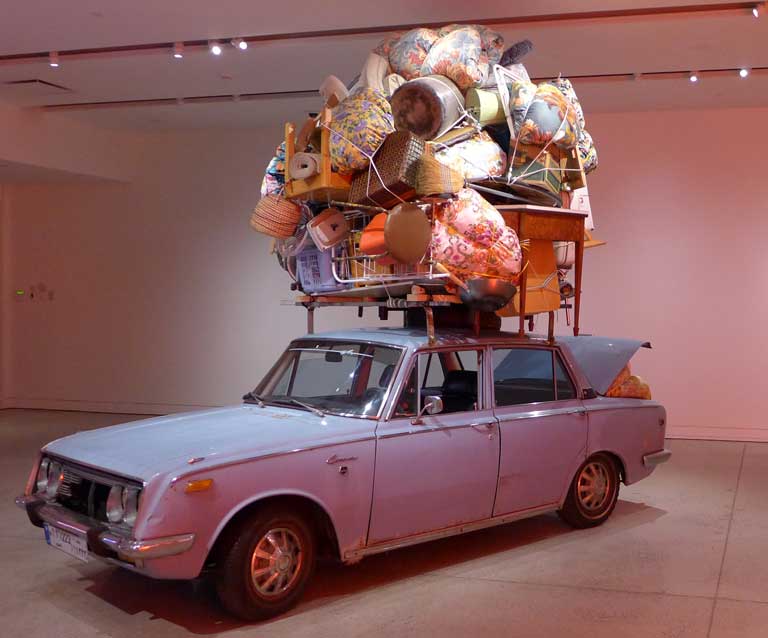
destinationx1While I was at MOA I spent some time with the artworks on display and in the company of a brilliant app that provides all sorts of information and context; for such a compact exhibition they are thrillingly diverse, speaking to one another in a multiplicity of ways, and disrupting common stereotypes of the region as somehow homogeneous.  Two exhibits are likely to be of particular interest to readers of this blog.  The first, artfully parked outside the second, is Lebanese artist Ayman Baalbaki‘s Destination X (originally 2010, but recreated for MOA in 2013):

Destination X is an old car piled high with the hastily gathered belongings of a refugee family: luggage, everyday objects, and colourful cloth bundles tied to the roof. During the Lebanese civil war these floral fabrics, regional and postcolonial at the same time, replaced fabrics embroidered with local peasant motifs, mirroring the lost agricultural “paradise.” The overloaded car suggests movement and absence, urgency and wandering. The letter X symbolizes forced flight into exile to places unknown. Distance is swallowed in an aimless journey, when time and duration become vague. The journey and its hardships, the risk of leaving home, the difficulty of resettling.

You can find images of earlier versions here, where the artist explains that, while the work had its origins in the Lebanese civil war, it speaks to many other situations and peoples: “Other nationalities can sympathise…Many of the elder generations, it echoes with them…either from Bosnia or from World War II.”

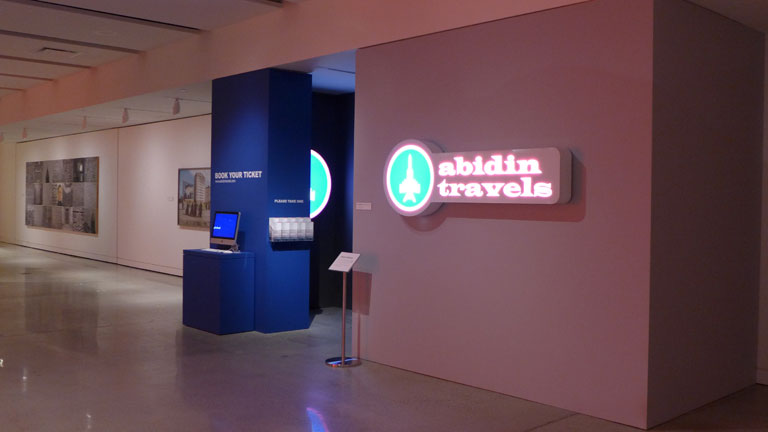
ATinstallThe second is Adel Abidin‘s mixed-media installation, Abidin’s Travels (2006), set up as a travel agent’s office, complete with posters, brochures and video, and its nemesis (a website: how many travel agents are there these days?)

I came up with the idea when I visited Iraq in 2004 and was greeted at a checkpoint by an American soldier, who said, “Welcome to Baghdad!” I realized I was being welcomed by an occupier of my own city. This experience made me think about cities in war and their messy transformations.

After the occupation and gentrification of a city in a conflict zone, you would need a guide, even if you grew up there. This is what I saw happening in Baghdad. So I created a travel agency, using “holiday travel” as a point of departure and Iraq as a destination, to explore the idea of tourism and consumerism in general, and how these generic models break down when applied to a country ripped apart by war. I created this work to draw attention to the new Iraq, “the democratic Iraq,” a mythical place where, in reality, possibility and opportunity barely exist.

You can find a short, interesting commentary by Laura Marks here.

longstillset

Baghdad has obviously changed in the last six or seven years, but in case you think tourism has been ‘normalised’ check out Wikitravel‘s current guide, which reads as though it was written by the artist (“The easiest way to stay safe in Baghdad is not to go there in the first place”).  Still more revealing, look at the hotel reviews (yes) on Trip Advisor here.  Like all reviews on the site, they tell you as much about the reviewer as they do the place – I was particularly taken by this review of one hotel, which was never far from the headlines during the invasion and occupation, and which displays what I hope is a rare sensitivity to the lot of ordinary people in Baghdad:

The problems start with the lack of amenities. The pool wasn’t fit to swim in, the hotel doesn’t have a bar, there isn’t a gym, nothing. The service was appalling. The food was always cold & generally dreadful, the bathrooms are fitted out with full bottles of head and shoulders, Colgate, dove soap, bic razors and gilette shaving foam. There is no room service, no laundry service and all that for $300 a night….One plus. It’s safe, which is saying something for Baghdad…

Not much global dialogue there then.

The security archipelago

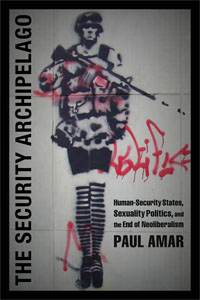
AMAR Security archipelagoA new book from the ever-creative Paul Amar coming this summer from Duke: The Security Archipelago: Human-Security States, Sexuality Politics, and the End of Neoliberalism. Paul wins the prize for getting the most buzz-words into a single title. Our paths crossed most recently in Beirut, at a lively conference at AUB on Security of/in the city, and last year in Lund for a workshop on the Arab uprisings.  For the next two years he’s heading a regional working-group for the Arab Council of the Social Sciences called “Producing the Public: Spaces and Power” (more on this soon).

Paul is a wonderfully engaging speaker and a brilliant writer, but if you don’t know his work you can get a small taste of his argument in this paper on ‘Turning the gendered politics of the human security state inside out?’ for an IPSA-EPCR panel on ‘Governing life globally’ in Sao Paolo and from this excellent interview on ‘Middle East Masculinities’ at Jadaliyya at about the same time; there are other PDFs available from his webpage at UC Santa Barbara here.

The book paints on a canvas that stretches far beyond the ‘Middle East’:

In The Security Archipelago, Paul Amar provides an alternative historical and theoretical framing of the refashioning of free-market states and the rise of humanitarian security regimes in the Global South by examining the pivotal, trendsetting cases of Brazil and Egypt. Addressing gaps in the study of neoliberalism and biopolitics, Amar describes how coercive security operations and cultural rescue campaigns confronting waves of resistance have appropriated progressive, antimarket discourses around morality, sexuality, and labor. The products of these struggles—including powerful new police practices, religious politics, sexuality identifications, and gender normativities—have traveled across an archipelago, a metaphorical island chain of what the global security industry calls “hot spots.” Homing in on Cairo and Rio, Amar reveals the innovative resistances and unexpected alliances that have coalesced in new polities emerging from the Arab Spring and South America’s Pink Tide. These have generated a shared modern governance model that he terms the “human-security state.”

Richard Falk describes it as ‘an extraordinary book that revolutionizes the way to think about security’ – and about time too.  Like much high-flying academic commentary on war, much of the critical debate around security displays a theoretical sophistication that is not matched by analytical substance.   Paul’s work has always avoided that trap, and Jack Halberstam‘s endorsement makes it plain that this is a book that combines erudition with empirical heft:

Paul Amar works in English, Arabic, and Portuguese [and in Spanish too], and he studies security regimes in a comparative framework encompassing the Middle East, North and South America, and Europe. Combining research that he has done in Brazil and Egypt on the emergence of new forms of security and new grammars of protest politics with the unfolding stories of an economic boom in Brazil and political change in Egypt, Amar has written an up-to-the-moment account of the ‘human-security state’ and its opponents.

Here’s a list of the Contents:

Introduction. The Archipelago of New Security-State Uprisings
1. Mooring a New Global Order between Cairo and Rio de Janeiro: World Summits and Human-Security Laboratories
2. Policing the Perversions of Globalization in Rio de Janeiro and Cairo: Emerging Parastatal Security Regimes Confront Queer Globalisms
3. Muhammad Atta’s Urbanism: Rescuing Islam, Saving Humanity, and Securing Gender’s Proper Place in Cairo
4. Saving the Cradle of Samba in Rio de Janeiro: Shadow-State Uprisings, Urban Infranationalisms, and the Racial Politics of Human Security
5. Operation Princess in Rio de Janeiro: Rescuing Sex Slaves, Challenging the Labor-Evangelical Alliance, and Defining the Sexuality Politics of an Emerging Human-Security Superpower
6. Feminist Insurrections and the Egyptian Revolution: Harassing Police, Recognizing Classphobias, and Everting the Logics of the Human-Security State in Tahrir Square 200
Conclusion. The End of Neoliberalism?

Dis-placement

IDPs 2012

global-overview-2012-hpThe Internal Displacement Monitoring Centre in Geneva has released the map I’ve reproduced above.  From their research, the IDMC reckons that last year 28.8 million people were displaced by armed violence, conflict and human rights violations, an increase of 6.5 million over the previous year.  The conflicts in Syria (which now has more than 3.8 million IDPs] and the Democratic Republic of Congo (which now has around 2.6 million IDPs) accounted for about half the increase; the vast majority of displaced persons are women and children.  You can download the detailed Global Overview here, and you can find more on the geographies of internal displacement through the Brookings-LSE Project on Internal Displacement here.

The increases are dramatic, but the eruption of new wars and the continuation of chronic conflicts make it all too easy to overlook the legacy of displacement – all those left stranded in the wake of war and its penumbra of sometimes silent violence.  In the case of Iraq, for example, and even after returning people have been taken into account, Elizabeth Ferris, co-director of the Brookings-LSE project, has recently suggested that“perhaps three million people, 10 percent of Iraq’s population, remain displaced – and forgotten.”  In its recent report on Iraq ten years after the US-led invasion, and specifically on what it calls “the humanitarian impact”, IRIN highlights the ‘forgotten displacement crisis‘ (see also the workshop report from Oxford’s Refuges Study Centre here).  And don’t lose sight of  all those who have sought refuge from the Syrian conflict in Iraq (more than 140,000), especially in the northern governorates.

Lost in all the numbers, too, is the way in which violence severs those intimate ties, material and affective, between particular people and particular places: ties that are intrinsic to local knowledge (and often the means of survival) and to identity.  Geographers have written about place (and its – I think misconceived – duals, ‘placelessness’ and ‘non-places’), but many of these classical discussions have been so romanticised (I’m thinking of books like Yi-Fu Tuan‘s Space and place) that they have somehow failed to engage with the enormity of forced dis-placement.  I’m not saying that human geographers have been indifferent to internal displacement, still less to refugees – far from it – but the absence of a close engagement with the concept that is in many ways at the heart of displacement is none the less a striking absence from all those paeans to place.

Even Tim Creswell‘s fine work – I’m thinking of his ‘Weeds, plagues, and bodily secretions: A geographical interpretation of metaphors of displacement’ in the Annals of the Association of American Geographers (1997) – engages more with language than with landscape and is more at home with Anglo-American displacements.  But, perhaps prophetically, the last of his three poems on ‘Displacements’ in the latest Geographical Review [103 (2) 2013] includes the hope that

‘the color 

and screech of Mysore and Mogadishu

do not dwindle into cartographic memory…’

Falling downwards?

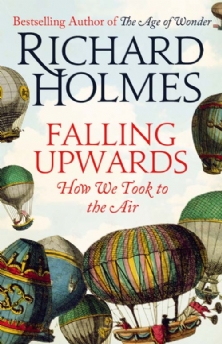
058602-FC222Richard Holmes, author – amongst many other books – of Tommy: the British soldier on the Western Front, which I’ve read with the keenest interest for my “Gabriels’s Map” project, has a wonderfully readable new book out that intersects with my “Killing Space” project on bombing: Falling upwards: how we took to the air. It’s a history of ballooning (of sorts).

Although Holmes does address the military uses of hot-air balloons, he is something of a romantic and there’s more here on the delights and dangers (for those in the air) than the prospect of war from the air they helped to usher in.

But early in the book he describes a collection of balloon memorabilia made by Sophia Banks (sister of Joseph) that included a British cartoon from December 1784 entitled “The Battle of the Balloons’ (you can see a watermarked copy here):

This shows four balloons, two flying the French fleur de lys and two the British Union Jack, manoeuvring for aerial combat. Their crews are armed with muskets, but also, more menacingly, with broadside cannons. Their muzzles point through portholes cut in the balloon wickerwork.  Here the balloon is already conceived of as a weapon of war, comparable to the navy’s ships of the line.

Less than ten years later the French would establish the first military balloon regiment, but others insisted on the essentially pacific nature of ballooning and, indeed, of manned flight more generally. In his ‘Letter on Flight’ (1864) Victor Hugo, a good friend of the celebrated aeronaut Nadar, waxed lyrical (the appropriate Icarian verb, as it turned out) on the changes the balloon would inaugurate:

‘It will bring the immediate, absolute, instantaneous, universal and perpetual abolition of all frontiers, everywhere… Armies will vanish, and with them the horrors of war, the exploitation of nations, the subjugations of populations. It will bring an immense and totally peaceful revolution. It will bring a sudden golden dawn, a brisk flinging open of the ancient cage door of history, a flooding in of light. It will mean the liberation of all mankind.’

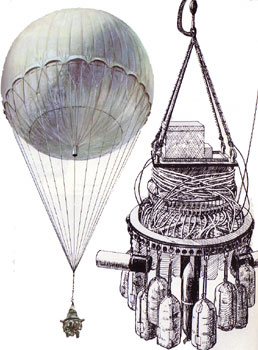
Fu-Go-bomb-balloonIf only.  There is, after all, a counter-history of ‘falling downwards’: the first bombing from the air involved unmanned balloons loaded with shrapnel launched by Austria during the siege of Venice in 1849 (though they apparently had little effect); during the American Civil War and the First World War observation balloons were a vital means of surveillance and artillery ranging; and in retaliation for the bombing of Tokyo, in the dog days of World War II the Japanese experimented with using incendiary balloons (‘fire balloons’ or ‘balloon bombs’ – see right) to attack the west coast of Canada and the United States (more here). The only one of these to appear in Holmes’s account is a splendid discussion of ballooning in the Civil War; his collection of ‘balloon stories’, as he modestly describes his project, stops at the end of the nineteenth century (and is concerned, above all, with the experience of balloonists, so ’empty’ balloons don’t count for much).

For all that, the Janus-faced history of the balloon, one peaceful and the other stridently martial, has implications for contemporary discussions of another aerial object: the drone.  The specificity of the object matters, of course, since it has particular capacities and dispositions – but their realization depends on the networks in which they are embedded.  As with balloons, so with drones.

Greenwashing war

KUPAR Hot spotter's reportComing next month from Minnesota, a new book from one of Allan Pred‘s most creative graduate students (and that’s saying something!).  Shiloh Krupar – a contemporary of the equally talented Trevor Paglen – is Assistant Professor of Culture and Politics at the Edmund A. Walsh School of Foreign Service at Georgetown University, and her Hot spotter’s report promises to add new dimensions to discussions of the biopolitics of militarism and the enlistment of ‘nature’ in the service of military violence:

Many nuclear and other U.S. military facilities from World War II and the Cold War are now being closed and remediated. Some of these sites have even been transformed into nature refuges and hailed as models of environmental stewardship. Yet, as Shiloh R. Krupar argues, these efforts are too often doing less to solve the environmental and health problems caused by military industrialism than they are acting to obscure the reality of ongoing contamination, occupational illnesses, and general conditions of exposure.

Using an unusual combination of empirical research, creative nonfiction, and fictional satire, Hot Spotter’s Report examines how the biopolitics of war promotes the idea of a postmilitary and postnuclear world, naturalizing toxicity and limiting human relations with the past and the land. The book’s case studies include the conversion of the Rocky Mountain Arsenal into a wildlife refuge, a project that draws on a green “creation story” to sanitize other histories of the site; the cleanup and management of the former plutonium factory Rocky Flats, where the supposed transfiguration of waste into wilderness allows the government to reduce the area it must manage; and a federal law intended to compensate ill nuclear bomb workers that has sometimes done more to benefit former weapons complexes.

Detecting and exposing such “hot spots” of contamination, in part by satirizing government reports, Hot Spotter’s Report seeks to cultivate irreverence, controversy, coalitional possibility, and ethical responses. The result is a darkly humorous but serious and powerful challenge to the biopolitics of war.

I’m sure, too, that it will have much to show us about ways of developing and conveying our arguments outside the conventions of formal academic prose. According to Bruce Braun, ‘Hot Spotter’s Report is at once a devastating indictment of ‘green war’ and a hopeful search for new conditions of existence in and beyond the toxic residues of militarism. Written with wit and passion, Krupar’s irreverent experiments with fable, satire, and creative non-fiction do much more than disrupt the ongoing sanitization of military violence; they open space for new coalitions and political imaginings in domestic landscapes marked by the legacies of imperial war.’

Contents:

Introduction
1. Where Eagles Dare: A Biopolitical Fable about the Rocky Mountain Arsenal National Wildlife Refuge
2. Alien Still Life: Managing the End of Rocky Flats
3. Hole in the Head Gang: The Reductio ad absurdum of Nuclear Worker Compensation (EEOICPA)
4. Transnatural Revue: Irreverent Counterspectacles of Mutant Drag and Nuclear Waste Sculpture
Conclusion: Hot Spotting

Situational awareness

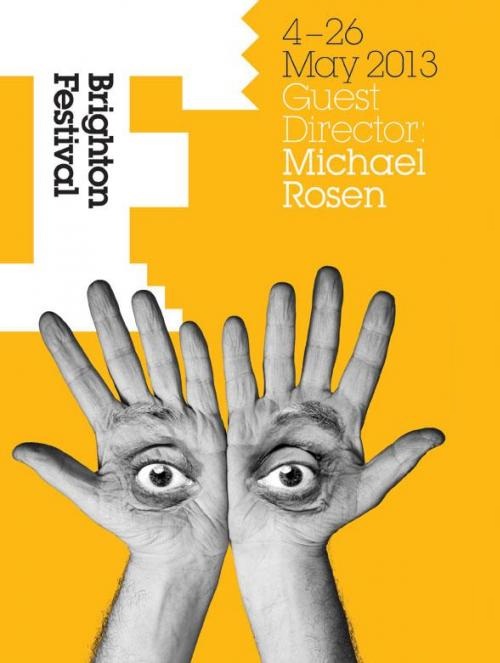
brighton-festival-2013Two art projects from Lighthouse at the Brighton Festival in the UK this month (4-26 May); thanks to Sam Hind for the information.

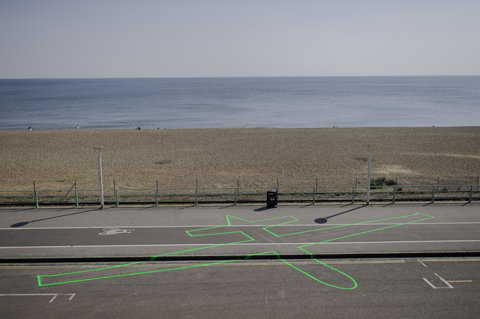
 James Bridles work will be familiar to most readers, and in Brighton he’s reprising his Under the shadow of the drone, which is a true-to-scale rendering of a Reaper, this time on the seafront:

The stark marking out in an unexpected public space of a Reaper drone’s silhouette brings the reality of these technologies into our daily lives. The work critiques the way that contemporary networked technologies, while enabling the digitally saturated culture of the 21st century, can also obscure and distance us from political and moral responsibility.

Bridle explains:

“Drones are just the latest in a long line of military technologies augmenting the process of death-dealing, but they are among the most efficient, the most distancing, the most invisible. These qualities allow them to do what they do unseen.

“We all live under the shadow of the drone, although most of us are lucky enough not to live under its direct fire. But the attitude they represent – of technology used for obscuration and violence; of the obfuscation of morality and culpability; of the illusion of omniscience and omnipotence; of the lesser value of other people’s lives; of, frankly, endless war – should concern us all.”

And Lighthouse adds: ‘By superimposing a large-scale drawing of the shadow of a drone in an urban location in Brighton, Bridle brings these chilling machines uncomfortably close to us, embedding them into our daily lives, and in the process perhaps making the reality of the daily occurrence of deadly drone strikes more tangible.’

BRIDLE Under the shadow of the drone, Brighton

For me, some of Bridle’s other projects – like Dronestagram – are more effective in bringing the strikes (rather than the technology) down to earth and into the spaces of everyday life, but it’s still an arresting project.  Size and scale matter; I remember visiting the RAF Museum at Hendon and being truly astonished at how small a Lancaster bomber was – and yet how vast the bomb door in its belly.  If you’re in Brighton, you can find Bridle’s rendering 5 minutes/500 metres walk east from the Brighton Wheel on Marine Parade, towards Yellowave Beach Sports Venue; then look down to Madeira Drive.

primary-1

The second is Mariele Neudecker‘s The air itself is one vast library (a quotation from Charles Babbage), originally shown in 2010:

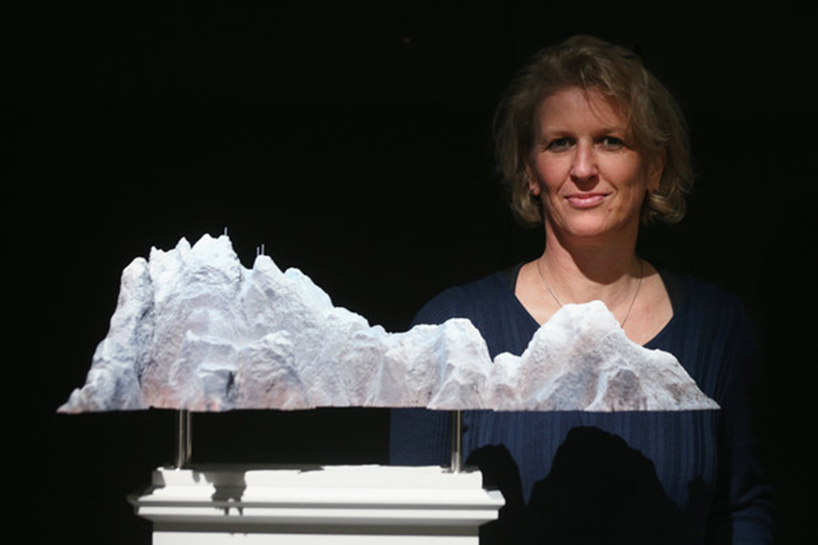
… an exhibition of startling images that explore the disturbing, and often invisible, technologies of war. In dramatic contrast with her more familiar depictions of landscape and the sublimity of nature, this highly topical study brings us face to face with weapons of mass destruction.

Neudecker’s artistic strategy is rooted in ‘ground truth’, a term used in remote sensing to describe data collected on location. Works created whilst on site at the historic Nike missile facility in the US are emblematic of Neudecker’s determination to go beyond mere representation. Her extraordinary graphite rubbings of vast Hercules missiles physically capture the object, making what is otherwise abstract and monstrous, tactile and present. Other works investigate military imaging and tactical communication, which provide us with new ways of detecting what is intended to be camouflaged and out of view.

You can see this at Lighthouse, 28 Kensington Street, Brighton, and preview images here.

For more on artworks, invisible military technologies and ‘geographies of seeing’, I thoroughly recommend honor harger‘s excellent reflections on Unmanned Aerial Ecologies here, which includes a series of brilliant images and commentaries on the work of Trevor Paglen and Marko Peljhan.  The latter is new to me and very interesting: the title for this post is taken not only from the military, which is appropriate enough, but also from one of Peljhan’s projects featured in honor’s essay.