An update to my post (which I’ve updated several times) on the US air strike on the hospital in Kunduz early last month: MSF has released an internal review of the events that took place that night. It’s only a preliminary report – the inquiry is ongoing – but it makes for grim reading.
MSF opened its Kunduz Trauma Center in August 2011, providing free, high-quality surgical care to all those who needed it (for more on MSF and other medical charities in Afghanistan, see my post on ‘The prosthetics of military violence’ here).
By the end of September 2015 the original 92 beds had grown to 140 as the numbers being treated grew:
MSF is an experienced, highly regarded relief organisation and so it comes as no surprise to learn that it was fully aware of the cardinal principle of medical neutrality and took all possible steps to secure the legal and military foundations on which it operated:
MSF activities in Kunduz were based on a thorough process to reach an agreement with all parties to the conflict to respect the neutrality of our medical facility. In Afghanistan, agreements were reached with the health authorities of both the government of Afghanistan and health authorities affiliated with the relevant armed opposition groups. These agreements contain specific reference to the applicable sections of International Humanitarian Law including:
– Guaranteeing the right to treat all wounded and sick without discrimination
– Protection of patients and staff guaranteeing non-harassment whilst under medical care
– Immunity from prosecution for performing their medical duties for our staff
– Respect for medical and patient confidentiality
– Respect of a ‘no-weapon’ policy within the hospital compound
The report makes it clear that this had been clearly endorsed by all the military and paramilitary parties to the conflict.
Fighting intensified in the week before the air strike. Most of those treated since the Trauma Center opened had been from the Afghan government side, but from Monday 28 September ‘this shifted to primarily wounded Taliban combatants.’ The Afghan government speedily arranged the transfer of all its patients (apart from the most severely wounded cases) to another hospital. By that night the Taliban announced that it was in control of the district.
The next day, as the numbers seeking treatment increased yet again, MSF reconfirmed the GPS co-ordinates of the Trauma Center with both the Afghan authorities and the US military.
On Thursday 1 October MSF was asked by Carter Malkasian, a a special adviser to the Chairman of the Joint Chiefs of Staff, whether the hospital ‘had a large number of Taliban “holed up” and enquired about the safety of [MSF] staff’ and was told that its staff ‘were working at full capacity’ and that the hospital ‘was full of patients including wounded Taliban combatants’. And because the Taliban were hors de combat they were not a legitimate military target: there is absolutely no ambiguity about this.
That same day a UN civilian/military liason ‘advised MSF to remain within the GPS coordinates provided to all parties to the conflict as “bombing is ongoing in Kunduz.”’
On Friday 2 October two large MSF flags were placed on the roof of the hospital. That night the hospital was calm, there was no fighting taking place within the vicinity and MSF insists that there were no armed combatants in the buildings or the grounds of the hospital.
The air strikes began soon after 2 a.m. on Saturday 3 October, and throughout the attack – which lasted for over an hour – MSF made repeated attempts to stop the assault:
And yet, despite everything the US military had been told in advance and despite these repeated attempts to stop the air strikes, an AC-130 gunship made five repeated passes:
A series of multiple, precise and sustained airstrikes targeted the main hospital building, leaving the rest of the buildings in the MSF compound comparatively untouched. This specific building of the hospital correlates exactly with the GPS coordinates provided to the parties to the conflict [my emphasis].
As MSF’s Director concludes,
‘The question remains as to whether our hospital lost its protected status in the eyes of the military forces engaged in this attack – and if so, why. The answer does not lie within the MSF hospital. Those responsible for requesting, ordering and approving the airstrikes hold these answers’.
And, as the report notes, this is the view from the inside: ‘What we lack is the view from outside the hospital – what happened within the military chains of command.’
So far, controlled leaks from the US military investigation have suggested that an Afghan ‘rapid reaction force’ requested the attack, that it had been rushed to Kunduz from elsewhere in Afghanistan, arriving ‘just days before the air strike’, and that it had no experience in working with the US ground troops from the Third Special Forces Group who relayed the request for ‘aerial fires’ to the Joint Operations Center at Kunduz airfield. The Green Berets ‘were aware it was a functioning hospital,’ AP reported, ‘but believed it was under Taliban control.’ The report continues:
The Green Berets had asked for Air Force intelligence-gathering flights over the hospital, and both Green Berets and Air Force personnel were aware it was a protected medical facility, the records show, according to the two people who have seen the documents.
The analysts’ dossier included maps with the hospital circled, along with indications that intelligence agencies were tracking the location of [an] … operative [from Pakistan’s Inter-Services Intelligence directorate who was allegedly co-ordinating Taliban operations in the area] and activity reports based on overhead surveillance, according to a former intelligence official who is familiar with some of the documents. The intelligence suggested the hospital was being used as a Taliban command and control center and may have housed heavy weapons.
… the crew of the AC-130, call sign Hammer, verified their permission to fire twice before engaging the hospital. AC-130Us carry a crew of 14, often including a special forces liaison officer responsible for communicating with ground units.
And the US troops remained in contact with the AC-130 gunship throughout the attacks.
So even if you accept all these unverified claims about the intelligence (or lack of it) behind the air strikes, you surely have to wonder about the studied lack of response to the repeated calls to have the attacks stopped. Bear in mind, too, that the AC-130 has a sophisticated sensor suite on board, including IR and low-light cameras, that the hospital kept its lights on throughout the night (it was one of the few buildings in the city whose electricity was still working), and that MSF staff were advised to remain inside the co-ordinate grid they had given to the military: which turned out to be the very co-ordinates used for the attack. It seems dismally clear that the trauma center was precisely targeted and that it could not have been mistaken for any other building.
Regular readers will know that the US military has repeatedly relied on an elaborate bio-medical discourse to legitimise its actions (for a brilliant recent discussion, see Elke Schwarz‘s ‘Prescription drones: on the techno-biopolitical regimes of contemporary ‘ethical killing’’, online early at Security Dialogue); the most familiar version, hideously ironic given the events in Kunduz, is the claim that the US military has an unprecedented ability to carry out ‘surgical strikes’…
UPDATE: For an excellent analysis, see Kate Clarkat the Afghan Analysts Network here
The Intercept has released a new series of documents – not from Edward Snowden – that provide extraordinary details about the Obama administration’s targeted killing operations (especially in Afghanistan, Yemen and Somalia).
I haven’t had a chance to work through them yet – today is taken up with teaching and Eyal Weizman‘s visit for tonight’s Wall Exchange – but I imagine that readers who don’t already have their heads up will welcome a head’s up.
The reports include a considerable number of informative graphics (taken from briefing slides) together with analysis. Here is the full list:
I wrote about medical neutrality earlier this year (see here). As I noted then, Physicians for Human Rightsstipulates that medical neutrality requires:
The protection of medical personnel, patients, facilities, and transport from attack or interference;
Unhindered access to medical care and treatment;
The humane treatment of all civilians; and
Nondiscriminatory treatment of the sick and injured.
In the wake of the US air strike on a hospital operated by Médecins Sans Frontières (MSF) in Kunduz on 3 October, that first requirement assumes even greater significance: the obligation is not merely to exempt medical personnel, patients and infrastructure from military and paramilitary violence but to protect them from attack.
MSF provides details and updates on the strike here. As I write, far and away the most substantial commentary on what happened – given what we know so far – is Kate Clark‘s detailed analysis at the Afghan Analysts Networkhere (though Matt Lee‘s angry comparison with an Israeli military attack on a hospital in Gaza is worth reading too). As Kate notes,
Expressing distrust in the US military, NATO or Afghan government to uncover the truth, [MSF] said it wants an investigation by the International Humanitarian Fact-Finding Commission (IHFFC), a body set up by the Additional Protocols of the Geneva Conventions and, says MSF, is the only permanent body set up specifically to investigate violations of international humanitarian law. It has never been used before and, as neither Afghanistan or the United States have formally recognized the Commission, any investigation would have to be voluntary.
The IHFFC issued this statement today:
The International Humanitarian Fact-Finding Commission (IHFFC) has been contacted by Médecins Sans Frontières (MSF, Doctors Without Borders) in relation to the events in Kunduz, Afghanistan, on 3 October 2015.
The IHFFC stands ready to undertake an investigation but can only do so based on the consent of the concerned State or States. The IHFFC has taken appropriate steps and is in contact with MSF. It cannot give any further information at this stage.
Alex Jeffrey has commented briefly on the geopolitics of any investigation by the IHFFC, but there has been little or no commentary on how the US military investigates civilian casualty incidents – and this merits discussion because the Obama administration has insisted that the inquiry already under way by the Pentagon will be ‘transparent’, ‘thorough’ and ‘objective’. And whatever may or may not transpire with respect to the IHFFC, it’s exceptionally unlikely that the US military investigation will be stopped.
I’ve worked through five investigations of so-called ‘CIVCAS’ in Afghanistan that have been released through Freedom of Information Act requests. Each branch of the US military is required to maintain its own digital FOIA Reading Room, so that any documentation supplied in response to these requests is released into the public domain. I should say that you need to be adept at using the search function, and to have a very good idea of what you are looking for before you start (though the Pentagon has been remarkably helpful in responding to my inquiries and questions).
It’s also fair to say that the release of investigation reports is uneven. In the immediate aftermath of an earlier, devastating air strike on two tankers hijacked by the Taliban near Kunduz, called in by the German Bundeswehr but carried out by two US aircraft (see my extended discussion here), the United States repeatedly promised to release the investigation report: but it never did, even to the German Bundestag’s committee of inquiry, and despite repeated requests it remains classified.
There is also considerable variation in the transparency and quality of the reports that have been released: some are so heavily redacted that it is extremely (and no doubt intentionally) difficult to construct a reasonably comprehensive narrative, while others are the product of inquiries that seem to have been, at best, perfunctory.
The report into the airstrike in Uruzgan that I have been using for my analysis of the US air strike in Uruzgan in February 2010 – see ‘Angry Eyes (1)‘ and ‘Angry Eyes (2)‘: more to come – is neither. It has been redacted, presumably for reasons of national, operational or personal security, but its 2,000 pages provide enough detail to reconstruct most of what happened. And the investigation team was remarkably thorough: by turns forensic, sympathetic, exasperated and eventually blisteringly angry at what they found. Whether this provides an indication of what we can expect from the present inquiry I don’t know, but it does provide a benchmark of sorts for what we (and, crucially, MSF) ought to expect. (There are also ongoing investigations by NATO and by the Afghan authorities, but no details have been released about them either).
The strike took place on 21 February 2010, and the very next day General Stanley McChrystal (Commander US Forces – Afghanistan and ISAF, Afghanistan) appointed Major-General Timothy McHale to conduct what the US Army calls ‘an informal investigation’ into the incident that ‘allegedly resulted in the deaths of 12-15 local Afghan nationals and caused injured to others’; McHale was assisted by a team of senior officers, including subject matter experts and legal advisers:
There are two points to note here.
First, this was an investigation conducted by the US Army because the airstrike had been called in by US Special Forces and had been carried out by two US Army helicopter crews. But the strike was orchestrated in large measure by a US Air Force Predator crew from Creech Air Force Base in Nevada; in addition to questioning the soldiers and helicopter crews involved, McHale’s team also questioned the Predator flight crew together with the screeners and video analysts at Air Force Special Operations Command at Hurlburt Field in Florida. McHale’s report triggered a second ‘Commander-Directed Investigation’ by US Air Force Brigadier-General Robert Otto into the actions and assessments of the Predator crew; that report was submitted on 30 June 2010. As I write, it’s not known who is leading the US investigation into the bombing of the hospital in Kunduz. Since (on the fourth telling) the strike appears to have been called in by US Special Forces (at the request of Afghan forces) and carried out by a US Air Force AC-130 gunship this will presumably be a joint investigation.
Second, the term ‘informal investigation’ is a technical one; certainly, on McHale’s watch the conduct of the inquiry was remarkably rigorous. US Army Regulation 15-6 sets out how the Army is to conduct an investigation:
‘The primary function of any investigation or board of officers is to ascertain facts and to report them to the appointing authority. It is the duty of the investigating officer or board to ascertain and consider the evidence on all sides of each issue, thoroughly and impartially, and to make findings and recommendations that are warranted by the facts and that comply with the instructions of the appointing authority.’
Here is the distinction between informal and formal investigations (I’ve taken this summary from a US Army Legal Guide here; the full version, specifying the conduct of an informal investigation, is here and here):
“Informal investigations may be used to investigate any matter, to include individual conduct. The fact that an individual may have an interest in the matter under investigation or that the information may reflect adversely on that individual does not require that the proceedings constitute a hearing for that individual. Even if the purpose of the investigation is to inquire into the conduct or performance of a particular individual, formal procedures are not mandatory unless required by other regulations or by higher authority. Informal investigations provide great flexibility. Generally, only one investigating officer is appointed (though multiple officers could be appointed); there is no formal hearing that is open to the public; statements are taken at informal sessions; and there is no named respondent with a right to counsel (unless required by Art 31(b), UCMJ); right to cross-examine witnesses; etc….
“Generally, formal boards are used to provide a hearing for a named respondent. The board offers extensive due process rights to respondents (notice and time to prepare, right to be present at all open sessions, representation by counsel, ability to challenge members for cause, to present evidence and object to evidence, to cross examine witnesses, and to make argument). Formal boards include a president, voting members, and a recorder who presents evidence on behalf of the government. A Judge Advocate (JA) is normally appointed as recorder but is not a voting member. If a recorder is not appointed, the junior member of the board acts as recorder and is a voting member. Additionally, a non-voting legal advisor may be appointed to the board. Formal AR 15-6 investigations are not normally used unless required by regulation.’
In setting all this out, I should add two riders. In treating MG McHale’s investigation in such detail, I don’t mean to imply that I fully concur with its analysis. This is a judgement call, of course: the redactions make it difficult to press on several key issues, all of which relate to who knew what when and where (more to come on this). And neither do I mean to suggest that any US military investigation into what happened in Kunduz, however probing, would be adequate. As MSF’s Chris Stokeshas said, ‘relying only on an internal investigation by a party to the conflict would be wholly insufficient.’ But if the report is conducted with the same careful attention to detail – and if it is released with minimal redactions – it would provide a necessary resource for all those involved in and affected by this truly appalling incident.
More to come – I hope.
UPDATE (1): The US investigation is headed by Brigadier-General Richard Kim. Nancy Youssefreports that his arrival in Kunduz was delayed ‘because of instability in the northern Afghan city.’ As with the Uruzgan air strike in 2010, the video recording from the AC-130 gunship that carried out the attack, together with audio recordings of conversations between the air crew and ground troops, will be of great importance. According to Youssef, these show that ‘rules of engagement—the guidelines for the use of force—were misapplied.’ (In the Uruzgan case, the radio conversations between the air crew(s) and the Joint Terminal Attack Controller on the ground were released in redacted form in response to a FOIA request; apart from a single image of the strike, however, the video remains classified.)
I’ve previously noted the debate surrounding the Pentagon’s new Law of War manual which was issued in June 2015; since the US has admitted that the strike on the hospital was carried out within the US chain of command, section 7.17 on ‘Civilian hospitals and their personnel’ is particularly relevant (see also the Guardian report here):
During international armed conflict, civilian hospitals organized to give care to the wounded and sick, the infirm, and maternity cases, may in no circumstances be the object of attack, but shall at all times be respected and protected by the parties to the conflict.
7.17.1 Loss of Protection for Civilian Hospitals Used to Commit Acts Harmful to the Enemy. The protection to which civilian hospitals are entitled shall not cease unless they are used to commit, outside their humanitarian duties, acts harmful to the enemy.
7.17.1.1 Acts Harmful to the Enemy. Civilian hospitals must avoid any interference, direct or indirect, in military operations, such as the use of a hospital as a shelter for able-bodied combatants or fugitives, as an arms or ammunition store, as a military observation post, or as a center for liaison with combat forces. However, the fact that sick or wounded members of the armed forces are nursed in these hospitals, or the presence of small arms and ammunition taken from such combatants and not yet handed to the proper service, shall not be considered acts harmful to the enemy.
7.17.1.2 Due Warning Before Cessation of Protection. In addition, protection for civilian hospitals may cease only after due warning has been given, naming, in all appropriate cases, a reasonable time limit, and after such warning has remained unheeded.
The obligation to refrain from use of force against a civilian medical facility acting in violation of its mission and protected status without due warning does not prohibit the exercise of the right of self-defense. There may be cases in which, in the exercise of the right of self- defense, a warning is not “due” or a reasonable time limit is not appropriate. For example, forces receiving heavy fire from a hospital may exercise their right of self-defense and return fire. Such use of force in self-defense against medical units or facilities must be proportionate. For example, a single enemy rifleman firing from a hospital window would warrant a response against the rifleman only, rather than the destruction of the hospital.
MSF has consistently denied that anyone was firing from the hospital; it has also insisted that it received no advance warning of the attack – on the contrary, MSF ensured that all US and Afghan forces had the co-ordinates of the hospital, and made frantic phone calls to try to stop the bombing once it started.
UPDATE (2): A team from the Washington Post has produced a remarkably detailed report, ‘based on multiple interviews in Afghanistan and the United States with U.S. and Afghan military officials, Doctors Without Borders personnel and local Kunduz residents’; it includes maps and a graphic showing exactly what an AC-130 is capable of.
As you can see, the illustration makes much of the aircraft’s concentrated firepower, unleashed as it circles counter-clockwise around the target in a five-mile orbit, but the AC-130 also has an extensive sensor suite on board (see ‘Angry Eyes (1)‘: an AC-130 was involved in the early stages of the Uruzgan incident). The reporters do note that the aircraft is equipped with ‘low-light and thermal sensors that give it a “God’s eye [view]” of the battlefield in almost all weather conditions’ – but, as I’ve tried to show in my posts on Uruzgan (and as we know from other sources!), there’s no such thing as a God’s eye view. Even so, the aircrew can surely have been in no doubt that they were bombing a hospital.
This is the second installment of my analysis of an air strike orchestrated by a Predator in Uruzgan province, Afghanistan on 21 February 2010; the first installment is here.
(4) Command and control?
What was happening in and around Khod was being followed not only by flight crews and image analysts in the continental United States but also by several Special Forces command posts or Operations Centers in Afghanistan. In ascending order these were:
(1) the base from which ODA 3124 had set out at Firebase Tinsley (formerly known as Cobra);
(2) Special Operations Task Force-12 (SOTF-12), based at Kandahar;
(3) Combined Joint Special Operations Task Force – Afghanistan (CJSOTF-A) based at Bagram.
Once the ODA 3124 left the wire, command and support passed to SOTF-12; the OD-B at Tinsley had limited resources and limited (and as it happens intermittent) communications access and could only monitor what was happening.
That was normal, but in fact both higher commands did more or less the same: and the investigating team was clearly appalled. At SOTF-12 all senior (field grade) officers were asleep during the period of ‘highest density of risk and threatening kinetic activity’ (although they had established ‘wake-up criteria’ for emergency situations). The Night Battle Captain had been in post for just three weeks and had been given little training in his role; he received a stream of SALT reports from the Ground Force Commander of ODA 3124 (which detailed Size of enemy force, Activity of enemy force, Location and Time of observation) but simply monitored the developing situation – what one investigating officer characterised as ‘a pretty passive kind of watching’.
The same was true at CJSOTF-A (the staff there monitored 15-25 missions a day, but this was the only active operation that had declared a potential Troops in Contact).
When the more experienced Day Battle Captain entered the Joint Operations Center at Kandahar and was briefed by the Night Battle Captain he was sufficiently concerned to send a runner to ask the Judge Advocate, a military lawyer, to come to the JOC. He believed the occupants of the vehicles were hostile but was not convinced that they posed an immediate threat to troops on the ground: ‘I wanted to hear someone who was extremely smart with the tactical directive and use of CAS [Close Air Support] in a situation I hadn’t seen before’.
This was a smart call for many reasons; the commander of US Special Forces, Brigadier General Edward Reeder, told the inquiry: ‘Honestly I don’t take a shit without one [a JAG], especially in this business’. Significantly, the Safety Observer at Creech testified that there was no ‘operational law attorney’ available onsite for aircrews conducting remote operations; conversely, JAGs were on the operations floor of CENTCOM’s Combined Air and Space Operations Centre at Ul Udeid Air Base and, as this case shows, they were available at operations centers established by subordinate commands in-theatre.
The JAG at Kandahar was not routinely called in for ‘Troops in Contact’ but on this occasion he was told ‘my Legal Opinion [was] needed at the OPCENT and that it wasn’t imminent but they wanted me to rush over there right away…’
Meanwhile up at Bagram Colonel Gus Benton, the commanding officer of CJSOTF-A, was being briefed by his second-in-command who understood that the Ground Force Commander’s intention was to allow the three vehicles to move closer to his position at Khod. He thought that made sound tactical sense.
‘I said that … is what we did, we let them come to us so we can get eyes on them. During my time I never let my guys engage with CAS if they couldn’t see it. I said that is great and COL [Benton] said “that is not fucking great” and left the room.’
At 0820, ten minutes after the JAG entered the JOC at Kandahar, while he was watching the Predator feed, the phone rang: it was Benton. He demanded Lt Colonel Brian Petit, the SOTF-12 commander, be woken up and brought to the phone:
He spectacularly mis-read the situation (not least because he mis-read the Predator feed). It was true that the vehicles were in open country, and not near any compounds or villages; but Benton consistently claimed that the vehicles were ‘travelling towards our objective’ whereas – as MG McHale’s investigating team pointed out to him – they were in fact moving away from Khod.
There had also been some, inconclusive discussion of a possible ‘High Value Target’ when the vehicles were first tracked, but the presence of a pre-approved target on the Joint Prioritised Effects List (Benton’s ‘JPEL moving along this road’) had never been confirmed and the Ground Force Commander had effectively discarded it (‘above my authority’, he said).
Certainly, the JAG at Kandahar read the situation differently:
When Benton rang off, the JAG went over to the Day Battle Captain and Lt Col Petit and recommended an Aerial Vehicle Interdiction (AVI) team be called in for a show of force to stop the vehicles without engaging the occupants in offensive action.
They agreed; in fact another Task Force also watching the Predator feed called to make the same suggestion, and the Fires Officer set about arranging to use their Apache helicopters to conduct an AVI:
The Fires Officer had been responsible for setting up the Restricted Operating Zone for aircraft supporting the ODA – de-conflicting the airspace and establishing what aircraft would be available – but its management was de-centralised:
‘I establish the ROZ, give the initial layout of what assets are going on, and then I pass that to the JTAC [Joint Terminal Attack Controller with the Ground Force Commander at Khod]. I pass the frequencies to the assets and the JTAC controls them from there.’
At 0630, long before all this frantic activity at Kandahar, the two OH-58s had arrived at a short hold location beyond the ‘range of enemy visual and audio detection’, and at 0730 they had left to refuel at Tarin Kowt. The Day Battle Captain and the Fires Officer both thought they were still off station. In fact, the helicopters had returned to hold at Tinsley/Cobra at 0810 and flat pitched to conserve fuel (which means they landed and left the rotor blades spinning but with no lift); thirty minutes later the JTAC called them forward and the Predator began to talk them on to the target.
The Day Battle Captain had another reason for thinking he and his colleagues in the JOC had more time. He maintained that the helicopters had been brought in not to engage the three vehicles but to provide air support if and when the ‘convoy’ reached Khod and the precautionary ‘AirTic’ turned into a real TIC or Troops in Contact:
‘… the CAS brought on station for his [the Ground Force Commander’s] use was not for the vehicles but for what we thought was going to be a large TIC on the objective. The weapons team that was pushed forward to his location was not for the vehicles, it was for the possibility of a large TIC on the objective based on the ICOM chatter that we had.’
That chimes with Benton’s second-in-command at Bagram, who also thought the Ground Force Commander was waiting for the ‘convoy’ to reach Khod, but neither witness explained the basis for their belief. It was presumably a string of transmissions from the JTAC to the Predator crew: at 0538 he told them the Ground Force Commander wanted to ‘keep tracking them and bring them in as close as we can until we have CCA up’ (referring to the Close Combat Attack helicopters, the OH-58s); shortly before 0630 he confirmed that the Ground Force Commander’s intent was to ‘permit the enemy to close, and we’ll engage them closer when they’re all consolidated’; and at 0818 he was still talking about allowing the vehicles to ‘close distance.’
Yet this does not account for the evident urgency with which the Day Battle Captain and the JAG were concerned to establish ‘hostile intent’ and ‘immediate threat’. When the vehicles were first spotted they were 5 km from Khod, and when they were attacked they were 12 km away across broken and difficult terrain: so what was the rush if the Ground Force Commander was continuing to exercise what the Army calls ‘tactical patience’ and wait for the vehicles to reach him and his force?
In fact, the messages from the Ground Force Commander had been mixed; throughout the night the JTAC had also repeatedly made it clear that the ODA commander’s intent was ‘to destroy the vehicles and the personnel’. The Ground Force Commander insisted that ‘sometime between 0820 and 0830’ he sent a SALT report to SOTF-12 to say that he was going to engage the target. Unfortunately there is no way to confirm this, because SOTF’s text records of the verbal SALT reports stopped at 0630 for reasons that were never disclosed (or perhaps never pursued), but it would explain why the JTAC’s log apparently showed the JAG contacting him at 0829 to confirm there were no women and children on the target. It would also account for testimony by one of the screeners, who realised that the helicopters were cleared to engage at 0835, ten minutes before the strike, when the NCO responsible for monitoring the Predator feed at SOTF-12 ‘dropped’ into the ‘ISR’ (I presume the relevant chat room window), and in response:
‘The MC [Mission Intelligence Co-ordinator at Creech] passed that the OH58 were cleared to engage the vehicles. We were all caught off guard… It seemed strange because we had called out that these vehicles were going west. I don’t know how they determined these vehicles to be hostile… I brought up a whisper [private chat] with the MC, I said are you sure, what are the time frames when they will be coming in, and the MC responded saying we don’t know their ETA and at that moment the first vehicle blew up…’
Should those watching the events unfold have been taken aback when the vehicles were attacked? According to the pilot of the Predator, he and his crew were surprised at the rapid escalation of events:
‘The strike ultimately came a little quicker than we expected…. we believed we were going to continue to follow, continue to pass up feeds… When he decided to engage with the helos when they did, it happened very quickly from our standpoint. I don’t have a lot of info or situational awareness of why the JTAC decided to use them when they did. When they actually came up … the JTAC switched me on frequencies. So we weren’t talking on the frequency I was talking to him on a different frequency to coordinate with the helos.
But their surprise was as nothing compared to the reaction of most observers when the first vehicle exploded. The officer in charge of the screeners and imagery analysts who had been scrutinising the Predator feed at Air Force Special Operations Command at Hurlburt Field in Florida couldn’t believe it:
The Day Battle Captain testified:
‘I did not feel that the ground force commander would use any kind of close air support whatsoever to engage those vehicles… Based on the information that I had and looking at the vehicles move away it did not appear that they were moving towards the ground forces…
… as we were watching the Predator feed the first vehicles exploded. And everyone in the OPSCEN was immediately shocked… The amount of time from when that course of action approved by the SOTF commander to when we actually saw the strike occur there was no time, there was not adequate time to inform the ground commander that that was the course of action decided by the CJSOTF commander… I have phones ringing left and right, talking to people, trying to explain things, you know we look up on the screen and it happened…’
The Fires Officer:
‘I don’t think at any time anyone communicated to the GFC [Ground Force Commander] not to strike these vehicles because it is not something that we normally do. We feel that if he is in contact with the Predator and the OH-58s that we sent out to screen which we were not aware of and he is on the ground he generally has a pretty good picture of what is going on. He might be more privy to some conversation that he had with the OH-58 than what we know about. We normally give the GFC pretty big leeway on how they operate and the same with the JTAC because he has control of the assets and I am not going to try to take his assets away.’
In short, the investigation concluded that the Ground Force Commander never knew that an Aerial Vehicle Interdiction was being arranged, and neither of his higher commands were aware that he had cleared the helicopters to attack the three vehicles.
But, as I will show next, what lay behind these failures of communication was a de-centralised, distributed and dispersed geography of militarised vision whose fields of view expanded, contracted and even closed at different locations engaged in the administration of military violence. Far from being a concerted performance of Donna Haraway‘s ‘God-trick’ – the ability to see everything from nowhere – this version of networked war was one in which nobody had a clear and full view of what was happening.
Part of this can be attributed to technical issues – the different fields of view available on different platforms, the low resolution of infra-red imagery (which Andrew Cockburn claims registers a visual acuity of 20/200, ‘the legal definition of blindness in the United States’), transmission interruptions, and the compression of full-colour imagery to accommodate bandwidth pressure. So for example:
But it is also a matter of different interpretive fields. Peter Asarocautions:
‘The fact that the members of this team all have access to high-resolution imagery of the same situation does not mean that they all ‘‘see’’ the same thing. The visual content and interpretation of the visual scene is the product of analysis and negotiation among the team, as well as the context given by the situational awareness, which is itself constructed.’
The point is a sharp one: different visualities jostle and collide, and in the transactions between the observers the possibility of any synoptic ‘God-trick’ disappears. But it needs to be sharpened, because different people have differential access to the distributed stream of visual feeds, mIRC and radio communications. Here the disposition of bodies combines with the techno-cultural capacity to make sense of what was happening to fracture any ‘common operating picture’. As one officer at Kandahar put it:
‘We didn’t have eyes on, minus ISR platform, that we can all see, who watches what? All the discrepancies between who watches what. What I see may be different from what someone else might interpret on the ISR… ISR is not reliable; it is simply a video platform.’
He was talking specifically about the multiple lines of communication (and hence bases for interpretation) within his Operations Center: now multiply that across sites scattered across Afghanistan and the continental United States and it becomes clear that the contemporary ‘fog of war’ may be as much the result of too much information as too little.
I promised to post the notes for my presentation of ‘Angry Eyes: the God-Trick and the geography of militarised vision‘, and this is the first instalment (illuminated by some of the slides from the presentation). This isn’t the final, long-form version – and I would welcome comments and suggestions on these notes – but I hope it will provide something of a guide to where I’m coming from and where I’m going.
In many ways, this is a companion to ‘Dirty Dancing: drones and death in the borderlands’ (I’ll post the full text version of that shortly; until then see here, here and here), but that essay examines aerial violence in the Federally Administered Tribal Areas of Pakistan, tracing the long history of air strikes in the region, from Britain’s colonial ‘air policing’ of its North West Frontier through the repeated incursions by Afghan and Soviet aircraft during the Soviet occupation of Afghanistan (which are missing from most critical accounts) to today’s drone strikes directed by the CIA and air raids conducted by the Pakistan Air Force. ‘Angry Eyes’ focuses instead on a series of US air strikes inside Afghanistan.
(1) Eyes in the Sky
The history of aerial reconnaissance reveals an enduring intimacy between air operations and ground operations. Balloons and aircraft were essential adjuncts to army (and especially artillery) operations; before the First World War most commentator insisted that the primary use of military aircraft would be to act as spotters for artillery, enabling the guns to range on distant targets, and that bombing would never assume a major offensive role. As I’ve noted elsewhere, Orville Wright was among the sceptics: ‘I have never considered bomb-dropping as the most important function of the airplane,’ he told the New York Times in July 1917, ‘and I have no reason to change this opinion now that we have entered the war.’ For him – though he did not altogether discount the importance of striking particular targets, like the Krupp works at Essen – the key role of the aeroplane was reconnaissance (‘scouting’) for ground forces, including artillery: ‘About all that has been accomplished by either side from bomb dropping has been to kill a few non-combatants, and that will have no bearing on the result of the war.’ That was, of course, a short-sighted view – even in the First World War aircraft carried out strikes against targets on and far beyond the battlefield – but the sharper point is that the importance of aerial reconnaissance depended on a version of what today would be called networked war (albeit a desperately imperfect one) (see my ‘Gabriel’s Map [DOWNLOADS tab]; for the pre-war history of bombing, see here; for the bombing of Paris in the First World War see here).
Over the next 50 years the technologies of vision changed dramatically: from direct to indirect observation, from delayed to real-time reporting, and from still to full motion imagery.
And the ligatures between seeing (or sensing) and shooting steadily contracted until these functions were combined in a single platform – notably (but not exclusively) the Predator and the Reaper. Even then, wiring aerial operations to ground manoeuvres often (even usually) remains central:
Remarks like these speak directly to Donna Haraway’s cautionary critique of the ‘God-Trick’: the claim to see everything from nowhere, or at least from a privileged ‘vanishing point’. This has been made explicit by Lauren Wilcox in Bodies of Violence:
… the satellite systems and the drone’s video cameras mean that the bomber’s eye view is the God’s eye view of objectivity… this myth is put into practice in the apparatus of precision bombing, in which the view from above becomes the absolute truth, the view from nowhere.
And – Haraway’s point, which has been sharpened by Wilcox – is that this view from nowhere is, in some substantial sense, a view from no-body (and even of no-body). Here is Owen Sheers in his novel I saw a man:
“A U.S. drone strike.” That was all the press release said. No mention of Creech, screeners, Intel coordinator, an operator, a pilot. It was as if the Predator had been genuinely unmanned. As if there had been no hand behind its flight, no eye behind its cameras.
The appeal to the divine is thus more than a rhetorical device. One Predator pilot admitted that ‘Sometimes I felt like God hurling thunderbolts from afar.’ As Wilcox notes, then,
‘Precision bombing reproduces the illusion of a disembodied subject with not only a privileged view of the world, but the power to destroy all that it sees…. The posthuman bodies of precision bombers, relying on God’s eye, or panoptical, views are produced as masterful, yet benign, subjects, using superior technology to spare civilians from riskier forms of aerial bombardment.’
And yet there have been seemingly endless civilian casualties…
(2) Killing and casualties in Afghanistan
Throughout the US-led occupation of Afghanistan, air strikes have been the overwhelming cause of civilian deaths caused by coalition forces:
As Jason Lyall‘s marvellous work shows (below), air strikes have been concentrated in the south. I should note that the title of his map refers explicitly to ISAF air operations – I’m not sure if this includes those conducted under the aegis of Operation Enduring Freedom, a separate US-UK-Agfghan operation, although a primary source of his data is USAF Central Command’s Airpower Statistics. It makes a difference, for reasons I’ll explain later; the strike that is my primary focus took place in the south (in Uruzgan) but was in support of a Special Forces operation conducted under OEF.
In any event, most of those strikes have been carried out from conventional platforms – strike aircraft or attack helicopters – not drones (though notice how the data on weapons released from Predators and Reapers was rapidly removed from the regular Airpower Statistics issued by US Central Command):
This relates to a specific period, and one might expect drone strikes to become even more important as the numbers of US ground troops in Afghanistan fall. Even so:
in many, perhaps most of those cases drones have provided vital intelligence, surveillance and reconnaissance (ISR) capabilities: in effect, they may well have orchestrated the attacks even if they did not execute them;
according to the Bureau of Investigative Journalism [‘Tracking drone strikes in Afghanistan‘], ‘Afghanistan is the most drone bombed country in the world… Research by the Bureau… has found more than 1,000 drone attacks hit the country from the start of 2008 to the end of October 2012. In the same period, the Bureau has recorded 482 US drone strikes in Pakistan, Yemen, Somalia and Libya’; and
where drones have also carried out the attacks, Larry Lewis’s analysis of classified SIGACT data shows that ‘unmanned platforms [are] ten times more likely to cause civilian casualties than manned platforms’ (see also here)
There have been two main forms of air strike in Afghanistan. First, the US military carries out so-called ‘targeted killing’ there as well as elsewhere in the world; it has its own Joint Prioritized Effects List of people deemed to be legitimate military targets (see here and here), and the supposed capacity of its drones and their crews to put ‘warheads on foreheads’ means that they are often involved in these remote executions.
Even so, these operations have certainly caused the deaths of innocent civilians (see, notably, Kate Clark‘s forensic report on the Takhar attack in September 2010: more here).
Second, the US Air Force also provides close air support to ground troops – and civilian casualties are even more likely to result from these situations, known as ‘Troops in Contact’.
As Marc Garlasconoted when he was working for Human Rights Watch:
“When they have the time to plan things out and use all the collateral damage mitigation techniques and all the tools in their toolbox, they’ve gotten to the point where it is very rare for civilians to be harmed or killed in these attacks. When they have to do it on the fly and they are not able to use all these techniques, then civilians die.”
That said, it is simply wrong to claim that the US military is indifferent to civilian casualties. There have been several major studies of civilian casualties (see also here and here).
In addition, the juridification of later modern war means that military lawyers (JAGs) are closely involved in operational decisions (though the laws of war provide at best a limited shield for civilians and certainly do not outlaw their deaths); Rules of Engagement and Tactical Directives are issued and modified; and investigations into ‘civilian casualty incidents’ (CIVCAS) are established at the commander’s discretion. Of most relevance to my own argument is General Stanley McChrystal‘s Tactical Directive issued on 6 July 2009.
This was not window-dressing. Here is Michael Hastings in his by now infamous profile of McChrystal in Rolling Stone (8 July 2010):
McChrystal has issued some of the strictest directives to avoid civilian casualties that the U.S. military has ever encountered in a war zone. It’s “insurgent math,” as he calls it – for every innocent person you kill, you create 10 new enemies. He has ordered convoys to curtail their reckless driving, put restrictions on the use of air power and severely limited night raids. He regularly apologizes to Hamid Karzai when civilians are killed, and berates commanders responsible for civilian deaths. “For a while,” says one U.S. official, “the most dangerous place to be in Afghanistan was in front of McChrystal after a ‘civ cas’ incident.” The ISAF command has even discussed ways to make not killing into something you can win an award for: There’s talk of creating a new medal for “courageous restraint,” a buzzword that’s unlikely to gain much traction in the gung-ho culture of the U.S. military.
Indeed, McChrystal’s actions were fiercely criticised: see Charles Dunlap here (more here).
(3) Predator View
And so I turn to one of the most extensively documented CIVCAS incidents in Afghanistan: an attack on three vehicles near the village of Shahidi Hassas in Uruzgan province in February 2010, which killed at least 15-16 civilians and injured another 12. This has become the ‘signature strike’ for most critical commentaries on drone operations:
In the early morning of 21 February 2010 a US Special Forces team of 12 soldiers (these are always described as Operational Detachment Alpha: in this case ODA 3124) supported by 30 Afghan National Police officers and 30 Afghan National Army troops flew in on three Chinook helicopters to two locations near the village of Khod. This is an arid, mountainous region but Khod lies in a river valley where an extensive irrigation system has been constructed to create a ‘green zone’:
On a scale from 0 to 2, this was a ‘level 1 CONOPS’, which means that it was judged to pose a ‘medium risk’ to the troops with ‘some potential for political repercussions’. These are usually daylight cordon and search operations with air support. In this case the mission was to search the compounds in and around the village for a suspected IED factory and to disrupt ‘insurgent infrastructure’.
The Taliban clearly knew they were coming. While the troops waited for dawn the scanners on their MBITR radios picked up chatter urging the mujaheddin to gather for an attack, and they passed the frequency to an AC-130 gunship which was providing air support; through their night vision goggles the troops could see figures ducking into the cover provided by the irrigation ditches; and communications intercepted by other support aircraft, including a manned electronic signals intelligence platform referred to only by its call sign ‘Arrow 30’, confirmed a strong Taliban presence.
There were reports of vehicles moving towards the village from the south, and then headlights were detected five kilometres to the north. The AC-130 moved north to investigate. It had an extensive sensor suite on board but its resolution was insufficient for the crew to detect whether the occupants of the vehicles were armed [PID or ‘positive identification’ of a legitimate military target], and so they co-ordinated their surveillance with a Predator that had taken off from Kandahar Air Field and was controlled by a crew (call-sign KIRK 97) at Creech Air Force Base in Nevada. In addition to its Multi-Spectral Targeting System, the Predator was equipped with an ‘Air Handler’ that intercepted and geo-located wireless communications; this raw signals intelligence was handled by an ‘exploitation cell’ (almost certainly operated by a National Security Agency unit at Kandahar) who entered their findings into one of the chat-rooms monitored by the Predator and other operations centres that were involved in the mission.
When the AC-130 started to run low on fuel, the Predator took over ISR for the duration of the mission. The JTAC could not see the trucks from his position on the ground, and neither did he have access to the full-motion video feed from the Predator – the ODA was not equipped with a ruggedised laptop or ROVER [Remote Operational Video Enhanced Receiver] that should have been standard equipment (‘There’s one per base, and if it goes down you’re out of luck’) – and so he had to rely entirely on radio communications with the flight crew.
Throughout the night and into the morning the crew of the Predator interpreted more or less everything they saw on their screens as indicative of hostile intent: the trucks were a ‘convoy’ (at one stage they were referred to as ‘technical trucks’); the occupants were ‘Military Aged Males’ (’12-13 years old with a weapon is just as dangerous’); when they stopped to pray at dawn this was seen as a Taliban signifier (‘I mean, seriously, that’s what they do’); and when the trucks swung west, away from the direct route to Khod, this was interpreted as ‘tactical manoeuvring’ or ‘flanking’.
Eventually the ground force commander with ODA 3124 became convinced of hostile intent, and anticipated an imminent ‘Troops in Contact’. This in turn prompted the declaration of a precautionary ‘AirTIC’ to bring strike aircraft on station since the Predator only had one Hellfire missile onboard. The ground force commander was annoyed when fighter aircraft arrived (call-sign DUDE 01) – ‘I have fast movers over my station, my desire is to have rotary-wing aircraft’ – because he believed the engine noise would warn the target. In fact, the JTAC who had access to intercepts of Taliban radio communication confirmed that ‘as soon as he showed up everyone started talking about stopping movement’; coincidentally, as it happened, the vehicles immediately swung west, heading away from Khod.
Two US Army Kiowa combat helicopters (OH-58s, call-sign BAM-BAM) were now briefed for the attack.
Their situation map (below) confirmed this as a landscape of ever-present threat, and this imaginative geography was instrumental in the reading of the situation and the activation of the strike:
Meanwhile, the Predator’s sensor operator was juggling the image stream, switching from infrared to ‘Day TV’ and trying to sharpen the focus:
The helicopters had their own sensor system – a Mast Mounted Sight (MMS) – but its resolution was low (see below); they were also reluctant to come in low in case this warned the target:
In any case, there were severe limitations to what the pilots could see:
So, for all these reasons, they were reliant on what the Predator crew was telling them (they too had no access to the FMV feed from the Predator). They lined up for the shot, and the Predator crew keenly anticipated being able to ‘play clean up’. ‘As long as you keep somebody that we can shoot in the field of view,’ the Predator pilot told his Sensor Operator, ‘I’m happy.’
Throughout the mission the Predator crew had been communicating not only by radio but also through mIRC (internet relay chat); multiple windows were open during every mission, but KILLCHAIN was typed into the primary chat room to close down all ‘extraneous’ communications during the final run so that the crew could concentrate on executing the strike.
The ground commander through the JTAC cleared the helicopters to engage: ‘Type Three’ on the slide above refers to a control situation in which the JTAC can see neither the target nor the strike aircraft and wishes to authorise multiple attacks within a single engagement. According to the US Air Force’s protocols for terminal control:
Type 3 control does not require the JTAC to visually acquire the aircraft or the target; however, all targeting data must be coordinated through the supported commander’s battle staff (JP 3-09.3). During Type 3 control, JTACs provide attacking aircraft targeting restrictions (e.g., time, geographic boundaries, final attack heading, specific target set, etc.) and then grant a “blanket” weapons release clearance to meet the prescribed restrictions. The JTAC will monitor radio transmissions and other available digital information to maintain control of the engagement.
Hellfire missiles from the helicopters ripped into the trucks, and when the smoke cleared those watching – from the helicopters and on screens at multiple locations in Afghanistan and the continental United States – began to suspect that women and children were clearly in the field of view. A team from ODA 3124 was helicoptered in to co-ordinate the evacuation of casualties and to conduct a ‘sensitive site exploration’.
It turned out that the occupants of the vehicles were all Hazaras who were vehemently anti-Taliban (4,000 Hazara had been massacred by the Taliban at Mazar-i-Sharif in August 1998); they were going to Kandahar for a variety of reasons – shopkeepers going for supplies, a mechanic going to buy spare parts, students returning to school, patients seeking medical treatment, others simply looking for work – and they were travelling together (‘in convoy’) for safety through what they knew was Taliban territory. When civilian casualties were eventually confirmed – which is a story in itself – General McChrystal set up an Informal Investigation.
Most commentators (including me in “From a view to a kill”: DOWNLOADS tab) have endorsed the central conclusion reached by the Army investigation:
But this was not the conclusion reached by the USAF Commander’s Directed Investigation into the actions of the Predator crew (which McChrystal ordered when he received McHale’s report). Major-General Robert Ottoconceded that ‘the Predator crew’s faulty communications clouded the picture on adolescents and allowed them to be transformed into military-aged males’, but he insisted that their actions were otherwise entirely professional:
‘Upon INFIL and throughout the operation, extensive Intercepted Communications (ICOM) chatter correlated with FMV and observed ground movement appeared to indicate a group of over thirty individuals were an insurgent convoy…. Kirk 97 did not display an inappropriate bias to go kinetic beyond the desire to “support the ground commander”. The crew was alert and ready to execute a kinetic operation but there was no resemblance to a “Top Gun” mentality.’
The reference was to a statement made to McHale’s team by a captain at Creech:
Be that as it may, the last clause– the desire ‘to help out and be part of this’ – is, I think, substantial. As I argued in “From a view to a kill”, most Predator and Reaper crews insist that they are not thousands of miles from the battlefield but just eighteen inches away: the distance from eye to screen. There is something profoundly immersive about the combination of full-motion video and live radio communication; perhaps the crews who operate these remote missions over-compensate for the physical distance to the troops on the ground by immersing themselves in a virtual distance that pre-disposes them to interpret so much that appears on their screens as hostile and threatening.
So far, so familiar. But two qualifications impose themselves.
First, virtually all the published accounts that I have read – and the one that I have published – draw on a detailed report by David S. Cloud, ‘Anatomy of an Afghan war tragedy‘, that appeared in the Los Angeles Times on 10 April 2011, which was based on a transcript of radio communications between the Predator crew, the helicopter pilots and a Joint Terminal Attack Controller (JTAC) who was relaying information to and from the ground force commander. But according to Andrew Cockburn, McHale’s original investigation compiled a hand-drawn timeline of events that ran for 66 feet around the four walls of a hangar he had commandeered for his office; his investigation ran to over 2,000 pages of evidence and transcripts. It’s a complicated, composite document: a record of transactions – of conversations, negotiations and interrogations inflected by the chain of command – made at different times, in different places and under different circumstances. Redactions make inference necessarily incomplete, and there are inevitably inconsistencies in the accounts offered by different witnesses. So I need to be cautious about producing a too coherent narrative – this is not the tightly integrated ‘network warfare’ described by Steve Niva in his excellent account of Joint Special Operations Command (‘Disappearing violence: JSOC and the Pentagon’s new cartography of networked warfare’, Security dialogue 44 (2013) 185-202).
Still, when you work through those materials a radically different picture of the administration of military violence emerge. In his important essay on ‘The necropolitics of drones’ (International Political Sociology 9 [2015] 113-127) Jamie Allinson uses McHale’s executive summary to demarcate the kill-chain involved in the incident:
The US military “kill chain” involved in the Uruzgan incident comprised ground troops, referred to in the text as “Operational Detachment Alpha” (ODA), the Predator Drone operators based at Creech Air Force Base in Nevada, the “screeners” processing information from the Predator video feeds at Hurlburt Field Base in Florida, and helicopter gunships known as ‘OH-58D’ in the text. The helicopters fired the actual missiles: but this was on the basis of decision made by drone operators based on their interpretation of what the screeners said.
But – as I’ll show in the second instalment – the kill-chain was far more extensive and included two Special Forces operations centers at Kandahar and Bagram that were responsible for overseeing and supporting the mission of ODA-3124.
The significance of this becomes clearer – my second qualification – if the air strike in Uruzgan is analysed not in isolation but in relation to other air strikes that also produced unintended casualties. As a matter of fact, official military investigations are required to be independent; they are not allowed to refer to previous incidents and, indeed, JAGs who advise on targeting do not routinely invoke what we might think of as a sort of ‘case law’ either. But if this air strike is read in relation to two others – an attack by two F-15E strike aircraft on a tanker hijacked by the Taliban near Kunduz on 4 September 2009, and an attack carried out by a Predator in the Sangin Valley on 6 April 2011 – then revealing parallels come into view. All three were supposed to involve ‘Troops in Contact’; the visual feeds that framed each incident – and through which the targets were constituted as targets – were highly ambiguous and even misleading; and the role of the ground force commander and the operations centers that were supposed to provide support turns out to have been critical in all three cases.
A follow-up to my post on the demise of the US military’s Human Terrain System: an interesting report from Vanessa Gezari in the New York Times. She’s the author of The Tender Soldier, a first-hand account of the Human Terrain System, and she starts her Times essay by recalling her own experience accompanying a US patrol in Afghanistan in 2010:
Cultural training and deep, nuanced understanding of Afghan politics and history were in short supply in the Army; without them, good intelligence was hard to come by, and effective policy making was nearly impossible. Human Terrain Teams, as Human Terrain System units were known, were supposed to include people with social-science backgrounds, language skills and an understanding of Afghan or Iraqi culture, as well as veterans and reservists who would help bind the civilians to their assigned military units.
On that winter day in Zormat, however, just how far the Human Terrain System had fallen short of expectations was clear. Neither of the social scientists on the patrol that morning had spent time in Afghanistan before being deployed there. While one was reasonably qualified, the other was a pleasant 43-year-old woman who grew up in Indiana and Tennessee, and whose highest academic credential was an advanced degree in organizational management she received online. She had confided to me that she didn’t feel comfortable carrying a gun she was still learning how to use. Before arriving in Afghanistan, she had traveled outside the United States only once, to Jamaica — “and this ain’t Jamaica,” she told me…
The shortcomings I saw in Zormat were hardly the extent of the Human Terrain System’s problems. The project suffered from an array of staffing and management issues, coupled with internal disagreements over whether it was meant to gather intelligence, hand out protein bars and peppermints, advise commanders on tribal conflicts or all three — a lack of clear purpose that eventually proved crippling. It outraged anthropologists, who argued that gathering information about indigenous people while embedded in a military unit in active combat posed an intractable ethical conflict. Once the subject of dozens of glowing news stories, the program had fallen so far off reporters’ radar by last fall that the Army was able to quietly pull the plug without a whisper in the mainstream media.
She suggests that the military could – and should – have learned from its previous attempts to enlist social scientists in Vietnam, Central America and elsewhere, and points to Seymour Deitchman‘s The Best-Laid Schemes: A tale of social science research and bureaucracy(1976), which is available as an open access download from the US Marine Corps University Press here.
Deitchman worked for the Pentagon as a counterinsurgency advisor (among many other roles), and his account was a highly personal, take-no-prisoners affair.
Part of the problem, he insisted, was the language of the social sciences:
There’s much more in a similar vein, and not surprisingly, Deitchman’s conclusion about the military effectiveness of social science was a jaundiced one.
The community of social science is likely to urge and has urged that increased government support of research on the great social problems of the day. With due recognition for the government’s need to collect data to help it plan and evaluate the social programs it is expected to undertake, I have reached the conclusion, nevertheless, that the opposite of the social scientists’ recommendation is in order. The research is needed, without question. Some of it, especially in the evaluation area, is necessary and feasible for government to sponsor. Beyond this, its support should be subject to the economic and political laws of the intellectual marketplace. And the government should do less, not more, to influence the workings of that marketplace. It should support less, not more, research into the workings of society.
You couldn’t make it up (or perhaps they did). But this isn’t Vanessa’s view. ‘The need for cultural understanding isn’t going away,’ she insists:
The rise of drones and sociocultural modeling, which uses data to simulate and sometimes predict human responses to conflict and crisis, have given some in the defense establishment the idea that we can do all our fighting safely, from a distance. But we’ve had this idea before, in the decades following Vietnam, and the wars in Iraq and Afghanistan should have reminded us of its falsity.
A new book from the ever-innnovative Patricia Owens, Economy of Force:counterinsurgency and the historical rise of the Social (Cambridge University Press, 2015).
There’s an excellent interview with Patricia at e-IR here, which includes her own summary of the book:
The book retrieves the older, but surprisingly neglected, language of household governance, oikonomia, to show how the techniques and domestic ideologies of household administration are highly portable and play a remarkably central role in international and imperial relations. In contrast to the ahistorical and anachronistic adoption of social language across IR, I think there is an important story to be told of when, where, and why the social realm first emerged as the domain through which human life could be intervened in and transformed. Economy of Force tells this story in terms of modern transformations in and violent crises of household forms of rule. In two late-colonial British emergencies in Malaya (1948-1960) and Kenya (1952-1960), US counterinsurgency in Vietnam (1954-1975), and US-led campaigns in Afghanistan (2001-2014) and Iraq (2003-2011), so-called ‘armed social work’ policies were the continuation of oikonomia – not politics – by other means. Though never wholly succeeding, counterinsurgents drew on and innovated different forms of household governance to create units of rule in which local populations were domesticated. Military strategists conceived population control as sociological warfare because the social realm itself and distinctly social forms of thought are modern forms of oikonomikos, the art and science of household rule.
The argument has big implications for international theory, as well as the history and theory of counterinsurgency. Rather than objective theories of modern society and their interrelations, various forms of liberalism, political realism, social constructivism, and Marxism need to be situated within the history of the rise and violent transformation of the social realm. They are fragments of competing paradigms of social regulation. Ironically, the dominance of distinctly social forms of thought has obscured the household ontology of the modern social realm. Each of the major traditions is explicitly based on, or implicitly accepts, the erroneous notion that modern capitalism destroyed large-scale forms of household rule. So the book not only offers a new history and theory of counterinsurgency. It offers a new history of the rise of the social realm and political history and theory of household governance.
Research for the book was supported by a yearlong fellowship at the Radcliffe Institute for Advanced Study at Harvard University. There’ll be a symposium on Economy of Force at Disorder of Things later in 2015.
Here’s the Contents list:
1. Introduction: oikonomia in the use of force
2. The really real? A history of ‘social’ and ‘society’
3. Out of the confines of the household?
4. The colonial limits of society
5. ‘More than concentration camps’: the battle for hearths in two late-colonial emergencies
6. Society itself is at war: new model pacification in Vietnam
7. Oikonomia by other means: counterinsurgency in Afghanistan and Iraq
8. Conclusion: ‘it’s the oikos, stupid’.
Among the many pre-publication plaudits, here’s Didier Fassin‘s:
“Through a combination of historical perspective on the colonial world and contemporary inquiry into the imperial enterprise, Economy of Force invites us to rethink the laws of warfare and politics of counterinsurgency by paying attention to the pacification of local populations understood as a form of domestication. It thus unveils the genealogy of the blurred line between military and humanitarian interventions.”
You can get a taste of Patricia’s argument (particularly if you shrink from CUP’s extortionate pricing, even for the e-edition) in her ‘Human security and the rise of the social’, Review of International Studies 38 (2012) 547-567 and ‘From Bismarck to Petraeus:the question of the social and the social question in counterinsurgency’, European journal of international relations 19 (1) (2013) 139-161.
I’ve just heard from Patricia, who tells me that CUP will publish Economy of Force next year in paperback (which ought to make it much more accessible); she’s also made available the proofs of the Introduction on her academia.edu page here.
It’s been an age since I looked at the US military’s attempt to ‘weaponise culture’ in its counterinsurgency programs (see ‘The rush to the intimate’: DOWNLOADS tab), but Roberto Gonzalez has kept his eyes on the ground – or the ‘human terrain’ (I’ve borrowed the image above from Anthropologists for Justice and Peace here).
In a special report for Counterpunch a month ago, Roberto noted the demise of the Human Terrain System:
The most expensive social science program in history – the US Army’s Human Terrain System (HTS)–has quietly come to an end. During its eight years of existence, the controversial program cost tax payers more than $725 million…
HTS supporters frequently claimed that the program would increase cultural understanding between US forces and Iraqis and Afghans–and therefore reduce American and civilian casualties. The program’s leaders insisted that embedded social scientists were delivering sociocultural knowledge to commanders, but the reality was more complex. HTS personnel conducted a range of activities including data collection, intelligence gathering, and psychological operations. In at least one case, an HTS employee supported interrogations in Afghanistan.
The program also served a more insidious function: It became a propaganda tool for convincing the American public–especially those with liberal tendencies–that the US-led occupations of Iraq and Afghanistan were benevolent missions in which smart, fresh-faced young college graduates were playing a role. It appeared to demonstrate how US forces were engaged in a kinder, gentler form of occupation. Department of Defense photos portrayed HTS personnel sitting on rugs while drinking tea with Afghan elders, or distributing sweets to euphoric Iraqi children. Here was a war that Americans could feel good about fighting.
The program had its critics, inside as well as outside the military, and US Army Training and Doctrine Command (TRADOC) eventually confirmed that HTS had been terminated on 30 September 2014. In his report, Roberto traces the rise and fall of HTS, and attributes its demise to US troop withdrawals from Iraq and Afghanistan, the fall from grace of the ‘new’ counterinsurgency’s champion David Petraeus, the incompetence of many of the HTS teams, and – crucially – to the precipitate shift from ‘cultural’ to geospatial intelligence.
The last, impelled by the desire to substitute air strikes for ‘boots on the ground’ and to rely on computational methods rather than human intelligence, is the key: as Oliver Belcher put it in his PhD thesis on The afterlives of counterinsurgency, “It’s algorithms, not anthropology, that are the real social science scandal in late-modern war.”
I’ve been exploring this shift in my ‘Dirty Dancing’ essay – in relation to the American production of the Federally Administered Tribal Areas of Pakistan as a space of execution, a code/space in which data surveillance and computational methods are activated to assert an extra-territorial claim over bodies-in-spaces – but it’s become clear to me that this continues to rely on (and in some respects even extends) the weaponisation of culture. It’s an appropriate metaphor: after all, weapons are inherently dangerous, they can be misdirected, they do misfire and they can cause grievous harm far beyond their intended target.
In a follow-up post on ‘Re-making the Human Terrain’, Roberto says as much:
The gaps in military knowledge that HTS claimed to fill still remain. The desire to weaponize culture is as old as dreams of counterinsurgency, and such dreams do not die easily.
It would be premature for those concerned about the militarization of culture to breathe a sigh of relief. The needs of empire—especially an empire in denial—are far too great to ignore cultural concerns. HTS’s sudden death can obscure the fact that elements of the program continue to survive, though in distinct and sometimes unrecognizable forms. The basic idea behind HTS—to equip the military with cultural expertise for battlefield operations—has not been eradicated. If anything, the concept has firmly taken root.
He traces its off-shoots through the development of a Global Cultural Knowledge Network – which I can’t help seeing as the cultural version of the Bombing Encyclopedia of the World – and the role of private corporations in providing ‘human terrain analysts’ to support US special operations (see also Max Fortehere on what I think of as the Military-Academic-Industrial-Media complex: MAIM). Interestingly, Whitney Kassel – who is adamant that ‘shuttering HTS will almost certainly be a mistake’ – notes that ‘the National Defense University conducted a detailed study of HTS [summarised in JFQ] in late 2013 and recommended that the function be moved and permanently housed at U.S. Army Special Operations Command … which has the lead for irregular warfare and other Army functions that make the most frequent use of sociocultural knowledge.’
Roberto also provides a more detailed analysis of the US military’s investment in socio-cultural modelling and (this is truly vital) predictive forecasting in two linked essays on ‘Seeing into hearts and minds’: Part 1 is ‘The Pentagon’s quest for a social radar’, Anthropology Today 31 (3) (June 2015) 8-13 and Part 2 is ‘‘Big data’, algorithms, and computational counterinsurgency, Anthropology Today 31 (4) (August 2015) 13-18.
The second part is most directly relevant to what I’ve been working on because it describes the conceptual development of so-called ‘Social Radar’ (see image above: ‘sensor systems for the 21st century‘; see also here) and the morphing of the NSA’s Real Time Regional Gateway for Iraq – which integrated data surveillance from multiple sources and domains with visual feeds from drones – into Nexus 7 in Afghanistan.
Similar fusion systems have surely been working across the border, and in his Unmanned: drones, data, and the illusion of perfect warfare (2015) William Arkinprovides a fascinating glimpse into other genealogies that have produced what he calls ‘the Data Machine’:
Today, the Data Machine doesn’t care where it is fighting. It doesn’t matter whether targets are hiding in Hindu Kush caves or in villages of the Fertile Crescent. Nor does Predator care, or Reaper, or Global Hawk, or any other of our other aptly and awkwardly named all-seeing eyes. In fact, they don’t care about anything: they are machines. But the men and women … behind the entire Machine also don’t care, for every place is reduced to geographic coordinates that flash across a screen in seconds. Nations, armies, and even people are reduced to links and networks.
Loitering drones and geolocating weapons just need the data. Everyone needs the global information grid and the Internet—or, more precisely, an internet. Actual battlefield geography and culture have become immaterial. The node and the network sentry become the determinant and the provocateur of action—all the way to the edge of the world, anywhere.
For the longest time the only victims of Post-Traumatic Stress Disorder from the wars in Afghanistan who were accorded any media attention in Europe and North America were ground troops, drone pilots and on occasion foreign civilians who worked in the combat zone. And much of that discussion focussed on the ways in which, as Sebastian Jungerput it, the effects of PTSD ripple far beyond the battlefield:
[Veterans] return from wars that are safer than those their fathers and grandfathers fought, and yet far greater numbers of them wind up alienated and depressed. This is true even for people who didn’t experience combat. In other words, the problem doesn’t seem to be trauma on the battlefield so much as re-entry into society.
But what about those denied re-entry into ‘normal’ society, those for whom war long ago became the ‘new normal’? Apart from the odd glance at other combatants – ‘Do the Taliban get PTSD?‘ Newsweek once asked – the plight of local people trapped in the battlefield, living and dying every day in the shadows of military and paramilitary violence, has been largely ignored.
There have been exceptions, like Anna Badkhen‘s report for the Pulitzer Center on Afghanistan as ‘PDSTland’ that also offered a more general commentary:
Compared with research into the effects of conflict on U.S. war veterans, studies of combat trauma among civilians are few. But there is a growing understanding among medical scientists and conflict experts that the emotional toll of war on noncombatants is more significant than had been assumed. During World War I, when military physicians described soldiers’ traumatic reactions to war as “shell shock,” about nine out of 10 war casualties were fighters. But after nearly 50 years of the Cold War and more than 10 years of the war on terror, the way we wage war is more personal. Terrorism battlefields recognize no front lines. Vicious sectarian rampages pit neighbor against neighbor. Victims of genocidal campaigns often know their attackers by name. In the most current conflicts, at least nine out of 10 war casualties are believed to be civilians, writes psychologist Stanley Krippner in his book The Psychological Impact of War Trauma on Civilians [This is a collection of essays Krippner co-edited with Maria McIntyre]. In Iraq, where as many as 1 million people may have died since 2003, the rate might be even higher. No one kept track of civilian casualties in Afghanistan between 2001 and 2007, and estimates vary widely; given the United Nations’ tally of almost 12,000 civilian deaths since the beginning of 2007, a rough guess of between 20,000 and 30,000 civilian casualties since 2001 seems reasonable.
Communal psychological wounds – what medical anthropologist Arthur Kleinman has called “social suffering” – permeate the lives of survivors scraping by in unimaginable poverty amid collapsed infrastructure, the common afterbirth of modern combat. According to the Centers for Disease Control and Prevention, between 30 and 70 percent of people who have lived in war zones bear the scars of post-traumatic stress disorder and depression.
Over the years I’ve read endless reports about the ways in which the US military in particular is exploring new therapies for PTSD – including experiments in Virtual Reality as a way of helping victims re-live and ultimately come to terms with trauma, like Virtually Better‘s Bravemind staged in ‘Virtual Afghanistan’ (see below; also here, here, here and here).
This doesn’t mean that progress is rapid or solutions straightforward, and David Morris‘s The Evil Hours ought to banish any such complacency. Here is Tom Ricks:
From battlefields and cultural responses to traumatized warriors throughout world history to the internecine corridors of the San Diego V.A. hospital and the modern psychology establishment, Morris gives sight to the blind examining the PTSD elephant, offering up a clear understanding of what the beast is as well as the path it’s traveled across the landscape of warfare. He draws from a seemingly inexhaustible well of experience. Herding a cast that includes Hemingway, Klosterman, Sassoon, a host of anthropologists and neurologists, and the soldiers and veterans he met throughout his own odyssey, Morris accomplishes the necessary work of identifying all the necessary aspects of PTSD and still finds a way to magnify the nuances of how it affects individuals and societies.
The “out-of-body” experience and the recurring memory of traumatic events are familiar to those afflicted by PTSD. Many describe it as watching a movie on repeat from every possible angle. It’s the mind’s vain attempt to challenge trauma like a call in a football game, gathering the referees around a screen to watch the replay over and over until the past can be rewritten in favor of justice. Others who have attempted books about PTSD have floundered in this conceit. Morris avoids that and maintains his place at the commentators’ desk — close enough to call the play-by-play, but far enough away to keep perspective. Instead of raging at length about the process of enrolling in the V.A. care system (whose bureaucracy he declares forces veterans to run “a patience marathon”), he reflects on its problematic advocacy of “large, scalable, Evidence-Supported Treatments.” Morris unearths troubling aspects in the character of these treatments as he traces the history of PTSD therapy. He finds that they are highly impersonal … and make the afflicted feel more like they’re being treated as lab rats than patients. He observes that these methods are a profound departure from the type of treatments discovered and evolved by W.H.R. Rivers during WWI and, later, Vietnam veterans groups during the 1970s. Though Morris’s own experience with prolonged exposure treatment met with poor results and he expresses misgivings about similar therapeutic methods, he remains objective about their efficacy. Rather, he takes a more important and less scrutinized view of how treatments are vetted in the first place. Questioning the practice of excluding patients who drop out of test programs from data sets instead of listing them as showing no signs of improvement, Morris asks if reports inaccurately portray success rates. This leaves the V.A.’s dogmatic insistence on evidence-based methods particularly vulnerable to skewed numbers… His exploration of the pharmaceutical approach to PTSD reaches similar conclusions. As Morris writes, “‘Evidence-supported’ and ‘evidence-based’ mostly means that a lot of doctors happen to like it, oftentimes for reasons that have less to do with the actual value of a therapeutic protocol than with trendiness.”
So PTSD has become a medical-psychological-psychiatric and even -technological minefield, and the figure of what Roy Scranton calls ‘the trauma hero‘ still casts a long shadow over its deformations (and even contributes to them).
But when you compare these avowedly fraught therapeutic interventions with the often forcible recourse of many Afghan victims of PTSD to shrines, a radically divergent medical geography comes into view (much as it does when you compare the differential treatment for catastrophic injury: see my commentary on ‘The prosthetics of military violence’ here). Anna writes:
Most Afghans turn for comfort to religious shrines – small mausoleums or simply fenced, coffin-sized ziggurats, painted green and laced with shreds of shiny cloth that sparkle along country roads and hillsides like jewels. Pilgrims come to kneel or lie prostrate next to the metal palisades, seeking delivery from the djinns that possess them – evil spirits that trigger sudden violent outbursts and long bouts of melancholia, that bedevil their sleepless nights with nightmares and turn their days into lethargic slogs.
This doubly dreadful world is portrayed in a new film by Jamie Doran and Najibullah Quraishi for Al Jazeera, Living beneath the drones(which you can also access on YouTube if the embedded video fails).
This is not the first time that the trauma of living beneath the ‘persistent presence’ of Predators and Reapers has been brought to critical attention, most vividly in the NYU/Stanford study Living Under Drones: Death, injury and trauma to civilians from US drone practices in Pakistan (2012). But this is the first time I’ve seen such a detailed investigation of the impact of military violence on the people of Afghanistan. As I’ve noted before, it’s taken a remarkably long time for investigators to examine the role of remote warfare in Afghanistan – ‘remote’ in more ways than one – and Living beneath the Drones includes the standard interviews with David Deptula and Peter Singer who offer their usual contrasting views about its effects.
But for me this is the least important contribution of the film; it’s the intimate exposure of the treatment meted out to traumatised victims of military and paramilitary violence that is most unsettling. In fact, it’s not easy to disentangle the impact of Predators and Reapers from the larger matrix of violence in which they are enmeshed. True, many of those interviewed describe how their lives are haunted by the drones, but this is a country where the dogs of war have prowled for four generations or more and trauma has never been rationed. As Kevin Sieff’s report for the Washington Post in October 2012 showed, it’s usually impossible to fasten on a single incident or even to get an adequate history:
No one here knows the man whose left leg is shackled to the wall of cell No. 5. Last week, he finished tearing his mattress to shreds and then moved onto his clothes, ripping his shirt and pants off before falling asleep naked…
The man’s brothers drove him here from southern Kandahar province two weeks ago, drawn by the same belief that has attracted families from across Afghanistan for more than two centuries. Legend has it that those with mental disorders will be healed after spending 40 days in one of the shrine’s 16 tiny concrete cells. They live on a subsistence diet of bread, water and black pepper near the grave of a famous pir, or spiritual leader, named Mia Ali Sahib.
Every year, hundreds of Afghans bring mentally ill relatives here rather than to hospitals, rejecting a clinical approach to what many here see as a spiritual deficiency. The treatment meted out at the shrine and a handful of others like it nationwide might be archaic, but the symptoms are often a response to 21st-century warfare: 11 years of night-time raids, assassinations and suicide bombings.
For over a decade, Western donors have helped train Afghan psychiatrists, who diagnose many of their patients as having an ailment with a distinctly modern acronym: PTSD, or post-traumatic stress disorder. Mental health departments in Afghanistan are plastered with posters detailing the disorder’s symptoms. Pharmacies are stocked with antipsychotic drugs.
But many of those suffering from the disorder never see doctors or pharmacists. Instead, they are taken on the long, unmarked dirt road, through a village of mud huts, that leads to an L-shaped agglomeration of cells.
The brothers of the man in cell No. 5 drove back to Kandahar, more than 400 miles away, once the shackles were in place. They left an indecipherable phone number on a scrap of paper. They paid $20 for the treatment, as all patients must. If they told anyone the name of the man, no one remembers.
“What will I do with this man?” asked Shafiq, the shrine’s director and a descendant of Sahib. “Who is this man?”
Shafiq wondered: Was the man’s mental state a product of war? Was he a former soldier? A civilian who had seen too much horror?
And so here is Emma Reynolds on what I take to be the central message of Living beneath the drones:
When a Western soldier suffers from post-traumatic stress disorder, there are doctors and organisations who can help them recover from the heartbreaking legacy of war.
When it is someone from Afghanistan, where bombings regularly wreak devastation and tear families apart, you are unlikely to find any assistance, since there is little understanding of mental illness in the country.
“The most common treatment is to take your loved one to a religious shrine where they are chained to walls or trees for up to 40 days, fed stale bread, water and ground pepper, and read dubious lines from the Qur’an by individuals with no medical or, for that matter, religious training,” documentary-makers Jamie Doran and Najibullah Quraishi [said]…
Many of the shrines are nothing more than money-making enterprises run by con artists with little or no religious training…
You might have thought that civilians and soldiers living in war zones would become hardened to this life, and find it almost normal. In fact, the pervasive atmosphere of violence and fear takes a bitter toll, and this terrible truth can be seen most clearly in Afghanistan, the site of the longest war ever for Australia and the US. “When you talk to them, there is little joy in their words any more,” said UK-based director Doran… “Anyone with a family, children, someone you love, is forever in fear of losing them. You can see it in their worn faces.”
Hope and confidence in the future had steadily dissolved, with millions now thought to be suffering from PTSD, with little hope of treatment. Only one hospital in the entire country is dedicated to mental health, despite official estimates indicating that 60 to 70 per cent of the country’s population now suffer from some mental health problem. Unofficial estimates go as high as 95 per cent. This is the real human impact of living with the daily threat of death.
Last week I was in Bloomington for the drones conference – more on that later – but while I was there I managed to finish Owen Sheers‘ new novel, I saw a man. All of the reviews I’ve seen so far (and they have been very, very good: see here, here and here, for example) praise the way in which Owen so beautifully recovers the circles of grief that spiral from a drone strike on the Afghanistan-Pakistan border that accidentally killed a party of foreign journalists, including Caroline, the wife of the book’s narrator. ‘Despite its “fire and forget” name tag,’ we are assured, ‘once a Hellfire had been released there would always be someone who never would.’
In fact, Owen and I had corresponded about the details of drone strikes and casualty investigations while he was working on the book, and he certainly treats mourning and memory with extraordinary skill and empathy. Restricting the victims to those outside the region, apart from a local driver and interpreter, may make the task easier – much of the story plays out in Hampstead – but it’s still formidably difficult.
Yet the book is also, equally centrally, about distancing. Michael is an author with a reputation for effacing himself from his narratives. Towards the end, in a phrase that powers the book’s meta-fictional twist (and which in some editions is captured on a cover from which Sheers’ own name is absent), Michael is told:
“Isn’t that what you’re always saying? You need distance to see anything clearly? To become your own editor.”
Even when he tries to lose himself in his fencing lessons, his instructor insists:
“DISTANCE! DISTANCE MICHAEL! It’s your best defence!”
And it is of course distance that is focal to the fateful drone strike. Those most directly involved in the kill-chain are soon effaced from the official narrative:
“A U.S. drone strike.” That was all the press release said. No mention of Creech, screeners, Intel coordinator, an operator, a pilot. It was as if the Predator had been genuinely unmanned. As if there had been no hand behind its flight, no eye behind its cameras.
And those who were killed are artfully turned into the authors of their own destruction (a tactic that is routinely used on Afghan and Pakistani victims too), even sacrificed for a greater good (international humanitarian law’s vengeful doctrine of ‘necessity’):
[T]he Pentagon statement also made mention of the journalists “working undercover,” of “entering a high-risk area.” They had known, it was implied, the dangers of their actions. And, the same statement reminded the world, an influential terrorist had been successfully targeted. The weight of blame, Michael knew, from the moment it happened, was being dissipated, thinned.
But distance is not a moral absolute (one of the most egregious mistakes of critics of drone warfare: if you think it wrong to kill someone from 7,000 miles away, over what distance do you think it is acceptable?). In a narrative arc that will be familiar to many readers, the pilot of the drone (Daniel) is haunted by what happened, and by the dismal intimacy of death.
Each morning, as he sets off from his home outside Las Vegas to drive to Creech Air Force Base, Daniel reflects on the similarity of the distant Charleston mountains to those over which he would soon be flying his Predator or Reaper. It’s a common trope, actually: George Brantmakes much of it in his play Grounded. ‘Despite their proximity,’ though, Daniel hadn’t been into them and didn’t really know them.
They were his daily view but not yet his landscape, a feature of his geography but not yet his territory. Unlike those other mountains, 8,000 miles away. Those mountains Daniel knew intimately. He’d never climbed in them, either, but he was still familiar with the villages silted into their folds, the shadows their peaks threw at evening and the habits of the shepherds marshalling their flocks along their lower slopes. Recently he’d even been able to anticipate, given the right weather conditions, at what time the clouds would come misting down the higher peaks into the ravines of the valleys. Over the last few months he’d begun to feel an ownership over them. Were they not as much his workplace as that of those shepherds? For the troops operating in the area they were simply elevation, exhaustion, fear. They were hostile territory. But for Daniel they were his hunting ground, and as such it was his job not just to know them but to learn them, too. To love them, even, so that from the darkness of his control station in Creech, he might be able to move through their altitudes as naturally as the eagles who’d ridden their thermals for centuries.
It’s a brilliant paragraph, reflective and revealing, that captures the ways in which the pilot’s optical knowledge is transmuted into ‘ownership’, knowledge pinned to power, and distanced from the corpographies of troops on the ground for whom the mountains meant only ‘elevation, exhaustion, fear’ [see also here]. Daniel was freed from all that, soaring high above them, precisely because his territory appeared elsewhere. If, as Stuart Elden suggests, territory can be conceived as a political technology that asserts a claim over bodies-in-spaces, then one of the most perceptive passages in I saw a man is the description of Daniel scanning ‘the territory of his screen (my emphasis)’…
Distance, intimacy, experience: all mediated by political technology and in consequence highly conditional and always partial. That is how the pilot is made free to pursue what Grégoire Chamayoucalls his ‘man-hunting‘: because what appears on the screen is a target – not a man or a woman.
Or, as the book’s epigraph says: ‘I saw a man who wasn’t there….’
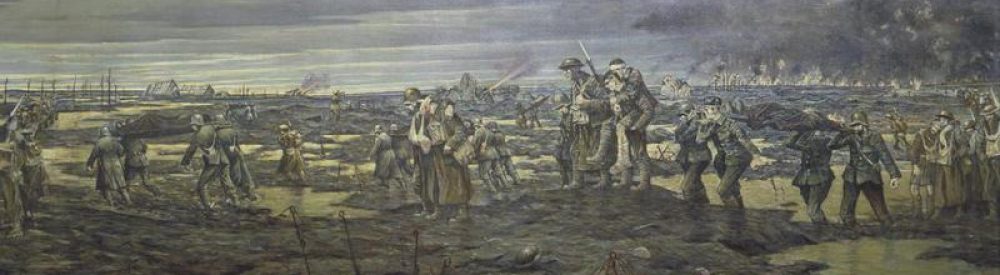
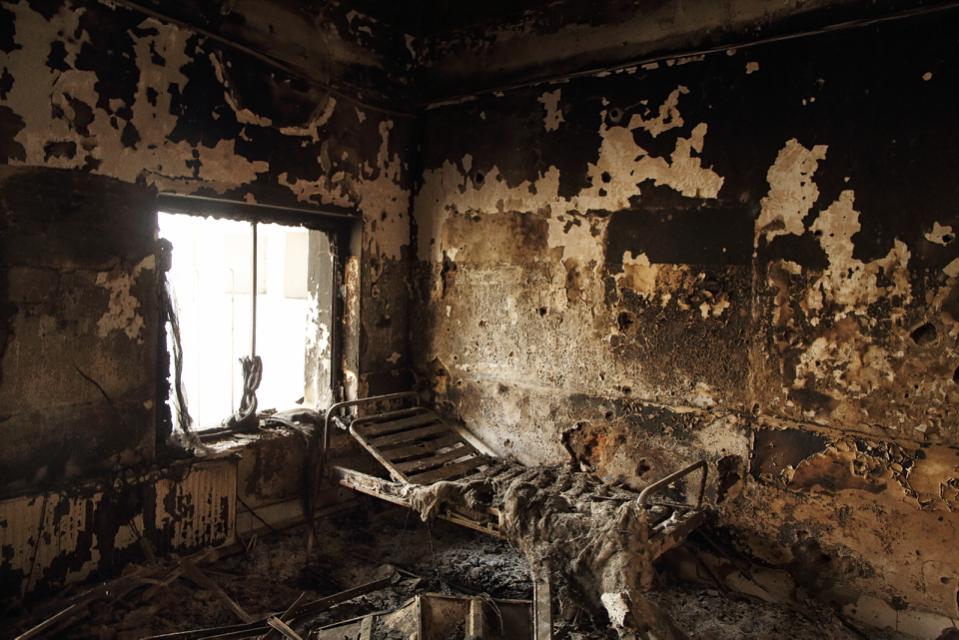
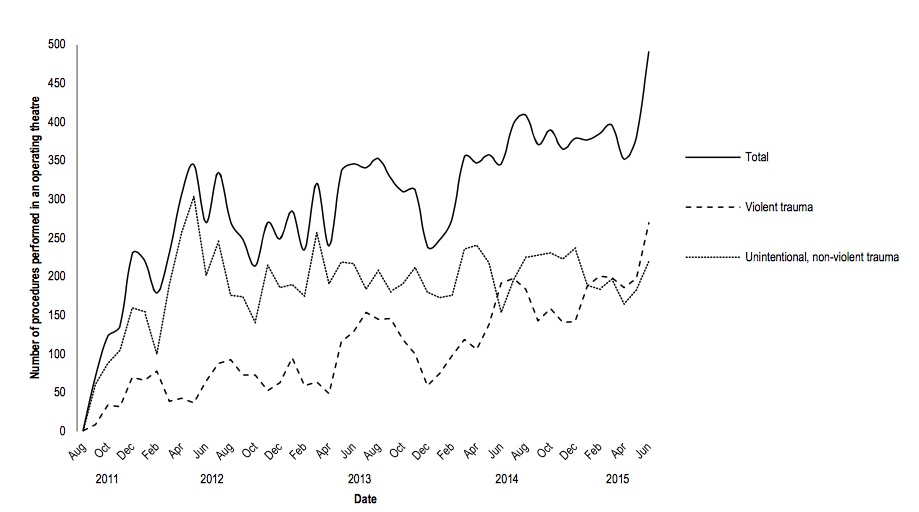
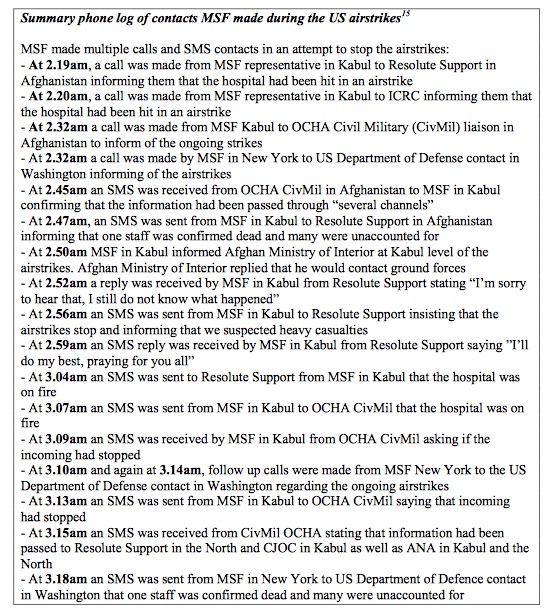




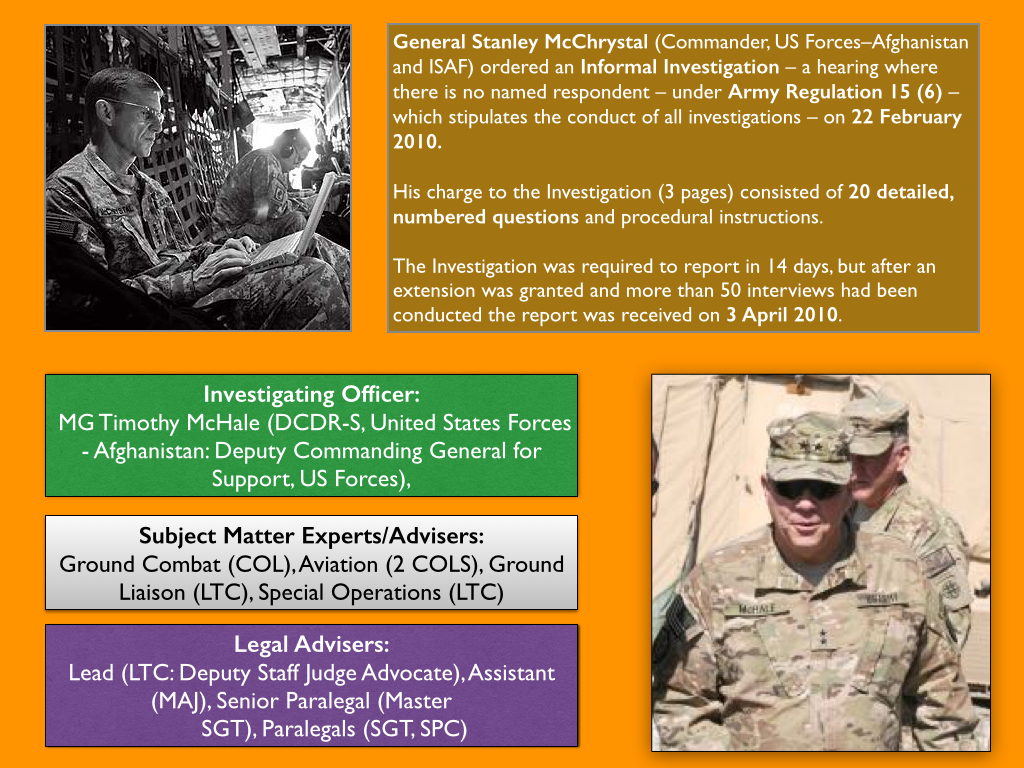
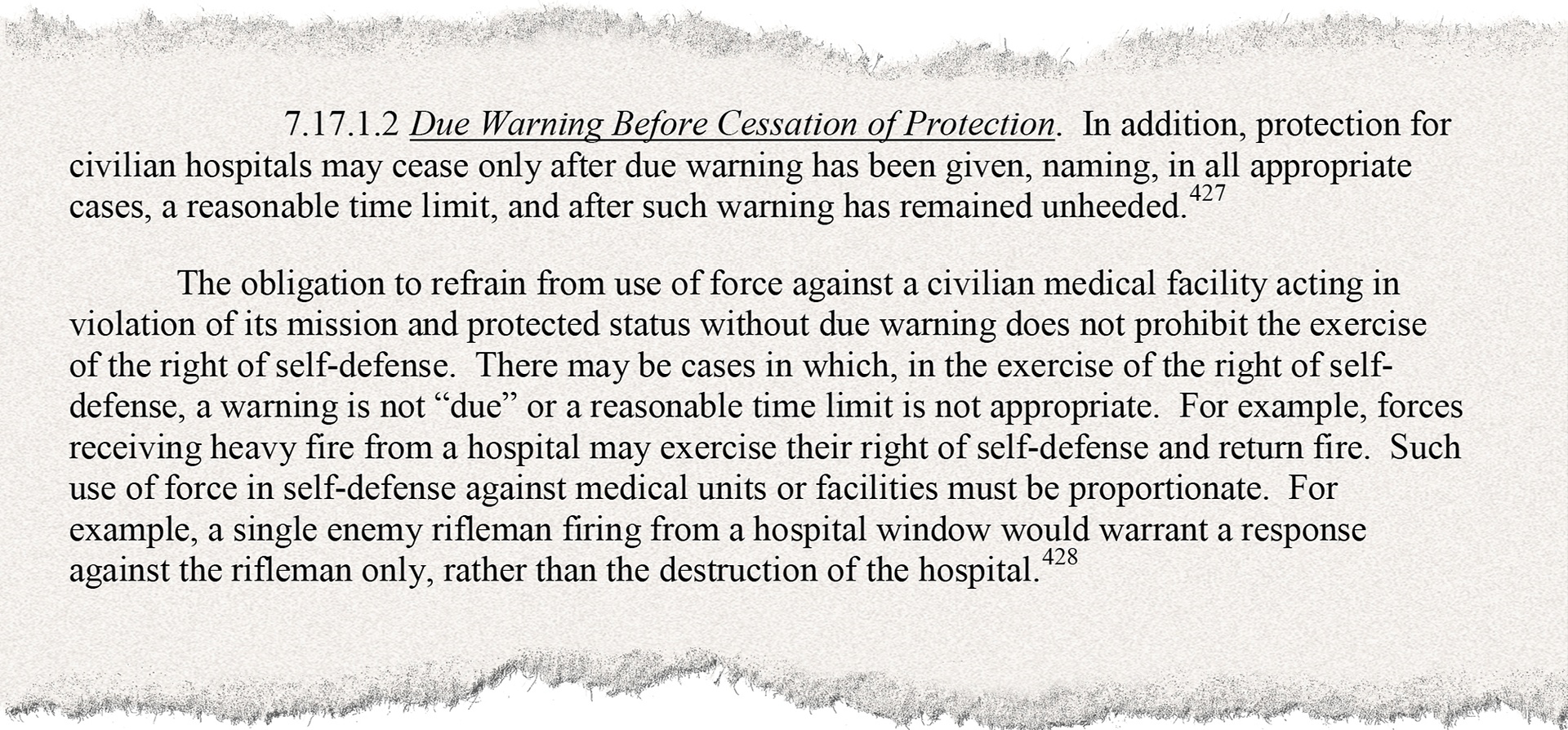
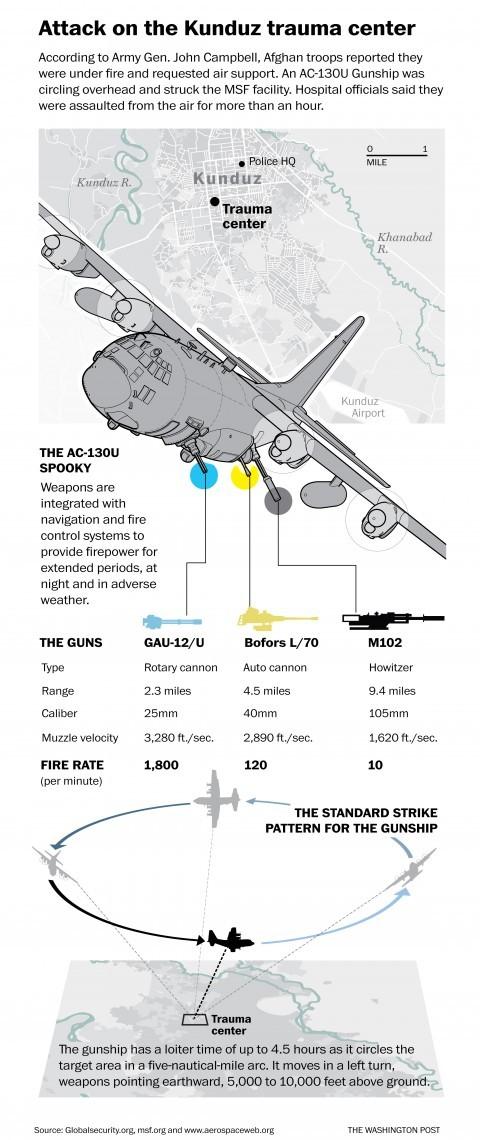
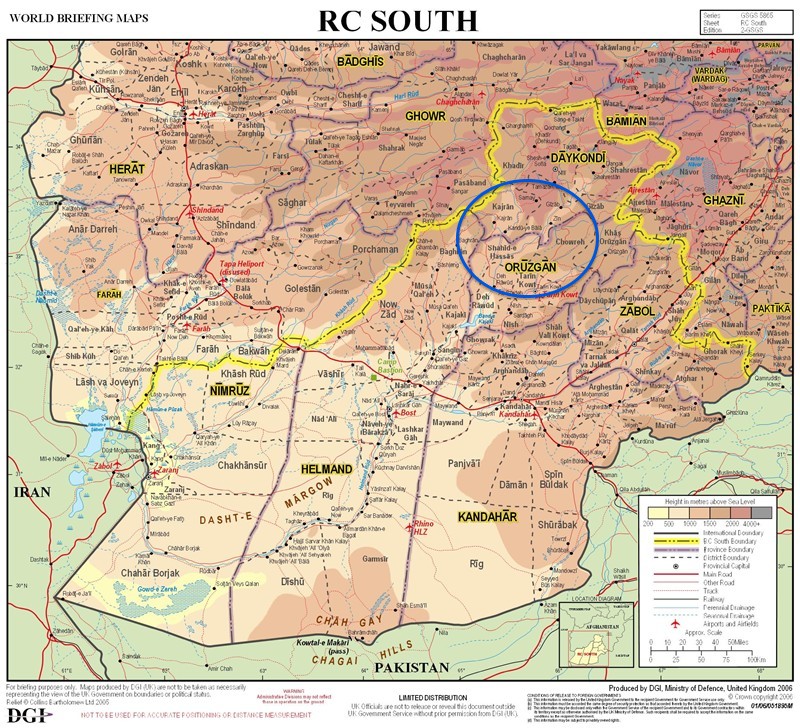
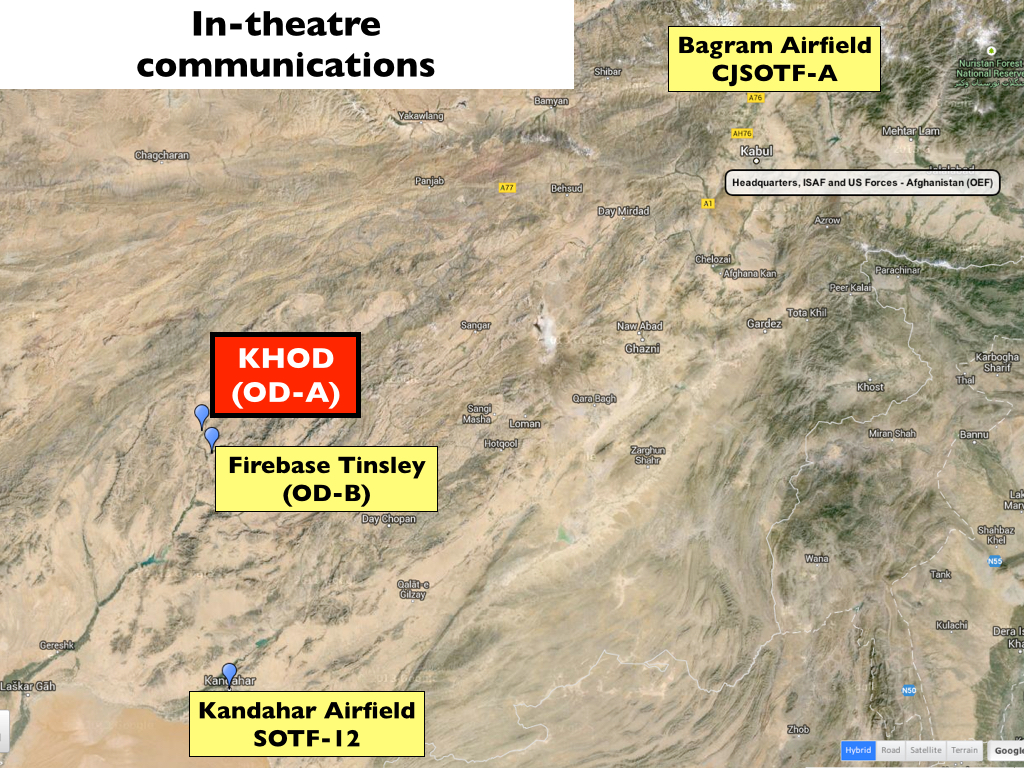
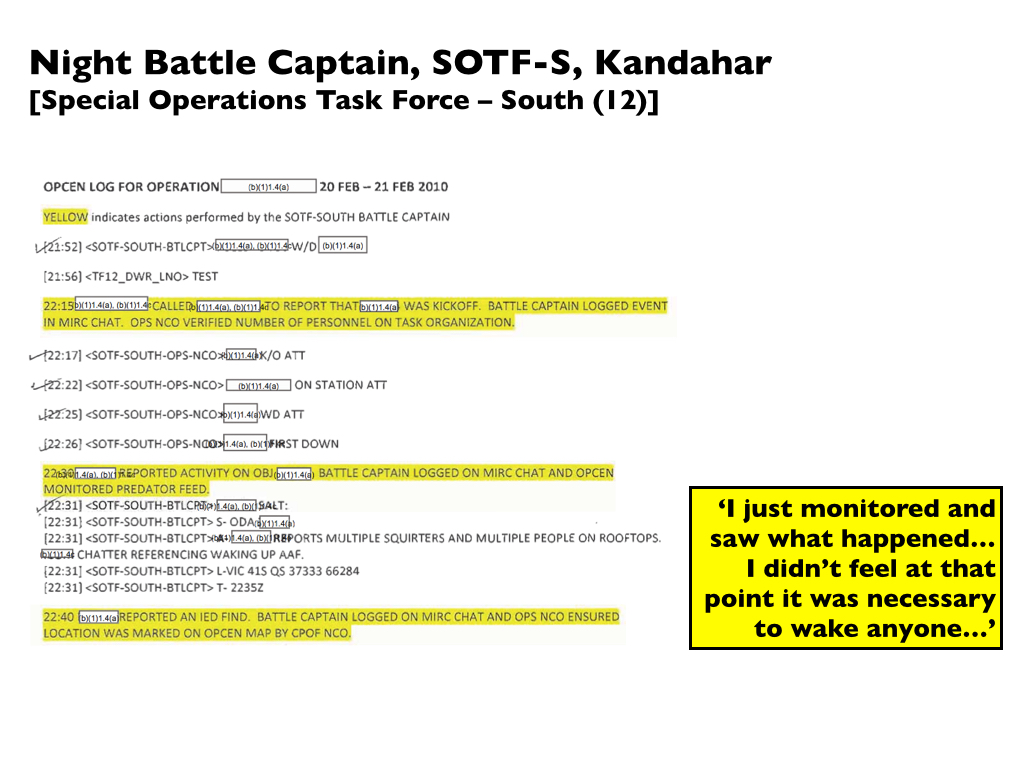
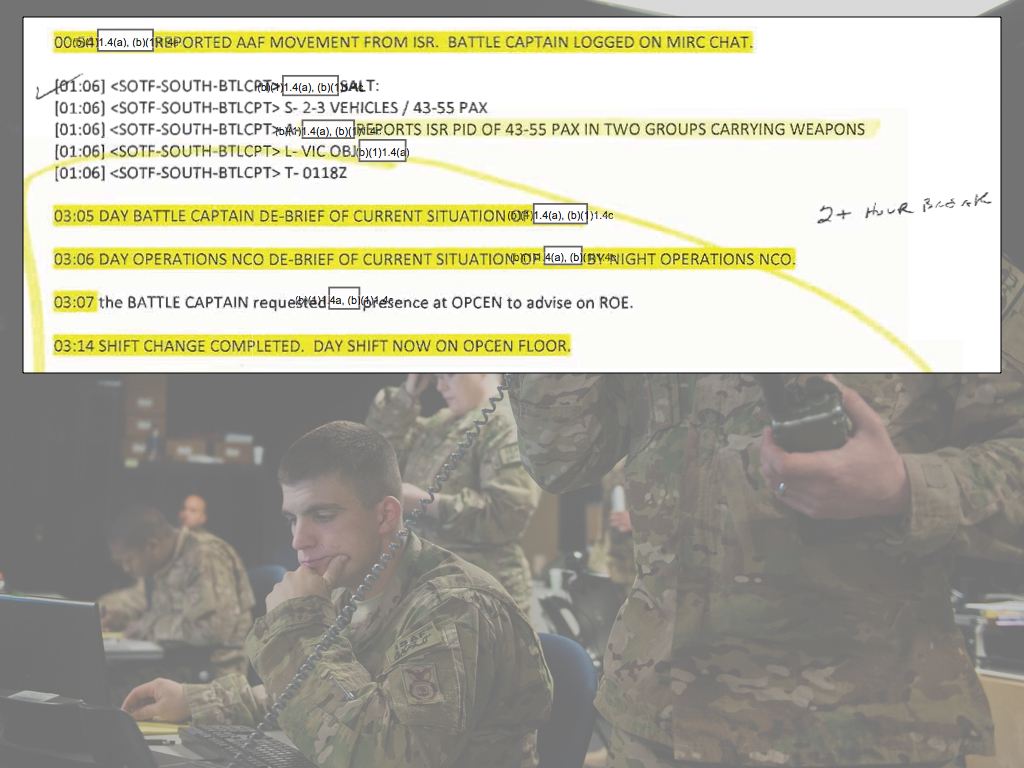
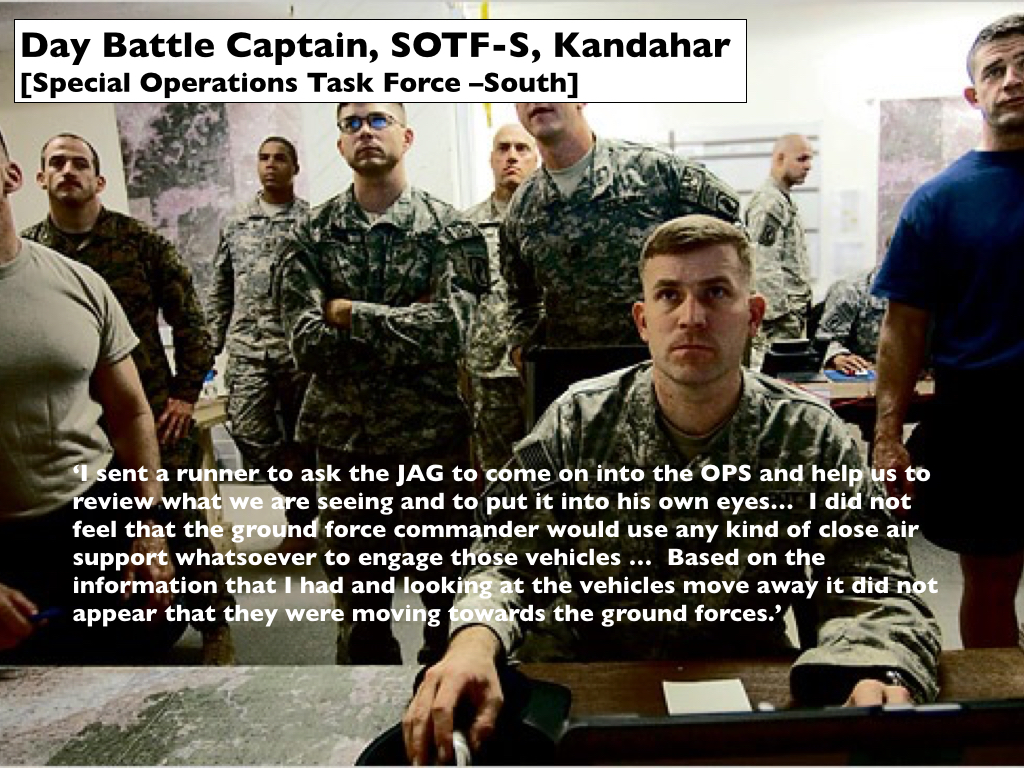
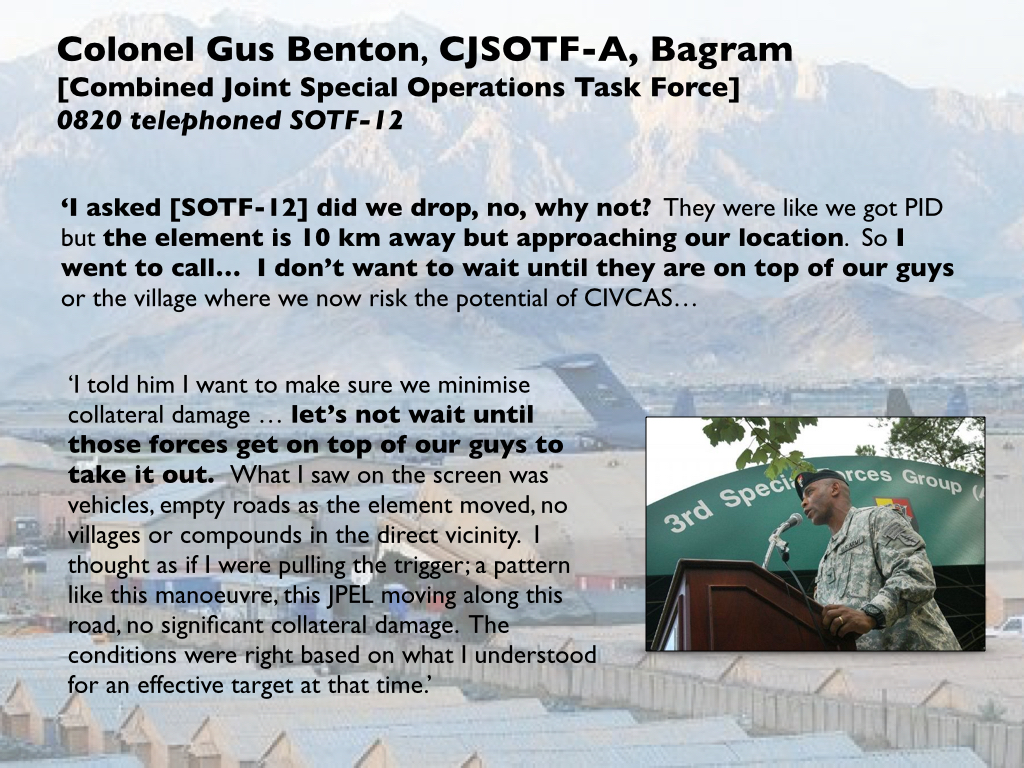
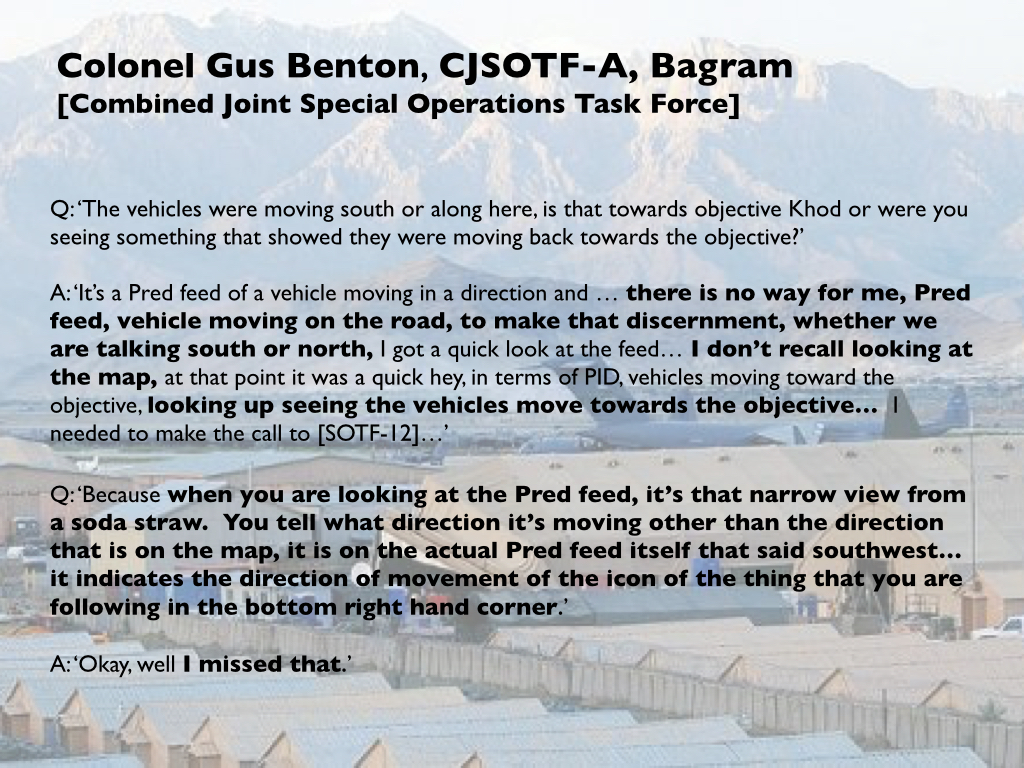
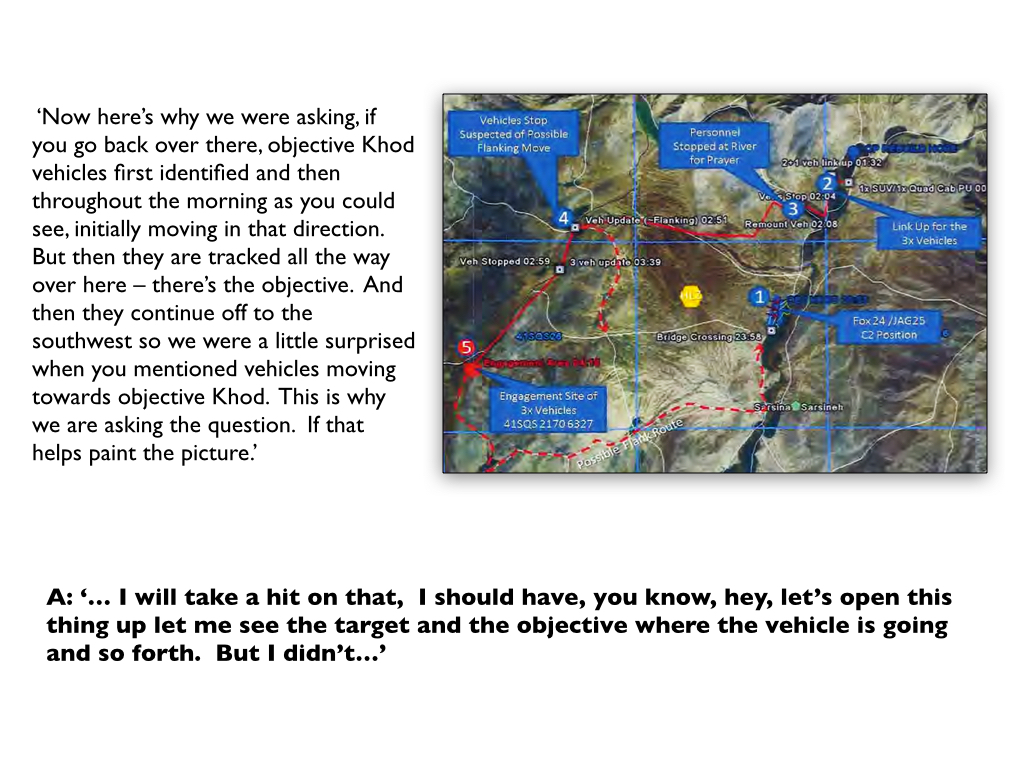
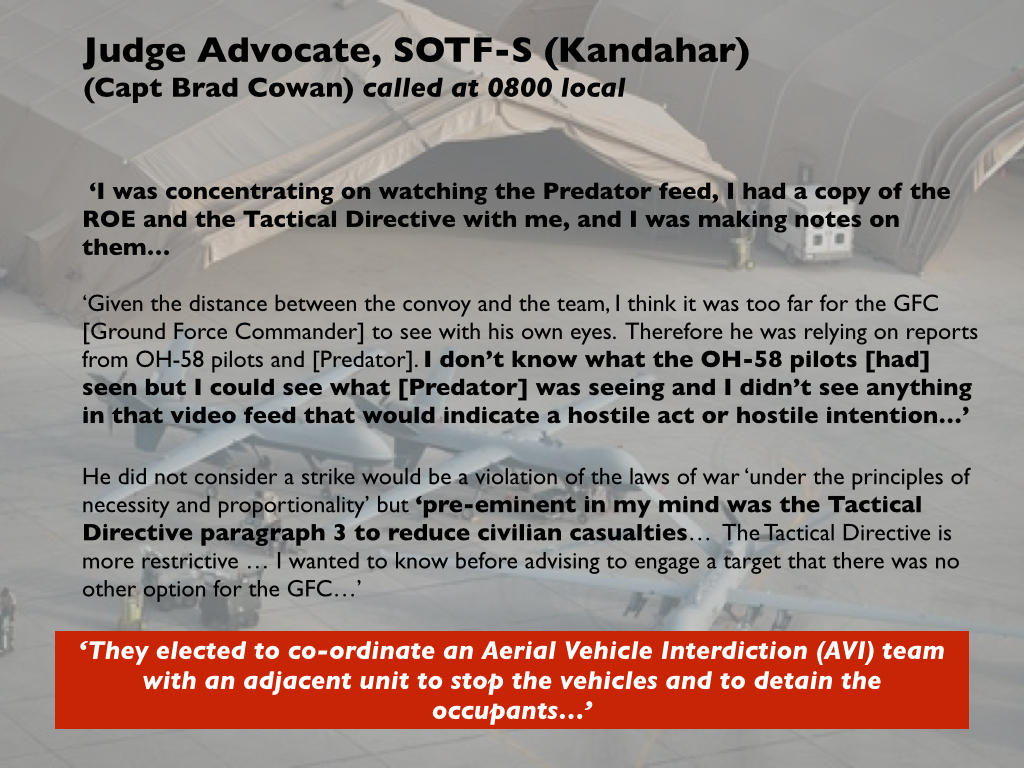
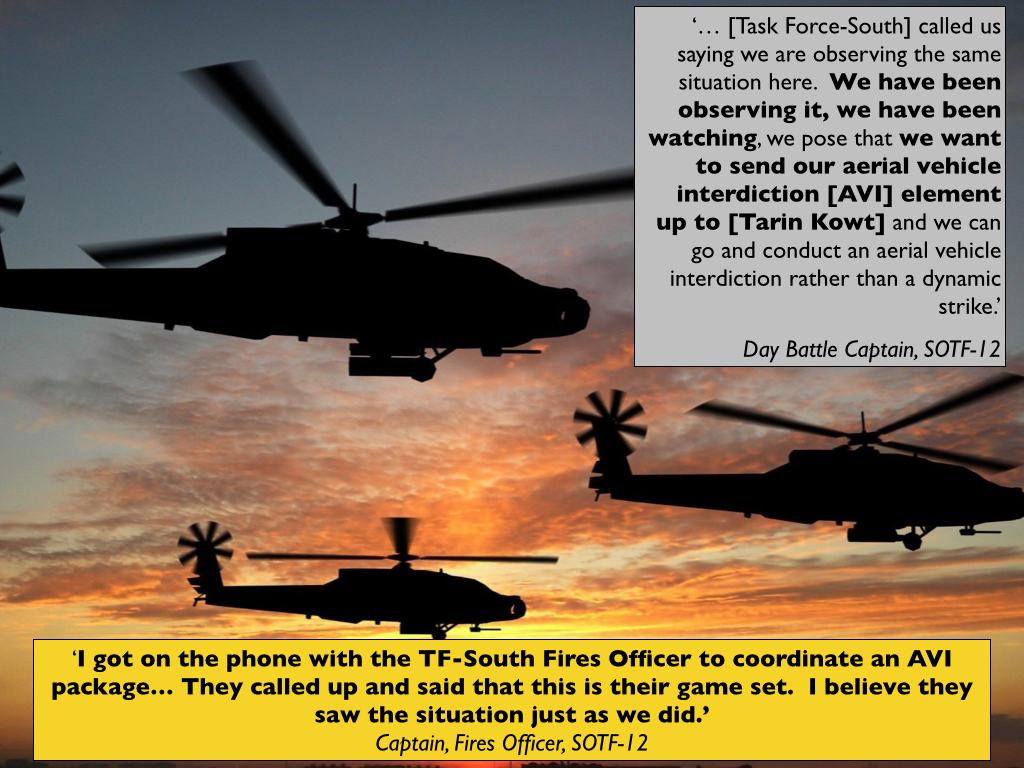
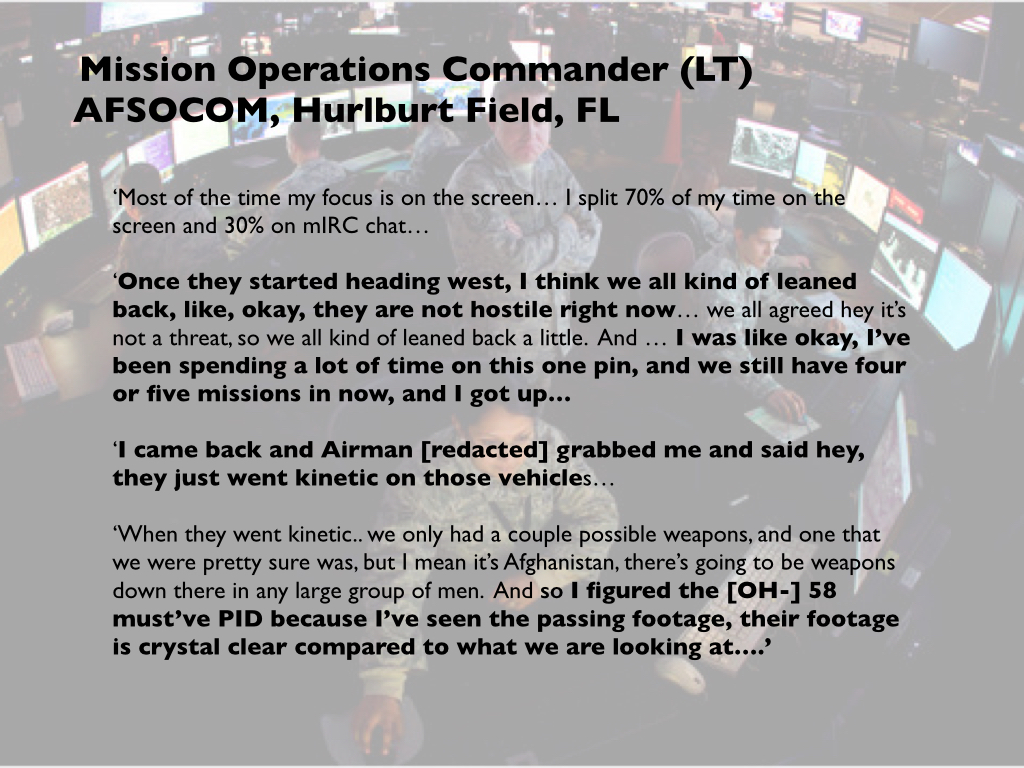
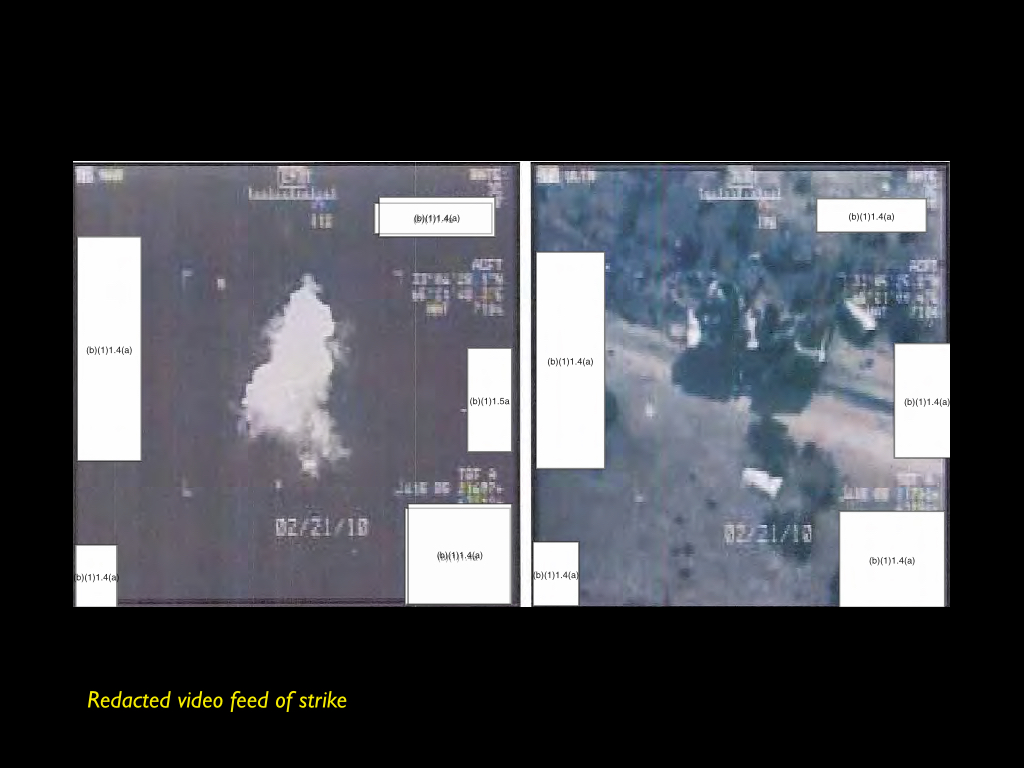
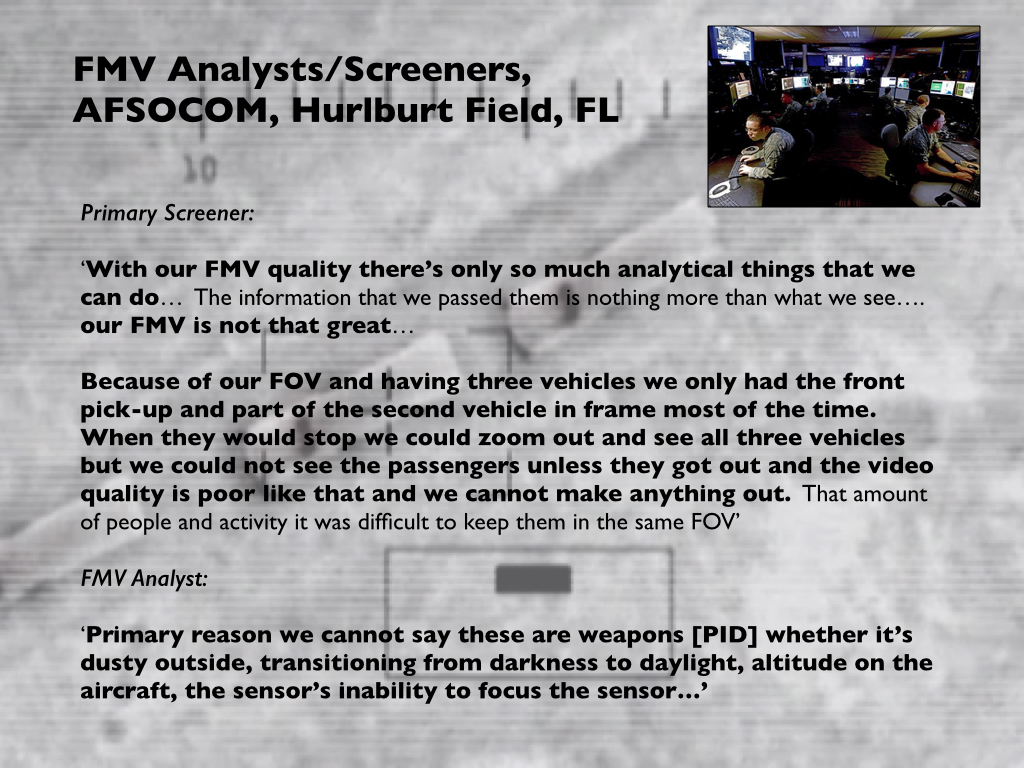
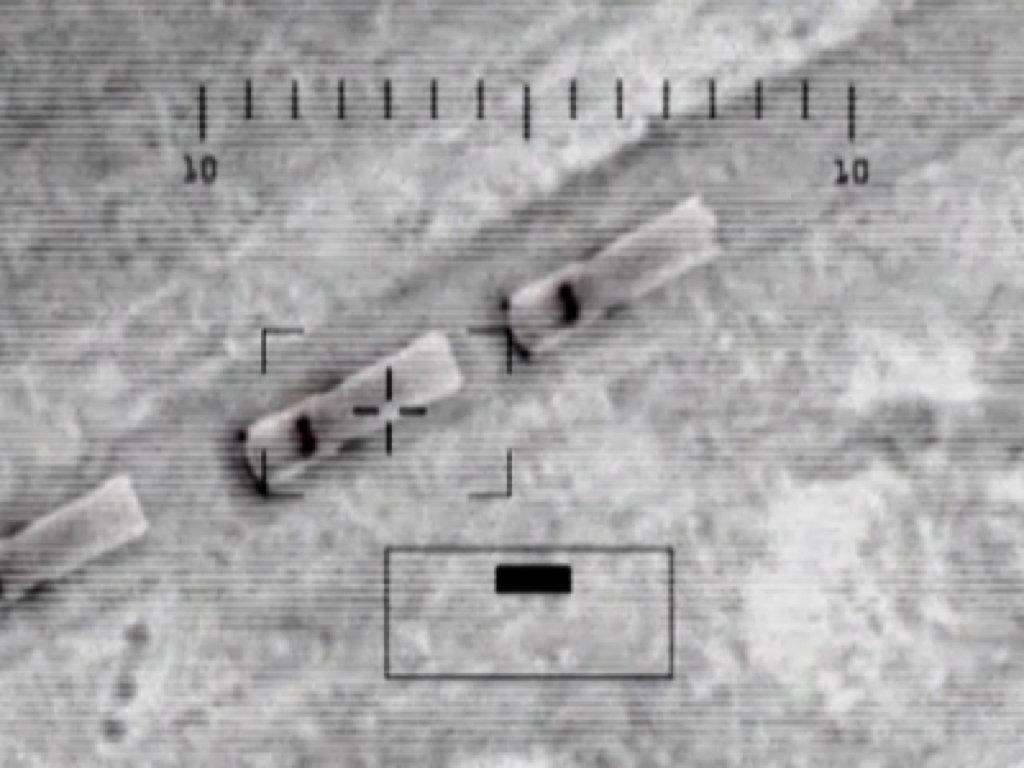
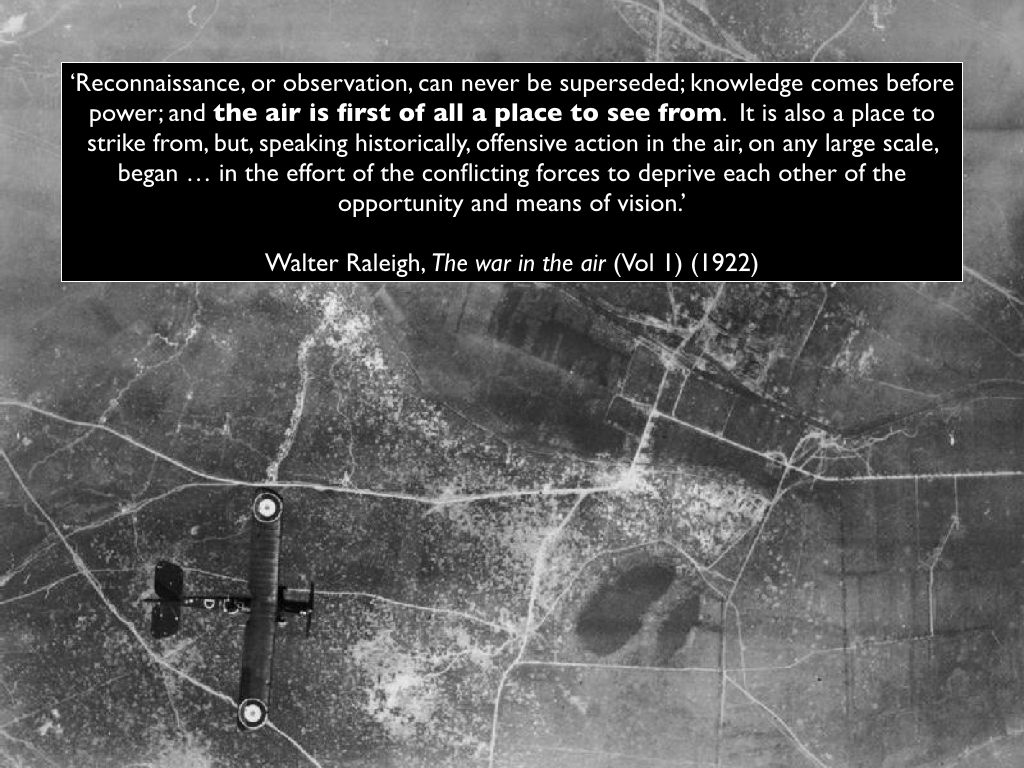
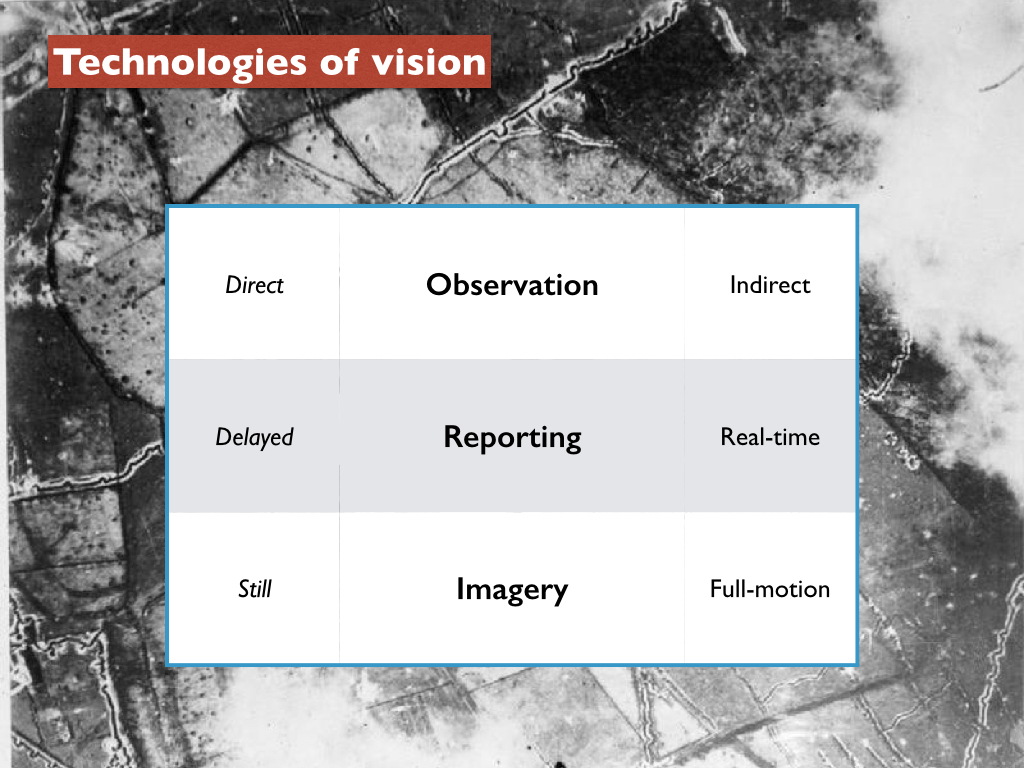
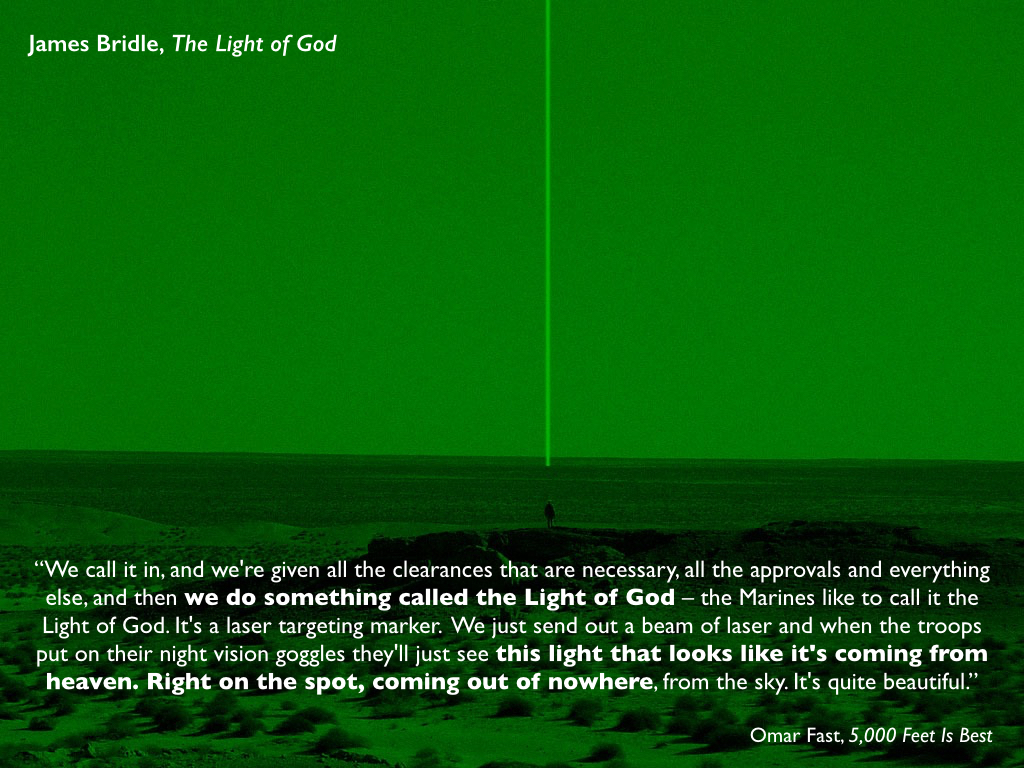

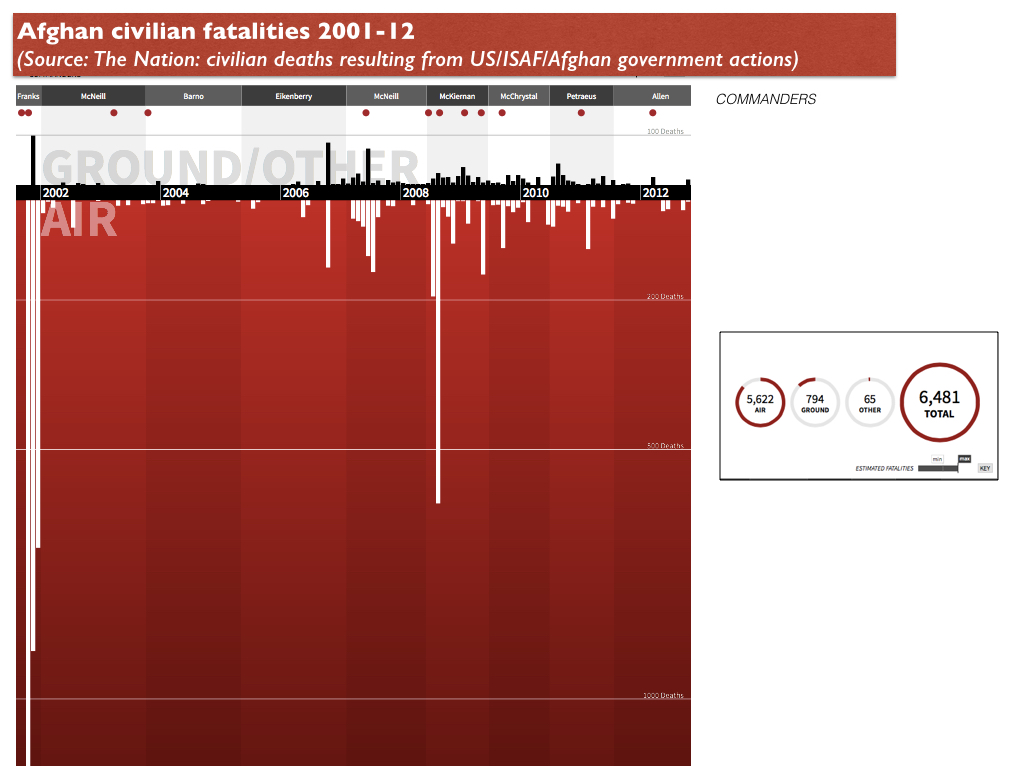
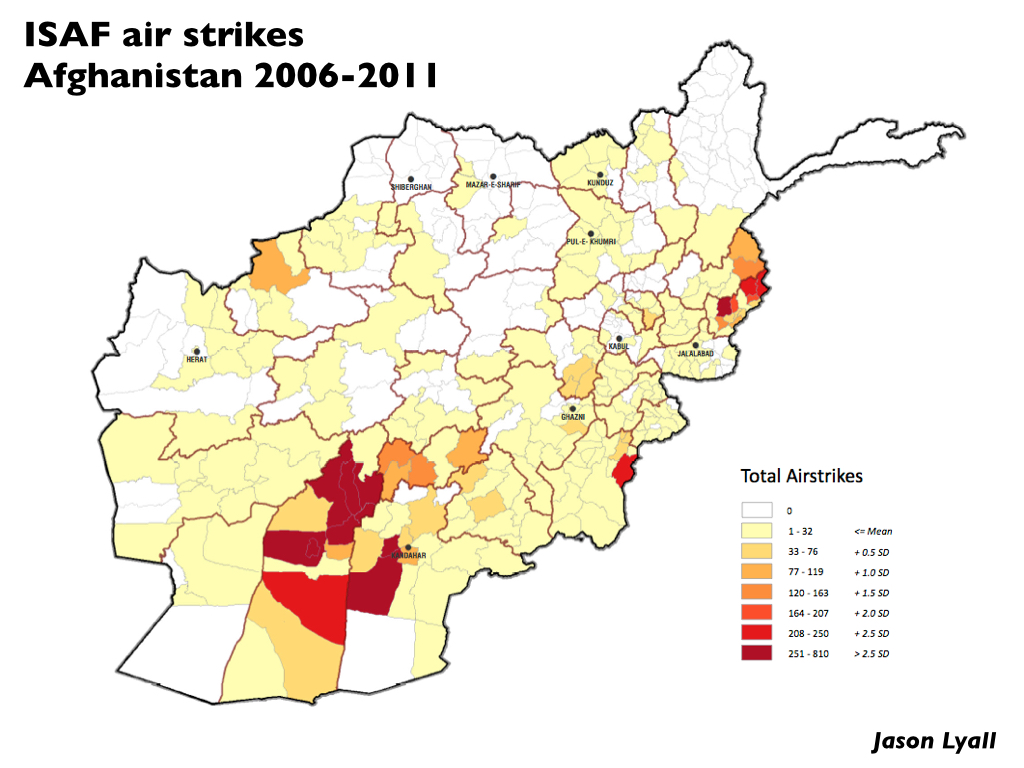
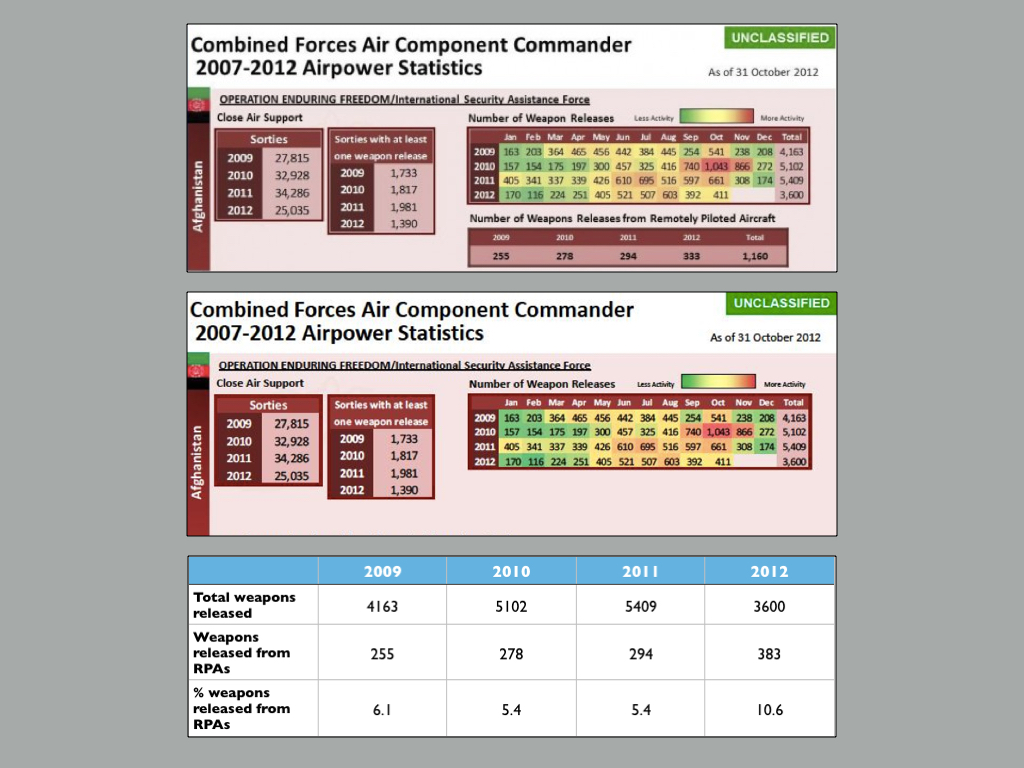
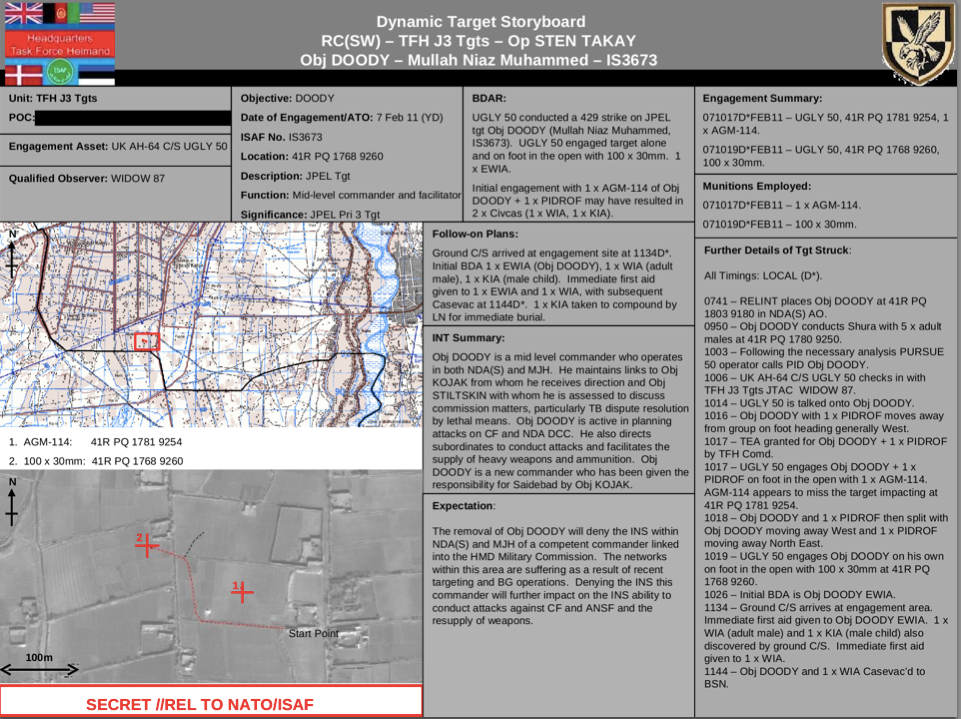

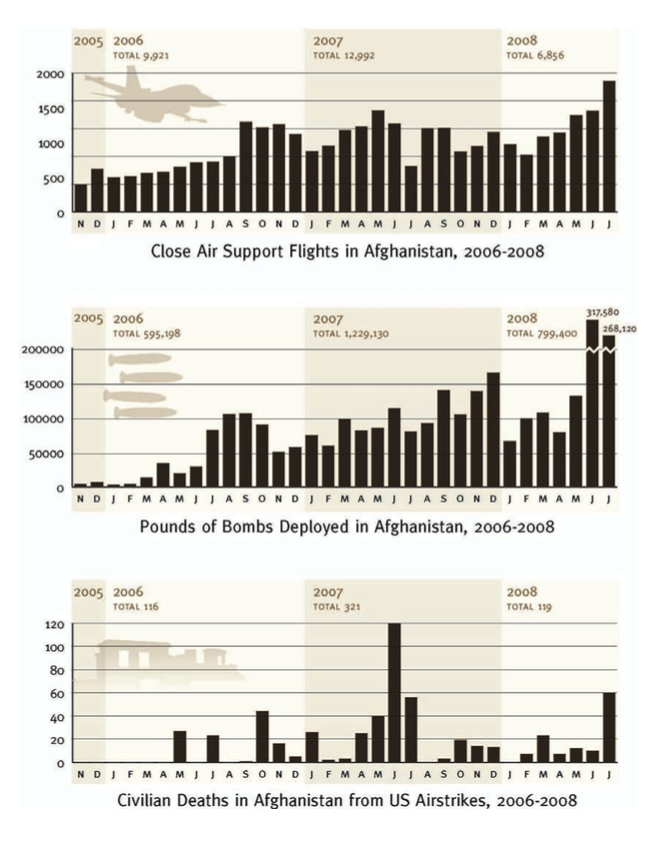
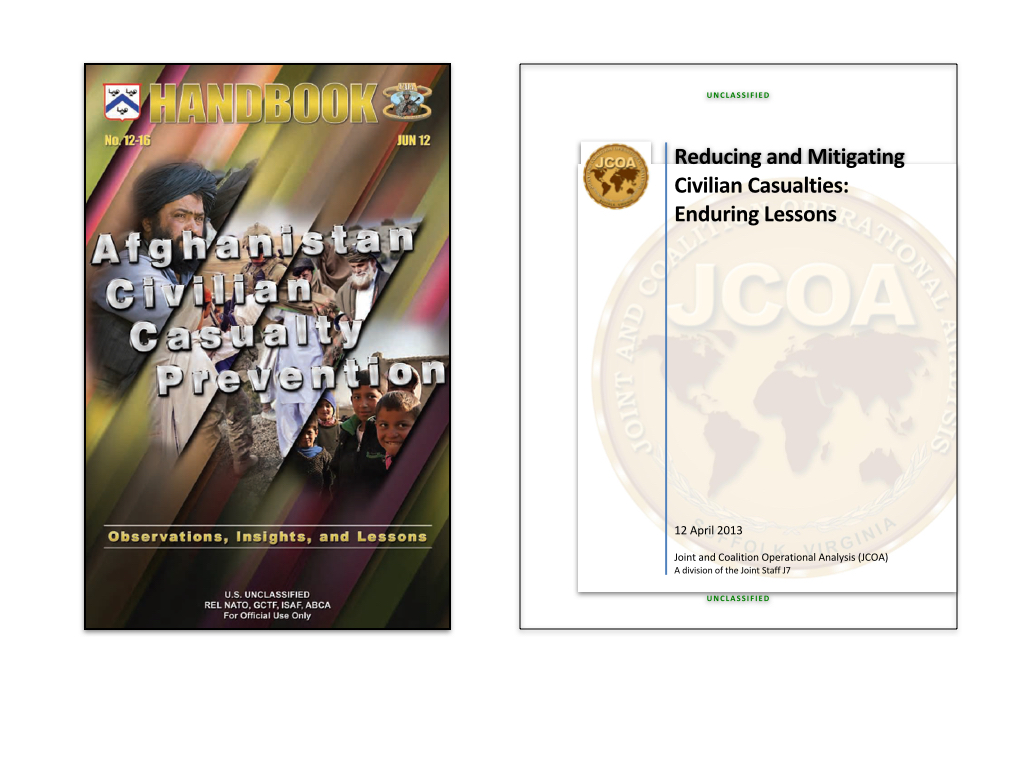
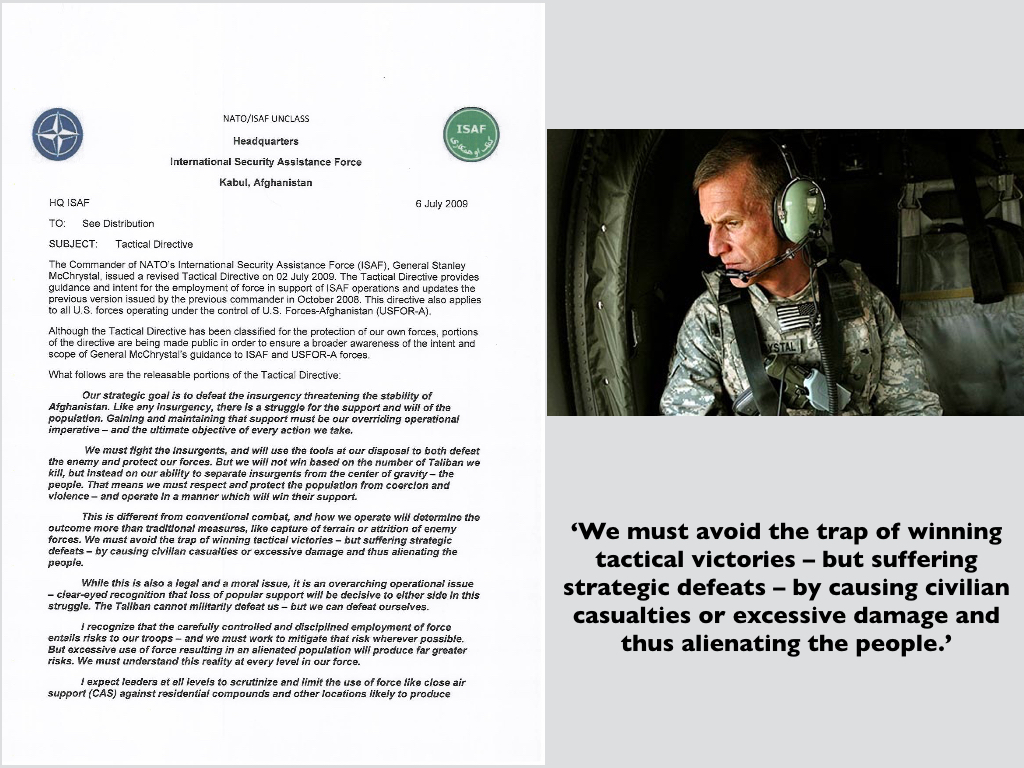
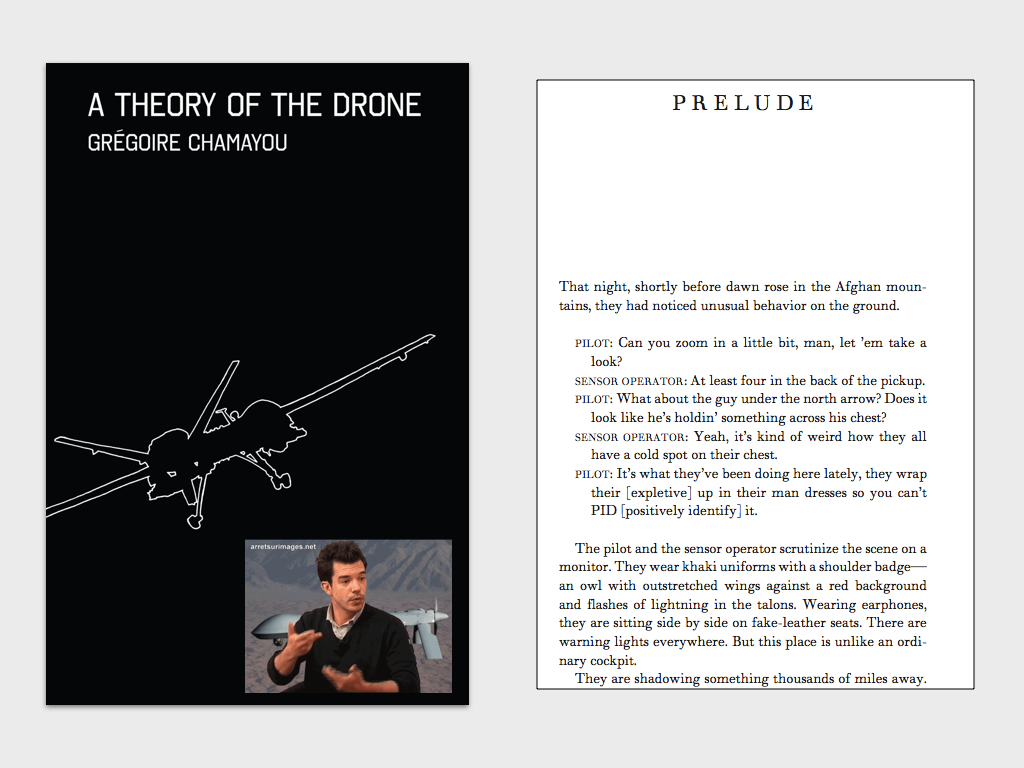
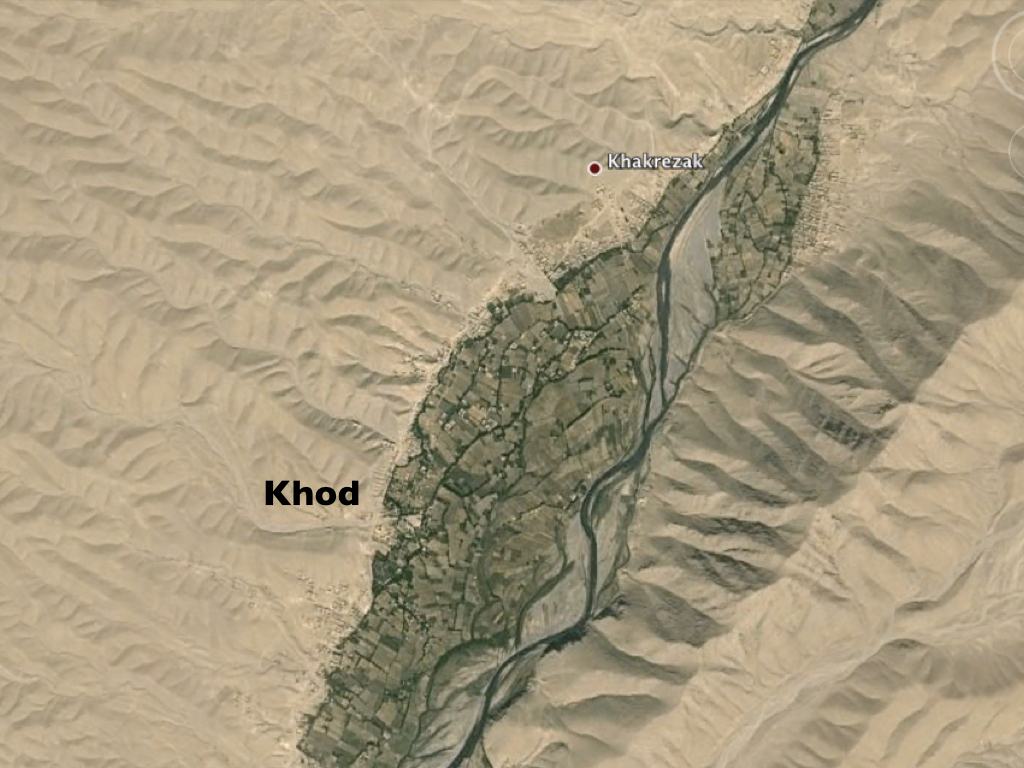
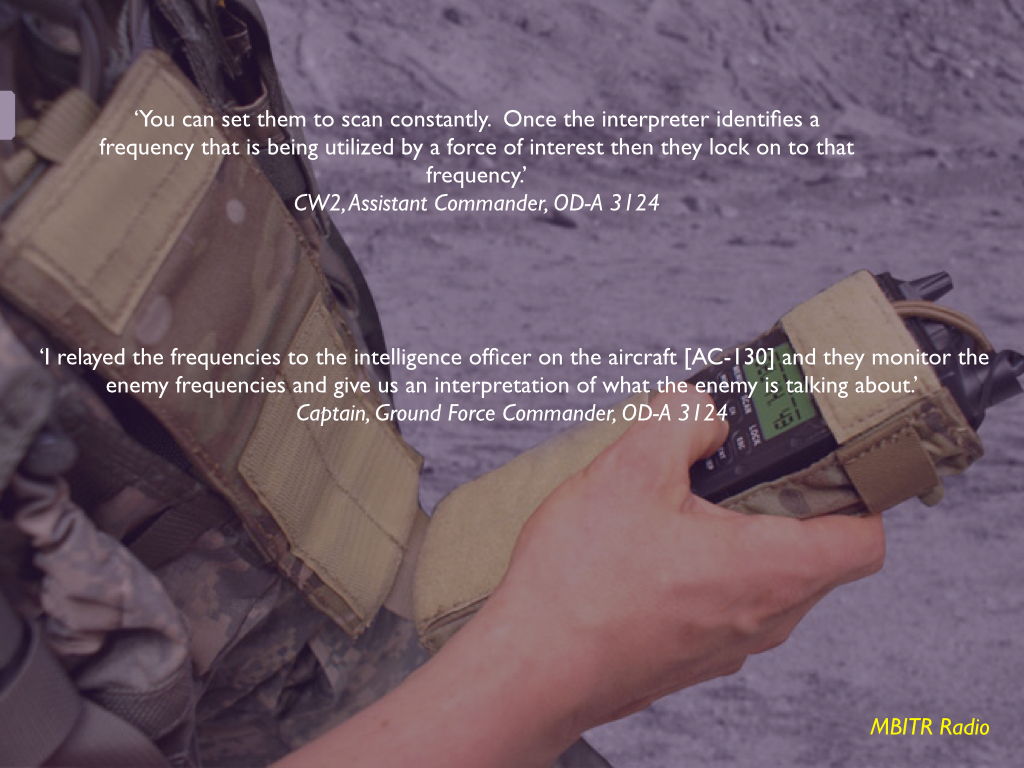
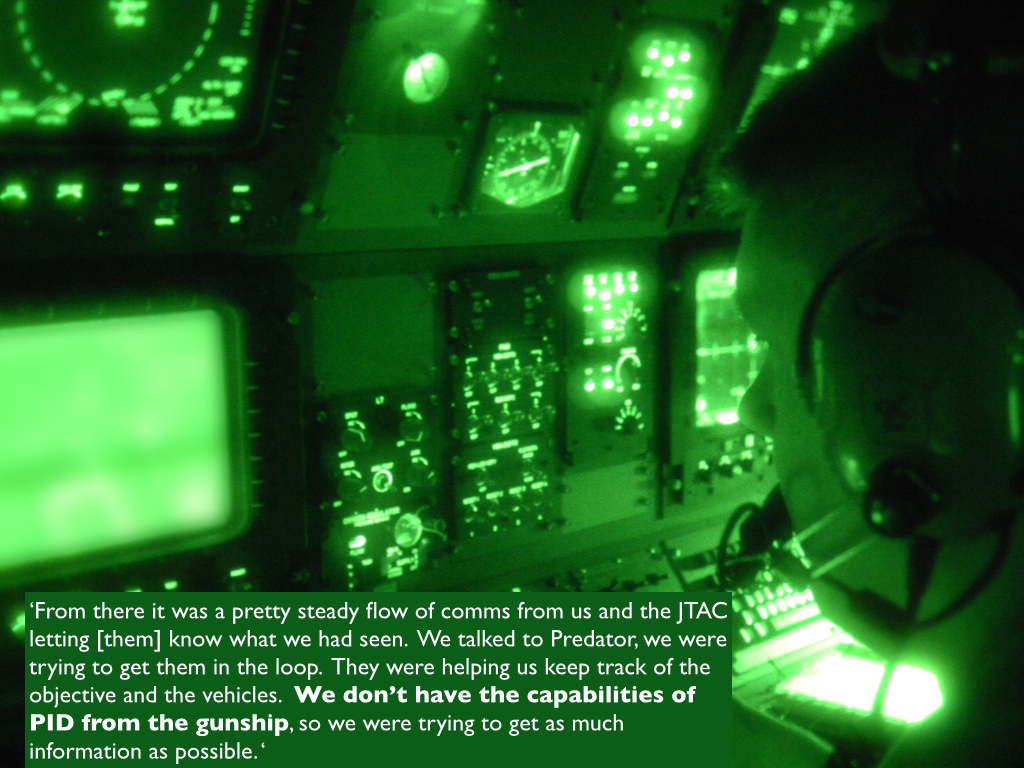
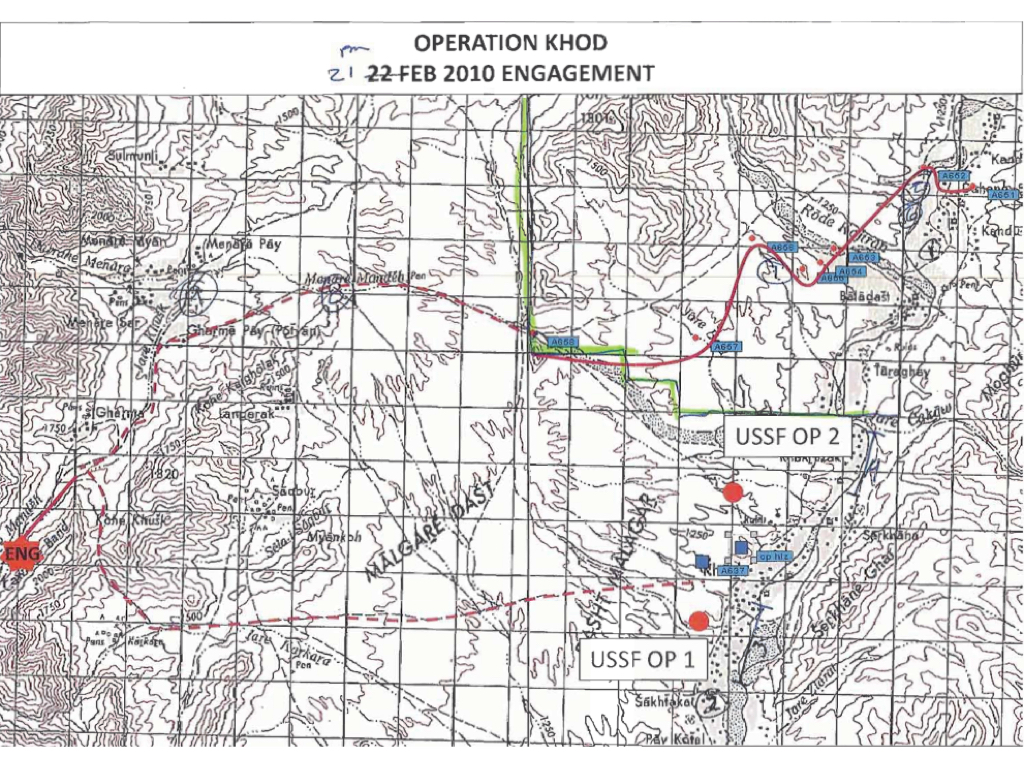
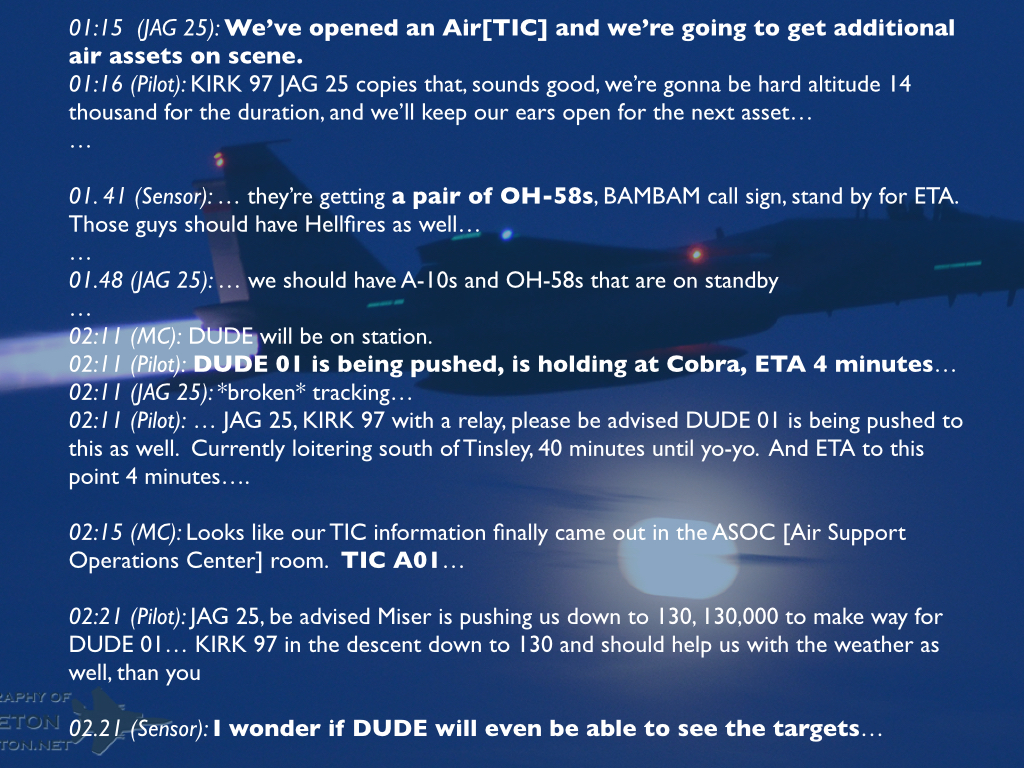
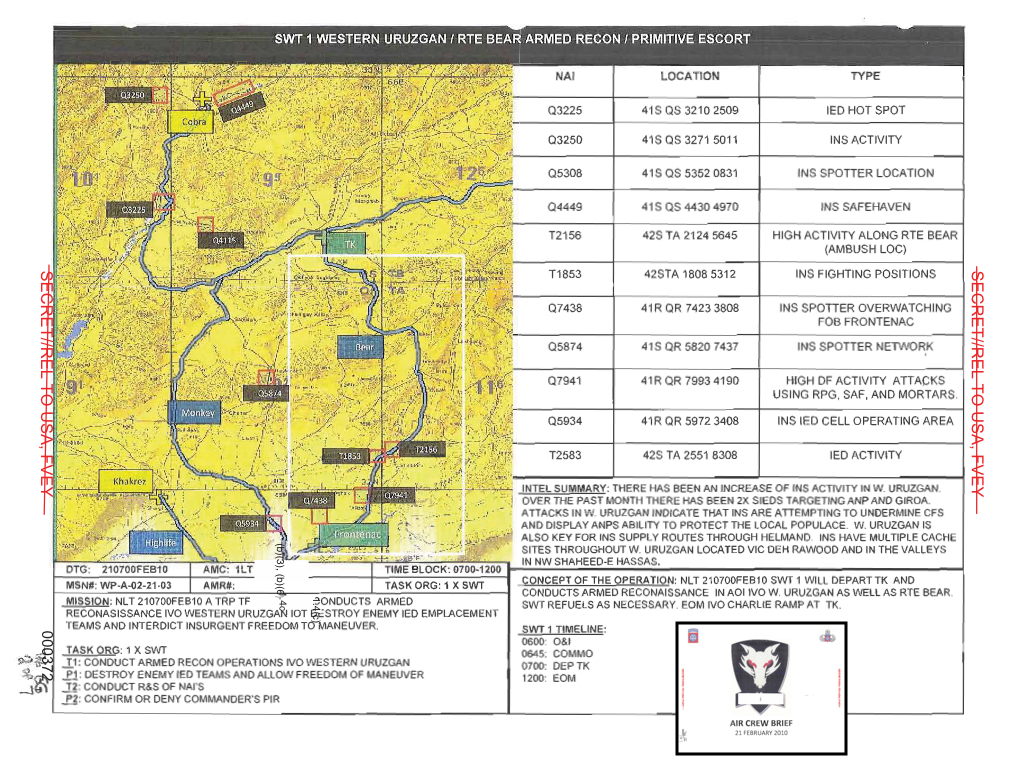
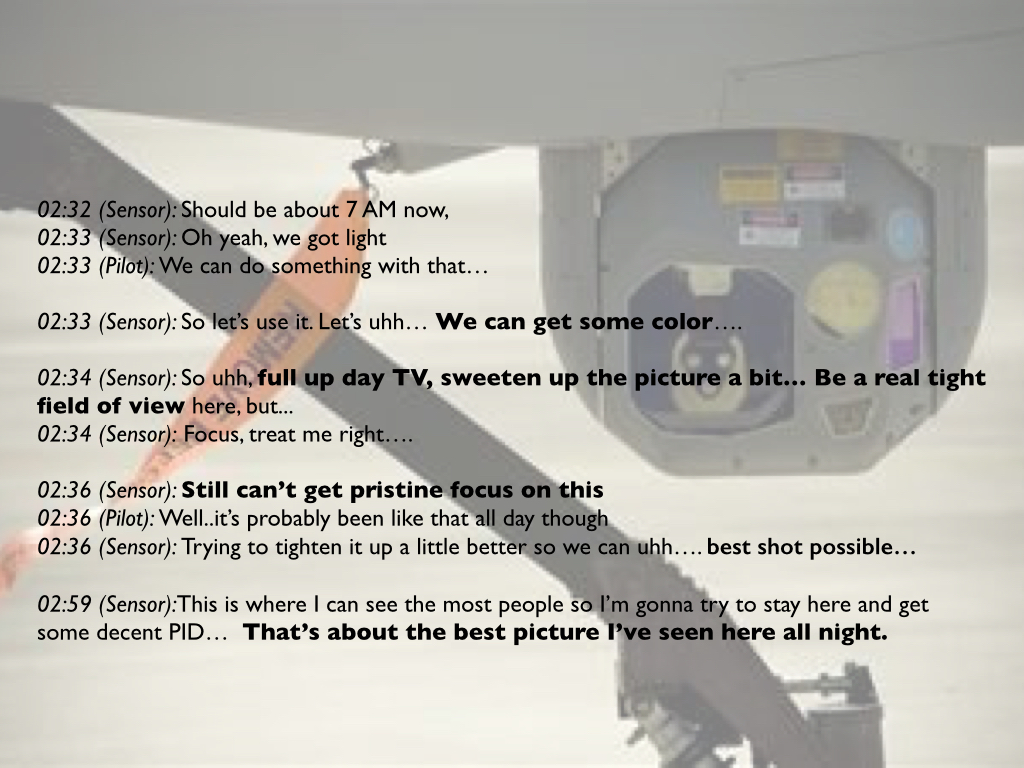
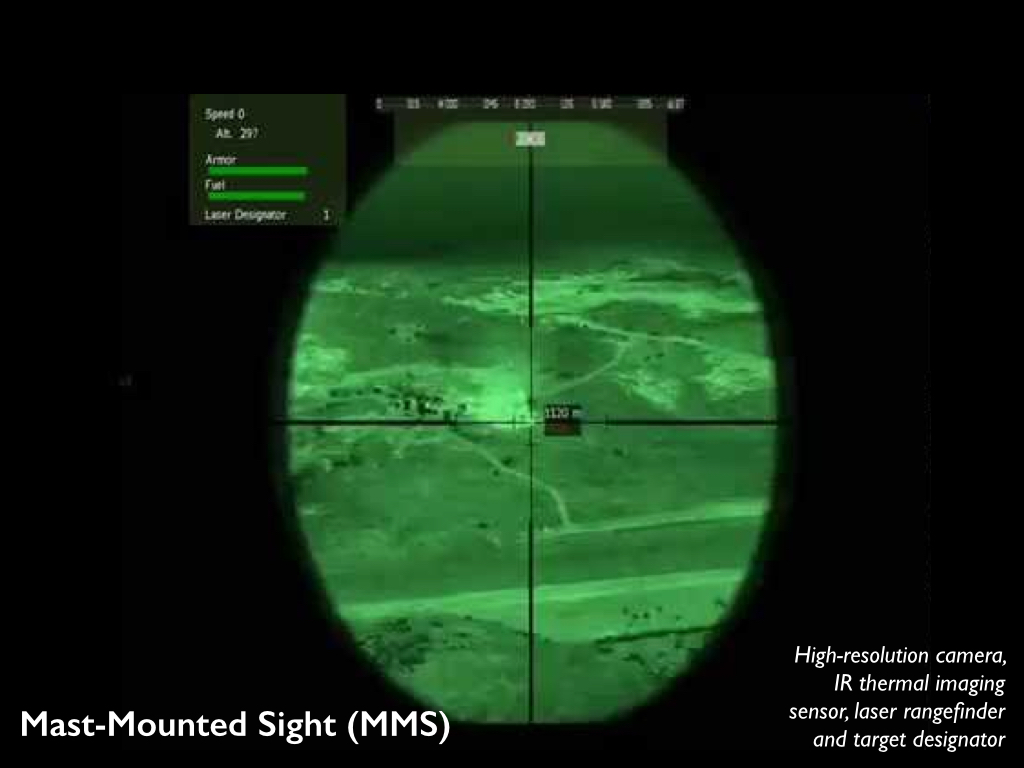
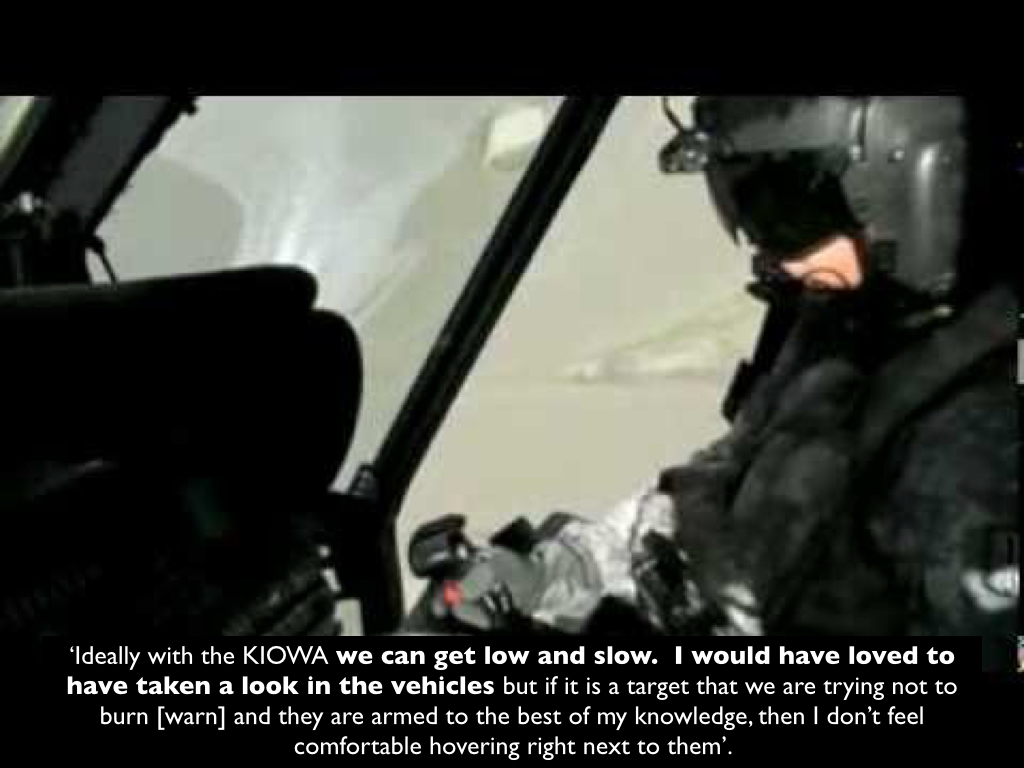
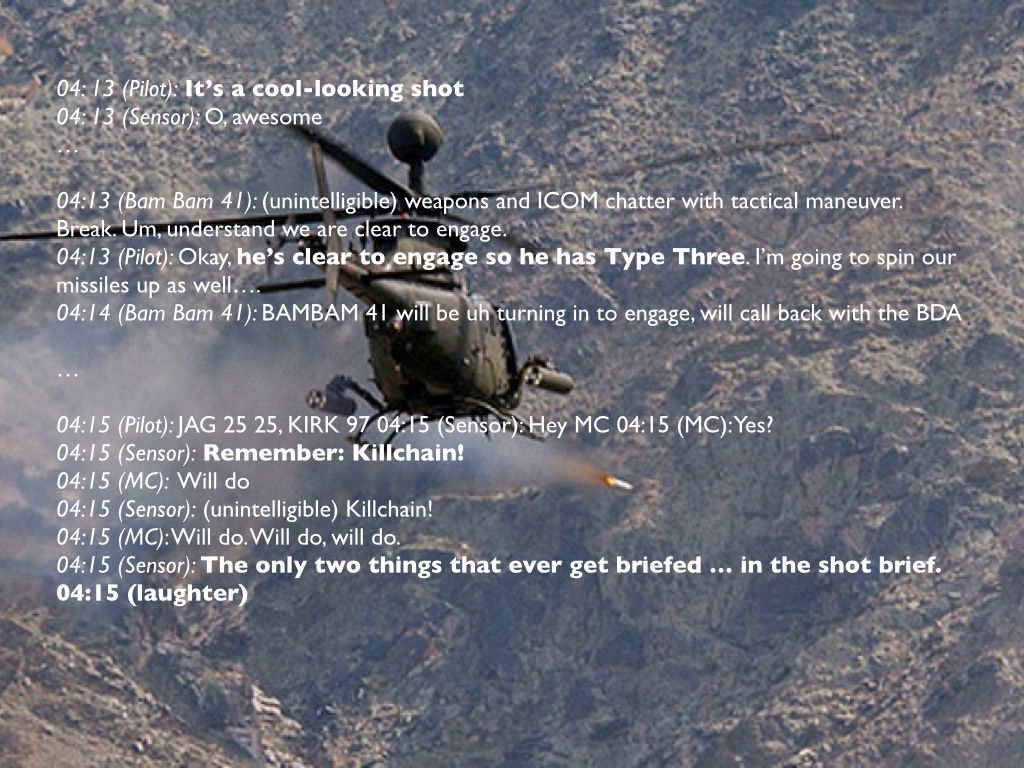
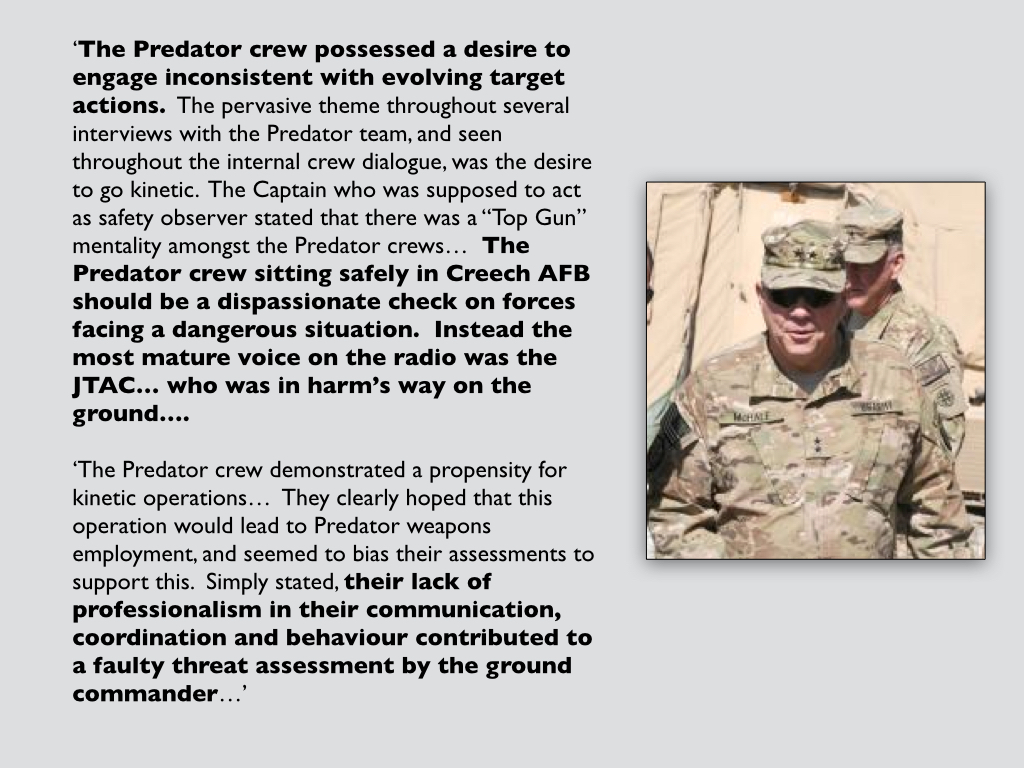
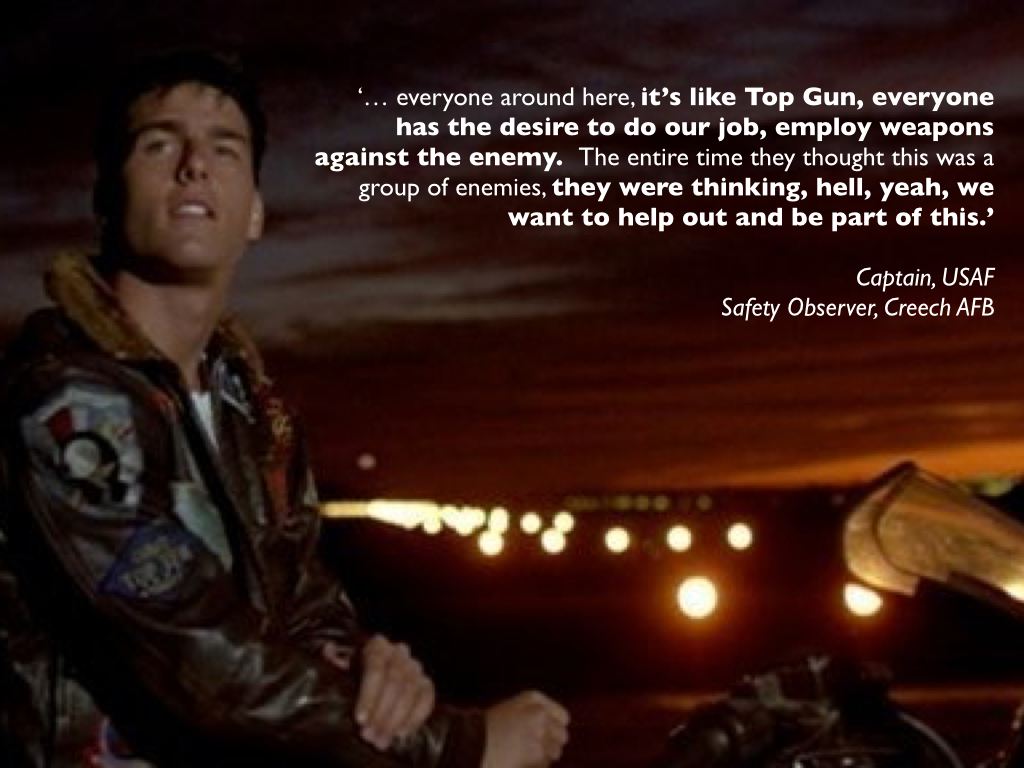
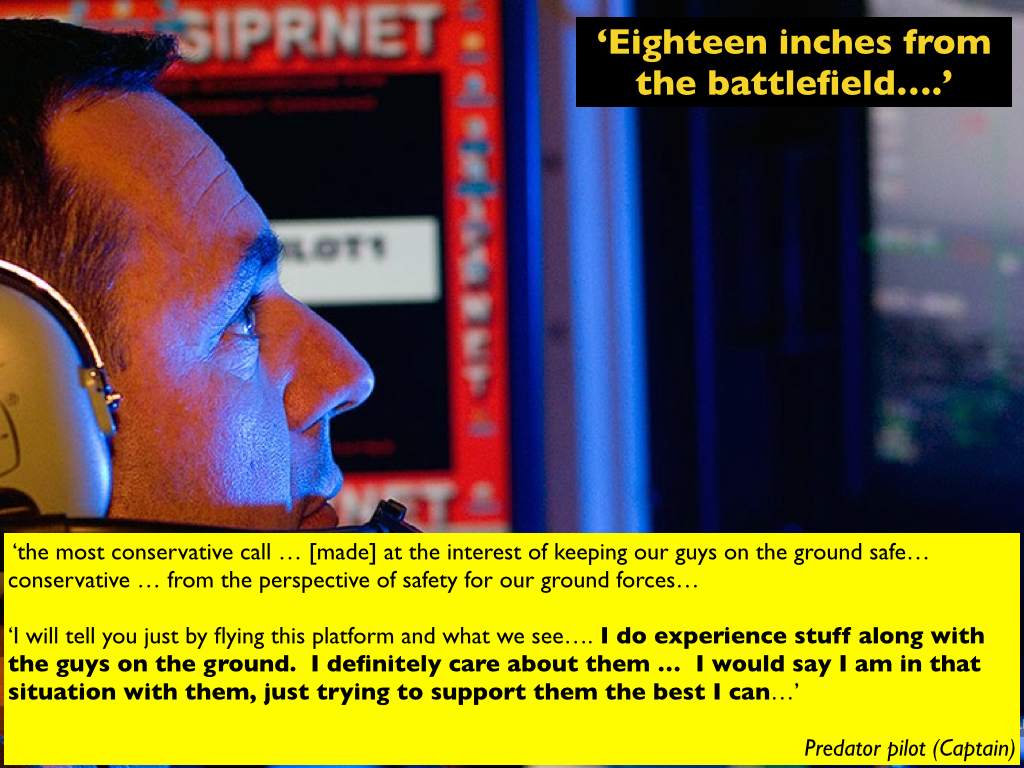
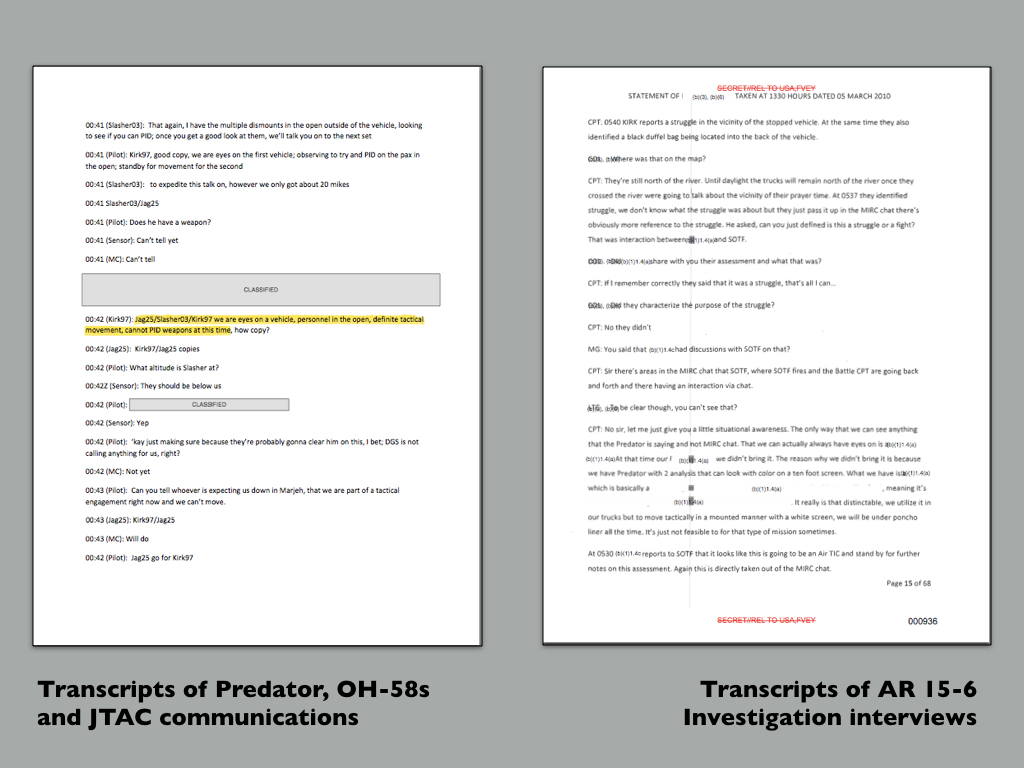
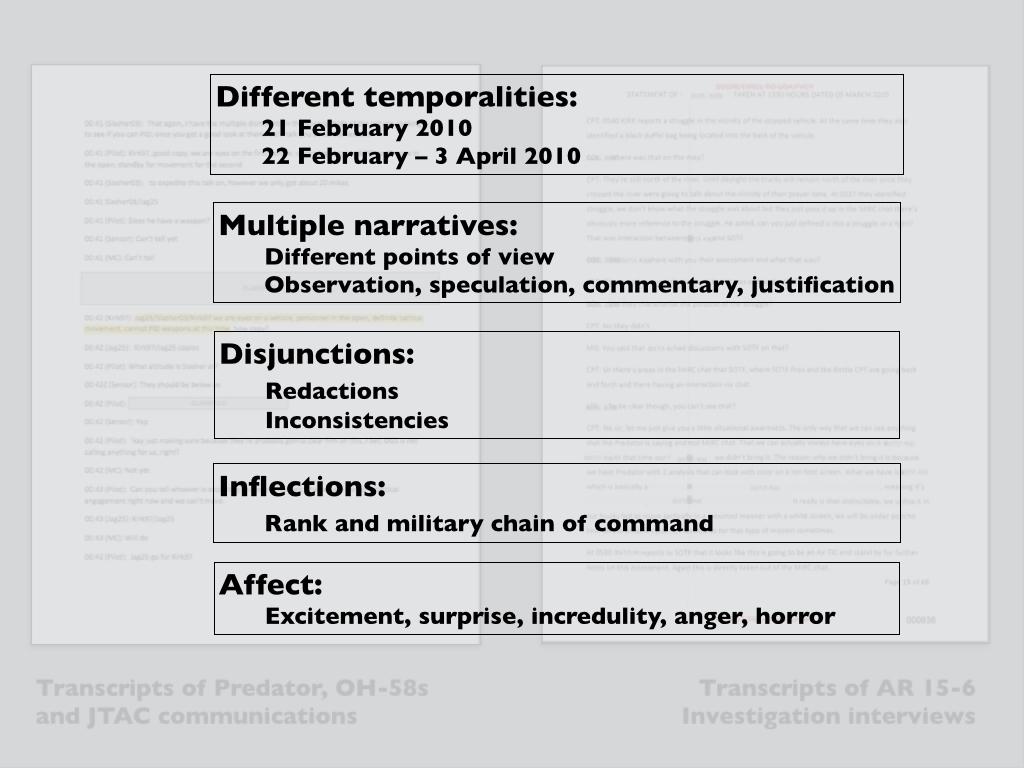
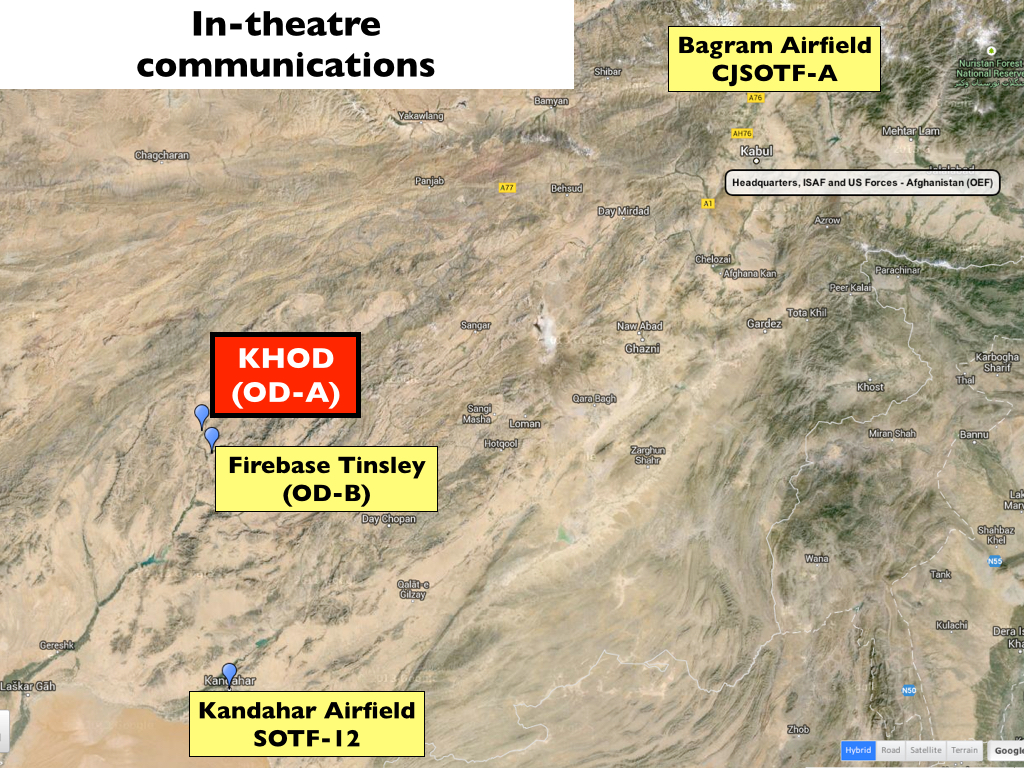
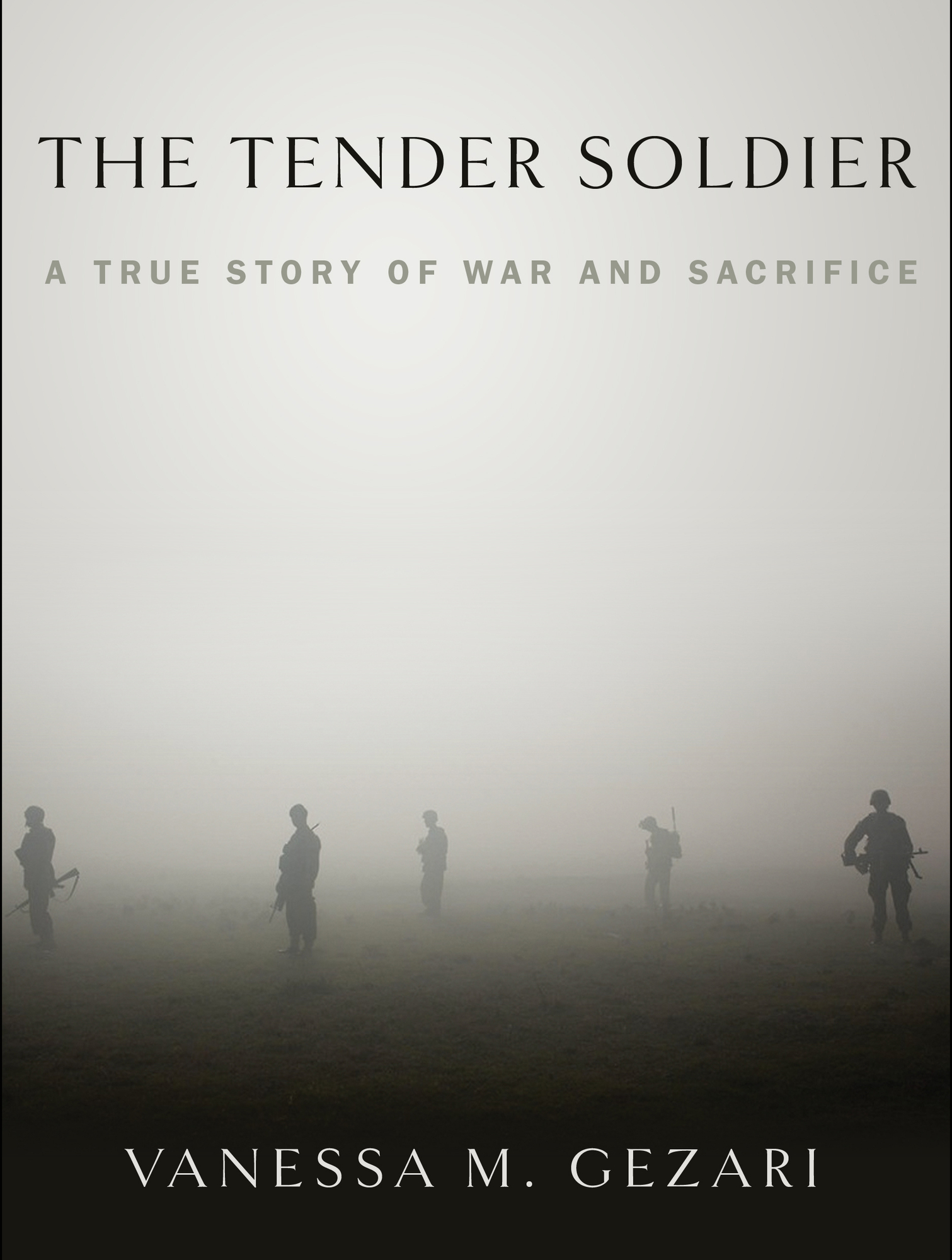

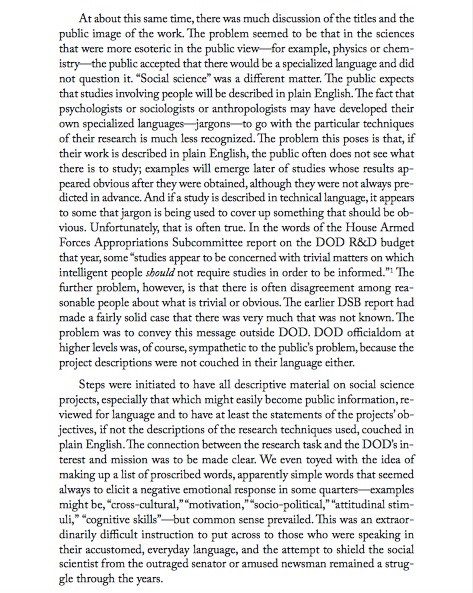
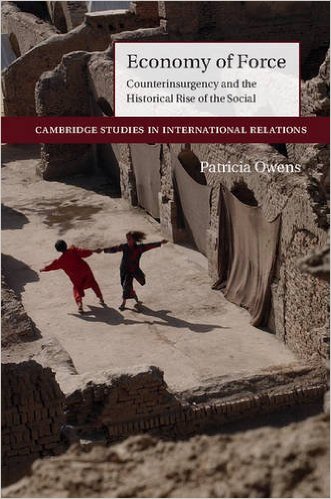
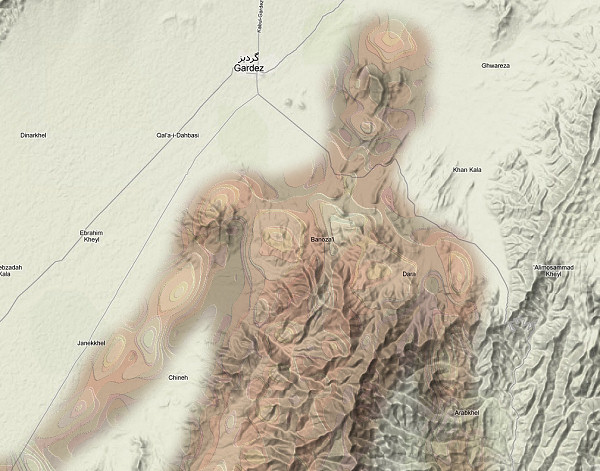

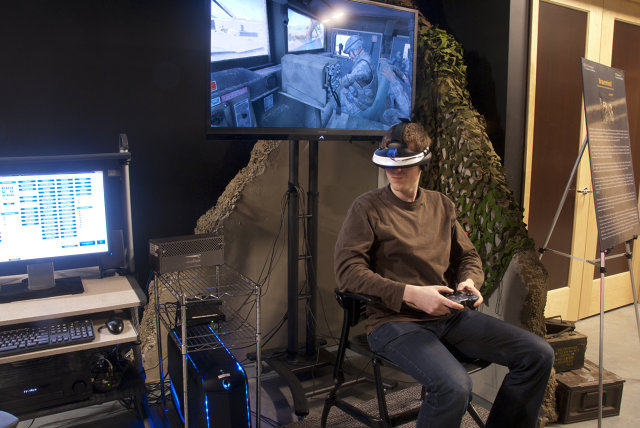
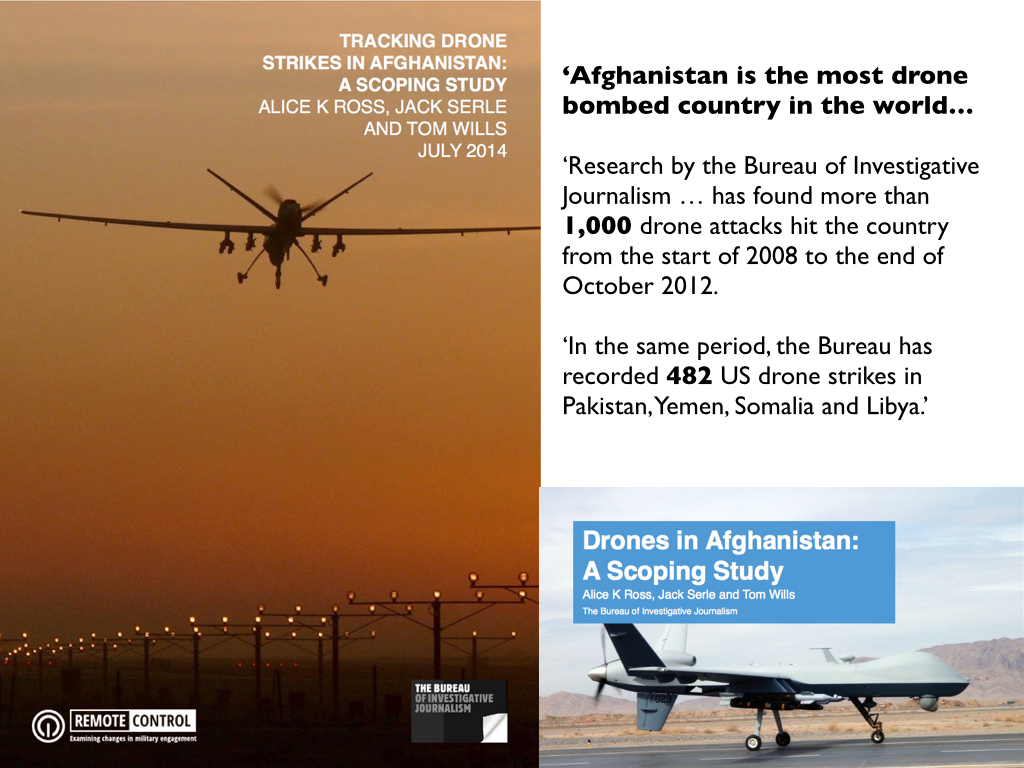
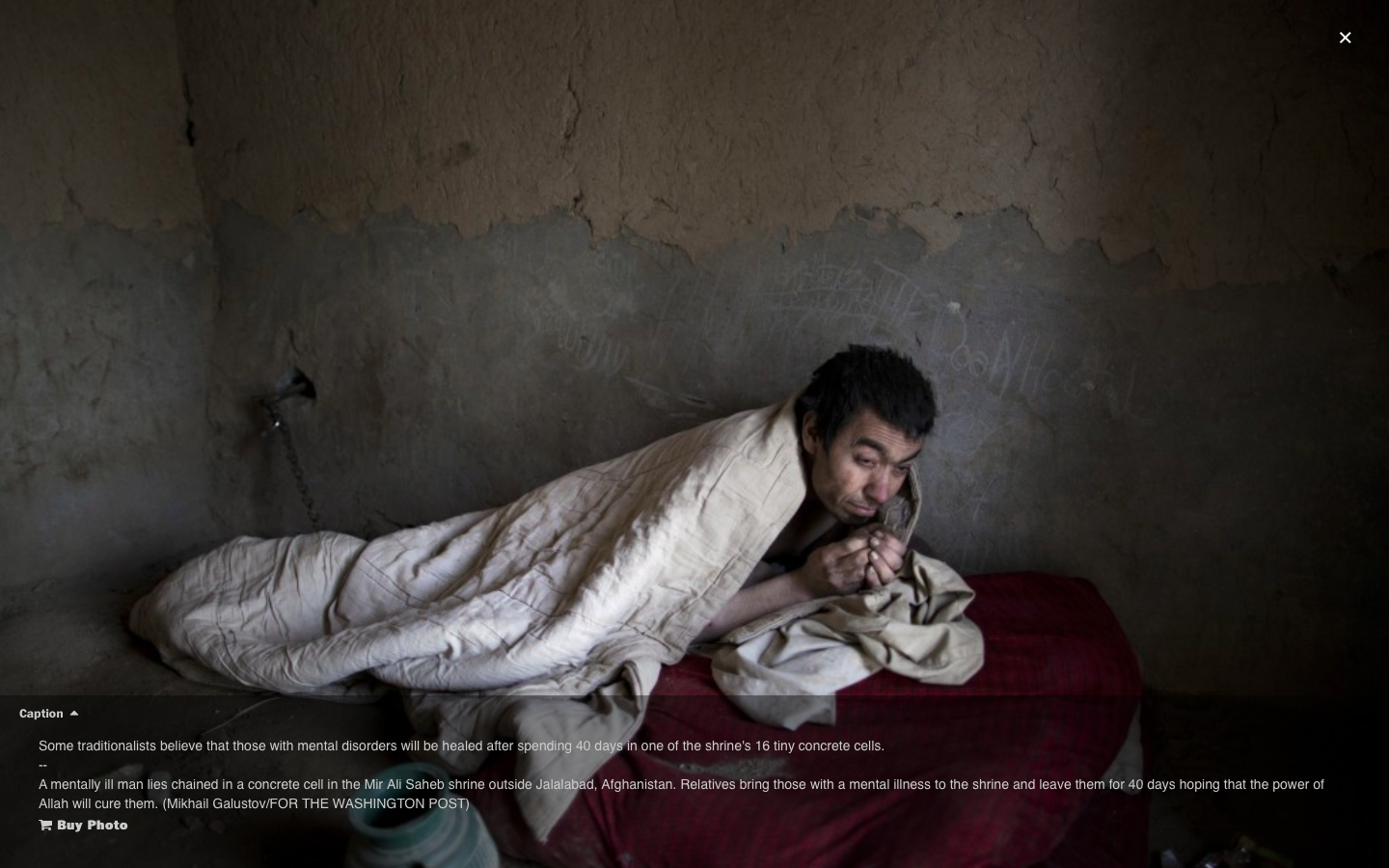

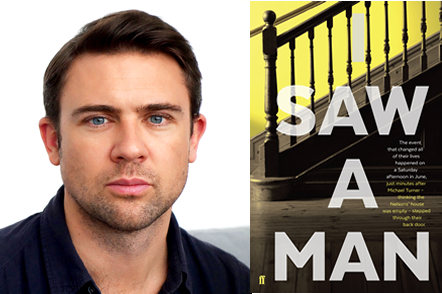

 geographical imaginations