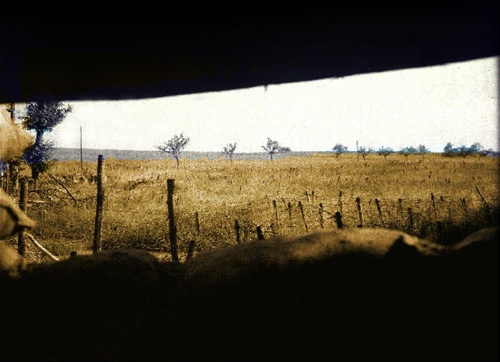
‘The land of rotting men’

No man's land

Noam Leshem and Alasdair Pinkerton have embarked on a fascinating new project, Re-inhabiting No Man’s Land: from dead zones to living spaces here:

Nearing the centenary of the First World War, this project explores the ongoing relevance of no-man’s lands in the 21st century. Rather than merely empty, divisive spaces, the project considers the material substance of no-man’s lands, their changing social-cultural meaning and their relevance as productive political and geopolitical spaces.

As a figure of speech, No-Man’s Land is applied to anywhere from derelict inner-city districts and buffer-zones to ‘ungovernable’ regions and tax havens. But what is no-man’s land? What are the conditions that produce it? How is it administered? What sort of human activities do no-man’s lands harbour? These are the questions that prompt us to think about the no-man’s lands not as dead zones, but as living spaces.
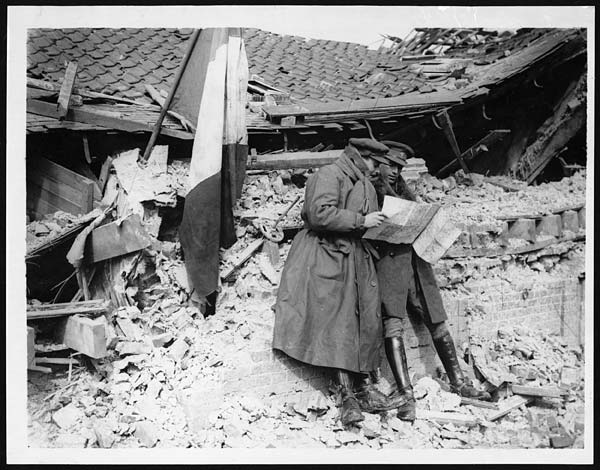
WWI consulting a map

News of this arrived from Noam just as I finished the long-form version of Gabriel’s Map: cartography and corpography in modern war, which you can now find under the DOWNLOADS tab (scroll down).  Most of the essay is about the First World War on the Western Front (I explain the title at the start of the essay; it comes from William Boyd‘s Ice-Cream War and, in particular, the First World War in East Africa, and the title of this post comes from Edward Lynch‘s Somme Mud: the experiences of an infantryman in France, 1916-1919), but I also end with these reflections on the 21st century:

In this essay I have been concerned with the First World War but, as we approach its centenary, it is worth reflecting on the ways in which modern warfare has changed – and those in which it has not. Through the constant circulation of military imagery and its ghosting in video games, many of us have come to think of contemporary warfare as optical war hypostatised: a war fought on screens and through digital images, in which full motion video feeds from Predators and Reapers allow for an unprecedented degree of remoteness from the killing fields. In consequence, perhaps, many of us are tempted to think of the wars waged by advanced militaries, in contrast to the First World War, as ‘surgical’, even body-less. These are wars without fronts, whose complex geometries have required new investments in cartography and satellite imagery, and there have been major advances in political technologies of vision and in the development of a host of other sensors that have dramatically increased the volume of geo-spatial intelligence on which the administration of later modern military violence relies. All of this has transformed but not replaced the cartographic imaginary.

And yet, for all of their liquid violence, these wars are still shaped and even confounded by the multiple, acutely material environments through which they are fought. In Sebastian Junger’s remarkable despatch from Afghanistan, he notes that for the United States and its allies ‘the war diverged from the textbooks because it was fought in such axle-breaking, helicopter-crashing, spirit-killing, mind-bending terrain that few military plans survive intact for even an hour.’ If that sounds familiar, then so too will Kenneth MacLeish’s cautionary observations about soldiers as both vectors and victims of military violence:

‘The body’s unruly matter is war’s most necessary and most necessarily expendable raw material. While many analyses of US war violence have emphasized the technologically facilitated withdrawal of American bodies from combat zones in favour of air strikes, smart bombs, remotely piloted drones, and privately contracted fighting forces, the wars in Iraq and Afghanistan could not carry on without the physical presence of tens of thousands of such bodies…

In consequence, the troops have had to cultivate an intrinsically practical knowledge that, while its operating environment and technical armature are obviously different, still owes much to the tacit bodily awareness of the Tommy or the Poilu:

‘In the combat zone there is a balance to be struck, a cultivated operational knowledge, that comes in large part from first-hand experience about what can hurt you and what can’t… So you need not only knowledge of what the weapons and armor can do for you and to you but a kind of bodily habitus as well – an ability to take in the sensory indications of danger and act on them without having to think too hard about it first. When you hear a shot, is it passing close by? Is it accurate or random? Is it of sufficient caliber to penetrate your vest, the window of your Humvee or the side of your tank?’

In the intricate nexus formed by knowledge, space and military power, later modern war still relies on cartographic vision – and its agents still produce their own corpographies.

The notes contain various references to No Man’s Land in the First World War, though I’m increasingly interested in what lies on either side.  One of the reasons so many commentators seem to think that ‘war among the people’ is a recent development is that the imagery of the Western Front draws the eye again and again to No Man’s Land, but behind the front lines on either side were farms, fields, villages and small towns where people continued to live and work amongst the shelling, the gas attacks, and the billeted troops.

As usual, I’d welcome any comments/criticisms/suggestions on the (I hope near final) draft of the essay: an extended version will appear in War material.
‘Imagination bodies forth…’

Following from my previous post, I’ve been thinking a lot about bodies recently, and for two reasons.

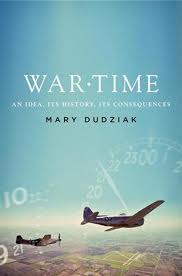
DUDZIAK War-timeThe first is the workshop on War & Medicine I attended in Paris just before Christmas.  It became very clear early on how difficult it is to determine when military violence comes to an end; Mary Dudziak has recently written about this in her War time: an idea, its history, its consequences (Oxford, 2012), largely from a legal point of view (and not without criticism), but it’s worth emphasising that the effects of violence continue long after any formal end to combat.  This ought to be obvious, but it’s astonishing how often it’s ignored or glossed over.

Think, for example, of the continuing toll of the conflicts in Afghanistan and Iraq, recovered in detail by Catherine Lutz (who was part of the workshop) and her colleagues at the Costs of War project, which shows how ‘the human and economic costs of these wars will continue for decades’.

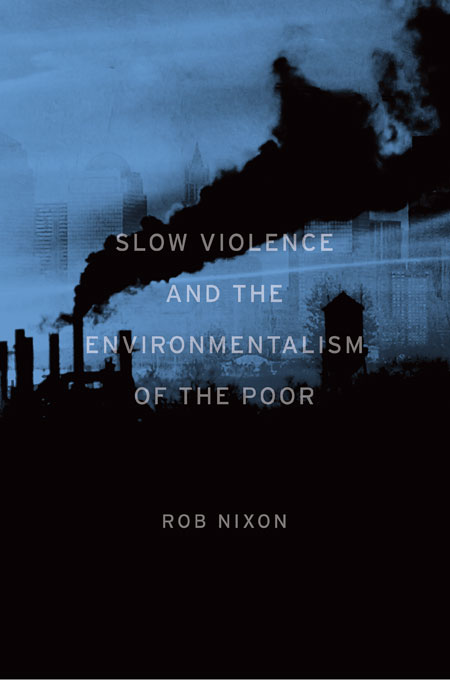
NIXON Slow violenceOr think of  the toxic environments produced by ecological warfare, by the use of depleted uranium in munitions, and by the continued deployment of land mines and cluster bombs – what Rob Nixon brilliantly calls the ‘slow violence’ produced by ‘ecologies of the aftermath’ (more on this in a later post):

 ‘In our age of depleted-uranium warfare, we have an ethical obligation to challenge the military body counts that consistently underestimate (in advance and in retrospect) the true toll of waging high-tech wars.  Who is counting the staggered deaths that civilians and soldiers suffer from depleted uranium ingested or blown across the desert?  Who is counting the belated fatalities from unexploded cluster bombs that lie in wait for months of years, metastasizing into landmines?  Who is counting deaths from chemical residues left behind by so-called pinpoint bombing, residues that turn into foreign insurgents, infiltrating native rivers and poisoning the food chains?  Who is counting the victims of genetic deterioration – the stillborn, malformed infants conceived by parents whose DNA has been scrambled by war’s toxins?’

(If you think we are winning the war on land-mines, especially in you are in Canada, read this).

These two contributions – and the conversations we had in Paris – rapidly displaced the lazy assumption of a politics of care in which the left mourns civilian casualties and the right military casualties. That there is a politics of care is clear enough, but there’s also a political geography: that’s written in to the biopolitical projects that are contained within so many late modern wars, and in Paris Omar Dewachi and Ghassan Abu-Sitta described how ‘care’ has become a means of controlling populations in wars in Iraq, Libya and Syria – a rather different sense of ‘surgical warfare’ from the one we’re used to – with states like Saudi Arabia and Qatar also funding the transfer of thousands of injured people from the war zones for treatment in hospitals in Egypt, Jordan and Lebanon.

And two brilliant medical anthropologists, Ken Macleish and Zoe Wool, brought with them vivid, carefully wrought ethnographies of injured soldiers’ bodies.  The American soldier may appear a figure of unprecedented invulnerabilty and astonishing violence – what Ken calls a figure of ‘technological magic’ produced by a ‘phantasmagoric technological empowerment of the body’ – but, as he and Zoe reminded us, soldiers are not only ‘the agents and instruments of sovereign violence’ but also its objects.  Their studies took me to places I’ve never been and rarely thought about, but I’ve been thinking about two other dimensions of their work that combined to produce my second reason for thinking about bodies.

One is the historicity that is embedded in this process.  Ken paraphrased Walter Benjamin‘s observation in the wake of the First World War – ‘the technological progress evident in modern warfare does not ensure the protection of the human body so much as it subjects it to previously unimaginable forms of harm and exposure’ – and linked it to John Keegan‘s claim in The face of battle that the military history of the twentieth-century was distinguished by the rise of ‘”thing-killing’ as opposed to man-killing weapons’ (the example he had in mind was heavy artillery).  The other is the corporeality of the combat zone.  Ken again:  ‘You need not only knowledge of what the weapons and armor can do for you and to you but a kind of bodily habitus as well – an ability to take in the sensory indications of danger and act on them without having to think too hard about it first.’  In an essay ‘On movement’ forthcoming in Ethnos, Zoe develops this insight through an artful distinction between carnality and corporeality (which may require me to revise my vocabulary):

‘The analytics of movement is a turning toward emergent carnality, flesh, and the way it is seen and felt; proprioception and those other senses of sight, sound, touch, and taste through which a body and a space enact a meaningful, sensible articulation; visceral experiences forged and diagnosed through the trauma of war which also exceed its limits.’ 

an-ice-cream-warAnd so to my second reason for thinking about bodies. Later this month I’m giving a lecture in the University of Kentucky’s annual Social Theory series.  The theme this year is Mapping, and my title is ‘Gabriel’s Map‘.  This is a riff on a phase from William Boyd‘s novel, An Ice-Cream War, that has haunted me ever since I first read it:

‘Gabriel thought maps should be banned.  They gave the world an order and reasonableness it didn’t possess.’

The occasion for the remark is a spectacularly unsuccessful British attempt to defeat a much smaller German force in November 1914 at Tanga in German East Africa; the young subaltern, Gabriel, rapidly discovers that there is a world of difference between what Clausewitz once called ‘paper war’ – a plan of attack plotted on the neat, stable lines of a map – and ‘real war’.   What I plan (sic) to do is arc back from this exceptionally brutal campaign – which lasted two weeks longer than the war in Europe – to the western front.  The two were strikingly different: the war in Africa was a war of movement and manoeuvre fought with the most meagre of military intelligence, whereas the central years of the war in Europe were distinguished by stasis and attrition and involved an extraordinary effort to maintain near real-time mapping of the disposition of forces.

The point here is to explore a dialectic between cartography and what I think I’m going to call corpography.

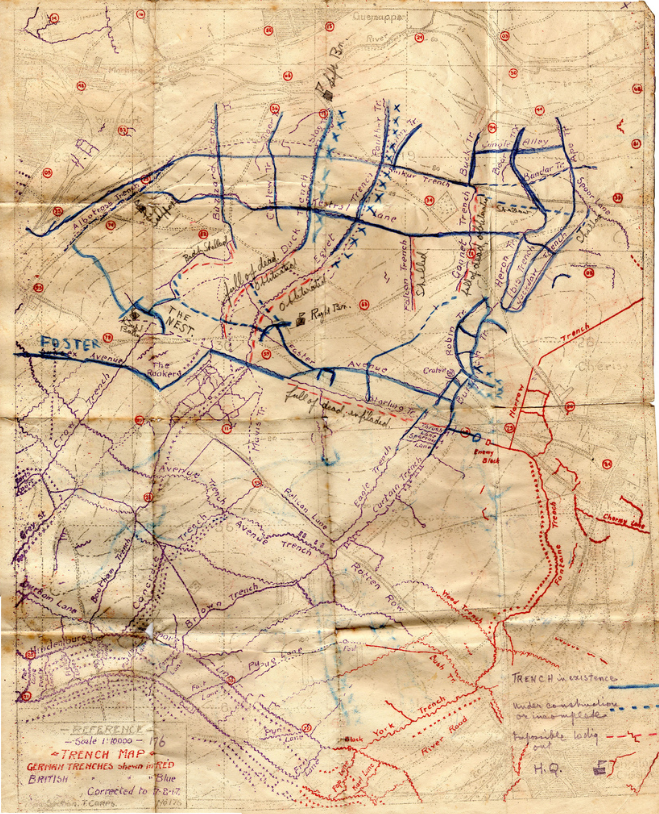
FINNEGAN Shooting The FrontThe first of these has involved working out the intimate relationship between mapping and aerial reconnaissance (what the Royal Flying Corps called ‘shooting the front’).  There is a marvellously rich story to be told here which, among other things, shows that the stasis of trench warfare was Janus-faced: it was produced by a myriad of micro-movements – advances and withdrawals, raids and repulses – whose effectiveness depended not on the fixity of the map at all but on its more or less constant updating (which in turn means that this capacity isn’t the unique preserve of twenty-first century ‘digital navigation’).  So here I’ll show how a casaced of millions of trench maps and aerial photographs was produced, distributed and then incorporated into the field of action through copies, re-drawings, sketches and annotations by front-line soldiers.  I have wonderful, telling examples, like this one (look carefully at the annotations):

Trench map annotated

Santanu DAS: Touch an dintimacy in First World War literatureBut I also want to show (as the map above implies: all those “full of dead” annotations) how, for these men, the battlefield was also literally a field: a vile, violent medium to be known not only (or even primarily) through sight but through touch, smell and sound: what Santanu Das memorably calls a ‘slimescape’ which was also a soundscape.  This was a close-in terrain that was known through the physicality of the body as a sensuous, haptic geography:

‘Amidst the dark, muddy, subterranean world of the trenches, the soldiers navigated space … not through the safe distance of the gaze but rather through the clumsy immediacy of their bodies: “crawl” is a recurring verb in trench narratives, showing the shift from the visual to the tactile.’

This was a ‘mapping’ of sorts – as Becca Weir suggests in  ‘“Degrees in nothingness”: battlefield topography in the First World War’, Critical Quarterly 49 (4) (2007) 40-55 – and there is a dialectic between cartography and corpography.

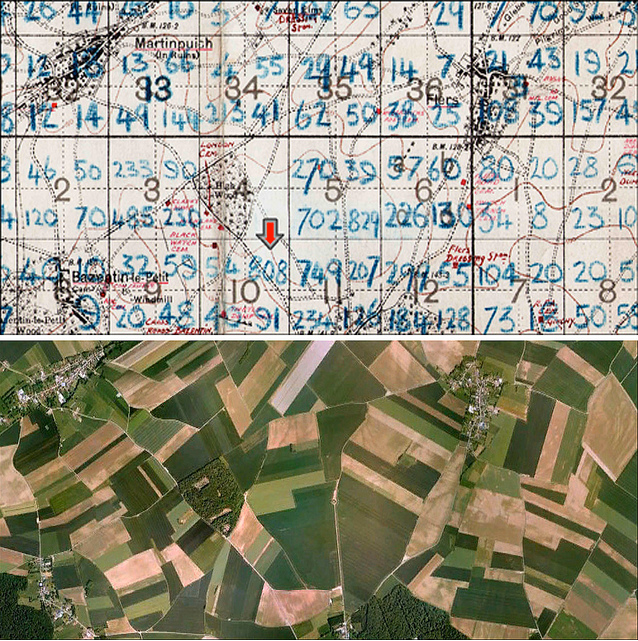
I’ve been working my way through a series of diaries, memoirs and letters to flesh out its performance in detail, but the most vivid illustration of the entanglements of cartography and corpography that I’ve found – and that I suspect I shall ever find – is this extract from a ‘body density map’ for part of the Somme.  This shows the standard trench map above a contemporary satellite photograph; each carefully ruled square is overprinted with the number of dead soldiers found buried in the first sweep after the war (between March and April 1919)…

Body Density Map, High Wood, Somme image by shipscompass on flickr

I won’t say more at present because I need to keep my powder dry for Kentucky, but I hope it will be clear by the end that, even though I’ll be  talking about the First World War, I will also have been talking about the wars conducted in the shadows of the Twin Towers and the Pentagon.