War comes home

martha_rosler_2

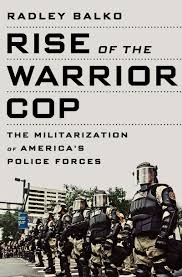
The debate over the militarisation of policing in the United States that has been sparked by the shooting of a young Afro-American by a white police officer in Ferguson, Missouri increasingly cites Radley Balko‘s Rise of the warrior cop: the militarisation of America’s police forces.  It was published last year to considerable acclaim, and last August the Wall Street Journal‘s Saturday Essay featured what was, in effect, Balko’s three-minute version.

BALKO Rise of the warrior copSince the 1960s, in response to a range of perceived threats, law-enforcement agencies across the U.S., at every level of government, have been blurring the line between police officer and soldier. Driven by martial rhetoric and the availability of military-style equipment – from bayonets and M-16 rifles to armored personnel carriers – American police forces have often adopted a mind-set previously reserved for the battlefield. The war on drugs and, more recently, post-9/11 antiterrorism efforts have created a new figure on the U.S. scene: the warrior cop – armed to the teeth, ready to deal harshly with targeted wrongdoers, and a growing threat to familiar American liberties.
So far, so familiar – and by no means confined to the United States.  There the present debate seems to have been conducted in an intellectual vacuum.  When ‘Warrior cop’ was published, Glenn Greenwald wrote that ‘there is no vital trend in American society more overlooked than the militarization of our domestic police forces’, and he’s since repeated the claim (though he does acknowledge the ACLU report produced earlier this year, War Comes Home: the excessive militarization of American policing (see also Matthew Harwood‘s ‘One Nation Under SWAT’ here – he’s a senior writer/editor at the ACLU).
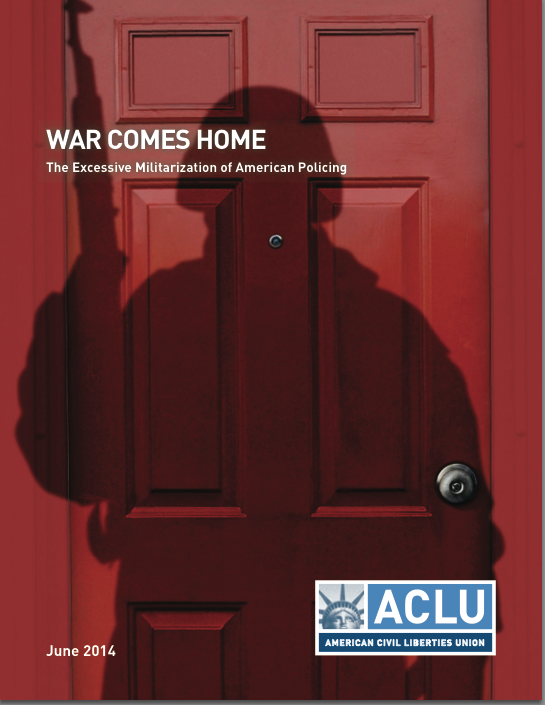
ACLU War comes home

I suspect the debate could be advanced, both politically and intellectually, by including two other (academic) voices that approach the situation from two different directions.  One is Steve Graham‘s Cities under siege: the new military urbanism (2010), which starts from new constellations of military violence, and the other is Mark Neocleous‘s War power, police power (2014), which starts from a wider conception of policing than has figured in the present discussion. Doing so would also enable the role of racialisation – which flickers in the margins of both accounts – to be given the greater prominence I think it deserves.  But it would also considerably sharpen talk of war ‘coming home’, as though it ever left

For now, though, let me make two further points.  One is about the need to enlarge the conventional conception of the military-industrial complex.  It has already been extended in all sorts of ways, of course – the Military-Industy-Media-Entertainment complex (MIME) and the Military-Academic-Industrial-Media complex (MAIM) to name just two – but it has become increasingly clear that the producers and designers of military equipment also have domestic police forces in their sights (sic).

It’s a complicated business, because on one side there is an active Department of Defense program that, since 1990, has channelled surplus military equipment to state and local police departments in the United States: more details from Shirley Li here.  The New York Times has a sequence of interactive maps showing the spread of everything from aircraft and armoured vehicles through grenade launchers and assault rifles to body armour and night vision goggles (the accompanying article is here).  The map below is just one example, showing the transfer of armoured vehicles:
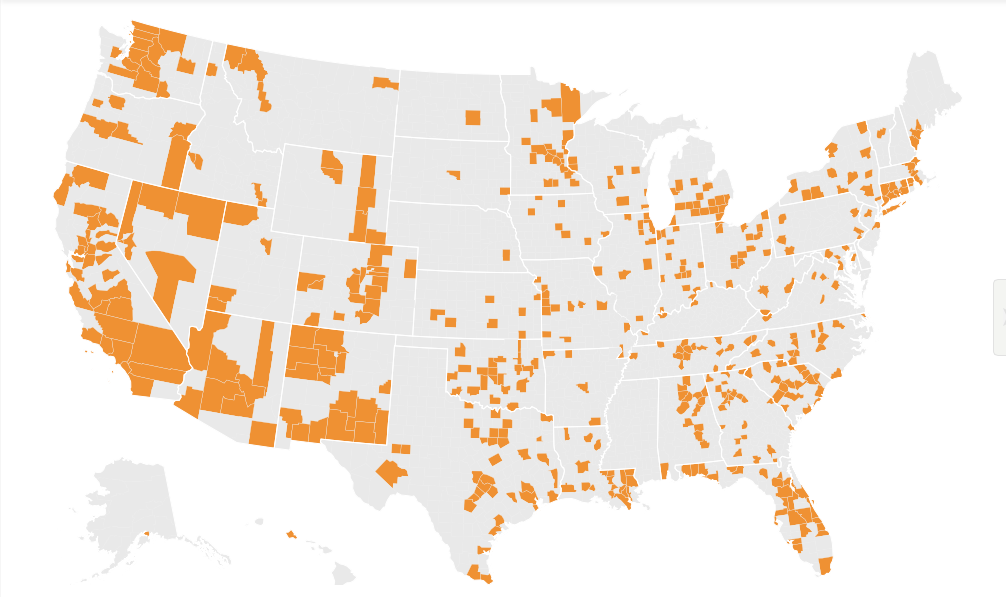
Armoured vehicles transferred from US military to US police departments

On the other side, there’s also an active market for new equipment – and some of the latest ‘toys for the boys‘ (see also here) include drones (at present unarmed versions only for intelligence, surveillance and reconnaissance).  Jane’s, widely acknowledged as an indispensable global database on military equipment and platforms, now advertises a new guide dedicated to ‘Police and Homeland Security Equipment’:

Jane’s Police & Homeland Security Equipment delivers a comprehensive view of law enforcement and paramilitary equipment in production and service around the world, providing A&D businesses with the market intelligence that drives successful business development, strategy and product development activity, and providing military, security and government organizations with the critical technical intelligence that they need in order to develop and maintain an effective capability advantage….

Profiles of more than 2,200 types of law enforcement equipment and services around the world, including firearms, body armor, personal protection, riot and crowd control equipment, communications, security equipment and biometric solutions, make Jane’s Police & Homeland Security Equipment the most comprehensive and reliable source of police equipment technical and program intelligence.

There is a genealogy to all of this, of course, which means there is important work to be done in tracing the historical pathways through which both offensive and defensive materials have migrated from external uses (by the military) to internal uses (by the police).  This breaches one of the canonical divides of the liberal state, a rupture signalled by the hybrid term ‘security forces’, but it has been going on for a long time.
Anna FeigenbaumIn an excellent essay – a preview of her book, Tear Gas: 100 years in the making, due out from Verso next year – Anna Feigenbaum shows how tear gas drifted from the battlefields of France and Belgium onto streets around the world.  The French were the first to use toxic gas shells on a large scale – engins suffocants – which discharged tear gas; in most cases the effects were irritating rather than disabling, and when the Germans used similar shells against the British in October 1914 at Neuve Chapelle they too proved largely ineffective.

These were ‘Lilliputian efforts’, according to historian Peter Bull, and experiments by both sides with other systems were aimed at a greater and deadlier harvest.  You can find much more on the use of lethal gas on the battlefield from Ulrich Trumpener, ‘The road to Ypres’, Journal of modern history 47 (1975) 460-80; Tim Cook, No place to run: the Canadian Corps and gas warfare in the First World War (Vancouver: UBC Press, 1999) – which despite its title is much less Canuck-centric than it might appear; Jonathan Krause, ‘The origins of chemical warfare in the French Army’, War in history 20 (4) (2013) 545-56; and Edgar Jones, ‘Terror weapons: the British experience of gas and its treatment in the First World War’, War in history 21 (3) (2014) 355-75.

But many military officers realised that tear gas had other potential uses, and Anna shows that the process of repatriation and re-purposing began even before the First World War had ended:

By the end of the 1920s, police departments in New York, Philadelphia, Cleveland, San Francisco, and Chicago were all purchasing tear-gas supplies. Meanwhile, sales abroad included colonial territories in India, Panama, and Hawaii.

With this new demand for tear gas came new supply. Improved tear-gas cartridges replaced early explosive models that would often harm the police deploying them….

Leading American tear-gas manufacturers, including the Lake Erie Chemical Company founded by World War I veteran Lieutenant Colonel Byron “Biff” Goss, became deeply embroiled in the repression of political struggles. Sales representatives buddied up with business owners and local police forces. They followed news headlines of labor disputes and traveled to high-conflict areas, selling their products domestically and to countries such as Argentina, Bolivia, and Cuba. A Senate subcommittee investigation into industrial-munitions sales found that between 1933 and 1937, more than $1.25 million (about $21 million today) worth of “tear and sickening gas” had been purchased in the U.S. “chiefly during or in anticipation of strikes.”
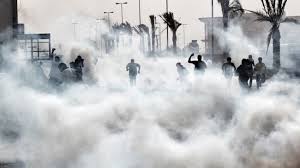
Tear gas against protesters in Bahrain

Anna continues the story through the Second World War and the Vietnam War (where in an unremarked irony tear gas was used against anti-war demonstrations) and down to the present, but you get the (horrible) idea.  She closes with the supreme irony:

Yet while tear gas remains banned from warfare under the Chemical Weapons Convention, its use in civilian policing grows. Tear gas remains as effective today at demoralizing and dispersing crowds as it was a century ago, turning the street from a place of protest into toxic chaos. It clogs the air, the one communication channel that even the most powerless can use to voice their grievances.

This brings me to my second point, and it’s one that both Steve and Mark sharpen in different ways: the militarization of policing is not only about weapons but also about the the practices in which they are embedded.  One place to start such an investigation would be the cross-over in what the military calls doctrine.  There’s many a slip between doctrine on the books and practice on the streets.  But Public Intelligence has recently published U.S. Army Techniques Publication 3-39.33: Civil Disturbances, which will now repay even closer reading.  The cross-overs between counterinsurgency, counter-terrorism and police operations against organised crime are now a matter of record – and I’ve discussed these on several occasions (see here and here) – but 3-39.33 is perhaps most revealing in its preamble:

ATP 3-39.33 provides discussion and techniques about civil disturbances and crowd control operations that occur in the continental United States (CONUS) and outside the continental United States (OCONUS)….Worldwide instability coupled with U.S. military participation in unified-action, peacekeeping, and related operations require that U.S. forces have access to the most current doctrine and techniques that are necessary to quell riots and restore public order.

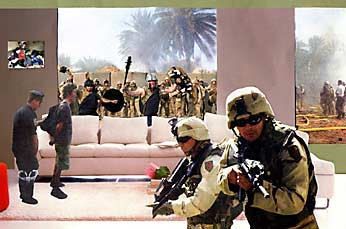
Which is where I came in…  These are just preliminary jottings, and there’s lots more to say – and lots more to consider (as the Martha Rosler photomontage at the top of this post implies: it’s from her 2004 series Bringing the War Home: House Beautiful, which carries an implicit plea to attend to their homes and their streets not just ‘ours’ ) – so watch this space.

UPDATE:  See Stuart Schrader‘s elegant short essay on ‘Policing Empire’ at Jacobin:

‘… we should be skeptical of calls for police reform, particularly when accompanied by cries that this (militarization) should not happen here. A close look at the history of US policing reveals that the line between foreign and domestic has long been blurry. Shipping home tactics and technologies from overseas theaters of imperial engagement has been a typical mode of police reform in the United States. When policing on American streets comes into crisis, law-enforcement leaders look overseas for answers. What transpired in Ferguson is itself a manifestation of reform.

From the Philippines to Guatemala to Afghanistan, the history of US empire is the history of policing experts teaching indigenous cops how to patrol and investigate like Americans. As a journalist observed in the late 1950s, “Americans in Viet-Nam very sincerely believe that in transplanting their institutions, they will immunize South Viet-Nam against Communist propaganda.” But the flow is not one-way: these institutions also return home transformed.’

Thanks to Alex Vasudevan for the tip.
Drones, battlefields and later modern war

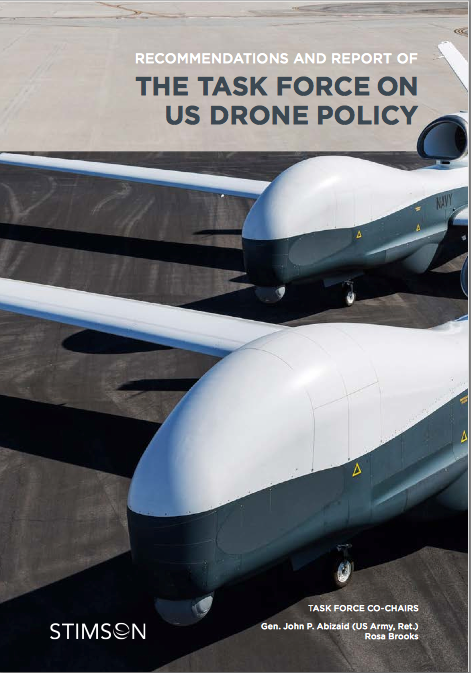
STIMSON Drone report 2014

This morning the Stimson Center issued an 81-page Recommendations and Report of the Task Force on US Drone Policy: you can access it online via the New York Times here or download it as a pdf here; Mark Mazetti‘s report for the Times is here.

Founded in 1989, the Stimson Center is a Washington-based ‘non-profit and non-partisan’ think-tank that prides itself on providing ’25 years of pragmatic solutions to global security’.  It’s named after Henry Stimson, who served Presidents Taft, Roosevelt and Truman as Secretary of War and President Hoover as Secretary of State.  The Center established its 10-member Task Force on drones a year ago, with retired General John Abizaid (former head of US Central Command, 2003-2007) and Rosa Brooks (Professor of Law at Georgetown) as co-chairs; the Task Force was aided by three Working Groups – on Ethics and Law; Military Utility, National Security and Economics; and Export Control and Regulatory Challenges – each of which is preparing more detailed reports to be published later this year.  The present Report focuses on

‘key current and emerging issues relating to the development and use of lethal UAVs outside the United States for national security purposes. In particular, we focus extensively on the use of UAVs for targeted counterterrorism strikes, for the simple reason that this has generated significant attention, controversy and concern.’

But this focus repeats and compounds the myopia of both conventional wisdom and contemporary debate.  The Report summarily (and I think properly) rejects a number of misconceptions about the use of drones, insisting that their capacity to strike from a distance is neither novel nor unique; noting that the vast majority of UAVs in the US arsenal are non-weaponized (‘less than 1 percent of … UAVs carry operational weapons at any given time’ – though their intelligence, surveillance and reconnaissance functions are of course closely tied to the deployment of weapons by conventional strike aircraft or ground forces); and arguing that ‘UAVs do not turn killing into “a video game”‘. These counter-claims are unexceptional and the Task Force presents them with clarity and conviction.

But the Report also accepts that the integration of UAVs into later modern war on ‘traditional’ or ‘hot’ battlefields [more about those terms in a moment] is, by and large, unproblematic.  Thus:

‘UAVs have substantial value for a wide range of military and intelligence tasks. On the battlefield, both weaponized and non-weaponized UAVs can protect and aid soldiers in a variety of ways. They can be used for reconnaissance purposes, for instance, and UAVs also have the potential to assist in the detection of chemical, biological, radiological and nuclear weapons, as well as ordinary explosives. Weaponized UAVs can be used to provide close air support to soldiers engaged in combat.’

A footnote expands on that last sentence:

‘In the past, warfighters on the ground under imminent threat would have to navigate a complicated command hierarchy to call for air support. The soldier on the ground would have to relay coordinates to a Forward Air Controller (FAC), who would then talk the pilot’s eyes onto a target in an extremely hostile environment. These missions have always been very dangerous for the pilot, who has to fly low and avoid multiple threats, and also for people on the ground. It is a human-error rich environment, and even today, it is not uncommon for the wrong coordinates to be relayed, resulting in the deaths of friendlies or innocent civilians. To ease these difficulties, DARPA is currently investigating how to replace the FAC and the pilot by a weaponized UAV that will be commanded by the soldier on the ground with a smartphone.’

And subsequently the Report commends the ‘robust’ targeting process put in place by the US military and the incorporation of military lawyers (JAGs) into the kill-chain:

‘The Department of Defense has a robust procedure for targeting, with outlined authorities and steps, and clear checks on individual targets. The authorization of a UAV strike by the military follows the traditional process in place for all weapons systems (be they MQ-9 Reaper drones or F-16 fighter jets). Regardless of whether particular strikes are acknowledged, the Pentagon has stated that UAV strikes, like strikes from manned aircraft, are subject to the military’s pre-strike target development procedures and post-strike assessment.

‘The process of determining and executing a strike follows a specific set of steps to ensure fidelity in target selection, strike and post-strike review.’

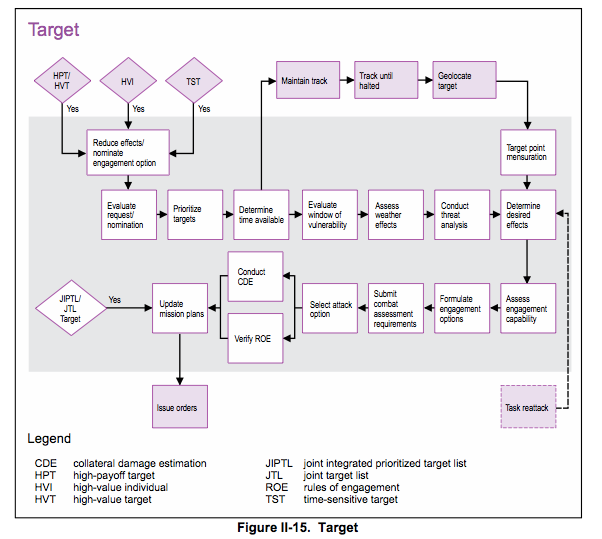
Targeting cycle

Both Craig Jones and I have discussed the targeting cycle [the figure above shows one of six steps in the ‘find-fix-track-target-engage-assess’ cycle, taken from JP 3-60 on Joint Targeting, issued in January 2013] and the role of operational law within it (Craig in much more detail than me), and these are all important considerations.  But the Report glosses over the fragilities of the process, which in practice is not as ‘robust’ as the authors imply.  They concede:

‘No weapons system is perfect, and targeting decisions — whether for UAV strikes or for any other weapons delivery system — are only as good as the intelligence on which they are based. We do not doubt that some US UAV strikes have killed innocent civilians. Nonetheless, the empirical evidence suggests that the number of civilians killed is small compared to the civilian deaths typically associated with other weapons delivery systems (including manned aircraft).’

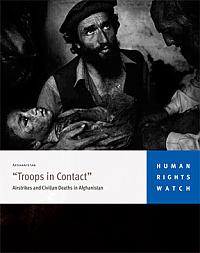
cover_646That last sentence is not unassailable, but in addition I’ve repeatedly argued that it is a mistake to abstract strikes carried out by UAVs from the wider network of military violence in which their ISR capabilities are put to use:  hence my ongoing work on the Uruzgan airstrike in Afghanistan, for example, and on ‘militarised vision’ more generally.  What these studies confirm is that civilian casualties are far more likely when close air support is provided – by UAVs directly or by conventional strike aircraft – to ‘troops in contact’ (even more so when, as in both the Kunduz and Uruzgan airstrikes, it turns out that troops calling in CAS were not ‘in contact’ at all).

In short, while it’s perhaps understandable that a Task Force that included both General Abizaid and Lt-Gen David Barno (former head of Combined Forces Command – Afghanistan from 2003-2005) should regard the use of UAVs on ‘traditional’ battlefields as unproblematic, I think it regrettable that their considerable expertise did not result in a more searching evaluation of remote operations in Afghanistan and Iraq.

But what, then, of those ‘non-traditional’ battlefields?  A footnote explains:

‘Throughout this report, we distinguish between the use of UAV strikes on “traditional” or “hot” battlefields and their use in places such as Pakistan, Yemen and Somalia. These are terms with no fixed legal meaning; rather, they are merely descriptive terms meant to acknowledge that the US of UAV strikes has not been particularly controversial when it is ancillary to large-scale, open, ongoing hostilities between US or allied ground forces and manned aerial vehicles, on the one hand, and enemy combatants, on the other. In Afghanistan and Iraq, the United States deployed scores of thousands of ground troops and flew a range of close air support and other aerial missions as part of Operation Enduring Freedom, and UAV strikes occurred in that context. In Libya, US ground forces did not participate in the conflict, but US manned aircraft and UAVs both operated openly to destroy Libyan government air defenses and other military targets during a period of large scale, overt ground combat between the Qaddafi regime and Libyan rebel groups. In contrast, the use of US UAV strikes in Yemen, Pakistan and elsewhere has been controversial precisely because the strikes have occurred in countries where there are no US ground troops or aerial forces openly engaged in large scale combat.’

0202megret0

A major focus of the report is on what Frédéric Mégret (above) has called ‘the deconstruction of the battlefield‘ and the countervailing legal geographies that provide an essential armature for later modern war (though it’s surprising that the Report makes so little use of academic research on UAVs and contemporary conflicts).  The authors ‘disagree with those critics who have declared that US targeted killings [in Pakistan, Yemen and Somalia] are “illegal”’ – no surprise there either, incidentally, since one of the Working Groups included Kenneth Anderson, Charles Dunlap and Christine Fair: I’m not sure in what universe that counts as ‘non-partisan’) but they also accept that these remote operations move in a grey zone (and in the shadows):

‘The law of armed conflict and the international legal rules governing the use of force by states arose in an era far removed from our own. When the Geneva Conventions of 1949 were drafted, for instance, it was assumed that most conflicts would be between states with uniformed, hierarchically organized militaries, and that the temporal and geographic boundaries of armed conflicts would be clear.

‘The paradigmatic armed conflict was presumed to have a clear beginning (a declaration of war) and a clear end (the surrender of one party, or a peace treaty); it was also presumed the armed conflict to be confined geographically to specific, identifiable states and territories. What’s more, the law of armed conflict presumes that it is a relatively straightforward matter to identify “combatants” and distinguish them from “civilians,” who are not targetable unless they participate directly in hostilities. The assumption is that it is also a straightforward matter to define “direct participation in hostilities.”

‘The notion of “imminent attack” at the heart of international law rules relating to the use of force in state self-defense was similarly construed narrowly: traditionally, “imminent” was understood to mean “instant, overwhelming, and leaving no choice of means, and no moment for deliberation.”

‘But the rise of transnational non-state terrorist organizations confounds these preexisting legal categories. The armed conflict with al-Qaida and its associated forces can, by definition, have no set geographical boundaries, because al-Qaida and its associates are not territorially based and move easily across state borders. The conflict also has no temporal boundaries — not simply because we do not know the precise date on which the conflict will end, but because there is no obvious means of determining the “end” of an armed conflict with an inchoate, non-hierarchical network.

‘In a conflict so sporadic and protean — a conflict with enemies who wear no uniforms, operate in secret and may not use traditional “weapons” — the process of determining where and when the law of armed conflict applies, who should be considered a com- batant and what counts as “hostilities” inevitably is fraught with difficulty…

‘While the legal norms governing armed conflicts and the use of force look clear on paper, the changing nature of modern conflicts and security threats has rendered them almost incoherent in practice. Basic categories such as “battlefield,” “combatant” and “hostilities” no longer have a clear or stable meaning. And when this happens, the rule of law is threatened.’

These too are important considerations, but they are surely not confined to counter-terrorism operations in Pakistan, Yemen and Somalia: they also apply with equal force to counterinsurgency operations in Afghanistan and Iraq, and intersect with a wider and much more fraught debate over the very idea of ‘the civilian’.

There is a particularly fine passage in the Report:

‘Consider US targeted strikes from the perspective of individuals in — for instance — Pakistan or Yemen. From the perspective of a Yemeni villager or a Pakistani living in the Federally Administered Tribal Areas (FATA), life is far from secure. Death can come from the sky at any moment, and the instability and incoherence of existing legal categories means that there is no way for an individual to be certain whether he is considered targetable by the United States. (Would attending a meeting or community gathering also attended by an al-Qaida member make him targetable? Would renting a building or selling a vehicle to a member of an “associated” force render him targetable? What counts as an “associated force?” Would accepting financial or medical aid from a terrorist group make him a target? Would extending hospitality to a relative who is affiliated with a terrorist group lead the United States to consider him a target?).

‘From the perspective of those living in regions that have been affected by US UAV strikes, this uncertainty makes planning impossible, and makes US strikes appear arbitrary. What’s more, individuals in states such as Pakistan or Yemen have no ability to seek clarification of the law or their status from an effective or impartial legal system, no ability to argue that they have been mistakenly or inappropriately targeted or that the intelligence that led to their inclusion on a “kill list” was flawed or fabricated, and no ability to seek redress for injury. Their national laws and courts can offer no assistance in the face of foreign power, and far from protecting their fundamental rights and freedoms, their own states may in fact be deceiving them about their knowledge of and cooperation with US strikes. Meanwhile, geography and finances make it impossible to access US courts, and a variety of legal barriers — such as the state secrets privilege, the political question doctrine, and issues of standing, ripeness and mootness — in any case would prevent meaningful access to justice.’

This is one of the clearest summaries of the case for transparency and accountability I’ve seen, but the same scenario has also played out in Afghanistan (and in relation to the Taliban, which appears only once in the body of the Report) time and time again.  There are differences, to be sure, but the US military has also carried out its own targeted killings in Afghanistan, working from its Joint Prioritized Effects List.  The Report notes that ‘in practice, the military and CIA generally work together quite closely when planning and engaging in targeted UAV strikes: few strikes are “all military” or “all CIA”’ – which is true in other senses too – and this applies equally in Afghanistan.

In sum, then, this is a valuable and important Report – but it would have been far more incisive had its critique of ‘US drone policy’ cast its net wider to provide a more inclusive account of remote operations.  The trans-national geographies of what I’ve called ‘the everywhere war’ do not admit of any simple distinction between ‘traditional’ and ‘non-traditional’ battlefields, and trying to impose one on such a tangled field of military and paramilitary violence ultimately confuses rather than clarifies.  I realise that this is usually attempted as an exercise in what we might call legal cartography, but I also still think William Boyd‘s Gabriel was right when, in An Ice-Cream War, he complained that maps give the world ‘an order and reasonableness’ it doesn’t possess.  And we all also know that maps – like the law – are instruments of power, and that both are intimately entangled with the administration of military violence.

The Federal Administration of Military Violence

On 15 June – one week after the attack on Karachi’s international airport by the Pakistan Taliban (Tehrik-i-Taliban or TTP) and the Islamic Movement of Uzbekistan (UMI) – the Pakistan military announced its ‘comprehensive’ Operation Zarb-i-Azb in the Federally Administered Tribal Areas (FATA).  From their bases in North Waziristan, the statement announced, militants had ‘waged a war against the state of Pakistan’ and the military had been ‘tasked to eliminate these terrorists regardless of hue and color, along with their sanctuaries.’  Although the press release insisted that ‘these enemies of the state will be denied space anywhere across the country’ the epicentre of the operation was and remains North Waziristan.

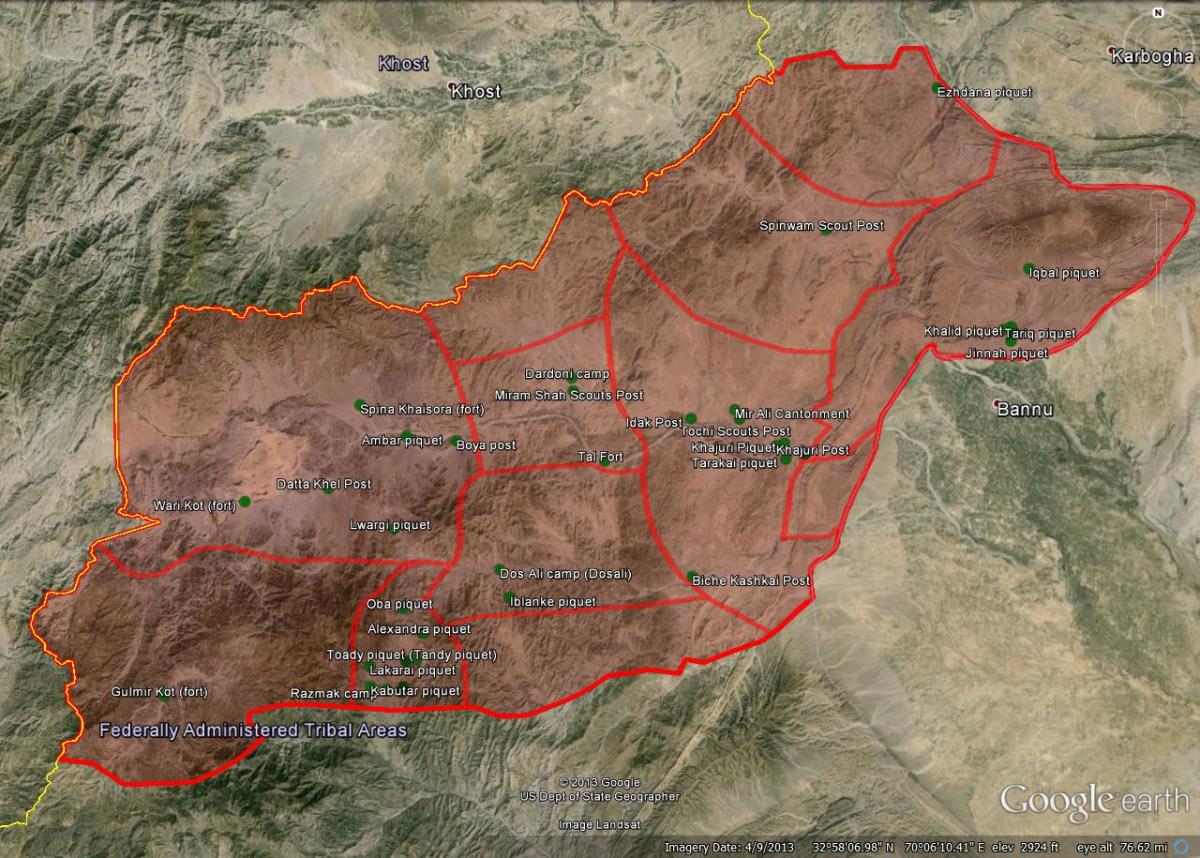
NWA_PakMil_locations_all_1200

There are reportedly 60,000 troops in the region, and the main Pakistan military installations in North Waziristan are shown on the map above (taken from the AEI spinoff site, Critical Threats), but the prelude to ground operations was a concerted attack by the Pakistan Air Force on eight targets linked to planning the assault on Karachi airport.

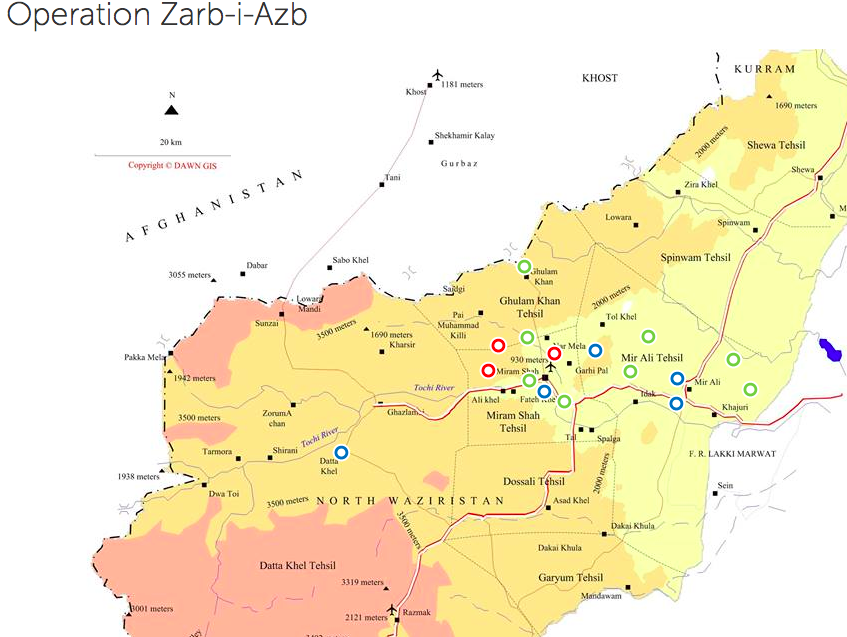
Green Ground Red Drones Blue PAF strikes DAWN 20 June 2014

‘Operation Zarb-i-Azb’ refers to Mohammed’s sword, and its political imagery is artfully dissected by Afiya Shehrbano Zia:

‘It refers to the (‘sharp/cutting’) sword of the prophet of Islam and is a brilliant usurpation of the religious metaphor. It upstages the religious imaginary for which the Tehreek e Taliban Pakistan (TTP) claim to be fighting. After all, who would dare to vanquish the Prophet’s metaphorical sword? The appellation justifies its cause for the defense of the Islamic state, and quells the lesser purpose of the Taliban in one fell swoop. As in all cases in the instrumentalisation of religion as a propaganda tool, it also excites nationalists and seeks to rationalise another round of military operations, killings and displacements that will follow.’

There’s much more of value in her commentary, but – as Zia also acknowledges – the genealogy and geography of the offensive is no less complicated (my map comes from Dawn, 20 June 2014; green circles are Pakistan military land operations; blue are Pakistan Air Force strikes; red are US drone strikes).

First, it’s not clear whether the Pakistan military finally has the Afghan Taliban in its sights too – regarded by Islamabad as the ‘good Taliban’ because, far from threatening the state of Pakistan, it has long been used by both the military and (particularly) the intelligence service as a counter to any Indian influence over Kabul once US and ISAF forces complete their withdrawal.  And it is of course the Afghan Taliban (along with the Haqqani network) which is the principal concern of the United States.

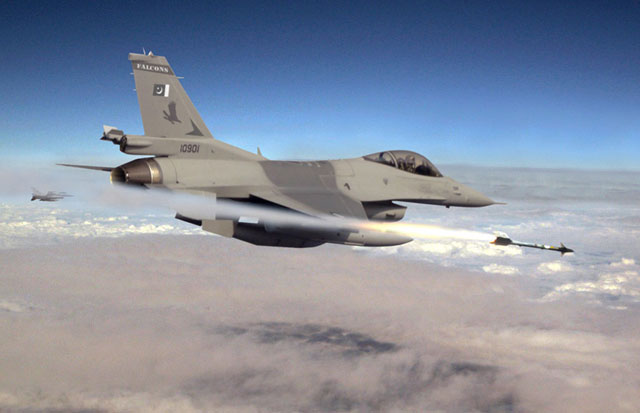
Second, the Pakistan military – and especially the Air Force – has a long history of offensive operations in the FATA, as I’ve discussed in detail before: see here and here.  Now other commentators have noticed this: the Bureau of Investigative Journalism has tracked 15 Pakistan Air Force strikes carried out by helicopter gunships and F-16 fighters between 19 December 2013 and 15 June 2014, which killed 291-540 people (including 16-112 civilians).

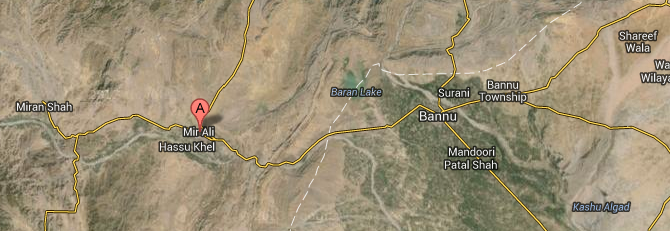
The significance of this is not only that it precedes the current offensive but also that it coincides with the so-called ‘pause’ in CIA-directed drone strikes against targets in the FATA.  Chris Woods notes that PAF strikes are ‘generating casualties far in excess of any caused by CIA drones strikes’, and one resident of Mir Ali recited a grim military timetable:

“It’s like doomsday for people in Mir Ali, where death is everywhere since Saturday… They start the day with artillery shelling early in the morning. Gunship helicopters come for shelling during the day and jets strike at around 2:00-2:30 in the night.”

The military denies all reports of civilian casualties but this beggars belief, and the Bureau reports that some residents have even concluded that the drone strikes were preferable:

‘The difference between the drone strikes and the military strikes is that drones target specifically who they want to target… the wanted terrorists… people are saying that drone attacks were good compared to the military strikes.  Personally I agree, because I have seen drones, they are in the air 24 hours and they don’t attack as randomly… the place of the attack was always an area where the Taliban or terrorists were living.’

But whatever one makes of this – a calculation that would imply that the CIA had abandoned its anonymous ‘signature strikes’ – drones have not been absent from the skies over Waziristan. Pakistan has its own reconnaissance drones, and they have repeatedly been used to direct strike aircraft onto their targets (though with what accuracy it is impossible to know) and to support ground operations: the PAF boasted of their use in May, when hundreds of houses and shops were destroyed in Machis Camp and in the bazaar at Mir Ali.  And – the third complication – the US resumed its drone war on 11 and 12 June when two UAVs fired six missiles at compounds near Miram Shah, supposedly killing ten members of UMI and the Haqqani network, and again on 18 June when three compounds near Dargah Mandi were hit.  Whether these strikes were co-ordinated with Pakistan is unclear – the Foreign Office has issued its ritual denial, but it’s difficult to believe they were not connected to Pakistan’s own military operations, and here too there is a long history of what I’ve called ‘dirty dancing‘ between Washington and Islamabad that continued until at least the end of 2011.  It seems highly unlikely that the dance has ended.

_75732447_75732446

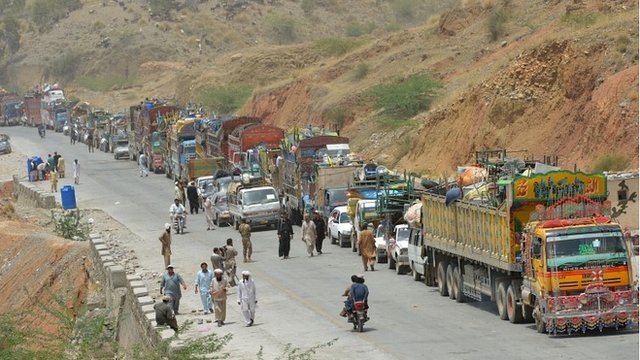
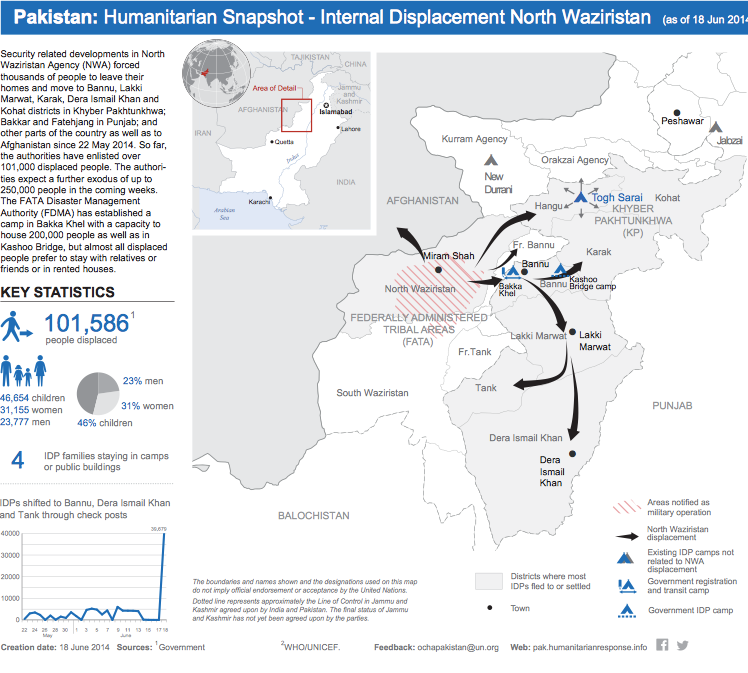
Finally, the shock waves from these various operations ripple far beyond their ostensible targets. Hundreds of thousands of people have fled, some in advance of military operations (which had been telegraphed for months), many more when the military temporarily loosened its curfew on the region. As on previous occasions, most of them fled to Bannu, some to government camps (‘Only the poorest of the poor would go to a camp in such hot and humid weather‘) but the majority to stay with family members, while some refugees have even crossed into Khost in Afghanistan to seek sanctuary. The map below is an early trace (18 June), and it shows only those who are officially registered so it excludes those lodging with their extended families; but even this anticipates hundreds of thousands more displaced people to come.

Pakistan Displaced Persons June 2014

There is also the real fear that, as Ismail Khan and Declan Walsh reported earlier this month, Taliban reprisals will focus on the Punjab, the electoral base of Prime Minister Nawaz Sharif.

All of this suggests the importance of unravelling the intimate connections between the political constitution of the Federally Administered Tribal Areas and the administration of military violence there.  This is clearly not limited to CIA-directed drone strikes, and here Zia’s reflections on a question posed by a feminist friend are worth repeating:

‘She wonders, “why this obsession with drones?” Obviously, the interest is due to a host of factors, but her query reflects the difference in modes of analysis. Her position reflects the views of women’s rights/human rights groups who consider specific military operations in one part of Pakistan as just one cog in a broader narrative about the source of the conflict. For them, this has been the cosy nexus and mutually beneficial relationship between the military establishment and the jihadi groups.

Those like Imran Khan, who foreground drones in their analysis of ‘conflict’, consider US intervention and occupation of Afghanistan as the drivers of conflict in Pakistan. But local progressive groups argue that even if militants in FATA are subdued, or US interventions are resisted, unless the policy of patronage and nurturing of jihadi groups in the rest of Pakistan is dismantled and buried, conflict at all levels will never end – drones or no drones.

This doesn’t mean that military technologies are unimportant nor that drone strikes are of marginal concern (inside or outside an ‘area of active hostilities‘): it means that we need to direct our attention to the larger matrix of political and military violence within which they are deployed, transnational and national, and to its genealogies and geographies.

In media res

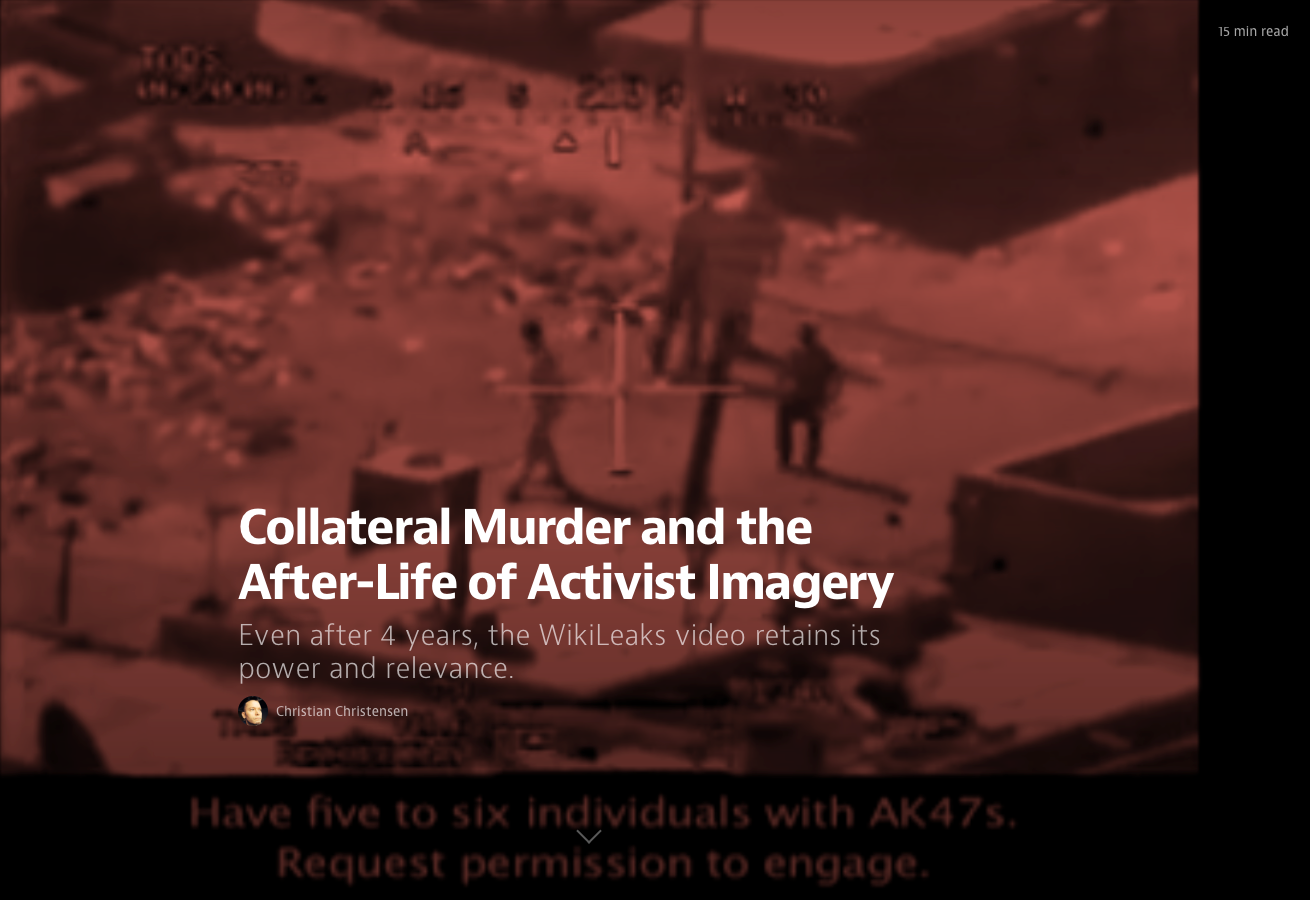
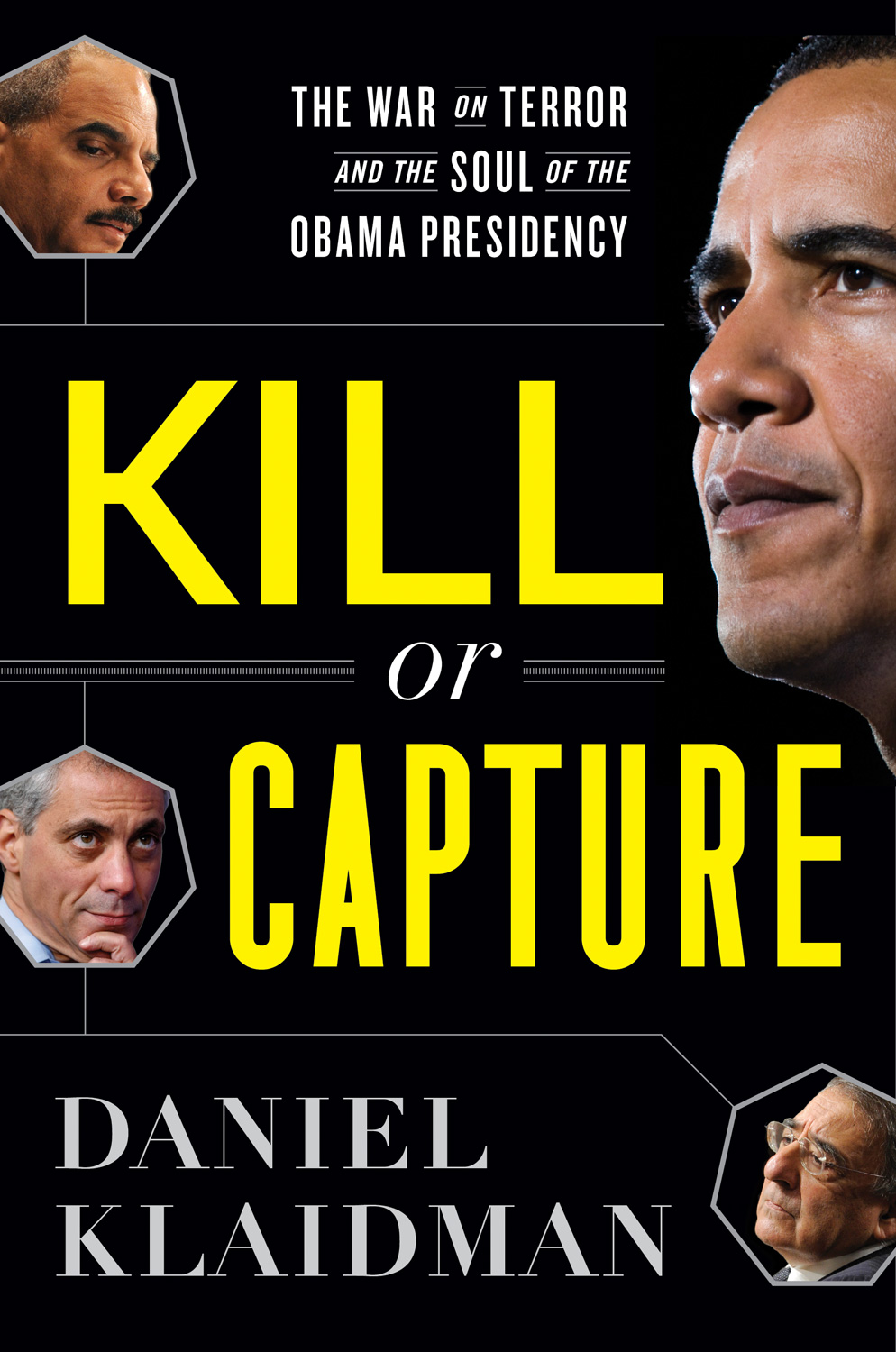
Two short essays that address the public circulation of supposedly secret information.  The first, “Collateral Murder and the After-Life of Activist Imagery”, is by Christian Christensen, and concerns the video clip released by Wikileaks as Collateral Murder in April 2010.  I’ve discussed this edited video of a US Apache helicopter attack in New Baghdad in 2007 before, together with the two documentary films that it provoked, and it forms part of my ‘Militarized Vision’ project (you can find links to the clip and to subsequent commentary in that original post).

CHRISTENSEN Collateral Murder

Christian doesn’t explore the content of the video so much as its inscription and re-inscription within public debates, part of the mediatization of later modern war.  He does make a sharp point about the status of the imagery:

One could argue that the repeated use of this imagery (and corresponding audio) has created an entirely new genre of military reporting. It is a genre with specific, often disturbing conventions: the grainy images of those on the ground, the flat, bland coloring, the “narration” of the aircraft operators which swings between the clinical and the cynical, the silence of those under surveillance or attack, the sound of the weaponry as it is discharged, and, importantly, the “overtness” of the technology, by which I mean the way in which the screen is filled with evidence of the technology being used in the form of the cross-hairs in the middle and data visible at the top and the bottom of the screen…

The Collateral Murder video not only shatters the mythology of humane warfare and benevolent US power, but also causes us to question the notion of neutral technology at the service of human development: a theme which has regained a central space in public debate in recent years.

But he also thinks there is another, no less sharp point to be made about the very act of reporting:

Within this context, the killing of two Reuters employees by the US military was particularly poignant. At the most basic level, this was the symbolic killing of Journalism (with a capital “J”) by a military unaccustomed to critical coverage or investigation at home. The killings, of course, then went unreported until Manning leaked the material and WikiLeaks published it: itself an act of journalism. With Collateral Murder, there is a layering and re-layering of meaning, and, for me, journalism lies at the heart of the clip. These are humans first, of course, and most of those killed or wounded in the attack were not journalists. But, in addition to the tragedy of human death, there is also the tragedy of what is symbolically destroyed: Transparency. Democracy. Knowledge. Critical thinking. And it took an act of journalism to bring these tragedies to light, an act of which has now itself been subjected to the full force of the state via the imprisonment of Manning, and the threat of criminal charges being brought against Assange in the US.
Incidentally, the essay is the text of Christian’s presentation to the ‘Image Operationsconference held at the Institute of Cultural Inquiry (ICI) in Berlin earlier this month; the program is here.

Image Operations

The second essay is Adam Morris‘s wide-ranging review of ‘The geopolitics of the Snowden Files‘ at the Los Angeles Review of Books.  Its immediate provocation is the publication of the Obama administration’s self-serving ‘NSA Report’:

The-NSA-Report-243x366The NSA Report — commissioned by the White House in August, published on its website in December, and now available in print via Princeton University Press— was authored by the President’s Review Group on Intelligence and Communications Technologies. As suggested by its official title, “Liberty and Security in a Changing World,” the Report was intended to advise President Obama on how to reform the data collection practices of the Intelligence Community (IC), in particular the NSA. Its authors include such veterans of the US security sector as Richard A. Clarke, Michael J. Morrell, and Peter Swire. This insiders’ perspective, in theory, is balanced by the addition to the group of constitutional lawyers Geoffrey R. Stone and Cass Sunstein. The unofficial purpose of the Report, however, was the Obama administration’s attempt to put a lid on the NSA scandal by pretending to be interested in reform. As Luke Harding points out in The Snowden Files, the Review Group was working out of the offices of the Director of National Intelligence, currently occupied by the felonious General James Clapper, w _ho knowingly lied in Congressional testimony about the bulk collection of Americans’ communication data.

The essay provides a fine, critical reading of the Report –

‘The anodyne language of these and other recommendations signals the imperial agenda out of which they are born: The NSA Report is obsessed with framing the debate over surveillance around the neopositivist vocabulary of “risk management,” but we know from history that political liberty will always suffer when a dominant regime deems a nation, its leadership or its population a “national security threat”…’

– but it also spirals off into a vigorous mapping of the context in which the NSA set about its covert operations and Edward Snowden‘s principled decision to go public (Adam also provides a commentary on Luke Harding‘s The Snowden Files: for another review, see Daniel Soar at the London Review of Books here).  And here too, of course, investigative journalism is a vital, enabling and even empowering practice.

Blurring the lines

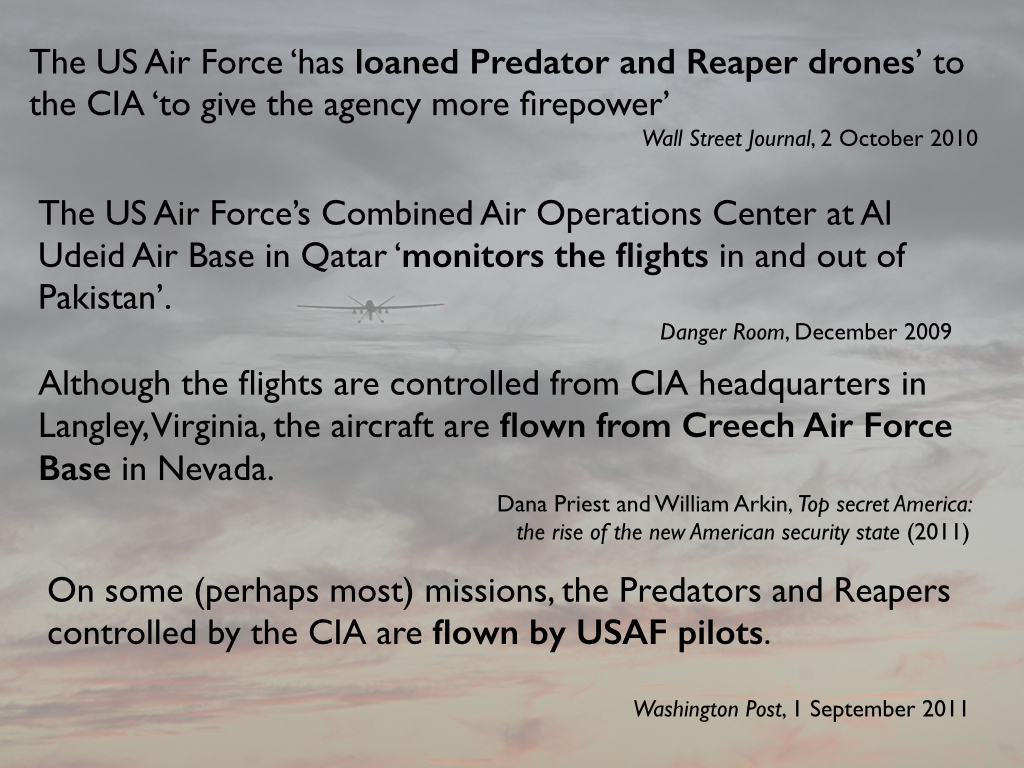
In the short-form version of ‘The everywhere war’ (DOWNLOADS tab) I emphasised the blurring of the lines between the increasingly paramilitary but nominally civilian CIA and the US military, and for the last several years I’ve been including this slide in most of my presentations about CIA-directed drone strikes in Pakistan (and I’ve been very careful to use precisely that description: ‘CIA-directed’):

CIA:USAF.001

Today’s Guardian (online) carries a report that lends support to these claims and concerns:

17th Reconnaissance SquadronA regular US air force unit based in the Nevada desert is responsible for flying the CIA’s drone strike programme in Pakistan, according to a new documentary to be released on Tuesday.

The film – which has been three years in the making – identifies the unit conducting CIA strikes in Pakistan’s tribal areas as the 17th Reconnaissance Squadron, which operates from a secure compound in a corner of Creech Air Force Base, 45 miles from Las Vegas in the Mojave desert.

Several former drone operators have claimed that the unit’s conventional air force personnel – rather than civilian contractors – have been flying the CIA’s heavily armed Predator missions in Pakistan, a 10-year campaign which according to some estimates has killed more than 2,400 people.

The film is Tonje Schei‘s documentary Drone, which has its premiere tomorrow.  You can read an interview with her about the drone wars here.  In an overlapping interview for Pakistani media, she explains:

DRONE investigates the human consequences of the US drone war. Through unique access to voices on both sides of this new technology, DRONE offers new insights into the nature of drone warfare. DRONE juxtaposes the realities of drone victims in Waziristan to drone pilots who struggle to come to terms with the new warfare. The film covers diverse and integral ground from the recruitment of young pilots at gaming conventions and the re-definition of “going to war”, to the moral stance of engineers behind the technology, the world leaders giving the secret “greenlight” to engage in the biggest targeted killing program in history, and the people willing to stand up against the violations of civil liberties and fight for transparency, accountability and justice.

You can watch a clip on Youtube, which I’ve also embedded here, in which Chris Woods (senior reporter at the Bureau of Investigative Journalism) explains why this blurring of the lines between the CIA and the military matters:

http://www.youtube.com/watch?v=cp7aCHlntQs

Schei’s original source was Brandon Bryant, a former USAF sensor operator who had already gone public with his own account of the traumatic business of targeted killing (see also here and here).  He decided to add to his testimony when the Obama administration proposed transferring control of the targeted killing program from the CIA to the military, a plan that has faced Congressional opposition:

“There is a lie hidden within that truth. And the lie is that it’s always been the air force that has flown those missions. The CIA might be the customer but the air force has always flown it. A CIA label is just an excuse to not have to give up any information. That is all it has ever been.”

Bryant’s account has apparently been corroborated by another six former crew members, who claimed that the 17th transitioned to its ‘new customer’ in 2004.

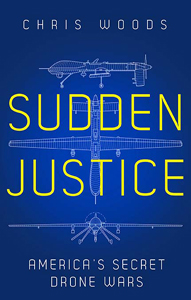
Sudden-Justice_webChris Woods provides much more in Sudden Justice: America’s secret drone wars, forthcoming from Hurst at the end of this year, but – for now – here is what I said in ‘The everywhere war’ in 2011 (and I can now say much more in The everywhere war!):

These considerations radically transform the battlespace as the line between the CIA and the military is deliberately blurred. Obama’s recent decision to appoint Panetta as Secretary of Defense and have General David Petraeus take his place as Director of the CIA makes at least that much clear. So too do the braiding lines of responsibility between the CIA and Special Forces in the killing of Osama bin Laden in Abbottabad in May 2011, which for that reason (and others) was undertaken in what Axe (2011) portrays as a ‘legal grey zone’ between two US codes, Title 10 (which includes the Uniformed Code of Military Justice) and Title 50 (which authorises the CIA and its covert operations) (Stone 2003). The role of the CIA in this not-so-secret war in Pakistan thus marks the formation of what Engelhardt and Turse (2010) call ‘a new-style [battlespace] that the American public knows remarkably little about, and that bears little relationship to the Afghan War as we imagine it or as our leaders generally discuss it’.


The scene of the crime: customary law and forensic architecture

I returned from a wonderful visit to Glasgow last week – thanks so much to Jo Sharp, who ensured I had a criminally good time – and I’ve spent this week trying to catch up.  It rained most of the time I was there, and in fact my first impression of the University was of a quadrangle turned into a quagmire: a case of mire in the flood, you might say.  But nothing could dampen my spirits, and in the gaps between marvellous restaurants, coffee shops that would make anyone in Vancouver (or Seattle) green with envy, the best lunch ever, and truly excellent conversation, I gave two talks: one on my skeletal ideas about my new project on Medical-military machines and casualties of war, 1914-2014, and the other a more formal affair on ‘Dirty dancing: drone strikes, spaces of exception and the everywhere war.’ The purpose of the first talk was to explore, largely for graduate students, how I work; it generated a lively discussion, so I thought I would try to do the same in this post but in relation to the second presentation.  And in doing so, I’ll also have more to say about the scene of a real crime.
I’d prepared my formal presentation before I left Vancouver, and as I’ve explained before I now never read from a written text: I design the slides carefully (see my ‘Rules’ here) and talk to them, so that I retain as much flexibility as possible.  It’s a sort of semi-scripted improv, I suppose, and it also means that the argument can develop from one presentation to the next.

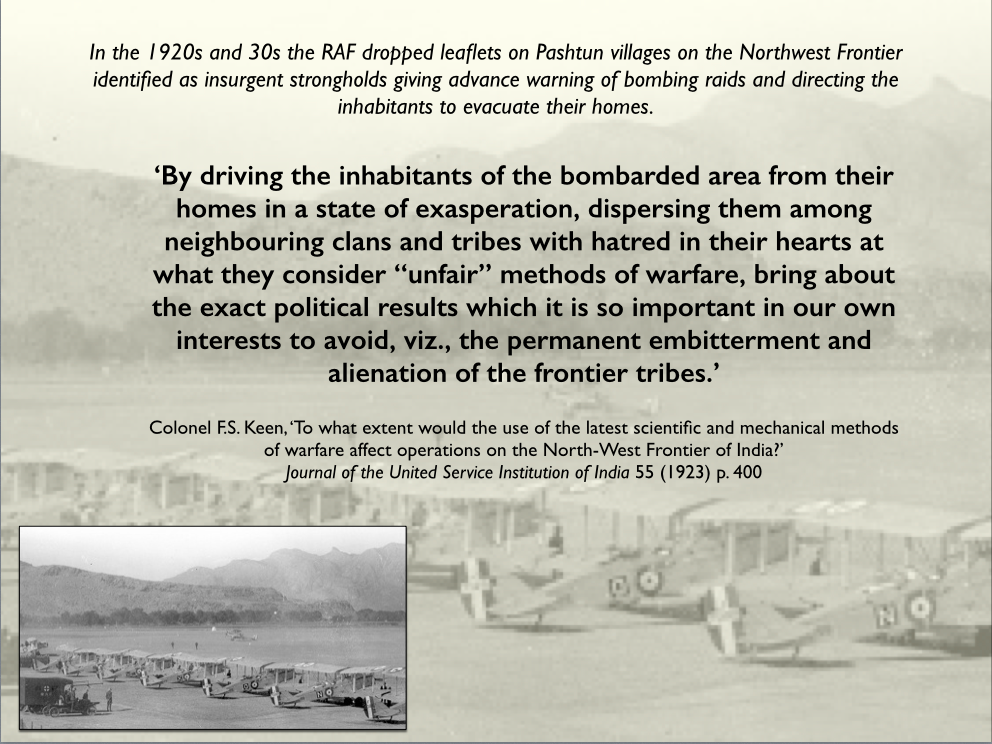
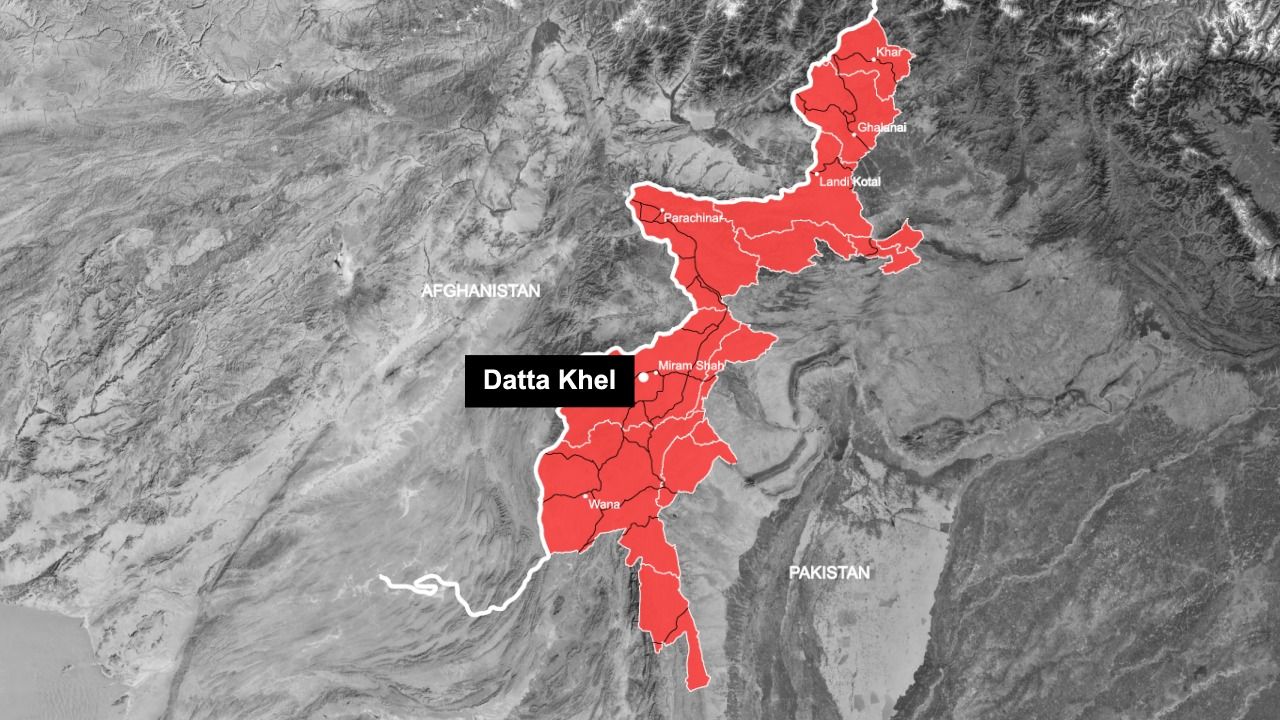
On the train up from London I started to think some more about the air strikes on the Federally Administered Tribal Areas (see also herehere and here).  Part of my purpose was to trace a narrative of air attack that, for those now ‘living under drones’, stretched back (at least in memory) to British air control and counterinsurgency on the North West Frontier in the 1920s and the 1930s.

Waziristan bombing 1920s and 30s PNG

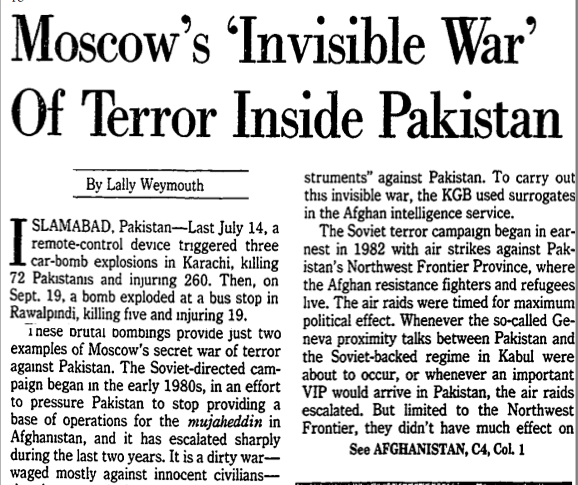
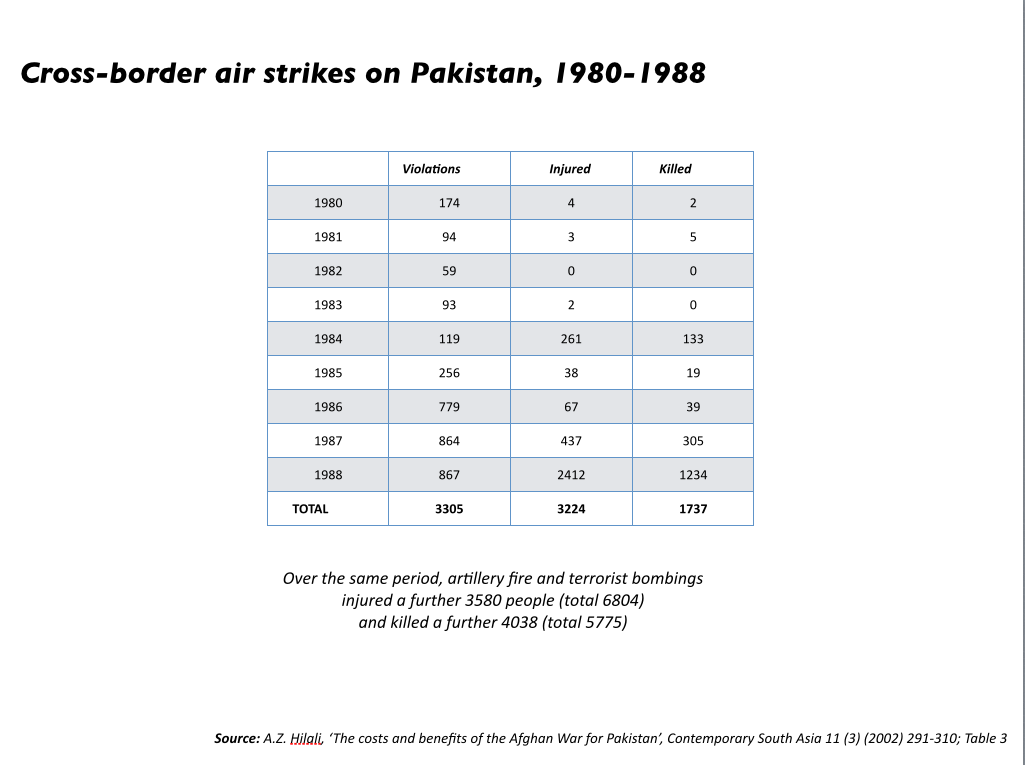
War of Terror inside Pakistan PNGI’d made this point before, and sharpened it during an earlier version of the presentation in Beirut, but I’d since realised that the narrative was resumed by the Soviet and Afghan Air Forces striking mujaheddin bases in Pakistan during the Soviet occupation of Afghanistan.  I hadn’t paid much attention to this in The colonial present, where my focus was on the aid provided by the CIA to mujaheddin striking across the border in the opposite direction, but these air raids were described by the Washington Post on 13 March 1988 as part of the USSR’s “war of terror” (really).  They are an important moment in the genealogy of air strikes and counterinsurgency in the FATA, and I’d managed to unearth some estimates of the number of cross-border violations of Pakistani air space and the number skilled and injured in the strikes:

Afghan:Soviet cross-border air strikes 1980-88

Then, in one of the ironic twists of our post 9/11 world, the (il)logic of air war was revived and ramped up by the CIA-directed drone strikes that have convulsed the borderlands since 2004.

I wanted to show, as I’ve argued in previous posts, that this narrative was more than a cross-border affair and that the Pakistan Air Force has been also actively involved in a series of domestic air campaigns: since 2008 it has carried out thousands of air strikes against what it describes as militants, insurgents and terrorists in the FATA.  In fact, the offensive was resumed earlier this year, when F-16 aircraft and helicopter gunships attacked targets in North Waziristan, driving thousands of people from their homes.

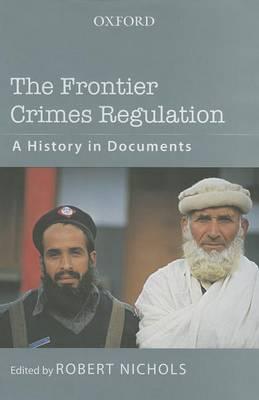
the-frontier-crimes-regulationIn some measure, all of these air campaigns raise the spectre of colonial power, but so too does the legal status of the FATA and its exceptional relation to the rest of Pakistan.  This is usually traced back to Lord Curzon’s Frontier Crimes Regulations (1901), which were retained by Pakistan after independence in 1947.  They were minimally revised in 2011, but the FATA are still under the direct executive control of the President through his appointed Political Agents who have absolute authority to decide civil and criminal matters. The exceptional status of the FATA was confirmed by the Actions (in Aid of Civil Power) Regulations in 2011 which exclude the high court from jurisdiction on fundamental rights issues in any area where the Pakistan armed forces have been deployed ‘in aid of the civil power’.

All of this indicates that the FATA constitute a ‘space of exception’ in something like Giorgio Agamben‘s sense of the term: a space in which particular people are knowingly exposed to death through the juridical or quasi-juridical removal of legal protections from them.  This was, in part, my argument, but I was also concerned to show that this was not a matter of a legal void: rather, military and paramilitary violence was orchestrated, as it almost always is, through the law.

But there is quite another sense in which the FATA is not a legal void, despite all the rhetoric about them being ‘lawless’ lands.  So I started to think through the intersections between these formal legal geographies (and the state violence they sanction) and the system of customary law known as Pashtunwali (loosely, “the way of the Pashtuns”).  The system is far from static, but it still governs many areas of life among Pashtuns on both sides of the Afghanistan-Pakistan border whose cultures and communities were bisected when the Durand Line was drawn in 1893.  I’d been reading as much as I could by anthropologists and others to help me understand its contemporary relevance: for recent surveys, see Tom Ginsburg‘s ‘An economic interpretation of the Pashtunwali’ from the University of Chicago Legal Forum (2011) here,  Lutz Rzehak‘s ‘Doing Pashto’ here, and Thomas Ruttig‘s qualifications in relation to the Taliban here.  For a sense of how the US military understands Pashtunwali, as part of its ‘cultural turn’, see Robert Ross‘s thesis here.

Pashtunwali is more than a legal system, of course, but I was particularly interested in its legal force and how this is put into practice.  Many commentators have shown that Pashtunwali is precisely the sort of ‘mobile’ legal system that you would expect to find among (originally) nomadic peoples, for whom the fixed statutes of a centralised state had neither appeal nor purchase.  It includes obligations of hospitality and protection, asylum and refuge, and revenge and restitution, and provides for a system of resolution through a council (or Jirga).  Within its patriarchal and masculinist framework, the system is resolutely non-hierarchical: the men who compose the Jirga sit in a circle and each, as a symbol of authority and equality, carries a gun.

Sitting in a circle, the Jirga has no speaker, no president, no secretary or convener. There are no hierarchical positions and required status of the participants. All are equal and everyone has the right to speak and argue, although, regard for the elders is always there without any authoritarianism or privileged rights attached to it. The Jirga system ensures maximum participation of the people in administering justice and makes sure that justice is manifestly done.

On my way over to the UK I’d read an extremely interesting essay in the International Review of Law and Economics 37 (2014) 108-20 – stored on Good Reader on my iPad – in which Bruce Benson and Zafar Siddiqui argued that the system works not only to provide a decentralised, local and regional system of order and regulation – so Hobbes was wrong: without the state people do not automatically revert to a ‘state of nature’ (Tom Ginsburg is very good on this) – but also to defend the Pashtun from the incursions of the central state.  Indeed, the Frontier Crimes Regulations specifically recognised the validity and autonomy of the Jirga: much more here.  The message from all this was clear: ‘The Pashtun tribes who inhabit the rugged mountains between Afghanistan and Pakistan are neither lawless nor defenceless.’

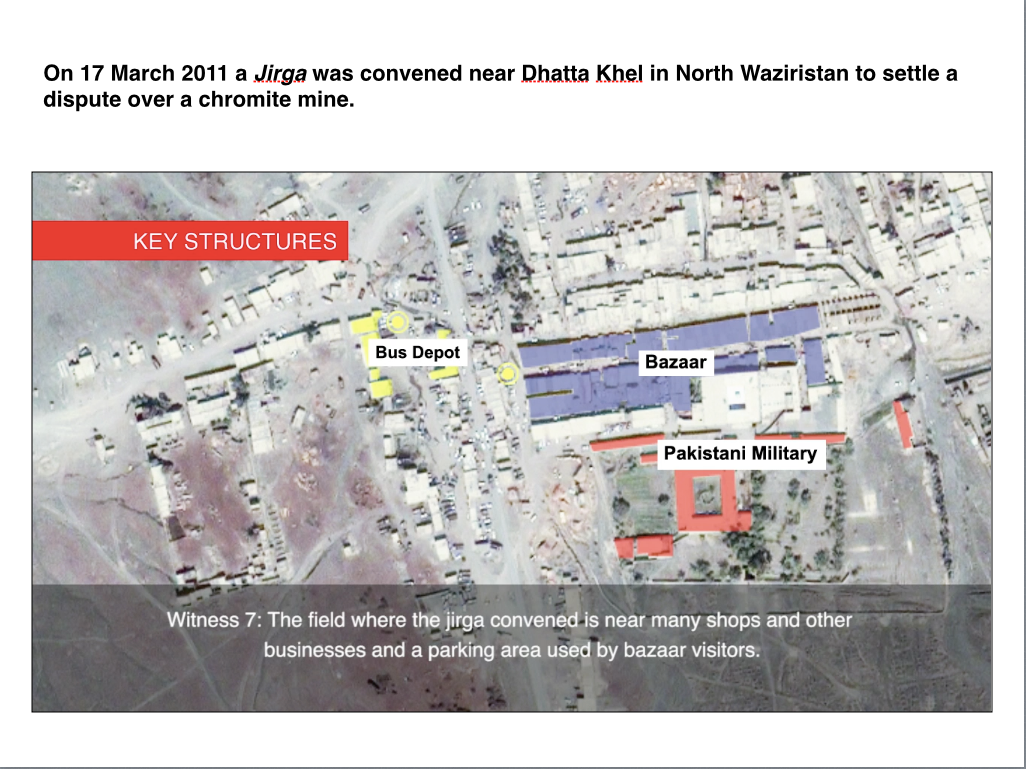
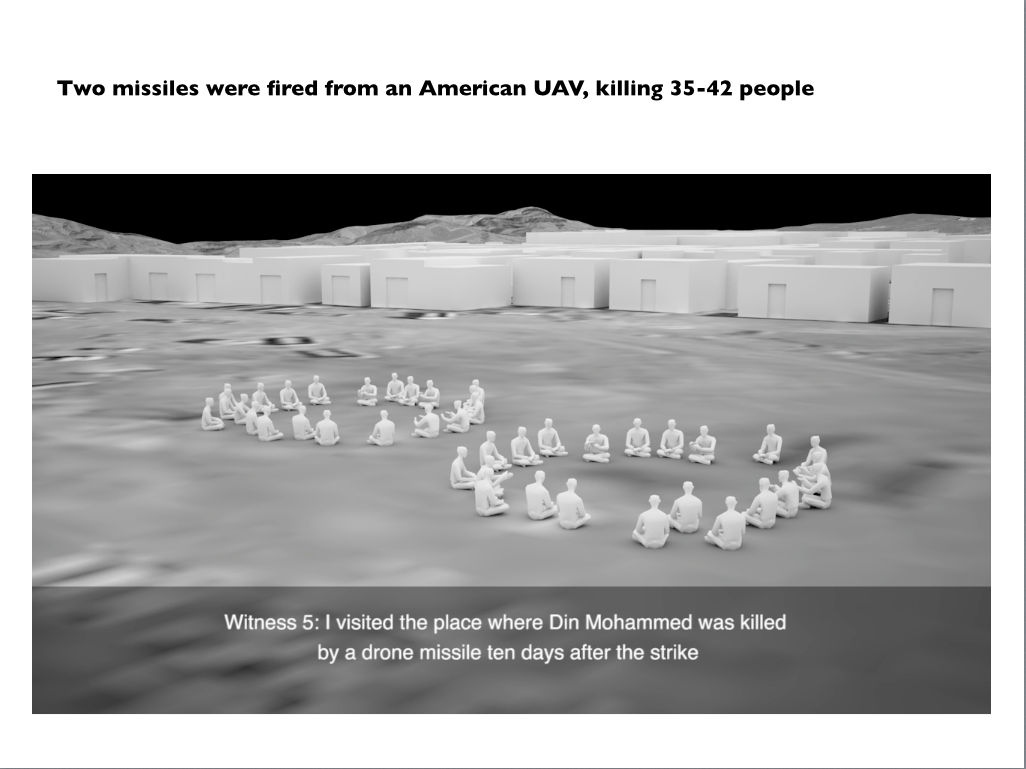
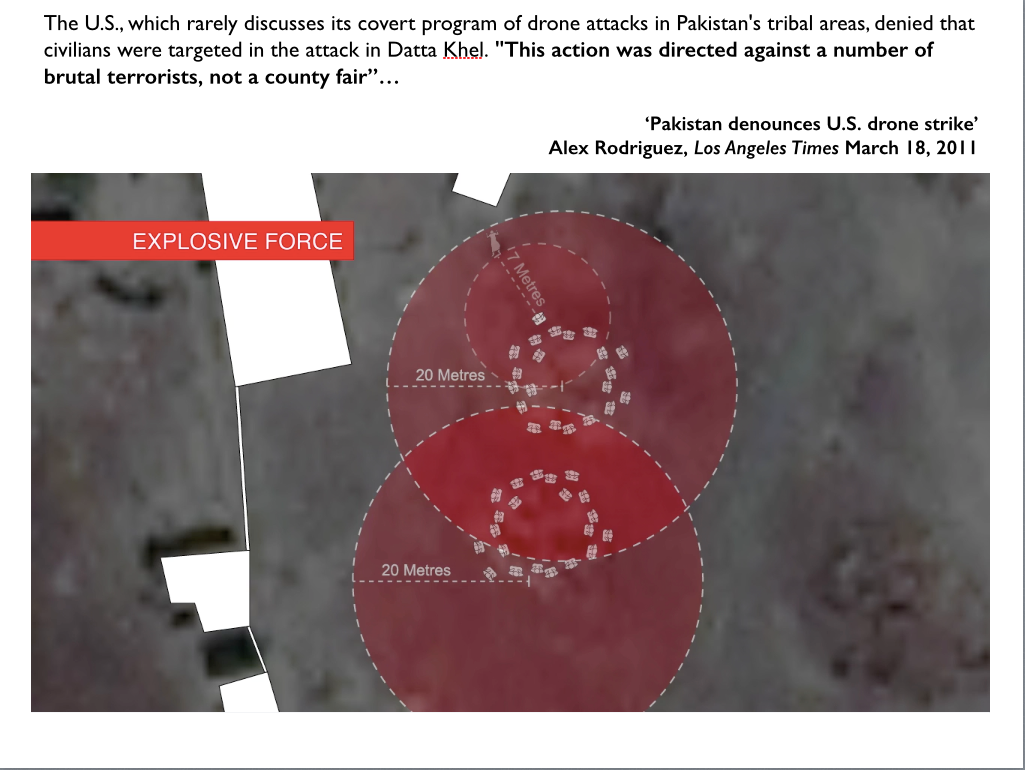
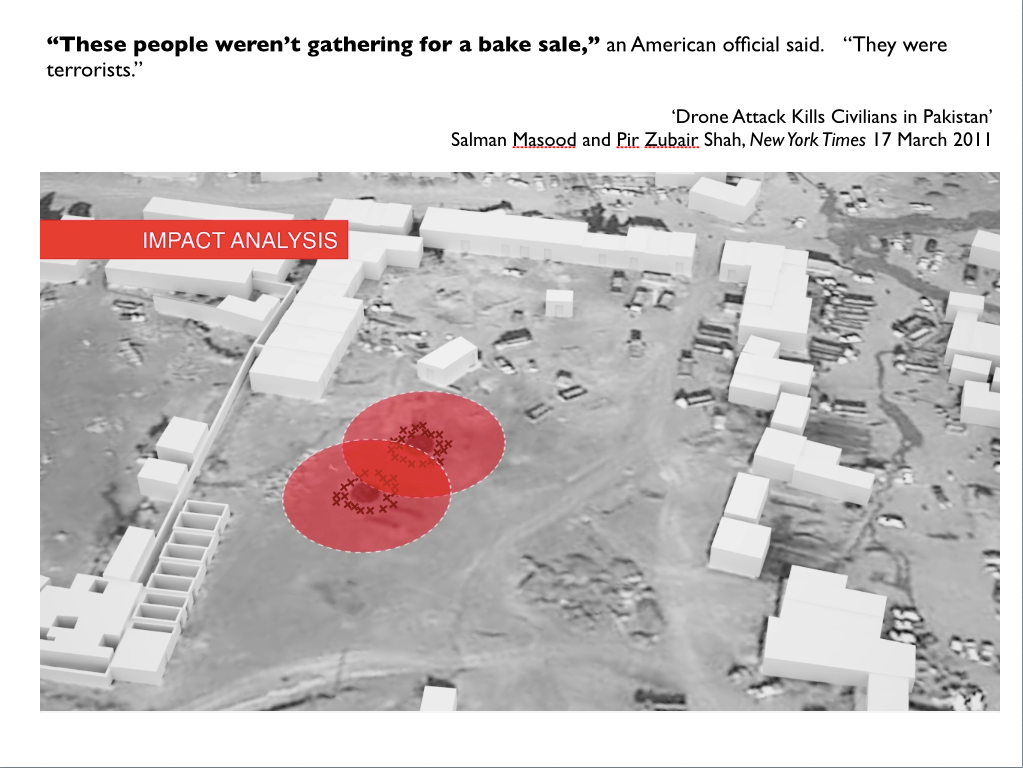
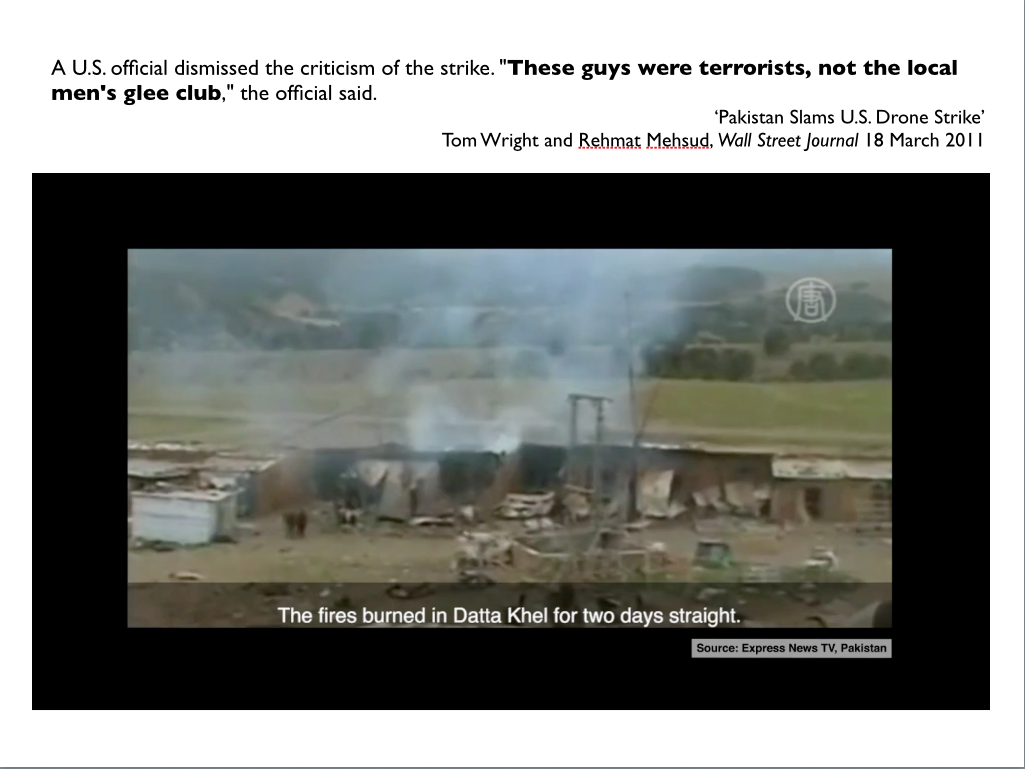
The Pakistan Taliban know this very well, not surprisingly, and in many instances work with Pashtunwali to mediate disputes in the FATA.  In fact, as the train curved around the Lake District I remembered reading about a Jirga being convened in Datta Khel in March 2011 to resolve a dispute over a chromite mine.  It’s odd how some things stick in your mind, like burrs on your jeans, but this incident had stayed with me because the Jirga had been targeted by the CIA and two Hellfire missiles were launched from a drone, killing more than 40 people.  In itself, that probably wouldn’t have been enough for me to remember it in any detail since it was all too common – but the usual faceless and anonymous US official, speaking off the record because he was not authorised to comment in his official capacity, had offered a series of ever more bizarre justifications for the strike: and I remembered those (as you’ll see in a moment, you could hardly forget them).

uekEs60GsR-YpEwf3VWpqOYckWFvgZ-CMcsK2DT0grQ

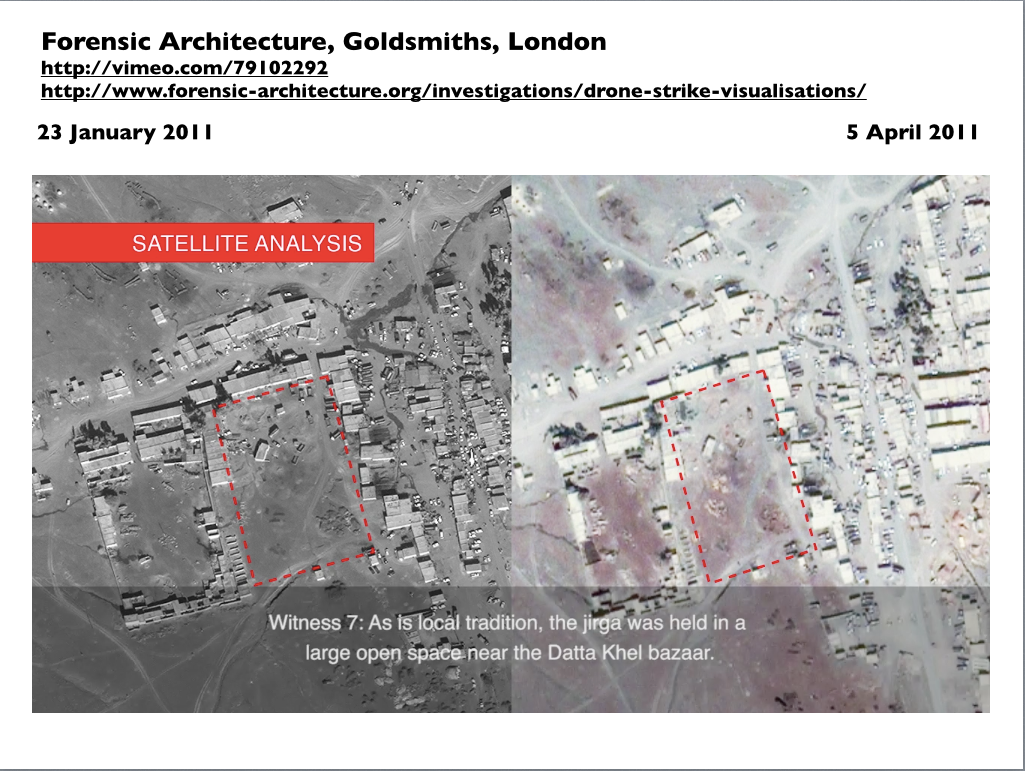
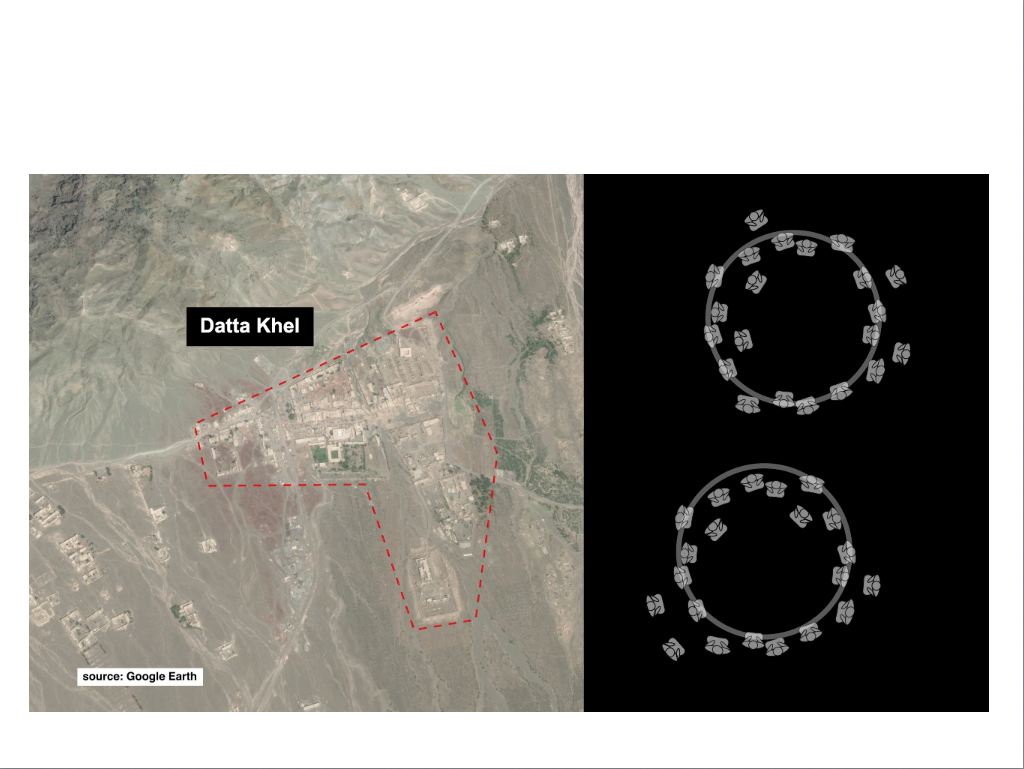
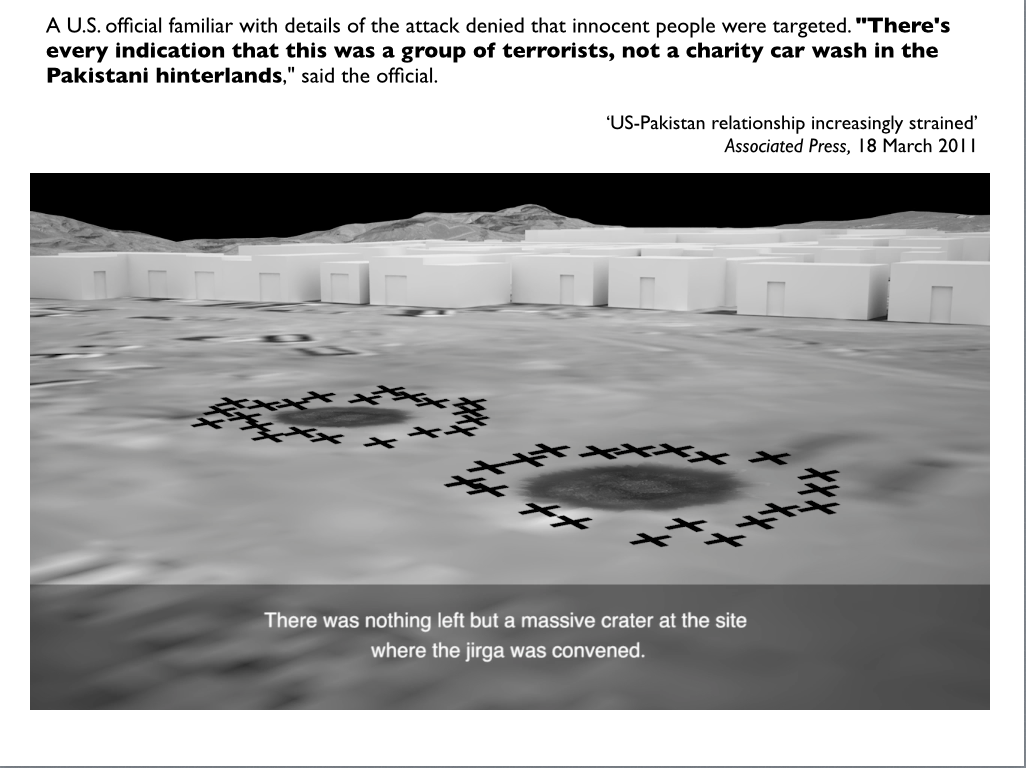
So I started to dig some more – WiFi on the train – and discovered that Eyal Weizman and his brilliant colleagues at Goldsmith’s Forensic Architecture had reconstructed this very strike (the image above is from their work):

‘In the absence of on-the-ground photographic or video documentation, and with no visible impact on buildings, this investigation unfolded by cross-referencing witness testimonies with satellite imagery. An examination of before and after satellite imagery indicated two areas with surface disturbance consistent with the reported missile strikes, thus allowing us to confirm the location of the strike. From the testimonies of survivors and eye-witnesses, we harvested spatial information that helped us to generate a 3D model of the site of the drone strike on the Jirga.’

Then all (!) I had to do was go back in to my e-files (each morning I work my way through the press, copying and pasting reports and commentaries into a series of files so that I have my own searchable archive), recover the glosses provided by that anonymous official, and put them together with the reconstruction.  Here’s the result:

Dhatta Khel 1 PNGDhatta Khel 2 PNGDhatta Khel 3 PNG

Dhatta Khel 4 PNGDhatta Khel 5 PNGDhatta Khel 6 PNGDhatta Khel 7 PNGDhatta Khel 8 PNG

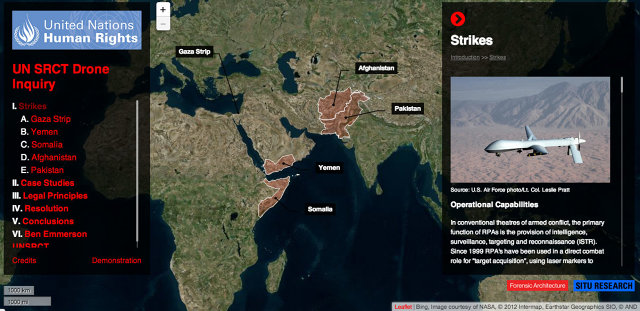
You can read more about these reconstructions here (‘The forensics of a lethal drone attack’).  This strike is one of several investigated by the UN’s Special Rapporteur Ben Emmerson, and you can find much more information at the interactive website produced in collaboration with Forensic Architecture and SITU Research that accompanies his written report to the United Nations (28 February 2014) (the Datta Khel incident is summarised in paragraph 50, but the website provides a far richer understanding).  You can also download hi-res versions of Forensic Architecture’s stills and videos here.

3027475-inline-i-un-srct-drone-inquiry

What I find so significant is that the anonymous official provided a series of different and, as I’ve said, bizarre (even offensive) descriptions of what the assembly in Datta Khel was not: but he was clearly incapable of recognising what it was.  This was certainly another performance of the space of exception, but it was plainly not a legal ‘black hole’, as some commentators gloss Agamben.  The only ‘black holes’ were the craters in the ground and the conspicuous failure to recognise the operative presence of customary law.

A wedding turned into a funeral

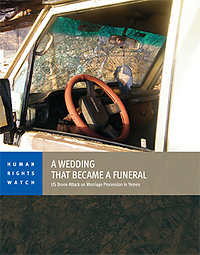
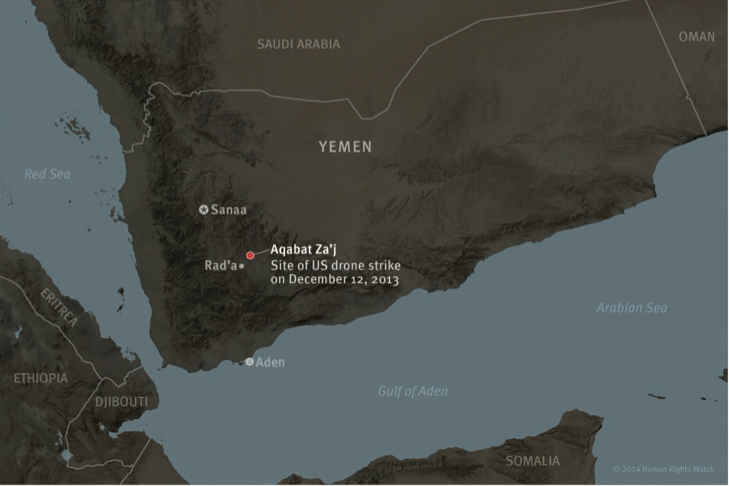
yemen0214_reportcoverHard on the heels of its report into six US targeted killings in Yemen in 2009 and 2012-13, Human Rights Watch has published a detailed analysis by Letta Tayler of another drone strike carried out by Joint Special Operations Command (JSOC) against a wedding convoy on 12 December 2013.  According to Greg Miller in the Washington Post,

The report represents the most detailed independent examination to date of a strike that has focused attention on the administration’s struggles to tighten the rules for targeted killing, provide more information about such operations to the public and gradually shift full control of the drone campaign from the CIA to the Pentagon.

There is considerable evidence of covert US-Pakistan co-operation in targeting in the Federally Administered Tribal Areas (see here and here), but in the case of Yemen the collaboration is more overt and perhaps even more formalised: Yemen’s President described a ‘joint operations room’, including agents/officers from the US, the UK, NATO and Yemen that ‘identifies in advance’ prospective targets (who are usually described as members of Al-Qaeda in the Arabian Peninsula).

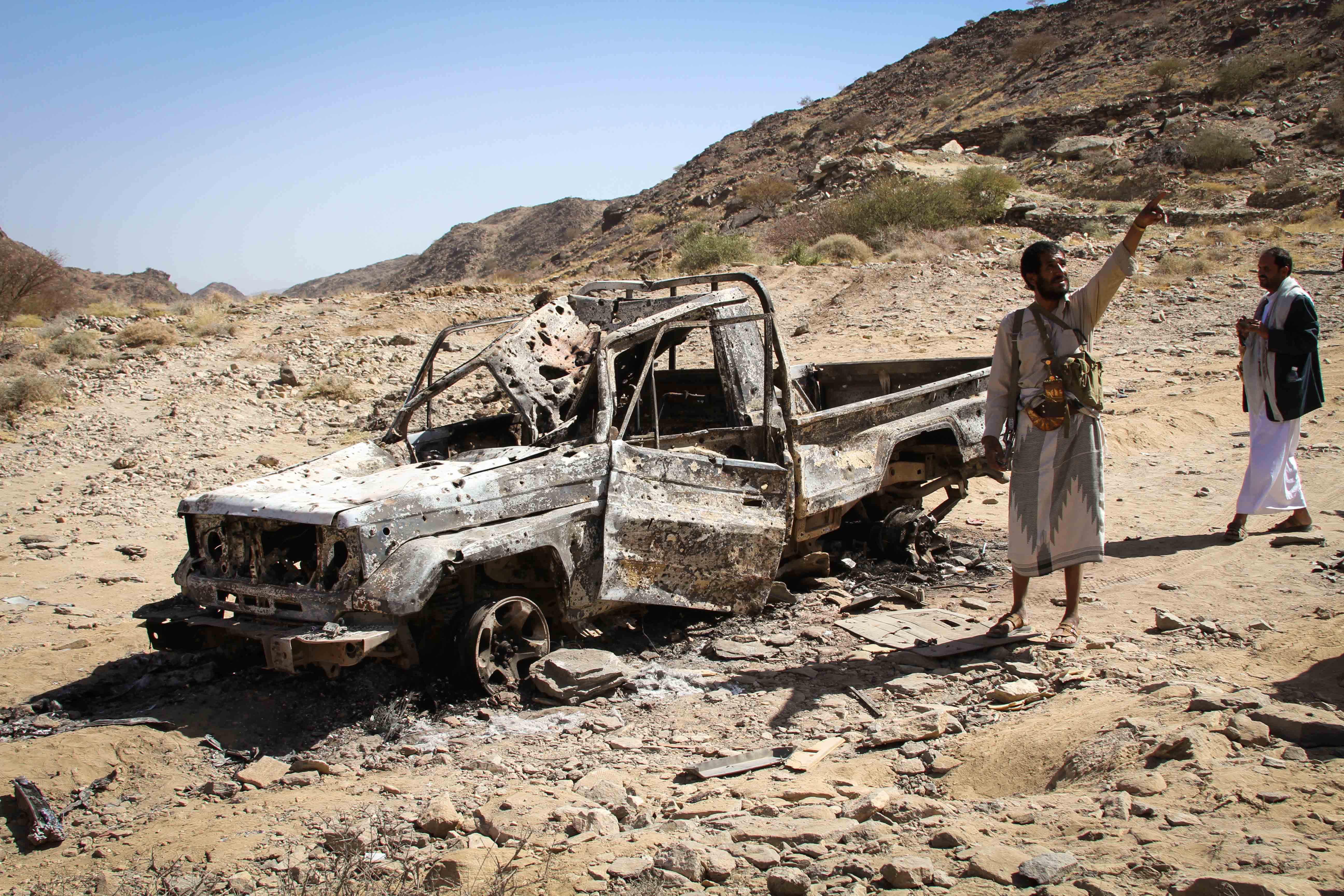
In this case, as in so many others, the United States has insisted that all those killed were terrorists, but HRW’s on-the-ground interviews (and videos) tell a different story.  After a wedding feast at the home of the bride, many of the men and some of the women jumped into their vehicles to escort the bridal couple to a second celebration at in the groom’s village of al Jashem 35 km away.

HRW Drone strike Yemen 12 December 2013

At 4.30 that afternoon four Hellfire missiles struck the vehicles, killing at least 12 men and wounding at least 15 others – who are named and identified in the HRW report, and according to relatives all civilians.

‘We were in a wedding,’ cried the groom, ‘but all of a sudden it became a funeral. …We have nothing, not even tractors or other machinery. We work with our hands. Why did the United States do this to us?’

The US isn’t saying, and HRW notes that accounts from the government of Yemen have been inconsistent – though the local governor an military commander apologies for the killings, describing them as ‘a mistake’.  Some reports agreed that some of those targeted were Al-Qaeda members – though if so, it seems they escaped: AQAP has not identified ‘martyrs’ lost in the attack, which is its invariable practice – and some claimed that the victims included ‘smugglers and arms dealers’.

2014181435057734_20

But they also all made it clear that this was a wedding convoy that was targeted, and the government of Yemen has made compensation payments to the families.

HRW discusses the implications of the killings under the different legal regimes of international humanitarian law (the ‘laws of war’) and international human rights law, but also notes that the attack seems to have violated the protocols set out by the Obama administration in May 2013.  These included the ‘near-certainty that no civilians will be killed or injured…’

NBC – which also has video of the aftermath of the strike – reported in January that the Obama administration was carrying out an ‘internal investigation’, but nothing has been forthcoming and questions from HRW were rebuffed.  All we have so far is this extraordinary statement, reported by  Rooj Alwazir for al Jazeera:

“Obviously, broadly speaking, we take every effort to minimise civilian casualties in counterterrorism operations – broadly speaking, without speaking to this one specifically,” State Department deputy spokeswoman Marie Harf said when asked about the strike.

‘Broadly speaking’, what is it about weddings that those carrying out air strikes don’t understand?

It’s not difficult to imagine what those who attended the wedding will remember of that day.  But in case it is, Reprieve (which carried out its own investigation into the strike) has published photographs of some of the victims and their families – and of a funeral of nine people.

UPDATE:  AP is now carrying sketchy information about the official investigation into the strike:

Three U.S. officials said the U.S. government did investigate the strike against al-Badani — twice — and concluded that only members of al-Qaida were killed in the three vehicles that were hit…

Lt. Gen. Joseph Votel, commander of Joint Special Operations Command, ordered an independent investigation by an Air Force general and the White House requested another by the National Counterterrorism Center. Both concluded no civilians were killed. Votel’s staff also showed lawmakers video of the operation. Two U.S. officials who watched the video and were briefed on the investigations said it showed three trucks in the convoy were hit, all carrying armed men.

The report provides no basis for the identification of the victims as non-civilians.  Human Rights Watch had already questioned the presence of armed men as indicative:

‘Nearly everyone in the procession was an adult male, and one Yemeni government source said many of the men carried military assault rifles. But these details do not necessarily point to involvement in violent militancy. Yemeni weddings are segregated, including the traditional journey to bring the bride to her new home. And Yemeni men commonly travel with assault rifles in tribal areas, including in wedding processions, when celebratory gunshots are common.’

But here is the final Catch-22:

The officials said the Pentagon can’t release details [of the strike or the investigation] because both the U.S. military and the CIA fly drones over Yemen. By statute, the military strikes can be acknowledged, but the CIA operations cannot. The officials said that if they explain one strike but not another, they are revealing by default which ones are being carried out by the CIA.

More dirty dancing

As I work on turning my Beirut talk on drone strikes in the Federally Administered Tribal Areas (FATA) into a long-form version – which includes a detailed and critical engagement with Giorgio Agamben‘s characterisation of the state/space of exception – I’ll post some of the key arguments here.  But for now, two important developments.

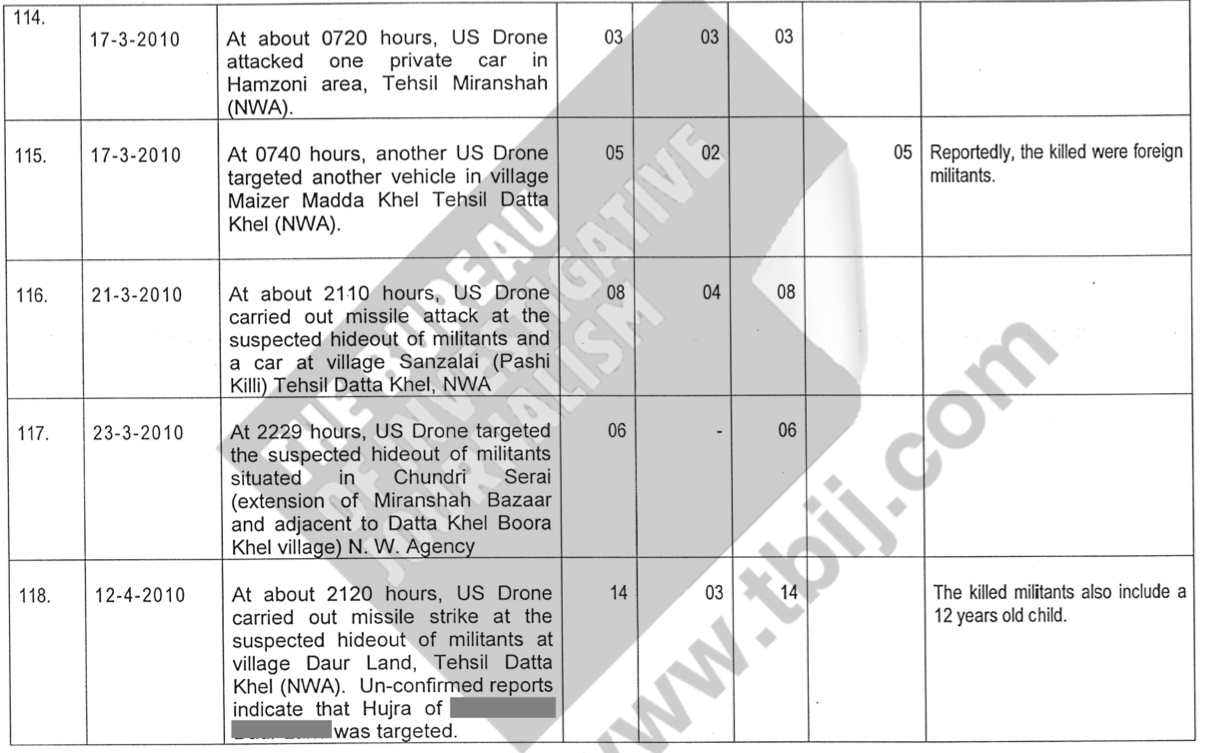
Document-excerpt

First, the Bureau of Investigative Journalism has just published a list of 330 drone strikes  between 2006 and July 2013 (data for the five strikes that took place in 2007 are missing) compiled by the Pakistan government (see extract above); this is an update of a partial release from the Bureau last summer.  The source is a series of reports filed each evening by Political Agents in the field to the FATA secretariat, and while it’s not a comprehensive listing – and Islamabad relies on other sources too – the document closely follows the Bureau’s own database compiled from other independent sources.  It also allows for a more accurate mapping of the strikes – more to come on this.

But one key difference between the list and the Bureau’s database is that, following the election of Obama, the official reports no longer attempted to classify the victims as combatants or civilians: and the coincidence may not be coincidental.  According to Chris Woods,

‘One of my sources, a former Pakistani minister, has indicated that local officials may have come under pressure to play down drone civilian deaths following the election of Barack Obama. It’s certainly of concern that almost all mention of non-combatant casualties simply disappears from this document after 2009, despite significant evidence to the contrary.’

One of the most egregious omissions is the drone strike on 24 October 2012 that killed Mamana Bibi, a grandmother tending the fields with her grandchildren.  The case was documented extensively by Amnesty International and yet, as the Bureau notes, while the date and location of the strike is recorded the report from the political agent is remarkably terse and makes nothing of her evident civilian status.

‘If a case as well-documented as Mamana Bibi’s isn’t recorded as a civilian death, that raises questions about whether any state records of these strikes can be seen as reliable, beyond the most basic information,’ said Mustafa Qadri, a researcher for Amnesty International…. ‘It also raises questions of complicity on the part of the Pakistan state – has there been a decision to stop recording civilians deaths?’

These are important questions, and in fact one of the central objectives of my own essay is to document the close, covert co-operation between the US and Pakistani authorities: what I called, in an earlier post, dirty dancing, trading partly on Jeremy Scahill’s inventory of ‘dirty wars’ and partly on Joshua Foust‘s calling out of the ‘Islamabad drone dance’.

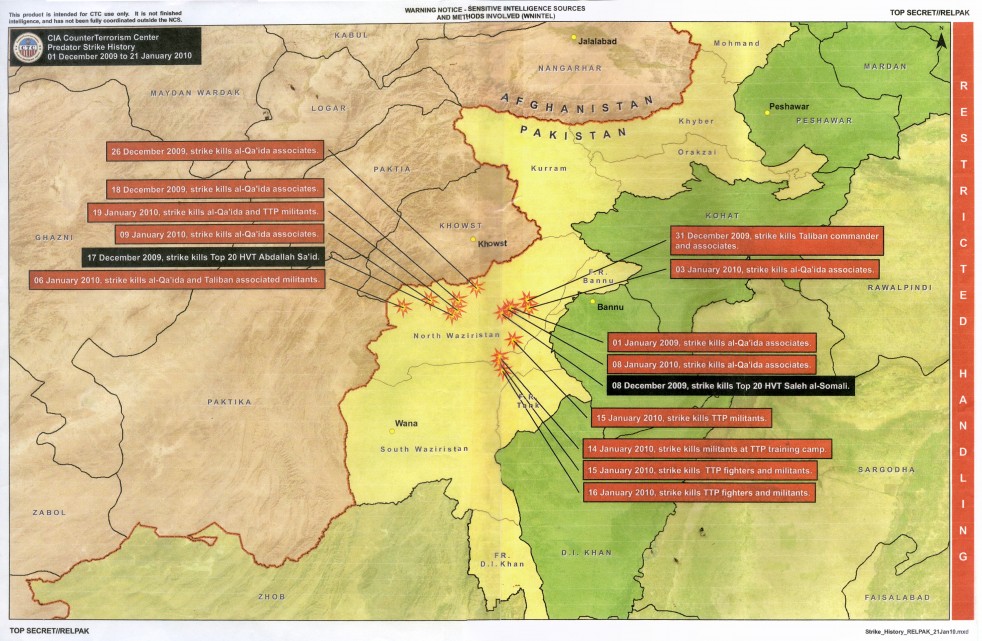
We now know that this collaboration continued at the very least until late 2011.  The CIA’s Counterterrorism Center routinely prepared reports that included maps (see below) and pre- and post-strike imagery that were briefed by the Deputy Director to Husain Haqqani, the Pakistani ambassador in Washington, and subsequently transmitted to Islamabad.

US_Pakistan_Panorama21382550661-1

And consistent with the reports from Political Agents to the FATA Secretariat, Greg Miller and Bob Woodward note that in these briefings:

Although often uncertain about the identities of its targets, the CIA expresses remarkable confidence in its accuracy, repeatedly ruling out the possibility that any civilians were killed.  One table estimates that as many as 152 “combatants” were killed and 26 were injured during the first six months of 2011. Lengthy columns with spaces to record civilian deaths or injuries contain nothing but zeroes.

The collaboration is important, because it has major implications for how one thinks about the Federally Administered Tribal Areas as a ‘space of exception’: there are multiple legal regimes through which the people who live in these borderlands are knowingly and deliberately ‘exposed to death’, as Agamben would have it.  More on this later, but for now there is a second, more substantive point to be sharpened.

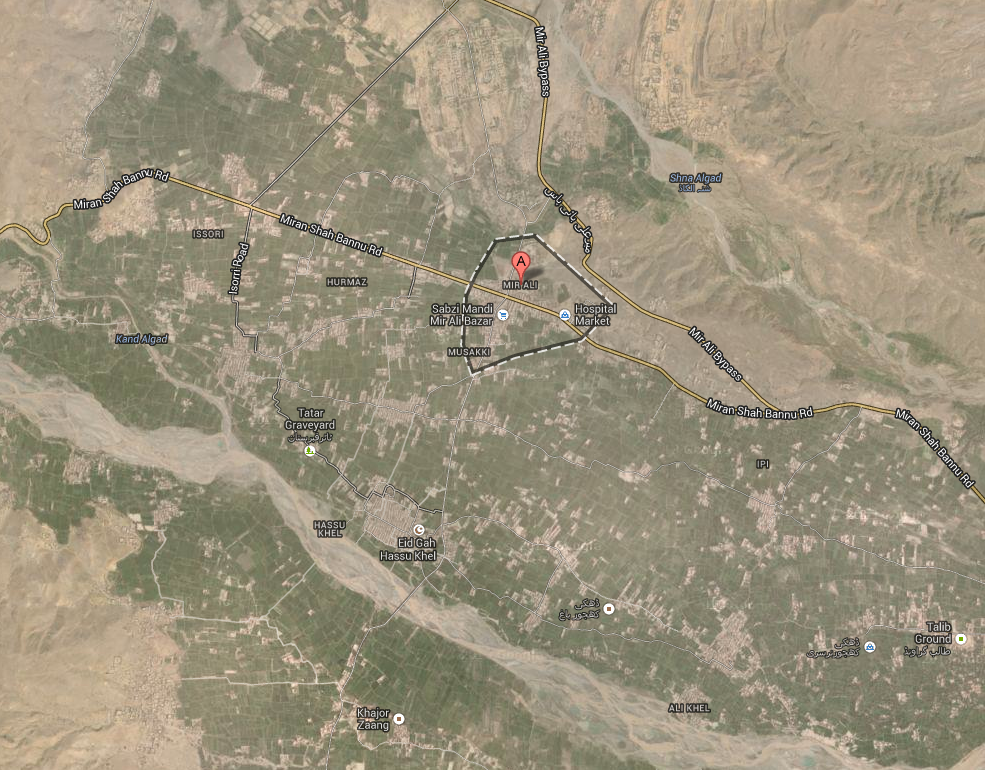
I’ve previously emphasised that the people of FATA are not only ‘living under drones‘, as the Stanford/NYU legal team put it last year, but also under the threat of air strikes from the Pakistan Air Force.  Last week the PAF resumed air strikes against leaders of the Tehrik-i-Taliban Pakistan (TTP) in North Waziristan, using first F-16 aircraft and then helicopter gunships to attack what were described as ‘eight major targets’ in the villages of Mir Ali (Hamzoni, Issori, Khadi and Nawana). Although the Air Force described the operation as a ‘blitz’, it initially claimed that only two people were killed.  A different story soon emerged.

MIR ALI

According to Pakistan’s International News, the air raids started just before midnight on 20 January, and people ‘left their homes in desperation and spent the night in the open along with children when the jets started bombing.’

There were conflicting reports about the identity of those killed. Military authorities said all the 40 people killed in the overnight aerial strikes were hardcore militants or their relatives and family members.

However, tribesmen in Mir Ali subdivision insisted that some local villagers, including women, children and elderly people, were also killed in the bombing by the PAF’s fighter aircraft and Pakistan Army’s helicopter gunships as residential areas were attacked.

848700893_1390366252

Several days later there were reports of hundreds – even thousands – of people fleeing the area in anticipation of continuing and intensifying military operations.  On 25 January the Express Tribune reported:

“Most of the families of Mir Ali Bazaar and adjacent areas have been leaving,” Abdullah Wazir, a resident of Spin Wam told The Express Tribune, adding, “women and children have been leaving with household materials, but livestock and larger items of belongings are being abandoned by these families.”

“It is difficult to find shelter in Bannu,” said Janath Noor, aged 38, who travelled there with her family. “There are problems at home and here in Bannu too.” She added that the families were forced to act independently as the political administrations in North Waziristan and Bannu have not made arrangements for the fleeing families. Some families reportedly spent the night under the open sky in Bannu town, waiting for any available shelter.

Some IDPs have also faced problems such as harassment at the hands of the police, requests for bribes, soaring rates of transport from Mir Ali and inflated rents for houses in Bannu. Some families, suspected of being militants, have had problems finding accommodation in Bannu district.

Mir Ali:Bannu

By 27 January the government estimated that 8,000 people had arrived in Bannu, while many others unable to find shelter and unwilling to sleep in the open had hone on to Peshawar and elsewhere.  But the head of the FATA Disaster Management Authority declared that ‘No military operation has been announced in the tribal area so there are no instructions to make arrangements for the internally displaced people.’

Most local people were clearly sceptical about that and, certainly, there were authoritative claims that Pakistan was being put ‘on a war footing’ to counter the surging power of the TTP.  In the same week that the air strikes were launched, Islamabad promulgated an amended Protection of Pakistan Ordinance (PPO), modelled on the imperial Rowlatt Act of 1919, that included provisions for secret courts, greater shoot-to-kill license for the police, house raids without warrants and the detention of terror suspects without charge. Rana Sanaullah, Minister for Law, Parliamentary Affairs and Public Prosecution in the Punjab and a close confidant of Prime Minister Nawaz Sharif, told the Guardian: ‘I think what will be done will be no worse than what has happened in Guantánamo Bay.’  Not surprisingly, he also offered support for the US drone strikes:

‘We believe that drone attacks damage the terrorists, very much… Inside, everyone believes that drone attacks are good; but outside, everyone condemn because the drones are American.’

And, as I’ll try to show in a later post, it’s a different inside/outside indistinction that plays a vital role in producing the FATA as a space of exception.

Boundless Informant and the everyware war

As part of my presentation on “Drones and the everywhere war” at York, I decided to unpack this extraordinary claim made by John Nagl, one of the architects of the US military’s revised counterinsurgency doctrine:

We’re getting so good at various electronic means of identifying, tracking, locating members of the insurgency that we’re able to employ this extraordinary machine, an almost industrial-scale counterterrorism killing machine that has been able to pick out and take off the battlefield not just the top level al Qaeda-level insurgents, but also increasingly is being used to target mid-level insurgents.

It’s a remark I’ve discussed several times before.  Nagl’s ‘killing machine’ is not limited to drone strikes, of course, but subsumes the ‘night raids’  and other Special Forces operations detailed in Jeremy Scahill‘s Dirty Wars.  But at York I wanted to explore how those ‘electronic means of identifying, tracking and locating’ fed into drone strikes in Pakistan: and, thanks to Edward Snowden and Glenn Greenwald, I was able to get much closer to the belly of the beast.

Drones+ app

I’d started the presentation with a riff on Josh Begley‘s attempt to persuade Apple to include his Drones+ app in the App store.  Apple decided, for several contradictory and spurious reasons, to reject the app, and at his thesis defence Josh asked:

 ‘Do we really want to be as connected to our foreign policy as we are to our smart phones… Do we really want these things to be the site of how we experience remote war?’

Apple’s answer was ‘no’, clearly, but it turns out that others are intimately connected to drone strikes through their phones and e-mails, and it was this that I fastened on.

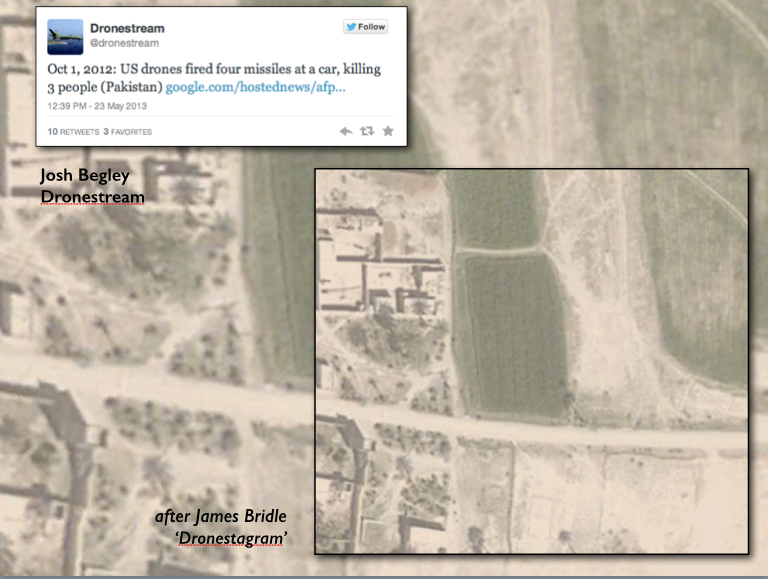
Josh, undeterred by Apple, went on to launch the Dronestream platform, from which he tweeted details of every known US drone strike.  I combined one of Josh’s tweets for 1 October 2012 with a version of James Bridle‘s Dronestagram, which uses Instagram to post images of the location of drone strikes (I say ‘a version’ because Dronestagram was launched too late for this particular strike, so this is a mock-up; in any case, it’s difficult to pinpoint the locations from available reports with much precision, but the details for this strike are available via the Bureau of Investigative Journalism, as the second slide below shows):

1 October 2012 Dronestream and Dronestagram

Bureau of Investigative Journalism 1 October 2012 strike

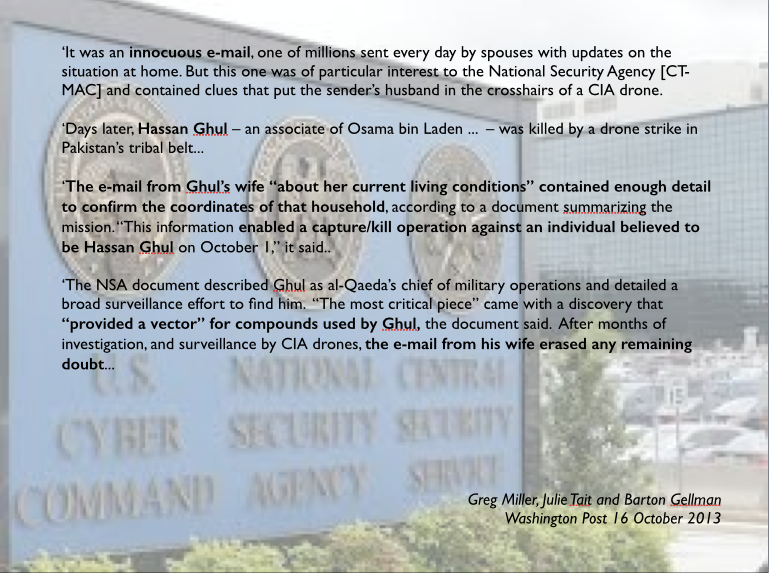
We now know that this strike was made possible as a result of interceptions made by the National Security Agency’s Counter-Terrorism Mission-Aligned Cell (CT-MAC).  Writing in the Washington Post on 16 October 2013 Greg Miller, Julie Tait and Barton Gellman explained how this strike had targeted Hassan Ghul:

Hassan Ghul NSA intercepts

Not quite ‘any doubt’; as they went on to note, ‘Although the attack was aimed at “an individual believed to be” the correct target, the outcome wasn’t certain until later, when “through SIGINT [signals intelligence] it was confirmed that Hassan Ghul was killed.”‘

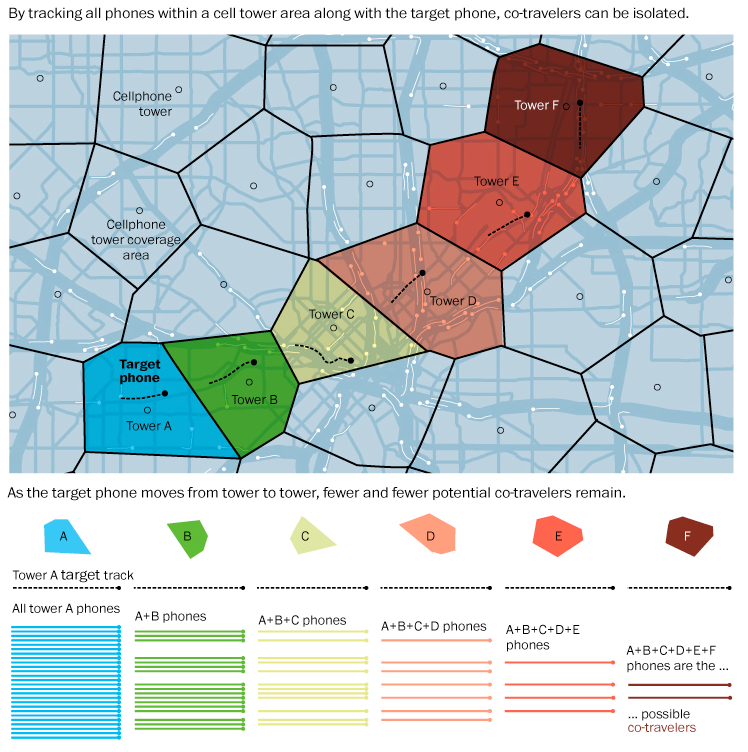
So how did the intercept work?  Not surprisingly, we don’t know for sure; but the map below of NSA’s ‘Boundless Informant‘ – another dimension of what I’ve been calling ‘the everywhere war’ – offers some clues.  I’ve taken it from a report in the Guardian by Glenn Greenwald and Ewen MacAskill:

Boundless Informant March 2013 heat map

This is six months later, but it shows that Pakistan was, after Iran, the major focus of NSA’s surveillance and data mining operations (Miller and his colleagues had noted that “NSA threw the kitchen sink at FATA’, the Federally Administered Tribal Areas).  It would be wrong to assume that the targeted killing of Ghul was the result of a simple hack into hotmail, and the Post report details the multiple methods used by NSA.

Still, the geography of covert surveillance shown on the map is revealing.  Yesterday Greenwald returned to Boundless Informant and rebutted the charge that he had misinterpreted the meaning of this and other slides, and in doing so quoted from NSA’s own explanation of the system:

BOUNDLESSINFORMANT is a GAO [Global Access Operations, a branch of the NSA] prototype tool for a self-documenting SIGINT system. . . BOUNDLESSINFORMANT provides the ability to dynamically describe GAO’s collection capabilities (through metadata record counts) with no human intervention and graphically display the information in a map view, bar chart, or simple table. . . .
By extracting information from every DNI and DNR metadata record, the tool is able to create a near real-time snapshot of GAO’s collection capability at any given moment. The tool allows users to select a country on a map and view the metadata volume and select details about the collection against that country. The tool also allows users to view high level metrics by organization and then drill down to a more actionable level – down to the program and cover term.

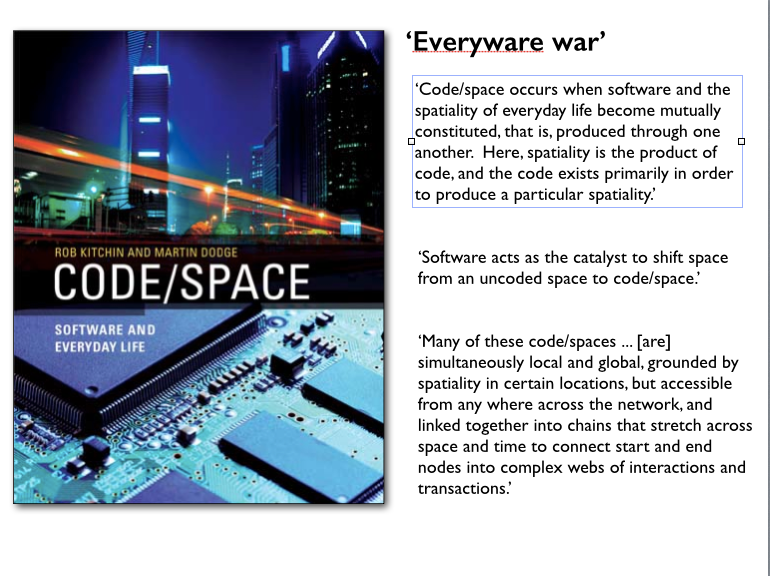
It’s not too difficult to connect the dots and draw two more general conclusions.  The first is that this is another, darker dimension to the ‘code/space’ and ‘everyware’ discussed in such impressive detail by Rob Kitchen and Martin Dodge:

Everyware war

My slide is just short-hand, of course, but you can see where I’m going, I hope – and, as we know from this week’s harrowing testimony on Capitol Hill about the murder of Mamana Bibi in Waziristan and Amnesty International’s report, Will I Be Next?, these operations and their algorithms work to turn ‘everyday life’ into everyday death.  So I’ll be thinking more carefully about code/space and its implication in the individuation of later modern war, paying closer attention to the technical production of ‘individuals’ as artefacts and algorithms as well as the production of the space of the target: more to come.

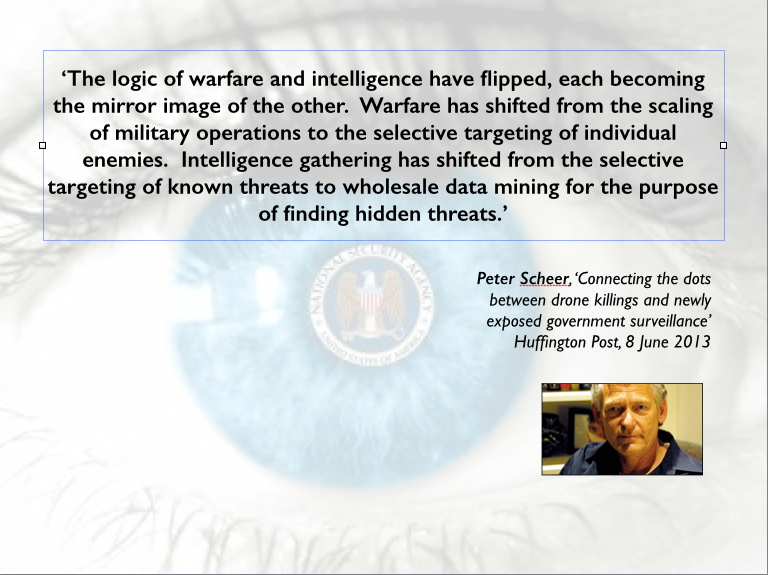
The second general conclusion I leave to Peter Scheer, who provides a more refined (and critical) gloss on John Nagl’s comment with which I began:

SCHEER Connecting the dots

I’m incorporating these and other developments into the revised and extended version of “Moving targets and violent geographies” which will appear in The everywhere war, but I hope this bare-bones account (and that first draft, available under the DOWNLOADS tab) shows that my posts are more connected than they must sometimes appear…  The slides were pulled together on the day I gave the presentation, so forgive any rough edges.