Security by remote control

Security by remote control

News from Lucy Suchman that the website for the Security by Remote Control conference at Lancaster, 22-23 May, is now live here.  It will be enhanced and updated as the symposium approaches – including programme details: I’m still thinking over what I might present – but registration is open now.

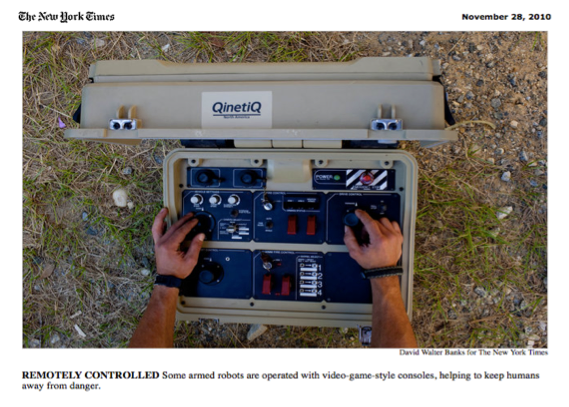
Despite investment in new technologies, the legitimacy and efficacy of actions taken in the name of security is increasingly in question. In April of 2013 a coalition led by Human Rights Watch initiated a campaign in favour of a legally binding prohibition on the development, production and use of fully autonomous weapon systems. Simultaneously, some military and robotics experts argue that equipping robots with the capacity to make ethical judgments is an achievable technological goal. Within these debates, the ‘human in the loop’ is posited alternately as the safeguard against illegitimate killing, or its source. Implicit across the debate is the premise of a moment of decision in which judgements of identification and appropriate response are made. This symposium will focus on on the troubling space between automation and autonomy, to understand more deeply their intimate relations, and the inherent contradictions that conjoin them.

Security archipelagos

Three short contributions that have caught my eye raise a series of interesting questions about contemporary ‘security archipelagos’ (in multiple sense of the term, hence the plural).

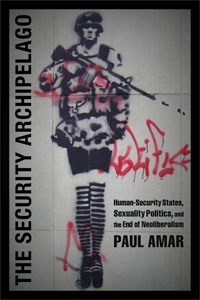
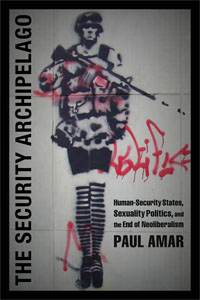
amar-security-archipelagoThe term itself comes from Paul Amar, and Austin Zeiderman has a short but interesting review of his The Security Archipelago: Human-Security States, Sexuality Politics, and the End of Neoliberalism (Duke, 2013) over at Public Books (Public Culture‘s public site):

‘Amar asserts that we need an analytical framework focused on the rise of human security—a governance regime that “aim[s] to protect, rescue, and secure certain idealized forms of humanity.” This new regime is gradually replacing neoliberalism, Amar contends, “as the hegemonic project of global governance and of state administration.” This shift is evident in how security is now justified and pursued by states. The antagonistic relationship between security and human rights that characterized the “neoliberal market states” of the late 20th century is no longer so evident. The repressive security strategies that underpinned earlier development paradigms have been succeeded by the “promise to reconcile human rights and national security interests” in the interest of economic prosperity. Progressive and conservative security doctrines now agree on the imperative to “humanize” (or “humanitarianize”) both state and parastatal security apparatuses. The result, Amar argues, is what he calls the “human-security state”: a globally emergent governance regime with “consistent character and political profile.” From Latin America to the Middle East, political legitimacy is increasingly based on securing humanity against a range of malicious forces….

If the megacities of the Global South are indeed “laboratories” in which new logics and techniques of global governance are being created, it is up to other researchers to fill out and develop further Amar’s concept of the “security archipelago.” Though his study provides both the theoretical rationale and the analytical tools with which to do so, it may be worth questioning whether the “human” is necessarily central to emerging security regimes. For along with human security apparatuses and the human actors struggling to articulate progressive alternatives, a host of non-humans—drones, border fences, hurricanes—are actively producing the security landscape of the future.’

Secondly, I’ve been thinking about the ways in which the work of these ‘laboratories’ often relies on non-state, which is to say corporate, commercial sites (this isn’t news to Paul, of course, even if he wants to challenge our ideas about neoliberalism).  We surely know that the traditional concept of the military-industrial complex now needs wholesale revision, and I’ve noted before the timely and important essay by Jeremy Crampton, Sue Roberts and Ate Poorthuis on ‘The new political economy of geospatial intelligence‘ in the Annals of the Association of American Geographers 104 (1)  (2014) (to which I plan to return in a later post).  The latest MIT Technology Review has a short but suggestive essay by Antonio Regalado, ‘Spinoffs from Spyland’, which describes some of the pathways through which the National Security Agency commercializes (and thus potentially subcontracts and, in some cases, even subverts) its surveillance technology:

In 2011, the NSA released 200,000 lines of code to the Apache Foundation. When Atlas Venture’s Lynch read about that, he jumped—here was a technology already developed, proven to work on tens of terabytes of data, and with security features sorely needed by heavily regulated health-care and banking customers. When Fuchs’s NSA team got cold feet about leaving, says Lynch, “I said ‘Either you do it, or I’ll find five kids from MIT to do it and they’ll steal your thunder.’”

Eventually, Fuchs and several others left the NSA, and now their company [Sqrrl] is part of a land grab in big data, where several companies, like Splunk, Palantir, and Cloudera, have quickly become worth a billion dollars or more.

Over the summer, when debate broke out over NSA surveillance of Americans and others, Sqrrl tried to keep a low profile. But since then, it has found that its connection to the $10-billion-a-year spy agency is a boost, says Ely Kahn, Sqrrl’s head of business development and a cofounder. “Large companies want enterprise-scale technology. They want the same technology the NSA has,” he says.

SQRRL

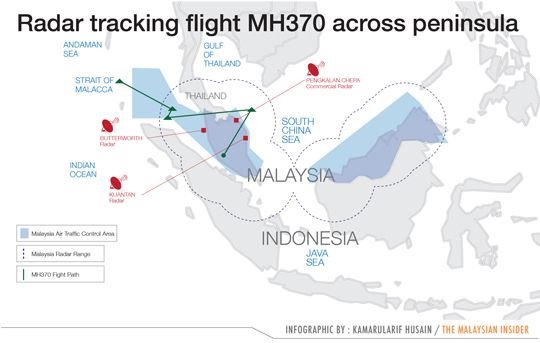
And finally, before we rush to radicalise and globalise Foucault’s critique of the Panopticon, it’s worth reading my friend Gaston Gordillo‘s cautionary note – prompted by the search for missing Malaysian Airlines Flight 370 – on ‘The Opaque Planet’:

The fascination with, and fetishization of, technologies of global location and surveillance often makes us forget that, for all their sophistication, we live on a planet riddled with opaque zones that will always erode the power of human-made systems of orientation, for the simple fact that no such system (contrary to what the NSA seems to believe) will ever manage to create an all-seeing God. This opacity is intrinsic to the textured, three-dimensional materiality of the surface of the planet, and is especially marked in the liquid vastness of the ocean.

MH370-military_radar-tracking-peninsula-170314-eng-graphcs-tmi-kamarul

Phil Steinberg has already commented on the geopolitics of the search, but Gaston draws out attention to the gaps in the surveillance capabilities of states, and here too the geopolitical meshes (and sometimes jibes against) the geoeconomic, as described in this report from Reuters:

Analysts say the gaps in Southeast Asia’s air defenses are likely to be mirrored in other parts of the developing world, and may be much greater in areas with considerably lower geopolitical tensions.

“Several nations will be embarrassed by how easy it is to trespass their airspace,” said Air Vice Marshal Michael Harwood, a retired British Royal Air Force pilot and ex-defense attache to Washington DC. “Too many movies and Predator (unmanned military drone) feeds from Afghanistan have suckered people into thinking we know everything and see everything. You get what you pay for. And the world, by and large, does not pay.”

Disposable life

Histories of violence banner

Histories of Violence launches its tremendously important (and equally ambitious) Disposable Life project, which Brad Evans explains like this:

“Mass violence is poorly understood if it simply refers to casualties on battlefields or continues to be framed through conventional notions of warfare. We need to interrogate the multiple ways in which entire populations are rendered disposable on a daily basis if we are to take seriously the meaning of global citizenship in the 21st Century”. (Brad Evans, Project Director)

 Throughout the Twentieth Century, violence was ceaselessly waged against targeted populations deemed to be “disposable”. The years 2014-2016 will be a poignant moment to reflect upon the historical significance and contemporary meaning of these mass atrocities. The period begins with the 20th anniversary of the Zapatista uprising which provided a contemporary frame on the history of indigenous and racial persecution. April 2014 will mark the 20th anniversary of the Rwandan genocide which exposed to a watching global community the horrifying legacy of colonialism, along with its lasting and unresolved implications. June 2014 bears witness to the 100th anniversary of the outbreak of World War I which remains one of the bloodiest conflicts in human history. Onto January 2015, we confront the historical memory of the violence of Auschwitz which taught us the shame of being human. The year also witnesses the 70th anniversaries of the bombings of Hiroshima & Nagasaki that still serve as a horrifying reminder of the devastating potential of weapons of mass destruction and the capacity to reason widespread destruction; the 100th anniversary of the Armenian “genocide” which remains a source of contention and passionate debate in terms of its definition and political vocabulary; the 65th anniversary of the start of the Korea War that continues to have profound impact upon global ideas of security and peaceful co-habitation; the 60th anniversary of the official start of Vietnam War (from United States perspective) whose targeted violence against local populations and biospheres in particular fundamentally challenged claims of Western superiority and enlightenment; along with the 40th anniversary of the beginning of the “killing fields” in Cambodia which remains one of the most violent experimental episodes in the history of human existence.

There is no doubt a need to collectively memorialise these traumatic events and remember the devastating loss of life. Any attempt to create more just futures must have an appreciation of these histories of violence. There is also a need however to move beyond the historicity of memorialisation to critically question their contemporary significance in terms of providing a more honest and somber reflection of the present conjuncture. This requires us to move beyond the dominant Western tropes for conceptualising such violence as either exceptional in history or the result of a failure of liberal modernity. Disposability may take many different forms. It cannot be reduced to simplistic explanations. Nor can it be properly understood without engaging its underlying causes that may be of a political, economic, cultural, social, psychological and identity based nature. Only then might we start to rethink the terms of global citizenship in the 21st Century. With this in mind, the initiative is compelled to ask: Are there, for instance, aspects of contemporary global society that make it possible to think and act in ways that render specific populations disposable? How might we commemorate these tragic events in ways that will cultivate a deeper understanding of the conditions that give rise to extreme violence? Is it correct to argue that we now live in a post-colonial and post-racial moment? Or are there continued remnants from the brutality of colonialism that shapes relations amongst people today? What challenges does the notion of disposability pose for the integrity of social research? How should we engage the broader public in critical education and discussion around the various forms that violence has taken in the past and continues to take in the present? And how might we forge a truly trans-disciplinary pedagogy that connects the arts, humanities and social sciences such that we may engage more critically with the meaning of violence and the disposability of populations in the 21st Century?

This is excellent stuff, and from my point of view a critical question concerns the ways in which notions of ‘disposability’ circulate between (or perhaps more accurately among) the ‘battlefields and warfare’ with which the paragraph begins and the other spaces and spheres of social life to which it opens out.  I think this requires histories of violence, to be sure, but also geographies of violence – in short, historical geographies of violence.

The Project is launched with a short video from Cynthia Enloe, who ‘provides her original interpretation of the paradigm by exploring the meaning of disposability in the terms of the ways life continually appears arbitrary and nameless. For Enloe, not only does the problem of disposability point to contemporary forms of banality as earlier critiqued by Hannah Arendt, it allows us to rethink what it means to be humane in the 21st Century.’

For a partial list of future contributors, book projects and recommended readings, see here.  And keep watching that space!

A new natural history of destruction?

Security by remote control conference

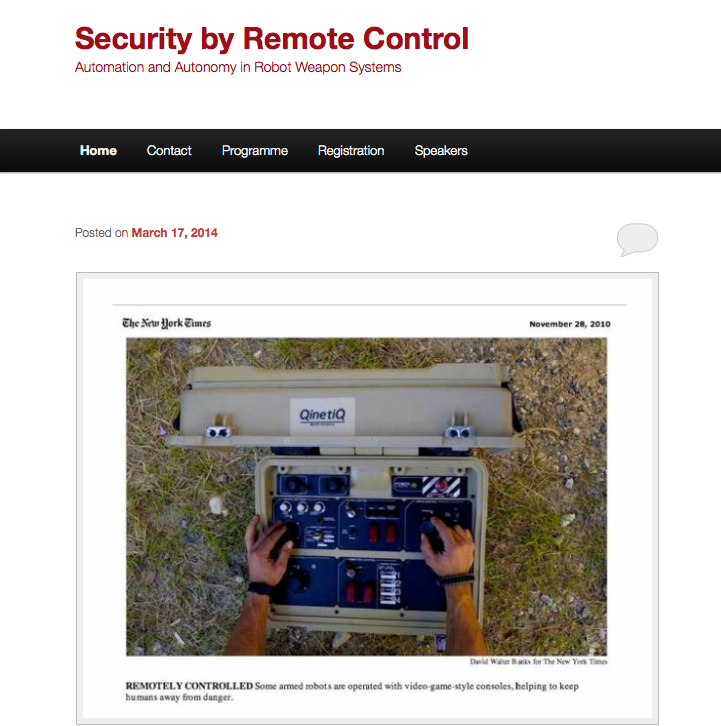
My work on drones has been invigorated by reading an outstandingly creative essay by Lucy Suchman on ‘Situational Awareness: deadly bioconvergence at the boundaries of bodies and machines’, forthcoming at the ever-interesting Mediatropes.  It’s sparked both an e-mail conversation and an invitation to speak at a symposium on Security by remote control: automation and autonomy in robot weapon systems at Lancaster University, 22-23 May.  Here is the call for papers:

Remotely operated and robotic systems are central to contemporary military operations. Robotic weapons can select targets and deliver lethal force with varying degrees of human control, and technologies for fully autonomous weapon systems are currently in development. Alongside military reconnaissance and the prospective configuration of ‘killer- robots,’ drone technologies are being deployed for ostensibly peaceful purposes, most notably surveillance of public space, private property and national borders. More generally, the frame offered by contemporary security discourses has redrawn previous boundaries regarding the use of state violence in the name of homeland protection. But despite an extended history of investment in technologies that promise to rationalise the conflict zone and accurately identify the imminent threat, the legitimacy and efficacy of actions taken in the name of security is increasingly in question.

The purpose of this symposium is to present and debate current scholarship on the ethics and legality of robotic systems in war and beyond. By robotic systems we mean networked devices with on-board algorithms that direct machine actions (in this case, tracking, targeting and deploying force) in varying configurations of pre-programmed operation and remote human control. The line between automation and autonomy has come under renewed debate in the context of contemporary developments in remotely controlled weapon systems, most prominently uninhabited aerial vehicles or drones. For 
example, in April of 2013 a coalition led by Human Rights Watch initiated a campaign in favour of a legally binding prohibition on the development, production and use of fully autonomous weapon systems. Simultaneously, some military and robotics experts emphasize the advantages of automated weapons and argue that equipping robots with the capacity to make ethical judgments is an achievable technological goal. Within these debates, the ‘human in the loop’ is posited alternately as the safeguard against illegitimate killing, or its source. Implicit across the debate is the premise of a moment of decision in which judgements of identification and appropriate response are made.

While emerging arms control strategies focus on the ‘red line’ that would prohibit the development and use of weapons that remove human judgment from the identification of targets and the decision to fire, the question remains to what extent human judgment and decision-making are already compromised by the intensifications of speed, and associated increase in forms and levels of automation, that characterise contemporary war-fighting, particularly in situations of remote control. Rather than attempting to establish one or the other of these concerns as correct, or even as more important than the other, we seek to focus our discussion on the troubling space between automation and autonomy, to understand more deeply their intimate relations, and the inherent contradictions that conjoin them.

To explore the key stakes and lines of argument in this debate, we invite contributions from scholars in the fields of security, peace and conflict studies, international human rights law, anthropology/sociology of science and technology, technoculture and technomilitarism, computing, simulation and cyber law. The ambition for this event is to stimulate ongoing cross-disciplinary discussion and further research on this topic, drawing on the resources of the Lancaster University centres that are its co-sponsors.

Confirmed Speakers:

Patrick Crogan, Senior Lecturer in Film Studies at the University of the West of England in Bristol, scholar of technoculture, videogames and military technoscience, author of Gameplay Mode: War, Simulation, and Technoculture (2011);

Derek Gregory, Peter Wall Distinguished Professor and Professor of Geography at the University of British Columbia in Vancouver, author of multiple works interrogating social and spatial dimensions of conflict, and currently completing a book titled The Everywhere War (forthcoming);

M. Shane Riza, command pilot and former instructor at the U.S. Air Force Weapons School, author of Killing Without Heart: Limits on Robotic Warfare in an Age of Persistent Conflict (2013);

Christiane Wilke, Associate Professor in Law and Legal Studies at Carleton University, Canada. She has been researching legal responses to state violence and is working on a project about visuality, photography, and international law.

To indicate your interest in participating, or for further information, please contact Lucy Suchman l.suchman@lancaster.ac.uk.

I’m really excited about this; I’m part way through Shane Riza’s book, and it’s already clear that I’m going to learn a lot from the meeting.

The image at the top of this post comes from the CFP, incidentally, but the image below is Margaret Bourke-White‘s classic photograph from the rubble of a bombed German city, which I use when I talk about the ways in which the trauma of air war dislocates the very sinews of language and the capacity to write and re-present (see ‘Doors in to nowhere’, an extended reflection on W.G. Sebald: DOWNLOADS tab).  Perhaps I’ll use my time at Lancaster (given the name, a peculiarly appropriate place) to join the dots between the two images and revisit ‘The natural history of destruction’ for the twenty-first century….

tumblr_m04iio5ICm1qbwvhpo1_500

Drones and ‘the world as free-fire zone’

Fred Kaplan has an interesting essay on the history and use of armed drones by the United States at MIT Technology Review: ‘The world as free-fire zone‘ (June 2013).  Kaplan provides a telling critique of Obama’s May statement about the conduct of targeted killings (though that doesn’t of course exhaust what the military uses UAVs for), but his discussion is muddied by what he says about Vietnam – and what he doesn’t.
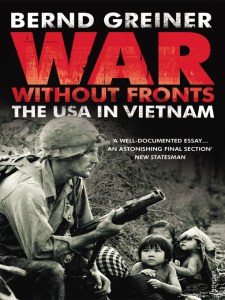
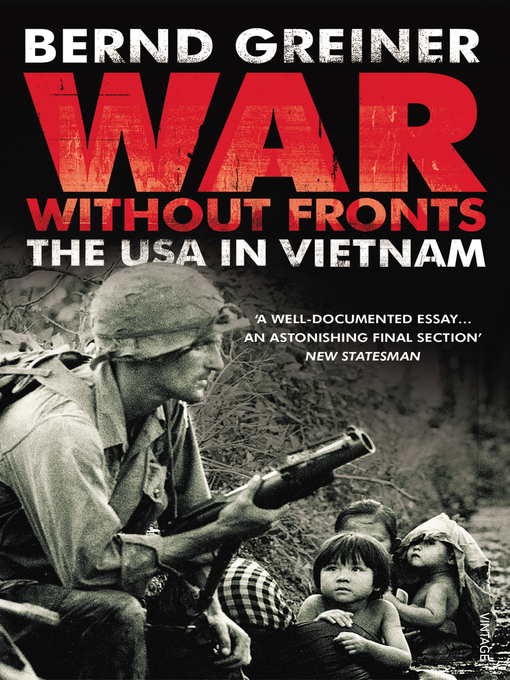
GREINER War without frontsThe title of the essay invokes a notorious tactic deployed by the United States in South Vietnam: the creation of free-fire, free-strike or what the Air Force called free-bomb zones (the name was changed in 1967  to ‘specified fire zones’ for PR purposes, though what was specified was the zone not the fire).  This is how historian Bernd Greiner summarises the policy in War without fronts: the USA in Vietnam (2007, trans. 2009):

‘License to destroy and annihilate on a large-scale applied unrestrictedly in the so-called “Free Fire Zones”.  Set by the South Vietnamese authorities – either the civil administration or the commanders of an Army corps or division – the US forces operated within them as though outside the law: “Prior to entrance into the area we as soldiers were told all that was left in the area after civilian evacuation were Viet Cong and thus fair game.” Virtually all recollections of the war contain such a statement or something similar, simultaneously referring to the fact that anyone who did not want to be evacuated had forfeited the right to protection, since in the Free Fire Zones the distinction between combatant and non-combatant was a prior lifted.’

Matters were not quite so simple, at least in principle, since (as Nick Turse notes in Kill anything that moves: the real American war in Vietnam (2013)), ‘the “free-fire” label was not quite an unlimited license to kill, since the laws of war still applied in these areas.’  And yet, as both Greiner and Turse show in considerable detail (and I’ll have more to say about this in another post), in practice those laws and the rules of engagement were serially violated.  Whatever the situation in Vietnam, however, it’s surely difficult to extend this – as Kaplan wants to do – to US policy on targeted killings.  Invoking the Authorization for Use of Military Force passed by Congress on 14 September 2001 (as Obama does himself), Kaplan writes:

‘This language is strikingly broad. Nothing is mentioned about geography. The premise is that al-Qaeda and its affiliates threaten U.S. security; so the president can attack its members, regardless of where they happen to be. Taken literally, the resolution turns the world into a free-fire zone‘ (my emphasis).

A couple of years ago Tom Engelhardt also wrote about Obama hardening George W. Bush’s resolve to create a ‘global free-fire zone’.  Kaplan’s criticism of the conditions that the Obama administration now claims restrict counter-terrorism strikes is, I think, fair – though much of what he says derives directly from a draft Department of Justice memorandum dated 8 November 2011 on ‘the use of lethal force in a foreign country outside the area of active hostilities against a U.S. citizen who is a senior operational leader of al-Qa’ida or an associated force’ rather than Obama’s wider speech on counter-terrorism on 23 May 2013 or the ‘fact sheet on policy standards and procedures’ that accompanied it.  But they are closely connected, and Kaplan’s objections have real substance.

First, the Obama administration insists that the threat posed to the United States must be ‘imminent’, yet since the threat is also deemed to be continuing ‘a broader concept of imminence’ is required that effectively neuters the term.

Second, apprehension of the suspect must be unfeasible, yet the constant nature of the threat means that the ‘window of opportunity’ can always be made so narrow that ‘kill’ trumps ‘capture’.

But what of Obama’s third condition: that ‘before any strike is taken, there must be near-certainty that no civilians will be killed or injured’?  Kaplan accepts that this is a ‘real restriction’.  Critics of the programme differ on how successful it has been in practice, and supporters like Amitai Etzioni have turned ‘civilian’ into a weasel word that means whatever they want it to mean (which is not very much).  Still, the most authoritative record of casualties – which I take to be the Bureau of Investigative Journalism in London – clearly shows that civilian deaths in Pakistan (at least) have fallen considerably from their dismal peak in 2009-10.  Whatever one makes of all this, however, it hardly turns the world into a ‘free-fire zone’.  The war machine will continue to be unleashed outside declared war zones (or what Obama also called ‘areas of active hostilities’, which may or may not mean the same thing), and Obama and his generals will continue to conjure a battlespace that is global in extent.  But if we take the President at his word – and I understand the weight that conditional has to bear – military violence may occur everywhere but not anywhere: ‘We must define our effort not as a boundless “global war on terror” – but rather as a series of persistent, targeted efforts to dismantle specific networks of violent extremists that threaten America.’

The question is whether we can take the President at his word.  As Glenn Greenwald points out, ‘Obama’s speeches have very little to do with Obama’s actions’.  Tom Junod says much the same about what he continues to call the Lethal Presidency: ‘When a man is as successful in fusing morality and rhetoric as Barack Obama, there’s always a tendency to think that the real man exists in his words, and all he has to do is find a way to live up to them.’  Performativity is not only conditional, as it always is, but in this case also discretionary.

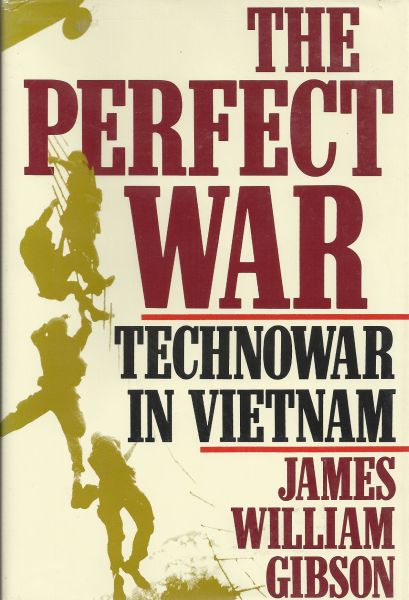
GIBSON The perfect warKaplan also refers to a notorious metric from the Vietnam war: the body-count.  As James Gibson patiently explains in his brilliant critique of The perfect war: technowar in Vietnam (1986), this was one of the central mechanisms in US Secretary of Defense Robert McNamara’s attempt to wage an appropriately Fordist war (he went to the Pentagon from being President of the Ford Motor Company).  The body-count can be traced back to the Korean War, but it came into its own in Vietnam where it was supposed to be the key metric of success – bizarrely, even of productivity – in a ‘war without fronts’ where progress could not be measured by territory gained.  Here too Turse is illuminating on the appalling culture that grew up around it, including the inflation (and even invention) of numbers, the body-count competitions, and the scores and rewards for what today would no doubt be called ‘excellence in killing’.

But what Kaplan has in mind is not quite this, but the central, absurdist assumption that there is a direct relationship between combatants killed and military success:

‘It is worth recalling the many times a drone has reportedly killed a “number 3 leader of al-Qaeda.” There was always some number 4 leader of al-Qaeda standing by to take his place. It’s become a high-tech reprise of the body-count syndrome from the Vietnam War — the illusion that there’s a relationship between the number of enemy killed and the proximity to victory.’

How else can we interpret John Nagl‘s tangled celebration (on Frontline’s ‘Kill/Capture’) of the importance of targeted killing for counterinsurgency and counter-terrorism?

‘We’re getting so good at various electronic means of identifying, tracking, locating members of the insurgency that we’re able to employ this almost industrial-scale counterterrorism killing machine that has been able to pick out and take off the battlefield not just the top level al Qaeda-level insurgents, but also increasingly is being used to target mid-level insurgents.’

Peter Scheer draws a distinction between the two moments in Nagl’s statement that helps clarify what he presumably intended (though Scheer is writing more generally):

‘The logic of warfare and intelligence have flipped, each becoming the mirror image of the other. Warfare has shifted from the scaling of military operations to the selective targeting of individual enemies. Intelligence gathering has shifted from the selective targeting of known threats to wholesale data mining for the purpose of finding hidden threats.’

In other words, the scale of intelligence has become industrial (or more accurately perhaps, post-industrial: see here), far exceeding the scale of intelligence available in Vietnam [though see here for a discussion of the connections between McNamara’s data-driven war and today’s obsession with Big Data, and here and here for an outline of the ‘security-industrial complex’], whereas the scale of killing has clearly contracted from what most certainly was industrial-scale killing in Vietnam.   Yet the networked connections between the two reveal the instantiation of the same driving logic of technowar in a radically new ‘war without fronts’.

For all these intimation of Vietnam, however, the genealogy of the drone with which Kaplan begins his essay is resolutely post-Vietnam (or at any rate outside it).  And this, I think, is a mistake.

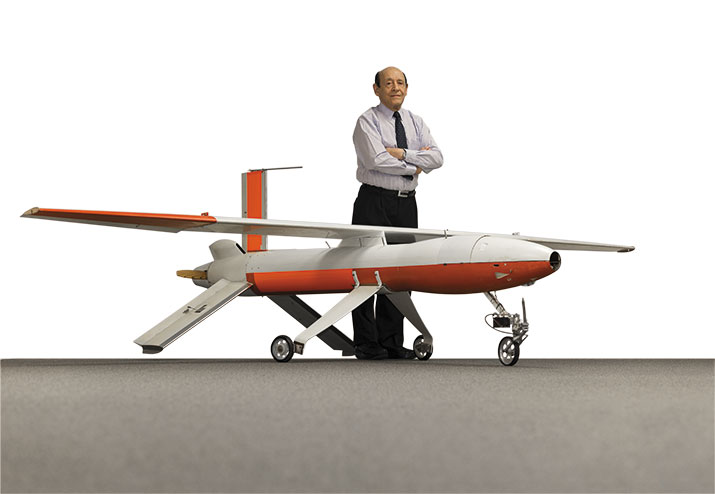
Technological history is shot through with multiple sources of inspiration and no end of false starts, and usually has little difficulty in assembling a cast of pioneers, precursors and parallels, so I’m not trying to locate a primary origin.  Ian Shaw‘s account of the rise of the Predator (more from J.P. Santiago here) homes in on the work of Israeli engineer Abraham Karem, who built his first light-weight, radio-controlled ‘Albatross’ (sic) in his garage in Los Angeles in 1981.
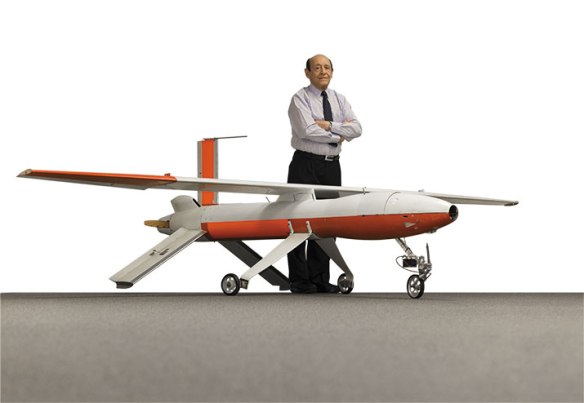
Karem's Albatross (Chad Slattery)

He may have built the thing in his garage, but Karem was no hobbyist; he was a former engineering officer in the Israeli Air Force who had worked for Israel Aircraft Industries, and by 1971 he had set up his own company to design UAVs.  Neither the Israeli government nor the Israeli Air Force was interested, so Karem emigrated to the United States.  The Albatross was swiftly followed by the Amber, which was also radio-controlled, and by 1988 with DARPA seed-funding Karem’s prototype was capable of remaining aloft at several thousand feet for 40 hours or more. But fitting hi-tech sensor systems into such a small, light aircraft proved difficult and both the US Navy and the Army balked at the project.  Karem set about developing a bigger, heavier and in many ways less advanced version for a putative export market: the GNAT-750.
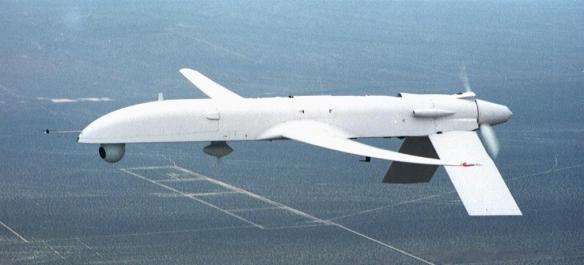
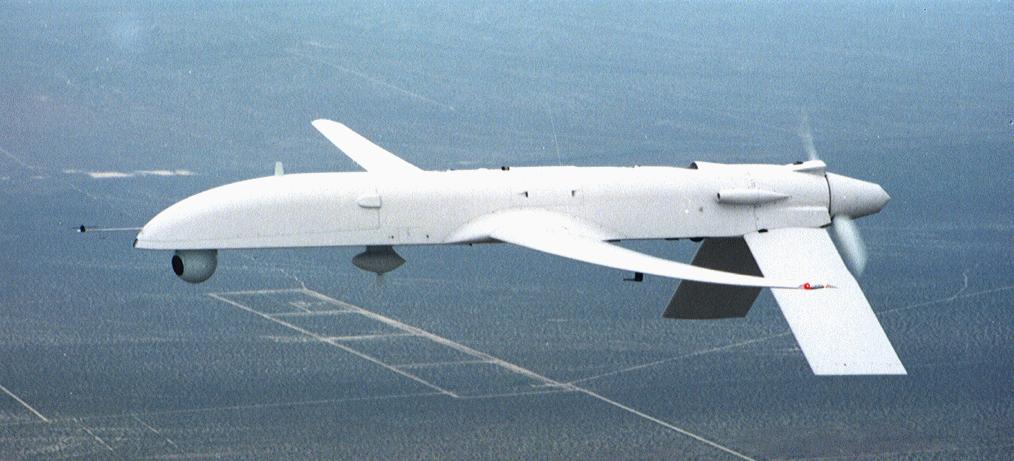
GNAT-750

This was a desperate commercial strategy that didn’t save Karem’s company, Leading Systems Inc., from bankruptcy.  But it was a sound technical strategy.  In 1990 General Atomics bought the company and the development team, and when the CIA was tasked with monitoring the rapidly changing situation in the Balkans it purchased two GNAT-750s (above) for the job.  They were modified to allow for remote control via a satellite link (the first reconnaissance missions over Bosnia in 1995 were managed by the Air Force and controlled from Albania): the new aircraft was re-named the Predator.

It’s a good story – and you can find a much more detailed account by Richard Whittle in ‘The man who invented the Predator’ at Air & Space Magazine (April 2013) here – but in this form it leaves out much of the political in-fighting.  The second part of Ian’s narrative turns to the role of the Predator in the development of the CIA’s counter-terrorism campaign, and while he notes the enlistment of the US Air Force – ‘ultimately, the CIA arranged for Air Force teams trained by the Eleventh Reconnaissance Squadron at Nellis Air Force Base [Indian Springs, now Creech AFB] to operate the agency’s clandestine drones’ – he doesn’t dwell on the ‘arranging’ or the attitude of the USAF to aircraft without pilots on board.

Kaplan does, and his story starts earlier and elsewhere:

‘The drone as we know it today was the brainchild of John Stuart Foster Jr., a nuclear physicist, former head of the Lawrence Livermore National Laboratory (then called the Lawrence Radiation Laboratory), and — in 1971, when the idea occurred to him — the director of defense research and engineering, the top scientific post in the Pentagon.’

Foster was a hobbyist – he loved making model aircraft – and thought it ought to be possible to capitalise on his passion: ‘take an unmanned, remote-controlled airplane, strap a camera to its belly, and fly it over enemy targets to snap pictures or shoot film; if possible, load it with a bomb and destroy the targets, too.’  Two years later DARPA had overseen the production of two prototypes, Praeire [from the Latin, meaning both precede and dictate] and Caler [I have no idea], which were capable of staying aloft for 2 hours carrying a 28 lb payload.  At more or less the same time, the Pentagon commissioned a study from Albert Wohlstetter, a former RAND strategist, to identify new technologies that would enable the US to respond to a Soviet invasion of Western Europe without pressing the nuclear button. ‘Wohlstetter proposed putting the munitions on Foster’s pilotless planes and using them to hit targets deep behind enemy lines, Kaplan explains, ‘Soviet tank echelons, air bases, ports.’  By the end of the decade the Pentagon was testing ‘Assault Breaker’ and according to Kaplan ‘something close to Foster’s vision finally materialized in the mid-1990s, during NATO’s air war over the Balkans, with an unmanned aerial vehicle (UAV) called the Predator.’

But the use of the mid-altitude, long-endurance (‘MALE’ – really) drones remained largely the preserve of the CIA because the senior officer corps of the Air Force was hostile to their incorporation:

‘All this changed in 2006, when Bush named Robert Gates to replace Donald Rumsfeld as secretary of defense. Gates came into the Pentagon with one goal: to clean up the mess in Iraq… He was particularly appalled by the Air Force generals’ hostility toward drones. Gates boosted production; the generals slowed down delivery. He accelerated delivery; they held up deployment. He fired the Air Force chief of staff, General T. Michael Moseley (ostensibly for some other act of malfeasance but really because of his resistance to UAVs), and appointed in his place General Norton Schwartz, who had risen as a gunship and cargo-transport pilot in special operations forces… and over the next few years, he turned the drone-joystick pilots into an elite cadre of the Air Force.’

These are both important narratives, which help to delineate multiple lines of descent, but my own inclination is to push the story back and to move it outside the North Atlantic.  It’s not difficult to find precedents for UAVs around the time of the First World War – I’ve discussed some of them here – and towards the end of the Second World War America attempted to develop remote-controlled bombers to use against Germany (see ‘Project Aphrodite’ here and here).  But if we focus less on the object – the aircraft – and more on its dispositions and the practices mobilised through the network in which it is embedded (as Kaplan’s references to ‘free-fire zones’ and ‘body counts’ imply) then I think here Vietnam is the place to look.  For as I’ve argued in ‘Lines of descent’ (DOWNLOADS tab), not only did the Air Force experiment with surveillance drones over North Vietnam, as Ian briefly notes in his own account, but the US military developed a version of ‘pattern of life analysis’ and a sensor-shooter system that would prove to be indispensable to today’s remote operations.  Seen like this, they confirm that we are witnessing a new phase of technowar in exactly the sense that Gibson used the term: except that now it has been transformed into post-Fordist war and, to paraphrase David Harvey, ‘flexible annihilation’.
The security archipelago

AMAR Security archipelagoA new book from the ever-creative Paul Amar coming this summer from Duke: The Security Archipelago: Human-Security States, Sexuality Politics, and the End of Neoliberalism. Paul wins the prize for getting the most buzz-words into a single title. Our paths crossed most recently in Beirut, at a lively conference at AUB on Security of/in the city, and last year in Lund for a workshop on the Arab uprisings.  For the next two years he’s heading a regional working-group for the Arab Council of the Social Sciences called “Producing the Public: Spaces and Power” (more on this soon).

Paul is a wonderfully engaging speaker and a brilliant writer, but if you don’t know his work you can get a small taste of his argument in this paper on ‘Turning the gendered politics of the human security state inside out?’ for an IPSA-EPCR panel on ‘Governing life globally’ in Sao Paolo and from this excellent interview on ‘Middle East Masculinities’ at Jadaliyya at about the same time; there are other PDFs available from his webpage at UC Santa Barbara here.

The book paints on a canvas that stretches far beyond the ‘Middle East’:

In The Security Archipelago, Paul Amar provides an alternative historical and theoretical framing of the refashioning of free-market states and the rise of humanitarian security regimes in the Global South by examining the pivotal, trendsetting cases of Brazil and Egypt. Addressing gaps in the study of neoliberalism and biopolitics, Amar describes how coercive security operations and cultural rescue campaigns confronting waves of resistance have appropriated progressive, antimarket discourses around morality, sexuality, and labor. The products of these struggles—including powerful new police practices, religious politics, sexuality identifications, and gender normativities—have traveled across an archipelago, a metaphorical island chain of what the global security industry calls “hot spots.” Homing in on Cairo and Rio, Amar reveals the innovative resistances and unexpected alliances that have coalesced in new polities emerging from the Arab Spring and South America’s Pink Tide. These have generated a shared modern governance model that he terms the “human-security state.”

Richard Falk describes it as ‘an extraordinary book that revolutionizes the way to think about security’ – and about time too.  Like much high-flying academic commentary on war, much of the critical debate around security displays a theoretical sophistication that is not matched by analytical substance.   Paul’s work has always avoided that trap, and Jack Halberstam‘s endorsement makes it plain that this is a book that combines erudition with empirical heft:

Paul Amar works in English, Arabic, and Portuguese [and in Spanish too], and he studies security regimes in a comparative framework encompassing the Middle East, North and South America, and Europe. Combining research that he has done in Brazil and Egypt on the emergence of new forms of security and new grammars of protest politics with the unfolding stories of an economic boom in Brazil and political change in Egypt, Amar has written an up-to-the-moment account of the ‘human-security state’ and its opponents.

Here’s a list of the Contents:

Introduction. The Archipelago of New Security-State Uprisings
1. Mooring a New Global Order between Cairo and Rio de Janeiro: World Summits and Human-Security Laboratories
2. Policing the Perversions of Globalization in Rio de Janeiro and Cairo: Emerging Parastatal Security Regimes Confront Queer Globalisms
3. Muhammad Atta’s Urbanism: Rescuing Islam, Saving Humanity, and Securing Gender’s Proper Place in Cairo
4. Saving the Cradle of Samba in Rio de Janeiro: Shadow-State Uprisings, Urban Infranationalisms, and the Racial Politics of Human Security
5. Operation Princess in Rio de Janeiro: Rescuing Sex Slaves, Challenging the Labor-Evangelical Alliance, and Defining the Sexuality Politics of an Emerging Human-Security Superpower
6. Feminist Insurrections and the Egyptian Revolution: Harassing Police, Recognizing Classphobias, and Everting the Logics of the Human-Security State in Tahrir Square 200
Conclusion. The End of Neoliberalism?

Nieto’s Challenge

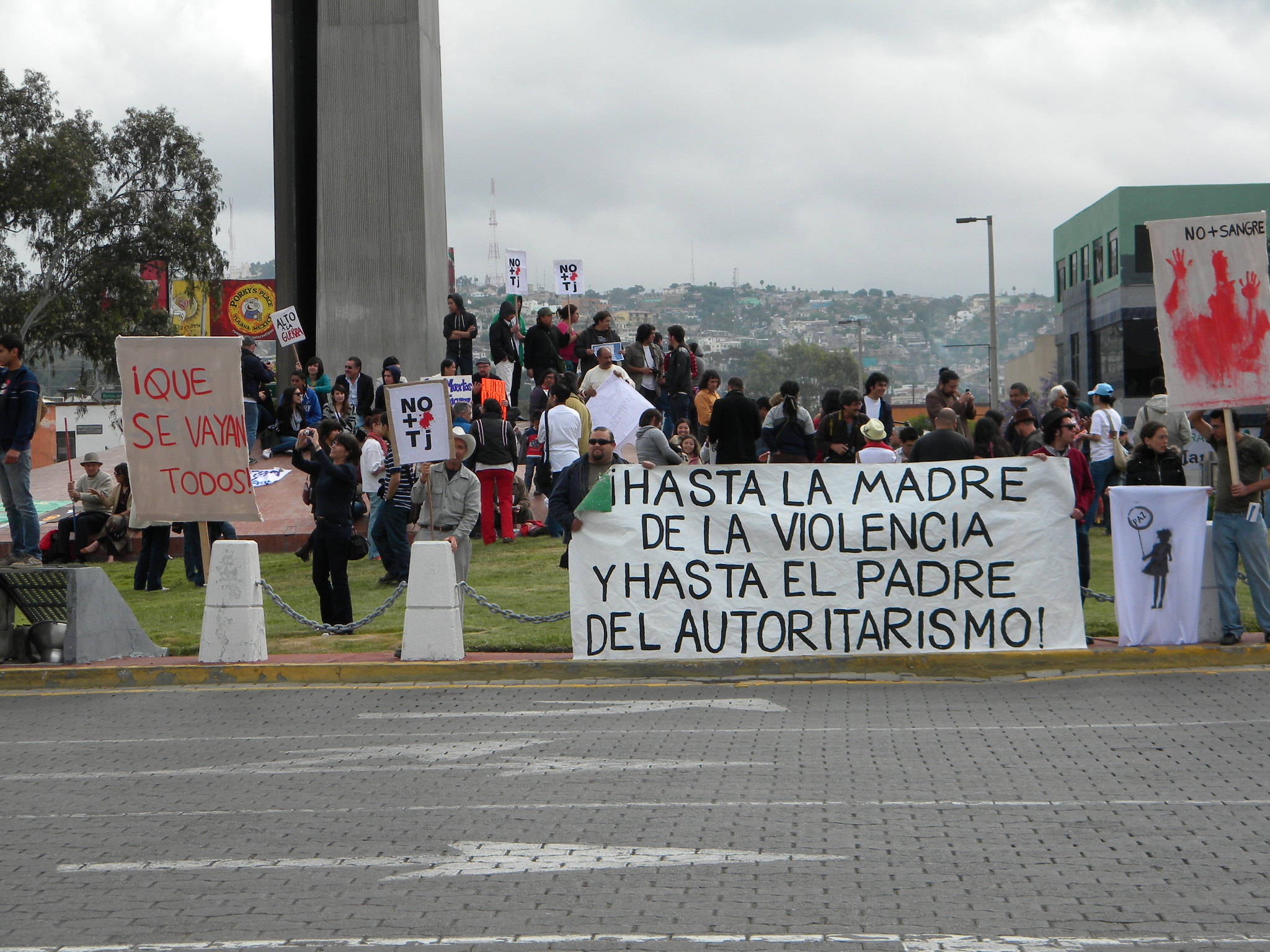
Many readers will remember Hillary Clinton‘s off-the-cuff claim last fall that “We face an increasing threat from a well-organised network, drug-trafficking threat that is, in some cases, morphing into or making common cause with what we would consider an insurgency in Mexico.”  In “The everywhere war” (DOWNLOADS tab) I used her comment – together with a host of other sources inside and outside the state – to suggest some of the ways in which conceptions of war were being transformed in the borderlands; so too the military/policing distinction.

But a new report from the International Crisis Group, Peña Nieto’s Challenge: Criminal cartels and rule of law in Mexico, suggests that – in the midst of calls to increase the militarization of the US southern border – at least some State Department officials are having second thoughts.  Indeed, the report claims that Clinton’s remark was seen at the time ‘as a misstatement by many in the State Department, aimed more at linking the kinds of violence and weapons used and the seriousness of the danger they posed rather than describing the nature of the cartels or their objectives.’  And now, in an interview with the Group, John Feeley, Principal Deputy Assistant Secretary of State for Western Hemisphere Affairs, insisted:

‘The violence associated with the criminal activities of the transnational criminal organisations (TCOs) in Mexico is not a national security problem or an insurgency that threatens to destabilise the Mexican government. Clearly, the violence … is a very serious public security problem that has important social and economic repercussions.’ 

For all that, it’s surely more than a ‘public security problem’ and it also has the most acute political repercussions too:

no_more_blood

The report spells out many of those repercussions for the democratic constitution of Mexico – though whether Nieto (Mexico’s new President) will pay any attention to it is another question.  But its fundamental argument is captured in these paragraphs:

The development of cartels into murder squads fighting to control territory with military-grade weapons challenges the Mexican state’s monopoly on the use of force in some regions. The brutality of their crimes undermines civilian trust in the government’s capacity to protect them, and the corruption of drug money damages belief in key institutions. Cartels challenge the fundamental nature of the state, therefore, not by threatening to capture it, but by damaging and weakening it. The military fight-back has at times only further eroded the trust in government by inflicting serious human rights abuses. Some frustrated communities have formed armed “self- defence” groups against the cartels. Whatever the intent, these also degrade the rule of law. 

There has been fierce discussion about how to legally define the fighting. The violence has been described as a low-intensity armed conflict, a kind of war, because of the number of deaths and type of weapons used. The criminal groups have been described as everything from gangs, drug cartels and transnational criminal organisa- tions, to paramilitaries and terrorists. The Mexican government, much of the international community and many analysts reject the idea there is anything other than a serious criminal threat, even though those criminal groups use military and, at times, vicious terror tactics. The army and marines, too, thrown into the breach with limited police training and without efficient policing methods, have often used intense and lethal force to fight the groups, killing more than 2,300 alleged criminals in a five-year period.

Within the grey world of fighting between rival cartels and security forces, there is much confusion as to who the victims of the violence are, and who killed them or made them disappear. Estimates of the total who have died in connection with the fighting over the last six years range from 47,000 to more than 70,000, in addition to thousands of disappearances. Cartel gunmen often dress in military uniforms and include corrupt police in their ranks, so people are unsure if they are facing criminals or troops. A victims movement is demanding justice and security. Mexico has also lost hundreds of police and army officers, mayors, political candidates, judges, journalists and human rights defenders to the bloodshed that is taking a toll on its democratic institutions.

State terror and historical memory in Guatemala

Felix Driver has alerted me to a seminar in London next week by George Lovell, ‘The archive that never was: state terror and historical memory in Guatemala’, on Tuesday 19 March 2013 at 5.15pm in Room 104, South Block, Senate House, University of London.  

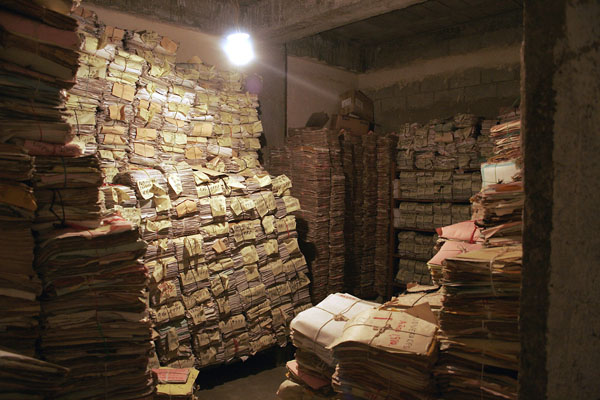
Interior room with bulb; Daniel Hernández-SalazarBetween 1961 and 1996, according to the findings of a United Nations Truth Commission, over 200,000 people in Guatemala lost their lives as a result of state-orchestrated acts of terror still denied by members of the security forces accused of perpetrating them. While conducting its investigations, the Truth Commission was repeatedly obstructed by army and police personnel from gaining access to official records, being told that no documentation of the type requested ever existed. Bureaucracies simply don’t work that way, even ones with good reason to destroy or conceal evidence of a self-incriminating nature. It was nonetheless of startling import when, on July 5, 2005, an attorney working for Guatemala’s Human Rights Office stumbled upon an archive recording the deeds of the National Police. Now known to contain an estimated 80 million documents, mainly covering the 1980s but dating back to earlier times, the archive revealed conspiracy and complicity on the part of police officers engaged in a ghoulish network of surveillance, intimidation, abduction, torture and murder, a veritable paper trail of death. A visit to the police archive, arranged so as to afford some first-hand familiarity with how its contents are being safeguarded and drawn upon for criminal proceedings as well as academic research, forms the basis of the seminar.

A preliminary account of the Historical Archive of the National Police (AHPN) is here (scroll down to the images) [and even more on related issues from the vaults of the National Security Archive at GWU here].  More than 10 million records have since been digitised in a collaborative project involving the University of Texas’ Lozano Long Institute for Latin American Studies, Rapoport Center for Human Rights and Justice, and Benson Latin American Collection, with the Archivo Histórico de la Policía Nacional de Guatemala.

AHPN

The records have been available online since December 2011; more on the project and its significance here and here:

In July 2005, the Procuraduría de los Derechos Humanos – the office of Guatemala’s human rights ombudsman – found the abandoned documents by accident in an abandoned munitions depot on the north side of Guatemala City. The messy bundles of records were stacked floor to ceiling in dozens of rooms infested by rats, bats and cockroaches, and many of the files were in an advanced state of decay. The administrative police records, which date from 1882 to 1997, document the repressive role played by the police during the 36-year armed conflict between leftist insurgents and government forces, which left a death toll of 250,000. That total included at least 45,000 people who were seized by the [US-backed] security forces and forcibly disappeared, their bodies buried in unmarked graves in cemeteries or in secret graves, often in military bases, according to the Historical Clarification CommissionThe U.N.-mandated truth commission found that the army was responsible for more than 90 percent of the killings in the civil war, most of whose victims were rural Maya Indians. The records that came to light in 2005 document the role played by the National Police during – and before – the conflict. The AHPN began to salvage and digitise the archives in 2006. The documents are held under tight security. The archive includes arrest warrants, surveillance reports, identification documents, interrogation records, snapshots of detainees and informants, and of unidentified bodies, fingerprint files, transcripts of radio communications, ledgers full of photographs and names, as well as more mundane documents like traffic tickets, drivers’ licence applications, invoices for new uniforms and personnel files.

There’s also a compelling report from the Historical Clarification Commission, Guatemala: Memory of Silence, here, which confirms that the National Police worked for military intelligence, ‘serving as the facade of the G-2 intelligence agency, and acted on its orders in the majority of cases.’  (I’ve posted about the blurring of military/policing before: in Mexico here and more generally here).

Incidentally, the photograph of the original archive (top of the page) is taken from the work of Daniel Hernández-Salazar, a former photojournalist for AP, Reuters and Agence-France Presse, who ‘has devoted much of his work to document the complex and painful recent history of his native Guatemala.’  More, including a portfolio of his images of the Guatemalan genocide, from the New York Times, ‘Angels Watch Over Memories Of War’, here.

LOVELL A Beauty that Hurts

For those who don’t know him, George is Professor of Geography at Queen’s University, and the author of the brilliant (and, as it happens, beautiful) book, A Beauty that Hurts: Life and death in Guatemala.

George gave me a copy soon after it was first published (1995 – it’s now in its third edition), and I’ve read it several times: apart from its substantive importance, it’s also a wonderful demonstration that first-class scholarship and graceful writing are not incompatible.

This seminar is part of a series run by the ever-inventive London Group of Historical Geographers: details here.

NOTE: The physical archive is in desperate need of financial support to continue its work: contact at ahpn@archivohistoricopn.org.  It and its staff also face other, acutely physical dangers as the Molina administration remilitarizes civil society and, ever since assuming office in January 2012, works to establish ‘an institutional culture disturbingly similar to the counter-insurgency model that dominated during the internal armed conflict.’  More on the vexed military/police nexus in Guatemala in a July 2012 report from International Crisis Group here.

Security and development

Stability coverMany readers will already know of Taylor & Francis’s Conflict, security and development and perhaps of Oxford’s Journal of conflict and security law  (whose recent issue focuses on Cyberwar and International Law and includes time-limited open access articles from Mary Ellen O’Connell and Michael Schmitt, who have made prominent – and different! – contributions to the current debate over drones).

Now there’s a new entrant to this rapidly expanding field. Started late last year, Stability: international journal of security and development is available on open access here; the journal publishes contributions on a continuous basis, grouped into two issues at the end of May and the end of November.  The international editorial board includes Mary Kaldor.

Contributions to the second issue have now started to appear.  The editors write:

Stability: International Journal of Security & Development is a fundamentally new kind of journal. Open-access, it publishes research quickly and free of charge in order to have a maximal impact upon policy and practice communities. It fills a crucial niche. Despite the allocation of significant policy attention and financial resources to a perceived relationship between development assistance, security and stability, a solid evidence base is still lacking. Research in this area, while growing rapidly, is scattered across journals focused upon broader topics such as international development, international relations and security studies. Accordingly, Stability’s objective is to foster an accessible and rigorous evidence base, clearly communicated and widely disseminated, to guide future thinking, policymaking and practice concerning communities and states experiencing widespread violence and conflict.

The journal will accept submissions from a wide variety of disciplines, including development studies, international relations, politics, economics, anthropology, sociology, psychology and history, among others. In addition to focusing upon large-scale armed conflict and insurgencies, Stability will address the challenge posed by local and regional violence within ostensibly stable settings such as Mexico, Brazil, Russia, India, Indonesia and elsewhere.

Stability is an open-access and peer-reviewed journal. It cultivates research and informed analysis and makes it available free of charge and without the delays commonly encountered in traditional journal publishing.  Stability’s content combines the best of academic research with insights from policy-makers and practitioners in order to have a tangible and timely impact.  The journal features research into those interventions, including stabilisation, peacekeeping, state building, crime prevention, development cooperation and humanitarian assistance, which address conflict, criminality, violence and other forms of instability.

I’m interested in the content, obviously, but also in the continuing search for new platforms that seek to reach wider audiences than conventional academic journals.

Initial thoughts

CSI - Newcastle

Joining GPS (Geopolitics and Security) from Royal Holloway – at the enterprising e-International Relations site – is a new blog CSI  (Culture, Security, Identity) from faculty and graduate students at Newcastle.

It’s obviously not only the US military that has a thing about acronyms!