The crock at the end of the rainbow

In these bleak times, this should bring an appropriately savage smile to your face: River Clegg at the New Yorker imagines Trump as a soldier…. here.

I’m glad I’m not serving with any trans people, otherwise I would forget how to do soldier stuff. Like fighting! Fighting is the main thing I do as a soldier, O.K.? I carry a machine gun for fighting, and it’s the best machine gun. But I would forget how to shoot it if I were near a trans person.

But I’m very pro-trans, believe me. Maybe the most pro-trans person in history. Not only that, I’m pro all the other letters in “L.G.B.T.Q.” I’m pro-lesbian, I’m pro-gluten, I’m probiotic. I’m pro everything except trans people being treated like regular, non-trans people. That’s where I draw the line.

If you want more commentary on Trump’s odious proposed ban, and the viper’s nest of prejudice that surrounded it, try here and here and here.

Posted in USA

Other Dunkirks

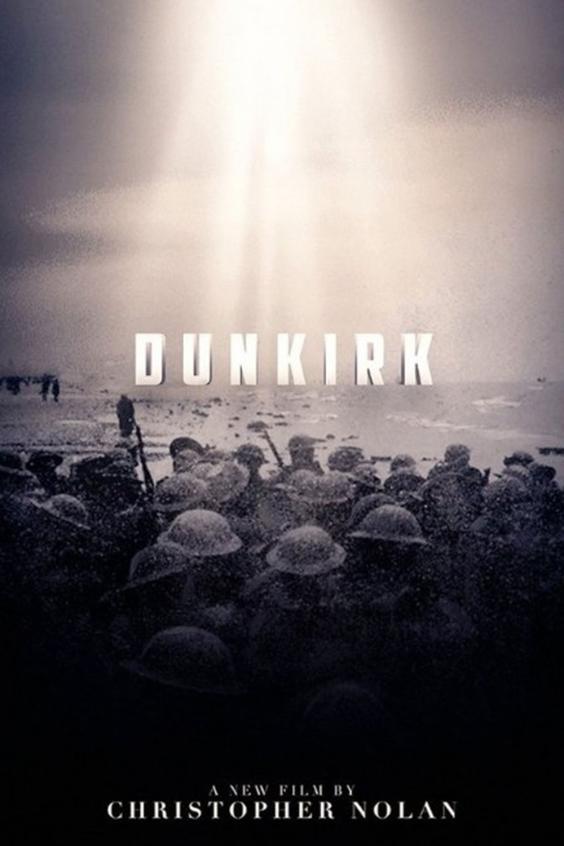
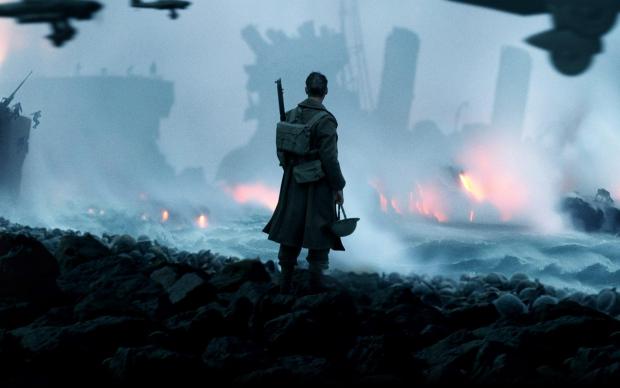
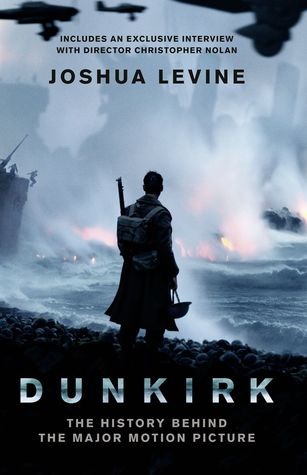
The web is awash with reviews and commentaries on Christopher Nolan‘s latest film, Dunkirk.  ‘A tour de force’, wrote Manhola Dargis in an extended review for the New York Times:

“Dunkirk” is a World War II movie, one told through soldiers, their lived and near-death experiences and their bodies under siege. Names are generally irrelevant here; on the beach — and in the sea and air — what counts are rank, unit, skill and the operation, although more important is survival, making it through another attack and somehow avoiding exploding bombs. Mr. Nolan’s emphasis on the visceral reality of Dunkirk leaves much unsaid; even in some opening explanatory text, the enemy isn’t identified as Nazi Germany. The soldiers, of course, know exactly who they are fighting and perhaps even why, but in the field the enemy is finally the unnamed stranger trying to kill them…

Mr. Nolan’s unyielding emphasis on the soldiers — and on war as it is experienced rather than on how it is strategized — blurs history even as it brings the present and its wars startlingly into view. “Dunkirk” is a tour de force of cinematic craft and technique, but one that is unambiguously in the service of a sober, sincere, profoundly moral story that closes the distance between yesterday’s fights and today’s. Mr. Nolan closes that distance cinematically with visual sweep and emotional intimacy, with images of warfare and huddled, frightened survivors that together with Hans Zimmer’s score reverberate through your body.

In the Guardian Peter Bradshaw also made much of the film’s visceral quality, rendered aurally as much as visually (and we surely know that the sound of war is crucial to its horror):

It also has Hans Zimmer’s best musical score: an eerie, keening, groaning accompaniment to a nightmare, switching finally to quasi-Elgar variations for the deliverance itself. Zimmer creates a continuous pantonal lament, which imitates the dive bomber scream and queasy turning of the tides, and it works in counterpoint to the deafening artillery and machine-gun fire that pretty much took the fillings out of my teeth and sent them in a shrapnel fusillade all over the cinema auditorium.

In the Telegraph, hardly surprisingly, Robbie Collin lauds the ‘Britishness’ of the film and also (significantly) its presentness.  He writes about this as an aesthetic –

there’s also something rivetingly present-tense about it all: the period detail is meticulous but never fawned over, the landscapes as crisp as if you were standing on them, the prestige-cinema glow turned off at the socket

– but, as readers of the Telegraph will surely have realised, this is also a matter of politics.  In one of the most perceptive essays I’ve read on the film, Anthony King describes this sensibility as an ‘arrogant insularity’ (he intends it as a criticism, of course, but Telegraph readers probably differ).  For him, Nolan seeks to ‘revive Dunkirk as a national myth in the 21st century’:

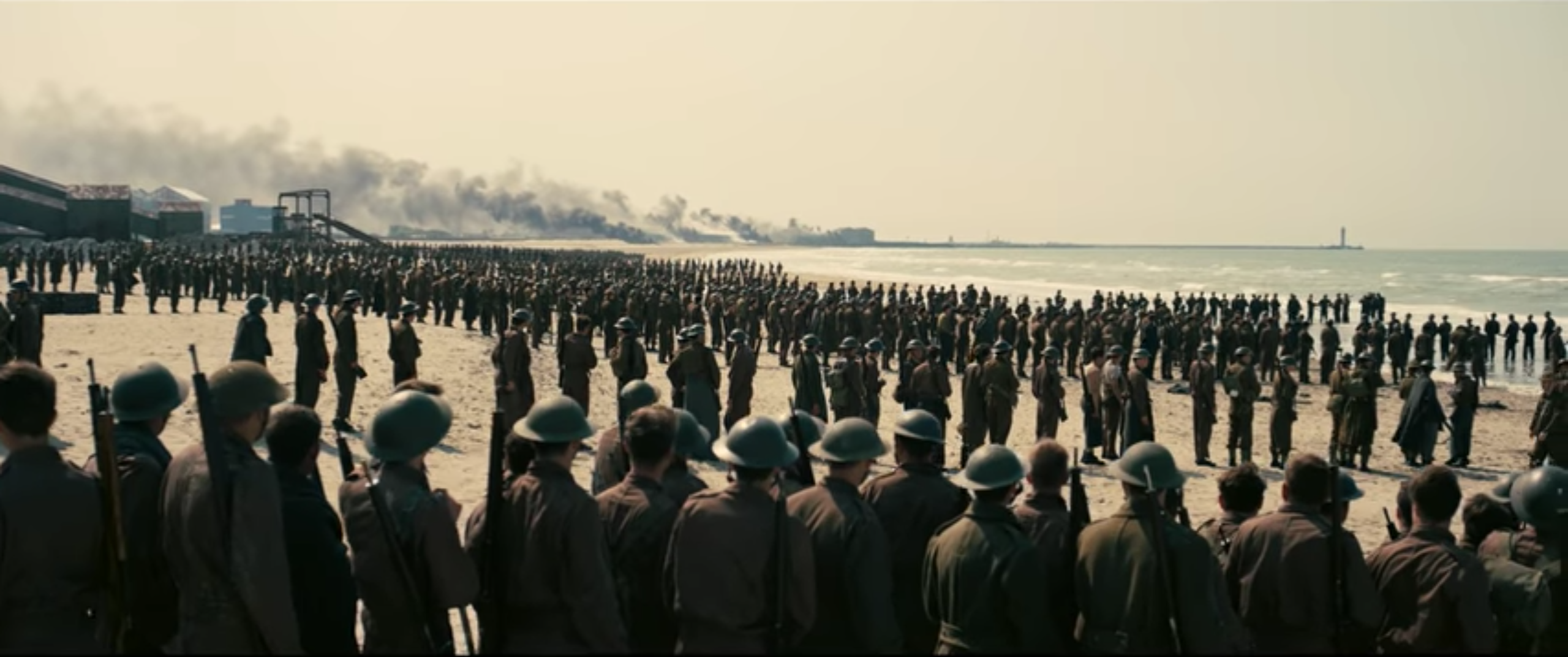
The drama focuses on five sinkings: a hospital ship, two troop ships, a fishing boat, and a Spitfire are all immersed. In each case, British soldiers or airmen have only moments to escape before they are drowned. Each sinking re-enacts the British predicament at Dunkirk: the desperate race of British soldiers to get home before they are inundated.

In this way, home — and the race for it — becomes the central motif of the entire film. The noun, “home,” recurs in the dialogue articulated by all the major actors. Indeed, the irony that soldiers in Dunkirk can practically see home with its White Cliffs and, yet, cannot reach it, is pointedly commented upon on two separate occasions. Home is the only redemption from the alienating emptiness of the French coast. Moreover, in order for British soldiers to escape, home has to come to them. No one else can save them.

(This is precisely why what Anthony calls the ‘radiant harmonies’ of Elgar’s Nimrod dissolve the dissonance noted by Peter Bradshaw to preside over – to celebrate in something like the religious sense – the climax of the film).

What is lost, in consequence, is both context and also composition.  The first is intentional, and Nolan makes a good case for wanting to convey the sense in which soldiers experience war in shards, torn from any larger context.  ‘That’s why we don’t see the Germans in the film,’ he says, ‘and why it’s approached from the point of view of the pure mechanics of survival rather than the politics of the event.’  As the historical adviser to the film, Joshua Levine (an historian whose work I’ve long admired) tells it:

[M]aking the threat faceless frees the event from its geopolitical ramifications –it becomes a timeless story of human survival. [Nolan] didn’t want to take a classic war film approach because in so many ways, the story of Dunkirk is not the story of a conventional battle. ‘It was death appearing from the sky,’ he says. ‘U-boats under the Channel that you can’t see. The enemy flying over and rising up through the waves to pick people off, to sink ships.’ The soldiers cannot understand their own predicament, and the audience experiences the same horror. This is why the action never leaves the beach. ‘If you’re continually showing the Germans as Germans and generals in rooms talking about strategy, you are lifting the veil.’ The audience would then be more informed than the soldiers. ‘Standing on a beach, trying to interpret what’s going on, “How do I get out of here? Should I stand in these lines? Should I go into the water?” That’s the experiential reality I want the audience to share.

But the second is, I think, unintentional.  I’ve written elsewhere about the myths of the First World War that continue to stalk the British political imaginary – see ‘All white on the Western Front?’ here – and several commentators have made the same point about Dunkirk.  Here is Sunny Singh in the Guardian:

What a surprise that Nigel Farage has endorsed the new fantasy-disguised-as-historical war film, Dunkirk. Christopher Nolan’s movie is an inadvertently timely, thinly veiled Brexiteer fantasy in which plucky Britons heroically retreat from the dangerous shores of Europe. Most importantly, it pushes the narrative that it was Britain as it exists today – and not the one with a global empire – that stood alone against the “European peril”.

To do so, it erases the Royal Indian Army Services Corp companies, which were not only on the beach, but tasked with transporting supplies over terrain that was inaccessible for the British Expeditionary Force’s motorised transport companies. It also ignores the fact that by 1938, lascars – mostly from South Asia and East Africa – counted for one of four crewmen on British merchant vessels, and thus participated in large numbers in the evacuation.

But Nolan’s erasures are not limited to the British. The French army deployed at Dunkirk included soldiers from Morocco, Algeria, Tunisia and other colonies, and in substantial numbers. Some non-white faces are visible in one crowd scene, but that’s it. The film forgets the racialised pecking order that determined life and death for both British and French colonial troops at Dunkirk and after it.

And here is Yasmin Khan in the New York Times:

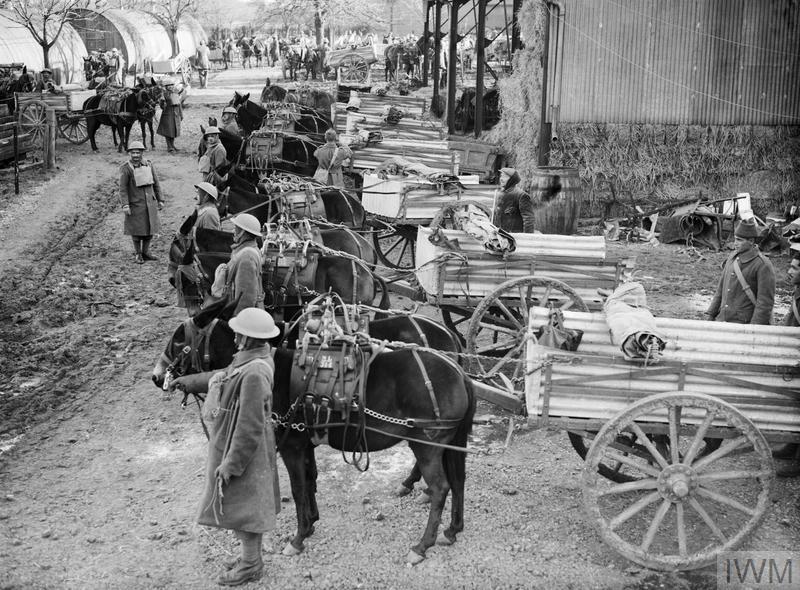
The Indian soldiers at Dunkirk were mainly Muslims from areas of British India that later became Pakistan. They were part of the Royal India Army Service Corps — transport companies that sailed from Bombay to Marseille. The men brought with them hundreds of mules, requested by the Allies in France because of the shortage of other means of transport. They played a significant role, ferrying equipment and supplies.

The Germans captured one Indian company and held the men as prisoners of war. Others were evacuated and made it to Britain….

The focus on Britain “standing alone” sometimes risks diminishing how the war brought pain in many places, right across the globe. The war, especially when viewed from the East, was about two empires locking horns rather than a nation taking on fascism. Above all, the narrative of a plucky island nation beating back the Germans omits the imperial dimension of the war. Many people living in the colonies were caught up in a vicious conflict beyond their control.

 Britain was always dependent on the colonies — in India, Southeast Asia, Africa and the Caribbean — for men, materials and support, but never more so than in World War II. Some five million from the empire joined the military services. Britain didn’t fight World War II — the British Empire did…
The myth of Dunkirk reinforces the idea that Britain stood alone. It is a political tool in the hands of those who would separate British history from European history and who want to reinforce the myths that underpin Brexit.
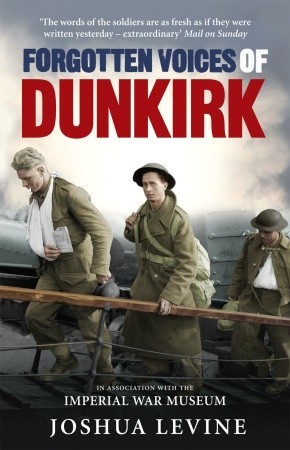
Ironically, in Joshua Levine‘s Forgotten voices of Dunkirk those other voices are absent – forgotten – too.
There are several other commentaries that sharpen similar points – see, for example, Yasmin Khan again here [and more generally her The Raj at War: a people’s history of India’s Second World War],  Ishaan Taroor here and Robert Fisk here (for a clumsy attempt to blunt those points, see Franz Stefan-Gady here); also the contributions to We Were There Too – but I’ll end with these observations from John Broich:

In the film, we see at least one French soldier who might be African. In fact, soldiers from Morocco, Algeria, Tunisia, and elsewhere were key to delaying the German attack. Other African soldiers made it to England and helped form the nucleus of the Free French forces that soon took the fight to the Axis.

THE BRITISH ARMY IN FRANCE 1940 (F 2478) Members of a mule transport company of the Royal Indian Army Service Corps on parade, 10 February 1940. Copyright: © IWM. Original Source: http://www.iwm.org.uk/collections/item/object/205204868

The latter has been much on my mind because for much of the summer I’ve been in the archives immersed in medical care and casualty evacuation in both those theatres.

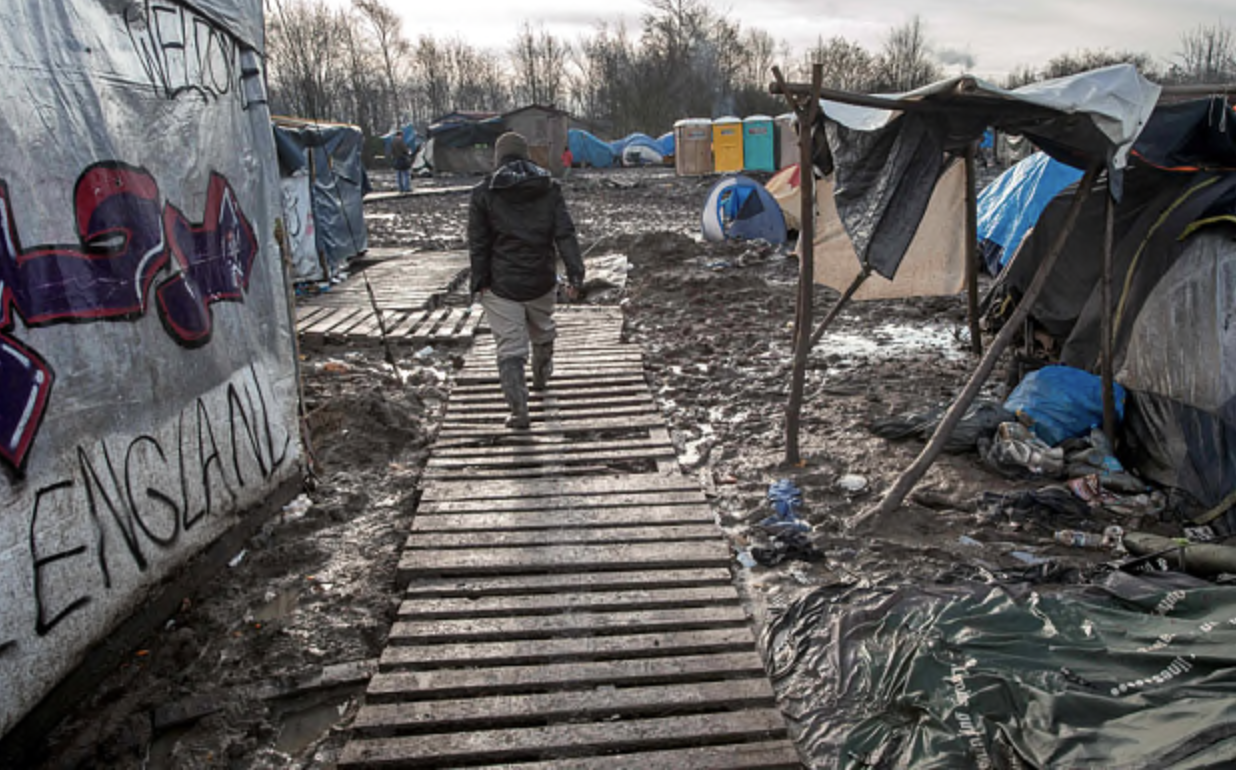
But I’ll leave that for another post, because I want to close with a reminder that – given what I’ve been saying about the ‘present-ness’ of Dunkirk – there is at least one other version that should be brought into focus.  And for that you need to read Jacob Albert on ‘The Fire in Dunkirk‘ at Guernica.  Here he is describing young Kurdish refugees – about the same age, I suspect, as many of those soldiers on the beach in 1940 – stranded in a camp outside Dunkirk (it burned down after he left):

Sometimes, they went to English class, offered four times a day in a damp Red Cross tent. I taught there occasionally. Everyone took their shoes off when they entered, but kept their coats. The head teacher was an Englishman with stinking socks who asked his pupils several times each week, since they were always vanishing and new ones always arriving: “Where? Is? The? Statue? Of Liberty?”

Everyone loved that one, even though no one was heading for the United States, because the Statue of Liberty is like Coca-Cola: both universal symbols, one of immigrant striving, the other of friendship and global happiness.

“Amrika! Atlantic! New York! California!” they’d shout. The teacher would smile and ask: “What does the Statue of Liberty rep-re-sent?” And the young men would look at him with glazed eyes, because they truly could never understand this guy, never felt like they were learning any English, and the English teacher would hem and haw: “What does it mean? What does it sym-bo-lize?” until finally, someone who spoke a little English, someone who had a brother in Leeds, would explain to the others, in Kurdish, what the guy meant, and everyone would shout: “Amrika! Freedom! Money! Barack Obama!” and the English teacher with the stinking socks would nod somberly at each and every one of them, and say, “It represents a Warm Welcome. Which I know doesn’t feel like the case. So, to better times, guys. To better times.” And with that, the English teacher would clap his hands, and the bored young men would stream out into the wind or rain…

There was nothing for them to do but think of leaving. That’s how anyone endured anything: boredom, filth, cold, fear. You can endure anything if you’re on your way to somewhere else.

In this case, it was England, which I discovered wondrous new things about. I learned that the Brits had an incredible welfare system, the best in Europe. I learned that minimum wage there was higher than in France. I learned that once you received British asylum, you were given a free house. I was told that the UK was full of good jobs, that it was less racist than any other European nation. That none of this was true didn’t dampen anybody’s incredible enthusiasm for the place. …

There were convincing reasons, too, with some basis in reality, for this fevered dreaming of Britain, which I had a hard time squaring with what these hopeful Kurds were putting themselves through to get there. It is easier to live invisibly in Britain, on the margins of things, than in France. In Britain, you don’t have to carry around photo ID. In Britain, you can easily find work in a kitchen or on a construction crew, if you’re open to being paid a pittance.

But facts are one thing, and narratives, another. The city of Dunkirk itself looms large in British mythology because of this very split. Over the course of one miraculous week in 1940, the British Navy managed to evacuate 340,000 Allied troops trapped on its beaches as the Germans drew close. Yet a few days later, Churchill delivered his rousing speech on the British virtues of endurance and determination (“We shall fight on the beaches, we shall fight on the landing grounds. . .”), and Dunkirk, the site of failure averted, was turned into one of national victory. It was Britain that now occupied such a place in the story of Kurdish exile.

You may think I’m making too much of this.  But when Joshua Levine asked him about ‘modern parallels’, Christopher Nolan explained that he saw his film as ‘a survival story’ and continued:

One of the great misfortunes of our time, one of the horrible, unfortunate things with the migrant crisis in Europe, is that we are dealing once more with the mechanics and the physics of extraordinary numbers of people trying to leave one country on boats and get to another country. It’s a horrible resonance but it’s very easy in our technologically advanced times to forget how much basic physics come into play. Reality is insurmountable. If you have a vast number of people in one place and they need to get someplace else and they can’t fly and they have to get on boats –to overcrowd the boats, with that human desire for survival . . . it’s unthinkably horrible to see it on our front pages in this modern day and age. But it’s there. With that going on in the world today, I don’t think you can in any way dismiss the events of Dunkirk as being from another world or another era.

The Long War

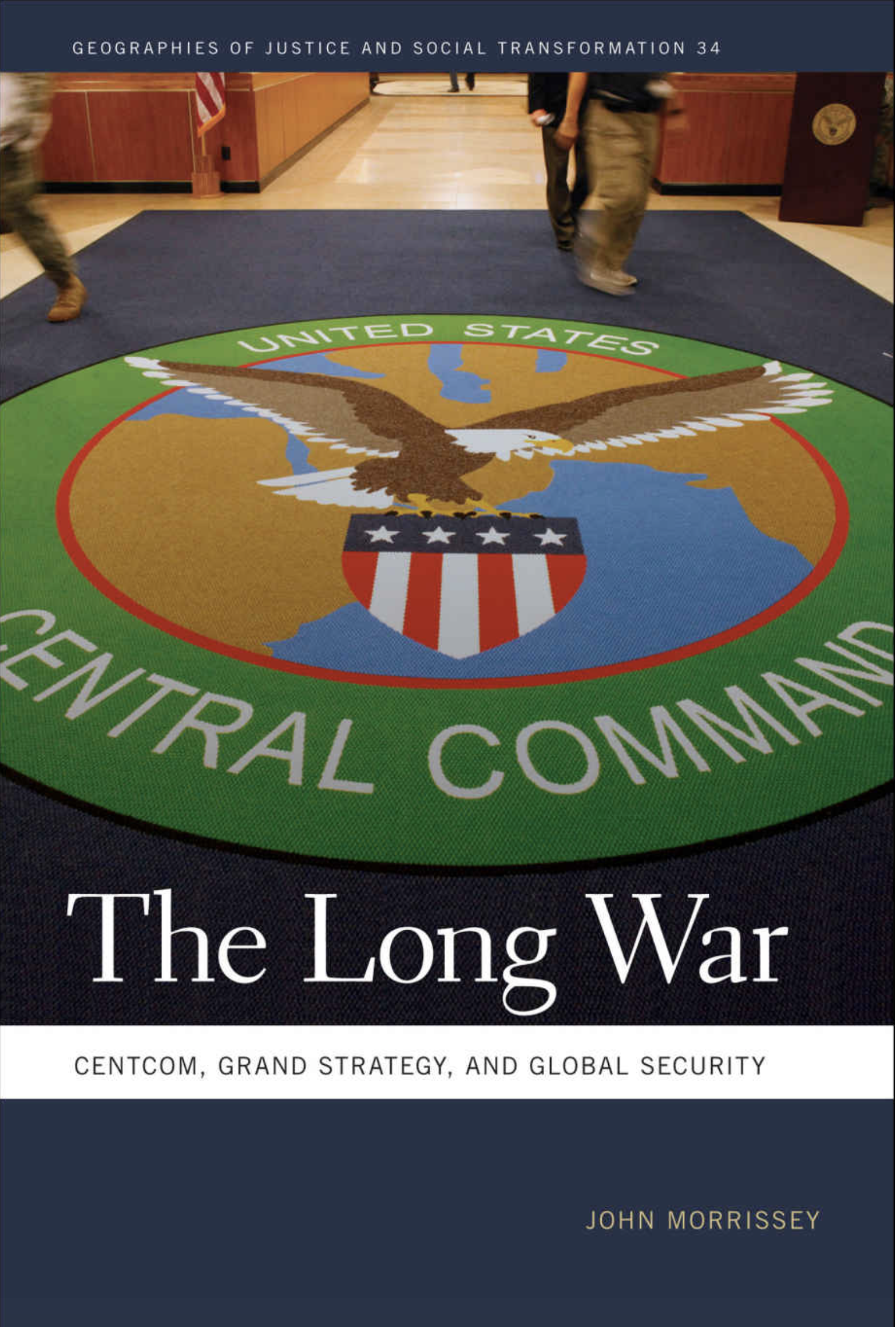
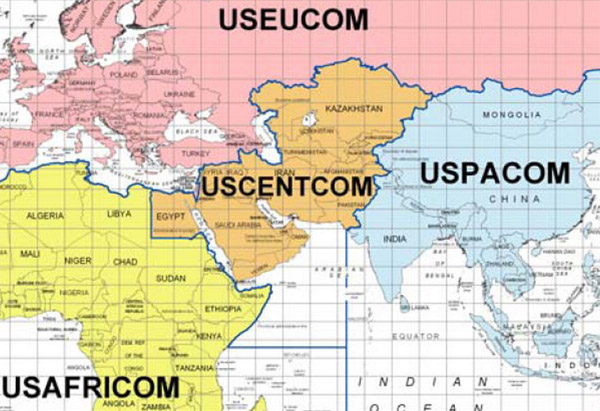
I’m just back from much needed R&R in Croatia – hence the long silence – and I’m hoping to resume normal service now…  Waiting for me on my return was a copy of John Morrissey‘s new book, The Long War: CENTCOM, grand strategy and global war, published by the University of Georgia Press in its Geographies of Justice and Social Transformation series.

Many readers will be familiar with John’s penetrating essays on US Central Command – and if you’re not a visit to Google Scholar will do the trick – but this is a plenary edition:

Nowhere has the U.S. military established more bases, lost more troops, or spent more money in the last thirty years than in the Middle East and Central Asia. These regions fall under the purview of United States Central Command (CENTCOM); not coincidentally, they include the most energy-rich places on earth. From its inception, CENTCOM was tasked with the military and economic security of this key strategic area, the safeguarding of commercial opportunities therein, and ultimately the policing of a pivotal yet precarious space in the broader global economy. CENTCOM calls this mission its “Long War.” This book tells the story of that long war: a war underpinned by a range of entangled geopolitical and geoeconomic visions and involving the use of the most devastating Western interventionary violence of our time.

Starting with a historical perspective, John Morrissey explores CENTCOM’s Cold War origins and evolution, before addressing key elements of the command’s grand strategy, including its interventionary rationales and use of the law in war. Engaging a wide range of scholarship on neoliberalism, imperialism, geopolitics, and Orientalism, the book then looks in-depth at the military interventions CENTCOM has spearheaded and critically assesses their consequences in terms of human geography.

Recent books on CENTCOM have focused on command structures, intelligence issues, and interpersonal rivalries. In contrast, The Long War asks critical questions about CENTCOM’s leading role in shaping and enacting U.S. foreign policy over the last thirty years. The book positions CENTCOM pivotally in the story of U.S. global ambition over this period by documenting its efforts to oversee a global security strategy defined in military-economic terms and enabled via specific legal-territorial tactics. This is an important new study on the blurring of war and economic aims on a global scale.

Here are two endorsements.  First, Simon Dalby (Balsillie School):

“This book is a compelling geographic analysis of the role of law and its geopolitical correlates in the current American global security policy that perpetuates so many violent practices in the ‘distant’ places of South West Asia.”

Second, Rosalind Petchesky (CUNY):

“Morrissey’s impeccably researched history of CENTCOM uncovers the roots of ‘national security’ as the sacred mantra of U.S. foreign and domestic policy—roots that long predate Donald Trump or even the post-9/11 ‘war on terror.’ The Long War not only sheds critical light on why the U.S. has remained bogged down for a quarter-century in the Middle East and Central Asia in unending war and fossil fuel mania, it also helps us to understand why an ex-CEO of Exxon became U.S. Secretary of State and why Israel remains the U.S.’s closest and perhaps last strategic partner in the disastrous global security game. An invaluable book for today.”

And the Contents List:

1  Shaping the Central Region for the 21st Century: CENTCOM’s Long War

2  CENTCOMN Activates: Cold War geopolitics and global ambition

3  Envisioning the Middle East: New imperial regimes of truth

4  Posturing for global security: Territory, law fare, and biopolitics

5  Military-economic securitization: Closing the neoliberal gap

6  No Endgame: the long war for global security

Solatia

Many readers will know Emily Gilbert‘s stunning work on the financialization of the battlespace through consolation payments made by the US and their allies to victims of military violence (‘solatia’).  If you’re not among them, see her ‘The gift of war: cash, counterinsurgency and “collateral damage“‘ in Security Dialogue 46 (2015) 403-21; also her essay on ‘Tracing military compensation’ available here.

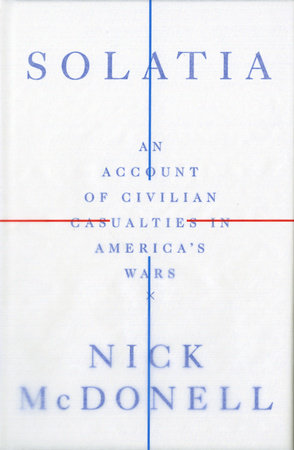
In a similar vein (I imagine) is a forthcoming book by journalist and novelist Nick McDonell: Solatia: an account of civilian casualties in America’s wars:

Since 2003, America’s wars in Iraq and Afghanistan have killed hundreds of thousands of civilians — by some counts, more than a million — and the number continues to grow. Of the many questions arising from these deaths — for which no one assumes responsibility, and which have been presented, historically, as unavoidable — perhaps the most fundamental question, for Americans, is this: if all men are created equal, why are we willing to kill foreign civilians?

Solatia (the term for money the U.S. pays to the families of civilian dead), sets out to answer that question. In all its wars, the United States both condemns and causes civilian casualties. But what exactly constitutes a civilian casualty? Why do they occur? What do our officials know of those reasons? How do they decide how many people they are willing to kill “by accident” — in a night raid, or drone strike, or invasion? And who, exactly, gets to decide?

Solatia is a globe-trotting, decade-spanning exploration into one of the most fundamental issues of our time. Following an array of officials, combatants, and civilians trying to survive — spies and senators, police chiefs and accountants caught in air strikes, orphaned street kids and widowed mothers, Iranian milita leaders, Taliban spokesmen and Marine special forces operators — Solatia confronts the U.S.’ darkest history abroad, illuminates its ongoing battles, and offers an original view of what it means to be a citizen of America at war.

It’s due in March from Penguin/Random House.

Buses and tanks on the street

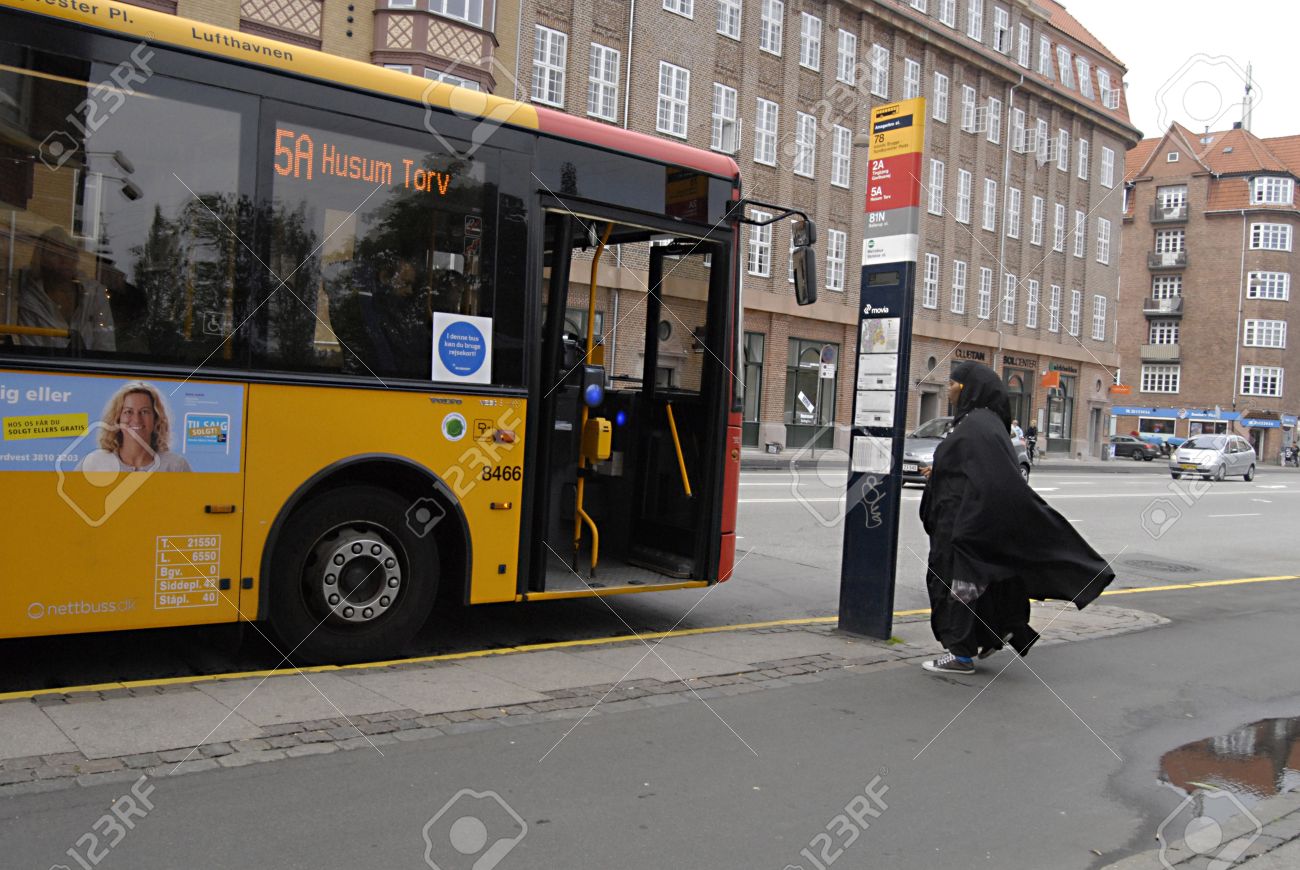
At a wonderful conference earlier this year in Roskilde I heard a stunning presentation about cross-cultural encounters and everyday racism on board Bus 5A in Copenhagen:

‘With more than 65,000 passengers a day, bus 5A is the busiest route in Copenhagen and the Nordic countries. Day and night, the bus cuts through the streets and connects different parts of the city. Bus 5A is iconic and loved, but also hated among bus drivers who have named it ‘the suicidal’ route and in everyday language refer to it as ‘Slamsugeren’ (suction vehicle) because it transports all kinds of people and connects many different places in the city. The bus starts in the suburb (Husum) and connects the multicultural part of Copenhagen (Nørrebro) with the more gentri ed inner city and the outskirts of Copenhagen, ending at the airport.’

The paper, by Lasse Koefoed, Mathilde Dissing Christensen and Kirsten Simonsen – which has been published in Mobilities (and from where I’ve borrowed these quotations) – describes a series of tactics pursued by passengers (and drivers) on the bus; for example:

‘… the dominant picture of the bus more often involves what we could call ‘the little racism’. A Pakistani immigrant describes this to us with a strong use of body language. He looks askance and moves a bit away from an imagined person next to him, wrinkles up his nose and says,‘Ashh’, in this way performing distanciation. Another respondent confirms this impression by telling: ‘You can feel it on the Danes, in particular when it is crowded’. She has difficulties finding words but talks about discomfort and anger. She is aware that she cannot rule herself out from the feeling:

I can see that I actually do it a bit myself. When a group of young immigrants enters the bus, then I strengthen my hold on my backpack or my bag. (Charlotte, passenger)

She recognises that it must be an unpleasant experience for the young men and feels a bit guilty, but she ‘tries to do it a little discreet[ly]’. What is at stake here is a sensing of an affective space, the more passive side of emotional experience, where emotions such as fear, discomfort, anger and disgust are circulating in the intense atmosphere of the crowded bus. This affective space is also at work as a background when young boys, asked about visions for the future, develop a utopia of a bus without racism.’

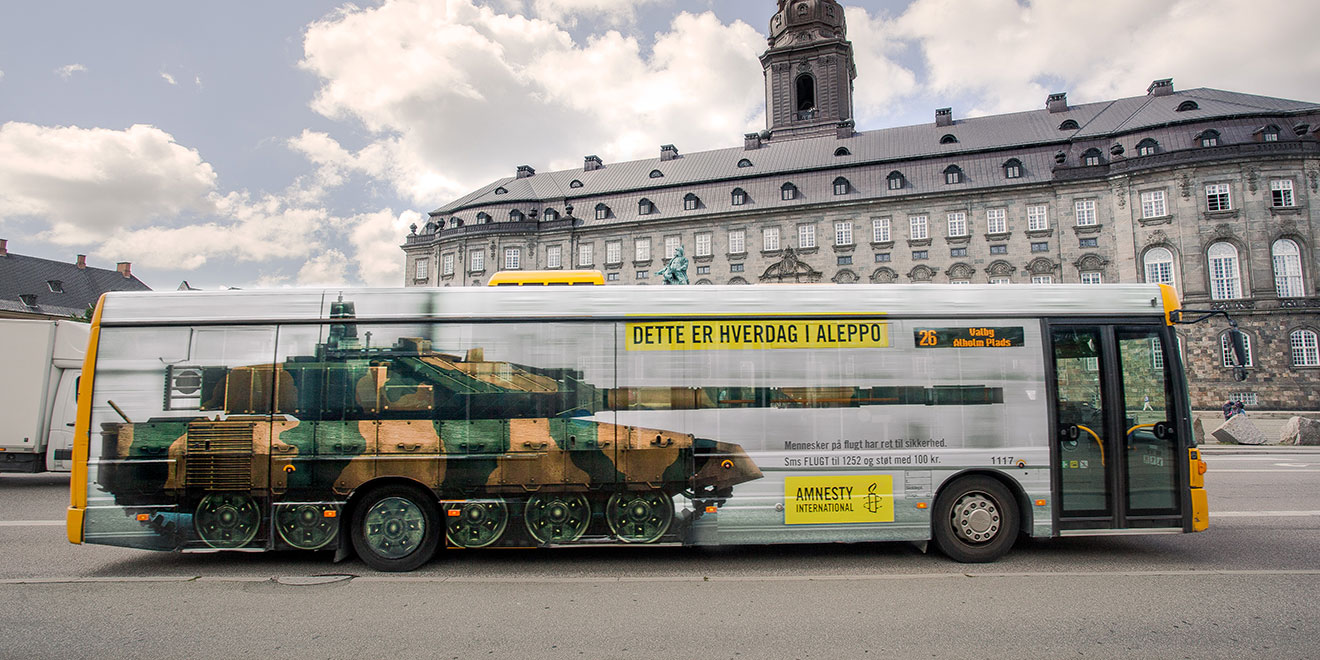
It’s a stimulating and provocative read, and it’s been on my mind for months since.  But it’s given a startling immediacy today by the new that Amnesty International has plastered a tank on the side of a Copenhagen bus.  Adweek reports:

The wrap makes a city bus look like a tank prowling the streets. “This is everyday life in Aleppo,” says the headline on the side, referring to the Syrian city devastated by the country’s civil war….

The idea is to remind people that while the Islamic State has left Aleppo [that’s a sentence that requires a good deal of qualification: to attribute the horrors of the siege of Aleppo to IS is not so much shorthand as sleight of hand], the Syrian war continues. The ad is also designed to raise awareness of refugees’ right to security from war and persecution.

“Everyone has the right to safety—also refugees,” says Claus Juul, legal consultant for Amnesty International. “It can be difficult to imagine what it is like to be human in a city, where one daily fears for one’s own and loved ones lives. Therefore, we have brought the everyday life of Aleppo to Copenhagen’s summer cityscape, so we, Danes, have the opportunity to face Syria’s brutal conflict.”

You need to see the short animation here or here to get the effect.

Fortunately the route is the 26 not the 5A…

Violence and Policing


News from Madiha Tahir of an upcoming special issue of the ever-interesting Public Culture; if you are interested in contributing, note that the deadline for abstracts/proposals is 1 August.

What is policing? What are its sites and modes of the operation? In Althusser’s famous example, it is the policeman’s hailing that transforms the individual into a subject. For Rancière, the police, understood as the naturalization of the social order, is the opposite of politics. As a label, policing has been deployed for a range from practices: from policing as a liberal ideal form of consent-based maintenance of law and order to policing as the maintenance of a certain “distribution of the sensible” to policing as a practice of empire (e.g. British aerial policing or the U.S. as global policeman). Public Culture seeks a series of essays on the police and policing as concept, practice, discourse and institution.

In 2003, Public Culture published what has become a seminal piece: Necropolitics by Achille Mbembe in an issue called Violence and Redemption. Authors may think about putting these two concepts in conversation (though this is certainly not a requirement): e.g. if politics is the work of death in spaces subjected to a continual state of emergency as Mbembe has argued, how does policing conceptualize or account for (or not) the work of death across multiple, variously inflected spaces from Florida to Afghanistan?

We seek essays that will provide accounts of and extract lessons from a range of sites that allow us to better understand the relationship between policing and violence: this might mean accounts from municipal police departments from New York to Palestine, or of movements like Black Lives Matter or No Dakota Access Pipeline and their engagements and resistance to the notion of ‘the police’ and policing. Approaches need not be attached to place alone. We seek insights from the construction of the ideas of dis/order and their material policing: the regulation of borders and mobilities for example, or the relation of policing to consent, or the policing of language as im/proper. Finally, we also seek (re)conceptualizations of the notion of the police and policing and engagements with them as aspects of disciplinary regimes or control societies, or as the negation of politics, and so on. As this indicates, we hope for an expansive range of empirical sites as well as theoretical articulations that attempt conceptual and comparative border-crossings.

Send abstracts of 200-300 words to shamuskhan@gmail.com by August 1st. Editors will review abstracts, comment, and solicit full papers for review.

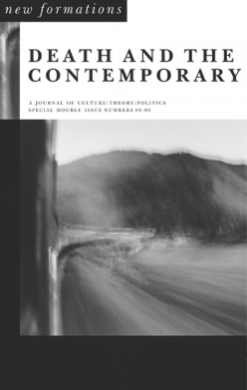
Death and the Contemporary

The latest (double) issue of New Formations (89/90: 2017) is devoted to ‘Death and the Contemporary’, and it includes two essays likely to be of particular interest to readers of this blog.

First, François Debrix, ‘Horror beyond Death: Geopolitics and the pulverisation of the human‘:

From territorial conquests or wars of attrition to the concentration camps or policies of control of displaced populations, the biopolitical capture of human life in configurations of geopolitical power has often involved the putting to death of populations. While, following Foucault’s work, we can argue that late modern political power has been concerned with the management of people’s lives or with the ‘health’ of a population, this capacity to ‘make live and let die’ (as Foucault put it) is never separate from a modality of force premised upon a right to put to death. Thus, the distinction between biopolitics and what has been called thanatopolitics or necropolitics can no longer be guaranteed. The goal of this essay is to push further the biopolitical/ necropolitical argument by showing that, in key contemporary instances of geopolitical violence and destruction, the life and/or death of populations and individual bodies is not a primary concern. What is of concern, rather, is what I have called the pulverization of the human. I consider this targeting of the human, or of humanity itself, to be a matter of horror. Horror’s aim, when it enters the domain of geopolitical destruction, appears to be to put bodies to death. But, more crucially, its aim is to render human bodies, beyond the fact of life and death, unrecognizable, unidentifiable, and sometimes undistinguishable from non-human matter. Horror does not care to recompose human life or humanity. This essay briefly details the argument about horror and horror’s ‘objectives’ beyond death. It also takes issue with recent theories that have argued that traces of human life can be recovered from contemporary instances of geopolitical violence and destruction. Finally, this essay offers two contemporary illustrations of horror’s targeting of the human by examining the role and place of horror in suicide bombings and in drone attacks.

Second, Andrea Brady, ‘Drone poetics‘:

‘Drone Poetics’ considers the challenge to the theory and practice of the lyric of the development of drone warfare. It argues that modernist writing has historically been influenced by aerial technology; drones also affect notions of perception, distance and intimacy, and the self-policing subject, with consequences for contemporary lyric. Indeed, drone artworks and poems proliferate; and while these take critical perspectives on drone operations, they have not reckoned with the phenomenological implications of execution from the air. I draw out six of these: the objectification of the target, the domination of visuality, psychic and operational splitting, the ‘everywhere war’, the intimacy of keyhole observations, and the mythic or psychoanalytic representation of desire and fear. These six tropes indicate the necessity for a radical revision of our thinking about the practice of writing committed poetry in the drone age.

‘I saw my city die’

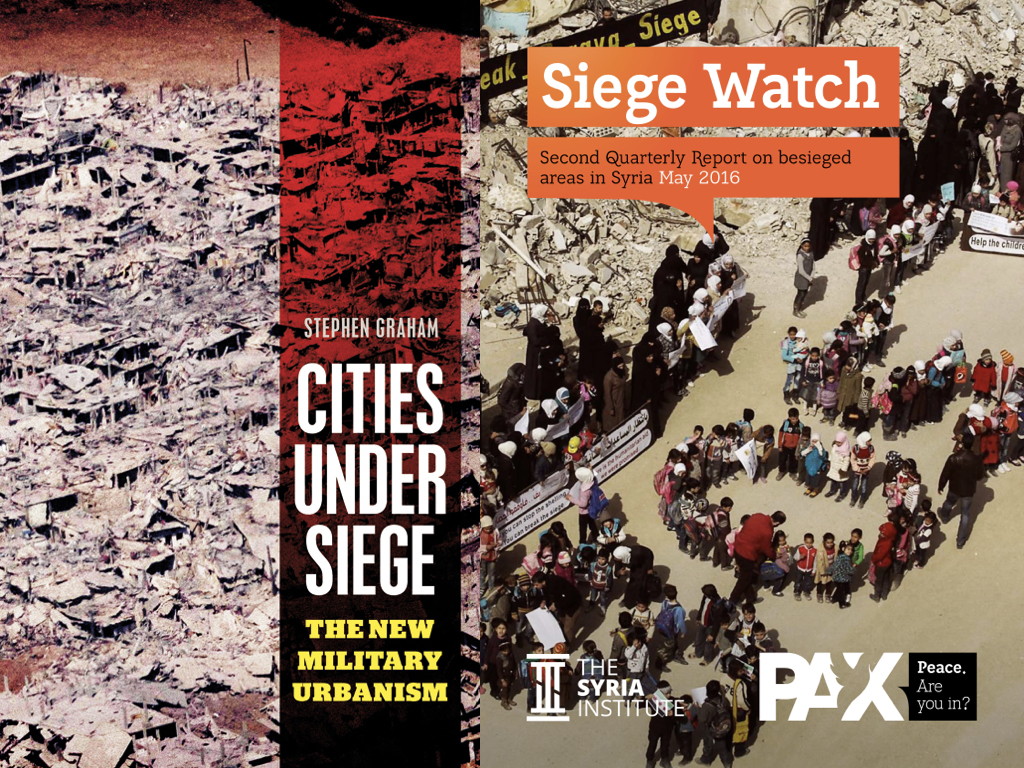
I’ve been in Copenhagen and in Nijmegen talking about the war in Syria, presenting both updated versions of The Death of the Clinic (on attacks on hospitals and medical facilities: see here, here and – for my first update – here) and a new presentation, Cities under siege in Syria.

The new presentation ties those violations of medical neutrality – bluntly, war crimes – into the conduct of siege warfare in Syria and elsewhere and tries to recover the experiences and survival strategies of people and communities living under those desperate conditions (a far cry from my good friend Steve Graham‘s ‘new military urbanism‘, and a catastrophic combination of spectacular, episodic violence through bombing and shelling, and the slow violence of deprivation, dislocation and starvation).

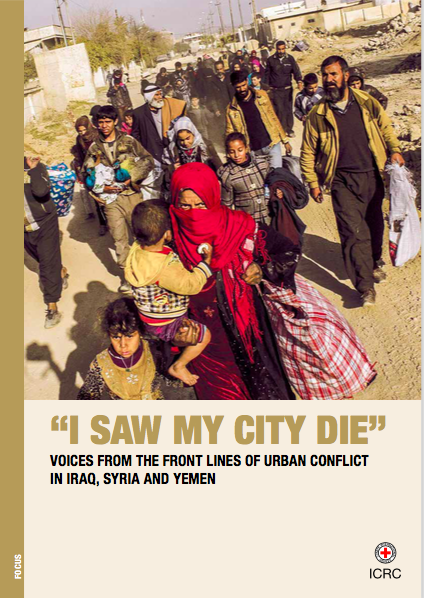
More on this soon, but on Thursday the International Committee of the Red Cross issued a remarkable report, I saw my city die, which is accompanied by an immersive microsite.  If you scroll to the end of the microsite, you’ll be asked to submit your e-mail for a link to the downloadable pdf of the report (I’ve just discovered you can also access it here).  More from the ICRC on the report here and here.

The report focuses on Iraq, Syria and Yemen, and includes wrenching first-hand testimonies:

The three conflicts in the report – Iraq, Syria and Yemen – account for around half of all conflict-related casualties worldwide between 2010 and 2015.

Some 17.5 million people have fled their homes, creating the largest global refugee and migration crisis since World War II.  11.5 million people – more than three people per minute – have fled their homes in Syria alone, since the start of the war.

It is not only lives and homes that are destroyed in these conflicts. The increasing use of explosive weapons that have wide impact areas, decimate the complex systems of services such as electricity, water, sanitation, garbage collection and health-care that civilians rely on to survive, making an eventual return to these cities even harder for those who have fled.

“The majority of people had very little choice and felt it was best to leave,” said Marianne Gasser, Head of ICRC’s Delegation in Syria. “Their houses were turned to rubble; there was very little food and no water or electricity. Not to mention the violence they had been witnessing for so long; no one could be expected to endure such suffering.”

This is a just preliminary notice: I’ll have much more to say when I’ve had a chance to read all this and think some more, so watch this space (and their space).

The final arbiter

There have been many interviews with ‘drone operators’ but most of them seem to have been with sensor operators serving with the US Air Force.  Some of the most cited have been ‘whistleblowers’ like Brandon Bryant while some reporters have described conversations with service members allowed to speak on the record during carefully conducted tours of airbases.  Some have even been captured on film – think of the interviews that frame so much of Sonia Kennebeck‘s  National Bird (though I think the interviews with the survivors of the Uruzgan drone strike are considerably more effective) – while others have been dramatised, notably in Omar Fast‘s 5,000 Feet is The Best.

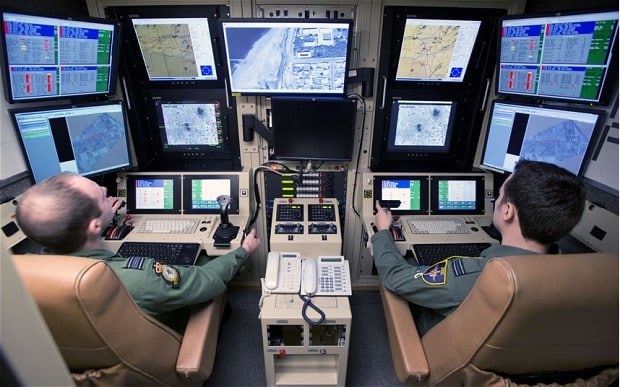
But over at Drone Wars UK Chris Cole has just released something different: a detailed transcript of an extended interview with “Justin Thompson“, a former British (Royal Air Force) pilot who flew Reapers over Afghanistan for three years from Creech Air Force Base in Nevada.  He also spent several months forward-deployed to Afghanistan as a member of the Launch and Recovery element: remember that missions are controlled from the continental United States – or now from RAF Waddington in Lincolnshire – but the Reapers have an operational range of 1, 850 km so they have to be launched in or near the theatre of operations.

He served as a pilot of conventional strike aircraft before switching to remote operations early in the program’s development – the RAF started flying Reapers over Afghanistan for ISR in October 2007; armed missions began the following May – which gives Justin considerable insight into the differences between the platforms:

“The real difference with UAVS is persistence. That’s the big advantage as it allows you to build up a very detailed picture of what is going on in a particular area. So if you are in a particular area and a need for kinetic action arises, generally speaking you have already got knowledge of the kind of things you would need to know to assist that to happen. That’s versus a fast jet that might be called in having been there only five minutes, with limited fuel and with limited information – what it can get from the guys on the ground – Boom, bang and he’s off to get some fuel. That’s a bit flippant. It’s not quite like that, but you see what I mean.

“The big difference is the amount of detail we are able to amass about a particular area, not just on one mission, but over time. If you are providing support in a particular area, you develop a great deal of detailed information, to the point where you can recall certain things from memory because you were looking at this last week and spent two weeks previously looking at it and you know generally what goes on in this particular area. The other thing this persistence gives you is a good sense if something has changed or if something is unusual. You go ‘Hang on, that wasn’t there last week, someone’s moved it. Let’s have a look to see what is going on here.’”

Later, having discussed the Reaper’s entanglement of ISR (intelligence, surveillance and reconnaissance) with lethal strike (‘kinetic’) capabilities, he returns to the theme:

“If you are talking about kinetic action, I think essentially they [conventional aircraft and drones] are no different. It’s a platform in the air that has a sensor on board you are using to look at the ground. The picture you seen in a [Ground Control Station] is essentially the same as you would see in a fast jet. The sort of weapons you are delivering are exactly the same sort as you would be delivering from a fast jet. Essentially all of the principles are the same…

“A lot of things are significantly better in that you get much more extensive and much more detailed information on the area you are looking at and on any specific targets. That’s not because of any particular capability, it’s just because you can spend a hell of a lot more time looking at it.

“A fast jet pilot would, say, do a four month tour in some place. He’s got four months’ worth of knowledge and then he’ll be gone. He might come back in a year or two, but we are there for three years. Constantly, every day, building up massive amounts of knowledge and a detailed picture of what goes on. We come armed with so much information, and so much information is available to you, not just from your own knowledge, but from sources you can reach out to. You’ve got the text. You’ve got phones. You have got other people you can call on and drag into the GCS. You can get other people to look at the video feed. You can get many opinions and views….”

At times, he concedes, that can become an issue (sometimes called ‘helmet-fire’: too many voices in your head):

“If you want it, there can be a lot of other ‘eyes on’ and advice given to you. If you want something explained to you, if you want a second opinion on something, if you want something checked you can say “Guys, are you seeing this?” Or “What do you think that is?” And that is really useful. You can also reach out for command advice, for legal advice. The number of people who can get a long screwdriver into your GCS is incredible and it does happen that occasionally you have to say ‘Please can you get your long screwdriver out of my GCS’. But generally speaking, it’s well managed and people don’t interfere unless they think there is a reason to.”

He makes it clear that as an RAF pilot his was the final decision about whether to strike – he was ‘the final arbiter’ –  and discusses different situations where he over-ruled those other voices.

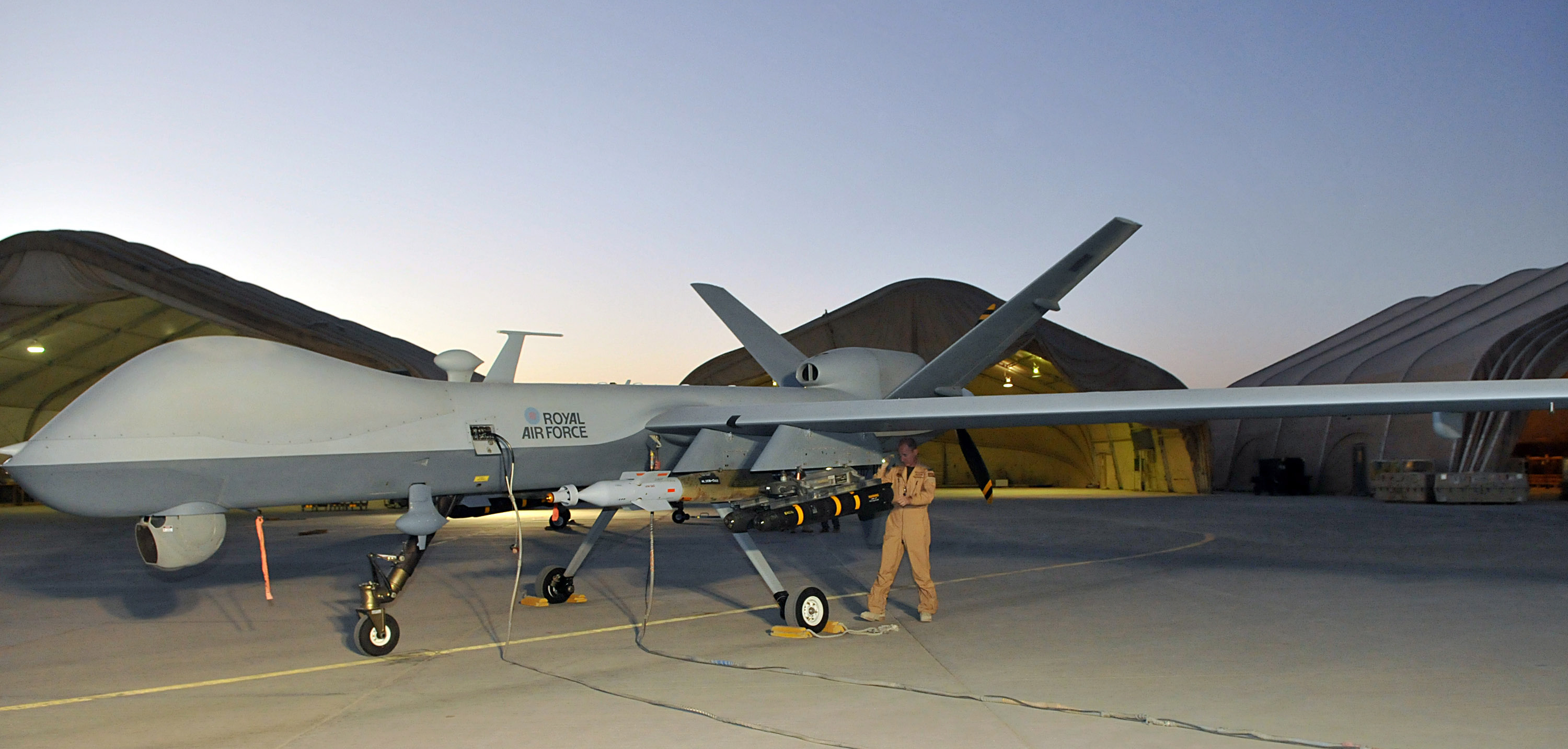
RAF Reaper strike in Afghanistan, 2010

Justin also talks about the ways his previous flying experience modulated his command of the Reaper (and here I think there are interesting parallels with Timothy Cullen‘s experience as an F-16 pilot and his important study of USAF Reaper crews: see also here):

“… [T]here is an idea that because you are not directly manipulating the control surfaces of an aircraft by being sat in it, that somehow lowers the skill level required in order to successfully operate one of these things. It may change some specifics in motor skills, but then so does an Airbus. Conceptually, you are wiggling a stick, pushing a peddle, turning a wheel. That gets converted into little ‘ones’ and ‘zeros’, sent down a wire to a computer that decides where to put the flying control surfaces and throttles the engines of the aircraft. It’s very similar, at least technically, in a modern airliner as in a Reaper. The level of skill required is similar. Piloting has only ever been 10% hand-flying skills, 90% is judgement and airmanship…

“For me, what I was seeing on the screen was very real. In addition to that for me it was more than just two-dimensional. My mind very easily perceived a three-dimensional scene that extended out of the side of the image. Whether that was because I was used to sitting in a cockpit and seeing that sort of picture I don’t know. Someone whose only background is flight simulators or playing computer games may have a different view. I relate it to sitting in an aircraft and flying it, others may relate it slightly differently…”

There’s much more in those packed 17 pages.  You can find Chris’s own commentary on the interview here, though his questions during the interview are, as  his regular readers would expect, also wonderfully perceptive and well-informed.

One cautionary note.  The time-frame is extremely important in commenting on remote operations, even if we limit ourselves to the technology involved.  The early Ground Control Stations were markedly different from those in use today, for example, while the quality of the video streams, their compression and resolution is also highly variable.  And there is, of course, much more than technology involved.

Bombs, bunkers and borders

Here is the first of a series of updates on Syria, this one identifying recent work on attacks on hospitals and health care which I’ve been reading while I turn my previous posts into a long-form essay (see ‘Your turn, doctor‘ and ‘The Death of the Clinic‘).

First, some context.  Human Rights Watch has joined a chorus of NGOs documenting attacks on hospitals and health care around the world.  On 24 May HRW issued this bleak statement:

Deadly attacks on hospitals and medical workers in conflicts around the world remain uninvestigated and unpunished a year after the United Nations Security Council called for greater action, Human Rights Watch said today.

On May 25, 2017, UN Secretary-General Antonio Guterres is scheduled to brief the Security Council on the implementation of Resolution 2286, which condemned wartime attacks on health facilities and urged governments to act against those responsible. Guterres should commit to alerting the Security Council of all future attacks on healthcare facilities on an ongoing rather than annual basis.

“Attacks on hospitals challenge the very foundation of the laws of war, and are unlikely to stop as long as those responsible for the attacks can get away with them,” said Bruno Stagno-Ugarte, deputy executive director for advocacy at Human Rights Watch. “Attacks on hospitals are especially insidious, because when you destroy a hospital and kill its health workers, you’re also risking the lives of those who will need their care in the future.”
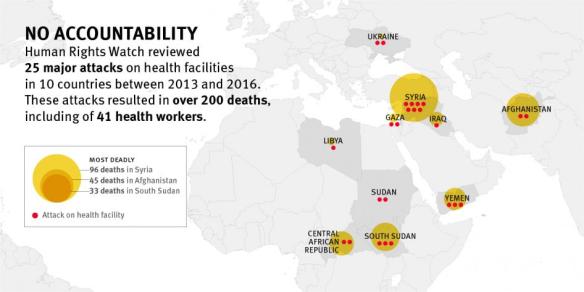
The statement continues:

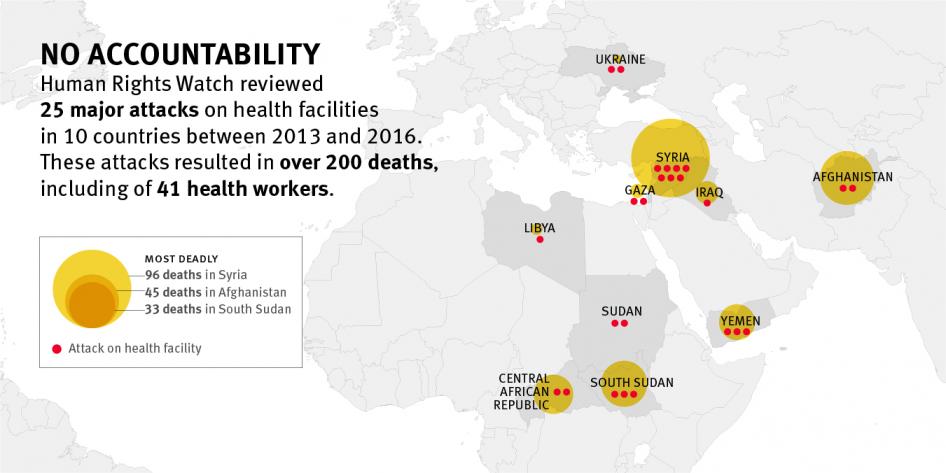
International humanitarian law, also known as the laws of war, prohibits attacks on health facilities and medical workers. To assess accountability measures undertaken for such attacks, Human Rights Watch reviewed 25 major attacks on health facilities between 2013 and 2016 in 10 countries [see map above]. For 20 of the incidents, no publicly available information indicates that investigations took place. In many cases, authorities did not respond to requests for information about the status of investigations. Investigations into the remaining five were seriously flawed…

No one appears to have faced criminal charges for their role in any of these attacks, at least 16 of which may have constituted war crimes. The attacks involved military forces or armed groups from Afghanistan, Central African Republic, Iraq, Israel, Libya, Russia, Saudi Arabia, South Sudan, Sudan, Syria, Ukraine, and the United States.

More here.

The World Health Organisation reached similar conclusions in its report of 17 May 2017:
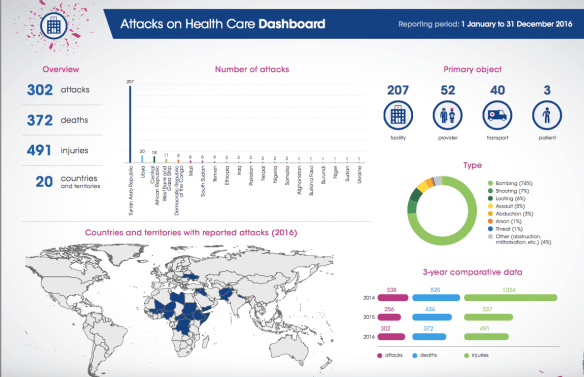
Alexandra Sifferlin‘s commentary for Time drew attention to the importance of attacks on medical facilities in Syria:

In a 48-hour period in November, warplanes bombed five hospitals in Syria, leaving Aleppo’s rebel-controlled section without a functioning hospital. The loss of the Aleppo facilities — which had been handling more than 1,500 major surgeries each month — was just one hit in a series of escalating attacks on health care workers in 2016, the World Health Organization (WHO) reported on Friday.

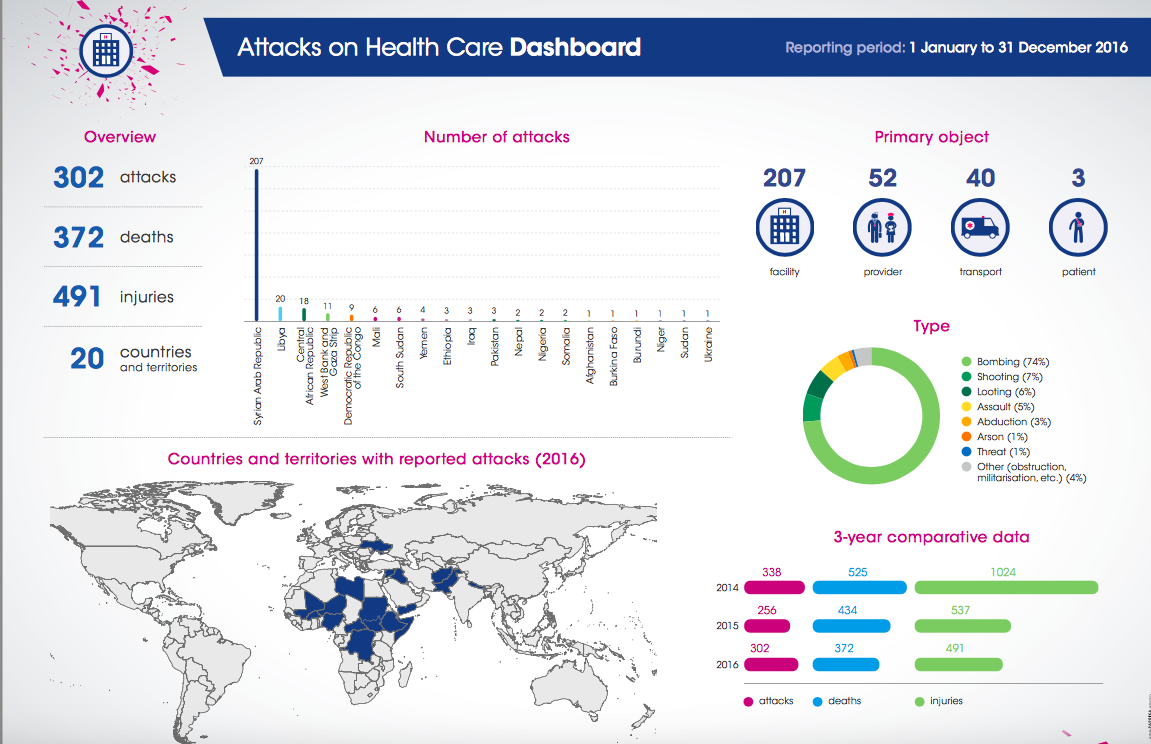
Violent attacks on hospitals and health workers “continue with alarming frequency,” the WHO said in its new report. In 2016, there were 302 violent attacks, which is about an 18% increase from the prior year, according to new data. The violence — 74% was in the form of bombings — occurred in 20 countries, but it was driven by relentless strikes on health facilities in Syria, which the WHO has previously condemned. Across the globe, the 302 attacks last year resulted in 372 deaths and 491 injuries…

After the spate of attacks on Syrian hospitals last November, the WHO reported that three of the bombed hospitals in Aleppo had been providing over 10,000 consultations every month. Two other bombed hospitals in the city of Idleb were providing similar levels of care, including 600 infant deliveries. One of the two hospitals in Idleb was a primary referral hospital for emergency childbirth care.

“The attack…is an outrage that puts many more lives in danger in Syria and deprives the most vulnerable – including children and pregnant women – of their right to health services, just at the time when they need them most,” the WHO said.

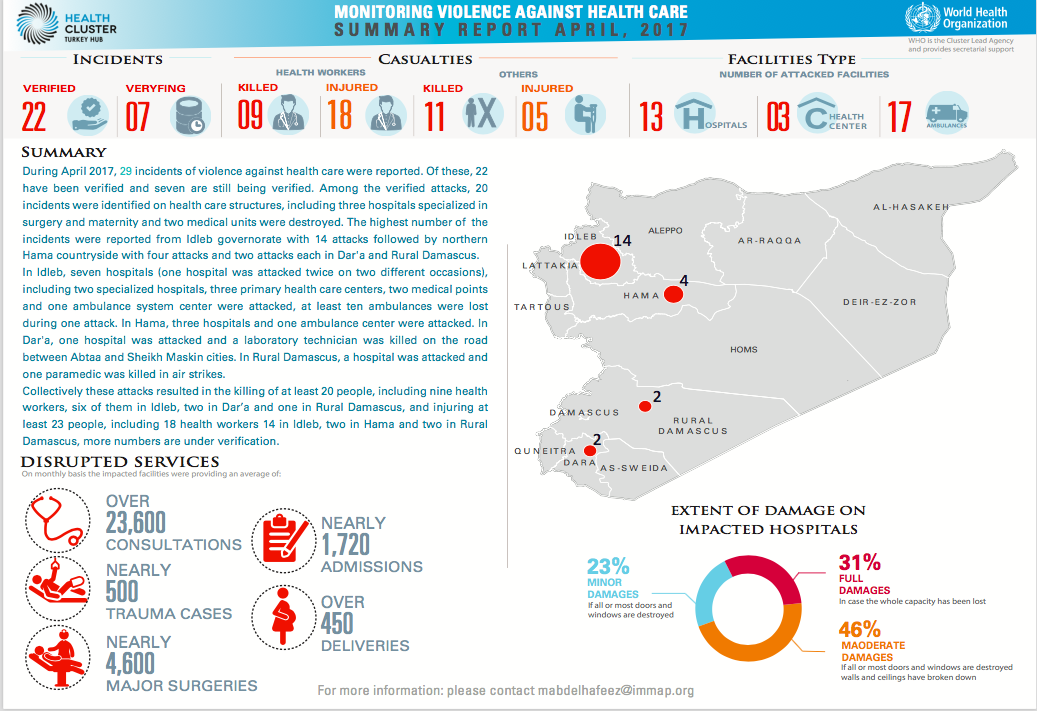
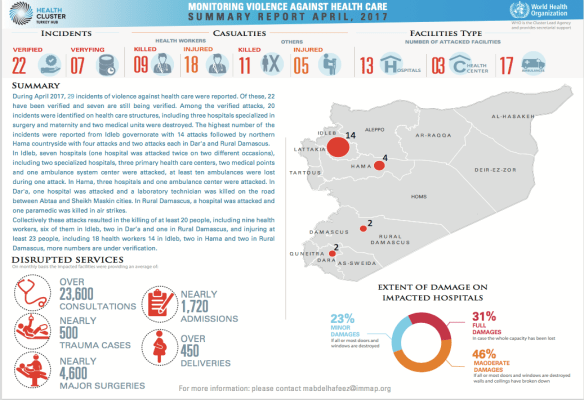
The WHO has also provided a series of reports on attacks on hospitals and health care in Syria; here is its summary for last month:
But the WHO’s role in the conflict in Syria has been sharply criticised by Annie Sparrow, who has accused it of becoming a de facto apologist for the Assad regime.  Writing in Middle East Eye earlier this year, she said:

For years now, the World Health Organisation (WHO) has been fiddling while Syria burns, bleeds and starves. Despite WHO Syria having spent hundreds of millions of dollars since the conflict began in March 2011, public health in Syria has gone from troubling in 2011 to catastrophic now…

Yet WHO Syria has been anything but an impartial agency serving the needy. As can be seen by a speech made by Elizabeth Hoff, WHO’s representative to Syria, to the UN Security Council (UNSC) on 19 November 2016, WHO has prioritised warm relations with the Syrian government over meeting the most acute needs of the Syrian people.

Annie singles out three particularly problematic issues.

  • She claims that the WHO parrots the Assad regime’s claim that before the conflict its vaccination programmes had covered 95 per cent of the population (or better), whereas she insists that vaccinations had been withheld from children ‘in areas considered politically unsympathetic, such as the provinces of Idlib, western Aleppo, and Deir Ezzor.’  On her reading, in consequence, the re-emergence of (for example) polio ‘is consistent with pre-existing low immunisation rates and the vulnerability of Syrian children living in government-shunned areas.’
  • It was not until 2016 that the WHO reported attacks on hospitals at all, and when its representative condemned ‘repeated attacks on healthcare facilities in Syria’ she failed to note that the vast majority of those attacks were carried out by the Syrian Arab Air Force and its Russian ally.  The geography of deprivation was erased: ‘It is only in opposition-held areas that healthcare is compromised because of the damage and destruction resulting from air strikes by pro-government forces.’
  • Those corpo-materialities – an elemental human geography, so to say – did emerge when the WHO accused the Assad regime of of ‘withholding approval for the delivery of surgical and medical supplies to “hard-to-reach” and “besieged” locations.’  But Annie objects to these ‘politically neutral terms’ because they are ‘euphemisms for opposition-controlled territory, and so [avoid] highlighting the political dimension of the aid blockages, or the responsibility of the government for 98 percent of the more than one million people forced to live in an area under siege.’

You can read WHO’s (I think highly selective) response here.

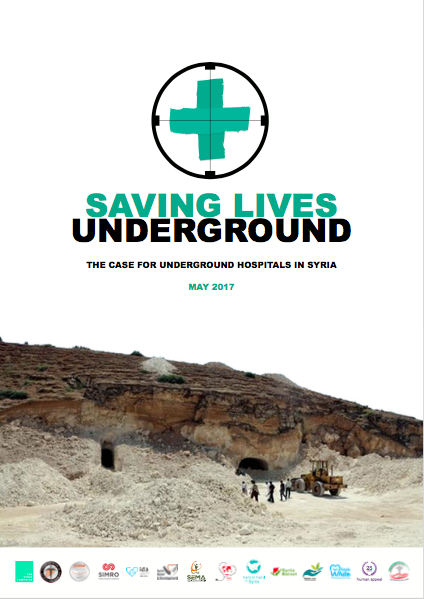
Earlier this month 13 Syrian medical organisations combined with the Syria Campaign to document how attacks on hospitals have driven hospitals and health facilities underground (I described this process – and the attacks on the Cave Hospital and the underground M10 hospital in Aleppo – in ‘Your turn, doctor‘).  In Saving Lives Underground, they write:
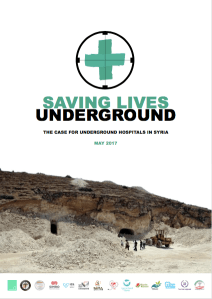
Health facilities in Syria are systematically targeted on a scale unprecedented in modern history.

There have been over 454 attacks on hospitals in the last six years, with 91% of the attacks perpetrated by the Assad government and Russia. During the last six months of 2016, the rate of attacks on healthcare increased dramatically. Most recently, in April 2017 alone, there were 25 attacks on medical facilities, or one attack every 29 hours.

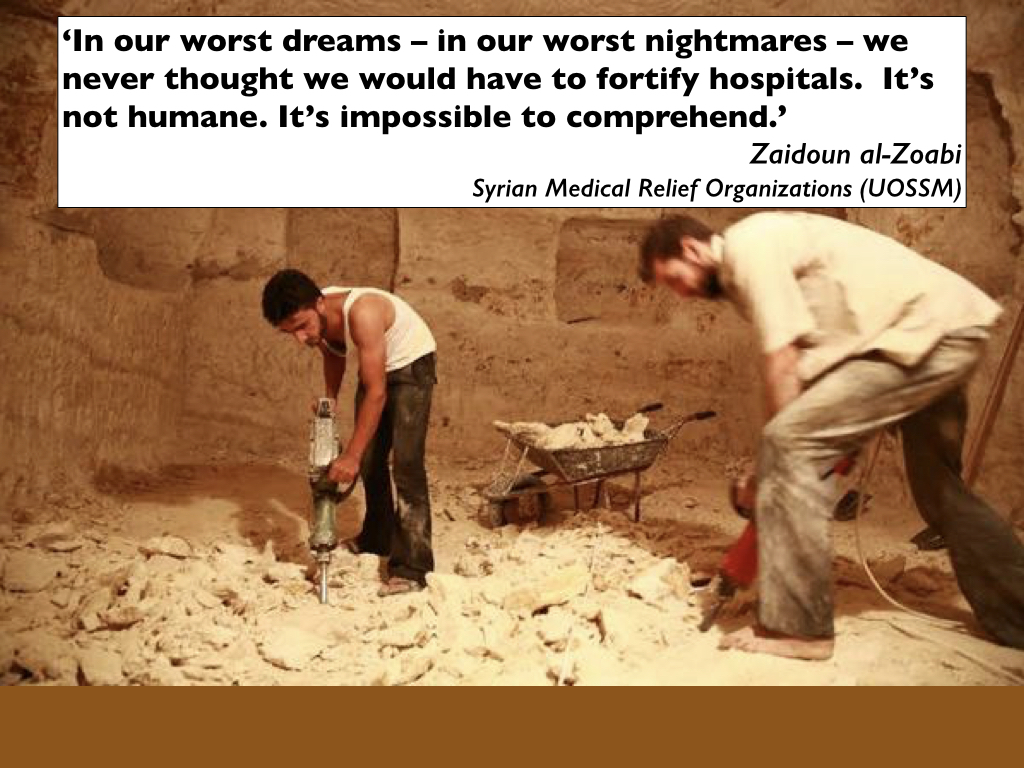
While the international community fails to protect Syrian medics from systematic aerial attacks on their hospitals, Syrians have developed an entire underground system to help protect patients and medical colleagues as best they can. The fortification of medical facilities is now considered a standard practice in Syria. Field hospitals have been driven underground, into basements, fortified with sandbags and cement walls, and into caves. These facilities have saved the lives of countless health workers and patients, preserved critical donor-funded equipment, and helped prevent displacement by providing communities with emergency care.

But all this comes at a cost:

Donors often see the reinforcement and building of underground medical facilities exclusively as long-term aid, or development work. However, as the Syria crisis is classified as a protracted emergency conflict, medical organizations do not currently have access to such long-term funds.

Budget lines for the emergency funding they receive can include “protection” work, but infrastructure building, even for protective purposes, often falls outside of their mandate. The divide between emergency humanitarian and development funding is creating a gap for projects that bridge the two, like protective measures for hospitals in Syria.
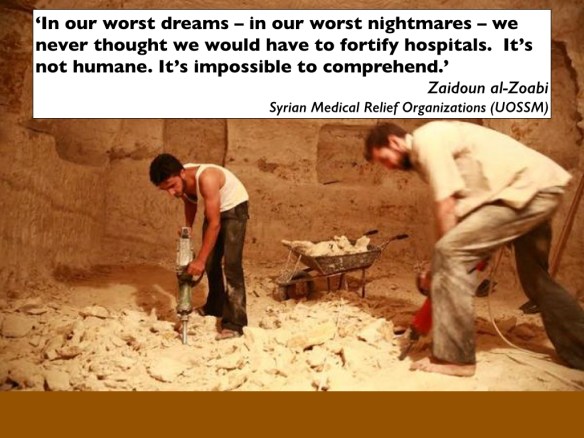
For this reason, as Emma Beals reported in the Guardian, many projects have resorted to crowdfunding:

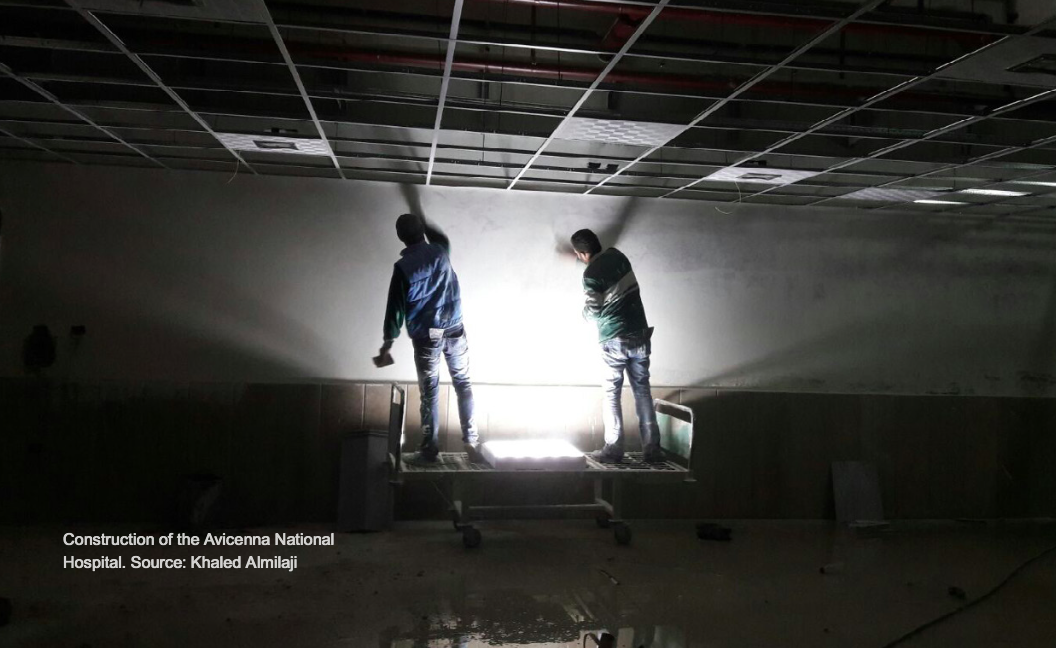
The latest underground medical project seeking crowdfunding to complete building works is the Avicenna women and children’s hospital in Idlib City, championed by Khaled al-Milaji, head of the Sustainable International Medical Relief Organisation.

Al-Milaji is working to raise money with colleagues from Brown University in the US, where he studied until extreme security vetting – the Trump administration’s “Muslim ban” – prevented him re-entering the country after a holiday in Turkey.
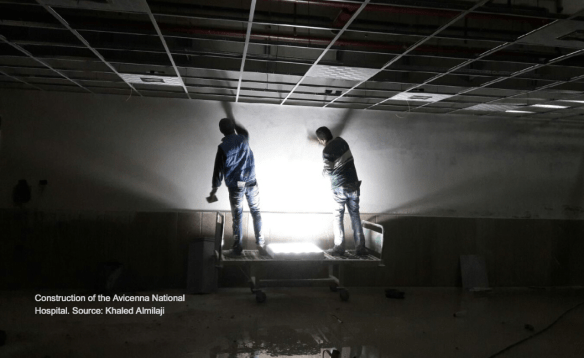
He has instead turned his attention to building reinforced underground levels of the hospital, sourcing private donations to meet the shortfall between donor funding and actual costs…

Crowdfunding was an essential part of building the children’s Hope hospital, near Jarabulus in northern Syria. The project is run by doctors from eastern Aleppo, who were evacuated from the city in December after it was besieged for nearly six months amid a heavy military campaign. Doctors worked with the People’s Convoy, which transported vital medical supplies from London to southern Turkey as well as raising funds to build the hospital, which opened in April. More than 4,800 single donations raised the building costs, with enough left over to run the hospital for six months.

Saving Lives Underground distinguishes basement hospitals (the most common response to aerial attack by aircraft or shelling: 66 per cent of fortified hospitals fall into this category; the average cost is usually around $80–175,000, though more elaborate rehabilitation and repurposing can run up to $1 million); cave hospitals (‘the more effective protection model’ – though there are no guarantees – which accounts for around 4 per cent of fortified hospitals and which typically cost around $200–800,000) and purpose-built underground hospitals (two per cent of the total; these can cost from $800,000 to $1,500,000).
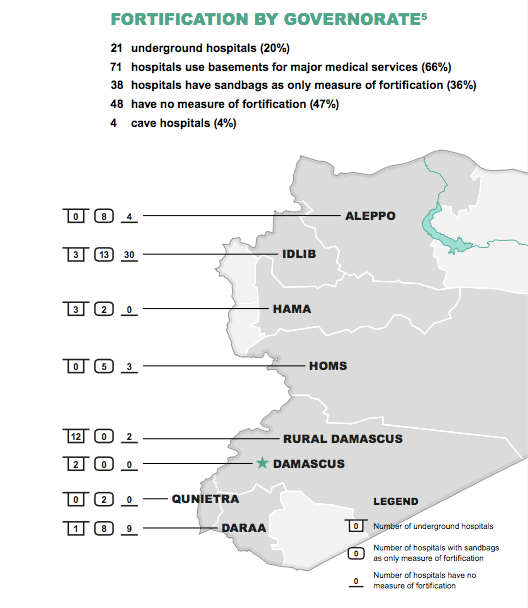
It’s chilling to think that hospitals have to be fortified and concealed in these ways: but even more disturbing, the report finds that 47 per cent of hospitals in these vulnerable areas have no fortification at all.

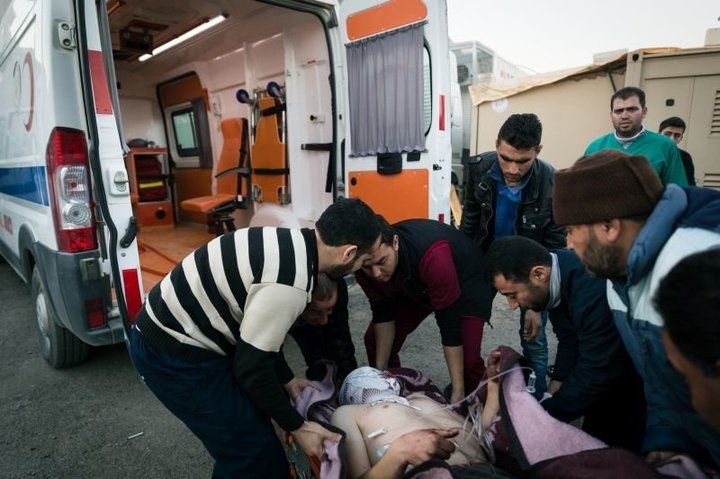
Seriously ill or wounded patients trapped inside besieged areas have few choices: medical facilities are degraded and often makeshift; access to vital medical supplies continues to be capriciously controlled and often denied; and attempts to evacuate them depend on short-lived ceasefires and deals (or bribes).  In Aleppo control of the Castello Road determined whether ambulances could successfully run the gauntlet from eastern Aleppo either west to hospitals in Reyhanli in Turkey or out to the Bab-al Salama Hospital in northern Aleppo and then across the border to state-run hospitals in Kilis: but in the absence of a formal agreement this was often a journey of last resort.
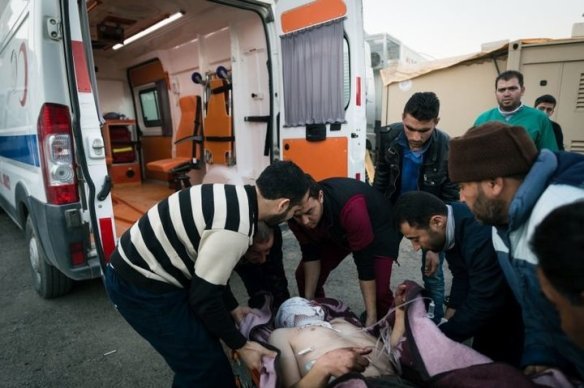
A victim of a barrel bomb attack in Aleppo is helped into a Turkish ambulance on call at the Bab al Salama Hospital near the Turkish border.

In October 2016 there were repeated attempts to broker medical evacuations from eastern Aleppo; eventually an agreement was reached, but the planned evacuations were stalled and then abandoned.  In December a new ‘humanitarian pause’ agreed with Russia and the Syrian government allowed more than 100 ambulances to be deployed by the Red Cross and the Red Crescent from Turkey; 200 critical patients were ferried from eastern Aleppo to hospitals in rural Aleppo, Idlib or Turkey – but the mission was abruptly terminated 24 hours after it had started.

The sick and injured have continued to make precarious journeys to hospitals in Turkey (Bab al-Hawa, Kilis, Reyhanli and other towns along the  border: see here, here and here), and also Jordan (in Ramtha and Amman, and in the Zaatari refugee camp: see here and here), Lebanon (in Beirut, Tripoli and clinics in the Bekaa Valley), and even Israel (trekking across the Golan Heights into Northern Israel: see here, herehere and especially here).

But there are no guarantees; travelling within Syria is dangerous and debilitating for patients, and access to hospitals outside Syria is frequently disrupted by border closures (which in turn can thrust the desperate into the hands of smugglers).  In March 2016, for example, Amnesty International reported:

 Since 2012 Jordan has imposed increasing restrictions on access for Syrians attempting to enter the country through formal and informal border crossings. It has made an exception for Syrians with war-related injuries.  However, Amnesty International has gathered information from humanitarian workers and family members of Syrian refugees with critical injuries being denied entry to Jordan for medical care, suggesting the exceptional criteria for entry on emergency medical grounds is inconsistently applied. This has led to refugees with critical injuries being returned to field hospitals in Syria, which are under attack on a regular basis, and to some people dying at the border.

In June Jordan closed the border, after an IS car bomb killed seven of its soldiers, and by December MSF had been forced to close its clinic at the Zaatari camp, which had provided post-operative care for casualties brought in from Dara’a.
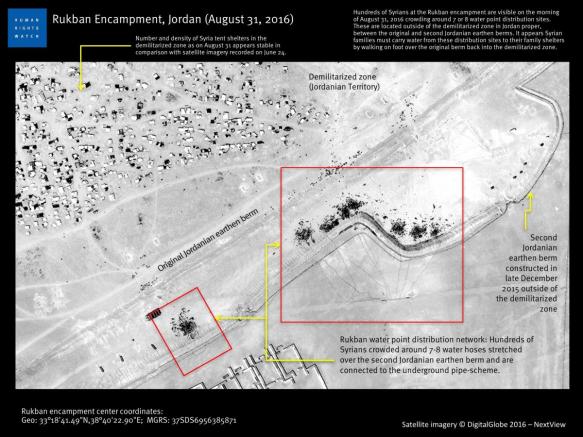
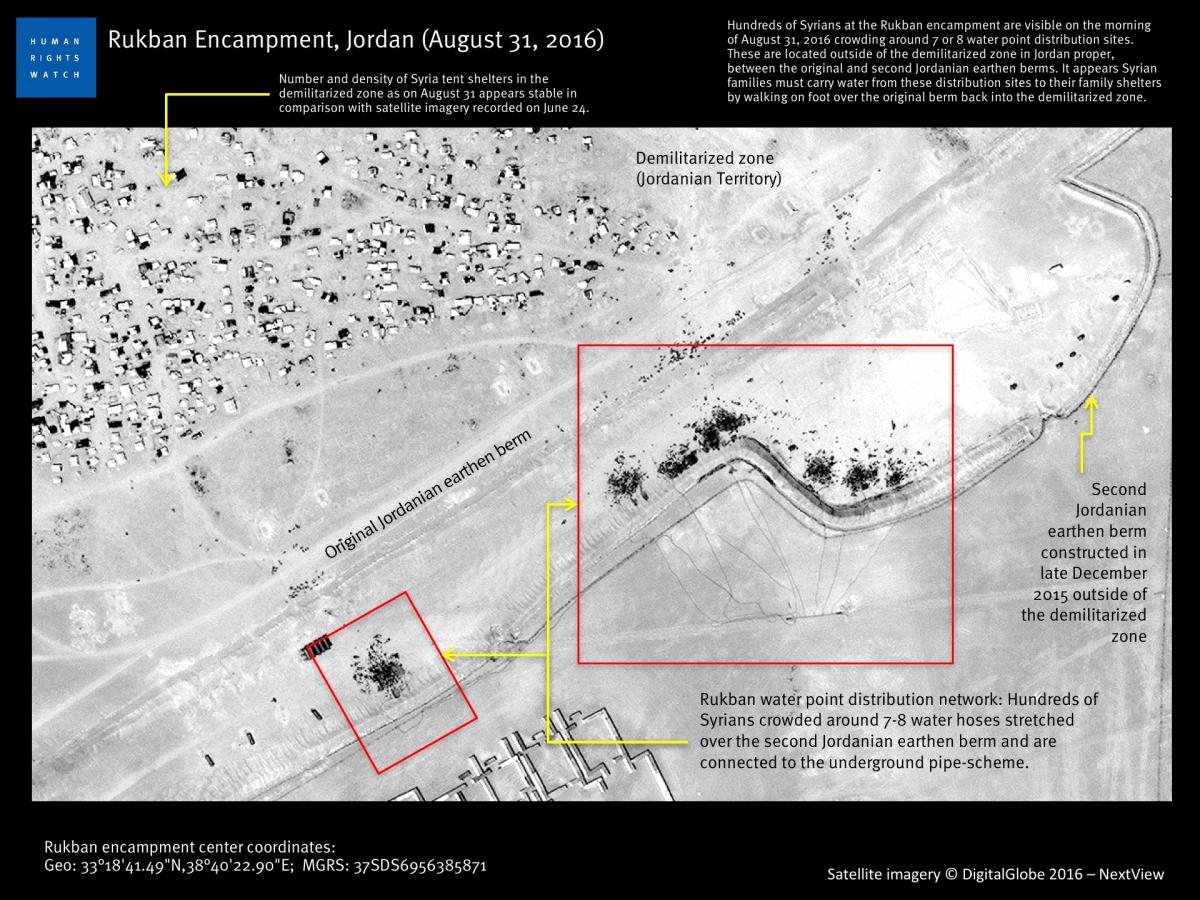
Tens of thousands of refugees are now trapped in a vast, informal encampment (see image above) between two desert berms in a sort of ‘no man’s land‘ between Syria and Jordan.  From there Jordanian troops transport selected patients to a UN clinic, located across the border in a sealed military zone – ‘and then take them back again to the checkpoint after they are treated.’
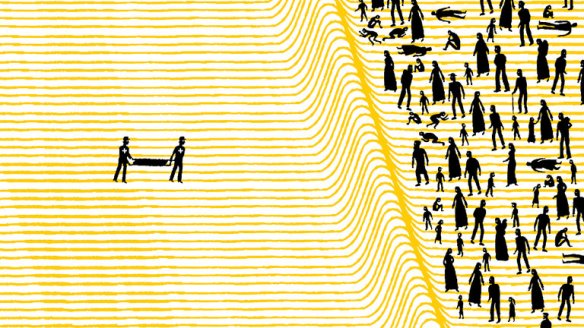
(For the image above, and a commentary by MSF’s Jason Cone, see here).

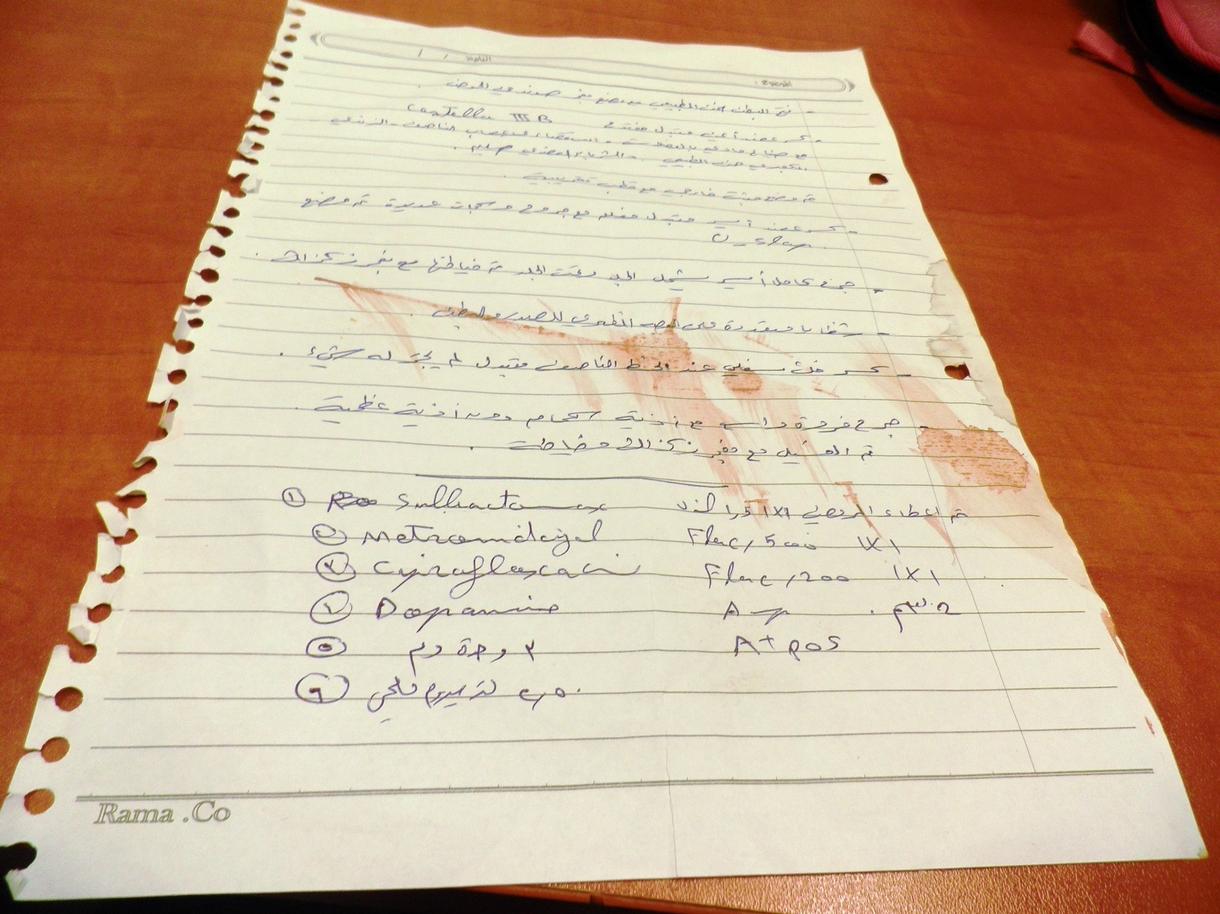
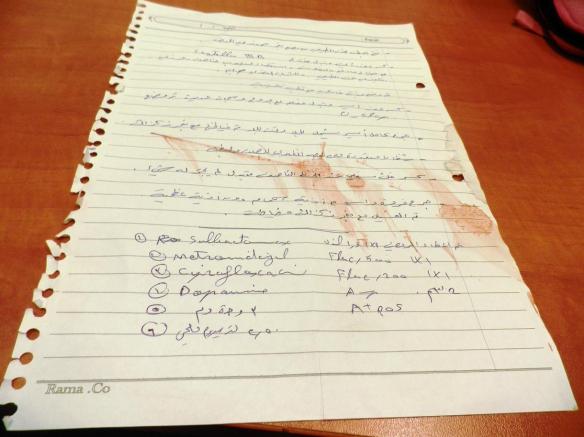
For patients who do manage to make it across any of these borders, it’s far from easy for doctors to recover their medical history – as the note below, pinned to an unconscious patient who was admitted to the Ziv Medical Center in Safed implies – and in the case of Syria (as in Iraq) everything is further complicated by a fraught politics of the wound.
Here, for example, is Professor Ghassan Abu-Sitta, head of plastic and reconstructive surgery at the medical centre in Beirut, talking earlier this month with Robert Fisk:

In Iraq, patients wounded in Saddam’s wars were initially treated as heroes – they had fought for their country against non-Arab Iran.  But after the US invasion of 2003, they became an embarrassment.  “The value of their wounds’ ‘capital’ changes from hero to zero,” Abu-Sitta says.  “And this means that their ability to access medical care also changes.  We are now reading the history of the region through the wounds.  War’s wounds carry with them the narrative of the wounding which becomes political capital.”

In the bleak wars that have scarred Syria, and which continue to open up divisions and divides there too, the same considerations come into play with equal force.