The camp and geographical imaginations

Last Thursday, the last full day of my visit to Ostrava, Tomas took me to visit the Auschwitz-Birkenau Memorial and Museum in the Polish town of Oswiecim: I’m still trying to come to terms with what I saw and felt.

It was Tomas’s third visit.  Last time, he said, it was in the depth of winter, with the ground covered in snow: Auschwitz rendered in the sombre black and white tones we’ve come to expect.  On Thursday it all seemed so incongruous: full colour on an unexpectedly sunny day – brilliant blue sky, flowers coming in to bloom and birds singing – and made even more unsettling by the new housing at the edge of the town and the supermarket up the road.  To say that is at once to invoke a moral geography of sorts, and in a series of revealing essays Andrew Charlesworth, Robert Guzik, Michal Paskowski and Alison Stenning have documented the controversies that have shaped the site since the establishment of the State Museum in 1947 and the subsequent development before and after the fall of Communism: see ‘”Out of Place” in Auschwitz?’ [in Ethics, place and environment 9 (2) (2006) 149-72] and ‘A tale of two institutions: shaping Oswiecim-Auschwitz’ [in Geoforum 39 (2008) 401-413].

Auschwitz then and now

But as soon as we entered the complex a different (though related) series of moral geographies were invoked, also about the dissonance between Auschwitz then and now but more directly bound up with what Chris Keil calls ‘Sightseeing in the mansions of the dead’ [in Social & Cultural Geography 6 (40(2005) 479-494] or what is variously called ‘thanato-tourism’ or  ‘dark tourism’: the tourism of death.  You can find other fine reflections, following in Keil’s footsteps, in Derek Dalton‘s ‘Encountering Auschwitz: the possibilities and limitations of witnessing/remembering trauma in memorial space’ [in Law, Text, Culture 13 (1) (2009) 187-225] here.  Significantly, Dalton argues that current theorising ‘fails to highlight the vital role of the imagination in animating the artefacts and geography of a place and investing them with meaning’.

AUSCHWITZ3 April 2013

For the tour is, of course, both pre-scripted (it is surely impossible for most visitors to come to what was the largest extermination camp in Europe without prior expectations and understandings) and scripted (it invites and even licenses a particular range of performances and responses). It takes in Auschwitz I (above), the original site more or less at the centre of Oswiecim that was established in the spring of 1940, and the sprawling open/closed space of Auschwitz II at Birkenau beyond the perimeter established the following year.  (Auschwitz III, the labour camp at Monowitz linked to the IG Farben works, is not part of the memorial complex; neither are any of the 40-odd satellite camps).

Auschwitz 1944

We started by walking through the gates, their hideous sign Arbeit macht frei silhouetted against the sky, and filed into a series of prison blocks in a silence broken only by the guide’s voice whispering through our headphones and the shuffle of feet on stone and stair.

AUSCHWITZ April 2013

Inside we saw the collections of suitcases and shoes stripped from those who were murdered inside the camp: signs of movement from all over occupied Europe to the dead stop of the gas chambers.  The first, experimental ones killed people in their hundreds; the later ones killed them in their thousands.  We will never know the exact number nor all their names, but we do know more than 1,100,000 people were murdered at Auschwitz-Birkenau, around 960,000 of them Jews.

AUSCHWITZ Suitcases

AUSCHWITZ Shoes

Dalton’s attention was also captured by these collections: a fraction of the total, yet the sheer number of shoes confounded any attempt ‘to posit individual histories’; and even though the suitcases had names and sometimes dates on them, Dalton was numbed by his inability ‘to focus on an individual case; my eye took them in as a mass despite their differences.’  This is a recurrent theme in his essay, but I saw the artefacts differently.  As I looked at the collections behind the glass, I started to wonder about the aestheticisation of suffering – about what Keil calls ‘a Hall of Mirrors, a half-world between history and art’ (and in my photographs you can just about see the spectral reflections of the visitors in the glass) – and the ways in which these everyday objects had been turned into a vast still life that none the less could evoke such unutterable terror.

‘I have nothing to say, only to show,’ wrote Walter Benjamin (about his working method).  Perhaps that is the best way to apprehend the museum; perhaps, too, this begins to explain Theodor Adorno‘s insistence in Negative Dialectics that ‘to write poetry after Auschwitz is barbaric.’ And yet he later qualified his remark:

‘Perennial suffering has as much right to expression as the tortured have to scream … hence it may have been wrong to say that no poem could be written after Auschwitz.’ 

He said his objection was to lyric poetry; perhaps, then, we need to reaffirm what Michael Peters [in Educational Philosophy & Theory 44 (2) (2012) 129-32] calls ‘poetry as offence’: a notice inside Dachau declared that anyone found writing or sharing poetry would be summarily executed. For as I trudged across the vast expanse of Birkenau, alongside the railway tracks and the infamous ramp and around the ruins of the gas chambers and crematoria, I began to think that Auschwitz made poetry all the more necessary – as defiant affirmation.

My visit also prompted me to re-visit Giorgio Agamben‘s meditations on Auschwitz in Homo Sacer: sovereign power and bare life and Remnants of Auschwitz: the witness and the archive (which is Homo Sacer III).   If you’re not familiar with his work, Andrew Robinson provides a short and accessible summary that speaks directly to his incorporation of the Nazi concentration camp here.

Auschwitz master plan (summer 1942)

AGAMBEN Homo sacerAlthough the cover of the English-language translation of Homo Sacer (right) shows part of the second master plan for Auschwitz (February 1942), which I’ve reproduced above (and you can find more maps and plans here), Agamben’s discussion is brief, confined to Part III and most of it in §7, where he treats ‘The camp as the nomos of the modern’ and, specifically, as ‘the materialization of the state of exception’ and ‘the most absolute biopolitical space ever to have been realized.’ The plan provided for the expansion of the camp, and van Pelt explains it thus:

The left side of the drawing depicts the concentration camp. Its center is the enormous roll-call place, designed to hold thirty thousand inmates. To the south are the barracks of the original camp, a group of brick buildings built in 1916 as a labor exchange center for Polish seasonal workers in Germany. To the east (on the right side), are the SS base and a Siedlung for the married SS men and their families. The center of town includes a hotel and shops.

Given what Agamben subsequently argued about the witness and the archive in Remnants, it is worth remembering that these detailed plans constituted important legal evidence against David Irving‘s notorious dismissal of Auschwitz’s function as an extermination camp as ‘baloney’ (in a Calgary lecture); you can find a detailed account of this early instance of forensic architecture in Robert Jan van Pelt‘s The case for Auschwitz: evidence from the Irving trial (2002) and a suggestive discussion of the plans (including an account in the appendix of the geographical selection of Auschwitz as a ‘central place’: given what we know of Walter Christaller‘s involvement in the spatial planning of Eastern Europe under the Third Reich, I wonder whether this was used in a technical sense?) in van Pelt’s ‘Auschwitz: from architect’s promise to inmate’s perdition’ [in Modernism/Modernity 1 (1) (1994) 80-120], from which I took the plan and explanation above. In our imaginations Auschwitz is full of people, and the plans are naturally as empty of the prisoners as today’s buildings: and yet through van Pelt’s patient, methodical commentary, they become redolent of the horrors they were intended to instil.

agamben_remnantsofauschwitz64In Remnants, Agamben does not attempt to make the plans and stones – the spaces – speak, but he is concerned, in quite another register, to erect ‘some signposts allowing future cartographers of the new [post-Auschwitz] ethical territory to orient themselves.’  Still, I’m left puzzled by the closed geography that captures his attention.  The nearest he comes to transcending this is his brief discussion of Hitler’s insistence on the production in central Europe of a volkloser Raum, ‘a space empty of people’, which Agamben glosses as a ‘fundamental biopolitical intensity’ that ‘can persist in every space and through which peoples pass into populations and populations pass into Musselmänner’, the ‘living dead’ of the camps (p. 85).  The sequence of transformations evidently stops short – there is, as Agamben says himself, a ‘central non-place’ at the heart of Auschwitz: the gas chamber – but Agamben’s reluctance to go there is in part a product of his interest in bare life and in part a product of an argument directed towards elucidating the position of the witness (even then his selection and examination of witnesses is, as Jeffrey Mehlman shows, strikingly arbitrary).  It’s a profound absence, but even Agamben’s abbreviated sequence shows that to make sense of Auschwitz-Birkenau and that still space at its centre you have to turn outwards and imagine spaces of exception that spiral far beyond and converge upon the dread confines of the camp: the contraction of the spaces of everyday life, the confinement of the ghettoes, the transit camps, the railway lines snaking across the dark continent.  Their absence from Remnants has acutely political and ethical consequences, because it threatens to turn the act of witnessing into a purified aesthetic act; the best discussion of this that I know is J.M. Bernstein‘s ‘Bare life, bearing witness: Auschwitz and the pornography of horror’ [in parallax 10 (1) (2004) pp. 2-16], which I drew on in my discussion of Agamben and Auschwitz in ‘Vanishing points’. Paolo Giacarria and Claudio Minca have more recently emphasised in their ‘Topographies/topologies of the camp’ [in Political geography 30 (2011) 3-12] that

‘what will eventually become the most infamous extermination camp was … not located in a void; quite the contrary, it was fully embedded within the broader spatialities and territorialities that were implemented by the Nazi imperial project.’

I sketched some of these geographies in my entry on holocaust in the Dictionary of Human Geography, and for me all this means that the immediate struggle during my visit to Auschwitz-Birkenau was an effort of the imagination: to focus in on the individual lives lost in the mass murder while simultaneously panning out to the wider spaces of terror set in motion far beyond and, crucially, constitutive of the site of the camp itself.

REES AuschwitzBut the ongoing, far greater conundrum is to understand how it all was possible: how could people do such things?  Agamben himself portrays this as the ‘incorrect’, even ‘hypocritical’ question….  As with his more general argument about homo sacer, responsibility plainly does not lie solely with those who used political and legal artifice to put so many people to death; mass murder on an industrial scale, surely the most exorbitant of all the grim termini of Fordist war, required more than Hitler and Himmler.  Neither can the willingness of so many men and women to be party to these murders be explained by their “following orders” and being “fearful of punishment”, a putrid defence that most historians have exposed as a lie.  What is so extraordinary, after all, is the way in which, under general directives, so much was left to local improvisation and ‘ordinary’ functionaries.  The ‘prison within the prison’, Auschwitz’s Block 11, is an exemplary instance: here punishments were devised for people who were already destined for death.  I have no answer, but I do think that the key is not only in turning ‘ordinary’ people into ‘functionaries’ but also in luring and licensing the transformation of base imaginations into physical realities.

Note: There’s a vast specialist and a general literature on Auschwitz, but for a book that brilliantly bridges the two I recommend Laurence Rees‘s authoritative and accessible Auschwitz: the Nazis and the final solution, also published as Auschwitz: a new history (available in a Kindle edition).

ADDENDUM:  This post continues to attract many readers several years after I wrote it, so I should probably add that I’ve since become even more critical of Agamben’s views on the exception.  If we think of a space of exception as one in which groups of people are knowingly and deliberately exposed to death through the removal of ordinary legal protections then the conflict zone is surely a paradigmatic case (and its indistinction has become ever clearer [sic] since the ‘deconstruction of the battlefield’ from the First World War on); but this is not a legal void, since the right of combatants to kill one another – and the concomitant obligation to afford at least minimal protection to civilians – is regulated by international law (Agamben’s concern in State of exception is entirely with the suspension of national laws).  It is sadly the case that the invocation of international law as anything other than a rhetorical gesture has become all too common, but the failure to respect its norms or to sanction those responsible for its transgression has not reduced civilians crouching under the bombs or caught in the cross-fire to ‘bare life’.  For an indication of what I have in mind, see ‘The Death of the Clinic‘.
Close up at a distance

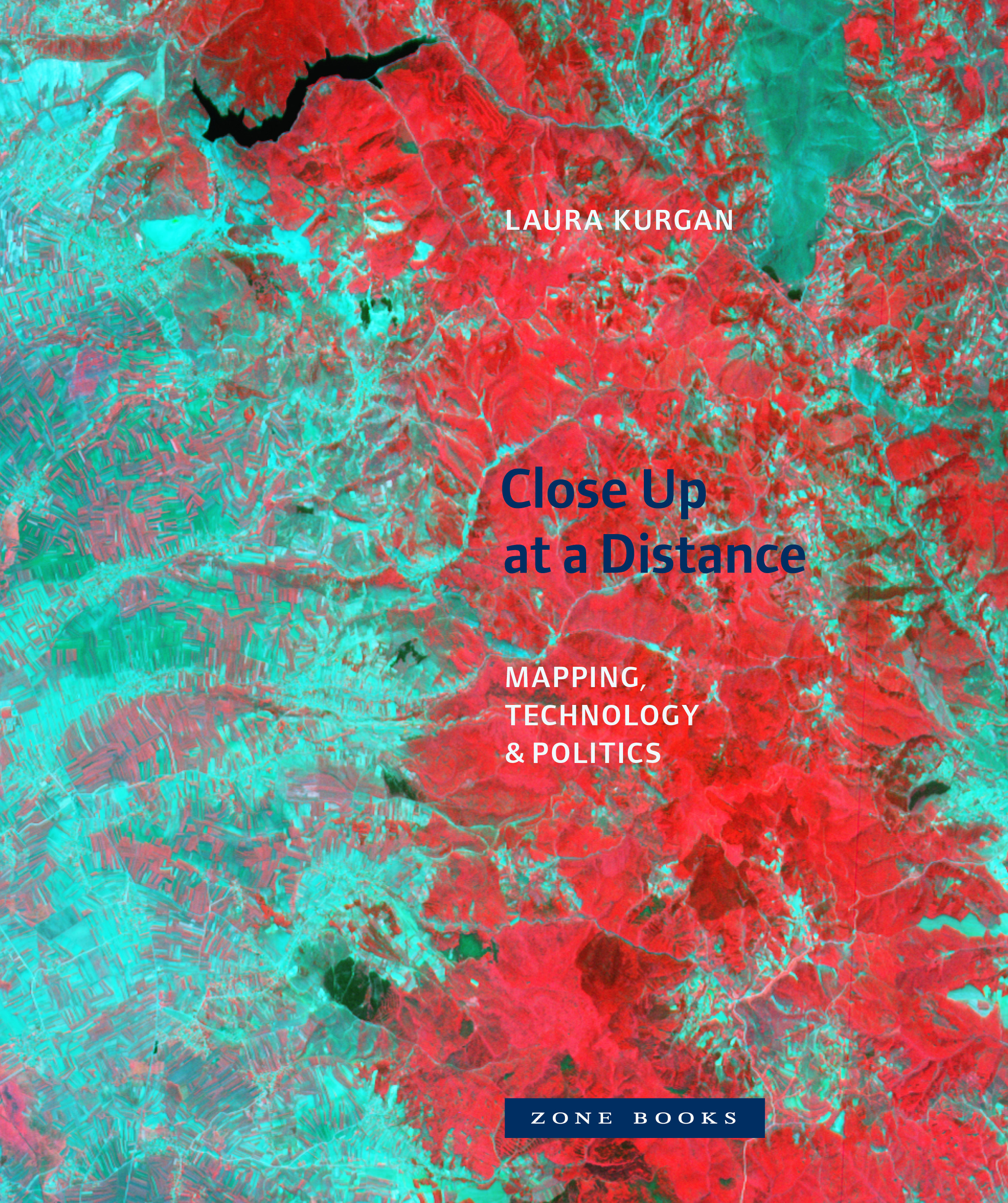
KURGAN Close up at a distanceStuart Elden trailed Laura Kurgan‘s Close up at a distance: mapping, technology and politics earlier this year, and it’ a sumptuous book.  The main title is a good summary of the techno-cultural field produced for drone strikes, but Kurgan’s focus is different: it’s on satellite imagery.  Now Trevor Paglen has provided a summary review for Bookforum:

Imaging technologies, explains Kurgan, “let us see too much, and hence blind us to what we cannot see, imposing a quiet tyranny of orientation that erases the possibility of disoriented discovery.” Part of the problem is a matter of perspective: The view from above is less an expansive panorama than a view through a keyhole. This vantage is also highly susceptible to ideological forces. When Colin Powell sat before the UN advocating the invasion of Iraq, he brought satellite images showing a handful of trucks and buildings. This data, he claimed, provided evidence of “active chemical munitions bunkers” operating outside Baghdad. “The facts speak for themselves,” he said. Of course, as Kurgan points out, the images did anything but that, and Powell needed to do a great deal of misleading speaking on their behalf to make them show anything close to what he claimed they did.

But Kurgan does not want to write off the “visual regime” of satellite imagery entirely. In fact, much of her work makes use of visual data culled from mapping, geolocation, and overhead-imaging technologies, and in Close Up at a Distance she argues that the need for interpretation is precisely what makes this kind of information so significant. For her, the “imaginative leaps” required to turn data into stories don’t always have to be carried out by the Colin Powells of the world: Such interpretive work can also advance movements for social justice or anti-imperial politics—such as when Pakistani journalists used Google Earth to document an unacknowledged American Predator-drone base in Baluchistan. In a series of deftly rendered case studies, Kurgan demonstrates how understanding satellite images—their production, interpretation, and distribution—is “a civic responsibility and a political obligation.”

Lisa Parks has travelled over much of the same ground and to brilliant effect, but Kurgan’s emphasis (she’s Director of the Spatial Information Design Lab at Columbia) is on a series of artistic re-workings of satellite imagery to produce radically new and insistently critical ways of seeing, of re-imagining what we see (and what we don’t) – which is why Trevor, as both artist and geographer, is such an apposite reviewer.


Unmanned twice over

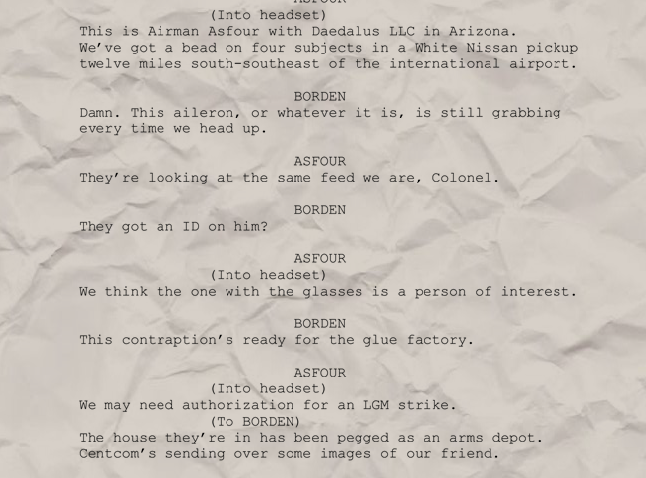
UnmannedI’m going to the CASAR Conference on Transnational American Studies at the American University in Beirut in January.  I’ve been to these meetings before, and I’m looking forward to returning to the city and meeting many old friends.  I’ll be presenting another version of “Drones, spaces of exception and the everywhere war”; the programme includes a keynote address from Judith Butler and  a performance of Robert Myers‘ play Unmanned.

Myers is a Professor of English and Creative Writing at UAB and a former Director of CASAR, and he developed the play while he was a visiting artist at the International Institute for U.S. Studies at the University of Illinois last spring.  It’s a two-hander, involving a drone pilot and a sensor operator, and Myers sets the scene like this:

The play takes place principally in a single-wide trailer painted with desert camouflage in the desert in the American West. Other scenes take place in an automobile and in other locations, which should be created with music and light. The play is written so that it may be staged with two office chairs. The set should be minimal. There is no reason to create a realistic “cockpit” since the flyers are not really in a cockpit and they are not flying. Their workspace resembles the cubicles of millions of other office workers. Outside the trailer, Stage Left, is a sign with a series of crudely painted arrows, which say: Kandahar 6792, Las Vegas 473, Mogadishu 5712, Phoenix 173, etc. Several actual props are introduced in the course of the play—a couple of unmarked white milk shake cups with straws, a fox stole etc.—and the two characters could wear minimalist headsets with microphones so as not to create confusion about when they are talking to Central Command. However, since the play is – among other things – about the relationship between the real world and the virtual world, all other machines, including phones, computers, navigational equipment, monitors should be mimed and/or created with light. 

I do like that last sentence.  You can download an excerpt from the play here.

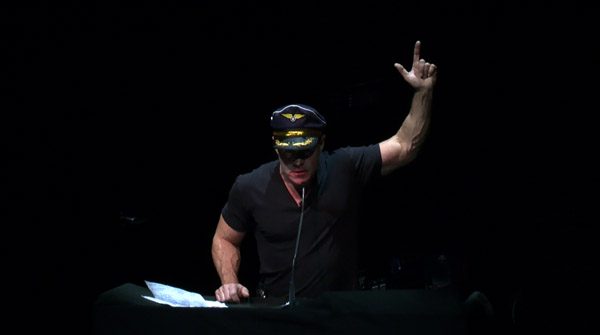
unmanned1SMThere have been several other drama-works that deal with drones (in different ways), including Jordan Crandall‘s performance work also called Unmanned:

Unmanned is about the changing nature of masculinity in the face of automated technologies of war. It focuses on the unmanned aerial system, or drone, as a site of investigation. Rather than taking a conventional analytical approach, however, the work is performed live as “philosophical theater”: a blend of performance art, political allegory, philosophical speculation, and intimate reverie. Jordan Crandall conducts a series of monologues in the guise of seven different characters, supplemented with stage action, video, and sound. Each character is an archetype of masculine identity struggling with its own agency and role in the field of deployment — historically the most complex issue in the field of military endeavor.

The drone becomes a figure for a reorganization of masculinity — one that dissipates the structuring forces of modern military identity, its standards of adequacy and scales of worth. Yet at the same time, in a much larger sense, the drone becomes a figure for a much larger condition: a reorganization of agency and skill, within a data-intensive environment of distributed and embedded intelligence, where network computing has become integrated into all manner of objects, spaces, and infrastructures. This reorganization not only challenges conventional identifications, however gendered, but the very status of the human.s about the changing nature of masculinity in the face of automated technologies of war. It focuses on the unmanned aerial system, or drone, as a site of investigation. Rather than taking a conventional analytical approach, however, the work is performed live as “philosophical theater”: a blend of performance art, political allegory, philosophical speculation, and intimate reverie. Jordan Crandall conducts a series of monologues in the guise of seven different characters, supplemented with stage action, video, and sound. Each character is an archetype of masculine identity struggling with its own agency and role in the field of deployment — historically the most complex issue in the field of military endeavor.

The drone becomes a figure for a reorganization of masculinity — one that dissipates the structuring forces of modern military identity, its standards of adequacy and scales of worth. Yet at the same time, in a much larger sense, the drone becomes a figure for a much larger condition: a reorganization of agency and skill, within a data-intensive environment of distributed and embedded intelligence, where network computing has become integrated into all manner of objects, spaces, and infrastructures. This reorganization not only challenges conventional identifications, however gendered, but the very status of the human.

I’m continuing to work on my own performance-work, The social life of bombs, though – as I’ve noted before – it ends with a drone strike but begins a hundred years earlier…

War crimes

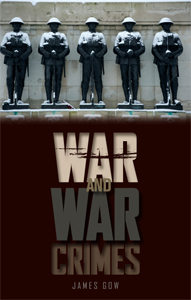
GOW War and war crimesWhile we’re on the subject of war crimes – and, as you’ll see shortly, my visit to Poland and the Czech Republic gave me new opportunities to reflect on the enormity of violence  – news of a new book from James Gow, Professor of International Peace and Security at King’s College London, War and War Crimes: the military, legitimacy and success in armed conflict (Hurst, April 2013):

The laws of war have always been concerned with issues of necessity and proportionality, but how are these principles applied in modern warfare? What are the pressures on practitioners where an increasing emphasis on legality is the norm? Where do such boundaries lie in the contexts, means and methods of contemporary war? What is wrong, or right, in the view of military-political practitioners, in how those concepts relate to today’s means and methods of war? These are among the issues addressed by James Gow in his compelling analysis of war and war crimes, which draws upon research conducted over many years with defence professionals from all over the world. Today more than ever, military strategy has to embrace justice and law, with both being deemed essential prerequisites for achieving success on the battlefield. And in a context where legitimacy defines success in warfare, but is a fragile and contested concept, no group has a greater interest in responding to these pressures and changes positively than the military. It is they who have the greatest need and desire to foster legitimacy in war by getting the politics-law-strategy nexus right, as well as developing a clear understanding of the relationship between war and war crimes, and calibrating where war becomes a war crime.

There is a considerable literature on war crimes, both general discussions of international law and tribunals and specific accounts of serial violations, but Gow’s book promises to open up a different dimension. One of the diagnostic features of later modern war is its reflexivity, a keen interest in monitoring the conduct of conduct and a close attention to public attention, twin developments which help to account for the close involvement of military lawyers in the ‘prosecution of the target’ and the rapid growth of ‘media operations’ across a range of social platforms.  So I’m interested in this plaudit from Jeremy Jarvis at the Royal College of Defence Studies:

‘At the heart of this authoritative examination of the legitimacy of war and its conduct in the twenty-first century, James Gow refreshingly gives voice to the military judgment of professionals from around the world, as military officers themselves best understand the moral dilemmas they face and can best explain the context, at the strategic and tactical levels, which is so crucial to determining whether war crimes have been committed.’

I think there’s rather more to it than that, needless to say, but it’s certainly important to understand how the kill-chain has been ‘lawyered up’: much more on all this from Craig Jones at War, law and space.

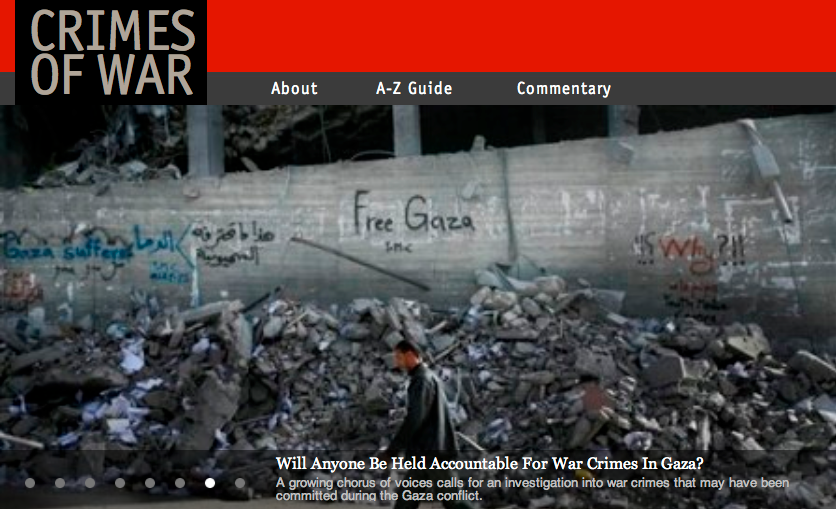
Crimes of War

If you want an easily accessible resource then Crimes of War, a collaboration between lawyers journalists and scholars provides both an A-Z Guide and a Commentary on current events.  It’s indispensable, as are the provocative posts (which address a wider range of topics than war crimes) at Lawfare and Opinio Juris.

Homing in

I’m finally home from Europe – a strange sentence, I think, since I always feel so much at home when I return to Europe.  I spent the last week in the Czech Republic, where I was a guest of the Department of Human Geography and Regional Development in Ostrava: I’m deeply grateful (once again) to all the faculty and graduate students, and most of all to  Tomáš Drobík, Přemysl Mácha, Tadeusez Siwek and Monika Šumberová, for their warm hospitality and lively discussions.

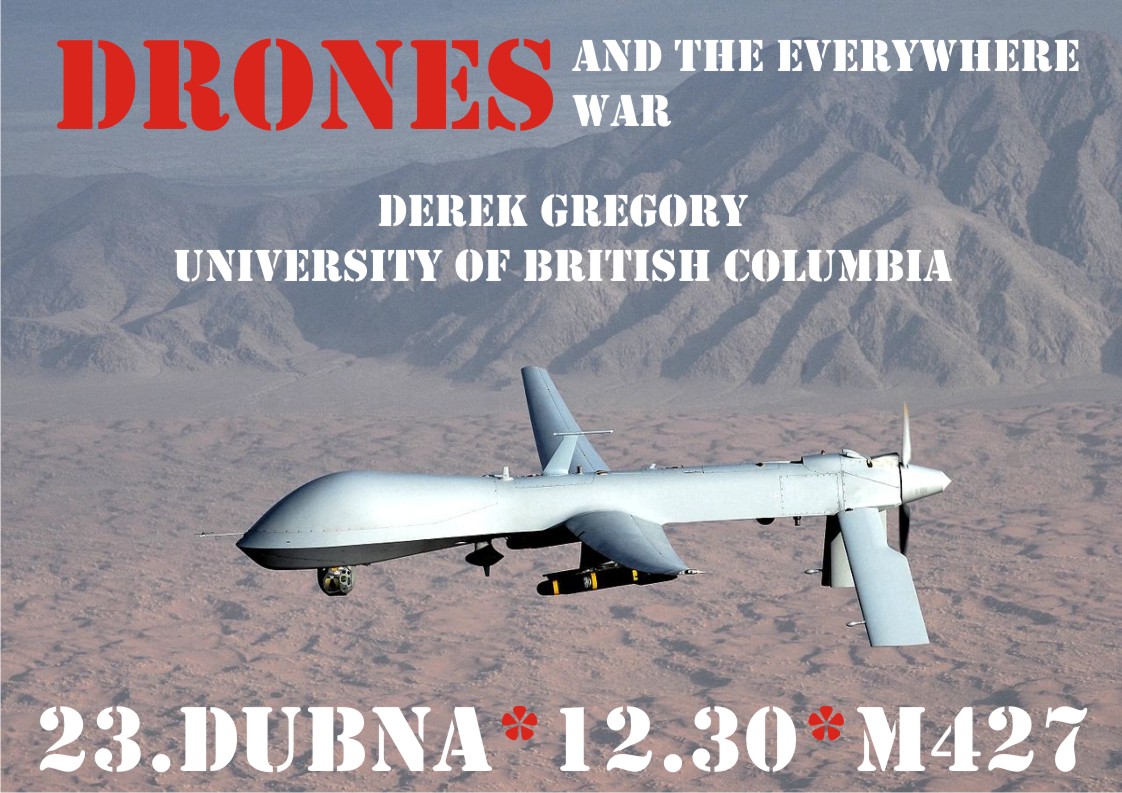
drones_gregory96dpi

While I was there I gave a version of “Drones, spaces of exception and the everywhere war” (abstract below) and, as always, learned much from the questions and a subsequent workshop with graduate students.  A version of this will eventually appear in a new collection edited by Lisa Parks, Life in the age of drones, and parts of it will be re-worked for my own book.

There have been many compelling visualizations of drone strikes in Pakistan – most recently, Out of Sight, Out of Mind, whose artful rendering of the database compiled by the Bureau of Investigative Journalism went viral in March 2013. But the infographic is confined to a temporal plot: it is, in a significant sense, also out of site, and a primary purpose of this essay is to show that the geography of these strikes is not incidental to their politics.

 In fact, multiple geographies are inscribed in them

 First, it is necessary to insert US-directed strikes into the matrix of state violence in the Federally Administered Tribal Areas. This means showing how Pakistan’s Frontier Crimes Regulations (even in their amended form) work in concert with the Actions (in Aid of Civil Power) Regulations (2011) to constitute the FATA as an exceptional space in something like the sense specified by Giorgio Agamben: a zone whose inhabitants are exposed to military and paramilitary violence and ultimately death through the law. This licenses air strikes by the Pakistan Air Force as part of continuing military offensives against militants and insurgents: in short, the people of the FATA are not only “Living Under Drones.

 This receives remarkably little attention in most critical discussions, which fasten on the ways in which the people of the FATA are also exposed to state violence through a second, transnational legal geography – the US assertion of its (contested) right to carry its war in Afghanistan across the border into Pakistan. This will be dissected in depth; but these are, of course, more than legal formations. Most US air strikes are confined to the FATA but PAF strikes are not, and the reasons for this doubled geography will be described and the incidence of both US and PAF strikes mapped in as much detail as the data allow.

 A second step is then to document the tactical co-operation between the US and Pakistan militaries in orchestrating the drone strikes (and, on occasion, co-ordinating them with Pakistan ground offensives). We now know that this co-operation started with the very first US-directed strike in the FATA: Mark Mazzetti has shown that the targeted killing of Nek Muhammad in June 2004 was undertaken as a favour to the Pakistan government, which regarded him as an enemy of the state, to gain access to Pakistan’s airspace so that the US could hunt down its own cross-border enemies.  We also know from the US diplomatic cables released by Wikileaks, and from a series of reports by investigative journalists, that this deadly alliance has continued – despite repeated denials and protests by Islamabad. This analysis extends the network in which US remote operations are usually inserted – launch sites in Afghanistan and Pakistan, CENTCOM’s Combined Air and Space Operations Center in Qatar, and video analysts, pilots, lawyers and commanders at multiple sites inside the continental United States – beyond purely US assemblages.

 But a third step is to show how the drone strikes in the FATA spiral out into an even wider matrix of military and paramilitary violence – the ‘everywhere war’ prosecuted in Yemen, Somalia, Mali, and elsewhere – whose contours map a profound transformation in the very nature and meaning of war itself.

Regular readers will recognise that this draws on a series of posts where I sketched out parts of the argument.

The discussions that followed my presentation in Ostrava were immensely helpful.  I began outside Pakistan, exploring in detail the anatomy of a drone strike in Afghanistan, and there was considerable interest in the narrative (some of which you’ll find in “From a view to a kill” under the DOWNLOADS tab; I’ve extended this analysis for my book too) and in the techno-cultural construction of the killing space.

But once I moved to the CIA-directed strikes in Pakistan, and the question of targeted killing,  attention focused on trade-offs between the simultaneous contraction of the target space through the provision of high-resolution video feeds and ‘weaponeering’ to reduce the blast radius – these strikes are a far cry from bombing missions during the Second World War or the B-52 offensives over Vietnam, Laos and Cambodia – and the lowering of the threshold for military and paramilitary violence: the argument that damage and death can be contained all too readily becomes (to its protagonists) an argument for  sending in the drones.  This in turn spiralled into a debate about transparency – about the limits to knowledge in democratic societies – and about the artful direction of debate to Washington (‘what rules are being followed?’) and away from the scene of violence in Waziristan.

Finally, we talked about the dissonance between this ‘optical war’ and the more haptic-sensuous war experienced on the ground (by both armed actors and civilians) – which I hope in some way helped prepare for their next visitor, anthropologist Tim Ingold.

City of Ruins

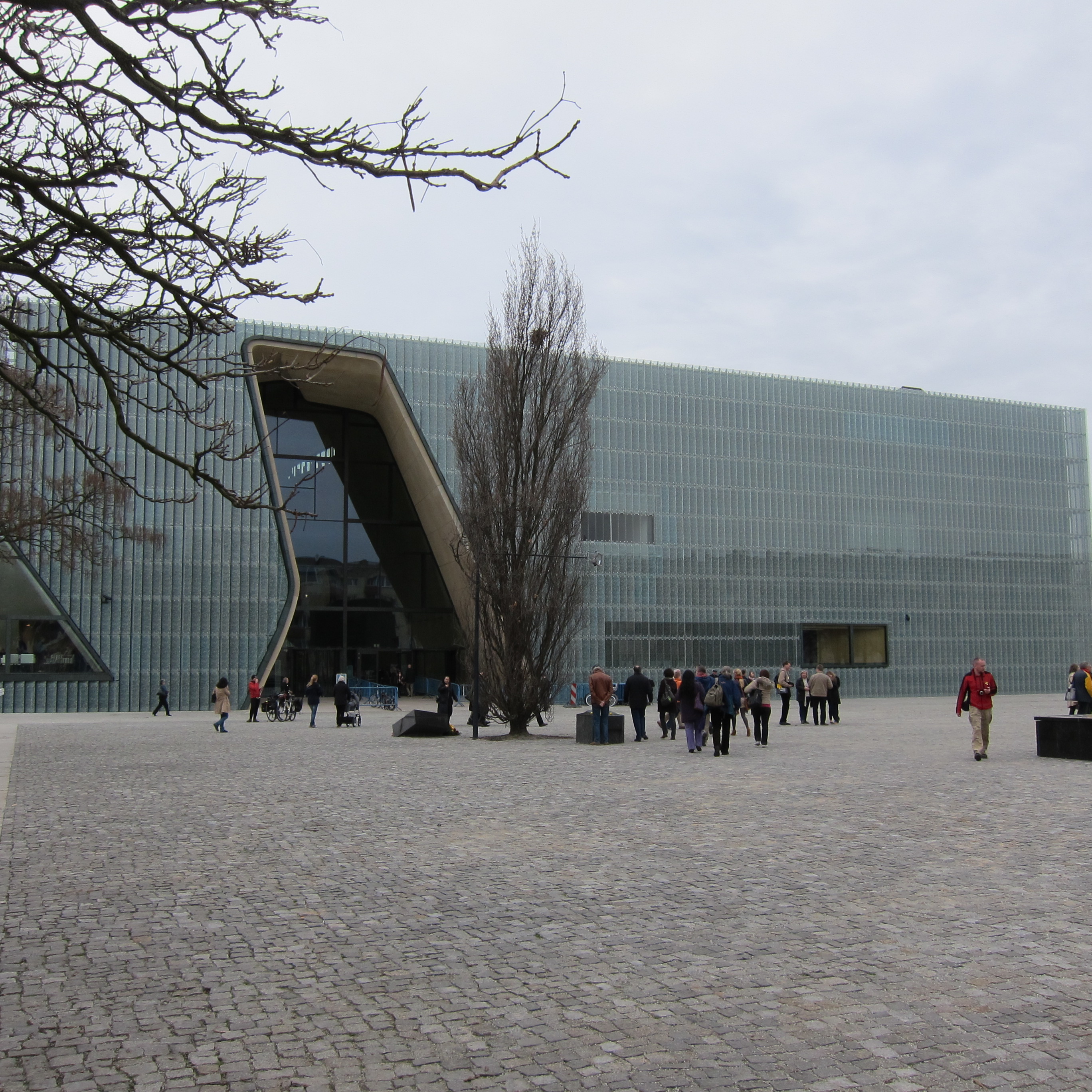
I was in Warsaw over the week-end, and my visit coincided with the opening of the new building for the Museum of the History of Polish Jews on the 70th anniversary of the Warsaw Ghetto Uprising. Even in its presently empty state, it’s a stunning place.

IMG_0525

Its Core Exhibition, developed under the supervision of Barbara Kirshenblatt-Gimblett, will display the thousand-year history of Jews in Poland, but the Museum has been built on the site of a pre-war Jewish neighbourhood where in October-November 1940 the Germans established the largest Jewish ghetto in Nazi-occupied Europe and razed it to the ground less than three years later.  And it’s this recent catastrophe (along with others) that invests so much of Warsaw with its contemporary historicity.

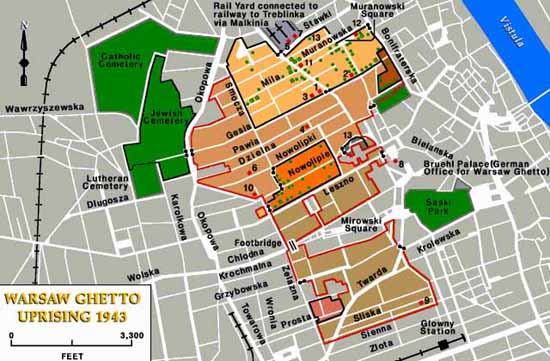
Warsaw Ghetto

You can find a sequence of other chilling maps of the Ghetto (and a helpful critical discussion of them) here, basic accounts of the process of its formation here, an excellent summary survey of the Uprising here and a shorter one here.  By 1943 hundreds of thousands of Jews had been deported from the Ghetto to concentration camps, and according to Deutsche Welle:

In early 1943, Heinrich Himmler ordered the final liquidation of the ghetto. Until then, most Jews had rejected armed resistance, including for religious reasons. But when the last mass deportation was about to begin, hundreds of young Jews decided to fight.

On April 19, 1943, the approaching German units met unexpected resistance. The young Jews were aware of their hopeless situation – they had no weapons, food or support. Yet they endured for three weeks, delivering a fierce battle. When the Germans surrounded the insurgents’ bunker in early May, they collectively committed suicide.

“They wanted to decide themselves how to die,” said Zygmunt Stepinski, director of the Museum of the History of Polish Jews in Warsaw. He called their deaths a political manifesto. “They wanted to show that Jews could defend themselves and that they organized the first-ever uprising against the Nazis,” he said.

13,000 Jews were killed during the Uprising, and most of the surviving 50,000 were deported to concentration and extermination camps.

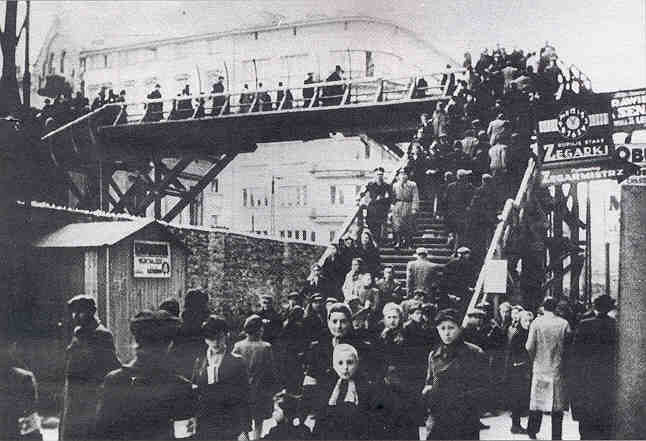
The Museum has been designed by a Finnish architect, Rainer Mahlamäki, and his studio.  To some degree, in its bridge suspended over the Main Hall, defined by the soaring, undulating walls that divide the Museum into its two parts,  the building reinscribes the division of the ghetto into two and the bridge that joined the one to the other (over Chlodna Street, an ‘Aryan’ thoroughfare), but more significantly it’s intended as ‘a bridge across the chasm created by the Holocaust – a bridge across time, continents and people.’

bridge2

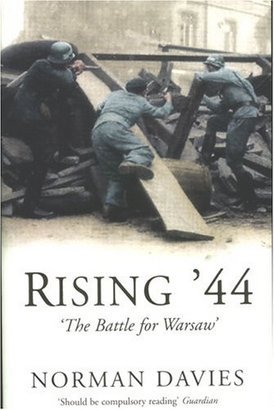
DAVIES Rising '44Many of those involved in the Museum project have suggested that the 1943 Uprising was a crucial inspiration for the general Warsaw Rising in 1944. This started on 1 August, and the insurgent Polish Home Army held out for 63 days of intensive urban warfare which left 16,000 of them dead along with 150-200,00 civilians.  The best English-language narrative of these courageous and horrifying events is probably Norman Davies‘s Rising ’44.

To make sense of this on the ground and to recover its material traces, we turned to the Warsaw Rising Museum, which included City of Ruins, an extraordinary 3-D simulation of American Liberator flights over the city in 1945 (advertised as the world’s first digital stereoscopic simulation of a city destroyed during the war: more on the project and how it was achieved here) –

– and to an outdoor/indoor exhibition of colour photographs of the ruined city taken by a young American architectural student, Henry N. Cobb, in 1947: The Colors of Ruin.  You can see some of Cobb’s photographs here, and Vimeo has this interview with him which includes a number of incredible images too:

Why such wholesale destruction? Under the terms of the surrender document agreed by the Polish Home Army in October 1944, the insurgents and the civilian population were expelled from the city into transit camps, from where they were deported to concentration camps.  According to some accounts, Hitler issued Command #2 on 11 October, realizing his pre-war dream of the total destruction of the city: ‘Warsaw is to be razed to the ground while the war proceeds.’  Six days later Himmler made sure his officers understood exactly what was intended:

‘The city must completely disappear from the surface of the earth… No stone can remain standing. Every building must be razed to its foundation.’

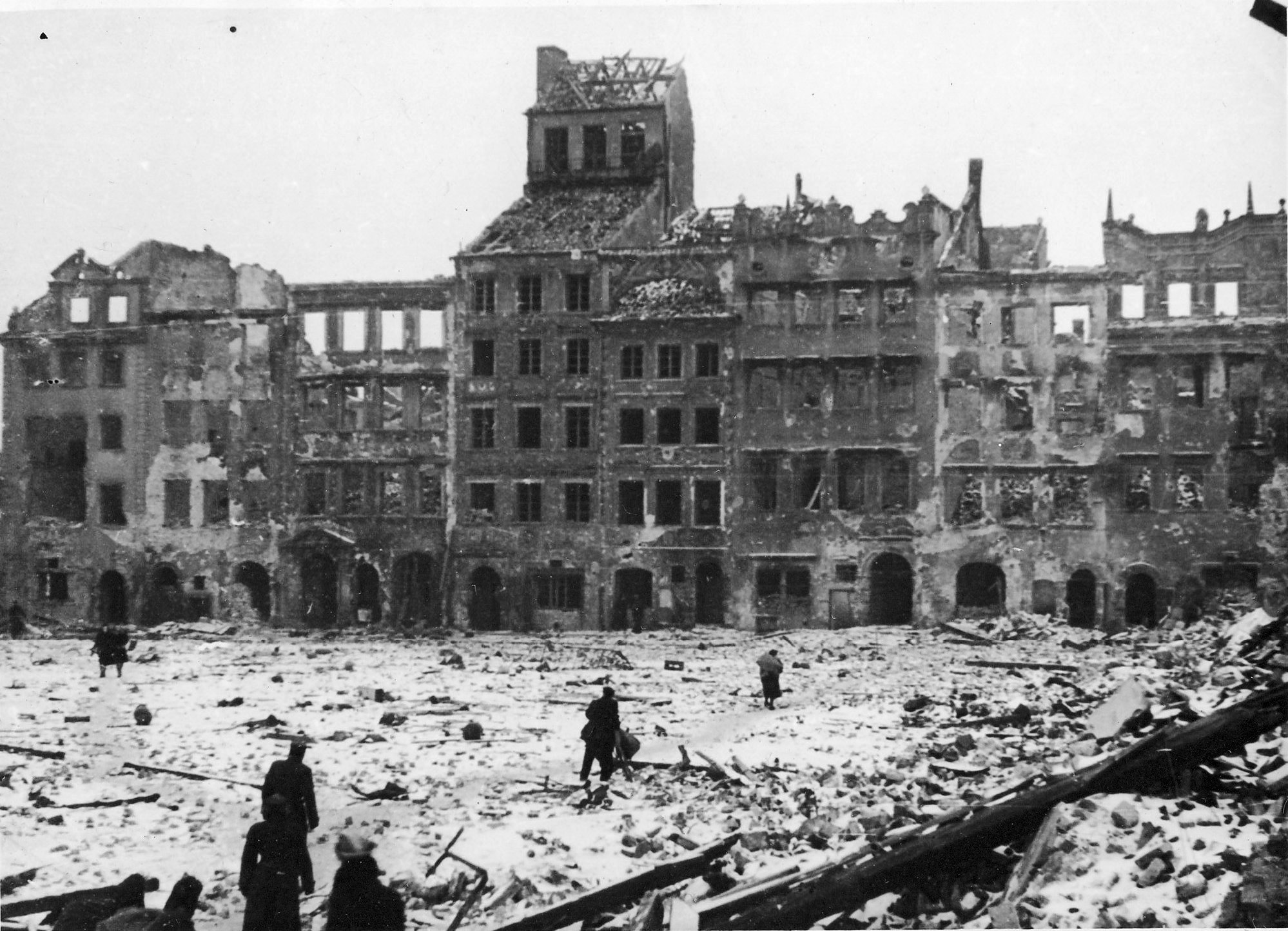
Special Verbrennungskommandos (‘annihilation detachments’) began the systematic destruction of what was left of the city with mathematical precision, using high explosives and flame-throwers.  According to the Museum guide,

‘They divided the city into regions, numbered the corner buildings and methodically destroyed the capital.  On the walls they put instructions concerning the method of destruction.  The Germans destroyed historical monuments and burned to ashes the biggest Polish libraries…  They turned archives, museums and their collections into ruins and ashes.  The Old Town became a city of ruins.’

old_town_warsaw_waf-2012-1501-311945

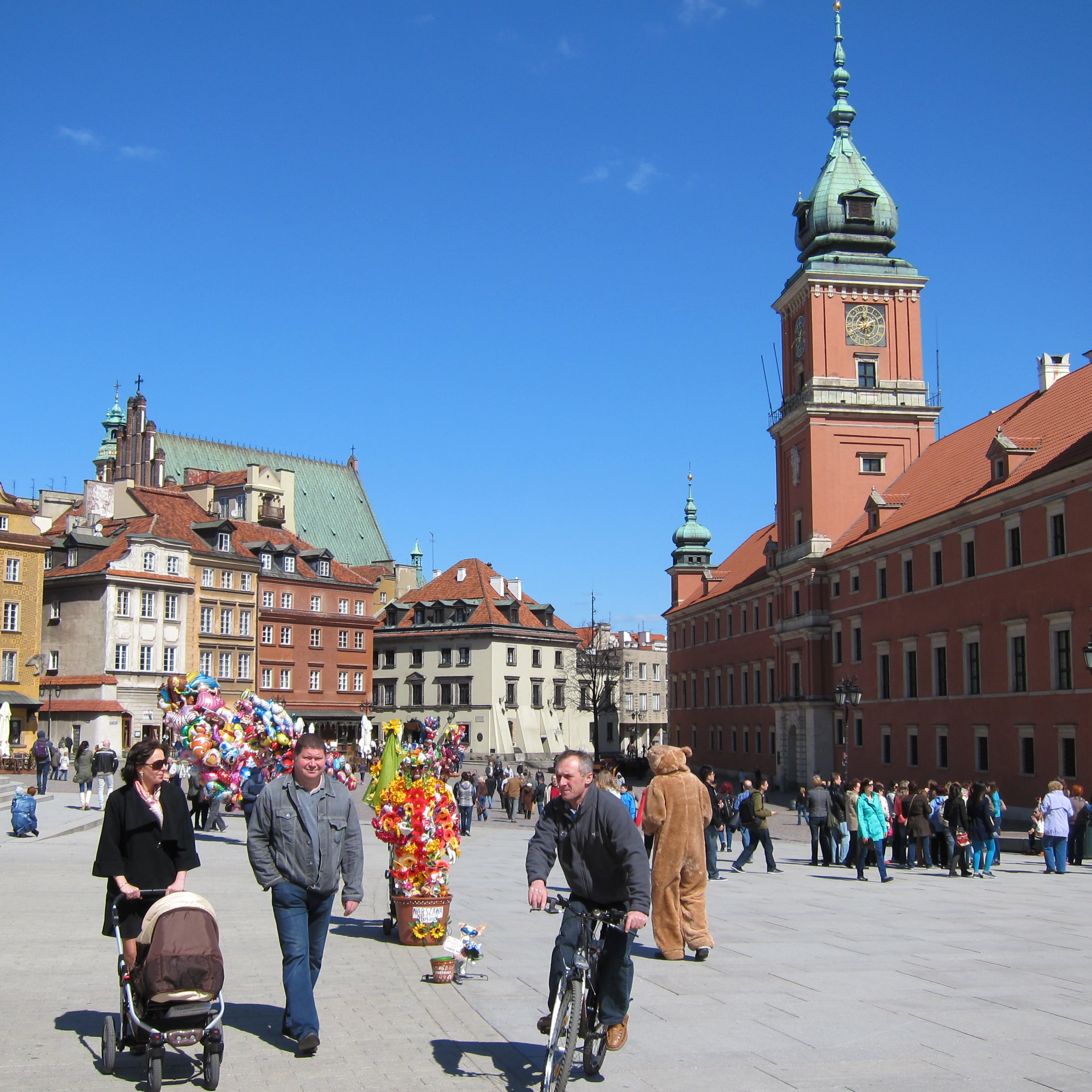
Less than 5 per cent of pre-war Warsaw remained intact – about 12 per cent had been totally destroyed during the 1939 bombing and siege of the city, a further 17 per cent with the destruction of the Ghetto and 25 per cent during the Rising of 1944 – but it’s the systematicity as much as the scale that is so shocking.  And the sense of shock remains even as – in fact precisely because – today you walk around an Old City no less painstakingly restored, its planners, architects and builders working from old plans, photographs and drawings and using the original materials as far as possible.  It adds another dimension to what Steve Graham calls the post-mortem city: the resurrection of Warsaw is an extraordinary testimony (like the Museum of the History of Polish Jews) to the determination of a people to recover their history, to refuse their erasure, and to remember the enormity of what befell their predecessors.

IMG_0556

Or so it seemed to me before I started to think (and read) about the politics of memorialisation in post-war Warsaw.  David Crowley‘s essay on ‘Memory in Pieces: the symbolism of the ruin in Warsaw after 1944’ argues that

‘the image of ruin … functioned – unmistakably – as an ideological vent through which to draw patriotic sentiment and indict those who had destroyed the city.  But the powerfully affective image of ruin and the memories that it could arouse had to be contained and its force channelled (quite literally, in the form of voluntary labour to reconstruct parts of the city, like the Old Town).  In effect ruins, in the representational cosmos of socialism during the 1950s, were time-locked in 1944, the moment of destruction.’

Royal Palace 1945But what could the Royal Palace (in particular) re-present within that cosmos?  Tellingly, it was still in ruins in 1956 when a post-Stalinist regime came to power, and existing plans for its reconstruction were abandoned.  ‘In the years that followed,’ Crowley writes, ‘the castle formed an open wound at the heart of the city.  Seeing it as an aristocratic symbol of democracy, Crowley calls it an ‘architectural oxymoron.’  In ruins, the castle could ‘function indexically as evidence of both the glorious Polish past and the ignominious “Soviet” present.’  Finally, in the 1970s its reconstruction was approved as ‘Warsaw Castle’, an attempt to extinguish the aristocratic past and to forestall any democratic future, so that it functioned as what Crowley calls a sort of counter-iconoclasm, working to forget what its absence once signified.

But there was another, more pervasive absence.  The razing of the Ghetto destroyed a significant nineteenth-century fabric, and after the war a still wider nineteenth-century Warsaw disappeared from the landscape of reconstruction altogether.  Jerzy Elzanowski argues that its buildings and structures were seen as emblematic of the repressive class structure of capitalism; they had to be replaced by a radically different fabric ‘adequate to the needs of socialist society’ (‘Manufacturing ruins: architecture and representation in post-catastrophic Warsaw’, Journal of Architecture 15 (1) (2010) 71-86).

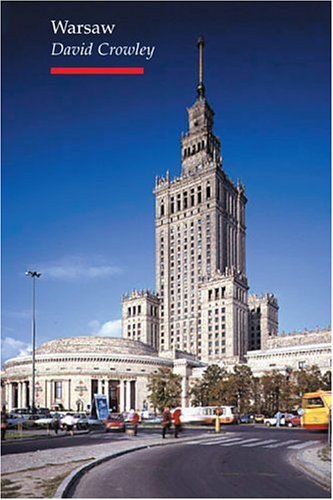
CROWLEY WarsawAnd there are, of course, other, ostentatiously modern Warsaws that have been forcibly put in place after the fall of Communism in 1989.

For all that, in the city of ruins, and most of all in the spectral traces of the two war-time uprisings in which images are made to stand for ruins, genocide and urbicide march in lockstep: and we would be foolish not to attend to the sounds and signs of their boots on the street.  Crowley thinks their museumisation and memorialisation is a kind of reversal in which the past (and specifically the Second World War) becomes a ‘lost utopia’.  I see what he means – I saw what he means – and I’m beginning to understand, too, why Elzanowski concludes that, at least in Warsaw (and no doubt elsewhere), images are at once indispensable for historical recovery and yet ‘seem to hinder our ability to observe the reality of here and now.’  It was, in part, an unease about my response to the materiality of the city and to its photographic representations that sent me off to dig out their two essays.  I felt a tension between the affective – the effect the ruins and the reconstructions had on me – and the analytical.  I’m still struggling.

War wounds

London last week, Warsaw at the weekend and now Ostrava this week…  More on the last two soon, but while I was in London I gave a new version of “Gabriel’s Map” to Geography and War Studies at King’s College London.  A large and lively crowd, and I learned much from it all: many thanks to Nick Clifford and Richard Schofield for the invitation and the excellent hospitality.

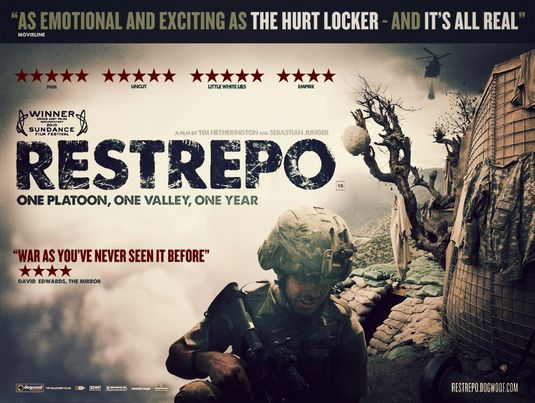
Amongst other things, I had the opportunity to explain the continuities I see between the argument I’ve developed around the First World War and my research on the war in Afghanistan.  Many protagonists have come to represent contemporary war (‘later modern war’) as the hypostatisation of the ‘optical war’ I described on the Western Front, involving a reliance on visual imagery at every level (from the full-motion video feeds provided by remote platforms to the digital displays in command centres down to hand-held devices) and the virtual (sic) erasure of the body: you can see this in arguments as diverse as those proposed by Christopher Coker and James Der Derian.  Der Derian is rightly suspicious of all this, of course, and I tried to show in “Gabriel’s Map” that on the Western Front there co-existed a radically different apprehension of the battlefield – a haptic geography that relied on a bodily habitus and on sound and touch.  This is no less true of ground troops in Afghanistan today; it takes different forms, to be sure, but it’s clear from military blogs and memoirs that for most of those beyond the Forward Operating Bases war is as intimate, as corporeal and as visceral as it ever was.  I’m working my way through a series of memoirs and other materials now and, for all its problems (on which Nick Turse is exactly right), Sebastian Junger‘s War/Restrepo duo (the latter produced with Tim Hetherington) speaks directly to this question.

restrepo_ver2

This has the liveliest of political and ethical implications, but I’ve had other reasons not to leave the trenches behind… Jasper Humphreys at KCL’s Marjan Centre has proposed an extremely interesting project as part of next year’s commemoration of the outbreak of the First World War, drawing on the riches of KCL’s Liddell Hart Centre for Military Archives.  The working title is the same – “Gabriel’s Map” – and the aim is to provide a different narrative of the war that develops the themes I sketched in the presentation, using video and social media to capture the attention of young people (and, I hope, the not-so-young…!).  This is exciting stuff, and I’ll keep you posted.

First World War centenaryThe centenary is itself an interesting project. According to the Guardian, the British government anticipates “unprecedented public interest” and, for once, they may have got something right (as opposed to Right); Andrew Murrison, the minister responsible for the commemorations, has both acknowledged the lively debates that continue to swirl around the conflict and expressed the hope that a central motif will be how the war played out at the ‘intimate level’.

More from the Imperial War Museum (itself being remodelled) here and from the excellent Australian War Memorial here.

Deadly Embrace: the sawn-off version

I’ve added a revised version of my Keynote Address to the IGC in Cologne last August to the DOWNLOADS page.  This version will appear in the Conference Proceedings, but if you download it please bear in mind that this is a preliminary and highly compressed version of part of the argument I’ve been developing in my presentations under the general heading “Deadly Embrace: war, distance and intimacy”.  I’m working on a much longer version, which will see all three of the main sections in the Keynote (news, logistics, weapons) greatly expanded and a new section (on intelligence) added.  I’m aware that I need to say much more about contemporary news coverage of distant wars than I do here; I think I have the arguments about contemporary logistics and weapons more or less sorted, but I’m still reading and thinking about our own sensibility towards distant violence.  And in order to live up to the subtitle I’ll also say much more about the dialectic between distance and intimacy.

Deadly Embrace TITLE.001

I’ve trailed some of the ideas in previous posts here and here.

The result is likely to be a long essay (with many illustrations) so I have no idea what I’m going to do with it — probably incorporate it into a book that will include other essays on the genealogy of what I’m now calling later modern war (partly because I think, for all the continuities, there are also significant differences between wars in the first half of the twentieth century and today’s military and paramilitary violence, and partly because I really don’t want to treat this as ‘postmodern’ war).  I’ll post a manuscript version as soon as it’s ready since, as always, I would really value comments,criticisms and suggestions.  I hope, too, that this substantive inquiry will also have something to say about theorisations of space – something I only gesture towards in this conference version.

The tragedies of other places

Rafia Zakaria, a columnist for Dawn, Pakistan’s largest-circulation English-language newspaper, reflects at Guernica on the disjuncture between the global attention paid to the victims of violence in her own country and those in the United States:

Attacks in America are far more indelible in the world’s memory than attacks in any other country. There may be fewer victims and less blood, but American tragedies somehow seem to occur in a more poignant version of reality, in a way that evokes a more sympathetic response. Within minutes American victims are lifted from the nameless to the remembered; their individual tragedies and the ugly unfairness of their ends are presented in a way that cannot but cause the watching world to cry, to consider them intimates, and to stand in their bloody shoes. Death is always unexpected in America and death by a terrorist attack more so than in any other place.

It is this greater poignancy of attacks in America that begs the question of whether the world’s allocations of sympathy are determined not by the magnitude of a tragedy—the numbers dead and injured—but by the contrast between a society’s normal and the cruel aftermath of a terrorist event. It is in America that the difference between the two is the greatest; the American normal is one of a near-perfect security that is unimaginable in many places, especially in countries at war.

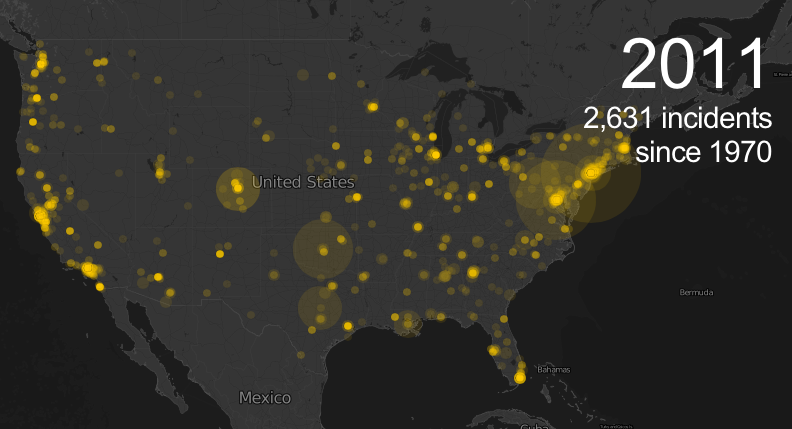
I’m not so sure the differential apprehension can be explained quite so cleanly – that ‘American normal’ is shot through with violence and insecurity for millions of people too, and on the same day that Rafia published her essay the Guardian reproduced this map of terrorist incidents in the United States 1970-2011; the animated version is here.

Terrorist incidents in US 1970-2011

The data on which the map is based raise all sorts of questions, of course, but still the numbers surprised me.  America is even more violent than I had imagined.

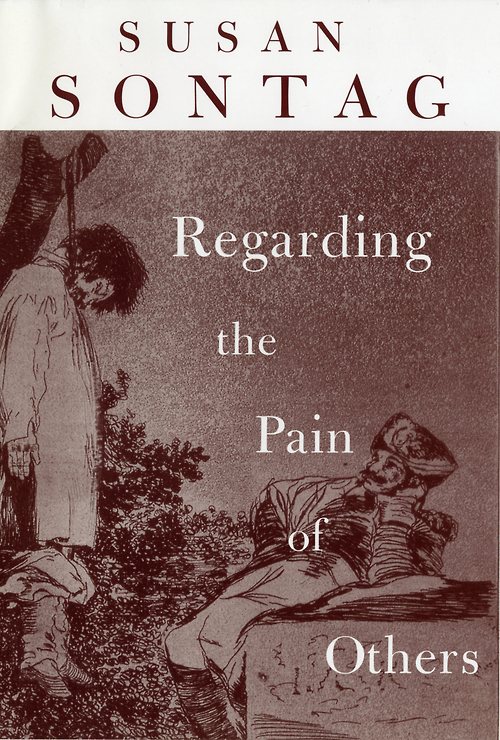
SONTAG Regarding the pain of othersAnd yet Rafia does have a point; the scale of political violence in Pakistan is surely far greater than this, and yet its victims received far less sympathetic attention from audiences outside the country than many of those elsewhere in the world.  This habituation to the violence done to others (Others?) intersects with Susan Sontag‘s reflections on the suffering of others, and it’s that multi-stranded process of othering that deserves critical reflection.  But I think Rafia is on to something important when she suggests that this is about places as well as peoples – about the ways in which habituation and habitus are bound in to apprehensions of different places.  Place is one of the crucial ways in which we navigate the world, physically and imaginatively, through the spatial cues provided by the meanings that become attached to place (what does ‘Baghdad’ signify to you?) and the places that become attached to meaning (which places are made to stand for ‘violence’?).  I realise I’m using shorthand, but it is the differential play between these meanings-in-place that surely has a significant role in our (dis)regard for the pain of others.

Where Souls Dwell

Laila Shawa: Where souls dwell 4

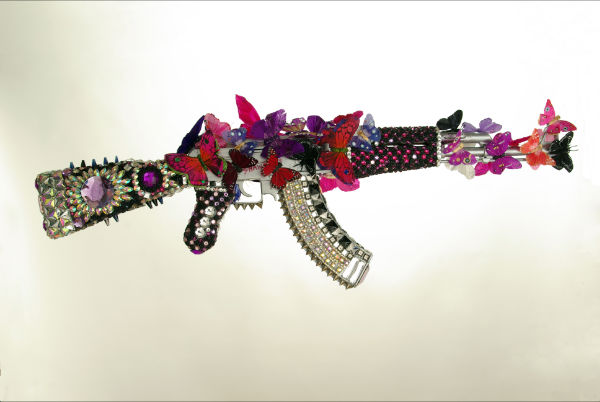
I’ve had a message from Laila Shawa, whose work I noted earlier, enclosing one of her latest projects (and generously allowing me to show her work here).  Where Souls Dwell (above) is from her Gun series and speaks directly to one of my very first posts (on the arms trade); it shows the AK-47, and Leila explains it like this:

Next to Drones, this gun is the biggest killing machine in the World. Due to its cheap production by everyone, it is in the hands of everyone, including children!! The Butterflies (in World mythology) represent the souls killed by this gun, and their return to the place (or cause) of their death.

I provided a brief bibliography of work on the AK-47 and the trade in ‘small arms’ in my original post, but I wasn’t aware of the way in which artists had engaged with this deadly weapon.  Last September Laila’s work was featured as part of the AKA Peace Exhibition at the Institute for Contemporary Art in London.

The exhibition was conceived by an ex-soldier who challenged 23 contemporary artists to incorporate decommissioned AK-47 assault rifles into their work. You can see some of the results, including those by Antony Gormley and Damien Hirst, here, here and here.  Laila adds:

“The challenge of altering and removing the raison d’êtres of an AK-47 is irresistible. I turned my guns into jewelled objects that can only be useless!!! In no way was I trying to glorify lethal weapons that are responsible for the death of hundreds of thousands of people.

I feel that artists must speak out against the arms race, wars, and the Arms Industry,which drives countries to create unnecessary wars.

According to mythology, the souls of people killed return as butterflies to the place where they were killed. The butterflies in this work represent those souls. 

My first AK-47, was commissioned by Peace One Day, a peace organization under the patronage of the United Nations, and was exhibited at the ICA London in October 2012 under the title ‘AKA Peace.’ Later it was sold in a public auction to raise money forPeace One Day. 20 British artists participated in this show amongst which were Damien Hirst, Anthony Gormley, Gavin Turk and the Chapman Brothers. The AK-47 (Kalashnikov) is the most produced gun in the world, in various versions. There are over 200 million AK-47s in circulation, quite often, and most irresponsibly, in the hands of children.”

There are many implications arising from all this – the most direct, of course, about these killing machines.  But these interventions also underscore the need for those of us working in the humanities and social sciences to engage with the work of creative artists, not only as critics and commentators but also as interlocutors interested in exploring other media in which to develop our arguments.