Sand in the gears

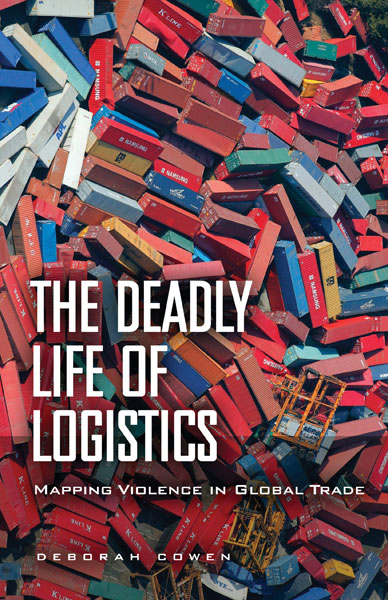
imageI’ve just agreed to join a panel at next year’s Annual Meeting of the Association of American Geographers in Chicago to discuss Deb Cowen‘s The Deadly Life of Logistics: mapping violence in global trade.  I obviously haven’t had time to give much thought to what I might say – these invitations seem to arrive earlier each year, no doubt a reflection of the ‘deadly logistics’ of conference organisation – but I had at the back of my mind the connections between Deb’s work and my own sketches of military logistics in Afghanistan: see, for example, here, here and here.

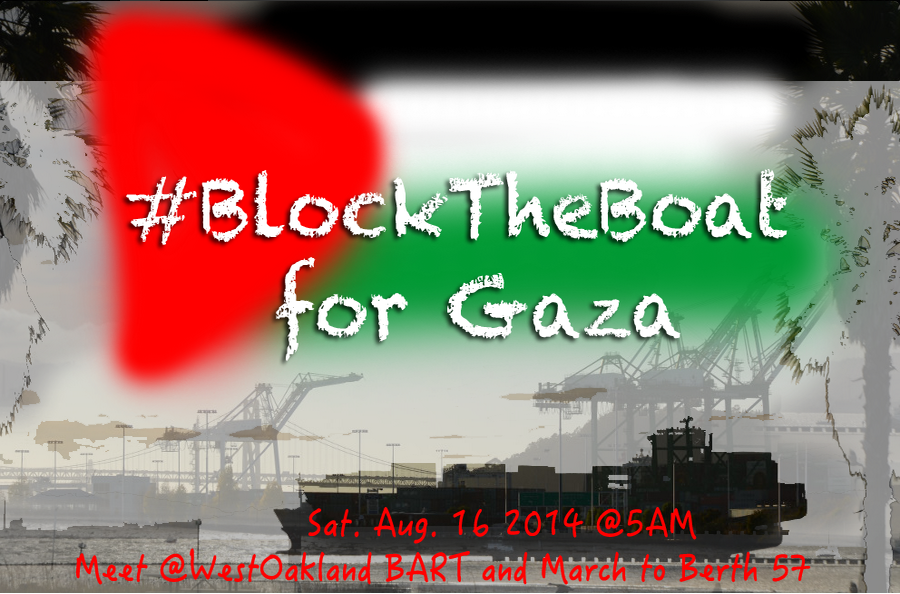
But now an elegant essay at The disorder of things has prompted me to think about other connections between our projects.  In ‘Logistics, circulation, chokepointsCharmaine Chua uses Deb’s work to reflect on Block the Boat for Gaza and other counter-logistical movements (for a report, see here).  She borrows ‘counter-logistics’ from Jasper Bernes – who pithily suggests that ‘logistics is capital’s art of war’ – to envisage movements like Block the Boat as moments in a dispersed guerilla campaign:

As capital has restructured itself away from industrial production, the mass labor force expelled from the factory floors of the world has now spilled into the streets, articulating their dissatisfaction with the state of things through uprisings, strikes, blockades, and riots. But if it seems that these struggles themselves are scattered across the globe, we might do well to also remember that the world of logistics, even as it has fundamentally restructured capitalist accumulation, is itself an irrevocably scattered form: it is at once a form of economic calculation that manages capital circulation in the totality of its system and a coordinated yet dispersed set of regulations, calculative arrangements, and technical procedures that render certain objects or flows governable. If the global supply chain that has dissipated democratic energies and foreclosed collective action can be thought of as a scattered entity, then, the question arises: what are the supply chain’s points of vulnerability? What would it mean to pay special attention to the materiality of capital flows – and to the possibilities that arise from interrupting the massive concentration of commodity capital at sites of its coagulation or through which it flows? How, in other words, might those rendered apparently powerless in the face of a logistical world find ways to recapture capital’s chokepoints?

Chokepoints – the concentration of the circulation of commodities at certain key sites along the supply chain – might thus present the possibility for strikes and protests to articulate resistance not only symbolically but also materially, by literally grounding capitalist circulation to a halt.

They also present the possibility of throwing sand in the gears of war machines.  There’s nothing novel in recognising the vital importance of logistics to the exercise of military and paramilitary violence (see also Jeff Patton here); time and time again militaries have targeted enemy supply chains – hence all those bitter arguments over the effectiveness of air raids on marshalling yards and petroleum, oil and lubrication stocks in the Second World War; all those insurgent attacks on convoys trucking supplies through Pakistan to ISAF bases in Afghanistan; and the Israeli military’s current preoccupation with Gaza’s tunnel economy.  And in countless wars saboteurs have worked to degrade the supply of materials.
BlockTheBoat

But the global constitution of military supply chains makes it possible to think through a new, more dispersed politics of resistance lodged in sites far from the conflict zone.  I’ll keep you posted.


UPDATE:  I’ve pasted this response from Charmaine from the “Comments” section because the suggestions she makes are too interesting to be missed:

Dear Derek,

Thanks for featuring my essay on your blog and, more importantly, pointing us to the fascinating links between military and commercial logistics. I’m excited to be a part of this conversation. Of course, not only is logistics important to the exercise of military violence — but the military supply chain is at the very root of commercial logistical innovations, exemplified by the fact that containerization was only popularized in the shipping industry after its successful use during the Vietnam War. Cowen’s book details these links brilliantly.

But I’m most interested in your last suggestion, that “the global constitution of military supply chains makes it possible to think through a new, more dispersed politics of resistance lodged in sites far from the conflict zone.” It strikes me, reading this, that the spatial displacements between sites of production and consumption under global capitalism – which many think of as disempowering for and dispersing of struggle – have actually enabled possibilities for resistance in ways and spaces not previously available to the larger public. Toscano, via Sergio Bologna, has pointed out in this vein that the “multitude of globalization” working across the supply chain is composed of both the manual labor of the working class, AND the intellectual labor of those who produce the technological systems which enable logistical flows. Perhaps an obvious point – but I very much like the idea that the logistics multitude encompasses even those of us in academia, so that we too can be part of this “dispersed guerrilla campaign”.

Best,
Charmaine Chua
Mumford and sons

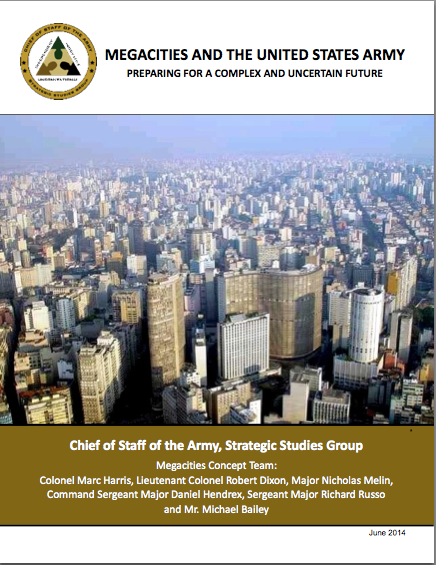
Megacities and the US ArmyPublic intelligence has made available a new report prepared by the US Army Strategic Studies Group’s ‘Megacities Concept Team’ after a year’s study called Megacities and the United States Army: preparing for a complex and uncertain future (June 2014).

The authors begin by conceding that ‘Megacities are a unique environment that the U.S. Army does not fully understand’, but since the announcement is made under a banner quote from Robert Kaplan‘s The revenge of geography don’t get your hopes up:

‘Crowded megacities, beset by poor living conditions, periodic rises in the price of commodities, water shortages and unresponsive municipal services, will be petri dishes for the spread of both democracy and radicalism, even as regimes will be increasingly empowered by missiles and modern outwardly focused militaries.’

They start by insisting on the critical importance of megacities for ‘global connectedness and order’ and the ‘global economy’ but warn that megacities are also threat platforms:

‘Large migratory populations reduce the transnational signature normally associated with terrorists, criminal, and espionage activities. Operating from megacities allow hostile actors relative freedom of maneuver as they blend in with the local population.’

You might think this would come as no surprise to a military that is scarcely a stranger to urban warfare, but the authors insist that the unprecedented scale of the problem has created a ‘gap’ in the US Army’s doctrine:

‘The Army’s largest and most recent example of urban operations is small in comparison to the challenges ahead. In Baghdad, the Army fought for almost a decade in an urban environment with a population of 6.5 million people. By 2030, there will be 37 cities across the world that are 200-400% larger than Baghdad.’

What they don’t ask is whether contemporary military doctrine – including the so-called ‘surge’ and the urban counterinsurgency models spun by Petraeus and his COIN artists – were even adequate in Baghdad.  What they claim instead is that megacities make it impossible for occupying armies to ‘isolate [physically or virtually] and shape the urban environment’, and so they call for a transformation in military urbanism that treats cities as interconnected complex systems.  Really.  Hence:

‘Regardless of the fragility or resilience of the city, their stable functioning is dependent on systems of finite capacity. When these systems, formal or informal, real or virtual experience demand which surpasses their capacity, the load on the city’s systems erode its support mechanisms, increasing their fragility. These systems are then more vulnerable to triggers which can push the city past its tipping point and render it incapable of meeting the needs of its population.’

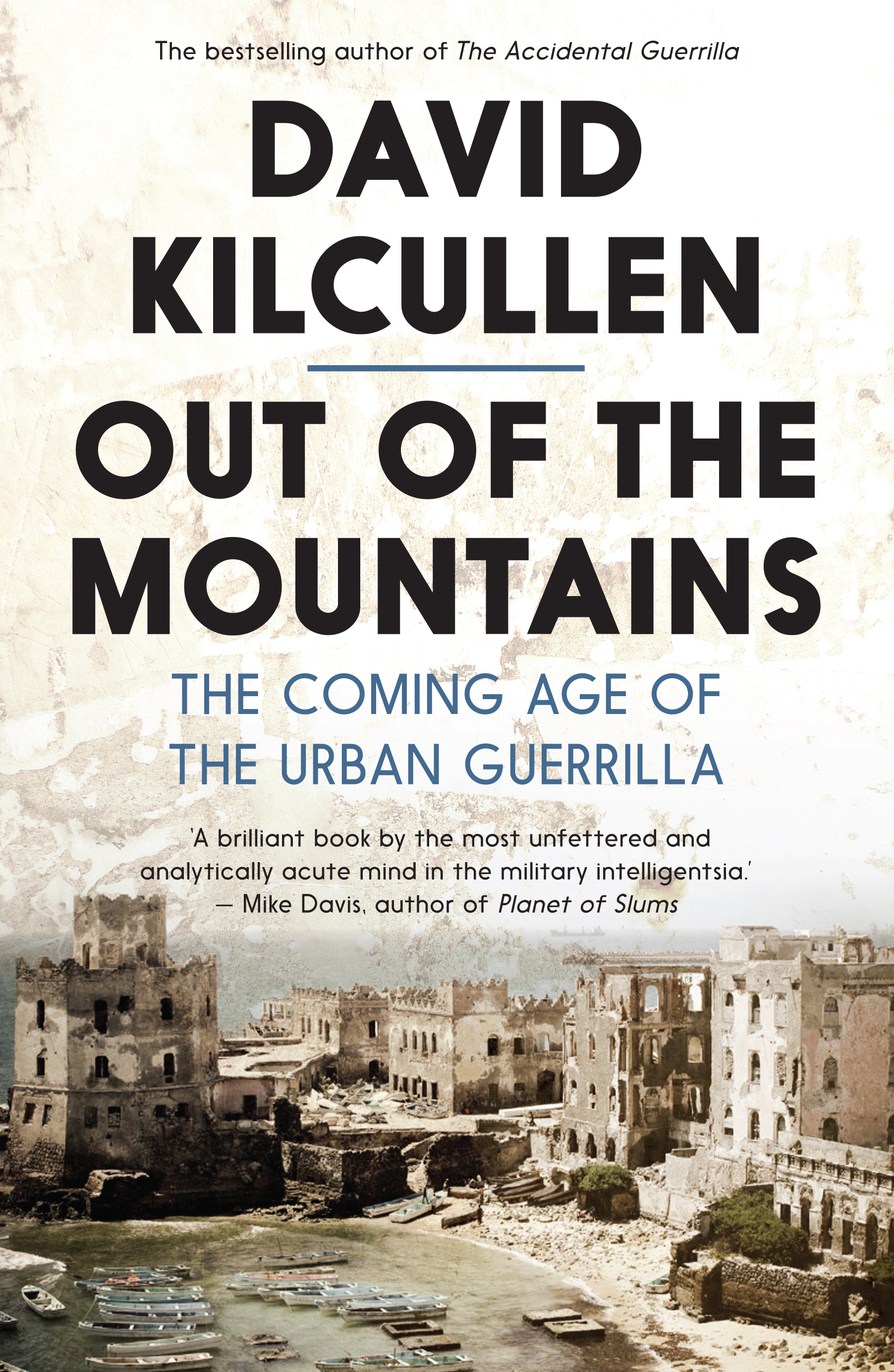
outofthemountains_300dpiMuch of this reads like a weak summary of David Kilcullen‘s thesis in Out of the mountains: the coming age of the urban guerrilla (and he at least does consider how well military doctrine fared in Baghdad). But rather than directly consider Kilcullen’s arguments – on which see my posts here and here – the report instead offers a series of one-page case-studies to illustrate a typology ranging from ‘cities that are highly integrated … with hierarchical governance and security systems, to cities that are loosely integrated with alternatively governed spaces and security systems.’

The case-studies include Bangkok, Rio, SãoPaulo, Lagos and Dhaka – but they begin, disconcertingly but perhaps not surprisingly given recent debates about the militarisation of policing in the United States, with New York.

Finally, the conclusion restates the introduction: megacities are important (‘unavoidable’) and the US Army doesn’t understand them.  Evidently not.

There are at least two issues to consider here.  First, the report says that part of its mandate is to present the Chief of Staff of the Army (Ray Odierno) with ‘independent, innovative and unconstrained ideas’: but there is spectacularly little sign of that in these pages.  I’m not surprised that the authors don’t consider (say) Steve Graham‘s Cities under siege: the new military urbanism (though they would undoubtedly learn a lot from it), but to pass over Kilcullen’s work with a single, glancing footnote reference is surely astonishing.  One of the proudest boasts of the architects of the revised counterinsurgency doctrine was its (their) intellectual credentials – ‘the graduate level of war’ – and yet this report fails to engage in any serious and sustained way with a stream of work in urban anthropology, urban geography, urban history,urban sociology and urban studies that has significantly re-shaped our understanding of contemporary urbanism.

Second – and here the critical point might be reversed – I am puzzled at how little attention is paid to military and paramilitary violence by many scholars of ‘planetary urbanism’.  In part, it’s high time to re-visit the genealogy of the ‘new military urbanism’ and to reflect on previous ‘military urbanisms’: the intimate, predatory relationship between cities and military violence is hardly novel, but its changing modalities need careful analysis.  But it’s also high time to think through the ways in which planetary urbanism cannot be reduced to the machinations of the global economy.  I admire Neil Brenner‘s ‘Theses on urbanisation’ [Public culture 25 (1) (2013)] enormously, and agree absolutely that ‘the concept of urbanisation requires systematic reinvention’ (p. 101).  But his arguments, together with the vivid images that illuminate his text, are silent about later modern war.  And yet his theses about ‘concentration and extension’ – not exactly a reinvention – invite a mapping (one among many, to be sure) onto the terrain of military and paramilitary violence.  He concludes:

‘It is the uneven extension of this process of capitalist creative destruction onto the scale of the entire planet, rather than the formation of a worldwide network of global cities or a single, world-encompassing megalopolis, that underpins the contemporary problematique of planetary urbanisation.’

Exactly so; but ‘creative destruction’ is more than a metaphor and its processes frequently involve new (even ‘creative’) modes of war-making.

Similarly, I’ve also learned much from Neil Brenner and Christian Schmid, ‘The urban age in question‘ [International journal of urban and regional research 38 (3) (2014)], but here too war is conspicuous by its absence.  I don’t think it’s entirely coincidental that so many major inquiries into the urban condition – ones that figure in their intellectual pantheon – should have been undertaken in the aftermath of the Second World War and its systematic assault on cities and their populations.

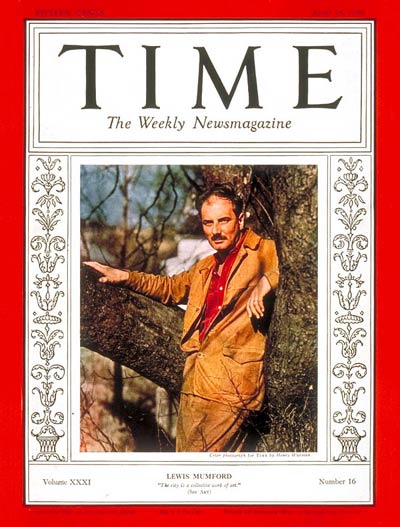
1101380418_400So let me end with an extract from a conversation I had with Stuart Elden [ACME 10 (2) (2011)] that will also explain the title of this post:

‘In The Culture of Cities, published just one year before the Second World War broke out, [Lewis] Mumford included ‘A brief outline of hell’ in which he turned the Angelus towards the future to confront the terrible prospect of total war. Raging against what he called the ‘war-ceremonies’ staged in the ‘imperial metropolis’ (‘from Washington to Tokyo, from Berlin to Rome’: where was London, I wonder? Moscow?), Mumford fastened on the anticipatory dread of air war. The city was no longer the place where (so he claimed) security triumphed over predation, and he saw in advance of war not peace but another version of war. Thus the rehearsals for defence (the gas-masks, the shelters, the drills) were ‘the materialization of a skillfully evoked nightmare’ in which fear consumed the ideal of a civilized, cultivated life before the first bombs fell. The ‘war-metropolis’, he concluded, was a ‘non-city’.

After the war, Mumford revisited the necropolis, what he described as ‘the ruins and graveyards’ of the urban, and concluded that his original sketch could not be incorporated into his revised account, The City in History, simply ‘because all its anticipations were abundantly verified.’ He gazed out over the charnel-house of war from the air — Warsaw and Rotterdam, London and Tokyo, Hamburg and Hiroshima — and noted that ‘[b]esides the millions of people — six million Jews alone — killed by the Germans in their suburban extermination camps, by starvation and cremation, whole cities were turned into extermination camps by the demoralized strategists of democracy.’

I’m not saying that we can accept Mumford without qualification, still less extrapolate his claims into our own present, but I do think his principled arc, at once historical and geographical, is immensely important. In now confronting what Stephen Graham calls ‘the new military urbanism’ we need to recover its genealogy — to interrogate the claims to novelty registered by both its proponents and its critics — as a way of illuminating the historical geography of our own present.’

And in recovering that genealogy we might also illuminate its geography: both are strikingly absent from Megacities and the US Army.

Legal geographies and the assault on international law

I suspect anyone interested in international/transnational legal geographies will know of Jens David Ohlin‘s work already (he’s Professor of Law at Cornell and recently co-edited Targeted Killings: Law and Morality in an Asymmetrical World [Oxford, 2012]).  If not, check out his page on ssrn for recent papers; I’ve found three particularly helpful in thinking about US air strikes in Afghanistan and Pakistan and, more recently, the Israeli offensive against Gaza (more on this and the space of exception soon, I promise):

Targeting and the concept of intent (2013); Acting as a sovereign versus acting as a belligerent (2014); and The combatant’s privilege in asymmetric and covert conflicts (2014)

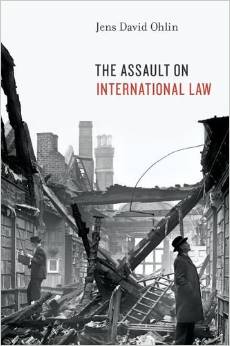
I’ve just received news of his new book out early in the New Year, whose relevance will be apparent from its title: The assault on international law.

OHLIN Assault of international lawInternational law presents a conceptual riddle. Why comply with it when there is no world government to enforce it? The United States has a long history of skepticism towards international law, but 9/11 ushered in a particularly virulent phase of American exceptionalism. Torture became official government policy, President Bush denied that the Geneva Conventions applied to the war against al-Qaeda, and the US drifted away from international institutions like the International Criminal Court and the United Nations.

Although American politicians and their legal advisors are often the public face of this attack, the root of this movement is a coordinated and deliberate attack by law professors hostile to its philosophical foundations, including Eric Posner, Jack Goldsmith, Adrian Vermeule, and John Yoo. In a series of influential writings they have claimed that since states are motivated primarily by self-interest, compliance with international law is nothing more than high-minded talk. Theses abstract arguments then provide a foundation for dangerous legal conclusions: that international law is largely irrelevant to determining how and when terrorists can be captured or killed; that the US President alone should be directing the War on Terror without significant input from Congress or the judiciary; that US courts should not hear lawsuits alleging violations of international law; and that the US should block any international criminal court with jurisdiction over Americans. Put together, these polemical accounts had an enormous impact on how politicians conduct foreign policy and how judges decide cases – ultimately triggering America’s pernicious withdrawal from international cooperation.

In The Assault on International Law, Jens Ohlin exposes the mistaken assumptions of these ‘New Realists,’ in particular their impoverished utilization of rational choice theory. In contrast, he provides an alternate vision of international law based on a truly innovative theory of human rationality. According to Ohlin, rationality requires that agents follow through on their plans even when faced with opportunities for defection. Seen in this light, international law is the product of nation-states cooperating to escape a brutish State of Nature–a result that is not only legally binding but also in each state’s self-interest.

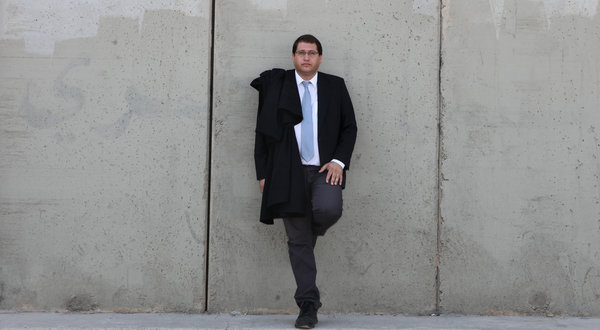
Michael Sfard

But not all assaults on international law derive from the United States and from professors hostile to its philosophical foundations.  I urge you to read Michael Sfard‘s coruscating Op-Ed from Ha’artez on 4 August, ‘A “targeted assassination” of international law‘ (which is also available here if it disappears behind a paywall).  Michael is an Israeli human rights lawyer, specializing in international humanitarian law and dealing directly with the Israeli occupation of Palestine, and he is also the legal adviser to Yesh Din: Volunteers for Human Rights:

Israelis are surprised. Did I say surprised? Downright shocked. Even before the dust from the fighting has settled, even before this “most just of all wars” has ended, even as the most moral army in the world is still mired in Gaza – there is already talk of war crimes and an international investigation.

We, who didn’t carpet-bomb even though we could have, who dropped fliers and made phone calls and knocked on the roof; we, who agreed to the humanitarian cease-fire that Hamas violated; we, who took more precautions than any other nation would have done – we are once again being accused of war crimes. Once again, the same old song is being sung: decisions about opening an international investigation, talk of the International Criminal Court, fear of arrests in Europe. And we don’t understand why we deserve all this.

It is possible to console ourselves by accepting the explanation that the television journalists keep repeating to us: that the world is anti-Semitic and two-faced and supports Hamas. But this would constitute a regrettable evasion of the tough questions. It would constitute an effort to flee the pointed discussion Israeli society ought to be holding about the way we have waged armed conflicts with our enemies over the last decade.

Since the Second Lebanon War of 2006, the Israel Defense Forces has adopted an extremely problematic combat doctrine for conflicts that take place in urban areas with dense civilian populations, and in which the enemy is seen as an illegitimate terrorist entity (Hezbollah in Lebanon and Hamas in Gaza). This combat doctrine is supported by a legal theory developed by the IDF’s international legal division, which interprets the laws of war in a manner that is shockingly different from their accepted interpretation by experts in the field worldwide. Its direct result is massive civilian casualties and the destruction of civilian neighborhoods.

This combat doctrine consists of two elements, each of which is a declaration of war against the fundamental principles of the laws of armed combat. The first element redefines what constitutes a legitimate target for attack, such that it now includes not only classic military targets (bases, combatants, weapons stockpiles and so forth), but also facilities and objects whose connection to the enemy organization is nonmilitary in nature….

The second element is even more far-reaching: It holds that when fighting in urban areas, we are entitled to treat the entire area as a legitimate target and bombard it via air strikes or artillery shelling – as long as we first warn all the residents of our intention to do so and give them time to leave. The IDF first used this method in Beirut’s Dahiya neighborhood during the Second Lebanon War. Before bombing, the army dropped fliers telling the residents to leave. Then the bombs were dropped, and most of Dahiya’s houses were destroyed.

This doctrine was applied, to varying degrees, in Operations Cast Lead and Protective Edge as well, primarily in Gaza City’s Shujaiyeh neighborhood. It does not take into consideration the question of whether the prior warning given the population is effective – i.e., whether the population can in fact leave, whether solutions have been found for the elderly, the ill and the children. Nor is it accompanied by the creation of a safe corridor through which people can flee to someplace that won’t be fired on, and where civilians have what they need to survive.

The terrifying result of this combat doctrine, in both Cast Lead and Protective Edge, was piles of bodies of women, children and men who weren’t involved in the fighting….

The IDF’s lawyers, who provide legal support for this combat doctrine, are conducting a “targeted assassination” of the principles of international law: the principle of distinction, which requires differentiation between military targets (which are legitimate) and civilian targets (which aren’t); the principle of proportionality, which forbids attacking even a legitimate target if the anticipated harm to civilians is excessive in comparison to the military benefit from the target’s destruction; and the need to take effective, rather than merely symbolic, precautions.

More soon.

Following the colours

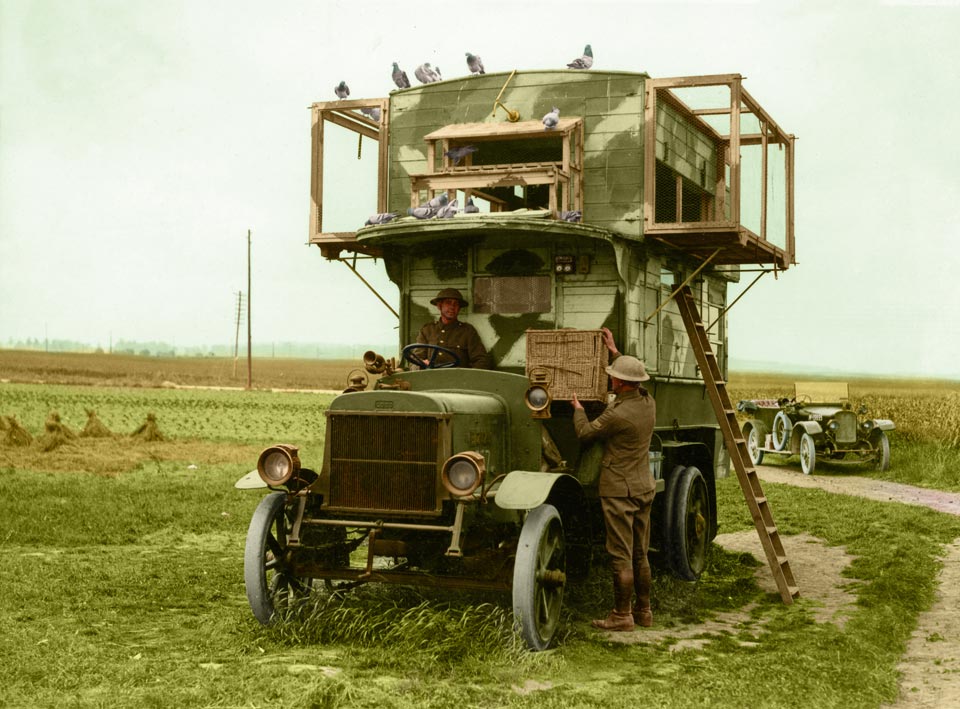
WWI Mobile carrier pigeon-loft

The Open University has just released online a series of ‘colourised’ photographs from the First World War.  My favourite is shown above: a mobile pigeon-loft so that messages could be carried back to GHQ (more on pigeons and the war effort here and especially here; their military service did not end with the First World War).

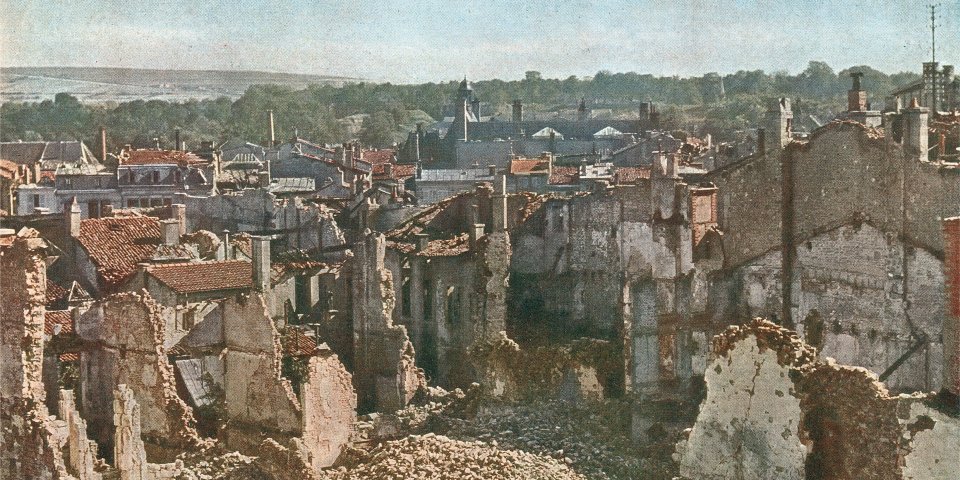
These were all originally black and white photographs, but Taschen has recently published a much more extensive collection of original colour (‘autochrome’) photographs – you can view some of the images online here – edited by Peter Walther, The First World War in Colour (384 pp).

Verdun

In an online announcement the publisher explains:

The devastating events of the First World War were captured in myriad photographs on all sides of the front. Since then, thousands of books of black-and-white photographs of the war have been published as all nations endeavour to comprehend the scale and the carnage of the “greatest catastrophe of the 20th century”. Far less familiar are the rare colour images of the First World War, taken at the time by a small group of photographers pioneering recently developed autochrome technology.

first_world_war_in_color_fo_gb_3d_05794_1406031040_id_813622To mark the centenary of the outbreak of war, this groundbreaking volume brings together all of these remarkable, fully hued pictures of the „war to end war“. Assembled from archives in Europe, the United States and Australia, more than 320 colour photos provide unprecedented access to the most important developments of the period – from the mobilization of 1914 to the victory celebrations in Paris, London and New York in 1919. The volume represents the work of each of the major autochrome pioneers of the period, including Paul Castelnau, Fernand Cuville, Jules Gervais-Courtellemont, Léon Gimpel, Hans Hildenbrand, Frank Hurley, Jean-Baptiste Tournassoud and Charles C. Zoller.

Since the autochrome process required a relatively long exposure time, almost all of the photos depict carefully composed scenes, behind the rapid front-line action. We see poignant group portraits, soldiers preparing for battle, cities ravaged by military bombardment – daily human existence and the devastating consequences on the front. A century on, this unprecedented publication brings a startling human reality to one of the most momentous upheavals in history.

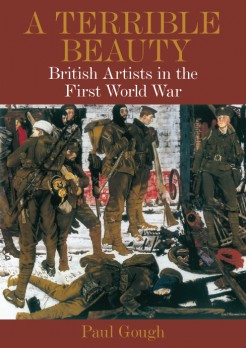
A-Terrible-Beauty-246x348And for an altogether different rendering of the First World War – often but not always in colour – I recommend Paul Gough‘s magisterial account of 15 artists (many of whom saw active service,  A terrible beauty: British artists in the First World War.  You can download the first chapter here, sadly without the illustrations: but Paul’s commentary is incisive, and I found his work really helpful in working on ‘Gabriel’s Map’, especially his essays on military sketching which considerably enlarged my sense of the ‘cartographic imaginary’ on the Western Front.  Gerry Corden has a fine account of the book here, and includes many excellent images including the work of my favourite C.W.R. Nevinson.  Finally, Paul’s own website is here: click on Vortex 1 through 5 at the bottom.

Not a pigeon in sight, though.

Legitimate targets?

I’ve been thinking about the description of Gaza as a space of exception in my last post, and I will elaborate (and qualify) that discussion shortly: in many ways the Israeli offensive against Gaza reinforces Achille Mbembe‘s arguments about necropolitics but, as I’ll try to show, suggests the need for a reworking of Giorgio Agamben‘s claims about the exception.

En route, I’ve been greatly taken by the work of Janina Dill (Politics and International Relations, Oxford) – particularly her discussion of Israel’s development of ‘Lawfare 2.0’ in relation to Gaza – and, as I say, I’ll have much more to say about that shortly.  But I’ve also discovered she has a book due out from Cambridge in the fall which, like her (I imagine summary) chapter in The American Way of Bombing, speaks to my own work on genealogies and geographies of bombing: Legitimate Targets? Social construction, international law and US bombing.

DILL Legitimate targets?Based on an innovative theory of international law, Janina Dill’s book investigates the effectiveness of international humanitarian law (IHL) in regulating the conduct of warfare. Through a comprehensive examination of the IHL defining a legitimate target of attack, Dill reveals a controversy among legal and military professionals about the ‘logic’ according to which belligerents ought to balance humanitarian and military imperatives: the logics of sufficiency or efficiency. Law prescribes the former, but increased recourse to IHL in US air warfare has led to targeting in accordance with the logic of efficiency. The logic of sufficiency is morally less problematic, yet neither logic satisfies contemporary expectations of effective IHL or legitimate warfare. Those expectations demand that hostilities follow a logic of liability, which proves impracticable. This book proposes changes to international law, but concludes that according to widely shared normative beliefs on the twenty-first-century battlefield there are no truly legitimate targets.

Introduction
Part I. A Constructivist Theory of International Law:
1. The challenge
2. The theory
Part II. The Definition of a Legitimate Target of Attack in International Law:
3. Positive law
4. Customary law
Part III. An Empirical Study of International Law in War:
5. The rise of international law in US air warfare
6. The changing logic of US air warfare
7. The behavioural relevance of international law in US air warfare
Part IV. An Evaluation of International Law in War:
8. The lack of normative success of international law in US air warfare
9. The impossibility of normative success for international law in war
Conclusion.

BDS

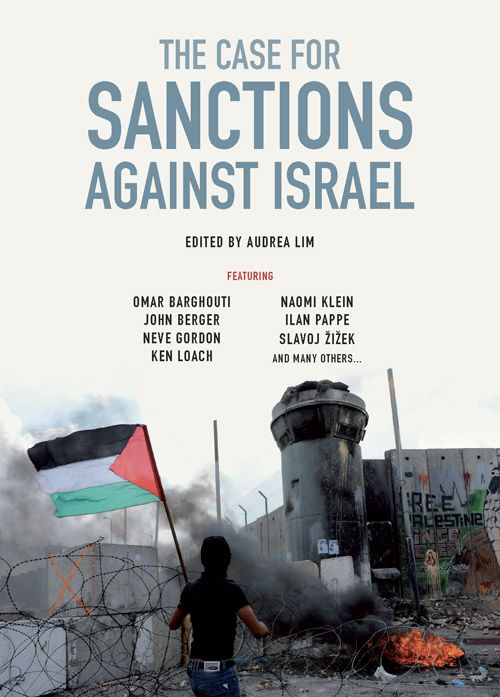
w640A follow-up to ‘Bombed, Destroyed, Slaughtered‘: Verso has now made available its 2012 anthology, The case for sanctions against Israel, as a free download here:

In July 2011, Israel passed legislation outlawing the public support of boycott activities against the state, corporations, and settlements, adding a crackdown on free speech to its continuing blockade of Gaza and the expansion of illegal settlements. Nonetheless, the campaign for boycott, divestment, and sanctions (BDS) continues to grow in strength within Israel and Palestine, as well as in Europe and the US.

This essential intervention considers all sides of the movement—including detailed comparisons with the South African experience—and contains contributions from both sides of the separation wall, along with a stellar list of international commentators. With contributions by Ra’anan Alexandrowicz, Merav Amir, Hind Awwad, Mustafa Barghouthi, Omar Barghouti, Dalit Baum, Joel Beinin, John Berger, Angela Davis, Nada Elia, Marc H. Ellis, Noura Erakat, Neve Gordon, Ran Greenstein, Ronald Kasrils, Jamal Khader, Naomi Klein, Paul Laverty, Mark LeVine, David Lloyd, Ken Loach, Haneen Maikey, Rebecca O’Brien, Ilan Pappe, Jonathan Pollak, Laura Pulido, Lisa Taraki, Rebecca Vilkomerson, Michael Warschawski, and Slavoj Žižek.

Lives, damned lives and statistics

The New Statesman is carrying a ‘reply‘ from a Professor Alan Johnson (Edge Hill University: it’s not clear to me if he’s still there) to a post by Jason Cowley on Gaza.  He doesn’t address Cowley’s substantive points about Gaza, but ends like this:

Today, there are forms of anti-Zionism that demonise Israel and fuel hate, from the academic theory of Judith Butler and Gianni Vattimo to the historiography of Shlomo Sand, from the popular street phenomenon of the “quenelle” to the ugly rise of “Holocaust inversion”.

To link Butler, Vattimo and Sand to fascist gestures like the quenelle is a lazy and offensive manoeuvre.  I leave the other scholars he mentions to those who know their work better than me: Johnson presumably has this interview with Vattimo in his sights, which is indeed reprehensible though scarcely representative of his corpus as a whole, but Sand is a distinguished historian whose counter-narrative to Zionism cannot be gratuitously dismissed, even if Johnson and his friends at the British Israel Communications and Research Centre don’t like it.

9781844675449-frontcover-01d22beb799d6fe99f8cd54193ff10f5But to suggest that ‘the academic theory of Judith Butler‘ somehow ‘demonises Israel and fuel[s] hate’ is intellectually vacuous.  What part of her ‘theory’ does Johnson have in mind? Her work on gender and subjectivity?  Her discussions of performativity? Her careful, ethical arguments about what constitutes a ‘grievable life’ in Precarious lives and Frames of war?

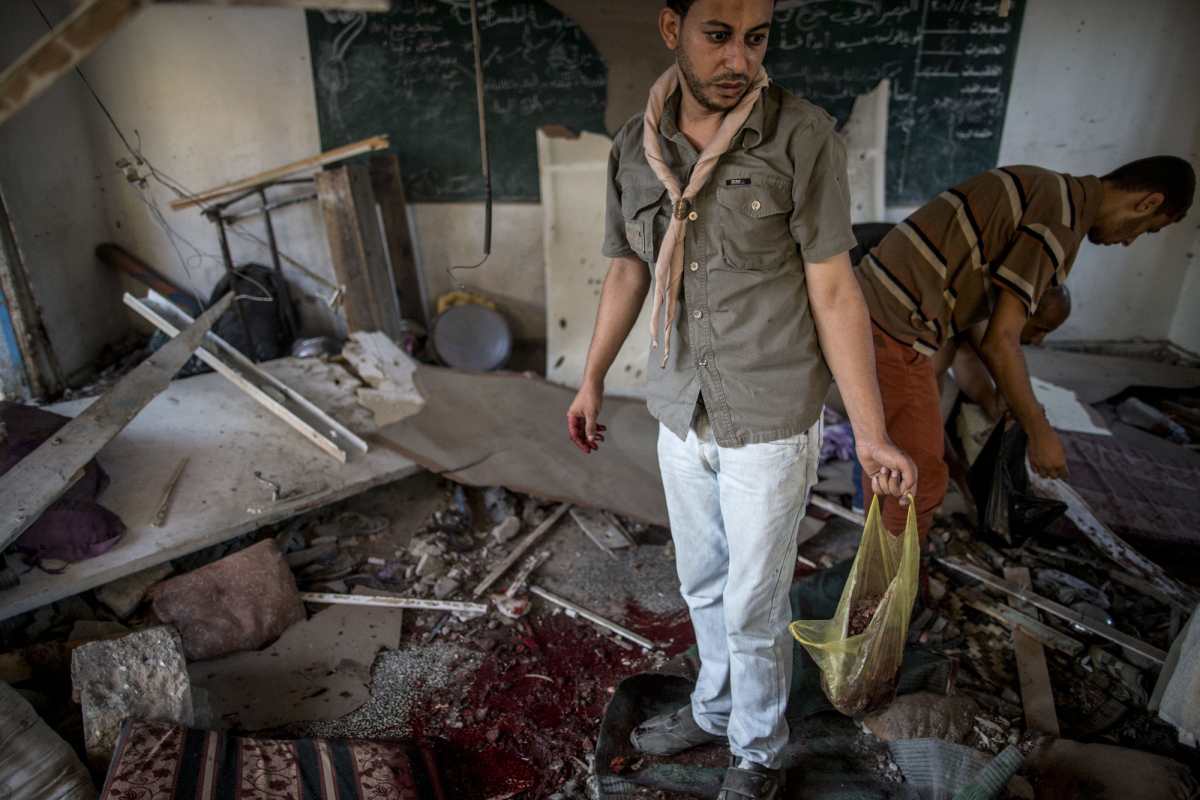
Those last two books do bear directly on the asymmetric horror that is being visited on the people of Gaza.  Readers may have seen the video of UNRWA spokesman Chris Gunness dissolving into tears as he tries to talk about the Israeli shelling of Jabalia Elementary Girls School early on Wednesday morning, when children were killed as they slept next to their parents.  We should pause here to acknowledge the extraordinarily brave and vital work the men and women of UNWRA perform day after day and night after night under the most exacting conditions (and if we are to talk about ‘demonisation’ we should certainly talk about the abuse hurled at UNWRA by the Israeli right). During the attack on the school, at least 15 people were killed and more than 100 wounded.  The location of the school and its humanitarian re-purposing as shelter for more than 3,000 people forced from their homes by the offensive had been communicated to the Israeli military 17 times before the attack. After the interview, Chris composed himself and had this to say:

“My feelings pale into insignificance compared to the enormity of the tragedy confronting each and every other person in Gaza at this time.

“It’s important to humanise the statistics and to realise that there is a human being with a heart and soul behind each statistic and that the humanity that lies behind these statistics should never be forgotten.”

This is a perfect expression of what Butler has in mind, and urges us to have in mind.  There’s no ‘hate’ there, and there isn’t in Butler’s work either: just a caring expression for grievable lives so cruelly lost.

TOPSHOTS-PALESTINIANS-ISRAEL-CONFLICT-GAZA

What Butler has provided, on several occasions, is a thoughtful, measured critique of political Zionism and of the policies and practices of successive Israeli governments that have diminished, dispossessed and, yes, demonised the Palestinian people (see a previous, brief post here). I suspect Johnson would see this as the work of a ‘self-hating Jew’, an old canard, but what then would her critics accept as a legitimate criticism of Israel?  And if we have to resurrect that line of argument, might not actions like the shelling of a school crowded with refugees be the work of a self-demonising state?

BUTLER Parting waysButler’s reflections have been brought together in her Parting ways: Jewishness and the critique of Zionism (2012), which is a principled statement of an oppositional – not defamatory – ethics and politics.  As it happens, Society and Space has just published an exceptionally thoughtful review of the book by Lisa Bhungalia which explicitly connects Butler’s vision of ‘co-habitation‘, which Butler sees as not only consistent with but arising from an indelibly Jewish tradition, to the latest Israeli attack on Gaza (where her sharpening of the concept of precarity is also surely crucial: see also ‘Precarious life and the obligations of cohabitation’, a lecture Butler delivered at Stockholm’s Nobel Museum in May 2011: you can download it here).

There are, as Lisa notes, dangers in turning ‘resistance to Zionism into a “Jewish” value’, as Butler herself acknowledges, but in the end

‘Butler puts forth a compelling political vision for Palestine/Israel predicated on an acknowledgment of historical injustice and the instatement of new polity that would presuppose an end to settler colonialism – yet at the same time, this vision is derived, in large part, from a Jewish philosophical tradition. Justice still remains a Jewish value.’

Words understandably failed Chris Gunness this week.  And when a Jewish scholar who works so respectfully with the writings of Hannah Arendt, Walter Benjamin, Martin Buber, Primo Levi and Emmanuel Levinas is accused of ‘fuelling hate’ and so egregiously linked to the rise of popular fascism then all possibility of critical engagement seems lost.

And yet. Butler talks about being critical as being ‘willing to examine what we sometimes presuppose in our way of thinking, and that gets in the way of making a more livable world.’  She has done precisely that in Parting ways.  Perhaps Professor Johnson, instead of recycling the hasbara formularies of the Israeli military, might do the same.

Gaza: a history

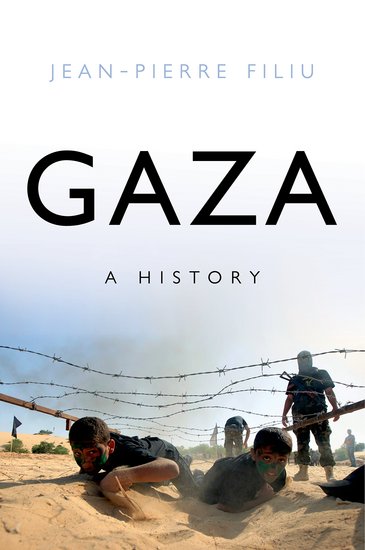
FILIU Gaza

New from Hurst (UK)/Oxford (US), a translation of Jean-Pierre Filiu‘s Histoire de Gaza (Fayard, 2012): Gaza: a history.

Through its millennium–long existence, Gaza has often been bitterly disputed while simultaneously and paradoxically enduring prolonged neglect. Jean-Pierre Filiu’s book is the first comprehensive history of Gaza in any language.

Squeezed between the Negev and Sinai deserts on the one hand and the Mediterranean Sea on the other, Gaza was contested by the Pharaohs, the Persians, the Greeks, the Romans, the Byzantines, the Arabs, the Fatimids, the Mamluks, the Crusaders and the Ottomans. Napoleon had to secure it in 1799 to launch his failed campaign on Palestine. In 1917, the British Empire fought for months to conquer Gaza, before establishing its mandate on Palestine.

In 1948, 200,000 Palestinians sought refuge in Gaza, a marginal area neither Israel nor Egypt wanted. Palestinian nationalism grew there, and Gaza has since found itself at the heart of Palestinian history. It is in Gaza that the fedayeen movement arose from the ruins of Arab nationalism. It is in Gaza that the 1967 Israeli occupation was repeatedly challenged, until the outbreak of the 1987 intifada. And it is in Gaza, in 2007, that the dream of Palestinian statehood appeared to have been shattered by the split between Fatah and Hamas. The endurance of Gaza and the Palestinians make the publication of this history both timely and significant.

Here is the Contents list; despite the title of Part III, the book traces the story up to 2012 (the last chapter):

Part I – Gaza Before the Strip
Chapter 1 – The Crossroads of Empires
Chapter 2 – The Islamic Era
Chapter 3 – The British Mandate
Part II – 1947-1967: The Age of Mourning
Chapter 4 – The Catastrophe
Chapter 5 – Refugees and Fedayin
Chapter 6 – The First Occupation
Chapter 7 – Nasser’s Children
Part III – The Crushed Generation
Chapter 8 – The Four Years of War
Chapter 9 – The Era of the Notables
Chapter 10 – The Alien Peace
Chapter 11 – The New Wave
Part III – 1987-2007 The Generation of the Intifadas
Chapter 12 – The Revolt of the Stones
Chapter 13 – A Sharply Limited Authority
Chapter 14 – Days of Fury
Chapter 15 – One Palestine Against Another
Chapter 16 – Five Years in the Ruins

Here’s Mark Levine:

‘Anyone familiar with Jean-Pierre Filiu’s scholarship knows well his talent for taking complex historical processes and bringing their relevance for the present day to the front burner. Never have such skills been more needed than in addressing the still poorly understood history of Gaza. And Filiu succeeds admirably. Providing a wonderful synopsis of a century’s worth of history, his discussion of the more direct roots of the present violent dynamics, beginning with the “crushed generation” of the Six Day War and continuing through the travails of Gaza’s burgeoning hiphop scene, demonstrates just how historically and culturally rich remains this much abused land. A clear must-read for all those seeking to think outside the existing outdated prisms for studying history, and the future of Gaza and Palestine/Israel writ large.’ 

Gilbert Achcar writes:

‘Jean-Pierre Filiu is a scholar of international reputation and a champion of the downtrodden. This book will make you wonder how there could be such a paucity of works on Gaza, despite its centrality to Palestinian history, and help the reader better appreciate the plight of Gaza’s population.’

Filiu is Professor of Middle East Studies at Sciences-Po, but he’s more than a scholar; a former diplomat, he’s also published two graphic novels and written two popular songs.  This one is about Gaza, and it’s timely too:

Geographies of peace

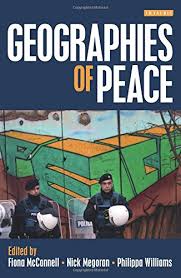
News today from I.B. Tauris of a new collection edited by Fiona McConnell, Nick Megoran and Philippa Williams, Geographies of peace:

Geographies of peaceFrom handshakes on the White House lawn to Picasso’s iconic dove of peace, the images and stereotypes of peace are powerful, widespread and easily recognizable. Yet if we try to offer a concise definition of peace it is altogether a more complicated exercise. Not only is peace an emotive and value-laden concept, it is also abstract, ambiguous and seemingly inextricably tied to its antithesis: war. And it is war and violence that have been so compellingly studied within critical geography in recent years. This volume offers an attempt to redress that balance, and to think more expansively and critically about what peace means and what geographies of peace may entail. The editors begin with an examination of critical approaches to peace in other disciplines and a helpful genealogy of peace studies within geography. The book is then divided into three sections. The opening section [Contesting narratives of peace] examines how the idea of peace may be variously constructed and interpreted according to different sites and scales. The chapters in the second section [Techniques of peacemaking] explore a remarkably wide range of techniques of peacemaking.

This widens the discussion from the archetypical image of top-down, diplomatic state-led initiatives to imperial boundary making practices, grassroots cultural identity assertion, boycotts, self-immolation, ex-paramilitary community activism, and ‘protective accompaniment’. The final section [Practices of coexistence] shifts the scale and focus to everyday personal relations and a range of practices around the concept of coexistence. In their concluding chapter the editors spell out some of the key questions that they believe a geography of peace must address: What spatial factors have facilitated the success or precipitated the failure of some peace movements or diplomatic negotiations? Why are some ideologies productive of violence in some places but co-operation in others? How have some communities been better able to deal with religious, racial, cultural and class conflict than others? How have creative approaches to sharing sovereignty mitigated or transformed territorial disputes that once seemed intractable? Geographies of Peace is the first book wholly devoted to exploring the geography of peace.

Drawing on both recent advances in social and political theory and detailed empirical research covering four continents, it makes a significant intervention into current debates about peace and violence.

Introduction: Geographical Approaches to Peace

PART I: CONTESTING NARRATIVES OF PEACE

2. Peace and Critical Geopolitics – Simon Dalby

3. Building Peaceful Geographies in and through Systems of Violence – Nicole Laliberte

4. Unearthing the Local: Hegemony and Peace Discourses in Central Africa – Patricia Daley

PART II: TECHNIQUES OF PEACEMAKING

5. Moving Away from the Edge: Rethinking International Boundary Practices – John Donaldson

6. Making Space for Peace: International Protective Accompaniment in Colombia – Sara Koopman

7. Contextualizing and Politicizing Peace: Geographies of Tibetan Satyagraha – Fiona McConnell

8. Transforming the Troubles: Cultural Geographies of Peacebuilding in Northern Ireland – Lia di Shimada

PART III: PRACTICES OF COEXISTENCE

9. A place of empathy in a fragile contentious landscape: environmental Peacebuilding in the Eastern Mediterranean –  Stuart Schoenfeld, Asaf Zohar, Ilan Alleson, Osama Suleiman and Galya Sipos-Randor

10. Everyday Peace, Agency and Legitimacy in North India – Philippa Williams

11. Migration and Peace: the Transnational Activities of Bukharan Jews – Nick Megoran

12. Welcome to Sheffield: the Less than Violent Geographies of Urban Asylum – Jonathan Darling

Conclusion: Geographies of peace, geographies for peace

Style wars

One of these days I’ll set out the advice I give to students about writing essays – and when I do I’ll also include what I wish published authors would avoid too (me included) – but in the meantime you might be interested in these trenchant words of advice:

Keep the language crisp and pungent; prefer the forthright to the pompous and ornate.
Do not stray from the subject; omit the extraneous, no matter how brilliant it may seem or even be.
Favor the active voice and shun streams of polysyllables and prepositional phrases.
Keep sentences and paragraphs short, and vary the structure of both.
Be frugal in the use of adjectives and adverbs; let nouns and verbs show their own power.

They are taken from the CIA’s detailed Style Manual & Writers Guide for Intelligence Publications issued in 2011; you can find Michael Silverberg‘s commentary at Quartz here.

CIA Style Guide

What particularly caught my eye was this admonition:

Do not uppercase the w in Korean war, which was “undeclared”; the same logic applies to Vietnam war and Falklands war, and a similar convention (if not logic) to the Iran-Iraq war.

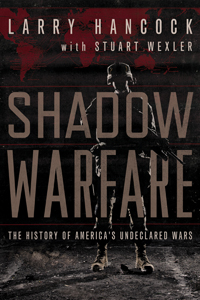
Shadow-Warfare_FINALHidden in plain sight here is the remarkable fact that the United States has not formally declared war since 1941.  You may think that not much depends on a formal declaration, and you would be right, except that this reluctance says much about executive authority and, crucially, what Larry Hancock and Stuart Wexler call, in their excellent Shadow Warfare (Counterpoint, 2014), ‘the history of America’s undeclared wars’.

In a sense, their book provides the back-story to Jeremy Scahill‘s Dirty Wars:

Contrary to their contemporary image, deniable covert operations are not something new. Such activities have been ordered by every president and every administration since World War II. Clandestine operations have often relied on surrogates, with American personnel involved only at a distance, insulated by layers of deniability.

Shadow Warfare traces the evolution of these covert operations, detailing the tactics and tools used from the Truman era through those of the contemporary Obama administration. It also explores the personalities and careers of many of the most noted shadow warriors of the past sixty years, tracing the decades-long relationship between the CIA and the military.

Shadow Warfare offers a balanced, non-polemic exploration of American concealed warfare, detailing its patterns, consequences, and collateral damage, and presenting its successes as well as its failures. Hancock and Wexler explore why every president, from Franklin Roosevelt on, felt compelled to turn to secret, deniable military action. It also delves into the political dynamic of the president’s relationship with Congress, and the fact that despite decades of warfare, Congress has chosen not to exercise its responsibility to declare a single state of war—even for extended and highly visible combat.