Vertical

Vertical_Cover-90b43d704855b7adb88eb5048b187a67

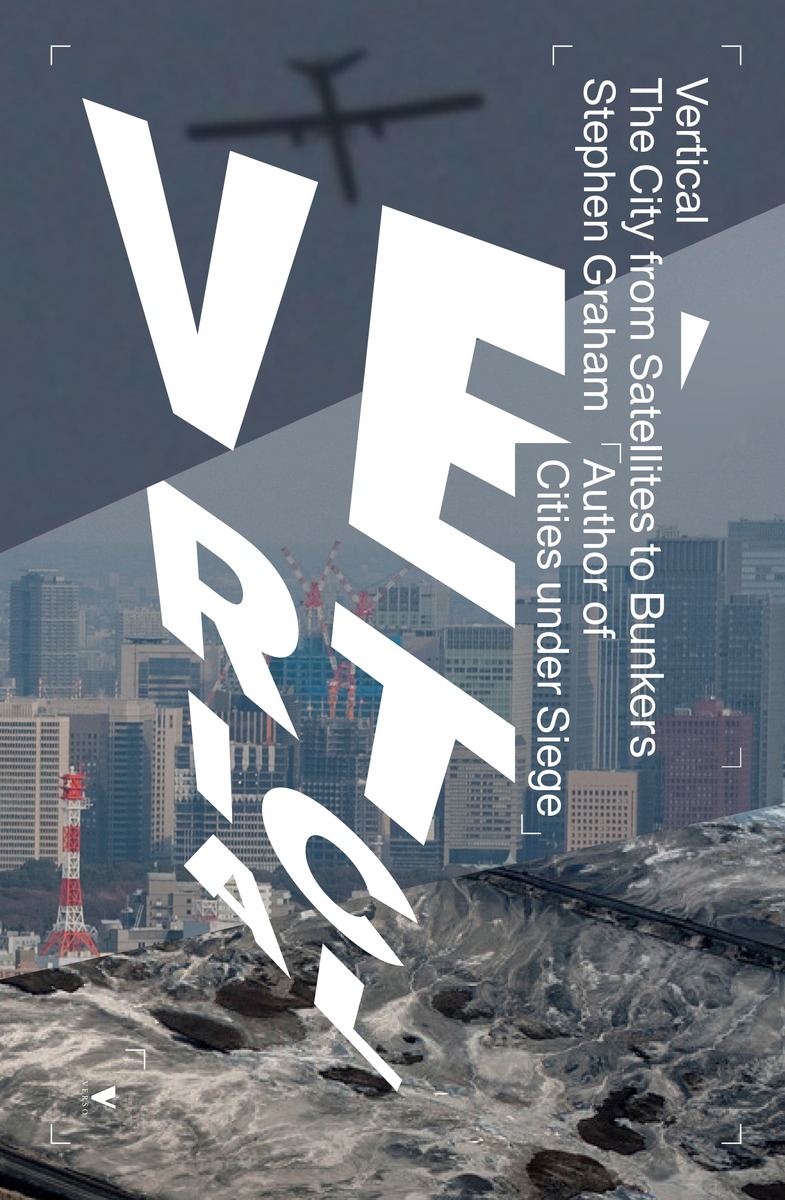
Steve Graham has kindly sent me the page proofs of his new book, Vertical: the city from satellites to tunnels, due from Verso and Penguin/Random House in October/November (it’s already available as an e-book from Amazon).  The subtitle varies depending on where you look – the proofs have both ‘from satellites to tunnels’ and ‘from satellites to bunkers’, and you can find both in the ads – but whatever version they settle on it’s clear that this is yet another tour (sic) de force.

From the penthouse to the sewers—the political geography of the vertical city

Vertical is a brilliant re-imagining of the world we live in. Today we live in a world that can no longer be read as a two-dimensional map. In Vertical Stephen Graham rewrites the city at every level, calling for a a new understanding of our surroundings that takes into account above and below: why Dubai has been built to be seen from GoogleEarth; how the superrich in Sao Paulo live their penthouse lives far from the street; why London billionaires build vast subterranean basements rather than move house. Vertical will make you look at the city anew: from the viewfinders of drones, satellites, from the top of skyscrapers, at street-level and from underground bunkers: this is a new politics of space and geography.

It’s composed of an introduction (‘Going vertical’) and 15 essays:

Part One: Above

1 Satellite: Enigmatic presence

2 Bomber: Death from above

3 Drone: Robot imperium

4 Helicopter: Direct arrival

5 Favela: Tenuous city

6 Elevator/Lift: Going up

7 Skyscraper: Vanity and violence

8 Housing: Luxified skies

9 Skywalk/Skytrain/Skydeck: Multilevel cities

10 Air: Lethal domes

Part Two: Below

11 Ground: Making geology

12 Basement/cellar: Urban undergrounds

13 Sewer: Sociology and shit

14 Bunker/tunnel: Subsurface sanctuaries

15 Mine: Extractive imperialism on the deep frontier


More terror from the skies

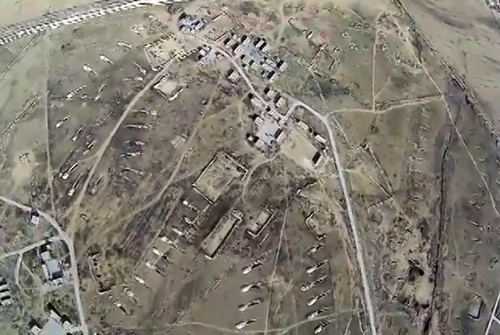
IS drone imagery Syria

Commentators have been worrying away at the likelihood of terrorist groups turning to small commercial drones not only for surveillance – IS have been doing that for some time now (see the image above) – but also for air strikes (see, for a recent example, Robert J Bunker‘s report for the US Army War College here).  The surveillance capabilities of quadcopters have been used to direct attacks by IS ground forces, including vehicles carrying suicide bombs, but the Pentagon now reports that the drones have also been equipped with improvised explosive devices (IEDs).

In response, the Pentagon has asked for $20 million for its Joint Improvised-Threat Defeat Agency to develop counter-measures: to ‘identify, acquire, integrate and conduct testing’ of methods that are able to ‘counter the effects of unmanned aerial systems and the threats they pose to U.S. forces.’

Perhaps they should also look closer to home.  Two men in Connecticut have contested the right of the Federal Aviation Administration to investigate their use of ‘recreational drones’ equipped with a handgun and a flamethrower.  Here’s a video clip:

And other commentators are already looking beyond war zones: systems like these enable groups like IS – and individuals – to carry the fight far beyond the territory they control and into the heart of cities in North America, Europe and elsewhere.

The sense of war

aleppo-2

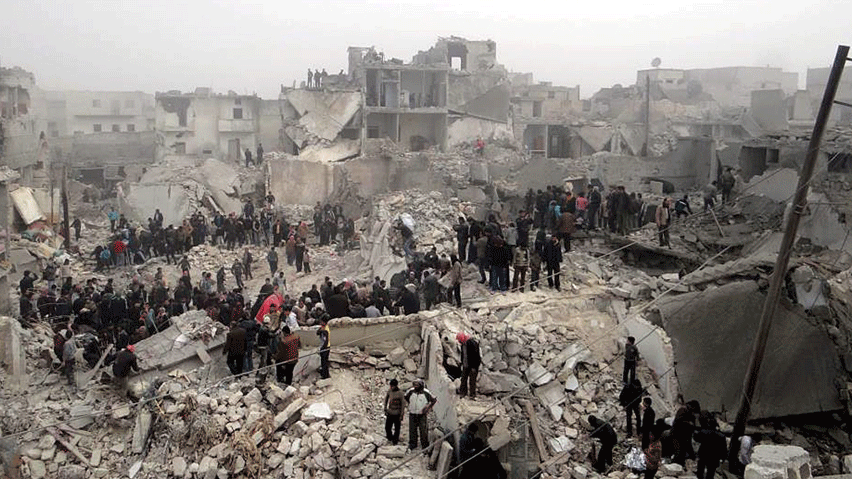
In the face – often literally so – of  attempts to render later modern war as somehow bodiless, a project that contorts itself into grotesque formations around the spectacularly contradictory vocabulary of ‘surgical strikes’ against the cancerous cells of insurgency and terrorism, I continue to be drawn to attempts to convey the  corporeality of its violence.  I started down this road in ‘The natures of war‘ and continue it in my attempts to think about what I call ‘corpographies‘ (see DOWNLOADS tab for both, and also here, here and here), and it is a constant concern in my current work on casualty evacuation from war zones.

So I was taken with a short extract from Janine di Giovanni‘s The Morning They Came for Us: Dispatches from Syria (2016) that appears in Harper‘s.  It’s called ‘The Sense of War‘ (in another register so often another oxymoron):

The morning they came for usWhat does war sound like? The whistling sound of the bombs falling can only be heard seconds before impact—enough time to know that you are about to die, but not enough time to flee.

What does the war in Aleppo smell of? It smells of carbine, of wood smoke, of unwashed bodies, of rubbish rotting, of . . . fear. The rubble on the street—the broken glass, the splintered wood that was once somebody’s home. On every corner there is a destroyed building that may or may not have bodies still buried underneath. Your old school is gone; so are the mosque, your grandmother’s house and your office. Your memories are smashed…

War is empty shell casings on the street, smoke from bombs rising up in mushroom clouds, and learning to determine which thud means what kind of bomb. Sometimes you get it right, sometimes you don’t.

War is the destruction, the skeleton and the bare bones of someone else’s life.

Anand Gopal thinks her prose is ‘overwrought’, though I don’t think that’s entirely surprising, and when Sebastian Junger says that she ‘has described war in a way that almost makes me think it never needs to be described again’, even in this short passage you can see – feel – what he means.  You can find other reviews here and here.

City of Light, City of Darkness

I’ve long been interested in cities under military occupation, and in particular in the ways in which armies spatialise the city in order to securitise it.  I still have a detailed presentation on the French occupation of Cairo at the end of the eighteenth century – for Edward Said the formative and diagnostic moment in the formation of a distinctively modern Orientalsim – and the US occupation of Baghdad at the beginning of the twenty-first.  The parallels are as striking as the differences, and one of these days I know I have to find the time to convert the image-stream into a word-stream.

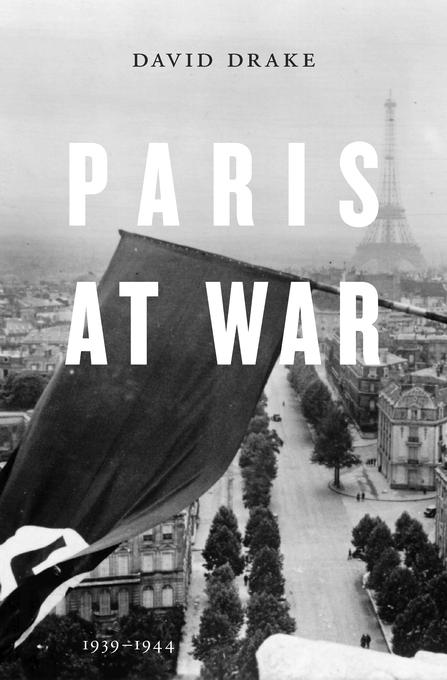
So this explains why a new book on Paris under German occupation in the Second World War caught my eye.

DRAKE Paris at warDavid Drake‘s Paris at War, 1939-1945 from Harvard/Belknap was published last month:

Paris at War chronicles the lives of ordinary Parisians during World War II, from September 1939 when France went to war with Nazi Germany to liberation in August 1944. Readers will relive the fearful exodus from the city as the German army neared the capital, the relief and disgust felt when the armistice was signed, and the hardships and deprivations under Occupation. David Drake contrasts the plight of working-class Parisians with the comparative comfort of the rich, exposes the activities of collaborationists, and traces the growth of the Resistance from producing leaflets to gunning down German soldiers. He details the intrigues and brutality of the occupying forces, and life in the notorious transit camp at nearby Drancy, along with three other less well known Jewish work camps within the city.

The book gains its vitality from the diaries and reminiscences of people who endured these tumultuous years. Drake’s cast of characters comes from all walks of life and represents a diversity of political views and social attitudes. We hear from a retired schoolteacher, a celebrated economist, a Catholic teenager who wears a yellow star in solidarity with Parisian Jews, as well as Resistance fighters, collaborators, and many other witnesses.

Drake enriches his account with details from police records, newspapers, radio broadcasts, and newsreels. From his chronology emerge the broad rhythms and shifting moods of the city. Above all, he explores the contingent lives of the people of Paris, who, unlike us, could not know how the story would end.

Here is the Contents list:

Prologue
Introduction: The Road to War: September 1938–September 1939
1. The Phoney War: September 3, 1939–May 10, 1940
2. Blitzkrieg and Exodus: May 10, 1940–June 14, 1940
3. Parisians and Germans, Germans and Parisians
4. Paris, German Capital of France
5. Unemployment, Rationing, Vichy against Jews, Montoire
6. From Mass Street Protest to the “Führer’s Generous Gesture”
7. Protests, Pillaging, “V” for Victory, the First Roundup of Jews
8. Resistance and Repression
9. Resistance, Punishment, Allied Bombs, and Deportation
10. SS Seizure of Security, the Yellow Star, the Vél’d’hiv’ Roundup, La Relève
11. Denunciations, Distractions, Deprivations
12. Labour Conscription, Resistance, the French Gestapo
13. Anti-Bolshevism, Black Market, More Bombs, Drancy
14. A Serial Killer on the Run, Pétain in Paris, the Milice on the Rampage, the Allies on Their Way
15. The Liberation of Paris
Conclusion

For a principled contemporary account, incidentally, and one that reverberates with the power of the literary sensibility that was so repugnant to the Nazis, it’s hard to beat Jean Guéhenno‘s Diary of the Dark Years, 1940-1944: Collaboration, Resistance, and Daily Life in Occupied Paris.

Another Manhattan Project

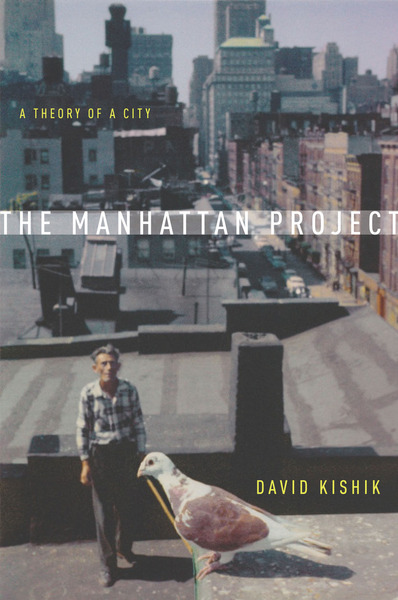
I still regard Postmodern geographies as Ed Soja‘s finest book – his most considered and his most creative – and within that his essay on ‘Taking Los Angeles Apart‘ is surely the stand-out contribution.  By turns playful and passionate, it’s packed with insights about Los Angeles and late modern cities.  I discussed it at length in Geographical imaginations – the book not the blog – but the essay has come back to haunt me ever since I learned of an extraordinary new book which I know Ed would have read with the greatest interest.

KISHIK The Manhattan Project

It’s David Kishik‘s The Manhattan Project, which I stumbled across because of its title and my new-found interest in seeing drones through post-atomic eyes.  But it’s not about that Manhattan Project at all.  Instead, it riffs on Benjamin’s Arcades Project in the most astonishing of ways:

In The Manhattan Project, David Kishik dares to imagine a Walter Benjamin who did not commit suicide in 1940, but managed instead to escape the Nazis to begin a long, solitary life in New York. During his anonymous, posthumous existence, while he was haunting and haunted by his new city, Benjamin composed a sequel to his Arcades Project. Just as his incomplete masterpiece revolved around Paris, capital of the nineteenth century, this spectral text was dedicated to New York, capital of the twentieth. Kishik’s sui generis work of experimental scholarship or fictional philosophy is thus presented as a study of a manuscript that was never written.

The fictitious prolongation of Benjamin’s life will raise more than one eyebrow, but the wit, breadth, and incisiveness of Kishik’s own writing is bound to impress. Kishik reveals a world of secret affinities between New York City and Paris, the flâneur and the homeless person, the collector and the hoarder, the covered arcade and the bare street, but also between photography and graffiti, pragmatism and minimalism, Andy Warhol and Robert Moses, Hannah Arendt and Jane Jacobs. A critical celebration of New York City, The Manhattan Project reshapes our perception of urban life, and rethinks our very conception of modernity.

Another good friend who is sadly no longer with us, Allan Pred, would surely have relished that too. I’m sure Ed would have insisted that Benjamin would never have gone to New York and that, in common with Adorno, he would have sought refuge in L.A. (where else? In fact Adorno left New York for LA, though it’s impossible to think of Ed calling that ‘exile’).

You can read the Introduction to The Manhattan Project here and an extract from the first chapter here; there’s also an extended interview with David about the project here.

Finally, there’s an excellent review by Dustin Illingworth at The Brooklyn Rail here.  When Dustin says this –

Like Borges’s “Aleph,” New York is “the place where, without admixture or confusion, all the places of the world, seen from every angle, coexist.” It is therefore much to Kishik’s credit that his slim volume, a drop in the vast ocean of literature on the city, packs such a considerable theoretical punch.

– then we are back with Ed Soja’s essay, which also began with an appeal to The Aleph and also packed a considerable theoretical punch.

Militarized Cities

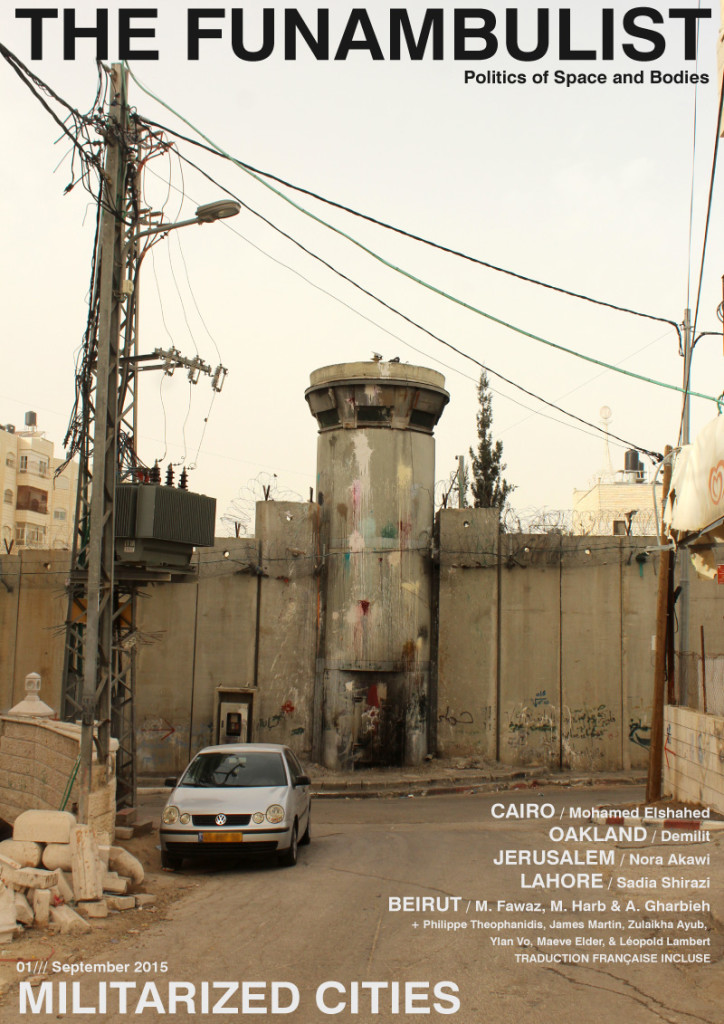
My good friend Léopold Lambert‘s Funambulist blog and his associated podcast (Archipelago) have been joined by a new print and digital magazine with the same title.

Its subtitle, “Politics of Space and Bodies”, expresses it ambition to bridge the world of design (architecture, urbanism, industrial and fashion design) with the world of the humanities (philosophy, anthropology, history, geography, etc.) through critical articles written by long-time collaborators as well as new ones.

Many aspects of The Funambulist’s editorial mediums remain free and in open access (books, blog, and podcast) and readers who enjoy the forms and contents of the platform are invited to consider purchasing or subscribing to the magazine as a form of support for this form of production of knowledge.

The inaugural September issue on Militarized Cities is available on pre-sale.  It includes:

Cover Militarized Cities2 | INTRODUCTION: MILITARIZED CITIES
by Léopold Lambert
8 | BEIRUT: MAPPING SECURITY
by Mona Fawaz, Mona Harb & Ahmad Gharbieh
14 | LAHORE: ARCHITECTURE OF IN/SECURITY
by Sadia Shirazi
20 | CAIRO: A MILITARIZED LANDSCAPE
by Mohamed Elshahed
26 | OKLDCAAN: CAPITAL BUILDING OF THE OAKLAND SECURITY CLOUD
by Demilit (Javier Arbona, Bryan Finoki & Nick Sowers)
32 | JERUSALEM: DISMANTLING PHANTASMAGORIAS, CONSTRUCTING IMAGINARIES
by Nora Akawi
38 | ARCHIPELAGO: STATE OF EXCEPTION CITY
by Philippe Theophanidis
42 | PHOTOGRAPHY: THE CITY AND THE WALL
46 | STUDENTS: REVISING HISTORIES [building truth]
by James Martin
48 | STUDENTS: HIDDEN IN PLAIN SIGHT
by Zulaikha Ayub
50 | STUDENTS: EXPANSION OF MILITARY LANDSCAPES
by Maeve Elder & Ylan Vo
52 | TRADUCTIONS FRANCAISES DES ARTICLES

Subscription details for both the print and digital editions are here; the project as a whole can be accessed via The Funambulist‘s Home page here.

The blue sky of Hiroshima

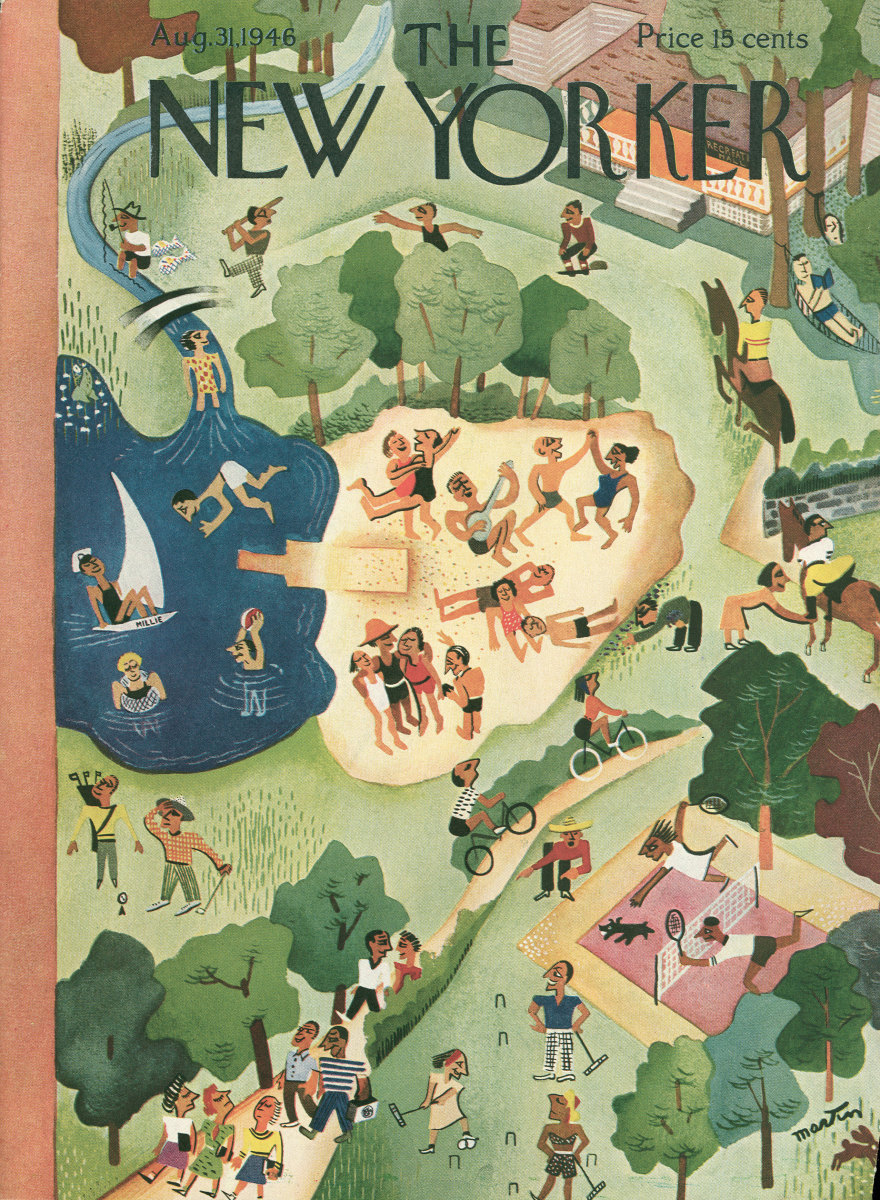
1946_08_31_001_CV1__xx_KA-880-1

It’s the bleakest of anniversaries – the bombing of Hiroshima 70 years ago today – and there is no shortage of commentary (see, for example, here and here).  John Hersey‘s book-length essay on Hiroshima, which filled most of  the 31 August 1946 issue of the New Yorker and has been republished online here.

At exactly fifteen minutes past eight in the morning, on August 6, 1945, Japanese time, at the moment when the atomic bomb flashed above Hiroshima, Miss Toshiko Sasaki, a clerk in the personnel department of the East Asia Tin Works, had just sat down at her place in the plant office and was turning her head to speak to the girl at the next desk. At that same moment, Dr. Masakazu Fujii was settling down cross-legged to read the Osaka Asahi on the porch of his private hospital, overhanging one of the seven deltaic rivers which divide Hiroshima; Mrs. Hatsuyo Nakamura, a tailor’s widow, stood by the window of her kitchen, watching a neighbor tearing down his house because it lay in the path of an air-raid-defense fire lane; Father Wilhelm Kleinsorge, a German priest of the Society of Jesus, reclined in his underwear on a cot on the top floor of his order’s three-story mission house, reading a Jesuit magazine, Stimmen der Zeit; Dr. Terufumi Sasaki, a young member of the surgical staff of the city’s large, modern Red Cross Hospital, walked along one of the hospital corridors with a blood specimen for a Wassermann test in his hand; and the Reverend Mr. Kiyoshi Tanimoto, pastor of the Hiroshima Methodist Church, paused at the door of a rich man’s house in Koi, the city’s western suburb, and prepared to unload a handcart full of things he had evacuated from town in fear of the massive B-29 raid which everyone expected Hiroshima to suffer. A hundred thousand people were killed by the atomic bomb, and these six were among the survivors. They still wonder why they lived when so many others died. Each of them counts many small items of chance or volition—a step taken in time, a decision to go indoors, catching one streetcar instead of the next—that spared him. And now each knows that in the act of survival he lived a dozen lives and saw more death than he ever thought he would see. At the time, none of them knew anything.

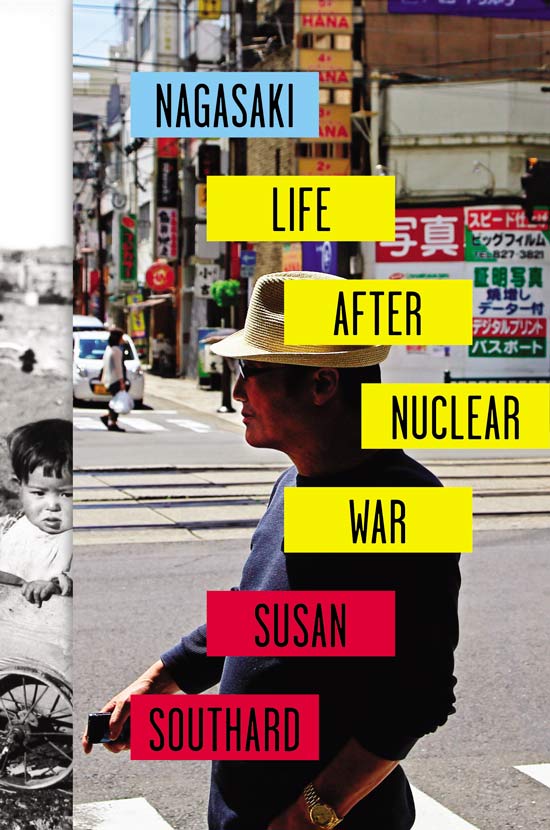
It’s worth comparing this with the opening scene of Kamila Shamsie‘s brilliant novel Burnt Shadows which imagines the second atomic bomb dropped on Nagasaki three days later.  Given the map I reproduce below, it’s also worth reading her short essay on the effect of using Google Earth to ‘map’ the bombing here; and since Nagasaki too often disappears from critical view, try Susan Southard‘s recently published Nagasaki: life after nuclear war (Viking/Penguin, 2015) – you can read a long extract here and here.

Nagasaki-Cover

For a brave attempt to bring the the two bombings into the same narrative frame, see Paul Ham‘s Hiroshima Nagasaki (2012/2014): there’s a helpful review essay by H. Bruce Franklin here, and The Atlantic has just published an extract, ‘The bureaucrats who singled out Hiroshima for destruction’ here.

Joyce C. Stearns, a scientist representing the Air Force, named the four shortlisted targets in order of preference: Kyoto, Hiroshima, Yokohama, and Kokura. They were all “large urban areas of more than three miles in diameter;” “capable of being effectively damaged by the blast;” and “likely to be unattacked by next August.”… Tokyo had been struck from the list because it was already “rubble,” the minutes noted…

Captain William “Deak” Parsons, associate director of Los Alamos’s Ordnance Division, gave another reason to drop the bomb on a city center: “The human and material destruction would be obvious.” An intact urban area would show off the bomb to great effect. Whether the bomb hit soldiers, ordnance, and munitions factories, while desirable from a publicity point of view, was incidental to this line of thinking—and did not influence the final decision.

(You’ll have to read the extract to see why Kyoto was eventually removed from the list).

hiroshima-nagasaki

For subsequent analysis, a good place to start is Alex Wellerstein‘s Restricted Data: the nuclear secrecy blog, which includes a series of excellent posts on sources and visualizations, on the Manhattan Project and what happened at Los Alamos, and most recently an essay which asks ‘Where there alternatives to the atomic bombings?‘ and gives lots of background to those terrible events.

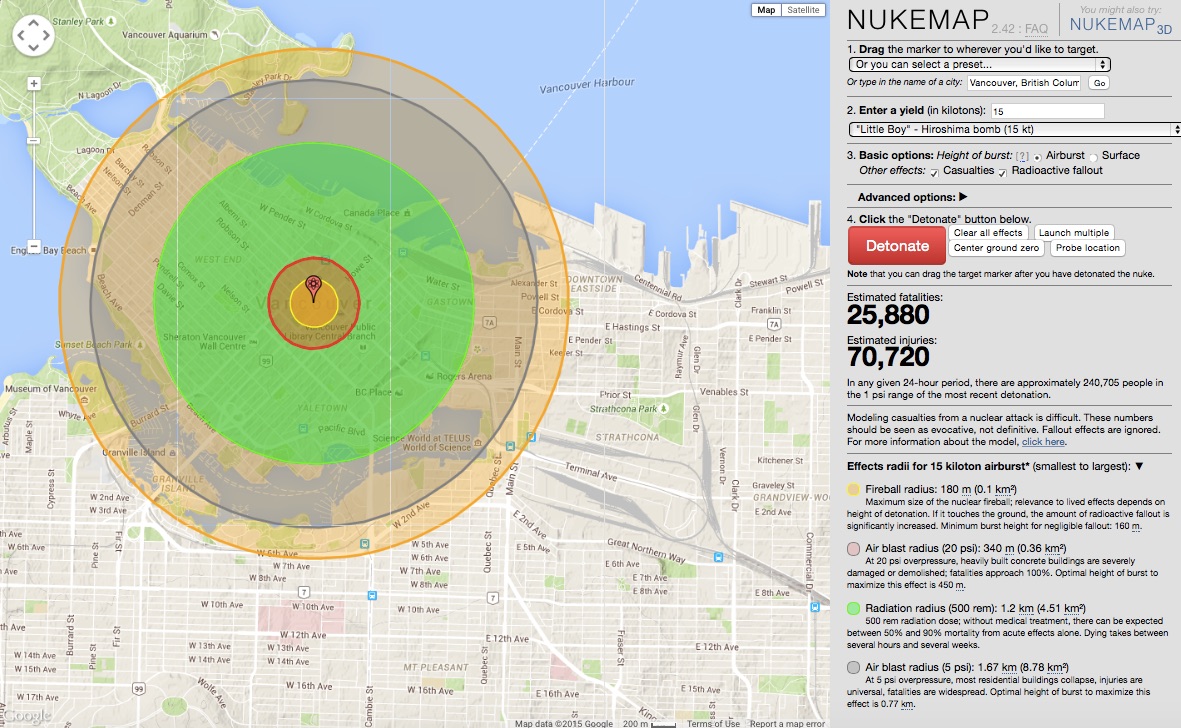
Among Alex’s visualizations is NUKEMAP, which simulates the dropping of ‘Little Boy’ on other towns and cities.  Here is downtown Vancouver (for a discussion of airbursts, see Alex’s post here).

Little Boy VANCOUVER JPEG

Elsewhere, there’s a special issue of Critical Military Studies on the anniversary, and all the articles are open access:

The most modern city in the world: Isamu Noguchi’s cenotaph controversy and Hiroshima’s city of peace: Ran Zwigenberg
Unbearable light/ness of the bombing: normalizing violence and banalizing the horror of the atomic bomb experiences: Yuki Miyamoto
Remembering nukes: collective memories and countering state history: Stefanie Fishel
Contested spaces of ethnicity: zainichi Korean accounts of the atomic bombings: Erik Ropers
Hiroshima and two paradoxes of Japanese nuclear perplexity: Thomas E. Doyle II
Re-imagining Hiroshima in Japan: elin o’Hara slavik
Memory and survival in everyday textures – Ishiuchi Miyako’s Here and Now: Atomic Bomb Artifacts, ひろしま/ Hiroshima 1945/2007: Makeda Best
Nagasaki Re-Imagined: the last shall be first: Kathleen Sullivan

There’s also a special issue of Thesis Eleven, (August 2015: 129 (1)) edited by Brad Evans and Keith Tester in association with the Histories of Violence ‘Disposable Life’ project; articles include:

Susan Neiman, Forgetting Hiroshima, remembering Auschwitz: Tales of two exhibits
Keith Tester, Hiroshima: Remembering and forgetting, everything and nothing
Michael J Shapiro, Hiroshima temporalities
Maja Zehfuss, (Nuclear) war and the memory of Nagasaki: Thinking at the (impossible) limit
Hiro Saito, The A-bomb victims’ plea for cosmopolitan commemoration: Toward reconciliation and world peace
Arne Johan Vetlesen, Post-Hiroshima reflections on extinction
Henry A Giroux, Hiroshima and the responsibility of intellectuals: Crisis, catastrophe, and the neoliberal disimagination machine

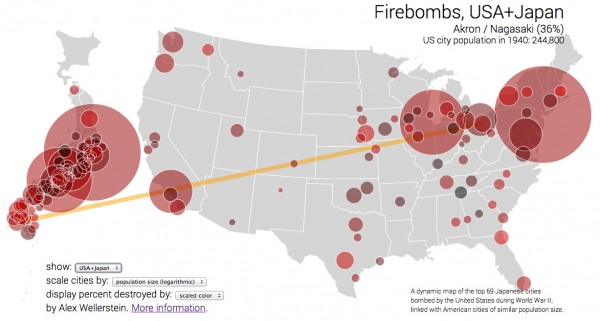
I have just two things to add.  The first is to draw attention to the firebombing of Japanese cities that preceded Hiroshima and Nagasaki (Alex compares them in an interesting commentary here and provides a series of compelling comparative interactives here: I’ve pasted an example below, and provided a short commentary here).

firebombs-usa-interactive-600x321

In fact, as my quotation from Paul Ham reveals, Hiroshima and Nagasaki were targeted precisely because they had been left alone during the previous attacks and would provide effective laboratories to test the effects of nuclear blasts.  On the firebombing campaign, see the painstaking work of Cary Karacas and his colleagues here (my commentaries on the project are here and here; see also their essay on the firebombing of Tokyo and its legacy here); their website includes both a Hiroshima archive and a Nagasaki archive.

Second, I’ve emphasised the comparative effort to ‘bring the war home’, to imagine the effects of Little Boy and Fat Man on other cities around the world.  There are obvious dangers in such an exercise – is our capacity for empathy so limited than we have to rely on a sort of critical narcissism: ‘imagine if it happened to us‘? – but perhaps the most significant objection is that such cartographic conceits can erase not only the bodies incinerated and maimed (through the very abstraction of cartography) but also the racialization of these unmarked bodies.  In the characteristically thoughtful introduction to his new book, Tense Future: Modernism, Total War, Encyclopedic Form (2015), Paul K. Saint Amour writes about ‘traumatic earliness’ – about the sense of anticipation, foreboding or bukimi that gripped the people of Hiroshima in the months before their collective deaths: that ‘uneasy combination of continued good fortune [escaping the firebombing] and expectation of catastrophe’.  But the ground had already been prepared in the United States, not only scientifically – the endless calculations, calibrations and experiments at Los Alamos – but also culturally.

Victory_through_air_power_xlg

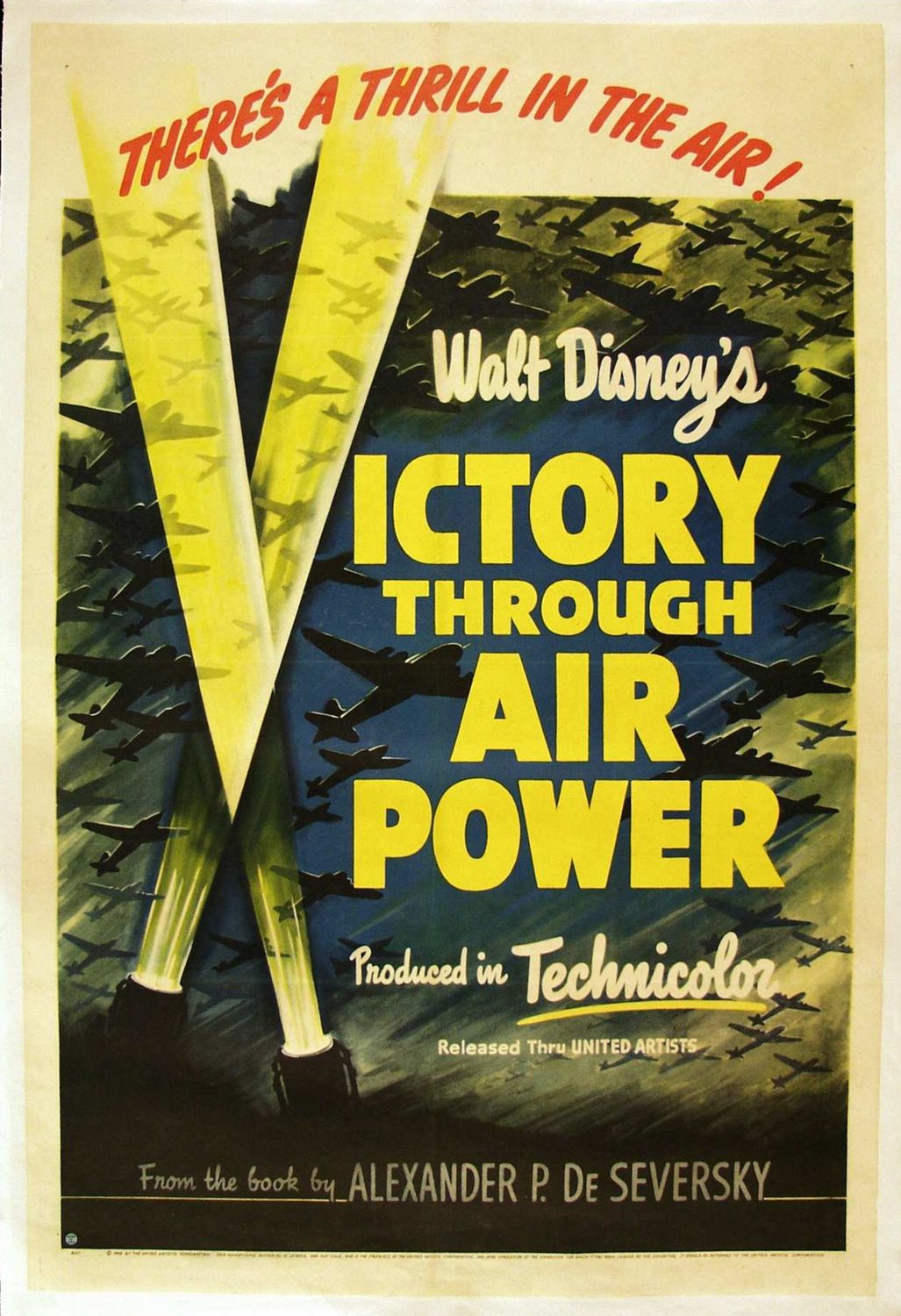
Michael Sherry‘s The rise of American Air Power: the creation of Armageddon (1987) and Paul Williams‘s Race, ethnicity and nuclear war (2011) are indispensable here – and there’s a sharp, contemporary commentary from Arthur Chu here –  but a vivid example is provided by Alex de Seversky‘s Victory through Air Power (1942) and, in particular, its celebration in Walt Disney‘s film version released in 1943.  For Disney, there was not only ‘a thrill in the air’ but an exuberant delight at death and destruction on the Japanese ground.  You can watch the whole thing below (or on YouTube) but to see what I mean start at 1.07 and watch right through the bombing to the anthropomorphism of the American eagle and the Japanese octopus that follows it.  There’s also a short commentary by Henry Giroux here.

Note: My title is taken from this poem by Yukiko Hayashi; if you click on nothing else, please click on this.

Two Tales of Two Cities

9780262527729_0

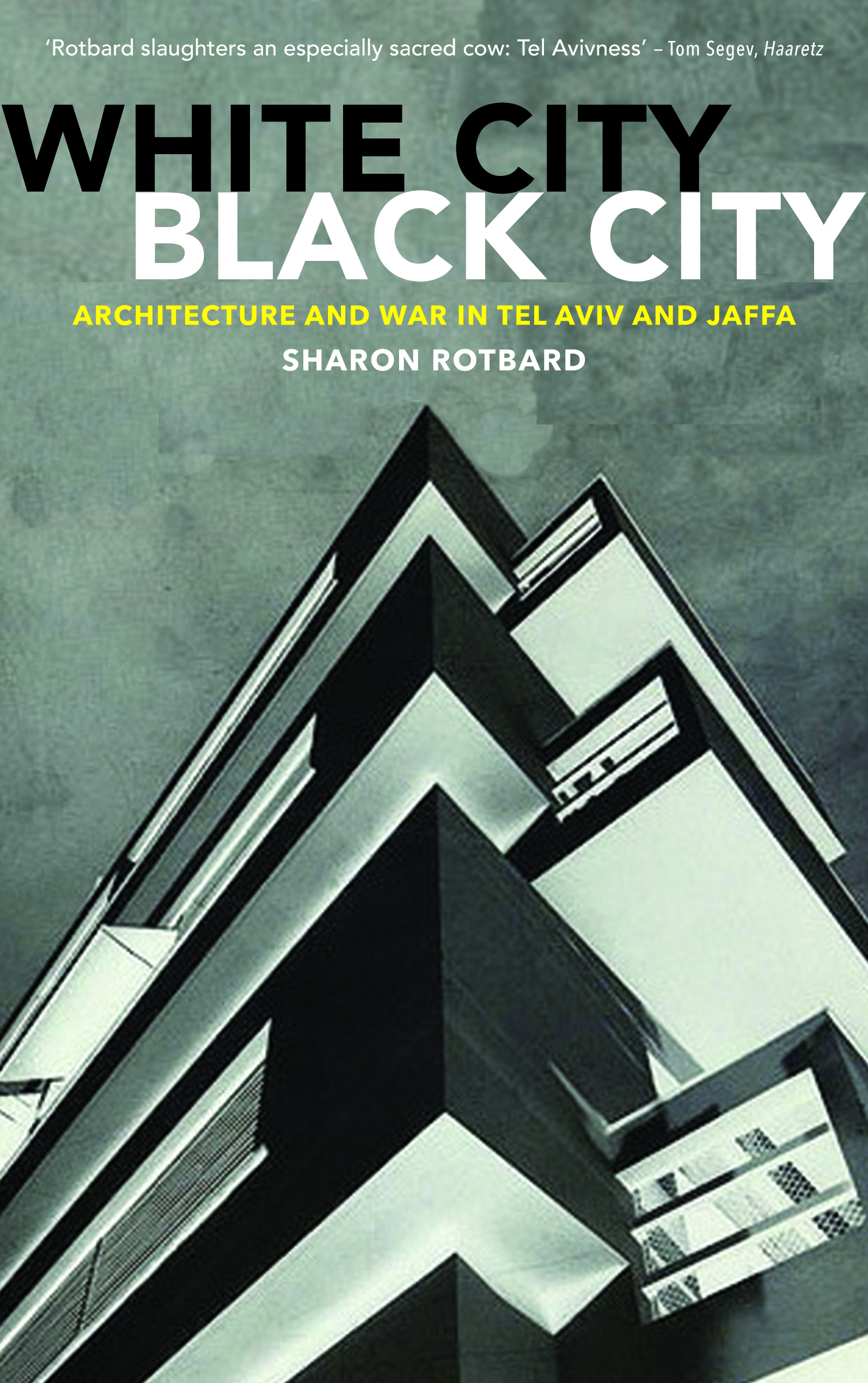
For those heading off to the International Conference on Critical Geography in Ramallah this summer, essential reading from Sharon RotbardWhite City, Black City: Architecture and War in Tel Aviv and Jaffa (MIT/Pluto Press, 2015) (first published in Hebrew in 2005).

In 2004, the city of Tel Aviv was declared by UNESCO a World Heritage Site, an exemplar of modernism in architecture and town planning. Today, the Hebrew city of Tel Aviv gleams white against the desert sky, its Bauhaus-inspired architecture betraying few traces of what came before it: the Arab city of Jaffa. In White City, Black City, the Israeli architect and author Sharon Rotbard offers two intertwining narratives, that of colonized and colonizer. It is also a story of a decades-long campaign of architectural and cultural historical revision that cast Tel Aviv as a modernist “white city” emerging fully formed from the dunes while ignoring its real foundation—the obliteration of Jaffa. Rotbard shows that Tel Aviv was not, as a famous poem has it, built “from sea foam and clouds” but born in Jaffa and shaped according to its relation to Jaffa. His account is not only about architecture but also about war, destruction, Zionist agendas, erasure, and the erasure of the erasure.

Rotbard tells how Tel Aviv has seen Jaffa as an inverted reflection of itself—not shining and white but nocturnal, criminal, dirty: a “black city.” Jaffa lost its language, its history, and its architecture; Tel Aviv constructed its creation myth. White City, Black City—hailed upon its publication in Israel as ”path-breaking,” “brilliant,” and “a masterpiece”—promises to become the central text on Tel Aviv.

There’s an excellent preview/review by Tom Sperlinger, ‘The “forced geography” of Tel Aviv‘, over at the electronic intifada:

At its heart, the book focuses on how Jaffa was all but absorbed into Tel Aviv and thus “ceased to exist as an urban and cultural entity” after 5,000 years. This focus on a city that isn’t there, which Rotbard describes as “an encyclopedia of ruins,” makes this a peculiar book to categorize.

It is not exactly a study of history or architecture. In fact, it can be quite frustrating as either, sometimes eliding past and present in the course of its argument. But it is compelling as a ghost story, in which the perpetual fictions created about Tel Aviv cannot obscure its past….[for a dissenting view, see the Comments at the electronic intifada]

Rotbard explains how in the decades since 1948, Tel Aviv has continued to push anything unwanted into the shadow city at its side:

Everything unwanted in the White City is relegated to the Black City: … garbage dumps, sewage pipes, high voltage transformers, towing lots and overcrowded central bus stations; noise and air pollution factories and small industries; illegal establishments like brothels, casinos and sex shops; unwelcoming and intimidating public institutions such as the police headquarters, jails, pathological institutes and methadone clinics; and finally, a complete ragtag of municipal outcasts and social pariahs — new immigrants, foreign workers, drug addicts and the homeless … Paradoxically, this has actually ensured that the Black City is the most colorful, heterogeneous and cosmopolitan city space in the whole of Israel.

9780520243712

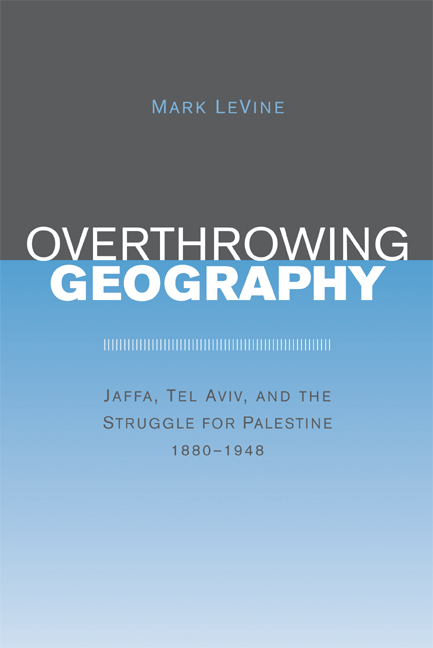
‘Forced geography’ – Sharon’s own term – reminds me of one of my favourite books, also about Jaffa and Tel Aviv: Mark Levine‘s Overthrowing Geography: Jaffa, Tel Aviv, and the Struggle for Palestine, 1880-1948 (University of California Press), which was published in 2005 hard on the heels of the original edition of White City, Black City:

This landmark book offers a truly integrated perspective for understanding the formation of Jewish and Palestinian Arab identities and relations in Palestine before 1948. Beginning with the late Ottoman period Mark LeVine explores the evolving history and geography of two cities: Jaffa, one of the oldest ports in the world, and Tel Aviv, which was born alongside Jaffa and by 1948 had annexed it as well as its surrounding Arab villages. Drawing from a wealth of untapped primary sources, including Ottoman records, Jaffa Shari’a court documents, town planning records, oral histories, and numerous Zionist and European archival sources, LeVine challenges nationalist historiographies of Jaffa and Tel Aviv, revealing the manifold interactions of the Jewish and Palestinian Arab communities that lived there.

At the center of the book is a discussion of how Tel Aviv’s self-definition as the epitome of modernity affected its and Jaffa’s development and Jaffa’s own modern pretenses as well. As he unravels this dynamic, LeVine provides new insights into how popular cultures and public spheres evolved in this intersection of colonial, modern, and urban space. He concludes with a provocative discussion of how these discourses affected the development of today’s unified city of Tel Aviv–Yafo and, through it, Israeli and Palestinian identities within in and outside historical Palestine.

Here is the Contents List:

1. Modern Cities, Colonial Spaces, and the Struggle for Modernity in the Eastern Mediterranean
2. From Cedars to Oranges: A History of the Jaffa–Tel Aviv Region from Antiquity to the Late Ottoman Period
3. Taming the Sahara: The Birth of Tel Aviv and the Last Years of Ottoman Rule
4. Crossing the Border: Intercommunal Relations in the Jaffa–Tel Aviv Region during the Mandate Period
5. A Nation from the Sands? Images of Jaffa and Tel Aviv in Palestinian Arab and Israeli Literature, Poetry, and Prose
6. Ceci N’est Pas Jaffa (This Is Not Jaffa): Architecture, Planning, and the Evolution of National Identities in Jaffa and Tel Aviv, 1880–1948
7. Planning to Conquer: The Role of Town Planning in the Expansion of Tel Aviv, 1921–1948
8. The New-Old Jaffa: Locating the Urban, the Public, and the Modern in Tel Aviv’s Arab Neighborhood

artworks-000109753529-bstbhi-t200x200POSTSCRIPT: A welcome reminder from Léopold Lambert of his interview with Dena Qaddumi (right) earlier this year on the spatial politics of Jaffa-Tel Aviv:

It attempts to propose a struggle narrative for Palestine that is not focused on Jerusalem to which many of us contribute, thus participating to a debate mostly focused on the 1967 war. By examining the spatial politics of Jaffa-Tel Aviv, Dena attempts to show that similar “ethnoocratic” logics of segregation are also at work in an environment admittedly less militarized. This logic also incorporates the same capitalist mechanisms of gentrification at work in other cities of the world. We begin by an historical approach to the “black” and “white” cities — using Sharon Rotbard’s terminology — before addressing its current situation, in particular from an architecture point of view, symptoms of the spatial violence at work within the city.

Mumford and sons

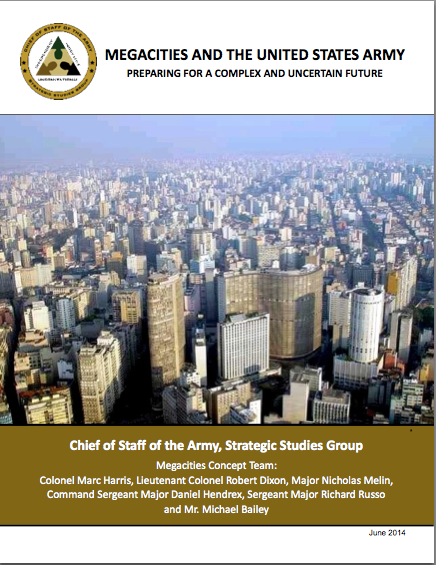
Megacities and the US ArmyPublic intelligence has made available a new report prepared by the US Army Strategic Studies Group’s ‘Megacities Concept Team’ after a year’s study called Megacities and the United States Army: preparing for a complex and uncertain future (June 2014).

The authors begin by conceding that ‘Megacities are a unique environment that the U.S. Army does not fully understand’, but since the announcement is made under a banner quote from Robert Kaplan‘s The revenge of geography don’t get your hopes up:

‘Crowded megacities, beset by poor living conditions, periodic rises in the price of commodities, water shortages and unresponsive municipal services, will be petri dishes for the spread of both democracy and radicalism, even as regimes will be increasingly empowered by missiles and modern outwardly focused militaries.’

They start by insisting on the critical importance of megacities for ‘global connectedness and order’ and the ‘global economy’ but warn that megacities are also threat platforms:

‘Large migratory populations reduce the transnational signature normally associated with terrorists, criminal, and espionage activities. Operating from megacities allow hostile actors relative freedom of maneuver as they blend in with the local population.’

You might think this would come as no surprise to a military that is scarcely a stranger to urban warfare, but the authors insist that the unprecedented scale of the problem has created a ‘gap’ in the US Army’s doctrine:

‘The Army’s largest and most recent example of urban operations is small in comparison to the challenges ahead. In Baghdad, the Army fought for almost a decade in an urban environment with a population of 6.5 million people. By 2030, there will be 37 cities across the world that are 200-400% larger than Baghdad.’

What they don’t ask is whether contemporary military doctrine – including the so-called ‘surge’ and the urban counterinsurgency models spun by Petraeus and his COIN artists – were even adequate in Baghdad.  What they claim instead is that megacities make it impossible for occupying armies to ‘isolate [physically or virtually] and shape the urban environment’, and so they call for a transformation in military urbanism that treats cities as interconnected complex systems.  Really.  Hence:

‘Regardless of the fragility or resilience of the city, their stable functioning is dependent on systems of finite capacity. When these systems, formal or informal, real or virtual experience demand which surpasses their capacity, the load on the city’s systems erode its support mechanisms, increasing their fragility. These systems are then more vulnerable to triggers which can push the city past its tipping point and render it incapable of meeting the needs of its population.’

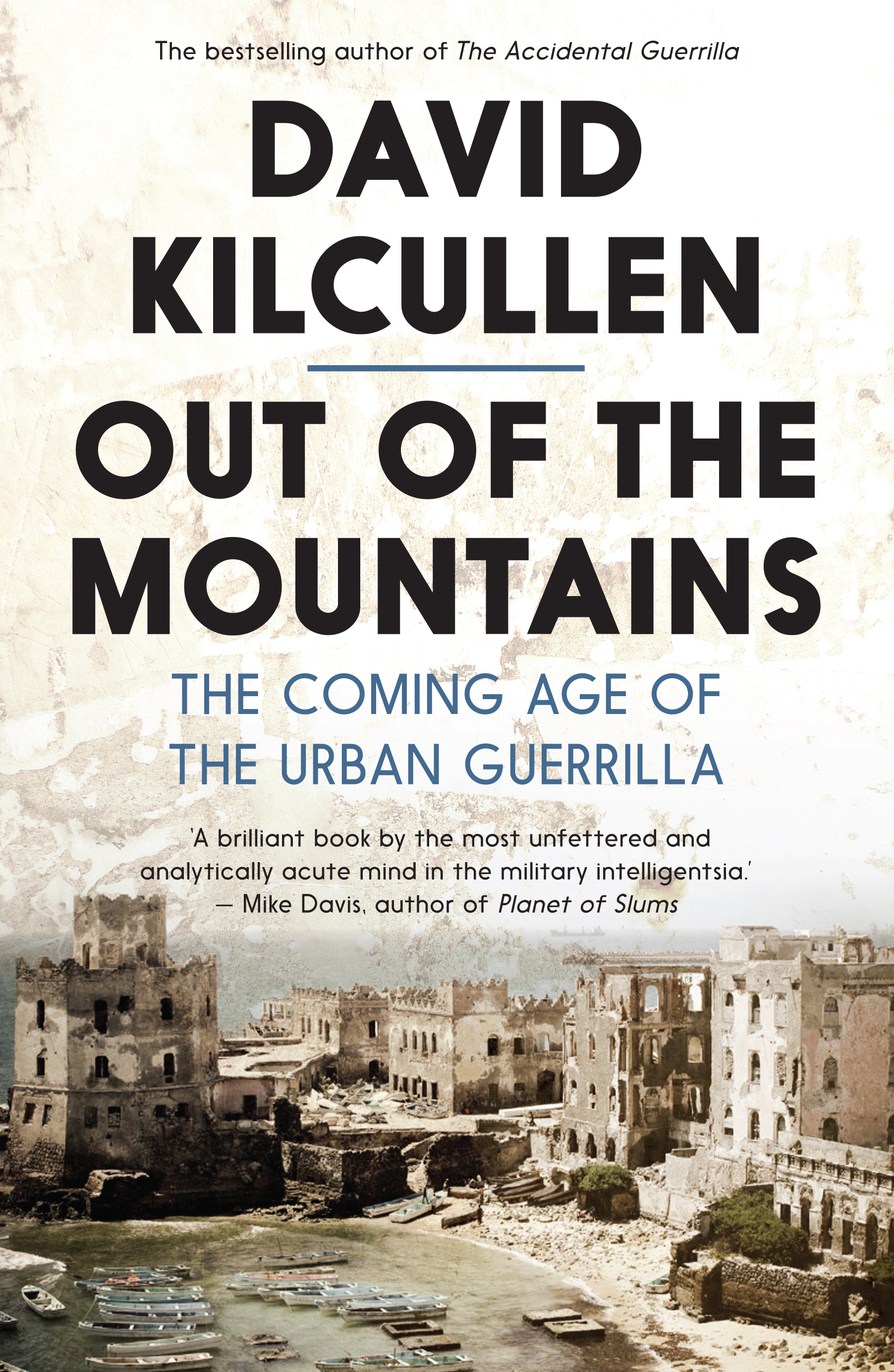
outofthemountains_300dpiMuch of this reads like a weak summary of David Kilcullen‘s thesis in Out of the mountains: the coming age of the urban guerrilla (and he at least does consider how well military doctrine fared in Baghdad). But rather than directly consider Kilcullen’s arguments – on which see my posts here and here – the report instead offers a series of one-page case-studies to illustrate a typology ranging from ‘cities that are highly integrated … with hierarchical governance and security systems, to cities that are loosely integrated with alternatively governed spaces and security systems.’

The case-studies include Bangkok, Rio, SãoPaulo, Lagos and Dhaka – but they begin, disconcertingly but perhaps not surprisingly given recent debates about the militarisation of policing in the United States, with New York.

Finally, the conclusion restates the introduction: megacities are important (‘unavoidable’) and the US Army doesn’t understand them.  Evidently not.

There are at least two issues to consider here.  First, the report says that part of its mandate is to present the Chief of Staff of the Army (Ray Odierno) with ‘independent, innovative and unconstrained ideas’: but there is spectacularly little sign of that in these pages.  I’m not surprised that the authors don’t consider (say) Steve Graham‘s Cities under siege: the new military urbanism (though they would undoubtedly learn a lot from it), but to pass over Kilcullen’s work with a single, glancing footnote reference is surely astonishing.  One of the proudest boasts of the architects of the revised counterinsurgency doctrine was its (their) intellectual credentials – ‘the graduate level of war’ – and yet this report fails to engage in any serious and sustained way with a stream of work in urban anthropology, urban geography, urban history,urban sociology and urban studies that has significantly re-shaped our understanding of contemporary urbanism.

Second – and here the critical point might be reversed – I am puzzled at how little attention is paid to military and paramilitary violence by many scholars of ‘planetary urbanism’.  In part, it’s high time to re-visit the genealogy of the ‘new military urbanism’ and to reflect on previous ‘military urbanisms’: the intimate, predatory relationship between cities and military violence is hardly novel, but its changing modalities need careful analysis.  But it’s also high time to think through the ways in which planetary urbanism cannot be reduced to the machinations of the global economy.  I admire Neil Brenner‘s ‘Theses on urbanisation’ [Public culture 25 (1) (2013)] enormously, and agree absolutely that ‘the concept of urbanisation requires systematic reinvention’ (p. 101).  But his arguments, together with the vivid images that illuminate his text, are silent about later modern war.  And yet his theses about ‘concentration and extension’ – not exactly a reinvention – invite a mapping (one among many, to be sure) onto the terrain of military and paramilitary violence.  He concludes:

‘It is the uneven extension of this process of capitalist creative destruction onto the scale of the entire planet, rather than the formation of a worldwide network of global cities or a single, world-encompassing megalopolis, that underpins the contemporary problematique of planetary urbanisation.’

Exactly so; but ‘creative destruction’ is more than a metaphor and its processes frequently involve new (even ‘creative’) modes of war-making.

Similarly, I’ve also learned much from Neil Brenner and Christian Schmid, ‘The urban age in question‘ [International journal of urban and regional research 38 (3) (2014)], but here too war is conspicuous by its absence.  I don’t think it’s entirely coincidental that so many major inquiries into the urban condition – ones that figure in their intellectual pantheon – should have been undertaken in the aftermath of the Second World War and its systematic assault on cities and their populations.

1101380418_400So let me end with an extract from a conversation I had with Stuart Elden [ACME 10 (2) (2011)] that will also explain the title of this post:

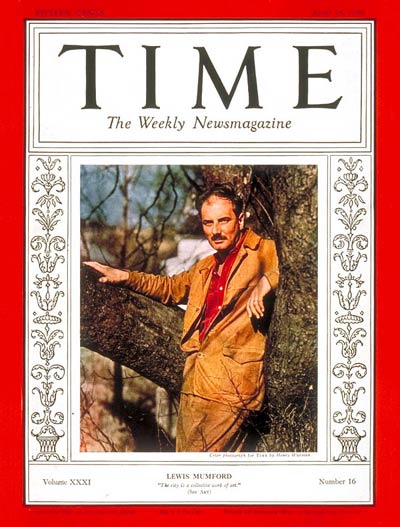
‘In The Culture of Cities, published just one year before the Second World War broke out, [Lewis] Mumford included ‘A brief outline of hell’ in which he turned the Angelus towards the future to confront the terrible prospect of total war. Raging against what he called the ‘war-ceremonies’ staged in the ‘imperial metropolis’ (‘from Washington to Tokyo, from Berlin to Rome’: where was London, I wonder? Moscow?), Mumford fastened on the anticipatory dread of air war. The city was no longer the place where (so he claimed) security triumphed over predation, and he saw in advance of war not peace but another version of war. Thus the rehearsals for defence (the gas-masks, the shelters, the drills) were ‘the materialization of a skillfully evoked nightmare’ in which fear consumed the ideal of a civilized, cultivated life before the first bombs fell. The ‘war-metropolis’, he concluded, was a ‘non-city’.

After the war, Mumford revisited the necropolis, what he described as ‘the ruins and graveyards’ of the urban, and concluded that his original sketch could not be incorporated into his revised account, The City in History, simply ‘because all its anticipations were abundantly verified.’ He gazed out over the charnel-house of war from the air — Warsaw and Rotterdam, London and Tokyo, Hamburg and Hiroshima — and noted that ‘[b]esides the millions of people — six million Jews alone — killed by the Germans in their suburban extermination camps, by starvation and cremation, whole cities were turned into extermination camps by the demoralized strategists of democracy.’

I’m not saying that we can accept Mumford without qualification, still less extrapolate his claims into our own present, but I do think his principled arc, at once historical and geographical, is immensely important. In now confronting what Stephen Graham calls ‘the new military urbanism’ we need to recover its genealogy — to interrogate the claims to novelty registered by both its proponents and its critics — as a way of illuminating the historical geography of our own present.’

And in recovering that genealogy we might also illuminate its geography: both are strikingly absent from Megacities and the US Army.

War comes home

martha_rosler_2

The debate over the militarisation of policing in the United States that has been sparked by the shooting of a young Afro-American by a white police officer in Ferguson, Missouri increasingly cites Radley Balko‘s Rise of the warrior cop: the militarisation of America’s police forces.  It was published last year to considerable acclaim, and last August the Wall Street Journal‘s Saturday Essay featured what was, in effect, Balko’s three-minute version.
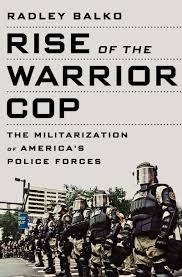
BALKO Rise of the warrior copSince the 1960s, in response to a range of perceived threats, law-enforcement agencies across the U.S., at every level of government, have been blurring the line between police officer and soldier. Driven by martial rhetoric and the availability of military-style equipment – from bayonets and M-16 rifles to armored personnel carriers – American police forces have often adopted a mind-set previously reserved for the battlefield. The war on drugs and, more recently, post-9/11 antiterrorism efforts have created a new figure on the U.S. scene: the warrior cop – armed to the teeth, ready to deal harshly with targeted wrongdoers, and a growing threat to familiar American liberties.

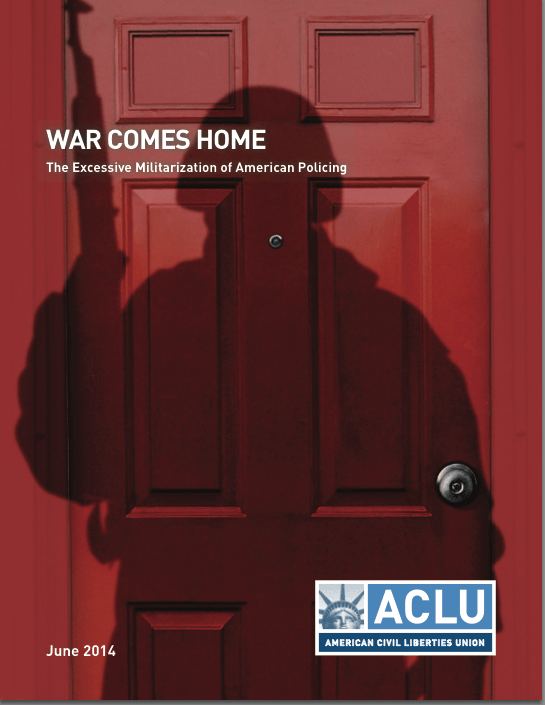
So far, so familiar – and by no means confined to the United States.  There the present debate seems to have been conducted in an intellectual vacuum.  When ‘Warrior cop’ was published, Glenn Greenwald wrote that ‘there is no vital trend in American society more overlooked than the militarization of our domestic police forces’, and he’s since repeated the claim (though he does acknowledge the ACLU report produced earlier this year, War Comes Home: the excessive militarization of American policing (see also Matthew Harwood‘s ‘One Nation Under SWAT’ here – he’s a senior writer/editor at the ACLU).
ACLU War comes home

I suspect the debate could be advanced, both politically and intellectually, by including two other (academic) voices that approach the situation from two different directions.  One is Steve Graham‘s Cities under siege: the new military urbanism (2010), which starts from new constellations of military violence, and the other is Mark Neocleous‘s War power, police power (2014), which starts from a wider conception of policing than has figured in the present discussion. Doing so would also enable the role of racialisation – which flickers in the margins of both accounts – to be given the greater prominence I think it deserves.  But it would also considerably sharpen talk of war ‘coming home’, as though it ever left

For now, though, let me make two further points.  One is about the need to enlarge the conventional conception of the military-industrial complex.  It has already been extended in all sorts of ways, of course – the Military-Industy-Media-Entertainment complex (MIME) and the Military-Academic-Industrial-Media complex (MAIM) to name just two – but it has become increasingly clear that the producers and designers of military equipment also have domestic police forces in their sights (sic).

It’s a complicated business, because on one side there is an active Department of Defense program that, since 1990, has channelled surplus military equipment to state and local police departments in the United States: more details from Shirley Li here.  The New York Times has a sequence of interactive maps showing the spread of everything from aircraft and armoured vehicles through grenade launchers and assault rifles to body armour and night vision goggles (the accompanying article is here).  The map below is just one example, showing the transfer of armoured vehicles:

Armoured vehicles transferred from US military to US police departments

On the other side, there’s also an active market for new equipment – and some of the latest ‘toys for the boys‘ (see also here) include drones (at present unarmed versions only for intelligence, surveillance and reconnaissance).  Jane’s, widely acknowledged as an indispensable global database on military equipment and platforms, now advertises a new guide dedicated to ‘Police and Homeland Security Equipment’:

Jane’s Police & Homeland Security Equipment delivers a comprehensive view of law enforcement and paramilitary equipment in production and service around the world, providing A&D businesses with the market intelligence that drives successful business development, strategy and product development activity, and providing military, security and government organizations with the critical technical intelligence that they need in order to develop and maintain an effective capability advantage….

Profiles of more than 2,200 types of law enforcement equipment and services around the world, including firearms, body armor, personal protection, riot and crowd control equipment, communications, security equipment and biometric solutions, make Jane’s Police & Homeland Security Equipment the most comprehensive and reliable source of police equipment technical and program intelligence.

There is a genealogy to all of this, of course, which means there is important work to be done in tracing the historical pathways through which both offensive and defensive materials have migrated from external uses (by the military) to internal uses (by the police).  This breaches one of the canonical divides of the liberal state, a rupture signalled by the hybrid term ‘security forces’, but it has been going on for a long time.

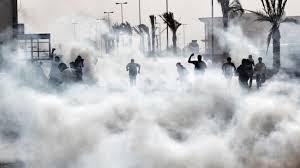
Anna FeigenbaumIn an excellent essay – a preview of her book, Tear Gas: 100 years in the making, due out from Verso next year – Anna Feigenbaum shows how tear gas drifted from the battlefields of France and Belgium onto streets around the world.  The French were the first to use toxic gas shells on a large scale – engins suffocants – which discharged tear gas; in most cases the effects were irritating rather than disabling, and when the Germans used similar shells against the British in October 1914 at Neuve Chapelle they too proved largely ineffective.

These were ‘Lilliputian efforts’, according to historian Peter Bull, and experiments by both sides with other systems were aimed at a greater and deadlier harvest.  You can find much more on the use of lethal gas on the battlefield from Ulrich Trumpener, ‘The road to Ypres’, Journal of modern history 47 (1975) 460-80; Tim Cook, No place to run: the Canadian Corps and gas warfare in the First World War (Vancouver: UBC Press, 1999) – which despite its title is much less Canuck-centric than it might appear; Jonathan Krause, ‘The origins of chemical warfare in the French Army’, War in history 20 (4) (2013) 545-56; and Edgar Jones, ‘Terror weapons: the British experience of gas and its treatment in the First World War’, War in history 21 (3) (2014) 355-75.

But many military officers realised that tear gas had other potential uses, and Anna shows that the process of repatriation and re-purposing began even before the First World War had ended:

By the end of the 1920s, police departments in New York, Philadelphia, Cleveland, San Francisco, and Chicago were all purchasing tear-gas supplies. Meanwhile, sales abroad included colonial territories in India, Panama, and Hawaii.

With this new demand for tear gas came new supply. Improved tear-gas cartridges replaced early explosive models that would often harm the police deploying them….

Leading American tear-gas manufacturers, including the Lake Erie Chemical Company founded by World War I veteran Lieutenant Colonel Byron “Biff” Goss, became deeply embroiled in the repression of political struggles. Sales representatives buddied up with business owners and local police forces. They followed news headlines of labor disputes and traveled to high-conflict areas, selling their products domestically and to countries such as Argentina, Bolivia, and Cuba. A Senate subcommittee investigation into industrial-munitions sales found that between 1933 and 1937, more than $1.25 million (about $21 million today) worth of “tear and sickening gas” had been purchased in the U.S. “chiefly during or in anticipation of strikes.”
Tear gas against protesters in Bahrain

Anna continues the story through the Second World War and the Vietnam War (where in an unremarked irony tear gas was used against anti-war demonstrations) and down to the present, but you get the (horrible) idea.  She closes with the supreme irony:

Yet while tear gas remains banned from warfare under the Chemical Weapons Convention, its use in civilian policing grows. Tear gas remains as effective today at demoralizing and dispersing crowds as it was a century ago, turning the street from a place of protest into toxic chaos. It clogs the air, the one communication channel that even the most powerless can use to voice their grievances.

This brings me to my second point, and it’s one that both Steve and Mark sharpen in different ways: the militarization of policing is not only about weapons but also about the the practices in which they are embedded.  One place to start such an investigation would be the cross-over in what the military calls doctrine.  There’s many a slip between doctrine on the books and practice on the streets.  But Public Intelligence has recently published U.S. Army Techniques Publication 3-39.33: Civil Disturbances, which will now repay even closer reading.  The cross-overs between counterinsurgency, counter-terrorism and police operations against organised crime are now a matter of record – and I’ve discussed these on several occasions (see here and here) – but 3-39.33 is perhaps most revealing in its preamble:

ATP 3-39.33 provides discussion and techniques about civil disturbances and crowd control operations that occur in the continental United States (CONUS) and outside the continental United States (OCONUS)….Worldwide instability coupled with U.S. military participation in unified-action, peacekeeping, and related operations require that U.S. forces have access to the most current doctrine and techniques that are necessary to quell riots and restore public order.

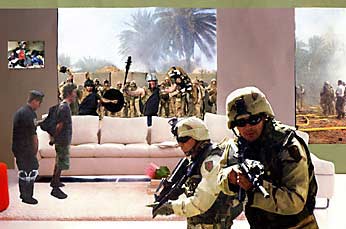
Which is where I came in…  These are just preliminary jottings, and there’s lots more to say – and lots more to consider (as the Martha Rosler photomontage at the top of this post implies: it’s from her 2004 series Bringing the War Home: House Beautiful, which carries an implicit plea to attend to their homes and their streets not just ‘ours’ ) – so watch this space.

UPDATE:  See Stuart Schrader‘s elegant short essay on ‘Policing Empire’ at Jacobin:

‘… we should be skeptical of calls for police reform, particularly when accompanied by cries that this (militarization) should not happen here. A close look at the history of US policing reveals that the line between foreign and domestic has long been blurry. Shipping home tactics and technologies from overseas theaters of imperial engagement has been a typical mode of police reform in the United States. When policing on American streets comes into crisis, law-enforcement leaders look overseas for answers. What transpired in Ferguson is itself a manifestation of reform.

From the Philippines to Guatemala to Afghanistan, the history of US empire is the history of policing experts teaching indigenous cops how to patrol and investigate like Americans. As a journalist observed in the late 1950s, “Americans in Viet-Nam very sincerely believe that in transplanting their institutions, they will immunize South Viet-Nam against Communist propaganda.” But the flow is not one-way: these institutions also return home transformed.’

Thanks to Alex Vasudevan for the tip.