Kill Boxes

161119killboxes-cover-front-draft-2-final-643x1024

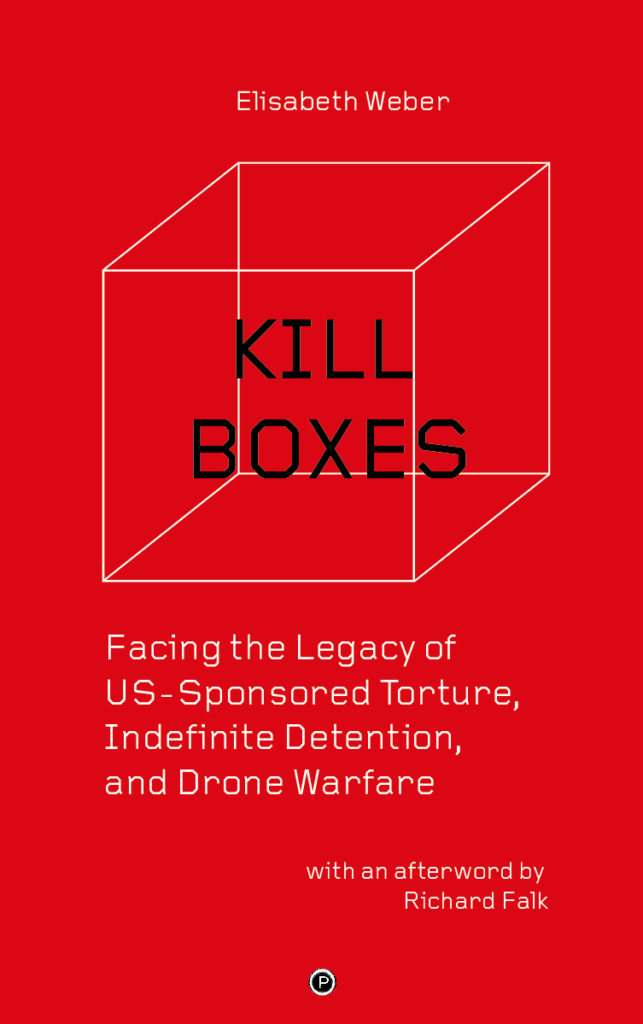
As 2016 lurches towards its end, I’ve received notice of a number of books that once I would have hoped would be of purely historical interest.  No longer.  So we’ll start with Elisabeth Weber‘s Kill-boxes: facing the legacy of US-sponsored torture, indefinite detention and drone warfare coming soon from Punctum Books:

Kill Boxes addresses the legacy of US-sponsored torture, indefinite detention, and drone warfare by deciphering the shocks of recognition that humanistic and artistic responses to violence bring to consciousness if readers and viewers have eyes to face them.

Beginning with an analysis of the ways in which the hooded man from Abu Ghraib became iconic, subsequent chapters take up less culturally visible scenes of massive violations of human rights to bring us face to face with these shocks and the forms of recognition that they enable and disavow. We are addressed in the photo of the hooded man, all the more so as he was brutally prevented, in our name, from returning the camera’s and thus our gaze. We are addressed in the screams that turn a person, tortured in our name, into howling flesh. We are addressed in poems written in the Guantánamo Prison camp, however much American authorities try to censor them, in our name. We are addressed by the victims of the US drone wars, however little American citizens may have heard the names of the places obliterated by the bombs for which their taxes pay. And we know that we are addressed in spite of a number of strategies of brutal refusal of heeding those calls.

Providing intensive readings of philosophical texts by Jean Améry, Jacques Derrida, and Christian Thomasius, with poetic texts by Franz Kafka, Paul Muldoon, and the poet-detainees of Guantánamo Bay Prison Camp, and with artistic creations by Sallah Edine Sallat, the American artist collective Forkscrew and an international artist collective from Pakistan, France and the US, Kill Boxes demonstrates the complexity of humanistic responses to crimes committed in the name of national security. The conscious or unconscious knowledge that we are addressed by the victims of these crimes is a critical factor in discussions on torture, on indefinite detention without trial, as practiced in Guantánamo, and in debates on the strategies to circumvent the latter altogether, as practiced in drone warfare and its extrajudicial assassination program.

The volume concludes with an Afterword by Richard Falk.

You can read the Introduction here.

National Bird

Sonia Kennebeck‘s documentary National Bird is previewed in today’s New York Times:

If we can eliminate enemy threats without placing boots on a battlefield, then why not do so? That’s one of the unspoken questions raised, and largely unanswered, by “National Bird,” Sonia Kennebeck’s elegantly unsettling documentary about the United States’ reliance on aerial combat drones.

The weapons themselves, though, demand less of her attention than their psychological impact on three former operators and current whistle-blowers. Identified only by first names (though one full name is visible in a shot of a 2013 exposé in The Guardian), all three were involved in some form of top-secret data analysis and the tracking of targets. Justifiably nervous, they wear haunted, closed expressions as they relate stories of guilt, PTSD and persecution…’

11nationalbirdsub-master768

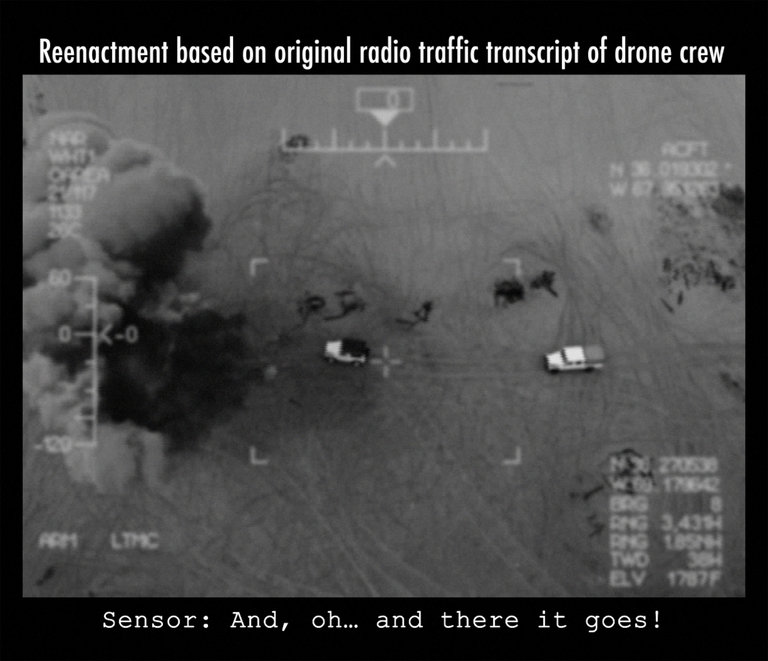
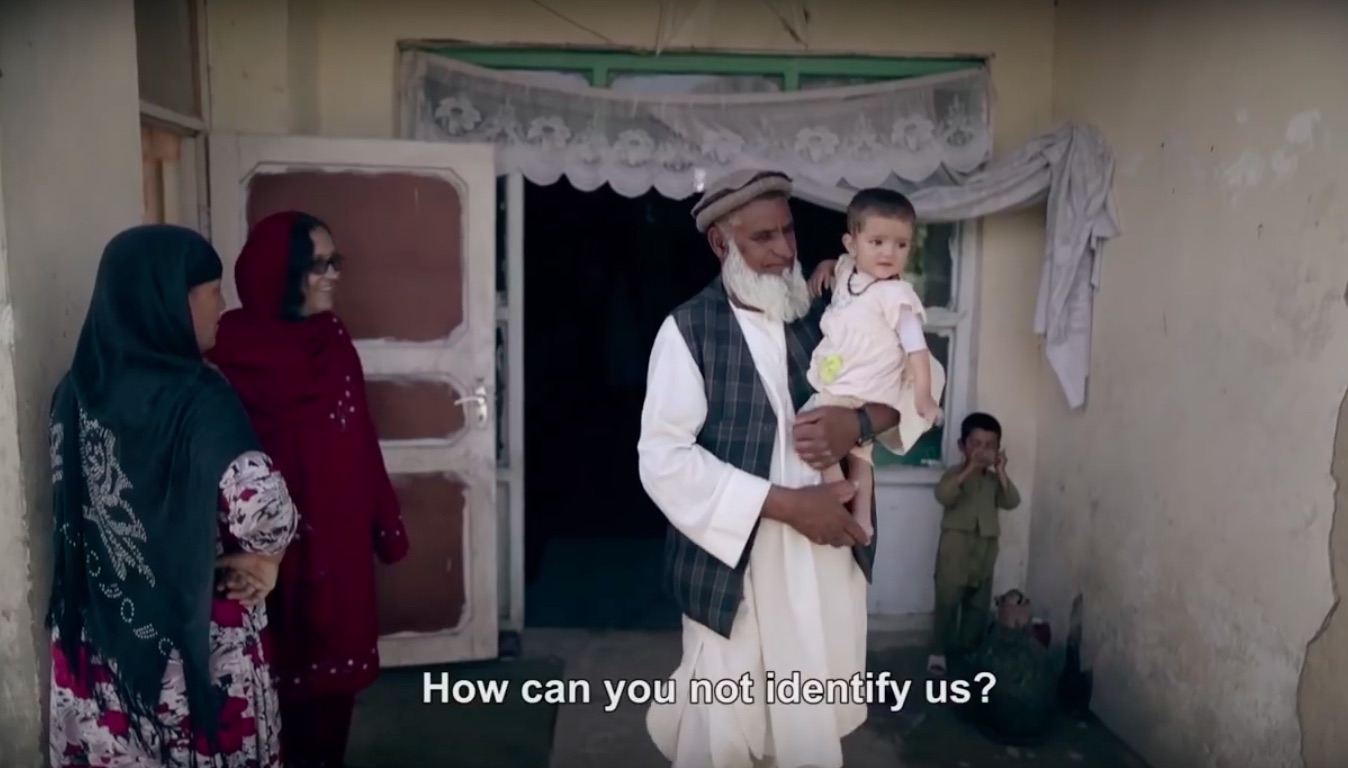
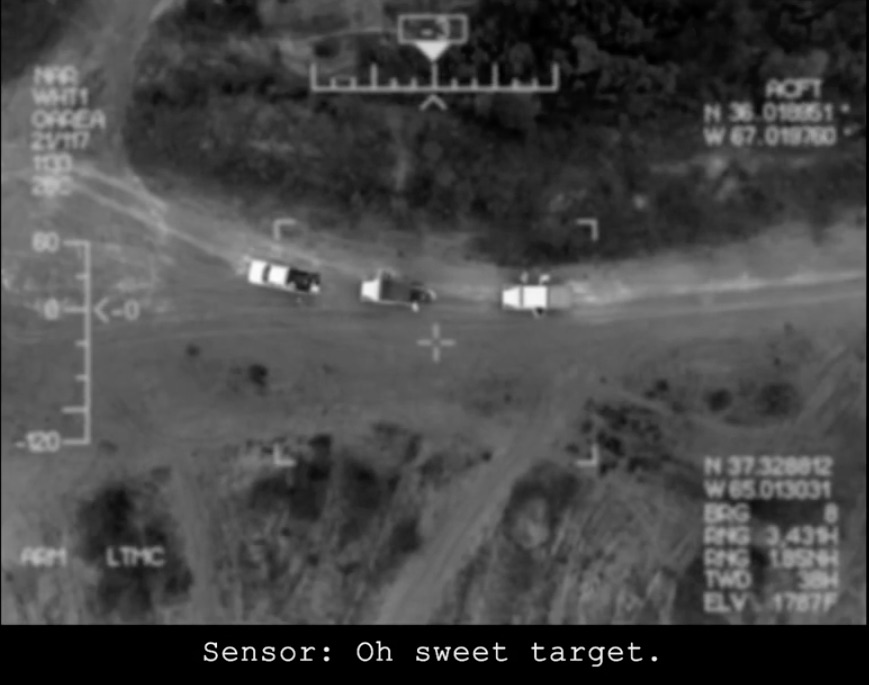
The documentary includes a re-enactment (see still above) of what has become a signature drone strike to critics of remote warfare – the attack on a ‘convoy’ of three vehicles in Uruzgan in 2010 that I analysed in Angry Eyes (here and here); the strike was orchestrated by the crew of a Predator but carried out by two attack helicopters.  Kennebeck based her reconstruction on the report from the same US military investigation I used, though I think her reading of it is limited by its focus on the Predator crew in Nevada and its neglect of what was happening (or more accurately not happening) at operations centres on the ground in Afghanistan.  She’s not alone in that – follow the link to the second part of Angry Eyes above to see why –  but what she adds is a series of vital interviews with the survivors:

I found the survivors of the airstrike and was the first person to interview them and get their first-person accounts…  Their stories give a much larger dimension to the incident and reveal that parts of the military investigation had been sugarcoated.

uruzgan-survivor

Winston Cook-Wilson agrees that the cross-cutting between the strike and its victims is immensely affecting:

The most powerful section of Kennebeck’s film, by far, are the interviews with family members and witnesses of a mistaken drone attack which killed 22 men, women and children in Afghanistan. Before meeting the Afghani mother who lost her children, the man who lost his leg in the explosion, and others, Kennebeck shows the attack in re-enactment that utilizes frighteningly blurry drone vision. Slightly overdone, static-ridden voiceovers from a radio transcript are included. The emotional footage in Afghanistan here is undeniably powerful; Kennebeck then unexpectedly cuts in grainy footage, filmed by one of the families of the victims, poring over their maimed remains.

This section of the film induces nausea, grief, and confusion all at the same time.

uruzgan-sweet-target

‘Frighteningly blurry drone vision’ is exactly right, as I’ve argued elsewhere (you can find a discussion of this in the second of my ‘Reach from the Skies’ lectures and in the penultimate section of ‘Dirty Dancing’, DOWNLOADS tab).  Here is Naomi Pitcairn who sharpens the same point:

We can see, clearly, how little they can actually see: tiny dots, like ants walking slowly, in single file. This is the all seeing but lacking feeling, understanding and cultural context, vision of a drone video feed and the drone operators callousness in the transcript seems to reflect that. Their bloodlust combined with the minimalism of the feed is intense in its very … primitivism.

Jeanette Catsoulis also thinks the cross-cutting between the strike and the survivors is highly effective (see also Susan Carruthers, ‘Detached Retina: The new cinema of drone warfare’, in Cineaste, who regards those sequences as providing ‘a more profound, affecting, and sustained reckoning with what drones do than anything else to date’), but she doesn’t think it sufficient:

If “National Bird” wants to persuade us that the emotional and collateral damage of this technology is greater than that caused by conventional weapons, it needs to widen its lens. Interviews with military specialists able to elucidate the complex calculus of risk and reward would have been invaluable in balancing the narrative and perhaps clarifying the ethical fuzziness.

Even so, there’s a sense that some unwritten human compact has been broken. As an ominously beautiful drone’s-eye camera glides above peaceful American streets, we’re uncomfortably reminded that an invisible death could one day hover over us all.

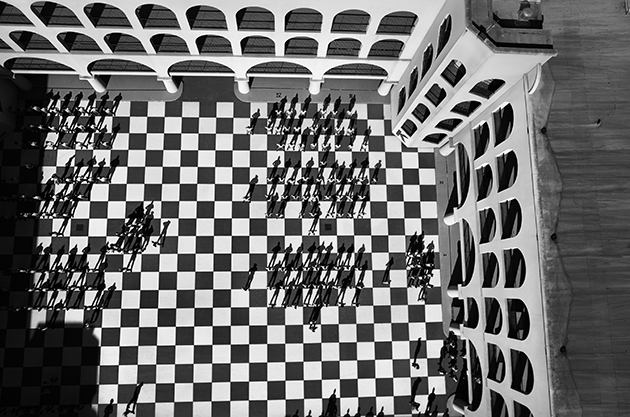
So it could – perhaps especially now.  As a reminder of that dread possibility, one of the phrases that recurs in the transcript from the Uruzgan strike is ‘military-aged males’ (with all that implies), so here is an image from Tomas van Houtryve‘s photographic series Blue Sky Days.  It’s also called ‘Military-Aged Males‘:

"Military-Age Males" (Tomas van Houtryve)

It shows civilian cadets assembling in formation at the Citadel Military College in Charleston, South Carolina.

Seeing machines


graham-drone-cover

The Transnational Institute has published a glossy version of a chapter from Steve Graham‘s Vertical – called Drone: Robot Imperium, you can download it here (open access).  Not sure about either of the terms in the subtitle, but it’s a good read and richly illustrated.

Steve includes a discussion of the use of drones to patrol the US-Mexico border, and Josh Begley has published a suggestive account of the role of drones but also other ‘seeing machines’ in visualizing the border.

One way the border is performed — particularly the southern border of the United States — can be understood through the lens of data collection. In the border region, along the Rio Grande and westward through the desert Southwest, Customs and Border Protection (CBP) deploys radar blimps, drones, fixed-wing aircraft, helicopters, seismic sensors, ground radar, face recognition software, license-plate readers, and high-definition infrared video cameras. Increasingly, they all feed data back into something called “The Big Pipe.”

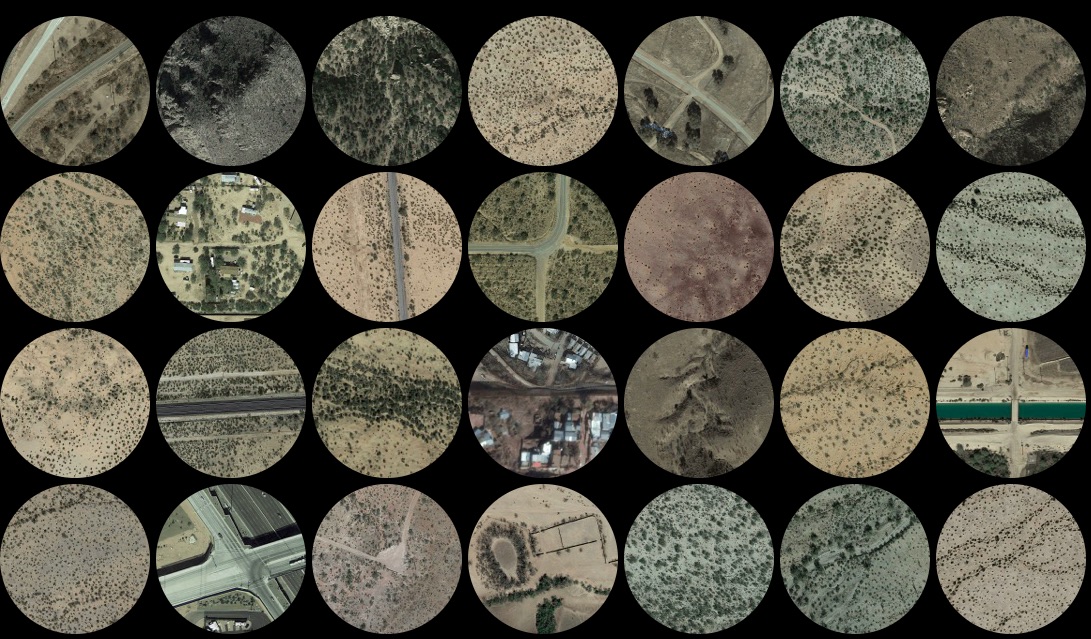
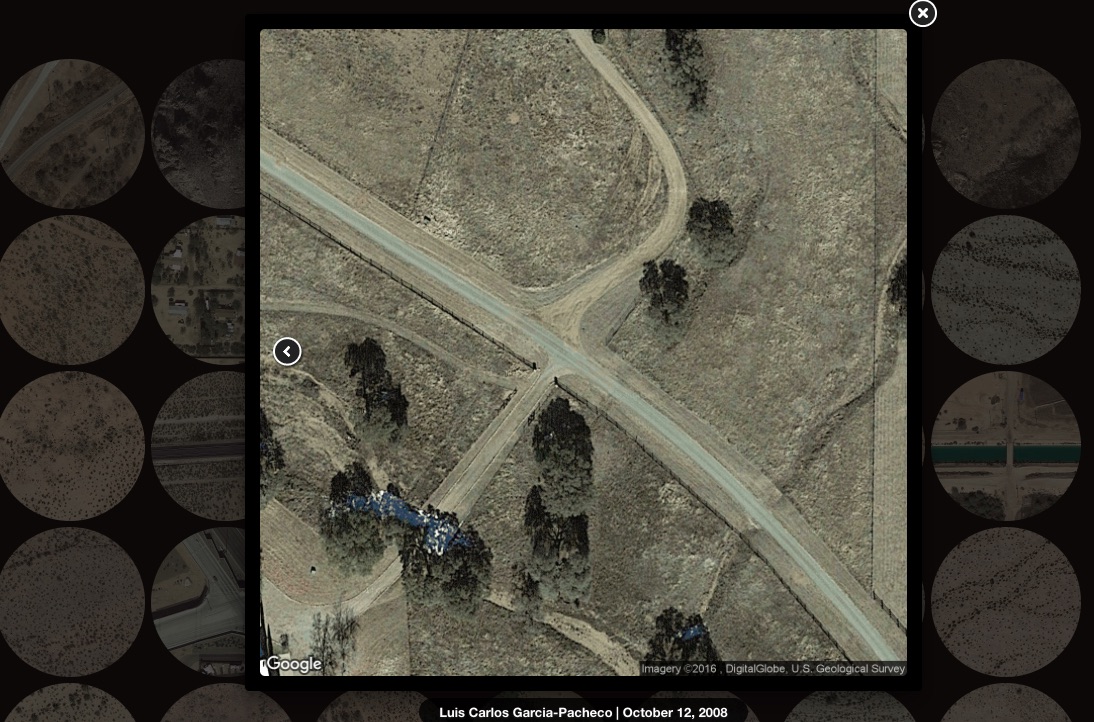
Josh downloaded 20,000 satellite images of the border, stitched them together, and then worked with Laura Poitras and her team at Field of Vision to produce a short film – Best of Luck with the Wall – that traverses the entire length of the border (1, 954 miles) in six minutes:

The southern border is a space that has been almost entirely reduced to metaphor. It is not even a geography. Part of my intention with this film is to insist on that geography.

By focusing on the physical landscape, I hope viewers might gain a sense of the enormity of it all, and perhaps imagine what it would mean to be a political subject of that terrain.

begley-fatal-migrations-1

If you too wonder about that last sentence and its latent bio-physicality – and there is of course a rich stream of work on the bodies that seek to cross that border – then you might visit another of Josh’s projects, Fatal Migrations, 2011-2016 (see above and below).

begley-fatal-migrations-2

There’s an interview with Josh that, among other things, links these projects with his previous work.

I have a couple of projects that are smartphone centered. One of them is about mapping the geography of places around the world where the CIA carries out drone strikes—mostly in Pakistan, Yemen, and Somalia. Another was about looking at the geography of incarceration in the United States—there are more than 5,000 prisons—and trying to map all of them and see them through satellites. I currently have an app that is looking at the geography of police violence in the United States. Most of these apps are about creating a relationship between data and the body, where you can receive a notification every time something unsettling happens. What does that mean for the rest of your day? How do you live with that data—data about people? In some cases the work grows out of these questions, but in other cases the work really is about landscape….

There’s just so much you can never know from looking at satellite imagery. By definition it flattens and distorts things. A lot of folks who fly drones, for instance, think they know a space just from looking at it from above. I firmly reject that idea. The bird’s eye view is never what it means to be on the ground somewhere, or what it means to have meaningful relationships with people on the ground. I feel like I can understand the landscape from 30,000 feet, but it is not the same as spending time in a space.

Anjali Nath has also provided a new commentary on one of Josh’s earlier projects, Metadata, that he cites in that interview – ‘Touched from below: on drones, screens and navigation’, Visual Anthropology 29 (3) (2016) 315-30.

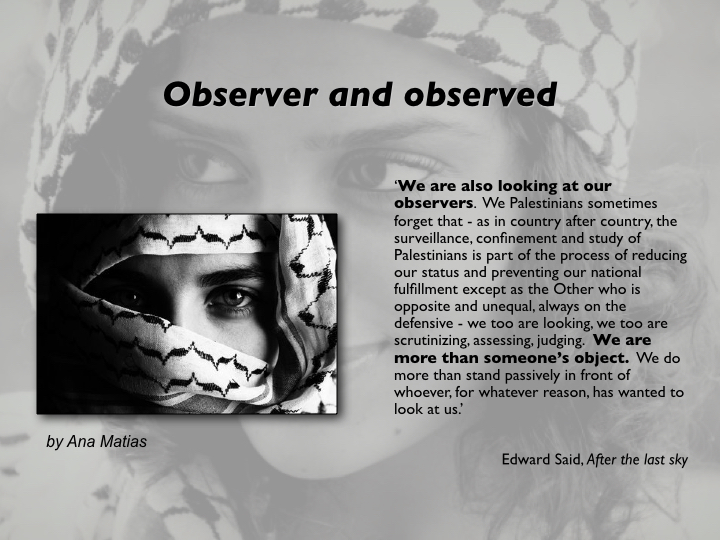
It’s part of a special issue on ‘Visual Revolutions in the Middle East’, and as I explore the visual interventions I’ve included in this post I find myself once again thinking of a vital remark by Edward Said:

we-are-also-looking-at-our-observers-001

That’s part of the message behind the #NotaBugSplat image on the cover of Steve’s essay: but what might Said’s remark mean more generally today, faced with the proliferation of these seeing machines?


The Drone Memos

jaffer-drone-memos

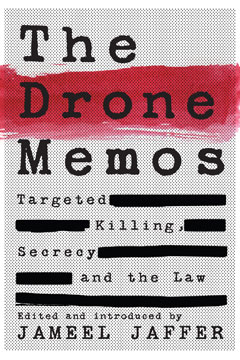
From the New Press on 15 November, Jameel Jaffers The Drone Memos: targeted killing, secrecy and the law:

The Drone Memos collects for the first time the legal and policy documents underlying the U.S. government’s deeply controversial practice of “targeted killing”—the extrajudicial killing of suspected terrorists and militants, typically using remotely piloted aircraft or “drones.” The documents—including the Presidential Policy Guidance that provides the framework for drone strikes today, Justice Department white papers addressing the assassination of an American citizen, and a highly classified legal memo that was published only after a landmark legal battle involving the ACLU, the New York Times, and the CIA—together constitute a remarkable effort to legitimize a practice that most human rights experts consider to be unlawful and that the United States has historically condemned.

In a lucid and provocative introduction, Jameel Jaffer, who led the ACLU legal team that secured the release of many of the documents, evaluates the “drone memos” in light of domestic and international law. He connects the documents’ legal abstractions to the real-world violence they allow, and makes the case that we are trading core principles of democracy and human rights for the illusion of security.

From Jameel’s introduction:

This book is possible because the secrecy surrounding American drone strikes has begun, at the margins, to erode. The documents collected here shed light on how a president committed to ending the abuses associated with the Bush administration’s “war on terror” came to dramatically expand one of the practices most identified with that war, and they supply a partial view of the legal and policy framework that underlies that practice. But while many of the documents collected here were meant to be defenses of the drone campaign, ultimately they complicate, at the very least, the government’s oft-repeated argument that the campaign is lawful.

To be sure, even the existence of these documents is an indication of the extent to which the drone campaign is saturated with the language of law. Perhaps no administration before this one has tried so assiduously to justify its resort to the weapons of war. But the rules that purportedly limit the government’s actions are imprecise and elastic; they are cherry picked from different legal regimes; the government regards some of them to be discretionary rather than binding; and even the rules the government concedes to be binding cannot, in the government’s view, be enforced in any court. If this is law, it is law without limits—law without constraint.

Ryan Goodman provides ’10 Questions to Ask Yourself When Reading Jameel Jaffer’s “The Drone Memos”’ here.  For me, the two most crucial on the list – which anyone writing about drones and limiting the discussion to targeted killing needs to ask themselves (and rarely does) – are these:

Despite the title of the book, how much of the discussion and issues raised are really about drones per se? How much applies to cruise missiles, night raids, and other forms of direct lethal action? What analytic or rhetorical work is being done by focusing on “drones”?

Despite the title of the book, how much of the discussion and issues raised are limited to pre-planned targeted killing? What about dynamic strikes when a moment of opportunity arises, or so-called signature strikes? What analytic or rhetorical work is being done by focusing on “targeted killing”?

UPDATE:  For an excerpt from Jameel’s introduction, see this article, ‘How the US justifies drone strikes: targeted killing, secrecy and the law‘, from The Guardian:

As the 2016 presidential primaries were getting under way, sporadic and sketchy reports of strikes in remote regions of the world provided a kind of background noise – a drone in a different sense of the word – to which Americans had become inured.

Senior officials in the administration of President Barack Obama variously described drone strikes as “precise,” “closely supervised,” “effective,” “indispensable,” and even the “only game in town” – but what they emphasized most of all is that the drone strikes they authorized were lawful.

In this context, though, “lawful” had a specialized meaning. Except at the highest level of abstraction, the law of the drone campaign had not been enacted by Congress or published in the US Code. No federal agency had issued regulations relating to drone strikes, and no federal court had adjudicated their legality. Obama administration officials insisted that drone strikes were lawful, but the “law” they invoked was their own. It was written by executive branch lawyers behind closed doors, withheld from the public and even from Congress, and shielded from judicial review…

Now the lethal bureaucracy whose growth Obama personally oversaw will be turned over to a new administration. The powers Obama claimed will be wielded by another president. Perhaps as significant is the jarring fact that the practice of targeted killing – assassination, as it would once have been called, without a second thought – no longer seems remarkable, and the fact that the United States now boasts a legal and bureaucratic infrastructure to sustain this practice. Eight years ago the targeted-killing campaign required a legal and bureaucratic infrastructure, but now that infrastructure will demand a targeted-killing campaign. The question the next president will ask is not whether the powers Obama claimed should be exploited, but where, and against whom.

POV in the killbox

Killbox Player 1

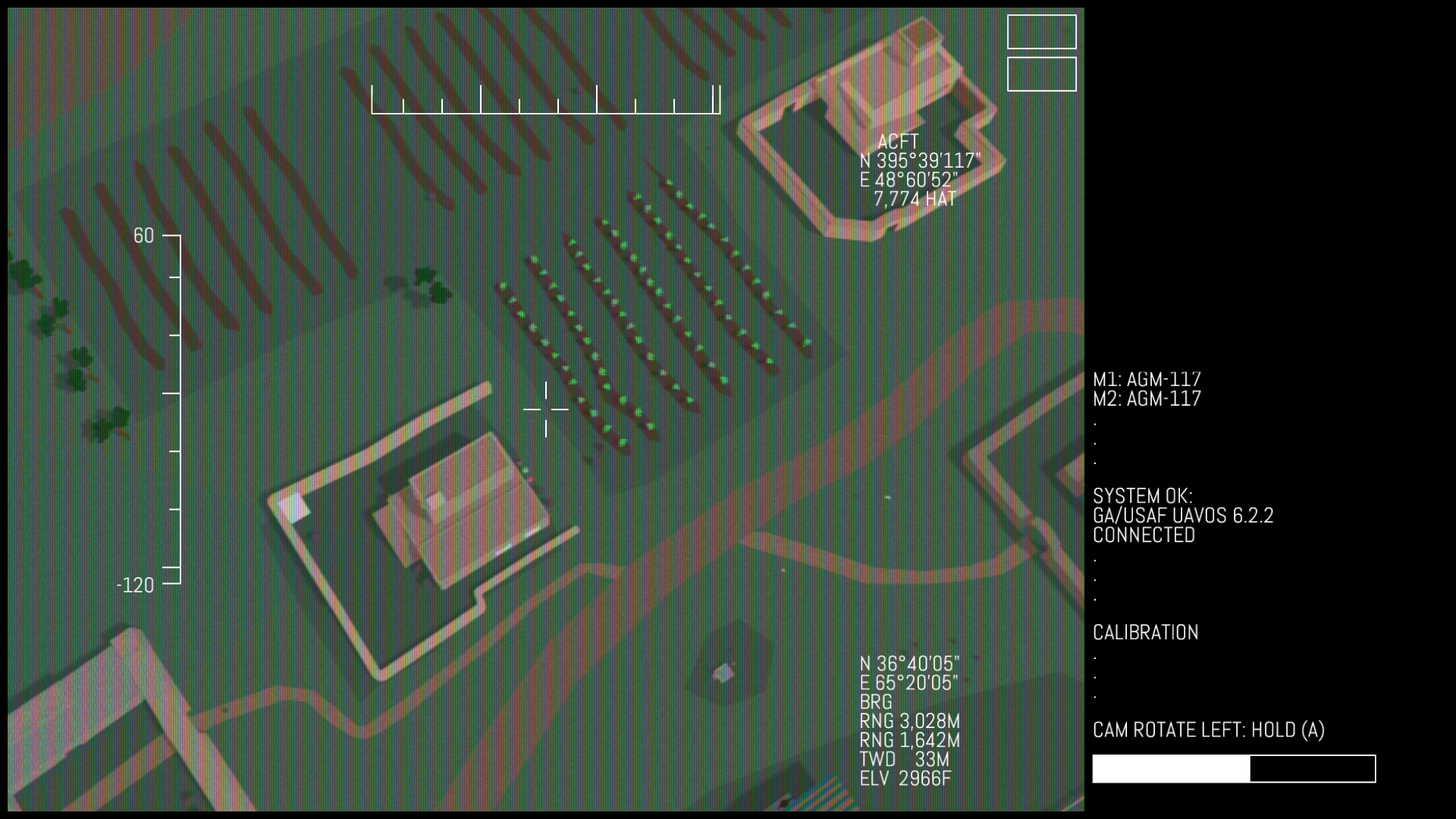
An update on Joe DeLappe‘s Killbox project (my original post, with links to more info on the concept of a killbox, is here).

Over at Quartz, Ananya Bhattacharya provides more details about the latest iteration of the simulation:

Killbox, an online two-player game named after the military term for an area targeted for destruction, serves as a critique of drone warfare. One player is a civilian exploring her surroundings with few instructions. The second player is guided with tasks, leading up to the administration of a drone strike. Even if the drone pilot player refuses to deploy the weapons, autopilot kicks in and carries out the attack. When it hits, the drone pilot can see the extent of the destruction on the ground but hear nothing. Meanwhile, the child on the ground is barraged by sound. And just in case the first strike doesn’t demolish enough, a second strike is administered—the classic “double-tap” attack to stop rescuers from getting help to the injured and retrieving the deceased.

The game is modelled – in some measure, at least – on the drone strike that killed Mamana Bibi as she gathered okra from the fields around her home in North Waziristan:

The characters in the game aren’t realistic though—they look like odd-shaped blobs. At first, non-human avatars seem less effective, but there’s meaning behind the simplistic design: “We were looking at the map where the drone strike killed people and these maps identified victims with little dots,” said DeLappe. “Almost like map pins, like they’ve been symbolically degraded in some way.”

Killbox player 2

I opened my essay on drone strikes in the Federally Administered Tribal Areas – and on the constitution of the FATA as a space of exception (see “Dirty Dancing” under the DOWNLOADS tab) – with a comparison between this strike, the murder of an innocent grandmother as she worked in the fields with her grandchildren,  and the targeted killing of Baitullah Mehsud, the leader of the Pakistan Taliban, in South Waziristan in 2009 (see also my posts here and here).

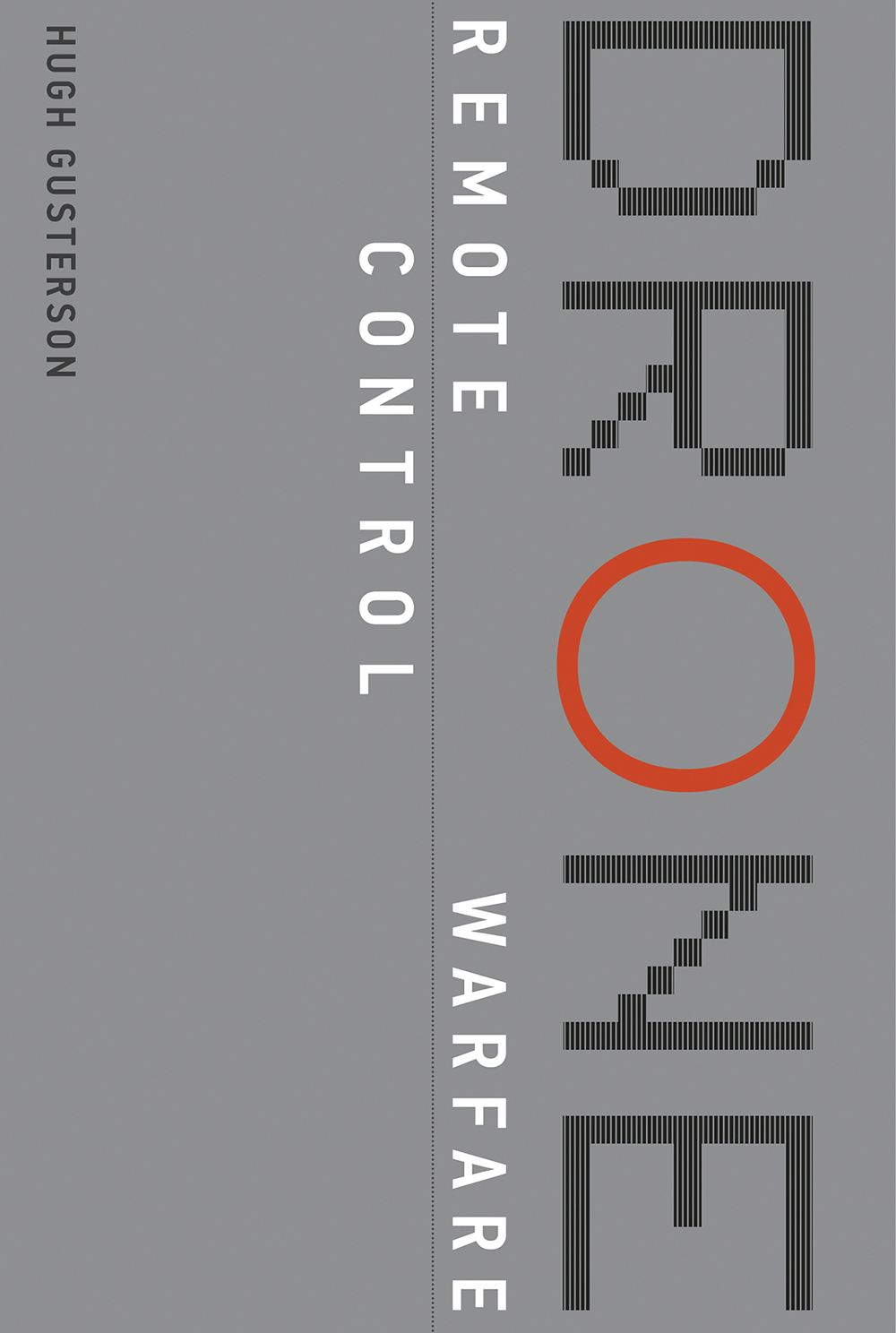
In Drone: remote control warfare Hugh Gusterson opens with exactly the same comparison but to a different effect – and one that resonates with Killbox.  Drawing on Jane Mayer‘s account of the assassination of Mehsud, based on testimony from those who watched the video feed from the Predator, he writes:

A technology that is almost magical gives its owners, who are looking on the scene from high in the sky, a godlike power over life and death. The observation of the scene is simultaneously intimate and remote. It is also deeply asymmetrical: Mehsud, unaware of his exposure, is watched by faraway drone operators who can see him as if close up, reclining on the roof of his house on a hot evening as his wife attends to his medical needs. They get to frame the picture while he does not even realize he is in it. Without warning, he is killed as if by a god’s thunderbolt from the sky. Seen from Virginia, the drone strike is quick, clean, and bloodless. Mehsud’s death is instant. Nor, described unambiguously as a terrorist, does he seem undeserving of death. Twelve people die altogether, but the narrative marks only Mehsud’s death as significant. The other deaths are almost outside the frame. And in a way that amplifies the strange mix of distance and intimacy, the scene is mediated entirely through a single sense—vision. The attack has no sound, smell, taste, or texture. And we are invited to experience it through a narrative of mastery and control—of the cool, righteous exercise of overwhelming power.

gusterson-drone-cover

Drawing on testimony from Mamana Bibi’s family before a virtually empty Congressional hearing, Hugh writes:

This account is from the point of view of the victims, not the executioners. We share the experience of those who do not even realize that they are in the crosshairs until they are attacked. The account emphasizes the sudden incomprehensible eruption of violent force, literally out of the blue, in a warm scene of familial togetherness on an important holy day. We are led to experience the drone strike through multiple senses, of which sight may be the least salient: we are told about the blackness of the smoke, the sound of the screaming, the smell of the explosion, the sensation of the ground trembling, and the pain of shrapnel wounds. Unlike the first account, the narrative does not end shortly after the drone strike but dwells on the aftermath—the physical pain of the survivors, the enduring grief over the loss of the person “that held our family together.” Above all, this account foregrounds what is absent in the view from CIA headquarters—the psychological suffering of those on the ground, especially children, and the sense that the safe predictability of life has been permanently destroyed. It is a narrative of helplessness, terror, and injustice. The drone operators’ perspective was remote and objectifying, but this narrative is so affecting that it made the translator break down in tears.

The special effects created by privileging the visual are explored with skill and sensitivity in Nasser Hussain‘s brilliant essay, ‘The sound of terror: phenomenology of a drone strike‘, here.

[I]n order to widen our vision, I provide a phenomenology of drone strikes, examining both how the world appears through the lens of a drone camera and the experience of the people on the ground. What is it like to watch a drone’s footage, or to wait below for it to strike? What does the drone’s camera capture, and what does it occlude?

…  Although the pilots can hear ground commands, there is no microphone equivalent to the micro-scopic gaze of the drone’s camera. This mute world of dumb figures moving about on a screen has particular consequences for how we experience the image. As Michel Chion notes in The Voice in Cinema, although sound or voice is easily swallowed up by the image, it nonetheless structures the image: “only the creators of a film’s sound—recordist, sound effects person, mixer, director—know that if you alter or remove these sounds, the image is no longer the same.” In the case of the drone strike footage, the lack of synchronic sound renders it a ghostly world in which the figures seem unalive, even before they are killed. The gaze hovers above in silence. The detachment that critics of drone operations worry about comes partially from the silence of the footage.

… If drone operators can see but not hear the world below them, the exact oppositeis true for people on the ground. Because drones are able to hover at or above 30 thousand feet, they are mostly invisible to the people below them. But they can be heard. Many people from the tribal areas of Pakistan (FATA) describe the sound as a low-grade, perpetual buzzing, a signal that a strike could occur at any time. The locals call the drones machar, mosquitos. Because the drone can surveil the area for hours at a time, and because each round of surveillance may or may not result in a strike, the fear and anxiety among civilians is diffuse and chronic.

That sense of optical power is not necessarily one of detachment.  For we surely know how vision, power and desire can be commingled; and today I learned – from Theodor Nadelson‘s Trained to kill: soldiers at war – that (some) US Marines describe setting their sights on a human target as ‘eye fucking’…

The Body of War

body-of-war

The program for ‘The Body of War’ Symposium at Lancaster in November has just been announced.  It’s organized around four panels and three keynotes:

(I) The Drones Imaginaria

  • Andreas GRAAE (University of Southern Denmark), The Bipolar Drone Queen: Intimacy and Distance in Showtime’s Homeland
  • Peter LEE (Portsmouth), Death, Truth and Knowing in the Drones Imaginarium
  • Claudette LAUZON (Simon Frazer University, Canada), Drones Gone Wild, and Other Unruly Bodies of War

ADAM HARVEY: Algorithmic control and violence through latent biometrics

(II) Drone warfare: evolution and new challenges

  • Heather HAYES (Whitman College, USA), The Dawn of Humanitarian Weapons: Discourses of a Kinder, Friendlier Killing Machine
  • Oliver DAVIS (Warwick), Theorizing the Advent of Weaponized Drones as Techniques of Domestic Paramilitary Policing
  • Bianca BAGGIARINI (Toronto) & Sean RUPKA (CUNY), Remembering the Drone Wars: Disembodied Combat and the Trauma Lacuna

(III) Theorizing ‘Enmity’ in the age of global counterterrorism

  • Edward FAIRHEAD (Kent, UK), The ‘Enemy’ of Obama’s Targeted Killing Regime
  • Elisabeth SCHWEIGER (Edinburgh), Something New, Something Old, Something Borrowed: The Political Connotations of the Concept of ‘Targeted Killing’ in International Law
  • Elke SCHWARZ (Leicester), Flesh Vs. Steel: Antithetical Materialities in (Counter) Terrorism Warfare

DAVID COOK: The routinization of martyrdom operations in the age of IS and Boko Haram

(IV) The Bodies of the Enemy

  • Caroline HOLMQVIST (Université libre de Bruxelles), Spectres of War
  • Charlotte HEATH-KELLY (Warwick), ISIS and the Hysteric: Desiring the Enemy through Lacan
  • Arthur BRADLEY (Lancaster), Lethal Force: Contract, Conflict, Killing

DEREK GREGORY: Drones and the prosthetics of military violence

You can find more information here.


Game of Drones

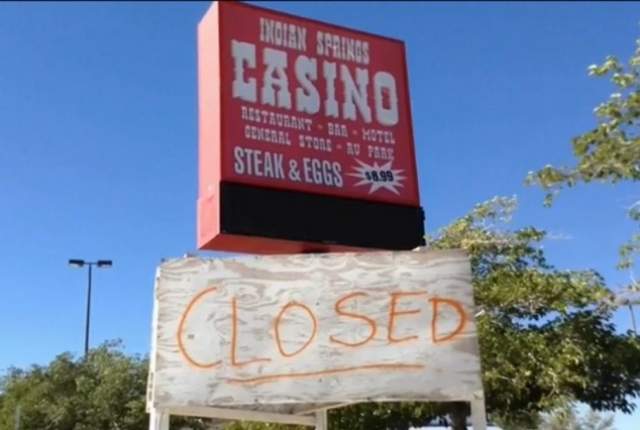
creechcasino_0

Joe Pugliese has sent me a copy of his absorbing new essay, ‘Drone casino mimesis: telewarfare and civil militarization‘, which appears in Australia’s Journal of sociology (2016) (online early).  Here’s the abstract:

This article stages an examination of the complex imbrication of contemporary civil society with war and militarized violence. I ground my investigation in the context of the increasing cooption of civil sites, practices and technologies by the United States military in order to facilitate their conduct of war and the manner in which drone warfare has now been seamlessly accommodated within major metropolitan cities such as Las Vegas, Nevada. In the context of the article, I coin and deploy the term civil militarization. Civil militarization articulates the colonizing of civilian sites, practices and technologies by the military; it names the conversion of such civilian technologies as video games and mobile phones into technologies of war; and it addresses the now quasi-seamless flow that telewarfare enables between military sites and the larger suburban grid and practices of everyday life. In examining drone kills in the context of Nellis Air Force Base, Las Vegas, I bring into focus a new military configuration that I term ‘drone casino mimesis’.

I’m particularly interested in what Joe has to say about what he calls the ‘casino logic and faming mimesis’ of ‘the drone habitus’.  Most readers will know that ‘Nellis’ (more specifically, Creech Air Force Base, formerly Indian Springs), for long the epicentre of the US Air Force’s remote operations, is a short drive from Las Vegas – and those who have seen Omar Fast‘s 5,000 Feet is Best will remember the artful way in which it loops between the two.

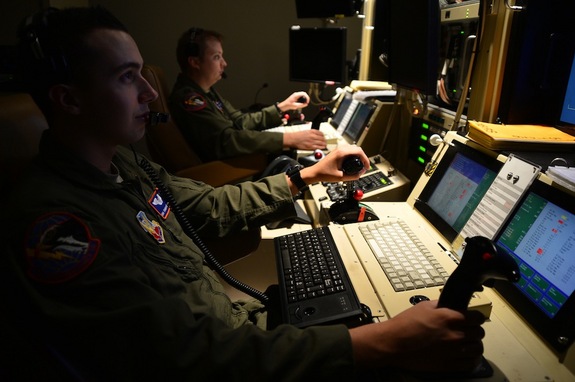
drone-pilots

Two passages from Joe’s essay have set me thinking.  First Joe moves far beyond the usual (often facile) comparison between the video displays in the Ground Control Station and video games to get at the algorithms and probabilities that animate them:

‘…there are mimetic relations of exchange between Las Vegas’s and Nellis’s gaming consoles, screens and cubicles.

AR-701029956.jpg&updated=201401020851&MaxW=800&maxH=800&noborder

‘Iconographically and infrastructurally, casino gaming and drone technologies stand as mirror images of each other. My argument, however, is not that both these practices and technologies merely ‘reflect’ each other; rather, I argue that gaming practices and technologies effectively work to constitute and inflect drone practices and technologies on a number of levels. Casino drone mimesis identifies, in new materialist terms, the agentic role of casino and gaming technologies precisely as ‘actors’ (Latour, 2004: 226) in the shaping and mutating of both the technologies and conduct of war. Situated within a new materialist schema, I contend that the mounting toll of civilian deaths due to drone strikes is not only a result of human failure or error – for example, the misreading of drone video feed, the miscalculation of targets and so on. Rather, civilian drone kills must be seen as an in-built effect of military technologies that are underpinned by both the morphology (gaming consoles, video screens and joysticks) and the algorithmic infrastructure of gaming – with its foundational dependence on ‘good approximation’ ratios and probability computation.’

And then this second passage where Joe develops what he calls ‘the “bets” and “gambles” on civilian life’:

‘[Bugsplat’ constitutes a] militarized colour-coding system that critically determines the kill value of the target. In the words of one former US intelligence official:

You say something like ‘Show me the Bugsplat.’ That’s what we call the probability of a kill estimate when we are doing this final math before the ‘Go go go’ decision. You would actually get a picture of a compound, and there will be something on it that looks like a bugsplat actually with red, yellow, and green: with red being anybody in that spot is dead, yellow stands a chance of being wounded; green we expect no harm to come to individuals where there is green. (Quoted in Woods, 2015: 150)

Described here is a mélange of paintball and video gaming techniques that is underpinned, in turn, by the probability stakes of casino gaming: as the same drone official concludes, ‘when all those conditions have been met, you may give the order to go ahead and spend the money’ (quoted in Woods, 2015: 150). In the world of drone casino mimesis, when all those gaming conditions have been met, you spend the money, fire your missiles and hope to make a killing. In the parlance of drone operators, if you hit and kill the person you intended to kill ‘that person is called a “jackpot”’ (Begley, 2015: 7). Evidenced here is the manner in which the lexicon of casino gaming is now clearly constitutive of the practices of drone kills. In the world of drone casino mimesis, the gambling stakes are high. ‘The position I took,’ says a drone screener, ‘is that every call I make is a gamble, and I’m betting on their life’ (quoted in Fielding-Smith and Black, 2015).

There is much more to Joe’s essay than this, but these passages add considerably to my own discussion of the US targeted killing program in the Federally Administered Tribal Areas of Pakistan in ‘Dirty dancing’.  You can find the whole essay under the DOWNLOADS tab, but this is the paragraph I have in mind (part of an extended discussion of the ‘technicity’ of the US targeted killing program and its reliance on kill lists, signals intercepts and visual feeds):

The kill list embedded in the [disposition] matrix has turned out to be infinitely extendable, more like a revolving door than a rolodex, so much so that at one point an exasperated General Kayani demanded that Admiral Mullen explain how, after hundreds of drone strikes, ‘the United States [could] possibly still be working its way through a “top 20” list?’  The answer lies not only in the remarkable capacity of al Qaeda and the Taliban to regenerate: the endless expansion of the list is written into the constitution of the database and the algorithms from which it emerges. The database accumulates information from multiple agencies, but for targets in the FATA the primary sources are ground intelligence from agents and informants, signals intelligence from the National Security Agency (NSA), and surveillance imagery from the US Air Force. Algorithms are then used to search the database to produce correlations, coincidences and connections that serve to identify suspects, confirm their guilt and anticipate their future actions. Jutta Weber explains that the process follows ‘a logic of eliminating every possible danger’:

‘[T]he database is the perfect tool for pre-emptive security measures because it has no need of the logic of cause and effect. It widens the search space and provides endless patterns of possibilistic networks.’

Although she suggests that the growth of ‘big data’ and the transition from hierarchical to relational and now post-relational databases has marginalised earlier narrative forms, these reappear as soon as suspects have been conjured from the database. The case for including – killing – each individual on the list is exported from its digital target folder to a summary Powerpoint slide called a ‘baseball card’ that converts into a ‘storyboard’ after each mission. Every file is vetted by the CIA’s lawyers and General Counsel, and by deputies at the National Security Council, and all ‘complex cases’ have to be approved by the President. Herein lies the real magic of the system. ‘To make the increasingly powerful non-human agency of algorithms and database systems invisible,’ Weber writes, ‘the symbolic power of the sovereign is emphasised: on “Terror Tuesdays” it (appears that it) is only the sovereign who decides about life and death.’ But this is an optical illusion. As Louise Amoore argues more generally, ‘the sovereign strike is always something more, something in excess of a single flash of decision’ and emerges instead from a constellation of prior practices and projected calculations.

Vertical

Vertical_Cover-90b43d704855b7adb88eb5048b187a67

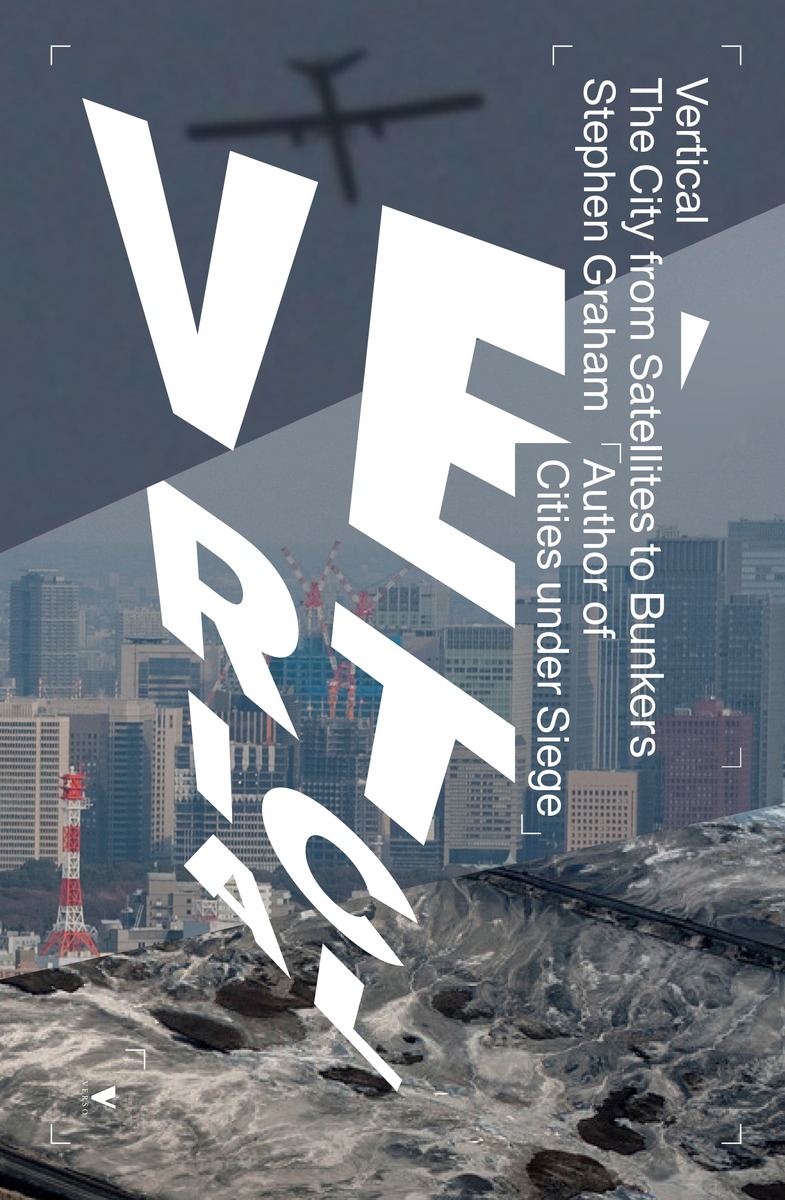
Steve Graham has kindly sent me the page proofs of his new book, Vertical: the city from satellites to tunnels, due from Verso and Penguin/Random House in October/November (it’s already available as an e-book from Amazon).  The subtitle varies depending on where you look – the proofs have both ‘from satellites to tunnels’ and ‘from satellites to bunkers’, and you can find both in the ads – but whatever version they settle on it’s clear that this is yet another tour (sic) de force.

From the penthouse to the sewers—the political geography of the vertical city

Vertical is a brilliant re-imagining of the world we live in. Today we live in a world that can no longer be read as a two-dimensional map. In Vertical Stephen Graham rewrites the city at every level, calling for a a new understanding of our surroundings that takes into account above and below: why Dubai has been built to be seen from GoogleEarth; how the superrich in Sao Paulo live their penthouse lives far from the street; why London billionaires build vast subterranean basements rather than move house. Vertical will make you look at the city anew: from the viewfinders of drones, satellites, from the top of skyscrapers, at street-level and from underground bunkers: this is a new politics of space and geography.

It’s composed of an introduction (‘Going vertical’) and 15 essays:

Part One: Above

1 Satellite: Enigmatic presence

2 Bomber: Death from above

3 Drone: Robot imperium

4 Helicopter: Direct arrival

5 Favela: Tenuous city

6 Elevator/Lift: Going up

7 Skyscraper: Vanity and violence

8 Housing: Luxified skies

9 Skywalk/Skytrain/Skydeck: Multilevel cities

10 Air: Lethal domes

Part Two: Below

11 Ground: Making geology

12 Basement/cellar: Urban undergrounds

13 Sewer: Sociology and shit

14 Bunker/tunnel: Subsurface sanctuaries

15 Mine: Extractive imperialism on the deep frontier


Digital Militarisms

cover_issue_6_en_US

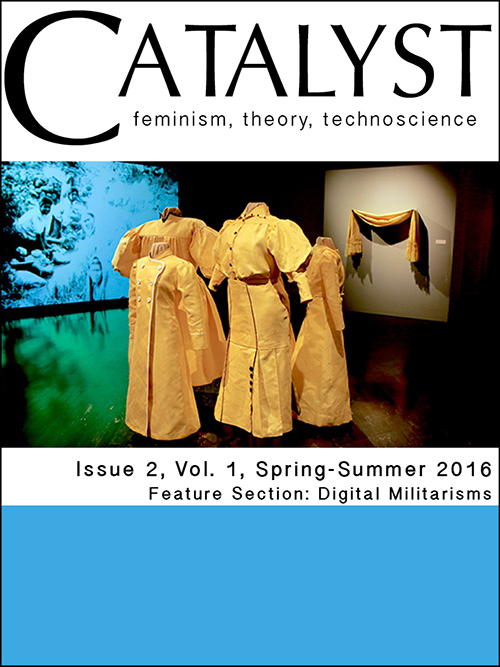
News from Lucy Suchman of a special issue of Catalyst: Feminism, Theory, and Technoscience on Digital Militarisms.  Here is a list of the articles plus abstracts; all are available for download here (open access).

Configuring the Other: Sensing War through Immersive Simulation – Lucy Suchman

This paper draws on archival materials to read two demonstrations of FlatWorld, an immersive military training simulation developed between 2001 and 2007 at the University of Southern California’s Institute for Creative Technologies. The first demonstration is a video recording of a guided tour of the system, staged by its designers in 2005. The second is a documentary created by the US Public Broadcasting Service as part of their “embedded” media coverage of the system while it was installed at California’s Camp Pendleton in 2007. I critically attend to the imaginaries that are realized in the simulation’s figurations of places and (raced, gendered) bodies, as well as its storylines. This is part of a wider project of understanding how distinctions between the real and the virtual are effectively elided in technoscientific military discourses, in the interest of recognizing real/virtual entanglements while also reclaiming the differences that matter.

***

Military Utopias of Mind and Machine – Emily Cohen Ibañez

The central locus of my study is southern California, at the nexus of the Hollywood entertainment industry, the rapidly growing game design world, and military training medical R&D. My research focuses on the rise of military utopic visions of mind that involve the creation of virtual worlds and hyper-real simulations in military psychiatry. In this paper, I employ ethnography to examine a broader turn to the senses within military psychology and psychiatry that involve changes in the ways some are coming to understand war trauma, PTSD, and what is now being called “psychological resilience.” In the article, I critique assumptions that are made when what is being called “a sense of presence” and “immersion” are given privileged attention in military therapeutic contexts, diminishing the subjectivity of soldiers and reducing meaning to biometric readings on the surface of the body. I argue that the military’s recent preoccupation with that which can be described as “immersive” and possessing a sense of presence signals a concentrated effort aimed at what might be described as a colonization of the senses – a digital Manifest Destiny that envisions the mind as capital, a condition I am calling military utopias of mind and machine. Military utopias of mind and machine aspire to have all the warfare without the trauma by instrumentalizing the senses within a closed system. In the paper, I argue that such utopias of control and containment are fragile and volatile fantasies that suffer from the potential repudiation of their very aims. I turn to storytelling, listening, and conversations as avenues towards healing, allowing people to ascribe meaning to difficult life experiences, affirm social relationships, and escape containment within a closed language system.

***
Simulated War: Remediating Trauma Narratives in Military Psychotherapy – Marisa Renee Brandt

How have the politics of therapy been reconfigured during the so-called Global War on Terror? What role have the new virtual reality therapies that so resemble other forms of military simulation played in this reconfiguration? In this article, I draw upon feminist science and technology’s (STS) theorization of human-machine interaction into order to interrogate how contemporary therapies for treating post-traumatic stress disorder (PTSD) reconfigure agency in the practice of healing. Analyzing trauma therapy as a site of reconfiguration, I show how new exposure-based therapies for PTSD—both with and without virtual reality—configure aspects of human subjectivity, such as memory, affect, and behavior, as objects for technological intervention. Through comparative analysis of different modalities of PTSD treatment, I show that the politics of therapy is especially enacted through the therapeutic remediation of trauma narratives: the mediational practices through which a traumatic memory is made available for therapeutic reworking. Therapeutic remediation practices configure therapists, patients, and nonhuman actants as subjects and objects with different forms of agency.

***
Weaponizing Affect: A Film Phenomenology of 3D Military Training Simulations during the Iraq War – D. Andy Rice

This article critically considers the relation between simulation design and human experience through the analysis of three-dimensional military training simulation scenarios developed between 2003 and 2012 at the Fort Irwin National Training Center in the Mojave Desert of California. Following news reports of torture at Abu Ghraib, the US military began to implement “cultural awareness” training for all troops set to deploy to the Middle East. The military contracted with Hollywood special-effects studios to develop a series of counterinsurgency warfare immersive-training simulations, including hiring Iraqi-American and Afghan-American citizens to play villagers, mayors, and insurgents in scenarios. My primary question centers on the military technoscience of treating human bodies as variables in a reiterative simulation scenario. I analyze interviews with soldiers and actors, my own experiences videotaping training simulations at the fort, and the accounts of many other visiting journalists and filmmakers across time. From this, I contend that the stories participants tell about simulation experiences constitute one key outcome of the simulation itself, blunting dissent and aiding the fort’s long-term efforts to retain clout and funding in the face of wars whose intensity fluctuates. I treat the ongoing cinematic performances on the fort as a kind of “simulation body” unbounded by skin, a theoretical framework drawn from Vivian Sobchack’s (1992) film phenomenological concept of the “film body” and affect theory grounded in the work of Kara Keeling (2007), as well as Eve Sedgwick (2003), Sedgwick and Adam Frank (1995), and Lisa Cartwright (2008), by way of American behavioral psychoanalyst Silvan Tomkins (2008).

***

Tactical Tactility: Warfare, Gender, and Cultural Intelligence – Isra Ali

The participation of women in the landscape of warfare is increasingly visible; nowhere is this more evident than in the US military’s global endeavors. The US military’s reliance on cultural intelligence in its conceptualization of engagement strategies has resulted in the articulation of specific gendered roles in warfare. Women are thought to be particularly well suited to non-violent tactile engagements with civilians in war zones in Iraq and Afghanistan because of gender segregation in public and private spaces. Women in the military have consequently been able to argue for recognition of their combat service by framing this work in the war zone as work only women can do. Women reporters have been able to develop profiles as media producers, commentators, and experts on foreign policy, women, and the military by producing intimate stories about the lives of civilians only they can access. The work soldiers and reporters do is located in the warzone, but in the realms of the domestic and social, in the periods between bursts of violent engagement. These women are deployed as mediators between civilian populations in Afghanistan and Iraq and occupying forces for different but related purposes. Soldiers do the auxiliary work of combat in these encounters, reporters produce knowledge that undergirds the military project. Their work in combat zones emphasizes the interpersonal and relational as forms of tactile engagement. In these roles, they are also often mediating between the “temporary” infrastructure of the war zone and occupation, and the “permanent” infrastructure of nation state, local government, and community. The work women do as soldiers and reporters operates effectively with the narrative of militarism as a means for liberating women, reinforcing the perception of the military as an institution that is increasingly progressive in its attitudes towards membership, and in its military strategies. When US military strategy focuses on cultural practice in Arab and Muslim societies, commanders operationalize women soldiers in the tactics of militarism, the liberation of Muslim women becomes central in news and governmental discourses alike, and the notion of “feminism” is drawn into the project of US militarism in Afghanistan and Iraq in complex ways that elucidate how gender, equality, and difference, can be deployed in service of warfare.

***
A Drone Manifesto: Re-forming the Partial Politics of Targeted KillingKatherine Fehr Chandler

Debates about today’s unmanned systems explain their operation using binary distinctions to delimit “us” and “them,” “here” and “there,” and “human” and “machine.” Yet the networked actions of drone aircraft persistently undo these oppositions. I show that unmanned systems are dissociative, not dualistic. I turn to Haraway’s “A Cyborg Manifesto” (1991) to reflect on how drones rework limits ranging from the scale of bodies to geopolitical territories, as well as the political challenges they entail. The analysis has two parts. The first considers how Cold War drones fit into cybernetic discourse. I examine the Firebee, a pilotless target built in the aftermath of World War II, and explore how the system acts as if it were guided by machine responses even though human control remains integral to its operation. The second part considers how contemporary discussions of drone aircraft, both for and against the systems, rely on this dissociative logic. Rather than critiquing unmanned aircraft as dehumanizing, I argue that responses to drones must address the interconnections they produce and call for a politics that puts together the dissociations on which unmanned systems rely.

***
Introduction to Attachments to War: Violence and the Production of Biomedical Knowledge in Twenty-first Century America – Jennifer Terry

This is an excerpt from Jennifer Terry’s book, Attachments to War: Violence and the Production of Biomedical Knowledge in Twenty-first Century America, forthcoming 2017.
Zombie law

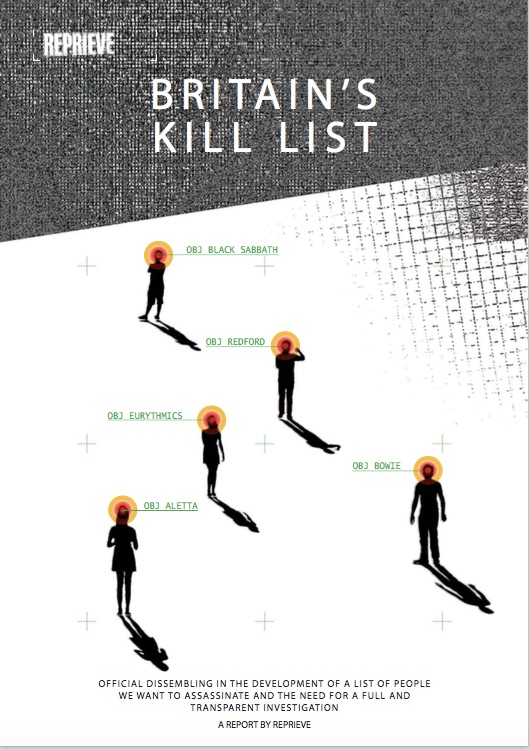
Britain's Kill List cover JPEGOver at ESIL [European Society of International Law] Reflections [5 (7) 2016], Jochen von Bernstorff has a succinct commentary on ‘Drone strikes, terrorism and the zombie: on the construction of an administrative law of transnational executions‘.

His starting-point is the UK report on the government’s policy on the use of drones for targeted killing that was published in May 2016 in response to the killing of Reyad Khan in Syria last August: you can find more in REPRIEVE’s report on Britain’s Kill List (April 2016) and in two commentaries at Just Security from Noam Lubell here and Kate Martin here.

In Jochen’s view, the UK has effectively endorsed the policies of the Obama administration and in doing so has hollowed out fundamental legal regimes that supposedly constrain state violence.

First is the concerted attempt to legitimise the unilateral killing of suspected terrorists outside ‘hot’ battlefields – in the Federally Administered Tribal Areas of Pakistan, for example – as a new form of pre-emptive self-defence to be invoked whenever the state whose sovereignty is transgressed is ‘unwilling or unable’ to take appropriate counter-measures.  I discuss other dimensions of this in ‘Dirty dancing’ (DOWNLOADS tab), and pay attention to its colonial genealogy, but Jochen emphasises another even more starkly colonial inflection:

‘The main protagonists in this discursive effort take it for granted that the new legal regime will not be applied among us, which is among Western states and the five permanent Security Council members. There will be no US-drone attacks in Brussels or Paris to kill ISIS-terrorists without the consent of the Belgian or French government, even if these governments proved to be unable to find and arrest terrorists. The new regime is a legal framework for what can be called the “semi-periphery”, consisting of states that do not belong to the inner circle or are not powerful enough to resist the application of the regime.’

Second, and closely connected, is the claim that armed conflict follows the suspect – that the individuation of warfare (‘the body becomes the battlefield’, as Grégoire Chamayou has it) licenses the everywhere war: simply, wherever the suspect seeks refuge s/he becomes a legitimate target of military violence.  But there is nothing ‘simple’ about it, Jochen contends, because this involves a wholesale exorbitation of the very meaning of armed conflict that completely trashes the role of international human rights law in limiting violence against those suspected of criminal wrong-doing.

Finally, Jochen concludes that the arguments adduced by the UK and the USA (and, I would add, Israel) demonstrate that international law is so often transformed through its violation: in Eyal Weizman‘s ringing phrase, ‘violence legislates‘.  Here is Jochen:

 ‘The Zombie is created by a fundamental reconceptualization of the notion of self- defence and armed conflict in international law with the aim to get rid of all legal constraints on state violence imposed by the law enforcement paradigm. Is this a new legal regime? Are we really moving towards an administrative law of transnational executions? It is an inherent problem of international legal discourse that measures of Great Powers violating the law will often be reformulated as an evolving new legal regime and legal scholars should be extremely sceptical of any such claims, since whoever says “emerging” in an international legal context very likely wants to cheat.’