Indefensible

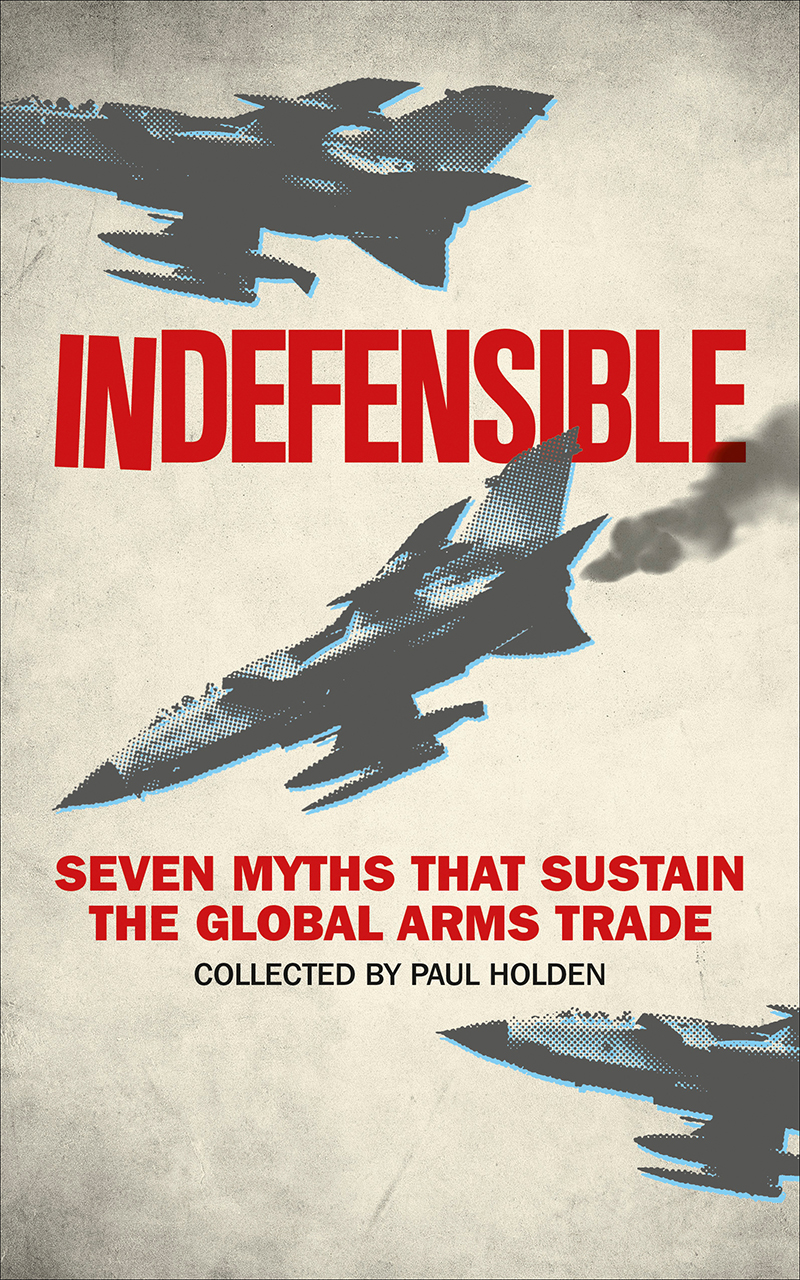
I had a wonderful time at Andrew Feinstein‘s Wall Exchange lecture last night – and at dinner afterwards – and Andrew alerted me to an excellent companion to many of the arguments he developed in Shadow World:

Although there is often opposition to individual wars, many people continue to believe that the arms industry is necessary in some form: to safeguard our security, provide jobs, or stimulate the economy. For these reasons, not only conservatives, but many progressives and liberals, are able to rationalize supporting it. But is the arms industry truly as essential as we’ve been led to believe?   Indefensibleputs forward a devastating challenge to this conventional wisdom, debunking many myths about the industry that has somehow managed to normalize the existence of the most savage weapons of mass destruction ever known.

Editor Paul Holden, who himself has written extensively about arms deals, has compiled the essential handbook for those who want to counter the arguments put forth by the industry and its supporters. Deploying statistics, case studies, and irrefutable evidence to demonstrate how the arguments in favor of the arms trade are fundamentally flawed, both factually and logically, the contributors to this volume clearly show that far from protecting us, the arms trade undermines our security by fanning the flames of war, terrorism, and global instability.

Bringing together a range of distinguished experts and activists, including Andrew Feinstein, author of After the Party and The Shadow World, Indefensible not only reveals the complex dangers associated with the arms trade but offers positive ways in which we can combat the arms trade’s malignant influence, reclaim our democracies, and reshape our economies in the interests of peace and human well-being.

Here is the Contents list:

  • Indefensible: Setting the Scene
  • Introduction
  • Section 1: There Is No Problem
    • Myth 1: Higher Defense Spending Equals Increased Security
    • Myth 2: Military Spending Is Driven by Security Concerns
    • Myth 3: We Can Control Where Weapons End Up and How They Are Used
    • Myth 4: The Defense Industry Is a Key Contributor to National Economies
    • Myth 5: Corruption in the Arms Trade Is Only a Problem in Developing Countries
    • Myth 6: National Security Requires Blanket Secrecy
  • Section 2: The Arms Trade Can’t Be Beaten
    • Myth 7: Now Is Not the Time
  • Conclusion: Change Is Possible

It’s available in paper and digital forms from Zed Books (see here) and the University of Chicago Press (see here) but it’s also available online where you can read the whole thing for free here.

Shadow World

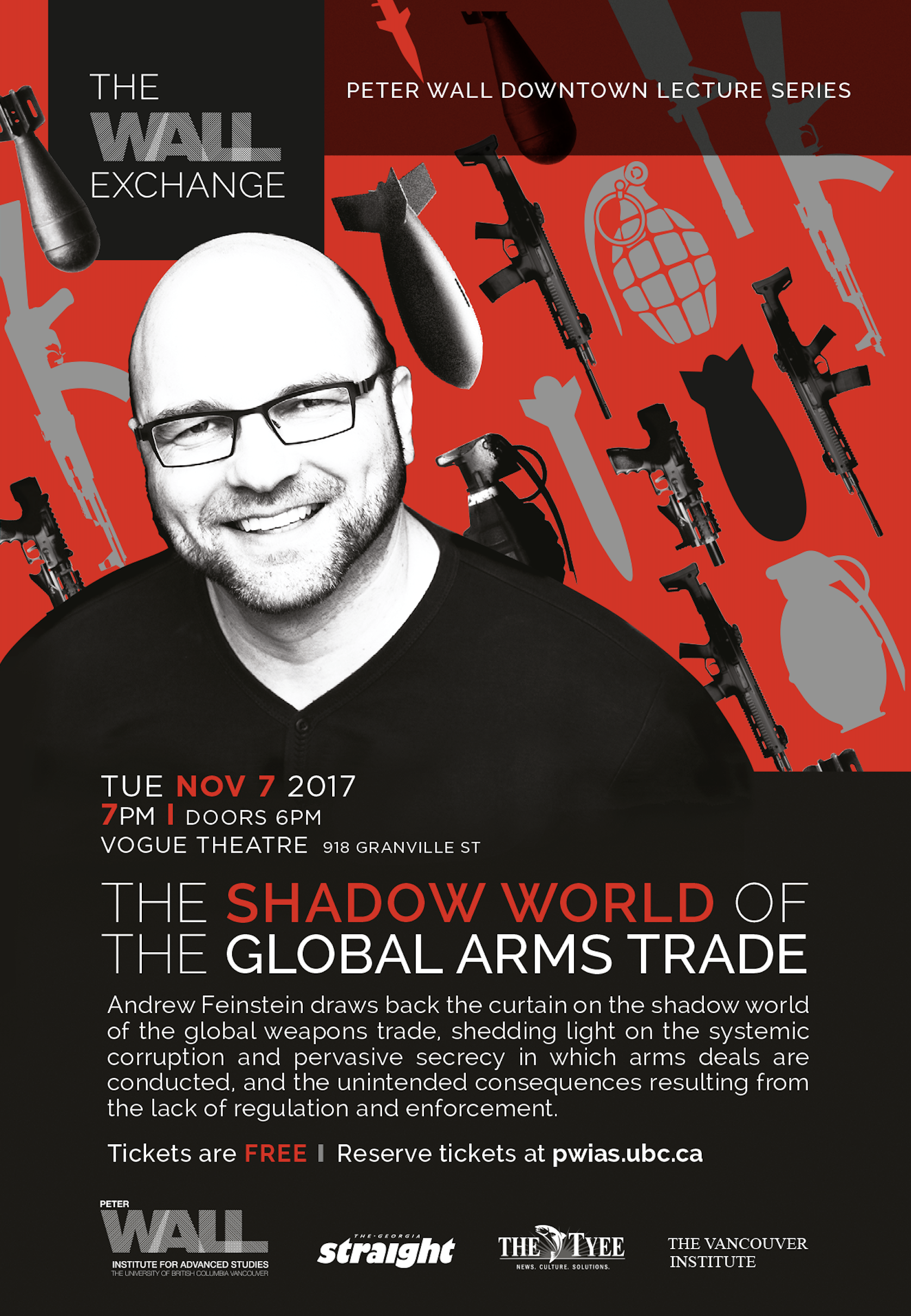
I am thrilled to announce our next Wall Exchange at the Vogue Theatre (Granville Street) in downtown Vancouver at 7 p.m. on Tuesday 7 November: Andrew Feinstein on ‘The shadow world of the global arms trade’.  One of my earliest posts was about what I called The death merchants, and I drew attention to Andrew’s wonderful work there.  So it will be a real treat to hear him live:

In this Wall Exchange lecture Andrew Feinstein draws back the curtain on the shadow world of the global trade in weapons—its systemic corruption, highly technical nature, and the pervasive secrecy in which deals are concluded.

Feinstein will propose mechanisms to clean up and properly regulate the global arms trade. In addition to the death and destruction caused by its products and the massive costs of the world’s defense spending, the lack of properly enforced regulation and control makes the occurrence of unintended consequences inevitable. This results in the very weapons sold by many Western governments being used against their own citizens. Nowhere is this more evident than in the so-called ‘War on Terror’, in which suspect intelligence and fluctuating alliances with non-state groups and countries such as Saudi Arabia undermine our security.

Andrew Feinstein is Executive Director of Corruption Watch, an NGO that details and exposes the impact of bribery and corruption on democracy, governance and development. Andrew was named amongst the 100 most influential people in the world working in armed violence reduction. Along with two colleagues, he was voted South Africa’s anti-corruption hero of 2014.

His critically-acclaimed book The Shadow World: Inside the Global Arms Trade reveals the corruption and malfeasance at the heart of the global arms business, both formal and illicit. A documentary feature film of the book premiered at the Tribeca Film Festival in New York in April 2016, and was awarded Best Documentary Feature at the Edinburgh International Film Festival, the Valladolid International Film Festival and the Belgian Ensor Award.

Andrew was an ANC Member of Parliament in South Africa for over seven years where he served under Nelson Mandela. He resigned in 2001 in protest at the ANC’s refusal to countenance an independent and comprehensive enquiry into a multi-billion dollar arms deal which was tainted by allegations of high level corruption.

You can read much more about the presentation here, where you can also watch a trailer for Andrew’s award-winning documentary Shadow World (which will be on PBS on 20 November 2017).

The event is free, but you need to register in advance: online here or via Ticketfly on 1-888-732-1682

Periscope

Articles that have recently caught my eye through their intersections with various projects I’m working on (so forgive what may otherwise seem an idiosyncratic selection!):
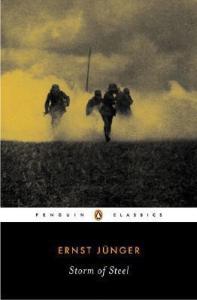
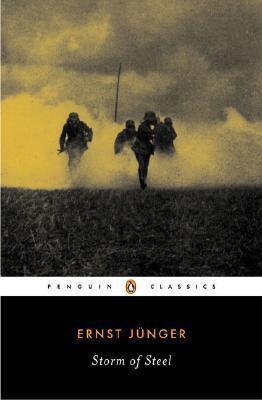
Bogdan Costea and Kostas Amiridis, ‘Ernst Jünger, total mobilization and the work of war’, Organization 24 (4) (2017) 475-490 – I keep encountering Jünger’s work, first when I was writing ‘The natures of war‘ (he served on the Western Front in the First World War: see his remarkable Storm of Steel, still available as a Penguin Classic in a greatly improved translation) and much more recently while preparing a new lecture on occupied Paris in the Second World War (he was stationed there for four years and confided a series of revealing and often critical observations to his diaries).  But his reflections on the ‘destruction line’ of modern war are no less interesting.  For parallel reflections, see:

Leo McCann, ‘Killing is our business and business is good”: The evolution of war managerialism from body counts to counterinsurgency’, Organization 24 (4) (2017) 491-515 – I’ve written about what Freeman Dyson called ‘the bureaucratization of homicide‘ before, in relation to aerial violence, but this essay provides a wider angle.

Laura Pitkanen, Matt Farish, ‘Nuclear landscapes’, Progress in human geography [Online First: 31 August 2017] (‘Places such as New Mexico’s Trinity Site have become iconic, at least in the United States, and a study of nuclear landscapes must consider the cultural force of spectacular weapons tests and related origin stories. But critical scholars have also looked beyond and below the distractions of mushroom clouds, to additional and alternative landscapes that are obscured by secrecy and relative banality’).

I’m still haunted by the reading I did for ‘Little Boys and Blue Skies‘, much of it inspired by Matt’s work (see especially here on ‘Atomic soldiers and the nuclear battlefield’); this essay should be read in conjunction with:

Becky Alexis-Martin and Thom Davis, ‘Towards nuclear geography: zones, bodies and communities’, Geography Compass [Online early: 5 September 2017] (‘We explore the diverse modes of interaction that occur between bodies and nuclear technology and point towards the scope for further research on nuclear geographies. We bring together different strands of this nascent discipline and, by doing so, highlight how nuclear technology interacts across a spectrum of geographic scales, communities, and bodies. Although nuclear geographies can be sensational and exceptionalising, such as the experiences of nuclear accident survivors and the creation of “exclusion zones,” they can also be mundane, everyday and largely unrecognised, such as the production of nuclear energy and the life-giving nature of radioactive medicine.’)
Simon Philpott, ‘Performing Mass Murder: constructing the perpetrator in documentary film’, International Political Sociology 11 (3) (2017) 257–272 – an insightful critique of Joshua Oppenheimer‘s The Act of Killing (see my posts here and here).

José Ciro Martinez and Brett Eng, ‘Struggling to perform the state: the politics of bread in the Syrian civil war’, International Political Sociology 11 (20 (2017) 130-147 – a wonderfully suggestive analysis that has the liveliest of implications for my own work on attacks on hospitals and health-care workers in Syria (notably: ‘The provision of bread to regime-controlled areas has gone hand in hand with targeted efforts to deprive rebel groups of the essential foodstuff and, by extension, their ability to perform the state. Since 2012, the regime has bombed nascent opposition-administered attempts to provide vital public services and subsistence goods, thereby presenting itself as the only viable source of such necessities.’)  But it also has far wider implications for debates about ‘performing the state’ and much else.  And in a similar vein:

Jeannie Sowers, Erika Weinthal and Neda Zawahiri, ‘Targeting environmental infrastructures, international law and civilians in the new Middle Eastern wars’, Security Dialogue 2017 [Online early] (”We focus on better understanding the conflict destruction of water, sanitation, waste, and energy infrastructures, which we term environmental infrastructures, by drawing on an author-compiled database of the post-2011 wars in the Middle East and North Africa… Comparatively analyzing the conflict zones of Libya, Syria, and Yemen, we show that targeting environmental infrastructure is an increasingly prevalent form of war-making in the MENA, with long-term implications for rebuilding states, sustaining livelihoods, and resolving conflicts.’)

Will Todman, ‘Isolating Dissent, Punishing the Masses: Siege Warfare as Counter-Insurgency,’ Syria Studies 9 (1) (2017) 1-32 – Syria Studies is an open-acess journal from the Centre for Syrian Studies at St Andrews.
Sarah El-Kazaz and Kevin Mazur, ‘The unexceptional Middle Eastern City’, City & Society 29 (1) (2017) 148-161 – a really useful introduction to a themed section, much on my mind as this term I’ll be doing my best to jolt my students out of lazy caricatures of ‘the Islamic city’ (‘The study of Middle Eastern cities has been constrained in its analytical and methodological focus by a genealogy shaped by a triad of regional exceptions–Islam, oil, and authoritarianism–and … this special section move[s] beyond those constraints in important ways. Focusing on geographical places and time periods that have remained peripheral to the study of Middle Eastern cities, the three articles ethnographically historicize the planned and unplanned processes through which cities in the region transform to transcend a genealogy of exceptionalism and the constraints it has created. They highlight the global and local connections that shape these processes to offer new perspectives on the study of scale, verticality and sensoriums in the shaping of urban transformation around the globe.’)

Rasul Baksh Rais, ‘Geopolitics on the Pakistan-Afghanistan borderland’, Geopolitics [online early: 11 August 2017] – a helpful historical review particularly for anyone interested in the exceptional construction of the Federally Administered Tribal Areas by both Washington and Islamabad.

Katharine Hall Kindervater, ‘Drone strikes, ephemeral sovereignty and changing conceptions of territory’, Territory, politics, governance (2017) 207-21 – Kate engages with her characteristic breadth of vision with some of the problems that preoccupied me in ‘Dirty dancing’ and urges a topological engagement with territory (DOWNLOADS tab) (‘This article examines the US legal frameworks for drone-targeting operations, and in particular the conceptions of territory they draw upon, to argue that contemporary strikes reflect less a disappearance of the importance of territory and sovereignty to justifications of the use of force than a reconfiguration of their meanings. Grounded in an understanding of territory that is more networked and dynamic, drone strikes reflect the emergence of a new landscape of mobile and ephemeral sovereignty.’)
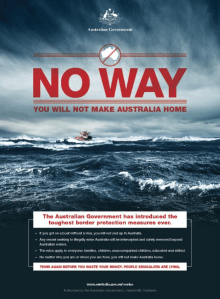
Georgina Ramsay, ‘Incommensurable futures and displaced lives: sovereignty as control over time’, Public culture 29 (3) (2017) 515-38 (‘The recent mass displacement of refugees has been described internationally as a “crisis.” But crisis implies eventfulness: a distinct problem that can be solved. The urgency of solving this problem of displacement has seen the use of expansive techniques of sovereignty across Europe, the epicenter of the crisis. Focusing exclusively on the formation of sovereignty through the analytical locus of crisis continues, however, to reproduce the trope of the “refugee” as a category of exception. This essay considers the experiences of people who were resettled as refugees in Australia and whose displacement has ostensibly been resolved. Drawing attention to their continuing experiences of violence, it considers how the temporal framing of displacement is itself a way to conceal formations of sovereignty embedded in the very processes designed to resolve displacement. Doing so opens up new ways to think about control over time as a technique of sovereignty.’)

For an equally trenchant and invigorating critique of crisis-talk, see Joseph Masco‘s brilliant ‘The Crisis in Crisis’, Current Anthropology 58 Supplement 17 (2017) S65-S76, available on open access here. (‘In this essay I consider the current logics of crisis in American media cultures and politics. I argue that “crisis” has become a counterrevolutionary idiom in the twenty-first century, a means of stabilizing an existing condition rather than minimizing forms of violence across militarism, economy, and the environment. Assessing nuclear danger and climate danger, I critique and theorize the current standing of existential crisis as a mode of political mobilization and posit the contemporary terms for generating non-utopian but positive futurities.’)

Dima Saber and Paul Long, ‘”I will not leave, my freedom is more precious than my blood”: From affect to precarity – crowd-sourced citizen archives as memories of the Syrian war’, Archives and Records 38 (1) (2017) (‘Based on the authors’ mapping of citizen-generated footage from Daraa, the city where the Syria uprising started in March 2011, this article looks at the relation between crowd-sourced archives and processes of history making in times of war. It describes the ‘migrant journey’ of the Daraa archive, from its origins as an eyewitness documentation of the early days of the uprising, to its current status as a digital archive of the Syrian war. It also assesses the effects of digital technologies for rethinking the ways in which our societies bear witness and remember. By so doing, this article attempts to address the pitfalls attending the representation and narrativisation of an ongoing conflict, especially in the light of rising concerns on the precariousness and disappearance of the digital archives. Finally, by engaging with scholarship from archival studies, this article attempts to address the intellectual rift between humanities and archival studies scholars, and is conceived as a call for more collaboration between the two disciplines for a more constructive research on archival representations of conflict.’)
Aerial violence and the death of the battlefield

UBC’s term started last week, but I was in Nijmegen so I’ve started this week.  I’ve posted the revised outlines and bibliographies for my two courses this term under the TEACHING tab.

I was primarily in Nijmegen to give a ‘Radboud Reflects’/Humboldt Lecture.  As usual, I had a wonderful time; I’ve pasted the abstract below – though this was written before I had put the presentation together, so it doesn’t incorporate the closing section at all (“Geographies of the Remote”).  It draws, in part, on my Tanner Lectures, “Reach from the sky“, but it also incorporates new material [see, for example, my reflections on the Blackout here].

You can download the slides as a pdf here: GREGORY War at a distance Aerial violence and the death of the battlefield [this version includes several slides that I subsequently cut to bring the thing within bounds], and the video version will be available online shortly.

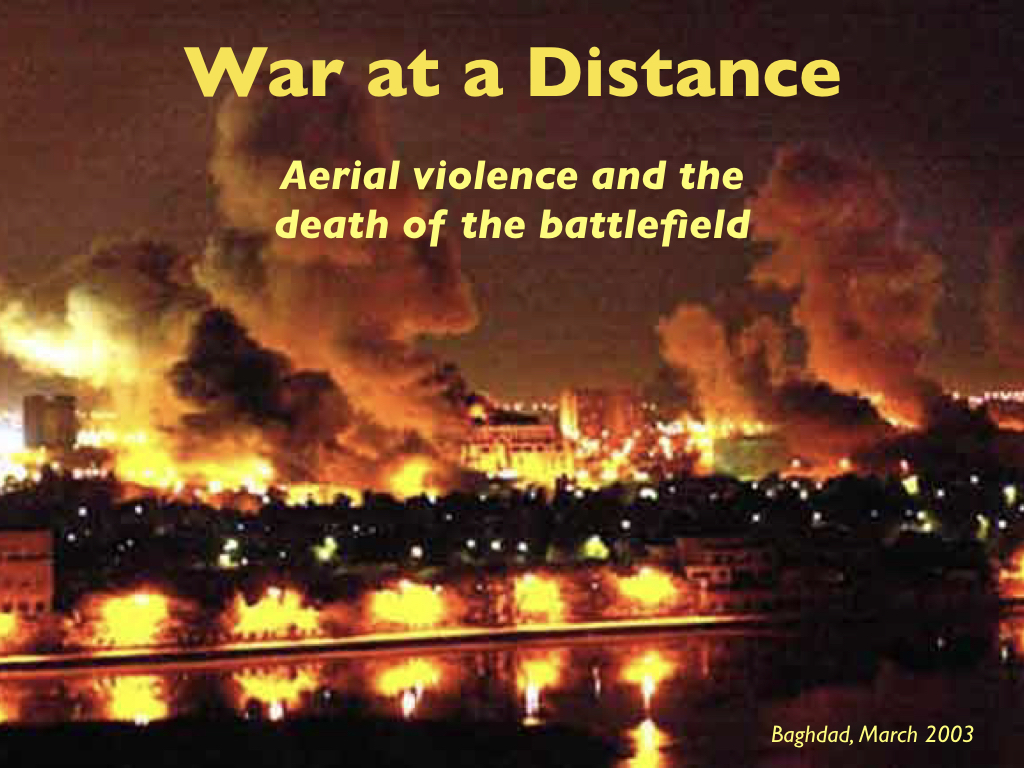
War at a distance: aerial violence and the death of the battlefield

Christopher Nolan’s film “Dunkirk” is remarkable for many reasons, but prominent among them is the fact that, as the director himself notes, ‘we don’t see the Germans in the film… it’s approached from the mechanics of survival rather than the politics of the event.’ This raises a series of important questions, but central to any understanding of aerial violence is precisely what can be seen and what cannot be seen: what can those crouching under the bombs see of the perpetrators, and what can those carrying out the strikes see of their targets? You might think this becomes even more important when war is conducted at a distance, but the history of military violence shows that ‘distance’ is a complicated thing…

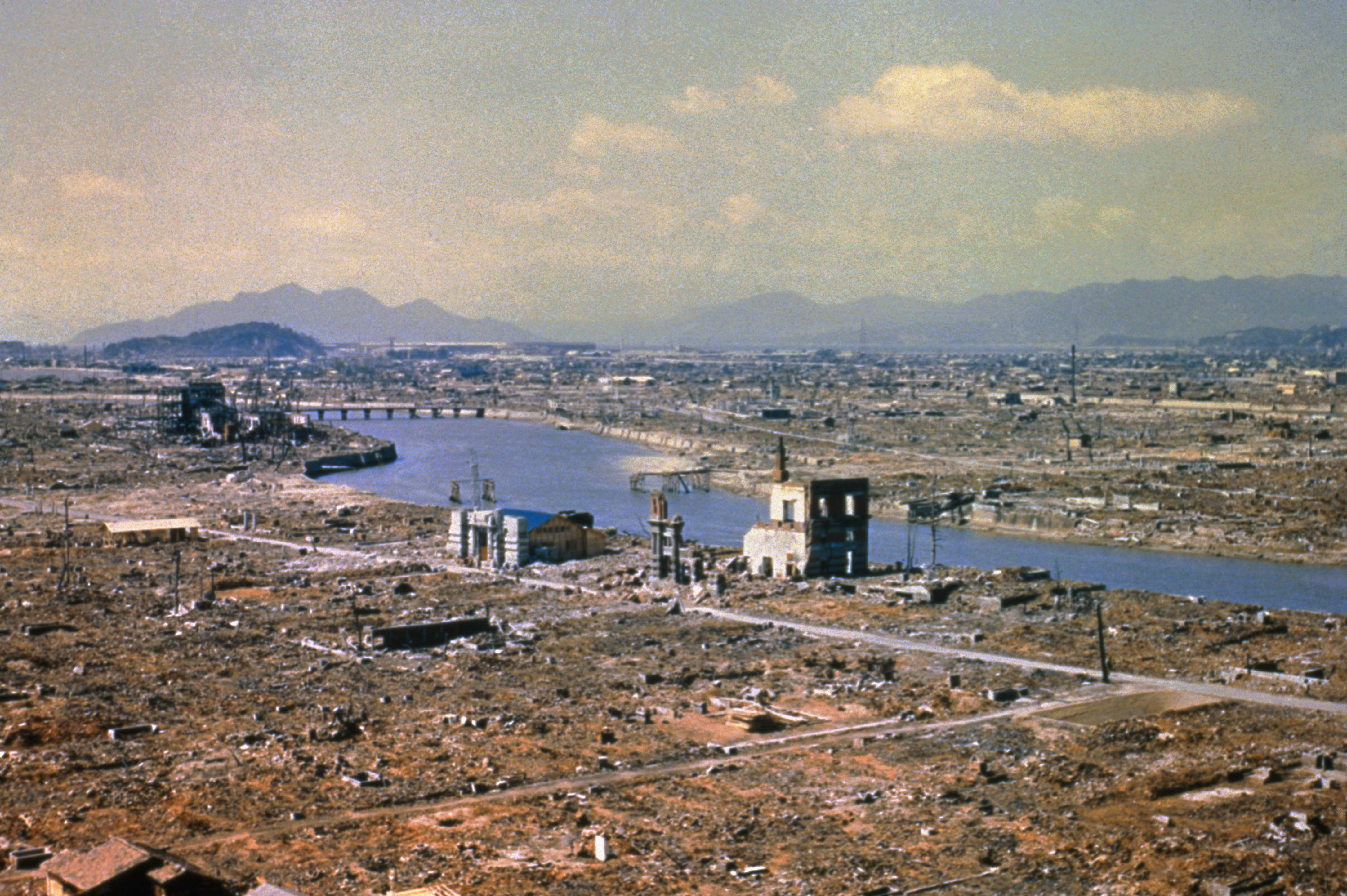
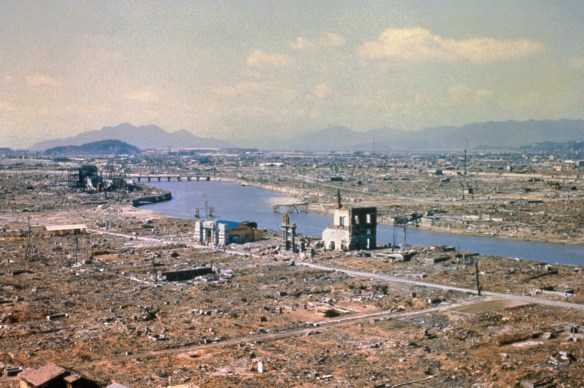
The first large-scale use of aircraft for offensive purposes (rather than surveillance) was on the Western Front during the First World War, when aircraft were used to ‘spot’ targets for artillery and eventually to conduct bombing operations on the battlefield. But more consequential was the use of aircraft and airships to conduct bombing raids far beyond the battlefield, on cities like London and Paris, because this brought civilians directly into the line of fire and in doing so started to dissolve the idea of the battlefield [what Frédéric Mégret calls ‘the deconstruction of the battlefield‘] and to assault the very concept of a civilian. The bombing offensives of the Second World War, especially in Europe and Japan, accelerated this dismal process, but they also reveal a deadly dialectic between intimacy and domesticity (the effects on everyday life on the ‘home’ front) and abstraction (the way in which targets were produced and made visible to bomber crews).e

That same dialectic reappears in today’s drone operations over Afghanistan, Iraq, Syria, Somalia, Yemen and elsewhere. But these new technologies of ‘war at a distance’ have their own history that overlaps and intersects with the story of manned flight. Indeed, the dream of ‘unmanned’ flight soared in lockstep with the dream of those extraordinary flying machines. This too goes back to the First World War, when inventors proposed ingenious aerial vehicles whose ‘bomb-dropping’ would be controlled by radio. These proved impractical until after the Second World War, when drones were used by the US to photograph and collect samples from atomic clouds in the Marshall Islands and Nevada [see here and here]. The over-arching principle was to protect American lives by keeping operators at a safe distance from their targets, and this is one of the logics animating contemporary drone strikes (‘projecting power without vulnerability’). But for this to work new technologies of target recognition as well as mission control were required; these were first developed during the Vietnam War, when the US Air Force tried to ‘wire’ the Ho Chi Minh Trail and connect its sensor systems to computers that would direct aircraft onto their targets (or, rather, target boxes).

The Pentagon looked forward to the installation of an ‘automated battlefield’ on a global scale [see my ‘Lines of Descent’, DOWNLOADS tab]. Although its plans were premature, the subsequent development of targeted killing using Predators and Reapers has since completed the dissolution of a distinctive battlefield: the United States Air Force boasts that it can put ‘warheads on foreheads’ and the US has claimed the right to pursue its targets wherever they go, so that (in Grégoire Chamayou’s words) ‘the body becomes the battlefield.’ These targeted bodies are at once abstract – reduced to digital traces, the products of a global system of intelligence, surveillance and reconnaissance – and yet at the same time, by virtue of the high-resolution full-motion video feeds used to track them, peculiarly intimate to those that kill them. Drone pilots operate their aircraft from thousands of miles away, yet they are much ‘closer’ to their targets than pilots of conventional strike aircraft: previously, the only aerial vehicles to approach this level of intimacy, and then but fleetingly, were the Zeppelins of the First World War. But this intimacy is conditional and even illusory, and case studies [see here, here and here] show that as the battlefield transforms into the multi-dimensional battlespace the very idea of the civilian [see here and here] is put at increased risk.

All of this will appear, in extended and elaborated form, in my new book, also called “Reach from the sky”.

Academics against the arms trade

Yoked to my previous post – and a distant echo of one of my earliest posts on ‘The death merchants‘ – is an important message from the editors of Critical Military Studies:

Dear academic friends and colleagues,

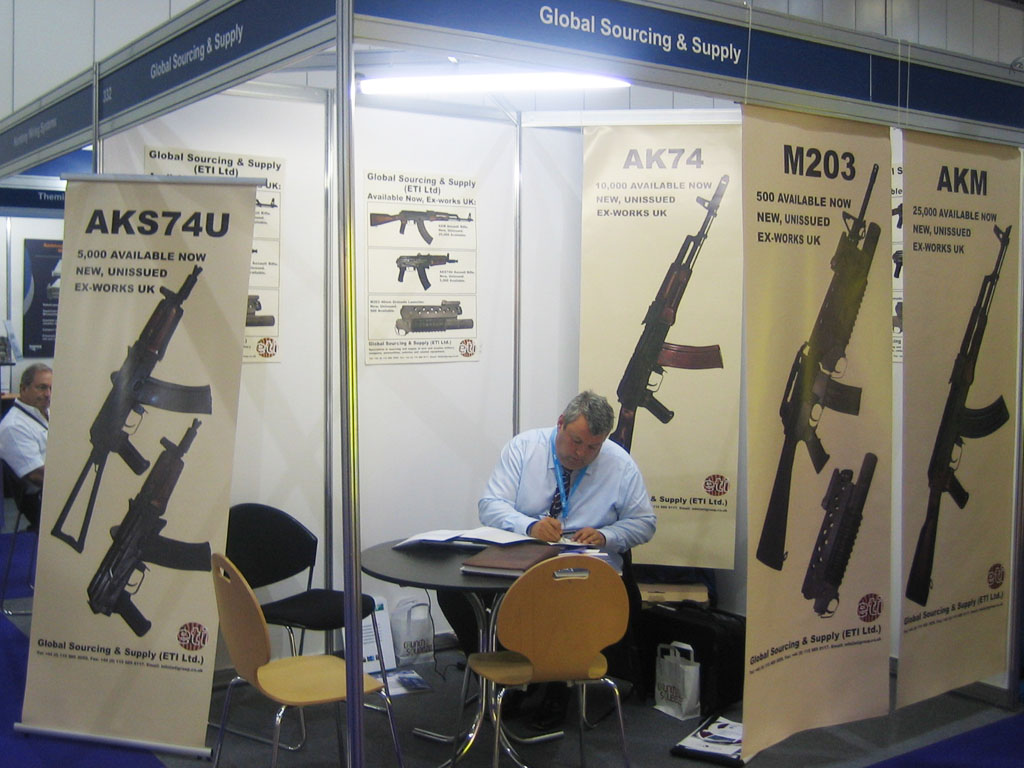
As many of you will know, from September 12th-15th the DSEI [Defence and Security Equipment International] arms fair will take place at the ExCeL Centre in East London. DSEI is one of the largest arms fairs in the world, with over 1500 companies and representatives from more than 100 states. As you can imagine, it also generates a lot of opposition. The Stop the Arms Fair coalition have called for a week of action before the arms fair begins, and as part of this we’re organising an academic conference, on Friday 8th September, that will take place in front of the ExCeL Centre. The conference will cover a series of issues related to militarism, with a series of talks, workshops and performances co-organised by activists and academics. Topics for workshops include:

–    Militarism and (gendered) embodiment
–    Recognising and resisting border militarism within universities
–    Militarism and contemporary colonialism
–    The purpose of radical theory

The team behind the workshop did this two years ago when the arms fair last happened, and the event was a huge success, providing participants with the opportunity to meet new people, have some wonderful conversations about the nature of militarism and the purpose of academic practice, and put academic ideas into action in an exciting and unusual manner. You can read a write-up of that event by Chris Rossdale in Critical Military Studies. There is a website for this year’s event here and Facebook event. Updates and logistics information will be available on both of those, but you can also get in touch with Chris Rossdale at C.Rossdale@lse.ac.uk if you want more details.

If you can’t make the conference (and even if you can), we are also currently circulating an open letter for academics to sign, signalling opposition to the arms fair. This will be published in a media outlet around a week before the action. We would be very grateful if you could sign it and circulate it to people and networks you think might be interested. You can find the letter here.

You can find more details (wherein the devil lurks) at DSEI’s website here, including this gem:

‘DSEI Strategic Conferences take place on 11 September (Day Zero) … 2017 brings Brexit and a change of US government, this combined with a competitive global defence & security market means DSEI can promise a conference and seminar programme that will challenge day to day thinking. Both events will tap into the ideas and theories of the people who drive the defence and security sector forward in pursuit of innovation and long-term economic prosperity…’

In case you’re wondering, admission is now £1,150 for ‘Industry/Academia’ but a snip at £150 for students….

The Right to Maim

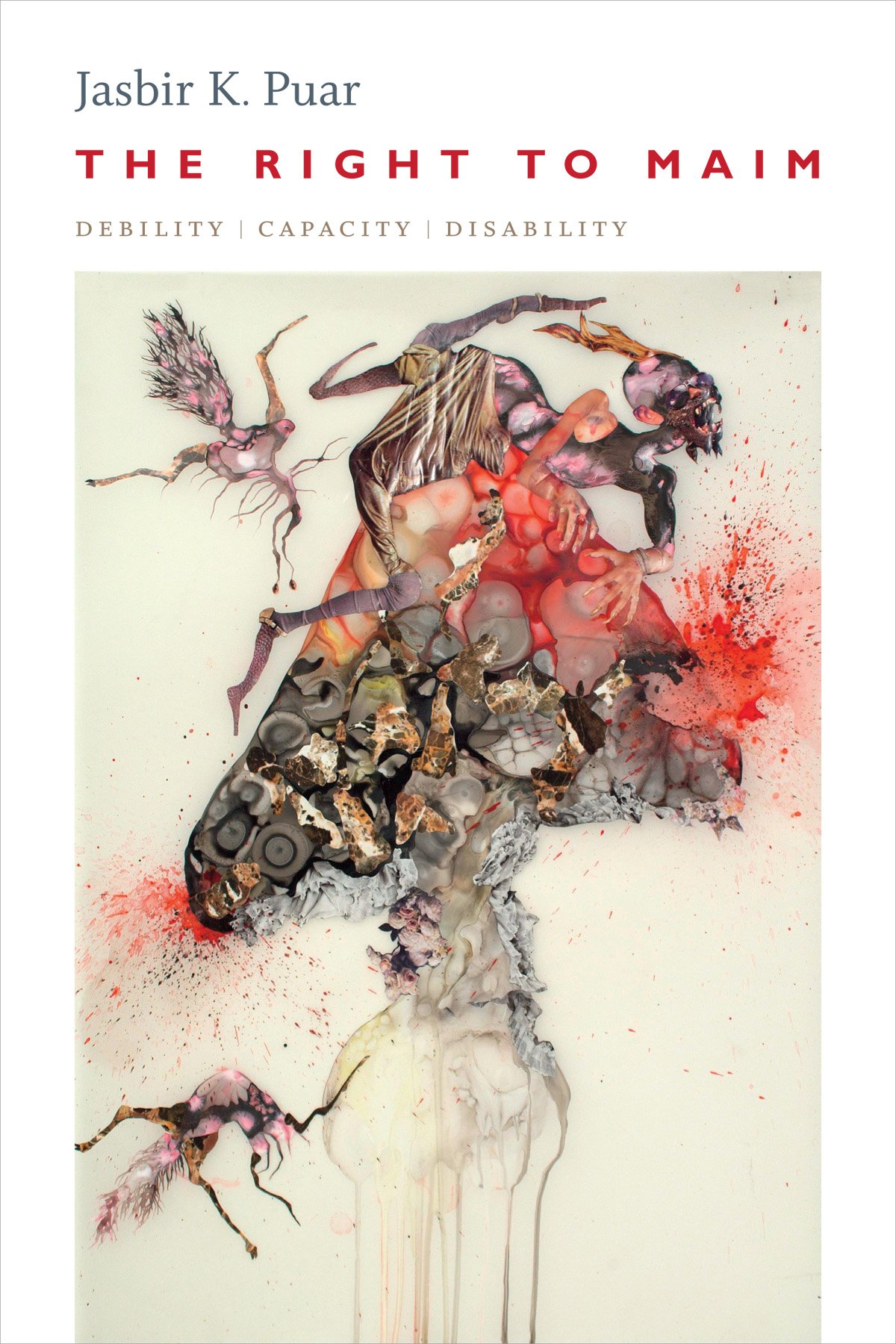
Following all too closely on the heels of my last post, a new book from Jasbir Puar, out from Duke University Press in November: The Right to Maim: debility, capacity, disability:

In The Right to Maim Jasbir K. Puar brings her pathbreaking work on the liberal state, sexuality, and biopolitics to bear on our understanding of disability. Drawing on a stunning array of theoretical and methodological frameworks, Puar uses the concept of “debility”—bodily injury and social exclusion brought on by economic and political factors—to disrupt the category of disability. She shows how debility, disability, and capacity together constitute an assemblage that states use to control populations. Puar’s analysis culminates in an interrogation of Israel’s policies toward Palestine, in which she outlines how Israel brings Palestinians into biopolitical being by designating them available for injury. Supplementing its right to kill with what Puar calls the right to maim, the Israeli state relies on liberal frameworks of disability to obscure and enable the mass debilitation of Palestinian bodies. Tracing disability’s interaction with debility and capacity, Puar offers a brilliant rethinking of Foucauldian biopolitics while showing how disability functions at the intersection of imperialism and racialized capital.

Contents:

Introduction: The Cost of Getting Better
1. Bodies with New Organs: Becoming Trans, Becoming Disabled
2. Crip Nationalism: From Narrative Prosthesis to Disaster Capitalism
3. Disabled Diaspora, Rehabilitating State: The Queer Politics of Reproduction in Palestine/Israel
4. “Will Not Let Die”: Debilitation and Inhuman Biopolitics in Palestine  1
Postscript: Treatment without Checkpoints

Here are three pre-publication reviews, first from Elizabeth Povinelli:

In signature style, Jasbir K. Puar takes readers across multiple social and textual terrains in order to demonstrate the paradoxical embrace of the politics of disability in liberal biopolitics. Puar argues that even as liberalism expands its care for the disabled, it increasingly debilitates workers, subalterns, and others who find themselves at the wrong end of neoliberalism. Rather than simply celebrating the progressive politics of disability, trans identity, and gay youth health movements, The Right to Maim shows how each is a complex interchange of the volatile politics of precarity in contemporary biopower.

Paul Amar:

Jasbir K. Puar’s must-read book The Right to Maim revolutionizes the study of twenty-first-century war and biomedicine, offering a searingly impressive reconceptualization of disability, trans, and queer politics. Bringing together Middle East Studies and American Studies, global political economy and gendered conflict studies, this book’s exciting power is its revelation of the incipient hegemony of maiming regimes. Puar’s shattering conclusions draw upon rigorous and systematic empirical analysis, ultimately offering an enthralling vision for how to disarticulate disability politics from this maiming regime’s dark power.

And Judith Butler:

Jasbir K. Puar’s latest book offers us a new vocabulary for understanding disability, debility, and capacity, three terms that anchor a sharp and provocative analysis of biopolitics of neoliberalism, police power, and militarization. Gaining recognition for disability within terms that instrumentalize and efface its meanings carries a great risk. So too does opting out of discourse altogether. Puar references a wide range of scholarly and activist resources to show how maiming becomes a deliberate goal in the continuing war on Palestine, and how the powers of whiteness deflect from the demographics of disability and ability. Lastly, her deft understanding of how the attribution of ‘capacity’ can work for and against people in precarious positions will prove crucial for a wiser and more radical struggle for justice.

If you can’t wait until November, you can get a taste of Jasbir’s arguments in her essay for borderlands 14 (1) (2015) ‘The ‘Right’ to Maim: Disablement and Inhumanist Biopolitics in Palestine‘ available as an open access pdf here.  I’ve been attending closely to Jasbir’s vital arguments as I re-think the sketches I made in Meatspace? and The prosthetics of Military Violence: more soon.

Distinction and the ethics of violence

In another lifetime, or so it seems, I wrote a short essay on ‘The death of the civilian’ (DOWNLOADS tab), and I seem to have spent much of the intervening years developing those early ideas.  So I’m thrilled to see an important new paper from Nicola Perugini and Neve Gordon, ‘Distinction and the Ethics of Violence: on the legal construction of liminal subjects and spaces’, available online now at Antipode:

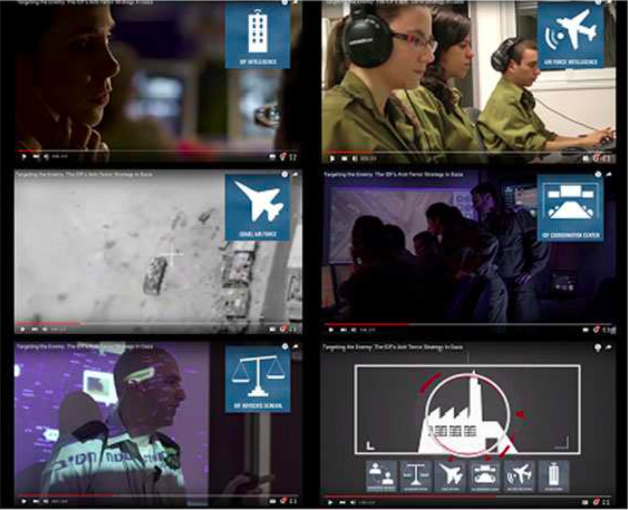
This paper interrogates the relationship among visibility, distinction, international humanitarian law and ethics in contemporary theatres of violence. After introducing the notions of “civilianization of armed conflict” and “battlespaces”, we briefly discuss the evisceration of one of international humanitarian law’s axiomatic figures: the civilian. We show how liberal militaries have created an apparatus of distinction that expands that which is perceptible by subjecting big data to algorithmic analysis, combining the traditional humanist lens with a post-humanist one. The apparatus functions before, during, and after the fray not only as an operational technology that directs the fighting or as a discursive mechanism responsible for producing the legal and ethical interpretation of hostilities, but also as a force that produces liminal subjects. Focusing on two legal figures—“enemies killed in action” and “human shields”—we show how the apparatus helps justify killing civilians and targeting civilian spaces during war.

Their two case studies focus on US drone attacks in Pakistan and the use of human shields in Gaza (the image below, taken from the article, shows the Israeli Defence Force’s ‘Laboratory of Discrimination’ (sic)).

You can watch a video where Nicola and Neve discuss their ideas on the Antipode website here, which also provides a less formal gloss:

[Their paper] examines how militaries actually make distinctions in the battlefield, given that today most fighting takes place in urban settings where distinguishing between combatant and civilian is becoming increasingly difficult.

Their paper shows how liberal militaries are utilizing new technologies that aim to expand that which is perceptible within the fray. Combining the more traditional forms of making distinctions such as binoculars and cameras with cutting edge hi-tech, militaries subject big data to algorithmic analysis aimed at identifying certain behavioral patterns. The technologies of distinction function before, during, and after the fray not only in order to direct the fighting and to help produce the legal and ethical interpretation of hostilities, but also as a mechanism that identifies and at times creates new legal figures.

Focusing on two legal figures—“enemies killed in action” and “human shields”—Nicola and Neve show how technologies of distinction help justify killing civilians and targeting civilian spaces during war. Ultimately, they maintain that distinction, which is meant to guarantee the protection of civilians in the midst of armed conflict, actually helps hollow the notion of civilian through the production of new liminal legal figures that can be legitimately killed.

For more on the intersections between international law, military protocols and the (in)visibility of the civilian, I also recommend the insightful work of Christiane Wilke (see ‘Seeing Civilians (or not)’ here).

Solatia

Many readers will know Emily Gilbert‘s stunning work on the financialization of the battlespace through consolation payments made by the US and their allies to victims of military violence (‘solatia’).  If you’re not among them, see her ‘The gift of war: cash, counterinsurgency and “collateral damage“‘ in Security Dialogue 46 (2015) 403-21; also her essay on ‘Tracing military compensation’ available here.

In a similar vein (I imagine) is a forthcoming book by journalist and novelist Nick McDonell: Solatia: an account of civilian casualties in America’s wars:

Since 2003, America’s wars in Iraq and Afghanistan have killed hundreds of thousands of civilians — by some counts, more than a million — and the number continues to grow. Of the many questions arising from these deaths — for which no one assumes responsibility, and which have been presented, historically, as unavoidable — perhaps the most fundamental question, for Americans, is this: if all men are created equal, why are we willing to kill foreign civilians?

Solatia (the term for money the U.S. pays to the families of civilian dead), sets out to answer that question. In all its wars, the United States both condemns and causes civilian casualties. But what exactly constitutes a civilian casualty? Why do they occur? What do our officials know of those reasons? How do they decide how many people they are willing to kill “by accident” — in a night raid, or drone strike, or invasion? And who, exactly, gets to decide?

Solatia is a globe-trotting, decade-spanning exploration into one of the most fundamental issues of our time. Following an array of officials, combatants, and civilians trying to survive — spies and senators, police chiefs and accountants caught in air strikes, orphaned street kids and widowed mothers, Iranian milita leaders, Taliban spokesmen and Marine special forces operators — Solatia confronts the U.S.’ darkest history abroad, illuminates its ongoing battles, and offers an original view of what it means to be a citizen of America at war.

It’s due in March from Penguin/Random House.

‘I saw my city die’

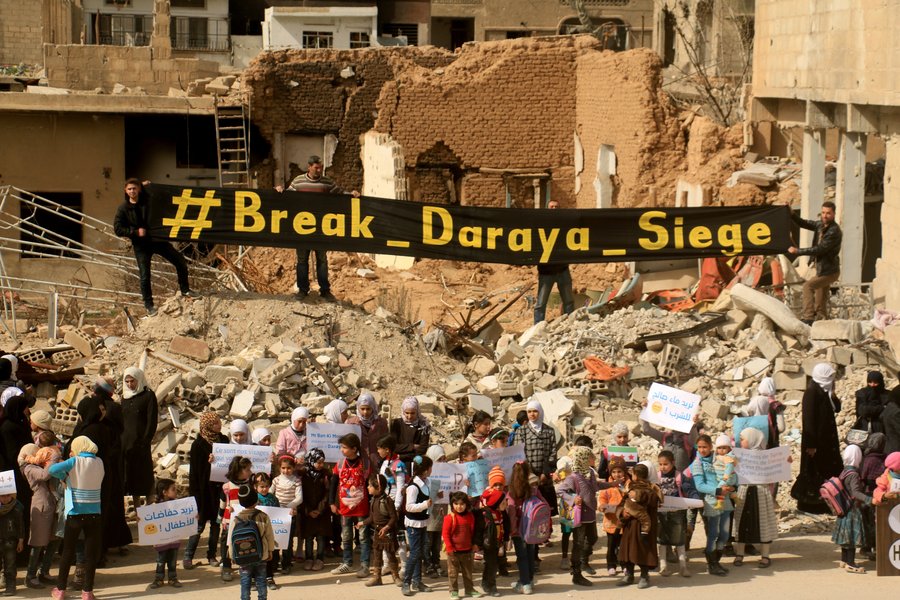
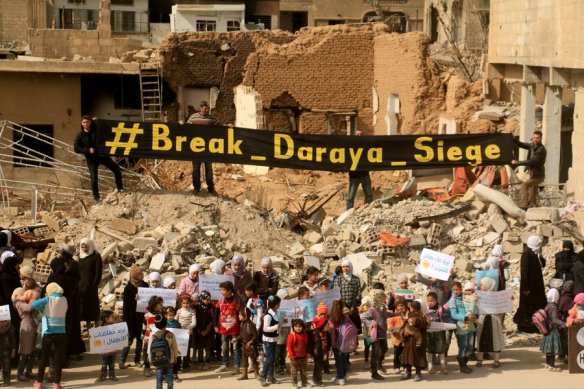
I’ve been in Copenhagen and in Nijmegen talking about the war in Syria, presenting both updated versions of The Death of the Clinic (on attacks on hospitals and medical facilities: see here, here and – for my first update – here) and a new presentation, Cities under siege in Syria.

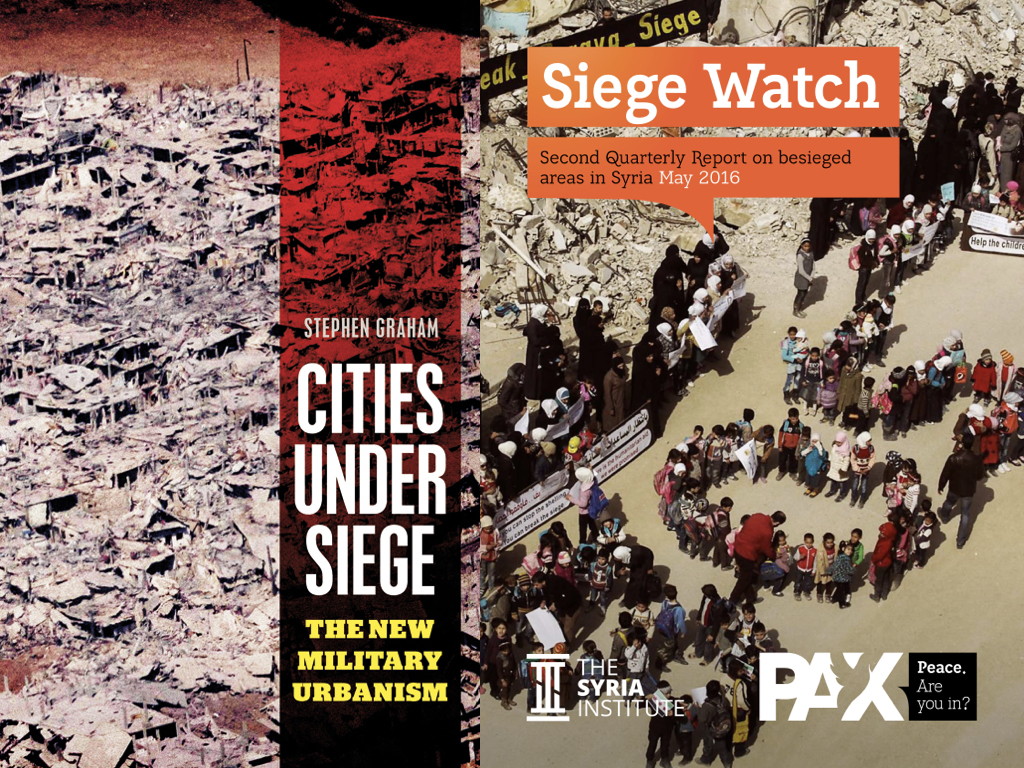
The new presentation ties those violations of medical neutrality – bluntly, war crimes – into the conduct of siege warfare in Syria and elsewhere and tries to recover the experiences and survival strategies of people and communities living under those desperate conditions (a far cry from my good friend Steve Graham‘s ‘new military urbanism‘, and a catastrophic combination of spectacular, episodic violence through bombing and shelling, and the slow violence of deprivation, dislocation and starvation).

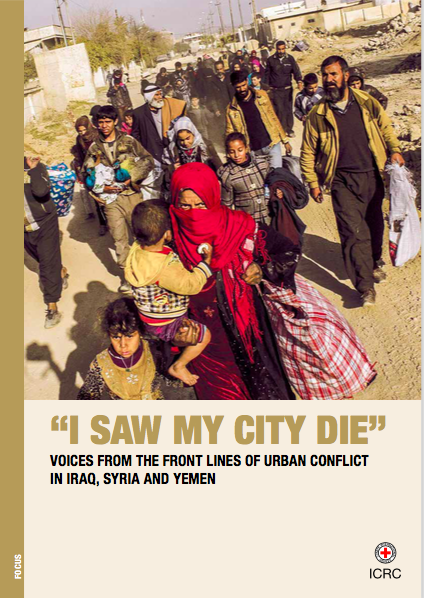
More on this soon, but on Thursday the International Committee of the Red Cross issued a remarkable report, I saw my city die, which is accompanied by an immersive microsite.  If you scroll to the end of the microsite, you’ll be asked to submit your e-mail for a link to the downloadable pdf of the report (I’ve just discovered you can also access it here).  More from the ICRC on the report here and here.

The report focuses on Iraq, Syria and Yemen, and includes wrenching first-hand testimonies:

The three conflicts in the report – Iraq, Syria and Yemen – account for around half of all conflict-related casualties worldwide between 2010 and 2015.

Some 17.5 million people have fled their homes, creating the largest global refugee and migration crisis since World War II.  11.5 million people – more than three people per minute – have fled their homes in Syria alone, since the start of the war.

It is not only lives and homes that are destroyed in these conflicts. The increasing use of explosive weapons that have wide impact areas, decimate the complex systems of services such as electricity, water, sanitation, garbage collection and health-care that civilians rely on to survive, making an eventual return to these cities even harder for those who have fled.

“The majority of people had very little choice and felt it was best to leave,” said Marianne Gasser, Head of ICRC’s Delegation in Syria. “Their houses were turned to rubble; there was very little food and no water or electricity. Not to mention the violence they had been witnessing for so long; no one could be expected to endure such suffering.”

This is a just preliminary notice: I’ll have much more to say when I’ve had a chance to read all this and think some more, so watch this space (and their space).

Transnational war and international law

New from Hurst: Jack McDonald‘s Enemies known and unknown: Targeted killings in America’s transnational war:

President Obama was elected on an anti-war platform, yet targeted killings have increased under his command of the ‘War on Terror’. The US thinks of itself as upholding the rule of international law and spreading democracy, yet such targeted killings have been widely decried as extra-judicial violations of human rights. This book examines these paradoxes, arguing that they are partially explained by the application of existing legal standards to transnational wars.

Critics argue that the kind of war the US claims to be waging — transnational armed conflict — doesn’t actually exist. McDonald analyses the concept of transnational war and the legal interpretations that underpin it, and argues that the Obama administration’s adherence to the rule of law produces a status quo of violence that is in some ways more disturbing than the excesses of the Bush administration.

America’s interpretations of sovereignty and international law shape and constitute war itself, with lethal consequences for the named and anonymous persons that it unilaterally defines as participants. McDonald’s analysis helps us understand the social and legal construction of legitimate violence in warfare, and the relationship between legal opinions formed in US government departments and acts of violence half a world away.

No shortage of books on targeted killing, I know, but this one stands out through its focus on the entanglements between law and violence in the very idea of transnational war and its interest in the individuation of later modern war.  Here’s the Table of Contents:

Introduction: The Balkan Crucible

1. The Cleanest War
2. The Lens of War
3. In Washington’s Shadow
4. Lawful Annihilation?
5. Unto Others
6. Individuated Warfare
7. Killing through a Monitor, Darkly
8. The Body as a Battlefield
9. Gyges’ Knife

That said, I do have reservations about the claim that the US ‘thinks of itself as upholding the rule of international law’ – or, more precisely, about the reality that lies behind that rhetoric.

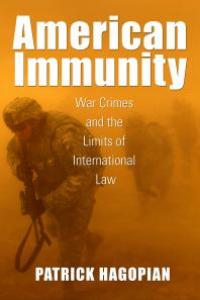
As I continue to work on ‘The Death of the Clinic‘, and the assaults on hospitals and healthcare in Syria and beyond, I’ve been drawn into debates that circle around the selective impotence of international law and appeals to the International Criminal Court.  In the Syrian case, the geopolitics of international law are laid bare: the jursdiction of the ICC is limited to acts carried out in the territory of a state that is party to the Rome Statute [Syria is not] unless the crimes are referred to the ICC by the UN Security Council – where Russia has consistently exercised its veto to protect its ally/client.  But it is important not to lose sight of what Patrick Hagopian called ‘American immunity’; based on a close reading of Korea and Vietnam he shows how the United States has consistently sought ‘to police a system of law universally binding on others from which it reserves the right at any moment to exempt itself.’  Similarly, Jens David Ohlin has traced a persistent American scepticism towards international law that was redoubled in the years after 9/11 and, as I’ve suggested before, the US is by no means alone in what Jens identifies as a sustained ‘assault on international law‘.

I don’t say this to detract from Enemies known and unknown: it’s just really a promissory (foot)note to my continuing work on spaces of exception in Syria (where it isn’t intended to give succour to the legions of Putin/Assad trolls inside and outside the academy either – on which see this long overdue, forensic take-down of one of the most egregious offenders by Brian Slocock here).