When I wrote ‘The Black Flag’ (DOWNLOADS tab), exploring the idea of Guantanamo Bay as a space of exception, three young men had just committed suicide in the war prison. This is how I started:
In the early morning of 10 June 2006 three prisoners held at the military detention facility at the US Naval Station at Guantánamo Bay, Cuba, two from Saudi Arabia and one from Yemen, were found dead in their cells. Although the three men had been detained without trial for several years and none of them had court cases or military commissions pending (none of them had even been charged), the commander of the prison dismissed their suicides as ‘not an act of desperation but an act of asymmetric warfare against us’. Although the three men had been on repeated hunger strikes which ended when they were strapped into restraint chairs and force- fed by nasal tubes, the US Deputy Assistant Secretary of State for Public Diplomacy described their deaths as ‘a Public Relations move to draw attention’ – to what, she did not say – and complained that since detainees had access to lawyers, received mail and had the ability to write to families, ‘it was hard to see why the men had not protested about their situation’. Although by presidential decree prisoners at Guantánamo are subject to indefinite detention and coercive interrogation while they are alive, when President George W. Bush learned of the three deaths he reportedly stressed the importance of treating their dead bodies ‘in a humane and culturally sensitive manner’.
After ‘The Black Flag’ was published, I read a remarkable account of the despair and desperation of these three men by Mario Kaiser. His original essay has now been updated and translated into English as ‘Death in Camp Delta‘ at Guernica. Here is an extract:
At some point during their captivity, these three men began to retreat. They no longer touched the food the guards pushed through the holes in the doors of their cells. Their bodies dwindled. Their lives hung on thin yellow tubes shoved down their nostrils each morning to let a nutrient fluid drip into their stomachs. In their minds, nothing changed. They didn’t want to stay, and one night, on June 9, 2006, they decided to leave Guantánamo. They climbed on top of the sinks in their cells and hanged themselves.
In the Pentagon’s view, the men hanging from the walls of their cells were assassins whose suicides were attacks on America. The Pentagon struck back.
The story of the lives and deaths of these prisoners is an odyssey of three young men who left for Afghanistan and ended up in Cuba. It is the story of a war against a terror that is difficult to define, a war that the United States government wages even in the cells of its prisoners. It is about a place, Camp Delta, that exposes the asymmetry of this war, and it leads to the front lines—and the American lawyers standing between them, struggling to defend presumed enemies of their country. It is the story of the internal and external battle over Guantánamo.
Nobody but the dead knows the whole truth. But there are places where the story can be pieced together. There are files and letters, people who distinctly remember these prisoners. There are places where the strands of this story intersect. A law firm in Washington. A mosque in London. A living room in North Carolina. A cell in Guantánamo.
This is on my mind today for three reasons. The first is that Kaiser describes himself as
‘a writer who combines in-depth reporting with literary storytelling. Taking on issues of social transformation and human rights, Kaiser’s stories are based on long-term immersion in environments that are difficult to access. His hope is that this approach provides a fuller understanding of the ways in which policies and social change affect people’s lives and long-term prospects.’
It’s worth reflecting on those aspirations if you read his essay (which I urge you to do) because they raise important questions about the lazy distinction between ‘fact’ and ‘fiction’, and about the ability of researchers to produce and animate publics through their (our) work. There’s something there, too, about the power (and, yes, the seductions) of story-telling: so much academic writing still seems to substitute and so privilege our own narrative (‘I did this… then I did that .. I thought this…. then I felt that’) for the stories of others. And, as Kaiser shows in that brief extract, those stories are often multi-sited.
The second reason Kaiser’s work matters to me is that I’m revisiting ‘The Black Flag’ for The everywhere war (more on this later) and, partly in consequence, thinking again about spaces of exception. I’m in Mexico this week, and I’ve been re-reading Giorgio Agamben‘s Homo sacer and The state of exception. I was originally doing this to sharpen my arguments about the Federally Administered Tribal Areas as a space of exception for air strikes by the CIA/JSOC and the Pakistan Air Force – I’ll be talking about this in Glasgow early next month, and I’ll post the presentation slides as soon as I’ve finished – but as I’ve worked my way through these texts still wider issues have emerged.
One of the central elements of Homo sacer (and Remnants of Auschwitz – though here too the differences between the two texts are suggestive) is the deliberate exposure of bodies to death: outcasts from whom the protections of the law have been stripped so that their death is no crime. But in The state of exception Agamben’s focus is on the genealogy of the ‘force of law’ through which this takes place: the victims are nowhere in sight. Throughout the short text Agamben makes much of the proximity of war and, for the ’emergency’ that activates the modern state of exception, of the First World War, but war and its developing armature of (international) law is never subjected to critical scrutiny.
Yet war (and its casualties) can reveal something else about spaces of exception. On the battlefield – and let us immediately agree with Frédéric Mégret that ‘the battlefield’ is a highly unstable conceptual constellation – soldiers are at once vectors and victims of violence. Here the usual restrictions on killing are removed; they can kill, provided they do so ‘lawfully’, without risk of punishment (‘combatant immunity’). The other side of the contract, of course, is that those who might kill them are not subject to legal sanction either.
This is not what Agamben means by the state of exception, and apart from repeated references to a contemporary ‘global civil war’ (and to Guantanamo) the transnational rarely appears in his writing and international law disappears into the margins. His thumb-nail history of the state of exception is framed by the state and its sovereign.
But for reasons that I’ll set out in a later post, the proximity of the exceptional space of the ‘battlefield’, of war zones and killing fields, to the ultimate reductions of bare life, is far from accidental. In fact, that’s one of the links between the three deaths in Guantanamo Bay and air strikes and targeted killings in the Federally Administered Tribal Areas of Pakistan which, as I’ll want to show, requires a radically enlarged view of spaces of exception and their historical geographies. (In the case of the FATA, the Obama administration insists it requires a radically enlarged juridical conception of the ‘battlefield’ in time and space too).
Hard on the heels of its report into six US targeted killings in Yemen in 2009 and 2012-13, Human Rights Watch has published a detailed analysis by Letta Tayler of another drone strike carried out by Joint Special Operations Command (JSOC) against a wedding convoy on 12 December 2013. According to Greg Miller in the Washington Post,
The report represents the most detailed independent examination to date of a strike that has focused attention on the administration’s struggles to tighten the rules for targeted killing, provide more information about such operations to the public and gradually shift full control of the drone campaign from the CIA to the Pentagon.
There is considerable evidence of covert US-Pakistan co-operation in targeting in the Federally Administered Tribal Areas (see here and here), but in the case of Yemen the collaboration is more overt and perhaps even more formalised: Yemen’s President described a ‘joint operations room’, including agents/officers from the US, the UK, NATO and Yemen that ‘identifies in advance’ prospective targets (who are usually described as members of Al-Qaeda in the Arabian Peninsula).
In this case, as in so many others, the United States has insisted that all those killed were terrorists, but HRW’s on-the-ground interviews (and videos) tell a different story. After a wedding feast at the home of the bride, many of the men and some of the women jumped into their vehicles to escort the bridal couple to a second celebration at in the groom’s village of al Jashem 35 km away.
At 4.30 that afternoon four Hellfire missiles struck the vehicles, killing at least 12 men and wounding at least 15 others – who are named and identified in the HRW report, and according to relatives all civilians.
‘We were in a wedding,’ cried the groom, ‘but all of a sudden it became a funeral. …We have nothing, not even tractors or other machinery. We work with our hands. Why did the United States do this to us?’
The US isn’t saying, and HRW notes that accounts from the government of Yemen have been inconsistent – though the local governor an military commander apologies for the killings, describing them as ‘a mistake’. Some reports agreed that some of those targeted were Al-Qaeda members – though if so, it seems they escaped: AQAP has not identified ‘martyrs’ lost in the attack, which is its invariable practice – and some claimed that the victims included ‘smugglers and arms dealers’.
But they also all made it clear that this was a wedding convoy that was targeted, and the government of Yemen has made compensation payments to the families.
HRW discusses the implications of the killings under the different legal regimes of international humanitarian law (the ‘laws of war’) and international human rights law, but also notes that the attack seems to have violated the protocols set out by the Obama administration in May 2013. These included the ‘near-certainty that no civilians will be killed or injured…’
NBC – which also has video of the aftermath of the strike – reported in January that the Obama administration was carrying out an ‘internal investigation’, but nothing has been forthcoming and questions from HRW were rebuffed. All we have so far is this extraordinary statement, reported by Rooj Alwazirfor al Jazeera:
“Obviously, broadly speaking, we take every effort to minimise civilian casualties in counterterrorism operations – broadly speaking, without speaking to this one specifically,” State Department deputy spokeswoman Marie Harf said when asked about the strike.
‘Broadly speaking’, what is it about weddings that those carrying out air strikes don’t understand?
It’s not difficult to imagine what those who attended the wedding will remember of that day. But in case it is,Reprieve (which carried out its own investigation into the strike) has published photographs of some of the victims and their families – and of a funeral of nine people.
UPDATE: AP is now carrying sketchy information about the official investigation into the strike:
Three U.S. officials said the U.S. government did investigate the strike against al-Badani — twice — and concluded that only members of al-Qaida were killed in the three vehicles that were hit…
Lt. Gen. Joseph Votel, commander of Joint Special Operations Command, ordered an independent investigation by an Air Force general and the White House requested another by the National Counterterrorism Center. Both concluded no civilians were killed. Votel’s staff also showed lawmakers video of the operation. Two U.S. officials who watched the video and were briefed on the investigations said it showed three trucks in the convoy were hit, all carrying armed men.
The report provides no basis for the identification of the victims as non-civilians. Human Rights Watch had already questioned the presence of armed men as indicative:
‘Nearly everyone in the procession was an adult male, and one Yemeni government source said many of the men carried military assault rifles. But these details do not necessarily point to involvement in violent militancy. Yemeni weddings are segregated, including the traditional journey to bring the bride to her new home. And Yemeni men commonly travel with assault rifles in tribal areas, including in wedding processions, when celebratory gunshots are common.’
But here is the final Catch-22:
The officials said the Pentagon can’t release details [of the strike or the investigation] because both the U.S. military and the CIA fly drones over Yemen. By statute, the military strikes can be acknowledged, but the CIA operations cannot. The officials said that if they explain one strike but not another, they are revealing by default which ones are being carried out by the CIA.
Hard on the heels of yesterday’s post about Metadata+ – and my earlier, necessarily impressionistic discussion of the National Security Agency, drone strikes in Pakistan and what I called ‘the everyware war’ – comes a report from Jeremy Scahilland Glenn Greenwald at The Intercept that details the NSA’s role in the US’s targeted killing programme.
The programme is carried out by multiple means and multiple agencies (including the US military), but the main source for their report is a former drone operator from Joint Special Operations Command (JSOC) – and readers of Jeremy’s Dirty Wars will know that it is JSOC rather than the CIA that is his main critical target. We’ve known about the NSA’s Geolocation Cell (‘GeoCell’) for some time now. Last summer Dana Priestoutlined the history of collaboration between the National Geospatial Intelligence Agency and the NSA, which she traced back to the months following 9/11, and the determination to use cell phones as ‘targeting beacons’:
The cell opened up chat rooms with military and CIA officers in Afghanistan — and, eventually, Iraq — who were directing operations there. Together they aimed the NSA’s many sensors toward individual targets while tactical units aimed their weaponry against them.
A motto quickly caught on at Geo Cell: “We Track ’Em, You Whack ’Em.”
But, as Scahill and Greenwald show, the process remains far from reliable. Their informant confirms that strikes are often carried out on the basis of metadata analysis and cellphone tracking (‘SIGINT’) rather than human intelligence (agents on the ground), and he admits that it is a hit or miss affair, and literally so: ‘high value targets’ have been killed, but so too have innocent people.
[T]he geolocation cells at the NSA that run the tracking program – known as Geo Cell – sometimes facilitate strikes without knowing whether the individual in possession of a tracked cell phone or SIM card is in fact the intended target of the strike.
“Once the bomb lands or a night raid happens, you know that phone is there,” he says. “But we don’t know who’s behind it, who’s holding it. It’s of course assumed that the phone belongs to a human being who is nefarious and considered an ‘unlawful enemy combatant.’ This is where it gets very shady.”
There are several lists of so-called High Value Targets, but the operational problem is, as he concedes, ‘We’re not going after people – we’re going after their phones.’
[T]racking people by metadata and then killing them by SIM card is inherently flawed. The NSA “will develop a pattern,” he says, “where they understand that this is what this person’s voice sounds like, this is who his friends are, this is who his commander is, this is who his subordinates are. And they put them into a matrix. But it’s not always correct. There’s a lot of human error in that.”
The programme relies on more than what we have come to think of as standard (though still shocking) NSA intercepts of communications. For more on the NSA’s global tracking of cellphones, see Barton Gellman and Ashkan Soltanihere, from which I’ve taken the image below.
As the graphic shows, the standard method of ‘co-location analytics’ tracks not only targets but also their associates (‘co-travellers’) using cell towers (which have in turn become key targets for insurgent attack in Afghanistan partly for this reason).
For clandestine operations in Afghanistan, Pakistan, Yemen, Somalia and elsewhere the NSA’s geolocation system codenamed ‘GILGAMESH’ (king of the city-state of Uruk in Mesopotamia: where do they get these names from?) equips Predators assigned to JSOC with ‘virtual base-tower transceivers’ that can track and locate a SIM card to within 30 feet; the information is then used in near-real time to activate an air strike or a night raid through a network that has ‘cued and compressed numerous kill chains’.
The CIA uses another system, codenamed SHENANIGANS (no mystery about that one), which collects data ‘from any wireless routers, computers, smart phones or other electronic devices that are within range.’ Last fall Greg Miller, Julie Tate and Barton Gellmandescribed how the system was used in the targeted killing of Hassan Ghul in Mir Ali in Waziristan in October 2012:
In the search for targets, the NSA has draped a surveillance blanket over dozens of square miles of northwest Pakistan. In Ghul’s case, the agency deployed an arsenal of cyber-espionage tools, secretly seizing control of laptops, siphoning audio files and other messages, and tracking radio transmissions to determine where Ghul might “bed down.”
The e-mail from Ghul’s wife “about her current living conditions” contained enough detail to confirm the coordinates of that household, according to a document summarizing the mission. “This information enabled a capture/kill operation against an individual believed to be Hassan Ghul on October 1,” it said.
The file is part of a collection of records in the Snowden trove that make clear that the drone campaign — often depicted as the CIA’s exclusive domain — relies heavily on the NSA’s ability to vacuum up enormous quantities of e-mail, phone calls and other fragments of signals intelligence, or SIGINT.
To handle the expanding workload, the NSA created a secret unit known as the Counter-Terrorism Mission Aligned Cell, or CT MAC, to concentrate the agency’s vast resources on hard-to-find terrorism targets. The unit spent a year tracking Ghul and his courier network, tunneling into an array of systems and devices, before he was killed. Without those penetrations, the document concluded, “this opportunity would not have been possible.”
The two systems are agency-specific but they often work in concert: Scahill and Greenwald note one joint operation in 2012, ‘VICTORYDANCE’, that ‘mapped the WiFi fingerprint of nearly every town in Yemen.’
The documents that they draw upon are from various dates, extending back to 2005, so that these are a series of snapshots of an uneven and developing set of systems. Still, the concerns about accuracy are persistent, and although they don’t cite her report Kate Clark‘s forensic examination of the attempted killing of the Taliban shadow governor of Takhar province in Afghanistan in September 2010 provides an exceptionally detailed account of the dangers of relying on metadata and cellphone tracking. Here is what I said about this in my discussion of Targeted Killing and Signature Strikes:
On 2 September 2010 ISAF announced that a ‘precision air strike’ earlier that morning had killed [Muhammad Amin] and ‘nine other militants’. The target had been under persistent surveillance from remote platforms – what Petraeus later called ‘days and days of the unblinking eye’ – until two strike aircraft repeatedly bombed the convoy in which he was travelling. Two attack helicopters were then ‘authorized to re-engage’ the survivors. The victim was not the designated target, however, but Zabet Amanullah, the election agent for a parliamentary candidate; nine other campaign workers died with him. Clark’s painstaking analysis clearly shows that one man had been mistaken for the other, which she attributed to an over-reliance on ‘technical data’ – on remote signatures. Special Forces had concentrated on tracking cell phone usage and constructing social networks. ‘We were not tracking the names,’ she was told, ‘we were targeting the telephones.’
The Takhar case has been on my mind again because, as Kate revealed in a new report last week, the agencies involved in targeted killing reach beyond the NSA – and beyond the USA.
The involvement of Britain’s GCHQ and other ‘Five Eyes’ sites in global surveillance has become well-known in recent months – and see Nikolas Kozloff for a short reflection on its ‘geopolitics of racism‘ (though he ignores the willingness to spy on other European states and allies) – but Kate’s new report is significant for what it reveals about the complicity of civilian police agencies. In August 2013 Habib Rahman, who lost two brothers, two uncles and his father-in-law in the Takhar attack, petitioned for a judicial review of the involvement of Britain’s Ministry of Defence and the (civilian) Serious Organised Crime Agency (SOCA) – whose brief includes the drug trade from Afghanistan – in the compilation of the Joint Prioritised Effects List (one of the lists of priority targets used by the Pentagon).
SOCA is part of the Joint Inter-Agency Afghanistan Task Force (JIATF), a military-police task force based at Kandahar AFB that also includes the US Drug Enforcement Agency, the US military and the British military. In a US Senate report on the nexus between drug trafficking and insurgency, ‘Afghanistan’s Narco War‘, a SOCA investigator described the proposed collaboration as ‘a critical opportunity to blend military and law enforcement expertise’ (p.15). At the time (August 2009) the JIATF was awaiting formal approval from Washington and London, but informal collaboration was already under way, and the SOCA officer was enthusiastic about its consolidation:
‘In the past, the military would have hit and evidence would not have been collected,’ he explained. ‘Now, with law enforcement present, we are seizing the ledgers and other information to develop an intelligence profile of the networks and the drug kingpins.’ An American military officer with the project was blunter, telling the committee staff, ‘Our long-term approach is to identify the regional drug figures and corrupt government officials and persuade them to choose legitimacy or remove them from the battlefield.’
Rahman’s lawyers argued:
As a civilian policing organisation SOCA has no legitimate or lawful role to play in the compilation or administration of this Kill List – it has no authority to be involved in military operations and the killing of individuals. The courts must urgently review whether the SOCA’s and indeed the UK’s role in the compilation, review and execution of this list if unlawful. Incidents like that affecting our client must be properly investigated.
In response, SOCA acknowledged making its intelligence available to the military, but added these provisos:
SOCA places restrictions on the dissemination of intelligence to the ISAF. Intelligence which is disseminated by SOCA is required to include handling conditions which require the express approval of the originator if it is proposed to use the material for military targeting purposes. If the mission is to arrest, with a view to criminal investigation and potential prosecution, SOCA would ordinarily be prepared to provide and/or allow the use of its intelligence. On the other hand, if the primary option for a mission is to use lethal force, SOCA would not provide intelligence or allow the use of its intelligence in support of such a mission, save potentially where the individual who is the target of the operation poses a significant and immediate threat to he lives of others (and so such disclosure would be for the purpose of preventing a criminal offence).
The judge dismissed Rahman’s claim. But read that last sentence again. These missions are almost always designated as ‘kill or capture’, and while in practice ‘kill’ is often preferred over ‘capture’, how likely is it that the ‘primary option for a mission’ would be advertised as a targeted killing before the intelligence were made available? An undated US Justice Department memo setting out conditions for targeted killing included the stipulation that where ‘capture is infeasible’ the US would continue ‘to monitor whether capture becomes feasible’, which turns the mission (and SOCA’s proviso) into a moving target in more ways than one. Once intelligence has been incorporated into the matrix it can hardly be withdrawn or embargoed.
And that final clause about pre-emptive action opens up a discretionary space that the Obama administration has already sought to enlarge with its demands for an ‘elongated’ concept of imminence in which the ‘immediacy’ of the threat is subject to prolongation to the point of contortion.
Rahman is not the first victim to have been rebuffed by British courts. Last month the Court of Appeal dismissedNoor Khan‘s case against the British Government over the role of GCHQ in providing ‘locational intelligence’ for a CIA-directed drone strike in March 2010 in Miranshah in North Waziristan that killed his father. The ruling accepted that the case put forward by Noor Khan’s barrister – that the provision of such intelligence risked contravening the Serious Crimes Act (2007) – was ‘attractive’ and ‘persuasive’, but concluded that the review could not proceed because the claims
‘involve serious criticisms of the acts of a foreign state. It is only in certain established circumstances that our courts will exceptionally sit in judgment of such acts. There are no such exceptional circumstances here.’
The state of exception, it turns out, is not so exceptional… To be continued.
The latest issue of Lisbon’s Análise Social has a special section devoted to the work of historical sociologist Michael Mann (all in English). I’ve admired Mann’s historical and geographical range – and his combination of narrative and analytical power – ever since I read the first volume of his Sources of social power (1986; new edition 2012).
In the course of an interview with Miguel Bandeira Jéronimo, Mann describes the conceptual changes he has introduced as his multi-volume project has progressed, and he draws particular attention to his attempt to clarify the distinction between political power and military power:
Political power is the institutionalization of power relations over a given territory, backed up by mostly non-lethal, routinized and rule-governed coercion. Military power is the deployment of lethal violence which is aimed deliberately at terrifying, killing, and wounding people, and which is minimally or not at all institutionalized or rule-governed. Geopolitics lies between the two and can be either an extension of political or military power, according to whether inter-state relations contain matters of peace or war. The former are subject to negotiated rules and international courts and tribunals, the latter are not.
Leaving aside Mann’s claims about geopolitics, which I leave to my friends who work in that area, and the idea of a ‘given territory’ (on which I suspect Stuart Elden would have much to say), I’m puzzled by this.
I accept that not all rules are codified into formal protocols, but even in the case of so-called ‘new wars’ is military violence really perpetrated in a rule-free zone? The operative codes may not be ‘ours’, and they may be fluid and improvisational, but this does not mean they don’t have a substantial role in drawing the contours of military and paramilitary violence.
And surely military power in many (though not all) of its contemporary forms is highly institutionalised and ‘rule-governed’? The bureaucratisation of modern war, and in its later forms its juridification, is highly advanced: I don’t mean to imply that this is unproblematic, of course, still less that the rules remain intact throughout a conflict, and the reach of international courts and tribunals is evidently highly skewed (not least through the operation of political power), but still… I think we need a much more nuanced account of the relations between law and war, one which recognises the complicities between them and, in particular, the ways in which military violence frequently works to extend the boundaries of a law that travels in the rear, its baggage train so to speak.
Finally, these clarifications are too clear. In particular, they don’t address intra-state and transnational conflicts, and they make the distinction between ‘war’ and ‘peace’ such a black and white affair. And here, plainly, the question of territory reappears in even more urgent (and contested) form.
I’ll be talking about ‘Seeing like a military‘ at the Association of American Geographers’ Annual Meeting in Tampa (home of Joint Special Operations Command!) 8-12 April 2014, and here’s the abstract:
Modern war has long placed a premium on visuality, but later modern war deploys new political technologies of vision and incorporates them into distinctive modes of the mediatization and juridification of military violence. This paper sketches those general contours and then examines two episodes in more detail. Both were carried out by the US military. The first is a combat helicopter attack on unarmed civilians in New Baghdad in July 2007, the subject of a military investigation, a Wikileaks release (‘Collateral Murder’), and two documentary films (‘Permission to Engage’ and ‘Incident in New Baghdad’). The second is another combat helicopter attack, but this time facilitated by the crew of a MQ-1 Predator, on three civilian vehicles in Uruzgan province, Afghanistan in February 2010, which was the subject of a military investigation that has been documented in detail. I use these incidents to extend the debate about militarized vision beyond dominant discussions of ‘seeing like a drone’, and to raise a series of questions about witnessing and military violence under the sign of later modern war.
The title is obviously a riff on James C. Scott‘s Seeing like a state – not least his opening claim that ‘certain forms of knowledge and control require a narrowing of vision’ – and the abstract is really just a summary of previous posts on Militarized Vision (see also ‘Unmanning’ here), but I’ll provide updates as the work progresses.
I’m deep into the detailed investigation of the Uruzgan incident. Previously I’d worked from a transcript of communications between the Predator crew, the ground forces commander and others – hence ‘From a view to a kill’ (DOWNLOADS tab) – but the detailed investigation files are eye-opening and are beginning to suggest a different narrative.
I’ve also widened the scope of the project (which, as the abstract suggests, was already about much more than the full motion video from Predators and Reapers). Although I won’t be talking about this in Tampa, I’m also examining another incident, an air strike on two tankers hijacked by the Taliban near Omar Kheil in Kunduz, Afghanistan in September 2009. The strike was carried out by USAF jets on the orders of the German Army (the Bundeswehr) from its Forward Operating Base at Camp Kunduz. It’s a complicated story that needs some background about (1) the Bundeswehr in Afghanistan and (2) air strikes and civilian casualties.
Bad Kunduz: the Bundeswehr and Afghanistan
After 9/11 and the US-led invasion of Afghanistan, Germany provided the third largest contingent of troops to NATO’s International Security Assistance Force (ISAF), but Bonn saw its primary role as stabilisation and reconstruction – in fact, the government refused to describe its military operations in Afghanistan as a war at all – and following this mandate Camp Kunduz [below] served as the base for a Provincial Reconstruction Team which was instructed to maintain a ‘light footprint’: so much so that troops jokingly referred to the base as ‘Bad Kunduz‘ (‘Spa Kunduz’) because it was so removed from the fighting.
But the security situation deteriorated, and Taliban attacks on German patrols and bases intensified. By 2007 the Bundeswehr had formed Task Force 47, made up of regular soldiers and elite troops from the Kommando Spezialkräfte or Special Forces, to adopt a more offensive posture and, in particular, to identify Taliban commanders who would be placed on ISAF’s Joint Prioritized Effects List (JPEL) for kill/capture missions. A detachment from Task Force 47 was also stationed at Camp Kunduz.
Still, in August 2009 Der Spiegel ran a story on ‘How the Taliban are taking control in Kunduz‘, and interviewed the base commander, Colonel Georg Klein, who described what the newspaper called the new ‘logic of the war’:
‘Kunduz has changed… I really don’t want to shoot at other people. They’re people too, after all. But if I don’t shoot, they’ll kill my soldiers.’
This ‘new logic’ would be demonstrated with hideous clarity a fortnight later. Yet – in principle, at least – it was constrained by a new Tactical Directive issued by General Stanley McChrystal in response to civilian casualties caused by coalition air strikes.
Air strikes and civilian casualties
Bombing had played a major role in the invasion of Afghanistan, and air strikes continued to be of decisive importance as the war with the Taliban continued (for more information, see here and here). They were also the main source of civilian casualties caused by coalition military operations; as the air war was stepped up and the body count soared so public hostility increased.
On 4 May 2009, just four months before the Kunduz air strike, there was yet another serious incident in which, according to a field investigation by the International Committee of the Red Cross, at least 89 civilians were killed in a series of air strikes near the village of Garani (sometimes spelled Gerani or even Granai) in the district of Bala Baluk in Farah province. Afghan forces had moved to engage the Taliban, supported by ISAF advisers, and as the fighting intensified they were reinforced by a detachment of US Marines. Close Air Support (CAS) was requested, and the first air strikes were carried out by F/A-18F jets (shown as #F1-4 in the graphic below). In the early evening their fuel reserves became too low to continue, and they were replaced by a B-1 bomber which made three further strikes (#B1-3). In the first strike, three 500 lb GPS-guided bombs were dropped; in the second, two 500 lb and two 2,000 lb bombs were dropped; and in the third a single 2,000 lb bomb was dropped. You can find images of the aftermath at Guy Smallman‘s gallery here.
The ICRC report on the incident has never been published, in accordance with its usual practice, but Wikileaks released a cable from the US Ambassador in Kabul describing his meeting with the ICRC’s Head of Mission on 13 June to discuss the results. The ambassador praised the Head of Mission as ‘one of the most credible sources for unbiased and objective information in Afghanistan’ and accepted that the investigation was ‘certainly exhaustive’. But the casualty estimates were considerably higher than those made by ISAF’s own military investigation, from which I’ve taken the map above.
According to the Executive Summary prepared for US Central Command, ‘we will never be able to determine precisely how many civilian casualties resulted from this operation’. The military investigation concluded that 26 civilians had been killed but did ‘not discount the possibility’ that there were many more, and its authors also noted the ‘balanced, thorough investigation’ carried out by the Afghan Independent Human Rights Commission that cited ‘as many as 86 civilian casualties’. Other reports claim as many as 147 civilians were killed.
The details of the military’s own investigation remain classified; General David Petraeuspromised to show the strike video from the B-1 bomber in a press briefing (see also here), but it has never been released, though Wikileaks reportedly had an encrypted version in its possession (the issue formed part of the US government’s case against Bradley/Chelsea Manning). Although the CENTCOM report of 18 June ‘validated the lawful military nature of the strike’, it also expressed grave concern at ‘the inability to discern the presence of civilians and assess the potential collateral damage of those strikes’, and its recommendations included an immediate review of guidance ‘for employment of kinetic weapons, to include CAS, in situations involving the potential for civilian casualties.’
On 2 July McChrystal updated the existing Tactical Directive of October 2008 with a revised Tactical Directive – parts of it remained classified, but the ‘releasable’ version is here – which insisted that
‘We must avoid the trap of winning tactical victories – but suffering strategic defeats – by causing civilian casualties or excessive damage and thus alienating the people.’
Among other provisions, the directive specifically instructed commanders to ‘weigh the gain of using CAS against the cost of civilian casualties’. This is, of course, a requirement under international humanitarian law, but McChrystal went further and tightened the Rules of Engagement to such a degree that David Wood could write of the US Air Force ‘holding fire over Afghanistan’. Lessons from the incident were also incorporated into US Marine pre-deployment briefings (here; scroll down) and it was also used as the basis for a ‘tactical decision-making’ module in the US Army’s Afghanistan Civilian Casualty Prevention Handbook (June 2012) (pp. 58-67). But these lessons hadn’t been learned in time to prevent the tragedy that took place near Kunduz on the night of 3/4 September 2009.
The Kunduz air strike
At 8 p.m. on 3 September Colonel Klein received a report that two tanker trucks had been hijacked by the Taliban as they drove south through Kunduz province (‘Entführung der Tanklastwagen’ on the map above). Thomas Ruttig provides an excellent overview of how what the Bundeswehr called ‘the Incident at Coordinate 42S VF 8934 5219’ unfolded here:
‘ The trucks were owned by an Afghan private company and contracted to deliver airplane fuel to ISAF forces. When the two hijacked lorries got stuck crossing a shallow riverbed at the border between Aliabad and Chahrdara districts, away from the main road, in the middle of a night in Ramadan, the Taliban mobilised the inhabitants of nearby villages more or less under their control to pump the fuel out and get the lorries going again. A large number took the offer up. Meanwhile, with the help of ISAF air reconnaissance, the immobilised trucks were located. This was done by a B-1 bomber which had cameras on board so strong they could even identify the weapons carried by the hijackers.’
The B-1 had to withdraw in the early hours of the morning because it was running low on fuel, and according to some reports the US Air Force was unwilling to provide replacement aircraft unless there were ‘Troops in Contact’ (TIC) with the Taliban. Klein decided to confirm a TIC – even though his troops were not at the scene – and two F-15E fighter jets flew right over his Forward Operating Base and then took up their station near the tankers at 0108. These aircraft (the two shown below were photographed over eastern Afghanistan) are operated by two crew members, a pilot and a weapons systems officer, and are equipped with Forward-Looking Infrared Sensors that, as Rutting notes, ‘portrayed people on the ground only as black spots.’ The two jets eventually carried out an airstrike at 0150.
What is particularly interesting about all this is that – in the wake of McChrystal’s revised Tactical Directive and tightened Rules of Engagement – the American pilots of the two F15-Es were markedly reluctant to strike. They were eventually persuaded to do so by Klein, yet he had no direct ‘eyes’ on the events as they unfolded. He was relying on a visual feed from the strike aircraft to a Remote Operated Video Enhanced Receiver [ROVER] terminal and on ground reporting from a single Afghan informant – classified as C-3, the lowest grade for ‘actionable intelligence’ – who was communicating by telephone with other ‘sub-contacts’ at the scene; there were apparently five intermediaries between the local source and Klein. At least one of them was a Special Forces intelligence officer from Task Force 47 who was with Klein in the Tactical Operations Center; some reports suggest that he believed that four Taliban leaders on the JPEL were at the scene.
The 15-page (redacted) cockpit transcript is here; all times shown there are Zulu (i.e. GMT), but here I revert to local time to reconstruct what happened. Klein is with his Forward Air Controller codenamed ‘Red Baron’ – what the USAF calls a Joint Terminal Attack Controller or JTAC, which is how he appears in the transcript – in the Tactical Operations Centre at Camp Kunduz (marked as Lager der Bundeswehr on the map above and referred to as PRT KDZ in the SIGACT report below).
The JTAC first asks the pilots to ‘stay as high as possible’ so that they can transmit a wide-shot video of the scene to his ROVER-3 screen – although this isn’t the latest model the JTAC wants ‘the best picture possible to give the commander [Klein] the possibility to make a decision’ – and they paint the target with infrared. They are confident this won’t alert the people on the ground: ‘We got no friendlies in the vicinity of the target and I don’t believe the insurgents got N[ight] V[ision] G[oggles] to see the IR.’
The picture is poor and so the pilots fly lower; they offer to provide ‘a show of force’, which is a standard tactic in Afghanistan accounting for 10 per cent of all Close Air Support sorties (though, as this map shows, it was less common in Kunduz compared to the south; I’ve borrowed the map from the remarkable work of Jason Lyall that I noted in a previous post on air strikes in Afghanistan).
The JTAC declines, saying ‘I want you to hide’, so that the people on the ground will have no warning of an impending attack, which leaves the pilots wondering ‘how we’d be able to drop anything on that as far as current ROE [Rules of Engagement] and stuff like that…’ They’re not sure that this meets the criteria for a TIC, which would allow them to engage, because they can’t see any German troops (‘friendlies’) on the ground: ‘We’ve got 50 to 100 people down there all claiming to be insurgents but I’m not seeing any imminent threat…’
One pilot accepts that the JTAC might have better information, but wants to ‘dig a little more’:
‘I’m really looking to find out status of the people inside [a nearby building 200 metres away] and then what’s inside the trucks. And then we can “show of force”, scatter the people, and then blow up the trucks.’
Again he offers to make a show of force but tells the JTAC they are ‘showing no CDE [collateral damage estimate] concerns within about 200 metres of that target.’ The pilots agree that Camp Kunduz is ‘pretty far away’ from the scene so that it is not visibly in imminent danger, and they wonder if ‘there is anyone else we can talk to’ before committing to a strike. They even contemplate contacting US Central Command’s Combined Air Operations Center in Qatar for clearance.
The pilots ask for confirmation that there would be ‘no civilians in the vicinity of the fragmentations’ from their two 500 lb GBU-38 bombs dropped on the tankers – ‘is that possible with no C[ollateral] D[amage] E[stimate]?’ the lead pilot queries – and again they ask the JTAC to confirm that everyone on the scene is ‘hostile’:
‘That’s affirmative. We got the intel information that everyone down there is hostile.’
More vehicles are arriving on the scene and the JTAC insists that this is now a ‘time-sensitive target’. He then passes the pilots the standard 9-line briefing for a strike (see left). The first three lines are ‘not applicable’ because the aircraft are already on the scene, but the JTAC specifies the altitude, the target (‘insurgents on sandbank with 2 stolen trucks’), target location and mark, repeats ‘no friendly forces in area’, and asks them to remain on station for a Battle Damage Assessment.
As the target is designated by the pilots, they ask the JTAC whether he is ‘trying to take out the vehicles or are you trying to take out the pax [people]?’
‘We’re trying to take out the pax.’
They again ask the JTAC to confirm that there are no friendlies in the vicinity, and he reports that they are all ‘safe’ at Camp Kunduz ‘roughly fifteen click to the east.’ (In fact, the base is about 8 km to the north east, but the tankers are facing in the opposite direction and Ruttig estimates it would have taken them an hour or so to reach the base on the rough, unpaved roads of the region).
The pilots still have misgivings: ‘something doesn’t feel right but I can’t put my thumb on it.’ They debate between themselves whether ‘in accordance with our ROE right now’ they should obtain higher-level clearance. If troops are not in imminent danger clearance is required from ISAF Headquarters in Kabul, and if there is a risk of civilian casualties clearance would need to be obtained from NATO’s Joint Force Command. Before they can reach a decision the JTAC jumps back in:
‘Clearance approved by commander he is right next to me.’
They’re not convinced. ‘The ground commander is clearing us hot but I don’t know if it meets the [hostile] intent or not.’
Still reluctant to strike – one pilot asks the other if ‘you’re saying it’s no imminent threat even though the JTAC said it was’ – the lead pilot tells the JTAC that they would prefer ‘to get down low, scatter the pax and blow up the vehicles’.
It then emerges that ‘ISR’ is en route, which presumably means a Predator with higher definition sensors, but before the remote platform can arrive the JTAC responds to the pilot’s repeated suggestion to scatter the people and then hit the trucks:
‘Negative, I want you to strike directly.’
Still no contact with the remote platform, and the lead pilot asks ‘one last [time]’ for confirmation that this is an imminent threat.
‘Yeah, those pax are an imminent threat, so those insurgents are trying to get all the gasoline off the tanks and after that they will regroup and we’ve got intel information about current ops so probably attacking Camp Kunduz.’
At 1.51 a.m. local time Klein gives the order: ‘Weapons release!’ The F-15Es are again ‘cleared hot’. Two 500lb GBU-38 bombs are released.
Here’s the strike video:
And here are the first military reports of the action (SIGACT or Significant Act) via Wikileaks:
From the ground
In contrast to these distanced observations, this is how the attack was described to Der Spiegel by one of the tanker drivers:
‘I can’t say how many airplanes there were or what type there were. But, starting at around 10 p.m., you could hear the sound of aircraft, though it was very faint. The plane must have been flying very high. But, yes, in Afghanistan, we recognize the sound of fighter jets. Some of the people around the trucks must have certainly heard the sound as well, but the majority of them were just jockeying to get fuel more quickly.
The armed men were getting nervous. They started making lots of phone calls again. I thought they were calling their leaders and asking for advice, asking what they were supposed to do now. At a certain point, some of them started shouting and waving their weapons around. They were screaming at the people to get away from the trucks because bombs were about to start falling. But no one wanted to miss an opportunity to get some free fuel. Then, some of the armed men even started running away…. I was sitting with some of the armed men along the river quite a way away from the trucks, maybe 50 meters (164 feet). The men were arguing over whether they should kill me right away or use me as a hostage to try to extort money from my company. I was very afraid — also of a possible bombardment….
At first, there was a loud droning, like what you hear when a generator short-circuits. Then there was a bright flash. I just let myself fall forward and went down underwater. Even from there, I could feel the shock wave. For a few seconds, it was as bright as day. Even the water was heating up. When I came out of the water, the whole area around the tanker trucks was on fire. It looked like the ground was spitting up fire, though it was just the fuel from the trucks. It was unbearably hot. There were bodies lying everywhere; they were completely carbonized.’
And this is how the scene was described to Amnesty International by another Afghan eyewitness:
“When we heard the planes flying everyone was scared and people began to flee the area at around 10.00 or 11.00 pm but then when people saw that the planes were only flying [and not bombarding] they returned to take the fuel. The number of the people were increasing every minute but after midnight the number started to decrease as many people obtained enough fuel and didn’t have enough containers to carry more fuel. It was around 1.00-1.30 am when the planes disappeared…
At about 1.45am we heard the planes return from our village. I tried to call my brother who was still at the scene. I knew that something was wrong if the planes returned but it seemed that the planes had blocked the telecommunication systems and we couldn’t get through to our relatives to call them to come back. Then I saw a big fire coming from plane and a big explosion with fire every where. I could see it from our village. Flames were very high and everyone rushed to the scene because most of the families had their children and family members out there.
As we arrived at the scene we could see nothing but flames and smoke. At that time it was almost around 3.00 [am] we saw the bodies burned and unidentifiable, others were badly injured and crying. The planes reappeared and then everyone fled in fear of being attacked and targeted. Some people got their family members’ bodies but not everyone. We couldn’t take the wounded people with us because the planes were still flying and we had to leave them there. As the planes disappeared, we went back and it was very early in the morning – everywhere were many bodies we couldn’t identify them at the time. Then every one carried the bodies to the villages and we had to bury some without knowing who they were. There were at least 20 children among the dead.”
Here is AFP video of the aftermath:
Ghaith Abdul-Ahad provide another extraordinary account in the Guardian:
What followed is one of the more macabre scenes of this or any war. The grief-stricken relatives began to argue and fight over the remains of the men and boys who a few hours earlier had greedily sought the tanker’s fuel. Poor people in one of the world’s poorest countries, they had been trying to hoard as much as they could for the coming winter.
“We didn’t recognise any of the dead when we arrived,” said Omar Khan, the turbaned village chief of Eissa Khail. “It was like a chemical bomb had gone off, everything was burned. The bodies were like this,” he brought his two hands together, his fingers curling like claws. “There were like burned tree logs, like charcoal.
“The villagers were fighting over the corpses. People were saying this is my brother, this is my cousin, and no one could identify anyone.”
So the elders stepped in. They collected all the bodies they could and asked the people to tell them how many relatives each family had lost.
A queue formed. One by one the bereaved gave the names of missing brothers, cousins, sons and nephews, and each in turn received their quota of corpses. It didn’t matter who was who, everyone was mangled beyond recognition anyway. All that mattered was that they had a body to bury and perform prayers upon.
If anybody still thinks that later modern war is somehow de-corporealized, they should read Abdul-Ahad’s full report. Ruttig takes up the story:
The number of people and specifically the number of civilians who were not ‘participating in hostilities’ killed in the strike is unclear to this day. It differs depending on the investigation report, some of which are published, while others remain classified. The still classified report by the then ISAF commander, General Stanley McChrystal – parts of which are cited in the report of the investigation committee of the German parliament, the Bundestag, that was published on 25 October 2011 – says “between 17 and 142 people” were killed. It does not seem to refer to killed civilians directly, but quotes local elders saying that possibly 30 to 40 civilians were killed. A report authored by a German military policeman who conducted an investigation at the location of the airstrike avoids stating whether there were what he called “non-involved civilians” among the dead …
The lawyers who brought the case before the Bonn court claim 137 people died, “undeniably many dozens of civilians”. An Afghan investigation commission, sent by President Hamed Karzai and led by police general Mirza Muhammad Yarmand, that was in the area between 4 and 10 September 2009, stated that 69 Taleban and 30 local residents – a term that leaves it open whether they were perceived as non-involved civilians or civilians that were supporting the Taleban in an operation – were killed.
An Afghan human rights group, Afghanistan Rights Monitor, which also conducted interviews with victims in the area, said on 7 September that 60 to 70 civilians were killed. Finally, UNAMA, as stated in its 2009 Protection of Civilians report (on p 18), after its own investigation, said that 74 civilians, including many children, had been killed. One of the problems, said UNAMA, was that the fireball produced by dropping munitions on the fuel tankers incinerated many of the bodies, making their identification impossible. However, according to probably the most extensive investigation, carried out by two Germans, Christoph Reuter, a journalist and occasional AAN author, and Marcel Mettelsiefen, a photographer, who repeatedly travelled to the region interviewing families and community members, ninety civilians “from children to old men” were killed. Reuter and Mettelsiefen published a moving book [Kunduz – above], naming the victims they had confirmed as having been killed and featuring photographs – ID documents, family photos and such – of each of the victims and their relatives. It was a powerful way to humanise the numbers of those killed and the scale of the loss to the community.
Military investigations and mediatizations
Immediately after the strike a senior ISAF officer made it clear that ‘The most important thing is for local official[s] to refute CIVCAS (civilian casualties).’ This is a leitmotif in ISAF’s response to incidents like this – CIVCAS reporting (or the lack of it) was a major preoccupation of the Uruzgan investigation – as the military battles to ‘control the narrative’ before the Taliban provide their own version of events. When McChrystal heard about the strike, however, he was reportedly furious:
He had just tightened up the rules for air strikes in the Afghanistan conflict. Bombs should only be dropped in the cases of acute danger to ISAF soldiers, in order to create the necessary trust in the foreign troops. The Kunduz air strike did not fit into this picture at all….
“Freely admit what we don’t know and say we are investigating,” he ordered the Germans. He assumed the first assessement that there had been no civilian victims had been incorrect. There was no way one could have made that determination from the air. The angered ISAF chief said he was “deeply disappointed.” The first statements from the Germans had been “foolishness.” He also said he had doubts that the rules of engagement had been followed and asked why soldiers were first sent to the scene three hours after the first accusations in the media of civilian casualties.
McChrystal was on the scene the next day – though Klein urged him not to go in case he was shot at – demanding to know why the Bundeswehr had waited so long to send a team to the strike site to conduct a ‘boots on ground’ Battle Damage Assessment and to provide a casualty report. On 9 September he announced the establishment of a Joint Investigation Board, which included a Canadian major-general (ISAF’s Air Component Element Director), officers from the USAF and the Bundeswehr, and military legal advisers (McChrystal’s detailed instructions to the Board are here).
Franz Josef Jung, Germany’s Minister of Defence, was soon on the offensive. He insisted that the Taliban’s seizure of the tankers ‘posed an acute threat to our soldiers’, that the strike was ‘absolutely necessary’ and that his officers had ‘very detailed information’ that the Taliban had planned to use the tankers to launch an attack. He was clearly displeased at McChrystal’s attitude (and determination), and five days after the strike had his Ministry set up a special task force (‘Group 85’) both to exploit an inside track to the investigation and to create a ‘positive image’ of the events. By then, an internal Bundeswehrinquiry had been completed. Its brief report described the incident as ‘Close Air Support’, determined that the Rules of Engagement for a ‘time-sensitive target’ had been followed and that Klein had the authority to order the strike, which was deemed ‘appropriate’, and declined to say whether ‘non-involved civilians’ had been killed alongside the Taliban.
But the subsequent, much more extensive report from ISAF’s Joint Investigation Board (75 pages plus 500 pages of attachments) flatly contradicted the German versions of what had taken place. According to Der Spiegel, which had seen the leaked report, the Board concluded that
‘Klein relied on only one person for “intelligence gathering,” which, even when combined with the aerial video images, was “inadequate to evaluate the various conditions and factors in such a difficult and complex target area.”
The report states it was not clear “what ROE (rule of engagement) was applied during the airstrike,” and that there was a “lack of understanding” by the German commander and his forward air controller (JTAC), “which resulted in actions and decisions inconsistent” with ISAF procedures and directives. Moreover, the report concludes, intelligence summaries and specific intelligence “provided by HUMINT (human intelligence) did not identify a specific threat” to the camp in Kunduz that night — the mandatory condition for an airstrike.’
In short, Klein knew that there were no ‘troops in contact’ but ‘believed that by declaring a “TIC” he would get the air support he wanted.’
Ironically, in 2008 Human Rights Watch had published a report showing that the likelihood of civilian casualties from air strikes in Afghanistan increased in TIC situations:
‘…we found that civilian casualties rarely occur during planned airstrikes on suspected Taliban targets… High civilian loss of life during airstrikes has almost always occurred during the fluid, rapid-response strikes, often carried out in support of ground troops after they came under insurgent attack. Such unplanned strikes included situations where US special forces units — normally small numbers of lightly armed personnel — came under insurgent attack; in US/NATO attacks in pursuit of insurgent forces that had retreated to populated villages; and in air attacks where US “anticipatory self- defense” rules of engagement applied.’
In any event, Klein’s own account was markedly different. In a two-page report ‘for German eyes only’, der Spiegel revealed,
Klein portrays himself as the person who tried to rein in the American fighter jets. He wrote that he called for smaller bombs to be used “contrary to the recommendation of the B-1B and F-15E pilots.” The German colonel also says that he limited the use of force to the tanker trucks and people in the immediate vicinity and forbade strikes on people elsewhere on the river bank. He wrote that the bombs were dropped solely on the sandbank “in order to definitively exclude the possibility of collateral damage in the neighboring villages.”
In January 2010 a Bundestag committee started to investigate how such different versions emerged and to determine who was responsible for the strike. Its final report is here and supporting documents here. ISAF still refused to release its own report, even to the parliamentary investigation:
There are many other ways of ‘seeing’ what happened, of course, and the strike has been the subject of at least two films. The first, Raymond Ley’s Eine mörderische Entscheidung (2013), A fatal decision, is a docu-drama shot for German television. You can watch the trailer with English-language subtitles here. The full German-language film is available on YouTube here: it’s long, but if you start at 1:13:10 you’ll pick up the story as the informant is phoning in to the Forward Operating Base; the immediate prelude to the strike starts at 1:22:37. There’s an English-language discussion by Verena Neeshere, which translates the title as A murderous decision but gives a good extended synopsis of the film. (The production company uses both English-language titles, but ‘fatal‘ is a better representation of the tenor of the film).
The second is Stefan and Simona Gieren‘s Kunduz (2012), a short film which builds on eyewitness reports to create a fictionalised German-Afghan photographer who witnessed the strike and tells his story to German doctors as he is is flown out from the area. You can see the trailer on vimeo here.
Preliminary observations
I still need to work my way through the Bundestag report in detail, but already several lines of inquiry are emerging that bear on my other case studies of ‘Militarized vision’.
(1) Militarized vision is not a constant. It’s an obvious point, but it can be sharpened because I don’t mean to confine this to the mundane (but still important) observation that political technologies of vision are constantly changing. So they are, but it’s clear that the ability of militaries to ‘see’ is differently and differentially distributed; there is a geography to militarized vision, and what Klein and his advisers saw on their screen was not what the F15E pilots saw – and that in turn was different to what the crew of the B-1 were able to see. This is about more than the resolution level of different imaging technologies, because:
(2) The politico-cultural construction of a wider ‘landscape of threat’ is crucial to the production and performance of a specific ‘space of the target’. In this case, the transition of the Bundeswehr‘s operational posture – the powerful sense of increasing and even impending Taliban attacks and the determination to take the offensive – clearly shaped the way in which Klein and those advising him (mis)read the developing situation. This in turn is shaped by developing legal geographies:
(3) The use of military force is clearly governed by international law which, as I’ve noted elsewhere, has an intimate relationship with technologies of vision. This extends beyond the requirements imposed by proportionality and distinction – including the US military’s ‘prosecution of the target’ and the ‘visual chain of custody’, though in this case it is notable that no military lawyers were involved in authorising the strike – because the legal armature that surrounds military violence is located at the intersection of international law, military law and domestic law. The relevance of McChrystal’s updated Tactical Directive and revised Rules of Engagement to the pilots’ field of vision is clear enough, but the refusal by Bonn to describe its military operations in Afghanistan as ‘war’ materially affected the way in which German law was brought to bear on Klein’s actions: his criminal prosecution was dropped soon after the government determined that the Kunduz affair was indeed a punctuation point – in fact an exclamation mark – in an armed conflict.
(4) And – to return to my first point from a different direction – what military investigations ‘see’ after an incident (and what they allow the public to see) is often radically different from what those caught up in the event-scene were able to see…
More to come.
Readings
There is a commentary on the strike by Constantin Schüßler and Yee-Kuang Heng,’The Bundeswehr and the Kunduz air strike 4 September 2009: Germany’s post-heroic moment?’, in European security 22 (30 (2013) 355-75. They explore not only the doctrine of force protection (in which risk is transferred to others in the field of view – see the still from Fatal Decision below – as I discussed in my commentary on what Grégoire Chamayou calls ‘necro-ethics’) but also the legal and media apparatus that enveloped the incident. For a more detailed treatment of the (il)legality of the strike, see Andreas Fischer-Lescanoand Steffen Kommer, ‘Entschädigung für Kollateralschäden? Rechtsfragen anlässlich des Luftangriffs bei Kunduz im September 2009’, Archiv des Völkerrechts 50 (2) (2012) 156-990, which makes extensive use of the Bundestag investigation, and Lesley Wexler, ‘International Humanitarian Law transparency’, Illinois Public Law and Legal Theory Research Papers Series 14-11 (2013) available via ssrn here.
For a discussion of the political landscape within which the strike took place, see Timo Noetzel, ‘The German politics of war: Kunduz and the war in Afghanistan‘, International Affairs 87 (2) (2011) 397-417; Thomas Rid and Martin Zapfe, ‘Mission command without amission: German military adaptation in Afghanistan’, in Theo Farrell, Frans Osinga and James A. Russell (eds), Military adaptation in Afghanistan (2013) 192-218. For the ethical perspective, Anya Topolksi has an extremely interesting essay, ‘Relationality: an ethical response to the tensions of network enabled operations in the Kunduz airstrikes’ forthcoming in the Journal of military ethics. Finally, Christine G. van Burken has an essay on ‘The non-neutrality of technology‘ in Military Review XCIII (3) (2013) 39-47 that spirals around the Kunduz strike and some of the issues that are central to my own focus on the political technologies involved.
Jean-Baptiste Jeangène Vilmer has published an extended critique of Grégoire Chamayou‘s Théorie du drone at La vie des idéesunder the title ‘Ideology of the drone’. Some of the essays from that site are eventually translated into English and appear on the mirror site Books & Ideas, but I have no idea when or even whether this one will be, so I thought it would be helpful to provide a summary.
First, some background. Vilmer has travelled via Montréal, Yale and War Studies at King’s College London to his present position at Sciences Po in Paris, where he teaches ethics and the law of war; he also teaches at the military academy at Saint-Cyr, and is a policy adviser on security issues to the Ministry of Foreign Affairs. Vilmer is the author of more than a dozen books, of which La Guerre au nom de l’humanité : tuer ou laisser mourir (2012) is probably the best known. If you’re not familiar with his work, here’s an English-language interview with him about La Guerre au nom de l’humanité via France 24 and the Daily Motion:
I should note, too, that Vilmer’s critique trades in part on an essay published earlier this year, ‘Légalité et légitimité des drones armés’ [‘Legality and legitimacy of armed drones’], in Politique étrangère 3 (2013) 119-32, in which he rehearses a number of criticisms of Chamayou. There Vilmer insists that the use of drones is perfectly compatible with the principles of international humanitarian law (this is about principle not practice, though, and he doesn’t address the implications of international human rights law which many critics and NGOs believe is the operative body of law for drone strikes outside war zones, like those carried out by the US in the Federally Administered Tribal Areas of Pakistan).
He also has no time for critics who turn the distance between the drone operator and the target into a moral absolute (though I don’t think Chamayou does that at all: instead, as I tried to show previously, he provides a nuanced discussion of the concept of distance). Still, Vilmer is right to insist that the history of modern war is the history of killing the enemy from ever greater distances, and those who cling to the ‘nobility’ of hand-to-hand fighting are blind to an historical record reaching back over centuries. If distance is a ‘moral buffer’, this is hardly unique to today’s remote operations, where in any case the greater physical distance is counterbalanced by a compression of what Vilmer calls ‘epistemic distance’ through the real-time full-motion video feeds transmitted from the drone. The difference between the crew of a Lancaster bomber over Germany and the drone operator controlling an aircraft over Afghanistan is that the latter sees his victim. And if conducting strikes by computer is ‘dehumanising’, the machetes used at close quarters in the Rwandan genocide were hardly less so. What is more, Vilmer suggests, those video feeds are not only remote witnesses of the target; there is an important sense in which they also function as remote witnesses of the crew, providing a vital record for any subsequent military-judicial investigation and thus inviting and even institutionalising a regularised monitoring of ‘the conduct of conduct’.
Now to the extended critique of Chamayou. Vilmer notes that Théorie du drone follows directly from Chamayou’s previous book, Chasses à l’homme [Manhunts], and in fact that’s his main problem with it: he says that Théorie reduces the function of drones to ‘hunting’, specifically to the US campaign of targeted killing, and identifies the one so closely with the other that the force of his analysis is blunted. Vilmer thinks this is playing to the crowd: there is a considerable audience opposed to the use of drones who find Chamayou’s arguments convincing because they confirm their own views.
Indeed, Chamayou makes it plain that one of his express intentions is to provide the critics with useful tools to advance their political work. Yet at the same time he presents Théorie as a philosophical investigation – and it is that, Vilmer concedes, erudite and at times brilliant – but in his view the objective is less to provide understanding than to provoke indignation. In fact, Chamayou has said in press interviews that what provoked him in the first place was the sight of philosophers collaborating with the military – and Vilmer freely admits to being one of them (though in France rather than the United States or Israel).
It’s important to examine the practice of targeted killing, Vilmer agrees, because it raises crucial ethical and legal questions. But it’s also important not to confuse the ends with the means. As I’ve noted in my own commentaries on Théorie, there are other ways of carrying out targeted killing (as Russian dissidents on the streets of London or Iranian scientists on the streets of Tehran have discovered to their cost) and there are many other military uses for drones. Targeted killing gets the most publicity because it’s so controversial, Vilmer argues, but it’s far less important than the provision of intelligence, surveillance and reconnaissance (though ISR is central to lethal strikes carried out by conventional aircraft and ground troops too).
Vilmer is breezily confident about the use of drones in war-zones, where he says they are no more problematic than any other observation platform or weapons system. Contrary to Chamayou’s assertion that drones only save ‘our’ lives, Vilmer insists that they have saved the lives of others – ‘their’ lives – in Afghanistan, Iraq, Libya and Mali. Yet Chamayou isn’t interested in these cases; instead his ‘theory of the drone’ reduces its role to CIA-directed targeted killings in Pakistan, Yemen and Somalia, which Vilmer complains is like calling a book on Russian cyber-attacks Theory of the computer.
That said, he thinks Chamayou’s critique of signature strikes is ‘excellent’, and he deeply regrets the migration of the American campaign away from ‘personality strikes’ against High Value Targets. The widening of the target lists and the ‘industrialisation’ of targeted killing deserves condemnation – and Vilmer notes that the Obama administration, responsible for ramping up the attacks, has since cut them back in response to criticisms – but in his view this only shows that Predators and Reapers ‘have been used in an imprecise way’ not that they are intrinsically less accurate than other systems.
When Chamayou seeks to show, to the contrary, that drones are ‘inhumane’ he advances two arguments that Vilmer flatly rejects. (I have to say that I think Chamayou’s arguments are considerably more subtle than Vilmer allows: see here and here). The first – the claim that ‘unmanned’ aircraft are by definition ‘inhuman’ – he dismisses as sophistry, not because each operation involves almost 200 people but because the bombers that destroyed Hamburg and levelled Dresden were ‘manned’: he says that Chamayou would hardly describe the results of their missions as ‘humane’. The second – that machines dedicated to killing cannot be ‘humane’ – is an absolutism that doesn’t engage with those (like Vilmer) who argue that some weapons are more humane than others. That, after all, is precisely why some weapons are banned by international law. And unlike Chamayou, Vilmer insists that drones allow for a greater degree of compliance with principles of distinction because they are more than weapons systems: they also provide enhanced ISR.
Vilmer agrees that it is wrong to compare drone strikes with bombing missions in the Second World War, Korea or Vietnam, but he disagrees with the contemporary alternative canvassed by Chamayou: ground troops armed with grenades. In the case of Pakistan, Yemen or Somalia this isn’t a realistic option, he argues, and in the absence of drones the only alternative would be a Kosovo-like bombing campaign or a rain of Tomahawk missiles – neither of which would be as accurate as a Hellfire missile. But this is to substitute one absolutism for another. Hellfire missiles are not confined to Predators and Reapers but are also carried by conventional strike aircraft and attack helicopters; and in any case cruise missiles have been launched from US Naval vessels to attack targets in Yemen, and Special Forces have been deployed on the ground in all three killing fields. Perhaps more to the point, however, Vilmer knows very well that conventional operations involving ground troops do not typically minimise civilian casualties. He points to the invasions of Afghanistan and Iraq as reasons for Obama’s greater reliance on remote operations and a ‘lighter footprint’, and he also emphasises (as Chamayou does not) the casualties caused by Pakistan’s own military operations in the Federally Administered Tribal Areas (see my discussions here and here).
This last brings Vilmer to a key objection, which is that Chamayou provides no detailed discussion of the reasons behind the US drone strikes. It’s not enough to attribute them to American imperialism tout court, he insists, because this is a reductive argument that turns terrorists and insurgents into freedom fighters and fails to acknowledge let alone analyse the real dangers posed, both locally and trans-nationally, by al-Qaeda and its associates. Théorie doesn’t simply ‘disappear’ the terrorists, Vilmer writes, it turns them into victims: like so many rabbits put back in the magician’s hat. The imagery is almost Chamayou’s – he claims that ‘one no longer fights the enemy, one eliminates them like rabbits’ – but Vilmer prefers another one. He says that Chamayou’s talk of the predator (or Predator) advancing, the prey fleeing, makes it seem as though the drones are targeting Bambi’s mother…
It’s another clever phrase (and Vilmer excels in them), but I think Chamayou is much more sensitive to civilian casualties – and to the plight of all those innocents living under the perpetual threat of attack – than Vilmer. There are snares and dangers out there, to be sure; but there are also an awful lot of Bambis and their mothers.
Finally, Vilmer turns to France’s decision to buy Reapers, which Chamayou contends has caused no outcry in France only because the public is badly informed about drones. On the contrary, Vilmer replies: it’s because they can tell the difference between buying the technology and using it like the Americans. Vilmer has much more to say about this in a recent open access interview in Politique étrangère, where he explains that the Air Force had deployed four unarmed drones, a version of Israel’s Heron called the Harfang, in Afghanistan, Libya and Mali, but that from the end of this year France will start to take delivery of 12 MQ-9 Reapers: these too will be unarmed. He also speculates about the future development of drones. Among other things, there will be a lot more of them (so he does worry about their proliferation); he also thinks they will be faster and stealthier, more lethal and more autonomous, and that they will fly in swarms. He also believes that aircraft of the future will increasingly be produced in two versions: either conventional operations with pilots onboard or remote operations with pilots in a Ground Control Station.
Please bear in mind that this is only a summary of Vilmer’s critique, which is vulnerable to its own simplifications and caricatures, though I obviously haven’t been able to keep entirely silent. But I’ll reserve a fuller engagement until I’ve finished my own extended commentary on Théorie du drone.
When I was writing the Israel/Palestine chapters in The Colonial Present the vast, wretched landscape of occupation and repression was numbingly new to me (though it shouldn’t have been). I found little help from mainstream geography, with some honourable exceptions, and I vividly remember my first visit to the West Bank with Steve Graham,Eyal Weizman and others. You would think I would have been prepared: I’d certainly read everything I could lay my hands on.
But nothing prepares you for the enormity of the occupation, its monstrous violence and everyday humiliations, and the sight of the wall snaking across the landscape – what Ariella Azoulay and Adi Ophir call ‘the Monster’s Tail’ – remains one of the most appalling impositions I have ever seen. Neither was I ready for the iron-clad violence of the Qalandiyya checkpoint, whose enclosures, grills and bars that would not have been out of place in an abbatoir could barely contain the brooding militarised violence of those who constructed it: but of course they weren’t supposed to.
Since then, much of this has become all too familiar – which is part of the problem – but there are now many more geographers doing vitally important work on occupied Palestine. Visualizing Palestine has recently added this new infographic about the wall to its excellent portfolio:
The focus adds yet another dimension to contemporary discussions about international law and what Michael Smith calls ‘geo-legalities’. I’m keenly interested in those arguments, but today I’m led down this path by a new essay –part prose, part photography – composed by China Miéville for the Palestinian Literature Festival and performed by him at Nablus.
Miéville is best known as a novelist (and one with an intriguing geographical sensibility at that), but he’s no stranger to international law either: his Between Equal Rights: a Marxist theory of international law (2006) has been widely acclaimed. Yet this morning I’m seized by his photo-literary apprehension of the familiar unreality of the landscape of occupation:
Yes, we know the holy land is now a land of holes, and lines, a freakshow of topography gone utterly and hideously mad, that the war against Palestinians is also a war against everyday life, against human space, a war waged with all expected hardware, with violent weaponized absurdism, with tons and tons of concrete and girders. This is truism, and/but true.
His experience of crossing the line reminds me of my own, though he captures its Kafka-esque horror far more vividly:
And in its wedge of shadow the long stupid zigzag of the checkpoint between Bethlehem and Jerusalem is indicated with a sign, there on the Bethlehem side. Entrance, it says, white on green, and points to the cattle run. Inside are all the ranks of places to wait, the revolving grinder doors, green lights that may or may not mean a thing, the conveyor belts and metal detectors and soldiers and more doors, more metal striae, more gates.
Finally, for those who emerge on the city side, who come out in the sun and go on, there is a sign they, you, we have seen before. White on green, pointing back the way just come.
Entrance, it says. Just like its counterpart on the other side of a line of division, a non-place.
No exit is marked.
The arrows both point in. Straight towards each other. The logic of the worst dream. They beckon. They are for those who will always be outside, and they point the way to go. Enter to discover you’ve gone the only way, exactly the wrong way.
Entrance: a serious injunction. A demand. Their pointing is the pull of a black hole. Their directions meet at a horizon. Was it ever a gateway between? A checkpoint become its own end.
This is the plan. The arrows point force at each other like the walls of a trash compactor. Obey them and people will slowly approach each other and edge closer and closer from each side and meet at last, head on like women and men walking into their own reflections, but mashed instead into each other, crushed into a mass.
Entrance, entrance. These directions are peremptory, their signwriters voracious, insisting on obedience everywhere, impatient for the whole of Palestine to take its turn, the turn demanded, until every woman and man and child is waiting on one side or the other in long long lines, snaking across their land like the wall, shuffling into Israel’s eternal and undivided capital, CheckPointVille, at which all compasses point, towards which winds go, and there at the end of the metal run the huge, docile, cow-like crowds will in this fond, politicidal, necrocidal, psyche-cidal fantasy, meet and keep taking tiny steps forward held up by the narrowness of the walls until they press into each others’ substance and their skins breach and their bones mix and they fall into gravity one with the next. Palestine as plasma. Amorphous. Amoebal. Condensed. Women and men at point zero. Shrunken by weight, eaten and not digested. An infinite mass, in an infinitely small space.
If you can bear to read more about this ‘non-place’, as Mieville calls it, try Helga Tawil-Souri, ‘Qalandia checkpoint as space and nonplace’, Space and culture 14 (1) (2011) 4-26; Irus Braverman, ‘Civilized borders: a study of Israel’s new crossing administration’, Antipode 43 (2) (2011) 264-95; Hagar Kotefand Merav Amir, ‘Between imaginary lines: violence and its justifications at the military checkpoints in occupied Palestine’, Theory, culture and society 28 (1) (2011) 55-50; and Merav Amir, ‘The making of a void sovereignty: political implications of the military checkpoints in the West Bank’. Environment and Planning D: Society & Space 31 (2013) 227-44.
These are all behind paywalls, and if you can’t pass through those walls – and even if you can – I also recommend an open access essay by Helga Tawil-Souri, ‘Qalandia: an autopsy’, Jerusalem Quarterly 45 (2011) available here. It’s a brilliant essay, and apart from what it has to tell us about the checkpoint (or ‘terminal’, as the Israelis prefer), like Miéville’s it also has much to teach us about the power of prose and the material politics of representation:
Qalandia is dead because this time I find it impossible to photograph. I am paralyzed. Where do I stand? What do I document? Why am I even bothering? What am I supposed to do with a string of images? How will I put them back together to tell a story when there is no story to be told anymore? Photographing it, filming it, trying to write about it, only contradicts its very nature: a time-space of interruption, of suspension. The checkpoint disjoints, tears the limbs off of my body; to want to tell its ‘story’ is a form of re-con-joining. I cannot. It has taken that right away from us.
Too much of the discussion around killing in times of war focuses on accountancy not accountability; the numbers are important (and so too are the names), but Neta Crawford‘s new book, Accountability for Killing: moral responsibility for collateral damage in America’s post 9/11 wars – just published by Oxford University Press (at least in digital form) – is indispensable reading.
Here’s the blurb:
In May 2009, American B-1B bombers dropped 2,000-pound and 500-pound bombs in the village of Garani, Afghanistan following a Taliban attack. The dead included anywhere from twenty five to over one hundred civilians. The U.S. military went into damage control mode, making numerous apologies to the Afghan government and the townspeople. Afterward, the military announced that it would modify its aerial support tactics. This episode was hardly an anomaly. As anyone who has followed the Afghanistan war knows, these types of incidents occur with depressing regularity. Indeed, as Neta Crawford shows in Accountability for Killing, they are intrinsic to the American way of warfare today. While the military has prioritized reducing civilian casualties, it has not come close to eliminating them despite significant progress in recent years, for a very simple reason: American reliance on airpower and, increasingly, drone technology, which is intended to reduce American casualties. Yet the long distance from targets, the power of the explosives, and the frequency of attacks necessarily produces civilian casualties over the course of a long war.
Working from these basic facts, Crawford offers a sophisticated and intellectually powerful analysis of culpability and moral responsibility in war. The dominant paradigm of legal and moral responsibility in war today stresses both intention and individual accountability. Deliberate killing of civilians is outlawed and international law blames individual soldiers and commanders for such killing. But also under international law, civilian killing may be forgiven if it was unintended and incidental to a militarily necessary operation. Given the nature of contemporary war, though, Crawford contends that this argument is no longer satisfactory. As she demonstrates, ‘unintended’ deaths of civilians are too often dismissed as unavoidable, inevitable, and accidental. Yet essentially, the very law that protects noncombatants from deliberate killing allows unintended killing. An individual soldier may be sentenced life in prison or death for deliberately killing even a small number of civilians, but the large scale killing of dozens or even hundreds of civilians may be forgiven if it was unintentional-‘incidental’ to a military operation. She focuses on the causes of these many episodes of foreseeable collateral damage and the moral responsibility for them. Why was there so much unintended killing of civilians in the U.S. wars zones in Afghanistan, Iraq and Pakistan? Is ‘collateral damage’ simply an unavoidable consequence of all wars? Why, when the U.S. military tries so hard to limit collateral damage, does so much of it seem to occur? Trenchant, original, and ranging across security studies, international law, ethics, and international relations, Accountability for Killing will reshape our understanding of the ethics of contemporary war.
And here is the Contents list:
Introduction
PART I: THE SCOPE AND SCALE OF COLLATERAL DAMAGE
1. Moral Grammar and Military Vocabulary
2. How They Die: US doctrine and trends in civilian deaths
3. Norms in Tension: Military necessity, proportionality and double effect
PART II: PRIMARY MORAL RESPONSIBILITY
4. When Soldiers Snap: Bad applies, mad apples and individual moral responsibility
5. Command Responsibility, due care and moral courage
6. Organizational Responsibility: military institutions as moral agents
PART III: SECONDARY MORAL RESPONSIBILITY
7. Public conscience and responsibility for war
8. Public Responsibility
9. Collateral damage and frameworks of moral responsibility
Neta estimates that 22,000 ‘collateral damage deaths’ occurred in Afghanistan and Iraq between 2001 and late 2012, and if Pakistan and Yemen are included then the total rises to 38,000. Her book unpacks that awful term, ‘collateral damage’; she is co-director of the Costs of Warstudy which, as you’ll see, is also about much more than accountancy:
Incidentally, if you are looking for historical context on the legal distinction between combatants and civilians, I recommend Helen Kinsella‘s The image before the weapon: a critical history of the distinction between combatant and civilian (Cornell University Press, 2011), and on the history of civilian casualties in America’s wars more generally, John Tirman‘s The deaths of others: the fate of civilians in America’s wars (also OUP; 2011), which starts on the American Frontier and works though the Second World War, Korea and Vietnam down to Afghanistan and Iraq.
I’m just finishing up a new essay on drones and later modern war – “Moving targets and violent geographies” – and I’ll post the draft as soon as I’m done (this weekend, I hope).
Next up is the essay version of my various posts and presentations on air strikes in Pakistan’s Federally Administered Tribal Areas, past and present, by the US and by the Pakistan Air Force [see here and here], so I was heartened by news from Madiha Tahir [see my post here] of progress with her short documentary film, Wounds of Waziristan (they are down to the final edits):
More about the project and crowd-sourcing here, and you can find more information at the film’s website, which includes an image gallery and opens with some of the most hauntingly beautiful music composed by André Barros(shades of Arvo Part‘s Spiegel im Spiegel):
Haunting indeed. In a report for Delhi’s Sunday Guardian, Tanishree Bhasinwrites:
When Barack Obama finally admitted to the needless loss of life in Pakistan’s Waziristan area due to American drone attacks, he spoke about how the death of innocents would haunt him forever. Interrogating this notion of ‘haunting’ and what it means for those affected by these attacks is Pakistani filmmaker Madiha Tahir in her film Wounds of Waziristan….
With Wounds of Waziristan, Tahir tries to foreground the people who materially experience loss and absence — not as abstract body counts, but as the absence of a brother or a niece or a wife. “Haunting is the insistence by the dead that they be acknowledged, that the social conditions that brought about their demise be made known and rectified. So, haunting is about unfinished business. And, it’s thoroughly social and political. This film focuses on the people who live in Waziristan and who live among loss. Material conditions, whether it’s the rubble after a drone attack or the grave of one’s kin, persist in reminding the living of what they have lost,” she explains.
On her blog, Madiha wryly notes that her interest in the question of haunting may show ‘my academic side coming out’ – as well as an independent journalist she’s also a graduate from NYU and Columbia, where she’s currently working on her PhD – and human geographers will probably be no strangers to the idea, from research by Steve Pile and Karen Till and most recently Alison Mountz‘s analysis of detention centres and Akin Akinwumi‘s work on Truth and Reconciliation Commissions.
Much of this has been indebted to Avery Gordon‘s by now classic study, Ghostly matters:
‘Haunting is one way in which abusive systems of power make themselves known and their impacts felt in everyday life, especially when they are supposedly over and done with or when their oppressive nature is denied… Haunting is not the same as being exploited, traumatized, or oppressed, although it usually involves these experiences or is produced by them. I used the term haunting to describe those singular yet repetitive instances when home becomes unfamiliar, when your bearings on the world lose direction, when the over-and-done-with comes alive, when what’s been in your blind spot comes into view.’
It’s not difficult to see how this applies to air strikes in Waziristan – the sense of familiarity unmoored by the devastations of state violence – but Madiha’s starting point is a two-page note Max Horkheimerand Theodor Adorno appended to Dialectic of Enlightenment, ‘On the theory of ghosts’, that also figured briefly in Gordon’s book (where she described it as an ‘unfilled promissory note’):
Only the conscious horror of destruction creates the correct relationship with the dead: unity with them because we, like them, are the victims of the same condition and the same disappointed hope.
It’s that first clause that animates Madiha’s work:
Only the conscious horror of destruction creates the correct relationship with the dead.
She notes that so much (too much) of the contemporary debate about drones is framed by the language of international law and its grammar of execution that is deeply embedded in military violence: as operational law has become a central discourse in the animation and legitimation of the kill-chain, so it turns targeted killing into a quasi-juridical process. In consequence, as she says with a nod to Eyal Weizman, ‘international law is caught up in constructing the proper order of violence.’
And as a journalist she is dismayed at the complicity of journalists in popularizing law
‘as the only frame through which we can talk about drone attacks and moral standards. Journalists regularly fail to look beyond the usual “experts” in policy and legal circles to other fields that may have an alternative to offer. We are becoming vulgar empiricists who seem to think that a truth not attached to a number (say, the number of “militants” vs. “civilians” killed), or a legal rule (for example: whether an action does/does not violate international law) is no truth at all.’
So Madiha proposes haunting as an alternative frame ‘through which one can re-direct the conversation from issues of legal standards to the lives lived and lives lost under the drones in Waziristan and elsewhere’:
‘The questions then turn on the material conditions and the loss suffered – not as evidence for legal arguments but as queries about what it does to a person to live in such conditions. The question is not, ‘Do I stick him in the “militant” or “civilian” column?’ but instead, who survives him? How do they deal with that loss? What is it like to live among the rubble?
It isn’t through legal standards but though trying to understand the horror of the destruction that we create the correct relationship — with the dead, yes — but with the living, too.’
This matters so much – and reappears in a different form in ‘Moving targets’ – because the contemporary individuation of ‘war’ (if it is war) works to sanitize the battlefield: to confine attention to the individual-as-target (which is itself a technical artefact separated from the exploded fleshiness that flickers briefly on the Predator’s video screens) and to foreclose the way in which every death ripples across a family, a community, a district and beyond [see my brief discussion with Ian Shawhere].
And, as Madiha explained to the Sunday Guardian, these effects ripple across time as well as space, tearing the very fabric of history:
Speaking about her experiences while making this film, she explained that it’s not just a question of life being lost, but also the obliteration of history. “When drone attacks destroy homes — as they often do — they erase entire family histories. Homes in this area are built over time as families grow. There may be as many as 50 members of a family living in one house. When you destroy structures like that, you not only destroy people, you also destroy their history. The rubble that’s left in the wake of an attack is a living memory of what happened there. It embodies loss. The people in Waziristan have to live around this loss, near it, in it. They have to live among ghosts,” says Tahir.
Before I resume my reading of Grégoire Chamayou‘s Théorie du drone, I want to approach his thesis from a different direction. As I’ve noted, much of his argument turns on the reduction of later modern war to ‘man-hunting’: the profoundly asymmetric pursuit of individuals by activating the hunter-killer capacities of the Predator or the Reaper in a new form of networked (para)military violence. He describes this as a ‘state doctrine of non-conventional violence’ that combines elements of military and police operations without fully corresponding to either: ‘hybrid operations, monstrous offspring [enfants terribles] of the police and the military, of war and peace’.
These new modalities increase the asymmetry of war – to the point where it no longer looks like or perhaps even qualifies as war – because they preclude what Joseph Pugliese describes as ‘“a general system of exchange” [the reference is to Achille Mbembe’s necropolitics] between the hunter-killer apparatus ‘and its anonymous and unsuspecting victims, who have neither a right of reply nor recourse to judicial procedure.’
Pugliese insists that drones materialise what he calls a ‘prosthetics of law’, and the work of jurists and other legal scholars provides a revealing window into the constitution of later modern war and what, following Michael Smith, I want to call its geo-legal armature. To date, much of this discussion has concerned the reach of international law – the jurisdiction of international law within (Afghanistan) and beyond (Pakistan, Yemen and Somalia) formal zones of conflict – and the legal manoeuvres deployed by the United States to sanction its use of deadly force in ‘self-defence’ that violates the sovereignty of other states (which includes both international law and domestic protocols like the Authorization for the Use of Military Force and various executive orders issued after 9/11) . These matters are immensely consequential, and bear directly on what Frédéric Mégretcalls ‘the deconstruction of the battlefield’.
It’s important to understand that the ‘battlefield’ is more than a physical space; it’s also a normative space – the site of ‘exceptional norms’ within whose boundaries it is permissible to kill other human beings (subject to particular codes, rules and laws). Its deconstruction is not a new process. Modern military violence has rarely been confined to a champ de mars insulated from the supposedly safe spaces of civilian life. Long-range strategic bombing radically re-wrote the geography of war. This was already clear by the end of the First World War, and in 1921 Giulio Douhetcould already confidently declare that
‘By virtue of this new weapon, the repercussions of war are no longer limited by the farthest artillery range of guns, but can be felt directly for hundreds and hundreds of miles… The battlefield will be limited only by the boundaries of the nations at war, and all of their citizens will become combatants, since all of them will be exposed to the aerial offensives of the enemy. There will be no distinction any longer between soldiers and civilians.’
The laboratory for these experimental geographies before the Second World War was Europe’s colonial (dis)possessions – so-called ‘air control’ in North Africa, the Middle East and along the North-West Frontier – but colonial wars had long involved ground campaigns fought with little or no distinction between combatants and civilians.
What does seem to be novel about more recent deconstructions, so Mégret argues, is ‘a deliberate attempt to manipulate what constitutes the battlefield and to transcend it in ways that liberate rather than constrain violence.’
This should not surprise us. Law is not a deus ex machina that presides over war as impartial tribune. Law, Michel Foucault reminds us, ‘is born of real battles, victories, massacres and conquests’; law ‘is born in burning towns and ravaged fields.’ Today so-called ‘operational law’ has incorporated military lawyers into the kill-chain, moving them closer to the tip of the spear, but law also moves in the rear of military violence: in Eyal Weizman’s phrase, ‘violence legislates.’ In the case that most concerns him, that of the Israel Defense Force, military lawyers work in the grey zone between ‘the black’ (forbidden) and ‘the white’ (permitted) and actively seek to turn the grey into the white: to use military violence to extend the permissive envelope of the law.
The liber(alis)ation of violence that Mégret identifies transforms the very meaning of war. In conventional wars combatants are authorised to kill on the basis of what Paul Kahncalls their corporate identity:
‘…the combatant has about him something of the quality of the sacred. His acts are not entirely his own….
‘The combatant is not individually responsible for his actions because those acts are no more his than ours…. [W]arfare is a conflict between corporate subjects, inaccessible to ordinary ideas of individual responsibility, whether of soldier or commander. The moral accounting for war [is] the suffering of the nation itself – not a subsequent legal response to individual actors.’
The exception, Kahn continues, which also marks the boundary of corporate agency, is a war crime, which is ‘not attributable to the sovereign body, but only to the individual.’ Within that boundary, however, the enemy can be killed no matter what s/he is doing (apart from surrendering). There is no legal difference between killing a general and killing his driver, between firing a missile at a battery that is locking on to your aircraft and dropping a bomb on a barracks at night. ‘The enemy is always faceless,’ Kahn explains, ‘because we do not care about his personal history any more than we care about his hopes for the future.’ Combatants are vulnerable to violence not only because they are its vectors but also because they are enrolled in the apparatus that authorizes it: they are killed not as individuals but as the corporate bearers of a contingent (because temporary) enmity.
It is precisely this model that contemporary military violence now challenges through the prosthetics of law embodied and embedded in drone warfare – and this, Kahn insists, has transformed the political imaginary of warfare (You can find his full argument here: ‘‘Imagining warfare’, European journal of international law 24 (1) (2013) 199-216).
In a parallel argument, Samuel Issacharoff and Richard Pildes describe this development as the individuation of military force, driven in part by the affordances and dispositions of drone warfare which makes it possible to put ‘warheads on foreheads.’ Targets are no longer whole areas of cities – like Cologne or Hamburg in the Second World War – or extensive target boxes like those ravaged by B-52 ‘Arc Light’ strikes over the rainforest of Vietnam. The targets are individuals and, since the United States claims the right to target them wherever they are found, this partly explains the dispersed geography of what I’ve called ‘the everywhere war’. What interests Issacharoff and Pildes, like Kahn, is not so much the technology that makes this possible as the apparatus that makes it permissible.
Their presentation wavers uncertainly between counterinsurgency and counter-terrorism, and they also write more generally of ‘the new face of warfare’ and the use of ‘military force’, so that (as now happens in practice) the distinctions between the US military and the CIA become blurred. But their core argument is that military force is now directed against specific individuals on the basis of determinate acts that they have committed or, by pre-emptive extension, are likely to commit. In Kahn’s terms, this inaugurates a radically different (though in his eyes, highly unstable) political subjectivity through which the enemy is transformed into the criminal. ‘The criminal is always an individual,’ Kahn explains; ‘the enemy is not.’
For Issacharoff and Pildes this new state of affairs requires an ‘adjudicative apparatus’ to positively identify, detect and prosecute the individual-as-target, which drives the military system ever closer to the judicial system:
‘As the fundamental transformation in the practice of the uses of military force moves, even implicitly, toward an individuated model of responsibility, military force inevitably begins to look justified in similar terms to the uses of punishment in the criminal justice system. That is, to the extent that someone can be targeted for the use of military force (capture, detention, killing) only because of the precise, specific acts in which he or she as an individual participated, military force now begins to look more and more like an implicit “adjudication” of individual responsibility.’
They suggest that this makes it inevitable that the boundaries between the military system and the judicial system ‘will become more permeable’ – a confirmation of the active constitution of the war/police assemblage (on which see Colleen Bell, Jan Bachmann and Caroline Holmqvist’s forthcoming collection, The New Interventionism: perspectives on war-police assemblages).
Kahn is, I think, much more troubled by this than Issacharoff and Pildes. He concludes (like Chamayou):
‘Political violence is no longer between states with roughly symmetrical capacities to injure each other; violence no longer occurs on a battlefield between masses of uniformed combatants; and those involved no longer seem morally innocent. The drone is both a symbol and a part of the dynamic destruction of what had been a stable imaginative structure. It captures all of these changes: the engagement occurs in a normalized time and space, the enemy is not a state, the target is not innocent, and there is no reciprocity of risk. We can call this situation ‘war’, but it is no longer clear exactly what that means.
‘The use of drones signals a zone of exception to law that cannot claim the sovereign warrant. It represents statecraft as the administration of death. Neither warfare nor law enforcement, this new form of violence is best thought of as the high-tech form of a regime of disappearance. States have always had reasons to eliminate those who pose a threat. In some cases, the victims doubtlessly got what they deserved. There has always been a fascination with these secret acts of state, but they do not figure in the publicly celebrated narrative of the state. Neither Clausewitz nor Kant, but Machiavelli is our guide in this new war on terror.’
He is thoroughly alarmed at the resuscitation of what he calls ‘the history of administrative death’, whereas Issacharoff and Pildes – ironically, given what I take to be their geopolitical sympathies –treat the institution and development of an ‘adjudicative apparatus’ within the US programme of targeted killings as a vindication of their execution (sic).
I want to set aside other contributions to the emerging discussion over the ‘individuation’ of warfare – like Gabriella Blum‘s depiction of an ‘individual-centred regime’ of military conduct, which pays close attention to its unstable movement between nationalism and cosmopolitanism – in order to raise some questions about the selectivity of ‘individuation’ as a techno-legal process. I intend that term to connote three things.
(1) First, and most obviously, Issacharoff and Pildes fasten on the technical procedures that have been developed to administer targeted killings – which include both the ‘disposition matrix’ [see here] and its derivatives and the more directly instrumental targeting cycle [the diagram above shows the ‘Target’ phase of the Find-Fix-Track-Target-Engage-Assess cycle] , both of which admit legal opinions and formularies – that convert targeted killing into what Adi Ophir calls a quasi-juridical process. This encoding works to contract the ethical horizon to the legal-juridical (see here for a critical commentary) while simultaneously diverting attention from the substantive practice – which, as I showed in ‘Lines of descent’ (DOWNLOADS tab), is shot through with all sorts of limitations that confound the abstract calculations of the targeting cycle (see, for example, Gregory McNealhere, who turns ‘accountability’ into accountancy).
(2) Second, ‘individuation’ refers to the production of the individual as a technical artefact of targeting. S/he is someone who is apprehended as a screen image and a network trace; s/he may be named in the case of a ‘personality strike’ but this serves only as an identifier in a target file, and the victims of ‘signature strikes‘ are not accorded even this limited status. Others who are killed in the course of the strike almost always remain unidentified by those responsible for their deaths – ‘collateral damage’ whose anonymity confirms on them no individuality but only a collective ascription. (For more, see Thomas Gregory, ‘Potential lives, impossible deaths: Afghanistan, civilian casualties and the politics of intelligibility’, International Feminist Journal of Politics 14 (3) (2012) 327-47; and ‘Naming names’ here).
(3) Third, the adjudication of ‘individual responsibility’ bears directly on the production of the target but not, so it seems, on the producers of the target. Lucy Suchmann captures this other side – ‘our’ side – in a forthcoming essay in Mediatropes (‘Situational awareness: deadly bioconvergence at the boundaries of bodies and machines’):
‘A corollary to the configuration of “their” bodies as targets to be killed is the specific way in which “our” bodies are incorporated into war fighting assemblages as operating agents, at the same time that the locus of agency becomes increasingly ambiguous and diffuse. These are twin forms of contemporary bioconvergence, as all bodies are locked together within a wider apparatus characterized by troubling lacunae and unruly contingencies.’
Caroline Holmqvist, sharpens the same point in ‘Undoing war: war ontologies and the materiality of drone warfare’, Millennium (1 May 2013)d.o.i. 10.1177/0305829813483350); so too, and more directly relevant to the operations of a techno-legal process, does Joseph Pugliese‘s figure of drone crews as ’embodied prostheses of the law of war grafted on to their respective technologies’.
These various contributions identify a dispersion of responsibility across the network in which the drone crews are embedded and through which they are constituted. The technical division of labour is also a social division of labour – so that no individual bears the burden of killing another individual – but the social division of labour is also a technical division of labour through which ‘agency’ is conferred upon what Pugliese calls its prostheses:
‘Articulated in this blurring of lines of accountability is a complex network of prostheticised and tele-techno mediated relations and relays that can no longer be clearly demarcated along lines of categorical divisibility: such is precisely the logic of the prosthetic. As the military now attempts to grapple with this prostheticised landscape of war, it inevitably turns to technocratic solutions to questions of accountability concerning lethal drone strikes that kill the wrong targets.’
If the mandated technical procedures (1 above) fail to execute a sanctioned target (2 above) and if this triggers an investigation, the typical military response is to assign responsibility to the improper performance of particular individuals (which protects the integrity of the process) and/or to technical malfunctions or inefficiencies in the network and its instruments (which prompts technical improvements). What this does not do – is deliberately designed not to do – is to probe the structure of this ‘techno-legal economy of war at a distance’ (Pugliese’s phrase) that turns, as I’ve tried to suggest, on a highly particular sense of individuation. Still less do these inquiries disclose the ways in which, to paraphrase Weizman, ‘drones legislate’ by admitting or enrolling into this techno-legal economy particular subjectivities and forcefully excluding others .
More to come.
***
Note: Here are the citations for Issacharoff and Pildes’ full argument(s); the first is excerpted from the second, which deals with ‘capture’ (detention) as well as killing:
Samuel Issacharoff and Richard Pildes, ‘Drones and the dilemma of modern warfare’, in Peter Bergen and Daniel Rothenberg (eds) Drone wars: the transformation of armed conflict and the promise of law (Cambridge University Press, 2013); available here as NYU School of Law, Public Law & Legal Theory Research Paper Series Working Paper No. 13-34, June 2013
Samuel Ischaroff and Richard Pildes, ‘Targeted warfare: individuating enemy responsibility’, NYU School of Law, Public Law & Legal Theory Working Papers 343(April 2013); available here.
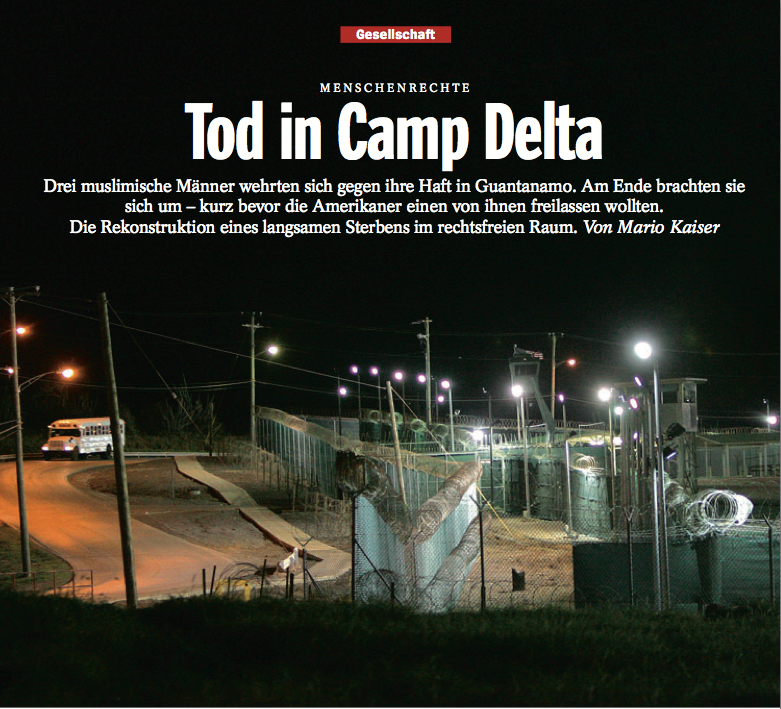
 The second reason Kaiser’s work matters to me is that I’m revisiting ‘The Black Flag’ for The everywhere war (more on this later) and, partly in consequence, thinking again about spaces of exception. I’m in Mexico this week, and I’ve been re-reading Giorgio Agamben‘s Homo sacer and The state of exception. I was originally doing this to sharpen my arguments about the Federally Administered Tribal Areas as a space of exception for air strikes by the CIA/JSOC and the Pakistan Air Force – I’ll be talking about this in Glasgow early next month, and I’ll post the presentation slides as soon as I’ve finished – but as I’ve worked my way through these texts still wider issues have emerged.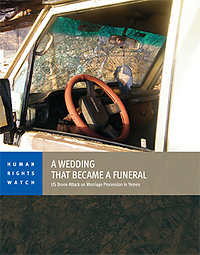
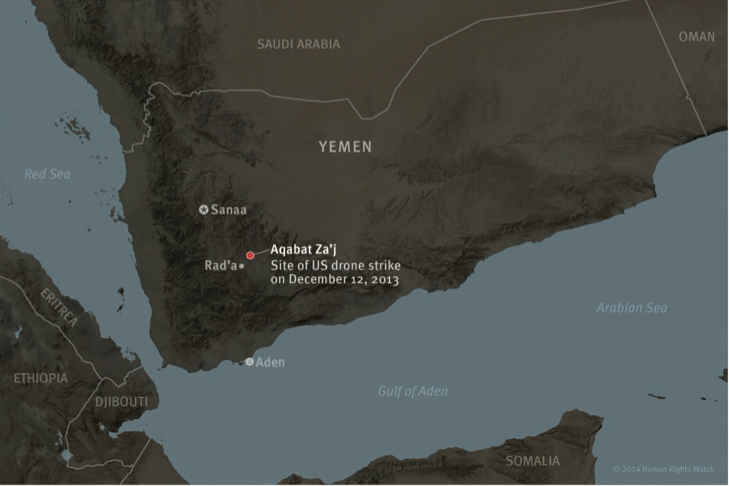
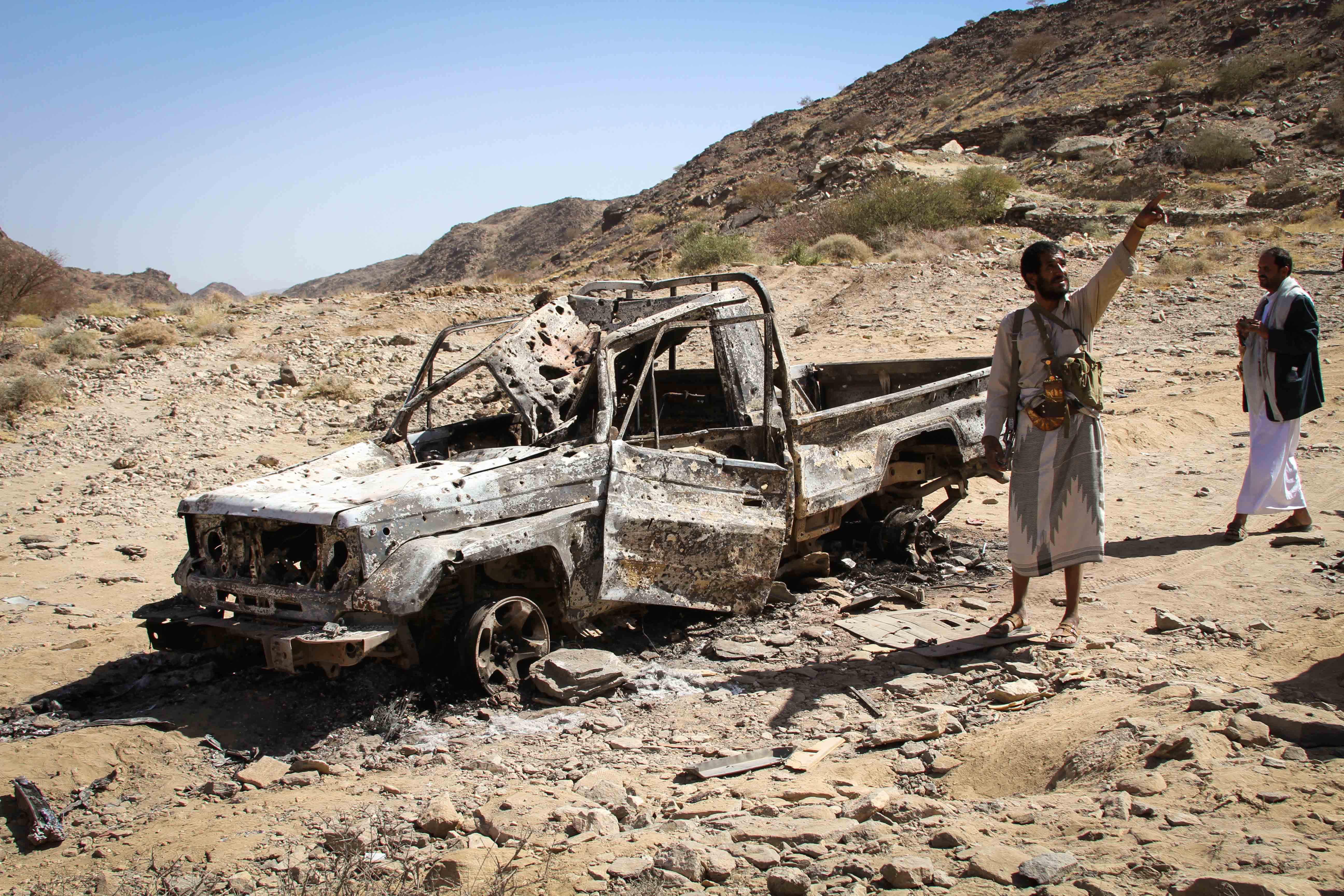
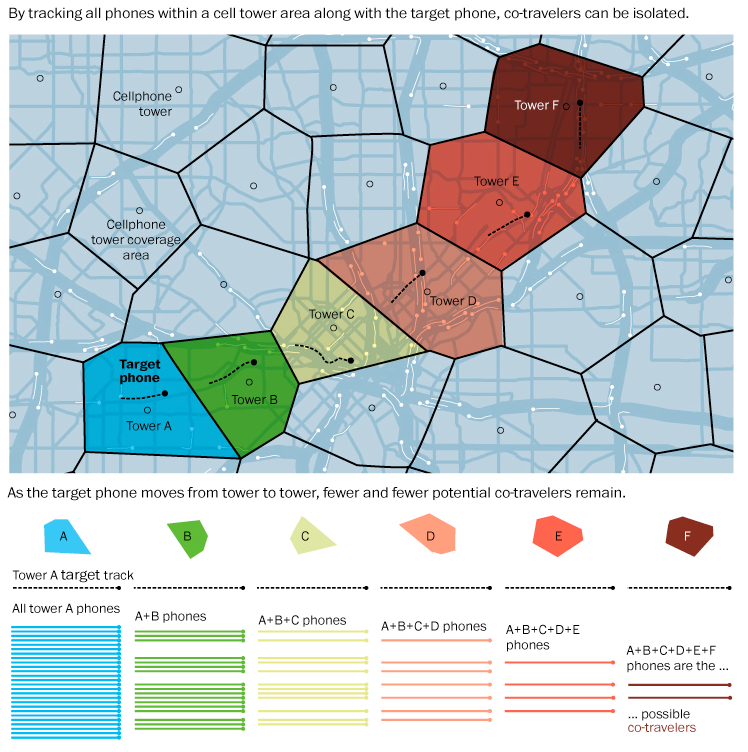
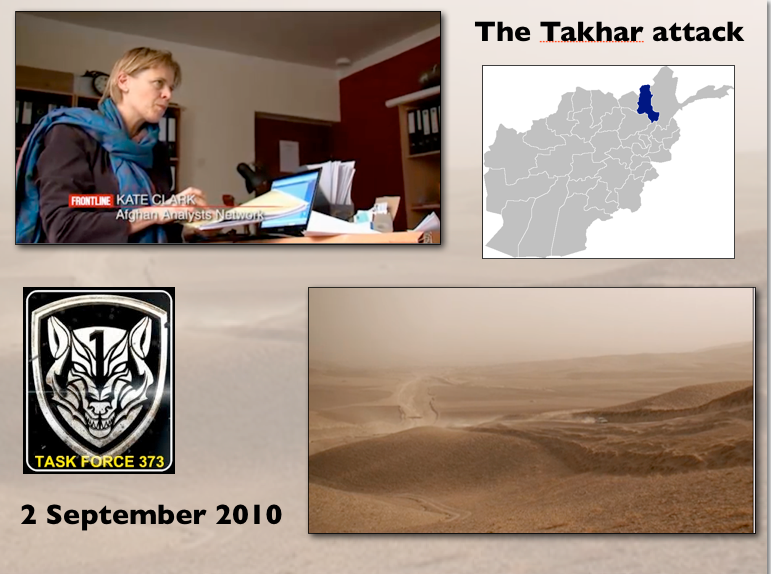
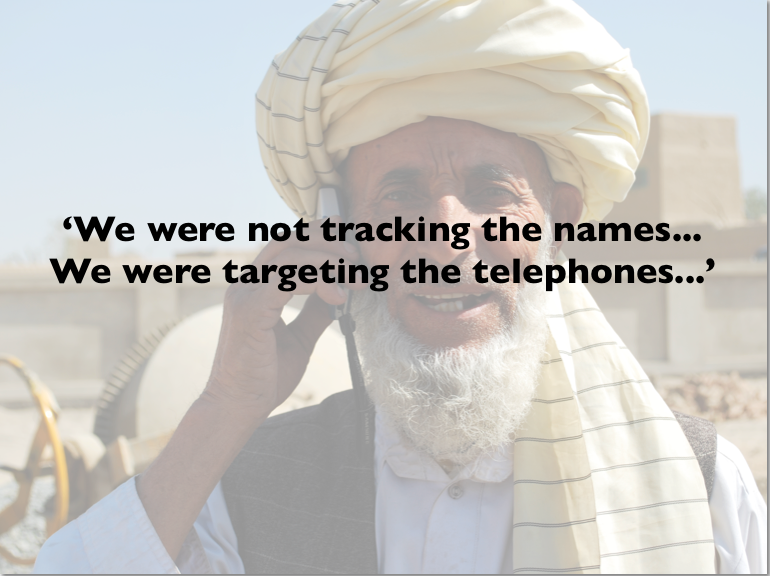

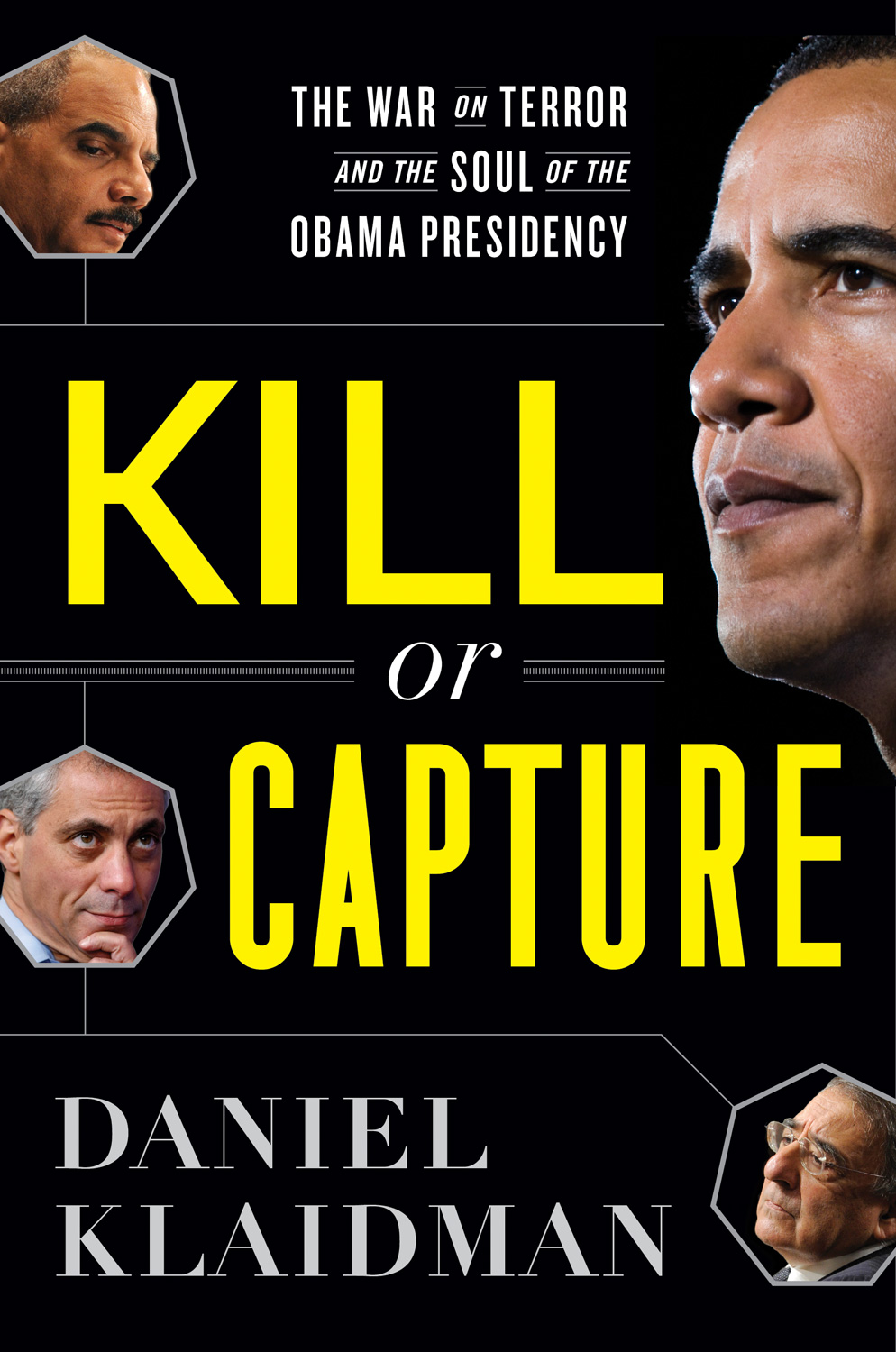

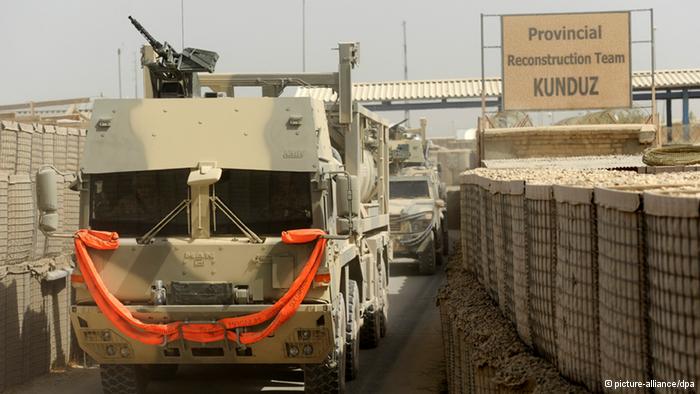
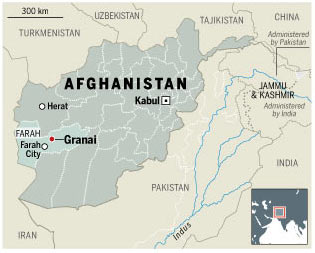
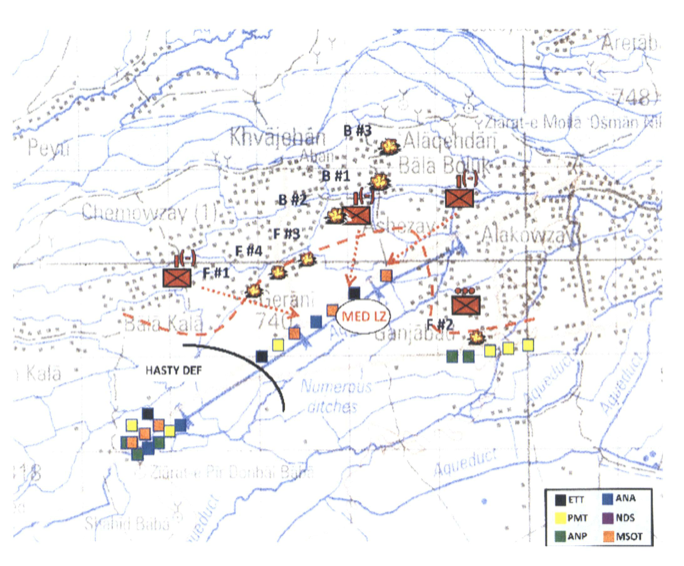
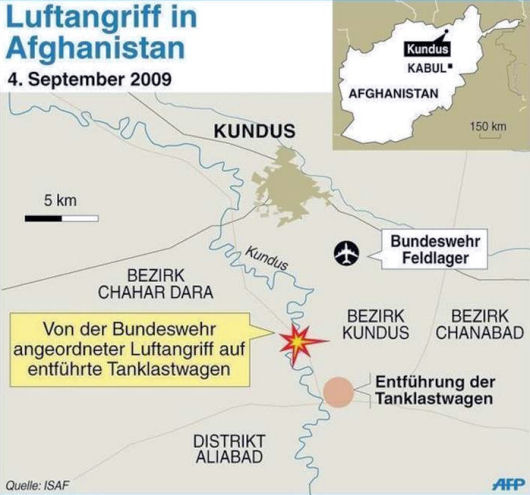
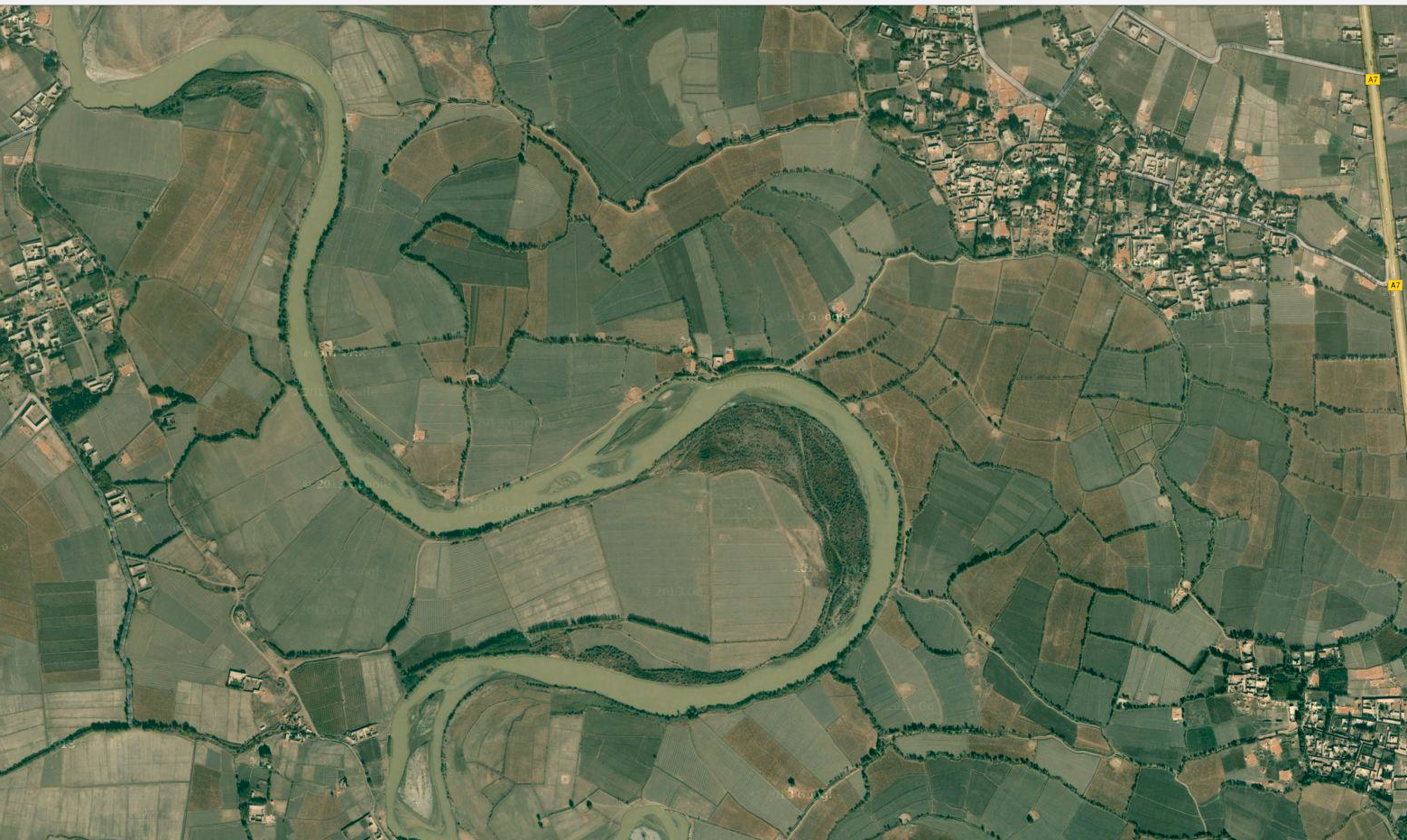
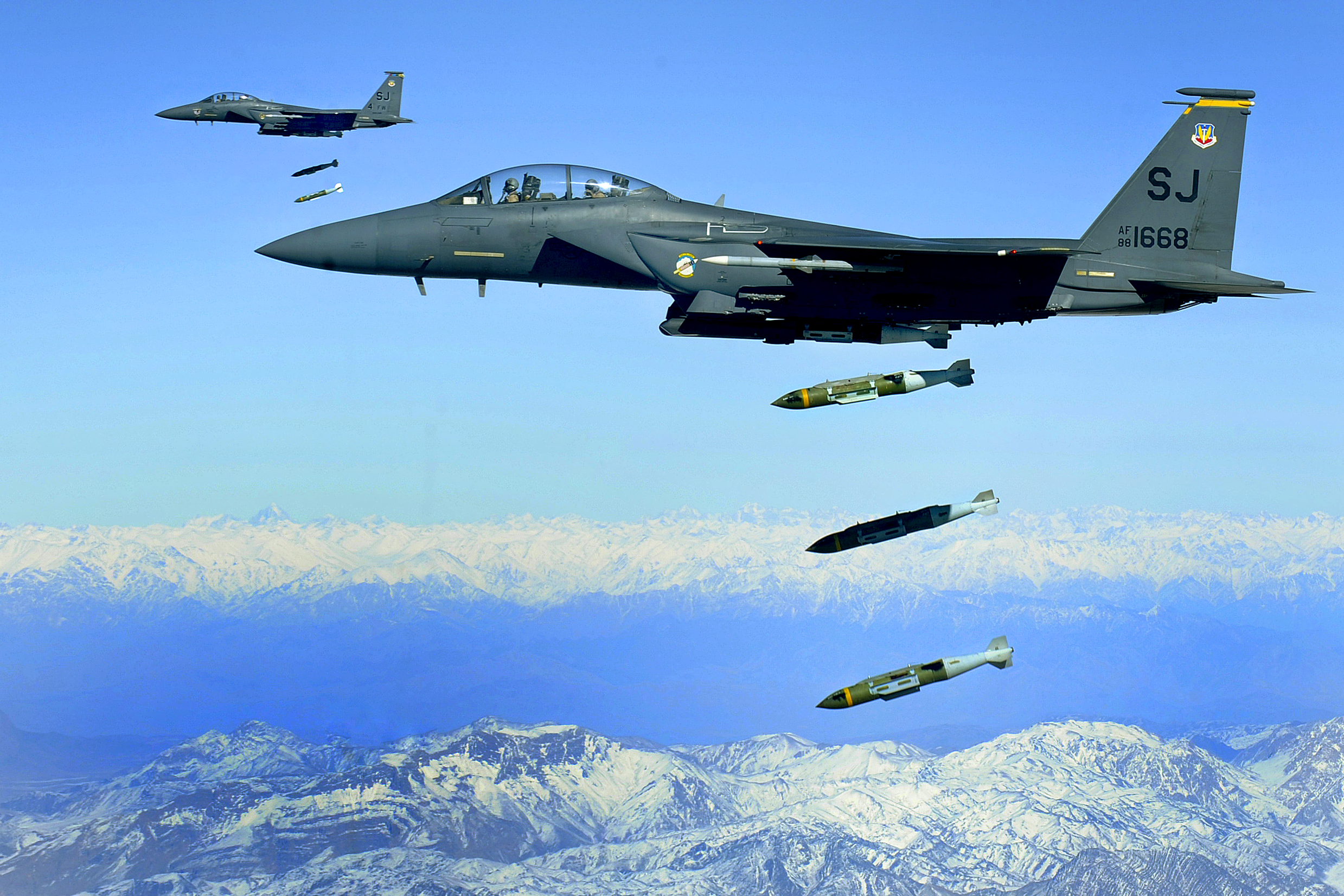
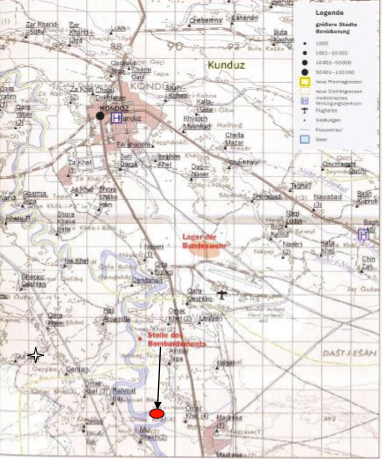
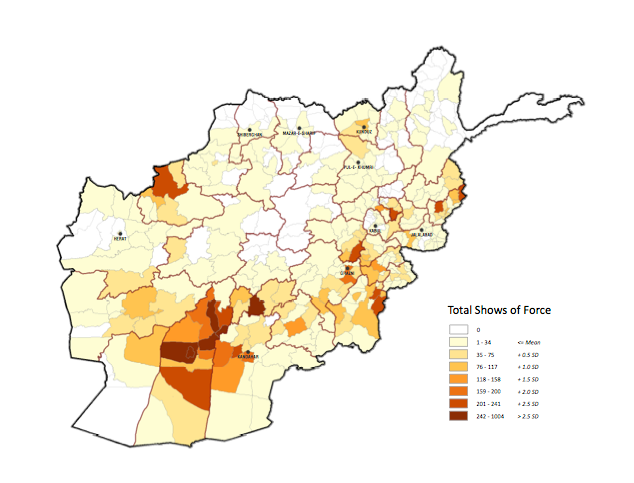

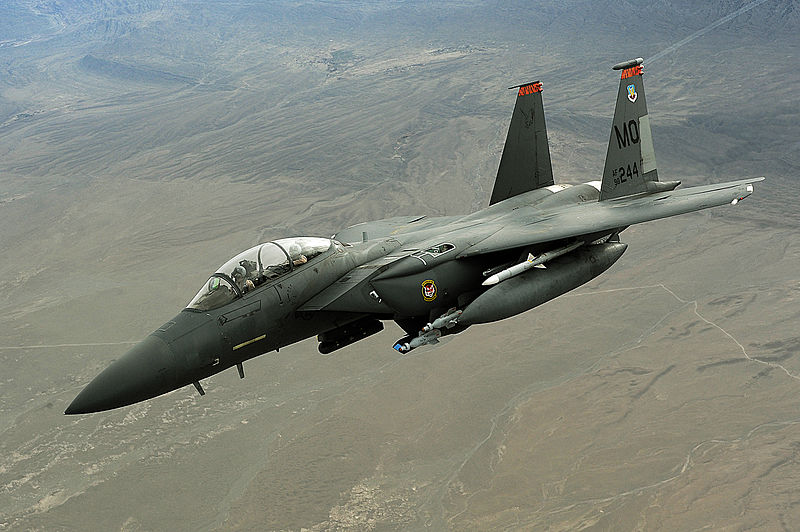

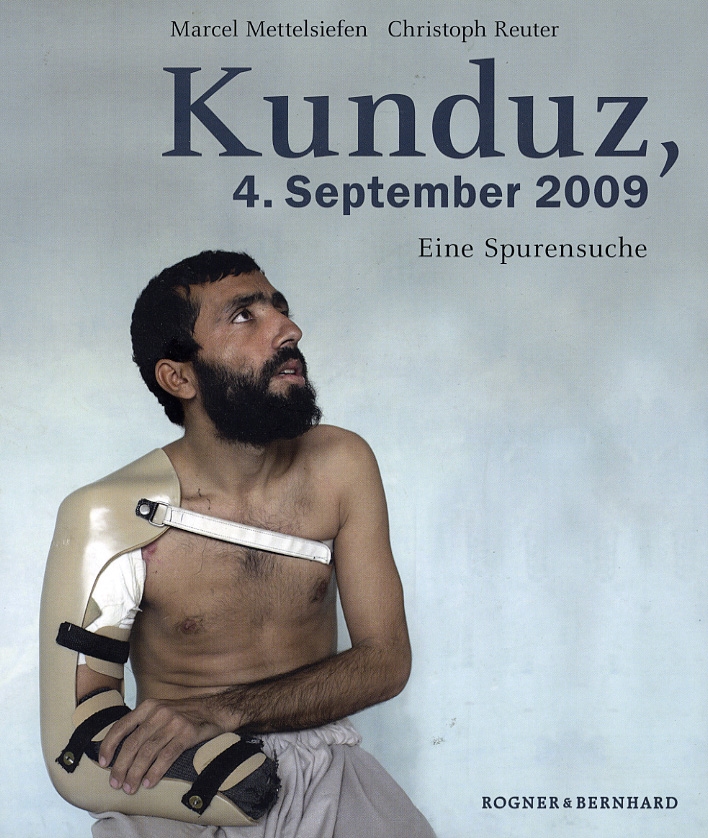
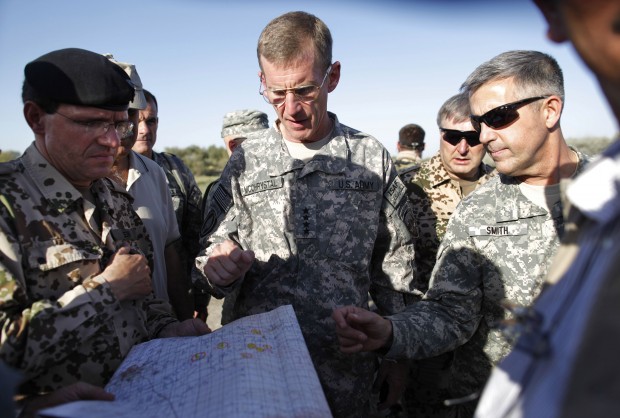

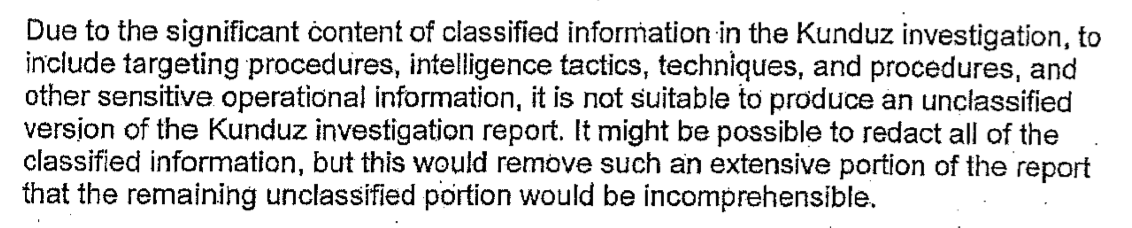
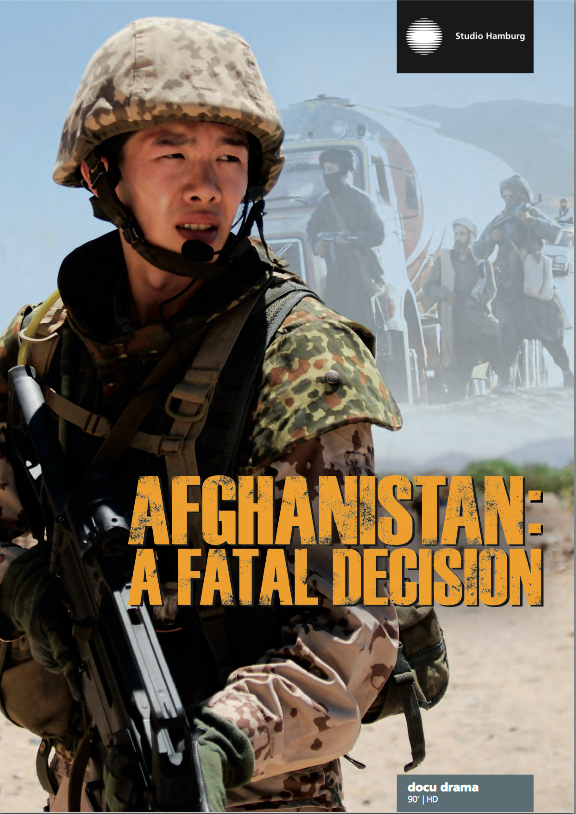
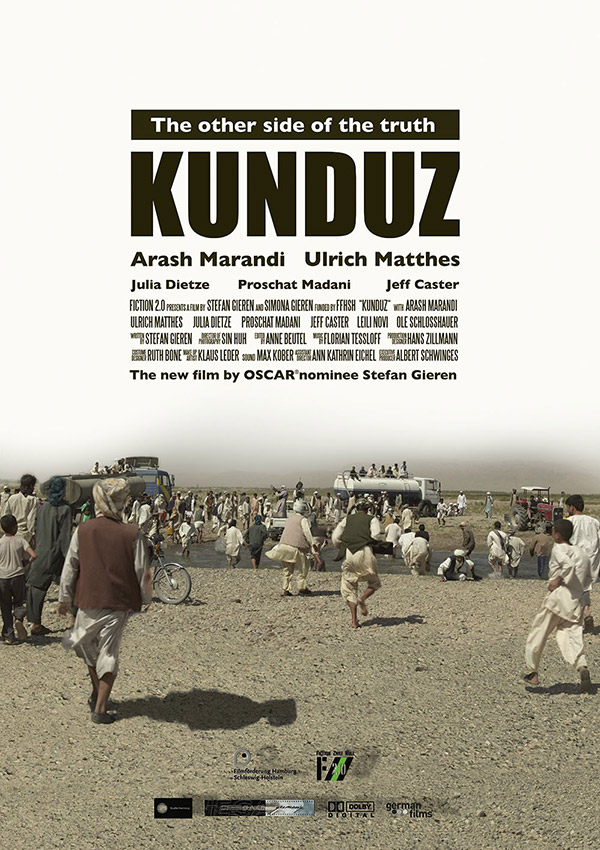

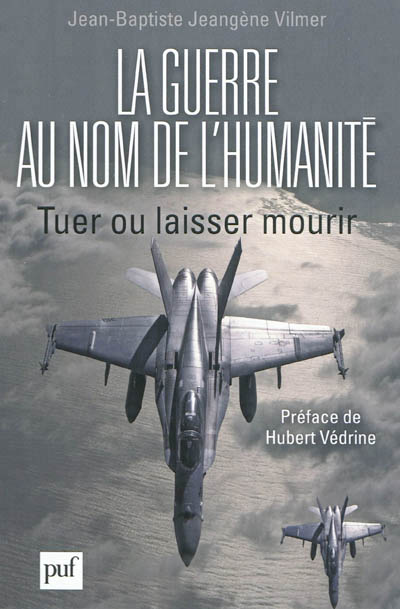
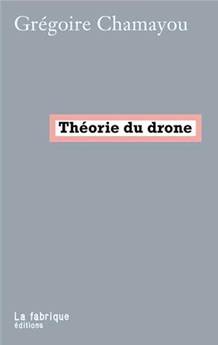


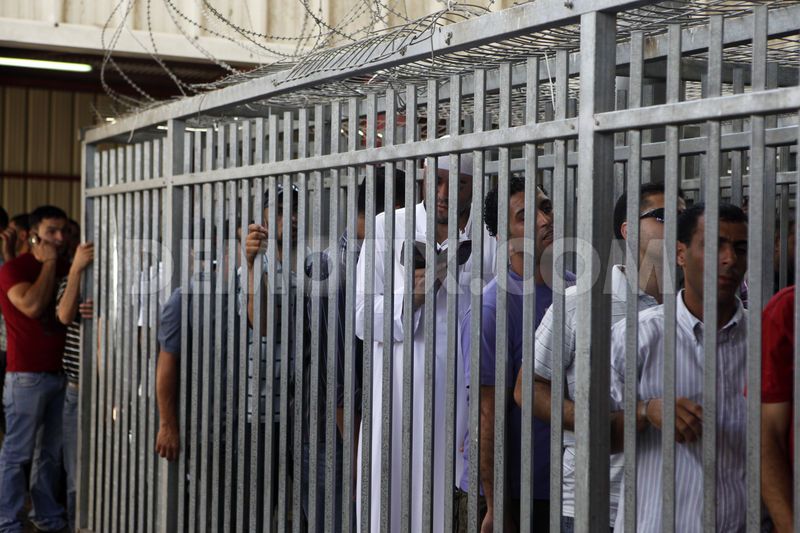
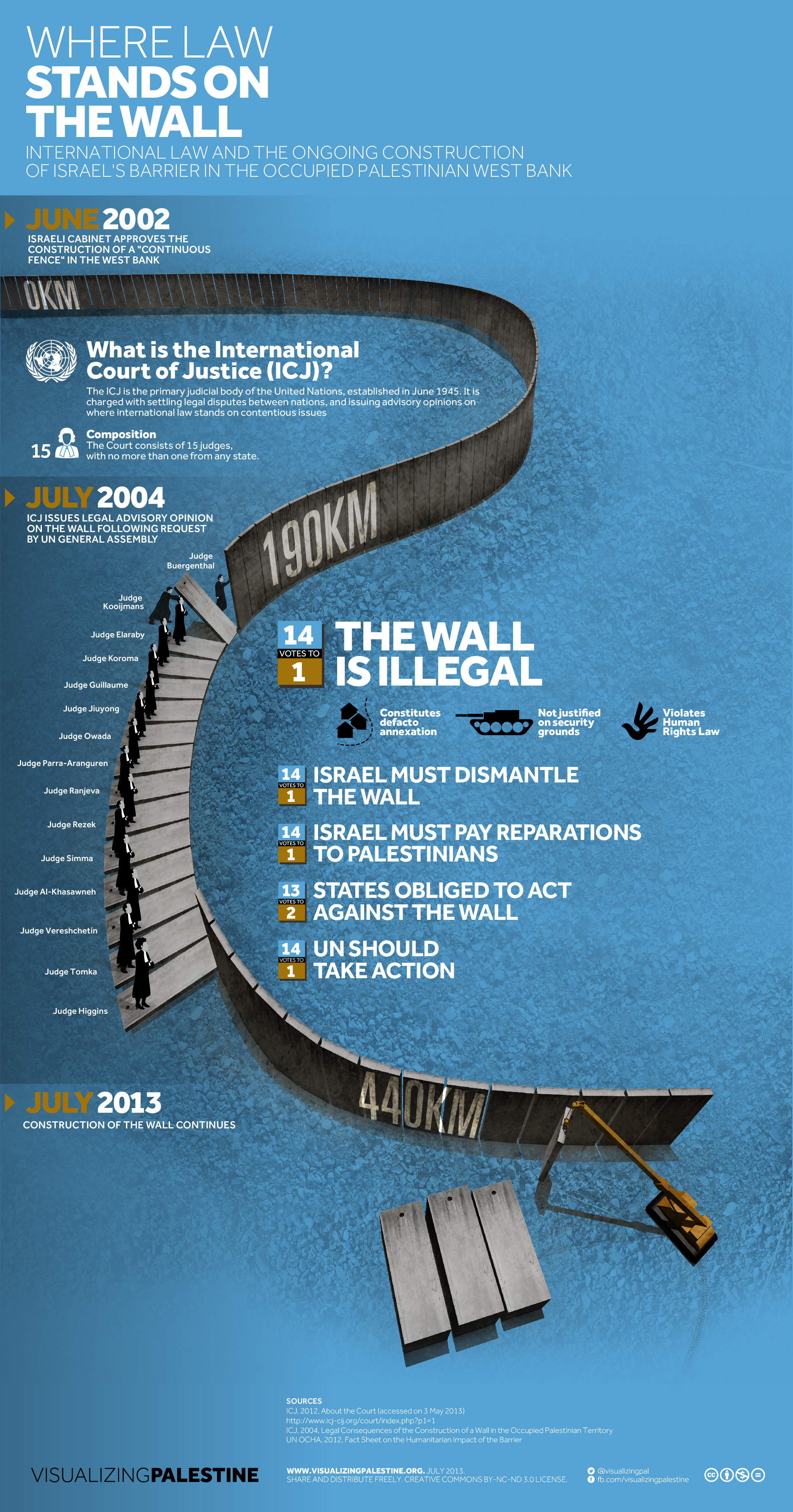
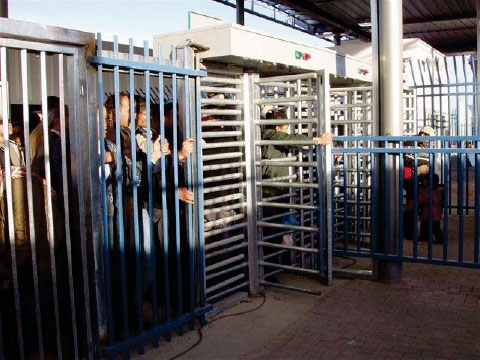
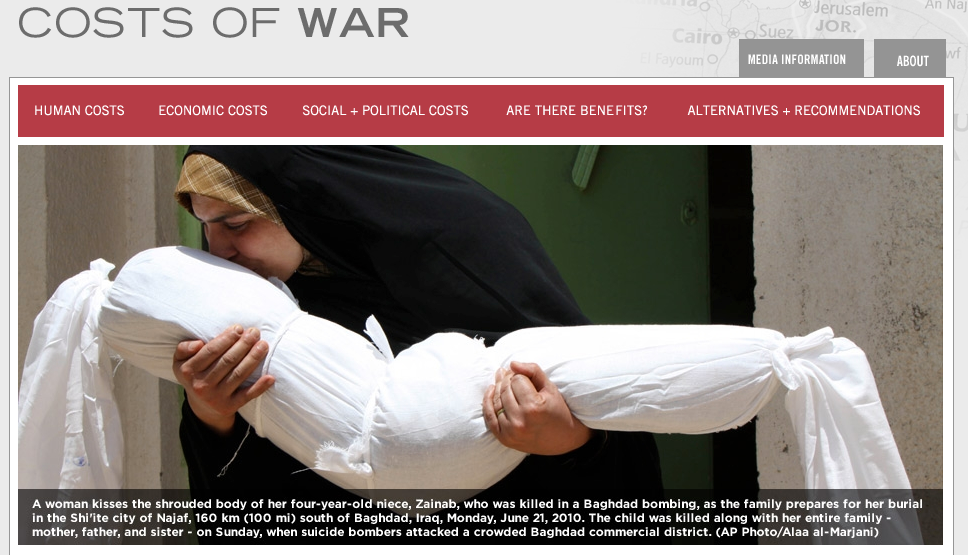
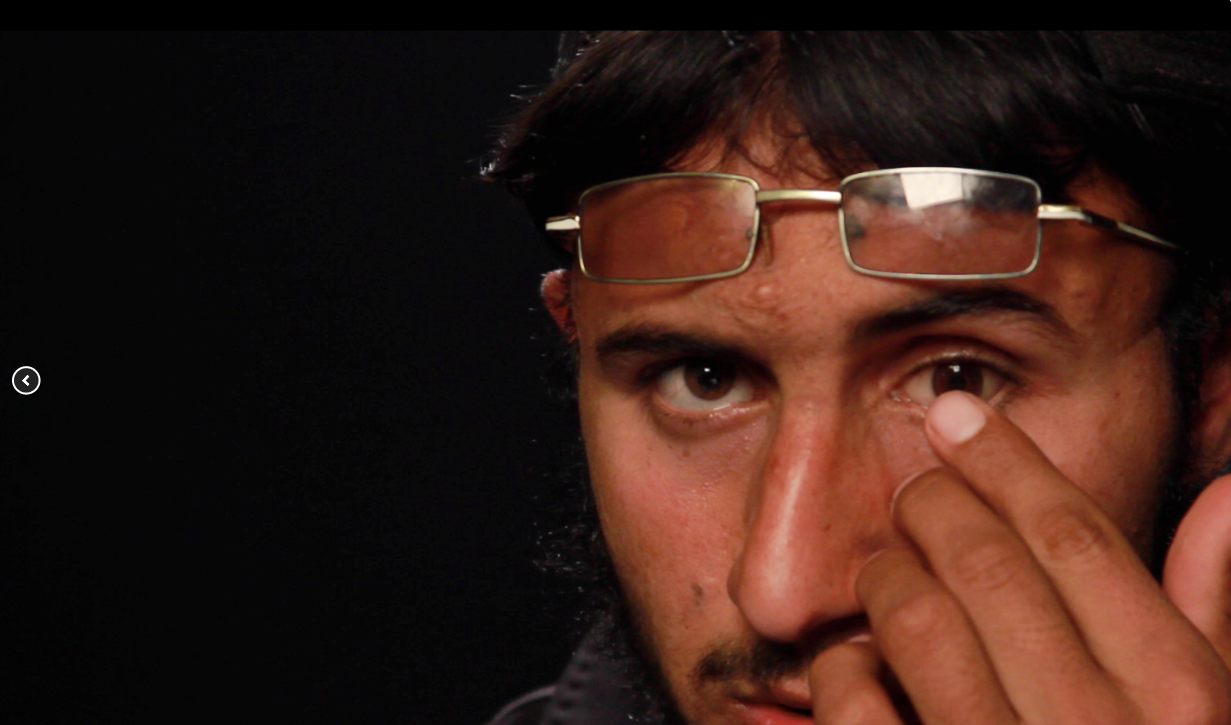

 geographical imaginations