The prosthetics of military violence

Neve Gordon‘s review of Grégoire Chamayou‘s A theory of the drone on Al-Jazeera is now available in a more extended form at Counterpunch here.  It’s a succinct summary of the book’s main theses, though there’s not much critical engagement with them (you can access my own series of commentaries here [scroll down]).  He closes his review like this:

Because drones transform warfare into a ghostly teleguided act orchestrated from a base in Nevada or Missouri, whereby soldiers no longer risk their lives, the critical attitude of citizenry towards war is also profoundly transformed, altering, as it were, the political arena within drone states.

Drones, Chamayou says, are a technological solution for the inability of politicians to mobilize support for war. In the future, politicians might not need to rally citizens because once armies begin deploying only drones and robots there will be no need for the public to even know that a war is being waged. So while, on the one hand, drones help produce the social legitimacy towards warfare through the reduction of risk, on the other hand, they render social legitimacy irrelevant to the political decision making process relating to war. This drastically reduces the threshold for resorting to violence, so much so that violence appears increasingly as a default option for foreign policy. Indeed, the transformation of wars into a risk free enterprise will render them even more ubiquitous than they are today.

Neve is the author of the indispensable Israel’s occupation, and while these paragraphs closely follow A theory of the drone the title of the book is in the singular – and so I’m left wondering about military violence that isn’t orchestrated from Nevada or Missouri and what other ‘theories of the drone’ are needed to accommodate a ‘drone state’ like Israel (not that I’m sure what a ‘drone state’ is…)?
Shoot and Strike

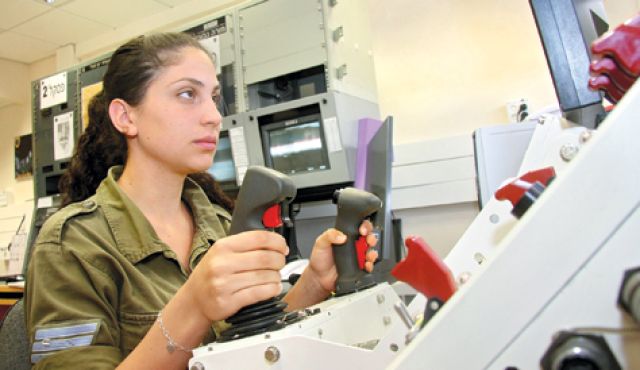
The Israeli military is no stranger to what, following Joseph Pugliese, I’ll call prosthetic violence. While Israel remains a leading manufacturer of drones (see here and here), and routinely deploys them over the occupied territories, it also enforces its ‘Death Zone‘ in Gaza through an automated, ground-based ‘Spot and Strike’ shooting system:

The soldiers, trainees in the course for the “Spot and Strike” system, sit in a tower facing the wilderness of the southern Negev, at the far edge of the Field Intelligence School at the Sayarim base, not far from Ovda. Between their tower and the wide-open desert stands another tower topped by a metal dome. With the press of a button the dome opens to reveal a heavy machine gun. Small tweaks of the joystick aim the barrel. To the right of the gun is a camera, which transmits a clear picture of the target onto a screen opposite the soldier. A press of the button and the figure in the crosshairs is hit by a 0.5-inch bullet.

This dovetails (wrong bird) with a discussion of online shooting in A theory of the drone, but here is risk-transfer war waged over extremely short distances.  ‘Remoteness’ is as much an imaginative as a physical condition, and one that is constantly manipulated so that the threat from Hamas’s rockets and tunnels becomes ‘danger close’ even as the hideous consequences of Israel’s own military offensives become distanced (unless, of course, you choose to turn killing into a spectator sport).  In Israel, it seems, these prosthetic assemblages – of which drones are a vital part – serve to animate a deeply militarised society in which evidence of a martial stance is precisely a prerequisite for its claims to legitimacy.

PUGLIESE State violence

So we clearly need a more inclusive analysis of the prosthetics of military violence – the bio-technical means by which its range is extended – that acknowledges the role of drones for more than ‘targeted killing’ and which incorporates other emergent modalities altogether, including cyberwarfare.  One of the best places to start thinking through these issues, in relation to drones at any rate, is Joseph’s tour de force, State violence and the execution of law (2013), which emphasises how ‘through a series of instrumental mediations, the biological human actor becomes coextensive with the drone that she or he pilots from the remote ground control station’ (p. 184) (I connected this to Grégoire’s theses here).

The experience may be more conditional than this allows, though.  Timothy Cullen‘s study of USAF crews training to operate the MQ-9 Reaper found that the sense of ‘co-extension’ – or bioconvergence – was much stronger among sensor operators than pilots:

After a couple hundred hours of flight experience and a sense of comfort with the modes, interfaces, and capabilities of the sensor ball, sensor operators began to feel like they were a part of the machine. With proficiency as a “sensor,” sensor operators found themselves shifting and straining their bodies in front of the [Heads Up Display] to look around an object.  As pilots flew closer to a target, the transported operators tilted their heads in anticipation of the camera’s [redacted].  Feelings of remote presence helped sensor operators move their bodies, and instructors believed that operators who felt as if they were “flying the sensor” could hold their attention longer on a scene…

Both pilots and sensor operators said pilots did not transport themselves conceptually into the machine to the same extent as a sensor operator. Nor did pilots attain similar feelings of connection and control with Reaper as they did with their previous aircraft.

The term ‘prosthetics’ implies these are at once extensions and embodiments of a military violence whose prosthetics also assume more mundane bioconvergent forms.  This is an obvious but in most cases strangely overlooked point.  Joseph mentions it in passing, juxtaposing his ‘mobilisation of the prosthetic trope’ with ‘the material literality of prosthetics: drones as the militarized prosthetics of empire inherently generate civilian amputees in need of prosthetic limbs’ (p. 214).  There’s also a suggestive discussion in Jennifer Fluri‘s ‘States of (in)security’, which devotes a whole section to what she calls ‘prosthetics biopower’ and the multiply corporeal geographies of contemporary wars [Environment and Planning D: Society & Space 32 (2014) 795-814].  Although Jennifer doesn’t directly connect these intimacies to distant vectors of military violence, the implication (and invitation) is clearly there.

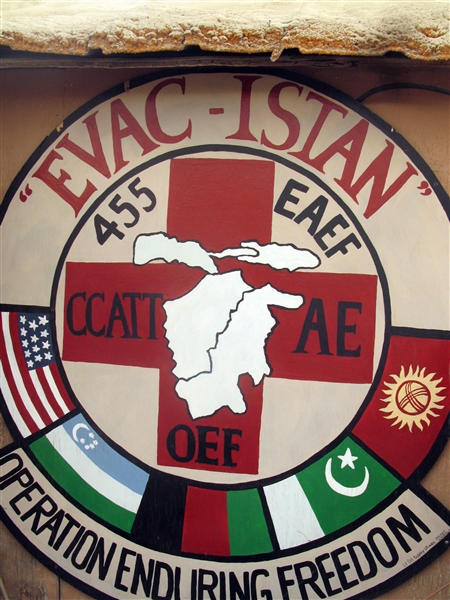
So let me try to supplement her observations, drawing in part on my project on military-medical machines that treats (among other theatres of war) the evacuation of injured soldiers and civilians in Afghanistan.  It’s important to trace the two pathways, as I’ll show in a moment (and I’ll say much more about this in a later post), but it’s also necessary to remember, as Sarah Jain crisply observes in her classic essay on ‘The prosthetic imagination‘ (p. 36), that ‘it usually is not the same body that is simultaneously extended and wounded’  [Science, technology and human values 24 (1) (1999) 31-54].  That said, there is a distinctively corporeal geography to those that are.
US military Limb amutations in Afghanistan and Iraq PNG

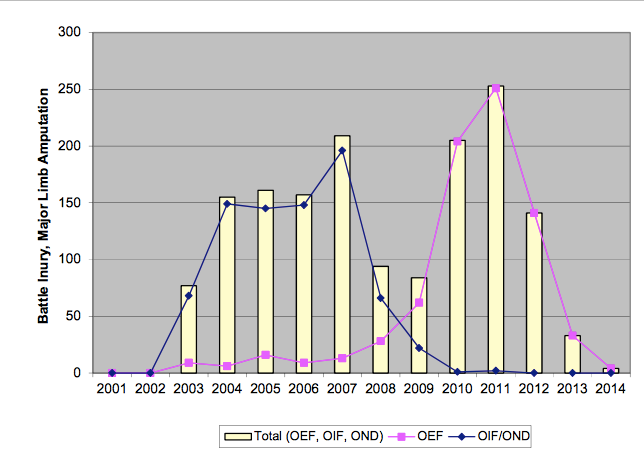
Major limb amputations (US military) in Iraq (OIF) and Afghanistan (OEF) 2001-2014 (Source: Congressional Research Services US Military Casualty Statistics, November 2014)

The incidence of devastating injuries to the limbs of troops in Iraq and Afghanistan (see the graph above; for comparable UK figures, see here) – mainly from IEDs – has been acknowledged in the role played by amputees in mission rehearsal exercises and pre-deployment training since 2005 (see here for an excellent general account).
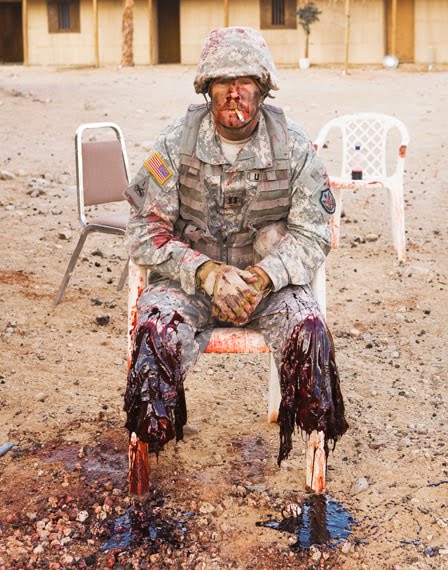
Peter Bohler:Fort Irwin training

Private contractors like Amputees in Action pride themselves on providing ‘de-sensitising’ exposure to ‘catastrophic injury amputations’ and replicating the latest field injuries for these exercises.  There is a risk in re-enrolling war veterans, as the company concedes:

Every amputee is vetted and put through specialist training beforehand to see if they are up to the job. For some it is too close to the mark, too realistic. The last thing we want to do is traumatize someone, stymie their rehabilitation.

These simulations have been used to prepare ordinary soldiers for the situations they will face – today it’s not only the ‘golden hour’ between injury and surgery that is crucial but also (and much more so) the ‘platinum ten minutes’ immediately following the incident, so the first response is vital. They have also been used to ready trauma teams for the war zone: the BBC has a report on the Royal Army Medical Corps’s mock ‘Camp Bastion’ at Strenshall in Yorkshire here.

These various exercises incorporate the latest advances in evacuation and trauma care, which have meant that today’s soldiers are far more likely to survive even the most life-threatening wounds than those who fought in previous conflicts, but the horrors experienced by young men and women in the military who lose arms and legs – sometimes all of them – are truly hideous:  read, for example, Anne Jones‘s mesmerising and deeply moving account of  They Were Soldiers: How the wounded return from America’s wars (you can get an idea from her ‘Star-spangled Baggage’ here).  Their road to rehabilitation is far longer, and infinitely more painful, than the precarious journey through which they returned to the United States (see also my ‘Bodies on the line‘).
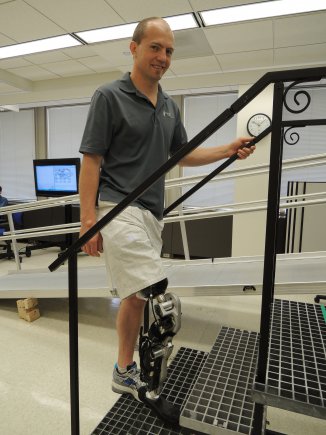
Zac Vawter at the Rehabilitation Institute of Chicago

Researchers unveiled the world’s first thought-controlled bionic leg  on 25 September 2013  funded through the US Army Medical Research and Materiel Command’s (USAMRMC) Telemedicine and Advanced Technology Research Center (TATRC) and developed by researchers at the Rehabilitation Institute of Chicago (RIC) Center for Bionic Medicine. 

There is some light in the darkness – ongoing experiments with state-of-the-art, ‘bionic’ prosthetics animated by microprocessors in the US, the UK and elsewhere that restore far more stability, mobility and movement than would have been possible even five years ago (see above, and here and here for the US, here and here for the UK).  In the 1980s less than 2 per cent of US soldiers who had suffered major limb amputations returned to duty; by 2006 that had increased to over 16 per cent (see also here and here).  There are several reasons for the change, but in 2012 Jason Koebler reported:

According to the Army, at least 167 soldiers who have had a major limb amputation (complete loss of an arm, leg, hand, or foot) have remained on active duty since the start of the Afghanistan and Iraq wars, with some returning to battle. Many others have returned overseas to work in support roles behind the lines.

“When we have someone we know wants to return, their rehab is geared that way,” says John Fergason, chief of prosthetics at the Army Center for the Intrepid at Fort Sam in Houston, Texas.

Kevin Carroll, vice president of Prosthetics at Hanger, a company that makes artificial limbs, says prosthetics have become more comfortable to wear and closer in range of motion to natural limbs.  “Unfortunately, when you have war, you have casualties, but with that comes innovation,” he says. Artificial joints are getting better at approximating the knee, elbow, wrist, and ankle, and microprocessors embedded in prostheses are able to pick up and adjust for impacts from walking, running, jumping, and climbing.

“The person doesn’t have to worry about the prosthetic device, they’re worrying about the task in front of them,” Carroll says. “If they want to go back to be with their troops, that’s an option for many soldiers these days.”

Notice, though, that these advances in prosthetic design and manufacture are part of an intimate conjunction between military violence and military medicine, in which materials science, bio-engineering, electronics and computer science simultaneously provide new means of bodily injury and new modalities of bodily repair.  This is captured in the title of David Serlin‘s thought-provoking essay, ‘The other arms race’ [in Lennard Davis (ed), The Disability Studies Reader (second edition, 2006) 49-65; this essay is not included in the latest edition, but see also the collection David edited with Katherine OttArtificial parts, practical lives: modern histories of prosthetics (2002) and his own Replaceable You: engineering the body in postwar America (2004)].  You can also find an excellent brief historical review of ‘Prosthetics under trials of war’ here.
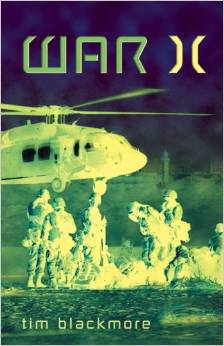
War XAnd, given the circuits within the military-medical machine, there may be more to come.  There are those who anticipate a future in which prosthetics will not only reinstate but also increase a soldier’s capabilities.  Koebler cites Jonathan Moreno, a bioethicist at the University of Pennsylvania, who ‘talks about a future where prosthetics are “enhancers” that allow soldiers to be stronger, faster, and more durable than their peers.’  These fantasies feed through the masculinist imaginary of the post-human cyborg soldier (sketched an age ago by Chris Hables Gray and revisited here) to the prosthetics of military violence with which I began. Here Tim Blackmore‘s War X: Human extensions in battlespace (2011) is also relevant.

But Koebler is quick to add that all this is still a distant prospect:

“I know the question is often, ‘How close are we to true bionic or having artificial limbs that are more versatile than natural ones?'” Fergason says. “Frankly, we’re not that close. You’re not going to see anyone decide, ‘Boy, I think I’d like to get a bionic leg because they’re so fantastic.’

“We love to read about the super-soldier, but that’s not the case right now. Amputation is so complex in what it does to your body that it’s a very long recovery,” he adds.

So what, then, of civilians?  Under ISAF’s Medical Rules of Eligibility Afghan civilians who were injured during military operations and/or needed ‘life, limb or eyesight saving care’ could be admitted to the international medical system, and were eligible for emergency casualty evacuation and treatment at one of the Category III advanced trauma centres at Bagram or Camp Bastion.
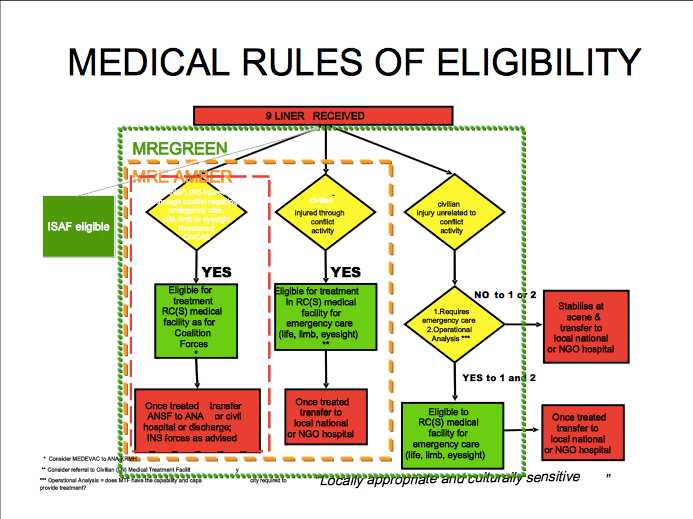
Medical Rules of Eligibility PNG

As soon as possible, however, Afghans were to be treated by Afghans and so, after surgical intervention they had to be transferred to the local healthcare system.  The same applied to the Afghan National Army and police.  In consequence, the drawdown of international forces – which also includes their medevac and trauma teams – has left the local population desperately vulnerable to the after-effects of continuing and residual military and paramilitary violence (see here and here).

The inadequacies and insufficiencies of the Afghan healthcare system have prompted a number of NGOs to fill the gap between the radically different systems, and they have done – and continue to do –  immensely important work.

But compare the prosthetics available to US soldiers with those supplied to Afghan civilians.  I don’t mean to minimise the invaluable work done by hard-pressed and underfunded NGOs, but the image below is from the ICRC‘s Orthopedic Center in Kabul (see also here).  There are other centres supported by the ICRC in Faizabad, Gulbahar, Herat, Jalalabad, Lashkar Gah, and Mazar-e-Sharif, together with a manufacturing facility in Kabul, and other NGOs are active elsewhere  – Médecins sans Frontières runs a similar facility in Kunduz, for example.
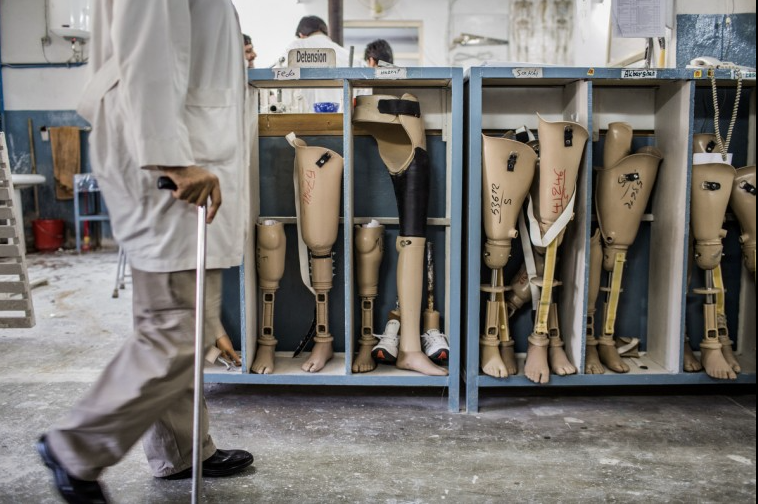
ICRC Orthopedic Center Kabul PNG

In addition to these facilities, there have been some ingenious work-arounds.  Carmen Gentile describes how US soldiers at Forward Operating Base Kasab in Kandahar were moved by the plight of Mohammed Rafiq, an eight-year old boy whose legs were blown off by an IED.  ‘Since we couldn’t get a supply of commercially made legs, we decided that maybe we could make them ourselves,’ explained Major Brian Egloff, a US Army surgeon at the base.

Using scrap tubing and some ingenuity, Egloff fitted Rafiq with small prosthetic legs. Rafiq was now able to get around the village…

Egloff did not end his work with Rafiq. He knew there must be other amputees living in the area…  Soldiers on patrol had noticed “a lot of guys with amputations that had no prosthetic legs and were reduced to crawling around on the ground and relying on the charity of strangers just to get by,” he says.  Afghans heard about what was done for Rafiq and asked for help for others. Egloff made the legs from material readily available in any welding shop, he says, mostly scrap aluminum tubing for the legs and aluminum plates for the prosthetic feet. A spring-loaded hinge served as the ankle joint.  “It’s a very simple design, nothing complicated,” he says.

These legs were intended to be temporary replacements until ‘a professionally fitted prosthetic’ was available, but the same report notes that ‘getting to a provincial capital, where most hospitals are located, is not easy for many Afghans and the routes are dangerous.’  There’s much more about inaccessibility in MSF’s Between rhetoric and reality: the ongoing struggle to access healthcare in Afghanistan (February 2014).

Like Mohammed – and many ISAF and Afghan soldiers – many of these amputees are the victims of IEDs or even land mines left over from the Soviet occupation (for a global review of the rehabilitation of people maimed by the explosive remnants of war [ERW], see this 2014 report from the International Campaign to Ban Landmines–Cluster Munition Coalition).

But some of them will be the victims of air strikes from or orchestrated by Predators and Reapers: in recent years Afghanistan has been the most heavily ‘droned’ theatre of operations in the world.  In some cases they were caught in the blast, but in others they were the victims of what Rob Nixon calls ‘slow violence‘.  According to a report by Sune Engel Rasmussen in the Guardian:

Since 2001, the coalition has dropped about 20,000 tonnes of ammunition over Afghanistan. Experts say about 10% of munitions do not detonate: some malfunction, others land on sandy ground. In rural areas, children often bring in vital income to households, but collecting scrap metal or herding animals can be fraught with unpredictable risks. Of all Afghans killed and maimed by unexploded ordnance, 75% are children…

Their future is usually bleak.  Erin Cunningham reports that ‘even as the population of Afghans who are missing limbs grows, amputees face discrimination and the harsh stigma of being disabled.’

“Socially and financially, their lives are destroyed,” Emanuele Nannini, program director at the Italian nonprofit Emergency, which operates health-care centers across Afghanistan, said of Afghan amputees.

From January to June [2014], Emergency’s Center for War Trauma Victims in Lashkar Gah, the capital of Helmand province in southern Afghanistan, performed 69 amputations. The fiercest fighting between the two sides usually takes place in the warmer summer months.

Emergency then sends the amputees to the nearby International Committee for the Red Cross orthopedic facility for long-term rehabilitation. The patients receive vocational training and other support to reintegrate them into society. The ICRC said that between April and June this year, it admitted 351 amputee patients to its facilities across Afghanistan.

But for the most part, amputees “are completely dependent on their families, and they become a huge burden,” said Nannini, who is based in Kabul. “The real tragedy starts when they go home. If they don’t have a strong family, they become beggars.”

Emergency runs two other surgical centers, in Kabul and Anabah, as well as a number of clinics and first aid posts in the villages; at Lashkar Gah six out of every ten admissions are victims of bombs, land mines or bullets.

The story is, if anything, even worse across the border in Pakistan’s Federally Administered Tribal Areas, whose inhabitants are also subject to explosive violence from the Taliban and other groups, and from CIA-directed drone strikes and air and ground attacks by Pakistan’s military.  As Madiha Tahir has shown, the victims usually disappear from public attention, at least in the United States:

What is the dream?

I dream that my legs have been cut off, that my eye is missing, that I can’t do anything … Sometimes, I dream that the drone is going to attack, and I’m scared. I’m really scared.

After the interview is over, Sadaullah Wazir pulls the pant legs over the stubs of his knees till they conceal the bone-colored prostheses.

The articles published in the days following the attack on September 7, 2009, do not mention this poker-faced, slim teenage boy who was, at the time of those stories, lying in a sparse hospital in North Waziristan, his legs smashed to a pulp by falling debris, an eye torn out by shrapnel….

Did you hear it coming?

No.

What happened?

I fainted. I was knocked out.

sadulla1As Sadaullah, unconscious, was shifted to a more serviceable hospital in Peshawar where his shattered legs would be amputated, the media announced that, in all likelihood, a senior al-Qaeda commander, Ilyas Kashmiri, had been killed in the attack. The claim would turn out to be spurious, the first of three times when Kashmiri would be reported killed.

Sadaullah and his relatives, meanwhile, were buried under a debris of words: “militant,” “lawless,” “counterterrorism,” “compound,” (a frigid term for a home). Move along, the American media told its audience, nothing to see here. Some 15 days later, after the world had forgotten, Sadaullah awoke to a nightmare.

Do you recall the first time you realized your legs were not there?

I was in bed, and I was wrapped in bandages. I tried to move them, but I couldn’t, so I asked, “Did you cut off my legs?” They said no, but I kind of knew.
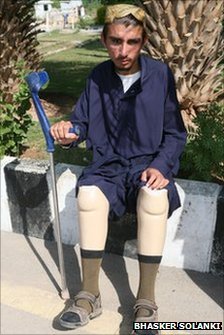
Zeeshan-ul-hassan Usmani and Hira Bashir listed some of the long-term implications in a report completed last December for the Costs of War project:

Drone injuries are catastrophic ones.  Wounded survivors of drone attacks have often lost limbs and are usually left with intense and unmanaged pain, and some desire death. Those who survive with severe disabilities face a difficult situation given lack of accommodation for people with disabilities in Pakistan. FATA is an extremely difficult terrain for a disabled person. A walk out for the morning naan (traditional bread) may require navigating through a twisty mud track, with regular dips and bumps. The traditional mud houses of the area themselves have a mud floored haweli (an open-air area onto which all the rooms usually open up). A person with a leg amputation cannot use a regular wheel chair, go to school or hospital, or even use a toilet on his own. Disability of the primary breadwinner can change the course of life for an entire family, since most village jobs are physical ones.

Here too the barriers are more than physical.  In 2011 Farooq Rathore and Peter New described how disability remains a stigma in many sectors of Pakistani society, and rehabilitation medicine is still underdeveloped.

The leading prosthetics center is the Armed Forces Institute for Rehabilitation Medicine at Rawalpindi – whose rehabilitation services for injured soldiers are reportedly ‘the best in the country‘ – but it ‘still manufactures prostheses and orthoses with wood, leather, and metal.’  For injured civilians, the outlook is still more grim.  In 2012 a plan was announced to appoint orthotic specialists and physiotherapists at district hospitals throughout the FATA:

The prolonged United States-led war against terrorism has left a large number of people disabled in Pakistan, compelling the government to institute a rehabilitation plan that will include imparting vocational skills…

“We plan to enhance the physical rehabilitation services for the victims of terrorism to save them from permanent disability,” [Mahboob ur Rehman, head of the physiotherapy department at the Hayatabad Medical Complex (HMC)in Peshawar] told IPS.

The decade-long armed conflict has resulted in injuries to thousands of people from blasts, shelling and drone attacks, with the majority of the victims needing prosthetic and orthotic management to help regain the ability to walk, he said.

But it turns out that the emphasis is as much on ‘wheelchairs and sewing machines’ as it is on even the most basic prosthetics.

Once again, NGOs have provided vital services in the most difficult circumstances.  In 1979 the ICRC established a Paraplegic Rehabilitation Center in Peshawar for victims of the Afghan war, for example, which was subsequently transferred to the control of the Khyber-Pakhtunkhwa provincial government.  It has achieved some notable successes, but here too the focus is on physical therapy and it is outside the FATA so that access is difficult for many people.

And so, finally, to Gaza.  Here the differences with Afghanistan and Pakistan are striking.  Throughout the Israeli assault last summer, as I showed in detail here, medical services were severely compromised, and hospitals and medical centres actively targeted.  The only rehabilitation hospital, El-Wafa, was destroyed.  The injuries were also aggravated by the use of Dense Inert Metal Explosives (DIME) – developed for the US Air Force in 2006 – and which, according to a Briefing Note issued by the Palestinian human rights organisation Al-Haq, were fired from Israeli drones.
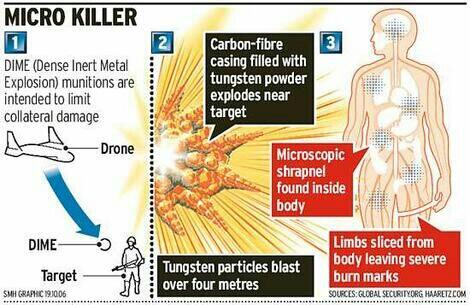
DIME blast injuries

These experimental weapons are supposed to decrease collateral damage by constricting the lethal blast radius.  But inside that perimeter the explosive blast is concentrated and magnified:

The injuries of victims who have been in contact with experimental DIME weapons are distinguishable from injuries sustained by non-experimental weapons. While signs of solid shrapnel or metal fragments are typical of amputations sustained from traditional explosives, physicians in the Gaza Strip are witnessing gruesome amputations caused by a metal vapor or residue which indicate the detonation of an extreme force in a small radius. In fact, as a result of these weapons, reported cases in the Gaza Strip include entire bodies cut in half, shattered bones, and skin, muscle and bones turned into charcoal due to the destructive burns associated with the weaponry’s extreme force and high temperature.

The lacerations are so severe that many victims bleed out and die.

The scale of destruction in Gaza also presents a radically different landscape for survivors of blast injuries.  If the terrain in FATA is formidably difficult for anyone using prosthetics or in a wheelchair, imagine what it must be like to be confronted with this:
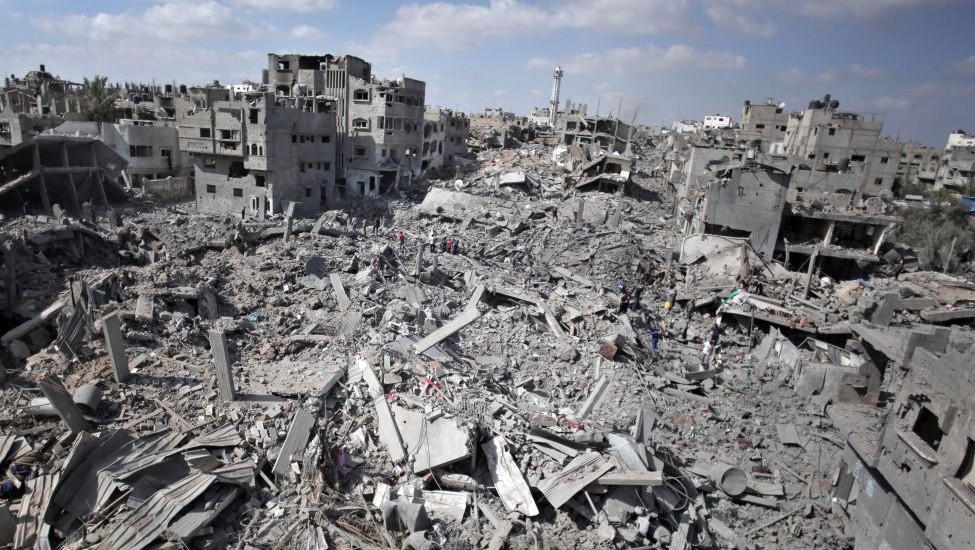
al Shejaiya Gaza 2014

When you look at that, bear in mind that when the assault came to an end there were still around 7,000 unexploded bombs and other explosive remnants of war beneath the rubble.

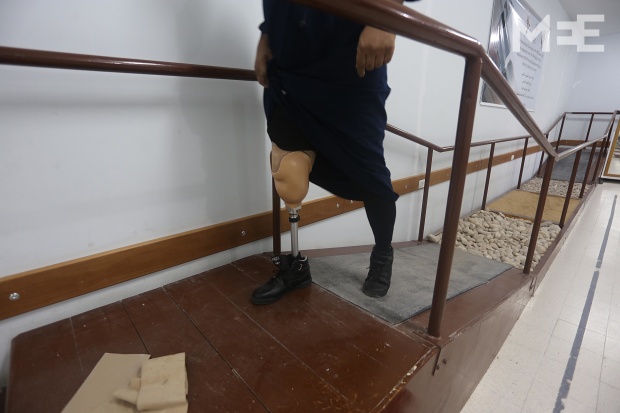
These are all dreadful effects and yet, compared to Afghanistan and Pakistan, the situation for prosthetics and rehabilitation seems somewhat better.  The prosthetics are more advanced, and some patients have been able to travel to Beirut, Amman and on occasion into Israel for treatment.  But there are still formidable obstacles in the essential provision of continuing local care.  Bayan Abdel Wahad reports from the Artificial Limb Centre, the only one of it kind in Gaza:

The number of patients who have benefited from the service of prosthetic replacement which the Centre provides for free is about 300 people who have been injured as a result of the Israeli bombardments in the past five years. However, a number of people injured in the last war – Operation Protective Edge – have not been able to come to the center yet because they are still bed-ridden due to several injuries whose treatment takes precedence over prosthetic replacement…. The technical coordinator at the center, Nivine al-Ghusain, said that “despite all the difficulties we face in funding and getting the materials necessary to manufacture the artificial limbs, we will continue in our work.” She [said] that the Centre takes upon itself the maintenance of the prosthesis from time to time “in addition to changing it based on the patients’ needs.”
15_0

The Centre relies on the ICRC for components and raw materials from France, Germany, Switzerland and the United States, but there are continuing difficulties in importing these via Israel or Egypt.  In December 2014 the Center was treating around 950 amputees.

Reports about the cultural and social response to these visible victims of military violence are mixed. Guillaume Zerr, who directs Handicap International’s operations in Gaza, told Reuters that ‘there can be less acceptance of their condition than in other regions of the world’, whereas one young man – a double amputee – insisted that ‘I feel more love, support and sympathy from people now than before my injuries, and Gazan society is non-discriminating toward me.’  Perhaps this is, at least in part, because he, like others wounded in Gaza, can provide an unambiguous narrative, ‘to tell the story behind the loss of his legs’.  I remember Omar Dewachi explaining to me how patients from Iraq, Libya or Syria who are treated in Beirut for their wounds have to return home with a narrative that can explain what happened to them in terms that will satisfy whichever side in those civil wars might call them to account.  Such narratives are important not only for their rehabilitation (and here they are vital) but also for their very survival.  This is presumably more straightforward in Gaza, but this ‘politics of the wound’ is also always a geopolitics of the wound.

One last thought.  I’m struck by how often the term ‘asymmetric war’ is used to imply that conflicts of this sort are somehow unfair – to those who possess overwhelming firepower.  But war is about more than firepower, more even than killing, and I hope I’ve shown that the differences between the continuing care and rehabilitation available to those who are maimed in these wars reveal not only a different prosthetics of military violence but also a new and grievous asymmetry in its enduring consequences.
No Safe Place

PHR Gaza 2014

Physicians for Human Rights has published a ‘First Experts’ report on Israel’s military assault on Gaza last summer, Gaza 2014: No Safe Place.  It provides a much more detailed accounting of the attacks on the medical infrastructure of Gaza than I was able to do in Gaza 101 and subsequent posts.  Here is PHR’s description of the mission:

On 8 July 2014, Israel initiated a military offensive in the Gaza Strip. Although accounts vary, most estimates put the number of residents of Gaza killed in the 50-day armed conflict at over 2,100, of whom at least 70% were civilians, including over 500 children. Over 11,000 were wounded and over 100,000 made homeless. According to Israeli official accounts, 73 Israelis were killed: 67 soldiers and 6 civilians, including one child and one migrant worker. 469 soldiers and 255 civilians were wounded.

Questions arose regarding violations of international human rights and humanitarian law in the course of the conflict. In July 2014, following discussions with Al-Mezan, Physicians for Human Rights-Israel (PHR-Israel) commissioned a fact-finding mission (hereafter ‘FFM’) to Gaza, whose aim was to gather evidence and draw preliminary conclusions regarding types, causes and patterns of injuries and attacks; attacks on medical teams and facilities; evacuation; impact of the conflict on the healthcare system; and longer-term issues including rehabilitation of the wounded, mental health, public health and displacement.

PHR-Israel recruited 8 independent international medical experts, unaffiliated with Israeli or Palestinian parties involved in the conflict: four with special expertise in the fields of forensic medicine and pathology; and four experts in emergency medicine, public health, paediatrics and paediatric intensive care, and health and human rights.

The team made three visits to Gaza between August and November last year:

Meetings and site visits were held in medical facilities and in the community, and included interviews with victims, witnesses, healthcare professionals and human rights workers, officials from the Gaza Ministries of Health and Justice, and representatives of international health organisations in Gaza and the West Bank. Wherever possible, forensic, medical and other material evidence was collected to support oral testimonies.

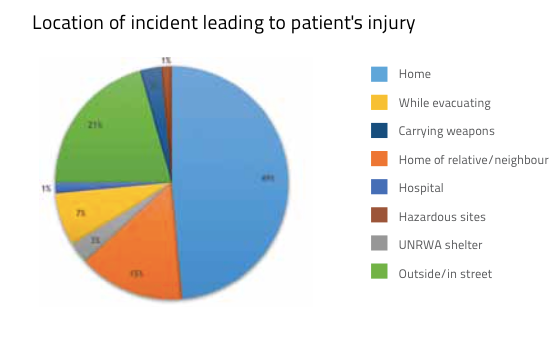
They interviewed 68 patients, and the chart below (from p. 36 of the report) explains why there was indeed ‘no safe place’ in Gaza.  As I argued previously, the Israeli military turned Gaza into a vast death zone extending far beyond the so-called ‘restricted areas’:

Location of incident leading to patient's injury PNG

Here are the summary conclusions from the report [the emphases are mine]:

The attacks were characterised by heavy and unpredictable bombardments of civilian neighbourhoods in a manner that failed to discriminate between legitimate targets and protected populations and caused widespread destruction of homes and civilian property. Such indiscriminate attacks, by aircraft, drones, artillery, tanks and gunships, were unlikely to have been the result of decisions made by individual soldiers or commanders; they must have entailed approval from top-level decision-makers in the Israeli military and/or government.

The initiators of the attacks, despite giving some prior warnings of these attacks, failed to take the requisite precautions that would effectively enable the safe evacuation of the civilian population, including provision of safe spaces and routes. As a result, there was no guaranteed safe space in the Gaza Strip, nor were there any safe escape routes from it.

In numerous cases double or multiple consecutive strikes on a single location [double tap] led to multiple civilian casualties and to injuries and deaths among rescuers.

Coordination of medical evacuation was often denied and many attacks on medical teams and facilities were reported. It is not clear whether such contravention of medical neutrality was the result of a policy established by senior decision-makers, a general permissive atmosphere leading to the flouting of norms, or the result of individual choices made on the ground during armed clashes.

In Khuza’a, the reported conduct of specific troops in the area is indicative of additional serious violations of international human rights and humanitarian law.

Ha’aretz‘s English-language coverage of the report is here.

Bodies on the line

The more I think about corpography (see also ‘Corpographies under the DOWNLOADS tab) – especially as part of my project on casualty evacuation from war zones – the more I wonder about Grégoire Chamayou‘s otherwise artful claim that with the advent of armed drones the ‘body becomes the battlefield’.  He means something very particular by this, of course, as I’ve explained before (see also here).

But let me describe the journey I’ve been taking in the last week or so that has prompted this post. Later this month I’m speaking on ‘Wounds of war, 1914-2014‘, where I plan to sketch a series of comparisons between casualty evacuation on the Western Front (1914-18) and casualty evacuation from Afghanistan.  I’ve already put in a lot of work on the first of these, which will appear on these pages in the weeks and months ahead, but it was time to find out more about the second.

800px-Medical_Emergency_Response_Team_Recovers_a_Casualty_in_Afghanistan_MOD_45151884

En route I belatedly discovered the truly brilliant work of David Cotterrell who is, among many other things, an installation artist and Professor of Fine Art at Sheffield Hallam University.  He became interested in documenting the British military casualty evacuation chain from Afghanistan, and in 2007 secured access to the Joint Medical Forces’ operations at Camp Bastion in Helmand.  He underwent basic training, a course in even more basic battlefield first-aid, and then found himself on an RAF transport plane to Bastion.  The Role 3 Hospital was, as he notes, a staging-ground. ‘Field hospitals are islands between contrasting environments,’ he wrote in his diary, ‘between the danger and dirt of the Forward Operating Bases and the order and convention of civilian healthcare.’  You can read a long, illustrated extract from the diary (3 – 26 November 2007) here, follow the photo-essay as a slideshow here, and explore David’s many other projects on his own website here.

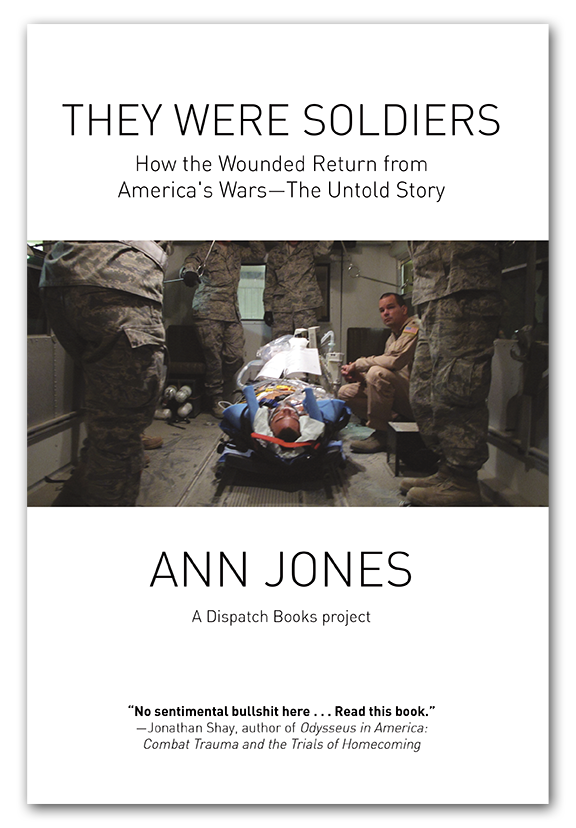
THEY-WERE-SOLDIERS_by-Ann-Jones_72The diary is immensely interesting and informative in its own right, not least about the exceptional personal and professional difficulties involved in documenting the evacuation process.  Here there’s a helpful comparison to be made with journalist Ann Jones‘s no less brilliant They were soldiers: how the wounded return from America’s wars (more on this in a later post), which starts at the US military’s own Level III Trauma Center, the Craig Joint Theater Hospital at Bagram, and moves via Landstuhl Regional Medical Center in Germany, the largest US hospital outside the United States, to the Walter Reed Army Medical Center in Washington DC.

David’s visual record is even more compelling, as you would expect from a visual artist, not only in its documentary dimension but also in the installations that have been derived from it.  In Serial Loop, for example, we are confronted with a looped film showing the endless arrival of casualties at Bastion: ‘The sound of a continuously arriving and departing Chinook helicopter accompanies images of a bleak and wasted landscape; the banality of the film’s fixed perspective masks the dramas that unfold within the ambulances as they travel to triage.’

9-liner explores what David calls ‘the abstraction of experience within conflict’:

9-Liner explores the dislocation between the parallel experiences of casualties within theatre. It is a quiet study of a dramatic event: the attempt to bring an injured soldier to the tented entrance of the desert field hospital. The screens show apparently unrelated information. JCHAT – a silent scrolling codified message – runs on a central screen. Our interpretation of it is enabled through its relationship between one of two radically different but equally accurate views of the same event. To the left we see the Watchkeeper – a soldier manning phones and reading computer screens in a crowded office. On the right we view the MERT flight – the journey of the Medical Emergency Response Team in a Chinook helicopter.

SHU’s REF submission includes this summary of David’s work (one of the very few useful things to come out of that otherwise absurdist exercise):

The research made clear that soldiers recovering from life-changing injuries had limited means of reconstructing the narrative of their transformative experiences. From the time of wounding through to secondary operations in the UK, many soldiers remained sedated or unconscious for a period of up to five days. The radical physical transformation that had occurred during this period was not adequately reconciled through medical notes, and the embargo on photographic documentation of incident and subsequent medical procedures served further to obscure this period of lost memory.
A culture of secrecy meant that medical professionals were unable to access documentation of the expanded care pathway with which they, and their colleagues, were engaged. This fragmentation of experience and understanding within the process of evacuation, treatment and rehabilitation meant that the assessment of the contradictions and disorientation experienced by casualties and medical practitioners was denied to front-line staff.

Family members, colleagues and members of the public outside the immediate environment of the military were unable to visualise or understand the transformative effects of conflict on directly affected civilians and soldiers. Partly as a result, the scope for public debate to engage meaningfully with the longer term societal cost of contemporary conflict was limited.

The submission goes on to list an impressive series of debriefings, presentations to military and medical professionals, major exhibitions, and follow-through research in Birmingham.

5-soldiers_header

And it’s one of those follow-throughs that prompted me to think some more about corpographies.  I’d noted the connection between corpography and choreography in my original post, but David’s extraordinary collaboration with choreographer Rosie Kay and her dance company gives that a much sharper edge.  Again, there’s a comparison to be drawn – this time with Owen Sheers‘s impressively researched and executed body of work, not only the astonishing Pink Mist but also The Two Worlds of Charlie F (2012)which was a stage play based on the experiences of wounded soldiers who also made up the majority of the cast (see my discussion of these two projects here).
5 Soldiers started life as a stage presentation in 2010 (watch some extracts here):

A dance theatre work with 5 dancers, it looks at how the human body is essential to, and used in, warfare. 5 SOLDIERS explores the physical training that prepares you for war, as well as the possible effects on the body, and the injury caused by warfare.

Featuring Kay’s trademark intense physicality and athleticism, 5 SOLDIERS weaves a journey of physical transformation, helping us understand how soldiers are made and how war affects them.

5 SOLDIERS is a unique collaboration between award-winning choreographer Rosie Kay, visual artist David Cotterrell and theatre director Walter Meierjohann. It follows an intense period of research, where Rosie learnt battle training with The 4th Battalion The Rifles and David spent time in Helmand Province with the Joint Forces Medical Group.

Rosie explained her commitment to the project (and her training with The Rifles) like this:

“I wanted to look at how the physicality of a soldier’s job defines them –like a dancer, the soldier is drilled, trained, their responses becoming automatic, but can anything prepare you for the realities of war? It is young soldiers and their bodies that are the ultimate weapon in war – their strength and weaknesses may win or lose a battle, their ability to harm or injure others is key to victory. While war is surrounded with weaponry, uniforms, history and ceremony, the real business is human, dirty, messy, painful and happening right now.”

(She is, not coincidentally, an affiliate of the School of Anthropology at Oxford).

5 Soldiers installation PNG

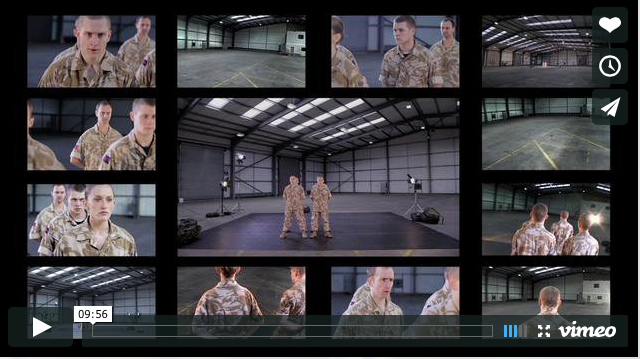
And now there’s a film version that works as a multi-screen installation (screen shot above).

Instead of just creating a short film, the team wanted the web user to get a truly interactive way to watch dance, and actually feel that they can go inside the minds and the body of the work. The 80-minute work was cut to just 10 minutes long, and the company spent one week filming in a huge aircraft hangar at Coventry Airport…

Using a variety of cutting edge filming techniques, the collaborative team have created a 13 angle edit that takes you into the heart of the work, follows each of the dancers, and zooms out so that the performers appear to be like ants in a huge empty landscape.

You can see the interactive, multi-perspectival version here.  This relied on helmetcams, and there’s a fine, more general commentary on this in Kevin McSorley‘s ‘Helmetcams, militarized sensation and “somatic war”‘ here.  But here’s the short, ‘director’s cut’ version:

And look at the tag-line: ‘The body is the frontline’.  It’s not only drones that make it so.

Fighting Ebola

Following up my post on The war on EbolaAlex de Waal has a characteristically thoughtful essay over at the Boston Review on Militarizing global health:

This is worryingly authoritarian, bad for public health, and strategically counterproductive. Despite its impressive logistics, the army makes only a marginal contribution to international disaster relief — and often makes things worse. Nor do soldiers “fight” pathogens — and the language of warfare risks turning infected people and their caretakers into objects of fear and stigma.

82846_990x742-cb1408566977

Even brave and compassionate civilian fieldworkers are not immune from the military metaphors. Here, for example, is Sarah Crowe of UNICEF describing her work on the ‘frontline’ in Liberia’s ‘biological war’:
‘Ebola has turned survivors into human booby traps, unexploded ordnance – touch and you die. Ebola psychosis is paralysing…
‘In the car with colleagues, they talk almost nostalgically about the long civil war here – a time when the enemy was seen, the rockets were heard, the bullets could be dodged.’

If you want refuge from the paranoid hallucinations about the non-metaphorical weaponisation of Ebola by either the United States or ISIS read (respectively) Jim White here and Scott Stewart here.

Back to Alex, who provides a crucial and extremely helpful gloss on the recent history of US research on the intersections between epidemic disease and national security, which shows:

Modern epidemics do not cause security crises… Newly evolved pathogens are a constant threat, but a rerun of the near-total devastation of the native American populations by diseases entirely new to them is far-fetched for the simple reason that there are no longer any large populations wholly isolated from, and therefore at risk of, major infections.  The greater dangers come from panicked or coercive responses to disease.

And for all the attempts to securitise Ebola, there has been remarkably little attention paid to its implications for food security (an altogether different problematic).  Here the work of the Assessment Capacities Project (ACAPS), an initiative of Action Contre la Faim, the Norwegian Refugee Council and Save the Children International, is exemplary – see their detailed Briefing Note, Ebola in West Africa: potential impact on food security (10 November), from which I’ve taken the map below (there are others in the Note).

b-acaps-bn-west-africa-ebola-impact-on-food-security-11-nov-2014 (dragged)

Alex points out another problem with the militarization of public health: ‘the legacy of colonialism and coercive medicine.’

Best practices in global health include efforts to be sensitive to national histories and cultures and to overcome the suspicions induced by outside health programs. Medicine in khaki is not only inefficient, it is bad practice.

British, French, and American armies have a history of imposing control in the name of hygiene, cordoning off a city or as-yet-insufficiently governed parts of the global borderlands…. In much of Africa, public health has struggled to free itself from the way it was implicated in coercive colonial control measures.

It is precisely this insight that eludes Tom Koch in his discussion of the history of mapping and containing epidemic disease in general and Ebola in particular.   ‘It’s not “like” wartime,’ he proclaims: ‘It is war.’

To combat the expanding bacterium or an advancing, viral incursion has always required military style thinking. To survive, a microbe requires potential hosts who can be effected just as invading armies require supplies if they are to advance. To tame a microbial incursion requires containment procedures that will deny it new hosts, new supplies.

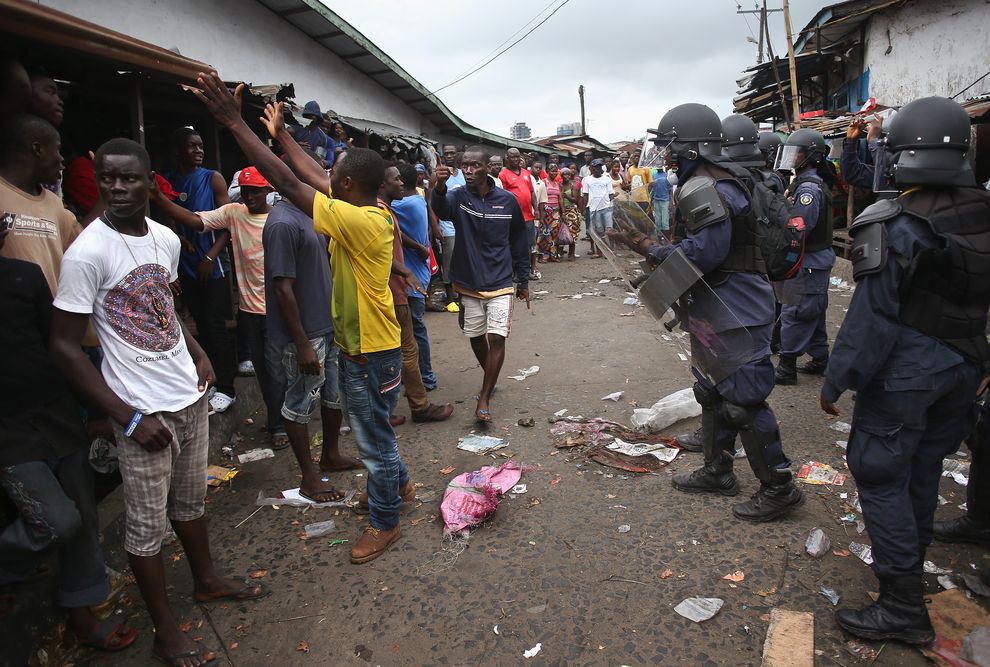
He is right to point to the strategic importance of mapping – on the National Geospatial Intelligence Agency’s public involvement, incidentally, see here – but maps (like metaphors) do more than describe, and depending on the web of practices and powers in which they are activated the connections between mapping and containment are in many cases performative.  I’m surely not the only one to be reminded of Michel Foucault‘s illuminating discussion of the plague-stricken town: see also Stuart Elden‘s commentary on ‘Plague, Panopticon, Police’ here, which reinforces the suggestions I made about military/policing and quarantine in my original post.  But this involves more then AFRICOM, and Donald McNeil‘s report on the decision to use local militaries to impose a cordon sanitaire in areas of Liberia and Sierre Leone (below) is also instructive – as he says, ‘a tactic unseen in a century’ and with ‘the potential to become brutal and inhumane’.

13OUTBREAK-master675-1

It may also backfire.  Alex again (my emphases):

One of the great, under-recognized successes of the response to HIV and AIDS in Africa was that the spread of an incurable sexually transmitted infection did not lead to repressive measures or massive stigmatization. On the contrary, the United Nations and donors insisted that public health be linked to human rights, and civil society organizations and people living with HIV and AIDS be represented in the governance of UNAIDS and the Global Fund.

That is the polar opposite of the war-like approach to Ebola. The Sierra Leonean journalist Oswald Hanciles drew out the implications of Koroma’s “war” on Ebola, comparing it favorably with the weak government defenses against the rebel attacks fifteen years ago: “This strategy of energizing and mobilizing youth to ‘comb’ their neighborhoods to ferret out ‘Ebola suspects’ could be the most potent in this Ebola War. We are optimistic that the President would use the security forces to back up the youths who the President said should be ‘hard.’” That would be a frightening prospect. Vigilante mobs dragging people from their homes or sealing off neighborhoods would destroy the public trust and community involvement at the heart of good public health practice.

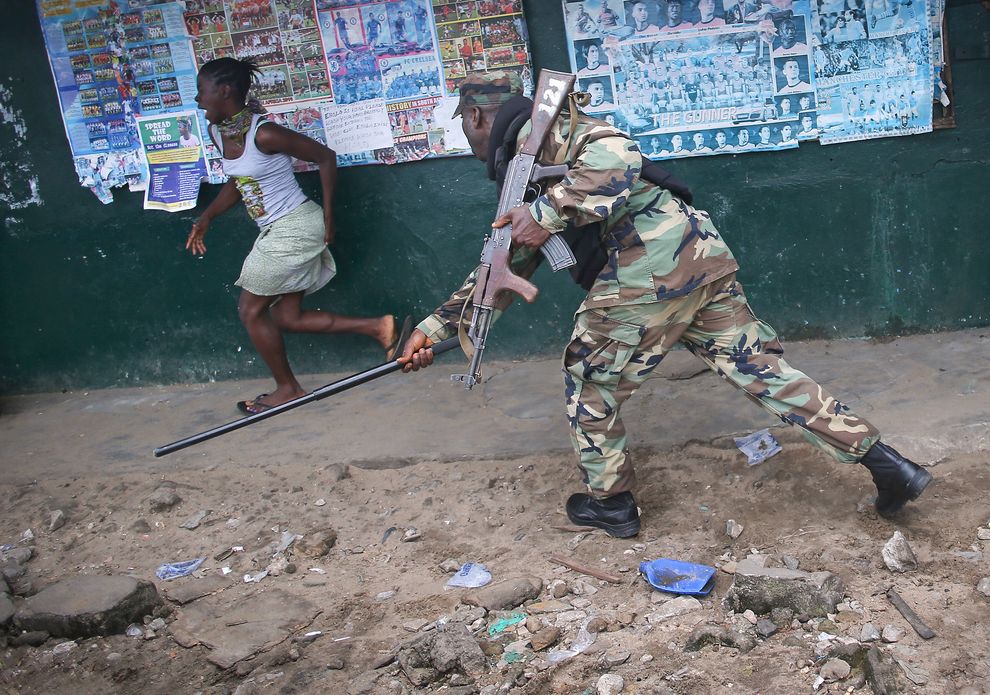
It’s not only vigilante mobs; the image below shows a Liberian soldier beating a local resident while enforcing a quarantine in Monrovia’s West Point slum:

john-moore-liberia-ebola-1_82880_990x742

And yet several loud voices doubt that local militaries, even acting in concert with AFRICOM, can provide a sufficiently powerful vector, and they want the militarised response to be stepped up. Earlier this month Britain’s former Chief of the Defence Staff joined calls for NATO to take command:

General Sir David Richards said that he was “strongly supportive” of a proposal for Nato to take command of the international response to West Africa’s Ebola outbreak, adding that the crisis demanded “a grand strategic response…

“What a crisis like this requires more than anything else is efficient organisation and leadership. It is quite clear that currently these vital ingredients are missing… The military’s core skills are to analyse a problem, devise a plan … and then to execute that plan under pressure.”

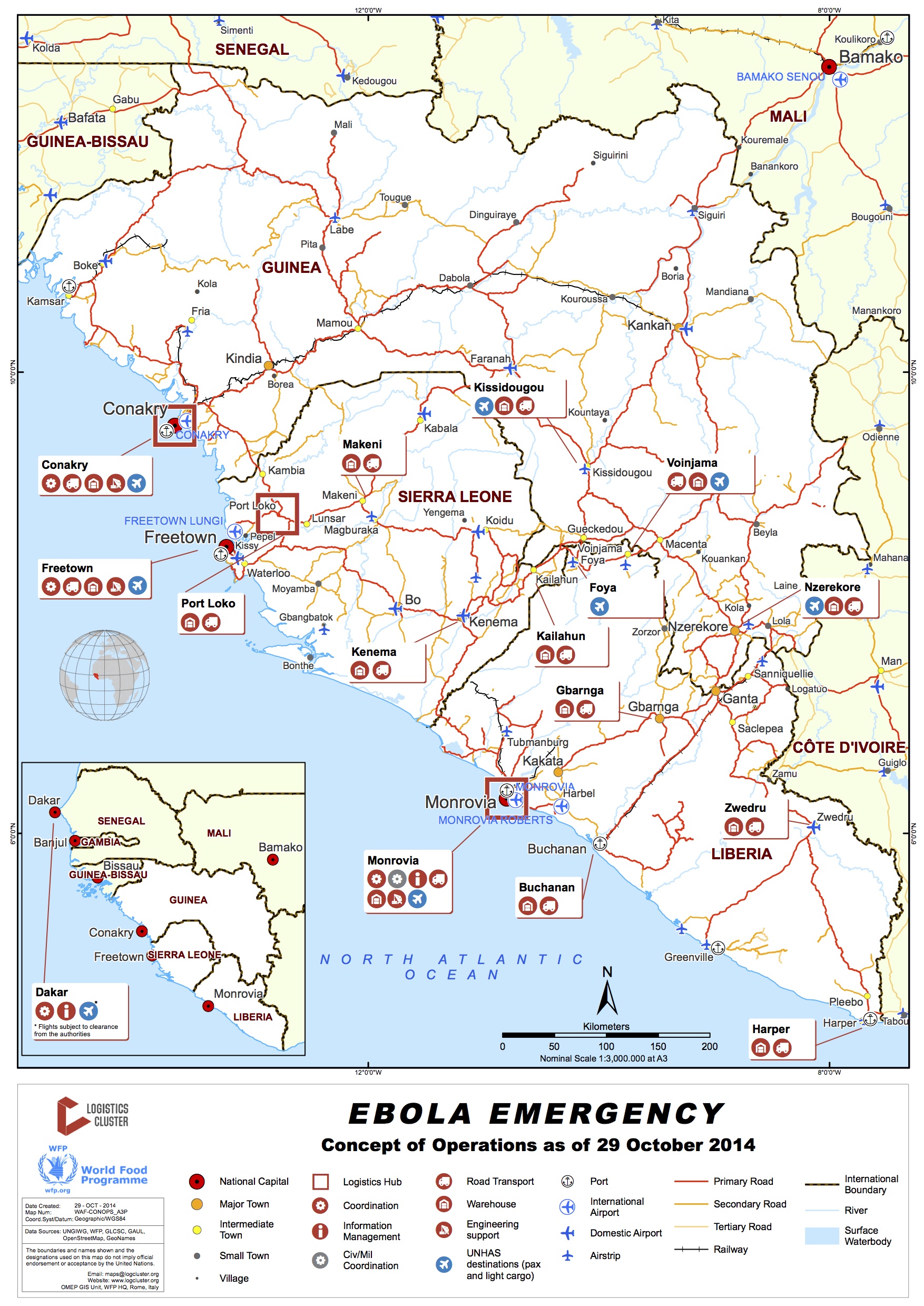
It may be that the ‘organisation and leadership’ they have in mind is a matter of logistics.  The United Nations has a Global Logistics Cluster, whose ‘concept of operations’ is mapped below (see also its Regional Situation Report for 3-10 November here) , and Richards and his co-signatories make it plain that, in their view, the UN is ‘most unlikely to be up to the job’ – though they never clarify exactly what that ‘job’ might be and what they expect NATO to do.  In any case, readers of Deb Cowen may well wonder about another dimension of what she calls ‘the deadly life of logistics’…

UN Logistics CONOPS Ebola 29 October 2014

So I leave the last word to Alex:

The comparative advantage of the military lies in a few niche activities, such as airport infrastructure, transport helicopters, and — uniquely for this case — medical facilities to treat health workers when they themselves fall sick. All other activities are done far better by civilians.

And still the poppies blow…

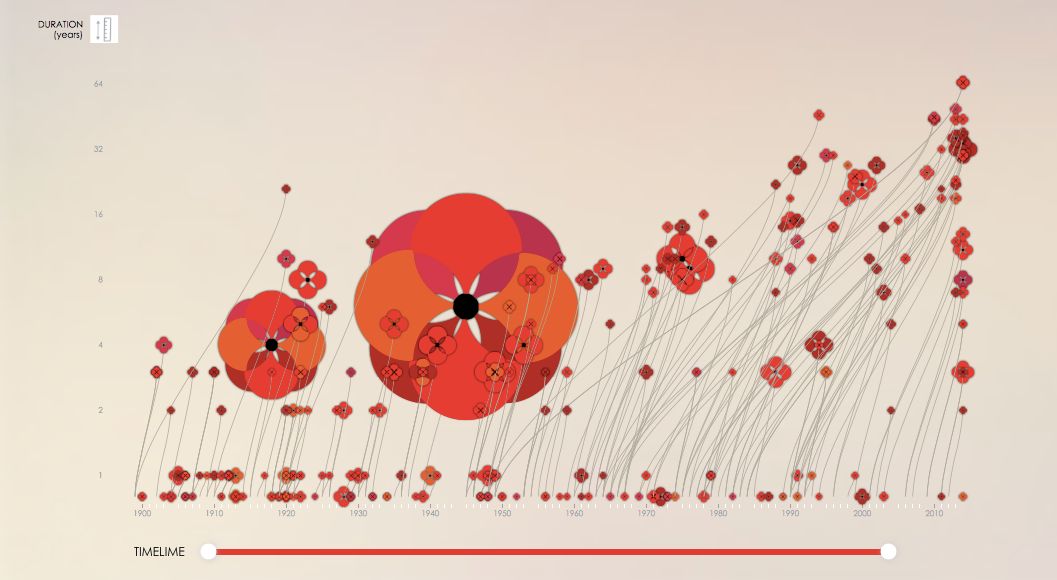
poppyfields

The graphic above is from Poppyfield.org.  You can find the interactive version here.  Designed by Valentina D’Efilippo with coding by Nicolas Pigelet:

Each poppy depicts a war since the 1900. The stem grows from the year when the war started and the poppy flowers in the year the war ended. Its size shows the number of deaths and the variation of colour represents the areas involved.

It is, as they note, a work in progress (sadly, that’s true in both senses of the phrase).

These grim tabulations don’t tell the whole statistical story, however, because they take no account of those wounded (and the inclusion of civilian as well as combatant casualties further complicates the picture).  As I’ve noted before, Tanisha Fazal provides an essential qualification to the Whiggish view of war and violence peddled by Steven Pinker and others:

Tanisha’s argument hinges on the reliance on ‘battle deaths’ as an index of the incidence of war; these statistics are a minefield of their own, though they are used by most of the major databases, but Tanisha argues that many contemporary wars have been distinguished by a diminution in battle deaths and a marked increase in the numbers of wounded who now survive injuries that would previously have killed them.

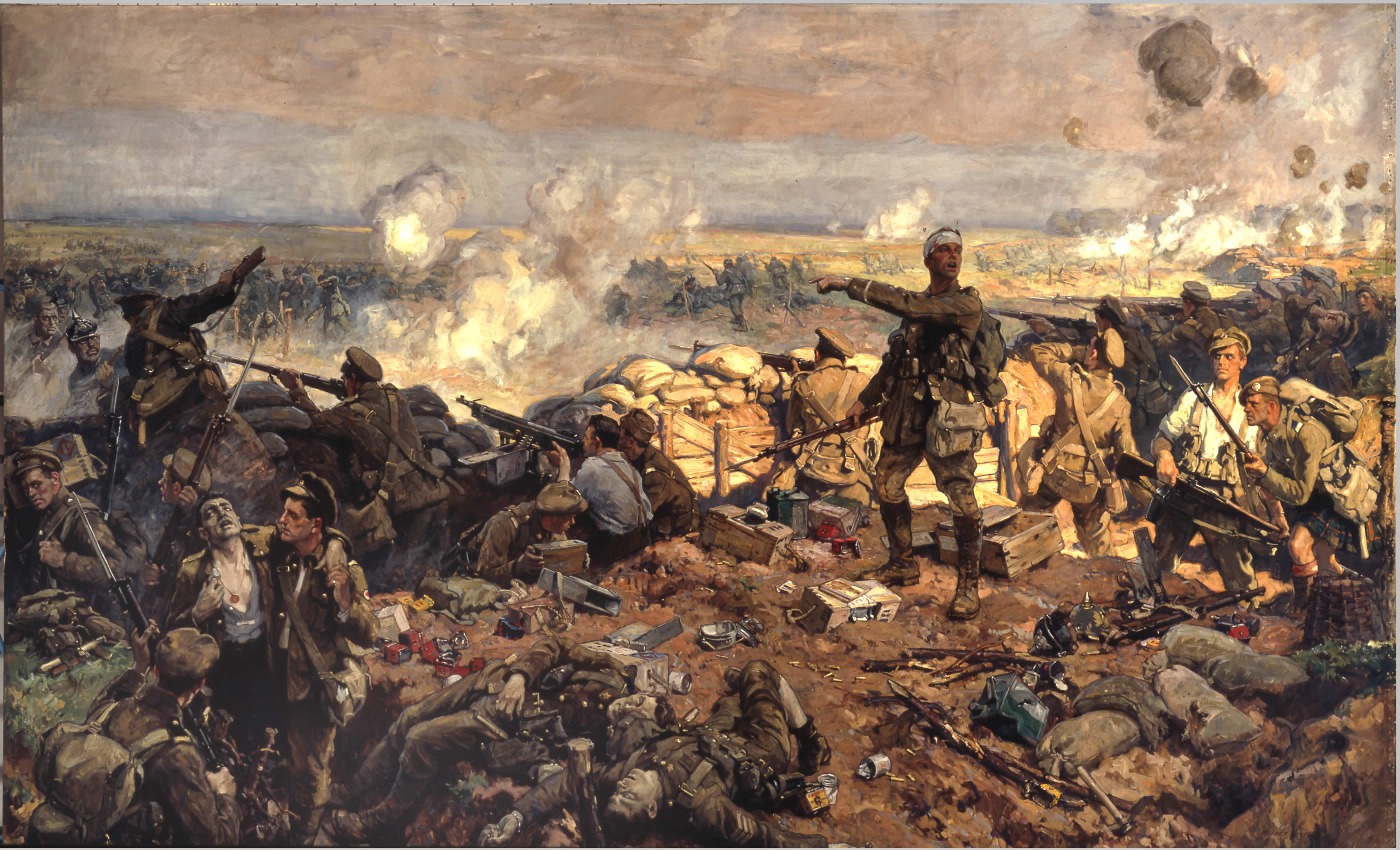
John McCrae, the author of ‘In Flanders Fields’ – whose opening lines are among the most famous of First World War poetry: ‘In Flanders fields the poppies blow/Between the crosses, row on row’ – knew that at first hand.  He composed the poem after the Second Battle of Ypres in the spring of 1915 (below), and he wrote to his mother:

‘The general impression in my mind is of a nightmare. We have been in the most bitter of fights. For seventeen days and seventeen nights none of us have had our clothes off, nor our boots even, except occasionally. In all that time while I was awake, gunfire and rifle fire never ceased for sixty seconds…  And behind it all was the constant background of the sights of the dead, the wounded, the maimed…’

Richard Jack 2nd Ypres

But, as John Keegan noted in The face of battle, in most military histories the ‘wounded apparently dematerialize as soon as they are struck down…’  Keegan was writing about General Sir William Napier’s account of the battle of Albuera in 1811, but the disappearing trick is still being performed more than two centuries later.

Journeys from No Man’s Land

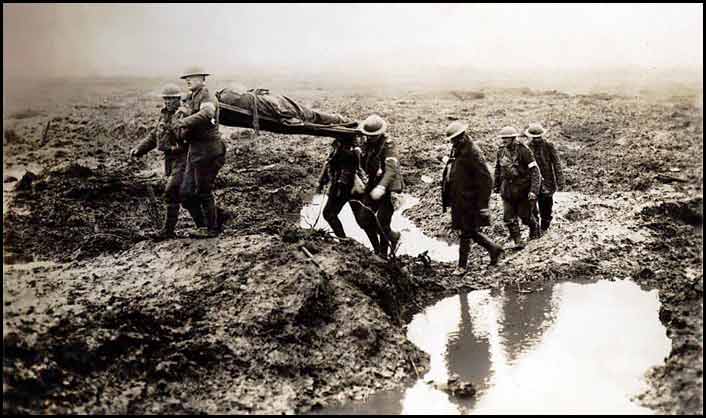
Stretcher-bearers

I’ve agreed to join a panel organised by Noam Leshem on Remnants of No Man’s Land: history, theory and excess at the Annual Meeting of the Association of American Geographers in Chicago next April (I imagine this is a follow-up to the session at the RGS/IBG in September).

The no-man’s lands of the First World War were never limited to the killing fields between the trenches. Their impact was never fully confined by the time and space of the battles: it lingered on the bodies of soldiers, in contaminated ecologies and in the radically altered post-war intellectual landscape. The violence that is unleashed in the no-man’s land and the destruction it wrought does not result in emptiness, in a terra nullius, but in excess that can never be fully contained.

This session invites additional reflections on the excessive quality of no-man’s land: its materialities, ecologies, cultural expressions and political-ideological articulations. It aims to deepen the theoretical import and conceptual power of ‘no-man’s land’, and move beyond its use as merely a convenient colloquialism. Similarly, we seek to engagements with other histories of no-man’s lands that are not solely confined to the Western Front during WWI.

LOBLEY Dugouts in the embankment near Le Cateau

Despite that last sentence, this is what I’ve come up with; these abstracts are always promissory notes, of course, written so far in advance that they can provide little real indication of what eventually transpires.  Fortunately we are now no longer lumbered with the Yellow Pages-style book of abstracts so I doubt anybody will actually read this on the day.  But here goes:

Journeys From No Man’s Land, 1914-1918

During the First World War on the Western Front a central logistical preoccupation of military planners was the deployment of troops to the front line and the evacuation of casualties from the battlefield. These priorities were closely connected – the aim was to provide medical treatment as close to the site of the wound as possible so that troops could be returned expeditiously to the line – but they also often confounded one another as hospital trains headed for the coast were shunted into sidings to allow troop trains to move up. In this presentation I address three questions. First, what it was possible to know about the ‘lie of the land’, particularly in the deadly spaces between the front-line trenches? Here I focus on the connections between aerial reconnaissance, night patrols and trench maps. A second question concerns the arrangements made in advance of major offensives – the disposition of stretcher bearers and aid posts, field ambulances and casualty clearing stations – and the ways in which these visible geometries of the medical-military machine affected the sensibilities of soldiers waiting to go ‘over the top’. Finally, how did the wounded apprehend and navigate No Man’s Land, and how did they make what Emily Mayhew calls their precarious journeys away from the fighting?

There’ll be more posts on this as I circle in towards the presentation.  It’s part of my new research project which explores military-medical machines and the casualties of war 1914-2014, but which is now widening to include other aspects of medical care in contemporary conflict zones like Gaza and Iraq/Syria and the militarisation of medical intervention in West Africa.

The war on Ebola

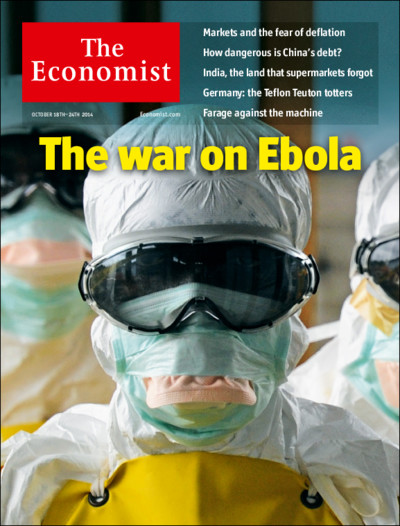
ECONOMIST The war on Ebola

We’ve been here before – ‘wars’ on this and ‘wars’ on that.  It’s strange how reluctant states are to admit that their use of military violence (especially when it doesn’t involve ‘boots on the ground‘) isn’t really war at all – ‘overseas contingency operations’ is what the Pentagon once preferred, but I’ve lost count of how many linguistic somersaults they’ve performed since then to camouflage their campaigns – and yet how eager they are to declare everything else a war.

These tricks are double-edged.  While advanced militaries and their paymasters go to extraordinary linguistic lengths to mask the effects of their work, medical scientists have been busily appropriating the metaphorical terrain from which modern armies are in embarrassed retreat.

Yet all metaphors take us somewhere before they break down, and the ‘war on Ebola’ takes us more or less directly to the militarisation of the global response.  In an otherwise critical commentary, Karen Greenberg draws parallels between the ‘the war on terror’ and the ‘war on Ebola’:

‘The differences between the two “wars” may seem too obvious to belabor, since Ebola is a disease with a medical etiology and scientific remedies, while ISIS is a sentient enemy. Nevertheless, Ebola does seem to mimic some of the characteristics experts long ago assigned to al-Qaeda and its various wannabe and successor outfits. It lurks in the shadows until it strikes. It threatens the safety of civilians across the United States. Its root causes lie in the poverty and squalor of distant countries. Its spread must be stopped at its region of origin — in this case, Guinea, Liberia, and Sierra Leone in West Africa — just as both the Bush and Obama administrations were convinced that the fight against al-Qaeda had to be taken militarily to the backlands of the planet from Pakistan’s tribal borderlands to Yemen’s rural areas.’

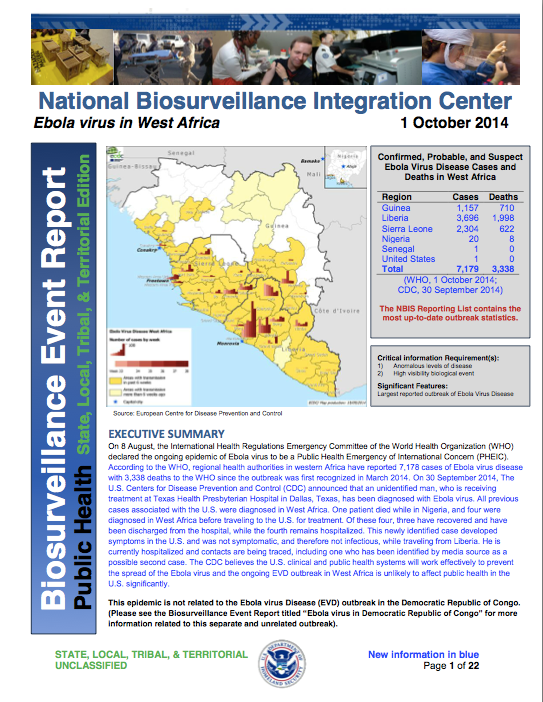
There are other parallels too, not least the endless re-descriptions of terrorism and even insurgency as life-threatening diseases, ‘cancers’ on the body politic.  And, as Josh Holmes shows, there is also an entirely parallel (geo)politics of fear in both cases (see also Rebecca Gordon on the racialization of ‘the fear machine’ here).  Given the threat supposedly posed by ‘the enemy within’, it’s not surprising that US Northern Command has already set up a 30-person ‘military rapid response team‘ for domestic Ebola cases, and that the Department of Homeland Security has been issuing Biosurveillance Event Reports on the Ebola outbreak in West Africa from the National Biosurveillance Integration Center.

National Biosurveillance EBOLA DHS 1 Oct 2014

But as I’ve said, Karen’s is a critical commentary and so, before the military metaphors carry us away,  her conclusion bears repeating:

The United States is about to be tested by a disease in ways that could dovetail remarkably well with the war on terror. In this context, think of Ebola as the universe’s unfair challenge to everything that war bred in our governmental system. As it happens, those things that the U.S. did, often ineffectively and counterproductively, to thwart its enemies, potential enemies, and even its own citizenry will not be an antidote to this “enemy” either. It, too, may be transnational, originate in fragile states, and affect those who come in contact with it, but it cannot be stopped by the methods of the national security state.

To make sense of all this, I think we need to stand back and start with four general observations:

(1) Modern military medicine has long involved more than evacuating and treating the wounded from the field of battle.  It has always had a substantial public health component.  Until the early twentieth century, ‘infectious diseases unrelated to trauma were responsible for a much greater proportion of the deaths during war than battle-related injuries‘.  As militaries started to pay much closer attention to hygiene and disease prevention, Matthew Smallman-Raynor and Andrew Cliff estimate that the ratio of ‘battle deaths’ to deaths from disease amongst the military population fell from 1:0.4 in the First World War to 1:0.1 in the Second World War; then it rose to 1:0.13 in the Vietnam War but in the first US-led Gulf War (1991) it fell to 1:0.01.

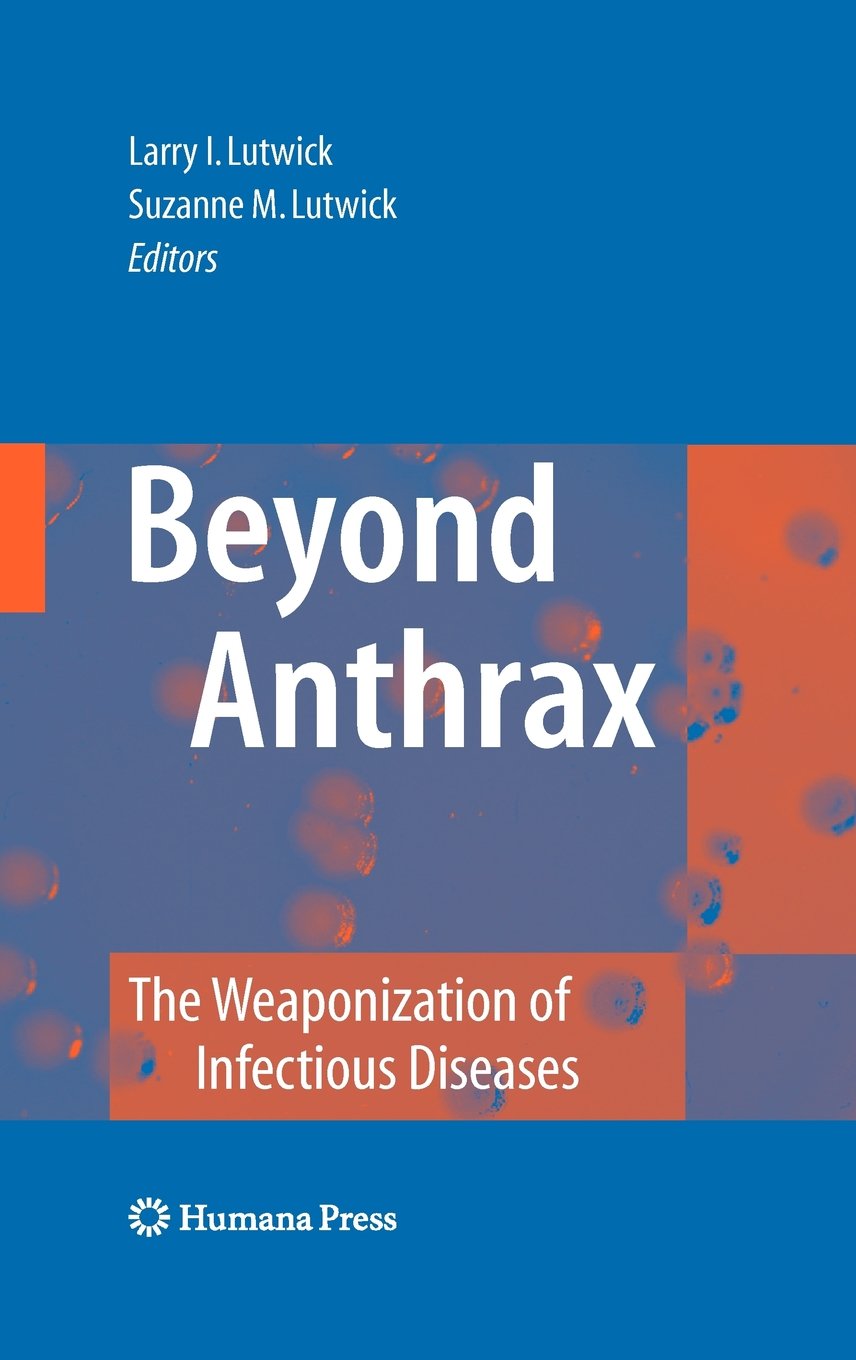
Beyond Anthrax(2) Modern militaries are no strangers to biowarfare either.  Both sides in the First World War experimented with chemical weapons, and although the US Army’s explicitly offensive Biological Warfare Weapons Laboratories closed in 1969 the commitment to ‘bio-defense’ and bio-security has ensured a continuing military investment in the weaponisation of infectious diseases (see right).  I don’t subscribe to the view that the Ebola epidemic in West Africa is the result of a rogue US biowarfare program – see for example the claims made by ‘Robert Wenzel’ here: and if you want to know why his name is in scare-quotes, appropriately enough, read Chris Becker‘s takedown here –  nor to the fear that what Scientific American calls ‘weaponised Ebola’ is poised to become a ‘bio-terror threat’.  But I do think it worth noting the work of the US Army Medical Research Institute of Infectious Diseases which has had field teams on the ground in West Africa since 2006, and the importance placed on surveillance and monitoring.

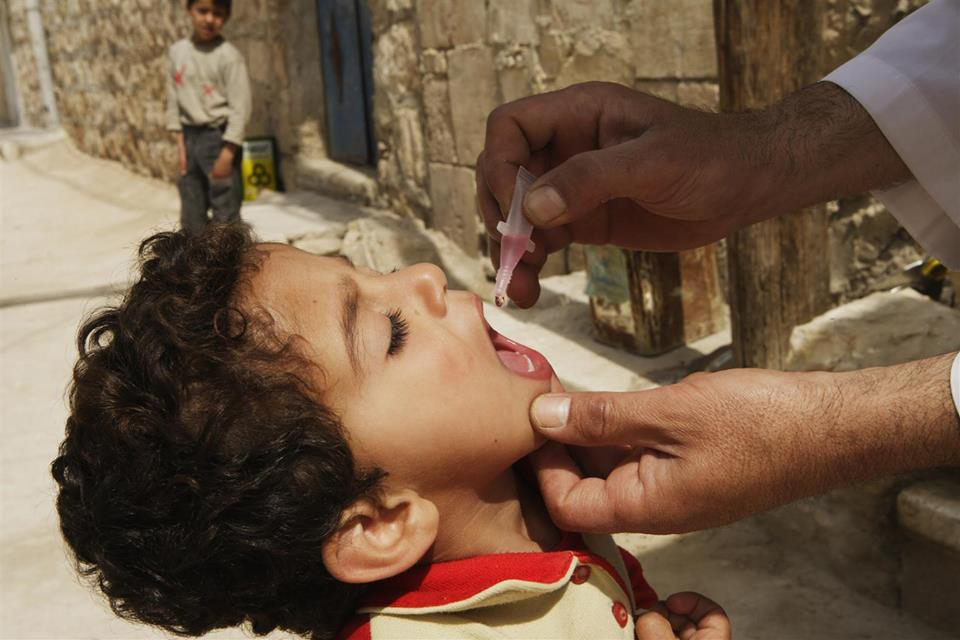
(3) I also think it’s necessary to think through the biopolitics of public health in relation to military and paramilitary violence.  This takes multiple forms.  It’s become dismally apparent that in many conflict zones hospitals, doctors and other health-care workers have become targets: in Gaza, to be sure, but in Syria and elsewhere too.  The treatment of disease has also become a tactical vector: think of the CIA’s use of polio vaccination campaigns as a cover for its intelligence operations and – the conjunction is imperative – the Taliban’s manipulation of polio vaccinations in Pakistan’s Federally Administered Tribal Areas.  Think, too, of the way in which the Assad regime has inflicted a resurgent, even counterinsurgent geography of polio on the Syrian people.  As Annie Sparrow shows (see also here):

‘This man-made outbreak is a consequence of the way that Syrian President Bashar al-Assad has chosen to fight the war—a war crime of truly epidemic proportions. Even before the uprising, in areas considered politically unsympathetic like Deir Ezzor, the government stopped maintaining sanitation and safe-water services, and began withholding routine immunizations for preventable childhood diseases. Once the war began, the government started ruthless attacks on civilians in opposition-held areas, forcing millions to seek refuge in filthy, crowded, and cold conditions. Compounding the problem are Assad’s ongoing attacks on doctors and the health care system, his besieging of cities, his obstruction of humanitarian aid, and his channeling of vaccines and other relief to pro-regime territory.

live-oral-polio-vaccine-syrian-children

Late this summer she provided this update:

‘… nearly all the cases of polio have occurred in areas of northern Syria under rebel control, where the government is seemingly doing everything in its power to prevent vaccination. The Syrian government has appealed to the UN for hundreds of medicines for areas of the country it controls, while largely ignoring the far more dire needs of opposition-held areas. Many children, especially newborns, still do not have access to polio immunization. Daily government airstrikes target the very health facilities that should be the foundation of vaccination efforts, as well as the children who should be protected from polio, measles, and other preventable childhood diseases. As Dr. Ammar, a doctor from Aleppo, said to me bitterly after an April 30 airstrike killed twenty-two schoolgirls, “The government’s polio control strategy for children is to kill them before they can get polio.”’

(4) Finally, biopolitics threads its way from the sub-national and the national to the trans-national and so to what Sara Davies calls, in a vitally important essay, ‘securitizing infectious disease‘. (The link will take you to an open access version, which was originally published in International affairs 84 (2008) 295-313; see also her ‘The international politics of disease reporting: towards post-Westphalianism?‘, International politics 49 (2012) 591-613, and the collection she has edited with Jeremy Youde, The politics of surveillance and response to disease outbreaks: the new frontier for states and non-state actors – due out next year).

who-logo1

In her original essay, Sara shows how powerful states in the global North joined forces with the World Health Organisation to construct infectious disease as an existential security threat that demanded new rules and protocols for its effective containment.  Crucially:

‘The outcome of this has been the development of international health cooperation mechanisms that place western fears of an outbreak reaching them above the prevention of such outbreaks in the first place. In turn, the desire of the WHO to assert its authority in the project of disease surveillance and containment has led it to develop global health mechanisms that primarily prioritizes the protection of western states from disease contagion.’

This has a genealogy as well as a geography (or what Alan Ingram once called a ‘geopolitics of disease’).  Peter Dörrie notes that on 18 September 2014 the U.N. Security Council declared the current Ebola outbreak in West Africa ‘a threat to international peace and security’, and that this was ‘the first time the U.N. had taken this step in a public health crisis‘ (in fact the Council had previously expressed similar concerns about the impact of HIV/AIDS on ‘stability and security’).  Under Chapter VII of the UN Charter this declaration has significant legal implications, as Jens David Ohlin notes here, but what most concerns Peter is how long it took for the Security Council to stir itself.  It issued its statement 180 days after the WHO confirmed the outbreak, and over a month after the WHO had declared Ebola a ‘Public Health Emergency of International Concern’, and in his eyes the international system ‘ignored the problem until it was too big for any solution other than full-scale military intervention.’   But I’ve already suggested, it’s wrong to treat the militarisation of epidemic disease as somehow new.  Of direct relevance to the present ‘war on Ebola’ is this passage from Sara’s essay:

The United States has been a keen participant in disease surveillance and response since the mid-1990s. The United States Department of Defense (US DoD) has had overseas infectious disease research laboratories located in over 20 countries for nearly ten years. The Global Emerging Infectious Surveillance and Response System (DoD-GEIS) mobile laboratories were set up for the purpose of ‘responding to outbreaks of epidemic, endemic and emergent diseases’, and their location in the DoD, as opposed to the United States Agency for International Development (USAID) or Centre for Disease Control (CDC) demonstrates how seriously the United States views the response to infectious disease as a key national security strategy.

So, four observations about the military-medical-security nexus that provide a context for the ‘war on Ebola’.  There are two other issues that should also be on the table before proceeding.

whitemansgravevi01rank_cover

The first involves the imaginative geographies circulating in the global North that (mis)inform public response to the epidemic.  Many of them can be traced back to colonial descriptions of the coast of nineteenth-century West Africa (and Sierra Leone in particular) as ‘the white man’s grave’, a form of what in a different context Dan Clayton calls a ‘militant tropically’.  The contemporary reactivation of these tropes is clearly a serious concern because it corrodes an effective political response.  As geographer Kerrie Thornhill writes,

African and diaspora scholars, already accustomed to the ‘thousand tiny paper cuts’ of casual racism, demonstrate how these (metaphorical) cuts escalate into real fatalities. Writers such as Nanjala Nyabola and Lola Okolosie point out the abundance of racist tropes depicting West African societies as inherently unclean, chaotic, uncooperative, ungrateful, and childlike. This racism reinforces a global culture of disregard for black African lives, and the perception that they are a source of social and biological contamination.

You can find much more on this in Cultural Anthropology‘s brilliant Ebola in Perspective series.

Health care systems in West Africa Economist

The second is the precarious condition of health care systems in West Africa (Ebola in Perspective is good on this too).  Brice de la Vigne, the operations director of MSF, reminds us that ‘both Sierra Leone and Liberia were at war ten years ago and all the infrastructure was destroyed. It’s the worst place on earth to have these epidemics.’  Other critics suggest that these uncivil wars were not the only culprits.  In their view, it was the neoliberal economic model forced on West Africa by the global North that was primarily responsible for gutting public health systems:

While years of war played a role in weakening public systems, it is the “war against people, driven by international financial institutions” that is largely responsible for decimating the public health care system, eroding wages and conditions for health care workers, and fueling the crisis sweeping West Africa today, says [Emira] Woods. “Over the past six months to a year there have been rolling health care worker strikes in country after country—Nigeria, Sierra Leone, and Liberia,” said Woods. “Nurses and doctors are risking and losing their lives but don’t have protective gear needed to serve patients and save their own lives. They are on the front lines and have not had their voices heard.”

ebola-full-banner-690x320-rev

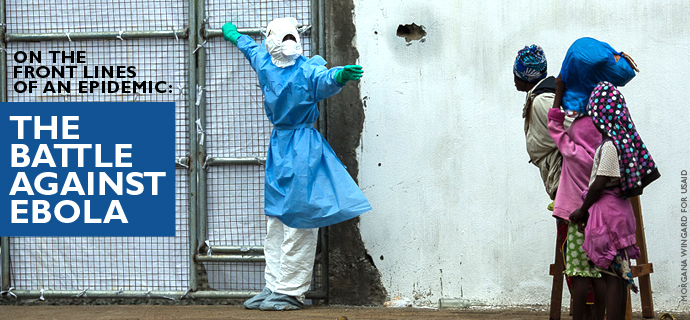
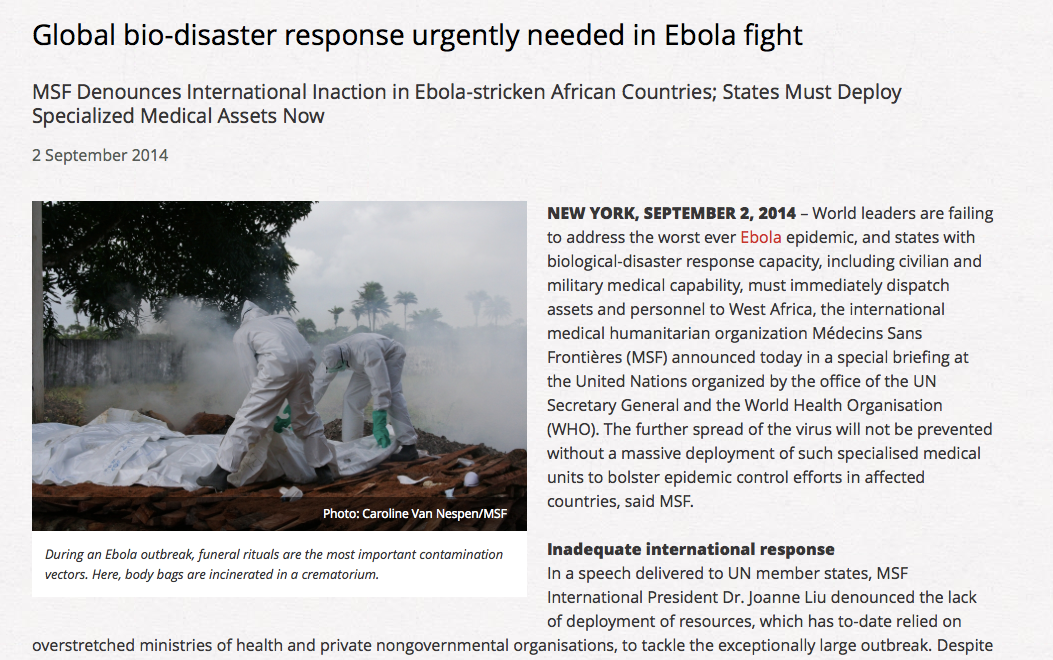
So – back to the front lines.  Despite the geopolitical-military-security back story, it was Médecins Sans Frontières that made the first public call (on 2 September) for military assistance in combatting Ebola.

‘States with biological-disaster response capacity, including civilian and military medical capability, must immediately dispatch assets and personnel to West Africa… 

‘Many countries possess biological threat response mechanisms. They can deploy trained civilian or military medical teams in a matter of days, in an organised fashion, and with a chain of command to assure high standards of safety and efficiency to support the affected countries…

‘In the immediate term, field hospitals with isolation wards must be scaled up, trained personnel must be dispatched, mobile laboratories must be deployed to improve diagnostics, air bridges must be established to move personnel and material to and within West Africa, and a regional network of field hospitals must be established to treat medical personnel with suspected or actual infections.’

MSF call 2 Sept 2014

Ten days later Peter Piot, the Director of the London School of Tropical Medicine and Hygiene and the microbiologist who helped identify the Ebola virus in 1976, also called for a ‘quasi-military intervention’.  Although he spoke about a ‘state of emergency’, he too wanted to reverse the response prefigured by Giorgio Agamben in such situations and contract the spaces of exception that were multiplying across West Africa.  He had in mind ‘beds, ambulances and trucks as well as an army of clinicians, doctors and nurses.’

What materialised was rather different.

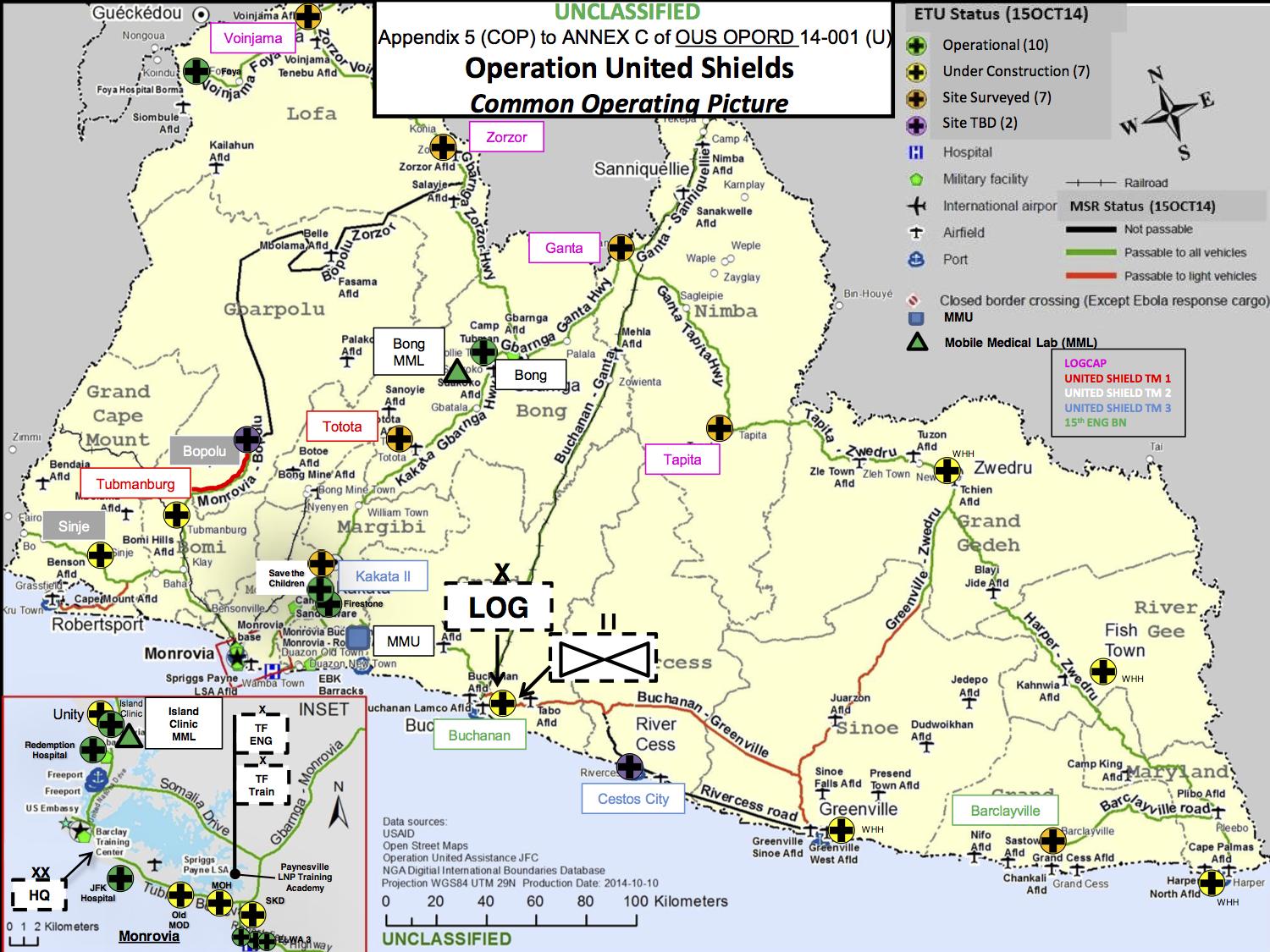
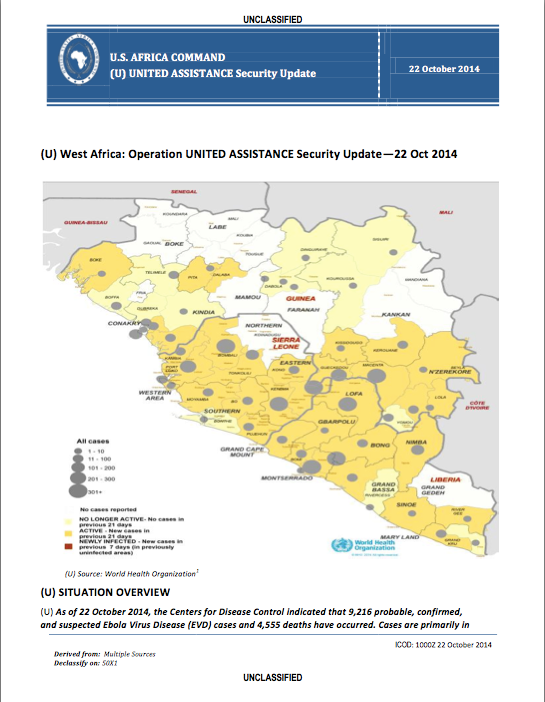
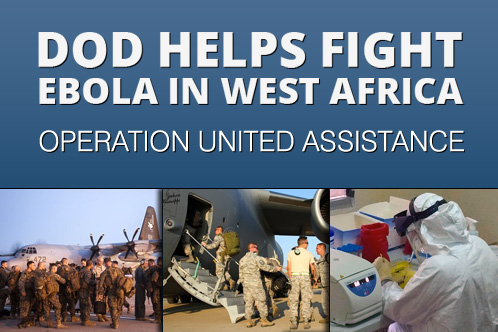
Africom_emblemOn 16 September President Obama flew to the Centers for Disease Control and Prevention in Atlanta to announce Operation United Assistance.  He committed 3-4,000 US troops and $750 million in defence funding to the mission, which is being orchestrated by US Africa Command (AFRICOM) through US Army Africa in concert with USAID.  The focus of the US military-medical mission is Liberia. There are close historical connections between the US and Liberia, which originally offered to host AFRICOM’s headquarters in the capital Monrovia; now a Joint Force Command has been set up there.  You can find the 75-page AFRICOM operational order here, dated 15 October 2014, from which I’ve taken the ‘common operating picture’ below.  The title puzzles me – the only ‘Operation United Shield’ (singular) I’ve been able to find was a multinational operation to evacuate peacekeeping forces from Somalia in 1995.  Appendix B is particularly worth reading, incidentally, because it identifies ‘the enemy’: ‘Ebola Virus Disease is the enemy, aided by poor preventive medicine practices in areas where EVD cases are prevalent and difficulties in identifying and treating EVD patients.’

USAFRICOM-EbolaResponseOPORD (dragged)

The US deployment is complemented by the deployment of UK forces to Sierra Leone (Operation Gritrock)and French forces to Guinea.  In both cases there are also close, colonial connections, and the British-led International Military Advisory Training Team Sierra Leone has been on the ground since 2000 (since last year this has been re-tasked as the International Security Advisory Team Sierra Leone).

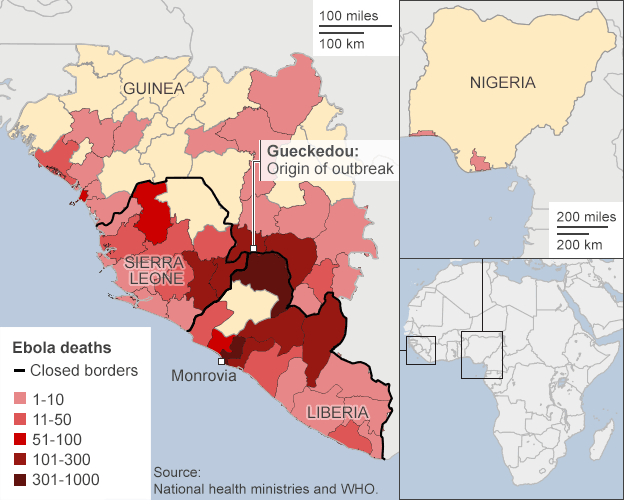
_78104874_ebola_detail_20140810_v2_624

(The map above is borrowed from the BBC; in addition, the Guardian has an interactive map tracing the historical geography of Ebola from the first known case in the Democratic Republic of Congo in 1976 to the present epidemic in West Africa here).

These forces differ in more than geographical deployment; their capabilities differ significantly too.  The UK is sending 750 troops, including contingents from the Royal Army Medical Corps (notably 22 Field Hospital), who will construct treatment centres (the aim is to add 700 beds to triple Sierra Leone’s existing capacity) and treat doctors and other health-care workers who contract the disease; they are supported by the Royal Navy’s ‘Primary Casualty Receiving Ship’ RFA Argus (which will provide a further 100 beds), and by another 780 volunteer health care staff.

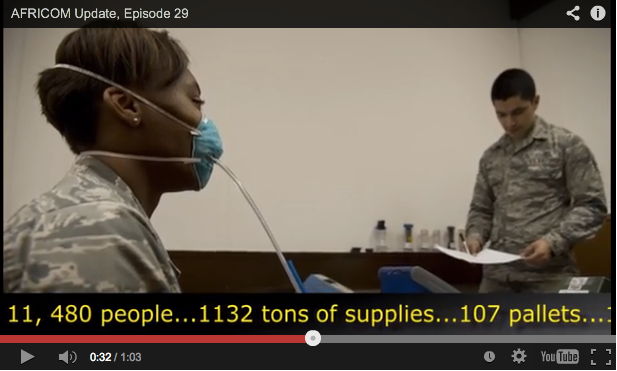
AFRICOM update 29

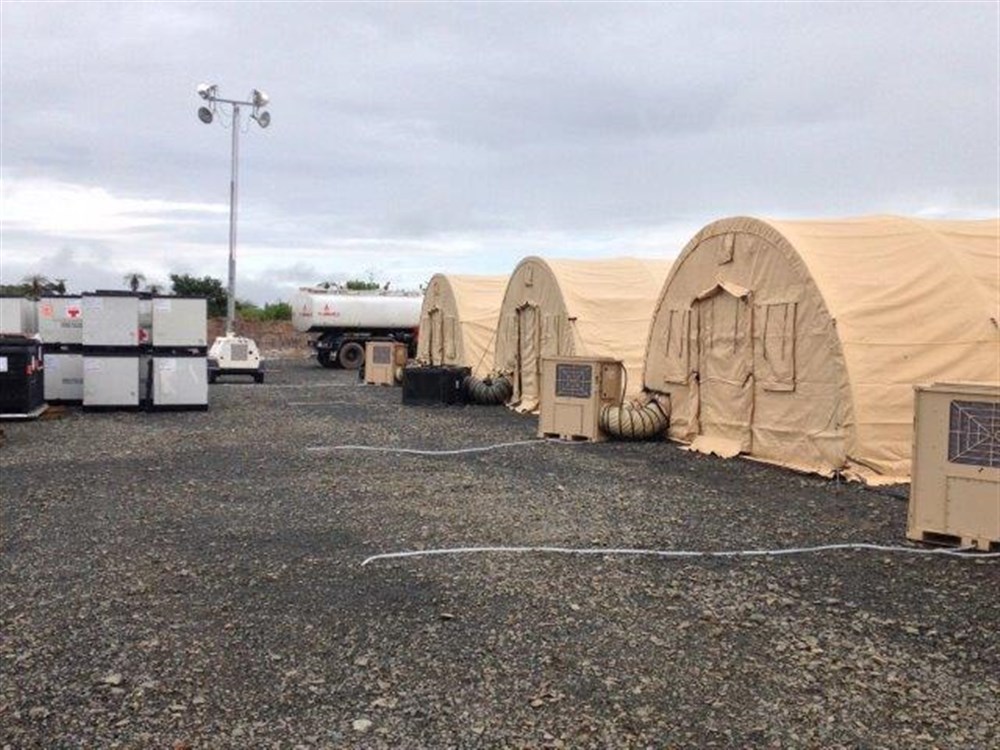
The US has mobilised troops from the 101st Airborne, whose primary mission is to set up 17 Ebola Treatment Units (each with 100 beds); meanwhile the US Air Force’s 633rd Medical Group is establishing a 25-bed Expeditionary Medical Support System field hospital for doctors and other health care workers who contract the disease (below).  The US Army has also fielded three mobile laboratories to test samples for the virus, reducing the time to diagnosis from days to hours. According to Pardis Sabeti, who leads viral-genome research at the Broad Institute of M.I.T. and Harvard, ‘the faster you can get a diagnosis of Ebola, the faster you can stop it.’

IMG_3884

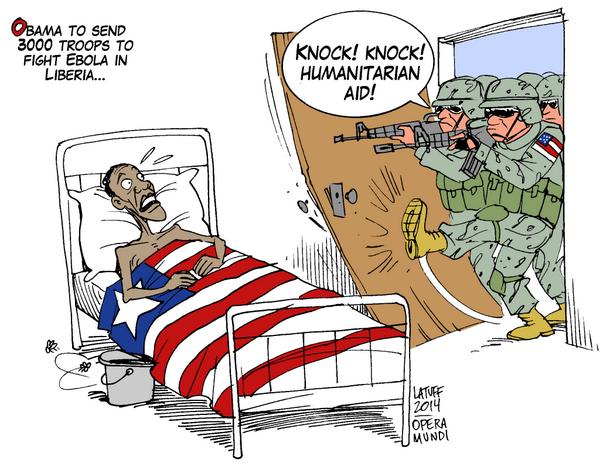
‘Our enemy is a disease’, declared Lt Col Brian De Santis, echoing AFRICOM’s operational order – but it was quickly made clear that the vast majority of troops will not come into contact with the enemy or any of its victims at all.  This is just as well; most of the soldiers have minimal medical training – just four hours from the US Army Medical Research Institute of Infectious Disease – and the Pentagon’s Press Secretary Rear Admiral John Kirby explained that there is ‘no intention right now that [troops] will interact with patients or be in areas where they would necessarily come into contact with patients’:

‘They’re not doctors. They’re not nurses. They’re not trained for that and not equipped for that. That’s not part of the mission. They will be kept in locations where they can do their jobs without coming into contact with patients.’

Andrew Bacevich thinks all this absurd:

‘It’s like the city that spends all its money to raise up a formidable police force only to discover that what it really needs is a bigger sewage treatment plant. Of course, you can always put cops to work burning human excrement but there are better — that is, more effective and cheaper — ways to solve the problem.’

In effect, this is another case of the military preferring remote operations.  Here is a telling passage from Sophie Arie’s interview with MSF’s president Joanne Liu:

‘“Countries are approaching this with the mindset of going to war,” she says. “Zero risk. Zero casualties.” Liu describes the current military efforts as the equivalent, in public health terms, of airstrikes without boots on the ground. Pledges of equipment and logistical support are helpful—“The military are the only body that can be deployed in the numbers needed now and that can organise things fast.” But there is still a massive shortage of qualified and trained medical staff on the ground. “You need to send people not stuff and get hands on, not try to do this remotely,” Liu says…’

The primary areas for military operations in the ‘war on Ebola’  to date are surveillance, logistics and containment.  I’ll consider each in turn.

Last week Public Intelligence released a series of weekly Security Updates and daily Intelligence Summaries produced by AFRICOM to support Operation United Assistance.  These rely largely on WHO reporting to track the spread of the disease.

USAFRICOM Ebola Security Oct 2014

This is to work at a highly aggregate level.  Most public health experts suggest that the key to stopping the spread of the disease is contact tracing – which, in its essentials, is the same methodology used by the military and the intelligence services to track individuals through terrorist and insurgent networks – and has been used successfully in both the United States and in Nigeria (which was declared free of Ebola on 20 October).  Ezra Klein describes it as ‘almost ludicrously simple’ and ‘as low-tech as medicine gets’, and so it is in principle.

But its application in much of West Africa is immensely difficult: the UN estimates that only 16 out of 44 zones have adequate procedures and personnel in place.  And since many local people are understandably fearful of the consequences of their answers, it is unlikely that military involvement would improve the situation.  Here is Elizabeth Cohen and John Bonifield:

‘People are often uncooperative with the tracers, sometimes even throwing stones at health care workers. They fear that they or their loved ones will be put in the hospital; they’ve seen firsthand that people who go there often don’t return.

“The community perceives this as a death sentence,” [Donald Thea, an infectious disease epidemiologist] said. “Relinquishing your loved one is tantamount to death.”

And health care workers have very little to offer people as an incentive to cooperate. “With smallpox, we could offer people a vaccine, a carrot in essence to induce them to be cooperative. With Ebola, we have nothing,” Thea said.’

hires_banner_ebola_498x332

Logistics is the area where the military comes into its own.  MSF had emphasised that its priorities included ‘the mass expansion of isolation centers, air bridges to move personnel and equipment to and within the most affected countries, mobile laboratories for testing and diagnosis, and building a regional network of field hospitals to treat suspected or infected medical personnel.’ Much of the military effort is currently concentrated in these areas, but the other side to mobilising medical personnel, equipment and testing and treatment facilities is, in effect, immobilising the population.

Containment runs the gamut from quarantine through curfews and lockdowns to border closures.  Most observers believe that border closures would be counter-productive: if you want to know why, see Debora MacKenzie‘s short essay here.  The other, seemingly lesser measures also have their dangers.  In its original call for assistance, MSF insisted that ‘any military assets and personnel deployed to the region should not be used for quarantine, containment, or crowd control measures’, and it emphasised that ‘forced quarantines have only bred fear and unrest, rather than stem the virus.’

But others have other ideas.  Major Matt Cavanaugh, from the US Army War College, has made an unofficial, back-of-the-envelope calculation of what a successful ‘containment strategy’ for Ebola would require.  He is adamant that only ‘boots on the ground’ could do the job, though the nature of that ‘job’ remains elusive in his account.  He talks about military logistics – the ability to ‘fix “the last mile” problem’ – but he also notes the need ‘to fill the basic state functions related to health, security, and public order in order to adequately respond to the threat.’  In case that triptych isn’t clear enough, in his subsequent ‘Ebola Manifesto‘ the major declares that ‘There is exactly one organization designed to rapidly hold and control territory and the people on it: the military.’ The figure he eventually arrives at – somewhere between 36,600 to 73,200 troops – is derived from the wars in Afghanistan and Iraq, and suggests that, for some commentators at least, the Ebola crisis is an opportunity to deepen AFRICOM’s investment in what Jan Bachmann calls ‘policing Africa’ [see his ‘Policing Africa: the US military and visions of crafting “good order”‘, Security Dialogue 45 (2) (2014) 119-36]:

‘The spectrum of [AFRICOM’s] activities can be understood most comprehensively through an analytical perspective of policing, in which the aim of establishing ‘good order’ through an expansive regulatory engagement in issues of welfare is applied to contexts of ‘fragile’ statehood and ‘ungoverned spaces’.’

This is not a uniquely American view.  The Daily Mail (where else?) reports that one of the options being considered by Britain’s Chief of the General Staff is a full-scale military lockdown of Sierra Leone:

‘From a military perspective ebola is like a biological warfare attack and should be countered accordingly. There needs to be a clampdown on human movement inside Sierra Leone and possibly to and from the country between now and late 2015 when it is hoped that an antidote will have been developed.’

ByKlg1IIEAAmBwnIt’s hard to know how much credence this should be given, of course, though the very existence of proposals like these suggests that the ‘soft power’ which Joeva Rock sees in the militarisation of Ebola conceals an iron fist.  And Niles Williamson believes that the military-medical missions are a smokescreen:

‘The main purpose of this military operation is not to halt the spread of Ebola or restore health to those that have been infected. Rather the United States is seeking to exploit the crisis to establish a firm footing on the African continent for AFRICOM.’

That may be one of the objectives, but I think it’s a bridge too far to claim it as the main purpose: as I’ve tried to show, the militarisation and securitisation of Ebola has many other geopolitical and biopolitical dimensions.  And Nick Turse has revealed that AFRICOM, far from having a ‘light footprint’, has already achieved a remarkably rapid tempo of operations across the whole continent.

Still, even in its less extreme versions, the ‘war on Ebola’ clearly raises urgent questions about the militarisation of humanitarian aid, about what Kristin Bergtora Sandvik  calls a ‘crisis of humanitarian governance’, and about the violence that is involved in the production of the humanitarian present.


War and demise

Tanisha Fazal has an important article in the latest International Security: ‘Dead wrong? Battle deaths, military medicine and exaggerated reports of war’s demise.’

It is, in part, an artful response to what must surely seem the increasingly astonishing claim that we live in a time of unprecedented peace.  It depends, in part, on who ‘we’ are, of course, but the general thesis has been shouted from the rooftops by (for example) Joshua Goldstein‘s Winning the war on war (2011) and Steven Pinker‘s The better angels of our nature (2011).  Pinker’s thesis is the more general, to be sure: he claims a decline in ‘violence’ in general, not only in military and paramilitary violence.

StevenPinker

Tanisha’s argument hinges on the reliance on ‘battle deaths’ as an index of the incidence of war; these statistics are a minefield of their own, though they are used by most of the major databases, but Tanisha argues that many contemporary wars have been distinguished by a diminution in battle deaths and a marked increase in the numbers of wounded who now survive injuries that would previously have killed them.

She identifies four key changes.  The first two are pre-emptive: soldiers in advanced militaries are now healthier, and so they  can survive disease and injury much better than in the past, and they are equipped with protective equipment that reduces their vulnerability (she’s thinking here not only of MRAPs but more particularly of personal equipment that affords the head and trunk some protection against blast injuries).

scr_110506-D-6767M-002

The second two are reactive, and their emphasis on military medicine and evacuation chains intersects directly with my present research on combat casualty care 1914-2014 (see here and here).  From Tanisha’s summary over at Political violence @ a Glance:

‘… battlefield medicine itself has improved via the availability of anesthetics and antibiotics, which make for more effective surgeries as well as a greater likelihood of avoiding or surviving post-operative infections. Similarly, the return of the tourniquet as part of a general focus on hemostatics appears to have dramatically reduced the percentage of soldiers dying from preventable blood loss.

‘… military evacuation practices have gone from soldiers laying on the ground for weeks waiting for transport by stretchers to mechanized ambulances to medevac helicopters. States invest heavily in military transport for this purpose today; NGOs like the ICRC, however, were at the vanguard of this particular shift.’

Medevac

That last sentence raises a series of other, crucial questions that I’m also trying to address in my own project: not only the involvement of civilian/humanitarian organisations (and here I’m presently exploring the role of the Friends Ambulance Service on the Western Front in the First World War and in the Western Desert in the Second) but also the part played by militaries in caring for civilian casualties.  How far have they enjoyed the benefits of improved military medicine and trauma care, and how far down the evacuation chain do they move before they are diverted to (often less advanced) civilian hospitals and clinics?

MAP and the meat-grinder

I’ve updated my previous posts on the medical geographies of Gaza several times (see herehere and here), and I’ve drawn on the testimony of Dr Mads Gilbert in extenso, but this testimony from another brave volunteer doctor deserves its own notice.

I met Ghassan Abu Sitta at a wonderful workshop in Paris in December 2012 on War and Medicine, and I learned so much from that one meeting (from everyone there: see my note about War and therapeutic geographies) that I was inspired to develop my own research project on the medical evacuation of casualties from war zones, 1914-2014.

Ghassan Abu Sitta

Ghassan is a reconstructive surgeon who used to work at Great Ormond Street in London but is now based in Beirut.  He’s recently returned from Gaza where he worked as a Medical Aid for Palestinians (MAP) volunteer at al Shifa hospital carrying out five, six and sometimes seven surgeries a day.

You can read some of the background in this excellent report by Robert Tait for Britain’s Telegraph, published ten days ago and from which I’ve borrowed the photograph above, but Ghassan has just been interviewed in depth by Yazan al-Saadi for Al Akhbar; you can read the full version here.

Ghassan says the attack on Gaza was like ‘a meat-grinder’, which he attributes to:

The amount of ordinance that the Israelis fired, the indiscriminate use of these bombs that are capable of bringing down whole buildings, the use of artillery shelling which is indiscriminate because the shell will hit the first thing it reaches, the fact that they were attacking from the air, from the sea, and by land with artillery at the same time. And there was a night they were doing this and then they lit all of Gaza’s sky with these flares just so people will know that this is what’s happening.

He also provides compelling testimony of his experience at al-Shifa, the main trauma centre for Gaza, that adds important detail to the accounts I’ve noted previously:

‘It looked like a refugee camp. The campus of the hospital has a lot of the families that escaped the bombing or lost their houses and they were living inside the walls of the hospital. Everywhere you go you see makeshift dwellings made out of laundry lines and bed sheeting turned into tents. And the hospital was completely full. Single rooms had four beds in them. In some wards we had two patients per bed.

‘The difference between this conflict and the one before is that nobody was allowing the patients out. So you had 7,000 injured – at the time I was there it was 6,000 and by the time the conflict ended the injured were 10,000. An overwhelming majority have still not been able to get out of Gaza. There have been some numbers, but not significant numbers to break the back of this problem….

‘The contingency plans were that all diesel was kept for the al-Shifa Hospital, so people did not have electricity at home, they would donate the diesel to the hospital. The wells that supply Shifa, like the rest of the water in Gaza, had become so contaminated with sea water, it’s salty. People do the best with what they have….

‘… the majority of the killing was happening because they were dropping ammunition designed to penetrate mountain caves. [The Israelis] were dropping them on civilian dwellings made out of breeze block. And so these four or five storey buildings were being pulverized by these one-ton bombs. That was what was wiping out whole families. And in Gaza, because land is so much in shortage, people come along and build their house, they build enough foundations that when their kids grow up, they can build a floor on top. So when you take out a four storey building, you take out four generations of a family. That was what happened to, I think, 60 families that have been completely wiped out…

The graphic below shows 26 members of just one extended family, the Abu Jame family, killed at home in Bani Suheila on 20 July; it comes from a sequence that is shockingly far too large to reproduce here, compiled by B’Tselem and available here. The infographic lists ‘members of families killed in their homes in 59 incidents of bombing or shelling’ in which 458 people were killed, including 108 women under the age of 60, 214 minors, and 18 people over the age of 60.  If you follow the link, you can hover over each image for the names and ages of those killed.

abu_jame3

Ghassan continues:

‘… they started inventing these humanitarian ceasefires, where people would go out and they would start killing them. We had this on the day of Eid, they said there was a humanitarian ceasefire and the kids went out to a local fair ground and they bombed them. The other time was in al-Shujayeh market, there was a humanitarian ceasefire, they got them into the market, they killed them, then they waited for the ambulances to get there, and then they shelled the ambulances again.

‘So the issue isn’t the type of weapons, but the intent to kill. The amount of ordinance they used and the tonnage of the bombs they used were intended to wipe out whole neighborhoods. That’s what they have done. They have completely wiped out Shejayeh, they wiped out Khuza’a, they wiped out a big part of Rafah, a big part of Khan Younes, and parts of Beit Hanoun….

‘ All the areas around the hospital were being bombed all the time. You would hear it. We heard something we knew it was close, but didn’t know how close it was. We then got a call to the emergency room and we were told that the administration and the out patients building had been hit – a lot of families had taken refuge in that area – so we had to go and help.’

Asked directly whether Hamas or other factions were firing rockets from the vicinity of the hospital, Ghassan is unequivocal:

‘Around Shifa? No, no, no. But in other places you would see them in the sky or hear them. You would learn to distinguish the whoosh of the rocket. Gaza is so small and so flat, I mean you are not going to hide them in the mountains or the jungle because there are no mountains or jungle. People are literally on top of each other. It’s going to happen. But around the hospital there were none.’

Destructive Edge

In a previous post on ‘The Death Zone‘, I suggested readers compare Israel’s extended ‘buffer zone’ in Gaza by following the line of the main highway, Saladin Street.  Hugh Naylor has followed that route on the ground – what he calls ‘Desolation Road’ – and his report is accompanied by an interactive map showing some of the vast panorama of destruction:

Screen Shot 2014-08-08 at 10.01.01

I’ll have more to say about the caption – about the Israeli military’s targeting in Gaza – shortly.  The Guardian has just published a graphic by Nadja Popovich showing the UNRWA-run schools sheltering refugees (many of them from the expanded ‘buffer zone’) that were struck by the Israeli military:

Gaza schools hit by Israeli military

 Amnesty International reports growing evidence that health facilities and workers were deliberately targeted by the Israeli military:

Testimonies from doctors, nurses, and ambulance workers who have spoken to Amnesty International paint a disturbing picture of hospitals and health professionals coming under attack by the Israeli army in the Gaza Strip, where at least six medics have been killed. There is growing evidence that health facilities or professionals have been targeted in some cases.

Since Israel launched Operation “Protective Edge” on 8 July, the Gaza Strip has been under intensive bombardment from the air, land and sea, severely affecting the civilian population there. As of 5 August, according to the UN Office for the Coordination of Humanitarian Affairs, 1,814 Palestinians had been killed in the Gaza Strip, 86 per cent of them civilians. More than 9,400 people have been injured, many of them seriously. An estimated 485,000 people across the Gaza Strip have been displaced, and many of them are taking refuge in hospitals and schools.

Amnesty International has received reports that the Israeli army has repeatedly fired at clearly marked ambulances with flashing emergency lights and paramedics wearing recognizable fluorescent vests while carrying out their duties. According to the Palestinian Ministry of Health, at least six ambulance workers, and at least 13 other aid workers, have been killed as they attempted to rescue the wounded and collect the dead. At least 49 doctors, nurses and paramedics have been injured by such attacks; at least 33 other aid workers were also injured. At least five hospitals and 34 clinics have been forced to shut down due to damage from Israeli fire or continuing hostilities in the immediate area.

Hospitals across the Gaza Strip suffer from fuel and power shortages (worsened by the Israeli attack on Gaza’s only power plant on 29 July), inadequate water supply, and shortages of essential drugs and medical equipment. The situation was acute before the current hostilities, due to Israel’s seven-year blockade of Gaza, but have been seriously exacerbated since…

Amnesty International is aware of reports that Palestinian armed groups have fired indiscriminate rockets from near hospitals or health facilities, or otherwise used these facilities or areas for military purposes. Amnesty International has not been able to confirm any of these reports. While the use of medical facilities for military purposes is a severe violation of international humanitarian law, hospitals, ambulances and medical facilities are protected and their civilian status must be presumed. Israeli attacks near such facilities – like all other attacks during the hostilities – must comply with all relevant rules of international humanitarian law, including the obligation to distinguish between civilians and civilian objects and military targets, the obligation that attacks must be proportional and the obligation to give effective warning. Hospitals and medical facilities must never be forced to evacuate patients under fire.

20140801_ambulance_520

The report includes detailed testimony from Palestinian paramedics and ambulance crews who describe the extraordinary difficulty and danger they faced in attending to casualties from Israeli shelling (see also my post on ‘Gaza 101‘, the emergency number for Gaza, and the update here).  Not surprisingly, Israel has rejected Amnesty’s claims and denied targeting hospitals, but when Netanyahu’s spokesperson, Mark Regev, explained that ‘What we’ve had to do on a number of occasions is to hit terrorist targets in the immediate vicinity of hospitals and things like that, where they’ve abused them,’ he failed to address the violations of international law summarised in the last paragraph above.

There’s more.  B’Tselem, now back on line, is also providing detailed testimony from Gaza, including (so far) two ambulance drivers, Rami ‘Abd al-Haj ‘Ali and Ahmad Sabah.  Here is an extract from the first statement (all testimonies are linked to B’Tselem’s interactive map):

B'Tselem map Beit HanounOn Friday afternoon, 25 July 2014, I was working at the medical emergency call center in Beit Hanoun. At around 4:30 P.M., we received a call reporting injured people in al-Masriyin Street in Beit Hanoun. We asked the International Red Cross to coordinate our going there. About 15 minutes after we received the call, we got authorization and an ambulance headed over there with paramedics ‘Aaed al-Bura’i, 25, Hatem Shahin, 38, and driver Jawad Bdeir, 52. The team didn’t make it to the wounded people. Soon after they reached the street, they reported back that a tank had fired at them and they were injured. They asked for another team to come and rescue them.

The call center coordinated the arrival of another team with the International Red Cross and got authorization to go rescue the injured team. I drove the second ambulance, and there were two medics with me – Muhammad Harb, 31, and Yusri al-Masri, 54. The street is only about 200-300 meters from the call center, so we were there within minutes. When we reached the entrance to the street, we were surprised to see three tanks and a military bulldozer in the street, about 100 meters away.

Suddenly, with no warning, they opened heavy machine-gun fire at us. The bullets penetrated the ambulance. I tried to turn the ambulance around to get out of there, but the steering wheel must have been hit. Suddenly, I felt sharp pain in my leg and realized I’d been hit by a bullet or shrapnel. Then the windshield shattered. Because I couldn’t turn the ambulance around, I decided to try reversing. They kept firing as I backed up, until we got far enough away. When they stopped, I managed to turn us around and head back to the center.

On the way there we met Hatem Shahin, one of the paramedics from the first ambulance. He’d been hit by shrapnel in his shoulder and leg. He told us that a shell fired from a tank had hit the front part of the ambulance. He said he’d managed to get away but the other paramedic, ‘Aaed, had been hit. He told us that after he ran away from there, he saw the tank fire another shell at the ambulance, completely destroying it. He thought ‘Aaed must have been killed, but we didn’t know for sure.

The next day, on Saturday, a ceasefire was declared from 8:00 A.M. to 8:00 P.M. An ambulance team went to the spot and found ‘Aaed’s body in the burnt ambulance.

To put all of this in context, the BBC has mapped the deaths of 1,890 Palestinians – ‘mostly civilians’, as its accompanying chart shows – killed during the Israeli offensive to 6 August.  As you can see, Palestinians were killed ‘right across Gaza’ – not only in the expanded buffer zone shown on the map, though the carnage in Beit Hanoun and Shejaiya is clearly visible – with high concentrations also produced in the killing grounds of Gaza City and Khan Younis:

w640

Finally, in case you’re puzzled by the title for this post: Israel’s attack on Gaza is codenamed Tzuk Eitan in Hebrew, meaning ‘Firm Cliff’ or ‘Resolute Cliff’.  According to Yagiv Levy, ‘The operation’s name signals the power, commitment and resilience of the Israeli people.’  But the official English-language version, ‘Protective Edge’, was changed ‘to give it a more defensive connotation’ (really). As Steven Poole explains, ‘the bombing was supposedly “protective”, though not of those bombed’. All of this is of course in line with the designation of the Israeli military as the ‘Israeli Defence Forces’.

I decided I’d prefer to use a version that provides a more accurate rendering of what has happened – in Hebrew, English or Arabic.