Bodies of violence

wilcox-bodies-of-violence

I’m finally working my way through Lauren Wilcox‘s impressive Bodies of Violence (see my earlier notice here), both to develop my ideas about corpography in general (see here, here and here) and to think through her arguments about drones in particular (in the penultimate chapter, ‘Body counts: the politics of embodiment in precision warfare’).

More on both later, but in the meantime there’s an extremely interesting symposium on the book over at The Disorder of Things that went on for most of last month.  I’ll paste some extracts below to give a flavour of the discussion, which is well worth reading in its entirety.

Lauren Wilcox on ‘Bodies of Violence: Theorizing embodied subjects in International Relations’.

[W]hile war is actually inflicted on bodies, or bodies are explicitly protected, there is a lack of attention to the embodied dynamics of war and security…. I focus on Judith Butler’s work, in conversation with other theorists such as Julia Kristeva, Donna Haraway and Katherine Hayles. I argue, as have others, that there is continuity between her works on “Gender” from Gender Trouble and Bodies that Matter and her more explicitly ethical and political works such as Precarious Life and Frames of War. A central feature of Butler’s concept of bodily precarity is that our bodies are formed in and through violence….
My book makes three interrelated arguments:

First, contemporary practices of violence necessitate a different conception of the subject as embodied. Understanding the dynamics of violence means that our conceptual frameworks cannot remain ‘disembodied’. My work builds on feminist and biopolitical perspectives that make the question of embodiment central to interrogating power and violence.

Second, taking the embodied subject seriously entails conceptualizing the subject as ontologically precarious, whose body is not given by nature but formed through politics and who is not naturally bounded or separated from others. Feminist theory in particular offers keen insights for thinking about our bodies as both produced by politics as well as productive of [politics].

Third, theorizing the embodied subject in this way requires violence to be considered not only destructive, but also productive in its ability to re-make subjects and our political worlds.

Antoine Bousquet on ‘Secular bodies of pain and the posthuman martial corps

[I]t increasingly appears that the attribution of rights is made to hinge on the recognition of their putative holder’s ability to feel pain, even where this might breach the species barrier or concern liminal states of human existence. As such, any future proponents of robot rights may well have to demonstrate less the sentient character of such machines than their sensitivity to pain (of course, it may well turn out that one entails the other). In relation to Bodies of Violence, if we are indeed to take the liberal conception of pain as purely negative as limiting (and we should perhaps not be too hastily dismissive of the moral and societal progresses that can be attributed to it), how does the recognition of ‘vulnerable bodies’ advocated by Wilcox depart from such an understanding? Is it simply a call for dismantling the asymmetries that render the pain of certain subjects less acknowledgeable than others or does it propose to actually restore a ‘positivity’ to suffering within a post-Christian worldview?…

[A]s our knowledge of the human as an object of scientific study grows, our conception of the human as a unitary and stable entity becomes increasingly untenable, incrementally dissipating into a much broader continuum of being to be brought under the ambit of control. But where does such an expanded framing of human life leave the ‘normative model of the body’ as ‘an adult, young, healthy, male, cisgendered, and non-racially marked body’ (p.51) from which all minoritarian deviations are to be variously silenced, regulated and policed? Does the technicist efficiency-driven mobilisation of human life not corrode those normative hierarchies that do not contribute to or might even impede such a process? As Wilcox notes, the traditional investment of masculinist values in the military institution is unsettled when ‘the precision bomber or drone operator is seen as a “de-gendered” or “post-gendered” subject, in which it does not matter whether the pilot or operator is a male or female’ (p.135). Indeed, there seems to be no inherent reason why any number of deviations from the normative body would be an obstacle to their integration into the assemblage of military drones, to stay with that example. One can even conceive of cases where they could be beneficial – might not certain ‘disabilities’ offer particularly propitious terrain for the successful grafting of cybernetic prosthetics? In this context, corporeal plasticity and ontological porosity seem less like the adversaries of posthuman martiality than its necessary enablers.

Kevin McSorley on ‘Violence, norms and embodiment

[W]hat sense there might be any particular limits to the explanatory value of the key sensitising theoretical framework of embodied performativity and ‘normative violence’ that is deployed across all the numerous case studies considered here. Notwithstanding the supplementary engagement in certain chapters with further vocabularies of e.g. abjection or the posthuman to problematize bodily boundaries, the social embodiment of violent norms is really the major theoretical underpinning of all of the analyses undertaken in each of the five different case studies selected for interpretation. My sense was that Bodies of Violence was primarily concerned with establishing broad proof of concept that such theoretical deployment could work rather than engaging with detailed questions about the potential limits of its conceptual purchase and differences in explanatory value across the five varied case studies. The analyses undertaken propose if anything a near-universal analytic utility for the conceptual framework deployed in that there is a consistent interpretation that underlying normative violences operate within each of the different case studies. Additional comparative analysis, that specifically highlighted and attempted to think through where and why the interpretative framework might be especially productive, or indeed where and why it might feel less resonant and begin to break down, may potentially be insightful for further theoretical elaboration….

[W]hat might happen if the many embodied subjects theorised were able to more consistently speak back to theory, if their feelings and desires were more enfleshed in the analysis[?] Would the stability of this conceptual grid of intelligibility remain intact and unmoved if such encounters and dialogues were able to be staged, if the complex emotions and meaning-worlds of those socially embodied subjects actively negotiating normative violences could have a more audible place in the analysis?

Alison Howell on ‘Bodies, and Violence: Thinking with and beyond feminist IR

Can a theory rooted in a singular concept of ‘the body’ take full account of difference? Can it register the diverse ways in which different bodies become subject to and constituted through power and violence, or management and governance?

Wilcox does amply illustrate that there is no such unitary thing as ‘the body’… [but] there are long-standing traditions of theorizing embodiment and de-naturalizing ‘the body’ in anti-racist, postcolonial, and disability scholarship. These critical traditions should not be subsumed under the category of feminist scholarship, though they do certainly engage with feminist theory, often critically. They make unique contributions to theorizing embodiment, often through intersectional analyses.

Bodies of Violence does take up many texts from these traditions, but, for instance makes use of Margrit Shildrick’s and Jasbir Puar’s earlier work on the body, without also contemplating each of their more recent work on disability and debility…. A second line of inquiry a renewed focus on embodiment potentially suggests might center around the as-yet unmet potential for studying the role of medicine in IR. The sine qua non of medicine is, after all, the body, and if embodiment is important in the study of IR, then we should also be studying that system of knowledge and practice that has taken for itself authoritative dominion over bodies and that does the kind of productive work in relation to embodiment that Wilcox is interested in illuminating.  As with disability studies, there is a significant literature, in this case emanating out of medical anthropology, medical sociology, bio-ethics and history of medicine….

But what of the book’s other titular concept: violence?  Bodies of Violence suggests that to study embodiment is also to study violence. Yet violence is a concept and not merely a bare fact: ‘violence’ is a way of making sense and grouping together a number of practices….

Butler’s work has been central to de-essentializing both sex and gender, thus undermining radical feminist theories of violence that ascribe peacefulness to women and violence to men.Yet Butler’s work is less useful as a tool for excavating the particularly racist and Eurocentric forms that radical feminist thought on violence has taken. Instead, we might look towards Audre Lorde’s debates with Mary Daly, and to the succeeding traditions of anti-racist feminist thought.

Pablo K [Paul Kirby] on ‘Bodies, what matter?

Thinking about the value of bodies draws us into a contemplation of human life and its treatment. Which is why the mere act of recognising bodies can seem tantamount to calling for the preservation and celebration of life. Drawing attention to bodies to highlight an equality of concern due to those who have otherwise been rendered invisible is itself to engage in materialisation, making those bodies matter in a different way. It is a way to turn bodies (which are, on the whole, visible to us) into persons (entities with value and meaning which we may not recognise). And yet the body – precisely because it is inescapable and ubiquitous – is also evasive, and the form of its mattering elusive.

For Judith Butler, ‘mattering’ is the conjoined process of materialisation (suggestive of the way bodies are produced or come into being) and meaning (how bodies are recognised and invested with worth). The stress in contemporaneous and subsequent work on material-isation (on matter-ing) is thus intended to signal a break with ideas of matter as simply there, as idle or inert, and therefore as a kind of brute fact which is inescapable or consistent in its ahistorical role. Thus we are pushed to examine not the characteristics of matter, but the historical process of mattering; not the innate sex that simply bears gender constructions, but the moments which seemed to establish bodies (or body parts) as prior to the sign system which names them. The point is well taken, and has consequences for a theory of embodiment…

And so what is needed is a deeper excavation of the form, degree and value of mattering.

For the so-called new materialists, such a theory means attributing a certain agency to bodily substance (genetics, morphology, neural pathways, flesh itself). As Karen Barad has insisted:

any robust theory of the materialization of bodies would necessarily take account of how the body’s materiality – for example its anatomy and physiology – and other material forces actively matter to the process of materialization.

This is importantly different to saying that political regimes interpret and work bodies in distinct ways. In Bodies of Violence, despite the emphasis on how bodies produce politics, it is mainly politics that produces bodies. Or better, politics that intervenes on and shapes bodies.

Lauren Wilcox, ‘Theorizing embodiment and making bodies “matter“‘

Viewfinders

Hiroshima

Two short, accessible essays on bombing that appeared in the New York Times recently; they resonate with my work on the genealogies and geographies of aerial violence, and they are both beautifully composed and immensely suggestive.

First, Teju Cole on ‘The Unquiet Sky‘:

A view from a great height is irresistible. It is twinned with the ancient dream of flight. For millenniums, we have imaginatively soared above our material circumstances and dramatized this desire in tales from Icarus to Superman. Things look different from way up there. What was invisible before becomes visible: how one part of the landscape relates to another, how nature and infrastructure unfold. But with the acquisition of this panoptic view comes the loss of much that could be seen at close range. The face of the beloved is but one invisible detail among many.

The essay closes with a reflection on two aerial photographic projects, the collection of drone-shot images exhibited at Dronestagram and James Bridle‘s reconstruction of drone-strike imagery at Dronestagram:

The two Dronestagrams, the sanguine and the melancholic, add to our ever increasing archive of possible landscapes. Imagine all those pictures stitched together into a single image. In this ideal aerial view, neither the pervasive violence nor the sometimes cloying prettiness would be visible. Conquest and sentimentality would both be irrelevant. In other words, the image might be like the ‘‘blue marble’’ photograph of Earth, taken from the Apollo 17 spacecraft in 1972. It is our world, serene and self-contained, seen in one glance. It is not a view that excites us into plans for bombing our enemies, for it includes us as well. It is a view that reminds us of how mighty we are, how fragile, how delicately connected and how beautiful.

Actually, I don’t see the ‘blue marble’ photograph in that way at all: as I argued in Geographical Imaginations, this is the global North inspecting the global South (it was, after all, shot from a NASA platform).  But Teju’s penultimate sentence is key, and it intersects with thoughts suggested by the second essay.

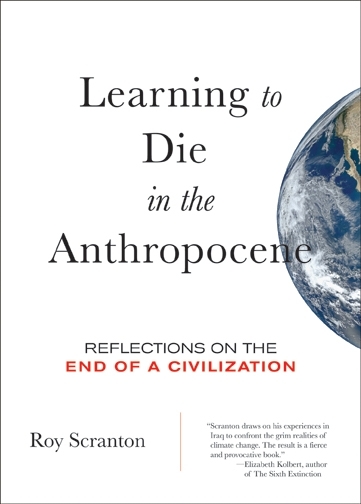
87286100064510LSecond, then, Paul Saint-Amour‘s ‘Waiting for the bomb to drop‘.  Spiralling through some of my favourite authors, Paul ends with a reflection on Roy Scranton‘s ‘Learning how to die in the Anthropocene‘ (see here and here too), which he suggests may be the equivalent of Virginia Woolf‘s ‘“Thoughts on Peace in an Air Raid” for our day’:

[I]n scaling up from one person to all humanity, we pass through a middle range — the social and political, Woolf’s home turf — where both connections and distinctions between people come into play. Yes, we are all at risk in climate change. But like our exposure to military violence, that risk is distributed unevenly. It falls disproportionately on those with the least protection from extreme weather, rising sea levels, hunger, drought, disease, displacement and the conflicts that can arise from all of these. Simply put, it falls most heavily on the poor.

With philosophy’s help, I am prepared to tell myself, “I must learn how to die.” I may even be ready to say to humanity, “We as a species must learn how to die.” But it is a different thing altogether to say to another person, “Because of how I live, or because of actions undertaken in my name, you need to learn how to die more than I do. And you must bear, more than I do, the cognitive and emotional burdens of a life lived in the shadow of imminent death.” This is what the rich are saying every day to the poor. It’s what whites in the United States and elsewhere are saying every day to people of color. It’s what citizens of drone states are saying to those a hemisphere away, under the drones.

Warning: Graphic Content

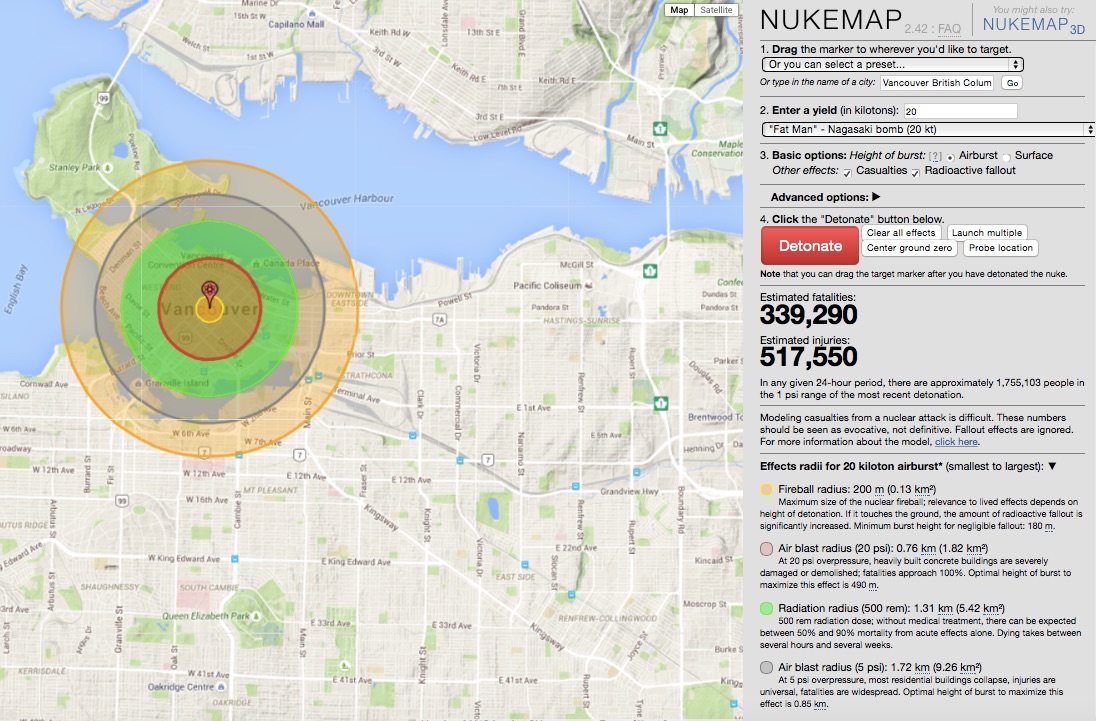
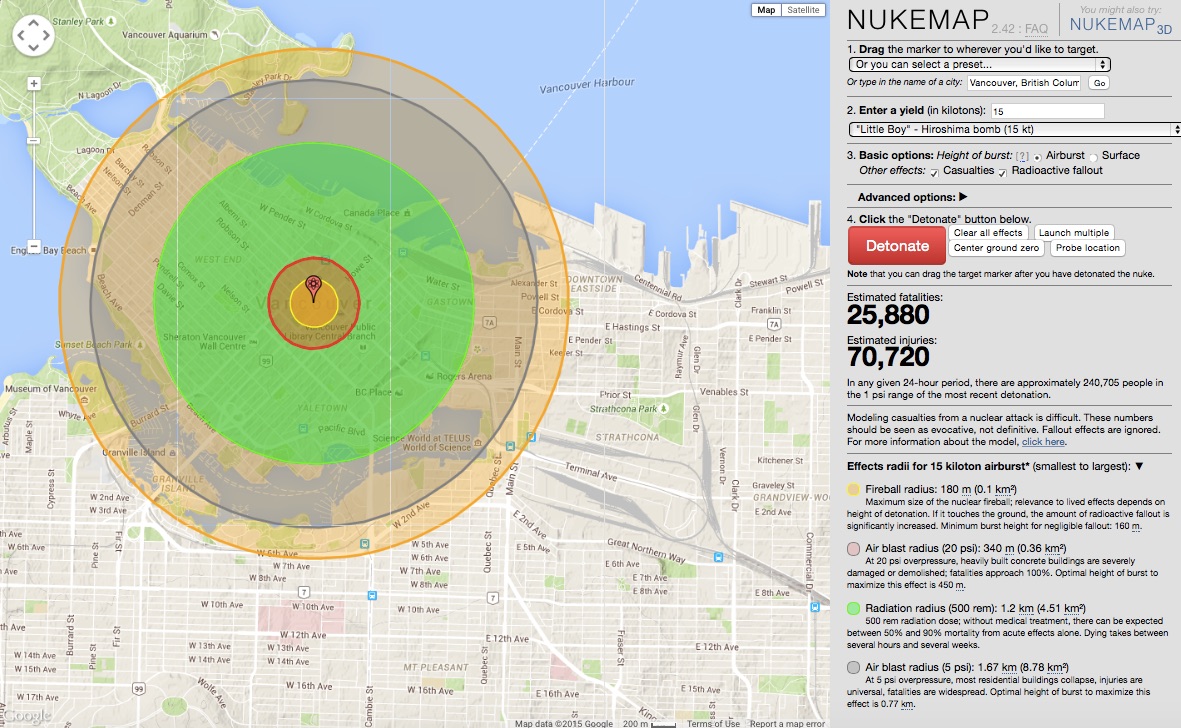
Following my last post on ‘The blue sky of Hiroshima’, I’ve received several e-mails from readers wondering at the size of the blast radius from ‘Little Boy’ (15 kilotons) shown on the image from NUKEMAP; there’s another one below, which shows the blast radius from ‘Fat Man’ (21 kilotons) originally detonated over Nagasaki and here projected on to Vancouver (for a critical note on these projections, by the way, see my original post).

Fat Man Vancouver NUKEMAP JPEG

If, like my correspondents, you are surprised at the ‘small’ size of the radii: you are right (though don’t ignore the numbers on the right…). Several years ago Maximilian Bode created this infographic to show the exorbitant increase in the destructive capacity of nuclear weapons since those two bombs were exploded over Japan 70 years ago:

1-nuclear-bomb-power

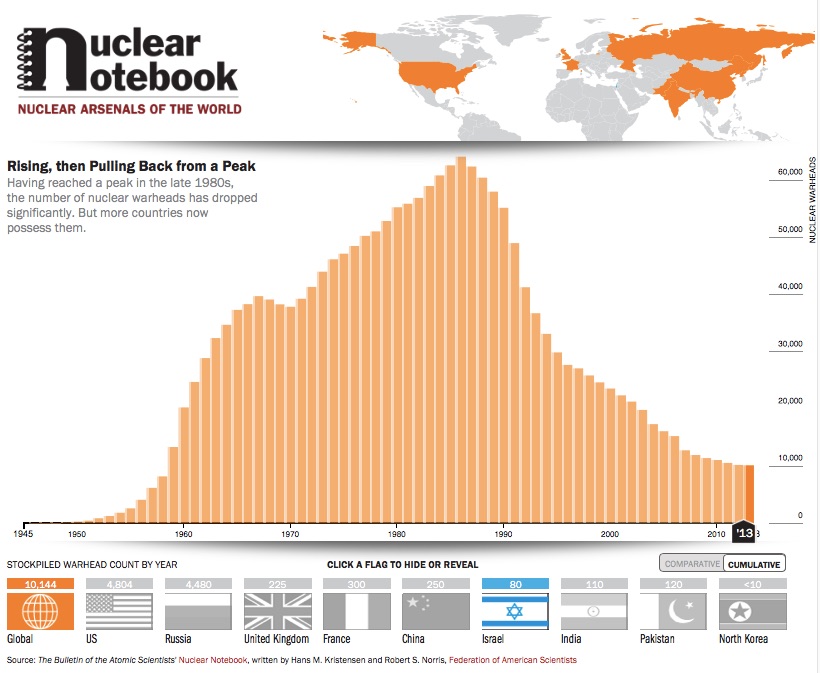
Many of today’s warheads are much smaller – the missiles carried on Trident, for example, are around 100 kilotons.   But that’s small comfort.  If you want to know how many nuclear warheads there are in the world today, this chart from the Nuclear Notebook produced for the Bulletin of Atomic Scientists will give you a rough idea (the interactive version is here):

Nuclear notebook JPEG

And finally Ehsan Rezaie has produced this video for Orbital Mechanics which plots (‘animates’ doesn’t seem the appropriate verb somehow) every nuclear detonation from 1945 on; you can also access this on Vimeo if the embed doesn’t work: search for ‘Trinity’:

The blue sky of Hiroshima

1946_08_31_001_CV1__xx_KA-880-1

It’s the bleakest of anniversaries – the bombing of Hiroshima 70 years ago today – and there is no shortage of commentary (see, for example, here and here).  John Hersey‘s book-length essay on Hiroshima, which filled most of  the 31 August 1946 issue of the New Yorker and has been republished online here.

At exactly fifteen minutes past eight in the morning, on August 6, 1945, Japanese time, at the moment when the atomic bomb flashed above Hiroshima, Miss Toshiko Sasaki, a clerk in the personnel department of the East Asia Tin Works, had just sat down at her place in the plant office and was turning her head to speak to the girl at the next desk. At that same moment, Dr. Masakazu Fujii was settling down cross-legged to read the Osaka Asahi on the porch of his private hospital, overhanging one of the seven deltaic rivers which divide Hiroshima; Mrs. Hatsuyo Nakamura, a tailor’s widow, stood by the window of her kitchen, watching a neighbor tearing down his house because it lay in the path of an air-raid-defense fire lane; Father Wilhelm Kleinsorge, a German priest of the Society of Jesus, reclined in his underwear on a cot on the top floor of his order’s three-story mission house, reading a Jesuit magazine, Stimmen der Zeit; Dr. Terufumi Sasaki, a young member of the surgical staff of the city’s large, modern Red Cross Hospital, walked along one of the hospital corridors with a blood specimen for a Wassermann test in his hand; and the Reverend Mr. Kiyoshi Tanimoto, pastor of the Hiroshima Methodist Church, paused at the door of a rich man’s house in Koi, the city’s western suburb, and prepared to unload a handcart full of things he had evacuated from town in fear of the massive B-29 raid which everyone expected Hiroshima to suffer. A hundred thousand people were killed by the atomic bomb, and these six were among the survivors. They still wonder why they lived when so many others died. Each of them counts many small items of chance or volition—a step taken in time, a decision to go indoors, catching one streetcar instead of the next—that spared him. And now each knows that in the act of survival he lived a dozen lives and saw more death than he ever thought he would see. At the time, none of them knew anything.

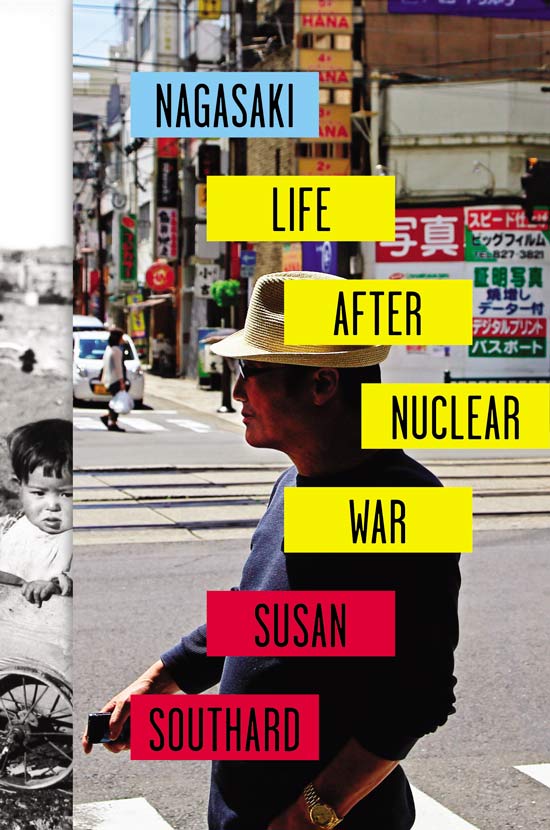
It’s worth comparing this with the opening scene of Kamila Shamsie‘s brilliant novel Burnt Shadows which imagines the second atomic bomb dropped on Nagasaki three days later.  Given the map I reproduce below, it’s also worth reading her short essay on the effect of using Google Earth to ‘map’ the bombing here; and since Nagasaki too often disappears from critical view, try Susan Southard‘s recently published Nagasaki: life after nuclear war (Viking/Penguin, 2015) – you can read a long extract here and here.

Nagasaki-Cover

For a brave attempt to bring the the two bombings into the same narrative frame, see Paul Ham‘s Hiroshima Nagasaki (2012/2014): there’s a helpful review essay by H. Bruce Franklin here, and The Atlantic has just published an extract, ‘The bureaucrats who singled out Hiroshima for destruction’ here.

Joyce C. Stearns, a scientist representing the Air Force, named the four shortlisted targets in order of preference: Kyoto, Hiroshima, Yokohama, and Kokura. They were all “large urban areas of more than three miles in diameter;” “capable of being effectively damaged by the blast;” and “likely to be unattacked by next August.”… Tokyo had been struck from the list because it was already “rubble,” the minutes noted…

Captain William “Deak” Parsons, associate director of Los Alamos’s Ordnance Division, gave another reason to drop the bomb on a city center: “The human and material destruction would be obvious.” An intact urban area would show off the bomb to great effect. Whether the bomb hit soldiers, ordnance, and munitions factories, while desirable from a publicity point of view, was incidental to this line of thinking—and did not influence the final decision.

(You’ll have to read the extract to see why Kyoto was eventually removed from the list).

hiroshima-nagasaki

For subsequent analysis, a good place to start is Alex Wellerstein‘s Restricted Data: the nuclear secrecy blog, which includes a series of excellent posts on sources and visualizations, on the Manhattan Project and what happened at Los Alamos, and most recently an essay which asks ‘Where there alternatives to the atomic bombings?‘ and gives lots of background to those terrible events.

Among Alex’s visualizations is NUKEMAP, which simulates the dropping of ‘Little Boy’ on other towns and cities.  Here is downtown Vancouver (for a discussion of airbursts, see Alex’s post here).

Little Boy VANCOUVER JPEG

Elsewhere, there’s a special issue of Critical Military Studies on the anniversary, and all the articles are open access:

The most modern city in the world: Isamu Noguchi’s cenotaph controversy and Hiroshima’s city of peace: Ran Zwigenberg
Unbearable light/ness of the bombing: normalizing violence and banalizing the horror of the atomic bomb experiences: Yuki Miyamoto
Remembering nukes: collective memories and countering state history: Stefanie Fishel
Contested spaces of ethnicity: zainichi Korean accounts of the atomic bombings: Erik Ropers
Hiroshima and two paradoxes of Japanese nuclear perplexity: Thomas E. Doyle II
Re-imagining Hiroshima in Japan: elin o’Hara slavik
Memory and survival in everyday textures – Ishiuchi Miyako’s Here and Now: Atomic Bomb Artifacts, ひろしま/ Hiroshima 1945/2007: Makeda Best
Nagasaki Re-Imagined: the last shall be first: Kathleen Sullivan

There’s also a special issue of Thesis Eleven, (August 2015: 129 (1)) edited by Brad Evans and Keith Tester in association with the Histories of Violence ‘Disposable Life’ project; articles include:

Susan Neiman, Forgetting Hiroshima, remembering Auschwitz: Tales of two exhibits
Keith Tester, Hiroshima: Remembering and forgetting, everything and nothing
Michael J Shapiro, Hiroshima temporalities
Maja Zehfuss, (Nuclear) war and the memory of Nagasaki: Thinking at the (impossible) limit
Hiro Saito, The A-bomb victims’ plea for cosmopolitan commemoration: Toward reconciliation and world peace
Arne Johan Vetlesen, Post-Hiroshima reflections on extinction
Henry A Giroux, Hiroshima and the responsibility of intellectuals: Crisis, catastrophe, and the neoliberal disimagination machine

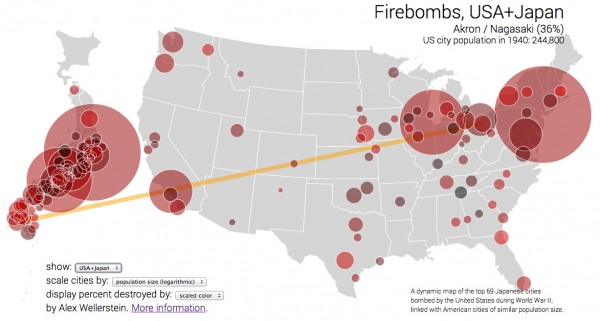
I have just two things to add.  The first is to draw attention to the firebombing of Japanese cities that preceded Hiroshima and Nagasaki (Alex compares them in an interesting commentary here and provides a series of compelling comparative interactives here: I’ve pasted an example below, and provided a short commentary here).

firebombs-usa-interactive-600x321

In fact, as my quotation from Paul Ham reveals, Hiroshima and Nagasaki were targeted precisely because they had been left alone during the previous attacks and would provide effective laboratories to test the effects of nuclear blasts.  On the firebombing campaign, see the painstaking work of Cary Karacas and his colleagues here (my commentaries on the project are here and here; see also their essay on the firebombing of Tokyo and its legacy here); their website includes both a Hiroshima archive and a Nagasaki archive.

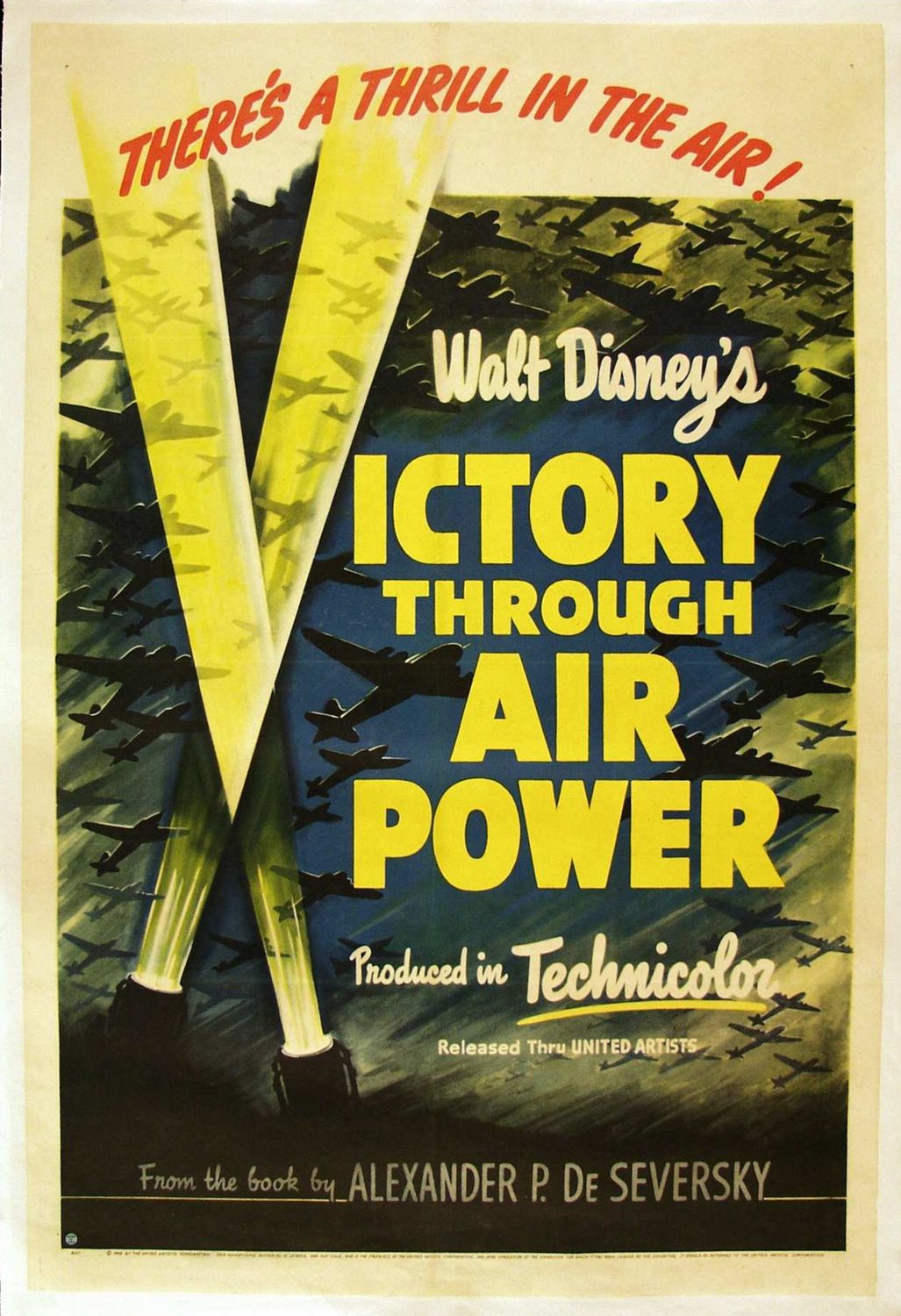
Second, I’ve emphasised the comparative effort to ‘bring the war home’, to imagine the effects of Little Boy and Fat Man on other cities around the world.  There are obvious dangers in such an exercise – is our capacity for empathy so limited than we have to rely on a sort of critical narcissism: ‘imagine if it happened to us‘? – but perhaps the most significant objection is that such cartographic conceits can erase not only the bodies incinerated and maimed (through the very abstraction of cartography) but also the racialization of these unmarked bodies.  In the characteristically thoughtful introduction to his new book, Tense Future: Modernism, Total War, Encyclopedic Form (2015), Paul K. Saint Amour writes about ‘traumatic earliness’ – about the sense of anticipation, foreboding or bukimi that gripped the people of Hiroshima in the months before their collective deaths: that ‘uneasy combination of continued good fortune [escaping the firebombing] and expectation of catastrophe’.  But the ground had already been prepared in the United States, not only scientifically – the endless calculations, calibrations and experiments at Los Alamos – but also culturally.

Victory_through_air_power_xlg

Michael Sherry‘s The rise of American Air Power: the creation of Armageddon (1987) and Paul Williams‘s Race, ethnicity and nuclear war (2011) are indispensable here – and there’s a sharp, contemporary commentary from Arthur Chu here –  but a vivid example is provided by Alex de Seversky‘s Victory through Air Power (1942) and, in particular, its celebration in Walt Disney‘s film version released in 1943.  For Disney, there was not only ‘a thrill in the air’ but an exuberant delight at death and destruction on the Japanese ground.  You can watch the whole thing below (or on YouTube) but to see what I mean start at 1.07 and watch right through the bombing to the anthropomorphism of the American eagle and the Japanese octopus that follows it.  There’s also a short commentary by Henry Giroux here.

Note: My title is taken from this poem by Yukiko Hayashi; if you click on nothing else, please click on this.

The Platform Edge

I should have drawn attention to these two further, vital resources in my post on Black Friday, Israel’s assault on Rafah during ‘Operation Protective Edge‘.

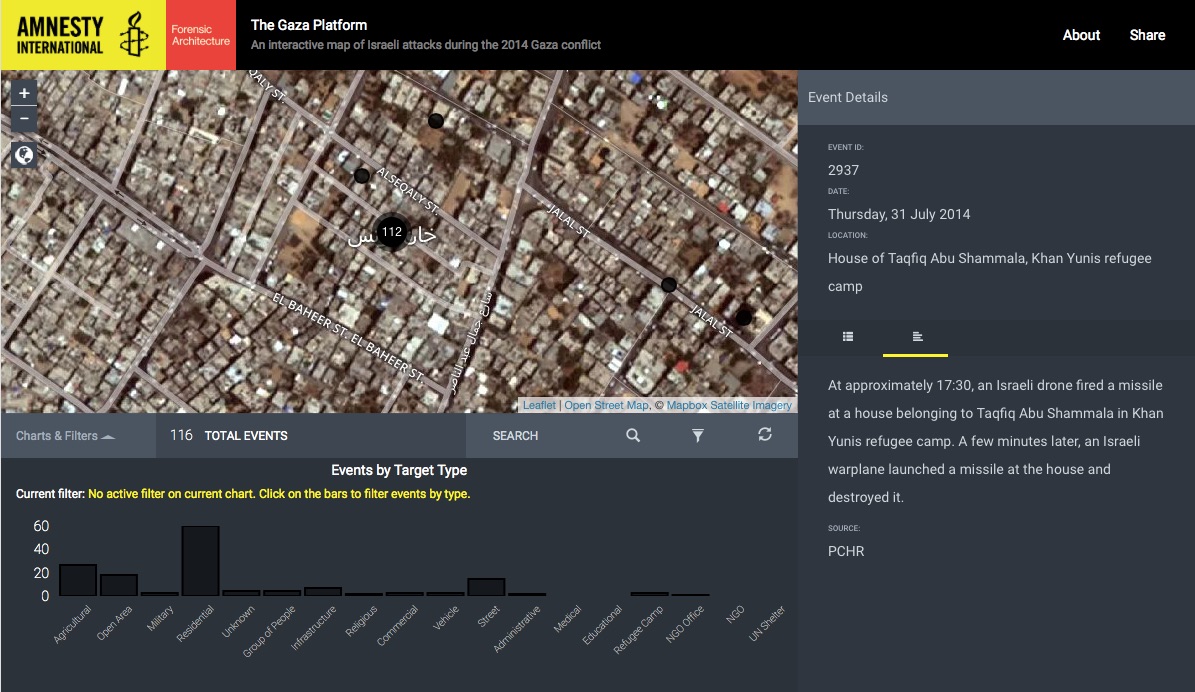
Gaza Platform INTRO SCREEN

First, Forensic Architecture‘s wider collaboration with Amnesty International (in association with the Al-Mezan Centre for Human Rights/Palestinian Centre for Human Rights) has produced The Gaza Platform:

The Gaza Platform is an interactive map of attacks by Israeli forces on Gaza between 8 July and 26 August 2014.

It enables its users to explore a vast collection of data, collected on the ground by the Al Mezan Center for Human Rights and the Palestinian Centre for Human Rights (PCHR), as well as Amnesty International, during and after the conflict.

Produced through a year-long collaboration between Forensic Architecture and Amnesty International, the Gaza Platform is a new gateway to this precious, first-hand information: it not only gives access to a large quantity of otherwise dispersed data, but helps make sense of it.

The Gaza Platform is the most comprehensive public repository of information about attacks carried out during the 2014 Gaza conflict to date. At the time of its launch on 8 July 2015, it featured over 2,750 individual events, recording the deaths of more than 2,200 people, including 1,800 civilians and 600 children. As a digital interface, it enables access not only to text reports, but also to photos, videos, audio recordings and satellite imagery documenting the war – all in one place.

It is important to note that the Gaza Platform does not provide a complete record of the impact of Israeli attacks during the 2014 conflict. It does not cover every single attack that took place during the conflict, but only those for which a report is available. Therefore, the total number of casualties presented in the Gaza Platform falls short of the one recorded by the UN across the entire conflict.

However, the Gaza Platform does more than provide overall figures and statistics about the conflict. Each death is linked to a specific event, for which all available details and context are given, thus providing the granular details of each individual event recorded. It also helps to reveal trends by making links between dispersed individual events and detecting patterns of attacks across the 50-day time span of the conflict, thereby contributing to an assessment of the conduct of Israeli forces and its conformity or otherwise with the provisions of international humanitarian law (the laws of war). As such, the Gaza Platform is a tool aimed at uncovering the truth about the attacks on Gaza and contributing to accountability efforts for crimes under international law committed by both sides during the 2014 conflict, the third such conflict in six years.

According to Doug Bolton writing in the Independent:

Phillip Luther, the Director of Amnesty International‘s Middle East and North Africa programme, said it “has the potential to expose the systematic nature of Israeli violations committed during the conflict.”

He added: “Our aim it for it to become an invaluable resource for human rights investigators pushing for accountability for violations committed during the conflict.”…

Francesco Sebregondi, the director of the project at Forensic Architecture, said the map “exploits the power of new digital tools to shed light on complex events such as the latest war in Gaza.”

“It enables users to move across scales, from the granular details of each incident to the big picture of the overall conflict, by revealing connections between scattered events.”

I’m not going to link to them, but the hysterical response from apologists for the indiscriminate violence of the Israeli assault on Gaza shows that the Gaza Platform has hit a nerve: as it should.

Incidentally, there’s a short article in today’s Guardian about the ongoing transformation of humanities research: the growth of the ‘digital humanities’,  ‘tech-savvy’ analysis of large data sets, collaborations with non-academic professionals, and a determination to show how ‘research can benefit society’.  The Gaza Platform isn’t mentioned, but it surely exemplifies exactly what the author has in mind.

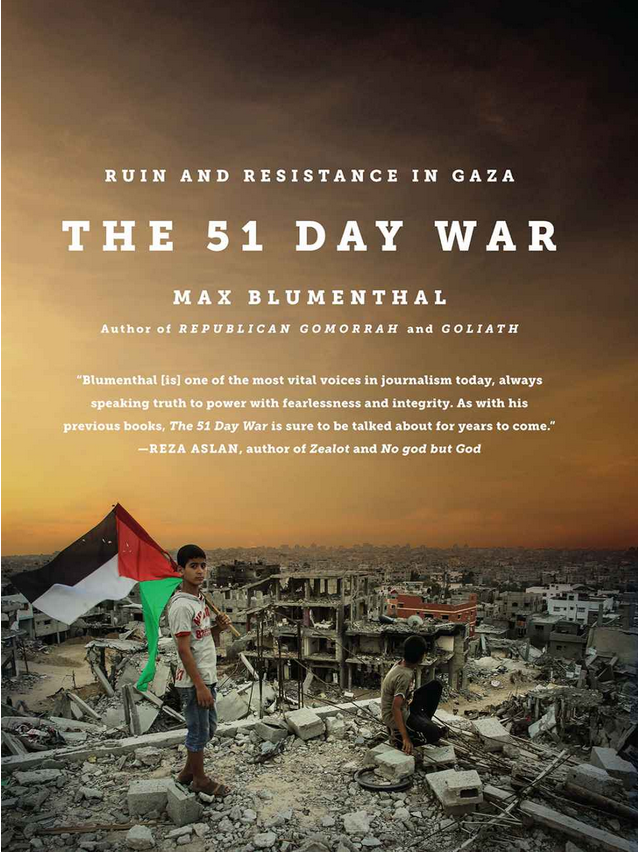
BLUMENTHAL 51 Day War

Second, Max Blumenthal‘s coruscating chronicle of The 51 Day War: ruin and resistance in Gaza, out now from Verso.  As Juan Cole put it, ‘Max Blumenthal audaciously takes in-your-face, on-the-ground journalism into the realm of geopolitics.’  You can find Glenn Greenwald‘s interview with Max at The Intercept here:

What shook me the most was how well I was treated in the rubble. How after interviewing families who would tell me about witnessing their neighbors being destroyed by a missile, that they would beseech me to have lunch with them. I didn’t even know where the lunch would come from. They would chase me down after denouncing my government and insisting that the Obama administration was no better than Netanyahu, and hand me sweets, and tell me that they see a clear difference between the American people and the American government. I mean, that kind of treatment showed me how impeccable the character of these people was, even as they were facing their own immiseration and ruin.

That was kind of deceptive, because I started to adjust, in a weird way, to being in the rubble with these people. Then the bombing started again, and then I had to deal with the terror of night after night of bombings, and naval shelling throughout the day, and drones swooping closely overhead, searching for targets. And I became shell-shocked. So I couldn’t have even imagined going through 51 days of that, especially as a child under the age of seven.

We have to recognize that the Gaza Strip is a ghetto of children. The majority of the people in the Gaza strip are under age 18, and a substantial percentage of those under 18 are under the age of seven, which means they have known nothing in their lives but these three atrocious wars, which have left almost 20 percent of the entire area of the Gaza Strip in ruins.

What’s on those children’s mind? What kind of lives can they have? Can they ever be normal as they go through life without therapy, without relief, without recourse and without justice, with continuous traumatic stress disorder?

(In)human Terrain

humanterrain3

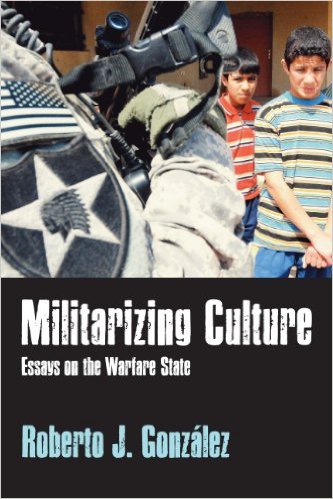
It’s been an age since I looked at the US military’s attempt to ‘weaponise culture’ in its counterinsurgency programs (see ‘The rush to the intimate’: DOWNLOADS tab), but Roberto Gonzalez has kept his eyes on the ground – or the ‘human terrain’ (I’ve borrowed the image above from Anthropologists for Justice and Peace here).

In a special report for Counterpunch a month ago, Roberto noted the demise of the Human Terrain System:

The most expensive social science program in history – the US Army’s Human Terrain System (HTS)–has quietly come to an end. During its eight years of existence, the controversial program cost tax payers more than $725 million…

HTS supporters frequently claimed that the program would increase cultural understanding between US forces and Iraqis and Afghans–and therefore reduce American and civilian casualties. The program’s leaders insisted that embedded social scientists were delivering sociocultural knowledge to commanders, but the reality was more complex. HTS personnel conducted a range of activities including data collection, intelligence gathering, and psychological operations. In at least one case, an HTS employee supported interrogations in Afghanistan.

The program also served a more insidious function: It became a propaganda tool for convincing the American public–especially those with liberal tendencies–that the US-led occupations of Iraq and Afghanistan were benevolent missions in which smart, fresh-faced young college graduates were playing a role. It appeared to demonstrate how US forces were engaged in a kinder, gentler form of occupation. Department of Defense photos portrayed HTS personnel sitting on rugs while drinking tea with Afghan elders, or distributing sweets to euphoric Iraqi children. Here was a war that Americans could feel good about fighting.

The program had its critics, inside as well as outside the military, and US Army Training and Doctrine Command (TRADOC) eventually confirmed that HTS had been terminated on 30 September 2014.  In his report, Roberto traces the rise and fall of HTS, and attributes its demise to US troop withdrawals from Iraq and Afghanistan, the fall from grace of the ‘new’ counterinsurgency’s champion David Petraeus, the incompetence of many of the HTS teams, and – crucially – to the precipitate shift from ‘cultural’ to geospatial intelligence.

The last, impelled by the desire to substitute air strikes for ‘boots on the ground’ and to rely on computational methods rather than human intelligence, is the key: as Oliver Belcher put it in his PhD thesis on The afterlives of counterinsurgency, “It’s algorithms, not anthropology, that are the real social science scandal in late-modern war.”

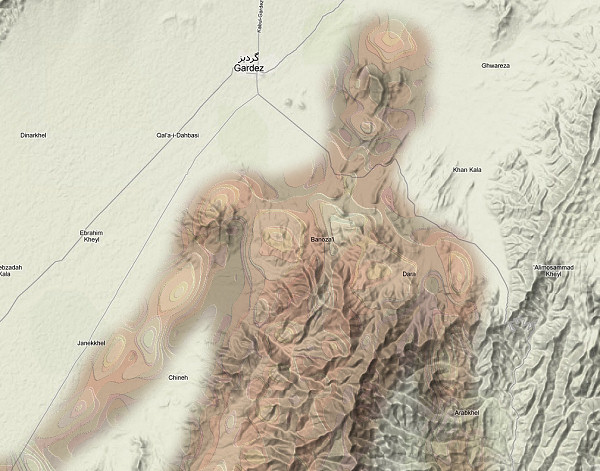
I’ve been exploring this shift in my ‘Dirty Dancing’ essay – in relation to the American production of the Federally Administered Tribal Areas of Pakistan as a space of execution, a code/space in which data surveillance and computational methods are activated to assert an extra-territorial claim over bodies-in-spaces – but it’s become clear to me that this continues to rely on (and in some respects even extends) the weaponisation of culture.  It’s an appropriate metaphor: after all, weapons are inherently dangerous, they can be misdirected, they do misfire and they can cause grievous harm far beyond their intended target.

In a follow-up post on ‘Re-making the Human Terrain’, Roberto says as much:

GONZALEZThe gaps in military knowledge that HTS claimed to fill still remain. The desire to weaponize culture is as old as dreams of counterinsurgency, and such dreams do not die easily.

It would be premature for those concerned about the militarization of culture to breathe a sigh of relief. The needs of empire—especially an empire in denial—are far too great to ignore cultural concerns. HTS’s sudden death can obscure the fact that elements of the program continue to survive, though in distinct and sometimes unrecognizable forms. The basic idea behind HTS—to equip the military with cultural expertise for battlefield operations—has not been eradicated. If anything, the concept has firmly taken root.

He traces its off-shoots through the development of a Global Cultural Knowledge Network – which I can’t help seeing as the cultural version of the Bombing Encyclopedia of the World – and the role of private corporations in providing ‘human terrain analysts’ to support US special operations (see also Max Forte here on what I think of as the Military-Academic-Industrial-Media complex: MAIM).  Interestingly, Whitney Kassel – who is adamant that ‘shuttering HTS will almost certainly be a mistake’ – notes that ‘the National Defense University conducted a detailed study of HTS [summarised in JFQ] in late 2013 and recommended that the function be moved and permanently housed at U.S. Army Special Operations Command … which has the lead for irregular warfare and other Army functions that make the most frequent use of sociocultural knowledge.’

Roberto also provides a more detailed analysis of the US military’s investment in socio-cultural modelling and (this is truly vital) predictive forecasting in two linked essays on ‘Seeing into hearts and minds’: Part 1 is ‘The Pentagon’s quest for a social radar’, Anthropology Today 31 (3) (June 2015) 8-13 and Part 2 is ‘‘Big data’, algorithms, and computational counterinsurgency, Anthropology Today 31 (4) (August 2015) 13-18.

Social Radar JPEG

The second part is most directly relevant to what I’ve been working on because it describes the conceptual development of so-called ‘Social Radar’ (see image above: ‘sensor systems for the 21st century‘; see also here) and the morphing of the NSA’s Real Time Regional Gateway for Iraq – which integrated data surveillance from multiple sources and domains with visual feeds from drones – into Nexus 7 in Afghanistan.

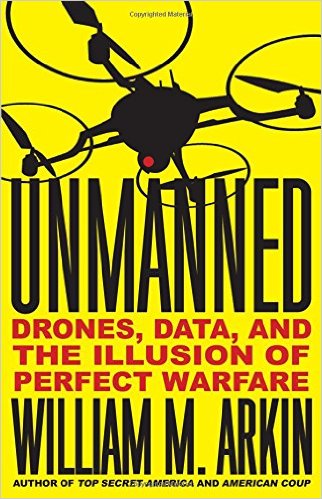
Similar fusion systems have surely been working across the border, and in his Unmanned: drones, data, and the illusion of perfect warfare (2015) William Arkin provides a fascinating glimpse into other genealogies that have produced what he calls ‘the Data Machine’:

ARKIN UnmannedToday, the Data Machine doesn’t care where it is fighting. It doesn’t matter whether targets are hiding in Hindu Kush caves or in villages of the Fertile Crescent. Nor does Predator care, or Reaper, or Global Hawk, or any other of our other aptly and awkwardly named all-seeing eyes. In fact, they don’t care about anything: they are machines. But the men and women … behind the entire Machine also don’t care, for every place is reduced to geographic coordinates that flash across a screen in seconds. Nations, armies, and even people are reduced to links and networks.

Loitering drones and geolocating weapons just need the data. Everyone needs the global information grid and the Internet—or, more precisely, an internet. Actual battlefield geography and culture have become immaterial. The node and the network sentry become the determinant and the provocateur of action—all the way to the edge of the world, anywhere.

Black Friday

Just released: a joint investigation by Amnesty International and Forensic Architecture reconstructs Israel’s siege of Rafah during its assault on Gaza in 2014.  You can read the Executive Summary here and access the full report, Black Friday: carnage in Rafah, here.

In Rafah, the southernmost city in the Gaza Strip, a group of Israeli soldiers patrolling an agricultural area west of the border encountered a group of Hamas fighters posted there. A fire fight ensued, resulting in the death of two Israeli soldiers and one Palestinian fighter. The Hamas fighters captured an Israeli officer, Lieutenant Hadar Goldin, and took him into a tunnel. What followed became one of the deadliest episodes of the war; an intensive use of firepower by Israel, which lasted four days and killed scores of civilians (reports range from at least 135 to over 200), injured many more and destroyed or damaged hundreds of homes and other civilian structures, mostly on 1 August.

In this report, Amnesty International and Forensic Architecture, a research team based at Goldsmiths, University of London, provide a detailed reconstruction of the events in Rafah from 1 August until 4 August 2014, when a ceasefire came into effect. The report examines the Israeli army’s response to the capture of Lieutenant Hadar Goldin and its implementation of the Hannibal Directive – a controversial command designed to deal with captures of soldiers by unleashing massive firepower on persons, vehicles and buildings in the vicinity of the attack, despite the risk to civilians and the captured soldier(s).

The report recounts events by connecting various forms of information including: testimonies from victims and witnesses including medics, journalists, and human rights defenders in Rafah; reports by human rights and other organizations; news and media feeds, public statements and other information from Israeli and Palestinian official sources; and videos and photographs collected on the ground and from the media.

Satellite imagery Rafah 1 August 2014

Amnesty International and Forensic Architecture worked with a number of field researchers and photographers who documented sites where incidents took place using protocols for forensic photography. Forensic Architecture located elements of witness testimonies in space and time and plotted the movement of witnesses through a three-dimensional model of urban spaces. It also modelled and animated the testimony of several witnesses, combining spatial information obtained from separate testimonies and other sources in order to reconstruct incidents. Three satellite images of the area, dated 30 July, 1 August and 14 August, were obtained and analysed in detail; the image of 1 August reveals a rare overview of a moment within the conflict. Forensic Architecture also retrieved a large amount of audiovisual material on social media and employed digital maps and models to locate evidence such as oral description, photography, video and satellite imagery in space and time. When audiovisual material from social media came with inadequate metadata, Forensic Architecture used time indicators in the image, such as shadow and smoke plumes analysis, to locate sources in space and time….

Public statements by Israeli army commanders and soldiers after the conflict provide compelling reasons to conclude that some attacks that killed civilians and destroyed homes and property were intentionally carried out and motivated by a desire for revenge – to teach a lesson to, or punish, the population of Rafah for the capture of Lieutenant Goldin.

There is consequently strong evidence that many such attacks in Rafah between 1 and 4 August were serious violations of international humanitarian law and constituted grave breaches of the Fourth Geneva Convention or other war crimes.

It really is worth accessing the full report and closely examining the video animations produced by Forensic Architecture.

Lambert Hannibal Directive JPEG

You can find a commentary on the project and its wider implications, which also draws on a lecture FA’s Eyal Weizman gave at Médecins sans Frontières in Paris earlier this month, by Léopold Lambert over at Warscapes here: ‘The Hannibal Directive and the economy of lives: making sense of Black Friday in Gaza‘.

The Hannibal Directive exists because of the historical asymmetrical characteristics of prisoner exchanges between the Israeli government and Palestinian and Lebanese political groups like Hamas and Hezbollah. The armed sections of these groups evidently rely on this precise asymmetrical relationship and undertake kidnappings of one or multiple Israeli soldiers when possible to negotiate the liberation of several Palestinians held in Israeli prisons. However, the economy of lives that can be perceived through this asymmetry is profoundly disturbing. The hidden message in the enunciation of the 2011 Shalit exchange is the following: One Israeli life is worth 1,027 Palestinian lives. The very fact that many of us know Shalit’s name, but not one of the 1,027 liberated Palestinian prisoners’, is symptomatic. In the case of “Black Friday,” this economy of lives exposes its violence through even more extreme and perverse forms: for the Israeli army, 135 to 200 Palestinian lives are worth ending in order to end an Israeli one, so to avoid freeing Palestinian prisoners.

We should not think of the concept of economy of lives as a retrospective reading of the Israeli Army’s crimes: This logic is at work in most Western military decision making, as Weizman shows in his book The Least of All Possible Evils (Verso 2011) through interviews with Human Rights Watch consultant Marc Garlasco, a former Pentagon “chief of high-value targeting” during the first years of the 2003 US war in Iraq. For each airstrike against an Iraqi political or military figure that Garlasco designed, he had to follow a “correct balance of civilian casualties in relation to the military value of a mission. ” In other words, there is a number of civilians the US army allows itself to kill as “collateral damage” when targeting a strategic assassination. In Iraq, this number was 30, Garlasco reveals. “In this system of calculation,” writes Weizman, “twenty-nine deaths designates a threshold. Above it, in the eyes of the US military lawyers, is potentially ‘unlawful killing’; below it, ‘necessary sacrifice.’” Here, again, lives are disincarnated into statistics calculated in relation to military and ideological objectives.

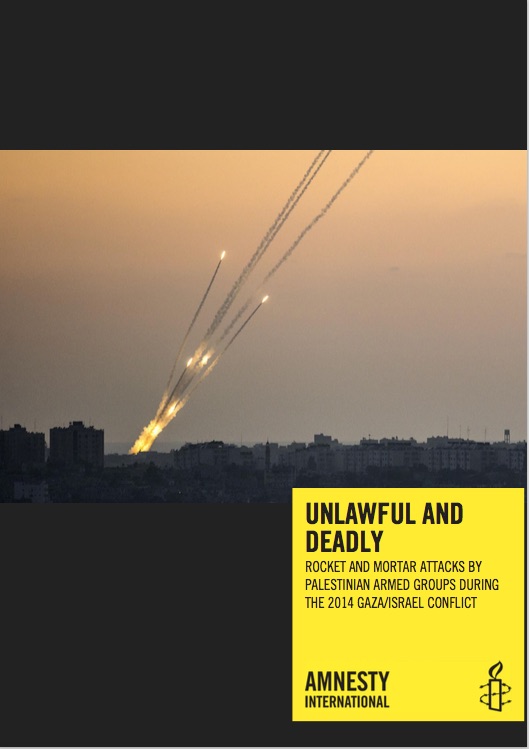
AI Unlawful and deadly JPEGI should not that there are also important critiques of Amnesty’s other investigations into ‘Operation Protective Edge’, most significantly from Normal Finkelstein at Jadaliyya.  

He takes particular exception to Amnesty’s Unlawful and Deadly: Rocket and mortar attacks by Palestinian armed groups during the 2014 Gaza/Israel conflict.

He insists that Amnesty too often cites official Israeli sources in ways that ‘magnify Hamas’s and diminish Israel’s criminal culpability’. You can access what he describes as his ‘forensic analysis’ of that report in two parts, here and here.

My own posts on ‘Operation Protective Edge’ are here, here, here, here, here (my own attempt at a forensic analysis of sorts), and here.

The lightness (and darkness) of being

The Light of God slide.001

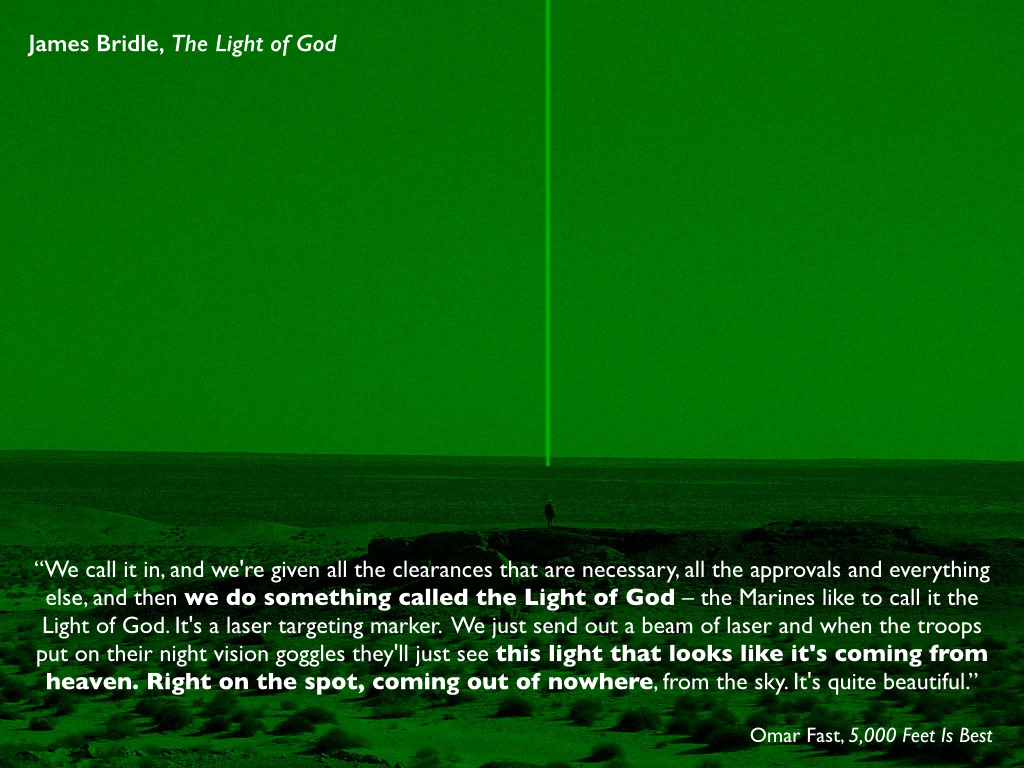
Pip Thornton‘s wonderful ‘The meaning of light: seeing and being on the battlefield‘ – which, among many other good things, worries away at the conceit shown in the image above – is just out in Cultural geographies (Online First).  It will eventually form part of a special issue on ‘Darkness’ edited by Tim Edensor.

Here’s the abstract:

On the battlefield, light and dark mean much more than the (dis)ability to see. While the darkness of night-time can be used as a tactic, providing cover for personal and territorial defence and attack, it also affects and secures bodies and the spaces they inhabit in other more immediate and intimate ways, recalibrating senses and redefining distance. Light too can spell both safety and danger on the battlefield, disciplining and controlling its occupants with often asymmetrical power-plays of affect and aggression. Using autoethnographic examples of experiences in Iraq in 2003 (based on the poem below), this article sets out to challenge traditional binaries of light/ dark, good/bad and to question the elemental, cultural and technological sovereignty of light and vision in modern battlespaces.

And here’s the poem:

Light Discipline

In a blackout we adjust our sights

by touch and cup our smoke against

the desert, waiting for the light.

At long last the barrel scrapes

into place and the night is instantly

exposed. I cover my ears and watch.

In the distance a fitful city crouches,

seared eyes raised to the floating

arc above, waiting for the strike.


‘Our daily threat’

41Oi3YngcQL._SX324_BO1,204,203,200_For the longest time the only victims of Post-Traumatic Stress Disorder from the wars in Afghanistan who were accorded any media attention in Europe and North America were ground troops,  drone pilots and on occasion foreign civilians who worked in the combat zone. And much of that discussion focussed on the ways in which, as  Sebastian Junger put it, the effects of PTSD ripple far beyond the battlefield:

[Veterans] return from wars that are safer than those their fathers and grandfathers fought, and yet far greater numbers of them wind up alienated and depressed. This is true even for people who didn’t experience combat. In other words, the problem doesn’t seem to be trauma on the battlefield so much as re-entry into society.

But what about those denied re-entry into ‘normal’ society, those for whom war long ago became the ‘new normal’?  Apart from the odd glance at other combatants – ‘Do the Taliban get PTSD?Newsweek once asked – the plight of local people trapped in the battlefield, living and dying every day in the shadows of military and paramilitary violence, has been largely ignored.

There have been exceptions, like Anna Badkhen‘s report for the Pulitzer Center on Afghanistan as ‘PDSTland’ that also offered a more general commentary:

Psychological impact of war trauma on civiiliansCompared with research into the effects of conflict on U.S. war veterans, studies of combat trauma among civilians are few. But there is a growing understanding among medical scientists and conflict experts that the emotional toll of war on noncombatants is more significant than had been assumed. During World War I, when military physicians described soldiers’ traumatic reactions to war as “shell shock,” about nine out of 10 war casualties were fighters. But after nearly 50 years of the Cold War and more than 10 years of the war on terror, the way we wage war is more personal. Terrorism battlefields recognize no front lines. Vicious sectarian rampages pit neighbor against neighbor. Victims of genocidal campaigns often know their attackers by name. In the most current conflicts, at least nine out of 10 war casualties are believed to be civilians, writes psychologist Stanley Krippner in his book The Psychological Impact of War Trauma on Civilians [This is a collection of essays Krippner co-edited with Maria McIntyre]. In Iraq, where as many as 1 million people may have died since 2003, the rate might be even higher. No one kept track of civilian casualties in Afghanistan between 2001 and 2007, and estimates vary widely; given the United Nations’ tally of almost 12,000 civilian deaths since the beginning of 2007, a rough guess of between 20,000 and 30,000 civilian casualties since 2001 seems reasonable.

Communal psychological wounds – what medical anthropologist Arthur Kleinman has called “social suffering” – permeate the lives of survivors scraping by in unimaginable poverty amid collapsed infrastructure, the common afterbirth of modern combat. According to the Centers for Disease Control and Prevention, between 30 and 70 percent of people who have lived in war zones bear the scars of post-traumatic stress disorder and depression.

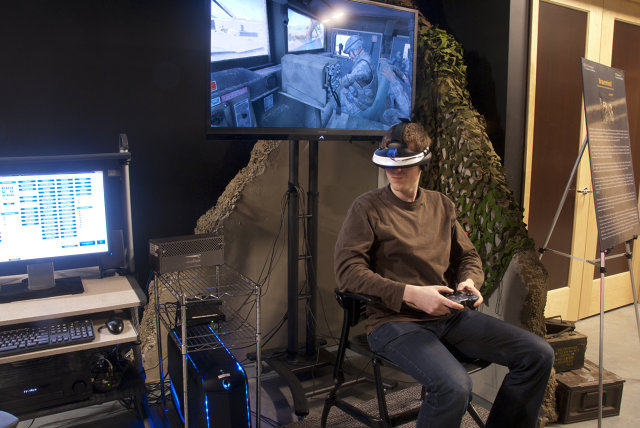
Over the years I’ve read endless reports about the ways in which the US military in particular is exploring new therapies for PTSD – including experiments in Virtual Reality as a way of helping victims re-live and ultimately come to terms with trauma, like Virtually Better‘s Bravemind staged in ‘Virtual Afghanistan’ (see below; also here, here, here and here).

bravemind

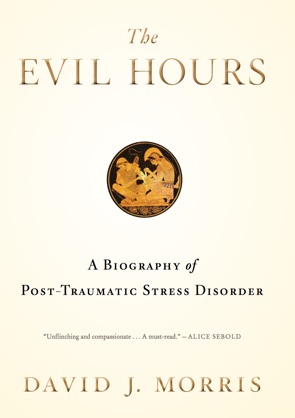
This doesn’t mean that progress is rapid or solutions straightforward, and David Morris‘s The Evil Hours ought to banish any such complacency.  Here is Tom Ricks:

From battlefields and cultural responses to traumatized warriors throughout world history to the internecine corridors of the San Diego V.A. hospital and the modern psychology establishment, Morris gives sight to the blind examining the PTSD elephant, offering up a clear understanding of what the beast is as well as the path it’s traveled across the landscape of warfare. He draws from a seemingly inexhaustible well of experience. Herding a cast that includes Hemingway, Klosterman, Sassoon, a host of anthropologists and neurologists, and the soldiers and veterans he met throughout his own odyssey, Morris accomplishes the necessary work of identifying all the necessary aspects of PTSD and still finds a way to magnify the nuances of how it affects individuals and societies.

Evil Hours Cover Final-1The “out-of-body” experience and the recurring memory of traumatic events are familiar to those afflicted by PTSD. Many describe it as watching a movie on repeat from every possible angle. It’s the mind’s vain attempt to challenge trauma like a call in a football game, gathering the referees around a screen to watch the replay over and over until the past can be rewritten in favor of justice. Others who have attempted books about PTSD have floundered in this conceit. Morris avoids that and maintains his place at the commentators’ desk — close enough to call the play-by-play, but far enough away to keep perspective. Instead of raging at length about the process of enrolling in the V.A. care system (whose bureaucracy he declares forces veterans to run “a patience marathon”), he reflects on its problematic advocacy of “large, scalable, Evidence-Supported Treatments.” Morris unearths troubling aspects in the character of these treatments as he traces the history of PTSD therapy. He finds that they are highly impersonal … and make the afflicted feel more like they’re being treated as lab rats than patients. He observes that these methods are a profound departure from the type of treatments discovered and evolved by W.H.R. Rivers during WWI and, later, Vietnam veterans groups during the 1970s. Though Morris’s own experience with prolonged exposure treatment met with poor results and he expresses misgivings about similar therapeutic methods, he remains objective about their efficacy. Rather, he takes a more important and less scrutinized view of how treatments are vetted in the first place. Questioning the practice of excluding patients who drop out of test programs from data sets instead of listing them as showing no signs of improvement, Morris asks if reports inaccurately portray success rates. This leaves the V.A.’s dogmatic insistence on evidence-based methods particularly vulnerable to skewed numbers…  His exploration of the pharmaceutical approach to PTSD reaches similar conclusions. As Morris writes, “‘Evidence-supported’ and ‘evidence-based’ mostly means that a lot of doctors happen to like it, oftentimes for reasons that have less to do with the actual value of a therapeutic protocol than with trendiness.”

So PTSD has become a medical-psychological-psychiatric and even -technological minefield, and the figure of what Roy Scranton calls ‘the trauma hero‘ still casts a long shadow over its deformations (and even contributes to them).

But when you compare these avowedly fraught therapeutic interventions with the often forcible recourse of many Afghan victims of PTSD to shrines, a radically divergent medical geography comes into view (much as it does when you compare the differential treatment for catastrophic injury: see my commentary on ‘The prosthetics of military violence’ here).  Anna writes:

Most Afghans turn for comfort to religious shrines – small mausoleums or simply fenced, coffin-sized ziggurats, painted green and laced with shreds of shiny cloth that sparkle along country roads and hillsides like jewels. Pilgrims come to kneel or lie prostrate next to the metal palisades, seeking delivery from the djinns that possess them – evil spirits that trigger sudden violent outbursts and long bouts of melancholia, that bedevil their sleepless nights with nightmares and turn their days into lethargic slogs.

This doubly dreadful world is portrayed in a new film by Jamie Doran and Najibullah Quraishi for Al Jazeera, Living beneath the drones (which you can also access on YouTube if the embedded video fails).

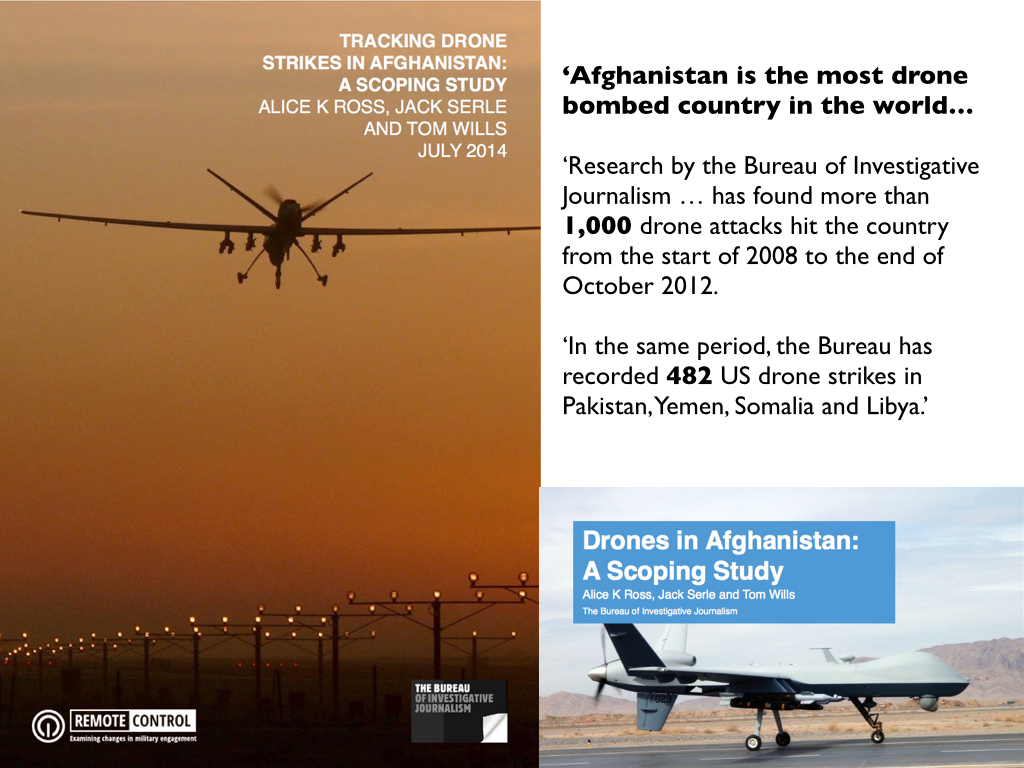
This is not the first time that the trauma of living beneath the ‘persistent presence’ of Predators and Reapers has been brought to critical attention, most vividly in the NYU/Stanford study Living Under Drones: Death, injury and trauma to civilians from US drone practices in Pakistan (2012).  But this is the first time I’ve seen such a detailed investigation of the impact of military violence on the people of Afghanistan.  As I’ve noted before, it’s taken a remarkably long time for investigators to examine the role of remote warfare in Afghanistan  – ‘remote’ in more ways than one – and Living beneath the Drones includes the standard interviews with David Deptula and Peter Singer who offer their usual contrasting views about its effects.

Afghanistan drone bombings BOIJ.001

But for me this is the least important contribution of the film; it’s the intimate exposure of the treatment meted out to traumatised victims of military and paramilitary violence that is most unsettling.  In fact, it’s not easy to disentangle the impact of Predators and Reapers from the larger matrix of violence in which they are enmeshed.  True, many of those interviewed describe how their lives are haunted by the drones, but this is a country where the dogs of war have prowled for four generations or more and trauma has never been rationed.  As Kevin Sieff’s report for the Washington Post in October 2012 showed, it’s usually impossible to fasten on a single incident or even to get an adequate history:

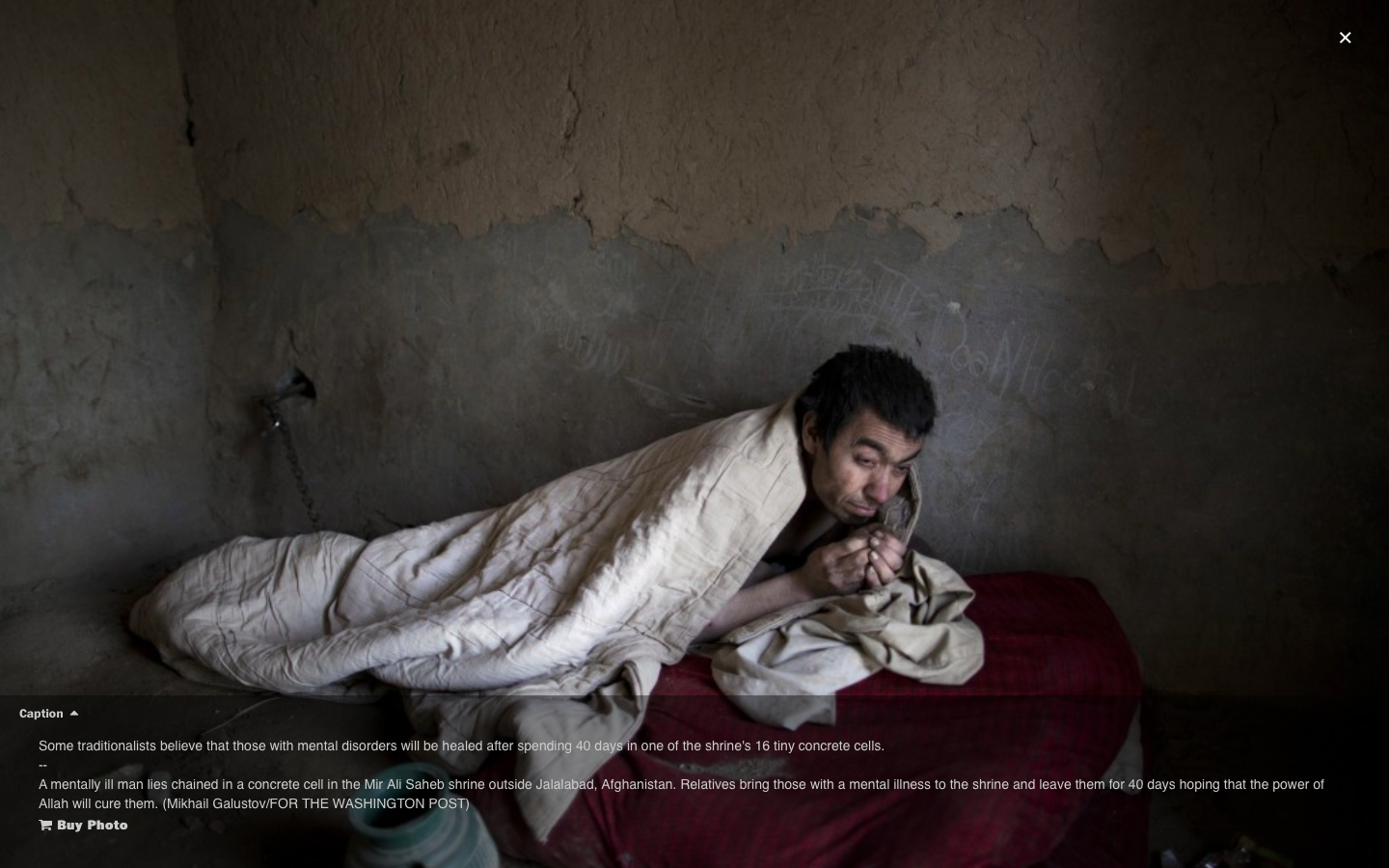
No one here knows the man whose left leg is shackled to the wall of cell No. 5. Last week, he finished tearing his mattress to shreds and then moved onto his clothes, ripping his shirt and pants off before falling asleep naked…

The man’s brothers drove him here from southern Kandahar province two weeks ago, drawn by the same belief that has attracted families from across Afghanistan for more than two centuries. Legend has it that those with mental disorders will be healed after spending 40 days in one of the shrine’s 16 tiny concrete cells. They live on a subsistence diet of bread, water and black pepper near the grave of a famous pir, or spiritual leader, named Mia Ali Sahib.

Every year, hundreds of Afghans bring mentally ill relatives here rather than to hospitals, rejecting a clinical approach to what many here see as a spiritual deficiency. The treatment meted out at the shrine and a handful of others like it nationwide might be archaic, but the symptoms are often a response to 21st-century warfare: 11 years of night-time raids, assassinations and suicide bombings.

For over a decade, Western donors have helped train Afghan psychiatrists, who diagnose many of their patients as having an ailment with a distinctly modern acronym: PTSD, or post-traumatic stress disorder. Mental health departments in Afghanistan are plastered with posters detailing the disorder’s symptoms. Pharmacies are stocked with antipsychotic drugs.

But many of those suffering from the disorder never see doctors or pharmacists. Instead, they are taken on the long, unmarked dirt road, through a village of mud huts, that leads to an L-shaped agglomeration of cells.

The brothers of the man in cell No. 5 drove back to Kandahar, more than 400 miles away, once the shackles were in place. They left an indecipherable phone number on a scrap of paper. They paid $20 for the treatment, as all patients must. If they told anyone the name of the man, no one remembers.

“What will I do with this man?” asked Shafiq, the shrine’s director and a descendant of Sahib. “Who is this man?”

Shafiq wondered: Was the man’s mental state a product of war? Was he a former soldier? A civilian who had seen too much horror?

Afghan shrine:Mikhail Galustov

And so here is Emma Reynolds on what I take to be the central message of Living beneath the drones:

When a Western soldier suffers from post-traumatic stress disorder, there are doctors and organisations who can help them recover from the heartbreaking legacy of war.

When it is someone from Afghanistan, where bombings regularly wreak devastation and tear families apart, you are unlikely to find any assistance, since there is little understanding of mental illness in the country.

“The most common treatment is to take your loved one to a religious shrine where they are chained to walls or trees for up to 40 days, fed stale bread, water and ground pepper, and read dubious lines from the Qur’an by individuals with no medical or, for that matter, religious training,” documentary-makers Jamie Doran and Najibullah Quraishi [said]…

Many of the shrines are nothing more than money-making enterprises run by con artists with little or no religious training…

You might have thought that civilians and soldiers living in war zones would become hardened to this life, and find it almost normal. In fact, the pervasive atmosphere of violence and fear takes a bitter toll, and this terrible truth can be seen most clearly in Afghanistan, the site of the longest war ever for Australia and the US. “When you talk to them, there is little joy in their words any more,” said UK-based director Doran…  “Anyone with a family, children, someone you love, is forever in fear of losing them. You can see it in their worn faces.”

Hope and confidence in the future had steadily dissolved, with millions now thought to be suffering from PTSD, with little hope of treatment. Only one hospital in the entire country is dedicated to mental health, despite official estimates indicating that 60 to 70 per cent of the country’s population now suffer from some mental health problem. Unofficial estimates go as high as 95 per cent. This is the real human impact of living with the daily threat of death.

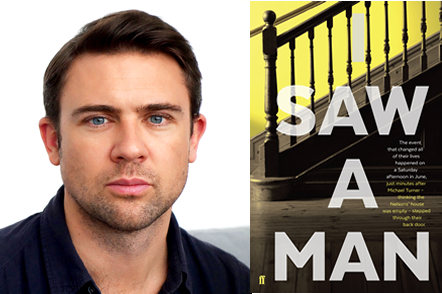
I saw a man

SHEERS I saw a man N Am ednLast week I was in Bloomington for the drones conference – more on that later – but while I was there I managed to finish Owen Sheers‘ new novel, I saw a man.  All of the reviews I’ve seen so far (and they have been very, very good: see here, here and here, for example) praise the way in which Owen so beautifully recovers the circles of grief that spiral from a drone strike on the Afghanistan-Pakistan border that accidentally killed a party of foreign journalists, including Caroline, the wife of the book’s narrator.  ‘Despite its “fire and forget” name tag,’ we are assured, ‘once a Hellfire had been released there would always be someone who never would.’

In fact, Owen and I had corresponded about the details of drone strikes and casualty investigations while he was working on the book, and he certainly treats mourning and memory with extraordinary skill and empathy.  Restricting the victims to those outside the region, apart from a local driver and interpreter, may make the task easier – much of the story plays out in Hampstead – but it’s still formidably difficult.

Owen-Sheers-I-Saw-a-Man

Yet the book is also, equally centrally, about distancing.  Michael is an author with a reputation for effacing himself from his narratives.  Towards the end, in a phrase that powers the book’s meta-fictional twist (and which in some editions is captured on a cover from which Sheers’ own name is absent), Michael is told:

 “Isn’t that what you’re always saying? You need distance to see anything clearly? To become your own editor.”

Even when he tries to lose himself in his fencing lessons, his instructor insists:

“DISTANCE! DISTANCE MICHAEL! It’s your best defence!”

And it is of course distance that is focal to the fateful drone strike.  Those most directly involved in the kill-chain are soon effaced from the official narrative:

“A U.S. drone strike.” That was all the press release said. No mention of Creech, screeners, Intel coordinator, an operator, a pilot. It was as if the Predator had been genuinely unmanned. As if there had been no hand behind its flight, no eye behind its cameras.

And those who were killed are artfully turned into the authors of their own destruction (a tactic that is routinely used on Afghan and Pakistani victims too), even sacrificed for a greater good (international humanitarian law’s vengeful doctrine of ‘necessity’):

[T]he Pentagon statement also made mention of the journalists “working undercover,” of “entering a high-risk area.” They had known, it was implied, the dangers of their actions. And, the same statement reminded the world, an influential terrorist had been successfully targeted. The weight of blame, Michael knew, from the moment it happened, was being dissipated, thinned.

But distance is not a moral absolute (one of the most egregious mistakes of critics of drone warfare: if you think it wrong to kill someone from 7,000 miles away, over what distance do you think it is acceptable?).  In a narrative arc that will be familiar to many readers, the pilot of the drone (Daniel) is haunted by what happened, and by the dismal intimacy of death.

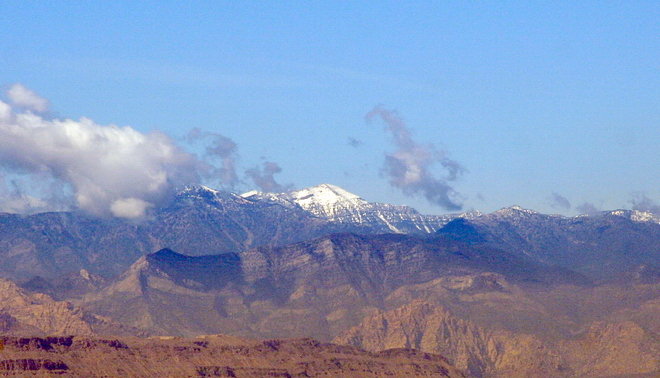
Charleston Mountains NV

Each morning, as he sets off from his home outside Las Vegas to drive to Creech Air Force Base, Daniel reflects on the similarity of the distant Charleston mountains to those over which he would soon be flying his Predator or Reaper.  It’s a common trope, actually: George Brant makes much of it in his play Grounded.  ‘Despite their proximity,’ though, Daniel hadn’t been into them and didn’t really know them.

They were his daily view but not yet his landscape, a feature of his geography but not yet his territory. Unlike those other mountains, 8,000 miles away. Those mountains Daniel knew intimately. He’d never climbed in them, either, but he was still familiar with the villages silted into their folds, the shadows their peaks threw at evening and the habits of the shepherds marshalling their flocks along their lower slopes. Recently he’d even been able to anticipate, given the right weather conditions, at what time the clouds would come misting down the higher peaks into the ravines of the valleys. Over the last few months he’d begun to feel an ownership over them. Were they not as much his workplace as that of those shepherds? For the troops operating in the area they were simply elevation, exhaustion, fear. They were hostile territory. But for Daniel they were his hunting ground, and as such it was his job not just to know them but to learn them, too. To love them, even, so that from the darkness of his control station in Creech, he might be able to move through their altitudes as naturally as the eagles who’d ridden their thermals for centuries.

It’s a brilliant paragraph, reflective and revealing, that captures the ways in which the pilot’s optical knowledge is transmuted into ‘ownership’, knowledge pinned to power, and distanced from the corpographies of troops on the ground for whom the mountains meant only ‘elevation, exhaustion, fear’ [see also here].  Daniel was freed from all that, soaring high above them, precisely because his territory appeared elsewhere.  If, as Stuart Elden suggests, territory can be conceived as a political technology that asserts a claim over bodies-in-spaces, then one of the most perceptive passages in I saw a man is the description of Daniel scanning ‘the territory of his screen (my emphasis)’…

Screen Shot 2015-07-11 at 12.48.14 PM

Distance, intimacy, experience: all mediated by political technology and in consequence highly conditional and always partial.  That is how the pilot is made free to pursue what Grégoire Chamayou calls his ‘man-hunting‘: because what appears on the screen is a target – not a man or a woman.

Or, as the book’s epigraph says: ‘I saw a man who wasn’t there….’