The Death of the Clinic

This is the fifth in a new series of posts on military violence against hospitals and medical personnel in conflict zones. It follows directly from my analysis of the situation in Syria here.

President Bashar al-Assad has consistently denied that his forces have attacked hospitals or doctors.  In an interview with SBS Australia on 1 July 2016 he asked his interviewer:

‘… the very simple question is: why do we attack hospitals and civilians?… No government in this situation has any interest in killing civilians or attacking hospitals. Anyway, if you attack hospitals, you can use any building to be a hospital. No, these are anecdotal claims, mendacious statements …’

president-al-assad-interview-sbs-australia-4

There are at least four answers to Assad’s disingenuous question (if you falter at the adjective, see here).

(1) Silencing the witnesses

When Widney Brown from Physicians for Human Rights testified at the Tom Lantos Human Rights Commission on 31 March 2016 she provided one clear and compelling rationale for Assad’s attacks on doctors:

‘… attacks on doctors silence particularly powerful witnesses. When the Syrian government denies its use of chemical weapons, cluster munitions, starvation, or torture, doctors can bear witnesses to these violations because they have seen and treated the victims.’
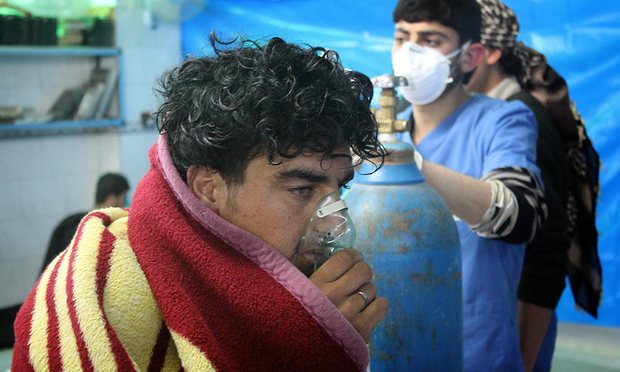
syrian-man-receiving-treatment-following-a-gas-attack

To be sure, there are other witnesses and even paper trails and photographic records.  Ben Taub, who has done so much to bring ‘Syria’s war on doctors‘ to the attention of a wider public, has also provided a detailed account of the work done by Bill Wiley and the Commission for International Justice and Accountability whose volunteers have smuggled over 600,000 documents out of Syria detailing mass torture and killings by the regime.
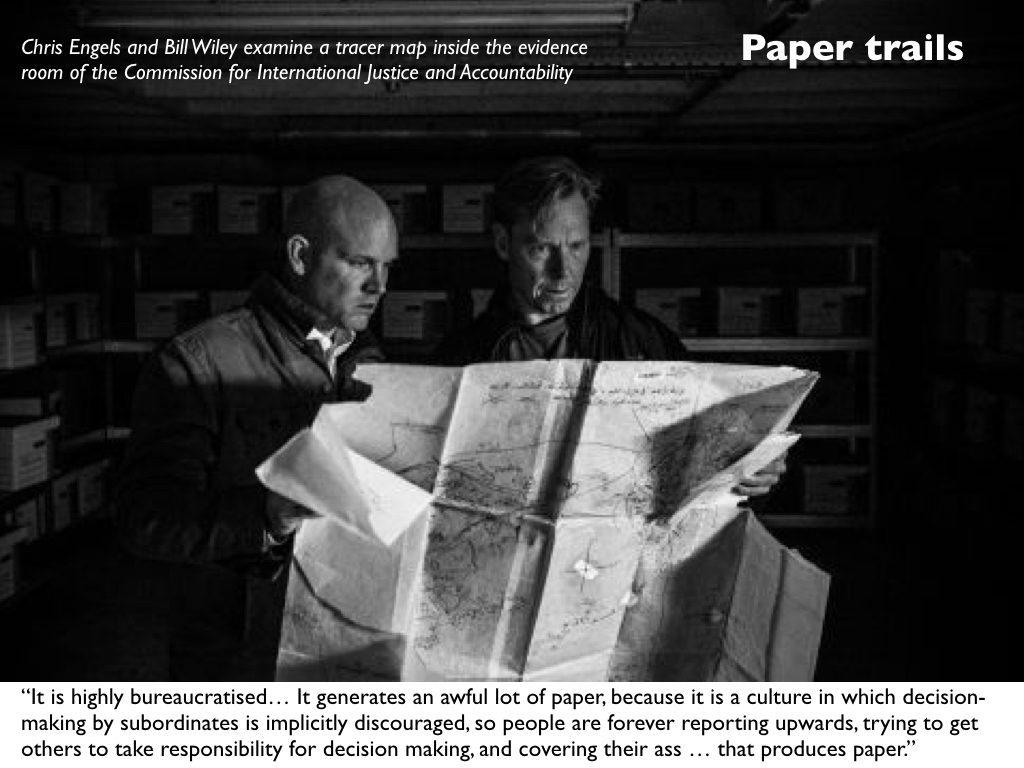
cija-syria-001

The war crimes have not been confined to attacks on hospitals in opposition-held areas.  A photographer known only as ‘Caesar’, who had been attached to the Defence Ministry’s Criminal Forensic Division, smuggled out thousands of high-resolution digital images exposing the horrors of the regime’s own military hospitals:

The pictures, most of them taken in Syrian military hospitals, show corpses photographed at close range – one at a time as well as in small groupings. Virtually all of the bodies – thousands of them – betray signs of torture: gouged eyes; mangled genitals; bruises and dried blood from beatings; acid and electric burns; emaciation; and marks from strangulation…

These unfortunates may have lived and died in different ways, but they were bound in death by coded numerals scribbled on their skin with markers, or on scraps of paper affixed to their bodies. The first set of numbers (for example, 2935 in the photographs at bottom) would denote a prisoner’s I.D. The second (for example, 215) would refer to the intelligence branch responsible for his or her death. Underneath these figures, in many cases, would appear the hospital case-file number (for example, 2487/B)…

[T]he system of organizing and recording the dead served three ends: to satisfy Syrian authorities that executions were carried out; to ensure that no one was improperly discharged; and to allow military judges to represent to families—by producing official-seeming death certificates—that their loved ones had died of natural causes. In many ways, these facilities were ideal for hiding “unwanted” individuals, alive or dead. As part of the Ministry of Defense, the hospitals were already fortified, which made it easy to shield their inner workings and keep away families who might come looking for missing relatives. “These hospitals provide cover for the crimes of the regime,” said Nawaf Fares, a top Syrian diplomat and tribal leader who defected in 2012. “People are brought into the hospitals, and killed, and their deaths are papered over with documentation.” When I asked him, during a recent interview in Dubai, Why involve the hospitals at all?, he leaned forward and said, “Because mass graves have a bad reputation.”

(2) Multiplying the casualties

This is a radicalisation of an old strategy.  As Sam Weber pointed out in Targets of opportunity (2005), ‘every target is inscribed in a network or chain of events that inevitably exceeds the opportunity that can be seized or the horizon that can be seen.’  So, for example, when the United States or Israel bombs a power plant it often as not explains that it has been careful to bomb in the small hours when only a skeleton staff was in the building in order to minimise collateral damage.  But this begs the question: why bomb the power plant at all?  In most instances the degradation of the electricity supply means that it becomes impossible to pump water or treat sewage; refrigerators fail and food perishes; hospitals are forced to use unreliable generators. The result – the intended, carefully calculated result – is that casualties rise at considerable distances from the target and over an extended period of time.

Similarly, Dr Abdulaziz Adel notes:  ‘Kill a doctor and you kill thousands.’  Simply put, patients who are sick or injured then go without treatment and in many cases their lives are put at risk.  (The images below are from Collateral Damage: more here).

syria_assad_war_crimes_murder_bomb67

syria_assad_war_crimes_murder_bomb15

syria_assad_war_crimes_murder_bomb37

Dr Rami Kalazi, a neurosurgeon from East Aleppo, agrees:

‘They are the artery of life in the city. Can you imagine a life in city without hospitals? Who will treat your kids? Who will make the surgeries for the injured people? So, they are targeting these hospitals because they know, if these hospitals were completely destroyed, the life will be completely destroyed.’

(3) ‘Moral[e] bombing’

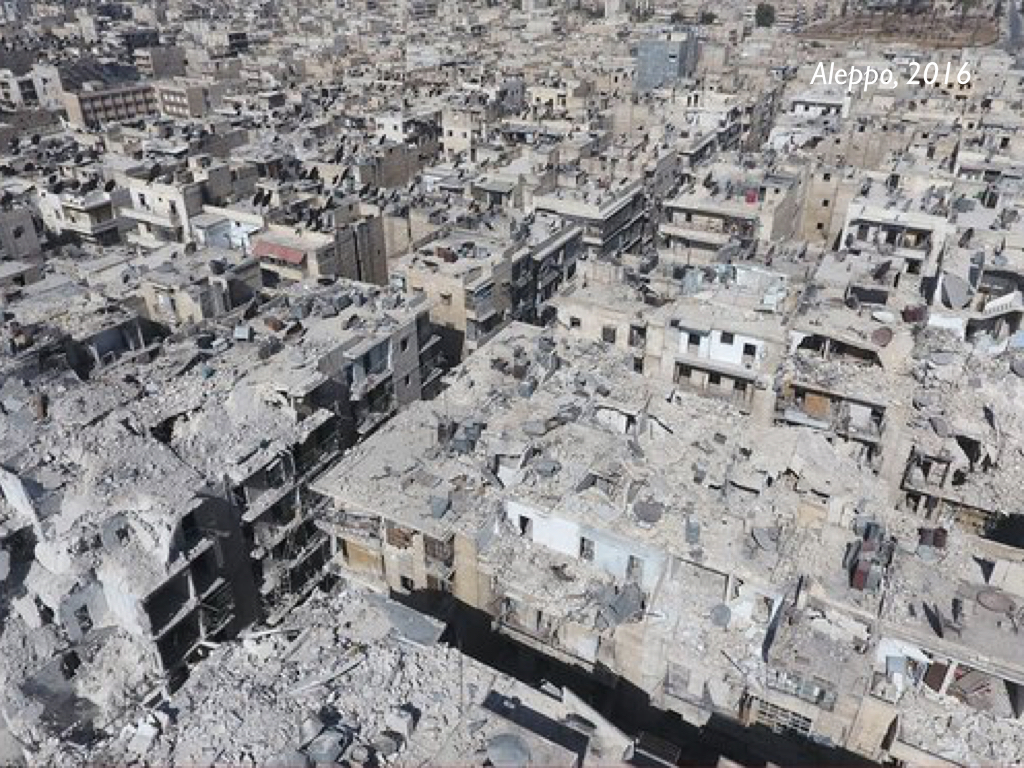
This too is an old strategy.  The architects of ‘area bombing’ during the combined bomber offensive against Germany during the Second World War described it as ‘moral [sic] bombing’: a sustained and systematic attempt to undermine the morale of the enemy population so that they would demand their leaders sue for peace.  If this was a tried and tested strategy, however, the test showed that it was a complete failure (see my ‘Doors into nowhere’: DOWNLOADS tab).
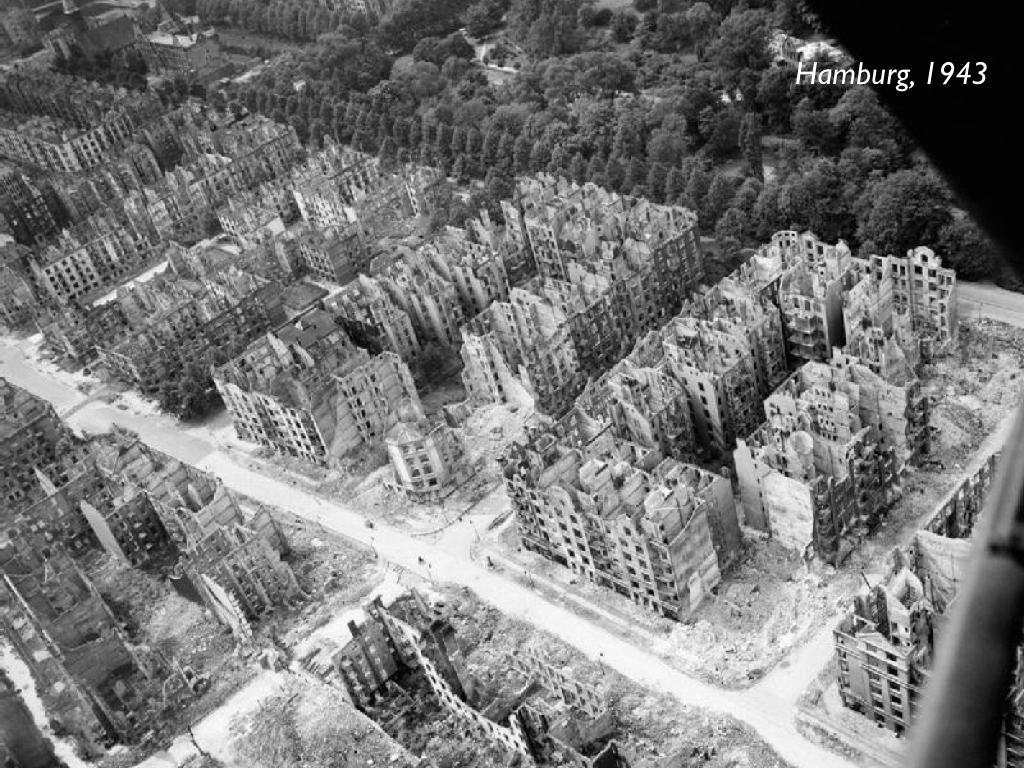
morale-bombing-001

morale-bombing-002

But the lesson was lost in Syria, where attacks on hospitals have had a central place.  As Samir Puri argues, the strategy behind the joint Syrian and Russian air campaign seems to be:

“If there is a total collapse of any kind of trauma care, those are the sort of things that can contribute to collapsing morale very suddenly. The morale of a besieged force can look robust until it collapses.”

And Syria is not unique in contemporary wars: Israel has deployed the same strategy in its repeated assaults on Gaza (see here, here and here for ‘Operation Protective Edge’ in 2014), and the Saudi-led coalition has attacked more than 70 hospitals and health facilities in Yemen since March 2015 (in this latter case Russian media have reported MSF’s objections to the ‘utter disregard for civilian life’ without dissent: see for example here).

flashback-gaza-2014-001

‘Preventing medicine’, as Annie Sparrow puts it, has become ‘a new weapon of mass destruction’.

(4) ‘Violence legislates’

Following the attack on the UN aid convoy delivering supplies to a Syrian Red Crescent warehouse outside East Aleppo on 19 September 2016, 101 humanitarian organisations issued a joint appeal to the United Nations on 22 September; in part it read:

‘Deliberate attacks on humanitarian workers and civilians are war crimes. This must mark a turning point: the UN Security Council cannot allow increasingly brazen violations of international humanitarian law to continue with impunity.

‘Heads of state are gathered in New York this week for the United Nations General Assembly. Each one that accepts a lack of accountability for perpetrators and facilitators of war crimes colludes in the ongoing dissolution of international humanitarian law’ (my emphases).

The first paragraph is damning enough.  Ben Taub in the New Yorker again:

Nowhere has the supposed deterrent of eventual justice proved so visibly ineffective as in Syria. Like most countries, Syria signed the Rome Statute, which, according to U.N. rules, means that it is bound by the “obligation not to defeat the object and purpose of the treaty.” But, because Syria never actually ratified the document, the International Criminal Court has no independent authority to investigate or prosecute crimes that take place within Syrian territory. The U.N. Security Council does have the power to refer jurisdiction to the court, but international criminal justice is a relatively new and fragile endeavor, and, to a disturbing extent, its application is contingent on geopolitics.

But the sting comes in the second paragraph.  As I’ve noted before, international humanitarian law is not a neutral court of appeal, a deus ex machina above the fray, but has always been closely entangled with military violence.  In many respects it travels in the baggage train, constantly pulled by the trajectory of the very violence it supposedly seeks to regulate (or facilitate, depending on your point of view).  In short, as Eyal Weizman has it, ‘violence legislates‘.

There is good reason to fear that the systematic violation of medical neutrality is intended to force its dissolution.  Thomas Arcaro writes: ‘Humanitarian principles like neutrality and impartiality that once seemed so self-evident have been drawn into question, especially on the politically and ethnically complex battlefields of Iraq and Syria.’

And not only there.  In the case of the US airstrike on the MSF Trauma Centre in Kunduz in 2015, I’ve suggested that some key Afghan officers and politicians chafed at the protections afforded to wounded Taliban combatants by international humanitarian law.  They also alleged that the Trauma Centre had breached its conditional immunity because the Taliban had overrun the hospital and were firing at US and Afghan forces from its precincts.  There is no evidence to support that assertion, but it is an increasingly familiar claim.  On 7 December 2016 US Central Command justified a ‘precision strike’ requested by Iraqi forces on a building within the al-Salem hospital complex in Mosul by claiming that IS fighters had used it as a base to launch heavy and sustained machine-gun and rocket-propelled grenade attacks.  That would certainly have compromised the hospital’s immunity, but international humanitarian law still requires a warning to be issued before any attack and a proportionality analysis to be conducted; Colonel John Dorrian said that the US Air Force did not ‘have any reason to believe civilians were harmed’ but conceded that it was ‘very difficult to ascertain with full and total fidelity’ whether any medical staff or patients were in the building at the time of the air strike.

But what the Syrian case suggests is a new impatience with medical neutrality tout court: not only a hostility towards the treatment of wounded and sick combatants but also an unwillingness to extend sanctuary to wounded and sick civilians.

people-on-war-2016

And that reluctance is not confined to the Assad regime and its allies.    A survey carried out for the International Committee of the Red Cross between June and September makes for alarming reading – even once you’ve overcome your scepticism about public opinion polls.  As Spencer Ackerman reports:

Areas in active conflict record greater urgency over questions of civilian protection in wartime than do the great powers that often conduct or participate in those conflicts. In Ukraine, 83% believe everyone wounded and sick during a conflict has a right to health care, compared with 62% of Russians. A full 100% of Yemenis endorse the proposition, as do 81% of Afghans, 66% of Syrians and 42% of Iraqis – compared with 49% of Americans, 53% of Britons, 37% of the Chinese and 67% of the French.

It’s that last clause that is so disturbing: for the last four states listed are all permanent members of the UN Security Council…

So what, then, are we to make of what I’ve been calling ‘the exception to the exception’?

The exception to the exception
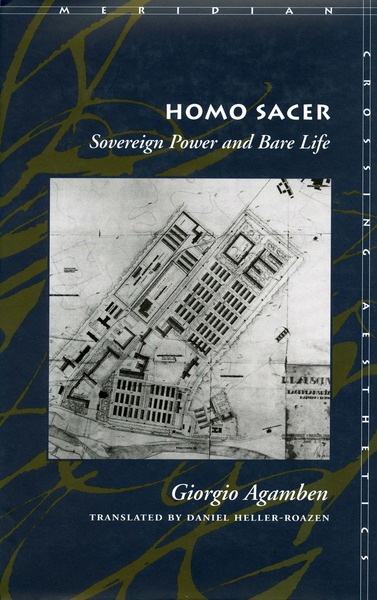
homo-sacerI think it’s a mistake to treat ‘the camp’, following Giorgio Agamben‘s vital work, as the exemplary, diagnostic site of the modern space of exception; the killing fields of today’s wars (themselves spaces of indistinction, where it is never clear where war stops and peace begins, where the geometry of the battlefield or, better, ‘battlespace’ becomes ever more fractured and blurred, and where the partitions between international and internal conflicts have been reduced to rubble) are also spaces within which groups of people are deliberately and knowingly exposed to death through the removal of legal protections that would ordinarily be afforded to them.  In short, killing and injuring become legally permissible.

Those exposed groups include both combatants and civilians, but their fate is not determined solely by the suspension of national laws (the case that concerns Agamben) because international humanitarian law continues to afford them some minimal protections.  One of its central provisions has been medical neutrality: yet if, through its serial violations in Syria and elsewhere, we are witnessing the slow ‘death of the clinic’ – which I treat as a topological figure which extends from the body of the sick or wounded through the evacuation chain to the hospital itself – and the extinction of ‘the exception to the exception’, the clinic as a (conditionally) sacrosanct space – then I think it’s necessary to add further twists to Agamben’s original conception.

As Adia Benton and Sa’ed Ashtan have argued, medical neutrality – the exception to the exception – represents a fraught attempt to restrict the state’s recourse to military violence: it is a limitation on and has now perhaps become even an affront to sovereign power and the state’s insistence that it is ‘the sole arbiter of who can live and who can die’.

Agamben describes the inhabitants of the space of exception as so many homines sacri – where sacer has the double meaning of both ‘sacred’ and ‘accursed’ – and it may be that in today’s killing fields doctors, nurses and healthcare workers are being transformed into new versions of homo sacer: once ‘sacred’ for their selfless devotion to saving lives, they are now ‘accursed’ for their principled dedication to medical neutrality.
 

homo-sacer_lode-kuylenstierna_press_gun

Yet the precarity of their existence under conditions of detention and torture, siege and airstrike, has not reduced them to what Agamben calls ‘bare life’.  They care – desperately – whether they live or die; they have improvised a series of survival strategies; they have not been silent in the face of almost unspeakable horror; and they have developed new forms of solidarity, support and sociality.

bodies-in-alliance-001

War Stories

War Stories poster JPEG 1

Thursday 15 September 7 – 9.30 p.m. on the Goldcorp Stage at the BMO Theatre Centre – 162 West 1st Avenue, Vancouver:

War stories from Afghanistan, Iraq and other conflict zones told by foreign correspondents, combat veterans and scholars.

Award-winning Iraqi-Canadian photojournalist Farah Nosh and writer/photographer Ann Jones will share images and stories of the impact of war on civilians. Wall Distinguished Professor and geographer Derek Gregory will discuss changes in the evacuation of war casualties from battlefields over the past century. Contact! Unload, a play directed by Wall Scholar George Belliveau, will feature Canadian veterans depicting what it means to transition home after overseas service. The play highlights Marv Westwood’s Veteran’s Transition Program and artist Foster Eastman’s Lest We Forget Canada! mural. Moderated by Emmy Award winning journalist Peter Klein.

Following the presentations the performers will engage with the audience in a discussion about the different perspectives and approaches to sharing war stories, and the value of storytelling’s ability to chronicle, enlighten and heal.

Register here (free).  I’m really excited about this – I admire the work of Farah Nosh and Ann Jones enormously, I’m looking forward to the extracts from Contact! Unload – I’m still thinking about Rosie Kay‘s Bodies on the line and Owen Sheerswonderful work in a similar vein – and Peter Klein will be a wonderful interlocutor.  Do come if you can.

UPDATE:  We’re sold out, but there is a wait list.  And you can find more on WAR STORIES from the wonderful Charlie Smith at the Georgia Straight here.

#PortesOuvertes

Like many other people, I’ve been trying to make sense of the horrific attack in Nice on 14 July. I’ve delayed writing about it because so much remains unknown – though that has not stopped a cascade of malignant certainties spewing from those on the Right who see every event as an opportunity to foment fear, harness hatred and deepen division.

A Tunisian man with no known history of political activism or religious affirmation kills 84 people by deliberately driving a truck through crowds along the Promenade des Anglais who were celebrating Bastille Day; a man who lived on the margins with a record of petty crime and domestic abuse; somebody with precious few resources, yet able to rent a truck and acquire weapons; and a claim to have ‘inspired’ the attack from Islamic State, which then hailed him as a ‘soldier’.

No wonder that Peter Beaumont agonises over ‘a new kind of terror – one we can’t define‘, where the systematic recruitment, training and organisation of other terrorist attacks bleeds into the savage violence of the ‘lone wolf’ prowling undetected in the darkness.  The incorporation and adulation of individuals and small groups with no previous connection to IS or other jihadi groups reverses what he calls the standard ‘polarity of responsibility: encouraging acts of violence that it accepts as bloody tributes thrown at its feet.’

The link with petty crime is not surprising.  Scott Atran notes that

Serious jihadi involvement with petty criminal networks began after the September 11 attacks as an unintended consequence of the ability of the United States and allies to cut off the flow of funding to suspect groups, especially through Islamic charities. So al-Qaeda and others began looking for funding and arms in criminal networks instead. And in these networks there were large numbers of marginalized immigrant youth, especially in France.

Indeed, Joseph Micallef makes a plausible case for IS expanding its involvement in criminality as its territorial hold on Iraq and Syria comes under intensifying assault: ‘The smuggling networks that are used to bring in armaments and militants can be just as easily be used to traffic in drugs and illegal immigrants.’  His inclusion of ‘illegal immigrants’ should give us pause for thought; I have no idea if he intends this to include refugees from the turmoil in Iraq, Syria and Libya (it shouldn’t).  But to the extent that IS is involved in human trafficking then this is a double victimisation of its prey.

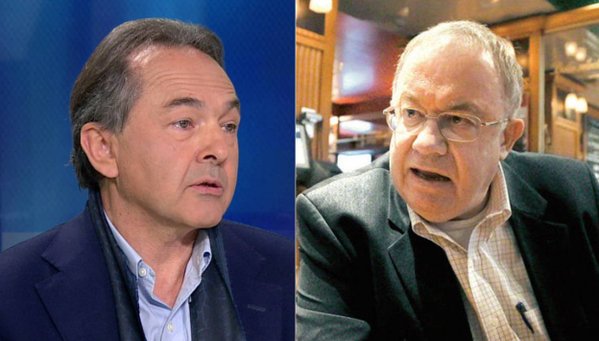
All of this may be granted; but a causal link between Lahouaiej-Bouhlel’s murderous drive through crowds of innocent people and the designs of IS or any other radical version of political Islam is proving remarkably elusive.  There is a wider debate in France about whether the terrorism serially inflicted upon its people is at root about ‘the radicalization of Islam’ (Gilles Kepel – below left) or the ‘Islamicization of radicalism’ (Olivier Roy – below right) – there is a good summary here – but in this instance it is far from clear that either of them is relevant.

Gilles Keppel and Olivier Roy

Indeed, Farhad Khorokhavar, a sociologist at the École des Hautes Etudes en Sciences Sociales, doubts that ‘radicalisation’ is the appropriate term at all:

“I don’t think he was radicalised at all… It’s a case of raw violence. He took a decision to kill in a moment of despair. My guess is that it’s much more like a mass shooting in the US than [Islamist] radicalisation.”

He speaks instead of ‘mimetic violence’, where previous attacks have furnished ‘a model that fragile people can imitate.’

So I don’t know whether the atrocity in Nice can be attributed to IS or not – but I have no doubt that the precipitate rush to do so has substantive consequences.

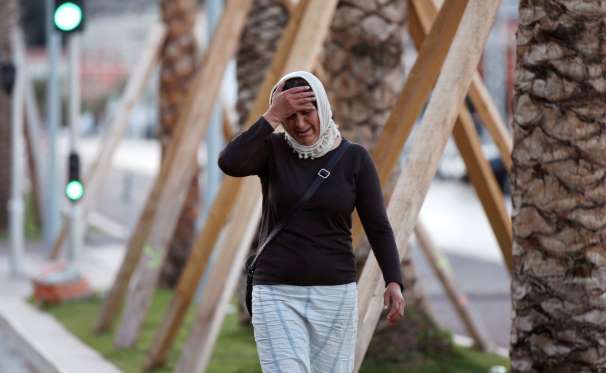
One place to start thinking critically about them is this photograph of a woman consumed by grief as she searches for her son after the attack:

Nice July 2016

The image serves to remind us that – if, to repeat, this does prove to be an attack whose trail can be traced back, however indirectly, to the dismal doors of Islamic State – the victims of such atrocities include people of many cultures and faiths.  Theirs is not a ‘war’ against a single, monolithic enemy; Nice is far from being a homogeneous city – like France, like the rest of Europe – and Alissa Rubin captures what she calls its ‘many-layered’ geography better than most:

There is the Nice of popular imagination, the old-world resort dotted with palm trees and cafes that look out on the Mediterranean Sea, suffused with an incandescent light prized for centuries by artists.

Then there is the other Nice, one that begins to show its face a few blocks inland from the seaside Promenade des Anglais, the majestic arc of a boulevard where 84 people were killed by a 31-year-old Tunisian immigrant at the wheel of a 19-ton truck. This Nice is home to many Muslim immigrants from North Africa, including a secular middle-class that has lived alongside non-Muslim French, and is also a place that local officials estimate has sent as many as 100 young people to fight in Syria with extremists.

“It is rare that these two worlds mix with each other except at the moment of festivities or of agreement, like the gatherings on Saturday,” said Feiza Ben Mohamed of the Muslims of the South, an organization that fights radicalization, referring to the public mourning for those killed in the truck attack.

“Yet the first victim was Muslim, and a good number of the victims were Muslims,” Ms. Mohamed added. “Just yesterday I was on the promenade reflecting on what had happened, and a journalist asked me if I was there to apologize in the name of Muslims. I said to him, ‘No, I came to weep for the dead like everyone else.’”

You can read another (short) essay by Farhad Khorokhavar on these divisions in France, ‘Jihad and the French exception’, here.  In Nice they have been intensified, not only by recruiters for the butchery in Syria – and there is no doubt of their success in Nice: Alpes-Maritimes was one of the first French départements to implement a counter-radicalisation strategy of sorts – but also by the advance of the far right National Front, and no doubt by memories of France’s colonial adventures in North Africa and the Levant and its deepening military involvement in Syria.

For now, France seems under repeated attack: the Charlie Hebdo murders in Paris in January 2015; the attacks on the Bataclan and other public places in Paris last November; and now the murder of more than 80 people in Nice.

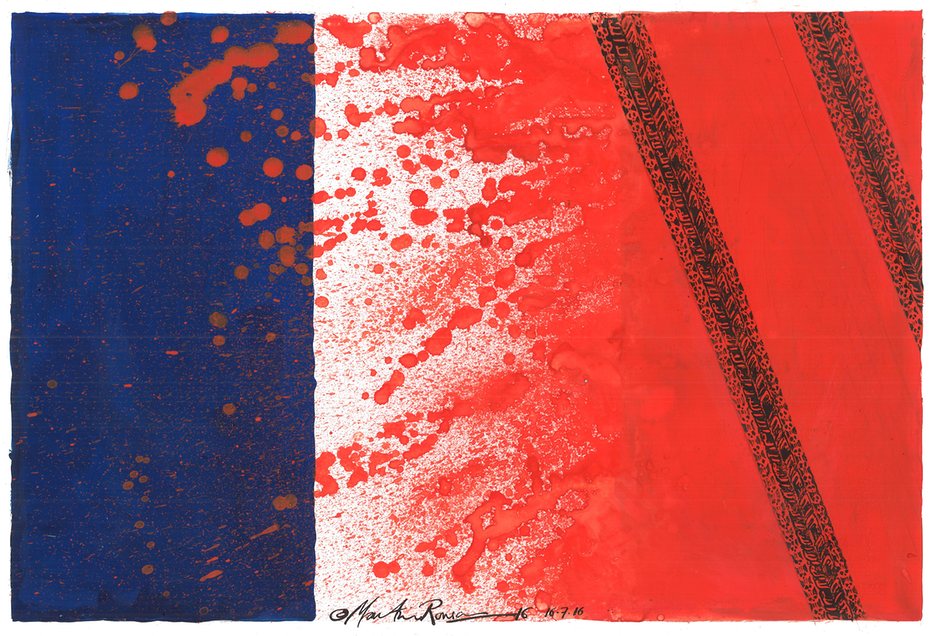
Martin Rowson cartoon Guardian

Each of these mass murders is truly, wrenchingly shocking: but those of us who live in Europe or North America cannot afford to allow those shock-waves to be refracted by geography because this would erect the bloody partition that is one of IS’s central objectives.  Nihilism meets narcissism.

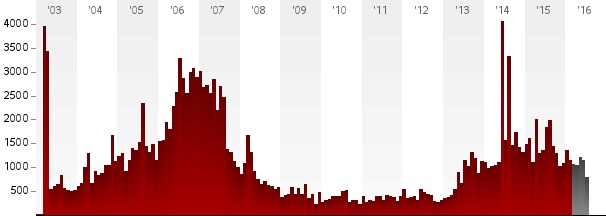
I made much the same point about Paris and Beirut last year.  Now we might twin Nice with Baghdad. Like Nice – like all cities worthy of the name – Baghdad is far from homogeneous, for all the ethno-sectarian ‘cleansing’ that occurred during the US occupation (see my account of ‘The Biopolitics of Baghdad’: DOWNLOADS tab), and those tensions continue to roil.  The truck bombing and subsequent fire that killed 300 people in the Karrada district as they broke their Ramadan fast at the end of the day on 3 July may have seemed like the ‘new normal’ to commentators watching the rising tide of violence in post-occupation Iraq; it too was claimed by IS.  So too many of us doubtless shrugged our shoulders.

Documented civilian deaths from violence in Iraq 2003-July 2016 (Iraq Body Count)

Documented civilian deaths from violence in Iraq 2003-July 2016 (Iraq Body Count)

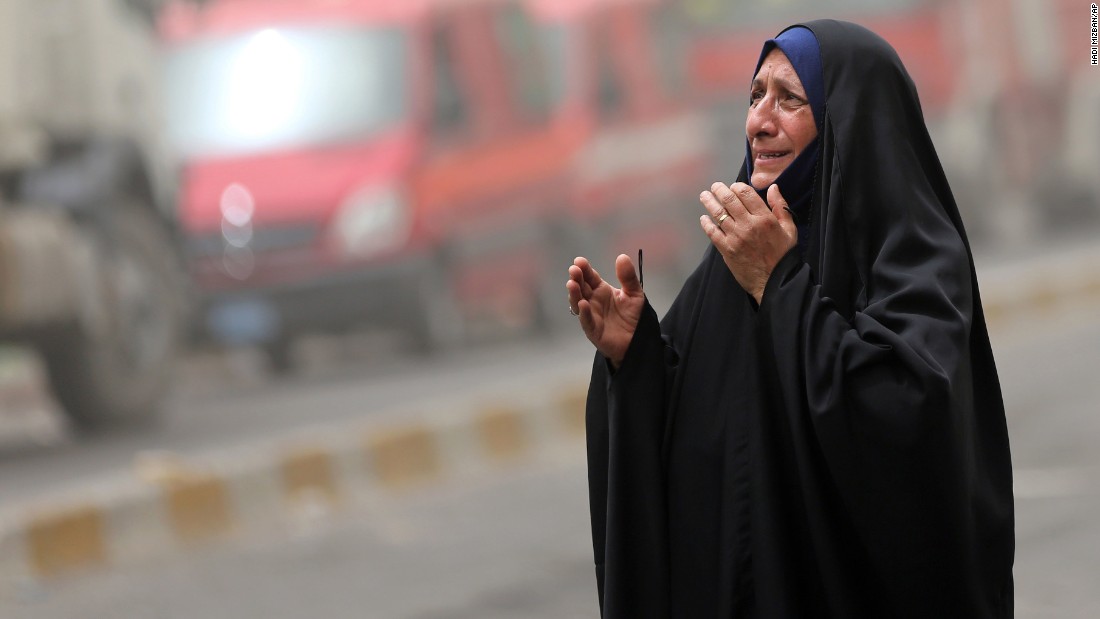
And yet, as Walaa Chahine so movingly testified after another bombing there on 12 July, ‘We may be used to bombings in Baghdad, but Baghdad isn’t‘:

We are used to it, so we don’t make hashtags, change our profile pictures, or memorize their names. By taking away these rights away from them, and yes, they have become rights, as long as other victims are given them, we are taking away their connection to us as humans. We forget that we would probably never get used to having our hometowns bombed every day, that just like us, they are humans who don’t forget, can’t forget.

No, the eleven people killed today weren’t used to dying. The 292 killed last week were not used to it. Their families will never get used to it. No matter how long you spend in a war area, you never get used to it. Ask a soldier, ask a refugee, ask someone who experiences violence and pain on the daily if they ever truly get used to it. We might be able to tune out their screams, but we weren’t the ones screaming in the first place.

Iraqi woman grieving in Karrada July 2016

And so, as this contrapuntal geography shows, it bears repeating – until even the tone-deaf Donald Trump gets it – that most of the victims of Islamic State’s terrible violence are other, innocent Muslims.  And they live – and die – outside Europe and North America too.

More terror from the skies

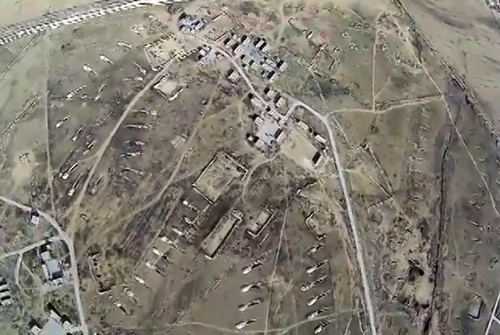
IS drone imagery Syria

Commentators have been worrying away at the likelihood of terrorist groups turning to small commercial drones not only for surveillance – IS have been doing that for some time now (see the image above) – but also for air strikes (see, for a recent example, Robert J Bunker‘s report for the US Army War College here).  The surveillance capabilities of quadcopters have been used to direct attacks by IS ground forces, including vehicles carrying suicide bombs, but the Pentagon now reports that the drones have also been equipped with improvised explosive devices (IEDs).

In response, the Pentagon has asked for $20 million for its Joint Improvised-Threat Defeat Agency to develop counter-measures: to ‘identify, acquire, integrate and conduct testing’ of methods that are able to ‘counter the effects of unmanned aerial systems and the threats they pose to U.S. forces.’

Perhaps they should also look closer to home.  Two men in Connecticut have contested the right of the Federal Aviation Administration to investigate their use of ‘recreational drones’ equipped with a handgun and a flamethrower.  Here’s a video clip:

And other commentators are already looking beyond war zones: systems like these enable groups like IS – and individuals – to carry the fight far beyond the territory they control and into the heart of cities in North America, Europe and elsewhere.

‘Dearer to the Vultures’

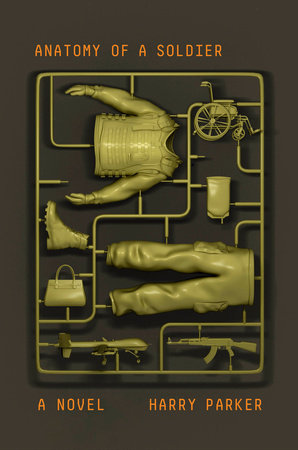
Over at the Paris Review Scott Beauchamp has a beautiful short essay that complements my own reading of Harry Parker‘s Anatomy of a Soldier: ‘Dearer to the Vultures‘.

Here’s how it begins:

My memories of war are fractured: faces disappear like smoke while literal plumes of smoke, their specific shapes and forms, linger on vividly for years. I remember the mesh netting, concrete, and dust smell of tower guard, but the events of entire months are completely gone. I remember the sound of a kid’s voice, but not anything he actually said. I guess that’s what Tim O’Brien meant when he wrote about Vietnam, “What sticks to memory, often, are those odd little fragments that have no beginning or end.”

Parker Anatomy of a soldierMemories of people, too complex to carry through the years, fall apart. It’s easier to find purchase on memories of objects. The weapon I was assigned on my first deployment to Iraq was an M249 SAW, or what we would colloquially and inaccurately refer to as the “Squad Assault Weapon.” I remember the way it felt to disassemble—the slight give of the heat-shield assembly, its tiny metal pincers clinging to the barrel. I remember the sound of the feed tray snapping shut on a belt of ammunition. And I remember the tiny rust deposits on the legs of my weapon’s bipod, which would never go away, no matter how hard I scrubbed with CLP (Cleaner, Lubricant, and Protectant oil). I remember my SAW’s voice and the things it said.

During my second deployment, I served as the gunner in a Bradley Fighting Vehicle. We ran over two Soviet-era landmines that had been stacked on top of each other. Besides a few bruises and perforated eardrums, everyone in the crew was fine. When I would try to tell people the story back home, civilians would get caught up on the descriptions of objects they had never heard of, objects that were integral to understanding my experience of the event. “Were you hurt?” Not really, I’d say, but my head slammed against the ISU, and since we had the BFT mounted in a weird place, that sort of got in the way. “What’s an ISU and a BFT?”

I came to realize that the barrier in explaining my injuries to civilians wasn’t quite phenomenological so much as it was ontological. Everyone has experienced pain, fear, and frustration, but not everyone knows what an Integrated Sight Unit is or has had their face slammed into one. Even in just trying to narrate the events to family members, it seemed like any understanding of my trauma would have to come through a knowledge of the materials around me that made the trauma possible: the ISU, the Bradley Fighting Vehicle, the way the tracks moved, the type of soil underneath the tracks, how the mine mechanism worked, the radios we used to call in the explosion to base.

Harry Parker, a former British Army Captain, recently published Anatomy of a Soldier, a novel that puts forward an object-oriented ontology of war: an assertion that the material objects sharing the battleground with humans play an equal role in the composition of reality itself.

And the rest is equally worth reading, including some interesting reflections on ‘the rush from the intimate to the inanimate’ –and its limitations.

I first wrote about Anatomy of a Soldier here, followed it up with a notice of an interview with Harry Parker at the Imperial War Museum here (where I’m currently working, deep in the Research Room), and finally summarised my conference presentation on the book and its implications in San Francisco here (‘Object Lessons’: the presentation slides are available under the DOWNLOADS tab).

Grim Reapers

cegrab-20160505-002509-0-1-589x442

Sky News has a report on Launch & Recovery crews responsible for US/UK drone operations against IS in Iraq and Syria based “somewhere in the Middle East”.

Much of it will be all too familiar to most readers:

Relentlessly watching their prey. Monitoring every movement a high profile Islamic State target makes.

In the words of the American officer I speak to, “we are the unblinking eye”…

“We are going to be on that target as long as the weather allows and as long as the mission allows.

In many cases there is more than one asset on that individual.

“You know when he’s going to go to the bathroom, you know when he’s going to go to eat, you know when he’s going to go to prayer time.

“You know where he goes, his associates.

“That’s all about building that picture so that we know and we can project when he’s going and where he’s going to be.”

But the video embedded in the report repays close attention, not least for the brief glimpses of the video feeds from the drones themselves.

Drone airborne JPEG

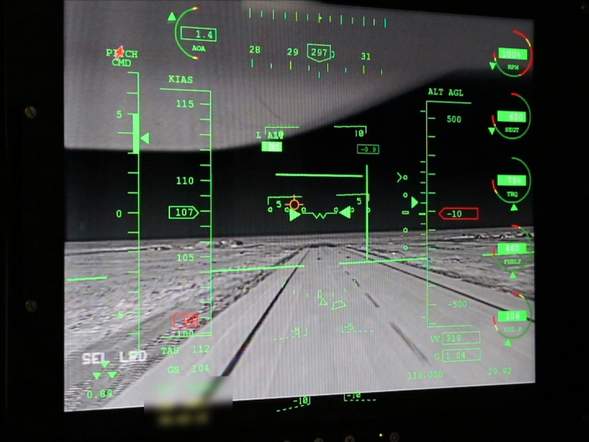
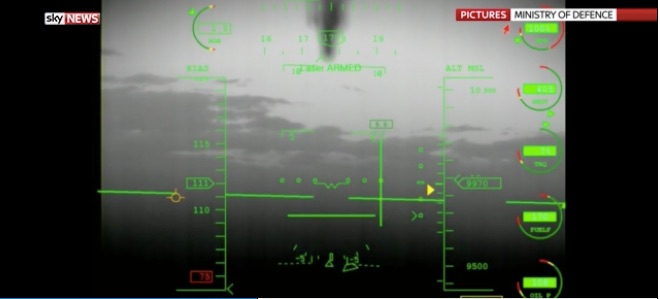
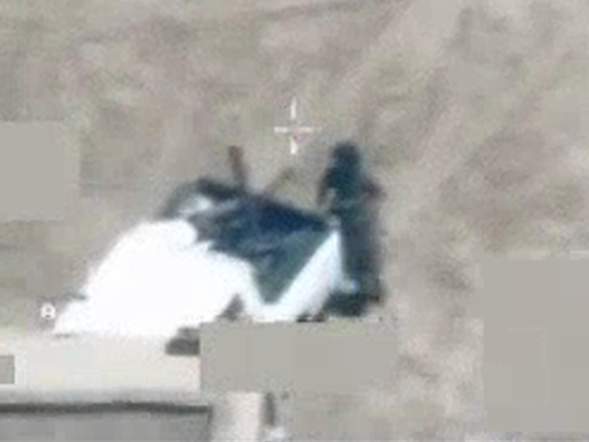
The first two images (above) are clips from the video used by the pilot to control the aircraft – a view of the runway before take-off and an airborne view before control is handed off to the crew who will fly the assault mission from ground control stations in either the US or the UK – while the third (below) is from the imagery used to identify a ‘possible target’.  The comparison between this last image and the equally ‘High Definition’ imagery released from an Italian MQ-9 Reaper late last year is instructive: see my post here.

cegrab-20160505-002219-0-1-589x442

You can find updates on the UK campaign in Iraq and Syria at Drone Wars UK here and here.

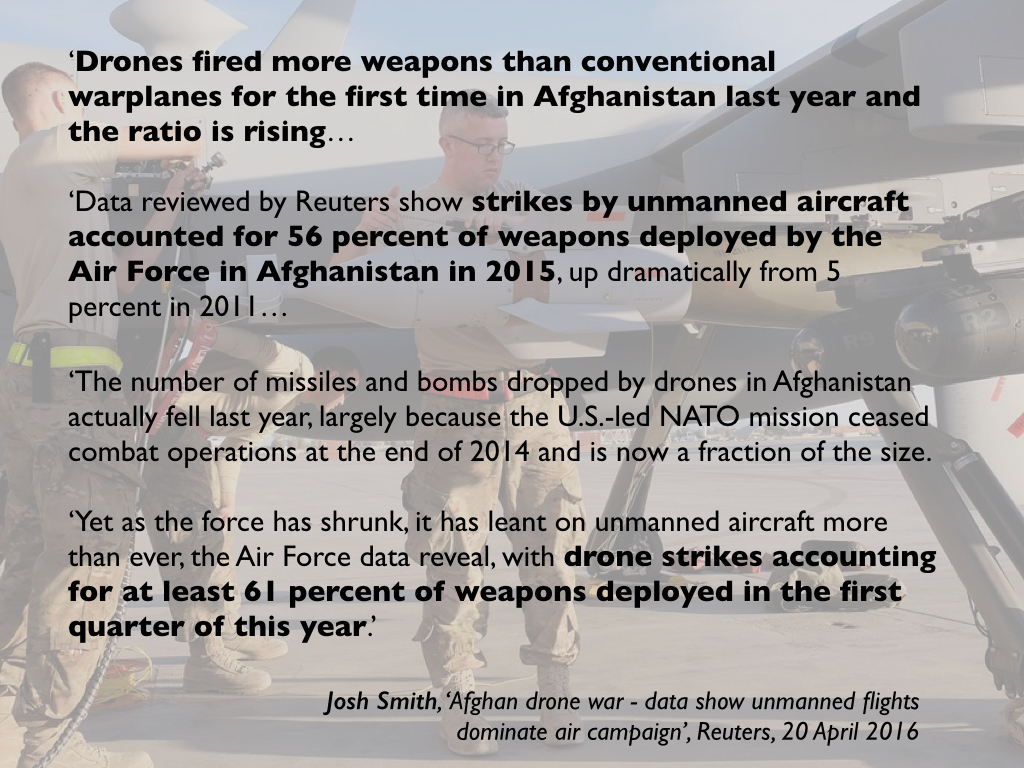
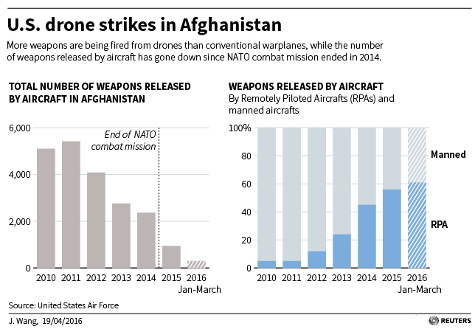
As Chris Cole reports there, too, the use of remote platforms [RPAs] to strike targets in Afghanistan has increased dramatically following the draw-down of US and NATO forces:

Drones in Afghanistan 2016.001

afghanistan-drones-sized

It is surely not coincidental that last month the US Air Force renamed eight of its RPA reconnaissance squadrons ‘attack squadrons’:

‘Eight RPA reconnaissance squadrons [based at Holloman AFB in New Mexico, Whiteman AFB in Missouri, and Creech AFB in Nevada] will be redesignated as attack squadrons [and]… Air Force Chief of Staff Gen. Mark A. Welsh III authorized RPA aircrews to log combat time when flying an aircraft within designated hostile airspace, regardless of the aircrew’s physical location.

The changes were two of many recommendations that emerged as part of Air Combat Command’s Culture and Process Improvement Program, which seeks to address a number of issues affecting operations and the morale and welfare of Airmen across the RPA enterprise….

“Aerial warfare continues to evolve. Our great RPA Airmen are leading that change. They are in the fight every day,” Welsh said. “These policy changes recognize the burdens they bear in providing combat effects for joint warfighters around the world.”’

Anatomy of a war

PARKER Anatomy of a soldier

‘He straightened and held me in one hand.  “Right, orders for tomorrow’s operation,” he said.   “We’re deploying most of the company for the first time and the whole platoon’s out together.  It’s a standard route security operation for the logistics convoy bringing in our supplies.  There’s nothing complicated about this patrol, but we’ll be static for long periods and that will make us vulnerable.  We have to clear all the roads in our AO and then secure it so the convoy can travel safely through.”  He moved his hand up my shaft and used me to point at the flat ground.

“Is everyone happy with the model?” he said.

There were a few silent nods from the watching men.

“Just to orientate you again.  This is our current location.”  He pointed me at a tiny block of wood near the centre of the grid that had PB43 written on it in peeling blue paint.  It was the largest of a hundred little wooden squares placed carefully across the earth and numbered in black.  “This is Route Hammer.”  He moved my end along a piece of orange ribbon that was pinned into the dirt.  “And this blue ribbon represents the river that runs past Howshal Nalay.”  I swept along the ribbon over a denser group of wooden blocks.  “These red markers are the IED finds in the last three months, so there’s quite a few on Hammer.”  I hovered over red pinheads…

He started describing the plan and used me to direct their attention to different parts of the square.  He said their mission was to secure the road and then provide rear protection.  He told them how they would move out before first light and push along the orange ribbon, past the blocks with L33 and L34 written on them.  I paused as he explained how vulnerable this point was, and that one team would provide overwatch at the block marked M13 while others cleared the road.

I was pointed at one of the men, who nodded that he understood.

He told them how they would spread out between block L42 and the green string.  Two other platoons would move through them and secure the orange ribbon farther up.  Then he swept me over the zones they were most likely to be attacked from.  He said the hardest part of the operation was to clear the crossroads at the area of interest named Cambridge; this was 6 Platoon’s responsibility.  I hovered over where the orange ribbon was crossed by white tape.
I had done it all before: secured sections of the ribbon, dominated areas of dirt, reassured little labels, ambushed red markers and attacked through clusters of wooden blocks.  I had destroyed as my end was pushed down hard and twisted into the ground.  I’d drawn lines in the sand that were fire-support positions and traced casualty evacuation routes through miniature fields.  I was master of the model.’

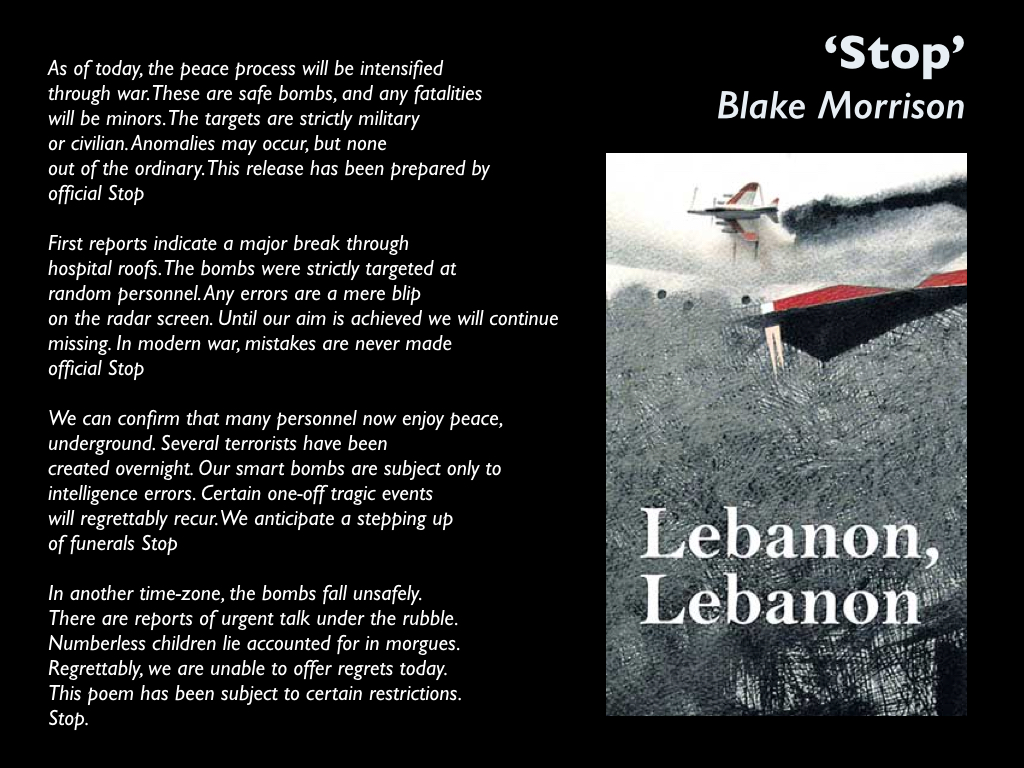
This passage comes from Harry Parker‘s stunning novel about the war in Afghanistan, Anatomy of a soldier (Faber, 2016).

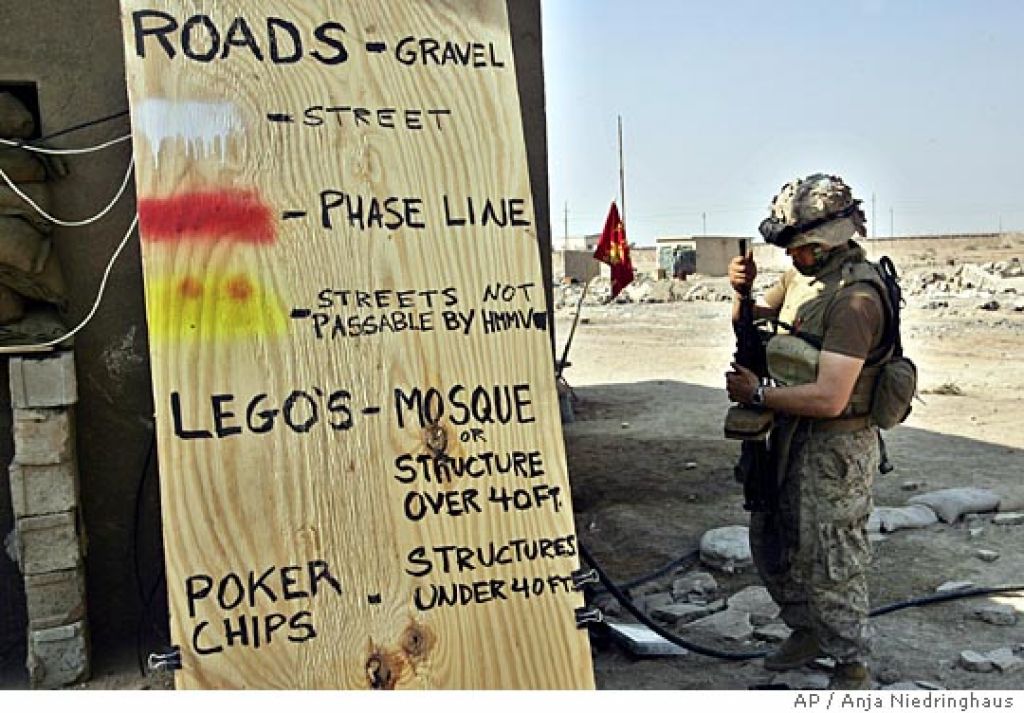
In one sense, perhaps, it’s not so remarkable: the use of improvised physical models to familiarise troops with the local terrain is a commonplace even of later modern war.  In Rush to the intimate (DOWNLOADS tab) I described how in November 2004, immediately before the second US assault on Fallujah, US Marines constructed a large model of the city at their Forward Operating Base, in which roads were represented by gravel, structures under 40′ by poker chips and structures over 40′ by Lego bricks (see image below). Infantry officers made their own physical model of the city using bricks to represent buildings and spent shells to represent mosques.

Fallujah model

I called this a ‘rush from the intimate to the inanimate’, and discussed the ways in which the rendering of the city as an object-space empty of life was a powerfully performative gesture – one in which, as Anne Barnard put it, the soldiers straddled the model ‘like Gulliver in Lilliput’.

As the passage I’ve just quoted suggests, it was standard practice in Afghanistan too; here are soldiers from the Afghan National Army studying a model for Operation Tufan/Storm, a joint ANA/UK operation in Helmand:

Afghan Warriors Tackle Insurgents in Huge Joint Operation with Scottish Troops

So far, then, so familiar.  But the passage with which I began is remarkable because the narrator – whose shaft is gripped by the officer’s hand, who hovers over the orange ribbon, who confesses to having done it all before – is the handle of a broken broom.  ‘My first purpose was to hold my head down against the ground as I brushed sand out of a small, dirty room,’ the chapter begins.  ‘In time, my head loosened and the nail then held it on pulled free.  Someone tried to push it back on, but my head swung round and fell off.  I was discarded.’

‘That would have been the end of me,’ the broom handle continues – ‘my head was burned with the rubbish’ – ‘but I was reinvented and became useful again.’

The novel tells the story of Captain Tom Barnes, a British army officer who steps on an IED while on patrol in Afghanistan; he is airlifted to the Role 3 hospital at Camp Bastion and then evacuated to Britain; he loses both his legs, the first to the effects of the blast and the second to infection.  And the narrative is reconstructed through the objects that are entangled in – and which also, in an extraordinarily powerful sense, animate – the events.

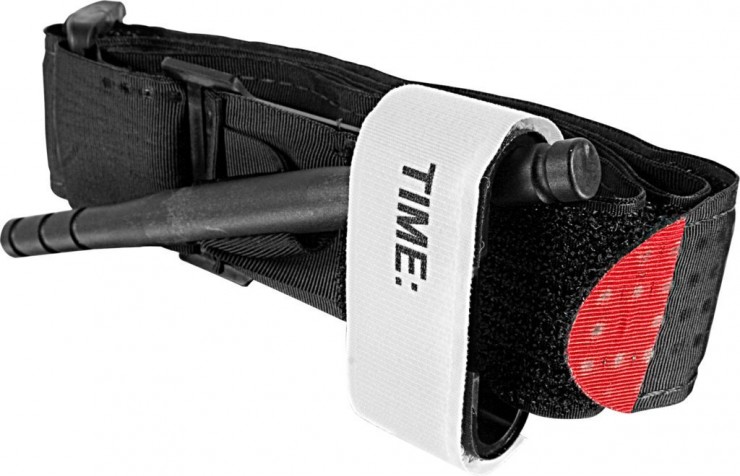
So, for example, a tourniquet:

‘My serial number is 6545-01-522… A black marker wrote BA5799 O POS on me and I was placed in the left thigh pocket of BA5799’s combat trousers… At 0618 on 15 August, when I was sliding along BA5799’s thigh, I was lifted into the sky and turned over.  And suddenly I was in the light… I was pulled open by panicked fingers and covered in the thick liquid… I was wound tighter, gripping his thigh… I clung to him as we flew low across the fields and glinting irrigation ditches…’

CAT-Combat-Application-Tourniquet-740x476

The story is continued in and through other object-fragments.  On patrol, a boot; day-sack; helmet (‘My overhanging rim cut his vision as a black horizontal blur and my chinstrap bounced up against his stubble as he pounded onto each stride’); night vision goggles (‘My green light reflected off the glassy bulge of his retina’); a radio (‘His breathing deepened under the weight of the kit and condensation formed on the gauze of my microphone… I continued to play transmissions in BA5799’s ear as the other stations in the network pushed farther up the road’); an aerial photograph (‘He took me out and traced his finger across my surface… in the operations room a small blue sticker labelled B30 was moved across a map pinned to the wall.  That map was identical to me’); and his identity tags (‘I had dropped around your neck and my discs rested on the green canvas stretcher stained with your blood’).

Medical care en route to Bastion

After the blast from the IED and a helicopter evacuation, the medical apparatus: a tube inserted into his throat at Camp Bastion’s trauma centre (‘I was part of a system now; I was inside you…’); a surgical saw (‘He held me like a weapon, and down at the end of my barrel was my flat stainless-steel blade… My blade-end cut through the bone, flashing splinters and dust from the thin trench I gouged out’); a plasma bag (‘I hung over you… I was empty; my plastic walls had collapsed together and red showed only around my seals.  The rest of the blood I’d carried since a young man donated it after a lecture, joking with a mate in the queue, was now in you’); a catheter; a wheelchair; his series of prosthetics (‘You pressed your stump into me and we became one for the first time… Slowly you outgrew all my parts and the man switched them over until I only existed as separate components in a cupboard and you’d progressed to a high-activity leg and a carbon-fibre socket’).

The agency of many of the objects is viscerally clear:

‘I lived in the soil.  My spores existed everywhere in the decomposing vegetable matter of the baked earth.  Something happened that meant I was suddenly inside you…  I was inside your leg, deep among flesh that was torn and churned.  I lived there for a week and wanted to take root, but it wasn’t easy… I struggled to survive.  Except they missed a small haematoma that had formed around a collection of mud in your calf…  You degraded and I survived… I made you feverish and feasted unseen on your insides…’

Or again, his first prosthetics:

‘You improved on me but you became thinner.  The pressure I exerted on you, and the weight you lost from the energy I used, made your stump shrink.  I could no longer support you properly.’

And the new ones:

‘Your hand caressed my grey surface and felt around the hydraulic piston under my knee joint… You’d been waiting for me but were nervous about what I might do for you…’

What is even more remarkable, as many of the passages I have quoted demonstrate, is that these events are narrated through objects that in all sorts of ways show how military violence reduces not only the ground but the human body to an object-space, perhaps nowhere more clearly than in this remark: ‘You were not a whole to them, just a wound to be closed or a level on a screen to monitor or a bag of blood to be changed.’  And yet: virtually every one of those passages is also impregnated with Barnes’s body: its feel – its very fleshiness – its sweat, its smell, its touch.

O'BRIEN The things they carriedI think this is an even more successful attempt to render the corporeality of war through its objects than Tim O’Brien‘s brilliant account of Vietnam in The Things They Carried (for more, see my post on ‘Boots on the Ground‘ and my essay on ‘The natures of war’: DOWNLOADS tab). This is, in part, because the narrative is not confined to those objects close to Barnes’ own body; it spirals far beyond them to include a drone providing close air support (‘I banked around the area and my sensor zoomed out again and I could see the enemy in relation to the soldiers who needed me’) and, significantly, extends to the components of the IED and the bodies of the insurgents who constructed and buried it.

There is a powerful moment when the two collide, when the father of a young insurgent killed in the drone strike wheels his son’s body to the patrol base:

‘The corpse was half in me, with my front end under it and my handles sticking up in the air.  He managed to push it farther into me and the distended head bounced off my metal side.  Dried blood showed around its ears and nose and was red in its mouth.  And then he pushed my handles down and I scooped it all up…  The corpse’s eyes had opened from the jolting and looked up at him.  He looked down into them, at his son’s face and the blue lips and purple blotching across his cheeks and he knew he had already accepted the loss.  He lowered my handles and smoothed the eyelids shut again.  He pushed me down the road.’

Barnes reaches for a compensation form, which takes up the story:

‘There was a leaflet that BA5799 had read tucked in the notebook next to me.  It described how to deal with this.  What to say, what not to say…  He was dealing with death in an alien culture and he had no idea how to relate to this man or the death of his son…  BA5799 wanted to feel compassion for this man and his dead son but only felt discomfort and the man’s eyes challenging him.  And all he cared about was getting back into the base and the loss of a potential asset in securing the area.’

All of these criss-crossing, triangulating lines capture not only the anatomy of a soldier but an anatomy of the war itself – at once calmly, coolly and shockingly abstract – in a word, objectified – and invasively, terrifyingly, ineluctably intimate.

***

Harry Parker (Ben Murphy photo)Postscript: You probably won’t be surprised to learn that Anatomy of a soldier is based on Harry Parker’s own experience.  Out on patrol with his men on 18 July 2009 in central Helmand he stepped on an IED; he lost his lower left leg in the blast and had his lower right leg amputated at Selly Oak Hospital in Birmingham (the major centre for advanced trauma care for the British military).  ‘‘Writing about the explosion felt good creatively,’ he told Christian House, ‘but also you’ve mined your personal experiences’ and the process left him ‘a sweaty mess’.  I’ve written about what Roy Scranton calls ‘the trauma hero‘ before, and so it’s important to add that Parker insists that the novel is not disguised autobiography: ‘I didn’t want to write, “I was in the Helmand valley.”’

One other note: at the AAG meeting in San Francisco next month Iain Shaw and Katherine Kindervater have organised a series of really interesting sessions on Objects of Security and War:

These sessions aim to bring together scholars working in the areas of war and security that are attentive to the materialities of contemporary violence and conflict. We are especially interested in work that seeks to place objects of security and war within a wider set of practices, assemblages, bodies, and histories. From drones and documents, to algorithms and atom bombs, the materiality of state power continues to anchor and disrupt the conduct and geography of (international) violence.

I’m part of those sessions – but reading Anatomy of a soldier has made me think about giving an altogether different presentation. I’ve long argued that we need to disrupt that lazy divide between ‘fact’ and ‘fiction’ and that literature is able to convey important truths that evade conventional academic prose (hence my unbounded admiration for Tom McCarthy‘s C, for example).  And Anatomy of a soldier convinces me that I’ll find more inspiration in novels like that than in whole libraries on object-oriented philosophy…

Matters of definition

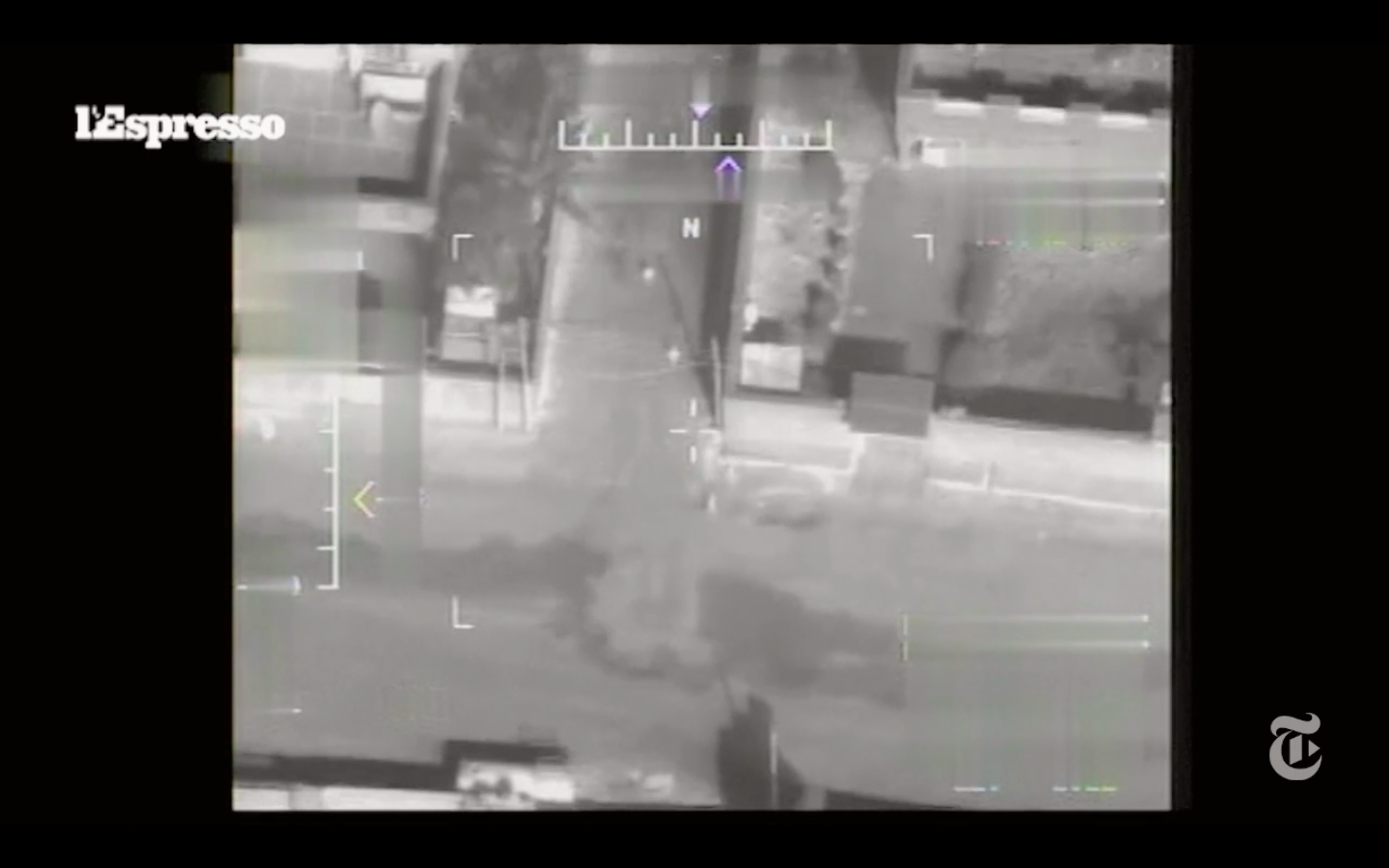
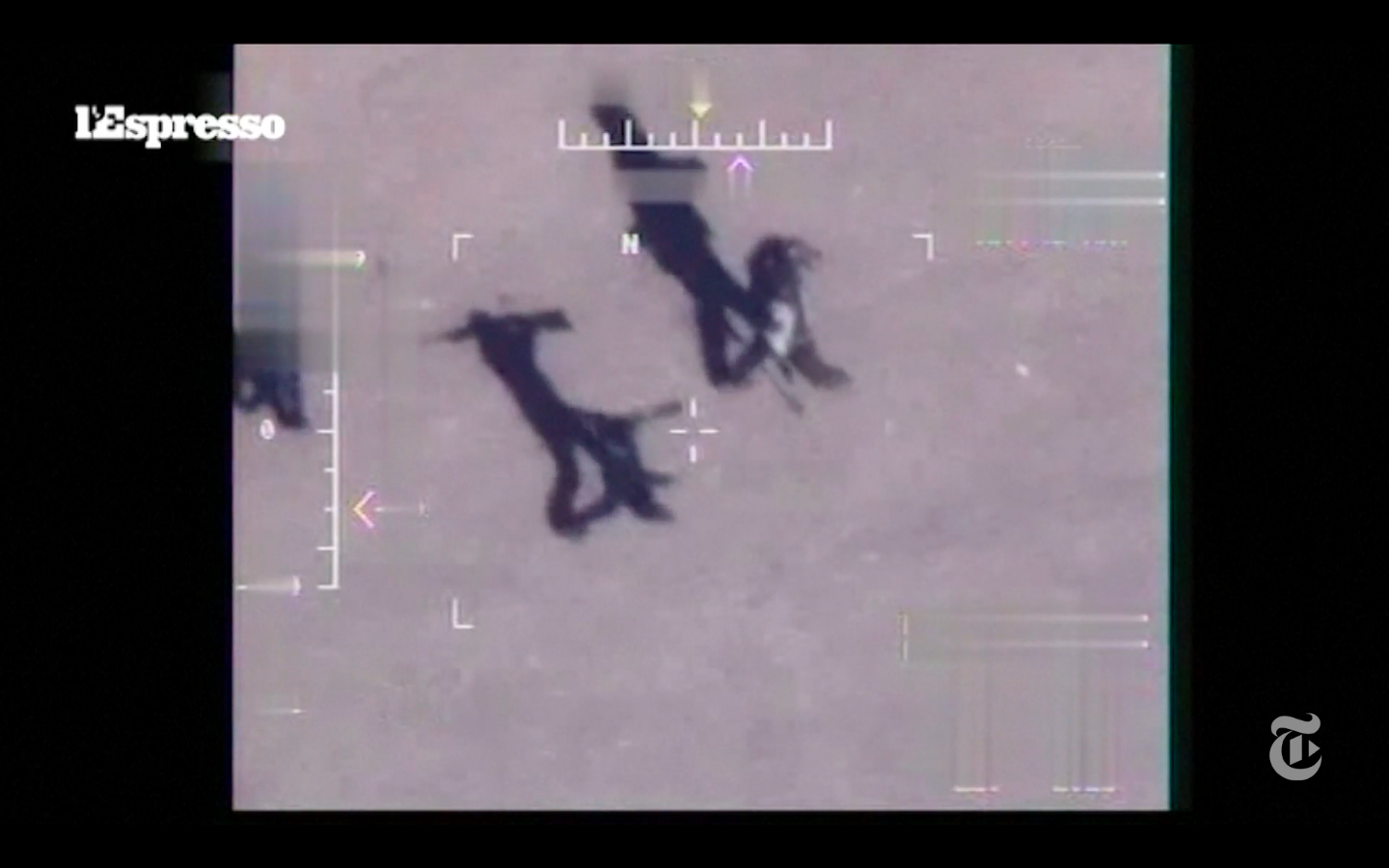
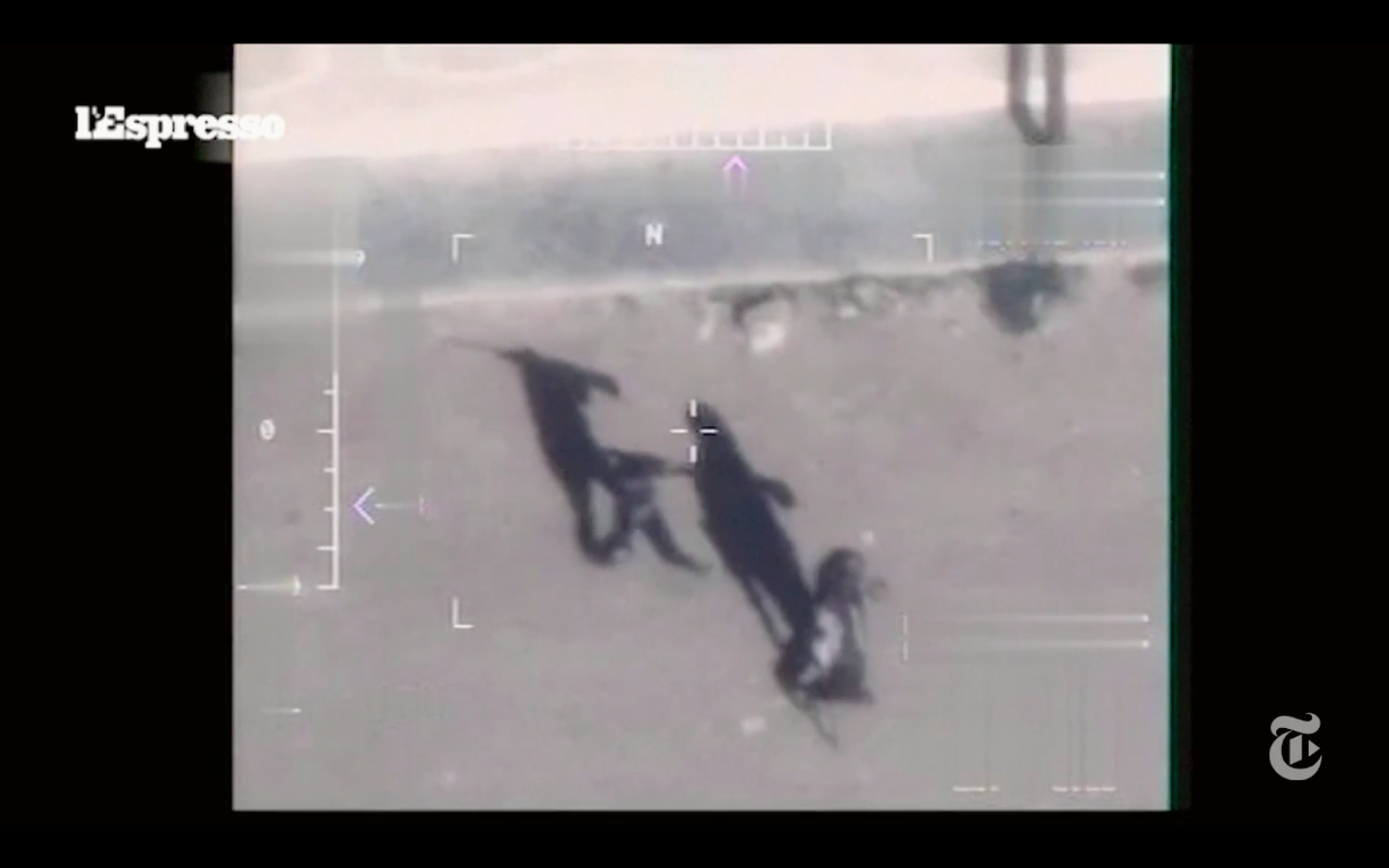
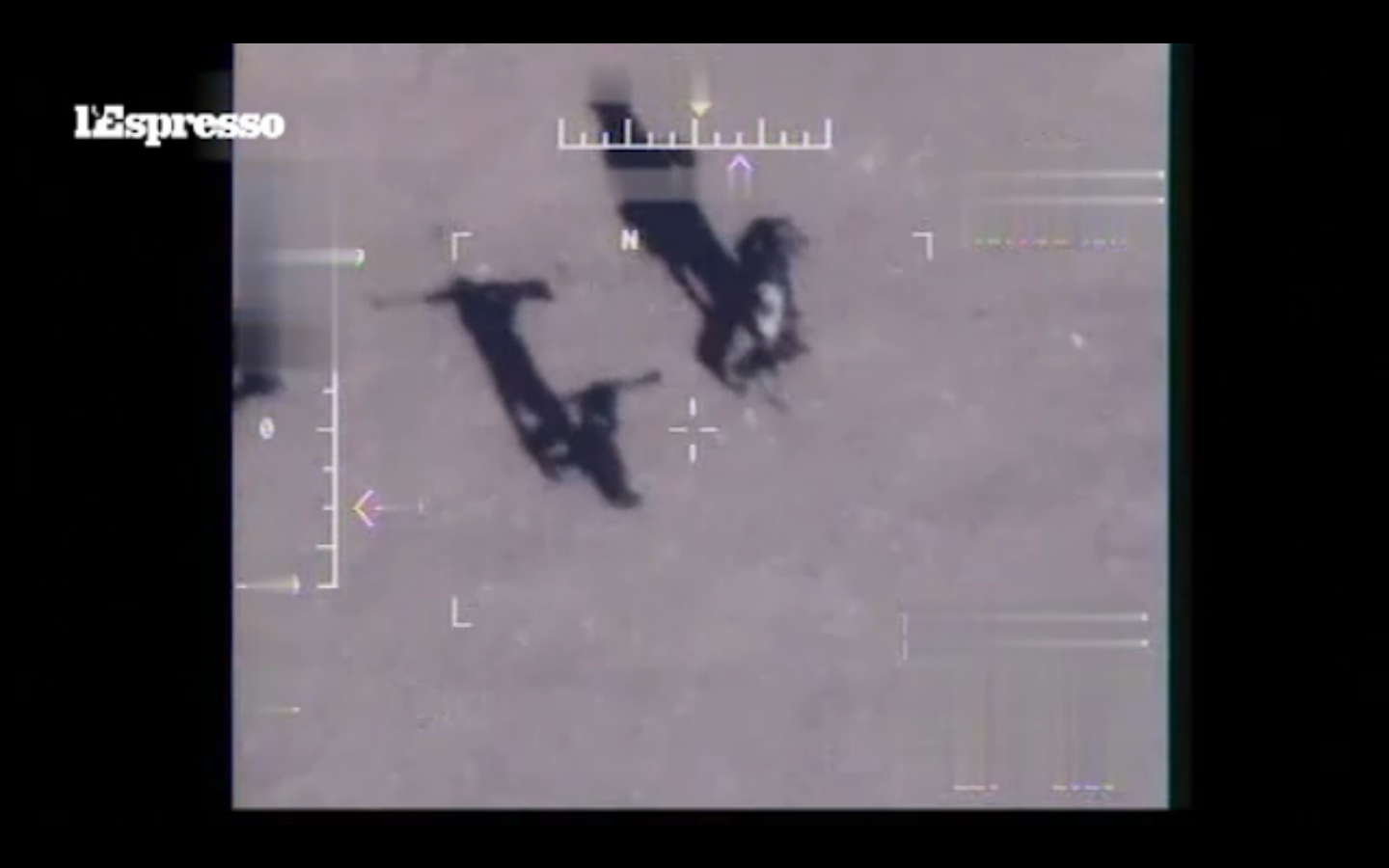
Since my post on the use of drones to provide intelligence, surveillance and reconnaissance over Iraq and Syria I’ve been thinking about the image stream provided by Predators and Reapers.  Then I used an image from what I think must be an MQ-9 Reaper operated by France which was in full colour and – this is the important part – in high definition.  Over the weekend the New York Times published a report, culled from the Italian magazine L’Espresso, which – together with the accompanying video clip (the link is to the Italian original not the Times version) – confirmed the power of HD full motion video, this time from a Reaper operated by Italy:

The footage … begins with grainy black-and-white images of an airstrike on what appears to have been a checkpoint on a road in northern Iraq, beneath a huge black flag.

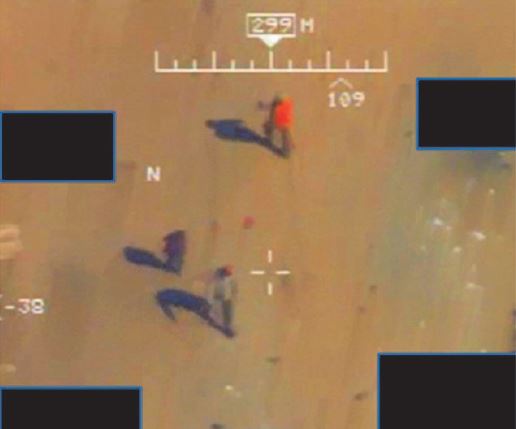
Then there is something altogether different: high-resolution, color video of four distinct armed figures walking out of a house and along the streets of a town. At one stage, the picture suddenly zooms in on two of the suspected militants to reveal that one of them is almost certainly a child, propping a rifle on his shoulder that indicates how small he is relative to the man next to him. The images are so clear that even the shadows of the figures can be examined.

Italian Drone video BItalian drone video CItalian drone video AItalian drone video DItalian drone video I

But the significance of all this is less straightforward than it might appear.

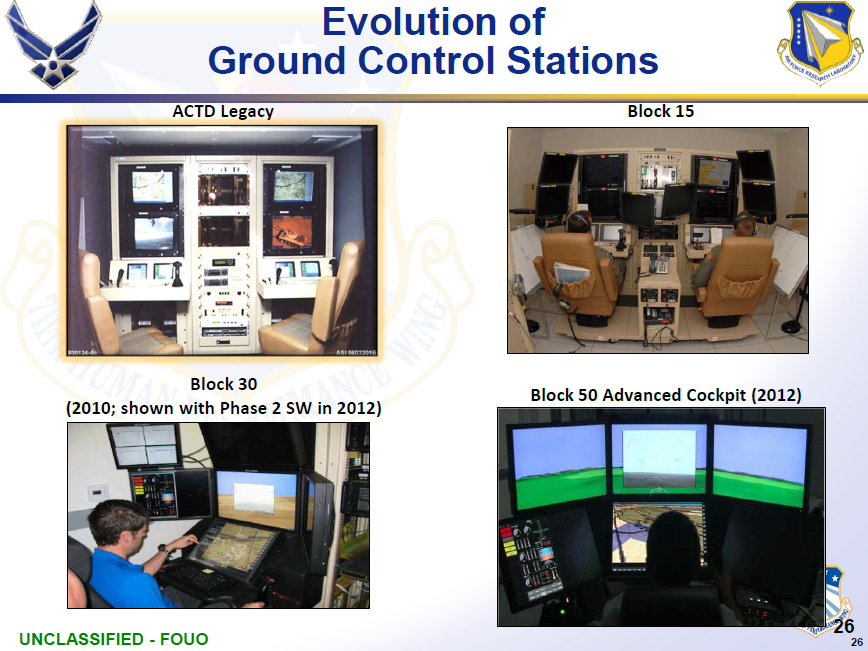
First, not all drones have this HD capability.  We know from investigations into civilian casualty incidents in Afghanistan that the feeds from Predators but also early model (‘Block’) Reapers are frequently grainy and imprecise.  Sean Davies reports that the video compression necessary for data transmission squeezed 560 x 480 pixel resolution images into 3.2 MBps at 30 frames per second whereas the newer (Block 5) Reapers provide 1280 x 720 pixel resolution images resolution images at 6.4 MBps.  The enhanced video feeds can be transmitted not only to the Ground Control Stations from which the aircraft are flown – and those too have been upgraded (see image below) – but also to operations centres monitoring the missions and, crucially, to ruggedized laptops (‘ROVERs’) used by special forces and other troops on the ground.
ground-control-stations

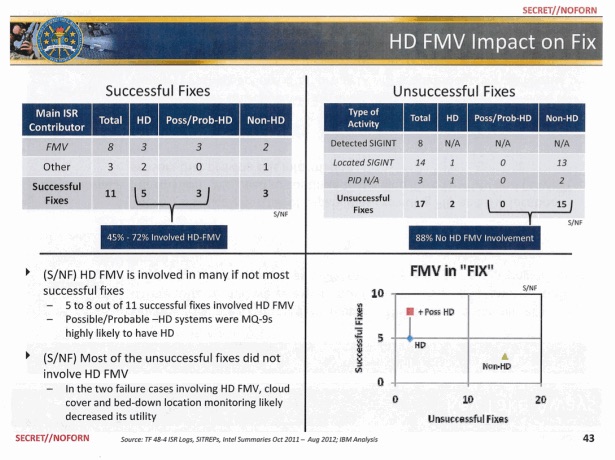
The significance of HD full-motion video is revealed in the slide below, taken from a briefing on ‘small footprint operations’ in Somalia and Yemen prepared in February 2013 and published as part of The Intercept‘s Drone Papers, which summarises its impact on the crucial middle stage of the ‘find, fix, finish‘ cycle of targeted killing:

HD FMV impact on Fix

As you can see, HD FMV was involved in as many as 72 per cent of the successful ‘fixes’ and was absent from 88 per cent of the unsuccessful ones.

Second, Eyal Weizman cautions that the image stream shown on the Italian video was captured ‘either very early or very late in the day.  Without shadows we could not identify these as weapons at all.’  Infra-red images captured at night could obviously not provide definition of this quality, but even so-called ‘Day TV’ would not show clear shadows at most times of the day. In Eyal’s view, ‘showing these rare instances could skew our understanding of how much can be seen by drones and how clear what we see is.’

Third, no matter how high the resolution of the video feeds, we need to remember that their interpretation is a techno-cultural process.  One of the figures shown in the Italian video ‘is almost certainly a child’, reports the New York Times.  So bear in mind this exchange between the crew of a Predator circling over three vehicles travelling through the mountains of Uruzgan in February 2010 (see also here and here):

1:07 􏰀(MC):􏰀 screener􏰀 said 􏰀at least 􏰀one 􏰀child 􏰀near 􏰀SUV􏰀

1:07 􏰀(Sensor):􏰀 bull􏰀 (expletive 􏰀deleted)…where!?􏰀

1:07 􏰀(Sensor): 􏰀send 􏰀me 􏰀a 􏰀(expletive􏰀deleted) 􏰀still,􏰀􏰀 I􏰀 don’t 􏰀think 􏰀they 􏰀have 􏰀kids 􏰀out 􏰀at 􏰀this 􏰀hour, 􏰀I 􏰀know􏰀 they’re 􏰀shady 􏰀but􏰀 come􏰀 on􏰀

1:07􏰀 (Pilot):􏰀 at 􏰀least 􏰀one 􏰀child…􏰀Really?􏰀 Listing 􏰀the􏰀 MAM [Military-Aged Male], 􏰀uh, 􏰀that 􏰀means 􏰀he’s 􏰀guilty􏰀

1:07􏰀 (Sensor):􏰀 well 􏰀may be􏰀 a 􏰀teenager 􏰀but 􏰀I 􏰀haven’t􏰀 seen􏰀 anything 􏰀that 􏰀looked 􏰀that 􏰀short, 􏰀granted 􏰀they’e􏰀 all 􏰀grouped 􏰀up 􏰀here,􏰀 but.􏰀..

1:07 􏰀(MC): 􏰀They’re 􏰀reviewing􏰀

1:07 􏰀(Pilot):􏰀Yeah 􏰀review 􏰀that􏰀 (expletive 􏰀deleted)…why􏰀 didn’t 􏰀he 􏰀say􏰀 possible􏰀 child,􏰀 why􏰀 are􏰀 they􏰀 so 􏰀quick􏰀 to 􏰀call 􏰀(expletive􏰀 deleted) 􏰀kids 􏰀but􏰀 not 􏰀to 􏰀call 􏰀(expletive􏰀deleted) 􏰀a 􏰀rifle􏰀….

03:10 􏰀(Pilot):􏰀 And 􏰀Kirk􏰀97, 􏰀good 􏰀copy􏰀 on􏰀 that.􏰀 We 􏰀are 􏰀with 􏰀you.􏰀 Our 􏰀screener􏰀 updated􏰀 only􏰀 one􏰀 adolescent 􏰀so 􏰀that’s 􏰀one􏰀 double 􏰀digit􏰀 age 􏰀range.􏰀 How􏰀 Copy?􏰀

03:10 􏰀(JAG25):􏰀We’ll􏰀 pass 􏰀that 􏰀along 􏰀to 􏰀the 􏰀ground 􏰀force􏰀 commander.􏰀 But 􏰀like 􏰀I 􏰀said, 􏰀12 􏰁13 􏰀years 􏰀old 􏰀with􏰀 a 􏰀weapon 􏰀is􏰀 just 􏰀as􏰀 dangerous.􏰀􏰀

In other words – it’s more than a matter of high definition; it’s also a matter of political and cultural definition.

A lack of intelligence

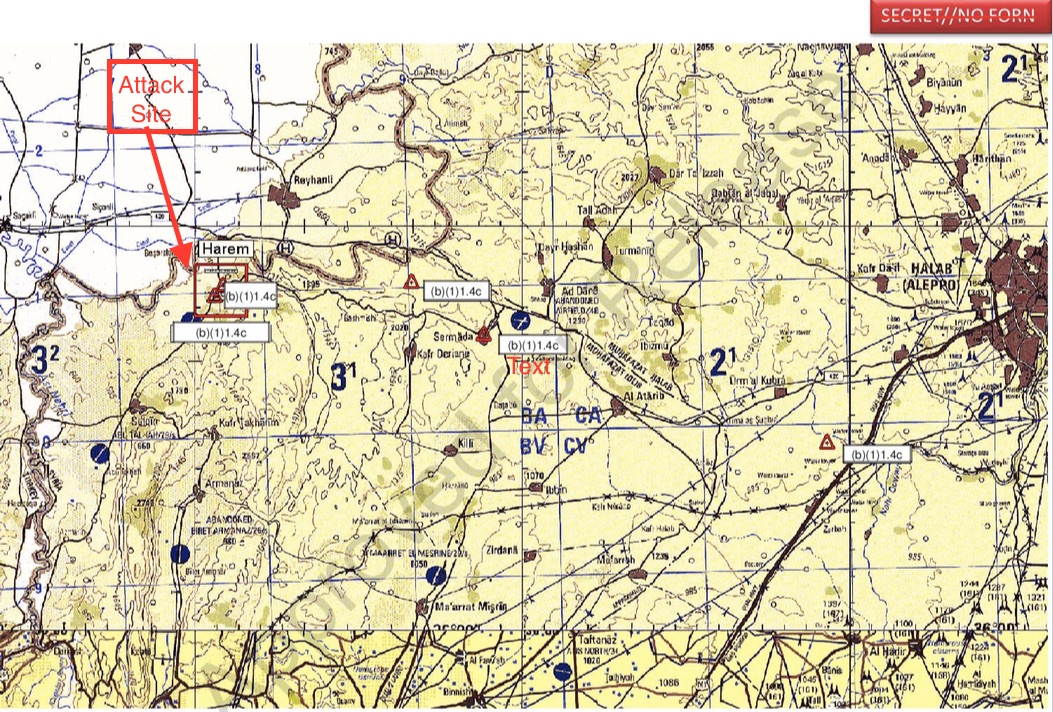
Harim Air Strike MAP annotated

The second of the three recent US air strikes I’ve been looking at took place near Harim [Harem on the map above] in Syria on the night of 5-6 November 2014.  The report of the military investigation into allegations of civilian casualties is here.

The aircraft launched multiple strikes against two compounds which had been identified as sites used as meeting places for named (though redacted) terrorists and sites for the manufacture and storage of explosives by the al-Qaeda linked ‘Khorasan Group’ (if the scare-quotes puzzle you, compare here and here).

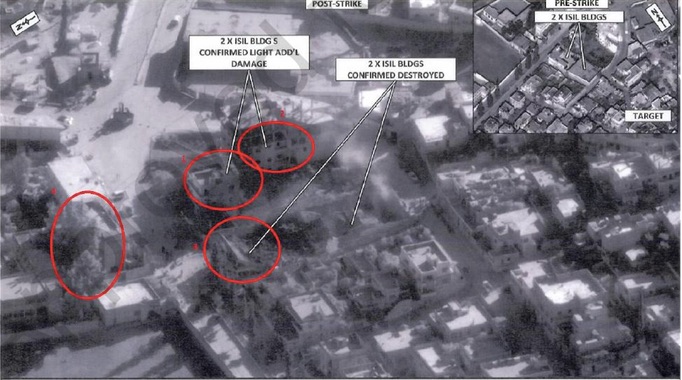
The compounds each contained several buildings and had previously been on a No Strike List under a category that includes civilian housing; they lost their protected status when ‘they were assessed as being converted to military use’ but ‘other residential and commercial structures were situated around both targets’.  An annotated image of the attack on the first compound is shown below:

Harim Air Strike on Compound 001

Although the report argues that ‘the targets were engaged in the early morning hours when the risk to civilians was minimized’ – a strange statement, since most civilians would have been asleep inside those ‘residential structures’ – US Central Command subsequently received open-source reports of from three to six civilian casualties, together with still and video imagery.  By the end of December 2014 the Combined Joint Task Force conducting ‘Operation Inherent Resolve’ had completed a preliminary ‘credibility assessment’ of the claims and found sufficient evidence to establish a formal investigation into the allegations of civilian casualties.  The investigating officer delivered his final report on 13 February 2015.

He also had access to a report from the Syrian Network for Human Rights that provided a ground-level perspective (including video) unavailable to the US military.  Its narrative is different from US Central Command, identifying the targets as being associated with An-Nussra:

The warplanes launched, at first, four missiles that hit three military points, which are located next to each other, in the northeast of the town:

1 – The Agricultural Bank, which is used by An-Nussra front as a center.
2 – The central prison checkpoint, where An-Nussra fighters were stationed.
3 – An ammunition depot in the same area.

The shelling destroyed and burned the Agricultural Bank’s building completely in addition to damaging a number of building nearby. Furthermore, a number of cars were burned while a series of explosions occurred after an explosion in the ammunition depot..
Afterwards, the warplanes targeted a fourth center with two missiles. [This target] was a building by an old deserted gas station located near the industrial school in the south of the town. The shelling destroyed the center completely as well as the gas station in addition to severely damaging the surrounding buildings. Harem residents were aided by the civil-defense teams to save people from underneath the rubble.

SNHR documented the killing of two young girls; one could not be unidentified but the other was Daniya, aged 5, who was killed along with her father who was said to be one of the An-Nussra fighters living in a house near the Agricultural Bank.  Daniya’s mother and her brother Saeed, aged 7, were seriously wounded.

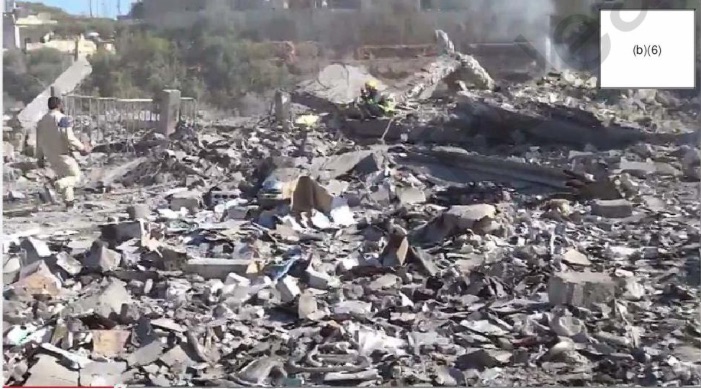
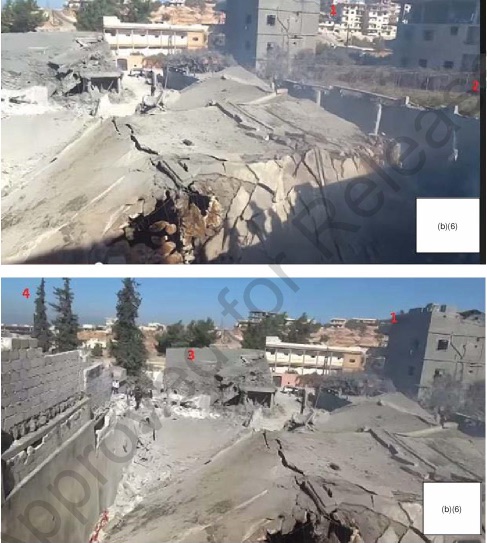
The report also included post-strike imagery from YouTube videos and Twitter feeds:

Harim VIDEO 1 jpeg

Harim VIDEO 2 jpeg

In contrast to the report on the air strike in Iraq I discussed in my previous post, this one includes no details of the attack, nor the procedures through which it was authorised and conducted – though we do know that there is a considerable military bureaucracy behind all these strikes, especially in the administration of what in this case was clearly a pre-planned rather than emergent target.  For more on the bureaucratisation of targeting, incidentally, see  Astrid Nordin and Dan Öberg, ‘Targeting the ontology of war: From Clausewitz to Baudrillard’, Millennium 43 (2) (2015) 392-410; analytically it’s right on the mark, I think, and I’ll be advancing similar arguments in my Tanner Lectures – though stripped of any reference to Baudrillard…

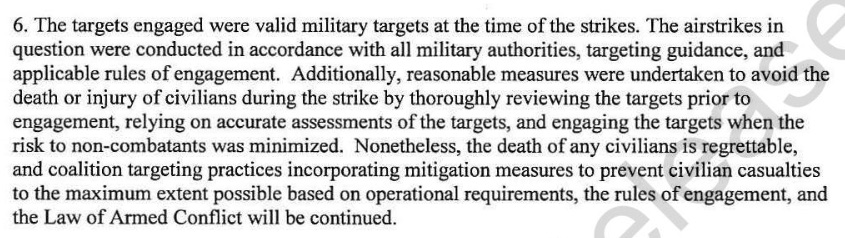
But there is one revealing sentence in the report.  Although the investigating officer had no doubt that the Harim strikes were perfectly legal, everything worked like clockwork and nothing need be changed –

Harim conclusion

– there is nevertheless a recommendation for ‘sustained ISR [intelligence, surveillance and reconnaissance] whenever practicable based on operational requirements, to ensure that no civilians are entering or exiting a facility.’  The clear implication is that these strikes – pre-planned, remember: these were not fleeting targets of opportunity – were not supported by real-time ISR.  When you add to that the reliance placed by the investigation on ground imagery from YouTube and Twitter, you begin to realise how little the US military and its allies must know about many of the targets they strike in Iraq and Syria.  (I might add that the US has not been averse to using Twitter feeds for targeting too: see Robert Gregory‘s compelling discussion in Clean bombs and dirty wars: air power in Kosovo and Libya, where he describes the central role played by Twitter feeds from Libyan rebels in identifying targets for the US Air Force and its NATO allies: by the closing months of the campaign France was deriving 80 per cent of its intelligence from social media contacts on the ground).

All this gives the lie to the cheery ‘let ’em have it’ guff from Robert Caruso, commenting on US air strikes in Syria last September:

By relying so heavily on drones in our recent counter-terror campaigns we’ve been fighting with one hand tied behind our back. But a key to the success of Monday’s strikes was the use of manned aircraft with pilots who can seek out enemy targets and make on-the-spot decisions…

it’s time to drop the drone fetish, and the limitations it imposed, and go back to using manned airpower, which is more powerful and better suited to hunting down elusive targets like ISIS.

Regular readers will know that I’m not saying that drones are the answer, or that their ability to provide persistent, real-time, full-motion video feeds in high definition makes the battlespace transparent; on the contrary (see my ‘Angry Eyes’ posts here and especially here: more to come soon).

But the absence of their ISR capability can only make a bad situation worse.  In February, the director of the National Counterterrorism Center conceded that that US had not ‘closed the gap on where we need to be in terms of our understanding, with granularity, about what is going on on the ground in Syria.’  Indeed, during the first four months of this year ‘nearly 75 percent of U.S. bombing runs targeting the Islamic State in Iraq and Syria [a total of more than 7,000 sorties] returned to base without firing any weapons’, and reports claimed that aircrews held their fire ‘mainly because of a lack of ground intelligence.’

Full-motion video cannot compensate for that absence, of course, and in any case there are serious limitations on the number of ISR orbits that are possible over Iraq and Syria given the demands for drones over Afghanistan and elsewhere: each orbit requires three to four aircraft to provide 24/7 coverage, and the global maximum the US Air Force can provide using its Predators and Reapers varies between 55 and 65 orbits (or ‘combat air patrols’).

In late August 2014 Obama authorised both manned and unmanned ISR flights over Syria, and since then the United States has been joined by the UK and France in deploying MQ-9 Reapers over Iraq and Syria, where their video feeds have helped to orchestrate missions carried out by conventional strike aircraft (see, for example, here).  In August 2015 France claimed that all its air strikes in Iraq had to be validated by ISR provided by a drone:

reaper-20150508

But that was in August, before Hollande threw caution to the winds and ramped up French air strikes in response to the Paris attacks in November – an escalation that relied on targeting packages supplied by the United States.

In any case, Predators and Reapers are also armed and in their ‘hunter-killer’ role they had executed around one quarter of all airstrikes conducted by the United States in Iraq and Syria by June 2015 and more than half the air strikes conducted by the UK in Iraq.  Although the UK only extended its bombing campaign against Islamic State to Syria this month, its Reapers had been entering Syrian airspace in steadily increasing numbers since November 2014 to provide ISR (in part, presumably, to enable the United States to orchestrate its air strikes) and in September 2015 it used one of them to carry out the UK’s first acknowledged targeted killing near Raqqa (see also here and here); the United States has also routinely used the aircraft in the extension of its multi-sited targeted killing program to Syria (see also here).

All this bombing, all this blood: and yet strategically remarkably little to show for it.   And all for a lack of intelligence…

Three strikes…

I’ve been working away on my Tanner Lectures, which has plunged me back in to my research on air strikes.  There is a dismal topicality to the subject, since in the UK the hawks on both right and left are circling the lobbies in the wake of the attacks in Paris (but still not, it seems, those in Beirut) demanding that yet more bombs fall on Syria.  They are less than hawk-eyed, however, since they offer no insight into what – precisely (not exactly the right word where bombing is concerned) – this is designed to achieve.  They have learned nothing from the 100-odd years of the history of bombing, or even from its more recent effects.

And talking of Beirut: when I delivered a presentation there in 2006, six months after Israel’s devastating air strikes on its southern suburbs, I borrowed my title [‘In another time-zone the bombs fall unsafely’: see DOWNLOADS tab] from Blake Morrison‘s poem ‘Stop’ which was reprinted in an anthology to aid children’s charities in Lebanon:

Blake Morrison STOP.001

So let me turn to three recent investigations of civilian casualties caused by US air strikes.  In each case it’s difficult to say as much as one ought to be able to say: in the first two cases (in Iraq and Syria) the reports have been heavily redacted, and in the third case (the attack on MSF’s hospital in Kunduz) all we have so far is an extended summary (though Kate Clark, as always, does a brilliant forensic job in filleting it here).

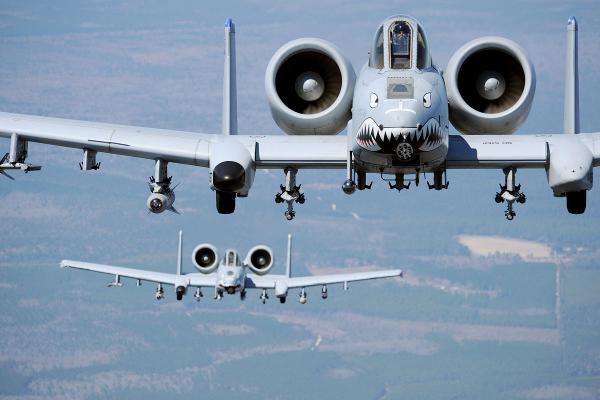
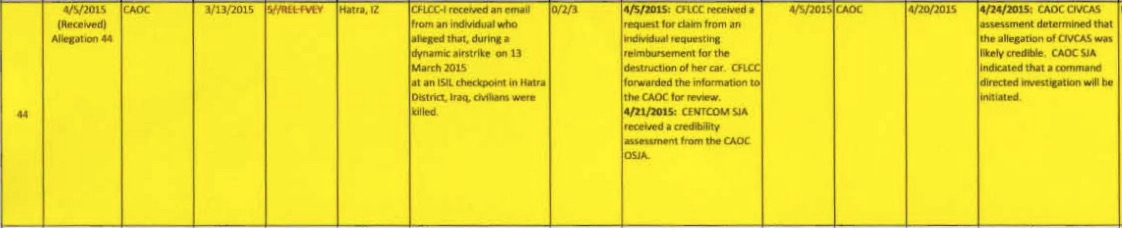
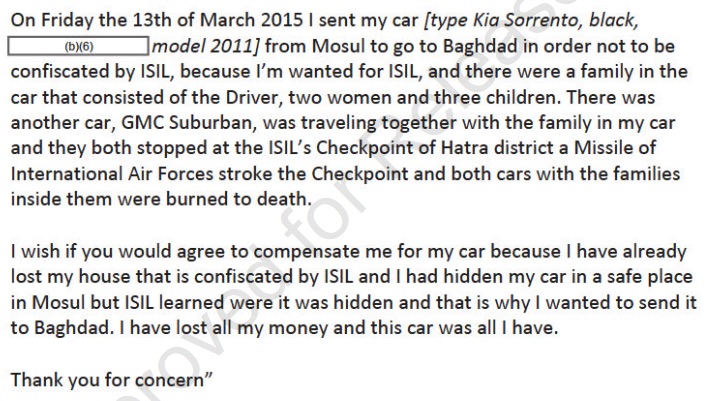
In this post I’ll discuss the report of an investigation into an air strike by two A-10 (‘Warthog’) aircraft on an Islamic State checkpoint near Al Hatra in Iraq on 13 March 2015.  On 2 April CENTCOM’s Combined Air Operations Center (CAOC) at Al Udeid Air Base in Qatar was forwarded the following e-mail:

e-mail translation Al Hatra CIVCAS

Officers at the CAOC completed an initial ‘Civilian Casualty [CIVCAS] Credibility Assessment’ and agreed that the details in the e-mail were consistent with the known air strike.  On 20 April an investigation was established ‘to determine the veracity of the CIVCAS claim’ and, in the event that it was upheld, to review the targeting process ‘to determine if any errors occurred.’  Between 22 April and 1 June the investigating officer interviewed the military personnel involved in the air strike and reviewed intelligence reports and imagery of the target area.  This included an examination of the weapons system video (WSV) conducted by an ISR imagery analyst, and a transcript of the associated audio: neither has been released to the public, but you can get a sense of what A-10 imagery can (and cannot) show in this compilation video from Iraq here.

al Hatra map JPEG

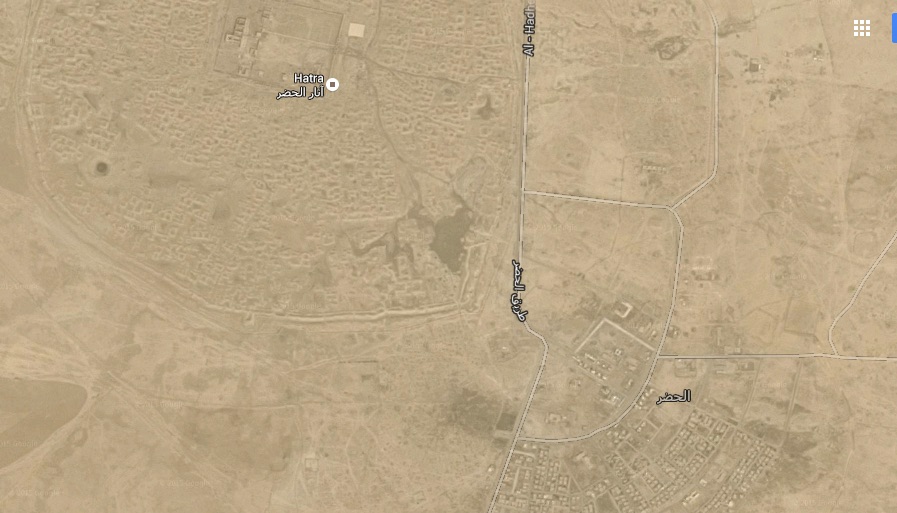
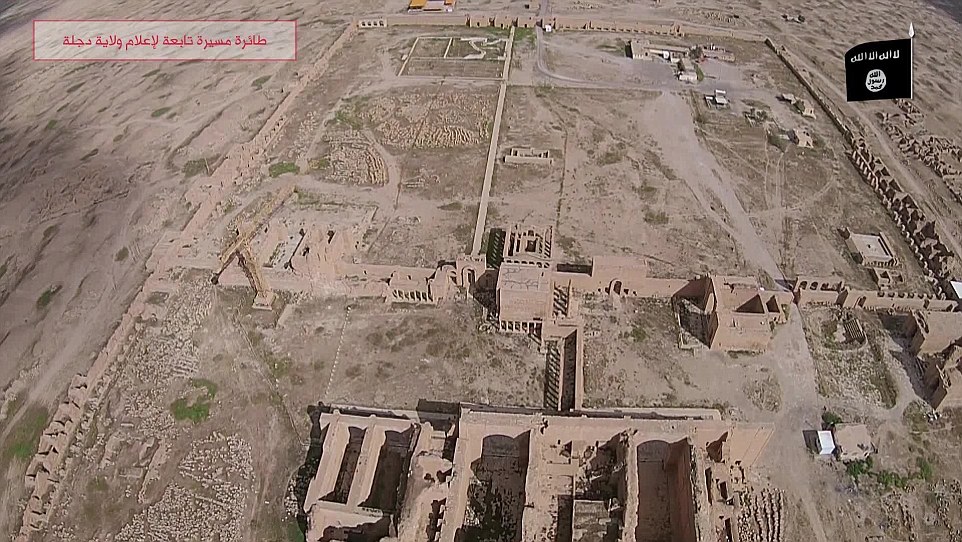
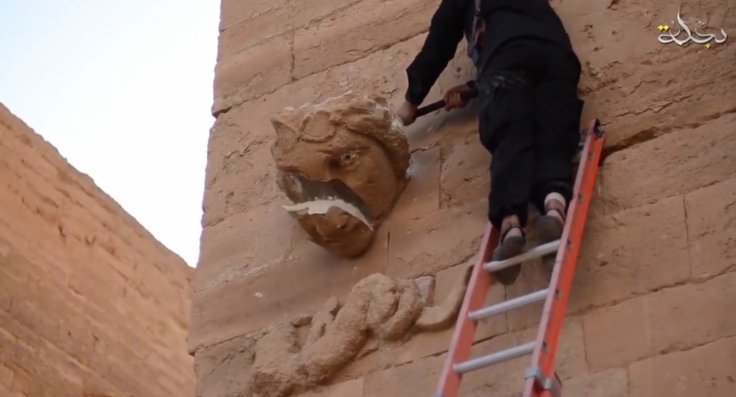
Al Hatra is the site of the ancient fortified city of al Hadr, 2km northwest of the modern settlement (see map above), established under the Seleucids, and after its capture by the Parthians it became one of the major cities of the post-Alexandrian world.   Since October, intelligence reports had identified the ruins as an Islamic State training camp, and in March IS announced its intention to level the site and purge it of the ‘symbols of idolatry‘. (In April it released a video showing just that: see the images below, and more here).

IS video of al Hatra

IS Video of destruction at al Hatra

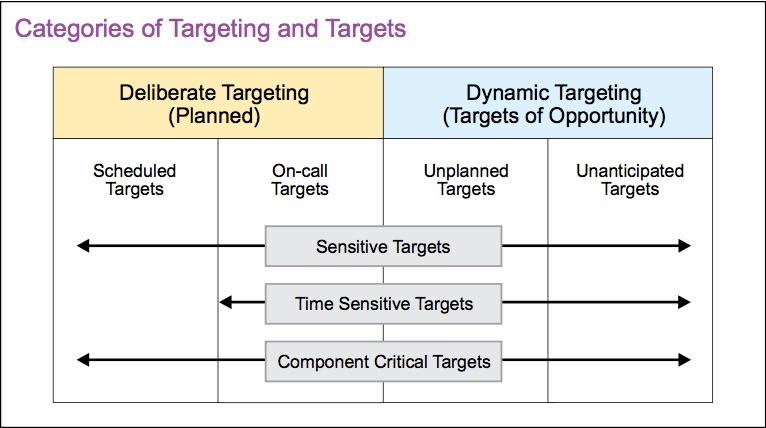
The initial target for the air strike on 13 March was an IS checkpoint and ‘enemy personnel’ who were stopping traffic.  They had been seen by an A-10 aircraft en route for refuelling – A10s fly sorties lasting between five and nine hours, and can require two or three inflight refuellings – and the information had been passed to the Dynamic Targeting Cell responsible for drawing up a detailed target folder or target package (a ‘Joint Targeting Message’) for all emergent targets: in effect, targets of opportunity.
Targeting and Targets (JP 3-60) 2013

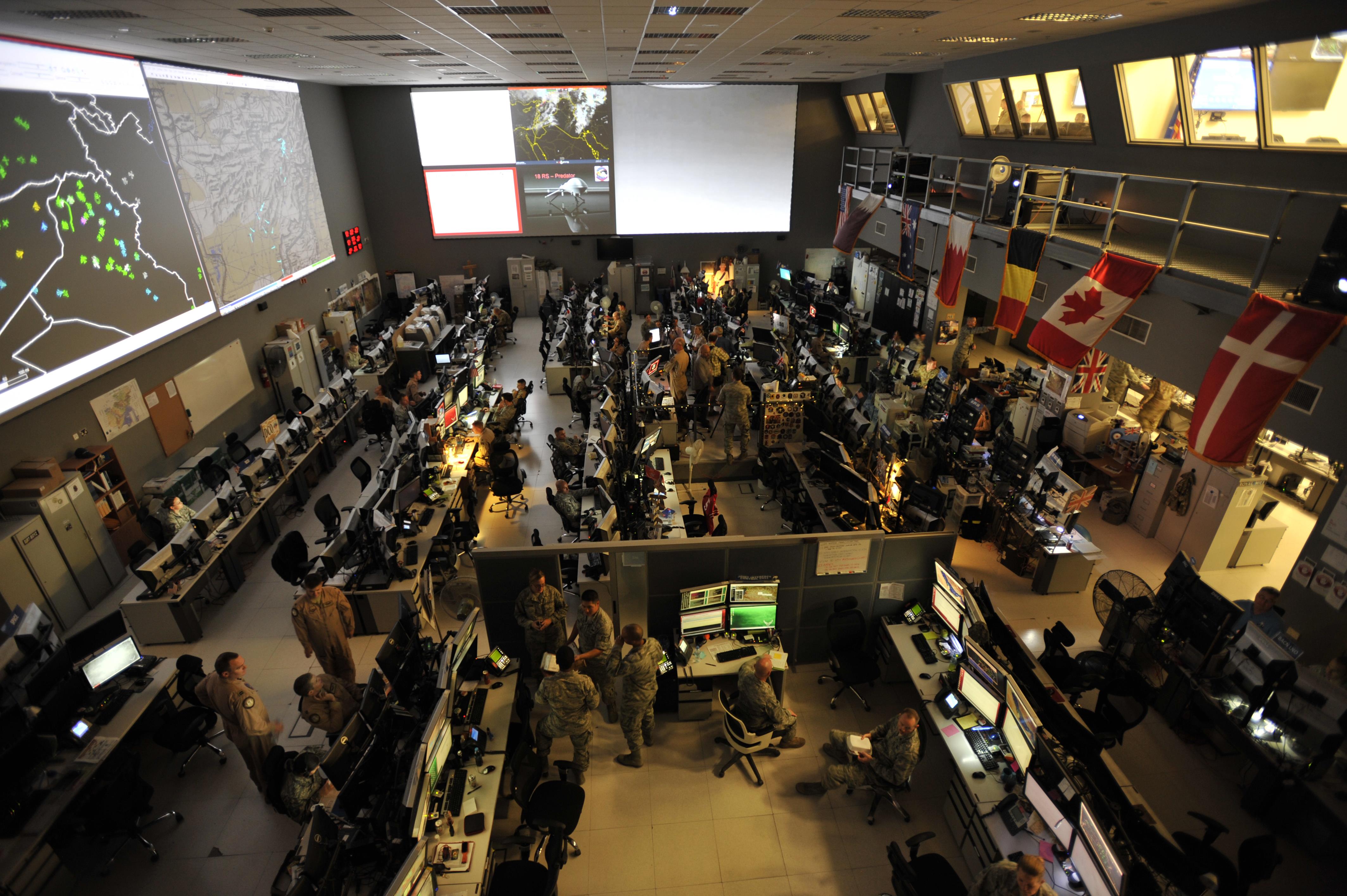
It must have seemed routine to those on duty in the CAOC (shown below): there had been multiple strikes in the vicinity for several months.  The Dynamic Targeting Cell cleared the operation via the Battle Director at Al Udeid with the CAOC director who acted as the ‘Target Engagement Authority’ to sanction the strike, with ultimate responsibility for all lethal strikes against Islamic State in Syria and designated areas of western Iraq.

Combined Air and Space Operations Center (CAOC), Al Udeid Air Base, 2015

While this was happening, the same aircraft reported that two vehicles had pulled into the side of the road next to the checkpoint (and within ‘the target area outline’: notice how rapidly individuals disappear from view, contained first within objects and then the objects within an area).

The occupants began to interact with the people manning the checkpoint – the pilot said the two vehicles ‘appeared to be a part of the checkpoint’ but he also made it clear that this was only an ‘opinion’ and that responsibility for the positive identification of the vehicles and passengers as a legitimate target had to rest with superior officers – and the Dynamic Targeting Cell agreed to ‘seek additional authority’.  After a short time he radioed back with permission for them to be included as part of the original Joint Targeting Message: ‘You’re cleared to execute Joint Targeting Message [Reference Number] including vehicles and all associated PAX [people/passengers] with PID [Positive Identification].’  The investigating officer evidently thought this perfectly reasonable, agreeing that ‘these vehicles did not display characteristics typical of transient vehicles at checkpoints’; rather than passing through (as seven other vehicles did), they stopped and ‘appeared to be functionally and geospatially tied to the … checkpoint and personnel authorized for strike.’

But this amendment to the original targeting package was never reported up the chain of command to the Target Engagement Authority who only validated the original Joint Targeting Message.  He was provided with imagery showing the intended target area, confirmed that it had ‘a single use purpose’, and so had no doubt that the checkpoint and its operators constituted ‘a functionally and geospatially defined object of attack’ and that it was a ‘legitimate military target’ in accordance with international humanitarian law – what the US military prefers to call ‘the law of armed conflict’ – and consistent with the military’s own rules of engagement.  The repetition of those qualifiers is vital: the US military defines Positive Identification [PID] as ‘the reasonable certainty that a functionally and geospatially defined object of attack is a legitimate military target’.

The Target Engagement Authority sought no advice from a Judge Advocate, the military lawyer on duty, about the propriety of striking the vehicles and passengers because they were not included in the original package.  He testified that ‘at no point was there any discussion of vehicles in association with this strike’: in fact, he explicitly instructed the aircrew ‘to clear for transients [passing vehicles] prior to weapons release.’

The deputy legal adviser to the Combat Operations Division in the CAOC explained that a Judge Advocate was involved in all Dynamic Targeting strikes.  The Dynamic Targeting Chief works with the Targets Duty Officer to establish positive identification of the target.  The Targets Duty Officer usually spends half of a 12-hour shift on the combat operations floor with the Chief and half with ISR analysts preparing target packages, and it is the responsibility of the Chief to write the ‘5Ws’ – who, what, where, when and why – necessary for any dynamic targeting strike.  As the two of them ‘work’ the target, the deputy legal adviser added, they ‘may bring [in] the legal adviser at various times’ throughout the process to provide advice derived from international humanitarian law, the rules of engagement and any special instructions (‘spins’).  The Judge Advocate also acts as ‘a second pair of eyes’ scrutinising the co-ordinates of the target and provides legal recommendations to the Target Engagement Authority.
It seems clear, even with the redactions, that in this case the Judge Advocate was not consulted about the (verbal) amendment to the initial targeting package because the procedure was amended as a direct consequence of the incident under investigation.  Instead of ‘returning to his or her desk’ once approval had been obtained from the Target Engagement Authority, the Judge Advocate is now required to observe ‘the passing of the Joint Targeting Message and [to] monitor the strike by remaining close to the Dynamic Targeting cell.’
There is also a wider responsibility: the deputy legal adviser made it clear that ‘anyone in the chain or the Dynamic Targeting cell has the responsibility to call an abort on the strike if the conditions change.’  In this case, clearly, they did – but nobody intervened.

The Dynamic Targeting Chief claims he telephoned the Battle Director for permission to extend the original Joint Targeting Message, but the exchange took just 80 seconds.  One witness – who may well have been the Battle Director: it’s impossible to know for sure – thought this highly unlikely: 80 seconds would have been ‘very, very quick for [him] to take a call, gather the information, relay it to the Targeting Engagement Authority, get approval, and then relay it back down to [the Dynamic Targeting Cell].’  And the CAOC director was adamant: ‘even if the aviators could identify the vehicles as hostile … there was still no authority to strike without requesting authorization for a Joint Targeting Message change‘ from him.

a-10-thunderbolt-ii_011-ts600

The A-10’s sensor remained ‘padlocked on these vehicles’ and when the pilot was finally cleared to engage he naturally assumed that the Target Engagement Authority had been satisfied by their inclusion in the target package.  Six seconds before they were hit, four people got out; the ISR analyst reviewing the post-strike video concluded that one of them was possibly a child.  But the investigating officer emphasised that they were only visible on the weapons system video and only after being played back at slow speed: ‘There is no reasonable expectation that [the pilot] could have seen, assessed and called for ABORT on the strike through real-time viewing of his targeting pod display inflight.’  The A-10 has a targeting pod under one wing which, as Andrew Cockburn reports, ‘ in daylight transmits video images of the ground below, and infrared images at night. This video feed is displayed on the plane’s instrument panel.’  As the pilot approached the target and entered his ‘weapons engagement envelope’ – again, note the geometric disposition – the investigating officer accepts that neither could he have ‘been able to discriminate between combatant and non-combatant personnel’.

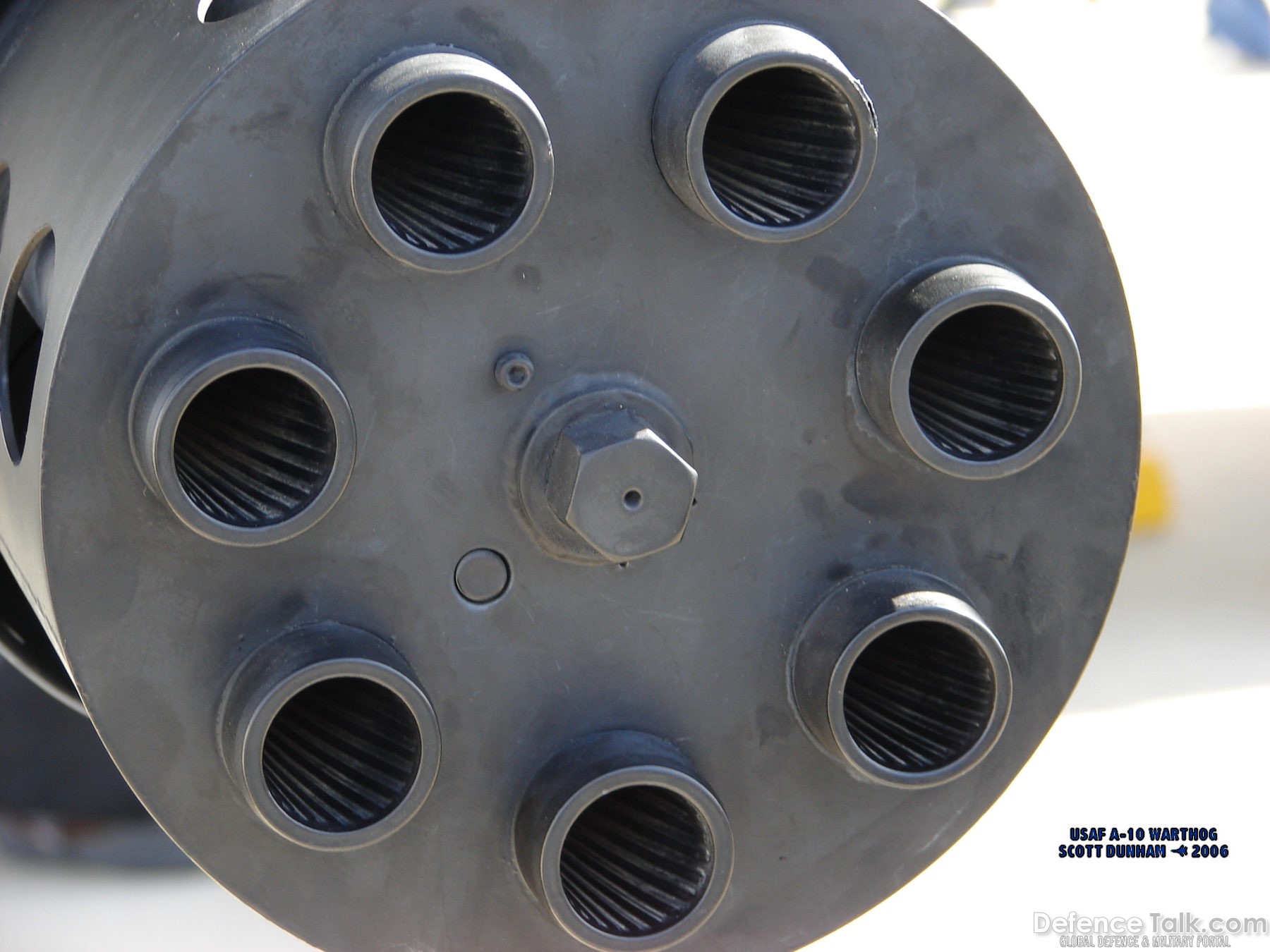
The vehicles were attacked with the A-10’s 30mm rotary cannon – ‘a good weapon for reducing collateral damage’, according to one pilot (see the image below!) – and soon after a second A-10 dropped a single GBU-38 bomb and destroyed the guard shack; this is a conventional 500 lb bomb converted into a ‘guided bomb’, a ‘precision munition’, through the incorporation of a GPS/inertial navigation system so that it can attain a circular error probable of between 10 and 30 metres (which means that, assuming a bivariate normal distribution and all other things being equal, then 50% of the time it will land within that radius: which also means that the other half of the time it won’t, even under ideal experimental conditions).

A-10_Warthog-41

Here is how that same pilot (who was not, so far as I know, flying this mission) characterised these operations against IS to Tom Philpott in April:

A-10 pilots are trained to find a target, seek verification and do on-the-fly targeting and strike. While that sounds like a solo operation, Stohler says “the coalition flying up there is enormous and we work as a team.”

Almost all targets get vetted up to higher command to determine validity. “As you can imagine this is complex,” Stohler says… The most challenging moment “is the weapon employment phase of the flight,” says Stohler. “Our number one focus is to deliver the ordnance on target, on the first pass, while minimizing collateral damage. This takes a great deal of skill that our pilots train to daily back home.”

“I tell our guys this is like trying to drop bombs on bad guys in your hometown. Your goal is not to hurt anyone else, or destroy anything that you don’t have to destroy. It’s a constant challenge to do that and we do it very well.”

But while collateral damage is key it might not be “a showstopper,” says Stohler. “Clearly if the target we need to hit is significant we will employ on it wherever it is – if we have the approval.”

In this case it took under an hour from first observing the checkpoint to striking the target; only eight minutes elapsed between the confirmation of the Joint Targeting Message and the execution of the strike; and it took just three or four seconds ‘from trigger squeeze to impact’.  According to the e-mail, at least two women and three children were killed.  The military decided not to award the writer of that message any compensation for the destruction of her vehicle and no solatia payments will be made to the families of the deceased since no survivors have come forward to ask for them.

CENTCOM’s press release summarising the investigation is a model of complacency and fails to include any of the qualifications and mis-steps I’ve noted in the previous paragraphs:

Based on the actions being observed, aircrew and CAOC personnel assessed that the checkpoint, additional vehicles, and additional personnel were lawful targets consistent with the Law of Armed Conflict (LOAC) at the time the weapon was released on the target area.

The investigation concluded that the airstrikes resulted in the destruction of the intended target, and that the two vehicles parked at the checkpoint were also hit. Upon further review, it was determined that all ordnance functioned properly and accurately struck the intended target.

The investigation concluded that the airstrikes were conducted in accordance with applicable military authorizations, targeting guidance, and LOAC. The target engaged was a valid military target, and the LOAC principles of military necessity, proportionality, and distinction were observed. All reasonable measures were taken to avoid unintended deaths of or injuries to non-combatants by reviewing the targets thoroughly prior to engagement, relying on accurate assessments of the targets, and engaging the targets when the risk to non-combatants was thought to be minimized.

Micah Zenko has an analysis of this strike here, and he adds these chilling paragraphs:

To intensify the U.S.-led coalition’s war against the Islamic State … the Pentagon is considering further loosening the rules of engagement (ROEs) that are intended to minimize civilian casualties and expanding the target sets that can be bombed…

The first problem with this theory is that large militant armies are not defeated, either exclusively or primarily, with air power. Military and civilian policymakers repeat the mantra that “you can’t kill your way out” of the problem posed by such adversaries, but then continue to call upon air power to do just that. This is despite the fact that all of the militant armies and terrorist groups that have been bombed and droned for the past 14 years have survived. None have been completely destroyed, which is allegedly the strategic objective against the Islamic State. Moreover, the size of the al Qaeda-affiliated groups that the United States claims to be at war with have either stayed flat or grown, while the total number of State Department-designated Foreign Terrorist Organizations has grown from 34 in 2002 to 59 in 2015.

However, the larger concern with this mindset is the assured growth of collateral damage and civilian casualties that will accompany significantly loosened ROEs. Last month, Lt. Gen. Bob Otto, the U.S. Air Force’s deputy chief of staff for intelligence, surveillance, and reconnaissance, observed that the coalition was “challenged in finding enough targets that the airplanes can hit that meet the rules of engagement.” However, he added an important caveat: “If you inadvertently — legally — kill innocent men, women, and children, then there’s a backlash from that. And so we might kill three and create 10 terrorists.”

And yet, as Micah emphasizes, there have been only two military investigations into civilian casualties throughout the air campaign against IS:

8,300 airstrikes, 16,000 Islamic State targets destroyed, more than 20,000 Islamic State fighters killed — and only two claims of collateral damage. Either the U.S.-led coalition is really, really, really good at bombing these days, or they are shooting first and not asking questions later.

More in the same vein from Joseph Trevithick at War is Boring here.  You can access the US Air Force’s own (secret) tabulation of CIVCAS allegations here, which lists 45 separate incidents, far in excess of the two that have been officially acknowledged to date.  Joseph notes that most of them were dismissed within 48 hours as ‘not credible’ because there was ‘insufficient evidence’ or ‘insufficient information.’  Al Hatra was number 44:

CIVCAS allegation 44 al Hatra

The  Airwars team has provisionally estimated that from 8 August 2014 to 24 November 2015 ‘between 682 and 977 civilian non-combatants are likely to have been killed in 113 incidents where there is fair reporting publicly available of an event, and where Coalition strikes were confirmed in the near vicinity on that date.’  I’ve pasted their map of total claimed civilian casualties in Iraq (to 30 June 2015) below; you can find their full report, Cause for Concern, here.

Civilian casualties claimed Iraq 8 August 2014-30 June 2015

To be continued.  Sadly.