I’ve posted about camouflage before, but mainly in an historical context: the issue looms large in two recent essays, ‘Gabriel’s Map’ and the soon-to-be-completed ‘The natures of war’. But it is, of course, of vital contemporary importance, and I’m thinking through its implications for my ‘Militarized vision‘ project. After all, ‘seeing like a military‘ also involves what is not seen…
Here the work of Isla Forsyth is indispensable: see in particular her ‘Subversive patterning: the surgical qualities of camouflage’, Environment and Planning A 45(2013) 1037-52 and ‘Designs on the desert: camouflage, deception and the militarization of space’, Cultural geographies, online July 2013; I also like James Philip Robertson‘s ‘Darkened surfaces”: camouflage and the nocturnal observation of Britain, 1941-45’, Environment and Planning A 45 (2013) 1053-69.
But these are all historical investigations, and for those new to contemporary camouflage Kelsey Campbell-Dollaghan has a helpful summary of advances (and failures) in ‘digital’ camouflage over at Gizmodo, ‘The history of invisibility and the future of camouflage’.
The article takes off from the failure of the US Army’s ‘Universal Camouflage Pattern’ introduced in 2004, which was supposedly designed to work anywhere: not surprisingly, it didn’t. Cindi Katz‘s wonderfully waspish descriptions of the post-9/11 deployment of the National Guard in New York City are irresistible:
‘I’ve grown accustomed to their presence — frighteningly so — but still can’t get over their costumes. Green, woodsy camouflage. To blend with Penn Station?!’
Kelsey interviews Guy Cramer, CEO of Hyperstealth Biotechnology, ‘leaders in camouflage, concealment and deception’, and one of four finalists in the US Army’s Camo Improvement project. He has interesting things to say about fractals, pattern and scale but also about the temporal horizon of camouflage: how long does the deception have to work? Perhaps it will soon be time to head over to Penn Station again….
UPDATE: I’ve just stumbled across Stefka Hristova‘s ‘Digital Animalized Camouflage: A Zone of Biopolitical Indistinction’, from interstitial last year, which make a series of imaginative connections between digital camouflage and the state of exception: you can access it here.
The latest issue of Lisbon’s Análise Social has a special section devoted to the work of historical sociologist Michael Mann (all in English). I’ve admired Mann’s historical and geographical range – and his combination of narrative and analytical power – ever since I read the first volume of his Sources of social power (1986; new edition 2012).
In the course of an interview with Miguel Bandeira Jéronimo, Mann describes the conceptual changes he has introduced as his multi-volume project has progressed, and he draws particular attention to his attempt to clarify the distinction between political power and military power:
Political power is the institutionalization of power relations over a given territory, backed up by mostly non-lethal, routinized and rule-governed coercion. Military power is the deployment of lethal violence which is aimed deliberately at terrifying, killing, and wounding people, and which is minimally or not at all institutionalized or rule-governed. Geopolitics lies between the two and can be either an extension of political or military power, according to whether inter-state relations contain matters of peace or war. The former are subject to negotiated rules and international courts and tribunals, the latter are not.
Leaving aside Mann’s claims about geopolitics, which I leave to my friends who work in that area, and the idea of a ‘given territory’ (on which I suspect Stuart Elden would have much to say), I’m puzzled by this.
I accept that not all rules are codified into formal protocols, but even in the case of so-called ‘new wars’ is military violence really perpetrated in a rule-free zone? The operative codes may not be ‘ours’, and they may be fluid and improvisational, but this does not mean they don’t have a substantial role in drawing the contours of military and paramilitary violence.
And surely military power in many (though not all) of its contemporary forms is highly institutionalised and ‘rule-governed’? The bureaucratisation of modern war, and in its later forms its juridification, is highly advanced: I don’t mean to imply that this is unproblematic, of course, still less that the rules remain intact throughout a conflict, and the reach of international courts and tribunals is evidently highly skewed (not least through the operation of political power), but still… I think we need a much more nuanced account of the relations between law and war, one which recognises the complicities between them and, in particular, the ways in which military violence frequently works to extend the boundaries of a law that travels in the rear, its baggage train so to speak.
Finally, these clarifications are too clear. In particular, they don’t address intra-state and transnational conflicts, and they make the distinction between ‘war’ and ‘peace’ such a black and white affair. And here, plainly, the question of territory reappears in even more urgent (and contested) form.
A key moment in the development of the United States’ UAV program was the deployment of a prototype Predator – General Atomics’ GNAT-750 – over Bosnia. This is how I summarised the accelerated fielding program in ‘Moving targets’ (DOWNLOADS tab):
Even as the GNAT-750 was deployed over Bosnia-Herzegovina, the design was being developed into a new platform, the RQ-1 Predator, which incorporated three major modifications. The original intention had been to provide still imagery and text interpretation, but this was replaced by real-time motion video in colour (by day) and infrared (by night). A more serious limitation was range; the GNAT-750 could only operate 150 miles from the ground control station because it relied on a C-band line of sight data link. The CIA experimented with using relay aircraft to expedite data transmission – the same solution that had been used for the ‘electronic battlefield’ along the Ho Chi Minh Trail – but the breakthrough came with the use of the Ku-band satellite system that dramatically increased the operational range. The upgrade had been tested in the United States, and was retrofitted to Predators in Europe in August 1995. Although data was then rapidly transmitted across the Atlantic, the key intelligence nodes were still in Europe, like the Combined Air Operations Centre at Vicenza in Italy, and the drones were still controlled from ground stations within the region, at first from Gjader in Albania and later from Tazar in Hungary. A third, no less revolutionary innovation was the installation of an onboard global positioning system (GPS); early target imagery had to be geo-located using a PowerScene software program, but the introduction of satellite-linked GPS made a considerable difference to the speed and accuracy of targeting.
But I now think this misses other even more important dimensions that speak directly to the fabrication of the network in which Predators and eventually Reapers become embedded.
My primary source is a remarkable MIT PhD thesis by Lt. Col. Timothy Cullen, The MQ-9 Reaper Remotely Piloted Aircraft: Humans and Machines in Action (2011). The research involved interviews with 50 pilots, 26 sensor operators, 13 Mission Intelligence Coordinators and 8 imagery analysts between 2009-2010 (so this is inevitably a snapshot of a changing program – but one with a wide field of view) and direct observation of training missions at Holloman Air Force Base; the thesis is also informed by Cullen’s own, considerable experience as a pilot of conventional strike aircraft and by actor-network theory, though most particularly by Edward Hutchins‘ cognitive ethnography and by the work of Lucy Suchman.
I should say, too, that the thesis is irony made flesh, so to speak. The author notes that:
Missing from public discussions are the details of remote air operations in current conflicts and the role of social networks, organizational culture, and professional practices in the evolution and history of RPA. The public cannot have informed discussions about these topics without empirical observations and descriptions of how RPA operators actually fly and employ the aircraft.
Fair enough, of course, but parts of the thesis are heavily redacted; I realise this isn’t – can’t – be Cullen’s doing, but it is as frustrating for the reader as it surely must be for the author (for Private Eye devotees, the image on the right shows p. 94). Still, there’s enough in plain sight to provide a series of arresting insights into the development of the UAV program.
First, early Predator crews were remarkably detached from the wider mission and their ability to communicate with people outside their Ground Control Stations was extremely limited. The pilot’s primary responsibility was to program the aircraft to fly on autopilot from target to target and to monitor the flight path, while two sensor operators identified and tracked the targets whose images were to be captured. In a tent outside the ground control station a ‘Mission Planning Cell’ (MPC: see photograph below) served as the communications interface; since this was an experimental system, the Ground Control Station was not permitted to receive or transmit sensitive or classified information. Apart from the transmission of images, all communications between the two were either face-to-face (literally through the tent flaps) or via a telephone link.
Before a mission the MPC received a set of 50-300 imagery targets (known as ‘Collection Points’) from the Balkans Combined Air Operations Center in Vicenza in Italy, and used this to create a detailed target deck. The time between the initial requests and final image capture steadily decreased from 72 hours to 48 hours, and eventually re-tasking during a mission became standard: more on the tasking process here.
The video feeds from the Predator were sent via coaxial cable to the MPC where they were digitised and encrypted for onward transmission over a secure network to commanders in the field and to a group of 10-12 imagery analysts in the United States. The analysts posted video clips and annotated stills on a classified web page, but the quality of the video feeds with which they had to work was significantly less than the raw feeds available in theatre, and the slow response time was another serious limitation on the value of their work.
At the time, of course, all this seemed revolutionary, and the second Annual Report on the UAV program in 1996 declared that:
Even more significant than the Predator performance “firsts” is the wide use made of its imagery, amplified by the increased network of receiving stations both in-theater and back in CONUS [continental US]. The development of this dissemination capability is shown below.
It first used VSATs at selected receiving sites, and then the SATCOM-based Joint Broadcast System (JBS). The Predator-JBS network represents the first time for the simultaneous broadcast of live UAV video to more than 15 users. This provided a common picture of the “battlefield.” Video imagery can be viewed either as full motion video or via a “mosaicking” technique at the ground station.
[JAC Molesworth was the Joint Analysis Center at RAF Molesworth in the UK, US European Command’s intelligence center, and DISN is the Defense Information Systems Network for data, video and voice services].
But the system was far from responsive; the MPC filtered all communications from commanders and imagery analysts and, as the tasking diagram below shows, whether the cycle followed the standard model or allowed for more flexible re-tasking the Predator crew had very little discretion and was, in a substantial sense, what Cullen calls ‘a passive source of data’. Its responsibilities were limited to the ‘physical control’ of the platform.
This has been transformed by the cumulative construction of an extended, distributed network in which UAV crews are in direct communication, either by voice or through secure internet chatrooms, with multiple agents: commanders, military lawyers, image analysts, joint terminal attack controllers and ground troops. But this was not how the system was originally conceived or fielded, and Cullen shows that its transformation depended on the skilled intervention of UAV crews and their commanders who ‘envisioned and used the system as a collaborative network of operators, intelligence analysts, and ground personnel to establish objectives, exchange information, and understand the context of a mission’:
‘RPA [Remotely Piloted Aircraft] operators restructured the ground control station and crew tasks to shift the actions of crewmembers from low status missions of gathering and disseminating data to higher status tasks of integrating and creating information, participating in the assessment of threats, and actively contributing to commanders’ decision-making processes. RPA operators were not satisfied with simple connections to a network of people and tools to accomplish a mission. They sought and fostered social relationships with them and demanded interactive dialog among them in a form they could anticipate, understand, and evaluate’ (Cullen, p. 204).
Second, early Predator operations, not only in the Balkans in the late 1990s but also over southern Iraq and in Afghanistan, were not what would later become known as ‘remote-split operations’. It was assumed that the Predator had to be operated as close to the combat theatre as possible. This was not only because of the platform’s limited range, important though this is: as I’ve said before, these are not weapons of global reach. Indeed, it’s still the case that Predators and Reapers have to be physically close to their theatre of operations, which is why the United States has become so alarmed at the implications of a complete withdrawal from Afghanistan for the CIA’s program of targeted killing in Pakistan. According toDavid Sanger and Eric Schmitt,
‘Their concern is that the nearest alternative bases are too far away for drones to reach the mountainous territory in Pakistan where the remnants of Al Qaeda’s central command are hiding. Those bases would also be too distant to monitor and respond as quickly as American forces can today if there were a crisis in the region, such as missing nuclear material or weapons in Pakistan and India.’
For the ‘no-fly zone’ established over southern Iraq reconnaissance flights were flown by Predators from Ali Al Salem Air Base in Kuwait, and for the initial campaign in Afghanistan from Jacobad in Pakistan, and Cullen explains that the vulnerability of these (‘austere’) sites limited the MPC’s access to secure networks, communications and databases. But in 2002-3 USAF pilots and sensor operators returning from secondment to – Cullen actually calls it ‘kidnapping’ – ‘other agencies’, which is to say the CIA, successfully argued that the primary execution of remote missions should be consolidated at Nellis Air Force Base and its auxiliary field, Indian Springs (later re-named Creech AFB), in southern Nevada, which would expand and enhance crews’ access to secure intelligence and analysis capabilities. There would still have to be a forward deployed ‘Launch and Recovery’ element to maintain the aircraft and to control take-off and landing using a line of sight link, but all other mission tasks could be handled from the continental United States using a Ku-band satellite link via a portal at Ramstein Air Force Base in Germany. When remote split operations started in 2003 the MPC disappeared, replaced by a single Mission Intelligence Co-ordinator who was stationed inside the Ground Control Station in constant communication with the pilot and sensor operator and this, in turn, transformed the configuration and equipment inside the GCS. But, crucially, relations beyond the GCS were also transformed as USAF commanders visited Afghanistan and Iraq and established close relations with ground troops: ‘remote’ and ‘split’ could not imply detachment, and the new technological networks had to be infused with new social interactions for the system to be effective.
Focal to these transformations – and a crucial driver of the process of network construction and transformation – was the decision to arm the Predator and turn it into a ‘hunter-killer’ platform. At that point, Cullen observes,
‘Predator pilots became decision makers, and Predator’s weapons transformed Predator pilots and sensor operators into war fighters – Predator crews could create effects on the battlefield they could observe, evaluate and adjust… The arming of the Predator was synonymous with the integration of the system – the people, tools and practices of the Predator community – into military operations’ (pp. 245-7).
The reverse was also true: not only was the Predator integrated into the battlespace but, as Cullen notes, the network was ‘infused’ into the Ground Control Station. In consequence, a sensation of what Cullen calls ‘remote presence’ was inculcated amongst UAV crews and, in particular, sensor operators who developed a strong sense of being part of the machinic complex, ‘becoming the camera’ so intimately that they were ‘transported’ above the battlespace. These transformations were stepped up with the development of the Reaper, reinforced by new practices and by the introduction of a new, profoundly combative discourse that distanced the Reaper from the Predator:
‘[T]o reinforce the power and responsibility of Reaper crews, members of the 42nd Attack Squadron changed the language of their work. Sensor operators did not operate a sensor ball; they flew a “targeting pod” like fighter pilots and weapon system officers. Reaper pilots and sensor operators did not have a “mission intelligence coordinator”; they coordinated strike missions with the support of an “intelligence crewmember.” Reaper crews did not conduct “intelligence, surveillance, and reconnaissance” missions; they flew “non-traditional” intelligence missions like fighter and bomber crews. Members of the 42nd Attack Squadron used the rhetoric of the fighter community to highlight the strike capabilities of Reaper; to influence the perceptions of Reaper operators; and to shape the priorities, attention, and assertiveness of Reaper crews during a mission’ (p. 264)
The language was performative, but its performative force – the ability to ‘create effects on the battlefield’ – was realised through the developing networks within which and through which it was deployed.
I’m still in Beirut where I’ve had a wonderful time at the Transnational American Studies conference at AUB. Yesterday morning I chaired a panel on ‘Geographies of War‘, which featured Laleh Khalili (on Kuwait, military logistics and private contractors: abstract here), Lisa Hajjar (on the (il)legal strictures and injustices at Guantanamo; she changed her paper so I can’t link to an abstract), and Jeremy Scahill (‘The world is America’s battlefield’: abstract here).
In the evening Jeremy showed the film of Dirty Wars, co-written with David Rikerand directed by Rick Rowley. Bear with me here; I’ll return to those ‘geographies’ in a moment. Seeing the film for a second time (the first was in Toronto in the fall with Jaimie and Jorge) I have to say I found it less satisfactory – I much prefer the book, but it’s not only because the written version is (inevitably) more detailed and more nuanced. I think it has something to do with the film being less an act of investigative journalism than a reconstruction of investigative journalism, a noir docudrama in which the investigator (no less inevitably) becomes the central figure: Sam Spade with a notebook. For that reason, I think Michael O’Sullivan is simply wrong to say that ‘the film is a documentary pure and simple.’
You can see that most obviously in the section that deals with a Special Forces night raid in February 2010 on a compound in Gardez, Afghanistan, where much of the ground-breaking reporting was done by another journalist, Jerome Starkey. But these scenes have incredible dramatic force, none the less, and the incorporation of cellphone footage of the raid and the unmasking of the Special Forces commander are genuinely and profoundly arresting (if only that were literally true).
I’m less convinced by the sections that treat the targeted killing of Anwar al-Awlaki, probably because I’m still dismayed that it was the killing of a U.S. citizen that sparked so much public outrage in the United States rather than the killing of all the others. Certainly in the film, far more so than the book, there’s an unwavering focus on the ‘Americanness’ of al-Awlaki, and especially of his transparently innocent teenage son, murdered by a drone strike just two weeks later. Home videos, games, clothes, a whole series of images are put to work to show not that ‘they’ are just like ‘us’ but that in some substantial sense ‘they’ are ‘us’. I was left wondering about those who don’t qualify for these sort of identifications, who can’t provide similarly legible identity papers: how are we to recognise and acknowledge their lives as grievable too? There’s also something unsettling about Jeremy’s epiphany that he’s come to Yemen ‘to apologise’: I’m still trying to figure out how he could, and what position he would have had to occupy for that to mean very much to al-Awlaki’s grandparents and cousins in Sa’ana.
Finally, the extended passage through a war-ravaged town in Somalia, crouching alongside militias and interviewing a warlord who gives very little away, seems to run into the sand. I was left with the uncomfortable feeling that these sequences had been retained primarily for Mohamed Afrah Qanyare‘s assertion (about his paymasters) that ‘America knows war… They are the war masters.’
And yet, of course, America doesn’t know war: Bush and Cheney famously avoided Vietnam, most of the war managers view the results of their military and paramilitary violence on screens and spreadsheets, and most of the public turns the other way. As Kamila Shamsie says in Burnt Shadows, the United States fights ‘more wars than anyone else; because you understand war least of all’ (see also my draft introduction to The everywhere warhere; scroll down).
That’s precisely why investigative journalism and documentary films are so urgently necessary – and why we need these different forms – but I’m not sure that rendering Jeremy’s courageous and principled investigations in the black and white tones of a Hollywood thriller is the best way to bring ‘what is hidden in plain sight’ into public view. (For a different take, that pays close attention to the visual codes in the film, see Mike Hill‘s very smart essay over at Feedbackhere). I do know that films have to be different from books, that they have different grammars if you like, and I also understand that one of the most effective ways of soliciting an audience’s response is through story-telling – academic prose would be considerably less deadly if it had more narrative force – but in the end I’m with Roger Ebert:
‘Scahill is so respected and convincing that he doesn’t need such propping up, so the flashy directing and editing makes it feel as though “Dirty Wars” is trying too hard to sell things that might have sold themselves just fine without the hot box approach.’
Other (non-film) critics have objected to the way in which the history of clandestine/covert war is foreshortened in Dirty Wars, so that the CIA is left in the shadows. But that’s surely because in the wake of 9/11 the CIA was, in some crucial respects, pushed out of the limelight and a vastly aggrandised Joint Special Operations Command took centre stage to play for Cheney and Rumsfeld. And it’s the combination of a para-militarized CIA and JSOC that is instrumental in pushing the boundaries of the everywhere war.
Red markers: U.S. Special Operations Forces deployment in 2013.
Blue markers: U.S. Special Operations Forces working with/training/advising/conducting operations with indigenous troops in the U.S. or a third country during 2013.
Purple markers: U.S. Special Operations Forces deployment in 2012.
Yellow markers: U.S. Special Operations Forces working with/training/advising/conducting operations with indigenous troops in the U.S. or a third country during 2012.
US Special Operations Deployments, 2012-2013
While I was writing this, a new report from Nick Turse popped on to my screen, charting the extraordinary global geography of JSOC (above) and its entanglements with other militaries and agencies like USAID. JSOC has set up its own shadow system of subcommands mirroring the Pentagon’s division of the globe into unified combatant commands like US Central Command, each assigned to a different geographical region:
US Special Operations Command – Subcommands
I’ve taken the map above from US Special Operations Command’s own ‘Factbook‘, though it’s so reluctant to disclose any information that here too, as you’ll see if you read Nick’s article, part of the story is getting the story. If you read this alongside Steve Niva‘s brilliant essay, ‘Disappearing violence: JSOC and the Pentagon’s new cartography of networked warfare’, Security dialogue 44 (3) (2013) 185-202, and in conjunction with the gritty detail (and vivid prose) of Dirty Wars, you’ll have a desperately disturbing sense of one of the modalities that is producing these new geographies of war. As Scott Horton tells Jeremy in Dirty Wars, ‘suddenly the theatre of war has become the entire globe – it’s become everywhere.’
My work on drones has been invigorated by reading an outstandingly creative essay by Lucy Suchmanon ‘Situational Awareness: deadly bioconvergence at the boundaries of bodies and machines’, forthcoming at the ever-interesting Mediatropes. It’s sparked both an e-mail conversation and an invitation to speak at a symposium on Security by remote control: automation and autonomy in robot weapon systems at Lancaster University, 22-23 May. Here is the call for papers:
Remotely operated and robotic systems are central to contemporary military operations. Robotic weapons can select targets and deliver lethal force with varying degrees of human control, and technologies for fully autonomous weapon systems are currently in development. Alongside military reconnaissance and the prospective configuration of ‘killer- robots,’ drone technologies are being deployed for ostensibly peaceful purposes, most notably surveillance of public space, private property and national borders. More generally, the frame offered by contemporary security discourses has redrawn previous boundaries regarding the use of state violence in the name of homeland protection. But despite an extended history of investment in technologies that promise to rationalise the conflict zone and accurately identify the imminent threat, the legitimacy and efficacy of actions taken in the name of security is increasingly in question.
The purpose of this symposium is to present and debate current scholarship on the ethics and legality of robotic systems in war and beyond. By robotic systems we mean networked devices with on-board algorithms that direct machine actions (in this case, tracking, targeting and deploying force) in varying configurations of pre-programmed operation and remote human control. The line between automation and autonomy has come under renewed debate in the context of contemporary developments in remotely controlled weapon systems, most prominently uninhabited aerial vehicles or drones. For 
example, in April of 2013 a coalition led by Human Rights Watch initiated a campaign in favour of a legally binding prohibition on the development, production and use of fully autonomous weapon systems. Simultaneously, some military and robotics experts emphasize the advantages of automated weapons and argue that equipping robots with the capacity to make ethical judgments is an achievable technological goal. Within these debates, the ‘human in the loop’ is posited alternately as the safeguard against illegitimate killing, or its source. Implicit across the debate is the premise of a moment of decision in which judgements of identification and appropriate response are made.
While emerging arms control strategies focus on the ‘red line’ that would prohibit the development and use of weapons that remove human judgment from the identification of targets and the decision to fire, the question remains to what extent human judgment and decision-making are already compromised by the intensifications of speed, and associated increase in forms and levels of automation, that characterise contemporary war-fighting, particularly in situations of remote control. Rather than attempting to establish one or the other of these concerns as correct, or even as more important than the other, we seek to focus our discussion on the troubling space between automation and autonomy, to understand more deeply their intimate relations, and the inherent contradictions that conjoin them.
To explore the key stakes and lines of argument in this debate, we invite contributions from scholars in the fields of security, peace and conflict studies, international human rights law, anthropology/sociology of science and technology, technoculture and technomilitarism, computing, simulation and cyber law. The ambition for this event is to stimulate ongoing cross-disciplinary discussion and further research on this topic, drawing on the resources of the Lancaster University centres that are its co-sponsors.
Confirmed Speakers:
Patrick Crogan, Senior Lecturer in Film Studies at the University of the West of England in Bristol, scholar of technoculture, videogames and military technoscience, author of Gameplay Mode: War, Simulation, and Technoculture (2011);
Derek Gregory, Peter Wall Distinguished Professor and Professor of Geography at the University of British Columbia in Vancouver, author of multiple works interrogating social and spatial dimensions of conflict, and currently completing a book titled The Everywhere War (forthcoming);
M. Shane Riza, command pilot and former instructor at the U.S. Air Force Weapons School, author of Killing Without Heart: Limits on Robotic Warfare in an Age of Persistent Conflict (2013);
Christiane Wilke, Associate Professor in Law and Legal Studies at Carleton University, Canada. She has been researching legal responses to state violence and is working on a project about visuality, photography, and international law.
To indicate your interest in participating, or for further information, please contact Lucy Suchman l.suchman@lancaster.ac.uk.
I’m really excited about this; I’m part way through Shane Riza’s book, and it’s already clear that I’m going to learn a lot from the meeting.
The image at the top of this post comes from the CFP, incidentally, but the image below is Margaret Bourke-White‘s classic photograph from the rubble of a bombed German city, which I use when I talk about the ways in which the trauma of air war dislocates the very sinews of language and the capacity to write and re-present (see ‘Doors in to nowhere’, an extended reflection on W.G. Sebald: DOWNLOADS tab). Perhaps I’ll use my time at Lancaster (given the name, a peculiarly appropriate place) to join the dots between the two images and revisit ‘The natural history of destruction’ for the twenty-first century….
I’ll be talking about ‘Seeing like a military‘ at the Association of American Geographers’ Annual Meeting in Tampa (home of Joint Special Operations Command!) 8-12 April 2014, and here’s the abstract:
Modern war has long placed a premium on visuality, but later modern war deploys new political technologies of vision and incorporates them into distinctive modes of the mediatization and juridification of military violence. This paper sketches those general contours and then examines two episodes in more detail. Both were carried out by the US military. The first is a combat helicopter attack on unarmed civilians in New Baghdad in July 2007, the subject of a military investigation, a Wikileaks release (‘Collateral Murder’), and two documentary films (‘Permission to Engage’ and ‘Incident in New Baghdad’). The second is another combat helicopter attack, but this time facilitated by the crew of a MQ-1 Predator, on three civilian vehicles in Uruzgan province, Afghanistan in February 2010, which was the subject of a military investigation that has been documented in detail. I use these incidents to extend the debate about militarized vision beyond dominant discussions of ‘seeing like a drone’, and to raise a series of questions about witnessing and military violence under the sign of later modern war.
The title is obviously a riff on James C. Scott‘s Seeing like a state – not least his opening claim that ‘certain forms of knowledge and control require a narrowing of vision’ – and the abstract is really just a summary of previous posts on Militarized Vision (see also ‘Unmanning’ here), but I’ll provide updates as the work progresses.
I’m deep into the detailed investigation of the Uruzgan incident. Previously I’d worked from a transcript of communications between the Predator crew, the ground forces commander and others – hence ‘From a view to a kill’ (DOWNLOADS tab) – but the detailed investigation files are eye-opening and are beginning to suggest a different narrative.
I’ve also widened the scope of the project (which, as the abstract suggests, was already about much more than the full motion video from Predators and Reapers). Although I won’t be talking about this in Tampa, I’m also examining another incident, an air strike on two tankers hijacked by the Taliban near Omar Kheil in Kunduz, Afghanistan in September 2009. The strike was carried out by USAF jets on the orders of the German Army (the Bundeswehr) from its Forward Operating Base at Camp Kunduz. It’s a complicated story that needs some background about (1) the Bundeswehr in Afghanistan and (2) air strikes and civilian casualties.
Bad Kunduz: the Bundeswehr and Afghanistan
After 9/11 and the US-led invasion of Afghanistan, Germany provided the third largest contingent of troops to NATO’s International Security Assistance Force (ISAF), but Bonn saw its primary role as stabilisation and reconstruction – in fact, the government refused to describe its military operations in Afghanistan as a war at all – and following this mandate Camp Kunduz [below] served as the base for a Provincial Reconstruction Team which was instructed to maintain a ‘light footprint’: so much so that troops jokingly referred to the base as ‘Bad Kunduz‘ (‘Spa Kunduz’) because it was so removed from the fighting.
But the security situation deteriorated, and Taliban attacks on German patrols and bases intensified. By 2007 the Bundeswehr had formed Task Force 47, made up of regular soldiers and elite troops from the Kommando Spezialkräfte or Special Forces, to adopt a more offensive posture and, in particular, to identify Taliban commanders who would be placed on ISAF’s Joint Prioritized Effects List (JPEL) for kill/capture missions. A detachment from Task Force 47 was also stationed at Camp Kunduz.
Still, in August 2009 Der Spiegel ran a story on ‘How the Taliban are taking control in Kunduz‘, and interviewed the base commander, Colonel Georg Klein, who described what the newspaper called the new ‘logic of the war’:
‘Kunduz has changed… I really don’t want to shoot at other people. They’re people too, after all. But if I don’t shoot, they’ll kill my soldiers.’
This ‘new logic’ would be demonstrated with hideous clarity a fortnight later. Yet – in principle, at least – it was constrained by a new Tactical Directive issued by General Stanley McChrystal in response to civilian casualties caused by coalition air strikes.
Air strikes and civilian casualties
Bombing had played a major role in the invasion of Afghanistan, and air strikes continued to be of decisive importance as the war with the Taliban continued (for more information, see here and here). They were also the main source of civilian casualties caused by coalition military operations; as the air war was stepped up and the body count soared so public hostility increased.
On 4 May 2009, just four months before the Kunduz air strike, there was yet another serious incident in which, according to a field investigation by the International Committee of the Red Cross, at least 89 civilians were killed in a series of air strikes near the village of Garani (sometimes spelled Gerani or even Granai) in the district of Bala Baluk in Farah province. Afghan forces had moved to engage the Taliban, supported by ISAF advisers, and as the fighting intensified they were reinforced by a detachment of US Marines. Close Air Support (CAS) was requested, and the first air strikes were carried out by F/A-18F jets (shown as #F1-4 in the graphic below). In the early evening their fuel reserves became too low to continue, and they were replaced by a B-1 bomber which made three further strikes (#B1-3). In the first strike, three 500 lb GPS-guided bombs were dropped; in the second, two 500 lb and two 2,000 lb bombs were dropped; and in the third a single 2,000 lb bomb was dropped. You can find images of the aftermath at Guy Smallman‘s gallery here.
The ICRC report on the incident has never been published, in accordance with its usual practice, but Wikileaks released a cable from the US Ambassador in Kabul describing his meeting with the ICRC’s Head of Mission on 13 June to discuss the results. The ambassador praised the Head of Mission as ‘one of the most credible sources for unbiased and objective information in Afghanistan’ and accepted that the investigation was ‘certainly exhaustive’. But the casualty estimates were considerably higher than those made by ISAF’s own military investigation, from which I’ve taken the map above.
According to the Executive Summary prepared for US Central Command, ‘we will never be able to determine precisely how many civilian casualties resulted from this operation’. The military investigation concluded that 26 civilians had been killed but did ‘not discount the possibility’ that there were many more, and its authors also noted the ‘balanced, thorough investigation’ carried out by the Afghan Independent Human Rights Commission that cited ‘as many as 86 civilian casualties’. Other reports claim as many as 147 civilians were killed.
The details of the military’s own investigation remain classified; General David Petraeuspromised to show the strike video from the B-1 bomber in a press briefing (see also here), but it has never been released, though Wikileaks reportedly had an encrypted version in its possession (the issue formed part of the US government’s case against Bradley/Chelsea Manning). Although the CENTCOM report of 18 June ‘validated the lawful military nature of the strike’, it also expressed grave concern at ‘the inability to discern the presence of civilians and assess the potential collateral damage of those strikes’, and its recommendations included an immediate review of guidance ‘for employment of kinetic weapons, to include CAS, in situations involving the potential for civilian casualties.’
On 2 July McChrystal updated the existing Tactical Directive of October 2008 with a revised Tactical Directive – parts of it remained classified, but the ‘releasable’ version is here – which insisted that
‘We must avoid the trap of winning tactical victories – but suffering strategic defeats – by causing civilian casualties or excessive damage and thus alienating the people.’
Among other provisions, the directive specifically instructed commanders to ‘weigh the gain of using CAS against the cost of civilian casualties’. This is, of course, a requirement under international humanitarian law, but McChrystal went further and tightened the Rules of Engagement to such a degree that David Wood could write of the US Air Force ‘holding fire over Afghanistan’. Lessons from the incident were also incorporated into US Marine pre-deployment briefings (here; scroll down) and it was also used as the basis for a ‘tactical decision-making’ module in the US Army’s Afghanistan Civilian Casualty Prevention Handbook (June 2012) (pp. 58-67). But these lessons hadn’t been learned in time to prevent the tragedy that took place near Kunduz on the night of 3/4 September 2009.
The Kunduz air strike
At 8 p.m. on 3 September Colonel Klein received a report that two tanker trucks had been hijacked by the Taliban as they drove south through Kunduz province (‘Entführung der Tanklastwagen’ on the map above). Thomas Ruttig provides an excellent overview of how what the Bundeswehr called ‘the Incident at Coordinate 42S VF 8934 5219’ unfolded here:
‘ The trucks were owned by an Afghan private company and contracted to deliver airplane fuel to ISAF forces. When the two hijacked lorries got stuck crossing a shallow riverbed at the border between Aliabad and Chahrdara districts, away from the main road, in the middle of a night in Ramadan, the Taliban mobilised the inhabitants of nearby villages more or less under their control to pump the fuel out and get the lorries going again. A large number took the offer up. Meanwhile, with the help of ISAF air reconnaissance, the immobilised trucks were located. This was done by a B-1 bomber which had cameras on board so strong they could even identify the weapons carried by the hijackers.’
The B-1 had to withdraw in the early hours of the morning because it was running low on fuel, and according to some reports the US Air Force was unwilling to provide replacement aircraft unless there were ‘Troops in Contact’ (TIC) with the Taliban. Klein decided to confirm a TIC – even though his troops were not at the scene – and two F-15E fighter jets flew right over his Forward Operating Base and then took up their station near the tankers at 0108. These aircraft (the two shown below were photographed over eastern Afghanistan) are operated by two crew members, a pilot and a weapons systems officer, and are equipped with Forward-Looking Infrared Sensors that, as Rutting notes, ‘portrayed people on the ground only as black spots.’ The two jets eventually carried out an airstrike at 0150.
What is particularly interesting about all this is that – in the wake of McChrystal’s revised Tactical Directive and tightened Rules of Engagement – the American pilots of the two F15-Es were markedly reluctant to strike. They were eventually persuaded to do so by Klein, yet he had no direct ‘eyes’ on the events as they unfolded. He was relying on a visual feed from the strike aircraft to a Remote Operated Video Enhanced Receiver [ROVER] terminal and on ground reporting from a single Afghan informant – classified as C-3, the lowest grade for ‘actionable intelligence’ – who was communicating by telephone with other ‘sub-contacts’ at the scene; there were apparently five intermediaries between the local source and Klein. At least one of them was a Special Forces intelligence officer from Task Force 47 who was with Klein in the Tactical Operations Center; some reports suggest that he believed that four Taliban leaders on the JPEL were at the scene.
The 15-page (redacted) cockpit transcript is here; all times shown there are Zulu (i.e. GMT), but here I revert to local time to reconstruct what happened. Klein is with his Forward Air Controller codenamed ‘Red Baron’ – what the USAF calls a Joint Terminal Attack Controller or JTAC, which is how he appears in the transcript – in the Tactical Operations Centre at Camp Kunduz (marked as Lager der Bundeswehr on the map above and referred to as PRT KDZ in the SIGACT report below).
The JTAC first asks the pilots to ‘stay as high as possible’ so that they can transmit a wide-shot video of the scene to his ROVER-3 screen – although this isn’t the latest model the JTAC wants ‘the best picture possible to give the commander [Klein] the possibility to make a decision’ – and they paint the target with infrared. They are confident this won’t alert the people on the ground: ‘We got no friendlies in the vicinity of the target and I don’t believe the insurgents got N[ight] V[ision] G[oggles] to see the IR.’
The picture is poor and so the pilots fly lower; they offer to provide ‘a show of force’, which is a standard tactic in Afghanistan accounting for 10 per cent of all Close Air Support sorties (though, as this map shows, it was less common in Kunduz compared to the south; I’ve borrowed the map from the remarkable work of Jason Lyall that I noted in a previous post on air strikes in Afghanistan).
The JTAC declines, saying ‘I want you to hide’, so that the people on the ground will have no warning of an impending attack, which leaves the pilots wondering ‘how we’d be able to drop anything on that as far as current ROE [Rules of Engagement] and stuff like that…’ They’re not sure that this meets the criteria for a TIC, which would allow them to engage, because they can’t see any German troops (‘friendlies’) on the ground: ‘We’ve got 50 to 100 people down there all claiming to be insurgents but I’m not seeing any imminent threat…’
One pilot accepts that the JTAC might have better information, but wants to ‘dig a little more’:
‘I’m really looking to find out status of the people inside [a nearby building 200 metres away] and then what’s inside the trucks. And then we can “show of force”, scatter the people, and then blow up the trucks.’
Again he offers to make a show of force but tells the JTAC they are ‘showing no CDE [collateral damage estimate] concerns within about 200 metres of that target.’ The pilots agree that Camp Kunduz is ‘pretty far away’ from the scene so that it is not visibly in imminent danger, and they wonder if ‘there is anyone else we can talk to’ before committing to a strike. They even contemplate contacting US Central Command’s Combined Air Operations Center in Qatar for clearance.
The pilots ask for confirmation that there would be ‘no civilians in the vicinity of the fragmentations’ from their two 500 lb GBU-38 bombs dropped on the tankers – ‘is that possible with no C[ollateral] D[amage] E[stimate]?’ the lead pilot queries – and again they ask the JTAC to confirm that everyone on the scene is ‘hostile’:
‘That’s affirmative. We got the intel information that everyone down there is hostile.’
More vehicles are arriving on the scene and the JTAC insists that this is now a ‘time-sensitive target’. He then passes the pilots the standard 9-line briefing for a strike (see left). The first three lines are ‘not applicable’ because the aircraft are already on the scene, but the JTAC specifies the altitude, the target (‘insurgents on sandbank with 2 stolen trucks’), target location and mark, repeats ‘no friendly forces in area’, and asks them to remain on station for a Battle Damage Assessment.
As the target is designated by the pilots, they ask the JTAC whether he is ‘trying to take out the vehicles or are you trying to take out the pax [people]?’
‘We’re trying to take out the pax.’
They again ask the JTAC to confirm that there are no friendlies in the vicinity, and he reports that they are all ‘safe’ at Camp Kunduz ‘roughly fifteen click to the east.’ (In fact, the base is about 8 km to the north east, but the tankers are facing in the opposite direction and Ruttig estimates it would have taken them an hour or so to reach the base on the rough, unpaved roads of the region).
The pilots still have misgivings: ‘something doesn’t feel right but I can’t put my thumb on it.’ They debate between themselves whether ‘in accordance with our ROE right now’ they should obtain higher-level clearance. If troops are not in imminent danger clearance is required from ISAF Headquarters in Kabul, and if there is a risk of civilian casualties clearance would need to be obtained from NATO’s Joint Force Command. Before they can reach a decision the JTAC jumps back in:
‘Clearance approved by commander he is right next to me.’
They’re not convinced. ‘The ground commander is clearing us hot but I don’t know if it meets the [hostile] intent or not.’
Still reluctant to strike – one pilot asks the other if ‘you’re saying it’s no imminent threat even though the JTAC said it was’ – the lead pilot tells the JTAC that they would prefer ‘to get down low, scatter the pax and blow up the vehicles’.
It then emerges that ‘ISR’ is en route, which presumably means a Predator with higher definition sensors, but before the remote platform can arrive the JTAC responds to the pilot’s repeated suggestion to scatter the people and then hit the trucks:
‘Negative, I want you to strike directly.’
Still no contact with the remote platform, and the lead pilot asks ‘one last [time]’ for confirmation that this is an imminent threat.
‘Yeah, those pax are an imminent threat, so those insurgents are trying to get all the gasoline off the tanks and after that they will regroup and we’ve got intel information about current ops so probably attacking Camp Kunduz.’
At 1.51 a.m. local time Klein gives the order: ‘Weapons release!’ The F-15Es are again ‘cleared hot’. Two 500lb GBU-38 bombs are released.
Here’s the strike video:
And here are the first military reports of the action (SIGACT or Significant Act) via Wikileaks:
From the ground
In contrast to these distanced observations, this is how the attack was described to Der Spiegel by one of the tanker drivers:
‘I can’t say how many airplanes there were or what type there were. But, starting at around 10 p.m., you could hear the sound of aircraft, though it was very faint. The plane must have been flying very high. But, yes, in Afghanistan, we recognize the sound of fighter jets. Some of the people around the trucks must have certainly heard the sound as well, but the majority of them were just jockeying to get fuel more quickly.
The armed men were getting nervous. They started making lots of phone calls again. I thought they were calling their leaders and asking for advice, asking what they were supposed to do now. At a certain point, some of them started shouting and waving their weapons around. They were screaming at the people to get away from the trucks because bombs were about to start falling. But no one wanted to miss an opportunity to get some free fuel. Then, some of the armed men even started running away…. I was sitting with some of the armed men along the river quite a way away from the trucks, maybe 50 meters (164 feet). The men were arguing over whether they should kill me right away or use me as a hostage to try to extort money from my company. I was very afraid — also of a possible bombardment….
At first, there was a loud droning, like what you hear when a generator short-circuits. Then there was a bright flash. I just let myself fall forward and went down underwater. Even from there, I could feel the shock wave. For a few seconds, it was as bright as day. Even the water was heating up. When I came out of the water, the whole area around the tanker trucks was on fire. It looked like the ground was spitting up fire, though it was just the fuel from the trucks. It was unbearably hot. There were bodies lying everywhere; they were completely carbonized.’
And this is how the scene was described to Amnesty International by another Afghan eyewitness:
“When we heard the planes flying everyone was scared and people began to flee the area at around 10.00 or 11.00 pm but then when people saw that the planes were only flying [and not bombarding] they returned to take the fuel. The number of the people were increasing every minute but after midnight the number started to decrease as many people obtained enough fuel and didn’t have enough containers to carry more fuel. It was around 1.00-1.30 am when the planes disappeared…
At about 1.45am we heard the planes return from our village. I tried to call my brother who was still at the scene. I knew that something was wrong if the planes returned but it seemed that the planes had blocked the telecommunication systems and we couldn’t get through to our relatives to call them to come back. Then I saw a big fire coming from plane and a big explosion with fire every where. I could see it from our village. Flames were very high and everyone rushed to the scene because most of the families had their children and family members out there.
As we arrived at the scene we could see nothing but flames and smoke. At that time it was almost around 3.00 [am] we saw the bodies burned and unidentifiable, others were badly injured and crying. The planes reappeared and then everyone fled in fear of being attacked and targeted. Some people got their family members’ bodies but not everyone. We couldn’t take the wounded people with us because the planes were still flying and we had to leave them there. As the planes disappeared, we went back and it was very early in the morning – everywhere were many bodies we couldn’t identify them at the time. Then every one carried the bodies to the villages and we had to bury some without knowing who they were. There were at least 20 children among the dead.”
Here is AFP video of the aftermath:
Ghaith Abdul-Ahad provide another extraordinary account in the Guardian:
What followed is one of the more macabre scenes of this or any war. The grief-stricken relatives began to argue and fight over the remains of the men and boys who a few hours earlier had greedily sought the tanker’s fuel. Poor people in one of the world’s poorest countries, they had been trying to hoard as much as they could for the coming winter.
“We didn’t recognise any of the dead when we arrived,” said Omar Khan, the turbaned village chief of Eissa Khail. “It was like a chemical bomb had gone off, everything was burned. The bodies were like this,” he brought his two hands together, his fingers curling like claws. “There were like burned tree logs, like charcoal.
“The villagers were fighting over the corpses. People were saying this is my brother, this is my cousin, and no one could identify anyone.”
So the elders stepped in. They collected all the bodies they could and asked the people to tell them how many relatives each family had lost.
A queue formed. One by one the bereaved gave the names of missing brothers, cousins, sons and nephews, and each in turn received their quota of corpses. It didn’t matter who was who, everyone was mangled beyond recognition anyway. All that mattered was that they had a body to bury and perform prayers upon.
If anybody still thinks that later modern war is somehow de-corporealized, they should read Abdul-Ahad’s full report. Ruttig takes up the story:
The number of people and specifically the number of civilians who were not ‘participating in hostilities’ killed in the strike is unclear to this day. It differs depending on the investigation report, some of which are published, while others remain classified. The still classified report by the then ISAF commander, General Stanley McChrystal – parts of which are cited in the report of the investigation committee of the German parliament, the Bundestag, that was published on 25 October 2011 – says “between 17 and 142 people” were killed. It does not seem to refer to killed civilians directly, but quotes local elders saying that possibly 30 to 40 civilians were killed. A report authored by a German military policeman who conducted an investigation at the location of the airstrike avoids stating whether there were what he called “non-involved civilians” among the dead …
The lawyers who brought the case before the Bonn court claim 137 people died, “undeniably many dozens of civilians”. An Afghan investigation commission, sent by President Hamed Karzai and led by police general Mirza Muhammad Yarmand, that was in the area between 4 and 10 September 2009, stated that 69 Taleban and 30 local residents – a term that leaves it open whether they were perceived as non-involved civilians or civilians that were supporting the Taleban in an operation – were killed.
An Afghan human rights group, Afghanistan Rights Monitor, which also conducted interviews with victims in the area, said on 7 September that 60 to 70 civilians were killed. Finally, UNAMA, as stated in its 2009 Protection of Civilians report (on p 18), after its own investigation, said that 74 civilians, including many children, had been killed. One of the problems, said UNAMA, was that the fireball produced by dropping munitions on the fuel tankers incinerated many of the bodies, making their identification impossible. However, according to probably the most extensive investigation, carried out by two Germans, Christoph Reuter, a journalist and occasional AAN author, and Marcel Mettelsiefen, a photographer, who repeatedly travelled to the region interviewing families and community members, ninety civilians “from children to old men” were killed. Reuter and Mettelsiefen published a moving book [Kunduz – above], naming the victims they had confirmed as having been killed and featuring photographs – ID documents, family photos and such – of each of the victims and their relatives. It was a powerful way to humanise the numbers of those killed and the scale of the loss to the community.
Military investigations and mediatizations
Immediately after the strike a senior ISAF officer made it clear that ‘The most important thing is for local official[s] to refute CIVCAS (civilian casualties).’ This is a leitmotif in ISAF’s response to incidents like this – CIVCAS reporting (or the lack of it) was a major preoccupation of the Uruzgan investigation – as the military battles to ‘control the narrative’ before the Taliban provide their own version of events. When McChrystal heard about the strike, however, he was reportedly furious:
He had just tightened up the rules for air strikes in the Afghanistan conflict. Bombs should only be dropped in the cases of acute danger to ISAF soldiers, in order to create the necessary trust in the foreign troops. The Kunduz air strike did not fit into this picture at all….
“Freely admit what we don’t know and say we are investigating,” he ordered the Germans. He assumed the first assessement that there had been no civilian victims had been incorrect. There was no way one could have made that determination from the air. The angered ISAF chief said he was “deeply disappointed.” The first statements from the Germans had been “foolishness.” He also said he had doubts that the rules of engagement had been followed and asked why soldiers were first sent to the scene three hours after the first accusations in the media of civilian casualties.
McChrystal was on the scene the next day – though Klein urged him not to go in case he was shot at – demanding to know why the Bundeswehr had waited so long to send a team to the strike site to conduct a ‘boots on ground’ Battle Damage Assessment and to provide a casualty report. On 9 September he announced the establishment of a Joint Investigation Board, which included a Canadian major-general (ISAF’s Air Component Element Director), officers from the USAF and the Bundeswehr, and military legal advisers (McChrystal’s detailed instructions to the Board are here).
Franz Josef Jung, Germany’s Minister of Defence, was soon on the offensive. He insisted that the Taliban’s seizure of the tankers ‘posed an acute threat to our soldiers’, that the strike was ‘absolutely necessary’ and that his officers had ‘very detailed information’ that the Taliban had planned to use the tankers to launch an attack. He was clearly displeased at McChrystal’s attitude (and determination), and five days after the strike had his Ministry set up a special task force (‘Group 85’) both to exploit an inside track to the investigation and to create a ‘positive image’ of the events. By then, an internal Bundeswehrinquiry had been completed. Its brief report described the incident as ‘Close Air Support’, determined that the Rules of Engagement for a ‘time-sensitive target’ had been followed and that Klein had the authority to order the strike, which was deemed ‘appropriate’, and declined to say whether ‘non-involved civilians’ had been killed alongside the Taliban.
But the subsequent, much more extensive report from ISAF’s Joint Investigation Board (75 pages plus 500 pages of attachments) flatly contradicted the German versions of what had taken place. According to Der Spiegel, which had seen the leaked report, the Board concluded that
‘Klein relied on only one person for “intelligence gathering,” which, even when combined with the aerial video images, was “inadequate to evaluate the various conditions and factors in such a difficult and complex target area.”
The report states it was not clear “what ROE (rule of engagement) was applied during the airstrike,” and that there was a “lack of understanding” by the German commander and his forward air controller (JTAC), “which resulted in actions and decisions inconsistent” with ISAF procedures and directives. Moreover, the report concludes, intelligence summaries and specific intelligence “provided by HUMINT (human intelligence) did not identify a specific threat” to the camp in Kunduz that night — the mandatory condition for an airstrike.’
In short, Klein knew that there were no ‘troops in contact’ but ‘believed that by declaring a “TIC” he would get the air support he wanted.’
Ironically, in 2008 Human Rights Watch had published a report showing that the likelihood of civilian casualties from air strikes in Afghanistan increased in TIC situations:
‘…we found that civilian casualties rarely occur during planned airstrikes on suspected Taliban targets… High civilian loss of life during airstrikes has almost always occurred during the fluid, rapid-response strikes, often carried out in support of ground troops after they came under insurgent attack. Such unplanned strikes included situations where US special forces units — normally small numbers of lightly armed personnel — came under insurgent attack; in US/NATO attacks in pursuit of insurgent forces that had retreated to populated villages; and in air attacks where US “anticipatory self- defense” rules of engagement applied.’
In any event, Klein’s own account was markedly different. In a two-page report ‘for German eyes only’, der Spiegel revealed,
Klein portrays himself as the person who tried to rein in the American fighter jets. He wrote that he called for smaller bombs to be used “contrary to the recommendation of the B-1B and F-15E pilots.” The German colonel also says that he limited the use of force to the tanker trucks and people in the immediate vicinity and forbade strikes on people elsewhere on the river bank. He wrote that the bombs were dropped solely on the sandbank “in order to definitively exclude the possibility of collateral damage in the neighboring villages.”
In January 2010 a Bundestag committee started to investigate how such different versions emerged and to determine who was responsible for the strike. Its final report is here and supporting documents here. ISAF still refused to release its own report, even to the parliamentary investigation:
There are many other ways of ‘seeing’ what happened, of course, and the strike has been the subject of at least two films. The first, Raymond Ley’s Eine mörderische Entscheidung (2013), A fatal decision, is a docu-drama shot for German television. You can watch the trailer with English-language subtitles here. The full German-language film is available on YouTube here: it’s long, but if you start at 1:13:10 you’ll pick up the story as the informant is phoning in to the Forward Operating Base; the immediate prelude to the strike starts at 1:22:37. There’s an English-language discussion by Verena Neeshere, which translates the title as A murderous decision but gives a good extended synopsis of the film. (The production company uses both English-language titles, but ‘fatal‘ is a better representation of the tenor of the film).
The second is Stefan and Simona Gieren‘s Kunduz (2012), a short film which builds on eyewitness reports to create a fictionalised German-Afghan photographer who witnessed the strike and tells his story to German doctors as he is is flown out from the area. You can see the trailer on vimeo here.
Preliminary observations
I still need to work my way through the Bundestag report in detail, but already several lines of inquiry are emerging that bear on my other case studies of ‘Militarized vision’.
(1) Militarized vision is not a constant. It’s an obvious point, but it can be sharpened because I don’t mean to confine this to the mundane (but still important) observation that political technologies of vision are constantly changing. So they are, but it’s clear that the ability of militaries to ‘see’ is differently and differentially distributed; there is a geography to militarized vision, and what Klein and his advisers saw on their screen was not what the F15E pilots saw – and that in turn was different to what the crew of the B-1 were able to see. This is about more than the resolution level of different imaging technologies, because:
(2) The politico-cultural construction of a wider ‘landscape of threat’ is crucial to the production and performance of a specific ‘space of the target’. In this case, the transition of the Bundeswehr‘s operational posture – the powerful sense of increasing and even impending Taliban attacks and the determination to take the offensive – clearly shaped the way in which Klein and those advising him (mis)read the developing situation. This in turn is shaped by developing legal geographies:
(3) The use of military force is clearly governed by international law which, as I’ve noted elsewhere, has an intimate relationship with technologies of vision. This extends beyond the requirements imposed by proportionality and distinction – including the US military’s ‘prosecution of the target’ and the ‘visual chain of custody’, though in this case it is notable that no military lawyers were involved in authorising the strike – because the legal armature that surrounds military violence is located at the intersection of international law, military law and domestic law. The relevance of McChrystal’s updated Tactical Directive and revised Rules of Engagement to the pilots’ field of vision is clear enough, but the refusal by Bonn to describe its military operations in Afghanistan as ‘war’ materially affected the way in which German law was brought to bear on Klein’s actions: his criminal prosecution was dropped soon after the government determined that the Kunduz affair was indeed a punctuation point – in fact an exclamation mark – in an armed conflict.
(4) And – to return to my first point from a different direction – what military investigations ‘see’ after an incident (and what they allow the public to see) is often radically different from what those caught up in the event-scene were able to see…
More to come.
Readings
There is a commentary on the strike by Constantin Schüßler and Yee-Kuang Heng,’The Bundeswehr and the Kunduz air strike 4 September 2009: Germany’s post-heroic moment?’, in European security 22 (30 (2013) 355-75. They explore not only the doctrine of force protection (in which risk is transferred to others in the field of view – see the still from Fatal Decision below – as I discussed in my commentary on what Grégoire Chamayou calls ‘necro-ethics’) but also the legal and media apparatus that enveloped the incident. For a more detailed treatment of the (il)legality of the strike, see Andreas Fischer-Lescanoand Steffen Kommer, ‘Entschädigung für Kollateralschäden? Rechtsfragen anlässlich des Luftangriffs bei Kunduz im September 2009’, Archiv des Völkerrechts 50 (2) (2012) 156-990, which makes extensive use of the Bundestag investigation, and Lesley Wexler, ‘International Humanitarian Law transparency’, Illinois Public Law and Legal Theory Research Papers Series 14-11 (2013) available via ssrn here.
For a discussion of the political landscape within which the strike took place, see Timo Noetzel, ‘The German politics of war: Kunduz and the war in Afghanistan‘, International Affairs 87 (2) (2011) 397-417; Thomas Rid and Martin Zapfe, ‘Mission command without amission: German military adaptation in Afghanistan’, in Theo Farrell, Frans Osinga and James A. Russell (eds), Military adaptation in Afghanistan (2013) 192-218. For the ethical perspective, Anya Topolksi has an extremely interesting essay, ‘Relationality: an ethical response to the tensions of network enabled operations in the Kunduz airstrikes’ forthcoming in the Journal of military ethics. Finally, Christine G. van Burken has an essay on ‘The non-neutrality of technology‘ in Military Review XCIII (3) (2013) 39-47 that spirals around the Kunduz strike and some of the issues that are central to my own focus on the political technologies involved.
When I was working on my ‘War and peace’ essay (Trans Inst Br Geogr 35 (2010) 154–186; DOWNLOADS TAB) – which will appear, in radically revised and extended form, in The everywhere war – I included this map of US military bases outside the continental United States, based on David Vine‘s Island of shame: The Secret History of the U.S. Military Base on Diego Garcia (2009), which was in turn derived from the Pentagon’s 2007 Base Structure Report:
Various other versions are available around the web, but now – inspired in part by Trevor Paglen‘s Blank Spots on the Map – a new project by Josh Begley(of Dronestream fame) has worked from the 2013 Base Structure Report to produce a new base map supplemented by aerial/satellite imagery of more than 640 US military bases around the world.
It’s still a minimalist accounting, but the lacunae are produced not only by the secret installations that are systematically excluded from the Pentagon’s public accounting of what it calls its ‘real property’ – if only there could be a listing of its surreal property too (which is where Trevor comes in) – but also by the database’s predisposition towards permanence (of sorts). You’ll see what I mean if you zoom in on Afghanistan: the main Forward Operating Bases are there but none of the firebases and combat outposts scattered across the landscape. Still, even in this appropriately skeletal form, it’s a vivid reminder of the boots firmly planted on other people’s ground.
Josh includes a sharp-eyed commentary on the differences between images of the same site on different commercial platforms, and concludes his opening essay, ‘How do you measure a military footprint?’ like this:
Taken as a whole, I’d like to think this collection can begin to approximate the archipelago of militarized space often understood as empire. But I’m hesitant to say that. It seems to me that empire involves more than pushpins on a map. It is made up of human activity — a network of situated practices that preclude constellational thinking and sculpt geographies in their own image.
I’m not sure aerial photography can get at that complexity. But perhaps an outline of this footprint– of runways and bases and banal-looking buildings — might begin to chip away at the bumper-sticker simplicity much political discourse about the military-industrial complex gets reduced to.
A friend recently sent me this passage from Ananya Roy [‘Praxis in the time of Empire’, Planning Theory 5 (1) (2006) 7-29] that I’ve come to like quite a bit:
“The time of empire is war and destruction, but it is also creation, beauty, and renewal. The apparatus of empire is the military, but it is also architecture, planning, and humanitarian aid. The mandate of empire is to annihilate, but it is also to preserve, rebuild, and protect. Empire rules through coercion and violence, but it also rules through consent and culture.”
Two quick comments. First, if you want more on what aerial photography can get at – and in particular its historical formation as an indispensable vector of modern war – try Terrence Finnegan‘s Shooting the Front: Allied aerial reconnaissance in the First World War (2011), which has already established itself as a classic, or if you prefer a more theoretically informed survey, Jeanne Heffner‘s The view from above: the science of social space (2013), especially Chapter 3, ‘The opportunity of war’. War doesn’t loom as large as you’d think in Denis Cosgrove and William Fox‘s Photography and flight (2010), but you’ll also find interesting ideas in Paul Virilio‘s perceptive War and cinema. On satellite imagery, the most relevant essay for the background to this project is probably Chris Perkinsand Martin Dodge, ‘Satellite imagery and the spectacle of secret spaces‘, Geoforum 40 (4) (2009) 546-60. The different platforms that Josh discusses (Google Earth and Bing) derive much of their imagery from DigitalGlobe: for an update on its new super-high res WorldView-3 (and its restriction to the US military and security apparatus), see Neal Ungerleider, ‘Google Earth, foreign wars and the future of satellite imagery’ here. Among her many important essays, Lisa Parks‘ ‘Zeroing in: overhead imagery, infrastructure ruins and datalands in Iraq and Afghanistan’ is an indispensable kick-start for thinking about satellite imagery and military violence, and you can find it in Jeremy Packer and Stephen Crofts Wiley (ed) Communication matters (2013) and in Nicholas Mirzoeff‘s Visual culture reader (3rd edition, 2013). One of my favourite essays – and the one that got me started on the intimate connections between political technologies of vision and military violence an age ago – is Chad Harris‘s ‘The omniscient eye: satellite imagery, “battlespace awareness” and the structures of the imperial gaze’, open access at Surveillance and society 4 (1/2) (2006) here.
Second, it is indeed important to think through all the ways in which the US military/security presence reaches beyond these pinpricks on the map. These are bases for more extensive military operations, obviously, but there is also the roving US presence in outer space, air and ocean – and cyberspace – that is necessarily absent from these static arrays. In addition – and there must be many other add-ons – the US is hardening its borders in a transnational space, confirming the argument made explicit in the 9/11 Commission report: ‘the American homeland is the planet’. Deb Cowen‘s seminal essay on ‘A geography of logistics’ is indispensable here, and Todd Miller provides a recent vignette on what he calls Border Patrol International here.
Oh – one more thing. Josh’s new project has been widely advertised – from Gizmodo through the Huffington Postto the Daily Mail (really) – but if you want to see whether you’re in step with other posters and the trolls, look at the comments sections. Sobering. Gizmodo is particularly revealing/depressing.
Just back from St Andrews – the video of the Neil Smith Lecture will be available online shortly, and I’ll post a notice when it’s ready – and so much to catch up on it’s not easy to work out where to start.
But this is as good a place as any: Ann Jones‘s new book, They were soldiers: how the wounded return from America’s wars (Haymarket, 2013):
After the American invasion of Afghanistan in 2001, Ann Jones spent a good part of a decade there working with Afghan civilians—especially women—and writing about the impact of war on their lives: the subject of Kabul in Winter (2006). That book revealed the yawning chasm between America’s promises to Afghans and its actual performance in the country. Meanwhile, Jones was pondering another evident contradiction: between the U.S. military’s optimistic progress reports to Americans and its costly, clueless failures in Afghanistan as well as Iraq. In 2010-2011, she decided to see for herself what that “progress” in Afghanistan was costing American soldiers. She borrowed some body armor and embedded with U.S. troops. On forward operating bases she saw the row of photographs of “fallen” soldiers hung on the headquarters’ wall lengthen day by day.
At the trauma hospital at Bagram Air Base she watched the grievously wounded carried from medevac helicopters to the emergency room and witnessed the toll that life-saving surgeries took on the doctors who performed them. She accompanied the wounded on medevac flights from Bagram to Landstuhl Regional Medical Center in Germany, then on to Walter Reed Hospital in Washington, and finally—for those who made it—back to all-American homes where, often enough, more troubles followed: violence against wives, girlfriends, children, and fellow soldiers; Big Pharma-induced drug addiction; murder, suicide, and the terrible sorrow of caretaker moms and dads who don’t know what happened to their kids. They Were Soldiers is a powerful account of how official American promises—this time to “Support Our Troops”—fall victim to the true costs of war.
This dovetails perfectly with what I hope will be my new research project on caring for those wounded by war – combatants and civilians – between 1914 and 2014 and their precarious journeys away from the killing zones (see DOWNLOADS tab and scroll down). As I’ve noted before, much of the critical commentary on modern war has been preoccupied with those killed – which is of course important – but the other casualties of war have all too often been marginalised. It’s high time to supplement inquiries into what Judith Butler calls the constitution of a ‘grievable life’ with others into the constitution of a ‘survivable life’.
Hence the vital importance of Ann’s book. There’s an interview with Amy Goodmanat Democracy Nowhere, and another with Truthouthere, in which she deftly rejects the lazy politics in which the left supposedly cares only for ‘their’ civilians while the right cares for ‘our’ troops:
We worry – if at all – about how vets are treated when they return because of our mistaken notion that Vietnam vets suffered mightily from not being greeted as heroes. What Vietnam veterans truly suffered from was not their reception, but the war. That fact we tend to forget. Consequently, we think we can resolve all the possible nasty consequences of war by waving flags at airports as troops return. The deeper problem is that none of these veterans of the wars of choice in Iraq and Afghanistan – not one of them – should ever have been sent to war. But without a draft that can potentially strike any family in the country, those who have no fear that a family member may be compelled to serve are free to ignore the whole political and public relations process by which leaders drag the country into war and carry it on. War can be left to a supposedly “all volunteer” standing army – those poor kids with no job options or a shot at college – which is precisely what the founding fathers warned against, believing that a standing army would be used by autocrats to destroy democracy. That volunteer army, of course, is shadowed by a larger privatized for-profit army of mercenary contractors. The standing army of the poor and patriotic is alienated from the general public and left at the mercy of the president. Our recent presidents and their cronies, who hold a nearly unblemished record of evading military service, have thrown kids into war with an enthusiasm undampened by any real knowledge of what war is, while the most influential segments of the general public, feeling both grateful and guilty that their kids are safe, make no effort to restrain those war-loving leaders.
You can read an extract from They were soldiers, with a very helpful prefatory note from Nick Turse, at TomDispatchhere:
In 2010, I began to follow U.S. soldiers down a long trail of waste and sorrow that led from the battle spaces of Afghanistan to the emergency room of the trauma hospital at Bagram Air Base, where their catastrophic wounds were surgically treated and their condition stabilized. Then I accompanied some of them by cargo plane to Ramstein Air Base in Germany for more surgeries at Landstuhl Regional Medical Center, or LRMC (pronounced Larm-See), the largest American hospital outside the United States.
Once stabilized again, those critical patients who survived would be taken by ambulance a short distance back to Ramstein, where a C-17 waited to fly them across the Atlantic to Dover Air Base in Delaware. There, tall, multilayered ambulances awaited the wounded for the last leg of their many-thousand-mile journey to Walter Reed Army Medical Center in Washington D.C. or the Naval Hospital at Bethesda, Maryland, where, depending upon their injuries, they might remain for a year or two, or more.
Now, we are in Germany, halfway home. This evening, the ambulance from LRMC heading for the flight line at Ramstein will be full of critical-care patients, so I leave the hospital early and board the plane to watch the medical teams bring them aboard. They’ve done this drill many times a week since the start of the Afghan War. They are practiced, efficient, and fast, and so we are soon in the air again. This time, with a full load.
Two rows of double bunks flank an aisle down the center of the C-17, all occupied by men tucked under homemade patchwork quilts emblazoned with flags and eagles, the handiwork of patriotic American women. Along the walls of the fuselage, on straight-backed seats of nylon mesh, sit the ambulatory casualities from the Contingency Aeromedical Staging Facility (CASF), the holding ward for noncritical patients just off the flight line at Ramstein.
At the back of the plane, slung between stanchions, are four litters with critical care patients, and there among them is the same three-man CCAT (Critical Care Air Transport) team I accompanied on the flight from Afghanistan. They’ve been back and forth to Bagram again since then, but here they are in fresh brown insulated coveralls, clean shaven, calm, cordial, the doctor busy making notes on a clipboard, the nurse and the respiratory therapist checking the monitors and machines on the SMEEDs. (A SMEED, or Special Medical Emergency Evacuation Device, is a raised aluminum table affixed to a patient’s gurney.) Designed to bridge the patient’s lower legs, a SMEED is now often used in the evacuation of soldiers who don’t have any.
Here again is Marine Sergeant Wilkins, just as he was on the flight from Afghanistan: unconscious, sedated, intubated, and encased in a vacuum spine board. The doctor tells me that the staff at LRMC removed Wilkins’s breathing tube, but they had to put it back. He remains in cold storage, like some pod-person in a sci-fi film. You can hardly see him in there, inside the black plastic pod. You can’t determine if he is alive or dead without looking at the little needles on the dials of the machines on the SMEED. Are they wavering? Hard to tell.
They were soldiers is available as an e-book if, like me, you can’t wait.
Too much of the discussion around killing in times of war focuses on accountancy not accountability; the numbers are important (and so too are the names), but Neta Crawford‘s new book, Accountability for Killing: moral responsibility for collateral damage in America’s post 9/11 wars – just published by Oxford University Press (at least in digital form) – is indispensable reading.
Here’s the blurb:
In May 2009, American B-1B bombers dropped 2,000-pound and 500-pound bombs in the village of Garani, Afghanistan following a Taliban attack. The dead included anywhere from twenty five to over one hundred civilians. The U.S. military went into damage control mode, making numerous apologies to the Afghan government and the townspeople. Afterward, the military announced that it would modify its aerial support tactics. This episode was hardly an anomaly. As anyone who has followed the Afghanistan war knows, these types of incidents occur with depressing regularity. Indeed, as Neta Crawford shows in Accountability for Killing, they are intrinsic to the American way of warfare today. While the military has prioritized reducing civilian casualties, it has not come close to eliminating them despite significant progress in recent years, for a very simple reason: American reliance on airpower and, increasingly, drone technology, which is intended to reduce American casualties. Yet the long distance from targets, the power of the explosives, and the frequency of attacks necessarily produces civilian casualties over the course of a long war.
Working from these basic facts, Crawford offers a sophisticated and intellectually powerful analysis of culpability and moral responsibility in war. The dominant paradigm of legal and moral responsibility in war today stresses both intention and individual accountability. Deliberate killing of civilians is outlawed and international law blames individual soldiers and commanders for such killing. But also under international law, civilian killing may be forgiven if it was unintended and incidental to a militarily necessary operation. Given the nature of contemporary war, though, Crawford contends that this argument is no longer satisfactory. As she demonstrates, ‘unintended’ deaths of civilians are too often dismissed as unavoidable, inevitable, and accidental. Yet essentially, the very law that protects noncombatants from deliberate killing allows unintended killing. An individual soldier may be sentenced life in prison or death for deliberately killing even a small number of civilians, but the large scale killing of dozens or even hundreds of civilians may be forgiven if it was unintentional-‘incidental’ to a military operation. She focuses on the causes of these many episodes of foreseeable collateral damage and the moral responsibility for them. Why was there so much unintended killing of civilians in the U.S. wars zones in Afghanistan, Iraq and Pakistan? Is ‘collateral damage’ simply an unavoidable consequence of all wars? Why, when the U.S. military tries so hard to limit collateral damage, does so much of it seem to occur? Trenchant, original, and ranging across security studies, international law, ethics, and international relations, Accountability for Killing will reshape our understanding of the ethics of contemporary war.
And here is the Contents list:
Introduction
PART I: THE SCOPE AND SCALE OF COLLATERAL DAMAGE
1. Moral Grammar and Military Vocabulary
2. How They Die: US doctrine and trends in civilian deaths
3. Norms in Tension: Military necessity, proportionality and double effect
PART II: PRIMARY MORAL RESPONSIBILITY
4. When Soldiers Snap: Bad applies, mad apples and individual moral responsibility
5. Command Responsibility, due care and moral courage
6. Organizational Responsibility: military institutions as moral agents
PART III: SECONDARY MORAL RESPONSIBILITY
7. Public conscience and responsibility for war
8. Public Responsibility
9. Collateral damage and frameworks of moral responsibility
Neta estimates that 22,000 ‘collateral damage deaths’ occurred in Afghanistan and Iraq between 2001 and late 2012, and if Pakistan and Yemen are included then the total rises to 38,000. Her book unpacks that awful term, ‘collateral damage’; she is co-director of the Costs of Warstudy which, as you’ll see, is also about much more than accountancy:
Incidentally, if you are looking for historical context on the legal distinction between combatants and civilians, I recommend Helen Kinsella‘s The image before the weapon: a critical history of the distinction between combatant and civilian (Cornell University Press, 2011), and on the history of civilian casualties in America’s wars more generally, John Tirman‘s The deaths of others: the fate of civilians in America’s wars (also OUP; 2011), which starts on the American Frontier and works though the Second World War, Korea and Vietnam down to Afghanistan and Iraq.
Henrik Gustafsson writes with an interesting supplement to my previous post on Image Wars. Last year Nomadikon, the Bergen Center for Visual Culture, convened an online discussion around ‘Image Wars’, centring on W.J.T. Mitchell’s argument in Cloning Terror: the war of images, 9/11 to the present(there’s a short extract from the opening chapter over at Berfrois here).
There are extended contributions from:
Toby Miller: Imperial Wars
Mikkel Bolt Rasmussen : The Spectacle of State Terror and Fear
Jill Casid: The Imperative Mood
Chris Hables Gray: Image War in the Age of Digital (Re)Production
Max Liljefors: Notes on ‘Image Wars’
Joanna Zylinska : Life in the battlefield of vision
And excellent untitled contributions from Marita Sturken, Jill Bennett, Iain Chambers and Kari Andén-Papadopoulos.
There’s also a rich response (‘Image War’) from Mitchell himself:
… this might be the place to make clear my own sense of limits, by insisting that the notion of image war, of a war of images, is itself an image, a metaphor, and perhaps a metapicture—that is, a second-order picture of the way that pictures operate. A war of images is not literally a war. Images do not go into battle and kill each other; human beings do. Images do not plan invasions, massacre populations, and shatter bodies. That requires people. Images are more like animals than humans, in this respect. Animals fight and kill each other, but the mass mobilization of violence known as war seems a uniquely human institution, unless we anthropomorphize the natural behavior of certain species such as warrior ants, or the learned behavior of the war horse, image of the heroic cavalry of pre-modern warfare. Images are “agents” of war in the sense that a “secret agent” works for a foreign power, or an “agency” is an instrument of a state. Images are thus like machines, extensions and agents of human powers. Which is to say that they can go out of control, go “rogue,” and be turned against their creators. If images are agents, then, perhaps they should be thought of as double agents, capable of switching sides, capable of being “flipped” by acts of clever detournement, appropriation, and seizure for purposes quite antithetical to the intentions of their creators. (Think here of George W. Bush’s “Mission Accomplished” photo op; or the trophy photos taken at Abu Ghraib prison). My attribution of agency and affect and desire to images, as Max Liljefors notes, “runs the risk” of “mystifying pictures,” but I don’t think we can track the volatile lives of images without running this risk. We cannot, in my view, utterly destroy the mystification of images, their tendency to take on the status of totems, fetishes, and idols. In fact, the fantasy of a sovereign iconoclastic power, one that would annihilate falsely mystified images once and for all simply winds up mimicking the idolatry that it seeks to displace.
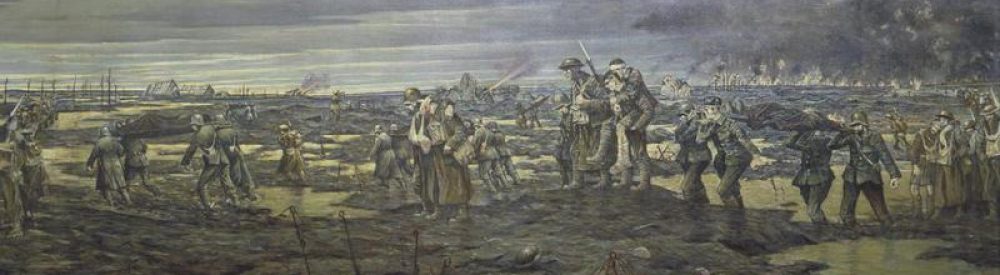


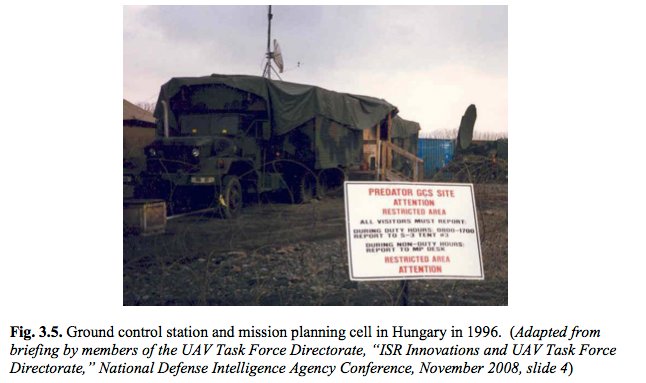


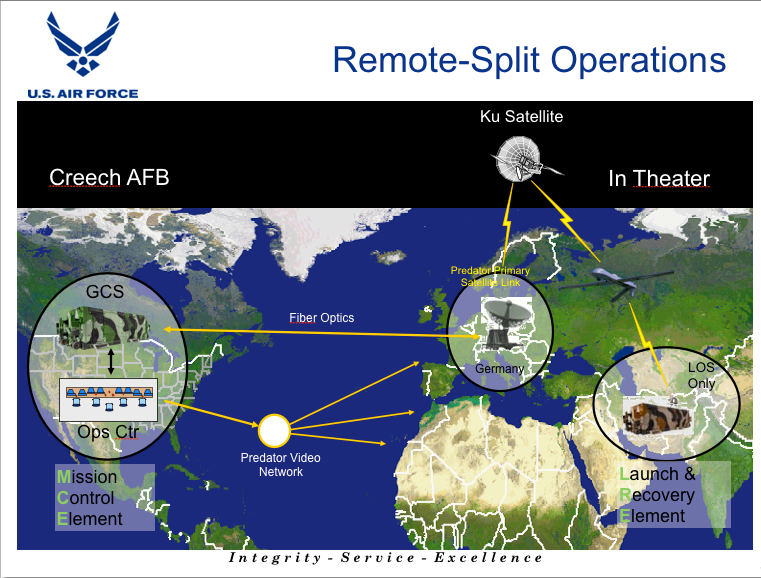

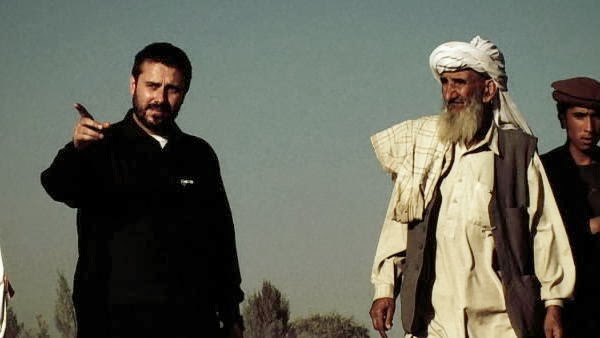
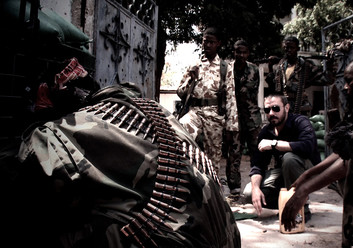

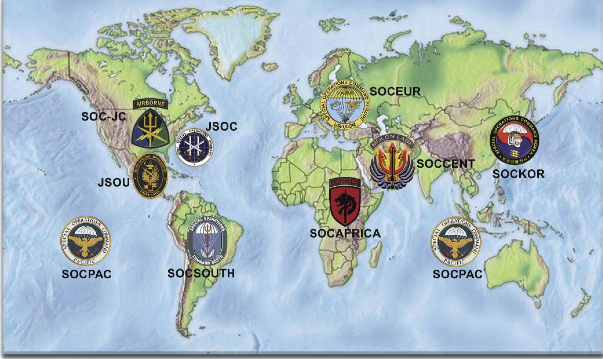
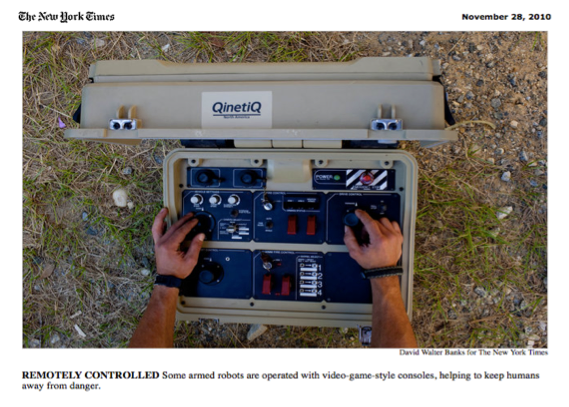
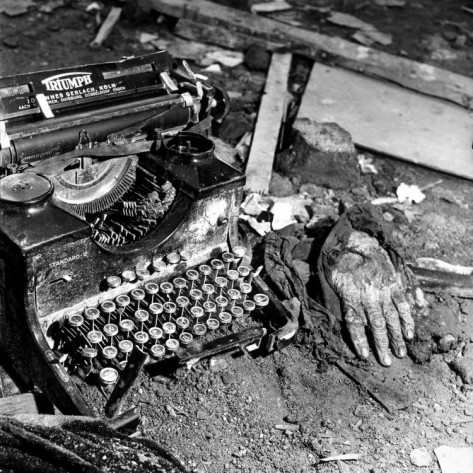

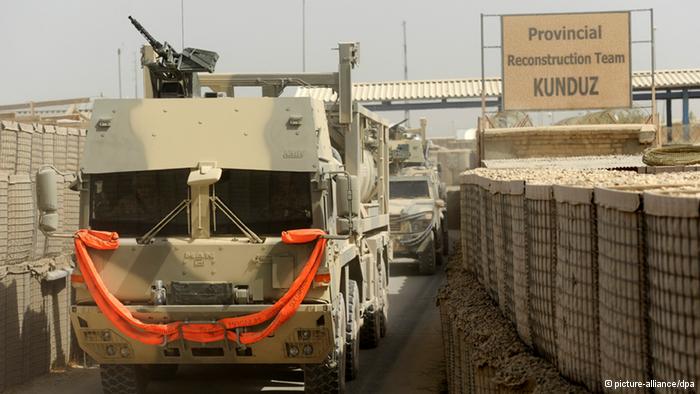
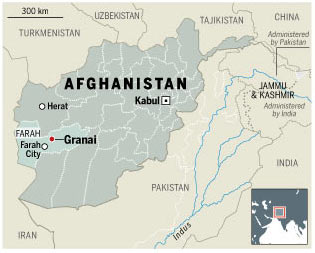
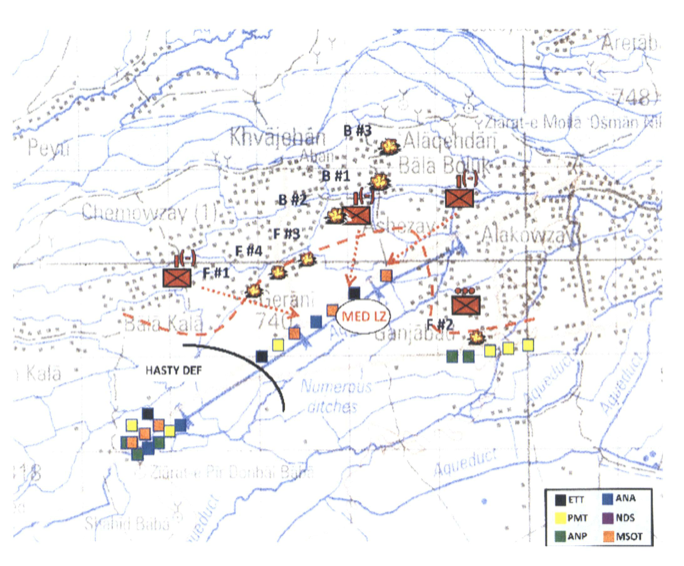
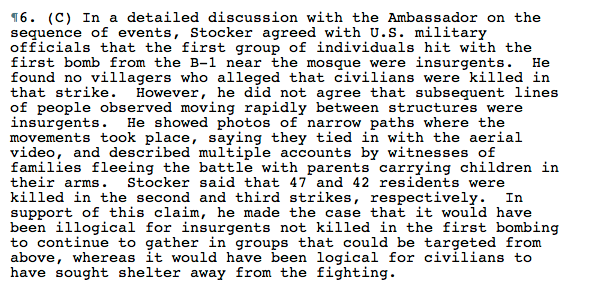
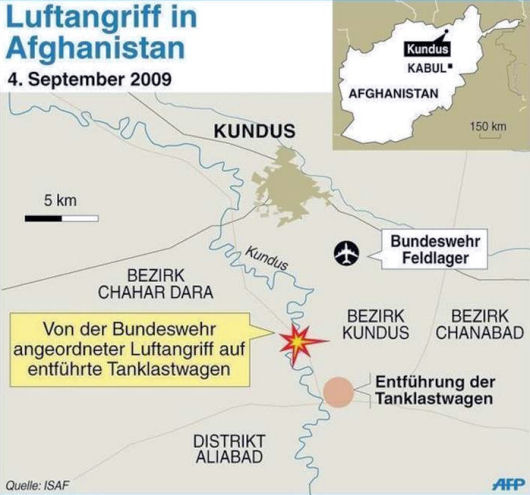
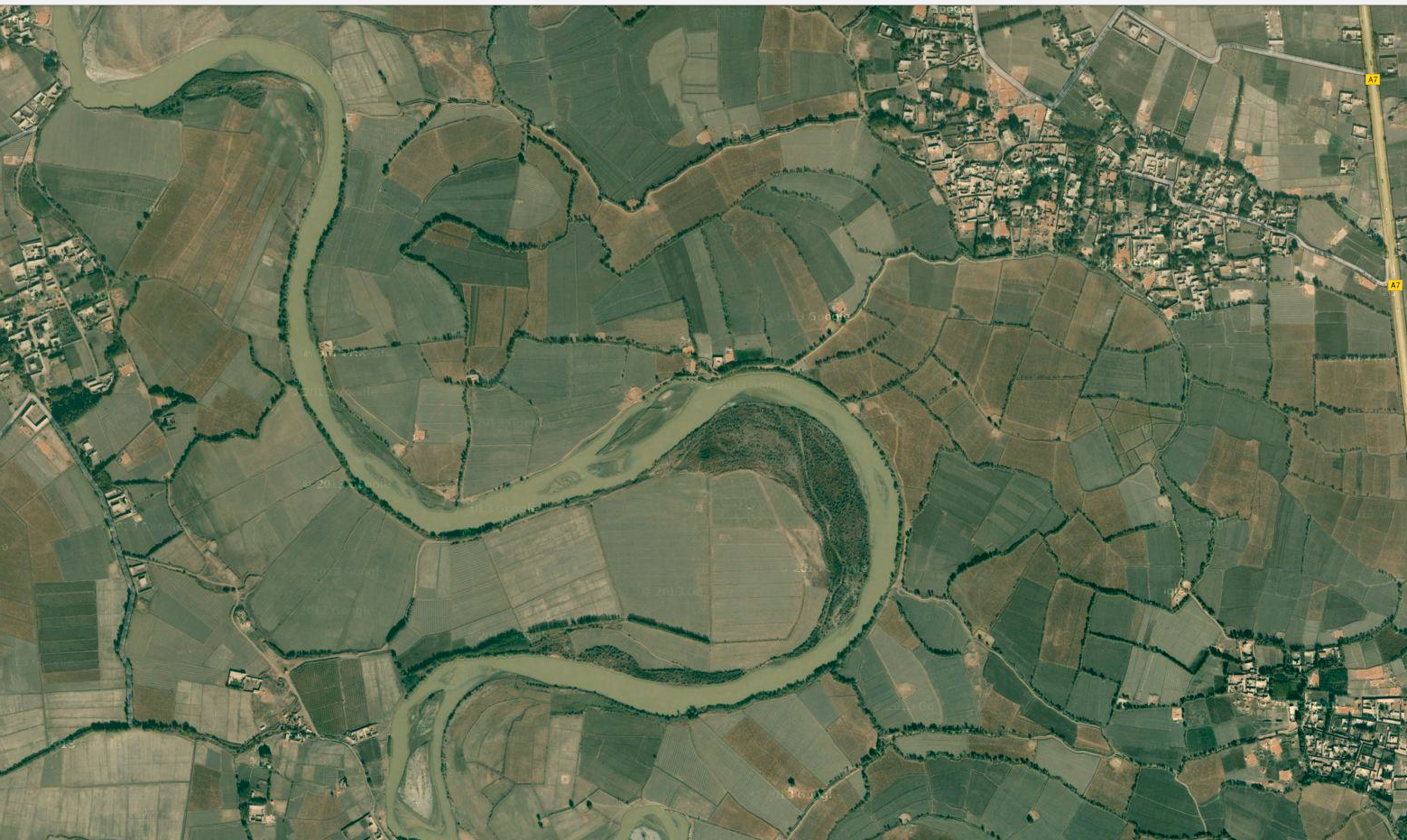
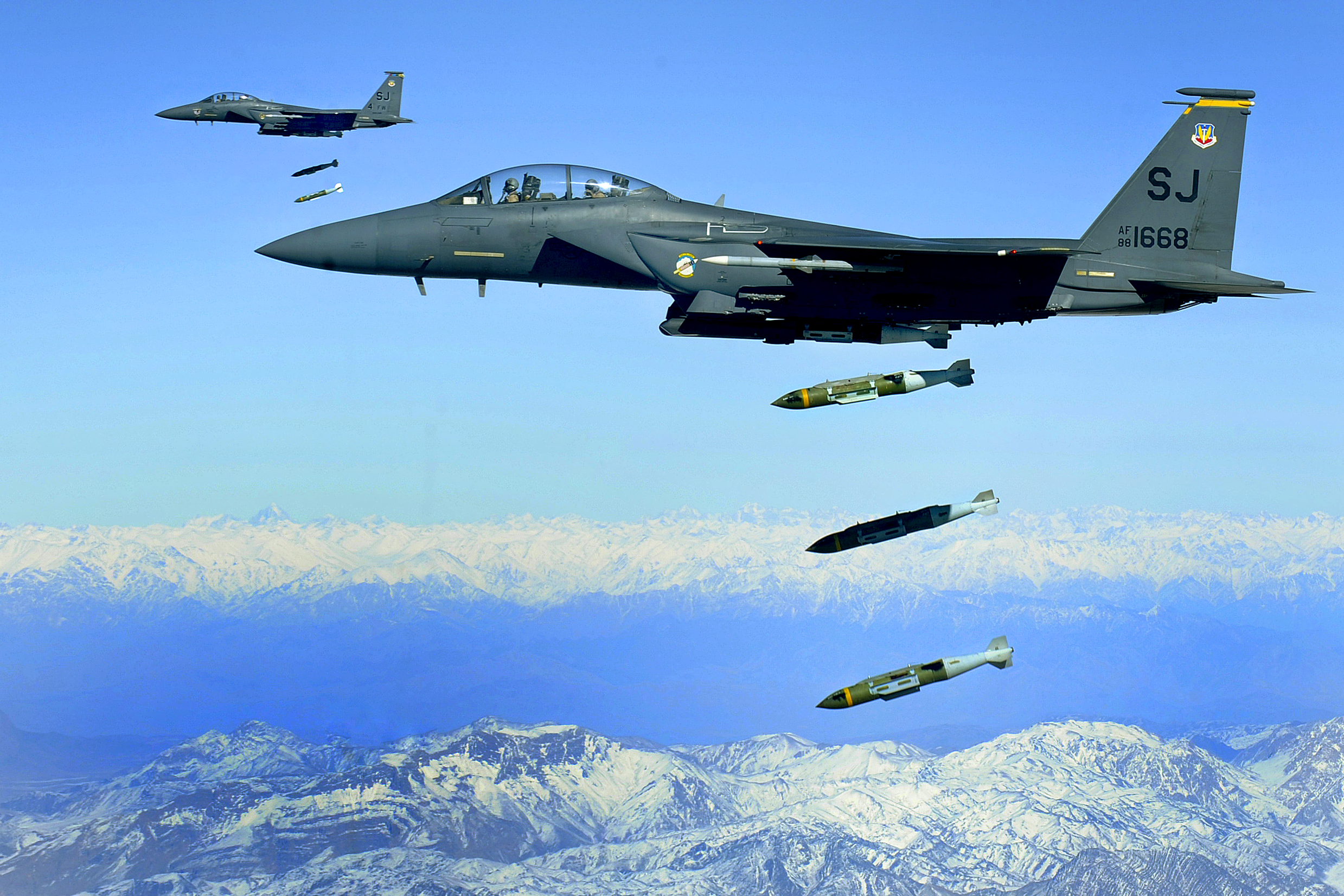
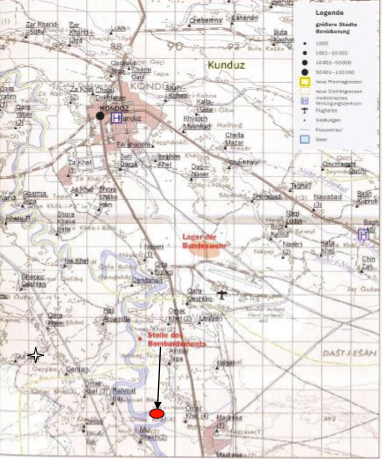
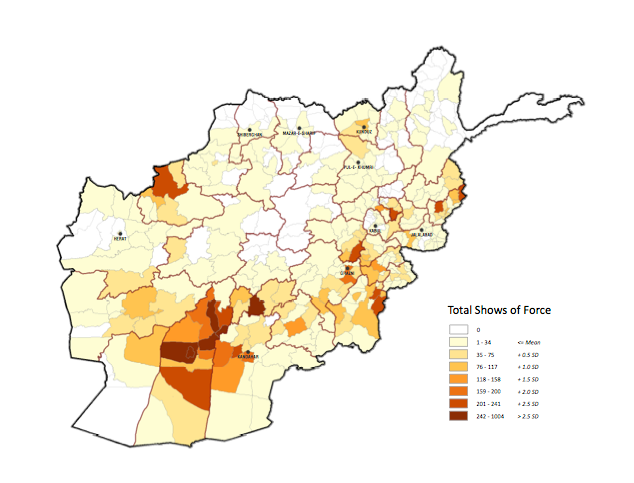

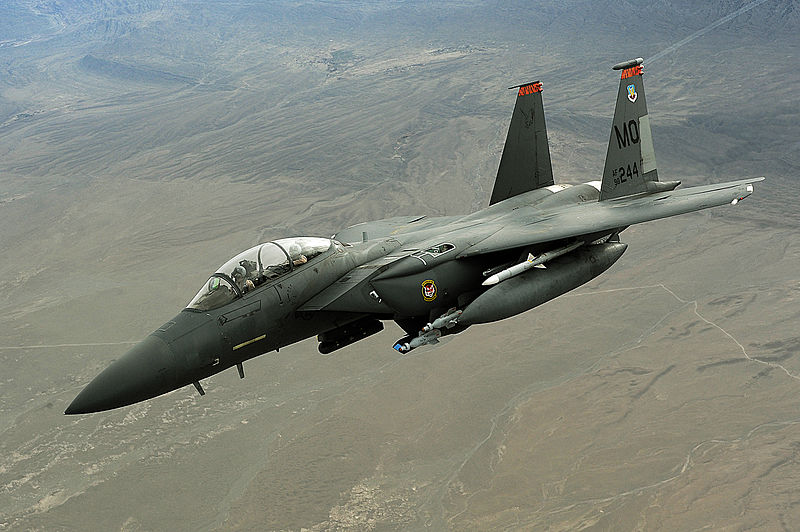

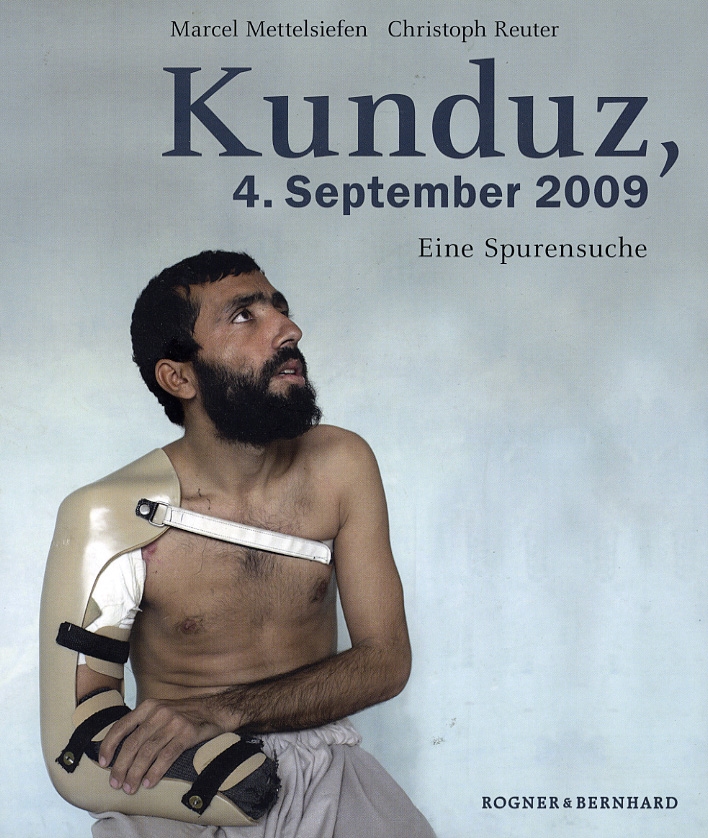

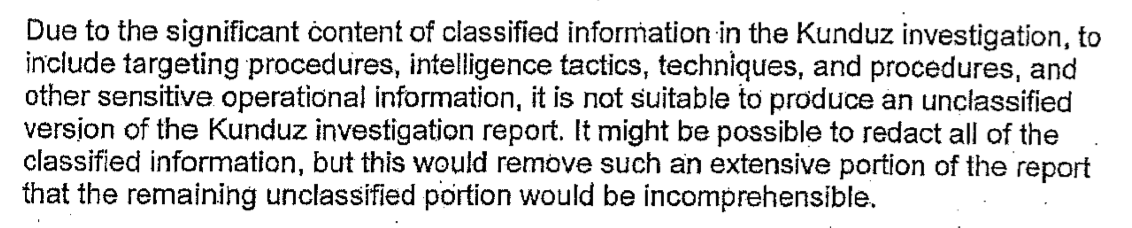
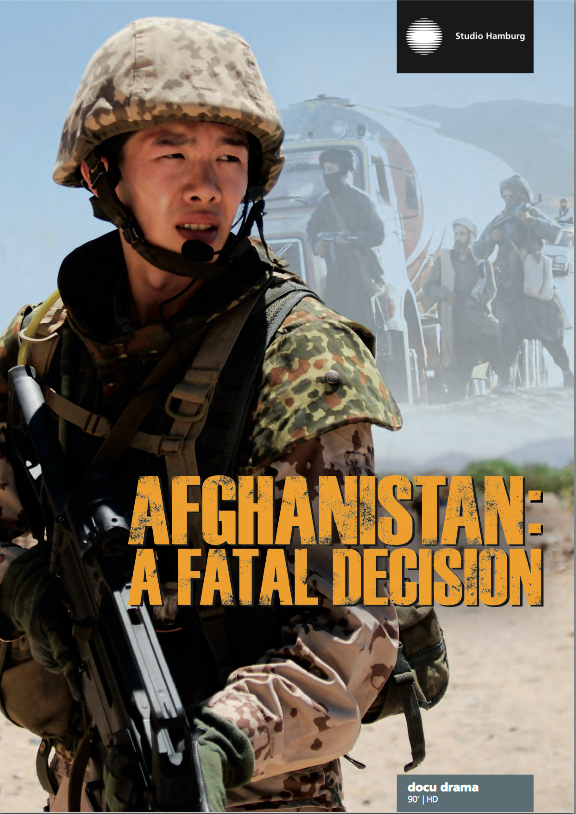
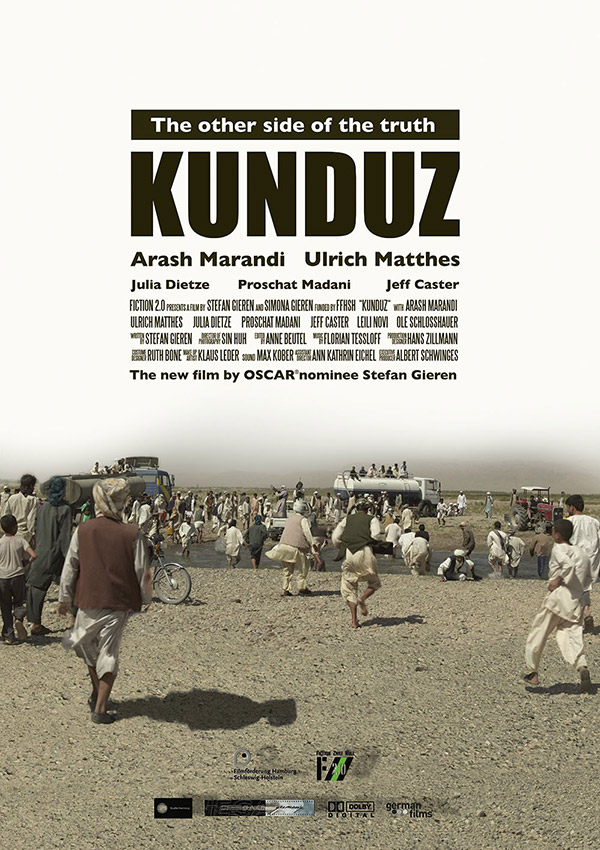

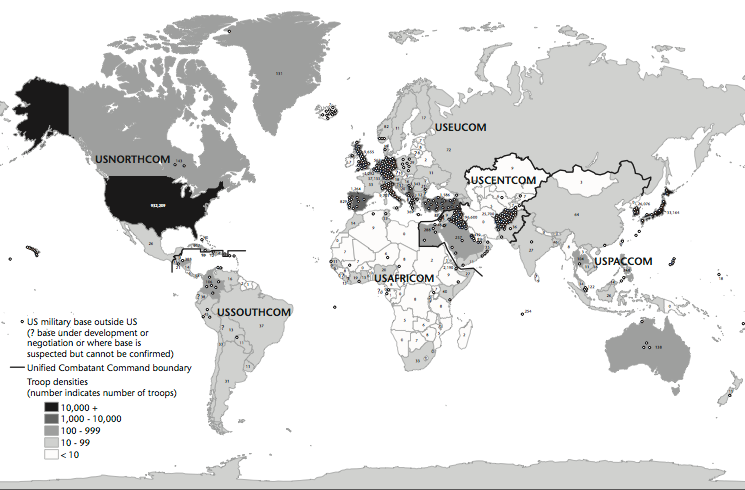
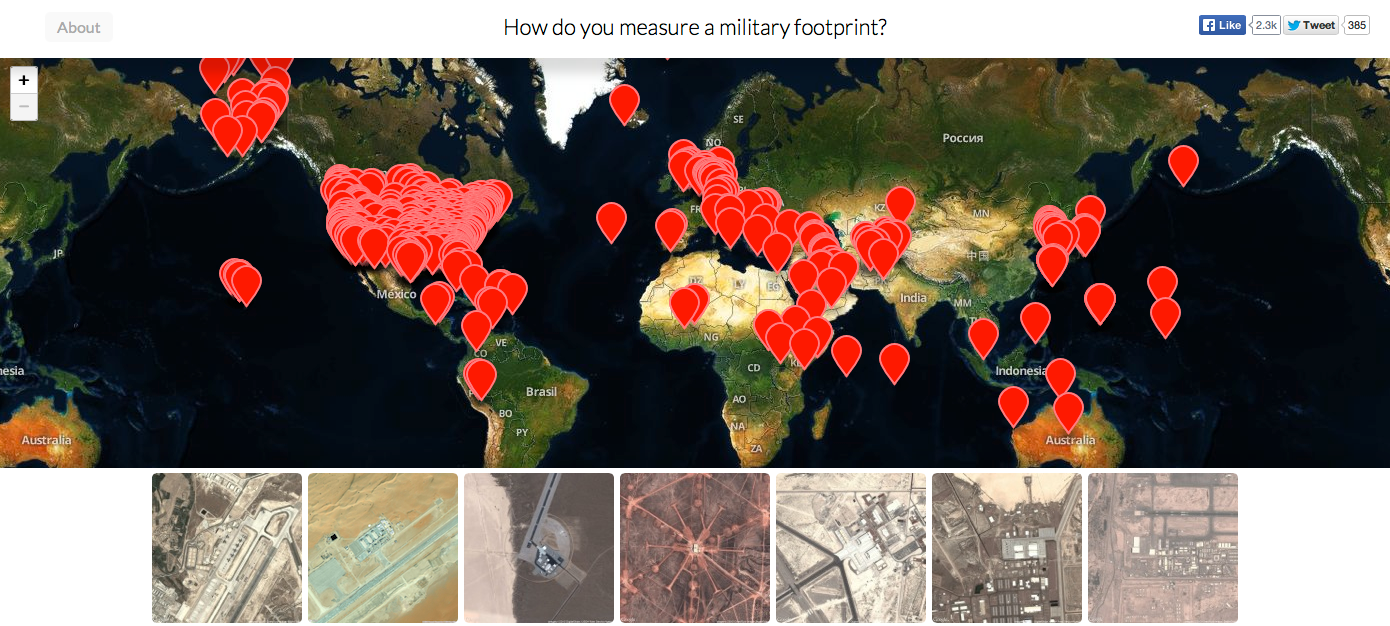
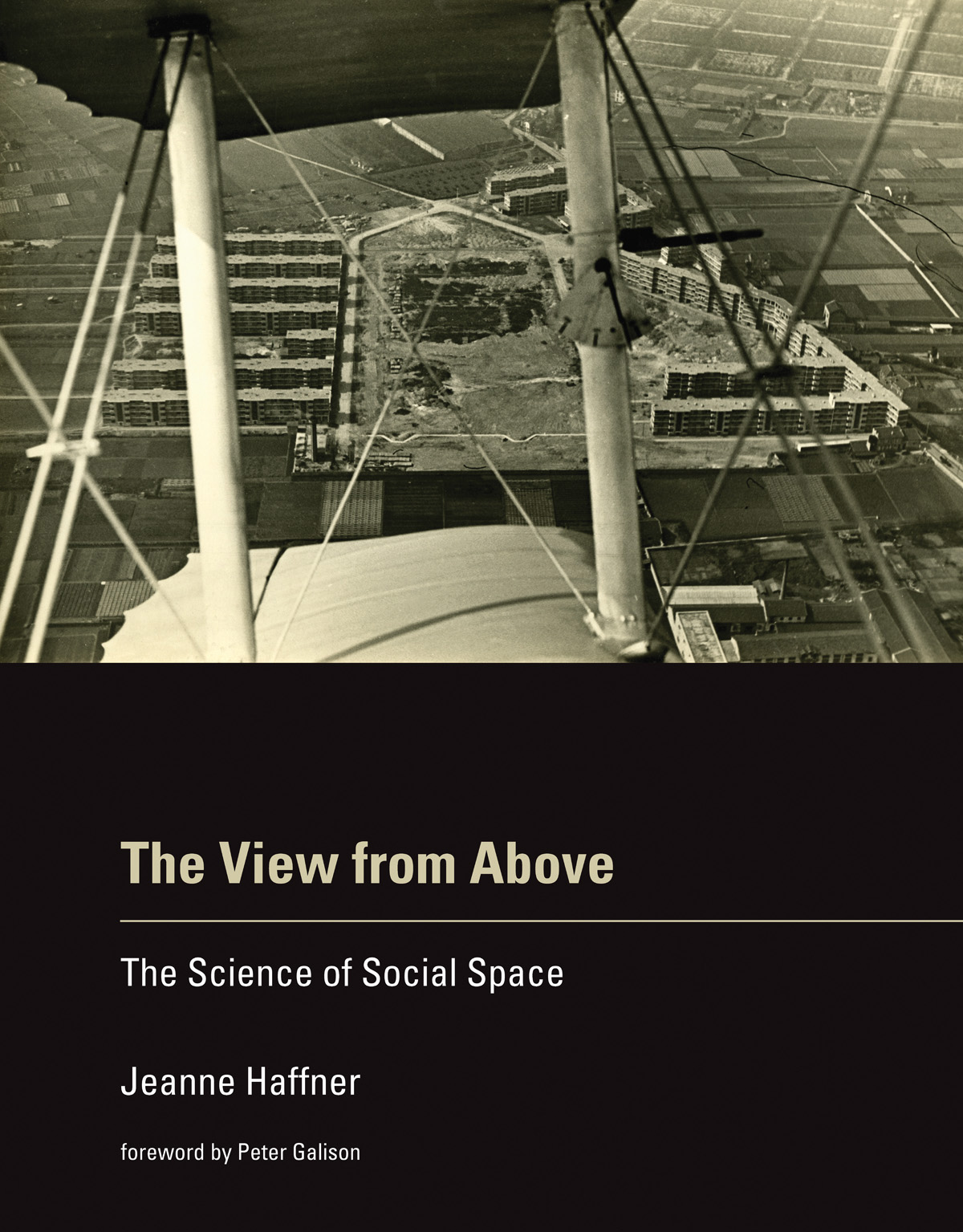
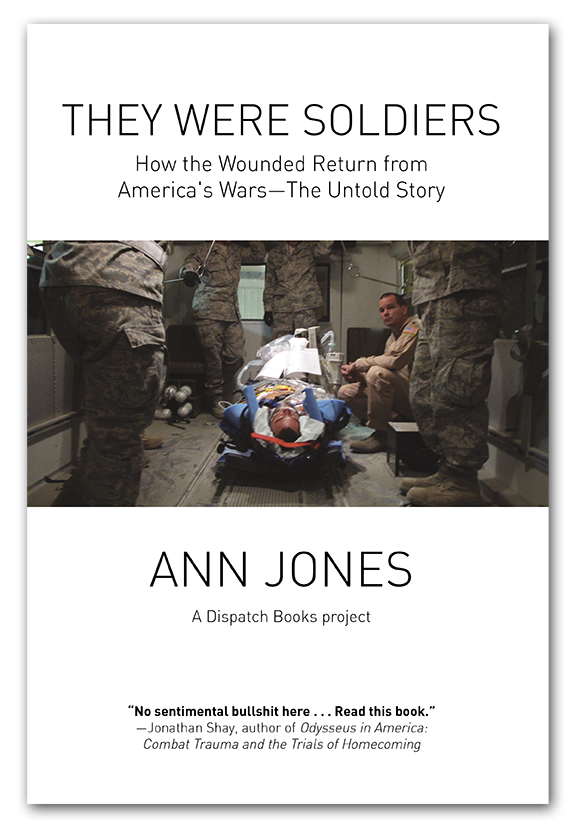
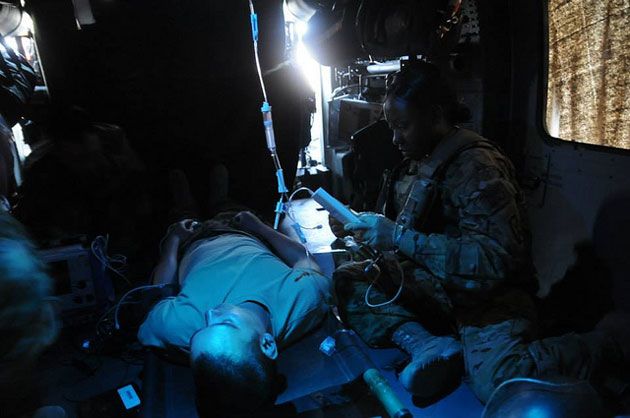
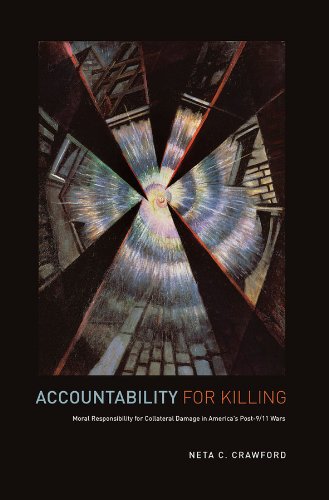
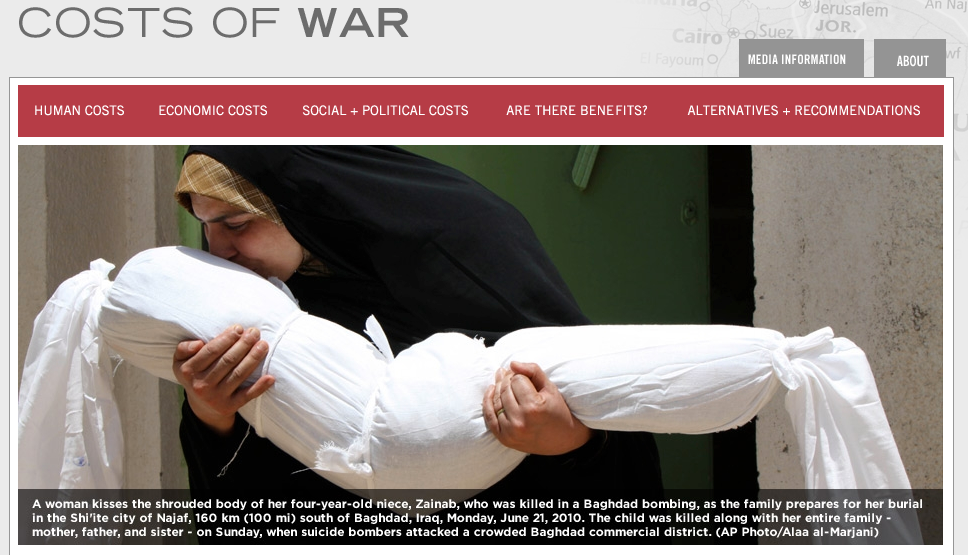


 geographical imaginations