Cities under siege (I)

This is the first of a two-part post, in which I return (at last!) to a promissory note I issued last year about siege warfare in Syria.  My return is prompted by a series of reports about the catastrophic situation in Eastern Ghouta (a suburb of Damascus) and Idlib.

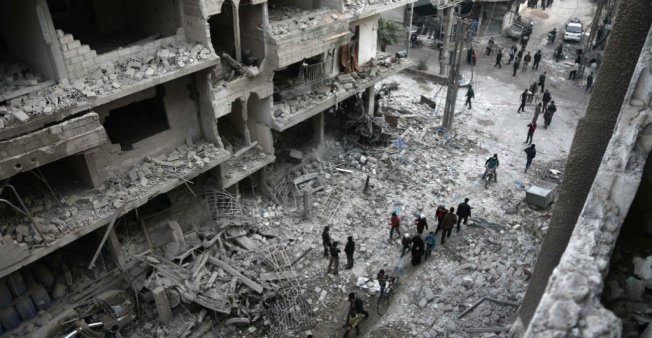
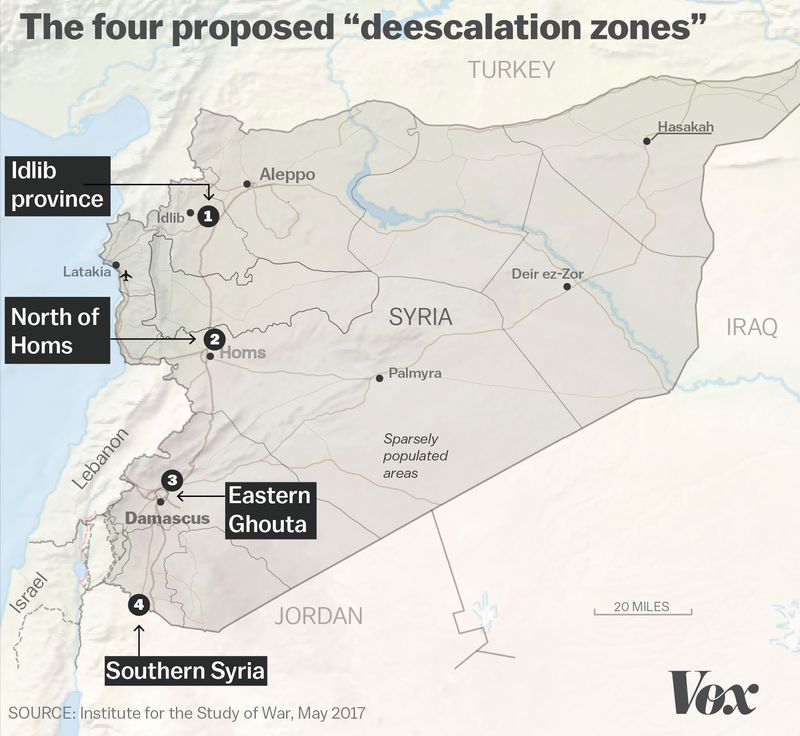
First, Eastern Ghouta, which has been under siege by the Syrian Arab Army and its allies since April 2013.  Most of Eastern Ghoutta was designated as one of four ‘de-escalation zones’ (see map above) under an agreement reached in May 2017, in which aerial violence and all other hostilities would be suspended for six months and humanitarian aid would be allowed across the siege lines.

But the agreement turned out to be primarily a way of killing time.  Aron Lund writes:

In September, just as the Eastern Ghouta’s de-escalation zone was finalized, the situation abruptly worsened. After ordering a halt to the already heavily restricted commercial traffic through the Wafideen crossing [see map below: more here and here], the Syrian government refused to permit any more UN aid missions.

It was a transparent attempt to stoke the humanitarian emergency in Eastern Ghouta, but this time the effect was more severe than during previous rounds of food cuts. With the rebel trading tunnels out of commission for half a year, smuggling could no longer compensate for the shortfall or bring in medicine or basic necessities like fuel, which has not entered the Ghouta since February.

Food stockpiles dwindled quickly and triggered a scramble for whatever remained available on the market, the panicky mood inflamed by suspicions that rebel-connected businessmen were hoarding goods for speculation purposes. From August to October, the already high prices inside Eastern Ghouta increased fivefold, far beyond any other region of Syria.

Air strikes (above) and artillery bombardment resumed in November and have continued, and urgent medical evacuations were denied.  Here is UN Senior Adviser Jan Egelan in December 2017:

Six months ago a very detailed evacuation plan was delivered to the government for needy cases of evacuation, on medical grounds from eastern Ghouta.  Since then, names have been added regularly and it is now, we now have a revised list of 494 names. There are among them 282 cases that need] specialized surgery, specialized treatment, specialized investigations that [they] cannot get inside. There are 73 severe cancer cases, 25 kidney failure cases and 97 heart disease cases [that are] very concerning, five acutely malnourished children that need to be evacuated, six acute mental health cases etc.

The list had to be revised because 12 patients had died while waiting for ‘a half an hour drive to hospitals in Damascus and elsewhere that stand ready to help and save lives.’  Egelan explained that ‘231 of the cases are female, 137 are children, 61 are over 65 years old.  So these are civilians, in the midst of this horrific war.’

He added:  ‘Civilians, children, no one can be a bargaining chip in some kind of tug of war, where many things are negotiated at the same time. These have a right to be evacuated and we have an obligation to evacuate them.’

Siege warfare involves not only closure of movement across the lines for those inside; it also involves opening the zone to violence from the outside.  The assault on Eastern Ghouta has provided ample evidence, but the second case is even more instructive.

And so, second, what was supposed to be the ‘de-escalation’ zone of Idlib has been converted into a ‘kill box’ (for a discussion of the term in relation to remote warfare, see here and here).  Here is Martin Chulov and Kareem Shaheen writing in the Guardian:

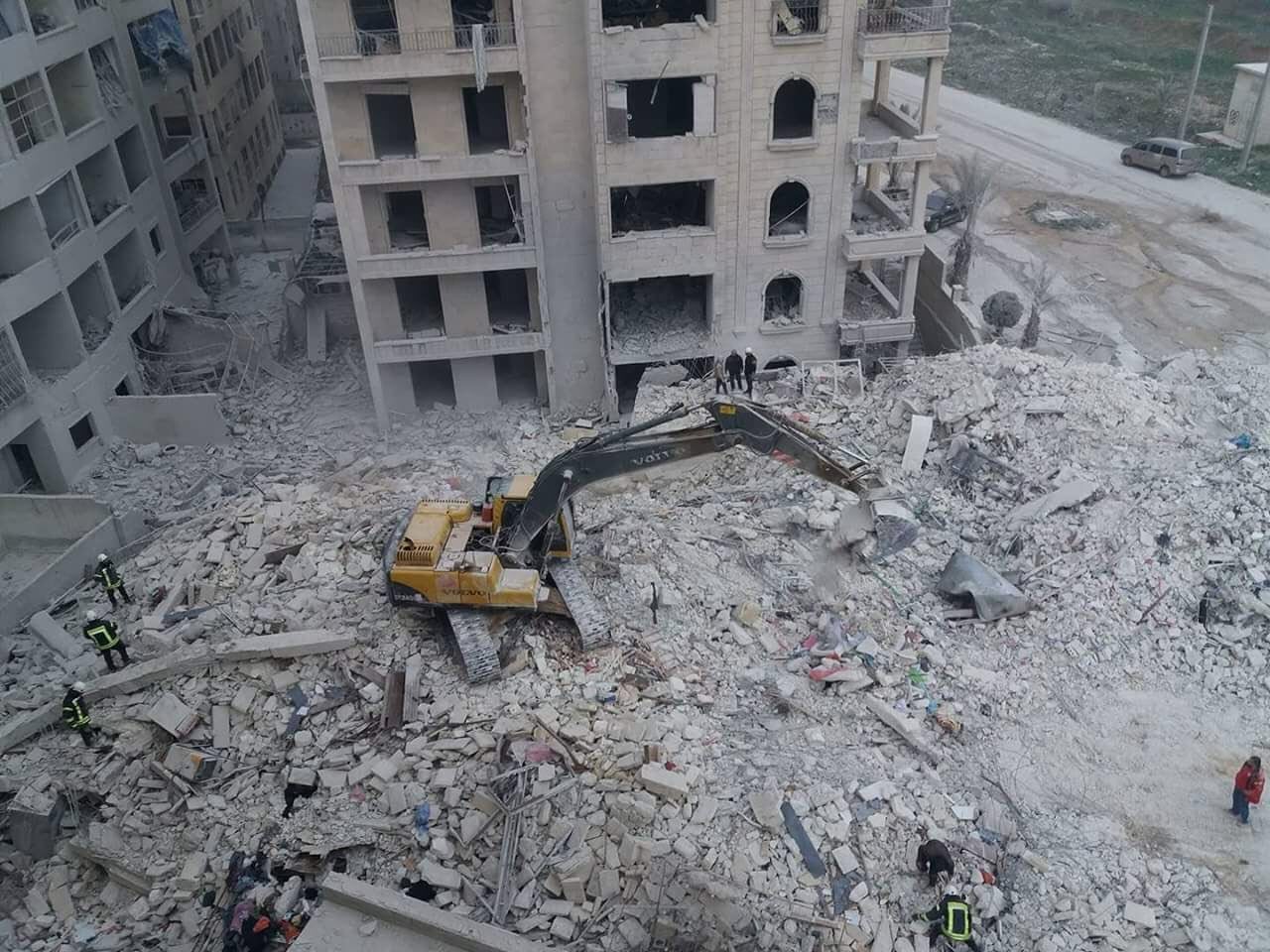
Russian and Syrian jets bombed towns and villages across north-west Syria on Monday, devastating civilian areas and forcing fresh waves of refugees to flee to open ground in the biggest aerial blitz on opposition-held areas since the fall of Aleppo more than a year ago.  Monitoring groups said as many as 150 airstrikes were recorded in Idlib province by Monday, with dozens more pounding up to 18 towns across the region by nightfall.  Residential areas bore the brunt of the strikes, which severely damaged at least two major hospitals, and levelled dozens of buildings in which panicked locals had taken shelter.

Refugees and locals say they fear that Idlib has been transformed into a kill box, with the international community paying scant regard to their fate, as regional powers, Russia, Turkey and Iran all vie for influence in a vital corner of the country.

These strikes were in retaliation for the downing of a Russian aircraft – in this spectacularly asymmetric war, only air-to-ground attacks are acceptable – but aerial violence against civilian infrastructure in Idlib precedes that incident.  Owdai (al Hisan) hospital in Saraqab City was hit by air strikes on 21 and 29 January, for example, and has now closed indefinitely  MSF reports that the loss of the hospital is all the more devastating because ‘medical needs in the area are expected to increase due to the massive displacement of Syrians fleeing fresh violence in Idlib’s eastern countryside and northeast Hama.’

Since then, the strikes intensified:

“The Russians are on a frenzy. They’re going mad. The shelling is ongoing throughout the day and night. The warplanes are hitting residential areas,” Hadi Abdullah, a local journalist, told Al Jazeera by phone from the town of Kafr Nabl in the northwestern Syrian province bordering Turkey…

The main hospital in Maaret al-Numan [above: this was the largest hospital in Idlib], east of Kafr Nabl, has stopped working after it was hit by air strikes, according to the civil defence – also known as the White Helmets.  “About 10 air raids hit the hospital. It was a disaster,” said Hadi, who had rushed to the scene.”The most difficult and heartbreaking scene was when the volunteers were quickly pulling the babies out of the hospital. I can’t get the image out of my head,” he recalled with a trembling voice.

‘De-escalation’ has become a prelude to its inverse.  “There is a misperception that the de-escalation areas have resulted in peace and stability,’ UN assistant secretary-general Panos Moumtsiz said today. “If anything, these have been serious escalation areas.”

With all these horrors in mind, in my second post I’ll turn to the back-story.  You can find other dimensions to the critique of siege warfare in Susan Power, ‘Siege warfare in Syria: prosecuting the starvation of civilians’, Amsterdam Law Forum 8: 2 (2016) 1-22 here or Will Todman, ‘Isolating dissent, punishing the masses: siege warfare as counterinsurgency’, Syria Studies 9 (1) (2017) 1-32.

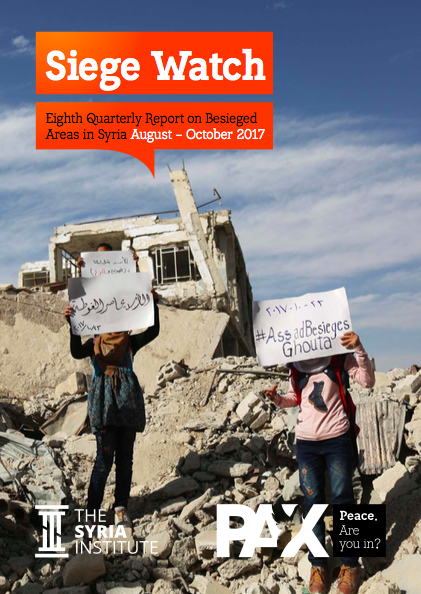
There’s also a series of important quarterly reports from Siege Watch; these started in February 2016, and the most recent covers August-September 2017 and includes a detailed analysis of both Eastern Ghouta and Idlib.

I plan to approach the issue through one of my favourite books, Steve Graham‘s Cities under siege.  Steve’s object was what he called ‘the new military urbanism’ but the situation in Syria – and elsewhere: think Mosul in Iraq (see, for example, here: scroll down) or Israel’s endless sieges of Gaza (see, for example, here) – demonstrate the extraordinary capacity of later modern war to combine cutting-edge technology (never has that adjective been more dismally appropriate) with medieval cruelty.  There is another difference; for all Steve’s analytical passion – and empathy – the voices of those inside the cities under siege are largely silent, yet in Syria (again: and elsewhere) digital media allow us to listen to them and to witness their suffering.  More soon.

Cities and War

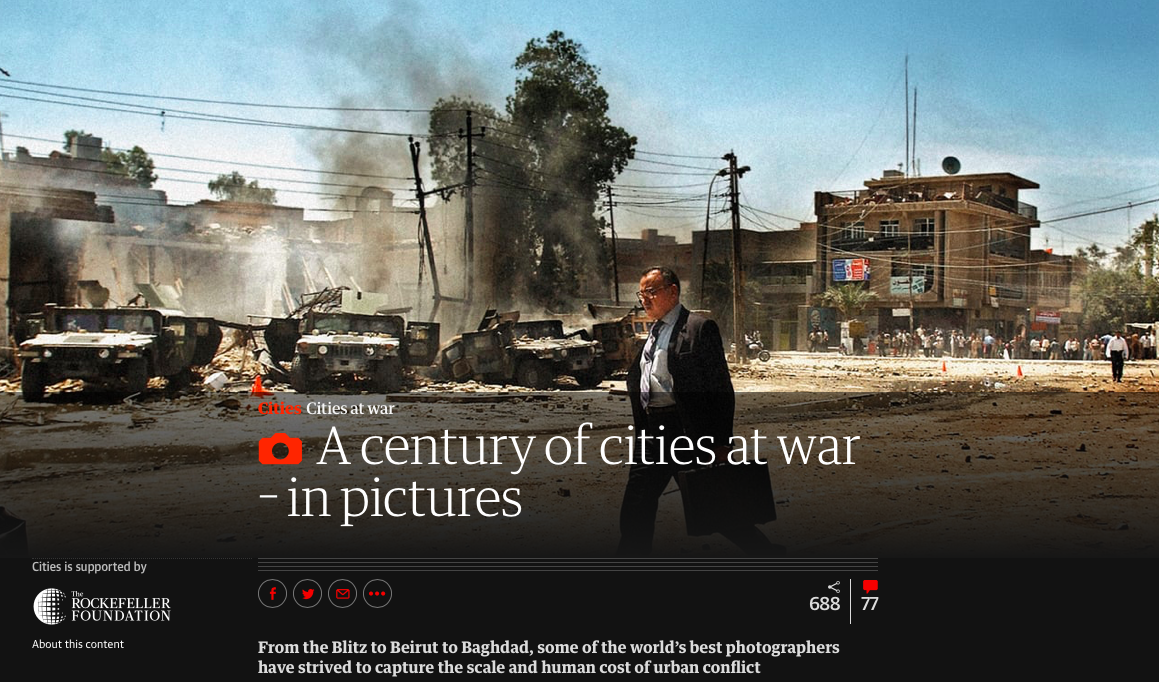
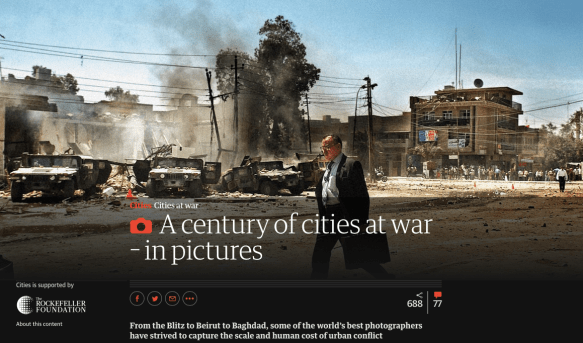
This week the Guardian launched a new series on Cities and War:

War is urbanising. No longer fought on beaches or battlefields, conflict has come to the doors of millions living in densely populated areas, killing thousands of civilians, destroying historic centres and devastating infrastructure for generations to come.

Last year, the world watched the Middle East as Mosul, Raqqa, Sana’a and Aleppo were razed to the ground. Across Europe, brutal attacks stunned urban populations in Paris, London and Berlin, while gang warfare tore apart the fabric of cities in central and south America.

In 2018, Guardian Cities will explore the reality of war in cities today – not merely how it is fought, but how citizens struggle to adapt, and to rebuild stronger than ever.

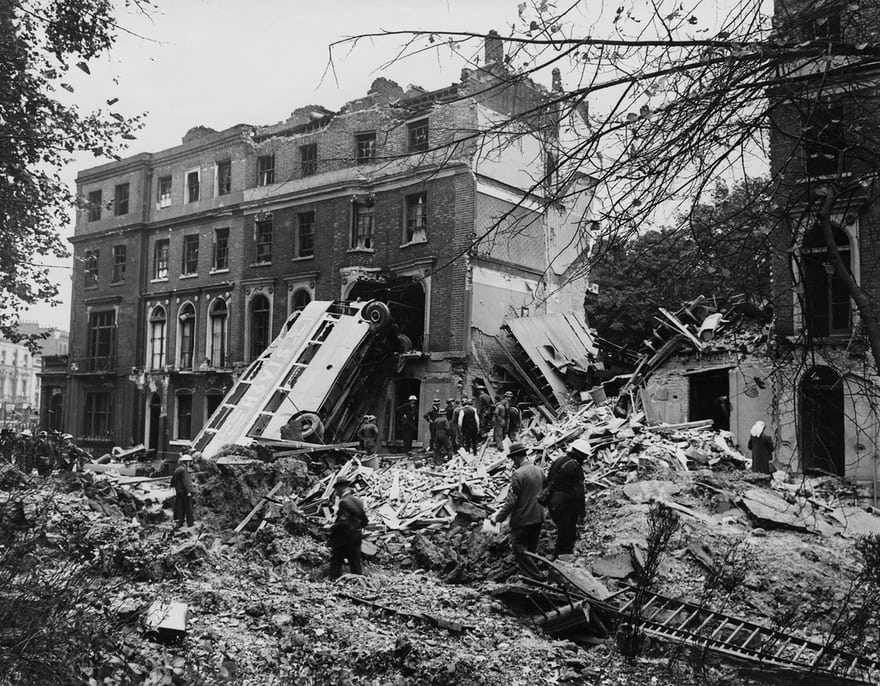
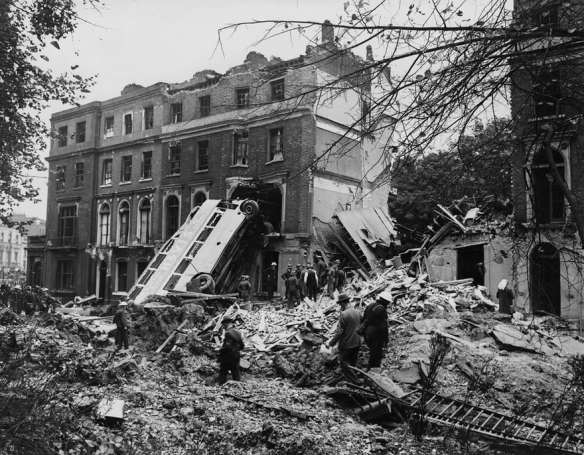
The series opened on Monday with a photographic gallery illustrating ‘a century of cities at war’; some of the images will be familiar, but many will not.  When I was working on ‘Modern War and Dead Cities‘ (which you can download under the TEACHING tab), for example, I thought I had seen most of the dramatic images of the Blitz, but I had missed this one:
It’s an arresting portfolio, and inevitably selective: there is a good discussion below the line on what other cities should have made the cut.

The first written contribution is an extended essay from Jason Burke, ‘Cities and terror: an indivisible and brutal relationship‘, which adds a welcome historical depth and geographical range to a discussion that all too readily contracts around recent attacks on cities in Europe and North America, and suggests an intimate link between cities and terrorism:

[I]t was around the time of the Paddington station attack [by Fenians in 1883]  that the strategy of using violence to sway public opinion though fear became widespread among actors such as the anarchists, leftists and nationalists looking to bring about dramatic social and political change.

This strategy depended on two developments which mark the modern age: democracy and communications. Without the media, developing apace through the 19th century as literacy rates soared and cheap news publications began to achieve mass circulations, impact would be small. Without democracy, there was no point in trying to frighten a population and thus influence policymakers. Absolutist rulers, like subsequent dictators, could simply ignore the pressure from the terrified masses. Of course, a third great development of this period was conditions in the modern city itself.

Could the terrorism which is so terribly familiar to us today have evolved without the development of the metropolis as we now know it? This seems almost impossible to imagine. Even the terror of the French revolution – Le Terreur – which gives us the modern term terrorism, was most obvious in the centre of Paris where the guillotine sliced heads from a relatively small number of aristocrats in order to strike fear into a much larger number of people.

The history of terrorism is thus the history of our cities. The history of our cities, at least over the last 150 years or so, is in part the history of terrorism. This is a deadly, inextricable link that is unlikely to be broken anytime soon.

Today Saskia Sassen issued her ‘Welcome to a new kind of war: the rise of endless urban conflict‘.  She begins with an observation that is scarcely novel:

The traditional security paradigm in our western-style democracies fails to accommodate a key feature of today’s wars: when our major powers go to war, the enemies they now encounter are irregular combatants. Not troops, organised into armies; but “freedom” fighters, guerrillas, terrorists. Some are as easily grouped by common purpose as they are disbanded. Others engage in wars with no end in sight.

What such irregular combatants tend to share is that they urbanise war. Cities are the space where they have a fighting chance, and where they can leave a mark likely to be picked up by the global media. This is to the disadvantage of cities – but also to the typical military apparatus of today’s major powers.

The main difference between today’s conflicts and the first and second world wars is the sharp misalignment between the war space of traditional militaries compared to that of irregular combatants.

Irregular combatants are at their most effective in cities. They cannot easily shoot down planes, nor fight tanks in open fields. Instead, they draw the enemy into cities, and undermine the key advantage of today’s major powers, whose mechanised weapons are of little use in dense and narrow urban spaces.

Advanced militaries know this very well, of course, and urban warfare is now a central medium in military training.  Saskia continues:

We have gone from wars commanded by hegemonic powers that sought control over sea, air, and land, to wars fought in cities – either inside the war zone, or enacted in cities far away. The space for action can involve “the war”, or simply specific local issues; each attack has its own grievances and aims, seeking global projection or not. Localised actions by local armed groups, mostly acting independently from other such groups, let alone from actors in the war zone – this fragmented isolation has become a new kind of multi-sited war.
This is, in part, what I tried to capture in my early essay on ‘The everywhere war’, and I’m now busily re-thinking it for my new book.  More on this in due course, but it’s worth noting that the Trump maladministration’s National Defense Strategy, while recognising the continuing importance of counter-terrorism and counterinsurgency, has returned the Pentagon’s sights to wars between major powers – notably China and Russia (see also here)– though it concedes that these may well be fought (indeed, are being fought) in part through unconventional means in digital domains.  In short, I think later modern war is much more complex than Saskia acknowledges; it has many modalities (which is why I become endlessly frustrated at the critical preoccupation with drones to the exclusion of other vectors of military and paramilitary violence), and these co-exist with – or give a new inflection to – older modalities of violence (I’m thinking of the siege warfare waged by Israel against Gaza or Syria against its own people).

The two contributions I’ve singled out are both broad-brush essays, but Ghaith Abdul-Ahad has contributed a two-part essay on Mosul under Islamic State that is truly brilliant: Part I describes how IS ran the city (‘The Bureaucracy of Evil‘) and Part II how the people of Mosul resisted the reign of terror (‘The Fall‘).
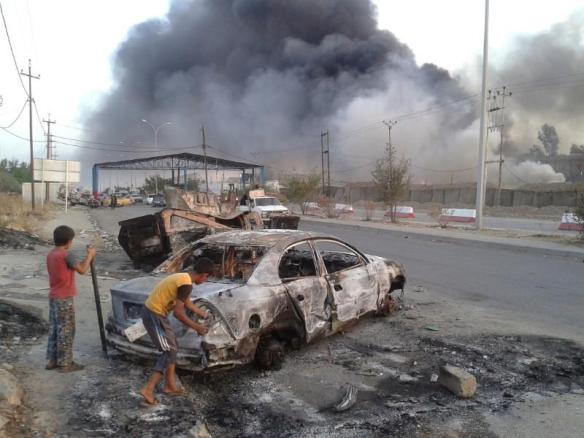
Mosul fell to IS in July 2014, and here is part of Ghaith’s report, where he tells the story of Wassan, a newly graduated doctor:

Like many other diwans (ministries) that Isis established in Mosul, as part of their broader effort to turn an insurgency into a fully functioning administrative state, the Diwan al-Siha (ministry of health) operated a two-tier system.There was one set of rules for “brothers” – those who gave allegiance to Isis – and another for the awam, or commoners.

“We had two systems in the hospitals,” Wassan said. “IS members and their families were given the best treatment and complete access to medicine, while the normal people, the awam, were forced to buy their own medicine from the black market.

“We started hating our work. As a doctor, I am supposed to treat all people equally, but they would force us to treat their own patients only. I felt disgusted with myself.”

(Those who openly resisted faced death, but as IS came under increasing military pressure at least one doctor was spared by a judge when he refused to treat a jihadist before a civilian: “They had so few doctors, they couldn’t afford to punish me. They needed me in the hospital.”)

Wassan’s radical solution was to develop her own, secret hospital:

“Before the start of military operations, medicines begun to run out,” she said. “So I started collecting whatever I could get my hands on at home. I built a network with pharmacists I could trust. I started collecting equipment from doctors and medics, until I had a full surgery kit at home. I could even perform operations with full anaesthesia.”

Word of mouth spread about her secret hospital.

“Some people started coming from the other side of Mosul, and whatever medicine I had was running out,” she said. “I knew there was plenty of medicine in our hospital, but the storage rooms were controlled by Isis.

“Eventually, I began to use the pretext of treating one of their patients to siphon medicine from their own storage. If their patient needed one dose, I would take five. After a while they must have realised, because they stopped allowing doctors to go into the storage.”

The punishment for theft is losing a hand. Running a free hospital from her home would have been sedition, punishable by death…

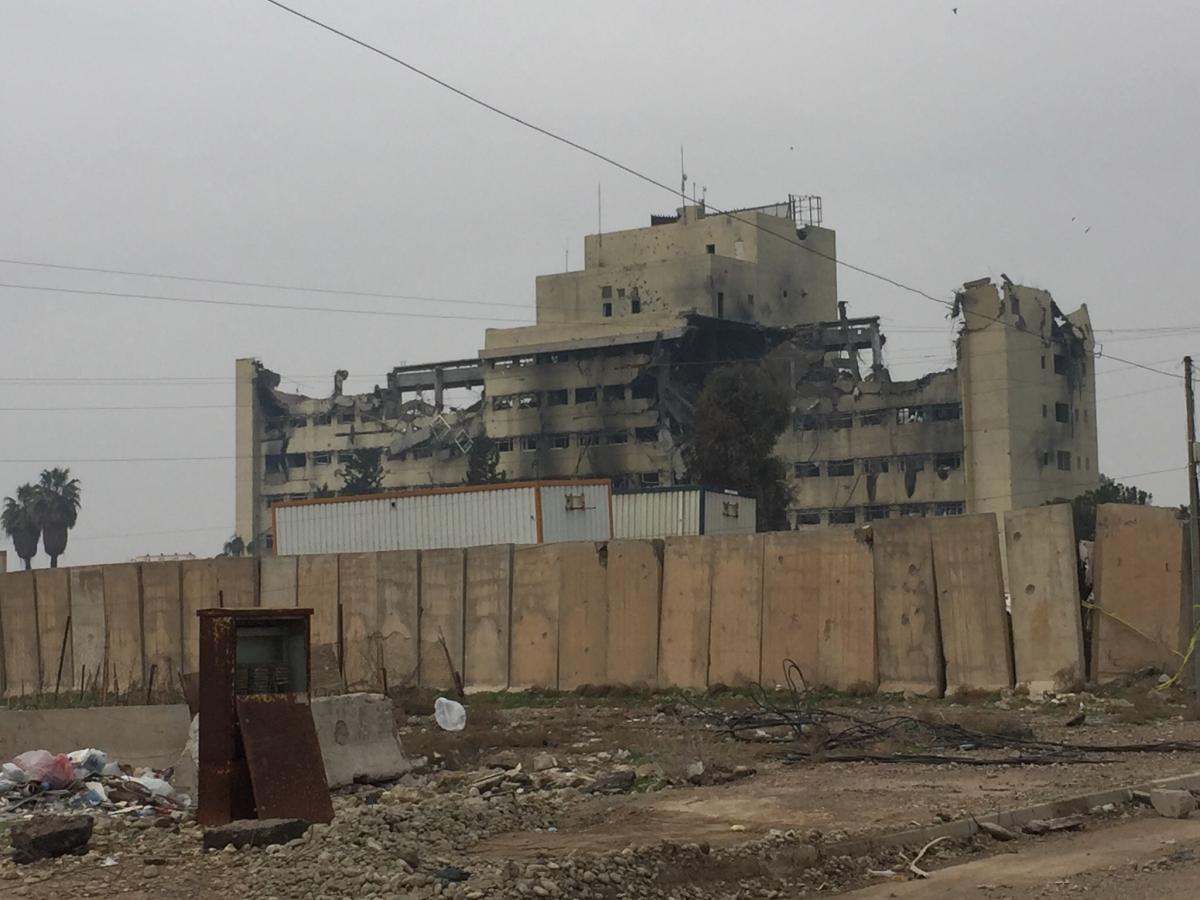
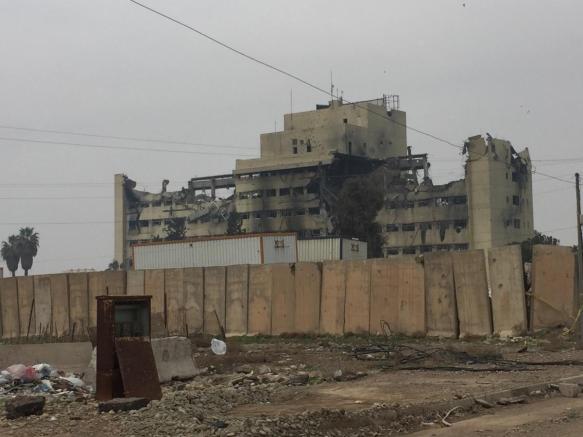
When Wassan’s hospital was appropriated by Isis fighters [this was a common IS tactic – see the image below and the Human Rights Watch report here; the hospital was later virtually destroyed by US air strikes] her secret house-hospital proved essential. More than a dozen births were performed on her dining table; she kicked both brothers out of their rooms to convert them into operating theatres; her mother, an elderly nurse, became her assistant.
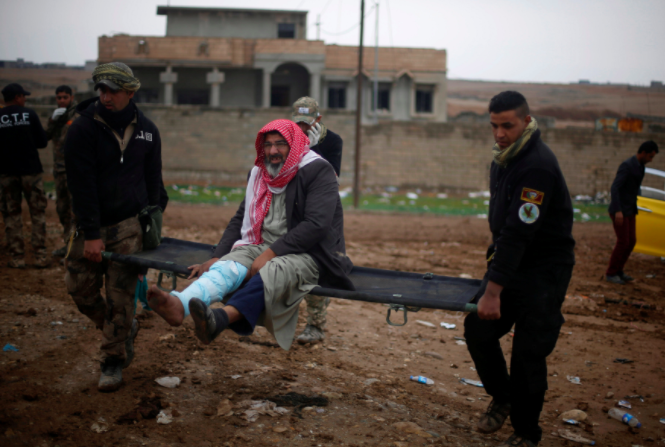
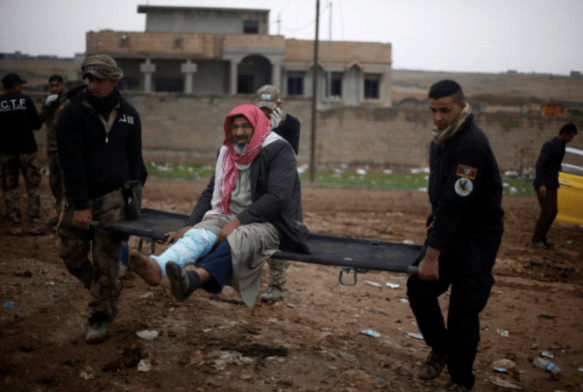
As the siege of Mosul by the Iraqi Army ground on, some of the sick and injured managed to run (or stumble) the gauntlet to find medical aid in rudimentary field hospitals beyond the faltering grip of IS, while others managed to make it to major trauma centres like West Irbil.
But for many in Mosul Wassan’s secret hospital was a lifeline (for a parallel story about another woman doctor running a secret clinic under the noses of IS, see here).

Yet there is a vicious sting in the tail:

For Wassan, the ending of Isis rule in Mosul is bittersweet. After many attempts to reach Baghdad to write her board exams for medical school, she was told her work in the hospital for the past three years did not count as “active service”, and she was disqualified.

“The ministry said they won’t give me security clearance because I had worked under Isis administration,” she said.

This, too, is one of the modalities of later modern war – the weaponisation of health care, through selectively withdrawing it from some sections of the population while privileging the access and quality for others.  ‘Health care,’ writes Omar Dewachi, ‘has become not only a target but also a tactic of war.’  (If you want to know more about the faltering provision of healthcare and the fractured social fabric of life in post-IS Mosul, I recommend an interactive report from Michael Bachelard and Kate Geraghty under the bleak but accurate title ‘The war has just started‘). 

The weaponisation of health care has happened before, of course, and it takes many forms. In 2006, at the height of sectarian violence in occupied Baghdad, Muqtada al-Sadr’s Shi’a militia controlled the Health Ministry and manipulated the delivery of healthcare in order to marginalise and even exclude the Sunni population.  As Amit Paley reported:

 ‘In a city with few real refuges from sectarian violence – not government offices, not military bases, not even mosques – one place always emerged as a safe haven: hospitals…

‘In Baghdad these days, not even the hospitals are safe. In growing numbers, sick and wounded Sunnis have been abducted from public hospitals operated by Iraq’s Shiite-run Health Ministry and later killed, according to patients, families of victims, doctors and government officials.

‘As a result, more and more Iraqis are avoiding hospitals, making it even harder to preserve life in a city where death is seemingly everywhere. Gunshot victims are now being treated by nurses in makeshift emergency rooms set up in homes. Women giving birth are smuggled out of Baghdad and into clinics in safer provinces.’

He described hospitals as ‘Iraq’s new killing fields’, but in Syria the weaponisation of health care has been radicalised and explicitly authorized by the state.

You may think I’ve strayed too far from where I started this post; but I’ve barely moved.  For towards the end of her essay Saskia wonders why military and paramilitary violence in cities in so shocking – why it attracts so much more public attention than the millions murdered in the killing fields of the Congo.  And she suggests that the answer may lie in its visceral defilement of one of humanity’s greatest potential achievements:

Is it because the city is something we’ve made together, a collective construction across time and space? Is it because at the heart of the city are commerce and the civic, not war?

Lewis Mumford had some interesting things to say about that.  I commented on this in ACME several years ago, and while I’d want to flesh out those skeletal remarks considerably now, they do intersect with Saskia’s poignant question about the war on the civic:

In The Culture of Cities, published just one year before the Second World War broke out, Mumford included ‘A brief outline of hell’ in which he turned the Angelus towards the future to confront the terrible prospect of total war. Raging against what he called the ‘war-ceremonies’ staged in the ‘imperial metropolis’ (‘from Washington to Tokyo, from Berlin to Rome’: where was London, I wonder? Moscow?), Mumford fastened on the anticipatory dread of air war. The city was no longer the place where (so he claimed) security triumphed over predation, and he saw in advance of war not peace but another version of war. Thus the rehearsals for defence (the gas-masks, the shelters, the drills) were ‘the materialization of a skillfully evoked nightmare’ in which fear consumed the ideal of a civilized, cultivated life before the first bombs fell. The ‘war-metropolis’, he concluded, was a ‘non-city’.

After the war, Mumford revisited the necropolis, what he described as ‘the ruins and graveyards’ of the urban, and concluded that his original sketch could not be incorporated into his revised account, The City in History, simply ‘because all its anticipations were abundantly verified.’ He gazed out over the charnel-house of war from the air — Warsaw and Rotterdam, London and Tokyo, Hamburg and Hiroshima — and noted that ‘[b]esides the millions of people — six million Jews alone — killed by the Germans in their suburban extermination camps, by starvation and cremation, whole cities were turned into extermination camps by the demoralized strategists of democracy.’

I’m not saying that we can accept Mumford without qualification, still less extrapolate his claims into our own present, but I do think his principled arc, at once historical and geographical, is immensely important. In now confronting what Stephen Graham calls ‘the new military urbanism’ we need to recover its genealogy — to interrogate the claims to novelty registered by both its proponents and its critics — as a way of illuminating the historical geography of our own present.

It’s about more than aerial violence – though that is one of the signature modalities of modern war – and we surely need to register the heterogeneity and hybridity of contemporary conflicts.  But we also need to recognise that they are often not only wars in cities but also wars on cities.
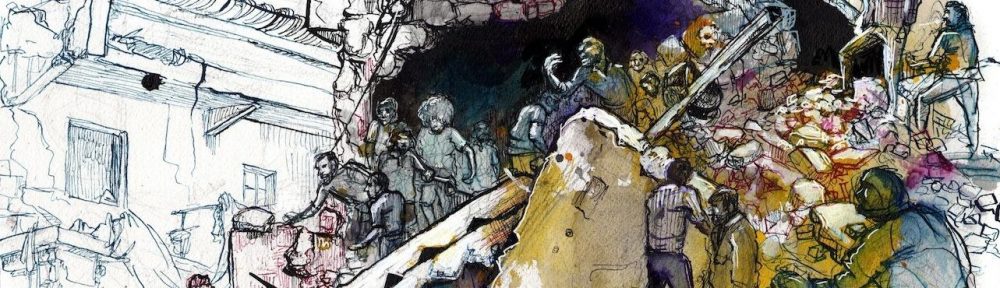
War | Space

Regular readers will remember Craig Jones wonderful old blog, War, law, space; it’s now re-launched, re-imagined and refurbished and you can find it here.

WAR | SPACE

WAR | SPACE brings attention to the enduring but not inevitable nature of war and imagines a world without (para)military violence. It offers critical perspectives that eschew narratives of geopolitical grand strategy in favour of a people-centric view of war. By ‘people’ we mean not only the political and military architects of (para)military violence, but crucially also those civilians, soldiers, and fighters who are caught in the mighty cross-hairs of war.

In a famous 1985 essay, the American essayist and professor of English and American Literature and Language Elaine Scarry wrote: “the main purpose and outcome of war is injuring”. She points out that this fact is so obvious that it is often forgotten altogether. She continues:

“one can read many pages of an historic or strategic account of a particular military campaign, or listen to many installments in a newscast narrative of events in a contemporary war, without encountering the acknowledgment that the purpose of the event described is to alter (to burn, to blast, to shell, to cut) human tissue, as well as to alter the surface, shape, and deep entirety of the objects that human beings recognize as extensions of themselves.”

Scarry’s words ring truer than ever 30 years on. The genres to which she refers are still replete with pages and reels devoted to what might best be described as Clean War. Clean War is full of euphemism and offers a bloodless, glossy account of war in which ‘we’ defeat the barbarians with law, ethics and an overflowing vocabulary of legitimisation on our side. In Clean War only the bad guys die; actually, they are simply taken out, liquidated, targeted, replaced or disposed. They are not mourned, for there is no life that has been lost; nobody – and no body – to mourn, to speak with Judith Butler.  In his famous essay Politics and the English LanguageGeorge Orwell described a version of Clean War as “the defence of the indefensible”. He wrote:

“[P]olitical language has to consist largely of euphemism, question-begging and sheer cloudy vagueness. Defenceless villages are bombarded from the air, the inhabitants driven out into the countryside, the cattle machine-gunned, the huts set on fire with incendiary bullets: this is called pacification. Millions of peasants are robbed of their farms and sent trudging along the roads with no more than they can carry: this is called transfer of population or rectification of frontiers. People are imprisoned for years without trial, or shot in the back of the neck or sent to die of scurvy in Arctic lumber camps: this is called elimination of unreliable elements.”

And so it is with precise, clean, surgical, just, legal, necessary, and proportional war today. So much so that we must constantly remind ourselves, pace Scarry, that first and foremost, war is injury.

WAR | SPACE pays special attention to those who injure, those who are injured, and those who care for the fractured, fragile and injured bodies and souls who remain. It also pays special attention to the ideas, institutions and processes that cause, constrain, and remedy war’s many painful injuries.

Craig adds that he’s also looking for ‘collaborators and authors to expand this project to include cutting edge critical thinking about war, especially in the Middle East and North Africa.

If you are interested in joining this project or would like to contribute in any way please email: craig . jones at ncl. ac . uk.

Victims of (para)military violence, academics, journalists, activists and interested citizens are encouraged to get in touch.

The slow violence of bombing

When I spoke at the symposium on ‘The Intimacies of Remote Warfare’ in Utrecht before Christmas, one of my central arguments was about the slow violence of bombing.  The term is, of course, Rob Nixon‘s, but I borrowed it to emphasise that the violence of sudden death from the air – whether in the air raids of the First and Second World Wars or the drone strikes of the early twenty-first century – neither begins nor ends with the explosion of bombs and missiles.

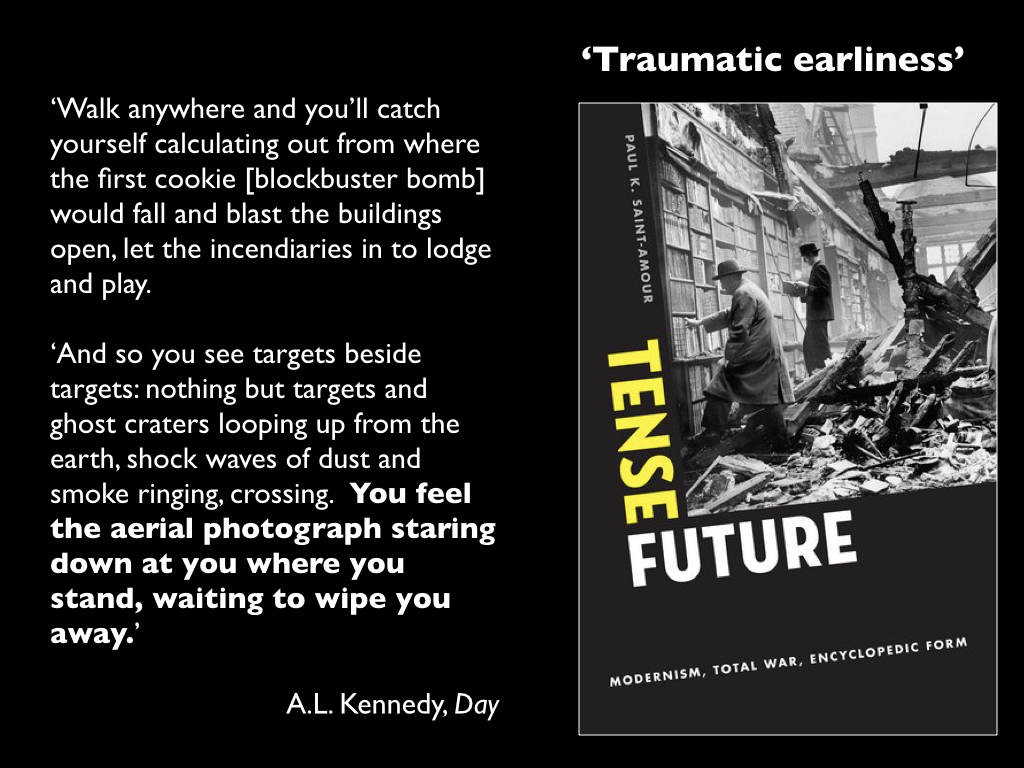
Paul Saint-Amour speaks of ‘traumatic earliness’: that dreadful sense of deadly anticipation.  The sense of not only preparation – communal and individual – but also of an involuntary tensing.  I described this for the First and Second World Wars in ‘Modern Wars and Dead Cities’, which you can download from the TEACHING tab, but here is A.L. Kennedy who captures it as well as anyone:

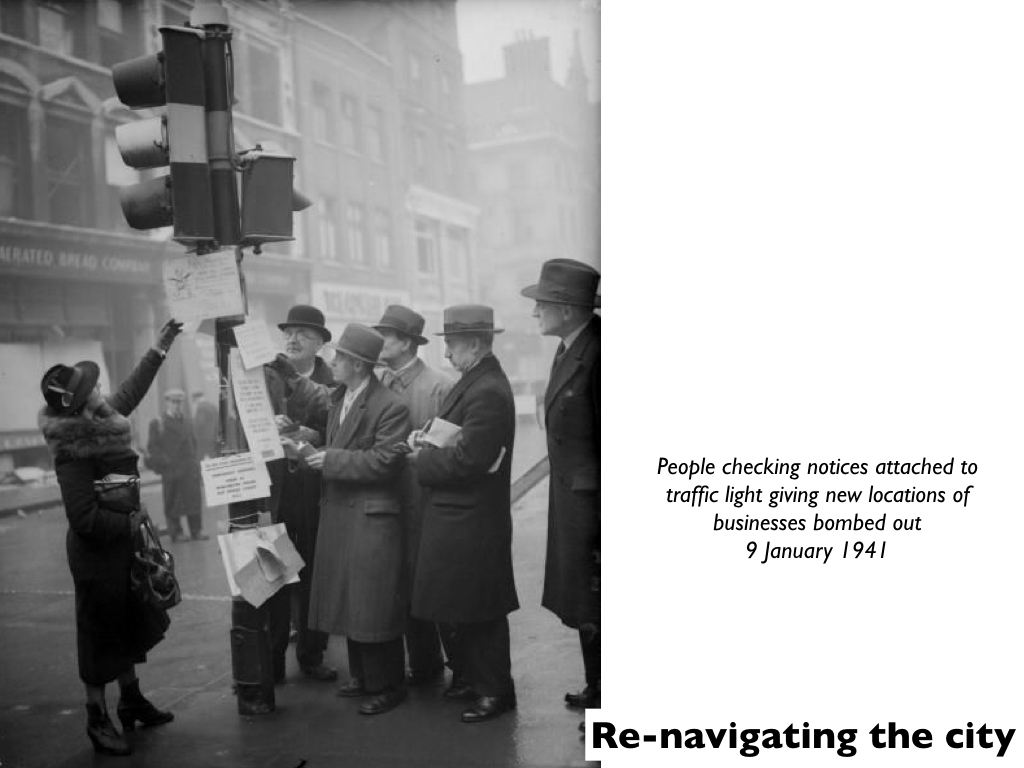
Add to that the blackouts, the new landscape of civil defence with its sandbags and shelters, the new choreography of movement through the war-time city, the air-raid sirens and the probing arcs of the searchlights.

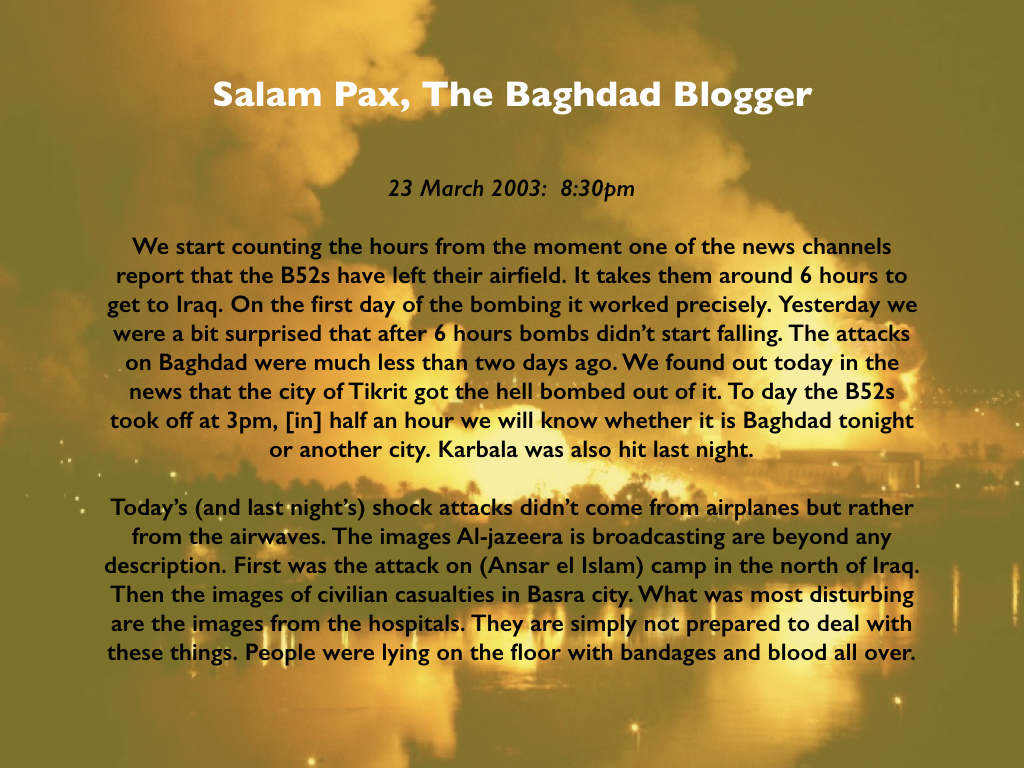
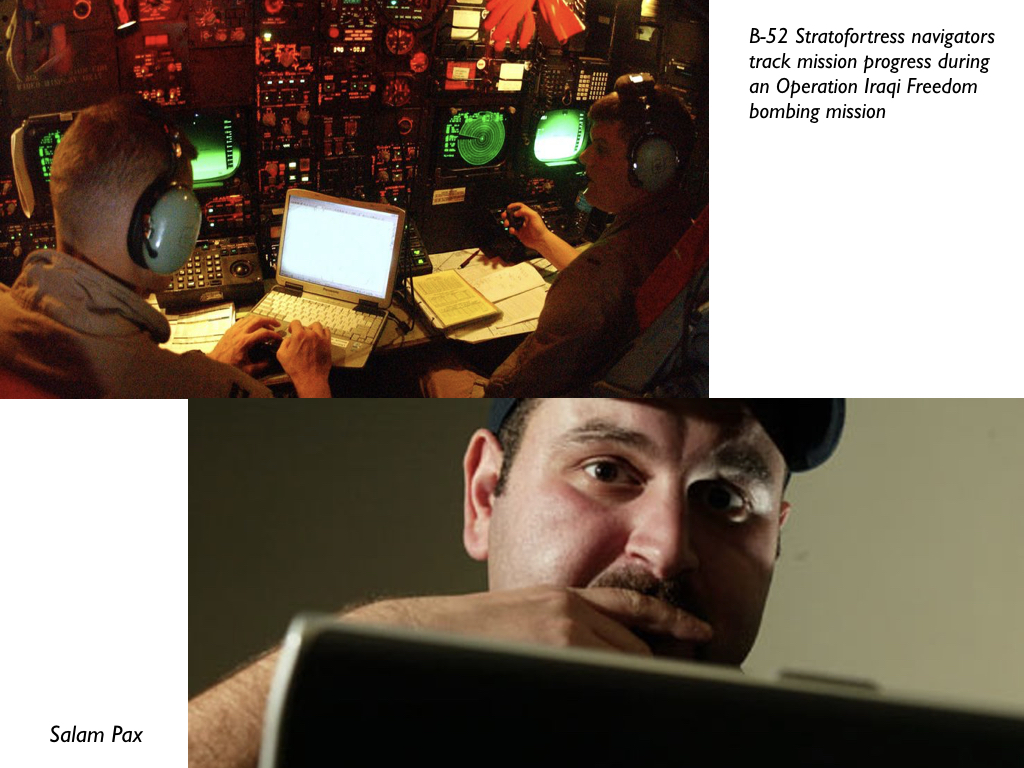
Perhaps this seems remote, but it shouldn’t.  Modern technology can radically heighten that sense of foreboding: calibrate it, give it even sharper definition.  Here is Salam Pax, counting down the hours to US air strikes on Baghdad:

Fast forward to drone strikes.  The sense of dread visited on innocents by multiple US drone programmes is readily overlooked in the emphasis on ‘targeted killing’, on what the US Air Force once called its ability to put ‘warheads on foreheads’, and on the individuation of this modality of later modern war.  ‘The body is the battlefield’, as Grégoire Chamayou argues.

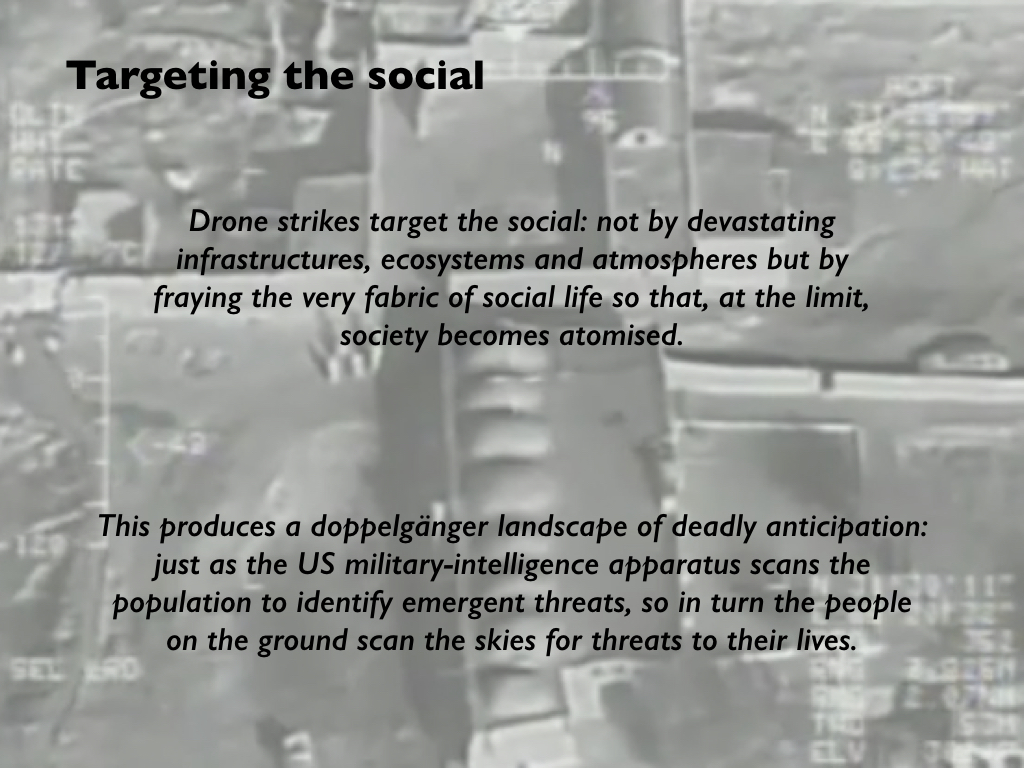
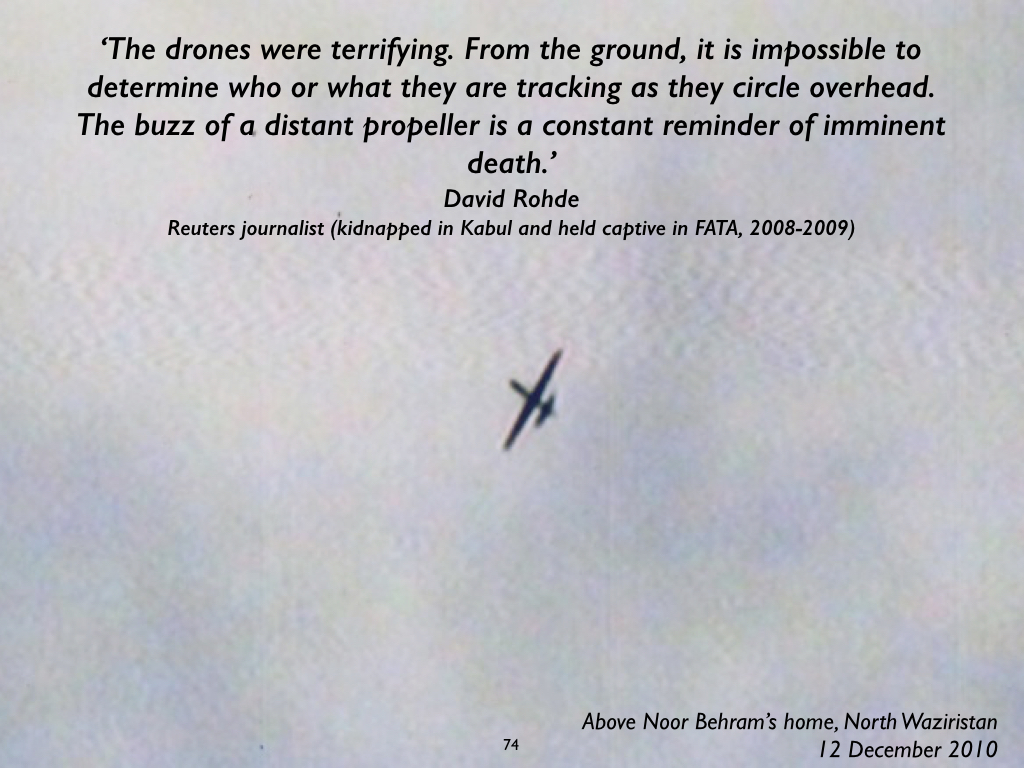
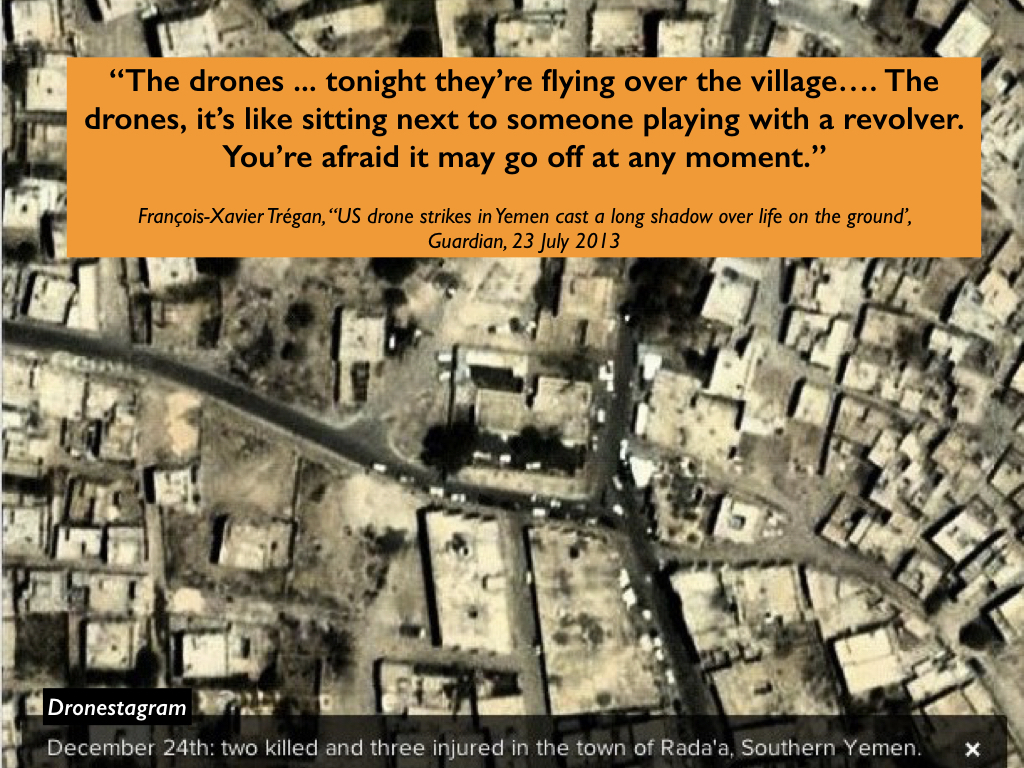
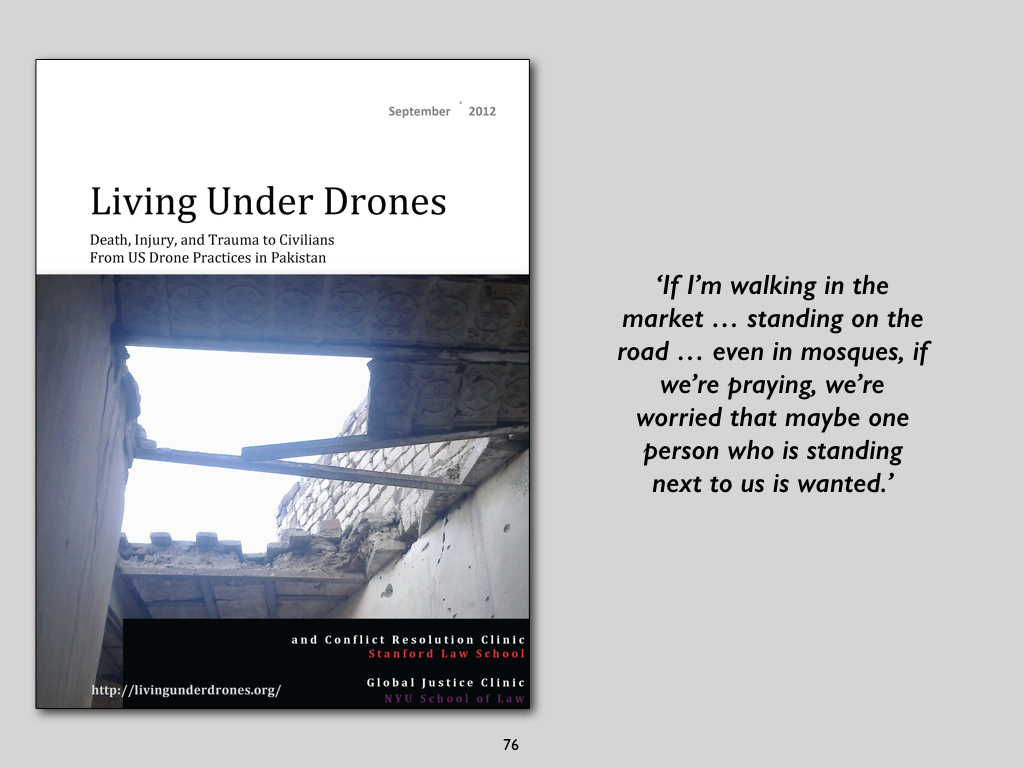
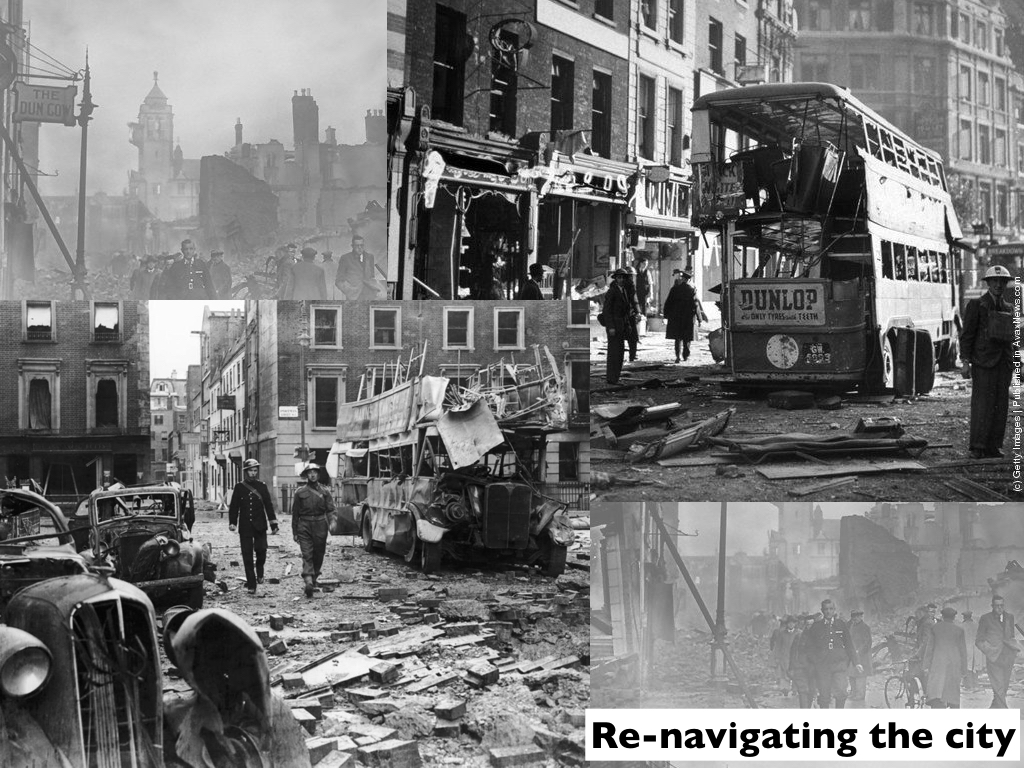
I’ve written about all those things, but there is a powerful sense in which the battle space still exceeds the body: for in order to target the individual these programmes also target the social, as this set of slides from my Utrecht presentation tries to show:

Here too, surely, is traumatic earliness.  (I’ve discussed this in more detail in ‘Little Boys and Blue Skies’ [DOWNLOADS tab], and I’m indebted to Neal Curtis, ‘The explication of the social’, Journal of sociology 52 (3) (2016) 522-36) for helping me to think this through).

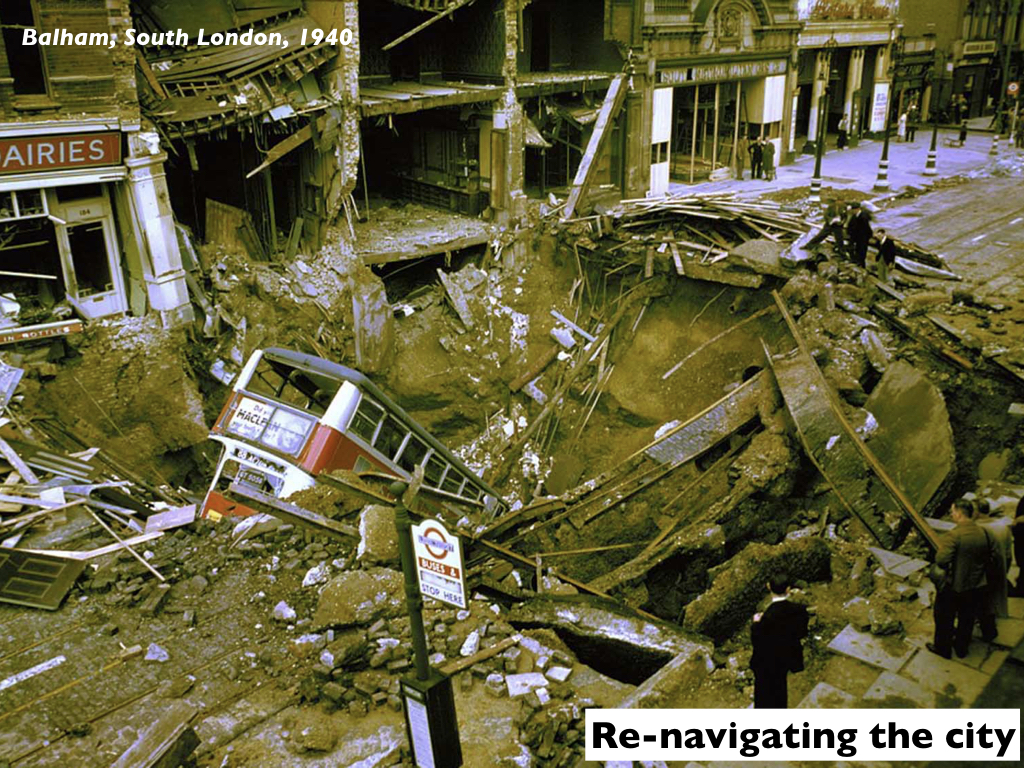
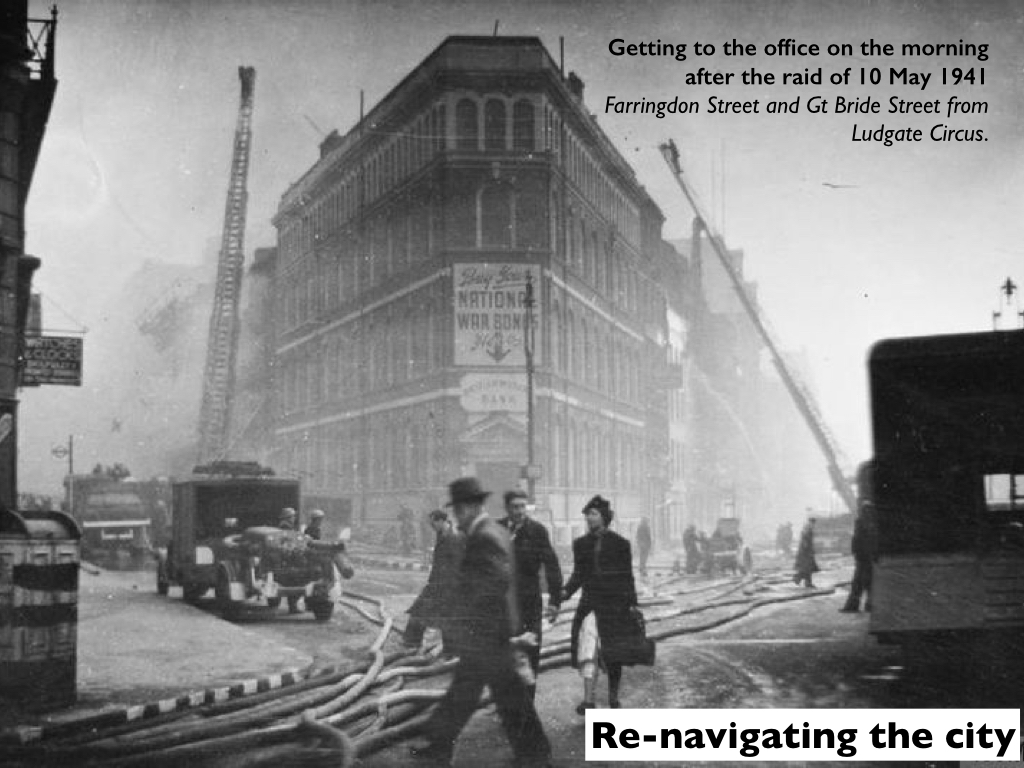
And then, after the explosion – the shocking bio-convergence that in an instant produces the horror of meatspace – the violence endures: stored in the broken buildings and in the broken bodies.  In the Second World War (again as I show in ‘Modern Wars and Dead Cities’) the landscape was made strange every morning: buildings newly demolished, people driven from their homes and their workplaces, roads blocked by hoses and ambulances, by craters and unexploded bombs, rescue workers still toiling in the rubble to remove the dead and the injured, hospitals still treating and caring for the casualties.

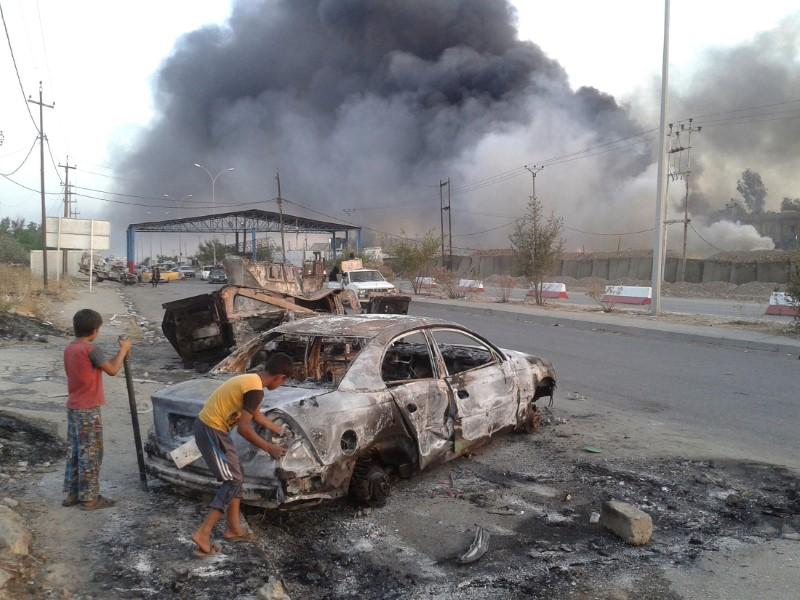
And the violence of a drone strike lingers too: not on the same scale, but still the destroyed houses, the burned-out cars, the graves of the dead and above all the traumatized survivors (and their rescuers), some of them forced into newly prosthetic lives (see here and here).  The explosion is instantaneous, a bolt from the blue, but the pain, the grief and the scars on the land and the body endure.

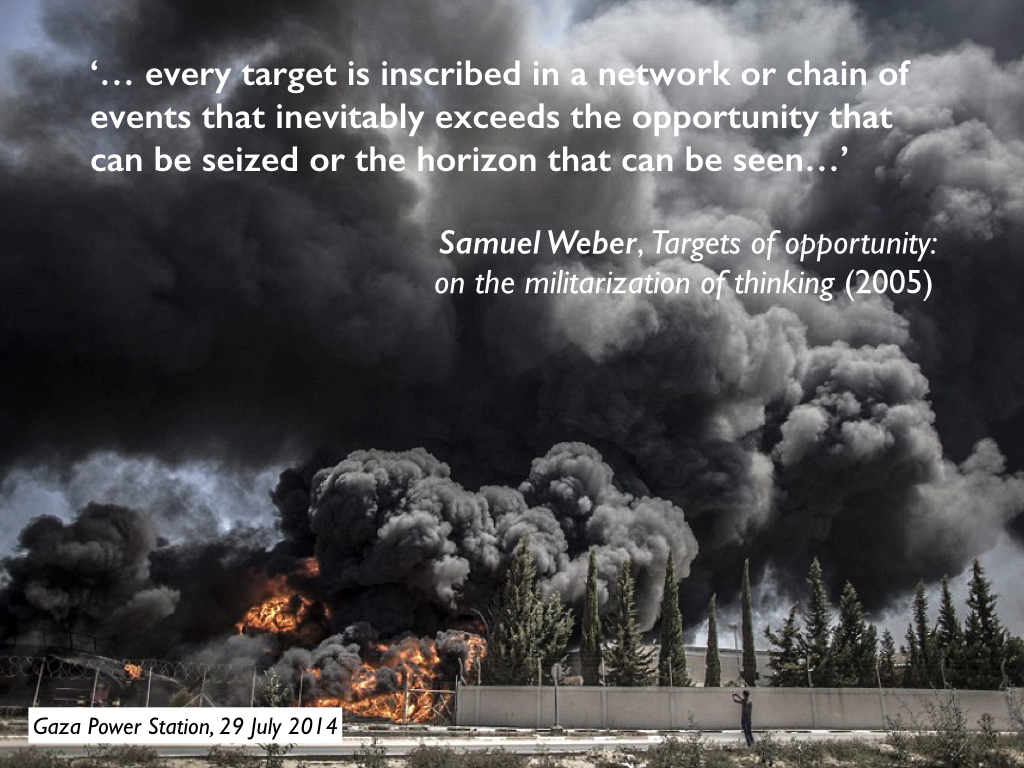
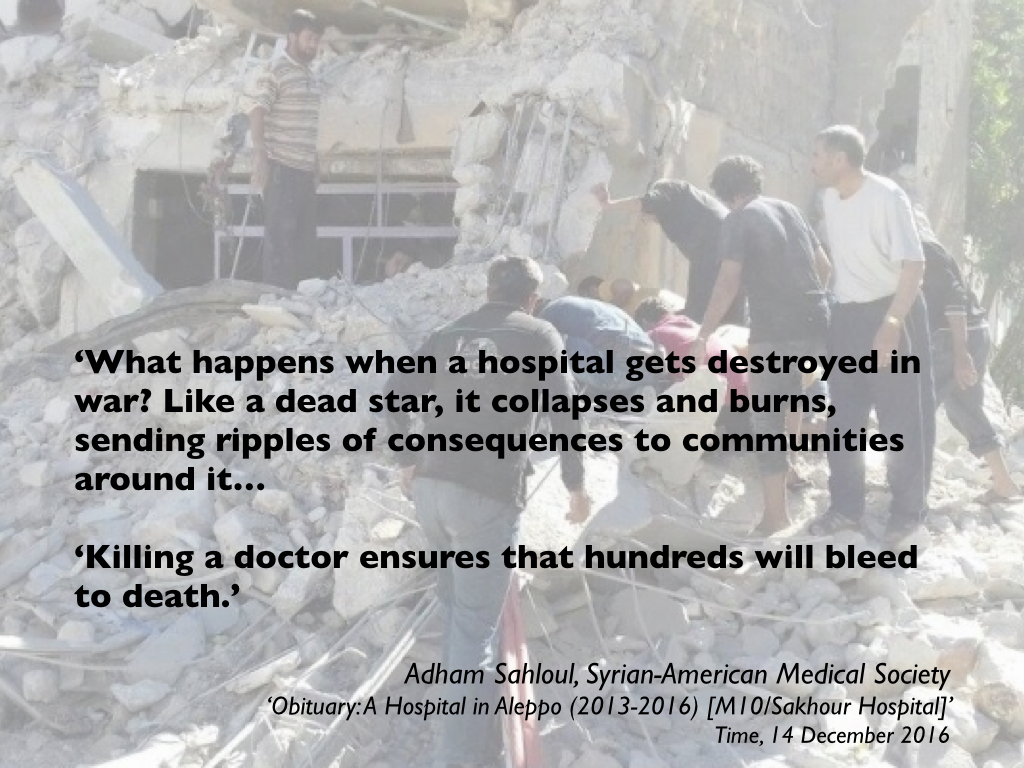
These effects have a horizon that is not contained by any carefully calculated blast radius.  The grief spirals out through extended families and communities; and – depending on the target – so too do the casualties.  As I’ve said before, power stations in Gaza or Iraq have been targeted not for any localised destructon but because without power water cannot be pumped, sewage cannot be treated, food (and medicines) stored in refrigerators deteriorates.  And hospitals have been systematically targeted in Syria to deny treatment to hundreds and thousands of sick and injured:

The work of enumerating and plotting air strikes, in the past or in the present, is immensely important.  But those columns on graphs and circles on maps should not be read as signs of an episodic or punctiform violence.

Laughscream

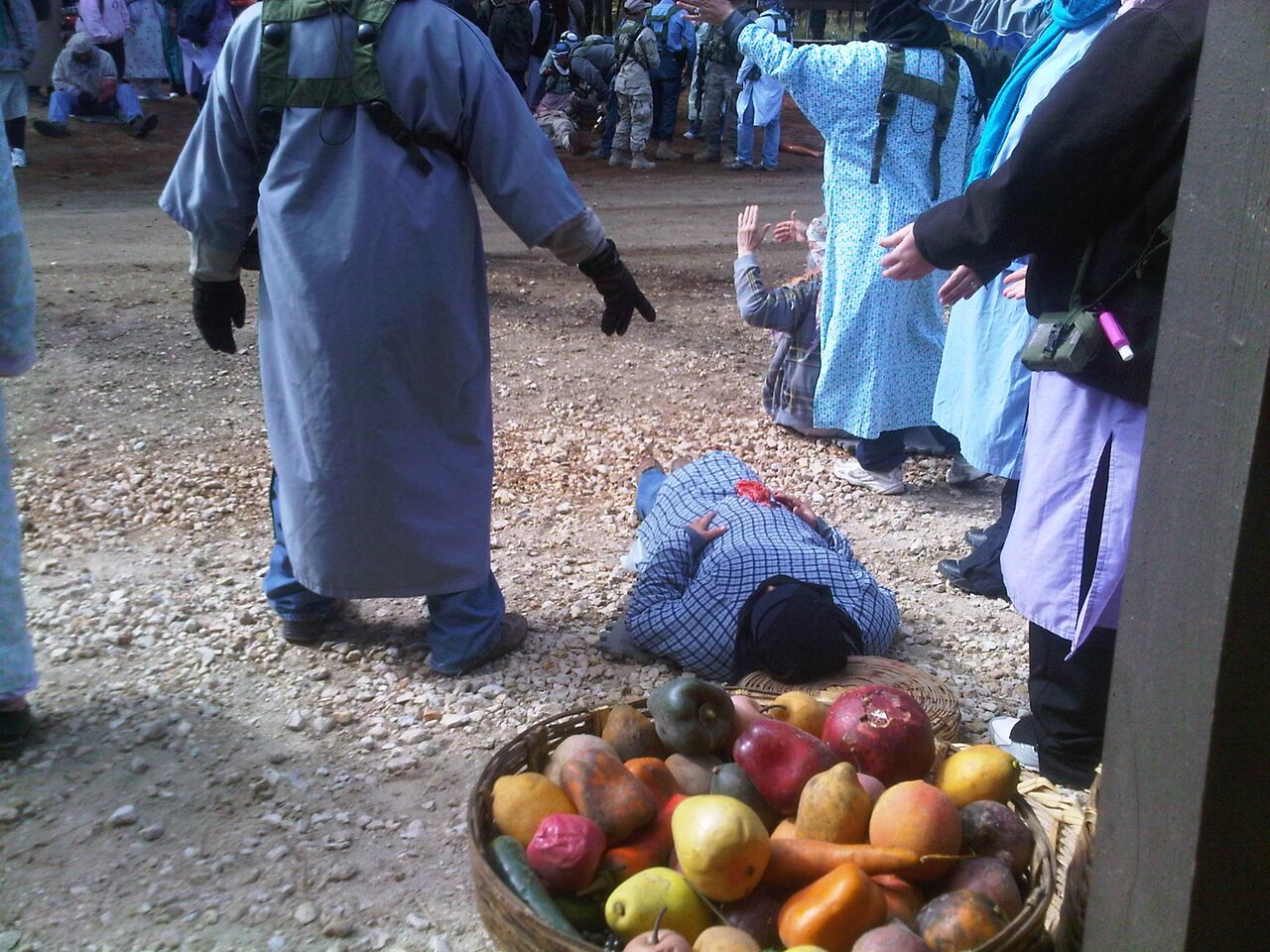
In an early phase of my work on later modern war I explored the so-called ‘cultural turn’ in US counterinsurgency and its invasive mapping of ‘human terrain’, and as part of the attempt to impel (and interpellate) US soldiers into what I called this ‘rush to the intimate’ I considered the role-playing simulations acted out in mock Iraqi villages and towns fabricated for pre-deployment training in the continental United States (see ‘The rush to the Intimate’: DOWNLOADS tab).

In the interim many more detailed studies have appeared, but one of the most imaginative and insightful can be found in Cultural Anthropology (32/1) (February 2017): Nomi Stone‘s Living the laughscream: human technology and effective maneuvers in the Iraq war (open access).

It focuses not on the US soldiers and their reactions but on the Iraqi role-players, many of whom served as US interpreters in Iraq, described by one US officer as ‘the apparatus’ or what Nomi reconceptualizes as ‘human technology’.  Their performances are carefully scripted, and yet:

Amid this artifice, role-players have been hired to enact Middle Eastern villagers authentically—not by their own measures, but rather within prescribed military terms. Role-players are asked to be exemplars of their cultures and those cultures must be synchronic, pruned of their excesses and any relationship to the outside: Iraqis, as it were, in a box. However … the Iraqis who worked for the American military first as interpreters and contractors in the 2003 Iraq War and subsequently as role-players are a somewhat unique subset of the population; indeed, they are often quite far removed from the U.S. military’s imagined characteristics of a prototypical Iraqi. Not only are many of them educated, they are also particularly versed in American culture and critical of Iraqi politics. They typically bear an ambivalent relationship to both countries as they negotiate past accusations, allegiances, and the prospect of assimilation. Many show little trust for outsiders and even less for each other, and because of their dangerous affiliations in wartime, they have learned to chameleon in most circumstances. As they are turned into stereotypes inside an archetypal village, and as they act out wartime precarity so often that their homes and their losses turn into even more estranging archetypes, they laugh.

The machine thus turns out to be made of flesh. Role-players inject new ways of being, in part through laughter, into their performances. Those interjections indicate the limits of a military fantasy that believes human beings can be wholly resourced and turned into technologies.

This is on my mind because this past term, in a series of lectures on performance and performativity – the differences between them and the dots that can join them – I returned to these role-playing exercises to flesh out (literally so) the ideas involved; above all, to emphasise how every performance is different even when the script is nominally the same, and so the contingency of the performative.

And ‘the laughscream’?

The [Iraqi role-player] knows or feels more than the military narrative of their experience can accommodate, exceeding the constricted functions prescribed for a hired cultural tool. Additionally, the laughscream acts as a refusal to be lived by the role and the role-players’ fraught wartime pasts. For those accused of betrayal and marginalized by their compatriots, pursued by Iraqi militias and not always trusted by the U.S. soldiers whom they worked for, that past is painful. As one role-player explained, reflecting on the harshness many Iraqis had endured: “We are turned inside out. At the same time, we can laugh and cry.” Indeed, for Iraqis who worked with the U.S. military, it is presently prohibitively dangerous to return to their former home, particularly amid the ascendance of the Islamic State. Meanwhile, due to their wartime choices, many now negotiate ongoing ambivalence and feel stranded between nations: although they were frequently ejected to the peripheries of their countries for working with the Americans, many strongly identify with Iraq and are ill at ease with full assimilation in America. As they continue to work for the U.S. military, some conceal that work from their families in Iraq, grappling with how they might be perceived. Amid these tensions, the laughscream functions in part as an actor, an agentive vector out.

Laughter rises to confirm that, for the role-players at least, the Iraq of the simulation is not the Iraq of their homeland. As fake guns sound, role-players repeat themselves, becoming increasingly estranged from the original object. Yet, through laughter, the archetypal and mechanical face of country and person give way to Iraqis who live impossibly hybrid and ambivalent lives in the United States to which they have aligned at such great cost. In the parodic redeployment of power as Judith Butler has conceived it, the mechanical performance of death becomes a complexly subversive act that momentarily insinuates life into the playing of a role.

But there is another reason for reading Nomi’s essay: it is so beautifully written.  If, like me, you often feel assailed by the sheer grimness of so much academic prose, provoked into your own laughscream, this is a wonderful demonstration that intellectual agility and analytical depth need not involve the death of style.

Not surprisingly, Nomi is an accomplished poet too: more at her website here.  You can also find an excellent interview about her movements in the borderlands between anthropology and artistic practice here:

My academic work and my poetry are inextricable and cross-pollinating. I was a poet first. My first collection of poems, Stranger’s Notebook (TriQuarterly, 2008) was based on my time in Djerba. I was deeply moved by Carolyn Forché’s call to comprehend the impress of the social on the poetic imagination; this led me to begin conducting ethnographic fieldwork and then to become an anthropologist.

By now, my anthropological engagement is essential to my poetry. As I explained in a poet’s statement some years ago, my philosophy of seeing is “deeply inflected by the anthropologist’s mandate to estrange the familiar and de-estrange the hitherto unknown.” Additionally, my work as an anthropologist sends me both toward moments of conceptual clarity and toward continuous re-complication: as the tidy military diagrams of culture remind us, the world is instead messy and tangled and contingent, as we each engage in the daily work of living and loving and getting by. I want my poems to demand that same complexity, and I only learned how to think it through the wonderful, arduous, and singular training that becoming an anthropologist demanded. What an astonishment to spend seven years shuttling back and forth between reading social theory about war, Empire, technology, migration, and laughter or political histories of America and Iraq and then witnessing the stagings of Empire itself, in its scatterings across the Middle East and the United States, as well as interviewing those whose lives had been demarcated and unmade by those very terms. These forms of seeing and knowing are to me humbling, and both my in-progress ethnographic manuscript and my forthcoming collection of poems, Kill Class, are the beneficiaries of that long academic journey.

Kill Class is due from Tupelo Press later this year; the collection is based on her ethnographic fieldwork across those US military training camps.  You can find her poem War Game, America’ here.

“What to do when the concepts and methods most essential to a field of scholarship are taken and deployed as instruments of war? American anthropology has struggled with this question since the Cold War era, when many fieldworkers were drawn into counterinsurgency campaigns around the globe. In this courageous and compassionate book, Kill Class, Nomi Stone offers a new way of grappling with this most difficult problem. Her stark and unflinching poems give a harrowing sense of cultural understanding made into a vehicle of state violence. At the same time, with tremendous delicacy and grace, they enter into the minds and lives of American soldiers and their Iraqi counterparts, revealing bewilderment where you would have thought to find certitudes, vulnerability where you would expect only hardness, small moments of wonder in the face of horror. The result is a truly arresting ethnography of American military culture, one that allows readers to circle at length through the cloverleaf interchanges where warfare nestles into the most mundane corners of everyday life, only to arrive at an exit where you would have expected least to find it: in an ethics of radical and transformative encounter, a way of coming undone in the company of others through the practice of sympathetic imagination.”  Anand Pandian, Johns Hopkins University

There’s also an earlier interview with her about her fieldwork (and her ideas about later modern war) over at the Wenner-Gren blog here: also well worth reading and savouring.

All this is much on my mind because over Christmas I read Alan Hollinghurst‘s The Sparsholt Affair and luxuriated in its mesmerising prose; as with other authors I admire this isn’t a purely formal (ahem) affair, though he is undoubtedly a master stylist.  Rather, you can roll the words around in your mouth, taste them and so find yourself ineluctably drawn into – rather than distracted from – the pulsing arc of the narrative: in an inversion of the metaphor with which I began, consumed by it.  So too The Swimming-Pool Library and Line of Beauty.  I get the same immersive pleasure from authors like Tom McCarthy (C is still one of my all-time favourite novels), Pat Barker (try Noonday) and Sarah Waters (oh, The Night Watch!).   This isn’t a matter of genre either; Peter May‘s Lewis trilogy is one of the finest works of crime fiction I know, along with almost anything by the ought-to-be legendary John Harvey (also a poet).

I’ve never forgotten a prescient admonition by Pierce Lewis in ‘Beyond description‘ (which appeared in the Annals of what was then the Association of American Geographers in 1985) – a lovely, lovely essay about passion and prose – in which he forestalled a possible objection: ‘we are not trained to be painters or poets, and while that is true, I do not think we should boast about it.’

For the record, I’ve written my share of God-awful prose, especially in the early stages of my career; the fault wasn’t only the dismal Harvard reference system (though it doesn’t help at all: too many names and dates crammed into brackets you have to hurdle over in a madcap race to retain the meaning of the sentence).  The colonial present was a cathartic release, in a way, because – after completing that awful opening chapter – I started to lose my academic voice.  I’m not desperate to get it back, and the two books I’m working on now will, I hope, show how far I’ve come.

But who, I wonder, are your favourite stylists?

Postscript: For my rant about the Harvard reference system, see ‘Gregory, D.’ (DOWNLOADS tab).  And there’s more on the corporeality and contextuality of (my) writing here.

War Stories

New books on the radar:

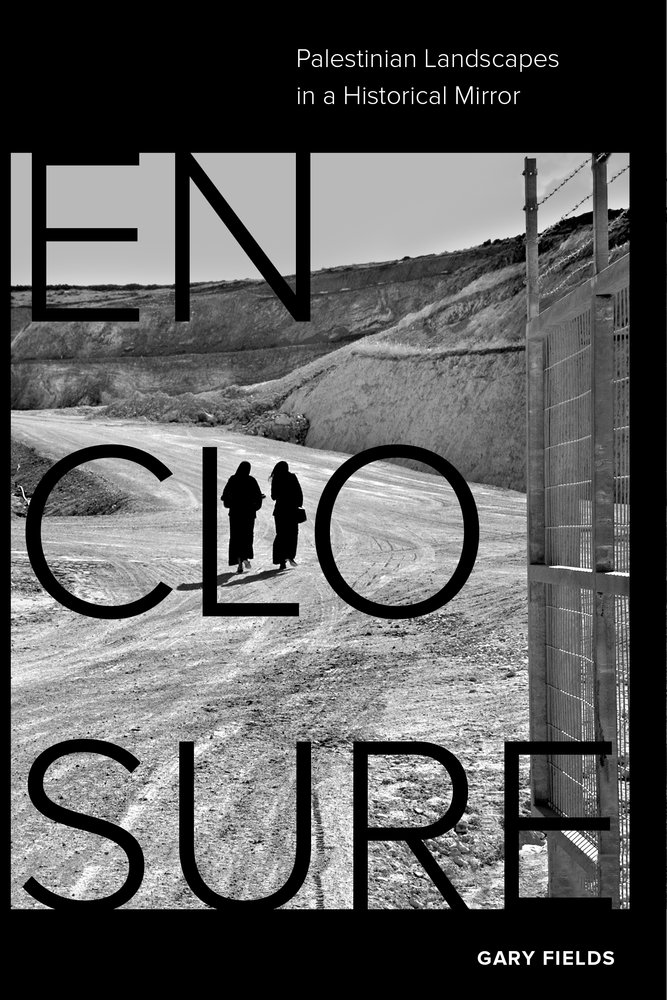
Gary Fields, Enclosure: Palestinian landscapes in a historical mirror (California, September 2017):

Enclosure marshals bold new arguments about the nature of the conflict in Israel/Palestine. Gary Fields examines the dispossession of Palestinians from their land—and Israel’s rationale for seizing control of Palestinian land—in the contexts of a broad historical analysis of power and space and of an enduring discourse about land improvement. Focusing on the English enclosures (which eradicated access to common land across the English countryside), Amerindian dispossession in colonial America, and Palestinian land loss, Fields shows how exclusionary landscapes have emerged across time and geography. Evidence that the same moral, legal, and cartographic arguments were used by enclosers of land in very different historical environments challenges Israel’s current claim that it is uniquely beleaguered. This comparative framework also helps readers in the United States and the United Kingdom understand the Israeli/Palestinian conflict in the context of their own histories.

There is an excellent review essay by the inimitable Raja Shehadeh over at the New York Review of Books for 18 January; you can read the opening chapter (‘The contours of enclosure’) here; and there’s a brief, illustrated blog post by Gary on ‘the will to resist’ here.

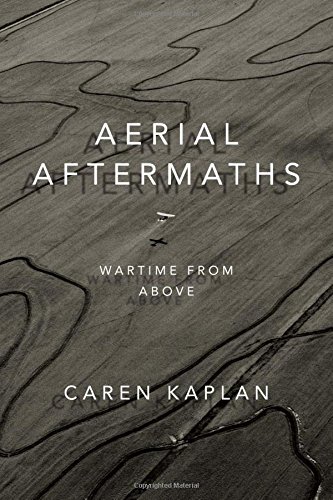
Caren Kaplan, Aerial aftermaths: wartime from above (Duke, January 2018):

From the first vistas provided by flight in balloons in the eighteenth century to the most recent sensing operations performed by military drones, the history of aerial imagery has marked the transformation of how people perceived their world, better understood their past, and imagined their future. In Aerial Aftermaths Caren Kaplan traces this cultural history, showing how aerial views operate as a form of world-making tied to the times and places of war. Kaplan’s investigation of the aerial arts of war—painting, photography, and digital imaging—range from England’s surveys of Scotland following the defeat of the 1746 Jacobite rebellion and early twentieth-century photographic mapping of Iraq to images taken in the immediate aftermath of 9/11. Throughout, Kaplan foregrounds aerial imagery’s importance to modern visual culture and its ability to enforce colonial power, demonstrating both the destructive force and the potential for political connection that come with viewing from above.

Contents:

Introduction. Aerial Aftermaths
1. Surveying Wartime Aftermaths: The First Military Survey of Scotland
2. Balloon Geography: The Emotion of Motion in Aerostatic Wartime
3. La Nature à Coup d’Oeil: “Seeing All” in Early Panoramas
4. Mapping “Mesopotamia”: Aerial Photography in Early Twentieth-Century Iraq
5. The Politics of the Sensible: Aerial Photography’s Wartme Aftermaths
Afterword. Sensing Distance

Anna Feigenbaum, Tear Gas: from the battlefields of World War I to the streets of today (Verso, November 2017):

One hundred years ago, French troops fired tear gas grenades into German trenches. Designed to force people out from behind barricades and trenches, tear gas causes burning of the eyes and skin, tearing, and gagging. Chemical weapons are now banned from war zones. But today, tear gas has become the most commonly used form of “less-lethal” police force. In 2011, the year that protests exploded from the Arab Spring to Occupy Wall Street, tear gas sales tripled. Most tear gas is produced in the United States, and many images of protestors in Tahrir Square showed tear gas canisters with “Made in USA” printed on them, while Britain continues to sell tear gas to countries on its own human rights blacklist.

An engrossing century-spanning narrative, Tear Gas is the first history of this weapon, and takes us from military labs and chemical weapons expos to union assemblies and protest camps, drawing on declassified reports and witness testimonies to show how policing with poison came to be.

I’ve trailed this before, but now it’s out; there’s an engaging and detailed review by Peter Mitchell at Review 31 here.

Victor Davis Hanson, The Second World Wars: how the first global conflict was fought and won (Basic Books, October 2017):

World War II was the most lethal conflict in human history. Never before had a war been fought on so many diverse landscapes and in so many different ways, from rocket attacks in London to jungle fighting in Burma to armor strikes in Libya.

The Second World Wars examines how combat unfolded in the air, at sea, and on land to show how distinct conflicts among disparate combatants coalesced into one interconnected global war. Drawing on 3,000 years of military history, Victor Davis Hanson argues that despite its novel industrial barbarity, neither the war’s origins nor its geography were unusual. Nor was its ultimate outcome surprising. The Axis powers were well prepared to win limited border conflicts, but once they blundered into global war, they had no hope of victory.

An authoritative new history of astonishing breadth, The Second World Wars offers a stunning reinterpretation of history’s deadliest conflict.

I was alerted to this by Joshua Rothman‘s thoughtful review in the New Yorker just before Christmas.

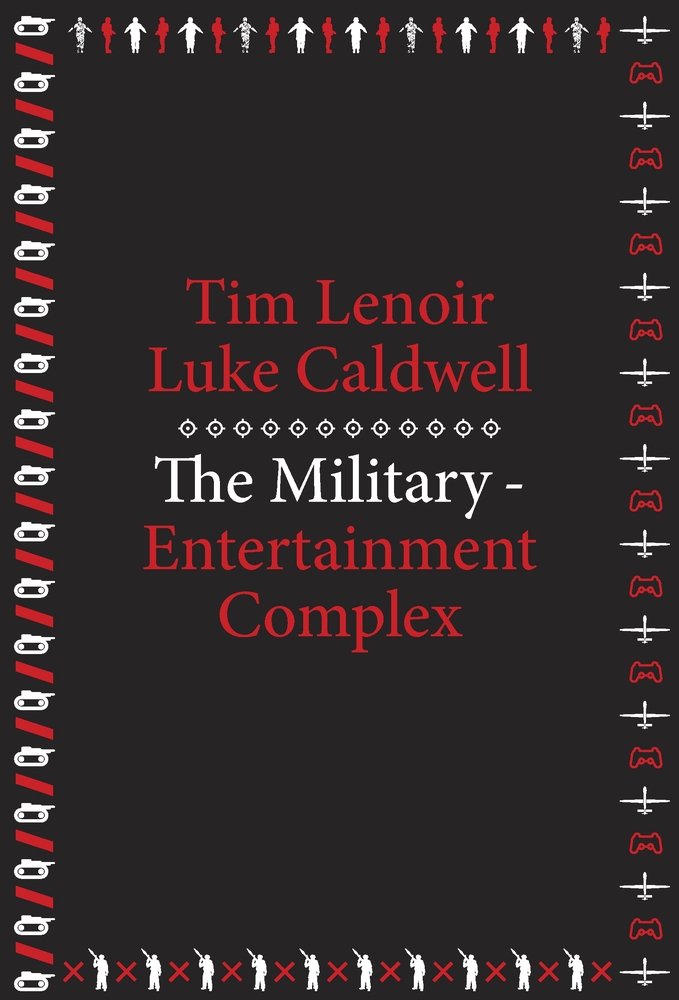
Tim Lenoir and Luke Caldwell, The Military-Entertainment Complex (Harvard, February 2018)

With the rise of drones and computer-controlled weapons, the line between war and video games continues to blur. In this book, the authors trace how the realities of war are deeply inflected by their representation in popular entertainment. War games and other media, in turn, feature an increasing number of weapons, tactics, and threat scenarios from the War on Terror.

While past analyses have emphasized top-down circulation of pro-military ideologies through government public relations efforts and a cooperative media industry, The Military-Entertainment Complex argues for a nonlinear relationship, defined largely by market and institutional pressures. Tim Lenoir and Luke Caldwell explore the history of the early days of the video game industry, when personnel and expertise flowed from military contractors to game companies; to a middle period when the military drew on the booming game industry to train troops; to a present in which media corporations and the military influence one another cyclically to predict the future of warfare.

In addition to obvious military-entertainment titles like America’s Army, Lenoir and Caldwell investigate the rise of best-selling franchise games such as Call of Duty, Battlefield, Medal of Honor, and Ghost Recon. The narratives and aesthetics of these video games permeate other media, including films and television programs. This commodification and marketing of the future of combat has shaped the public’s imagination of war in the post-9/11 era and naturalized the U.S. Pentagon’s vision of a new way of war.

Contents:

Induction: The Military–Entertainment Complex and the Contemporary War Imaginary

1. From Battlezone to America’s Army: The Defense Department and the Game Industry

2. Creating Repeat Consumers: Epic Realism and the Birth of the Wargame FranchiseWindows

2.1. The Ludic Affordances of Special Forces

2.2. Franchise Game Business Models

2.3. The RMA in Contemporary Wargaming

3. Coming to a Screen Near You: The RMA and Affective Entertainment

4. Press X to Hack: Cyberwar and VideogamesWindows

4.1. The Narrative Affordances of Hackers and Cyberwarfare

Discharge: Counter-Wargaming in Spec Ops: The Line

This is part of what James Der Derian famously called the Military-Industry-Media-Entertainment complex (MIME), and what I’ve called the Military-Academic-Industrial-Media complex (MAIM). Here is Colin Milburn on the book:

Locked and loaded, this astonishing account of the ‘military-entertainment complex’ exposes the links between military technologies and popular media, the alignments and affinities among defense agencies, video game companies, and Hollywood studios. With tactical precision, Tim Lenoir and Luke Caldwell show how the militarization of contemporary society is driven less by political interests than by economic interests, revealing the ways in which the entertainment industry and its commercial practices shape the imagination of postmodern warfare. This is a provocative, high-octane book about the war games of everyday life and the future of digital culture. Epic pwn.

Maja Zehfuss, War and the politics of ethics (Oxford, March 2018):

Contemporary Western war is represented as enacting the West’s ability and responsibility to help make the world a better place for others, in particular to protect them from oppression and serious human rights abuses. That is, war has become permissible again, indeed even required, as ethical war. At the same time, however, Western war kills and destroys. This creates a paradox: Western war risks killing those it proposes to protect.

This book examines how we have responded to this dilemma and challenges the vision of ethical war itself, exploring how the commitment to ethics shapes the practice of war and indeed how practices come, in turn, to shape what is considered ethical in war. The book closely examines particular practices of warfare, such as targeting, the use of cultural knowledge, and ethics training for soldiers. What emerges is that instead of constraining violence, the commitment to ethics enables and enhances it. The book argues that the production of ethical war relies on an impossible but obscured separation between ethics and politics, that is, the problematic politics of ethics, and reflects on the need to make decisions at the limit of ethics.

Contents:

1: Introduction
2: The Paradox of Ethical War and the Politics of Ethics
3: Targeting: Precision Bombing and the Production of Ethics
4: Culture: Knowledge of the People as Technology of Ethics
5: Ethics Education: Ethics as Ethos and the Impossibly Good Soldier
6: The Politics of War at the Limits of Ethics

Laura Auslander and Tara Zahra (eds), Objects of War: the material culture of conflict and displacement (Cornell, May 2018)

Historians have become increasingly interested in material culture as both a category of analysis and as a teaching tool. And yet the profession tends to be suspicious of things; words are its stock-in-trade. What new insights can historians gain about the past by thinking about things? A central object (and consequence) of modern warfare is the radical destruction and transformation of the material world. And yet we know little about the role of material culture in the history of war and forced displacement: objects carried in flight; objects stolen on battlefields; objects expropriated, reappropriated, and remembered.

Objects of War illuminates the ways in which people have used things to grapple with the social, cultural, and psychological upheavals wrought by war and forced displacement. Chapters consider theft and pillaging as strategies of conquest; soldiers’ relationships with their weapons; and the use of clothing and domestic goods by prisoners of war, extermination camp inmates, freed people and refugees to make claims and to create a kind of normalcy.

While studies of migration and material culture have proliferated in recent years, as have histories of the Napoleonic, colonial, World Wars, and postcolonial wars, few have focused on the movement of people and things in times of war across two centuries. This focus, in combination with a broad temporal canvas, serves historians and others well as they seek to push beyond the written word.

Eli Berman,‎ Joseph H. Felter andJacob N. ShapiroSmall Wars, Big Data: The Information Revolution in Modern Conflict (Princeton, June 2018):

The way wars are fought has changed starkly over the past sixty years. International military campaigns used to play out between large armies at central fronts. Today’s conflicts find major powers facing rebel insurgencies that deploy elusive methods, from improvised explosives to terrorist attacks. Small Wars, Big Data presents a transformative understanding of these contemporary confrontations and how they should be fought. The authors show that a revolution in the study of conflict–enabled by vast data, rich qualitative evidence, and modern methods―yields new insights into terrorism, civil wars, and foreign interventions. Modern warfare is not about struggles over territory but over people; civilians―and the information they might choose to provide―can turn the tide at critical junctures.

The authors draw practical lessons from the past two decades of conflict in locations ranging from Latin America and the Middle East to Central and Southeast Asia. Building an information-centric understanding of insurgencies, the authors examine the relationships between rebels, the government, and civilians. This approach serves as a springboard for exploring other aspects of modern conflict, including the suppression of rebel activity, the role of mobile communications networks, the links between aid and violence, and why conventional military methods might provide short-term success but undermine lasting peace. Ultimately the authors show how the stronger side can almost always win the villages, but why that does not guarantee winning the war.

Small Wars, Big Data provides groundbreaking perspectives for how small wars can be better strategized and favorably won to the benefit of the local population.


Drone Imaginaries and Society

News from Kathrin Maurer of a conference on Drone Imaginaries and Society, 5-6 June 2018, at the University of Southern Denmark (Odense).  I’ll be giving a keynote, and look forward to the whole event very much (and not only because, while I’ve visited Denmark lots of times and loved every one of them, I’ve never made it to Odense):

Drones are in the air. The production of civilian drones for rescue, transport, and leisure activity is booming. The Danish government, for example, proclaimed civilian drones a national strategy in 2016. Accordingly, many research institutions as well as the industry focus on the development, usage, and promotion of drone technology. These efforts often prioritize commercialization and engineering as well as setting-up UAV (Unmanned Arial Vehicle) test centers. As a result, urgent questions regarding how drone technology impacts our identity as humans as well as their effects on how we envision the human society are frequently underexposed in these initiatives.

Our conference aims to change this perspective. By investigating cultural representations of civilian and military drones in visual arts, film, and literature, we intend to shed light on drone technology from a humanities’ point of view. This aesthetic “drone imaginary” forms not only the empirical material of our discussions but also a prism of knowledge which provides new insights into the meaning of drone technology for society today.

Several artists, authors, film makers, and thinkers have already engaged in this drone imaginary. While some of these inquiries provide critical reflection on contemporary and future drone technologies – for instance issues such as privacy, surveillance, automation, and security – others allow for alternative ways of seeing and communicating as well as creative re-imagination of new ways of organizing human communities. The goal of the conference is to bring together these different aesthetic imaginaries to better understand the role of drone technologies in contemporary and future societies.

 The focus points of the conference are:

–     Aesthetic drone imaginaries: Which images, metaphors, ethics, emotions and affects are associated to drones through their representation in art, fiction and popular culture?

–     Drone technology and its implications for society: How do drones change our daily routines and push the balance between publicity and privacy?

–     Historical perspective on drones: In what way do drone imaginaries allow for a counter-memory that can challenge, for instance, the military implementation of drones?

–     Drones as vulnerability: Do drones make societies more resilient or more fragile, and are societies getting overly dependent on advanced technologies?

     Utopian or dystopian drone imaginaries: What dream or nightmare scenarios are provided by drone fiction and how do they allow for a (re)imagining of future societies?

–     Drones and remote sensing: In what way do drones mark a radical new way of seeing and sensing by their remotely vertical gaze and operative images?

     Drone warfare: Do drones mark a continuation or rupture of the way we understand war and conflict, and how do they change the military imaginary?

The conference is sponsored by the Drone Network (Danish Research Council) and Institute for the Study of Culture at the University of Southern Denmark.

 You can contact Kathrin at  kamau@sdu.dk

The conference website is here.

Pictures of war

An interesting CFP for a conference next spring on Pictures of war: the still image in conflict since 1945:

Manchester Metropolitan University, Manchester UK
24th & 25th May 2018
(Deadline for CFP: January 12, 2018)

A conference on the intersections of conflict and pictures from the end of WWII until today.

Since the end of World War II, the nature and depiction of geopolitical conflicts have changed in technology, scale and character. The Cold War political landscape saw many struggles for liberation and national identity becoming proxy battlegrounds for the major powers. In the aftermath of anti-colonial conflicts, refugees and migrants who had relocated to the former metropolises joined those already fighting for civil equality in these countries. Wars continue to be waged in the name of democracy and terror, and in the interests of linguistic, theological and racial worldviews. Migration and displacement as a result of conflict are again at the top of the agenda.

As the technologies of war have shifted, so have the technologies of making pictures. This conference seeks to engage with these phenomena through critically engaged approaches to the processes of visualisation, their methodologies and epistemologies that will contribute to our understanding of the ways conflicts are pictured. The intention is to expand the field of enquiry beyond localised, thematic or media-specific approaches and to encourage new perspectives on the material and visual cultures of pictures.

We invite scholars, artists and activists interested in the study of images and pictures in their own right, with their own and admittedly interdependent discourses and visual and material capacities for producing knowledge and meaning (Mitchell, 2005). We are interested in presentations that consider the temporal and physical mobility of pictures and their visual, material, affective, political and economic value from multi and interdisciplinary positions.

Full details of themes, abstracts etc here and here.

Those who don’t count and those who can’t count

An excellent article from the unfailing New York Times in a recent edition of the Magazine: Azmat Khan and Anand Gopal on ‘The Uncounted‘, a brilliant, forensic and – crucially – field-based investigation into civilian casualties in the US air war against ISIS:

American military planners go to great lengths to distinguish today’s precision strikes from the air raids of earlier wars, which were carried out with little or no regard for civilian casualties. They describe a target-selection process grounded in meticulously gathered intelligence, technological wizardry, carefully designed bureaucratic hurdles and extraordinary restraint. Intelligence analysts pass along proposed targets to “targeteers,” who study 3-D computer models as they calibrate the angle of attack. A team of lawyers evaluates the plan, and — if all goes well — the process concludes with a strike so precise that it can, in some cases, destroy a room full of enemy fighters and leave the rest of the house intact.

The coalition usually announces an airstrike within a few days of its completion. It also publishes a monthly report assessing allegations of civilian casualties. Those it deems credible are generally explained as unavoidable accidents — a civilian vehicle drives into the target area moments after a bomb is dropped, for example. The coalition reports that since August 2014, it has killed tens of thousands of ISIS fighters and, according to our tally of its monthly summaries, 466 civilians in Iraq.

What Azmat and Anand found on the ground, however, was radically different:

Our own reporting, conducted over 18 months, shows that the air war has been significantly less precise than the coalition claims. Between April 2016 and June 2017, we visited the sites of nearly 150 airstrikes across northern Iraq, not long after ISIS was evicted from them. We toured the wreckage; we interviewed hundreds of witnesses, survivors, family members, intelligence informants and local officials; we photographed bomb fragments, scoured local news sources, identified ISIS targets in the vicinity and mapped the destruction through satellite imagery. We also visited the American air base in Qatar where the coalition directs the air campaign. There, we were given access to the main operations floor and interviewed senior commanders, intelligence officials, legal advisers and civilian-casualty assessment experts. We provided their analysts with the coordinates and date ranges of every airstrike — 103 in all — in three ISIS-controlled areas and examined their responses. The result is the first systematic, ground-based sample of airstrikes in Iraq since this latest military action began in 2014.

We found that one in five of the coalition strikes we identified resulted in civilian death, a rate more than 31 times that acknowledged by the coalition. It is at such a distance from official claims that, in terms of civilian deaths, this may be the least transparent war in recent American history [my emphasis].  Our reporting, moreover, revealed a consistent failure by the coalition to investigate claims properly or to keep records that make it possible to investigate the claims at all. While some of the civilian deaths we documented were a result of proximity to a legitimate ISIS target, many others appear to be the result simply of flawed or outdated intelligence that conflated civilians with combatants. In this system, Iraqis are considered guilty until proved innocent. Those who survive the strikes …  remain marked as possible ISIS sympathizers, with no discernible path to clear their names.

They provide immensely powerful, moving case studies of innocents ‘lost in the wreckage’.  They also describe the US Air Force’s targeting process at US Central Command’s Combined Air Operations Center (CAOC) at Al Udeid Air Base in Qatar (the image above shows the Intelligence, Surveillance and Reconnaissance Division at the CAOC, which ‘provides a common threat and targeting picture’):

The process seemed staggeringly complex — the wall-to-wall monitors, the soup of acronyms, the army of lawyers — but the impressively choreographed operation was designed to answer two basic questions about each proposed strike: Is the proposed target actually ISIS? And will attacking this ISIS target harm civilians in the vicinity?

As we sat around a long conference table, the officers explained how this works in the best-case scenario, when the coalition has weeks or months to consider a target. Intelligence streams in from partner forces, informants on the ground, electronic surveillance and drone footage. Once the coalition decides a target is ISIS, analysts study the probability that striking it will kill civilians in the vicinity, often by poring over drone footage of patterns of civilian activity. The greater the likelihood of civilian harm, the more mitigating measures the coalition takes. If the target is near an office building, the attack might be rescheduled for nighttime. If the area is crowded, the coalition might adjust its weaponry to limit the blast radius. Sometimes aircraft will even fire a warning shot, allowing people to escape targeted facilities before the strike. An official showed us grainy night-vision footage of this technique in action: Warning shots hit the ground near a shed in Deir al-Zour, Syria, prompting a pair of white silhouettes to flee, one tripping and picking himself back up, as the cross hairs follow.

Once the targeting team establishes the risks, a commander must approve the strike, taking care to ensure that the potential civilian harm is not “excessive relative to the expected military advantage gained,” as Lt. Col. Matthew King, the center’s deputy legal adviser, explained.

After the bombs drop, the pilots and other officials evaluate the strike. Sometimes a civilian vehicle can suddenly appear in the video feed moments before impact. Or, through studying footage of the aftermath, they might detect signs of a civilian presence. Either way, such a report triggers an internal assessment in which the coalition determines, through a review of imagery and testimony from mission personnel, whether the civilian casualty report is credible. If so, the coalition makes refinements to avoid future civilian casualties, they told us, a process that might include reconsidering some bit of intelligence or identifying a flaw in the decision-making process.

There are two issues here.  First, this is indeed the ‘best-case scenario’, and one that very often does not obtain.  One of the central vectors of counterinsurgency and counterterrorism is volatility: targets are highly mobile and often the ‘window of opportunity’ is exceedingly narrow.  I’ve reproduced this image from the USAF’s own targeting guide before, in relation to my analysis of the targeting cycle for a different US air strike against IS in Iraq in March 2015, but it is equally applicable here:

Second, that ‘window of opportunity’ is usually far from transparent, often frosted and frequently opaque.  For what is missing from the official analysis described by Azmat and Anand turns out to be the leitmotif of all remote operations (and there is a vital sense in which all forms of aerial violence are ‘remote’, whether the pilot is 7,000 miles away or 30,000 feet above the target [see for example here]):

Lt. Gen. Jeffrey Harrigian, commander of the United States Air Forces Central Command at Udeid, told us what was missing. “Ground truth, that’s what you’re asking for,” he said. “We see what we see from altitude and pull in from other reports. Your perspective is talking to people on the ground.” He paused, and then offered what he thought it would take to arrive at the truth: “It’s got to be a combination of both.”

The military view, perhaps not surprisingly, is that civilian casualties are unavoidable but rarely intentional:

Supreme precision can reduce civilian casualties to a very small number, but that number will never reach zero. They speak of every one of the acknowledged deaths as tragic but utterly unavoidable.

Azmat and Anand reached a numbingly different conclusion: ‘Not all civilian casualties are unavoidable tragedies; some deaths could be prevented if the coalition recognizes its past failures and changes its operating assumptions accordingly. But in the course of our investigation, we found that it seldom did either.’

Part of the problem, I suspect, is that whenever there is an investigation into reports of civilian casualties that may have been caused by US military operations it must be independent of all other investigations and can make no reference to them in its findings; in other words, as I’ve noted elsewhere, there is no ‘case law’: bizarre but apparently true.

But that is only part of the problem.  The two investigators cite multiple intelligence errors (‘In about half of the strikes that killed civilians, we could find no discernible ISIS target nearby. Many of these strikes appear to have been based on poor or outdated intelligence’) and even errors and discrepancies in recording and locating strikes after the event.

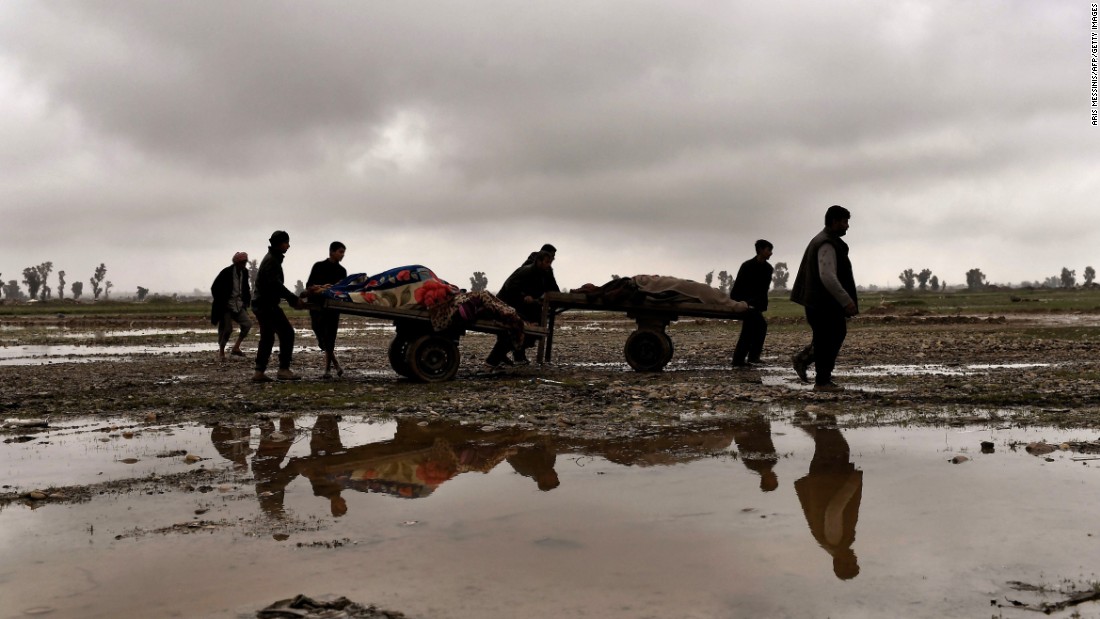
It’s worth reading bellingcat‘s analysis here, which also investigates the coalition’s geo-locational reporting and notes that the official videos ‘appear only to showcase the precision and efficiency of coalition bombs and missiles, and rarely show people, let alone victims’.  The image above, from CNN, is unusual in showing the collection of the bodies of victims of a US air strike in Mosul, this time in March 2017; the target was a building from which two snipers were firing; more than 100 civilians sheltering there were killed.  The executive summary of the subsequent investigation is here – ‘The Target Engagement Authority (TEA) was unaware of and could not have predicted the presence of civilians in the structure prior to the engagement’ – and report from W.J. Hennigan and Molly Hennessy-Fiske is here.

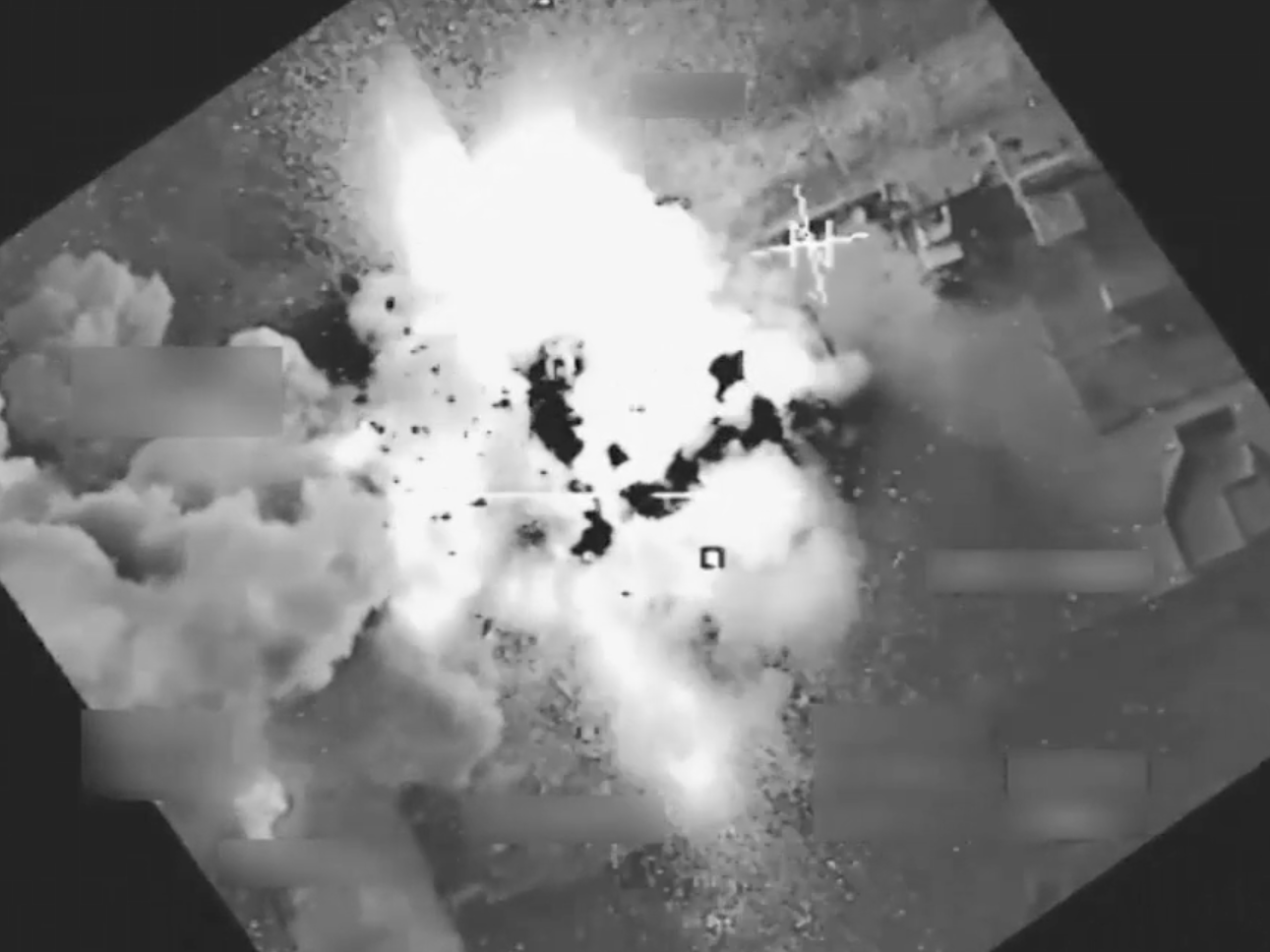
Included in bellingcat’s account is a discussion of a video which the coalition uploaded to YouTube and then deleted; Azmat retrieved and archived it – the video shows a strike on two buildings in Mosul on 20 September 2015 that turned out to be focal to her investigation with Anand:

The video caption identifies the target as a ‘VBIED [car bomb] facility’.  But Bellingcat asks:

Was this really a “VBIED network”? Under the original upload, a commenter starting posting that the houses shown were his family’s residence in Mosul.

“I will NEVER forget my innocent and dear cousins who died in this pointless airstrike. Do you really know who these people were? They were innocent and happy family members of mine.”

Days after the strike, Dr Zareena Grewal, a relative living in the US wrote in the New York Times that four family members had died in the strike. On April 2, 2017 – 588 days later – the Coalition finally admitted that it indeed bombed a family home which they confused for an IS headquarters and VBIED facility.

“The case was brought to our attention by the media and we discovered the oversight, relooked [at] the case based on the information provided by the journalist and family, which confirmed the 2015 assessment,” Colonel Joe Scrocca, Director of Public Affairs for the Coalition, told Airwars.

Even though the published strike video actually depicted the killing of a family, it remained – wrongly captioned – on the official Coalition YouTube channel for more than a year.

This is but one, awful example of a much wider problem.  The general conclusion reached by Azmat and Anand is so chilling it is worth re-stating:

According to the coalition’s available data, 89 of its more than 14,000 airstrikes in Iraq have resulted in civilian deaths, or about one of every 157 strikes. The rate we found on the ground — one out of every five — is 31 times as high.

One of the houses [shown above] mistakenly identified as a ‘VBIED facility’ in that video belonged to Basim Razzo, and he became a key informant in Azmat and Anand’s investigation; he was subsequently interviewed by Amy Goodman: the transcript is here. She also interviewed Azmat and Anand: that transcript is here.  In the course of the conversation Anand makes a point that amply and awfully confirms Christiane Wilke‘s suggestion – in relation to air strikes in Afghanistan – that the burden of recognition, of what in international humanitarian law is defined as ‘distinction’, is tacitly being passed from combatant to civilian: that those in the cross-hairs of the US military are required to perform their civilian status to those watching from afar.

It goes back to this issue of Iraqis having to prove that they are not ISIS, which is the opposite of what we would think. We would think that the coalition would do the work to find out whether somebody is a member of ISIS or not. Essentially, they assume people are ISIS until proven otherwise.

To make matters worse, they have to perform their ‘civilianness’ according to a script recognised and approved by the US military, however misconceived it may be.  In the case of one (now iconic) air strike in Afghanistan being an adolescent or adult male, travelling in a group, praying at one of the times prescribed by Islam, and carrying a firearm in a society where that is commonplace was enough for civilians to be judged as hostile by drone crews and attacked from the air with dreadful results (see here and here).

This is stunning investigative journalism, but it’s more than that: the two authors are both at Arizona State University, and they have provided one of the finest examples of critical, probing and accessible scholarship I have ever read.

Army of None

Coming next spring from Norton – and with a very clever title – Paul Scharre‘s Army of None: Autonomous weapons and the future of war.

A Pentagon defense expert and former U.S. Army Ranger traces the emergence of autonomous weapons.

What happens when a Predator drone has as much autonomy as a Google car? Although it sounds like science fiction, the technology to create weapons that could hunt and destroy targets on their own already exists. Paul Scharre, a leading expert in emerging weapons technologies, draws on incisive research and firsthand experience to explore how increasingly autonomous weapons are changing warfare.

This far-ranging investigation examines the emergence of fully autonomous weapons, the movement to ban them, and the legal and ethical issues surrounding their use. Scharre spotlights the role of artificial intelligence in military technology, spanning decades of innovation from German noise-seeking Wren torpedoes in World War II—antecedents of today’s armed drones—to autonomous cyber weapons. At the forefront of a game-changing debate, Army of None engages military history, global policy, and bleeding-edge science to explore what it would mean to give machines authority over the ultimate decision: life or death.

You can get a taste – in fact a whole tasting menu – of Paul’s arguments at Just Security here.

Paul is at the Centre for a New American Security, and you can download two reports (which have been endlessly ripped by others) on Robotics on the Battlefield: Part I is Range, persistence and daring and Part II is The Coming Swarm (both 2014).