Tahrir and performances of space

EgyptianRevolutionManual (dragged) 1

An update to my post earlier this week on Tahrir Square and the Arab uprisings: I’ve now (at last!) added the manuscript version of my essay, ‘Tahrir: politics, publics and performances of space’, forthcoming in Middle East Critique, to the DOWNLOADS page.  As always, I’d welcome any comments or suggestions.

The image above is taken from a 26-page pamphlet circulated in Cairo in January 2011, ‘How to protest intelligently’: you can download the whole thing here and find a side-by-side English and Arabic version of some of the pages here.  I discuss the significance of all this in the essay.

War tourism

531852_10152763437810085_650007389_n

I spent part of the week-end at UBC’s Museum of Anthropology, which is currently hosting Safar/Voyage: contemporary works by Arab, Iranian and Turkish artists (until 15 September).  I’d written an essay for the accompanying catalogue – “Middle of What?  East of Where?”, which you can find under the DOWNLOADS tab – and I was at MOA on Saturday afternoon for a lively and appropriately wide-ranging public conversation (billed as a”Global Dialogue”) on “Nomadic aesthetics and the importance of place” with Jian Ghomeshi, artist Jayce Salloum and curator Jill Baird.

destinationx1While I was at MOA I spent some time with the artworks on display and in the company of a brilliant app that provides all sorts of information and context; for such a compact exhibition they are thrillingly diverse, speaking to one another in a multiplicity of ways, and disrupting common stereotypes of the region as somehow homogeneous.  Two exhibits are likely to be of particular interest to readers of this blog.  The first, artfully parked outside the second, is Lebanese artist Ayman Baalbaki‘s Destination X (originally 2010, but recreated for MOA in 2013):

Destination X is an old car piled high with the hastily gathered belongings of a refugee family: luggage, everyday objects, and colourful cloth bundles tied to the roof. During the Lebanese civil war these floral fabrics, regional and postcolonial at the same time, replaced fabrics embroidered with local peasant motifs, mirroring the lost agricultural “paradise.” The overloaded car suggests movement and absence, urgency and wandering. The letter X symbolizes forced flight into exile to places unknown. Distance is swallowed in an aimless journey, when time and duration become vague. The journey and its hardships, the risk of leaving home, the difficulty of resettling.

You can find images of earlier versions here, where the artist explains that, while the work had its origins in the Lebanese civil war, it speaks to many other situations and peoples: “Other nationalities can sympathise…Many of the elder generations, it echoes with them…either from Bosnia or from World War II.”

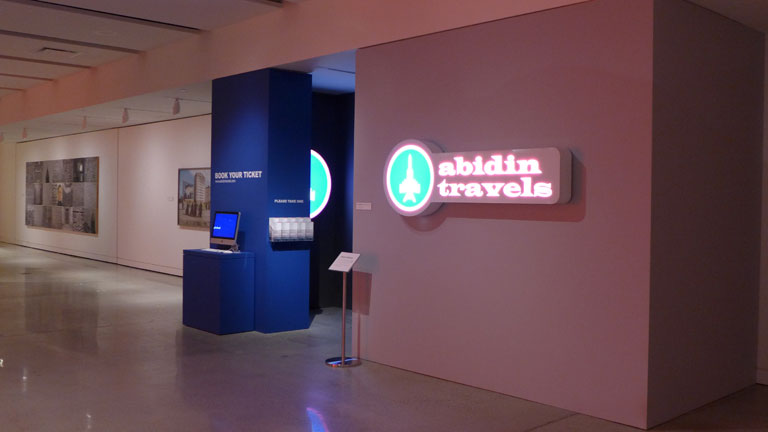
ATinstallThe second is Adel Abidin‘s mixed-media installation, Abidin’s Travels (2006), set up as a travel agent’s office, complete with posters, brochures and video, and its nemesis (a website: how many travel agents are there these days?)

I came up with the idea when I visited Iraq in 2004 and was greeted at a checkpoint by an American soldier, who said, “Welcome to Baghdad!” I realized I was being welcomed by an occupier of my own city. This experience made me think about cities in war and their messy transformations.

After the occupation and gentrification of a city in a conflict zone, you would need a guide, even if you grew up there. This is what I saw happening in Baghdad. So I created a travel agency, using “holiday travel” as a point of departure and Iraq as a destination, to explore the idea of tourism and consumerism in general, and how these generic models break down when applied to a country ripped apart by war. I created this work to draw attention to the new Iraq, “the democratic Iraq,” a mythical place where, in reality, possibility and opportunity barely exist.

You can find a short, interesting commentary by Laura Marks here.

longstillset

Baghdad has obviously changed in the last six or seven years, but in case you think tourism has been ‘normalised’ check out Wikitravel‘s current guide, which reads as though it was written by the artist (“The easiest way to stay safe in Baghdad is not to go there in the first place”).  Still more revealing, look at the hotel reviews (yes) on Trip Advisor here.  Like all reviews on the site, they tell you as much about the reviewer as they do the place – I was particularly taken by this review of one hotel, which was never far from the headlines during the invasion and occupation, and which displays what I hope is a rare sensitivity to the lot of ordinary people in Baghdad:

The problems start with the lack of amenities. The pool wasn’t fit to swim in, the hotel doesn’t have a bar, there isn’t a gym, nothing. The service was appalling. The food was always cold & generally dreadful, the bathrooms are fitted out with full bottles of head and shoulders, Colgate, dove soap, bic razors and gilette shaving foam. There is no room service, no laundry service and all that for $300 a night….One plus. It’s safe, which is saying something for Baghdad…

Not much global dialogue there then.

The security archipelago

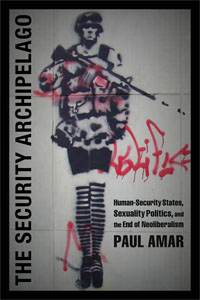
AMAR Security archipelagoA new book from the ever-creative Paul Amar coming this summer from Duke: The Security Archipelago: Human-Security States, Sexuality Politics, and the End of Neoliberalism. Paul wins the prize for getting the most buzz-words into a single title. Our paths crossed most recently in Beirut, at a lively conference at AUB on Security of/in the city, and last year in Lund for a workshop on the Arab uprisings.  For the next two years he’s heading a regional working-group for the Arab Council of the Social Sciences called “Producing the Public: Spaces and Power” (more on this soon).

Paul is a wonderfully engaging speaker and a brilliant writer, but if you don’t know his work you can get a small taste of his argument in this paper on ‘Turning the gendered politics of the human security state inside out?’ for an IPSA-EPCR panel on ‘Governing life globally’ in Sao Paolo and from this excellent interview on ‘Middle East Masculinities’ at Jadaliyya at about the same time; there are other PDFs available from his webpage at UC Santa Barbara here.

The book paints on a canvas that stretches far beyond the ‘Middle East’:

In The Security Archipelago, Paul Amar provides an alternative historical and theoretical framing of the refashioning of free-market states and the rise of humanitarian security regimes in the Global South by examining the pivotal, trendsetting cases of Brazil and Egypt. Addressing gaps in the study of neoliberalism and biopolitics, Amar describes how coercive security operations and cultural rescue campaigns confronting waves of resistance have appropriated progressive, antimarket discourses around morality, sexuality, and labor. The products of these struggles—including powerful new police practices, religious politics, sexuality identifications, and gender normativities—have traveled across an archipelago, a metaphorical island chain of what the global security industry calls “hot spots.” Homing in on Cairo and Rio, Amar reveals the innovative resistances and unexpected alliances that have coalesced in new polities emerging from the Arab Spring and South America’s Pink Tide. These have generated a shared modern governance model that he terms the “human-security state.”

Richard Falk describes it as ‘an extraordinary book that revolutionizes the way to think about security’ – and about time too.  Like much high-flying academic commentary on war, much of the critical debate around security displays a theoretical sophistication that is not matched by analytical substance.   Paul’s work has always avoided that trap, and Jack Halberstam‘s endorsement makes it plain that this is a book that combines erudition with empirical heft:

Paul Amar works in English, Arabic, and Portuguese [and in Spanish too], and he studies security regimes in a comparative framework encompassing the Middle East, North and South America, and Europe. Combining research that he has done in Brazil and Egypt on the emergence of new forms of security and new grammars of protest politics with the unfolding stories of an economic boom in Brazil and political change in Egypt, Amar has written an up-to-the-moment account of the ‘human-security state’ and its opponents.

Here’s a list of the Contents:

Introduction. The Archipelago of New Security-State Uprisings
1. Mooring a New Global Order between Cairo and Rio de Janeiro: World Summits and Human-Security Laboratories
2. Policing the Perversions of Globalization in Rio de Janeiro and Cairo: Emerging Parastatal Security Regimes Confront Queer Globalisms
3. Muhammad Atta’s Urbanism: Rescuing Islam, Saving Humanity, and Securing Gender’s Proper Place in Cairo
4. Saving the Cradle of Samba in Rio de Janeiro: Shadow-State Uprisings, Urban Infranationalisms, and the Racial Politics of Human Security
5. Operation Princess in Rio de Janeiro: Rescuing Sex Slaves, Challenging the Labor-Evangelical Alliance, and Defining the Sexuality Politics of an Emerging Human-Security Superpower
6. Feminist Insurrections and the Egyptian Revolution: Harassing Police, Recognizing Classphobias, and Everting the Logics of the Human-Security State in Tahrir Square 200
Conclusion. The End of Neoliberalism?

Dignity and destruction in Gaza

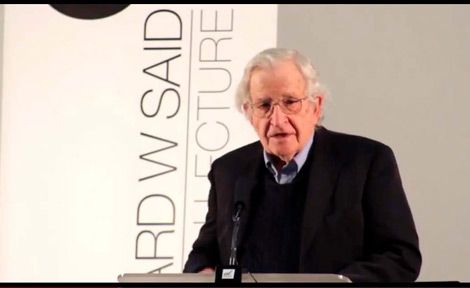
Noam Chomsky delivering the 2013 Edward Said Memorial Lecture

Edward Said died ten years ago in September, and earlier this month Noam Chomsky delivered the 2013 Edward Said Memorial Lecture in London: Violence and dignity: reflections on the Middle East.  The text that formed the basis for the lecture is here, and you can watch a video of the lecture here with introductions by Omar Al Qattan and Mariam Said.

It’s a wide-ranging lecture, but Chomsky returns again and again to the plight of the people of Gaza – and to the disgraceful actions of all those (inside Israel and out) who would rob them of their dignity, their independence and even their life.

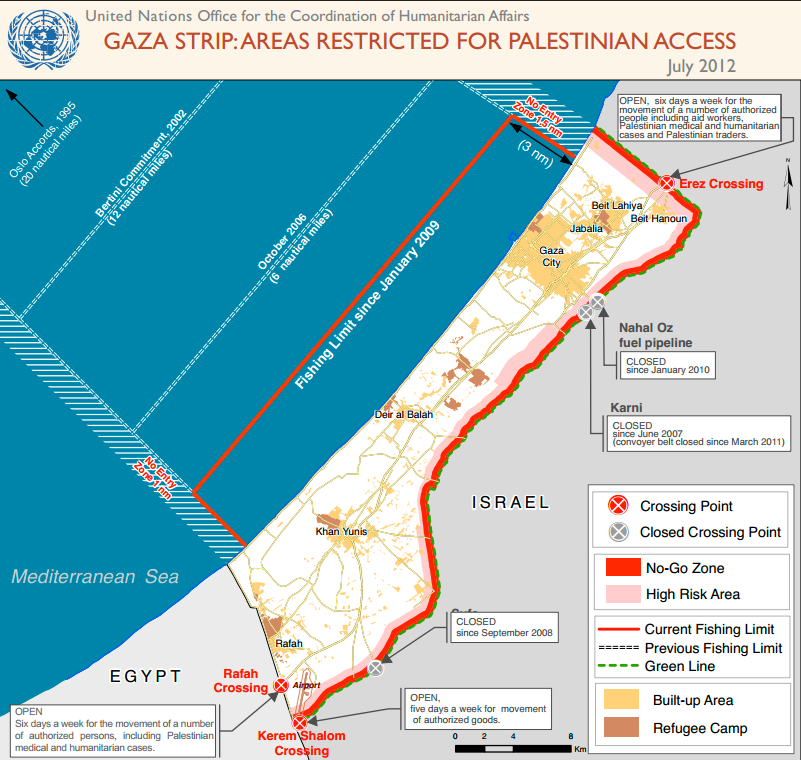
Throughout these years Gaza has been a showcase for violence of every imaginable kind. The record includes such sadistic and carefully planned atrocities as Operation Cast Lead — “infanticide,” as it was called by the remarkable Norwegian physician Mads Gilbert who worked tirelessly at Gaza’s al-Shifa hospital with his dedicated Palestinian and Norwegian colleagues right through the criminal assault — a fair term, considering the hundreds of children massacred. And from there the violence ranges through just about every kind of cruelty that humans have used their higher mental faculties to devise, up to the pain of exile that Edward Said wrote about so eloquently. This is particularly stark in Gaza, where older people can still look across the border towards the homes a few miles away from which they were driven — or could if they were able to approach the border without being killed. One form of punishment has been to close off the Gaza side of the border area, including almost half the arable land, according to the leading academic scholar of Gaza, Harvard’s Sara Roy.

While a showcase for the human capacity for violence, Gaza is also an inspiring exemplar of the demand for dignity. The first phrase one hears in Gaza when asking about personal aspirations is for a life of dignity. The distinguished human rights lawyer Raji Sourani writes from his Gaza home that “What has to be kept in mind is that the occupation and the absolute closure is an ongoing attack on the human dignity of the people in Gaza in particular and all Palestinians generally. It is systematic degradation, humiliation, isolation and fragmentation of the Palestinian people.” While the bombs were once again raining down on defenseless civilians in Gaza last November he repeated that “We demand justice and accountability. We dream of a normal life, in freedom and dignity.”

Gaza Strip restrictions

Last fall the brilliant Sara Roy gave another Said Memorial Lecture, this time at the Palestine Center in Washington DC, A deliberate cruelty: rendering Gaza unviable.  She spoke of Edward’s commitment to Gaza and its people:

Edward and I would always speak about Gaza, in fact every time we met. He felt a profound connection to the place and to the people that seemed to be a permanent part of him. Edward had great compassion and great respect for Gaza’s people. He embraced their suffering and took pride in their courage, in the dignified way they continued to move forward. Yet he feared one thing perhaps most of all: the separation and isolation that now engulfs Gaza and threatens, if it hasn’t already, to sever the Palestinians there from Palestinians elsewhere, forcing them, in the words of Hannah Arendt, to “live outside the common world,” deprived of profession and of citizenship, “without a deed by which to identify or specify [themselves].”

Edward raged against the division of his people and against the kind of loss that such division could bring: disunity, abandonment, irrelevance. In The Origins of Totalitarianism, Arendt argues that the fundamental deprivation of human rights is expressed first and most powerfully in “the deprivation of a place in the world which makes opinions significant and actions effective. Something much more fundamental than freedom and justice… is at stake when belonging to the community into which one is born is no longer a matter of course and not belonging no longer a matter of choice…” “This extremity and nothing else,” she writes, “is the situation of people deprived of human rights. They are deprived not of the right to freedom but of the right to action.” “Over the last 45 years Gaza’s trajectory has been striking; from a territory economically integrated into, and deeply dependent upon, Israel and deeply tied to the West Bank, to an area largely marginalized from Israel and the West Bank, an isolated (and disposable) enclave – subject to consistent military attacks – with which Israel and the West Bank have fewer formal economic or political ties than they once did. And from a captive economy restricted to fluctuating levels of growth (at best) but still possessed of the capacity to produce and innovate (within limitations), to an economy increasingly deprived of that capacity, characterized by unprecedented levels of unemployment and impoverishment, with three-quarters of its population needing humanitarian assistance. These damaging transformations among others I shall discuss are becoming increasingly institutionalized and permanent, shaping a future that is both partial and disfigured. What is happening to Gaza is, in my view, catastrophic; it is also deliberate, considered and purposeful.

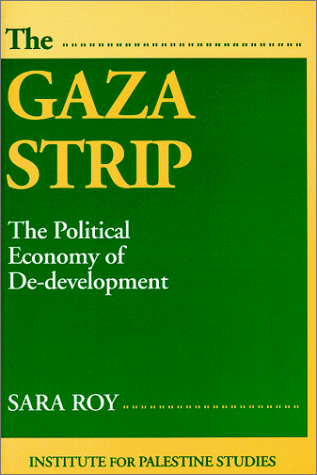
ROY Gaza StripHer lecture is spell-binding –though I hope that once and for all it breaks the spell of Israel’s ‘withdrawal’ from Gaza.  The map above comes from a UN report, Gaza in 2020: a liveable place? that is summarised here, and the text and a video of Sara’s lecture are available here and here.  The text will form part of Sara’s introduction to a new edition of The Gaza Strip: the Political Economy of De-development.

Marc Ellis provides a wonderful summary of and meditation on Sara’s passionately analytical lecture at Mondoweiss here, and you can access Sara’s A Land Diminished: reflections on Gaza’s landscape (2011) here (it also appears as a chapter in an important collection from the Ibrahim Abu-Lughod Institute of International Studies at Birzeit University, Gaza, Palestine: Out of the margins, which is available here).

Orientalism and War

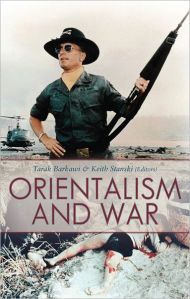
Forthcoming from Hurst in the UK – who have an expanding catalogue of books on the Middle East that is full of delights – and Columbia University Press in North America (September/October 2012), this edited collection on Orientalism and War emerged from a superb conference I attended at Oxford in June 2010.

But it’s not the usual quick-and-dirty “Proceedings” volume; Tarak Barkawi and Keith Stanski have done a marvellous job of editing, and the papers have all been revised for publication.  I’ve listed the Contents at the end of this post.

In their Introduction, Tarak and Keith treat Orientalism as a regime of truth:

‘For us, this focus on Orientalism as an institutionalized community of experts is crucial. Orientalism is not mere bias against Easterners; it is a regime of truth. Views that in fact amount to grotesque misrepresentation come to be accepted by the authorized experts and by those they communicate with. One such misrepresentation that sits at the core of historical and contemporary Orientalisms concerns the East as a site of disorder and the West as that which brings order to disorder.’

The gavotte between order and disorder is one of the central ways in which Orientalism is so deeply entangled with war, and – as they also note – ‘war entails a cycle of the unmaking and remaking of truths of all kinds.’  In particular, war has ‘an uncanny capacity to overturn received wisdom of all kinds. Wars and military operations rarely turn out as expected.’

This is obviously about far more than the imaginative geographies that Edward Said exposed so wonderfully well in his Orientalism; as the chapters in the book document in different ways and in different placesthese regimes of truth impose and inscribe material economies of violence that, in their turn, enforce those regimes of truth.  The relation between the two is not a frictionless machine but a slippery series of precepts, protocols and practices that can (and usually does) come undone – the point that Tarak and Keith sharpen so well –  but the dangerous liaison between epistemological violence and physical violence is of cardinal and continuing importance.

For Said, Orientalism entailed two cultural-political performances:

  • First, ‘the Orient’ was summoned as an exotic and bizarre space, and at the limit a pathological and even monstrous space: ‘a living tableau of queerness.’
  • Second, ‘the Orient’ was constructed as a space that had to be domesticated, disciplined and normalized through a forceful projection of the order it was presumed to lack: ‘framed by the classroom, the criminal court, the prison, the illustrated manual.’

As I’ve said, these performances wrought considerably more than epistemological violence. The Orientalist projection of order was more than conceptual or cognitive, for the process of ordering also conveyed the sense of command and conquest. Said knew this very well, and his critique of Orientalism was framed by a series of wars. Orientalism (1978) opens with the civil war in Lebanon, a place that had a special significance for Said; it was a belated response to his puzzlement at the jubilation on the streets of New York at the Israeli victory in the 1967 and 1973 wars; and it located the origins of a distinctively modern Orientalism in Napoleon’s military expedition to Egypt between 1798 and 1801.

And yet, even as he fastened on the importance of the French invasion and occupation, Said’s focus was unwaveringly on the textual appropriation of ‘ancient Egypt’ by the savants – the engineers, scientists and artists – who accompanied the French army.
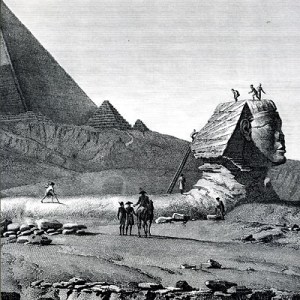
Their collective work was enshrined in the monumental Description de l’Égypte, which Said described as a project ‘to render [Egypt] completely open, to make it totally accessible to European scrutiny’, and so to usher the Orient from what he called ‘the realms of silent obscurity’ into ‘the clarity of modern European science.’  The phrasing is instructive: visuality is a leitmotif of Orientalism. Said repeatedly notes that under its sign ‘the Orient is watched’, that the Orient was always more than tableau vivant or theatrical spectacle, and that the Orientalist technology of power-knowledge was, above all, about ‘making visible’, about the construction ‘of a sort of Benthamite panopticon’ from whose watch-towers ‘the Orientalist surveys the Orient from above, with the aim of getting hold of the whole sprawling panorama’ in every ‘dizzying detail’.

But Napoleon’s military expedition was about more than annexing Egypt as what Said calls ‘a department of French learning’, and its execution inflicted more than cultural violence.  In my own contribution to the volume, I tried to go beyond textual appropriations – even as I necessarily relied on an archive that is primarily textual – to trace the changing relations between Orientalism, visuality and military violence from the French occupation of Egypt to the American-led occupations of Afghanistan and Iraq.  (There’s an extended version of the essay under the DOWNLOADS tab).

Although I’ve emphasised the historical roots of Said’s critique in this post, I should note that the essays in Orientalism and War are all written by scholars with a clear sense of the continuing, dismally contemporary relations between the two (and Said himself displayed the same sensibility in his brilliant stream of essays on the dispossession of the Palestinian people).

‘When a book comes along that examines what should be obvious yet is utterly under-thought, you have to read it and teach it. This is such a book. It forces us to consider how war is unthinkable without Orientalism, and how Orientalism is unthinkable without war.’ — Cynthia Weber, Professor of International Relations, University of Sussex

‘Orientalism has a history in which projections of superiority and inferiority, fear and desire, repulsion and envy reach extremes that only war can resolve. From Herodotus to Petraeus, Orientalism and war have been cultural bedfellows. Assembling a diversity of views and keenness of inquiry rarely found in a single volume, Tarak Barkawi and Keith Stanski have revitalised the concept of Orientalism to bring a nuanced and complex understanding of how culture has become the killer variable of modern warfare.’ — James Der Derian, Professor of International Studies (Research), Brown University

Contents:

1   Orientalism and War –  Tarak Barkawi and Keith Stanski

2  Shocked by War: the non-politics of Orientalism – Arjun Chowdhury

3  American Orientalism at War in Korea and the United States: a hegemony of racism, repression and amnesia – Bruce Cumings

4  Terror, the Imperial Presidency and American Heroism – Susan Jeffords

5  Can the insurgent speak? – Hugh Gusterson

6  Colonial Wars, Postcolonial Specters: the anxiety of domination – Quynh N. Pham and Himadeep R. Muppidi

7  Orientalism in the Machine – Josef Teboho Ansorge

8  Dis/Ordering the Orient: scopic regimes and modern war – Derek Gregory

9  Nesting Orientalisms at war: World War II and the “Memory War” in Eastern Europe – Maria Mälksoo

10  Victimhood as agency: Afghan women’s memoirs – Margaret A. Mills

11  Fanon’s “guerre des ondes”: resisting the call of Orientalism – John Mowitt

12  The Pleasures of Imperialism and the Pink Elephant: Torture, Sex, Orientalism – Patricia Owens

13  Afterword – Patrick Porter