The individuation of warfare?

chamayou-manhuntsBefore I resume my reading of Grégoire Chamayou‘s Théorie du drone, I want to approach his thesis from a different direction. As I’ve noted, much of his argument turns on the reduction of later modern war to ‘man-hunting’: the profoundly asymmetric pursuit of individuals by activating the hunter-killer capacities of the Predator or the Reaper in a new form of networked (para)military violence. He describes this as a ‘state doctrine of non-conventional violence’ that combines elements of military and police operations without fully corresponding to either: ‘hybrid operations, monstrous offspring [enfants terribles] of the police and the military, of war and peace’.

These new modalities increase the asymmetry of war – to the point where it no longer looks like or perhaps even qualifies as war – because they preclude what Joseph Pugliese describes as ‘“a general system of exchange” [the reference is to Achille Mbembe’s necropolitics] between the hunter-killer apparatus ‘and its anonymous and unsuspecting victims, who have neither a right of reply nor recourse to judicial procedure.’

Pugliese insists that drones materialise what he calls a ‘prosthetics of law’, and the work of jurists and other legal scholars provides a revealing window into the constitution of later modern war and what, following Michael Smith, I want to call its geo-legal armature. To date, much of this discussion has concerned the reach of international law – the jurisdiction of international law within (Afghanistan) and beyond (Pakistan, Yemen and Somalia) formal zones of conflict – and the legal manoeuvres deployed by the United States to sanction its use of deadly force in ‘self-defence’ that violates the sovereignty of other states (which includes both international law and domestic protocols like the Authorization for the Use of Military Force and various executive orders issued after 9/11) . These matters are immensely consequential, and bear directly on what Frédéric Mégret callsthe deconstruction of the battlefield’.

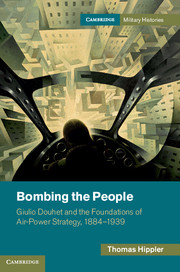
HIPPLER Bombing the PeopleIt’s important to understand that the ‘battlefield’ is more than a physical space; it’s also a normative space – the site of ‘exceptional norms’ within whose boundaries it is permissible to kill other human beings (subject to particular codes, rules and laws). Its deconstruction is not a new process. Modern military violence has rarely been confined to a champ de mars insulated from the supposedly safe spaces of civilian life. Long-range strategic bombing radically re-wrote the geography of war. This was already clear by the end of the First World War, and in 1921 Giulio Douhet could already confidently declare that

‘By virtue of this new weapon, the repercussions of war are no longer limited by the farthest artillery range of guns, but can be felt directly for hundreds and hundreds of miles… The battlefield will be limited only by the boundaries of the nations at war, and all of their citizens will become combatants, since all of them will be exposed to the aerial offensives of the enemy. There will be no distinction any longer between soldiers and civilians.’

The laboratory for these experimental geographies before the Second World War was Europe’s colonial (dis)possessions – so-called ‘air control’ in North Africa, the Middle East and along the North-West Frontier – but colonial wars had long involved ground campaigns fought with little or no distinction between combatants and civilians.

What does seem to be novel about more recent deconstructions, so Mégret argues, is ‘a deliberate attempt to manipulate what constitutes the battlefield and to transcend it in ways that liberate rather than constrain violence.’

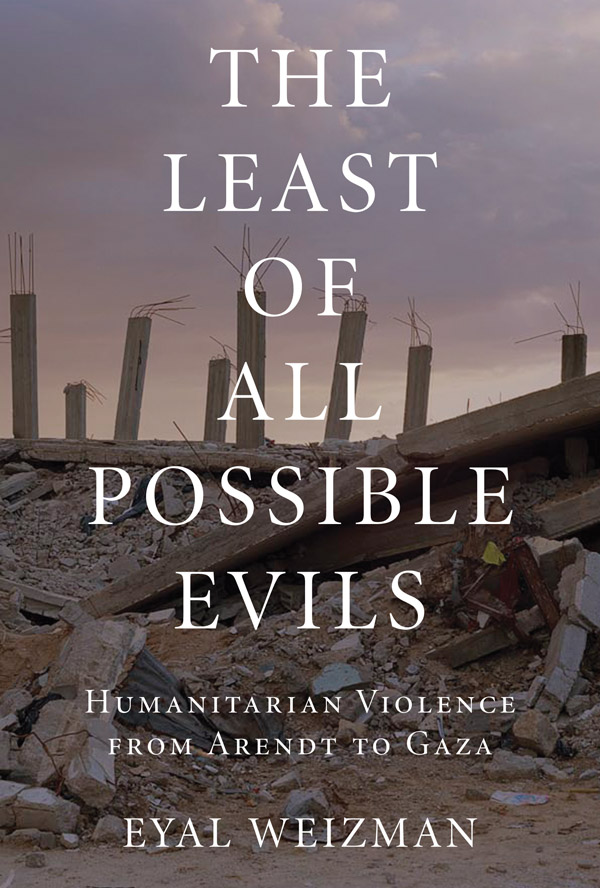
9781844676477 Least of All Possible EvilsThis should not surprise us. Law is not a deus ex machina that presides over war as impartial tribune. Law, Michel Foucault reminds us, ‘is born of real battles, victories, massacres and conquests’; law ‘is born in burning towns and ravaged fields.’ Today so-called ‘operational law’ has incorporated military lawyers into the kill-chain, moving them closer to the tip of the spear, but law also moves in the rear of military violence: in Eyal Weizman’s phrase, ‘violence legislates.’ In the case that most concerns him, that of the Israel Defense Force, military lawyers work in the grey zone between ‘the black’ (forbidden) and ‘the white’ (permitted) and actively seek to turn the grey into the white: to use military violence to extend the permissive envelope of the law.

The liber(alis)ation of violence that Mégret identifies transforms the very meaning of war. In conventional wars combatants are authorised to kill on the basis of what Paul Kahn calls their corporate identity:

‘…the combatant has about him something of the quality of the sacred. His acts are not entirely his own….

‘The combatant is not individually responsible for his actions because those acts are no more his than ours…. [W]arfare is a conflict between corporate subjects, inaccessible to ordinary ideas of individual responsibility, whether of soldier or commander. The moral accounting for war [is] the suffering of the nation itself – not a subsequent legal response to individual actors.’

The exception, Kahn continues, which also marks the boundary of corporate agency, is a war crime, which is ‘not attributable to the sovereign body, but only to the individual.’ Within that boundary, however, the enemy can be killed no matter what s/he is doing (apart from surrendering). There is no legal difference between killing a general and killing his driver, between firing a missile at a battery that is locking on to your aircraft and dropping a bomb on a barracks at night. ‘The enemy is always faceless,’ Kahn explains, ‘because we do not care about his personal history any more than we care about his hopes for the future.’ Combatants are vulnerable to violence not only because they are its vectors but also because they are enrolled in the apparatus that authorizes it: they are killed not as individuals but as the corporate bearers of a contingent (because temporary) enmity.

It is precisely this model that contemporary military violence now challenges through the prosthetics of law embodied and embedded in drone warfare – and this, Kahn insists, has transformed the political imaginary of warfare (You can find his full argument here: ‘Imagining warfare’, European journal of international law 24 (1) (2013) 199-216).

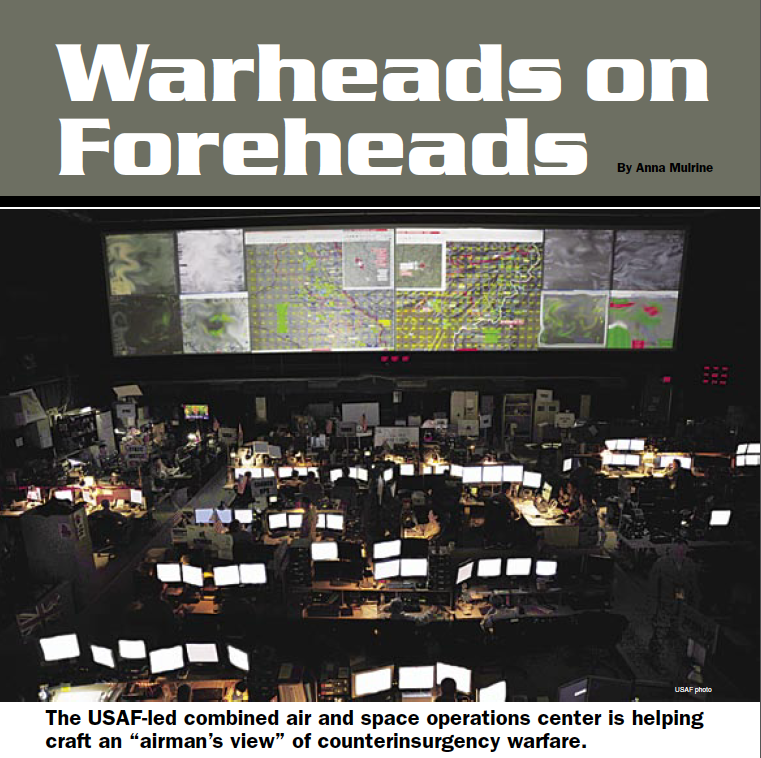
Warheads on foreheads

In a parallel argument, Samuel Issacharoff and Richard Pildes describe this development as the individuation of military force, driven in part by the affordances and dispositions of drone warfare which makes it possible to put ‘warheads on foreheads.’  Targets are no longer whole areas of cities – like Cologne or Hamburg in the Second World War – or extensive target boxes like those ravaged by B-52 ‘Arc Light’ strikes over the rainforest of Vietnam.  The targets are individuals and, since the United States claims the right to target them wherever they are found, this partly explains the dispersed geography of what I’ve called ‘the everywhere war’.   What interests Issacharoff and Pildes, like Kahn, is not so much the technology that makes this possible as the apparatus that makes it permissible.

Their presentation wavers uncertainly between counterinsurgency and counter-terrorism, and they also write more generally of ‘the new face of warfare’ and the use of ‘military force’, so that (as now happens in practice) the distinctions between the US military and the CIA become blurred.  But their core argument is that military force is now directed against specific individuals on the basis of determinate acts that they have committed or, by pre-emptive extension, are likely to commit.  In Kahn’s terms, this inaugurates a radically different (though in his eyes, highly unstable) political subjectivity through which the enemy is transformed into the criminal.  ‘The criminal is always an individual,’ Kahn explains; ‘the enemy is not.’

For Issacharoff and Pildes this new state of affairs requires an ‘adjudicative apparatus’ to positively identify, detect and prosecute the individual-as-target, which drives the military system ever closer to the judicial system:

 ‘As the fundamental transformation in the practice of the uses of military force moves, even implicitly, toward an individuated model of responsibility, military force inevitably begins to look justified in similar terms to the uses of punishment in the criminal justice system. That is, to the extent that someone can be targeted for the use of military force (capture, detention, killing) only because of the precise, specific acts in which he or she as an individual participated, military force now begins to look more and more like an implicit “adjudication” of individual responsibility.’

They suggest that this makes it inevitable that the boundaries between the military system and the judicial system ‘will become more permeable’ – a confirmation of the active constitution of the war/police assemblage (on which see Colleen Bell, Jan Bachmann and Caroline Holmqvist’s forthcoming collection, The New Interventionism: perspectives on war-police assemblages).

Kahn is, I think, much more troubled by this than Issacharoff and Pildes.  He concludes (like Chamayou):

‘Political violence is no longer between states with roughly symmetrical capacities to injure each other; violence no longer occurs on a battlefield between masses of uniformed combatants; and those involved no longer seem morally innocent. The drone is both a symbol and a part of the dynamic destruction of what had been a stable imaginative structure. It captures all of these changes: the engagement occurs in a normalized time and space, the enemy is not a state, the target is not innocent, and there is no reciprocity of risk. We can call this situation ‘war’, but it is no longer clear exactly what that means.

‘The use of drones signals a zone of exception to law that cannot claim the sovereign warrant. It represents statecraft as the administration of death. Neither warfare nor law enforcement, this new form of violence is best thought of as the high-tech form of a regime of disappearance. States have always had reasons to eliminate those who pose a threat. In some cases, the victims doubtlessly got what they deserved. There has always been a fascination with these secret acts of state, but they do not figure in the publicly celebrated narrative of the state. Neither Clausewitz nor Kant, but Machiavelli is our guide in this new war on terror.’

He is thoroughly alarmed at the resuscitation of what he calls ‘the history of administrative death’, whereas Issacharoff and Pildes – ironically, given what I take to be their geopolitical sympathies –treat the institution and development of an ‘adjudicative apparatus’ within the US programme of targeted killings as a vindication of their execution (sic).

I want to set aside other contributions to the emerging discussion over the ‘individuation’ of warfare – like Gabriella Blum‘s depiction of an ‘individual-centred regime’ of military conduct, which pays close attention to its unstable movement between nationalism and cosmopolitanism – in order to raise some questions about the selectivity of ‘individuation’ as a techno-legal process.  I intend that term to connote three things.

Target phase

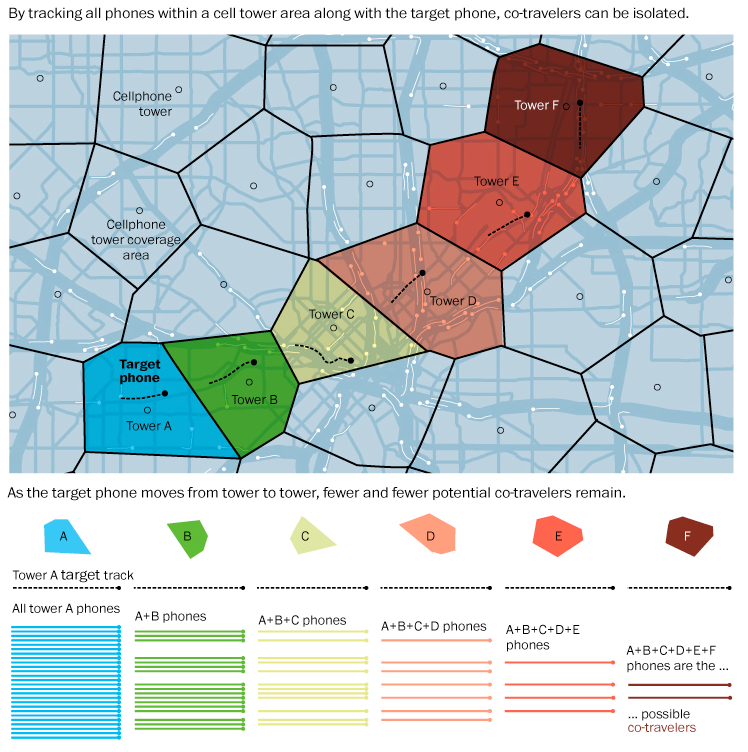
(1) First, and most obviously, Issacharoff and Pildes fasten on the technical procedures that have been developed to administer targeted killings – which include both the ‘disposition matrix’ [see here] and its derivatives and the more directly instrumental targeting cycle [the diagram above shows the ‘Target’ phase of the Find-Fix-Track-Target-Engage-Assess cycle] , both of which admit legal opinions and formularies – that convert targeted killing into what Adi Ophir calls a quasi-juridical process.  This encoding works to contract the ethical horizon to the legal-juridical (see here for a critical commentary) while simultaneously diverting attention from the substantive practice – which, as I showed in ‘Lines of descent’ (DOWNLOADS tab), is shot through with all sorts of limitations that confound the abstract calculations of the targeting cycle (see, for example, Gregory McNeal here, who turns ‘accountability’ into accountancy).

(2) Second, ‘individuation’ refers to the production of the individual as a technical artefact of targeting.  S/he is someone who is apprehended as a screen image and a network trace;  s/he may be named in the case of a ‘personality strike’ but this serves only as an identifier in a target file, and the victims of ‘signature strikes‘ are not accorded even this limited status.  Others who are killed in the course of the strike almost always remain unidentified by those responsible for their deaths – ‘collateral damage’ whose anonymity confirms on them no individuality but only a collective ascription.  (For more, see Thomas Gregory, ‘Potential lives, impossible deaths: Afghanistan, civilian casualties and the politics of intelligibility’, International Feminist Journal of Politics 14 (3) (2012) 327-47; and ‘Naming names’ here).

(3) Third, the adjudication of ‘individual responsibility’ bears directly on the production of the target but not, so it seems, on the producers of the target.  Lucy Suchmann captures this other side – ‘our’ side – in a forthcoming essay in Mediatropes (‘Situational awareness: deadly bioconvergence at the boundaries of bodies and machines’):

‘A corollary to the configuration of “their” bodies as targets to be killed is the specific way in which “our” bodies are incorporated into war fighting assemblages as operating agents, at the same time that the locus of agency becomes increasingly ambiguous and diffuse. These are twin forms of contemporary bioconvergence, as all bodies are locked together within a wider apparatus characterized by troubling lacunae and unruly contingencies.’

Caroline Holmqvist, sharpens the same point in ‘Undoing war: war ontologies and the materiality of drone warfare’, Millennium (1 May 2013) d.o.i. 10.1177/0305829813483350); so too, and more directly relevant to the operations of a techno-legal process,  does Joseph Pugliese‘s figure of drone crews as ’embodied prostheses of the law of war grafted on to their respective technologies’.

These various contributions identify a dispersion of responsibility across the network in which the drone crews are embedded and through which they are constituted.  The technical division of labour is also a social division of labour – so that no individual bears the burden of killing another individual – but the social division of labour is also a technical division of labour through which ‘agency’ is conferred upon what Pugliese calls its prostheses:

‘Articulated in this blurring of lines of accountability is a complex network of prostheticised and tele-techno mediated relations and relays that can no longer be clearly demarcated along lines of categorical divisibility: such is precisely the logic of the prosthetic. As the military now attempts to grapple with this prostheticised landscape of war, it inevitably turns to technocratic solutions to questions of accountability concerning lethal drone strikes that kill the wrong targets.’

If the mandated technical procedures (1 above) fail to execute a sanctioned target (2 above) and if this triggers an investigation, the typical military response is to assign responsibility to the improper performance of particular individuals (which protects the integrity of the process) and/or to technical malfunctions or inefficiencies in the network and its instruments (which prompts technical improvements).  What this does not do – is deliberately designed not to do – is to probe the structure of this ‘techno-legal economy of war at a distance’ (Pugliese’s phrase) that turns, as I’ve tried to suggest, on a highly particular sense of individuation.  Still less do these inquiries disclose the ways in which, to paraphrase Weizman, ‘drones legislate’ by admitting or enrolling into this techno-legal economy particular subjectivities and forcefully excluding others .

More to come.

***

Note: Here are the citations for Issacharoff and Pildes’ full argument(s); the first is excerpted from the second, which deals with ‘capture’ (detention) as well as killing:

Samuel Issacharoff and Richard Pildes, ‘Drones and the dilemma of modern warfare’, in Peter Bergen and Daniel Rothenberg (eds) Drone wars: the transformation of armed conflict and the promise of law (Cambridge University Press, 2013); available here as NYU School of Law, Public Law & Legal Theory Research Paper Series Working Paper No. 13-34, June 2013

Samuel Ischaroff and Richard Pildes, ‘Targeted warfare: individuating enemy responsibility’, NYU School of Law, Public Law & Legal Theory Working Papers 343 (April 2013); available here.

The security archipelago

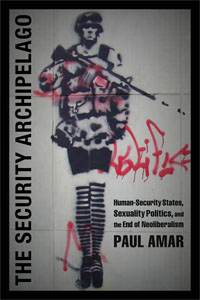
AMAR Security archipelagoA new book from the ever-creative Paul Amar coming this summer from Duke: The Security Archipelago: Human-Security States, Sexuality Politics, and the End of Neoliberalism. Paul wins the prize for getting the most buzz-words into a single title. Our paths crossed most recently in Beirut, at a lively conference at AUB on Security of/in the city, and last year in Lund for a workshop on the Arab uprisings.  For the next two years he’s heading a regional working-group for the Arab Council of the Social Sciences called “Producing the Public: Spaces and Power” (more on this soon).

Paul is a wonderfully engaging speaker and a brilliant writer, but if you don’t know his work you can get a small taste of his argument in this paper on ‘Turning the gendered politics of the human security state inside out?’ for an IPSA-EPCR panel on ‘Governing life globally’ in Sao Paolo and from this excellent interview on ‘Middle East Masculinities’ at Jadaliyya at about the same time; there are other PDFs available from his webpage at UC Santa Barbara here.

The book paints on a canvas that stretches far beyond the ‘Middle East’:

In The Security Archipelago, Paul Amar provides an alternative historical and theoretical framing of the refashioning of free-market states and the rise of humanitarian security regimes in the Global South by examining the pivotal, trendsetting cases of Brazil and Egypt. Addressing gaps in the study of neoliberalism and biopolitics, Amar describes how coercive security operations and cultural rescue campaigns confronting waves of resistance have appropriated progressive, antimarket discourses around morality, sexuality, and labor. The products of these struggles—including powerful new police practices, religious politics, sexuality identifications, and gender normativities—have traveled across an archipelago, a metaphorical island chain of what the global security industry calls “hot spots.” Homing in on Cairo and Rio, Amar reveals the innovative resistances and unexpected alliances that have coalesced in new polities emerging from the Arab Spring and South America’s Pink Tide. These have generated a shared modern governance model that he terms the “human-security state.”

Richard Falk describes it as ‘an extraordinary book that revolutionizes the way to think about security’ – and about time too.  Like much high-flying academic commentary on war, much of the critical debate around security displays a theoretical sophistication that is not matched by analytical substance.   Paul’s work has always avoided that trap, and Jack Halberstam‘s endorsement makes it plain that this is a book that combines erudition with empirical heft:

Paul Amar works in English, Arabic, and Portuguese [and in Spanish too], and he studies security regimes in a comparative framework encompassing the Middle East, North and South America, and Europe. Combining research that he has done in Brazil and Egypt on the emergence of new forms of security and new grammars of protest politics with the unfolding stories of an economic boom in Brazil and political change in Egypt, Amar has written an up-to-the-moment account of the ‘human-security state’ and its opponents.

Here’s a list of the Contents:

Introduction. The Archipelago of New Security-State Uprisings
1. Mooring a New Global Order between Cairo and Rio de Janeiro: World Summits and Human-Security Laboratories
2. Policing the Perversions of Globalization in Rio de Janeiro and Cairo: Emerging Parastatal Security Regimes Confront Queer Globalisms
3. Muhammad Atta’s Urbanism: Rescuing Islam, Saving Humanity, and Securing Gender’s Proper Place in Cairo
4. Saving the Cradle of Samba in Rio de Janeiro: Shadow-State Uprisings, Urban Infranationalisms, and the Racial Politics of Human Security
5. Operation Princess in Rio de Janeiro: Rescuing Sex Slaves, Challenging the Labor-Evangelical Alliance, and Defining the Sexuality Politics of an Emerging Human-Security Superpower
6. Feminist Insurrections and the Egyptian Revolution: Harassing Police, Recognizing Classphobias, and Everting the Logics of the Human-Security State in Tahrir Square 200
Conclusion. The End of Neoliberalism?

State terror and historical memory in Guatemala

Felix Driver has alerted me to a seminar in London next week by George Lovell, ‘The archive that never was: state terror and historical memory in Guatemala’, on Tuesday 19 March 2013 at 5.15pm in Room 104, South Block, Senate House, University of London.  

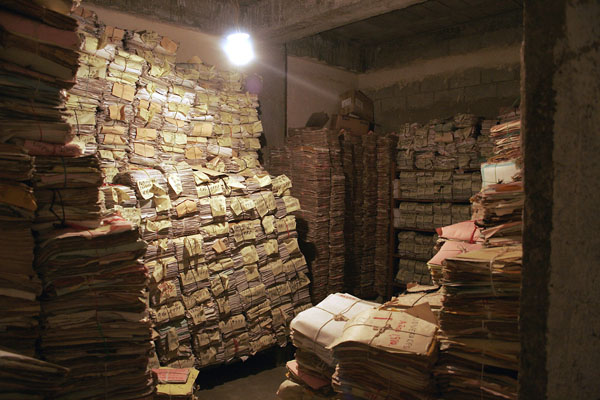
Interior room with bulb; Daniel Hernández-SalazarBetween 1961 and 1996, according to the findings of a United Nations Truth Commission, over 200,000 people in Guatemala lost their lives as a result of state-orchestrated acts of terror still denied by members of the security forces accused of perpetrating them. While conducting its investigations, the Truth Commission was repeatedly obstructed by army and police personnel from gaining access to official records, being told that no documentation of the type requested ever existed. Bureaucracies simply don’t work that way, even ones with good reason to destroy or conceal evidence of a self-incriminating nature. It was nonetheless of startling import when, on July 5, 2005, an attorney working for Guatemala’s Human Rights Office stumbled upon an archive recording the deeds of the National Police. Now known to contain an estimated 80 million documents, mainly covering the 1980s but dating back to earlier times, the archive revealed conspiracy and complicity on the part of police officers engaged in a ghoulish network of surveillance, intimidation, abduction, torture and murder, a veritable paper trail of death. A visit to the police archive, arranged so as to afford some first-hand familiarity with how its contents are being safeguarded and drawn upon for criminal proceedings as well as academic research, forms the basis of the seminar.

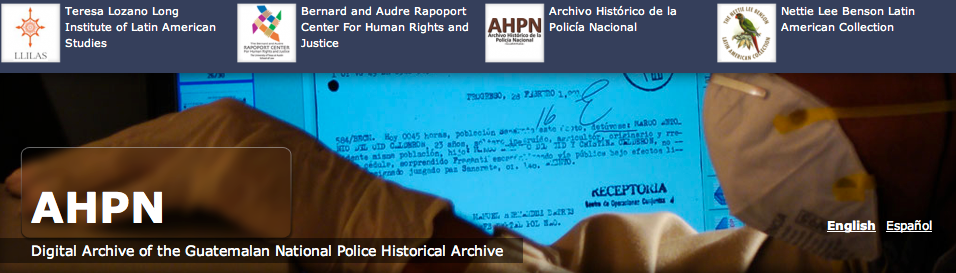
A preliminary account of the Historical Archive of the National Police (AHPN) is here (scroll down to the images) [and even more on related issues from the vaults of the National Security Archive at GWU here].  More than 10 million records have since been digitised in a collaborative project involving the University of Texas’ Lozano Long Institute for Latin American Studies, Rapoport Center for Human Rights and Justice, and Benson Latin American Collection, with the Archivo Histórico de la Policía Nacional de Guatemala.

AHPN

The records have been available online since December 2011; more on the project and its significance here and here:

In July 2005, the Procuraduría de los Derechos Humanos – the office of Guatemala’s human rights ombudsman – found the abandoned documents by accident in an abandoned munitions depot on the north side of Guatemala City. The messy bundles of records were stacked floor to ceiling in dozens of rooms infested by rats, bats and cockroaches, and many of the files were in an advanced state of decay. The administrative police records, which date from 1882 to 1997, document the repressive role played by the police during the 36-year armed conflict between leftist insurgents and government forces, which left a death toll of 250,000. That total included at least 45,000 people who were seized by the [US-backed] security forces and forcibly disappeared, their bodies buried in unmarked graves in cemeteries or in secret graves, often in military bases, according to the Historical Clarification CommissionThe U.N.-mandated truth commission found that the army was responsible for more than 90 percent of the killings in the civil war, most of whose victims were rural Maya Indians. The records that came to light in 2005 document the role played by the National Police during – and before – the conflict. The AHPN began to salvage and digitise the archives in 2006. The documents are held under tight security. The archive includes arrest warrants, surveillance reports, identification documents, interrogation records, snapshots of detainees and informants, and of unidentified bodies, fingerprint files, transcripts of radio communications, ledgers full of photographs and names, as well as more mundane documents like traffic tickets, drivers’ licence applications, invoices for new uniforms and personnel files.

There’s also a compelling report from the Historical Clarification Commission, Guatemala: Memory of Silence, here, which confirms that the National Police worked for military intelligence, ‘serving as the facade of the G-2 intelligence agency, and acted on its orders in the majority of cases.’  (I’ve posted about the blurring of military/policing before: in Mexico here and more generally here).

Incidentally, the photograph of the original archive (top of the page) is taken from the work of Daniel Hernández-Salazar, a former photojournalist for AP, Reuters and Agence-France Presse, who ‘has devoted much of his work to document the complex and painful recent history of his native Guatemala.’  More, including a portfolio of his images of the Guatemalan genocide, from the New York Times, ‘Angels Watch Over Memories Of War’, here.

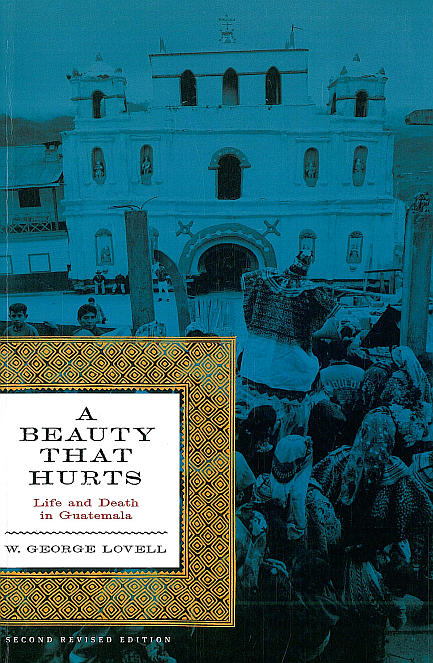
LOVELL A Beauty that Hurts

For those who don’t know him, George is Professor of Geography at Queen’s University, and the author of the brilliant (and, as it happens, beautiful) book, A Beauty that Hurts: Life and death in Guatemala.

George gave me a copy soon after it was first published (1995 – it’s now in its third edition), and I’ve read it several times: apart from its substantive importance, it’s also a wonderful demonstration that first-class scholarship and graceful writing are not incompatible.

This seminar is part of a series run by the ever-inventive London Group of Historical Geographers: details here.

NOTE: The physical archive is in desperate need of financial support to continue its work: contact at ahpn@archivohistoricopn.org.  It and its staff also face other, acutely physical dangers as the Molina administration remilitarizes civil society and, ever since assuming office in January 2012, works to establish ‘an institutional culture disturbingly similar to the counter-insurgency model that dominated during the internal armed conflict.’  More on the vexed military/police nexus in Guatemala in a July 2012 report from International Crisis Group here.

Military/Policing and the US/Mexico border

The US/Mexico borderlands was one of the sites I discussed in ‘The everywhere war’ (see DOWNLOADS tab), along with the Afghanistan/Pakistan borderlands and cyberspace.  It’s also another zone where the blurring of policing and military operations is highly visible.

For the book I plan to separate these three into three chapters, which I’m hoping will produce a more nuanced, certainly less cartoonish discussion – inevitable, I suppose, in such a short essay (and written – for me – in an unusually short time, though editor Klaus Dodds may not have seen it quite like that…).  So I’ve been gathering materials, and en route found a short, sharp documentary from Real Television News [‘No advertising, no corporate funding’ – and really excellent] that debunks claims of  ‘spillover violence’, at least from Mexico into the US.  It asks ‘Is the Arizona/Mexico border a war zone?’

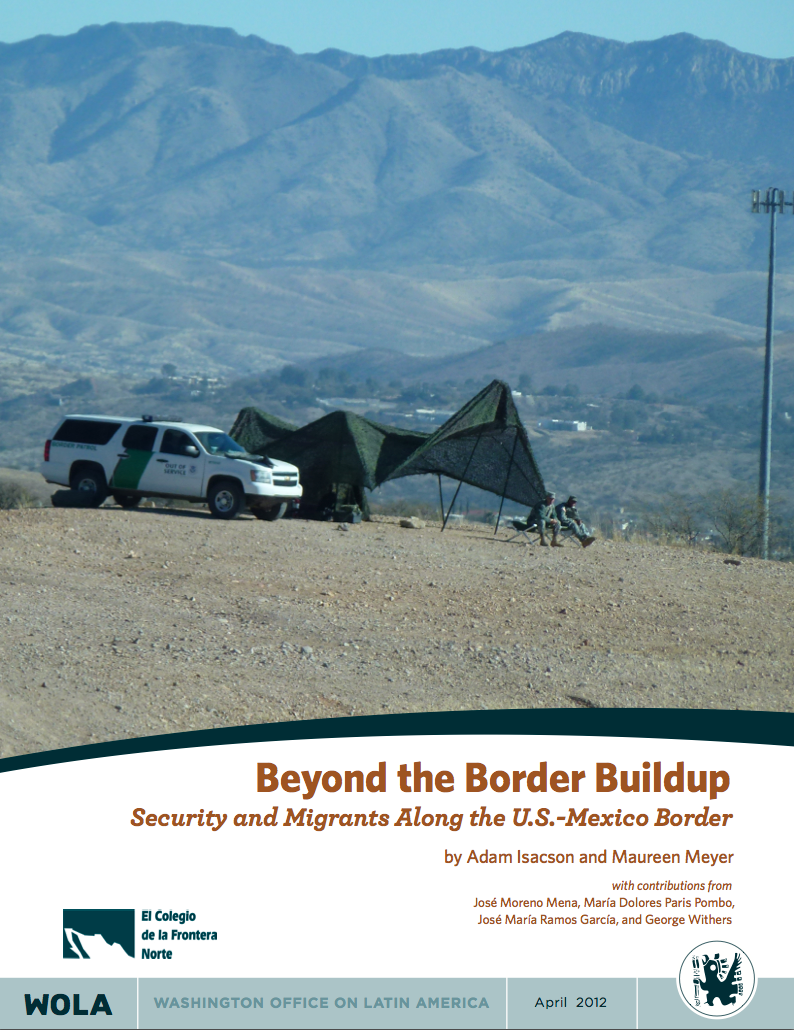
The Washington Office on Latin America, an NGO ‘promoting human rights, democracy and social justice’ founded in response to the military coup in Chile in 1973, has a fact-checking blog on the securitization of the border, and this year published Beyond the Border Buildup: Security and migrants along the US Mexico border.

The study finds a dramatic buildup of U.S. security forces along the southern border – a fivefold increase of the Border Patrol in the last decade, an unusual new role for U.S. soldiers on U.S. soil, drones and other high-tech surveillance, plus hundreds of miles of completed fencing – without a clear impact on security. For instance, the study finds that despite the security buildup, more drugs are crossing than ever before.
 
Furthermore, the study reveals that security policies that were designed to combat terrorism and drug trafficking are causing a humanitarian crisis and putting migrants in increasing danger. Migrants are often subject to abuse and mistreatment while in U.S. custody, and face higher risks of death in the desert than in previous years. Also, certain deportation practices put migrants at risk. For example, migrants can be deported at night and/or to cities hundreds of miles from where they were detained. These same cities are also some of the border region’s most dangerous, where migrants may fall prey to – or be recruited by – criminal groups. In Mexico, approximately 20,000 migrants are kidnapped a year; many others face other abuses.
 
WOLA found that any further increase in the security buildup will yield diminishing returns. Contrary to common opinion, the report documents a sharp drop in migrant crossings. Since 2005, the number of migrants apprehended by the Border Patrol has plummeted by 61 percent, to levels not seen since Richard Nixon was president. Today, twenty migrants are apprehended per border patrol agent per year, down from 300 per agent per year in 1992.
 
Finally, the study finds that violence in Mexico is not spilling over to the U.S. side of the border. U.S. border cities experience fewer violent crimes than the national average, or even the averages of the border states. WOLA recommends that before making further investments in border security, the U.S. government should stop and take stock of what is and isn’t working in order to create a comprehensive strategy that takes addresses the real threats while respecting the human rights of migrants.

Then I turn to the pages of the latest Military Review, where Christopher Martinez elaborates on Mexico’s transnational criminal organisations – the drug cartels – as constituting a commercial insurgency: ‘They seek to influence the four primary elements of national power — the economy, politics, the military, and the information media — to form an environment that enables an illicit trafficking industry to thrive and operate with impunity.’  Martinez is not the first, and he certainly won’t be the last, to describe Mexico’s militarized ‘war on drugs’ in terms of insurgency and counterinsurgency and, as I showed in ‘The everywhere war’, this rhetoric slides easily into the armature of a ‘border war’ in which the United States is fully invested as part of its boundless ‘war on terror’.

But what is most interesting about the MR essay is its author: Major Martinez is described as ‘the senior military intelligence planner for the U.S. Southwest Regional Support team at Joint Task Force North, Fort Bliss, TX’ who ‘serves as an advisor and partner to federal, state, and local law enforcement agencies in Arizona and California.’

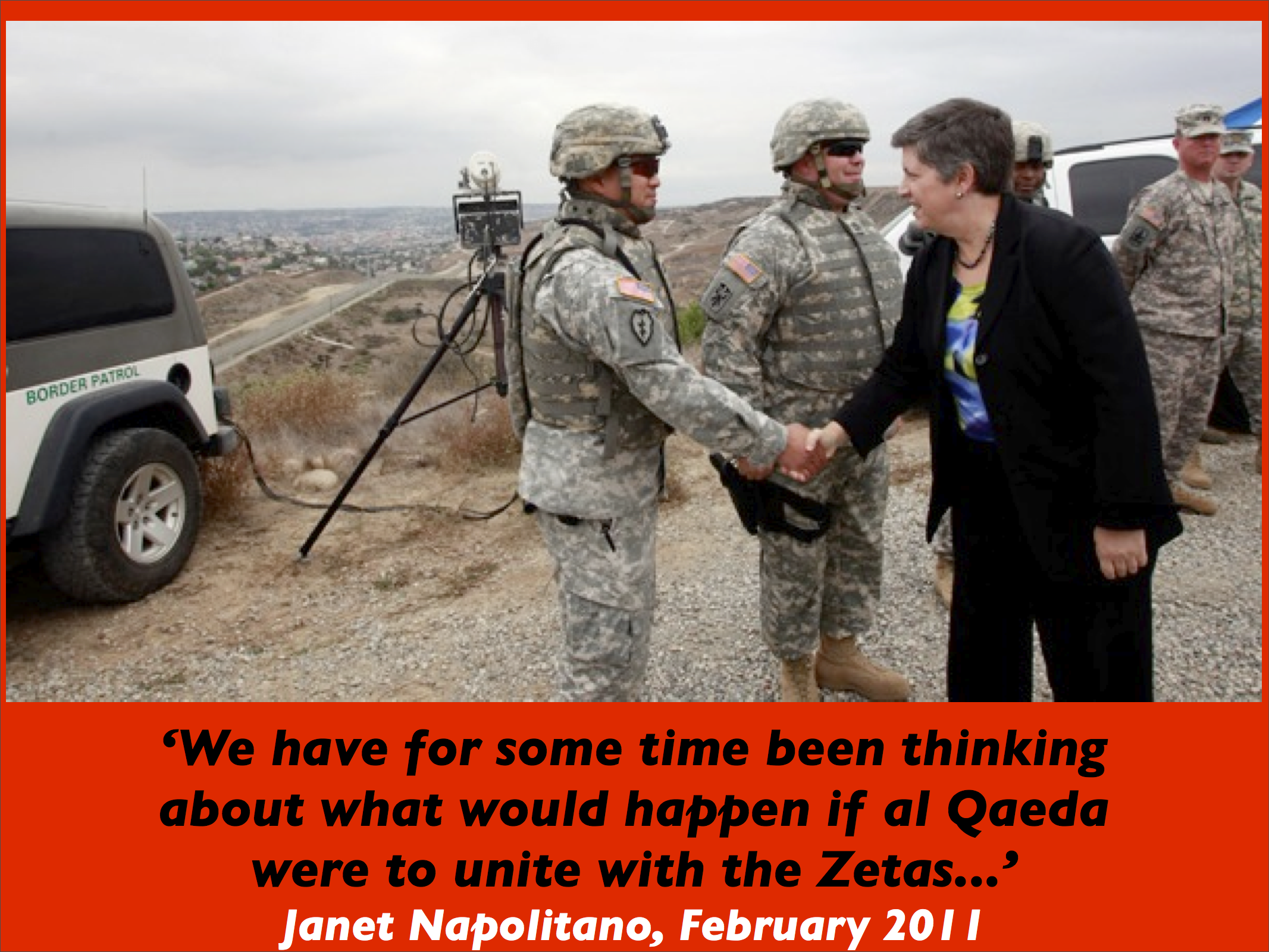
JTF-North, part of US Northern Command, provides military support to federal law enforcement agencies.  Described as a ‘force multiplier’ by one Border Patrol officer, the function of its ground troops – like the unarmed Predators deployed by the Border Patrol – is limited to surveillance and under the Posse Comitatus Act the US military is not allowed to ‘execute the laws’ without express Congressional approval.  As one Army officer explained, therefore, in a recent exercise troops ‘used their state-of-the-art surveillance equipment to identify and report the suspected illegal activities they observed and vectored border patrol agents in to make the arrests and drug seizures.’  But the practices, co-ordinated from a tactical operations center like the one shown on the left, are portable and even interchangeable:

While providing the much needed support to the nation’s law enforcement agencies, the JTF North support operations provide the volunteer units with real-world training opportunities that are directly related to their go-to-war missions.

“This type of experience is impossible to replicate in a five- or 10-day field exercise back home,” said Lt. Col. Kevin Jacobi, squadron commander. “Where else can we operate over an extended period of time, in an extended operating environment, against a thinking foe who is actively trying to counter us by actively trying to hide, in order to make us work hard to find him?” asked Jacobi.

Not surprisingly, there have been elaborate circulations between the Afghanistan/Pakistan borderlands and the US/Mexico border: Predators, personnel and procedures.  All of which provides another disquieting answer to the question posed in the RTN video…

Does this also return us to the world mapped by Mark Neocleous from my previous post?  He concludes:

‘From a critical perspective, the war-police distinction is irrelevant, pandering as it does to a key liberal myth. Holding on to the idea of war as a form of conflict in which enemies face each other in clearly defined militarized ways, and the idea of police as dealing neatly with crime, distracts us from the fact that it is far more the case that the war power has long been a rationale for the imposition of international order and the police power has long been a wide-ranging exercise in pacification.’

Police/military/city

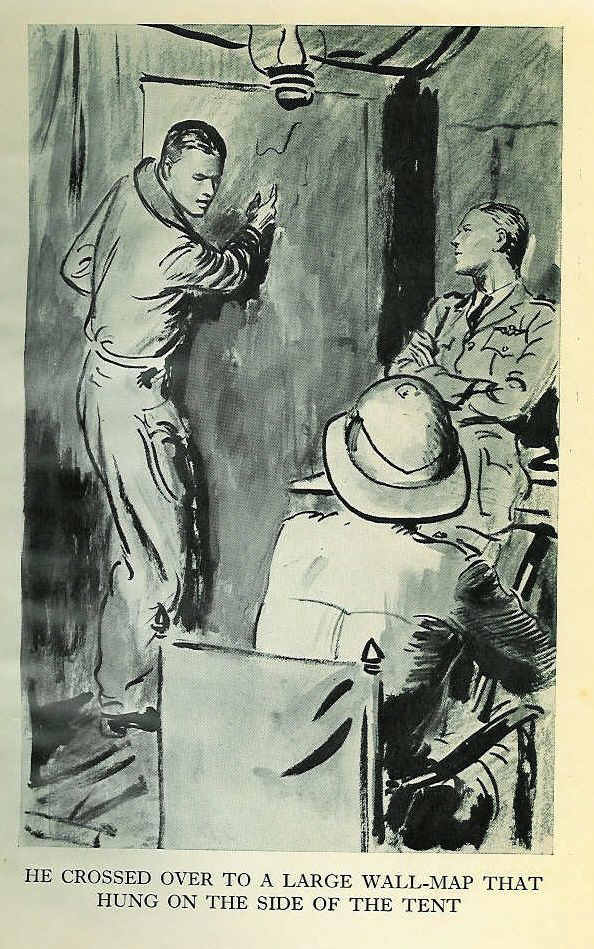
There is growing interest in thinking through the contemporary blurring of policing and military violence.  When, I wonder, did we start referring to “security forces“?  The earliest entry in the OED is from 1973 and refers to Britain’s military/police operations in Northern Ireland, but the practice is evidently much older than that. Those who grew up in Britain with Biggles (or perhaps in spite of Biggles) will surely remember Captain W.E. Johns‘s creation of the Special Air Police after the Second World War – and, as my illustration (left) from Biggles Flies East implies, these operations were about the violent production of particular spatialities –  but ‘air control’ was developed as an important police/military modality of British colonial power immediately after the First World War, when its prized sphere of operations was the Middle East and India’s North West Frontier (notably Waziristan).

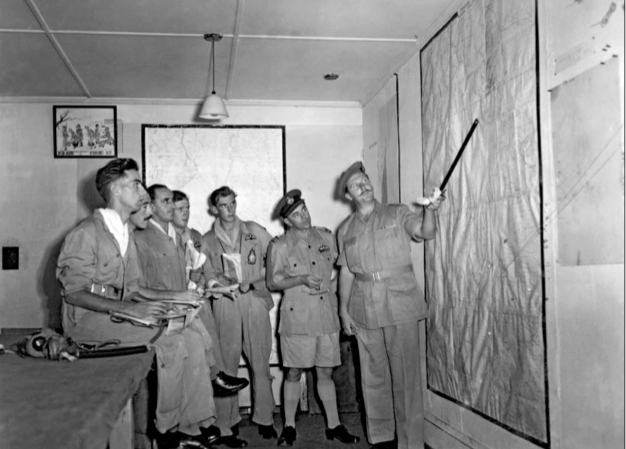
In the 1950s Britain applied similar (il)logics to the the Mau Mau insurgency in Kenya, as Clive Barnett notes here (with another, rather more serious nod to Biggles), and to the Malayan Emergency.  Bombing was a routine tactic in all these pre- and post-war campaigns – the image on the right is of an RAF briefing in Kenya in 1954 – and Britain’s ‘aerial supremacy’ was, of course, uncontested in these colonial theatres of war.  Other colonial powers used it too.  No doubt the interest shown by the US Border Patrol and US police forces in (at present, unarmed) drones can be situated within this techno-political history of air policing, though I’m aware that the lines of descent are more complicated than my cartoons can suggest.

Mark Neocleous has outlined a careful (and still longer) genealogy of the very idea of ‘policing’ that speaks directly to these issues in ‘The Police of Civilization: The War on Terror as Civilizing Offensive’, International Political Sociology 5 (2011) 144-159:

The monopoly over the means of violence that is fundamental to the fabrication of social order is the core of the police power. Although such a formal monopoly over the means of violence does not exist in the international realm—which is the very reason why so many people have found it difficult to develop the concept of ‘‘international police’’—the violence through which this realm has been structured is obvious. It has traditionally been cast under the label ‘‘war.’’… 

To say that police and war conjointly form the key activity of the project of civilization is to say nothing other than violence has remained intrinsic to the process in question. Thus, central to the idea of civilization is military-police terror (albeit, as ‘‘civilization,’’ a terror draped in law and delivered with good manners)…

The attempt to hold on to categorical distinctions between ‘‘police’’ or ‘‘military’’ for analytical, legal, and operational reasons runs the risk of losing what is at stake in the fabrication of international order: the way war imbricates itself into the fabric of social relations as a form of ordering the world, diffracting into a series of micro-operations and regulatory practices to ensure that nebulous target ‘‘security,’’ in such a way that makes war and police resemble one another. 

If, as I’ve suggested, these formulations have a direct bearing on counterinsurgency – and not only British practices: see Neocleous on Vietnam here – and on the modalities of modern colonial power more generally, they are also revealed with remarkable clarity in the contemporary city: what Steve Graham calls ‘Foucault’s boomerang’, as colonial tactics are repatriated to the metropolis.

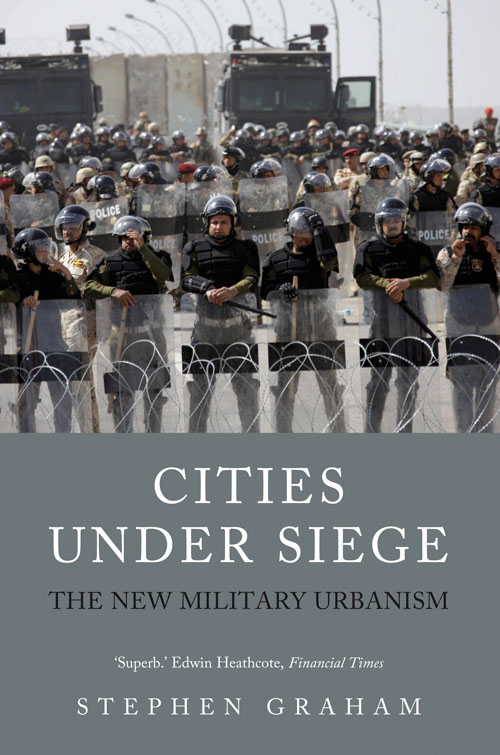
As Steve shows in exemplary detail in Cities under siege: the new military urbanism (Verso, 2010; paperback out now), a vital zone of convergence between police and military violence – what Neocleous calls their ‘violent fabrication of the world’, their ordering of it in every sense of the verb – is the city:

‘As security politics centre on anticipation and profiling as means of separating risky from risk-free people and circulations inside and outside the territorial limits of nations, a complementary process is underway.  Policing, civil law enforcement and security services are melding into a loosely, and internationally, organized set of (para)militarized security forces.  A “policization of the military” proceeds in parallel with the “militarization of the police”.’

So here is welcome news of a Live Web Seminar from Harvard’s Program on Humanitarian Policy and Conflict Research, Dangerous Cities: Urban violence and the militarization of law enforcement, 2 October 2012 0930-1100 (Eastern).

More than half of the world’s population is concentrated in urban areas. According to UNFPA, this number is expected to rise to 5 billions by 2030, reaching 2/3 of the world population, with the largest cities emerging in Africa and Asia. Regrettably, along with this mass urbanization has come an unprecedented level of violence and crime in densely populated slums and shantytowns. Cities like Baghdad, Kingston, Rio de Janeiro, Guatemala, Ciudad Juarez and Mogadishu have become the battlegrounds of contemporary conflicts.
 
In many countries, particularly in Latin America, this emerging form of violence is considered one of the greatest threats to national security. Indeed, urban violence can be as deadly and costly as traditional armed conflicts. In a 2007 report, the UNODC pointed out that the levels of violence in El Salvador in 1995 were higher than during the civil war of the 1980s.
 
To curb the violence, states have responded by deploying specially trained military units when traditional law enforcement has failed to restore security. These instances of ongoing urban violence engaging organized criminal networks, coupled with the use of military force, increasingly resemble to situations of armed conflicts.
While the militarization of law enforcement may be unavoidable when traditional law enforcement institutions lack the resources and expertise to contain urban violence, the legal and policy framework for the conduct of such operations needs yet to be developed. The regulation of the use of military force represents a major challenge in urban environments, even more so when humanitarian law is formally inapplicable and the enforcement of international human rights is weak. Such environment may require adaptation of military doctrine, training, and equipment in order to minimize abuses against civilians, detainees and those no longer engaged in violent acts.
 
Furthermore, the humanitarian sector faces formidable difficulties in the context of urban violence. First, humanitarian actors must assess whether involvement in these complex situations is appropriate under their respective mandates. Second, humanitarians must develop objective criteria to determine whether the level of violence and human suffering warrants intervention in view of the specific security and policy risks. And third, humanitarian actors must adapt to these situations and identify priority areas of humanitarian action on a case-by-case basis.
 
In light of these considerations, this Live Web Seminar will shed light on the tensions and challenges arising out of the application of humanitarian principles in urban violence. Expert panelists and participants will explore the following questions:
 
–       Whether instances of urban violence can be characterized as armed conflicts? If so, what are the advantages and disadvantages of applying International Humanitarian Law (IHL) to these situations?
–       To what extent is it necessary to develop a legal framework that incorporates both humanitarian and human rights considerations tailored to situations of urban violence?
–       What strategies and policy tools can be put in place in order to minimize human suffering and, at the same time, address the security concern of states in urban conflicts?
What is the proper role of humanitarian actors in urban conflicts? 

Registration is required: go here.

As should be obvious from the pre-seminar summary, this isn’t quite the agenda that Neocleous has in mind – but it’s also clear that his suggestions should also animate continuing discussions of our so-called ‘humanitarian present‘…