When soldiers fall

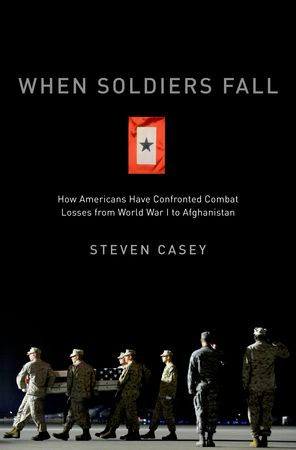
CASEY When soldiers fallNews of an important new book that feeds directly into my new project on medical-military machines and casualties of war, 1914-2014: Steven Casey‘s When Soldiers Fall: How Americans Have Confronted Combat Losses from World War I to Afghanistan (OUP, January 2014).  My own project is concerned with the precarious journeys of those wounded in war-zones (combatants and civilians) rather than those killed and the politics of ‘body-counts’, but Casey’s work presents a vigorous challenge to the usual assumptions about public responses to combat deaths:

The extent to which combat casualties influence the public’s support for war is one of the most frequently and fiercely debated subjects in current American life and has cast an enormous shadow over both the Iraq and Afghanistan conflicts. The common assumption, based largely on U.S. experience in past wars, is that the public is in some way casualty averse or casualty shy, and that as losses increase its support for a war will inexorably decline. Yet this assumption has been adopted as conventional wisdom without any awareness of one of the most important dimensions of the issue: how has the public become aware of the casualties sustained during particular wars? To what extent has the government tried to manipulate or massage the figures? When and why have these official figures been challenged by opportunistic political opponents or aggressive scoop-seeking reporters?

As Steven Casey demonstrates, at key moments in most wars what the public actually receives is not straightforward and accurate casualty totals, but an enormous amount of noise based on a mixture of suppression, suspicion, and speculation. This book aims to correct this gap in information by showing precise what casualty figures the government announced during its various wars, the timing of these announcements, and any spin officials may have placed upon these, using a range of hitherto untapped primary documents. Among the nuggets he has uncovered is that during World War I the media depended on Axis figures and that the Army and Navy did not announce casualty figures for an entire year during World War II. Organized chronologically, the book addresses the two world wars, the limited wars in Korea and Vietnam, and the recent conflicts that are part of the War on Terror. Using sources such as the private military command papers of Generals Patton, MacArthur, and Westmoreland, and previously unopened New York Times archives, it offers the first analysis of how the U.S. government has publicized combat casualties during these wars, and how these official announcements have been debated and disputed by other voices in the polity. Casey discusses factors such as changes of presidential administration, the improvement of technology, the sending of war correspondents to cover multiple conflicts, and the increasing ability to identify bodies. Casey recreates the complicated controversies that have surrounded key battles, and in doing so challenges the simplicity of the oft-repeated conventional wisdom that “as casualties mount, support decreases.” By integrating military and political history, he presents a totally new interpretation of U.S. domestic propaganda since 1917, filling a major gap left by a spate of recent books. Finally, it provides a fresh and engaging new perspective on some of the biggest battles in recent American history, including the Meuse-Argonne, D-Day, the Battle of the Bulge, China’s intervention in the Korean War, the Tet Offensive, and the recent campaigns in Iraq and Afghanistan.

Amazon has temporarily withdrawn its Kindle edition because there are technical issues that it is working with OUP to resolve: I hope this is sorted out soon…  But for now you can read an extract over at Salon, ‘How Richard Nixon reinvented American warfare (…and paved the way for Iraq and Afghanistan)’:

Determined to prop up South Vietnam in an election year, Nixon’s casualty sensitivity had not extended beyond American lives to enemy noncombatants. “Now, we won’t deliberately aim for civilians,” he told his senior advisers at one point in 1972, “but if a few bombs slop over, that’s just too bad.” In Nixon cold calculation the American electorate was principally concerned with U.S. losses; it cared far less about what happened to civilians….

In the wake of defeat, the U.S. government tried to learn the appropriate lessons. As well as reconsidering military-media relations, officials thought long and hard about the conditions under which the public would support the use of force—and the prospect of casualties—in the future. Sometimes, they looked back beyond Vietnam to an earlier era when the media had appeared more manageable and the public less skeptical. Of course, even during the two world wars and Korea, the government had always faced searching questions about the veracity of its casualty information. But Vietnam had clearly changed the rules of the game. Trust in government was much lower. The media was even keener to probe for the story behind the official narrative. And the whole debate was now even more sensitive to the human cost of war. These were all legacies that the two Bushes would have to grapple with in the post–Cold War era, as they took the United States into war against a new set of enemies.

Medical-military machines and casualties of war 1914-2014

SABER, Desert Rat Sketchbook

As promised, I’ve added the outline of my proposed new research programme on the casualties of war to the DOWNLOADS page (scroll way down).  I’ve omitted all the pages in the formal application that drove me to distraction – knowledge mobilisation plan (sic), budget justification, ‘expected outcomes’ and the rest – but if you do look at this ‘Detailed Description’ (as it has to be called), please bear in mind that:

(a) this is still very preliminary, and my work is in the earliest of stages (this is a grant application, after all);

(b) everything had to fit into a prescribed, very limited space (leaving no room for nuance); and

(c) I was more or less required to use the Harvard reference system, the enemy of all good writing.

I’ve added a few lines of clarification and a series of illustrations to liven things up (no room for those in the original), but I hope this gives you some idea of what I’m up to.  And, as always, I’d welcome any comments or suggestions – preferably by e-mail to avoid the spam filters.

In working on this, I’ve stumbled into a series of unusually rich primary sources and secondary literatures, and since I’ve mentioned good writing I want to flag two texts that have kept me going throughout this process.

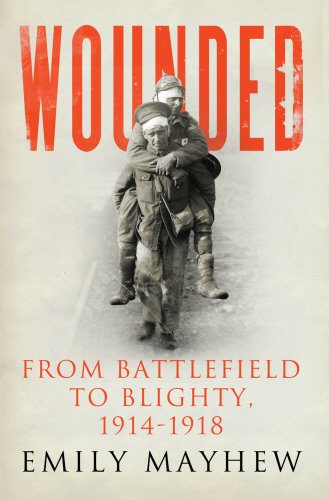
MAYHEW WoundedThe first is Emily Mayhew‘s Wounded: from Battlefield to Blighty 1914-1918, which I noted in an earlier post; for editions outside the UK the subtitle becomes A new history of the Western Front.  I’ve now read it, and admire its substance but also its style enormously.  It’s based on painstaking research, literally so, and yet the main chapters read like a novel, and the analytical-bibliographic apparatus has been artfully moved to the Notes where it becomes a model of clear, concise and thought-provoking commentary rather than a cage that hobbles the narrative.

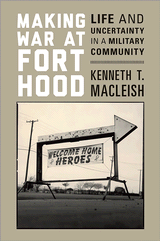
MacLeish Making war at Fort HoodThe second is Ken MacLeish‘s Making war at Fort Hood: life and uncertainty in a military community.  I met Ken at a workshop in Paris last year, and if you read anything better this year – in style and substance – than his Chapter 2 (‘Heat, weight, metal, gore, exposure’) I’ d like to know about it.  The combination of ethnographic sensitivity, elegant prose, and a theoretical sensibility that Ken wears with confidence and displays with the lightest of touch is simply stunning.

Since I’m off to York next week I’ll be spending the next few days preparing a new presentation on ‘Drones and the everywhere war’.  I hope this will also give me  time to return to my posts on Grégoire Chamayou‘s Théorie du drone which I had to put on hold while I trekked from Flanders to Afghanistan for my grant application…

Hard rain

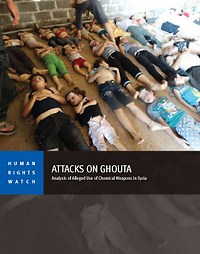
Human Rights WatchSome more forensic geography from Human Rights Watch (I’ve long though that some of the very best human geography is produced by organisations like HRW).

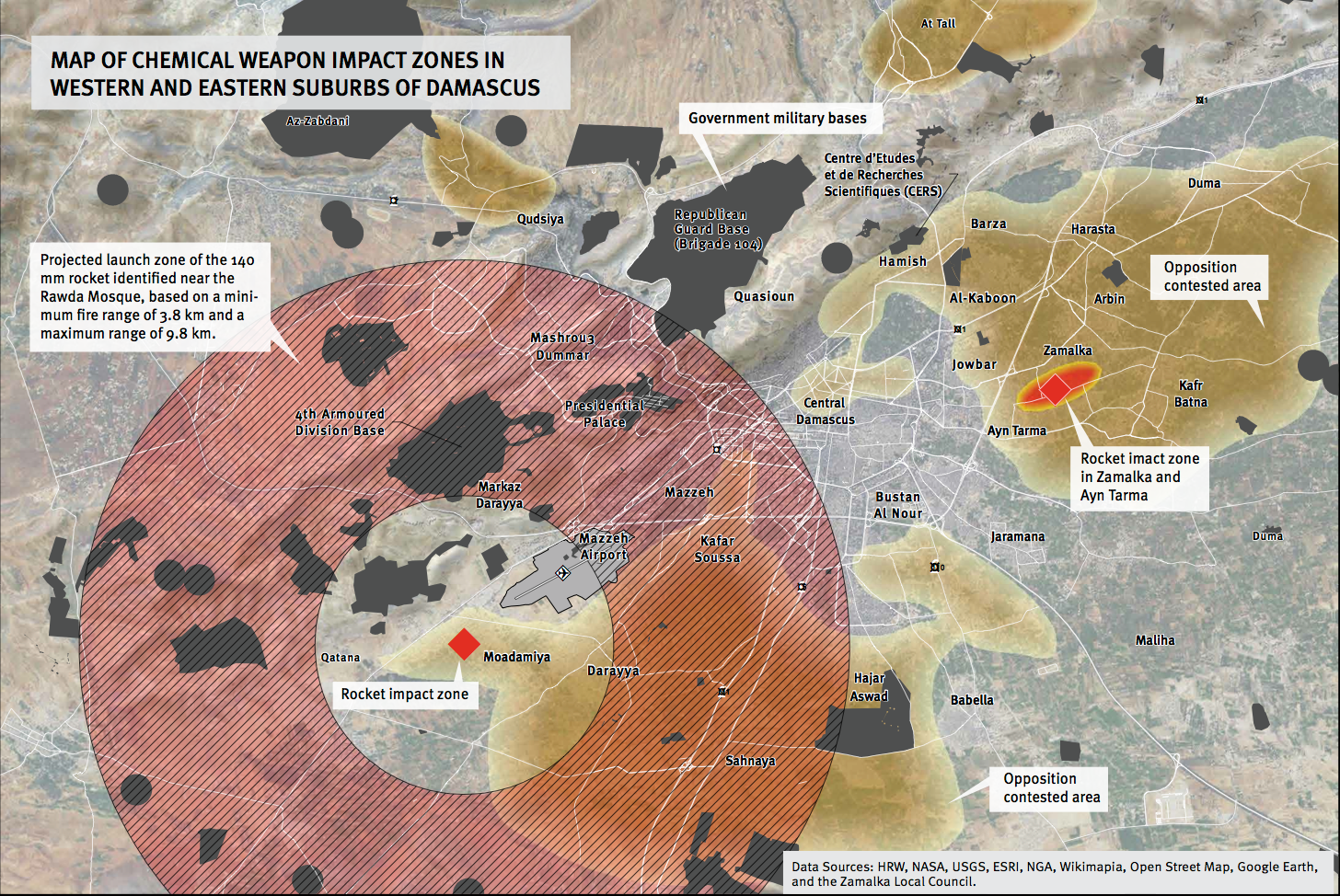
Attacks on Ghoutta (22 pp) analyses the chemical weapons attacks on the suburbs of Ghoutta on 21 August 2013.  Here is the Executive Summary:

This report details two alleged chemical weapons attacks in Syria on the opposition-controlled Damascus suburbs of Eastern and Western Ghouta, located 16 kilometers apart, on the morning of August 21, 2013. The attacks killed hundreds of civilians, including large numbers of children. Human Rights Watch analyzed witness accounts of the rocket attacks, information on the likely source of the attacks, the physical remnants of the weapon systems used, and the medical symptoms exhibited by the victims of the attack as documented by medical staff.

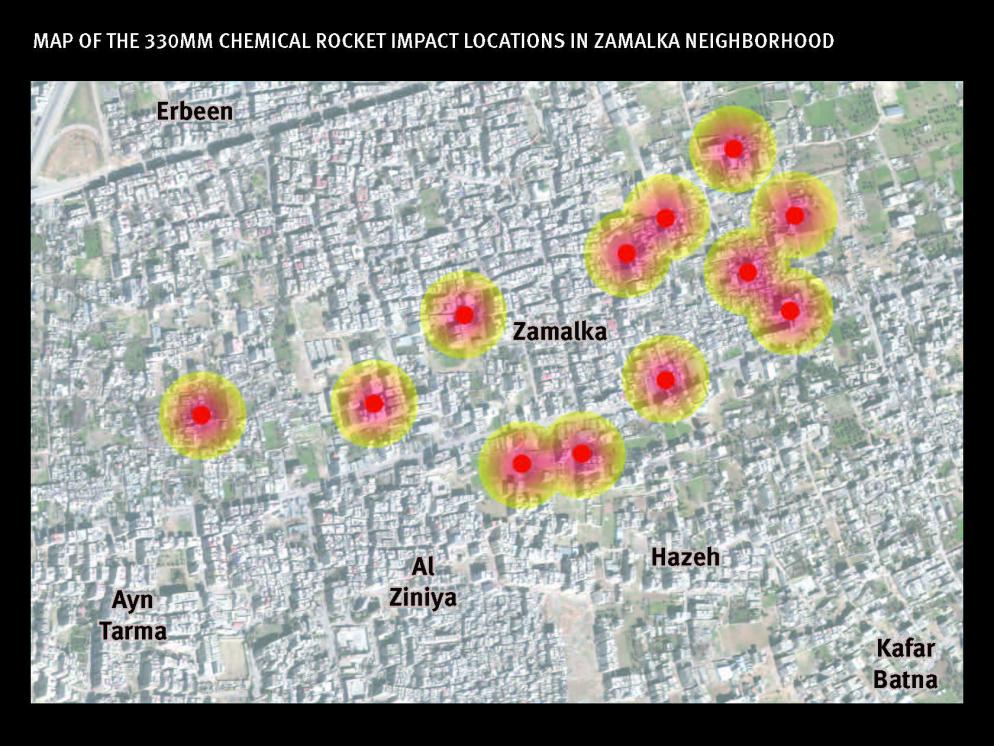
zamalaka_mapOur investigation finds that the August 21 attacks were likely chemical weapons attacks using a surface-to-surface rocket system of approximately 330mm in diameter—likely  Syrian-produced—and a Soviet-era 140mm surface-to-surface rocket system to deliver a nerve agent. Evidence suggests the agent was most likely Sarin or a similar weapons-grade nerve agent. Three local doctors told Human Rights Watch that victims of the attacks showed symptoms which are consistent with exposure to nerve gas, including suffocation; constricted, irregular, and infrequent breathing; involuntary muscle spasms; nausea; frothing at the mouth; fluid coming out of noses and eyes; convulsing; dizziness; blurred vision; and red and irritated eyes, and pin-point pupils.

The evidence concerning the type of rockets and launchers used in these attacks strongly suggests that these are weapon systems known and documented to be only in the possession of, and used by, Syrian government armed forces. Human Rights Watch and arms experts monitoring the use of weaponry in Syria have not documented Syrian opposition forces to be in the possession of the 140mm and 330mm rockets used in the attack, or their associated launchers.

The Syrian government has denied its responsibility for the attack, and has blamed opposition groups, but has presented no evidence to back up its claims. Based on the available evidence, Human Rights Watch finds that Syrian government forces were almost certainly responsible for the August 21 attacks, and that a weapons-grade nerve agent was delivered during the attack using specially designed rocket delivery systems. The scale and coordinated nature of the two attacks; against opposition-held areas; the presence of government-controlled potential launching sites within range of the targets; the pattern of other recent alleged chemical weapon attacks against opposition-held areas using the same 330mm rocket delivery system; and the documented possession of the 140mm and 330mm rocket systems able to deliver chemical weapons in the government arsenal—all point towards Syrian government responsibility for the attacks.

Human Rights Watch has investigated alternative claims that opposition forces themselves were responsible for the August 21 attacks, and has found such claims lacking in credibility and inconsistent with the evidence found at the scene. Claims that the August 21 deaths were caused by an accidental explosion by opposition forces mishandling chemical weapons in their possession are inconsistent with large numbers of deaths at two locations 16 kilometers apart, and documentation of rocket attacks on the sites that morning, as evidenced by witness accounts, the damage visible on the rockets themselves, and their impact craters.

Chemical weapon impact zones, Ghoutta (HRW)

Three quick observations.

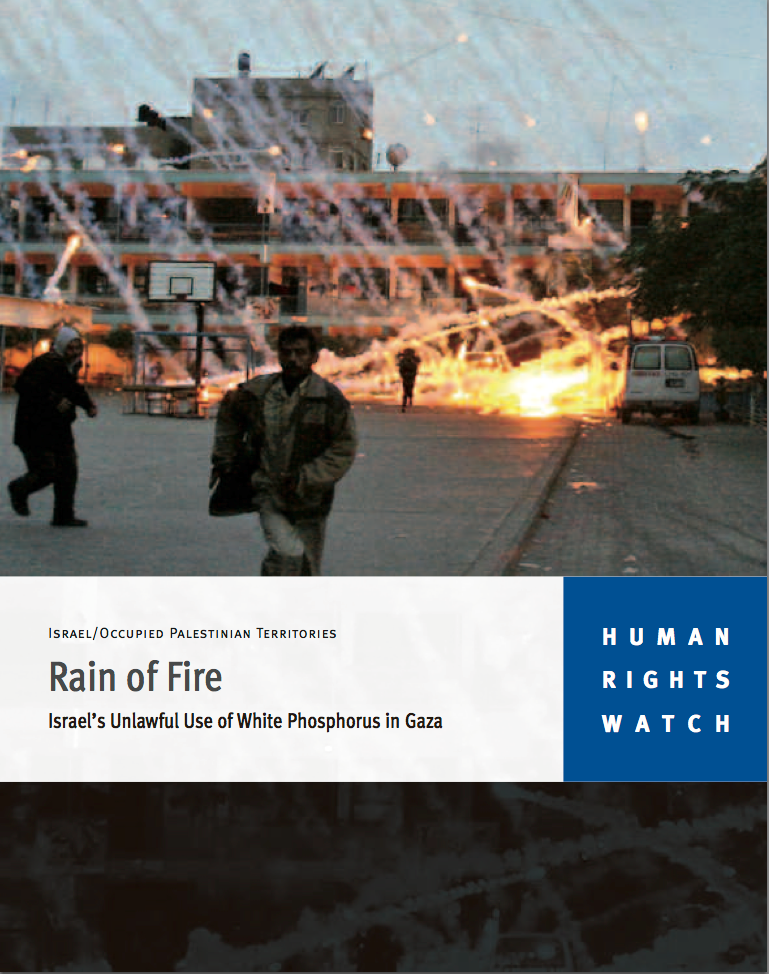
HRW Rain of FireHRW used a range of sources to conduct its analysis-from-a-distance, including Skype interviews, video and photographic footage, and satellite imagery, and consulted with scientific experts on chemical warfare, key analysts from its own Arms Division and independent arms experts. I rehearse all this because when HRW carried out its searching analysis of the unlawful use of white phosphorus by the Israel Defense Force in Gaza, Rain of Fire, a forensic analysis that was cited multiple times in the Goldstone report, the defenders of the IDF (there’s a phrase) unleashed a desperate campaign to discredit HRW’s expert Marc Garlasco.  You can find a discussion in Eyal Weizman‘s The least of all possible evils (see also here). This time round, of course, the government of Israel has joined the (I think convincing) chorus identifying the Syrian Army as the culprits: but it will be interesting to see whether it has also been magically converted to the propriety of HRW’s forensic analysis.

I link the two reports for a second reason, which is the disgracefully selective and self-serving nature of the ‘humanitarian’ condemnation of chemical weapons.  Here is President Obama speaking yesterday:

‘…the world saw in gruesome detail the terrible nature of chemical weapons, and why the overwhelming majority of humanity has declared them off-limits — a crime against humanity, and a violation of the laws of war.’

He conceded that this wasn’t always the case:

‘In World War I, American GIs were among the many thousands killed by deadly gas in the trenches of Europe. In World War II, the Nazis used gas to inflict the horror of the Holocaust. Because these weapons can kill on a mass scale, with no distinction between soldier and infant, the civilized world has spent a century working to ban them. And in 1997, the United States Senate overwhelmingly approved an international agreement prohibiting the use of chemical weapons, now joined by 189 governments that represent 98 percent of humanity.

On August 21st, these basic rules were violated, along with our sense of common humanity.’

But what a selective mobilisation of history, in which the US rises from victim to saviour.  Now I agree that the use of chemical weapons in Syria is vile – but so too was  Israel’s use of white phosphorus in Gaza ( in the same speech Obama reaffirmed the US’s “unshakable support” for Israel), the US-led coalition’s use of depleted uranium munitions in Iraq (which goes back to 1991; see also Omar Dewachi on ‘the toxicity of everyday life’ here), Iraq’s use of nerve gas against Iran in 1988 (in which we now have proof that the US was complicit), the US deployment of chemical herbicides in Vietnam, Laos and Cambodia… the list goes on and on.

And this brings me to my third (no less obvious) observation: showing who used chemical weapons is a far cry from knowing what to do about it – especially when the network of responsibility and complicity is so hideously extensive.

***

Update: I’ve been so busy trying to finish two desperately overdue essays and to prepare for the start of a new term (I’ve posted the new outlines for my undergraduate and graduate courses under the TEACHING tab) that I haven’t had a chance to return to my reading of Théorie du drone, but I’m determined to do so very soon.

Lightning strikes

THOR

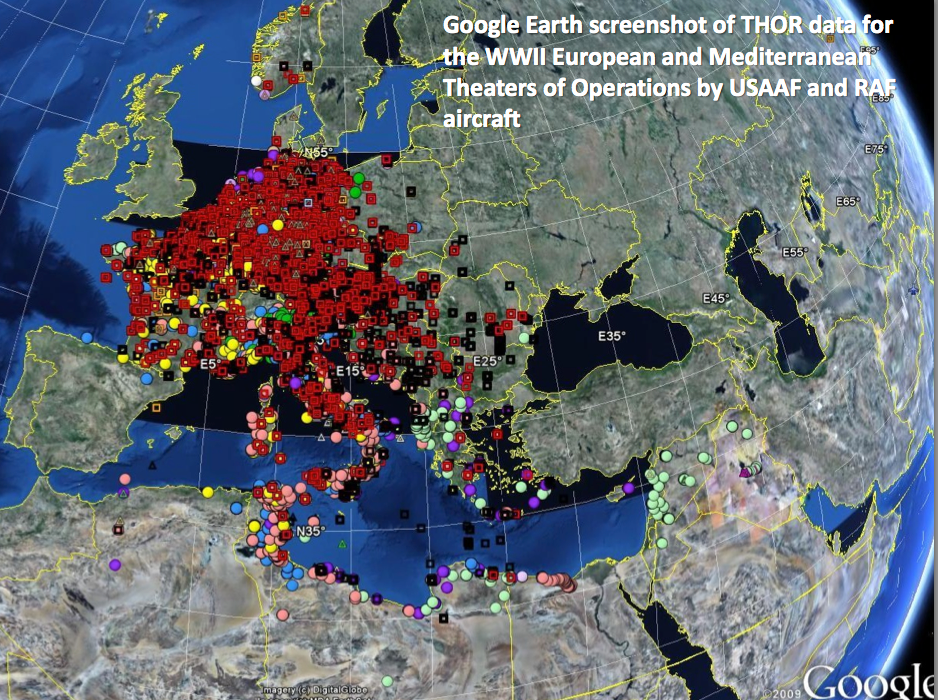
I’ve posted about this remarkable project before.  The Air Force Research Institute has now made available online its historical database of air strikes.  Although a USAF project, the Theater History of Operations Reports is not confined to US airstrikes but includes allied strikes; the main focus is on World War I (from June 1916), World War II and Vietnam (from 1965-1969, though I haven’t yet checked whether this includes Laos and Cambodia).

The original description of the Project included the Korean War, Desert Storm (1991), Allied Force (1999), Afghanistan (2001 on) and Iraq (2003-11), but these are still classified and not yet available online.  Here is the architect of the project, Lt Col Jenns Roberston, explaining the background:

http://www.youtube.com/watch?v=mG9A-F1mDtw&feature=youtu.be

That was a year ago.  There’s now a Quick Start Guide here, and you can download the full, unclassified database and also ‘Grab and Go’ files for Google Earth.  Latest background information here.

Here’s a grab of Allied bombing in Europe and the Mediterranean during World War II, though the key here is obviously to disaggregate and refine the data – which is precisely what the database allows.  The red squares on the map are B-17 strikes but these overlay (for example) the orange squares of Wellington bombers so the impression at this scale is not particularly helpful.

THOR screenshot USAAF and RAF bombing in Europe WWII

And while we’re on the subject of World War II, don’t forget the Bomb Sight project, which maps the London Blitz in extraordinary detail: more here.

It’s important to look beyond Europe, of course.  Roberston, who started work on the database in 2006, told the Air Force Times that he was surprised at the level of Allied bombing in the Pacific theater:

“We were blown away – no pun intended – by the level of bombing that was taking place, not only in the South Pacific  but also in Burma, which is something that nobody looks at; Formosa, currently known as Taiwan; and the Philippines – how heavily those regions were bombed in the lead-up to bombing Japan proper.”

http://www.youtube.com/watch?v=EqWq0LIkF90

On bombing ‘Japan proper’ in World War II, as I’ve noted previously, the very best source is Japan Air Raids.org.

If anyone else is working through the disaggregated database too, do let me know how you get on.

Amnesia and acts of killing

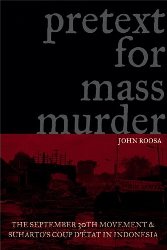
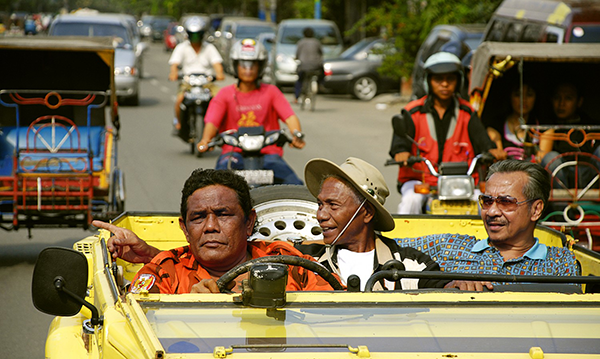
pretext_for_mass_murderI’ve discussed Joshua Oppenheimer‘s The Act of Killing – about paramilitary death-squads in Indonesia in 1965-6 – in an earlier post.  Larry Rohter provided a short backgrounder in the New York Times at the end of last week (much more here):

The events initially addressed in “The Act of Killing” are little known in the West: the slaughter of as many as a million people in Indonesia following the military’s seizure of power there in 1965. The victims were labeled Communists but included labor leaders, ethnic Chinese and intellectuals, with paramilitary groups carrying out the killings at the behest of the Indonesian Army and with the support of the United States and its allies, who worried that Indonesia, like Vietnam, would fall into Communist hands.

In Indonesia, the killings were “a kind of open secret, kept discreetly hidden so that if you wanted to, you could pretend it wasn’t happening,” said John Roosa, a scholar of Indonesian history at the University of British Columbia and the author of “Pretext for Mass Murder,” the leading book about the 1965 massacres. “So this film has become a provocation, an impetus for Indonesians to go back to the perpetrators and say, ‘Tell us exactly what happened.’ ”

Guernica now has a new interview (by Emma Myers) with Oppenheimer in which he talks at length about the background to the film and the process of filming itself:

‘I was developing experimental performative documentary methods in London and was asked to make a film [what would become The Globalization Tapes] by the International Union of Food Workers in a place where unions had been previously outlawed. I could have been sent to India, Colombia, Malaysia… but I was sent to Indonesia. I knew nothing about the country, but found myself in a plantation community outside of Medan. The biggest obstacle the workers had in organizing a union, I found, was fear: fear that stemmed from the fact that their parents, grandparents, aunts, and uncles had had a strong union until 1965, but were accused of being leftists and either killed or put in concentration camps for decades as a result. That was the first I had heard about the 1965-1966 genocide and it was clear to me that it had to be in the film. But even talking about it turned out to be scary for them, because the people who committed atrocities against their relatives were living all around them in this village. So I made the film with the plantation workers but realized I had to come back. I felt very close to this community. They were saying, “Please make a film about the genocide and how it has affected us.” I returned six months later to start working with them and found the process to be unsafe for them; the best way around this was to film the killers—who were much more willing to talk—instead of the victims.’

The Act of Killing

He talks in particular about the performative force of storytelling, the ethics of staging the killers’ fantasies (they were paid a small per diem sanctioned by the Arts & Humanities Research Council), and ends with a wonderfully sharp remark from Werner Herzog (one of his co-producers) about the political possibilities of art.

There’s now also an extended essay by another of the film’s co-producers, Errol Morris, over at Slate, in which he asks: ‘Is this a story about Indonesia or also a story about us?’  His answer takes that little clause in Rohter’s commentary – ‘Indonesia, like Vietnam‘ – and unpacks it to devastating effect.  His journey takes him back to his own film, The Fog of War, to Secretary of Defense Robert McNamara, and to the Vietnam War: the coup in Indonesia, he realises, took place in 1965, the same year that President Johnson escalated the war in Vietnam.  It’s a brilliant road-trip – a mix of interviews and scholarly research, of geopolitical critique and cultural sensibility.

You can see some clips from the film, and hear Herzog and Morris discuss it in this video from Vice.

Finally, there’s a commentary on the film by Slavoj Zizek at the New Statesman here. His starting-point is a familiar one:

The protective screen that prevented a deeper moral crisis was the cinematic screen: as in their real killings and torture, the men experienced their role play as a re-enactment of cinematic models: they experienced reality itself as a fiction. During their massacres, the men, all admirers of Hollywood (they started their careers as controllers of the black market in cinema tickets), imitated Hollywood gangsters, cowboys and even a musical dancer.

Here the “big other” enters: what kind of society publicly celebrates a monstrous orgy of torture and killing decades after it took place, not by justifying it as an extraordinary, necessary crime for the public good but as an ordinary, acceptable pleasurable activity? The trap to be avoided here is the easy one of putting the blame on either Hollywood or on the “ethical primitiveness” of Indonesia. The starting point should rather be the dislocating effects of capitalist globalisation which, by undermining the “symbolic efficacy” of traditional ethical structures, creates such a moral vacuum.

But he then spirals off into his own (I almost wrote ‘magical mystery’) tour d’horizon that ultimately brings The Act of Killing into the intimacy of our own, deeply personal spaces and their (non-)relation to an increasingly eviscerated and compromised public space.

For all that, I much prefer Morris’s take – and I greatly admire his method.  In the end, he asks a series of questions that are not about celebration or banalisation, important though they are, but about amnesia.

Terror and terrain

Over at Space and Politics my friend and colleague Gaston Gordillo has a long post, ‘Opaque zones of empire’, in which he seeks to examine ‘the panoptic regime of hyper-visibility by focusing not on the prying cameras of drones and satellites but on the rugged topographies they permanently scrutinize; not on what the panoptic regime sees but on what it cannot see, or what it cannot see clearly.’

This is the paper he gave as part of the Space and Violence sessions at the Association of American Geographers conference in L.A. earlier this year, and it’s the draft of a longer article in progress.  It’s also a remarkably ambitious exercise, in which Gaston artfully tracks between Stuart Elden, Eyal Weizman, Henri Lefebvre, Alain Badiou, Allan Feldman and a host of others.

But it’s the conclusion that has given me most pause for thought.  Here Gaston conjures the opacity inherent in the three-dimensionality of terrain (the central concept in the essay) apprehended by military vision and violence:

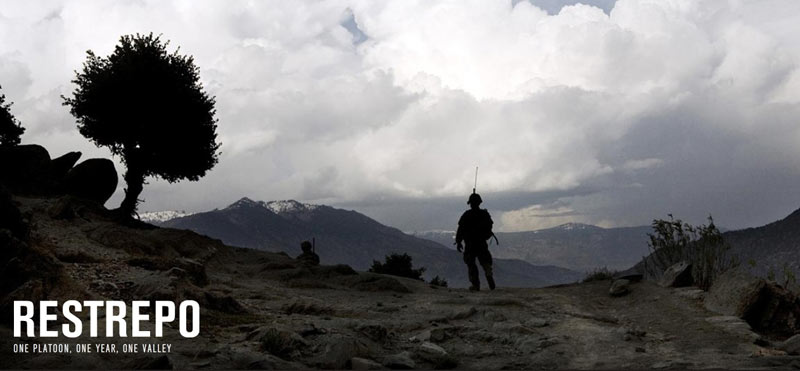
‘Badiou argues that the figure of the pure multiplicity of being, precisely because its multiplicity cannot be represented, is the void. The void is, indeed, the figure of the terrain. This void should be read not as an abstraction but in its spatial and bodily immanence: through the vertigo that the vast, opaque, three-dimensional, and not fully visible geographies of the planet create in the human body. This is the void graphically represented, for instance, on Tim Hetherington’s documentary Restrepo, where US soldiers stationed in an outpost in the Korengal Valley in eastern Afghanistan felt haunted by the terrain they were immersed in. In the film, those soldiers make it clear that those opaque mountains, forests, and valleys were for them a hostile immensity that turned insurgents into a ghostly presence. Those mountains constitute a tangible void within Empire: one of the countless outsides of a world without outside.

Restrepo

I’m particularly taken by this image (which I think is much clearer in the film than in Sebastian Junger‘s War) because it’s helped me think about how my work on ‘the natures of war’ intersects with my work on later modern war in the mountains of Afghanistan and Pakistan.

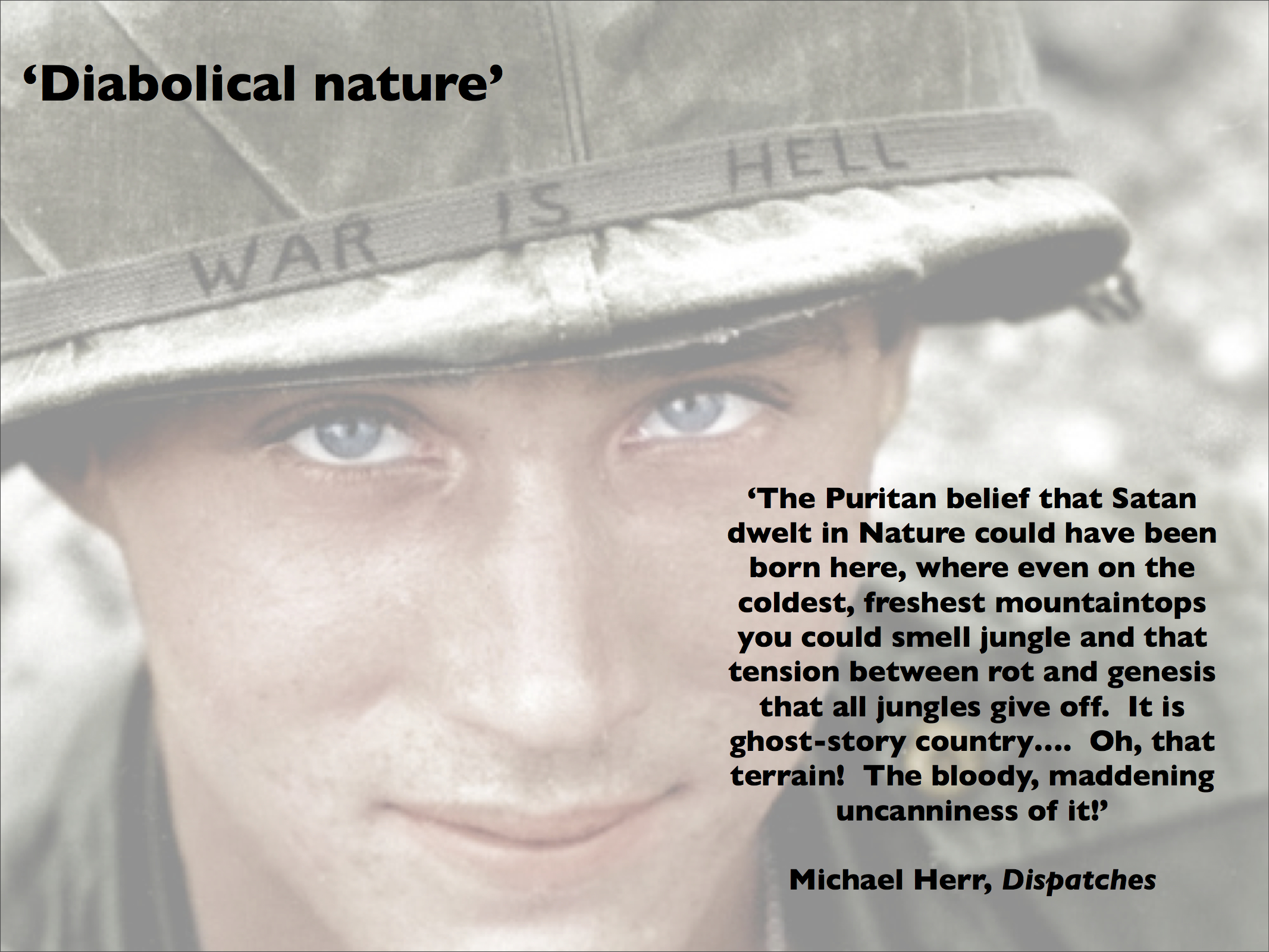
I only have room for one example.  To US infantry in the rainforest and highlands of Vietnam, terrain was not only (or even primarily) apprehended visually: in contrast to staff officers poring over maps and air photographs and to the crews of combat helicopters and strike aircraft flying over the jungle, terrain was made known – a knowledge that was always precarious, that could always become undone – through the body itself and all its senses, including hearing, touch and smell. Terrain is more than a visual construct, especially in its three-dimensionality, and there is nothing ‘dead, passive, fixed’ about it. Michael Herr captured something of what I have in mind in a passage that loops back to Gaston’s coda:

Diabolical nature

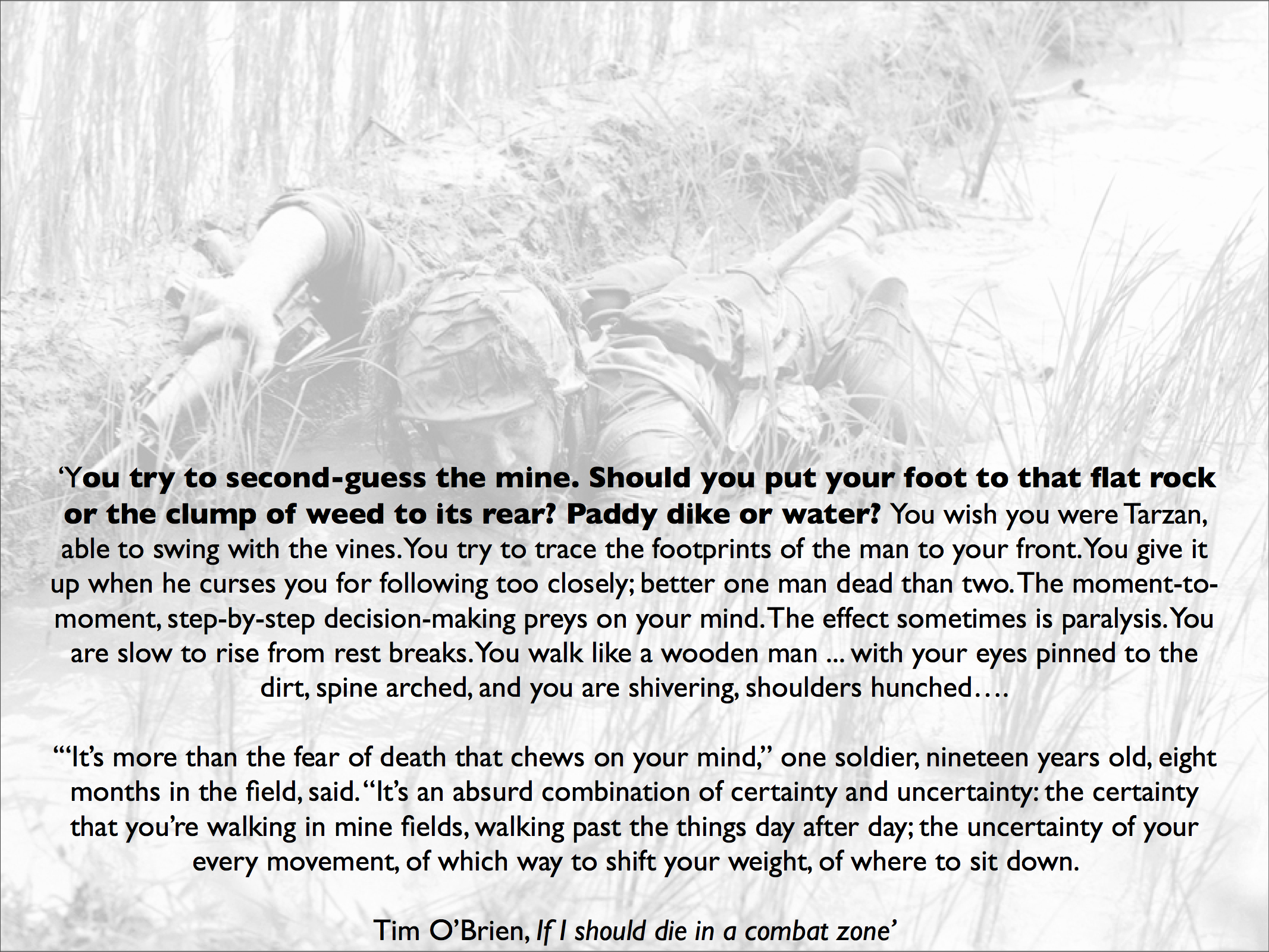
This unheimlich nature, ‘diabolical nature’ in what Gaston calls its ‘hostile immensity’, had a Janus-face.  On the one side it was a cyborg nature, no longer wholly ‘natural’ (even as the rainforest was rendered excessive or fallen through the standard tropes of tropicality) because it had been mined, booby-trapped and honeycombed with tunnels.  In The natures of war I develop this argument in more depth than I can here, in relation not only to the ‘jungle’ but also to the mud of the Western Front in World War I and to the sand and stone of the Western Desert in World War II, which both became cyborg natures or, if you prefer, techno-natures.  Here are two slides from that presentation, which summarise what I mean about the corporeality of knowledge and the techno-nature of the war in Vietnam:

Cyborg nature Vietnam


Certainty and uncertainty Vietnam

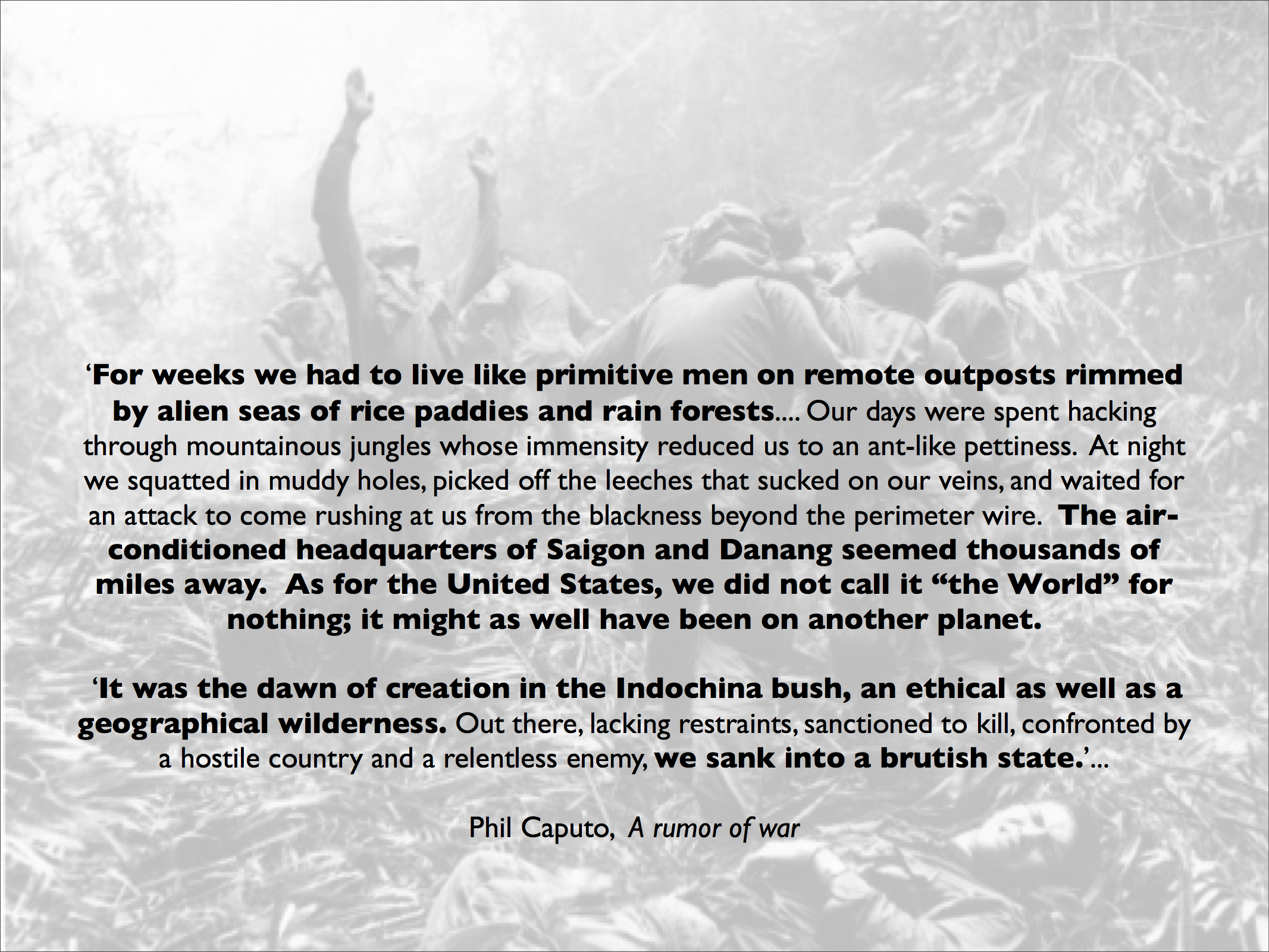
Yet on the other side there was also something exculpatory about it all.  Recalling a similar argument developed by Michael Taussig in a different context in Shamanism, colonialism and the wild man, here’s Philip Caputo again:

‘Scorched by the sun, wracked by the wind and rain of the monsoon, fighting in alien swamps and jungles, our humanity rubbed off of us as the protective bluing rubbed off the barrels of our rifles.We were fighting in the crudest kind of conflict, a people’s war. It was no orderly campaign, as in Europe, but a war for survival waged in a wilderness without rules or laws.’

And again, in a passage that makes the geography of this hostile terrain clear (and also speaks directly to Gaston’s argument about Restrepo – and even to Carl Schmitt):

Ethical wilderness Vietnam

In that last slide I’ve deliberately juxtaposed Caputo’s apologia with Art Greenspon‘s famous photograph of soldiers from the 101st Airborne waiting to be evacuated by helicopter after a five-day patrol near Hue, South Vietnam in April 1968 because – as those upheld arms imply – this confession carries buried within it a promise of redemption too.  Forgive me, for this fallen nature has cast me down.  And help me escape back into The World.  Yet, as Taussig showed, this too was a thoroughly imperialist catechism: primeval nature fouling our civilised, ‘second nature’, seducing and destroying our very humanity, when in so many ways it was our own ‘second nature’ and its technowar that was laying waste to the rainforest.

These are complex arguments, and a post like this inevitably runs the risk of caricature.  But I hope I’ve said enough to suggest some of the other ways in which the ‘opaque zones of empire’ extend beyond the horizon of vision.  And in case I haven’t been clear, I should add that I think Gaston is absolutely right to make terrain central to the analysis, not least because this makes it possible to invest two other master-concepts (sic), ‘space’ and ‘nature’, with corporeal and material depth.

Drones and ‘the world as free-fire zone’

Fred Kaplan has an interesting essay on the history and use of armed drones by the United States at MIT Technology Review: ‘The world as free-fire zone‘ (June 2013).  Kaplan provides a telling critique of Obama’s May statement about the conduct of targeted killings (though that doesn’t of course exhaust what the military uses UAVs for), but his discussion is muddied by what he says about Vietnam – and what he doesn’t.
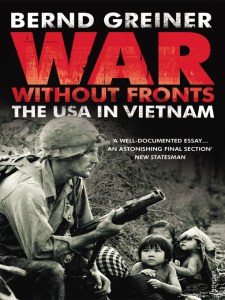
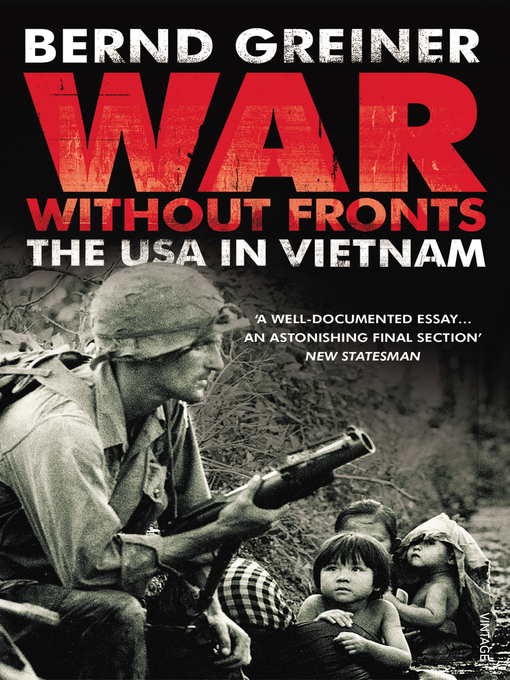
GREINER War without frontsThe title of the essay invokes a notorious tactic deployed by the United States in South Vietnam: the creation of free-fire, free-strike or what the Air Force called free-bomb zones (the name was changed in 1967  to ‘specified fire zones’ for PR purposes, though what was specified was the zone not the fire).  This is how historian Bernd Greiner summarises the policy in War without fronts: the USA in Vietnam (2007, trans. 2009):

‘License to destroy and annihilate on a large-scale applied unrestrictedly in the so-called “Free Fire Zones”.  Set by the South Vietnamese authorities – either the civil administration or the commanders of an Army corps or division – the US forces operated within them as though outside the law: “Prior to entrance into the area we as soldiers were told all that was left in the area after civilian evacuation were Viet Cong and thus fair game.” Virtually all recollections of the war contain such a statement or something similar, simultaneously referring to the fact that anyone who did not want to be evacuated had forfeited the right to protection, since in the Free Fire Zones the distinction between combatant and non-combatant was a prior lifted.’

Matters were not quite so simple, at least in principle, since (as Nick Turse notes in Kill anything that moves: the real American war in Vietnam (2013)), ‘the “free-fire” label was not quite an unlimited license to kill, since the laws of war still applied in these areas.’  And yet, as both Greiner and Turse show in considerable detail (and I’ll have more to say about this in another post), in practice those laws and the rules of engagement were serially violated.  Whatever the situation in Vietnam, however, it’s surely difficult to extend this – as Kaplan wants to do – to US policy on targeted killings.  Invoking the Authorization for Use of Military Force passed by Congress on 14 September 2001 (as Obama does himself), Kaplan writes:

‘This language is strikingly broad. Nothing is mentioned about geography. The premise is that al-Qaeda and its affiliates threaten U.S. security; so the president can attack its members, regardless of where they happen to be. Taken literally, the resolution turns the world into a free-fire zone‘ (my emphasis).

A couple of years ago Tom Engelhardt also wrote about Obama hardening George W. Bush’s resolve to create a ‘global free-fire zone’.  Kaplan’s criticism of the conditions that the Obama administration now claims restrict counter-terrorism strikes is, I think, fair – though much of what he says derives directly from a draft Department of Justice memorandum dated 8 November 2011 on ‘the use of lethal force in a foreign country outside the area of active hostilities against a U.S. citizen who is a senior operational leader of al-Qa’ida or an associated force’ rather than Obama’s wider speech on counter-terrorism on 23 May 2013 or the ‘fact sheet on policy standards and procedures’ that accompanied it.  But they are closely connected, and Kaplan’s objections have real substance.

First, the Obama administration insists that the threat posed to the United States must be ‘imminent’, yet since the threat is also deemed to be continuing ‘a broader concept of imminence’ is required that effectively neuters the term.

Second, apprehension of the suspect must be unfeasible, yet the constant nature of the threat means that the ‘window of opportunity’ can always be made so narrow that ‘kill’ trumps ‘capture’.

But what of Obama’s third condition: that ‘before any strike is taken, there must be near-certainty that no civilians will be killed or injured’?  Kaplan accepts that this is a ‘real restriction’.  Critics of the programme differ on how successful it has been in practice, and supporters like Amitai Etzioni have turned ‘civilian’ into a weasel word that means whatever they want it to mean (which is not very much).  Still, the most authoritative record of casualties – which I take to be the Bureau of Investigative Journalism in London – clearly shows that civilian deaths in Pakistan (at least) have fallen considerably from their dismal peak in 2009-10.  Whatever one makes of all this, however, it hardly turns the world into a ‘free-fire zone’.  The war machine will continue to be unleashed outside declared war zones (or what Obama also called ‘areas of active hostilities’, which may or may not mean the same thing), and Obama and his generals will continue to conjure a battlespace that is global in extent.  But if we take the President at his word – and I understand the weight that conditional has to bear – military violence may occur everywhere but not anywhere: ‘We must define our effort not as a boundless “global war on terror” – but rather as a series of persistent, targeted efforts to dismantle specific networks of violent extremists that threaten America.’

The question is whether we can take the President at his word.  As Glenn Greenwald points out, ‘Obama’s speeches have very little to do with Obama’s actions’.  Tom Junod says much the same about what he continues to call the Lethal Presidency: ‘When a man is as successful in fusing morality and rhetoric as Barack Obama, there’s always a tendency to think that the real man exists in his words, and all he has to do is find a way to live up to them.’  Performativity is not only conditional, as it always is, but in this case also discretionary.

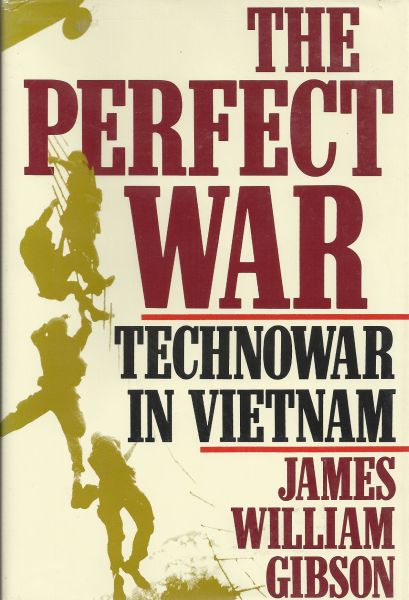
GIBSON The perfect warKaplan also refers to a notorious metric from the Vietnam war: the body-count.  As James Gibson patiently explains in his brilliant critique of The perfect war: technowar in Vietnam (1986), this was one of the central mechanisms in US Secretary of Defense Robert McNamara’s attempt to wage an appropriately Fordist war (he went to the Pentagon from being President of the Ford Motor Company).  The body-count can be traced back to the Korean War, but it came into its own in Vietnam where it was supposed to be the key metric of success – bizarrely, even of productivity – in a ‘war without fronts’ where progress could not be measured by territory gained.  Here too Turse is illuminating on the appalling culture that grew up around it, including the inflation (and even invention) of numbers, the body-count competitions, and the scores and rewards for what today would no doubt be called ‘excellence in killing’.

But what Kaplan has in mind is not quite this, but the central, absurdist assumption that there is a direct relationship between combatants killed and military success:

‘It is worth recalling the many times a drone has reportedly killed a “number 3 leader of al-Qaeda.” There was always some number 4 leader of al-Qaeda standing by to take his place. It’s become a high-tech reprise of the body-count syndrome from the Vietnam War — the illusion that there’s a relationship between the number of enemy killed and the proximity to victory.’

How else can we interpret John Nagl‘s tangled celebration (on Frontline’s ‘Kill/Capture’) of the importance of targeted killing for counterinsurgency and counter-terrorism?

‘We’re getting so good at various electronic means of identifying, tracking, locating members of the insurgency that we’re able to employ this almost industrial-scale counterterrorism killing machine that has been able to pick out and take off the battlefield not just the top level al Qaeda-level insurgents, but also increasingly is being used to target mid-level insurgents.’

Peter Scheer draws a distinction between the two moments in Nagl’s statement that helps clarify what he presumably intended (though Scheer is writing more generally):

‘The logic of warfare and intelligence have flipped, each becoming the mirror image of the other. Warfare has shifted from the scaling of military operations to the selective targeting of individual enemies. Intelligence gathering has shifted from the selective targeting of known threats to wholesale data mining for the purpose of finding hidden threats.’

In other words, the scale of intelligence has become industrial (or more accurately perhaps, post-industrial: see here), far exceeding the scale of intelligence available in Vietnam [though see here for a discussion of the connections between McNamara’s data-driven war and today’s obsession with Big Data, and here and here for an outline of the ‘security-industrial complex’], whereas the scale of killing has clearly contracted from what most certainly was industrial-scale killing in Vietnam.   Yet the networked connections between the two reveal the instantiation of the same driving logic of technowar in a radically new ‘war without fronts’.

For all these intimation of Vietnam, however, the genealogy of the drone with which Kaplan begins his essay is resolutely post-Vietnam (or at any rate outside it).  And this, I think, is a mistake.

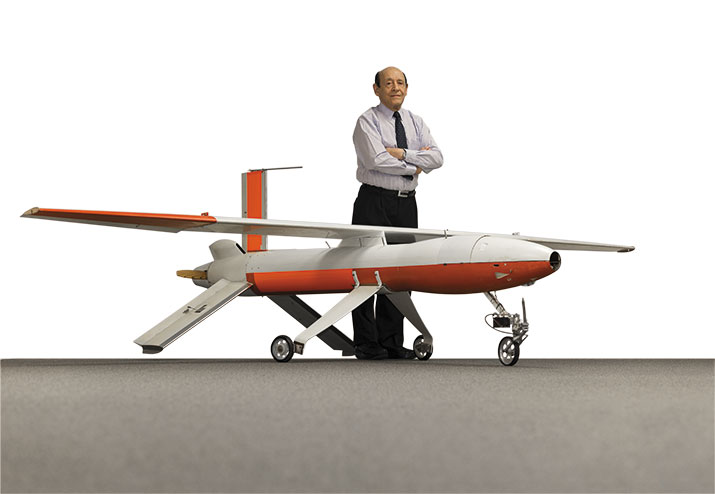
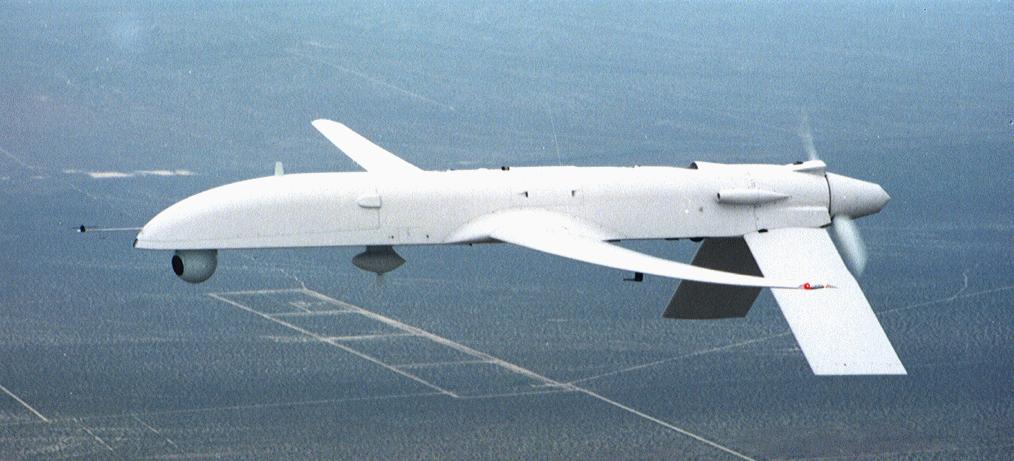
Technological history is shot through with multiple sources of inspiration and no end of false starts, and usually has little difficulty in assembling a cast of pioneers, precursors and parallels, so I’m not trying to locate a primary origin.  Ian Shaw‘s account of the rise of the Predator (more from J.P. Santiago here) homes in on the work of Israeli engineer Abraham Karem, who built his first light-weight, radio-controlled ‘Albatross’ (sic) in his garage in Los Angeles in 1981.
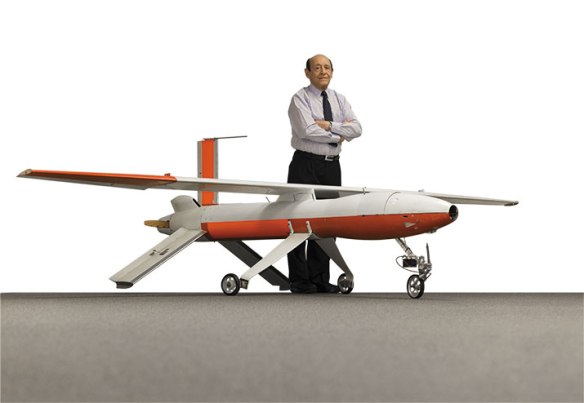
Karem's Albatross (Chad Slattery)

He may have built the thing in his garage, but Karem was no hobbyist; he was a former engineering officer in the Israeli Air Force who had worked for Israel Aircraft Industries, and by 1971 he had set up his own company to design UAVs.  Neither the Israeli government nor the Israeli Air Force was interested, so Karem emigrated to the United States.  The Albatross was swiftly followed by the Amber, which was also radio-controlled, and by 1988 with DARPA seed-funding Karem’s prototype was capable of remaining aloft at several thousand feet for 40 hours or more. But fitting hi-tech sensor systems into such a small, light aircraft proved difficult and both the US Navy and the Army balked at the project.  Karem set about developing a bigger, heavier and in many ways less advanced version for a putative export market: the GNAT-750.
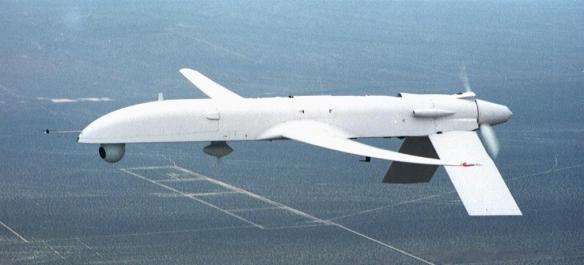
GNAT-750

This was a desperate commercial strategy that didn’t save Karem’s company, Leading Systems Inc., from bankruptcy.  But it was a sound technical strategy.  In 1990 General Atomics bought the company and the development team, and when the CIA was tasked with monitoring the rapidly changing situation in the Balkans it purchased two GNAT-750s (above) for the job.  They were modified to allow for remote control via a satellite link (the first reconnaissance missions over Bosnia in 1995 were managed by the Air Force and controlled from Albania): the new aircraft was re-named the Predator.

It’s a good story – and you can find a much more detailed account by Richard Whittle in ‘The man who invented the Predator’ at Air & Space Magazine (April 2013) here – but in this form it leaves out much of the political in-fighting.  The second part of Ian’s narrative turns to the role of the Predator in the development of the CIA’s counter-terrorism campaign, and while he notes the enlistment of the US Air Force – ‘ultimately, the CIA arranged for Air Force teams trained by the Eleventh Reconnaissance Squadron at Nellis Air Force Base [Indian Springs, now Creech AFB] to operate the agency’s clandestine drones’ – he doesn’t dwell on the ‘arranging’ or the attitude of the USAF to aircraft without pilots on board.

Kaplan does, and his story starts earlier and elsewhere:

‘The drone as we know it today was the brainchild of John Stuart Foster Jr., a nuclear physicist, former head of the Lawrence Livermore National Laboratory (then called the Lawrence Radiation Laboratory), and — in 1971, when the idea occurred to him — the director of defense research and engineering, the top scientific post in the Pentagon.’

Foster was a hobbyist – he loved making model aircraft – and thought it ought to be possible to capitalise on his passion: ‘take an unmanned, remote-controlled airplane, strap a camera to its belly, and fly it over enemy targets to snap pictures or shoot film; if possible, load it with a bomb and destroy the targets, too.’  Two years later DARPA had overseen the production of two prototypes, Praeire [from the Latin, meaning both precede and dictate] and Caler [I have no idea], which were capable of staying aloft for 2 hours carrying a 28 lb payload.  At more or less the same time, the Pentagon commissioned a study from Albert Wohlstetter, a former RAND strategist, to identify new technologies that would enable the US to respond to a Soviet invasion of Western Europe without pressing the nuclear button. ‘Wohlstetter proposed putting the munitions on Foster’s pilotless planes and using them to hit targets deep behind enemy lines, Kaplan explains, ‘Soviet tank echelons, air bases, ports.’  By the end of the decade the Pentagon was testing ‘Assault Breaker’ and according to Kaplan ‘something close to Foster’s vision finally materialized in the mid-1990s, during NATO’s air war over the Balkans, with an unmanned aerial vehicle (UAV) called the Predator.’

But the use of the mid-altitude, long-endurance (‘MALE’ – really) drones remained largely the preserve of the CIA because the senior officer corps of the Air Force was hostile to their incorporation:

‘All this changed in 2006, when Bush named Robert Gates to replace Donald Rumsfeld as secretary of defense. Gates came into the Pentagon with one goal: to clean up the mess in Iraq… He was particularly appalled by the Air Force generals’ hostility toward drones. Gates boosted production; the generals slowed down delivery. He accelerated delivery; they held up deployment. He fired the Air Force chief of staff, General T. Michael Moseley (ostensibly for some other act of malfeasance but really because of his resistance to UAVs), and appointed in his place General Norton Schwartz, who had risen as a gunship and cargo-transport pilot in special operations forces… and over the next few years, he turned the drone-joystick pilots into an elite cadre of the Air Force.’

These are both important narratives, which help to delineate multiple lines of descent, but my own inclination is to push the story back and to move it outside the North Atlantic.  It’s not difficult to find precedents for UAVs around the time of the First World War – I’ve discussed some of them here – and towards the end of the Second World War America attempted to develop remote-controlled bombers to use against Germany (see ‘Project Aphrodite’ here and here).  But if we focus less on the object – the aircraft – and more on its dispositions and the practices mobilised through the network in which it is embedded (as Kaplan’s references to ‘free-fire zones’ and ‘body counts’ imply) then I think here Vietnam is the place to look.  For as I’ve argued in ‘Lines of descent’ (DOWNLOADS tab), not only did the Air Force experiment with surveillance drones over North Vietnam, as Ian briefly notes in his own account, but the US military developed a version of ‘pattern of life analysis’ and a sensor-shooter system that would prove to be indispensable to today’s remote operations.  Seen like this, they confirm that we are witnessing a new phase of technowar in exactly the sense that Gibson used the term: except that now it has been transformed into post-Fordist war and, to paraphrase David Harvey, ‘flexible annihilation’.
The Jungle Books

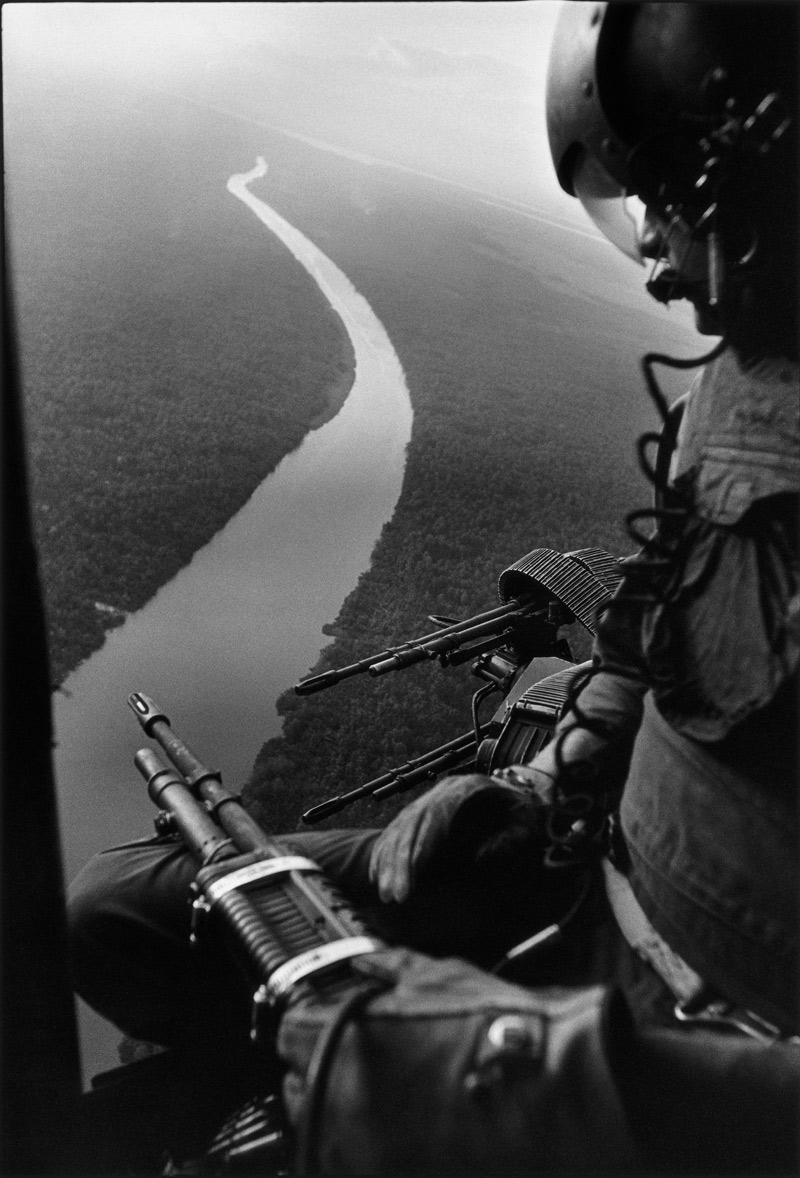
Gilles CARON Vietnam 1967In his classic memoir, A rumor of war, Philip Caputo recalled reading a series of US Army manuals about what was in store before he deployed to Vietnam.  Once there, flying over the rainforest,

‘Looking at the green immensity below, I could only conclude that those manuals had been written by men whose idea of a jungle was the Everglades National Park. There was nothing friendly about the Vietnamese bush; it was one of the last of the dark regions on earth…’

I’ve been reading those Field Manuals on Jungle Warfare too, but in the illuminating light of Dan Clayton‘s wonderfully suggestive essay on ‘Militant tropicality’ [Transactions of the Institute of British Geographers 38 (2013) 180-192], and three thematics have emerged so far.

First, the manuals worked to displace pre-existing imaginative geographies: in effect, they reassured the young soldier, ‘it’s all in the mind’.  The strategy was already in place in the dog-days of the Second World War.  FM 72-20 on Jungle Warfare, issued in October 1944, had this to say:
‘As in any area where physical hardship is the rule, there are accompanying psychological reactions to the jungle. These reactions take the form of magnifying the physical hardships and the inherent dangers of warfare. Limited visibility increases the feeling of insecurity, strange noises assume an increased importance, and men tend to be­come jumpy and panicky. The dull, shaded light and, in many areas at certain periods of the day, the gloomy, drifting mists of jungle areas have a morose and eerie effect which further adds to the feeling of insecurity.’

By 1965 the new FM 31-30 on Jungle training and operations, was still warning against ‘prevalent misconceptions’ (over-imaginative geographies, I suppose):

‘The soldier who is not familiar with the jungle will suffer from conditioned fears and apprehensions when faced with the prospect of living and fighting in a jungle environment. Popular representation of the jungle as being a veritable green hell of large trees and dense underbrush growing over vast expanses of flat, swampy ground and inhabited by thousands of animals, snakes, and insects which are hostile to man, cause this fear. Before such individuals even set foot in the jungle they are appalled at the prospect of doing so. Certainly the foreboding appearance of the jungle, the oppressive humidity and heat, the unfamiliar noises, and the abject feeling of loneliness that one feels when entering the jungle intensify the already existing fear of the unknown. It cannot be denied that the jungle presents some most unpleasant aspects. But the individual must, through systematic and thorough training and acclimation, learn to know the jungle for what it actually is and not for what it is supposed to be or what it might be. Once this knowledge is acquired, the soldier will respect the jungle, not fear it.’

Second, the manuals encouraged soldiers – as Caputo noted – to see that ‘the jungle can be your friend’.  Again, the terrain had been prepared by FM 72-20:

‘In jungle warfare, the soldier often fights two enemies: man and nature. The elimination of nature as an enemy and the use of the jungle itself as an ally are training objectives fully as important as the elimination of the human enemy. The soldier must be trained not to fight the jungle; he must be capable of living successfully in it and making it work for him against the human enemy.’

By 1965, the manual exuded a breezy self-confidence.  While it conceded that ‘the jungle itself is an obstacle’ to visibility (so the soldier must ‘develop his senses of smell, hearing and touch to a high degree’) and to movement (‘vines that entangle and trip even 
the most careful person, steep stream banks with
slippery soils, shrubs and trees with thorns that 
penetrate and tear clothes, grasses with knife-like
and saw-toothed edges that cut the skin’), it also affirmed that ‘no obstacle is insurmountable or impenetrable.’  If this sounds uncomfortably close to Monty Python’s cheerful enjoinder to ‘Always Look on the Bright Side of Life‘, the manual did indeed go to considerable pains to minimise the snares and dangers of the rainforest:

‘Most animals in the jungle will not attack man unless they are frightened… The widespread terror of “the snake-
infested jungle” prevalent in the minds of most 
peoples is an imaginary mental image. It is true that the number and variety of snakes are high in 
the wet tropics; however, the incidence of poisonous 
snakes is no higher than in some of the swamp areas 
of the Temperate Zone.

Presumably including Caputo’s Everglades.

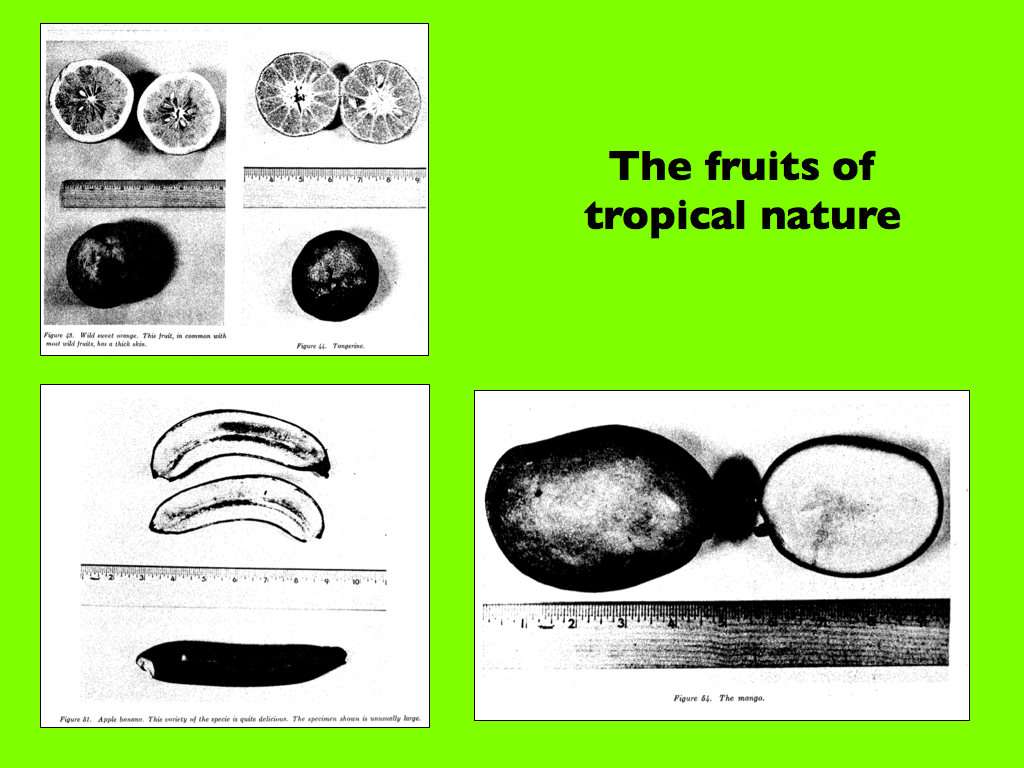
This all went hand-in-hand with an enthusiastic maximisation of the super-abundance of tropical nature, one of the key motifs of tropicality more generally.  Dozens of pages were devoted to living off and finding shelter in the jungle, with instructions and diagrams that would not have been out of place in the Boy Scouts of America:

31-30 Coconuts as expedient flotation devices

The fruits of tropical nature.001

There were also endless photographs of pineapples tangerines, mangoes, limes, bananas, papayas and avocados (see above).

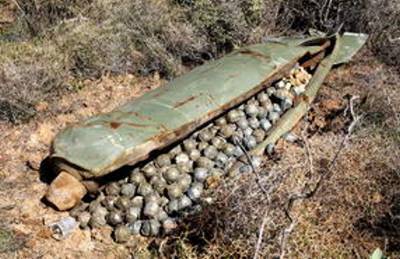
cluster-bombs full load

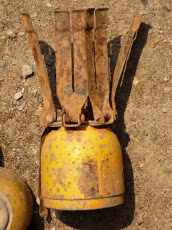
P1010303In fact, however, the US military sowed different and deadly tropical fruit.  The BLU-3 bomblet, a container filled with 250 steel pellets, was known as a ‘pineapple’ (left); a B-52 bomber could drop 1,000 of them across a 400-yard area, and as they burst open, Nick Turse reports, ‘250,000 lethal ball bearings would tear through everything in their path.’  Another cluster bomb, the CBU-24, was called a ‘guava’, loaded with more than 600 separate bomblets and capable of sending ‘200,000 steel fragments shooting in all directions.’  From 1964 to 1971, Turse reports, the US military ordered at least 37 million pineapples and from 1964 to 1971 at least 285 million guavas. (His key source is Eric Prokosch, The technology of killing: a military and political history of anti-personnel weapons; for one attempt to clear these munitions [from Laos], see Project Pineapple here).

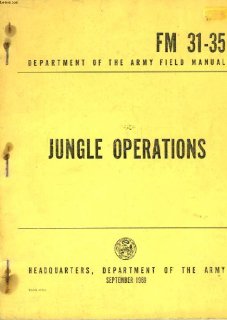
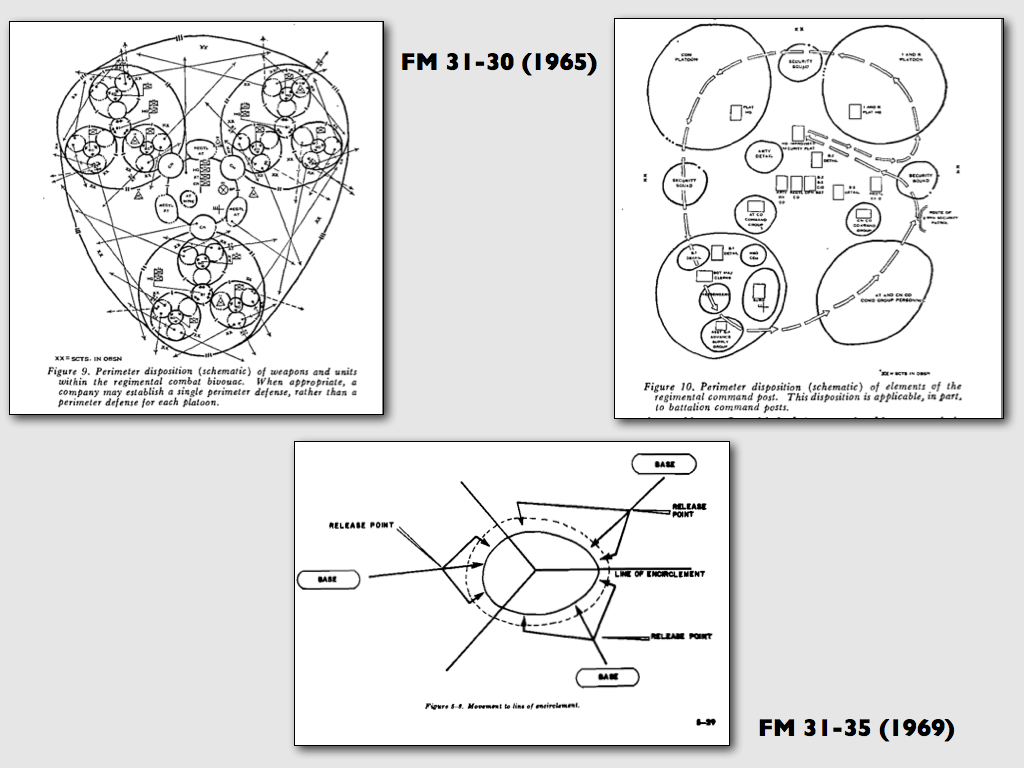
Jungle Operations FM 1969This brings me to the third strategy: disciplining nature through the imposition of military Reason.  By 1969 the – edible – ‘fruits of the jungle’ had disappeared from the manuals.  After a review of different types of jungle, including ‘Oriental jungles’,  the discussion immediately turned to weapons, armour and artillery, air support and chemical and biological warfare, so that ‘nature’ was militarised and subjected to military (re)ordering much earlier in the revised manual.  The emphasis was on ‘modification’ of Standard Operating Procedures, which had also been a key element four years earlier, and a continued move away from the tangle of the jungle – what Tim O’Brien would later call in Going after Cacciato ‘a botanist’s madhouse’ – to the superimposition of ordered combat geometries like those I’ve extracted below.

Combat geometries in jungle warfare.001

In effect, the military sought to plane away ‘Nature’ and reduce it to an abstract ‘Space’. Of course, the imposition of military Reason on what was now (de)constructed as a militantly ‘un-natural Nature’ was more than a paper affair, and it was invariably violent.  In his Matterhorn: a novel of the Vietnam War, Karl Marlantes describes the construction of a fire support base on a mountain top so that an artillery unit, helicoptered in, could range its fires over the rainforest below:

‘The defensive lines grew more distinguishable. No longer were they made up of holes that blended in with the earth and the mass of torn limbs and brush. The holes had been transformed into naked, angular structures, stark against the denuded hillside, looking like sturdy little boxes poking out from the slope.’

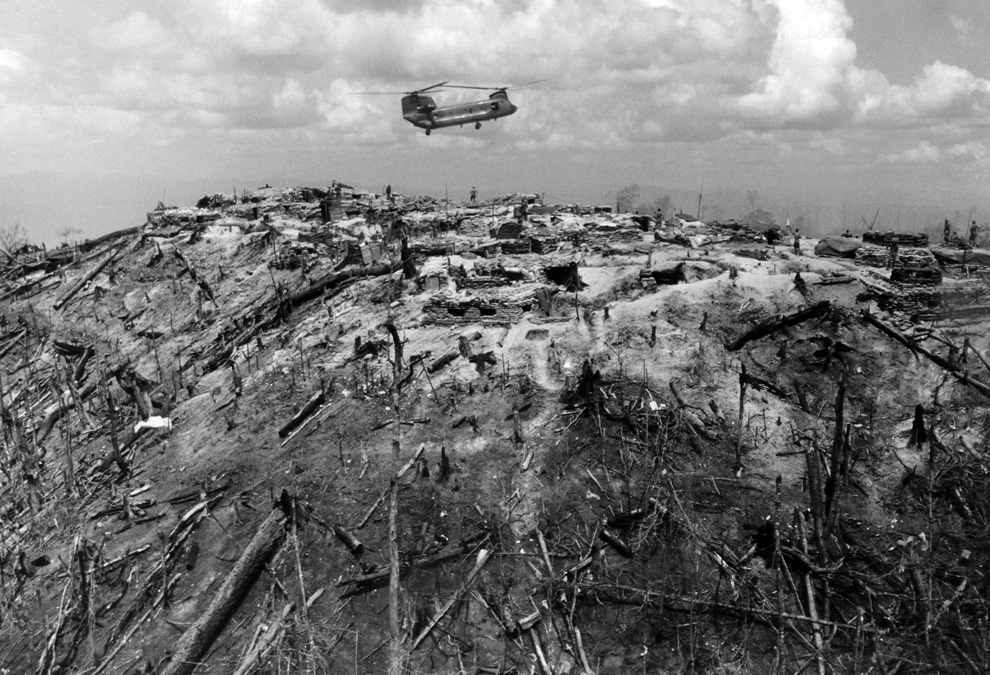
There was an elaborate, constantly changing network of these bases, but here is what this could look like; this is Fire Support Base 29, Dak To, in the Central Highlands in June 1968:

Fire Support Base 29, Dak To, central highlands, 3 June1968jpg

To be sure, ecological destruction took many forms beyond the Rome plow (there’s a video of its deployment in land-clearing operations here) and violent explosions from artillery and aircraft.  The widespread spraying of herbicides like Agent Orange is well known; remember that the slogan of Operation Ranch Hand was ‘We prevent forests’…

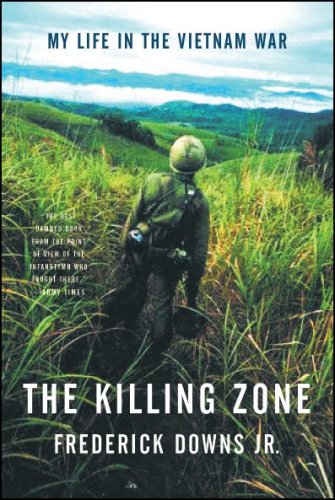
And yet, if Vietnam was McNamara’s prized ‘techno-war’, it emphatically did not see the triumph of American science and technology, still less that of their transmutation into an operative military Reason, over an alien ‘Nature’.  As Dan Clayton says, ‘an omniscient American war machine was [not] bearing down on a transparent, knowable or compliant battlefield.’  There’s a passage in Frederic Downs‘s The killing zone that captures and counterposes the geometric violence of the war and the resilience of the rainforest to great effect:

DOWNS Killing zoneThe coordinates for that location and the time for firing would be relayed to the gun crews.  At the specified time, the gun crews would be awakened. Perhaps it would be just after midnight. As the minutes ticked closer to a time set by an unknown intelligence the men would load the artillery pieces, anticipating the release of their impersonal death into a grid square. The gun commander would give the order to fire and the night would explode with man’s lightning and thunder.  After the prescribed rounds, the guns would cease, the cleanup would begin, and the men would go back to their bunks.  Thinking what? Within the range of those guns, within a specified area, the Central Highlands had for a brief moment changed from the jungle it had been for thousands of years into the particular insanity of man.  As the gun crews wandered back to their bunkers to settle down for the night, the jungle would also begin settling down for the night to begin healing the new wounds.

I’ll have more to say about this in later posts, but for now here’s a passage from Stephen Wright’s novel, Meditations in Green, that sets the scene for the argument I’m developing in ‘The natures of war’:

Brostowits Come a little closer  1997(Vietnam)“Of course, it’s not as if bushes were innocent … Sit on top of a bunker, stare at the tree line for a while. You have to concentrate because if you blink or look away for even a moment you might miss it, they aren’t dumb despite what you may think, they’re clever enough to take only an inch or two at a time. The movement is slow but inexorable, irresistible, maybe finally unstoppable. A serious matter.”

“What movement, what are you are you talking about?”

“The trees, of course, the fucking shrubs. And one day we’ll look up and there they’ll be, branches reaching in, jamming our M-60s, curling around our waists.”

“Like Birnam Wood, huh?”

“Actually, I was thinking more of triffids.”

These other jungle books have a lot to tell us about war too.

The natures of war

Natures of War

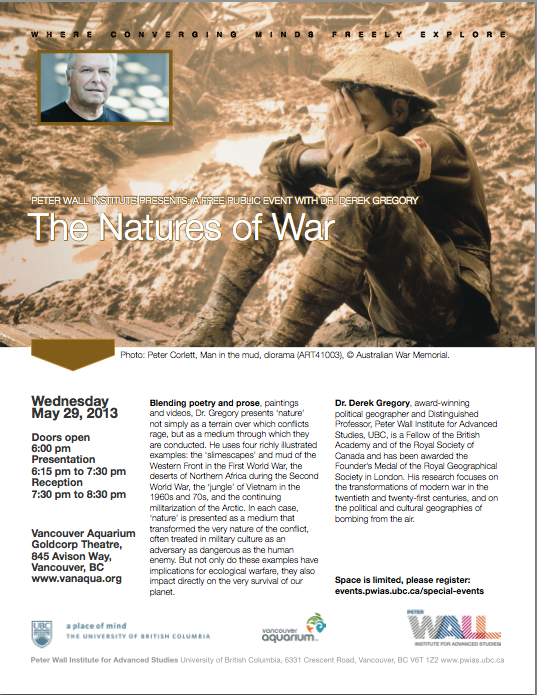
Just about to leave the High Atlas and Morocco, so something like normal service will resume once I’m back in London on Wednesday.  I’ve just received a near-final draft of the poster (above) for my Vancouver talk next month, “The natures of war“.  I’ll explain more of what I’m trying to work out in this presentation in a later post.  You’ll see that the venue is sort of appropriate – though I’ll leave my flippers at home.

More information and registration details here.

Of Bombs and Men

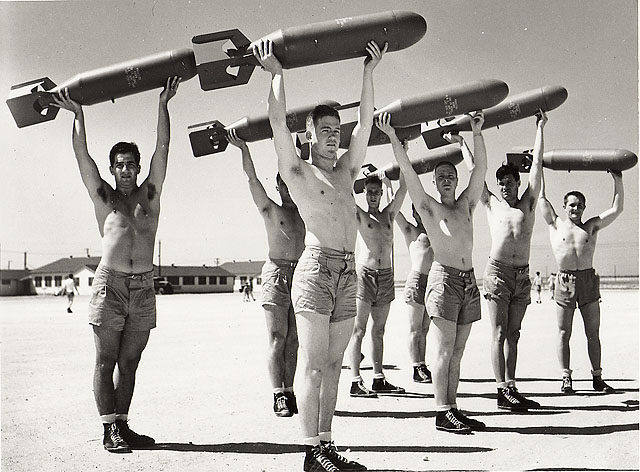
WWII Bombardier Calisthenics

When Stanley Kubrick had Major Kong (Slim Pickens) straddle a nuclear bomb in Dr Strangelove (1964) and ride it exuberantly all the way down to its target – surely the most iconic image from the film – he was making an obvious visual point about masculinism, sexuality and military violence that, as the clean-limbed image above shows, takes many other, non-nuclear forms.  Here a group of US Army Air Force bombardiers in the Second World War practices calisthenics with 100 lb bombs.  A different sort of ‘love-charm of bombs‘, you might think.

Indeed, a contemporary account made much of the ‘hard and rigid training of members of a bomber crew’ – which was supposed to be just like a football or basketball team (‘This is really the Big League in the toughest game we have ever been up against, with the pennant the survival and future of the whole nation’) – and emphasised their collective virility and heteronormativity:

‘They will have played football or basketball, have competed in the field or on the track.  Many of them will have been ardent hunters or fishermen.  Because they are healthy young men they will like girls very well indeed.’

Hunting was important; readers were told to be thankful that ‘frightened civil authorities and specific Ladies Clubs have not managed to eradicate from the country the tradition of the possession and use of firearms’, which ensured that a young man would enter the Air Force ‘with the whole background of aerial gunnery in him before he starts.’

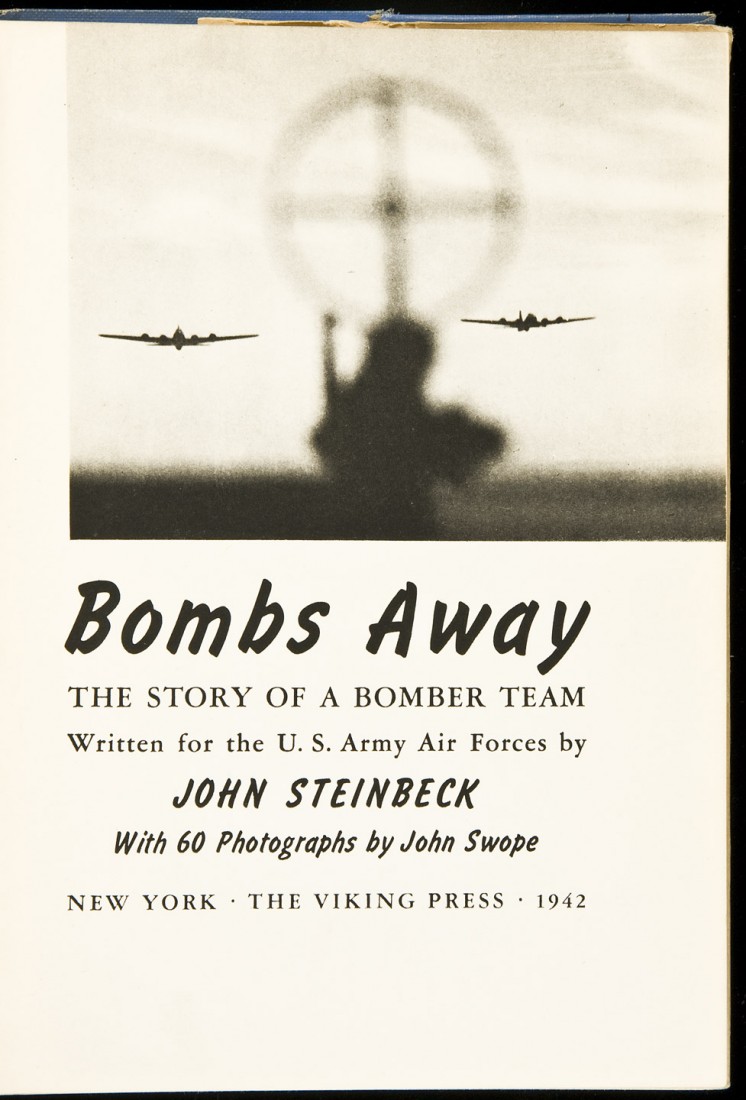
The author of all this was, astonishingly, John Steinbeck, and the book Bombs Away: the story of a bomber team, published in 1942.

STEINBECK Bombs Away

In May 1942 Steinbeck had been summoned to Washington by General Henry A. “Hap” Arnold who explained what he had in mind – an account of the training of a bomber crew that would serve as a recruiting platform – and although Steinbeck was at first reluctant a meeting with President Roosevelt convinced him to accept the assignment.  He spent the summer on the road (in fact, much of the time in the air), travelling from airbase to airbase in the United States with Hollywood photographer John Swope, who provided 60 illustrations for Bombs Away.  Swope would later be tapped by First World War veteran Edward Steichen for his US Navy photographic unit covering the war in the Pacific, where he produced a remarkable photographic portfolio and the accompanying Letter from Japan in 1945.

Steinbeck was no stranger to working with photographers.  In 1937 Horace Bristol, a freelance photographer who regularly contributed to LIFE magazine,

‘proposed a story about migrant farm workers in Calfornia’s Central Valley—a project that would include accompanying text by novelist John Steinbeck. Though LIFE turned down the story, Bristol and Steinbeck agreed to collaborate on a book-length project, and the two men spent several weekends in labor camps during the winter of 1938. Bristol took hundreds of photographs of the suffering farm workers, only to have Steinbeck withdraw from the partnership to write the story as a novel, which became his masterpiece The Grapes of Wrath.’

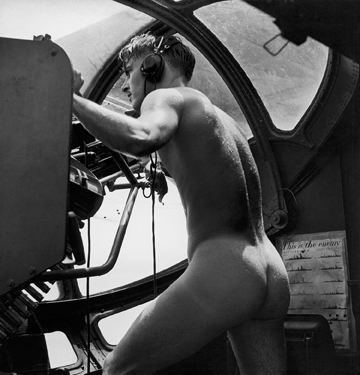
BRISTOL PBYBlisterGunnerBristol was also later recruited by Steichen, and some of his war photographs would not been out of place in Bombs Away: the image on the right, ‘RESCUE: PBY Blister Gunner’, was shot in a Catalina Flying Boat at Rabaul, Papua New Guinea, in 1944, which presumably explains the flying kit.

If Steinbeck’s collaboration with Swope turned out to be more congenial than that with Bristol, however, it was markedly less fruitful. Ernest Hemingway disliked Bombs Away so much that he famously observed that ‘I would rather cut off three fingers off my throwing hand than to have written it.’

He wasn’t alone.  A review in the New Republic declared that Bombs Away bore ‘about the same relationship to literature that a recruiting poster does to art.’  But of course it was supposed to be a recruiting poster, and it had to be written in double-quick time.

In the book Steinbeck assembles the bomber crew man by man, role by role – the bombardier, the aerial gunner, the navigator, the pilot, the aerial engineer/crew chief and the radio engineer – who together ‘must function like a fine watch’.  They are assigned a ‘ship’ – a B-17E Flying Fortress or a B-24 (‘Liberator’) – which will invariably become personalised and almost always feminized.  (There’s a considerable literature on the ‘nose art‘ of bombers, and Steinbeck will later declare that ‘Some of the best writing of the war has been on the noses of bombers’).  But it is the men that count, that constitute the elaborate clock-mechanism: ‘Men are the true weapons of the Air Force,’ Steinbeck insists, ‘and it is an understanding of this that makes our bomber crews what they are.’ Inevitably, he adds: ‘Living and working together too, they played together too.  On the beach in their free time they played football and swam in the warm water of the Gulf.’

Norden bombsightSteinbeck knows, of course, that this is a deadly serious ‘game’: and one that, as he also labours to explain, is objective, scientific: ‘They knew the mathematics of destruction.’   Within this embodied, techno-cultural constellation the Norden bombsight (left) occupied a central place.

‘This bombsight has become the symbol of responsibility.  It is never left unguarded for a moment.  On the ground it is kept in a safe and under constant guard.  It is taken out of its safe only by a bombardier on mission and he never leaves it.  He is responsible not only for its safety but for its secrecy.’

I’ve noted before how often bombing depends on abstraction: on a technical division of labour within the kill-chain, on a rhetoric of scientificity (and, by extension, precision), and on a calculus that transforms places and people into the co-ordinates of a target.  Bombs Away shows this to perfection, but it shows something else even more clearly. For the ability to carry out these deadly missions also depends on an instilled and instinctive sociality (here, naturally, a homosociality) that is far from abstract.

STEINBECK Bombs Away cover

And yet there is something abstract, or at least detached, about Bombs Away, because it ends just before the crew takes off on its first mission.  In the concluding chapter, ‘Missions’, Steinbeck explains that the men ‘looked so carefully at the newspapers, and what they found in the newspapers reassured them.’

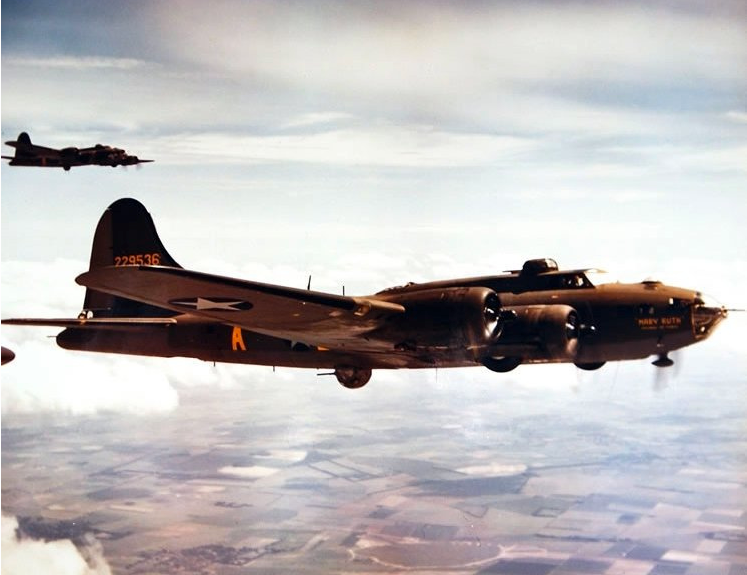
Mary Ruth nose artBut this paper knowledge turned out to be less than satisfactory.  Less than a year later, in June 1943, his request to become an air force intelligence officer refused by the draft board – a US Army intelligence report, mindful of the sympathies of Steinbeck’s pre-war novels, had concluded that there was ‘substantial doubt’ about his ‘loyalty and discretion’ and recommended that he not be offered a commission – Steinbeck was at RAF Bassingbourn (USAAF Station 121) in Cambridgeshire as a war correspondent for the New York Herald Tribune.

An old friend of his, in fact a literary agent before the war, Staff Sergeant Henry (“Maurice”) Crain was stationed there, and Steinbeck wrote nine articles centred on the crew of Crain’s ship, the “Mary Ruth: Memoirs of Mobile“, a Flying Fortress of the 91st Bomb Group of VII Bomber Command.  ‘The closer you get to the action,’ he reports Crain (the ball-turret gunner) saying, ‘the less you read the papers and war news’:

‘I remember before I joined up I used to know everything that was happening… I even had maps with pins and I drew out campaigns with colored pencils. Now I haven’t looked at a paper in two weeks.’

And when the crew did, as often as not they didn’t recognise what they saw.  The waist-gunner had read a newspaper from home:

‘It seems to me that the folks at home are fighting one war and we’re fighting another one. They’ve got theirs nearly won and we’ve just got started on ours. I wish they’d get in the same war we’re in. I wish they’d print the casualties and tell them what it’s like.’

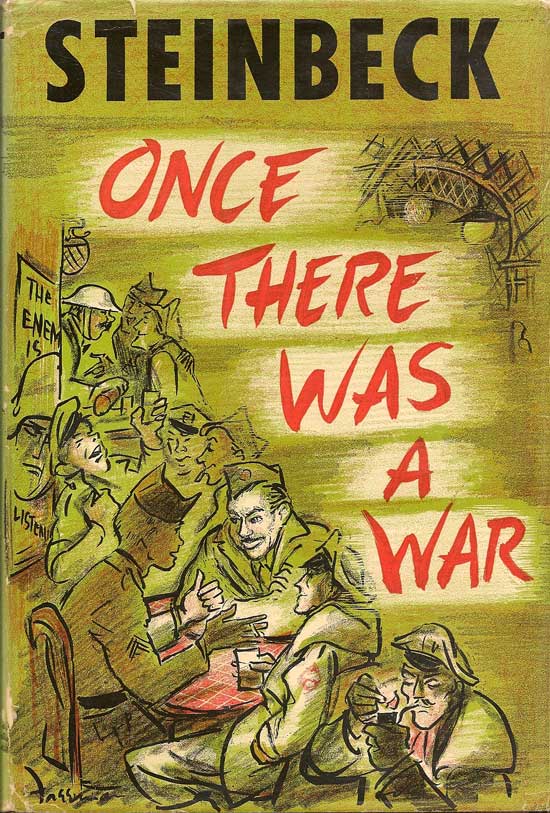
STEINBECK Once there was a warThis is a far cry from the brimming, boastful confidence of Bombs Away, and Steinbeck is clearly concerned not only to change the tone but also to surmount the limitations of his new, temporary profession (some of his despatches were republished in 1958 in Once there was a war).  He does so by invoking the the technical, instrumental armature of the mission: the precision of the briefing (‘The incredible job of getting so many ships to a given point at a given time means almost split-second timing’), the complicated process of kitting up (‘During the process the men have got bigger and bigger as layer on layer of equipment is put on; they walk stiffly, like artificial men’), and the meticulous work of the ground crews who ‘scurry about like rabbits’ as they prepare the aircraft and load the bombs.  But here too it is above all the sociality, the camaraderie that drives and dominates the narrative.

Mary Ruth

And it’s the end of this that brings Steinbeck’s reports to an abrupt end.  He had had in mind a series of 25 articles, but this was cut short when the ‘Mary Ruth’ (shown above) failed to return from a bombing raid on the Ruhr.

But this was not the end of Steinbeck’s interest in (and enthusiasm for) the US military in general and bombing in particular.  He was a vocal supporter of the Vietnam War, and in fact visited the South in December 1966-January 1967.  In private he wrote that ‘I wish the bombing weren’t necessary, but I suspect our people on the ground know more about that than I do’ , and he refused all requests to sign petitions against President Johnson’s Rolling Thunder campaign.  [For more on Steinbeck’s involvement in the two wars, see Thomas Barden, ‘John Steinbeck and the Vietnam War’, Steinbeck Review 5 (1) (2008) 11-24].

Note: Most of the crew of the ‘Mary Ruth’ survived (including Crain) and were taken prisoner of war.  The most detailed account describes the ‘Mary Ruth’ being shot down by a fighter aircraft on 22 June 1943; Steinbeck’s reports for the New York Herald Tribune begin to appear on 26 June. The discrepancy is presumably explained by a combination of the time taken for his despatches to cross the Atlantic and wartime censorship.  Both Bombs Away and Once there was a war are still available as Penguin editions, the latter with an enthusiastic foreword by Mark Bowden.