UBC’s term started last week, but I was in Nijmegen so I’ve started this week. I’ve posted the revised outlines and bibliographies for my two courses this term under the TEACHING tab.
I was primarily in Nijmegen to give a ‘Radboud Reflects’/Humboldt Lecture. As usual, I had a wonderful time; I’ve pasted the abstract below – though this was written before I had put the presentation together, so it doesn’t incorporate the closing section at all (“Geographies of the Remote”). It draws, in part, on my Tanner Lectures, “Reach from the sky“, but it also incorporates new material [see, for example, my reflections on the Blackout here].
War at a distance: aerial violence and the death of the battlefield
Christopher Nolan’s film “Dunkirk” is remarkable for many reasons, but prominent among them is the fact that, as the director himself notes, ‘we don’t see the Germans in the film… it’s approached from the mechanics of survival rather than the politics of the event.’ This raises a series of important questions, but central to any understanding of aerial violence is precisely what can be seen and what cannot be seen: what can those crouching under the bombs see of the perpetrators, and what can those carrying out the strikes see of their targets? You might think this becomes even more important when war is conducted at a distance, but the history of military violence shows that ‘distance’ is a complicated thing…
The first large-scale use of aircraft for offensive purposes (rather than surveillance) was on the Western Front during the First World War, when aircraft were used to ‘spot’ targets for artillery and eventually to conduct bombing operations on the battlefield. But more consequential was the use of aircraft and airships to conduct bombing raids far beyond the battlefield, on cities like London and Paris, because this brought civilians directly into the line of fire and in doing so started to dissolve the idea of the battlefield [what Frédéric Mégret calls ‘the deconstruction of the battlefield‘] and to assault the very concept of a civilian. The bombing offensives of the Second World War, especially in Europe and Japan, accelerated this dismal process, but they also reveal a deadly dialectic between intimacy and domesticity (the effects on everyday life on the ‘home’ front) and abstraction (the way in which targets were produced and made visible to bomber crews).e
That same dialectic reappears in today’s drone operations over Afghanistan, Iraq, Syria, Somalia, Yemen and elsewhere. But these new technologies of ‘war at a distance’ have their own history that overlaps and intersects with the story of manned flight. Indeed, the dream of ‘unmanned’ flight soared in lockstep with the dream of those extraordinary flying machines. This too goes back to the First World War, when inventors proposed ingenious aerial vehicles whose ‘bomb-dropping’ would be controlled by radio. These proved impractical until after the Second World War, when drones were used by the US to photograph and collect samples from atomic clouds in the Marshall Islands and Nevada [see here and here]. The over-arching principle was to protect American lives by keeping operators at a safe distance from their targets, and this is one of the logics animating contemporary drone strikes (‘projecting power without vulnerability’). But for this to work new technologies of target recognition as well as mission control were required; these were first developed during the Vietnam War, when the US Air Force tried to ‘wire’ the Ho Chi Minh Trail and connect its sensor systems to computers that would direct aircraft onto their targets (or, rather, target boxes).
The Pentagon looked forward to the installation of an ‘automated battlefield’ on a global scale [see my ‘Lines of Descent’, DOWNLOADS tab]. Although its plans were premature, the subsequent development of targeted killing using Predators and Reapers has since completed the dissolution of a distinctive battlefield: the United States Air Force boasts that it can put ‘warheads on foreheads’ and the US has claimed the right to pursue its targets wherever they go, so that (in Grégoire Chamayou’s words) ‘the body becomes the battlefield.’ These targeted bodies are at once abstract – reduced to digital traces, the products of a global system of intelligence, surveillance and reconnaissance – and yet at the same time, by virtue of the high-resolution full-motion video feeds used to track them, peculiarly intimate to those that kill them. Drone pilots operate their aircraft from thousands of miles away, yet they are much ‘closer’ to their targets than pilots of conventional strike aircraft: previously, the only aerial vehicles to approach this level of intimacy, and then but fleetingly, were the Zeppelins of the First World War. But this intimacy is conditional and even illusory, and case studies [see here, here and here] show that as the battlefield transforms into the multi-dimensional battlespace the very idea of the civilian [see here and here] is put at increased risk.
All of this will appear, in extended and elaborated form, in my new book, also called “Reach from the sky”.
The latest (double) issue of New Formations (89/90: 2017) is devoted to ‘Death and the Contemporary’, and it includes two essays likely to be of particular interest to readers of this blog.
First, François Debrix, ‘Horror beyond Death: Geopolitics and the pulverisation of the human‘:
From territorial conquests or wars of attrition to the concentration camps or policies of control of displaced populations, the biopolitical capture of human life in configurations of geopolitical power has often involved the putting to death of populations. While, following Foucault’s work, we can argue that late modern political power has been concerned with the management of people’s lives or with the ‘health’ of a population, this capacity to ‘make live and let die’ (as Foucault put it) is never separate from a modality of force premised upon a right to put to death. Thus, the distinction between biopolitics and what has been called thanatopolitics or necropolitics can no longer be guaranteed. The goal of this essay is to push further the biopolitical/ necropolitical argument by showing that, in key contemporary instances of geopolitical violence and destruction, the life and/or death of populations and individual bodies is not a primary concern. What is of concern, rather, is what I have called the pulverization of the human. I consider this targeting of the human, or of humanity itself, to be a matter of horror. Horror’s aim, when it enters the domain of geopolitical destruction, appears to be to put bodies to death. But, more crucially, its aim is to render human bodies, beyond the fact of life and death, unrecognizable, unidentifiable, and sometimes undistinguishable from non-human matter. Horror does not care to recompose human life or humanity. This essay briefly details the argument about horror and horror’s ‘objectives’ beyond death. It also takes issue with recent theories that have argued that traces of human life can be recovered from contemporary instances of geopolitical violence and destruction. Finally, this essay offers two contemporary illustrations of horror’s targeting of the human by examining the role and place of horror in suicide bombings and in drone attacks.
Second, Andrea Brady, ‘Drone poetics‘:
‘Drone Poetics’ considers the challenge to the theory and practice of the lyric of the development of drone warfare. It argues that modernist writing has historically been influenced by aerial technology; drones also affect notions of perception, distance and intimacy, and the self-policing subject, with consequences for contemporary lyric. Indeed, drone artworks and poems proliferate; and while these take critical perspectives on drone operations, they have not reckoned with the phenomenological implications of execution from the air. I draw out six of these: the objectification of the target, the domination of visuality, psychic and operational splitting, the ‘everywhere war’, the intimacy of keyhole observations, and the mythic or psychoanalytic representation of desire and fear. These six tropes indicate the necessity for a radical revision of our thinking about the practice of writing committed poetry in the drone age.
There have been many interviews with ‘drone operators’ but most of them seem to have been with sensor operators serving with the US Air Force. Some of the most cited have been ‘whistleblowers’ like Brandon Bryant while some reporters have described conversations with service members allowed to speak on the record during carefully conducted tours of airbases. Some have even been captured on film – think of the interviews that frame so much of Sonia Kennebeck‘s National Bird (though I think the interviews with the survivors of the Uruzgan drone strike are considerably more effective) – while others have been dramatised, notably in Omar Fast‘s 5,000 Feet is The Best.
But over at Drone Wars UKChris Cole has just released something different: a detailed transcript of an extended interview with “Justin Thompson“, a former British (Royal Air Force) pilot who flew Reapers over Afghanistan for three years from Creech Air Force Base in Nevada. He also spent several months forward-deployed to Afghanistan as a member of the Launch and Recovery element: remember that missions are controlled from the continental United States – or now from RAF Waddington in Lincolnshire – but the Reapers have an operational range of 1, 850 km so they have to be launched in or near the theatre of operations.
He served as a pilot of conventional strike aircraft before switching to remote operations early in the program’s development – the RAF started flying Reapers over Afghanistan for ISR in October 2007; armed missions began the following May – which gives Justin considerable insight into the differences between the platforms:
“The real difference with UAVS is persistence. That’s the big advantage as it allows you to build up a very detailed picture of what is going on in a particular area. So if you are in a particular area and a need for kinetic action arises, generally speaking you have already got knowledge of the kind of things you would need to know to assist that to happen. That’s versus a fast jet that might be called in having been there only five minutes, with limited fuel and with limited information – what it can get from the guys on the ground – Boom, bang and he’s off to get some fuel. That’s a bit flippant. It’s not quite like that, but you see what I mean.
“The big difference is the amount of detail we are able to amass about a particular area, not just on one mission, but over time. If you are providing support in a particular area, you develop a great deal of detailed information, to the point where you can recall certain things from memory because you were looking at this last week and spent two weeks previously looking at it and you know generally what goes on in this particular area. The other thing this persistence gives you is a good sense if something has changed or if something is unusual. You go ‘Hang on, that wasn’t there last week, someone’s moved it. Let’s have a look to see what is going on here.’”
Later, having discussed the Reaper’s entanglement of ISR (intelligence, surveillance and reconnaissance) with lethal strike (‘kinetic’) capabilities, he returns to the theme:
“If you are talking about kinetic action, I think essentially they [conventional aircraft and drones] are no different. It’s a platform in the air that has a sensor on board you are using to look at the ground. The picture you seen in a [Ground Control Station] is essentially the same as you would see in a fast jet. The sort of weapons you are delivering are exactly the same sort as you would be delivering from a fast jet. Essentially all of the principles are the same…
“A lot of things are significantly better in that you get much more extensive and much more detailed information on the area you are looking at and on any specific targets. That’s not because of any particular capability, it’s just because you can spend a hell of a lot more time looking at it.
“A fast jet pilot would, say, do a four month tour in some place. He’s got four months’ worth of knowledge and then he’ll be gone. He might come back in a year or two, but we are there for three years. Constantly, every day, building up massive amounts of knowledge and a detailed picture of what goes on. We come armed with so much information, and so much information is available to you, not just from your own knowledge, but from sources you can reach out to. You’ve got the text. You’ve got phones. You have got other people you can call on and drag into the GCS. You can get other people to look at the video feed. You can get many opinions and views….”
At times, he concedes, that can become an issue (sometimes called ‘helmet-fire’: too many voices in your head):
“If you want it, there can be a lot of other ‘eyes on’ and advice given to you. If you want something explained to you, if you want a second opinion on something, if you want something checked you can say “Guys, are you seeing this?” Or “What do you think that is?” And that is really useful. You can also reach out for command advice, for legal advice. The number of people who can get a long screwdriver into your GCS is incredible and it does happen that occasionally you have to say ‘Please can you get your long screwdriver out of my GCS’. But generally speaking, it’s well managed and people don’t interfere unless they think there is a reason to.”
He makes it clear that as an RAF pilot his was the final decision about whether to strike – he was ‘the final arbiter’ – and discusses different situations where he over-ruled those other voices.
RAF Reaper strike in Afghanistan, 2010
Justin also talks about the ways his previous flying experience modulated his command of the Reaper (and here I think there are interesting parallels with Timothy Cullen‘s experience as an F-16 pilot and his important study of USAF Reaper crews: see also here):
“… [T]here is an idea that because you are not directly manipulating the control surfaces of an aircraft by being sat in it, that somehow lowers the skill level required in order to successfully operate one of these things. It may change some specifics in motor skills, but then so does an Airbus. Conceptually, you are wiggling a stick, pushing a peddle, turning a wheel. That gets converted into little ‘ones’ and ‘zeros’, sent down a wire to a computer that decides where to put the flying control surfaces and throttles the engines of the aircraft. It’s very similar, at least technically, in a modern airliner as in a Reaper. The level of skill required is similar. Piloting has only ever been 10% hand-flying skills, 90% is judgement and airmanship…
“For me, what I was seeing on the screen was very real. In addition to that for me it was more than just two-dimensional. My mind very easily perceived a three-dimensional scene that extended out of the side of the image. Whether that was because I was used to sitting in a cockpit and seeing that sort of picture I don’t know. Someone whose only background is flight simulators or playing computer games may have a different view. I relate it to sitting in an aircraft and flying it, others may relate it slightly differently…”
There’s much more in those packed 17 pages. You can find Chris’s own commentary on the interview here, though his questions during the interview are, as his regular readers would expect, also wonderfully perceptive and well-informed.
One cautionary note. The time-frame is extremely important in commenting on remote operations, even if we limit ourselves to the technology involved. The early Ground Control Stations were markedly different from those in use today, for example, while the quality of the video streams, their compression and resolution is also highly variable. And there is, of course, much more than technology involved.
Returning to Vancouver and my stuffed mailbox after several weeks away, I found a copy of The Good Drone edited by Kristin Bergtora Sandvik and Maria Gabrielsen Jumbert (thank you both!). I’ve known Kristin for several years now, and always learned much from her insightful and imaginative work, and it’s wonderfully refreshing to find a book that has so many new things to say about drones:
While the military use of drones has been the subject of much scrutiny, the use of drones for humanitarian purposes has so far received little attention. As the starting point for this study, it is argued that the prospect of using drones for humanitarian and other life-saving activities has produced an alternative discourse on drones, dedicated to developing and publicizing the endless possibilities that drones have for “doing good”. Furthermore, it is suggested that the Good Drone narrative has been appropriated back into the drone warfare discourse, as a strategy to make war “more human”.
This book explores the role of the Good Drone as an organizing narrative for political projects, technology development and humanitarian action. Its contribution to the debate is to take stock of the multiple logics and rationales according to which drones are “good”, with a primary objective to initiate a critical conversation about the political currency of “good”. This study recognizes the many possibilities for the use of drones and takes these possibilities seriously by critically examining the difference the drones’ functionalities can make, but also what difference the presence of drones themselves – as unmanned and flying objects – make. Discussed and analysed are the implications for the drone industry, user communities, and the areas of crisis where drones are deployed.
Here are the substantive chapters (following a sparkling introduction by the editors):
1: Susanne Krasmann – Targeted ‘Killer Drones’ and the Humanitarian Discourse: On a Liaison
2: John Karlsrudand Frederik Rosén – Lifting the Fog of War? Opportunities and Challenges of Drones in UN Peace Operations
3: Kristoffer Lidén and Kristin Bergtora Sandvik – Poison Pill or Cure-All: Drones and the Protection of Civilians
4: Maria Gabrielsen Jumbert – Creating the EU Drone: Control, Sorting, and Search and Rescue at Sea
5: Kristin Bergtora Sandvik – The Public Order Drone: Proliferation and Disorder in Civil Airspace
6: Brad Bolman– A Revolution in Agricultural Affairs: Dronoculture, Precision, Capital
7: Serge Wich, Lorna Scott, and Lian Pin Koh – Wings for Wildlife: the use of Conservation Drones, challenges and opportunities
8: Mareile Kaufmann – Drone/Body: the Drone’s Power to Sense and Construct Emergencies
It’s available as an e-book, which brings the otherwise usurious price within reach, but if you want a preview of Kristin’s work I recommend her essay (with Kjersti Lohne) on ‘The rise of the humanitarian drone’ in Millennium 43 (1) (2014) 145-164.
A new edition of the ever-interesting Mediatropes is now online (it’s open access), this time on Intelligence and War: you can access the individual essays (or download the whole issue) here. Previous issues are all available here.
The issue opens with an editorial introduction (‘Intelligence and War’ by Stuart J Murray, Jonathan Chau, Twyla Gibson. And here is Stuart’s summary of the rest of the issue:
Michael Dorland’s “The Black Hole of Memory: French Mnemotechniques in the Erasure of the Holocaust” interrogates the role of memory and memorialization in the constitution of post-World War II France. Dorland hones in on the precarity of a France that grapples with its culpability in the Vel’ d’Hiv Round-up, spotlighting the role of the witness and the perpetually problematized function of testimony as key determinants in challenging both the public memory and the historical memory of a nation.
Sara Kendall’s essay, “Unsettling Redemption: The Ethics of Intra-subjectivity in The Act of Killing” navigates the problematic representation of mass atrocity. Employing Joshua Oppenheimer’s investigation of the Indonesian killings of 1965–1966, Kendall unsettles the documentary’s attempts to foreground the practices of healing and redemption, while wilfully sidestepping any acknowledgment of the structural dimensions of violence. To Kendall, the documentary’s focus on the narratives of the perpetrators, who function as proxies for the state, makes visible the aporia of the film, substituting a framework based on affect and empathy in place of critical political analyses of power imbalances.
Kevin Howley is concerned with the spatial ramifications of drone warfare. In “Drone Warfare: Twenty-First Century Empire and Communications,” Howley examines the battlefield deployment of drones through the lens of Harold Innis’s distinction between time-biased and space-biased media. By considering the drone as a space-biased technology that can transmit information across vast distances, yet only remain vital for short periods of time, Howley sees the drone as emblematic of the American impulse to simultaneously and paradoxically collapse geographical distance while expanding cultural differences between America and other nations.
Avital Ronell’s essay, entitled “BIGLY Mistweated: On Civic Grievance,” takes direct aim at the sitting US president, offering a rhetorical analysis of what she calls “Trumpian obscenity.” Ronell exposes the foundations of the current administration, identifying a government bereft of authority, stitched together by audacity, and punctuated by an almost unfathomable degree of absurdity. In her attempt to make sense of the fundamentally nonsensical and nihilistic discourse that Trump represents, Ronell walks alongside Paul Celan, Melanie Klein, and especially Jacques Derrida, concluding with a suggestive, elusive, and allusive possibility for negotiating the contemporary, Trumpian moment.
In “The Diseased ‘Terror Tunnels’ in Gaza: Israeli Surveillance and the Autoimmunization of an Illiberal Democracy,” Marouf Hasian, Jr. explains how Israel’s state-sanctioned use of autoimmunizing rhetorics depict the lives of Israelis as precarious and under threat. Here, the author’s preoccupation is with the Israeli strategy of rhetorically reconfiguring smuggling tunnels as “terror tunnels” that present an existential threat to Israeli citizens. In doing so, he shows how the non-combatant status of Gazan civilians is dissolved through the intervening effects of these media tropes.
Derek Gregory’s essay, “The Territory of the Screen,” offers a different perspective on drone warfare. Gregory leverages Owen Sheers’s novel, I Saw a Man, to explore the ways in which modern combat is contested through a series of mediating layers, a series of screens through which the United States, as Gregory argues, dematerializes the corporeality of human targets. For Gregory, drone warfare’s facilitation of remote killings is predicated on technical practices that reduce the extinguishing of life to technological processes that produce, and then execute, “killable bodies.”
But how is the increasingly unsustainable illusion of intelligence as being centralized and definitive maintained? Julie B. Wiest’s “Entertaining Genius: U.S. Media Representations of Exceptional Intelligence” identifies the media trope of exceptionally intelligent characters across mainstream film and television programs as key to producing and reinforcing popular understandings of intelligence. Through her analysis of such fictional savants, Wiest connects these patterns of representation to the larger social structures that reflect and reinforce narrowly defined notions of intelligence, and those who are permitted to possess it.
We end this issue with a poem from Sanita Fejzić, who offers a perspective on the human costs of war that is framed not by technology, but through poetic language.
My own essay is a reworked version of the penultimate section of “Dirty Dancing” (DOWNLOADS tab) which we had to cut because it really did stretch the length limitations for Life in the Age of Drone Warfare; so, as Stuart notes, I re-worked it, adding an extended riff on Owen Sheers‘ luminous I saw a man and looping towards the arguments I since developed in ‘Meatspace?‘
In Lucy Suchman‘s marvellous essay on ‘Situational Awareness’ in remote operations she calls attention to what she calls bioconvergence:
A corollary to the configuration of “their” bodies as targets to be killed is the specific way in which “our” bodies are incorporated into war fighting assemblages as operating agents, at the same time that the locus of agency becomes increasingly ambiguous and diffuse. These are twin forms of contemporary bioconvergence, as all bodies are locked together within a wider apparatus characterized by troubling lacunae and unruly contingencies.
In the wake of her work, there has been a cascade of essays insisting on the embodiment of air strikes carried out by Predators and Reapers – the bodies of the pilots, sensor operators and the legion of others who carry out these remote operations, and the bodies of their victims – and on what Lauren Wilcox calls the embodied and embodying nature of drone warfare (‘Embodying algorithmic war: Gender, race, and the posthuman in drone warfare’ in Security dialogue, 2016; see also Lorraine Bayard de Volo, ‘Unmanned? Gender recalibrations and the rise of drone warfare’, Politics and gender, 2015). Lauren distinguishes between visual, algorithmic and affective modes of embodiment, and draws on the transcript of what has become a canonical air strike in Uruzgan province (Afghanistan) on 21 February 2010 to develop her claims (more on this in a moment).
And yet it’s a strange sort of embodying because within the targeting process these three registers also produce an estrangement and ultimately an effacement. The corporeal is transformed into the calculative: a moving target, a data stream, an imminent threat. If this is still a body at all, it’s radically different from ‘our’ bodies. As I write these words, I realise I’m not convinced by the passage in George Brant‘s play Grounded in which the face of a little girl on the screen, the daughter of a ‘High Value Target’, becomes the face of the Predator pilot’s own daughter. For a digital Orientalism is at work through those modes of embodiment that interpellates those watching as spectators of what Edward Said once called ‘a living tableau of queerness’ that in so many cases will become a dead tableau of bodies which remain irredeemably Other.
There is a history to the embodiment of air strikes, as my image above shows. Aerial violence in all its different guises has almost invariably involved an asymmetriceffacement. The lives – and the bodies – of those who flew the first bombing missions over the Western Front in the First World War; the young men who sacrificed their lives during the Combined Bomber Offensive in the Second World War; and even the tribulations and traumas encountered by the men and women conducting remote operations over Afghanistan and elsewhere have all been documented in fact and in fiction.
And yet, while others – notably social historians, investigative journalists and artists – have sought to bring into view the lives shattered by aerial violence, its administration has long mobilised an affective distance between bomber and bombed. As I showed in ‘Doors into nowhere’ and ‘Lines of descent’ (DOWNLOADS tab), the bodies of those crouching beneath the bombs are transformed into abstract co-ordinates, coloured lights and target boxes. Here is Charles Lindbergh talking about the air war in the Pacific in May 1944:
You press a button and death flies down. One second the bomb is hanging harmlessly in your racks, completely under your control. The next it is hurtling through the air, and nothing in your power can revoke what you have done… How can there be writhing, mangled bodies? How can this air around you be filled with unseen projectiles? It is like listening to a radio account of a battle on the other side of the earth. It is too far away, too separated to hold reality.
Or Frank Musgrave, a navigator with RAF Bomber Command, writing about missions over Germany that same year:
These German cities were simply coordinates on a map of Europe, the first relatively near, involving around six hours of flying, the second depressingly distant, involving some eight or nine hours of flying. Both sets of coordinates were at the centre of areas shaded deep red on our maps to indicate heavy defences. For me ‘Dortmund’ and ‘Leipzig’ had no further substance or concrete reality.
Harold Nash, another navigator:
It was black, and then suddenly in the distance you saw lights on the floor, the fires burning. As you drew near, they looked like sparkling diamonds on a black satin background… [T]hey weren’t people to me, just the target. It’s the distance and the blindness which enabled you to do these things.
One last example – Peter Johnson, a Group Captain who served with distinction with RAF Bomber Command:
Targets were now marked by the Pathfinder Force … and these instructions, to bomb a marker, introduced a curiously impersonal factor into the act of dropping huge quantities of bombs. I came to realize that crews were simply bored by a lot of information about the target. What concerned them were the details of route and navigation, which colour Target Indicator they were to bomb… In the glare of searchlights, with the continual winking of anti-aircraft shells, the occasional thud when one came close and left its vile smell, what we had to do was search for coloured lights dropped by our own people, aim our bombs at them and get away.
The airspace through which the bomber stream flew was a viscerally biophysical realm, in which the crews’ bodies registered the noise of the engines, the shifts in course and elevation, the sound and stink of the flak, the abrupt lift of the aircraft once the bombs were released. They were also acutely aware of their own bodies: fingers numbed by the freezing cold, faces encased in rubbery oxygen masks, and frantic fumblings over the Elsan. But the physicality of the space far below them was reduced to the optical play of distant lights and flames, and the crushed, asphyxiated and broken bodies appeared – if they appeared at all – only in their nightmares.
These apprehensions were threaded into what I’ve called a ‘moral economy of bombing’ that sought (in different ways and at different times) to legitimise aerial violence by lionising its agents and marginalising its victims (see here: scroll down).
But remote operations threaten to transform this calculus. Those who control Predators and Reapers sit at consoles in air-conditioned containers, which denies them the physical sensations of flight. Yet in one, as it happens acutely optical sense they are much closer to the devastation they cause: eighteen inches away, they usually say, the distance from eye to screen. And the strikes they execute are typically against individuals or small groups of people (rather than objects or areas), and they rely on full-motion video feeds that show the situation both before and after in detail (however imperfectly). Faced with this highly conditional intimacy, as Lauren shows, the bodies that appear in the cross-hairs are produced as killable bodies through a process of somatic abstraction – leaving the fleshy body behind – that is abruptly reversed once the missile is released.
Thus in the coda to the original version of ‘Dirty Dancing’ (DOWNLOADS tab) – and which I’ve since excised from what was a very long essay; reworked, it will appear in a revised formas ‘The territory of the screen’ – I described how
intelligence agencies produce and reproduce the [Federally Administered Tribal Areas in Pakistan] as a data field that is systematically mined to expose seams of information and selectively sown with explosives to be rematerialised as a killing field. The screens on which and through which the strikes are animated are mediations in an extended sequence in which bodies moving into, through and out from the FATA are tracked and turned into targets in a process that Ian Hacking describes more generally as ‘making people up’: except that in this scenario the targets are not so much ‘people’ as digital traces. The scattered actions and interactions of individuals are registered by remote sensors, removed from the fleshiness of human bodies and reassembled as what Grégoire Chamayou calls ‘schematic bodies’. They are given codenames (‘Objective x’) and index numbers, they are tracked on screens and their danse macabre is plotted on time-space grids and followed by drones. But as soon as the Hellfire missiles are released the transformations that have produced the target over the preceding weeks and months cascade back into the human body: in an instant virtuality becomes corporeality and traces turn into remains.
There are two difficulties in operationalising that last sentence. One is bound up with evidence – and in particular with reading what Oliver Kearns calls the ‘residue’ of covert strikes (see his ‘Secrecy and absence in the residue of covert drone strikes’, Political Geography, 2016) – and the other is one that I want to address here.
To do so, let me turn from the FATA to Yemen. The Mwatana Organisation for Human Rights in Sa’ana has released a short documentary, Waiting for Justice, that details the effects of a US drone strike on civilians:
If the embedded version doesn’t work, you can find it on YouTube.
At 6 a.m. on 19 April 2014 a group of men – mainly construction workers, plus one young father hitching a ride to catch a bus into Saudi Arabia – set off from from their villages in al-Sawma’ah to drive to al-Baidha city; 20 to 30 metres behind their Toyota Hilux, it turned out, was a Toyota Land Cruiser carrying suspected members of Al Qaeda in the Arabian Peninsula.
That car was being tracked by a drone: it fired a Hellfire missile, striking the car and killing the occupants, and shrapnel hit the Hilux. Some of the civilians sought refuge in an abandoned water canal, when the drone (or its companion) returned for a second strike.
Four of them were killed – Sanad Hussein Nasser al-Khushum(30), Yasser Abed Rabbo al-Azzani (18), Ahmed Saleh Abu Bakr(65) and Abdullah Nasser Abu Bakr al-Khushu– and five were injured: the driver, Nasser Mohammed Nasser (35), Abdulrahman Hussein al-Khushum (22), Najib Hassan Nayef(35 years), Salem Nasser al-Khushum (40) and Bassam Ahmed Salem Breim (20).
The film draws on Death by Drone: civilian harm caused by US targeted killing in Yemen, a collaborative investigation carried out by the Open Society Justice Initiative in the United States and Mwatana in Yemen into nine drone strikes: one of them (see pp. 42-48) is the basis of the documentary; the strike is also detailed by the Bureau of Investigative Journalism as YEM159 here.
That report, together with the interview and reconstruction for the documentary, have much to tell us about witnesses and residues.
In addition the father of one of the victims, describing the strike in the film, says ‘They slaughter them like sheep‘…
… and, as Joe Pugliese shows in a remarkable new essay, that phrase contains a violent, visceral truth.
Joe describes a number of other US strikes in Yemen – by cruise missiles and by Hellfire missiles fired from drones (on which see here; scroll down) – in which survivors and rescuers confronted a horrific aftermath in which the incinerated flesh of dead animals and the flesh of dead human beings became indistinguishable. This is a radically different, post-strike bioconvergence that Joe calls a geobiomorphology:
The bodies of humans and animals are here compelled to enflesh the world through the violence of war in a brutally literal manner: the dismembered and melted flesh becomes the ‘tissue of things’ as it geobiomorphologically enfolds the contours of trees and rocks. What we witness in this scene of carnage is the transliteration of metadata algorithms to flesh. The abstracting and decorporealising operations of metadata ‘without content’ are, in these contexts of militarised slaughter of humans and animals, geobiomorphologically realised and grounded in the trammelled lands of the Global South.
Indeed, he’s adamant that it is no longer possible to speak of the corporeal in the presence of such ineffable horror:
One can no longer talk of corporeality here. Post the blast of a drone Hellfire missile, the corpora of animals-humans are rendered into shredded carnality. In other words, operative here is the dehiscence of the body through the violence of an explosive centripetality that disseminates flesh. The moment of lethal violence transmutes flesh into unidentifiable biological substance that is violently compelled geobiomorphologically to assume the topographical contours of the debris field.
By these means, he concludes,
the subjects of the Global South [are rendered] as non-human animals captivated in their lawlessness and inhuman savagery and deficient in everything that defines the human-rights-bearing subject. In contradistinction to the individuating singularity of the Western subject as named person, they embody the anonymous genericity of the animal and the seriality of the undifferentiated and fungible carcass. As subjects incapable of embodying the figure of “the human,” they are animals who, when killed by drone attacks, do not die but only come to an end.
You can read the essay, ‘Death by Metadata: The bioinformationalisation of life and the transliteration of algorithms to flesh’, in Holly Randell-Moon and Ryan Tippet (eds) Security, race, biopower: essays on technology and corporeality (London: Palgrave, 2016) 3-20.
It’s an arresting, truly shocking argument. You might protest that the incidents described in the essay are about ordnance not platform – that a cruise missile fired from a ship or a Hellfire missile fired from an attack helicopter would produce the same effects. And so they have. But Joe’s point is that where Predators and Reapers are used to execute targeted killings they rely on the extraction of metadata and its algorithmic manipulation to transform individualised, embodied life into a stream of data – a process that many of us have sought to recover – but that in the very moment of execution those transformations are not simply, suddenly reversed but displaced into a generic flesh. (And there is, I think, a clear implication that those displacements are pre-figured in the original de-corporealisation – the somatic abstraction – of the target).
Joe’s discussion is clearly not intended to be limited to those (literal) instances where animals are caught up in a strike; it is, instead, a sort of limit-argument designed to disclose the bio-racialisation of targeted killing in the global South. It reappears time and time again. Here is a sensor operator, a woman nicknamed “Sparkle”, describing the aftermath of a strike in Afghanistan conducted from Creech Air Force Base in Nevada:
Sparkle could see a bunch of hot spots all over the ground, which were likely body parts. The target was dead, but that isn’t always the case. The Hellfire missile only has 12 pounds of explosives, so making sure the target is in the “frag pattern,” hit by shrapnel, is key.
As the other Reaper flew home to refuel and rearm, Spade stayed above the target, watching as villagers ran to the smoldering motorbike. Soon a truck arrived. Spade and Sparkle watched as they picked up the target’s blasted body.
“It’s just a dead body,” Sparkle said. “I grew up elbows deep in dead deer. We do what we needed to do. He’s dead. Now we’re going to watch him get buried.”
The passage I’ve emphasised repeats the imaginary described by the strike survivor in Yemen – but from the other side of the screen.
Seen thus, Joe’s argument speaks directly to the anguished question asked by one of the survivors of the Uruzgan killings in Afghanistan:
How can you not identify us? (The question – and the still above – are taken from the reconstruction in the documentary National Bird). We might add: How do you identify us? These twin questions intersect with a vital argument developed by Christiane Wilke, who is deeply concerned that civilians now ‘have to establish, perform and confirm their civilianhood by establishing and maintaining legible patterns of everyday life, by conforming to gendered and racialized expectations of mobility, and by not ever being out of place, out of time’ (see her chapter, ‘The optics of war’, in Sheryl Hamilton, Diana Majury, Dawn Moore, Neil Sargent and Christiane Wilke, eds., Sensing Law [2017] pp 257-79: 278). As she wrote to me:
I’m really disturbed by the ways in which the burden of making oneself legible to the eyes in the sky is distributed: we don’t have to do any of that here, but the people to whom we’re bringing the war have to perform civilian-ness without fail.
Asymmetry again. Actors required to perform their civilian-ness in a play they haven’t devised before an audience they can’t see – and which all too readily misunderstands the plot. And if they fail they become killable bodies.
But embodying does not end there; its terminus is the apprehension of injured and dead bodies. So let me add two riders to the arguments developed by Lauren and Joe. I’ll do so by returning to the Uruzgan strike.
I should say at once that this is a complicated case (see my previous discussions here and here). In the early morning three vehicles moving down dusty roads and tracks were monitored for several hours by a Predator controlled by a flight crew at Creech Air Force Base in Nevada; to the south a detachment of US Special Forces was conducting a search operation around the village of Khod, supported by Afghan troops and police; and when the Ground Force Commander determined that this was a ‘convoy’ of Taliban that posed a threat to his men he called in an air strike executed by two OH-58 attack helicopters that killed 15 or 16 people and wounded a dozen others. All of the victims were civilians. This was not a targeted killing, and there is little sign of the harvesting of metadata or the mobilisation of algorithms – though there was some unsubstantiated talk of the possible presence of a ‘High-Value Individual’ in one of the vehicles, referred to both by name and by the codename assigned to him on the Joint Prioritised Effects List, and while the evidence for this seems to have been largely derived from chatter on short-wave radios picked up by the Special Forces on the ground it is possible that a forward-deployed NASA team at Bagram was also involved in communications intercepts. Still, there was no geo-locational fixing, no clear link between these radio communications and the three vehicles, and ultimately it was the visual construction of their movement and behaviour as a ‘hostile’ pattern of life that provoked what was, in effect, a signature strike. But this was not conventional Close Air Support either: the Ground Force Commander declared first a precautionary ‘Air TIC’ (Troops In Contact) so that strike aircraft could be ready on station to come to his defence – according to the investigation report, this created ‘a false sense of urgency’ – and then ‘Troops in Contact’. Yet when the attack helicopters fired their missiles no engagement had taken place and the vehicles were moving away from Khod (indeed, they were further away than when they were first observed). This was (mis)read as ‘tactical maneuvering’.
My first rider is that the process is not invariably the coldly, calculating sequence conjured by the emphasis on metadata and algorithms – what Dan McQuillancalls ‘algorithmic seeing’ – or the shrug-your-shouders attitude of Sparkle. This is why the affective is so important, but it is multidimensional. I doubt that it is only in films like Good Kill (below) or Eye in the Sky that pilots and sensor operators are uncomfortable, even upset at what they do. Not all sensor operators are Brandon Bryant – but they aren’t all Sparkle either.
All commentaries on the Uruzgan strike – including my own – draw attention to how the pilot, sensor operator and mission intelligence coordinator watching the three vehicles from thousands of miles away were predisposed to interpret every action as hostile. The crew was neither dispassionate nor detached; on the contrary, they were eager to move in for the kill. At least some of those in the skies above Uruzgan had a similar view. The lead pilot of the two attack helicopters that carried out the strike was clearly invested in treating the occupants of the vehicles as killable bodies. He had worked with the Special Operations detachment before, knew them very well, and – like the pilot of the Predator – believed they were ‘about to get rolled up and I wanted to go and help them out… [They] were about to get a whole lot of guys in their face.’
Immediately after the strike the Predator crew convinced themselves that the bodies were all men (‘military-aged males’):
08:53 (Safety Observer): Are they wearing burqas?
08:53 (Sensor): That’s what it looks like.
08:53 (Pilot): They were all PIDed as males, though. No females in the group.
08:53 (Sensor): That guy looks like he’s wearing jewelry and stuff like a girl, but he ain’t … if he’s a girl, he’s a big one.
Reassured, the crew relaxed and their conversation became more disparaging:
09:02 (Mission Intelligence Coordinator (MC)): There’s one guy sitting down.
09:02 (Sensor): What you playing with? (Talking to individual on ground.)
09:02 (MC): His bone.
….
09:04 (Sensor): Yeah, see there’s…that guy just sat up.
09:04 (Safety Observer): Yeah.
09:04 (Sensor): So, it looks like those lumps are probably all people.
09:04 (Safety Observer): Yep.
09:04 (MC): I think the most lumps are on the lead vehicle because everybody got… the Hellfire got…
….
09:06 (MC): Is that two? One guy’s tending the other guy?
09:06 (Safety Observer): Looks like it.
09:06 (Sensor): Looks like it, yeah.
09:06 (MC): Self‐Aid Buddy Care to the rescue.
09:06 (Safety Observer): I forget, how do you treat a sucking gut wound?
09:06 (Sensor): Don’t push it back in. Wrap it in a towel. That’ll work.
The corporeality of the victims flickers into view in these exchanges, but in a flippantly anatomical register (‘playing with … his bone’; ‘Don’t push it back in. Wrap it in a towel..’).
But the helicopter pilots reported the possible presence of women, identified only by their brightly coloured dresses, and soon after (at 09:10) the Mission Intelligence Coordinator said he saw ‘Women and children’, which was confirmed by the screeners. The earlier certainty, the desire to kill, gave way to uncertainty, disquiet.
These were not the only eyes in the sky and the sequence was not closed around them. Others watching the video feed – the analysts and screeners at Hurlburt Field in Florida, the staff at the Special Operations Task Force Operations Centre in Kandahar – read the imagery more circumspectly. Many of them were unconvinced that these were killable bodies – when the shift changed in the Operations Centre the Day Battle Captain called in a military lawyer for advice, and the staff agreed to call in another helicopter team to force the vehicles to stop and determine their status and purpose – and many of them were clearly taken aback by the strike. Those military observers who were most affected by the strike were the troops on the ground. The commander who had cleared the attack helicopters to engage was ferried to the scene to conduct a ‘Sensitive Site Exploitation’. What he found, he testified, was ‘horrific’: ‘I was upset physically and emotionally’.
My second rider is that war provides – and also provokes – multiple apprehensions of the injured or dead body. They are not limited to the corpo-reality of a human being and its displacement and dismemberment into what Joe calls ‘carcass’. In the Uruzgan case the process of embodying did not end with the strike and the continued racialization and gendering of its victims by the crew of the Predator described by Lauren.
The Sensitive Site Exploitation – the term was rescinded in June 2010; the US Army now prefers simply ‘site exploitation‘, referring to the systematic search for and collection of ‘information, material, and persons from a designated location and analyzing them to answer information requirements, facilitate subsequent operations, or support criminal prosecution’ – was first and foremost a forensic exercise. Even in death, the bodies were suspicious bodies. A priority was to establish a security perimeter and conduct a search of the site. The troops were looking for survivors but they were also searching for weapons, for evidence that those killed were insurgents and for any intelligence that could be gleaned from their remains and their possessions. This mattered: the basis for the attack had been the prior identification of weapons from the Predator’s video feed and a (highly suspect) inference of hostile intent. But it took three and a half hours for the team to arrive at the engagement site by helicopter, and a naval expert on IEDs and unexploded ordnance who was part of the Special Forces detachment was immediately convinced that the site had been ‘tampered with’. The bodies had been moved, presumably by people from a nearby village who had come to help:
The bodies had been lined up and had been covered… somebody else was on the scene prior to us … The scene was contaminated [sic] before we got there.
He explained to MG Timothy McHale, who lead the subsequent inquiry, what he meant:
The Ground Force Commander reported that he ‘wouldn’t take photos of the KIA [Killed in Action] – but of the strike’, yet it proved impossible to maintain a clinical distinction between them (see the right hand panel below; he also reported finding bodies still trapped in and under the vehicles).
His photographs of the three vehicles were annotated by the investigation team to show points of impact, but the bodies of some of the dead were photographed too. These still photographs presumably also had evidentiary value – though unlike conventional crime scene imagery they were not, so far I can tell, subject to any rigorous analysis. In any case: what evidentiary value? Or, less obliquely, whose crime? Was the disposition of the bodies intended to confirm they had been moved, the scene ‘contaminated’ – the investigator’s comments on the photograph note ‘Bodies from Vehicle Two did not match blast pattern’ – so that any traces of insurgent involvement could have been erased? (There is another story here, because the investigation uncovered evidence that staff in the Operations Centres refused to accept the first reports of civilian casualties, and there is a strong suspicion that initial storyboards were manipulated to conceal that fact). Or do the shattered corpses driven into metal and rock silently confirm the scale of the incident and the seriousness of any violation of the laws of war and the rules of engagement?
The Ground Force Commander also had his medics treat the surviving casualties, and called in a 9-line request (‘urgent one priority’) for medical evacuation (MEDEVAC). Military helicopters took the injured to US and Dutch military hospitals at Tarin Kowt, and en route they became the objects of a biomedical gaze that rendered their bodies as a series of visible wounds and vital signs that were distributed among the boxes of standard MEDEVAC report forms:
At that stage none of the injured was identified by name (see the first box on the top left); six of the cases – as they had become – were recorded as having been injured by ‘friendly’ forces, but five of them mark ‘wounded by’ as ‘unknown’. Once in hospital they were identified, and the investigation team later visited them and questioned them about the incident and their injuries (which they photographed).
These photographs and forms are dispassionate abstractions of mutilated and pain-bearing bodies, but it would be wrong to conclude from these framings that those producing them – the troops on the ground, the medics and EMTs – were not affected by what they saw.
And it would also be wrong to conclude that military bodies are immune from these framings. Most obviously, these are standard forms used for all MEDEVAC casualties, civilian or military, and all patients are routinely reduced to an object-space (even as they also remain so much more than that: there are multiple, co-existing apprehensions of the human body).
Yet I have in mind something more unsettling. Ken MacLeish reminds us that
for the soldier, there is no neat division between what gore might mean for a perpetrator and what it might mean for a victim, because he is both at once. He is stuck in the middle of this relation, because this relation is the empty, undetermined center of the play of sovereign violence: sometimes the terror is meant for the soldier, sometimes he is merely an incidental witness to it, and sometimes he, or his side, is the one responsible for it.
If there is no neat division there is no neat symmetry either; not only is there a spectacular difference between the vulnerability of pilots and sensor operators in the continental United States and their troops on the ground – a distance which I’ve argued intensifies the desire of some remote crews to strike whenever troops are in danger – but there can also be a substantial difference between the treatment of fallen friends and foe: occasional differences in the respect accorded to dead bodies and systematic differences in the (long-term) care of injured ones.
But let’s stay with Ken. He continues:
Soldiers say that a body that has been blown up looks like spaghetti. I heard this again and again – the word conjures texture, sheen, and abject, undifferentiated mass, forms that clump into knots or collapse into loose bits.
He wonders where this comes from:
Does it domesticate the violence and loss? Is it a critique? Gallows humor? Is it a reminder, perhaps, that you are ultimately nothing more than the dumb matter that you eat, made whole and held together only by changeable circumstance? Despite all the armor, the body is open to a hostile world and can collapse into bits in the blink of an eye, at the speed of radio waves, electrons, pressure plate springs, and hot metal. The pasta and red sauce are reminders that nothing is normal and everything has become possible. Some body—one’s own body—has been placed in a position where it is allowed to die. More than this, though, it has been made into a thing…
One soldier described recovering his friend’s body after his tank had been hit by an IED:
… everything above his knees was turned into fucking spaghetti. Whatever was left, it popped the top hatch, where the driver sits, it popped it off and it spewed whatever was left of him all over the front slope. And I don’t know if you know … not too many people get to see a body like that, and it, and it…
We went up there, and I can remember climbing up on the slope, and we were trying to get everybody out, ’cause the tank was on fire and it was smoking. And I kept slipping on – I didn’t know what I was slipping on, ’cause it was all over me, it was real slippery. And we were trying to get the hatch open, to try to get Chris out. My gunner, he reached in, reached in and grabbed, and he pulled hisself back. And he was like, “Holy shit!” I mean, “Holy shit,” that was all he could say. And he had cut his hand. Well, what he cut his hand on was the spinal cord. The spine had poked through his hand and cut his hand on it, ’cause there was pieces of it left in there. And we were trying to get up, and I reached down and pushed my hand down to get up, and I reached up and looked up, and his goddamn eyeball was sitting in my hand. It had splattered all up underneath the turret. It was all over me, it was all over everybody, trying to get him out of there…
I think Ken’s commentary on this passage provides another, compelling perspective on the horror so deeply embedded in Joe’s essay:
There is nothing comic or subversive here; only horror. Even in the middle of the event, it’s insensible, unspeakable: and it, and it …, I didn’t know what I was slipping on. The person is still there, and you have to “get him out of there,” but he’s everywhere and he’s gone at the same time. The whole is gone, and the parts – the eye, the spine, and everything else – aren’t where they should be. A person reduced to a thing: it was slippery, it was all over, that was what we sent home. He wasn’t simply killed; he was literally destroyed. Through a grisly physics, there was somehow less of him than there had been before, transformed from person into dumb and impersonal matter.
‘Gore,’ he concludes, ‘is about the horror of a person being replaced by stuff that just a moment ago was a person.’ Explosive violence ruptures the integrity of the contained body – splattered over rocks or metal surfaces in a catastrophic bioconvergence.
I hope it will be obvious that none of this is intended to substitute any sort of equivalence for the asymmetries that I have emphasised throughout this commentary. I hope, too, that I’ve provided a provisional supplement to some of the current work on metadata, algorithms and aerial violence – hence my title. As Linda McDowell remarked an age ago – in Working Bodies (pp. 223-4) – the term ‘meatspace’ is offensive in all sorts of ways (its origins lie in cyberpunk where it connoted the opposite to cyberspace, but I concede the opposition is too raw). Still, it is surely important to recover the ways in which later modern war and militarised violence (even in its digital incarnations) is indeed obdurately, viscerally offensive – for all of the attempts to efface what Huw Lemmey once called its ‘devastation in meatspace‘.
The flu has restricted me to not so much light reading as lighter-than-air reading, so here are some short contributions and notices that appeared during the Christmas break and which address various aspects of (later) modern war and military violence:
Peter Schwartzstein on ‘The explosive secrets of Egypt’s deserts‘ – the recovery of military maps, aerial photographs, personal journals and sketchbooks from the Second World War to plot the vast minefields that continue to haunt ‘one of the most hotly contested killing fields of the twentieth century’. You can find more in Aldino Bondesan‘s ‘Between history and geography: The El Alamein Project’, in Jill Edwards (ed) El Alamein and the struggle for North Africa (Oxford, 2012).
I discussed those minefields in ‘The natures of war’ (DOWNLOADS tab), and that essay intersects in all sorts of ways with my good friend Gastòn Gordillo‘s project on terrain, so here is a short reflection from him entitled Terrain, forthcoming in Lexicon for an Anthropocene Yet Unseen.
Not the ‘war on drugs’ but the war through drugs: Mike Jay‘s sharp review essay (‘Don’t fight sober’) on Łukasz Kamieński‘s brilliantly titled Shooting Up: a short history of drugs and war and Norman Ohler‘s over-the-top Blitzed: drugs in Nazi Germany(for another, equally critical take on Ohler, see Richard J Evans‘s splenetic review here; more – and more appreciative – from Rachel Cooke‘s interview with Ohler here).
Here’s an extract from Mike’s review:
In Shooting Up, a historical survey of drugs in warfare that grew out of his research into future military applications of biotechnology, Łukasz Kamieński lists some of the obstacles to getting the facts straight. State authorities tend to cloak drug use in secrecy, for tactical advantage and because it frequently conflicts with civilian norms and laws. Conversely it can be exaggerated to strike fear into the enemy, or the enemy’s success and morale can be imputed to it. When drugs are illegal, as they often are in modern irregular warfare, trafficking or consumption is routinely denied. The negative consequences of drug use are covered up or explained away as the result of injury or trauma, and longer-term sequels are buried within the complex of post-traumatic disorders. Soldiers aren’t fully informed of the properties and potency of the drugs they’re consuming. Different perceptions of their role circulate even among participants fighting side by side.
Kamieński confines the use of alcohol in war to his prologue and wisely so, or the rest of the book would risk becoming a footnote to it. A historical sweep from the Battle of Hastings to Waterloo or ancient Greece to Vietnam suggests that war has rarely been fought sober. This is unsurprising in view of the many different functions alcohol performs. It has always been an indispensable battlefield medicine and is still pressed into service today as antiseptic, analgesic, anaesthetic and post-trauma stimulant. It has a central role in boosting morale and small-group bonding; it can facilitate the private management of stress and injury; and it makes sleep possible where noise, discomfort or stress would otherwise prevent it. After the fighting is done, it becomes an aid to relaxation and recovery.
All these functions are subsidiary to its combat role and Kamieński’s particular interest, the extent to which drugs can transform soldiers into superhuman fighting machines. ‘Dutch courage’ – originally the genever drunk by British soldiers during the Thirty Years’ War – has many components. With alcohol, soldiers can tolerate higher levels of pain and hardship, conquer fear and perform acts of selfless daring they would never attempt without it. It promotes disinhibition, loosens cultural taboos and makes troops more easily capable of acts that in civilian life would be deemed criminal or insane. The distribution of alcohol and other drugs by medics or superior officers has an important symbolic function, giving soldiers permission to perform such acts and to distance themselves from what they become when they’re intoxicated.
Opium, cannabis and coca all played supporting roles on the premodern battlefield but it was only with the industrialisation of pharmaceutical production that other drugs emerged fully from alcohol’s shadow. Morphine was widely used for the first time in the American Civil War and the 19th-century cocaine boom began with research into its military application. Freud was first alerted to it by the work of the army surgeon Theodor Aschenbrandt, who in 1883 secretly added it to the drinking water of Bavarian recruits and found that it made them better able to endure hunger, strain and fatigue. During the First World War cocaine produced in Java by the neutral Dutch was exported in large quantities to both sides. British forces could get it over the counter in products such as Burroughs Wellcome’s ‘Forced March’ tablets, until alarms about mass addiction among the troops led to a ban on open sales under the Defence of the Realm Act in 1916.
During the 1930s a new class of stimulants emerged from the laboratory, cheap to produce, longer-acting and allegedly less addictive. Amphetamine was first brought to market in the US by Smith, Kline and French in 1934 in the form of a bronchial inhaler, Benzedrine, but its stimulant properties were soon recognised and it was made available in tablet form as a remedy for narcolepsy and a tonic against depression. As with cocaine, one of its first applications was as a performance booster in sport. Its use by American athletes during the Munich Olympic Games in 1936 brought it to the attention of the German Reich and by the end of the following year the Temmler pharmaceutical factory in Berlin had synthesised a more powerful variant, methamphetamine, and trademarked it under the name Pervitin. As Norman Ohler relates in Blitzed, research into its military applications began almost immediately; it was used in combat for the first time in the early stages of the Second World War. Ohler’s hyperkinetic, immersive prose evokes its subjective effects on the German Wehrmacht far more vividly than any previous account, but it also blurs the line between myth and reality.
This too blurs the line between myth and reality, or so you might think. Geoff Manaugh‘s ever-interesting BldgBlog reports that the US Department of Defense ‘is looking to develop “biodegradable training ammunition loaded with specialized seeds to grow environmentally beneficial plants that eliminate ammunition debris and contaminants”.’ Sustainable shooting. But notice this is ammunition only for use in proving grounds…
At the other end of the sustainable spectrum, John Spencer suggests that ‘The most effective weapon on the modern battlefield is concrete‘. To put it simply, you bring today’s liquid wars to a juddering halt – on the ground at any rate – by turning liquidity into solidity and confounding the mobility of the enemy:
Ask any Iraq War veteran about Jersey, Alaska, Texas, and Colorado and you will be surprised to get stories not about states, but about concrete barriers. Many soldiers deployed to Iraq became experts in concrete during their combat tours. Concrete is as symbolic to their deployments as the weapons they carried. No other weapon or technology has done more to contribute to achieving strategic goals of providing security, protecting populations, establishing stability, and eliminating terrorist threats. This was most evident in the complex urban terrain of Baghdad, Iraq. Increasing urbanization and its consequent influence on global patterns of conflict mean that the US military is almost certain to be fighting in cities again in our future wars. Military planners would be derelict in their duty if they allowed the hard-won lessons about concrete learned on Baghdad’s streets to be forgotten.
When I deployed to Iraq as an infantry soldier in 2008 I never imagined I would become a pseudo-expert in concrete, but that is what happened—from small concrete barriers used for traffic control points to giant ones to protect against deadly threats like improvised explosive devices (IEDs) and indirect fire from rockets and mortars. Miniature concrete barriers were given out by senior leaders as gifts to represent entire tours. By the end my deployment, I could tell you how much each concrete barrier weighed. How much each barrier cost. What crane was needed to lift different types. How many could be emplaced in a single night. How many could be moved with a military vehicle before its hydraulics failed.
Baghdad was strewn with concrete—barriers, walls, and guard towers. Each type was named for a state, denoting their relative sizes and weights. There were small barriers like the Jersey (three feet tall; two tons), medium ones like the Colorado (six feet tall; 3.5 tons) and Texas (six feet, eight inches tall; six tons), and large ones like the Alaska (12 feet tall; seven tons). And there were T-walls (12 feet tall; six tons), and actual structures such as bunkers (six feet tall; eight tons) and guard towers (15 to 28 feet tall).
But it’s nor only a matter of freezing movement:
Concrete also gave soldiers freedom to maneuver in urban environments. In the early years of the war, US forces searched for suitable spaces in which to live. Commanders looked for abandoned factories, government buildings, and in some situations, schools. Existing structures surrounded by walled compounds of some type were selected because there was little in the environment to use for protection—such as dirt to fill sandbags, earthworks, or existing obstacles. As their skills in employing concrete advanced, soldiers could occupy any open ground and within weeks have a large walled compound with hardened guard towers.
Now up into the air. My posts on the US Air Force’s Bombing Encyclopedia (here and here) continue to attract lots of traffic; I now realise that the project – a targeting gazetteer for Strategic Air Command – needs to be understood in relation to a considerable number of other texts. Elliott Child has alerted me to the prisoner/defector interrogations that provided vital intelligence for the identification of targets – more soon, I hope – while those targets also wound their way into the President’s Daily Brief (this was an era when most Presidents read the briefs and took them seriously, though Nixon evidently shared Trump’s disdain for the CIA: see here.) James David has now prepared a National Security Archive Electronic Briefing Book (No 574) which provides many more details based on redacted releases of Briefs for the period 1961-77.
Two of the most critical intelligence targets throughout the Cold War were Soviet missile and space programs. U.S. intelligence agencies devoted a huge amount of resources to acquiring timely and accurate data on them. Photoreconnaissance satellites located launch complexes and provided data on the number and type of launchers, buildings, ground support equipment, and other key features. They located R&D centers, manufacturing plants, shipyards, naval bases, radars, and other facilities and obtained technical details on them. The satellites also occasionally imaged missiles and rockets on launch pads. There were four successful photoreconnaissance satellite programs during the four administrations in question. CORONA, a broad area search system, operated from August 1960 until May 1972. The first successful high resolution system, GAMBIT-1, flew from 1963-1967. The improved GAMBIT-3 high resolution satellite was launched from 1966-1984. HEXAGON, the broad area search successor to CORONA, operated from 1971-1984. High-resolution ground photography of missiles and rockets displayed at Moscow parades and other events also proved valuable at times.
Signals intelligence platforms [above] also contributed greatly to understanding Soviet missile and space programs. Satellites such as GRAB (1960-1962), POPPY (1962-1971), and AFTRACK payloads (1960-1967) located and intercepted air defense, anti-ballistic missile, and other radars and added significantly to U.S. knowledge of Soviet defensive systems and to the development of countermeasures. Other still-classified signals intelligence satellites launched beginning around 1970 reportedly intercepted telemetry and other data downlinked from missiles, rockets, and satellites to Soviet ground stations, and commands uplinked from the stations to these vehicles. Antennas at intercept sites also recorded this downlinked data. During the latter stages of missile and rocket tests to the Kamchatka Peninsula and the Pacific, ships and aircraft also intercepted telemetry and acquired optical data of the vehicles. Analysis of the telemetry and other data enabled the intelligence agencies to determine the performance characteristics of missiles, rockets, and satellites and helped establish their specific missions. Radars at ground stations detected launches, helped determine missile trajectories, observed the reentry of vehicles, and assisted in estimating the configuration and dimensions of missiles and satellites. Space Surveillance Network radars and optical sensors detected satellites and established their orbital elements. The optical sensors apparently also photographed satellites.
An illuminating study tracing the evolution of drone technology and counterterrorism policy from the Reagan to the Obama administrations.
This eye-opening study uncovers the history of the most important instrument of U.S. counterterrorism today: the armed drone. It reveals that, contrary to popular belief, the CIA’s covert drone program is not a product of 9/11. Rather, it is the result of U.S. counterterrorism practices extending back to an influential group of policy makers in the Reagan administration.
Tracing the evolution of counterterrorism policy and drone technology from the fallout of Iran-Contra and the CIA’s “Eagle Program” prototype in the mid-1980s to the emergence of al-Qaeda, Fuller shows how George W. Bush and Obama built upon or discarded strategies from the Reagan and Clinton eras as they responded to changes in the partisan environment, the perceived level of threat, and technological advances. Examining a range of counterterrorism strategies, he reveals why the CIA’s drones became the United States’ preferred tool for pursuing the decades-old goal of preemptively targeting anti-American terrorists around the world.
You can get a preview of the argument in his ‘The Eagle Comes Home to Roost: The Historical Origins of the CIA’s Lethal Drone Program’ in Intelligence & National Security 30 (6) (2015) 769-92; you can access a version of that essay, with some of his early essays on the US as what he now calls a ‘post-territorial empire’, via Academia here.
Finally, also forthcoming from Yale, a reflection on Warby A.C. Grayling (whose Among the Dead Cities was one of the inspirations for my own work on bombing):
For residents of the twenty-first century, a vision of a future without warfare is almost inconceivable. Though wars are terrible and destructive, they also seem unavoidable. In this original and deeply considered book, A. C. Grayling examines, tests, and challenges the concept of war. He proposes that a deeper, more accurate understanding of war may enable us to reduce its frequency, mitigate its horrors, and lessen the burden of its consequences.
Grayling explores the long, tragic history of war and how warfare has changed in response to technological advances. He probes much-debated theories concerning the causes of war and considers positive changes that may result from war. How might these results be achieved without violence? In a profoundly wise conclusion, the author envisions “just war theory” in new moral terms, taking into account the lessons of World War II and the Holocaust and laying down ethical principles for going to war and for conduct during war.
If we can eliminate enemy threats without placing boots on a battlefield, then why not do so? That’s one of the unspoken questions raised, and largely unanswered, by “National Bird,” Sonia Kennebeck’s elegantly unsettling documentary about the United States’ reliance on aerial combat drones.
The weapons themselves, though, demand less of her attention than their psychological impact on three former operators and current whistle-blowers. Identified only by first names (though one full name is visible in a shot of a 2013 exposé in The Guardian), all three were involved in some form of top-secret data analysis and the tracking of targets. Justifiably nervous, they wear haunted, closed expressions as they relate stories of guilt, PTSD and persecution…’
The documentary includes a re-enactment (see still above) of what has become a signature drone strike to critics of remote warfare – the attack on a ‘convoy’ of three vehicles in Uruzgan in 2010 that I analysed in Angry Eyes (here and here); the strike was orchestrated by the crew of a Predator but carried out by two attack helicopters. Kennebeck based her reconstruction on the report from the same US military investigation I used, though I think her reading of it is limited by its focus on the Predator crew in Nevada and its neglect of what was happening (or more accurately not happening) at operations centres on the ground in Afghanistan. She’s not alone in that – follow the link to the second part of Angry Eyes above to see why – but what she adds is a series of vital interviews with the survivors:
I found the survivors of the airstrike and was the first person to interview them and get their first-person accounts… Their stories give a much larger dimension to the incident and reveal that parts of the military investigation had been sugarcoated.
Winston Cook-Wilsonagrees that the cross-cutting between the strike and its victims is immensely affecting:
The most powerful section of Kennebeck’s film, by far, are the interviews with family members and witnesses of a mistaken drone attack which killed 22 men, women and children in Afghanistan. Before meeting the Afghani mother who lost her children, the man who lost his leg in the explosion, and others, Kennebeck shows the attack in re-enactment that utilizes frighteningly blurry drone vision. Slightly overdone, static-ridden voiceovers from a radio transcript are included. The emotional footage in Afghanistan here is undeniably powerful; Kennebeck then unexpectedly cuts in grainy footage, filmed by one of the families of the victims, poring over their maimed remains.
This section of the film induces nausea, grief, and confusion all at the same time.
‘Frighteningly blurry drone vision’ is exactly right, as I’ve argued elsewhere (you can find a discussion of this in the second of my ‘Reach from the Skies’ lectures and in the penultimate section of ‘Dirty Dancing’, DOWNLOADS tab). Here is Naomi Pitcairn who sharpens the same point:
We can see, clearly, how little they can actually see: tiny dots, like ants walking slowly, in single file. This is the all seeing but lacking feeling, understanding and cultural context, vision of a drone video feed and the drone operators callousness in the transcript seems to reflect that. Their bloodlust combined with the minimalism of the feed is intense in its very … primitivism.
Jeanette Catsoulis also thinks the cross-cutting between the strike and the survivors is highly effective (see also Susan Carruthers, ‘Detached Retina: The new cinema of drone warfare’, in Cineaste, who regards those sequences as providing ‘a more profound, affecting, and sustained reckoning with what drones do than anything else to date’), but she doesn’t think it sufficient:
If “National Bird” wants to persuade us that the emotional and collateral damage of this technology is greater than that caused by conventional weapons, it needs to widen its lens. Interviews with military specialists able to elucidate the complex calculus of risk and reward would have been invaluable in balancing the narrative and perhaps clarifying the ethical fuzziness.
Even so, there’s a sense that some unwritten human compact has been broken. As an ominously beautiful drone’s-eye camera glides above peaceful American streets, we’re uncomfortably reminded that an invisible death could one day hover over us all.
So it could – perhaps especially now. As a reminder of that dread possibility, one of the phrases that recurs in the transcript from the Uruzgan strike is ‘military-aged males’ (with all that implies), so here is an image from Tomas van Houtryve‘s photographic series Blue Sky Days. It’s also called ‘Military-Aged Males‘:
It shows civilian cadets assembling in formation at the Citadel Military College in Charleston, South Carolina.
The Transnational Institute has published a glossy version of a chapter from Steve Graham‘s Vertical – called Drone: Robot Imperium, you can download it here (open access). Not sure about either of the terms in the subtitle, but it’s a good read and richly illustrated.
Steve includes a discussion of the use of drones to patrol the US-Mexico border, and Josh Begley has published a suggestive account of the role of drones but also other ‘seeing machines’ in visualizing the border.
One way the border is performed — particularly the southern border of the United States — can be understood through the lens of data collection. In the border region, along the Rio Grande and westward through the desert Southwest, Customs and Border Protection (CBP) deploys radar blimps, drones, fixed-wing aircraft, helicopters, seismic sensors, ground radar, face recognition software, license-plate readers, and high-definition infrared video cameras. Increasingly, they all feed data back into something called “The Big Pipe.”
Josh downloaded 20,000 satellite images of the border, stitched them together, and then worked with Laura Poitras and her team at Field of Vision to produce a short film – Best of Luck with the Wall – that traverses the entire length of the border (1, 954 miles) in six minutes:
The southern border is a space that has been almost entirely reduced to metaphor. It is not even a geography. Part of my intention with this film is to insist on that geography.
By focusing on the physical landscape, I hope viewers might gain a sense of the enormity of it all, and perhaps imagine what it would mean to be a political subject of that terrain.
If you too wonder about that last sentence and its latent bio-physicality – and there is of course a rich stream of work on the bodies that seek to cross that border – then you might visit another of Josh’s projects, Fatal Migrations, 2011-2016(see above and below).
There’s an interview with Josh that, among other things, links these projects with his previous work.
I have a couple of projects that are smartphone centered. One of them is about mapping the geography of places around the world where the CIA carries out drone strikes—mostly in Pakistan, Yemen, and Somalia. Another was about looking at the geography of incarceration in the United States—there are more than 5,000 prisons—and trying to map all of them and see them through satellites. I currently have an app that is looking at the geography of police violence in the United States. Most of these apps are about creating a relationship between data and the body, where you can receive a notification every time something unsettling happens. What does that mean for the rest of your day? How do you live with that data—data about people? In some cases the work grows out of these questions, but in other cases the work really is about landscape….
There’s just so much you can never know from looking at satellite imagery. By definition it flattens and distorts things. A lot of folks who fly drones, for instance, think they know a space just from looking at it from above. I firmly reject that idea. The bird’s eye view is never what it means to be on the ground somewhere, or what it means to have meaningful relationships with people on the ground. I feel like I can understand the landscape from 30,000 feet, but it is not the same as spending time in a space.
Anjali Nath has also provided a new commentary on one of Josh’s earlier projects, Metadata, that he cites in that interview – ‘Touched from below: on drones, screens and navigation’, Visual Anthropology 29 (3) (2016) 315-30.
It’s part of a special issue on ‘Visual Revolutions in the Middle East’, and as I explore the visual interventions I’ve included in this post I find myself once again thinking of a vital remark by Edward Said:
That’s part of the message behind the #NotaBugSplat image on the cover of Steve’s essay: but what might Said’s remark mean more generally today, faced with the proliferation of these seeing machines?
The Drone Memos collects for the first time the legal and policy documents underlying the U.S. government’s deeply controversial practice of “targeted killing”—the extrajudicial killing of suspected terrorists and militants, typically using remotely piloted aircraft or “drones.” The documents—including the Presidential Policy Guidance that provides the framework for drone strikes today, Justice Department white papers addressing the assassination of an American citizen, and a highly classified legal memo that was published only after a landmark legal battle involving the ACLU, the New York Times, and the CIA—together constitute a remarkable effort to legitimize a practice that most human rights experts consider to be unlawful and that the United States has historically condemned.
In a lucid and provocative introduction, Jameel Jaffer, who led the ACLU legal team that secured the release of many of the documents, evaluates the “drone memos” in light of domestic and international law. He connects the documents’ legal abstractions to the real-world violence they allow, and makes the case that we are trading core principles of democracy and human rights for the illusion of security.
From Jameel’s introduction:
This book is possible because the secrecy surrounding American drone strikes has begun, at the margins, to erode. The documents collected here shed light on how a president committed to ending the abuses associated with the Bush administration’s “war on terror” came to dramatically expand one of the practices most identified with that war, and they supply a partial view of the legal and policy framework that underlies that practice. But while many of the documents collected here were meant to be defenses of the drone campaign, ultimately they complicate, at the very least, the government’s oft-repeated argument that the campaign is lawful.
To be sure, even the existence of these documents is an indication of the extent to which the drone campaign is saturated with the language of law. Perhaps no administration before this one has tried so assiduously to justify its resort to the weapons of war. But the rules that purportedly limit the government’s actions are imprecise and elastic; they are cherry picked from different legal regimes; the government regards some of them to be discretionary rather than binding; and even the rules the government concedes to be binding cannot, in the government’s view, be enforced in any court. If this is law, it is law without limits—law without constraint.
Ryan Goodman provides ’10 Questions to Ask Yourself When Reading Jameel Jaffer’s “The Drone Memos”’ here. For me, the two most crucial on the list – which anyone writing about drones and limiting the discussion to targeted killing needs to ask themselves (and rarely does) – are these:
Despite the title of the book, how much of the discussion and issues raised are really about drones per se? How much applies to cruise missiles, night raids, and other forms of direct lethal action? What analytic or rhetorical work is being done by focusing on “drones”?
Despite the title of the book, how much of the discussion and issues raised are limited to pre-planned targeted killing? What about dynamic strikes when a moment of opportunity arises, or so-called signature strikes? What analytic or rhetorical work is being done by focusing on “targeted killing”?
As the 2016 presidential primaries were getting under way, sporadic and sketchy reports of strikes in remote regions of the world provided a kind of background noise – a drone in a different sense of the word – to which Americans had become inured.
Senior officials in the administration of President Barack Obama variously described drone strikes as “precise,” “closely supervised,” “effective,” “indispensable,” and even the “only game in town” – but what they emphasized most of all is that the drone strikes they authorized were lawful.
In this context, though, “lawful” had a specialized meaning. Except at the highest level of abstraction, the law of the drone campaign had not been enacted by Congress or published in the US Code. No federal agency had issued regulations relating to drone strikes, and no federal court had adjudicated their legality. Obama administration officials insisted that drone strikes were lawful, but the “law” they invoked was their own. It was written by executive branch lawyers behind closed doors, withheld from the public and even from Congress, and shielded from judicial review…
Now the lethal bureaucracy whose growth Obama personally oversaw will be turned over to a new administration. The powers Obama claimed will be wielded by another president. Perhaps as significant is the jarring fact that the practice of targeted killing – assassination, as it would once have been called, without a second thought – no longer seems remarkable, and the fact that the United States now boasts a legal and bureaucratic infrastructure to sustain this practice. Eight years ago the targeted-killing campaign required a legal and bureaucratic infrastructure, but now that infrastructure will demand a targeted-killing campaign. The question the next president will ask is not whether the powers Obama claimed should be exploited, but where, and against whom.
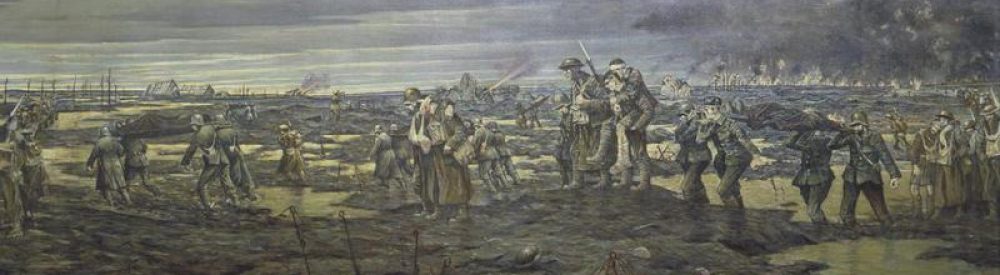
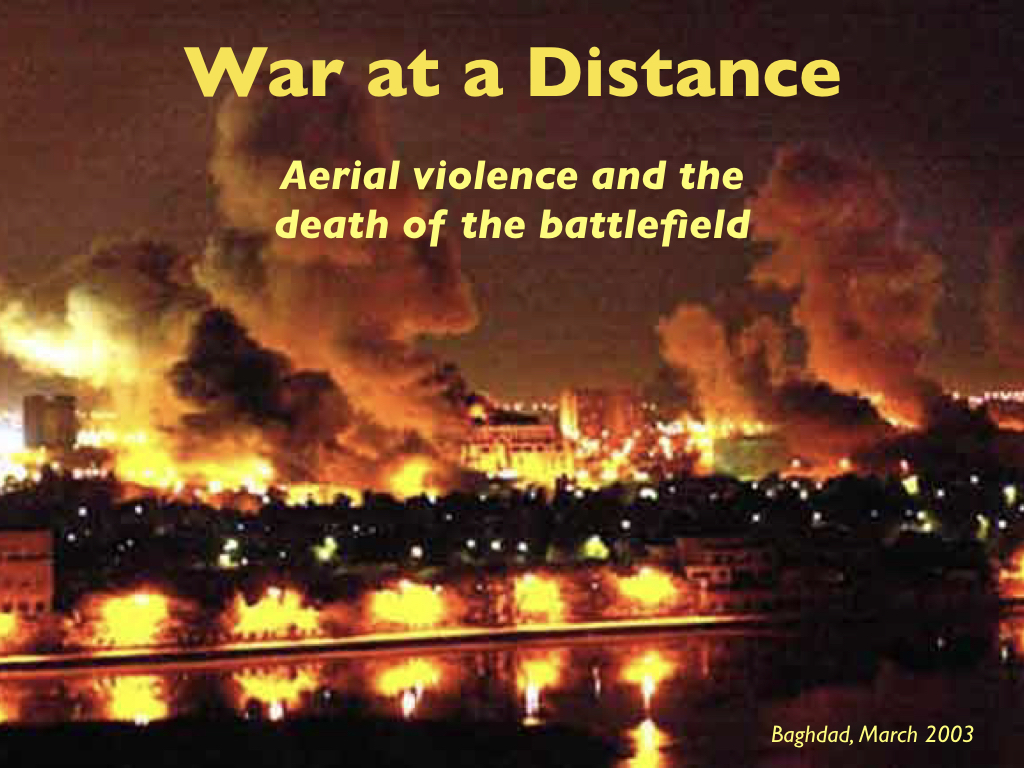
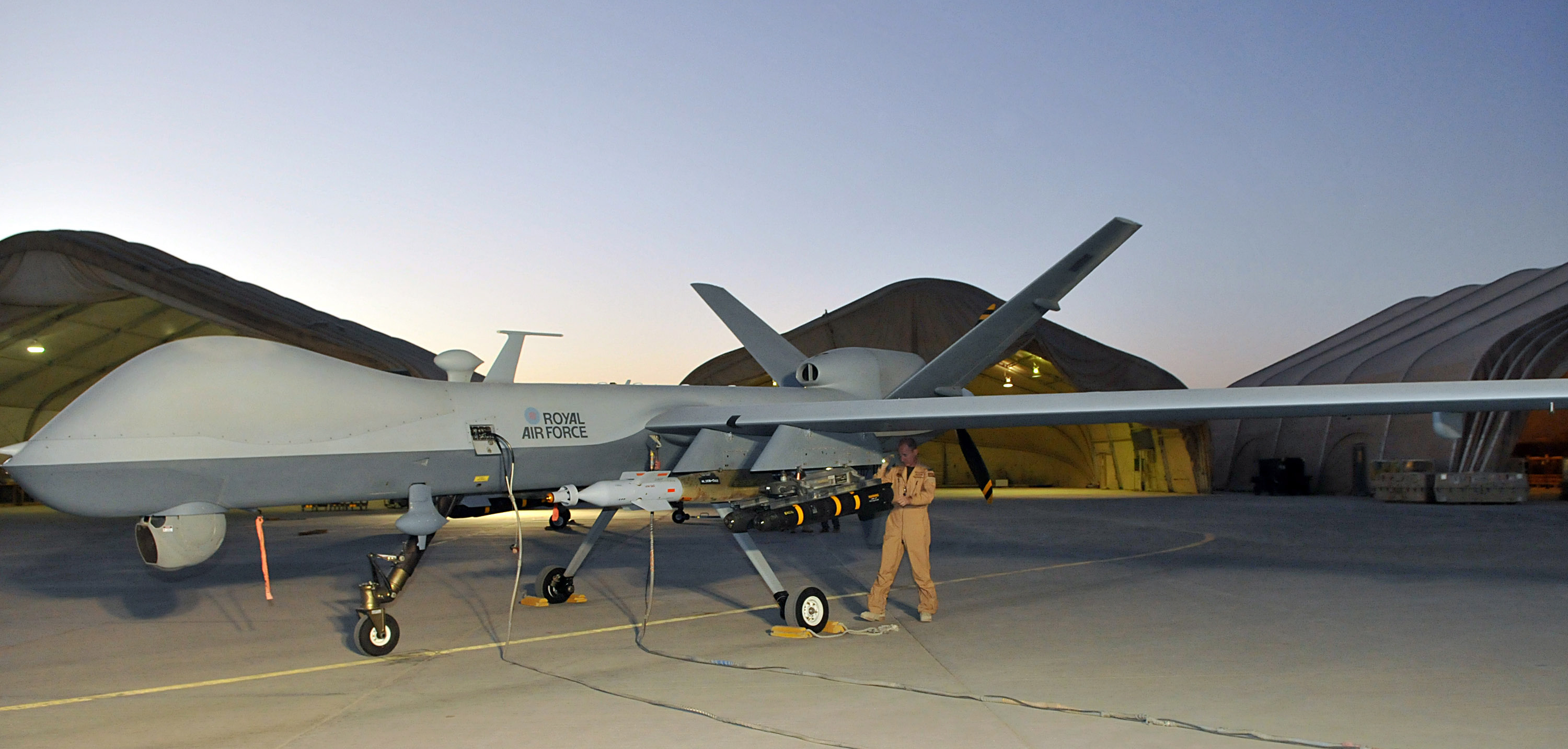
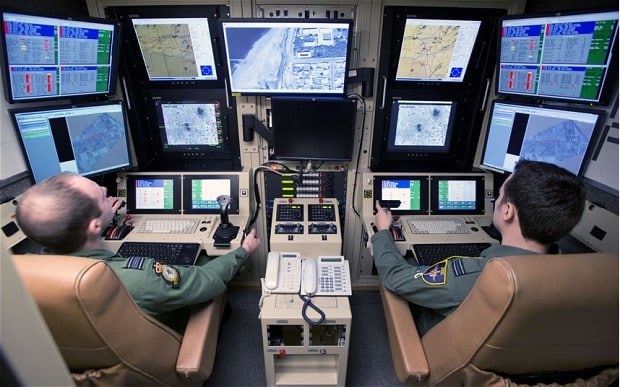
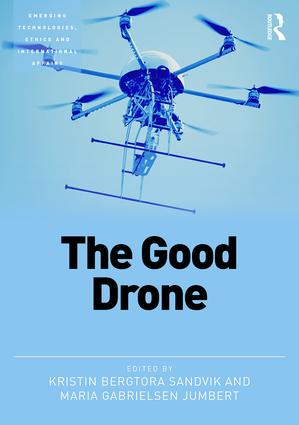
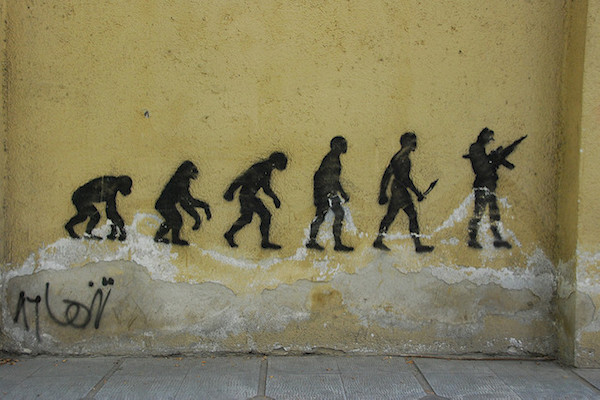
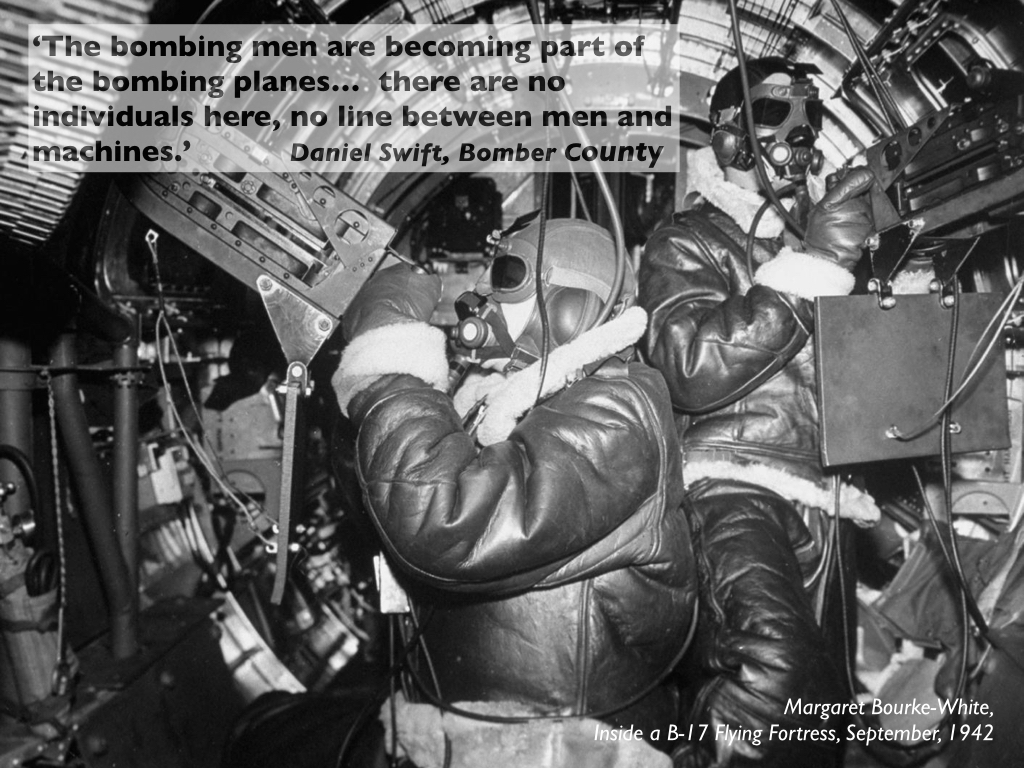
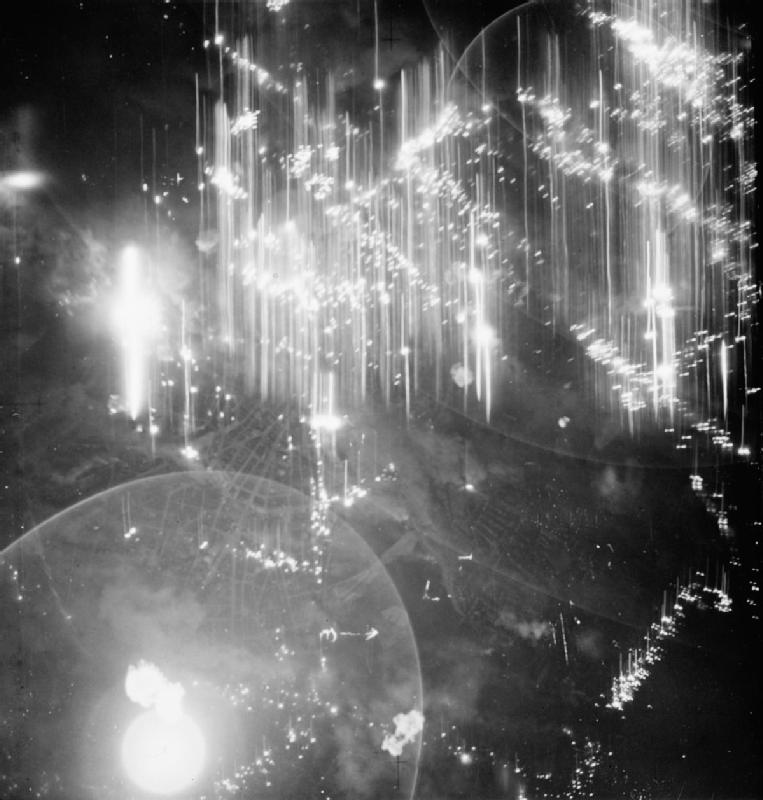
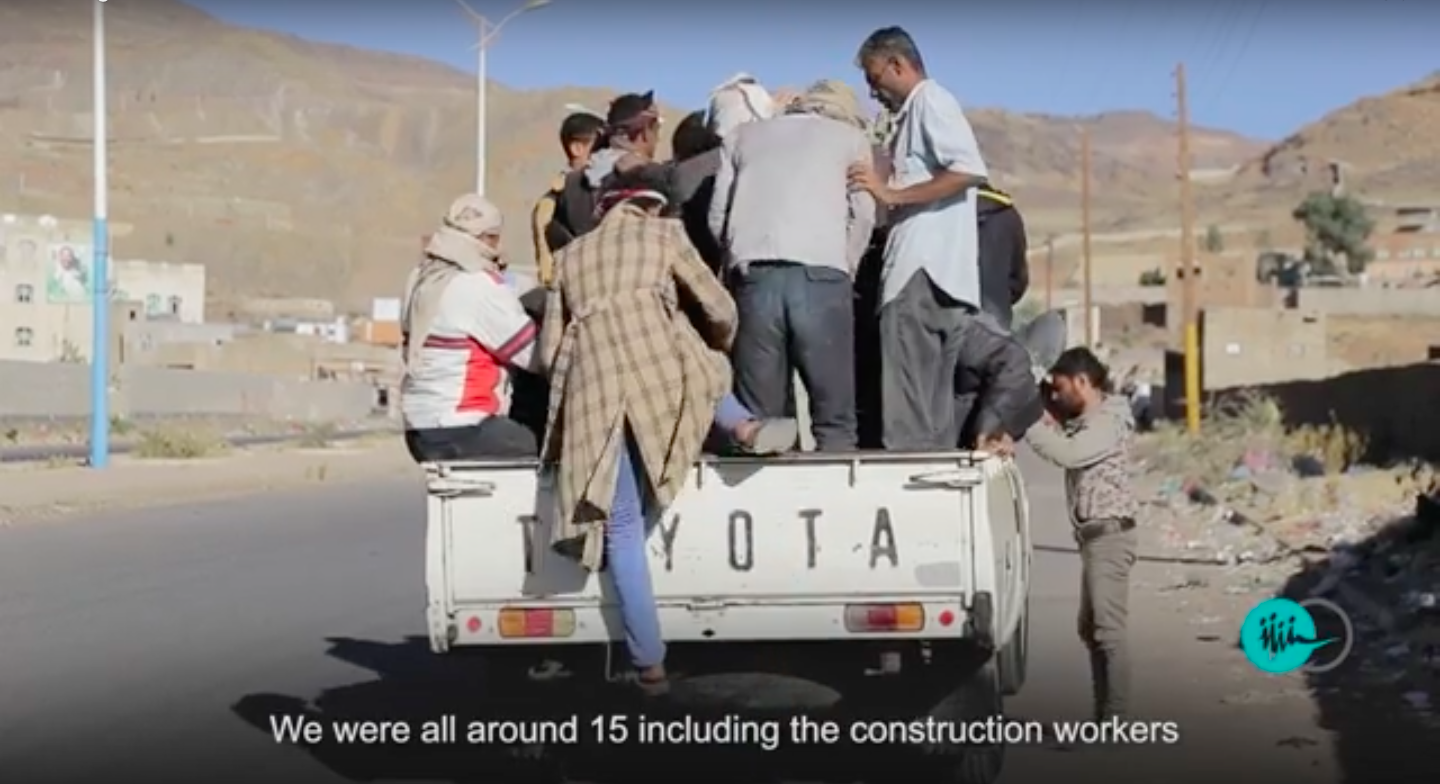
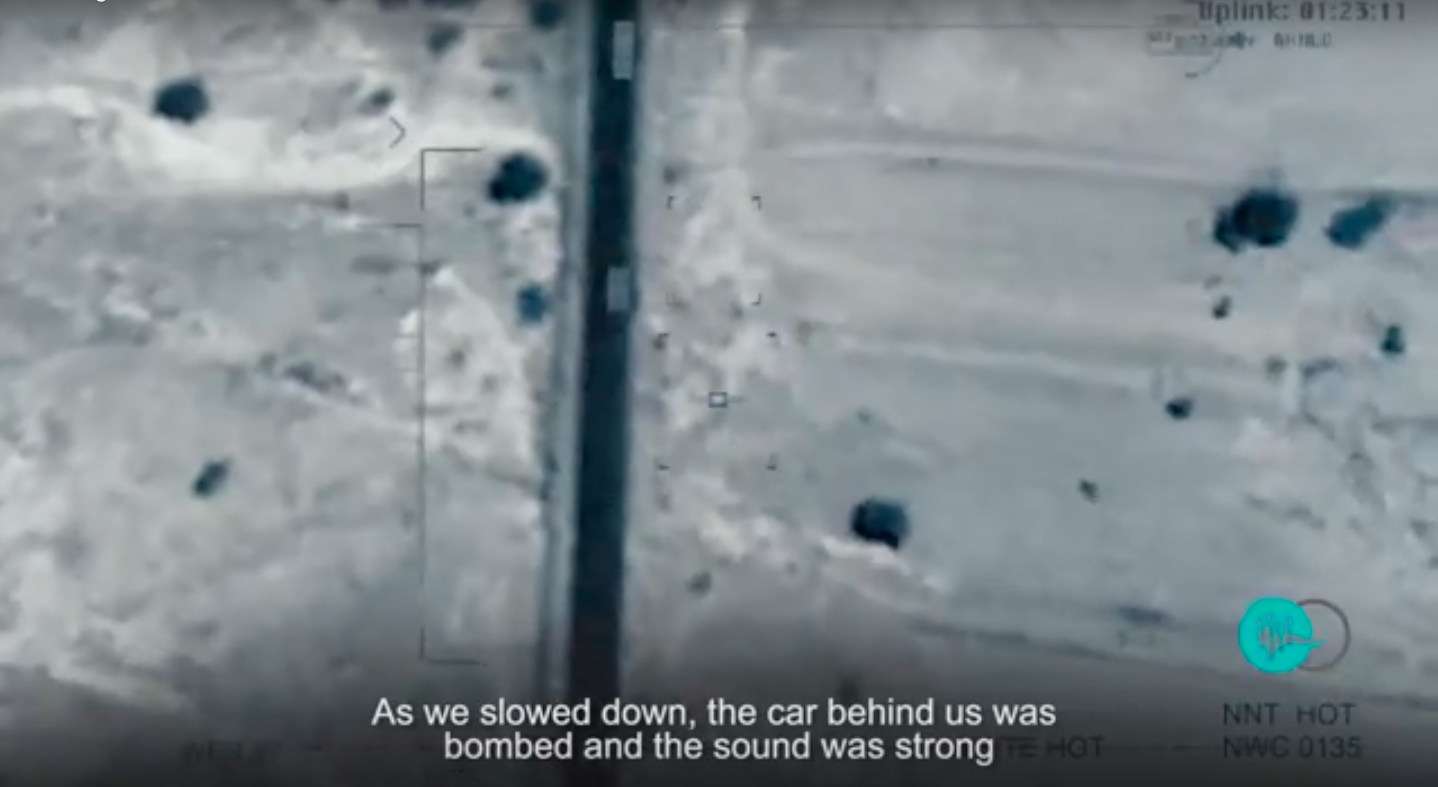
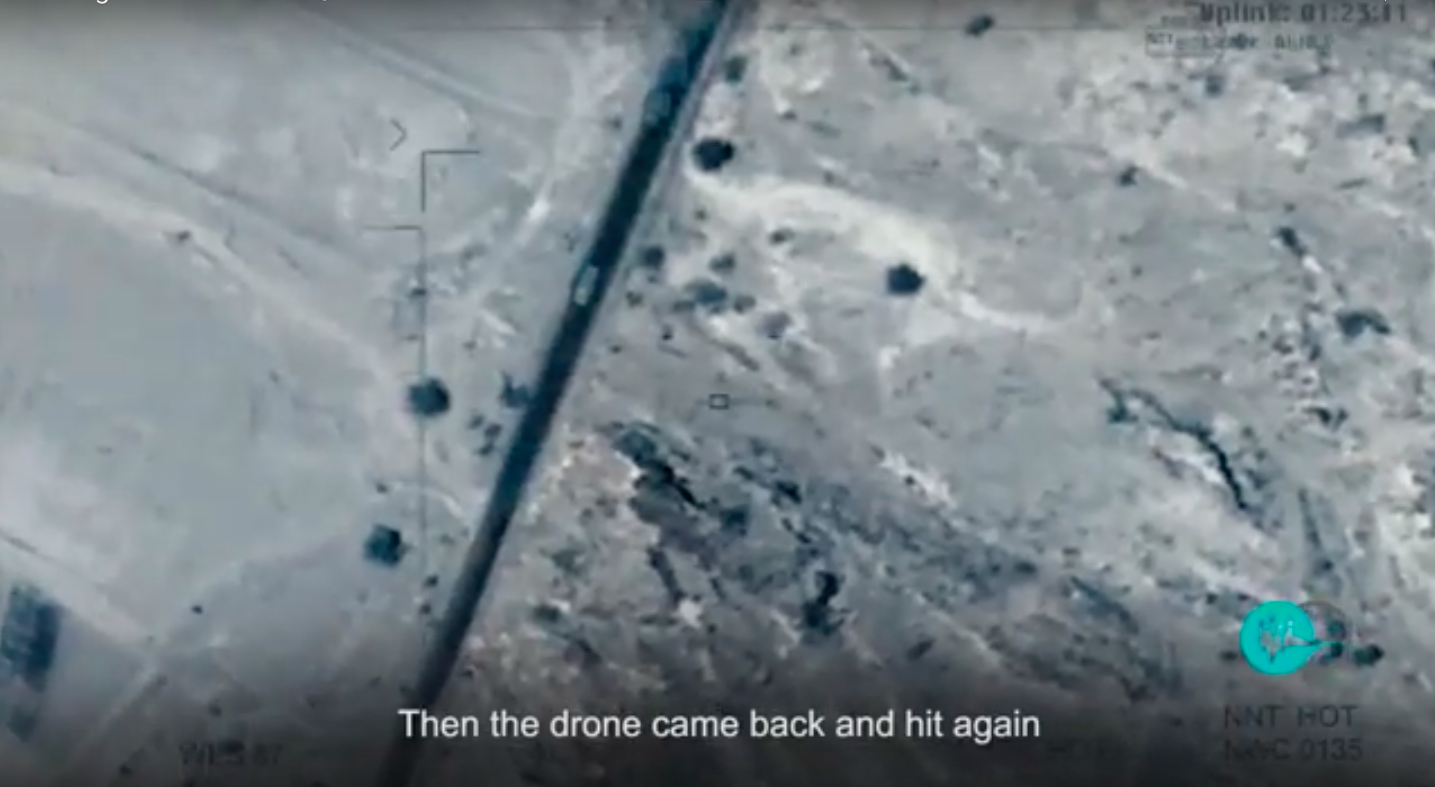
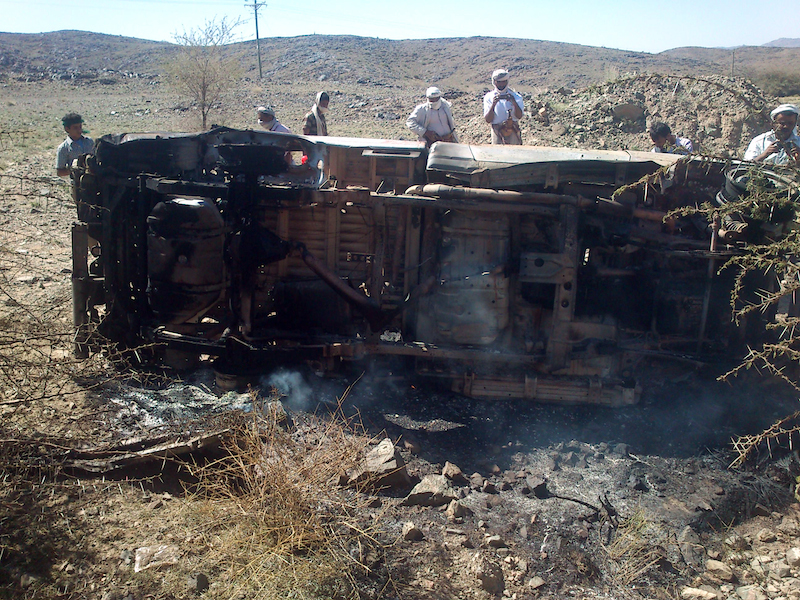
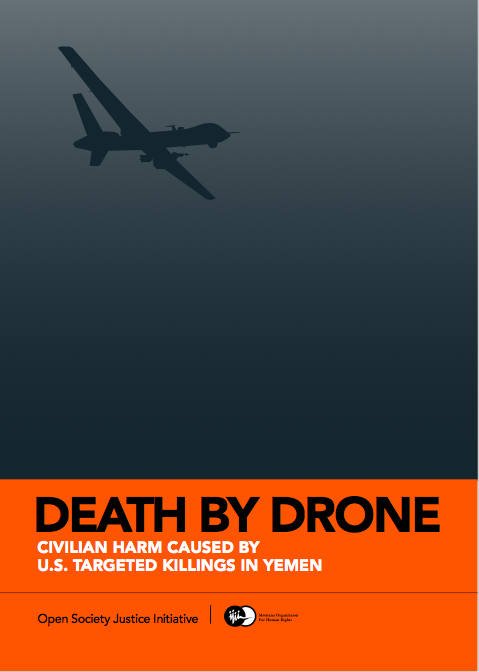
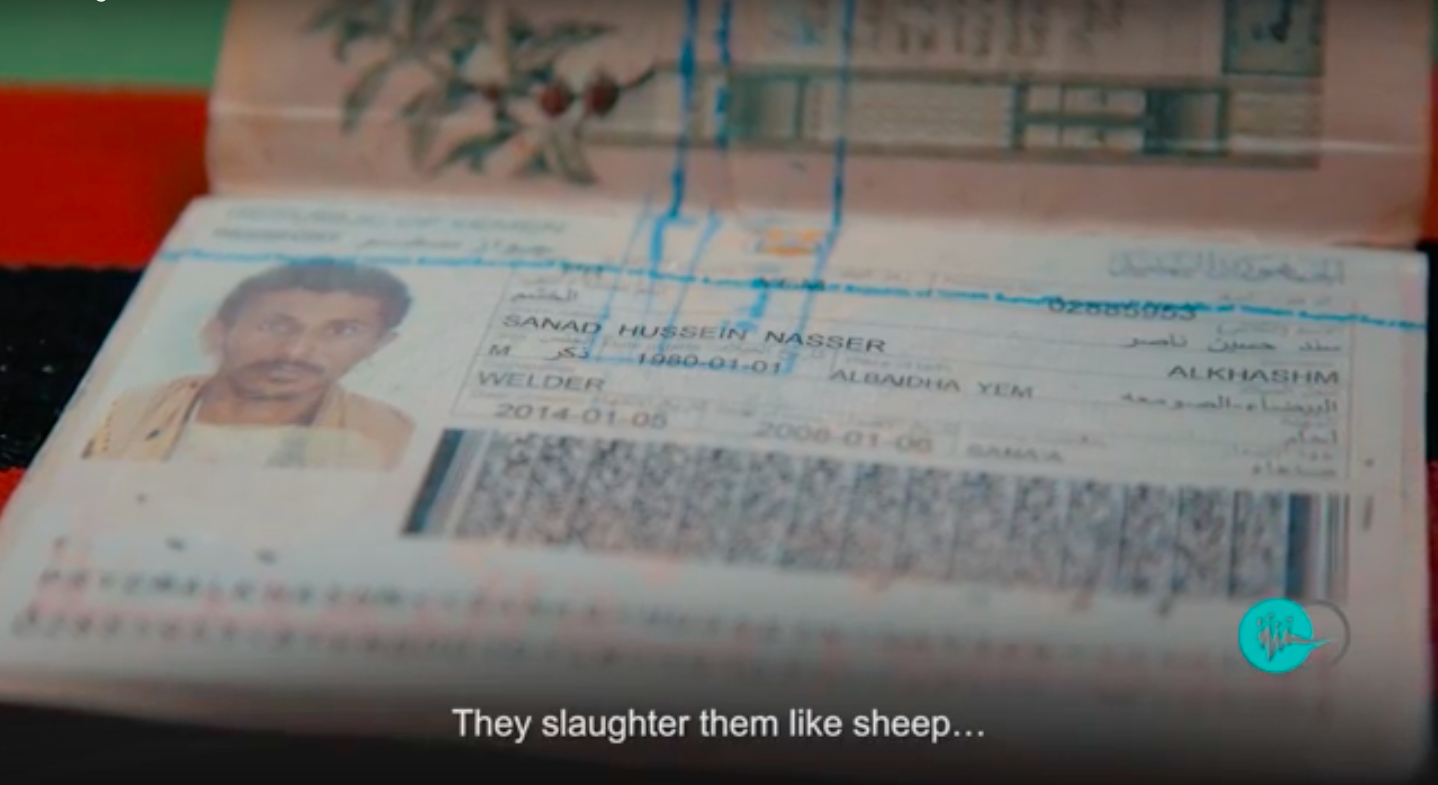
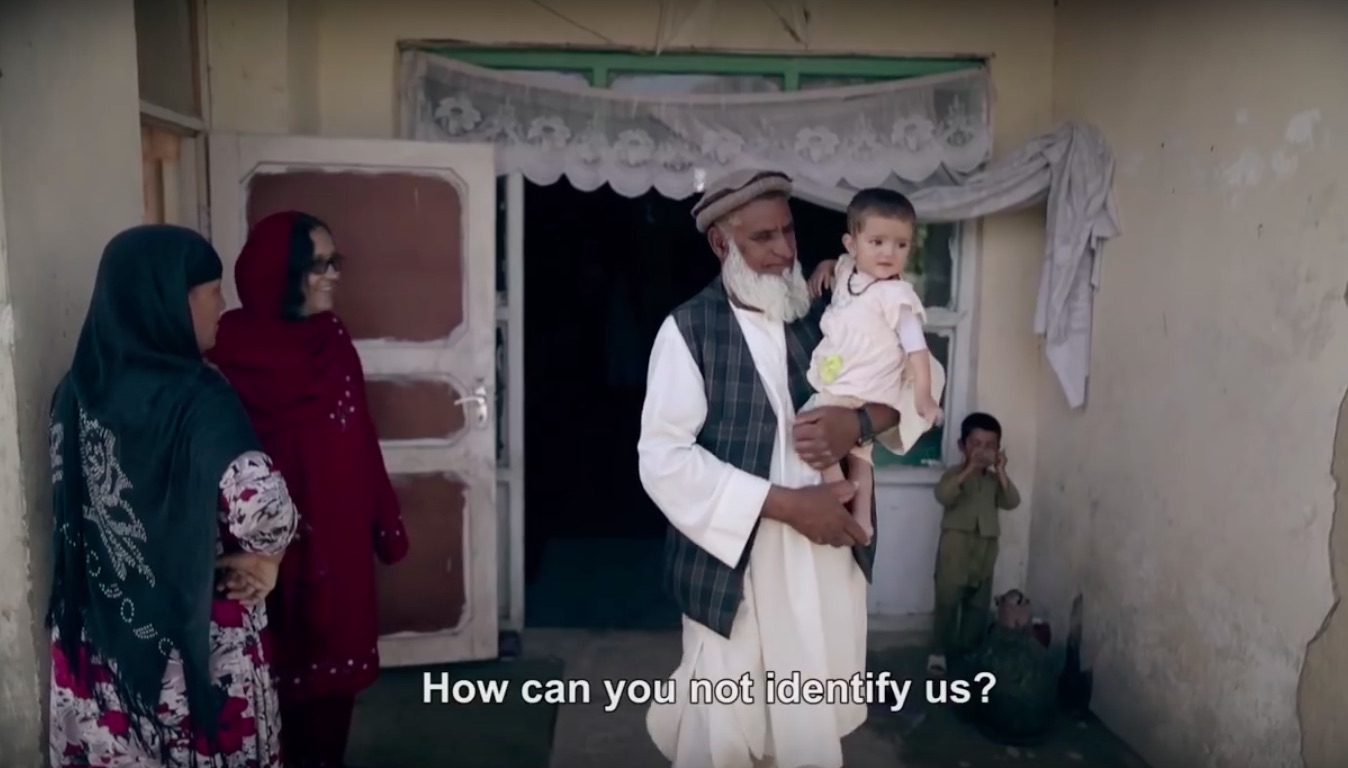
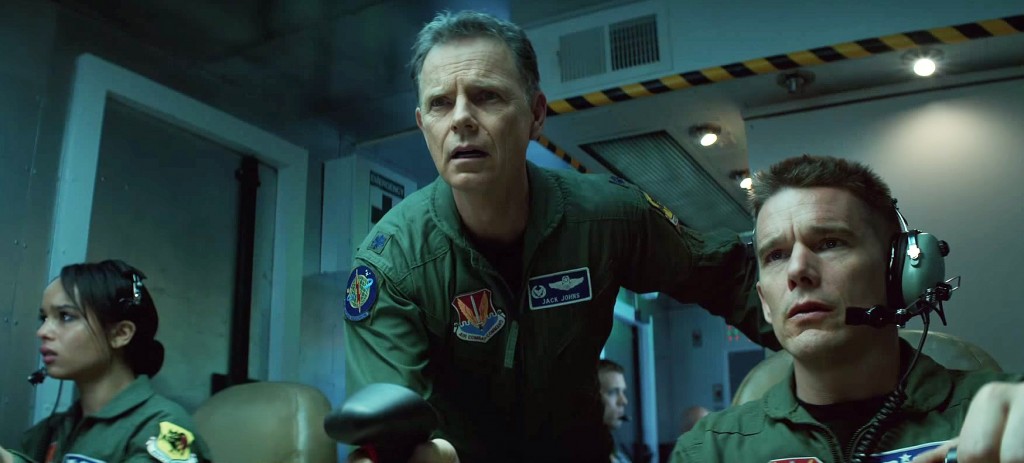
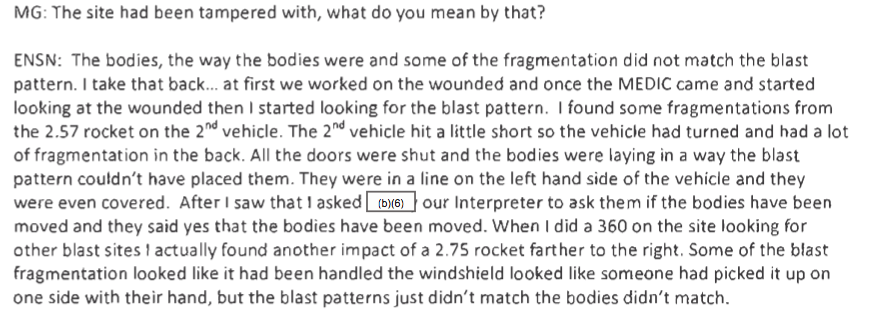
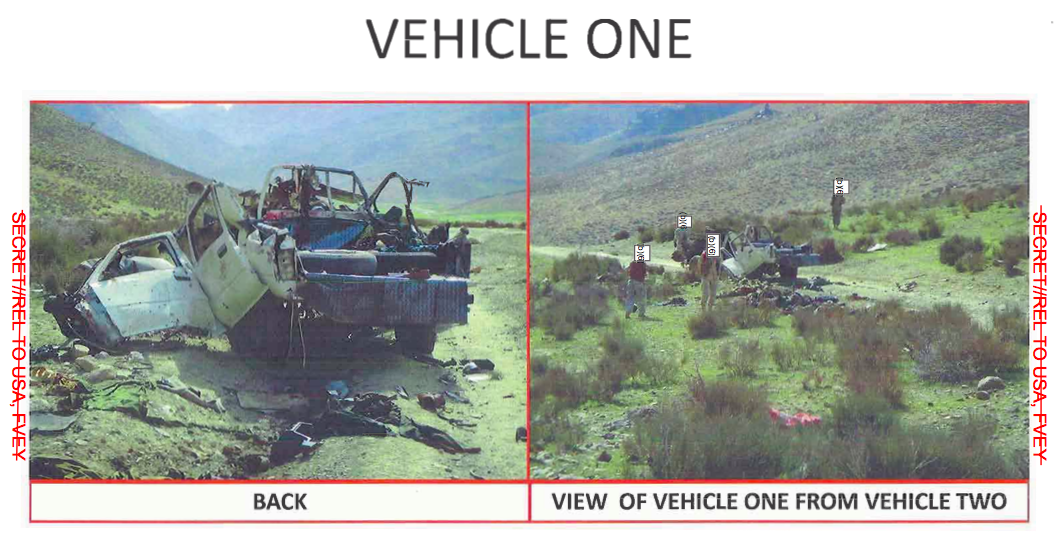
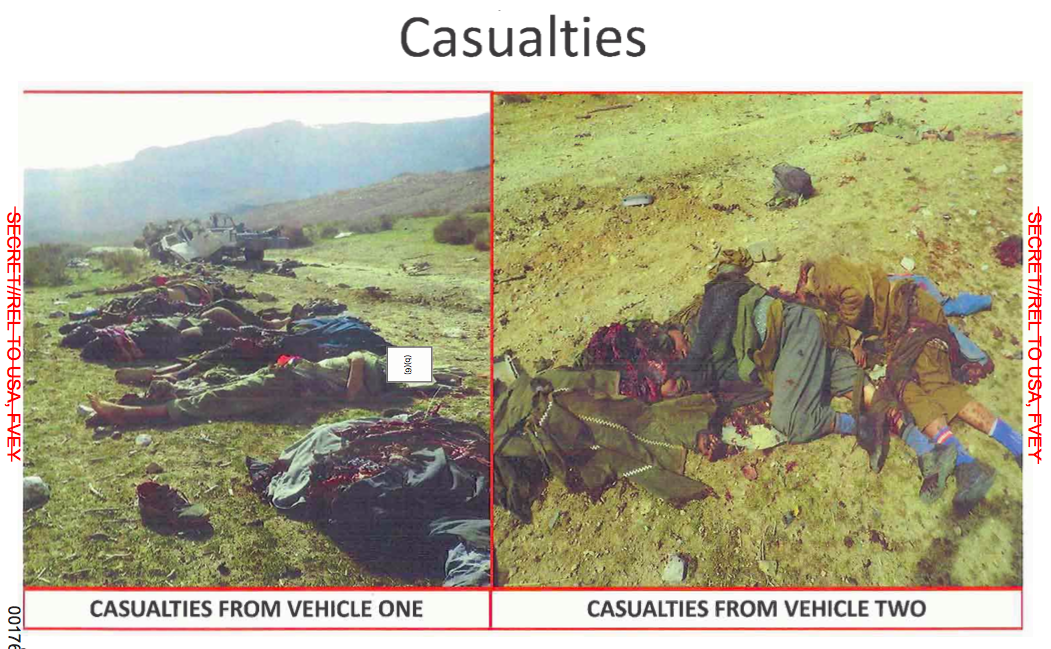
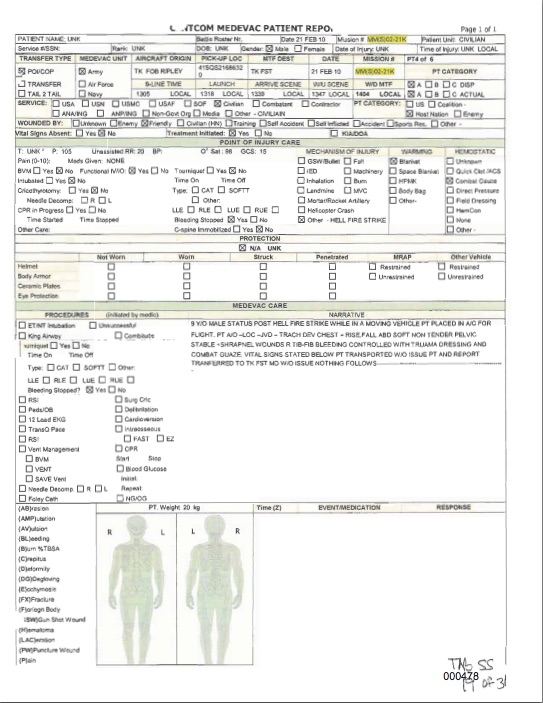
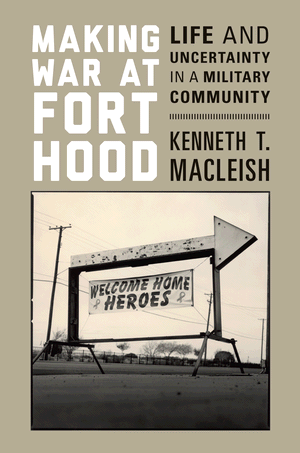
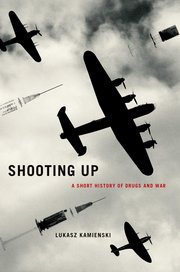
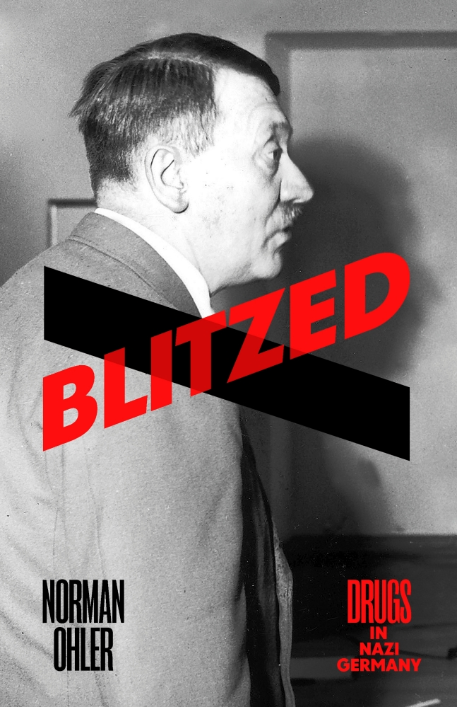
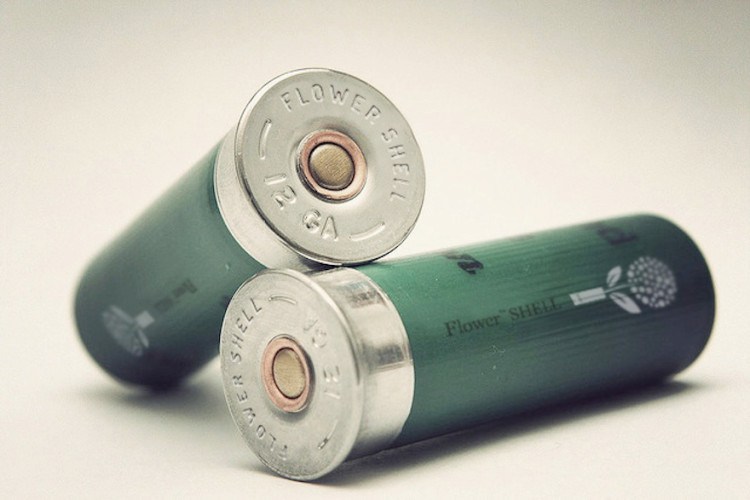
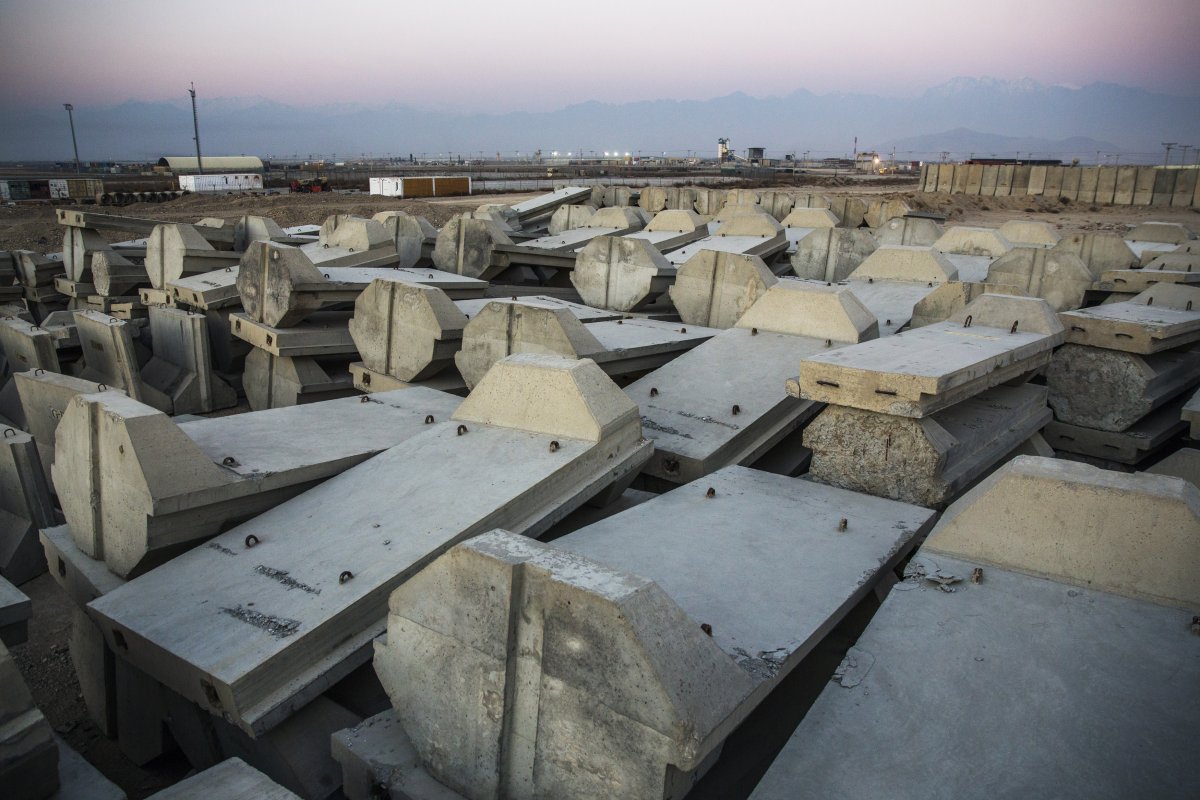
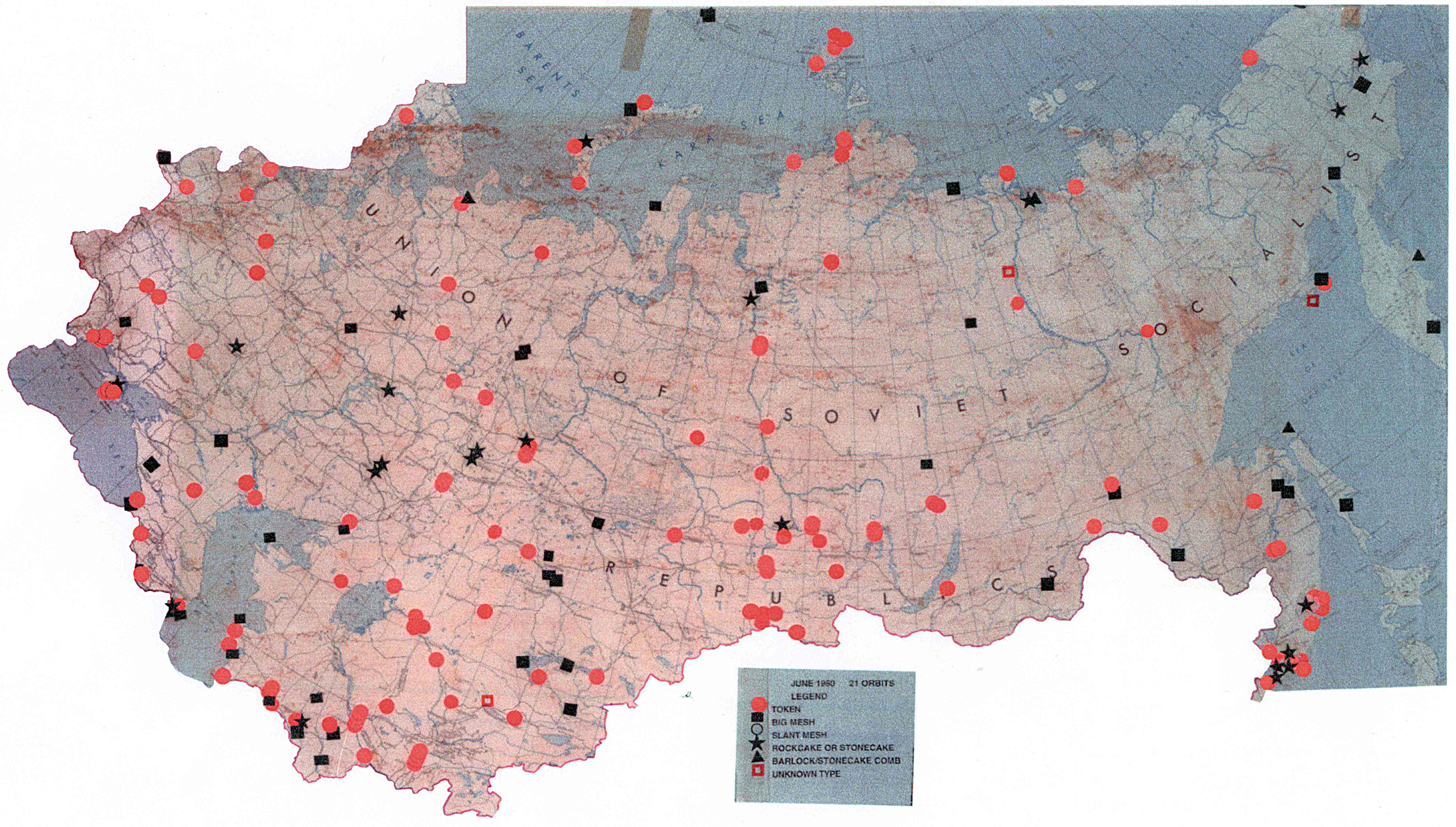
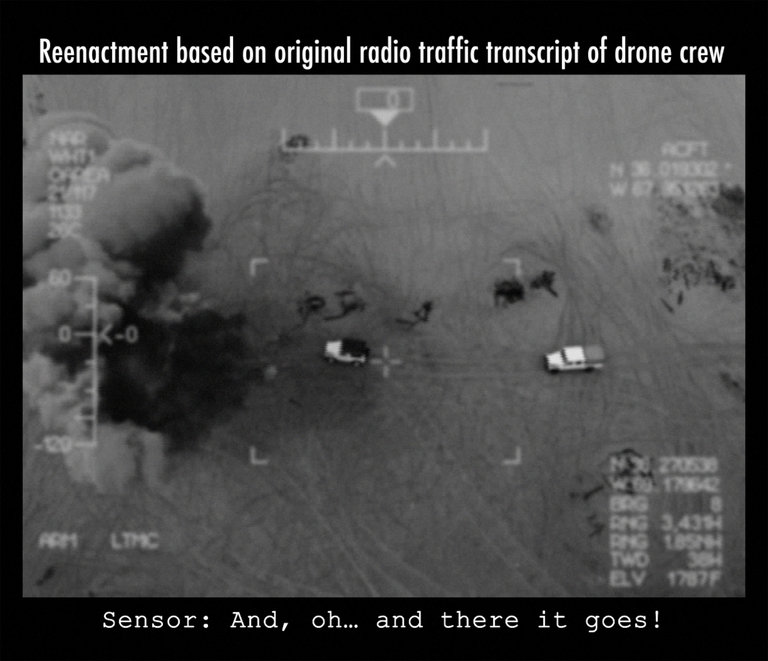
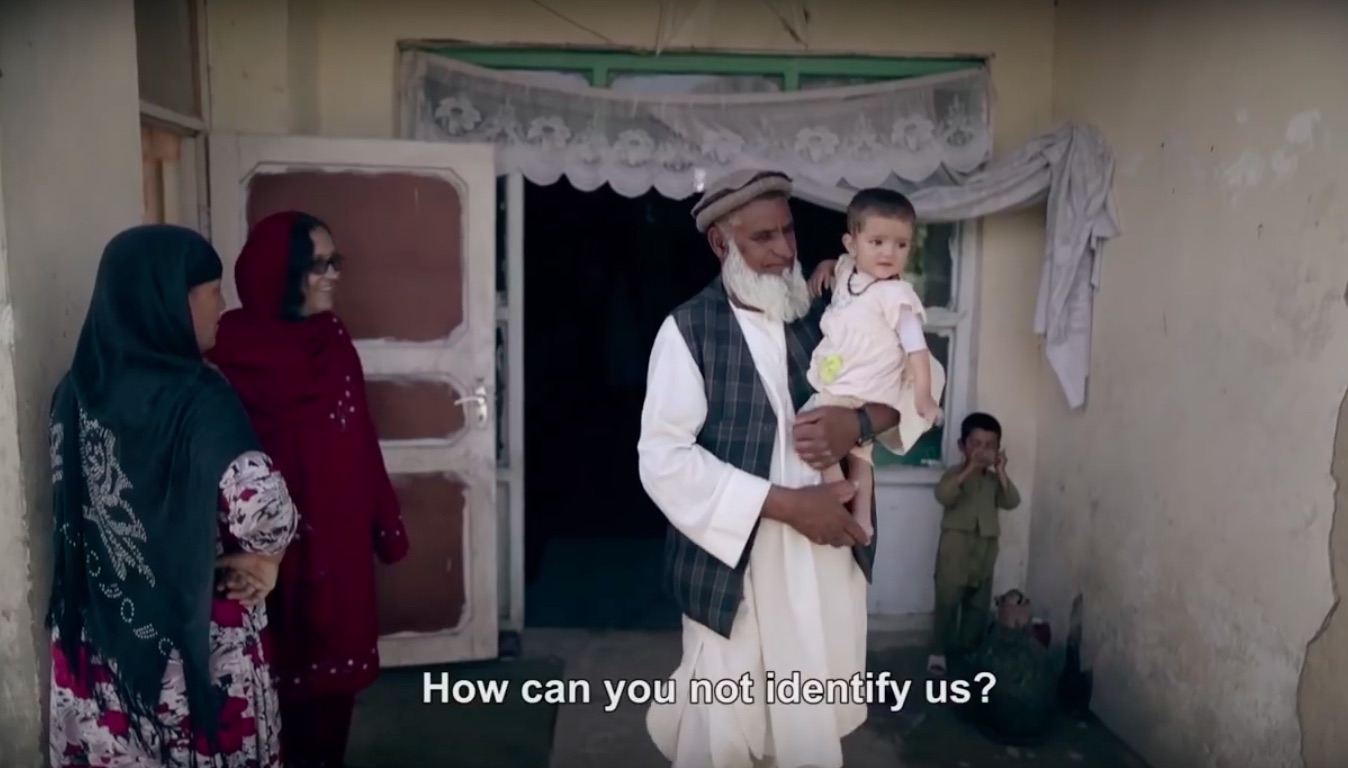
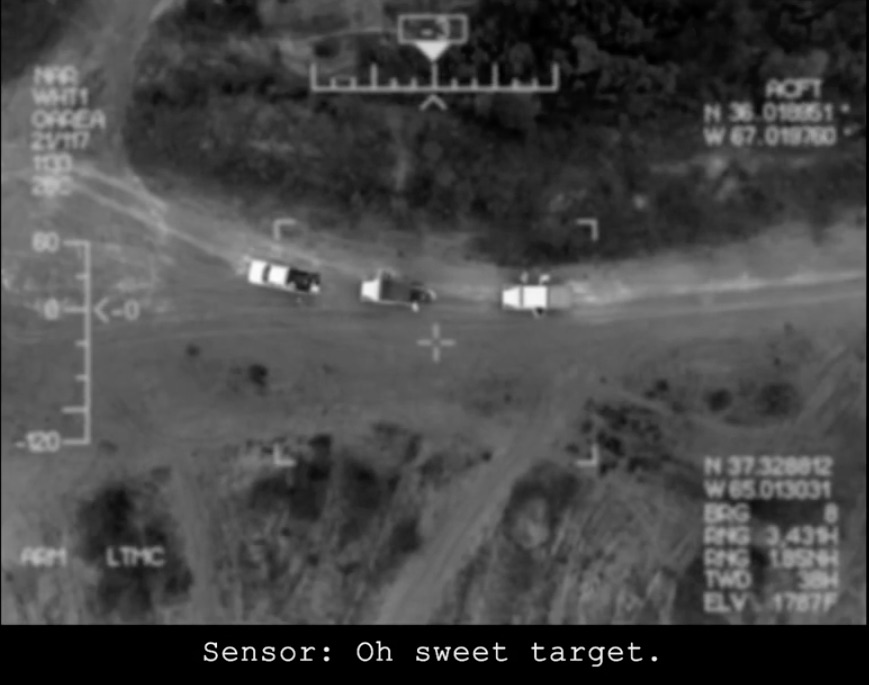
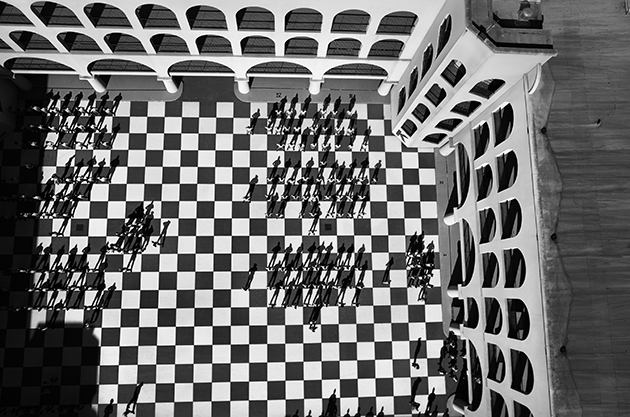

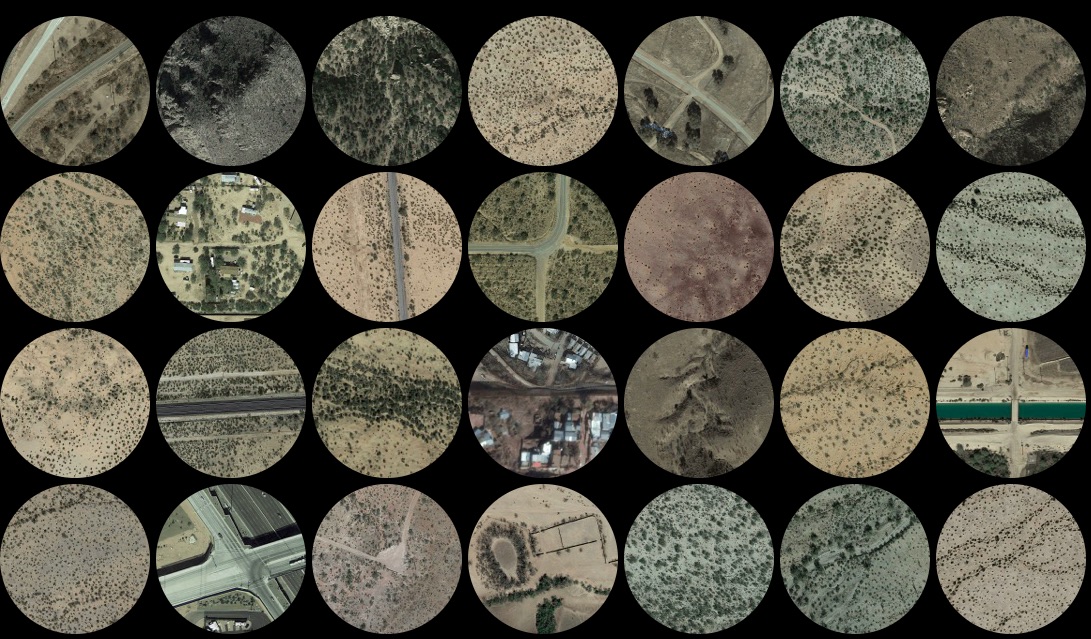
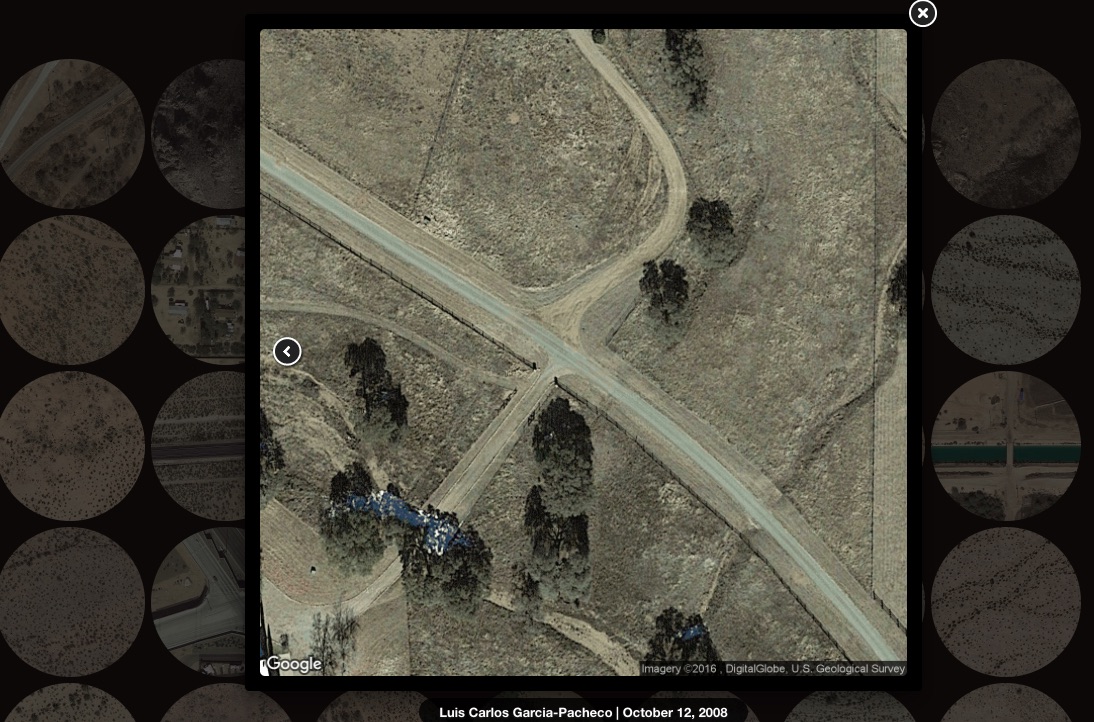
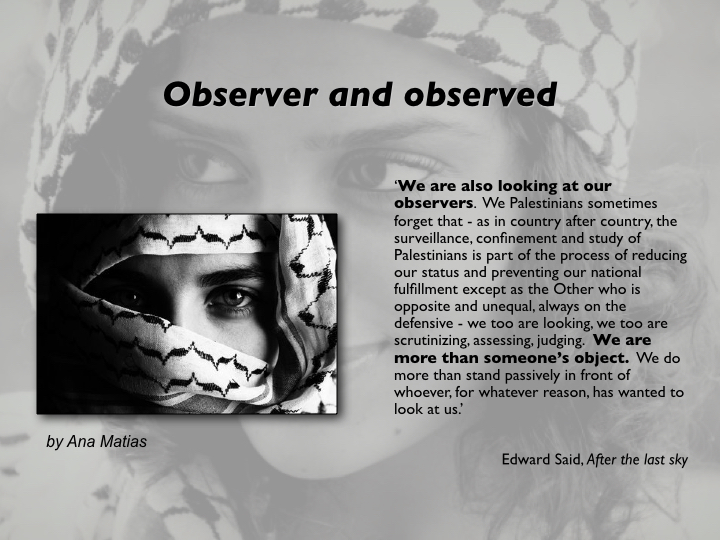
 geographical imaginations