Theory of the drone 10: Killing at a distance

This is the tenth in a series of extended posts on Grégoire Chamayou‘s Théorie du drone and covers the fifth and final chapter in Part II, Ethos and psyche.
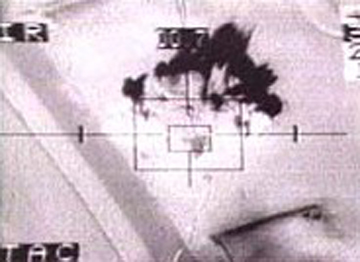
Gulf_war_target_camChamayou begins with a lecture given by German artist and film-maker Harun Farocki in Karlsruhe in 2003 called  ‘Phantom Images‘.  A ‘phantom image’, Farocki explained, is a view that is otherwise inaccessible to a human being – like the ‘bomb’s-eye view’ that became so familiar during the Gulf War (‘a suicidal camera’).  Like so many other ‘technical representations which maintain that they only represent the operative principle of a process’ these are, of course, techno-cultural performances.  They are techno-cultural because they produce a constructed and constrained space – in the Gulf War images that Farocki used to frame his argument, the battle space appears empty of people, a landscape without figures, an odyssey of destruction based on an object-ontology – and they are performances because they are what Farocki called ‘operative images’ that ‘do not represent an object but are part of an operation‘ (my emphasis).

You can find more on Farocki’s fascination with the virtual/real and Immersion here and on Images of War (at a distance) here.  Both ideas – immersion and distance – are central to Chamayou’s argument, but his starting-point is the idea of an operative image.  He wants to think of militarized vision as a ‘sighting’ that works not only to represent an object but also to act upon it and, in the case that most concerns both of us, this is the mainspring of the production of the target.

This has a long (techno-cultural) history, but drones use a video image to fix and execute the target: ‘You can click, and when you click, you kill.’  There’s something almost magical about it, Chamayou says: a hi-tech form of voodoo violence, like sticking pins into a wax doll, in which bringing someone into view – ‘pinning’ the target in the viewfinder – transports them into the killing space.
GROSSMAN On KillingBut what sort of space is it?  Chamayou considers a simple diagram from Dave Grossman‘s On Killing. For readers unfamiliar with his work, here is how Grossman describes himself on the website of his Killology Research Group:

Col. Grossman is a former West Point psychology professor, Professor of Military Science, and an Army Ranger who has combined his experiences to become the founder of a new field of scientific endeavor, which has been termed “killology.” In this new field Col. Grossman has made revolutionary new contributions to our understanding of killing in war, the psychological costs of war, the root causes of the current “virus” of violent crime that is raging around the world, and the process of healing the victims of violence, in war and peace. 

And here is the diagram, which summarises Grossman’s views on the relationship between ‘resistance to killing’ and distance from the target:
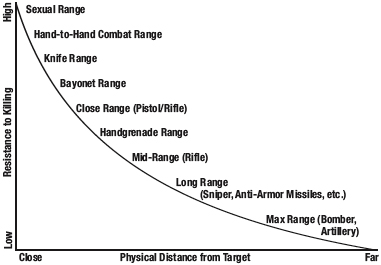
Resistance to killing as a function of distance

Grossman’s basic argument is that distance increases indifference and, as the annotations imply, there appears to be an historical sequence to all this.  Grossman’s book was published before the advent of the drone, but – given these two axes – the Predator and the Reaper presumably ought to appear on the extreme right of the diagram, representing the radicalisation of killing at a distance.

In fact, Grossman provides a discussion of videogames in which he says that the screen acts as a barrier between the player and the violence s/he unleashes in the game, making it easier to ‘kill’: exactly the argument advanced by those who claim that drones induce a ‘Playstation mentality’ to killing.

And yet, as I’ve explained in ‘From a view to a kill’ (DOWNLOADS tab), modern videogames are profoundly immersive, and the high-resolution full motion video feeds from the drones induce such an extraordinary sense of proximity, even intimacy – remember that crews frequently claim to be 18 inches from the combat zone, the distance from eye to screen – that drones are surely also pulled towards towards the extreme left of Grossman’s diagram.

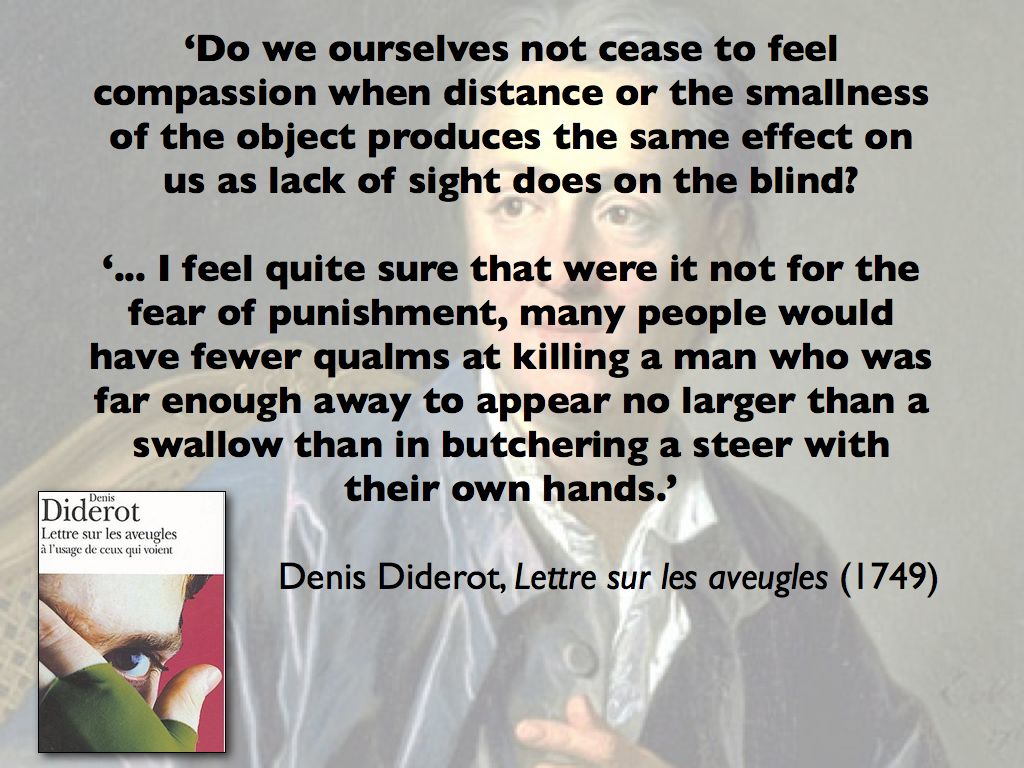
Chamayou doesn’t quote him, but Diderot’s Letter on the blind set out the original terms of the debate perfectly:
DIDEROT.001

But Chamayou is quick to show that ‘distance’ is a weasel-word, and in an extended footnote he elaborates his concept of pragmatic co-presence.  Co-presence denotes the possibility of A affecting B in some way, which means (in the absence of sorcery) that B must be within the sphere of action of A; more formally, co-presence involves the inclusion of one within the ‘range’ or ‘reach’ of another.  This is multi-dimensional – without technical mediation you can see someone much further away than you can hear them – but in many situations technical mediations are involved and so transform the relation.  This matters for two reasons.

First, there is nothing necessarily reciprocal about co-presence: what Chamayou calls ‘the structure of of co-presence’ determines what it is possible for you to do to the other, and is itself the product of struggle: each party to a conflict manouevres to produce a favourable asymmetry so that it becomes much easier for you to strike than to be hit.  In this sense, all war strives to be asymmetric – it’s not confined to wars between states and non-state actors – and it’s this that in part underwrites the history of war at a distance; as William Saletan put it, effectively re-describing Grossman’s diagram,

‘Technically, this is marvelous. Look at the history of weapons development: catapult, crossbow, cannon, rifle, revolver, machine gun, tank, bazooka, bomber, helicopter, submarine, cruise missile. Every step forward consists of a physical step backward: the ability to kill your enemy with better aim at a greater distance or from a safer location. You can hit him, but he can’t hit you.’

But – Chamayou’s second rider – ‘teletechnologies’ radically transform this sequence by severing co-presence from co-localisation.   What is distinctive about teletechnologies is not their capacity to act ‘at a distance’ but their indifference to and their interdigit(is)ation of ‘near’ and ‘far’.

This has far-reaching (sic) consequences because it produces a double disassociation.  Where, exactly, does the action take place?  Here (at Creech Air Force Base in Nevada) or there (Kandahar in Afghanistan)?  There is no single answer, of course, which is precisely Chamayou’s point.  This split – or series of splits, if you think of the wider networks involved – in turn engenders radically new forms of experience, of being-in-the-world, that can no longer be contained within the physico-corporeal confines of the conventional human subject.

Chamayou wants to show that this double disassociation is anything but ‘marvellous’.   He accepts that the targets that are produced through the full-motion video feeds from the Predators and Reapers are much less abstract: the crews see their targets – often people, not physical objects like the buildings or missile batteries that constituted Farocki’s ’empty’ battlespace – and they see the corporeal consequences of each strike.  ‘This novel combination of physical distance and visual proximity gives the lie to the old [Clausewitz-Hegelian] law of distance,’ Chamayou writes, since ‘increased distance no longer makes violence more abstract or more impersonal but, on the contrary, more graphic and more personal.’

But he insists that this proximity, even intimacy is counterbalanced by two factors which are also inscribed within the political technology of vision:

(1) ‘Proximity’ is contracted to the optical – and even this is degraded because the resolution of the video feeds reduces people to ‘avatars without faces’.  I think this is less straightforward than Chamayou implies.  He cites Salatan – ‘There’s no flesh on your monitor; just co-ordinates’ – which is a sharp remark, but the journalist was referring to the launch of long-range missiles (‘… tap a button on one continent and send a missile to another’) whereas the screens at Creech and elsewhere show human figures as well as co-ordinates.  More significant, I think, is that when drone operators provide close air support they are also in radio and online contact with troops on the ground, and this produces a pragmatic co-presence which is considerably more ‘fleshed out’ than their otherwise purely optical encounters with others in their field of view.

(2) Drone operators can see without being seen, and Chamayou argues that ‘the fact that the killer and his victim are not inscribed in “reciprocal perceptual fields” facilitates the administration of violence’ because it ruptures what psychologist Stanley Milgram in his notorious experiments on Obedience to authority [below] called ‘the phenomenological unity of the act’.  Milgram actually wrote “experienced”, not “phenomenological”, but you get the point; Milgram was discussing how much easier it is to hurt someone ‘if there is a physical separation of the act and its consequences’, which is radicalised in what the US Air Force calls the ‘remote split’ operations carried out by its Predators and Reapers.

MILGRAM Experiments

Milgram’s thesis was a general one, but to nail the sense of disassociation to the drone Chamayou quotes Major Matt Martin, a Predator operator:

‘The suddenness of action played out at long distance on computer screens left me feeling a bit stunned…  It would take some time for the reality of what happened so far away, for “real” to become real.’

Again, I think it’s more complicated than that.  Martin was clearly recalling an early experience, low on the learning curve, and interviews with other drone pilots suggest that within 6 months or so most had little difficulty in apprehending the reality, even the physicality of pragmatic co-presence. The sensor operator interviewed by Omer Fast for 5,000 Feet is the Best had this to say, for example:

‘… you get more into it the longer you’re working on the Predator.  Like my first fire mission.  You know, we fired a Hellfire missile at the target.  It didn’t quite strike [sic] me as, “Hey! I just killed someone!”  My first time.  It was within my first year there.  It didn’t quite impact.  It was like, “Yeah! I got somebody!”  You know?  And it was later on through a couple of more missions that I started to… The impact really dawned on me.  I just ended someone’s life!  That was me that did that!”‘
obedience-to-authority-milgramIt’s important to remember, too, that Milgram’s work was about structures of authority, and this has a palpable effect in the case of the military chain of command which has been transformed by the networked incorporation of video feeds from the drones and the deployment of military lawyers (JAGs) on the operations floor of the Combined Air and Space Operations Center (what I called ‘oversight’ in “From a view to a kill”),  which provides for a dispersion of responsibility across the network.

Equally important, I suspect, is that fact that drone crews are not only ‘following orders’, as the familiar jibe has it: they are also following procedures that transform military violence into a process that is at once techno-scientific and quasi-juridical and thus seen as conducted under the sign of an unimpeachable (military) Reason.

Joseph Pugliese makes a parallel argument about the incorporation of military-legal discourse into the techno-logic of the targeting process:

‘I argue that the parenthetical relation of law to technology is premised on a topical hiatus that disassociates the executioner who manipulates the killing technology of the drone from the facticity of the resultant execution. In this scenario, law is conceived of in the most radically instrumental of understandings: it enables and legitimates the execution while simultaneously suspending the connection between the doer and the deed.’
state-violence-and-the-execution-of-lawAnd yet at the same time, Pugliese explains, there is a ‘prosthetic’ relation between law and technology, in which ‘the human agent is always already inscribed by the technics of law.’ From the very beginning, he insists, the body is always already ‘instrumentalised by a series of technologies’ and also inscribed, from the very beginning, by a series of laws.  In short, ‘law is always already inscribed on the body, precisely as techné from the very first. This process of prosthetic inscription operates to constitute the very conditions of possibility for the conceptual marking of the body as”‘human’”‘: ‘The prosthesis,’ notes Bernard Stiegler, ‘is not a mere extension of the human body; it is the constitution of this body qua “human”’.’

Still, Chamayou suggests that (1) and (2) work together to sustain what Mary Cummings calls ‘moral buffering’.  In other words, and in counterpoint to optical proximity, the dispositif also provides a powerful means of distanciation.  Here is Fast’s interviewee again:

‘There’s always more of a personal touch when you’re watching something live.  And it’s even more personal when you’re the one that did it… Well, I mean you get more – I guess – emotionally distant.  As time goes on.  But I mean… I guess in my case, and some of the cases of the guys that I knew, as more time went by you put yourself more and more in the position that this is more and more real life and that you are actually there… And after a while you become emotionally distant.  But still you put yourself more and more as if you’re standing right there…’
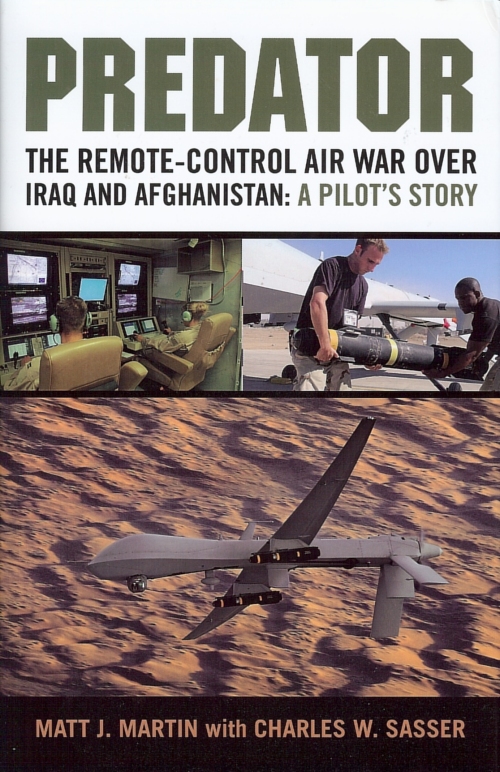
MARTIN PredatorThis is compounded, so Chamayou argues, by a different dimension of ‘remote split’ operations. Because Predators and Reapers can stay aloft for 18 hours or more (the ‘persistent presence’ that makes them so much in demand), their crews work shifts and commute each day (or night) between home and work or, more accurately, between peace and war.  One drone operator saw this as a peculiarly strung-out existence: ‘We were just permanently between war and peace’  (my emphasis).  Matt Martin said much the same.  US-based crews ‘commute to work in rush-hour traffic, slip into a seat in front of a bank of computers, fly a warplane to shoot missiles at an enemy thousands of miles away, and then pick up the kids from school or a gallon of milk at the grocery store on [their] way home for dinner.’  He described it as living ‘a schizophrenic existence between two worlds’; the sign at the entrance to Creech Air Force Base read ‘You are now entering CENTCOM AOR [Area of Operations]’, but ‘it could just as easily have read “You are now entering C.S. Lewis’s Narnia” for all that my two worlds intersected.’

The way crews survive, Chamayou suggests, is by partitioning, ‘setting aside’, but this is extremely difficult for commuter-warriors as they regularly and rapidly move between a domestic sphere in which killing is taboo and a military sphere where (so he says) it is ‘a virtue’.   The superimposition of these two worlds – their contradictory clash – means that crews are in a sense ‘both in the rear and at the front, living in two very different moral universes between which their lives are torn.’

This is precisely the situation dramatised in George Brant‘s play Grounded, which I noted in an earlier post, and Chamayou cites a former USAF sensor operator Brandon Bryant (whose testimony I discussed here) to the same effect.  In both cases, crew members plainly are affected, even distressed by what they see on the screen; in fact Bryant has bee diagnosed with PTSD.

But Chamayou insists that this sort of testimony is rare and that most of them do manage to compartmentalise.  Fast’s sensor operator:

‘A lot of us learn real fast to leave all of our problems at the door.  You know, when we’re leaving the squadron and heading home.  Just kind of putting it on a rack and pushing it out of your mind.’

And this, Chamayou concludes, nails the real psychopathology of the drone.  He calls French philosopher Simone Weil’s Gravity and grace to his aid:

‘The faculty of setting things aside opens the door to every sort of crime…  The ring of Gyges who has become invisible – this is precisely the act of setting aside: setting oneself aside from the crime one commits; not establishing the connection between the two.’

Chamayou has used the myth of Gyges earlier in his critique, but here he invokes Weil to claim that the psychopathology of the drone is not the trauma some say that drone crews experience ‘but on the contrary the industrial production of compartmentalised psyches, protected from all possibility of reflection on the violence they have committed, just as their bodies are already protected against every possibility of exposure to the enemy.’
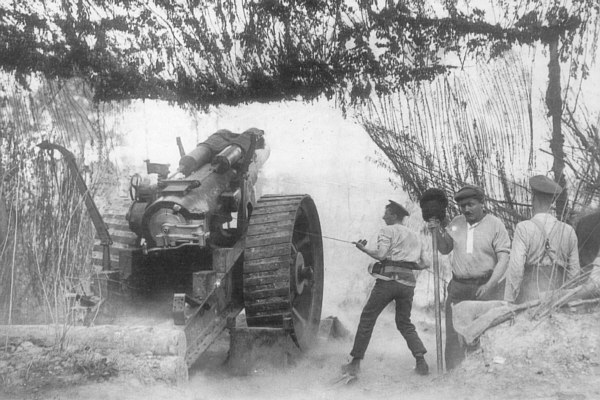
rwg05074-1I’m really not sure about this.  ‘Protected from all possibility of reflection’?  Much of the evidence that Chamayou cites here – like Milgram’s experiments – could be applied to most forms of military violence.  Here, for example, is Arnold Bennett describing artillery at work in Over there: war scenes on the Western Front (1915):

‘The affair is not like shooting at anything.  A polished missile is shoved into the gun.  A horrid bang – the missile has disappeared, has simply gone.  Where it has gone, what it has done, nobody in the hut seems to care.  There is a telephone close by, but only numbers and formulae – and perhaps an occasional rebuke – come out of the telephone, in response to which the  perspiring men make minute adjustments in the gun or in the next missile.

 ‘Of the target I am absolutely ignorant, and so are the perspiring men.’

I’ve found the same sentiments expressed by bomber crews during the Second World War.  The difference, clearly, is that drone strikes involve far more than ‘numbers and formulae’ – co-ordinates on the screen – and that the visual  production and so-called ‘prosecution’ of the target takes place in near real time, in vivid detail and under the eye of military lawyers.  But it is not surprising (nor, I think, especially pathological) that those who carry out these strikes conduct themselves with a certain seriousness, a ‘professionalism’ if you like, that precludes emotional investment. This is from David Wood‘s interview with a highly experienced USAF drone pilot:

Q: You must develop an emotional tie with the people on the ground that makes it hard if there is going to be a strike or a raid, people are going to be killed.

A: I would couch it not in terms of an emotional connection, but a … seriousness. I have watched this individual, and regardless of how many children he has, no matter how close his wife is, no matter what they do, that individual fired at Americans or coalition forces, or planted an IED — did something that met the rules of engagement and the laws of armed conflict, and I am tasked to strike that individual.

‘Professionalism’ shouldn’t be used as a mask to hide from critique, to be sure.  These crews are trained to perform with a calculative reason, dispassionately, through a techno-cultural and techno-legal armature, so that, as one USAF major told Nicola Abé, when she was preparing for a strike ‘there was no time for feelings’.  Or again, from another pilot operating a Predator over Afghanistan:

‘We understand that the lives we see in the screens are as real as our own…  I would not compare what I do as a job comparable to Call of Duty/any other video game, in any sense. It is very real and the seriousness of the lives on the ground is very real and instilled in all of our training. It is never something that we joke about. Very serious business.’

As I’ve noted before, there are (too) many instances in which crews do joke about their missions, the sort of ‘gallows humour’ that is no doubt a common reaction to  hunter-killer missions: but isn’t this also likely to be common amongst all military professionals who are trained to kill?  One pilot explicitly rejected the suggestion that drone crews become disassociated from what they do:

‘I wonder why people think this. We understand what we are doing is real world operations. We know our actions have consequences. I don’t understand the idea of being desensitized due to some operators not being in an actual firefight/combat zone.’

Later in the online exchange, the same pilot insists: ‘It’s very real.  Some of the stuff I’ve seen is burned into my brain’ – and then Brandon Bryant joins the conversation to ‘agree with what you guys have said.’  He’s on record as writing in his personal combat diary ‘I wish my eyes would rot.’

I realise that these passages can’t settle matters, but they surely cast doubt on the implication that drone crews are as machinic as the aircraft they fly.  Pugliese insists that the drone ‘cannot be reduced to a mindless machine of purely robotic acts’; neither, by virtue of what Pugliese calls their prosthetic relation to the drone, can the crew who fly them.   I still think that one of the most salient differences introduced by drones is the differential distanciation they allow when they provide close air support: an unprecedentedly close relation with troops on the ground and a calculative detachment from others in their field of view.

I realise, too, that this can’t apply to targeted killings, and so I leave you with this statement by Lt General Michael DeLong, who as deputy commander of US Central Command had to sign off on the first CIA-directed targeted killing, in Yemen in November 2002.  Then CIA Director George Tenet called DeLong to ask him to give the order, since the Predator was flown by a USAF crew:

delongp‘Tenet calls and said, “We got the target.” … I called General Franks [commander of CENTCOM]. Franks said, “Hey, if Tenet said it’s good, it’s good.” I said, “Okay … I’m going down to the UAV room.” … We had our lawyer there. Everything was done right. I mean, there was no hot dog. … The rules of war, the rules of combat that we had already set up, the rules of engagement ahead of time. Went by them. Okay, it’s a good target. …

I’m sitting back … looking at the wall, and I’m talking to George Tenet. And he goes, “You got to make the call?” These Predators had been lent to him, but the weapons on board were ours. So I said, “Okay, we’ll make the call. Shoot them.” 

Everything may have been ‘done right’, the procedures followed, but  when DeLong was asked ‘What does it feel like when you know you’re going down there to kill somebody?’ He replied:

‘It’s just war. It’s no different than going to the store to buy some eggs; it’s just something you got to do.’

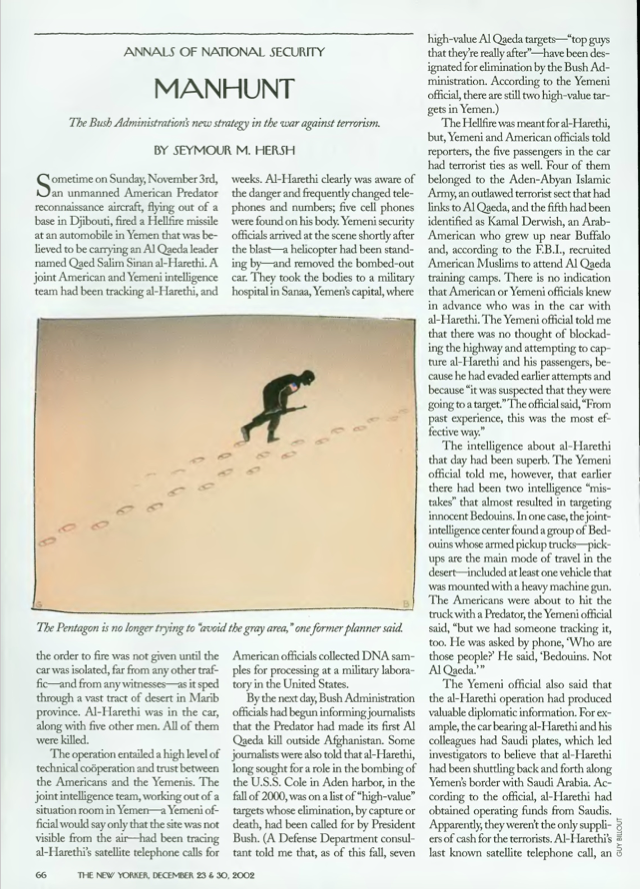
And, as Chamayou would surely insist, it wasn’t war.  It was, as Seymour Hersh wrote in the New Yorker on 23 December 2002, a manhunt.
HERSH Manhunt

To be continued.

Nomadikon

MITCHELL Cloning terror

Henrik Gustafsson writes with an interesting supplement to my previous post on Image Wars. Last year Nomadikon, the Bergen Center for Visual Culture, convened an online discussion around ‘Image Wars’, centring on W.J.T. Mitchell’s argument in Cloning Terror: the war of images, 9/11 to the present (there’s a short extract from the opening chapter over at Berfrois here).

There are extended contributions from:

Toby MillerImperial Wars

Mikkel Bolt RasmussenThe Spectacle of State Terror and Fear

Jill CasidThe Imperative Mood

Chris Hables GrayImage War in the Age of Digital (Re)Production

Max LiljeforsNotes on ‘Image Wars’

Joanna ZylinskaLife in the battlefield of vision

And excellent untitled contributions from Marita Sturken, Jill Bennett, Iain Chambers and Kari Andén-Papadopoulos.  

There’s also a rich response (‘Image War’) from Mitchell himself:

W.J.T. Mitchell… this might be the place to make clear my own sense of limits, by insisting that the notion of image war, of a war of images, is itself an image, a metaphor, and perhaps a metapicture—that is, a second-order picture of the way that pictures operate.   A war of images is not literally a war.  Images do not go into battle and kill each other; human beings do. Images do not plan invasions, massacre populations, and shatter bodies.  That requires people.  Images are more like animals than humans, in this respect.  Animals fight and kill each other, but the mass mobilization of violence known as war seems a uniquely human institution, unless we anthropomorphize the natural behavior of certain species such as warrior ants, or the learned behavior of the war horse, image of the heroic cavalry of pre-modern warfare.  Images are “agents” of war in the sense that a “secret agent” works for a foreign power, or an “agency” is an instrument of a state.  Images are thus like machines, extensions and agents of human powers.  Which is to say that they can go out of control, go “rogue,” and be turned against their creators.   If images are agents, then, perhaps they should be thought of as double agents, capable of switching sides, capable of being “flipped” by acts of clever detournement, appropriation, and seizure for purposes quite antithetical to the intentions of their creators.   (Think here of George W. Bush’s “Mission Accomplished” photo op; or the trophy photos taken at Abu Ghraib prison).    My attribution of agency and affect and desire to images, as Max Liljefors notes, “runs the risk” of “mystifying pictures,” but I don’t think we can track the volatile lives of images without running this risk.   We cannot, in my view, utterly destroy the mystification of images, their tendency to take on the status of totems, fetishes, and idols.  In fact, the fantasy of a sovereign iconoclastic power, one that would annihilate falsely mystified images once and for all simply winds up mimicking the idolatry that it seeks to displace.

You can read the whole thing here.

Image wars

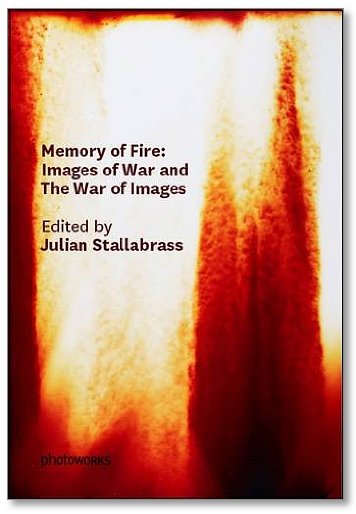
STALLABRASS Memory of FireI’m still putting together the programme for my graduate course this term (I’ll post the full outline under the TEACHING tab as soon as it’s ready), and I plan to spend some time on what I’m calling Militarized vision and imag(in)ing modern war.

Images have become increasingly important to the conduct of war; in Precarious Life Judith Butler argues that ‘there is no way to separate, under present historical conditions, the material reality of war from those representational regimes through which it operates and which rationalize its own operation.’  This requires us to think carefully about two, closely related issues – media representations of military violence and its effects, and the ways in which militaries have incorporated political technologies of vision into their operations.

I’m thinking of beginning with these two readings:

Bernd Hüppauf, ‘Experiences of modern warfare and the crisis of representation’, New German Critique 59 (1993) 41-76.

Lilie Chouliaraki, ‘The humanity of war: iconic photojournalism of the battlefield, 1914-2012’, Visual communication 12 (3) (2013) 315-340

Then I want to turn to the scopic regimes of advanced militaries, via Virilio and transcripts of several US military investigations into air strikes in Afghanistan and Iraq, to open up a discussion of targeting and political technologies of vision.  (This is probably also the place to say that, since I started to think through the relation between technoculture, targeted killing and the individuation of warfare I’ve also been thinking about the work of Bernard Stiegler; more later, but in the meantime you’ll find a truly excellent bibliography by cultural geographer Sam Kinsley here).

All of this opens up wide fields for debate, of course, but as I was putting together a list of supplementary materials I stumbled upon a new collection edited by Julian Stallabrass, Memory of fire: Images of war and the war of images (Photoworks, 2013):

This richly illustrated book is a visual, theoretical and historical resource about the photography of war, and how images are used as instruments of war. It comprises essays and interviews by prominent theorists, artists and photographers and covers the urgent issues of the depiction of war, the use of images of war by the media, various forms of censorship, the military as a PR and image-producing machine, the circulation of unofficial images and the impact of the digital mediascape.

Full details here , a four-pager in which Stallabrass discusses ‘Rearranging corpses, curatorially’ here, and a video in which he explains the project here:

There’s no shortage of work on these issues, I know, but there’s a particularly detailed engagement with Memory of Fire by Susie Linfield  author of The cruel radiance: photography and political violence (University of Chicago Press, 2010) – here and a sharp response from Stallabrass (scroll down).  There’s also a shorter but still informative review by Ashitha Nagesh at the always stimulating bookforum here.

Finally, you can find Stallabrass’s (2006) reaction to Retort’s Afflicted Powers and its engagement with ‘image wars’, ‘Spectacle and Terror’, on open access at the New Left Review here.

Bombing Japan

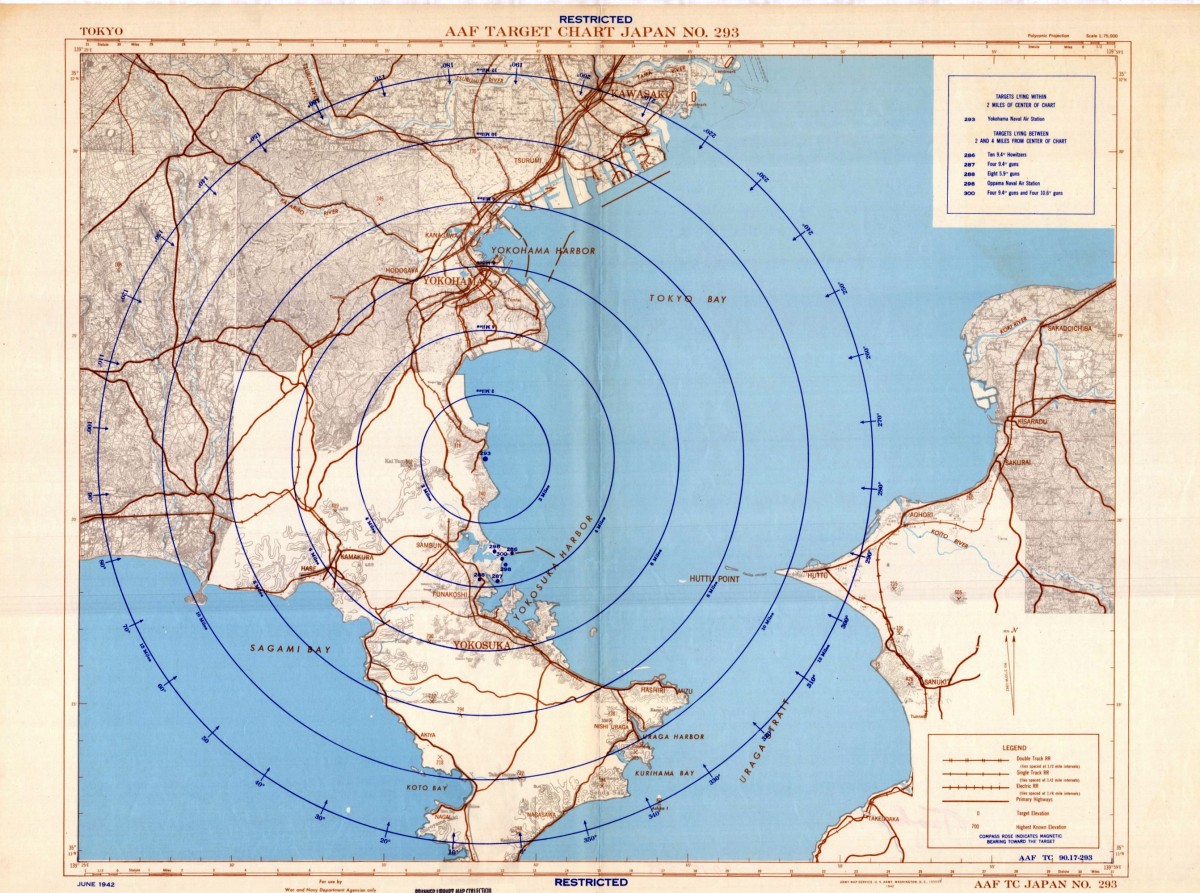
I’ve drawn attention to the remarkable work of Cary Karacas before, notably the mesmerising essay he co-authored with David Fedman, ‘A cartographic fade to black: mapping the destruction of urban Japan in World War II’ [Jnl. historical geography 38 (2012) 306-28], which quite rightly won the prize for the paper published in the journal that made ‘the greatest contribution to the advancement of scholarship in historical geography’ in 2012; it’s available here.  Bombing depends upon a whole series of cartographic visions, and there is something exquisite about using maps to expose rather than plan violence from the air like this.

AAF-Target-Chart-Japan-No293-Tokyo-e1315753005250

You can also get a sense of their work from this beautifully illustrated essay by Eric Jaffe for the Atlantic last year, ‘Mapping urbicide in World War II’, and from this special (open-access) issue of Asia-Pacific Journal: Japan Focus Cary edited with Bret Fisk on ‘The fire-bombing of Tokyo: views from the ground’.

Working with Bret and translator Eri Tsuji, Cary also launched a new website, Japan Air Raids.org, which is a bilingual (hooray!) digital archive providing an extraordinary range of primary and secondary materials on the US bombing of Japan in the Second World War.

In Japan it took over twenty years following the end of the World War II before people began to make a concerted effort to remember the incendiary raids that destroyed a significant percentage of most of Japan’s cities, wiped out a quarter of all housing in the country, made nine million people homeless, killed at least 187,000 civilians, and injured 214,000 more (source). Thanks to the many Japanese citizens who over the last forty years have labored to write down survivor accounts, locate and preserve various records, and analyze the destruction of urban Japan (and the concurrent suffering and social upheaval that occurred), the history of the air raids has taken root in Japan in a variety of ways. Numerous books and articles have been published, resource centers and peace museums have been built, and both individuals and associations continue to carry out important research.

Outside of Japan, the lag time to look closely at the impacts of the air raids is even more pronounced. In 1977, historian Gordon Daniels lamented the fact that academics had largely ignored the air raids on Japan – and the so-called Great Tokyo Air Raid in particular – as a subject of inquiry. Little has changed since this observation. While a handful of important English-language books and articles have appeared since then, most deal with the topic strictly from the standpoint of examining, and on occasion criticizing, U.S. strategic bombing doctrines and campaigns. Analyses about what the air raids entailed for the Japanese civilians on the ground and the cities in which they lived have yet to be written. Consequently, interested citizens and intellectuals who cannot read Japanese have minimal access to materials that shed light on the devastating effects of the incendiary bombing campaign on Japanese communities, cities and society. Additionally, while considerable English-language primary and secondary source documents related to the air raids exist, to date they have been beyond the reach of most people save for a handful of individuals who possess the inclination, time and resources required to visit the physical archives holding them.

By taking advantage of technological developments that allow for digitization, storage, and global retrieval of documents, we hope that this digital archive will play an important role in encouraging people to learn about and further research this area, and in fostering collaboration among a variety of individuals and groups. Additionally, by democratizing archival access to materials related the Japan air raids, we hope to open this field to the general public, scholars, professional and lay researchers, university students, and even middle/secondary school educators and their pupils.

Japan Air Raids.org screenshot

The project is ongoing, but it’s already clear that this is a stunning achievement – visually, intellectually and politically – and a truly generous and absolutely indispensable resource.

I am a camera

Last December Brandon Bryant, a six-year USAF veteran, told Der Spiegel of his experiences as a sensor operator in a team controlling a Predator over Iraq and Afghanistan from Creech Air Force Base in Nevada and then Cannon Air Force Base in New Mexico.  One day he wrote in his diary:

 “On the battlefield there are no sides, just bloodshed. Total war. Every horror witnessed. I wish my eyes would rot.”

When he left the Air Force he was handed a sheet informing him that all the missions in which he been involved had killed a total of 1, 626 people. This morning he appeared on NBC’s Today programme to describe in detail one of those missions.

Brandon Bryant

You can watch the interview with Richard Engel here, but since no transcript is available here is the substance of what he said:

‘I operated the camera, so like zoom in, zoom out, make sure that everyone can see a good picture, make sure it’s in focus, guide the laser, shoot the spot-tracker…

‘We’re just sitting there and like OK, it’s obvious these guys are obviously bad guys…

‘The guy in the back hears the sonic boom [from the missile] when it reaches him, and he runs forward.  We’re actually told to get the two guys in front, worry about the guy in the back later, follow him to wherever he goes.  The guy in the back runs forward between the two and we strike all three of them.  And the guy that was running forward, when the smoke clears, there’s a crater there, he’s missing his right leg.  

‘And I watch this guy bleed out and it’s clear enough that I watch him and he’s grabbing his leg and he’s rowing, like, I can almost see the agony on this guy’s face and eventually this guy becomes the same colour as the ground that he bled upon…

‘You know how people say that drone strikes are like mortar attacks, artillery, well, artillery doesn’t see this, artillery doesn’t see the result of their actions.  It’s really more intimate for us because we see the before action and then after.

‘And so I watched this guy bleed out, I watched the result of, I guess collectively it was our action, but ultimately I’m the responsible one who guides the missile in.’

He was also interviewed on CBC Radio earlier this year: listen here.  From 6.20 Bryant describes what happens in the 14-16 second interval between firing a missile and hitting the target: he says that if something happens –  like a child running into the frame – there’s an 8 second window to use the laser to divert the missile.  From Spiegel:

With seven seconds left to go, there was no one to be seen on the ground. Bryant could still have diverted the missile at that point. Then it was down to three seconds. Bryant felt as if he had to count each individual pixel on the monitor. Suddenly a child walked around the corner, he says.

Second zero was the moment in which Bryant’s digital world collided with the real one in a village between Baghlan and Mazar-e-Sharif.

Bryant saw a flash on the screen: the explosion. Parts of the building collapsed. The child had disappeared. Bryant had a sick feeling in his stomach.

“Did we just kill a kid?” he asked the man sitting next to him.

“Yeah, I guess that was a kid,” the pilot replied.

“Was that a kid?” they wrote into a chat window on the monitor.

Then, someone they didn’t know answered, someone sitting in a military command center somewhere in the world who had observed their attack. “No. That was a dog,” the person wrote.

They reviewed the scene on video. A dog on two legs?

Close up at a distance

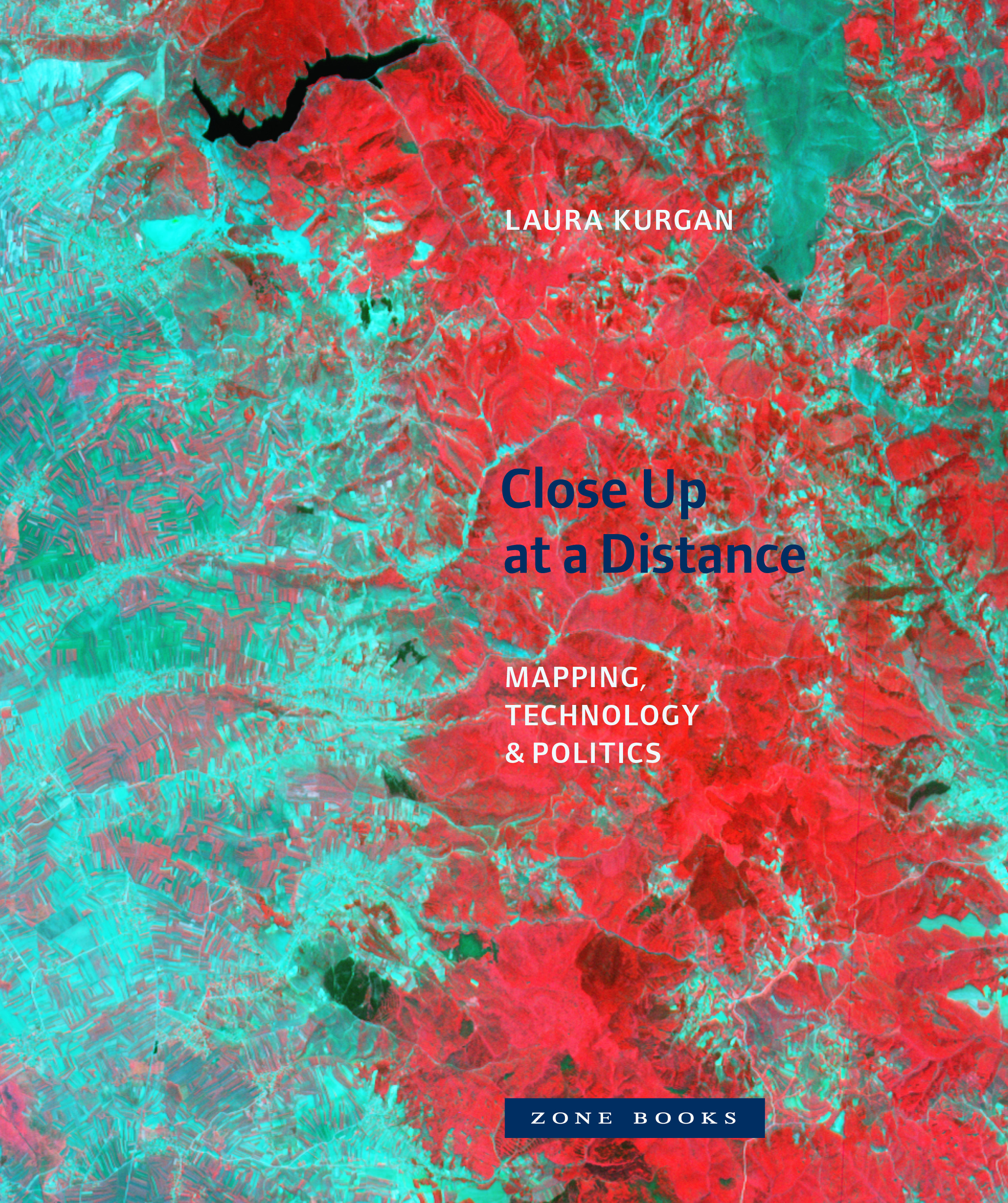
KURGAN Close up at a distanceStuart Elden trailed Laura Kurgan‘s Close up at a distance: mapping, technology and politics earlier this year, and it’ a sumptuous book.  The main title is a good summary of the techno-cultural field produced for drone strikes, but Kurgan’s focus is different: it’s on satellite imagery.  Now Trevor Paglen has provided a summary review for Bookforum:

Imaging technologies, explains Kurgan, “let us see too much, and hence blind us to what we cannot see, imposing a quiet tyranny of orientation that erases the possibility of disoriented discovery.” Part of the problem is a matter of perspective: The view from above is less an expansive panorama than a view through a keyhole. This vantage is also highly susceptible to ideological forces. When Colin Powell sat before the UN advocating the invasion of Iraq, he brought satellite images showing a handful of trucks and buildings. This data, he claimed, provided evidence of “active chemical munitions bunkers” operating outside Baghdad. “The facts speak for themselves,” he said. Of course, as Kurgan points out, the images did anything but that, and Powell needed to do a great deal of misleading speaking on their behalf to make them show anything close to what he claimed they did.

But Kurgan does not want to write off the “visual regime” of satellite imagery entirely. In fact, much of her work makes use of visual data culled from mapping, geolocation, and overhead-imaging technologies, and in Close Up at a Distance she argues that the need for interpretation is precisely what makes this kind of information so significant. For her, the “imaginative leaps” required to turn data into stories don’t always have to be carried out by the Colin Powells of the world: Such interpretive work can also advance movements for social justice or anti-imperial politics—such as when Pakistani journalists used Google Earth to document an unacknowledged American Predator-drone base in Baluchistan. In a series of deftly rendered case studies, Kurgan demonstrates how understanding satellite images—their production, interpretation, and distribution—is “a civic responsibility and a political obligation.”

Lisa Parks has travelled over much of the same ground and to brilliant effect, but Kurgan’s emphasis (she’s Director of the Spatial Information Design Lab at Columbia) is on a series of artistic re-workings of satellite imagery to produce radically new and insistently critical ways of seeing, of re-imagining what we see (and what we don’t) – which is why Trevor, as both artist and geographer, is such an apposite reviewer.


City of Ruins

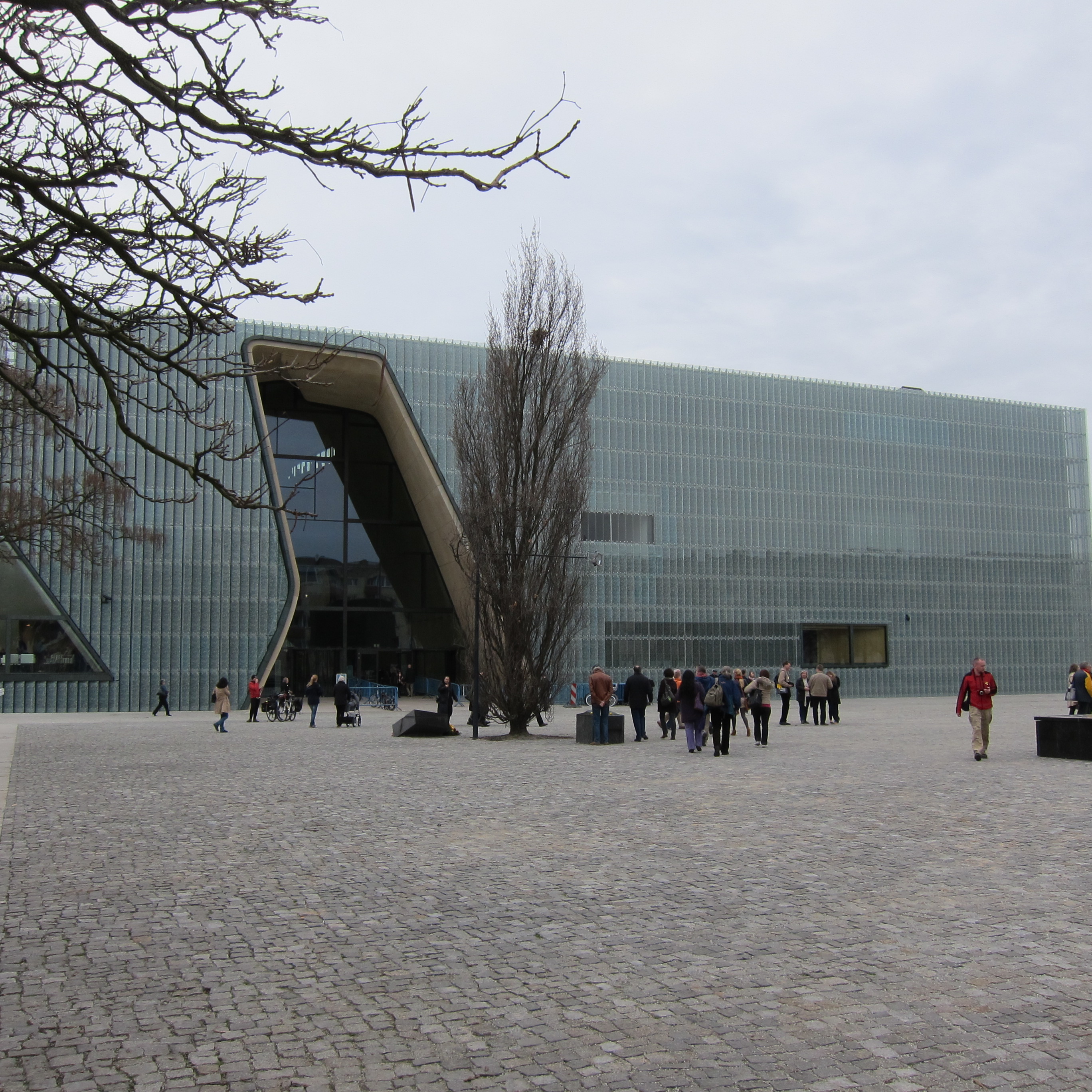
I was in Warsaw over the week-end, and my visit coincided with the opening of the new building for the Museum of the History of Polish Jews on the 70th anniversary of the Warsaw Ghetto Uprising. Even in its presently empty state, it’s a stunning place.

IMG_0525

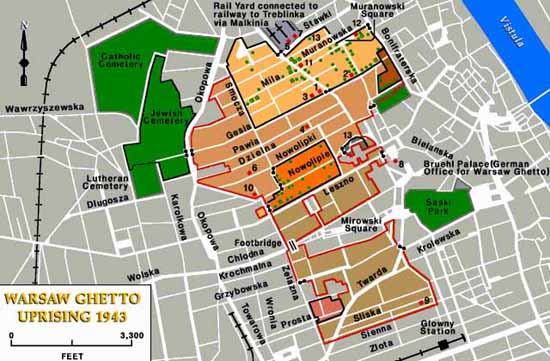
Its Core Exhibition, developed under the supervision of Barbara Kirshenblatt-Gimblett, will display the thousand-year history of Jews in Poland, but the Museum has been built on the site of a pre-war Jewish neighbourhood where in October-November 1940 the Germans established the largest Jewish ghetto in Nazi-occupied Europe and razed it to the ground less than three years later.  And it’s this recent catastrophe (along with others) that invests so much of Warsaw with its contemporary historicity.

Warsaw Ghetto

You can find a sequence of other chilling maps of the Ghetto (and a helpful critical discussion of them) here, basic accounts of the process of its formation here, an excellent summary survey of the Uprising here and a shorter one here.  By 1943 hundreds of thousands of Jews had been deported from the Ghetto to concentration camps, and according to Deutsche Welle:

In early 1943, Heinrich Himmler ordered the final liquidation of the ghetto. Until then, most Jews had rejected armed resistance, including for religious reasons. But when the last mass deportation was about to begin, hundreds of young Jews decided to fight.

On April 19, 1943, the approaching German units met unexpected resistance. The young Jews were aware of their hopeless situation – they had no weapons, food or support. Yet they endured for three weeks, delivering a fierce battle. When the Germans surrounded the insurgents’ bunker in early May, they collectively committed suicide.

“They wanted to decide themselves how to die,” said Zygmunt Stepinski, director of the Museum of the History of Polish Jews in Warsaw. He called their deaths a political manifesto. “They wanted to show that Jews could defend themselves and that they organized the first-ever uprising against the Nazis,” he said.

13,000 Jews were killed during the Uprising, and most of the surviving 50,000 were deported to concentration and extermination camps.

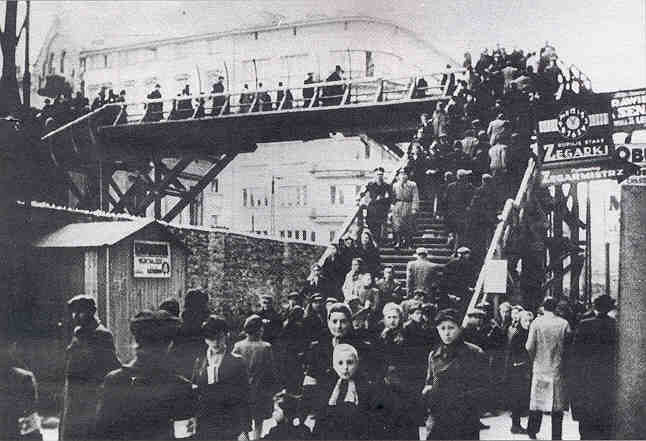
The Museum has been designed by a Finnish architect, Rainer Mahlamäki, and his studio.  To some degree, in its bridge suspended over the Main Hall, defined by the soaring, undulating walls that divide the Museum into its two parts,  the building reinscribes the division of the ghetto into two and the bridge that joined the one to the other (over Chlodna Street, an ‘Aryan’ thoroughfare), but more significantly it’s intended as ‘a bridge across the chasm created by the Holocaust – a bridge across time, continents and people.’

bridge2

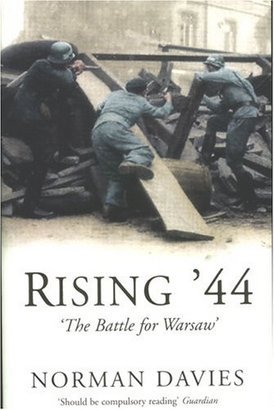
DAVIES Rising '44Many of those involved in the Museum project have suggested that the 1943 Uprising was a crucial inspiration for the general Warsaw Rising in 1944. This started on 1 August, and the insurgent Polish Home Army held out for 63 days of intensive urban warfare which left 16,000 of them dead along with 150-200,00 civilians.  The best English-language narrative of these courageous and horrifying events is probably Norman Davies‘s Rising ’44.

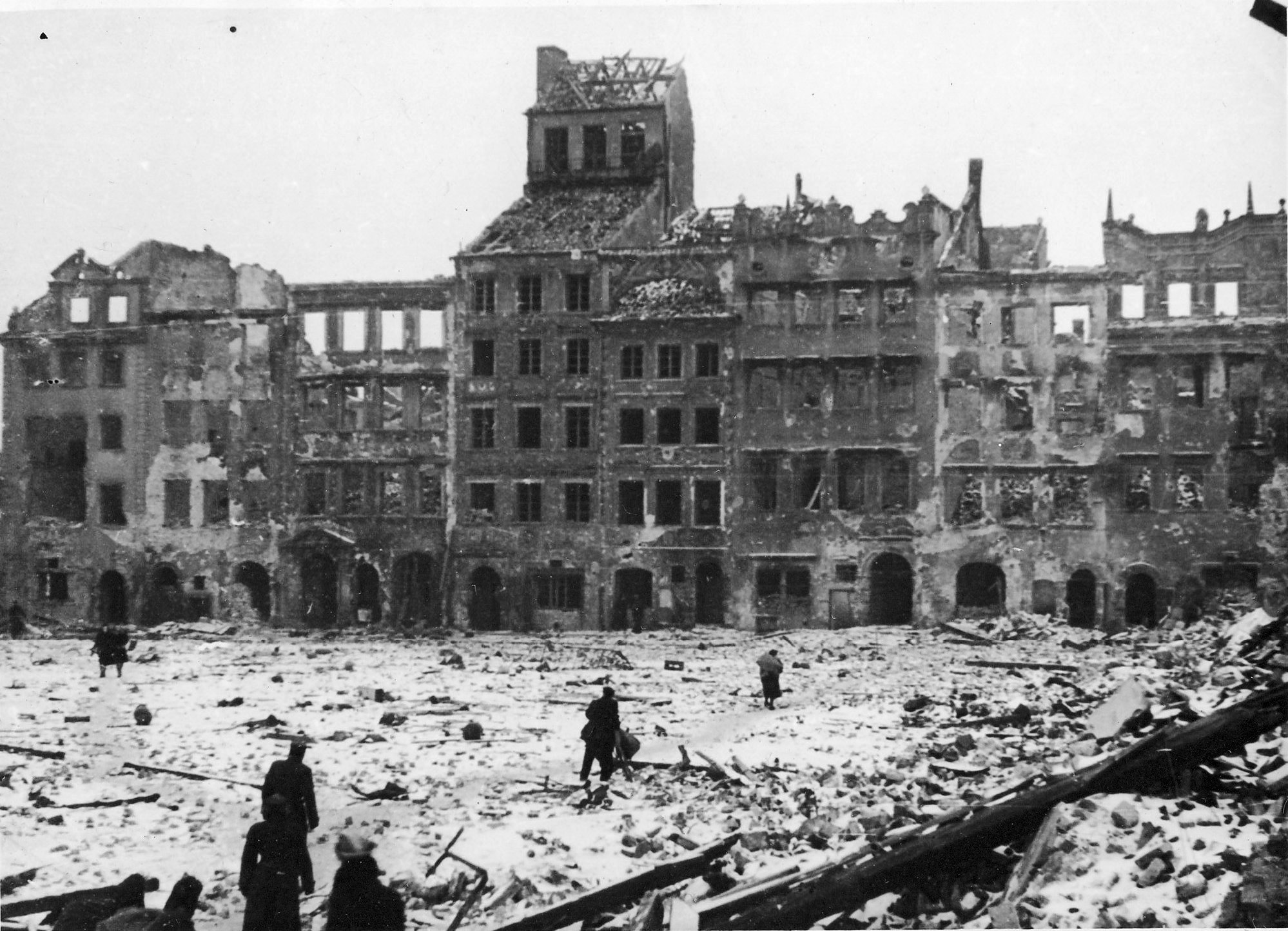
To make sense of this on the ground and to recover its material traces, we turned to the Warsaw Rising Museum, which included City of Ruins, an extraordinary 3-D simulation of American Liberator flights over the city in 1945 (advertised as the world’s first digital stereoscopic simulation of a city destroyed during the war: more on the project and how it was achieved here) –

– and to an outdoor/indoor exhibition of colour photographs of the ruined city taken by a young American architectural student, Henry N. Cobb, in 1947: The Colors of Ruin.  You can see some of Cobb’s photographs here, and Vimeo has this interview with him which includes a number of incredible images too:

Why such wholesale destruction? Under the terms of the surrender document agreed by the Polish Home Army in October 1944, the insurgents and the civilian population were expelled from the city into transit camps, from where they were deported to concentration camps.  According to some accounts, Hitler issued Command #2 on 11 October, realizing his pre-war dream of the total destruction of the city: ‘Warsaw is to be razed to the ground while the war proceeds.’  Six days later Himmler made sure his officers understood exactly what was intended:

‘The city must completely disappear from the surface of the earth… No stone can remain standing. Every building must be razed to its foundation.’

Special Verbrennungskommandos (‘annihilation detachments’) began the systematic destruction of what was left of the city with mathematical precision, using high explosives and flame-throwers.  According to the Museum guide,

‘They divided the city into regions, numbered the corner buildings and methodically destroyed the capital.  On the walls they put instructions concerning the method of destruction.  The Germans destroyed historical monuments and burned to ashes the biggest Polish libraries…  They turned archives, museums and their collections into ruins and ashes.  The Old Town became a city of ruins.’

old_town_warsaw_waf-2012-1501-311945

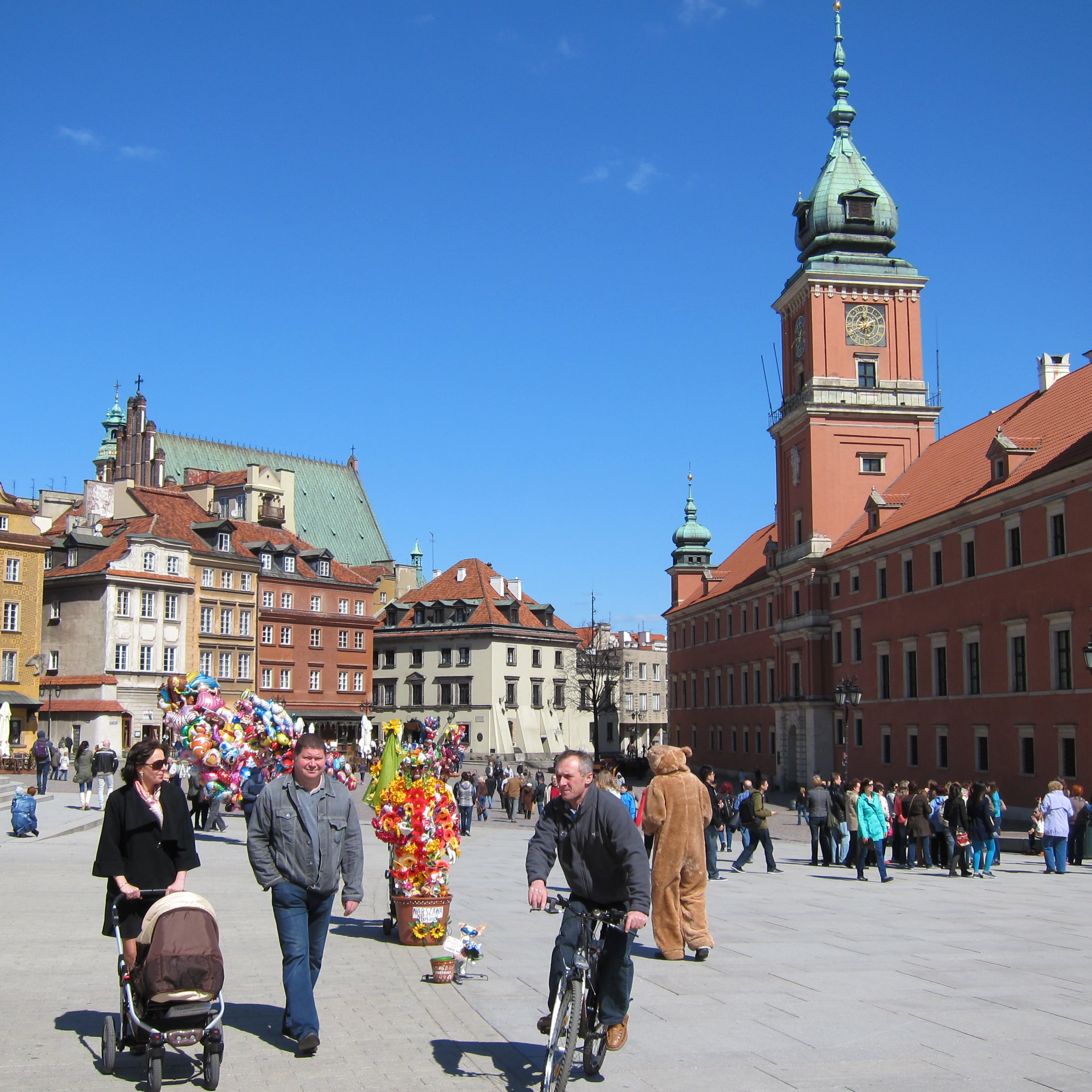
Less than 5 per cent of pre-war Warsaw remained intact – about 12 per cent had been totally destroyed during the 1939 bombing and siege of the city, a further 17 per cent with the destruction of the Ghetto and 25 per cent during the Rising of 1944 – but it’s the systematicity as much as the scale that is so shocking.  And the sense of shock remains even as – in fact precisely because – today you walk around an Old City no less painstakingly restored, its planners, architects and builders working from old plans, photographs and drawings and using the original materials as far as possible.  It adds another dimension to what Steve Graham calls the post-mortem city: the resurrection of Warsaw is an extraordinary testimony (like the Museum of the History of Polish Jews) to the determination of a people to recover their history, to refuse their erasure, and to remember the enormity of what befell their predecessors.

IMG_0556

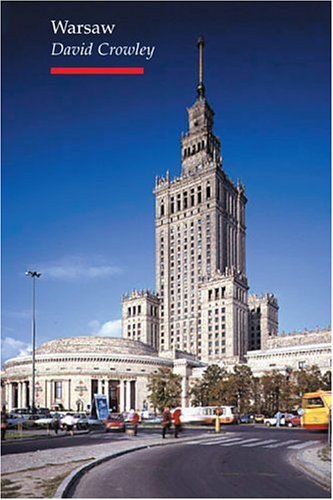
Or so it seemed to me before I started to think (and read) about the politics of memorialisation in post-war Warsaw.  David Crowley‘s essay on ‘Memory in Pieces: the symbolism of the ruin in Warsaw after 1944’ argues that

‘the image of ruin … functioned – unmistakably – as an ideological vent through which to draw patriotic sentiment and indict those who had destroyed the city.  But the powerfully affective image of ruin and the memories that it could arouse had to be contained and its force channelled (quite literally, in the form of voluntary labour to reconstruct parts of the city, like the Old Town).  In effect ruins, in the representational cosmos of socialism during the 1950s, were time-locked in 1944, the moment of destruction.’

Royal Palace 1945But what could the Royal Palace (in particular) re-present within that cosmos?  Tellingly, it was still in ruins in 1956 when a post-Stalinist regime came to power, and existing plans for its reconstruction were abandoned.  ‘In the years that followed,’ Crowley writes, ‘the castle formed an open wound at the heart of the city.  Seeing it as an aristocratic symbol of democracy, Crowley calls it an ‘architectural oxymoron.’  In ruins, the castle could ‘function indexically as evidence of both the glorious Polish past and the ignominious “Soviet” present.’  Finally, in the 1970s its reconstruction was approved as ‘Warsaw Castle’, an attempt to extinguish the aristocratic past and to forestall any democratic future, so that it functioned as what Crowley calls a sort of counter-iconoclasm, working to forget what its absence once signified.

But there was another, more pervasive absence.  The razing of the Ghetto destroyed a significant nineteenth-century fabric, and after the war a still wider nineteenth-century Warsaw disappeared from the landscape of reconstruction altogether.  Jerzy Elzanowski argues that its buildings and structures were seen as emblematic of the repressive class structure of capitalism; they had to be replaced by a radically different fabric ‘adequate to the needs of socialist society’ (‘Manufacturing ruins: architecture and representation in post-catastrophic Warsaw’, Journal of Architecture 15 (1) (2010) 71-86).

CROWLEY WarsawAnd there are, of course, other, ostentatiously modern Warsaws that have been forcibly put in place after the fall of Communism in 1989.

For all that, in the city of ruins, and most of all in the spectral traces of the two war-time uprisings in which images are made to stand for ruins, genocide and urbicide march in lockstep: and we would be foolish not to attend to the sounds and signs of their boots on the street.  Crowley thinks their museumisation and memorialisation is a kind of reversal in which the past (and specifically the Second World War) becomes a ‘lost utopia’.  I see what he means – I saw what he means – and I’m beginning to understand, too, why Elzanowski concludes that, at least in Warsaw (and no doubt elsewhere), images are at once indispensable for historical recovery and yet ‘seem to hinder our ability to observe the reality of here and now.’  It was, in part, an unease about my response to the materiality of the city and to its photographic representations that sent me off to dig out their two essays.  I felt a tension between the affective – the effect the ruins and the reconstructions had on me – and the analytical.  I’m still struggling.

On the road – and off it

I’ll be travelling for the next several weeks so postings will probably be light until the end of the month. I’ll be spending most of my time in North Africa and Eastern Europe, with a stop-over at King’s College London for a seminar in Geography & War Studies (another outing for “Gabriel’s Map”, and I’m really looking forward to the discussion).

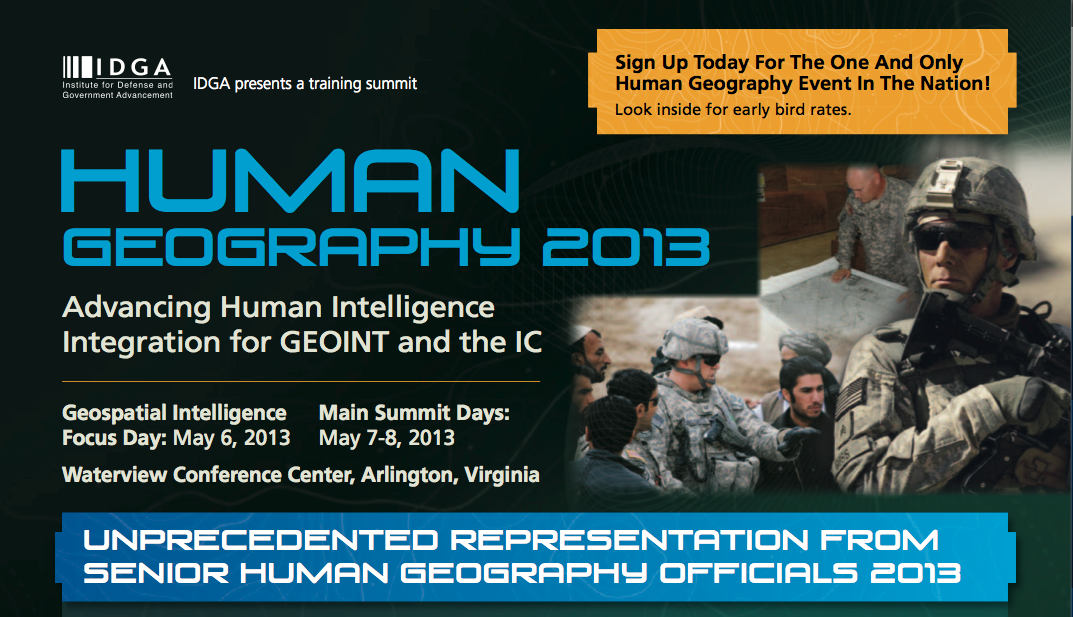
This means I’ll miss the Annual Meeting of the Association of American Geographers which starts today, but I thought readers would like to know about an event billed as “the one and only Human Geography event in the nation“… Really.  It takes place in Arlington, Virginia next month, and like its counterpart last year is organised by the Institute for Defense & Government Advancement.

IDGA Human Geography 2013:1

The letter of invitation from Tyler Baylis, IDGA’s Program Director, explains:

With an annual operating budget of $18 billion, DoD Military Intelligence programs have been instrumental in the war on terror. Human Geography has been at the forefront of these intelligence programs, often embodied in the Human Terrain Systems program which, with successful implementation, has recently increased from 22-31 operating teams in Afghanistan. In order for the US Military to operate in theatres where conventional warfare is not effective, Human Geography must be readily understood and utilized.

In advancing Human Geography, we must look too increased socio-cultural and language training to provide accurate and reliable data generated by on-the- ground research on the specific social groups in the supported unit’s operating environment. IDGA holds this event to service as a platform for you to learn about these areas through expert presentations from the CENTCOM, USMC Center for Irregular Warfare and the Air Force Culture and Language Center and as well as many other key players in the field.

Human Geography 2013 will deliver: • Unparalleled access to the latest SOCOM and Intelligence perspectives • Insights from former Human Terrain Analysts, and anecdotal success stories • Exclusive look into the future of Human Geography’s technological capabilities Plus, presentations and round table discussions will cover Human Terrain Systems, Big Data and Cloud Solutions, HUMINT and GEOINT, Advanced Socio-Cultural Training, Foreign Language Training, the Future of Human Geography in the Intelligence Community and more.

It’s an interesting and innovative time in the implementation of human geography into the Intelligence Community and Special Operations Warfare. Come participate in defining the future of the US military, and establish yourself in this exciting field at the only Human Geography event this year.

More information and the full brochure here.  For readers concerned at the escalating costs of conferences, an all-access pass for this three-day event comes in at $1, 498.

As I said last year, another meeting, and for the most part another geography.  But I do recognise one speaker, Alex Murphy, who is down to lead a session on ‘Using GEOINT for mapping and battlefield visualization’.

A picture that is worth a million words

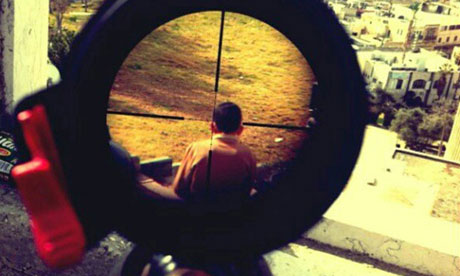
Israeli soldier posts disturbing Instagram photo of child in crosshairs of his rifle

Or perhaps four million (roughly the Palestinian population in the Occupied Territories).  I’ve posted about the use of Instagram by the IDF and IDF soldiers before, but this vile image – which 20 year-old IDF sniper Mor Ostrovski claims he just “found on the Internet” – serves to bring into focus (sic) both the indiscriminate violence of the occupation, its casual, stomach-churning “because I can” arrogance, and the parallels between targeted killing from remote and near platforms.

More from the electronic intifada here.

Soldier exposures

News from Zoe Wool of a rich and ambitious series of short image-essays she has curated for Public Culture‘s Public Books (‘a curated monthly review devoted to spirited debate about books and the arts’) under the title Soldier exposures and technical publics.  Here’s an excerpt from the introduction:

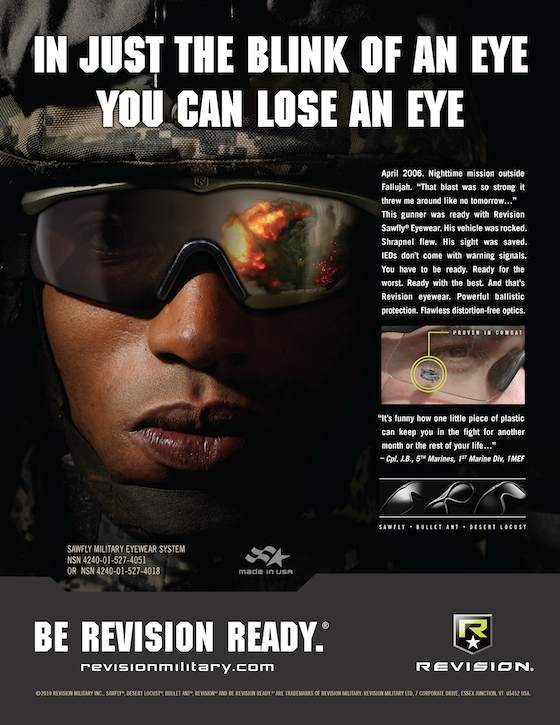
866f8d39-4206-47d9-b55e-33df2d2c026dIn this collaborative visual essay, edited by Zoë H. Wool, we consider an idiosyncratic assemblage of pictures of American soldiers. These are not iconic images that “speak for themselves” but less conventional ones that suggest both the technical expertise involved in producing and managing war’s violence and the vulnerability of soldiers at the heart of war. In considering these images as technical, we highlight the many forms of war’s material and technical expertise, expertise that is often disarticulated from the social, political, and ethical fields on which war equally relies.

The images range from grainy World War I–era photographs, recovered from cluttered archives, to digitally generated contemporary images that depict the results of war’s embrace of high technology. Their material qualities reflect something of their intended publics: the curled edges of a Vietnam War snapshot tucked away inside a shoebox (Jauregui); the high resolution of an advertisement that speaks to contemporary soldiers’ special knowledge of explosive force and special role as savvy gear consumers (MacLeish); the directed gaze of soldiers whose bodies bear the weight of innovations in prosthetics and weapons systems, both of which technologically extend the body (Serlin, Lawrie, Kaplan); and the precise composition of images used to display soldiers’ special prowess to medical or technical experts or else to cultivate such technical readings in a broader public (Linker, Masco, Wool).

In presenting these images, we take seriously Walter Benjamin’s warning that photographs unmoored from the historical arrangements of life that produce them are politically hazardous capitulations to fashion, “arty journalism” that “cannot grasp a single one of the human connexions in which [they] exist.” And so we inscribe each image with a caption, anchoring it in a world of human connections and gendered and racialized bodies. These captions rearticulate the relationship between technical expertise and ethics, reconnecting the matériel and personnel of war with the social and political worlds they entail.

These captions describe a material history of soldiers’ bodies whose themes recur across time. The unromantic vulnerability of the soldier on which war making depends (Jauregui, MacLeish, Masco); the technological and prosthetic interventions to which soldiers are subject and from which soldierly life itself is inseparable (Lawrie, Masco, MacLeish, Serlin, Wool); the forms of display involved in making soldiers into certain kinds of biopolitical subjects (Lawrie, Linker, Serlin, Wool); the way war remaps geographic and affective terrain (Kaplan, Masco); and the intimate relationship between place and feeling that war also exposes, binding homelands and homefronts to death zones while producing spaces of homosocial or national intimacy (Jauregui, Linker, Masco).

As we address these un-iconic soldier images to the politics of displaying vulnerable bodies, or rendering them resilient, we also incur collateral effects. In maintaining our focus on images of American soldiers, for instance, we contribute to the ignorance of other kinds of war-bound bodies and lives, from civilians to foreign belligerents to kinds of American soldiers—notably women—who are not pictured here. By displaying medical images of men whose names and lives we do not know, we contribute to the disabling history of what poet Eli Clare has called “gawking, gaping, and staring.” We are not innocent of these consequences. In pointing them out we show only how inseparable they are from many ongoing conversations about aesthetics, ethics, and the American warscape.

By focusing on some of the nooks and crannies of the American warscape, rarified spaces of technical expertise, we hope to incite new and shared modes of reading and recognizing martial imagery and new approaches to thinking about how pictures of soldiers are made and made meaningful in some ways and not others at specific material, social, and ethical conjunctures.

The portfolio includes these images and brief commentaries:

— David Serlin: How to Be Yourself in Public

— Zoë H. Wool: This Is a Picture of an Injured Soldier

— Joseph Masco: Atomic Soldiers
— Caren Kaplan: Drone Sight
— Kenneth MacLeish: In the Blink of an Eye

There are also many other sparkling contributions on the Public Book site