War against the people

I’ve long admired Jeff Halper‘s work with the Israeli Committee Against House Demolitions (though to me, haunted by the passages from The poetics of place that Edward Said invokes in Orientalism,  ‘home demolition’s would carry even more resonance: it’s so much more than buildings that the Israelis so brutally turn to rubble).

ICAHD

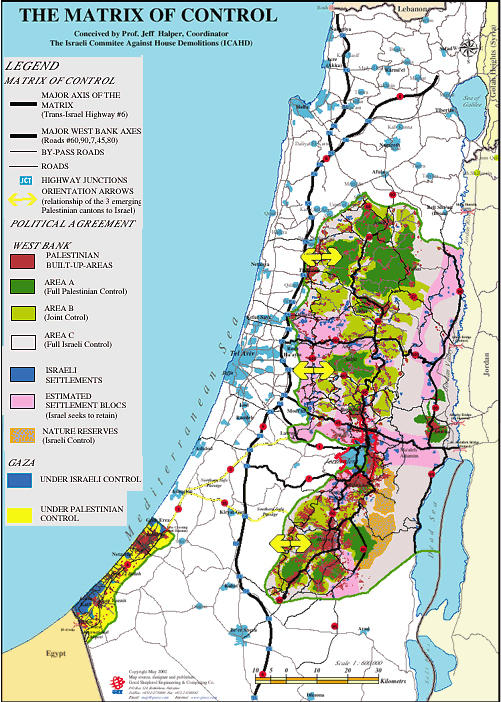
Jeff’s classic, even canonical essay on ‘the matrix of control‘ (see also here) was a constant reference point for my chapters on occupied Palestine in The Colonial Present, and on my first visit to the West Bank I was part of a group that Jeff generously spent a day showing the materialities of military occupation and illegal colonisation: you think you know what you’re going to see, but all the reading in the world can’t prepare you for what Israel has done – and continues to do – to the people of Palestine.

the-matrix-of-control

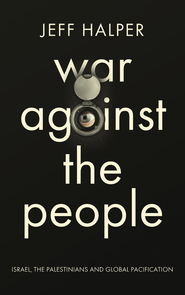
So I’m really pleased to hear from Jeff that his new book, War against the people: Israel, the Palestinians and global pacification, will be out in September (from Pluto Press in the UK and via the University of Chicago Press in the USA):

Modern warfare has a new form. The days of international combat are fading. So how do major world powers maintain control over their people today?

HALPER War against the peopleWar Against the People is a disturbing insight into the new ways world powers such as the US, Israel, Britain and China forge war today. It is a subliminal war of surveillance and whitewashed terror, conducted through new, high-tech military apparatuses, designed and first used in Israel against the Palestinian population. Including hidden camera systems, sophisticated sensors, information databases on civilian activity, automated targeting systems and, in some cases, unmanned drones, it is used to control the very people the nation’s leaders profess to serve.

Drawing from years of research, as well as investigations and interviews conducted at international arms fairs, Jeff Halper reveals that this practice is much more insidious than was previously thought. As Western governments tighten the grip on their use of private information and claw back individual liberties, War Against the People is a timely reminder that fundamental human rights are being compromised for vast sections of the world, and that this is a subject that should concern everyone.

I’ve noted before the ways in which Israel has used its continuing occupation of Palestine as a laboratory to test new technologies of military violence – and as a series of test cases designed to push the envelope of what is permissible under international humanitarian law and even international human rights law – but here Jeff radicalises the argument to develop a deeply disturbing vision of what he calls ‘securocratic wars in global battlespace’.  It’s vitally necessary to remember that later modern war is not the exclusive artefact of the United States and its military-academic-industrial-media (MAIM) complex, and that what happens in Israel/Palestine has desperately important implications for all of us.

Many commentators have claimed – I think wrongly – that one of the new characteristics of war in the twenty-first century is that it has become ‘war amongst the people’: as though No Man’s Land on the Western Front was somehow roped off from the gas attacks and shells that assaulted farms, villages and towns behind the front lines, for example, and air raids were limited to exclusively military-industrial targets.  Even if we confine ourselves to the trajectory of ostensibly modern warfare and track forward through the Second World War, Korea, Malaya, Vietnam, Laos and Cambodia…. the story is the same: modern war has long been fought amongst the people (though increasingly amongst ‘their’ people).  The deconstruction of the battlefield, as Frédéric Mégret calls it, is clearly visible in Palestine and is inseparable from its globalization.  It’s hardly surprising, then, that ‘war amongst the people’ should so easily turn into what Jeff describes as ‘war against the people’.

Here is the list of contents:

Introduction : How Does Israel Get Away With It?

Part I: The Global Pacification Industry
1. Enforcing Hegemony: Securocratic Wars in Global Battlespace

Part II: A Pivotal Israel
2. Why Israel? The Thrust Into Global Involvement
3. Niche-Filling in a Global Matrix of Control

Part III: Weaponry of Hybrid Warfare and Securocratic Control (Niche 1)
4. Niche 1: Weaponry of Hybrid Warfare and Securocratic Control
5. Dominant Maneuver
6. Precision Engagement

Part IV: Securitization and “Sufficient Pacification” (Niche 2)
7. Niche 2: The Securocratic Dimension: A Model of “Sufficient Pacification”
8. Operational Doctrines and Tactics

Part V: Serving Hegemons Throughout the World-System
9. Serving the Hegemons on the Peripheries: The “Near” Periphery
10. Security Politics on the “Far” Periphery
11. The Private Sector

Part VI: Domestic Securitization and Policing
12. Serving the Core’s Ruling Classes “At Home”

Conclusions: Mounting Counterhegemonic Challenges and Resisting Pacification
Resisting Capitalist Hegemony and Pacification: The Need for Infrastructure
Resistance to Pacification: Focusing on the MISSILE Complex

Military, media and (im)mobilities

Two important new books on Israel’s occupation of Palestine that both have even wider implications.

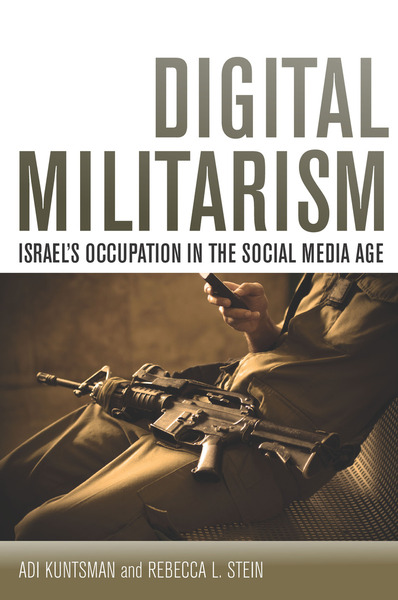
First, Adi Kuntsman and Rebecca Stein on Digital militarism: Israel’s occupation in the social media age from Stanford University Press:

pid_23022Israel’s occupation has been transformed in the social media age. Over the last decade, military rule in the Palestinian territories grew more bloody and entrenched. In the same period, Israelis became some of the world’s most active social media users. In Israel today, violent politics are interwoven with global networking practices, protocols, and aesthetics. Israeli soldiers carry smartphones into the field of military operations, sharing mobile uploads in real-time. Official Israeli military spokesmen announce wars on Twitter. And civilians encounter state violence first on their newsfeeds and mobile screens.

Across the globe, the ordinary tools of social networking have become indispensable instruments of warfare and violent conflict. This book traces the rise of Israeli digital militarism in this global context—both the reach of social media into Israeli military theaters and the occupation’s impact on everyday Israeli social media culture. Today, social media functions as a crucial theater in which the Israeli military occupation is supported and sustained.

Here is Laleh Khalili on the book:

“Amidst the hype of Facebook revolutions and the ostensible democratizing power of social media, Adi Kuntsman and Rebecca Stein illuminate the counterpoint: online militarization and the extension of state politics into the virtual realm. They expose the machinery of the Israeli state power at work within social media, and show the possibilities for countering the force of this machinery. Powerfully argued, beautifully researched, and thought-provoking, Digital Militarism is vitally important.”

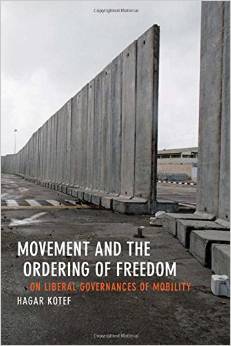
Second, Hagar Kotef‘s Movement and the Ordering of Freedom: On Liberal Governances of Mobility from Duke University Press:

KOTEF Movement and the ordering of freedomWe live within political systems that increasingly seek to control movement, organized around both the desire and ability to determine who is permitted to enter what sorts of spaces, from gated communities to nation-states. In Movement and the Ordering of Freedom, Hagar Kotef examines the roles of mobility and immobility in the history of political thought and the structuring of political spaces. Ranging from the writings of Locke, Hobbes, and Mill to the sophisticated technologies of control that circumscribe the lives of Palestinians in the Occupied West Bank, this book shows how concepts of freedom, security, and violence take form and find justification via “regimes of movement.” Kotef traces contemporary structures of global (im)mobility and resistance to the schism in liberal political theory, which embodied the idea of “liberty” in movement while simultaneously regulating mobility according to a racial, classed, and gendered matrix of exclusions.

And here is Eyal Weizman on this one:

“In this book Hagar Kotef manages to successfully weave several intellectual projects: a wide-ranging and theoretically sophisticated contribution to political theory, a robust and fine-grained analysis of the mechanisms of Israeli control of Palestinian movement, and a direct confrontation with its injustice. This book is a major contribution to the topological shift in the study of space. Kotef does nothing less than rewrite the history of territory as a matter of movement, and that of sovereignty as the control of matter in movement. By pushing her original insight as far as it would go, she best captures the logic of the world we struggle to live within.”

You can read the introduction on Scribd.

Visual occupations and a counter-politics of visuality

Most readers will know Eyal Weizman‘s searing account of the cruel intersections between the politics of visibility and the politics of verticality in occupied Palestine, Hollow Land: Israel’s architecture of occupation.

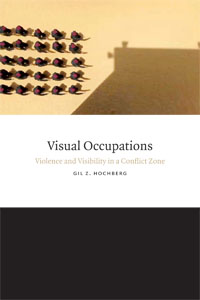
But there are other, no less intimate and intrusive dimensions to the politics of visibility for a people under military (and civilian) occupation that amount to what Gil Hochberg calls an ‘uneven distribution of “visual rights”‘.  In her brilliant new book from Duke University Press, Visual occupations: violence and visibility in a conflict zone, she explores ‘the political importance of various artistic attempts to redistribute the visible’ (my emphasis) and, in effect, to put in place a counter-politics of visuality.

978-0-8223-5887-9_prIn Visual Occupations Gil Z. Hochberg shows how the Israeli Occupation of Palestine is driven by the unequal access to visual rights, or the right to control what can be seen, how, and from which position. Israel maintains this unequal balance by erasing the history and denying the existence of Palestinians, and by carefully concealing its own militarization. Israeli surveillance of Palestinians, combined with the militarized gaze of Israeli soldiers at places like roadside checkpoints, also serve as tools of dominance. Hochberg analyzes various works by Palestinian and Israeli artists, among them Elia Suleiman, Rula Halawani, Sharif Waked, Ari Folman, and Larry Abramson, whose films, art, and photography challenge the inequity of visual rights by altering, queering, and manipulating dominant modes of representing the conflict. These artists’ creation of new ways of seeing—such as the refusal of Palestinian filmmakers and photographers to show Palestinian suffering or the Israeli artists’ exposure of state manipulated Israeli blindness —offers a crucial gateway, Hochberg suggests, for overcoming and undoing Israel’s militarized dominance and political oppression of Palestinians.

Here’s the Contents List:

Introduction. Visual Politics at a Conflict Zone

Part I. Concealment

1. Visible Invisibility: On Ruins, Erasure, and Haunting
2. From Invisible Spectators to the Spectacle of Terror: Chronicles of a Contested Citizenship

Part II. Surveillance

3. The (Soldier’s) Gaze and the (Palestinian) Body: Power, Fantasy, and Desire in the Militarized Contact Zone
4. Visual Rights and the Prospect of Exchange: The Photographic Event Placed under Duress

Part III. Witnessing

5. “Nothing to Look At”; or, “For Whom Are You Shooting?”: The Imperative to Witness and the Menace of the Global Gaze
6. Shooting War: On Witnessing One’s Failure to See (on Time)

Closing Words

2014_cover_publication_forensisIt’s a compelling book, and I’m struck by another parallel with Eyal’s work.  In Hollow Land Eyal showed the central role that architecture and architects play in Israel’s illegal occupation of the West Bank, but in subsequently developing his collaborative Forensic Architecture project he effectively reverse-engineers architecture’s dominant imaginary to use built forms and spatial formations as a way of revealing prior trajectories of violence to a public forum.  That too is a counter-politics of visuality.

Medical neutrality and modern war

md_p0361-memory-solferinoI expect most readers know how the International Committee of the Red Cross had its origins in Henry Dunant‘s horror at the unrelieved suffering he witnessed in the aftermath of the Battle of Solferino in 1859 (see my earlier post here).

In A Memory of Solferino (1862) he asked: ‘Would it not be possible, in time of peace and quiet, to form relief societies for the purpose of having care given to the wounded in wartime by zealous, devoted and thoroughly qualified volunteers?’

Dunant’s vision of an impartial relief society to provide aid to those wounded in time of war led to the formation of a series of national relief societies and, as John Hutchinson shows in Champions of Charity: War and the rise of the Red Cross, these national societies soon became entangled with nationalism.  ‘Gripped by the passions of patriotism,’ he writes, by the time of the First World War these national societies ‘undertook to perform whatever repair work the armies required of them.’

And yet, even with these entanglements, a key principle was defended: medical neutrality.  According to Physicians for Human Rights, medical neutrality requires:

  1. The protection of medical personnel, patients, facilities, and transport from attack or interference;
  2. Unhindered access to medical care and treatment;
  3. The humane treatment of all civilians; and
  4. Nondiscriminatory treatment of the sick and injured.

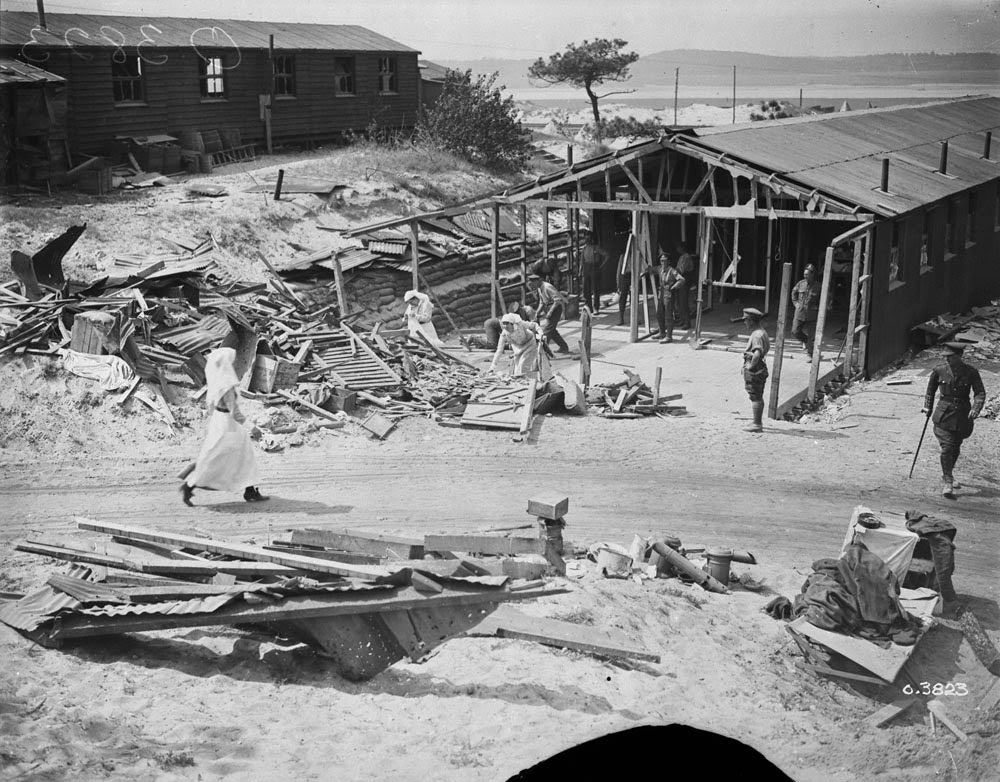
During the First World war there were complaints that the principle had been sporadically violated: that stretcher-bearers had been attacked by snipers when they sought to recover the wounded or that military hospitals had been deliberately shelled or bombed.  Here, for example, is the aftermath of one of several air raids targeting base hospitals at Etaples on the French coast between May and August 1918 (supposedly in retaliation for a British air raid on Cologne):

Lowe_Field_Hospital_bombed_LAC_PA_003747_a003747_v8.jpg_pv4a5fab25f240997c

But in the last decade of our own century such violations have become increasingly systematic. And, as more and more civilians have become trapped and even targeted in conflict zones whose ‘battlefields’ know no bounds, so those violations have extended far beyond attacks on military-medical infrastructure and personnel.

Last summer I detailed the attacks made by the Israeli military on medical facilities and emergency systems in Gaza, and I drew attention to the work of Physicians for Human Rights in documenting the precariousness of medical care there.  But the calculated production of these spaces of exception is not exceptional, and attacks like these have become part of the arsenal of later modern war.  “Instead of being protected,” says Donna McKay, executive director of PHR, “medical care is actually a target.”

HRW Attacks on Health

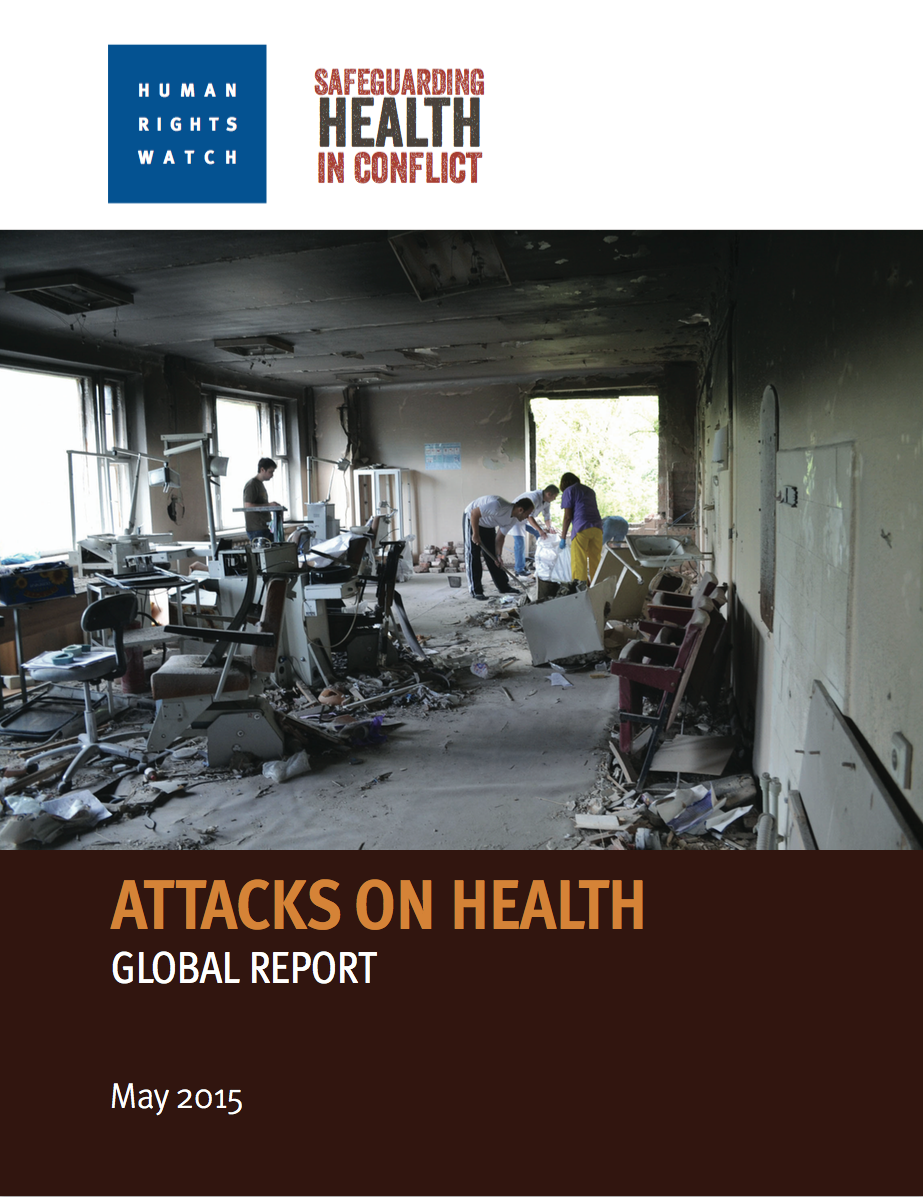
Physicians for Human Rights is part of the Safeguarding Health in Conflict Coalition which has now joined with Human Rights Watch to publish Attacks on Health: a Global Report (2015) that summarises attacks on health care facilities and health care workers around the world:

Over the past year armed groups have attacked hospitals, clinics, and health personnel in 41 incidents in Afghanistan and deliberately killed over 45 health workers, primarily polio vaccinators, in Nigeria and Pakistan. In Syria, where medical facilities in Aleppo have been hit with government barrel bombs, 194 medical personnel have been killed and 104 medical facilities attacked since 2014….

The organizations described attacks in South Sudan, where 58 people were killed in four hospitals in a series of attacks in early 2014, and in eastern Ukraine, where it is estimated that 30 to 70 percent of health workers have fled the region because of insecurity. In Yemen, Al-Qaeda in the Arabian Peninsula (AQAP) militants carried out attacks on health facilities in early 2014, and the 10-country Saudi-led coalition conducted air strikes that hit hospitals and interrupted medical supplies during the conflict in early 2015. Relying on data from Insecurity Insight’s Security in Numbers Database, the report also shows trends in attacks on health care over the course of a decade in South Sudan and Central African Republic.

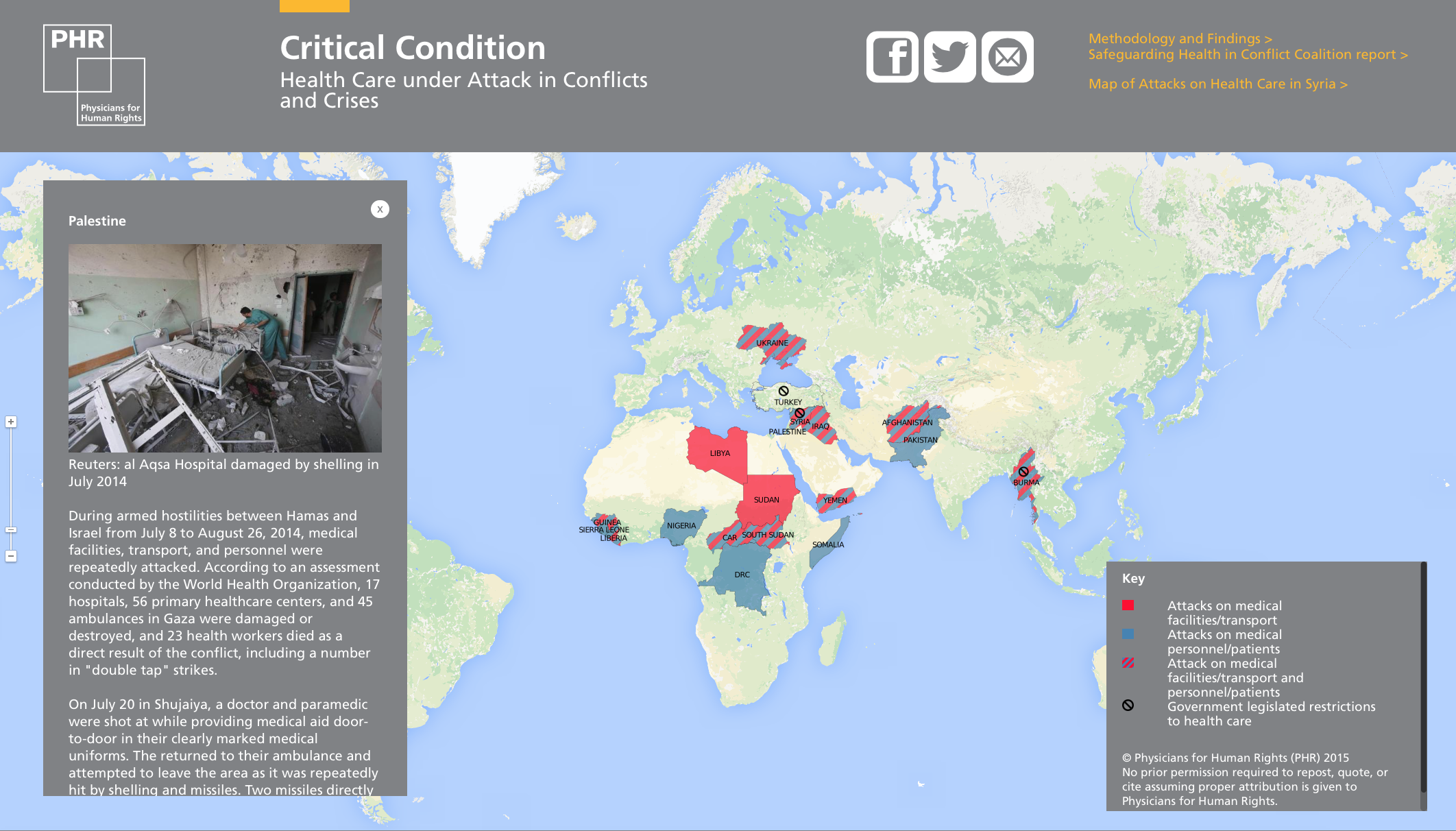
PHR Critical Condition

In close concert with the report Physicians for Human Rights have produced an interactive online map of attacks on health care around the world between January 2014 and April 2015 (see the screenshot above).

PHR Attacks on health care in Syria

The organisation has also produced a detailed map of attacks on health care systems – or what’s left of them – in Syria (see the screenshot above), which you can access here.  It needs to be supplemented by PHR’s Doctors in the crosshairs: four years of attacks on health care in Syria, which was published in March:

The symbols of the Red Cross and Red Crescent have been turned from a shield of protection into crosshairs on the backs of those who knowingly risk their lives to save others.

You can find more on the violation of medical neutrality in Syria in an open-access article by Ravi S. Katari in the Journal of global health here and in a short essay by Sasha Zients and Dylan Okabe-Jawdat for the Columbia Political Review (May 2015) here.

And you can find more on the systematic violation of medical neutrality in Bahrein and elsewhere here.

Two Tales of Two Cities

9780262527729_0

For those heading off to the International Conference on Critical Geography in Ramallah this summer, essential reading from Sharon RotbardWhite City, Black City: Architecture and War in Tel Aviv and Jaffa (MIT/Pluto Press, 2015) (first published in Hebrew in 2005).

In 2004, the city of Tel Aviv was declared by UNESCO a World Heritage Site, an exemplar of modernism in architecture and town planning. Today, the Hebrew city of Tel Aviv gleams white against the desert sky, its Bauhaus-inspired architecture betraying few traces of what came before it: the Arab city of Jaffa. In White City, Black City, the Israeli architect and author Sharon Rotbard offers two intertwining narratives, that of colonized and colonizer. It is also a story of a decades-long campaign of architectural and cultural historical revision that cast Tel Aviv as a modernist “white city” emerging fully formed from the dunes while ignoring its real foundation—the obliteration of Jaffa. Rotbard shows that Tel Aviv was not, as a famous poem has it, built “from sea foam and clouds” but born in Jaffa and shaped according to its relation to Jaffa. His account is not only about architecture but also about war, destruction, Zionist agendas, erasure, and the erasure of the erasure.

Rotbard tells how Tel Aviv has seen Jaffa as an inverted reflection of itself—not shining and white but nocturnal, criminal, dirty: a “black city.” Jaffa lost its language, its history, and its architecture; Tel Aviv constructed its creation myth. White City, Black City—hailed upon its publication in Israel as ”path-breaking,” “brilliant,” and “a masterpiece”—promises to become the central text on Tel Aviv.

There’s an excellent preview/review by Tom Sperlinger, ‘The “forced geography” of Tel Aviv‘, over at the electronic intifada:

At its heart, the book focuses on how Jaffa was all but absorbed into Tel Aviv and thus “ceased to exist as an urban and cultural entity” after 5,000 years. This focus on a city that isn’t there, which Rotbard describes as “an encyclopedia of ruins,” makes this a peculiar book to categorize.

It is not exactly a study of history or architecture. In fact, it can be quite frustrating as either, sometimes eliding past and present in the course of its argument. But it is compelling as a ghost story, in which the perpetual fictions created about Tel Aviv cannot obscure its past….[for a dissenting view, see the Comments at the electronic intifada]

Rotbard explains how in the decades since 1948, Tel Aviv has continued to push anything unwanted into the shadow city at its side:

Everything unwanted in the White City is relegated to the Black City: … garbage dumps, sewage pipes, high voltage transformers, towing lots and overcrowded central bus stations; noise and air pollution factories and small industries; illegal establishments like brothels, casinos and sex shops; unwelcoming and intimidating public institutions such as the police headquarters, jails, pathological institutes and methadone clinics; and finally, a complete ragtag of municipal outcasts and social pariahs — new immigrants, foreign workers, drug addicts and the homeless … Paradoxically, this has actually ensured that the Black City is the most colorful, heterogeneous and cosmopolitan city space in the whole of Israel.

9780520243712

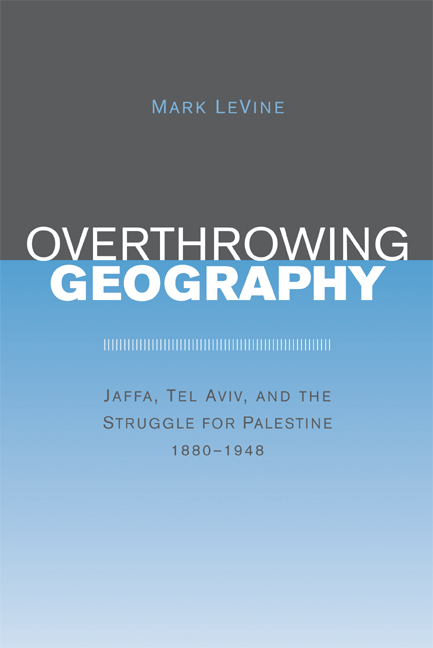
‘Forced geography’ – Sharon’s own term – reminds me of one of my favourite books, also about Jaffa and Tel Aviv: Mark Levine‘s Overthrowing Geography: Jaffa, Tel Aviv, and the Struggle for Palestine, 1880-1948 (University of California Press), which was published in 2005 hard on the heels of the original edition of White City, Black City:

This landmark book offers a truly integrated perspective for understanding the formation of Jewish and Palestinian Arab identities and relations in Palestine before 1948. Beginning with the late Ottoman period Mark LeVine explores the evolving history and geography of two cities: Jaffa, one of the oldest ports in the world, and Tel Aviv, which was born alongside Jaffa and by 1948 had annexed it as well as its surrounding Arab villages. Drawing from a wealth of untapped primary sources, including Ottoman records, Jaffa Shari’a court documents, town planning records, oral histories, and numerous Zionist and European archival sources, LeVine challenges nationalist historiographies of Jaffa and Tel Aviv, revealing the manifold interactions of the Jewish and Palestinian Arab communities that lived there.

At the center of the book is a discussion of how Tel Aviv’s self-definition as the epitome of modernity affected its and Jaffa’s development and Jaffa’s own modern pretenses as well. As he unravels this dynamic, LeVine provides new insights into how popular cultures and public spheres evolved in this intersection of colonial, modern, and urban space. He concludes with a provocative discussion of how these discourses affected the development of today’s unified city of Tel Aviv–Yafo and, through it, Israeli and Palestinian identities within in and outside historical Palestine.

Here is the Contents List:

1. Modern Cities, Colonial Spaces, and the Struggle for Modernity in the Eastern Mediterranean
2. From Cedars to Oranges: A History of the Jaffa–Tel Aviv Region from Antiquity to the Late Ottoman Period
3. Taming the Sahara: The Birth of Tel Aviv and the Last Years of Ottoman Rule
4. Crossing the Border: Intercommunal Relations in the Jaffa–Tel Aviv Region during the Mandate Period
5. A Nation from the Sands? Images of Jaffa and Tel Aviv in Palestinian Arab and Israeli Literature, Poetry, and Prose
6. Ceci N’est Pas Jaffa (This Is Not Jaffa): Architecture, Planning, and the Evolution of National Identities in Jaffa and Tel Aviv, 1880–1948
7. Planning to Conquer: The Role of Town Planning in the Expansion of Tel Aviv, 1921–1948
8. The New-Old Jaffa: Locating the Urban, the Public, and the Modern in Tel Aviv’s Arab Neighborhood

artworks-000109753529-bstbhi-t200x200POSTSCRIPT: A welcome reminder from Léopold Lambert of his interview with Dena Qaddumi (right) earlier this year on the spatial politics of Jaffa-Tel Aviv:

It attempts to propose a struggle narrative for Palestine that is not focused on Jerusalem to which many of us contribute, thus participating to a debate mostly focused on the 1967 war. By examining the spatial politics of Jaffa-Tel Aviv, Dena attempts to show that similar “ethnoocratic” logics of segregation are also at work in an environment admittedly less militarized. This logic also incorporates the same capitalist mechanisms of gentrification at work in other cities of the world. We begin by an historical approach to the “black” and “white” cities — using Sharon Rotbard’s terminology — before addressing its current situation, in particular from an architecture point of view, symptoms of the spatial violence at work within the city.

Asymmetric law

1425285643_9e0a120e-3716-468a-ba00-e976b29db2851421848906

Breaking the Silence has just published a major report into the Israeli military’s tactics during its most recent offensive against Gaza and its people, so-called ‘Operation Protective Edge’ (see my posts herehere, here and here).

Based on interviews with 65 IDF soldiers, the report includes Background, Testimonies (‘This is how we fought in Gaza‘), and a media gallery.

Writing in today’s Guardian, Peter Beaumont reports:

Describing the rules that meant life and death in Gaza during the 50-day war – a conflict in which 2,200 Palestinians were killed – the interviews shed light for the first time not only on what individual soldiers were told but on the doctrine informing the operation.

Despite the insistence of Israeli leaders that it took all necessary precautions to protect civilians, the interviews provide a very different picture. They suggest that an overarching priority was the minimisation of Israeli military casualties even at the risk of Palestinian civilians being harmed….

Post-conflict briefings to soldiers suggest that the high death toll and destruction were treated as “achievements” by officers who judged the attrition would keep Gaza “quiet for five years”.

The tone, according to one sergeant, was set before the ground offensive into Gaza that began on 17 July last year in pre-combat briefings that preceded the entry of six reinforced brigades into Gaza.

“[It] took place during training at Tze’elim, before entering Gaza, with the commander of the armoured battalion to which we were assigned,” recalled a sergeant, one of dozens of Israeli soldiers who have described how the war was fought last summer in the coastal strip.

“[The commander] said: ‘We don’t take risks. We do not spare ammo. We unload, we use as much as possible.’”

“The rules of engagement [were] pretty identical,” added another sergeant who served in a mechanised infantry unit in Deir al-Balah. “Anything inside [the Gaza Strip] is a threat.  The area has to be ‘sterilised,’ empty of people – and if we don’t see someone waving a white flag, screaming: “I give up” or something – then he’s a threat and there’s authorisation to open fire … The saying was: ‘There’s no such thing there as a person who is uninvolved.’ In that situation, anyone there is involved.”

“The rules of engagement for soldiers advancing on the ground were: open fire, open fire everywhere, first thing when you go in,” recalled another soldier who served during the ground operation in Gaza City. The assumption being that the moment we went in [to the Gaza Strip], anyone who dared poke his head out was a terrorist.”

1425285424_2bdb2aee-c3f8-4679-a375-d6682afb701a1421848849

You can find an impassioned, detailed commentary on the report by Neve Gordon – who provides vital context, not least about the asymmetric ethics pursued by supposedly ‘the most ethical army in the world’ – over at the London Review of Books here, and a shorter commentary by Kevin Jon Heller at Opinio Juris here.  Kevin notes:

The soldiers’ descriptions are disturbingly reminiscent of the notorious “free fire” zones in Vietnam and the US government’s well-documented (and erroneous) belief that signature strikes directed against “military-age men in an area of known terrorist activity” comply with IHL’s principle of distinction. The testimonials are, in a word, stunning — and put the lie to oft-repeated shibboleths about the IDF being “the most moral army in the world.” As ever, the stories told by the IDF and the Israeli government are contradicted by the soldiers who actually have to do the killing and dying.

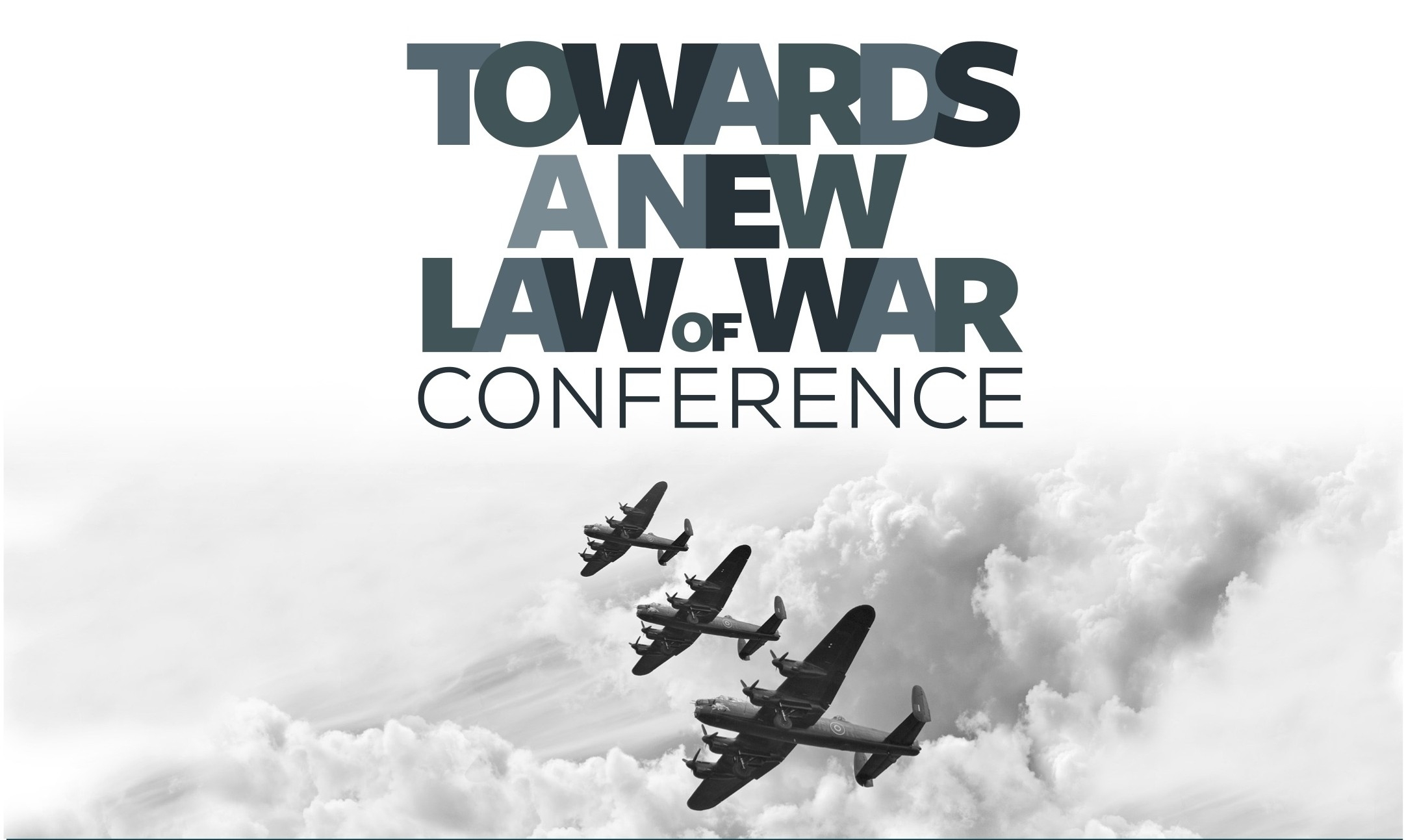
The legal and ethical framework pursued by the Israeli military – and ‘pursued’ is the mot (in)juste, since its approach to international law and ethics is one of aggressive intervention – is in full view at a conference to be held in Jerusalem this week: ‘Towards a New Law of War‘.

poster-A2_3-2480x35071-e1427212477619-2164x1293

‘The goal of the law of war conference,’ say the organisers, ‘is to influence the direction of legal discourse concerning issues critical to Israel and her ability to defend herself. The law of war is mainly unwritten and develops on the basis of state practice.’

You can find the full program here, dominated by speakers from Israel and the US, but notice in particular the session on ‘Proportionality: Crossing the line on civilian casualties‘:

CIvilian Casualties

As this makes clear, and as Ben White reports in the Middle East Monitor, law has become the target (see also my post here):

After ‘Operation Cast Lead’, Daniel Reisner, former head of the international law division (ILD) in the Military Advocate General’s Office, was frank about how he hoped things would progress.

If you do something for long enough, the world will accept it. The whole of international law is now based on the notion that an act that is forbidden today becomes permissible if executed by enough countries….International law progresses through violations.

Similarly, in a “moral evaluation” of the 2008/’09 Gaza massacre, Asa Kasher, author of the IDF’s ‘Code of Ethics’, expressed his hope that “our doctrine” will ultimately “be incorporated into customary international law.” How?

The more often Western states apply principles that originated in Israel to their own non-traditional conflicts in places like Afghanistan and Iraq, then the greater the chance these principles have of becoming a valuable part of international law.

Now Israel’s strategy becomes clearer… Israel’s assault on the laws of war takes aim at the core, guiding principles in IHL – precaution, distinction, and proportionality – in order to strip them of their intended purpose: the protection of civilians during armed conflict. If successful, the victims of this assault will be in the Occupied West Bank and Gaza Strip, Lebanon – and in occupations and war zones around the world.

Drone networks

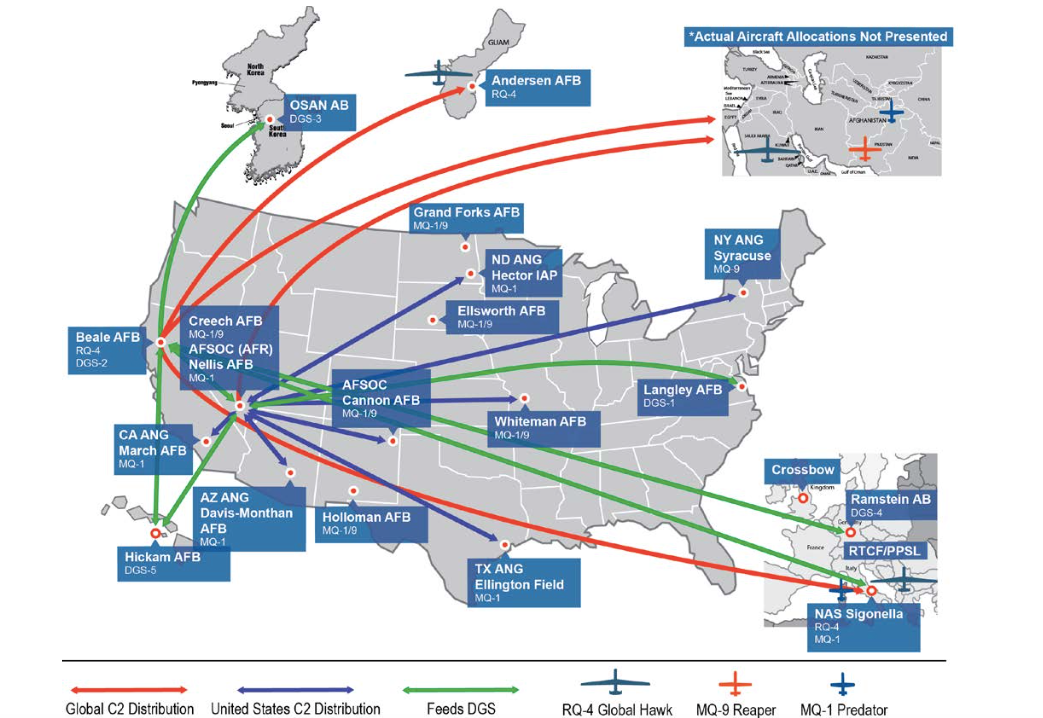
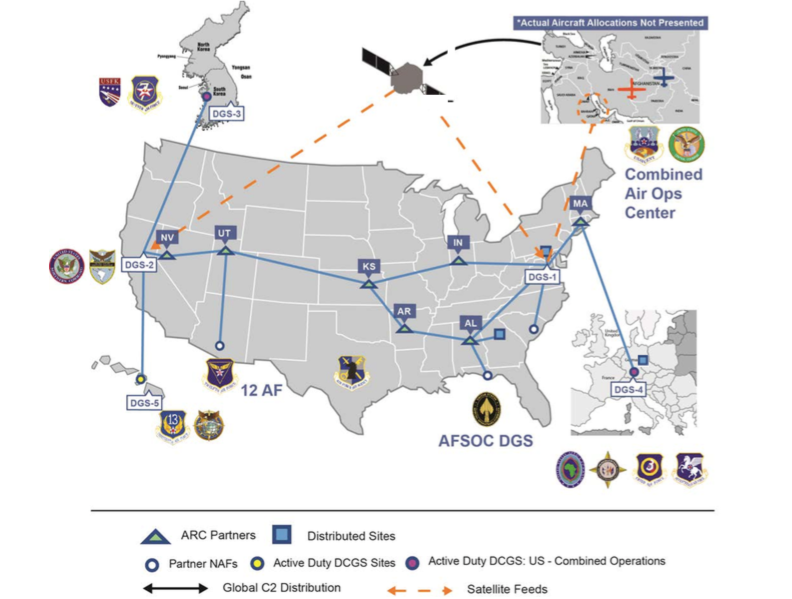
Three contributions to the debates over drones and military violence.  First, my friends at the Bard Center for the Study of the Drone have published Dan Gettinger‘s essay on ‘Drone Geography: mapping a system of intelligence‘.  It’s a superb sketch of the intelligence network in which the US Air Force’s drones are embedded (you can read my complementary take on ‘Drone geographies’ under the DOWNLOADS tab).  Let me add just one map to the illustrations that stud his essay.  It’s taken from the Air Force’s RPA Vector report for 2013-28, published last February, and it shows the architecture of remote split operations within and beyond the United States.  It’s helpful (I hope) because it shows how the Ground Control Stations in the continental United States feed in to the Distributed Common Ground System that provides image analysis and exploitation (shown in the second map, which appears in a different form in Dan’s essay).  I’m having these two maps combined, and I’ll post the result when it’s finished.

RSO architecture (USAF) 1

Distributed Common Ground System (USAF) 2

Dan is right to emphasise the significance of satellite communications; much of the discussion of later modern war and its derivatives has focused on satellite imagery, and I’ve discussed some of its complications in previous posts, but satellite communications materially shape the geography of remote operations.  The Pentagon has become extraordinarily reliant on commercial providers (to such an extent that Obama’s ‘pivot to the Pacific’ may well be affected), and limitations of bandwidth have required full-motion video streams from Predators and Reapers (which are bandwidth hogs) to be compressed and image quality to be degraded.  Steve Graham and I are currently working on a joint essay about these issues.

One caveat: this is not the only network in which US remote operations are embedded.  In my essay on ‘Dirty Dancing’ (now racing towards the finish line) I argue that the CIA-directed program of targeted killing in the Federally Administered Tribal Areas of Pakistan cannot be severed from the multiple ways in which the FATA have been configured as both borderlands and battlefields and, in particular, from the cascade of military operations that have rendered the FATA as a space of exception (in something both more and less than Agamben’s sense of the term).  Here I’ve learned much from an excellent essay by Elizabeth Cullen Dunn and Jason Cons, ‘Aleatory sovereignty and the rule of sensitive spaces’, Antipode 46 (1) (2014) 92-109).  They complicate the claim that spaces of exception always derive from a single locus of sovereign power (or ‘the sovereign decision’).  Instead, they  suggest that borderlands are ‘contested spaces’ where ‘competing’ powers ‘collide’.  In the FATA multiple powers have been involved in the administration of military violence, but on occasion – and crucially – they have done so in concert and their watchword has been a qualified and covert collaboration. In particular, the FATA have been marked by a long and chequered gavotte between the militaries and intelligence services of the United States and Pakistan which, since the 1980s, has consistently put at risk the lives of the people of the borderlands.  And in my essay on ‘Angry Eyes’ (next on my screen) I argue that the US military’s major use of Predators and Reapers in Afghanistan – orchestrating strikes by conventional aircraft and providing close air support to ‘troops in contact’ – depends on communication networks with ground troops in theatre, and that this dispersed geography of militarised vision introduces major uncertainties into the supposedly ‘precise’ targeting process.

CHAMAYOU Theory of the droneSecond: Elliott Prasse-Freeman has an extended review of the English translation of Grégoire Chamayou‘s Theory of the drone – called ‘Droning On‘ – over at the New Inquiry (you can access my own commentaries on the French edition here: scroll down).  His central criticism is this:

While his title promises theory, we instead are treated to a digression on the military and social ethics of attacks from the air, in which Chamayou asks without irony, “can counterinsurgency rise to the level of an aero-policy without losing its soul?” What offends Chamayou is the “elimination, already rampant but here absolutely radicalized, of any immediate relation of reciprocity” in warfare. This, we are told, is the problem.

Promised a theory of the drone, how do we arrive at a theory of the noble soldier?…

And so, dispatching with the dream of the drone … Chamayou assumes the concerns not of the brutalized but of military leaders and soldiers.

He continues in terms that resonate with my argument in ‘Dirty Dancing’:

By combining knowing (intelligence, surveillance, reconnaissance), sighting (targeting in movement and in the moment), and eliminating (“putting warheads on foreheads”), the drone constitutes an assemblage of force (as drone-theorist Derek Gregory puts it) that promises a revolution in control and allows the US war apparatus to imagine space and politics in new ways. Because the body of the accused can ostensibly be precisely seen, it can be seen as itself carving out a body-sized exception to state sovereignty over the territory on which that body moves. In this way, eliminating the body does not constitute an assault on the territory of the state, as these bodies are presented as ontologically (and hence quasi-legally) disconnected from that territory.  Geographer Stuart Elden in Terror and Territory (2009) points out the significant overlap between who are labeled ‘terrorists’ and movements fighting for their own political spaces – which hence necessarily violate extant states’ ‘territories’ (and hence the entire international order of states): to violate territory is to terrorize. The US is hence remarkably concerned in its arrogation of a position of supra-sovereignty to ensure that it overlaps with ‘classic’ state sovereignty, and by no means violates the norm of territorial integrity (well-defined borders): by harboring or potentially harboring unacceptable transnational desires, the militant uproots himself, and risks being plucked out and vaporized in open space that belongs only to him. The exception to sovereignty provides the drone the opportunity to extend this exception into temporal indefiniteness: wars are not declared, aggressions are not announced—the fleet, fusing police and military functions, merely watches and strikes, constantly pruning the ground of human weeds.

In ‘Dirty Dancing’ I’m trying to prise apart – analytically, at least – the space of exception, conceived as one in which a particular group of people is knowingly and deliberately exposed to death through the political-juridical removal of legal protections and affordances that would otherwise be available to them, and territory conceived (as Stuart suggests) as a political-juridical technology, a series of calculative practices that seeks to calibrate and register a claim over bodies-in-spaces.  That’s why Dan Gettinger’s essay is so timely too, and why I’ve been thinking about the FATA as a performance of what Rob Kitchin and Martin Dodge call ‘code/space’, why I’ve been working my way through the files released by Edward Snowden, and why I’ve been thinking so much about Louise Amoore‘s superb critique of The politics of possibility: risk and security beyond probability (2013).

Screen Shot 2015-01-07 at 10.03.16 AM

Although Louise doesn’t address drone strikes directly, her arguments are full of vital insights into the networks that are mobilised through them.  ‘The sovereign strike is always something more, something in excess of a single flash of decision’, she insists, and when she writes that —

those at risk (which is to say those who are to be put at risk by virtue of their inferred riskiness) are ‘not strictly “included by means of their own exclusion”, as Agamben frames the exception, they are more accurately included by means of a dividuated and mobile drawing of risk fault lines’

17— it’s a very short journey back to Grégoire Chamayou‘s reflections on the strange (in)dividual whose ‘schematic body’ emerges on the targeting screen of the Predator or Reaper.  Louise writes of ‘the appearance of an emergent subject’, which is a wonderfully resonant way of capturing the performative practices through which targets are produced: ‘pixelated people’, she calls them, that emerge on screens scanning databanks but which also appear in the crosshairs…

And finally, Corporate Watch has just published a report by Therezia Cooper and Tom Anderson, Gaza: life beneath the drones.  This brings together a series of interviews conducted in 2012 – when ‘drones killed more people in Gaza than any other aircraft’ – that were first published in serial form in 2014.  The report includes a tabulation of deaths from Israeli military action in Gaza and those killed directly by drones (2000-2014) and a profile of some of the companies involved in Israel’s military-industrial complex.

The prosthetics of military violence

Neve Gordon‘s review of Grégoire Chamayou‘s A theory of the drone on Al-Jazeera is now available in a more extended form at Counterpunch here.  It’s a succinct summary of the book’s main theses, though there’s not much critical engagement with them (you can access my own series of commentaries here [scroll down]).  He closes his review like this:

Because drones transform warfare into a ghostly teleguided act orchestrated from a base in Nevada or Missouri, whereby soldiers no longer risk their lives, the critical attitude of citizenry towards war is also profoundly transformed, altering, as it were, the political arena within drone states.

Drones, Chamayou says, are a technological solution for the inability of politicians to mobilize support for war. In the future, politicians might not need to rally citizens because once armies begin deploying only drones and robots there will be no need for the public to even know that a war is being waged. So while, on the one hand, drones help produce the social legitimacy towards warfare through the reduction of risk, on the other hand, they render social legitimacy irrelevant to the political decision making process relating to war. This drastically reduces the threshold for resorting to violence, so much so that violence appears increasingly as a default option for foreign policy. Indeed, the transformation of wars into a risk free enterprise will render them even more ubiquitous than they are today.

Neve is the author of the indispensable Israel’s occupation, and while these paragraphs closely follow A theory of the drone the title of the book is in the singular – and so I’m left wondering about military violence that isn’t orchestrated from Nevada or Missouri and what other ‘theories of the drone’ are needed to accommodate a ‘drone state’ like Israel (not that I’m sure what a ‘drone state’ is…)?
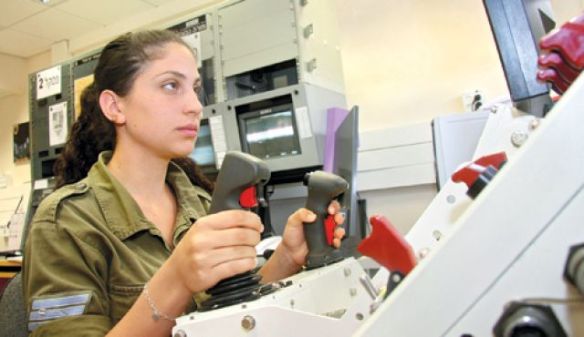
Shoot and Strike

The Israeli military is no stranger to what, following Joseph Pugliese, I’ll call prosthetic violence. While Israel remains a leading manufacturer of drones (see here and here), and routinely deploys them over the occupied territories, it also enforces its ‘Death Zone‘ in Gaza through an automated, ground-based ‘Spot and Strike’ shooting system:

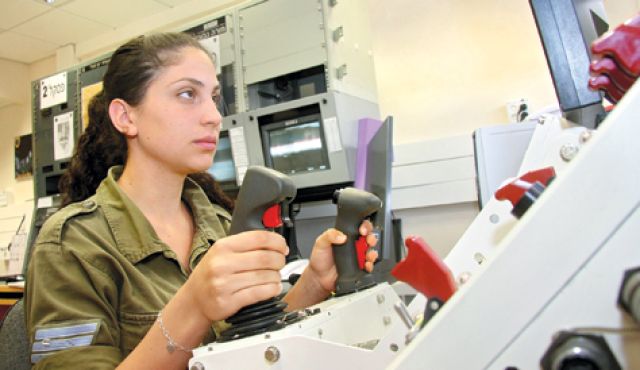
The soldiers, trainees in the course for the “Spot and Strike” system, sit in a tower facing the wilderness of the southern Negev, at the far edge of the Field Intelligence School at the Sayarim base, not far from Ovda. Between their tower and the wide-open desert stands another tower topped by a metal dome. With the press of a button the dome opens to reveal a heavy machine gun. Small tweaks of the joystick aim the barrel. To the right of the gun is a camera, which transmits a clear picture of the target onto a screen opposite the soldier. A press of the button and the figure in the crosshairs is hit by a 0.5-inch bullet.

This dovetails (wrong bird) with a discussion of online shooting in A theory of the drone, but here is risk-transfer war waged over extremely short distances.  ‘Remoteness’ is as much an imaginative as a physical condition, and one that is constantly manipulated so that the threat from Hamas’s rockets and tunnels becomes ‘danger close’ even as the hideous consequences of Israel’s own military offensives become distanced (unless, of course, you choose to turn killing into a spectator sport).  In Israel, it seems, these prosthetic assemblages – of which drones are a vital part – serve to animate a deeply militarised society in which evidence of a martial stance is precisely a prerequisite for its claims to legitimacy.

PUGLIESE State violence

So we clearly need a more inclusive analysis of the prosthetics of military violence – the bio-technical means by which its range is extended – that acknowledges the role of drones for more than ‘targeted killing’ and which incorporates other emergent modalities altogether, including cyberwarfare.  One of the best places to start thinking through these issues, in relation to drones at any rate, is Joseph’s tour de force, State violence and the execution of law (2013), which emphasises how ‘through a series of instrumental mediations, the biological human actor becomes coextensive with the drone that she or he pilots from the remote ground control station’ (p. 184) (I connected this to Grégoire’s theses here).

The experience may be more conditional than this allows, though.  Timothy Cullen‘s study of USAF crews training to operate the MQ-9 Reaper found that the sense of ‘co-extension’ – or bioconvergence – was much stronger among sensor operators than pilots:

After a couple hundred hours of flight experience and a sense of comfort with the modes, interfaces, and capabilities of the sensor ball, sensor operators began to feel like they were a part of the machine. With proficiency as a “sensor,” sensor operators found themselves shifting and straining their bodies in front of the [Heads Up Display] to look around an object.  As pilots flew closer to a target, the transported operators tilted their heads in anticipation of the camera’s [redacted].  Feelings of remote presence helped sensor operators move their bodies, and instructors believed that operators who felt as if they were “flying the sensor” could hold their attention longer on a scene…

Both pilots and sensor operators said pilots did not transport themselves conceptually into the machine to the same extent as a sensor operator. Nor did pilots attain similar feelings of connection and control with Reaper as they did with their previous aircraft.

The term ‘prosthetics’ implies these are at once extensions and embodiments of a military violence whose prosthetics also assume more mundane bioconvergent forms.  This is an obvious but in most cases strangely overlooked point.  Joseph mentions it in passing, juxtaposing his ‘mobilisation of the prosthetic trope’ with ‘the material literality of prosthetics: drones as the militarized prosthetics of empire inherently generate civilian amputees in need of prosthetic limbs’ (p. 214).  There’s also a suggestive discussion in Jennifer Fluri‘s ‘States of (in)security’, which devotes a whole section to what she calls ‘prosthetics biopower’ and the multiply corporeal geographies of contemporary wars [Environment and Planning D: Society & Space 32 (2014) 795-814].  Although Jennifer doesn’t directly connect these intimacies to distant vectors of military violence, the implication (and invitation) is clearly there.

So let me try to supplement her observations, drawing in part on my project on military-medical machines that treats (among other theatres of war) the evacuation of injured soldiers and civilians in Afghanistan.  It’s important to trace the two pathways, as I’ll show in a moment (and I’ll say much more about this in a later post), but it’s also necessary to remember, as Sarah Jain crisply observes in her classic essay on ‘The prosthetic imagination‘ (p. 36), that ‘it usually is not the same body that is simultaneously extended and wounded’  [Science, technology and human values 24 (1) (1999) 31-54].  That said, there is a distinctively corporeal geography to those that are.
US military Limb amutations in Afghanistan and Iraq PNG

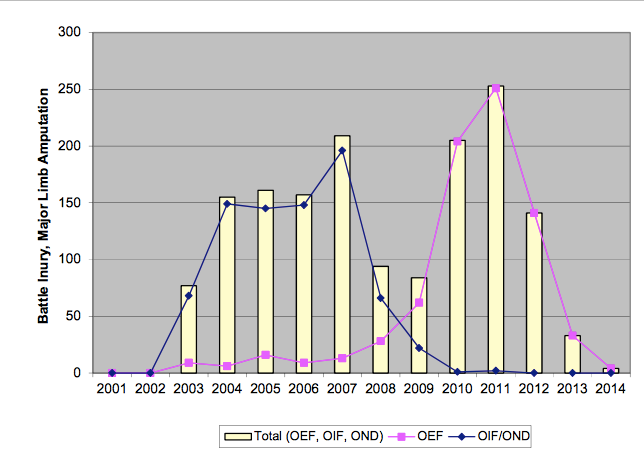
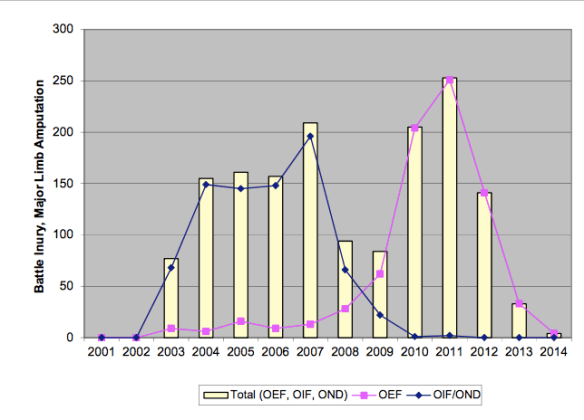
Major limb amputations (US military) in Iraq (OIF) and Afghanistan (OEF) 2001-2014 (Source: Congressional Research Services US Military Casualty Statistics, November 2014)

The incidence of devastating injuries to the limbs of troops in Iraq and Afghanistan (see the graph above; for comparable UK figures, see here) – mainly from IEDs – has been acknowledged in the role played by amputees in mission rehearsal exercises and pre-deployment training since 2005 (see here for an excellent general account).
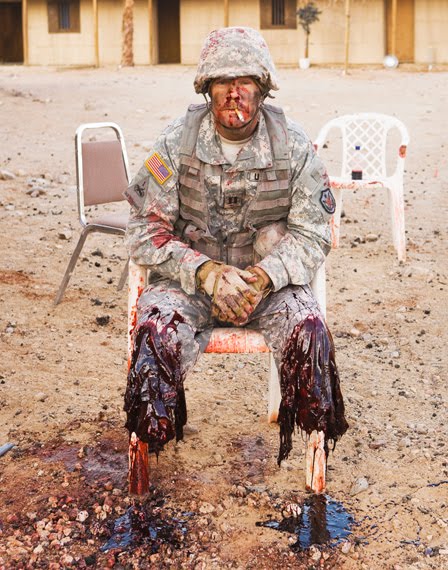
Peter Bohler:Fort Irwin training

Private contractors like Amputees in Action pride themselves on providing ‘de-sensitising’ exposure to ‘catastrophic injury amputations’ and replicating the latest field injuries for these exercises.  There is a risk in re-enrolling war veterans, as the company concedes:

Every amputee is vetted and put through specialist training beforehand to see if they are up to the job. For some it is too close to the mark, too realistic. The last thing we want to do is traumatize someone, stymie their rehabilitation.

These simulations have been used to prepare ordinary soldiers for the situations they will face – today it’s not only the ‘golden hour’ between injury and surgery that is crucial but also (and much more so) the ‘platinum ten minutes’ immediately following the incident, so the first response is vital. They have also been used to ready trauma teams for the war zone: the BBC has a report on the Royal Army Medical Corps’s mock ‘Camp Bastion’ at Strenshall in Yorkshire here.

These various exercises incorporate the latest advances in evacuation and trauma care, which have meant that today’s soldiers are far more likely to survive even the most life-threatening wounds than those who fought in previous conflicts, but the horrors experienced by young men and women in the military who lose arms and legs – sometimes all of them – are truly hideous:  read, for example, Anne Jones‘s mesmerising and deeply moving account of  They Were Soldiers: How the wounded return from America’s wars (you can get an idea from her ‘Star-spangled Baggage’ here).  Their road to rehabilitation is far longer, and infinitely more painful, than the precarious journey through which they returned to the United States (see also my ‘Bodies on the line‘).
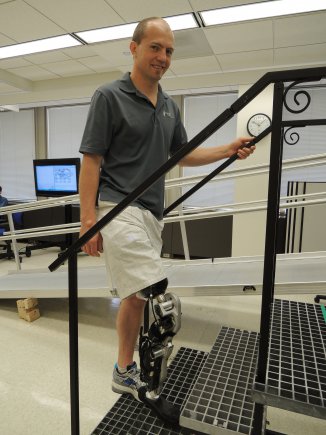
Zac Vawter at the Rehabilitation Institute of Chicago

Researchers unveiled the world’s first thought-controlled bionic leg  on 25 September 2013  funded through the US Army Medical Research and Materiel Command’s (USAMRMC) Telemedicine and Advanced Technology Research Center (TATRC) and developed by researchers at the Rehabilitation Institute of Chicago (RIC) Center for Bionic Medicine. 

There is some light in the darkness – ongoing experiments with state-of-the-art, ‘bionic’ prosthetics animated by microprocessors in the US, the UK and elsewhere that restore far more stability, mobility and movement than would have been possible even five years ago (see above, and here and here for the US, here and here for the UK).  In the 1980s less than 2 per cent of US soldiers who had suffered major limb amputations returned to duty; by 2006 that had increased to over 16 per cent (see also here and here).  There are several reasons for the change, but in 2012 Jason Koebler reported:

According to the Army, at least 167 soldiers who have had a major limb amputation (complete loss of an arm, leg, hand, or foot) have remained on active duty since the start of the Afghanistan and Iraq wars, with some returning to battle. Many others have returned overseas to work in support roles behind the lines.

“When we have someone we know wants to return, their rehab is geared that way,” says John Fergason, chief of prosthetics at the Army Center for the Intrepid at Fort Sam in Houston, Texas.

Kevin Carroll, vice president of Prosthetics at Hanger, a company that makes artificial limbs, says prosthetics have become more comfortable to wear and closer in range of motion to natural limbs.  “Unfortunately, when you have war, you have casualties, but with that comes innovation,” he says. Artificial joints are getting better at approximating the knee, elbow, wrist, and ankle, and microprocessors embedded in prostheses are able to pick up and adjust for impacts from walking, running, jumping, and climbing.

“The person doesn’t have to worry about the prosthetic device, they’re worrying about the task in front of them,” Carroll says. “If they want to go back to be with their troops, that’s an option for many soldiers these days.”

Notice, though, that these advances in prosthetic design and manufacture are part of an intimate conjunction between military violence and military medicine, in which materials science, bio-engineering, electronics and computer science simultaneously provide new means of bodily injury and new modalities of bodily repair.  This is captured in the title of David Serlin‘s thought-provoking essay, ‘The other arms race’ [in Lennard Davis (ed), The Disability Studies Reader (second edition, 2006) 49-65; this essay is not included in the latest edition, but see also the collection David edited with Katherine OttArtificial parts, practical lives: modern histories of prosthetics (2002) and his own Replaceable You: engineering the body in postwar America (2004)].  You can also find an excellent brief historical review of ‘Prosthetics under trials of war’ here.
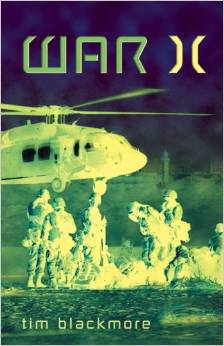
War XAnd, given the circuits within the military-medical machine, there may be more to come.  There are those who anticipate a future in which prosthetics will not only reinstate but also increase a soldier’s capabilities.  Koebler cites Jonathan Moreno, a bioethicist at the University of Pennsylvania, who ‘talks about a future where prosthetics are “enhancers” that allow soldiers to be stronger, faster, and more durable than their peers.’  These fantasies feed through the masculinist imaginary of the post-human cyborg soldier (sketched an age ago by Chris Hables Gray and revisited here) to the prosthetics of military violence with which I began. Here Tim Blackmore‘s War X: Human extensions in battlespace (2011) is also relevant.

But Koebler is quick to add that all this is still a distant prospect:

“I know the question is often, ‘How close are we to true bionic or having artificial limbs that are more versatile than natural ones?'” Fergason says. “Frankly, we’re not that close. You’re not going to see anyone decide, ‘Boy, I think I’d like to get a bionic leg because they’re so fantastic.’

“We love to read about the super-soldier, but that’s not the case right now. Amputation is so complex in what it does to your body that it’s a very long recovery,” he adds.

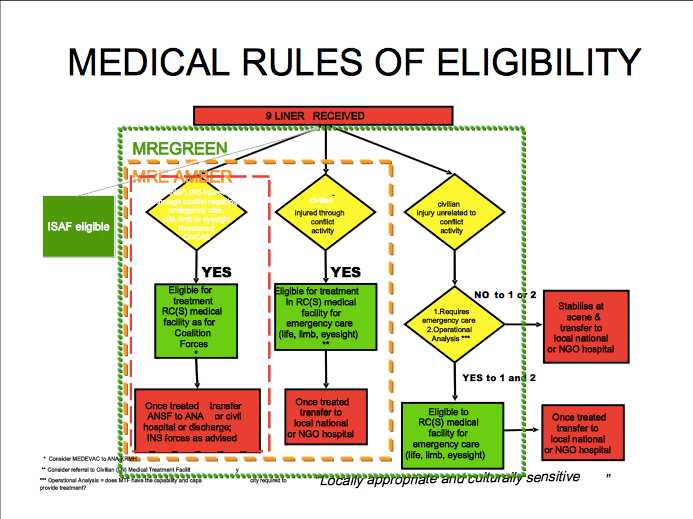
So what, then, of civilians?  Under ISAF’s Medical Rules of Eligibility Afghan civilians who were injured during military operations and/or needed ‘life, limb or eyesight saving care’ could be admitted to the international medical system, and were eligible for emergency casualty evacuation and treatment at one of the Category III advanced trauma centres at Bagram or Camp Bastion.
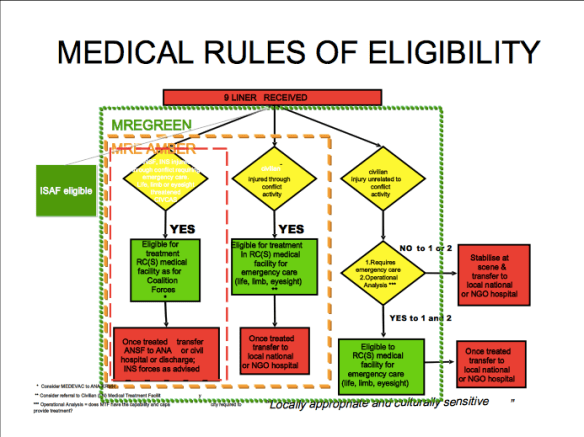
Medical Rules of Eligibility PNG

As soon as possible, however, Afghans were to be treated by Afghans and so, after surgical intervention they had to be transferred to the local healthcare system.  The same applied to the Afghan National Army and police.  In consequence, the drawdown of international forces – which also includes their medevac and trauma teams – has left the local population desperately vulnerable to the after-effects of continuing and residual military and paramilitary violence (see here and here).

The inadequacies and insufficiencies of the Afghan healthcare system have prompted a number of NGOs to fill the gap between the radically different systems, and they have done – and continue to do –  immensely important work.

But compare the prosthetics available to US soldiers with those supplied to Afghan civilians.  I don’t mean to minimise the invaluable work done by hard-pressed and underfunded NGOs, but the image below is from the ICRC‘s Orthopedic Center in Kabul (see also here).  There are other centres supported by the ICRC in Faizabad, Gulbahar, Herat, Jalalabad, Lashkar Gah, and Mazar-e-Sharif, together with a manufacturing facility in Kabul, and other NGOs are active elsewhere  – Médecins sans Frontières runs a similar facility in Kunduz, for example.
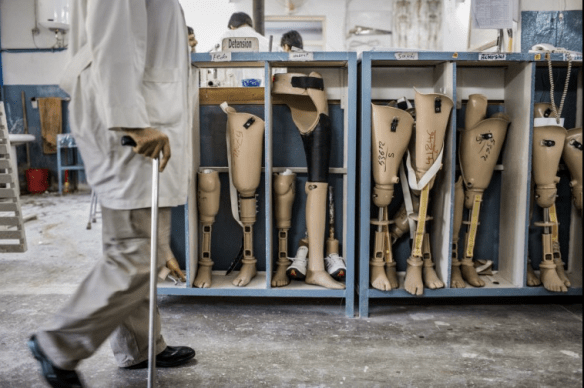
ICRC Orthopedic Center Kabul PNG

In addition to these facilities, there have been some ingenious work-arounds.  Carmen Gentile describes how US soldiers at Forward Operating Base Kasab in Kandahar were moved by the plight of Mohammed Rafiq, an eight-year old boy whose legs were blown off by an IED.  ‘Since we couldn’t get a supply of commercially made legs, we decided that maybe we could make them ourselves,’ explained Major Brian Egloff, a US Army surgeon at the base.

Using scrap tubing and some ingenuity, Egloff fitted Rafiq with small prosthetic legs. Rafiq was now able to get around the village…

Egloff did not end his work with Rafiq. He knew there must be other amputees living in the area…  Soldiers on patrol had noticed “a lot of guys with amputations that had no prosthetic legs and were reduced to crawling around on the ground and relying on the charity of strangers just to get by,” he says.  Afghans heard about what was done for Rafiq and asked for help for others. Egloff made the legs from material readily available in any welding shop, he says, mostly scrap aluminum tubing for the legs and aluminum plates for the prosthetic feet. A spring-loaded hinge served as the ankle joint.  “It’s a very simple design, nothing complicated,” he says.

These legs were intended to be temporary replacements until ‘a professionally fitted prosthetic’ was available, but the same report notes that ‘getting to a provincial capital, where most hospitals are located, is not easy for many Afghans and the routes are dangerous.’  There’s much more about inaccessibility in MSF’s Between rhetoric and reality: the ongoing struggle to access healthcare in Afghanistan (February 2014).

Like Mohammed – and many ISAF and Afghan soldiers – many of these amputees are the victims of IEDs or even land mines left over from the Soviet occupation (for a global review of the rehabilitation of people maimed by the explosive remnants of war [ERW], see this 2014 report from the International Campaign to Ban Landmines–Cluster Munition Coalition).

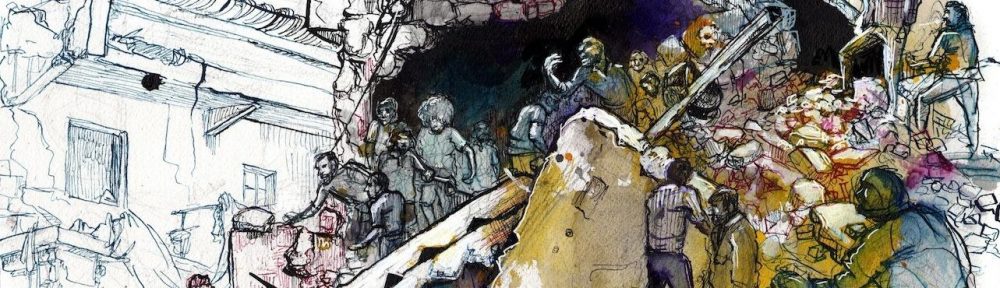
But some of them will be the victims of air strikes from or orchestrated by Predators and Reapers: in recent years Afghanistan has been the most heavily ‘droned’ theatre of operations in the world.  In some cases they were caught in the blast, but in others they were the victims of what Rob Nixon calls ‘slow violence‘.  According to a report by Sune Engel Rasmussen in the Guardian:

Since 2001, the coalition has dropped about 20,000 tonnes of ammunition over Afghanistan. Experts say about 10% of munitions do not detonate: some malfunction, others land on sandy ground. In rural areas, children often bring in vital income to households, but collecting scrap metal or herding animals can be fraught with unpredictable risks. Of all Afghans killed and maimed by unexploded ordnance, 75% are children…

Their future is usually bleak.  Erin Cunningham reports that ‘even as the population of Afghans who are missing limbs grows, amputees face discrimination and the harsh stigma of being disabled.’

“Socially and financially, their lives are destroyed,” Emanuele Nannini, program director at the Italian nonprofit Emergency, which operates health-care centers across Afghanistan, said of Afghan amputees.

From January to June [2014], Emergency’s Center for War Trauma Victims in Lashkar Gah, the capital of Helmand province in southern Afghanistan, performed 69 amputations. The fiercest fighting between the two sides usually takes place in the warmer summer months.

Emergency then sends the amputees to the nearby International Committee for the Red Cross orthopedic facility for long-term rehabilitation. The patients receive vocational training and other support to reintegrate them into society. The ICRC said that between April and June this year, it admitted 351 amputee patients to its facilities across Afghanistan.

But for the most part, amputees “are completely dependent on their families, and they become a huge burden,” said Nannini, who is based in Kabul. “The real tragedy starts when they go home. If they don’t have a strong family, they become beggars.”

Emergency runs two other surgical centers, in Kabul and Anabah, as well as a number of clinics and first aid posts in the villages; at Lashkar Gah six out of every ten admissions are victims of bombs, land mines or bullets.

The story is, if anything, even worse across the border in Pakistan’s Federally Administered Tribal Areas, whose inhabitants are also subject to explosive violence from the Taliban and other groups, and from CIA-directed drone strikes and air and ground attacks by Pakistan’s military.  As Madiha Tahir has shown, the victims usually disappear from public attention, at least in the United States:

What is the dream?

I dream that my legs have been cut off, that my eye is missing, that I can’t do anything … Sometimes, I dream that the drone is going to attack, and I’m scared. I’m really scared.

After the interview is over, Sadaullah Wazir pulls the pant legs over the stubs of his knees till they conceal the bone-colored prostheses.

The articles published in the days following the attack on September 7, 2009, do not mention this poker-faced, slim teenage boy who was, at the time of those stories, lying in a sparse hospital in North Waziristan, his legs smashed to a pulp by falling debris, an eye torn out by shrapnel….

Did you hear it coming?

No.

What happened?

I fainted. I was knocked out.
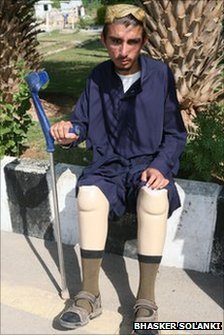
sadulla1As Sadaullah, unconscious, was shifted to a more serviceable hospital in Peshawar where his shattered legs would be amputated, the media announced that, in all likelihood, a senior al-Qaeda commander, Ilyas Kashmiri, had been killed in the attack. The claim would turn out to be spurious, the first of three times when Kashmiri would be reported killed.

Sadaullah and his relatives, meanwhile, were buried under a debris of words: “militant,” “lawless,” “counterterrorism,” “compound,” (a frigid term for a home). Move along, the American media told its audience, nothing to see here. Some 15 days later, after the world had forgotten, Sadaullah awoke to a nightmare.

Do you recall the first time you realized your legs were not there?

I was in bed, and I was wrapped in bandages. I tried to move them, but I couldn’t, so I asked, “Did you cut off my legs?” They said no, but I kind of knew.

Zeeshan-ul-hassan Usmani and Hira Bashir listed some of the long-term implications in a report completed last December for the Costs of War project:

Drone injuries are catastrophic ones.  Wounded survivors of drone attacks have often lost limbs and are usually left with intense and unmanaged pain, and some desire death. Those who survive with severe disabilities face a difficult situation given lack of accommodation for people with disabilities in Pakistan. FATA is an extremely difficult terrain for a disabled person. A walk out for the morning naan (traditional bread) may require navigating through a twisty mud track, with regular dips and bumps. The traditional mud houses of the area themselves have a mud floored haweli (an open-air area onto which all the rooms usually open up). A person with a leg amputation cannot use a regular wheel chair, go to school or hospital, or even use a toilet on his own. Disability of the primary breadwinner can change the course of life for an entire family, since most village jobs are physical ones.

Here too the barriers are more than physical.  In 2011 Farooq Rathore and Peter New described how disability remains a stigma in many sectors of Pakistani society, and rehabilitation medicine is still underdeveloped.

The leading prosthetics center is the Armed Forces Institute for Rehabilitation Medicine at Rawalpindi – whose rehabilitation services for injured soldiers are reportedly ‘the best in the country‘ – but it ‘still manufactures prostheses and orthoses with wood, leather, and metal.’  For injured civilians, the outlook is still more grim.  In 2012 a plan was announced to appoint orthotic specialists and physiotherapists at district hospitals throughout the FATA:

The prolonged United States-led war against terrorism has left a large number of people disabled in Pakistan, compelling the government to institute a rehabilitation plan that will include imparting vocational skills…

“We plan to enhance the physical rehabilitation services for the victims of terrorism to save them from permanent disability,” [Mahboob ur Rehman, head of the physiotherapy department at the Hayatabad Medical Complex (HMC)in Peshawar] told IPS.

The decade-long armed conflict has resulted in injuries to thousands of people from blasts, shelling and drone attacks, with the majority of the victims needing prosthetic and orthotic management to help regain the ability to walk, he said.

But it turns out that the emphasis is as much on ‘wheelchairs and sewing machines’ as it is on even the most basic prosthetics.

Once again, NGOs have provided vital services in the most difficult circumstances.  In 1979 the ICRC established a Paraplegic Rehabilitation Center in Peshawar for victims of the Afghan war, for example, which was subsequently transferred to the control of the Khyber-Pakhtunkhwa provincial government.  It has achieved some notable successes, but here too the focus is on physical therapy and it is outside the FATA so that access is difficult for many people.

And so, finally, to Gaza.  Here the differences with Afghanistan and Pakistan are striking.  Throughout the Israeli assault last summer, as I showed in detail here, medical services were severely compromised, and hospitals and medical centres actively targeted.  The only rehabilitation hospital, El-Wafa, was destroyed.  The injuries were also aggravated by the use of Dense Inert Metal Explosives (DIME) – developed for the US Air Force in 2006 – and which, according to a Briefing Note issued by the Palestinian human rights organisation Al-Haq, were fired from Israeli drones.
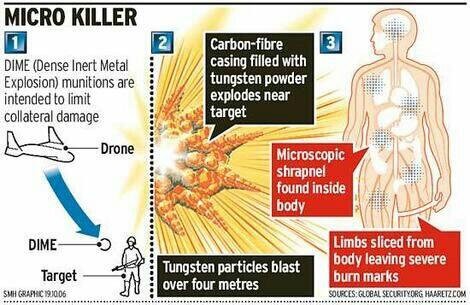
DIME blast injuries

These experimental weapons are supposed to decrease collateral damage by constricting the lethal blast radius.  But inside that perimeter the explosive blast is concentrated and magnified:

The injuries of victims who have been in contact with experimental DIME weapons are distinguishable from injuries sustained by non-experimental weapons. While signs of solid shrapnel or metal fragments are typical of amputations sustained from traditional explosives, physicians in the Gaza Strip are witnessing gruesome amputations caused by a metal vapor or residue which indicate the detonation of an extreme force in a small radius. In fact, as a result of these weapons, reported cases in the Gaza Strip include entire bodies cut in half, shattered bones, and skin, muscle and bones turned into charcoal due to the destructive burns associated with the weaponry’s extreme force and high temperature.

The lacerations are so severe that many victims bleed out and die.

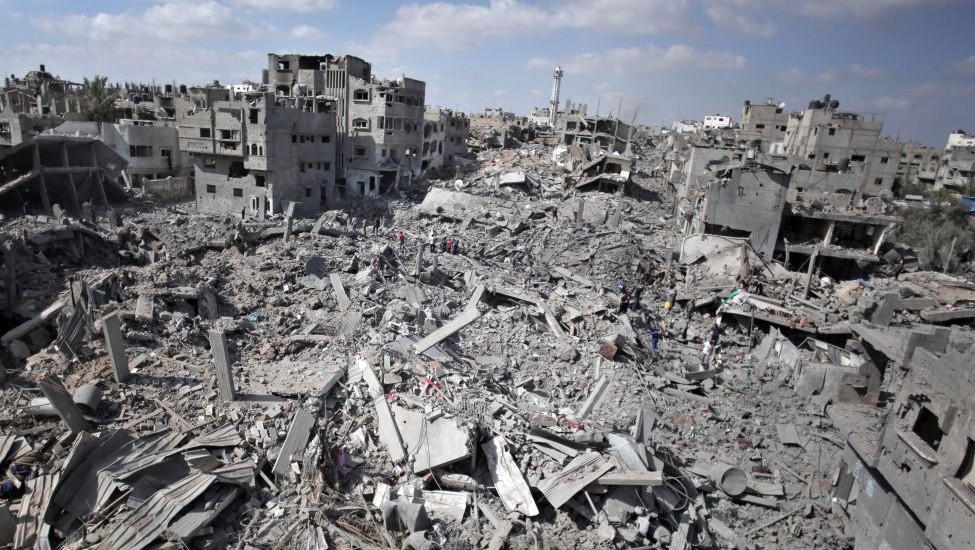
The scale of destruction in Gaza also presents a radically different landscape for survivors of blast injuries.  If the terrain in FATA is formidably difficult for anyone using prosthetics or in a wheelchair, imagine what it must be like to be confronted with this:
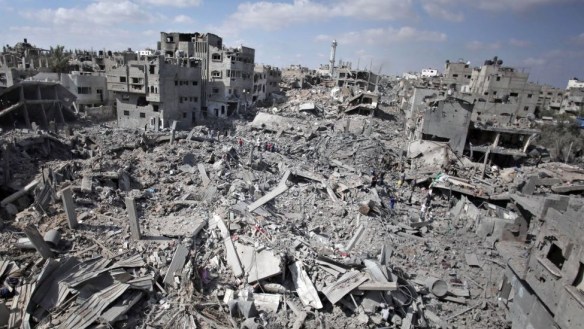
al Shejaiya Gaza 2014

When you look at that, bear in mind that when the assault came to an end there were still around 7,000 unexploded bombs and other explosive remnants of war beneath the rubble.

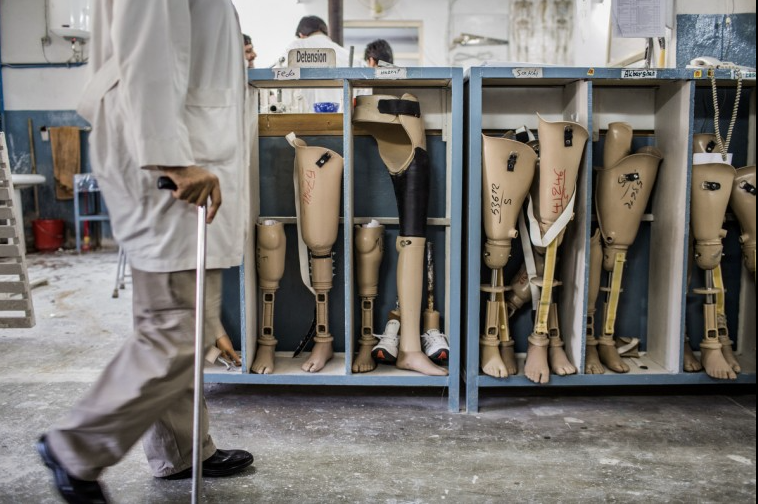
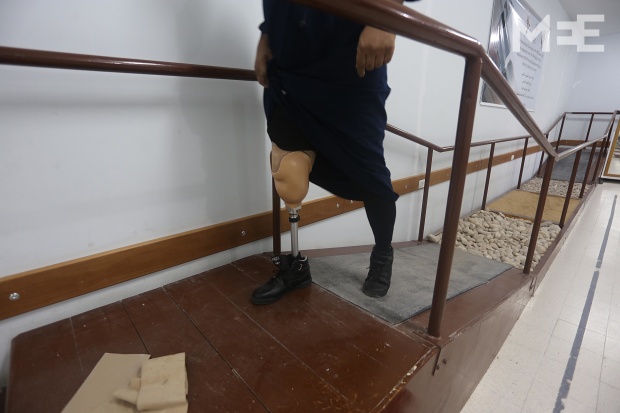
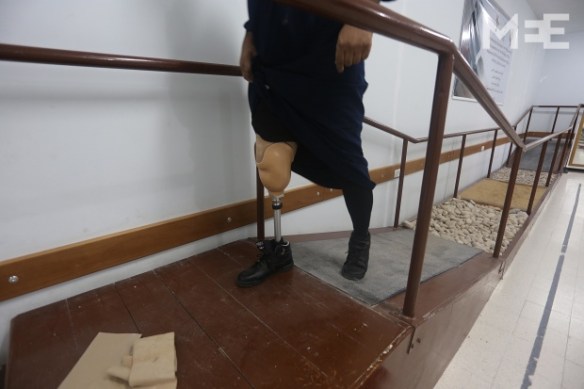
These are all dreadful effects and yet, compared to Afghanistan and Pakistan, the situation for prosthetics and rehabilitation seems somewhat better.  The prosthetics are more advanced, and some patients have been able to travel to Beirut, Amman and on occasion into Israel for treatment.  But there are still formidable obstacles in the essential provision of continuing local care.  Bayan Abdel Wahad reports from the Artificial Limb Centre, the only one of it kind in Gaza:

The number of patients who have benefited from the service of prosthetic replacement which the Centre provides for free is about 300 people who have been injured as a result of the Israeli bombardments in the past five years. However, a number of people injured in the last war – Operation Protective Edge – have not been able to come to the center yet because they are still bed-ridden due to several injuries whose treatment takes precedence over prosthetic replacement…. The technical coordinator at the center, Nivine al-Ghusain, said that “despite all the difficulties we face in funding and getting the materials necessary to manufacture the artificial limbs, we will continue in our work.” She [said] that the Centre takes upon itself the maintenance of the prosthesis from time to time “in addition to changing it based on the patients’ needs.”
15_0

The Centre relies on the ICRC for components and raw materials from France, Germany, Switzerland and the United States, but there are continuing difficulties in importing these via Israel or Egypt.  In December 2014 the Center was treating around 950 amputees.

Reports about the cultural and social response to these visible victims of military violence are mixed. Guillaume Zerr, who directs Handicap International’s operations in Gaza, told Reuters that ‘there can be less acceptance of their condition than in other regions of the world’, whereas one young man – a double amputee – insisted that ‘I feel more love, support and sympathy from people now than before my injuries, and Gazan society is non-discriminating toward me.’  Perhaps this is, at least in part, because he, like others wounded in Gaza, can provide an unambiguous narrative, ‘to tell the story behind the loss of his legs’.  I remember Omar Dewachi explaining to me how patients from Iraq, Libya or Syria who are treated in Beirut for their wounds have to return home with a narrative that can explain what happened to them in terms that will satisfy whichever side in those civil wars might call them to account.  Such narratives are important not only for their rehabilitation (and here they are vital) but also for their very survival.  This is presumably more straightforward in Gaza, but this ‘politics of the wound’ is also always a geopolitics of the wound.

One last thought.  I’m struck by how often the term ‘asymmetric war’ is used to imply that conflicts of this sort are somehow unfair – to those who possess overwhelming firepower.  But war is about more than firepower, more even than killing, and I hope I’ve shown that the differences between the continuing care and rehabilitation available to those who are maimed in these wars reveal not only a different prosthetics of military violence but also a new and grievous asymmetry in its enduring consequences.

No Safe Place

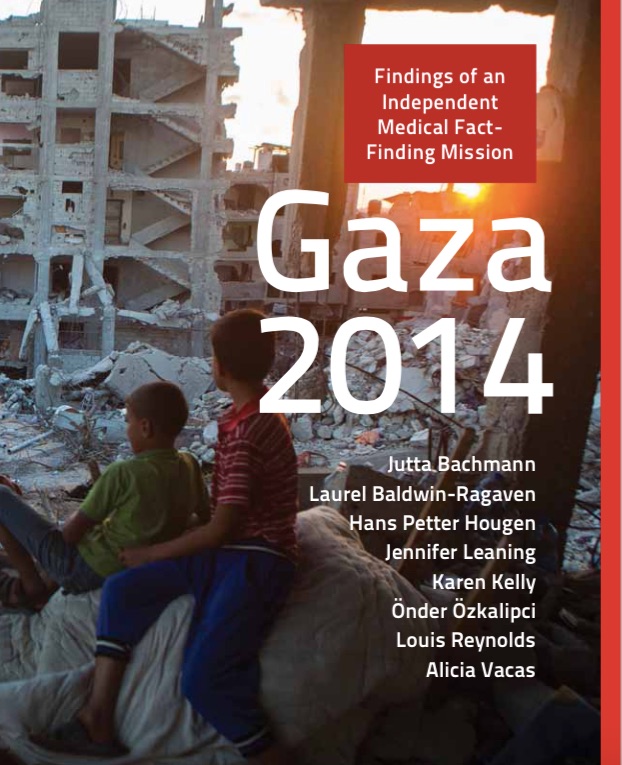
PHR Gaza 2014

Physicians for Human Rights has published a ‘First Experts’ report on Israel’s military assault on Gaza last summer, Gaza 2014: No Safe Place.  It provides a much more detailed accounting of the attacks on the medical infrastructure of Gaza than I was able to do in Gaza 101 and subsequent posts.  Here is PHR’s description of the mission:
On 8 July 2014, Israel initiated a military offensive in the Gaza Strip. Although accounts vary, most estimates put the number of residents of Gaza killed in the 50-day armed conflict at over 2,100, of whom at least 70% were civilians, including over 500 children. Over 11,000 were wounded and over 100,000 made homeless. According to Israeli official accounts, 73 Israelis were killed: 67 soldiers and 6 civilians, including one child and one migrant worker. 469 soldiers and 255 civilians were wounded.

Questions arose regarding violations of international human rights and humanitarian law in the course of the conflict. In July 2014, following discussions with Al-Mezan, Physicians for Human Rights-Israel (PHR-Israel) commissioned a fact-finding mission (hereafter ‘FFM’) to Gaza, whose aim was to gather evidence and draw preliminary conclusions regarding types, causes and patterns of injuries and attacks; attacks on medical teams and facilities; evacuation; impact of the conflict on the healthcare system; and longer-term issues including rehabilitation of the wounded, mental health, public health and displacement.

PHR-Israel recruited 8 independent international medical experts, unaffiliated with Israeli or Palestinian parties involved in the conflict: four with special expertise in the fields of forensic medicine and pathology; and four experts in emergency medicine, public health, paediatrics and paediatric intensive care, and health and human rights.

The team made three visits to Gaza between August and November last year:

Meetings and site visits were held in medical facilities and in the community, and included interviews with victims, witnesses, healthcare professionals and human rights workers, officials from the Gaza Ministries of Health and Justice, and representatives of international health organisations in Gaza and the West Bank. Wherever possible, forensic, medical and other material evidence was collected to support oral testimonies.

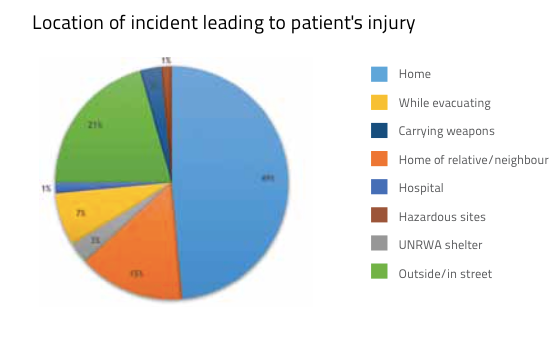
They interviewed 68 patients, and the chart below (from p. 36 of the report) explains why there was indeed ‘no safe place’ in Gaza.  As I argued previously, the Israeli military turned Gaza into a vast death zone extending far beyond the so-called ‘restricted areas’:

Location of incident leading to patient's injury PNG

Here are the summary conclusions from the report [the emphases are mine]:

The attacks were characterised by heavy and unpredictable bombardments of civilian neighbourhoods in a manner that failed to discriminate between legitimate targets and protected populations and caused widespread destruction of homes and civilian property. Such indiscriminate attacks, by aircraft, drones, artillery, tanks and gunships, were unlikely to have been the result of decisions made by individual soldiers or commanders; they must have entailed approval from top-level decision-makers in the Israeli military and/or government.

The initiators of the attacks, despite giving some prior warnings of these attacks, failed to take the requisite precautions that would effectively enable the safe evacuation of the civilian population, including provision of safe spaces and routes. As a result, there was no guaranteed safe space in the Gaza Strip, nor were there any safe escape routes from it.

In numerous cases double or multiple consecutive strikes on a single location [double tap] led to multiple civilian casualties and to injuries and deaths among rescuers.

Coordination of medical evacuation was often denied and many attacks on medical teams and facilities were reported. It is not clear whether such contravention of medical neutrality was the result of a policy established by senior decision-makers, a general permissive atmosphere leading to the flouting of norms, or the result of individual choices made on the ground during armed clashes.

In Khuza’a, the reported conduct of specific troops in the area is indicative of additional serious violations of international human rights and humanitarian law.

Ha’aretz‘s English-language coverage of the report is here.

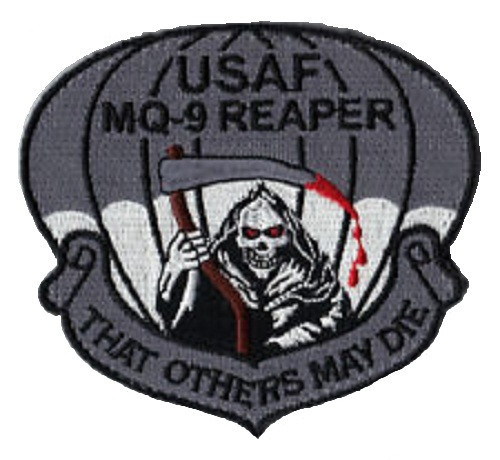
‘That others may die’

As I am (at last) moving into the finishing stages of my ‘Dirty Dancing’ essay on CIA-directed drone strikes in Pakistan’s Federally Administered Tribal Areas, it’s time to round up some of the latest work on drones and civilian casualties across multiple theatres.

tumblr_nhlv56QBGc1t8pecvo1_1280

First, Afghanistan: the principal theatre of US remote operations.  I’ve noted Larry Lewis‘s remarkable work before (here and here), based on classified sources, and in particular this claim (see also here):

Drone strikes in Afghanistan were seen to have close to the same number of civilian casualties per incident as manned aircraft, and were an order of magnitude more likely to result in civilian casualties per engagement.

usaf_mq_9_reaper_1024x1024As I said at the time, the distinction between an ‘incident’ and an ‘engagement’ is crucial, though most commentators who have seized on Larry’s work have ignored it and focused on the dramatic difference in civilian casualties per engagement. Despite my best efforts, the Pentagon were unwilling to clarify the difference, so here is what Larry himself has told me:

An engagement is probably intuitively what you would expect – the use of force against a target. The distinction is the term incident, which is borrowed from ISAF definitions. I should have said “civilian casualty incident.” This refers to an engagement that results in civilian casualties.

This means that, if you look at the collection of civilian casualty incidents, the average number of civilian casualties is close to the same for manned and unmanned platforms. At the same time, the rate of civilian casualties for the two platforms is markedly different, with unmanned platforms being ten times more likely to cause civilian casualties than manned platforms. That doesn’t mean that drones caused more civilian casualties than manned aircraft, by the way, since the denominators (number of engagements of manned aircraft versus drones) can and in fact were very different. But it does suggest that the relative risk of civilian casualties was higher for one kind of platform versus the other.

And this is in the specific context of Afghanistan and for a specific time. I wouldn’t want to say that this specific rate would be repeated, necessarily. Yet there were certain risk factors I observed in the civilian casualty incidents that I would expect to continue to be factors unless steps were taken to mitigate them.

Larry’s most recent report, Improving lethal action: learning and adapting in US Counterterrorism Operations, is available here.  It includes an analysis of the Uruzgan air strike that is central to my ‘Angry Eyes’ essay (next on my to-do list).

[The short clip above is from Baden Pailthorpe‘s stunning animation MQ-9 Reaper (That Others May Die) (2014) – you can find much more here]

You might think that all of this is now of historical interest since President Obama has declared the end of the Afghanistan war.  Not so.  Here is John Knefel writing in Rolling Stone this week:

Though many Americans may not have realized it, December 28th marked what the U.S. government called the official end of the war in Afghanistan. That war has been the longest in U.S. history – but despite the new announcement that the formal conflict is over, America’s war there is far from finished. In fact, the Obama administration still considers the Afghan theater an area of active hostilities, according to an email from a senior administration official – and therefore exempts it from the stricter drone and targeted killing guidelines the president announced at a major speech at the National Defense University in 2013.

“Afghanistan will continue to be considered an ‘area of active hostilities’ in 2015,” the official tells RS. “The PPG does not apply to areas of active hostilities.” (PPG stands for Presidential Policy Guidelines, the formal name for the heightened drone rules.)

That perplexing distinction – that formal combat operations are over but that the U.S. still remains in an armed conflict – in many ways exemplifies the lasting legacy of Obama’s foreign policy.

If you assume the situation in Pakistan is somehow less ambiguous, read Ryan Goodman on ‘areas of active hostilities’ over at Just Security here (I’m having to sort all this out for ‘Dirty Dancing’, of course).

Second, the Bureau of Investigative Journalism has released its end-of-year report on US drone strikes in Pakistan, Yemen and Somalia in 2014, which includes these tabulations of casualty rates for the first two countries:

cas-rates-cia-pak-09-14

cas-rate-yemen-02-14

The Bureau comments:

While there have been more strikes [in Pakistan] in the past six years, the casualty rate has been lower under Obama than under his predecessor. The CIA killed eight people, on average, per strike during the Bush years. Under Obama, it is less than six. The civilian casualty rate is lower too – more than three civilians were reported killed per strike during the past presidency. Under Obama, less than one.  There were no confirmed civilian casualties in Pakistan in the past year, as in 2013….

The frequency of strikes [in Yemen] may have fallen in 2014 but more people were killed, on average, per strike than in any previous year.  The casualty rate for last year even outstrips 2012 – the bloodiest year recorded in the US’s drone campaign in Yemen when at least 173 people were reported killed in 29 strikes. In 2014 at least 82 people were reported to have died in just 13 strikes.

You can find the Long War Journal‘s tabulations for Pakistan here and Yemen here.

unammed-rogershillThird, Israel.  I’ve commented previously on an interview with an Israeli drone pilot, but it’s been difficult to put his observations in context (though see here and scroll down to the tabulations). Now Ann Rogers, who wrote Unmanned: drone warfare and global security (Pluto, 2014) with John Hill – as good an introduction to drone wars as you will find – has just released an essay on ‘Investigating the Relationship Between Drone Warfare and Civilian Casualties in Gaza‘.  It’s in a special issue of the open-access Journal of Strategic Security 7 (4) (2014) on ‘Future challenges in drone geopolitics’.  Here’s the abstract:

Unmanned aerial vehicles (UAVs), better known as drones, are increasingly touted as ‘humanitarian’ weapons that contribute positively to fighting just wars and saving innocent lives. At the same time, civilian casualties have become the most visible and criticized aspect of drone warfare. It is argued here that drones contribute to civilian casualties not in spite of, but because of, their unique attributes. They greatly extend war across time and space, pulling more potential threats and targets into play over long periods, and because they are low-risk and highly accurate, they are more likely to be used. The assumption that drones save lives obscures a new turn in strategic thinking that sees states such as Israel and the US rely on large numbers of small, highly discriminating attacks applied over time to achieve their objectives. This examination of Israel’s 2014 war in Gaza argues that civilian casualties are not an unexpected or unintended consequence of drone warfare, but an entirely predictable outcome.

Drone-flying-above-me-Friday-afternoon-400-x-300It’s an interesting essay, but I fear that it takes the Israeli military at its word.  Ann repeatedly refers to Israel’s ‘discriminating’ targeting:

‘The central point is that drones enabled the IDF to undertake detailed, extensive, and discriminating targeting of Gaza, before and during the actual fighting. The killing of civilians may be down to differing interpretations of military necessity, or in some cases, in how combatants and non-combatants are distinguished from one another. But it is the drone gaze that enables these targets to be ‘called into being’ (p. 102)…

‘As Israeli targeting of Gaza appears to have been highly discriminating, a more serious problem may lie in how its view of legitimate attacks differs from the global “norm.” (p. 104).’

I commented on Israeli attacks on hospitals and ambulances last summer here, here and here, and on the wholesale destruction of  Gaza here and here, so I confess I am at a loss for words.  But she is right to emphasise the operative power of international humanitarian law and its protocols of distinction (discrimination) and proportionality – though, as often as not, these seem to have been inoperative in anything other than a rhetorical sense.  For much more on this, and the way in which military lawyers are incorporated into Israel’s kill-chains, you should click across to Craig Jones‘s War, Law and Space.  All of which makes the Palestinian decision to seek membership of the International Criminal Court all the more important (there’s a good commentary on the wider legal issues by David Luban at Jus Security here and by a clutch of commentators at the Middle East Research and Information Project‘s blog here).  Perhaps not surprisingly, Daniel Reisner, the former head of the Israeli military’s International Law Department, has condemned the Palestinian application as ‘a belligerent act within the framework of the non-physical and kinetic world of lawfare.’

Finally, the US-led air strikes on IS/ISIL targets in Iraq and Syria.  Here we know much less than we should, not least because the Pentagon knows much less than it should.  Here is Nancy Youssef reporting earlier this week:

In a war fought largely from the air and in places no one can safely go, the impact is as opaque as the war itself, making it difficult to measure whether the U.S. and coalition effort is working.

“We don’t have the ability to count the nose of every guy we schwack,” as Pentagon spokesman Adm. John Kirby told reporters Tuesday, using military jargon [sic] for killing. “That’s not the goal.”

Presumably, that also means the Pentagon can’t count how many civilians it has accidentally killed in the name of ridding the region of ISIS.

Drone Wars UK has an excellent survey of the logistics of air operations over Iraq and Syria from Chris Cole here, and the New York Times has produced a useful interactive map of US-led air strikes from which I’ve snipped this summary:

Iraq:Syria air strikes 4 August to 31 December 2014

We don’t know how many of these were carried out by drones or even orchestrated by them, but as their limitations are becoming clearer it’s reasonable to assume that most involved conventional strike aircraft.  We do know that targeting involves the analysis of video feeds from both remote and conventional platforms, and that CENTCOM has had considerable difficulty in juggling the competing demands for ISR from Afghanistan and from Iraq/Syria.

According to a report this week from W.J. Hennigan, who visited the USAF’s 480th Intelligence, Surveillance and Reconnaissance Wing at Langley Air Force Base in Virginia:

In a vast windowless room, several dozen intelligence analysts worked under the glow of more than 100 computer screens, quietly studying video streaming from U.S. drones and spy planes hunting for Islamic State militants in Iraq and Syria.

One team searched the incoming video to find a firefight underway between Iraqi security forces and militants somewhere south of the insurgent-held city of Mosul in northern Iraq.

For four hours, the analysts pored over the imagery before identifying 20 positions where the militants were dug in with machine guns and other weaponry. After the analysts called in the coordinates, 15 jets from five countries pounded the targets with more than two dozen bombs.

The Dec. 5 airstrike, one of 462 last month, underscores the Pentagon’s increased reliance on personnel far from the battlefield…  Air Force analysts here stand — or rather sit — on the virtual front lines by tracking Islamic State fighters in a war zone some 6,000 miles away.

But here’s the rub:

Unlike in past wars, when U.S. troops on the ground helped provide targeting information and intelligence, commanders in the battle against Islamic State rely chiefly on airborne surveillance, captured communications chatter, signals intelligence and other material that is processed by analysts here.

U.S. officers said the video-watching analysts working half a world away are no match for spotters and other troops feeding intelligence from the front lines.

“We don’t have anywhere near the level of intelligence we used to,” Lt. Col. Marc Spinuzzi, a senior intelligence officer, wrote in an email from Baghdad. The analysts are under “a lot of pressure … to clearly distinguish friend from foe, and to pick out the enemy from the civilian population” on the battlefield.

That is precisely how mistakes are made and civilians killed.  And, as Robert Naiman pointed out,

“There is a big danger here that U.S. air strikes in Syria are going to resemble the drone strikes in Pakistan and Yemen in the sense that there is no accountability for who is killed. We have reports of civilian casualties from people in the area and the U.S. government says, ‘No, they are bad guys.’ There has to be some public accountability for what happens when there are allegations of civilian casualties.”

At least the Pentagon has now gone some way towards recognising the problem.  Previously it had insisted that it was unaware of any civilian casualties, which is disingenuous: it beggars belief that 1,000 air strikes could have resulted in no civilian casualties – but if your ISR is inadequate it’s scarcely surprising that you would be ‘unaware’ of the consequences.  Even so, on 6 January the Pentagon announced that it had investigated 18 allegations of coalition airstrikes causing civilian casualties between 8 August and 30 December.  It determined that 13 were ‘not credible’, but was continuing to review three others; a further two, one in Iraq and one in Syria, are now the subject of formal military investigations.  But before you gold your breath, both Iraq and Syria are also exempt from the Presidential Policy Guidelines that require a ‘near certainty that no civilians will be killed or injured’.  Here is Harold Koh (really):

‘They seem to be creating this grey zone…  If we’re not applying the strict rules [to prevent civilian casualties] to Syria and Iraq, then they are of relatively limited value.’