Crossing the line

435px-Atlas_frontview_2013News from Lucy Suchman of an important essay she’s just completed with Jutta Weber on Human-Machine Autonomies, available from Academia.edu here.

This is how they begin:

This paper takes up the question of how we might think about the increasing automation of military systems not as an inevitable ‘advancement’ of which we are the interested observers, but as an effect of particular world-making practices in which we need urgently to intervene. We begin from the premise that the foundation of the legality of killing in situations of war is the possibility of discrimination between combatants and non-combatants. At a time when this defining form of situational awareness seems increasingly problematic, military investments in the automation of weapon systems are growing. The trajectory of these investments, moreover, is towards the development and deployment of lethal autonomous weapons; that is, weapon systems in which the identification of targets and initiation of fire is automated in ways that preclude deliberative human intervention. Challenges to these developments underscore the immorality and illegality of delegating responsibility for the use of force against human targets to machines, and the requirements of International Humanitarian Law that there be (human) accountability for acts of killing. In these debates, the articulation of differences between humans and machines is key.

Our aim in this paper is to strengthen arguments against the increasing automation of weapon systems, by expanding the frame or unit of analysis that informs these debates. We begin by tracing the genealogy of concepts of autonomy within the philosophical traditions that inform Artificial Intelligence (AI), with a focus on the history of early cybernetics and contemporary approaches to machine learning in behaviour-based robotics. We argue that while cybernetics and behaviour-based robotics challenge the premises of individual agency, cognition, communication and action that comprise the Enlightenment tradition, they also reiterate aspects of that tradition in the design of putatively intelligent, autonomous machines. This argument is made more concrete through a close reading of the United States Department of Defense Unmanned Systems Integrated Roadmap: FY2013-2038, particularly with respect to plans for future autonomous weapon systems. With that reading in mind, we turn to resources for refiguring agency and autonomy provided by recent scholarship in science and technology studies (STS) informed by feminist theory. This work suggests a shift in conceptions of agency and autonomy, from attributes inherent in entities, to effects of discourses and material practices that variously conjoin and/or delineate differences between humans and machines. This shift leads in turn to a reconceptualization of autonomy and responsibility as always enacted within, rather than as separable from, particular human- machine configurations. We close by considering the implications of these reconceptualizations for questions of responsibility in relation to automated/autonomous weapon systems. Taking as a model feminist projects of deconstructing categorical distinctions while also recognising those distinctions’ cultural-historical effects, we argue for simultaneous attention to the inseparability of human-machine agencies in contemporary war fighting, and to the necessity of delineating human agency and responsibility within political, legal and ethical/moral regimes of accountability.
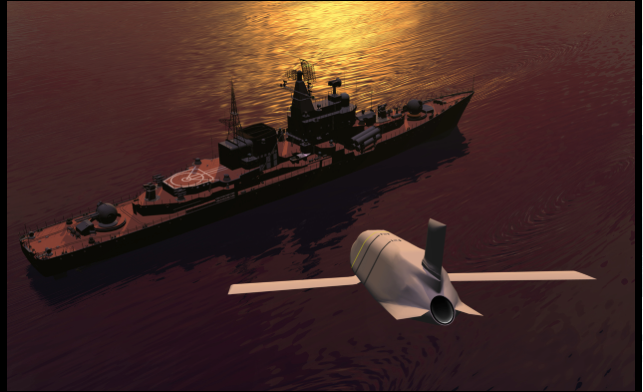
LRASM (Lockheed-Martin photo) PNG

It’s a must-read, I think, especially in the light of a report from the New York Times of the Long Range Anti-Ship Missile (above) developed for the US military by Lockheed Martin:

On a bright fall day last year off the coast of Southern California, an Air Force B-1 bomber launched an experimental missile that may herald the future of warfare.

Initially, pilots aboard the plane directed the missile, but halfway to its destination, it severed communication with its operators. Alone, without human oversight, the missile decided which of three ships to attack, dropping to just above the sea surface and striking a 260-foot unmanned freighter…

The Pentagon argues that the new antiship missile is only semiautonomous and that humans are sufficiently represented in its targeting and killing decisions. But officials at the Defense Advanced Research Projects Agency, which initially developed the missile, and Lockheed declined to comment on how the weapon decides on targets, saying the information is classified.

“It will be operating autonomously when it searches for the enemy fleet,” said Mark A. Gubrud, a physicist and a member of the International Committee for Robot Arms Control, and an early critic of so-called smart weapons. “This is pretty sophisticated stuff that I would call artificial intelligence outside human control.”

Paul Scharre, a weapons specialist now at the Center for a New American Security who led the working group that wrote the Pentagon directive, said, “It’s valid to ask if this crosses the line.”

And the Israeli military and armaments industry, for whom crossing any line is second nature, are developing what they call a ‘suicide drone’ (really).  At Israel Unmanned Systems 2014, a trade fair held in Tel Aviv just three weeks after Israel’s latest assault on Gaza, Dan Cohen reported:

Lieutenant Colonel Itzhar Jona, who heads Israel Aerospace Industries, spoke about “loitering munitions” — what he called a “politically correct” name for Suicide Drones. They are a hybrid of drone and missile technology that have “autonomous and partially autonomous” elements, and are “launched like a missile, fly like an UAV [unmanned aerial vehicle],” and once they identify a target, revert to “attack like a missile.” Jona called the Suicide Drone a “UAV that thinks and decides for itself,” then added, “If you [the operator] aren’t totally clear on the logic, it can even surprise you.”

Jona praised the advantage of the Suicide Drone because the operator “doesn’t have to bring it home or deal with all sorts of dilemmas.” The Suicide Drone will quickly find a target using its internal logic, which Jona explained in this way: “It carries a warhead that eventually needs to explode. There needs to be a target at the end that will want to explode. Or it won’t want to and we will help it explode.”

So thoughtful to protect ‘the operator’ from any stress (even if s/he might be a little ‘surprised’).  Here is Mondoweiss‘s subtitled clip from the meeting, which opens with a short discussion of the major role played by UAVs in the air and ground attacks on Gaza, and then Jona describes how ‘we always live on the border’:

Method and madness

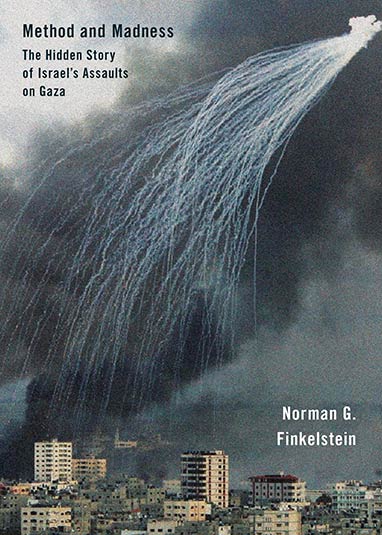
methodNews from the ever enterprising OR Books of Norman Finkelstein‘s new and superbly titled book, Method and Madness: the hidden story of Israel’s assaults on Gaza.  (There’s a delay in ordering this via Amazon or even the Book Depository, so if you want it before next spring you’ll need to get it directly from OR).

In the past five years Israel has mounted three major assaults on the 1.8 million Palestinians trapped behind its blockade of the Gaza Strip. Taken together, Operation Cast Lead (2008-9), Operation Pillar of Defense (2012), and Operation Protective Edge (2014), have resulted in the deaths of some 3,700 Palestinians. Meanwhile, a total of 90 Israelis were killed in the invasions.
On the face of it, this succession of vastly disproportionate attacks has often seemed frenzied and pathological. Senior Israeli politicians have not discouraged such perceptions, indeed they have actively encouraged them. After the 2008-9 assault Israel’s then-foreign minister, Tzipi Livni, boasted, “Israel demonstrated real hooliganism during the course of the recent operation, which I demanded.”

However, as Norman G. Finkelstein sets out in this concise, paradigm-shifting new book, a closer examination of Israel’s motives reveals a state whose repeated recourse to savage war is far from irrational. Rather, Israel’s attacks have been designed to sabotage the possibility of a compromise peace with the Palestinians, even on terms that are favorable to it.

Looking also at machinations around the 2009 UN sponsored Goldstone report and Turkey’s forlorn attempt to seek redress in the UN for the killing of its citizens in the 2010 attack on the Gaza freedom flotilla, Finkelstein documents how Israel has repeatedly eluded accountability for what are now widely recognized as war crimes.

Further, he shows that, though neither side can claim clear victory in these conflicts, the ensuing stalemate remains much more tolerable for Israelis than for the beleaguered citizens of Gaza. A strategy of mass non-violent protest might, he contends, hold more promise for a Palestinian victory than military resistance, however brave.

Reviews by Alex Doherty here and Deborah Maccoby here.

Laboratories and assemblages

I’m on my way home from Bergen, where I was taking part in the Norsk Sakprosafestival (loosely, ‘Non-Fiction Festival’).  I gave a sawn-off version of ‘Angry eyes’, followed by a conversation with the ever-interesting Kristin Bergtora Sandvik, and took part in a panel discussion on ‘Freedom’ with Astri Suhrke, Kareem Amer, Jonny Steinberg, Ilan Pappe and Hilde Sandvik.  I had a marvellous time, and I’m deeply grateful to my hosts and especially Oyvind Vagnes for their warm welcome and generous hospitality.  This was the first time the festival has been held outside Oslo, and I hope it continues for many years to come.  It certainly deserves to do so.

the-lab-poster_for_internet

Over dinner, Ilan (whose new book is on ‘the largest prisons in the world’, Gaza and the West Bank) reminded me of an excellent film that I’d neglected to write about when it first came out – and given my previous post, and the horror of Gaza over the summer, it’s not too late to do so.

The film is Yotam Feldman‘s The Lab, which was released in North America in August.  Feldman writes:

The Lab is a cinematic investigation into the lure of Israeli weapons in the international arms trade. Why are countries all over the world lining up to buy Israeli arms? And how did such a small country become one of the biggest military exporters in the world? Israeli salesmen and executives in huge arms corporations seem eager to promote their products and pride themselves on their booming business. Profits have never been better — sales are doubling every year, and the potential seems unlimited.

But the product they are selling is unique. Rather than rifles, rockets or bombs, the Israeli companies sell their experience. The long-running conflict with the Palestinians has created a unique and unrivalled laboratory for testing technologies and ideas relating to “asymmetric warfare” — a conflict between a state and civil or irregular resistance. In this manner the Israeli conflict with the Palestinians may be seen as a national asset — rather than a burden…

While making the film, I witnessed the relationship between a network of military generals, politicians and private business; the use of current military operations as a promotional device for private business; the brutal employment of the Israeli experience, and the blurred lines between what is legitimate and forbidden in this line of business.

http://vimeo.com/65082874

You can read Jonathan Cook’s characteristically perceptive take on the film’s central argument here, from which I’ve taken the following extract:

The title relates to the film’s central argument: that Israel has rapidly come to rely on the continuing captivity of Palestinians in what are effectively the world’s largest open-air prisons.

The reason is that there are massive profits to be made from testing Israeli military innovations on the more than four million Palestinians in Gaza and the West Bank.

According to Feldman, that trend began with Operation Defensive Shield, Israel’s re-invasion of the West Bank and Gaza in 2002, which formally reversed the process of Israeli territorial withdrawals initiated by the Oslo accords.

Following that operation, many army officers went into private business, and starting in 2005 Israel’s arms industry started to break new records, at $2 billion a year.

But the biggest surge in sales followed Operation Cast Lead, Israel’s month-long assault on Gaza in winter 2008-09, which killed more than 1,400 Palestinians and 13 Israelis. Record sales in the wake of that attack reached $6 billion.

These military operations, including the most recent against Gaza, last year’s Pillar of Cloud, the film argues, serve as little more than laboratory-style experiments to evaluate and refine the effectiveness of new military approaches, both strategies and weaponry.

Gaza, in particular, has become the shop window for Israel’s military industries, allowing them to develop and market systems for long-term surveillance, control and subjugation of an “enemy” population.

But Feldman’s still sharper point is that this means that the claim ‘we are all Palestinians’ has a greater purchase than most of us realise:

The effects of Israeli theory and technology on other countries can hardly be overestimated. Forces choosing to employ Israeli-cultivated military techniques ultimately begin to alter their political and social circumstances. Therefore, countries all over the world are increasingly “Palestinizing” (or “Israelizing”) their conditions. Both sides — seller and buyer — become partners in the development of a form of future war between the state and civil resistance groups.

War, police and assemblages of intervention

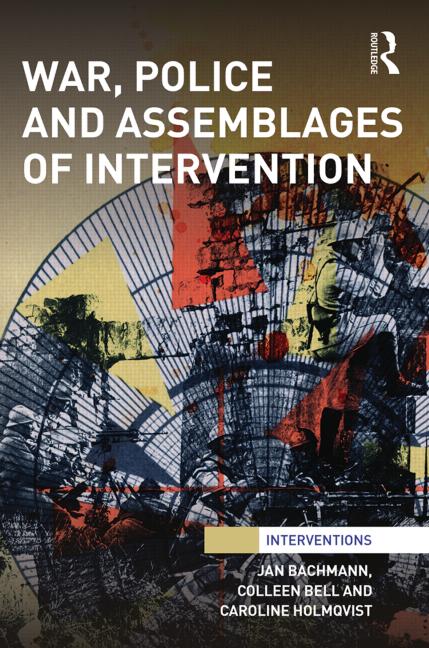
This needs to be added to the mix when we (re)think about contemporary war/police assemblages – which is an appropriate note for me to cheer the publication today of War, police and assemblages of intervention, edited by Jan BachmannColleen Bell and Caroline Holmqvist.

This book reflects on the way in which war and police/policing intersect in contemporary Western-led interventions in the global South. The volume combines empirically oriented work with ground-breaking theoretical insights and aims to collect, for the first time, thoughts on how war and policing converge, amalgamate, diffuse and dissolve in the context both of actual international intervention and in understandings thereof.

The book uses the caption WAR:POLICE to highlight the distinctiveness of this volume in presenting a variety of approaches that share a concern for the assemblage of war-police as a whole. The volume thus serves to bring together critical perspectives on liberal interventionism where the logics of war and police/policing blur and bleed into a complex assemblage of WAR:POLICE. Contributions to this volume offer an understanding of police as a technique of ordering and collectively take issue with accounts of the character of contemporary war that argue that war is simply reduced to policing. In contrast, the contributions show how – both historically and conceptually – the two are ‘always already’ connected. Contributions to this volume come from a variety of disciplines including international relations, war studies, geography, anthropology, and law but share a critical/poststructuralist approach to the study of international intervention, war and policing.

Here’s what it contains (and you can see that The Lab adds a really important dimension to the discussion):

Assemblages of War:Police – An Introduction, Jan Bachmann, University of Gothenburg, Colleen Bell, University of Saskatchewan, Caroline Holmqvist, Swedish National Defence College

Part I: Ordering
1.The Police Power in Counterinsurgencies: Discretion, Patrolling, and Evidence, Colleen Bell, University of Saskatchewan

2. Policing Africa – The US Military and Visions of Crafting ‘Good Order’, Jan Bachmann, University of Gothenburg

3. Security Sector Reform (SSR) and the War:Police Assemblages of International Interventions, Marc Doucet, St. Mary’s University and Miguel de Larrinaga, University of Ottawa

Part II: Othering

4. The Enemy Live: A Genealogy, Laurence McFalls, University of Montreal and Mariella Pandolfi, University of Montreal

5. The Utility of Proxy Detentions in Counterinsurgencies, Laleh Khalili, School of Oriental and African Studies, University of London

6. Tribal Militias, Neo-Orientalism and the US Military’s Art of Coercion, Oliver Belcher, University of Oulu, Finland

7. Checkpoints and the Gendered Policing of ‘Civilized’ Nation-State Boundaries in Southern Thailand, Ruth Streicher, Free University of Berlin

Part III: Spatializing

8. A Mediterranean Police Assemblage, Barry J Ryan, Keele University

9. Air Power as Police Power, Mark Neocleous, Brunel University

10. Intervention and Ontological Politics: Security, Pathologization, and the Failed State Effect in Goma, Peer Schouten, University of Gothenburg and Kai Koddenbrock, University of Duisburg-Essen

Afterword: War and Crime, Military and Police: The Assemblage of Violence by Security? Didier Bigo, King’s College, University of London and Sciences Po

Keeping up with the Drones

Patrick Svensson:Unblinking stare

Several recent contributions on military drones – what Forensic Architecture calls Unmanned Aerial Violence – you might be interested in.

First, Steve Coll has a long essay in the latest New Yorker on ‘The Unblinking Stare‘ (and, yes, I do know that those watching the screens blink.  Duh) about the drone war in Pakistan.  Many readers will remember that it was the New Yorker that published Jane Mayer‘s classic essay on ‘The Predator War‘ (26 October 2009), so it’s high time for an up-date since so much has happened since then.  It’s a very helpful survey.  Much of it will not be news, but Steve does provide some interesting background to the deadly gavotte between the US and Pakistan (what I’ve called ‘dirty dancing‘; see also here):

Pakistan’s generals and politicians, who come mainly from the country’s dominant, more developed province of Punjab, treated Waziristan’s residents “as if they were tribes that were living in the Amazon,” the journalist Abubakar Siddique, who grew up in the region and is the author of “The Pashtun Question,” told me.

In 2002, Musharraf sent Pakistan’s Army into South Waziristan to quell Al Qaeda and local sympathizers. In 2004, the Army intensified its operations, and, as violence spread, Musharraf allowed the C.I.A. to fly drones to support Pakistani military action. In exchange, Musharraf told me, the Bush Administration “supplied us helicopters with precision weapons and night-operating capability.” He added, “The problem was intelligence collection and targeting. . . . The Americans brought the drones to bear.”

Musharraf allowed the C.I.A. to operate drones out of a Pakistani base in Baluchistan. He told me that he often urged Bush Administration officials, “Give the drones to Pakistan.” That was not possible, he was told, “because of high-technology transfer restrictions.”

We know that close co-operation and even co-ordination between Washington and Islamabad was still the order of the day until at least 2011.  We know, too, that local people live under a double threat, and the essay reports on a group interview in Islamabad with half a dozen young men, mainly university students, from Waziristan.  On one side, recalling the Stanford/NYU ‘Living under dronesreport:

Being attacked by a drone is not the same as being bombed by a jet. With drones, there is typically a much longer prelude to violence. Above North Waziristan, drones circled for hours, or even days, before striking. People below looked up to watch the machines, hovering at about twenty thousand feet, capable of unleashing fire at any moment, like dragon’s breath. “Drones may kill relatively few, but they terrify many more,” Malik Jalal, a tribal leader in North Waziristan, told me. “They turned the people into psychiatric patients. The F-16s [of the Pakistan Air Force] might be less accurate, but they come and go.”

On the other side:

Families in North Waziristan typically live within large walled compounds. Several brothers, their parents, and their extended families might share a single complex. Each compound may contain a hujra, or guesthouse, which usually stands just outside the main wall. In the evening, men gather there to eat dinner and talk war and politics. A rich man signals his status by building a large hujra with comfortable guest rooms for overnight visitors. The less well-heeled might have a hujra with just two rooms, carpets, rope cots, and cushions.

Taliban and Al Qaeda commanders moved from hujra to hujra to avoid detection. The available records of drone strikes make clear that the operators would regularly pick up commanders’ movements, follow them to a hujra attached to a private home, watch for hours—or days—and then fire. Many documented strikes took place after midnight, when the target was presumably not moving, children were asleep, and visitors would have returned home.

North Waziristan residents and other Pakistanis I spoke with emphasized how difficult it would be for a drone operator to distinguish between circumstances where a Taliban or Al Qaeda commander had been welcomed into a hujra and where the commander had bullied or forced his way in. If the Taliban “comes to my hujra and asks for shelter, you have no choice,” Saleem Safi, a journalist who has travelled extensively in Waziristan, told me. “Now a potential drone target is living in a guest room or a guesthouse on your compound, one wall away from your own house and family.”

“You can’t protect your family from a strike on a hujra,” another resident of North Waziristan said. “Your children will play nearby. They will even go inside to play.” The researcher in Islamabad said, “There is always peer pressure, tribal pressure, to be hospitable.” He went on, “If you say no, you look like a coward and you lose face. Anyway, you can’t say no to them. If a drone strike does take place, you are a criminal in the courts of the Taliban,” because you are suspected of espionage and betrayal. “You are also a criminal to the government, because you let the commander sleep in your hujra.” In such a landscape, the binary categories recognized by international law—combatant or noncombatant—can seem inadequate to describe the culpability of those who died. Women, children, and the elderly feel pressure from all sides. A young man of military age holding a gun outside a hujra might be a motivated Taliban volunteer, a reluctant conscript, or a victim of violent coercion.

This speaks directly to a general point made by Christiane Wilke: in today’s wars the requirement that combatants identify themselves as combatants (a standard obligation of international humanitarian law) has effectively been transferred to civilians, so that it becomes their responsibility to make themselves known as non-combatants.  Even to an unblinking eye at 20,000 feet.

Screen_shot_2014-1_3111155c

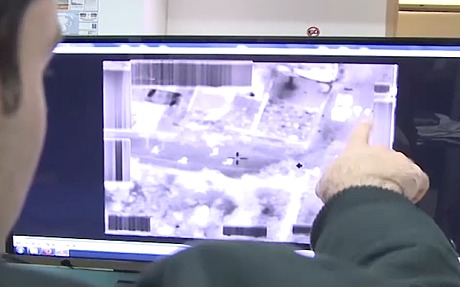
Second, this week the Telegraph carried a video and an interview with ‘Major Yair’, the pseudonym for the pilot of a Israeli Heron TP drone based near Tel Aviv.  He reports that roughly 65 per cent of Israeli air operations are conducted by drones.  ‘Yair’ served in all three Israeli assaults on Gaza and he says nothing about Israel’s targeted killing – the focus is on the provision of Close Air Support.  But the claims he makes will be all too familiar to those familiar with USAF air strikes in Afghanistan:

As Israeli ground units pressed into Gaza, they would call Major Yair for close air support. “They’d be saying ‘we keep getting fire from within those buildings’ and I’m sitting at a distance – on a neat floorspace with screens and air conditioning systems – but you’re sweating and it’s ‘what do I do, what do I do’? How do I not cause more damage than help?”

I’ve repeatedly noted the affinity – even proximity – USAF crews working out of Creech Air Force Base in Nevada feel with troops on the ground in Afghanistan.  But ‘Yair’ doesn’t elaborate on the Israeli ground assault.  Instead, remarkably, persistently – unblinkingly, you might say – he circles around his own last sentence:

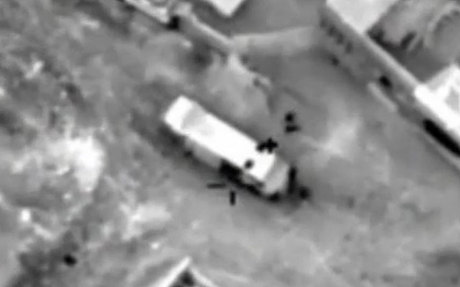
Major Yair stressed how he was constrained by rules of engagement designed to avoid innocent deaths. Hamas operatives, he added, routinely exploited this restraint by hiding behind civilians. One sequence shot by a Heron showed four men preparing to launch a salvo of rockets under a screen of trees. Seconds later, the men were shown running to a nearby street filled with children.

“They’re untouchable now,” said Major Yair, pointing at the screen. “I know that no mission commander, under current directions given by the chief of staff, will engage in this situation. No way.”

He added: “It is sometimes frustrating because you feel that you’re fighting with your hands tied. There are a lot of situations where you see your targets, but you will not engage because they’re next to kindergartens, because they’re driving with their wives and their kids.”

drone2_3111097c

David Blair presses him on the large number of Palestinian civilians killed in Gaza, including children, only to be told:

“We do make mistakes… but it’s nature. People make mistakes. We learn from those mistakes. You’ll see no smiling face after an incident where kids were killed. None of us wants to be in a position where he does these mistakes. We learn and try to avoid this as much as we can.”…

“You learn to live with it,” he said. “It’s not easy. I’ve made mistakes that, for many years, will come back at me. But it’s something that people have to do. It’s not easy. We do not shove it back somewhere in our minds and try to avoid talking about it. We talk about it, we support each other.”

And so, as so often happens in the United States (and elsewhere) too, our gaze is directed away from the victims and towards the torment suffered by those who inflict military violence from the air.

But, third, Corporate Watch has just published the fifth in its series of reports on living under drones in Gaza.  These eyewitness reports are indispensable because there are serious problems in using satellite imagery to reconstruct drone strikes.  Nobody is better at doing so than Forensic Architecture, but as they note, there is a threshold of detectability:

IMG_0076rsSome drone-fired missiles can drill a hole through the roof before burrowing their way deep into buildings, where their warheads explode. The size of the hole the missile leaves is smaller than the size of a single pixel in the highest resolution to which publicly-available satellite images are degraded [a square that translate sin to 50 cm by 50 cm of terrain].  The hole is thus at the “threshold of visibility” and might appear as nothing more than a slight color variation, a single darker pixel perhaps. This has direct implications for the documentation of drone strikes in satellite imagery, which is often as close to the scene as most investigators can get. When the figure dissolves into the ground of the image, it is the conditions—legal, political, technical—that degrade the image, or that keep it at a lower resolution that become the relevant material for forensic investigations.

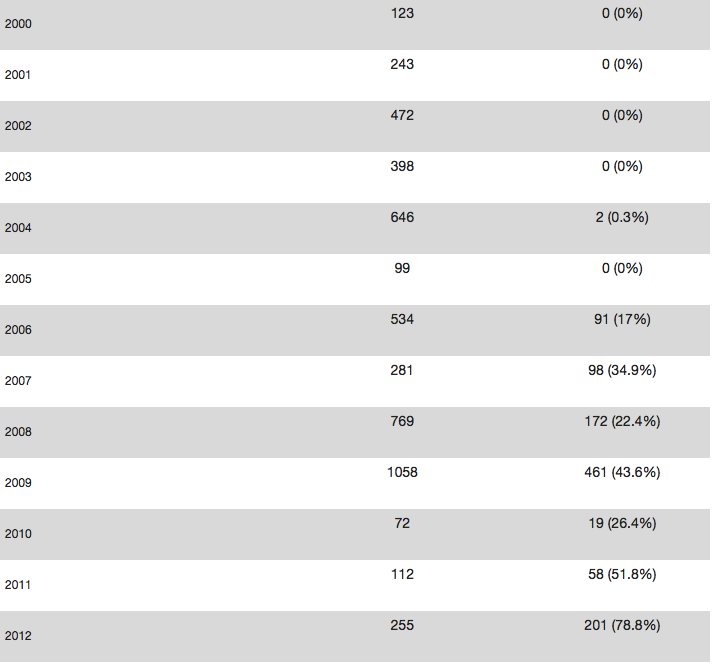
The Corporate Watch report also includes a remarkable tabulation from the Al Mezan Centre for Human Rights in Gaza, showing the numbers of people killed by the Israeli military in Gaza (col. 2) and the proportion killed by drone strikes (col. 3):

Israeli drone strikes in Gaza

I’m not sure what the sources for these tabulations might be: as Craig Jones has emphasised in a vitally important post, it’s exceptionally difficult to parse Israel’s targeted killings in occupied Palestine, and while these tabulations clearly include many other situations I have no idea how you begin to separate different killing machines in what is, after all, a networked mode of military violence in which drones are likely to perform vital surveillance operations for strikes carried out from other platforms. But the increased reliance on drones chimes with the report from David Blair.

Inhumanitarian mapping

It’s strange how things sometimes come together – or collide and crash.  Two weeks ago I wrote about satellite imagery and ‘remote violence’, and over the summer I discussed several projects that mapped Israel’s military assault on Gaza and its people,  including the Gaza Crisis Atlas produced by the UN’s Office for the Coordination of Humanitarian Affairs (which makes extensive use of hi-res satellite imagery).

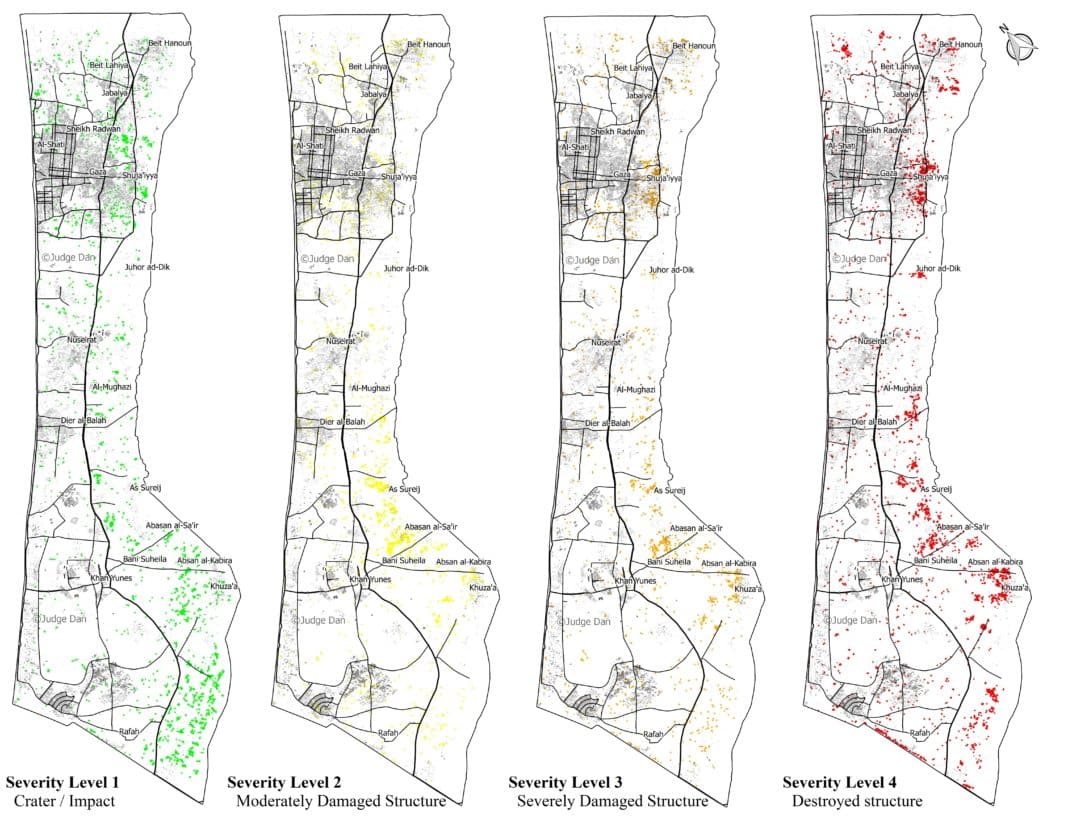
The links between those two posts are obvious enough, but today I have something altogether different in my sights.  ‘Judge Dan’ (Dan Smith), who blogs for Israellycool, has used the Gaza Crisis Atlas to construct a series of maps to geo-wash Israel’s military campaign.

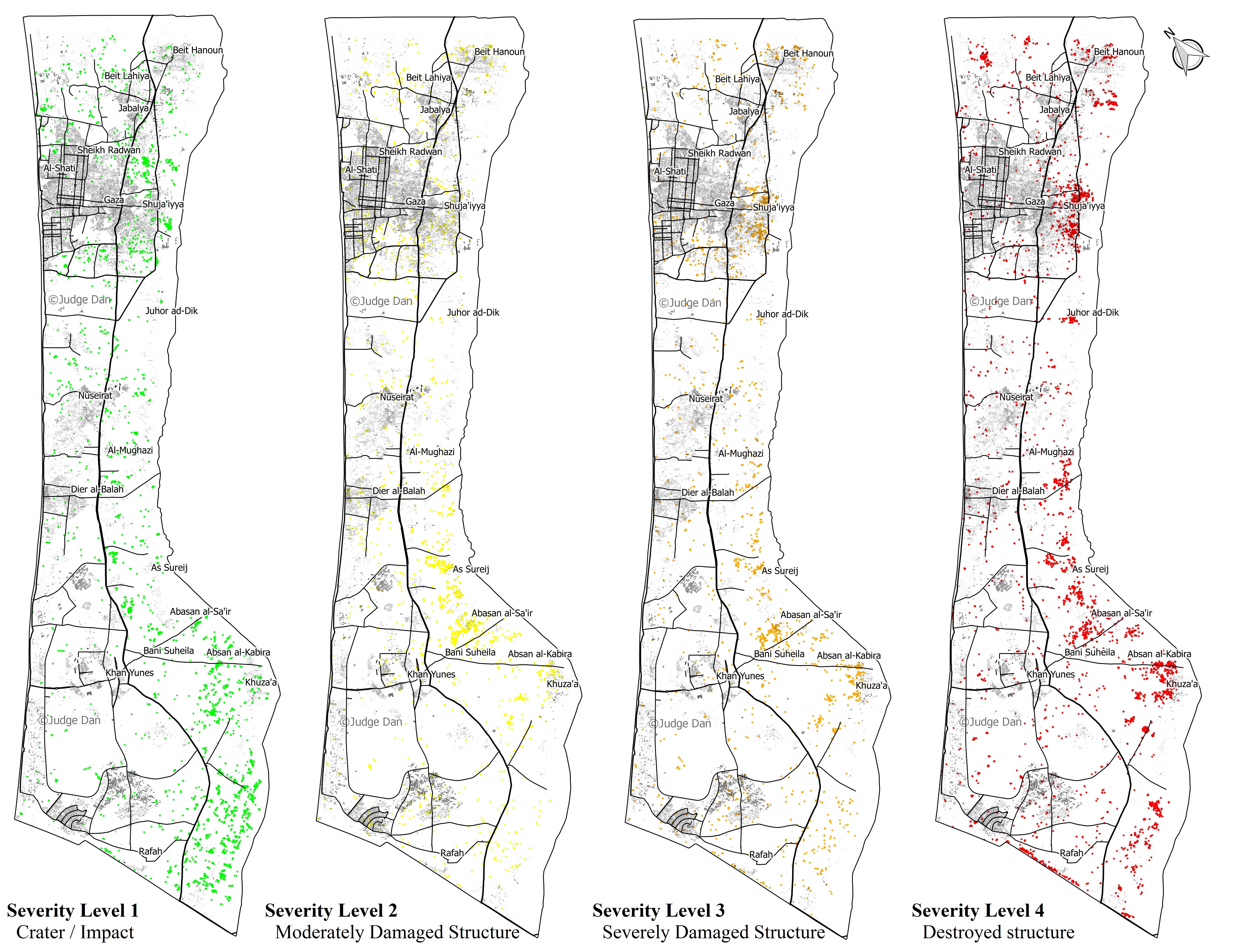
Working from the data in the Atlas, Smith produces four maps to disaggregate the severity of destruction (the four levels, increasing from left to right, are based on OCHA’s own assessment):

DAN SMITH Gaza-Damage-Points-Vertical-All

His conclusions from this exercise are the following:

The attacks are in no way “random” or “indiscriminate”. One can clearly see the spatial distribution of the damage in several aspects. We find 8,952 of the 12,433 total points (72%) are within a 3 KM buffer abutting the border with Israel. The main objective of Operation Protective Edge was to find and destroy dozens of terror tunnels dug from Gaza into Israel.

That the most intensive damage was caused to the area where the tunnels naturally originated is thus perfectly understandable. Furthermore, of the 4,441 destroyed structures, 3,481 of them (78%) are within the 3 KM buffer, as are 2,531 of 3,303 (77%) of the lowest intensity damage (simple craters), which are mostly strikes on rocket launchers and tunnels.

Most of the attacks are grouped around certain neighborhoods or villages, such as Shuja’iyya, Johur ad-Dik, Sureij, and Khuza’a. These were probably the result of the ground operations that took place in dense urban areas also within the 3 KM buffer that housed multiple tunnel entrances and shafts, as well as launch sites for mortars and rockets.

Smith then takes the Israeli military’s map of ‘terrorist infrastructure’ in Shuja’iya and overlays this on what he calls ‘OCHA’s damage points’: ‘the correlation is uncanny.’

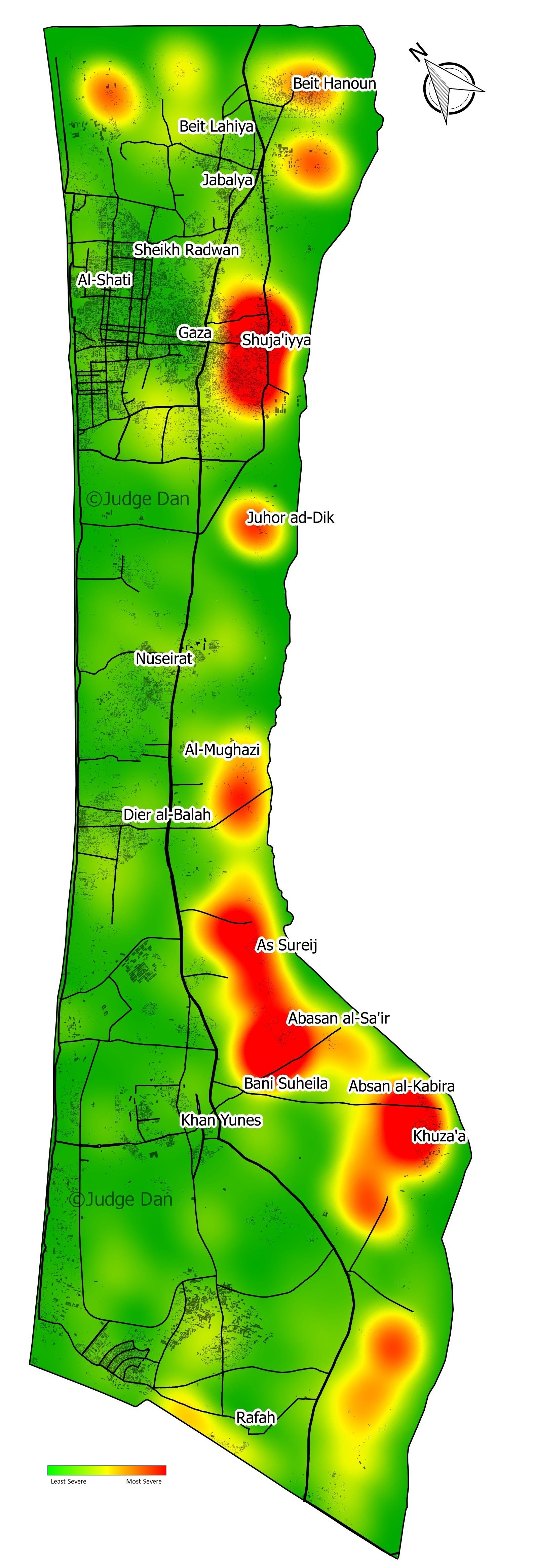
Smith’s next manoeuvre is to sweep aside OCHA’s focus ‘on the civilian aspect’ because it ‘misses the big picture’ (really – or perhaps Israelly): ‘the overall intensity of the strikes’.  So he constructs a kernel density map or a ‘damage intensity heat map’:

It now becomes very clear that most of the damage was caused to 5 locations right on the border with Israel. The rest of the Gaza Strip was, for the most part, undamaged. The main population areas of Gaza city, Jabaliya, Khan Yunes, Rafah and Deir el-Balah were disproportionately undamaged (sic).

DAN SMITH Gaza-Damage-Heatmap-Vertical2

He continues:

If we do a rough estimate of the damage area, it is once again clear the vast majority of the Gaza Strip was unscathed. With a fairly generous estimation that a damage point has a 25 meter radius – the footprint of a house, or the blast radius of a bomb – the total damage area of the 12,433 impacts was in the order of 15 KM2. The land area of the Gaza strip is 360 Km2. In other words, less than 5% of the land was affected.

There’s a follow-up post on ‘damage clusters’ here, but in this commentary I’ll focus on Smith’s ‘big picture’.  I take the basic points to be these:

(1)  Smith’s approach makes an appeal to the supposed objectivity and even facticity of the map (and, by extension, the satellite image), but there is a substantial body of scholarship that goes back 25 years and underscores the multiple ways in which mapping is an exercise in the production of power.  For a depressingly relevant example of the ways in which maps can speak power to truth, taken from Israel’s attack on Gaza in November 2012, see my discussion here (scroll down to the maps).

(2)  Appealing to the map and its manipulations as the single source of authority is designed to disavow the testimony of witnesses on the ground: precisely the point sharpened by Andrew Herscher in his timely critique of ‘Surveillant witnessing’ (see my discussion here) and a far cry from the incorporation of photographs in (say) the Gaza War Map.

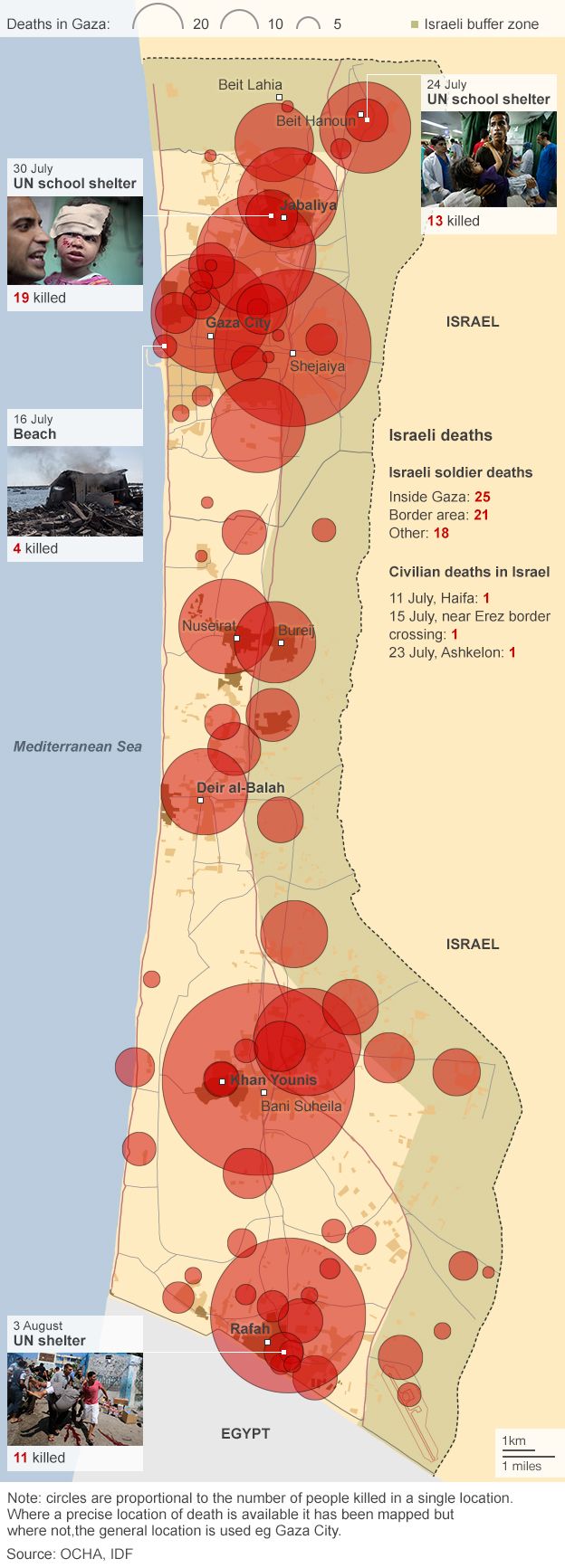
(3) Smith’s methodology reduces Gaza to an object space of structures and buildings, craters and points; he constructs a kernel density map (more on this in a moment) but provides no population density map that would at least gesture towards the people killed, wounded and traumatised by the Israeli offensive and who are wholly absent from his account.  Here, by contrast, is a map I posted previously showing deaths in Gaza to 6 August:

w6401

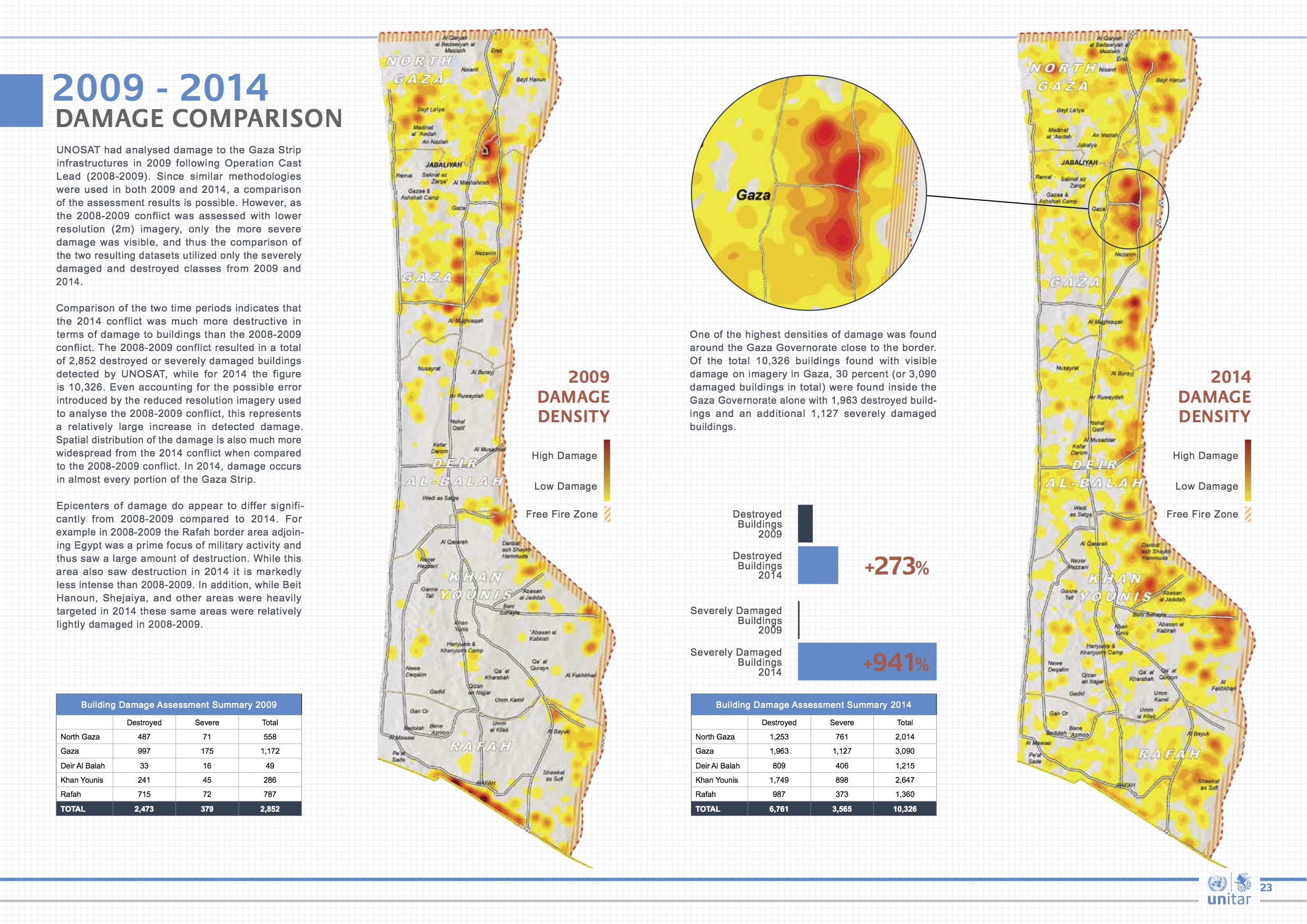
The Gaza Crisis Atlas focuses on damage to buildings and infrastructure because it is a tool directed explicitly towards reconstruction, so the same criticism doesn’t apply (particularly if you look at OCHA’s work more generally, including the information it provided for the map I’ve just reproduced). But if we are to limit ourselves to gazing on structures from space, UNOSAT’s analysis of satellite imagery provides a sharp reminder that these buildings included schools and hospitals (see also here and here); the report also provides a telling comparison between the intensity of destruction in 2009 and 2014:

UNOSAT_GAZA_REPORT_OCT2014_WEB (dragged)

(4) Smith prefers to construct his own generalised map of damage density using kernel density estimation, a smoothing algorithm that converts point data into a continuous surface.  I discussed the way in which the US military uses this technique in ‘Seeing Red’ (DOWNLOADS tab), and what I said there bears repeating:

The maps are known for their dramatic visual impact, and the desired message can be engineered into the production process. One of the most influential handbooks on KDE is published by the US National Institute of Justice and describes how to map crime ‘hot spots’…  The authors of the NIJ handbook acknowledge that ‘map production is an iterative process’ and that ‘the first map produced is very rarely the one presented to the target audience.’ They continue: ‘The intended message should also be seen as the driving force behind what the map should look like’ (US National Institute of Justice, 2005: 26, 33).

So let’s turn to the rest of Smith’s message.

(4) Smith justifies the pattern of destruction shown on his maps by claiming that ‘the main objective of Operation Protective Edge was to find and destroy dozens of terror tunnels dug from Gaza into Israel.’  In fact, the stated objectives of the Israeli assault changed throughout the campaign.  The attacks were supposedly sparked by the kidnapping and murder of three Israeli teenagers – in the West Bank not Gaza – and as the mission was ratcheted up so their central objective changed: according to the IDF the aim was to put an end to Hamas rockets being fired into Israel (for a radically different view, see Graham Liddell‘s more general discussion at Mondoweiss here).  The rhetoric of ‘terror tunnels’ came later.  And while Smith is right to draw attention to the swathes of destruction to the east of Gaza’s central spine, he never addresses the human consequences of successive Israeli expansions of this so-called ‘buffer zone’ until it covered more than 40 per cent of Gaza: see my post here for more details.

(5) Towards the end of his analysis, Smith concedes that destruction is not punctiform.  Bombs are not ‘pinpoints’ (cf. Nathan Guttman‘s report on Smith’s work and ‘the pinpoint accuracy of Israel’s strikes’), not only because they rarely land exactly on target but also because their blast radiates outwards from the point of impact.  But Smith’s ‘fairly generous estimate that a damage point has a 25 meter [82 feet] radius‘ – is in fact a serious underestimate that at the very least halves the blast radius of a 155 mm shell.  Here is Mark Perry‘s report that I cited previously, which includes testimony from senior US military officers about the shelling of Shuj’aiyya:

Artillery pieces used during the operation included a mix of Soltam M71 guns and U.S.-manufactured Paladin M109s (a 155-mm howitzer), each of which can fire three shells per minute. “The only possible reason for doing that is to kill a lot of people in as short a period of time as possible,” said the senior U.S. military officer. “It’s not mowing the lawn,” he added, referring to a popular IDF term for periodic military operations against Hamas in Gaza. “It’s removing the topsoil.”

“Holy bejeezus,” exclaimed retired Lt. Gen. Robert Gard when told the numbers of artillery pieces and rounds fired during the July 21 action. “That rate of fire over that period of time is astonishing. If the figures are even half right, Israel’s response was absolutely disproportionate.” A West Point graduate who is a veteran of two wars and is the chairman of the Center for Arms Control and Non-Proliferation in Washington, D.C., he added that even if Israeli artillery units fired guided munitions, it would have made little difference.

Even the most sophisticated munitions have a circular area of probability, Gard explained, with a certain percentage of shells landing dozens or even hundreds of feet from intended targets. Highly trained artillery commanders know this and compensate for their misses by firing more shells. So if even 10 percent of the shells fired at combatants in Shujaiya landed close to but did not hit their targets — a higher than average rate of accuracy — that would have meant at least 700 lethal shells landing among the civilian population of Shujaiya during the night of July 20 into June 21. And the kill radius of even the most precisely targeted 155-mm shell is 164 feet. Put another way, as Gard said, “precision weapons aren’t all that precise.”

(6) Finally, let’s take Smith’s central claim that ‘less than 5% of the land [of Gaza] was affected’ – and reverse it.  If Hamas were to say that less than 0.00005% of Israel had been hit by its rockets – to be fair, it’s a difficult calculation to make because Israel has never fixed its borders and so it’s not possible to determine its area – and that the rest of Israel was ‘disproportionately undamaged’, would Israelis have simply shrugged them off?


Redlining

Poster-RTP-EN-jpeg-723x1024

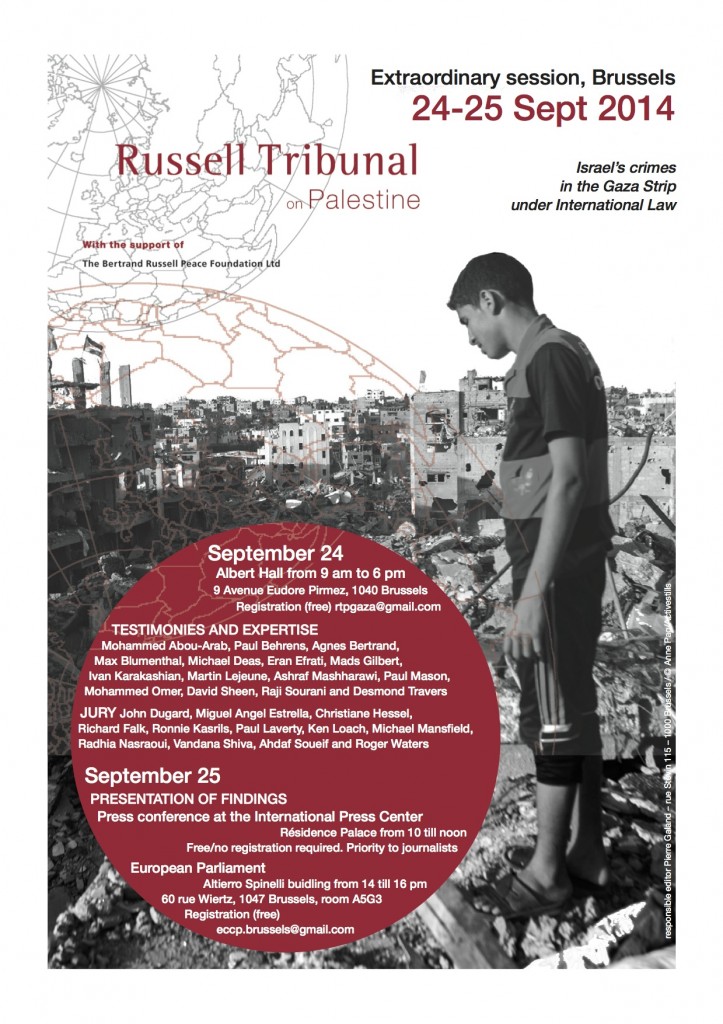
I’ve posted about maps of this summer’s Israeli assault on Gaza before (see also here), and in the light of those discussions Max Blumenthal‘s testimony before the Extraordinary Session of the Brussels Tribunal on Gaza this past week was exceptionally interesting.  He arrived in Gaza on 15 August, at the start of yet another ‘humanitarian ceasefire’, and recorded testimony from residents from several of the areas destroyed by the Israeli military.

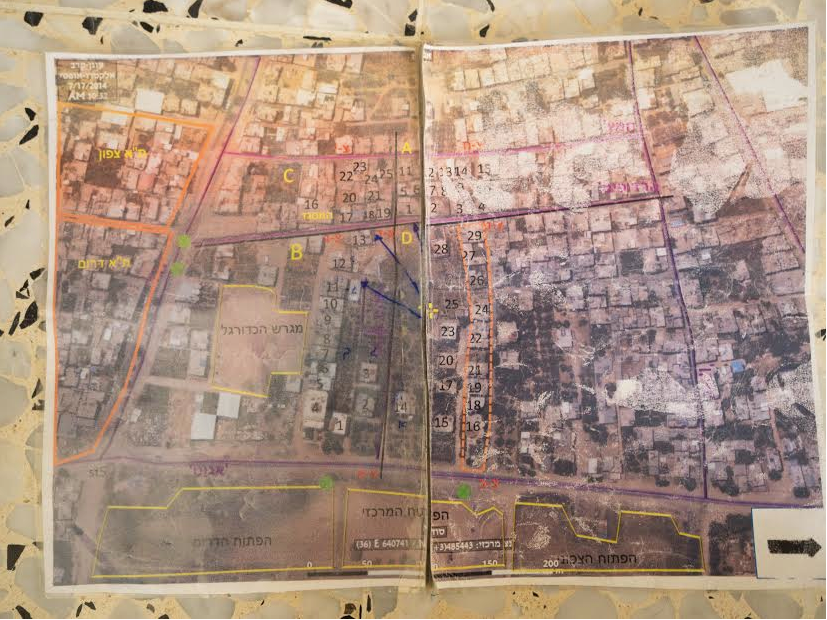
In Shuja’iyya Max and his colleague Dan Cohen discovered a map abandoned by the Israeli military in an ammunition box:

IDF Map Gaza

Over at Alternet, Max reads this map with the aid of Eran Efrati, a veteran of the Israeli army.  Over the last five years Eran has been conducting interviews with Israeli soldiers – since Operation Cast Lead, in fact – and as part of his investigations into the vicious attack on Shuja’iyya he had this to say to Amy Goodman:

‘… in the morning, families are starting to come back into their neighborhood, civilians looking for family members they left behind and looking for them under the rubbles…. People [are] going around the neighborhood and screaming names of family members, looking for them—obviously unarmed civilians. The soldiers are in the house, looking ahead. At that time, they decide to do an imaginary red line in the sand. Our officers tell them they had to do an imaginary red line to determine if they’re in risk or not. And whoever will cross this red line will be a risk for them, and so far, they can kill him. Of course, that’s not something new. It happened in 2009 and in 2012. But this time, this imaginary red line was drawn very, very far from the house. Snipers were sitting on the windows waiting for orders.’

eran efrati

The map Max and Dan found provides further evidence of these ‘red lines’; Max again:

The map you are looking at offers an indication that not only were individual soldiers able to devise their own “invisible” red lines, there was an explicit policy to transform areas of central Shujaiya into free-fire zones where civilians could be killed simply for being present.

In orange, in the upper center of the map, the phrase, “Tzir-Hasuf,” or “We cleared it out,” appears. All homes along this road were destroyed. In fact, most of the homes in the entire area displayed on the map were razed to the ground.

In the upper-right-hand corner of the map, inscribed in red Hebrew letters, you can see the phrase, “Hardufim.” This is code invoked over army radios to indicate soldiers killed in combat. According to Efrati, the phrase was used during Operation Cast Lead to delineate areas where Palestinian civilians could be killed. It appears this line was drawn in Shujaiya after the Golani Brigade lost 13 soldiers during clashes on the evening of the 19th — when “Hardufim” was heard blaring across Israeli army radios — before they occupied homes in Shujaiya the following morning, when the now notorious videotaped execution of 22-year-old Salem Shamaly occurred.

The architecture of violence

I’m late coming to this – partly because I’m just back from Finland, and partly because term is upon us….

Rebel architecture

Here is an excellent short documentary from Al Jazeera featuring Eyal Weizman on ‘The architecture of violence‘, explaining the ‘slow violence’ of architecture in the Israeli occupation of Palestine and the evolution of urban warfare.

9781844678686_Hollow_Land-131a036e4e5db107ee8520dcea0ea32eIt also documents the trajectory of Eyal’s work, from the brilliant Hollow Land through to forensic architecture (as he says ‘the crime was done on the drawing-board itself’).

It’s the third episode in Al Jazeera‘s Rebel Architecture series.  Film-maker Ana de Sousa explains:

Until recently I would look at images of these ruins and see nothing more than potent monuments of destruction. Traces of lives eliminated or chased away. But they are more than that. Making The Architecture of Violence with the architect Eyal Weizman has shifted my gaze, taught me to look at buildings and ruins as objects that bear witness to events and that can speak to us – we just need to know what questions to ask them.

From the moment we started developing this series, the idea behind Rebel Architecture was to look beyond so-called starchitecture – beyond the architectural ostentation of technological feats, and towards a more socially aware, though still creative architecture serving the people on the ground. But it was also to use architecture as a way of exploring different environmental, social and political realities around the world. While many of the documentaries in our series have looked at how architecture – the design and construction of physical structures – is being used by architects to respond to rapid urbanisation, pollution, limited resources or natural disasters, The Architecture of Violence is a different kind of film.

When I came across the work of Eyal Weizman, I realised that there was a completely different way of using architecture and of being an architect. Weizman’s work lies at the intersection of architecture with politics, violence, conflict and human rights. As an Israeli architect opposed to the occupation of the West Bank and Gaza Strip, he fell foul of the Israeli architectural establishment early in his career, and was forced to explore alternatives to “building buildings”. Our film looks at how architecture can be used to interpret, protest and resist, in Weizman’s case, the Israeli occupation of the West Bank and Gaza.

I’ve embedded the video from YouTube below, but if you have difficulty accessing it clink on the link above, which will take you directly to the original on Al Jazeera.

Sand in the gears

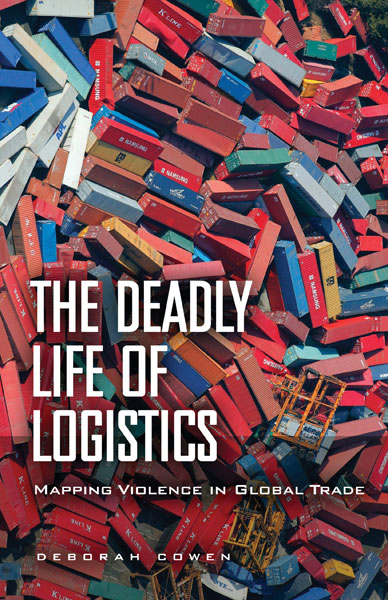
imageI’ve just agreed to join a panel at next year’s Annual Meeting of the Association of American Geographers in Chicago to discuss Deb Cowen‘s The Deadly Life of Logistics: mapping violence in global trade.  I obviously haven’t had time to give much thought to what I might say – these invitations seem to arrive earlier each year, no doubt a reflection of the ‘deadly logistics’ of conference organisation – but I had at the back of my mind the connections between Deb’s work and my own sketches of military logistics in Afghanistan: see, for example, here, here and here.

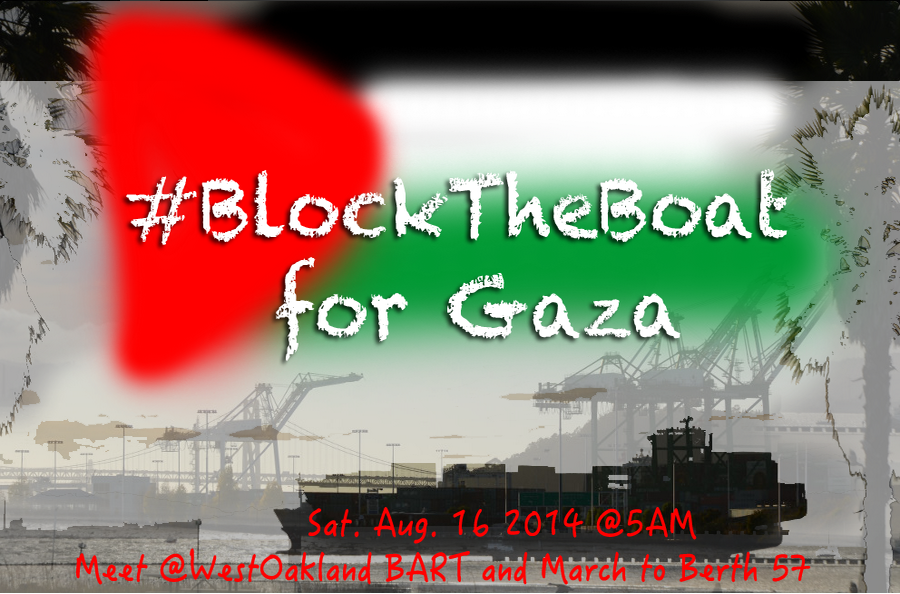
But now an elegant essay at The disorder of things has prompted me to think about other connections between our projects.  In ‘Logistics, circulation, chokepointsCharmaine Chua uses Deb’s work to reflect on Block the Boat for Gaza and other counter-logistical movements (for a report, see here).  She borrows ‘counter-logistics’ from Jasper Bernes – who pithily suggests that ‘logistics is capital’s art of war’ – to envisage movements like Block the Boat as moments in a dispersed guerilla campaign:

As capital has restructured itself away from industrial production, the mass labor force expelled from the factory floors of the world has now spilled into the streets, articulating their dissatisfaction with the state of things through uprisings, strikes, blockades, and riots. But if it seems that these struggles themselves are scattered across the globe, we might do well to also remember that the world of logistics, even as it has fundamentally restructured capitalist accumulation, is itself an irrevocably scattered form: it is at once a form of economic calculation that manages capital circulation in the totality of its system and a coordinated yet dispersed set of regulations, calculative arrangements, and technical procedures that render certain objects or flows governable. If the global supply chain that has dissipated democratic energies and foreclosed collective action can be thought of as a scattered entity, then, the question arises: what are the supply chain’s points of vulnerability? What would it mean to pay special attention to the materiality of capital flows – and to the possibilities that arise from interrupting the massive concentration of commodity capital at sites of its coagulation or through which it flows? How, in other words, might those rendered apparently powerless in the face of a logistical world find ways to recapture capital’s chokepoints?

Chokepoints – the concentration of the circulation of commodities at certain key sites along the supply chain – might thus present the possibility for strikes and protests to articulate resistance not only symbolically but also materially, by literally grounding capitalist circulation to a halt.

They also present the possibility of throwing sand in the gears of war machines.  There’s nothing novel in recognising the vital importance of logistics to the exercise of military and paramilitary violence (see also Jeff Patton here); time and time again militaries have targeted enemy supply chains – hence all those bitter arguments over the effectiveness of air raids on marshalling yards and petroleum, oil and lubrication stocks in the Second World War; all those insurgent attacks on convoys trucking supplies through Pakistan to ISAF bases in Afghanistan; and the Israeli military’s current preoccupation with Gaza’s tunnel economy.  And in countless wars saboteurs have worked to degrade the supply of materials.

BlockTheBoat

But the global constitution of military supply chains makes it possible to think through a new, more dispersed politics of resistance lodged in sites far from the conflict zone.  I’ll keep you posted.


UPDATE:  I’ve pasted this response from Charmaine from the “Comments” section because the suggestions she makes are too interesting to be missed:

Dear Derek,

Thanks for featuring my essay on your blog and, more importantly, pointing us to the fascinating links between military and commercial logistics. I’m excited to be a part of this conversation. Of course, not only is logistics important to the exercise of military violence — but the military supply chain is at the very root of commercial logistical innovations, exemplified by the fact that containerization was only popularized in the shipping industry after its successful use during the Vietnam War. Cowen’s book details these links brilliantly.

But I’m most interested in your last suggestion, that “the global constitution of military supply chains makes it possible to think through a new, more dispersed politics of resistance lodged in sites far from the conflict zone.” It strikes me, reading this, that the spatial displacements between sites of production and consumption under global capitalism – which many think of as disempowering for and dispersing of struggle – have actually enabled possibilities for resistance in ways and spaces not previously available to the larger public. Toscano, via Sergio Bologna, has pointed out in this vein that the “multitude of globalization” working across the supply chain is composed of both the manual labor of the working class, AND the intellectual labor of those who produce the technological systems which enable logistical flows. Perhaps an obvious point – but I very much like the idea that the logistics multitude encompasses even those of us in academia, so that we too can be part of this “dispersed guerrilla campaign”.

Best,
Charmaine Chua

Atlas wept

The Gaza War Map

To grasp the catastrophic scope of destruction in Gaza, there are three new resources of exceptional importance.  First, Lewis Whyld‘s The Gaza War Map: it’s an interactive map keyed to a series of panoramic images which transports you to 20 sites from Beit Hanoun south to Rafeh and it is, appropriately, devastating.

Gaza Crisis Atlas

Second, the UN’s Office for the Coordination of Humanitarian Affairs has released its Gaza Crisis Atlas: 110 pages of maps and high-resolution satellite imagery.  It’s a remarkably systematic survey, whose primary purpose is to assist aid and development agencies in planning and responding to the crisis, but it’s also an indispensable resource for anyone wanting to grasp the intensity of the prolonged Israeli assault on Gaza and its people.  The text and captions are available in eight languages, and you can zoom and print individual pages.

Finally, there’s MediaTown‘s drone-shot video of the destruction of Al-Shejaiya; its brevity does not sacrifice its impact:

Even hardened US military officers were stunned by the unrelenting and indiscriminate nature of the bombardment.  Throughout the offensive the Pentagon compiled reports twice a day on Israeli military operations, and according to a summary of the barrage on 20-21 July ’11 Israeli artillery battalions …  pumped at least 7,000 high explosive shells into the Gaza neighborhood, which included a barrage of some 4,800 shells during a seven-hour period at the height of the operation…’

That amounts to shelling Al-Shejaiya every six seconds FOR SEVEN HOURS (more from Kerry-anne Mendoza among the ruins of Al-Shejaiya here, and more imagery from Occupied Palestine here).

Al-Jazeera reports:

“Eleven battalions of IDF artillery is equivalent to the artillery we deploy to support two divisions of U.S. infantry,” a senior Pentagon officer with access to the daily briefings said. “That’s a massive amount of firepower, and it’s absolutely deadly.” Another officer, a retired artillery commander who served in Iraq, said the Pentagon’s assessment might well have underestimated the firepower the IDF brought to bear on Shujaiya. “This is the equivalent of the artillery we deploy to support a full corps,” he said. “It’s just a huge number of weapons.”

Artillery pieces used during the operation included a mix of Soltam M71 guns and U.S.-manufactured Paladin M109s (a 155-mm howitzer), each of which can fire three shells per minute. “The only possible reason for doing that is to kill a lot of people in as short a period of time as possible,” said the senior U.S. military officer. “It’s not mowing the lawn,” he added, referring to a popular IDF term for periodic military operations against Hamas in Gaza. “It’s removing the topsoil.”

“Holy bejeezus,” exclaimed retired Lt. Gen. Robert Gard when told the numbers of artillery pieces and rounds fired during the July 21 action. “That rate of fire over that period of time is astonishing. If the figures are even half right, Israel’s response was absolutely disproportionate.” A West Point graduate who is a veteran of two wars and is the chairman of the Center for Arms Control and Non-Proliferation in Washington, D.C., he added that even if Israeli artillery units fired guided munitions, it would have made little difference.’

Before I let Gard continue, it’s important to remember that the onslaught did not end that night.  Here is a remarkable video which shows the shelling of Shejaiya market on 30 July (more updates and images from #shejaia here).  Imagery of Shejaiya before and after the bombardment was distributed to Israeli soldiers in Brigade 828 as ‘a victory momento‘ and spur to maintain their ‘fighting spirit’.

Gard goes on to explain the circular error probable (CEP) of munitions and the blast and fragmentation or ‘kill radius’, which I’ve discussed here (scroll down for the ‘kill radius’):

Even the most sophisticated munitions have a circular area of probability, Gard explained, with a certain percentage of shells landing dozens or even hundreds of feet from intended targets. Highly trained artillery commanders know this and compensate for their misses by firing more shells. So if even 10 percent of the shells fired at combatants in Shujaiya landed close to but did not hit their targets — a higher than average rate of accuracy — that would have meant at least 700 lethal shells landing among the civilian population of Shujaiya during the night of July 20 into June 21. And the kill radius of even the most precisely targeted 155-mm shell is 164 feet. Put another way, as Gard said, “precision weapons aren’t all that precise.”

Senior U.S. officers who are familiar with the battle and Israeli artillery operations, which are modeled on U.S. doctrine, assessed that, given that rate of artillery fire into Shujaiya, IDF commanders were not precisely targeting Palestinian military formations as much as laying down an indiscriminate barrage aimed at cratering the neighborhood. The cratering operation was designed to collapse the Hamas tunnels discovered when IDF ground units came under fire in the neighborhood. Initially, said the senior Pentagon officer, Israel’s artillery used “suppressing fire to protect their forward units but then poured in everything they had, in a kind of walking barrage. Suppressing fire is perfectly defensible. A walking barrage isn’t.”

The implication of those closing remarks is that such an indiscriminate barrage is a clear violation of international humanitarian law: and the epic scale of that violation is made clear in the maps, imagery and video I’ve cited here.  It also amounts to collective punishment of a whole community, so it comes as no surprise to discover that the Israeli Supreme Court (‘sitting as the High Court of Justice’ – a phrase that has the same moral resonance as the Israeli Defence Force) has recently endorsed the ‘deterrent function’ of collective punishment (even though it too is prohibited under international humanitarian law).  But even the Court insisted that such a measure had to be ‘proportionate’.

All of this is much on my mind as I head to a meeting in Oulu, Finland, where I’ll be talking about ‘Trans-border transgressions: legal geographies and spaces of exception’.   The case studies on which I’ll draw are the Federally Administered Tribal Areas of Pakistan (mainly Waziristan) and Gaza.  More soon.

Gazonto

I’ve discussed the political-aesthetic practice of transposition before – superimposing war ‘over there’ on a city ‘over here’ – in relation to both Baghdad and Gaza.  For the most part, these have been cartographic exercises or art performances (see the closing sections of  ‘War and peace’ [DOWNLOADS tab] for some more examples).

Film-maker John Greyson has just released this short video, Gazonto, which is doubly different.  It takes the rash of video games about Gaza – many of which glorify successive Israeli assaults – and turns them to critical account, and it re-locates the air strikes from Gaza to Toronto (the flipping of the map near the beginning is inspired).

More here; if you are trying to remember where you’ve heard of John before, he was arrested and jailed in Egypt last summer, en route to Gaza with Tarek Loubani, an ER doctor who is one of the main architects of the Canada-Gaza collaboration that is responsible for taking Canadian doctors to Gaza to train local physicians.  They spent fifty days in a Cairo jail after John was seen filming Tarek treating demonstrators who had been shot by police in Ramses Square, where they had been protesting the military coup.  It was never clear which was the greater crime – treating the demonstrators or witnessing the emergency treatment.

This, of course, is one of the many appalling back-stories spawned by the intimacy between the al-Sisi government in Egypt and the Netanyahu government in Israel: what the splendid Richard Falk calls ‘neighbourly crimes of complicity’.  Geopolitics is rooted in these ‘accommodations’, and it cultivates all sorts of deadly blossoms.

But the tendrils reach far beyond the region, and many readers will appreciate why it is so important for a Canadian film-maker to re-stage the attacks on Gaza in a Canadian city.  For those who don’t, check out this report on the Harper government’s own video, released as the Israeli assault on Gaza was intensifying, affirming Canada’s support for Israel “Through Fire and Water”.   Really.

While I’m on this subject, Laleh Khalili has an excellent essay at the Society & Space open site to accompany the virtual issue on Israel/Palestine.  It’s called ‘A habit of destruction’:

The devastation to which Gaza has been subjected in the last few weeks seems to be yet another repetition of Israeli settler-colonial apparatus’ habit of destruction. Gaza has become emblematic of this habit, because in recent years it has so frequently been subjected to bombing while under a state of siege, but like all settler-colonialisms, the violence of the state is rooted not in an episodic “cycle of violence” but in the very ideology and practice of the settler-colonial movement…. 

The lesson of the most recent Israeli assault on Gaza, as in all previous assaults, is that civilians are not “collateral” or accidental casualties of war between combatants, but the very object of a settler-colonial counterinsurgency. The ultimate desire of such asymmetric warfare is to transform the intransigent population into a malleable mass, a docile subject, and a yielding terrain of domination.

And, as she concludes, ‘That ever so frequently the Israeli military plunges Palestinians into conflagrations of lead and steel and concrete dust and destruction is the clearest sign that it has failed at making Palestinians into such a docile population.’