All white on the Western Front?

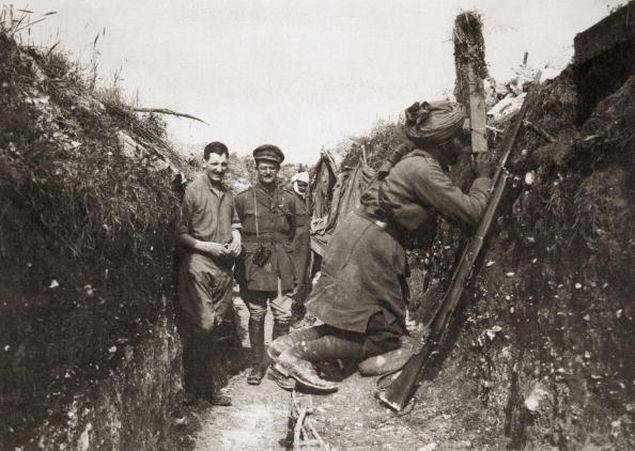
Indian troops at Ypres

There is a telling anecdote in Lyn Macdonald‘s account of The Somme:

Climbing on to the firestep, the Staff Captain cautiously raised his head above the parapet and looked across. ‘Good God!’ he exclaimed. ‘I didn’t know we were using Colonial troops!’ Pretor-Pinney made no reply. Hoyles and Monckton exchanged grim looks. ‘Dear God,’ muttered Monckton, when the Colonel and the visitor had moved away to a safe distance, ‘has the bastard never seen a dead man before?’ It was a rhetorical question. Lying out in the burning sun, soaked by the frequent showers of a week’s changeable weather, the bodies of the dead soldiers had been turned black by the elements. The Battalion spent the rest of the day burying them.

In fact, it’s doubly revealing.  On one side, it confirms the (I think simplistic) stereotype of the General Staff and their distance from death; but on the other side it also speaks to what Santanu Das, writing in the Guardian, calls ‘the colour of memory’:

In 1914, Britain and France had the two largest empires, spread across Asia and Africa, and an imperial war necessarily became a world war.

More than 4 million non-white men were recruited into the armies of Europe and the US. In a grotesque reversal of Joseph Conrad’s vision, thousands of Asians, Africans and Pacific Islanders were voyaging to the heart of whiteness and far beyond – to Mesopotamia, East Africa, Gallipoli, Persia and Palestine. Two million Africans served as soldiers or labourers; a further 1.3 million came from the British “white” dominions. The first shot in the war was fired in Togoland, and even after 11 November 1918 the war continued in East Africa.

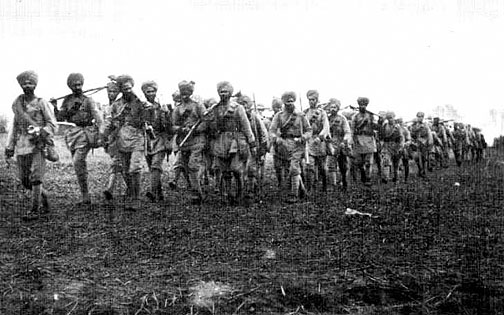
A South African labourer said he went to war to “see different races”. If one visited wartime Ypres, one would have seen Indian sepoys, tirailleur Senegalese, Maori Pioneer battalions, Vietnamese troops and Chinese workers.

Today, one of the main stumbling blocks to a truly global and non-Eurocentric archive of the war is that many of these 1 million Indians, or 140,000 Chinese, or 166,000 West Africans, did not leave behind diaries and memoirs. In India, Senegal or Vietnam there is nothing like the Imperial War Museum; when a returned soldier or village headman died, a whole library vanished.

Moreover, as the former colonies became nation states, nationalist narratives replaced imperial war memories. Stories that did not fit were airbrushed. In Europe, communities turned to their own dead and damaged.
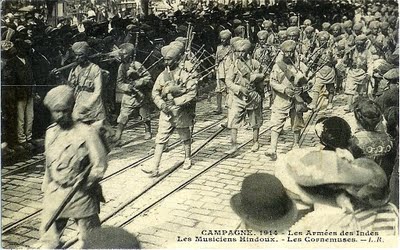
WWI Sikhs Bagpipes

In ‘Gabriel’s Map’ I began in East Africa in 1914 with an Indian Army contingent – whose staff officers included, in William Boyd‘s An Ice-Cream War,  the young Gabriel Cobb – sent to seize German East Africa defended by the local Schutztruppen under German command.  But as I travelled back to the Western Front the colonial troops who also served there slipped from the record.  Yet by the end of September 1914 two Indian divisions and a cavalry brigade had already arrived in France (see above), and in October the first sepoys were sent into battle at Ypres.  If British, French and German troops were shocked at the devastation of a European countryside that was, in its essentials, once familiar to them, what could the freezing cold, the endless mud and the splintered trees have meant to these men (who usually arrived unprepared and ill-equipped for the winter)?

sepoysinthetrenches_0_1I suspect a satisfying answer has to wait for Santanu’s next book, India, Empire and the First World War: words, images and objects (Cambridge University Press, 2015). But in the meantime the whitening of the Western Front (and other theatres of the War) can be resisted through other sources. Some of them are listed in his brief essay on ‘The Indian sepoy in the First World War’ for the the British Library (and you can find ‘Experiences of colonial troops’, adapted from his Introduction to Race, empire and First World War writing [Cambridge University Press, 2011] here).

In addition Christian Koller‘s ‘The recruitment of colonial troops in Africa and Asia and their deployment in Europe during the First World War’, Imigrants & Minorities 26 (1/2) (2008) 111-133 [open access pdf here] provides a helpful context and more references (including French and German sources), and Gajendra Singh‘s The testimonies of Indian soldiers and the two world wars: between self and sepoy (Bloomsbury, 2014)  is a wider, though inevitably selective account of the fabrication of Indian military identities under the Ra (the chapter on ‘Throwing snowballs in France’ is also available in Modern Asian Studies 48 (4) (2014): it’s an artful discussion of the (mis)fortunes of a chain letter – this is the ‘snowball’ in question – that ran foul of the military censor).  The Round Table 103 (2) (2014) is a special issue devoted to ‘The First World War and the Empire-Commonwealth’.

http://www.oucs.ox.ac.uk/ww1lit/collections/item/3770?CISOBOX=1&REC=3

Finally, I’m working my way through Andrew Tait Jarboe‘s excellent PhD thesis, Soldiers of empire: Indian sepoys in and beyond the metropole during the First World War, 1914-1919 (Northeastern, 2013): during my current research on military-medical machines 1914-2014 I’ve found a number of references to the treatment of wounded Indian troops on the Western Front – their evacuation on hospital trains and their treatment in segregated hospitals – and Andrew’s third chapter (‘Hospital’) provides an illuminating reading of what was happening:

‘Between 1914-18, the British established segregated hospitals for wounded Indian soldiers in France and England… [T]hese hospitals were not benign institutions of healing. Like hospitals that repaired the bodies of English soldiers, Indian hospitals played a crucial role in sustaining the war-making capacity of the British Empire. Indian hospitals in Marseilles or Brighton also served an imperial purpose. As sites of propaganda, they reaffirmed the ideologies of imperial rule for audiences at home, abroad, and within the hospital wards. Yet even while the British Empire succeeded to a considerable extent in exploiting the manpower of India, … wounded sepoys were rarely ever mere pawns on the imperial chessboard. Hospital authorities were committed to two policies: returning sepoys to the front, and protecting white prestige. Wounded sepoys found ways of resisting both. In this way, Indian hospitals readily became what British authorities hoped they would not: spaces where imperial subalterns contested the policies and ideologies of imperial rule.’
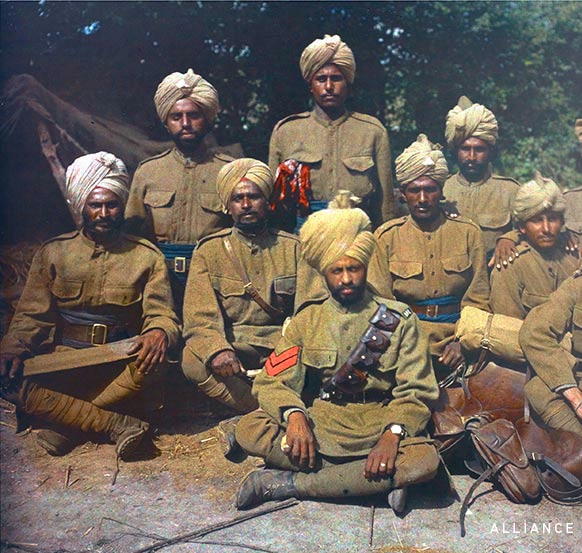
Sikhs WW1

For imagery of non-European troops on the Western front and elsewhere, try this page at the Black Presence in Britain.  More wide-ranging is the exhibition organised by the Alliance française de Dhaka, War and the colonies 1914-1918, that you can visit online here (I’ve taken the image above from that collection).

All of this, clearly, adds another dimension to Patrick Porter‘s lively discussion of Military Orientalism: Eastern war through Western eyes (2009).  But it’s not only an opportunity to reverse (and re-work) that subtitle.  The Times of India reports a campaign to change ‘the colour of memory’ by instituting 15 August as a Remembrance Day in India:

“This will be our Remembrance Day. We have attended such memorial functions in France where heads of different states converge and the civilian turnout is quite big. But we don’t see a single Indian face there—quite an irony, given the fact that 1, 40,000 Indians defended French soil from German aggression in the Great War, and many never returned home. That’s why we, NRIs from France, came up with this project,” says a representative of Global Organization for People of Indian Origin (GOPIO), France.
38761185.cms

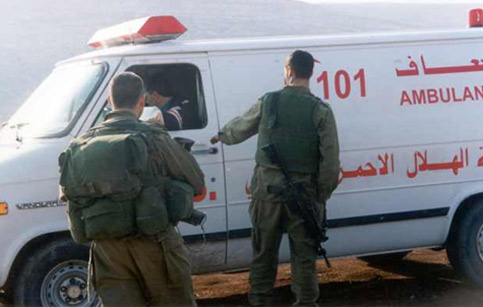
Gaza 101

pcrs483

101 is the emergency number for Gaza and the rest of occupied Palestine.  And perhaps I should begin with that sentence: I say ‘the rest of occupied Palestine’ because, despite Israel’s ‘disengagement’ from Gaza in 2005, Israel continues to exercise effective control over the territory which means that Gaza has continued to remain under occupation.  It’s a contentious issue – like Israel’s duplicitous claim that the West Bank is not ‘occupied’ either (even by its illegal settlers) merely ‘disputed’ – and if you want the official Israeli argument you can find it in this short contribution by a former head of the IDF’s International Law Department here and here.  The value of that essay – apart from illustrating exactly what is meant by chutzpah – is its crisp explanation of why the issue matters:

‘This does not necessarily mean that Israel has no legal obligations towards the population of the Gaza Strip, but that to the extent that there are any such legal obligations, they are limited in nature and do not include the duty to actively ensure normal life for the civilian population, as would be required by the law of belligerent occupation…’

Certainly, one of the objectives of Israel’s ‘disengagement’ was to produce what its political and military apparatus saw as ‘an optimal balance between maximum control over the territory and minimum responsibility for its non-Jewish population’.  That concise formulation is Darryl Li‘s, which you can find in his excellent explication of Israel’s (de)construction of Gaza as a ‘laboratory’ for its brutal bio-political and necro-political experimentations [Journal of Palestine Studies 35 (2) (2006)]. (Another objective was to freeze the so-called ‘peace process’, as Mouin Rabbani explains in the latest London Review of Books here; his essay also provides an excellent background to the immediate precipitates of the present invasion). Still, none of this entitles Israel to evade the obligations of international law.  Here it’s necessary to recall Daniel Reisner‘s proud claim that ‘If you do something for long enough, the world will accept it… International law progresses through violations’: Reisner also once served as head of the IDF’s International Law Department, and the mantra remains an article of faith that guides IDF operations.  But as B’Tselem, the Israeli Information Center for Human Rights in the Occupied Territories, insisted in an important opinion published at the start of this year:

Even after the disengagement, Israel continues to bear legal responsibility for the consequences of its actions and omissions concerning residents of the Gaza Strip. This responsibility is unrelated to the question of whether Israel continues to be the occupier of the Gaza Strip.

But there’s more.  International humanitarian law – no deus ex machina, to be sure, and far from above the fray – not only applies during Israel’s military offensives and operations, including the present catastrophic assault on Gaza, but provides an enduring set of obligations.  For as Lisa Hajjar shows in a detailed discussion re-published by Jadaliyya last week, Israel’s attempts to make Gaza into a space of exception – ‘neither sovereign nor occupied’ but sui generis – run foul of the inconvenient fact that Gaza remains under occupation. Israel continues to control Gaza’s airspace and airwaves, its maritime border and its land borders, and determines what (and who) is allowed in or out [see my previous post and map here].  As Richard Falk argues, ‘the entrapment of the Gaza population within closed borders is part of a deliberate Israeli pattern of prolonged collective punishment’ – ‘a grave breach of Article 33 of the Fourth Geneva Convention’ – and one in which the military regime ruling Egypt is now an active and willing accomplice.

Karam abu Salem crossing

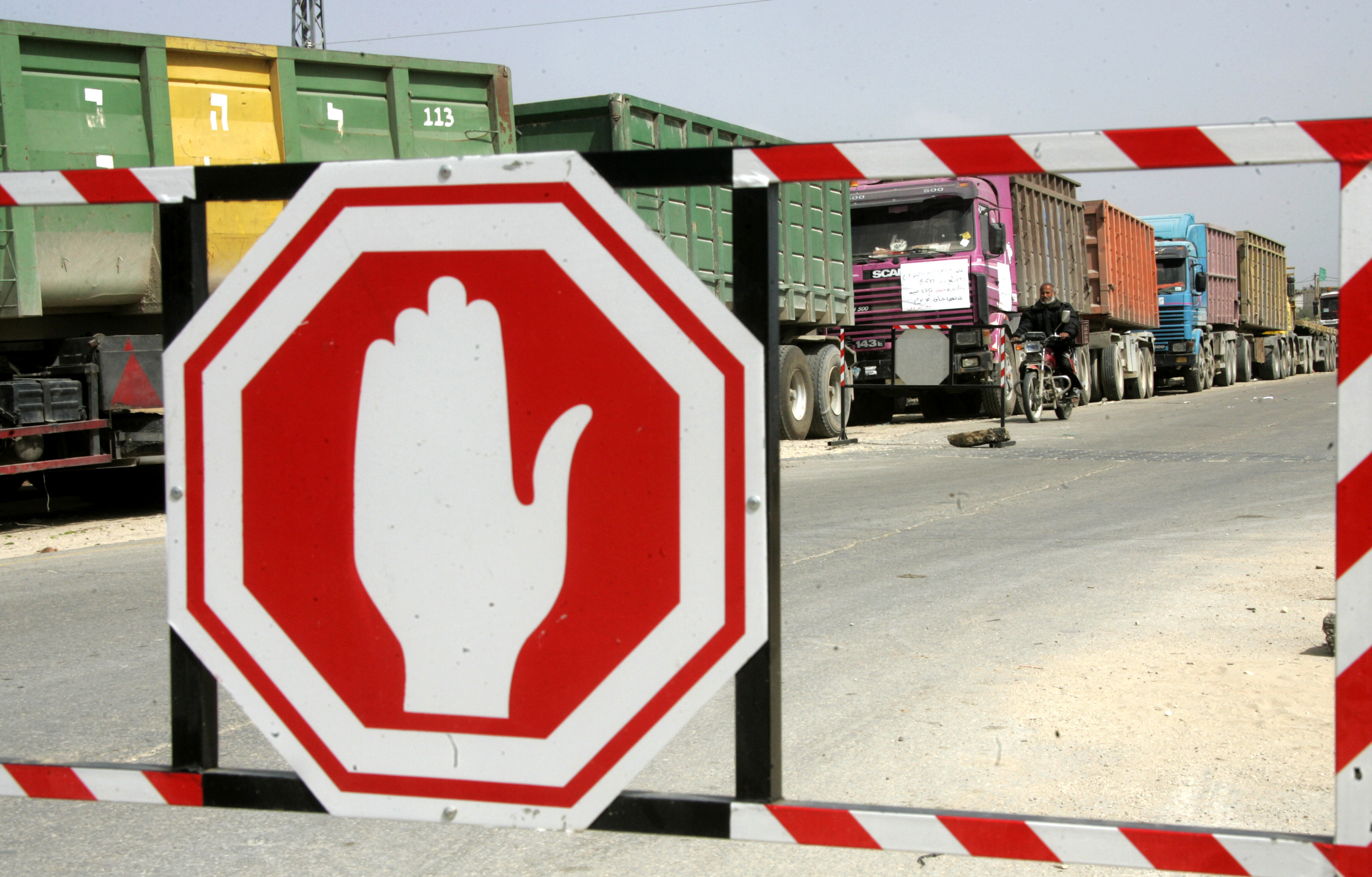
So: Gaza 101.  Medical equipment and supplies are exempt from the blockade and are allowed through the Karam Abu Salem crossing (after protracted and expensive security checks) but the siege economy of Gaza has been so cruelly and deliberately weakened by Israel that it has been extremely difficult for authorities to pay for them.  Their precarious financial position is made worse by direct Israeli intervention in the supply of pharmaceuticals.  Corporate Watch reports that

When health services in Gaza purchase drugs from the international market they come into Israel through the port of Ashdod but are not permitted to travel the 35km to Karam Abu Salem directly. Instead they are transported to the Bitunia checkpoint into the West Bank and stored in Ramallah, where a permit is applied for to transport them to Gaza, significantly increasing the length and expense of the journey.

There’s more – much more: you can download the briefing here – but all this explains why Gaza depends so much on humanitarian aid (and, in the past, on medical supplies smuggled in through the tunnels).  Earlier this summer Gaza’s medical facilities were facing major shortfalls; 28 per cent of essential drugs and 54 per cent of medical disposables were at zero stock.

ochaopt_atlas_health_care_december2011

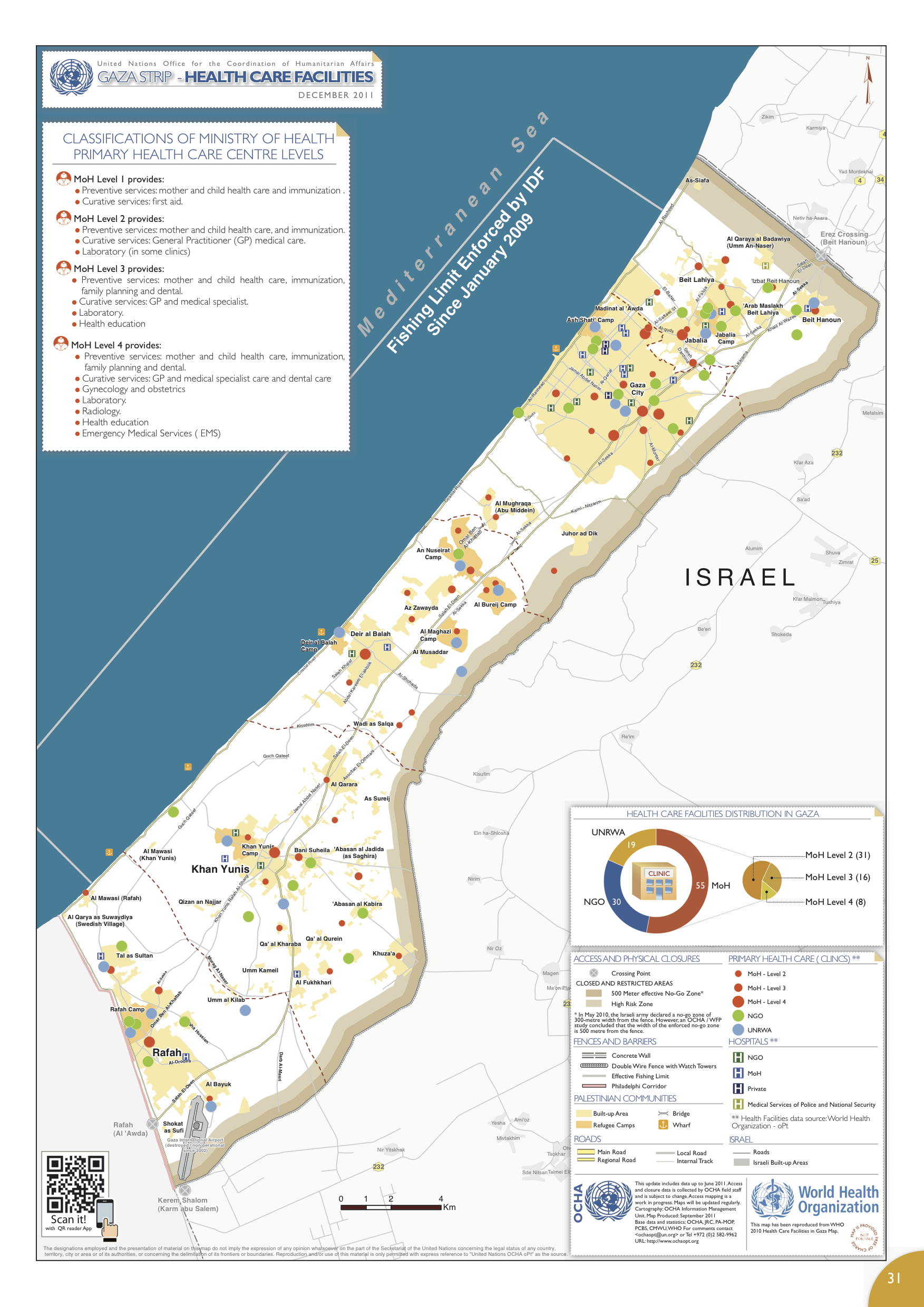
Medical care involves more than bringing in vital supplies and maintaining infrastructure (the map of medical facilities above is taken from the UN’s humanitarian atlas and shows the situation in December 2011; the WHO’s summary of the situation in 2012 is here).  Medical care also involves unrestricted access to electricity and clean water; both are compromised in Gaza, and on 1 January 2014 B’Tselem reported a grave deterioration in health care as a result:

‘The siege that Israel has imposed on the Gaza Strip since Hamas took over control of the security apparatus there in June 2007 has greatly harmed Gaza’s health system, which had not functioned well beforehand…. The reduction, and sometimes total stoppage, of the supply of fuel to Gaza for days at a time has led to a decrease in the quality of medical services, reduced use of ambulances, and serious harm to elements needed for proper health, such as clean drinking water and regular removal of solid waste. Currently, some 30 percent of the Gaza Strip’s residents do not receive water on a regular basis.’

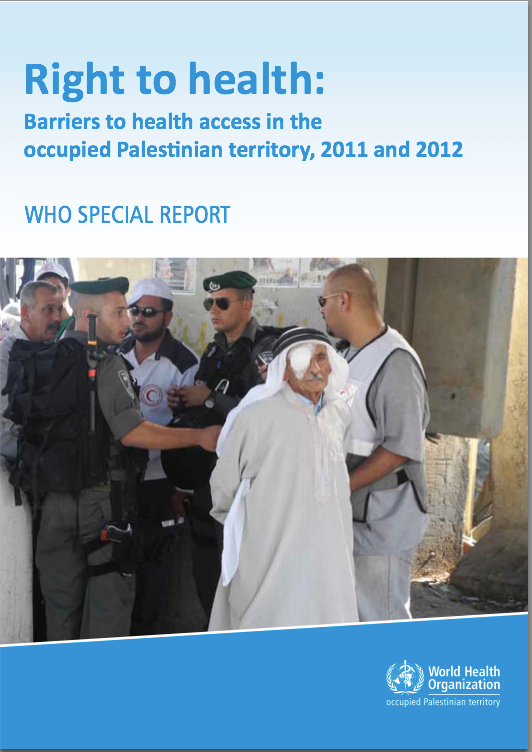
WHO Right to healthIn-bound transfers are tightly constrained, but so too are out-bound movements.  Seriously ill patients requiring advanced treatment had their access to specialists and hospitals outside Gaza restricted:

‘Israel has cut back on issuing permits to enter the country for the hundreds of patients each month who need immediate life-saving treatment and urgent, advanced treatment unavailable in Gaza. The only crossing open to patients is Erez Crossing, through which Israel allows some of these patients to cross to go to hospitals inside Israel [principally in East Jerusalem], and to treatment facilities in the West Bank, Egypt, and Jordan. Some patients not allowed to cross have referrals to Israeli hospitals or other hospitals. Since Hamas took over control of the Gaza Strip, the number of patients forbidden to leave Gaza “for security reasons” has steadily increased.’

As in the West Bank, Israel has established a labyrinthine system to regulate and limit the mobility of Palestinians even for medical treatment.  Last month the World Health Organization explained the system and its consequences (you can find a detailed report with case studies here):

‘In Gaza, patients must submit a permit application at least 10 days in advance of their hospital appointment to allow for Israeli processing. Documents are reviewed first by the health coordinator but final decisions are made by security officials. Permits can be denied for reasons of security, without explanation; decisions are often delayed. In 2013, 40 patients were denied and 1,616 were delayed travel through Erez crossing to access hospitals in East Jerusalem, Israel, the West Bank and Jordan past the time of their scheduled appointment. If a patient loses an appointment they must begin the application process again. Delays interrupt the continuity of medical care and can result in deterioration of patient health. Companions (mandatory for children) must also apply for permits. A parent accompanying a child is sometimes denied a permit, and often both parents, and the family must arrange for a substitute, a process which delays the child’s treatment.’

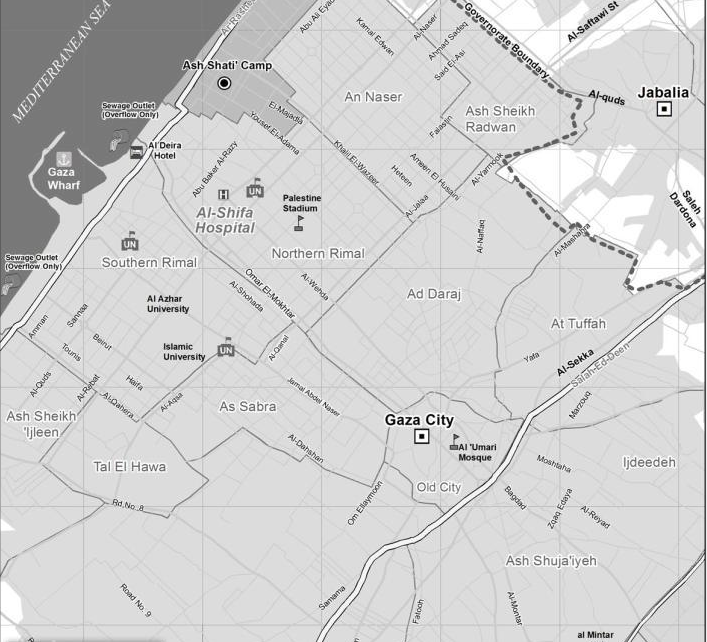
On 17 June Al-Shifa Hospital, the main medical facility in Gaza City (see map below), had already been forced to cancel all elective surgeries and concentrate on emergency treatment.  On 3 July it had to restrict treatment to life-saving emergency surgery to conserve its dwindling supplies. All of this, remember, was before the latest Israeli offensive.  People have not stopped getting sick or needing urgent treatment for chronic conditions, so the situation has deteriorated dramatically.  The care of these patients has been further compromised by the new, desperately urgent imperative to prioritise the treatment of those suffering life-threatening injuries from Israel’s military violence.

al-Shifa and Shuja'iyeh map

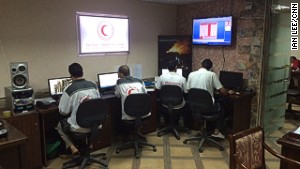
Trauma surgeons emphasise the importance of the ‘golden hour’: the need to provide advanced medical care within 60 minutes of being injured.  Before the IDF launched its ground invasion, there were three main sources of injury: blast wounds from missiles, penetrating wounds from artillery grenades and compression injuries from buildings collapsing.  But this is only a typology; many patients have multiple injuries. ‘We are not just getting patients with one injury that needs attending,’ said the head of surgery at Al-Shifa, ‘we are getting a patient with his brain coming out of his skull, his chest crushed, and his limbs missing.’  All of these injuries are time-critical and require rapid intervention. Ambulance control centre central GazaAnd yet the Ministry of Health reckons that Gaza’s ambulance service is running at 50 per cent capacity as a result of fuel shortages.  That figure must have been reduced still further by the number of ambulances that have been hit by Israeli fire (for more on paramedics in Gaza, and the extraordinary risks they run making 20-30 trips or more every day, see here and this report from the Telegraph‘s David Blair here).  When CNN reporters visited the dispatch centre at Jerusalem Hospital in Gaza City last Tuesday, they watched a a screen with illuminated numbers recording 193 killed and 1,481 injured and the director of emergency services dispatching available ambulances to the site of the latest air strike (by then, there had already been over 1,000 of them).  But the system only works effectively when there is electricity…

628x471

Power supplies were spasmodic at the best of times (whenever those were); they have been even more seriously disrupted by the air campaign, and since the start of the ground assault Gaza has lost around 90 per cent of its power generating capacity.  Nasouh Nazzal reports that many hospitals have been forced to switch to out-dated generators to light buildings and power equipment:

“The power generators in Gaza hospitals are not trusted at all and they can go down any moment. If power goes out, medical services will be basically terminated,” [Dr Nasser Al Qaedrah] said. He stressed that the old-fashioned types of power generators available in Gaza consume huge quantities of diesel, a rare product in the coastal enclave.

On occasion, Norwegian ER surgeon Mads Gilbert told reporters, if the lights go out in the middle of an operation ‘[surgeons] pick up their phones, and they use the light from the screen to illuminate the operation field.’ (He had brought head-lamps with him from Bergen but found they were on Israel’s banned list of ‘dual-use’ goods). As the number of casualties rises, the vast majority of them civilians, so hospitals have been stretched to the limit and beyond.  According to Jessica Purkiss, the situation was already desperate a week ago:

“The number of injuries is huge compared to the hospitals’ capacity,” said Fikr Shalltoot, the Gaza program director for Medical Aid for Palestinians, an organization desperately trying to raise funds to procure more supplies. “There are 1,000 hospital beds in the whole of Gaza. An average of 200 injuries are coming to them every day.”

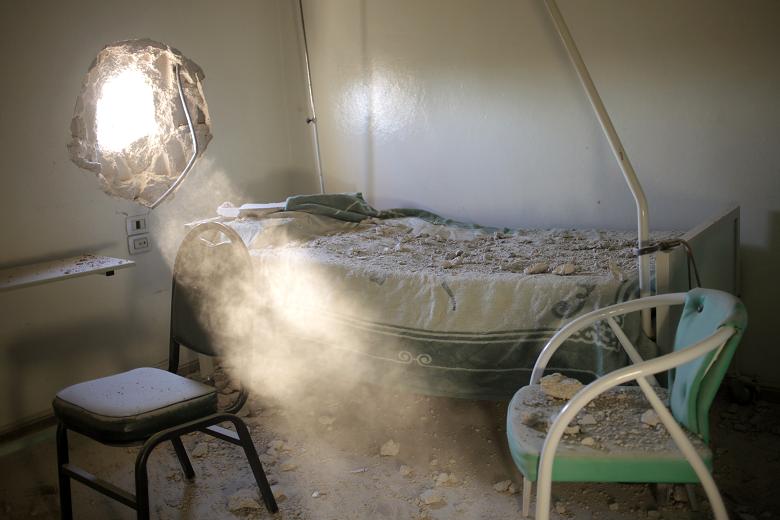
As in so many other contemporary conflicts – Iraq, Libya, Syria – hospitals themselves had already become targets for military violence.  For eleven days Al-Wafa Hospital in Shuja’iyeh in eastern Gaza City (see the map above), the only rehabilitation centre serving the occupied territories, was receiving phone calls from the IDF warning them that the building was about to be bombed.  [In case you’re impressed by the consideration, think about Paul Woodward‘s observation: ‘I grew up in Britain during the era when the Provisional IRA was conducting a bombing campaign in Northern Ireland and on the mainland. I don’t remember the Provos ever being praised for the fact that they would typically phone the police to issue a warning before their bombs detonated. No one ever dubbed them the most humane terrorist organization in the world.’] The staff refused to evacuate the hospital because their patients were paralysed or unconscious. The Executive Director, Dr Basman Alashi, explained:

‘We’ve been in this place since 1996. We are known to the Israeli government. We are known to the Israeli Health Center and Health Ministry. They have transferred several patients to our hospital for rehabilitations. And we have many success stories of people come for rehabilitation. They come crawling or in a wheelchair; they go out of the hospital walking, and they go back to Israel saying that al-Wafa has done miracle to them. So we are known to them, who we are, what we are. And we are not too far from their border. Our building is not too small. It’s big. It’s about 2,000 square meters. If I stand on the window, I can see the Israelis, and they can see me. So we are not hiding anything in the building. They can see me, and I can see them. And we’ve been here for the last 12 or 15 years, neighbors, next to each other. We have not done any harm to anybody, but we try to save life, to give life, to better life to either an Arab Palestinian or an Israeli Jew.’

el-Wafa.03

But just after 9 p.m. on 17 July shells started falling:

‘… the fourth floor, third floor, second floor. Smoke, fire, dust all over. We lost electricity… luckily, nobody got hurt. Only burning building, smoke inside, dust, ceiling falling, wall broke, electricity cutoff, water is leaking everywhere. So, the hospital became [uninhabitable].’

Seventeen patients were evacuated and transferred to the Sahaba Medical Complex in Gaza City. Sharif Abdel Kouddos takes up the story:

‘The electricity went out, all the windows shattered, the hospital was full of dust, we couldn’t see anything,’ says Aya Abdan, a 16-year-old patient at the hospital who is paraplegic and has cancer in her spinal cord. She is one of the few who can speak.

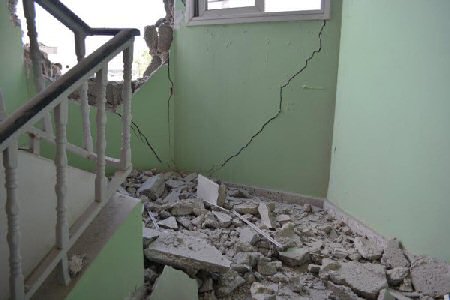
It is, of course, literally unspeakable.  But this was not an isolated incident – still less ‘a mistake’ – and other hospitals have been bombed or shelled.  According to the Ministry of Health, 25 health facilities in Gaza have been partially or totally destroyed. Just this morning it was reported that Israeli tanks shelled the al-Aqsa Hospital in Deir al-Balah in central Gaza, killing five and injuring 70 staff and patients. The Guardian reports that ambulances which tried to evacuate patients were forced to turn back by continued shelling.  According to Peter Beaumont:

‘”People can’t believe this is happening – that a medical hospital was shelled without the briefest warning. It was already full with patients,” said Fikr Shalltoot, director of programmes at Medical Aid for Palestinians in Gaza city.’

mads-gilbert-at-al-shifa-hospital

The hospitals that remain in operation are overwhelmed, with doctors making heart-wrenching decisions about who to treat and who to send away, refusing ‘moderately injured patients they normally would have admitted in order to make room for the more seriously wounded.’  Mads Gilbert (centre in the image above) again:

Oh NO! not one more load of tens of maimed and bleeding, we still have lakes of blood on the floor in the ER, piles of dripping, blood-soaked bandages to clear out – oh – the cleaners, everywhere, swiftly shovelling the blood and discarded tissues, hair, clothes,cannulas – the leftovers from death – all taken away…to be prepared again, to be repeated all over. More then 100 cases came to Shifa last 24 hrs. enough for a large well trained hospital with everything, but here – almost nothing: electricity, water, disposables, drugs, OR-tables, instruments, monitors – all rusted and  as if taken from museums of yesterdays hospitals.

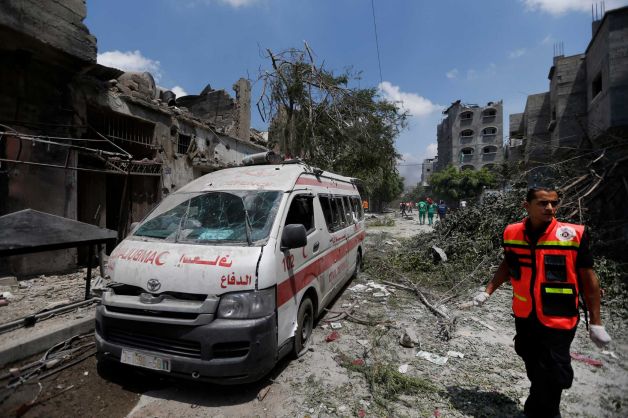
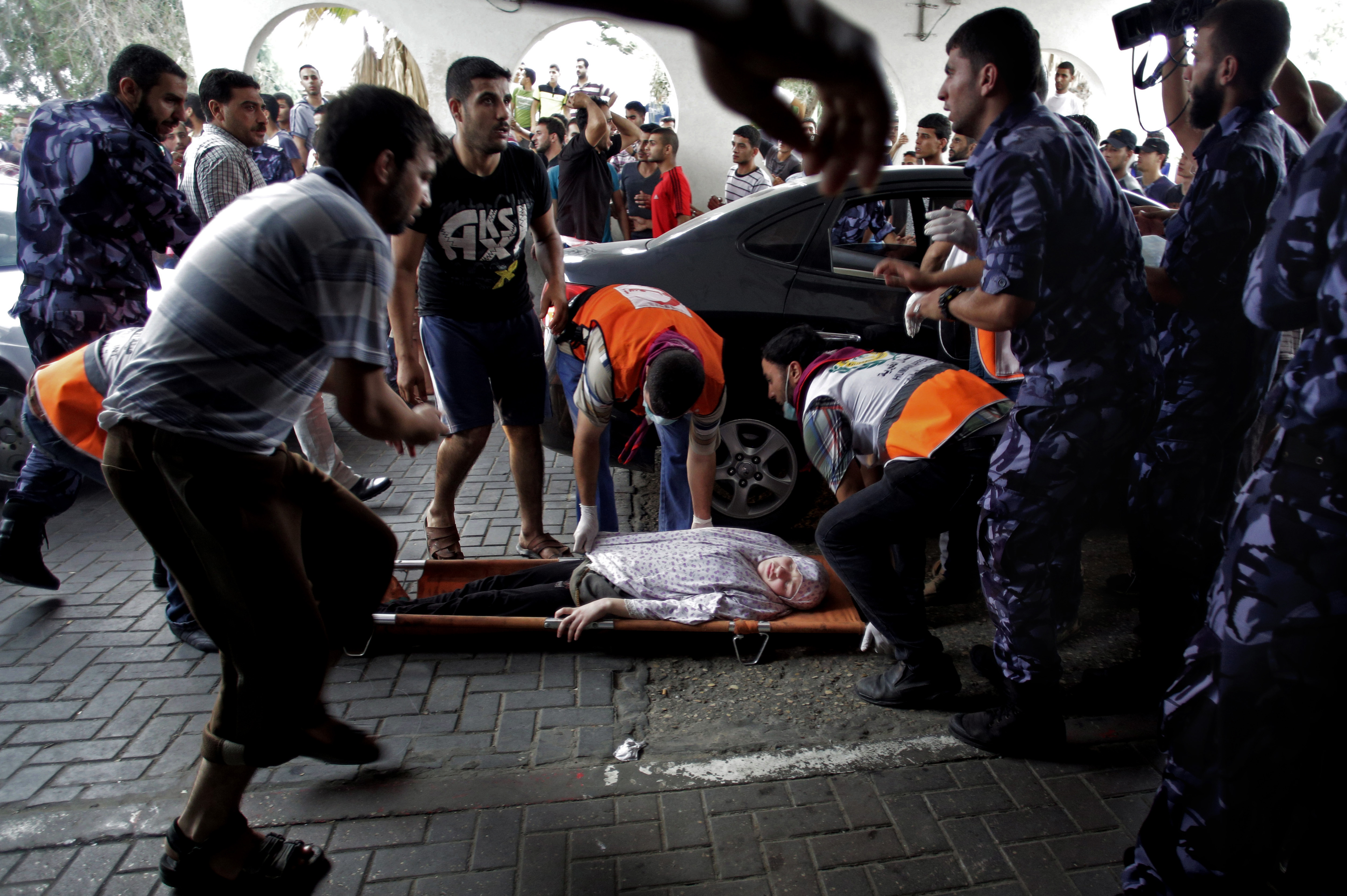
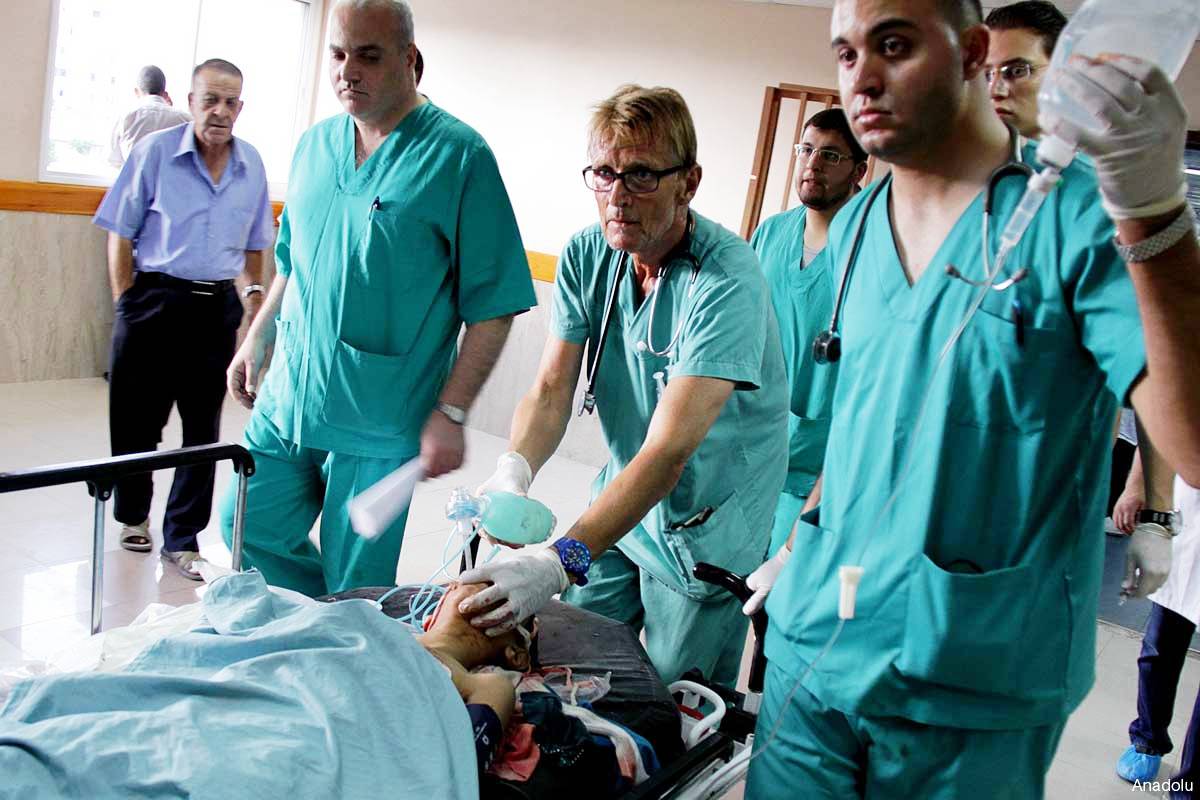
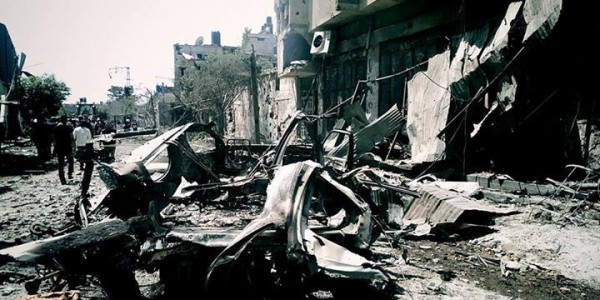
Al-Shifa, where he is working round the clock, has only 11 beds in its ER and just six Operating Rooms.  On Saturday night, when the Israeli army devastated the suburb of Shuja’ieyh, its ‘tank shells falling like hot raindrops‘, al-Shifa had to deal with more than 400 injured patients. Al-Shifa is Gaza’s main trauma centre but in other sense Gaza’s trauma is not ‘centred’ at all but is everywhere within its iron walls.  Commentators repeatedly describe Gaza as the world’s largest open-air prison – though, given the cruelly calculated deprivation of the means of normal life, concentration camp would be more accurate – but it is also one where the guards routinely kill, wound and hurt the prisoners. The medical geography I’ve sketched here is another way of reading Israel’s bloody ‘map of pain‘. I am sickened by the endless calls for ‘balance’, for ‘both sides’ to do x and y and z, as though this is something other than a desperately unequal struggle: as though every day, month and year the Palestinians have not been losing their land, their lives and their liberties to a brutal, calculating and manipulative occupier.  I started this post with an image of a Palestinian ambulance; the photograph below was taken in Shuja’ieyh at the weekend.  It too is an image of a Palestinian ambulance.
Shujaiyeh.01
For updates see here; I fear there will be more to come. In addition to the links in the post above, this short post is also relevant (I’ve received an e-mail asking me if I realised what the initial letters spelled…. Duh.)

Writing the wounds of war

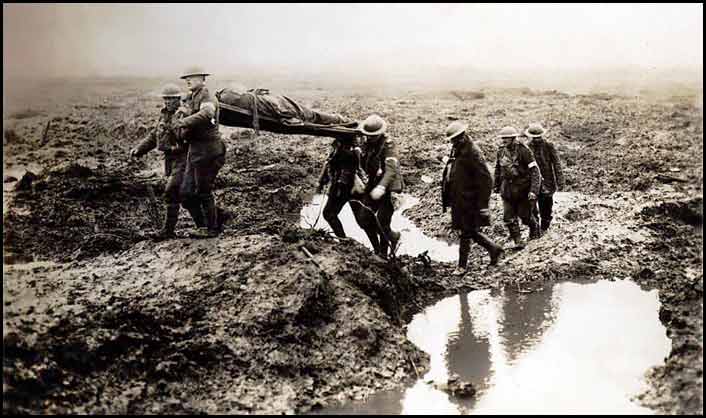
ramc-ypres-1915

Apart from trying to keep up with developments in Syria and Iraq – on which more shortly – I’ve also been continuing my reading on medical care on the Western Front.  I’ve now finished The Backwash of War, and what a bleak little book it is.  There’s very little about medical care – largely because in many respects there seems to have been very little of it in Ellen La Motte‘s field hospital – and much of the discussion is a deeply disturbing account of the cynicism of military violence: the generals who visit only to pin medals on the blankets of the dying, the contempt between medical orderlies and patients (who have no time for those who are not serving on the front lines), and the seemingly endless, agonising deaths of patients.  But that was precisely what gave the author her title:

The sketches were written in 1915 and 1916, when the writer was in a French military field hospital, a few miles behind the lines, in Belgium. War has been described as “months of boredom, punctuated by moments of intense fright.” During this time at the Front, the lines moved little, either forward or backward, but were deadlocked in one position. Undoubtedly, up and down the long reaching kilometers of “Front” there was action, and “moments of intense fright” which produced fine deeds of valor, courage and nobility. But where there is little or no action there is a stagnant place, and in that stagnant place is much ugliness. Much ugliness is churned up in the wake of mighty, moving forces, and this is the backwash of war. Many little lives foam up in this backwash, loosened by the sweeping current, and detached from their environment. One catches a glimpse of them—often weak, hideous or repellent. There can be no war without this backwash.

In some part, perhaps, La Motte’s account reflects differences between British and French medical provision.  Lyn Macdonald‘s The roses of no man’s land (which contains all sorts of insights into the geographies of medical evacuation and provision en passant) suggests that ‘Lying wounded on the battlefield [at Verdun] a French soldier was as good as dead, for there was little chance of his being brought in, and if he had the good luck to be rescued and taken to a hospital there was only one chance in three that he would leave it alive.’   By the end of the war, she continues, of France’s 1,300,000 war dead more than 400,000 had died of their wounds: ‘a proportion that was larger by far than those of any other nation and was due in considerable measure to the makeshift conditions and lack of skilled care in all but a few of the hospitals.’

The politics of wounds

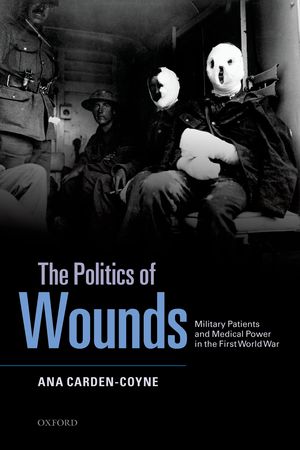
This isn’t to romanticise the experience of those wounded in other armies, of course, but it adds another dimension to what Ana Carden-Coyne calls ‘the politics of wounds’.   Her new book, due out in the fall, The politics of wounds: military patients and medical power in the First World War (Oxford University Press), is high on my reading list for my new research project:

The Politics of Wounds explores military patients’ experiences of frontline medical evacuation, war surgery, and the social world of military hospitals during the First World War. The proximity of the front and the colossal numbers of wounded created greater public awareness of the impact of the war than had been seen in previous conflicts, with serious political consequences.

Frequently referred to as ‘our wounded’, the central place of the soldier in society, as a symbol of the war’s shifting meaning, drew contradictory responses of compassion, heroism, and censure. Wounds also stirred romantic and sexual responses. This volume reveals the paradoxical situation of the increasing political demand levied on citizen soldiers concurrent with the rise in medical humanitarianism and war-related charitable voluntarism. The physical gestures and poignant sounds of the suffering men reached across the classes, giving rise to convictions about patient rights, which at times conflicted with the military’s pragmatism. Why, then, did patients represent military medicine, doctors and nurses in a negative light? The Politics of Wounds listens to the voices of wounded soldiers, placing their personal experience of pain within the social, cultural, and political contexts of military medical institutions. The author reveals how the wounded and disabled found culturally creative ways to express their pain, negotiate power relations, manage systemic tensions, and enact forms of ‘soft resistance’ against the societal and military expectations of masculinity when confronted by men in pain. The volume concludes by considering the way the state ascribed social and economic values on the body parts of disabled soldiers though the pension system.

But all this is about military patients: what of civilians who are wounded or become ill in war zones?  The BackWash of War provides one vignette that is worth reporting in full.  It’s titled ‘The Belgian Civilian’:

‘A big English ambulance drove along the high road from Ypres, going in the direction of a French field hospital, some ten miles from Ypres. Ordinarily, it could have had no business with this French hospital, since all English wounded are conveyed back to their own bases, therefore an exceptional case must have determined its route. It was an exceptional case—for the patient lying quietly within its yawning body, sheltered by its brown canvas wings, was not an English soldier, but only a small Belgian boy, a civilian, and Belgian civilians belong neither to the French nor English services. It is true that there was a hospital for Belgian civilians at the English base at Hazebrouck, and it would have seemed reasonable to have taken the patient there, but it was more reasonable to dump him at this French hospital, which was nearer. Not from any humanitarian motives, but just to get rid of him the sooner. In war, civilians are cheap things at best, and an immature civilian, Belgian at that, is very cheap. So the heavy English ambulance churned its way up a muddy hill, mashed through much mud at the entrance gates of the hospital, and crunched to a halt on the cinders before the Salle d’Attente, where it discharged its burden and drove off again.

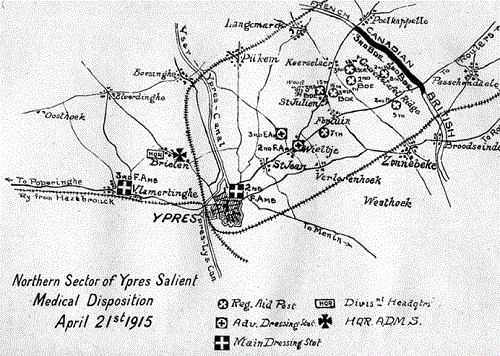
Medical Provision, Ypres, 1915

‘The surgeon of the French hospital said: “What have we to do with this?” yet he regarded the patient thoughtfully. It was a very small patient. Moreover, the big English ambulance had driven off again, so there was no appeal. The small patient had been deposited upon one of the beds in the Salle d’Attente, and the French surgeon looked at him and wondered what he should do. The patient, now that he was here, belonged as much to the French field hospital as to any other, and as the big English ambulance from Ypres had driven off again, there was not much use in protesting….

‘A Belgian civilian, aged ten. Or thereabouts. Shot through the abdomen, or thereabouts. And dying, obviously. As usual, the surgeon pulled and twisted the long, black hairs on his hairy, bare arms, while he considered what he should do. He considered for five minutes, and then ordered the child to the operating room, and scrubbed and scrubbed his hands and his hairy arms, preparatory to a major operation. For the Belgian civilian, aged ten, had been shot through the abdomen by a German shell, or piece of shell, and there was nothing to do but try to remove it. It was a hopeless case, anyhow. The child would die without an operation, or he would die during the operation, or he would die after the operation….

‘After a most searching operation, the Belgian civilian was sent over to the ward, to live or die as circumstances determined. As soon as he came out of ether, he began to bawl for his mother. Being ten years of age, he was unreasonable, and bawled for her incessantly and could not be pacified. The patients were greatly annoyed by this disturbance, and there was indignation that the welfare and comfort of useful soldiers should be interfered with by the whims of a futile and useless civilian, a Belgian child at that. The nurse of that ward also made a fool of herself over this civilian, giving him far more attention than she had ever bestowed upon a soldier. She was sentimental, and his little age appealed to her—her sense of proportion and standard of values were all wrong. The Directrice appeared in the ward and tried to comfort the civilian, to still his howls, and then, after an hour of vain effort, she decided that his mother must be sent for. He was obviously dying, and it was necessary to send for his mother, whom alone of all the world he seemed to need. So a French ambulance, which had nothing to do with Belgian civilians, nor with Ypres, was sent over to Ypres late in the evening to fetch this mother for whom the Belgian civilian, aged ten, bawled so persistently.

‘She arrived finally, and, it appeared, reluctantly. About ten o’clock in the evening she arrived, and the moment she alighted from the big ambulance sent to fetch her, she began complaining. She had complained all the way over, said the chauffeur…. She had been dragged away from her husband, from her other children, and she seemed to have little interest in her son, the Belgian civilian, said to be dying. However, now that she was here, now that she had come all this way, she would go in to see him for a moment, since the Directrice seemed to think it so important….

‘She saw her son, and kissed him, and then asked to be sent back to Ypres. The Directrice explained that the child would not live through the night. The Belgian mother accepted this statement, but again asked to be sent back to Ypres. The Directrice again assured the Belgian mother that her son would not live through the night, and asked her to spend the night with him in the ward, to assist at his passing. The Belgian woman protested.

“If Madame la Directrice commands, if she insists, then I must assuredly obey. I have come all this distance because she commanded me, and if she insists that I spend the night at this place, then I must do so. Only if she does not insist, then I prefer to return to my home, to my other children at Ypres.”

‘However, the Directrice, who had a strong sense of a mother’s duty to the dying, commanded and insisted, and the Belgian woman gave way. She sat by her son all night, listening to his ravings and bawlings, and was with him when he died, at three o’clock in the morning. After which time, she requested to be taken back to Ypres. She was moved by the death of her son, but her duty lay at home. Madame la Directrice had promised to have a mass said at the burial of the child, which promise having been given, the woman saw no necessity for remaining.

“My husband,” she explained, “has a little estaminet, just outside of Ypres. We have been very fortunate. Only yesterday, of all the long days of the war, of the many days of bombardment, did a shell fall into our kitchen, wounding our son, as you have seen. But we have other children to consider, to provide for. And my husband is making much money at present, selling drink to the English soldiers. I must return to assist him.”

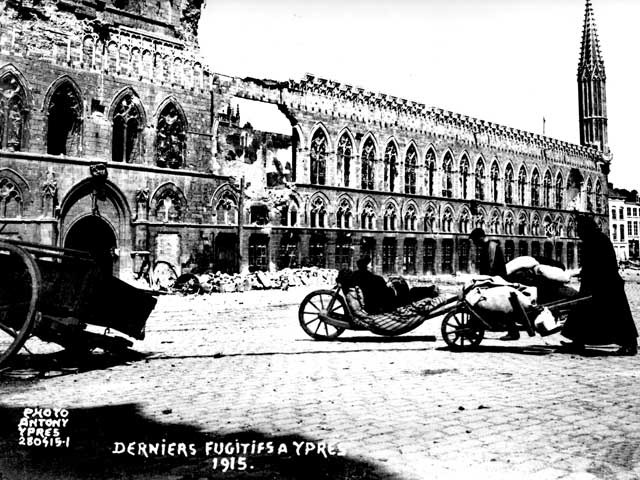
YPRES 1915

‘So the Belgian civilian was buried in the cemetery of the French soldiers, but many hours before this took place, the mother of the civilian had departed for Ypres. The chauffeur of the ambulance which was to convey her back to Ypres turned very white when given his orders. Everyone dreaded Ypres, and the dangers of Ypres. It was the place of death. Only the Belgian woman, whose husband kept an estaminet, and made much money selling drink to the English soldiers, did not dread it. She and her husband were making much money out of the war, money which would give their children a start in life. When the ambulance was ready she climbed into it with alacrity, although with a feeling of gratitude because the Directrice had promised a mass for her dead child.

“These Belgians!” said a French soldier. “How prosperous they will be after the war! How much money they will make from the Americans, and from the others.”‘

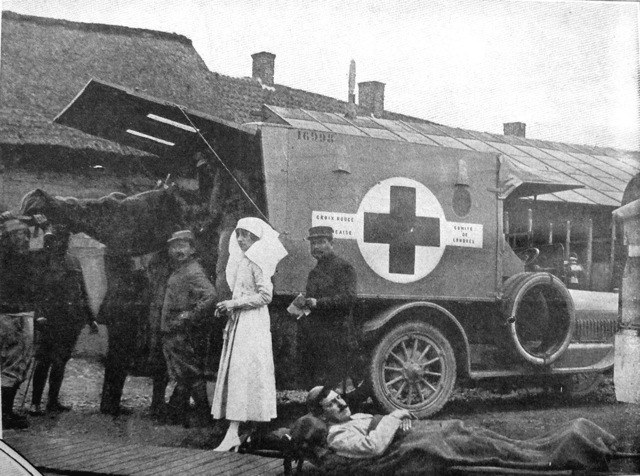
It would obviously be absurd to generalise from one vignette, but there’s clearly a different politics at work in this narrative,  and a complex set of political geographies too.  For a careful reading of La Motte’s account, in parallel with Mary Borden‘s The forbidden zone, you could do no better than Margaret Higonnet‘s introduction to her Nurses at the front: writing the wounds of the great war.  I’ve now started on a series of accounts about the work of field ambulances, and one which resonates with the events described in La Motte’s vignette is William Boyd‘s letters from 7 March to 15 August 1915 published as With a field ambulance at Ypres (1916), which you can download free here.

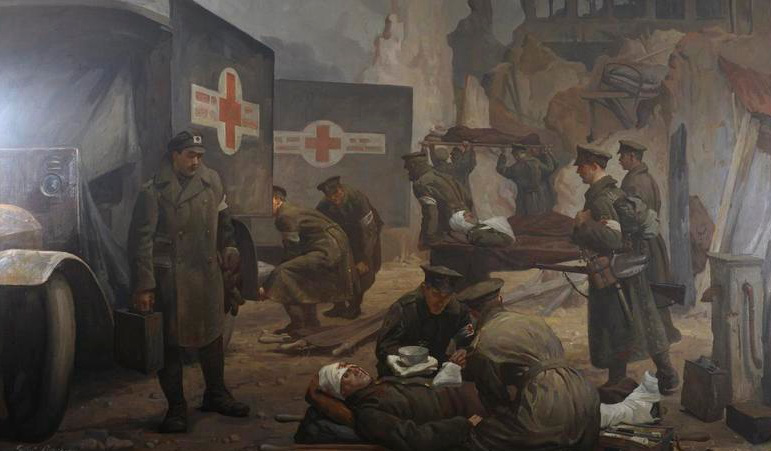
But all this – important – talk about writing the wounds of war should not blind us (me) to the role of visualising the wounds of war, and to the work done by artfully composed (and surely sanitised) images like the one that heads this post…

Behind the lines

I’m sorry for the long silence – I’ve been in the UK, giving a new presentation on the Uruzgan air strike of February 2010, and learning much en route in Lancaster, Lincoln and Bristol.  I’ll try to post extracts from the (developing) presentation in the next several weeks as I think about turning it into an essay, but I’ll still be on the road – or, more accurately, on vacation, so things will be irregular for some time to come.  I expect regular postings to resume in early July, when I’ll be back in Vancouver.

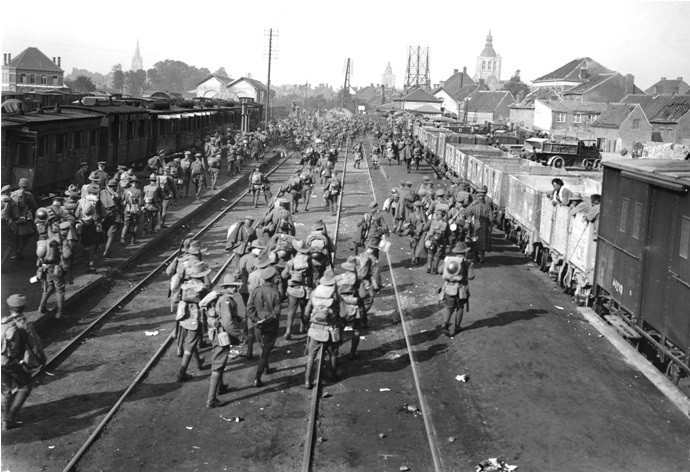
POPERINGE railhead

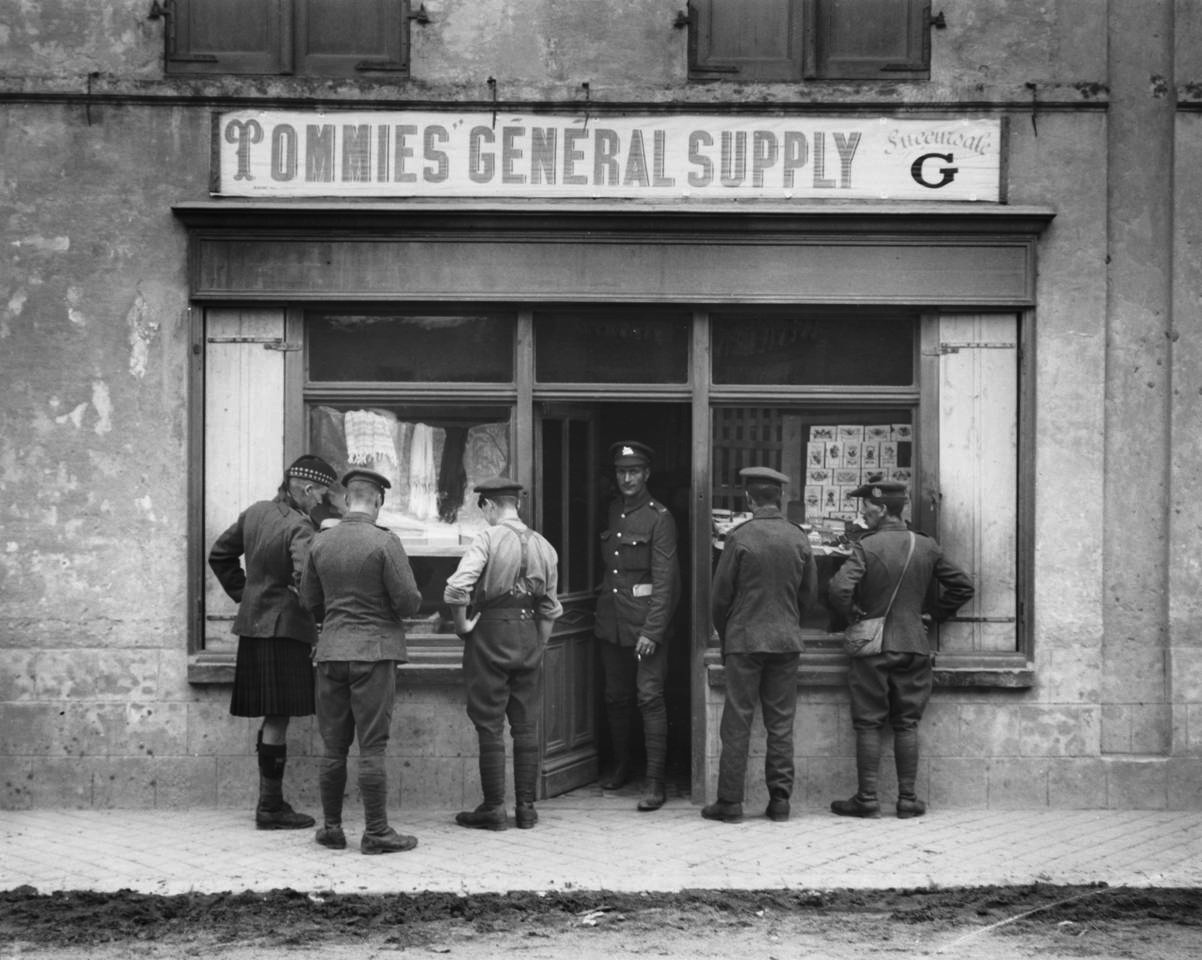
I’ve also spent several days in Flanders, visiting some of the major sites associated with the First World War.  We based ourselves in Poperinge, which was sufficiently far from the devastated and levelled town of Ypres to serve as a major staging post for munitions, supplies and men arriving at its station [see the image above], and for casualties being shipped back to the coast or to Britain (a slower and much more difficult journey).  It was also the place (known to the British as “Pop”, supposedly the Paris of the Front, at least around Ypres) where soldiers on leave from the Ypres Salient went to have as good a time as possible, in the shops, bars, restaurants and brothels.

Poperinge Tommy Supply

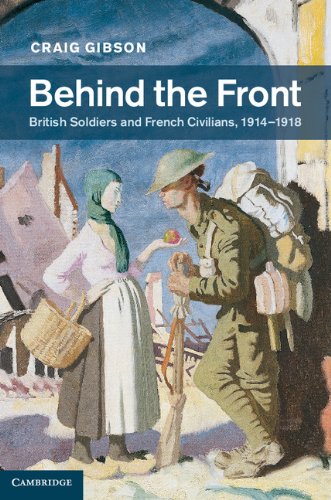
All of this has made me start to explore even more closely the military-civilian interactions behind the lines.  There’s surprisingly little work on this, but waiting for me at home is a new book by Craig Gibson, Behind the Front: British soldiers and French civilians 1914-1918 (Cambridge University Press, 2014), which despite the subtitle appears to include the war in Flanders too:

Until now scholars have looked for the source of the indomitable Tommy morale on the Western Front in innate British bloody-mindedness and irony, not to mention material concerns such as leave, food, rum, brothels, regimental pride, and male bonding. However, re-examining previously used sources alongside never-before consulted archives, Craig Gibson shifts the focus away from battle and the trenches to times behind the front, where the British intermingled with a vast population of allied civilians, whom Lord Kitchener had instructed the troops to ‘avoid’. Besides providing a comprehensive examination of soldiers’ encounters with local French and Belgian inhabitants which were not only unavoidable but also challenging, symbiotic and uplifting in equal measure, Gibson contends that such relationships were crucial to how the war was fought on the Western Front and, ultimately, to British victory in 1918. What emerges is a novel interpretation of the British and Dominion soldier at war.

GIBSON Behind the FrontThe Contents List is topical and – to my regret – doesn’t seem to include anything on the overlapping and sometimes confounding geographies of military and civilian medical care, but it still looks like an excellent survey:

Part I. Mobile Warfare, 1914:
1. The first campaign
Part II. Trench Warfare, 1914–1917:
2. Land
3. Administration
4. Billet
5. Communication
6. Friction
7. Farms
8. Damages
9. Money
10. Discipline
11. Sex
Part III. Mobile Warfare, 1918:
12. The final campaign

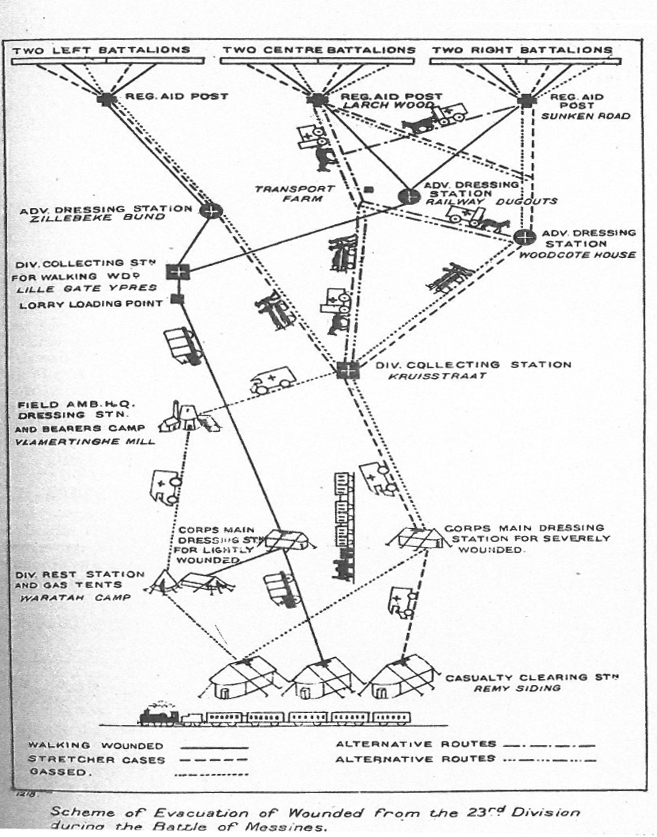
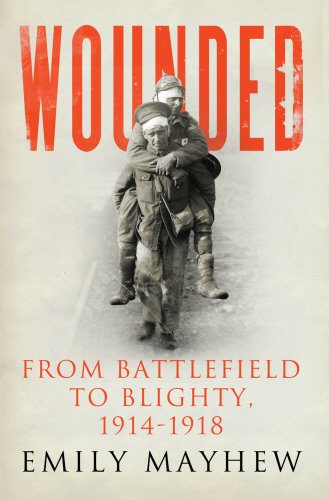
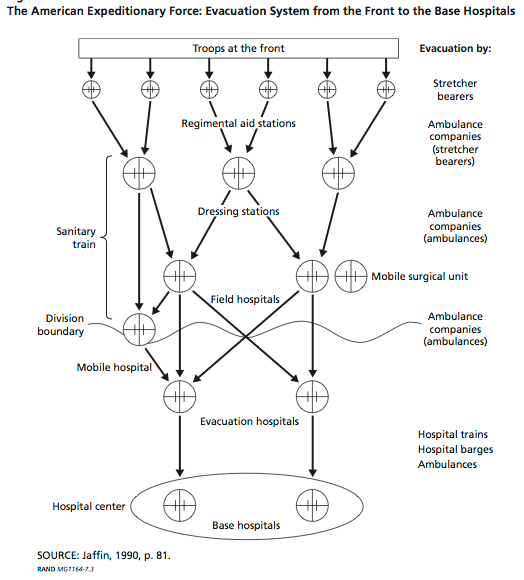
And while I’m on the subject of medical-military machines, Britain’s Arts & Humanities Research Council has a new website, Beyond the Trenches, which is devoted to recent research on the First World War.  One of its opening (short) essays is by Jessica Meyer on The long trip home: medical evacuations from the Front, which coincides with the first phase of my new research project.  It’s a skeletal account of the casualty chain, or rather chains, and doesn’t flesh out these precarious journeys like Emily Mayhew‘s marvellous social history, Wounded: from battlefield to Blighty, 1914-1918 (see here).  But it’s an interesting introduction to some of the logistical issues.

Diagram-of-evacuation-plan-Messine

The essay has been prompted by a new BBC drama series, The Crimson Field, set in a British field hospital, which in its turn was apparently inspired by Ellen Newbold La Motte‘s first-hand account of a French field hospital, The backwash of war: The Human Wreckage of the Battlefield as Witnessed by an American Hospital Nurse (1916).  This is now sitting on my Kindle (and you can also download it free from Project Gutenberg here): its ‘warts-and-all’ portrayal was so vivid that it was banned by the American government when the United States entered the war in 1917.  La Motte worked under Mary Borden, incidentally, who recorded her own experiences in The forbidden zone (more on the two women here, you can read the book here, and there is a helpful essay by Ariela Freedman, ‘Mary Borden’s Forbidden Zone: women’s writing from No Man’s Land’ in Modernism/modernity 9 (1) (2002) 109-124).

unloading-the-wounded-mary-borden

The book is organised in 14 vignettes, which were published regularly in the Atlantic Monthly, and at one point La Motte includes this observation:

“These Belgians!” said a French soldier. “How prosperous they will be after the war! How much money they will make from the Americans, and from the others who come to see the ruins!”

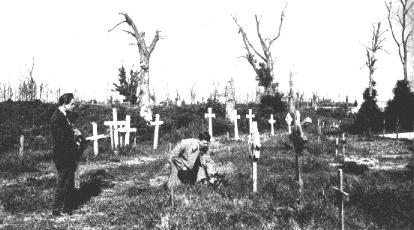
Having just returned from doing just that, I have to say that I saw remarkably few signs of crass commercialisation or opportunism: I was struck again and again by the dignified way in which the hideous events of those years have been recovered and commemorated.  There was refreshingly little jingoism too: just a quiet sense of the enormity of it all. One of the most poignant exhibits I saw was a photograph of families visiting the war graves shortly after the Armistice, trying to find the site where a husband, a brother or a son was buried or, failing that, the place where he had been killed (since the graves of countless thousands were unknown).  By then, the graves were being systematised and the cemeteries organised (see here), but the surroundings were still hauntingly raw: there had been no time for the ravaged landscape to recover, the blasted stumps to be torn out, and the trenches to be ploughed over.  It was sobering to imagine families, already burdened with grief, seeing for themselves a landscape which must have revealed, at least in part, something of the horror of the war that had been for so long hidden from them.

lillegatecem

Remote operations

I’ve noted on several occasions the multiple ways in which later modern war invokes medical metaphors to legitimise military violence (notably ‘surgical strikes’ against the ‘cancer’ of insurgency), and my preliminary work on medical-military machines has revealed all sorts of feedbacks between (in particular) trauma care by advanced militaries in war zones and trauma care by civilian agencies at home.

robotic_surgery_chb15401

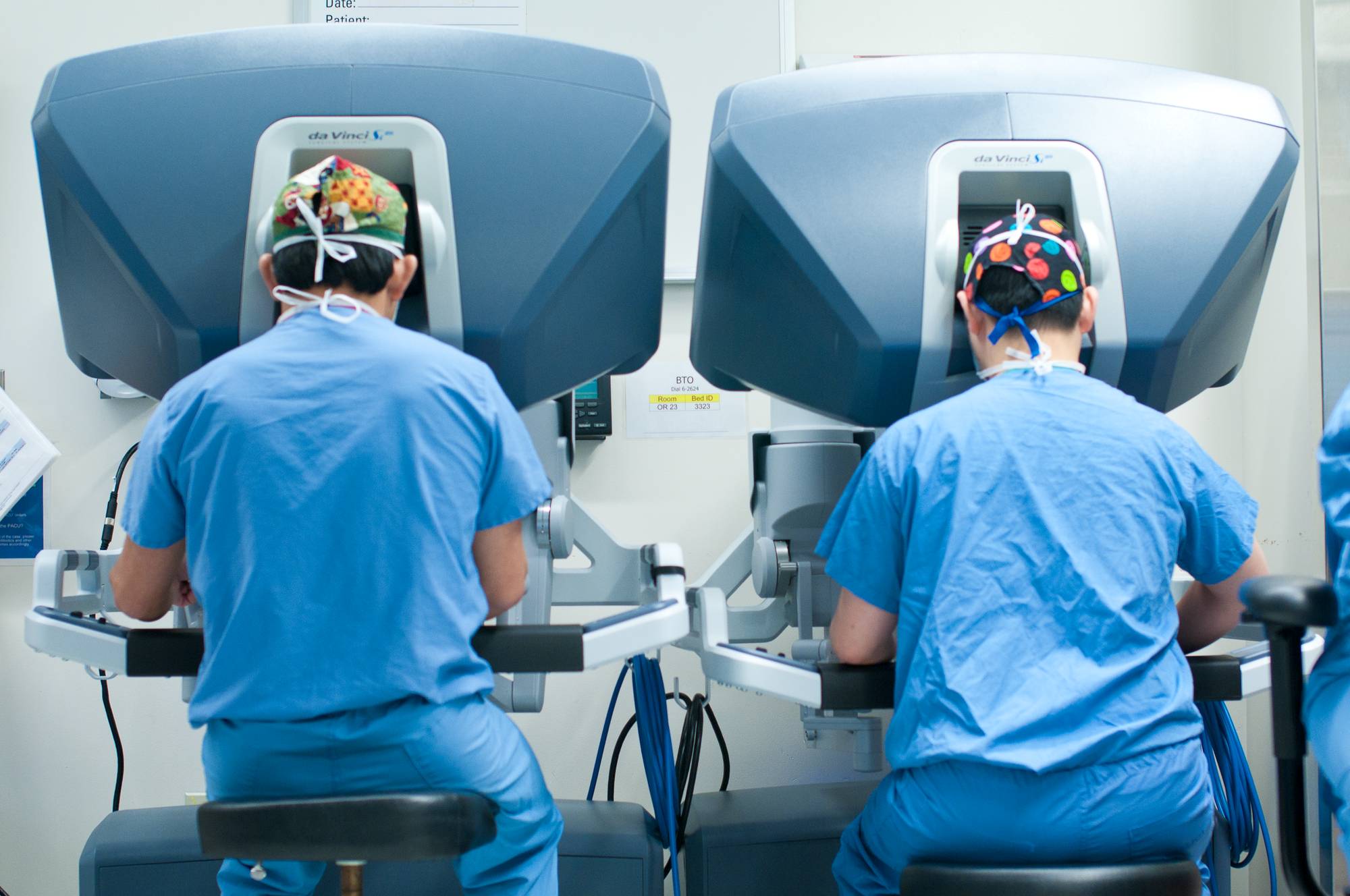
But these two paths have now intersected: in a paper on ‘Automated killing and mediated caringKathrin Friedrich and Moritz Queisner draw on studies of remote platforms and visual technologies – including my own – to discuss the automated killing of tumour cells using the CyberKnife system and what they call the the techno-medical ‘kill-chain’ that mediates between physician and patient.  They write:

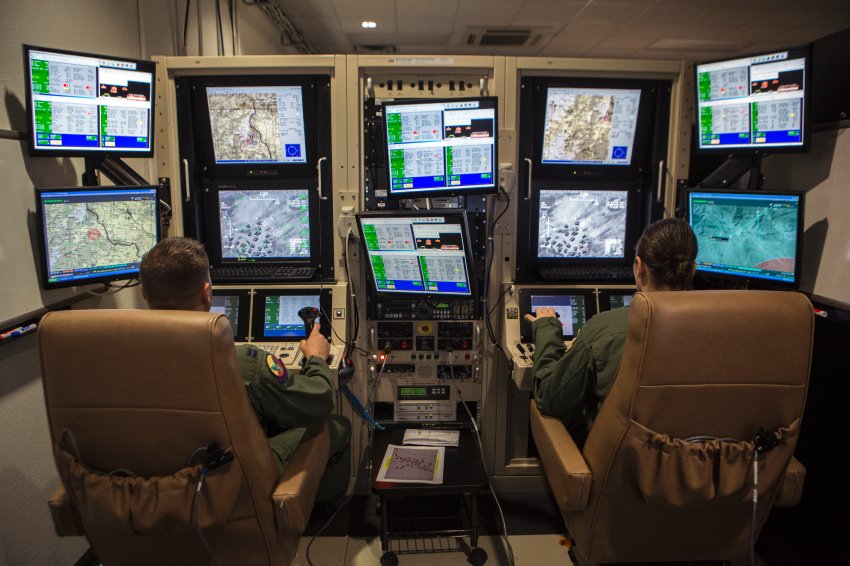
Gregory uses the term kill-chain to characterize the setting of military interventions by unmanned aerial systems as “a dispersed and distributed apparatus, a congerie of actors, objects, practices, discourses and affects, that entrains the people who are made part of it and constitutes them as particular kinds of subjects.” Image-guided interventions in medical contexts share similar structural features and are also characterized by tying together a heterogeneity of practices, actors, discourses and expertise in order to achieve a precisely defined goal but without obviously stating their inner relations and micro politics.

drone-pilots

Their central question, appropriately re-phrased, can also be asked of today’s remote operations in theatres of war (and beyond):

The fact that medical robots increasingly determine medical therapy and often provide the only form of access to the operation area requires us to conceptualize them as care agents rather than to merely conceive of them as passive tools. But if the physician’s action is based on confidence in and cooperation with the robot, what kind of operative knowledge does this kind of agency require and how does it change the modalities of medical intervention?

They conclude:

… since surgical intervention has become a computer-mediated practice that inscribes the surgeon into a complex setting of medical care agents, it is no longer the patient’s body but the image of the body that is the central reference for the surgeon.

As the operator of robot-guided intervention the physician accordingly needs to address and cope with the specific agency of the machine. In addition the visual interfaces need to communicate and convert their technological complexity to humanly amendable surfaces.

I recommend reading these arguments and transpositions alongside Colleen Bell‘s  ‘War and the allegory of military intervention: why metaphors matter’, International political sociology 6 (3) (2012) 325-28 and ‘Hybrid war and its metaphors’, Humanity 3 (2) (2012) and Lucy Suchman‘s ‘Situational awareness: deadly bioconvergence at the boundaries of bodies and machines’ (forthcoming at Mediatropes)…

There is yet another dimension to all this.  The U.S. Army has been at the forefront of telemedicine for decades – for a recent report on ‘4G telemedicine’ see here – but since at least 2005 the Army has also been experimenting with ‘telesurgery’ or ‘remote surgery’ in which a UAV platform mediates between the surgeon and the site of patient treatment: a different version of remote operations.  You can find early reports here, here and here (‘Doc at a distance’) and a more general account of ‘Extreme Telesurgery’ here.  Still more generally, there’s a wide-ranging review of US Department of Defense research into Robotic Unmanned Systems for Combat Casualty Care here.

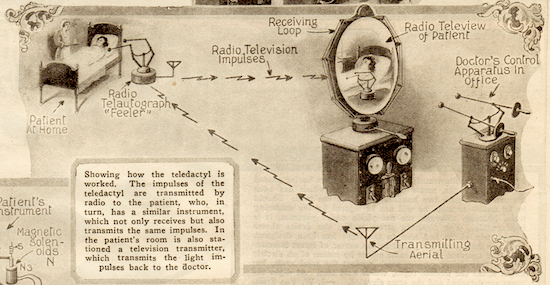
If this is all too futuristic – even ‘remote’ – to you, then check out the Teledactyl shown in the image below, which was originally published in 1925.  Although there’s not a drone in sight, the seer was the amazing Hugo Gernsback, who also conjured up the radio-controlled television plane

1925-Feb-science-and-invention-howto


Casualties of war

As most readers will know, there has been a lively debate – at once profoundly philosophical and intensely practical – about what counts as a ‘grievable’ (and indeed survivable) life after military and paramilitary violence, and on the calculus of war-time casualties.

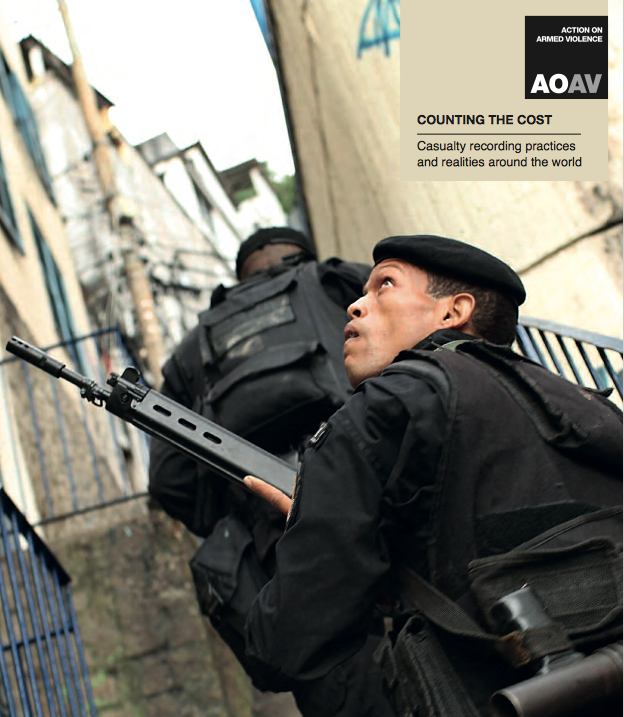
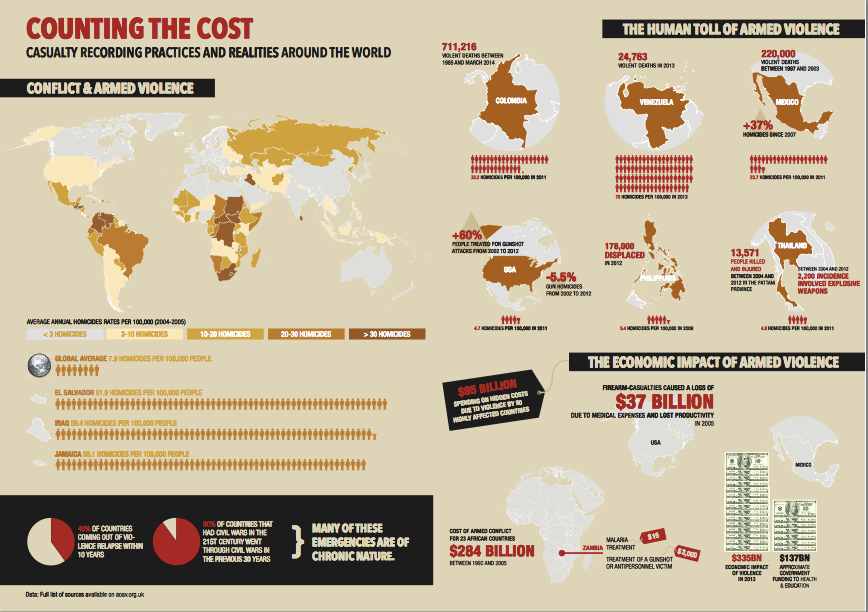
Two reports released yesterday conclude that recording and analysing data on the casualties of conflict and armed violence (both those killed and those who survive their wounds) can improve the protection of civilians and save lives.  The first, by Action on Armed Violence, is called Counting the Cost and surveys ‘casualty recording practices and realities around the world’:

Counting the costThe AOAV report shows that transparent and comprehensive information on deaths and injuries can protect civilians and save lives. The numbers of casualties have always been a contentious issue, generally dominated by secretive counting criteria, and public numbers that have been dictated more by political agendas than evidence. In other cases, the arguments have been dictated simply by the use of different estimating techniques. An example in this sense has been the debate on the total number of people that were killed during the Iraq War between Iraq Body Count and a survey published in the Lancet medical journal. The Lancet estimated over 650,000 deaths due to the war, more than 10 times the number of deaths estimated by the Iraq Body Count for the same period. A series of articles arguing for one or the other have highlighted how different systems to estimate number of deaths can lead to very different end results.
What the AOAV new report confirms is that when transparency both in the numbers produced as well as the techniques used to record them are clear and public, the debates around these numbers can be overcome. For Serena Olgiati, report co-author, “transparency makes it clear that this data is not a political weapon used to accuse opponents, but rather a practical tool that allows states to recognise the rights of the victims of violence.”

I have a more reserved view about a ‘transparent’ space somehow empty of politics – and we all know what the first casualty of war is – but the report is more artful than the press release suggests: it begins by invoking Walter Benjamin on Klee’s Angel of History:

“There is a painting by Klee called Angelus Novus. It shows an angel who seems about to move away from something he stares at. His eyes are wide, his mouth is open, his wings are spread. This is how the angel of history must look. His face is turned toward the past. Where a chain of events appears before us, he sees on single catastrophe, which keeps piling wreckage upon wreckage and hurls it at his feet. The angel would like to stay, awaken the dead, and make whole what has been smashed. But a storm is blowing from Paradise and has got caught in his wings; it is so strong that the angel can no longer close them. This storm drives him irresistibly into the future to which his back is turned, while the pile of debris before him grows toward the sky. What we call progress is this storm1.

The philosopher Walter Benjamin wrote these words in 1940 as he saw Europe engulf in flames. Within the year he had taken his own life on the French-Spanish border, the threat of deportation to a Jewish concentration camp seemingly too great for him to bear.

They are words that resonate as much today as they did then. Syria is engulfed in flames, Iraq descends back into the abyss and gun violence takes thousands of lives a week. The single catastrophe the Angelus Novus sees in the 21st century has to be the terrible harm caused by armed violence, a harm estimated to take over half a million lives a year.

Seeing this harm in its entirety is a gruelling task. Recording the true toll of armed violence reveals hard truths: it tells of underlying prejudices, of racism, of sexism: humanity’s ugliness. But only by turning behind us and calculating how many people have died and have been injured in a conflict, in a slum area, in a city in the grip of violence, can we ever begin to address the impact that armed violence has.

The report provided an analytical overview and a series of case studies (Colombia, Thailand and the Phillipines).

Counting the Cost Infographic

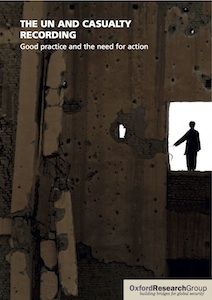
The second report is from the Oxford Research Group and is part of its Every Casualty program (see my post here).  In this report the ORG reviews the United Nations and Casualty Recording:

ORG-UN-and-CR Cover_1It concludes that when the UN systematically records the direct civilian casualties of violent conflict, and acts effectively on this information, this can help save civilian lives. However, casualty recording is not currently a widespread practice within the UN system.

The report recommends that the advancement of casualty-recording practice by the UN in conflict-affected countries should be pursued, as this would have clear benefits to the work of a range of UN entities, and so to the people that they serve.

This report looks at experiences of, and attitudes towards, casualty recording from the perspectives of UN staff based in New York and Geneva that we interviewed. It includes a case study of UN civilian casualty recording by the UN Assistance Mission in Afghanistan’s Human Rights unit. Finally, the report discusses challenges to UN casualty recording, and how these might be met.

War and therapeutic geographies

Tall Rifat hospital near Aleppo attacked by helicopter gunships June 2012

I previously noted the problems of providing medical care to those fleeing the war in Syria – and to those who’ve been left behind – and an article by Thanassis Cambanis in the Boston Globe (‘Medical care is now a tool of war’) reinforces the importance of the issue:

 The medical students disappeared on a run to the Aleppo suburbs. It was 2011, the first year of the Syrian uprising, and they were taking bandages and medicine to communities that had rebelled against the brutal Assad regime. A few days later, the students’ bodies, bruised and broken, were dumped on their parents’ doorsteps.

Dr. Fouad M. Fouad, a surgeon and prominent figure in Syrian public health, knew some of the students who had been killed. And he knew what their deaths meant. The laws of war—in which medical personnel are allowed to treat everybody equally, combatants and civilians from any side—no longer applied in Syria.

“The message was clear: Even taking medicine to civilians in opposition areas was a crime,” he recalled.

As the war accelerated, Syria’s medical system was dragged further into the conflict. Government officials ordered Fouad and his colleagues to withhold treatment from people who supported the opposition, even if they weren’t combatants. The regime canceled polio vaccinations in opposition areas, allowing a preventable disease to take hold. And it wasn’t just the regime: Opposition fighters found doctors and their families a soft target for kidnapping; doctors always had some cash and tended not to have special protection like other wealthy Syrians.

Doctors began to flee Syria, Fouad among them. He left for Beirut in 2012. By last year, according to a United Nations working group, the number of doctors in Aleppo, Syria’s largest city, had plummeted from more than 5,000 to just 36.

Since then, Fouad has joined a small but growing group of doctors trying to persuade global policy makers—starting with the world’s public health community—to pay more urgent attention to how profoundly new types of war are transforming medicine and public health.

It is grotesquely ironic that ‘global policy-makers’ should have to be persuaded of the new linkages between war, medicine and public health, given how often later modern war is described (and, by implication, legitimated) through medical metaphors: see in particular Colleen Bell, ‘War and the allegory of medical intervention: why metaphors matter’, International Political Sociology 6: 3 (2012) 325-28 and ‘Hybrid warfare and its metaphors’, Humanity 3 (2) (2012) 225-47.

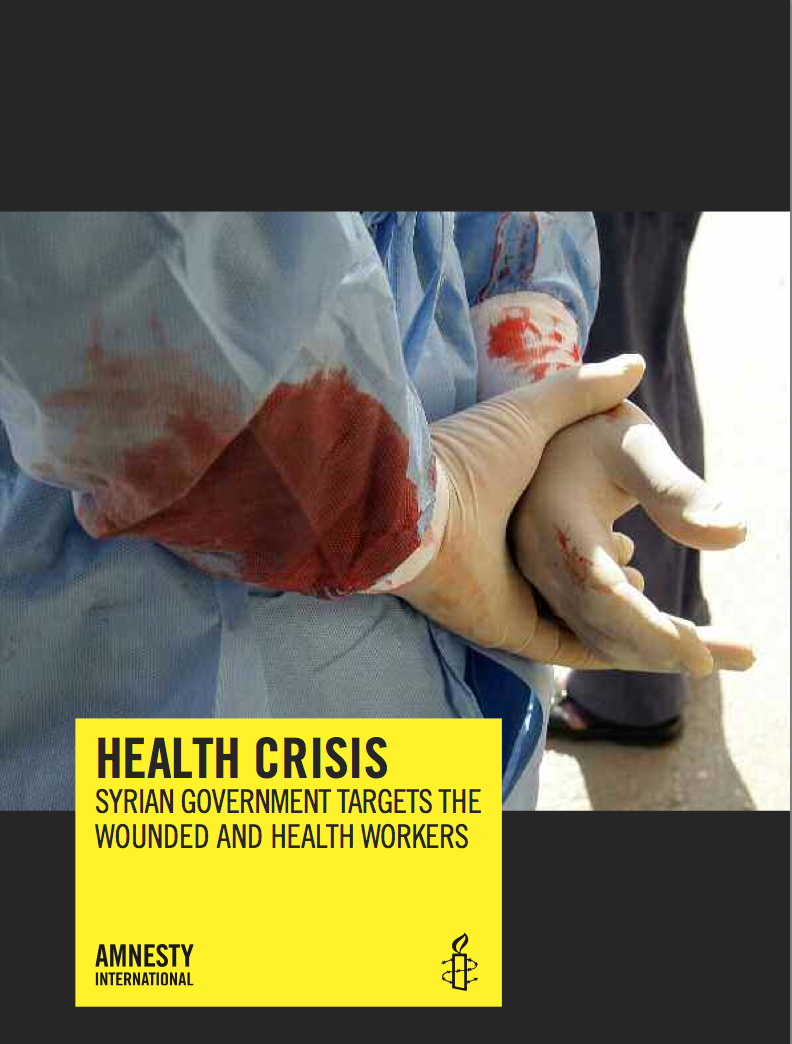
AI Health Crisis in SyriaBut there are, as Fouad emphasises, quite other, densely material biopolitics attached to contemporary military and paramilitary violence, including not only the targeting of medical staff, as he says, but also their patients.

“In Syria today, wounded patients and doctors are pursued and risk torture and arrest at the hands of the security services,” said Marie-Pierre Allié, president of [Médecins san Frontières’]. “Medicine is being used as a weapon of persecution.”

In October 2011 Amnesty International described the partisan abuse of the wounded in hospitals in Damascus and Homs, and the denial of medical care in detention facilities, in chilling detail.

At least then (and there) there were hospitals.  Linking only too directly to my previous post on Aleppo, Cambanis concludes:

Today, Fouad’s former home of Aleppo is largely a ghost town, its population displaced to safer parts of Syria or across the border to Turkey and Lebanon. The city’s former residents carry the medical consequences of war to their new homes, Fouad said—not just injuries, but effects as varied as smoking rates, untreated cancer, and scabies. Wars like those in Syria and Iraq don’t follow the old rules, and their effects don’t stop at the border.

I first became aware of these issues at a conference on War and medicine in Paris in December 2012, which prompted my current interest in the casualties of war, combatant and civilian, and the formation of modern medical-military machines.  Several friends from the Paris meeting (Omar Dewachi, Vinh-Kim Nguyen and  Ghassan Abu Sitta) have since joined with other colleagues to produce a preliminary review published this month in The Lancet: ‘Changing therapeutic geographies of the Iraqi and Syrian wars’.  They write:

War is a global health problem. The repercussions of war go beyond death, injury, and morbidity. The effects of war are long term, reshaping the everyday lives and survival of entire populations.

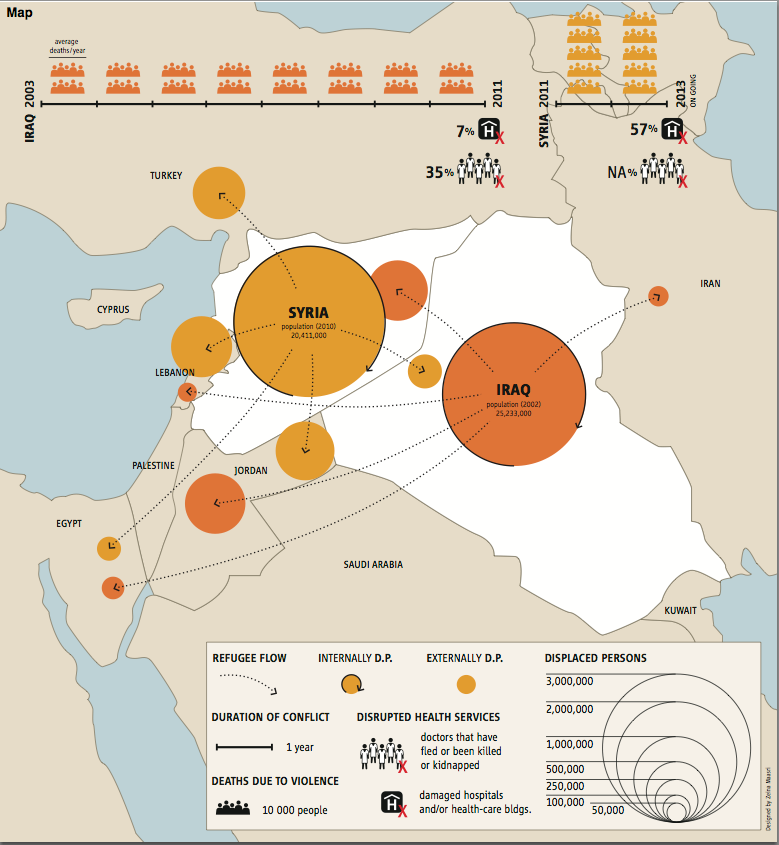
In this report,we assess the long-term and transnational dimensions of two conflicts: the US-led occupation of Iraq in 2003 and the ongoing armed conflict in Syria, which erupted in 2011. Our aim is to show that, although these conflicts differ in their geopolitical contexts and timelines, they share similarities in terms of the effects on health and health care. We analyse the implications of two intertwined processes—the militarisation and regionalisation of health care.  In both Syria and Iraq,boundaries between civilian and combatant spaces have been blurred. Consequently,hospitals and clinics are no longer safe havens. The targeting and misappropriation of health-care facilities have become part of the tactics of warfare. Simultaneously, the conflicts in Iraq and Syria have caused large-scale internal and external displacement of populations. This displacement has created huge challenges for neighbouring countries that are struggling to absorb the health-care needs of millions of people.

They emphasise ‘the targeting and implication of medicine in warfare’ and note that ‘the militarisation of health care follows the larger trends of the war on terror, where the boundaries between civilian and combatant spaces are broadly disrespected.’  They have in mind ‘not only the problem of violence against health care, but also [the ways in which] health care itself has become an instrument of violence, with health professionals participating (or being forced to participate) in torture, the withholding of care, or preferential treatment of soldiers.’

And they describe a largely unplanned dispersal of medical care across the region that blurs other – national – boundaries, requiring careful analysis of the ‘therapeutic geographies‘ which trace the precarious and shifting journeys through which people obtain medical treatment in and beyond the war zone.  They insist that ‘migrants seeking refuge from violence cannot be framed and presented as mere victims but as people using various strategies to acquire health care and remake their lives.’ The manuscript version of the report included the map below, which illustrates the scale of the problem:

Therapeutic geographies

My own work addresses similar issues through four case studies over a longer time-span, to try to capture the dynamics of these medical-military constellations: the Western Front in 1914-18, the Western Desert in the Second World War, Vietnam, and Afghanistan 2001-2014 (see ‘Medical-military machines’, DOWNLOADS tab).

msf-afghanistan-report-finaToday Médecins sans Frontières published an important report, Between rhetoric and reality:  the ongoing struggle to access healthcare in Afghanistan, that speaks directly to these concerns.  Like the Lancet team, the report explores the ways in which war affects not only the provision of healthcare for those wounded by its violences but also access to healthcare for those in the war zone who suffer from other, often chronic and life-threatening illnesses: ‘The conflict creates dramatic barriers that people must overcome to reach basic or life- saving medical assistance. It also directly causes death, injury or suffering that increase medical needs.’  Releasing their findings, MSF explained:
After more than a decade of international aid and investment, access to basic and emergency medical care in Afghanistan remains severely limited and sorely ill-adapted to meet growing needs created by the ongoing conflict…  While healthcare is often held up as an achievement of international state-building efforts in Afghanistan, the situation is far from being a simple success story. Although progress has been made in healthcare provision since 2002, the report … reveals the serious and often deadly risks that people are forced to take to seek both basic and emergency care.
The research – conducted over six months in 2013 with more than 800 patients in the hospitals where MSF works in Helmand, Kabul, Khost and Kunduz provinces – makes it clear that the upbeat rhetoric about the gains in healthcare risks overlooking the suffering of Afghans who struggle without access to adequate medical assistance.
“One in every five of the patients we interviewed had a family member or close friend who had died within the last year due to a lack of access to medical care,” said Christopher Stokes, MSF general director. “For those who reached our hospitals, 40 per cent of them told us they faced fighting, landmines, checkpoints or harassment on their journey.”

The patients’ testimonies expose a wide gap between what exists on paper in terms of healthcare and what actually functions. The majority said that they had to bypass their closest public health facility during a recent illness, pushing them to travel greater distances – at significant cost and risk – to seek care.

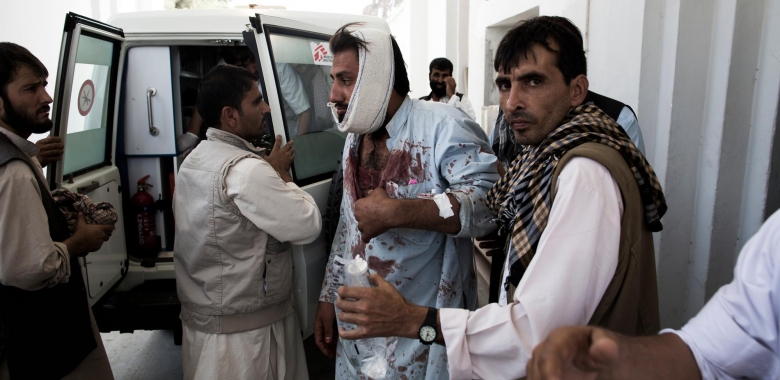
MSF provides a photoessay describing some of these precarious journeys (‘Long and dangerous roads’) here, from which I’ve taken the photograph below, showing an inured man being led by a relative into the Kunduz Trauma Centre.

MSB5652

A mile in these shoes

I’m just back from Beirut, and trying to catch up.  Every day I went for a walk along the Corniche, and on the second morning a young Syrian boy asked if he could clean my shoes.  I was wearing trainers, but told him that I’d pay him anyway and he could clean my shoes next time I came out; he refused to take the money until I had agreed where and when I would present myself for the service.  Heart-warming and hear-breaking, and I can’t get him out of my mind.  So here is a quick up-date on the situation (see also my previous posts here and here).

Syria civil war casualties

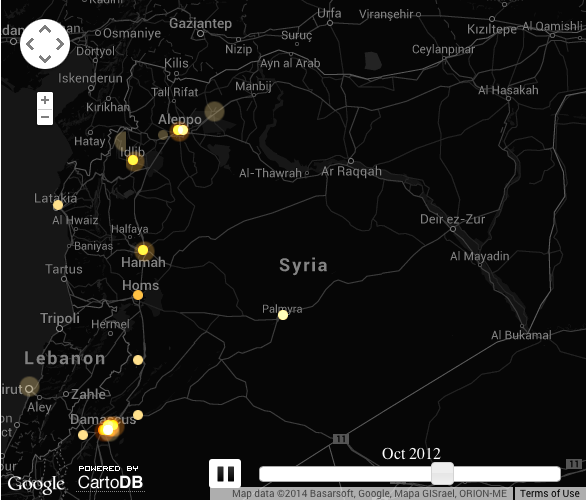
First, this week Foreign Policy published this sobering animated map of casualties from the civil war in Syria based on data from the Human Rights Data Analysis Group:

It visualizes the approximately 74,000 people who died from March 2011 to November 2013. Every flare represents the death of one or more people, the most common causes being shooting, shelling, and field execution. The brighter a flare is, the more people died in that specific time and place. The data used are drawn from the Violations Documentation Center (VDC), the documentation arm of the Local Coordination Committees in Syria which has been one of the eight sources on which HRDAG has based its count. In a June 2013 report, HRDAG cited VDC as the most thorough accounting of casualties in Syria, though the dataset has been found to contain some inconsistencies…

What the map demonstrates is the escalation of the conflict — with data from March 2011 through the VDC’s Nov. 21, 2013 report — and its quick descent from being a smattering of violence to a multi-front war with militias challenging the military (and other militias) almost everywhere at once. What it can’t show, of course, is the horror and destruction of this war.

My image is just a screen grab, of course, so you need to visit the original to see the overall, devastating effect.

For more detail, I recommend Syria Deeply, a new digital platform that attempts to combine citizen journalism with professional analysis; there’s a profile of the project at start-up over at Fast Company here and a more recent commentary from its founder Lara Setrakian here. I think there are lessons to be learned here about the way publics can be created and brought to engage with conflicts, and that goes for academics as well as journalists.

Second, it’s much harder to find information about those who have been wounded in the conflict – one of my present preoccupations: see here and here – but while I was in Beirut Lebanon’s Daily Star published an interesting report on NGOs working in the borderlands to treat casualties from the war zone.  In the Bekaa Valley the International Committee of the Red Cross has treated over 700 people since 2012, while a 20-bed clinic run by Lebanon’s Ighatheyya has treated 135 people since it opened five months ago in Kamed al-Loz.  The casualties include pro- and anti-Assad fighters (according to the ICRC, ‘When we know the patients are from opposing sides we separate them by placing them on different floors … We make sure they don’t know the other is there’) and civilians alike.  Many of them are suffering from infected wounds because they were initially treated in makeshift facilities in tents or private houses, which is why the perilous journey across the border is so vitally important. Neither the ICRC nor Ighatheyya make cross-border runs.  The Star‘s reporters explain:

Many patients are lawfully retrieved from the border by the Lebanese Red Cross, who then take them to a number of cooperating hospitals across the Bekaa Valley for treatment. According to a well-informed source, the ICRC has contracted four hospitals, in Chtaura, Jib Jenin, Baalbek and Hermel, to care for war wounded Syrians.

After surgery patients are often referred to clinics run by other non-governmental organizations, such as Ighatheyya, who oversee the patients’ convalescence…. Ighatheyya is [also] in the process of building a fully equipped 30-bed hospital in the border town of Arsal, where many refugees and combatants cross into Lebanon.

Another major locus of emergency medical treatment is Tripoli, just 30 km from the border and the primary treatment centre for Syrians seeking emergency medical assistance in northern Lebanon.  Médecins Sans Frontières, which also operates from four locations in the Bekaa Valley, has been supporting local clinics and hospitals here since February 2012 (and it’s been working inside Syria since March 2011).

NGOs are not the only organisations on the field.  Last summer NBC described the operation of a new clinic set up by the Syrian National Opposition to treat opposition fighters.  It too is in the Bekaa Valley, which is for the most part controlled by Hezbollah – which is of course militantly pro-Asad.  Four days after the clinic opened a local militia aligned with Hezbollah broke into the compound and forced a rapid evacuation, and early last summer armed men attacked an ambulance transporting a patient to surgery and kidnapped him: ‘Since then, the Lebanese Red Cross has refused to transport the clinic’s patients in ambulances through certain Hezbollah-dominated areas without an army escort. And private cars carrying patients through those areas have been shot at.’

For more on the transnational ‘therapeutic geographies’ involved in the wars in Iraq and Syria, see Omar Dewachi, Mac Skelton, Vinh-Kim Nguyen, Fouad Fouad, Ghassan Abu Sitta, Zeina Maasri and Rita Giacaman, ‘The Changing Therapeutic Geographies of the Iraqi and Syrian Wars’, forthcoming in The Lancet.  And for a discussion of the regional geopolitics of all this, including a corrective to the claim that the war in Syria is simply ‘spilling over’ into Lebanon, see Bélen Fernández over at warscapes here.

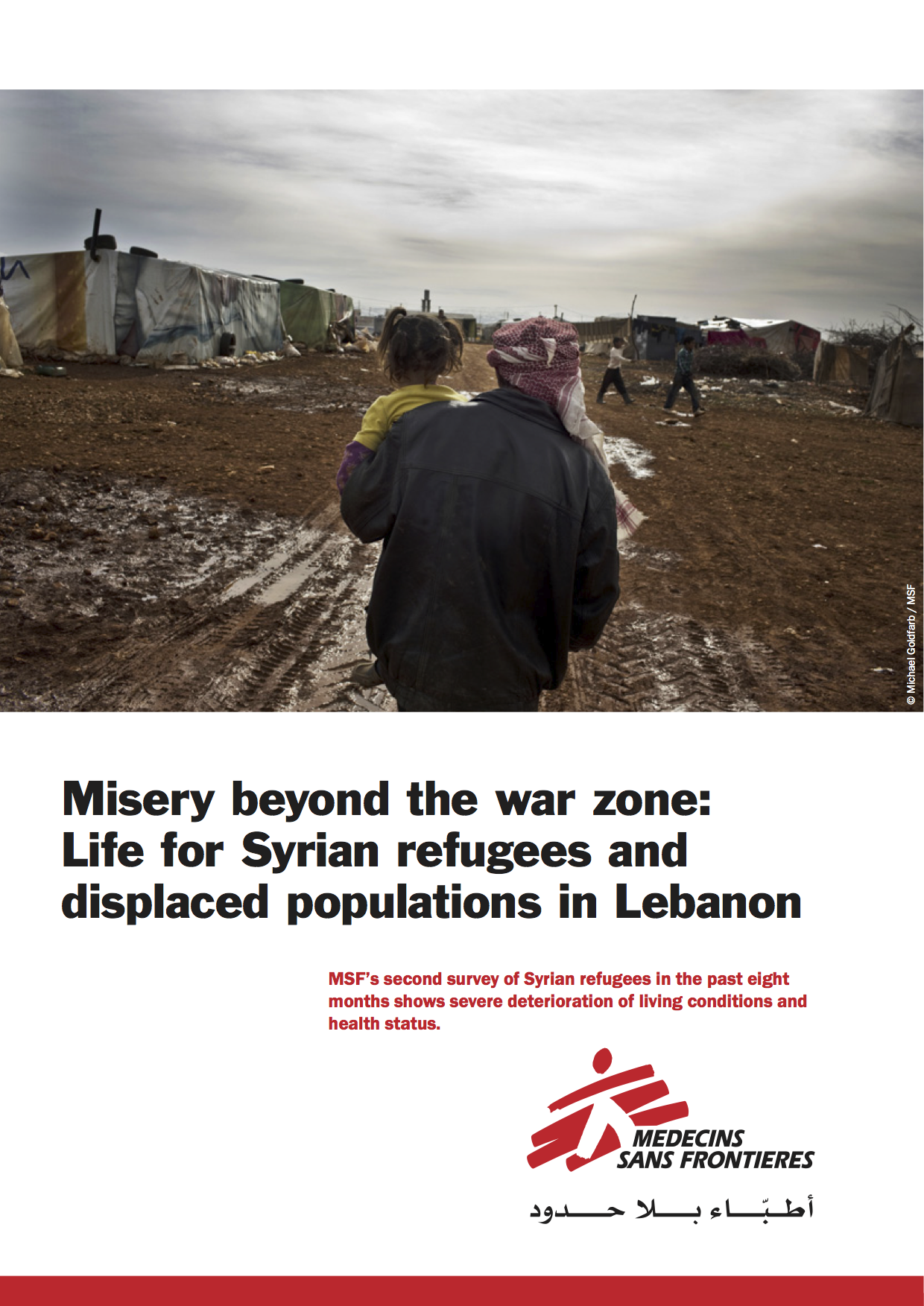
Syria-Lebanon-Report-2013 (dragged)As MSF emphasises, refugees from the conflict in Syria need more than emergency treatment for war wounds: ‘The epidemiological profile of populations does not change when they cross borders; those who needed medications for chronic conditions in Syria still need them in Lebanon.’  And, clearly, they have other pressing needs too:

‘[T]the gaps in service that existed [in June 2012] have not been sufficiently addressed but have in fact widened as more people have streamed across the border. Living conditions among the majority of refugees and Lebanese returnees remain extremely precarious, particularly with winter arriving. More than 50% of those interviewed, whether they were officially registered or not, are housed in substandard structures — inadequate collective shelters, farms, garages, unfinished buildings and old schools — that provide paltry, if any, protection against the elements. The rest are renting houses, but many of those people, now separated from their lives and livelihoods, are struggling to pay the rent. The medical picture has deteriorated as well. More than half of all interviewees (52%) cannot afford treatment for chronic disease care, and nearly one-third of them have had to suspend treatment already underway because it was too expensive to continue. For those who are and are not registered alike, the costs attached to essential primary health care, ante-natal care and institutional deliveries are prohibitive. Among non-registered returnees and internally displaced Lebanese, 63% received no assistance whatsoever from any NGO.’

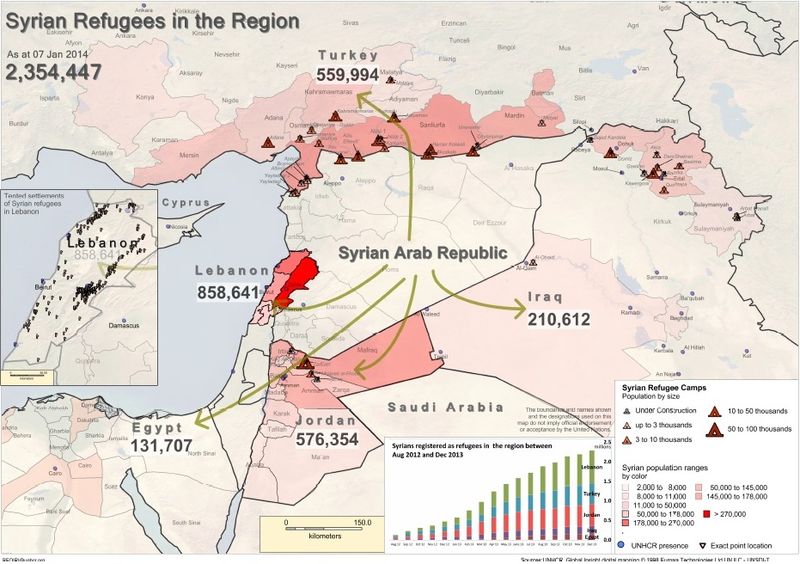
Here’s a recent map of Syrian refugee flows:

Syrian refugee flows to December 2013

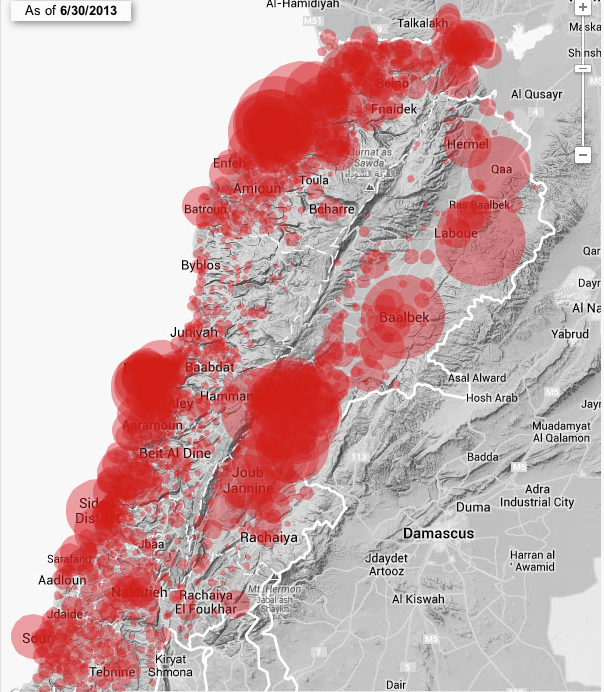
For more detail, UNHCR’s tabulations of Syrian refugees in Lebanon can be found here, and there’s a remarkable interactive map here (again, the image below is just a screen grab).

Syrian refugees in Lebanon summer 2013

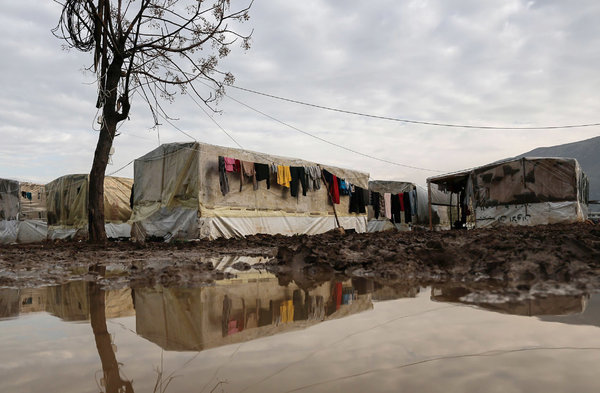
The number of registered refugees in Lebanon – and, as that MSF report indicates, registration is itself a deeply problematic process and the numbers understate the gravity of the situation – is now around one million; Lebanon’s population is four million, so one person in five is a refugee.  But wary of its experience with the Palestinian refugee camps – on which Adam Ramadan‘s work is indispensable: his book is due out later this year, but in the meantime see ‘In the ruins of Nahr al-Barid: Understanding the meaning of the camp‘, Journal of Palestine Studies 40 (1) (2010) and  ‘Spatialising the refugee camp‘, Transactions of the Institute of British Geographers 38 (1) (2013) 65-77 – Lebanon has refused to sanction camps for Syrian refugees: hence those ‘tented settlements’ on the map above (and see the image below).

24iht-m24-lebanon-refugees-articleLarge-v3

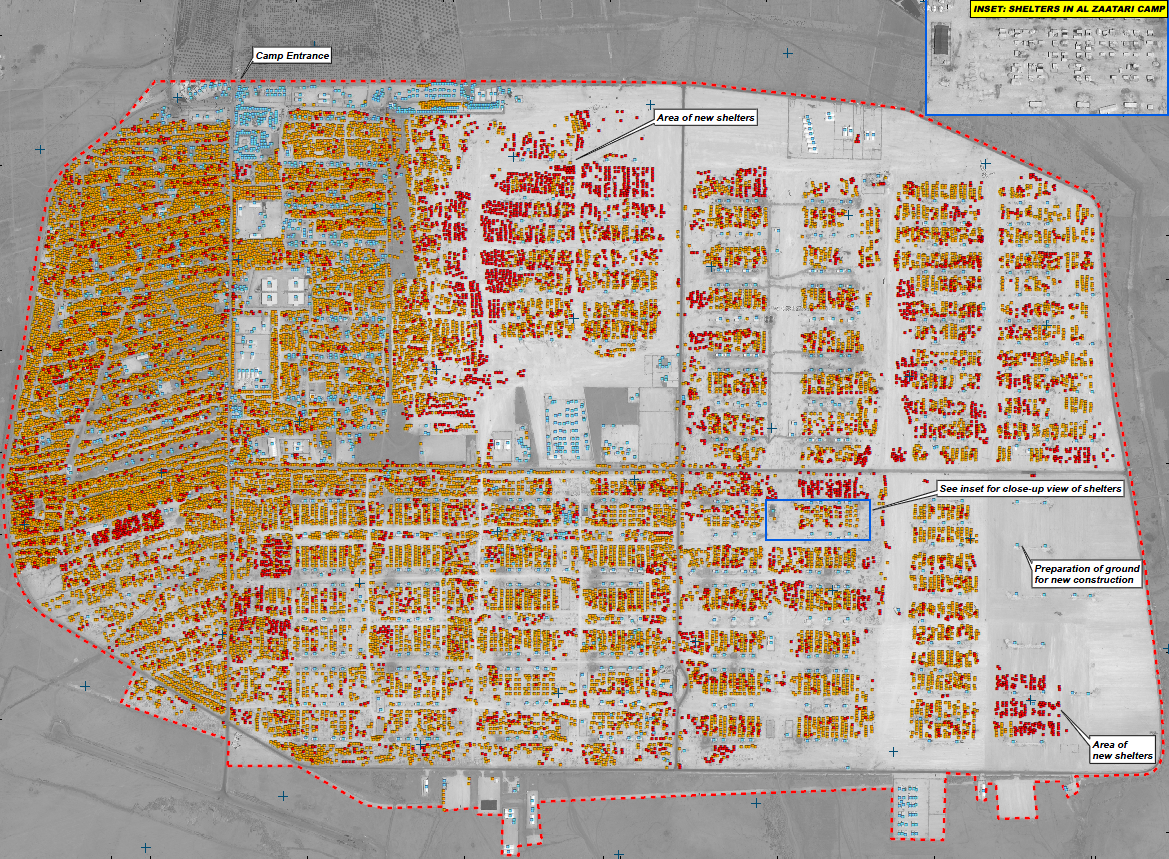
This strategy, or lack of it, is in marked contrast to Jordan, where Al- Za’atari, which opened in July 2012, will soon become the largest refugee camp in the world (below): you can find a sequence of satellite images showing its explosive growth here.

al-zataari-may-2013

But Lebanon is adamant that it will not sanction any intimations of permanence.  Norimitsu Onishi reported recently in the New York Times that

Those fears have forced the refugees to try to squeeze into pre-existing buildings and blend into the landscape. Those with means rent apartments. But hundreds of thousands are living in garages and occupying the nooks and crannies of buildings under construction. Abandoned buildings, including universities and shopping malls, have been taken over in their entirety by refugees.

Here, as usual, there are pickings to be had.  Last year Tracy McVeigh reported in the Guardian that

‘While there are widespread reports of extraordinary acts of generosity and kindness by Lebanese towards Syrian refugees, many people here are making money from Syria’s war. Landlords are getting rents for barely habitable properties, stables and outhouses. There are hefty profits to be made in the gun-running business, and refugees are easily exploited as cheap labour. The government is getting military resources from America and Europe, which are keen to see it able to protect its borders. But many others are losing out – those who are trying to house and feed large families along with their own.’

And that includes young boys looking for shoes to clean on the waterfront in Beirut.  If you want to donate more than the cost of a shoe-clean, you can reach Oxfam here, the International Rescue Committee here and UNHCR here.

Survivable life

Just back from St Andrews – the video of the Neil Smith Lecture will be available online shortly, and I’ll post a notice when it’s ready – and so much to catch up on it’s not easy to work out where to start.

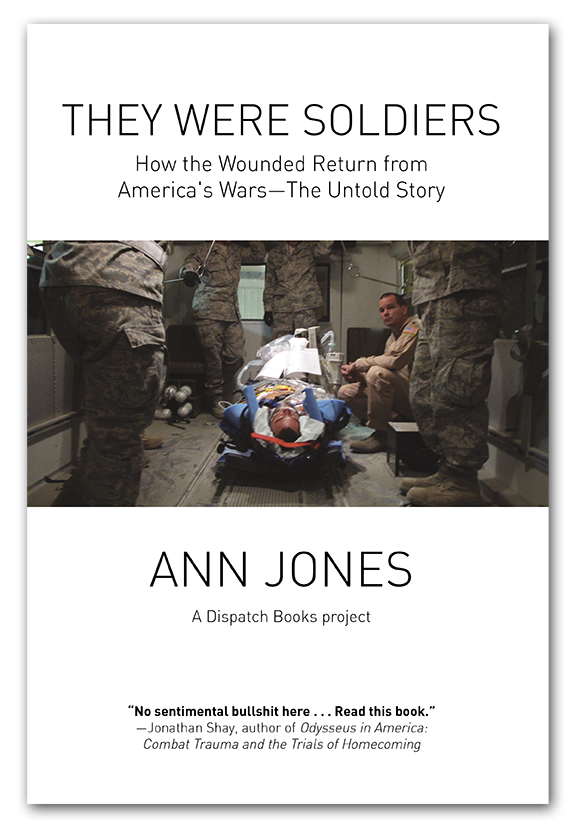
THEY-WERE-SOLDIERS_by-Ann-Jones_72

But this is as good a place as any: Ann Jones‘s new book, They were soldiers: how the wounded return from America’s wars (Haymarket, 2013):

After the American invasion of Afghanistan in 2001, Ann Jones spent a good part of a decade there working with Afghan civilians—especially women—and writing about the impact of war on their lives: the subject of Kabul in Winter (2006). That book revealed the yawning chasm between America’s promises to Afghans and its actual performance in the country. Meanwhile, Jones was pondering another evident contradiction: between the U.S. military’s optimistic progress reports to Americans and its costly, clueless failures in Afghanistan as well as Iraq. In 2010-2011, she decided to see for herself what that “progress” in Afghanistan was costing American soldiers. She borrowed some body armor and embedded with U.S. troops. On forward operating bases she saw the row of photographs of “fallen” soldiers hung on the headquarters’ wall lengthen day by day.

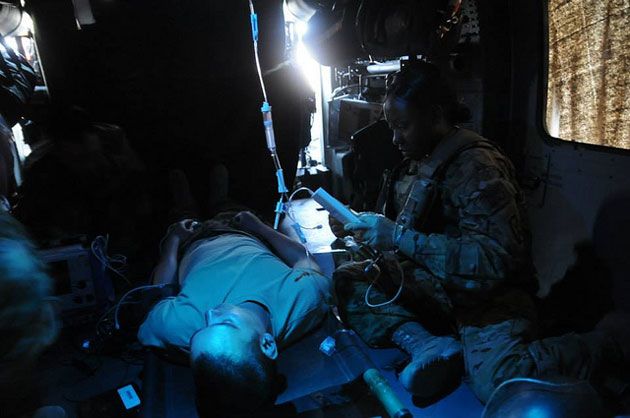
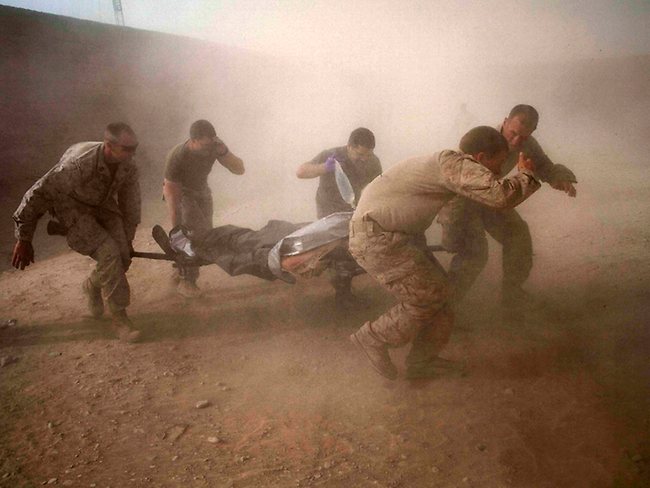
At the trauma hospital at Bagram Air Base she watched the grievously wounded carried from medevac helicopters to the emergency room and witnessed the toll that life-saving surgeries took on the doctors who performed them. She accompanied the wounded on medevac flights from Bagram to Landstuhl Regional Medical Center in Germany, then on to Walter Reed Hospital in Washington, and finally—for those who made it—back to all-American homes where, often enough, more troubles followed: violence against wives, girlfriends, children, and fellow soldiers; Big Pharma-induced drug addiction; murder, suicide, and the terrible sorrow of caretaker moms and dads who don’t know what happened to their kids. They Were Soldiers is a powerful account of how official American promises—this time to “Support Our Troops”—fall victim to the true costs of war.

Medevac

This dovetails perfectly with what I hope will be my new research project on caring for those wounded by war – combatants and civilians – between 1914 and 2014 and their precarious journeys away from the killing zones (see DOWNLOADS tab and scroll down).  As I’ve noted before, much of the critical commentary on modern war has been preoccupied with those killed – which is of course important – but the other casualties of war have all too often been marginalised.  It’s high time to supplement inquiries into what Judith Butler calls the constitution of  a ‘grievable life’ with others into the constitution of a ‘survivable life’.

Hence the vital importance of Ann’s book.  There’s an interview with Amy Goodman at Democracy Now here, and another with Truthout here, in which she deftly rejects the lazy politics in which the left supposedly cares only for ‘their’ civilians while the right cares for ‘our’ troops:

We worry – if at all – about how vets are treated when they return because of our mistaken notion that Vietnam vets suffered mightily from not being greeted as heroes. What Vietnam veterans truly suffered from was not their reception, but the war. That fact we tend to forget. Consequently, we think we can resolve all the possible nasty consequences of war by waving flags at airports as troops return. The deeper problem is that none of these veterans of the wars of choice in Iraq and Afghanistan – not one of them – should ever have been sent to war. But without a draft that can potentially strike any family in the country, those who have no fear that a family member may be compelled to serve are free to ignore the whole political and public relations process by which leaders drag the country into war and carry it on. War can be left to a supposedly “all volunteer” standing army – those poor kids with no job options or a shot at college – which is precisely what the founding fathers warned against, believing that a standing army would be used by autocrats to destroy democracy. That volunteer army, of course, is shadowed by a larger privatized for-profit army of mercenary contractors. The standing army of the poor and patriotic is alienated from the general public and left at the mercy of the president. Our recent presidents and their cronies, who hold a nearly unblemished record of evading military service, have thrown kids into war with an enthusiasm undampened by any real knowledge of what war is, while the most influential segments of the general public, feeling both grateful and guilty that their kids are safe, make no effort to restrain those war-loving leaders.

You can read an extract from They were soldiers, with a very helpful prefatory note from Nick Turse, at TomDispatch here:

In 2010, I began to follow U.S. soldiers down a long trail of waste and sorrow that led from the battle spaces of Afghanistan to the emergency room of the trauma hospital at Bagram Air Base, where their catastrophic wounds were surgically treated and their condition stabilized.  Then I accompanied some of them by cargo plane to Ramstein Air Base in Germany for more surgeries at Landstuhl Regional Medical Center, or LRMC (pronounced Larm-See), the largest American hospital outside the United States.

Once stabilized again, those critical patients who survived would be taken by ambulance a short distance back to Ramstein, where a C-17 waited to fly them across the Atlantic to Dover Air Base in Delaware. There, tall, multilayered ambulances awaited the wounded for the last leg of their many-thousand-mile journey to Walter Reed Army Medical Center in Washington D.C. or the Naval Hospital at Bethesda, Maryland, where, depending upon their injuries, they might remain for a year or two, or more.

Now, we are in Germany, halfway home.  This evening, the ambulance from LRMC heading for the flight line at Ramstein will be full of critical-care patients, so I leave the hospital early and board the plane to watch the medical teams bring them aboard.  They’ve done this drill many times a week since the start of the Afghan War.  They are practiced, efficient, and fast, and so we are soon in the air again. This time, with a full load.

 Two rows of double bunks flank an aisle down the center of the C-17, all occupied by men tucked under homemade patchwork quilts emblazoned with flags and eagles, the handiwork of patriotic American women. Along the walls of the fuselage, on straight-backed seats of nylon mesh, sit the ambulatory casualities from the Contingency Aeromedical Staging Facility (CASF), the holding ward for noncritical patients just off the flight line at Ramstein.
At the back of the plane, slung between stanchions, are four litters with critical care patients, and there among them is the same three-man CCAT (Critical Care Air Transport) team I accompanied on the flight from Afghanistan. They’ve been back and forth to Bagram again since then, but here they are in fresh brown insulated coveralls, clean shaven, calm, cordial, the doctor busy making notes on a clipboard, the nurse and the respiratory therapist checking the monitors and machines on the SMEEDs. (A SMEED, or Special Medical Emergency Evacuation Device, is a raised aluminum table affixed to a patient’s gurney.) Designed to bridge the patient’s lower legs, a SMEED is now often used in the evacuation of soldiers who don’t have any.
Here again is Marine Sergeant Wilkins, just as he was on the flight from Afghanistan: unconscious, sedated, intubated, and encased in a vacuum spine board. The doctor tells me that the staff at LRMC removed Wilkins’s breathing tube, but they had to put it back. He remains in cold storage, like some pod-person in a sci-fi film. You can hardly see him in there, inside the black plastic pod. You can’t determine if he is alive or dead without looking at the little needles on the dials of the machines on the SMEED. Are they wavering? Hard to tell.

They were soldiers is available as an e-book if, like me, you can’t wait.

Precarious journeys

Much of last week was taken up with working out a new project for the next round of the Social Science and Humanities Research Council’s Insight Grant programme.  A ‘Notification of Intent’ to apply is required (I’m deliberately not saying ‘needed’) before you can actually apply in October – but since the NOI requires a plain-language summary and a figure for the total budget most of the planning has to be done months before the application.  I could fill a whole blog – and other non-digital receptacles – about the sense in all that; suffice to say I hit the button ten seconds (sic) before the electronic shutters came down.

The application is for a project called Medical-Military Machines and the Casualties of War: Genealogies and Geographies of Care.

859084-dust-off-inside-afghanistan-039-s-medevac

One of the central claims made by protagonists of later modern war is that its conduct is accurate and proportionate, legal and ethical, thereby raising the bar for ‘just’ or, as James Der Derian has it, ‘virtuous’ war (and as most readers will know, he would insist on those scare-quotes).  It has done so, its advocates argue, by limiting casualties through new modes of intelligence, surveillance and reconnaissance, new weapons systems, and new modes of accountability.  I explore these issues in my ongoing SSHRC project, Killing Space (DOWNLOADS tab)not least through my continuing study of drones (much more to come!) and this project maps its other, vitally important dimension – a sort of ‘Caring Space’ – in order to provide an indispensable substantive test for these claims.

The project concerns the provision of medical care for those wounded by military and paramilitary violence, casualties who are often overlooked in vexed but vital debates over ‘body counts’ and what constitutes (following Judith Butler) a grievable life.  I’m not going to ignore those matters, far from it, but my main concern will be on the survivors of military violence.  As I’ll explain in a moment, I want to analyse both combatant and civilian casualties, and so confound the simplistic politics in which the right is supposed to care about the one and the left about the other.

The project will involve both genealogy and geography.  I’m using ‘genealogy’ in something like the Foucauldian sense, but all I’ll say here is that historical depth is plainly essential to specify what is (and is not) novel about the ways in which advanced militaries wage war.  So the project will involve four case studies focusing on the United States and its allies.  The first three are the Western Front in World War I, North Africa in World War II, and South Vietnam (1963-1975) .  In this traverse from ‘total war’ to James Gibson’s ‘techno-war’ I’m planning to leverage my work on ‘The natures of war’.  While researching that presentation and long-form essay – which will eventually appear in War Material – I found  a treasure-trove of sources that I want to explore in much more depth and detail for this new project.  The fourth case study will involve the cluster of wars in the Greater Middle East post 9/11, and while much of this has been familiar ground for me ever since I started writing The colonial present, there are many new issues to address – including the deliberate targeting of hospitals and medical doctors by some factions and what Omar Dewachti calls the ‘therapeutic geographies’ involved in the transnational movement of war casualties from (say) Iraq, Libya and Syria to hospitals in Lebanon, Jordan and India.

The project has three components that address different geographies of casualty care.

Stretcher-bearers

MAYHEW Wounded(1) Modern military medicine has sought to provide immediate care for troops injured in combat as close to the site of the injury as possible by deploying medical personnel and equipment in forward positions, and establishing evacuation routes for more seriously injured patients to higher-order medical facilities in the rear.  These systems have been transformed by technical advances designed to increase the time-space compression of treatment: the more widespread use of motorized ambulances in the Western Desert, for example, and helicopters for medical evacuation (‘dust-off’) in Vietnam and later conflicts. I plan to reconstruct these networks and their transnational extensions and to calibrate the changing transit times, and then to turn these skeletal geometries into human geographies through diaries, letters and, as we near the present, interviews, that I hope will bring into view the multiple people involved in these precarious, fleshy, and profoundly intimate journeys.  My inspiration for this is a series of thought-provoking essays in the Journal of the Royal Army Medical Corps (really), which provide a way in to the geometries and networks, and (very different) Emily Mayhew‘s Wounded: from Battlefield to Blighty, 1914-1918, due out next month, which uses the idea of a ‘journey’ in what could develop into a sort of phenomenology of care; I’ll say some more about some of this in a later post.

AEF Evacuation system WWI

The other two components follow from a remark made by Michel Foucault in ‘The Eye of Power’.  There he suggested that ‘doctors, along with the military, were the first managers of collective space’, but he assigned them to different spaces (‘campaigns’ versus ‘habitations’). Instead I want to explore what happens when military and medicine are called upon to imagine and manage the same space and install what, following the example of Mark Harrison, I’m calling a ‘medical-military machine’ in a war-zone.  So I’ll be following two tracks that are usually kept separate – civilian and combatant casualties (and here I want to extend the ongoing debates over their distinction from an abstract legal to a substantive therapeutic terrain) – and tracing the junctions where they intersect, in order to establish two other, complementary and sometimes countervailing geographies of care.

Medevac

(2) There is an important sense in which modern war has always been ‘war amongst the people’: this is not a late twentieth-century preoccupation.  Images of ‘No Man’s Land’ on the Western Front distract attention from the injuries suffered by civilian populations who continued to inhabit houses and work farms behind the front lines, for example, while ground and air offensives in South Vietnam produced hundreds of thousands of civilian casualties.  So a second question is this: in what ways and in what places have militaries assumed medical responsibility for civilian casualties before and beyond the parameters of the Medical Civic Action Programs of contemporary counterinsurgency?

Secours Quaker

REDFIELD Life in Crisis MSF(3) Conversely, the military has not been the only agency making medical interventions in war-zones, and this is not a late twentieth century development either.  Civilian hospitals are increasingly important in today’s urban wars (where they often become targets too), but I want to pay particular attention to the work of international agencies.  I plan to analyse two voluntary organisations, the Friends’ Ambulance Unit and the American Field Service in the two world wars, and (I hope) two contemporary NGOs, the most obvious candidates being the International Committee of the Red Cross and Médecins sans Frontières.  I’m not assuming any direct filiations, and I’ll no doubt find all sorts of differences between them (particularly between the earlier and the later ones), but I’m particularly interested in the tensions between what at the moment I see as a common, more or less cosmopolitan engagement and the imperative to provide place-specific casualty care (and the logistics of doing so).   So a third question revolves around the rise of a ‘militarized humanism’ and the emergence of what Didier Fassin calls  ‘humanitarian reason’ as, perhaps, a form of governmentality.

http://vimeo.com/66342865

This really is just a bare-bones summary, and since I have another two months to flesh it out I’d really welcome any advice, suggestions or criticisms.  As I’ve described the project here you can see, I hope, that my case-studies and the questions I think they’ll enable me to address arise at the intersections of medical and military geography but also involve political, cultural and legal geographies.  And, as ever, those geographies all have a stubbornly little g: this really isn’t a disciplinary project.