[L]ocating the findings of the Senate Torture Report within the racial-sexual grammars of chattel slavery and its afterlife opens up our analyses beyond explanatory and moral frameworks such as failed intelligence-gathering, “state of exception” or “human rights abuses” towards a more comprehensive understanding of seemingly illiberal security practices in the War on Terror. This genealogy indicates the fundamental role and value of force for the consolidation of the sovereign authority of the U.S. settler imperial formation ‘at home’ and abroad, and suggests the stubborn persistence of certain racial-sexual grammars of legitimate violence and suffering in this age of “post-racial triumph.” For “[w]ithout the capacity to inspire terror, whiteness no longer signifies the right to dominate.”
At Just SecurityJameel Jafferhas a brief, important post about the release of these documents – and, crucially, the Obama administration’s attempt to prevent the publication of photographs documenting the abuse of detainees at US military facilities – that loops back to the debate over the Charlie Hebdo cartoons. He argues that it is at the very least ironic that some of the same voices calling for the freedom to publish cartoons whatever their consequences are now demanding the suppression of other images ‘because of the possibility that their release will provoke violence’…
And speaking of violence and torture in the global war prison, Mohamedou Ould Slahi‘s Guantanamo Diary, which is being serialised in the Guardian and was published in book form earlier this week, provides more evidence of its routinised, banalised practice.
Slahi is still incarcerated at Guantanamo even though he was approved for release in 2010. Spencer Ackermanreports:
Slahi’s manuscript was subjected to more than 2,500 redactions before declassification, ostensibly to protect classified information, but with the effect of preventing readers from learning the full story of his ordeal. The book is being published with all the censor’s marks in place, and the publishers – Canongate in the UK and Little, Brown in the US – hope they will be able to publish an uncensored edition when Slahi is eventually released.
The full manuscript is available here. You can find Tim Stanley‘s review at the Telegraphhere (‘a necessary book’ that ‘reminds us that the evil we’re fighting can be found in ourselves as well as in our enemies’), Mark Danner‘s extended review at the New York Timeshere (‘Slahi’s memoirs are filled with numbingly absurd exchanges that could have been lifted whole cloth from “The Trial”’), and Deborah Perlstein‘s review at the Washington Posthere (‘Slahi’s descriptions of … torture are the book’s most compelling, and difficult, passages [and] … are closely consistent with descriptions in official investigations of the treatment of other U.S.-held detainees’.)
In the face of these horrors, it’s necessary to consider this blunt reminder from Peter Beinart:
Torture, declared President Obama … in response to the newly released Senate report on CIA interrogation, is “contrary to who we are.” Maine Senator Angus King added that, “This is not America. This is not who we are.” According to Kentucky Congressman John Yarmuth, “We are better than this.”
No, actually, we’re not. There’s something bizarre about responding to a 600-page document detailing systematic U.S. government torture by declaring that the real America—the one with good values—does not torture. It’s exoneration masquerading as outrage. Imagine someone beating you up and then, when confronted with the evidence, declaring that “I’m not really like that” or “that wasn’t the real me.” Your response is likely to be some variant of: “It sure as hell seemed like you when your fist was slamming into my nose.” A country, like a person, is what it does.
And in the face of evasion and denial – and redaction and suppression – here is Chase Madar from February’s Bookforum:
Though the [Senate] report has blacked out the names of the torturers, refusing even to use pseudonyms, torture watchers have been able to identify one of the agents, a model for Maya in Zero Dark Thirty. Her record of malfeasance, misrepresentation, incompetence, and gratuitous participation in waterboarding was blisteringly detailed by NBC News and [Jane Mayer at] the New Yorker, though neither outlet would name her. But far from being sanctioned or even demoted, she has risen to the civilian-rank equivalent of general inside the CIA. She has, unbelievably, served as the recent head of the agency’s “global jihad unit.”
It’s tempting to compare this to Latin American–style police impunity, but that would be unfair to the societies that have punished at least some of the abuses of their past dictatorships. In the same week that the SSCI released its report, Brazil published its own investigation into state torture of political dissidents under its long dictatorship. Indeed, one of that torture regime’s victims, Dilma Rousseff, is now the head of state. Latin American nations have been chipping away at, or simply ignoring, the amnesty deals made with the authoritarian rulers of the ’70s and ’80s and have brought many of their torturers to justice.
The United States would face a very different reckoning with its record of torture, should it elect to take a genuine, closer look at it. In our case, the impact of torture has largely been muffled by the military adventurism that has underwritten it…
As I am (at last) moving into the finishing stages of my ‘Dirty Dancing’ essay on CIA-directed drone strikes in Pakistan’s Federally Administered Tribal Areas, it’s time to round up some of the latest work on drones and civilian casualties across multiple theatres.
First, Afghanistan: the principal theatre of US remote operations. I’ve noted Larry Lewis‘s remarkable work before (here and here), based on classified sources, and in particular this claim (see also here):
Drone strikes in Afghanistan were seen to have close to the same number of civilian casualties per incident as manned aircraft, and were an order of magnitude more likely to result in civilian casualties per engagement.
As I said at the time, the distinction between an ‘incident’ and an ‘engagement’ is crucial, though most commentators who have seized on Larry’s work have ignored it and focused on the dramatic difference in civilian casualties per engagement. Despite my best efforts, the Pentagon were unwilling to clarify the difference, so here is what Larry himself has told me:
An engagement is probably intuitively what you would expect – the use of force against a target. The distinction is the term incident, which is borrowed from ISAF definitions. I should have said “civilian casualty incident.” This refers to an engagement that results in civilian casualties.
This means that, if you look at the collection of civilian casualty incidents, the average number of civilian casualties is close to the same for manned and unmanned platforms. At the same time, the rate of civilian casualties for the two platforms is markedly different, with unmanned platforms being ten times more likely to cause civilian casualties than manned platforms. That doesn’t mean that drones caused more civilian casualties than manned aircraft, by the way, since the denominators (number of engagements of manned aircraft versus drones) can and in fact were very different. But it does suggest that the relative risk of civilian casualties was higher for one kind of platform versus the other.
And this is in the specific context of Afghanistan and for a specific time. I wouldn’t want to say that this specific rate would be repeated, necessarily. Yet there were certain risk factors I observed in the civilian casualty incidents that I would expect to continue to be factors unless steps were taken to mitigate them.
Larry’s most recent report, Improving lethal action: learning and adapting in US Counterterrorism Operations, is available here. It includes an analysis of the Uruzgan air strike that is central to my ‘Angry Eyes’ essay (next on my to-do list).
[The short clip above is from Baden Pailthorpe‘s stunning animation MQ-9 Reaper (That Others May Die) (2014) – you can find much more here]
You might think that all of this is now of historical interest since President Obama has declared the end of the Afghanistan war. Not so. Here is John Knefelwriting in Rolling Stone this week:
Though many Americans may not have realized it, December 28th marked what the U.S. government called the official end of the war in Afghanistan. That war has been the longest in U.S. history – but despite the new announcement that the formal conflict is over, America’s war there is far from finished. In fact, the Obama administration still considers the Afghan theater an area of active hostilities, according to an email from a senior administration official – and therefore exempts it from the stricter drone and targeted killing guidelines the president announced at a major speech at the National Defense University in 2013.
“Afghanistan will continue to be considered an ‘area of active hostilities’ in 2015,” the official tells RS. “The PPG does not apply to areas of active hostilities.” (PPG stands for Presidential Policy Guidelines, the formal name for the heightened drone rules.)
That perplexing distinction – that formal combat operations are over but that the U.S. still remains in an armed conflict – in many ways exemplifies the lasting legacy of Obama’s foreign policy.
If you assume the situation in Pakistan is somehow less ambiguous, read Ryan Goodman on ‘areas of active hostilities’ over at Just Securityhere (I’m having to sort all this out for ‘Dirty Dancing’, of course).
Second, the Bureau of Investigative Journalismhas released its end-of-year report on US drone strikes in Pakistan, Yemen and Somalia in 2014, which includes these tabulations of casualty rates for the first two countries:
The Bureau comments:
While there have been more strikes [in Pakistan] in the past six years, the casualty rate has been lower under Obama than under his predecessor. The CIA killed eight people, on average, per strike during the Bush years. Under Obama, it is less than six. The civilian casualty rate is lower too – more than three civilians were reported killed per strike during the past presidency. Under Obama, less than one. There were no confirmed civilian casualties in Pakistan in the past year, as in 2013….
The frequency of strikes [in Yemen] may have fallen in 2014 but more people were killed, on average, per strike than in any previous year. The casualty rate for last year even outstrips 2012 – the bloodiest year recorded in the US’s drone campaign in Yemen when at least 173 people were reported killed in 29 strikes. In 2014 at least 82 people were reported to have died in just 13 strikes.
You can find the Long War Journal‘s tabulations for Pakistan here and Yemen here.
Third, Israel. I’ve commented previously on an interview with an Israeli drone pilot, but it’s been difficult to put his observations in context (though see here and scroll down to the tabulations). Now Ann Rogers, who wrote Unmanned: drone warfare and global security (Pluto, 2014) with John Hill – as good an introduction to drone wars as you will find – has just released an essay on ‘Investigating the Relationship Between Drone Warfare and Civilian Casualties in Gaza‘. It’s in a special issue of the open-access Journal of Strategic Security 7 (4) (2014) on ‘Future challenges in drone geopolitics’. Here’s the abstract:
Unmanned aerial vehicles (UAVs), better known as drones, are increasingly touted as ‘humanitarian’ weapons that contribute positively to fighting just wars and saving innocent lives. At the same time, civilian casualties have become the most visible and criticized aspect of drone warfare. It is argued here that drones contribute to civilian casualties not in spite of, but because of, their unique attributes. They greatly extend war across time and space, pulling more potential threats and targets into play over long periods, and because they are low-risk and highly accurate, they are more likely to be used. The assumption that drones save lives obscures a new turn in strategic thinking that sees states such as Israel and the US rely on large numbers of small, highly discriminating attacks applied over time to achieve their objectives. This examination of Israel’s 2014 war in Gaza argues that civilian casualties are not an unexpected or unintended consequence of drone warfare, but an entirely predictable outcome.
It’s an interesting essay, but I fear that it takes the Israeli military at its word. Ann repeatedly refers to Israel’s ‘discriminating’ targeting:
‘The central point is that drones enabled the IDF to undertake detailed, extensive, and discriminating targeting of Gaza, before and during the actual fighting. The killing of civilians may be down to differing interpretations of military necessity, or in some cases, in how combatants and non-combatants are distinguished from one another. But it is the drone gaze that enables these targets to be ‘called into being’ (p. 102)…
‘As Israeli targeting of Gaza appears to have been highly discriminating, a more serious problem may lie in how its view of legitimate attacks differs from the global “norm.” (p. 104).’
I commented on Israeli attacks on hospitals and ambulances last summer here, here and here, and on the wholesale destruction of Gaza here and here, so I confess I am at a loss for words. But she is right to emphasise the operative power of international humanitarian law and its protocols of distinction (discrimination) and proportionality – though, as often as not, these seem to have been inoperative in anything other than a rhetorical sense. For much more on this, and the way in which military lawyers are incorporated into Israel’s kill-chains, you should click across to Craig Jones‘s War, Law and Space. All of which makes the Palestinian decision to seek membership of the International Criminal Court all the more important (there’s a good commentary on the wider legal issues by David Luban at Jus Security here and by a clutch of commentators at the Middle East Research and Information Project‘s blog here). Perhaps not surprisingly, Daniel Reisner, the former head of the Israeli military’s International Law Department, has condemned the Palestinian application as ‘a belligerent act within the framework of the non-physical and kinetic world of lawfare.’
Finally, the US-led air strikes on IS/ISIL targets in Iraq and Syria. Here we know much less than we should, not least because the Pentagon knows much less than it should. Here is Nancy Youssefreporting earlier this week:
In a war fought largely from the air and in places no one can safely go, the impact is as opaque as the war itself, making it difficult to measure whether the U.S. and coalition effort is working.
“We don’t have the ability to count the nose of every guy we schwack,” as Pentagon spokesman Adm. John Kirby told reporters Tuesday, using military jargon [sic] for killing. “That’s not the goal.”
Presumably, that also means the Pentagon can’t count how many civilians it has accidentally killed in the name of ridding the region of ISIS.
Drone Wars UK has an excellent survey of the logistics of air operations over Iraq and Syria from Chris Colehere, and the New York Times has produced a useful interactive map of US-led air strikes from which I’ve snipped this summary:
We don’t know how many of these were carried out by drones or even orchestrated by them, but as their limitations are becoming clearer it’s reasonable to assume that most involved conventional strike aircraft. We do know that targeting involves the analysis of video feeds from both remote and conventional platforms, and that CENTCOM has had considerable difficulty in juggling the competing demands for ISR from Afghanistan and from Iraq/Syria.
According to a report this week from W.J. Hennigan, who visited the USAF’s 480th Intelligence, Surveillance and Reconnaissance Wing at Langley Air Force Base in Virginia:
In a vast windowless room, several dozen intelligence analysts worked under the glow of more than 100 computer screens, quietly studying video streaming from U.S. drones and spy planes hunting for Islamic State militants in Iraq and Syria.
One team searched the incoming video to find a firefight underway between Iraqi security forces and militants somewhere south of the insurgent-held city of Mosul in northern Iraq.
For four hours, the analysts pored over the imagery before identifying 20 positions where the militants were dug in with machine guns and other weaponry. After the analysts called in the coordinates, 15 jets from five countries pounded the targets with more than two dozen bombs.
The Dec. 5 airstrike, one of 462 last month, underscores the Pentagon’s increased reliance on personnel far from the battlefield… Air Force analysts here stand — or rather sit — on the virtual front lines by tracking Islamic State fighters in a war zone some 6,000 miles away.
But here’s the rub:
Unlike in past wars, when U.S. troops on the ground helped provide targeting information and intelligence, commanders in the battle against Islamic State rely chiefly on airborne surveillance, captured communications chatter, signals intelligence and other material that is processed by analysts here.
U.S. officers said the video-watching analysts working half a world away are no match for spotters and other troops feeding intelligence from the front lines.
“We don’t have anywhere near the level of intelligence we used to,” Lt. Col. Marc Spinuzzi, a senior intelligence officer, wrote in an email from Baghdad. The analysts are under “a lot of pressure … to clearly distinguish friend from foe, and to pick out the enemy from the civilian population” on the battlefield.
That is precisely how mistakes are made and civilians killed. And, as Robert Naimanpointed out,
“There is a big danger here that U.S. air strikes in Syria are going to resemble the drone strikes in Pakistan and Yemen in the sense that there is no accountability for who is killed. We have reports of civilian casualties from people in the area and the U.S. government says, ‘No, they are bad guys.’ There has to be some public accountability for what happens when there are allegations of civilian casualties.”
At least the Pentagon has now gone some way towards recognising the problem. Previously it had insisted that it was unaware of any civilian casualties, which is disingenuous: it beggars belief that 1,000 air strikes could have resulted in no civilian casualties – but if your ISR is inadequate it’s scarcely surprising that you would be ‘unaware’ of the consequences. Even so, on 6 January the Pentagon announced that it had investigated 18 allegations of coalition airstrikes causing civilian casualties between 8 August and 30 December. It determined that 13 were ‘not credible’, but was continuing to review three others; a further two, one in Iraq and one in Syria, are now the subject of formal military investigations. But before you gold your breath, both Iraq and Syria are also exempt from the Presidential Policy Guidelines that require a ‘near certainty that no civilians will be killed or injured’. Here is Harold Koh(really):
‘They seem to be creating this grey zone… If we’re not applying the strict rules [to prevent civilian casualties] to Syria and Iraq, then they are of relatively limited value.’
News from Lucy Suchman of an important essay she’s just completed with Jutta Weberon Human-Machine Autonomies, available from Academia.edu here.
This is how they begin:
This paper takes up the question of how we might think about the increasing automation of military systems not as an inevitable ‘advancement’ of which we are the interested observers, but as an effect of particular world-making practices in which we need urgently to intervene. We begin from the premise that the foundation of the legality of killing in situations of war is the possibility of discrimination between combatants and non-combatants. At a time when this defining form of situational awareness seems increasingly problematic, military investments in the automation of weapon systems are growing. The trajectory of these investments, moreover, is towards the development and deployment of lethal autonomous weapons; that is, weapon systems in which the identification of targets and initiation of fire is automated in ways that preclude deliberative human intervention. Challenges to these developments underscore the immorality and illegality of delegating responsibility for the use of force against human targets to machines, and the requirements of International Humanitarian Law that there be (human) accountability for acts of killing. In these debates, the articulation of differences between humans and machines is key.
Our aim in this paper is to strengthen arguments against the increasing automation of weapon systems, by expanding the frame or unit of analysis that informs these debates. We begin by tracing the genealogy of concepts of autonomy within the philosophical traditions that inform Artificial Intelligence (AI), with a focus on the history of early cybernetics and contemporary approaches to machine learning in behaviour-based robotics. We argue that while cybernetics and behaviour-based robotics challenge the premises of individual agency, cognition, communication and action that comprise the Enlightenment tradition, they also reiterate aspects of that tradition in the design of putatively intelligent, autonomous machines. This argument is made more concrete through a close reading of the United States Department of Defense Unmanned Systems Integrated Roadmap: FY2013-2038, particularly with respect to plans for future autonomous weapon systems. With that reading in mind, we turn to resources for refiguring agency and autonomy provided by recent scholarship in science and technology studies (STS) informed by feminist theory. This work suggests a shift in conceptions of agency and autonomy, from attributes inherent in entities, to effects of discourses and material practices that variously conjoin and/or delineate differences between humans and machines. This shift leads in turn to a reconceptualization of autonomy and responsibility as always enacted within, rather than as separable from, particular human- machine configurations. We close by considering the implications of these reconceptualizations for questions of responsibility in relation to automated/autonomous weapon systems. Taking as a model feminist projects of deconstructing categorical distinctions while also recognising those distinctions’ cultural-historical effects, we argue for simultaneous attention to the inseparability of human-machine agencies in contemporary war fighting, and to the necessity of delineating human agency and responsibility within political, legal and ethical/moral regimes of accountability.
It’s a must-read, I think, especially in the light of a report from the New York Times of the Long Range Anti-Ship Missile (above) developed for the US military by Lockheed Martin:
On a bright fall day last year off the coast of Southern California, an Air Force B-1 bomber launched an experimental missile that may herald the future of warfare.
Initially, pilots aboard the plane directed the missile, but halfway to its destination, it severed communication with its operators. Alone, without human oversight, the missile decided which of three ships to attack, dropping to just above the sea surface and striking a 260-foot unmanned freighter…
The Pentagon argues that the new antiship missile is only semiautonomous and that humans are sufficiently represented in its targeting and killing decisions. But officials at the Defense Advanced Research Projects Agency, which initially developed the missile, and Lockheed declined to comment on how the weapon decides on targets, saying the information is classified.
“It will be operating autonomously when it searches for the enemy fleet,” said Mark A. Gubrud, a physicist and a member of the International Committee for Robot Arms Control, and an early critic of so-called smart weapons. “This is pretty sophisticated stuff that I would call artificial intelligence outside human control.”
Paul Scharre, a weapons specialist now at the Center for a New American Security who led the working group that wrote the Pentagon directive, said, “It’s valid to ask if this crosses the line.”
And the Israeli military and armaments industry, for whom crossing any line is second nature, are developing what they call a ‘suicide drone’ (really). At Israel Unmanned Systems 2014, a trade fair held in Tel Aviv just three weeks after Israel’s latest assault on Gaza, Dan Cohenreported:
Lieutenant Colonel Itzhar Jona, who heads Israel Aerospace Industries, spoke about “loitering munitions” — what he called a “politically correct” name for Suicide Drones. They are a hybrid of drone and missile technology that have “autonomous and partially autonomous” elements, and are “launched like a missile, fly like an UAV [unmanned aerial vehicle],” and once they identify a target, revert to “attack like a missile.” Jona called the Suicide Drone a “UAV that thinks and decides for itself,” then added, “If you [the operator] aren’t totally clear on the logic, it can even surprise you.”
Jona praised the advantage of the Suicide Drone because the operator “doesn’t have to bring it home or deal with all sorts of dilemmas.” The Suicide Drone will quickly find a target using its internal logic, which Jona explained in this way: “It carries a warhead that eventually needs to explode. There needs to be a target at the end that will want to explode. Or it won’t want to and we will help it explode.”
So thoughtful to protect ‘the operator’ from any stress (even if s/he might be a little ‘surprised’). Here is Mondoweiss‘s subtitled clip from the meeting, which opens with a short discussion of the major role played by UAVs in the air and ground attacks on Gaza, and then Jona describes how ‘we always live on the border’:
In what now seems another life, I wrote about US torture during the early years of the “war on terror”, in ‘The Black Flag’ (which was specifically about Guantanamo, and which opened with three ‘suicides’ that we now have good reason to believe were anything but: see here and here) and ‘Vanishing Points’ (which extended the argument to Abu Ghraib and the archipelago of black sites like the ‘Salt Pit’ [shown below] within the global war prison). Both are available in their original forms under the DOWNLOADS tab, and form part of the material I’ve been working with for a new essay to be included in The everywhere war.
Now I’m digesting the Executive Summary that has been released by the Senate Select Committee on Intelligence on the CIA’s Detention and Interrogation Program, but you can download the original (redacted) summary here, ‘Other Views’ here, and the Minority View from the Republicans – and please God it remains a minority view – here.
The New York Times‘ coverage is here, the Washington Post‘s here, and the Guardian‘s here.
In the meantime, some of the best work on the dispersed geography of this vast apparatus was carried out by Trevor Paglen (see my updated discussion here).
Readers of his Blank spaces on the map will know of Trevor’s own attempt to see the ‘Salt Pit’ for himself, on the ground rather than from the air, and the images that result from this dimension of his work make clear – in plain sight, so to speak – their constitutive difficulties: see, for example, Jonah Weiner‘s essay on his work, ‘Prying eyes’, that appeared in the New Yorkerhere.
But here is part of what Trevor had to say about the mappings like the one above involved in his Torture Taxi and Terminal Air projects in An Atlas of Radical Cartography:
I’ve actually tried to stay away from cartography and “mapping” as much as possible in my work. The “God’s eye” view implicit in much cartography is usually not helpful in terms of describing everyday life, nor in describing the qualities of the relationships that cartography depicts. Because of what cartography cannot represent… it becomes pretty clear why it (and the forms of power that the cartographic viewpoint suggests) have traditionally been such powerful instruments of both colonialism and the contemporary geopolitical ordering of the world (which of course very much comes out of colonialism)…
I tend to be far more attracted to “on the ground” viewpoints and to embrace their fragmentedness and incompleteness. This project, as well as the “Terminal Air” project with the Institute for Applied Autonomy, are of course notable exceptions. With both of these projects that use the cartographic viewpoint, I was interested in taking what might seem like a familiar image and trying to and make it strange – trying to capture the feeling I had when I first started following CIA flights: it was the constant domestic flights to places like Tulsa, Las Vegas, Fresno, Fort Lauderdale and such that made a big impression on me. In working with John Emerson and the IAA, I insisted that we try to show a continuum between the domestic landscape and the landscape “somewhere else.” Neither of these projects are in my view not particularly useful as didactic tools but are instead useful in helping to see the point that we talked about above: that the “darkest” spaces of the war on terror blur into the everyday landscapes here “at home” and are in many way mutually constitutive. In this sense, they’re … images rather than analytic tools.
As I’ve noted before, this is part of the ‘capture’ side of the US kill-capture apparatus that uses drones (and often Special Forces) for the ‘kill’. I say ‘US’, but it’s clear – not least from the map above – that a network of other states that radiates far beyond the other ‘Five Eyes‘ which have been so deeply involved in providing geospatial intelligence for drone strikes (and more) has been complicit in the production and concealment of this global archipelago of torture.
But there’s an irony in all this: even as the Obama administration ramped up drone strikes – and after a lull they have been resumed with a vengeance in Pakistan’s Federally Administered Tribal Areas – it was also condemning torture and, last month, committed the United States to acknowledging the extraterritorial reach of the Convention Against Torture (see Sarah Cleveland at Just Security here and Ryan Goodman and Eric Messengerhere). The refusal of the Bush administration to do so was a central part of the argument about legal geographies that I developed in both ‘The Black Flag’ and ‘Vanishing Points’.
So now we have an administration that recognises extra-territoriality to proscribe torture – and insists on it (or its own version of extra-territoriality) to authorise targeted killing.
Joanna Bourke‘s new book, Wounding the world, has just been published in the UK by Virago (the North American edition, re-titled Deep Violence: Military Violence, War Play, and the Social Life of Weapons, is due from Counterpoint early next year).
Wars are frequently justified ‘in our name’. Militarist values and practices co-opt us, permeating our language, invading our dream space, entertaining us at the movies or in front of game consoles. Our taxes pay for those war machines. Our loved ones are killed and maimed.
With killing now an integral part of the entertainment industry in video games and Hollywood films, war has become mainstream.
2014 marks the 100th anniversary of the declaration of the First World War, and with it comes a deluge of books, documentaries, feature films and radio programmes. We will hear a great deal about the horror of the battlefield. Bourke acknowledges wider truths: war is unending and violence is deeply entrenched in our society. But it doesn’t have to be this way. This book equips readers with an understanding of the history, culture and politics of warfare in order to interrogate and resist an increasingly violent world.
Here is the list of chapters:
PART ONE: WAR WITHOUT END
Introduction
PART TWO: THE SOCIAL LIFE OF WEAPONS
It’s only words
The circulation of violence
PART THREE: INCITEMENT TO MURDER
Kind-hearted Gunmen
Wounding the Innocent
The Dark Art of Ballistics
PART FOUR: MILITAINMENT
Playing War
Violent Gaming
PART FIVE: THE END OF WAR
Protest
You can read the introduction here, from which I’ve snipped this extract:
Our garrisons are maintained throughout the world and yet the military campaigns we wage abroad seem as real to most of us as the metaphorical wars on drugs or obesity. It is not uncommon to hear people waxing lyrical about the sanctity of life – including that of the two-cell embryo – while revering the troops on Remembrance Day. Militarist incursions into our ways of thinking, talking and enjoying ourselves are barely acknowledged. The blurring of entertainment and war, the infiltration of ‘violence-as-fun’ into the popular imagination (‘militainment’) and the advent of warbots – a generic term for drones, robotic weapons, unmanned vehicles, and suchlike – have led many of us to take for granted that war is without end and without borders. Unwittingly, we have effectively been turned into citizen-soldiers.
We have inherited a toxic genealogy. Its names are legion but its purpose is singular: violence. It is precisely its everyday nature – the way it creeps up on us by stealth – that makes it so powerful. But we are not merely passive observers, in thrall to a set of amorphous, militaristic ideologies or corrupting institutions. We are involved in the production of violence: it constitutes who we are and might be and, as such, can be resisted.
There is an early review by Yvonne Roberts in today’s Guardianhere.
It’s a timely book in all sorts of ways, but I’m particularly pleased it’s available now because next month I’ll be in Berlin as part of Hebbel am Ufer’s Waffenlounge (Weapons Lounge):
After the USA and Russia, Germany is the third largest arms exporter in the world. The global market constantly demands better, more effective and ‘cleaner’ weapons. This month HAU Hebbel am Ufer is presenting a new production by Hans-Werner Kroesinger, “Exporting War,” as well as the Berlin premiere of “Situation Rooms,” a groundbreaking installation by Rimini Protokoll, created in co-production with HAU. Both works take up the paradoxical relationships that societies maintain to weapons, and both make use of personal biographies, current military conflicts as well as historical and political contexts. Under the motto “Weapons Lounge” HAU will also be presenting performances, installations, expert talks, and a project by the Houseclub with Kreuzberg pupils.
I’ll be talking about drones, but I’ve been thinking about what Joanna calls ‘the social life of weapons’ and also about the global arms trade (see my early post on ‘The death merchants’ here), so I’m looking forward to reading what she has to say.
The New York Times has a fascinating clip from a longer documentary by Mike Attie and Meghan O’Hara called In Country, about a group in Oregon that re-enacts scenes from the Vietnam War:
IN COUNTRY is a feature documentary that follows 2/5 1st Cav (Reenacted), a “platoon” of hardcore Vietnam War re-enactors. Weaving together verité footage of the reenactments with flashbacks to the characters’ real lives and archival footage from the Vietnam War, IN COUNTRY blurs the boundaries between reality and fantasy, past and present to tell a story about men trying to access the past.
The question at the center of IN COUNTRY is why? Why would these men – many of them combat veterans of Vietnam, Iraq and Afghanistan haunted by their own experiences on the frontline – try to recreate a war that so many have tried to forget?
The film-makers give part of their answer in the NYT:
Unlike most war re-enactments, the pretend battles they stage are private, free of spectators and created for the experience of the participants alone. Outfitted in authentic period military gear, the men hike through the woods for days at a time, sleep on the ground, eat canned rations and carry actual Vietnam-era weapons (loaded with blanks). They do not stage battles but rather attempt to find and “kill” a group of Vietcong re-enactors waiting to ambush them.
Most remarkable perhaps is how this unusual hobby brings combat veterans from Iraq and Afghanistan together with civilians and veterans of Vietnam. They work collectively to create a fascinating space where real emotions and memories mix with history and fantasy. Their reasons for participating vary: Some seek the camaraderie they experienced in their deployment, while others want to relive a vital time in their life. And for all of the veterans involved, it is an event at which their service is acknowledged and respected.
They elaborate in an interview with PBS here, and in a You Tube clip from IFF Boston here.
For my part, there have been many comparisons between Afghanistan and Vietnam, but from the clips I’ve seen (and the clean uniforms) I don’t think the literal meaning of quagmire is re-staged in the Oregon woods very often…
The instances differ greatly in number of forces, purpose, extent of hostilities, and legal authorization. Eleven times in its history the United States has formally declared war against foreign nations. These 11 U.S. war declarations encompassed 5 separate wars: the war with Great Britain declared in 1812; the war with Mexico declared in 1846; the war with Spain declared in 1898; the First World War, during which the United States declared war with Germany and with Austria-Hungary during 1917; and World War II, during which the United States declared war against Japan, Germany, and Italy in 1941, and against Bulgaria, Hungary, and Rumania in 1942.
Some of the instances were extended military engagements that might be considered undeclared wars. These include the Undeclared Naval War with France from 1798 to 1800; the First Barbary War from 1801 to 1805; the Second Barbary War of 1815; the Korean War of 1950-1953; the Vietnam War from 1964 to 1973; the Persian Gulf War of 1991; global actions against foreign terrorists after the September 11, 2001, attacks on the United States; and the war with Iraq in 2003. With the exception of the Korean War, all of these conflicts received congressional authorization in some form short of a formal declaration of war. Other, more recent instances often involve deployment of U.S. military forces as part of a multinational operation associated with NATO or the United Nations.
Barbara Salazar Torreon, who compiled the report, adds:
The list does not include covert actions or numerous instances in which U.S. forces have been stationed abroad since World War II in occupation forces or for participation in mutual security organizations, base agreements, or routine military assistance or training operations. Because of differing judgments over the actions to be included, other lists may include more or fewer instances.
abc news has now provided an interactive that maps the data set here, together with a discussion of the original report.
I’ll be in Berlin in December for a conversation with James Bridle about drone wars and related issues, and I’m already looking forward to it since I’m a great admirer of his work. I particularly admire the way in which he challenges so many of our assumptions about ‘looking’ through his presentations about militarised vision and violence, and I’ve noted before the filiations between his various projects and Josh Begley‘s.
So I was interested to read about photographer Tomas van Houtryve‘s (right) project Blue Sky Days. He begins with an arresting observation with which both James and Josh would be only too familiar:
‘Although a huge amount of [full motion video] footage has been collected [by US drones], the program is classified, and few people have ever seen images of the drone war and its casualties. This seems like a paradox in our thoroughly media-connected age. How can America be involved in a decade-long war where the sky is buzzing with cameras, and yet the public remains totally in the dark?’
But his response to the question is distinctly different: he repatriates the drone wars from Pakistan to the United States (here the most appropriate comparison is with Omar Fast‘s 5,000 Feet is the Best).
To do so, Tomas travelled across America with a small quadcopter drone bought from Amazon.com attached to his camera. His concept was simple, Rena Silvermanexplains in the New York Times:
Take the idea of foreign drone strikes and instead target similar domestic situations, putting them under surveillance using his drone in public spaces. He made a list of hundreds of different strike reports, gleaning as many details about the circumstances…
He rented a black car with tinted windows and placed himself, his drones, his batteries and lists in the car. He spent six weeks in late 2013 averaging between seven and 10 drone flights daily, sleeping in a different town every night. He would pull the car into an empty lot, get out, launch the drone for about five to 10 minutes — about as long as its power lasted — take footage, land the drone, drive away and recharge the batteries while en route to the next location…
He followed his list carefully, trying to imitate “signature strikes,” referring to a May 2012 New York Times article in which some State Department officials complained about the lax criteria for identifying a terrorist “signature.” The joke was that “three guys doing jumping jacks” could be enough suspicious activity for the C.I.A. to conclude it could be a terrorist training camp. In other words, targeting people based on behavior rather than identity.
He photographed people exercising in Philadelphia, their shadows long and pinned against the grid of a park. He noticed more “signature” behavior while driving through San Francisco, where he encountered a group doing yoga [above]. When Mr. van Houtryve recently printed the image, he asked viewers if they thought the subjects were praying or exercising. It was a toss-up.
Although these images are not quite ‘what drone attacks in America would look like’, as Pete Brooksuggested in WIRED – Tomas’s drone was flying much lower (‘only about six stories high’) and these images are pin-point sharp: there’s none of the ambiguity of infra-red heat signatures here – none the less that last sentence really says it all. Images do not speak for themselves and interpretation counts for everything – which is why, as I’ve repeatedly argued, it matters so much what pilots, sensor operators and image analysts are pre-disposed to see.
It turns out that a particular incident provoked Tomas’s project – the murder of Mamana Bibi at Ghunda Kala in North Waziristan on 24 October 2012, which I described here – and also gives it its title.
In October 2012, a drone strike in northeast Pakistan killed a 67-year-old woman picking okra outside her house. At a briefing held in 2013 in Washington, DC, the woman’s 13-year-old grandson, Zubair Rehman, spoke to a group of five lawmakers. “I no longer love blue skies,” said Rehman, who was injured by shrapnel in the attack. “In fact, I now prefer gray skies. The drones do not fly when the skies are gray.”
There’s more from Tomas at Harper’s here, which originally co-sponsored the project with the Pulitzer Center, and you can see more of his drone’s eye view images at the National Geographichere.
There’s also a revealing interview conducted by Bard College’s Center for the Study of the Drone here; it contains all sorts of interesting observations, but one in particular resonated. Asked about the tension between the beauty of his photographic compositions and the horror of what he is seeking to convey, Tomas says this:
‘The base subject that I’m trying to raise awareness about and get people to think about in less abstract terms is the foreign drone war. If you take the time to read through the particular airstrikes, a lot of them are quite horrifying. But on the other hand, as a photographer, I know that beauty is one of the tools that we use to get people to look at a picture. Beauty has a lot of power, so there’s a tension between trying to seduce people with the language of photography, which is beautiful composition, and trying to reveal something that might be uncomfortable or difficult to digest, once people fully grasp it.’
Another of my art icons, elin o’Hara slavick, says something very similar about her mesmerising sequence of aerial images of places bombed by the US, Bomb after bomb (see also Brian Howe‘s discussion here and my own in ‘Doors in to Nowhere’ [DOWNLOADS tab], from which I’ve taken this passage):
‘She adopts an aerial view—the position of the bombers—in order to stage and to subvert the power of aerial mastery. The drawings are made beautiful “to seduce the viewer,” she says, to draw them into the deadly embrace of the image only to have their pleasure disrupted when they take a closer look. “Like an Impressionist or Pointillist painting,” slavick explains, “I wish for the viewer to be captured by the colors and lost in the patterns and then to have their optical pleasure interrupted by the very real dots or bombs that make up the painting.”’
A tart reminder that there are multiple ways of ‘just looking‘.
We’ve been here before – ‘wars’ on this and ‘wars’ on that. It’s strange how reluctant states are to admit that their use of military violence (especially when it doesn’t involve ‘boots on the ground‘) isn’t really war at all – ‘overseas contingency operations’ is what the Pentagon once preferred, but I’ve lost count of how many linguistic somersaults they’ve performed since then to camouflage their campaigns – and yet how eager they are to declare everything else a war.
These tricks are double-edged. While advanced militaries and their paymasters go to extraordinary linguistic lengths to mask the effects of their work, medical scientists have been busily appropriating the metaphorical terrain from which modern armies are in embarrassed retreat.
Yet all metaphors take us somewhere before they break down, and the ‘war on Ebola’ takes us more or less directly to the militarisation of the global response. In an otherwise critical commentary, Karen Greenberg draws parallels between the ‘the war on terror’ and the ‘war on Ebola’:
‘The differences between the two “wars” may seem too obvious to belabor, since Ebola is a disease with a medical etiology and scientific remedies, while ISIS is a sentient enemy. Nevertheless, Ebola does seem to mimic some of the characteristics experts long ago assigned to al-Qaeda and its various wannabe and successor outfits. It lurks in the shadows until it strikes. It threatens the safety of civilians across the United States. Its root causes lie in the poverty and squalor of distant countries. Its spread must be stopped at its region of origin — in this case, Guinea, Liberia, and Sierra Leone in West Africa — just as both the Bush and Obama administrations were convinced that the fight against al-Qaeda had to be taken militarily to the backlands of the planet from Pakistan’s tribal borderlands to Yemen’s rural areas.’
There are other parallels too, not least the endless re-descriptions of terrorism and even insurgency as life-threatening diseases, ‘cancers’ on the body politic. And, as Josh Holmesshows, there is also an entirely parallel (geo)politics of fear in both cases (see also Rebecca Gordon on the racialization of ‘the fear machine’ here). Given the threat supposedly posed by ‘the enemy within’, it’s not surprising that US Northern Command has already set up a 30-person ‘military rapid response team‘ for domestic Ebola cases, and that the Department of Homeland Security has been issuing Biosurveillance Event Reports on the Ebola outbreak in West Africa from the National Biosurveillance Integration Center.
But as I’ve said, Karen’s is a critical commentary and so, before the military metaphors carry us away, her conclusion bears repeating:
The United States is about to be tested by a disease in ways that could dovetail remarkably well with the war on terror. In this context, think of Ebola as the universe’s unfair challenge to everything that war bred in our governmental system. As it happens, those things that the U.S. did, often ineffectively and counterproductively, to thwart its enemies, potential enemies, and even its own citizenry will not be an antidote to this “enemy” either. It, too, may be transnational, originate in fragile states, and affect those who come in contact with it, but it cannot be stopped by the methods of the national security state.
To make sense of all this, I think we need to stand back and start with four general observations:
(1) Modern military medicine has long involved more than evacuating and treating the wounded from the field of battle. It has always had a substantial public health component. Until the early twentieth century, ‘infectious diseases unrelated to trauma were responsible for a much greater proportion of the deaths during war than battle-related injuries‘. As militaries started to pay much closer attention to hygiene and disease prevention, Matthew Smallman-Raynorand Andrew Cliff estimate that the ratio of ‘battle deaths’ to deaths from disease amongst the military population fell from 1:0.4 in the First World War to 1:0.1 in the Second World War; then it rose to 1:0.13 in the Vietnam War but in the first US-led Gulf War (1991) it fell to 1:0.01.
(2) Modern militaries are no strangers to biowarfare either. Both sides in the First World War experimented with chemical weapons, and although the US Army’s explicitly offensive Biological Warfare Weapons Laboratories closed in 1969 the commitment to ‘bio-defense’ and bio-security has ensured a continuing military investment in the weaponisation of infectious diseases (see right). I don’t subscribe to the view that the Ebola epidemic in West Africa is the result of a rogue US biowarfare program – see for example the claims made by ‘Robert Wenzel’here: and if you want to know why his name is in scare-quotes, appropriately enough, read Chris Becker‘s takedown here – nor to the fear that what Scientific Americancalls ‘weaponised Ebola’ is poised to become a ‘bio-terror threat’. But I do think it worth noting the work of the US Army Medical Research Institute of Infectious Diseases which has had field teams on the ground in West Africa since 2006, and the importance placed on surveillance and monitoring.
(3) I also think it’s necessary to think through the biopolitics of public health in relation to military and paramilitary violence. This takes multiple forms. It’s become dismally apparent that in many conflict zones hospitals, doctors and other health-care workers have become targets: in Gaza, to be sure, but in Syria and elsewhere too. The treatment of disease has also become a tactical vector: think of the CIA’s use of polio vaccination campaigns as a cover for its intelligence operations and – the conjunction is imperative – the Taliban’s manipulation of polio vaccinations in Pakistan’s Federally Administered Tribal Areas. Think, too, of the way in which the Assad regime has inflicted a resurgent, even counterinsurgent geography of polio on the Syrian people. As Annie Sparrowshows (see also here):
‘This man-made outbreak is a consequence of the way that Syrian President Bashar al-Assad has chosen to fight the war—a war crime of truly epidemic proportions. Even before the uprising, in areas considered politically unsympathetic like Deir Ezzor, the government stopped maintaining sanitation and safe-water services, and began withholding routine immunizations for preventable childhood diseases. Once the war began, the government started ruthless attacks on civilians in opposition-held areas, forcing millions to seek refuge in filthy, crowded, and cold conditions. Compounding the problem are Assad’s ongoing attacks on doctors and the health care system, his besieging of cities, his obstruction of humanitarian aid, and his channeling of vaccines and other relief to pro-regime territory.
‘… nearly all the cases of polio have occurred in areas of northern Syria under rebel control, where the government is seemingly doing everything in its power to prevent vaccination. The Syrian government has appealed to the UN for hundreds of medicines for areas of the country it controls, while largely ignoring the far more dire needs of opposition-held areas. Many children, especially newborns, still do not have access to polio immunization. Daily government airstrikes target the very health facilities that should be the foundation of vaccination efforts, as well as the children who should be protected from polio, measles, and other preventable childhood diseases. As Dr. Ammar, a doctor from Aleppo, said to me bitterly after an April 30 airstrike killed twenty-two schoolgirls, “The government’s polio control strategy for children is to kill them before they can get polio.”’
In her original essay, Sara shows how powerful states in the global North joined forces with the World Health Organisation to construct infectious disease as an existential security threat that demanded new rules and protocols for its effective containment. Crucially:
‘The outcome of this has been the development of international health cooperation mechanisms that place western fears of an outbreak reaching them above the prevention of such outbreaks in the first place. In turn, the desire of the WHO to assert its authority in the project of disease surveillance and containment has led it to develop global health mechanisms that primarily prioritizes the protection of western states from disease contagion.’
This has a genealogy as well as a geography (or what Alan Ingram once called a ‘geopolitics of disease’). Peter Dörrienotes that on 18 September 2014 the U.N. Security Council declared the current Ebola outbreak in West Africa ‘a threat to international peace and security’, and that this was ‘the first time the U.N. had taken this step in a public health crisis‘ (in fact the Council had previously expressed similar concerns about the impact of HIV/AIDS on ‘stability and security’). Under Chapter VII of the UN Charter this declaration has significant legal implications, as Jens David Ohlin notes here, but what most concerns Peter is how long it took for the Security Council to stir itself. It issued its statement 180 days after the WHO confirmed the outbreak, and over a month after the WHO had declared Ebola a ‘Public Health Emergency of International Concern’, and in his eyes the international system ‘ignored the problem until it was too big for any solution other than full-scale military intervention.’ But I’ve already suggested, it’s wrong to treat the militarisation of epidemic disease as somehow new. Of direct relevance to the present ‘war on Ebola’ is this passage from Sara’s essay:
The United States has been a keen participant in disease surveillance and response since the mid-1990s. The United States Department of Defense (US DoD) has had overseas infectious disease research laboratories located in over 20 countries for nearly ten years. The Global Emerging Infectious Surveillance and Response System (DoD-GEIS) mobile laboratories were set up for the purpose of ‘responding to outbreaks of epidemic, endemic and emergent diseases’, and their location in the DoD, as opposed to the United States Agency for International Development (USAID) or Centre for Disease Control (CDC) demonstrates how seriously the United States views the response to infectious disease as a key national security strategy.
So, four observations about the military-medical-security nexus that provide a context for the ‘war on Ebola’. There are two other issues that should also be on the table before proceeding.
The first involves the imaginative geographies circulating in the global North that (mis)inform public response to the epidemic. Many of them can be traced back to colonial descriptions of the coast of nineteenth-century West Africa (and Sierra Leone in particular) as ‘the white man’s grave’, a form of what in a different context Dan Clayton calls a ‘militant tropically’. The contemporary reactivation of these tropes is clearly a serious concern because it corrodes an effective political response. As geographer Kerrie Thornhill writes,
African and diaspora scholars, already accustomed to the ‘thousand tiny paper cuts’ of casual racism, demonstrate how these (metaphorical) cuts escalate into real fatalities. Writers such as Nanjala Nyabola and Lola Okolosie point out the abundance of racist tropes depicting West African societies as inherently unclean, chaotic, uncooperative, ungrateful, and childlike. This racism reinforces a global culture of disregard for black African lives, and the perception that they are a source of social and biological contamination.
You can find much more on this in Cultural Anthropology‘s brilliant Ebola in Perspective series.
The second is the precarious condition of health care systems in West Africa (Ebola in Perspective is good on this too). Brice de la Vigne, the operations director of MSF, reminds us that ‘both Sierra Leone and Liberia were at war ten years ago and all the infrastructure was destroyed. It’s the worst place on earth to have these epidemics.’ Other critics suggest that these uncivil wars were not the only culprits. In their view, it was the neoliberal economic model forced on West Africa by the global North that was primarily responsible for gutting public health systems:
While years of war played a role in weakening public systems, it is the “war against people, driven by international financial institutions” that is largely responsible for decimating the public health care system, eroding wages and conditions for health care workers, and fueling the crisis sweeping West Africa today, says [Emira] Woods. “Over the past six months to a year there have been rolling health care worker strikes in country after country—Nigeria, Sierra Leone, and Liberia,” said Woods. “Nurses and doctors are risking and losing their lives but don’t have protective gear needed to serve patients and save their own lives. They are on the front lines and have not had their voices heard.”
So – back to the front lines. Despite the geopolitical-military-security back story, it was Médecins Sans Frontières that made the first public call (on 2 September) for military assistance in combatting Ebola.
‘States with biological-disaster response capacity, including civilian and military medical capability, must immediately dispatch assets and personnel to West Africa…
‘Many countries possess biological threat response mechanisms. They can deploy trained civilian or military medical teams in a matter of days, in an organised fashion, and with a chain of command to assure high standards of safety and efficiency to support the affected countries…
‘In the immediate term, field hospitals with isolation wards must be scaled up, trained personnel must be dispatched, mobile laboratories must be deployed to improve diagnostics, air bridges must be established to move personnel and material to and within West Africa, and a regional network of field hospitals must be established to treat medical personnel with suspected or actual infections.’
Ten days later Peter Piot, the Director of the London School of Tropical Medicine and Hygiene and the microbiologist who helped identify the Ebola virus in 1976, also called for a ‘quasi-military intervention’. Although he spoke about a ‘state of emergency’, he too wanted to reverse the response prefigured by Giorgio Agamben in such situations and contract the spaces of exception that were multiplying across West Africa. He had in mind ‘beds, ambulances and trucks as well as an army of clinicians, doctors and nurses.’
What materialised was rather different.
On 16 September President Obama flew to the Centers for Disease Control and Prevention in Atlanta to announceOperation United Assistance. He committed 3-4,000 US troops and $750 million in defence funding to the mission, which is being orchestrated by US Africa Command (AFRICOM) through US Army Africa in concert with USAID. The focus of the US military-medical mission is Liberia. There are close historical connections between the US and Liberia, which originally offered to host AFRICOM’s headquarters in the capital Monrovia; now a Joint Force Command has been set up there. You can find the 75-page AFRICOM operational order here, dated 15 October 2014, from which I’ve taken the ‘common operating picture’ below. The title puzzles me – the only ‘Operation United Shield’ (singular) I’ve been able to find was a multinational operation to evacuate peacekeeping forces from Somalia in 1995. Appendix B is particularly worth reading, incidentally, because it identifies ‘the enemy’: ‘Ebola Virus Disease is the enemy, aided by poor preventive medicine practices in areas where EVD cases are prevalent and difficulties in identifying and treating EVD patients.’
The US deployment is complemented by the deployment of UK forces to Sierra Leone (Operation Gritrock)and French forces to Guinea. In both cases there are also close, colonial connections, and the British-led International Military Advisory Training Team Sierra Leone has been on the ground since 2000 (since last year this has been re-tasked as the International Security Advisory Team Sierra Leone).
(The map above is borrowed from the BBC; in addition, the Guardian has an interactive map tracing the historical geography of Ebola from the first known case in the Democratic Republic of Congo in 1976 to the present epidemic in West Africa here).
These forces differ in more than geographical deployment; their capabilities differ significantly too. The UK is sending 750 troops, including contingents from the Royal Army Medical Corps (notably 22 Field Hospital), who will construct treatment centres (the aim is to add 700 beds to triple Sierra Leone’s existing capacity) and treat doctors and other health-care workers who contract the disease; they are supported by the Royal Navy’s ‘Primary Casualty Receiving Ship’ RFA Argus (which will provide a further 100 beds), and by another 780 volunteer health care staff.
The US has mobilised troops from the 101st Airborne, whose primary mission is to set up 17 Ebola Treatment Units (each with 100 beds); meanwhile the US Air Force’s 633rd Medical Group is establishing a 25-bed Expeditionary Medical Support System field hospital for doctors and other health care workers who contract the disease (below). The US Army has also fielded three mobile laboratories to test samples for the virus, reducing the time to diagnosis from days to hours. According to Pardis Sabeti, who leads viral-genome research at the Broad Institute of M.I.T. and Harvard, ‘the faster you can get a diagnosis of Ebola, the faster you can stop it.’
‘Our enemy is a disease’, declared Lt Col Brian De Santis, echoing AFRICOM’s operational order – but it was quickly made clear that the vast majority of troops will not come into contact with the enemy or any of its victims at all. This is just as well; most of the soldiers have minimal medical training – just four hours from the US Army Medical Research Institute of Infectious Disease – and the Pentagon’s Press Secretary Rear Admiral John Kirbyexplained that there is ‘no intention right now that [troops] will interact with patients or be in areas where they would necessarily come into contact with patients’:
‘They’re not doctors. They’re not nurses. They’re not trained for that and not equipped for that. That’s not part of the mission. They will be kept in locations where they can do their jobs without coming into contact with patients.’
‘It’s like the city that spends all its money to raise up a formidable police force only to discover that what it really needs is a bigger sewage treatment plant. Of course, you can always put cops to work burning human excrement but there are better — that is, more effective and cheaper — ways to solve the problem.’
In effect, this is another case of the military preferring remote operations. Here is a telling passage from Sophie Arie’s interview with MSF’s president Joanne Liu:
‘“Countries are approaching this with the mindset of going to war,” she says. “Zero risk. Zero casualties.” Liu describes the current military efforts as the equivalent, in public health terms, of airstrikes without boots on the ground. Pledges of equipment and logistical support are helpful—“The military are the only body that can be deployed in the numbers needed now and that can organise things fast.” But there is still a massive shortage of qualified and trained medical staff on the ground. “You need to send people not stuff and get hands on, not try to do this remotely,” Liu says…’
The primary areas for military operations in the ‘war on Ebola’ to date are surveillance, logistics and containment. I’ll consider each in turn.
Last week Public Intelligencereleased a series of weekly Security Updates and daily Intelligence Summaries produced by AFRICOM to support Operation United Assistance. These rely largely on WHO reporting to track the spread of the disease.
This is to work at a highly aggregate level. Most public health experts suggest that the key to stopping the spread of the disease is contact tracing – which, in its essentials, is the same methodology used by the military and the intelligence services to track individuals through terrorist and insurgent networks – and has been used successfully in both the United States and in Nigeria (which was declared free of Ebola on 20 October). Ezra Kleindescribes it as ‘almost ludicrously simple’ and ‘as low-tech as medicine gets’, and so it is in principle.
But its application in much of West Africa is immensely difficult: the UN estimates that only 16 out of 44 zones have adequate procedures and personnel in place. And since many local people are understandably fearful of the consequences of their answers, it is unlikely that military involvement would improve the situation. Here is Elizabeth Cohen and John Bonifield:
‘People are often uncooperative with the tracers, sometimes even throwing stones at health care workers. They fear that they or their loved ones will be put in the hospital; they’ve seen firsthand that people who go there often don’t return.
“The community perceives this as a death sentence,” [Donald Thea, an infectious disease epidemiologist] said. “Relinquishing your loved one is tantamount to death.”
And health care workers have very little to offer people as an incentive to cooperate. “With smallpox, we could offer people a vaccine, a carrot in essence to induce them to be cooperative. With Ebola, we have nothing,” Thea said.’
Logistics is the area where the military comes into its own. MSF had emphasised that its priorities included ‘the mass expansion of isolation centers, air bridges to move personnel and equipment to and within the most affected countries, mobile laboratories for testing and diagnosis, and building a regional network of field hospitals to treat suspected or infected medical personnel.’ Much of the military effort is currently concentrated in these areas, but the other side to mobilising medical personnel, equipment and testing and treatment facilities is, in effect, immobilising the population.
Containment runs the gamut from quarantine through curfews and lockdowns to border closures. Most observers believe that border closures would be counter-productive: if you want to know why, see Debora MacKenzie‘s short essay here. The other, seemingly lesser measures also have their dangers. In its original call for assistance, MSF insisted that ‘any military assets and personnel deployed to the region should not be used for quarantine, containment, or crowd control measures’, and it emphasised that ‘forced quarantines have only bred fear and unrest, rather than stem the virus.’
But others have other ideas. Major Matt Cavanaugh, from the US Army War College, has made an unofficial, back-of-the-envelope calculation of what a successful ‘containment strategy’ for Ebola would require. He is adamant that only ‘boots on the ground’ could do the job, though the nature of that ‘job’ remains elusive in his account. He talks about military logistics – the ability to ‘fix “the last mile” problem’ – but he also notes the need ‘to fill the basic state functions related to health, security, and public order in order to adequately respond to the threat.’ In case that triptych isn’t clear enough, in his subsequent ‘Ebola Manifesto‘ the major declares that ‘There is exactly one organization designed to rapidly hold and control territory and the people on it: the military.’ The figure he eventually arrives at – somewhere between 36,600 to 73,200 troops – is derived from the wars in Afghanistan and Iraq, and suggests that, for some commentators at least, the Ebola crisis is an opportunity to deepen AFRICOM’s investment in what Jan Bachmann calls ‘policing Africa’ [see his ‘Policing Africa: the US military and visions of crafting “good order”‘, Security Dialogue 45 (2) (2014) 119-36]:
‘The spectrum of [AFRICOM’s] activities can be understood most comprehensively through an analytical perspective of policing, in which the aim of establishing ‘good order’ through an expansive regulatory engagement in issues of welfare is applied to contexts of ‘fragile’ statehood and ‘ungoverned spaces’.’
This is not a uniquely American view. The Daily Mail (where else?) reports that one of the options being considered by Britain’s Chief of the General Staff is a full-scale military lockdown of Sierra Leone:
‘From a military perspective ebola is like a biological warfare attack and should be countered accordingly. There needs to be a clampdown on human movement inside Sierra Leone and possibly to and from the country between now and late 2015 when it is hoped that an antidote will have been developed.’
It’s hard to know how much credence this should be given, of course, though the very existence of proposals like these suggests that the ‘soft power’ which Joeva Rock sees in the militarisation of Ebola conceals an iron fist. And Niles Williamsonbelieves that the military-medical missions are a smokescreen:
‘The main purpose of this military operation is not to halt the spread of Ebola or restore health to those that have been infected. Rather the United States is seeking to exploit the crisis to establish a firm footing on the African continent for AFRICOM.’
That may be one of the objectives, but I think it’s a bridge too far to claim it as the main purpose: as I’ve tried to show, the militarisation and securitisation of Ebola has many other geopolitical and biopolitical dimensions. And Nick Turse has revealed that AFRICOM, far from having a ‘light footprint’, has already achieved a remarkably rapid tempo of operations across the whole continent.
Still, even in its less extreme versions, the ‘war on Ebola’ clearly raises urgent questions about the militarisation of humanitarian aid, about what Kristin Bergtora Sandvikcalls a ‘crisis of humanitarian governance’, and about the violence that is involved in the production of the humanitarian present.
The debate over the militarisation of policing in the United States that has been sparked by the shooting of a young Afro-American by a white police officer in Ferguson, Missouri increasingly cites Radley Balko‘s Rise of the warrior cop: the militarisation of America’s police forces. It was published last year to considerable acclaim, and last August the Wall Street Journal‘s Saturday Essay featured what was, in effect, Balko’s three-minute version.
Since the 1960s, in response to a range of perceived threats, law-enforcement agencies across the U.S., at every level of government, have been blurring the line between police officer and soldier. Driven by martial rhetoric and the availability of military-style equipment – from bayonets and M-16 rifles to armored personnel carriers – American police forces have often adopted a mind-set previously reserved for the battlefield. The war on drugs and, more recently, post-9/11 antiterrorism efforts have created a new figure on the U.S. scene: the warrior cop – armed to the teeth, ready to deal harshly with targeted wrongdoers, and a growing threat to familiar American liberties.
So far, so familiar – and by no means confined to the United States. There the present debate seems to have been conducted in an intellectual vacuum. When ‘Warrior cop’ was published, Glenn Greenwald wrote that ‘there is no vital trend in American society more overlooked than the militarization of our domestic police forces’, and he’s since repeated the claim (though he does acknowledge the ACLU report produced earlier this year, War Comes Home: the excessive militarization of American policing(see also Matthew Harwood‘s ‘One Nation Under SWAT’ here – he’s a senior writer/editor at the ACLU).
I suspect the debate could be advanced, both politically and intellectually, by including two other (academic) voices that approach the situation from two different directions. One is Steve Graham‘s Cities under siege: the new military urbanism (2010), which starts from new constellations of military violence, and the other is Mark Neocleous‘s War power, police power (2014), which starts from a wider conception of policing than has figured in the present discussion. Doing so would also enable the role of racialisation – which flickers in the margins of both accounts – to be given the greater prominence I think it deserves. But it would also considerably sharpen talk of war ‘coming home’, as though it ever left…
For now, though, let me make two further points. One is about the need to enlarge the conventional conception of the military-industrial complex. It has already been extended in all sorts of ways, of course – the Military-Industy-Media-Entertainment complex (MIME) and the Military-Academic-Industrial-Media complex (MAIM) to name just two – but it has become increasingly clear that the producers and designers of military equipment also have domestic police forces in their sights (sic).
It’s a complicated business, because on one side there is an active Department of Defense program that, since 1990, has channelled surplus military equipment to state and local police departments in the United States: more details from Shirley Lihere. The New York Times has a sequence of interactive maps showing the spread of everything from aircraft and armoured vehicles through grenade launchers and assault rifles to body armour and night vision goggles (the accompanying article is here). The map below is just one example, showing the transfer of armoured vehicles:
On the other side, there’s also an active market for new equipment – and some of the latest ‘toys for the boys‘ (see also here) include drones (at present unarmed versions only for intelligence, surveillance and reconnaissance). Jane’s, widely acknowledged as an indispensable global database on military equipment and platforms, now advertises a new guide dedicated to ‘Police and Homeland Security Equipment’:
Jane’s Police & Homeland Security Equipment delivers a comprehensive view of law enforcement and paramilitary equipment in production and service around the world, providing A&D businesses with the market intelligence that drives successful business development, strategy and product development activity, and providing military, security and government organizations with the critical technical intelligence that they need in order to develop and maintain an effective capability advantage….
Profiles of more than 2,200 types of law enforcement equipment and services around the world, including firearms, body armor, personal protection, riot and crowd control equipment, communications, security equipment and biometric solutions, make Jane’s Police & Homeland Security Equipment the most comprehensive and reliable source of police equipment technical and program intelligence.
There is a genealogy to all of this, of course, which means there is important work to be done in tracing the historical pathways through which both offensive and defensive materials have migrated from external uses (by the military) to internal uses (by the police). This breaches one of the canonical divides of the liberal state, a rupture signalled by the hybrid term ‘security forces’, but it has been going on for a long time.
In an excellent essay – a preview of her book, Tear Gas: 100 years in the making, due out from Verso next year – Anna Feigenbaumshows how tear gas drifted from the battlefields of France and Belgium onto streets around the world. The French were the first to use toxic gas shells on a large scale – engins suffocants – which discharged tear gas; in most cases the effects were irritating rather than disabling, and when the Germans used similar shells against the British in October 1914 at Neuve Chapelle they too proved largely ineffective.
These were ‘Lilliputian efforts’, according to historian Peter Bull, and experiments by both sides with other systems were aimed at a greater and deadlier harvest. You can find much more on the use of lethal gas on the battlefield from Ulrich Trumpener, ‘The road to Ypres’, Journal of modern history 47 (1975) 460-80; Tim Cook, No place to run: the Canadian Corps and gas warfare in the First World War (Vancouver: UBC Press, 1999) – which despite its title is much less Canuck-centric than it might appear; Jonathan Krause, ‘The origins of chemical warfare in the French Army’, War in history 20 (4) (2013) 545-56; and Edgar Jones, ‘Terror weapons: the British experience of gas and its treatment in the First World War’, War in history 21 (3) (2014) 355-75.
But many military officers realised that tear gas had other potential uses, and Anna shows that the process of repatriation and re-purposing began even before the First World War had ended:
By the end of the 1920s, police departments in New York, Philadelphia, Cleveland, San Francisco, and Chicago were all purchasing tear-gas supplies. Meanwhile, sales abroad included colonial territories in India, Panama, and Hawaii.
With this new demand for tear gas came new supply. Improved tear-gas cartridges replaced early explosive models that would often harm the police deploying them….
Leading American tear-gas manufacturers, including the Lake Erie Chemical Company founded by World War I veteran Lieutenant Colonel Byron “Biff” Goss, became deeply embroiled in the repression of political struggles. Sales representatives buddied up with business owners and local police forces. They followed news headlines of labor disputes and traveled to high-conflict areas, selling their products domestically and to countries such as Argentina, Bolivia, and Cuba. A Senate subcommittee investigation into industrial-munitions sales found that between 1933 and 1937, more than $1.25 million (about $21 million today) worth of “tear and sickening gas” had been purchased in the U.S. “chiefly during or in anticipation of strikes.”
Anna continues the story through the Second World War and the Vietnam War (where in an unremarked irony tear gas was used against anti-war demonstrations) and down to the present, but you get the (horrible) idea. She closes with the supreme irony:
Yet while tear gas remains banned from warfare under the Chemical Weapons Convention, its use in civilian policing grows. Tear gas remains as effective today at demoralizing and dispersing crowds as it was a century ago, turning the street from a place of protest into toxic chaos. It clogs the air, the one communication channel that even the most powerless can use to voice their grievances.
This brings me to my second point, and it’s one that both Steve and Mark sharpen in different ways: the militarization of policing is not only about weapons but also about the the practices in which they are embedded. One place to start such an investigation would be the cross-over in what the military calls doctrine. There’s many a slip between doctrine on the books and practice on the streets. But Public Intelligence has recently published U.S. Army Techniques Publication 3-39.33: Civil Disturbances, which will now repay even closer reading. The cross-overs between counterinsurgency, counter-terrorism and police operations against organised crime are now a matter of record – and I’ve discussed these on several occasions (see here and here) – but 3-39.33 is perhaps most revealing in its preamble:
ATP 3-39.33 provides discussion and techniques about civil disturbances and crowd control operations that occur in the continental United States (CONUS) and outside the continental United States (OCONUS)….Worldwide instability coupled with U.S. military participation in unified-action, peacekeeping, and related operations require that U.S. forces have access to the most current doctrine and techniques that are necessary to quell riots and restore public order.
Which is where I came in… These are just preliminary jottings, and there’s lots more to say – and lots more to consider (as the Martha Rosler photomontage at the top of this post implies: it’s from her 2004 series Bringing the War Home: House Beautiful, which carries an implicit plea to attend to their homes and their streets not just ‘ours’ ) – so watch this space.
UPDATE: See Stuart Schrader‘s elegant short essay on ‘Policing Empire’ at Jacobin:
‘… we should be skeptical of calls for police reform, particularly when accompanied by cries that this (militarization) should not happen here. A close look at the history of US policing reveals that the line between foreign and domestic has long been blurry. Shipping home tactics and technologies from overseas theaters of imperial engagement has been a typical mode of police reform in the United States. When policing on American streets comes into crisis, law-enforcement leaders look overseas for answers. What transpired in Ferguson is itself a manifestation of reform.
From the Philippines to Guatemala to Afghanistan, the history of US empire is the history of policing experts teaching indigenous cops how to patrol and investigate like Americans. As a journalist observed in the late 1950s, “Americans in Viet-Nam very sincerely believe that in transplanting their institutions, they will immunize South Viet-Nam against Communist propaganda.” But the flow is not one-way: these institutions also return home transformed.’
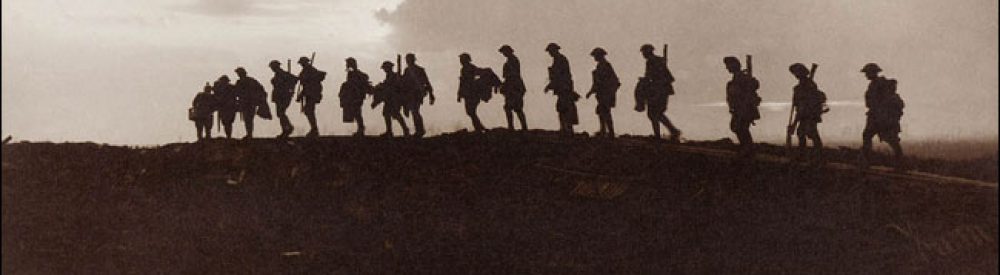
 Melanie Richter-Montpetit has an essay at The disorder of things, ‘Why Torture When Torture Does Not Work? Orientalism, Anti-Blackness and the Persistence of White Terror‘, which repays careful reading.
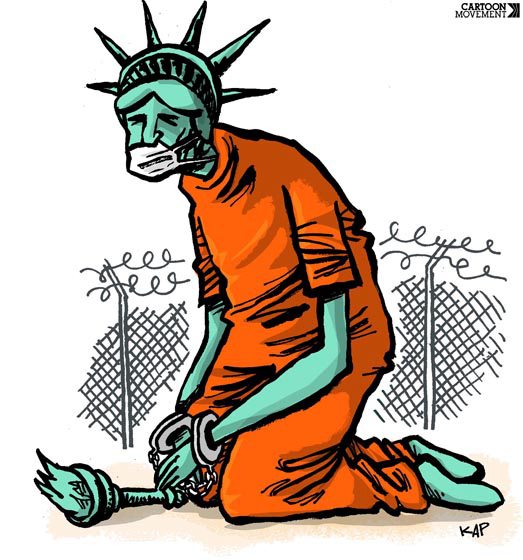 At Just Security Jameel Jaffer has a brief, important post about the release of these documents – and, crucially, the Obama administration’s attempt to prevent the publication of photographs documenting the abuse of detainees at US military facilities – that loops back to the debate over the Charlie Hebdo cartoons. He argues that it is at the very least ironic that some of the same voices calling for the freedom to publish cartoons whatever their consequences are now demanding the suppression of other images ‘because of the possibility that their release will provoke violence’…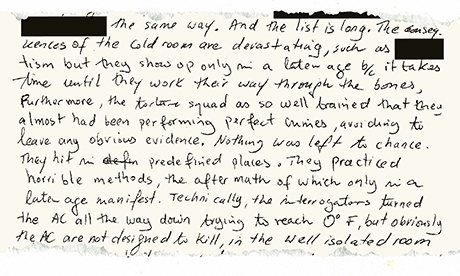
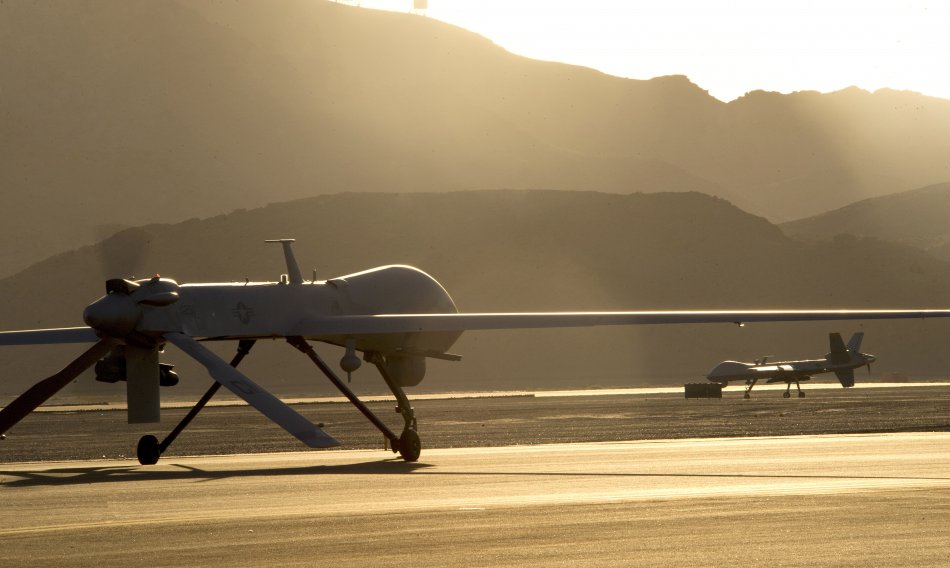
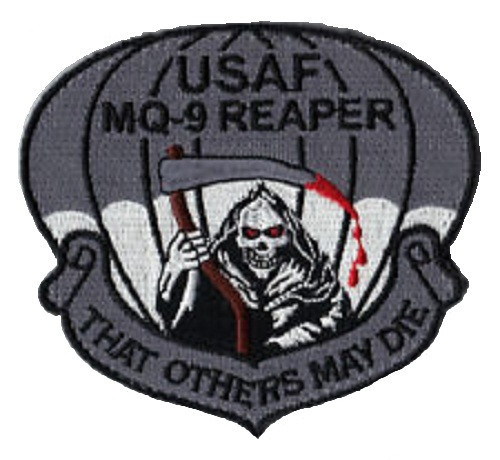
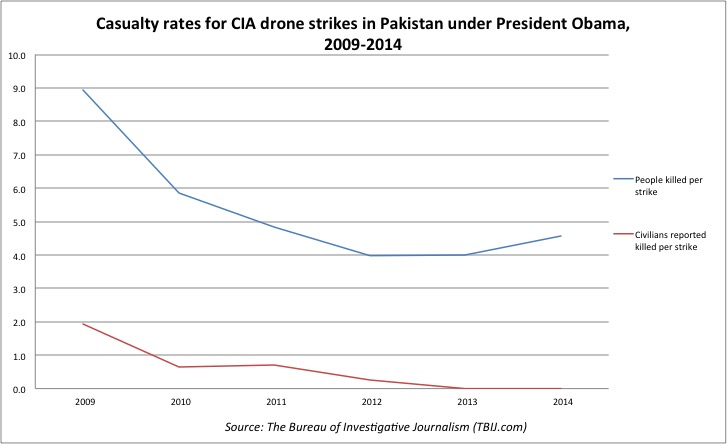
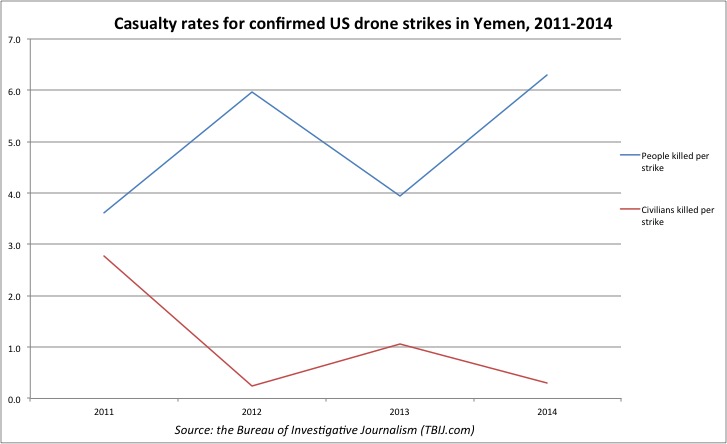
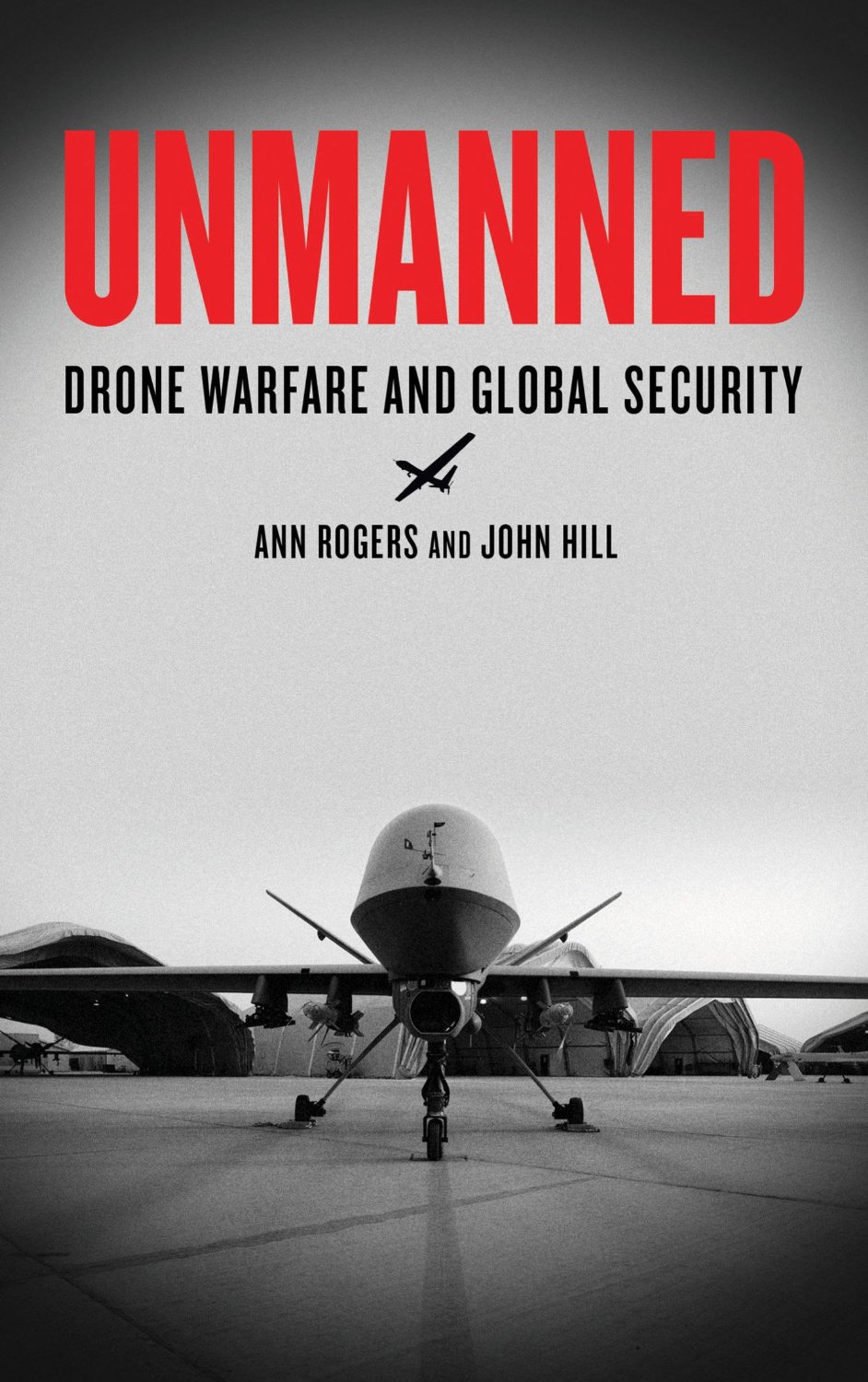
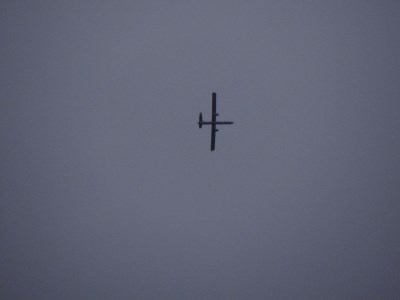
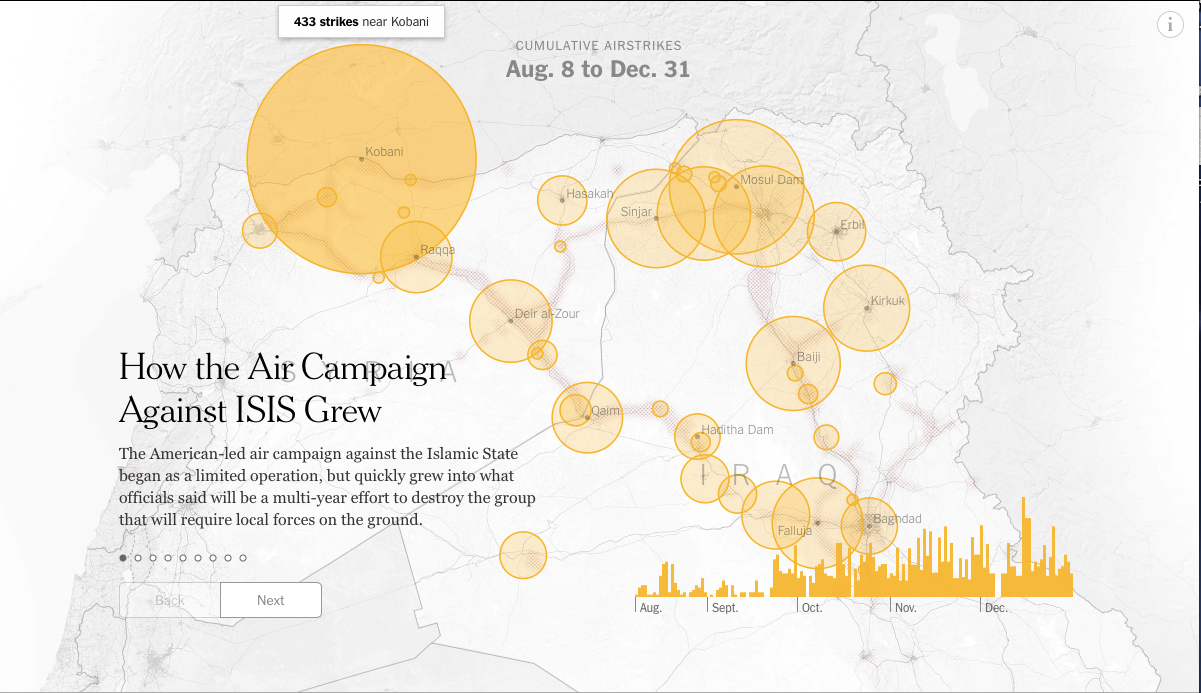

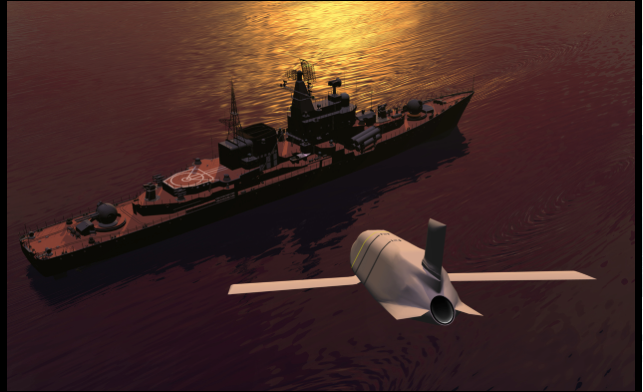

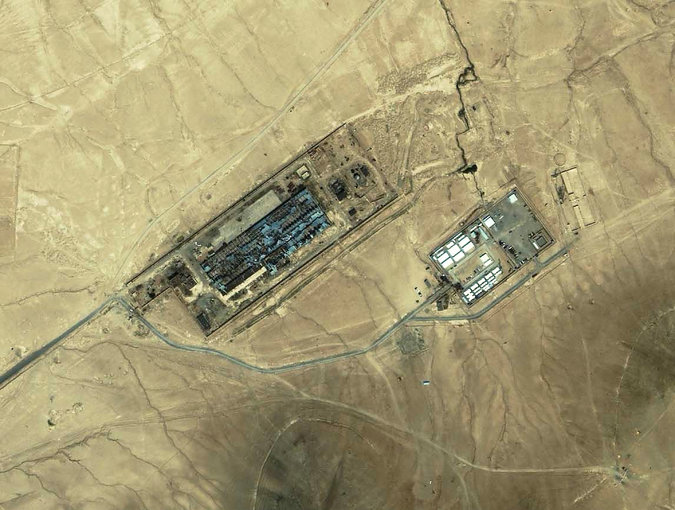
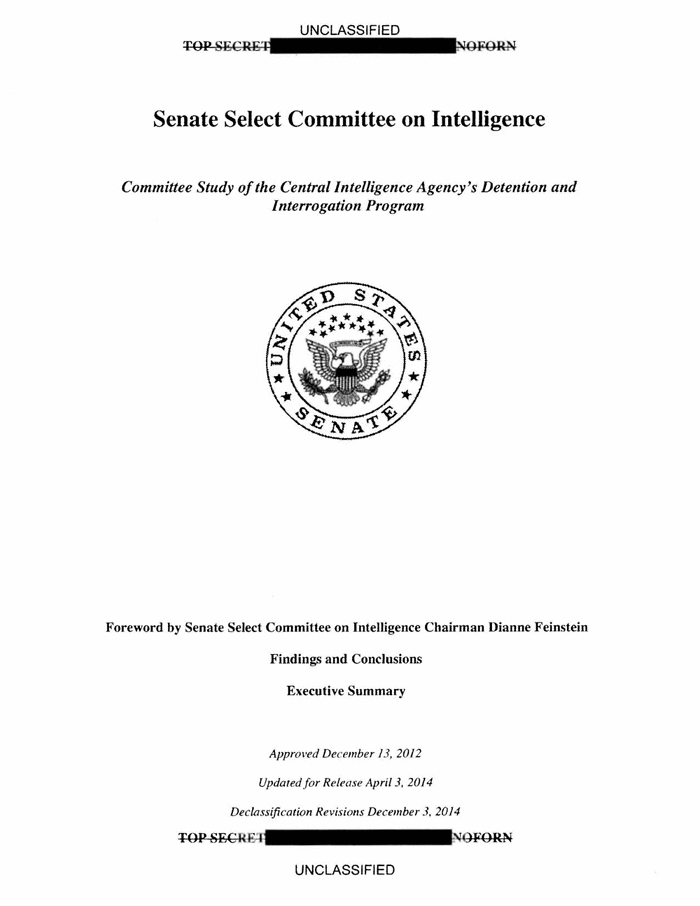
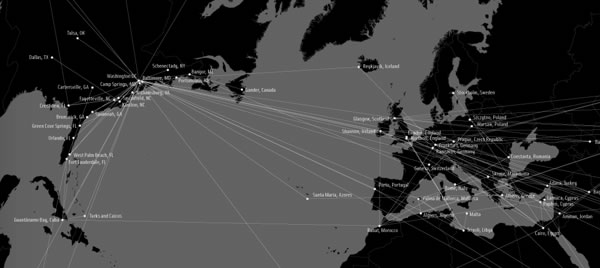
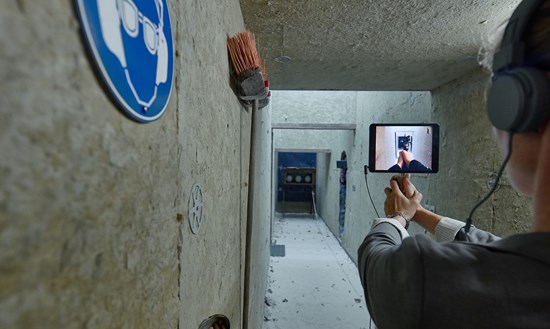
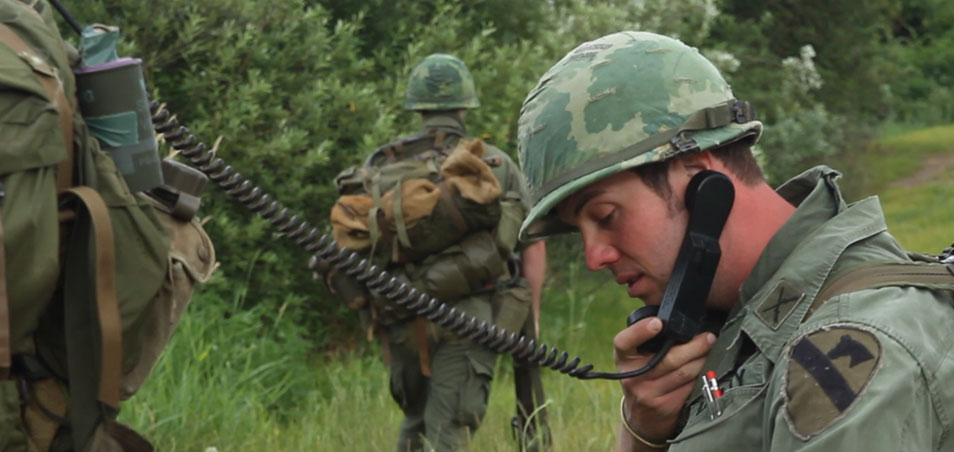
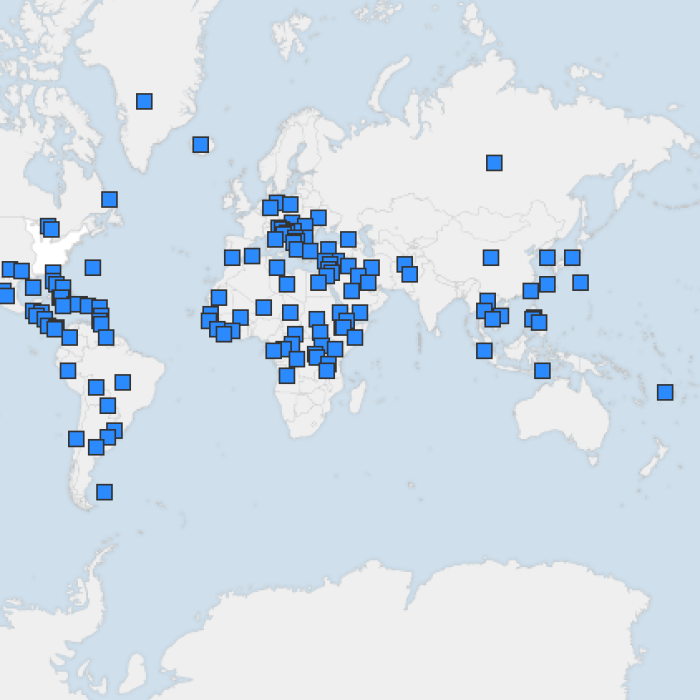
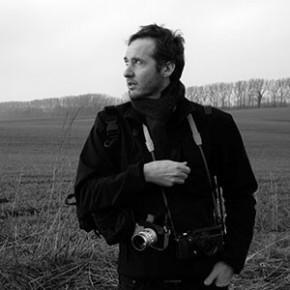
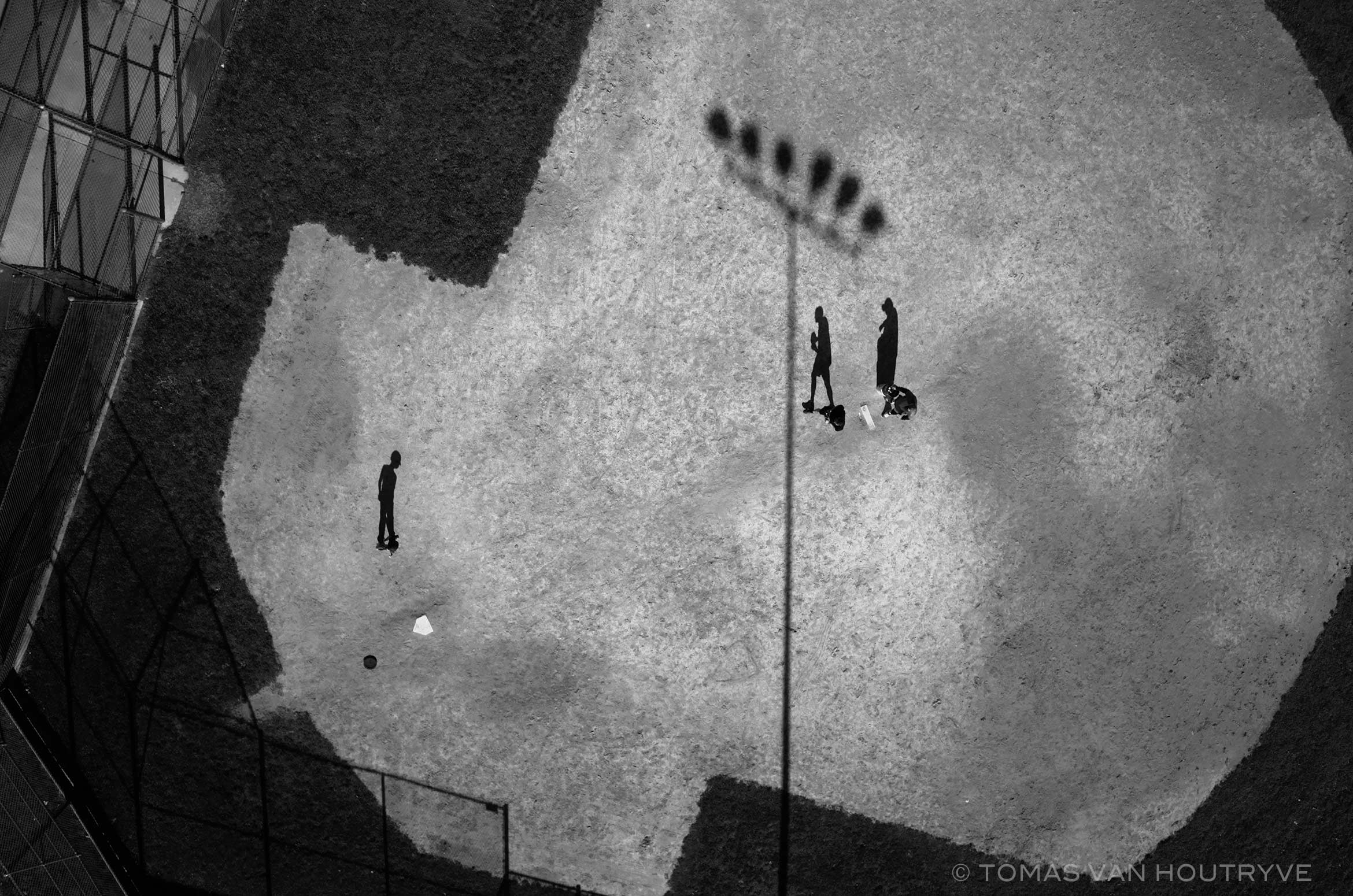
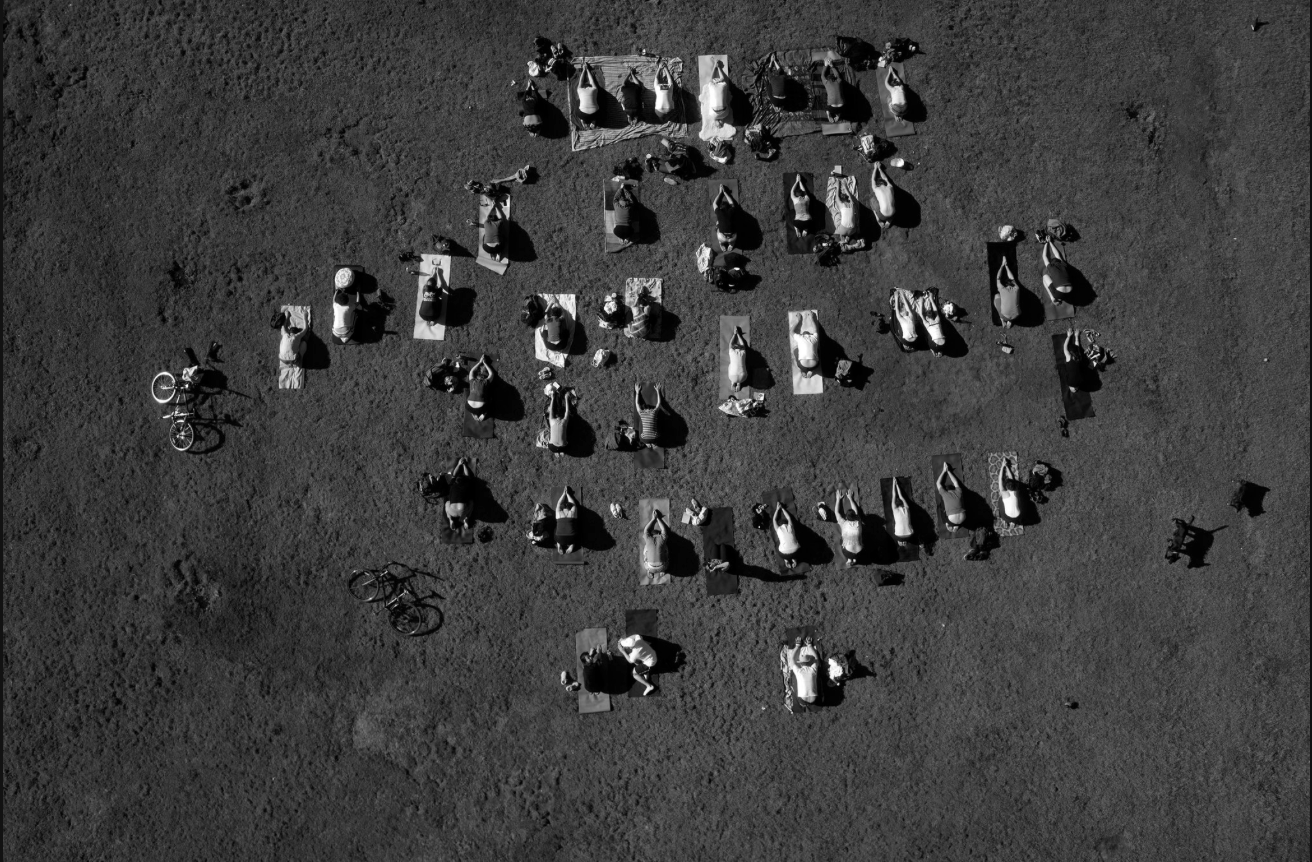

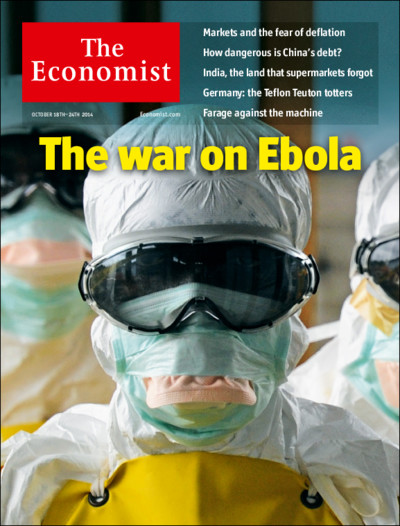
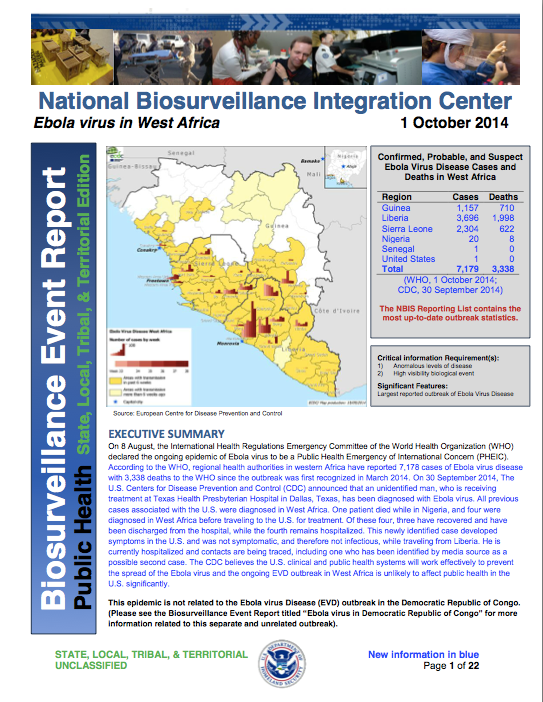

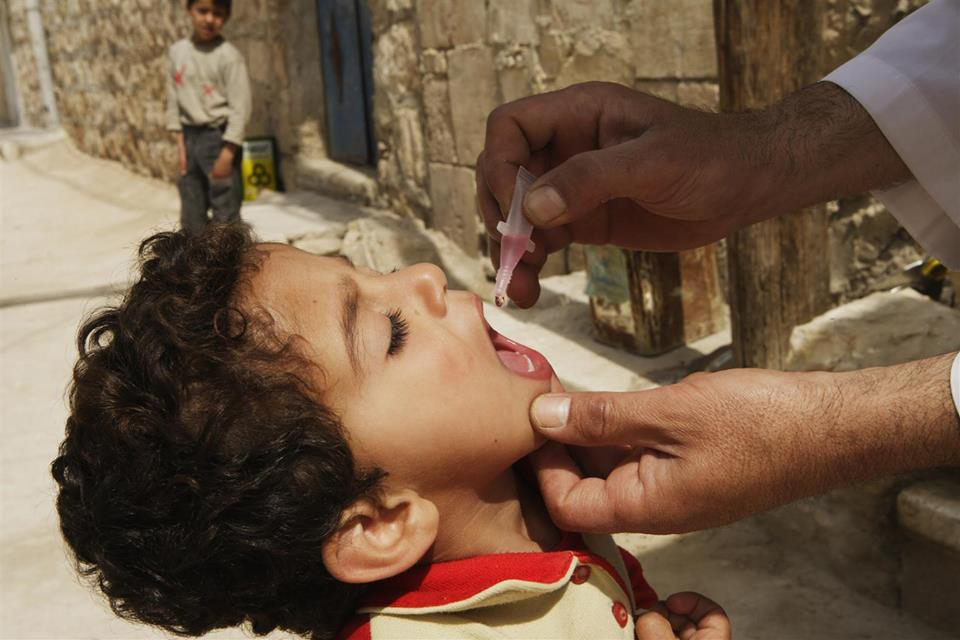



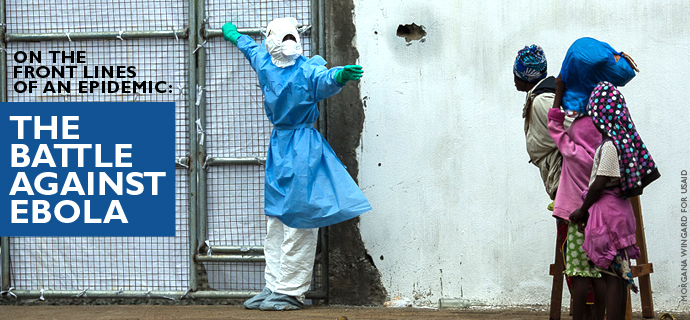
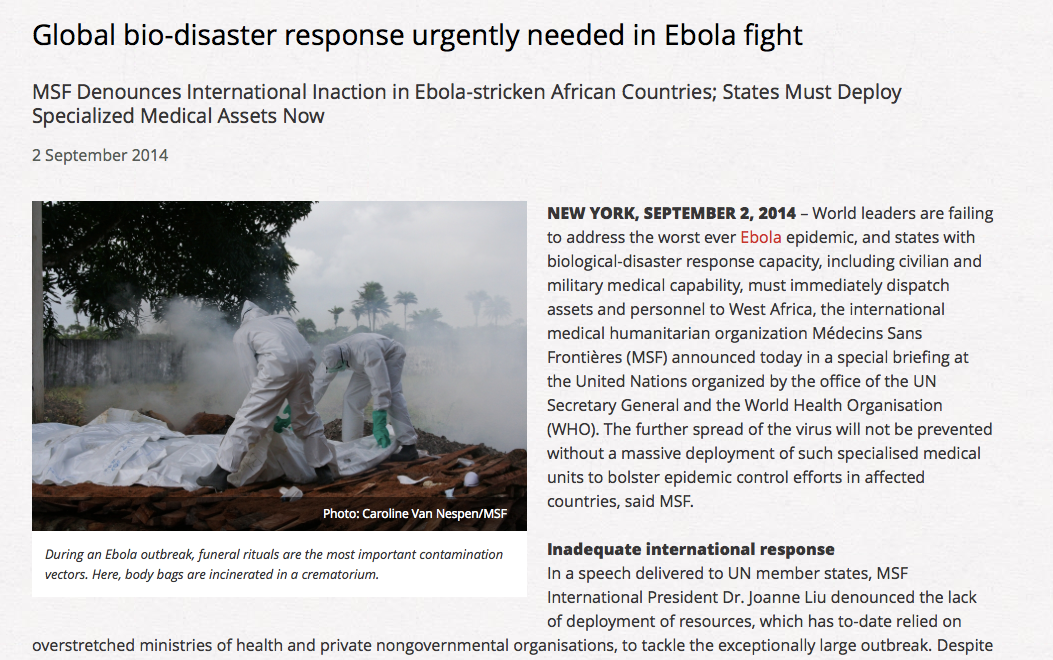
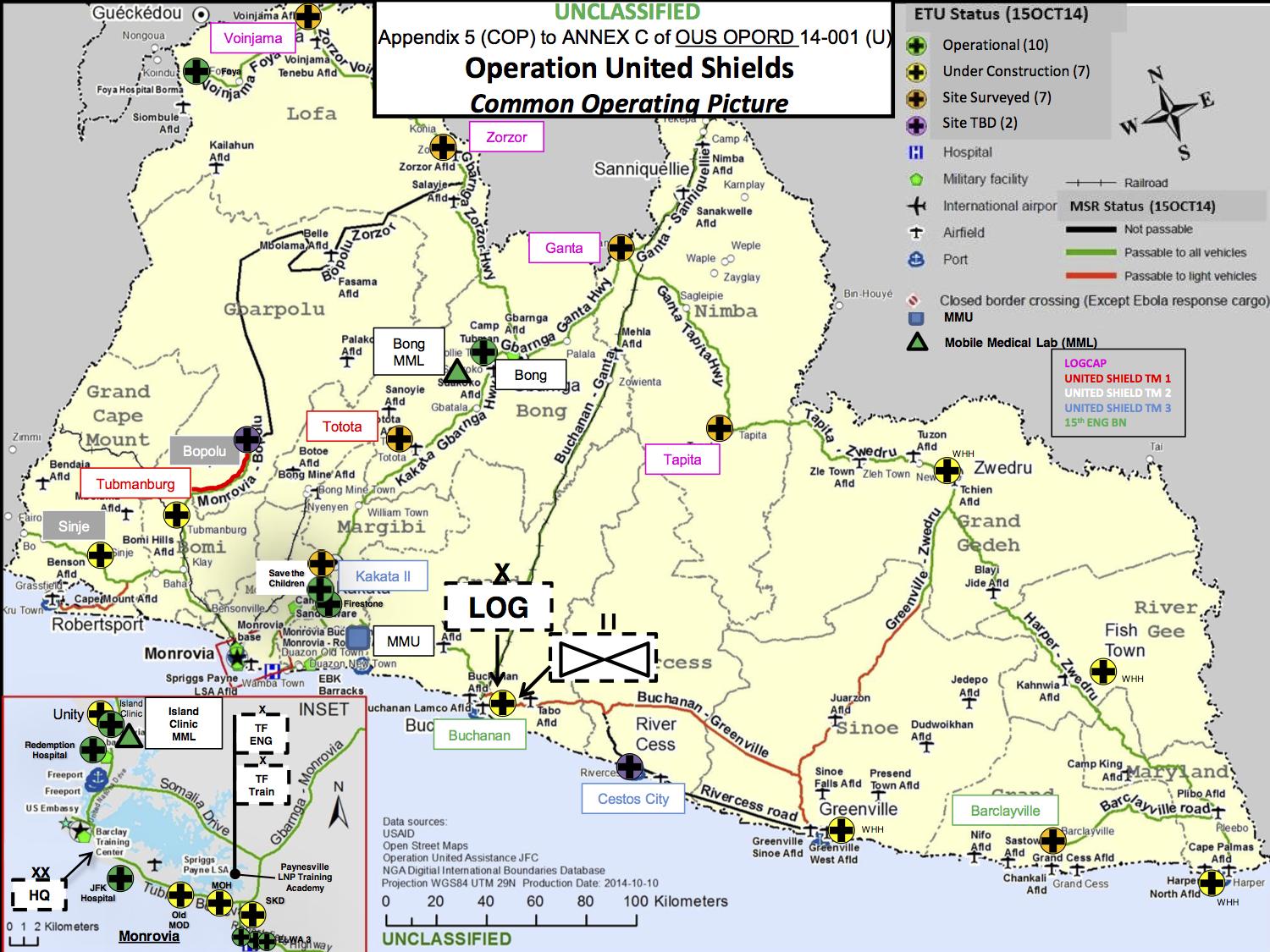
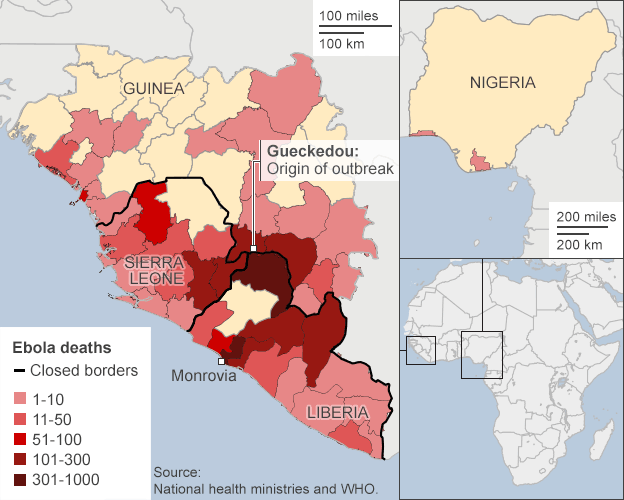
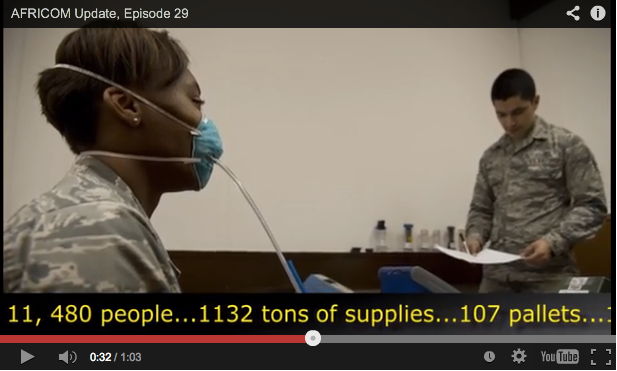
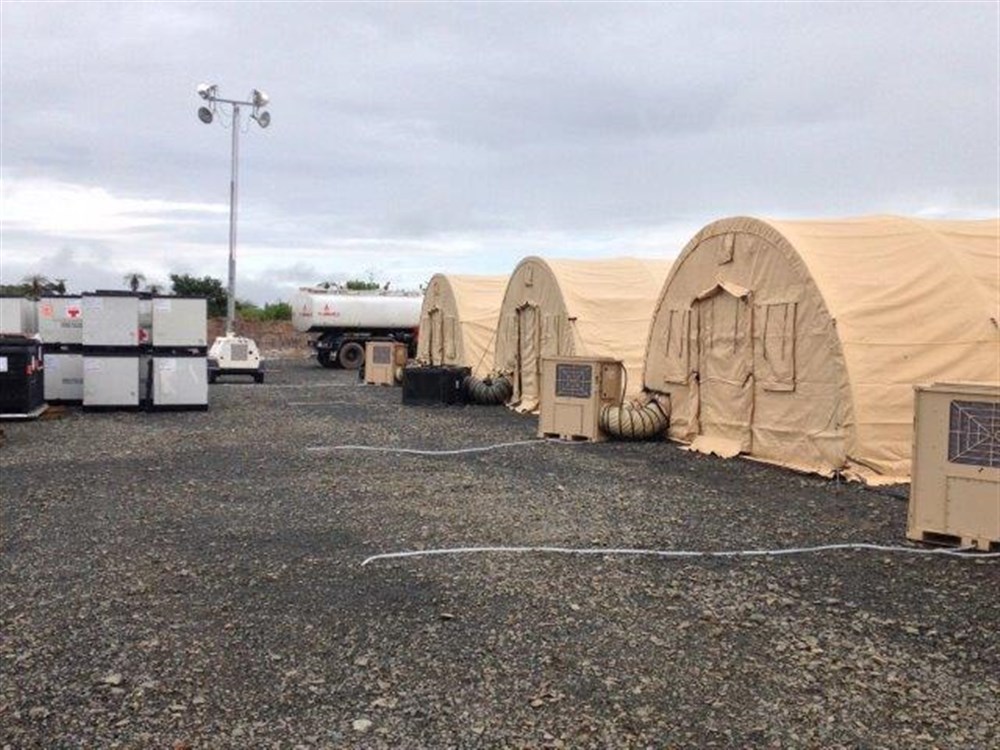
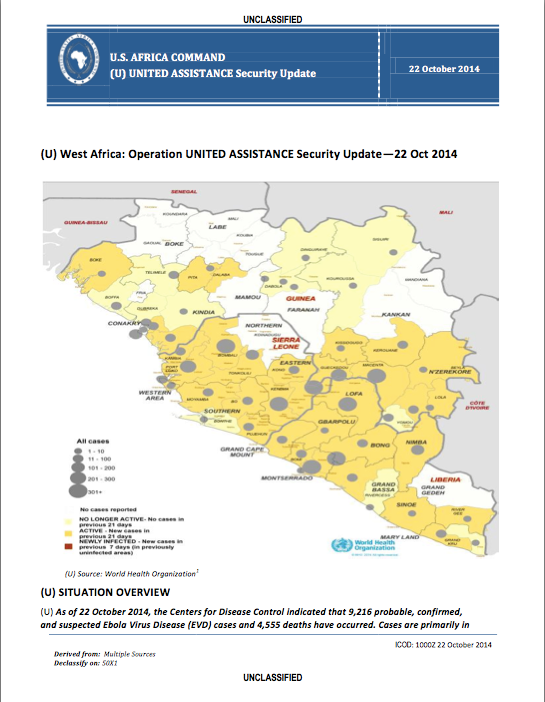
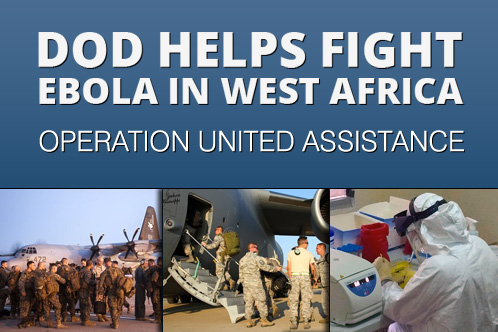
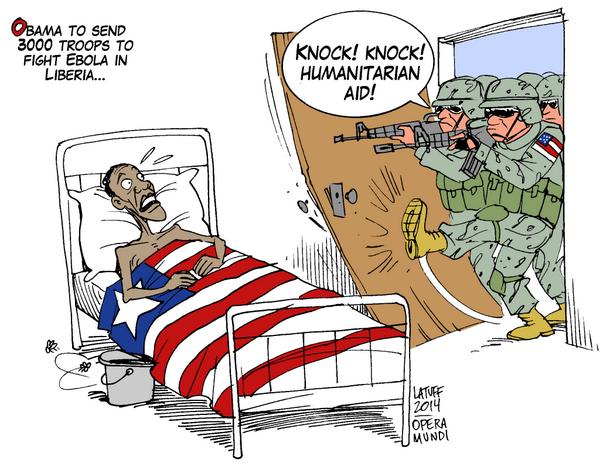
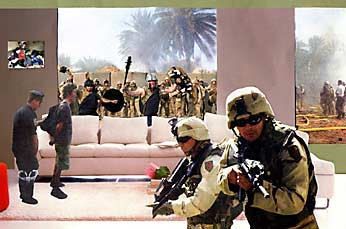
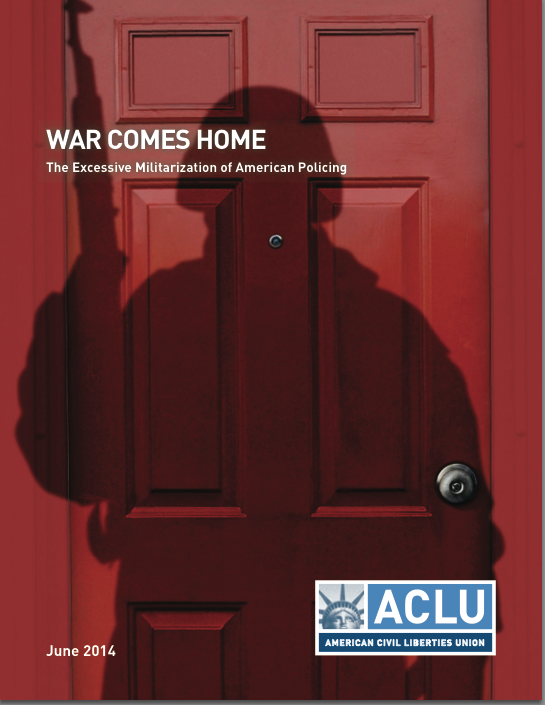


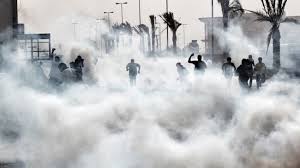
 geographical imaginations