Bodies at risk

This is far more than a post-script to my last post.  In writing ‘The Natures of War’ I started to develop the concept of a corpography (see also ‘Corpographies’ DOWNLOADS tab) because I became keenly interested in the ways in which the entanglements between military violence and ‘nature’ were registered on and through the body.

I had an appreciative message from Eileen Rositzka, following my Neil Smith Lecture at St Andrews, and I’ve finally caught up with a marvellous, exquisitely illustrated essay she has co-written with Robert Burgoyne: ‘Goya on his Shoulder: Tim Hetherington, Genre Memory, and the Body at Risk.’  It was published in Frames Cinema Journal 7 (2015) and is available open access here.

The figure of the body in narratives of war has long served to crystallize ideas about collective violence and the value or futility of sacrifice, often functioning as a symbol of historical transformation and renewal or, contrastingly, as a sign of utter degeneration and waste. As a number of recent studies have shown, the power of somatic imagery to shape cultural perceptions of war has had a decisive impact on the way wars have been regarded in history, and has sometimes influenced the conduct of war as it unfolds.

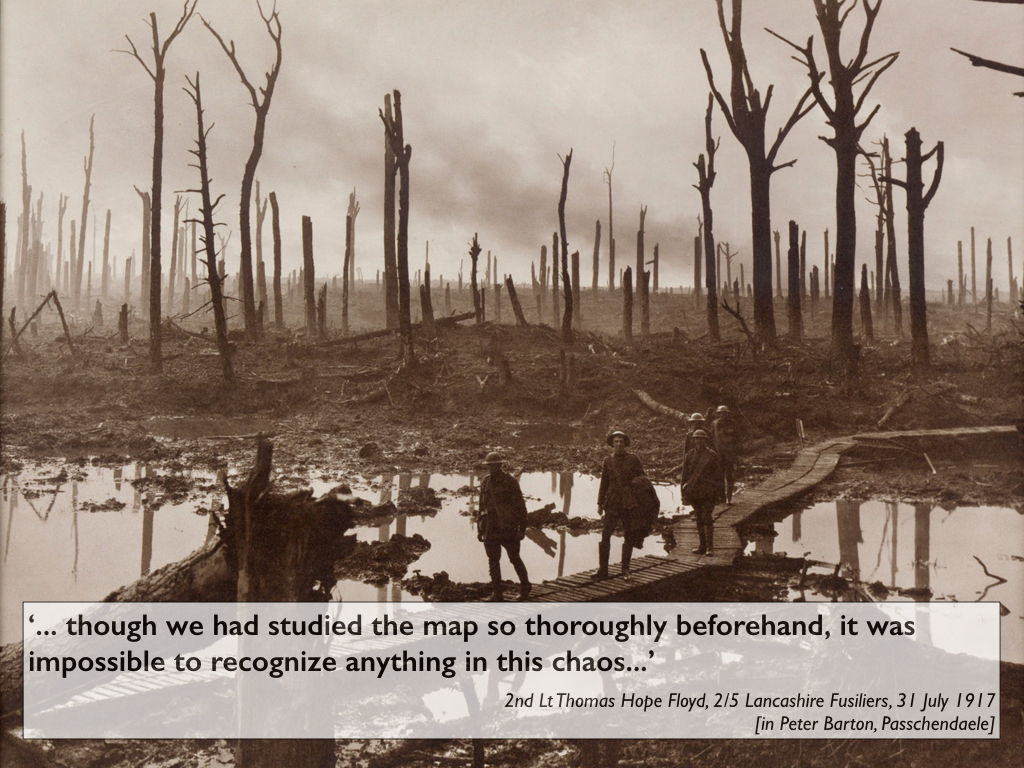
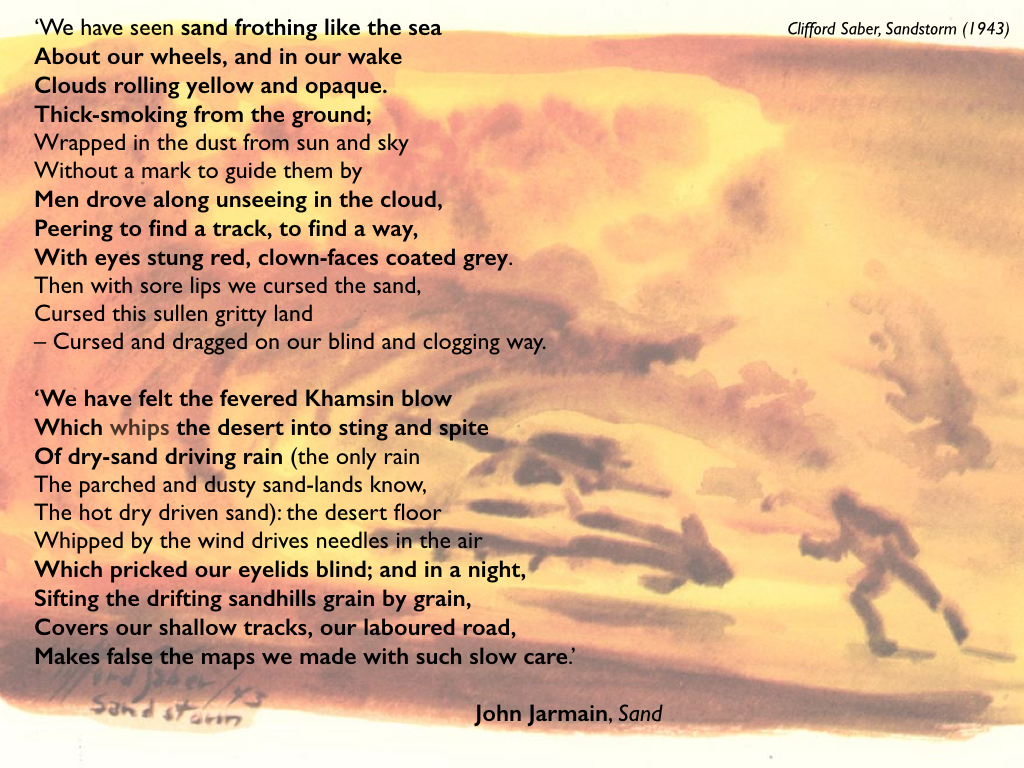
Following my good friend Gastón Gordillo‘s exemplary lead, I’ve been thinking about extending my original analysis from the mud of the Western Front in the First World War, the deserts of North Africa in the Second, and the rainforests of Vietnam into Afghanistan (for the book-version of the essay), and ‘Goya on his shoulder’ is full of all sorts of ideas on how to do exactly that.  Gastón has made much of Sebastian Junger/Tim Hetherington‘s extraordinary film Restrepo – see here and especially here – and Robert and Eileen add all sorts of insights to the mix and, in particular, provide an illuminating visual genealogy of the issues at stake:

With their concentrated focus on the body in war, Restrepo and Infidel also mark an intervention into contemporary debates in the emerging doctrine of “bodiless war” or virtual war – what is known in war policy circles as the “Revolution in Military Affairs” (RMA). In contrast to the decorporealised, bloodless war culture promoted and even celebrated in many contemporary theories of war, Restrepo and Infidel implicitly dramatise the limitations of so called “optical war” in many current conflict zones, emphasising the body of the soldier as a critical site of representation and meaning.

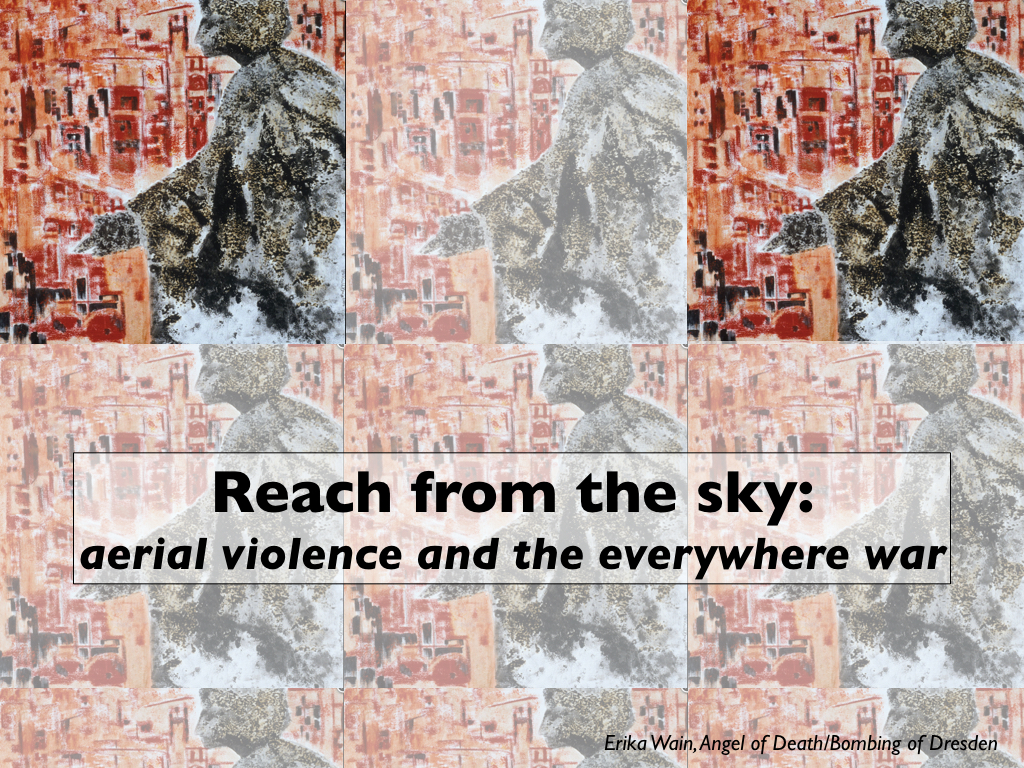
Their journey takes them from photography of the American Civil War through Edward Steichen‘s mesmerising project to capture what they call ‘bodies at risk’ in the Pacific theatre of the Second World War to Afghanistan today.  As it happens, I’ve spent the last several weeks immersed in Steichen’s project for my ‘Reach from the skies’ lectures: Steichen was one of the foremost architects of aerial photography on the Western Front during the First World War, and the photographs taken of US sailors taken under his direction during the Second have much to show us about the entanglements between military violence, masculinism and the body (the slide below is taken from my discussion in ‘Reach from the sky’).

RFTS Masculinism and military violence.001

And so to Restrepo:

‘… the work of Hetherington and Junger marks an intervention in the contemporary cultural imaginary of war, dramatizing the limitations of so called “optical war” or “bodiless war” in the conflict zones of Afghanistan. The concentrated attention to the touchscape of modern war in their work, moreover, provides a fresh perspective on older traditions of visual representation, illuminating the genre codes of war photography and film in a new way. The visual and acoustic design of Restrepo, in particular, captures the haptic geography of combat in a remote mountain outpost in the Korengal Valley. The film highlights the concentrated experience of sound and touch, providing a first-person account of the way the body inhabits contested space, the way the intensities of war confuse and overwrite the sensory codes of vision, and the compensatory drive of somatic mastery, which is projected in vivid displays of masculine athleticism in the relative safety of the enclosure.

What Steichen called “the machinery of war” is all but absent in these images. Like Steichen, Hetherington expresses the brotherhood of the men in directly physical, gestural forms – in close physical contact, in the “bloodying” of new men, and in the tattoos they give each other with a tattoo gun they have brought up to the camp…

Depictions of war in Restrepo and Infidel revolve around touch – the heat, cold, and dirt, the intense exertion, the texture of skin. Although Hetherington’s images of white, muscular soldiers may be compared to the displays of imperial masculinity celebrated by Edison in his War-Graph actualities, and by Roosevelt in his appeal to the brave “game boys” of military adventure, they also relay the heightened sensuality of Steichen’s World War II sailors to a contemporary war setting. Scenes that contain a high quotient of violence – the firefights with insurgents, the roughhousing, the bloodying of new recruits – are here juxtaposed with shots of soldiers sleeping and other scenes of quiet reflection…

Foregrounding the body of the soldier as a medium of sensory experience and as a body at risk, their work recalls the long history of war photography, painting, and film, dramatizing the importance of the figure of the body in narratives of war, and the power of somatic imagery to shape cultural perceptions of conflict. In Restrepo and Infidel, haptic experience and embodied vulnerability unfold as the central fact of war, the heart of warfare. Here too, however, a certain cultural imaginary is invoked, visible in Junger’s discussion of “young men in war” and of the “hard wiring” of young men for the violence of war, a theme that sacrifices any consideration of context, as if war was an existential constant. Nonetheless, in this framing of contemporary western war, centred on the haptic geography of combat, we can see an initial sketch, an introduction, to a critical understanding of the corpography of war in the current period.

My extracts don’t do justice to the range and depth of the essay, and it really does repay close reading.
A long day’s journey…

Anti-landscape of the Western Front.001

A note from Antipode to say that the latest edition is now available online and, unless I’ve mis-read things, is open access (for now, at any rate).  It includes what the editors say ‘might well be Antipode‘s longest ever paper’ – pp. 3-56! – my ‘Natures of war’ essay here.

JARMAN Sand.001

Still reaching from the skies…

Sorry for the long silence – I’ve had my head down since soon after Christmas preparing the Tanner Lectures which I gave this past week in Cambridge [‘Reach from the sky: aerial violence and the everywhere war’].  The lectures were recorded and the video will be available on the Clare Hall website in a fortnight or so: more when I know more.

In outline – and after a rare panic attack the night before, which had me working until 2.30 in the morning –  I organised the two Lectures like this:

ONE

Prelude: The historical geography of bombing

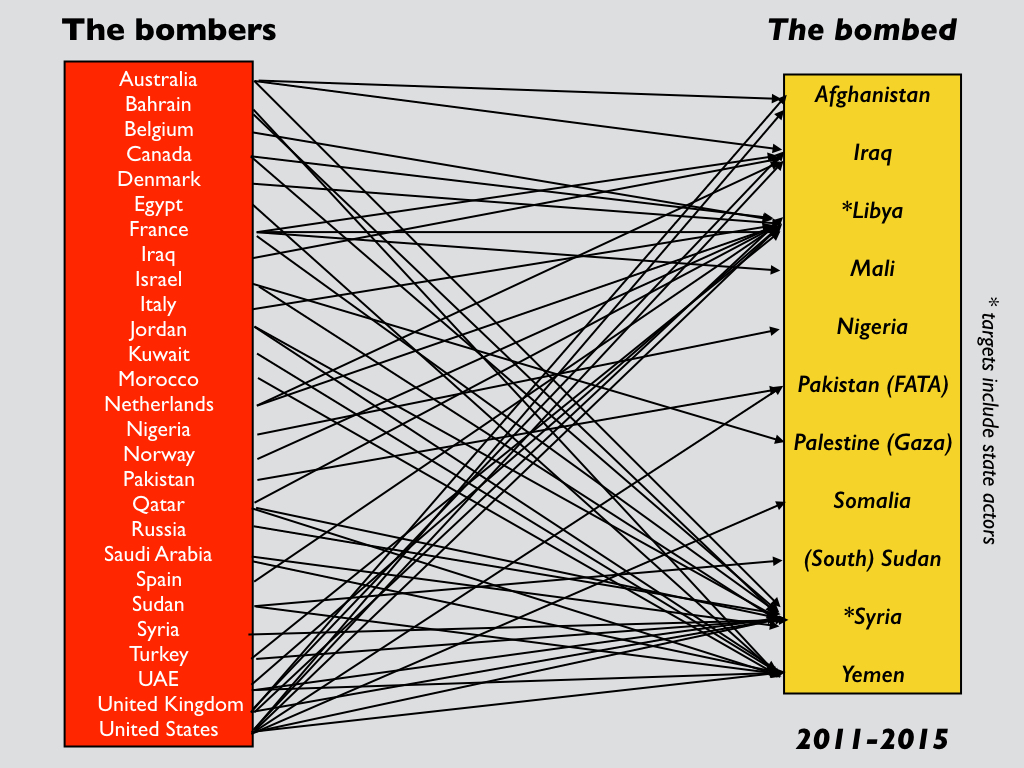
Bombing is back in the headlines but it never really left – and yet those who remain advocates of aerial violence don’t seem to have learned from its dismal history.  They also ignore the geographies that have been intrinsic to its execution, both the division between ‘the bombers and the bombed’ (the diagram below is an imperfect and fragmentary example of what I have in mind) and the pulsating spaces through which bombing is performed.

The bombers and the bombed.001

Good bomb, bad bomb

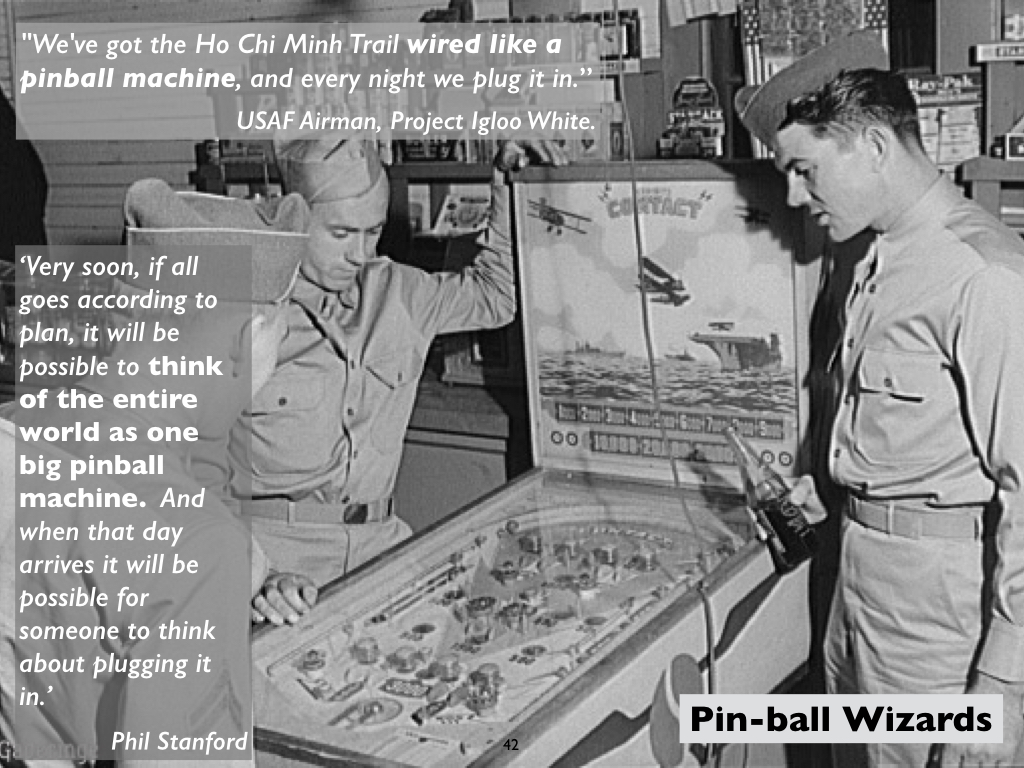
(with apologies to Mahmood Mamdani….)  In the first part I traced The machinery of bombing from before the First World War through to today’s remote operations.  Even though most early commentators believed that the primary role of military aircraft would be in reconnaissance, it was not long before they were being used to orchestrate artillery fire and to conduct bombing from the air. This sequence parallels the development of the Predator towards the end of the twentieth century.  In fact, almost as soon as the dream of flight had been realised the possibility of ‘unmanned flight’ took to the air.  Perhaps the most significant development, though, because it directs our attention to the wider matrix within which aerial violence takes place, was the development of the electronic battlefield in Laos and Cambodia. I’ve written about this in detail in ‘Lines of Descent‘ (DOWNLOADS tab); the electronic battlefield was important not because of what it did – the interdiction program on the Ho Chi Minh Trail was a spectacular failure (something which too many historians have failed to recognise)  – but because of what it showed: it conjured up an imaginative landscape, an automated killing field, in which sensors and shooters were linked through computer systems and automatic relays.  Contemporaries described the system as a vast ‘pinball machine’ (see the image below: you can have no idea how long it took me to track it down…).

Pinball wizards.001

The analogy allowed me to segue into the parallel but wholly inadequate characterisation of today’s remote operations as reducing military violence to a video game.

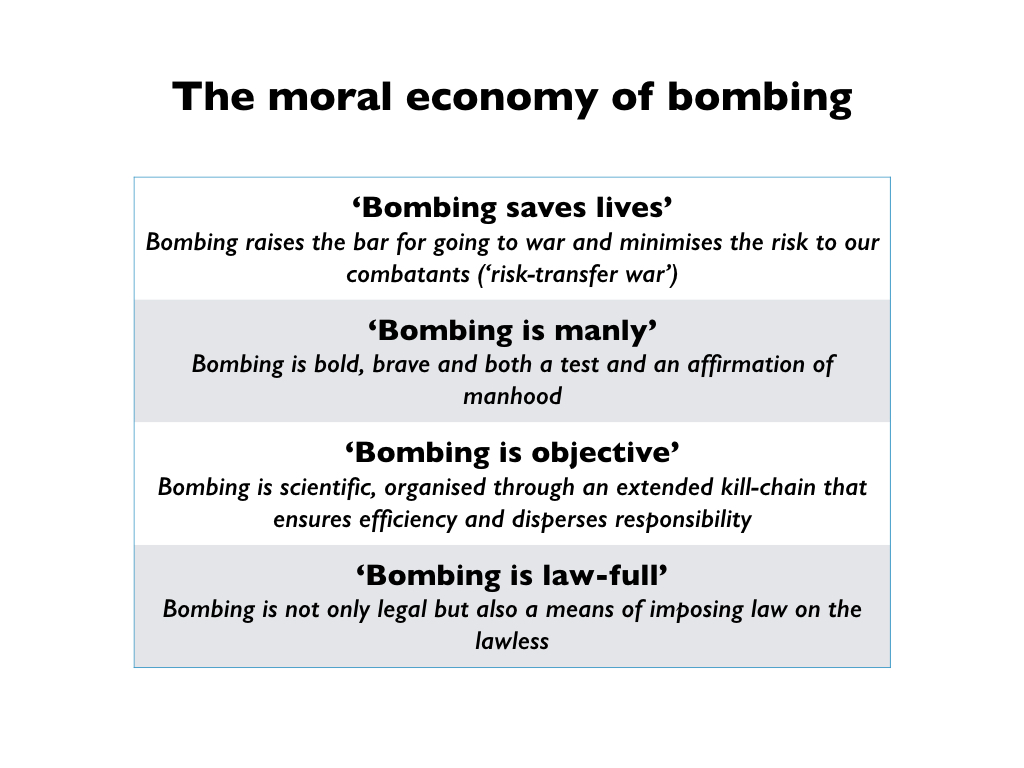
That is an avowedly ethical objection, of course, so I then turned to The moral economy of bombing.  Here I dissected four of the main ways in which bombing has been justified.  These have taken different forms at different times, and they intersect and on occasion even collide.  But they have been remarkable persistent, so in each case I tracked the arguments involved and showed how they have been radicalised or compromised by the development of Predators and Reapers.

Moral economy of bombing.001

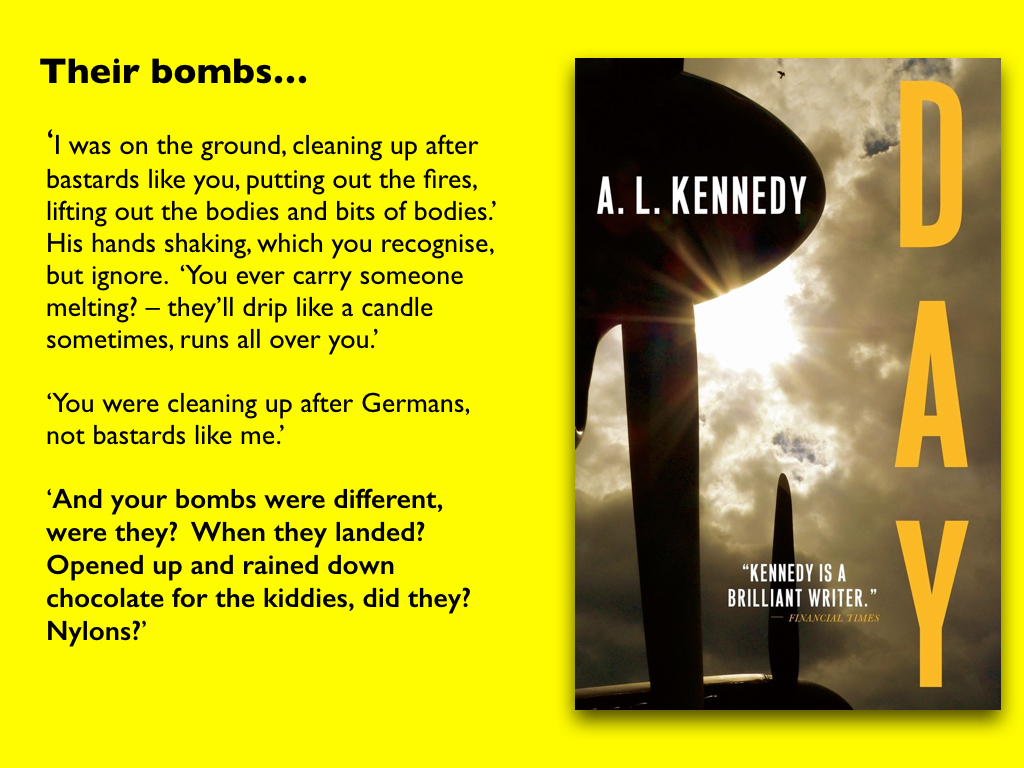
All of these justifications applied to ‘our bombs’, needless to say, which become ‘good bombs’, not to ‘their bombs’ – the ‘bad bombs’.

Their bombs.001

TWO

Killing Space

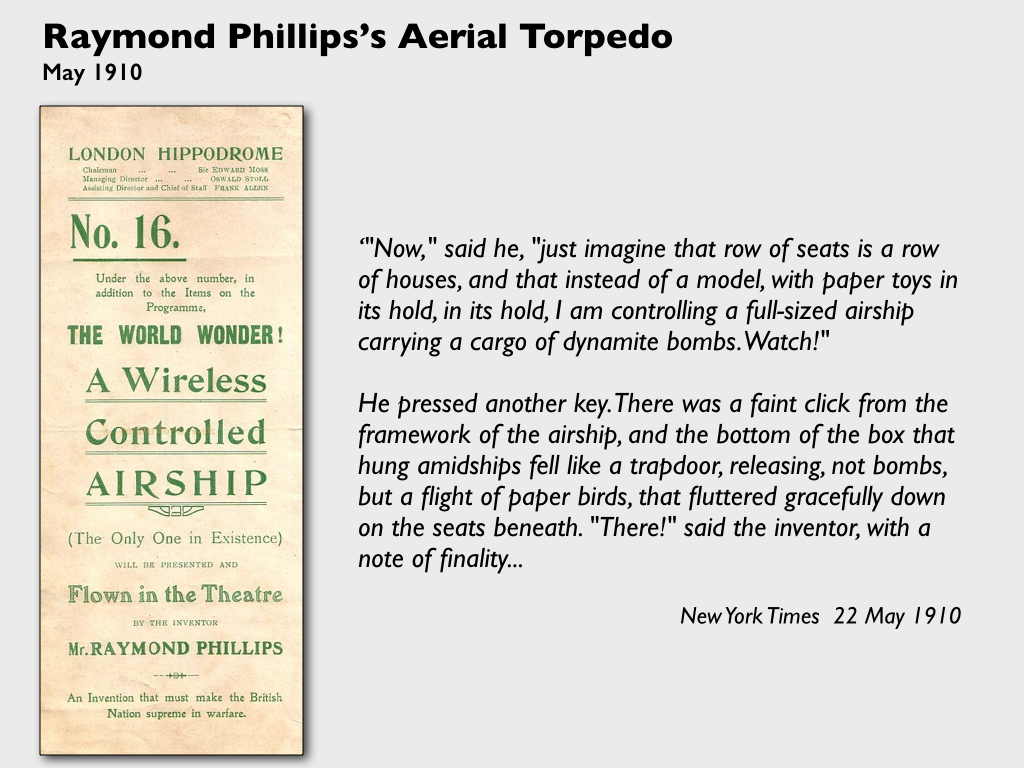
Phillips' Aerial Torpedo.001

I started the second lecture by discussing The deconstruction of the battlefield; the wonder of Raymond Phillips’s fantasies of ‘aerial torpedoes‘ before the First World War was not so much their promise of ‘bomb-dropping by wireless’ but the targets:

Phillips' bomb-dropping by wireless.001

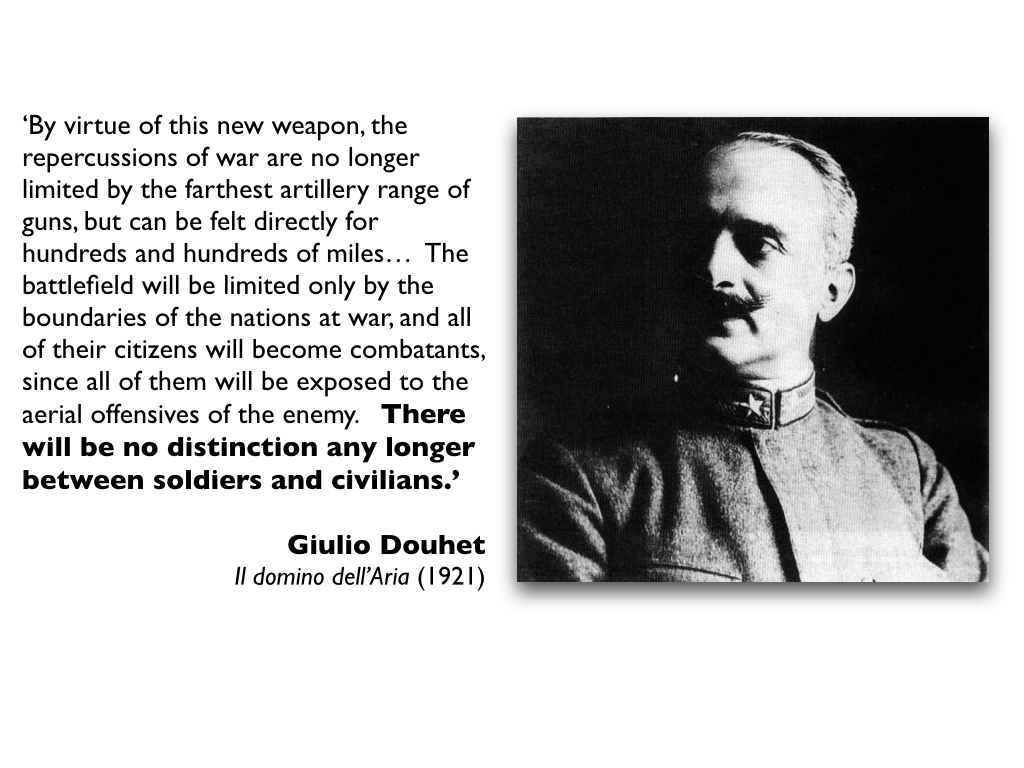
It was this radical extension of the battle space that counted.  In the event,  it was not British airships that dropped bombs on Berlin but German Zeppelins that bombed London and Paris, but the lesson was clear:

Douhet.001

To explore the formations and deformations of the battlespace in more detail, I used the image of The dark heart of bombing to describe a battlespace that alternately expanded and contracted.  So Allied bombing in the Second World war extended its deadly envelope beyond Germany, Italy and Japan into Belgium, Bulgaria, Denmark, France, the Netherlands, Norway and Romania; later the United States would bomb North Vietnam but reserved most of its ordnance for South Vietnam, Laos and Cambodia; and US air strikes in Afghanistan and Iraq would eventually spill over into Pakistan, Syria and elsewhere.  In the course of those air wars, the accuracy of targeting improved until it was possible to aim (if not always to hit) point-targets – individual buildings and eventually individual people – but this contraction of the killing space was accompanied by its expansion.  These ‘point-targets’ were selected because they were vital nodes that made possible the degradation or even destruction of an entire network.  Hence, for example, the Israeli attack on the Gaza power station (more in a previous post here):

Gaza Power Strip.001

A similar argument can be made about the US Air Force’s boast that it can now put ‘warheads on foreheads’, and I linked the so-called individuation of warfare to the US determination to target individuals wherever they go – to what Jeremy Scahill and others describe as the production of a newly expanded ‘global battlefield’.  What lies behind this is more than the drone, of course, since these killing fields rely on a global system of surveillance orchestrated by the NSA, and I sketched its contours and showed how they issued in the technical production of an ‘individual’ not as a fleshy, corporeal person but as a digital-statistical-spatial artefact (what Ian Hacking once called ‘making people up’ and what Grégoire Chamayou calls ‘schematic bodies‘).

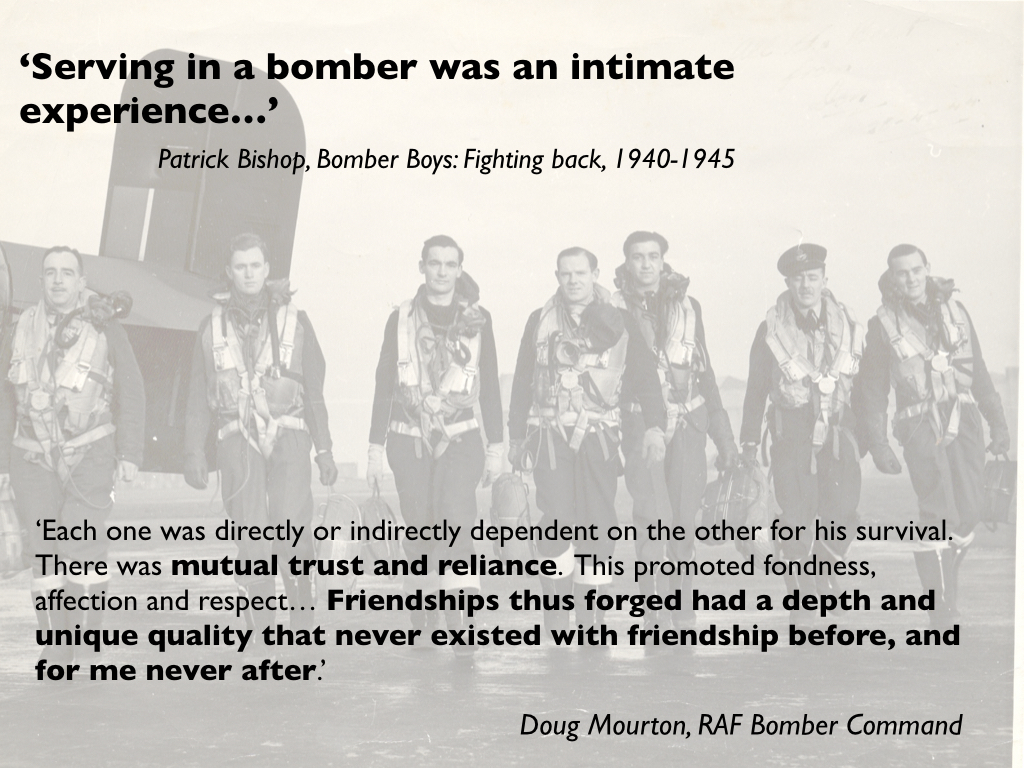
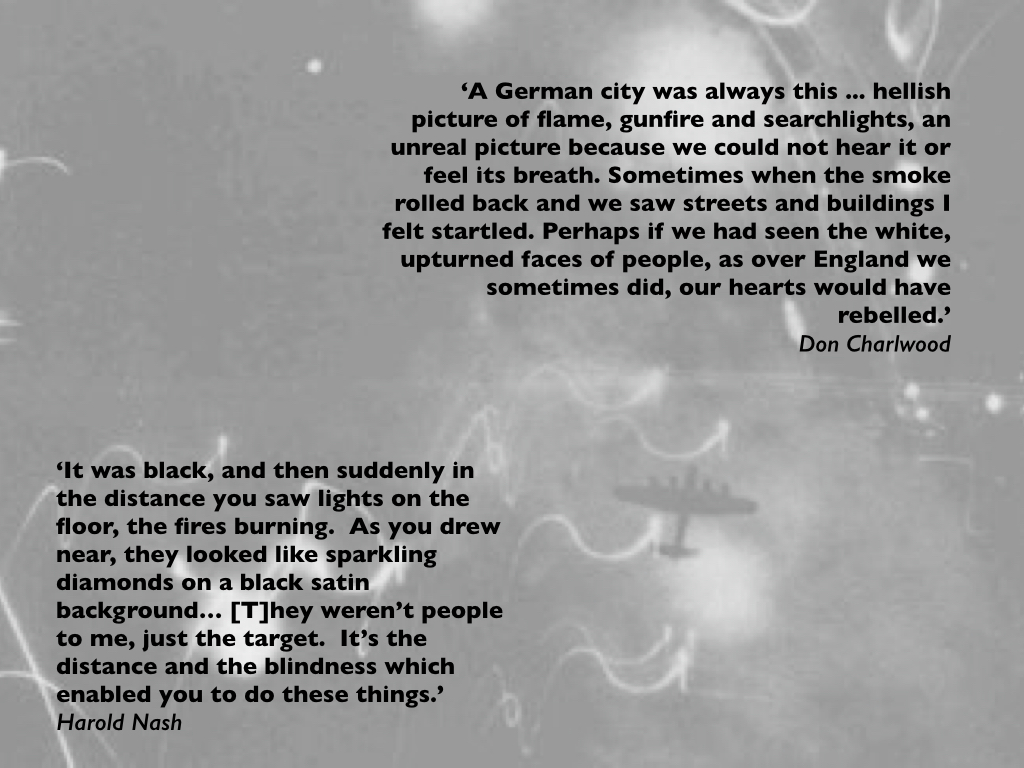
Next I explored a different dialectical geography of the battlespace: Remote splits: intimacy and detachment.  I started with RAF Bomber Command and traced in detail the contrast between the intimacy between members of bomber crews (a mutual dependence reinforced by the bio-convergence between their bodies and the machinery of the bomber itself) and the distance and detachment through which they viewed their targets.

Bioconvergence and the bomber crew.001

Intimacy in Bomber Command.001

The Good Wife.001

Cockpit dials.001

Distance and blindness.001

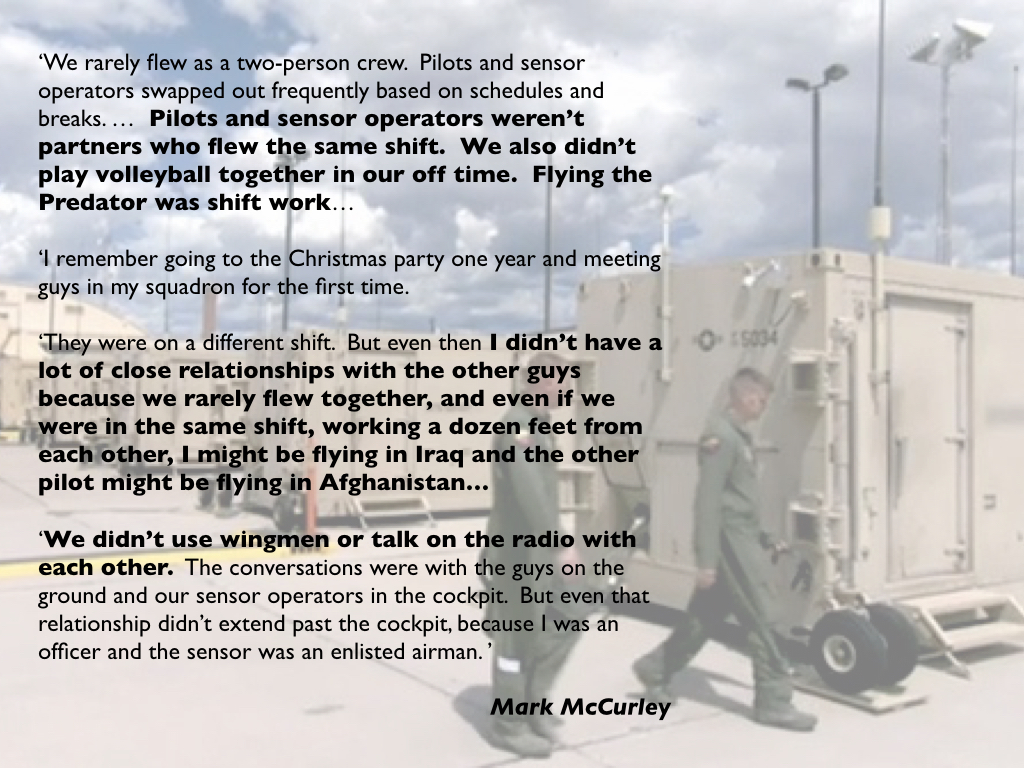
There’s much more on this in ‘Doors into nowhere‘ (DOWNLOADS tab), though I think my discussion in the Lectures breaks new ground. All of this is in stark contrast to today’s remote operations, where – as Lucy Suchman reminds us – there remains a remarkable (though different) degree of bioconvergence and yet now a persistent isolation and anomie is felt by many pilots and sensor operators who work in shifts:

Anomie and the drone.001

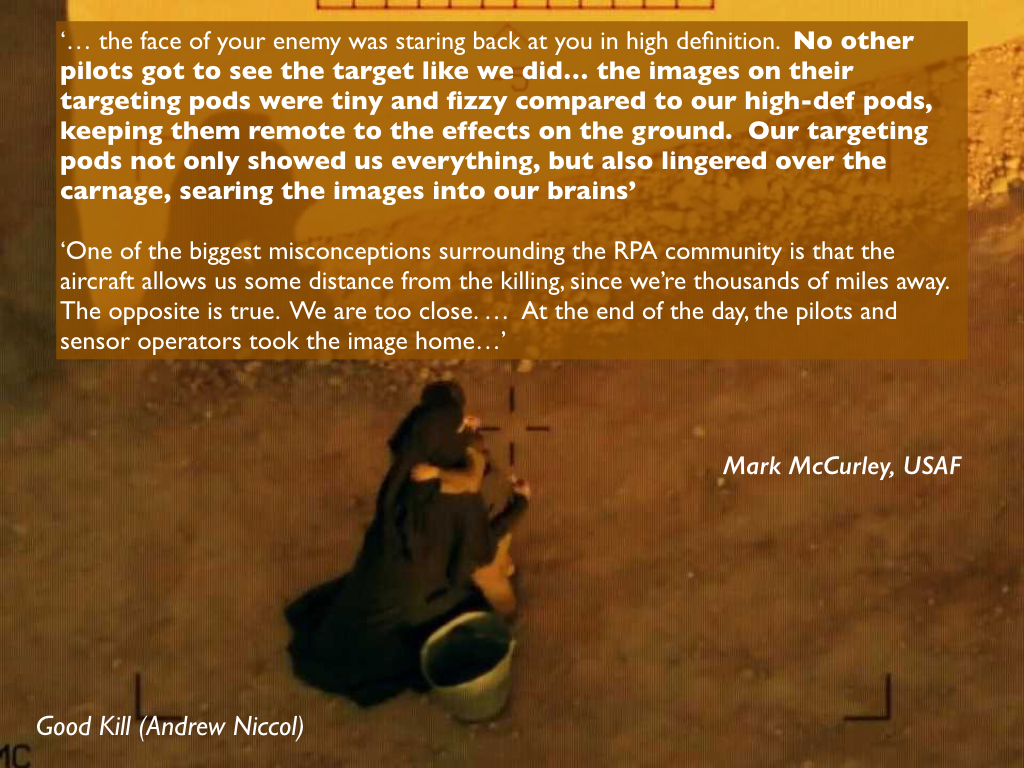
This is thrown into relief by the closeness remote operators feel to the killing space itself, an immersion made possible through the near real-time full-motion video feeds, the internet relay chatter and the radio communications with troops on the ground (where there are any). In contrast to the bomber crews of the Second World War – or those flying over the rainforests of Vietnam, Laos and Cambodia – there is a repeated insistence on a virtualized proximity to the target.

Good Kill in high-definition.001

But I used a discussion of Andrew Niccol‘s Good Kill to raise a series of doubts about what drone crews really can see, as a way into the next section, Sweet target, which provided an abbreviated presentation of the US air strike in Uruzgan I discuss in much more (I hope forensic) detail in Angry Eyes (see here and here).  That also allowed me to bring together many of the key themes I had isolated in the course of the two lectures.

As I approached my conclusion, I invoked Thomas Hippler‘s Le gouvernement du ciel: Histoire globale des bombardements aériens, (I’ve just discovered that Verso will publish the English-language version later this year or early next: Governing from the skies: a global history of aerial bombing):

Hippler Neo-douhetism.001

I’m not convinced that the military and paramilitary violence being visited on people today is all ‘low-intensity’ (Gaza? Afghanistan? Iraq? Syria? Yemen?).  But neither do I think it’s ‘de-territorialised’, unless the word is flattened into a conventionally Euclidean frame.  Hence, following Stuart Elden‘s lead, I treated territory as a political-juridical technology whose calibrations and enclosures assert, enable and enforce a claim over bodies-in-spaces.  And it was those ‘bodies-on-spaces’ that brought me, finally, to The loneliest space of all:  the irreducible, truly dreadful loneliness of death and grief:

Counting the dead.001

Behind the body-counts and the odious euphemisms of collateral damage and the rest lies the raw, inconsolable loss so exquisitely, painfully rendered in ‘Sky of Horoshima‘…

In the coming days I’ll post some of the key sections of the Lectures in more detail, which I’ll eventually develop into long-form essays.

I learned a lot from the expert and wonderfully constructive commentaries after the Lectures from Grégoire Chamayou, Jochen von Bernstorff and Chris Woods, and I’ll do my best to incorporate their suggestions into the final version.

In his response Grégoire traced my project on military violence in general and bombing/drones in particular back to a series of arguments I’d developed in Geographical imaginations in 1994 about vision, violence and corporeality; I had overlooked these completely, full of the conceit that my work had never stood still…. I shall go back, re-read and think about that some more, since some of the ideas that Grégoire recovered (and elaborated) may be even more helpful to me now.  Jochen and Chris also gave me much food for thought, so I shall be busy in the coming months, and I’m immensely grateful to all three of them.

Seeing ‘Through Post-Atomic Eyes’

All the videos from Through Post-Atomic Eyes last October are now available on YouTube here, including my “Little Boys and Blue Skies: drones through post-atomic eyes. My slide deck is available under the DOWNLOADS tab.

This is the sawn-off 30-minute version; I’ll be giving an extended version when I’m at Dartmouth later this month – and I’m really looking forward to that.

A happier new year

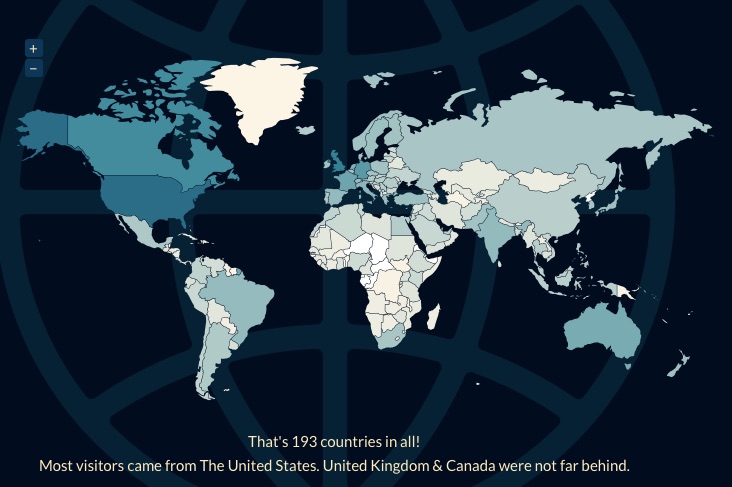
Blog visitors 2015 JPEG

And so another blogging year comes to an end, and with more visitors than ever.  The elves at WordPress tell me that the ten most popular posts in 2015 were:

Paris of/in the Middle East (November 2015)

The prosthetics of military violence (February 2015)

Travelling through words (August 2015)

Theory of the drone 1: Genealogies (July 2013)

The war on Ebola (October 2014)

Je ne suis pas Charlie (January 2015)

Bombing Encyclopedia of the world (August 2012)

Is Paris Burning? (October 2012)

Boots on the ground (September 2014)

Inhumanitarian mapping (October 2014)

It’s good to see that some of my older posts have staying power!  I’ve never thought of blogging – like this anyway – as always only ephemeral: even though I use the blog as a way of thinking out loud about things I’m working on at the moment and sharing ideas I’ve stumbled on (or been directed to by friends), I also try to make it about more than me and matters of the moment.

It’s also good to see that readers are interested in such a disparate range of issues, though as in previous years the list is misleading in so far as ‘Home Page’ tops the list, and that always shows the latest posts. And ‘DOWNLOADS’ was also right up there, with 5,000 hits – so I promise to try to keep that up to date.

So thanks for dropping by and confirming that productive research is always irredeemably social (the map above shows where you all came from). And best wishes for a happier new year.

Planetary bombing

NORAD's Santa

You’ve probably read the tinsel-and-glitter story about NORAD tracking Santa Claus on Christmas Eve – like Santa’s sleigh, it goes the rounds every year – but Matt Novak provides an appropriately explosive rendition of it here.

It was a smart move for the military. When American kids asked their parents what NORAD was, the U.S. parents would be able to respond “those are the people who help Santa” rather than “those are the people who are ensuring our second strike capabilities after you and everyone in your play group are turned to dust by a nuclear attack.”

Among other plums in the pudding, Matt pulls out a syndicated story from AP in December 1955, in which the military promised that it would ‘continue to track and guard Santa and his sleigh on his trip to and from the U.S. against possible attack from those who do not believe in Christmas‘ (emphasis added).

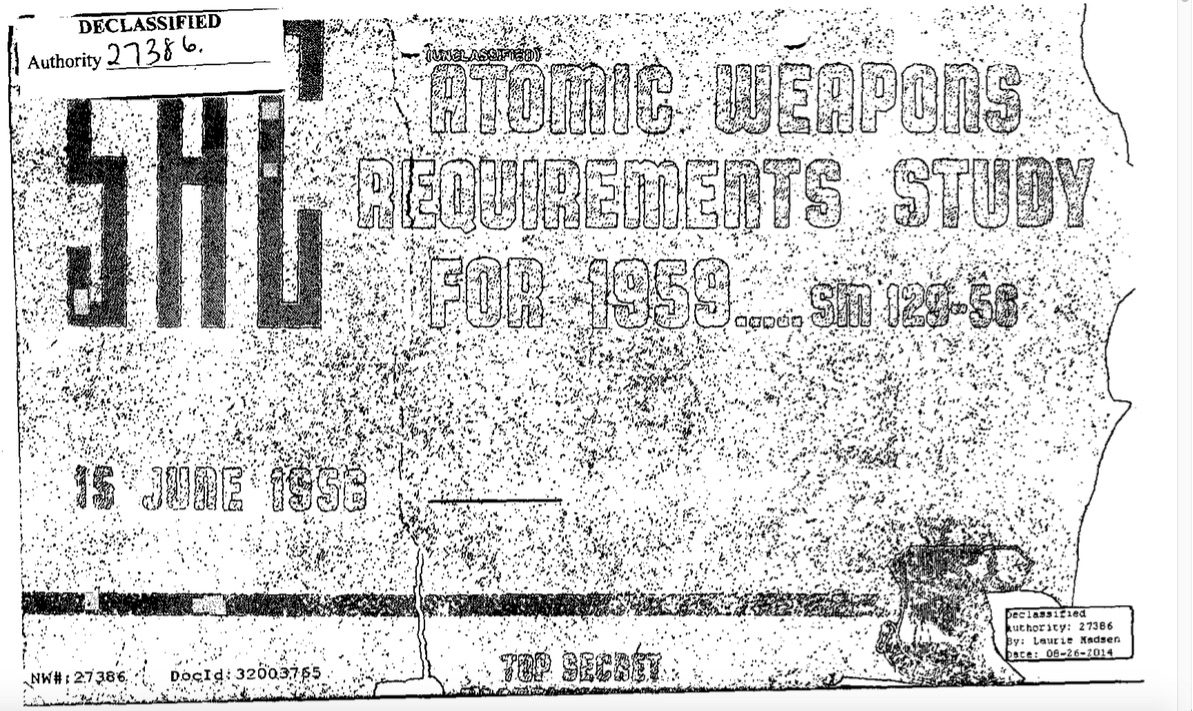
Atomic Weapons Requirements Study for 1959 JPEG

Just before Christmas this year, while NORAD was busy preparing to track Santa’s sleigh again, the National Security Archive at George Washington University released US Strategic Air Command’s Atomic Weapons Requirements Study for 1959, produced the year after that AP story.  The study

‘provides the most comprehensive and detailed list of nuclear targets and target systems that has ever been declassified. As far as can be told, no comparable document has ever been declassified for any period of Cold War history.’

Based on the Bombing Encyclopedia of the World, the Air Force planners proposed

the “systematic destruction” of Soviet bloc urban-industrial targets that specifically and explicitly targeted “population” in all cities, including Beijing, Moscow, Leningrad, East Berlin, and Warsaw. Purposefully targeting civilian populations as such directly conflicted with the international norms of the day, which prohibited attacks on people per se (as opposed to military installations with civilians nearby).

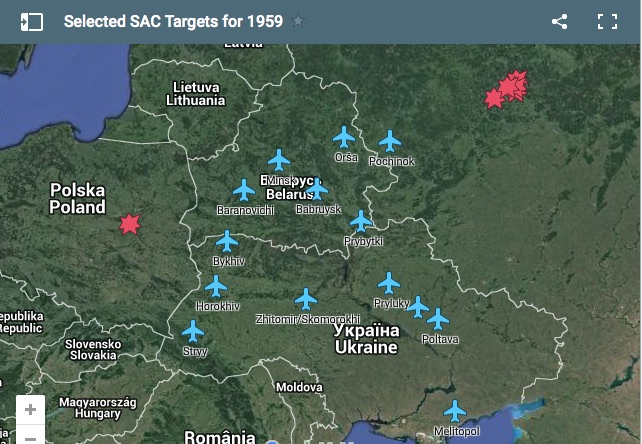
The study ‘listed over 1200 cities in the Soviet bloc, from East Germany to China, also with priorities established. Moscow and Leningrad were priority one and two respectively. Moscow included 179 Designated Ground Zeros (DGZs) while Leningrad had 145, including “population” targets.’  Every target was preceded by an eight-digit code from the Bombing Encyclopedia.

Selected SAC targets 1959 JPEG

William Burr provides an excellent, detailed commentary to accompany the Study here; you can also find more from Joseph Trevithick on this ‘catalog of nuclear death over at War is Boring here.

But all of this is prelude to the real plum in my Christmas pudding, the best paper I’ve read all year: Joseph Masco‘s ‘The Age of Fallout’ in the latest issue of History of the Present [5 (2) (2015) 137-168].

Being able to assume a planetary, as opposed to a global, imaginary is a surprisingly recent phenomenon. Although depictions of an earthly sphere are longstanding and multiple, I would argue that the specific attributes of being able to see the entire planet as a single unit or system is a Cold War creation. This mode of thinking is therefore deeply imbricated not only in nuclear age militarism, but also in specific forms of twentieth-century knowledge production and a related proliferation of visualization technologies.  A planetary imaginary includes globalities of every kind (finance, technology, international relations) – along with geology, atmosphere, glaciers, oceans, and the biosphere – as one totality.

What is increasingly powerful about this point of view is that it both relies on the national security state for the technologies, finances, and interests that create the possibility of seeing in this fashion, but also, in a single gesture, exceeds the nation-state as the political form that matters. A planetary optic is thus a national security creation (in its scientific infrastructures, visualization technologies, and governing ambitions) that transcends these structures to offer an alternative ground for politics and future making. Proliferating forms of globality – including the specific visualizations of science, finance, politics, and environment – each achieve ultimate scale and are unified at the level of the planetary. This achievement ultimately raises an important set of questions about how collective security problems can, and should, be imagined.

It’s a tour de force which, as these opening paragraphs show, is beautifully written too.  Joe begins with a richly suggestive discussion of the idea of ‘fallout’:

‘Fallout comes after the event; it is the unacknowledged-until-lived crisis that is built into the infrastructure of a system, program, or process. Fallout is therefore understood primarily retrospectively, but it is lived in the future anterior becoming a form of history made visible in negative outcomes.’

Its horizons are as much spatial as they are temporal – though Joe makes the sharp point that radioactive fallout was initially conceived as ‘the bomb’s lesser form’ and that it was the ‘explosive power of the bomb that was fetishized by the US military’ – and that fallout involves ‘individual actions and lived consequences, a post-sociality lived in isolation from the collective action of society or the war machine’ that mutates into what he sees as ‘an increasingly post-Foucaudian kind of governmentality’.

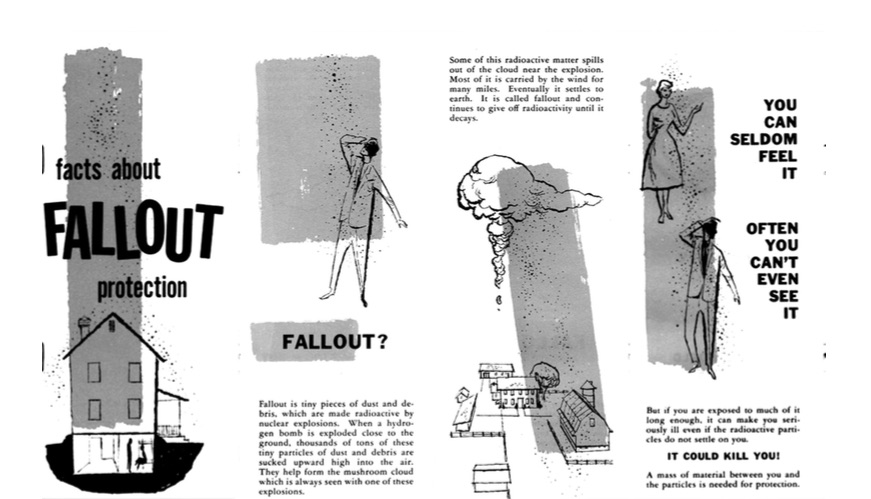
FALLOUT JPEG

When he elaborates the multiple registers in which radioactive fallout appears as an atmospheric toxicity Joe moves far beyond the nostrums of Peter Sloterdijk and others – which, to me anyway, seem to be based on almost wilfully superficial research – and connects it, both substantively and imaginatively, to contemporary critical discussions around global climate change and the Anthropocene.

In a cascade of maps and images, Joe shows how

Space and time are radically reconfigured in these fallout studies, constituting a vision of a collective future that is incrementally changing in unknown ways through cumulative industrial effects. The logics of a national security state (with its linkage of a discrete territory to a specific population) becomes paradoxical in the face of mounting evidence of ecological damage on a collective scale, not from nuclear war itself but rather from nuclear research and development programs. It is important to recognize that while cast as “experiments,” U.S. atmospheric nuclear tests were in reality planetary-scale environmental events.

In short, ‘since 1945 human beings have become post-nuclear creatures, marked with the signatures of nuclear weapons science.’

Towards the end of his essay, Joe says this:

In applying the lessons of the twentieth-century nuclear complex to contemporary geoengineering schemes to manage climate change, we might question 1) the claim to both newness and absolute crisis that installs a state of emergency and suspends normal forms of law and regulation; 2) a process that rhetorically reproduces the split between the event and its fallout so completely; and 3) the suggestion that geoengineering is a novel activity, that it is not an ancient practice with many antecedent examples to think with in assessing our current moment. We might also interrogate how the past fifty years of multidisciplinary work to create detailed visualizations of the planet has installed a dangerous confidence in globality itself, as increasingly high resolution visualizations come to stand in for both objectivity and sovereignty, and thus enable psychosocial feelings of control over vastly complex earth systems that remain, at best, only partially understood.

It’s an immensely provocative, perceptive paragraph; it not only makes me retrace my own wanderings through the nuclear wastelands (see here, here and here) but it also obliges me to rethink what I once called ‘the everywhere war’, to map its contours much more carefully  (the original impulse was simply to provide a counterpoint to those commentators who emphasised war time – ‘the forever war’, ‘permanent war’, ‘never-ending war’ – and who never noticed its spaces), and – particularly with that remark about ‘high resolution visualizations com[ing] to stand in for both objectivity and sovereignty’ in mind – perhaps even to see it as another dimension of Joe’s ‘Age of Fallout’.

Citizen Ex

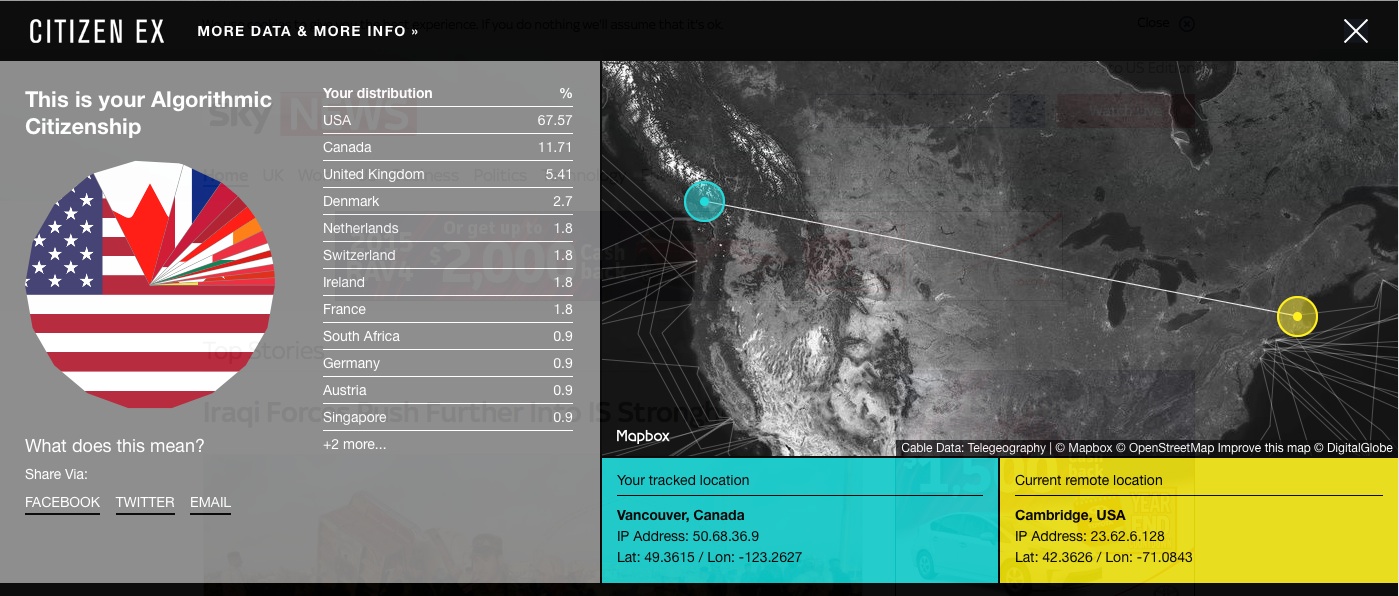
Algorithmic citizenship JPEG

I’m late to this, so apologies, but if you are either weary of web-surfing or can’t get off your digital board, check out James Bridle‘s Citizen Ex project on ‘algorithmic citizenship’:

Algorithmic Citizenship is a form of citizenship which is not assigned at birth, or through complex legal documents, but through data. Like other computerised processes, it can happen at the speed of light, and it can happen over and over again, constantly revising and recalculating. It can split a single citizenship into an infinite number of sub-citizenships, and count and weight them over time to produce combinations of affiliations to different states.

Citizen Ex calculates your Algorithmic Citizenship based on where you go online. Every site you visit is counted as evidence of your affiliation to a particular place, and added to your constantly revised Algorithmic Citizenship. Because the internet is everywhere, you can go anywhere – but because the internet is real, this also has consequences.

The basic idea is derived from an essay by John Cheney-Lippold in Theory, culture and society here:

Marketing and web analytic companies have implemented sophisticated algorithms to observe, analyze, and identify users through large surveillance networks online. These computer algorithms have the capacity to infer categories of identity upon users based largely on their web-surfing habits. In this article I will first discuss the conceptual and theoretical work around code, outlining its use in an analysis of online categorization practices. The article will then approach the function of code at the level of the category, arguing that an analysis of coded computer algorithms enables a supplement to Foucauldian thinking around biopolitics and biopower, of what I call soft biopower and soft biopolitics. These new conceptual devices allow us to better understand the workings of biopower at the level of the category, of using computer code, statistics and surveillance to construct categories within populations according to users’ surveilled internet history. Finally, the article will think through the nuanced ways that algorithmic inference works as a mode of control, of processes of identification that structure and regulate our lives online within the context of online marketing and algorithmic categorization.

From James’s Citizen Ex site you can download (from the banner, top left) an extension to your browser which – after you’ve browsed some more – will calculate, in a very rough and ready way, your own algorithmic citizenship.  Mine (from today’s little effort) is shown at the head of this post.

This may look like an entertaining distraction, but what lies behind it is of course deadly serious: read, for example, James’s (short) stories on Libya and Syria.

Created as a browser plug-in, Citizen Ex shows us the true physical locations of the sites we visit and the territories that govern our actions as we traverse the web. In this reality, every mouse click leaves a trace, as our personal data is collected and stored in locations around the globe. It is with this information that governments and corporations construct a notional vision of our lives. This is our ‘algorithmic citizenship’ — the way we appear to the network. This programmatic fluidity is far removed from the true complexity of human identity. It reduces it to something calculable, which has profound implications for our understanding of privacy, citizenship and the self.

It also has profound implications for surveillance and the digital production of the killing spaces of later modern war.  Read this alongside Louise Amoore‘s brilliant work on The politics of possibility and you can perhaps see where I’m going:

‘[W]hat comes to count as the actionable intelligence behind a sovereign decision is a mosaic of overwhelmingly ordinary fragments of a life that become, once arrayed together, secret and sensitive evidence…

‘Drawing some elements of past activities into the calculation, the mosaic nonetheless moves over the surface of multiple past subjects and events in order to imagine a future unknown subject.’

It’s not difficult to divine (sic) how ‘Citizen Ex’ becomes ‘Citizen-Ex’.

It’s not brain surgery

I’ve often drawn attention to the biomedical and surgical metaphors that have become commonplace in attempts to sanitise and legitimise later modern war.  Reading Stephen Zunes‘s chillingly helpful commentary, ‘Republican candidates defend killing civilians to fight terrorism—and so do Democrats’, I stumbled across this exchange between Hugh Hewitt and retired neurosurgeon Ben Carson, who compares his own surgical skills to bombing (from the recent Republican Party ‘debate’ on 15 December 2015:

HUGH HEWITT: We’re talking about ruthless things tonight — carpet bombing, toughness, war. And people wonder, could you do that? Could you order air strikes that would kill innocent children by not the scores, but the hundreds and the thousands?

BEN CARSON: …..you have to be able to look at the big picture and understand that it’s actually merciful if you go ahead and finish the job, rather than death by 1,000 pricks.

HEWITT: So you are OK with the deaths of thousands of innocent children and civilian? It’s like…

CARSON: You got it. You got it.

A pity he didn’t stick to his day job.

Reach from the Sky


Reach from the sky JPEG.001

I now have more details to share about my Tanner Lectures in Cambridge next month, Reach from the sky: aerial violence and the everywhere war.

First, here is a preliminary summary (not an easy thing to provide, since the two presentations are still very much in formation: but it will give you a rough idea of what I want to address).

Bombing is back in the headlines – but then it never really left. Over the last hundred years, bombing has become the preferred military option for many states, but it has supposedly been radically transformed over the last decade or so by the introduction of unmanned aerial vehicles (‘drones’). Their use has sparked a vigorous debate, inside and outside military circles, but commentators have rarely situated Predators, Reapers and other drones within the longer history of aerial violence or the larger matrix of armed conflict within which they have been deployed.

These lectures seek to fill both those gaps by addressing two fundamental questions. The first lecture, Good bomb, bad bomb, asks how people – both those who carry out air strikes and those publics who endorse them – have been persuaded of the propriety of aerial violence. Four responses run like red threads throughout the long history of bombing from the air: bombing saves lives, especially when compared with ‘boots on the ground’; bombing is bold, brave and ‘separates the men from the boys’; bombing is scientific, objective and precise, organised through an extended ‘kill-chain’ that ensures efficiency and disperses responsibility; and bombing is ‘law-full’, not only legal but also a means of imposing law on those who lack its ordering. These claims only apply to our bombs of course, not theirs, and these arguments and the practices that lie behind them have been substantially re-worked by today’s drone wars.

The second lecture, Killing space, asks what spaces have been produced through the changing ‘destruction line’ that has animated military targeting and military violence. Here there are two issues of crucial importance. One concerns the locus of targeting: in particular the range of aerial violence, the emergence of ‘wars without fronts’ and the extension of military violence beyond any demarcated battlefield, and the subsequent ‘individuation of warfare’ in which targets have contracted from areas and boxes to groups and individuals even as they have expanded through their location within networks that transmit and amplify the effects of individual strikes. The other concerns the grammar of targeting: in particular the reification and abstraction of targets, the rise of dynamic targeting and the incorporation of real-time intelligence, surveillance and reconnaissance, and the increased reliance on digital signatures for the cultivation of the killing fields.

Answers to these questions have much to tell us about the changing contours of modern war and the adjudication of what is to count as a ‘grievable life’ in the twenty-first century.

The lectures draw on a series of presentations, essays (most of them available under the DOWNLOADS tab) and posts, but they will also break new ground – and lots of it.  I’ll be going back to the origins of bombing before the First World War, tracing some of the parallels between bombing on the Western Front and the late modern deployment of Predators and Reapers, tracking the development of drones since the Second World War, and coming right up to the multiple forms of aerial violence currently being visited on Afghanistan, Iraq, Syria and elsewhere.  The lectures will also be packed with images (and even poetry).

The format: I’ll give two 50-minute presentations starting at 5 p.m. on Wednesday 13 January, separated by a refreshment break (!) and followed by a reception.  Then at 5 p.m. on Thursday 14 January a panel of four respondents – which will include Chris Woods, (author of Sudden Justice: America’s secret drone wars), Grégoire Chamayou (author of A theory of the drone/Drone theory) and Jochen von Bernstorff, (Professor of Constitutional Law, Public International Law and Human Rights in Tübingen) will provide their reactions and comments, to be followed by a general discussion and debate.

The place: The lectures are organised by Clare Hall but will be given at the Robinson College Auditorium.  Admission is free but you will need a ticket from:

tannerbookings@clarehall.cam.ac.uk (Tel: 01223 761247)

I’m told that the tickets are going fast (really).  I’ll post updates on my progress; after the event I’ll post the presentation slides, and there will also be a published version at a later date.

City of Light, City of Darkness

I’ve long been interested in cities under military occupation, and in particular in the ways in which armies spatialise the city in order to securitise it.  I still have a detailed presentation on the French occupation of Cairo at the end of the eighteenth century – for Edward Said the formative and diagnostic moment in the formation of a distinctively modern Orientalsim – and the US occupation of Baghdad at the beginning of the twenty-first.  The parallels are as striking as the differences, and one of these days I know I have to find the time to convert the image-stream into a word-stream.

So this explains why a new book on Paris under German occupation in the Second World War caught my eye.

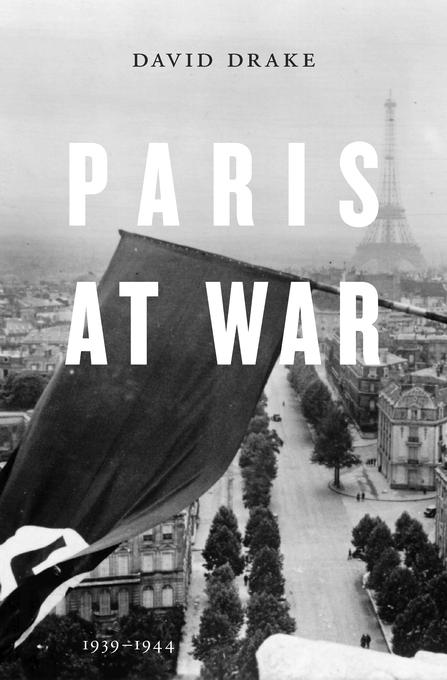
DRAKE Paris at warDavid Drake‘s Paris at War, 1939-1945 from Harvard/Belknap was published last month:

Paris at War chronicles the lives of ordinary Parisians during World War II, from September 1939 when France went to war with Nazi Germany to liberation in August 1944. Readers will relive the fearful exodus from the city as the German army neared the capital, the relief and disgust felt when the armistice was signed, and the hardships and deprivations under Occupation. David Drake contrasts the plight of working-class Parisians with the comparative comfort of the rich, exposes the activities of collaborationists, and traces the growth of the Resistance from producing leaflets to gunning down German soldiers. He details the intrigues and brutality of the occupying forces, and life in the notorious transit camp at nearby Drancy, along with three other less well known Jewish work camps within the city.

The book gains its vitality from the diaries and reminiscences of people who endured these tumultuous years. Drake’s cast of characters comes from all walks of life and represents a diversity of political views and social attitudes. We hear from a retired schoolteacher, a celebrated economist, a Catholic teenager who wears a yellow star in solidarity with Parisian Jews, as well as Resistance fighters, collaborators, and many other witnesses.

Drake enriches his account with details from police records, newspapers, radio broadcasts, and newsreels. From his chronology emerge the broad rhythms and shifting moods of the city. Above all, he explores the contingent lives of the people of Paris, who, unlike us, could not know how the story would end.

Here is the Contents list:

Prologue
Introduction: The Road to War: September 1938–September 1939
1. The Phoney War: September 3, 1939–May 10, 1940
2. Blitzkrieg and Exodus: May 10, 1940–June 14, 1940
3. Parisians and Germans, Germans and Parisians
4. Paris, German Capital of France
5. Unemployment, Rationing, Vichy against Jews, Montoire
6. From Mass Street Protest to the “Führer’s Generous Gesture”
7. Protests, Pillaging, “V” for Victory, the First Roundup of Jews
8. Resistance and Repression
9. Resistance, Punishment, Allied Bombs, and Deportation
10. SS Seizure of Security, the Yellow Star, the Vél’d’hiv’ Roundup, La Relève
11. Denunciations, Distractions, Deprivations
12. Labour Conscription, Resistance, the French Gestapo
13. Anti-Bolshevism, Black Market, More Bombs, Drancy
14. A Serial Killer on the Run, Pétain in Paris, the Milice on the Rampage, the Allies on Their Way
15. The Liberation of Paris
Conclusion

For a principled contemporary account, incidentally, and one that reverberates with the power of the literary sensibility that was so repugnant to the Nazis, it’s hard to beat Jean Guéhenno‘s Diary of the Dark Years, 1940-1944: Collaboration, Resistance, and Daily Life in Occupied Paris.