About Derek Gregory

I'm Peter Wall Distinguished Professor and Professor of Geography at the University of British Columbia in Vancouver.

Spaces of exception and enemies

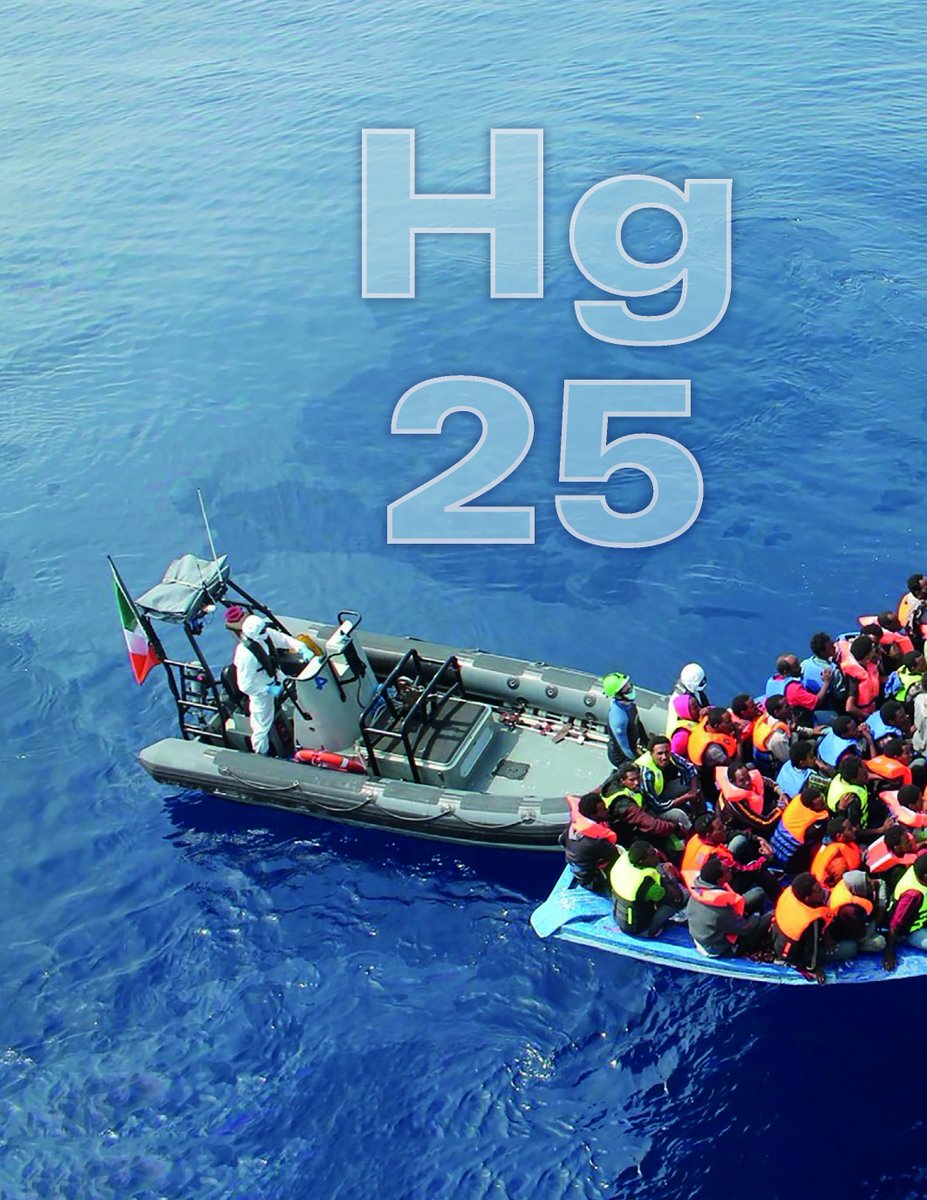
Human Geography 25

I’m just back from a wonderful time at a conference in Galway organised by John Morrissey as part of The Haven Project on the refugee crisis in the Mediterranean.  The latest issue of Human Geography (Vol 9, No 2) is devoted to Geographical Perspectives on the European ‘Migration and Refugee Crisis‘ – those scare-quotes are vital – and if your library doesn’t subscribe you can contact the Institute of Human Geography at insthugeog@gmail.com (most of the articles can be downloaded here).

At Galway I gave a new presentation on ‘Surgical strikes and modern war’, describing and analyzing the ways in which hospitals and ambulances, doctors and nurses have become targets of military violence; it drew on my new series of posts (see here and here), and there will be more to come on both Kunduz and on Syria (which was my main focus), but you can find a preliminary account of the whole event from Alex Jeffrey here.

My starting point was the modern space of exception seen not as ‘the camp‘, as Giorgio Agamben would have it, but as the killing fields of contemporary military and paramilitary violence (what would once have been called ‘the battlefield‘).  For these are spaces in which groups of people are knowingly and deliberately exposed to death through the removal of legal protections that would ordinarily be afforded them; and yet these are not spaces in which the law is suspended tout court, spaces from which the law withdraws and abandons the victims of violence to their fatebut rather spaces in which law – and specifically international humanitarian law – seeks to regulate and, crucially, to sanction violence.  This is a form of martial law that Agamben never considers (I know I am taking liberties with that term, but that is precisely my point): here as elsewhere violence exists not only beyond the law but is inscribed within it.  My purpose was to show how what was once a sacred space within this zone of exception – ‘the hospital’,  a topological figure that extends from the body of the wounded through the sites of the evacuation chain to the hospital itself – has become corroded; no longer a space of immunity – of safety – an exception to the exception, it has often become a central target of contemporary violence.

The need to pull all this together largely explains my silence these last weeks, and a lot has happened in the interim.  Where to start?  A good place is the latest issue of Radical Philosophy, the last in its present form, which includes two essays of direct relevance to the theme of the Galway conference.

First, an important essay by Achille Mbembe on ‘The Society of Enmity’ which you can download here:

Desire (master or otherwise) is also that movement through which the subject – enveloped on all sides by a specific phantasy [fantasme] (whether of omnipotence, ablation, destruction or persecution, it matters little) – seeks to turn back on itself in the hope of protecting itself from external danger, while other times it reaches outside of itself in order to face the windmills of the imagination that besiege it. Once uprooted from its structure, desire then sets out to capture the disturbing object. But since in reality this object has never existed – does not and will never exist – desire must continually invent it. An invented object, however, is still not a real object. It marks an empty yet bewitching space, a hallucinatory zone, at once enchanted and evil, an empty abode haunted by the object as if by a spell.

The desire for an enemy, the desire for apartheid, for separation and enclosure, the phantasy of extermination, today all haunt the space of this enchanted zone. In a number of cases, a wall is enough to express it.  There exist several kinds of wall, but they do not fulfil the same functions. [6] A separation wall is said to resolve a problem of excess numbers, a surplus of presence that some see as the primary reason for conditions of unbearable suffering. Restoring the experience of one’s existence, in this sense, requires a rupture with the existence of those whose absence (or complete disappearance) is barely experienced as a loss at all – or so one would like to believe. It also involves recognizing that between them and us there can be nothing that is shared in common. The anxiety of annihilation is thus at the heart of contemporary projects of separation.

Everywhere, the building of concrete walls and fences and other ‘security barriers’ is in full swing. Alongside the walls, other security structures are appearing: checkpoints, enclosures, watchtowers, trenches, all manner of demarcations that in many cases have no other function than to intensify the zoning off of entire communities, without ever fully succeeding in keeping away those considered a threat.

You can already surely hear the deadly echoes of Carl Schmitt – whose spectral presence lurked in the margins of my own presentation in Galway (for geographical elaborations of Schmitt, see Steve Legg‘s Spatiality, sovereignty and Carl Schmitt and Claudio Minca and Rory Rowan‘s On Schmitt and space) – and Achille makes the link explicit:

dangerousmindThis is an eminently political epoch, since ‘the specific political distinction’ from which ‘the political’ as such is defined – as Carl Schmitt argued, at least – is that ‘between friend and enemy’.  If our world today is an effectuation of Schmitt’s, then the concept of enemy is to be understood for its concrete and existential meaning, and not at all as a metaphor or an empty lifeless abstraction. The enemy Schmitt describes is neither a simple competitor, nor an adversary, nor a private rival whom one might hate or feel antipathy for. He is rather the object of a supreme antagonism. In both body and flesh, the enemy is that individual whose physical death is warranted by their existential denial of our own being.

However, to distinguish between friends and enemies is one thing; to identify the enemy with certainty is quite another. Indeed, as a ubiquitous yet obscure figure, today the enemy is even more dangerous by being everywhere: without face, name or place. If they have a face, it is only a veiled face, the simulacrum of a face. And if they have a name, this might only be a borrowed name, a false name whose primary function is dissimulation. Sometimes masked, other times in the open, such an enemy advances among us, around us, and even within us, ready to emerge in the middle of the day or in the heart of night, every time his apparition threatening the annihilation of our way of life, our very existence.

Yesterday, as today, the political as conceived by Schmitt owes its volcanic charge to the fact that it is closely connected to an existential will to power. As such, it necessarily and by definition opens up the extreme possibility of an infinite deployment of pure means without ends, as embodied in the execution of murder.
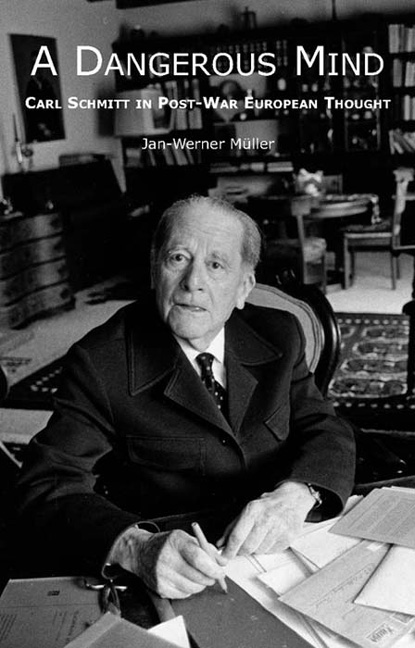
The essay is taken from Achille’s latest book, Politiques de l’inimitié published by Découverte in 2016:

Introduction – L’épreuve du monde
1. La sortie de la démocratie
Retournement, inversion et accélération
Le corps nocturne de la démocratie
Mythologiques
La consumation du divin
Nécropolitique et relation sans désir
97827071881822. La société d’inimitié
L’objet affolant
L’ennemi, cet Autre que je suis
Les damnés de la foi
État d’insécurité
Nanoracisme et narcothérapie
3. La pharmacie de Fanon
Le principe de destruction
Société d’objets et métaphysique de la destruction
Peurs racistes
Décolonisation radicale et fête de l’imagination
La relation de soin
Le double ahurissant
La vie qui s’en va
4. Ce midi assommant
Impasses de l’humanisme
L’Autre de l’humain et généalogies de l’objet
Le monde zéro
Anti-musée
Autophagie
Capitalisme et animisme
Émancipation du vivant
Conclusion. L’éthique du passant
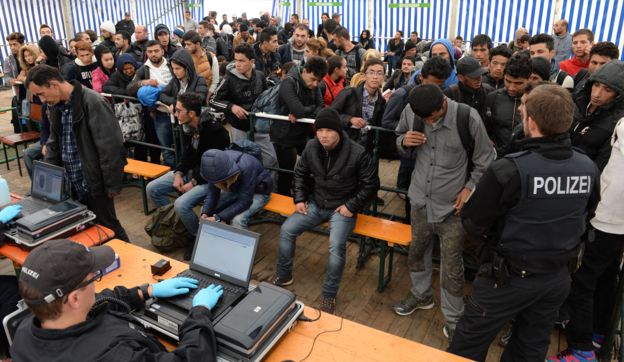
Asylum seekers being registered at Passau

Second, an essay by Mark Neocleous and Maria Kastrinou, ‘The EU hotspot: Police war against the migrant’, which you can download here.  They start by asking a series of provocative questions about the EU strategy of ‘managing’ (read: policing) migration through the designation of ‘hotspots’ in which all refugees are to be identified, registered and fingerprinted:

There is no doubt that in some ways the term ‘hotspot’ is meant to play on the ubiquity of this word as a contemporary cultural trope, but this obviousness may obscure something far more telling, something not touched on by the criticisms of the hotspots, which tend to focus on either their squalid conditions or their legality (for example, with routes out of Greece being closed off migrants are in many ways being detained rather than registered; likewise, although ‘inadmissibility’ is being used as the reason to ship migrants back to Turkey, in reality ‘inadmissibility’ often means nothing other than that the political and bureaucratic machine is working too slowly to adequately process asylum claims).  Neither the legality nor the sanitary state of the hotspot is our concern here. Nor is the fact that the hotspots use identification measures largely as instruments of exclusion. Rather, we are interested in what the label ‘hotspot’ might tell us about the way the EU wants to manage the crisis. What might the hotspot tell us about how the EU imagines the refugee? But also, given that the EU’s management of the refugee crisis is a means for it to manage migration flows across Europe as a whole, what might the hotspot tell us about how the EU imagines the figure of the migrant in general?

You can find an official gloss (sic) on hotspots here (and more detail here), critical readings by Frances Webber here and Glenda Garelli and Martina Taziolli here, and NGO responses from Oxfam here and Caritas here.  The Bureau of Investigative Journalism also has a useful report on Frontex, the EU’s border agency, here.
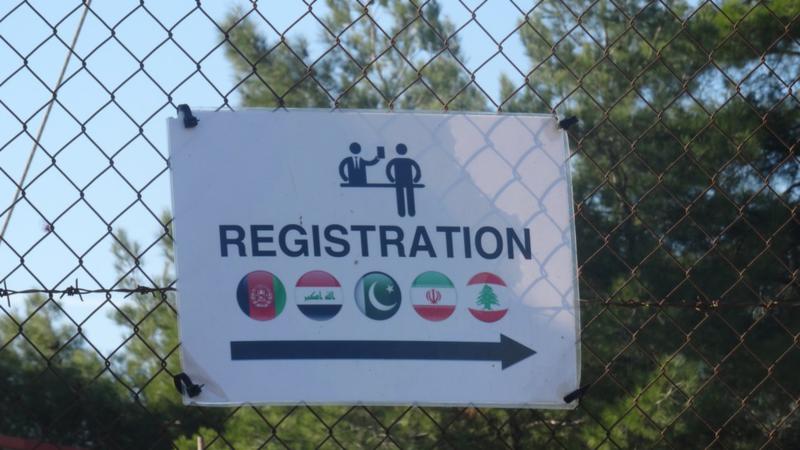
registration-at-hotspots-frontex

Here is the kernel of Mark’s and Maria’s answer to their questions – and you will see see the link with Achille’s essay immediately:

For every police war, an enemy is needed. Defining the zones as hotspots suggests that migrants have arrived as somehow already ‘illegal’ in some way, enabling them to be situated within the much wider and never-ending ‘war on crime’. Yet this process needs to be understood within the wider practice of criminalizing breaches of immigration law in western capitalist polities over the last twenty years, as individual states and the state system as a whole have increasingly sought to make the criminal law work much more closely with immigration law: ‘crimmigration’, as it has become known, means that criminal offences can now very easily result in deportation, while immigration violations are now frequently treated as criminal offences. Concerning the UK, for example, Ana Aliverti has noted that ‘the period between 1997 and 2009 witnessed the fastest and largest expansion of the catalogue of immigration crimes since 1905’.  This expansion serves to further reinforce the conception of the migrant as already tainted by crime, as the figure of the criminal and the figure of the migrant slowly merge. The term ‘illegal immigrant’ plays on this connection in all sorts of ambiguous ways. Indeed, it is significant that the very term ‘illegal immigrant’ has over the same period replaced the term ‘undocumented migrant’, so that a figure once seen as lacking papers is seen now as lacking law.

However, the fact that migrants arriving in the EU hotspots do so as propertyless (or at least apparently so) subjects adds a further significance. Why? Because by arriving propertyless the historical figure to which the migrant is most closely aligned is as much the vagrant as the criminal. Aliverti’s reference to 1905 is a reference to the Aliens Act of that year, in which any ‘alien’ landing in the UK in contravention of the Act was deemed to be a rogue and vagabond. The Act was underpinned by making such ‘aliens’ liable to prosecution under section 4 of the Vagrancy Act of 1824, usually punishable in the form of hard labour in a house of correction. As Aliverti puts it, ‘in view of the similarities between the poor laws and early immigration norms, it is no coincidence that the first comprehensive immigration legislation in 1905 penalized the unauthorized landing of immigrants with the penalties imposed on “rogues and vagabonds” and vagrancy was one of the grounds for expulsion of foreigners.’  In the mind of the state, the vagrant is the classic migrant, just as migrants arriving in the hotspots are increasingly coming to look like and be treated as the newest type of vagrant. In the mind of the state, the propertyless migrant is a kind of vagrant-migrant (which is of course one reason why welfare and migration are so frequently connected).

Vagrancy legislation has always been the ultimate form of police legislation: it criminalizes a status rather than an act (the offence of vagrancy consists of being a vagrant); it gives utmost authority to the police power (the accusation of vagrancy lies at the discretion of the police officer); and it seeks not to punish a crime as such but to instead eliminate what are regarded as threats to social order (as in section 4 of the UK’s Vagrancy Act of 1824, which enables people to be arrested and punished for being ‘idle and disorderly’, for ‘being a rogue’, for ‘wandering abroad’ or for simply ‘not giving a good account of himself or herself’; note the present tense used – section 4 of the Act of 1824 is still in operation in the UK).

And in case the links with ‘The society of enmity’ are still opaque, I leave the last word to Achille:

Hate movements, groups invested in an economy of hostility, enmity, various forms of struggle against an enemy – all these have contributed, at the turn of the twenty-first century, to a significant increase in the acceptable levels and types of violence that one can (or should) inflict on the weak, on enemies, intruders, or anyone considered as not being one of us. They have also contributed to a widespread instrumentalization of social relations, as well as to profound mutations within contemporary regimes of collective desire and affect. Further, they have served to foster the emergence and consolidation of a state-form often referred to as the surveillance or security state.

From this standpoint, the security state can be seen to feed on a state of insecurity, which it participates in fomenting and to which it claims to be the solution. If the security state is a structure, the state of insecurity is instead a kind of passion, or rather an affect, a condition, or a force of desire. In other words, the state of insecurity is the condition upon which the functioning of the security state relies in so far as the latter is ultimately a structure charged with the task of investing, organizing and diverting the constitutive drives of contemporary human life. As for the war, which is supposedly charged with conquering fear, it is neither local, national nor regional. Its extent is global and its privileged domain of action is everyday life itself. Moreover, since the security state presupposes that a ‘cessation of hostilities’ between ourselves and those who threaten our way of life is impossible – and that the existence of an enemy which endlessly transforms itself is irreducible – it is clear that this war must be permanent. Responding to threats – whether internal, or coming from the outside and then relayed into the domestic sphere – today requires that a set of extra-military operations as well as enormous psychic resources be mobilized. The security state – being explicitly animated by a mythology of freedom, in turn derived from a metaphysics of force – is, in short, less concerned with the allocation of jobs and salaries than with a deeper project of control over human life in general, whether it is a case of its subjects or of those designated as enemies.
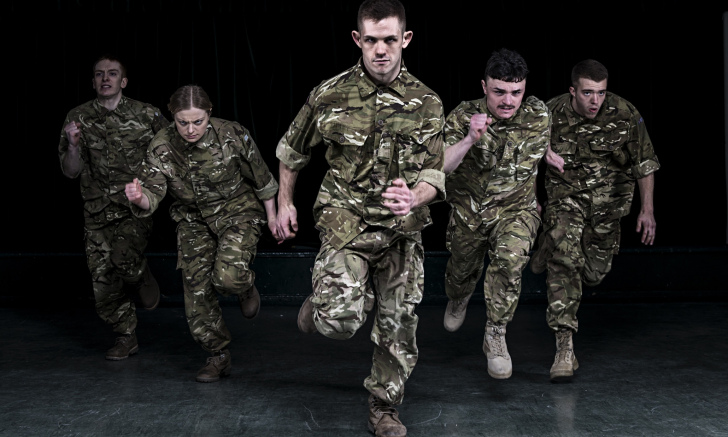
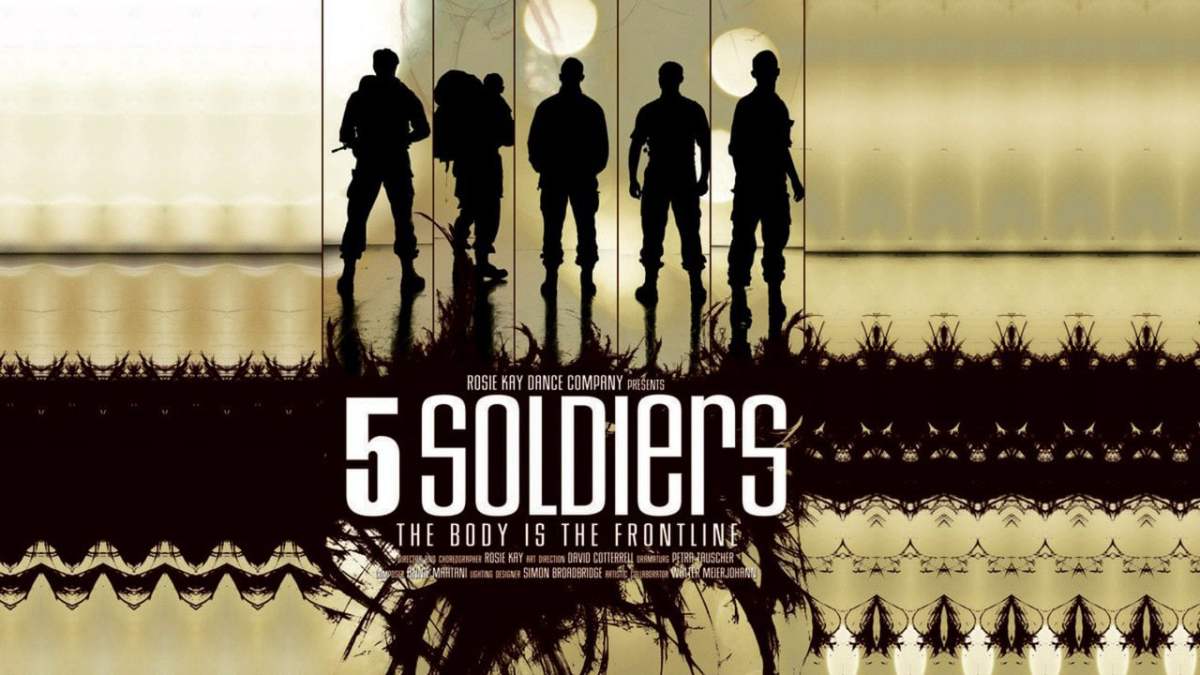
Choreographies of 21st Century Wars

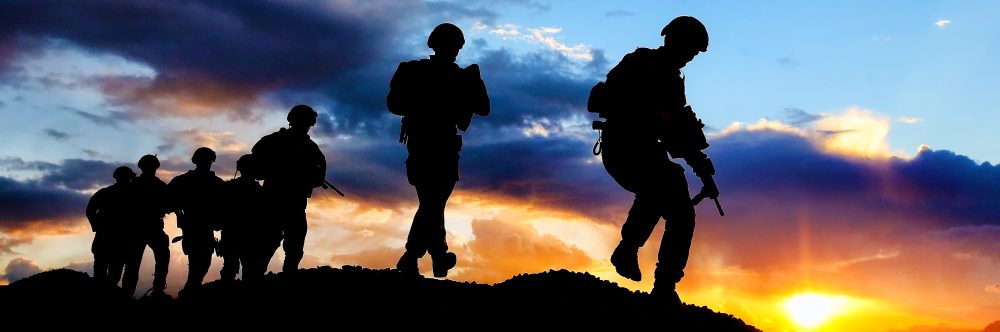
5 soldiers rosie kay

As regular readers will know, I’m keenly interested in the intersections between performance works and the critique of military violence – using performance not only as a way of engaging audiences and creating publics but also as an intrinsic part of the research process itself.

Much of my own work has focussed on theatre, and I’ve commented on the multiple meanings of  ‘theatre of war’ on several occasions (see here, here and here, though I know there’s much more to say about that).

But I’ve also drawn attention to the role of dance – notably Rosie Kay‘s collaborative project with visual artist David Cotterrell, 5 Soldiers: The Body is the Frontline (see my post on ‘Bodies on the linehere; more on the production here and here).

5-soldiers

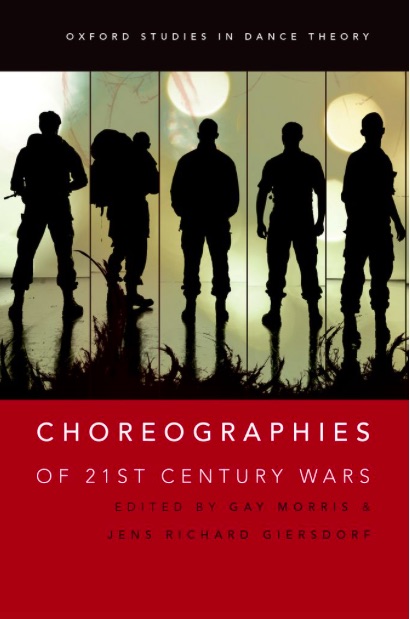
All of which will explain my interest in this new collection of essays (which includes a contribution from Rosie Kay), Choreographies of 21st Century Wars, edited by Gay Morris and Jens Richard Giersdorf:

Wars in this century are radically different from the major conflicts of the 20th century–more amorphous, asymmetrical, globally connected, and unending. Choreographies of 21st Century Wars is the first book to analyze the interface between choreography and wars in this century, a pertinent inquiry since choreography has long been linked to war and military training. The book draws on recent political theory that posits shifts in the kinds of wars occurring since the First and Second World Wars and the Cold War, all of which were wars between major world powers. Given the dominance of today’s more indeterminate, asymmetrical, less decisive wars, we ask if choreography, as an organizing structure and knowledge system, might not also need revision in order to reflect on, and intercede in, a globalized world of continuous warfare. In an introduction and sixteen chapters, authors from a number of disciplines investigate how choreography and war in this century impinge on each other. Choreographers write of how they have related to contemporary war in specific works, while other contributors investigate the interconnections between war and choreography through theatrical works, dances, military rituals and drills, the choreography of video war games and television shows. Issues investigated include torture and terror, the status of war refugees, concerns surrounding fighting and peacekeeping soldiers, national identity tied to military training, and more. The anthology is of interest to scholars in dance, performance, theater, and cultural studies, as well as the social sciences.

choreographies-of-21st-century-wars

Here is the Contents list:

Introduction: Contemporary Choreographies of Wars, Gay Morris and Jens Richard Giersdorf
Chapter 1: Access Denied and Sumud: Making a Dance of Asymmetric Warfare, Nicholas Rowe
Chapter 2: Questioning the Truth: Rachid Ouramdane’s Investigation of Torture in Des Témoins Ordinaires/Ordinary Witnesses, Alessandra Nicifero
Chapter 3: “There’s a Soldier in All of Us”: Choreographing Virtual Recruitment, Derek A. Burrill
Chapter 4: African Refugees Asunder in South Africa: Performing the Fallout of Violence in Every Day, Every Year, I am Walking, Sarah Davies Cordova
Chapter 5: From Temple to Battlefield: Bharata Natyam in the Sri Lankan Civil War, Janet O’Shea
Chapter 6: Choreographing Masculinity in Contemporary Israeli Culture, Yehuda Sharim
Chapter 7: Affective Temporalities: Dance, Media, and the War on Terror, Harmony Bench
Chapter 8: Specter of War, Spectacle of Peace: The Lowering of Flag Ceremony at Wagah and Hussainiwala Borders, Neelima Jeychandran
Chapter 9: A Choreographer’s Statement, Bill T. Jones
Chapter 10: Dancing in the Spring: Dance, Hegemony and Change, Rosemary Martin
Chapter 11: War and P.E.A.C.E, Maaike Bleeker & Janez Janša
Chapter 12: The Body is the Frontline, Rosie Kay and Dee Reynolds
Chapter 13: Geo-Choreography and Necropolitics: Faustin Linyekula’s Studios Kabako, Democratic Republic of Congo, Ariel Osterweis
Chapter 14: Re: moving bodies in the Mexico-USA drug, border, cold, and terror wars, Ruth Hellier-Tinoco
Chapter 15: After Cranach: War, Representation and the Body in William Forsythe’s Three Atmospheric Studies, Gerald Siegmund
Chapter 16: The Role of Choreography in Civil Society under Siege: William Forsythe’s Three Atmospheric Studies, Mark Franko

There’s obviously a lot more to say about choreographing war too…

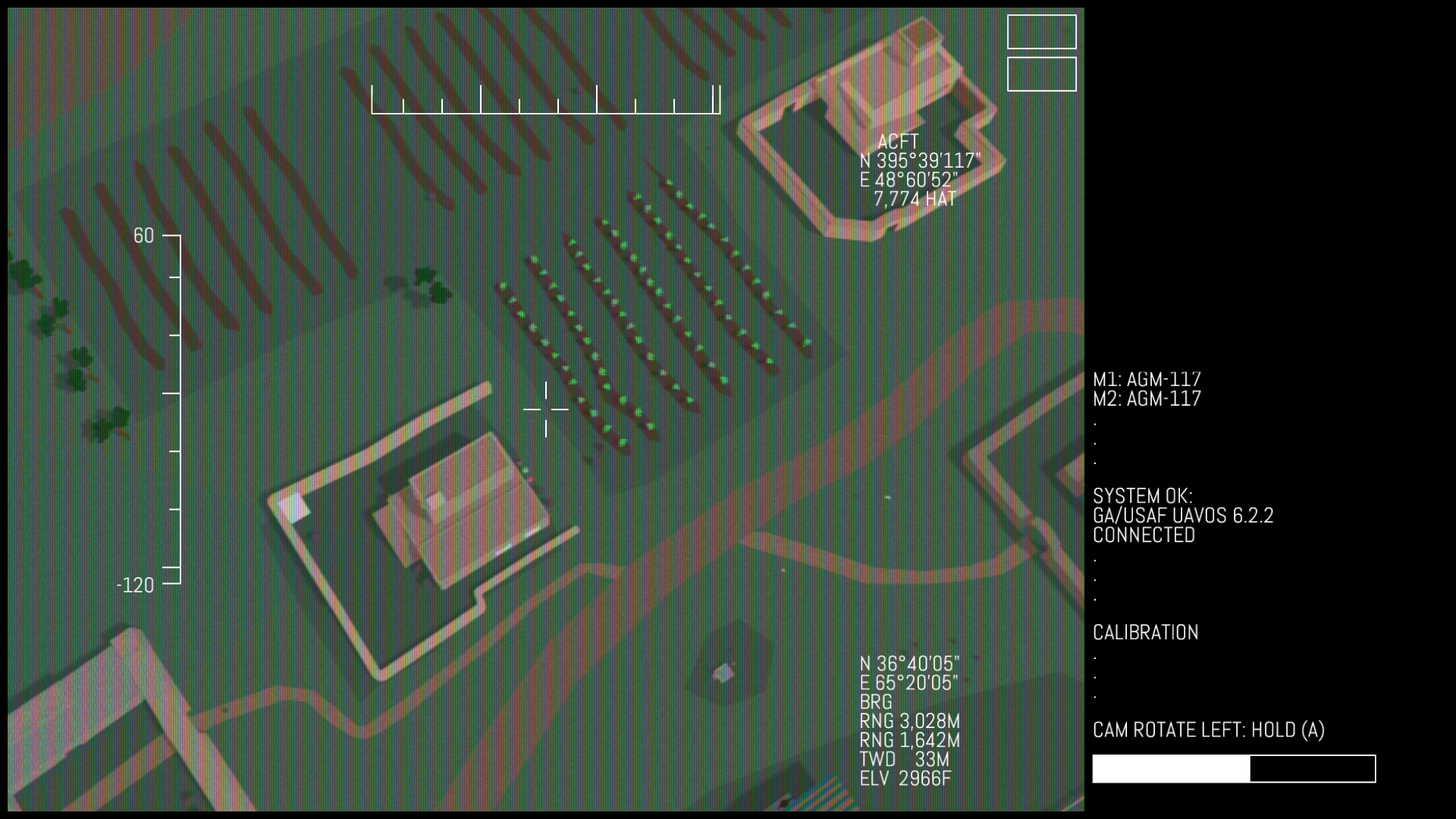
POV in the killbox

Killbox Player 1

An update on Joe DeLappe‘s Killbox project (my original post, with links to more info on the concept of a killbox, is here).

Over at Quartz, Ananya Bhattacharya provides more details about the latest iteration of the simulation:

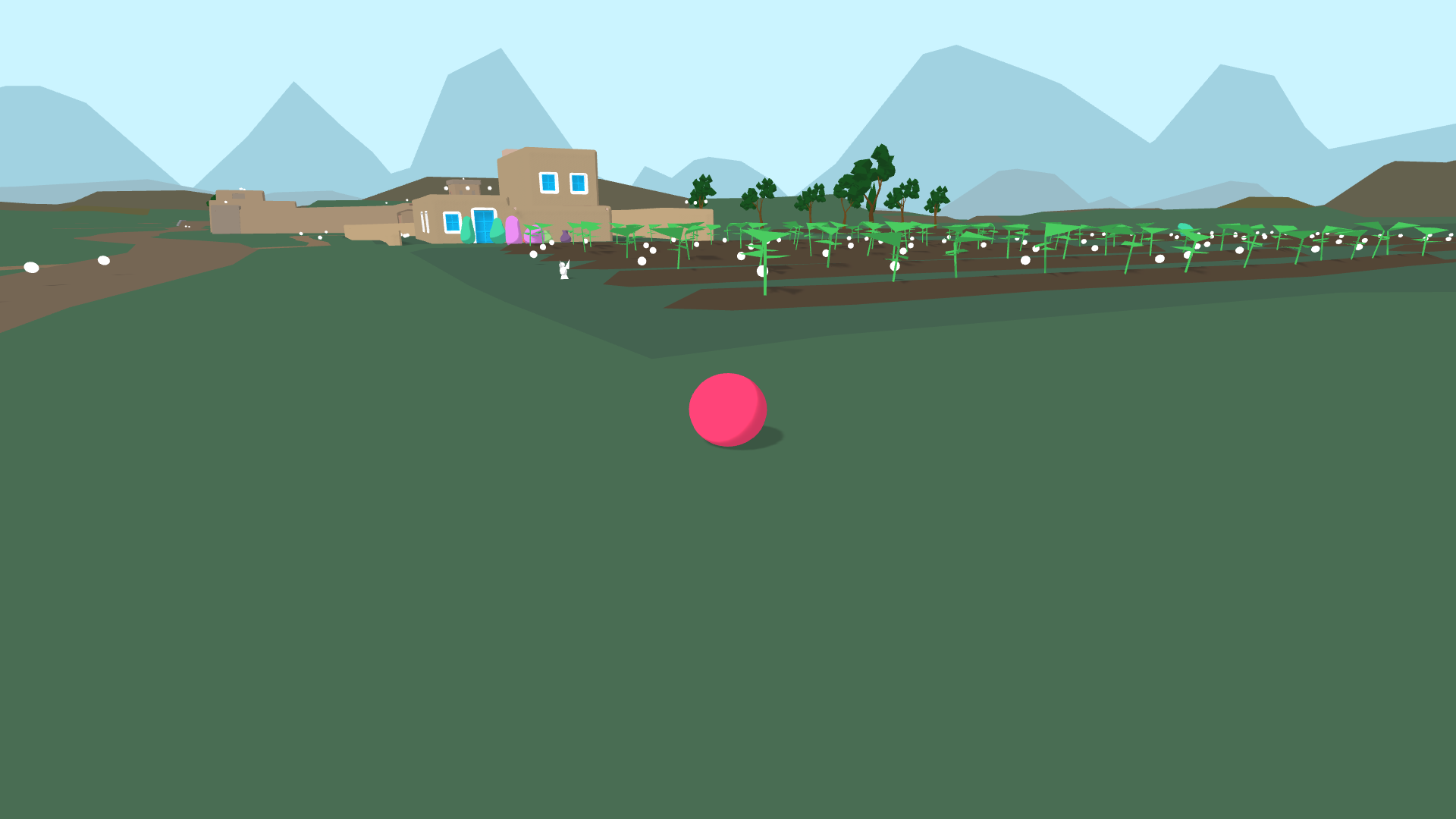
Killbox, an online two-player game named after the military term for an area targeted for destruction, serves as a critique of drone warfare. One player is a civilian exploring her surroundings with few instructions. The second player is guided with tasks, leading up to the administration of a drone strike. Even if the drone pilot player refuses to deploy the weapons, autopilot kicks in and carries out the attack. When it hits, the drone pilot can see the extent of the destruction on the ground but hear nothing. Meanwhile, the child on the ground is barraged by sound. And just in case the first strike doesn’t demolish enough, a second strike is administered—the classic “double-tap” attack to stop rescuers from getting help to the injured and retrieving the deceased.

The game is modelled – in some measure, at least – on the drone strike that killed Mamana Bibi as she gathered okra from the fields around her home in North Waziristan:

The characters in the game aren’t realistic though—they look like odd-shaped blobs. At first, non-human avatars seem less effective, but there’s meaning behind the simplistic design: “We were looking at the map where the drone strike killed people and these maps identified victims with little dots,” said DeLappe. “Almost like map pins, like they’ve been symbolically degraded in some way.”

Killbox player 2

I opened my essay on drone strikes in the Federally Administered Tribal Areas – and on the constitution of the FATA as a space of exception (see “Dirty Dancing” under the DOWNLOADS tab) – with a comparison between this strike, the murder of an innocent grandmother as she worked in the fields with her grandchildren,  and the targeted killing of Baitullah Mehsud, the leader of the Pakistan Taliban, in South Waziristan in 2009 (see also my posts here and here).

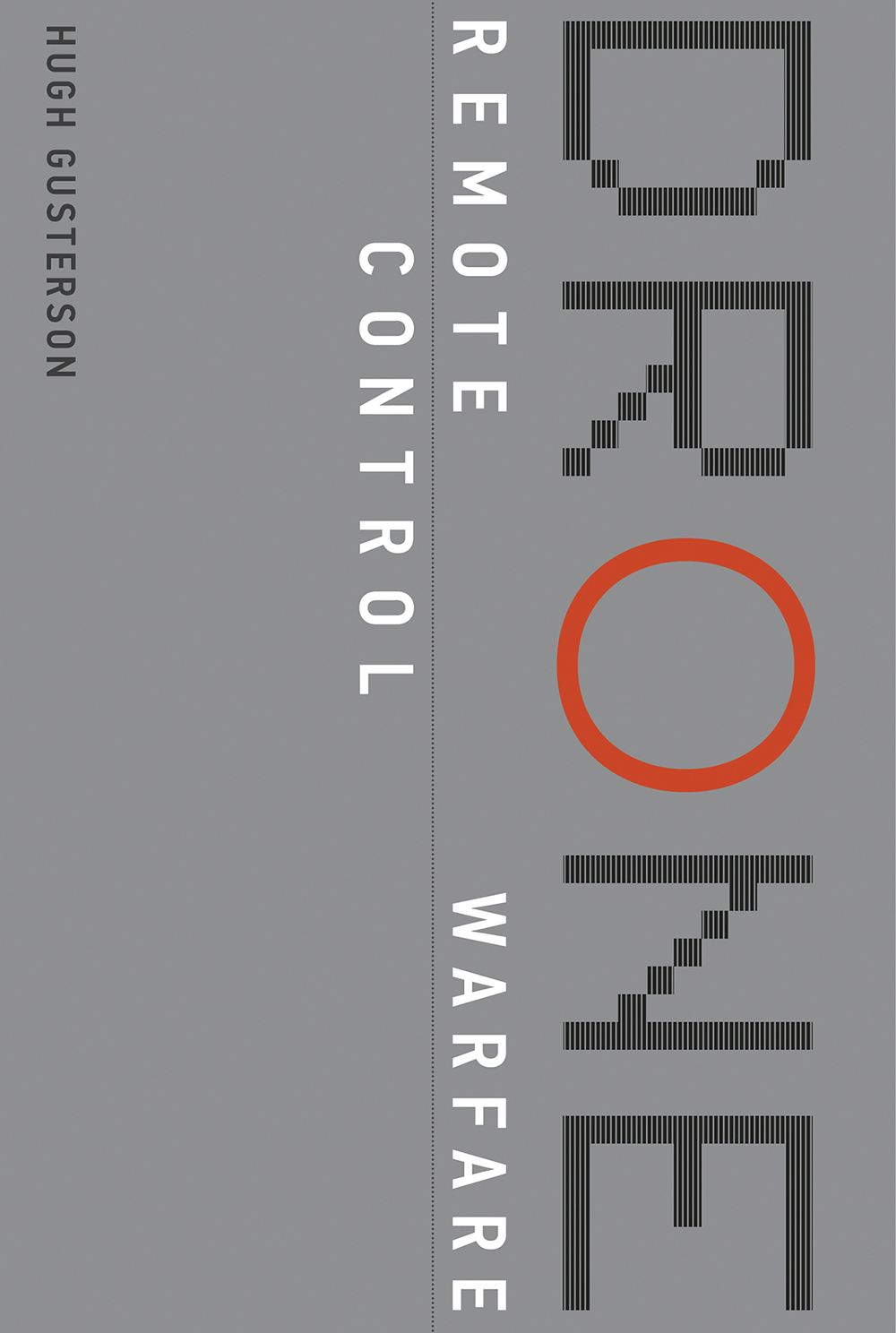
In Drone: remote control warfare Hugh Gusterson opens with exactly the same comparison but to a different effect – and one that resonates with Killbox.  Drawing on Jane Mayer‘s account of the assassination of Mehsud, based on testimony from those who watched the video feed from the Predator, he writes:

A technology that is almost magical gives its owners, who are looking on the scene from high in the sky, a godlike power over life and death. The observation of the scene is simultaneously intimate and remote. It is also deeply asymmetrical: Mehsud, unaware of his exposure, is watched by faraway drone operators who can see him as if close up, reclining on the roof of his house on a hot evening as his wife attends to his medical needs. They get to frame the picture while he does not even realize he is in it. Without warning, he is killed as if by a god’s thunderbolt from the sky. Seen from Virginia, the drone strike is quick, clean, and bloodless. Mehsud’s death is instant. Nor, described unambiguously as a terrorist, does he seem undeserving of death. Twelve people die altogether, but the narrative marks only Mehsud’s death as significant. The other deaths are almost outside the frame. And in a way that amplifies the strange mix of distance and intimacy, the scene is mediated entirely through a single sense—vision. The attack has no sound, smell, taste, or texture. And we are invited to experience it through a narrative of mastery and control—of the cool, righteous exercise of overwhelming power.

gusterson-drone-cover

Drawing on testimony from Mamana Bibi’s family before a virtually empty Congressional hearing, Hugh writes:

This account is from the point of view of the victims, not the executioners. We share the experience of those who do not even realize that they are in the crosshairs until they are attacked. The account emphasizes the sudden incomprehensible eruption of violent force, literally out of the blue, in a warm scene of familial togetherness on an important holy day. We are led to experience the drone strike through multiple senses, of which sight may be the least salient: we are told about the blackness of the smoke, the sound of the screaming, the smell of the explosion, the sensation of the ground trembling, and the pain of shrapnel wounds. Unlike the first account, the narrative does not end shortly after the drone strike but dwells on the aftermath—the physical pain of the survivors, the enduring grief over the loss of the person “that held our family together.” Above all, this account foregrounds what is absent in the view from CIA headquarters—the psychological suffering of those on the ground, especially children, and the sense that the safe predictability of life has been permanently destroyed. It is a narrative of helplessness, terror, and injustice. The drone operators’ perspective was remote and objectifying, but this narrative is so affecting that it made the translator break down in tears.

The special effects created by privileging the visual are explored with skill and sensitivity in Nasser Hussain‘s brilliant essay, ‘The sound of terror: phenomenology of a drone strike‘, here.

[I]n order to widen our vision, I provide a phenomenology of drone strikes, examining both how the world appears through the lens of a drone camera and the experience of the people on the ground. What is it like to watch a drone’s footage, or to wait below for it to strike? What does the drone’s camera capture, and what does it occlude?

…  Although the pilots can hear ground commands, there is no microphone equivalent to the micro-scopic gaze of the drone’s camera. This mute world of dumb figures moving about on a screen has particular consequences for how we experience the image. As Michel Chion notes in The Voice in Cinema, although sound or voice is easily swallowed up by the image, it nonetheless structures the image: “only the creators of a film’s sound—recordist, sound effects person, mixer, director—know that if you alter or remove these sounds, the image is no longer the same.” In the case of the drone strike footage, the lack of synchronic sound renders it a ghostly world in which the figures seem unalive, even before they are killed. The gaze hovers above in silence. The detachment that critics of drone operations worry about comes partially from the silence of the footage.

… If drone operators can see but not hear the world below them, the exact oppositeis true for people on the ground. Because drones are able to hover at or above 30 thousand feet, they are mostly invisible to the people below them. But they can be heard. Many people from the tribal areas of Pakistan (FATA) describe the sound as a low-grade, perpetual buzzing, a signal that a strike could occur at any time. The locals call the drones machar, mosquitos. Because the drone can surveil the area for hours at a time, and because each round of surveillance may or may not result in a strike, the fear and anxiety among civilians is diffuse and chronic.

That sense of optical power is not necessarily one of detachment.  For we surely know how vision, power and desire can be commingled; and today I learned – from Theodor Nadelson‘s Trained to kill: soldiers at war – that (some) US Marines describe setting their sights on a human target as ‘eye fucking’…

Governing from the skies

HIPPLER Governing from the skies

Forthcoming from Verso in January, the English translation of Thomas Hippler‘s Le gouvernement du ciel:

The history of the war from the past one hundred years is a history of bombing.

Ever since its invention, aviation has embodied the dream of perpetual peace between nations, yet the other side of this is the nightmare of an unprecedented deadly power. A power initially deployed on populations that the colonizers deemed too restive, it was then used to strike the cities of Europe and Japan during World War II.

With air war it is now the people who are directly taken as target, the people as support for the war effort, and the sovereign people identified with the state. This amounts to a democratisation of war, and so blurs the distinction between war and peace.

This is the political shift that has led us today to a world governance under United States hegemony defined as ‘perpetual low-intensity war’, which is presently striking regions such as Yemen and Pakistan, but which tomorrow could spread to the whole world population.

Air war thus brings together the major themes of the past century: the nationalization of societies and war, democracy and totalitarianism, colonialism and decolonization, Third World-ism and globalization, and the welfare state and its decline in the face of neoliberalism. The history of aerial bombing offers a privileged perspective for writing a global history of the twentieth century.

I drew on this for my Reach from the Skies lectures in Cambridge earlier this year – it really is a must-read, though I’m not persuaded by the arguments in the closing pages… as you’ll see when I post the text of those lectures in the near future.

War Stories

The video from our War Stories event in Vancouver last month – including Farah Nosh‘s narration of her wonderful photographs, a superb capsule genealogy of PTSD from Ann Jones, my discussion of casualty evacuation over the last hundred years, a drama staged by veterans from Afghanistan and directed by George Belliveau, Contact! Unload!, and a lively Q&A with the audience moderated by Peter Klein is now available here.

war_stories3b-page-001

My lecture, Precarious journeys, has also been carved out for the Peter Wall Institute website here. The idea behind the event was, in large measure, to think through the multiple ways in which modern war is narrated, which is why we had such a rich and diverse portfolio of performers and why I take the turns I do…  Regular readers will probably recognize that the arc of my presentation draws on my current research on evacuation from the Western Front in the First World War, on evacuation from Afghanistan today, and on my admiration for Harry Parker‘s Anatomy of a Soldier (see my ‘Object lessons’ here and the slides available under the DOWNLOADS tab).

More in an interview with Charlie Smith from the Georgia Straight here.

Killing over Kunduz

This is the second in a new series of posts on military violence against hospitals and medical personnel in conflict zones.  It examines the US attack on the Trauma Centre run by Médecins Sans Frontières (MSF) in Kunduz on 3 October 2015.  I provided preliminary discussions here (on the conduct of US military investigations into civilian casualty incidents), here (on MSF’s own investigation into the attack), here (on the Executive Summary of the US military investigation), here (on two first-hand accounts from MSF personnel), here and here on the final report, and here (on the likelihood that the attack constituted a war crime).   This post draws on those discussions but also on a close reading of the redacted report of the US military investigation [all page references refer to that report], on work by investigative journalists, and on ancillary materials and commentaries. 
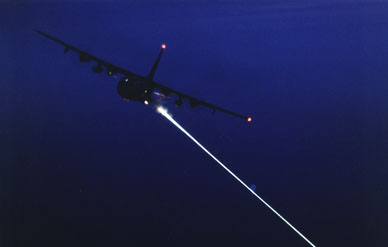
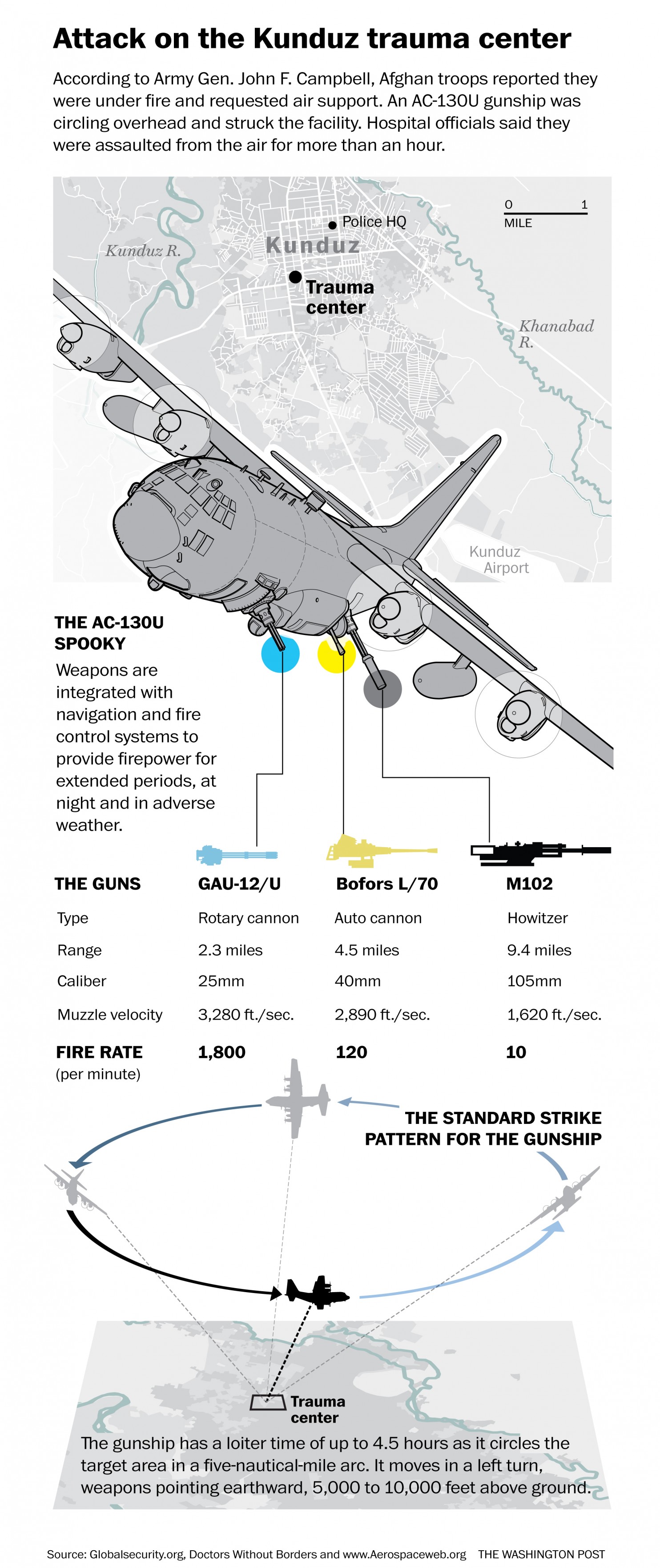
spooky-mainOne year ago today, in the early hours of the morning of 3 October 2015, a US AC-130U gunship (‘Spooky’) launched a concentrated attack on the Trauma Centre in Kunduz run by Médecins Sans Frontières.  In an otherwise probing report on what happened,  the Washington Post claimed that the gunship has sensors ‘that give it a “God’s eye” of the battlefield’.  Here  I explore some of the multiple ways in which such a view was – and remains – impossible.  For militarized vision, like any other optical modality, is never a purely technical affair.  A series of cascading technical errors bedevilled the US attempt to re-take Kunduz from the Taliban, who had swept into the city a few days earlier, but these were compounded by a series of profoundly human decisions and interactions and it was the intimate entanglement of the technical and the human that determined the hideous outcome.
At least 42 people were killed, including 24 patients, 14 medical staff and 4 caretakers.  Many others were wounded and traumatized.  Here is Dr Evangeline Cua, a Philippina surgeon who was on duty when the attack started:
msf164464-profileWe were like two headless chickens running in total darkness — me and the surgeon who assisted me in an operation. The nurses who were with us a moment ago had run outside the building, braving the volley of gunshots coming from above. I was coughing, half-choked by dust swirling around the area. Behind my surgical mask, my mouth was gritty, as if somebody forced me to eat sand. I could hear my breath rasping in and out. Layers of smoke coming from a nearby room made it hard to see where we were. Blinking around, I caught sight of a glow, from a man’s hand holding a phone. He seemed mortally wounded but was still trying to send a message…perhaps to a loved one?

I stood transfixed, not knowing where to turn or what to do. All around us, bombing continued in regular intervals, shaking the ground, sending debris sweeping and flying. One. Two. Three. I tried to count but there seems to be no abatement to the explosions. I stopped counting at eight and silently prayed that we could get out of there alive.

Fire licked at the roof at one end of the building, dancing and sparkling in the dark, reaching towards the branches of the trees nearby. The ICU was burning.  Outside, only the constant humming from above pointed to the presence of something. An aircraft? Airstrike? Why the hospital? Why us? Then, without warning, another tremendous, ear splitting blast shook the building. The ceiling came crashing down on us and the last remaining lights were turned off, sending us to total darkness. I screamed in terror as wires pinned me to the ground. That was the last thing I could remember.

What follows is an attempt to answer those questions.  It is fraught with uncertainty: the most detailed investigation to date has been carried out by the US military, but the redacted version of the final report that has been released to the public is (by the standards of other US military investigations) profoundly unsatisfactory – redacted with a brutishly heavy hand.  Time and time again, ironically, references to the time of events have been removed; transcripts of radio communications and interviews by the investigating panel that have been released in other cases have been suppressed; and some redactions seem to have been made not for reasons of privacy or security but to avoid embarrassment (more here; you can download the report from US Central Command’s Freedom of Information Act (FOIA) library here).

All of this reinforces MSF’s original call for an independent investigation.  I understand May Jeong‘s pessimism:

A former Afghan special forces commander who was at the command and control center in Kunduz during the fight assured me I would never get to the bottom of the attack. The reason why I couldn’t figure out exactly what had happened, he said, was the fog of war. “Ground truth is impossible to know. Even those who were there wouldn’t be able to tell you what they saw.”

But when the ‘fog of war’ – so often a convenient cover for all manner of horrors – is deliberately thickened – when visibility is ruthlessly reduced by redaction – then perfectly proper public interest is trumped by political and military expediency.

***

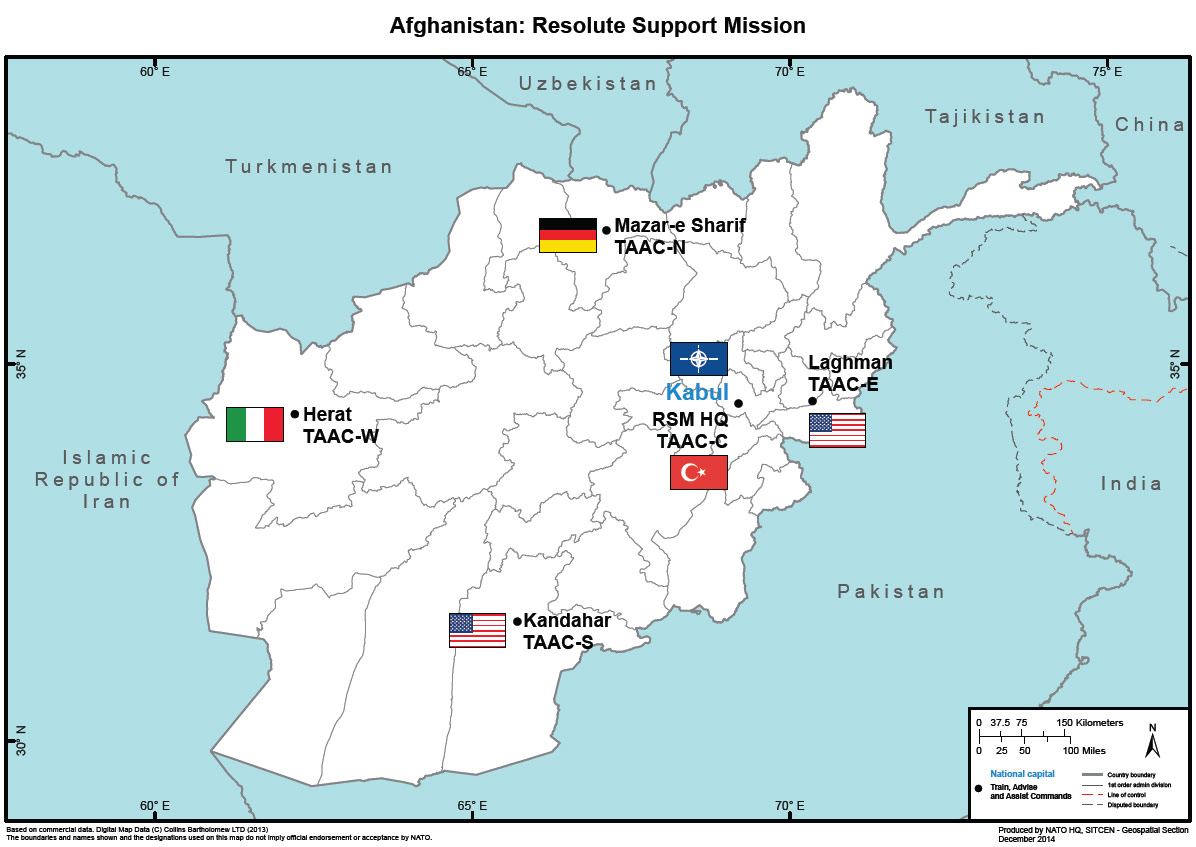
When the NATO-led combat mission to Afghanistan conducted by the International Security Assistance Force (ISAF) finished at the end of 2014 it was replaced by a much smaller advisory mission, Resolute Support, which was ‘to provide further training, advice and assistance for the Afghan security forces and institutions’.  Resolute Support was authorized by a Status of Forces agreement between NATO and the Afghan government in Kabul.  Its central hub was Kabul/Bagram, with four ‘spokes’ formed by four other ‘Train Assist Advise’ Commands to support four Afghan National Army Corps outside the capital (more here and here):

resolute-support

US troops were the major contributor to Resolute Support, but they were also assigned to the United States’s continuing (‘concurrent and complementary’) counter-terrorism mission now designated as ‘Operation Freedom’s Sentinel’.  Until March 2016 both missions were under the overall command of General John Campbell.

By September 2015 the focus of US concern in Afghanistan was Helmand in the south – where the Taliban were on the ascendant, forcing Afghan government forces to retreat as they seized control of key districts and gained control of the Kajaki dam – and US Special Forces were rushed to Camp Bastion after the fall of Musa Qala gave the insurgents a strategic advantage.

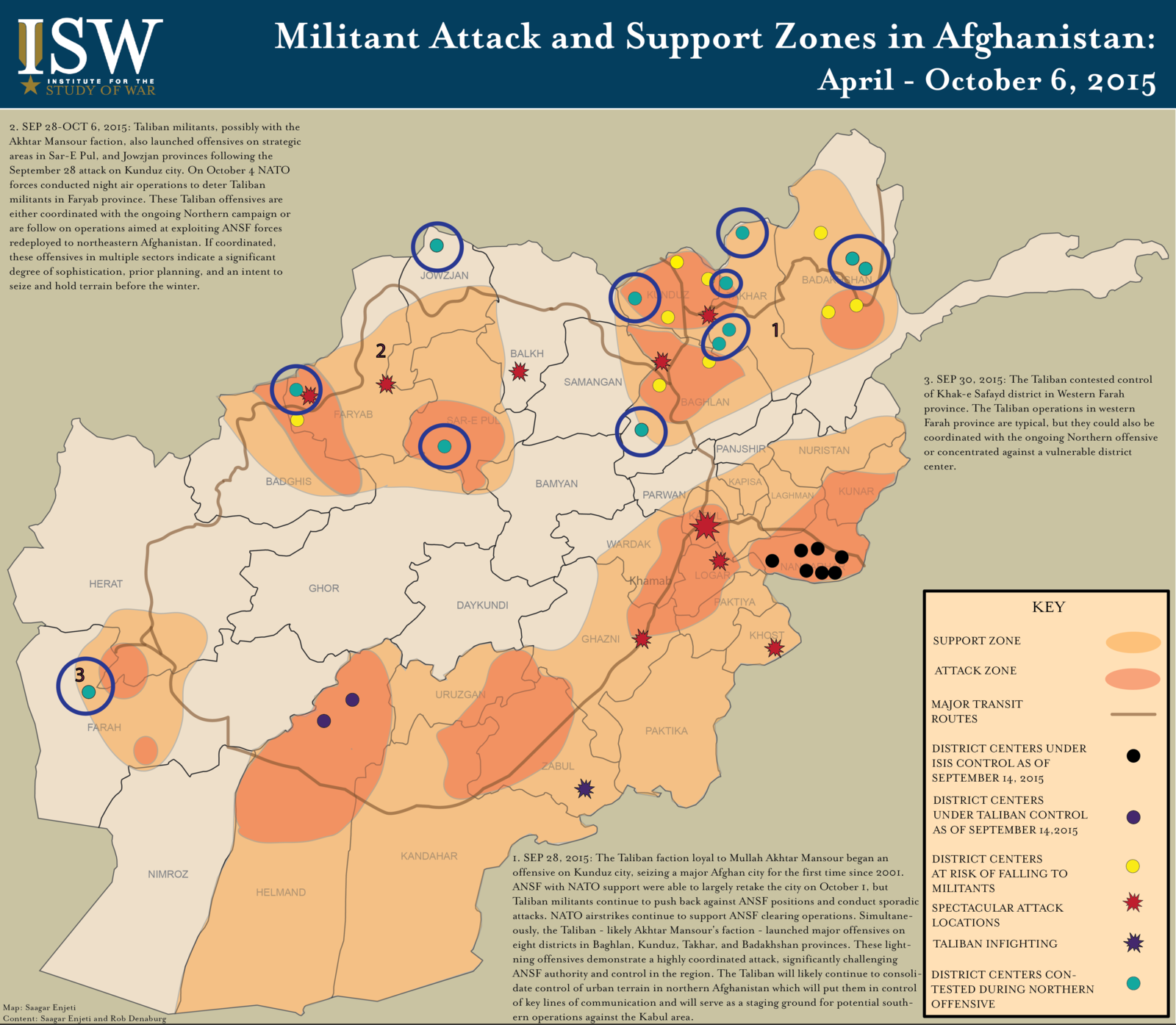
By contrast, Kunduz in the north was regarded as ‘secure’ [135] after a series of combat operations at the start of the fighting season earlier in the year.  As late as 13 August Brigadier-General Wilson Shoffner, Deputy Chief of Staff for Communications with Resolute Support, declared that although there had been ‘an attempt by the Taliban to try to stretch the Afghan security forces in the north’ the city of Kunduz ‘is not now and has not been in danger of being overrun by the Taliban’ (he also described the situation at Kajaki as merely a ‘local security challenge’).  But those previous operations in Kunduz had targeted Taliban operations areas and did not extend to support zones outside the city.

isw-taliban-attack-and-supply-zones-in-kunduz

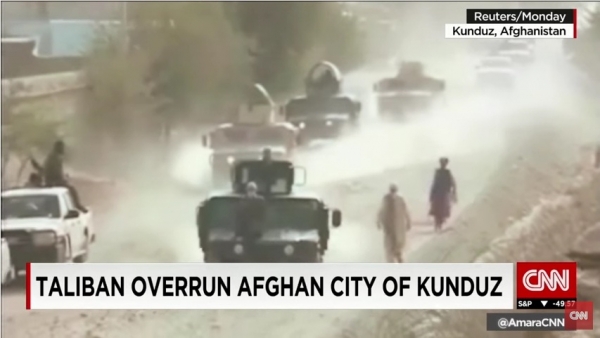
Obeid Ali reports that during the summer the Taliban continued to make inroads until they controlled areas to the south west, north west and south east of the city.

On 28 September 2015, the Taliban stormed various ANSF locations in Kunduz city from the three different directions they had spent so long preparing… The simultaneous attacks on the city and the collapse of check posts at the city ‘gateways’ destroyed the confidence of the ANSF inside the city in their ability to stand against this unexpected offensive. In the face of the well-organised and coordinated insurgent operation, most held out for only a few hours. A chaotic environment quickly spread and government officials, ALP [Afghan Local Police] commanders and some of the ANA [Afghan National Army] officers, fled to the military base at the airport [Camp Pamir], leaving Kunduz effectively leaderless.

taliban-has-captured-the-city-of-kunduz-late-sep-28-monday

Kunduz was a spectacular, strategic prize: the first city to fall to the mujaheddin in 1998 and the first time the Taliban had seized a major city since 2001, its capture signalled both a resilient Taliban and a faltering government footprint in the region.

•••

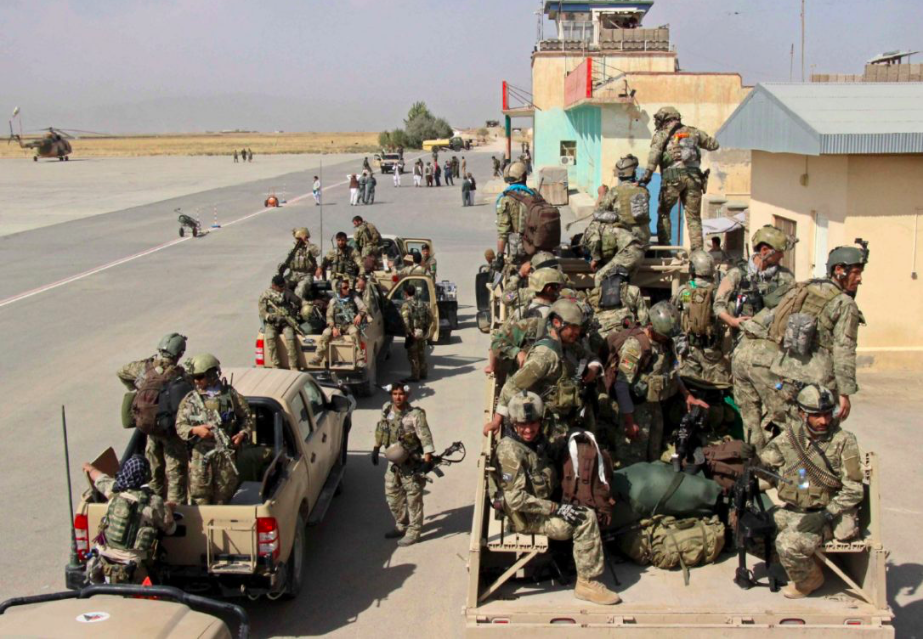
On 28 September there was a detachment of US Special Forces (‘Green Berets’) based at Kunduz airfield as part of the Train, Assist, Advise mission.  Like every Operational Detachment – Alpha (OD-A) it consisted of just 12 soldiers, all cross-trained and capable of operating for extended periods of time with little or no support.  On 29 September their superior command – the US Special Operations Task Force in Afghanistan – ordered two other OD-As to Kunduz.  While they were in the air the OD-A on the ground sketched out a contingency plan (‘Kunduz City Foothold Establishment’) to assist the Afghan forces to return to the city and secure the Kunduz City Hospital and the Prison.  There were repeated US airstrikes against Taliban positions in and around the city throughout the day, but by the time the OD-A reinforcements, together with other Afghan troops including Afghan Special Security Forces (below), arrived in the evening it was clear that the original plan was unworkable and their immediate priority had to be the defence of the airfield [032, 382].

afghan-special-forces-arrive-at-kunduz-airfield-29-september-2015

The US reinforcements included Major Michael Hutchinson, who assumed overall command of the combined OD-As (he was identified as the Ground Force Commander by the New York Times).  He had misgivings about the mission but accepted that ‘we can’t lose the provincial capital’ [377].   The next day a revised plan (‘Kunduz Clearing Patrol’) was submitted to the Special Operations Task Force for approval, which was granted that night, and the OD-As requested that Afghan Special Security Forces be accorded ‘designated special status’ that would permit the Green Berets to extend their own envelope of self-defence and assume a direct combat role (including calling in air strikes) to defend their partner forces if they came under attack [046-7].

By this time Médecins Sans Frontières had been in contact with both US and Afghan forces to ensure that they were aware of the location and status of its Trauma Centre in Kunduz.  It was in the eye of the storm.  Dr Kathleen Thomas, an Australian doctor in charge of the Emergency Room and the Intensive Care Unit, explained:

We all knew that at times, our hospital was in the middle of the rapidly changing front line – we could feel it. When the fighting was close – the shooting and explosions vibrated the walls. I was scared – we were all scared. When a loud “BOOM” would sound a bit closer to the hospital, we would all drop to the floor away from the large windows that lined the ICU walls. We also tried to move the patients and large (flammable) oxygen bottles away all from the windows, but the layout of the ICU prohibited doing this effectively. I worried constantly about the exposure from those windows – yet never thought to worry about the exposure from the roof.

kunduz_2

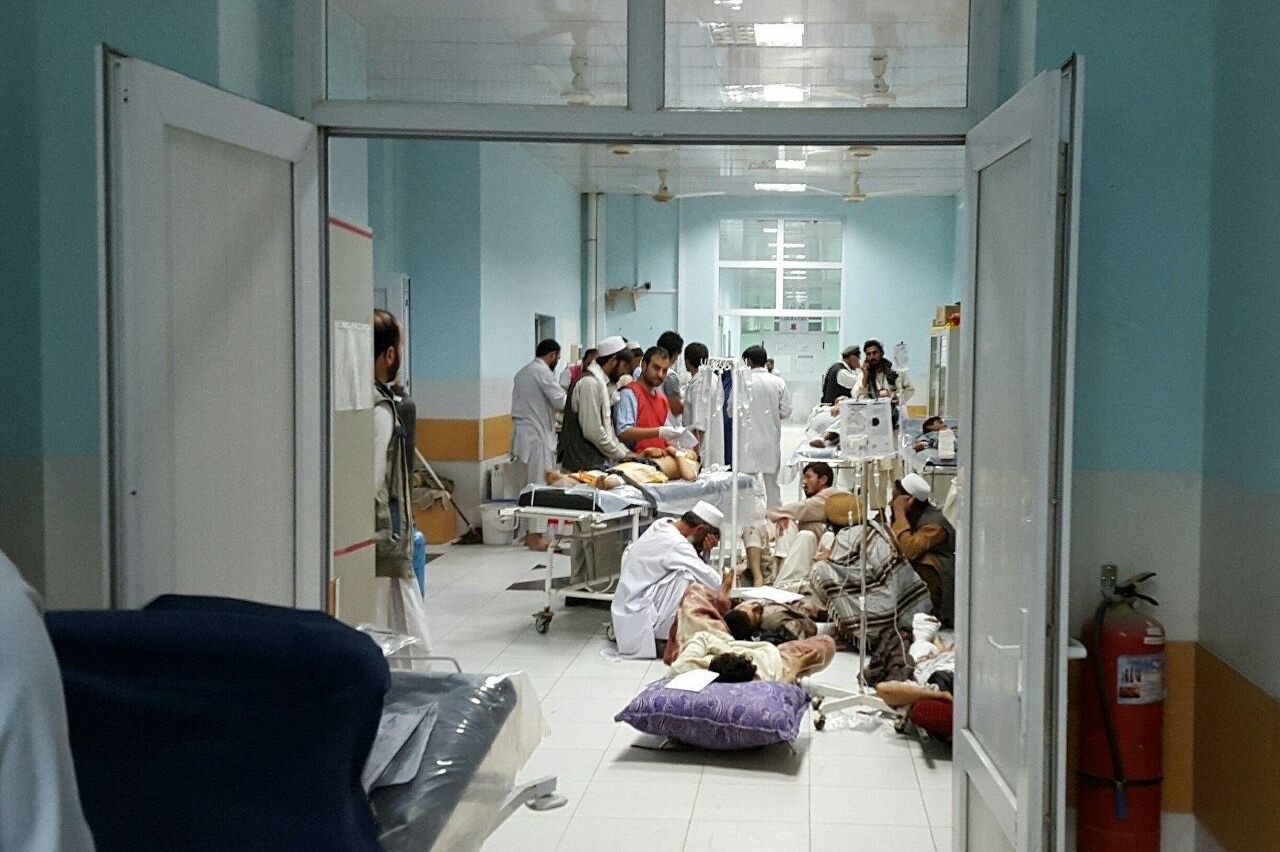
Most of the patients were civilians.  Of the combatants, MSF reported that most of them were from the Afghan army and police, as had been the case since the Trauma Centre opened, but once the city fell on 28 September ‘this shifted to primarily wounded Taliban combatants.’  The Afghan government speedily arranged the transfer of all its patients (apart from the most severely wounded cases) to another hospital.

By that night the Taliban announced that it was in control of the district.  Kathleen Thomas described the scene:

The first day was chaos – more than 130 patients poured through our doors in only a few hours. Despite the heroic efforts of all the staff, we were completely overwhelmed. Most patients were civilians, but some were wounded combatants from both sides of the conflict. When I reflect on that day now, what I remember is the smell of blood that permeated through the emergency room, the touch of desperate people pulling at my clothes to get my attention begging me to help their injured loved ones, the wailing, despair and anguish of parents of yet another child lethally injured by a stray bullet whom we could not save, my own sense of panic as another and another and another patient was carried in and laid on the floor of the already packed emergency department, and all the while in the background the tut-tut-tut-tut of machine guns and the occasional large boom from explosions that sounded way too close for comfort.

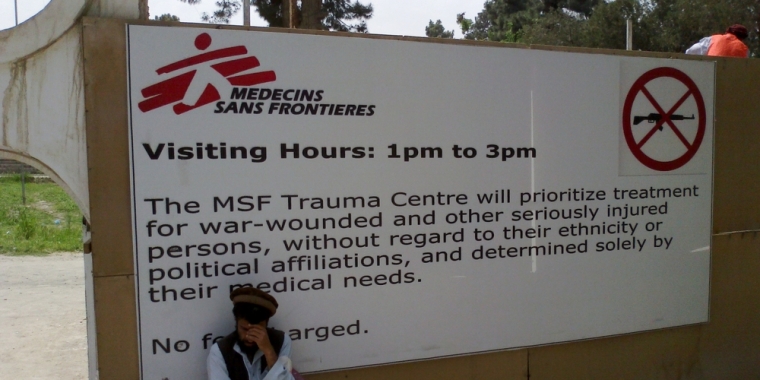
Although the Trauma Centre had been on US Central Command’s ‘No-Strike List’ since October 2014 MSF now re-supplied its GPS coordinates and reminded the Ministry of Defence in Kabul that ‘MSF and its personnel observes strict neutrality and impartiality in the name of universal medical ethics and rights of populations affected by conflicts to humanitarian assistance’ and claimed ‘full respect of these principles and rules in order to be able to continue responding to the humanitarian and medical needs of all Afghans’ [144].  On 29 September MSF issued what would prove to be a remarkably optimistic statement:

We are in contact with all parties to the conflict and have received assurances that our medical personnel, patients, hospital and ambulances will be respected.  With the government provincial hospital not currently functioning, MSF’s hospital is now the only place in Kunduz where people in need of urgent trauma care can receive it.

msf153705-1

MSF had withdrawn from Afghanistan in August 2004 – after the targeted killing of five of its aid workers in June, the government’s failure to arrest those responsible, and Taliban threats to target organizations like MSF that they falsely claimed ‘work for US interests’ – and returned five years later with agreements from the US-led coalition, the Afghan government and the Taliban to respect the de-militarization of its hospitals (including a strict ‘no-weapons’ policy inside them). Initially MSF assumed responsibility for two public hospitals in Kabul and Helmand; two years later it opened its Trauma Centre in Kunduz inside the old Spinzer cotton factory.  It soon became immensely important:

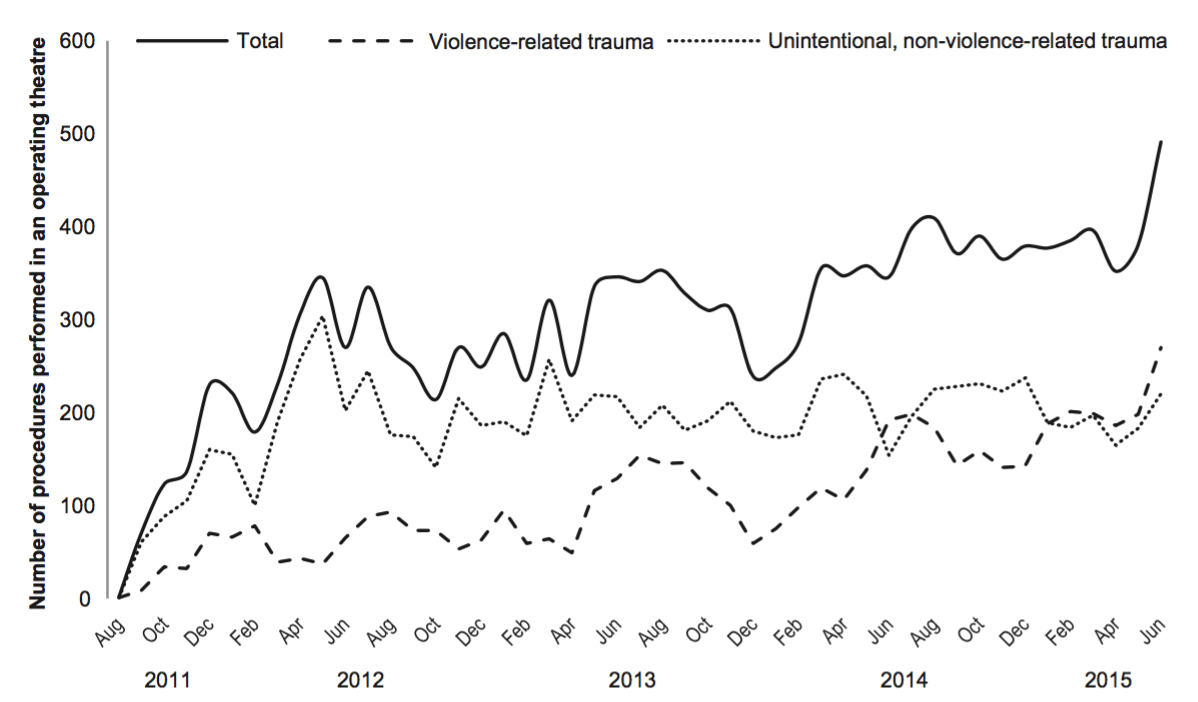
operative-volume-at-msf-trauma-centre-kunduz-2011-2015-trelles

[Source: Miguel Trelles, Barclay T Stewart and others, ‘Averted health burden over 4 years at Médecins Sans Frontières (MSF) Trauma Centre in Kunduz, Afghanistan, prior to its closure in 2015’, Surgery (2016) in press]

Between August 2011 and August 2015 the Trauma Centre cared for 6,685 patients; roughly one-third were suffering from ‘violence-related trauma’, which included land mines and bomb blasts, gunshots, stabbings, assaults, rape and torture; one quarter of those were children.  Procedures for complex wounds were the most common – debridement (excision), removed of shrapnel, care of burns – followed by orthopaedic procedures (including amputation).  Those injuries increased dramatically in the months before the city fell to the Taliban.  Miguel Trelles and his collaborators estimate that during this period the Trauma Centre averted 154, 254 ‘Disability Adjusted Life Years’; more prosaically:

The MSF Kunduz Trauma Centre provided surgical care for a large number of wounded and injured patients in the region. The surgical epidemiology is consistent with reports from other areas of prolonged insecurity in that unintentional, traumatic, non–war-related injuries generally outnumber those from violence. Nevertheless … the Trauma Centre provided surgical care for many adults and children injured directly by conflict (eg, injuries due to gunshots, land mines, bomb blasts). The health burden averted by surgical care at the Trauma Centre was large…

And yet, despite the importance of the Trauma Centre and its inclusion on a centralized No-Strike List that database was not consulted during the operational vetting and legal approval of the two plans drawn up by the OD-As [032, 045] (which, to be fair, had never been in the city and had no direct knowledge of the terrain; their Joint Terminal Attack Controllers had tried to print hard copy of ISR imagery before they set out from Camp Pamir but the base’s only printer was so old all it could produce were ‘giant magenta blobs’  that were completely useless [383] – so initially they relied on a single 1:50,00 map to plan and execute their operations [048]).

In fact – the irony is extraordinary – one member of the Special Operations Task Force testified that even they had no access to the No-Strike List and only discovered the existence of the Trauma Centre by accident, when ‘somebody was looking for additional medical facilities for use as emergency means to treat our own casualties’ if they could not make it back to Camp Pamir and the Forward Surgical Team based there [217, 219].  It was only then, late in the night of 29 September, that the Trauma Centre was added to the database maintained by the ISR [Intelligence, Surveillance and Reconnaissance] Tactical Controllers at the Special Operations Task Force at Bagram; early the next morning e-mails with this information were sent to ‘all ISR assets supporting operations in Kunduz’ [213].

***

us-army-personnel-leave-a-truck-inside-afghan-military-base-kunduz-1-oct-2015

On 30 September there was a secure videoconference between General Campbell, his Afghan counterpart and Major Hutchinson.  It was clear that Campbell was exasperated at the conduct of the Afghan forces and attached great importance to re-taking the city.  Fired up, Hutchinson briefed his men on the planned Kunduz Clearing Patrol, relaying the spirit of Campbell’s comments and telling them this was ‘a no fail mission’, that ‘all of the civilians have fled and only the Taliban are in the city’, and that ‘everything is a threat’ [256].  That night, once the mission had been approved, the Green Berets fought their way into the city alongside the Afghan Special Security Forces, with Close Air Support from US aircraft including an AC-130 gunship that ‘continuously called out and engaged [Taliban] ambush sites’ [325].  This seems to have been the same aircraft and crew that returned on 2/3 October; the sensor operator described that fateful mission as their third flight over Kunduz, following two others on 2 September and 30 September, the last when they provided armed overwatch for a US convoy into the city centre and engaged the Taliban at multiple locations.  Indeed, he claimed that those previous missions had provided them with ‘good situational awareness’ of Kunduz and the ‘patterns of life’ of both civilians and insurgents [362].

Before dawn on 1 October the US and Afghan troops had cleared several key buildings and established a defensive strongpoint in the Provincial Chief of Police Compound [PCOP].  They hunkered down and came under repeated mortar, rocket-propelled grenade and automatic weapons fire, and throughout that day and the next their Joint Terminal Attack Controller called in multiple strikes from F-16 aircraft, many of them ‘danger close’, in immediate proximity to the PCOP [332].

nyt-map-kunduz-ops

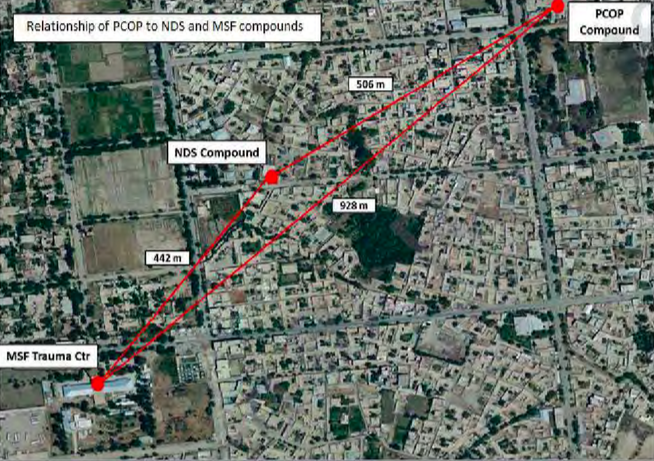
By the end of the afternoon on 2 October several Afghan troops had been wounded.  Their commander was all for taking the casualties back to Camp Pamir immediately, but Hutchinson persuaded them that this was madness: they were stable so the medical evacuation should wait for the cover of darkness.  The Afghan Special Security Forces agreed; while they were at Pamir they would re-supply and then return to attack a command and control centre they said had been established by the Taliban in the National Directorate of Security compound (NDS) to the south west of the PCOP which the Afghan SSF also referred to as ‘the NDS prison’ [386-8].  The investigation report includes this map showing the relationship of the PCOP to the NDS Compound and the MSF Trauma Centre:

map-pcop-msf-and-nds-in-kunduz

[A similar map included in a detailed analysis by The Intercept mis-locates the PCOP – almost certainly confusing it with the NDS Prison that the Operations Center in Bagram wrongly assumed was the intended target of the air/ground operation: see below]

The Afghan Special Security Forces were assured that Close Air Support would be extended to the convoy once they had returned to the ‘self-defence perimeter’ beyond the PCOP – a ‘bubble’, Hutchinson called it, roughly defined by the range of the heavy machine guns and anti-aircraft guns used by the Taliban [387].

But by then the F-16s providing close air support were running low on munitions and in the early evening, with the situation in Kunduz remaining precarious, the Special Operations Task Force scrambled the AC-130 gunship from Bagram to take over.

***

The AC-130 (call-sign ‘Hammer’) was a mission in a hurry and the aircraft took off without a proper briefing or any geospatial intelligence products.  All the aircrew had was the grid location of the PCOP and the call sign and contact frequency for the OD-As [052].  By then, superior commands had received the e-mail detailing the location of the Trauma Centre, and at 1847 the Fires Officer from Combined Joint Special Operations e-mailed a package of ‘mission products’ to the Electronic Warfare Officer onboard the AC-130 which included that information.  But en route to Kunduz one of the aircraft’s communications systems failed and the message never arrived; when the aircrew did not acknowledge receipt, the Fires Officer at Bagram made no attempt to pass the information over the radio (which was working) [052].

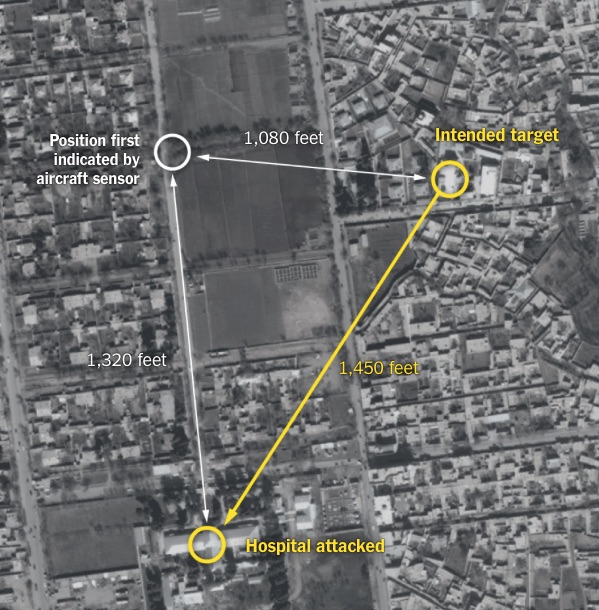
At 0130 on 3 October the Afghan convoy left on its evacuation and re-supply mission, and Hutchinson contacted the AC-130 through his Joint Terminal Attack Controller (JTAC) to ask them to carry out a ‘defensive [infrared] scan’ of the area of operations.  Specifically, he wanted to prepare the ground ahead of the convoy’s return: if they were ambushed and ‘got fixed in place what I wanted to do was to reduce heavy weapons and strongpoints so that they would be able to effectively maneuver on to the objective’ [390].  To that end he supplied the aircraft with a grid location for the NDS compound.

It is unclear – from the redacted report, at least – how the co-ordinates of the target were obtained. Hutchinson said that when the Afghan Special Security Forces showed him their plan for securing the NDS compound it included ‘a grid [which] said, I think, NDS prison’, but when he plotted the location he realised it was not the Prison to the south that was one of the objectives included in the original plan to establish a foothold in the city. Hutchinson riffed on the multiple NDS facilities throughout Kunduz, but this begs a crucial question: how did he plot the grid to confirm the location?  He claimed to have been working from the 1:50,00 map spread out on the hood of his armoured vehicle, which could hardly have provided the co-ordinates required for a precision strike.  The Joint Terminal Attack Controllers would have had access to digital imagery stored on their laptops, but by this stage they were running low on batteries and cannibalising the radios of other Green Berets to keep communications with the AC-130 open [334, 383].  ‘The worst part of it,’ Hutchinson said, was that the day after the strike they found a detailed 1:10,000 map produced by a Provincial Reconstruction Team in 2013 ‘with nice crisp imagery, and it had everything labelled with 10-digit grids’ [397].  The commanders of the other two OD-As remembered it differently, both testifying that the map was found in the provincial governor’s office on 1 October.

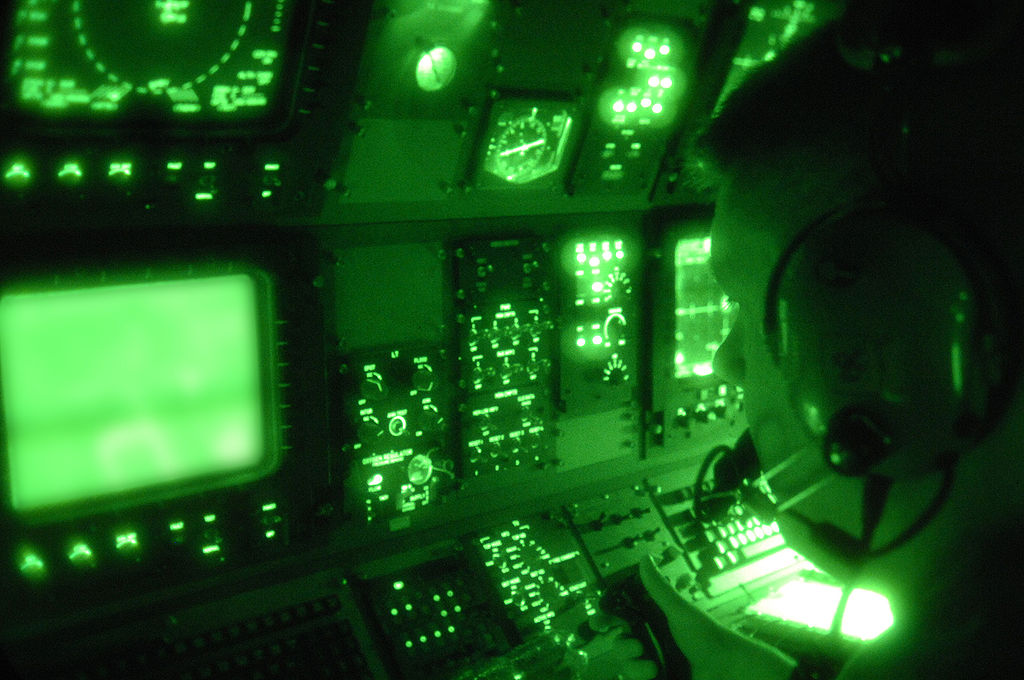
ac-130u_sensor_operator

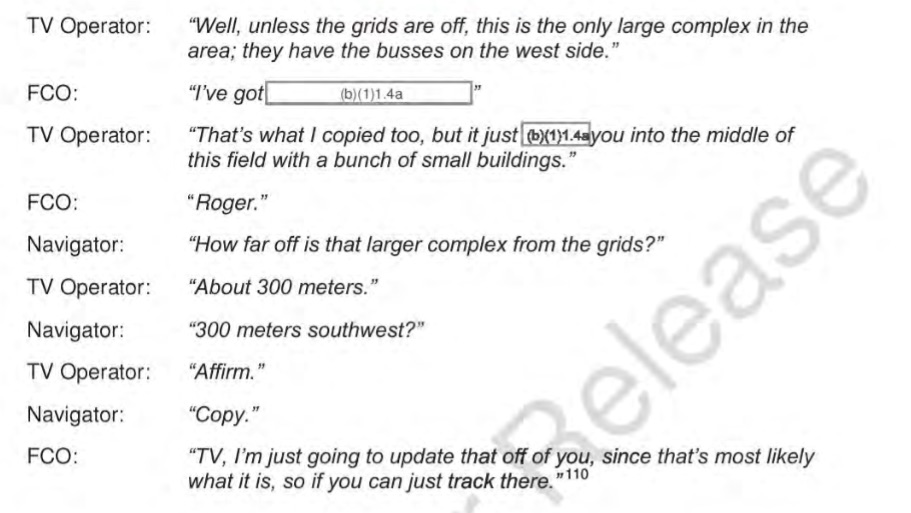
All this matters because when the TV sensor operator on the AC-130 (above) inputted the grids that were passed by Hutchinson via his JTAC he found ‘it put me in a field with residential buildings’.  The AC-130 has a sophisticated sensor suite, including high resolution sensors (an All Light Level Television system, infrared detection set and strike radar to permit all weather/night target acquisition).  But reading between the redactions in the investigation report there is some suggestion that there are also known technical issues with the system (perhaps distortion introduced by the aircraft’s height and/or orbit, because the AC-130 had been forced out of its overhead orbit at 2220 by taking evasive action against a surface-to-air threat): ‘Nothing in the immediate location matched the target but from training I was aware that at significant [redacted]…’ [363].

So the sensor operator widened the search and found a large compound 300 metres to the south that appeared to match the description of the target.  It was not difficult to find: the Trauma Centre had its own generator and was the only building in the city that was still brightly illuminated.  At first sight the sensor operator said ‘there was nothing else near the original location that could match the description of a prison.’

msf-kunduz-attack

‘As we got closer,’ s/he continued,

I observed multiple [redacted: this is surely MAMs or ‘military-aged males’, a term the US military was supposed to have discontinued, which would explain the otherwise puzzling deletion] walking in between buildings [redacted] entrances with [redacted: guards?] posted. After passing back the information to the JTAC he said the compound was under enemy control and that those [redacted: MAMs?] were declared hostile [363].

The navigator had informed the JTAC that the grids had originally plotted to the middle of a field but they now had a large compound in their sights, a T-shaped structure with an arch gate and nine people ‘roaming outside’.  The Green Berets conferred with the Afghan Special Security Forces in the PCOP who confirmed that this was the NDS compound, and the Fire Control Officer on the AC-130 adjusted the target location in the fire control system accordingly [054, 242].

unless-the-grids-are-off

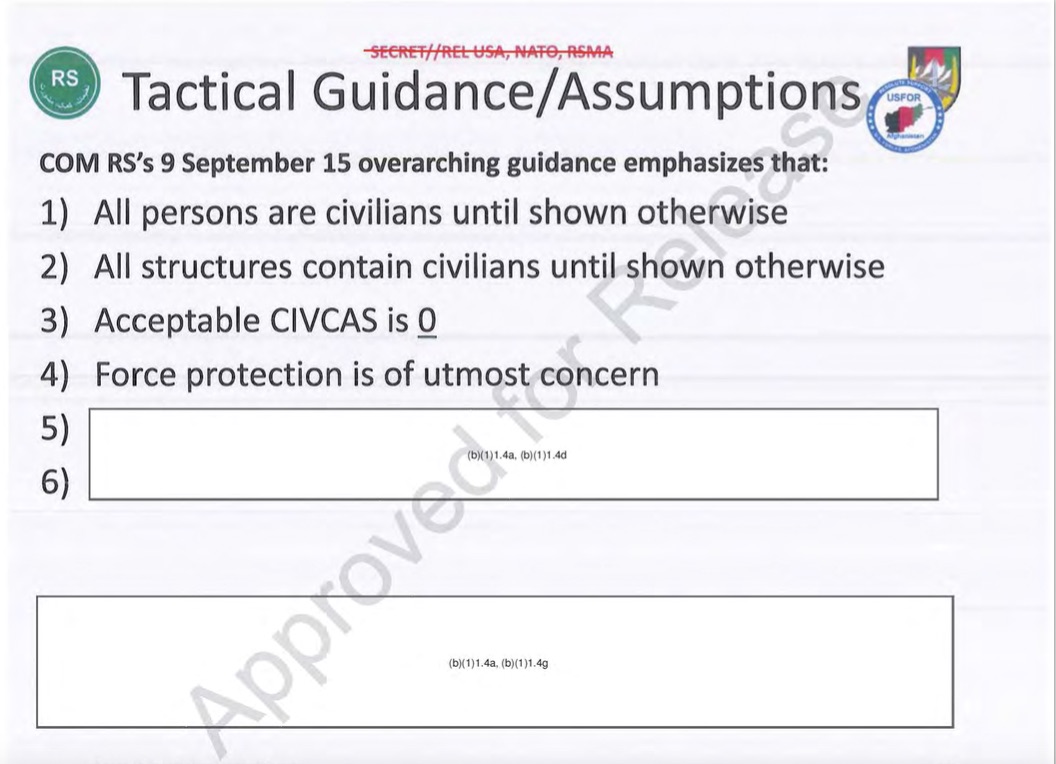
But the sensor operator, more mindful of the Tactical Guidance issued by General Campbell (below), testified that he wanted ‘to make sure we were not inadvertently declaring civilians hostile’.

resolute-support-tactical-guidance-jpeg

So he re-entered the original co-ordinates (‘to determine any system [redacted: error?]’) – by then the AC-130 had moved to a more accurate, overhead orbit [057] – and this time the sensor homed in on a second compound:

a much smaller compound with two large buildings, what appeared to be a third smaller shack, two overhangs, a wall surrounding, what appeared to be guard towers at the four corners with a single entrance on the south side of the compound and was unable to observe any movement in that compound [363].

This underscored his concerns.  ‘Now that we are closer,’ he told the rest of the crew,

even though that compound [is] the only one that’s limited and has activity, if you look in the TV’s screen you can see this hardened structure [the second compound] that looks very large and could also be more like a prison with cells. So I just want to verify that before we start declaring people hostile, that we are 100 per cent sure that this is the correct compound [057].

He asked the navigator to request a more detailed target description from the Joint Terminal Attack Controller (though the JTAC was not told that the aircraft’s sensors had now identified two different compounds from the same grids).

The JTAC came back with a target description of multiple buildings with a wall surrounding, and a main gate with an arch shape. I asked for further clarification on which side of the compound that gate was on, to which he replied the North side of the compound. The gate I was able to make out at the first compound was on the north side and matched the target description [363].

The first compound was the MSF Trauma Centre; the second was the NDS compound.

***

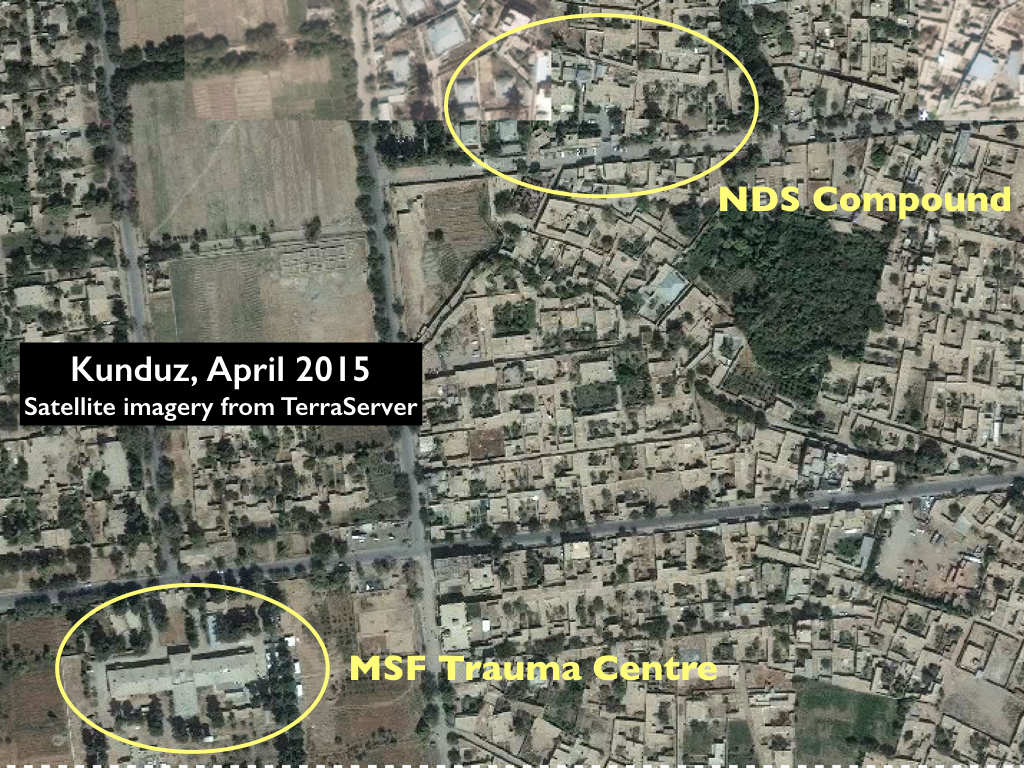
The redacted version of the investigation report includes a satellite image of the MSF Trauma Centre but conspicuously failed to include a corresponding image of the NDS compound.  Yet from TerraServer’s satellite imagery (below) it is clear that the two are radically different, and in fact the gate on the NDS compound faced south not north.

kunduz-imagery-001

kunduz-imagery-002

kunduz-imagery-003

Neither Hutchinson nor his JTAC had access to real-time imagery from the AC-130 because the same antenna that prevented the aircraft receiving the e-mail with the No-Strike List also prevented it from transmitting a video feed to the JTAC’s laptop, and so both the aircrew and the US forces on the ground had to rely on verbal descriptions.  The investigation report calls the characterisation of the target building ‘a vague description’ [034] but, as Mathieu Aikins pointed out in a superb analysis of the strike, ‘it’s actually a rather specific description that corresponds to MSF’s distinctive layout.’  Indeed, when the aircrew compared the two compounds they were persuaded by the description of a ‘T-shaped structure’ that they had identified the correct target.

Once the AC-130 aircrew’s description of the Trauma Centre had been confirmed by the Afghan Special Security Forces as the NDS compound, the circle was closed.  As Hutchinson testified, he had a report from the AC-130 ‘that describes a target, the disposition of the target and the pattern of life on it that’s completely consistent with what I’ve heard from the Afghans…’  Whether the Afghans deliberately substituted a description of the Trauma Centre for the NDS compound remains an open question.  From their own (separate) interviews in Kunduz, both May Jeong and Mathieu Aikins repeatedly raise this as a distinct possibility.  Some informants insisted that the Trauma Centre had been overrun by the Taliban, confirmed (so they said) by raw intelligence and communications intercepts, even that it was being used as a firing position – a claim that was repeated by the government in Kabul in the immediate aftermath of the strike – while others complained that MSF treated Taliban casualties who then returned to the fray: ‘patching up fighters and sending them back out.’  Much of this is ex post facto rationalisation; clearly many Afghans regarded the attack on the Trauma Centre as perfectly justified.  But Aikins asks a more pointed question: Did Afghan forces, out of longstanding mistrust of MSF, draw the United States into a terrible tragedy?’

If they did, then it had to have been a spur-of-the-moment decision to take advantage of a developing situation, since the Afghan Special Security Forces had originally provided the correct grids for the NDS compound.

More telling, I suspect, is that from 0100 until well into the attack on the Trauma Centre the only people who had the co-ordinates for the target now in the sights of the AC-130 were the aircrew, who did not pass the grid location for what they had incorrectly identified as the target back to Hutchinson.  And yet the ground force commander had already told the navigator he had ‘great confidence in the grids passed [057]’, and it is astonishing that this did not prompt a more extensive discussion among the aircrew since the original grids had plotted first to an open field and second to the NDS compound but never to the Trauma Centre that had now been designated as the target.

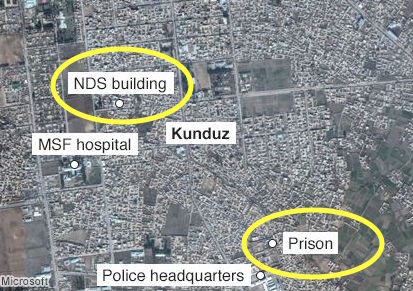
Neither did the aircrew pass the revised grids back to the Special Operations Task Force who were monitoring events from Bagram.  Repeating Hutchinson’s earlier mistaken assumption, the staff in the Operations Center at Bagram believed the target (‘the NDS prison’) was the Prison in the south of the city which had been included in the original Kunduz City Foothold Establishment plan, and they tasked an MQ-1 Predator to provide surveillance over that location [059].

nds-compound-and-prison-in-kunduz

Hutchinson could not view the video feed from the Predator, since the laptops in the PCOP were desperately short of batteries, but the Special Operations Task Force did have access to the drone’s real-time imagery.  Nothing was happening around the Prison, and confident that this was the strike location nobody at Bagram attempted to confirm the coordinates until the attack on the Trauma Center was well under way.  At 0207 they heard a sudden, direct transmission from the AC-130 – ‘unreadable numbers followed by going hot/rounds away’ – and ‘the quickness of the going hot call’ suggested to one experienced JTAC at Bagram that ‘there was possibly a dire situation on the ground.’  But ‘the passing of engagement grids was broken, unreadable’, and s/he immediately ‘made multiple attempts to get a resend of [the] grid of engagement’.  Those requests ‘were either not acknowledged or met with “still engaging/hot”‘, but this was ‘not uncommon due to the task saturation during coordination and employment by ground JTACs and aircraft’.   Meanwhile another JTAC in the Operations Centre, realising that ‘no activity was noted at the facility’ – presumably by the Predator on station over the Prison; the Taliban had reportedly freed all the prisoners when they took the city – tasked the Predator crew to ‘find the engagement area’ [261-4].  At 0220 they were successful, and once the new grids had been checked the Operations Center realised that the AC-130 was attacking the Trauma Center.

***

Hutchinson provided two contradictory rationales for the attack.  One was offensive: his JTAC relayed to the AC-130 that Hutchinson’s intent was to ‘soften the target’ (meaning the NDS compound) for the Afghan convoy returning from Camp Pamir.  When the aircrew asked for clarification they were told they were to ‘destroy targets of opportunity that may impede partner forces’ success’ [059].  When he was questioned by the investigating officers, Hutchinson represented this as pre-emptive and precautionary: ‘If they were going to take contact I did not want to play twenty questions while they were taking fire’ [391].  The other was unambiguously defensive: the immediate trigger for Hutchinson to clear the AC-130 to open fire was the sound of automatic gunfire from the east-west road near the NDS compound.

What did it for me in the end was when I believed the [redacted] convoy to be at that parallel cross street … or the perpendicular cross street … to the facility, I heard sustained automatic weapons fire … and it was coming from that general direction. And so I asked the [redacted] are they in contact yet. He can’t get through [to] them at first, and so I think okay, so that’s a sign they’re probably in contact… Fire continues and I ask him again and he says strike now, assume they are decisively engaged’ [393-4].

It’s not clear from the redactions who Hutchinson was talking to, but it was almost certainly someone from the Afghan Special Security Forces in the PCOP.  What is certain – and known to the aircrew on the AC-130, who were also tracking the convoy, but not to Hutchinson – was that the convoy was nowhere near the NDS compound or even the Trauma Centre at that time but 9 km away, still within the northern perimeter of the airfield.

Hutchinson’s attention was on the sound of gunfire.  He explained that most of the fire directed against his forces in the PCOP compound had been from the west, and it was ‘unthinkable’ that ‘there would have been anything functional over there in terms of essential services’ [394] – like a hospital.

And so, at 0202 Hutchinson had his JTAC instruct the AC-130 to strike the ‘objective building first’ and then to provide ‘suppressing fire’ (which the JTAC later described as a ‘PAX cocktail’ and the aircrew translated as ‘MAMs’ [military-aged males]).   Again the aircrew sought clarification; they wanted to be sure that their target was the ‘large T-shaped building in the centre of the compound’ and that ‘we are [also] cleared on people in this compound.’  It was and they were; at 0208 the first round was fired as the Electronic Warfare Officer announced the grids over the radio: the garbled transmission received at Bagram [064-6].

***

ac-130h-u_007-ts600

The AC-130 made five passes over the Trauma Centre at 15-minute intervals, firing a total of 211 rounds.  But ’rounds’ fails to convey the scale of the ordnance involved.  As May Jeong notes, the AC-130 is ‘built around a gun’; it is, after all, a gunship.  It has a 105 mm M102 Howitzer that fires high explosive shells at 10 rounds a minute (reputedly the largest gun ever operated from a US aircraft); a 40 mm Bofors cannon that fires 120 rounds a minute; and a 25mm 5-barrelled Gatling cannon that fires incendiary rounds at 1,800 rounds a minute.  YouTube has a video of a live-firing exercise carried out by the 4th Special Operations Squadron in 2016 that is truly chilling:

All these weapons are side-firing; the AC-130 performs a slow left-banking pylon turn in a five-mile orbit to keep its weapons on target for much longer than a conventional strike aircraft:

w2300-kunduzhosp1011-plane

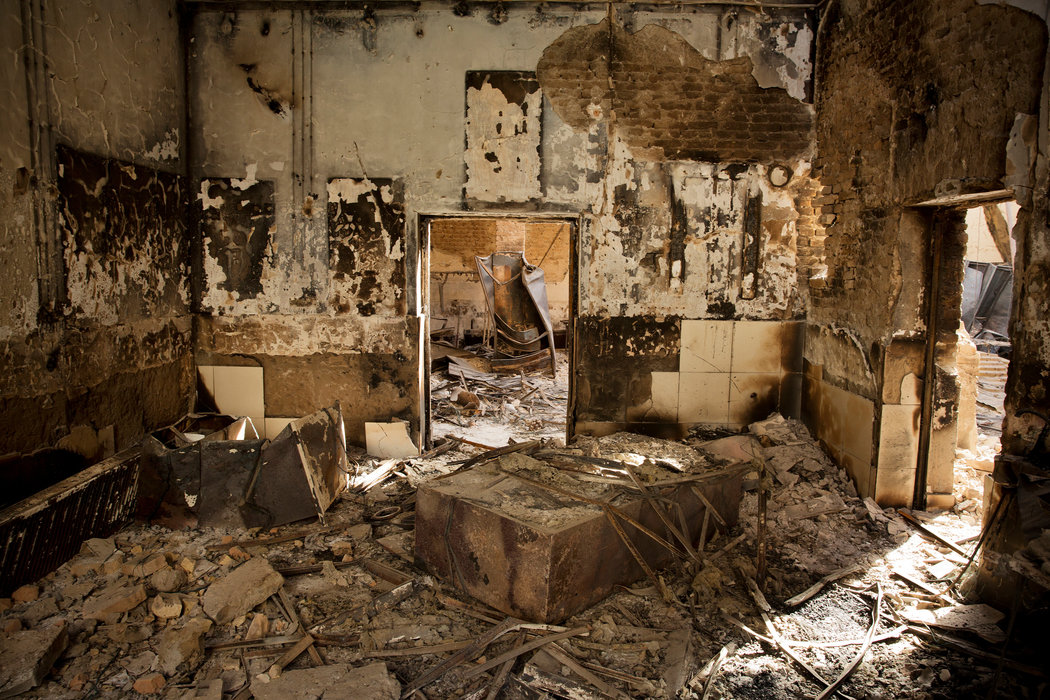
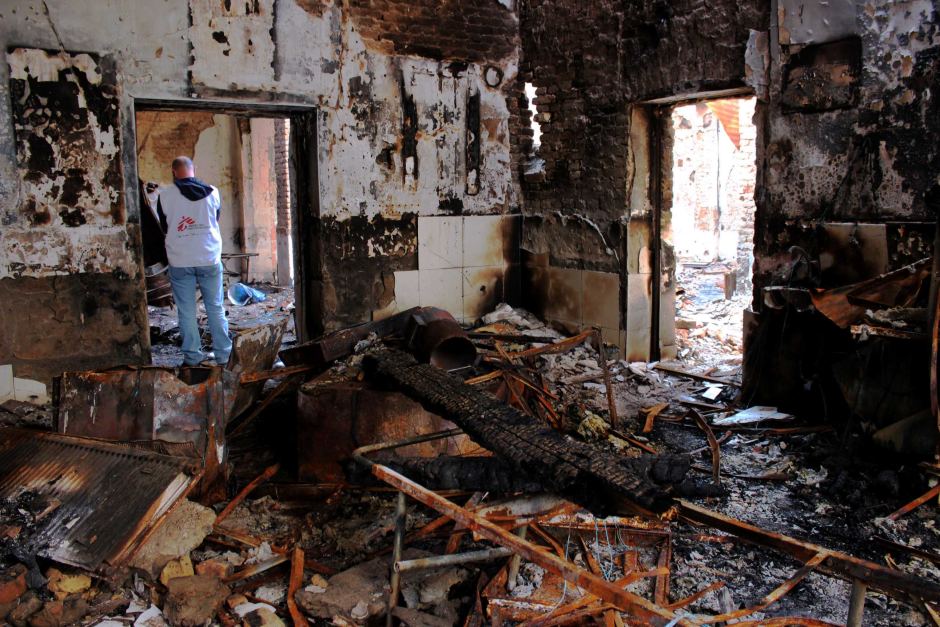
The results on the ground were catastrophic.

15hospital-1-master1050

6988426-3x2-940x627

All the patients in the ICU died except one, alongside the caretakers who were with them; one doctor, three nurses and a cleaner who were in the ICU were also killed.  Here is Kathleen Thomas again:

I hope with all my heart that the three sedated patients in ICU, including our ER nurse Lal Mohammad, were deep enough to be unaware of their deaths — but this is unlikely. They were trapped in their beds, engulfed in flames.

The same horror that rocked the ICU rocked the rest of the main building as the plane hit with alarming precision. Our ER nurse Mohibulla died. Our ER cleaner Najibulla died. Dr. Amin suffered major injuries but managed to escape the main building, only to then die an hour later in the arms of his colleagues as we desperately tried to save his life in the makeshift operating theater set up in the kitchen next to the morning meeting room.  The OT nurse, Abdul Salam, died. The strikes continued further down the building, tearing through the outpatients department, which had become a temporary sleeping area for staff. Dr. Satar died. The medical records officer Abdul Maqsood died. Our pharmacist Tahseel was lethally injured. He also made it to safety in the morning meeting room, only to die soon after, having bled to death. Two of the hospital watchmen Zabib and Shafiq also died.

Our colleagues didn’t die peacefully like in the movies. They died painfully, slowly, some of them screaming out for help that never came, alone and terrified, knowing the extent of their own injuries and aware of their impending death. Countless other staff and patients were injured; limbs blown off, shrapnel rocketed through their bodies, burns, pressure wave injuries of the lungs, eyes, and ears. Many of these injures have left permanent disability. It was a scene of nightmarish horror that will be forever etched in my mind.

cvwb2clwuaaw4si-jpg-medium

***

The loss of life and the destruction of the hospital was appalling.  But the effects of the air strike have reverberated far beyond the Trauma Centre and the events of 3 October.  In February this year Sophia Jones told the troubling story of a father of four who lost his right arm and the sight of one eye when he was caught in cross-fire between the Taliban and the Afghan army.  With the destruction of the Trauma Centre in Kunduz there were no local hospitals capable of treating his life-threatening injuries, and it took him two agonising days to travel 200 miles to the Surgical Center for War Victims run by another NGO, Emergency, in Kabul – now ‘the only free, specialized trauma hospital of its kind treating war victims in Afghanistan.’  Like MSF, Emergency is absolutely clear that ‘we cannot be on one side of the war’: ‘a patient is a patient’.  Like MSF, most of Emergency’s patients are civilians.  But, as Luke Mogelson found in the spring of 2012,

At Emergency’s hospital in Kabul, it’s not unusual to find Afghan national security forces recovering in the same ward as Taliban insurgents, and after a while, the ideas that make enemies of the two men lose their relevance; the daily spectacle of their impact on human bodies invalidates them.

That was then.  ‘After Kunduz’, Emergency’s program co-ordinator now concedes, ‘anything is possible.’  It would be truly, desperately awful if one of the casualties of the air strike on the Trauma Centre turned out to be the core principle of medical neutrality.

One year after Kunduz, Christopher Stokes, MSF’s General Director, warned that ‘A war without limits leads to a battlefield without doctors.’  MSF pledged not to allow that to happen.  They must not stand alone.

To be continued

The hospital raids

This is the first in a new series of posts on military violence against hospitals and medical personnel in conflict zones.  I’ve discussed these issues on multiple occasions in the past – in relation to Afghanistan, Gaza and Syria – but I’m now working towards a presentation – and ultimately an extended essay – that brings this all together (including a detailed analysis of the US air strike on the MSF Trauma Centre in Kunduz).  It will have its first outing (“Surgical Strikes and Modern War”) at NUI Galway next month.

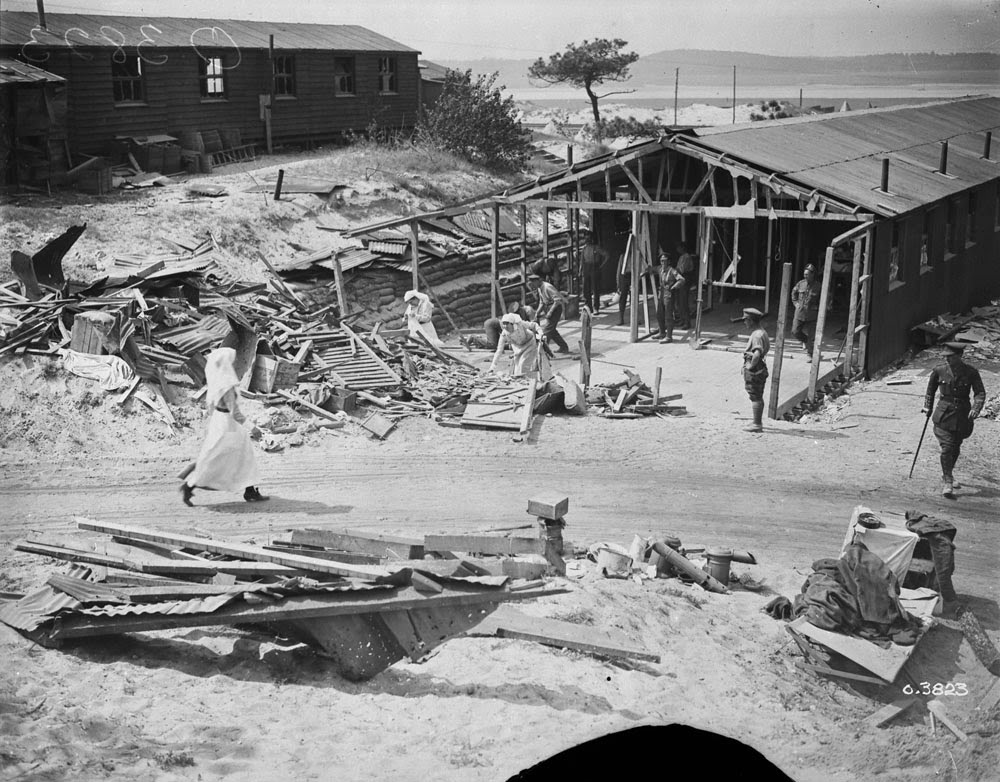
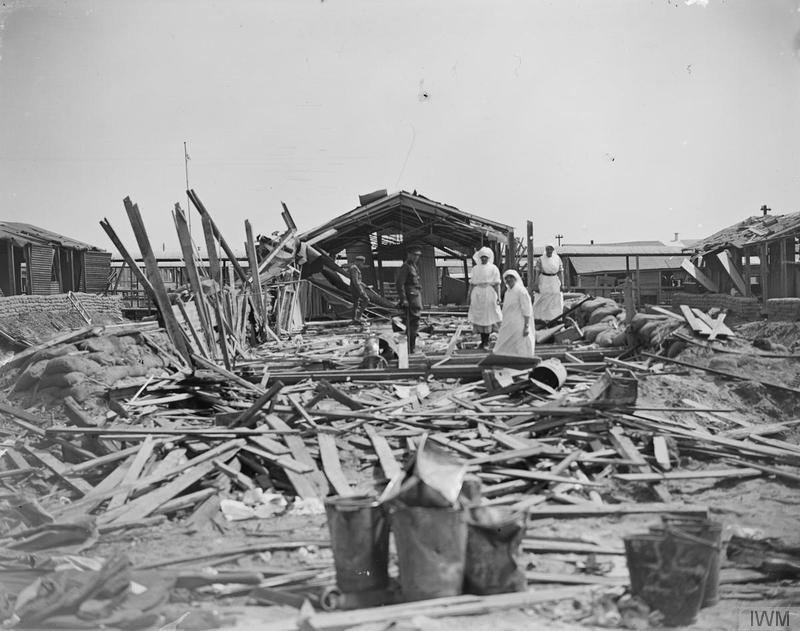
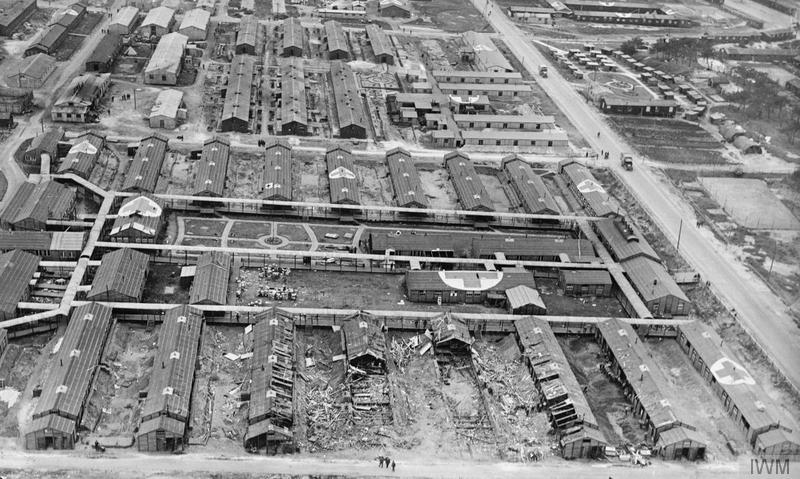
It was a clear, moonlit night and the hospitals – many of them provided by humanitarian organisations – were brightly lit as the nurses moved about the wards caring for their patients; elsewhere the hard-pressed surgeons were still operating on the maimed bodies of the wounded.  At 10 p.m. they heard the sound of approaching aircraft: first the clatter of gunfire and then, after the hospitals were plunged into precautionary darkness, the whistle of bombs falling.  The hospitals were hit repeatedly, and two hours later – when the flames had burned themselves out and the smoke cleared – several nurses had been killed and hundreds of patients had been killed or injured; multiple wards had been severely damaged.  Ten days later the aircraft returned; one hospital was totally destroyed and elsewhere operating rooms and wards were destroyed or damaged.

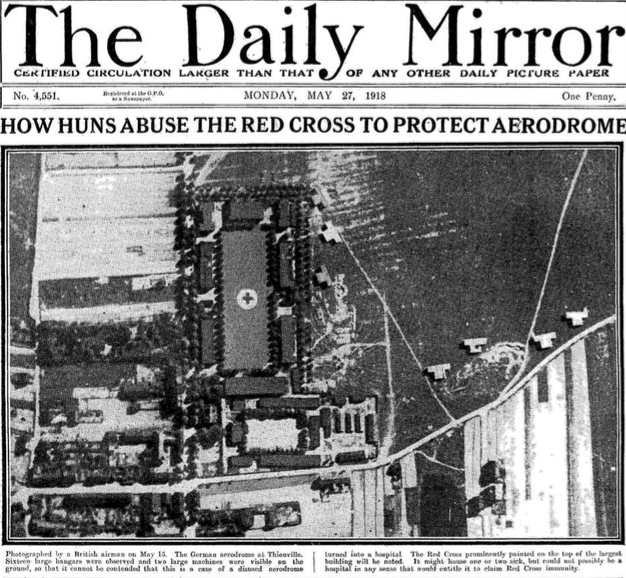
The scene is all too familiar: but this is not Gaza in 2014, Afghanistan in 2015 or Syria in 2016.  This is Étaples on the coast of France, 25 km south of Boulogne, in May 1918.

etaples-bombing-2-lowe_field_hospital_bombed_lac_pa_003747_a003747_v8-jpg_pv4a5fab25f240997c

On the Western Front it was common for stretcher-bearers to come under fire as they retrieved the wounded from No Man’s Land or carried them through the trenches and down the roads to aid posts and dressing stations; those places were often shelled since they were close to the front lines.  On 13 September 1914 Travis Hampson – a Medical Officer with a Field Ambulance – noted:

As one of our buses drove out onto the road to pick up some wounded gunners from the battery opposite, one landed on the road in front of it, and one behind, but not near enough to do any damage. With their glasses they must have been able to distinguish the white tilt and red cross, but we can’t grumble about being shelled if we are put amongst ammunition columns and batteries.

So too with the Casualty Clearing Stations (CCS) which had moved close to the front lines to speed up the treatment of what were often catastrophic wounds and to minimise the risk of infection.  Here is Kate Luard writing in her diary at Brandhoek on 18 August 1917:

He [the enemy] played about all night till daylight. There were several of him. He went to C.C.S.’s behind us. At one he wounded three Sisters and blew their cook-boy to pieces. The Sisters went to the Base by Ambulance Train this morning. At the other he wounded six Medical Officers among other casualties. A dirty trick, because he has maps and knows which are hospitals back there. Here we are in a continuous line of camps, batteries, dumps, etc., and he may not know.

In fact, her CCS was judged to be too close for comfort  and was ordered to evacuate a few days later.

Luard’s last sentence reinforces Hampson’s; in general (so she suggests) the Red Cross was respected.  The following year she wrote about German air raids on the CCS:

Jerry comes every night again and drops below the barrage, seeking whom he may devour: I think he gets low enough to see our huge Red Cross, as even when some of our lads butt in and engage him with their machine-guns, he hasn’t dropped anything on us.

For the most part, then, it seems that attacks on medical sites and personnel were the result of the inaccuracy of shellfire and bombing (especially at night) compounded by the close proximity of aid posts, dressing stations, CCS and ambulance trains to the fighting.

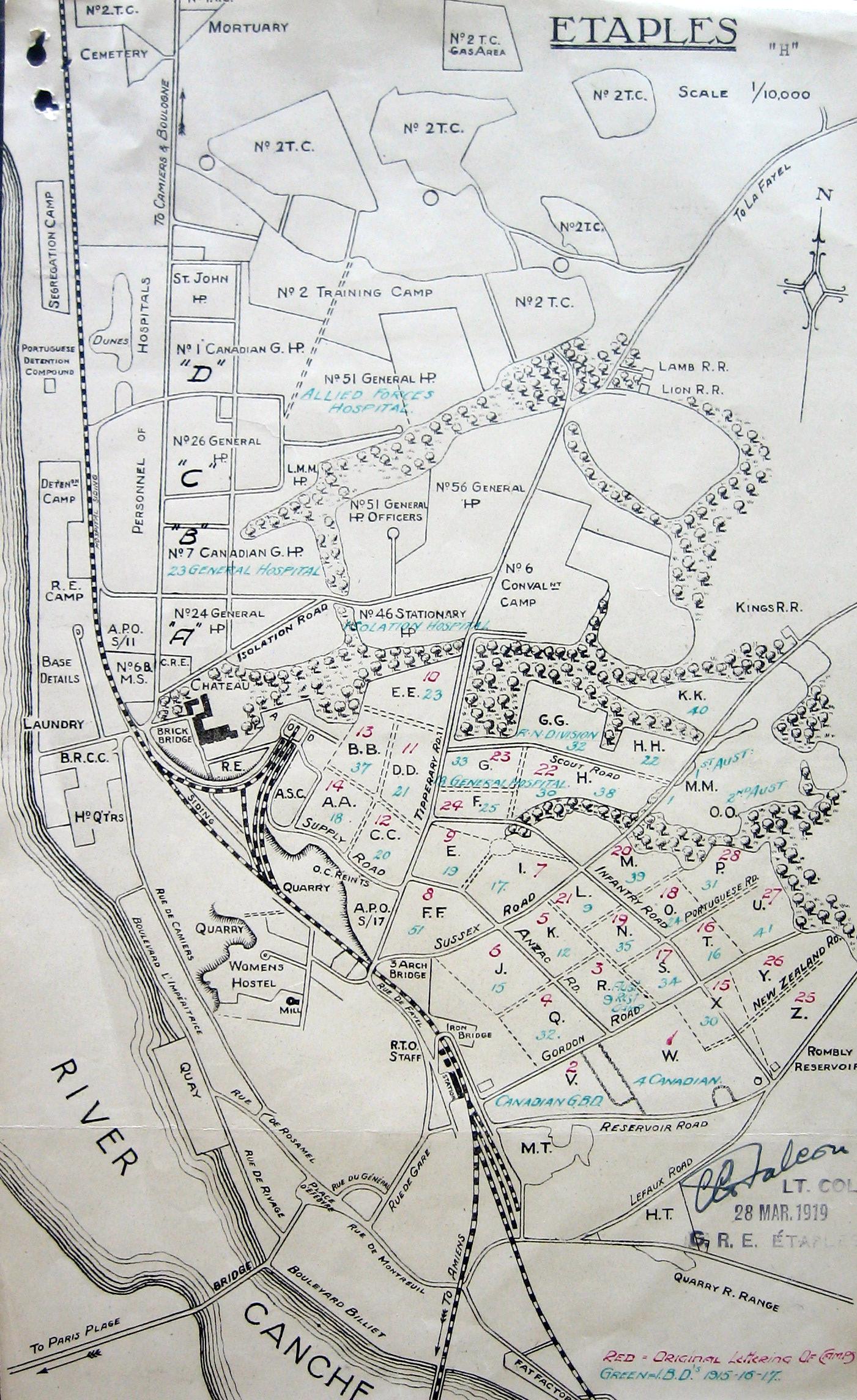
Yet the hospital raids in the last year of the war seemed to be something else.  Étaples was distant from the fighting, the site of a vast collection of ‘base hospitals’ – ‘the Land of Hospitals’, Sister Elsie Tranter called it, ‘a stretch of six kilometres of hospitals’ – to which wounded soldiers were sent from casualty clearing stations near the rapidly moving front: some to be treated and returned to active service, others to be evacuated across the Channel on hospital ships.

etaples-map

As soon as the news broke, the British press were up in arms at what the Times lost no time in calling ‘German savagery at its worst’:

‘During the recent fine weather our airmen have … made every use of the still air and the good visibility to attack and harass the enemy by bombing his camps, billets, rail-heads, batteries, dumps, roads and all points of military importance in the battle area and immediately behind.  At the same time, the German airmen have also been making use of the favourable conditions by having recourse to their old trick of bombing hospitals.

‘There is one place in France, faraway from the battle area, where we have a large group of hospitals.  The hospital tents there cover a great area of ground.  The Germans are perfectly aware of the character of the place, and they selected it as the object of a bombing raid last year.  They have again been attacking it, and the size of the tract of ground covered with hospital outfits and the entire absence of any concealment make it a mark which no airman could possibly miss.  An airman blind and drunk could let bombs fall from any height in any wind and weather, and they must land somewhere amongst the attendants’ quarters or on the tents where the nursing sisters move among the rows of cots with their helpless occupants.

‘On Sunday night the Germans attacked the place with all the ferocity of which they are capable… The scenes inside the tents were of the most piteous description, and the total casualties to patients, sisters, medical officers and attendants must have far exceeded those of any London air raid.  The redeeming feature of the whole horrible affair was the magnificent behaviour of the hospital staff…’ [Times, 24 May 1918]

This too is a familiar narrative, and one that would be repeated in countless wars to come: ‘we’ attack military targets with precision, ‘they’ attack civilian targets with abandon; their aircrew are cowards, our victims are heroes.

The press provided photographic evidence of the aftermath of the raids:

sjab-ward-destroyed-by-air-raids-etaples-may-1918

One of the German pilots was shot down – ‘and is now being cared for in the hospital he bombed’, thundered the Times – and his protestations were summarily dismissed:

‘He tried at first to excuse himself by saying that he saw no Red Cross.  When challenged with the fact that he knew that he was attacking hospitals he endeavoured to plead that hospitals should not be placed near railways, or if they are, they must take the consequences.  Apart from the fact that hospitals must be near railways for the transport of their patients, in this case, as in the others, the raiders were not attacking the railway but came deliberately to bomb the hospital.’

Punch dismissed German remorse as crocodile tears:

punch-26-june-1918

There were repeated angry calls for reprisals. Arthur Conan Doyle urged that the captured pilot be shot ‘with a notice that such will be the fate of all airmen who are captured in such attempts’ and recommended that German prisoners of war ‘at once be picketed among the tents’ to deter future raids [Times, 27 May 1918].  Sir James Bell went further.  Although his son had been killed in one of the raids, reprisals were not about revenge, he said, but were a strictly ‘military matter’.  He recommended ‘bombing German hospitals and killing their wounded’ to stop the outrages [Times, 5 June 1918].

Finally, the press trumped arguments about the presence of Red Crosses on the hospitals.  The Hague Convention required belligerents to take ‘all the necessary measures … to spare, as far as possible, … hospitals, and places where the sick and wounded are collected, on the understanding that they are not being used at the same time for military purposes’ and required them to mark such places with ‘distinctive and visible signs’.

But far from respecting these protocols there was photographic evidence that the Germans were abusing the Red Cross to protect their own military installations:

dm-27-may-1918

The aerial photograph was taken on 15 May 1918, and the caption described this as an active aerodrome at Thionville; the large building displaying the Red Cross ‘might house one or two sick’ but the Mirror insisted it ‘could not possibly be a hospital in any sense that would enable it to claim Red Cross immunity.’

And so, in her diary entry for 24 June 1918, Sister Edith Appleton wondered

‘if there is any truth in what they say about the bombing of hospitals – that in German territory the flying men have seen what are without doubt aeroplane hangers and ammunition dumps marked with huge red crosses. They are not near a railway and are so placed that they simply cannot be hospitals. I suppose they think we do the same and they bomb us on the chance of it. Of course we bomb their hangers and dumps – we should be fools if we didn’t! I am quite sure though that they do know what is a real hospital. They can see the wounded men walking about and some lying out in beds.’

Yet the press reports were studiedly disingenuous.  Étaples was indeed physically removed from the fighting – ‘far away from the battle’, as the Times‘s correspondent noted – but it was functionally and logistically absolutely central to the Allied military machine because it was the site of multiple Infantry Base Depots.  It was a vital transit and training camp – all those ‘TCs’ scattered across the map (above).

‘The Base!’ Edmund Blunden exclaimed in Undertones of War: ‘dismal tents, huge wooden warehouses, glum roadways, prisoning wire.’  He associated it, ‘as millions do, with “The Bull-Ring”, that thirsty, savage, interminable training-ground’ among the dunes where new recruits and newly discharged patients were put through their paces and ‘toughened up’ by unrelenting instructors.  When American military surgeon Harvey Cushing drove past its camps in 1917 they were ‘full of men rushing about like so many ants and all the color of the soil; drilling in the sand, practicing with machine guns, throwing bombs [grenades], having bayonet exercise, digging trenches and I know not what all.’  [For a thoughtful account of the oppressive conditions endured by troops during their two-week stints at the base and their contribution to the mutiny of 1917, see Douglas Gill and Gloden Dallas, ‘Mutiny at Étaples base 1917’, Past and Present 69 (1975) 88-112: ‘A corporal encountered several men returning to the front with wounds which were far from being healed. “When I asked why they had returned in that condition they invariably replied: ‘To get away from the Bull Ring’.”‘]

pe-in-the-bull-ring-at-etaples

bayonet-practice-in-bull-ring-at-etaples-iwm

troops-practice-bayonet-charge-in-the-bull-ring-at-etaples

In a letter to his mother Wilfred Owen described the base as ‘a vast, dreadful encampment’:

It seemed neither France nor England, but a kind of paddock where the beasts are kept a few days before the shambles [slaughter] … Chiefly I thought of the very strange look on all the faces in that camp; an incomprehensible look, which a man will never see in England …; nor can it be seen in any battle.  But only in Étaples. It was not despair, or terror, it was more terrible than terror, for it was a blindfold look, and without expression, like a dead rabbit’s.

The training camps were a sea of bell tents (below) – like many of the hospitals – and the captured airmen insisted that this had been their objective: ‘the number of bell tents convinced them this was not [a hospital] as patients would not be in bell tents.’

etaples-2

Étaples had been targeted before.  Vera Brittain, who was a nurse with the Voluntary Aid Detachment at No 24 General Hospital, described the ‘ceaseless and deafening roar [that] filled the air’ during the German  offensive in the spring: ‘Motor lorries and ammunition waggons crashed endlessly along the road; trains with reinforcements thundered all day up the line, or lumbered down more slowly with their heavy freight of wounded…’

olive-mudie-cooke-unloading-ambulance-train-at-etaples-by-night

Images like this painting (above) by Olive Mudie-Cooke – a VAD convoy unloading an ambulance train at Étaples – are immensely powerful, but they ought not to blind us to the movement of men and matériel in the other direction.  As Vera Brittain knew only too well, there were in consequence frequent air raids on the lines of communication:

Certainly no Angels of Mons were watching over Etaples, or they would not have allowed mutilated men and exhausted women to be further oppressed by the series of nocturnal air-raids which for over a month supplied the camps beside the railway with periodic intimations of the less pleasing characteristics of a front-line trench.  The offensive seemed to have lasted since the beginning of creation, but must have actually been on for less than a fortnight, when the lights suddenly went out one evening…  Instead of the usual interval of silence followed by the return of the lights, an almost immediate series of crashes showed this alarm to be real…

Gradually, after another brief burst of firing, the camp became quiet, though the lights were not turned on again that night.  Next day we were told that most of the bombs had fallen on the village; the bridge over the Canche, it was reported, had been smashed, and the train service had to be suspended while the engineers performed the exciting feat of mending it in less than twelve hours.

bridge-over-the-canche-at-etaples

The bridge was of overwhelming strategic importance: by the time of the spring offensive a hundred military trains were passing over it every day.  Here is H.A. Jones in the official history of The war in the air (citing Colonel M.G. Taylor):

The enemy advance against the British on the Somme and on the Lys in March and April had endangered the railway system. ‘The culmination was reached in May 1918, when the great lateral line from St. Just, via Amiens, to Hazebrouck had to be abandoned as a railway route owing to enemy shell fire. Our armies were then penned into a narrow strip of country, possessing only one lateral railway communication, through Abbeville and Boulogne. Most of the forward engine depots had been lost, and several of the important engine depots remaining were so close to the enemy as to be practically useless, and our one lateral, along which all reserves and reinforcements drawn from one part of the front to be thrown in at another had to be moved, was threatened daily and nightly by persistent air attacks on the bridge over the Canche river at Etaples.

The Germans knew the importance of destroying, and the British of protecting, this line of communications.

bridge-over-river-canche-at-etaples-damage-from-enemy-bombing-at-south-end-1918

Vera Brittain had returned to London when the Times published its report on the air raids in May. ‘It was clear from the guarded communiqué that this time the bombs had dropped on the hospitals themselves,’ she wrote, ‘causing many casualties and far more damage than the breaking of the bridge over the Canche in the first big raid.’  Cushing also recorded the enormity of the raid:

Étaples has had a bad hit – much worse than we had supposed… For two hours the raiders kept it up, returning again and again like moths around a flame.

But he knew Étaples of old and reckoned the objective was the same as before: not even the camps but the railway. ‘They were doubtless after the railroad and perhaps the bridge half a mile below.’

The official British history was similarly unequivocal:

During the night of the 19th/20th of May, at the time when the last of the German aeroplane raids was being made on London, fifteen bombers attacked the Etaples bridge. Only one bomb fell close and this did no damage: most of them exploded in neighbouring hospitals and camps with terrible effect… One of the German bombers was shot down, and the captured crew insisted that they did not know that hospitals were situated near the railway. They also expressed surprise, not without reason, that large hospitals should be placed close to air targets of first-rate military importance.

Certainly, the casualties were not confined to the hospital area:

casualties-from-etaples-bombing-1920-may-1918

Two Infantry Base Depots suffered direct hits; 53 per cent of military casualties were outside the hospital area.

In fact, behind the scenes the British military and the intelligence service accepted that the hospitals were probably not the intended targets of the raid on 19-20 May or the second raid on 31 May/1 June. Here is the aftermath of that second raid on one Canadian hospital:

no-9-canadian-stationary-hospital-etaples-31-may-1918-iwm

major-general_john_maitland_salmondAlthough Sir Douglas Haig firmly believed the hospitals were deliberately targeted in the second raid – he complained that ‘special measures’ had been taken after the air raid on the night of 19-20 May, with ‘Red Crosses repainted so that there could be no possible doubt as to the hospital area’ [see the image below] – Major-General John Salmond [right], who commanded the newly designated Royal Air Force in France, ‘considered it extremely improbable that Red or White Crosses would be distinctly visible at the height from which hostile pilots drop their bombs, usually 5,000 feet or over.’

etaples-hospital-after-bombing-may-1918-iwm

The same (classified) report dated 29 June 1918 conceded that no definitive conclusion could be reached, but its author, the Director of Military Operations at the War Office Sir Percy Radcliffe, was none the less adamant that

We have no right to have hospitals mixed up with reinforcement camps, and close to railways and important bombing objectives, and until we remove the hospitals from vicinity of these objectives and place them in a region where there are no important objectives. I do not think we can reasonably accuse the Germans.

Indeed, Vera Brittain had prefaced her account of the May raids with a revealing rider.  ‘The persistent German raiders,’ she wrote, ‘had at last succeeded in their intention of smashing up the Étaples hospitals’ which ‘had so satisfactorily protected the railway line for three years without further trouble or expense to the military authorities‘ (my emphasis).  Now she was scarcely a spokeswoman for the British military, but her remark gestures towards the possibility of a remarkably cynical extension of the medical exemption to cover military objectives.

A hundred years later these same arguments about intentionality, accuracy, co-location and the protection (or otherwise) of a Red Cross would reappear in different guises.  But they would also be joined by others that revealed an aggressive refusal to accept the principle of medical neutrality at all.

To be continued

Whitewashing

whitewash-protocol

Regular readers will remember my series of commentaries on Israel’s punitive and reckless assault on Gaza during the summer of 2014 (see, for example, here, here and here).

In the debates over what Israel called ‘Operation Protective Edge’ – and over later modern military violence more generally – questions of law have come to the fore: partly because law is now closely implicated in the conduct of military operations (‘operational law’), as Craig Jones‘s wonderful work has demonstrated, and partly because its legitimating narrative requires (and indeed rests on) militaries investigating their own alleged breaches of international law and their rules of engagement.

B’Tselem: The Israeli Information Center for Human Rights in the Occupied Territories has now published Whitewash Protocol: the so-called investigation into Operation Protective Edge.  It’s a complex, forensic investigation, but here is one of the key findings about the Israeli military investigation of its own actions:

The MAG [Military Advocate General’s Corps] examined only several of dozens of almost identical attacks that took place over the fifty days of hostilities, time after time ending with terrible human tall. Given these recurring results, one cannot accept the MAG’s position, that those responsible for these attacks could reasonably base their assessments of the anticipated harm to civilians on assumptions that were repeatedly proven unfounded, and debunked by their own actions or the actions of their colleagues – at a heavy death toll.

The interpretation adopted by the MAG has a far reaching implication that applies to all strikes carried out during the operation: It absolves every level of officials involved in the attacks – from the prime minister, through the MAG himself through to the persons who ultimately fired – of the duty to do everything in their power to minimize harm to civilians. In fact, the MAG sets the bar very low in terms of what is required of those responsible for the attacks – including senior military officers and the MAG (who are not under investigation in any case) – by doing no more than examining what they claimed to know prior to the attacks, while entirely disregarding the question of whether their assessment was reasonable. In doing so, the MAG utterly overlooks the issue of what those responsible for the attacks should have known, including the obligation to learn from their own experience.

And the reason this matters is made plain in the summary:

The fighting during Operation Protective Edge was brutal and violent. Israel implemented a policy of air strikes against homes, which killed hundreds of people, including entire families. Tens of thousands of people were left homeless, losing all they held dear. Genuine, effective investigations are needed not just for the sake of achieving justice for the victims and their loved ones. They are needed as a deterrent to forestall future actions of this sort and to avert further losses. When nothing is investigated, when the consensus is that everything done during the fighting was moral and legal – the stage is set for actions such as these, or even worse, to recur. There was no accountability after Operation Cast Lead, only whitewashing. Now, after Operation Protective Edge, there is no accountability either, only whitewashing. This is not a theoretical legal issue: we are talking about human lives.

The full report can be downloaded as a pdf here.  It needs to be read in conjunction with B’Tselem’s report from May 2016, The Occupation’s Fig Leaf: Israel’s Military Law Enforcement System as a Whitewash Mechanism available here.

201605_occupations_fig_leaf_eng 

Yael Stein, B’Tselem’s Research Director, writes:

In his response to the report, the [Israeli military] spokesperson said that B’Tselem is waging a “delegitimization campaign” against the military law enforcement system. Yet this system cannot be considered legitimate until it ensures justice for victims and unless its investigations seek to uncover the truth and hold those responsible accountable…. What may appear at times to be an independent, efficient law enforcement system is in fact a mechanism for covering up suspected offenses and protecting the real culprits.

To be sure, the IDF shoots more than the messenger…

The Body of War

body-of-war

The program for ‘The Body of War’ Symposium at Lancaster in November has just been announced.  It’s organized around four panels and three keynotes:

(I) The Drones Imaginaria

  • Andreas GRAAE (University of Southern Denmark), The Bipolar Drone Queen: Intimacy and Distance in Showtime’s Homeland
  • Peter LEE (Portsmouth), Death, Truth and Knowing in the Drones Imaginarium
  • Claudette LAUZON (Simon Frazer University, Canada), Drones Gone Wild, and Other Unruly Bodies of War

ADAM HARVEY: Algorithmic control and violence through latent biometrics

(II) Drone warfare: evolution and new challenges

  • Heather HAYES (Whitman College, USA), The Dawn of Humanitarian Weapons: Discourses of a Kinder, Friendlier Killing Machine
  • Oliver DAVIS (Warwick), Theorizing the Advent of Weaponized Drones as Techniques of Domestic Paramilitary Policing
  • Bianca BAGGIARINI (Toronto) & Sean RUPKA (CUNY), Remembering the Drone Wars: Disembodied Combat and the Trauma Lacuna

(III) Theorizing ‘Enmity’ in the age of global counterterrorism

  • Edward FAIRHEAD (Kent, UK), The ‘Enemy’ of Obama’s Targeted Killing Regime
  • Elisabeth SCHWEIGER (Edinburgh), Something New, Something Old, Something Borrowed: The Political Connotations of the Concept of ‘Targeted Killing’ in International Law
  • Elke SCHWARZ (Leicester), Flesh Vs. Steel: Antithetical Materialities in (Counter) Terrorism Warfare

DAVID COOK: The routinization of martyrdom operations in the age of IS and Boko Haram

(IV) The Bodies of the Enemy

  • Caroline HOLMQVIST (Université libre de Bruxelles), Spectres of War
  • Charlotte HEATH-KELLY (Warwick), ISIS and the Hysteric: Desiring the Enemy through Lacan
  • Arthur BRADLEY (Lancaster), Lethal Force: Contract, Conflict, Killing

DEREK GREGORY: Drones and the prosthetics of military violence

You can find more information here.


Nature is a battlefield

And while I’m on the subject of ‘The Natures of War’, that essay describes how ‘nature’ – yes, I do know how complicated that word is – is much more than a ‘resource bank’ over which war is waged (resource wars, conflict commodities and the rest) but also a medium through which military violence is effected: the mud of the Western Front, the deserts of North Africa and the rainforests of Vietnam.

nature-is-a-bettlefield

This month Polity publishes Razmig Keucheyan‘s Nature is a Battlefield: Towards a Political Ecology (originally published in French in 2014):

In the midst of the current ecological crisis, there is often lofty talk of the need for humanity to ‘overcome its divisions’ and work together to tackle the big challenges of our time. But as this new book by Razmig Keucheyan shows, the real picture is very different. Just take the case of the siting of toxic waste landfills in the United States: if you want to know where waste is most likely to be dumped, ask yourself where Blacks, Hispanics, Native Americans and other racial minorities live and where the poorest neighbourhoods are. This kind of ‘environmental racism’ is by no means restricted to the United States: it is very much a global phenomenon.

Keucheyan show how the capitalist response to the crisis has been marked by a massive expansion in ‘environmental finance’. From ‘carbon markets’ to ‘pollution permits’, ‘climate derivatives’ and ‘catastrophe bonds’, we are seeing a proliferation of nature-related financial products. Instead of tackling the root of the problem, the neoliberal strategy seeks to profit from environmental risks.

Moreover, with the rise in natural disasters, resource scarcity, food crises, the destabilization of the poles and oceans and the prospect of tens of millions of ‘climate refugees’, Western powers are increasingly adopting a military response to ecological problems. The Cold War is over: welcome to the ‘green wars’. From New Orleans to the Siachen glacier via the Arctic floes, Keucheyan explores the landmark sites of this new ‘climate geostrategy’.

The first chapter addresses ‘Environmental racism’; the second ‘Financialising nature: insuring climatic risks’; it’s the final chapter that most interests me, ‘Green wars or the militarisation of ecology’:

A doctrine emerges
A benevolent dictatorship
Chaos specialists
Terrorism and climate change
The new military ecology
Conservation and counter-insurgency
Econationalism
Agent Orange
From the Cold War to green wars
The end of conventional wars?
Double movement
Climate refugees
Nuclear deterrence and ecological crisis
War and biofuels
The oceans destabilised
The scramble for the Arctic
The North Pole and globalisation
Commodifying the thaw
The speed of the circulation of capital

Razmig is probably best known in the English-speaking world for his mapping of contemporary critical theory, Left Hemisphere (Verso, 2013).