Dis-placement

IDPs 2012

global-overview-2012-hpThe Internal Displacement Monitoring Centre in Geneva has released the map I’ve reproduced above.  From their research, the IDMC reckons that last year 28.8 million people were displaced by armed violence, conflict and human rights violations, an increase of 6.5 million over the previous year.  The conflicts in Syria (which now has more than 3.8 million IDPs] and the Democratic Republic of Congo (which now has around 2.6 million IDPs) accounted for about half the increase; the vast majority of displaced persons are women and children.  You can download the detailed Global Overview here, and you can find more on the geographies of internal displacement through the Brookings-LSE Project on Internal Displacement here.

The increases are dramatic, but the eruption of new wars and the continuation of chronic conflicts make it all too easy to overlook the legacy of displacement – all those left stranded in the wake of war and its penumbra of sometimes silent violence.  In the case of Iraq, for example, and even after returning people have been taken into account, Elizabeth Ferris, co-director of the Brookings-LSE project, has recently suggested that“perhaps three million people, 10 percent of Iraq’s population, remain displaced – and forgotten.”  In its recent report on Iraq ten years after the US-led invasion, and specifically on what it calls “the humanitarian impact”, IRIN highlights the ‘forgotten displacement crisis‘ (see also the workshop report from Oxford’s Refuges Study Centre here).  And don’t lose sight of  all those who have sought refuge from the Syrian conflict in Iraq (more than 140,000), especially in the northern governorates.

Lost in all the numbers, too, is the way in which violence severs those intimate ties, material and affective, between particular people and particular places: ties that are intrinsic to local knowledge (and often the means of survival) and to identity.  Geographers have written about place (and its – I think misconceived – duals, ‘placelessness’ and ‘non-places’), but many of these classical discussions have been so romanticised (I’m thinking of books like Yi-Fu Tuan‘s Space and place) that they have somehow failed to engage with the enormity of forced dis-placement.  I’m not saying that human geographers have been indifferent to internal displacement, still less to refugees – far from it – but the absence of a close engagement with the concept that is in many ways at the heart of displacement is none the less a striking absence from all those paeans to place.

Even Tim Creswell‘s fine work – I’m thinking of his ‘Weeds, plagues, and bodily secretions: A geographical interpretation of metaphors of displacement’ in the Annals of the Association of American Geographers (1997) – engages more with language than with landscape and is more at home with Anglo-American displacements.  But, perhaps prophetically, the last of his three poems on ‘Displacements’ in the latest Geographical Review [103 (2) 2013] includes the hope that

‘the color 

and screech of Mysore and Mogadishu

do not dwindle into cartographic memory…’

Geographies of War: Iraq revisited

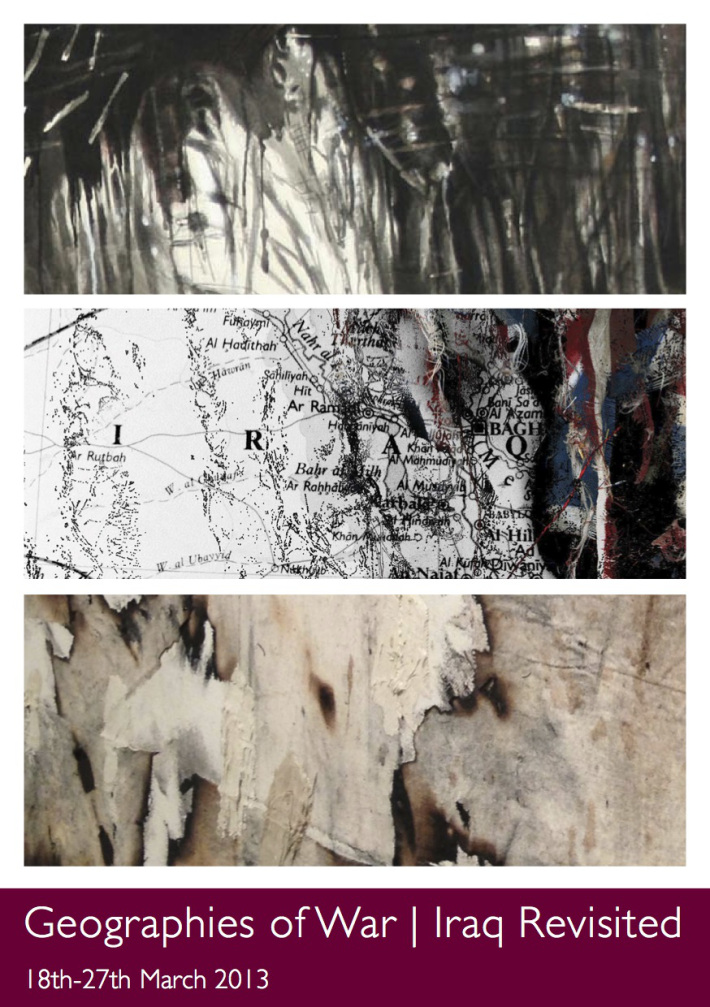
geographies-of-war-iraq-revisited-a5-flier1As we approach the anniversary of the invasion of Iraq, British Foreign Secretary William Hague has reportedly advised his coalition colleagues not to discuss the war…  Fortunately we have people like Alan Ingram to help us revisit and re-imagine the war, and I’ve drawn attention to his important Art & War: responses to Iraq project before.

Now Alan has curated an exhibition, Geographies of War: Iraq revisited, which runs from 18-27 March at North Lodge, University College London, Gower Street, 11 a.m. to 6 p.m. every day.

‘This exhibition explores how artists with diverse practices and perspectives experienced the invasion and occupation of Iraq, an dhow they responded to it by engaging with questions of space, place, landscape and territory.  Bringing together artists from Iraq and Britain it shows six works that give material form to the violence, anxiety and ruin of war but which also raise questions about resistance, survival and dreams of peace.  Opening in the week of the tenth anniversary of the invasion, the exhibition presents alternative perspectives on the conflict and challenges our ways of seeing war.’

The featured artists include the indispensable Peter Kennard and Cat Phillips – you will surely have seen their photomontage of a leering Tony Blair photographing himself in front of a huge explosion – and one of my favourite Iraqi artists Hanaa Malallah.

There’s also a series of other events associated with the exhibition: a day of talks and discussions with artists and writers, ‘Art, war and peace: responses to the invasion and occupation of Iraq’ on 22 March, and a workshop on ‘Beyond the geographies of war: exploring art and peace’ on 27 March.

More information here.

Lost in translation

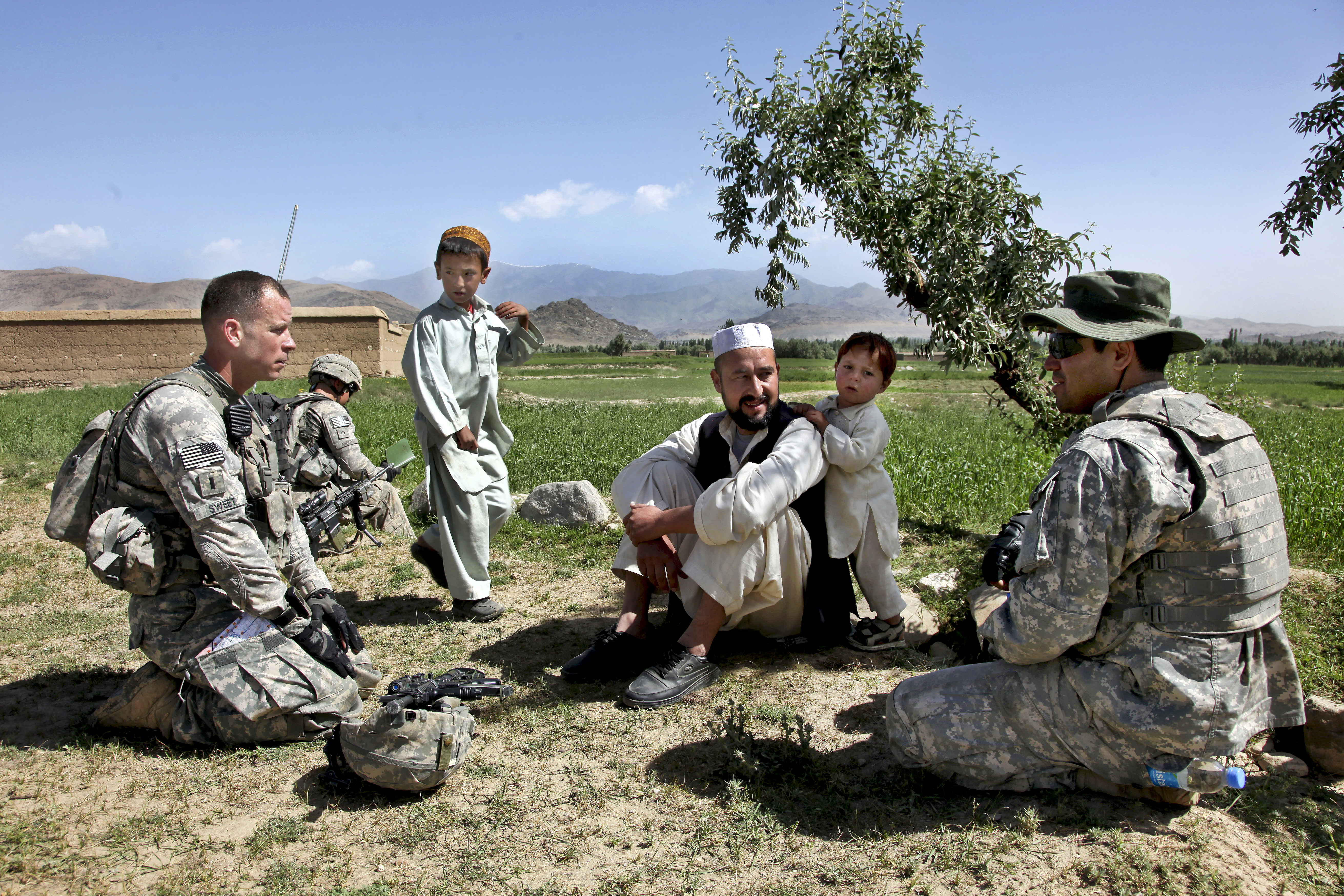
US Army translation in Afghanistan, 2010

The power of coincidence.  Just after I finished posting about the fog (and friction) of war, I opened an e-mail from Vince Rafael, who was at UBC a year or so ago to present a paper on counterinsurgency on which I’d been asked to comment.  He’s now sent me the published version, ‘Targeting translation: counterinsurgency and the weaponization of languiage’, which appears in the latest issue of Social Text 30 (4) (2012) 55-80.  It’s a characteristically elegant, original and powerful argument:

The chronic failure of counterinsurgency to convert language, whether its own, English, or the other’s, into a weapon, that is, into a standing reserve that could be switched, secured, and deployed, tends to generate catastrophic effects. Targets are missed or misconstrued, accidents abound, death proliferates, while no one is held accountable. As I have been suggesting, the resistance of language to weaponization is not incidental but structurally built into the very discourse and practices of counterinsurgency. That counterinsurgency harbors the very elements of its own undoing can be understood in at least two ways. On the one hand, as military leaders and engineers tend to think of it, the intractability of language could be regarded as a kind of noise that adds to the friction of war: merely a technical problem that can be fixed with greater application of resources, financial and technological, and a strengthening of political will. On the other hand, we could think of the insurgency of language as evidence of the possibility of another kind of translation practice at work. Operating in between the lines of imperial commands, it would be a kind of translation that evades targeting, spurring instead the emergence of forms of life at variance with the biopolitical prescriptions of counterinsurgency.

It’s an argument that not only extends the standard critique of ‘the weaponization of culture’ directly into the domain of language but also explores, in Vince’s brilliant coda ‘Translating otherwise’, the confounding capacities of language to refuse the reduction of the life of the Other to a target.

‘Imagination bodies forth…’

Following from my previous post, I’ve been thinking a lot about bodies recently, and for two reasons.

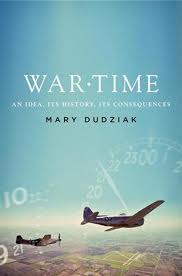
DUDZIAK War-timeThe first is the workshop on War & Medicine I attended in Paris just before Christmas.  It became very clear early on how difficult it is to determine when military violence comes to an end; Mary Dudziak has recently written about this in her War time: an idea, its history, its consequences (Oxford, 2012), largely from a legal point of view (and not without criticism), but it’s worth emphasising that the effects of violence continue long after any formal end to combat.  This ought to be obvious, but it’s astonishing how often it’s ignored or glossed over.

Think, for example, of the continuing toll of the conflicts in Afghanistan and Iraq, recovered in detail by Catherine Lutz (who was part of the workshop) and her colleagues at the Costs of War project, which shows how ‘the human and economic costs of these wars will continue for decades’.

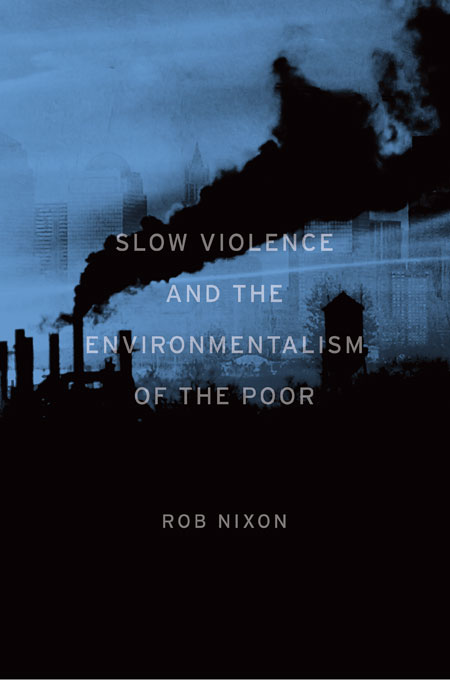
NIXON Slow violenceOr think of  the toxic environments produced by ecological warfare, by the use of depleted uranium in munitions, and by the continued deployment of land mines and cluster bombs – what Rob Nixon brilliantly calls the ‘slow violence’ produced by ‘ecologies of the aftermath’ (more on this in a later post):

 ‘In our age of depleted-uranium warfare, we have an ethical obligation to challenge the military body counts that consistently underestimate (in advance and in retrospect) the true toll of waging high-tech wars.  Who is counting the staggered deaths that civilians and soldiers suffer from depleted uranium ingested or blown across the desert?  Who is counting the belated fatalities from unexploded cluster bombs that lie in wait for months of years, metastasizing into landmines?  Who is counting deaths from chemical residues left behind by so-called pinpoint bombing, residues that turn into foreign insurgents, infiltrating native rivers and poisoning the food chains?  Who is counting the victims of genetic deterioration – the stillborn, malformed infants conceived by parents whose DNA has been scrambled by war’s toxins?’

(If you think we are winning the war on land-mines, especially in you are in Canada, read this).

These two contributions – and the conversations we had in Paris – rapidly displaced the lazy assumption of a politics of care in which the left mourns civilian casualties and the right military casualties. That there is a politics of care is clear enough, but there’s also a political geography: that’s written in to the biopolitical projects that are contained within so many late modern wars, and in Paris Omar Dewachi and Ghassan Abu-Sitta described how ‘care’ has become a means of controlling populations in wars in Iraq, Libya and Syria – a rather different sense of ‘surgical warfare’ from the one we’re used to – with states like Saudi Arabia and Qatar also funding the transfer of thousands of injured people from the war zones for treatment in hospitals in Egypt, Jordan and Lebanon.

And two brilliant medical anthropologists, Ken Macleish and Zoe Wool, brought with them vivid, carefully wrought ethnographies of injured soldiers’ bodies.  The American soldier may appear a figure of unprecedented invulnerabilty and astonishing violence – what Ken calls a figure of ‘technological magic’ produced by a ‘phantasmagoric technological empowerment of the body’ – but, as he and Zoe reminded us, soldiers are not only ‘the agents and instruments of sovereign violence’ but also its objects.  Their studies took me to places I’ve never been and rarely thought about, but I’ve been thinking about two other dimensions of their work that combined to produce my second reason for thinking about bodies.

One is the historicity that is embedded in this process.  Ken paraphrased Walter Benjamin‘s observation in the wake of the First World War – ‘the technological progress evident in modern warfare does not ensure the protection of the human body so much as it subjects it to previously unimaginable forms of harm and exposure’ – and linked it to John Keegan‘s claim in The face of battle that the military history of the twentieth-century was distinguished by the rise of ‘”thing-killing’ as opposed to man-killing weapons’ (the example he had in mind was heavy artillery).  The other is the corporeality of the combat zone.  Ken again:  ‘You need not only knowledge of what the weapons and armor can do for you and to you but a kind of bodily habitus as well – an ability to take in the sensory indications of danger and act on them without having to think too hard about it first.’  In an essay ‘On movement’ forthcoming in Ethnos, Zoe develops this insight through an artful distinction between carnality and corporeality (which may require me to revise my vocabulary):

‘The analytics of movement is a turning toward emergent carnality, flesh, and the way it is seen and felt; proprioception and those other senses of sight, sound, touch, and taste through which a body and a space enact a meaningful, sensible articulation; visceral experiences forged and diagnosed through the trauma of war which also exceed its limits.’ 

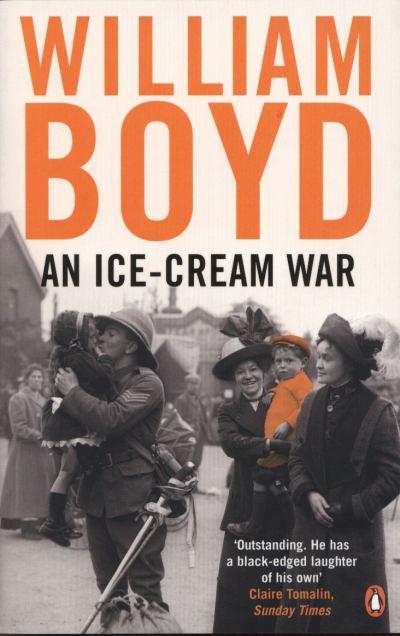
an-ice-cream-warAnd so to my second reason for thinking about bodies. Later this month I’m giving a lecture in the University of Kentucky’s annual Social Theory series.  The theme this year is Mapping, and my title is ‘Gabriel’s Map‘.  This is a riff on a phase from William Boyd‘s novel, An Ice-Cream War, that has haunted me ever since I first read it:

‘Gabriel thought maps should be banned.  They gave the world an order and reasonableness it didn’t possess.’

The occasion for the remark is a spectacularly unsuccessful British attempt to defeat a much smaller German force in November 1914 at Tanga in German East Africa; the young subaltern, Gabriel, rapidly discovers that there is a world of difference between what Clausewitz once called ‘paper war’ – a plan of attack plotted on the neat, stable lines of a map – and ‘real war’.   What I plan (sic) to do is arc back from this exceptionally brutal campaign – which lasted two weeks longer than the war in Europe – to the western front.  The two were strikingly different: the war in Africa was a war of movement and manoeuvre fought with the most meagre of military intelligence, whereas the central years of the war in Europe were distinguished by stasis and attrition and involved an extraordinary effort to maintain near real-time mapping of the disposition of forces.

The point here is to explore a dialectic between cartography and what I think I’m going to call corpography.

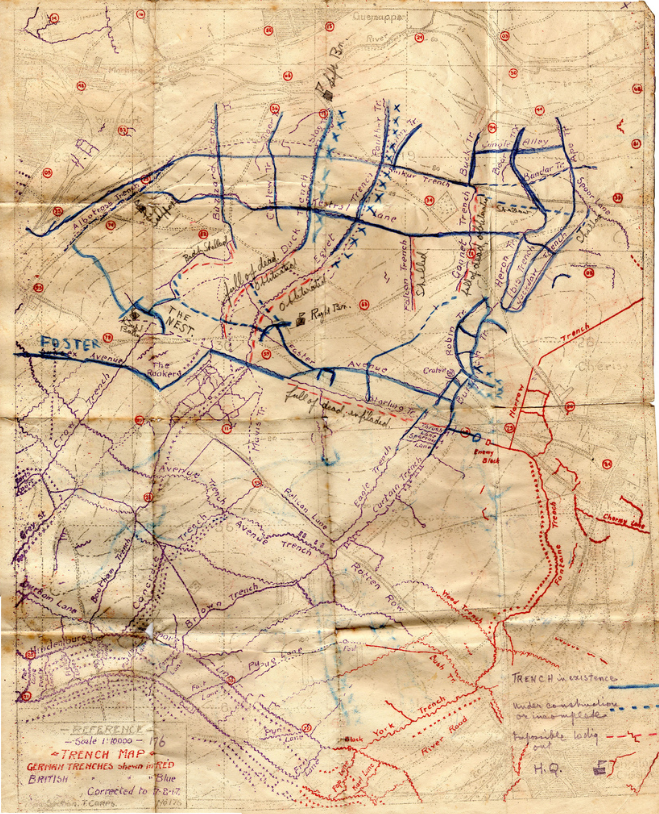
FINNEGAN Shooting The FrontThe first of these has involved working out the intimate relationship between mapping and aerial reconnaissance (what the Royal Flying Corps called ‘shooting the front’).  There is a marvellously rich story to be told here which, among other things, shows that the stasis of trench warfare was Janus-faced: it was produced by a myriad of micro-movements – advances and withdrawals, raids and repulses – whose effectiveness depended not on the fixity of the map at all but on its more or less constant updating (which in turn means that this capacity isn’t the unique preserve of twenty-first century ‘digital navigation’).  So here I’ll show how a casaced of millions of trench maps and aerial photographs was produced, distributed and then incorporated into the field of action through copies, re-drawings, sketches and annotations by front-line soldiers.  I have wonderful, telling examples, like this one (look carefully at the annotations):

Trench map annotated

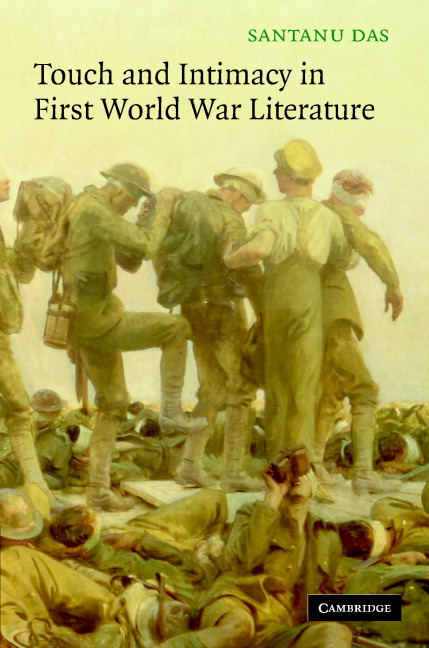
Santanu DAS: Touch an dintimacy in First World War literatureBut I also want to show (as the map above implies: all those “full of dead” annotations) how, for these men, the battlefield was also literally a field: a vile, violent medium to be known not only (or even primarily) through sight but through touch, smell and sound: what Santanu Das memorably calls a ‘slimescape’ which was also a soundscape.  This was a close-in terrain that was known through the physicality of the body as a sensuous, haptic geography:

‘Amidst the dark, muddy, subterranean world of the trenches, the soldiers navigated space … not through the safe distance of the gaze but rather through the clumsy immediacy of their bodies: “crawl” is a recurring verb in trench narratives, showing the shift from the visual to the tactile.’

This was a ‘mapping’ of sorts – as Becca Weir suggests in  ‘“Degrees in nothingness”: battlefield topography in the First World War’, Critical Quarterly 49 (4) (2007) 40-55 – and there is a dialectic between cartography and corpography.

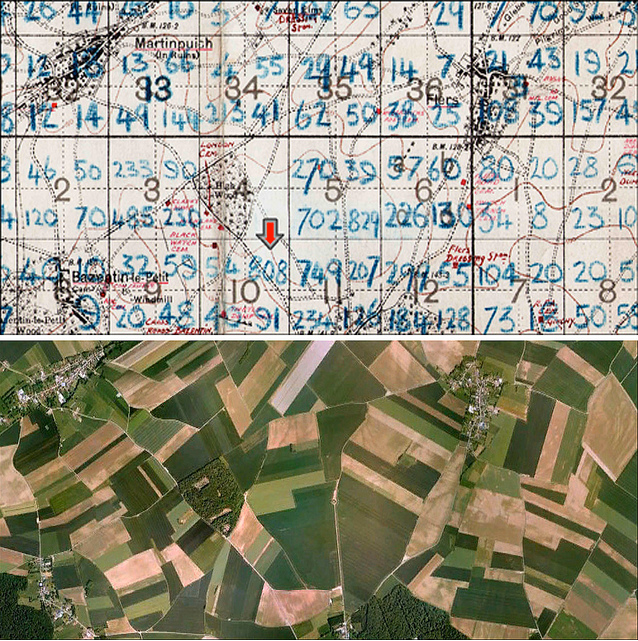
I’ve been working my way through a series of diaries, memoirs and letters to flesh out its performance in detail, but the most vivid illustration of the entanglements of cartography and corpography that I’ve found – and that I suspect I shall ever find – is this extract from a ‘body density map’ for part of the Somme.  This shows the standard trench map above a contemporary satellite photograph; each carefully ruled square is overprinted with the number of dead soldiers found buried in the first sweep after the war (between March and April 1919)…

Body Density Map, High Wood, Somme image by shipscompass on flickr

I won’t say more at present because I need to keep my powder dry for Kentucky, but I hope it will be clear by the end that, even though I’ll be  talking about the First World War, I will also have been talking about the wars conducted in the shadows of the Twin Towers and the Pentagon.

‘The cartography of one man’s consciousness’

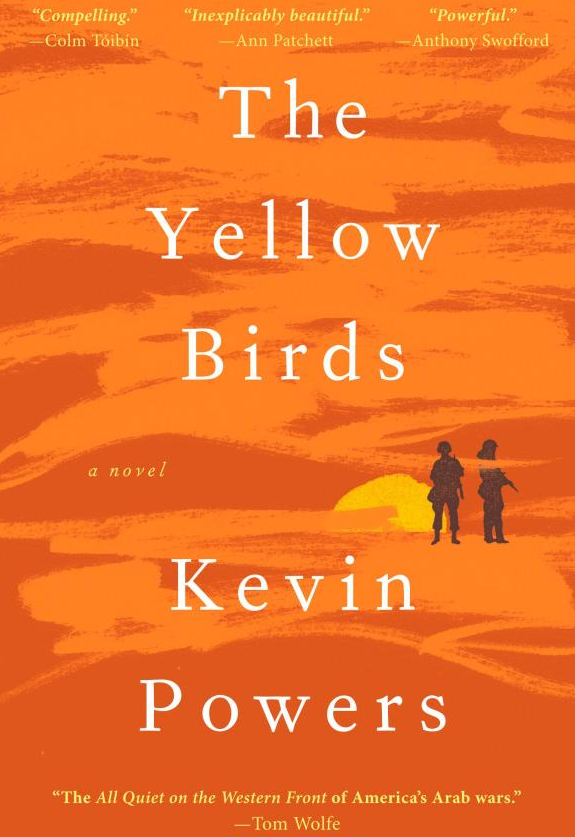
POWERS The Yellow BirdsKevin Powers has won the Guardian‘s First Book Award for The Yellow Birds, widely praised as one of the finest American novels to have come out of the Iraq War.   Powers enlisted when he was just 17 and served as a machine-gunner in Iraq in 2004-5; the title of this post comes from the novel, but the title of the novel comes from a US Army marching song:

 “A yellow birdWith a yellow bill/

Was perched upon/ my windowsill.

“I lured him in/With a piece of bread/

And then I smashed/His fucking head.”

Writing in Time, Nate Rawlings begins his interview with Powers with an observation that speaks to my own work on war at a distance:

War has always been a strange and distant endeavor, brought home from the battlefields in letters, photographs and stories after the guns fell silent. Then beginning with the war in Vietnam, images of battlefield violence were beamed into our homes; you’d be hard pressed to find an American with a television who hasn’t seen images of troops battling in Iraq and Afghanistan. But after 11 years of war, the challenge is to make people truly understand that experience.

That was Powers’ starting-point too: he wanted to find an answer to the question he was constantly being asked: ‘What was it like over there?’  Yet he soon determined that, even in fictional form, he couldn’t do it: ‘War is only like itself’, he writes.  That terse phrase circles back to an inquiry into war and representation – representations in war and representations of war – that is focal to any understanding of contemporary conflict: an inquiry that will, inevitably, need to confront the labile limits of representation itself.  (And that is not a surreptitious bugle call for non-representational theory to gallop over the horizon to the rescue).

Minimally, The Yellow Birds is about memory and violence, about the landscape of death and the lingering foulness of war.  The protagonist of the novel is Private John Bartle, who promises the mother of Private John Murphy that he will bring him back alive…  There are thoughtful reviews from the Guardian’s John Burnside here, from Elizabeth Samet here – she’s a professor of English at the US Military Academy – and from Benjamin Percy here, and a (better) interview with Powers here.

At Slate, Jacob Silverman locates The Yellow Birds alongside three other novels from the wars in Iraq and Afghanistan.  He doesn’t like its lyricism – Powers is a poet, and it shows – but he makes a more telling point about all four novels:

‘These new American wars have bred manifold types of isolation. Here, actual indigenous peoples are rare, whether enemy or civilian; the one named Iraqi that appears in The Yellow Birds is killed almost as soon as he’s introduced. There is little attempt to explore the perspectives of the very people these wars are being waged upon.’

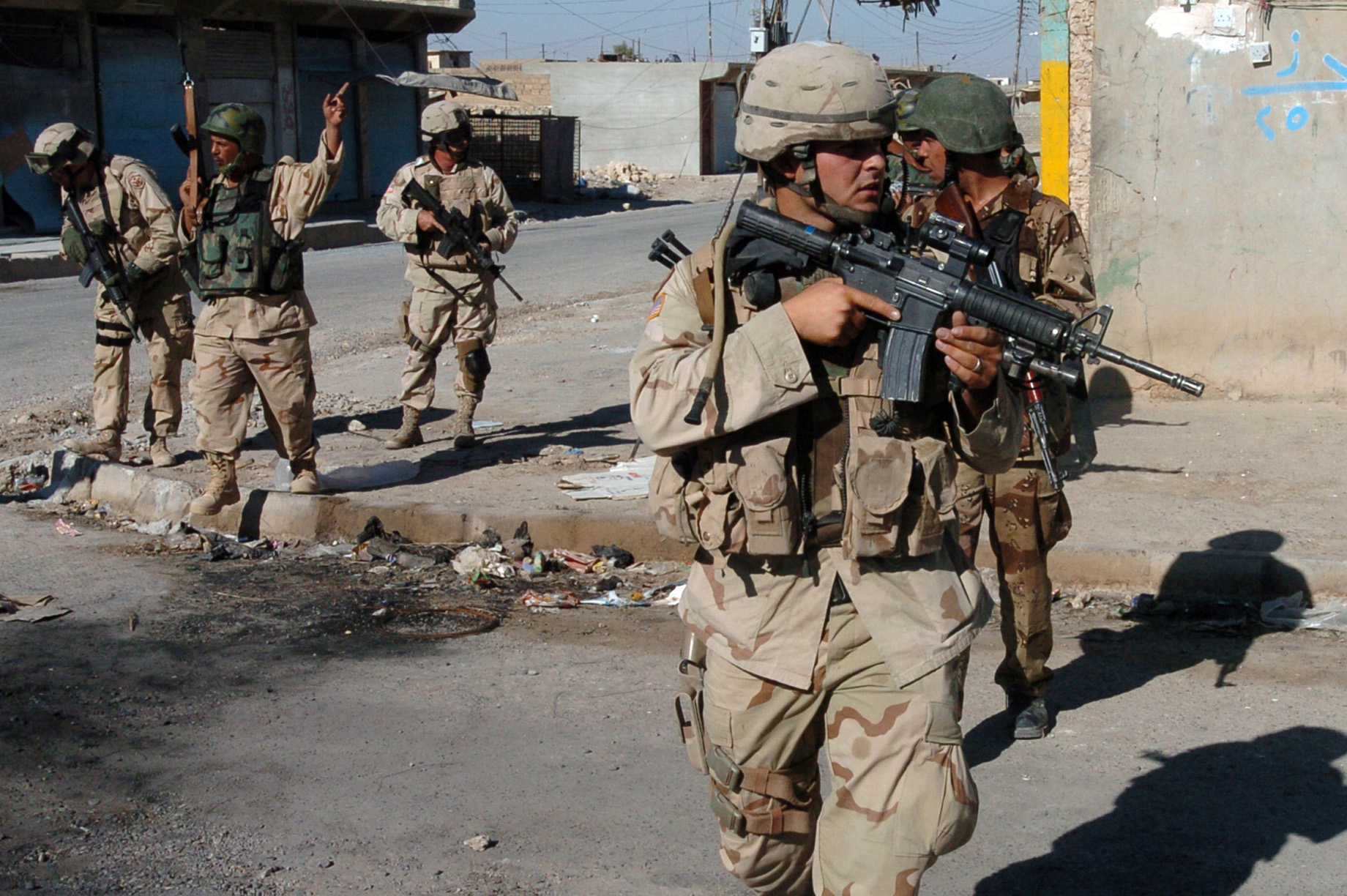
US patrol in Tal Afar, September 2005

That’s true of so many novels from other wars too, but the point is all the sharper because Powers’ novel takes place, in part, in Tal Afar: one of the key sites from which the US Army traced the ‘cultural turn’ that was to be enshrined in its new counterinsurgency strategy.  Powers left there in the spring of 2005, by which time Tal Afar was being described as ‘the next Fallujah’.  But – according to George Packer at any rate – the tide was about to turn.   In one of his Letters from Iraq, ‘The Lesson of Tal Afar‘, Packer recorded the words of one US officer who, twelve months on, had been working the fragile contact zone between the US Army and different groups in the local population:

“History teaches you that war, at its heart, is a human endeavor. And if you ignore the human side — yours, the enemy’s, and the civilians’ — you set yourself up for failure. It’s not about weapons. It’s about people.”

War is about apprehending those ‘people’ in distinctive and differentiated ways, to be sure, but it’s also about apprehending the landscape in embodied ways that transcend the maps and jottings of today’s Human Terrain Teams.  Here The Yellow Birds excels, and for a reflection on the sensuous, visceral landscape of an earlier Iraq war, one described in Anthony Swofford‘s Jarhead, you can’t do better than read Geoffrey Wright‘s fine essay, a sort of corpo-cartography of the combat zone, in  ‘The desert of experience: Jarhead and the geography of the Persian Gulf War’, PMLA 124 (2009) 1677-1689.  He addresses the later Iraq War in ‘The geography of the combat narrative: unearthing identity, narrative and agency in the Iraq War’, Genre XLIII (2010) 163-90.

And I do recommend reading The Yellow Birds too…

Masters of Non-War

Following up my post on the music of war, Nadia Abu-Zahra has kindly directed me to an excellent website devoted to thousands of anti-war, pacifist and anti-militarist songs here.  It includes a searchable database, downloads and videos, and is a marvellous resource.

The curators explain the origins of the project, which went online the day the US-led war on Iraq started:

When rumours of a new war against Iraq started spreading more and more insistently, the members of two Italian Usenet newsgroups, it.fan.musica.gucciniand it.fan.musica.de-andre, and of two other mailing lists dedicated to Italian songwriters, “Fabrizio”and “Bielle” spontaneously began to collect a great number of antiwar songs which were posted every day… So, this site originates from the spontaneous reaction of a number of people, who have chosen to witness their opposition to this war, and to any war, by collecting antiwar songs and by putting them at everyone’s disposal.

(If you just want to see a quick list, try this one from Stop the War‘s ‘anti-war song of the week’: everything from Vera Lynn  – admittedly with Johnny Cash – to Radiohead).

I’ve also been digging around for materials on music and the Vietnam War, and here I can recommend David James, ‘The Vietnam War and American music’, Social text 22 (1989) 122-43 and Kenneth Bindas and Craig Houston, ‘”Takin’ Care of Business”: Rock music, Vietnam and the protest myth’, The Historian 52 (1989) 1-23: both of which may leave your illusions blowin’ in the wind…

UPDATE Dan Clayton adds this excellent suggestion: Kim Herzinger, ‘The soundtrack of Vietnam’, in A. Wiest, M. Barbier and G. Robbins (eds), America and the Vietnam War: re-examining the culture and history of a generation (Routledge, 2010), 255–71

COIN tossing

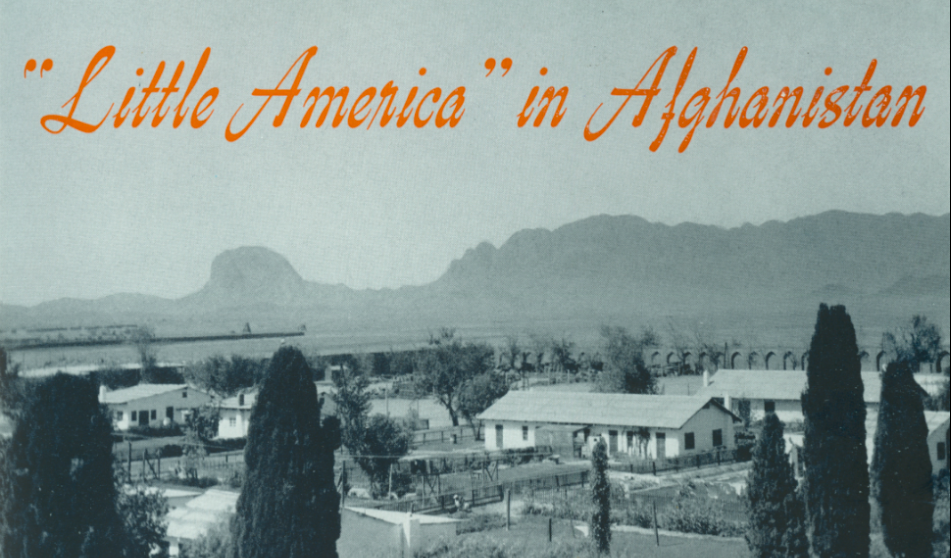
Anyone who has read Washington Post journalist Rajiv Chandrasekaran‘s Imperial Life in the Emerald City: Inside Iraq’s Green Zone (Vintage, 2006) or his Little America: the war within the war in Afghanistan (Knopf, 2012) – and even those who haven’t – will enjoy David Johnson‘s interview with him at the Boston Review.
In it Chandrasekaran draws some illuminating parallels (in two words: ‘strategic failure’) and provocative contrasts between the two campaigns:

I surely saw far more imperialistic overtones in Iraq than in Afghanistan. The bulk of my narrative in Little America focuses on how the Obama administration attempted to deal with the situation there. Though they pursued, in my view, a flawed strategy, they did approach it with some degree of humility. I certainly wouldn’t ascribe imperialist aims to the United States in Afghanistan from 2009 onward or even before that. I don’t ever think that we really went about it in that way. Whereas, one can look at what occurred in Iraq, particularly in the early years, and come to a very different conclusion.

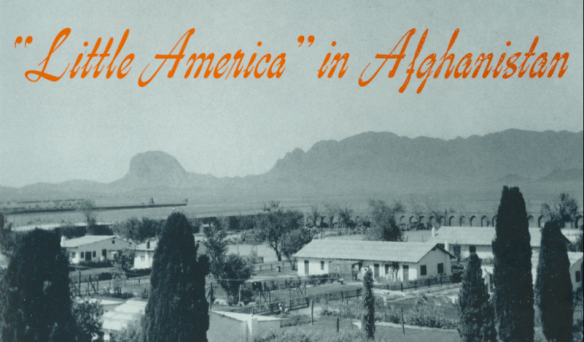
Chandrasekaran has some important things to say about the so-called ‘development-security’ nexus, not least through a comparison with USAID projects in Helmand in the 1950s. You know he’s on to something when Max Boot dismisses it: that was when local people started calling the area ‘Little America’, but Boot says that’s ‘far removed’ from the present situation.  I think Chandresekaran is right; certainly when I was writing the Afghanistan chapters of The colonial present I learned much from Nick Cullather, ‘Damming Afghanistan: modernization in a buffer state’, Journal of American History 89 (2002) 512-37 – a preliminary study researched and written, as he notes, ‘between the beginning of the bombing campaign in late September and the mopping up [sic] of Taliban resistance around Tora Bora in early December 2001.’  Chandresekaran relied on an early version of the essay, and you can now access a later version as Chapter 4 [‘We shall release the waters’] of Cullather’s The hungry world: America’s Cold War battle against poverty in Asia (Harvard, 2010).  Little America loops back to where it began, with one farmer – whose father had been drawn to Helmand by the promise of the new dam – telling Chandresekaran: ‘We are waiting for you Americans to finish what you started.’

This is also the epitaph for what Chandrasekaran sees as ‘the good war turned bad’: too few people were invested in seeing it through.  In the book he paints vivid portraits of those on the ground who were committed to staying the course, but concludes that they were the exception:

‘It wasn’t Obama’s war, and it wasn’t America’s war.  

‘For years we dwelled on the limitations of the Afghans.  We should have focused on ours.’

Not surprisingly, Boot doesn’t care for Chandrasekaran’s take on counterinsurgency either, though his own view is spectacularly devoid of the historical and geographical sensitivity that distinguishes Little America. Boot describes COIN as ‘just the accumulated wisdom of generations of soldiers of many nationalities who have fought guerrillas’ (really) and insists that it (singular) ‘has worked in countries as diverse as the Philippines (during both the war with the U.S. in 1899-1902 and the Huk Rebellion in 1946-54), Malaya, El Salvador, Northern Ireland, Colombia and Iraq.’ Perhaps it all depends on what you mean by ‘worked’…

In fact, Chandrasekaran focuses relentlessly on the work of counterinsurgency.  Little America begins with the sequestered imagery of ‘America abroad’ that will be familiar to readers of Imperial Life in the Emerald City –
– but soon moves far beyond such enclaves to document operations on the ground. In the interview he provides a pointed evaluation of US counterinsurgency (or lack of it) in Afghanistan:

I think the big lesson of Afghanistan is that we can’t afford to do this. COIN may be a great theory, but it probably will be irrelevant for the United States for the foreseeable future because it’s just too damned expensive and time consuming. You have to understand the value of the object you are trying to save with counterinsurgency—essentially your classic cost-benefit analysis. Even starting in 2009, if we’d mounted a real full-on COIN effort, we probably could have gotten to a better point today. We shouldn’t kid ourselves that what we did was full-on COIN—that would have involved more troops, more money, more civilian experts. But would all of that have been worth it? Was what we’ve already spent on this effort worth it? Particularly given the other national security challenges we face? The economic stagnation at home?  So, the debate over COIN I think misses a key point: it’s not whether it works or not. It’s whether it’s a worthwhile expenditure or not.

(Little America reports that the cost of keeping one US service member in Afghanistan for a year is $1 million… though there are, of course, many other non-monetary costs that fall on many other people).

Chandrasekaran offers a more detailed and nuanced discussion of counterinsurgency in Afghanistan in a fine interview with Peter Munson at the Small Wars Journal.

I described Chandrasekaran as a journalist but he’s (even) more: his website records his residencies as a public policy scholar at the Woodrow Wilson International Center and the Center for a New American Security – which is where he converted his ‘sand-encrusted notebooks’ into the manuscript of Little America – and the International Reporting Project at the Johns Hopkins School for Advanced International Studies.
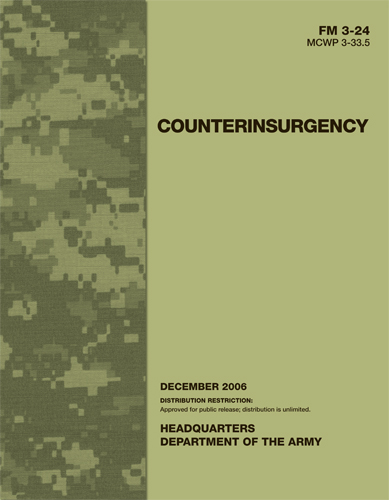
I’m making so much of Chandresekaran’s emphasis on the conduct of counterinsurgency and the connections between reporting and reflection because the academic critique of contemporary counterinsurgency has drawn a bead on the doctrine so vigorously advertised by the US Army and Marine Corps in 2006.  When I wrote “Rush to the intimate” (DOWNLOADS tab) the new field manual FM 3-24 had just been released, and I was interested in how this – together with changes in pre-deployment training, technology and the rest – described a ‘cultural turn’ of sorts that seemed to be addressed as much to the American public as it was to the American military.  (In later work I’ve explored the bio-political dimensions of counterinsurgency too, and I’m presently revising those discussions for the book).

Since then there has been a stream of detailed examinations of the doctrine and its genealogy, and I’d particularly recommend:

Ben Anderson, ‘Population and affective perception: biopolitics and antiicpatory action in US counterinsurgency doctrine’, Antipode 43 (2) (2011) 205-36

Josef Teboho Ansorge, ‘Spirits of war: a field manual’, International political sociology 4 (2010) 362-79

Alan Cromartie, ‘Field Manual 3-24 and the heritage of counterinsurgency theory’, Millennium 41 (2012) 91-111

Marcus Kienscherf, ‘A programme of global pacification: US counterinsurgency doctrine and the biopolitics of human (in)security’, Security dialogue 42 (6) (2012) 517-35

Patricia Owens, ‘From Bismarck to Petraeus:the question of the social and the social question in counterinsurgency’, European journal of international relations [online early: March 2012]

There is indeed something odd about a mode of military operations that advertises itself as ‘the graduate level of war’ (one of Petraeus’s favourite conceits about counterinsurgency) and yet describes a ‘cultural turn’ that is decades behind the cultural turns within the contemporary humanities and the social sciences.  There’s also been a vigorous debate about the enlistment of the social sciences, particularly anthropology, in the doctrinal ‘weaponizing’ of culture – though I sometimes worry that this contracts to a critique of weaponizing anthropology.  (I don’t mean the latter is unimportant – as David Price‘s important work demonstrates – and there are obvious connections between the two.  But disciplinary purity is the least of our problems).

That said, the discussion of counterinsurgency surely can’t be limited to a single text, its predecessors and its intellectual credentials. If there has been a ‘cultural turn’, then its codification now extends far beyond FM 3-24 (which is in any case being revised); if the domestic audience was an important consideration in 2006, the public has certainly lost interest since then (and, if the US election is any guide, in anything other than an air strike on Iran); and whatever the attractions of large-scale counterinsurgency operations in the recent past, Obama’s clear preference is for a mix of drone strikes, short-term and small-scale Special Forces operations, and cyberwar.

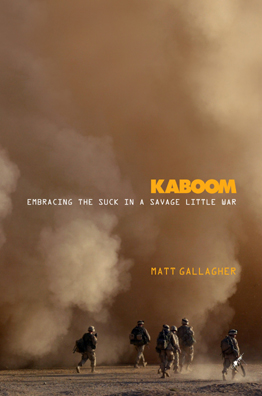
But – Chandresekaran’s sharp point (and Clausewitz’s too) – there’s also a difference between ‘paper war’ and ‘real war’.  Here are just two passages from former Lieutenant Matt Gallagher‘s Kaboom: embracing the suck in a savage little war (Da Capo, 2010) that dramatise the difference between the Field Manual and the field:
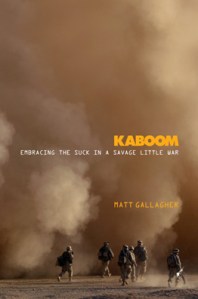
‘There was a brief pause and then [Staff Sergeant Boondock] continued. “Think I’ll be able to bust Cultural Awareness out on one of the hajjis now?” he said, referring to the stun gun he carried on his ammo pack… we were all waiting for the day that some Iraqi did something to warrant its electric kiss’ (p. xi). 

‘In this malleable, flexible world, creativity and ingenuity replaced firepower and overwhelming force as the central pillars of the army’s output. Ideally, a decentralized army struck like a swarm of killer bees rather than a lumbering elephant… In conventional warfare, the order of war dissolved into anarchy as time yielded more and more blood. Unconventional, decentralized warfare was the exact opposite. In fluid theory and historical practice, victorious counterinsurgencies served as a shining inverse to … conventionality, because through anarchy and bloodshed, order could eventually be established. This was the war I had trained for, brooded over, and studied. Then there was the war I fought’ (p. 175) 

There’s also a particularly telling passage in David Finkel‘s The good soldiers (Farrar, Straus & Giroux, 2009) that speaks directly to COIN spinning, to its address to the American public and, more particularly, to the body politic:

‘Soldiers such as Kauzlarich might be able to talk about the war as it was playing out in Iraq, but after crossing the Atlantic Ocean from one version of the war to the other, Petraeus had gone to Washington to talk about the war as it was playing out in Washington‘ (p. 130),

I’ve been gathering lots more examples from accounts like these – some of which, like Gallagher’s, started out as military blogs – but one of Chandresekaran’s many achievements is to show what can (must) be achieved when we to turn to an examination of practice.

There have been other studies of counterinsurgency operations – some from within the military, some from within the academy, and some at the nexus between the two – but the need to explore the connections between theory and practice (which are always two-way: the military constantly seeks to incorporate what it calls ‘lessons learned’ into its training) has never been greater.

This isn’t limited to counterinsurgency either: it’s one thing to demand to know what the ‘rules’ governing drone strikes are, for example, but quite another to monitor their implementation.

For academics, none of this is straightforward.  We aren’t war correspondents – and my own debt to courageous journalists like Chandresekaran is immense – and I suspect most of us would be unwilling to enlist in Human Terrain Teams.  There’s a long history to geography‘s military service; today some geographers undertake (critical) field work in war zones – Jennifer Fluri, Philippe le Billon, Michael Watts and others – and no doubt many more geographers live in them.
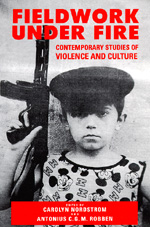
There’s also a particularly rich anthropology written from war zones. I’m thinking in particular of the work of Sverker Finnström (Living with bad surroundings, Duke, 2008), Danny Hoffman (The war machines, Duke, 2011), and Carolyn Nordstrom (especially A different kind of war story, SBS, 2002  and Shadows of war, University of California Press, 2004).

All of these studies approach ‘fieldwork under fire’ from a radically different position to David Kilcullen‘s ‘conflict ethnography’ (which is placed directly at the service of counterinsurgency operations) but, as Neil Whitehead showed, they still raise serious ethical questions about witnessing violence and, indeed, the violence of what he called ‘ethnographic interrogation’ that is often aggravated in a war zone.  (For more, see Fieldwork under fire (left) and Sascha Helbardt, Dagmar Hellmann-Rajanayagam and Rüdiger Korff, ‘War’s dark glamour’, Cambridge Review of International Affairs 23 (2) (2010) 349-69).

To be sure, there is important work to be done ‘off stage’ and in the vicinity of war, as Wendy Jones insists in ‘Lives and deaths of the imagination in war’s shadow’, Social anthropology 19 (2011) 332-41, and overtly techno-cultural modes of remote witnessing have their own dilemmas. But the dangers involved in venturing beyond our screens – and outside our emerald cities – are more than corporeal: they are also intellectual and ethical.

Chandresekaran’s principled combination of reporting and reflection shows how necessary it is to face them down.
Humanitarian space and the humanitarian present

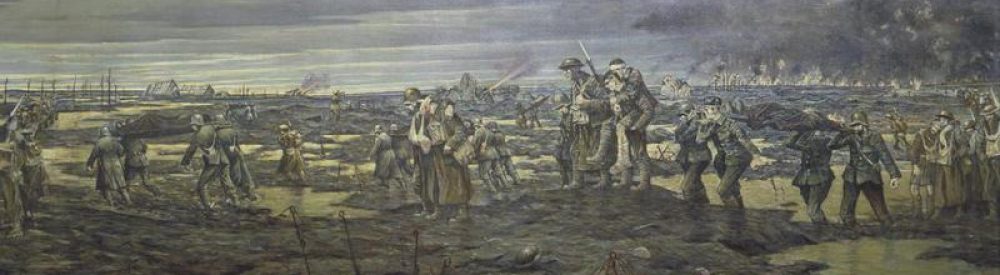
Today (19 August: WordPress is 8 hours ahead of me!) has been designated World Humanitarian Day by the United Nations General Assembly  ‘to coincide with the anniversary of the 2003 bombing of the United Nations headquarters in Baghdad, Iraq, which killed 22 UN staff’.  From The Colonial Present:

The old Canal Hotel had been used as a base by UN weapons inspectors and sanctions monitors before the war – it became known as “the Sanctions Building” – and it remained a soft target after the UN mission moved in.  Its local secretariat had refused high-level security in order to distance the mission from the fortified compounds of the occupying power.  On August 19 a massive truck bomb exploded outside, devastating the building and a nearby hospital.  At least 23 people were killed, including the UN special representative in Iraq, Sergio Vieira de Mello, and more than 100 injured, many of them seriously.  Most Iraqis were appalled by the mass murder of civilians from many different countries, and there was considerable speculation about the identities and motives of those responsible for the atrocity.  Although there were several reasons why the United Nations could have been the object of such an attack (UN-mandated sanctions and UN Security Council Resolution 1483 to name but two), the real target seemed to be the occupation itself.  For the attack was a hideous reversal of the coalition’s own strategy of “shock and awe”.  What one journalist described as “the horrifying spectacle of a major building in the capital blown apart” was designed not only to demonstrate the strength of the opposition but also to isolate the coalition through intimidation.  Baghdad was already a city under siege, but the blast heightened the sense of impotence and vulnerability.  The primary objective was to deter others from coming to the assistance of the coalition and hence to increase the burden of the occupation upon the United States.

This year’s World Humanitarian Day campaign is called “I was here” but, as that awful anniversary ought to remind readers in the United States, the United Kingdom and elsewhere, “we were there too – and the main burden of the occupation fell upon the people of Iraq.   

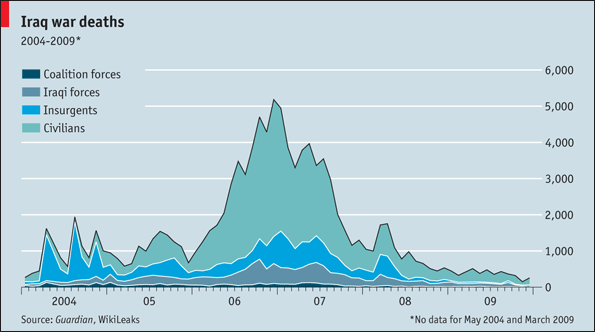
Iraq Body Count estimates that from 1 January 2003 through to 11 July 2012 (the latest date today for which figures are available) there were between 108,183 and 118,224 documented civilian deaths.  IBC notes that ‘full analysis of the Iraqi War Logs released by Wikileaks may add 13,000 civilian deaths’.  There have been several other projects that have tried to count and/or estimate deaths in Iraq, but the War Logs are particularly useful for suggesting the breakdown of total deaths:

The vast majority of casualties were indeed civilians, and the geography of their deaths was plotted on a number of websites from the Wikileaks data: Visualising data reviewed a number of these maps (with further links), and SpatialKey provided its own series of sobering maps.  (For an interactive map of coalition casualties – pairing locations in Iraq with hometowns in the USA – see here).  And Luke Condra, Jacob Shapiro and their colleagues have provided detailed quantitative analysis – using the IBC database and SIGACTS reports – in a series of papers, including”Who takes the blame?  The strategic effects of collateral damage”, American Journal of Political Science 56 (1) (2012) 167-87 and currently available on open access here.

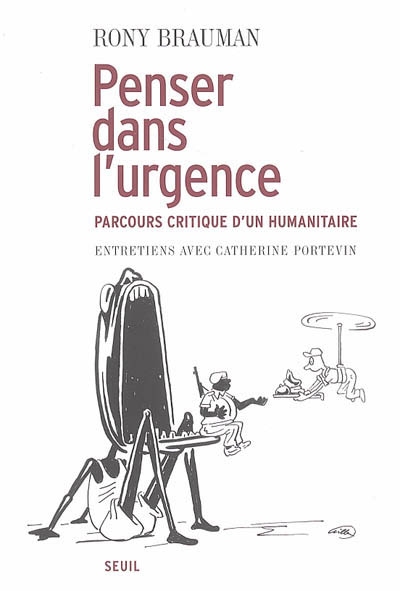
The UN website for World Humanitarian Day continues: ‘Every day humanitarian aid workers help millions of people around the world, regardless of who they are and where they are. World Humanitarian Day is a global celebration of people helping people.’  I contemplate this hard on the heels of reading Eyal Weizman on the humanitarian present in The least of all possible evils: Humanitarian violence from Arendt to Gaza (London: Verso, 2012).  I noted this book in a previous post; Weizman’s concept of ‘the humanitarian present’ emerged via a series of interviews and conversations with Rony Brauman, the former president of Médecins san Frontières and currently professeur associé at Sciences-Po Paris.  Brauman’s alternative conception of ‘humanitarian space’ is radically different from the spatial imaginary of UN agencies where, Weizman explains,

‘humanitarian spaces are clusters of extraterritorial enclaves and the protected corridors that connect them with infrastructure and transport centres.  These kinds of humanitarian spaces are often marked as circles on maps around the areas where relief operations take place – at “the internal peripheries of war”‘ (pp. 56-7).

These are the sites of the humanitarian present: platforms for the operation of those ‘moral technologies’ through which humanitarian agencies and humanitarian law work in concert with military and political power to calibrate the contemporary economy of violence and to govern ‘the displaced, the enemy and the unwanted’ (p. 4).  (Jennifer Hyndman‘s brilliant work on the politics of aid, humanitarianism and securitization speaks directly to these claims, and for a parallel critique of UN peacekeeping, see Paul Higate and Marsha Henry’s Insecure spaces: peacekeeping, power and performance in Haiti, Kosovo and Liberia (London: Zed Books, 2009)).

Against this, Brauman advances a conception of humanitarian space not as a territorial zone – thus sans frontières, without borders – but rather as what Weizman glosses as ‘a set of operational categories, or space-bound circumstantial conditions, that make independent humanitarian work possible’ – that ‘hold relief work at a distance from political and military practice’ (pp. 56-7).

There are critiques of Brauman’s views – see note (2) below – and Weizman is no camp-follower: he has important things to say about the radicalization of humanitarian space so that ‘the politics of humanitarianism’ can give ground to ‘the politics of the displaced’ (p. 61).  But in tragic measure this was exactly what motivated Sergio Vieira de Mello too: to distance his work in Baghdad from Bush’s ‘armies of compassion’ and Blair’s ‘military-humanitarian mission’.

Further notes

(1) Ashley Jackson reports that the annual incidence of major attacks against aid workers worldwide has more than doubled since 2003.

(2) For critical discussions and elaborations of ‘humanitarian space’ see D. Robert DeChaine, ‘Humanitarian space and the social imaginary: Médecins Sans Frontières/Doctors Without Borders and the rhetoric of global community’, Journal of communications inquiry 26 (4) (2002) 354-69; Dorothea Hilhorst and Bram Jansen, ‘Humanitarian space as arena: a perspective on the everyday politics of aid’, Development & Change 41 (6) (2010) 1117-39; Margo Kleinfeld, ‘Misreading the post-tsunami political landscape in Sri Lanka: the myth of humanitarian space’, Space & Polity 11 (2) (2007) 169-84; Adi Ophir, ‘The sovereign, the humanitarian and the terrorist’ (2003); Benjamin Perrin (ed), Modern warfare: armed groups, private militaries, humanitarian organizations and the law (Vancouver: UBC Press, 2012) (see Part Three: “The Humanitarian Space debate”); Maurya Wickstrom, Performances in the blockades of neoliberalism: Thinking the political anew (Houndmills: Palgrave-Macmillan, 2012) (Ch. 3 includes a discussion of Brauman and Ophir that speaks directly to Weizman’s project).

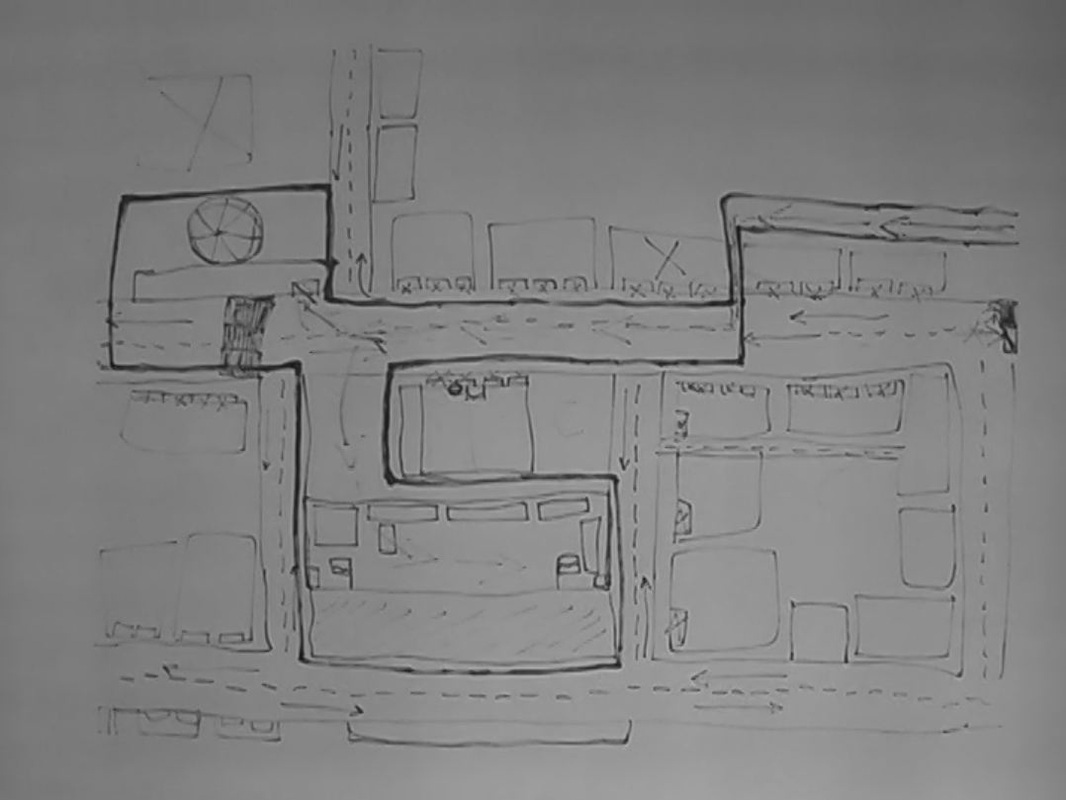
Bethlehem to Baghdad

In 2008 the artist Till Roeskens – who describes himself as an ‘amateur of applied geography’ – produced a ‘videocartography’ or ‘videomapping’ based on interviews at the Aida refugee camp in occupied Palestine.  Roeskens explains: ‘I asked residents of the camp to draw with big ink pens so the marks would go through the paper. I filmed from the other side, as they drew, so I didn’t see the person while they were drawing and speaking; I saw only the white screen with the light coming from behind me.’  The mappings, together with the stories told by those who drew them, were recorded on video, and ‘as the film progresses, the viewer is increasingly hemmed in by a complex network of lines, until the reality of the occupation is fully realized on screen’.      There is a revealing interview with the artist at Words without borders here, and you can watch some extracts here (and there are others on YouTube and vimeo).

« On screen: nothing but another screen. At first untouched, a blank sheet of paper is slowly being filled with more or less straight lines. Then these lines grow, push and cross each other, to finally form a drawing, a layout; they unfold a topography, mark places, build houses, give directions, describe in great detail tangles of roads and obstacles. In fact, they are laying down flat biographies. Six sheets slowly come to life that way, one after another, following the rhythm of stories told by children, women or men voices, of people we never get to see. Where are these voices? Behind the sheets. Of course, but where else? Nowhere: that is precisely what the voices are trying to say. Or rather, because even nowhere persists on taking up some space, they say that they are in Palestine. (…) »

Inspired by Rosekens’ work, Antonio Ottomannelli transposed the technique to Baghdad.  The project was carried out between November 2011 and February 2012 with students at the Fine Arts Faculty of the University of Baghdad.  Ottomannelli:

‘Baghdad is a hidden city.  Everything is placed behind anti-explosion walls, from one checkpoint to the next. … The latest map of Baghdad was made by the US military in 2003 for military and strategic purposes…  There is no civilian map of the current configuration… Inspired by the work of Till Roeskens on Palestine, Mapping Identity tries to tell about the city – the whole of it – from the inside.  A snapshot of the ordinary, a minor “Giacometti portrait”, as Baghdad is concealed…’

More details here, and a videomap here (more on vimeo).

These projects are political-artistic versions of the ‘mental maps’ that captured the imagination of many human geographers in the 1960s and 70s – an interest which is usually traced back to Kevin Lynch’s experiments with The image of the city (1960) and that probably climaxed in Peter Gould and Rodney White’s classic little book, Mental maps, originally published in 1974 – but what makes these projects so compelling is their emphasis on the process of mapping (through their use of video) rather than a fixation on the map as finished object.  One of the criticisms of the original ‘mental mapping’ projects was that respondents drew maps only because they were asked to: that this was not how people found their way around their neighbourhoods, which usually turned out to be a much more pragmatic, improvisational practice responding to cues and following routines rather than relying on some imaginary point of overview.  But these two projects are ways of narrating a space – of telling what Michel de Certeau would call ‘spatial stories’ – that are also interventions in (and subversions of) larger narratives of military violence and military occupation.