Logistics and violence

Over at The Disorder of Things Charmaine Chua introduces a lively podcast in which she discusses Logistics – violence, empire and resistance with Deb Cowen and Laleh Khalili.

Together, we take a look at the increasing ubiquity and prominence of logistics as a mode for organizing social and spatial life. We discuss how this seemingly banal concern with the movement of goods is actually foundational to contemporary global capitalism and imperialism, reshaping patterns of inequality, undermining labor power, and transforming strategies of governance. We also ask: what might a counter-logistical project look like? What role does logistics play in anti-colonial and anti-capitalist struggles across the globe?

On her own blog, The Gamming, Laleh links to lecture she gave at Georgetown on ‘The Logistics of Counterinsurgency’:

It is a banal cliche of military thinking that the deployment of coercive forces to the battlefields requires a substantial commitment in logistical support for the transport of goods, materiel, and personnel to the war-zone, the maintenance of forces there, and their eventual withdrawal from there. In counterinsurgency warfare, which is predicated on the deployment of large numbers of forces, persuasion or coercion of civilian populations into supporting the counterinsurgent force, and the transformation of the civilian milieu as much as the military space, this logistical function becomes even more crucial. In this talk I will be thinking through the ways in which the making of logistical infrastructures – roads, ports, warehouses, and transport – has been crucial to the wars the US has waged since 2001 in Southwest Asia, and how these infrastructures in turn transform the social, political, and economic lives of the region they leave behind.

https://vimeo.com/165631438

It’s a wonderfully wide-ranging survey (Afghanistan, Israel/Palestine, Vietnam, Morocco and more), and it’s also a richly illustrated and immensely thoughtful performance.

In addition, Laleh’s lecture provides a brilliant context for my limited incursions into logistics in Afghanistan (here, here and here), an arena which I am now revisiting to understand both the supply of medical matériel and the evacuation of casualties.

The sense of war

aleppo-2

In the face – often literally so – of  attempts to render later modern war as somehow bodiless, a project that contorts itself into grotesque formations around the spectacularly contradictory vocabulary of ‘surgical strikes’ against the cancerous cells of insurgency and terrorism, I continue to be drawn to attempts to convey the  corporeality of its violence.  I started down this road in ‘The natures of war‘ and continue it in my attempts to think about what I call ‘corpographies‘ (see DOWNLOADS tab for both, and also here, here and here), and it is a constant concern in my current work on casualty evacuation from war zones.

So I was taken with a short extract from Janine di Giovanni‘s The Morning They Came for Us: Dispatches from Syria (2016) that appears in Harper‘s.  It’s called ‘The Sense of War‘ (in another register so often another oxymoron):

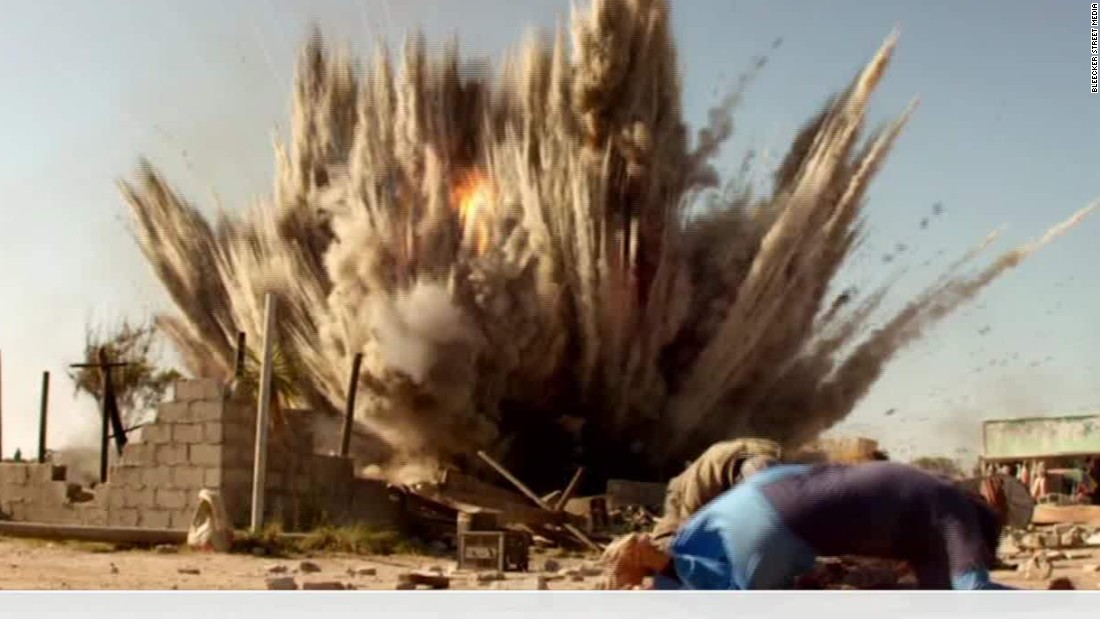
The morning they came for usWhat does war sound like? The whistling sound of the bombs falling can only be heard seconds before impact—enough time to know that you are about to die, but not enough time to flee.

What does the war in Aleppo smell of? It smells of carbine, of wood smoke, of unwashed bodies, of rubbish rotting, of . . . fear. The rubble on the street—the broken glass, the splintered wood that was once somebody’s home. On every corner there is a destroyed building that may or may not have bodies still buried underneath. Your old school is gone; so are the mosque, your grandmother’s house and your office. Your memories are smashed…

War is empty shell casings on the street, smoke from bombs rising up in mushroom clouds, and learning to determine which thud means what kind of bomb. Sometimes you get it right, sometimes you don’t.

War is the destruction, the skeleton and the bare bones of someone else’s life.

Anand Gopal thinks her prose is ‘overwrought’, though I don’t think that’s entirely surprising, and when Sebastian Junger says that she ‘has described war in a way that almost makes me think it never needs to be described again’, even in this short passage you can see – feel – what he means.  You can find other reviews here and here.

In continent

160311024028-drone-warfare-film-eye-in-the-sky-sesay-pkg-00001425-super-169

Over at the LA Review of Books Will Govinsky has a fine essay on Eye in the Sky called ‘The beauty of an imperial dilemma‘.  It begins with the image of a French gunboat firing shots into the African rainforest from Joseph Conrad‘s Heart of Darkness:

The ship’s absurdly one-sided battle becomes, for Marlow, an emblem of pointless, indiscriminate imperial violence: “[T]here she was, incomprehensible, firing into a continent.”

Will’s point is about the parallel between the anonymity of imperial violence in the African rainforest and the anonymity of the US (un)targeted killing program:

The chilling anonymity of this “targeted” drone program’s victims, crossed with the sanguine official line, again recalls Conrad’s French warship. “There was a touch of insanity in the proceeding,” Marlow says, which “was not dissipated by somebody on board assuring me earnestly there was a camp of natives ­— he called them enemies! — hidden out of sight somewhere.”

Conrad’s critique of European imperial violence moves with notorious swiftness from the opacity of the victim to the opacity at the heart of the colonizer. Marlow does not know who exactly are the victims of the French warship’s shells, but Conrad’s racism, as Chinua Achebe famously argued, precludes his narrator from caring that much. Marlow’s concern is not for the mangled bodies on the receiving end of colonial violence, but for the deplorable madness at the heart of the imperialist himself.

As I’ve described elsewhere, the genealogy can be traced across multiple theatres.  Here, for example, is Arnold Bennett on the Western Front:

Of the target I am absolutely ignorant.001

And here is Frederic Downs describing a US artillery bombardment in Vietnam – Francis Ford Coppola‘s setting for Heart of Darkness – in terms which loop back directly to Will’s (Conrad’s) point about anonymity, impersonality and the madness of it all:

The coordinates for that location and the time for firing would be relayed to the gun crews. At the specified time, the gun crews would be awakened. Perhaps it would be just after midnight. As the minutes ticked closer to a time set by an unknown intelligence the men would load the artillery pieces, anticipating the release of their impersonal death into a grid square. The gun commander would give the order to fire and the night would explode with man’s lightning and thunder. After the prescribed rounds, the guns would cease, the cleanup would begin, and the men would go back to their bunks. Thinking what? Within the range of those guns, within a specified area, the Central Highlands had for a brief moment changed from the jungle it had been for thousands of years into the particular insanity of man.

artillery

In these two cases, clearly, the gunners were firing blind – but what lay behind their guns was a stream of co-ordinates.

This raises two issues that bear directly on the use of today’s remote platforms.

The first is about the ethics of killing at a distance which, as Will notes, also has a (far longer) genealogy.  He cites Chateaubriand‘s question – ‘If, merely by wishing it, you could kill a man in China and inherit his fortune in Europe, being assured by supernatural means that the deed would remain forever unknown, would you allow yourself to form that project?’ – and explains that ‘killing the mandarin’ became shorthand in French for committing ‘an evil action in the hope that it will remain unknown.’

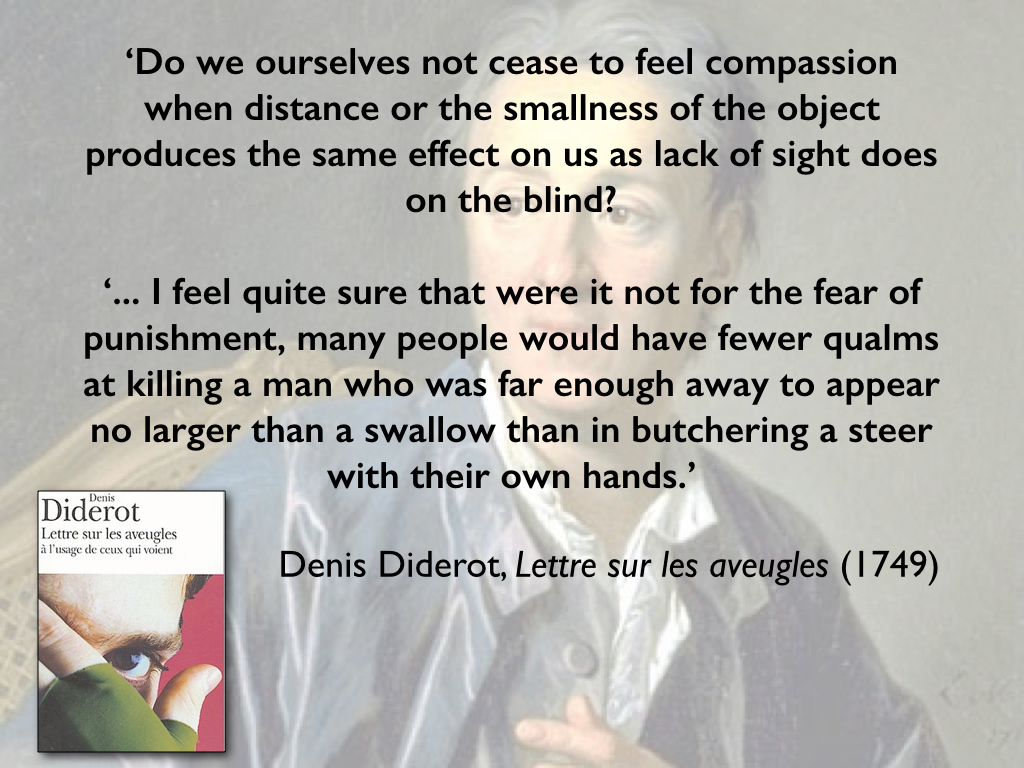
But the US targeted killing program is hardly unknown, and my own preference – which turns out to be closely related to tuer le mandarin – is to turn to Denis Diderot:

Diderot.001

The intimate connection between distance and blindness can be read again and again in accounts of bombing during the Second World War, most directly here:

Distance and blindess.001

But again, what lay behind ‘the distance and the blindness’ was a stream of intelligence.

Recognising the importance of those intelligence streams – and conceding that ‘crunching petabytes of metadata just wouldn’t make for good cinema’ – Will’s key point (and the second issue) is that in its representation of a drone strike in East Africa Eye in the Sky artfully reverses Conrad’s trope:

It asks what we would do if we knew everything. In a taut 102 minutes, the film condenses the ambiguities of drone warfare into a balance sheet of nigh certainties.

eye-in-the-sky

In a fine passage, he suggests the film offers the fantasy

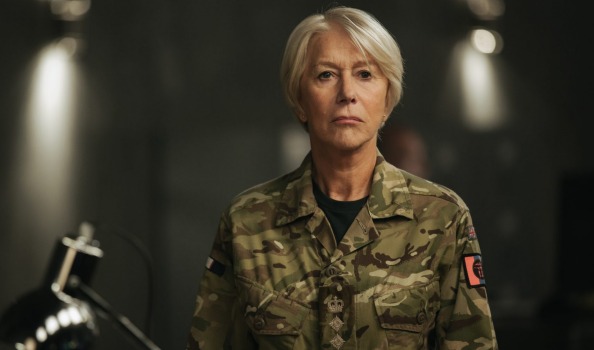
of perfect, visual knowledge — a platform for the terrible beauty of a globe-girdling ethical dilemma. Poised, confident, her silver hair luminescent in the metallic grey-blue glow of her theater-like command center, [Helen] Mirren’s Col. Powell gathers up in her steely 10,000-mile stare the awful knowledge of her options.

But – as I argued in my own commentary on Eye in the Sky – this is indeed a fantasy.  The video feeds from remote platforms do not render the battle space transparent, and the make-believe that they do, Will concludes, renders the film ‘less a representation of drone warfare than a grotesque abstraction of it.’  Hence his brilliantly sobering conclusion:

We need plots that provide the narrative space to ask questions: whether the very terms of our dilemmas are spurious; whether firing into continents, day in and day out, can be anyone’s prerogative, let alone ours.

War crimes

Kunduz MSF report cover JPEG

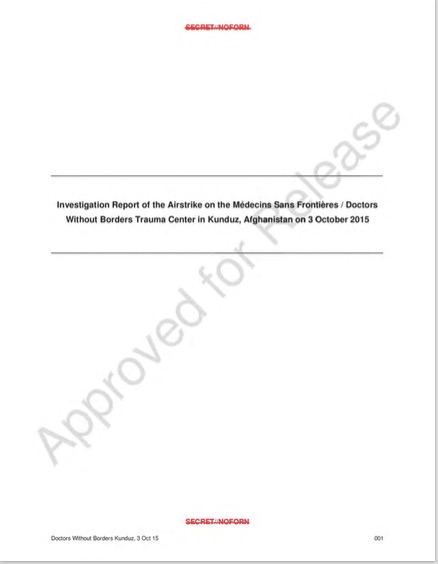
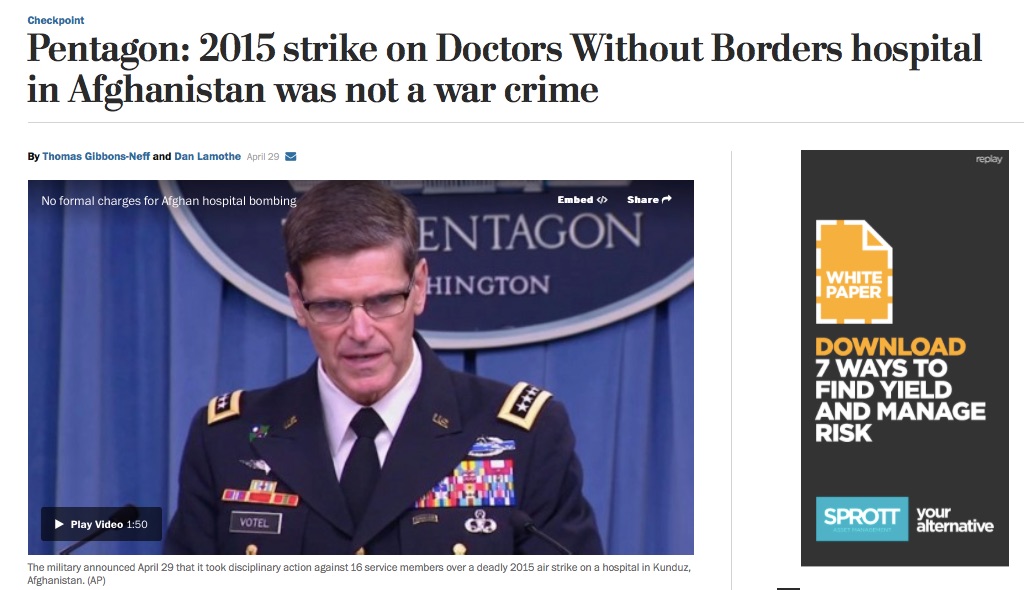
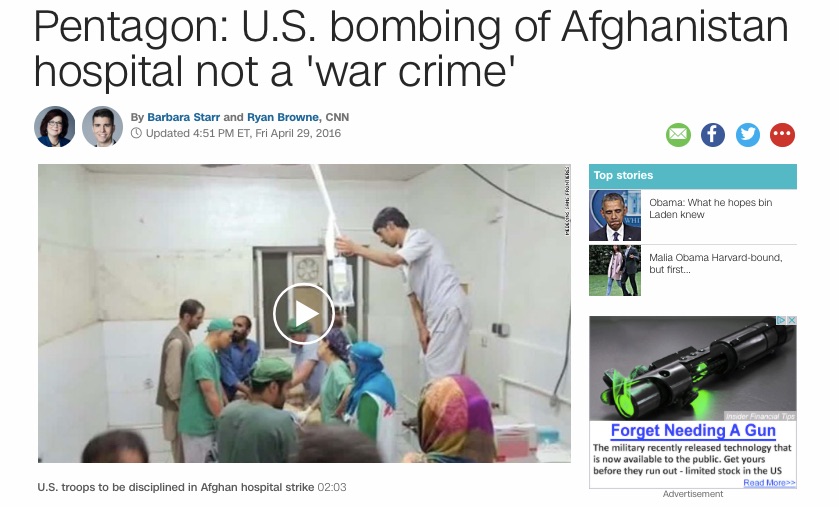
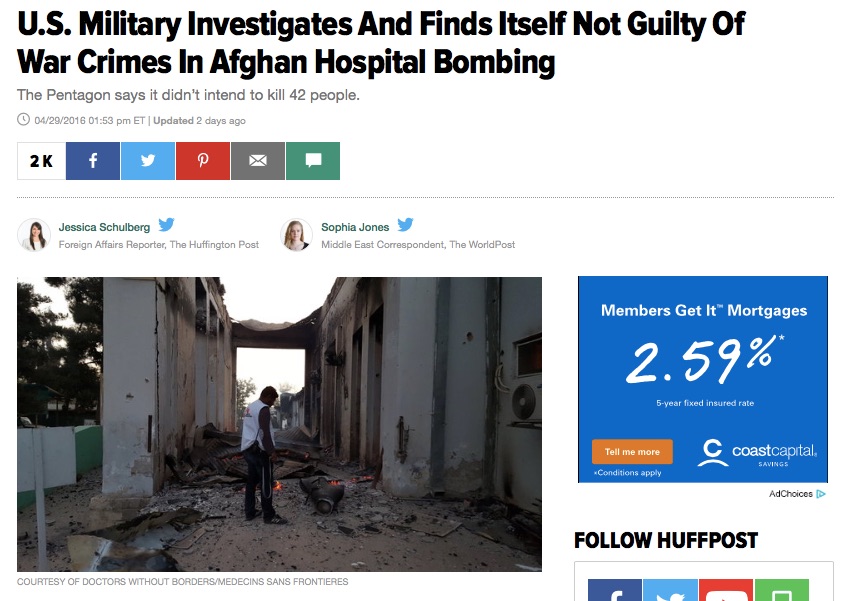
In my preliminary commentary on the US military investigation into the air strike on MSF’s trauma centre in Kunduz in October 2015 – and I’ll have much more to say about that shortly – I circled around the Pentagon’s conclusion that even though those involved in the incident had clearly violated international humanitarian law (‘the laws of war’) and the Rules of Engagement no war crimes had been committed.

That conclusion has sparked a fire-storm of protest and commentary, and to track the narrative I’ve transferred some of my closing comments from that post to this and continued to follow the debate.  (It’s worth noting that when the Pentagon published its updated Law of War Manual last year it produced an equally heated reaction – much of it from commentators who complained that its provisions hamstrung commanders and troops in the field: see here and scroll down).

Not a war crime 3 JPEG

At Just Security Sarah Knuckey and two of her students complained that the report provided no justification for such a claim. After listing the gross violations of IHL (failure to take precautions in an attack, failure to distinguish between civilians and combatants, failure to respect the requirement of proportionality), they concluded:

While it is legally correct to state that the war crime of murder requires an “intent” to kill a protected person (e.g., a civilian), nowhere in the 120-page report is there an analysis of the legal meaning of “intention.” The report actually makes no specific or direct findings about war crimes. (“War crime” appears only once, in reference to a report by the United Nations Assistance Mission in Afghanistan) [Here I should note that UNAMA’s view of what constitutes a war crime has on occasion changed with the perpetrator.  As this commentary shows, the Taliban have sometimes been held to a higher standard than the US military: in one case UNAMA suggested that the very use of high explosives in an urban area ‘in circumstances almost certain to cause immense suffering to civilians’ rendered the Taliban guilty of war crimes, whereas after the Kunduz air strike UNAMA declared that ‘should an attack against a hospital be found to have been deliberate, it may amount to a war crime’ (emphasis added)] .

Under international law, “premeditation” is not necessary for the war crime of murder, but the precise scope of intention is less clear. Numerous cases have stated that genuine mistakes and negligence are insufficient for murder. But a number of international cases and UN-mandated inquiries have found that “recklessness” or “indirect intent” could satisfy the intent requirement. Article 85 of Additional Protocol I also provides that intent encompasses recklessness. (See The 1949 Geneva Conventions: A Commentary, from page 449, for a full discussion.)

The investigation released today makes clear that US forces committed numerous violations of fundamental rules of the laws of war, violations which should and could have been avoided. Yet the report provides zero direct analysis of whether these violations amounted to war crimes. Given the seriousness of the violations committed, the US should specifically explain why the facts do not amount to recklessness, and explain the legal tests applied for the commission of war crimes.

Not a war crime 1 JPEG

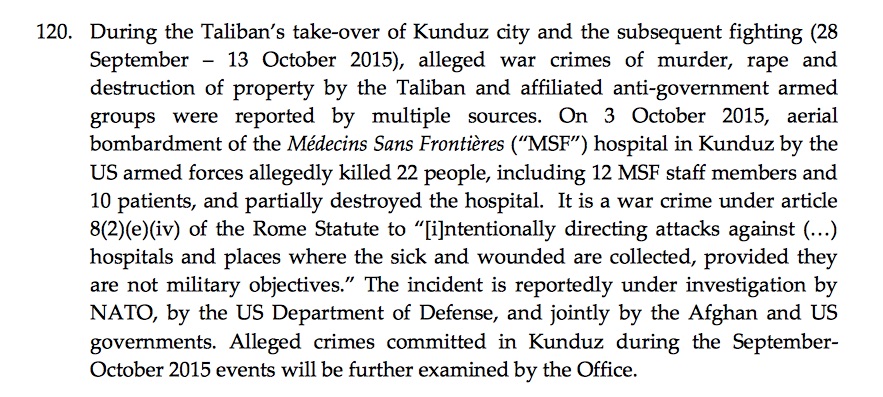
Over at Lawfare, Ryan Vogel argues that the report will ‘will surely attract the attention of the International Criminal Court’s (ICC) Office of the Prosecutor (OTP)’. In fact, while the OTP has acknowledged

that the strike was being investigated by the United States [it has also] declared that “the [a]lleged crimes committed in Kunduz [would] be further examined by the Office” as part of the ongoing preliminary examination [see extract below]. By characterizing the incident as a violation of international law (and choosing not to prosecute), the United States may unwittingly be strengthening the OTP’s case. It is true that CENTCOM’s release statement makes clear that the investigation found that the actions of U.S. personnel did not constitute war crimes, noting the absence of intentionality. But the OTP might disagree with CENTCOM’s legal rationale, as it seems to have done previously with regard to detention operations, and decide to investigate these acts anyway as potential war crimes.

ICC 2015 JPEG

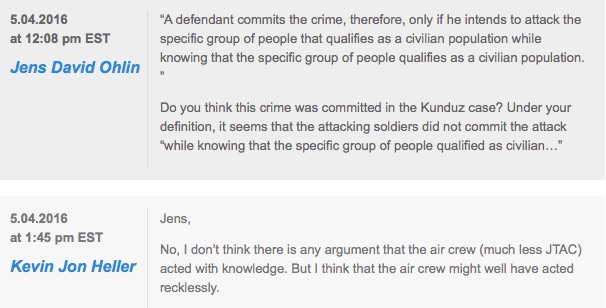
As both commentaries make clear, much hangs on the interpretation of ‘intentionality’.  At Opinio Juris the ever-sharp Jens David Ohlin weighs in on the question.  Drawing from his essay on ‘Targeting and the concept of intent‘, he notes:

The word “intentionally” does not have a stable meaning across all legal cultures. … [It] is generally understood in common law countries as equivalent to purpose or knowledge, depending on the circumstances. But some criminal lawyers trained in civil law jurisdictions are more likely than their common law counterparts to give the phrase “intentionally” a much wider definition, one that includes not just purpose and knowledge but also recklessness or what civilian lawyers sometimes call dolus eventualis.

He concludes that the consequences of the latter, wider interpretation would be far reaching:

If intent = recklessness, then all cases of legitimate collateral damage would count as violations of the principle of distinction, because in collateral damage cases the attacker kills the civilians with knowledge that the civilians will die. And the rule against disproportionate attacks sanctions this behavior as long as the collateral damage is not disproportionate and the attack is aimed at a legitimate military target. But if intent = recklessness, then I see no reason why the attacking force in that situation couldn’t be prosecuted for the war crime of intentionally directing attacks against civilians, without the court ever addressing or analyzing the question of collateral damage. Because clearly a soldier in that hypothetical situation would “know” that the attack will kill civilians, and knowledge is certainly a higher mental state than recklessness. That result would effectively transform all cases of disproportionate collateral damage into violations of the principle of distinction and relieve the prosecutor of the burden of establishing that the damage was indeed disproportionate, which seems absurd to me.

His solution is to call for the codification of  ‘a new war crime of recklessly attacking civilians, and the codification of such a crime should use the word “recklessly” rather than use the word “intentionally.”’  This would then  ‘create a duty on the part of attacking forces and then penalize them for failing to live up to it.’  And this, he concludes, would allow a prima facie case to be made that those involved in the attack on the Kunduz trauma centre were guilty – but in his view, clearly, they also escape under existing law.

Not a war crime 2 JPEG

Note those five, deceptively simple words: ‘those involved in the attack’.  I’ve had occasion to comment on this dilemma before – the dispersal of responsibility that is a characteristic of later modern war (see also here: scroll down) – and Eugene Fiddell, writing in the New York Times, clearly dismayed at the way in which the military inquiry was conducted, sharpens the same point:

Among the challenges a case like Kunduz presents is how to achieve accountability in an era in which an attack on a protected site is not the act of an isolated unit or individual. In today’s high-tech warfare, an attack really involves a weapons system, with only some of the actors in the aircraft, and others — with real power to affect operations — on the ground, in other aircraft, or perhaps even at sea.

And what if some of those ‘actors’ are algorithms and/or machines?

UPDATE:  Kevin Jon Heller offers this counter-reading to Jens’s:

As I read it, the war crime of “intentionally directing attacks against a civilian population” consists of two material elements: a conduct element and a circumstance element. (There is no consequence element, because the civilians do not need to be harmed.) The conduct element is directing an attack against a specific group of people. The circumstance element is the particular group of people qualifying as a civilian population. So that means, if we apply the default mental element provisions in Art. 30, that the war crime is complete when (1) a defendant “means to engage” in an attack against a specific group of people; (2) that specific group of people objectively qualifies as a civilian population; and (3) the defendant “is aware” that the specific group of people qualifies as a civilian population. Thus understood, the war crime requires not one but two mental elements: (1) intent for the prohibited conduct (understood as purpose, direct intent, or dolus directus); (2) knowledge for the necessary circumstance (understood as oblique intent or dolus indirectus).

Does this mean that an attacker who knows his attack on a military objective will incidentally but proportionately harm a group of civilians commits the war crime of “intentionally directing attacks against a civilian population” if he launches the attack? I don’t think so. The problematic element, it seems to me, is not the circumstance element but the conduct element: although the attacker who launches a proportionate attack on a legitimate military objective knows that his attack will harm a civilian population, he is not intentionally attacking that civilian population. The attacker means to attack only the military objective; he does not mean to attack the group of civilians. They are simply incidentally — accidentally — harmed. So although the attacker has the mental element necessary for the circumstance element of the war crime (knowledge that a specific group of people qualifies as a civilian population) he does not have the mental element necessary for its conduct element (intent to attack that specific group of people). He is thus not criminally responsible for either launching a disproportionate attack or intentionally directing attacks against a civilian population.

It’s a sharp reminder that international humanitarian law offers some protections to civilians but still renders their killing acceptable.  The exchange between Kevin and Jens continues below the line to this conclusion:

Opinio Juris JPEG

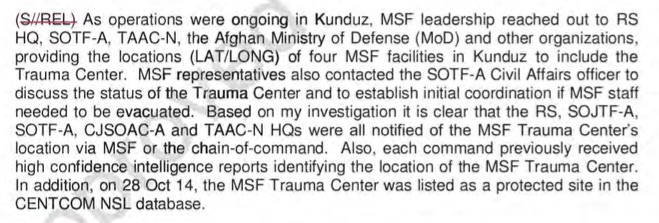
But if you read Charles Dunlap at Lawfire (sic), you will find him insisting that the mistakes made by the US military in firing on the MSF hospital ‘do not necessarily equate to criminal conduct’ – even though the investigation report concedes that they amounted to violations of international law – and that the charge of recklessness needs to be laid at the smashed-in door of MSF.  Really.  Here is what he says:

Had, for example, the hospital been marked with large Red Crosses/Red Crescents or one of the other internationally-recognized symbols (as the U.S. does) or something that would make its protected use clear from the air, isn’t it entirely plausible that the aircrew (or someone) might have recognized the error and stopped the attack before it began?

There were in fact two large MSF flags on the roof of the Trauma Centre, which was also one of the few buildings in the city on that fateful night to have been fully illuminated (from its own generator).

But in case you are still wondering about the responsibility borne by MSF – as ‘one of the few international humanitarian organisations that carries professional liability insurance’ (in contrast to amateur insurance, I presume), Dunlap says that is an admission that ‘even honest, altruistic, and well-intended professionals do make mistakes, even tragic ones, especially when trying to operate in the turmoil of a war zones’,  here is a paragraph from that investigation report:

MSF reach-out JPEG

How reckless was that?  The crew of the gunship that carried out the attack – in case you are still wondering – ‘specifically did not have any charts showing no strike targets or the location of the MSF Trauma Center.’

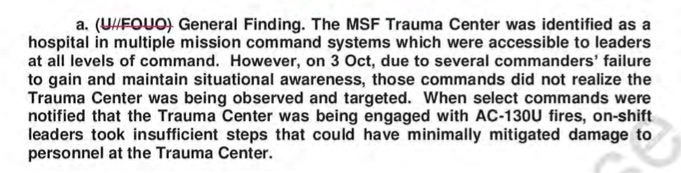
And if you picked up on Dunlap’s suggestion that if not the aircrew then ‘someone’ might have recognised the error, try this for size from the same source (and note especially the last sentence):

Multiple command failures JPEG

More to come.

Security Theatre

Security Theatre

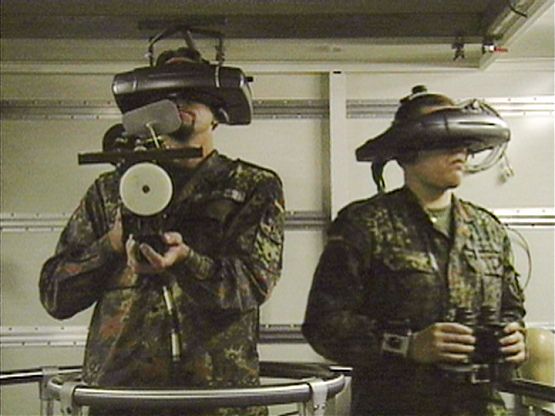
At the Or Gallery, 555 Hamilton Street, Vancouver: Security Theatre, an exhibition featuring works by Karl Burke, Harun Farocki, An-My Lê and the Bureau of Inverse Technology.

Security Theatre revolves around methods of simulation and documentation and their hold on respective truth claims about modern war. Specifically, this exhibition looks at how modern warfare is rationalised, remembered and portrayed across image based media such as electronic games, video and photography. The exhibition examines how these systems manifest and evolve into the 21st century, which sees war increasingly fought by proxy and through remote digital means. While claims of possessing the humanist high ground remain tied to the Western Bloc, they are no longer linked to the policy of deterrence seen in the 20th century, but instead are tied to myths of precision and expedience in a preemptive first strike context. Just as there were efforts in the 20th century to socialise people to the omnipresent threats of nuclearism, so too is there an effort to socialise people to the endless need for conflict underwritten by the ubiquitous threat of terrorist states and actors. This requires the creation of dissociative mental states. While the past mass dissociation of the Cold War addressed the need to prevent nuclear war by preparing for it, today’s dissociation follows the need to prevent terrorism by engaging in it. The technology used and the social conditions required were developed incrementally with the aid of experts in various fields, with the aim of gaining either tacit or explicit endorsement of so-called “security policies” which are largely maintained through obfuscation and manipulation. The artists included use media and techniques that provide an intrinsic sense of objective documentation when making reference to armed conflict and related events, which interpret and manage expectations of modern war.

The exhibition opens on 13 May and runs to 18 June; the gallery is open 1200-1700 Tuesday-Saturday, and admission is free.  More information (including profiles of the artists) here.

Hollow men?

eye-in-sky-group

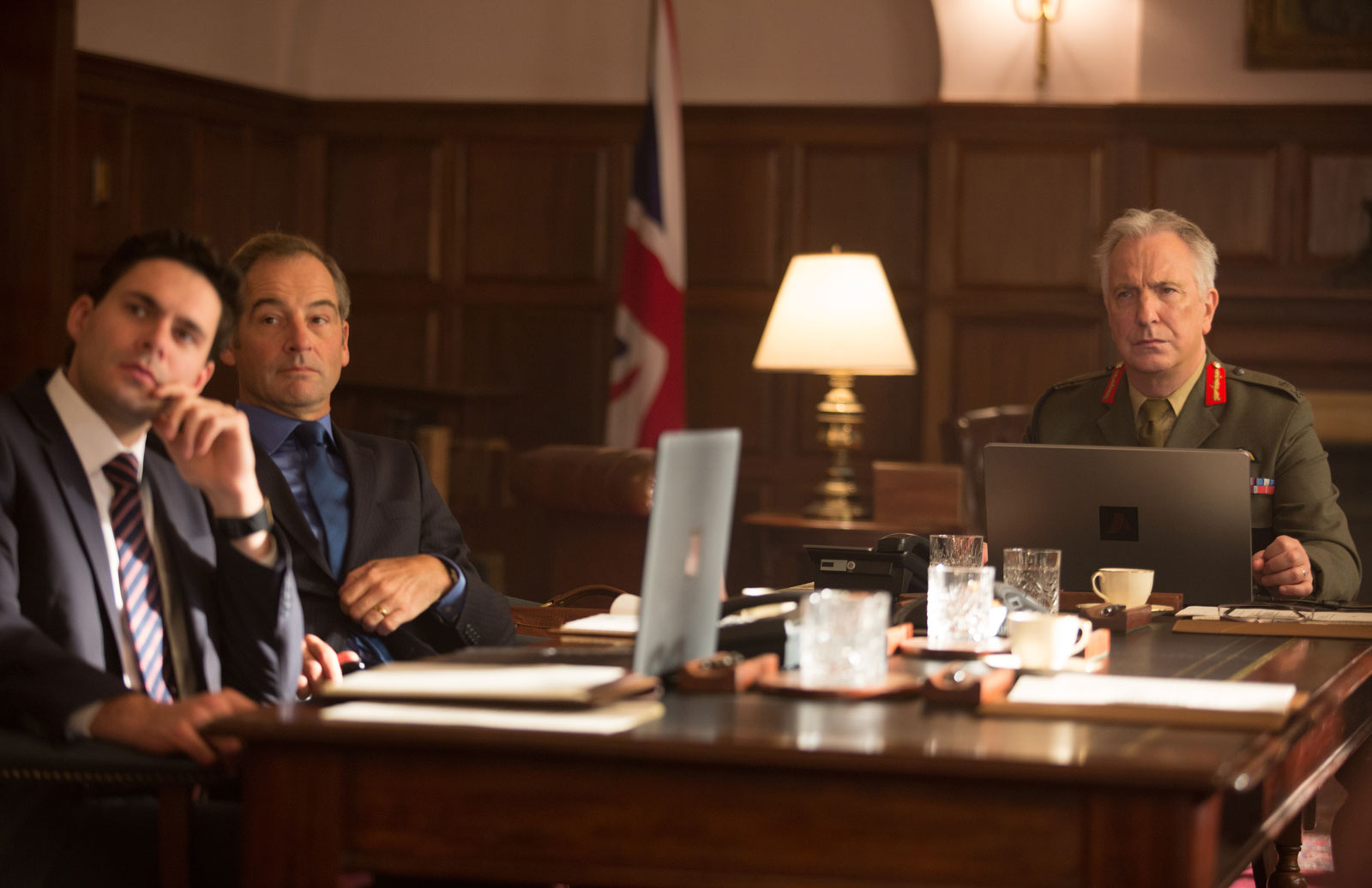
In my commentary on Eye in the Sky I emphasised the dispersed geography of command and responsibility involved, and it turns out that was a key concern of the film’s director Gavin Hood.  In an interview with Dan Gettinger for Bard’s Center for the Study of the Drone, he explains:

‘… we obviously designed the film frankly as a thought experiment; it is based on a very specific set of circumstances … these circumstances are not the circumstances of every drone strike. As you know, it is not the case that in every single drone strike the question of whether to fire or to not fire is referred all the way up the kill chain to the foreign secretary, or the prime minister, or in the case of the United States, the secretary of state, secretary of defense, or indeed the president. Depending on the geographical location of these strikes, different rules apply. If you are striking within an already defined conflict zone with clear rules of engagement, in areas such as Iraq or Afghanistan, then sadly this level of debate does not always happen. It very much depends on who is being targeted and where that target is taking place, as to whether the authorization of the strike is referred high up the kill chain.

In our case, in the case of the film, we wanted to create a scenario in which as much discussion as possible was possible within our film. We didn’t want to make a film where the discussion ended at the local commander level. That is a story that can and should be told—the story of the strikes over the tribal areas of Pakistan, for example, where signature strikes take place and where many civilians have been killed—but what we felt was helpful was to make a film which would allow many different points of view to be represented in order to help the conversation that is already underway, but which the public is not necessarily particularly aware of.’

See also David Cole‘s ‘Killing from the Conference Room’ here.

3054521-inline-i-1-lr-meet-the-new-maverick

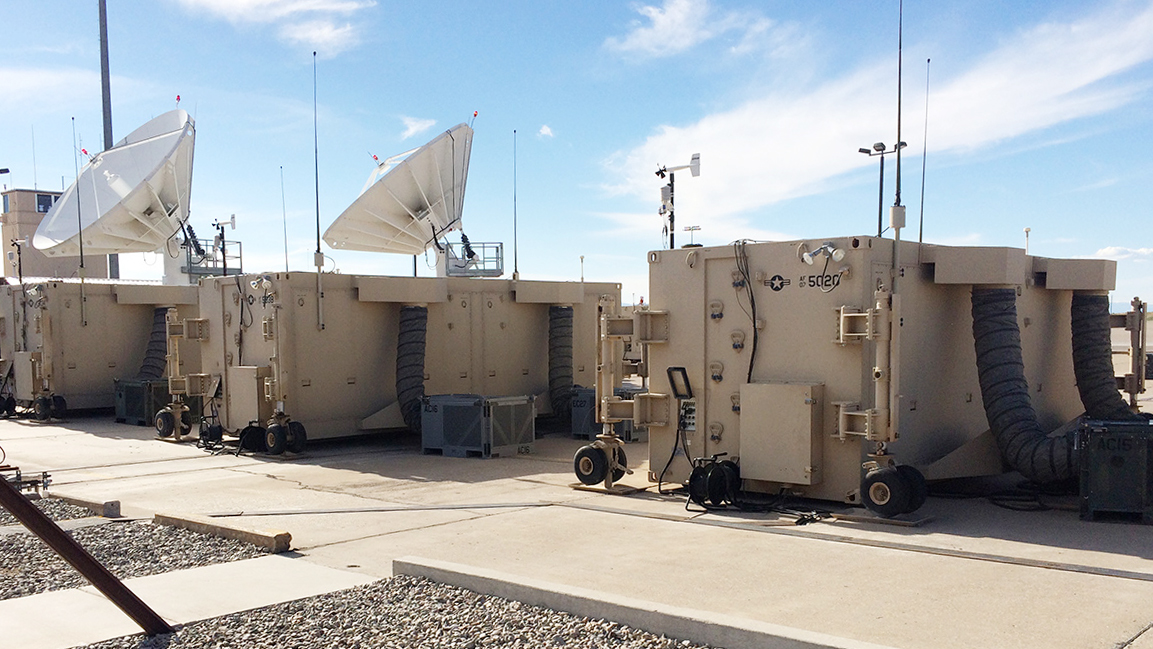
It was partly for the same reason that Ainsley O’Connell travelled to Holloman Air Force Base in New Mexico for Fast Company: to see what the training program for the crews that operate the Air Force’s remote platforms reveals about today’s management.

Her extended report riffs off Tom Cruise‘s Maverick in Top Gun, and his boast that – like all pilots of conventional strike aircraft – ‘You don’t have time to think up there… If you think, you’re dead.’  In contrast, Ainsley reports:

The new Maverick represents the future of work in a fully global world dominated by complex machines, complex communications, and fluid, remote teams. A body of economic research produced over the last 15 years suggests that organizations are shifting to a model of work characterized by continuous learning and flat teams with complementary skill sets. In this model there is room for autonomy and improvisation, but it takes place in the context of managerial surveillance and shared goals. The military, though still wedded to its lock-step hierarchies, is not immune to the trend. And RPA crews, despite their image as video gamers operating in the dark, are arguably one of the best case studies for how the future of work will affect war and conflict.

She finds that remote crews have to develop not only ‘air awareness’ – since they don’t have the physical sensations of flight or situation available to conventional pilots – but also ‘social awareness’: the ability to collaborate and communicate with military actors across the network.

I discuss the layered bureaucracy – and its imperfect network – in more detail in ‘Reach from the sky‘ and will post the text of those two lectures soon (see also here).

In the meantime, there is an earlier report on the training program at Holloman by Corey Mead for the Atlantic here.

The Geographies of Sixty Minutes

One of the cardinal principles informing modern casualty evacuation is the Golden Hour.  In 1975 R. Adams Cowley, founder of Baltimore’s Shock Trauma Institute, argued that ‘the first hour after injury will largely determine a critically injured person’s chances for survival.’  It’s not a straightforward metric, and combat medical care and evacuation has been transformed since it was first proposed, but the rule of thumb is that the chances of survival are maximised if the time between traumatic injury and definitive care is kept to 60 minutes or less.

Following a fire-storm of criticism on 15 June 2009 US Secretary of Defense Robert Gates required the standard time between a call for evacuation and treatment of the critically injured to be 60 minutes or less.  For US military personnel in the Second World War the average time was 10 hours; in Korea that had been cut to 5 hours (the result of using helicopters for speedy evacuation); and in Vietnam it was already down to one hour.  The reason for Gates’s intervention was that in Afghanistan the aim was two hours…
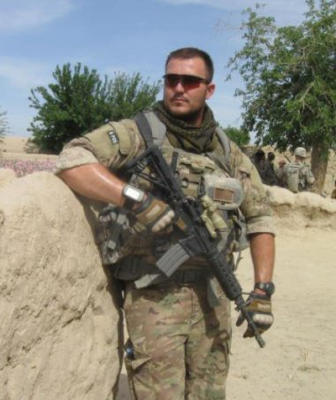
U.S. Air Force Sgt. Daniel Fye serving on a tour in the Kandahar province of Afghanistan in April 2011. (Courtesy of Daniel Fye)

U.S. Air Force Sgt. Daniel Fye serving on a tour in the Kandahar province of Afghanistan in April 2011. (Courtesy of Daniel Fye)

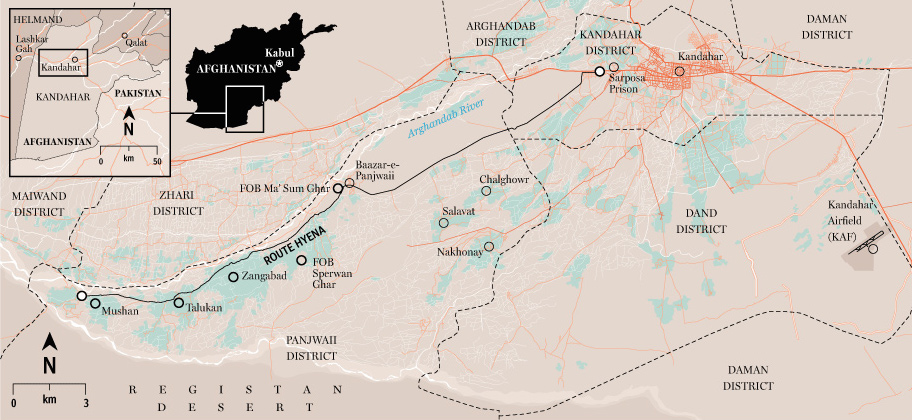
The importance of those time-critical sixty minutes was no secret to the troops in the line of fire.  Here is a scene from Brian Castner‘s truly brilliant All the ways we die and kill which imagines the thoughts running through one soldier’s head – Air Force Technical Sergeant Dan Fye on his third tour of duty with Explosive Ordnance Disposal (above) – after he stepped on an IED during a clearance operation in Mushan (Panjwayi) on 27 May 2011:

They worked on Fye a long time, and the longer they worked, the more anxious Fye got about the precious minutes slipping away. “I don’t hear the bird,” he said, over and over. They wrote the time of the tourniquet application on the white headband Fye wore under his helmet. Hopkins pushed morphine into his veins.

Eventually, an eon since Hopkins arrived but only twenty-five minutes after the blast, the hyperactive thump of helo blades cutting air slowly emerged in the distance.

Fye thought it was the most wonderful sound he had ever heard. They were at the extreme limit of the NATO footprint, and so it was a sixty-kilometer flight to the main hospital at Kandahar [see map below]. If they moved quickly, Fye would just make it in the magic golden hour.
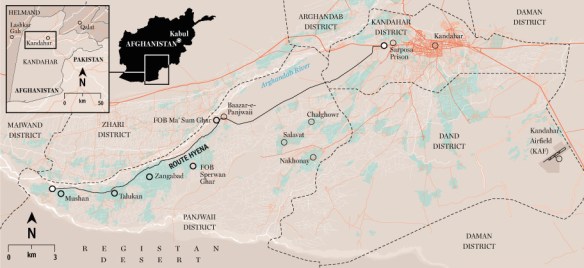
1-FO0625_KandaharMap

Castner writes that as Fye was bleeding out in the back of the helicopter, he was

‘clinging to one thought and one thought only, running in a continuous Times Square news ticker across the front of his oxygen-starved brain: One hour. If I can get back to Kandahar in one hour, I’ll live. One hour, and I’ll live. That’s what they say. You’ll make it if you can get back to the hospital in one hour.’

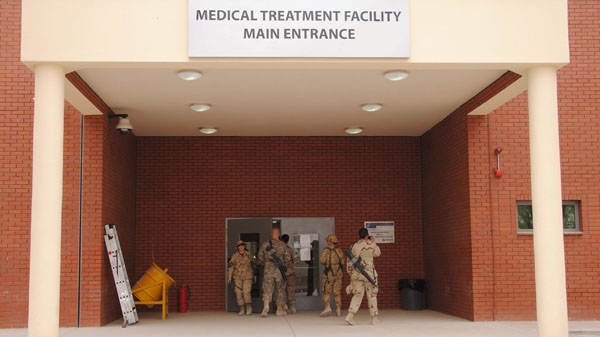
He made it.  The new, modernised and expanded Role 3 NATO hospital at Kandahar had opened a year earlier, and its executive officer claimed that ‘They hit our doors, they live.’
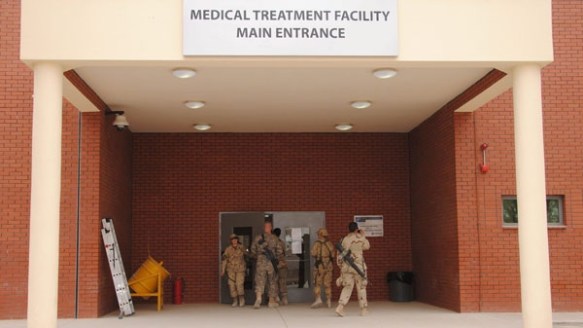
Kandahar new Role 3 2010

But Fye was lucky.  Later he learned why it had taken so long for the helicopter to arrive, and why he very nearly never made it to Kandahar at all:

Over multiple radio calls between Hopkins’s platoon and the rescue operations center, his report of “bilateral amputation” had been converted, telephone-game style, into “bilateral lacerations.” The medical operations center had actually turned the rescue mission off; helos don’t fly for scraped knees. The bird that eventually picked up Fye wasn’t even a real medevac bird. That’s why the robotic flight crew ignored him, didn’t treat his wounds as they went. They weren’t medics. The helo pilots had just been in the air and happened to overhear the radio traffic, including the original call for help. They understood the mistake and had disobeyed orders to go get Fye. If the human pilot of that bird had been less stubborn, the golden hour would have been long past by the time Fye made it to KAF, and he could well have been one of the 1 percent.

(More from Brian on medical evacuation here and here).

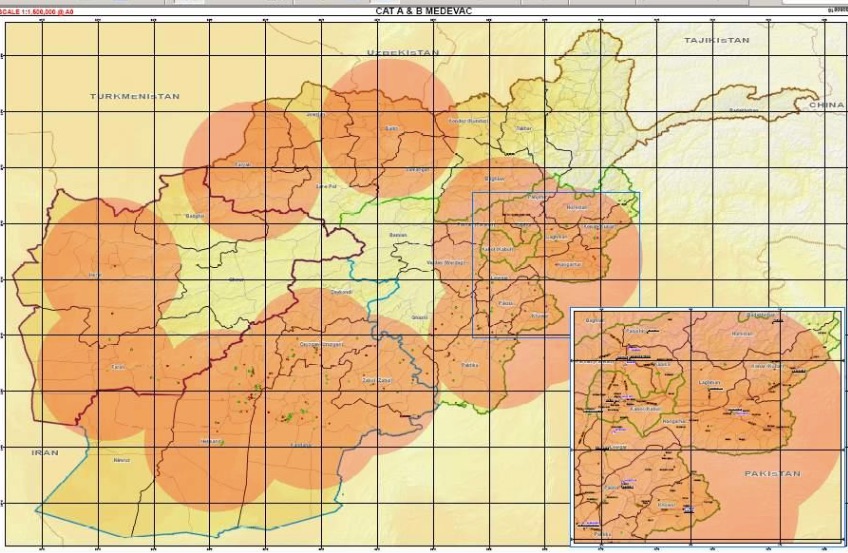
Even without miscommunication the logistical challenges were formidable.  In 2007, two years before Gates’ intervention, ISAF produced this map showing the medevac coverage – what Fye called the ‘NATO footprint’ – that supported that two-hour standard (I have taken this map and the following one from a report prepared by Col Dr Ingo Hartenstein for NATO/ISAF in December 2008 which is available here; scroll down):
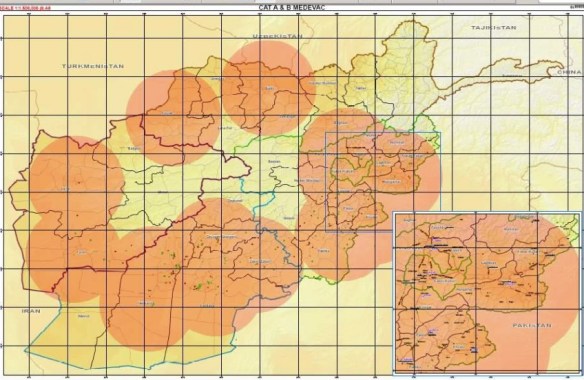
ISAF Medevac coverage 2 hours

Like Vietnam, Afghanistan was a ‘war without fronts’ with a battlefield geometry that imposed a radically different evacuation model from the classical line of evacuation that had been established during the First World War.  Here is how Brian Turner puts it in My life as another country:

We won’t hear the battle in progress and work our way toward it as baggage trains of wounded, exhausted soldiers and civilians carrying their lives on their backs travel in the opposite direction. Our battle space – and perhaps it’s a cliché now – will occur in a 360-degree, three-dimensional environment.

More technically, here is Brigadier Martin Bricknell, who served (among many other roles) as Medical Adviser to ISAF’s Regional Command South in Kandahar in 2010:

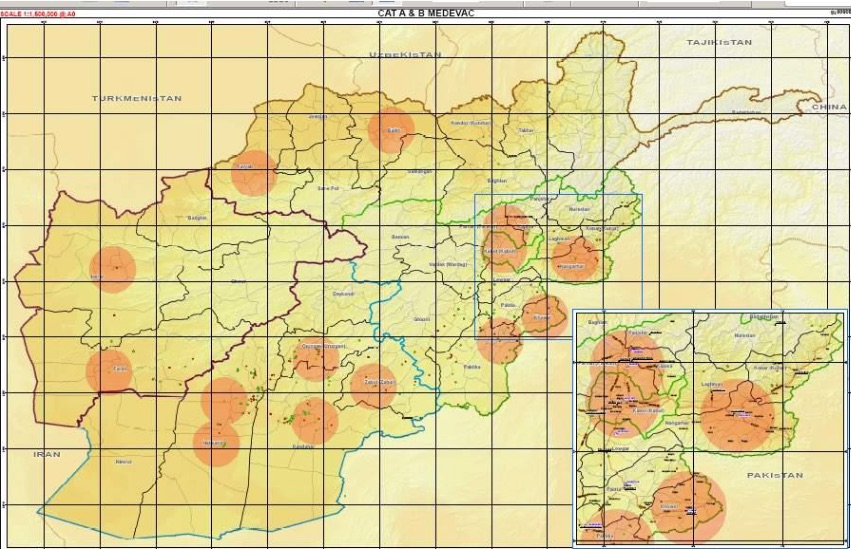
The tactical geometry for the current operating environment is based upon security forces holding areas of ground and securing this space from opposition activity. This converts the battlefield from the conventional force-on-force linear geometry with an identifiable confrontation line to an area battlefield with multiple nodes of contested space. Thus the MEDEVAC mission is converted from a linear flow to area support, hence MEDEVAC planning is based upon a ‘range ring’ coverage with a radius of 40–60 nautical miles.

Given the available resources, a second map showed how those ‘range rings’ would contract if the Golden Hour were to be imposed over the evacuation grid:
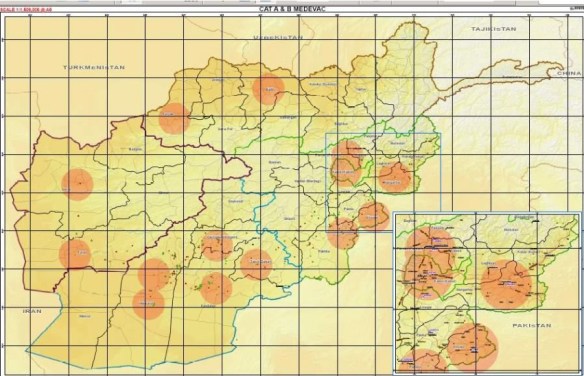
ISAF MEDEVAC coverage allowing 1 hr from POI to surgery HARTENSTEIN

In practice, the situation was more variable than these maps imply – not least because there was a significant difference between the ways in which American and British contingents organised medical evacuation.

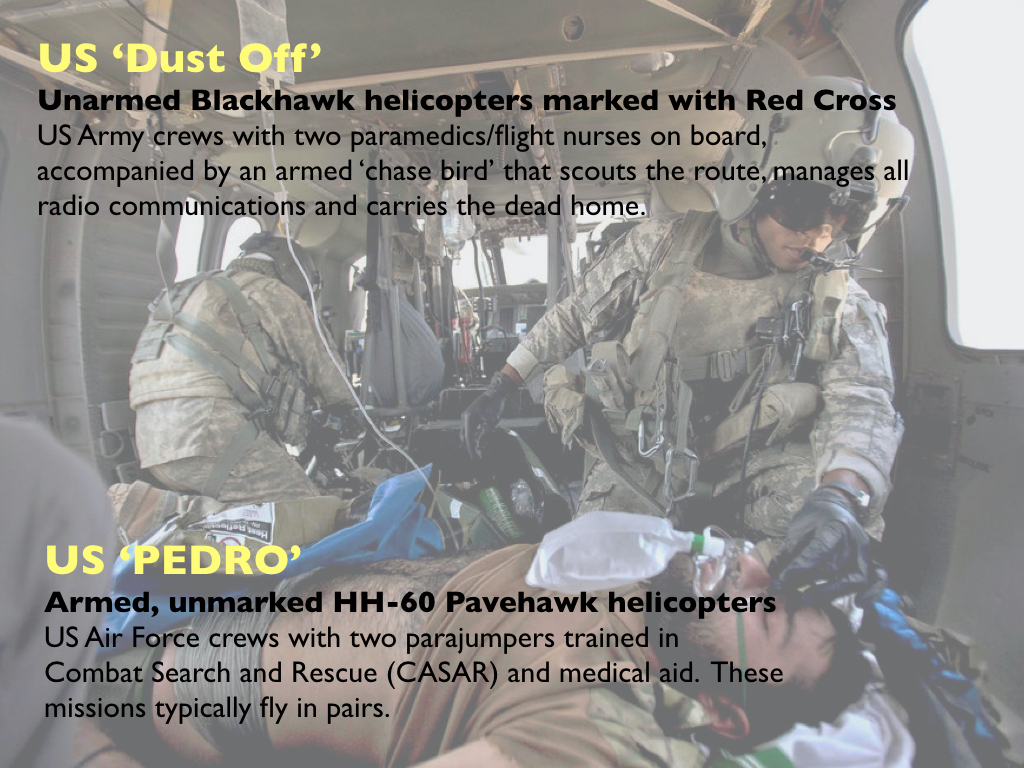
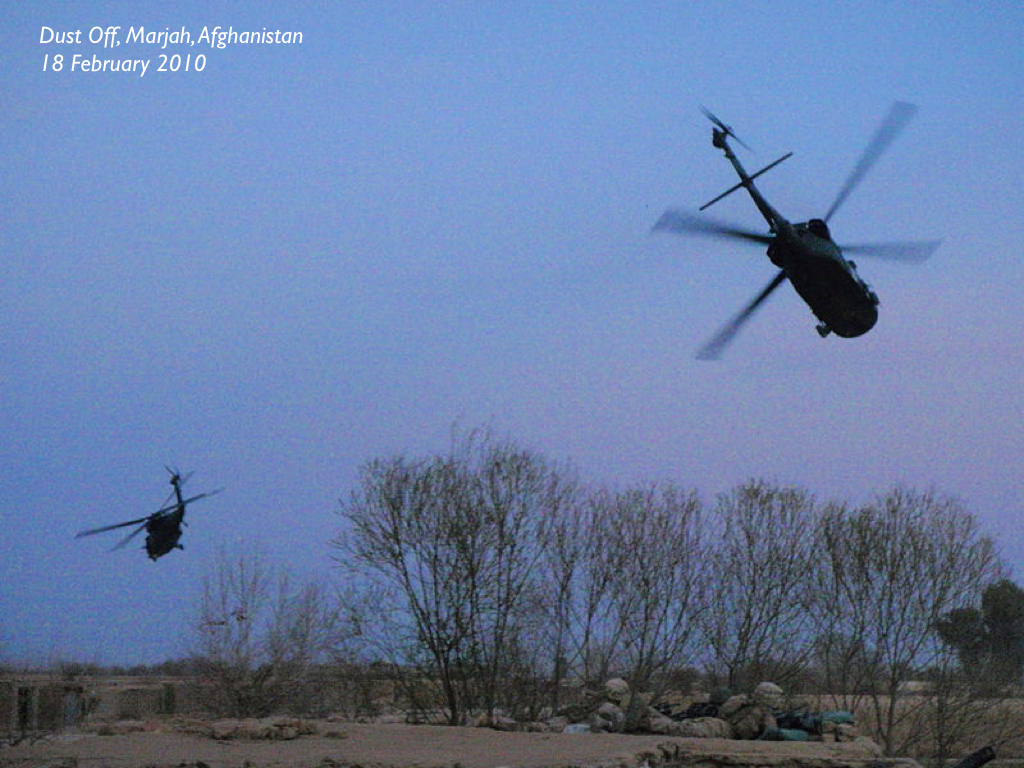
The US military, drawing on their experience in Vietnam, used Blackhawk or Pavehawk helicopters to get paramedics or combat medical technicians to the casualty as fast as possible:
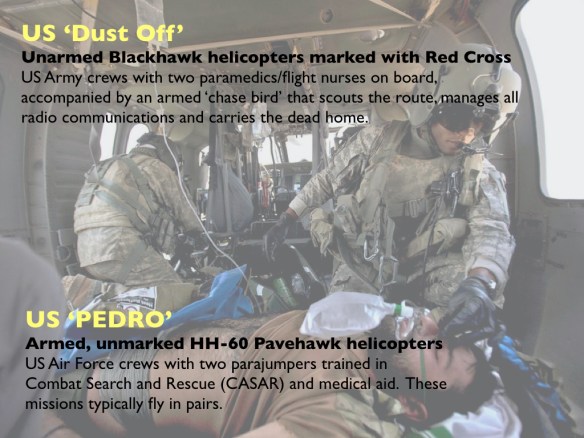
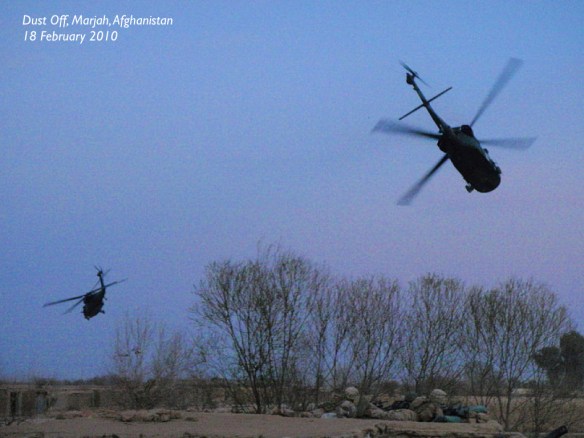
DUST OFF Afghanistan.001

DUST OFF Afghanistan.002

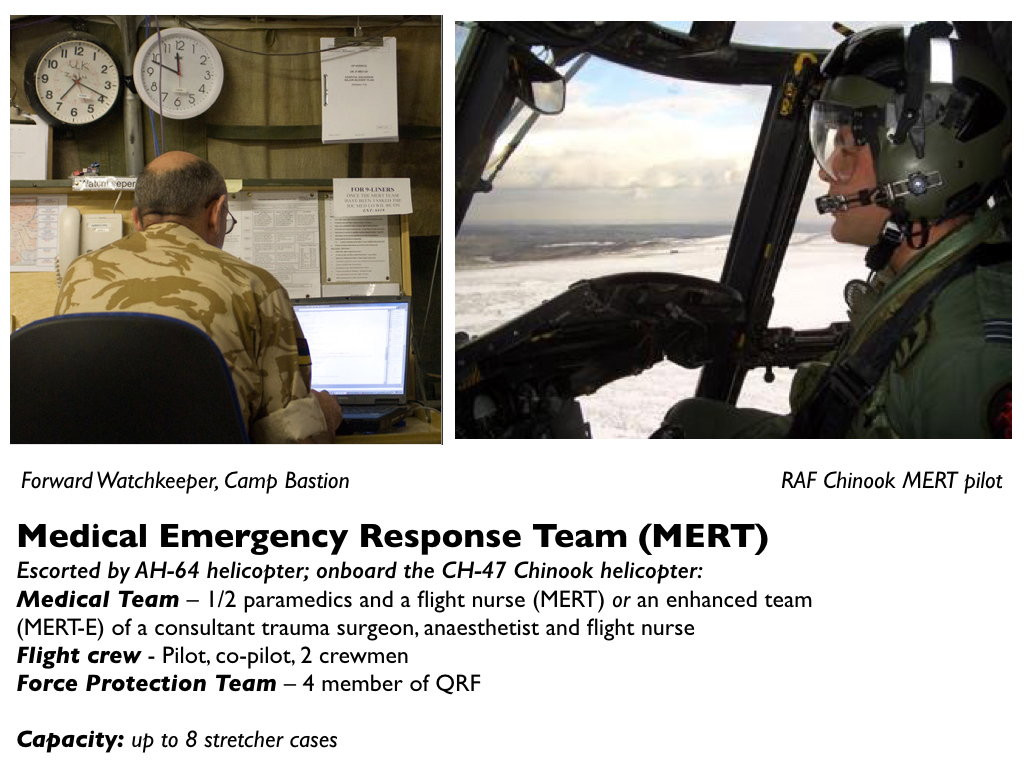
The British used larger Chinook helicopters to dispatch a Medical Emergency Response Team (MERT) with a trauma surgeon onboard to the casualty close to the point of injury (POI):
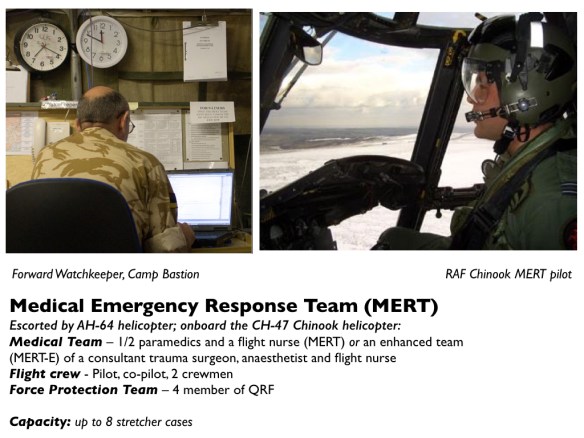
MERT Afghanistan.001

The response time was usually longer but the MERT enabled advanced trauma care to begin as soon as the patient was onboard.

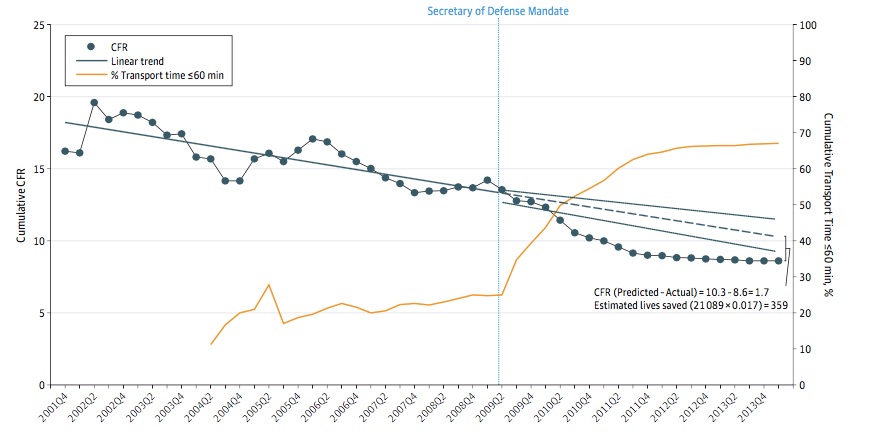
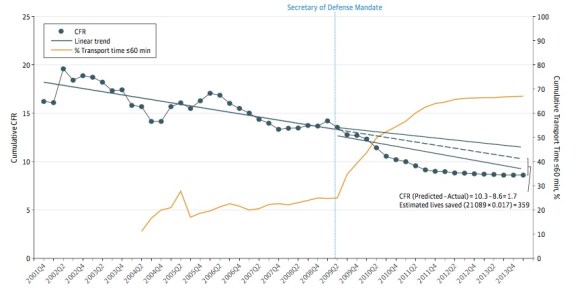
There has been considerable debate and disagreement about the robustness of the ‘Golden Hour’ in military trauma care and its relation to evacuation pathways: see, for example,  Jonathan Clarke and Peter Davis, ‘Medical evacuation and triage of combat casualties in Helmand Province, Afghanistan: October 2010-April 2011’, Military Medicine 171 (11) (2012) 1261-6.  But a research team has now calibrated the effects of reduced evacuation time on US casualty fatality rates (CFR) in Afghanistan between 2001 and 2014 [Russ Kotwal et al, ‘The effect of a Golden Hour policy on the morbidity and mortality of combat casualties’, JAMA Surgery 151 (1) (2016) 15-24; see also here]:
KOTWAL Case fatality rate and transport time

For 4,500 cases of US military casualties with detailed data the study showed a substantial change in the CFR following the Secretary of Defense’s mandate to evacuate casualties within 60 minutes: as the median evacuation time fell from 90 minutes to 43 minutes the CFR fell from 13.7 to 7.6; before the mandate 25 per cent of casualty evacuation missions fell within the Golden Hour, after the mandate the proportion soared to 75 per cent.

The interpretive field is a complicated one – while a significant number of casualties who would previously have died from their wounds now survived, a proportion of those who would previously have been recorded as ‘killed in action’ (KIA) none the less now ‘died of wounds’ (DOW) – and the reasons for the improvement in survival rates are also multivariate:

‘Secondary effects resulting from the mandate that contributed to achieving the mandated time included stream-lined authority and helicopter launch procedures, increased number and dispersion of Army helicopters, and the addition of Air Force helicopters to assist with the Army prehospital transport mission. As decreased time from critical injury to treatment capability was the underlying goal, personnel with increased expertise (blood transfusion protocol-trained basic medics, critical care paramedics, and critical care nurses) were trained and assigned to prehospital flights more routinely, resulting in earlier availability of blood products and other advanced care.

In addition, an increase in the number and dispersion of small but mobile forward surgical teams across the battle-field brought major surgical capability even closer to the point of injury and provided an alternative to transporting patients longer distances to large, but less mobile, civilian trauma center–equivalent [Combat Support Hospitals].’
GoldenHourFig1

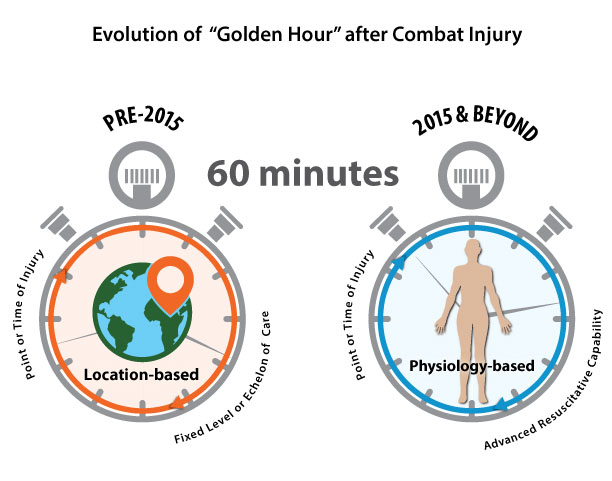
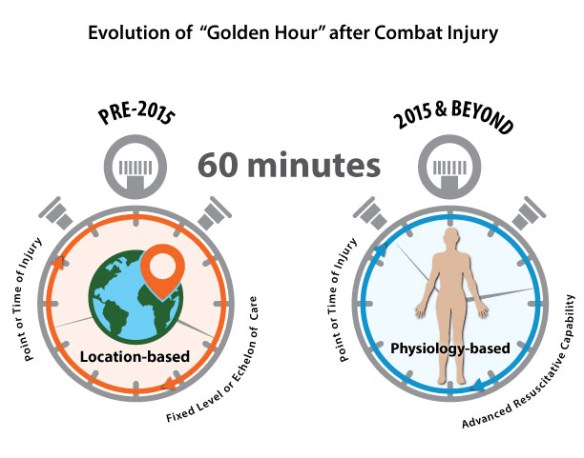
These findings – together with the experience of the British MERTs – intersect with a recalibration of the Golden Hour.  The US Combat Casualty Care Research Program (CCCRP) has proposed an ‘evolved concept’ (see the figure above) that moves from a location-based protocol to a physiological one:

The program must be willing to turn the doctrine of fixed or traditional echelons of care on its side and innovate for scenarios in which Level II and III care is performed aboard transport vehicles (land-, air- or sea-based) or within local structures of opportunity. In such circumstances, field care may be prolonged, lasting for days or even weeks. Combat casualty care research with these complex scenarios in mind promises to enhance resuscitative capability for injured service personnel regardless of environment, leveraging communications networks (i.e., telementoring) and targeted resupplies of materials. In the future, CCCRP must focus on transforming the concept of the golden hour into one bound not by the time to reach traditional echelons of care or fixed facilities, but the time until enhanced resuscitative capability can be delivered to the injured troop, regardless of location or need for transport.

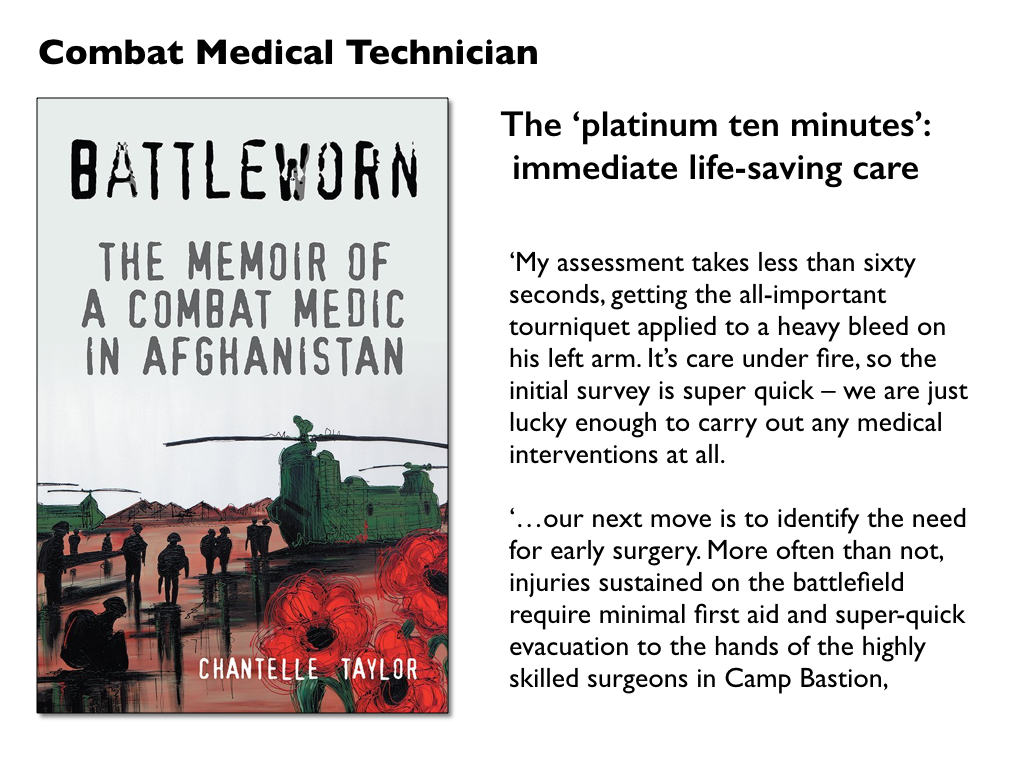
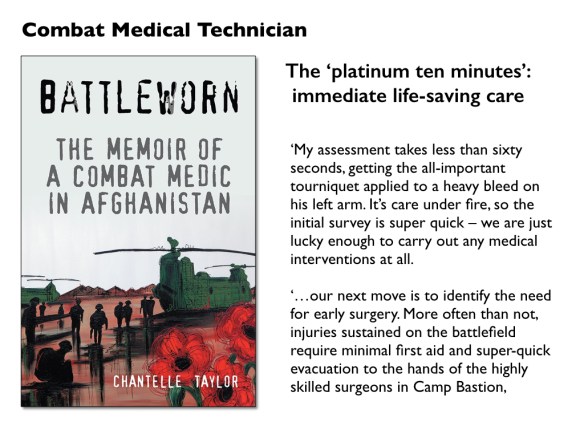
There are two riders to add.  First, embedded within the Golden Hour are ‘the platinum ten minutes’: the imperative to stop bleeding (which has led to the re-emergence and re-engineering of the tourniquet) and to control the casualty’s airway within 10 minutes of wounding.
Combat Medical Technician and Platinum 10 minutes.001

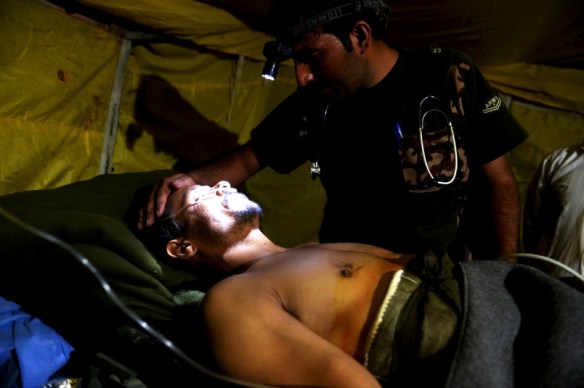
The second is that the speed of treatment and trauma care available to American and British soldiers is radically different from that available to Afghan soldiers and police officers.  Previously, they could rely on aeromedical evacuation by their allies.  But now most of their medical evacuations take place by land, over difficult and dangerous roads.  Last September Josh Smith reported:

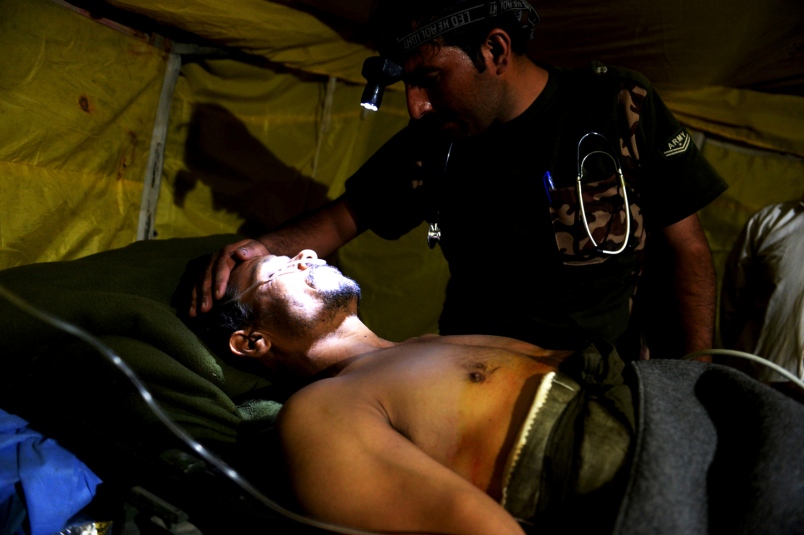
Under the dim light of a single bulb, a local Afghan policeman lay severely injured, slipping in and out of consciousness. A military doctor reported to an Afghan army brigade commander that the man was unlikely to live through the night.
Injured Afghan policeman examined by Afghan Army doctor August 2015

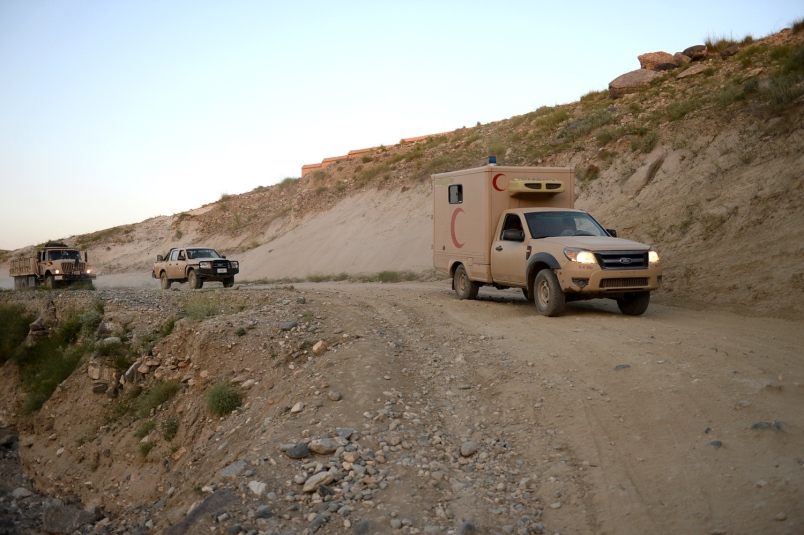
Despite the doctor’s pleas, the commander stood firm. The army could not spare any soldiers or ambulances [below] to make the five-hour drive to a better hospital at that late hour through territory teeming with Taliban ambushes and roadside bombs.
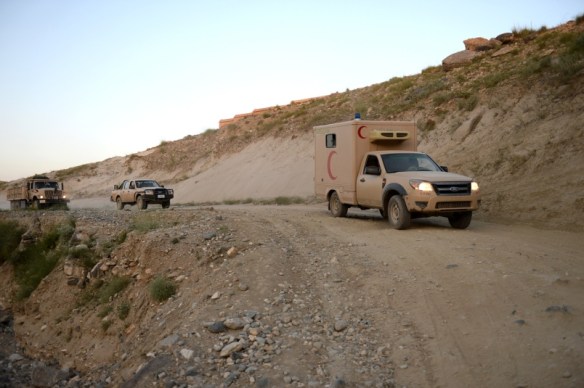
, Nangarhar province, August 2015

The lack of speedy evacuation is a tragically common problem for the rising number of Afghan police and soldiers being injured on the battlefields of Afghanistan. U.S. advisers have worked to help close the capability gap, but mostly behind the scenes, far from the battlefields where many Afghan troops say they increasingly feel alone.

Although the American forces still stationed in the country have conducted more than 200 airstrikes since their combat mission was declared over at the end of 2014, as of July, U.S. military aircraft had not flown a single conventional medical evacuation mission, according to data released by the U.S. Air Force Central Command.

U.S. military officials say they haven’t flown evacuation missions because they haven’t been asked. Also, there are far fewer American resources available for such missions now.

The difference shows up in the ratios of those killed and those who survived their wounds.

About 2,363 Americans have died in Afghanistan, with a little more than 20,000 wounded, a ratio of roughly 1-to-10.  In the first half of 2015 alone, 4,302 Afghan soldiers and police were killed in action and 8,009 more were wounded, a ratio of about 1-to-2.

Even where aircraft and trained medical technicians are available, Jeff Schogol found that the Afghan capability falls well outside the Golden Hour:

The time it takes to fly patients to hospitals varies depending on the point of injury, but it can take between 90 minutes and two and a half hours to fly an aeromedical evacuation mission in a C-208, plus one hour to transfer patients from Kandahar to Kabul in a C-130.
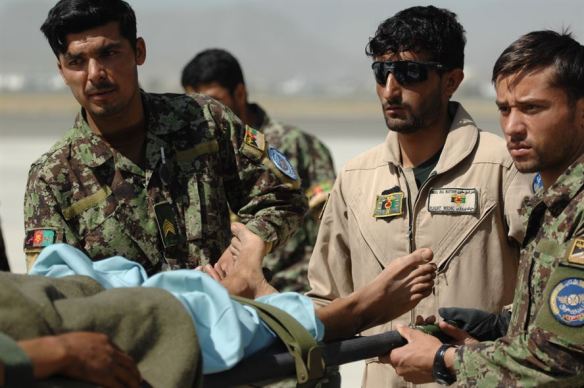
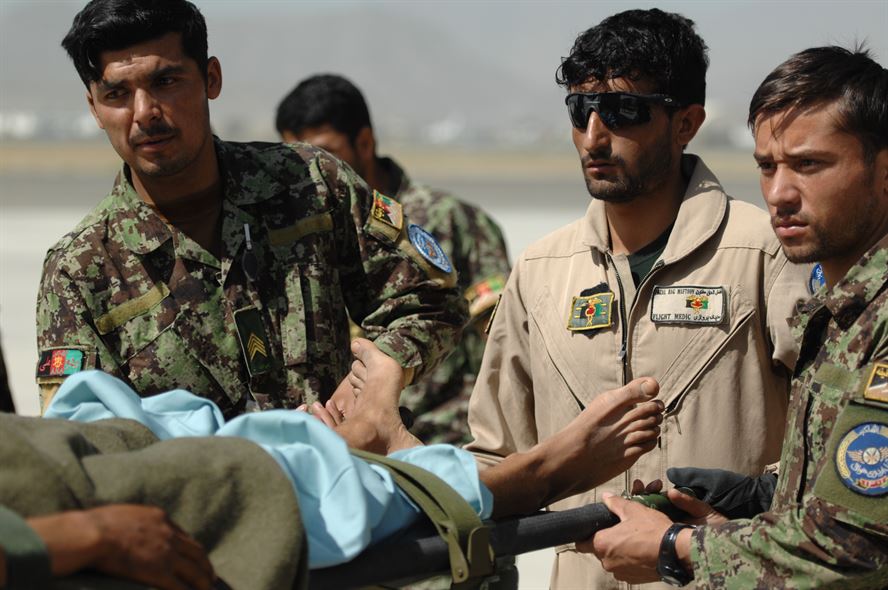
Injured ANA soldier lifted from Afghan Air Force C-27A

And the situation for Afghan civilians – as I explored in detail in ‘The prosthetics of military violence‘ – is still worse.

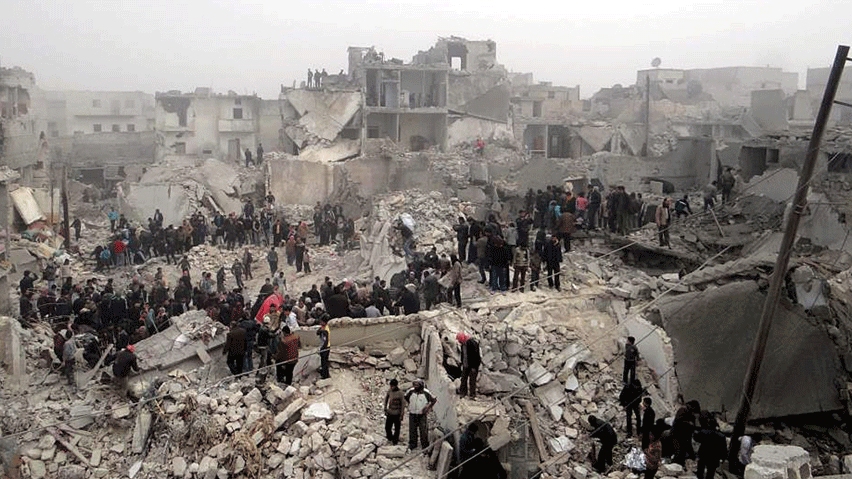
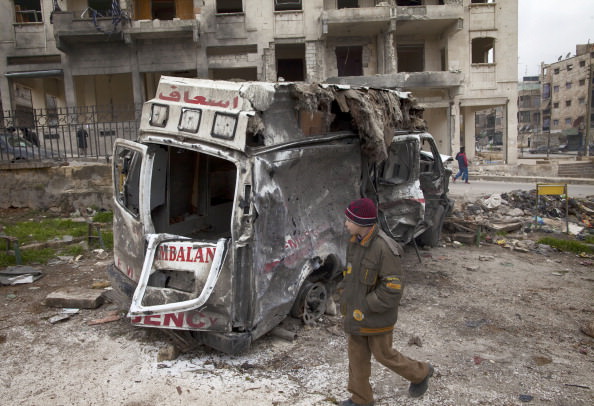
This is not a problem confined to Afghanistan: think of how the possibility of the Golden Hour recedes in urban combat zones subjected to artillery fire and bombing – the difficulties faced by first responders in Gaza or in the ravaged, rubble-strewn towns and cities of Syria (see also Annie Sparrow‘s report here).
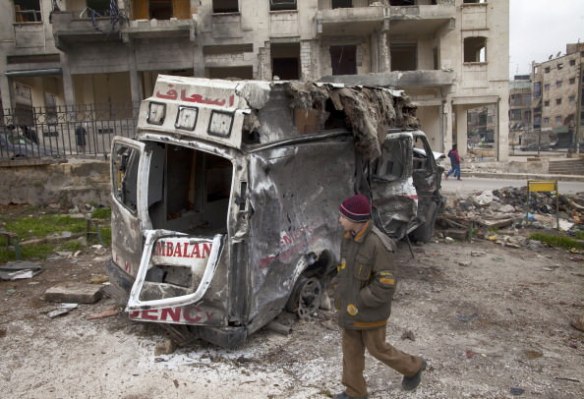
 A Syrian youth walks past a destroyed ambulance in the Saif al-Dawla district of the war-torn northern city of Aleppo on January 12, 2013. An accident and emergency centre in Aleppo uses an abandoned supermarket to conceal a fleet of 16 ambulances, just 10 of which are in working order and are driven by 22 staff members. AFP PHOTO/JM LOPEZ/ (Getty Images)


A Syrian youth walks past a destroyed ambulance in the Saif al-Dawla district of the war-torn northern city of Aleppo on January 12, 2013. An accident and emergency centre in Aleppo uses an abandoned supermarket to conceal a fleet of 16 ambulances, just 10 of which are in working order and are driven by 22 staff members. AFP PHOTO/JM LOPEZ/ (Getty Images)

And there is no guarantee of safety even once casualties reach hospital since the principle of medical neutrality is now being routinely and systematically violated.
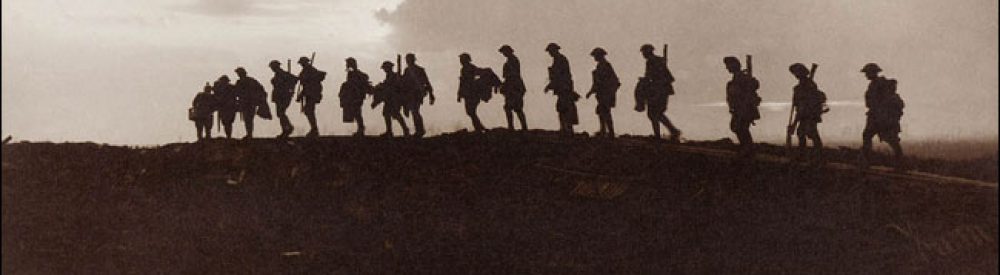
Death sentences

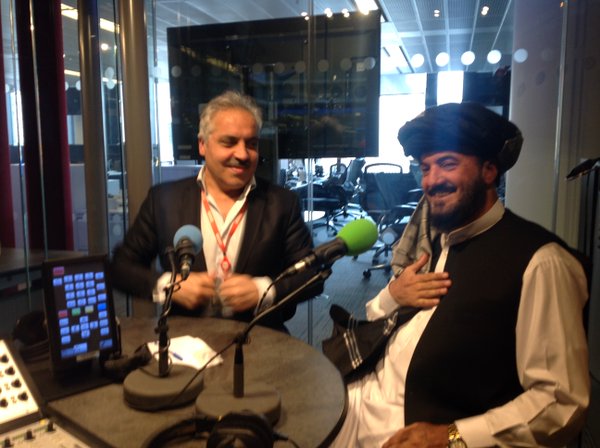
Living under drones is both a chilling report and a nightmare reality.  In November 2014, in a New Yorker essay called ‘The unblinking stare‘, Steve Coll reported a conversation with Malik Jalal from North Waziristan:

‘Drones may kill relatively few, but they terrify many more…  They turned the people into psychiatric patients. The F-16s might be less accurate, but they come and go.’

Now Reprieve has put a compelling face to the name – to a man who believes, evidently with good reason, that he has been included in the CIA’s disposition matrix that lists those authorised for targeted killing.

Malik Jalal JPEG

‘Malik’ is an honorific reserved for community leaders, and Jalal is one of the leaders of the North Waziristan Peace Committee (NWPC).  Its main role is to try to keep the peace between the Taliban and local authorities, and it was in that capacity that he attended a Jirga in March 2011.  He says this was on 27 March, but I think it must have been the strike that killed 40 civilians at Datta Khel on 17 March (see the summary from the Bureau of Investigative Journalism here and my post here).

Here are the relevant passages from my ‘Dirty dancing’ essay, following from a discussion of Pashtunwali and customary law in the Federally Administered Tribal Areas (I’ve omitted the footnotes and references):

***

‘In short, if many of the Pashtun people in the borderlands are deeply suspicious of and even resentful towards Islamabad (often with good reason) they are ‘neither lawless nor defenceless.’

‘Yet the trope of ‘lawlessness’ persists, and it does important work. ‘By alleging a scarcity of legal regulation within the tribal regions,’ Sabrina Gilani argues, ‘the Pakistani state has been able to mask its use of more stringent sets of controls over and surveillance within the area.’ The trope does equally important work for the United States, for whom it is not the absence of sovereign power from the borderlands that provides the moral warrant for unleashing what Manan Ahmad calls its ‘righteous violence’. While Washington has repeatedly urged Islamabad to do much more, and to be less selective in dealing with the different factions of the Taliban, it knows very well that Pakistan has spasmodically exercised spectacular military violence there. But if the FATA are seen as ‘lawless’ in a strictly modern sense – ‘administered’ but not admitted, unincorporated into the body politic – then US drone strikes become a prosthetic, pre-emptive process not only of law enforcement but also of law imposition. They bring from the outside an ‘order’ that is supposedly lacking on the inside, and are reconstituted as instruments of an aggressively modern reason that cloaks violence in the velvet glove of the law.

Print

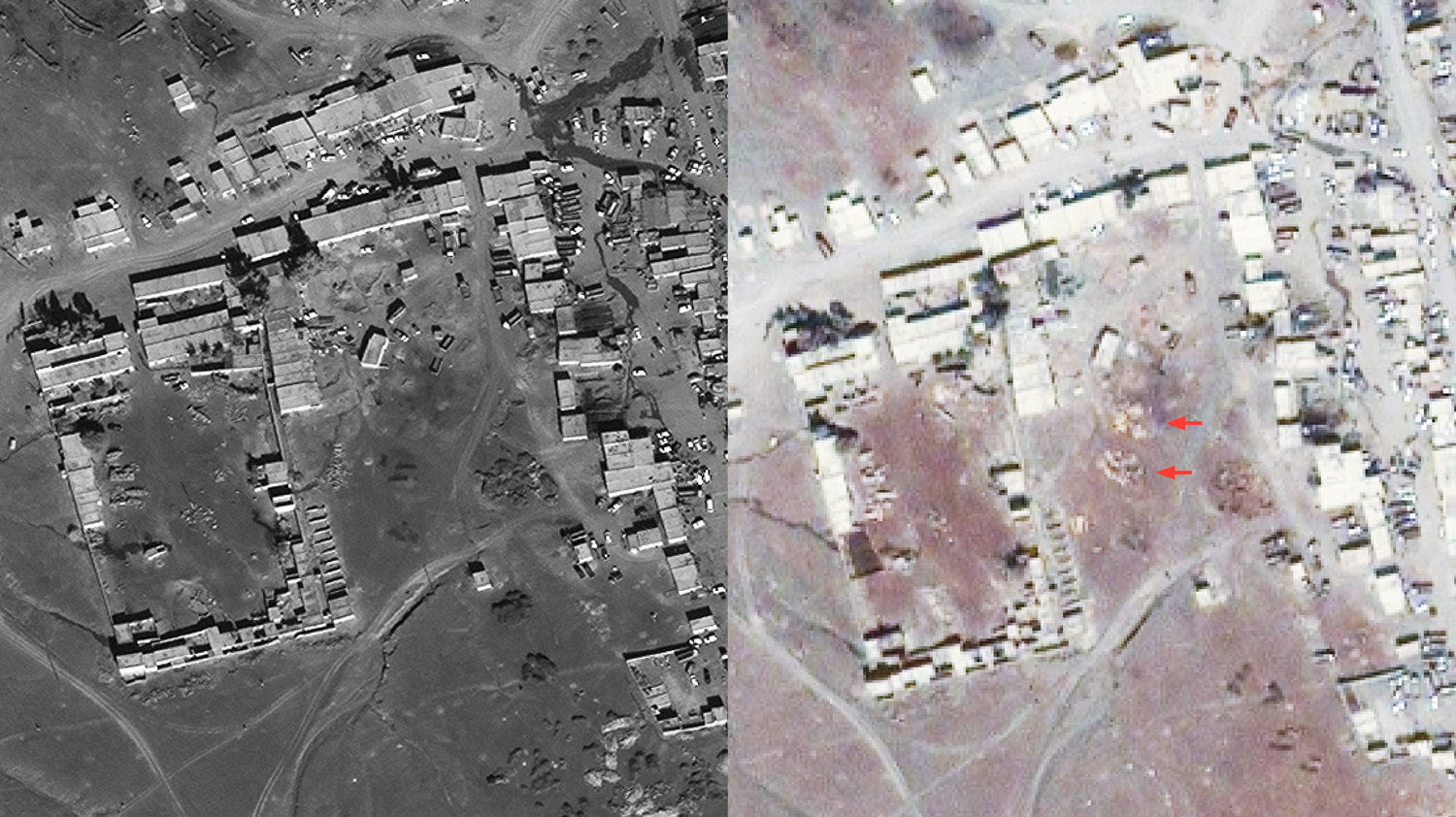
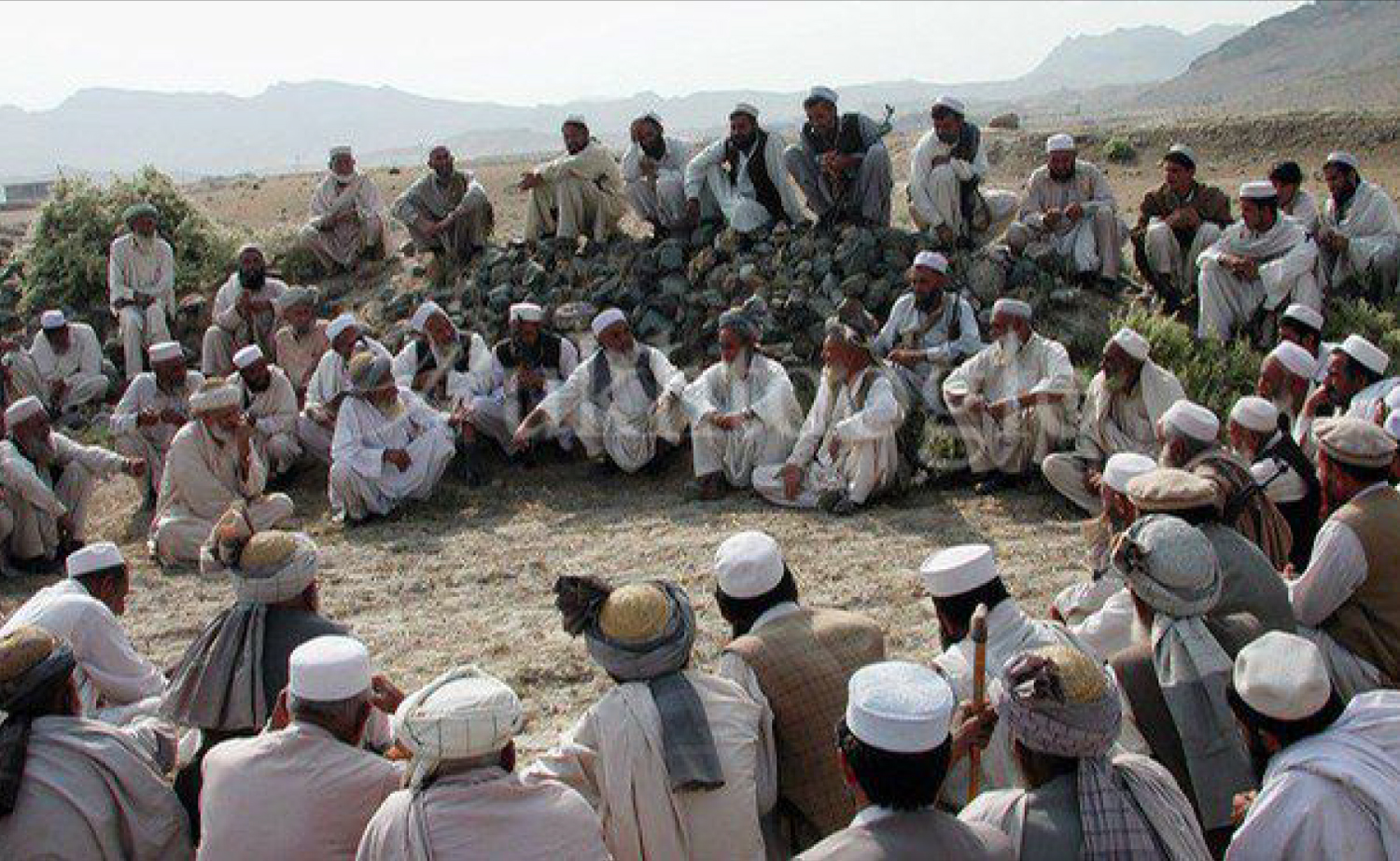
And yet the CIA’s own willingness to submit to the principles and procedures of modern law is selective and conditional; we know this from the revelations about torture and global rendition, but in the borderlands the agency’s disregard for the very system it purports to defend also exposes any group of men sitting in a circle with guns to death: even if they are gathered as a Jirga. On 27 January 2011 CIA contractor Raymond Davis was arrested for shooting two young men in Lahore. The targeted killing program was suspended while the United States negotiated his release from custody, agreeing to pay compensation to the victims’ families under Sharia law so that he could be released from the jurisdiction of the court. On 16 March, the day after Davis’s release, a Jirga was convened in Dhatta Khel in North Waziristan. A tribal elder had bought the rights to log an area of oak trees only to discover that the land also contained chromite reserves; the landowner was from a different tribe and held that their agreement covered the rights to the timber but not the minerals, and the Jirga was called to resolve what had become an inter-tribal dispute between the Kharhtangi and the Datakhel. Maliks, government officials, local police and others involved in the affair gathered at the Nomada bus depot – a tract of open ground in the middle of the small town – where they debated in two large circles. Agreement was not reached and the Jirga reconvened the next morning. Although four men from a local Taliban group were present, the meeting had been authorised by the local military commander ten days earlier and was attended by a counsellor appointed by the government to act as liaison between the state, the military and the maliks. It was also targeted by at least one and perhaps two Predators. At 11 a.m. multiple Hellfire missiles roared into the circles. More than forty people were killed, their bodies ripped apart by the blast and by shattered rocks, and another 14 were seriously injured.

Dhatta Khel before and after drone strike (Forensic Architecture)

There is no doubt that four Taliban were present: they were routinely involved in disputes between tribes with competing claims and levied taxes on chromite exports and the mine operators. But the civilian toll from the strike was wholly disproportionate to any conceivable military advantage, to say nothing of the diplomatic storm it set off, and several American sources told reporters that the attack was in retaliation for the arrest of Davis: ‘The CIA was angry.’ If true, this was no example of the dispassionate exercise of reason but instead a matter of disrespecting the resolution offered by Sharia law and disordering a customary judicial tribunal. Even more revealing, after the strike an anonymous American official who was supposedly ‘familiar with the details of the attack’ told the media that the meeting was a legitimate military target and insisted that there were no civilian casualties. Serially: ‘This action was directed against a number of brutal terrorists, not a county fair’; ‘These people weren’t gathering for a bake sale’; ‘These guys were … not the local men’s glee club’; ‘This was a group of terrorists, not a charity car wash in the Pakistani hinterlands.’ The official – I assume it was the same one, given the difference-in-repetition of the statements – provided increasingly bizarre and offensively absurd descriptions of what the assembly in Datta Khel was not: he was clearly incapable of recognising what it was. Admitting the assembly had been a properly constituted Jirga would have given the lie to the ‘lawlessness’ of the region and stripped the strike of any conceivable legitimacy. The area was no stranger to drone attacks, which had been concentrated in a target box that extended along the Tochi valley from Datta Khel through Miran Shah to Mir Ali, but those responsible for this attack were clearly strangers to the area.

***

‘Like others that day,’ Jalal concedes, ‘I said some things I regret. I was angry, and I said we would get our revenge. But, in truth, how would we ever do such a thing? Our true frustration was that we – the elders of our villages – are now powerless to protect our people.’

This was the fourth in a series of strikes that Jalal believes targeted him:

‘I have been warned that Americans and their allies had me and others from the Peace Committee on their Kill List. I cannot name my sources [in the security services], as they would find themselves targeted for trying to save my life. But it leaves me in no doubt that I am one of the hunted.’

He says he is an opponent of the drone wars – but if that were sufficient grounds to be included on the kill list it would stretch into the far distance.

He also says that the Americans ‘think the Peace Committee is a front’ working to create ‘a safe space for the Pakistan Taliban.’

‘To this I say: you are wrong. You have never been to Waziristan, so how would you know?’

And he describes the dreadful impact of being hunted on him and his family:

‘I soon began to park any vehicle far from my destination, to avoid making it a target. My friends began to decline my invitations, afraid that dinner might be interrupted by a missile.

‘I took to the habit of sleeping under the trees, well above my home, to avoid acting as a magnet of death for my whole family. But one night my youngest son, Hilal (then aged six), followed me out to the mountainside. He said that he, too, feared the droning engines at night. I tried to comfort him. I said that drones wouldn’t target children, but Hilal refused to believe me. He said that missiles had often killed children. It was then that I knew that I could not let them go on living like this.’

And so he has travelled to Britain to plead his case:

‘I came to Britain because I feel like Britain is like a younger brother to America. I am telling Britain that America doesn’t listen to us, so you tell them not to kill Waziristanis.’

You can hear an interview with him on BBC’s Today programme here.

CfvlDFAXIAAT7Yk

In you think Britain is distanced from all this, read Reprieve‘s latest report on ‘Britain’s Kill Listhere (which focuses on the Joint Prioritised Effects List in Afghanistan and its spillover into Pakistan) and Vice‘s investigation into the UK’s role in finding and fixing targets in Yemen here.

Object Lessons

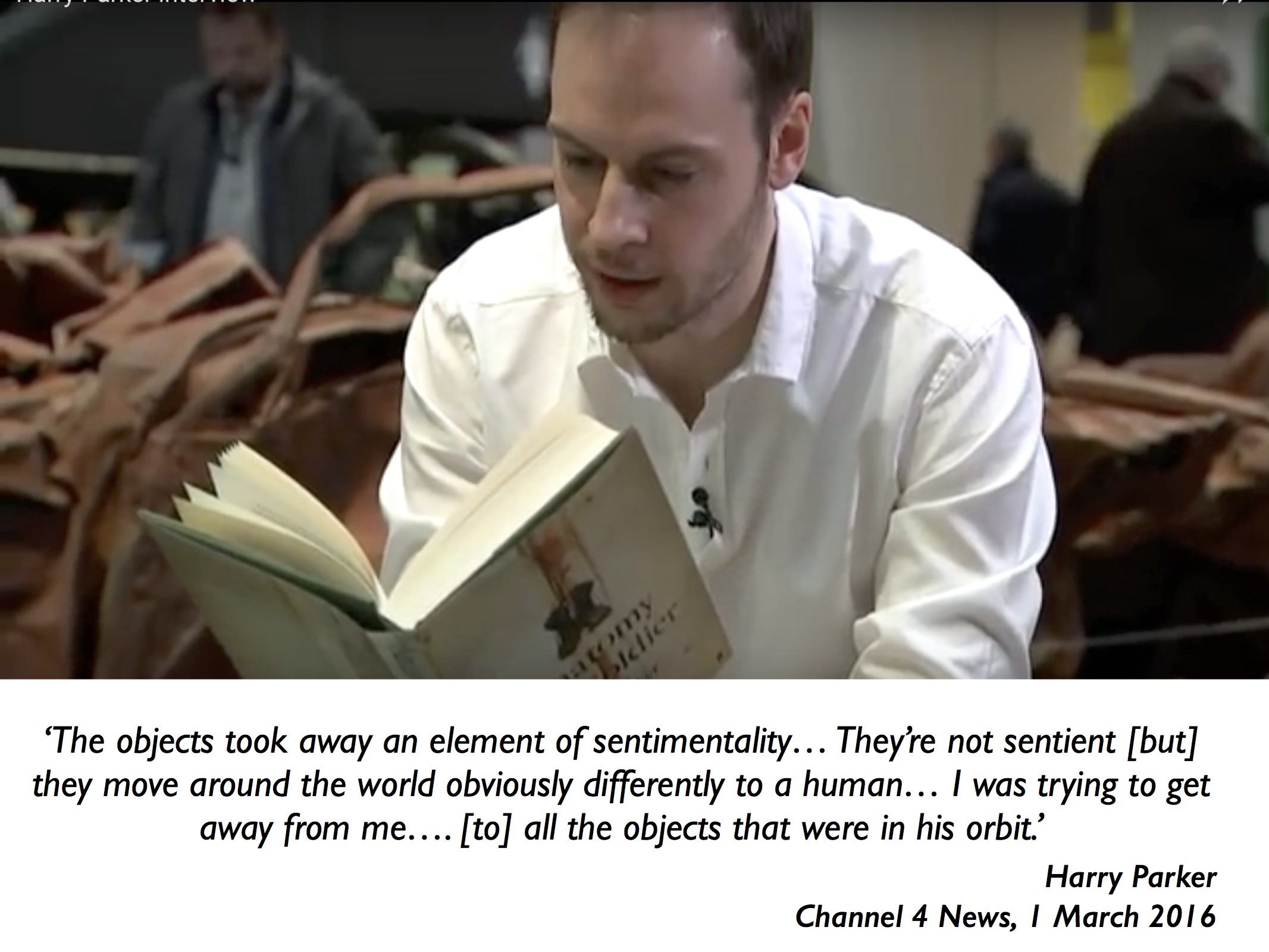
I was supposed to give a shortened version of ‘Little boys and blue skies‘ at the AAG Annual Meeting in San Francisco (about drones and atomic war: available under the DOWNLOADS tab) and fully intended to do so.  But in the event – and as I implied in a previous post – I decided to talk instead about Harry Parker‘s Anatomy of a soldier.  It was a spur of the moment decision, though it had been pricking away in my mind ever since I read the novel, and I only decided to do it at 10.30 the night before: madness.  But it was much closer to the theme of the sessions organised by Kate Kindervater and Ian Shaw on ‘Objects of Security and War: Material Approaches to Violence and Conflict‘ than my original presentation would have been.

I’ve added the presentation to those available under the DOWNLOADS tab (scroll right down).

I hope that most of it will be self-explanatory, but some notes might help.  I started out by invoking Tim O’Brien‘s twin accounts of the Vietnam War, The things they carried and If I should die in a combat zone, which provide vivid reminders of the weight – physical and emotional – borne by ground troops and the toll they impose on the soldier’s body.

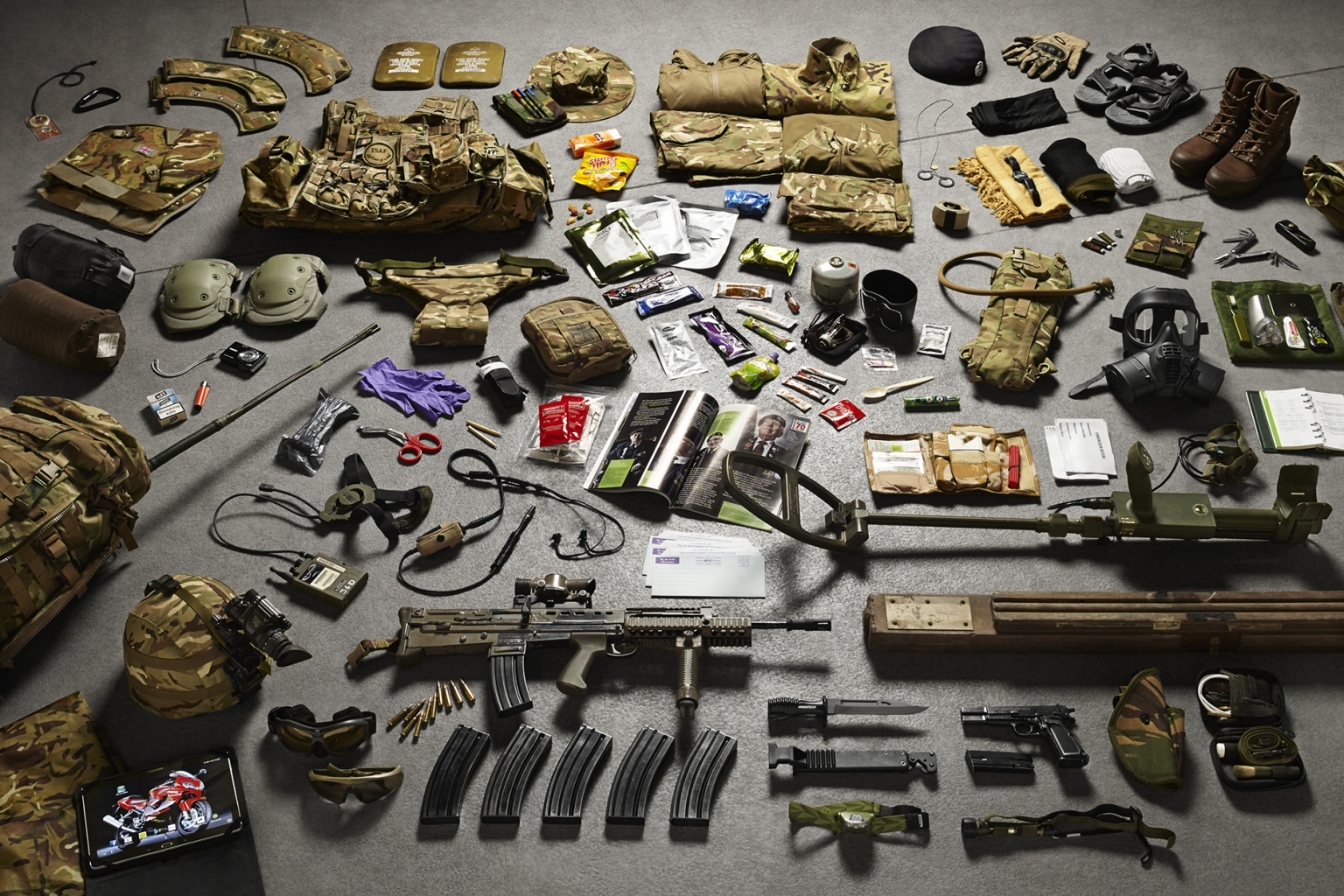
I talked about this in ‘The natures of war‘ (also under the DOWNLOADS tab) and – following in the footsteps of that essay – I sketched a brief history of the objects soldiers carried in to the killing fields: from the Somme in 1916 through Arnhem in 1944 to Helmand in Afghanistan in 2014 [shown below].  My source for these images was photographer Thom Atkinson‘s portfolio of Soldiers’ Inventories.

KIT Helmand 2014

But I was more interested now in the objects that carried the soldiers, so to speak, which is why I turned to Anatomy of a soldier.  

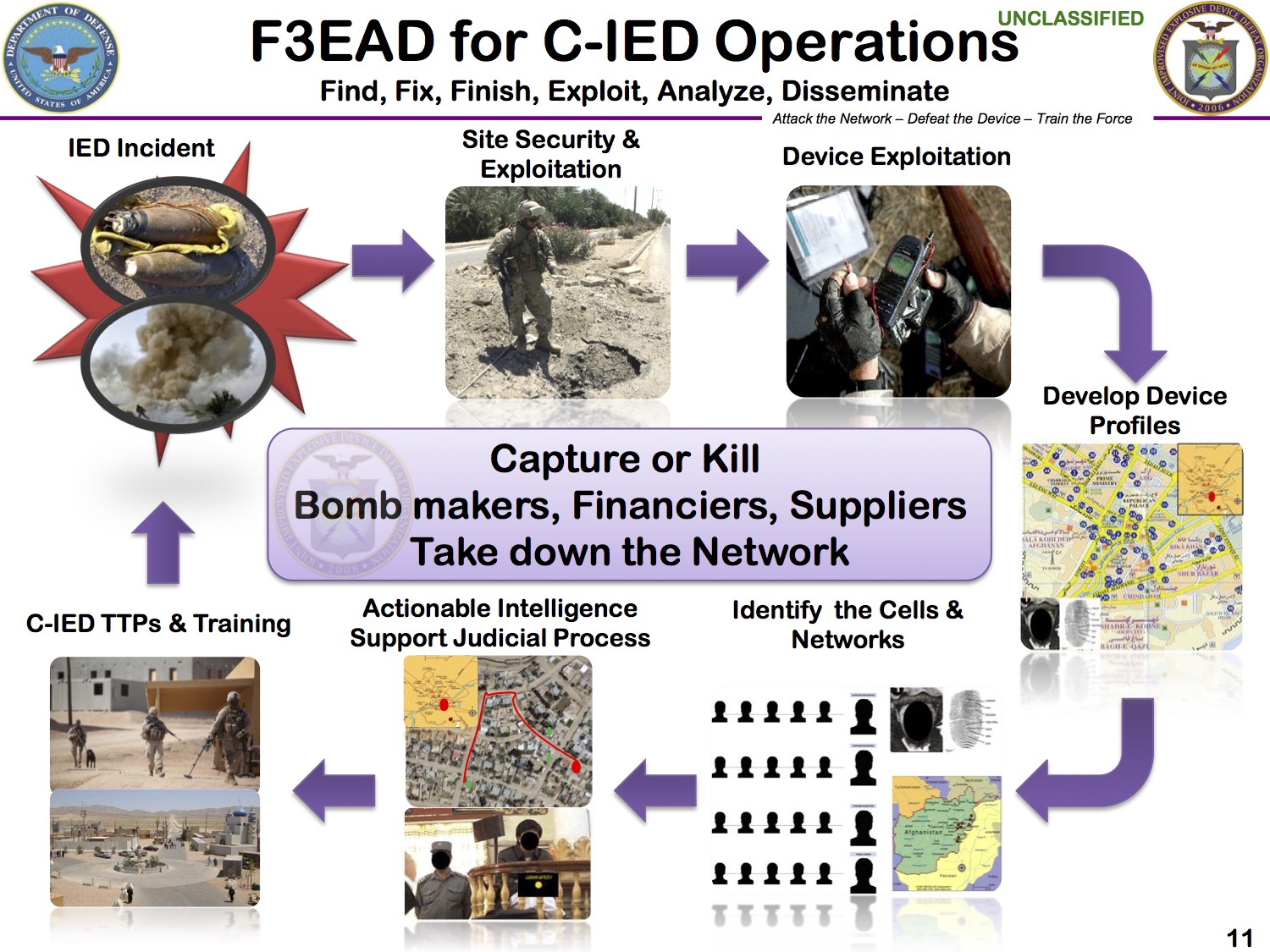
In order to throw the novel into even sharper relief, I outlined some of the other ways in which IED blasts in Afghanistan have been narrated.  These ranged from the US Army’s own schematics [the image below is taken from a presentation by Captain Frederick Gaghan here]  to Brian Castner’s truly brilliant non-fiction All the ways we kill and die, in which he describes his investigation into the death of his friend Matt Schwartz from an IED blast in Helmand in January 2012. (This book has taught me more about the war in Afghanistan than anything – I mean anything – I’ve ever read).
GAGHAN Attacking the IED Network jpegs

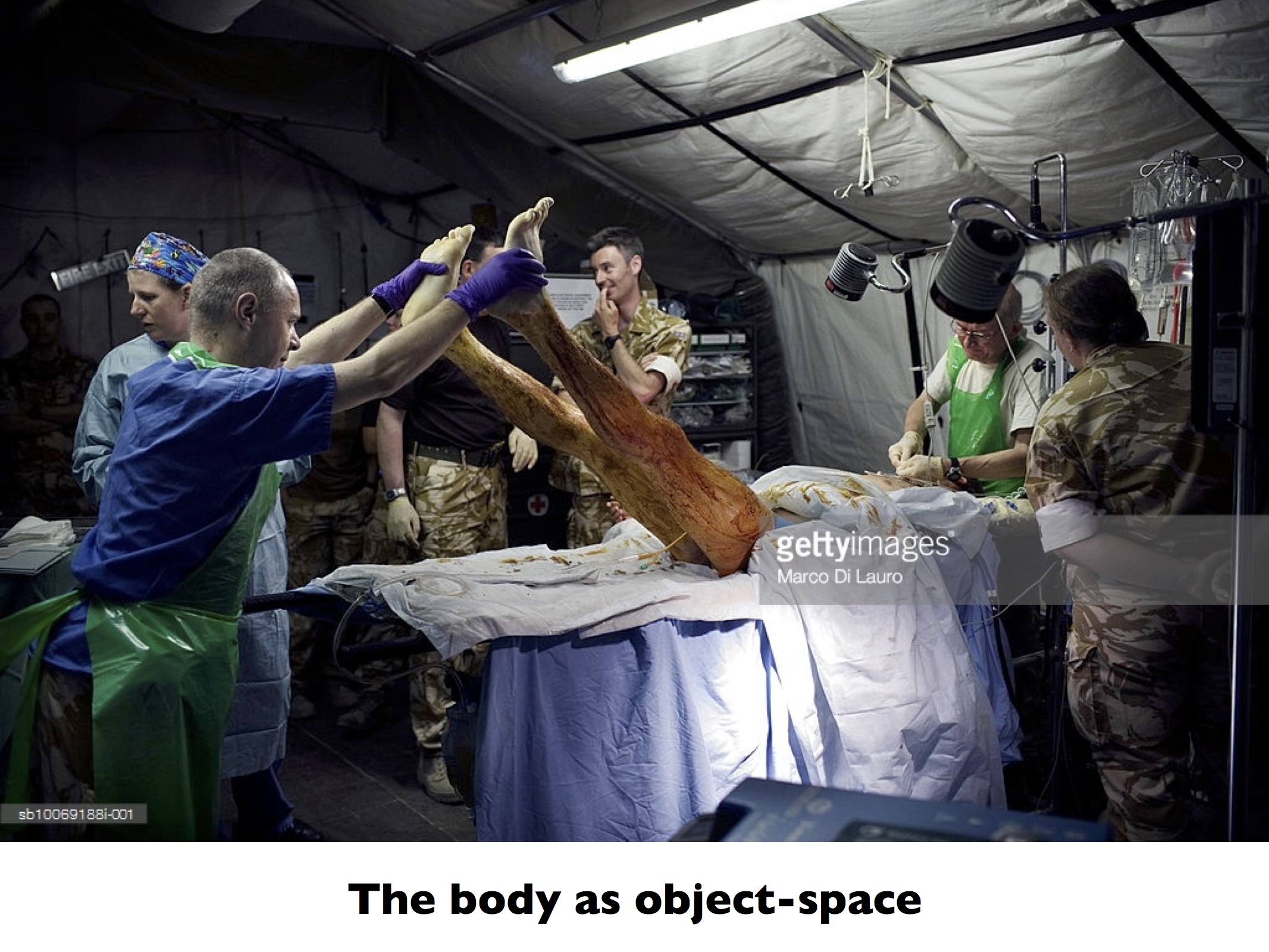
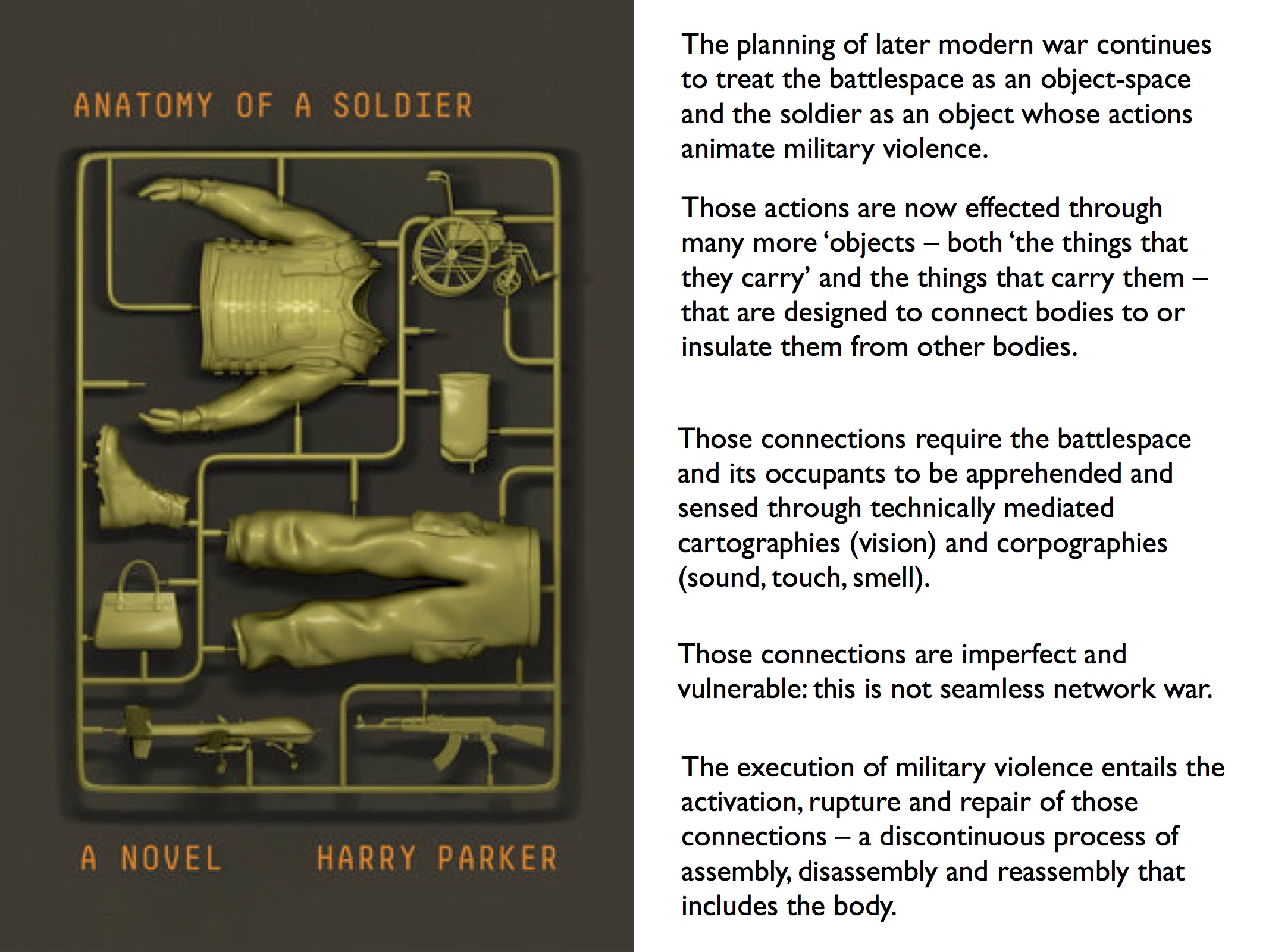
All of this prepared the ground for Parker’s novel which tells the story of a young British officer in Helmand, Tom Barnes, who loses his legs to an IED blast – told in 45 short chapters by the different objects involved.  Not all of the chapters are wholly successful, but many of them are utterly compelling and immensely affecting.  The overall effect is to emphasize at once the corporeality of war – ‘virtually every object-fragment that is proximate to Barnes is impregnated with his body: its feel – its very fleshiness – its sweat, its smell, its touch’ – and the object-ness of military violence.
GREGORY The body as object-space

I juxtaposed the novel to Parker’s own story – he too lost his legs to an IED in Afghanistan in July 2009.  Yet he constantly emphasises that he never wanted the novel to be about him.

Harry Parker reading from Anatomy of a Soldier, IWM, LOndon

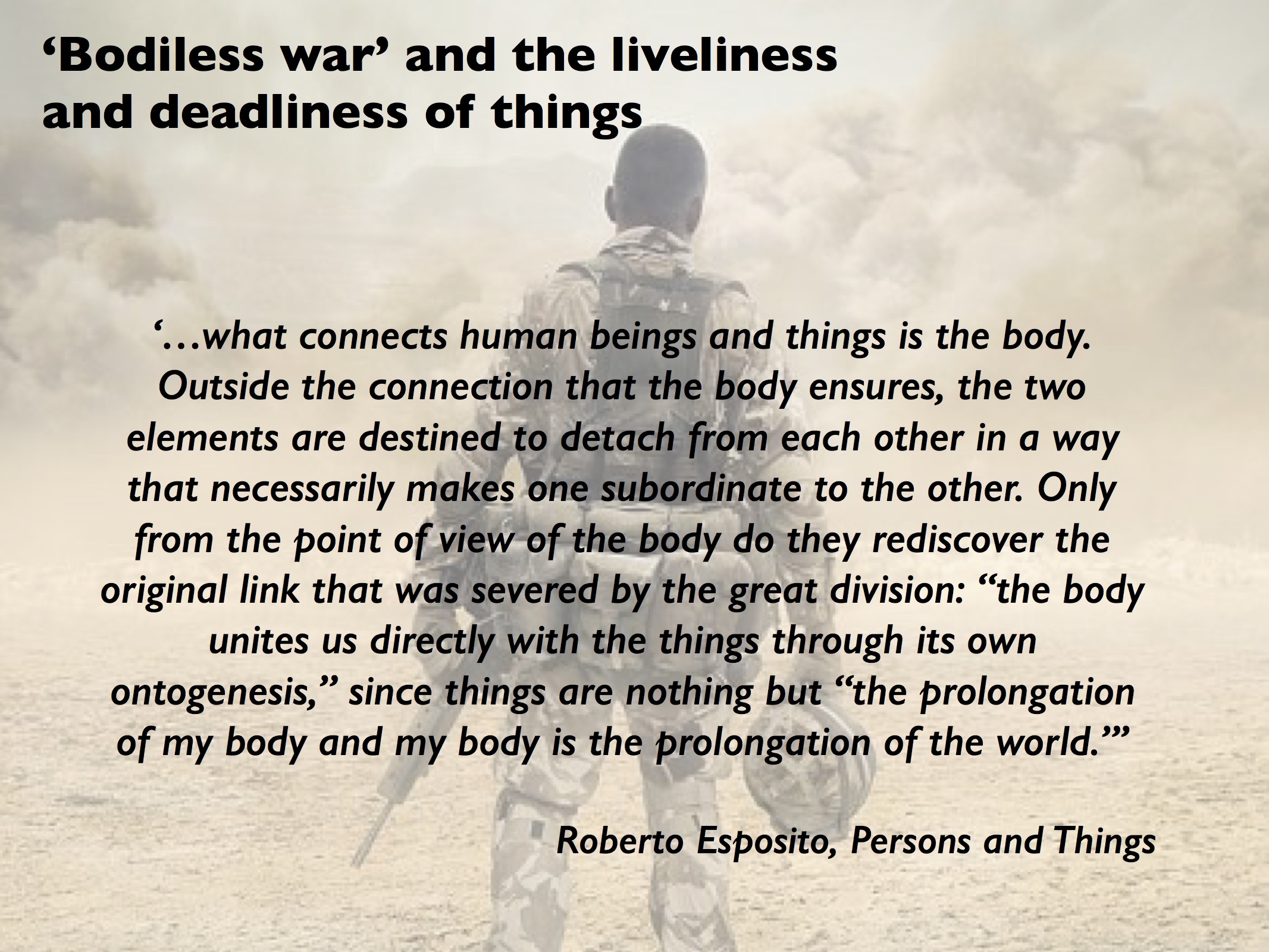
Still, the body is central to all this – Parker’s body and Barnes’s body – and so finally I drew on Roberto Esposito‘s Persons and Things to draw the wider lesson and, in particular, to nail the treacherous lie of ‘bodiless war’:

GREGORY The things that carry them

GREGORY Bodiless war

All the ways we kill and die

all-the-ways-we-kill-and-die-cover

I’ve noticed Brian Castners astonishing work before – see my post here – and I’m now deep into his latest book (published on my birthday).  I’ll write a detailed response when I’m finished, but it is so very good that I wanted to give readers advance notice of it.  It’s called All the ways we kill and die (Arcade, 2016):

The EOD—explosive ordnance disposal—community is tight-knit, and when one of their own is hurt, an alarm goes out. When Brian Castner, an Iraq War vet, learns that his friend and EOD brother Matt has been killed by an IED in Afghanistan, he goes to console Matt’s widow, but he also begins a personal investigation. Is the bomb maker who killed Matt the same man American forces have been hunting since Iraq, known as the Engineer?

In this nonfiction thriller Castner takes us inside the manhunt for this elusive figure, meeting maimed survivors, interviewing the forensics teams who gather post-blast evidence, the wonks who collect intelligence, the drone pilots and contractors tasked to kill. His investigation reveals how warfare has changed since Iraq, becoming individualized even as it has become hi-tech, with our drones, bomb disposal robots, and CSI-like techniques. As we use technology to identify, locate, and take out the planners and bomb makers, the chilling lesson is that the hunters are also being hunted, and the other side—from Al-Qaeda to ISIS— has been selecting its own high-value targets.

This is how Brian himself describes the book:

In January of 2012, a good friend of mine–Matt Schwartz from Traverse City, Michigan–was killed in Afghanistan. Matt was an Explosive Ordnance Disposal technician. We had the same job, but while I had done my two tours in Iraq and went home, Matt deployed again and again and again. He was shot on his second tour, and died on his sixth.

I realize now that I was bound to do an investigation into his death; my training demanded it. But instead of asking “what” killed him–we knew immediately it was a roadside bomb–I asked “who” killed him. It’s a question that would not have made any sense in past wars, not even at the start of this one. But we have individualized the war, we target specific people in specific insurgent organizations, and in the course of my research, I discovered the leaders on the other side do the same in reverse to us.

This is the story of an American family at war, and the men and women who fight this new technology-heavy and intelligence-based conflict. I interviewed intel analysts, biometrics engineers, drone pilots, special operations aircrew, amputees who lost their legs, and the contractors hired to finish the job. They are all hunting a man known as al-Muhandis, The Engineer, the brains behind the devices that have killed so many soldiers in Iraq and Afghanistan.

You can read an excerpt at VICE (‘The problem with biometrics at war‘) and another at Foreign Policy (‘You will know the Bomber by his designs).

Reading this in counterpoint to Harry Parker‘s  Anatomy of a soldier (see my post here) – both deal with the aftermath of an IED in Afghanistan – is proving to be a rich and truly illuminating experience.