Under American Skies

I’ll be in Berlin in December for a conversation with James Bridle about drone wars and related issues, and I’m already looking forward to it since I’m a great admirer of his work. I particularly admire the way in which he challenges so many of our assumptions about ‘looking’ through his presentations about militarised vision and violence, and I’ve noted before the filiations between his various projects and Josh Begley‘s.

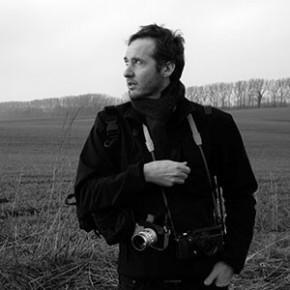
Tomas van HoutryveSo I was interested to read about photographer Tomas van Houtryves (right) project Blue Sky Days.  He begins with an arresting observation with which both James and Josh would be only too familiar:
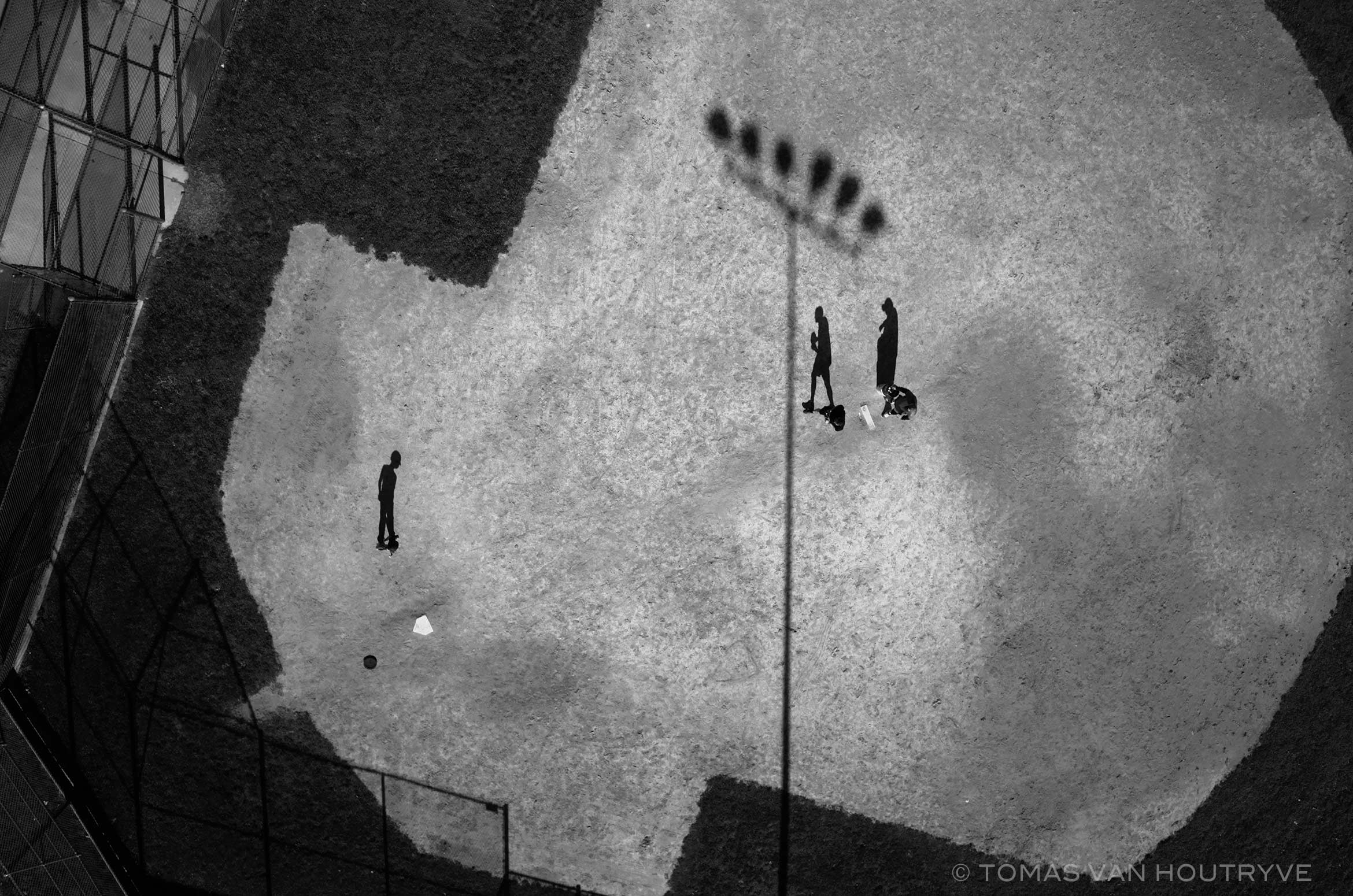
‘Although a huge amount of [full motion video] footage has been collected [by US drones], the program is classified, and few people have ever seen images of the drone war and its casualties. This seems like a paradox in our thoroughly media-connected age. How can America be involved in a decade-long war where the sky is buzzing with cameras, and yet the public remains totally in the dark?’

But his response to the question is distinctly different: he repatriates the drone wars from Pakistan to the United States (here the most appropriate comparison is with Omar Fast‘s 5,000 Feet is the Best).

Tomas van Houtryve 1

To do so, Tomas travelled across America with a small quadcopter drone bought from Amazon.com attached to his camera.  His concept was simple, Rena Silverman explains in the New York Times:

Take the idea of foreign drone strikes and instead target similar domestic situations, putting them under surveillance using his drone in public spaces. He made a list of hundreds of different strike reports, gleaning as many details about the circumstances…

He rented a black car with tinted windows and placed himself, his drones, his batteries and lists in the car. He spent six weeks in late 2013 averaging between seven and 10 drone flights daily, sleeping in a different town every night. He would pull the car into an empty lot, get out, launch the drone for about five to 10 minutes — about as long as its power lasted — take footage, land the drone, drive away and recharge the batteries while en route to the next location…

He followed his list carefully, trying to imitate “signature strikes,” referring to a May 2012 New York Times article in which some State Department officials complained about the lax criteria for identifying a terrorist “signature.” The joke was that “three guys doing jumping jacks” could be enough suspicious activity for the C.I.A. to conclude it could be a terrorist training camp. In other words, targeting people based on behavior rather than identity.

Tomas van Houtryve 2 copy

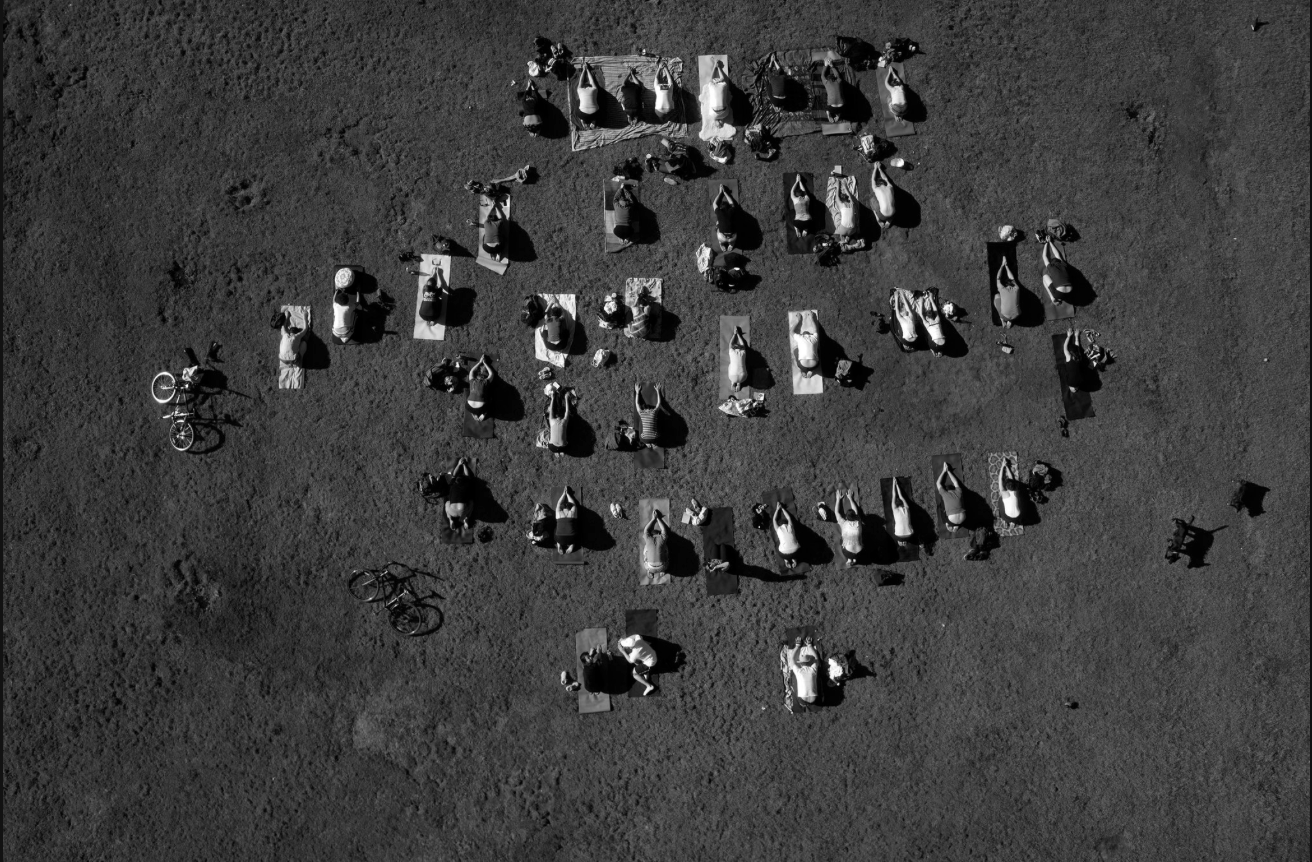
He photographed people exercising in Philadelphia, their shadows long and pinned against the grid of a park. He noticed more “signature” behavior while driving through San Francisco, where he encountered a group doing yoga [above]. When Mr. van Houtryve recently printed the image, he asked viewers if they thought the subjects were praying or exercising. It was a toss-up.

Although these images are not quite ‘what drone attacks in America would look like’, as Pete Brook suggested in WIRED – Tomas’s drone was flying much lower (‘only about six stories high’) and these images are pin-point sharp: there’s none of the ambiguity of infra-red heat signatures here – none the less that last sentence really says it all.  Images do not speak for themselves and interpretation counts for everything – which is why, as I’ve repeatedly argued, it matters so much what pilots, sensor operators and image analysts are pre-disposed to see.

It turns out that a particular incident provoked Tomas’s project – the murder of Mamana Bibi at Ghunda Kala in North Waziristan on 24 October 2012, which I described here –  and also gives it its title.

Zubair RehmanIn October 2012, a drone strike in northeast Pakistan killed a 67-year-old woman picking okra outside her house. At a briefing held in 2013 in Washington, DC, the woman’s 13-year-old grandson, Zubair Rehman, spoke to a group of five lawmakers. “I no longer love blue skies,” said Rehman, who was injured by shrapnel in the attack. “In fact, I now prefer gray skies. The drones do not fly when the skies are gray.”

There’s more from Tomas at Harper’s here, which originally co-sponsored the project with the Pulitzer Center, and you can see more of his drone’s eye view images at the National Geographic here.

There’s also a revealing interview conducted by Bard College’s Center for the Study of the Drone here; it contains all sorts of interesting observations, but one in particular resonated.  Asked about the tension between the beauty of his photographic compositions and the horror of what he is seeking to convey, Tomas says this:

‘The base subject that I’m trying to raise awareness about and get people to think about in less abstract terms is the foreign drone war. If you take the time to read through the particular airstrikes, a lot of them are quite horrifying. But on the other hand, as a photographer, I know that beauty is one of the tools that we use to get people to look at a picture. Beauty has a lot of power, so there’s a tension between trying to seduce people with the language of photography, which is beautiful composition, and trying to reveal something that might be uncomfortable or difficult to digest, once people fully grasp it.’

Another of my art icons, elin o’Hara slavick, says something very similar about her mesmerising sequence of aerial images of places bombed by the US, Bomb after bomb (see also Brian Howe‘s discussion here and my own in ‘Doors in to Nowhere’ [DOWNLOADS tab], from which I’ve taken this passage):

‘She adopts an aerial view—the position of the bombers—in order to stage and to subvert the power of aerial mastery. The drawings are made beautiful “to seduce the viewer,” she says, to draw them into the deadly embrace of the image only to have their pleasure disrupted when they take a closer look. “Like an Impressionist or Pointillist painting,” slavick explains, “I wish for the viewer to be captured by the colors and lost in the patterns and then to have their optical pleasure interrupted by the very real dots or bombs that make up the painting.”’

A tart reminder that there are multiple ways of ‘just looking‘.

The God trick and the administration of military violence

JOC staring at screen 24afghan-600

Here is the abstract for my keynote at the Lancaster symposium on Security by remote control next month; it’s a development from my presentation at the AAG in Tampa, and I’ll provide more details as I develop the argument.

The God trick and the administration of military violence

Advocates have made much of the extraordinary ability of the full motion video feeds from Predators and Reapers to provide persistent surveillance (‘the all-seeing eye’), so that they become vectors of the phantasmatic desire to produce a fully transparent battlespace.  Critics – myself included – have insisted that vision is more than a biological-instrumental capacity, however, and that it is transformed into a conditional and highly selective visuality through the activation of a distinctively political and cultural technology.  Seen thus, these feeds interpellate their distant viewers to create an intimacy with ground troops while ensuring that the actions of others within the field of view remain obdurately Other.

But the possibility of what Donna Haraway famously criticised as ‘the God-trick’ – the ability to see everything from nowhere in particular – is also compromised by the networks within which these remote platforms are deployed.  In this presentation I re-visit an air strike on three vehicles in Uruzgan province, Afghanistan, in February 2010, in which more than 20 civilians were killed in a helicopter attack prompted, in large measure, by video feeds from a Predator providing support to a Special Forces detachment in the vicinity.  Most commentaries – including mine – have treated this in terms of a predisposition on the part of the Predator crew to (mis)read every action by the victims as a potential threat.  But a close examination of the official investigations that followed, by the US Army and then the US Air Force, reveals a much more complicated situation.  The Predator was not the only ‘eye in the sky’, its feeds entered into a de-centralized, distributed and dispersed geography of vision in which different actors at different locations inside and outside Afghanistan saw radically different things, and the breaks and gaps in communication were as significant as the connections.  In short, much of later modern war may be ‘remote,’ but there’s considerably less ‘control’ than most people think.

I still haven’t found what I’m looking for

U2 (USAF photograph)

Rummaging around for more people working on militarized vision, I encountered a forum on Military optics and Bodies of difference held at Berkeley’s Center for Race and Gender earlier this year, and through that the research of Katherine Chandler, who holds a Townsend Center for the Humanities Dissertation Fellowship in the Department of Rhetoric.  Her dissertation in progress is entitled Drone Flight and Failure: the United States’ Secret Trials, Experiments and Operations in Unmanning, 1936 – 1973, which promises to fill in a crucial gap in conventional genealogies of today’s remote operations.

As you’ll see if you visit her website here, Katherine is an accomplished artist as well as researcher and critic.  You can read her essay on ‘System Failures’, which includes a discussion of Trevor Paglen‘s Drone Vision and Omer Fast‘s 5,000 Feet is the Best, at The New Inquiry (August 2012) here, and find a fuller discussion of Fast’s video situated within what Katherine calls the ‘knowledge politics’ and political ecologies of remote operations on pp. 63-74 of Knowledge politics and intercultural dynamics here.

Here is the abstract for her talk at the forum, Unmanning Politics: Aerial Surveillance 1960-1973:

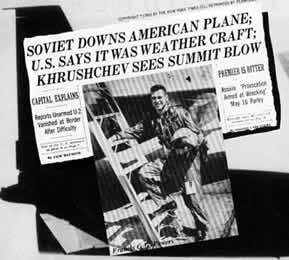
u2_spy_plane_incident_newspaper_clippingOn May 1, 1960, Francis Gary Powers’ U-2 plane was shot down over the Soviet Union while on a secret reconnaissance mission. The ensuing diplomatic fallout caused the cancellation of the Paris Summit between Dwight Eisenhower and Nikita Khrushchev. Less well known, in April 1960, Robert Schwanhausser, an engineer for Ryan Aeronautical, briefed the United States Air Force on the possibility that its Firebee target drone, used at the time for air defense training, might be re-engineered as an unmanned reconnaissance plane. In the weeks following the Powers incident, the Air Force began wholesale negotiations with Ryan Aeronautical to develop a pilotless spy plane and, on July 8, 1960, the company was given funding to begin the project. Among the noted advantages were: “political risk is minimized due to the absence of a possible prisoner” (“Alternative Reconnaissance System,” 1960). I investigate the resulting Lightning Bugs, flown for three-thousand reconnaissance missions in Southeast Asia between 1964 and 1973. 

Researching how aircraft were unmanned during the Cold War is instructive both in the ways they mimic contemporary unmanned combat aerial vehicles and trouble assumptions about them. I follow how unmanned systems operated within the logics of American Cold War politics and their perceived usefulness geopolitically – crossing borders as spy aircraft, collecting and jamming electronic signals, and gathering battlefield reconnaissance. I ask how conquest, and the ensuing assumptions of empire, colonialism and race, underlie the unmanning of military aircraft, even while these aspects were purposefully, although, unsuccessfully occluded through the idea that technologies could mitigate political risks. Moreover, unmanned reconnaissance projects were cancelled at the end of the Vietnam War and their failure provides clues about what might be left out of visions of aerial control and the ways politics, and human vulnerabilities, persisted in spite of efforts to engineer systems that would suggest otherwise.

The legitimacy of contemporary drone strikes relies on the ability of unmanned aircraft to “see” enemy targets. Yet, as Isabel Stengers has argued, any representation gives value. Looking at the few available images from these early unmanned reconnaissance flights, I move between what is seen and unseen to examine how values, particularly, secrecy and control, are formed through unmanned reconnaissance. Claiming to produce a mechanical, rather than political, view of the territories surveyed, I show how the supposedly apolitical lens of the drone occludes how politics, industry and military come together to privilege certain positions and target others.

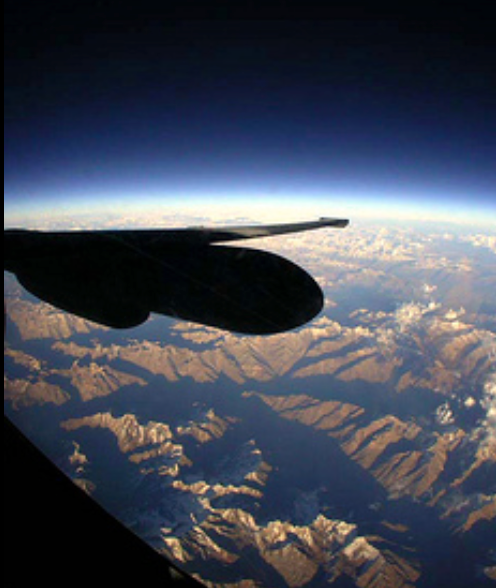
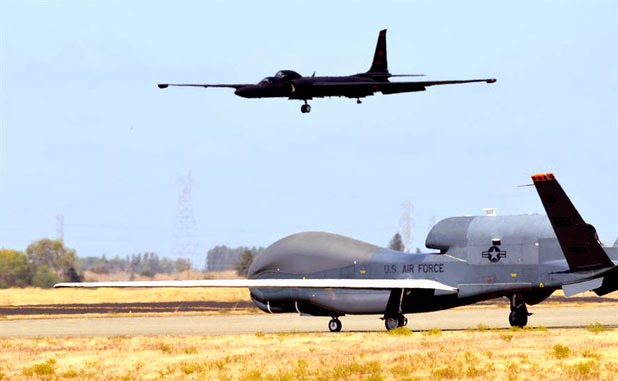
Interesting stuff – especially that first paragraph linking ‘un-manning’ to the U-2.  There is a strange irony here, because until this year the US Air Force had in fact favoured its fleet of 33 U-2 (‘Dragon Lady’) aircraft [one of which is shown at the top of the photograph] over the high-altitude Global Hawk [shown at the bottom], so much so that it had asked for permission to cancel its orders for the new Block 30 Global Hawks and place others in storage.

GlobalHawk_USAFAirmanFirstClassBobbyCummings

You may be surprised to discover that the U-2 is still flying, but the airframe has been repeatedly modified and so too has the network in which it is embedded.  One pilot explained:

“The U-2 started out only carrying a wet-film camera. Now, with today’s technology, I’m alone up there, but I may be carrying 40 to 50 Airmen via data link who are back at a (deployable ground station).”

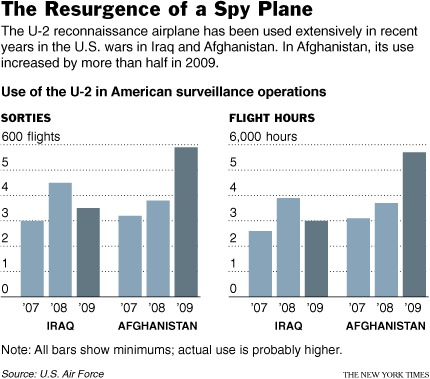
U-2 flying hours in Afghanistan and Iraq (New York Times)It’s important to remember that Predators and Reapers are not the only platforms streaming imagery to the Air Force’s Distributed Common Ground System.  The U-2 was given a new lease of life by the Gulf War in 1991, when nine U-2s flying out of the UAE  provided 50 per cent of all imagery and over 90 per cent of all ground forces targeting imagery.  During the invasion of Iraq in 2003 U-2s flew only 19 percent of the air reconnaissance missions, but they provided more than 60 per cent of the signals intelligence and 88 per cent of battlefield imagery.  The continuing wars in Afghanistan and Iraq confirmed that the U-2’s original, strategic significance had been eclipsed by its new tactical role.  Chris Pocock explains:

“The U-2 today is more a tactical intelligence gatherer…  It supports ground operations on a daily basis, flying over Afghanistan, flying around Korea, flying in the eastern Mediterranean, doing all those things every day and it’s actually not only providing intelligence that is analyzed for the benefit of those ground troops, but it’s actually in contact with those ground troops in real time.”

And that close contact – akin to the intimacy remote operators in the continental United States claim when they say they are not 7,000 miles but 18 inches from the battlespace, the distance from eye to screen – takes its toll on the U-2 pilots too.  In addition to the extraordinary pressures flying the U-2 imposes on their bodies, one USAF physician insisted that ’emotionally… they’re wrung out from that… When you’re talking to somebody on the radio and there’s gunfire in the background… you’re not taking a nap while that’s happening.’

Writing in the New York Times, Christopher Drew provided a revealing example:

Major Shontz said he was on the radio late last year with an officer as a rocket-propelled grenade exploded. “You could hear his voice talking faster and faster, and he’s telling me that he needs air support,” Major Shontz recalled. He said that a minute after he relayed the message, an A-10 gunship was sent to help.

In fact, that last clause can be generalised; the U-2 has often been deployed in close concert with other platforms, including Predators and Reapers.  Drew again:

The U-2’s altitude [70,000 feet or more], once a defense against antiaircraft missiles, enables it to scoop up signals from insurgent phone conversations that mountains would otherwise block.  As a result, Colonel Brown said, the U-2 is often able to collect information that suggests where to send the Predator and Reaper drones, which take video and also fire missiles. He said the most reliable intelligence comes when the U-2s and the drones are all concentrated over the same area, as is increasingly the case.

Part of the reason for that is that the U-2 has such an advanced imagery system:

Even from 13 miles up its sensors can detect small disturbances in the dirt, providing a new way to find makeshift mines [IEDs] that kill many soldiers.  In the weeks leading up to the [2010] offensive in Marja, military officials said, several of the … U-2s found nearly 150 possible mines in roads and helicopter landing areas, enabling the Marines to blow them up before approaching the town.

Marine officers say they relied on photographs from the U-2’s old film cameras, which take panoramic images at such a high resolution they can see insurgent footpaths, while the U-2’s newer digital cameras beamed back frequent updates on 25 spots where the Marines thought they could be vulnerable.

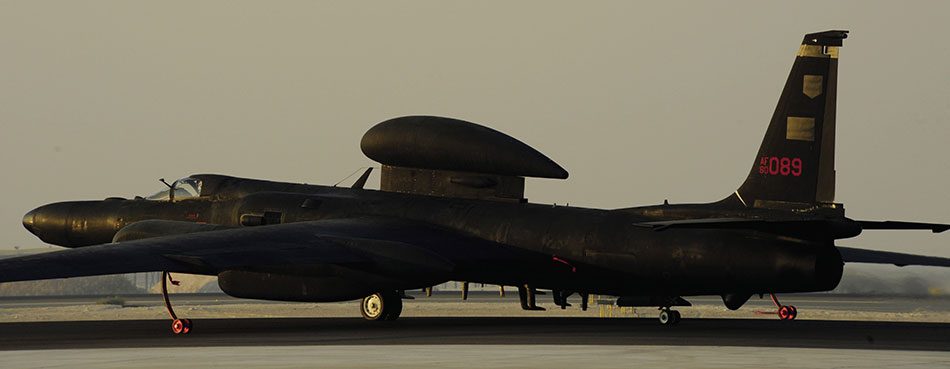
U-2 preparing for takeoff 'in SW Asia' (USAF/Eric Harris)

For all that,  in the last two years the Air Force’s plan to cut the Global Hawk program was repeatedly over-ridden by Congress, in response to an extraordinary campaign waged by Northrop Grumman, which launched what Mark Thompson called ‘its own ISR – intelligence, surveillance and reconnaissance – mission over Capitol Hill to decide where to strategically target cash-bombs to keep its plane, and more of them, flying for another day’: you can find a  full report at the Center for Public Integrity here.

The Air Force has now accepted the retirement of Lockheed Martin’s ageing Cold warrior, because (so it says) the cost per flying hour of the Hawk has now fallen below that of the U-2 ($24,000 vs. $32,000).  ‘U2 shot down by budget cuts’, is how PBS put it, while the Robotics Business Review triumphantly announced ‘Here comes automated warfare’.

Even so, cost per flying hour is not the whole story, as Amy Butler explains.  Part of the problem is logistical and, by extension, geopolitical: ‘Global Hawks based in Guam have to transit for hours just to reach North Korea, whereas the U-2, based at Osan air base, South Korea, has a shorter commute’ (details of the Hawk’s global basing can be found here).

A second issue is reliability, which bedevils all major UAVs and makes cost per flying hour a dubious index:

‘Intelligence, surveillance and reconnaissance collection is in high demand, and aircraft downtime is extremely worrisome for combatant commanders. In the Pacific, 55% of Global Hawk’s missions were canceled in fiscal 2013; 96% of the U-2’s missions were achieved. The U-2 was also scheduled for nearly three times as many missions. Global Hawk lacks anti-icing equipment and is not able to operate in severe weather.’

Finally, critics continue to complain that the sensors on the U-2 remain superior to those on the Hawk and provide a wider field of view.  According to a report from Eric Beidel,

The Global Hawk carries Raytheon’s Enhanced Integrated Sensor Suite, which includes cloud-penetrating radar, a high-resolution electro-optical digital camera and an infrared sensor. But the U-2’s radar can see farther partly because the plane can fly at altitudes over 70,000 feet, about 10,000 feet higher than a Global Hawk. A longer focal length also gives the U-2’s camera an edge, experts said…

Air Force Chief of Staff Gen. Norton Schwartz has said that the drone’s sensors just weren’t cutting it. Further, the U-2 can carry a larger payload, up to 5,000 pounds compared to 3,000 pounds for the Global Hawk.

“Some of the most useful sensors are simply too big for Global Hawk,” said Dave Rockwell, senior electronics analyst at Teal Group Corp. He referred to an optical bar camera on the U-2 that uses wet film similar to an old-fashioned Kodak. “It’s too big to fit on Global Hawk even as a single sensor.”

All of these technical considerations are also political ones, as Katherine’s abstract indicates, and none of them answers the other questions she poses about what can and cannot be seen…

In media res

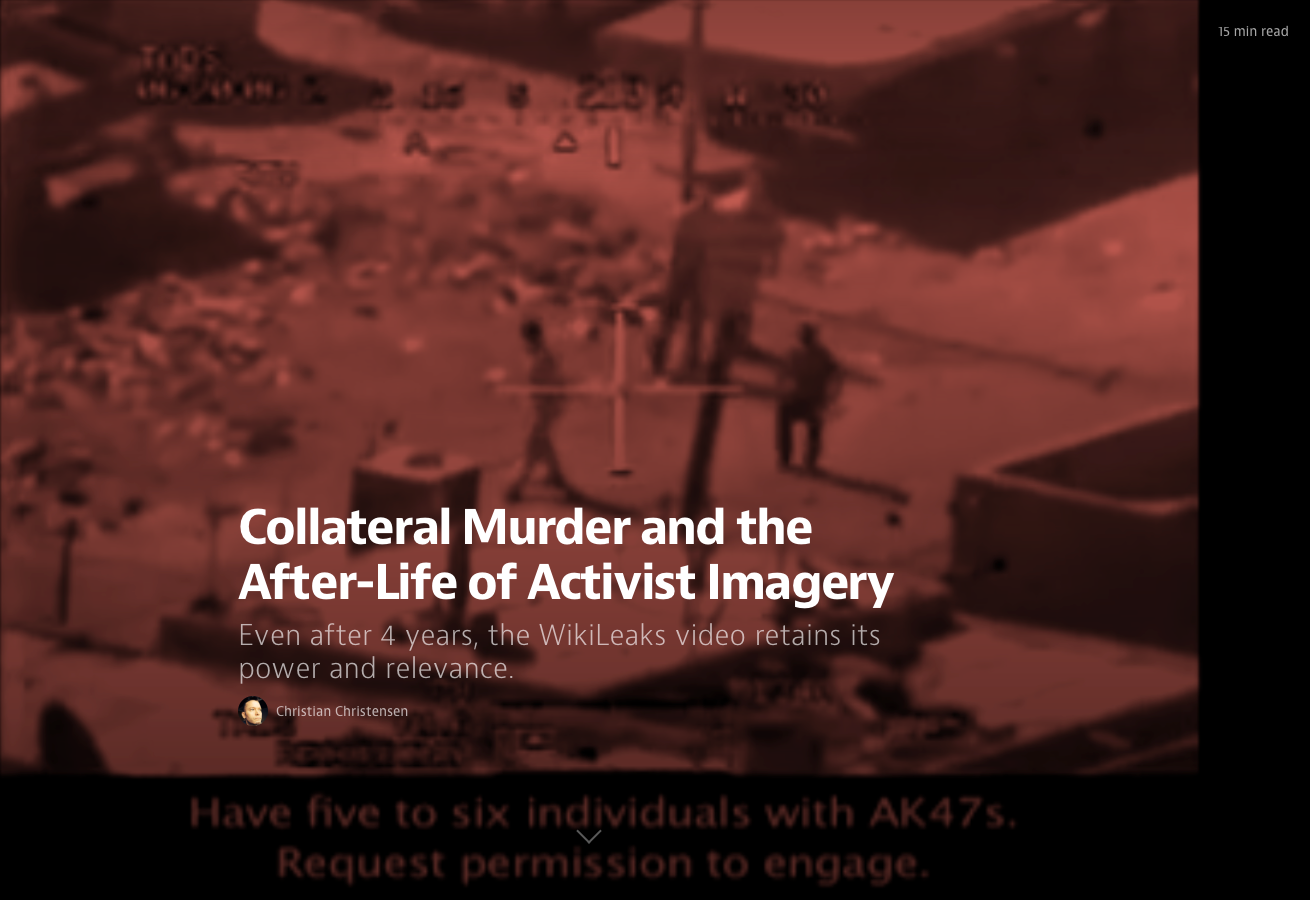
Two short essays that address the public circulation of supposedly secret information.  The first, “Collateral Murder and the After-Life of Activist Imagery”, is by Christian Christensen, and concerns the video clip released by Wikileaks as Collateral Murder in April 2010.  I’ve discussed this edited video of a US Apache helicopter attack in New Baghdad in 2007 before, together with the two documentary films that it provoked, and it forms part of my ‘Militarized Vision’ project (you can find links to the clip and to subsequent commentary in that original post).

CHRISTENSEN Collateral Murder

Christian doesn’t explore the content of the video so much as its inscription and re-inscription within public debates, part of the mediatization of later modern war.  He does make a sharp point about the status of the imagery:

One could argue that the repeated use of this imagery (and corresponding audio) has created an entirely new genre of military reporting. It is a genre with specific, often disturbing conventions: the grainy images of those on the ground, the flat, bland coloring, the “narration” of the aircraft operators which swings between the clinical and the cynical, the silence of those under surveillance or attack, the sound of the weaponry as it is discharged, and, importantly, the “overtness” of the technology, by which I mean the way in which the screen is filled with evidence of the technology being used in the form of the cross-hairs in the middle and data visible at the top and the bottom of the screen…

The Collateral Murder video not only shatters the mythology of humane warfare and benevolent US power, but also causes us to question the notion of neutral technology at the service of human development: a theme which has regained a central space in public debate in recent years.

But he also thinks there is another, no less sharp point to be made about the very act of reporting:

Within this context, the killing of two Reuters employees by the US military was particularly poignant. At the most basic level, this was the symbolic killing of Journalism (with a capital “J”) by a military unaccustomed to critical coverage or investigation at home. The killings, of course, then went unreported until Manning leaked the material and WikiLeaks published it: itself an act of journalism. With Collateral Murder, there is a layering and re-layering of meaning, and, for me, journalism lies at the heart of the clip. These are humans first, of course, and most of those killed or wounded in the attack were not journalists. But, in addition to the tragedy of human death, there is also the tragedy of what is symbolically destroyed: Transparency. Democracy. Knowledge. Critical thinking. And it took an act of journalism to bring these tragedies to light, an act of which has now itself been subjected to the full force of the state via the imprisonment of Manning, and the threat of criminal charges being brought against Assange in the US.

Incidentally, the essay is the text of Christian’s presentation to the ‘Image Operationsconference held at the Institute of Cultural Inquiry (ICI) in Berlin earlier this month; the program is here.

Image Operations

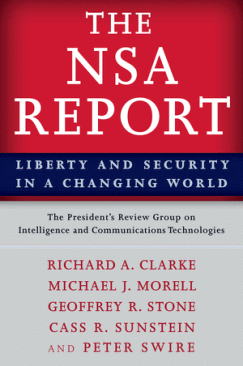
The second essay is Adam Morris‘s wide-ranging review of ‘The geopolitics of the Snowden Files‘ at the Los Angeles Review of Books.  Its immediate provocation is the publication of the Obama administration’s self-serving ‘NSA Report’:

The-NSA-Report-243x366The NSA Report — commissioned by the White House in August, published on its website in December, and now available in print via Princeton University Press— was authored by the President’s Review Group on Intelligence and Communications Technologies. As suggested by its official title, “Liberty and Security in a Changing World,” the Report was intended to advise President Obama on how to reform the data collection practices of the Intelligence Community (IC), in particular the NSA. Its authors include such veterans of the US security sector as Richard A. Clarke, Michael J. Morrell, and Peter Swire. This insiders’ perspective, in theory, is balanced by the addition to the group of constitutional lawyers Geoffrey R. Stone and Cass Sunstein. The unofficial purpose of the Report, however, was the Obama administration’s attempt to put a lid on the NSA scandal by pretending to be interested in reform. As Luke Harding points out in The Snowden Files, the Review Group was working out of the offices of the Director of National Intelligence, currently occupied by the felonious General James Clapper, w _ho knowingly lied in Congressional testimony about the bulk collection of Americans’ communication data.

The essay provides a fine, critical reading of the Report –

‘The anodyne language of these and other recommendations signals the imperial agenda out of which they are born: The NSA Report is obsessed with framing the debate over surveillance around the neopositivist vocabulary of “risk management,” but we know from history that political liberty will always suffer when a dominant regime deems a nation, its leadership or its population a “national security threat”…’

– but it also spirals off into a vigorous mapping of the context in which the NSA set about its covert operations and Edward Snowden‘s principled decision to go public (Adam also provides a commentary on Luke Harding‘s The Snowden Files: for another review, see Daniel Soar at the London Review of Books here).  And here too, of course, investigative journalism is a vital, enabling and even empowering practice.

Security archipelagos

Three short contributions that have caught my eye raise a series of interesting questions about contemporary ‘security archipelagos’ (in multiple sense of the term, hence the plural).

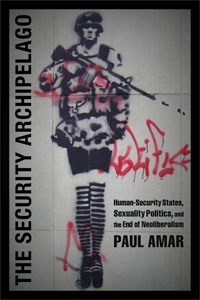
amar-security-archipelagoThe term itself comes from Paul Amar, and Austin Zeiderman has a short but interesting review of his The Security Archipelago: Human-Security States, Sexuality Politics, and the End of Neoliberalism (Duke, 2013) over at Public Books (Public Culture‘s public site):

‘Amar asserts that we need an analytical framework focused on the rise of human security—a governance regime that “aim[s] to protect, rescue, and secure certain idealized forms of humanity.” This new regime is gradually replacing neoliberalism, Amar contends, “as the hegemonic project of global governance and of state administration.” This shift is evident in how security is now justified and pursued by states. The antagonistic relationship between security and human rights that characterized the “neoliberal market states” of the late 20th century is no longer so evident. The repressive security strategies that underpinned earlier development paradigms have been succeeded by the “promise to reconcile human rights and national security interests” in the interest of economic prosperity. Progressive and conservative security doctrines now agree on the imperative to “humanize” (or “humanitarianize”) both state and parastatal security apparatuses. The result, Amar argues, is what he calls the “human-security state”: a globally emergent governance regime with “consistent character and political profile.” From Latin America to the Middle East, political legitimacy is increasingly based on securing humanity against a range of malicious forces….

If the megacities of the Global South are indeed “laboratories” in which new logics and techniques of global governance are being created, it is up to other researchers to fill out and develop further Amar’s concept of the “security archipelago.” Though his study provides both the theoretical rationale and the analytical tools with which to do so, it may be worth questioning whether the “human” is necessarily central to emerging security regimes. For along with human security apparatuses and the human actors struggling to articulate progressive alternatives, a host of non-humans—drones, border fences, hurricanes—are actively producing the security landscape of the future.’

Secondly, I’ve been thinking about the ways in which the work of these ‘laboratories’ often relies on non-state, which is to say corporate, commercial sites (this isn’t news to Paul, of course, even if he wants to challenge our ideas about neoliberalism).  We surely know that the traditional concept of the military-industrial complex now needs wholesale revision, and I’ve noted before the timely and important essay by Jeremy Crampton, Sue Roberts and Ate Poorthuis on ‘The new political economy of geospatial intelligence‘ in the Annals of the Association of American Geographers 104 (1)  (2014) (to which I plan to return in a later post).  The latest MIT Technology Review has a short but suggestive essay by Antonio Regalado, ‘Spinoffs from Spyland’, which describes some of the pathways through which the National Security Agency commercializes (and thus potentially subcontracts and, in some cases, even subverts) its surveillance technology:

In 2011, the NSA released 200,000 lines of code to the Apache Foundation. When Atlas Venture’s Lynch read about that, he jumped—here was a technology already developed, proven to work on tens of terabytes of data, and with security features sorely needed by heavily regulated health-care and banking customers. When Fuchs’s NSA team got cold feet about leaving, says Lynch, “I said ‘Either you do it, or I’ll find five kids from MIT to do it and they’ll steal your thunder.’”

Eventually, Fuchs and several others left the NSA, and now their company [Sqrrl] is part of a land grab in big data, where several companies, like Splunk, Palantir, and Cloudera, have quickly become worth a billion dollars or more.

Over the summer, when debate broke out over NSA surveillance of Americans and others, Sqrrl tried to keep a low profile. But since then, it has found that its connection to the $10-billion-a-year spy agency is a boost, says Ely Kahn, Sqrrl’s head of business development and a cofounder. “Large companies want enterprise-scale technology. They want the same technology the NSA has,” he says.

SQRRL

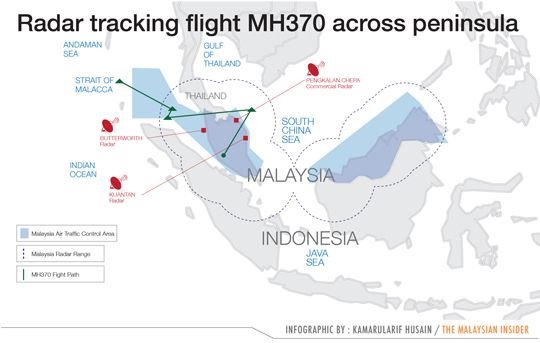
And finally, before we rush to radicalise and globalise Foucault’s critique of the Panopticon, it’s worth reading my friend Gaston Gordillo‘s cautionary note – prompted by the search for missing Malaysian Airlines Flight 370 – on ‘The Opaque Planet’:

The fascination with, and fetishization of, technologies of global location and surveillance often makes us forget that, for all their sophistication, we live on a planet riddled with opaque zones that will always erode the power of human-made systems of orientation, for the simple fact that no such system (contrary to what the NSA seems to believe) will ever manage to create an all-seeing God. This opacity is intrinsic to the textured, three-dimensional materiality of the surface of the planet, and is especially marked in the liquid vastness of the ocean.

MH370-military_radar-tracking-peninsula-170314-eng-graphcs-tmi-kamarul

Phil Steinberg has already commented on the geopolitics of the search, but Gaston draws out attention to the gaps in the surveillance capabilities of states, and here too the geopolitical meshes (and sometimes jibes against) the geoeconomic, as described in this report from Reuters:

Analysts say the gaps in Southeast Asia’s air defenses are likely to be mirrored in other parts of the developing world, and may be much greater in areas with considerably lower geopolitical tensions.

“Several nations will be embarrassed by how easy it is to trespass their airspace,” said Air Vice Marshal Michael Harwood, a retired British Royal Air Force pilot and ex-defense attache to Washington DC. “Too many movies and Predator (unmanned military drone) feeds from Afghanistan have suckered people into thinking we know everything and see everything. You get what you pay for. And the world, by and large, does not pay.”

Terror and terrain

Over at Space and Politics my friend and colleague Gaston Gordillo has a long post, ‘Opaque zones of empire’, in which he seeks to examine ‘the panoptic regime of hyper-visibility by focusing not on the prying cameras of drones and satellites but on the rugged topographies they permanently scrutinize; not on what the panoptic regime sees but on what it cannot see, or what it cannot see clearly.’

This is the paper he gave as part of the Space and Violence sessions at the Association of American Geographers conference in L.A. earlier this year, and it’s the draft of a longer article in progress.  It’s also a remarkably ambitious exercise, in which Gaston artfully tracks between Stuart Elden, Eyal Weizman, Henri Lefebvre, Alain Badiou, Allan Feldman and a host of others.

But it’s the conclusion that has given me most pause for thought.  Here Gaston conjures the opacity inherent in the three-dimensionality of terrain (the central concept in the essay) apprehended by military vision and violence:

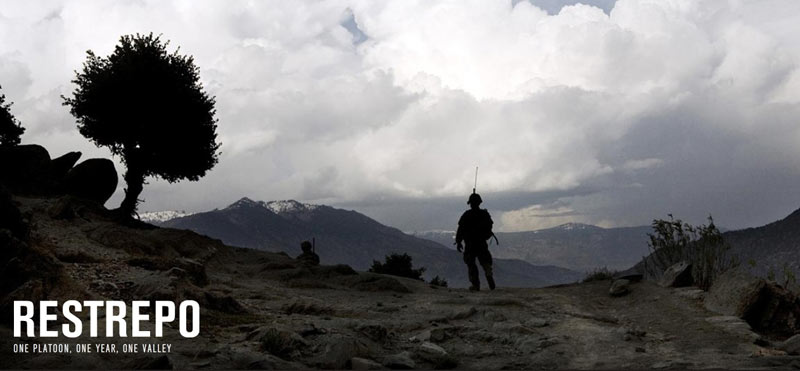
‘Badiou argues that the figure of the pure multiplicity of being, precisely because its multiplicity cannot be represented, is the void. The void is, indeed, the figure of the terrain. This void should be read not as an abstraction but in its spatial and bodily immanence: through the vertigo that the vast, opaque, three-dimensional, and not fully visible geographies of the planet create in the human body. This is the void graphically represented, for instance, on Tim Hetherington’s documentary Restrepo, where US soldiers stationed in an outpost in the Korengal Valley in eastern Afghanistan felt haunted by the terrain they were immersed in. In the film, those soldiers make it clear that those opaque mountains, forests, and valleys were for them a hostile immensity that turned insurgents into a ghostly presence. Those mountains constitute a tangible void within Empire: one of the countless outsides of a world without outside.

Restrepo

I’m particularly taken by this image (which I think is much clearer in the film than in Sebastian Junger‘s War) because it’s helped me think about how my work on ‘the natures of war’ intersects with my work on later modern war in the mountains of Afghanistan and Pakistan.

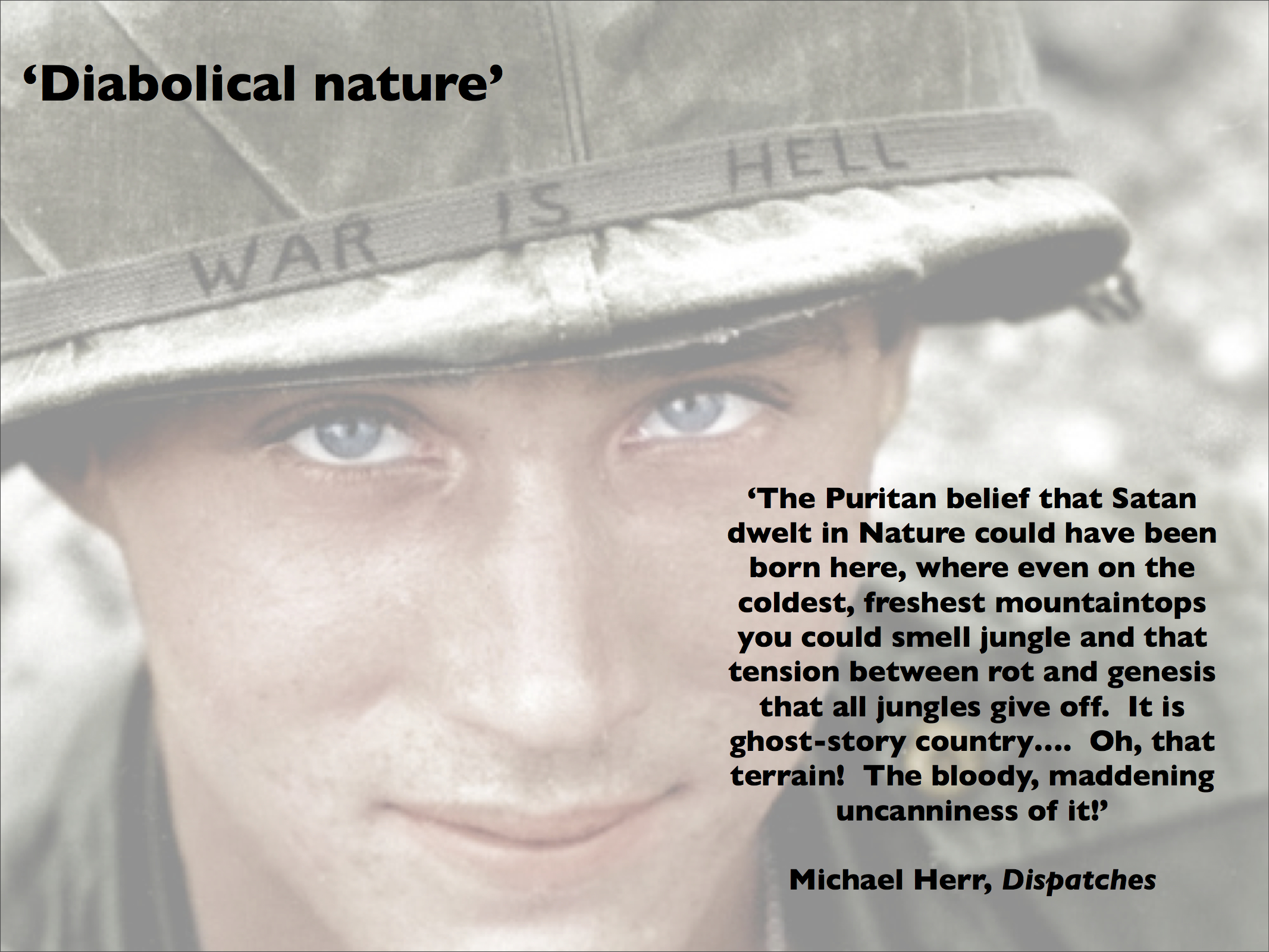
I only have room for one example.  To US infantry in the rainforest and highlands of Vietnam, terrain was not only (or even primarily) apprehended visually: in contrast to staff officers poring over maps and air photographs and to the crews of combat helicopters and strike aircraft flying over the jungle, terrain was made known – a knowledge that was always precarious, that could always become undone – through the body itself and all its senses, including hearing, touch and smell. Terrain is more than a visual construct, especially in its three-dimensionality, and there is nothing ‘dead, passive, fixed’ about it. Michael Herr captured something of what I have in mind in a passage that loops back to Gaston’s coda:

Diabolical nature

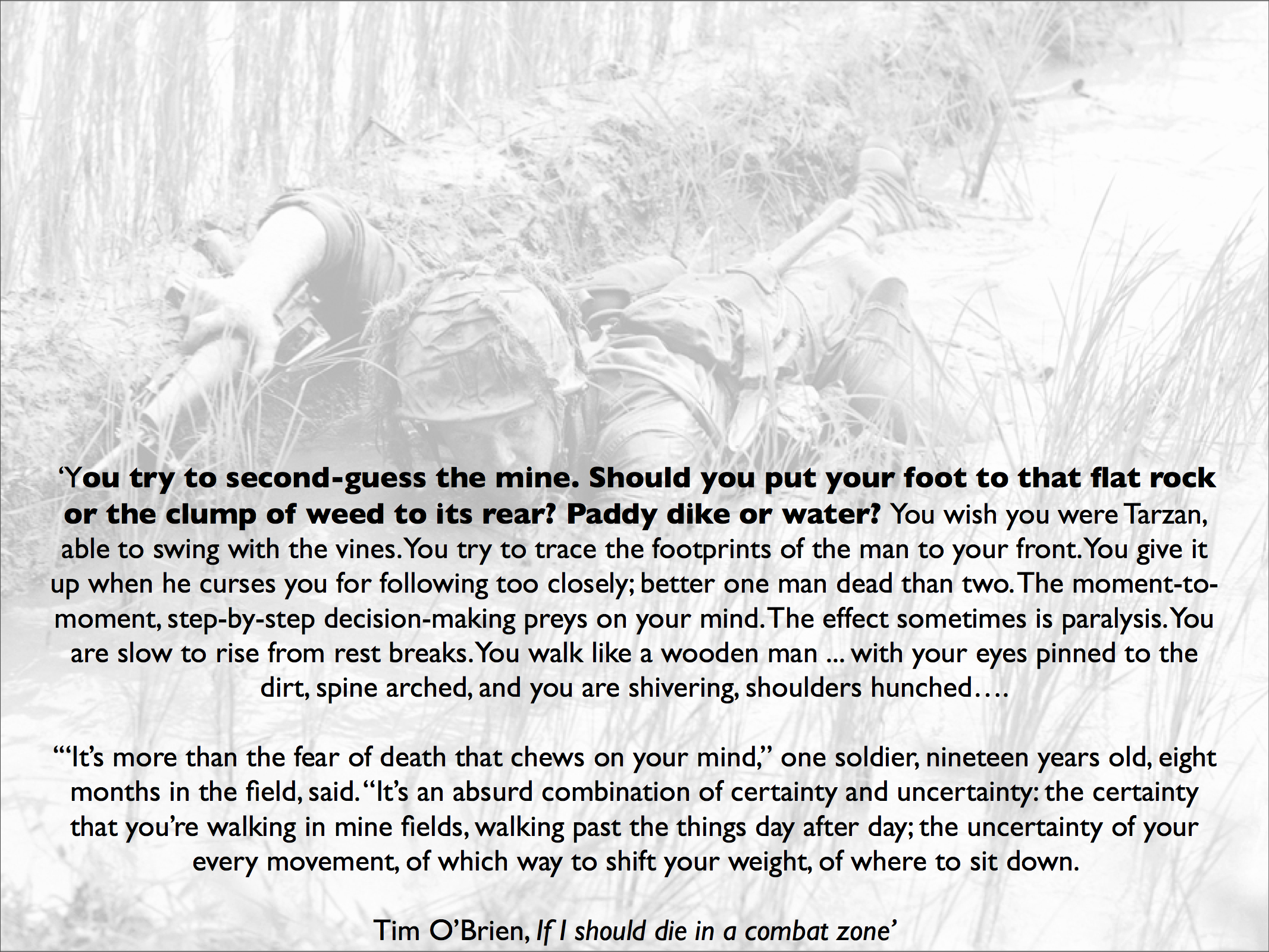
This unheimlich nature, ‘diabolical nature’ in what Gaston calls its ‘hostile immensity’, had a Janus-face.  On the one side it was a cyborg nature, no longer wholly ‘natural’ (even as the rainforest was rendered excessive or fallen through the standard tropes of tropicality) because it had been mined, booby-trapped and honeycombed with tunnels.  In The natures of war I develop this argument in more depth than I can here, in relation not only to the ‘jungle’ but also to the mud of the Western Front in World War I and to the sand and stone of the Western Desert in World War II, which both became cyborg natures or, if you prefer, techno-natures.  Here are two slides from that presentation, which summarise what I mean about the corporeality of knowledge and the techno-nature of the war in Vietnam:

Cyborg nature Vietnam


Certainty and uncertainty Vietnam

Yet on the other side there was also something exculpatory about it all.  Recalling a similar argument developed by Michael Taussig in a different context in Shamanism, colonialism and the wild man, here’s Philip Caputo again:

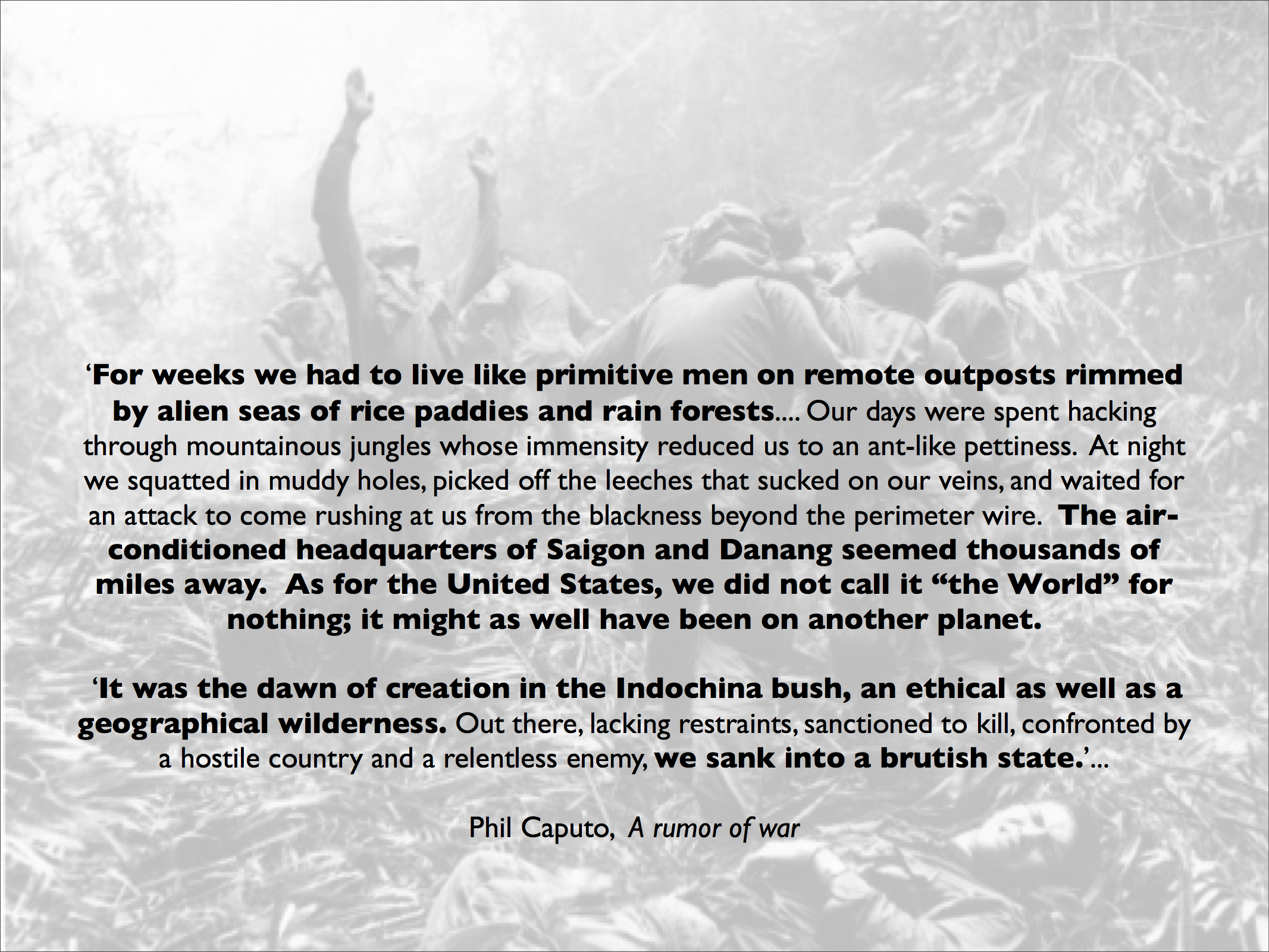
‘Scorched by the sun, wracked by the wind and rain of the monsoon, fighting in alien swamps and jungles, our humanity rubbed off of us as the protective bluing rubbed off the barrels of our rifles.We were fighting in the crudest kind of conflict, a people’s war. It was no orderly campaign, as in Europe, but a war for survival waged in a wilderness without rules or laws.’

And again, in a passage that makes the geography of this hostile terrain clear (and also speaks directly to Gaston’s argument about Restrepo – and even to Carl Schmitt):

Ethical wilderness Vietnam

In that last slide I’ve deliberately juxtaposed Caputo’s apologia with Art Greenspon‘s famous photograph of soldiers from the 101st Airborne waiting to be evacuated by helicopter after a five-day patrol near Hue, South Vietnam in April 1968 because – as those upheld arms imply – this confession carries buried within it a promise of redemption too.  Forgive me, for this fallen nature has cast me down.  And help me escape back into The World.  Yet, as Taussig showed, this too was a thoroughly imperialist catechism: primeval nature fouling our civilised, ‘second nature’, seducing and destroying our very humanity, when in so many ways it was our own ‘second nature’ and its technowar that was laying waste to the rainforest.

These are complex arguments, and a post like this inevitably runs the risk of caricature.  But I hope I’ve said enough to suggest some of the other ways in which the ‘opaque zones of empire’ extend beyond the horizon of vision.  And in case I haven’t been clear, I should add that I think Gaston is absolutely right to make terrain central to the analysis, not least because this makes it possible to invest two other master-concepts (sic), ‘space’ and ‘nature’, with corporeal and material depth.

Black spots and blank spots

Over at Guernica, Trevor Paglen has a short essay on the rise of what he calls ‘the terror state’ that connects the dots between several recent posts:

For more than a decade, we’ve seen the rise of what we might call a “Terror State,” of which the NSA’s surveillance capabilities represent just one part. Its rise occurs at a historical moment when state agencies and programs designed to enable social mobility, provide economic security and enhance civic life have been targeted for significant cuts. The last three decades, in fact, have seen serious and consistent attacks on social security, food assistance programs, unemployment benefits and education and health programs. As the social safety net has shrunk, the prison system has grown. The United States now imprisons its own citizens at a higher rate than any other country in the world.

While civic parts of the state have been in retreat, institutions of the Terror State have grown dramatically. In the name of an amorphous and never-ending “war on terror,” the Department of Homeland Security was created, while institutions such as the CIA, FBI and NSA, and darker parts of the military like the Joint Special Operations Command (JSOC) have expanded considerably in size and political influence. The world has become a battlefield—a stage for extralegal renditions, indefinite detentions without trial, drone assassination programs and cyberwarfare. We have entered an era of secret laws, classified interpretations of laws and the retroactive “legalization” of classified programs that were clearly illegal when they began. Funding for the secret parts of the state comes from a “black budget” hidden from Congress—not to mention the people—that now tops $100 billion annually. Finally, to ensure that only government-approved “leaks” appear in the media, the Terror State has waged an unprecedented war on whistleblowers, leakers and journalists. All of these state programs and capacities would have been considered aberrant only a short time ago. Now, they are the norm.

This ought to be depressingly familiar stuff, though it is important to connect those dots.  I highlight Trevor’s argument here (which radiates far beyond the paragraphs I’ve extracted above) for two reasons.

PAGLEN BLank Spots on the MapFirst, the practices that Trevor disentangles work through distinctively different geographies, at once material and virtual. Trevor’s own work addresses different dimensions of what he’s also called the Blank Spots on the Map – here definitely be dragons! though there’s a delicious irony in the US finding Edward Snowden’s whereabouts (at least this morning) to be one of them. There’s some small comfort to be had in the raging impotence of the state apparatus, which is evidently neither all-seeing nor all-knowing.  As part of his project, Trevor has done much to bring into (sometimes long-distance) focus the prying eyes of the ‘terror state’ – see for example here – but I’m particularly interested in the differential modalities of ‘watching’ and ‘acting’.  The US Air Force has become preoccupied with the predicament of ‘swimming in sensors, drowning in data‘, for example, which makes it exceptionally difficult to convert its enhanced capacity for intelligence, surveillance and reconnaissance into focused strikes and, as I noted earlier, this is only one version of a wider divergence outlined by Peter Scheer:

The logic of warfare and intelligence have flipped, each becoming the mirror image of the other. Warfare has shifted from the scaling of military operations to the selective targeting of individual enemies. Intelligence gathering has shifted from the selective targeting of known threats to wholesale data mining for the purpose of finding hidden threats.

The resulting paradigms, in turn, go a long way to account for our collective discomfort with the government’s activities in these areas. Americans are understandably distressed over the targeted killing of suspected terrorists because the very individualized nature of the drone attacks converts acts of war into de facto executions — and that in turn gives rise to demands for high standards of proof and adjudicative due process.

Similarly, intelligence activities that gather data widely, without fact-based suspicions about specific individuals to whom the data pertain, are seen as intrusive and subject to abuse.

TREVOR PAGLEN Keyhole 12-3 Optical reconnaissance satelliteThis is an interesting suggestion, a simple schematic to think with, and at present I’m working through its implications (and complications) for other dimensions of later modern war – specifically the geographies of cyberwarfare that I briefly outlined in my early essay on ‘The everywhere war’ (DOWNLOADS tab).  So for the book I’m splicing  cyberwarfare into the now explosive debate over surveillance in cyberspace, and the transformation of James Gibson‘s Fordist version of ‘Technowar’ into its post-Fordist incarnation.  In a report for Vanity Fair Michael Joseph Gross calls cyberwarfare ‘silent war’ and ‘war you cannot see’, and yet it too (as Trevor’s work implies) is material as well as virtual, not only in its consequences but also in its very architecture: see, for example, here and here (and the wonderful graphic that accompanies the report).  So, with patience, skill and effort, it can indeed be seen.  And, contrary to Thomas Rid‘s Cyber war will not take place (2013), there is a crucial sense – one which my dear friend Allan Pred constantly emphasised – in which these capacities and activities do indeed take place… More soon.

There’s a second reason for noting Trevor’s essay (he was, not incidentally, a student of Allan’s): it originates from Creative Time Reports edited by Marisa Mazria Katz:

Creative Time Reports strives to be a global leader in publishing the unflinching and provocative perspectives of artists on the most challenging issues of our times. We distribute this content to the public and media free of charge.

Asserting that culture and the free exchange of ideas are at the core of a vibrant democracy, Creative Time Reports aims to publish dispatches that speak truth to power and upend traditional takes on current issues. We believe that artists play a crucial role as thought leaders in society, and are uniquely capable of inspiring and encouraging a more engaged and informed public, whether they are addressing elections or climate change, censorship or immigration, protest movements or politically motivated violence.

In an era of unprecedented interconnectedness, Creative Time Reports provides artists with a space to voice analysis and commentary on issues too often overlooked by mainstream media. We believe in the importance of highlighting cultural producers’ distinctive viewpoints on world events and urgent issues of social justice to ensure a livelier, more nuanced and more imaginative public debate.

Given everything I’ve said about the importance of the arts to creative critical research the relevance of this will, I hope, be obvious: art not simply as a means to represent the results of research but rather as a medium through which to conduct research.  Good to think with, as Lévi-Strauss might have said, but also good to act with.  (More on Creative Time here; they are holding a ‘summit’ on Art, Place and Dislocation in the 21st Century City in New York, 25-26 October 2013).

Incendiary knowledges

Yesterday in my course on Cities, space and power (see TEACHING) I was talking about Alexandria and urbanism in the post-Alexandrian world.  Part of the discussion centred on the Museum and Library (the Museion) as both a community of scholars that was at once religious and academic (Museion means “Home of the Muses”) and a material constellation of power-knowledge. The marvellous Andrew Erskine, in his essay on ‘Culture and power in early Ptolemaic Egypt‘, captures the political purpose behind the imperial project:

‘A Graeco-Macedonian surface was imposed on Egypt, but this surface lacked a unifying tradition – except for a common Greekness. Setting up the Museum and the Library is the setting up of a centre of Greek cultural and intellectual life in the city. It helps to fill the cultural vacuum that exists within the city. Adopting the practices of Aristotle’s school [which was also centred on a Museum], studying the texts of Homer, acquiring the official texts of the Greek tragedies all help to establish some sense of continuity with a Greek past.’ 

But more than this, like other versions of what Ernest Gellner once called an agro-literate polity, this was about exclusion as much as inclusion:

‘The more Greeks can indulge in their own culture, the more they can exclude non-Greeks, in other words Egyptians, the subjects whose land has been taken over. The assertion of Greek culture serves to enforce Egyptian subjection. So the presence in Alexandria of two institutions devoted to the preservation and study of Greek culture acts as a powerful symbol of Egyptian exclusion and subjection. Texts from other cultures could be kept in the library, but only once they had been translated, that is to say, Hellenized.’ 

And this was about more than Greek culture and identity, and the orbit of exclusion extended far beyond Ptolemaic Egypt.  When the Ptolemies sought to bring the knowledge of the known world under their own control they had a particular interest in strategic knowledges like engineering, medicine – and, of course, geography.  Their collecting was aggressive: they confiscated scrolls from travellers, seized others from ships in the Great Harbour, and failed to return scrolls borrowed from other repositories for transcription.  And when the king of Pergamon [modern: Bergama] proposed to build his own collection [left], they forbade the export of papyrus to forestall their rival (which, according to some historians, prompted a series of experiments that issued in the discovery of parchment (‘pergamena‘) as an alternative recording medium).

Fast-forwarding, this is still on my mind for two reasons.  The first is a marvellous essay on ‘Shadow Libraries by Lawrence Liang: if, like me, you still relish the physical space and sensibility of the conventional library, this is a must-read (even if you have to do it online).

What was special about the Library of Alexandria was the fact that until then the libraries of the ancient world were either private collections of an individual or government storehouses where legal and literary documents were kept for official reference. By imagining a space where the public could have access to all the knowledge of the world, the library also expressed a new idea of the human itself. While the library of Alexandria is rightfully celebrated, what is often forgotten in the mourning of its demise is another library—one that existed in the shadows of the grand library but whose whereabouts ensured that it survived Caesar’s papyrus destroying flames.

According to the Sicilian historian Diodorus Siculus, writing in the first century BC, Alexandria boasted a second library, the so-called daughter library, intended for the use of scholars not affiliated with the Museion. It was situated in the south-western neighborhood of Alexandria, close to the temple of Serapis, and was stocked with duplicate copies of the Museion library’s holdings. This shadow library survived the fire that destroyed the primary library of Alexandria but has since been eclipsed by the latter’s myth.

That ‘public’, as Erskine would surely insist, was in fact a carefully delineated and privileged public.  And if this was library as utopia then, like so many utopias, access was restricted.  Liang closes with some thoughts on the library, instead, as a heterotopia (like Stuart Elden, I continue to be astonished at the attention Michel Foucault’s ‘published unpublished’ essay continues to attract, though unlike him not in a good way):

If the utopian ideal of the library was to bring together everything that we know of the world then the length of its bookshelves was coterminous with the breadth of the world. But like its predecessors in Alexandria and Babel the project is destined to be incomplete haunted by what it necessarily leaves out and misses. The library as heterotopia reveals itself only through the interstices and lays bare the fiction of any possibility of a coherent ground on which a knowledge project can be built.

Again, this surely isn’t a purely epistemological dilemma: there is a politics of what is to count as knowledge, after all, and this – my second reason for thinking about these issues – has often intersected with political and military violence.  That ‘ground’ is vulnerable to more than philosophical reflection.  As Matthew Battles reminds us in his Library: an unquiet history (W.W. Norton, 2003),  ‘Libraries are as much about losing the truth as preseving it– satisfying the inner barbarians of princes, presidents and pretenders – as about discovering it.’

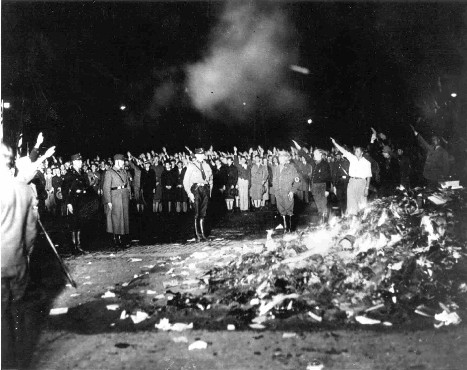
Much closer to us than the serial burnings of the Library at Alexandria is the ritualised burning of books organised by the National Socialist German Student’s Association in May and June 1933. From the US Holocaust Memorial Museum:

On April 6, 1933, the Nazi German Student Association’s Main Office for Press and Propaganda proclaimed a nationwide “Action against the Un-German Spirit,” to climax in a literary purge or “cleansing” (Säuberung) by fire. Local chapters were to supply the press with releases and commissioned articles, offer blacklists of “un-German” authors, sponsor well-known Nazi figures to speak at public gatherings, and negotiate for radio broadcast time. On April 8 the students’ association also drafted its twelve “theses”—a deliberate evocation of Martin Luther’s 95 Theses: declarations which described the fundamentals of a “pure” national language and culture. Placards publicized the theses, which attacked “Jewish intellectualism,” asserted the need to “purify” the German language and literature, and demanded that universities be centers of German nationalism….

In a symbolic act of ominous significance, on May 10, 1933, university students burned upwards of 25,000 volumes of “un-German” books, presaging an era of state censorship and control of culture. On the evening of May 10, in most university towns, right-wing students marched in torchlight parades “against the un-German spirit.” The scripted rituals called for high Nazi officials, professors, university rectors, and university student leaders to address the participants and spectators. At the meeting places, students threw the pillaged and “unwanted” books onto bonfires with great ceremony, band-playing, and so-called “fire oaths.”

Among the thousands of titles consigned to the flames was Erich Maria Remarque‘s All Quiet on the Western Front, ‘a betrayal of soldiers of the Great War’, and Ernest Hemingway‘s Farewell to Arms.  And, as the US Holocaust Memorial Museum notes,

Also among those works burned were the writings of beloved nineteenth-century German Jewish poet Heinrich Heine, who wrote in his 1820-1821 play Almansor the famous admonition, “Dort, wo man Bücher verbrennt, verbrennt man am Ende auch Menschen“: “Where they burn books, they will also ultimately burn people.”

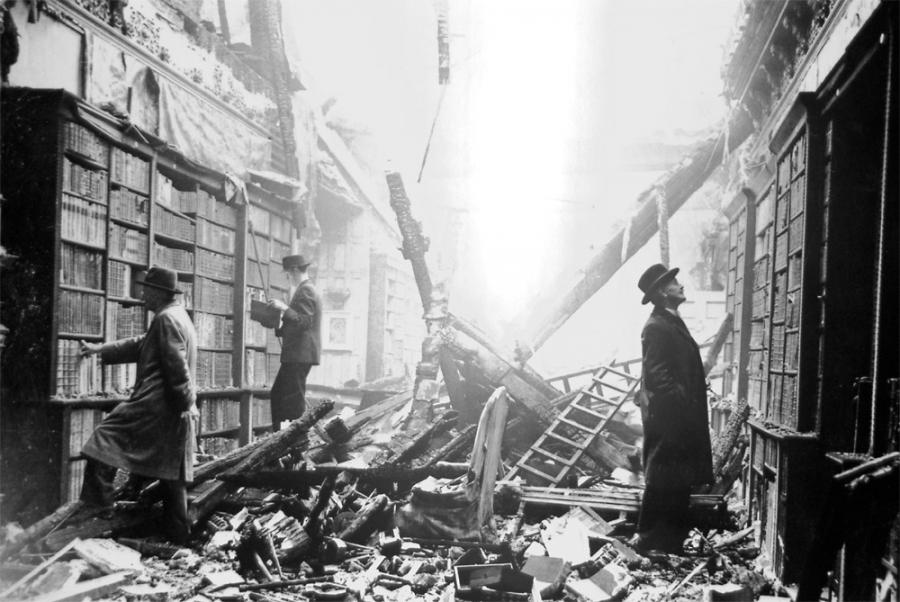
I realise that most of this will be well-known to readers (sic), but my point here is not about the vulnerability of libraries, though both Rebecca Knuth‘s Libricide (Praeger, 2003) and Lucien Polastron‘s Books on Fire (Thames and Hudson, 2010) provide a depressingly rich catalogue of historical examples of their calculated destruction.  One of the most famous images of the Blitz in 1940 is surely this photograph taken after the London Library was hit in 1940 – given the inaccuracy of the bombing, it was surely not deliberately targeted – but it testifies as much to the durability of reading as to its fragility:

What I am starting to think about is the way in which the military is inserted/insinuated in the hyphen between ‘power’ and ‘knowledge’.  In Discipline and punish Foucault artfully reverse engineers this, and provides a seminal discussion of the army in the eighteenth century as an exemplary formation of disciplinary power.  But this isn’t quite what I mean, not least because of the co-presence of sovereign and disciplinary power in military formations, and Nina Taunton, also inspired by Foucault, provides a compelling discussion of the early modern military camp (which, in its later version, also makes a fleeting appearance in Discipline and punish) and Shakespeare’s Henry V here that sets the stage – literally so – for what I have in mind.

She focuses on what she calls an ‘epistemology of command’ and ‘a whole culture of watchfulness’ and in doing so, not incidentally, also enlarges our understanding of the ‘theatre of war‘ as a visual metaphoric.  (See also her ‘Unlawful presences: the politics of military space and the problem of women in Tamburlaine‘ in Andrew Gordon and Bernhard Klein (eds), Literature, mapping and the politics of space in early modern Britain, Cambridge University Press, 2001 and her own book, 1590s drama and militarism, Ashgate, 2001).

Clearly the epistemological principles underlying the set-out of the camp make for the ‘new knowledge’ of surveillance as a one-way process, adapted to the exigencies of observation of the enemy on the one hand and the anxiety on the other to impede the enemy’s observation of you. Exposure to enemy strength can be forestalled by reinforcing the power that resides in ocular knowledge. This is achieved by spatially organising the way it is constituted in the camp so that it functions in equal balance with the power inherent in another kind of knowledge – that to do with strategies of secrecy, of keeping the enemy in the dark about your manoeuvres whilst being fully apprised of his. This is exemplified in the organisation of the watch through spying and reconnaissance – major strategies of surveillance.

Taunton writes about the dangers of both ‘the enemy within’ and ‘the enemy without’ – no stranger to ISAF in Afghanistan – but we should be wary of superficial parallels, especially as our histories enter a digital though no less material world.  (For exactly this reason I’m leery of those who think that Foucault’s lectures in 1975-6 uncannily prefigured war thirty years later – as though the concrete particulars are somehow incidental, when Foucault’s own way of working was so densely empirical).

What haunts me at present is the modern constitution of ‘the enemy’ as a mobile object of military knowledge, at once watched and watching. The questions multiply far beyond the delineation of political technologies of vision and scopic regimes that have informed much of my work to date. What are the relays through which (particularly local) knowledges have been militarised?  What are the vulnerabilities – what Taunton describes as the ‘doubleness of discourses that articulate and represent powerlessness through the models of [power/knowledge] in surveillance that they describe’ – that have been written in to the prospect of military violence?  How have militaries responded to being watched by the enemy and by the media (assuming they distinguish between them)?  What are the relations between surveillance, spatiality and secrecy within modern military ‘cultures of watchfulness’?  And how have those cultures responded to the demands of military occupation?  More – I hope – later.