The final arbiter

There have been many interviews with ‘drone operators’ but most of them seem to have been with sensor operators serving with the US Air Force.  Some of the most cited have been ‘whistleblowers’ like Brandon Bryant while some reporters have described conversations with service members allowed to speak on the record during carefully conducted tours of airbases.  Some have even been captured on film – think of the interviews that frame so much of Sonia Kennebeck‘s  National Bird (though I think the interviews with the survivors of the Uruzgan drone strike are considerably more effective) – while others have been dramatised, notably in Omar Fast‘s 5,000 Feet is The Best.
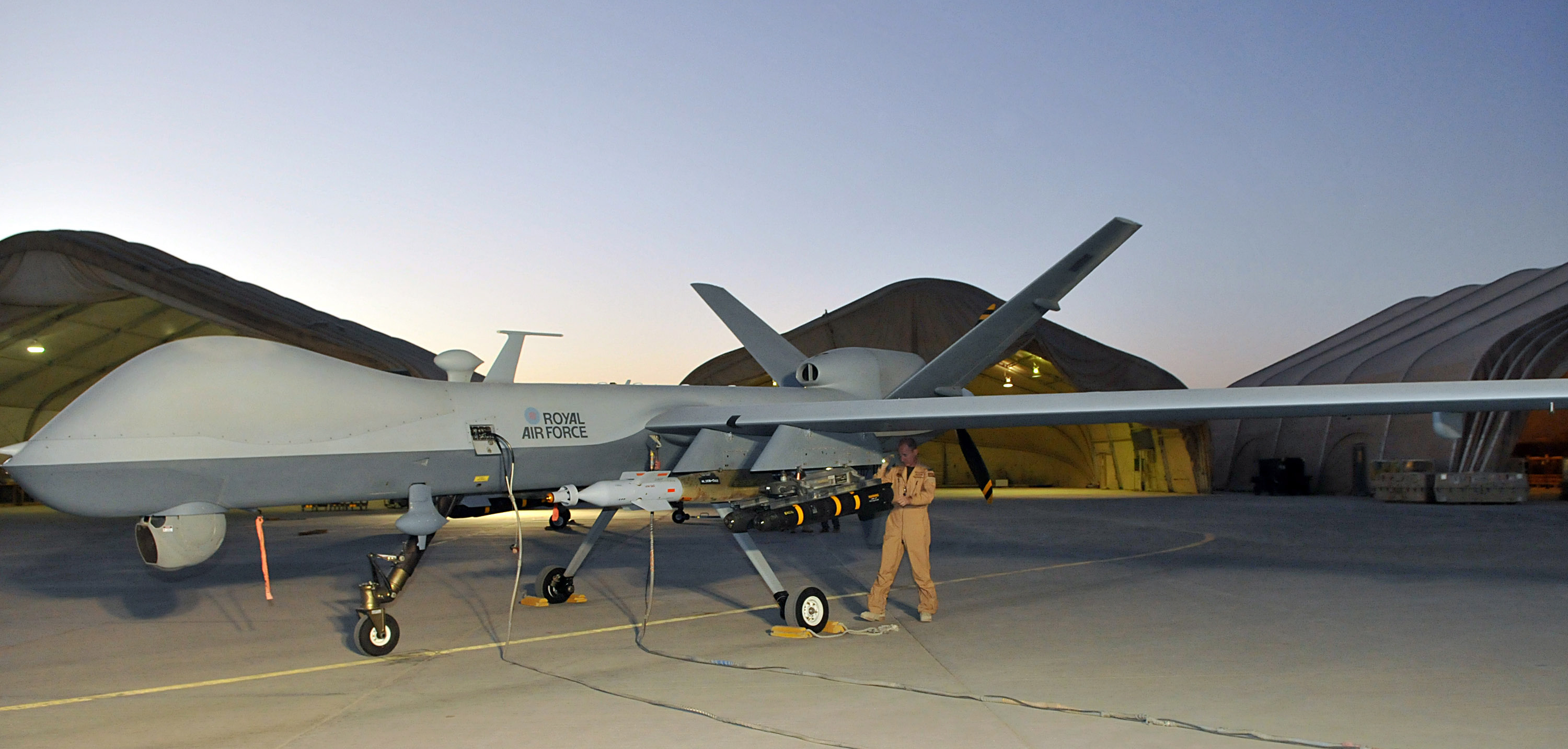
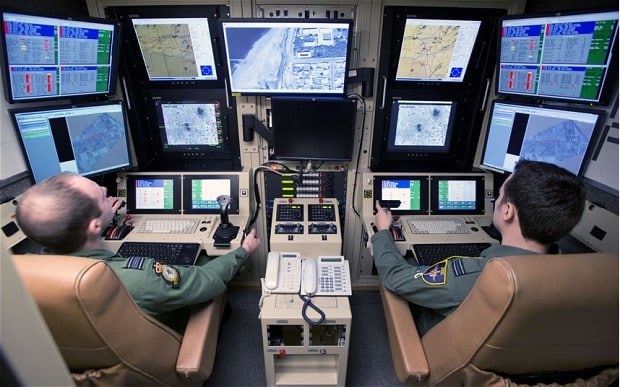
But over at Drone Wars UK Chris Cole has just released something different: a detailed transcript of an extended interview with “Justin Thompson“, a former British (Royal Air Force) pilot who flew Reapers over Afghanistan for three years from Creech Air Force Base in Nevada.  He also spent several months forward-deployed to Afghanistan as a member of the Launch and Recovery element: remember that missions are controlled from the continental United States – or now from RAF Waddington in Lincolnshire – but the Reapers have an operational range of 1, 850 km so they have to be launched in or near the theatre of operations.
He served as a pilot of conventional strike aircraft before switching to remote operations early in the program’s development – the RAF started flying Reapers over Afghanistan for ISR in October 2007; armed missions began the following May – which gives Justin considerable insight into the differences between the platforms:

“The real difference with UAVS is persistence. That’s the big advantage as it allows you to build up a very detailed picture of what is going on in a particular area. So if you are in a particular area and a need for kinetic action arises, generally speaking you have already got knowledge of the kind of things you would need to know to assist that to happen. That’s versus a fast jet that might be called in having been there only five minutes, with limited fuel and with limited information – what it can get from the guys on the ground – Boom, bang and he’s off to get some fuel. That’s a bit flippant. It’s not quite like that, but you see what I mean.

“The big difference is the amount of detail we are able to amass about a particular area, not just on one mission, but over time. If you are providing support in a particular area, you develop a great deal of detailed information, to the point where you can recall certain things from memory because you were looking at this last week and spent two weeks previously looking at it and you know generally what goes on in this particular area. The other thing this persistence gives you is a good sense if something has changed or if something is unusual. You go ‘Hang on, that wasn’t there last week, someone’s moved it. Let’s have a look to see what is going on here.’”

Later, having discussed the Reaper’s entanglement of ISR (intelligence, surveillance and reconnaissance) with lethal strike (‘kinetic’) capabilities, he returns to the theme:

“If you are talking about kinetic action, I think essentially they [conventional aircraft and drones] are no different. It’s a platform in the air that has a sensor on board you are using to look at the ground. The picture you seen in a [Ground Control Station] is essentially the same as you would see in a fast jet. The sort of weapons you are delivering are exactly the same sort as you would be delivering from a fast jet. Essentially all of the principles are the same…

“A lot of things are significantly better in that you get much more extensive and much more detailed information on the area you are looking at and on any specific targets. That’s not because of any particular capability, it’s just because you can spend a hell of a lot more time looking at it.

“A fast jet pilot would, say, do a four month tour in some place. He’s got four months’ worth of knowledge and then he’ll be gone. He might come back in a year or two, but we are there for three years. Constantly, every day, building up massive amounts of knowledge and a detailed picture of what goes on. We come armed with so much information, and so much information is available to you, not just from your own knowledge, but from sources you can reach out to. You’ve got the text. You’ve got phones. You have got other people you can call on and drag into the GCS. You can get other people to look at the video feed. You can get many opinions and views….”

At times, he concedes, that can become an issue (sometimes called ‘helmet-fire’: too many voices in your head):

“If you want it, there can be a lot of other ‘eyes on’ and advice given to you. If you want something explained to you, if you want a second opinion on something, if you want something checked you can say “Guys, are you seeing this?” Or “What do you think that is?” And that is really useful. You can also reach out for command advice, for legal advice. The number of people who can get a long screwdriver into your GCS is incredible and it does happen that occasionally you have to say ‘Please can you get your long screwdriver out of my GCS’. But generally speaking, it’s well managed and people don’t interfere unless they think there is a reason to.”

He makes it clear that as an RAF pilot his was the final decision about whether to strike – he was ‘the final arbiter’ –  and discusses different situations where he over-ruled those other voices.

RAF Reaper strike in Afghanistan, 2010

Justin also talks about the ways his previous flying experience modulated his command of the Reaper (and here I think there are interesting parallels with Timothy Cullen‘s experience as an F-16 pilot and his important study of USAF Reaper crews: see also here):

“… [T]here is an idea that because you are not directly manipulating the control surfaces of an aircraft by being sat in it, that somehow lowers the skill level required in order to successfully operate one of these things. It may change some specifics in motor skills, but then so does an Airbus. Conceptually, you are wiggling a stick, pushing a peddle, turning a wheel. That gets converted into little ‘ones’ and ‘zeros’, sent down a wire to a computer that decides where to put the flying control surfaces and throttles the engines of the aircraft. It’s very similar, at least technically, in a modern airliner as in a Reaper. The level of skill required is similar. Piloting has only ever been 10% hand-flying skills, 90% is judgement and airmanship…

“For me, what I was seeing on the screen was very real. In addition to that for me it was more than just two-dimensional. My mind very easily perceived a three-dimensional scene that extended out of the side of the image. Whether that was because I was used to sitting in a cockpit and seeing that sort of picture I don’t know. Someone whose only background is flight simulators or playing computer games may have a different view. I relate it to sitting in an aircraft and flying it, others may relate it slightly differently…”

There’s much more in those packed 17 pages.  You can find Chris’s own commentary on the interview here, though his questions during the interview are, as  his regular readers would expect, also wonderfully perceptive and well-informed.

One cautionary note.  The time-frame is extremely important in commenting on remote operations, even if we limit ourselves to the technology involved.  The early Ground Control Stations were markedly different from those in use today, for example, while the quality of the video streams, their compression and resolution is also highly variable.  And there is, of course, much more than technology involved.
Seeing Civilians (or not)

Very welcome news from Christiane Wilke that her essay, ‘Seeing and Unmaking Civilians in Afghanistan: Visual Technologies and Contested Professional Visions‘, has just been published in Science, Technology and Human Values.

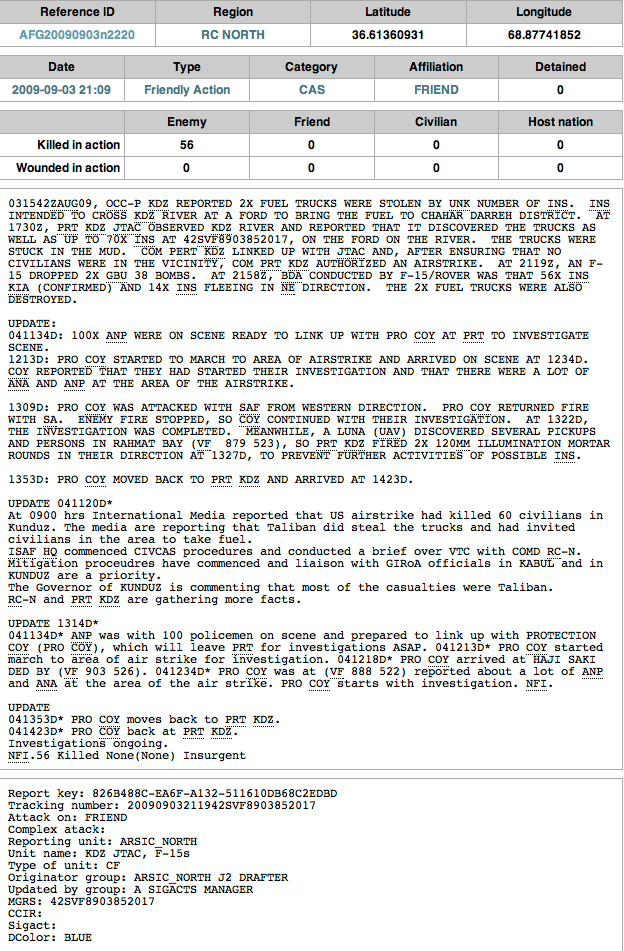
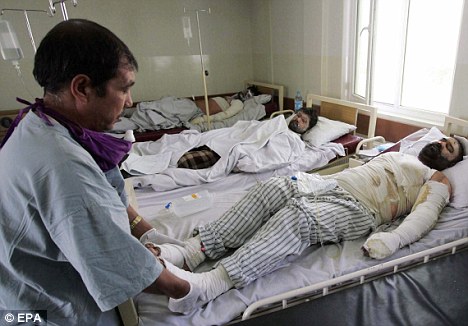
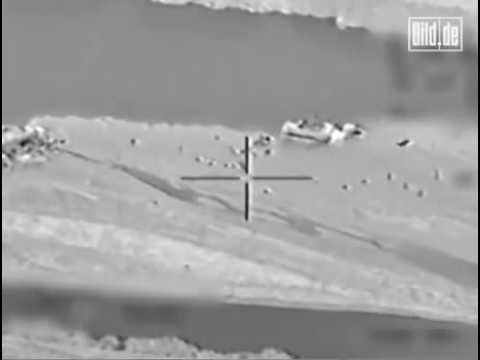
It’s an original, compelling and immensely important analysis of a US air strike on two tankers hijacked by the Taliban and beached on a river crossing near Kunduz (Afghanistan) in September 2009.  The strike was called in by a Bundeswehr officer who claimed – falsely – that he was facing what the military call ‘troops in contact’ which required immediate action; the two American pilots of the F-15s repeatedly questioned his decision but to no avail, and when the smoke cleared somewhere between 26 and 147 civilians who had been siphoning petrol from the stranded tankers had been killed.

I published a preliminary analysis of the attack, ‘Seeing like a military‘, and subsequently heard Christiane give an early version of her own argument at a conference in Lancaster in May 2014; we’ve had a lively dialogue about the strike since then.  Here is the abstract:

While the distinction between civilians and combatants is fundamental to international law, it is contested and complicated in practice. How do North Atlantic Treaty Organization (NATO) officers see civilians in Afghanistan? Focusing on 2009 air strike in Kunduz, this article argues that the professional vision of NATO officers relies not only on recent military technologies that allow for aerial surveillance, thermal imaging, and precise targeting but also on the assumptions, vocabularies, modes of attention, and hierarchies of knowledges that the officers bring to the interpretation of aerial surveillance images. Professional vision is socially situated and fre- quently contested with communities of practice. In the case of the Kunduz air strike, the aerial vantage point and the military visual technologies cannot fully determine what would be seen. Instead, the officers’ assumptions about Afghanistan, threats, and the gender of the civilian inform the vocabulary they use for coding people and places as civilian or noncivilian. Civilians are not simply “found,” they are produced through specific forms of professional vision.

And here is her key conclusion which clearly resonates far beyond Kunduz (see, for example, here and here; I’ve radically reworked the presentation from which those two posts derive, and you can get some sense of where I’m heading here):

In Afghanistan and in situations of armed conflict more generally, the distinction between civilians and noncivilians is a crucial dimension of seeing, intervening in, and responding to violence. The protection of civi- lians is an almost universally proclaimed goal; it is the centerpiece of the ISAF 2009 Tactical Directive. Yet without a reliable understanding of who counts as a civilian and how they can be recognized, the promise of civilian protection rings hollow. The category of the civilian, derived from specific Eurocentric understandings of armed conflict, had been grafted onto Afgha- nistan and Afghans who had to negotiate their security amidst conflict. Yet it is not clear what Afghans should do or avoid in order to be recognized as civilians. Those who shared the aerial viewpoint could not agree on the civilian status of the people near the trucks and neither could those who had extensive personal knowledge of the local social structures. Thus, a shift in perspective did not solve the problem that civilians are not clearly recogniz- able to those who have a mission to spare and protect them. At a deeper level, the lack of consensus about visually identifying civilians indicates a lack of agreement about who counts as a civilian. NATO officers consistently try to stabilize and shrink the category of civilian by juxtaposing it with a capacious category of noncivilians: insurgents, militants, supporters, and Taliban…

Yet civilians don’t simply exist. They are enacted and produced by, among other sites, socially situated interpretation of images produced with the aid of visual technologies. Sociocultural prisms of visibility not only produce counts of legitimate civilians but also legitimize the category of civilian as a workable and meaningful foundation of international law. The people who would like to be regarded as civilians bear the burden of distinguishing themselves from putative noncivilians according to criteria that they can never fully grasp because they don’t know which background knowledges and epistemes will be mobilized by those in charge of distinguishing civilians from combatants.

And – please note – this is not about drone strikes; not only have the vast majority of strikes in Afghanistan been carried out by conventional strike aircraft (why do so many of those who campaign against drones ignore other forms of aerial violence?) but no drones were involved in this particular attack either; the sharp point that Christiane makes applies to all airstrikes – and indeed, to militarised vision more generally.

Aleppo in London and Berlin

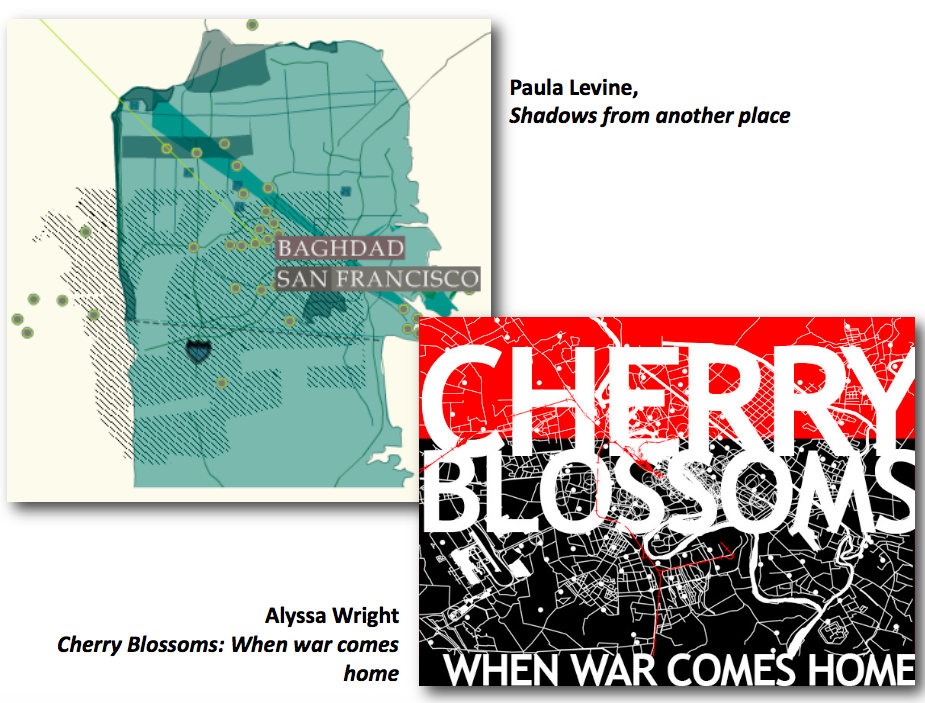
A common response to mass violence elsewhere is to imagine its impact transferred to our own lives and places.  It’s a problematic device in all sorts of ways.  After Hiroshima and Nagasaki US media became obsessed with imagining the impact of a nuclear attack on US cities – though, as I’ve also noted elsewhere, there were multiple ironies in conjuring up ‘Hiroshima, USA’ – and in the wake of the US-led invasion of Iraq there were several artistic projects that mapped the violence in Baghdad onto (for example) Boston, New York or San Francisco (I discussed some of them in the closing sections of ‘War and Peace’: DOWNLOADS tab).

This may be one way to ‘bring the war home’, as Martha Rosler‘s mesmerising work has shown, and even constitute a counter-mapping of sorts, but sometimes it can devolve into a critical narcissism: rather than being moved by the suffering of others, we place ourselves in the centre of the frame.  To forestall any misunderstanding about Rosler’s own work, let me repeat what I wrote in ‘War and Peace’:

Domestic critics have frequently noted the interchange between security regimes inside and outside the United States; they insist that the ‘war on terror’ ruptures the divide between inside and outside, and draw attention to its impact not only ‘there’ but also ‘here’. But Rosler’s sharper point is to goad her audience beyond what sometimes trembles on the edge of a critical narcissism (‘we are vulnerable too’) to recognise how often ‘our’ wars violate ‘their’ space: her work compels us to see that what she makes seem so shocking in ‘our’ space is all too terrifyingly normal in ‘theirs’.

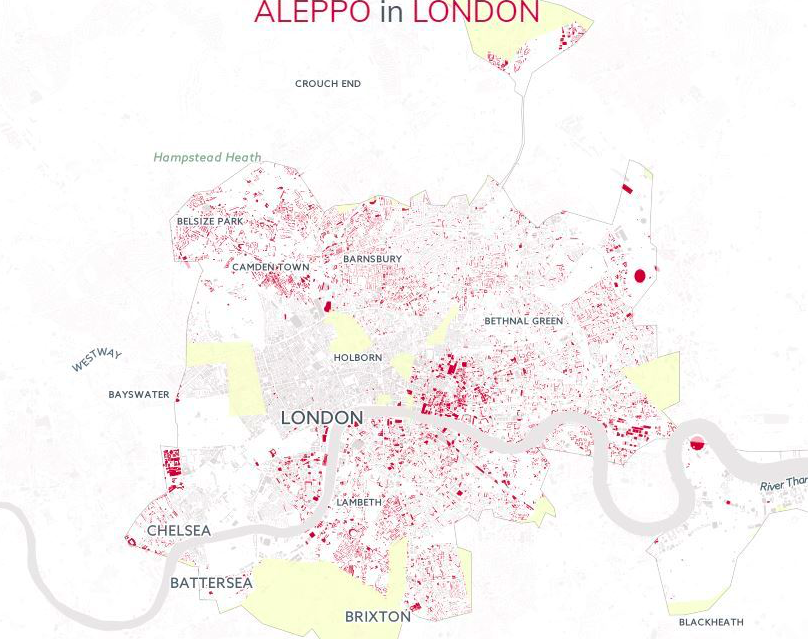
So it’s with somewhat mixed feelings that I record Hans Hack‘s attempt to transfer violence in Aleppo to London and Berlin.

He explains his Reprojected Destruction like this:

The United Nations Institute for Training and Research (UNITAR) has recently published a map which “illustrates the percentage of buildings damaged in the city of Aleppo” based on satellite imagery analysis. The map shows the levels of destruction in each of Aleppo’s districts. For this project “Reprojected Destruction” information from that map has been reprojected onto figure-ground maps of Berlin and London. As a geographical reference point, the historical center of Aleppo (The Citadel of Aleppo) has been superimposed on that of Berlin (Museum Island) and London (The Tower of London). The reprojected destruction is indicated by randomly selected buildings marked in red. To make it more representative, the distribution of the reprojected destruction has also been mapped with respect to Aleppo’s administrative borders provided by OCHA. The overall aim of the exercise is to help viewers imagine the extent of destruction that might have been visited upon the UK and German capitals had these cities stood at the centre of Syria’s current conflict.

Hans told Reuters:

For me it’s hard to understand in the news what it means, how strongly Aleppo was destroyed. I wanted to take this information and project it onto something I know personally that I can have some reference to. So I chose Berlin and London.

But the key question for me is simply this: why is it so hard?

MOAB and the moral economy of bombing

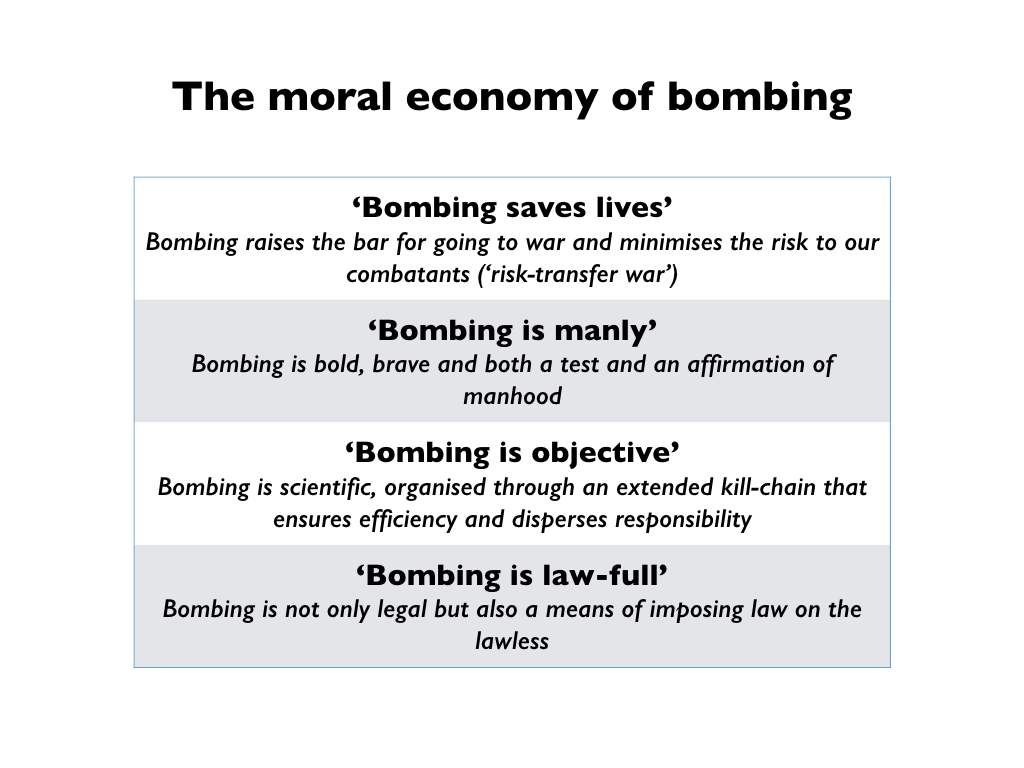
In Reach from the Sky, my Tanner Lectures which I’m presently preparing for publication, I sketched what I called a ‘moral economy of bombing’:

It’s the last of these claims that concerns me here: bombing represented as ‘law-full’.  In the lectures I discussed the legal armature of aerial violence – referring to the combined bomber offensive against Germany in the Second World War Air Chief Marshall Arthur Harris famously insisted that ‘In this matter of the use of aircraft in war there is, it so happens, no international law at all’, a claim that was, I suppose, literally true in so far as it applied to the specific application of air power; I tried to show what has (and has not) changed since then, not least through the development of international humanitarian law and the juridification of later modern war – and the insistence that air power is an effective means of imposing a legal order on the nominally ‘lawless’ (a claim registered through colonial ‘air policing’ and continued in the US and Pakistan air strikes on the Federally Administered Tribal Areas of Pakistan: see ‘Dirty Dancing’ (DOWNLOADS tab).

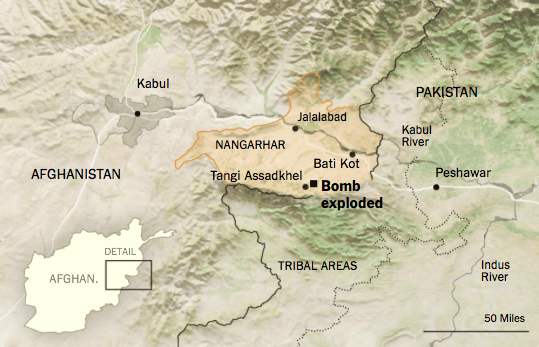
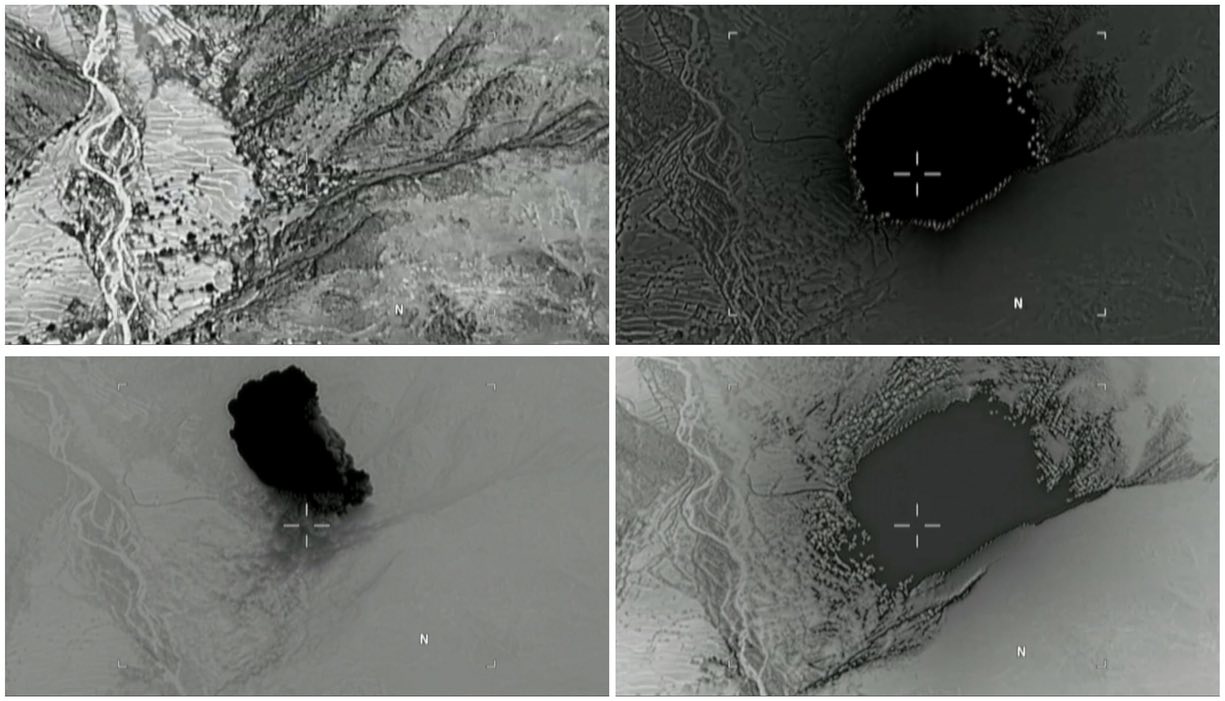
In the ghastly light of the Trump administration’s decision last month to drop (for the first time in combat) what the US Air Force calls ‘the Mother Of All Bombs‘ (MOAB), the GBU-43/B,  on an IS ‘tunnel complex’ in eastern Afghanistan, Michael Weinman has written an excellent essay for Public Seminar on ‘Ordnance as ordinance‘ that elaborates the second part of my claim about bombing being ‘law-full’:

[B]oth the decision to name this weapon MOAB and the decision to deploy it in Afghanistan is tightly linked with what Judith Butler called a “new military convention” begun by Colin Powell when he described the deployment of “smart bombs” during the first Iraq War as “the delivery of ordnance.” In “Contingent Foundations,” Butler noted that Powell “figures an act of violence as an act of law” by substituting “ordnance” (munitions, agents of destructive violence) for “ordinance” (a law or decree). Powell’s speech act, apparently delivered in an unscripted moment during a press conference in January 1991, is an important instance of the “illocutionary force” of language that Butler explores throughout the work she did in the late 1990s and early 2000s — her most impressive and important work in my view. This aerial bombardment of Iraqi installations with technologically advanced munitions, viewable in real time on network and cable TV for the first time, was itself a phenomenon. But it was the declaration that such a display in itself was an act of law enforcement that truly brought us into a new era. An era in which, thanks to Powell and the Bush (41) administration, the alignment of violence and law against a regime that violates international law figures state violence, even where it might be in contradiction of international agreements, as the very agent of law and legitimation. Watching the media response to the recent deployment of MOAB in Afghanistan, it is clear we still haven’t learned Butler’s lesson.

The deeper resonance of reading this particular ordnance as a form of ordinance requires that we attend to a different resonance of its chosen acronym, MOAB. Not the “Mother of All Bombs” nomenclature, which bespeaks its terrifying awesomeness — in the literal sense of the term “awesome,” connoting utter sublimity. That is part of the story too, but it is not the heart of it. Rather, continuing Butler’s pursuit of the line of thought by which Saddam (Hussein) was recast as (the Biblical) Sodom,[1] we must turn instead to the Biblical Moab, patriarch of the Moabites. Crucially, we must bear in mind that, within the Hebrew Bible, this people, whose lands lay across the Dead Sea, is cast as a hostile neighboring people — indeed, the Moabites are depicted as the neighboring tribe most inherently in conflict with the people of Israel. Viewed in this light, there is continuing power in Powell’s fantasy that the deliverance of ordnance is the way “we” publicly declare the ordinance that those who defy international law will be vanquished by the synthesis of law and force executed by the United States military as the leader the coalition of the willing. This vision remains the reigning principle behind the self-image of the United States as an actor on the international scene. And this is so because, deeply steeped in an “Old Testament morality” (a morality wherein the enemies of the United States are figured as the ancient enemies of the people of Israel), this vision justifies a view of America as the model exemplar of a “Judeo-Christian” civilization. A civilization that is — as it ever was — waging a war, engaging in a “clash of civilizations.” Of course we would name our most deadly non-nuclear weapon “Moab” (or M.O.A.B., if you like): what other name than that of the oldest and deepest “frenemy” of Israel could the United States military have possibly dreamt up?

There is more that could be said, I think, especially if one stays with Butler and thinks of this episode as a speech-act.  After all – and repeating a line that was repeated endlessly during the Rolling Thunder campaign against North Vietnam – MOAB was originally developed in 2002 for the ‘Shock and Awe’ campaign that heralded the US-led  invasion of Iraq, and the Pentagon claimed that deploying the MOAB was an act of communication (really): it sent ‘a very clear message’ to IS that it would be ‘annihilated‘.  (The message-in-a-bomb line shouldn’t be confused with the terse messages that ground crews have scrawled on bombs in war after war after war, and I suppose it is less grotesque than the description of bombing Syria as a form of ‘after-dinner entertainment‘ for the US President – which sends an even more terrifying message to anyone with a shred of decency or understanding).

If the bombing in Afghanistan did send a message to IS – and to state actors elsewhere in the world – it also sent a message to innocent others in the vicinity of the blast:

“There is no doubt that Isis are brutal and that they have committed atrocities against our people. But I don’t see why the bomb was dropped,” said the mayor of Achin, Naweed Shinwari. “It terrorised our people. My relatives thought the end of the world had come. Every day fighter jets, helicopters and drones are in the area.”

In that vein, and to return to the colonial genealogy I mentioned at the start, the use of the global South as a laboratory for weapons testing and demonstration has a long history, as Scott Beauchamp‘s report here documents:

…the most interesting commentary probably came from former Afghanistan president Hamid Karzai, who tweeted that “This is not the war on terror but the inhuman and most brutal misuse of our country as a testing grounds for new and dangerous weapons.”

He’s got a point. There is a dark history of Western military powers testing novel weapons and strategies on technologically overmatched non-Western (and non-white) populations. It’s a legacy that mixes the brutal arrogance of colonialism with the technological promise of an easy fix. There are of course numerous examples of this cruel dynamic at play in the centuries leading up to the 20th — conquistadors with dogs and swords, gunpowder in general — but the disparity that currently exists between the material advantages of Western countries and the technological capability of enemies abroad continues to be exploited in ways that conform to a recognizable pattern.

PS Much as I’ve enjoyed Michael’s essay, I think Stephen Fry also had a point.

Transnational war and international law

New from Hurst: Jack McDonald‘s Enemies known and unknown: Targeted killings in America’s transnational war:

President Obama was elected on an anti-war platform, yet targeted killings have increased under his command of the ‘War on Terror’. The US thinks of itself as upholding the rule of international law and spreading democracy, yet such targeted killings have been widely decried as extra-judicial violations of human rights. This book examines these paradoxes, arguing that they are partially explained by the application of existing legal standards to transnational wars.

Critics argue that the kind of war the US claims to be waging — transnational armed conflict — doesn’t actually exist. McDonald analyses the concept of transnational war and the legal interpretations that underpin it, and argues that the Obama administration’s adherence to the rule of law produces a status quo of violence that is in some ways more disturbing than the excesses of the Bush administration.

America’s interpretations of sovereignty and international law shape and constitute war itself, with lethal consequences for the named and anonymous persons that it unilaterally defines as participants. McDonald’s analysis helps us understand the social and legal construction of legitimate violence in warfare, and the relationship between legal opinions formed in US government departments and acts of violence half a world away.

No shortage of books on targeted killing, I know, but this one stands out through its focus on the entanglements between law and violence in the very idea of transnational war and its interest in the individuation of later modern war.  Here’s the Table of Contents:

Introduction: The Balkan Crucible

1. The Cleanest War
2. The Lens of War
3. In Washington’s Shadow
4. Lawful Annihilation?
5. Unto Others
6. Individuated Warfare
7. Killing through a Monitor, Darkly
8. The Body as a Battlefield
9. Gyges’ Knife

That said, I do have reservations about the claim that the US ‘thinks of itself as upholding the rule of international law’ – or, more precisely, about the reality that lies behind that rhetoric.

As I continue to work on ‘The Death of the Clinic‘, and the assaults on hospitals and healthcare in Syria and beyond, I’ve been drawn into debates that circle around the selective impotence of international law and appeals to the International Criminal Court.  In the Syrian case, the geopolitics of international law are laid bare: the jursdiction of the ICC is limited to acts carried out in the territory of a state that is party to the Rome Statute [Syria is not] unless the crimes are referred to the ICC by the UN Security Council – where Russia has consistently exercised its veto to protect its ally/client.  But it is important not to lose sight of what Patrick Hagopian called ‘American immunity’; based on a close reading of Korea and Vietnam he shows how the United States has consistently sought ‘to police a system of law universally binding on others from which it reserves the right at any moment to exempt itself.’  Similarly, Jens David Ohlin has traced a persistent American scepticism towards international law that was redoubled in the years after 9/11 and, as I’ve suggested before, the US is by no means alone in what Jens identifies as a sustained ‘assault on international law‘.

I don’t say this to detract from Enemies known and unknown: it’s just really a promissory (foot)note to my continuing work on spaces of exception in Syria (where it isn’t intended to give succour to the legions of Putin/Assad trolls inside and outside the academy either – on which see this long overdue, forensic take-down of one of the most egregious offenders by Brian Slocock here).

War, law and visibilities

Two more forthcoming books on war.

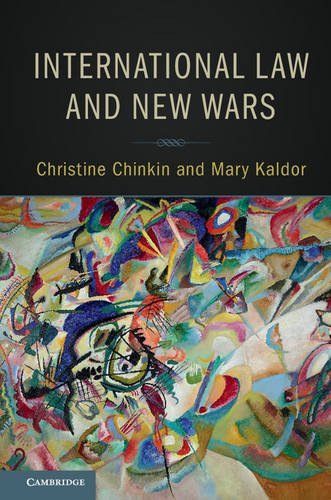
Coming in May from Cambridge University Press, a book Richard Falk hails as ‘the most significant book on international law published in the last decade’, International law and New Wars by Christine Chinkin and Mary Kaldor:

International Law and New Wars examines how international law fails to address the contemporary experience of what are known as ‘new wars’ – instances of armed conflict and violence in places such as Syria, Ukraine, Libya, Mali, the Democratic Republic of Congo and South Sudan. International law, largely constructed in the nineteenth and twentieth centuries, rests to a great extent on the outmoded concept of war drawn from European experience – inter-state clashes involving battles between regular and identifiable armed forces. The book shows how different approaches are associated with different interpretations of international law, and, in some cases, this has dangerously weakened the legal restraints on war established after 1945. It puts forward a practical case for what it defines as second generation human security and the implications this carries for international law.

At 595 pages it’s clearly a blockbuster.  Here is the detailed Contents list:

Part I. Conceptual Framework:
1. Introduction
2. Sovereignty and the authority to use force
3. The relevance of international law
Part II. Jus ad Bellum:
4. Self-defence as a justification for war: the geopolitical and war on terror models
5. The humanitarian model for recourse to use force
Part III. Jus in Bello:
6. How force is used
7. Weapons
Part IV. Jus Post-Bellum:
8. ‘Post-conflict’ and governance
9. The liberal peace: peacemaking, peacekeeping and peacebuilding
10. Justice and accountability
Part V. The Way Forward:
11. Second generation human security
12. What does human security require of international law?

Coming in June from Rutgers University Press, In/Visible War: the culture of war in twenty-first century Americaedited by John Louis Lucaites and Jon Simons:

In/Visible War addresses a paradox of twenty-first century American warfare. The contemporary visual American experience of war is ubiquitous, and yet war is simultaneously invisible or absent; we lack a lived sense that “America” is at war. This paradox of in/visibility concerns the gap between the experiences of war zones and the visual, mediated experience of war in public, popular culture, which absents and renders invisible the former. Large portions of the domestic public experience war only at a distance. For these citizens, war seems abstract, or may even seem to have disappeared altogether due to a relative absence of visual images of casualties. Perhaps even more significantly, wars can be fought without sacrifice by the vast majority of Americans.
Yet, the normalization of twenty-first century war also renders it highly visible. War is made visible through popular, commercial, mediated culture. The spectacle of war occupies the contemporary public sphere in the forms of celebrations at athletic events and in films, video games, and other media, coming together as MIME, the Military-Industrial-Media-Entertainment Network.

Here’s the main Contents List:

Part I: Seeing War

Chapter 1: How Photojournalism Has Framed the War in Afghanistan – David Campbell Chapter 2: Returning Soldiers and the In/visibility of Combat Trauma – Christopher J. Gilbert and John Louis Lucaites Chapter 3: (Re)fashioning PTSD’s Warrior Project – Jeremy G. Gordon Chapter 4: Unremarkable Suffering: Banality, Spectatorship, and War’s In/visibilities – Rebecca A. Adelman and Wendy Kozol “War Is Fun,” a Photo-Essay – Nina Berman Chapter 5: Laying bin Laden to Rest: A Case Study of Terrorism and the Politics of Visibility – Jody Madeira

Part II: Not Seeing War

Chapter 6: Digital War and the Public Mind: Call of Duty Reloaded, Decoded – Roger Stahl Chapter 7: A Cinema of Consolation: Post-9/11 Super Invasion Fantasy – De Witt Douglas Kilgore Chapter 8: Differential Configurations: In/visibility through the Lens of Kathryn Bigelow’s The Hurt Locker (2008) – Claudia Breger Chapter 9: Canine Rescue, Civilian Casualties, and the Long Gulf War – Purnima BosePart III:

Theorizing the In/visibility of War 

Chapter 10: The In/visibility of Liberal Peace: Perpetual Peace and Enduring Freedom – Jon Simons Chapter 11: Why War? Baudrillard, Derrida, and the Absolute Televisual Image – Diane Rubenstein Chapter 12: War in the Twenty-first Century: Visible, Invisible, or Superpositional? – James Der Derian

Unimaginative geographies

In my commentary on the terrorist attacks in Beirut and Paris in November 2015, I drew attention to Islamic State’s desire to extinguish what it called ‘the grey zone’.  As Jason Burke explained at the time:

In February this year, in a chilling editorial in its propaganda magazine, Dabiq, Isis laid out its own strategy to eliminate what the writer, or writers, called “the grey zone”.

This was, Isis said, what lay between belief and unbelief, good and evil, the righteous and the damned. It was home, too, to all those who had yet to commit to the forces of either side.

The grey zone, Isis claimed, had been “critically endangered [since] the blessed operations of September 11th”, as “these operations showed the world” the two camps that mankind must choose between.

Over the years, since successive violent acts had narrowed the grey zone to the point where by the end of 2014 “the time had come for another event to … bring division to the world and destroy the grey zone everywhere”.

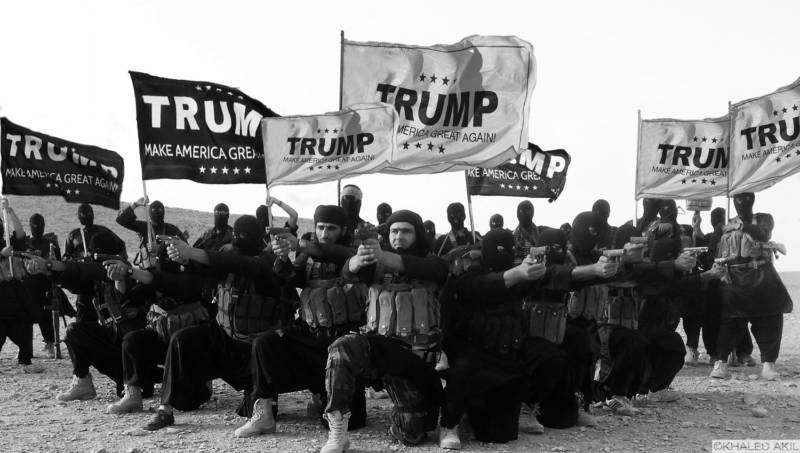
I noted then that ‘The imaginative geographies of Islamic State overlap with those spewed by the extreme right in Europe and North America and, like all imaginative geographies, they have palpable effects: not fifty shades of grey but fifty versions of supposedly redemptive violence.’

Syrian artist Khaled Akil has captured this congruence perfectly in “Hate Loves Hate“:

khaled-akil-hate-loves-hate

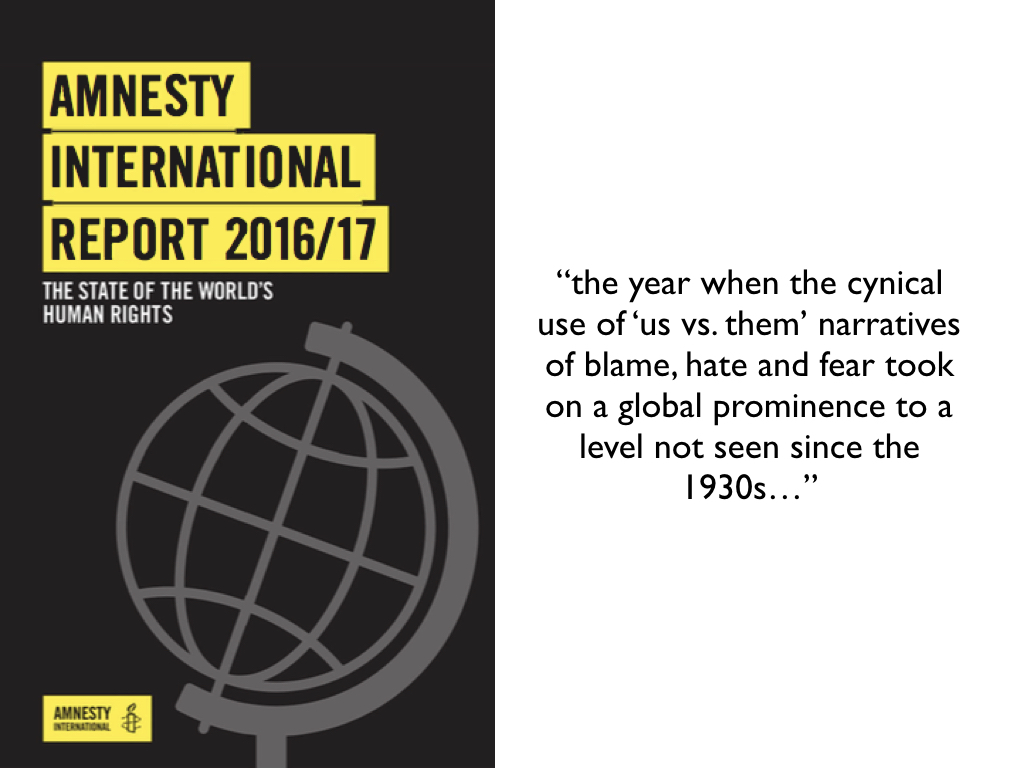
Amnesty International‘s latest report (2016/17) on Human Rights around the world confirms that this is fast becoming generalised:

Politicians wielding a toxic, dehumanizing “us vs them” rhetoric are creating a more divided and dangerous world, warned Amnesty International today as it launched its annual assessment of human rights around the world.

The report, The State of the World’s Human Rights, delivers the most comprehensive analysis of the state of human rights around the world, covering 159 countries. It warns that the consequences of “us vs them” rhetoric setting the agenda in Europe, the United States and elsewhere is fuelling a global pushback against human rights and leaving the global response to mass atrocities perilously weak.

“2016 was the year when the cynical use of ‘us vs them’ narratives of blame, hate and fear took on a global prominence to a level not seen since the 1930s. Too many politicians are answering legitimate economic and security fears with a poisonous and divisive manipulation of identity politics in an attempt to win votes,” said Salil Shetty, Secretary General of Amnesty International.

2016-us-vs-them-001

“Divisive fear-mongering has become a dangerous force in world affairs. Whether it is Trump, Orban, Erdoğan or Duterte, more and more politicians calling themselves anti-establishment are wielding a toxic agenda that hounds, scapegoats and dehumanizes entire groups of people.

“Today’s politics of demonization shamelessly peddles a dangerous idea that some people are less human than others, stripping away the humanity of entire groups of people. This threatens to unleash the darkest aspects of human nature.”…

“In 2016, these most toxic forms of dehumanization became a dominant force in mainstream global politics. The limits of what is acceptable have shifted. Politicians are shamelessly and actively legitimizing all sorts of hateful rhetoric and policies based on people’s identity: misogyny, racism and homophobia.

“The first target has been refugees and, if this continues in 2017, others will be in the cross-hairs. The reverberations will lead to more attacks on the basis of race, gender, nationality and religion. When we cease to see each other as human beings with the same rights, we move closer to the abyss.”

Counter-mapping and ecologies of military power

ecologies-of-power

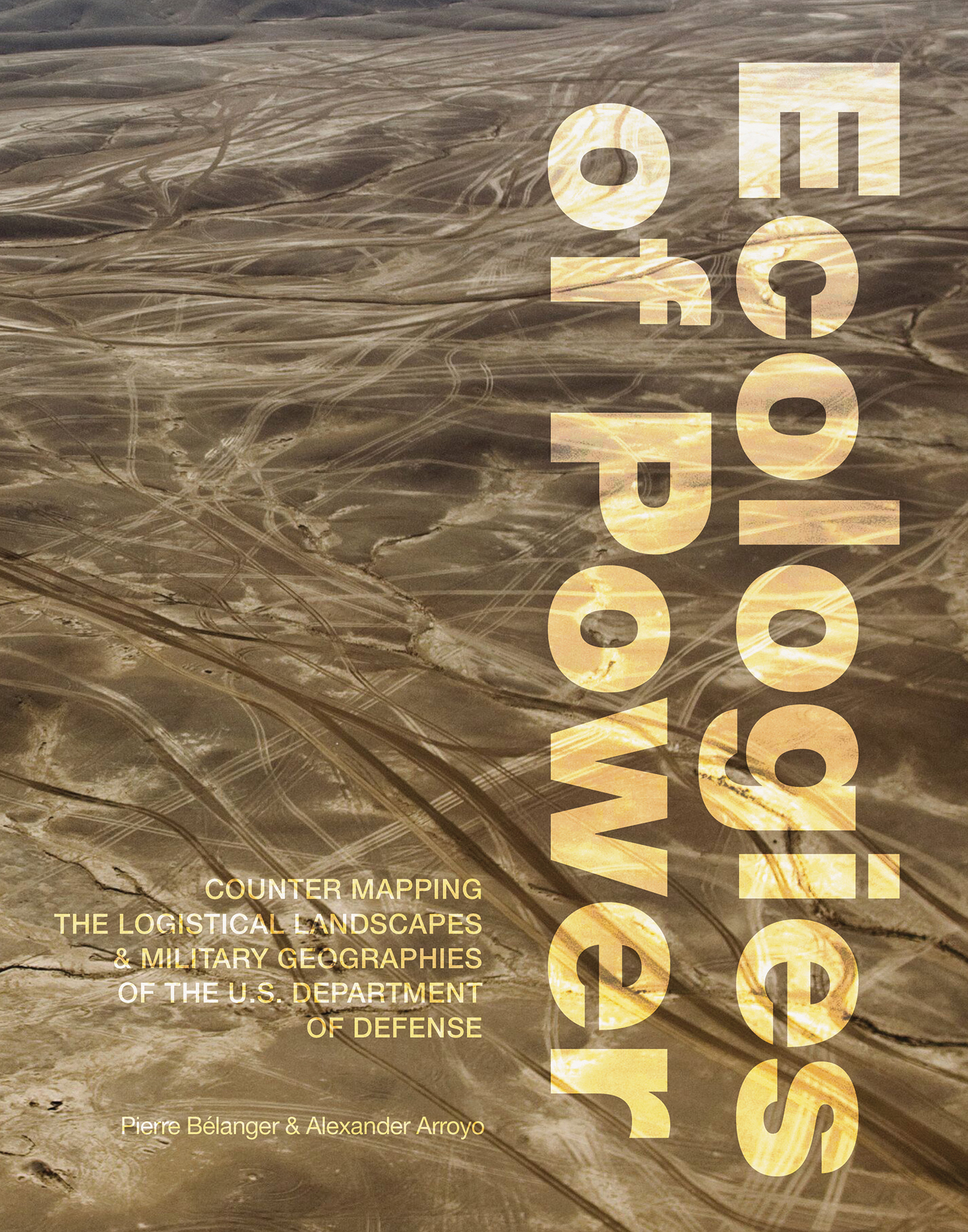
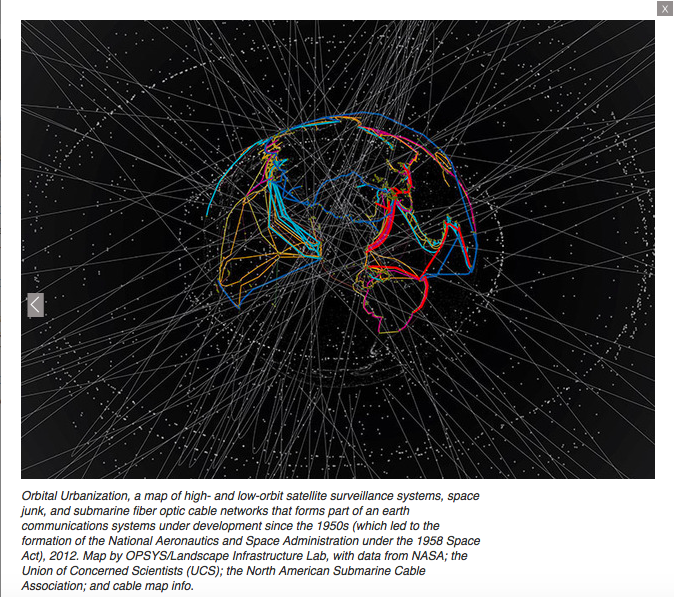
Just caught up with Ecologies of Power by Pierre Bélanger and Alexander Arroyo (MIT Press), which – as the subtitle reveals – is a fascinating countermapping of the Pentagon’s logistical landscapes and military geographies:

This book is not about war, nor is it a history of war. Avoiding the shock and awe of wartime images, it explores the contemporary spatial configurations of power camouflaged in the infrastructures, environments, and scales of military operations. Instead of wartime highs, this book starts with drawdown lows, when demobilization and decommissioning morph into realignment and prepositioning. It is in this transitional milieu that the full material magnitudes and geographic entanglements of contemporary militarism are laid bare. Through this perpetual cycle of build up and breakdown, the U.S. Department of Defense –the single largest developer, landowner, equipment contractor, and energy consumer in the world – has engineered a planetary assemblage of “operational environments” in which militarized, demilitarized, and non-militarized landscapes are increasingly inextricable.

In a series of critical cartographic essays, Pierre Bélanger and Alexander Arroyo trace this footprint far beyond the battlefield, countermapping the geographies of U.S. militarism across five of the most important and embattled operational environments: the ocean, the atmosphere, the highway, the city, and the desert. From the Indian Ocean atoll of Diego Garcia to the defense-contractor archipelago around Washington, D.C.; from the A01 Highway circling Afghanistan’s high-altitude steppe to surveillance satellites pinging the planet from low-earth orbit; and from the vast cold chain conveying military perishables worldwide to the global constellation of military dumps, sinks, and scrapyards, the book unearths the logistical infrastructures and residual landscapes that render strategy spatial, militarism material, and power operational. In so doing, Bélanger and Arroyo reveal unseen ecologies of power at work in the making and unmaking of environments—operational, built, and otherwise—to come.

orbital-urbanization

Here is the legendary Claude Raffestin on the project:

Among its remarkable achievements, Ecologies of Power offers a new way of analyzing and representing the complex apparatus commonly called ‘war’ through its military infrastructures, logistical territories, and the material, energetic, informational, and financial flows that make and move through them. Deftly traversing a multitude of scales and landscapes, the book mobilizes a vast body of transdisciplinary work on the complex subject of power and its modes of spatial and semiotic representation. This ambitious and long-awaited volume is an essential reference for all scholars across the arts and sciences whose work aims to rethink how we engage—and disengage from—contemporary forms of conflict.

You can get an illustrated preview from Regine at We make money not war here.  She lists the book’s five core case studies:

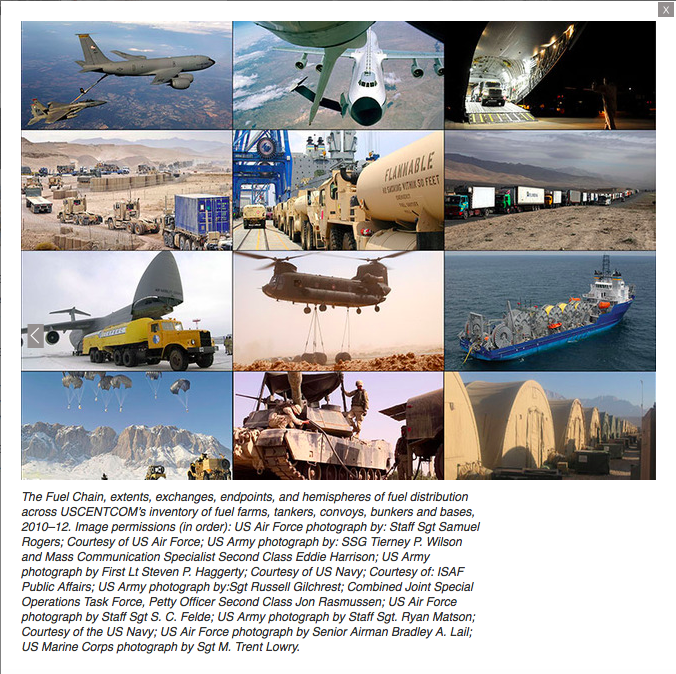
  • The first case study is Diego Garcia, an atoll in the Indian Ocean. Strategically located between East Africa, the Middle East and Southeast Asia, the atoll is a vital anchor for the Afghanistan campaign and for supplying US naval forces with fuel.

fuel-chain

  • A second case looks at the high number of blast trauma and death from improvised explosive devices in the Helmand Valley and investigates the intimate connections between the use of IED by local groups and the production and movements of opium.
  • The third case study… looks at nutritional politics and at DoD’s surveys of rare earths and other high-volume minerals in the territories the U.S. attempts to control.
  • A fourth case study explores the complexities and ‘indeterminacies’ inherent to technological systems such as drones.
  • The last case study zooms in on Washington D. C.’s landscape of defense apparatus.

The images I’ve used here are from the Graham Foundation‘s webpage on the project.

Data.mil

Four years ago I described Project THOR (Theatre History of Operations Reports), Lt Col Jenns Robertson‘s remarkable attempt to transcribe, standardise and integrate the available records of US Air Force strike missions – see here (scroll down) and (especially) here.

His databases have now been incorporated into Defense Digital Service‘s  data.mil, described as ‘an attempt in open defence data’: it’s also an experiment, which invites not only use but interaction and comment.  You can now access the THOR databases – and find the backstory – here.

In 2006, Lt Col Jenns Robertson and his team in the Pentagon faced a daunting task. Every week, the Air Force’s Chief of Staff and other senior military officers would ask for the latest on the air war in Iraq and Afghanistan – how many aircraft had flown that week, which ground units they supported, and what munitions they had dropped.

Working in the Air Force’s Operations Directorate, Robertson had access to a wide array of classified data sources, yet the weekly report was tedious to produce.  Data was not easily searched and often contained only half the picture, forcing Robertson’s team to assemble the report manually every week over the course of several days. He knew there was an easier way.

In his spare time, Robertson began creating the Theater History of Operations Reports (THOR), initially a simple Excel spreadsheet that eventually matured into the largest compilation of releasable U.S. air operations data in existence. Robertson tested his database with his team, asking them to generate the Chief’s weekly report twice — once manually, and again using THOR. The result was impressive: THOR cut the report work from three days to just under an hour.

After receiving Department of Defense approvals, Robertson was able to post THOR files online so interested public citizens could search the data for their own purposes. Robertson understands the vast potential benefits of opening such a large compilation of previously inaccessible data to the public. “I can’t envision all the ways this can be used”.

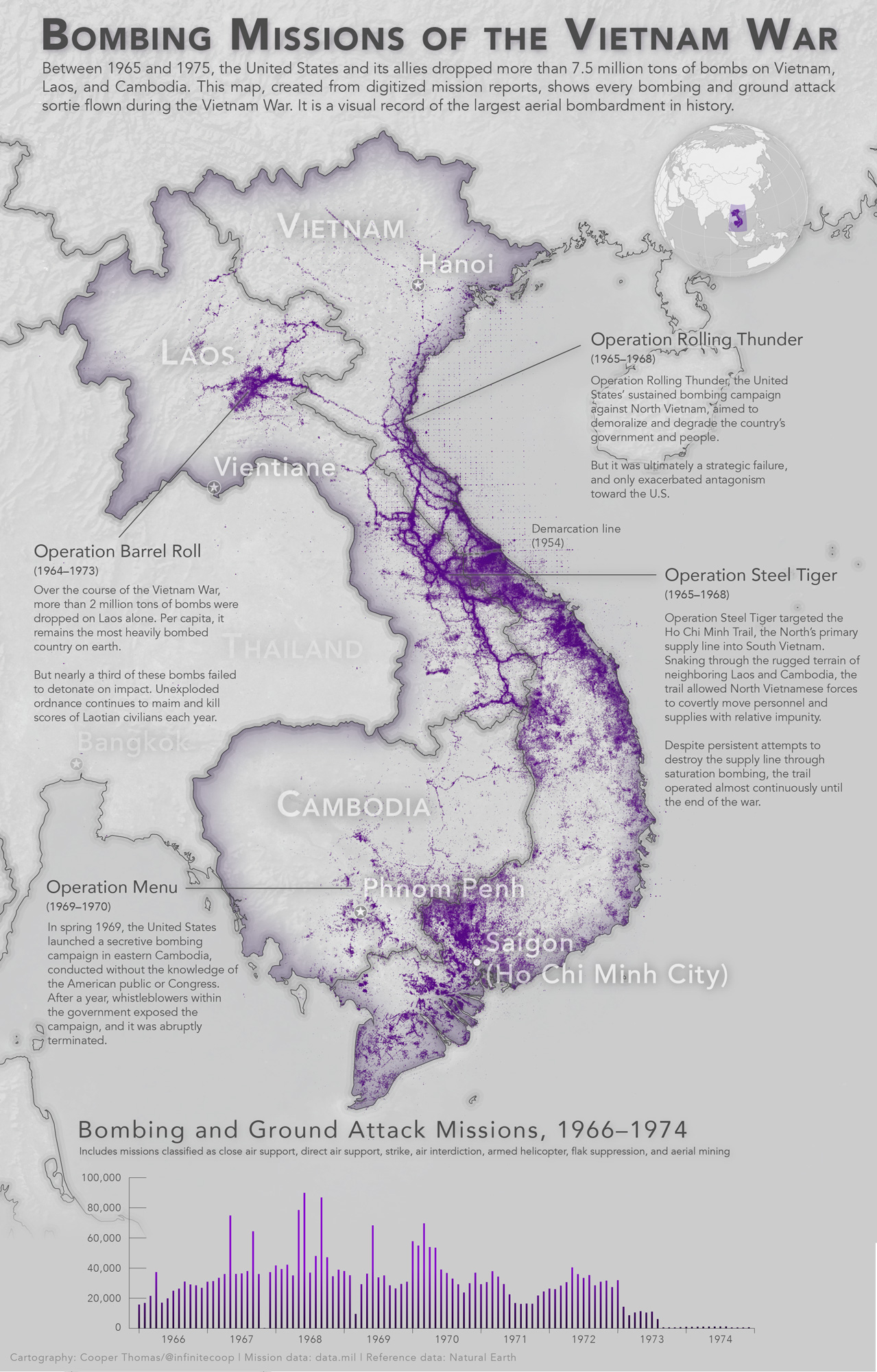
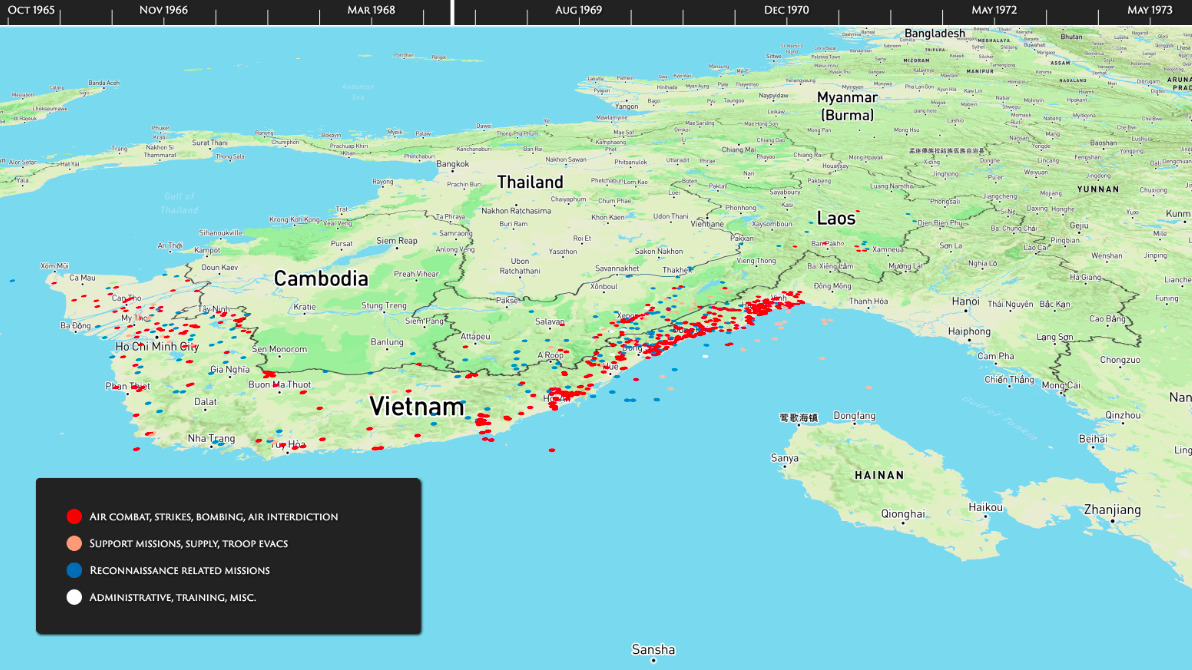
One of the first (once forbidden) fruits of releasing this data to the public is a remarkable map by Cooper Thomas plotting 3.1 million US bombing and ground attack missions (including Close Air Support and aerial interdiction) in North and South Vietnam, Laos and Cambodia between 1966 and 1974:

vietnamwarbombing-01

Cooper promises further explorations of this and other THOR databases; if you know of any others, please let me know [see UPDATE below].

Data.mil is promising to release a new ‘data story’ each month – next month should see the release of a military casualty database.  The site went live in December 2016, and  Mary Lazzeri and Major Aaron Capizzi explain the background:

Mary:  Major Aaron Capizzi, USAF had the idea to use open data principles to solve Department of Defense (DoD) problems after attending a panel discussion at the Harvard Kennedy School sponsored by former Deputy CTO, Nick Sinai. In addition, I had been looking to seed an open data effort at DoD. Aaron’s idea, coupled with the opportunity to present the Theater History of Operations (THOR) bombing data in a new and interesting way, provided a perfect opportunity to put energy behind the effort.

We’re looking to use this pilot to jumpstart a larger open data effort at DoD. The beta site is a working proof-of-concept. The next step is to show the larger DoD community that open data merits investment.

Aaron: Our approach is unique in two ways. First, Data.mil will test various ways of sharing defense-related information, gauging public interest and potential value, while protecting security and privacy. We will quickly iterate and improve the data offerings on data.mil, using public feedback and internal department discussions to best unlock the value of defense data. Our goal is to provide all data with enough context that users, both the public and defense employees, can understand the potential value and get started using data quickly.

Second, Data.mil will prioritize opening data using a demand-driven model, focusing on quality rather than standard quantity metrics. The Department of Defense regularly reports on the significant challenges we face in defending the nation, which range from attracting talented recruits to developing game-changing technology within constrained budgets. Most of these aspects of defense business generate large amounts of unclassified data which, if released, can encourage collaboration and innovation with public and private sector partners.

Mary: The site is built using an open data storytelling platform, LiveStories. Rather than simply posting a list of datasets, the goal of Data.mil is to tell stories with data. The site provides narratives to complement the data so users can more quickly understand and begin using it. LiveStories was selected for its visualization and data analysis features allowing us to present an engaging site for its users. In addition, it’s easy to use. Non-technical staff can use the platform to share their data and tell their stories.

We want to compel collaboration from military components, industry partners and the public. The partnership with data.world enables that collaboration providing the social media tools to support exploration and a community discussion of the data.

Conversely, it’s also worth thinking about how digital platforms are now used to plan and execute air strikes.  As the origins of Project THOR show, there are crucial links between retrospective reporting and prospective mission planning.

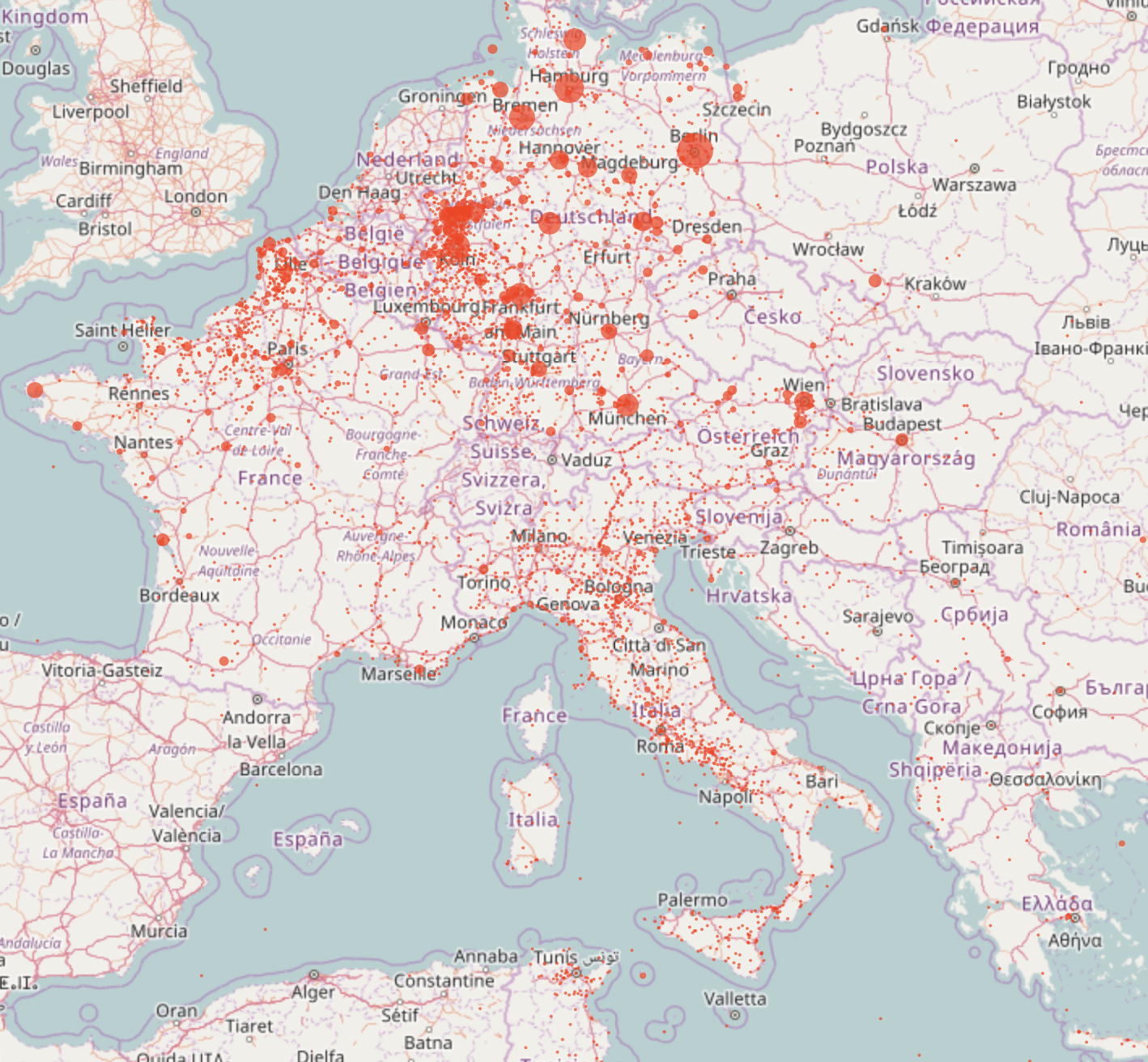
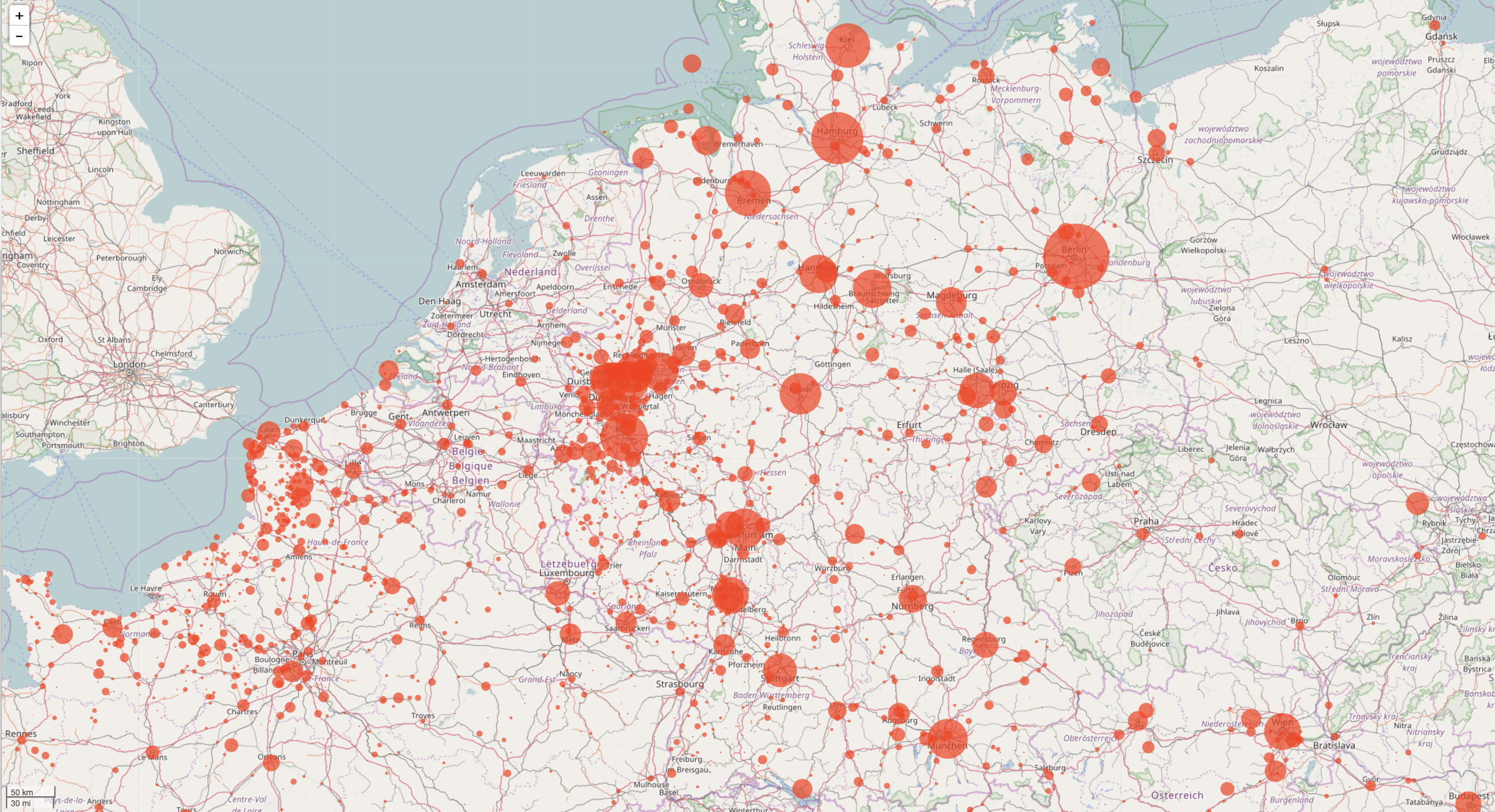
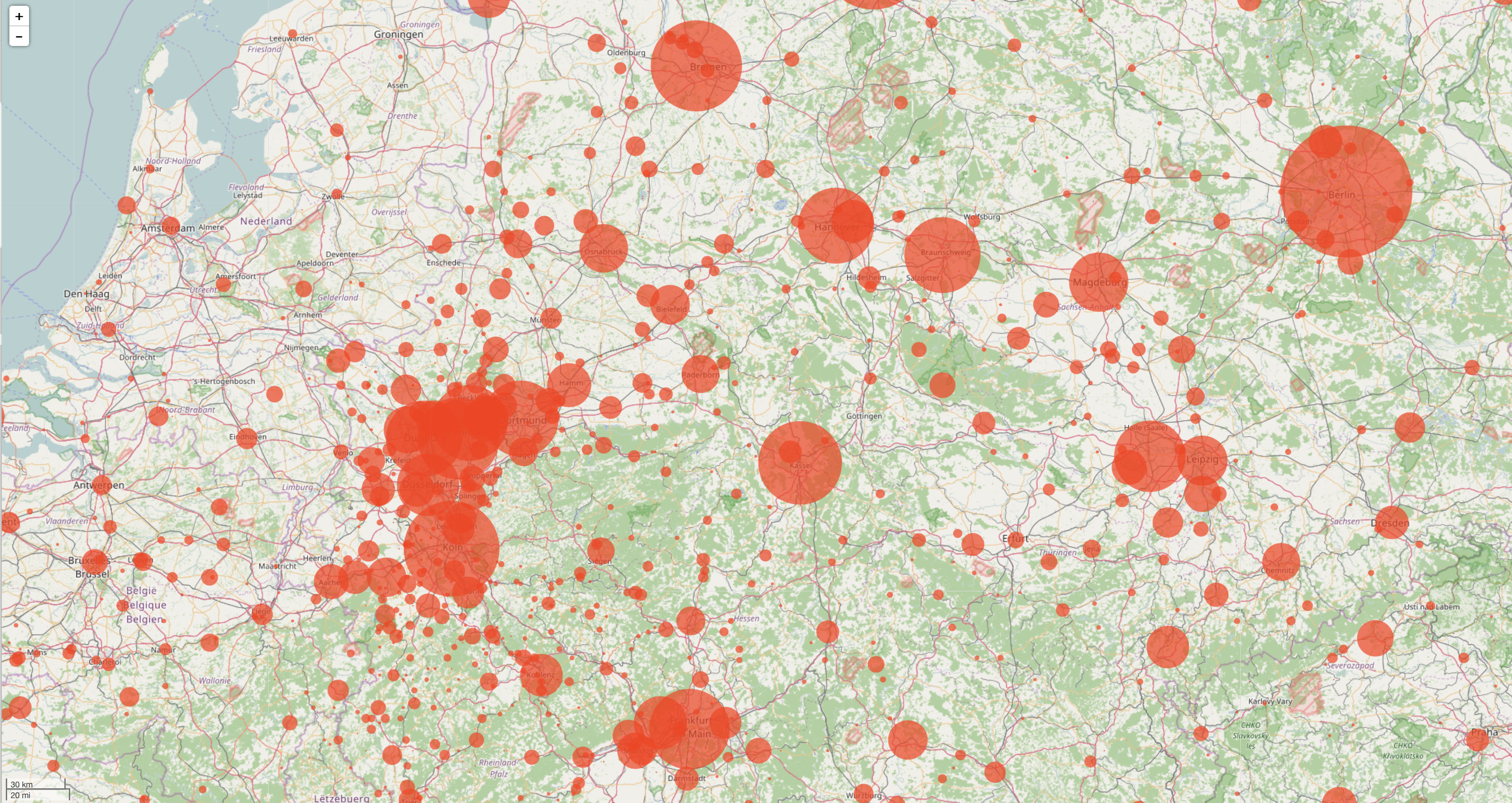
UPDATE:  I’ve since discovered this map of Allied bombing raids over Europe in the Second World War by Dimitri Lozeve, also drawn from Data.mil’s THOR database (click on the link for an enlarged version):

Allied bombing in Europe, 1939-1945

You can zoom in; here are two close-ups:

screen-shot-2017-01-18-at-12-35-23-pm

screen-shot-2017-01-18-at-12-38-26-pm

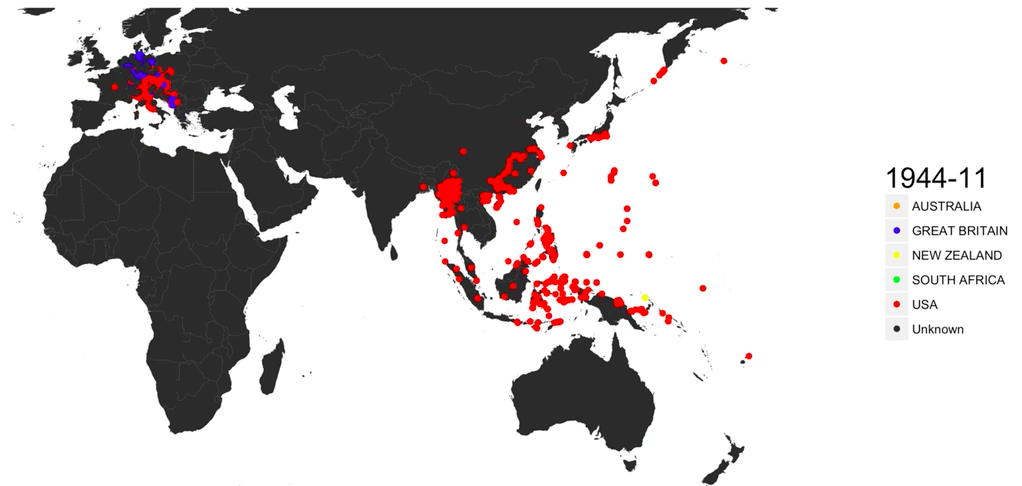
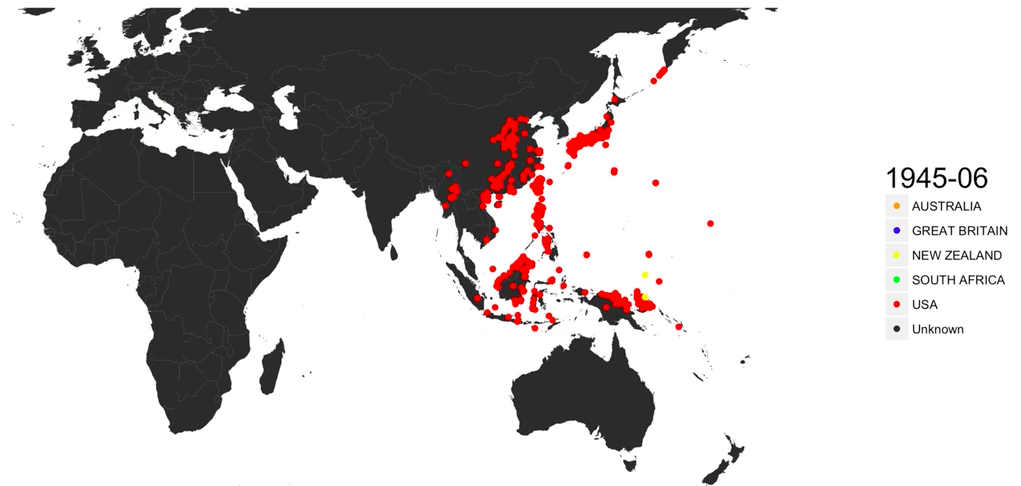
The map comes without a key; all I know is that the original tabulations include ‘U.S. and Royal Air Force data, as well as some Australian, New Zealand and South African air force mission’ 1939-1945 and refer to tonnages dropped: more discussion here.

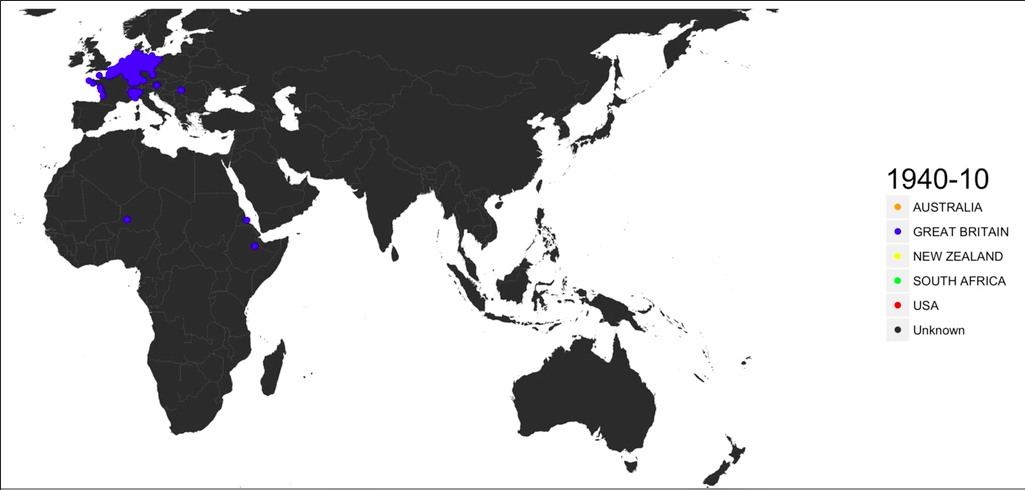
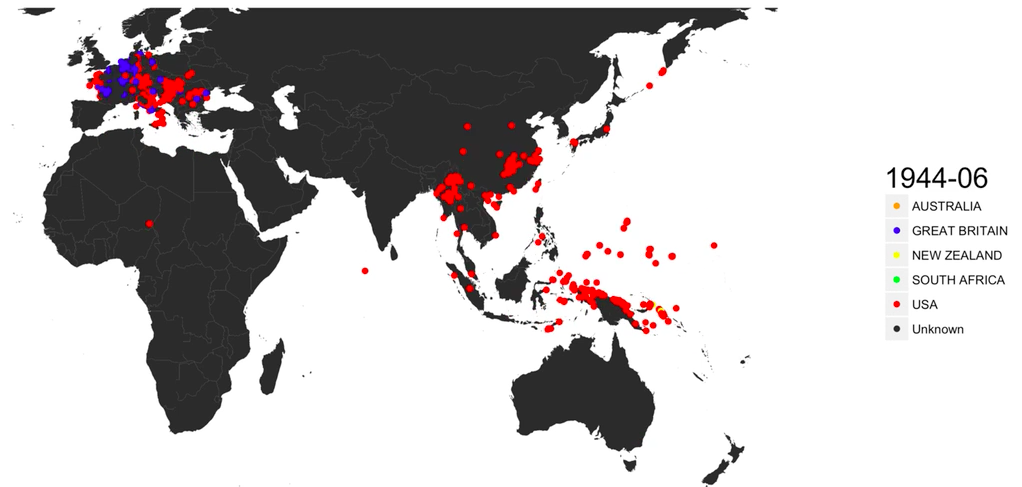
On the global scale, Data Is Beautiful has a GIF showing ‘every bomb dropped by Allied forces in World War II); you can view it as a video here, from which I’ve grabbed these screenshots that capture the shift from the European to the Pacific theatre:

allied-bombing-october-1940

allied-bombing-june-1943

allied-bombing-june-1944

allied-bombing-november-1944

allied-bombing-june-1945

Data World‘s Ian Greenleigh has kindly alerted me to a similar treatment of the THOR database for Vietnam by his colleague Mark DiMarco here:

Our point-of-view is from high above the South China Sea, where much of the US Navy fleet was stationed.
By giving the user a bird’s eye view, we can clearly see up and down the Vietnamese peninsula, and the neighboring countries of Laos & Cambodia, and precisely see where these missions took place.
Each frame of the visualization is a single day’s worth of missions. Some days had as many as 1,500 missions, while the records for some days are completely missing.
The colors of each of the circles dictates what type of mission took place.

The GIF is here; screenshot from the interactive:

Vietnam bombing GIF

Counting casualties and making casualties count

In my analysis of CIA-directed drone strikes in Pakistan’s Federally Administered Tribal Areas (see ‘Dirty Dancing’: DOWNLOADS tab) I drew upon the tabulations provided by the Bureau of Investigative Journalism and Chris Herwig‘s cartographic animation of casualties between 2004 and 2013: see my discussion here and the maps here.

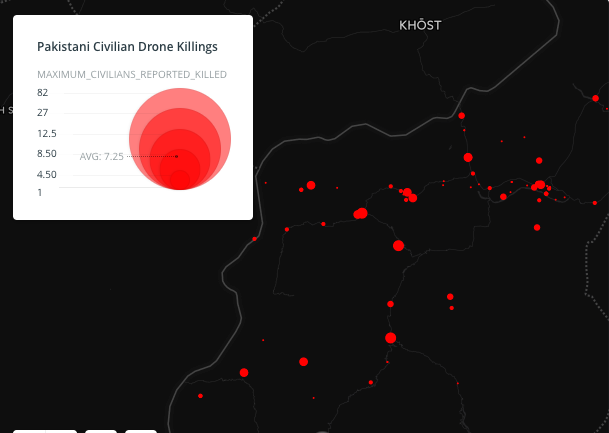
Quartz’s CityLab is now running a week-long series on Borders (‘stories about places on the edge’) and it includes a new series of interactive maps showing civilian casualties from drone strikes in the FATA (this series also ends in 2013).  Here’s a screenshot:

screen-shot-2017-01-13-at-21-04-37

There’s not much geographical analysis – apart from noting the focus on North and South Waziristan – and, as I argued before, I think it a mistake to isolate drone strikes from the wider matrix of military and paramilitary violence in the borderlands (including air strikes by the Pakistan Air Force).  And there are obvious problems in disentangling civilian casualties – the US Air Force has the greatest difficulty in identifying civilians in the first place.

It’s difficult to put all this together – and particularly to hear the voices of those caught up in a matrix of such extensive violence that, as Madiha Tahir puts it so well, ‘war has lacerated the land into stillness.’  In an exquisite essay in Public Culture 29 (1) (2017) Madiha reflects on that difficulty and the ‘spatial stories’ local people struggle to tell.  Her title – ‘The ground was always in play’ – is borrowed from Michael Herr‘s despatches from Vietnam, but the full quotation explains how aerial violence echoes across this shattered land:

‘The ground was always in play, always being swept.  Under the ground was his, above it was ours.  We had the air.’

But the ‘we’ in the FATA is plural – a product of the ‘dirty dancing’ between Washington and Islamabad – and so we come to the story Madiha pieces together:

The story Mir Azad came to tell is this [and, as Madiha shows, he had travelled 500 difficult miles across South and North Waziristan to tell it]. In July 2015, American drones bombed and killed two of his cousins, Gul Rehman Khan and Mohammad Khandan. After Zarb-e-Azb began in June 2014, thousands of Waziris fled in all directions, businesspeople, farmers, militants, and students, including to the Pakistani villages in Barmal, and there the drones followed. The military operation and the “surgical” operation, carpet bombing and “precision strikes,” coordinated maybe, intentionally or not, they worked together to redraw the lines of movement, new containment zones, a shockwave that could start with ground troops in North Waziristan and end with a drone bombing a car in Barmal [in Paktika province, on the border with North Waziristan].

My extract can’t do justice to the essay: do read it if you can.

Since I completed the original version of ‘Dirty Dancing’ a number of new reports from Waziristan have provided more details of the co-ordination of air/ground operations.  Over the summer AFP reported that the Pakistani military had removed the roofs of houses to provide a better ‘aerial view’:

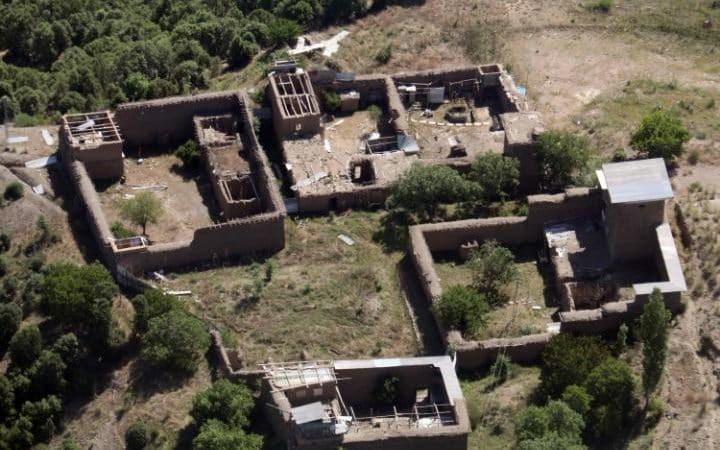
“(The) military has removed the roofs of the houses to have a better aerial view and stop militants taking refuge in these abundant, fort-like mud houses,” the official told reporters.  From the helicopter journalists could see scores of homes with no roofs but appearing otherwise intact, their interiors exposed to the elements.

roofs-removed-in-south-waziristan-2016

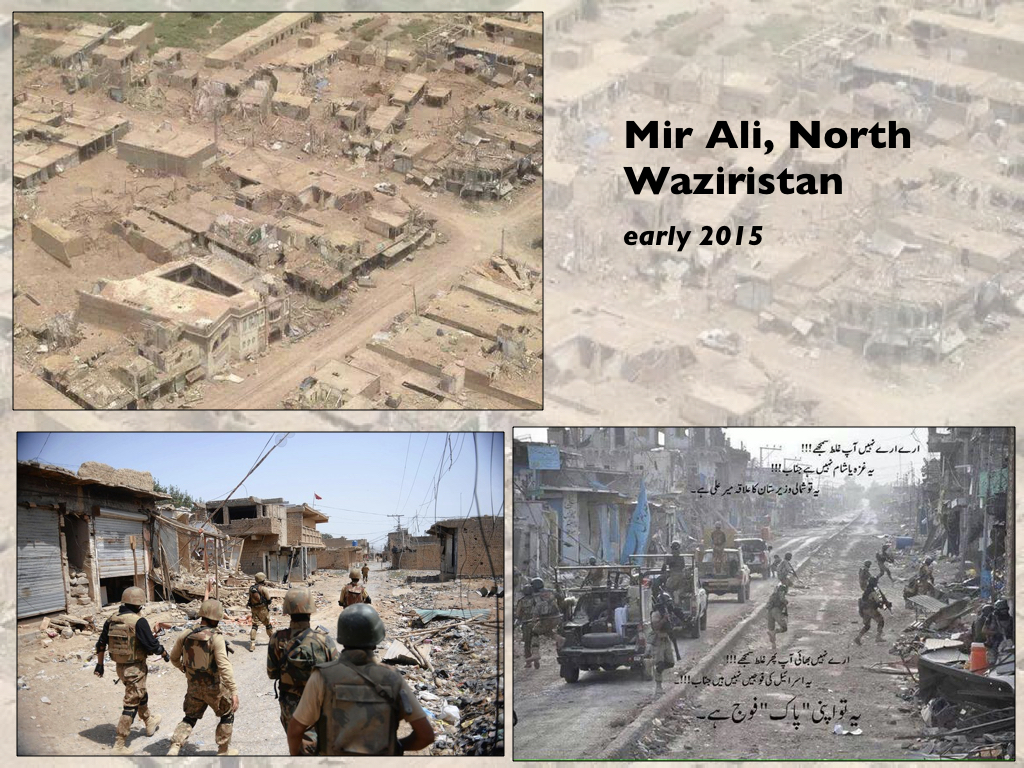
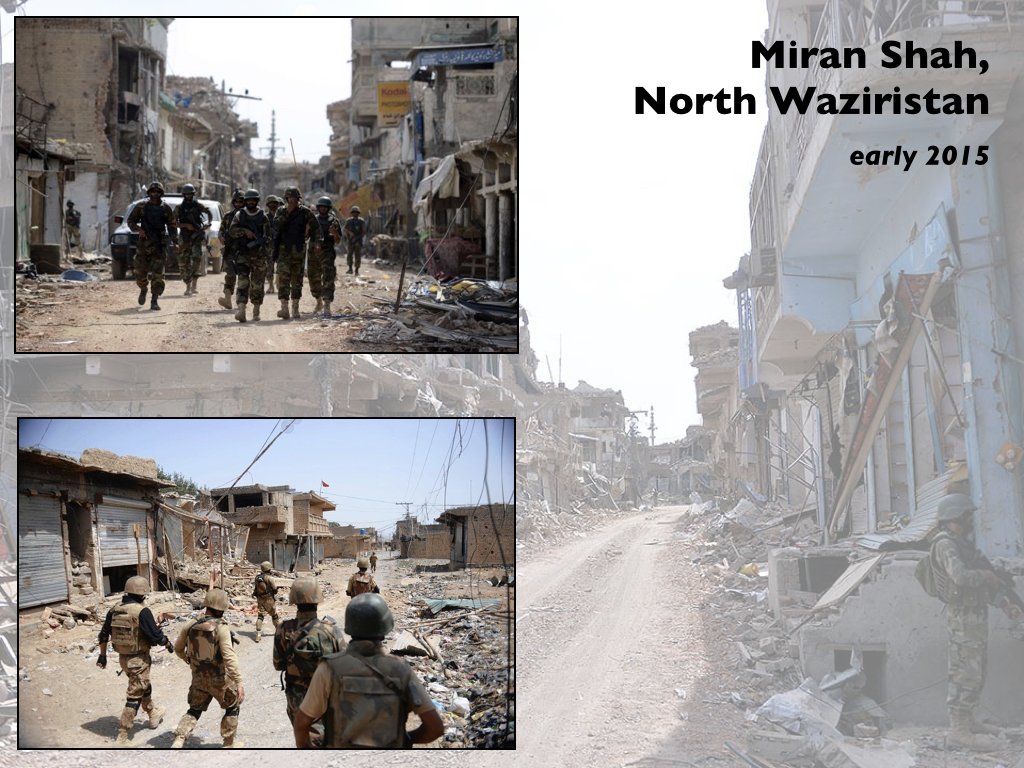
But in many cases – especially in North Waziristan – those ordered by the military to leave their homes have returned to find them reduced to rubble.

miran-shah-and-mir-ali-2015-001

miran-shah-and-mir-ali-2015-002

Earlier this month Ihsan Dawar reported from North Waziristan on ‘Life on the debris of wrecked houses’:

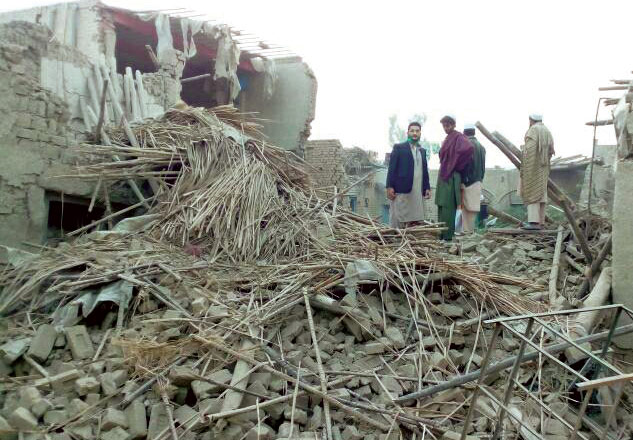
Murtaza Dawar sat with his children and cousins on the debris of his house. Behind him the setting sun was a ball of fire in the sky, reducing him and his family to silhouettes, the shards of glass in the wreck of his house catching the light and winking in the gathering dark of an early evening.

Coming back home to Mirali in North Waziristan has been a bittersweet experience for Dawar, 48. Sweet because he and his family has returned home after more than two years of displacement. Bitter, because they have come back to wreckage where their home was.

“We have nothing to do with militancy or Talibanization but our house has been demolished,” says Dawar, taking a break from pitching a tent. “There is not a single room intact. I don’t know where to take my family to protect them from the terrible cold.”

Dawar’s is not the only house that was razed during the military operation Zarb-e-Azb, launched in June 2014 to clear North Wazristan of militants. Of the nearly million tribesmen displaced by the operation, many have lost not only their belongings and assets they left behind in the tribal district and their houses have been demolished for no reason.

The government has not issued any clear data on the number of houses demolished in North Waziristan. In May 2016, a property damage survey conducted by the Fata Disaster Management Authority (FDMA) revealed that 11,663 houses were fully and partially damaged during operations against militants in South Waziristan, North Waziristan and the Khyber Agency.

Local tribesmen working in the political administration’s office in North Waziristan told Truth tracker on condition of anonymity – because of the sensitivity of information – that about 1500 houses were completely destroyed in the Mirali subdivision alone.

a-house-in-hurmaz-village

Cartographic animations can’t capture these in-animations, but we must surely do our best to attend to them.