Death sentences

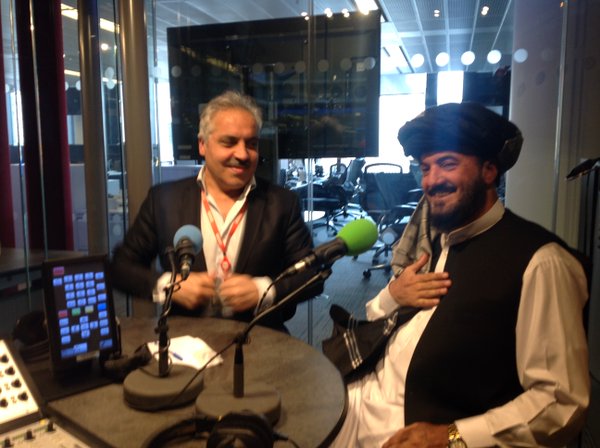
Living under drones is both a chilling report and a nightmare reality.  In November 2014, in a New Yorker essay called ‘The unblinking stare‘, Steve Coll reported a conversation with Malik Jalal from North Waziristan:

‘Drones may kill relatively few, but they terrify many more…  They turned the people into psychiatric patients. The F-16s might be less accurate, but they come and go.’

Now Reprieve has put a compelling face to the name – to a man who believes, evidently with good reason, that he has been included in the CIA’s disposition matrix that lists those authorised for targeted killing.
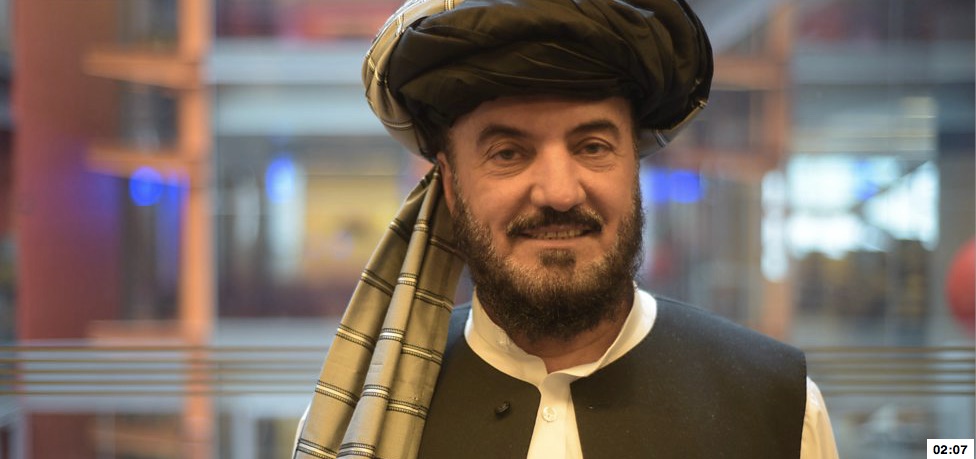
Malik Jalal JPEG

‘Malik’ is an honorific reserved for community leaders, and Jalal is one of the leaders of the North Waziristan Peace Committee (NWPC).  Its main role is to try to keep the peace between the Taliban and local authorities, and it was in that capacity that he attended a Jirga in March 2011.  He says this was on 27 March, but I think it must have been the strike that killed 40 civilians at Datta Khel on 17 March (see the summary from the Bureau of Investigative Journalism here and my post here).

Here are the relevant passages from my ‘Dirty dancing’ essay, following from a discussion of Pashtunwali and customary law in the Federally Administered Tribal Areas (I’ve omitted the footnotes and references):

***

‘In short, if many of the Pashtun people in the borderlands are deeply suspicious of and even resentful towards Islamabad (often with good reason) they are ‘neither lawless nor defenceless.’

‘Yet the trope of ‘lawlessness’ persists, and it does important work. ‘By alleging a scarcity of legal regulation within the tribal regions,’ Sabrina Gilani argues, ‘the Pakistani state has been able to mask its use of more stringent sets of controls over and surveillance within the area.’ The trope does equally important work for the United States, for whom it is not the absence of sovereign power from the borderlands that provides the moral warrant for unleashing what Manan Ahmad calls its ‘righteous violence’. While Washington has repeatedly urged Islamabad to do much more, and to be less selective in dealing with the different factions of the Taliban, it knows very well that Pakistan has spasmodically exercised spectacular military violence there. But if the FATA are seen as ‘lawless’ in a strictly modern sense – ‘administered’ but not admitted, unincorporated into the body politic – then US drone strikes become a prosthetic, pre-emptive process not only of law enforcement but also of law imposition. They bring from the outside an ‘order’ that is supposedly lacking on the inside, and are reconstituted as instruments of an aggressively modern reason that cloaks violence in the velvet glove of the law.
Print

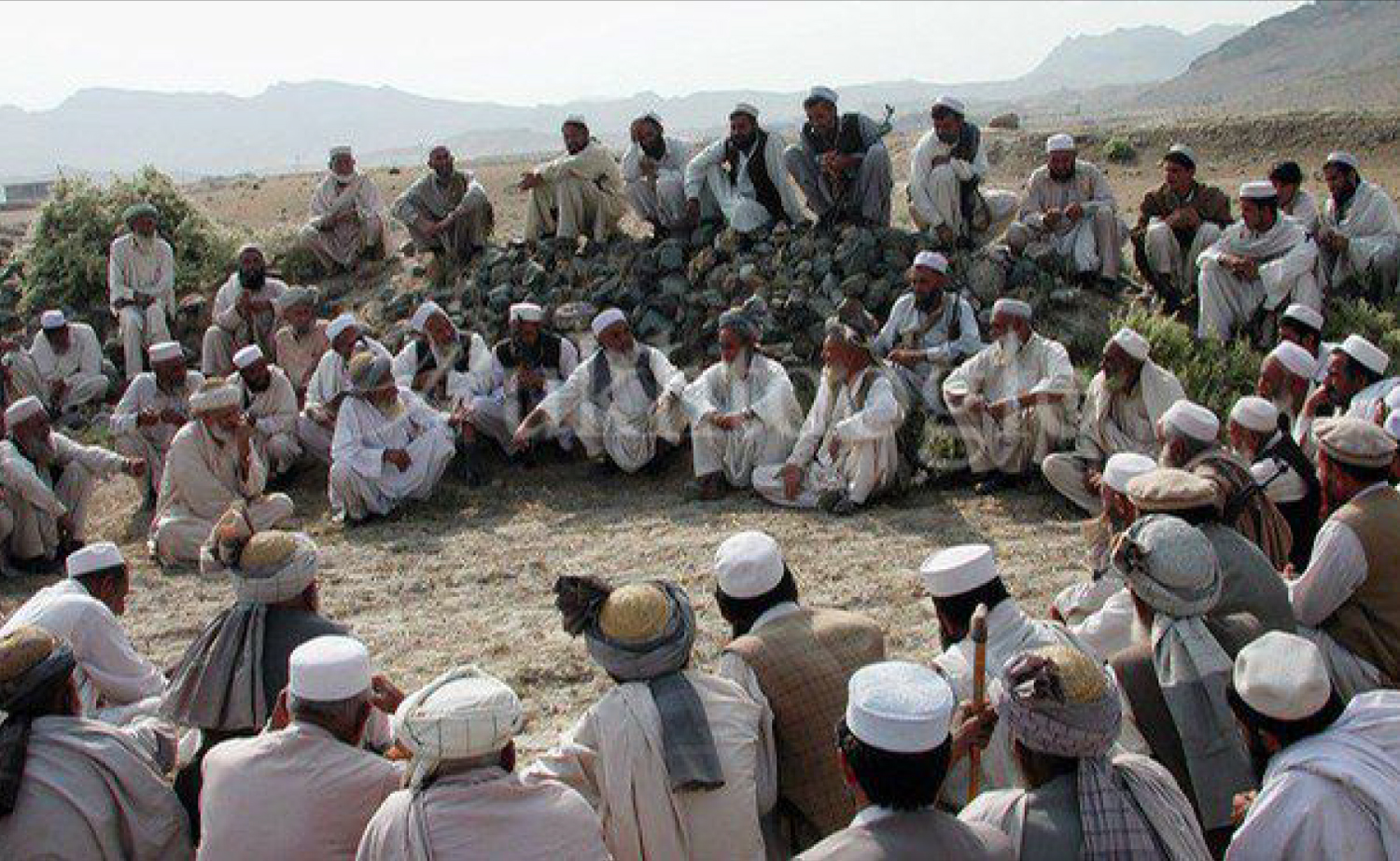
And yet the CIA’s own willingness to submit to the principles and procedures of modern law is selective and conditional; we know this from the revelations about torture and global rendition, but in the borderlands the agency’s disregard for the very system it purports to defend also exposes any group of men sitting in a circle with guns to death: even if they are gathered as a Jirga. On 27 January 2011 CIA contractor Raymond Davis was arrested for shooting two young men in Lahore. The targeted killing program was suspended while the United States negotiated his release from custody, agreeing to pay compensation to the victims’ families under Sharia law so that he could be released from the jurisdiction of the court. On 16 March, the day after Davis’s release, a Jirga was convened in Dhatta Khel in North Waziristan. A tribal elder had bought the rights to log an area of oak trees only to discover that the land also contained chromite reserves; the landowner was from a different tribe and held that their agreement covered the rights to the timber but not the minerals, and the Jirga was called to resolve what had become an inter-tribal dispute between the Kharhtangi and the Datakhel. Maliks, government officials, local police and others involved in the affair gathered at the Nomada bus depot – a tract of open ground in the middle of the small town – where they debated in two large circles. Agreement was not reached and the Jirga reconvened the next morning. Although four men from a local Taliban group were present, the meeting had been authorised by the local military commander ten days earlier and was attended by a counsellor appointed by the government to act as liaison between the state, the military and the maliks. It was also targeted by at least one and perhaps two Predators. At 11 a.m. multiple Hellfire missiles roared into the circles. More than forty people were killed, their bodies ripped apart by the blast and by shattered rocks, and another 14 were seriously injured.
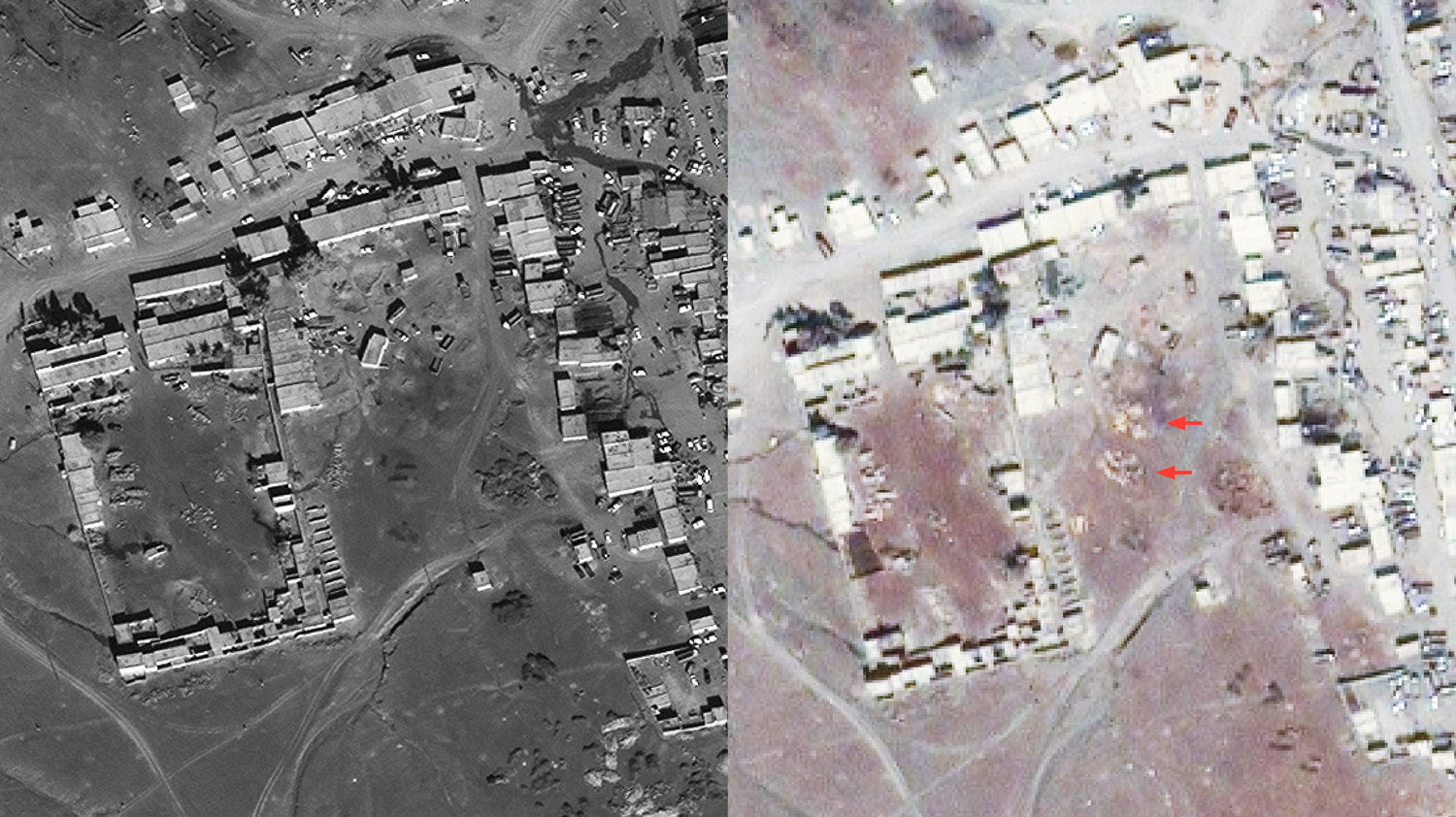
Dhatta Khel before and after drone strike (Forensic Architecture)

There is no doubt that four Taliban were present: they were routinely involved in disputes between tribes with competing claims and levied taxes on chromite exports and the mine operators. But the civilian toll from the strike was wholly disproportionate to any conceivable military advantage, to say nothing of the diplomatic storm it set off, and several American sources told reporters that the attack was in retaliation for the arrest of Davis: ‘The CIA was angry.’ If true, this was no example of the dispassionate exercise of reason but instead a matter of disrespecting the resolution offered by Sharia law and disordering a customary judicial tribunal. Even more revealing, after the strike an anonymous American official who was supposedly ‘familiar with the details of the attack’ told the media that the meeting was a legitimate military target and insisted that there were no civilian casualties. Serially: ‘This action was directed against a number of brutal terrorists, not a county fair’; ‘These people weren’t gathering for a bake sale’; ‘These guys were … not the local men’s glee club’; ‘This was a group of terrorists, not a charity car wash in the Pakistani hinterlands.’ The official – I assume it was the same one, given the difference-in-repetition of the statements – provided increasingly bizarre and offensively absurd descriptions of what the assembly in Datta Khel was not: he was clearly incapable of recognising what it was. Admitting the assembly had been a properly constituted Jirga would have given the lie to the ‘lawlessness’ of the region and stripped the strike of any conceivable legitimacy. The area was no stranger to drone attacks, which had been concentrated in a target box that extended along the Tochi valley from Datta Khel through Miran Shah to Mir Ali, but those responsible for this attack were clearly strangers to the area.

***

‘Like others that day,’ Jalal concedes, ‘I said some things I regret. I was angry, and I said we would get our revenge. But, in truth, how would we ever do such a thing? Our true frustration was that we – the elders of our villages – are now powerless to protect our people.’

This was the fourth in a series of strikes that Jalal believes targeted him:

‘I have been warned that Americans and their allies had me and others from the Peace Committee on their Kill List. I cannot name my sources [in the security services], as they would find themselves targeted for trying to save my life. But it leaves me in no doubt that I am one of the hunted.’

He says he is an opponent of the drone wars – but if that were sufficient grounds to be included on the kill list it would stretch into the far distance.

He also says that the Americans ‘think the Peace Committee is a front’ working to create ‘a safe space for the Pakistan Taliban.’

‘To this I say: you are wrong. You have never been to Waziristan, so how would you know?’

And he describes the dreadful impact of being hunted on him and his family:

‘I soon began to park any vehicle far from my destination, to avoid making it a target. My friends began to decline my invitations, afraid that dinner might be interrupted by a missile.

‘I took to the habit of sleeping under the trees, well above my home, to avoid acting as a magnet of death for my whole family. But one night my youngest son, Hilal (then aged six), followed me out to the mountainside. He said that he, too, feared the droning engines at night. I tried to comfort him. I said that drones wouldn’t target children, but Hilal refused to believe me. He said that missiles had often killed children. It was then that I knew that I could not let them go on living like this.’

And so he has travelled to Britain to plead his case:

‘I came to Britain because I feel like Britain is like a younger brother to America. I am telling Britain that America doesn’t listen to us, so you tell them not to kill Waziristanis.’

You can hear an interview with him on BBC’s Today programme here.
CfvlDFAXIAAT7Yk

In you think Britain is distanced from all this, read Reprieve‘s latest report on ‘Britain’s Kill Listhere (which focuses on the Joint Prioritised Effects List in Afghanistan and its spillover into Pakistan) and Vice‘s investigation into the UK’s role in finding and fixing targets in Yemen here.
Object Lessons

I was supposed to give a shortened version of ‘Little boys and blue skies‘ at the AAG Annual Meeting in San Francisco (about drones and atomic war: available under the DOWNLOADS tab) and fully intended to do so.  But in the event – and as I implied in a previous post – I decided to talk instead about Harry Parker‘s Anatomy of a soldier.  It was a spur of the moment decision, though it had been pricking away in my mind ever since I read the novel, and I only decided to do it at 10.30 the night before: madness.  But it was much closer to the theme of the sessions organised by Kate Kindervater and Ian Shaw on ‘Objects of Security and War: Material Approaches to Violence and Conflict‘ than my original presentation would have been.

I’ve added the presentation to those available under the DOWNLOADS tab (scroll right down).

I hope that most of it will be self-explanatory, but some notes might help.  I started out by invoking Tim O’Brien‘s twin accounts of the Vietnam War, The things they carried and If I should die in a combat zone, which provide vivid reminders of the weight – physical and emotional – borne by ground troops and the toll they impose on the soldier’s body.

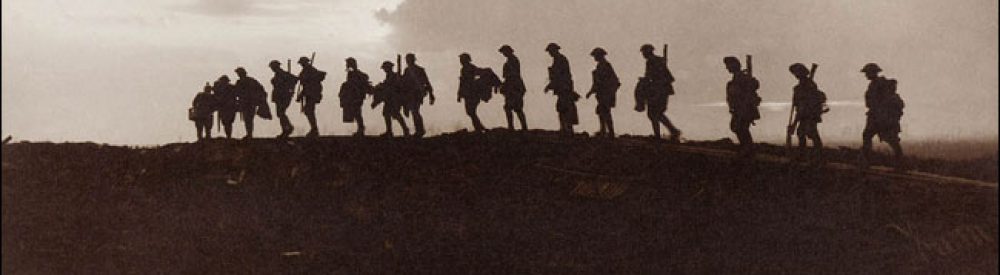
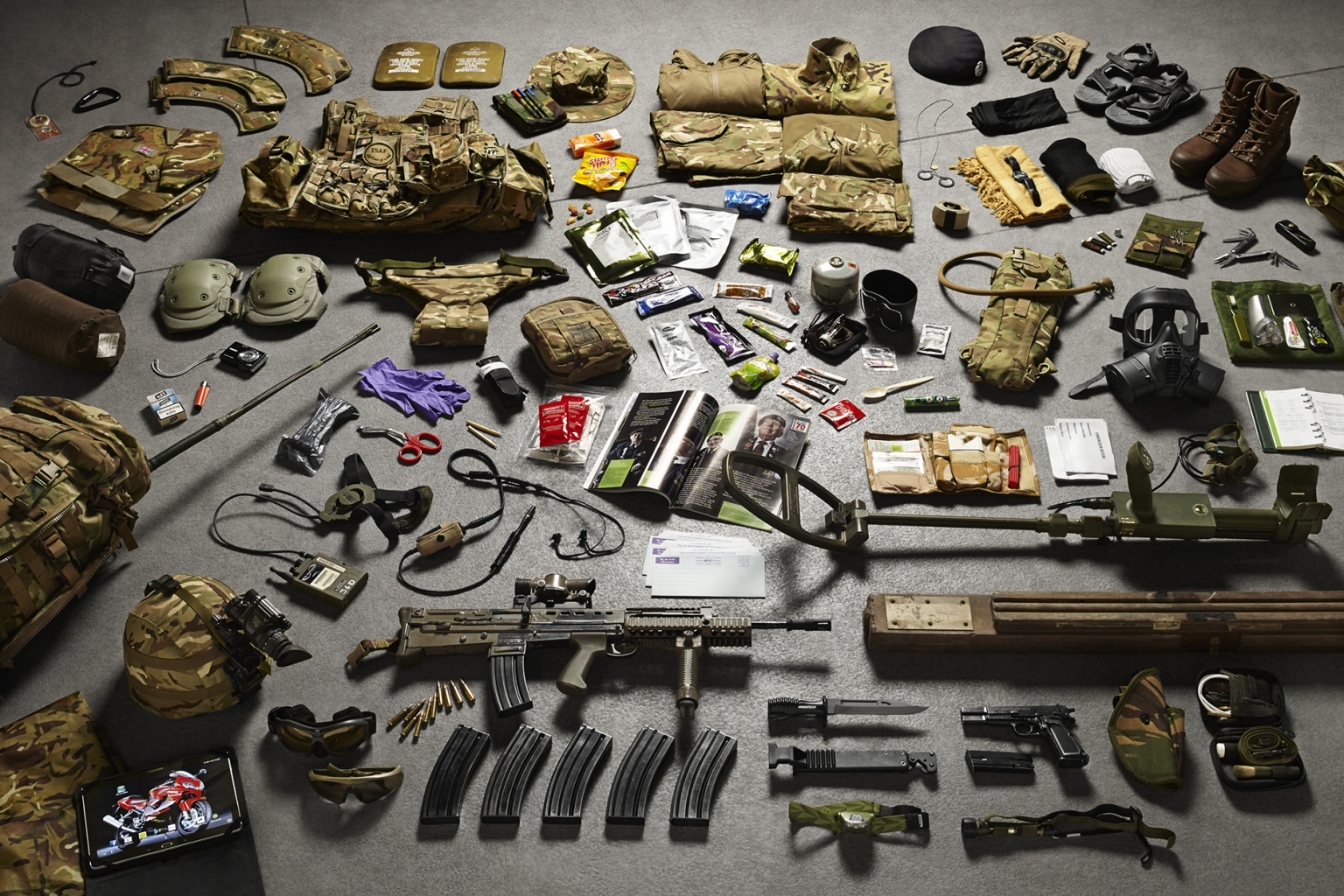
I talked about this in ‘The natures of war‘ (also under the DOWNLOADS tab) and – following in the footsteps of that essay – I sketched a brief history of the objects soldiers carried in to the killing fields: from the Somme in 1916 through Arnhem in 1944 to Helmand in Afghanistan in 2014 [shown below].  My source for these images was photographer Thom Atkinson‘s portfolio of Soldiers’ Inventories.

KIT Helmand 2014

But I was more interested now in the objects that carried the soldiers, so to speak, which is why I turned to Anatomy of a soldier.  

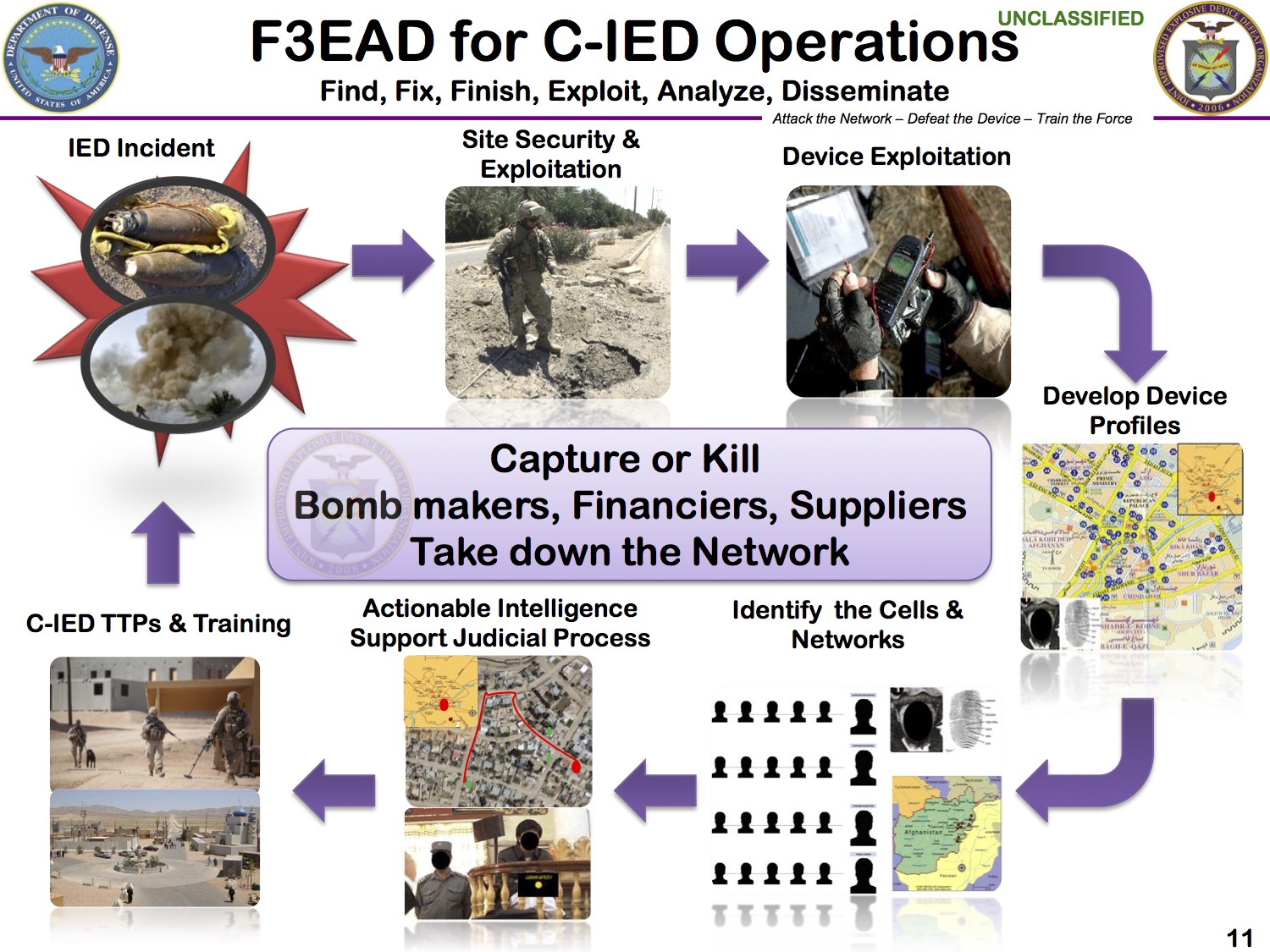
In order to throw the novel into even sharper relief, I outlined some of the other ways in which IED blasts in Afghanistan have been narrated.  These ranged from the US Army’s own schematics [the image below is taken from a presentation by Captain Frederick Gaghan here]  to Brian Castner’s truly brilliant non-fiction All the ways we kill and die, in which he describes his investigation into the death of his friend Matt Schwartz from an IED blast in Helmand in January 2012. (This book has taught me more about the war in Afghanistan than anything – I mean anything – I’ve ever read).

GAGHAN Attacking the IED Network jpegs

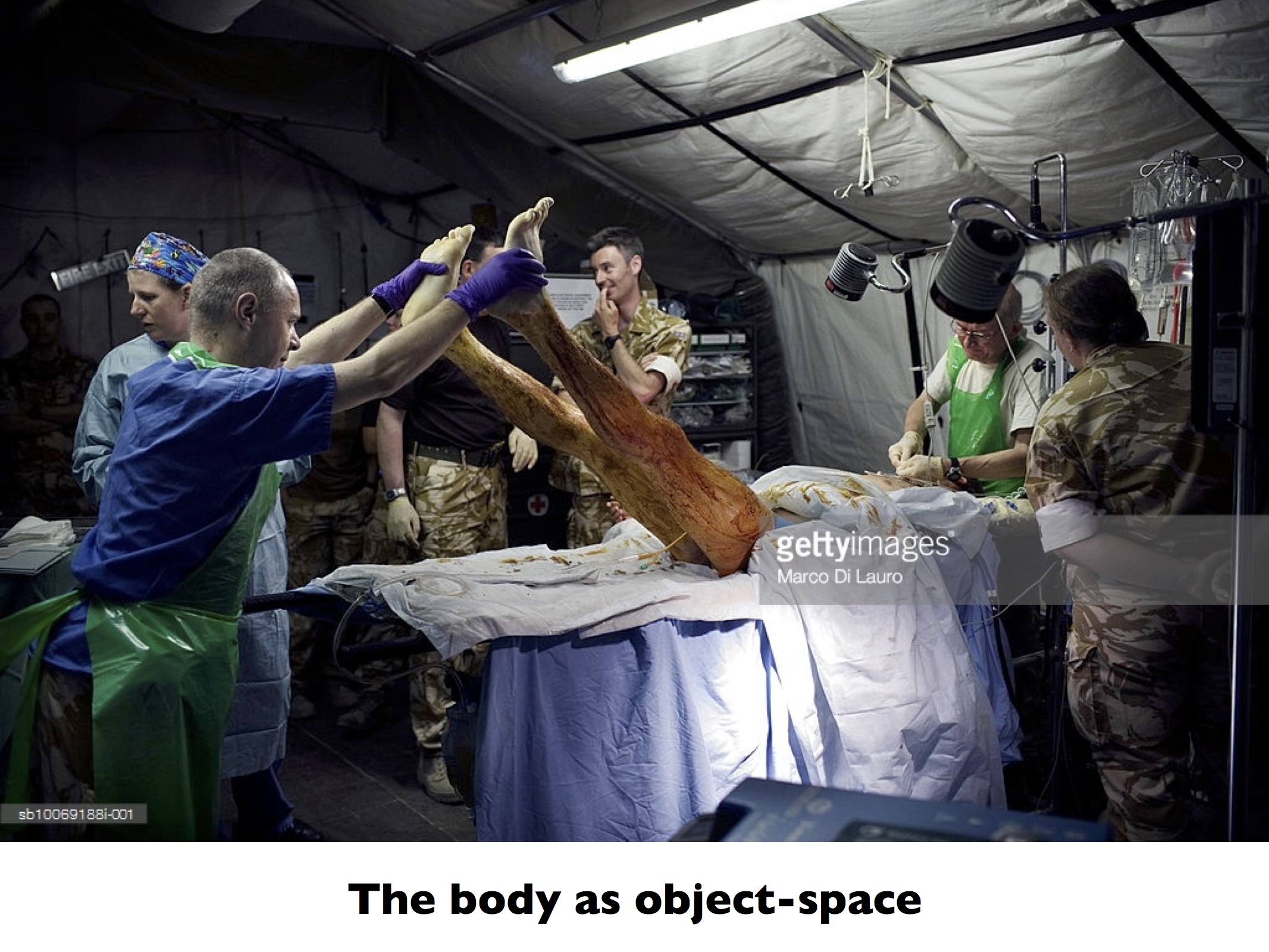
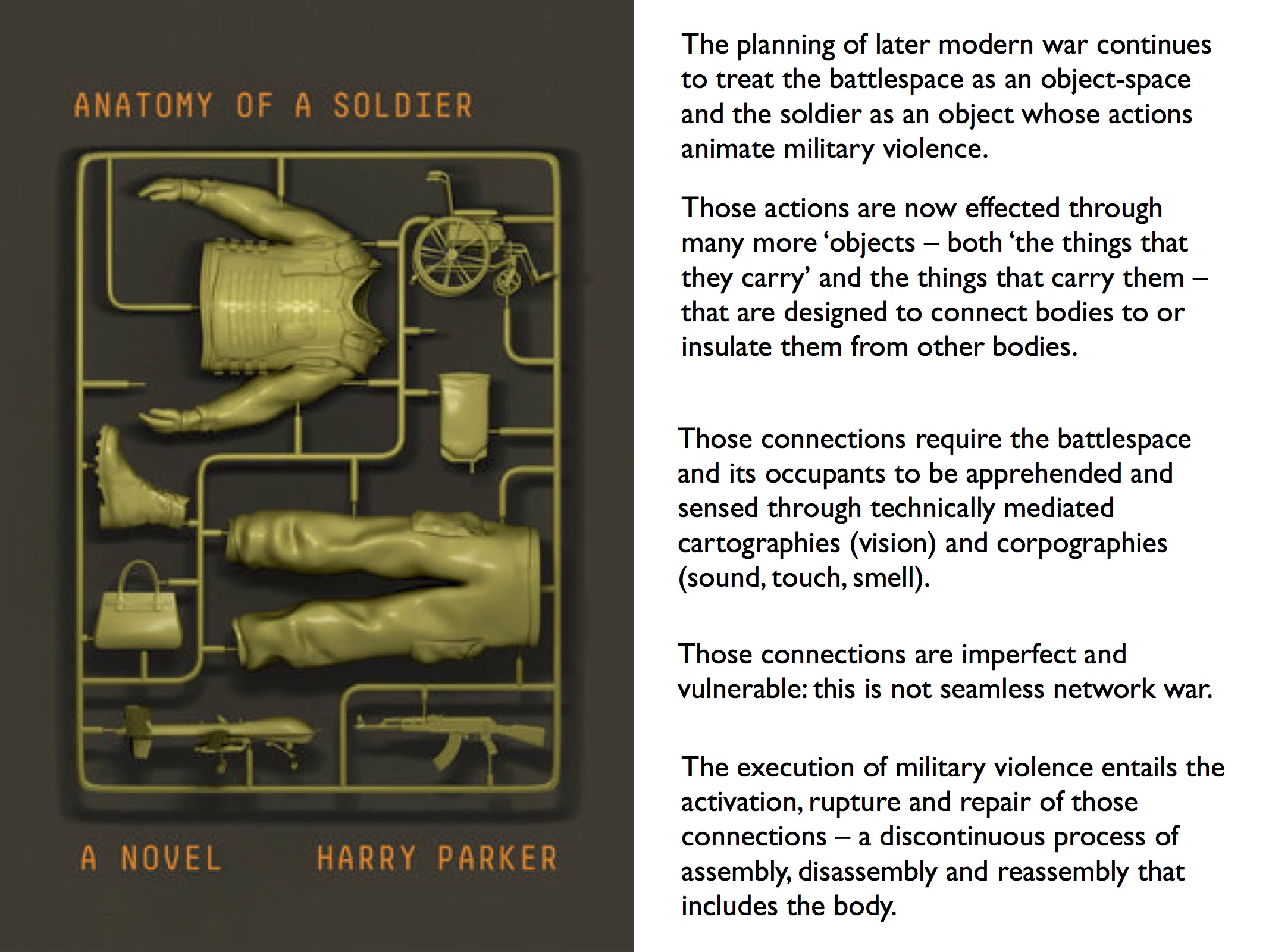
All of this prepared the ground for Parker’s novel which tells the story of a young British officer in Helmand, Tom Barnes, who loses his legs to an IED blast – told in 45 short chapters by the different objects involved.  Not all of the chapters are wholly successful, but many of them are utterly compelling and immensely affecting.  The overall effect is to emphasize at once the corporeality of war – ‘virtually every object-fragment that is proximate to Barnes is impregnated with his body: its feel – its very fleshiness – its sweat, its smell, its touch’ – and the object-ness of military violence.

GREGORY The body as object-space

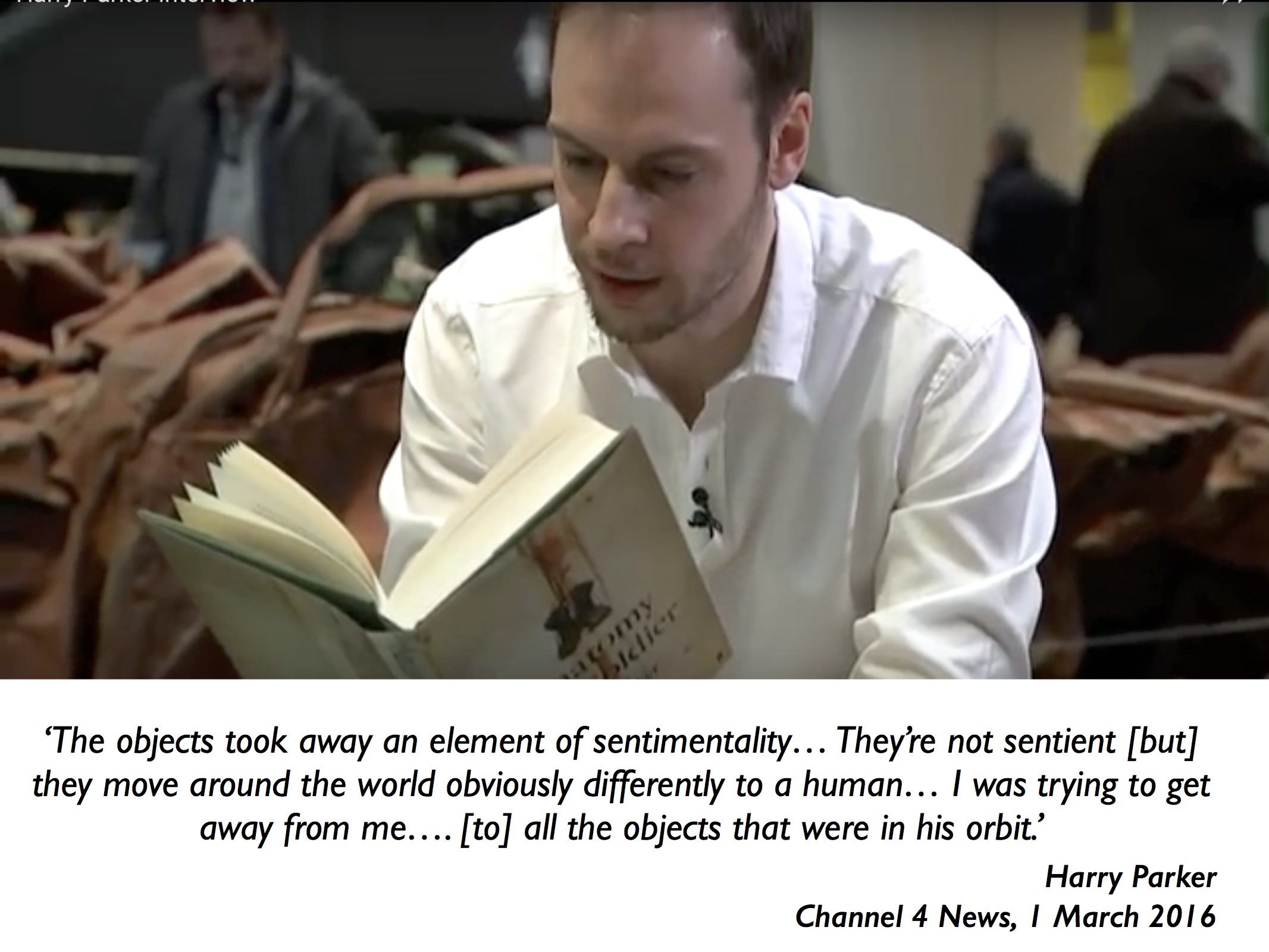
I juxtaposed the novel to Parker’s own story – he too lost his legs to an IED in Afghanistan in July 2009.  Yet he constantly emphasises that he never wanted the novel to be about him.

Harry Parker reading from Anatomy of a Soldier, IWM, LOndon

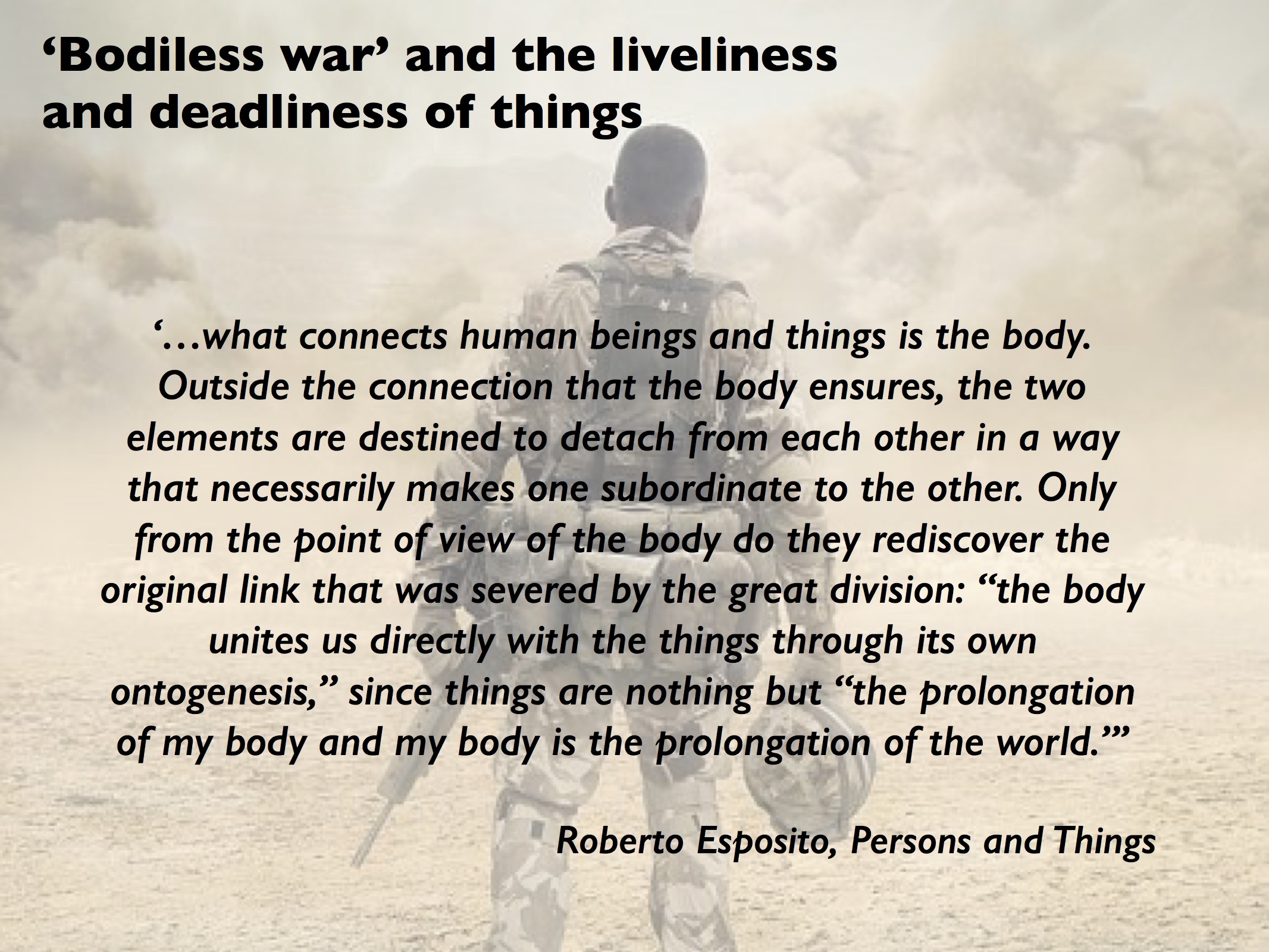
Still, the body is central to all this – Parker’s body and Barnes’s body – and so finally I drew on Roberto Esposito‘s Persons and Things to draw the wider lesson and, in particular, to nail the treacherous lie of ‘bodiless war’:

GREGORY The things that carry them

GREGORY Bodiless war

Flying lessons

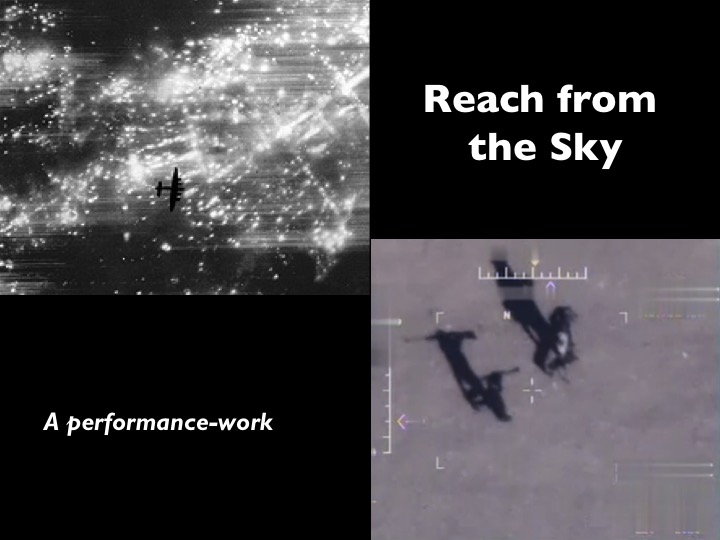
Reach from the Sky PERFORMANCE WORK

To complement the comparison implicit in my last post – between ‘manned’ and ‘unmanned’ military violence – I’ve added a presentation to those available under the DOWNLOADS tab.  I prepared it last month for an event at the Peter Wall Institute for Advanced Studies, where I performed it with my good friend Toph Marshall.  It’s part of my performance-work on bombing, and stages two cross-cutting monologues between a veteran from RAF Bomber Command who flew missions over France and Germany in the Second World War and a pilot at Creech Air Force Base in Nevada operating a Predator over Afghanistan.  As the title implies, it dramatises many of the themes I discuss in more analytical terms in my Tanner Lectures, ‘Reach from the Sky’.

For the performance, each speech was complemented by back-projected images.  Virtually all of the words were taken from ‘found texts’ – memoirs, diaries, letters and interviews – and the only consciously fictional lines were lifted from Andrew Niccol‘s Good Kill (and I’m sure that they originated in an interview with a real pilot).

It’s imperfect in all sorts of ways, and it is still very much a work in progress, but I’m posting it because it might be helpful for anyone teaching about aerial violence and its history.  If it is – or even (especially) if it is isn’t – I hope you’ll let me know.

Eyes in the Skies

eyes_in_the_skies_pic

I’m just back from a wonderful time at UC Davis, where I was speaking at a symposium called “Eyes in the skies: drones and the politics of distance warfare.”  It was a creative program, packed with insights from Caren Kaplan and Andrea Miller, Priya Satia and Joe Delappe.

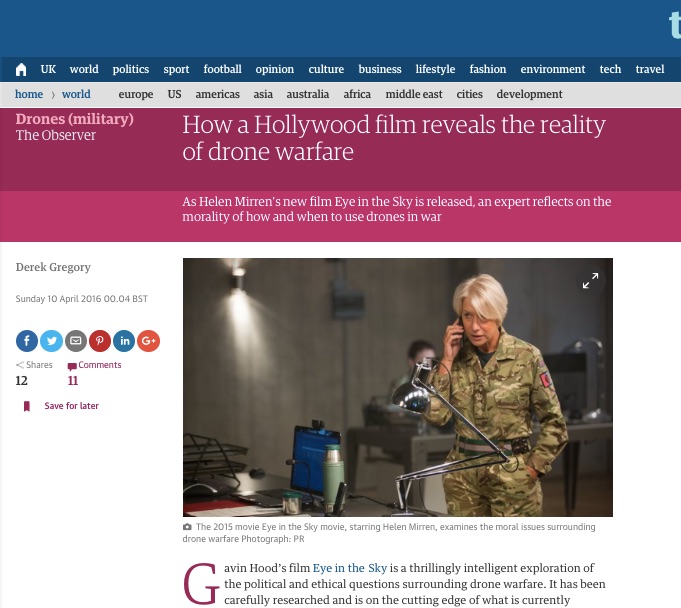
On my way back to Vancouver on Wednesday I received an invitation from Britain’s Guardian (in fact, the Sunday version, the Observer) to write something around that very question using the Gavin Hood film “Eyes in the sky” as a peg.

It’s just been published and you can find it here.

GREGORY Observer

At Davis I’d been giving what I think will be my final presentation of “Angry Eyes” (see here and here), so I was still preoccupied with remote platforms and close air support – not the contradiction it sounds – rather than targeted killing (which is the focus of the film).  The published version has, inevitably, been edited, so I’m pasting the full-length version below and added some links that might help.  There are still lots of short-cuts and elisions, necessarily so for anything of this length, so I hope readers will forgive the inevitable simplifications.

***

Gavin Hood’s Eye in the Sky is a thrillingly intelligent exploration of the political and ethical questions surrounding drone warfare. It’s been carefully researched and is on the cutting-edge of what is currently possible. But there’s a longer history and a wider geography that casts those issues in a different light.  As soon as the Wright Brothers demonstrated the possibility of human flight, others were busy imagining flying machines with nobody on board.  In 1910 Raymond Phillips captivated crowds in the London Hippodrome with a remotely controlled airship that floated out over the stalls and, when he pressed a switch, released hundreds of paper birds on the heads of the audience below. When he built the real thing, he promised, the birds would be replaced with bombs. Sitting safely in London he could attack Paris, Berlin – or Manchester (a possibility that understandably prompted questions about navigation).

There has always been something hideously theatrical about bombing, from the Hendon air displays in the 1920s featuring attacks on ‘native villages’ to the Shock and Awe visited on the inhabitants of Baghdad in 2003. The spectacle now includes the marionette movements of Predators and Reapers whose electronic strings are pulled from thousands of miles away. And it was precisely the remoteness of the control that thrilled the crowds in the Hippodrome. But what mattered even more was surely the prospect Phillips made so real: bombing cities and attacking civilians far from any battlefield.

Remoteness’ is in any case an elastic measure. Human beings have been killing other human beings at ever greater distances since the invention of the dart, the spear and the slingshot. Pope Urban II declared the crossbow illegal and Pope Innocent II upheld the ban in 1139 because it transformed the terms of encounter between Christian armies (using it against non-Christians was evidently a different matter). The invention of firearms wrought another transformation in the range of military violence, radicalized by the development of artillery, and airpower another. And yet today, in a world selectively but none the less sensibly shrunken by the very communications technologies that have made the deployment of armed drones possible, the use of these remote platforms seems to turn distance back into a moral absolute.

But if it is wrong to kill someone from 7,500 miles away (the distance from Creech Air Force Base in Nevada to Afghanistan), over what distance is it permissible to kill somebody?  For some, the difference is that drone crews are safe in the continental United States – their lives are not on the line – and this has become a constant refrain in the drone debates. In fact, the US Air Force has been concerned about the safety of its aircrews ever since its high losses during the Second World War. After Hiroshima and Nagasaki the Air Force experimented with using remotely controlled B-17 and B-47 aircraft to drop nuclear bombs without exposing aircrews to danger from the blast, and today it lauds its Predators and Reapers for their ability to ‘project power without vulnerability’.

It’s a complicated boast, because these remote platforms are slow, sluggish and easy to shoot down – they won’t be seen over Russian or Chinese skies any time soon. They can only be used in uncontested air space – against people who can’t fight back – and this echoes Britain’s colonial tactic of ‘air policing’ its subject peoples in the Middle East, East Africa and along the North-West Frontier (which, not altogether coincidentally, are the epicentres of todays’ remote operations). There are almost 200 people involved in every combat air patrol – Nick Cullather once described these remote platforms as the most labour intensive weapons system since the Zeppelin – and most of them are indeed out of harm’s way. It’s only a minor qualification to say that Predators and Reapers have a short range, so that they have to be launched by crews close to their targets before being handed off to their home-based operators. This is still remote-control war, mediated by satellite links and fiber-optic cables, but in Afghanistan the launch and recovery and the maintenance crews are exposed to real danger. Even so, Grégoire Chamayou insists that for most of those involved this is hunting not warfare, animated by pursuit not combat [see here, here and here].

Yet it’s important not to use this aperçu to lionize conventional bombing. There is an important sense in which virtually all aerial violence has become remarkably remote. It’s not just that bombing has come to be seen as a dismal alternative to ‘boots on the ground’; advanced militaries pick their fights, avoid symmetrical warfare and prefer enemies whose ability to retaliate is limited, compromised or degraded. When he was Secretary of Defense Robert Gates acknowledged that the US had not lost a pilot in air combat for forty years. ‘The days of jousting with the enemy in the sky, of flirting daily with death in the clouds, are all but over,’ writes the far-from-pacifist Mark Bowden, ‘and have been for some time.’ The US Air Force goes to war ‘virtually unopposed’. In short, the distance between the pilot in the box at Creech and the pilot hurtling through the skies over Afghanistan is less than you might think. ‘Those pilots might as well be in Nevada’, says Tom Engelhardt, ‘since there is no enemy that can touch them.’

This suggests that we need to situate armed drones within the larger matrix of aerial violence.  Bombing in the major wars of the twentieth century was always dangerous to those who carried it out, but those who dropped bombs over Hamburg or Cologne in the Second World War or over the rainforests of South Vietnam in the 1960s and 70s were, in a crucial sense, also remote from their targets. Memoirs from Bomber Command crews confirm that the target cities appeared as lights sparkling on black velvet, ‘like a Brocks firework display.’ ‘The good thing about being in an aeroplane at war is that you never touch the enemy’, recalled one veteran. ‘You never see the whites of their eyes. You drop a four-thousand-pound cookie and kill a thousand people but you never see a single one of them.’ He explained: ‘It’s the distance and the blindness that enables you to do these things.’ The crews of B-52 bombers on Arc Light missions dropped their loads on elongated target boxes that were little more than abstract geometries. ‘Sitting in their air-conditioned compartments more than five miles above the jungle’, the New York Times reported in 1972, the crews ‘knew virtually nothing about their targets, and showed no curiosity.’ One of them explained that ‘we’re so far away’ that ‘it’s a highly impersonal war for us.’

Distance no longer confers blindness on those who operate today’s drones. They have a much closer, more detailed view of the people they kill. The US Air Force describes their job as putting ‘warheads on foreheads’, and they are required to remain on station to carry out a battle damage assessment that is often an inventory of body parts.  Most drone crews will tell you that they do not feel thousands of miles away from the action: just eighteen inches, the distance from eye to screen.

Their primary function is to provide intelligence, surveillance and reconnaissance. This was exactly how the Wright brothers thought military aircraft would be used – in July 1917 Orville insisted that ‘bomb-dropping’ would be at best a minor role and almost certainly useless, though he was speaking before the major air offensives in the final year of the war and could have had no inkling of what was to come in the Second World War. The Predator and its precursors were designed to identify targets for conventional strike aircraft over the Balkans in the 1990s, and thirty years later it is still those ‘eyes in the sky’ that make the difference. Although drones have been armed since 2001, until late 2012 they were directly responsible for only 5-10 per cent of all air strikes in Afghanistan. But they were involved in orchestrating many more. Flying a Predator or a Reaper ‘is more like being a manager’, one pilot explained to Daniel Rothenberg: ‘You’re managing multiple assets and you’re involved with the other platforms using the information coming off of your aircraft.’ In principle it’s not so different from using aircraft to range targets for artillery on the Western Front, but the process has been radicalized by the drone’s real-time full-motion video feeds that enable highly mobile ‘targets of opportunity’ to be identified and tracked. In the absence of ground intelligence, this becomes crucial: until drones were relocated in sufficient numbers from Afghanistan and elsewhere to enable purported IS-targets in Syria to be identified, most US aircraft were returning to base without releasing their weapons.

Armed drones are used to carry out targeted killings, both inside and outside areas of ‘active hostilities’, and to provide close air support to ground troops. Targeted killing has spurred an intense critical debate, and rightly so – this is the focus of Eye in the sky too – but close air support has not been subject to the same scrutiny. In both cases, video feeds are central, but it is a mistake to think that this reduces war to a video game – a jibe that in any case fails to appreciate that today’s video games are often profoundly immersive.   In fact, that may be part of the problem. Several studies have shown that civilian casualties are most likely when air strikes are carried out to support troops in contact with an enemy, and even more likely when they are carried out from remote platforms. I suspect that drone crews may compensate for their physical rather than emotional distance by ‘leaning forward’ to do everything they can to protect the troops on the ground. This in turn predisposes them to interpret every action in the vicinity of a ground force as hostile – and civilians as combatants – not least because these are silent movies: the only sound, apart from the clacking of computer keys as they talk in secure chat rooms with those watching the video feeds, comes from radio communications with their own forces.

In contrast to those shown in Eye in the Sky, those feeds are often blurry, fuzzy, indistinct, broken, compressed -– and, above all, ambiguous. How can you be sure that is an insurgent burying an IED and not a farmer digging a ditch?  The situation is more fraught because the image stream is watched by so many other eyes on the ground, who all have their own ideas about what is being shown and what to do about it.  Combining sensor and shooter in the same (remote) platform may have ‘compressed the kill-chain’, as the Air Force puts it, and this is vital in an era of ‘just-in-time’, liquid war where everything happens so fast. Yet in another sense the kill-chain has been spectacularly extended: senior officers, ground force commanders, military lawyers, video analysts all have access to the feeds. There’s a wonderful passage in Brian Castner‘s All the ways we kill and die that captures the dilemma perfectly. ‘A human in the loop?’, Castner’s drone pilot complains.

‘Try two or three or a hundred humans in the loop. Gene was the eye of the needle, and the whole war and a thousand rich generals must pass through him… If they wanted to fly the fucking plane, they could come out and do it themselves.’

This is the networked warfare, scattered over multiple locations around the world, shown in Eye in the Sky. But the network often goes down and gets overloaded – it’s not a smooth and seamlessly functioning machine – and it is shot through with ambiguity, uncertainty and indecision.  And often those eyes in the sky multiply rather than disperse the fog of war.

Anatomy of a soldier

I’ve drawn attention to Harry Parker‘s spellbinding Anatomy of a Soldier in an earlier post; here at the AAG in San Francisco I may even be speaking about it tomorow – we’ll see.  (I’m supposed to be speaking about something else altogether but it’s in a session on’ Objects of security and war’, so I’m half-way through a new presentation, ‘Object lessons’).

Channel Four has posted an interview with the author at the Imperial War Museum on YouTube:

And there’s another interview with the BBC here.

Industrialised war

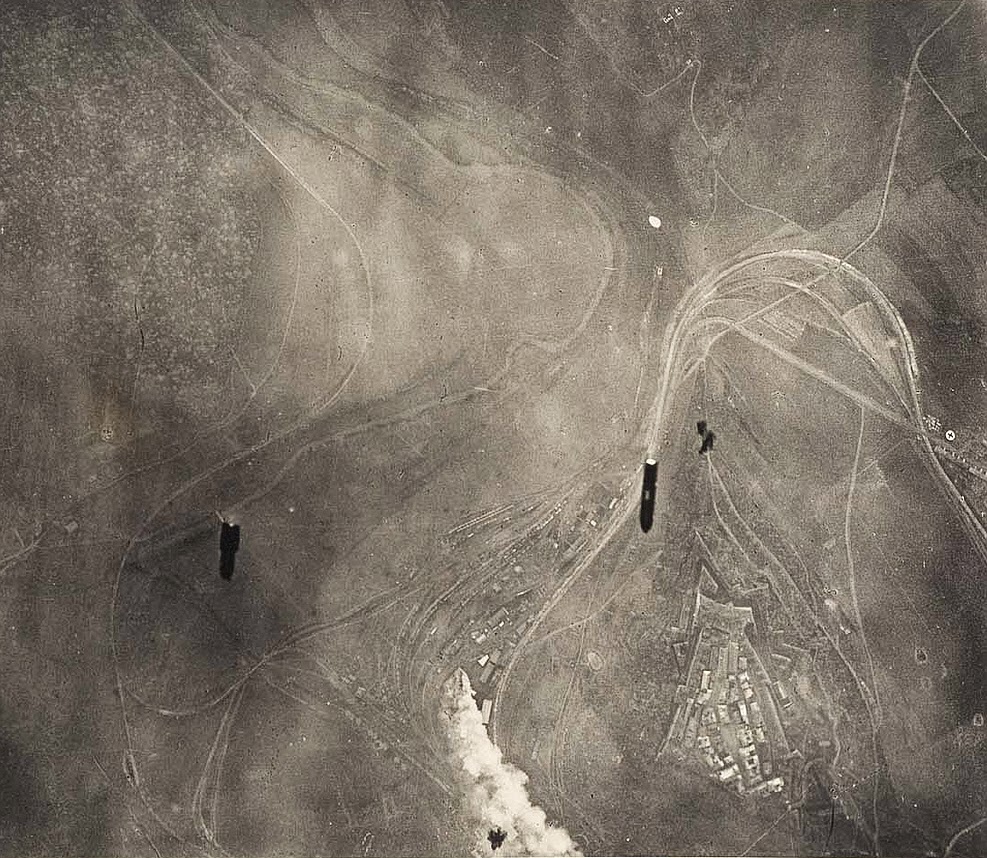
Bombs falling on Montmedy and marshalling yards

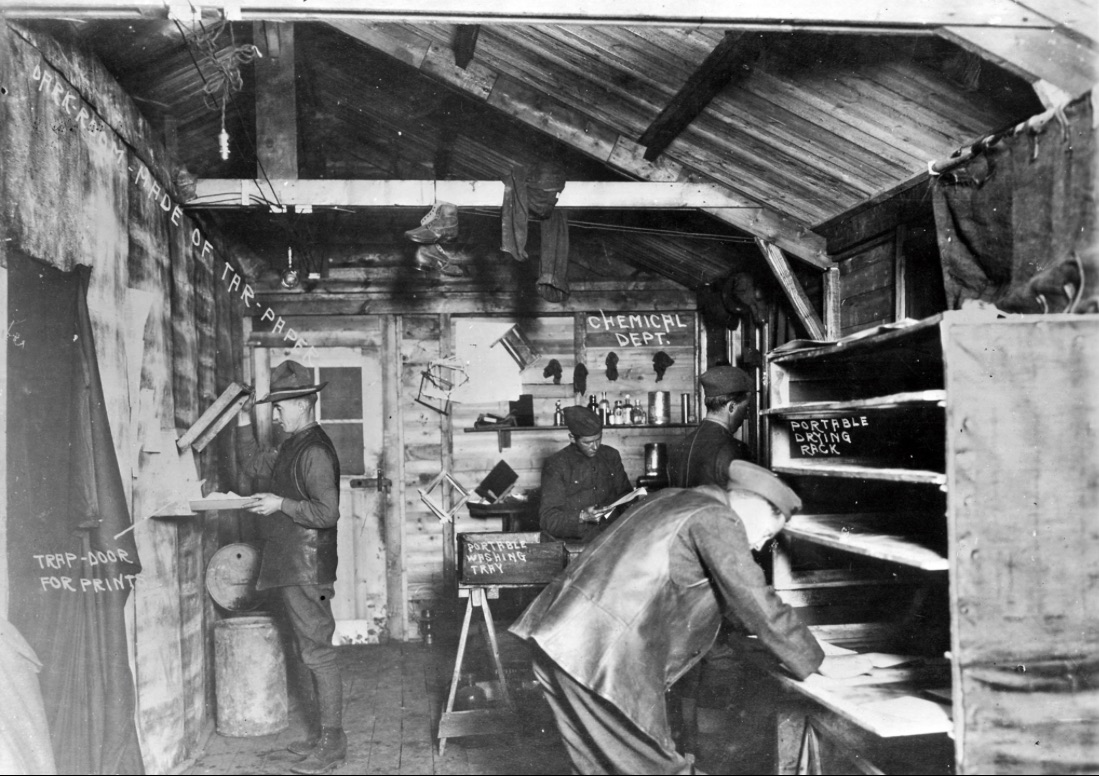
As I work on the text of “Reach from the Sky”, I’ve been revisiting the role of Edward Steichen in the development (in fact, the industrialisation) of air photography on the Western Front.  As I noted, all too briefly, in ‘Gabriel’s map’ (DOWNLOADS tab), Steichen commanded the photographic division of the American Expeditionary Forces. He organised the 55 officers and 1,111 men under his command into what Paul Virilio described as ‘a factory-style output of war information’ that ‘fitted perfectly with the statistical tendencies of this first great military-industrial conflict’.

Steichen 5th Photographic section at work on Western Front

The classic source on Steichen’s assembly-line methods of reproduction (and much more) is Allen Sekula‘s essay, ‘The instrumental image: Steichen at war’, in Artforum 14 (1975) 26-35 [see also the image above]:

The establishment of this method of production grew out of demands for resolution, volume, and immediacy. No method of reproduction but direct printing from the original negative would hold the detail necessary for reconnaissance purposes. Large numbers of prints from a single negative had to be made for distribution throughout the hierarchy of command. In addition, the information in prints dated very rapidly. Under these circumstances, efficiency depended on a thorough-going division of labor and a virtually continuous speedup of the work process. Printers worked in unventilated, makeshift darkrooms; 20 workers might produce as many as 1,500 prints in an hour, working 16-hour shifts.

Analytically the essay has never been surpassed, but now there is a new book that fills in the biographical details of Steichen’s service during the First World War: Von Hardesty‘s Camera Aloft: Edward Steichen in the Great War (Cambridge, 2016):

Von Hardesty Camera AloftEdward Steichen (1879–1973) played a key role in the development of photography in the twentieth century. He is well known for his varied career as an artist, a celebrated photographer, and museum curator. However, Steichen is less known for his pivotal role in shaping America’s first experiments in aerial photography as a tool for intelligence gathering in what may be called his “lost years.” In Camera Aloft, Von Hardesty tells how Steichen volunteered in 1917 to serve in the American Expeditionary Forces (AEF). He rose rapidly in the ranks of the Air Service, emerging as Chief of Air Photography during the dramatic final offensives of the war. His photo sections were responsible for the rapid processing of aerial images gained through the daily and hazardous sorties over the front and in the enemy rear areas. What emerged in the eighteen months of his active service was a new template for modern aerial reconnaissance. The aerial camera, as with new weapons such as the machine gun, the tank, and the airplane, profoundly transformed modern warfare.

Here is the table of contents:

Foreword: taking the camera aloft
1. War and exile
2. A new life in the military
3. Over there
4. The world of air observation
5. Taking charge
6. Over the front
7. War and photography
Appendix: life at the cutting edge: the photo sections.

The book includes stunning reproductions of photographs (from which I’ve borrowed the annotated image of the Photographic Section above): you can see a selection from the book here.  Other Steichen aerial imagery from the period is here and here.

As you’ll be able to see when I’m finished, I’m no less interested in Steichen’s work during the Second World War, and in particular the various photographic projects he directed in the Pacific that captured – and celebrated – the masculinism and homosociality of modern war (here the work of Horace Bristol is especially revealing).

But right now it’s the industrialisation of aerial imagery that is capturing my attention.  It’s a commonplace that the First World War was industrial warfare on the grand scale, of course, but often our attention is distracted by the killing machines and mechanisms themselves – the gas, the tanks, the aircraft – and we lose sight of the assembly-line logic that animated the slaughter not only during but also before and after.

LOBLEY Reception of wounded at 1st CCS, Le Chateau October 1918

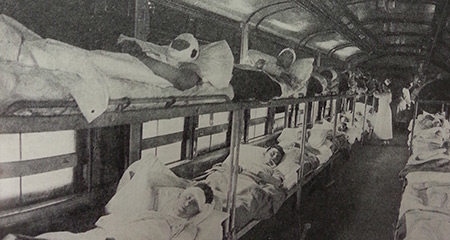
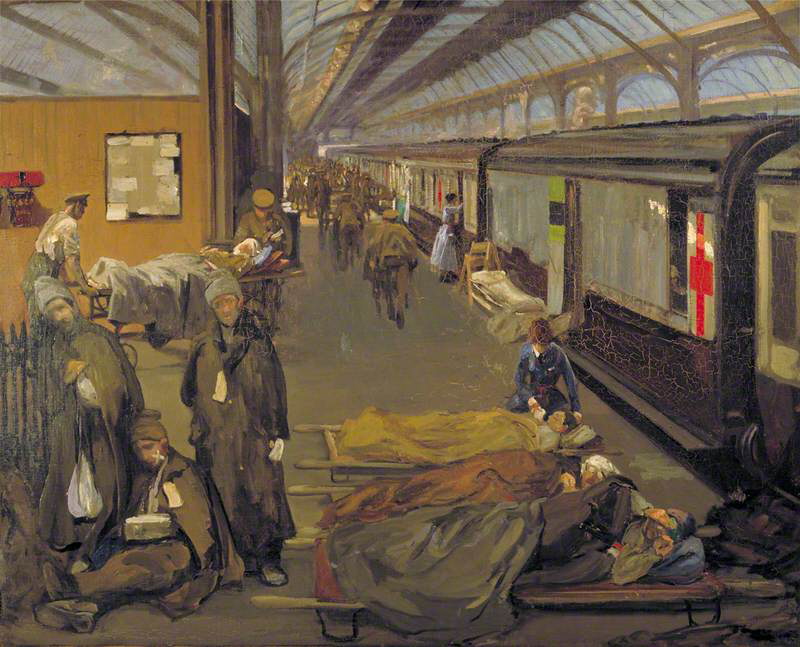
You can see it in Steichen’s production line, but there are countless other examples.  Last summer I was working in the Friends’ Library in London, recovering the role of the Quakers in providing medical care on the Western Front as part of my research on casualty evacuation, when I encountered this extraordinary passage that speaks directly to the relentless motion of the killing machine (see also my ‘Divisions of Life’ here).  It’s a medical orderly’s account of loading an ambulance train, written some time in 1915:

Down in a hedged field at the end of the straggling mining village lies the casualty clearing station, some two-score large tents… Since midday the [casualty] clearing station has been full to overflowing, but still an endless line of motor ambulances moves down along the crowded road from the fighting line, through the village and into the muddy field. It is night now, starless and dark as pitch, and a lashing rain is driven hard in your face before a bitter and rising wind; but still the cars are discharging their pitiful loads in dreary succession when the train is brought into the siding which serves this desolate little camp.

day2day-amb2

From the train itself you can scarcely see anything of the clearing station tonight; only the headlights of the cars as they turn in through the gate, and a few hurricane lamps flickering here and there. Near one end of the train, at the wooden footbridge which crosses the stream separating the camp from the railway track, there stands a powerful acetylene flare, casting a circle of vivid light on the deep mud of the path. Save for three or four feeble oil-lamps on the ground beside the long darkened train, this is the only light at the loading place. A few moments of uncertain waiting, and the first stretcher comes down, its weary bearers slithering and stumbling in the watery mire. As you watch the flare you see them emerge suddenly from the utter blackness beyond into the fierce glare of the light; they halt for a moment, while a cloaked officer standing on the bridge raises the waterproof sheet which protects the wounded man’s face from the beating rain; a name is given and noted; the covering is dropped over the head, and the bearers move on again, seeing to vanish as if by magic as they pass with their burden out of the light into the enveloping blackness. A pause, another stretcher enters the circle of light; the same words pass, the same motions, and it too move son, blotted out as suddenly as it appeared. Watching this time after time, you feel as if a picture were being cast on a screen and flashed off, over and over again: for there is something cruelly mechanical about it all.

(c) Rosenstiel's; Supplied by The Public Catalogue Foundation

John Urry


LANCASTER UNIVERSITY

LANCASTER UNIVERSITY

I’ve just heard that John Urry died unexpectedly last Friday: I’m so desperately sad.  We first met when we edited Social relations and spatial structures together as part of Macmillan’s Critical Human Geography series; an invitation to extend the conversation between sociology and human geography, it appeared in 1985, but we kept in touch ever since.  He was a joy to work with.  I remember rattling up to Lancaster on a succession of small trains from Cambridge and receiving the warmest of welcomes: good beer, creative conversation and lots of laughter.  I last saw him two summers ago when I was in Lancaster for a conference on drones; one evening we sat in his gorgeous house sipping wine and having the loveliest and liveliest of times.

In between those book-ends (in fact before them and after them too) John produced some of the most imaginative work in the social sciences: books that were brimful of ideas – I never thought of it as Theory-with-a-capital-T and I doubt that he did either, though his grasp of classical and contemporary social theory was truly remarkable – that were drawn from an ever-expanding intellectual imagination fed by the widest of reading and reflection, but which never lost sight of the pressing substance of what he was thinking about.  These were wonderfully accessible, provocative, insightful books – his work with Scott Lash on disorganized capitalism and his own studies of tourist culture and the tourist gaze, mobilities, climate change, and most recently on off-shoring.   There was a tremendous clarity to John’s writing but also a humbling modesty; he was never strident, but it was impossible to put down one of his books – or reluctantly end a conversation with him – without thinking you had never seen it like that before and that you now had a lot more thinking of your own to do.

If you’ve never heard him, here he is in 2014:

John had an extraordinary gift for enlarging people’s political and intellectual horizons without lecturing or hectoring; his writing was splattered with references, but never in that showy, superficial ‘look how up-to-date I am’ way – instead they were generous acknowledgements of his debt to others and bibliographic gifts to his readers.

In (too) brief, he was a gorgeous man, the very model of a critical scholar and a generous human being.  We still have his words but the realisation that there will be no more of them fills me with a sense of rootless desolation.

Remote sensing

Harris BLUE BOOK.img008

As a supplement to my previous post on mapping the bombing of Germany in the Second World War, I thought I should draw attention to Lauren Turner‘s report on the maps RAF Bomber Command had drawn to show the effects of its raids on individual cities.  I described the construction of target maps in ‘Doors into nowhere’ (DOWNLOADS tab); these maps were compiled for the Blue Books kept by Arthur Harris as chief of Bomber Command (above). In the summer of 1943 Harris ordered the preparation of a large book (which eventually extended to several volumes) which would show the “spectacular” results of the bomber offensive. “After each attack on a German city,” he explained, “the area of devastation was progressively marked with blue paint over a mosaic of air photographs of the city as a whole”. Harris was immensely proud of this “inventory of destruction,” as Tami Biddle calls it, and showed it to all his prominent visitors (see also here for a short discussion of how blind Harris was to the strategic significance of his campaign).

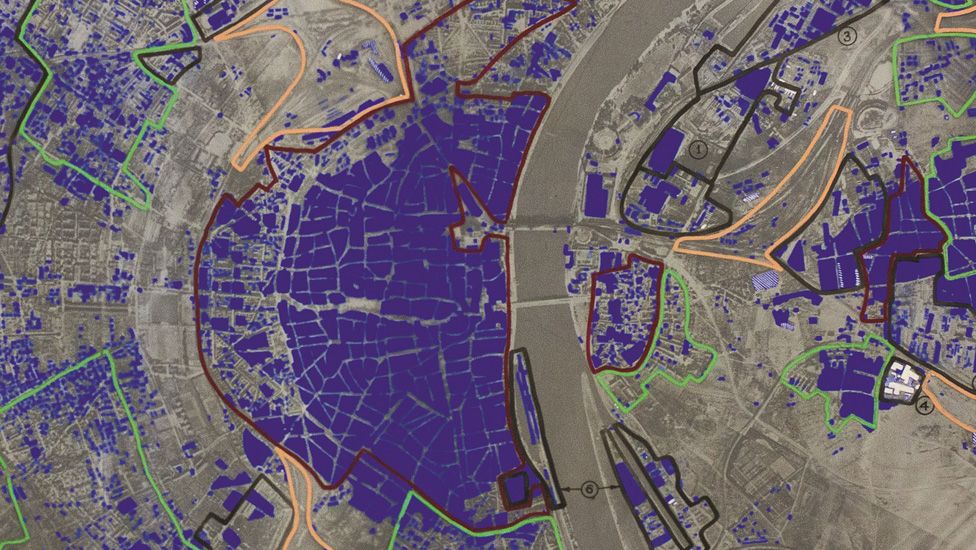
Here, for example, is Cologne in November 1944:

_85959916_cologne_976

The dark blue shows the area destroyed or badly damaged: you can also find more information about the damaged city in my post on the geometry of destruction here (which includes an early target map).

Lauren’s report for the BBC includes similar maps for Berlin and Dresden.

Crossing the Ts

photo_76050_landscape_650x433

As part of the Chronicle‘s Scholars Talk Writing series, there’s a lovely interview with Deirdre McCloskey here and much to think about.  For example:

Given the many differences you point out in Crossing about how Donald and Deirdre think, felt, and interacted in the world, surely there were changes in your prose style when you transitioned. Can you say something about gender and writing, and how your crossing affected your prose?

I do not want to be accused of essentialism. But as a first- and third-wave feminist (not second wave — e.g., the startlingly transphobe Germaine Greer), I note differences. It’s hard for me to judge, true, because when I read my earlier stuff I’m reading it philosophically for the argument, not rhetorically for the style. The big item I reckon is the style of argument. I still write always with an argument, which might sound male — unless you met my mother, from whom I learned how to argue! But the arguing is less relentless now, more diffident, as arguments should be if you are interested in the actual truth and want to establish it together with your reader.

As a young man I was proud of crushing an opponent in my writing — as though on my high-school football team (of which, by the way, I was co-captain). Now I am trying to make common cause with the reader, and trying also to be truthfully gentle with the “opponents.” It came naturally — not as Rule No. 15 in How to Be a Woman. My joke, though, is that I can’t tell whether any improvement is because I became a woman (within the limits, alas, of biology and life history) … or because I finally grew up.

Base Nation

VINE Base Nation

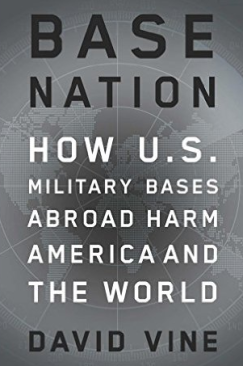
Matt Farish‘s perceptive view of David Vine‘s BaseNation – ‘a distressing and tremendously helpful resource for grappling with the global geography of the American armed forces’ (see also here, the map here [also shown above] and the interactive map here) – is up at the LA Review of Books here.

Base-Nation1-243x366The Baseworld that was pieced together during and after World War II undoubtedly represented “a qualitative and quantitative shift,” but it is noteworthy that a place like Fort Leavenworth, Kansas, once dubbed the “western edge of civilization,” is today both a heritage landscape and an active Army facility, including, of course, the military’s most prominent prison. As historians have noted, the movement of men and motifs from the “Indian Wars” to overseas conflicts like the Philippine-American War (1899–1902) was direct. “Now that the continent is subdued,” the California-based Overland Monthly announced in 1898, “we are looking for fresh worlds to conquer.”

In the 21st century, the perverse demand for “total defense” has produced an increasingly diverse roster of base types, from Germany’s Kaiserslautern Military Community (including the massive Ramstein Air Base), home to an 840,000-square-foot mall, to the small, often secretive “lily pads” that typify the Pentagon’s role “in at least forty-nine of the fifty-four African countries. It may be operating in every single one.” By limiting the number of troops in place — sometimes replacing them with “pre-positioned” weapons and matériel — and encouraging closer ties with other national militaries, lily pads present a different sort of challenge for opponents of military presence.

But Matt – I think properly refuses the distinction between ‘domestic’ and ‘extraterritorial’:

Vine’s decision to focus almost exclusively on “extraterritorial” sites is practical, but it is also political, even as the division implied by this word is unsustainable. The benefits of its retention seem meager: it allows Vine to advocate for a return of “troops and base spending back to the United States,” “stemming the leakage of money out of the U.S. economy and ensuring that economic spillover effects remain at home.” Despite the stupendous number of dollars at stake — tens if not hundreds of billions, annually — I still wonder if Vine’s heart is really in this argument, or if he would prefer to emphasize the “twenty-first century form of colonialism” he documents in places like Guam, and the restitutions that might result from demilitarization. But even on this charge, he follows the same path, claiming that the condition of Guam or Puerto Rico hinders “our country’s ability to be a model for democracy.” For followers of popular political speech, this is familiar prose. But it is still a fictional aspiration, all the more frustrating because it seems to be the result of authorial or editorial pragmatism. It falls apart as soon as we consider varieties of ongoing military colonialism and environmental injustice in the American Southwest, for instance.

David has promised to donate all proceeds from Base Nation ‘to nonprofit organizations serving military veterans, their families, and other victims of war and violence.’